Article

Flexural Behavior and Capacity Modeling of Damaged RC Beams Strengthened with CFRP Grid

1
School of Architecture Engineering, Shenyang University, Shenyang 110044, China
2
Highway Engineering Quality Testing Center, Liaoning Provincial College of Communications, Shenyang 110122, China
3
School of Infrastructure Engineering, Dalian University of Technology, Dalian 116024, China
*
Author to whom correspondence should be addressed.
Buildings 2026, 16(1), 205; https://doi.org/10.3390/buildings16010205
Submission received: 5 November 2025 / Revised: 20 December 2025 / Accepted: 31 December 2025 / Published: 2 January 2026
(This article belongs to the Section Building Materials, and Repair & Renovation)

Abstract

This study investigates the strengthening mechanisms of a Carbon Fiber-Reinforced Polymer (CFRP) grid and Polymer-modified Cement Mortar (PCM) system for damaged reinforced concrete (RC) beams in flexure. Experimental tests were conducted on five short beams to systematically observe the failure modes, load-carrying capacity, strain development, and deflection evolution. A finite element model was established and validated against the experimental results to analyze the effects of key parameters, including the damage degree, number of grid layers, and grid spacing. Theoretical formulas for calculating the ultimate flexural capacity under different failure modes were also derived. The results demonstrate that strengthening undamaged beams yields a more significant improvement in ultimate and cracking loads than strengthening pre-damaged beams. The composite system effectively suppresses crack propagation by enhancing stiffness, albeit at the expense of reduced ductility. The theoretical predictions show good agreement with the experimental data. Parametric analysis reveals that lightly damaged beams exhibit a higher load-bearing potential, whereas severely damaged beams display more ductile behavior. The increase in load capacity converges when the number of grid layers exceeds three. In contrast, reducing the grid spacing significantly enhances flexural capacity due to improved meso-scale structural effects.

1. Introduction

Over the past two decades, the need for strengthening and retrofitting existing reinforced concrete (RC) structures has become increasingly urgent. This demand is driven by structural aging, increased load requirements, updates in design codes, and frequent seismic events. Traditional strengthening techniques, such as section enlargement and steel jacketing, often face limitations that hinder widespread application, including complex construction procedures, significant space occupation, and negative impacts on service functionality. In response, novel materials and technologies have been developed, including Textile-Reinforced Mortar (TRM) [1,2,3], Textile-Reinforced Concrete (TRC) [4,5,6], Steel-Reinforced Grout (SRG) [7,8,9], and Fiber-Reinforced Polymer (FRP) [10,11,12,13].
Among these, FRP composites have emerged as an effective structural strengthening solution, offering advantages such as light weight, high strength, corrosion resistance, and ease of construction [14]. However, conventional FRP strengthening typically employs epoxy resin as the bonding agent, which presents significant shortcomings in terms of fire resistance, UV stability, and durability in hot-humid environments [15,16,17]. These limitations restrict its broader application in harsh service conditions. To overcome these deficiencies, researchers have proposed replacing epoxy resin with inorganic cementitious materials to form composite systems with FRP grids. Such systems leverage the advantages of cementitious materials, including high-temperature resistance, aging resistance, and excellent compatibility with concrete substrates, thereby providing a more robust solution for structural strengthening in severe environments.
The Carbon Fiber-Reinforced Polymer (CFRP) grid and Polymer-modified Cement Mortar (PCM) system represents a high-performance composite strengthening material. CFRP grids can be categorized by morphology, such as bi-directional square grids and tri-directional triangular grids [18]; their orthogonal structure enables effective bidirectional load transfer. PCM is a composite material formulated by incorporating polymer emulsion into cement and aggregate, exhibiting good corrosion resistance, impermeability, frost resistance, and bond strength with concrete [19]. In the composite system, the PCM serves both as a protective layer and, through mechanical interlocking with the grid, facilitates effective stress transfer, establishing a synergistic working mechanism. This makes it particularly suitable for harsh environments, such as those with high humidity or corrosive agents.
Currently, research on the CFRP grid-PCM system is still in its developmental stage. Guo Rui et al. [20,21,22,23,24] investigated the stress-transfer mechanism at grid nodes, proposing that effective bonding requires engagement with at least three nodes. They established a shear and flexural capacity model based on the “effective strain of the CFRP grid,” providing a preliminary theoretical framework for engineering design. Wang Bo et al. [25,26,27] further revealed that vertical CFRP grid elements, under node constraints, experience a non-uniform and complex stress state distinct from that of traditional stirrups. Their work led to an improved truss-arch model and a shear capacity calculation method that accounts for the contributions of both longitudinal and transverse grids. Moreover, Souphavanh S et al. [28] employed the Smooth Particle Hydrodynamics method to simulate the dynamic response of this system under impact loads; Dai Huijuan et al. [29] analyzed the interfacial behavior between CFRP grid-PCM and concrete through pull-out tests; and Wei H et al. [30] quantitatively evaluated its strengthening effectiveness on tunnel linings with varying degrees of damage.
While the aforementioned studies have laid an important foundation, significant limitations remain. Most existing research focuses on the strengthening performance of CFRP-PCM systems applied to undamaged members. However, in practical engineering, structures requiring strengthening often already exhibit damage and are under complex stress states. The influence of this initial damage on the strengthening efficacy of CFRP-PCM systems is not well understood. Although Huang Junhao et al. [31,32], Li Mingxia et al. [33], and Cong et al. [34] have explored the performance of CFRP sheets, prestressed CFRP plates, and ECC-CFRP composite systems on damaged beams from various perspectives, and Zhong Zhengqiang et al. [35] and Leonardo et al. [36,37] have proposed theoretical models considering secondary loading effects and post-fire repair methods, respectively, these studies do not systematically address the structural behavior and design theory for the CFRP grid-PCM composite system specifically applied to damaged beams.
To address this research gap, this paper presents a systematic experimental and numerical investigation into the flexural performance of damaged RC beams strengthened with CFRP grid-PCM. It focuses on analyzing the influence of initial damage degree and other key parameters on the failure modes, crack propagation, and load-bearing capacity of the specimens, thereby elucidating the underlying strengthening mechanisms. Furthermore, based on the concept of effective material strain, a calculation method for flexural capacity is established. This work aims to provide a theoretical foundation and technical support for the scientific application of this technology in practical engineering.

2. Experimental Study

2.1. Experimental Design

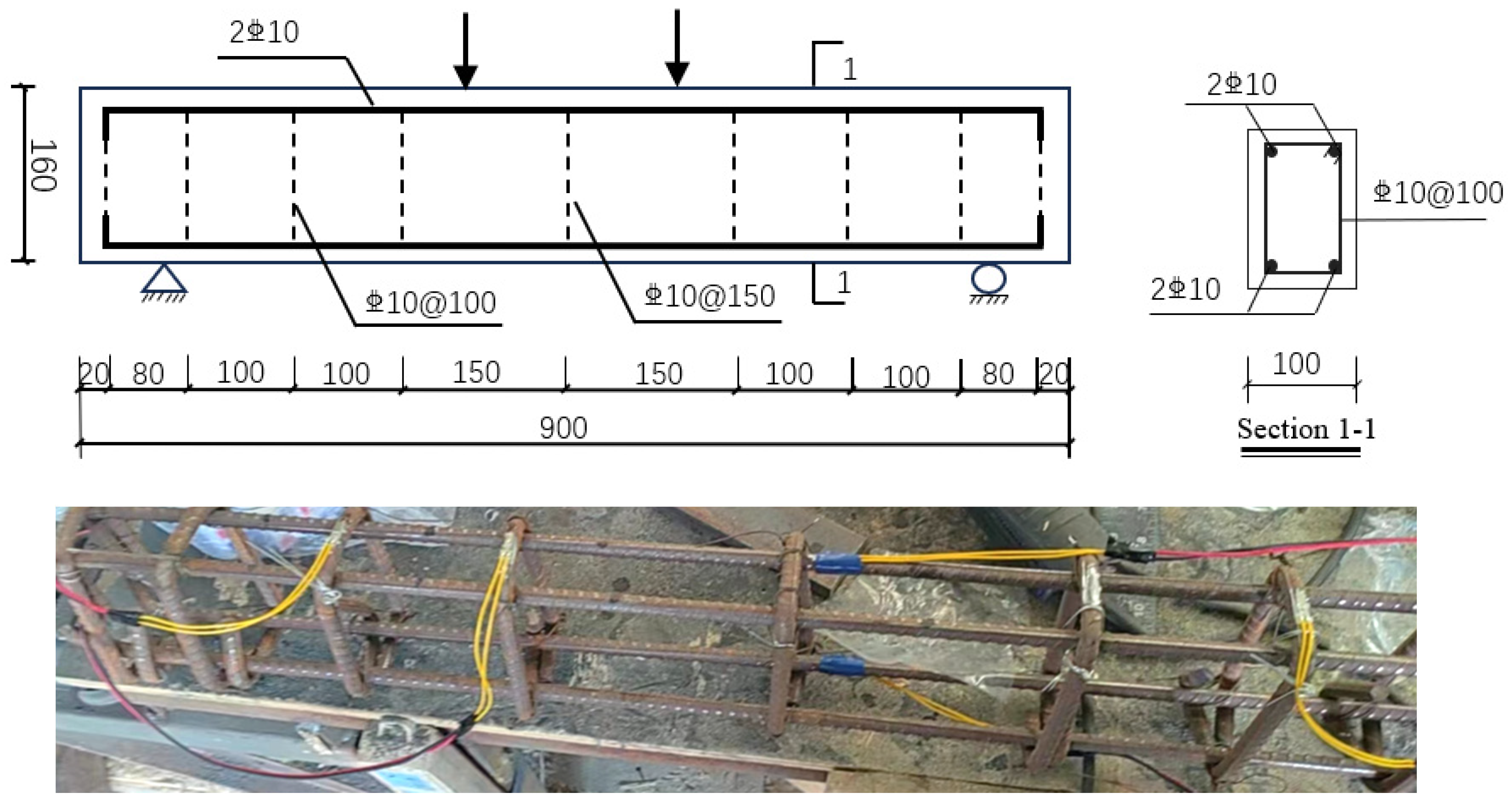
The specimens investigated in this study were simply supported rectangular beams with cross-sectional dimensions of 100 mm × 160 mm. Each beam had a clear span of 740 mm and a total length of 900 mm. A four-point bending scheme was adopted, with a distance of 240 mm between the two loading points. The beams were cast using C40 concrete and reinforced longitudinally with HRB400-grade hot-rolled ribbed steel bars. Φ10 stirrups were spaced at 100 mm in the shear spans, while the spacing was increased to 150 mm in the pure bending region. The concrete cover thickness was maintained between 18 mm and 22 mm. The detailed dimensions and reinforcement layout of the specimen are illustrated in Figure 1.
Three control specimen groups were designed for this experimental program: an unstrengthened reference specimen (T), an undamaged strengthened specimen (T01B), and three pre-damaged strengthened specimens (T31B, T51B, and T71B).
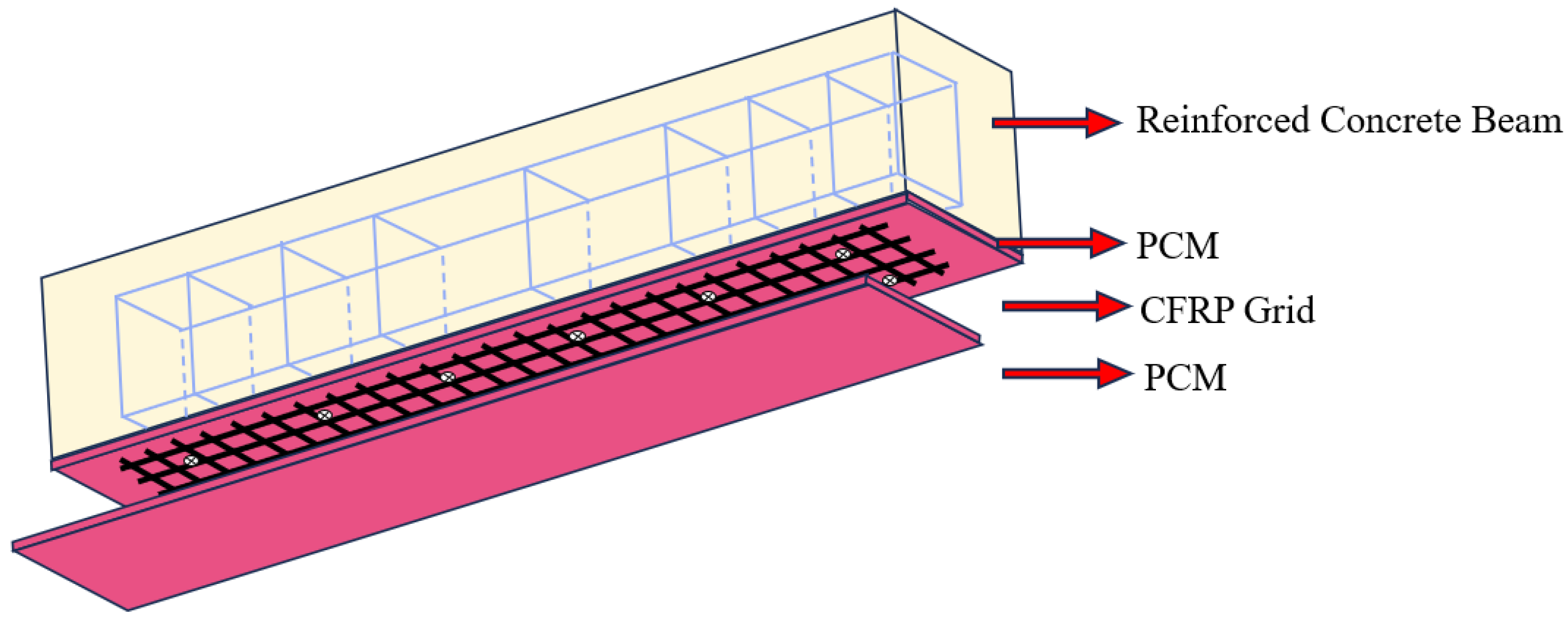
The strengthening procedure for specimen T01B was conducted as follows. First, the concrete substrate surface was mechanically roughened to uniformly expose coarse aggregates, creating a rough and even interface. Subsequently, expansion bolts were installed at 150 mm intervals to enhance mechanical interlocking and interfacial debonding resistance. The PCM strengthening layer was applied in multiple steps: an approximately 10 mm thick base layer of PCM was first laid, upon which the CFRP grid was carefully embedded and leveled. Finally, a top layer of PCM was applied to fully encapsulate the grid, resulting in a total composite strengthening layer thickness of 20 mm. For the pre-damaged strengthened specimens (T31B, T51B, and T71B), a controlled level of structural damage was first introduced by applying pre-loads corresponding to 30%, 50%, and 70% of the measured ultimate load (Pᵤ) of reference specimen T, respectively. After unloading, these specimens were strengthened following the same procedure used for T01B.
This differentiated experimental design was implemented to systematically investigate the influence of initial damage on the mechanical performance of the strengthening system. A graded monotonic loading protocol was adopted to simulate controlled damage, establishing a quantifiable relationship between the applied load level and the resulting macroscopic damage state. This approach isolates the dominant influence of the “damage extent” on post-repair structural behavior. A schematic of the specimen strengthening configuration is shown in Figure 2, and the detailed specimen parameters are listed in Table 1. It is important to note that this simplified damage modeling approach does not account for complex damage mechanisms prevalent in practical engineering, such as fatigue or corrosion-induced deterioration. Consequently, the simulated conditions in this study differ from actual in-service environments.

2.2. Material Properties

During the fabrication of the concrete beams, companion specimens—150 mm cubes and 150 mm × 300 mm prisms—were prepared in accordance with the Chinese Standard for Test Methods of Physical and Mechanical Properties of Concrete (GB/T 50081-2019) [38]. These specimens were cured under standard conditions identical to those of the beams. Upon reaching the 28-day curing age, compression and flexural tests were conducted using an electro-hydraulic servo universal testing machine at standardized loading rates. Each reported property value is the arithmetic mean derived from three valid test results, as summarized in Table 2.
The strengthening material used in this study was a 200/200 bi-directional CFRP grid, supplied by Carbon Co., Ltd(Beijing, China). The key mechanical properties of the CFRP grid, obtained from tensile tests on warp fiber bundles using a universal testing machine, are listed in Table 3. The measured mechanical properties of the steel reinforcement are summarized in Table 4. PCM was employed as the bonding and stress-transfer medium between the CFRP grid and the concrete substrate. This material forms a high-strength bonding interface on the mechanically roughened concrete surface through polymer-enhanced mechanisms, including mechanical interlocking, physical adsorption, and chemical bonding. It ensures thorough impregnation and anchorage of the CFRP grid, is compatible with both manual lay-up and pressure-grouting application techniques, and guarantees complete encapsulation of the grid. The interfacial performance of this composite system has been validated in prior studies [19,29]. Its key material parameters are provided in Table 5.

2.3. Test Loading and Instrumentation Layout

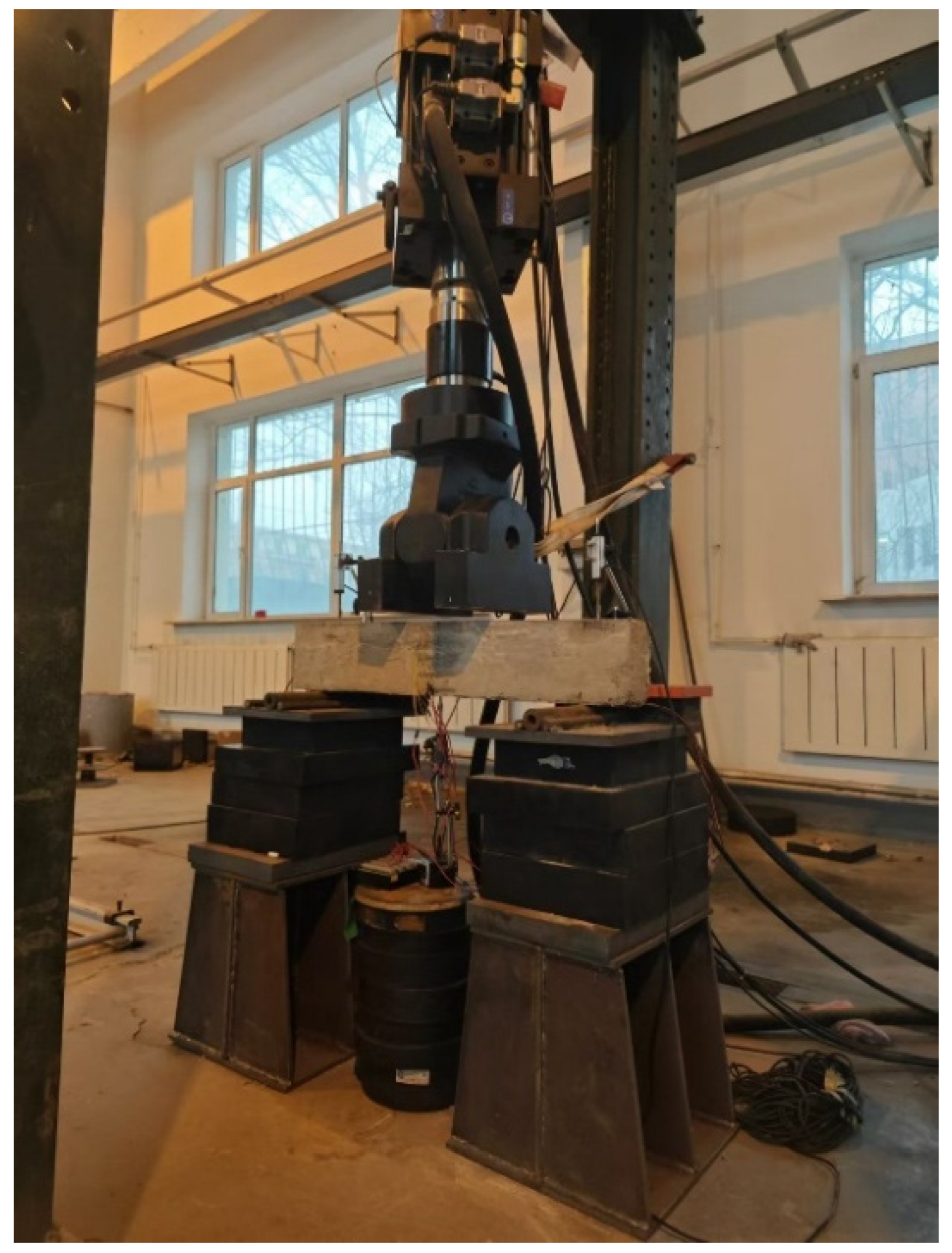
A four-point bending configuration was employed for testing, with load applied through a hydraulic jack and controlled using a pressure sensor(MTS Industrial Systems (China) Co., Ltd., Shanghai, China). The test setup is illustrated in Figure 3. Prior to formal loading, a preloading procedure was carried out to eliminate initial gaps between the specimen and the loading apparatus and to verify the proper functioning of the data acquisition system. The preload was set to 10% of the estimated ultimate load and applied at a rate of 50 N/s. Preloading was considered complete when the readings from all instruments exhibited stable linear variations with the applied load and returned to zero upon unloading.
During the formal loading phase, the beam was subjected to graded loading. Each loading stage was initially set to approximately 10% of the estimated ultimate capacity. After crack initiation, the load increment was reduced to 5% of the estimated ultimate load. As the load approached the anticipated maximum, the loading rate was decreased to 30 N/s until the specimen failed, at which point the test was terminated.
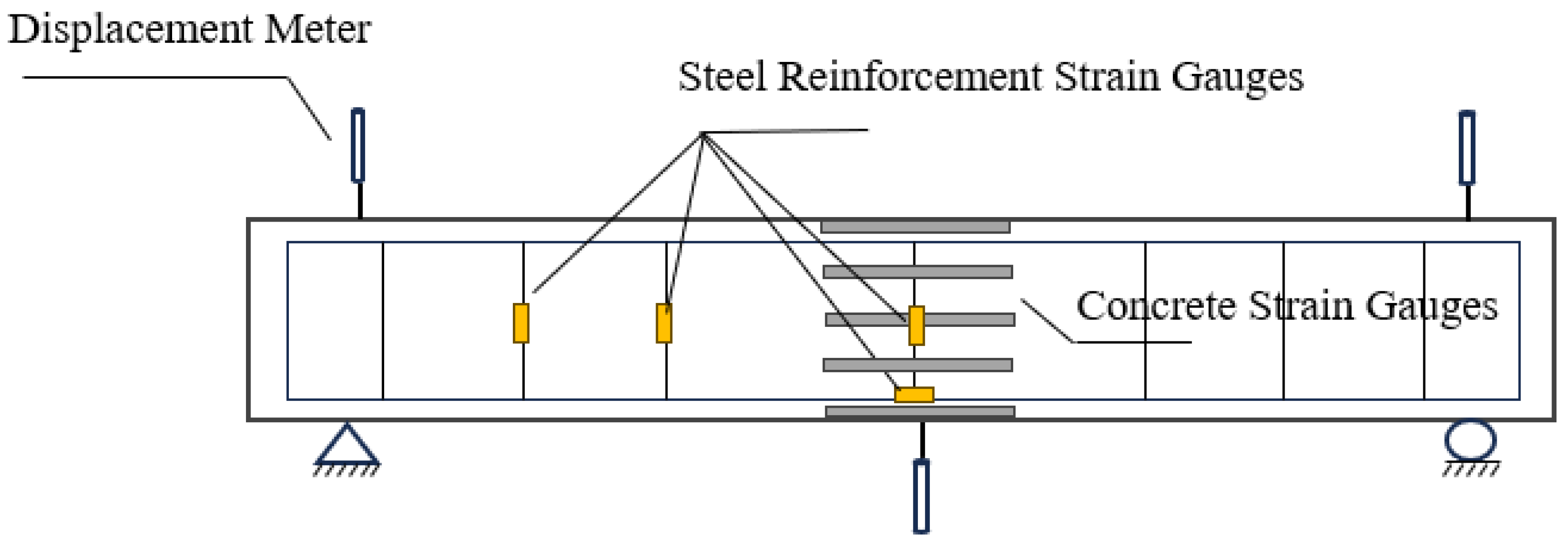
Displacements at mid-span and above both supports were measured using slide potentiometer displacement transducers (Miante Technology Co., Ltd., Shenzhen, China). Strain gauges were mounted on the longitudinal tensile reinforcement at mid-span to monitor steel strain. To verify the plane section assumption, concrete surface strain gauges were uniformly distributed along the height of the mid-span cross-section. For the beams subjected to secondary loading, strain gauges were reinstalled on the strengthening layer surface to accommodate the modified sectional configuration after pre-damage. The experimental setup and instrumentation layout are detailed in Figure 4.

3. Analysis of Test Results

3.1. Experimental Phenomena and Failure Characteristics

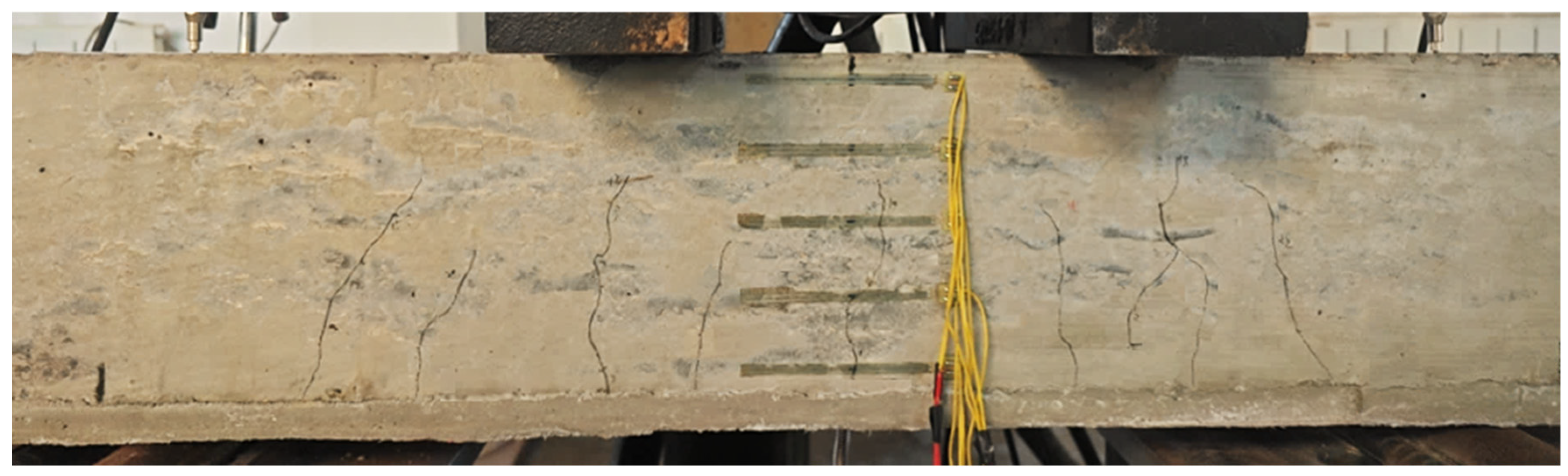
Specimen T: The first vertical flexural crack appeared at the mid-span when the load reached 11.95 kN, indicating that the concrete in the tensile zone had attained its ultimate tensile strain. As the load increased to 14 kN, the second and third flexural cracks formed successively on either side of the initial crack. At this stage, cracks within the pure bending region were symmetrically distributed with an average spacing of approximately 130 mm, and none exceeded one-third of the beam height. With further loading, the number of cracks gradually increased. Yielding of the longitudinal tensile reinforcement occurred at a load of 42.01 kN, accompanied by a mid-span deflection of 3.77 mm, marking the specimen’s transition into the plastic stage. Subsequently, crack propagation accelerated. The width of the primary crack widened significantly, 45° inclined shear cracks initiated in the flexural-shear zones, and new cracks appeared at a reduced spacing of 90–100 mm. The primary crack extended toward the compression zone, exceeding two-thirds of the beam height. Upon further load increase, the inclined cracks continued to propagate, and fine horizontal cracks emerged at the edge of the concrete compression zone. At the ultimate load of 55.97 kN, an audible crushing sound emanated from the compression zone concrete. The primary crack then propagated rapidly through the full beam height, and the concrete in the compression zone crushed abruptly, resulting in a ductile failure of the specimen. The final mid-span displacement reached 7.99 mm. The crack pattern development for Specimen T is shown in Figure 5.
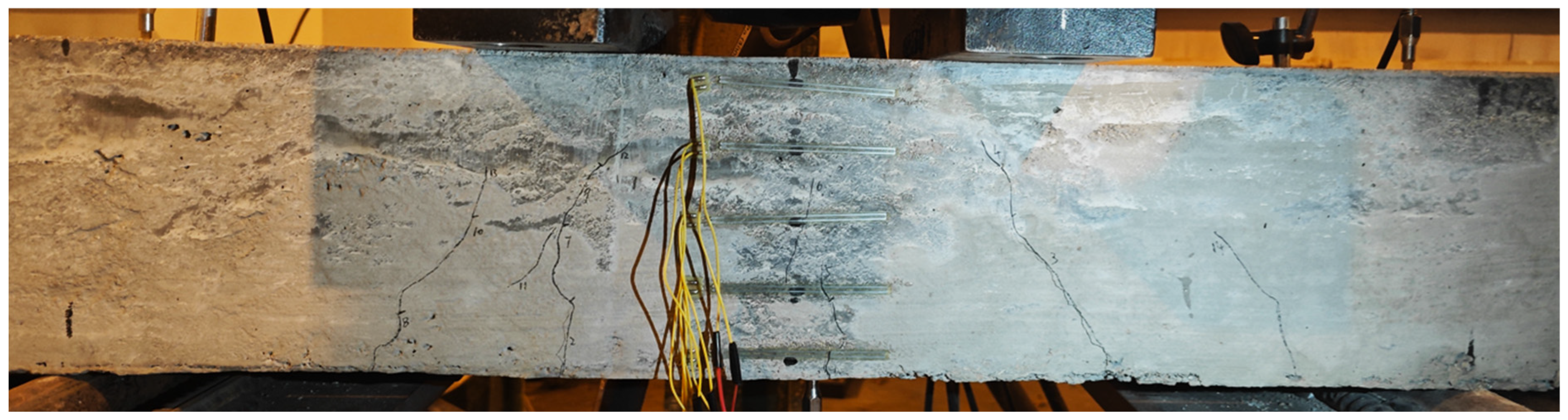
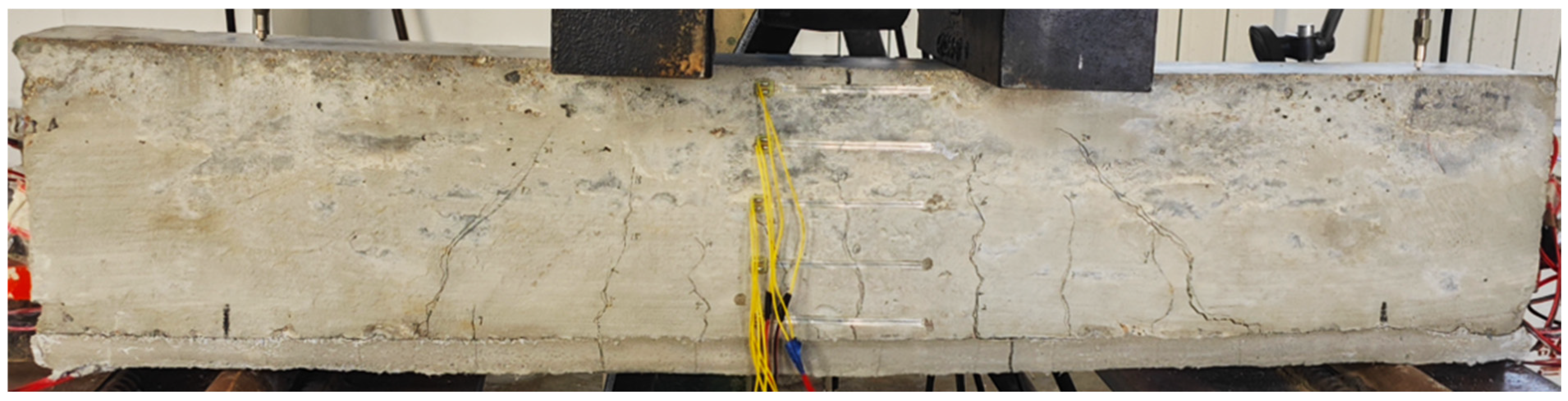
Specimen T01B: During the initial loading stage, the mechanical behavior of Specimen T01B was essentially consistent with that of the unstrengthened control beam, remaining within the linear elastic range. The first fine crack became visible on the surface of the PCM layer at the mid-span when the load reached 17.29 kN. Subsequently, several flexural cracks formed successively near the mid-span, with an initial spacing of approximately 100 mm. Prior to reaching a load of 53.10 kN, both the crack width and quantity increased gradually with the applied load, while the specimen predominantly maintained its elastic state. This behavior indicated that the strengthening layer effectively restrained crack propagation. The spacing of newly formed cracks stabilized between 80 mm and 90 mm, demonstrating superior crack control performance compared to the unstrengthened beam. Following the yielding of the tensile reinforcement, the specimen transitioned into the plastic deformation stage. At a load of 70.08 kN, interfacial debonding initiated, characterized by a crack at the PCM-to-concrete interface. This was immediately followed by a combined failure mode involving the rupture of the CFRP grid and the fracture of the tensile steel reinforcement. The mid-span displacement at failure was 7.12 mm. The crack pattern of Specimen T01B is illustrated in Figure 6.
Specimen T31B: During the initial pre-damage stage, a fine crack initiated in the tensile zone at mid-span when the load reached 10.16 kN. As the load increased, this crack propagated, and additional flexural cracks formed with an approximate spacing of 120–130 mm, none exceeding one-third of the beam height. The pre-damage loading was halted at 16.8 kN. The specimen was then strengthened with the CFRP grid-PCM system and cured. In the initial phase of the post-strengthening loading, the existing concrete and the strengthening layer exhibited excellent composite action. The CFRP grid in the tensile zone effectively restrained the propagation of pre-existing cracks, and the initiation of new cracks was significantly delayed compared to the unreinforced damaged condition. Yielding of the tensile steel reinforcement occurred at a load of 49.68 kN, representing a substantial increase over the yield load of the control specimen (T). As the load was further increased to approximately 69 kN, audible cracking sounds emanated from the beam. At the ultimate load of 70.92 kN, the width of the primary mid-span crack increased drastically, and the crack propagated rapidly toward the compression zone. The specimen ultimately failed in a combined mode: rupture of the CFRP grid in the tensile zone and fracture of the tensile steel reinforcement occurred almost concurrently, accompanied by crushing of the concrete in the compression zone. The mid-span displacement at failure was 7.15 mm. The crack pattern of Specimen T31B after strengthening is shown in Figure 7.
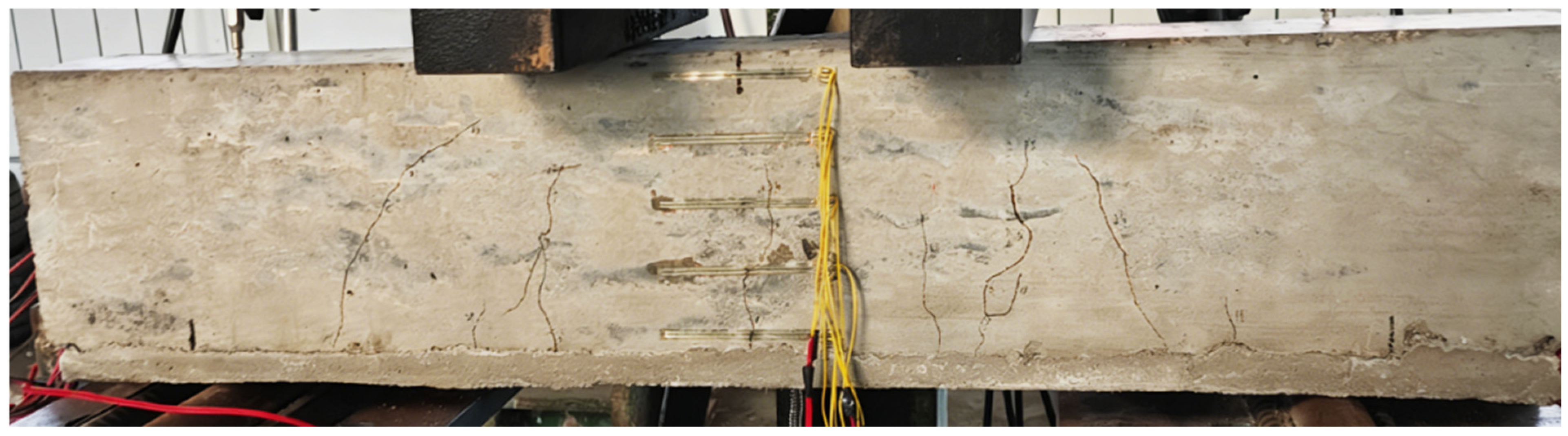
Specimen T51B: During the pre-damage loading, the first vertical crack appeared in the mid-span tensile zone at a load of 12.52 kN. As the load increased, several vertical cracks developed successively within the flexural region, with an approximate spacing of 140 mm. Loading was halted at 28 kN, by which time the crack height had extended to half of the beam height. The specimen was then strengthened with the CFRP grid-PCM composite system and cured. In the early phase of the post-strengthening loading, the strengthening layer exhibited good compatibility with the pre-damaged concrete. The CFRP grid effectively restrained the propagation of pre-existing cracks, delayed the initiation of new cracks, and maintained a stable crack spacing of 110–120 mm. Yielding of the tensile reinforcement occurred at a load of 51.32 kN, representing a 22.16% increase over the yield load of the unstrengthened control beam (T), underscoring the significant strengthening effect of the system. During the advanced loading stage, pronounced stress redistribution was observed. At a load of 62.36 kN, distinct cracking sounds emanated from the beam. Subsequently, the width of the primary mid-span crack expanded sharply as the crack propagated rapidly toward the compression zone. The specimen ultimately failed in a combined mode characterized by the near-simultaneous rupture of the CFRP grid and the tensile steel reinforcement in the tensile zone, accompanied by crushing of the concrete in the compression zone. The ultimate load was 65.49 kN, with a corresponding mid-span displacement of 7.38 mm. The crack pattern of Specimen T51B after strengthening is shown in Figure 8.
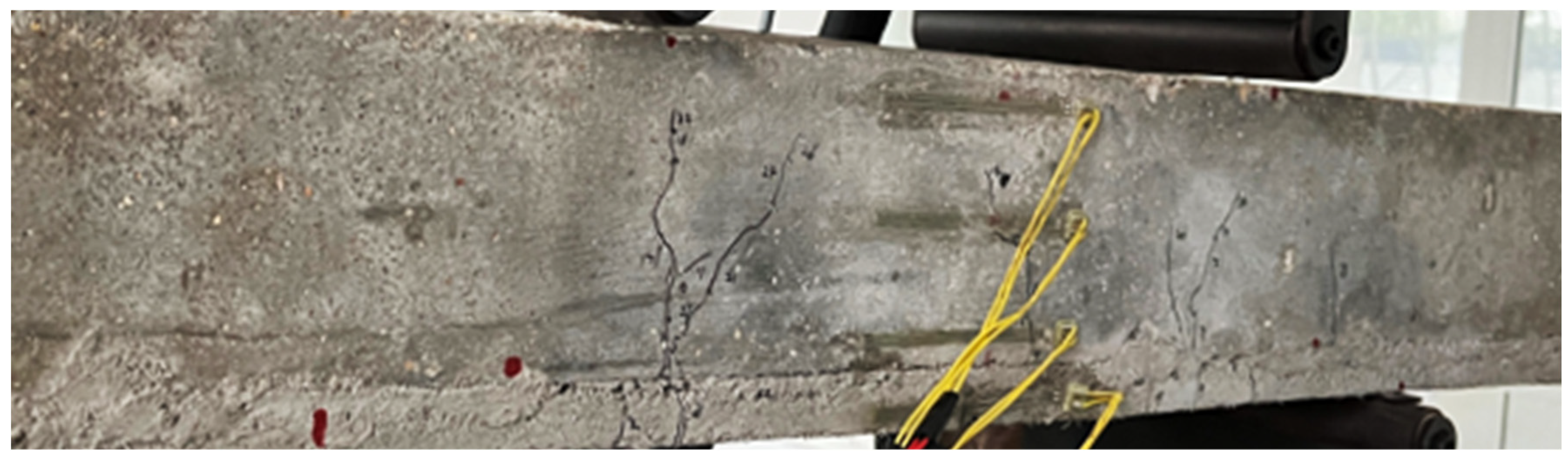
Specimen T71B: During the pre-damage loading, the first crack appeared at mid-span when the load reached 12.08 kN. With further loading, the existing cracks propagated along the beam height, with the longest extending to two-thirds of the beam height, while new cracks continued to form. Loading was suspended at 39.2 kN. At this point, the beam had developed a relatively dense pattern of cracks with an average spacing of approximately 120 mm, indicating a state of severe damage prior to strengthening. Following the application of the CFRP grid-PCM system and curing, the specimen was reloaded. In the initial stage of post-strengthening loading, composite action between the strengthening layer and the damaged concrete was evident, effectively restraining the propagation of pre-existing cracks. Yielding of the longitudinal tensile reinforcement occurred at a load of 45.24 kN. As loading continued, a sudden failure occurred in the tensile zone at 61.73 kN. The failure sequence was characterized by the rupture of the CFRP grid, followed immediately by the fracture of the tensile steel reinforcement. This led to a complete loss of tensile capacity, resulting in the specimen’s abrupt failure. The crack pattern of Specimen T71B after strengthening is shown in Figure 9.
The key experimental results are summarized in Table 6. Compared to the unstrengthened control beam, the ultimate loads of the strengthened specimens T01B, T31B, T51B, and T71B were increased by 28.87%, 26.71%, 17.01%, and 10.29%, respectively. These results confirm the efficacy of the CFRP grid-PCM composite system in enhancing the flexural capacity of RC beams. Furthermore, Specimen T01B exhibited a cracking load 58.62% higher than that of Specimen T. This significant improvement demonstrates that the composite strengthening layer effectively delays the initiation of the first crack and suppresses the propagation of micro-cracks through its bridging and restraining action, thereby enhancing the overall cracking resistance of the member.
In this study, structural damage was simulated using a graded monotonic loading protocol. This approach established a quantifiable relationship between the applied load level and the resulting macroscopic damage state, enabling a focused investigation into the dominant influence of “damage extent” on post-strengthening performance. It is important to note that this simplified modeling method does not account for complex damage mechanisms prevalent in real-world engineering scenarios, such as fatigue or corrosion-induced deterioration. Consequently, the simulated conditions in this experimental program differ from actual in-service environments.

3.2. Load-Deflection Curve Analysis

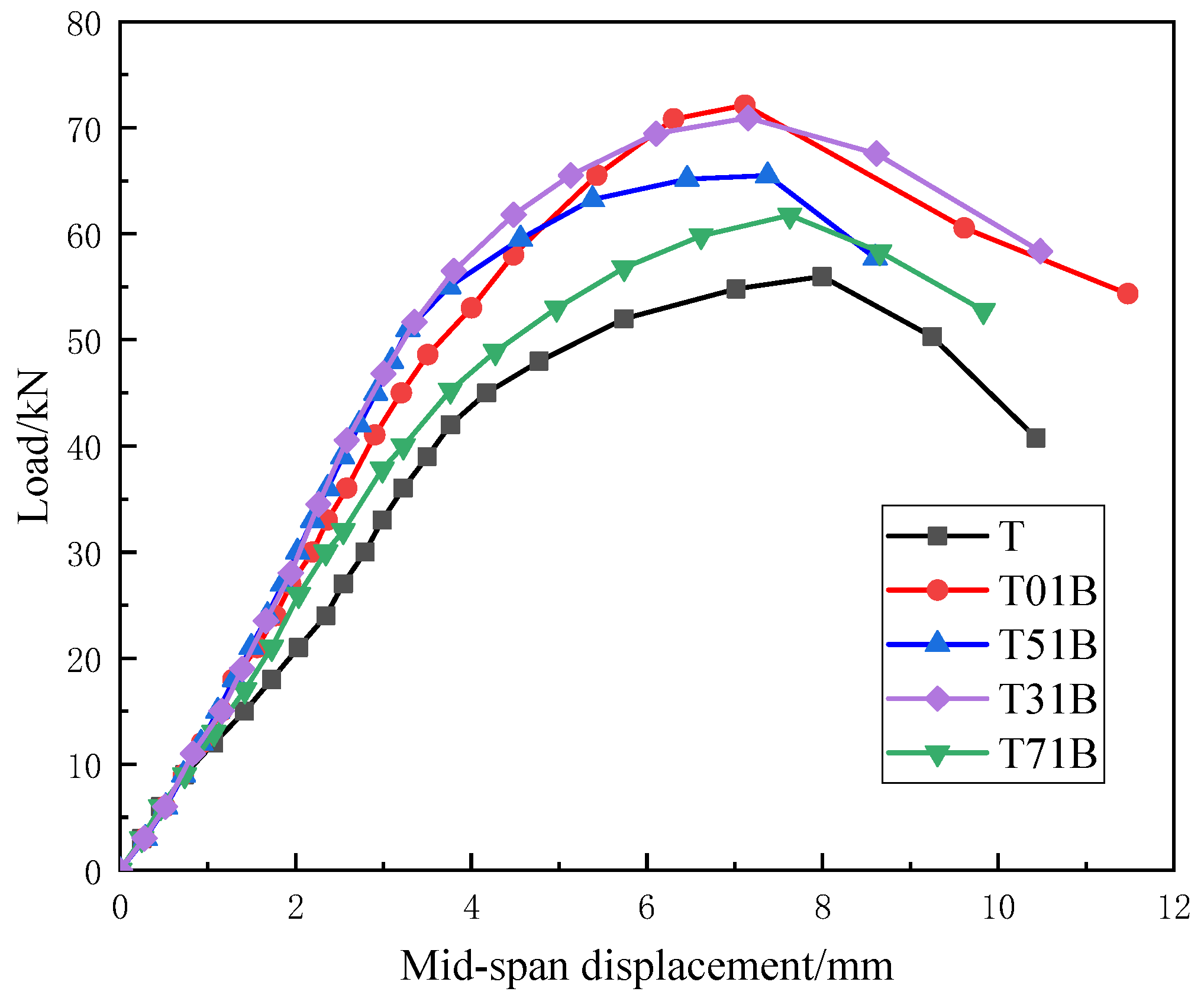
Figure 10 presents the load–displacement curves of the test beams under different strengthening schemes. For the pre-damaged and strengthened specimens, the curves represent the complete secondary loading process. Since the concrete had already cracked during the pre-damage stage, the starting point of each curve inherently reflects the influence of pre-existing cracks. Prior to steel yielding, the initial stiffness in the elastic stage varied significantly among specimens, primarily influenced by the degree of initial damage and the effectiveness of the strengthening procedure. Notably, Specimen T51B, pre-damaged to 50% of the ultimate load, exhibited slightly higher initial stiffness than the undamaged strengthened beam T01B. This can be attributed to the likely infiltration of the fluid polymer mortar into the micro-cracks formed during pre-loading, which may have enhanced interfacial bonding and contributed to the observed stiffness recovery. In contrast, Specimen T71B, pre-damaged to 70% of the ultimate load, showed significantly lower initial stiffness compared to T31B and T51B. This indicates that a higher pre-damage level induced extensive micro-cracking within the concrete, substantially degrading the material’s elastic modulus and compromising the cross-sectional integrity, which could not be fully restored by the strengthening system. The nearly overlapping pre-yield curves of T31B and T51B suggest that for moderate to low damage levels, the CFRP grid–PCM system can effectively restore, or even marginally improve, the initial stiffness of the beam.
Upon entering the plastic stage following steel yielding, the relative stiffness development among the specimens reversed, and their load–displacement behaviors diverged further. The stiffness development of T51B lagged behind that of T01B, exhibiting a more pronounced reduction in the post-yield slope. This can be explained by the heightened stress concentration effect caused by pre-existing damage, which became prominent in the plastic stage, accelerating the propagation of local micro-cracks and leading to faster stiffness degradation. In contrast, the severe initial damage in T71B resulted in earlier and more pronounced composite action between the steel reinforcement and the CFRP grid during secondary loading. Partial stress transfer through the strengthening layer somewhat delayed the propagation of concrete cracks, granting T71B relatively better deformation capacity, albeit at the cost of lower efficiency in load-bearing recovery. This contrasting behavior highlights the sensitivity of the strengthening system to the degree of initial damage: greater pre-damage leads to more significant potential for enhanced post-strengthening ductility, but at the expense of relatively limited strength recovery efficiency.
Regarding ultimate load and failure mode, the unstrengthened reference beam (T) exhibited the lowest ultimate load but a relatively gentle post-peak descending branch in its load–displacement curve, indicative of a typical ductile failure. Specimen T01B achieved the highest ultimate load, demonstrating the excellent strengthening effectiveness of the CFRP grid-PCM system on intact beams. However, its curve showed an abrupt turn and a steep drop near the peak, indicating a sudden failure primarily attributable to the brittle rupture of the CFRP grid. In comparison, the damaged and strengthened specimens exhibited ultimate loads slightly lower than that of T01B but still significantly higher than that of Specimen T. This confirms that the strengthening system can effectively improve load-bearing capacity even in the presence of initial damage. The higher the degree of initial damage, the more pronounced the stress-lag effect at the strengthening interface is likely to be during secondary loading. This reduces the efficiency with which the strength of the strengthening material is utilized, which is a key reason for the lower ultimate load of T71B compared to T31B and T51B.
A comprehensive analysis indicates that while the CFRP grid-PCM strengthening system significantly enhances the load-bearing capacity of beams, it does so at the cost of reduced ductility. This stiffness–ductility trade-off requires careful consideration in strengthening design.

3.3. Load-Strain Curve Analysis

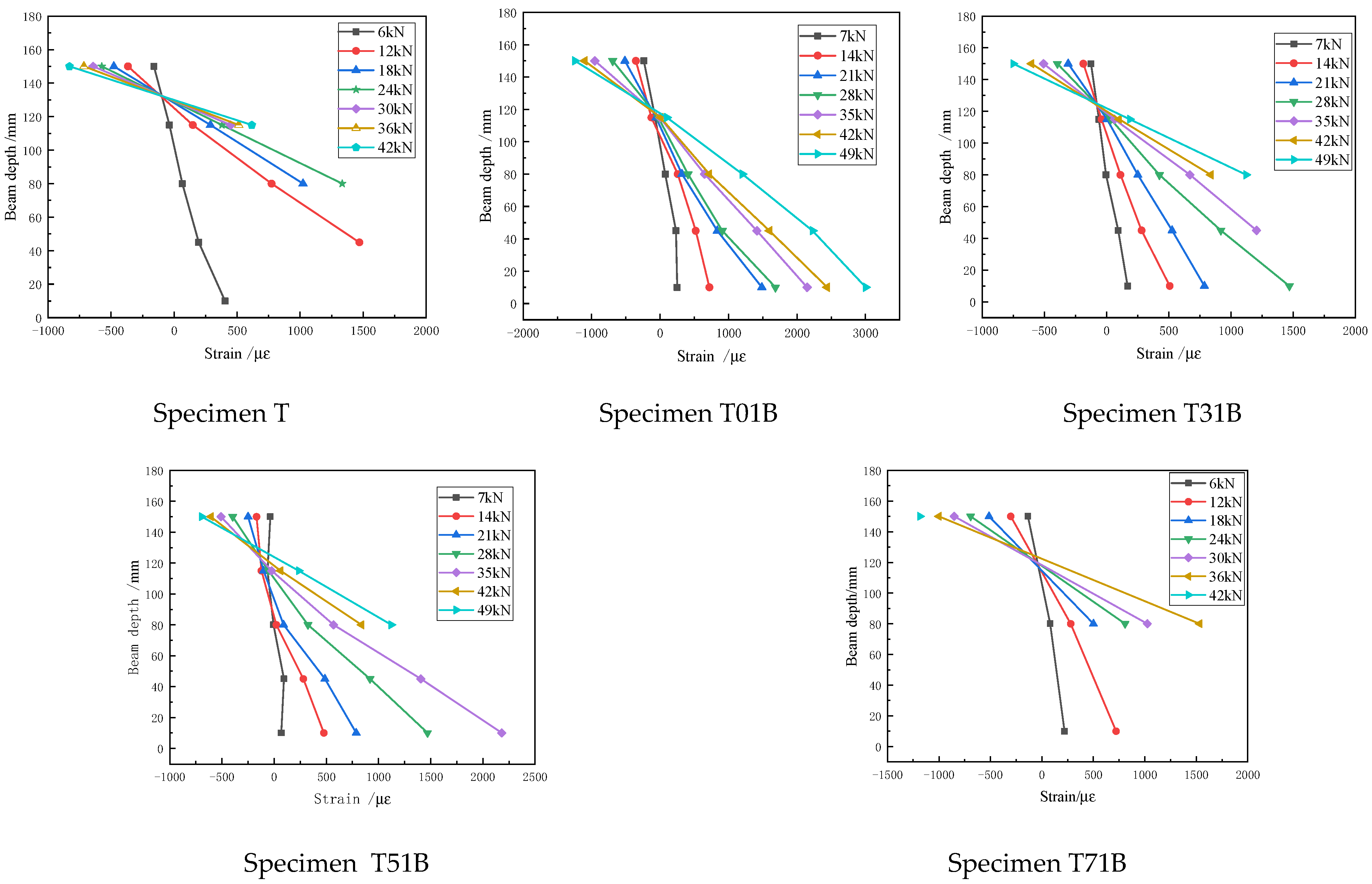
During testing, strain variations along the cross-sectional height at the mid-span of the beams were recorded. The corresponding strain distribution profiles plotted against the section height are presented in Figure 11. The results indicate that the strain distribution across the section height generally conforms to the plane section assumption, demonstrating effective composite action and deformation compatibility between the concrete substrate and the strengthening layer.
Specifically, the neutral axis of the unstrengthened beam (T) was located approximately 135 mm from the bottom surface. For the undamaged strengthened specimen (T01B), the neutral axis shifted upward to about 118 mm. This upward shift indicates that the strengthening layer participated in carrying tensile stresses, thereby increasing the height of the compression zone. In contrast, the neutral axes of all pre-damaged strengthened specimens were situated between those of Specimen T and T01B. This reflects the distinct mechanical state introduced by strengthening under pre-existing stress conditions. These findings not only validate the applicability of the plane section assumption for the composite section but also elucidate how different strengthening schemes alter the internal force flow—quantified by the neutral axis shift—thereby improving the overall mechanical performance of the member.
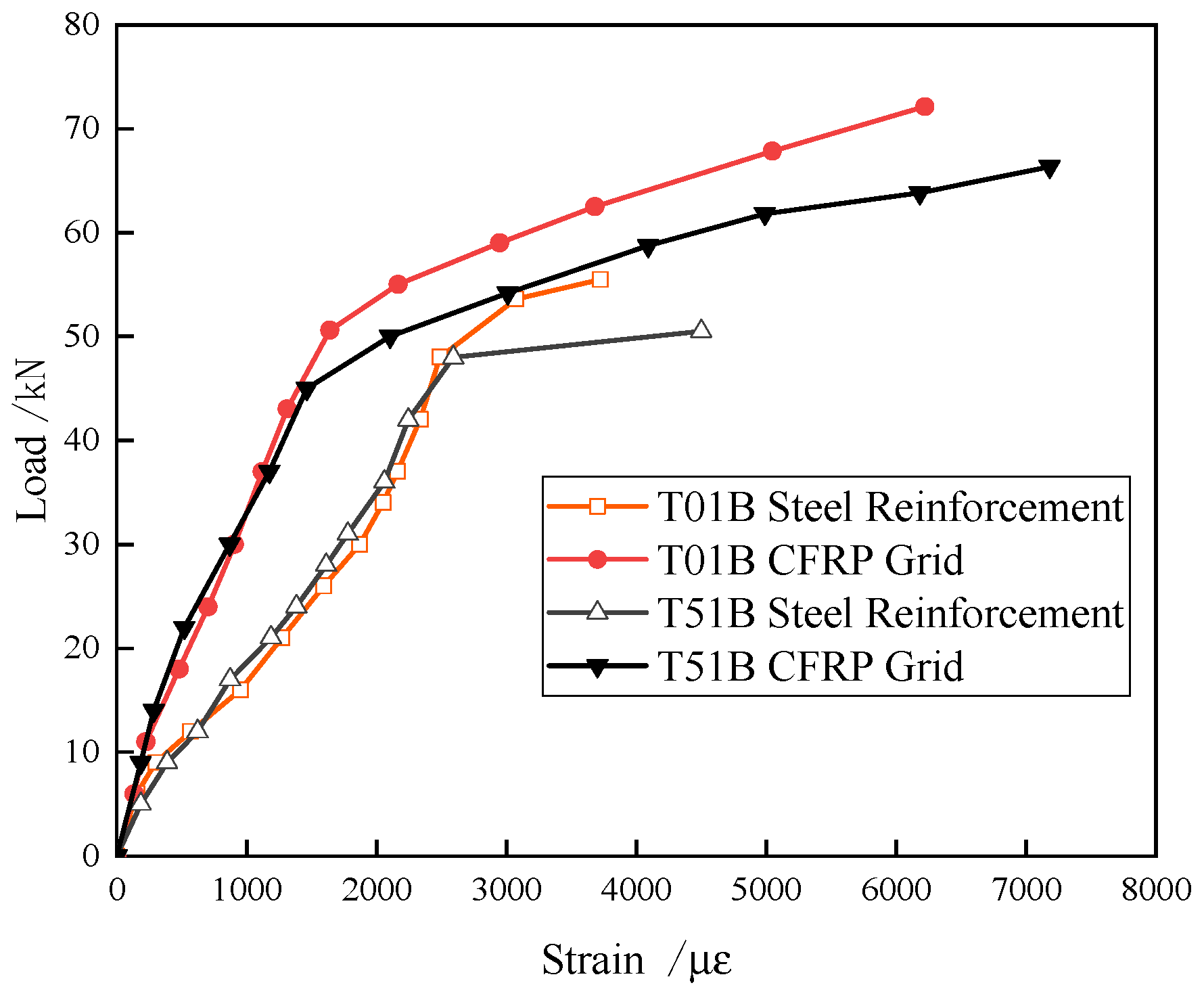
Figure 12 presents the load–strain curves of the test beams. Under secondary loading, the mechanical behavior exhibited distinct stages. Prior to strengthening, the longitudinal tensile stress at the beam bottom was resisted primarily by the tensile reinforcement, with steel stress increasing linearly with load while the structure remained elastic. Following the application of the CFRP grid-PCM strengthening system and during subsequent loading, the CFRP grid acted compositely with the tensile reinforcement to jointly resist tensile stresses. As loading progressed, the tensile reinforcement yielded first, entering the plastic stage. Subsequently, the CFRP grid began to carry a substantially increased share of the tensile stress, resulting in a rapid rise in its strain until the ultimate capacity was reached.
At the same load level, the CFRP grid strain in Specimen T01B was significantly lower than that in Specimen T51B. This indicates that the presence of initial damage necessitated greater strain in the carbon fiber material to equilibrate the external loads, reflecting a reduced strain utilization efficiency of the strengthening system in pre-damaged beams. A pronounced strain lag in the CFRP grid was observed for all strengthened beams under secondary loading. During the initial loading stage, the strain development in the CFRP grid lagged significantly behind that of the steel reinforcement. After the load exceeded approximately 50 kN, the strain rate of the CFRP grid increased rapidly. As the load approached the ultimate level, the strain in the CFRP grid eventually surpassed that of the steel reinforcement. This strain evolution pattern reveals a significant internal stress redistribution process from the steel reinforcement to the CFRP grid within the composite system.

4. Analytical Model for Flexural Capacity of CFRP Grid-PCM Strengthened RC Beams

4.1. Theoretical Basis

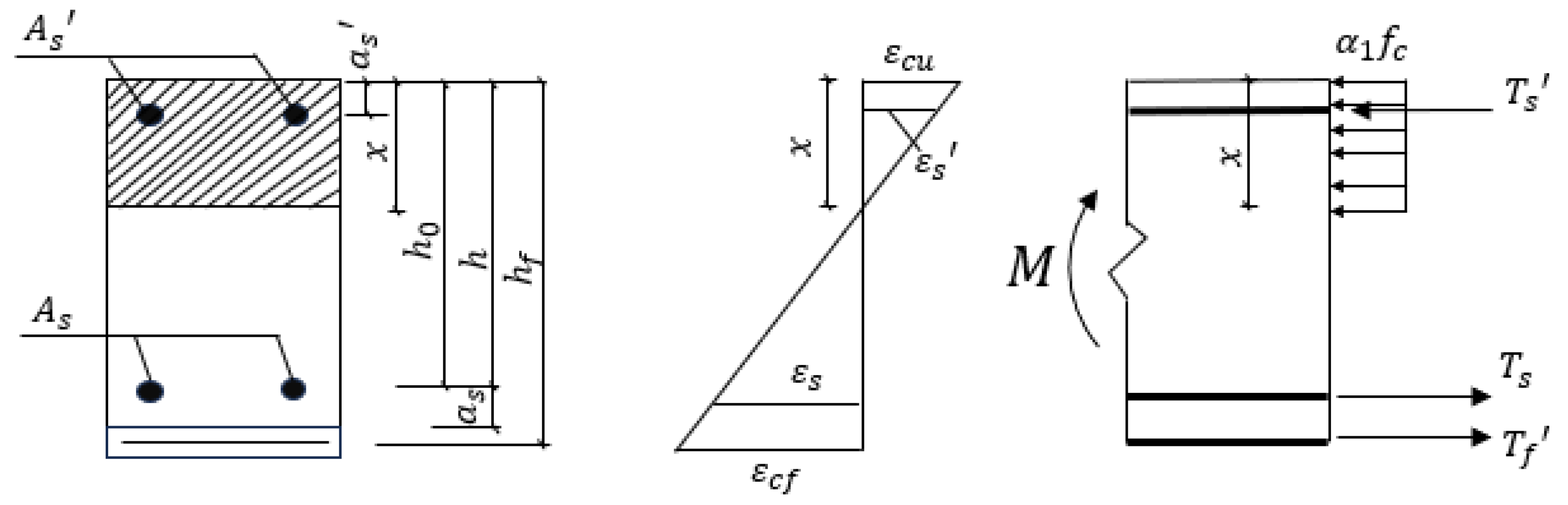
The flexural capacity of the RC beams strengthened with the CFRP grid-PCM system was calculated based on the plane section assumption, equilibrium conditions, and the constitutive relationships of the constituent materials. The stress–strain relationship for the concrete in the compression zone followed the specifications of the Chinese Code for Design of Concrete Structures (GB 50010-2010) [39]. The steel reinforcement was modeled with a linear hardening behavior, and the CFRP grid was assumed to behave as a linear elastic material up to failure. For the simplified analysis, an equivalent rectangular stress block was adopted for the concrete compression zone, with the stress coefficient α 1 = 1.0 and the neutral axis depth coefficient β 1 = 0.8. A schematic of the cross-section and the corresponding stress distribution used in the calculation is presented in Figure 13.
The compressive concrete zone was analyzed using the equivalent rectangular stress block method [40]. The resultant compressive force C c is given by:
C C = α 1 f c b β 1 x
Based on the plane section assumption, the following strain compatibility relationships are established:
ε c x = ε s h 0 x = ε f h f x
The resultant force from the compressive steel reinforcement, T s , is calculated as:
T s = A s E s ε s
The combined tensile force from the tensile steel reinforcement and the CFRP grid is:
T s + T f = A s [ f y + E s ε s ε y ] + E f ε f
The force equilibrium equation and the moment equilibrium equation about the point of action of the resultant tensile steel force are, respectively:
C C + T s = T s + T f
M u = C C h 0 β 1 x 2 + T s h 0 a s + T f h f h 0
where x is the depth of the concrete compressive zone; α 1 is the modification factor for concrete strength; f c is the design value of the axial compressive strength of concrete; f y is the design value of the tensile yield strength of steel reinforcement; ε c , ε f , and ε y represent the compressive strain of concrete, the tensile strain of the CFRP grid, and the yield strain of the tensile steel reinforcement, respectively; A s and A s are the cross-sectional areas of the longitudinal steel reinforcement in the tensile and compressive zones, respectively; and E s and E f denote the elastic moduli of the steel reinforcement and the CFRP grid, respectively.

4.2. Flexural Capacity Calculation of Damaged and Strengthened Beams

The calculation of the flexural capacity for a damaged and subsequently strengthened RC beam requires the determination of the pre-existing moment, M 0 , representing the initial damage state. The initial neutral axis depth, x 0 , is determined iteratively using the moment equilibrium equation about the point of action of the resultant tensile steel force in the initial state. Subsequently, the flexural stiffness is computed using the method of equivalent transformed sections. By integrating these results, the initial tensile steel strain, ε s 0 , can be established:
ε s 0 = M 0 h 0 x 0 E I
The strain compatibility condition yields the initial compressive strain in the concrete, ε c 0 :
ε c 0 = x 0 h 0 x 0 ε s 0
Failure Mode 1: Yielding of tensile steel reinforcement followed by crushing of concrete in the compression zone. In this case: ε c = ε c u .
The total compressive strain in the concrete after strengthening, ε c t , is:
ε c t = ε c 0 + ε c = ε c u
The total strain in the tensile steel reinforcement, ε s t , is:
ε s t = ε s 0 + ε s
Substituting Equations (9) and (10) into Equation (2) and combining with Equations (5) and (6), the flexural capacity of the strengthened beam at concrete crushing failure is derived as:
M u = C C h 0 β 1 x 2 + A s E s ε s t h 0 a s + E f ε f h f h 0
Failure Mode 2: Yielding of tensile steel reinforcement followed by rupture of the CFRP grid. In this case: ε c < ε c u , ε f = ε f u .
The total compressive strain in the concrete after strengthening, ε c t , is:
ε c t = ε f u x h f x
Substituting Equations (10) and (12) into Equations (5) and (6), the flexural capacity of the strengthened beam at CFRP grid rupture failure is derived as:
M u = C C h 0 β 1 x 2 + A s E s ε s t h 0 a s + E f ε f u h f h 0

4.3. Comparative Analysis of Calculation Results

Based on the theoretically derived calculation formula for the flexural capacity of beams strengthened with CFRP grid, the ultimate bearing capacity of each test beam under secondary loading conditions was computed. In this calculation, the distance from the extreme tension fiber to the resultant force point of the tensile reinforcement, a s , was taken as 25 mm, and the cross-sectional areas of the longitudinal tensile and compressive reinforcement, A s and A s , were both 157 mm2. The detailed comparative results are presented in Table 7.
As summarized in the table, the theoretical predictions show good agreement with the experimental results, with deviations generally controlled within 15%. This favorable comparison confirms the reliability of the proposed flexural capacity model for CFRP grid-strengthened beams. Importantly, the model explicitly accounts for the effects of secondary loading, offering a practical and theoretically sound basis for engineering design applications.

5. Finite Element Analysis

5.1. Establishment of Finite Element Model

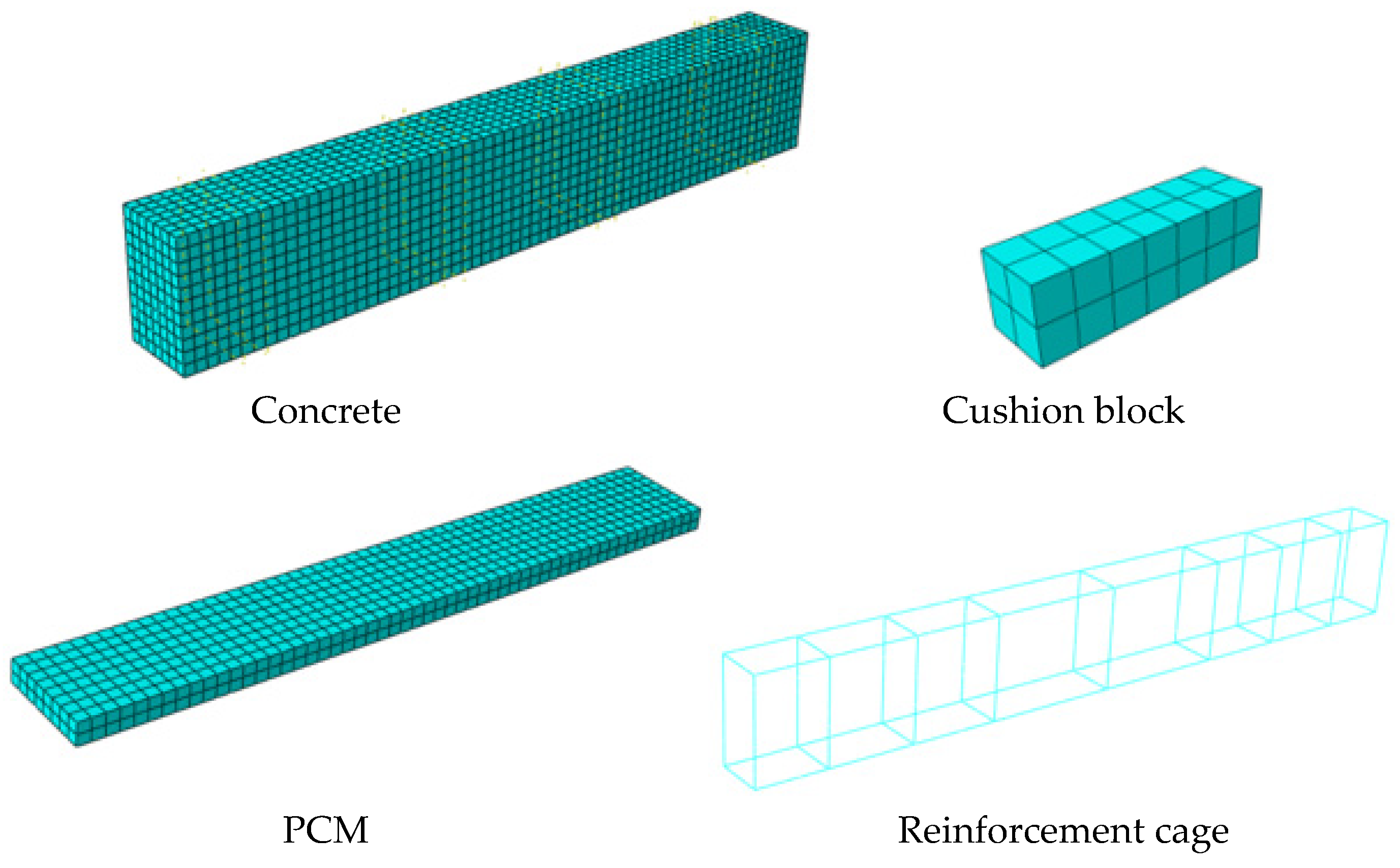
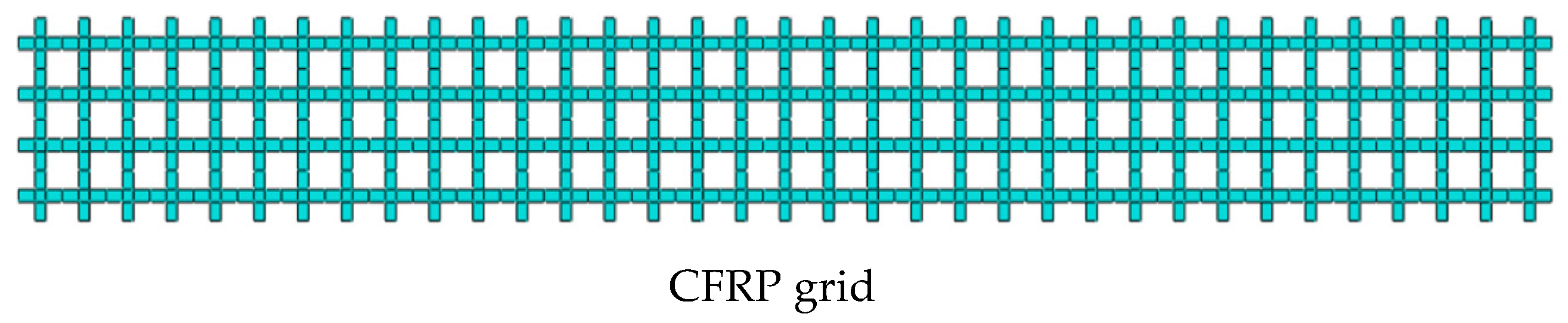
To thoroughly investigate the flexural performance of damaged reinforced concrete beams strengthened with the CFRP grid-PCM composite system, a finite element model was developed using ABAQUS(2021). The concrete was modeled using the plastic damage model [41], while the steel reinforcement was simulated with a bilinear model incorporating linear hardening. Given its high tensile strength, the CFRP grid was modeled as a linear elastic material, with its stress reduced to zero upon reaching the ultimate tensile strain. In terms of element types, C3D8R solid elements were used for the concrete and PCM, T3D2 truss elements for the steel reinforcement, and S4R shell elements for the CFRP grid.
The “element birth and death” technique [42] in ABAQUS was employed to sequentially simulate the secondary loading process, which included pre-damage, unloading, strengthening, and reloading. A key simplification was applied to the model: the strengthening layer was applied only to the beam segment between the two supports, rather than extending it fully along the entire span as in the physical specimens. This simplification was adopted because modeling the full-length layer introduces complex boundary constraints and contact nonlinearities that lead to convergence difficulties. It is justified by the fact that the primary tensile contribution of the strengthening layer is concentrated in the high-moment region near the mid-span, and numerical verification confirmed that the stress in the CFRP grid near the supports remained below 2% of its ultimate strength. This approach ensures computational stability while negligibly impacting the predicted flexural behavior. To prevent stress concentration, bearing plates were modeled at the support and loading points. The interface between the PCM and the concrete substrate was simulated using a “Tie” constraint. The mesh strategy was determined through a convergence analysis: a global seed size of 15 mm was used for the concrete and steel reinforcement, while finer mesh sizes of 12 mm and 8 mm were assigned to the PCM layer and the CFRP grid, respectively, to accurately capture interfacial behavior. The resulting mesh configuration is illustrated in Figure 14.

5.2. Finite Element Validation

5.2.1. Failure Mode

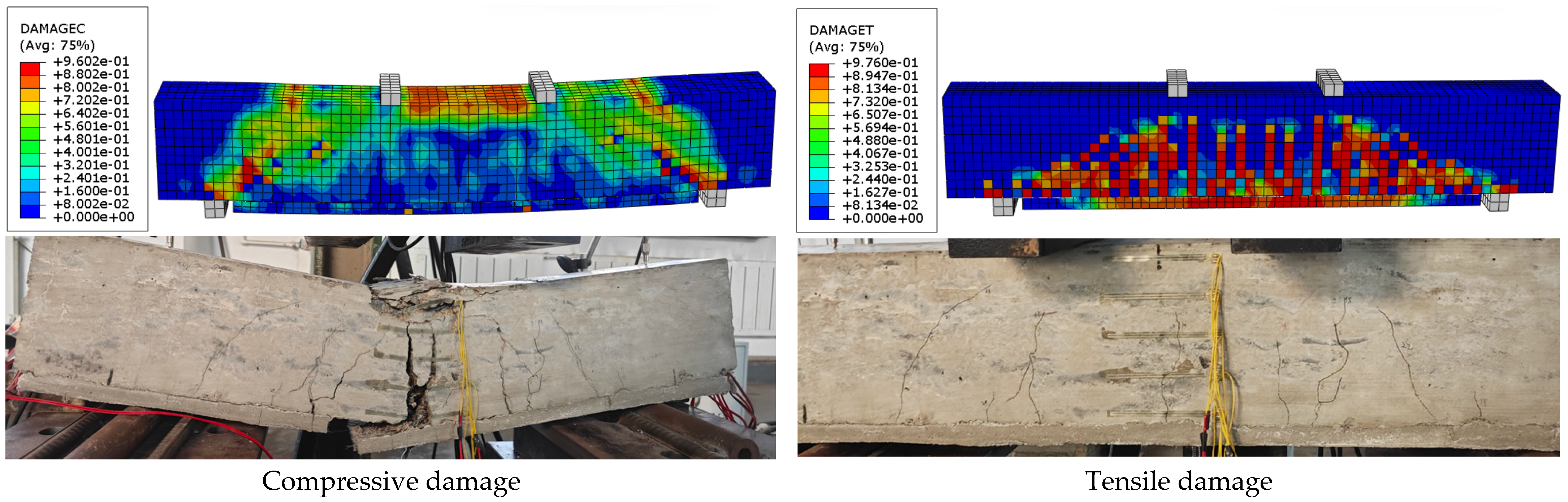
Figure 15 compares the damage patterns of the experimental beam and the finite element model at various loading stages. Macroscopically, the failure modes show good consistency: both exhibited concrete crushing in the compression zone and material failure in the tension zone, with similar crack propagation trends and damage distribution. This agreement indicates that the FE model successfully captures the fundamental failure mechanism of the strengthened beam.
It is important to note, however, that the experimental failure represents actual physical behavior, influenced by material heterogeneity, construction imperfections, and loading system constraints, which introduce inherent randomness and complexity into crack development and failure progression. In contrast, the numerical simulation is based on simplified assumptions regarding material constitutive models, element types, and boundary conditions. While it reliably reproduces the overall behavioral trend, the model inevitably shows discrepancies in localized details, such as crack width, propagation rate, and the precise instant of failure initiation, when compared to the experimental observations.
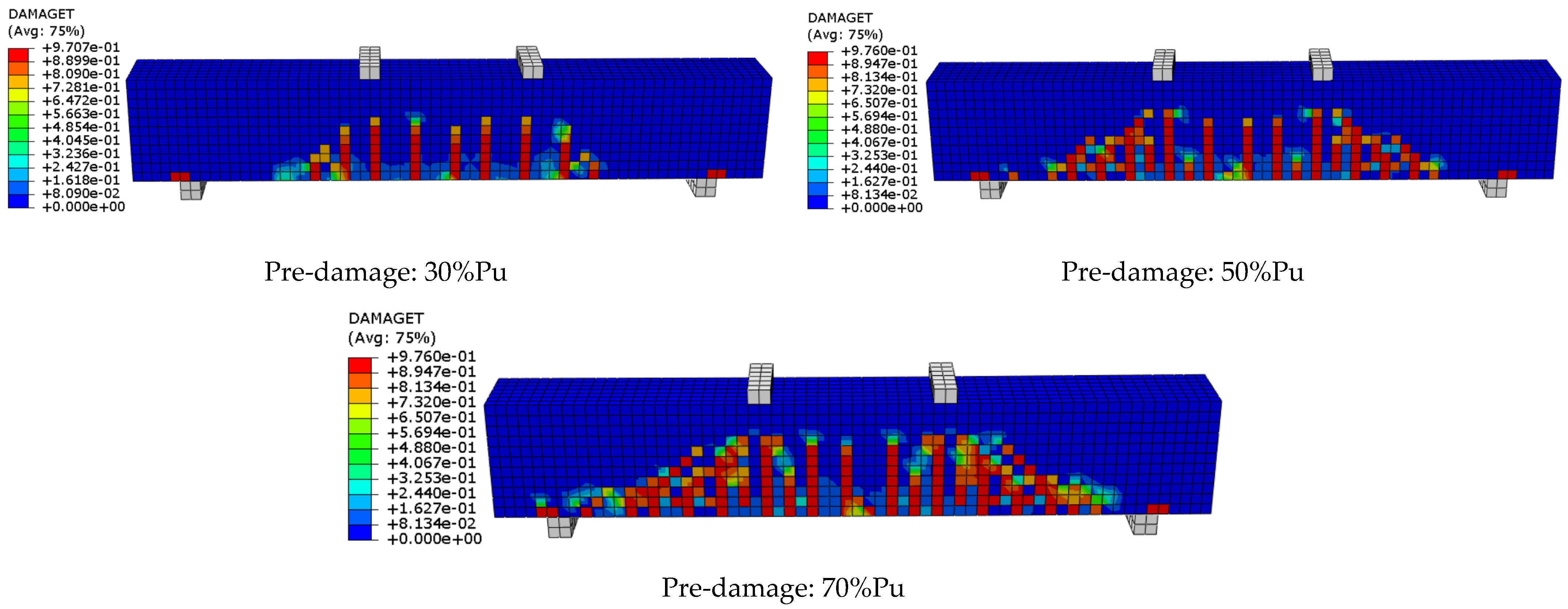
Figure 16 illustrates the residual tensile damage and deformation profiles of the beams after the pre-damage unloading stage, prior to strengthening. The corresponding residual deflections under different pre-damage load levels are quantitatively compared in Table 8. The analysis indicates a clear trend: as the pre-damage load increases, both the number of residual cracks and the magnitude of residual deflection rise correspondingly. The experimental measurements are in good agreement with the simulation results. This agreement demonstrates that the employed “element birth and death” technique effectively captures the key mechanical behaviors—specifically, residual deformation and damage state—induced during the preloading stage. Consequently, the validated model provides a reliable basis for simulating the structural response under the subsequent secondary loading scenario.

5.2.2. Load–Displacement Curve

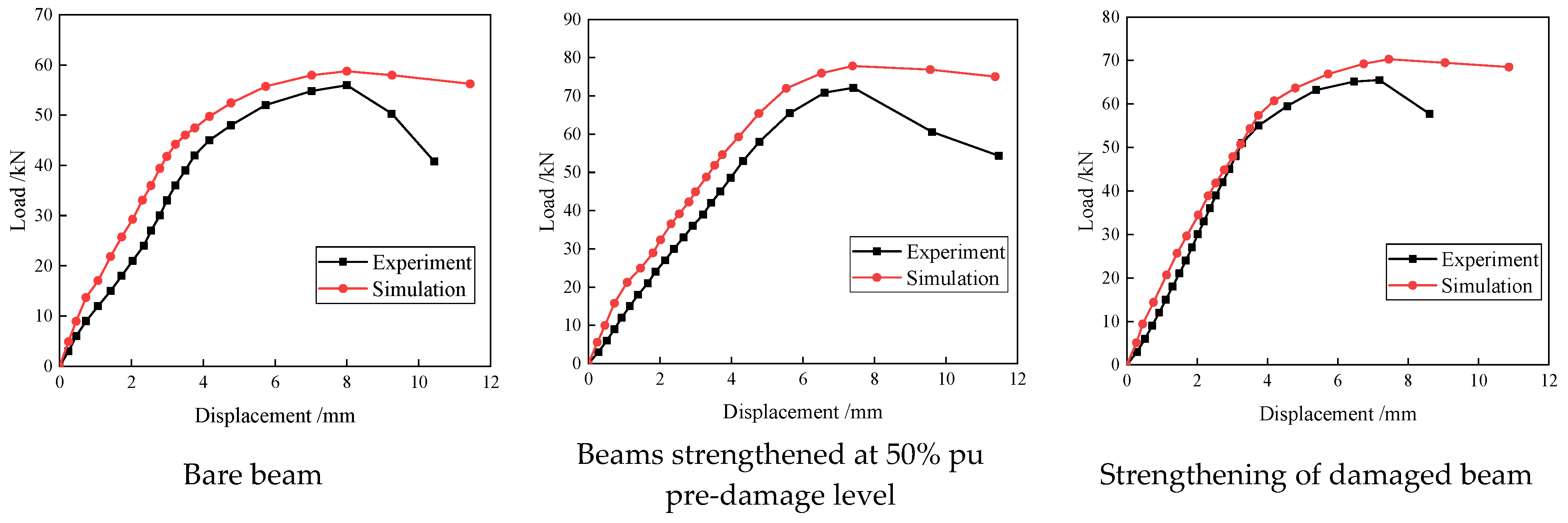
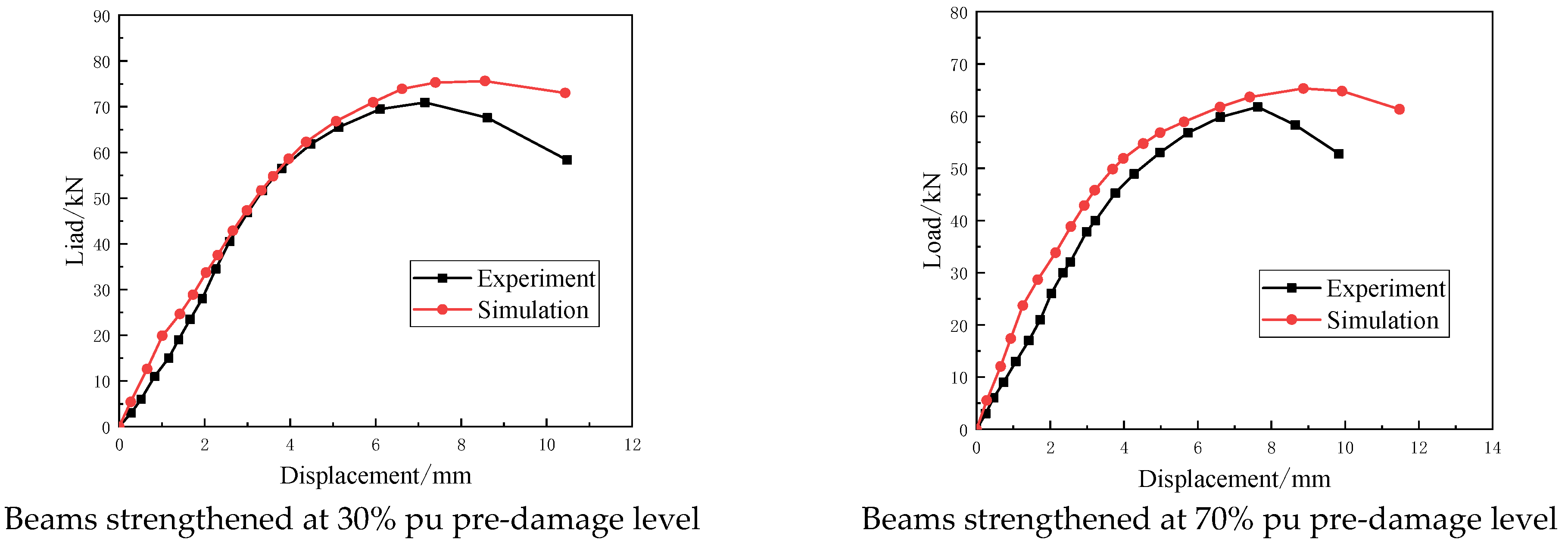
Figure 17 compares the load–displacement curves obtained from experiments and finite element simulations. The overall trends show good agreement, indicating that the model effectively predicts key macroscopic mechanical properties, such as stiffness and ultimate load. To ensure computational convergence, certain simplifications were necessary in the model: the CFRP grid was treated as a linear-elastic material without considering its fracture, and the potential debonding at the interface was neglected. While these simplifications circumvent the convergence difficulties associated with simulating complex fracture processes, they also introduce a degree of artificial stiffening in the post-peak response of the simulated curves. Further analysis revealed that refining the mesh of the CFRP grid in the mid-span tension zone had a limited effect on the overall stiffness. It is therefore hypothesized that the primary reason for the slightly higher structural stiffness observed in the simulation, compared to the experimental data, is likely the insufficient representation of bond–slip behavior at the interfaces due to the simplified modeling approach.
The quantitative comparative analysis in Table 9 indicates that the maximum relative error between the finite element simulation results and the experimental data is strictly within 10%. This high level of accuracy validates the predictive reliability of the developed FE model up to the ultimate load stage and demonstrates its capability to accurately capture the key mechanical response characteristics of the strengthened beams throughout loading.

6. Parameter Analysis

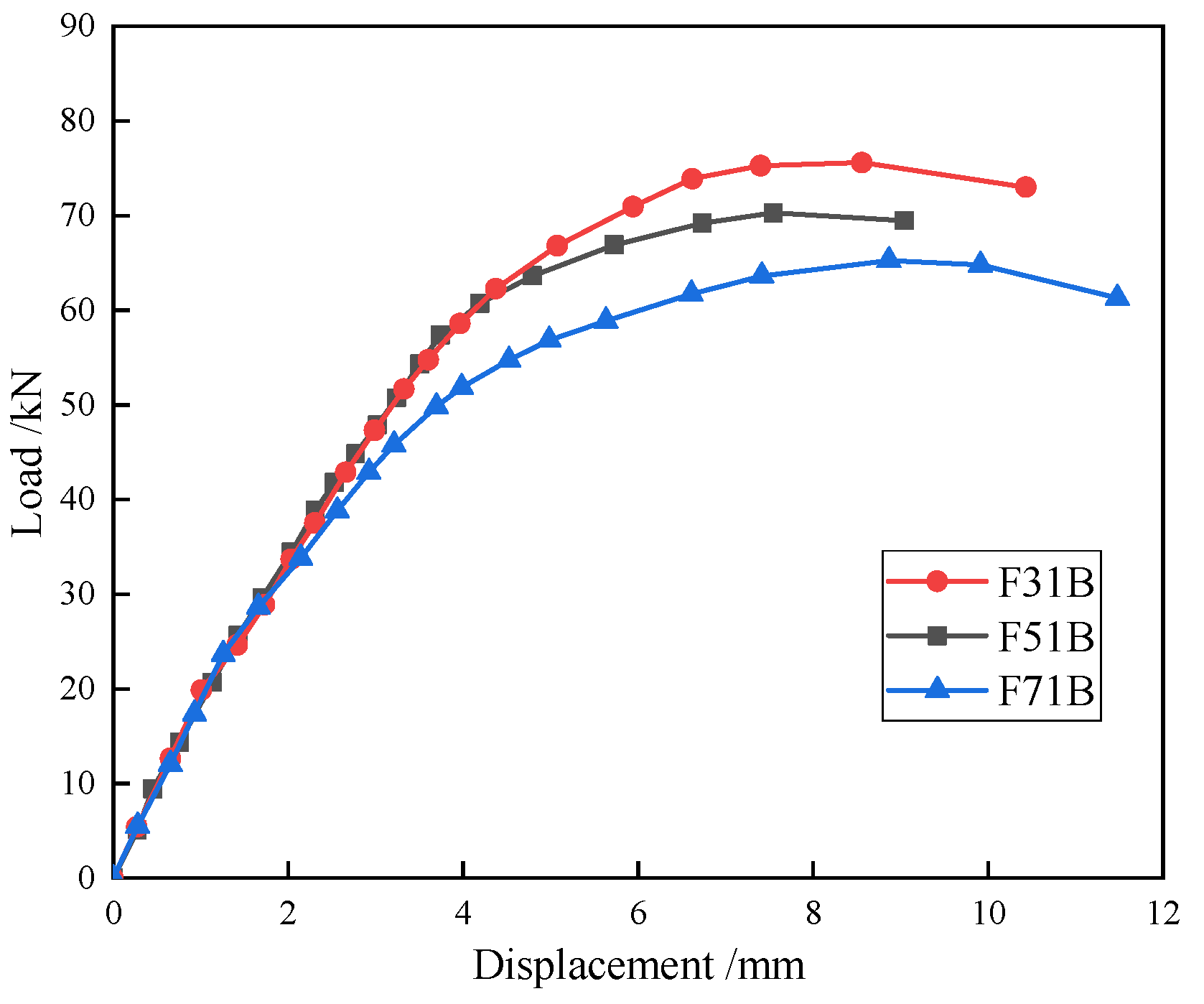
To further investigate the influence of additional factors on reinforced concrete beams under secondary loading, this study systematically conducted parametric analysis using the validated finite element model with Specimen T51B as the benchmark. The research focuses on key parameters including beam damage degree, number of CFRP grid layers, and grid spacing, aiming to reveal their effects on the flexural performance of reinforced concrete beams. This systematic investigation provides comprehensive data support and reliable theoretical basis for large-scale engineering application of CFRP grid strengthening technology. The detailed model design parameters are summarized in Table 10.

6.1. Damage Degree of Beams

Figure 18 presents the load–displacement curves obtained from finite element simulations of beams with varying degrees of initial damage. During the initial loading stage, all specimens exhibited an approximately linear response, indicative of elastic behavior. As loading progressed, the slope of the curves gradually decreased, marking the transition to the elasto-plastic stage. In the secondary loading phase, beams with higher initial damage entered the stiffness degradation stage earlier due to the presence of pre-existing cracks, resulting in reduced overall flexural stiffness. Consequently, these specimens reached lower loads at identical displacement levels and exhibited lower ultimate load capacities. In contrast, the beam with 30% damage maintained a relatively intact cross-section with minimal stiffness loss, allowing for more efficient internal force transmission and distribution, which contributed to its higher load-bearing potential.
Analysis of the mid-span displacements at failure revealed that Specimen T71B demonstrated superior ductility. This behavior is attributed to the significant degradation of the concrete matrix’s stiffness under high pre-damage. This degradation promoted earlier and more pronounced engagement of the strengthening layer in carrying load, thereby facilitating greater structural displacement. Conversely, beams with lower damage degrees retained substantial stiffness in the concrete matrix. This higher reserve stiffness delayed the full composite action between the strengthening layer and the matrix, leading to deformation concentration in localized weak zones and ultimately limiting the development of overall structural ductility. These findings underscore the critical importance of accurately assessing the degree of initial damage when designing strengthening schemes for damaged RC beams in practical engineering.

6.2. Number of CFRP Grid Layers

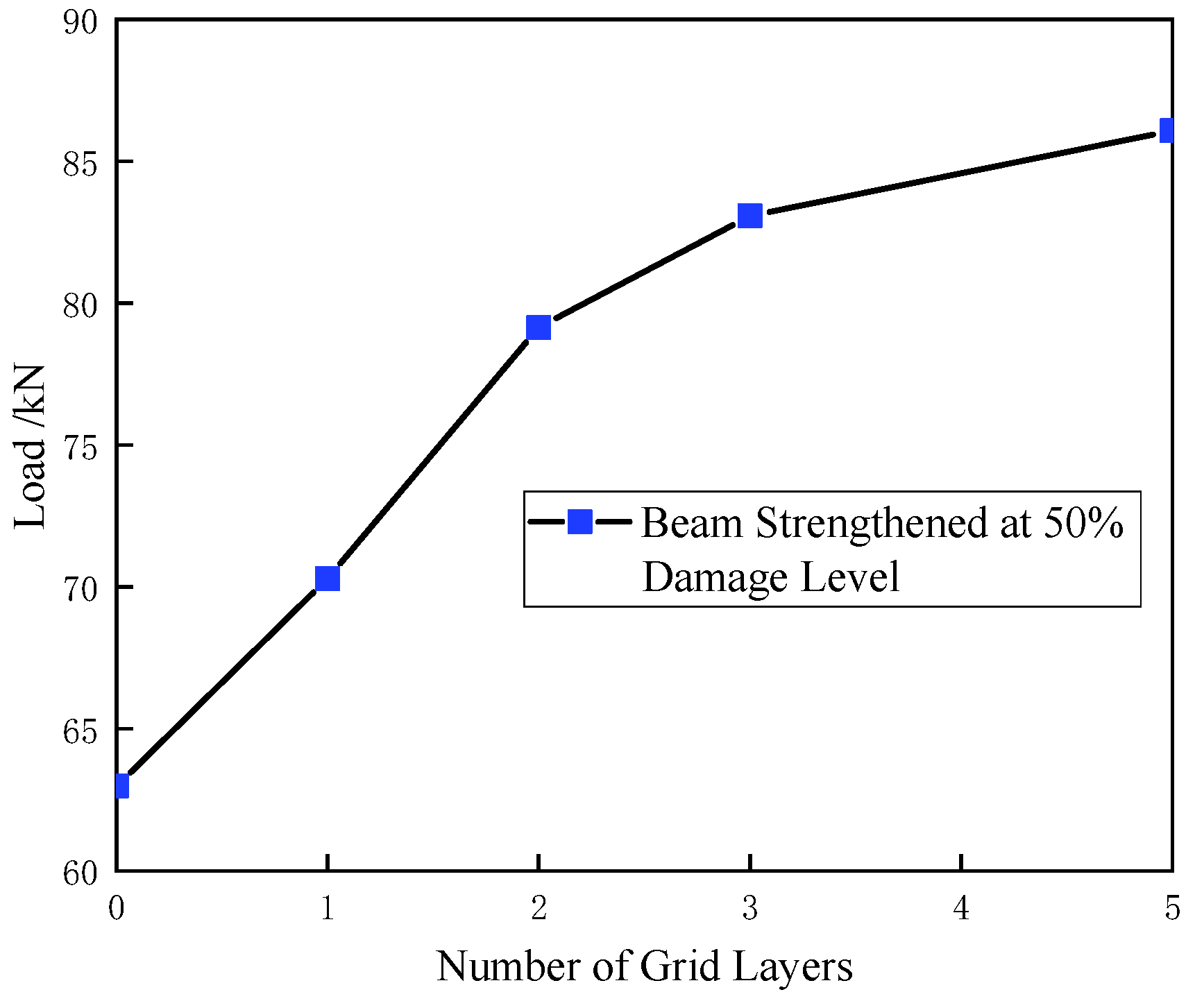
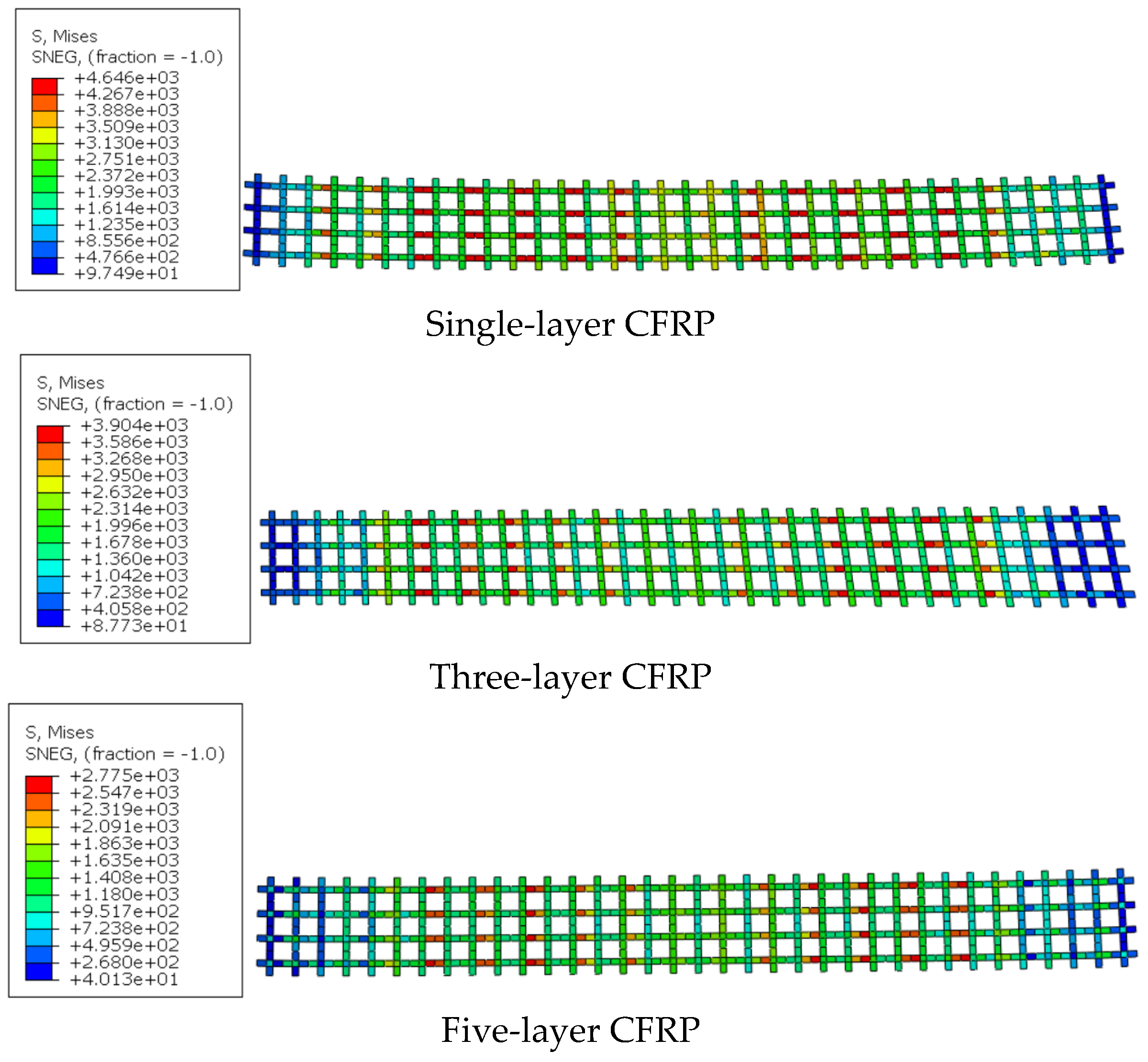
To systematically investigate the influence of the number of CFRP grid layers on the flexural behavior of RC beams under secondary loading, finite element models with 0 (unstrengthened), 1, 2, 3, and 5 layers were developed. Figure 19 and Figure 20 present the effects of the grid layer number on the ultimate load-carrying capacity and the corresponding stress distribution within the grids, respectively. Compared to the unstrengthened beam, the strengthened specimens exhibited a significant increase in ultimate load. However, the incremental benefit of adding grid layers diminished progressively beyond the first layer. The underlying mechanism can be explained as follows: a small number of grid layers (e.g., 1–2) effectively compensates for the tensile deficiency of the beam. In contrast, in specimens with more than three layers, failure occurred prematurely, before the stress in the tensile-zone CFRP grid could approach its material strength. This indicates a shift in the failure mode to an unbalanced “strong tension–weak compression” state. While additional grid layers increase the tensile stiffness of the section, the development of compressive stress in the concrete lags behind. This stress imbalance restricts the coordinated deformation between the steel reinforcement and the CFRP grid. Consequently, the efficiency of stress redistribution within the tensile zone is reduced, impairing the overall synergistic performance of the composite strengthening system.

6.3. CFRP Grid Spacing

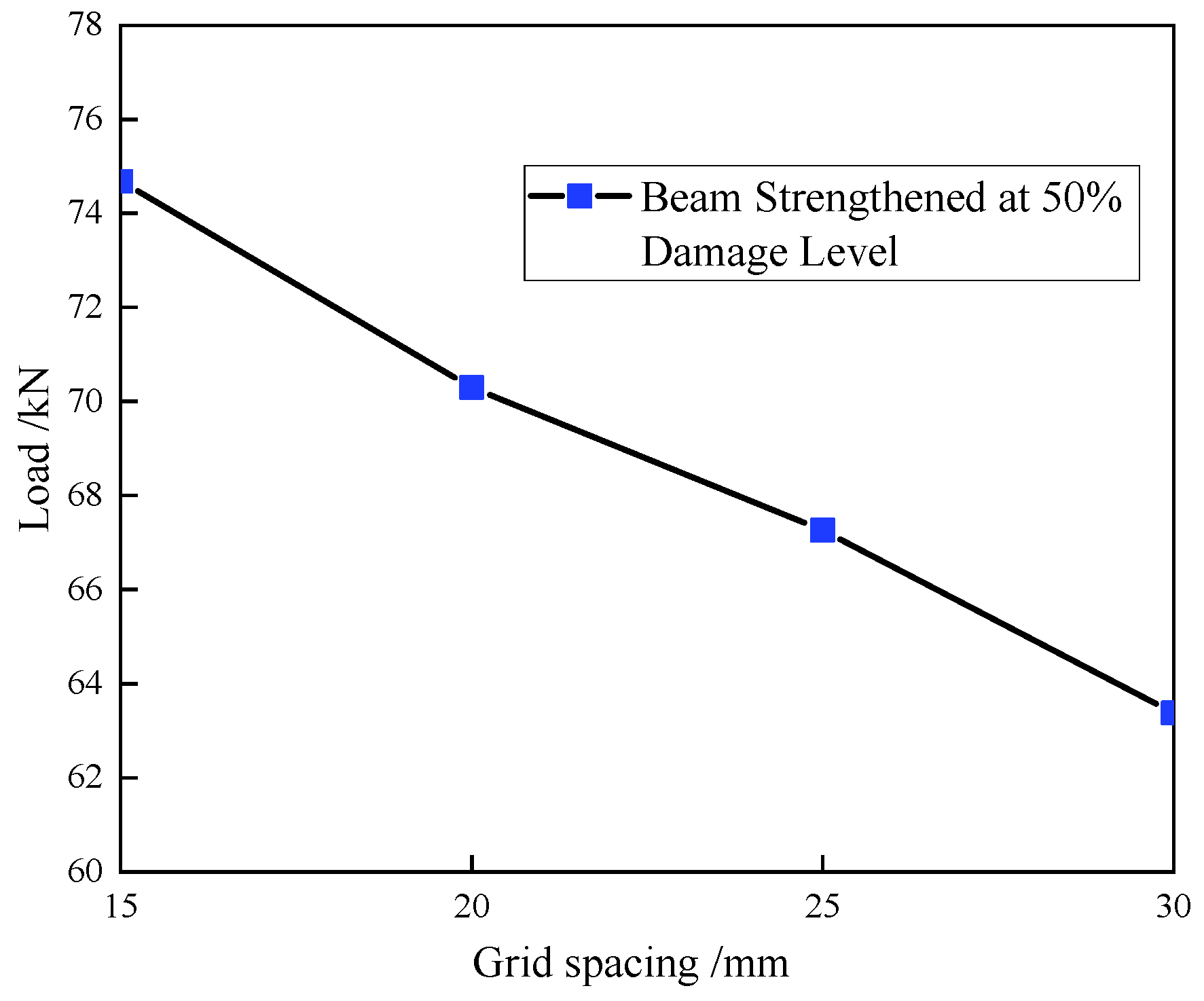
Figure 21 compares the ultimate loads of beams under different CFRP grid spacings. The flexural capacity exhibits a graded decline as the grid spacing increases from 15 mm to 30 mm. The underlying mechanism is that a smaller grid spacing facilitates more continuous stress transfer and ensures sufficient interfacial bonding effectiveness. This configuration promotes effective control of structural damage and guarantees efficient composite action between the strengthening layer and the concrete beam. Conversely, a larger grid spacing results in a more discrete or localized stress transfer path. This leads to localized stress concentrations, impaired interfacial synergy, and consequently, weakened control over damage progression under secondary loading. These adverse effects collectively accelerate crack propagation and limit the degree to which the tensile strength of the strengthening system can be utilized. As a result, the ultimate load decreases progressively as the grid spacing increases.

7. Conclusions

The carbon fiber within the CFRP grid-PCM composite system significantly enhances the flexural strength of strengthened beams by providing substantial tensile resistance. However, this stiffness enhancement simultaneously suppresses crack development and delays steel reinforcement yielding, leading to reduced structural ductility. Furthermore, the weakened composite action between the grid and the steel reinforcement increases the risk of a more brittle failure mode.
A calculation formula for the flexural capacity of damaged beams strengthened with CFRP grid under secondary loading conditions is proposed and validated in this study.
The finite element model developed in ABAQUS successfully simulates the experimental behavior of the strengthened beams. The close agreement between the numerical and experimental load–displacement curves validates the adopted modeling strategy, including the selection of element types, constitutive relationships, and simulation methodology.
The degree of initial beam damage inversely affects the strengthening efficiency: beams with higher damage levels show smaller improvement in flexural capacity but greater enhancement in mid-span deflection after strengthening.
Parametric studies reveal that the degree of initial damage negatively impacts strengthening efficiency. The improvement in flexural capacity diminishes with increasing pre-damage levels, whereas the mid-span deflection shows a proportionally larger increase.
Within practical ranges, increasing the number of CFRP grid layers and reducing the grid spacing improve the stiffness, cracking load, and ultimate load of the beams. However, the strengthening benefit diminishes when the number of grid layers exceeds three, indicating an optimal practical limit.
This study investigates the performance mechanism of damaged reinforced concrete beams strengthened with CFRP grid–PCM. While the experimental and theoretical analyses provide preliminary insights, the research did not systematically explore variations in key parameters such as concrete strength, reinforcement ratio, and beam dimensions, and only one specimen was tested for each working condition. Therefore, the generalizability of the conclusions requires further verification. To enhance the engineering applicability of this strengthening method, future research should extend beyond monotonic loading conditions to investigate its service performance under multi-factor conditions such as fatigue, corrosion, and environmental–mechanical coupling effects, with the aim of clarifying the unique damage responses under such complex scenarios. Building on this, systematic long-term monitoring of refined damage indicators such as crack width and their evolution would contribute to a more comprehensive assessment of the service performance and durability of the strengthening system. Additionally, it is recommended to increase the number of parallel specimens or adopt a more systematic experimental design to verify and extend the findings of this study. Long-term monitoring and full-scale testing will further facilitate the transition of this technique from theoretical research to practical engineering application.


Author Contributions

Conceptualization, P.N. and C.J.; methodology, C.J.; software, Z.C. and R.M.; validation, C.J. and F.S.; formal analysis, Z.C. and Y.H.; investigation, Z.C.; resources, C.J.; data curation, P.N. and C.J.; writing—original draft preparation, P.N.; writing—review and editing, C.J. and F.S.; visualization, R.M. and Y.H.; supervision, P.N. and Z.C.; project administration, P.N. and C.J.; funding acquisition, P.N. and C.J. All authors have read and agreed to the published version of the manuscript.

Funding

This research work is supported by the National Natural Science Foundation of China (52478191 and 12572230), Science and Technology Program of Liaoning Provincial Department of Housing and Urban-Rural Development (LNSJSKJ-2025-067), Overseas Talents Project of Shenyang Science and Technology Bureau (RC230011).

Data Availability Statement

The original contributions presented in the study are included in the article; further inquiries can be directed to the corresponding author.

Conflicts of Interest

The authors declare no conflicts of interest.

References

  1. Wang, K.; Dong, Z.; Deng, M.; Song, Z.; Dai, J. Tensile response and strength model of carbon textile reinforced mortar (CTRM) subjected to static and dynamic loading. J. Build. Eng. 2025, 115, 114545. [Google Scholar] [CrossRef]
  2. Varma, D.A.; Sarker, P.K.; Madhavan, M.K.; Jayanarayanan, K. Performance comparison of fiber reinforced polymer (FRP) systems and textile reinforced mortar (TRM) for concrete confinement at elevated temperature. Compos. Part C Open Access 2025, 17, 100628. [Google Scholar] [CrossRef]
  3. Yılmaz, C.M. Textile Types, Number of Layers and Wrapping Types Effect on Shear Strengthening of Reinforced Concrete Beams with Textile-Reinforced Mortar versus Carbon-Fiber-Reinforced Polymer. Buildings 2023, 13, 2744. [Google Scholar] [CrossRef]
  4. Devènes, J.; Ulzurrun, G.S.D.; Iranzo, Á.P.; Todisco, L.; Sánchez, C.Z.; Gálvez, J.C.; Ruiz, M.F. Tensile response of textile reinforced concrete incorporating synthetic fibres. Struct. Concr. 2025, 26, 6203–6228. [Google Scholar] [CrossRef]
  5. Wang, C.; Yin, S.; Zhao, Y.; Li, Y. Flexural behavior of composite beams with textile reinforced concrete (TRC) permanent formwork considering interface characteristics. J. Build. Eng. 2025, 99, 111602. [Google Scholar] [CrossRef]
  6. Nguyen, M.C.T.; Tran, C.T.N.; Nguyen, H.C.; Le, D.D.; Nguyen, X.H. Experimental investigation on shear behaviours of textile reinforced concrete beams. Eur. J. Environ. Civ. Eng. 2024, 28, 420–436. [Google Scholar] [CrossRef]
  7. Fares, S.; Meriggi, P.; De Santis, S.; de Felice, G. Experimental Investigation on the Tensile and Bond Durability of Galvanized Steel Reinforced Grout. Buildings 2025, 15, 3020. [Google Scholar] [CrossRef]
  8. Fares, S.; Fugger, R.; De Santis, S.; de Felice, G. Strength, bond and durability of stainless steel reinforced grout. Constr. Build. Mater. 2022, 322, 126465. [Google Scholar] [CrossRef]
  9. Ombres, L.; Verre, S. Experimental and Numerical Investigation on the Steel Reinforced Grout (SRG) Composite-to-Concrete Bond. J. Compos. Sci. 2020, 4, 182. [Google Scholar] [CrossRef]
  10. Zhao, L.; Xiao, F.; Liu, P.; Bai, G.; Pan, L.; Chen, J.; Yan, D. Application of Fiber-Reinforced Polymer (FRP) Composites in Mitigation Measures for Dam Safety Risks: A Review. Buildings 2025, 15, 3558. [Google Scholar] [CrossRef]
  11. Liang, X.; Peng, J.; Ren, R. A state-of-the-art review: Shear performance of the concrete beams reinforced with FRP bars. Constr. Build. Mater. 2023, 364, 129996. [Google Scholar] [CrossRef]
  12. Kirthiga, R.; Elavenil, S. A review on using inorganic binders in fiber reinforced polymer at different conditions to strengthen reinforced concrete beams. Constr. Build. Mater. 2022, 352, 129054. [Google Scholar] [CrossRef]
  13. Feng, G.; Zhu, D.; Guo, S.; Rahman, Z.; Jin, Z.; Shi, C. A review on mechanical properties and deterioration mechanisms of FRP bars under severe environmental and loading conditions. Cem. Concr. Compos. 2022, 134, 104758. [Google Scholar] [CrossRef]
  14. Yang, Z.; Jiang, L.; Li, Z.; Yang, C. Research on the Bending Behavior of Concrete Beams Reinforced with CFRP Sheets Bonded Using BMSC. Buildings 2025, 15, 1980. [Google Scholar] [CrossRef]
  15. Yeon, J.-Y.; Seo, S.-Y. Evaluation on the Thermal Resistance Capacity of Fire Proof Materials for Improving Fire Resistance of Near-Surface-Mounted FRP in Concrete. J. Korea Inst. Struct. Maint. Insp. 2014, 18, 51–58. [Google Scholar] [CrossRef]
  16. Altunişik, A.C.; Akbulut, Y.E.; Adanur, S.; Günaydin, M.; Mostofi, S.; Mosallam, A. Experimental Study of the Effect of Different Insulation Schemes on Fire Performance of FRP Strengthened Concrete: FIRECOAT and REALROCK. Int. J. Concr. Struct. Mater. 2023, 17, 55. [Google Scholar] [CrossRef]
  17. Jarrah, M.; Najafabadi, E.P.; Khaneghahi, M.H.; Oskouei, A.V. The effect of elevated temperatures on the tensile performance of GFRP and CFRP sheets. Constr. Build. Mater. 2018, 190, 38–52. [Google Scholar] [CrossRef]
  18. Ye, L.; Feng, P. Application and Development of FRP in Engineering Structures. China Civ. Eng. J. 2006, 3, 24–36. [Google Scholar] [CrossRef]
  19. Jo, Y. Adhesion in tension of polymer cement mortar by curing conditions using polymer dispersions as cement modifier. Constr. Build. Mater. 2020, 242, 118134. [Google Scholar] [CrossRef]
  20. Guo, R.; Pan, Y.; Cai, L.; Hino, S. Bonding behavior of CFRP grid-concrete with PCM shotcrete. Eng. Struct. 2018, 168, 333–345. [Google Scholar] [CrossRef]
  21. Guo, R.; Pan, Y.; Cai, L.; Hino, S. Study on design formula of shear capacity of RC beams reinforced by CFRP grid with PCM shotcrete method. Eng. Struct. 2018, 166, 427–440. [Google Scholar] [CrossRef]
  22. Guo, R.; Ren, Y.; Pan, Y.; Cai, L. Shear Behavior and Calculation Formula of RC Beams Strengthened with CFRP Grid-Polymer Cement Mortar. China Civ. Eng. J. 2020, 53, 1–10. [Google Scholar] [CrossRef]
  23. Guo, R.; Cai, L.; Hino, S.; Wang, B. Experimental Study on Shear Strengthening of RC Beams with an FRP Grid-PCM Reinforcement Layer. Appl. Sci. 2019, 9, 2984. [Google Scholar] [CrossRef]
  24. Guo, R.; Hu, W.; Li, M.; Wang, B. Study on the flexural strengthening effect of RC beams reinforced by FRP grid with PCM shotcrete. Compos. Struct. 2020, 239, 112000. [Google Scholar] [CrossRef]
  25. Wang, B.; Uji, K.; Wu, T.; Dai, H.; Yan, D.; Guo, R. Experimental investigation of stress transfer and failure mechanism between existing concrete and CFRP grid-sprayed PCM. Constr. Build. Mater. 2019, 215, 43–58. [Google Scholar] [CrossRef]
  26. Wang, B.; Wang, Z.; Uji, K.; Zhang, J.; Guo, R. Experimental investigation on shear behavior of RC beams strengthened by CFRP grids and PCM. Structures 2020, 27, 1994–2010. [Google Scholar] [CrossRef]
  27. Wang, B.; Wang, Y.; Wang, Z.; Zhang, J.; Wang, T. Calculation Method for Shear Capacity of RC Beams Strengthened with CFRP Grid-Polymer Cement Mortar. Acta Mater. Compos. Sin. 2023, 40, 990–1003. [Google Scholar] [CrossRef]
  28. Senesavath, S.; Sonoda, Y.; Tamai, H.; Lu, C. Impact Response in Flexural Strengthening of Reinforced Concrete Beams with CFRP Grid and PCM. Int. J. Civ. Eng. 2024, 23, 1–24. [Google Scholar] [CrossRef]
  29. Dai, H.; Wang, B.; Zhang, J.; Zhang, J.; Uji, K. Study of the Interfacial Bond Behavior between CFRP Grid–PCM Reinforcing Layer and Concrete via a Simplified Mechanical Model. Materials 2021, 14, 7053. [Google Scholar] [CrossRef]
  30. Han, W.; Jiang, Y.; Zhang, X.; Koga, D.; Gao, Y. Quantitative assessment on the reinforcing behavior of the CFRP-PCM method on tunnel linings. Geomech. Eng. 2021, 25, 123–134. [Google Scholar] [CrossRef]
  31. Huang, J.; Qian, Y.; Yang, H.; Li, J. Experimental Study on Flexural Behavior of Damaged RC Beams Strengthened with CFRP Sheets. Railw. Eng. 2021, 61, 17–21. [Google Scholar] [CrossRef]
  32. Huang, J.; Qian, Y.; Pan, X.; Li, J.; Yang, H. Crack Width Analysis of Damaged Reinforced Concrete Beams Strengthened with Carbon Fiber Sheets. Railw. Eng. 2021, 61, 31–35. [Google Scholar] [CrossRef]
  33. Li, M.; Zhang, R. Analysis of Secondary Loading Behavior of Concrete Beams Strengthened with Prestressed Carbon Fiber Plates. Build. Technol. Dev. 2020, 47, 3–4. (In Chinese) [Google Scholar]
  34. Cong, L.; Zhang, F.; Qian, Y. Experimental and theoretical study on ECC-CFRP jointly flexural reinforcement of pre-damaged reinforced concrete beams. Constr. Build. Mater. 2024, 444, 137720. [Google Scholar] [CrossRef]
  35. Zhong, Z.Q.; Chen, J.Z.; Liu, Z.Z. Theoretical calculation method for concrete beams under secondary loading strengthened with carbon fiber reinforcement. J. Transp. Sci. Eng. 2022, 38, 21–26+69. [Google Scholar] [CrossRef]
  36. Leonardo, C.D.M.; Tiago, P.C.D.A.; José, S.R.J. Shear strengthening of fire-damaged reinforced concrete beams using NSM CFRP laminates. Eng. Struct. 2023, 287, 116175. [Google Scholar] [CrossRef]
  37. Al-Rousan, R.Z.; Al-Muhiedat, J.N. The Behavior Heated-Damaged Reinforced Concrete Beams Retrofitted with Different CFRP Strip Length and Number of Transverse Groove. Case Stud. Constr. Mater. 2022, 16, e00896. [Google Scholar] [CrossRef]
  38. GB/T 50081-2019; Standard for Test Methods of Physical and Mechanical Properties of Concrete. China Architecture & Building Press: Beijing, China, 2019.
  39. GB/T 50010-2010; Code for Design of Concrete Structure. Standardization Administration of the People’s Republic of China: Beijing, China, 2024.
  40. Fang, S.; Wu, B. Flexural Capacity of FRP-Strengthened RC Beams Considering Multiple Failure Modes and Secondary Loading Effects. J. Cent. South Univ. (Sci. Technol.) 2019, 50, 180–188. [Google Scholar] [CrossRef]
  41. Fakeh, M.; Jawdhari, A.; Fam, A. Recommended concrete damage plasticity parameters and constitutive models for UHPC in ABAQUS. Eng. Struct. 2025, 333, 120154. [Google Scholar] [CrossRef]
  42. Wang, S.; Zhao, J.; He, H.; Wang, X. Simulation Calculation of Strip Descaling Based on Birth-Death Element Method. J. Phys. Conf. Ser. 2022, 2174, 012080. [Google Scholar] [CrossRef]
Figure 1. Specimen geometry and reinforcement details.
Buildings 16 00205 g001
Figure 2. Schematic of the strengthening configuration for the test beams.
Buildings 16 00205 g002
Figure 3. Loading system of test beams.
Buildings 16 00205 g003
Figure 4. Schematic diagram of loading and measuring point layout.
Buildings 16 00205 g004
Figure 5. Crack pattern of specimen T.
Buildings 16 00205 g005
Figure 6. Crack pattern of specimen T01B.
Buildings 16 00205 g006
Figure 7. Crack pattern of specimen T31B after strengthening.
Buildings 16 00205 g007
Figure 8. Crack pattern of specimen T51B after strengthening.
Buildings 16 00205 g008
Figure 9. Crack pattern of specimen T71B after strengthening.
Buildings 16 00205 g009
Figure 10. Load–displacement curves of beams with different strengthening schemes.
Buildings 16 00205 g010
Figure 11. Strain distribution along the section depth.
Buildings 16 00205 g011
Figure 12. Load-strain curves of steel reinforcement and CFRP grid.
Buildings 16 00205 g012
Figure 13. Calculation diagram of a doubly reinforced rectangular cross-section.
Buildings 16 00205 g013
Figure 14. Mesh division of each component.
Buildings 16 00205 g014aBuildings 16 00205 g014b
Figure 15. Failure modes of beams.
Buildings 16 00205 g015
Figure 16. Residual tensile damage before strengthening.
Buildings 16 00205 g016
Figure 17. Comparison of experimental and simulated load–displacement curves.
Buildings 16 00205 g017aBuildings 16 00205 g017b
Figure 18. Load–displacement curves of beams with varying damage levels.
Buildings 16 00205 g018
Figure 19. Comparison of ultimate loads with different numbers of CFRP grid layers.
Buildings 16 00205 g019
Figure 20. Stress magnitudes of CFRP grid with different numbers of layers.
Buildings 16 00205 g020
Figure 21. Comparison of ultimate loads under different grid spacings.
Buildings 16 00205 g021
Table 1. Parameter design of test beam.
Beam
Designation
Strengthening SchemePre-Damage Load Level
/kN
Grid Spacing
/mm
Number of Grid Layers
/Layer
T/000
T01Bundamaged strengthening0201
T31Bdamaged strengthening30%Pu201
T51Bdamaged strengthening50%Pu201
T71Bdamaged strengthening70%Pu201
Note: The specimen nomenclature is exemplified by T51B: “T” denotes the test beam series; “5” indicates a pre-load level of 50% of the ultimate load (Pu) of the reference specimen T; “1” signifies one layer of strengthening grid; and “B” represents a grid spacing of 20 mm.
Table 2. Mechanical properties of concrete.
Concrete Strength GradeCubic Compressive Strength
/MPa
Axial Compressive Strength
/MPa
Splitting Tensile Strength
/MPa
Elastic Modulus
/MPa
C4041.830.41.7132,500
Table 3. Parameters of CFRP grid material.
Material NameElastic Modulus
/MPa
Ultimate Tensile Strength
/MPa
Thickness
/mm
CFRP grid240,0004268.40.167
Table 4. Mechanical properties of steel reinforcement.
Grade of Steel
Reinforcement
Elastic Modulus
/MPa
Yield Strength
/MPa
Ultimate Strength
/MPa
HRB400206,000400540
Table 5. Parameters of PCM material.
Material NameTensile Bond Strength with Concrete/MPaFlexural Strength
/MPa
Elastic Modulus
/MPa
Water-Cement
Ratio
PCM3.012.816,80015%
Table 6. Bearing capacity and deflection of specimens.
Specimen NumberCracking Load (kN)YieldingUltimate
Load (kN)Enhance
/%
Deflection (mm)Load (kN)Enhance
/%
Deflection (mm)
T11.9542.01/3.7755.97/7.99
T01B17.2953.1026.404.1272.1328.877.12
T31B10.1649.6818.253.1570.9226.717.15
T51B12.5251.3222.163.2865.4917.017.38
T71B12.0845.247.693.8261.7310.297.62
Table 7. Comparison between theoretical values and experimental values.
Specimen Number Experimental   Value   M u t kN.m Theoretical   Value   M u c kN.m M u c / M u t
T55.9760.361.07
T01B72.1381.641.13
T31B70.9275.391.06
T51B65.4969.181.05
T71B61.7364.521.04
Table 8. Comparison of experimental and numerical residual deflections.
Beam NumberExperimental Values/mmSimulated Values/mm
T31B0.3180.182
T51B0.6240.446
T71B0.9810.795
Table 9. Comparison between experimental and simulated values.
Beam NumberExperimental Values
/kN
Simulated Values
/kN
Relative Error
/%
T55.9758.744.95
T01B72.1377.837.90
T31B70.9275.606.60
T51B65.4970.297.33
T71B61.7365.285.75
Table 10. Design parameters of simulated beams.
Beam NumberGrid Spacing
/mm
Number of Grid Layers
/Layer
Damage Load
/kN
PCM Thickness
/mm
F51B20150%Pu20
F31B20130%Pu20
F71B20170%Pu20
F50B20050%Pu20
F52B20250%Pu20
F53B20350%Pu20
F55B20550%Pu20
F51A15150%Pu20
F51C25150%Pu20
F51D30150%Pu20
Note: The prefix “F” denotes the finite element model series. The subsequent letters A, B, C, and D correspond to CFRP grid spacings of 15 mm, 20 mm, 25 mm, and 30 mm, respectively.
Disclaimer/Publisher’s Note: The statements, opinions and data contained in all publications are solely those of the individual author(s) and contributor(s) and not of MDPI and/or the editor(s). MDPI and/or the editor(s) disclaim responsibility for any injury to people or property resulting from any ideas, methods, instructions or products referred to in the content.