
Systematic Review

Systematic Literature Review: Life Cycle Assessment (LCA) of Paving Blocks

by
Vitoria Alves Soares
1,*,
Carmeane Effting
1,
Luciana Rosa Leite
2 and
Adilson Schackow
1
1
Department of Civil Engineering, Santa Catarina State University, Joinville 89.219-710, Santa Catarina, Brazil
2
Department of Production and Systems Engineering, Santa Catarina State University, Joinville 89.219-710, Santa Catarina, Brazil
*
Author to whom correspondence should be addressed.
Buildings 2025, 15(24), 4471; https://doi.org/10.3390/buildings15244471
Submission received: 6 October 2025 / Revised: 22 October 2025 / Accepted: 29 October 2025 / Published: 11 December 2025

Abstract

The construction industry plays a crucial role in socioeconomic development, but is also one of the sectors with the highest environmental impact due to intensive resource extraction, high energy demand, and greenhouse gas emissions. Life Cycle Assessment (LCA) is a strategic tool for quantifying and comparing environmental impacts associated with products and processes across their stages. This study analyzes the application of Life Cycle Assessment (LCA) to paving blocks through a systematic literature review, focusing on environmental indicators and common block compositions. Following the PRISMA protocol, 45 articles were selected from the Scopus and Web of Science databases. The results show that using industrial waste as a substitute for conventional materials enhances the sustainability of paving block production. A growing trend of studies addressing partial replacement of cement and aggregates was observed, reflecting circular economy practices in construction. Global Warming Potential and Cumulative Energy Demand were the most frequently reported impact indicators. These findings highlight that incorporating recycled materials is an effective approach to mitigating environmental impacts in the construction sector.

1. Introduction

Growing environmental awareness and concern for human health have been widely recognized by society, driving initiatives aimed at sustainable development [1]. Environmental impacts resulting from anthropogenic activities have encouraged the adoption of tools that allow for the measurement and understanding of these effects [2]. Among these tools, Life Cycle Assessment (LCA) stands out as a robust scientific methodology to quantify and analyze the environmental impacts associated with products and processes across all life cycle stages, from raw material extraction to final disposal. This scope includes factors such as energy consumption, water use, natural resource exploitation, waste generation, and greenhouse gas emissions [3]. The construction industry, although central to the global economy [4], is also one of the most environmentally impactful sectors due to high resource consumption, land clearing, and significant waste generation [5].
In this context, the search for more sustainable construction methods and materials has become a priority [6]. Among the materials that contribute most significantly to environmental impacts are cement and natural aggregates, the main components of concrete [1]. Cement production alone is responsible for a substantial share of global CO2 emissions, primarily due to the calcination of limestone and the high energy demand associated with clinker production [2]. Likewise, the extraction of natural aggregates leads to land degradation and the depletion of non-renewable mineral resources [2,6]. Consequently, the partial replacement of cement and aggregates with industrial by-products, such as ground granulated blast furnace slag (GGBFS), rubber waste, or plastic waste—has emerged as an effective strategy to reduce environmental impacts and promote the transition of the construction sector toward circular economy practices [3,5,6]. Achieving ecological efficiency in products, systems, and services requires analyzing potential environmental impacts at all life cycle stages [7]. LCA, therefore, emerges as an indispensable tool, enabling a comprehensive assessment from resource extraction to final disposal.
The first LCA studies date back to the 1970s oil crisis, when discussions on resource efficiency and energy rationalization intensified [8]. Since then, LCA has helped identify opportunities for environmental improvement in production processes, supporting sustainable decision-making [8]. It involves the systematic compilation and evaluation of data regarding inputs, outputs, and potential environmental impacts of product systems, including production, use, maintenance, and disposal stages. In the construction sector, the use of LCA has intensified, especially due to the central role of construction materials in urban and rural infrastructure [9]. Their production, transport, and application are associated with significant environmental impacts, making the adoption of LCA essential for process optimization and environmental damage reduction [10]. In this scenario, paving blocks, or pavers, are prefabricated modular units made of concrete, clay, or other composite materials, designed to form durable and stable surfaces for pedestrian and vehicular traffic [11].
They have become widely used in public and private spaces due to advantages such as low repair costs, reusability, and durability [11]. Additionally, they are easy to handle in underground infrastructure interventions, as removal and replacement can be done simply without specialized equipment. The use of paving blocks is not limited to technical or functional aspects but also involves environmental and economic considerations. Optimizing their compositions can reduce production costs, increase market competitiveness, and minimize environmental impacts. Technically, variations in material proportions directly affect properties such as strength, durability, and permeability, which are essential to meet the requirements of different paving projects [12].
However, despite the growing number of studies on LCA applied to paving blocks, the literature remains fragmented. There is still a lack of comprehensive reviews that synthesize results and identify the main environmental indicators and material substitution strategies. To provide a comprehensive overview of recent developments in this field, this systematic review focuses on studies published between 2013 and 2024, a period that encompasses the release of major international and Brazilian standards for paving blocks and LCA. In this context, this study aims to analyze the main environmental impact indicators used in research, identify the most common material proportions, and map the types of recycled materials employed in the production of paving blocks.

2. Research Method and Article Selection Process

A systematic literature review is characterized as a study aimed at mapping, critically evaluating, consolidating, or aggregating significant results from primary studies related to a specific research question or topic [13]. The present systematic review was conducted with the aim of addressing two central research questions: (i) Which environmental impact indicators are most frequently used in LCA analyses of paving blocks? (ii) Which material proportions are most commonly employed in the production of these blocks? To achieve this objective, the research was structured in three stages, as illustrated in Figure 1.
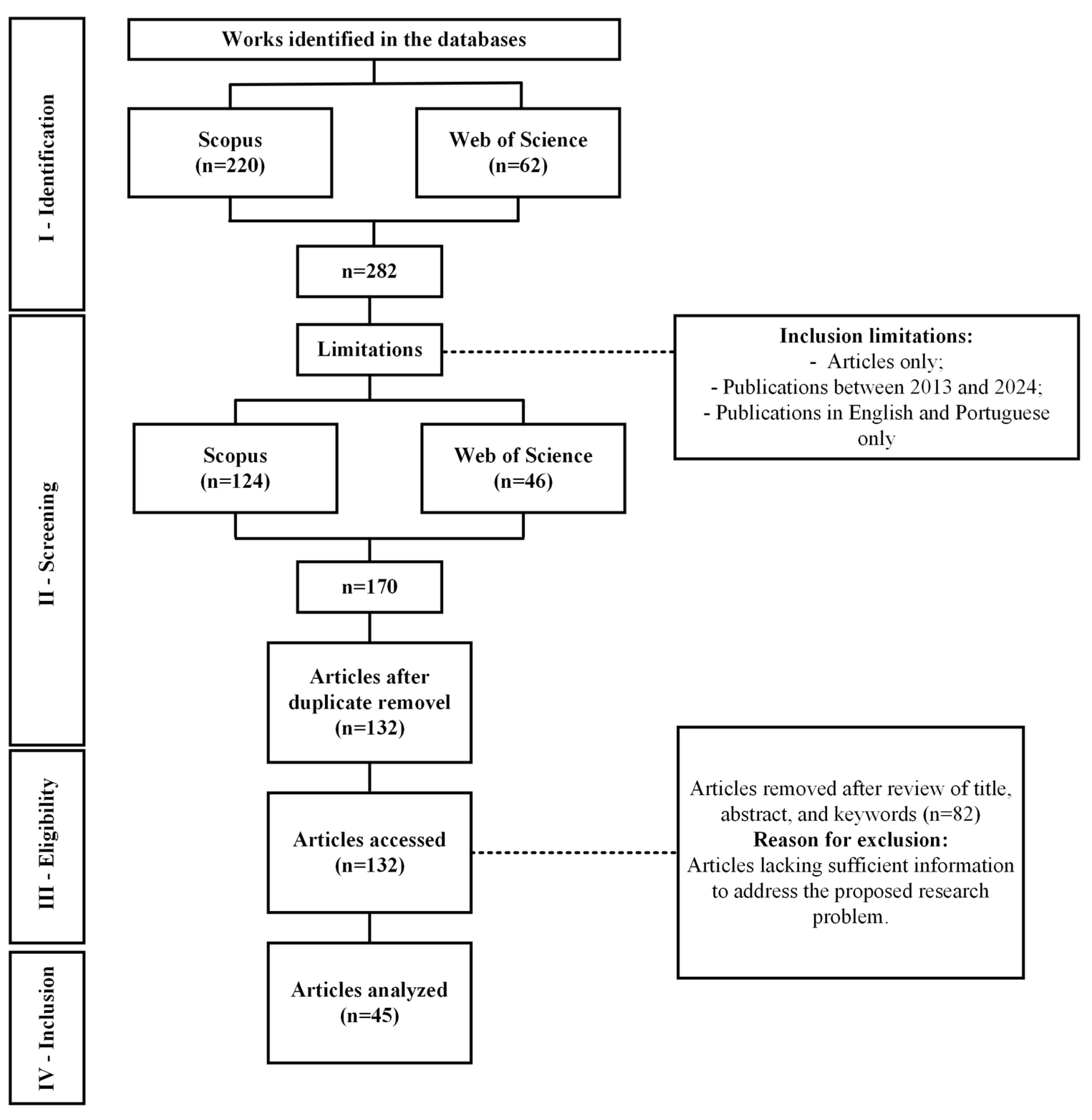
To conduct systematic review and obtain a comprehensive understanding of the state of the art on the subject under investigation, the Preferred Reporting Items for Systematic Reviews and Meta-Analyses (PRISMA 2020) guidelines were adopted. A completed PRISMA 2020 checklist is provided in Appendix A. This protocol establishes predefined steps that systematize the literature analysis, comprising the stages of identification, screening, eligibility, and inclusion [14]. The application of the PRISMA method is illustrated in Figure 2.
The identification stage involved defining keywords and phrases to be used in the search for articles in the Scopus and Web of Science databases. Two main terms were selected to guide the search: “LCA” and “Paving Blocks,” as shown in Table 1.
In the second stage, screening, articles were searched and selected from the Scopus and Web of Science (WoS) databases, applying filters to limit the results to publications between 2013 and 2024. This time frame was chosen because 2013 marks the publication of the regulatory standard for paving blocks [15] and 2024 was included to capture the most recent studies on the topic. Publications in both English and Portuguese were considered, resulting in the identification of 170 articles.
Subsequently, duplicates were removed using Mendeley, an efficient tool for identifying and eliminating repeated articles. After this process, the number of selected studies was reduced to 132, which then proceeded to the detailed analysis stage.
In the subsequent stage, the titles, abstracts, and keywords of the selected articles were reviewed to assess their relevance to the proposed topic. Studies deemed irrelevant were excluded, resulting in a total of 45 articles. These articles were then read in full and subjected to a critical analysis, following the approach described in [14]. The studies included in this research are listed in Appendix B. Microsoft Excel and the VOSviewer software version 1.6.20 were employed to generate charts and network maps based on the data extracted from these documents.

3. Results

3.1. Descriptive Analysis

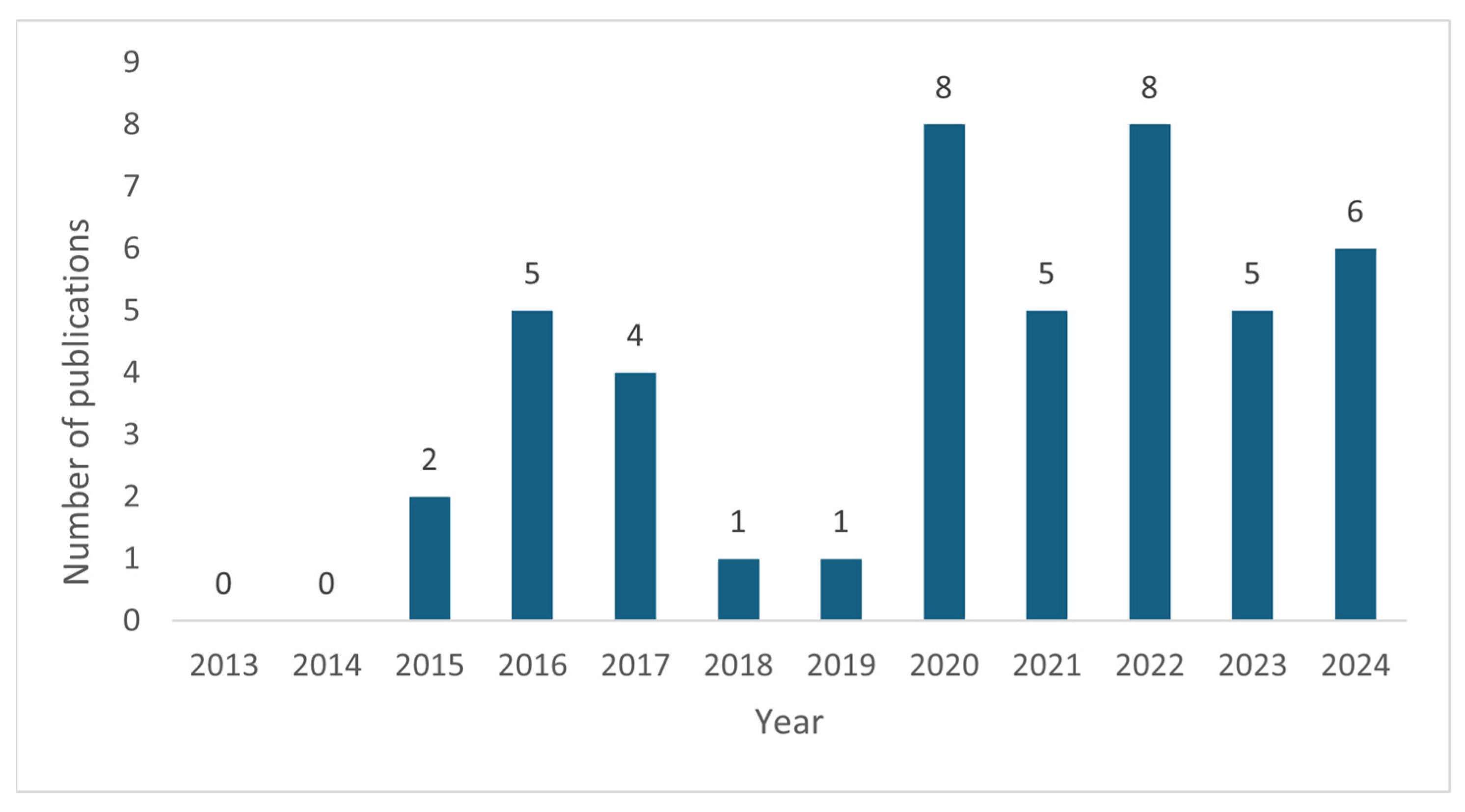
Based on the established criteria, 45 documents were selected for detailed analysis and interpretation in this review, providing insights into the interaction between LCA and paving blocks. Figure 3 shows the temporal evolution of publications, highlighting the growing interest and relevance of the topic over the years. No publications were observed in 2013 and 2014, a period in which important standards for the sector were established: in 2013, ABNT NBR 9781 [15], which regulates paving blocks, and in 2014, the revised versions of ABNT NBR ISO 14040 [16] and ABNT NBR ISO 14044 [17], which emphasize the importance of environmental management in LCA. Consequently, publications began to emerge from 2015 onward, reflecting the sector’s alignment with regulatory and environmental guidelines.
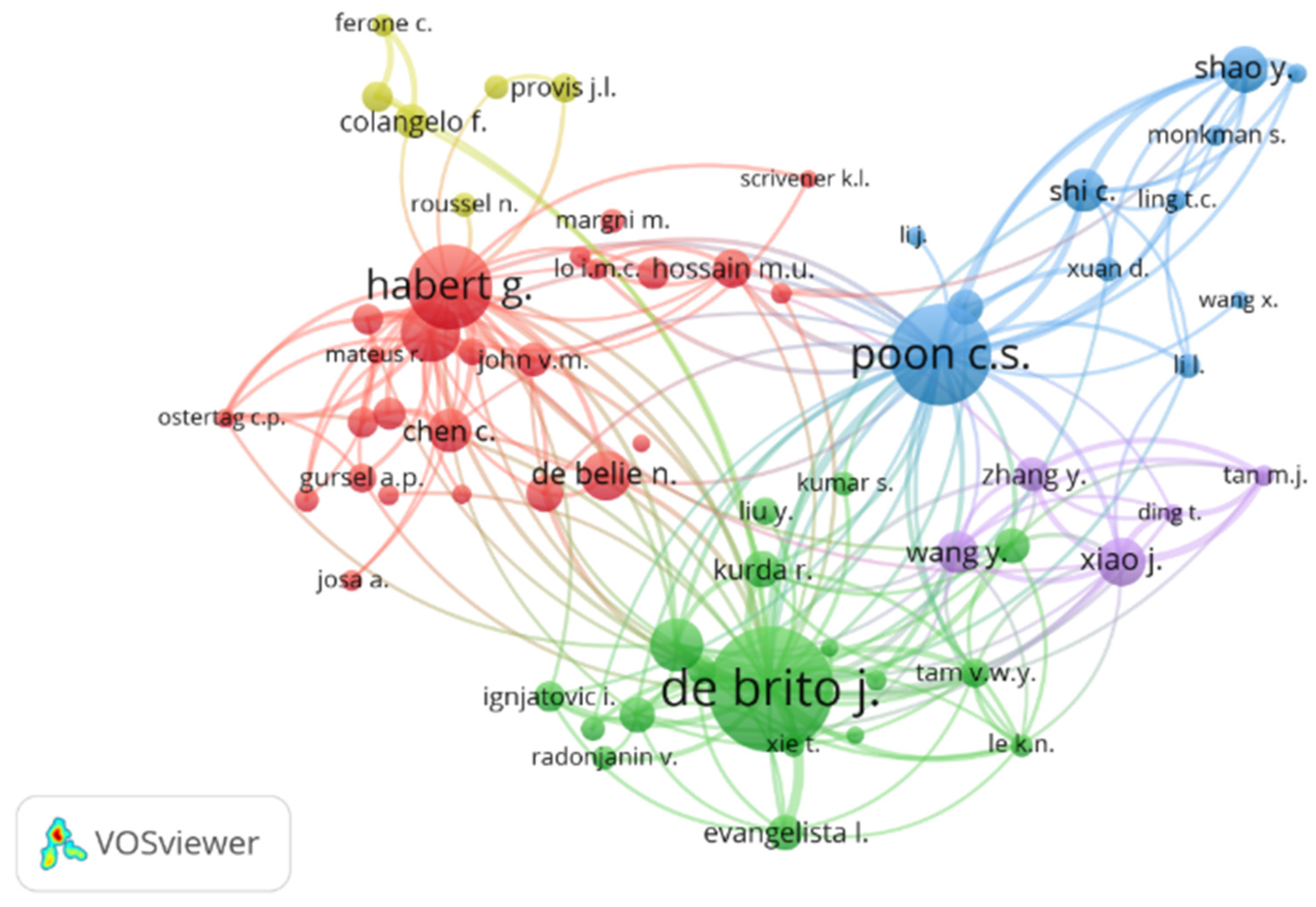
The analysis of authors, presented through the network map shown in Figure 4, provides a clear and detailed representation of their connections, as evidenced by co-citation. This analytical approach allows for the identification of relationships among authors based on the mutual references they share in their works. This technique not only reveals the density of these connections but also helps to understand academic influences.
From the map, it can be observed that some researchers stand out due to the number of citations they have received, represented by larger spheres. Among them are Guillaume Habert (red), a professor in Switzerland, whose scientific work is strongly linked to sustainability in construction and life cycle assessment; Chi Sun Poon (blue), a researcher from China, recognized for his contributions to construction waste management and reuse; and Jorge de Brito (green), from Portugal, who focuses on material recycling and the implementation of sustainable practices in construction systems. These three authors, in addition to sharing research interests such as concrete technology, waste management, and sustainable construction, demonstrate a high academic impact, reflected in their citation counts and the influence they exert on subsequent research.
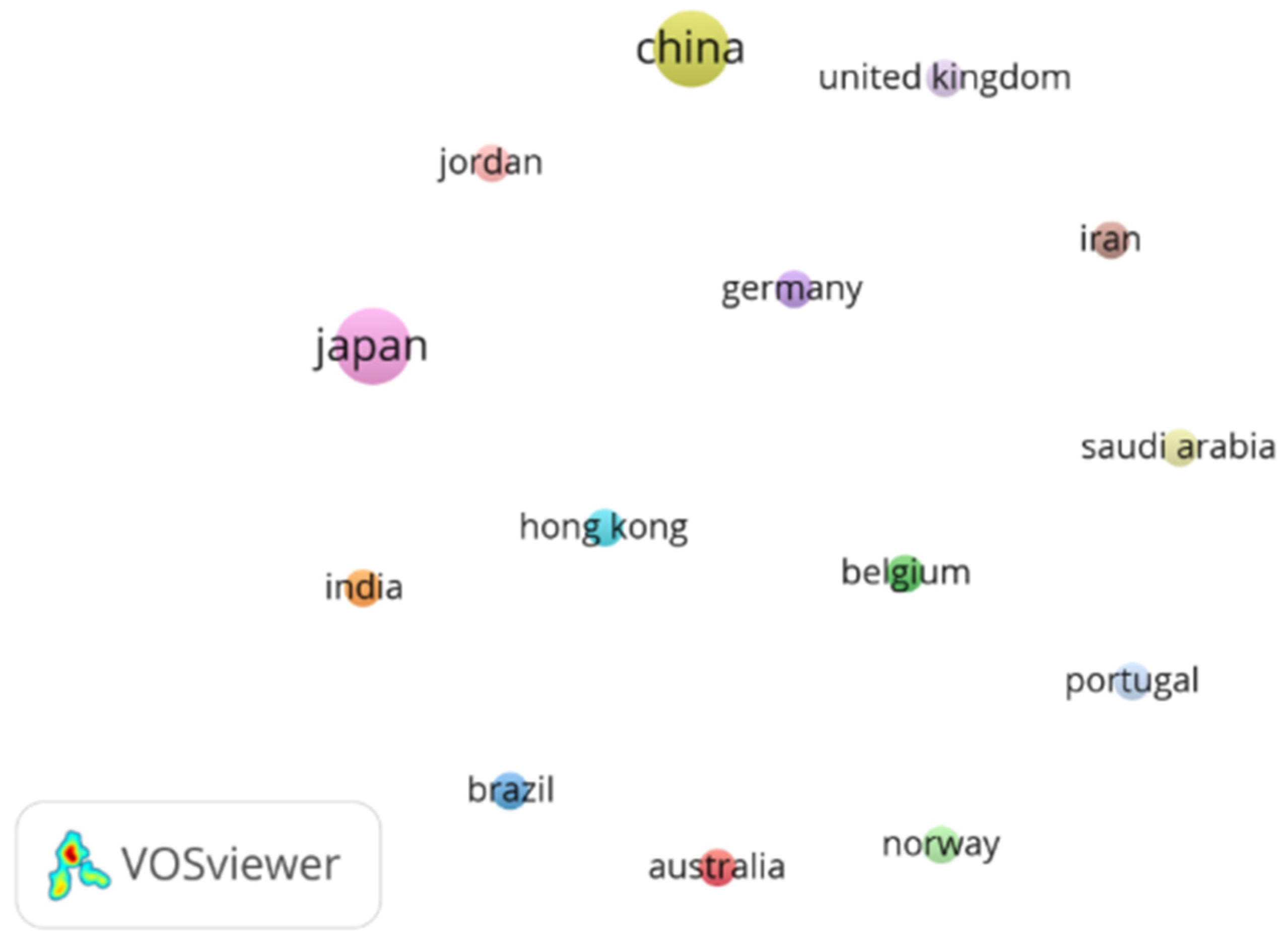
Regarding the distribution of publications by country, Figure 5 presents a network map illustrating the relationships between the countries cited. China and Japan stand out as the countries with the highest representation in publications related to the topic. Both countries have adopted policies and regulations aimed at sustainability and the reduction in greenhouse gas emissions, promoting the use of LCA as a tool to measure and mitigate environmental impacts. Japan, for example, was a pioneer in implementing circular economy practices, a production and consumption model that seeks to reduce waste, reuse materials, and extend the lifespan of products, while China has established ambitious environmental targets to reduce its carbon footprint and promote sustainable development [18]. Japan has implemented several initiatives to strengthen its circular economy, aiming to reduce waste, reuse materials, and extend product lifespans [19]. China, through the Circular Economy Promotion Law (2008), has set ambitious targets for resource efficiency, recycling, and green innovation [18]. These policies have contributed to the prominence of both countries in research on sustainability and circular economy practices in the construction sector.
These geographical patterns are not limited to publication volume but also reflect methodological distinctions, differences in LCA practices among countries were also observed [10,12]. Studies from developed regions, such as China and Japan, tend to follow more standardized methodologies aligned with ISO 14040 and 14044, often including cradle-to-grave system boundaries and broader impact categories [8,18]. In contrast, studies from emerging economies, particularly in Latin America, frequently apply simplified LCA approaches (cradle-to-gate or gate-to-gate), reflecting data limitations and the absence of local databases [4]. These methodological variations affect comparability and highlight the need for harmonized frameworks to ensure consistent environmental assessments across regions.
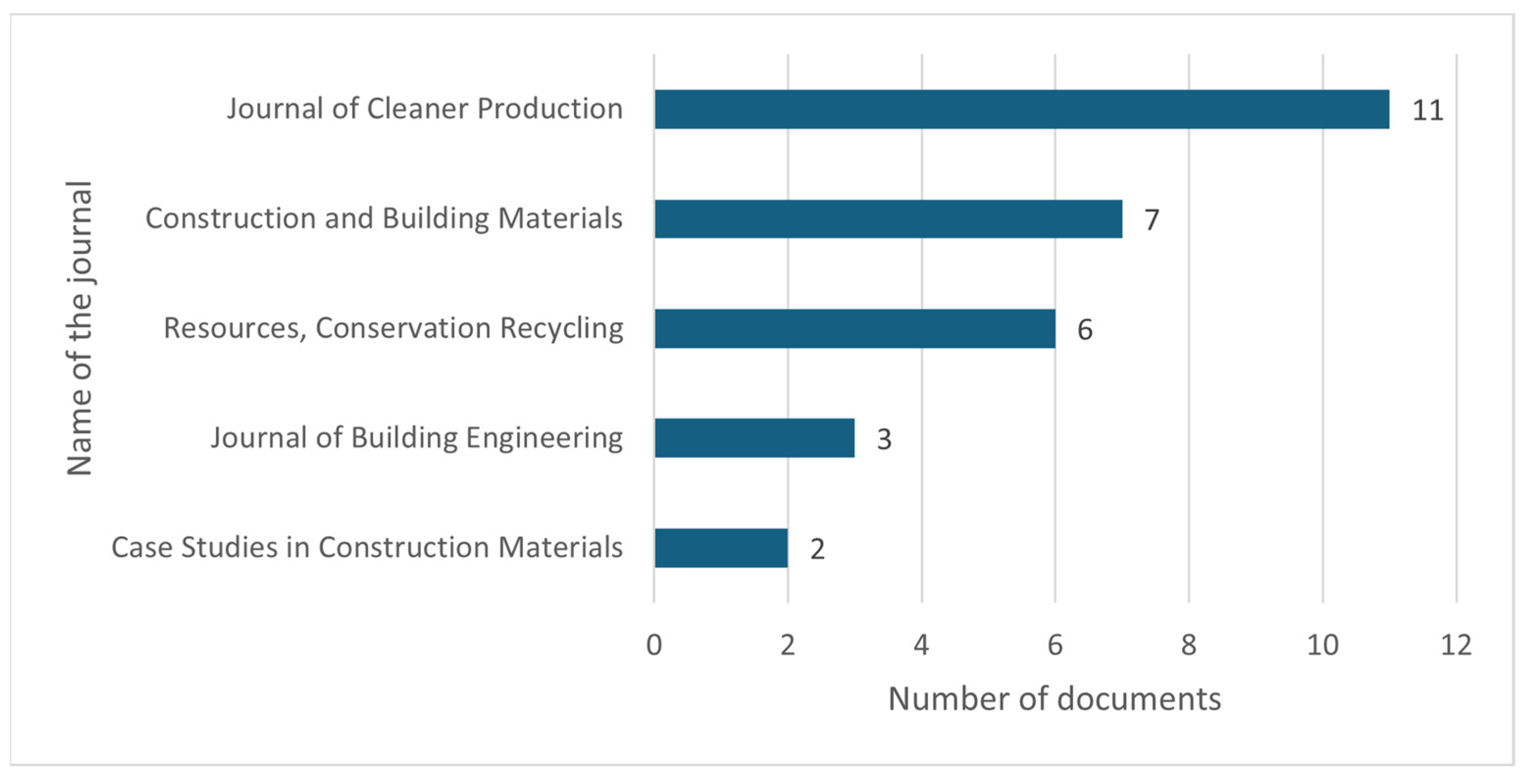
Regarding journals, as shown in Figure 6, the Journal of Cleaner Production is the journal with the highest number of publications on the topic, totaling 11 articles, which represents approximately 23% of the total. This is followed by Construction and Building Materials with 7 publications (15%) and Resources, Conservation and Recycling with 6 publications (13%). The Journal of Building Engineering has 3 publications (6%), and Case Studies in Construction Materials has 2 publications (4%). The remaining 18 journals each feature only a single publication.
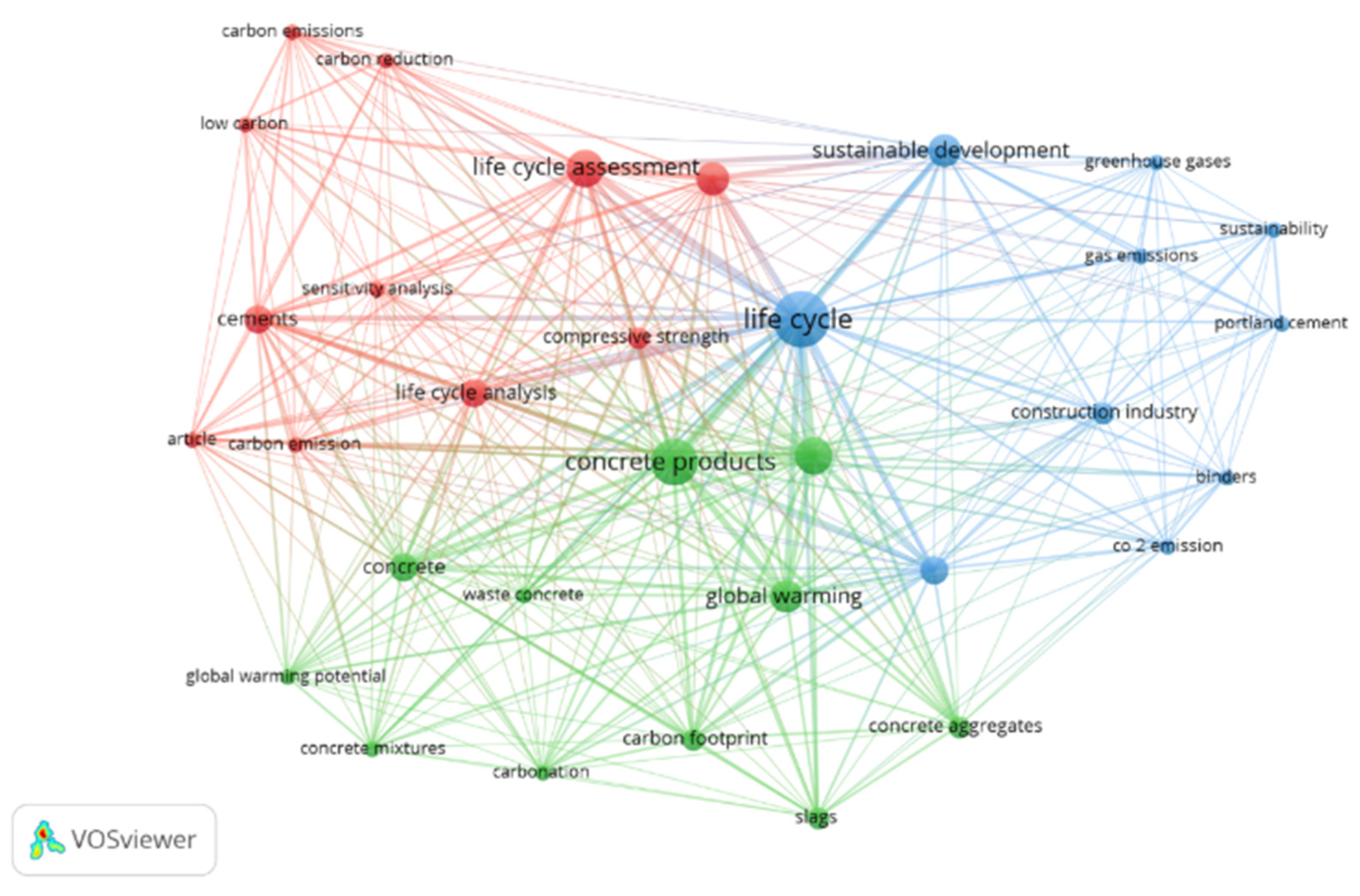
The keyword network map (Figure 7), mapped through the keywords, illustrates the frequency of occurrence and the strength of connections between terms, allowing for a deeper analysis of the three identified clusters. Cluster 1 (red) focuses on environmental impact-related terms, such as carbon emissions and life cycle assessment, reflecting an emphasis on environmental sustainability analyses and impact mitigation in the construction sector [5]. Cluster 2 (green) is associated with construction materials, including concrete products, global warming, and embodied carbon, indicating a strong connection to the pursuit of alternative solutions and more sustainable material practices [6]. Cluster 3 (blue) addresses issues related to sustainable development and the construction industry, highlighting topics such as greenhouse gases and sustainable practices [12].
These clusters not only organize the central themes of the field of study but also reveal an integration between efforts to reduce environmental impacts (Cluster 1), material innovation (Cluster 2), and alignment with global sustainability objectives (Cluster 3). This analysis is directly connected to the study’s objective, as it demonstrates that the LCA of paving blocks is approached from different perspectives: environmental, material, and strategic.

Content Analysis

LCA is widely recognized in the literature as an essential tool for analyzing the environmental impacts associated with the production, use, and end-of-life of products. Through this approach, it is possible to conduct a detailed and systematic assessment encompassing all life cycle stages, from raw material extraction and initial processing, through manufacturing and transportation, to use and, finally, disposal or recycling of products. This method provides crucial quantitative and qualitative information that supports strategic sustainability decision-making, allowing the identification of opportunities to reduce environmental impacts and optimize resource use [3].
Based on the detailed analysis of the articles selected for this study, the main environmental impact indicators addressed in the literature were identified. Table 2 provides a systematic overview of these indicators, associating each with the relevant references.
Based on the analyzed literature, there is a consensus regarding the most commonly used environmental impact indicators: Global Warming Potential (GWP) and Cumulative Energy Demand (CED).
GWP is identified as one of the most prevalent indicators, addressed in approximately 75.5% (34 articles) of the reviewed studies. This indicator is widely employed to quantify CO2 emissions and other greenhouse gases throughout the life cycle. Several authors emphasize the relevance of GWP as an essential metric for assessing the environmental impact of industrial processes, particularly in the construction industry, which is among the largest carbon emitters [20,21].
The application of GWP is particularly relevant given that the construction sector significantly contributes to CO2 emissions, mainly due to cement production, which has a high energy intensity [22]. Thus, the use of this indicator not only enables the identification of strategies to reduce greenhouse gas emissions but also provides a basis for the development of more sustainable materials and production processes [21].
Another important indicator is CED, addressed in approximately 42.2% (19 articles) of studies, often used as a complementary metric to evaluate the energy efficiency of production processes [22]. Studies show that reducing CED can be achieved through partial replacement of cement with industrial waste and the adoption of practices that increase operational efficiency [23].
The diversity of indicators observed in the literature underscores the importance of practices aimed at reducing greenhouse gas emissions and promoting energy efficiency, while also highlighting the need for integrated strategies that minimize environmental impacts and optimize resource use, with a focus on the sustainability of production processes.
Accordingly, based on the reviewed literature, data on the proportions used in the production of conventional concrete paving blocks in Brazil were compiled. Table 3 presents compositions extracted from three Brazilian studies, describing the quantities of the main materials used per cubic meter (m3) of mixture, as well as parameters such as the water/cement ratio and mortar content.
In addition to conventional blocks, several national and international studies have investigated the incorporation of alternative materials in the production of paving blocks, such as polyvinyl chloride (PVC), tire waste, and plastic waste, among others. These strategies aim to provide environmental and functional benefits and are aligned with the concept of the circular economy, which seeks to reduce the consumption of natural resources through the reuse, recovery, and recycling of materials, thereby extending their life cycle.
Accordingly, Table 4 presents the material consumption for different concrete block mixes with the addition of rubber waste, allowing a comparison between conventional formulations and those using tire waste. This comparison is relevant to evaluate how replacing natural aggregates with recycled materials can be advantageous, particularly from an environmental perspective, as it reduces the extraction of natural resources.
Another relevant study found in the literature investigated different block compositions by varying the use of plastic waste [12]. Three distinct formulations were analyzed: a conventional mix, one with plastic waste as an aggregate, and another using plastic waste as a binder. The data, presented in Table 5, highlight variations in material consumption, embodied energy (MJ), and the replacement of traditional components with plastic waste.
It is observed that the addition of plastic, both as an aggregate and as a binder, alters the block composition, affecting parameters such as cement consumption, water content, and the energy required for production. These variations have direct implications for LCA results, particularly regarding impacts related to the use of non-renewable resources and greenhouse gas emissions.
In addition to the use of plastics, another strategy identified in the literature to make paving blocks more sustainable is the partial replacement of cement with ground granulated blast furnace slag (GGBFS). The study presents different mixes with 5% to 30% replacement of Portland cement with GGBFS, as shown in Table 6 [22].
It is observed that increasing the GGBFS content results in a proportional reduction in cement consumption, without altering the amount of water used. This substitution is particularly relevant from an LCA perspective, as cement is one of the main contributors to CO2 emissions in the construction industry. In this context, the use of slag, a by-product of the steel industry, can contribute to mitigating the environmental impacts associated with the production of concrete blocks.
The data presented in Table 3, Table 4, Table 5 and Table 6 reveal a consistent trend: mixes incorporating recycled or industrial by-products generally reduce cement consumption and related environmental impacts. However, these environmental gains often involve trade-offs, for example, higher replacement levels may affect mechanical properties such as compressive strength and durability, requiring optimization of mix proportions to balance environmental and performance criteria.
The partial replacement of cement with GGBFS up to approximately 20% tends to maintain or even improve mechanical performance, mainly due to the pozzolanic activity of the slag [22]. Nevertheless, higher replacement levels (>30%) may reduce early-age strength. These results emphasize the importance of establishing optimal substitution thresholds that achieve both environmental benefits and adequate mechanical behavior for paving applications [22].

4. Discussion

The systematic review revealed a consistent growth in the application of Life Cycle Assessment (LCA) to paving blocks since 2015, a trend that can be linked to the implementation of regulatory frameworks and the increasing global awareness of the environmental impacts of construction materials. This increase reflects the strategic role of LCA in quantifying and communicating sustainability indicators, thereby supporting both policy development and industrial innovation.
One of the most evident findings of this study is the predominance of Global Warming Potential (GWP) and Cumulative Energy Demand (CED) as the most frequently used indicators. This choice demonstrates the research community’s concern with reducing carbon emissions and improving energy efficiency, as these are critical drivers of climate change mitigation. Although other impact categories—such as acidification potential, eutrophication, and water depletion—were also reported, their lower frequency suggests that broader environmental aspects remain underexplored. This limitation has also been highlighted in previous systematic reviews on construction materials, which point to the need for more holistic environmental evaluations that capture regional water scarcity, toxicity, and resource depletion [27,28].
In addition to GWP and CED, the Carbon Footprint (CF) has been increasingly recognized as a key indicator for assessing the environmental performance of construction materials. While GWP quantifies the potential contribution of greenhouse gas emissions to climate change, the CF expresses the total amount of CO2-equivalent emissions across all life cycle stages, offering a more direct link to decarbonization targets. The reduction in the carbon footprint of paving block production can be achieved through strategies such as cement substitution with industrial by-products and the incorporation of recycled materials. Furthermore, the dissemination of LCA results through Environmental Product Declarations (EPDs), enables transparent communication of the environmental performance of construction products, EPDs serve as practical applications of LCA, supporting eco-labeling, sustainable procurement, and green certification processes in the construction industry.
The analysis of conventional and alternative block mixtures demonstrates clear opportunities for reducing environmental impacts through material substitution. The partial replacement of cement with Ground Granulated Blast Furnace Slag (GGBFS) consistently shows reductions in CO2 emissions, reinforcing the literature consensus on the high environmental burden of cement production. Similarly, the use of plastic and rubber waste as aggregates contributes to diverting waste from landfills and reducing the extraction of virgin raw materials. These practices are aligned with circular economy principles, which emphasize closing material loops and maximizing resource efficiency. However, the reviewed studies also indicate that the environmental benefits of recycled materials can vary depending on the proportions used, transportation distances, and processing requirements [11,12,22]. For example, while rubber incorporation reduces natural aggregate demand, it may negatively affect mechanical performance beyond certain thresholds, limiting its practical application in structural pavements.
Another relevant discussion point concerns the geographical concentration of research. Most studies originate from Asia, particularly China and Japan, where national policies strongly encourage sustainability and circular economy practices. This geographic imbalance reveals a research gap in Latin America and Africa, where local raw materials, industrial waste availability, and climatic conditions may alter both environmental impacts and technical performance. Expanding LCA studies to these regions is crucial to developing context-specific solutions that reflect local sustainability challenges.
Furthermore, the analysis highlights the importance of methodological standardization. Variations in system boundaries (cradle-to-gate vs. cradle-to-grave), functional units, and impact assessment methods limit direct comparability between studies. Without harmonized reporting, it becomes difficult to establish benchmarks and provide reliable guidelines for practitioners and policymakers. Addressing this challenge requires broader adoption of international standards, such as ISO 14040 and 14044, as well as transparent documentation of assumptions and limitations.
Finally, the findings reinforce the potential of LCA not only as an environmental evaluation tool but also as a decision-making instrument for sustainable construction. By providing quantitative evidence, LCA helps identify priority areas for impact reduction, supports eco-labeling and certification schemes, and informs the design of greener construction policies. Future research should therefore combine environmental assessments with economic and social dimensions, such as life cycle costing and social LCA, to strengthen the contribution of paving blocks to sustainable development goals.

5. Conclusions

This systematic review confirms the strategic importance of Life Cycle Assessment (LCA) in guiding the sustainable production of concrete paving blocks. The evidence demonstrates that Global Warming Potential (GWP) and Cumulative Energy Demand (CED) are the most frequently applied indicators, reflecting a predominant focus on carbon emissions and energy efficiency. While these categories are essential to addressing climate change, the underrepresentation of other impact indicators—such as water scarcity, human toxicity, and resource depletion—suggests that future studies should adopt a more comprehensive approach to environmental assessment.
The findings reveal that incorporating recycled and industrial by-products, particularly Ground Granulated Blast Furnace Slag (GGBFS), rubber, and plastic waste, offers significant potential to reduce environmental impacts without compromising the functionality of paving blocks. In addition to these materials, other recycled components such as ceramic waste, fly ash, and recycled aggregates from construction and demolition waste were also identified across the analyzed studies. This diversity of recycled materials demonstrates that the study’s objective—to map the types of recycled materials employed in paving block production—was achieved, providing a broad overview of the sustainable alternatives currently explored in the literature. These substitutions align with circular economy practices, promoting waste valorization, reducing natural resource extraction, and lowering greenhouse gas emissions. However, the extent of benefits depends on factors such as material proportions, processing requirements, and regional availability, underscoring the need for case-specific evaluations.
For manufacturers, LCA serves as a decision-support tool to identify optimal formulations that balance performance and sustainability. For regulatory bodies, the standardization of LCA methodologies and transparent reporting is crucial to enable comparability between studies, define benchmarks, and encourage eco-innovation. Integrating these practices into building codes and certification schemes can accelerate the adoption of sustainable paving block technologies.
This review advances previous studies by consolidating fragmented evidence on the environmental performance of paving blocks and providing a quantitative overview of the benefits associated with material substitution. The analysis indicates that the partial replacement of cement with industrial by-products, such as GGBFS, can reduce CO2 emissions. Likewise, the incorporation of recycled material such as rubber and plastic waste can decrease natural aggregate consumption, contributing to resource conservation and waste diversion from landfills. When applied within optimized substitution levels, these strategies maintain adequate mechanical performance while improving the overall environmental profile of paving block production. Overall, this synthesis presents an updated and comparative perspective that supports decision-making for more sustainable and circular construction practices.
This review also identifies key limitations. Most studies are geographically concentrated in Asia, leaving knowledge gaps in Latin America, Africa, and other regions with distinct material availability and environmental priorities. Additionally, there is a lack of long-term studies addressing durability, maintenance, and end-of-life scenarios, which are critical to fully capturing life cycle impacts.
In conclusion, this review reinforces the role of LCA as both an environmental assessment tool and a catalyst for innovation in the construction sector. By integrating recycled materials, adopting standardized methods, and expanding research to underrepresented regions, paving block production can move decisively toward more sustainable practices. Future research that incorporates environmental, economic, and social dimensions will further strengthen the contribution of paving blocks to global sustainability goals.

Author Contributions

Conceptualization, V.A.S.; methodology, V.A.S., C.E. and L.R.L.; software, V.A.S.; validation, V.A.S., C.E. and L.R.L.; formal analysis, V.A.S.; investigation, V.A.S.; resources, V.A.S., C.E., L.R.L. and A.S.; data curation, V.A.S.; writing—original draft preparation, V.A.S.; writing—review and editing, V.A.S., C.E., L.R.L. and A.S.; visualization, V.A.S.; supervision, C.E. and L.R.L.; project administration, V.A.S., C.E. and L.R.L.; funding acquisition, C.E., L.R.L. and A.S. All authors have read and agreed to the published version of the manuscript.

Funding

This research was funded by Fundação de Amparo à Pesquisa e Inovação do Estado de Santa Catarina (FAPESC), grant number 2025TR001479.

Data Availability Statement

The raw data supporting the conclusions of this article will be made available by the authors on request.

Acknowledgments

Acknowledgments to the Santa Catarina State University (UDESC) and the Coordination for the Improvement of Higher Education Personnel (CAPES).

Conflicts of Interest

The authors declare no conflicts of interest.

Appendix A. PRISMA Checklist

SectionItemPRISMA-ScR Checklist ItemReported on Page
Title
Title1Identify the report as a scoping review.Page 1
Abstract
Structured summary2Provide a structured summary that includes (as applicable): background, objectives, eligibility criteria, sources of evidence, charting methods, results, and conclusions that relate to the review questions and objectives.Page 1
Introduction
Rationale3Describe the rationale for the review in the context of what is already known. Explain why the review questions/objectives lend themselves to a scoping review approach.Page 1 and 2
Objectives4Provide an explicit statement of the questions and objectives being addressed with reference to their key elements (e.g., population or participants, concepts, and context) or other relevant key elements used to conceptualize the review questions and/or objectives.Page 2
Methods
Protocol and registration5Indicate whether a review protocol exists; state if and where it can be accessed (e.g., a Web address); and if available, provide registration information, including the registration number.Page 2
Eligibility criteria6Specify characteristics of the sources of evidence used as eligibility criteria (e.g., years considered, language, and publication status), and provide a rationale.Page 3
Information sources7Describe all information sources in the search (e.g., databases with dates of coverage and contact with authors to identify additional sources), as well as the date the most recent search was executed.Page 3
Search8Present the full electronic search strategy for at least 1 database, including any limits used, such that it could be repeated.Page 3
Selection of sources of evidence9State the process for selecting sources of evidence (i.e., screening and eligibility) included in the scoping review.Page 3
Data charting process 10Describe the methods of charting data from the included sources of evidence (e.g., calibrated forms or forms that have been tested by the team before their use, and whether data charting was done independently or in duplicate) and any processes for obtaining and confirming data from investigators.Page 3
Data items11List and define all variables for which data were sought and any assumptions and simplifications made.Page 3
Critical appraisal of individual sources of evidence 12If done, provide a rationale for conducting a critical appraisal of included sources of evidence; describe the methods used and how this information was used in any data synthesis (if appropriate).-----
Synthesis of results13Describe the methods of handling and summarizing the data that were charted.Page 4
Results
Selection of sources of evidence14Give numbers of sources of evidence screened, assessed for eligibility, and included in the review, with reasons for exclusions at each stage, ideally using a flow diagram.Page 3
Characteristics of sources of evidence15For each source of evidence, present characteristics for which data were charted and provide the citations.Page 4
Critical appraisal within sources of evidence16If done, present data on critical appraisal of included sources of evidence (see item 12).----
Results of individual sources of evidence17For each included source of evidence, present the relevant data that were charted that relate to the review questions and objectives.Page 7
Synthesis of results18Summarize and/or present the charting results as they relate to the review questions and objectives.Page 7, 8 and 9
Discussion
Summary of evidence19Summarize the main results (including an overview of concepts, themes, and types of evidence available), link to the review questions and objectives, and consider the relevance to key groups.Page 10
Limitations20Discuss the limitations of the scoping review process.Page 10
Conclusions21Provide a general interpretation of the results with respect to the review questions and objectives, as well as potential implications and/or next steps.Page 11
Funding
Funding22Describe sources of funding for the included sources of evidence, as well as sources of funding for the scoping review. Describe the role of the funders of the scoping review.-

Appendix B. List of Studies Included in the Review

ID(i) Which Environmental Impact Indicators Are Most Commonly Used in LCA Studies of Paving Blocks?(ii) What Mix Proportions Are Most Commonly Used in the Production of Paving Blocks?Reference
1CO2 emissions, pH analysis.-[27]
2CO2 emissions and global warming potential.-[28]
3Global warming potential, abiotic depletion potential, and cumulative energy demand.The mix of paving blocks for heavy traffic applications was 1:2:4 (cement, sand, coarse aggregate) by mass, with a water/cement ratio of 0.3.[22]
4Global warming potential and CO2 emissions.Partial replacement of cement with fly ash, with the water/cement ratio ranging from 0.37 to 0.42 for the different mixes.[29]
5Global warming potential.Mixes with 50% cement replacement by fly ash and use of slag as aggregate.[30]
6Global warming potential and cumulative energy demand.-[31]
7Global warming potential, ozone depletion potential, acidification potential.Partial replacement of Portland cement with blast furnace slag and micro silica.[32]
8Global warming potential and cumulative energy demand.Partial replacement of Portland cement with fly ash, blast furnace slag, and silica fume.[23]
9Global warming potential, ozone depletion potential, and acidification potential.Mix proportions used for concrete production: Sand: 340 kg; Aggregates: 441 kg; Water: 80 kg.[33]
10Global warming potential.Mixes with 10%, 40%, 80%, and 100% recycled construction and demolition aggregates.[34]
11Global warming potential and cumulative energy demand.-[35]
12CO2 emissions and cumulative energy demand.-[36]
13Global warming potential, water depletion, and ecotoxicity.Mixes ranged from 10% to 30% cement replacement with ceramic powder.[37]
14Global warming potential, chloride resistance, and carbonation resistance.The concrete mix varied with 0%, 20%, and 50% replacement of natural aggregates with recycled aggregates.[38]
15Global warming potential and CO2 emissions.Blast furnace slag (BFS) was used as a precursor, rice husk ash (RHA) as a silica source, and olive pit biomass ash as an alkaline source.[39]
16Global warming potential, eutrophication, acidification, and cumulative energy demand.Proportions ranging from 0% to 100% replacement of natural aggregates with recycled aggregates.[40]
17CO2 and C2H4 emissions, and cumulative energy demand.-[41]
18Global warming potential, fossil resource consumption, and eutrophication.Replacement of 20% of natural aggregate with plastics.[42]
19Global warming potential, abiotic resource depletion, acidification, and eutrophication.-[43]
20Global warming potential, acidification potential, and eutrophication potential.The proportions used were cement, sand, and gravel in a 1:2:4 ratio, with a water/cement ratio of 0.62.[12]
21Global warming potential and cumulative energy demand.Replacement of up to 25% of natural aggregates with recycled plastic.[44]
22Global warming potential and air pollutants such as CO, NOx, and SO2.Mixes with up to 30% rice husk ash and 5% limestone powder.[45]
23Global warming potential and cumulative energy demand.Mixes with 410 kg of cement, 650 kg of fine aggregates, 1207 kg of coarse aggregates, and 135 kg of water per m3.[46]
24Cumulative energy demand, greenhouse gas emissions, and acidification potential.Mixes with 35–80% replacement of natural aggregates with recycled aggregates, and the use of fly ash.[47]
25Global warming potential, eutrophication potential, and acidification potential.Varied mixes of recycled aggregates and demolished concrete blocks with 30% and 70% replacement.[48]
26Global warming potential and greenhouse gas emissions.The proportions used were cement, sand, and gravel in a 1:3:6 ratio by mass, with a water/cement ratio of approximately 0.35 to 0.45.[49]
27Global warming potential and cumulative energy demand.The proportions used were cement, sand, and gravel in a 1:3:6 ratio by mass, with a water/cement ratio of approximately 0.38.[50]
28Global warming potential, acidification potential, eutrophication potential, and cumulative energy demand.The proportions used were cement, sand, and gravel in a 1:3:6 ratio by mass, with a water/cement ratio of 0.40.[51]
29Global warming potential and cumulative energy demand.Proportions ranging from 20% to 80% recycled aggregates and 14% to 18% cement, with a water/cement ratio of 0.3.[52]
30Global warming potential, acidification potential, and cumulative energy demand.The proportions used were cement, sand, and gravel in a 1:3:6 ratio by mass, with a water/cement ratio of approximately 0.40.[20]
31Global warming potential and greenhouse gas emissions.Replacement of up to 10% of cement with recycled particles.[53]
32Global warming potential and greenhouse gas emissions.10% of natural aggregates replaced with recycled plastic.[54]
33Global warming potential and ozone depletion potential.Mix with 280 kg of cement, 120 kg of water, 400 kg of recycled fine aggregates, and 1320 kg of recycled coarse aggregates.[55]
34Reduction in new aggregate extraction and CO2 emissions.100% of coarse aggregates replaced with recycled aggregates.[56]
35CO2 emissions.-[57]
36CO2 emissions.Mix with 380 kg of cement/m3 and a water/cement ratio of 0.53.[58]
37CO2 emissions and cumulative energy demand.Cement replaced with fly ash in proportions of 20%, 40%, and 60%.[59]
38CO2 emissions and cumulative energy demand.Partial replacement of natural aggregates with recycled aggregates.[60]
39Global warming potential, acidification, eutrophication, and ecotoxicity.Mixes with different proportions of recycled aggregates and cement, with up to 100% replacement of natural aggregates by recycled aggregates.[61]
40Global warming potential, abiotic resource depletion, acidification, and eutrophication.Replacement of 30% to 100% of natural aggregates with recycled aggregates.[62]
41Global warming potential, cumulative energy demand, and energy cost.Partial replacement of natural aggregates with recycled aggregates.[63]
42Global warming potential and cumulative energy demand.-[21]
43CO2 emissions and total cost.-[64]
44Natural resources.Replacement of 30% and 100% of natural aggregates with recycled concrete aggregate.[5]
45Global warming potential and cumulative energy demand.-[65]

References

  1. George, T.E.; Karatu, K.; Edward, A. An evaluation of the environmental impact assessment practice in Uganda: Challenges and opportunities for achieving sustainable development. Heliyon 2020, 6, e04875. [Google Scholar] [CrossRef]
  2. Morgan, R.K. Environmental impact assessment: The state of the art. Impact Assess. Proj. Apprais. 2012, 30, 5–14. [Google Scholar] [CrossRef]
  3. DeBoer, B.; Nguyen, N.; Diba, F.; Hosseini, A. Additive, subtractive, and formative manufacturing of metal components: A life cycle assessment comparison. Int. J. Adv. Manuf. Technol. 2021, 115, 413–432. [Google Scholar] [CrossRef]
  4. Oliveira, I.P.; Callejas, I.J.A.; Durante, L.C. Blocos de concretos fabricados com incorporação de resíduos sólidos: Uma revisão sistemática. E&S Eng. Sci. 2020, 9, 36–57. [Google Scholar] [CrossRef]
  5. Zengfeng, Z.; Courard, L.; Groslambert, S.; Jehin, T.; Léonard, A.; Jianzhuang, X. Use of recycled concrete aggregates from precast block for the production of new building blocks: An industrial scale study. Resour. Conserv. Recycl. 2020, 157, 104786. [Google Scholar] [CrossRef]
  6. Bianchini, G.; Marrocchino, E.; Tassinari, R.; Vaccaro, C. Recycling of construction and demolition waste materials: A chemical–mineralogical appraisal. Waste Manag. 2005, 25, 149–159. [Google Scholar] [CrossRef] [PubMed]
  7. Rodrigues, C.R.B.; Zoldan, M.A.; Leite, M.L.G.; Oliveira, I.L. Sistemas Computacionais de Apoio a Ferramenta Análise de Ciclo de Vida do Produto (ACV). In Proceedings of the Enegep, Rio de Janeiro, Brazil, 13–16 October 2008; ABEPRO: Rio de Janeiro, Brazil, 2008; p. 15. [Google Scholar]
  8. Ferreira, J.V.; Esteves, B.; Cruz-Lopes, L.; Domingos, I. Life cycle assessment—Historical review and future perspective. Millenium J. Educ. Technol. Health 2020, 6, 63–69. [Google Scholar]
  9. Pinzon, C.; Pravia, Z.M.C. Projetos desenvolvidos utilizando MEF e ACV na sustentabilidade de produtos: Uma revisão bibliométrica e sistemática da literatura. Contrib. Cienc. Soc. 2024, 17, 636–657. [Google Scholar] [CrossRef]
  10. Guo, Z.; Tu, A.; Chen, C.; Lehman, D.E. Mechanical properties, durability, and life-cycle assessment of concrete building blocks incorporating recycled concrete aggregates. J. Clean. Prod. 2018, 199, 136–149. [Google Scholar] [CrossRef]
  11. Fioriti, C.F.; Ino, A.; Akasaki, J.L. Avaliação de blocos de concreto para pavimentação intertravada com adição de resíduos de borracha provenientes da recauchutagem de pneus. Ambiente Constr. 2007, 7, 43–54. [Google Scholar]
  12. Goyal, H.; Kumar, R.; Mondal, P. Life cycle analysis of paver block production using waste plastics: Comparative assessment with concrete paver blocks. J. Clean. Prod. 2023, 402, 136857. [Google Scholar] [CrossRef]
  13. Dresch, A.; Lacerda, D.P.; Antunes Júnior, J.A.V. Design Science Research: Método de Pesquisa para Avanço da Ciência e Tecnologia; Bookman: Porto Alegre, Brazil, 2014; 204p. [Google Scholar]
  14. Moher, D.; Liberati, A.; Tetzlaff, J.; Altman, D.G.; The PRISMA Group. Preferred reporting items for systematic reviews and meta-analyses: The PRISMA statement. Rev. Esp. Nutr. Hum. Diet. 2014, 18, 172–181. [Google Scholar] [CrossRef]
  15. ABNT—Associação Brasileira de Normas Técnicas. NBR 9781:2013—Peças de Concreto para Pavimentação—Especificação e Métodos de Ensaio, 2nd ed.; ABNT: Rio de Janeiro, Brazil, 2013. [Google Scholar]
  16. ABNT—Associação Brasileira de Normas Técnicas. NBR ISO 14040:2014—Gestão Ambiental—Avaliação do Ciclo de Vida—Princípios e Estrutura, 2nd ed.; ABNT: Rio de Janeiro, Brazil, 2014. [Google Scholar]
  17. ABNT—Associação Brasileira de Normas Técnicas. NBR ISO 14044:2014—Gestão Ambiental—Avaliação do Ciclo de Vida—Requisitos e Orientações, 2nd ed.; ABNT: Rio de Janeiro, Brazil, 2014. [Google Scholar]
  18. Merli, R.; Preziosi, M.; Acampora, A. How do scholars approach the circular economy? A systematic literature review. J. Clean. Prod. 2018, 178, 703–722. [Google Scholar] [CrossRef]
  19. Aoki-Suzuki, C.; Nishiyama, T.; Kato, M.; Lavtizar, V. Policies and Practice of Sound Material-Cycle Society in Japan: Transition Towards the Circular Economy; Springer Nature: Singapore, 2023; pp. 37–66. [Google Scholar]
  20. Monteiro, N.B.R.; Neto, J.M.M.; Da Silva, E.A. Environmental assessment in concrete industries. J. Clean. Prod. 2021, 327, 129516. [Google Scholar] [CrossRef]
  21. Zhang, C.; Hu, M.; Dong, L.; Gebremariam, A.; Miranda-Xicotencatl, B.; Di Maio, F.; Tukker, A. Eco-efficiency assessment of technological innovations in high-grade concrete recycling. Resour. Conserv. Recycl. 2019, 149, 649–663. [Google Scholar] [CrossRef]
  22. Ali, B.; Ouni, M.H.E.; Kurda, R. Life cycle assessment (LCA) of precast concrete blocks utilizing ground granulated blast furnace slag. Environ. Sci. Pollut. Res. 2022, 29, 83580–83595. [Google Scholar] [CrossRef] [PubMed]
  23. Cassiani, J.; Martinez-Arguelles, G.; Penabaena-Niebles, R.; Keßler, S.; Dugarte, M. Sustainable concrete formulations to mitigate Alkali-Silica reaction in recycled concrete aggregates (RCA) for concrete infrastructure. Constr. Build. Mater. 2021, 307, 124919. [Google Scholar] [CrossRef]
  24. Machado, R. Estudo Aplicado da Solução de Projeto de Pavimentação para Pátio de Estacionamento de Ônibus. Undergraduate Thesis, Universidade Federal de Santa Catarina (UFSC), Joinville, Brazil, 2015. [Google Scholar]
  25. Santos, C.R. Estudo da Utilização de Rejeitos de Carvão Mineral na Fabricação de Blocos de Concreto para Pavimentação em Substituição ao Agregado Miúdo Natural. Master’s Thesis, Universidade Federal do Rio Grande do Sul—UFRGS, Porto Alegre, Brazil, 2012. [Google Scholar]
  26. Ferrari, A.K. Influência do Resíduo de PVC Moído como Substituto Parcial do Agregado Miúdo no Concreto Dosado para Peças de Pavimento Intertravado. Master’s Thesis, Universidade do Estado de Santa Catarina—UDESC, Florianopolis, Brazil, 2017. [Google Scholar]
  27. Adiguzel, D.; Tuylu, S.; Eker, H. Utilization of tailings in concrete products: A review. Constr. Build. Mater. 2022, 360, 129574. [Google Scholar] [CrossRef]
  28. Ahmed, O.; Ahmad, S.; Adekunle, S.K. Carbon dioxide sequestration in cementitious materials: A review of techniques, material performance, and environmental impact. J. CO2 Util. 2024, 83, 102812. [Google Scholar] [CrossRef]
  29. Alkhawaldeh, A.A.; Judah, H.I.; Shammout, D.Z.; Almomani, O.A.; Alkhawaldeh, M.A. Sustainability evaluation and life cycle assessment of concretes including pozzolanic by-products and alkali-activated binders. Results Eng. 2024, 23, 102569. [Google Scholar] [CrossRef]
  30. Anastasiou, E.K.; Liapis, A.; Papayianni, I. Comparative life cycle assessment of concrete road pavements using industrial by-products as alternative materials. Resour. Conserv. Recycl. 2015, 101, 1–8. [Google Scholar] [CrossRef]
  31. Basavaraj, A.S.; Gettu, R. Life cycle assessment as a tool in sustainability assessment of concrete systems: Why and how. Indian Concr. J. 2022, 96, 1–20. [Google Scholar]
  32. Biswas, W.K.; Alhorr, Y.; Lawania, K.K.; Sarker, P.K.; Elsarrag, E. Life cycle assessment for environmental product declaration of concrete in the Gulf States. Sustain. Cities Soc. 2017, 35, 36–46. [Google Scholar] [CrossRef]
  33. Chrysostomou, C.; Kylili, A.; Nicolaides, D.; Fokaides, P.A. Life Cycle Assessment of concrete manufacturing in small isolated states: The case of Cyprus. Int. J. Sustain. Energy 2017, 36, 825–839. [Google Scholar] [CrossRef]
  34. Colangelo, F.; Petrillo, A.; Cioffi, R.; Borrelli, C.; Forcina, A. Life cycle assessment of recycled concretes: A case study in southern Italy. Sci. Total Environ. 2018, 615, 1506–1517. [Google Scholar] [CrossRef]
  35. Collivignarelli, M.C.; Abba, A.; Miino, M.C.; Cillari, G.; Ricciardi, P. A review on alternative binders, admixtures and water for the production of sustainable concrete. J. Clean. Prod. 2021, 295, 126408. [Google Scholar] [CrossRef]
  36. Cordoba, G.; Paulo, C.I.; Irassar, E.F. Towards an eco-efficient ready mix-concrete industry: Advances and opportunities. A study of the Metropolitan Region of Buenos Aires. J. Build. Eng. 2023, 63, 105449. [Google Scholar] [CrossRef]
  37. Dehghani, O.; Eslami, A.; Mahdavipour, M.A.; Mostofinejad, D.; Ghorbani Mooselu, M.; Pilakoutas, K. Ceramic waste powder as a cement replacement in concrete paving blocks: Mechanical properties and environmental assessment. Int. J. Pavement Eng. 2024, 25, 2370563. [Google Scholar] [CrossRef]
  38. Etcheverry, J.M.; Laveglia, A.; Villagran-Zaccardi, Y.A.; De Belie, N. A technical-environmental comparison of hybrid and blended slag cement-based recycled aggregate concrete tailored for optimal field performance. Dev. Built Environ. 2024, 17, 100370. [Google Scholar] [CrossRef]
  39. Font, A.; Soriano, L.; Tashima, M.M.; Monzó, J.; Borrachero, M.V.; Payá, J. One-part eco-cellular concrete for the precast industry: Functional features and life cycle assessment. J. Clean. Prod. 2020, 269, 122203. [Google Scholar] [CrossRef]
  40. Gao, S.; Li, J.; Nishiwaki, T.; Ding, Y.; Wang, J.X. Structural implementation of recycled lump prepared from waste concrete after elevated temperatures: Mechanical and environmental performances. Structures 2024, 67, 106970. [Google Scholar] [CrossRef]
  41. Giama, E.; Papadopoulos, A.M. Assessment tools for the environmental evaluation of concrete, plaster and brick elements production. J. Clean. Prod. 2015, 99, 75–85. [Google Scholar] [CrossRef]
  42. Goh, P.G.; Maghfouri, M.; Onn, C.C.; Loo, S.C. Life cycle assessment on recycled e-waste concrete. Case Stud. Constr. Mater. 2022, 17, e01412. [Google Scholar] [CrossRef]
  43. Gomes, R.; Silvestre, J.D.; De Brito, J. Environmental life cycle assessment of the manufacture of EPS granulates, lightweight concrete with EPS and high-density EPS boards. J. Build. Eng. 2020, 28, 101031. [Google Scholar] [CrossRef]
  44. Gravina, R.J.; Xie, T.; Bennett, B.; Visintin, P. HDPE and PET as Aggregate Replacement in Concrete: Life-cycle assessment, Material Development and a case study. J. Build. Eng. 2021, 44, 103329. [Google Scholar] [CrossRef]
  45. Gursel, A.P.; Maryman, H.; Ostertag, C. A life-cycle approach to environmental, mechanical, and durability properties of “green” concrete mixes with rice husk ash. J. Clean. Prod. 2016, 112, 823–836. [Google Scholar] [CrossRef]
  46. Gursel, A.P.; Ostertag, C.P. Impact of Singapore’s importers on life-cycle assessment of concrete. J. Clean. Prod. 2016, 118, 140–150. [Google Scholar] [CrossRef]
  47. Hossain, M.U.; Poon, C.S.; Lo, I.M.; Cheng, J.C. Evaluation of environmental friendliness of concrete paving eco-blocks using LCA approach. Int. J. Life Cycle Assess. 2016, 21, 70–84. [Google Scholar] [CrossRef]
  48. Jian, S.-M.; Wu, B.; Hu, N. Environmental impacts of three waste concrete recycling strategies for prefabricated components through comparative life cycle assessment. J. Clean. Prod. 2021, 328, 129463. [Google Scholar] [CrossRef]
  49. Kim, H.; Kim, J.; Roh, S. The Embodied Life Cycle Global Warming Potential of Off-Site Prefabricated Concrete Products: Precast Concrete and Concrete Pile Production in Korea. Buildings 2023, 13, 2590. [Google Scholar] [CrossRef]
  50. Kleijer, A.L.; Lasvaux, S.; Citherlet, S.; Viviani, M. Product-specific Life Cycle Assessment of ready mix concrete: Comparison between a recycled and an ordinary concrete. Resour. Conserv. Recycl. 2017, 122, 210–218. [Google Scholar] [CrossRef]
  51. Artelt, C.; Lukas, P. Sustainable product portfolio evaluation methodology for sustainability reporting in the cement and concrete industry. Eur. J. Sustain. Dev. 2020, 9, 66–82. [Google Scholar] [CrossRef]
  52. Luo, W.; Liu, S.; Hu, Y.; Hu, D.; Kow, K.W.; Pang, C.; Li, B. Sustainable reuse of excavated soil and recycled concrete aggregate in manufacturing concrete blocks. Constr. Build. Mater. 2022, 342, 127917. [Google Scholar] [CrossRef]
  53. Moreno-Juez, J.; Vegas, I.J.; Gebremariam, A.T.; García-Cortés, V.; Di Maio, F. Treatment of end-of-life concrete in an innovative heating-air classification system for circular cement-based products. J. Clean. Prod. 2020, 263, 121515. [Google Scholar] [CrossRef]
  54. Naran, J.M.; Gonzalez, R.E.G.; del Rey Castillo, E.; Toma, C.L.; Almesfer, N.; van Vreden, P.; Saggi, O. Incorporating waste to develop environmentally-friendly concrete mixes. Constr. Build. Mater. 2022, 314, 125599. [Google Scholar] [CrossRef]
  55. Petrillo, A.; Cioffi, R.; De Felice, F.; Colangelo, F.; Borrelli, C. An environmental evaluation: A comparison between geopolymer and OPC concrete paving blocks manufacturing process in Italy. Environ. Prog. Sustain. Energy 2016, 35, 1699–1708. [Google Scholar] [CrossRef]
  56. Salesa, Á.; Pérez-Benedicto, J.Á.; Esteban, L.M.; Vicente-Vas, R.; Orna-Carmona, M. Physico-mechanical properties of multi-recycled self-compacting concrete prepared with precast concrete rejects. Constr. Build. Mater. 2017, 153, 364–373. [Google Scholar] [CrossRef]
  57. Seong, M.; Kim, R.; Hong, S.; Lee, S.; Roh, S. Development of a carbon emission evaluation system for precast concrete products in South Korea. Int. J. Sustain. Build. Technol. Urban Dev. 2023, 14, 543–551. [Google Scholar]
  58. Tang, B.; Wu, H.; Wu, Y.-F. Evaluation of the carbon reduction benefits of adopting the compression cast technology in concrete components production based on LCA. Resour. Conserv. Recycl. 2024, 208, 107733. [Google Scholar] [CrossRef]
  59. Teixeira, E.R.; Mateus, R.; Camões, A.F.; Bragança, L.; Branco, F.G. Comparative environmental life-cycle analysis of concretes using biomass and coal fly ashes as partial cement replacement material. J. Clean. Prod. 2016, 112, 2221–2230. [Google Scholar] [CrossRef]
  60. Visintin, P.; Xie, T.; Bennett, B. A large-scale life-cycle assessment of recycled aggregate concrete: The influence of functional unit, emissions allocation and carbon dioxide uptake. J. Clean. Prod. 2020, 248, 119243. [Google Scholar] [CrossRef]
  61. Xing, W.; Tam, V.W.; Le, K.N.; Butera, A.; Hao, J.L.; Wang, J. Effects of mix design and functional unit on life cycle assessment of recycled aggregate concrete: Evidence from CO2 concrete. Constr. Build. Mater. 2022, 348, 128712. [Google Scholar] [CrossRef]
  62. Xing, W.; Tam, V.W.; Le, K.N.; Hao, J.L.; Wang, J. Life cycle assessment of sustainable concrete with recycled aggregate and supplementary cementitious materials. Resour. Conserv. Recycl. 2023, 193, 106947. [Google Scholar] [CrossRef]
  63. Yu, Y.; Zhao, X.; Xie, T.; Wang, X. Eco-, economic- and mechanical-efficiencies of using precast rejects as coarse aggregates in self-compacting concrete. Case Stud. Constr. Mater. 2022, 17, e01591. [Google Scholar] [CrossRef]
  64. Zhang, C.; Hu, M.; Yang, X.; Amati, A.; Tukker, A. Life cycle greenhouse gas emission and cost analysis of prefabricated concrete building façade elements. J. Ind. Ecol. 2020, 24, 1016–1030. [Google Scholar] [CrossRef]
  65. Zulcão, R.; Calmon, J.L.; Rebello, T.A.; Vieira, D.R. Life cycle assessment of the ornamental stone processing waste use in cement-based building materials. Constr. Build. Mater. 2020, 257, 119523. [Google Scholar] [CrossRef]
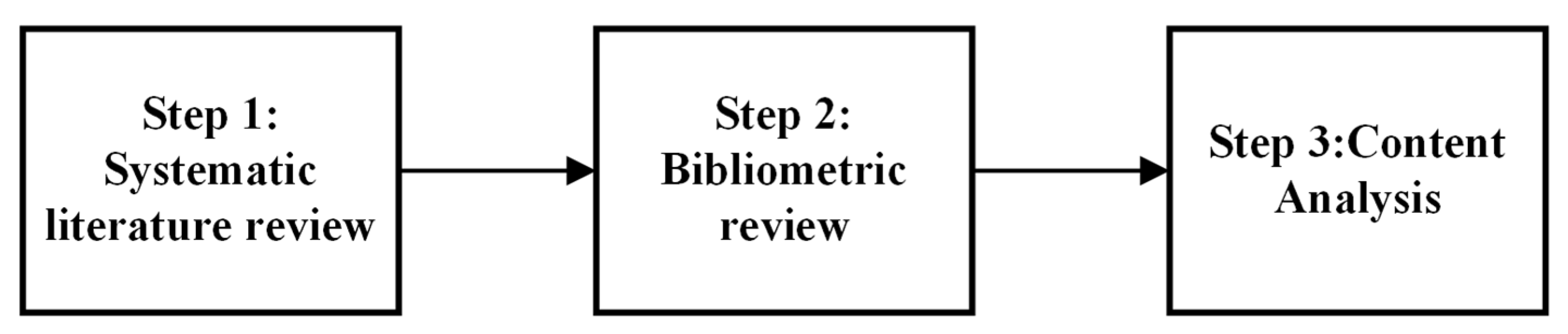
Figure 1. Research steps.
Buildings 15 04471 g001
Figure 2. PRISMA method.
Buildings 15 04471 g002
Figure 3. Number of relevant articles published from 2013 to 2024.
Buildings 15 04471 g003
Figure 4. Network map of the relationship between cited authors.
Buildings 15 04471 g004
Figure 5. Network map of the relationship between the countries mentioned.
Buildings 15 04471 g005
Figure 6. Journals by publication quantity.
Buildings 15 04471 g006
Figure 7. Keyword network map.
Buildings 15 04471 g007
Table 1. Keywords and Boolean operator used to search relevant articles.
Keyword/TermsBoolean OperatorKeyword/Terms
“Life cycle assessment” or “Life cycle analysis” or “LCA”ANDPaver” or “Paver concrete” or “Paver blocks” or “Paver blocks concrete” or “Precast blocks” or “precast blocks concrete” or “Pavement blocks” or “Concrete paving blocks”
Table 2. Environmental indicators present in the analyzed literature.
Environmental Impact IndicatorsNo. of Papers
Global warming potential34
Accumulated energy consumption19
CO2 Emissions12
Acidification potential10
Eutrophication potential8
Greenhouse gas emissions4
Ozone depletion potential3
Total cost2
Abiotic depletion potential2
Ecotoxicity2
Natural resources2
Abiotic resource depletion1
C2H4 Emissions1
Air pollutants such as CO2, NOx, and SO21
Water depletion1
pH Analysis1
Table 3. Composition of conventional concrete blocks in Brazil for 1 m3.
Mixture IdentificationCement (kg)Medium Sand (kg)Fine Sand (kg)Gravel (kg)Total Aggregate (kg)w/c Ratio
[24]12.271.270.914.450.31
[25]11.710.931.173.810.35
[26]11.391.051.18-0.35
Table 4. Composition of concrete blocks with different proportions of rubber waste per 1 m3.
Mixture IdentificationMixtureWaste (kg)Cement (kg)Sand (kg)Gravel (kg)Water (kg)W/C Ratio
[11]A 0%0346.611307.41605.12153.370.44
B 8%48.83323.061090.44619.80129.220.40
C 10%65.18323.031247.64573.39129.220.40
D 12%74.67323.061140.22518.79129.220.40
Table 5. Composition of concrete blocks using plastic waste for 1 m3.
Mixture IdentificationMixtureCement (kg)Sand (kg)Gravel (kg)Plastic (kg)Water (kg)Energy (MJ)
[12]Conventional15.4230.7861.8045.62.4
Plastic as aggregate2153.7647.8820.5210.52.1
Plastic binder067.5022.5202.9
Table 6. Composition of concrete blocks with cement replacement by Ground Granulated Blast Furnace Slag (GGBFS) for 1 m3.
Mixture IdentificationMixtureCement (kg)GGBS (kg)Sand (kg)Gravel (kg)Water (kg)
[22]Control35107051410106
A 5%333.517.67051410106
B 10%315.935.17051410106
C 15%298.452.77051410106
D 20%280.870.27051410106
E 25%263.387.87051410106
F 30%245.7105.37051410106
Disclaimer/Publisher’s Note: The statements, opinions and data contained in all publications are solely those of the individual author(s) and contributor(s) and not of MDPI and/or the editor(s). MDPI and/or the editor(s) disclaim responsibility for any injury to people or property resulting from any ideas, methods, instructions or products referred to in the content.