Article

Study on the Dynamic Mechanical Properties of Polypropylene Fiber-Reinforced Concrete Based on a 3D Microscopic Model

1
CCCC Road and Bridge Northern Engineering Co., Ltd., Beijing 100024, China
2
College of Civil and Architectural Engineering, Liaoning University of Technology, Jinzhou 121001, China
*
Author to whom correspondence should be addressed.
Buildings 2025, 15(24), 4427; https://doi.org/10.3390/buildings15244427

Submission received: 30 October 2025 / Revised: 2 December 2025 / Accepted: 3 December 2025 / Published: 8 December 2025
(This article belongs to the Topic Sustainable Building Materials)

Abstract

Polypropylene (PP) fibers, known for their high fracture strength, low density, and cost-effectiveness, can significantly enhance the impact resistance of concrete, making the material suitable for specialized engineering applications. This study combined Split Hopkinson Pressure Bar (SHPB) tests with a three-dimensional mesoscale numerical model to investigate the dynamic compressive behavior of PP fiber-reinforced concrete (PFRC). The model, developed using MATLAB, explicitly represented polyhedral aggregates, mortar, the interfacial transition zone (ITZ), and PP fibers. Numerical simulations of impact compression were then performed using LS-DYNA and validated against experimental results. The simulated results exhibit close agreement with the experimental data in terms of peak stress, peak strain, and failure characteristics. The incorporation of 0.1% polypropylene fibers significantly enhanced the dynamic compressive strength of the specimen by 24.45%, with a mere 2.10% deviation from the experimental measurement. When the impact velocity was increased to 8 m/s and 10 m/s, the peak stress showed increases of 6.14% and 22.62%, respectively, while the peak strain increased by 11.72% and 23.32%. Damage analysis revealed that the aggregates experienced minimal failure, with cracks primarily initiating from the mortar and the ITZ. The polypropylene fibers improved the dynamic mechanical performance by dissipating energy through both fiber fracture and pull-out mechanisms. Furthermore, as the impact velocity increased, the fibers absorbed more energy, leading to a progressive increase in their own damage.

1. Introduction

Concrete is the most widely used construction material, and its mechanical properties are facing higher demands with technological advancements [1]. However, ordinary concrete has limitations such as low tensile strength and poor toughness, which restrict its application in critical engineering projects [2,3]. To improve the performance of concrete, reinforcing materials such as metal fibers [4], inorganic non-metallic fibers [5], synthetic fibers [6], or natural organic fibers [7] can be incorporated. Based on mechanisms like fiber bridging and crack resistance, these materials optimize the internal structure of concrete, forming Fiber Reinforced Concrete (FRC). This significantly enhances its mechanical properties, and the method has been widely adopted in engineering practice. Polypropylene fiber has attracted considerable attention due to its high tensile strength, low density, and low cost. When mixed into concrete, the fibers effectively inhibit crack propagation through bridging, significantly improving the overall mechanical performance of the concrete [8]. Currently, polypropylene fiber-reinforced concrete (PFRC) is widely used in critical engineering fields such as tunnels, railways, and bridges [9]. Given its strong adaptability and application potential in structural engineering, it is essential to further investigate the reinforcing mechanisms of polypropylene fibers. Moreover, during actual service, structures may be subjected to dynamic loads such as impacts and explosions [10]. Therefore, systematically studying the mechanical behavior and damage evolution mechanisms of PFRC under dynamic loading conditions is of great significance for the protective design and safety assessment of engineering structures.
According to existing research, scholars worldwide have conducted systematic studies on PFRC and achieved significant progress in several aspects. In terms of static mechanical behavior, Xu et al. [11] reported that incorporating polypropylene fibers leads to ductile failure characteristics in concrete specimens, significantly improving compressive toughness, post-peak ductility, and hysteretic energy dissipation capacity. However, its influence on peak strength, elastic modulus, and plastic strain remains relatively limited. Jia et al. [12] found that the primary failure mode of PFRC under cracking is fiber fracture. Yi et al. [13] observed that appropriately increasing the content of polypropylene fibers (PF) can enhance the flexural and tensile strength of coral concrete to some extent. However, excessive fiber content may introduce local defects, thereby weakening the toughening effect. Regarding dynamic mechanical behavior, some researchers have focused on the response of PFRC under impact loading. Liu et al. [14] indicated that the inclusion of coarse fibers helps enhance the integrity of concrete and significantly improves its impact resistance before failure. Zhang et al. [15] further demonstrated that PFRC exhibits notable strain rate sensitivity. With increasing impact velocity, its mechanical properties, toughness, and energy absorption capacity are significantly enhanced. Compared with plain concrete, the compressive strength of PFRC increased by 33.8%, and the energy dissipation ratio improved by 23%. Overall, most existing studies have quantitatively analyzed the role of polypropylene fibers from the perspective of macroscopic mechanical properties and failure patterns, primarily through experimental methods. However, the stress transfer mechanism of fibers under loading and the evolution process of internal damage still require further in-depth investigation.
Using numerical simulation methods to model and simulate PFRC can effectively reproduce the failure process of the material under load, thereby providing deeper insight into its failure mechanisms. At the meso-scale, concrete can be regarded as a three-phase composite material consisting of aggregate, mortar matrix, and the interfacial transition zone (ITZ) between them [16,17,18]. Mechanical analysis based on the meso-structure helps to clearly reveal the damage evolution and final failure modes of each component under dynamic loading. To this end, researchers have conducted extensive studies on meso-scale modeling methods and used the established models to simulate the mechanical response and failure characteristics of concrete. Jin et al. [19] developed a 3D meso-scale concrete model containing spherical aggregates, mortar matrix, and ITZ, and investigated the dynamic failure behavior under different strain rates. They found that the tensile strain rate hardening effect of concrete is relatively weak at low strain rates but becomes significantly enhanced at high strain rates. Guo et al. [20,21] applied a similar 3D meso-model in Split Hopkinson Pressure Bar (SHPB) numerical tests. The model, which included mortar and spherical aggregates, successfully reproduced the dynamic response of concrete under high strain rates. Chen et al. [22] conducted a numerical study on the dynamic mechanical properties of concrete using a meso-model that considered spherical aggregates and ITZ. The obtained waveforms, dynamic compressive strength, and strain rate effects showed good agreement with experimental results. Zhang et al. [23] constructed a 3D meso-scale finite element model incorporating random polyhedral coarse aggregates, mortar, and ITZ. Validation through experimental comparison demonstrated that the model and related parameters can reliably reflect the dynamic compressive mechanical behavior of concrete. In the field of meso-scale modeling of fiber-reinforced concrete, some scholars have attempted to incorporate realistic fiber structures. Feng et al. [24] proposed a 3D meso-model in which aggregates and steel fibers do not overlap. This model can effectively predict the dynamic compressive behavior and failure criteria of steel fiber-reinforced concrete (SFRC) under high strain rates. Liu et al. [25] developed a more realistic meso-scale modeling approach for SFRC, extending fiber segments into rectangular cross-sections to avoid interference between fibers. Their study verified the positive role of steel fibers in enhancing the strength and toughness of concrete. Despite these significant advances, most current models have not yet fully addressed the modeling of realistic aggregate shapes and fiber distributions in the meso-structure. The interaction mechanisms among aggregates, fibers, and mortar remain unclear, which limits the in-depth understanding of the mechanical behavior of polypropylene fiber-reinforced concrete.
Building upon the aforementioned research, it is evident that current studies on PFRC primarily focus on static mechanical properties, while research on its mechanical behavior under dynamic loading remains relatively limited. Most existing achievements concentrate on the analysis of macroscopic mechanical performance and failure modes, with less attention paid to the stress propagation mechanisms and damage evolution laws during the loading process. In terms of mesoscale modeling, aggregate morphology is often simplified as spherical, which fails to reflect the true geometric characteristics of actual aggregates. This simplification also limits accurate simulation of potential stress concentration effects that may arise near aggregate edges. Furthermore, most existing mesoscale models do not adequately account for the realistic geometric shape and distribution characteristics of polypropylene fibers. Research on the bond-slip behavior between fibers and the matrix is even more scarce. To address these issues, this study conducted SHPB impact compression tests on prepared PFRC specimens and developed a mesoscale numerical model of PFRC using MATLAB (R2024b). The model incorporates polyhedral aggregates, mortar, the ITZ, and polypropylene fibers. The rationality and accuracy of the established mesoscale model were verified through comparative analysis of experimental and simulation data. Based on this validated model, systematic dynamic compression numerical simulations were performed under different impact velocities. The failure process and energy evolution characteristics of PFRC specimens under various impact conditions were thoroughly analyzed.

2. Establishment of the PFRC Microscopic Model

2.1. Preparation of Test Specimens

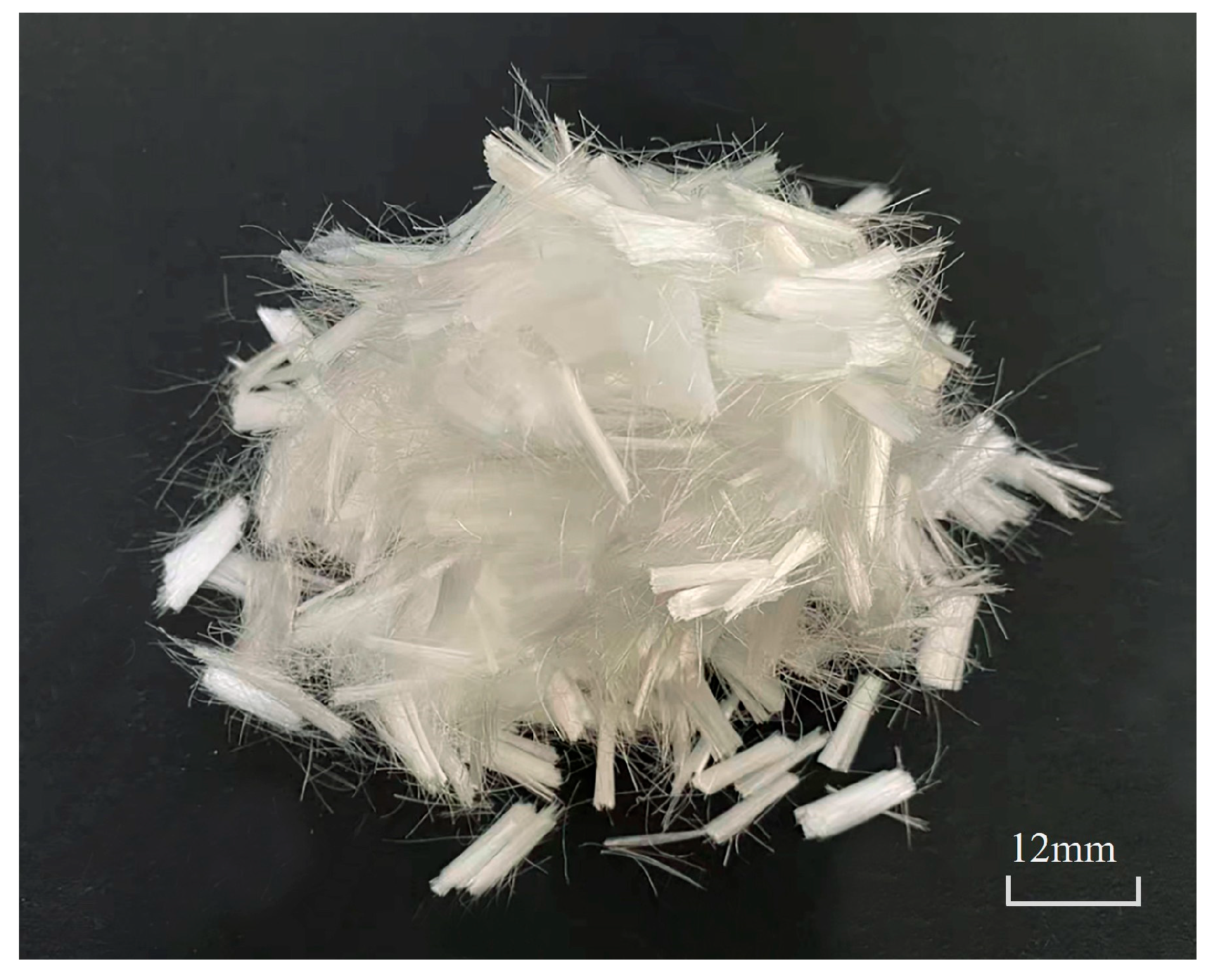
The mix proportion design of concrete strictly followed the requirements of JGJ 55-2011 Specification for Mix Proportion Design of Ordinary Concrete [26]. On the premise of ensuring that the mechanical properties of concrete met the core design indicators, the dosages of cement and fibers were appropriately reduced by optimizing parameters [27,28]. The strength grade of concrete prepared in this study was C40. The designed water consumption was 185 kg/m3, and the water-cement ratio (W/C) was 0.4. Based on this, the calculated cement dosage per unit volume was 463 kg/m3, and the designed sand ratio was 30%. Coarse aggregate adopted crushed stones with continuous gradation of 5–15 mm. During the concrete mixing stage, polypropylene fibers (Figure 1) were added by means of uniform incorporation. The geometric dimensions and mechanical property parameters of the fibers were detailed in Table 1. The mix proportion parameters calculated by the weight method were shown in Table 2. After the concrete specimens were cast, they were cured for 28 days. Finally, they were processed into standard dynamic test specimens, with the dimensions of Φ 50   mm × 40   mm .

2.2. Generation and Placement of Polyhedral Aggregate

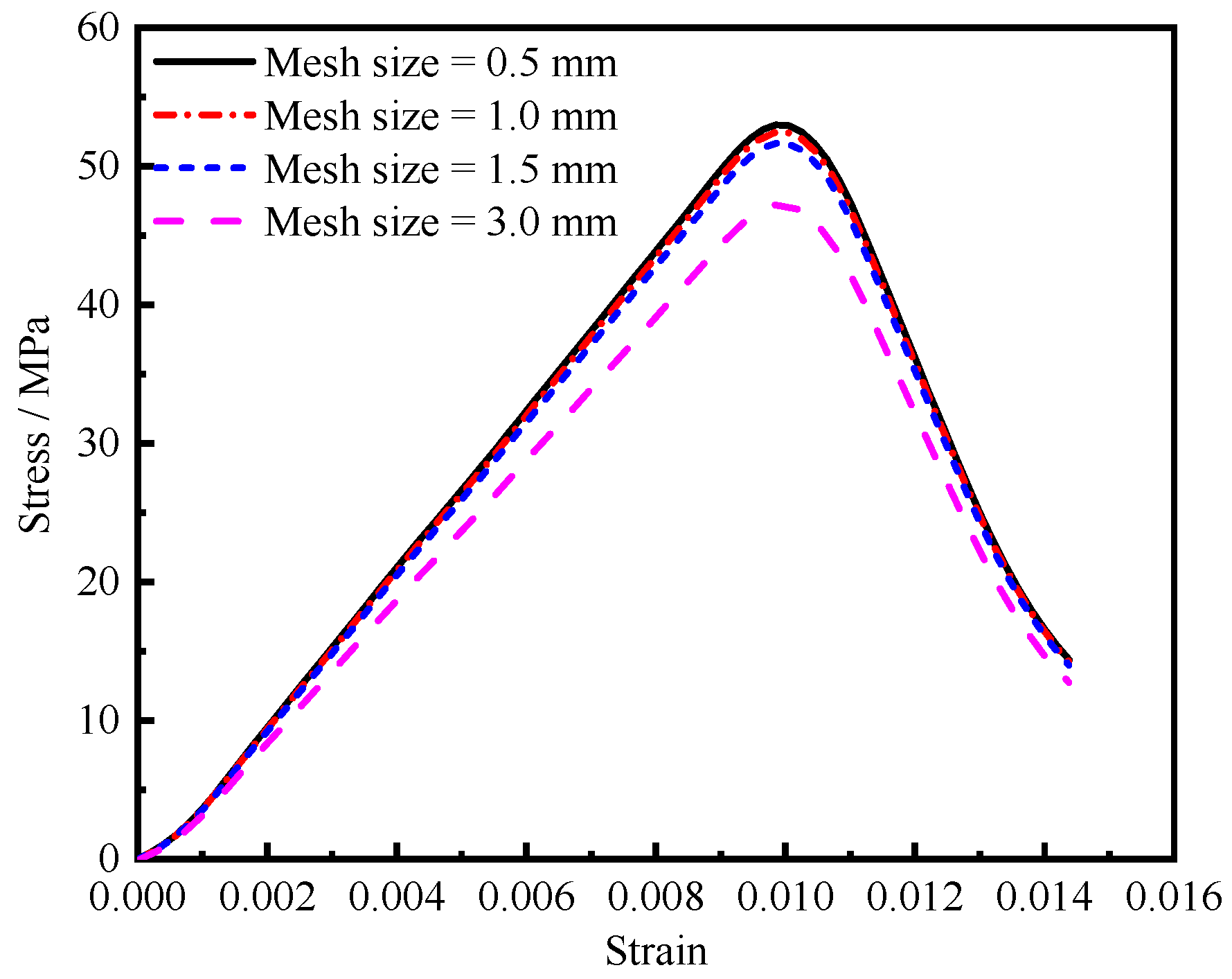
As a heterogeneous material, PFRC contains numerous coarse aggregate particles with varying size ranges, which introduces a size effect on the material’s behavior. The addition of fibers further alters the stress distribution under load, making it essential to account for this heterogeneity in SHPB tests. This study employed a cylindrical model with a diameter of 50 mm and a height of 40 mm for aggregate placement. The model was first meshed to record node and element information, thereby improving the efficiency of collision detection between aggregates. A mesh sensitivity analysis, a critical step in finite element simulation, was conducted (Figure 2). Comparison of results from different mesh sizes indicated that a mesh size of 1 mm provides an optimal balance. It avoids the geometric inaccuracies in aggregate representation associated with larger elements while mitigating the increased computational time and iteration requirements caused by excessively small elements [29].
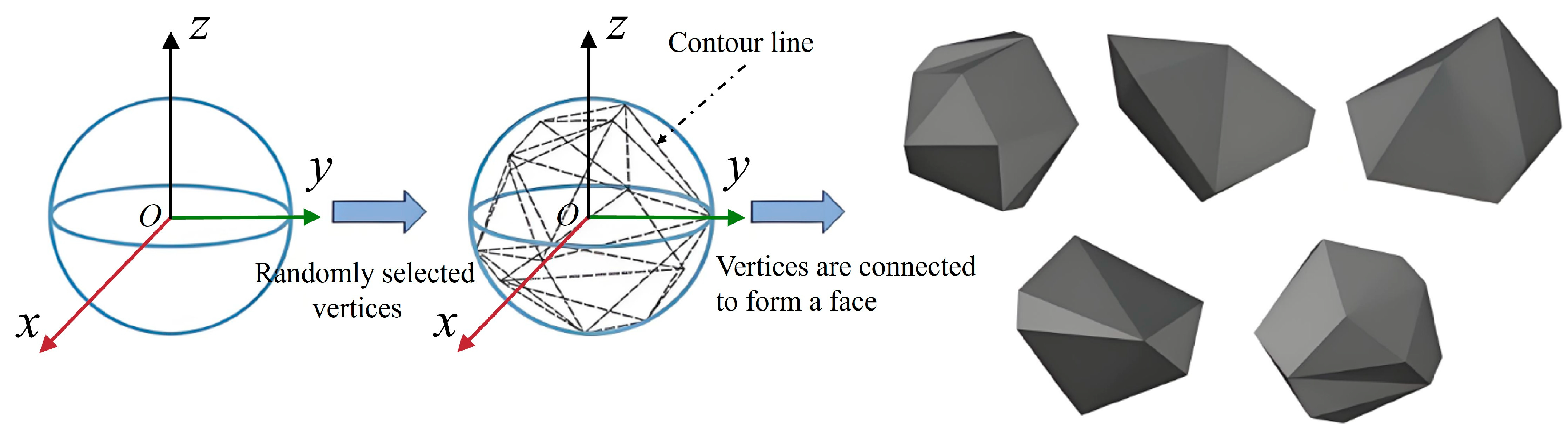
The method from Reference [30] was adopted to determine the generation of polyhedral aggregates (Figure 3). Polyhedral aggregates were generated by creating vertices on the surface of a sphere. All vertices of the polyhedron were constrained to the surface of a single sphere, which was called the base sphere. In specific implementation, 9 to 15 points were randomly and uniformly generated on the surface of the base sphere as the vertices of the polyhedron. Among them, the Cartesian coordinates ( x , y , z ) of vertex i were obtained through spherical coordinate parameter conversion. The azimuth angle and polar angle were defined as random variables uniformly distributed within the intervals [0, 2 π ] and [0, π ], respectively. The conversion formulas were shown in Equations (1)–(3):
x = cos ( α i ) sin ( β i ) r 0 + x 0
y = sin ( α i ) cos ( β i ) r 0 + y 0
z = cos ( β i ) r 0 + z 0
where ( x 0 , y 0 , z 0 ) are the coordinates of the center of the sphere, and r 0 is the radius of the base sphere.
Each set of three generated vertices formed a triangular face. This formed the complete surface structure of the polyhedron. Meanwhile, it was necessary to control the distance between vertices to avoid face distortion caused by excessively close vertices.
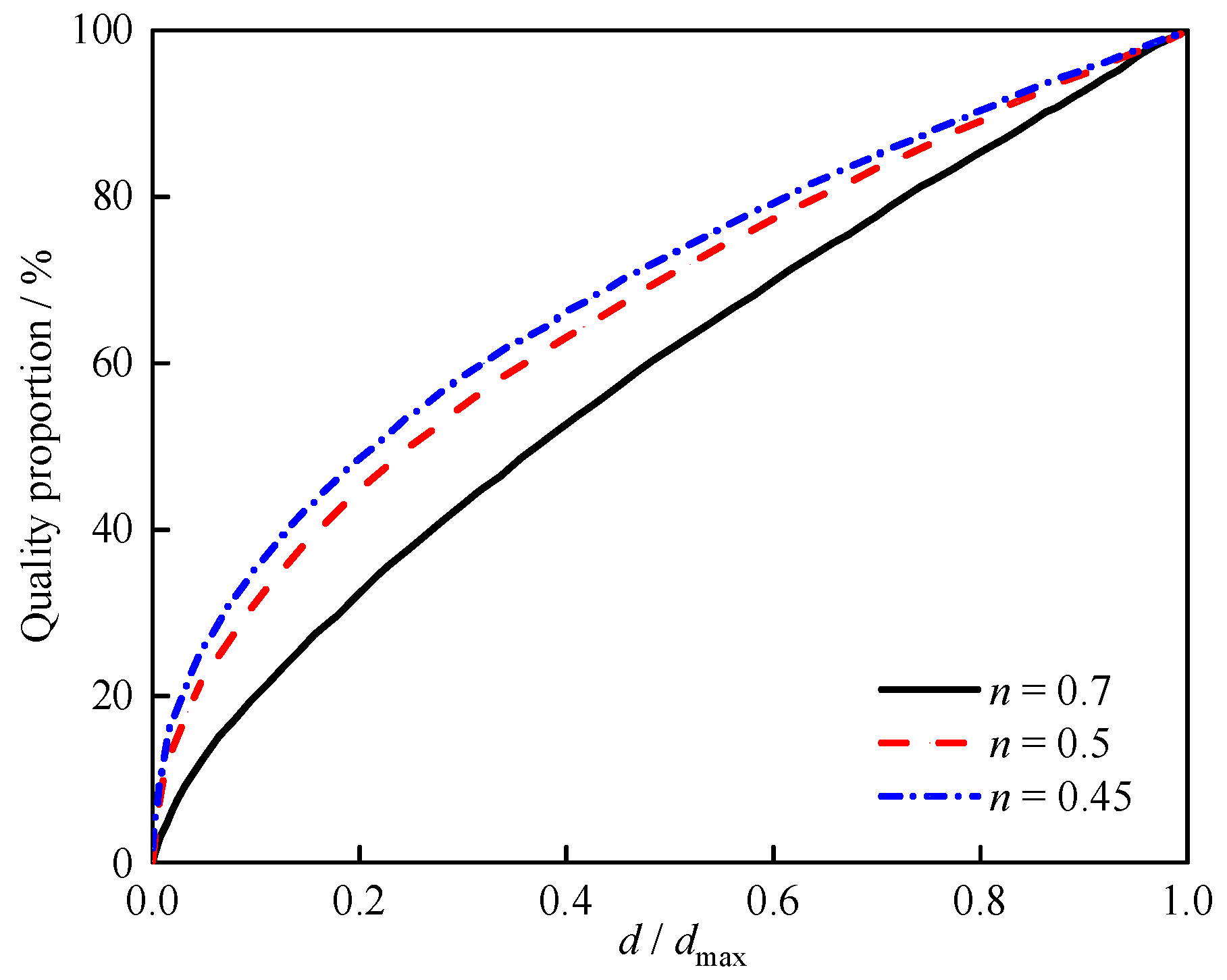
Random polyhedral aggregates could characterize the irregular features of concrete coarse aggregates. They could well restore the actual situation of the meso-scale structure. The Fuller gradation function was adopted to determine the gradation relationship of aggregates in the model. This enabled the realization of the optimal particle size distribution characteristics in the concrete model, thereby achieving a relatively high compactness. The gradation function is as shown in Equation (4):
P ( d ) = 100 d d max n
where represented the percentage of aggregates with particle size smaller than; was the maximum aggregate particle size; was an empirical parameter. With reference to the method for determining aggregate gradation in Reference [31], the gradation curve at n = 0.5 was selected to determine the aggregate content, as shown in Figure 4. Continuous gradation could be divided into different particle size ranges. The proportion of coarse aggregates in different grade ranges could be calculated using Equation (5):
P d s , d s + 1 = P ( d s + 1 ) P ( d s ) P ( d max ) P ( d min )
where P d s , d s + 1 represents d s , d s + 1 the cumulative percentage of aggregates between particle size grades; d min represents the diameter of the smallest coarse aggregate.
The approach for aggregate placement was as follows: (1) Aggregates were placed in descending order of particle size ranges. (2) The center point of the unfilled element was prioritized as the candidate placement position. (3) An aggregate was considered successfully placed if its interior contained neither boundary points nor boundary element points of already positioned aggregates; otherwise, the placement failed. When placement failed, an attempt was made to rotate the aggregate and re-perform the above interference check. If success was not achieved after exceeding the preset number of rotations, the aggregate was deemed to have failed positioning, and a new aggregate was generated for placement. (4) Information for successfully placed aggregates was updated.

2.3. Grid Recognition

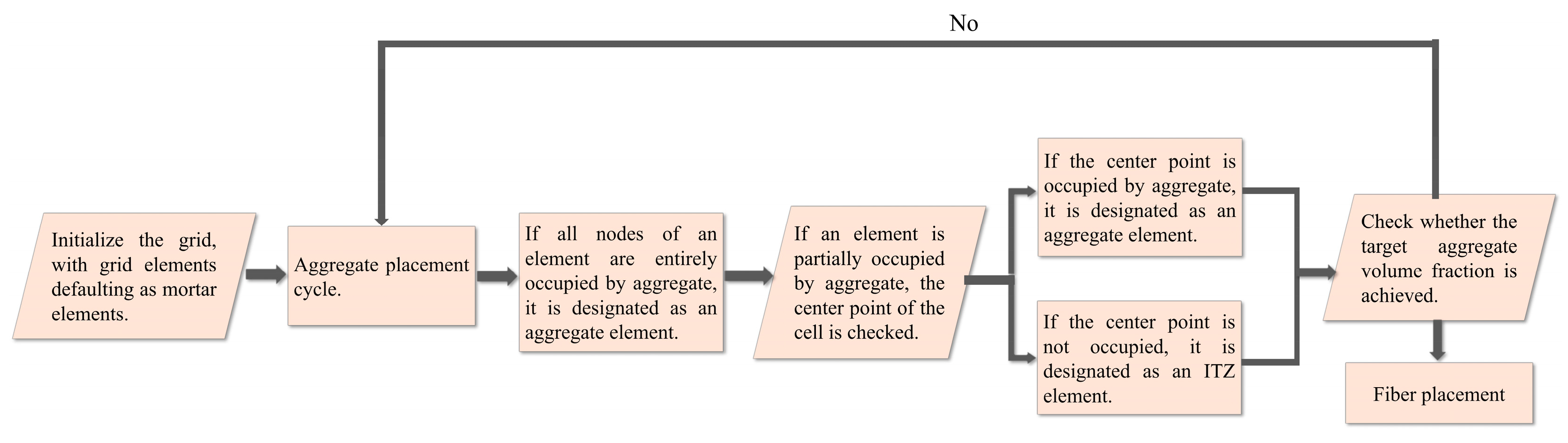
In the process of meso-model construction, the identification of aggregates, ITZ, and mortar was completed by means of node information of the background grid. When all nodes of a grid element were inside an aggregate, the element was determined as an aggregate element. If an aggregate covered only some of the element’s nodes, a secondary judgment was made based on whether the element’s center was occupied by the aggregate. If the center was covered by the aggregate, the element was also classified as an aggregate element. The area extending one element grid outward from the aggregate edge was taken as the ITZ element. The remaining part was identified as the mortar element. The specific process was shown in Figure 5.

2.4. Fiber Generation

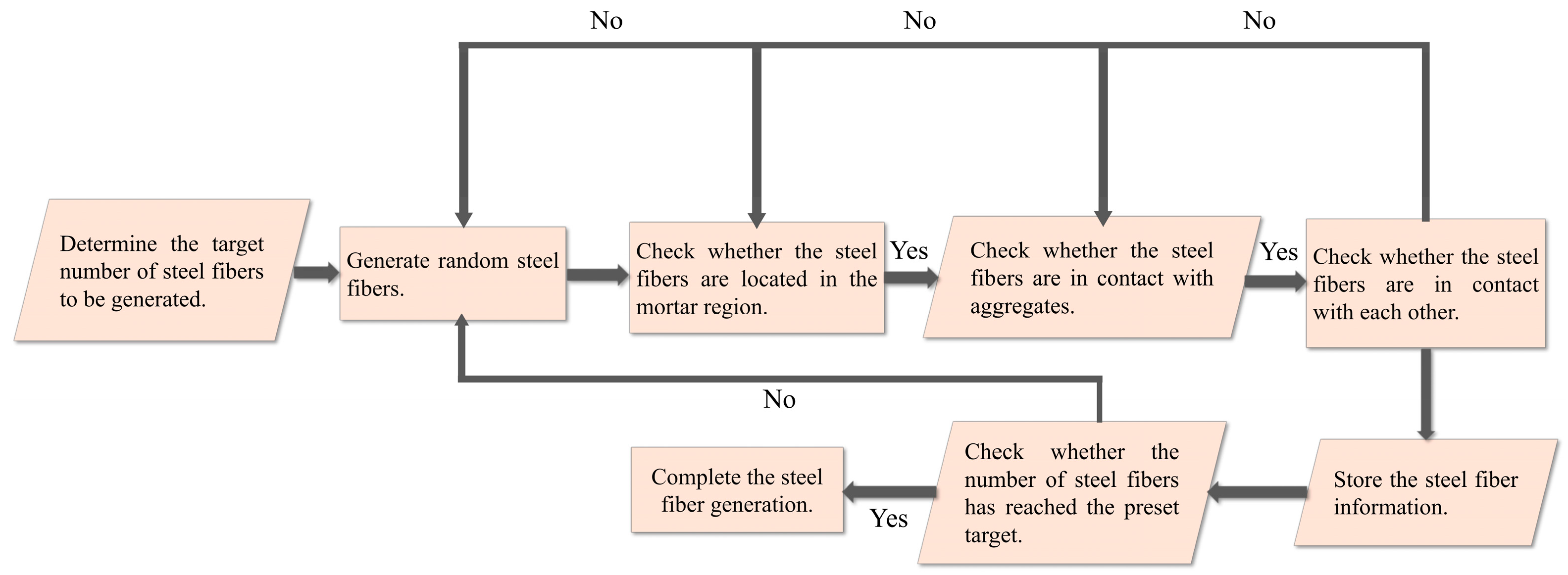
The total number of fibers could be derived based on their geometric parameters, including length, cross-sectional area, and volume fraction [32]. Fibers were randomly distributed in the mortar. It was ensured that no intersections occurred between fibers and aggregate particles, or between fibers themselves. The specific process was shown in Figure 6. In addition, appropriate simplifications were made to the meso-model: In the contact judgment between fibers and aggregates, the geometric shape of aggregates was approximated by spheres. This simplification ensured that the fiber volume fraction remained unchanged. Meanwhile, the specific morphological characteristics of fibers were ignored. Instead, the bond-slip constitutive relationship was used to characterize the mechanical behavior of fibers. The bond-slip setting between fibers and mortar was completed through the *CONSTRAINED_BEAM_IN_SOLID option [1].
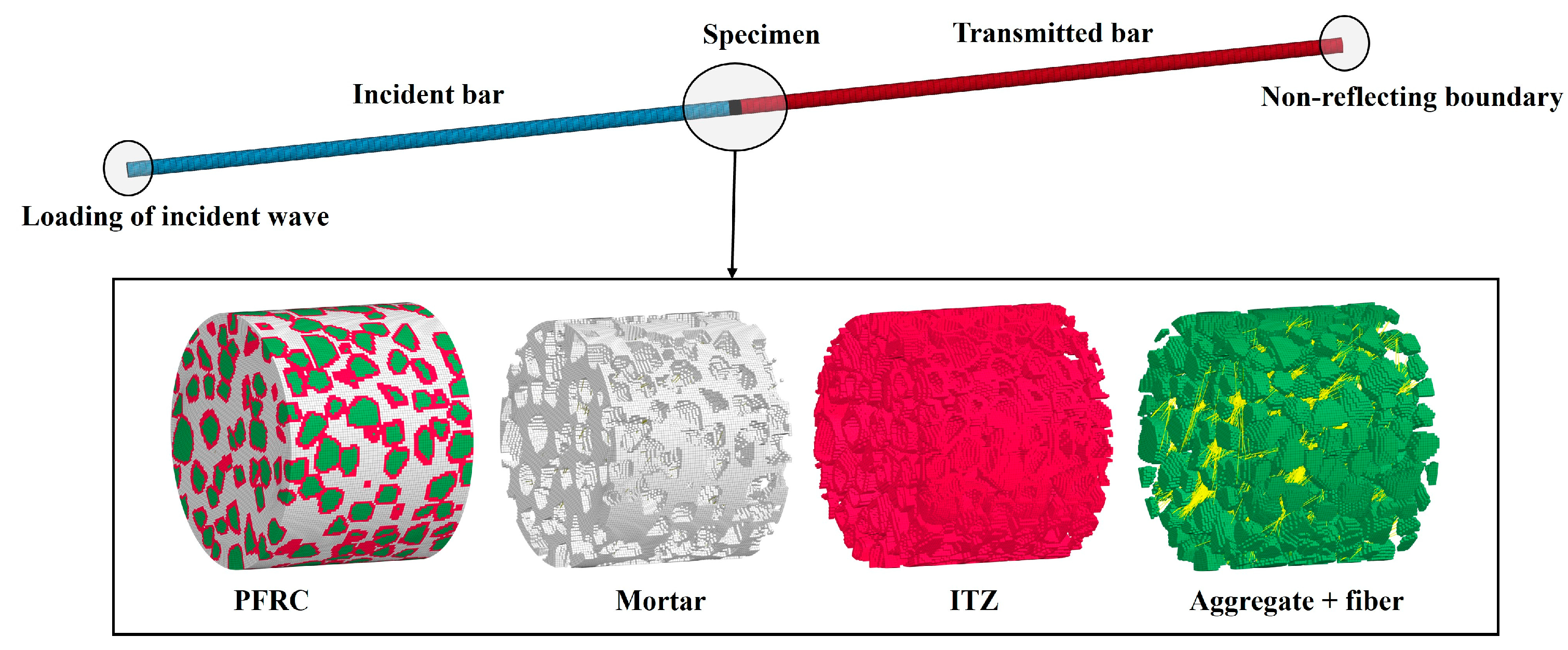
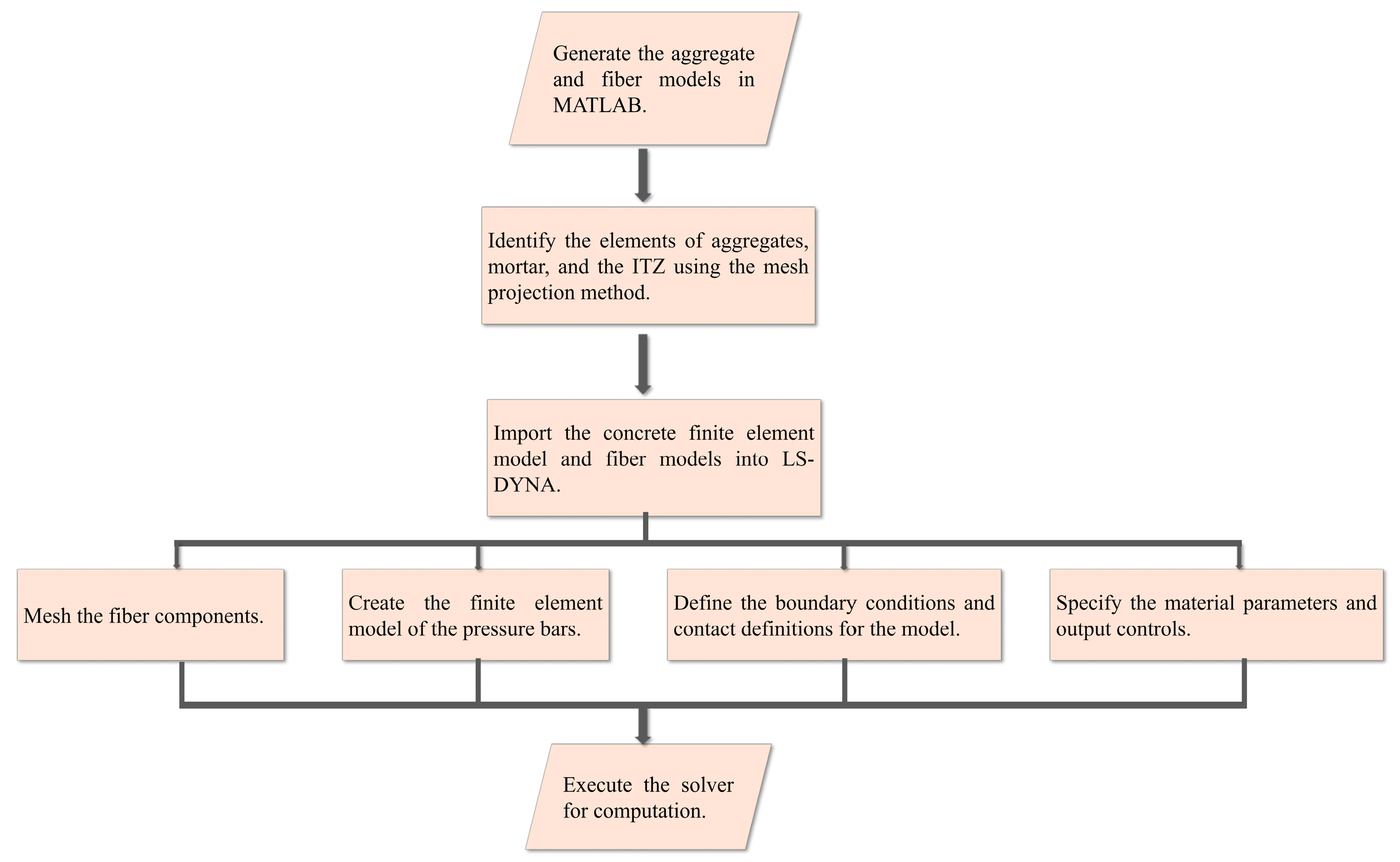
The simulation was conducted in LS-DYNA (2024r1) using the established PFRC finite element model. The incident stress pulse was prescribed to a segment set on the incident bar. To mitigate the influence of stress wave reflections, the transmission bar end was assigned a non-reflecting boundary condition through the *BOUNDARY_NON_REFLECTING keyword. All concrete constituents (aggregates, mortar, ITZ, and fibers) were grouped into a single set, and their contact with the pressure bars was managed by an automatic surface-to-surface algorithm (*CONTACT_AUTOMATIC_SURFACE_TO_SURFACE). The analysis parameters were set as follows: a termination time of 1.5 ms, a time step scale factor of 0.67 [31], and an output interval of 20 microseconds. A visualization of the complete model, illustrating the polyhedral aggregates within the mortar matrix and the ITZ, is provided in Figure 7. A flowchart outlining the numerical simulation process is provided in Figure 8.

2.5. Determination of Material Parameters

The K&C (Mat072), HJC (Mat111), and SJC (Mat098) material models were employed to describe the mechanical response of mortar/ITZ, aggregate, and fibers, respectively. For the K&C model, only fundamental mechanical parameters require input in its tab; the LS-DYNA program automatically generates other parameters, including its equation of state parameters. Referring to the experimental data for mortar from reference [1], the basic parameters for the C40 grade mortar material model are as follows: density = 2300 kg/m3, quasi-static compressive strength = 31.5 MPa, and Poisson’s ratio = 0.25. The ITZ, a transitional interface formed between aggregate and mortar, serves as the primary region for crack development. Experiments demonstrate that the compressive strength and elastic modulus of the ITZ are approximately 80–85% of those of the mortar [30]. Accordingly, the fundamental parameters for the ITZ material model are determined as: density = 2300 kg/m3, quasi-static compressive strength = 25.2 MPa, and Poisson’s ratio = 0.25. The main parameters are listed in Table 3. Based on experimental results of the basic physical and mechanical properties of coarse aggregate, and combined with the correction method from reference [31], the HJC model parameters for the aggregate were preliminarily determined, as shown in Table 4. Detailed parameters for the polypropylene fibers are provided in Table 1. The maximum principal strain failure criterion was adopted to define the failure thresholds for the aggregate, mortar/ITZ, and polypropylene fibers, thus simulating the failure behavior of the concrete specimen under load.

2.6. Model Validity Verification

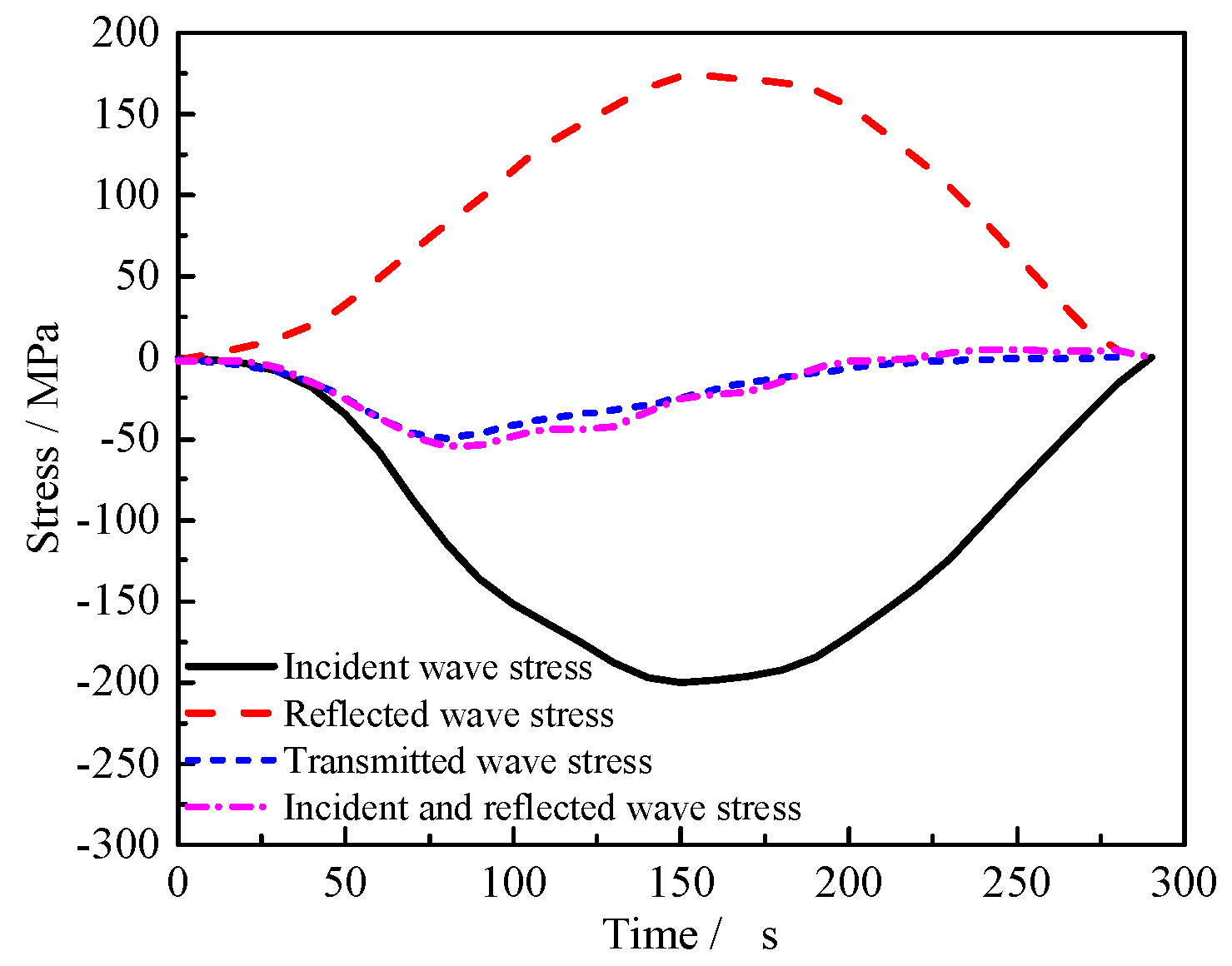
SHPB impact compression simulation calculations were conducted on the established PFRC meso-model. After the calculation was completed, the calculation result file in d3plot format was imported into the LS-PrePost software (V4.11) for opening. With reference to the actual adhere position of strain gauges in the experiment, the element positions for data output in the simulation were determined. The stress time-history curves at the corresponding positions of the incident bar and transmission bar were exported, and the three-wave method was used for verification. As shown in Figure 9, the superposition curve of incident wave stress and reflected wave stress was basically consistent with the transmission wave stress curve. This indicated that the specimen had reached a stress balance state during the impact process, verifying the validity of the numerical simulation results.
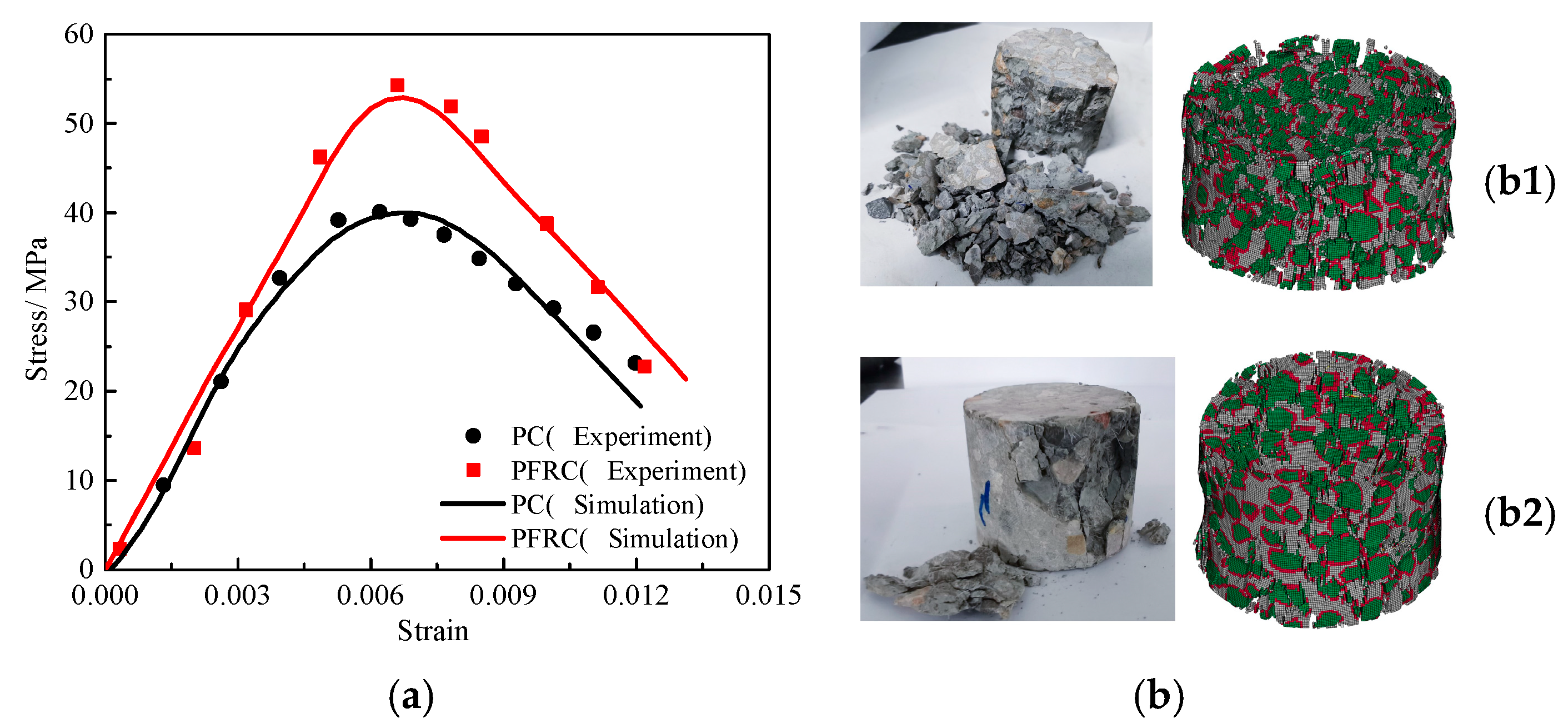
Figure 10 presents the simulated stress–strain curves and failure modes of plain concrete specimens and PFRC specimens under an impact velocity of 6.0 m/s, along with a comparative analysis with experimental results. The results indicate that incorporating 0.1% polypropylene fibers into concrete significantly enhances the dynamic compressive strength of the specimens, with an increase of 24.45%. The error compared to the experimental results is 2.10%. Notably, the experimental curve exhibits a concave pore compaction stage in the elastic phase, which is more pronounced in PFRC specimens. This is attributed to the increased number of internal pores after adding polypropylene fibers. In contrast, the simulated curve does not show a pore compaction stage in the elastic phase due to insufficient consideration of initial porosity. Overall, the peak stress, peak strain and failure characteristics of the simulated results agree well with the experimental results. This demonstrates that the modeling approach and material parameter selection for polypropylene fiber-reinforced concrete in this study are effective and feasible.

3. Analysis of Simulation Results

3.1. Characteristics of Stress–Strain Curves

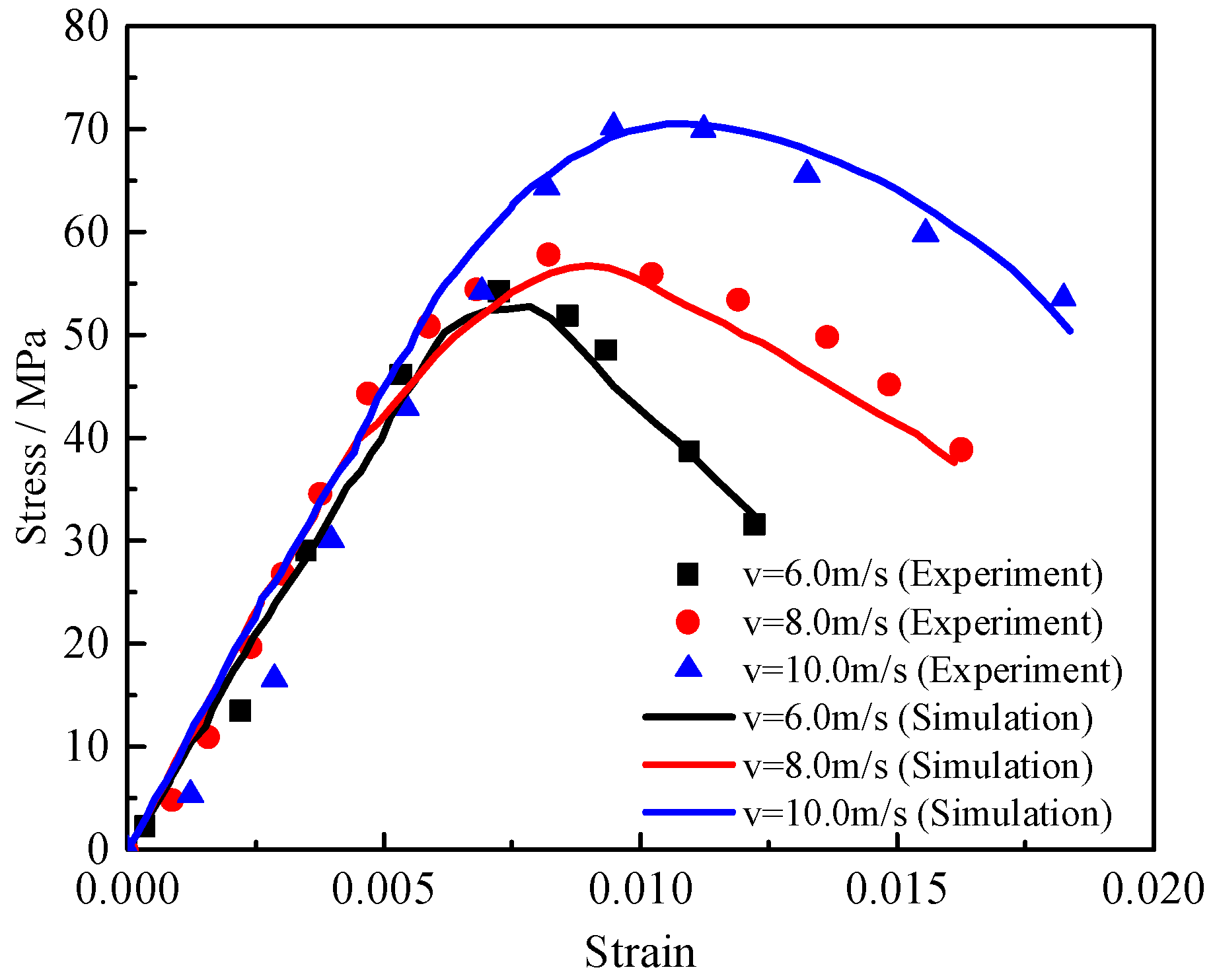
Figure 11 compares the dynamic stress–strain curves from experiments and simulations at different impact velocities. Both sets of curves demonstrate a significant strain rate effect. As the impact velocity increases to 8 m/s and 10 m/s, the peak stress rises by 6.14% and 22.62%, respectively, while the peak strain increases by 11.72% and 23.32%. Furthermore, higher impact velocities enhance the elastic and plastic deformation phases and result in a more gradual unloading stage.

3.2. Destructive Characteristics

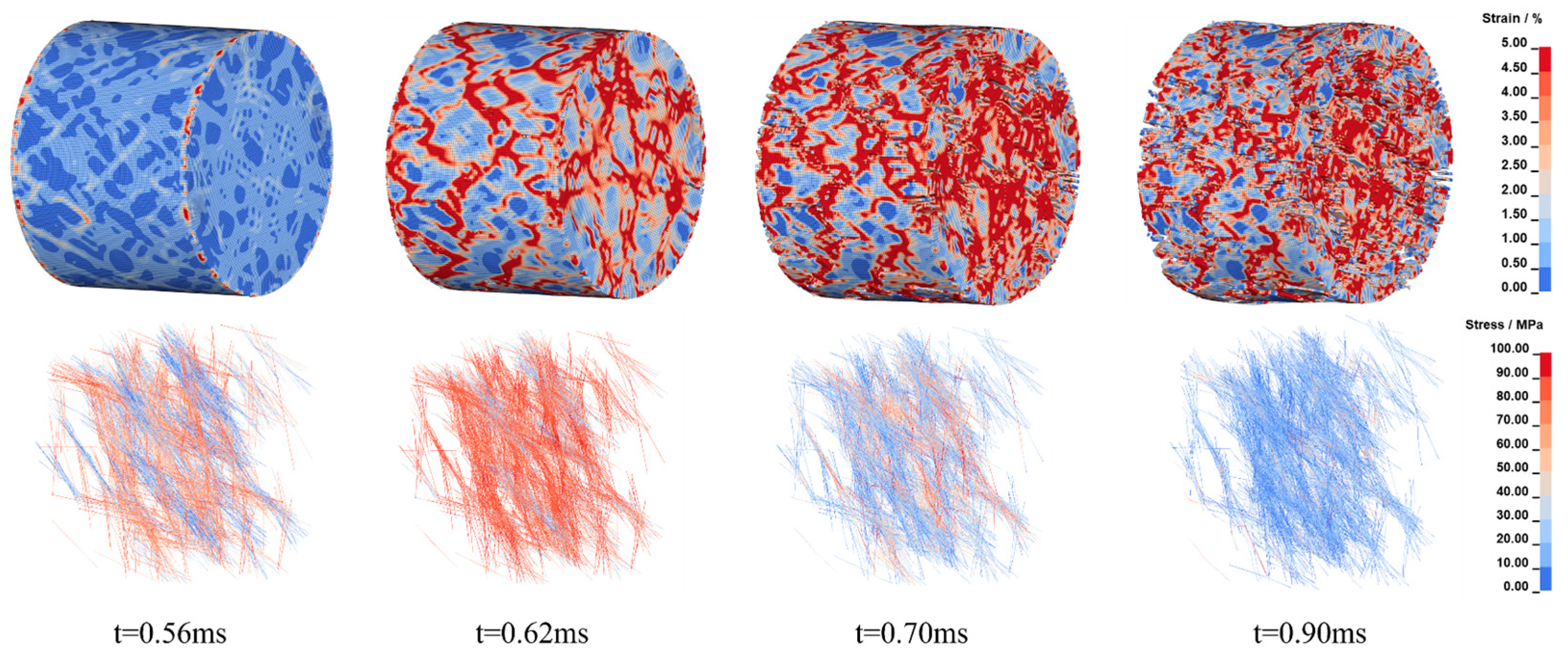
Figure 12 showed the SHPB dynamic failure process of polypropylene fiber concrete. It could be seen from the figure that at 0.56 ms, the impact stress wave propagated in the specimen. Different meso-components of the specimen began to accumulate plastic strain, and the polypropylene fibers also started to bear force. At 0.62 ms, the stress wave had been fully applied to the specimen. There were certain differences in the plastic strain of different meso-components. Among them, the plastic strain increment of mortar and ITZ was relatively significant, while the plastic strain of aggregate was relatively small. This indicated that the aggregate did not absorb excessive energy at this stage, while stress concentration occurred in the mortar and interface regions. Meanwhile, the polypropylene fibers themselves bore force and began to slip. At 0.70 ms, when the equivalent stress value exceeded the yield stress of the meso-component materials, plastic deformation accumulated continuously. Unit failure occurred after a certain strain was reached, thereby forming cracks. At this time, tensile cracks began to appear on the impact surface of the specimen, and large cracks had formed on the side of the specimen. The cracks developed and propagated along the edge of the aggregate. The force borne by the fibers began to decrease, and a small number of fibers started to slip out. At 0.90 ms, the entire specimen was completely damaged. Most of the fibers detached from the mortar matrix, and the force borne by the fibers decreased significantly.
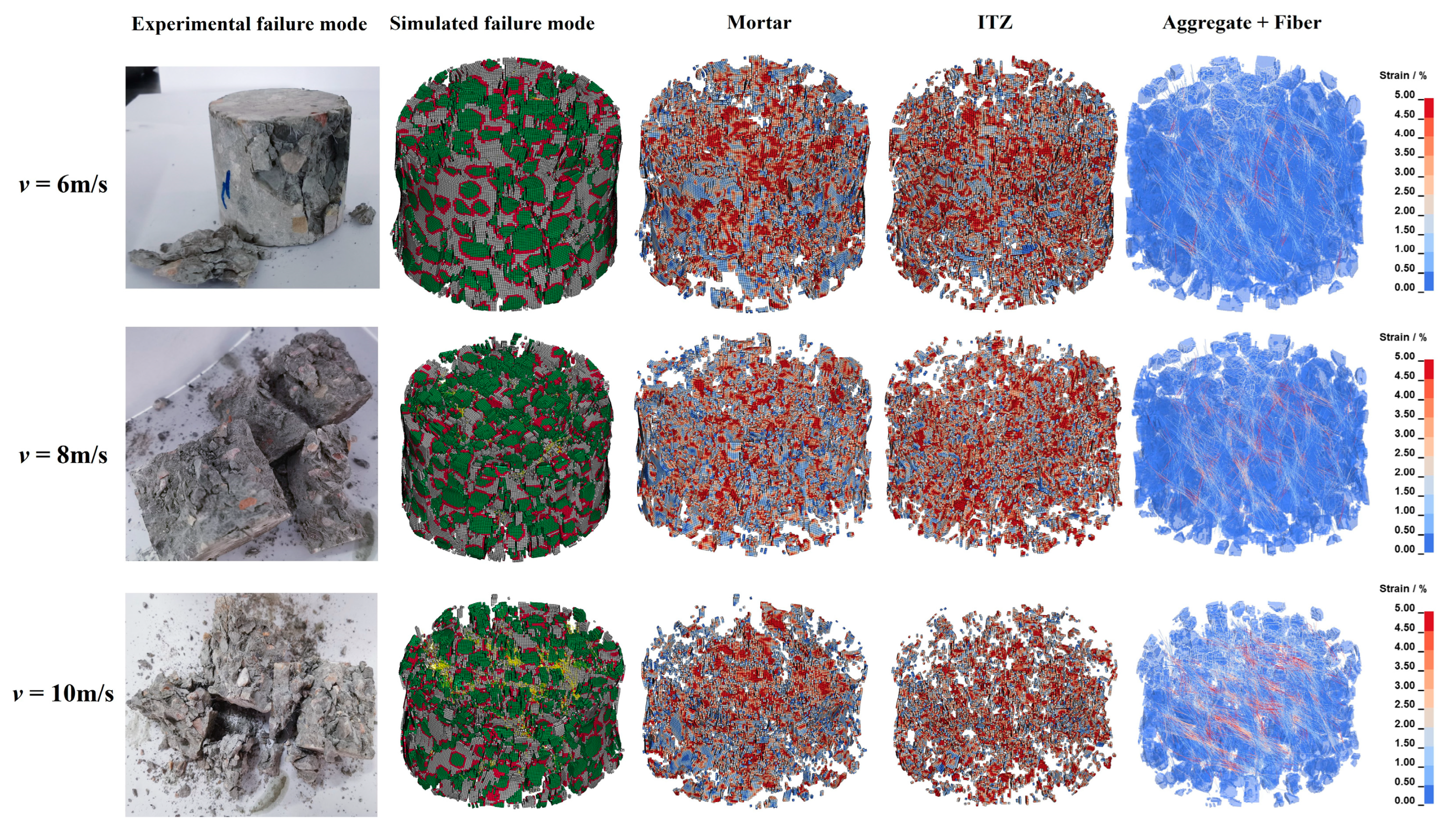
Figure 13 showed the final failure diagrams of polypropylene fiber concrete under different impact velocities. It could be seen from the figure that when the impact velocity was 6.0 m/s, the specimen only developed damage cracks at the edges. The overall integrity of the specimen was good, and the cracks were mainly concentrated at the edges and aggregate edges. When the impact velocity was 8.0 m/s, spalling failure had occurred at the edges of the specimen, and damage cracks had formed around the aggregates. Due to the bonding effect of polypropylene fibers, the middle part of the specimen still maintained good integrity. When the impact velocity was 10.0 m/s, the energy of the large impact stress wave acted on the specimen. This energy was greater than the energy required for polypropylene fibers to be pulled out of the matrix, so the entire specimen suffered relatively severe damage. It could also be seen from the simulation results that as the impact velocity increased continuously, the damage degree of the aggregate part of the specimen was relatively low. Cracks were mainly generated through mortar and interface failure. Meanwhile, the stress borne by polypropylene fibers also increased with the increase in impact velocity.

3.3. Energy Characteristics

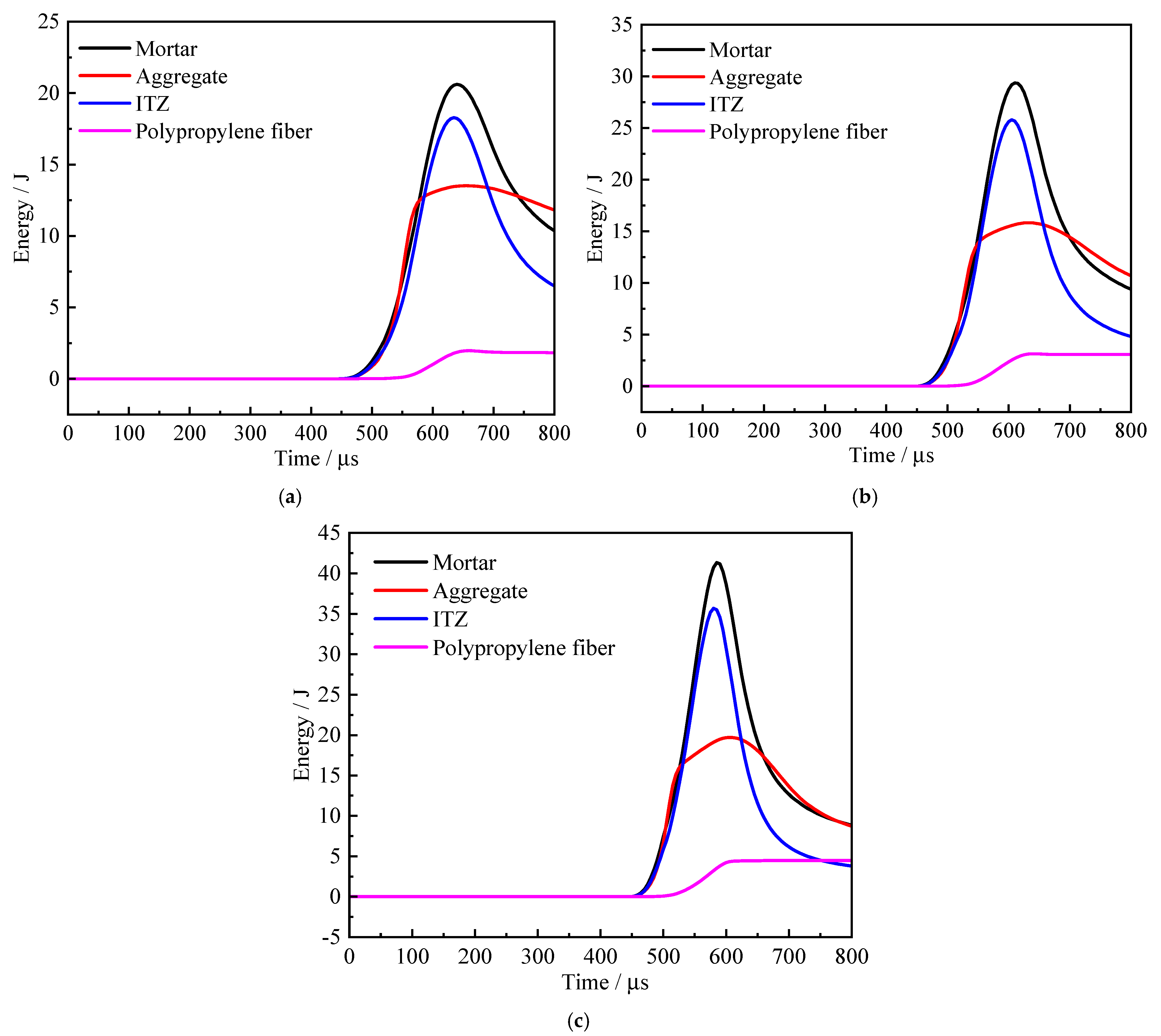
Figure 14 shows the energy–time history curves of the mortar and the ITZ under the same impact velocity. Both exhibit an initial increase followed by a decrease. Under impact loading, components such as mortar, ITZ, aggregate, and fibers continuously absorb energy, leading to the initial rising phase of the curves. The absorbed energy is primarily used for the accumulation of internal damage within the material. Once the accumulated damage exceeds the material’s failure threshold, the corresponding elements are deleted, and their absorbed energy is released, causing the energy curve to drop. The aggregates and polypropylene fibers sustain less damage after absorbing energy, with a relatively small number of failed elements [33]. Consequently, their energy–time history curves show minor fluctuations after peaking. In contrast, the energy of the mortar and ITZ drops significantly after reaching its peak, with the extent of decrease growing as the impact velocity increases. At a higher impact velocity of 10.0 m/s, the energy–time history curve of the aggregate component also shows a noticeable decline after peaking, indicating significantly intensified damage to the aggregate under this condition. Furthermore, polypropylene fibers absorb limited energy during fracture. Their primary mechanism is to dissipate energy through the fiber pull-out process, thereby enhancing the dynamic mechanical performance of the specimen. In summary, energy analysis can effectively characterize the damage evolution process and the extent of failure in concrete-like materials under impact loading.
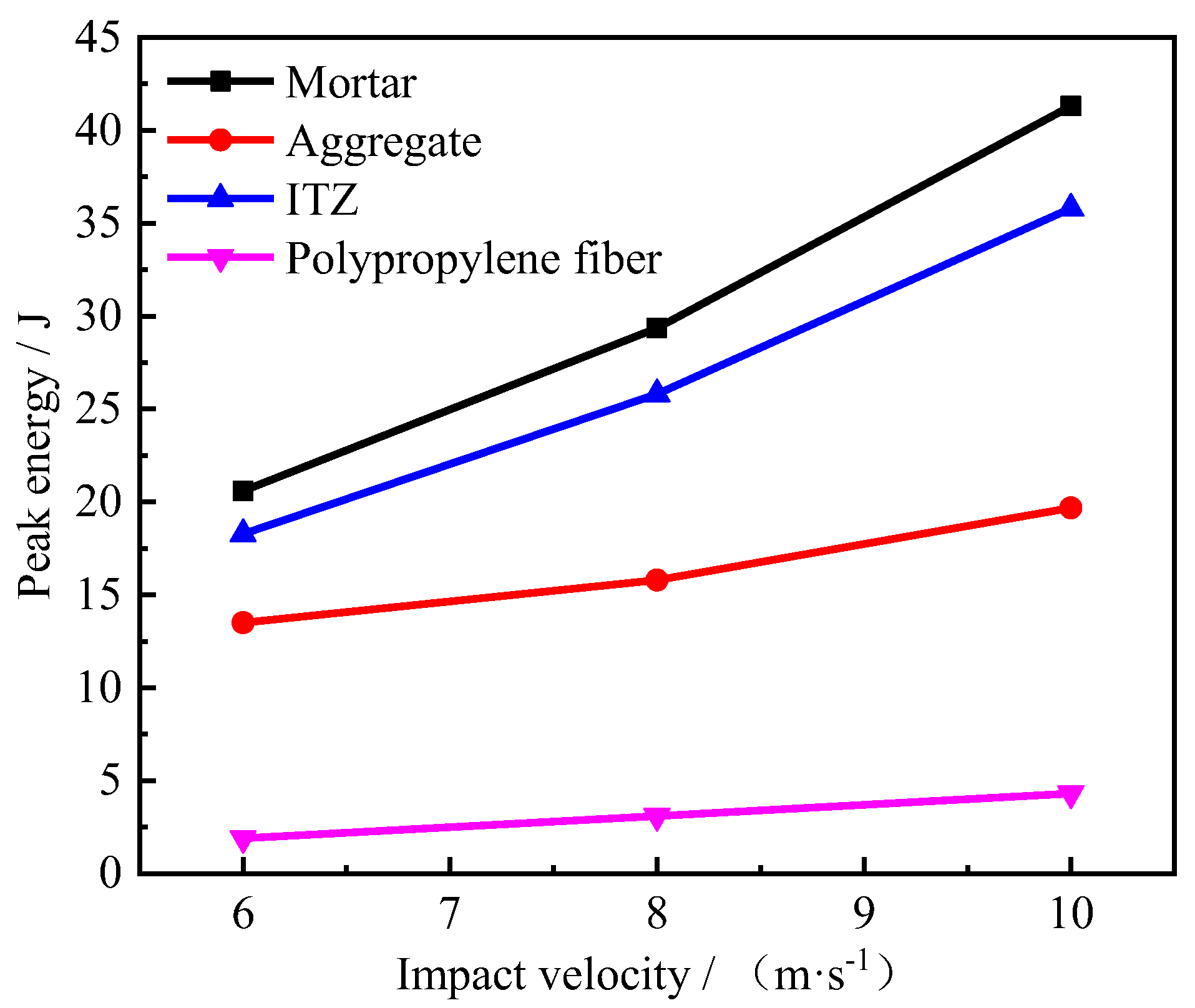
Figure 15 showed the variation law of the peak energy of each meso-component with impact velocity under different impact velocities. It could be seen from the figure that the higher the impact velocity, the greater the peak energy of each meso-component. The energy absorbed by the aggregate was greater than that by the ITZ, while the damage degree of the aggregate was relatively small. This was because compared with the ITZ, the volume ratio of the aggregate was much larger than that of the ITZ. Therefore, the aggregate component absorbed greater peak energy. Although the volume of the ITZ was very small, the energy it absorbed was not low. Thus, both the ITZ and the matrix were the main meso-structures for crack development. It could also be seen from the peak energy variation curve of polypropylene fibers that the higher the impact velocity, the more energy the polypropylene fibers absorbed for their own bending failure. Therefore, under higher impact velocities, the damage degree of polypropylene fibers also increased gradually.

4. Discussion

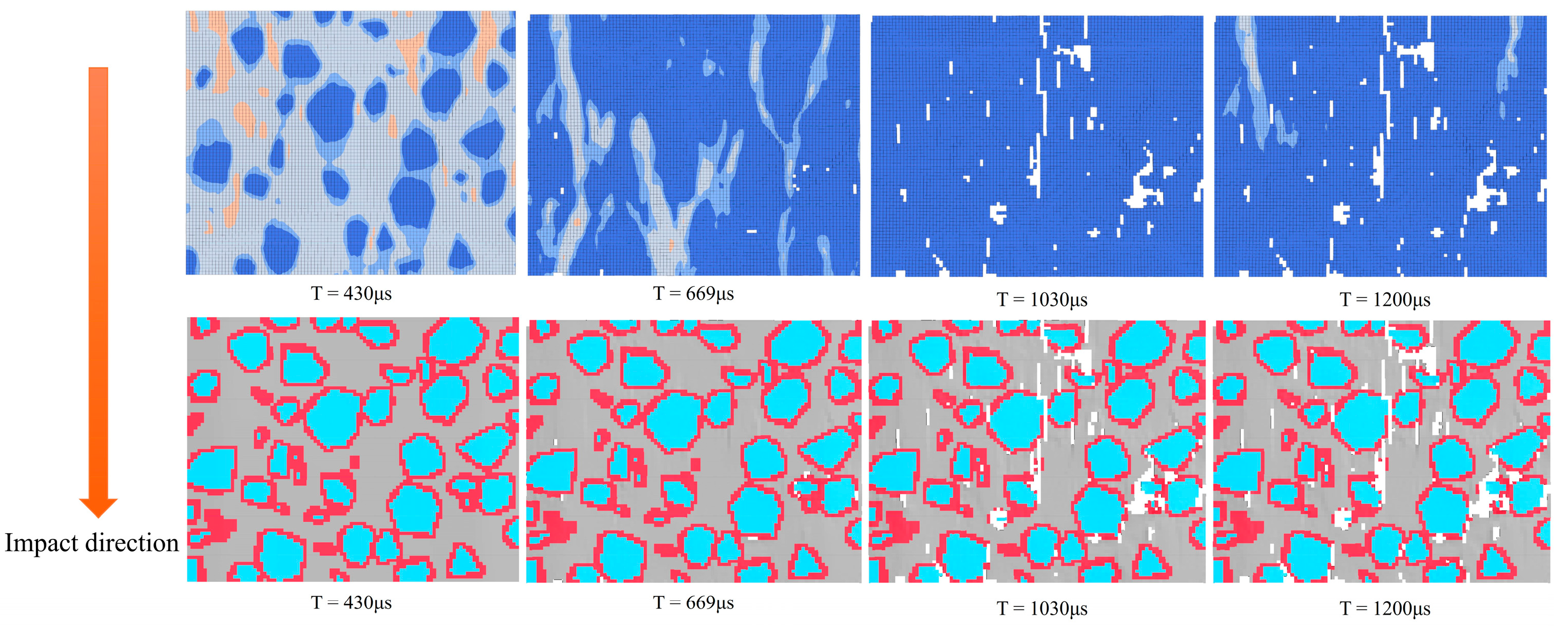
Quantitative characterization of the energy distribution within the mesoscale structure reveals the following ranking of energy dissipation capacity, in decreasing order: mortar matrix > ITZ > aggregate > polypropylene fiber. This result clarifies the critical role played by the mortar matrix and ITZ in alleviating stress concentration at aggregate interfaces under dynamic loading, thereby illuminating the primary failure mechanism. Furthermore, damage evolution analysis of the concrete cross-section indicates that under impact loading (Figure 16), damage initiates at weak interfaces, such as those around aggregates, due to stress concentration. Initial damage occurs within the ITZ and subsequently propagates along the direction of the applied load [34]. The function of the polypropylene fibers is primarily manifested through their bridging and crack-arresting effects. The fibers, spanning across micro-cracks, dissipate additional energy through interfacial debonding and pull-out mechanisms [35]. This process effectively retards crack propagation, enhances material toughness, and improves the damage resistance of concrete under dynamic loads.

5. Conclusions

(1)
The simulated results exhibit close agreement with the experimental data in terms of peak stress, peak strain, and failure characteristics.
(2)
The incorporation of 0.1% polypropylene fibers significantly enhanced the dynamic compressive strength of the specimen by 24.45%, with a mere 2.10% deviation from the experimental measurement. When the impact velocity was increased to 8 m/s and 10 m/s, the peak stress showed increases of 6.14% and 22.62%, respectively, while the peak strain increased by 11.72% and 23.32%.
(3)
As the impact velocity increased, the aggregates exhibited limited damage. Cracking primarily initiated and propagated through the mortar and the ITZ. Concurrently, the stress sustained by the polypropylene fibers also increased with the higher impact velocity.
(4)
The polypropylene fibers improved the dynamic mechanical performance by dissipating energy through both fiber fracture and pull-out mechanisms. Furthermore, as the impact velocity increased, the fibers absorbed more energy, leading to a progressive increase in their own damage.

Author Contributions

Conceptualization, Z.D. (Zhibo Dong); Methodology, S.L. and Z.D. (Zhibo Dong); Validation, Z.D. (Zhimin Du), Y.W. and J.W.; Formal analysis, S.L.; Investigation, S.L.; Data curation, Y.W.; Writing—original draft, S.L.; Writing—review & editing, J.W. and Z.D. (Zhibo Dong); Funding acquisition, Z.D. (Zhibo Dong) All authors have read and agreed to the published version of the manuscript.

Funding

This research was funded by: (1) the Basic Research Projects for Higher Education Institutions of Liaoning Provincial Department of Education (Grant No. LJ212510154003); (2) the Special Fund for Basic Research Operations of Provincially-Affiliated Undergraduate Institutions in Liaoning Province (Grant No. LJZZ222410154008), both provided by the Liaoning Provincial Department of Education; (3) the Liaoning Provincial Natural Science Foundation (Grant No. 2024-BSLH-121) from the Liaoning Provincial Department of Science and Technology; and (4) Northern Engineering Co., Ltd., of China Communications Construction Group, for the project titled “Study on Construction Technology of Cast-in-Situ Polypropylene Fiber Reinforced Concrete Slabs for Water Conservancy Project Canals”.

Data Availability Statement

The original contributions presented in this study are included in the article. Further inquiries can be directed to the corresponding author.

Acknowledgments

The funders are gratefully acknowledged. The funding has ensured the smooth progress of the entire research, and we hereby express our sincere gratitude for their support.

Conflicts of Interest

Authors Shiliang Liu, Zhimin Du, Yanan Wang and Jiawei Wang were employed by the company CCCC Road and Bridge Northern Engineering Co., Ltd. The remaining author declares that the research was conducted in the absence of any commercial or financial relationships that could be construed as a potential conflict of interest. The authors declare that this study received funding from CCCC Road and Bridge Northern Engineering Co., Ltd. The funder was not involved in the study design, collection, analysis, interpretation of data, the writing of this article or the decision to submit it for publication.

References

  1. Xu, Z.; Wu, C.; Yu, M.; Ran, Q.; Liu, L. Dynamic compressive behavior and energy absorption of SFRC. J. Build. Eng. 2025, 106, 112554. [Google Scholar] [CrossRef]
  2. Liu, L.; Cai, Y.; Chen, X.; Liang, J.; Xu, Z. Study on high temperature dynamic characteristics and mesoscopic simulation of HFRC under dynamic and static combined loading. Structures 2024, 60, 105824. [Google Scholar] [CrossRef]
  3. Ahmed, M.; Hamoda, A.; Yehia, S.A.; Shahin, R.I.; Abadel, A.A.; Chen, W.; Zhang, X. Flexural performance of rubberized fiber-reinforced concrete beams incorporating macro synthetic fibers. Structures 2025, 82, 110566. [Google Scholar] [CrossRef]
  4. Hu, Z.; Wang, J.; Shen, Q.; Li, B.; Liu, Y. Mechanical analysis of eccentrically loaded SFRC columns reinforced by high-strength rebars: Testing and FE modelling. Eng. Struct. 2025, 343, 121042. [Google Scholar] [CrossRef]
  5. Fang, S.; Chen, W.; Gao, Y.; Meng, F.; Hou, J.; Li, Q.; Dou, Y. Dual tannic acid-based modification strategy for enhanced mechanical properties of basalt fiber/epoxy composites. Compos. Part A Appl. Sci. Manuf. 2026, 200, 109345. [Google Scholar] [CrossRef]
  6. Patel, D.; Pleesudjai, C.; Bui, V.; Pridemore, P.; Schaef, S.; Mobasher, B. Mechanical response of precast tunnel segments with steel and synthetic macro-fibers. Cem. Concr. Compos. 2023, 144, 105303. [Google Scholar] [CrossRef]
  7. Du, W.; Qian, C. Atomic-level insights into the mechanism by which synthetic organic fibers enhance the tensile strength of concrete. J. Build. Eng. 2023, 75, 106891. [Google Scholar] [CrossRef]
  8. Zhang, S.; Liu, C.; Zhang, G.; Zhao, Y.; Chen, Z.; Li, N. Strain-rate-dependent performances of polypropylene-basalt hybrid fibers reinforced concrete under dynamic splitting tension. J. Build. Eng. 2024, 96, 110654. [Google Scholar] [CrossRef]
  9. Wei, W.; Xukun, M.; Chulei, F.; Na, L.; Wei, T.; Fuyong, C.; Ping, J.; Guoxiong, M. Mechanical characteristics and microscopic mechanism of polypropylene fiber modified recycled road solid waste fine aggregate mortar. J. Build. Eng. 2024, 97, 110798. [Google Scholar] [CrossRef]
  10. Zou, X.; Shi, Y.; Lu, H.; Hao, R.; Zhang, H.; Chen, W.; Liu, Y. Research on the Impact Performance of Polypropylene Fiber-Reinforced Concrete Composite Wall Panels. Buildings 2025, 15, 3983. [Google Scholar] [CrossRef]
  11. Xu, L.; Huang, B.; Li, B.; Chi, Y.; Li, C.; Shi, Y. Study on the stress-strain relation of polypropylene fiber reinforced concrete under cyclic compression. China Civ. Eng. J. 2019, 52, 1–12. [Google Scholar]
  12. Jia, Y.; Song, H.; Liu, Q.; Bai, Y.; Zhang, P. Experimental study on blending ratio and mechanical properties of high toughness polypropylene fiber concrete. Mater. Rep. 2024, 38, 657–661. [Google Scholar]
  13. Yi, J.; Wang, L.; Li, Z.; Zhang, J.; Chi, J. Toughness of polypropylene fiber-reinforced coral concrete. J. Build. Mater. 2024, 27, 913–921. [Google Scholar] [CrossRef]
  14. Liu, X.; Ke, W.; Liang, N.; Miao, Q.; Yang, P.; Guo, Z. Study on the dynamic mechanical properties of concrete multi size polypropylene fiber based on SHPB Test. Mater. Rep. 2018, 32, 484–489. [Google Scholar]
  15. Zhang, S.; Zhu, C.; Chen, X.; Guo, J.; Jiao, H. Dynamic mechanical behavior of polypropylene fiber-reinforced shotcrete: Experimental analysis, microstructural observation, and numerical simulation. Results Eng. 2025, 27, 106363. [Google Scholar] [CrossRef]
  16. Hosseinzadehfard, E.; Mobaraki, B. Corrosion performance and strain behavior of reinforced concrete: Effect of natural pozzolan as partial substitute for microsilica in concrete mixtures. Structures 2025, 79, 109397. [Google Scholar] [CrossRef]
  17. Chandrabhan, S.; Pramod Kumar, G. Biaxial behaviour of concrete and its failure mechanics under quasi-static and dynamic loading: A numerical study. Eng. Fract. Mech. 2024, 300, 109931. [Google Scholar] [CrossRef]
  18. Singh, C.; Gupta, P.K. Numerical analysis of failure mechanics of concrete under true dynamic triaxial loading using a four-phase meso-model. Constr. Build. Mater. 2024, 450, 138661. [Google Scholar] [CrossRef]
  19. Jin, L.; Yu, W.; Du, X. Effect of the sudden increase of strain rate on concrete dynamic tensile failure based on 3D meso-scale simulation. J. Vib. Shock 2021, 40, 39–48. [Google Scholar] [CrossRef]
  20. Guo, R.; Ren, H.; Zhang, L.; Long, Z.; Wu, X.; Li, Z. Simulation for SHPB tests based on a mesoscopic concrete aggregate model. J. Vib. Shock 2019, 38, 107–116. [Google Scholar] [CrossRef]
  21. Guo, R.; Ren, H.; Zhang, L.; Long, Z.; Jiang, X.; Wu, X.; Wang, H. Direct dynamic tensile study of concrete materials based on mesoscale model. Int. J. Impact Eng. 2020, 143, 103598. [Google Scholar] [CrossRef]
  22. Chen, L.; Yang, F.; Li, X. Simulation of Dynamic Mechanical Properties of Sustainable Lightweight Aggregate Concrete with Mesoscopic Model. Infrastructures 2024, 9, 230. [Google Scholar] [CrossRef]
  23. Zhang, X.; Cheng, Y.; Wu, H. Analysis on dynamic compressive behavior of concrete based on a 3D mesoscale model. Explos. Shock. Waves 2024, 44, 55–71. [Google Scholar] [CrossRef]
  24. Feng, T.; Wen, J.; Tan, Y. Dynamic damage mechanism of basic magnesium sulfate cement composites: Experiments and 3D mesoscopic modeling study. Mech. Mater. 2024, 194, 105011. [Google Scholar] [CrossRef]
  25. Liu, W.; Guo, Y.; Shao, Z.; Qiao, R.; Zhou, H. Study on mesoscopic modeling method and mechanical properties of steel fiber reinforced concrete. Chin. J. Appl. Mech. 2024, 41, 868–877. [Google Scholar] [CrossRef]
  26. JGJ 55-2011; Specification for Mix Proportion Design of Ordinary Concrete. China Architecture & Building Press: Beijing, China, 2011.
  27. Ma, W.; Gao, D.; Chen, C.; Guo, Y.; Yang, L.; Fang, D. Preparation and durability of hydrophobically modified nanocellulose/epoxy vinyl resin composites: Multi-scale analysis in simulated pore solution of seawater sand concrete. Constr. Build. Mater. 2025, 498, 143997. [Google Scholar] [CrossRef]
  28. Lebedev, V.; Miroshnichenko, D.; Vytrykush, N.; Pyshyev, S.; Masikevych, A.; Filenko, O.; Tsereniuk, O.; Lysenko, L. Novel biodegradable polymers modified by humic acids. Mater. Chem. Phys. 2024, 313, 128778. [Google Scholar] [CrossRef]
  29. Wang, B.; Wang, H.; Zhang, Z.; Zhou, M. Mesoscopic modeling method of concrete aggregates with arbitrary shapes based on mesh generation. Chin. J. Comput. Mech. 2017, 34, 591–596. [Google Scholar]
  30. Wu, Y.; Li, Z.; Li, H.; He, M.; Gao, W.; Zhou, J.; Xu, Z. Dynamic response of concrete materials at high strain rates: Experimental and numerical studies. Eng. Fract. Mech. 2025, 330, 111606. [Google Scholar] [CrossRef]
  31. Wu, Z.; Zhang, J.; Yu, H.; Ma, H. 3D mesoscopic investigation of the specimen aspect-ratio effect on the compressive behavior of coral aggregate concrete. Compos. Part B Eng. 2020, 198, 108025. [Google Scholar] [CrossRef]
  32. Jin, L.; Jia, L.; Zhang, R.; Yu, W.; Du, X. Mechanical behavior of steel fiber reinforced concrete at cryogenic temperatures: Characterization with 3D meso-scale modelling. Cold Reg. Sci. Technol. 2024, 219, 104110. [Google Scholar] [CrossRef]
  33. Xu, Z.; Wu, C.; Yu, M.; Liu, C.; Qi, W.; Liu, L. Static Mechanical properties of rock–concrete composite specimens after high-temperature treatment. Rock Mech. Rock Eng. 2025; early access. [Google Scholar] [CrossRef]
  34. Ying, J.; Xu, Y.; Xiao, J.; Jian, Y. Multiscale damage evolution and crack propagation mechanisms in recycled concrete under static and dynamic loading: A cohesive zone model approach. Compos. Struct. 2026, 375, 119771. [Google Scholar] [CrossRef]
  35. Alessio, C.; Salvatore, V.; Luciano, O.; Aiello, M.A. Carbon Fabric Reinforced Cementitious Mortar confinement of concrete cylinders: The matrix effect for multi-ply wrapping. Compos. Struct. 2024, 332, 117919. [Google Scholar] [CrossRef]
Figure 1. Polypropylene fiber photograph.
Buildings 15 04427 g001
Figure 2. Sensitivity analysis of mesh size.
Buildings 15 04427 g002
Figure 3. Polyhedral aggregate generation diagram.
Buildings 15 04427 g003
Figure 4. Aggregate gradation curve.
Buildings 15 04427 g004
Figure 5. Network identification flowchart.
Buildings 15 04427 g005
Figure 6. Polypropylene fiber dosing flow chart.
Buildings 15 04427 g006
Figure 7. PFRC meso-scale finite element model.
Buildings 15 04427 g007
Figure 8. Overall procedure of numerical simulation.
Buildings 15 04427 g008
Figure 9. Stress balance verification.
Buildings 15 04427 g009
Figure 10. Comparison of experimental and simulation results. (a) Stress–strain curve. (b) Failure characteristics—(b1) PC. (b2) PFRC.
Buildings 15 04427 g010
Figure 11. Comparison of stress–strain curves between experiment and simulation.
Buildings 15 04427 g011
Figure 12. Cloud diagram of typical failure process.
Buildings 15 04427 g012
Figure 13. Failure results of polypropylene fiber reinforced concrete under different impact velocities.
Buildings 15 04427 g013
Figure 14. Energy time history curves of each meso-component under different impact velocities. (a) v = 6.0 m/s. (b) v = 8.0 m/s. (c) v = 10.0 m/s.
Buildings 15 04427 g014
Figure 15. The variation law of peak energy with impact velocity.
Buildings 15 04427 g015
Figure 16. Damage evolution contour.
Buildings 15 04427 g016
Table 1. Mechanical properties of polypropylene fiber.
Density
(g/cm3)
Length
(mm)
Diameter
(mm)
Tensile Strength
(MPa)
Elastic Modulus
(GPa)
0.9120.025568.8
Table 2. Concrete mix design (kg/m3).
CementWaterSandCrushed StoneFly AshWater-Reducing AdmixturePF
4631855411261932.31.0
Table 3. Major material parameters of the K&C model.
Basic ParametersDensity
(kg/m3)
Compressive
Strength (MPa)
Poisson’s
Ratio
B1B2
mortar230031.50.251.601.35
ITZ230025.20.251.401.20
EOS ParametersModulus 1
(N/m3)
Modulus 2
(N/m3)
Modulus 3
(N/m3)
Modulus 4
(N/m3)
Modulus 5
(N/m3)
mortar1.431.431.451.521.81
ITZ1.281.281.291.361.61
Table 4. Major material parameters of the HJC model.
ParameterABNK1
(GPa)
K2
(GPa)
K3
(GPa)
p c
(MPa)
μ c p l
(GPa)
μ l
value0.92.00.65142025530.00120.80.01
Disclaimer/Publisher’s Note: The statements, opinions and data contained in all publications are solely those of the individual author(s) and contributor(s) and not of MDPI and/or the editor(s). MDPI and/or the editor(s) disclaim responsibility for any injury to people or property resulting from any ideas, methods, instructions or products referred to in the content.