Article

Orientational Metaphors of Megastructure Worship: Optimization Perspectives on Associative Cultural Landscape Methodology


1
School of Architecture and Design, Harbin Institute of Technology, Harbin 150092, China
2
College of Architecture and Urban Planning, Tongji University, Shanghai 200092, China
3
Key Laboratory of Cold Region Urban and Rural Human Settlement Environment Science and Technology, Ministry of Industry and Information Technology, Harbin Institute of Technology, Harbin 150092, China
*
Author to whom correspondence should be addressed.
Buildings 2025, 15(23), 4321; https://doi.org/10.3390/buildings15234321
Submission received: 27 August 2025 / Revised: 2 November 2025 / Accepted: 17 November 2025 / Published: 28 November 2025

Abstract

In the modernization of cities and buildings around the world, megastructures represent the integration of the means of material production and advanced technology. However, there has been little discussion of the reasons for the enthusiastic phenomenon, especially the associative style between humans and megastructures. Among the methodologies for discussing the material environment and the human spiritual world, Associative Cultural Landscape methodology, based on the cultural landscape, is selected, and the “verticality” and the vertical discussion depth of the megastructure are used to optimize Associative Cultural Landscape methodology by utilizing the “orientational metaphors”. This forms Orientational Metaphors—Associative Cultural Landscape methodology for interpreting megastructure worship. Utilizing the optimized methodology, megastructure worship is interpreted from three interpretative paths: body worship, political worship, and relationship worship. Nine applied models and the matrix that meet the applied scenarios are formed. Finally, the paper presents the framework and its main theoretical contributions: (1) it generates the 16 processes from topic selection to model interpretation; (2) it differentiates the three interpretative paths of megastructure worship; (3) it evolves and optimizes Associative Cultural Landscape methodology; (4) it establishes nine applied models, based on the three interpretative paths; (5) it provides a research outlook—combining the nine existing applied models, a total of 21 interpretative potential applied models have been constructed. Using Orientational Metaphors—Associative Cultural Landscape methodology, the spiritual relationship between humans and megastructures is established with “spiritual relevance” as the core, and three interpretative paths of megastructure worship are interpreted. A comprehensive analysis of the megastructure phenomenon is proposed, providing a framework and models for human emotions that are attached to environmental psychology. The study provides an optimized methodological framework with Associative Cultural Landscape methodology and applied models for city and building scenarios involving the emotional connection between humans and megastructures. In particular, at the methodological level, it provides a new discussion paradigm for philosophical and applied megastructures that explain non-quantitative problems.

1. Introduction

1.1. Research Background

The diversification of megastructure worship systems has subdivided the framework of human discussions about the dichotomy between nature and culture. Megastructure worship generates special needs for human beings, with both physical and spiritual aspects, and often leads to the deeper motivation of habitat survival.
Human perceptions of giant objects have been summarized through a long and multidimensional history and embodied experience. Non-human creatures, on the other hand, approach giant objects as part of their realm of existence in silence, with the contours of giant objects limiting or describing their realm of existence. The difference between the two lies in the ability of the giant object to be objectively represented metaphorically—the giant object is an amplified symbolic metaphor.
Human beings have utilized the symbolic metaphor of giant objects and constructed their own realm of existence—the construction of megastructures. Human beings are keen on the creation of the constantly empowered urban and architectural vehicles that are “megastructures”: gigantic architectural entities represented by super-tall buildings; gigantic cities that differ in function, volume, and modernity; and clusters of urban buildings that merge into each other. Humans build a large number of megastructures based on the realm of existence, which are not only visually striking from a three-dimensional perspective (especially in terms of height), but are also exaggerated in terms of their derived form and speed of generation, compared to other non-constructive megastructures (such as gigantic mountains, giant trees, etc.). Although this megastructure frenzy is not limited to the realm of human interspecies spirituality, only humans have a metaphorical understanding of it that transcends the realm of existence and exacerbates the dilemmas of the realm of human existence with regard to the measurement of geography and volume: (1) the geographic expansion of megastructures horizontally and (2) the geometrical breakthroughs of megastructures vertically. Two dilemmas emerge gradually from the development of cities and buildings, and the inevitability of this emergence seems obvious—economic development and the emergence of landmark symbols, the use of megastructures among cities as a symbol of economic vitality and governmental financial capacity, and the phenomenon of the frenzied quest for urban sprawl and architectural heights as a further reflection of mankind’s remarkable technological and social advancement. The frenetic pursuit of urban expansion and architectural height further reflects the remarkable progress of human technological and social development. However, when looking back at the non-constructive elements of megastructure development, after excluding the building frenzy of radicalism, the discussion of the epistemological and philosophical foundations behind the megastructure phenomenon has been almost empty and neglected.

1.2. Research Aim and Contribution

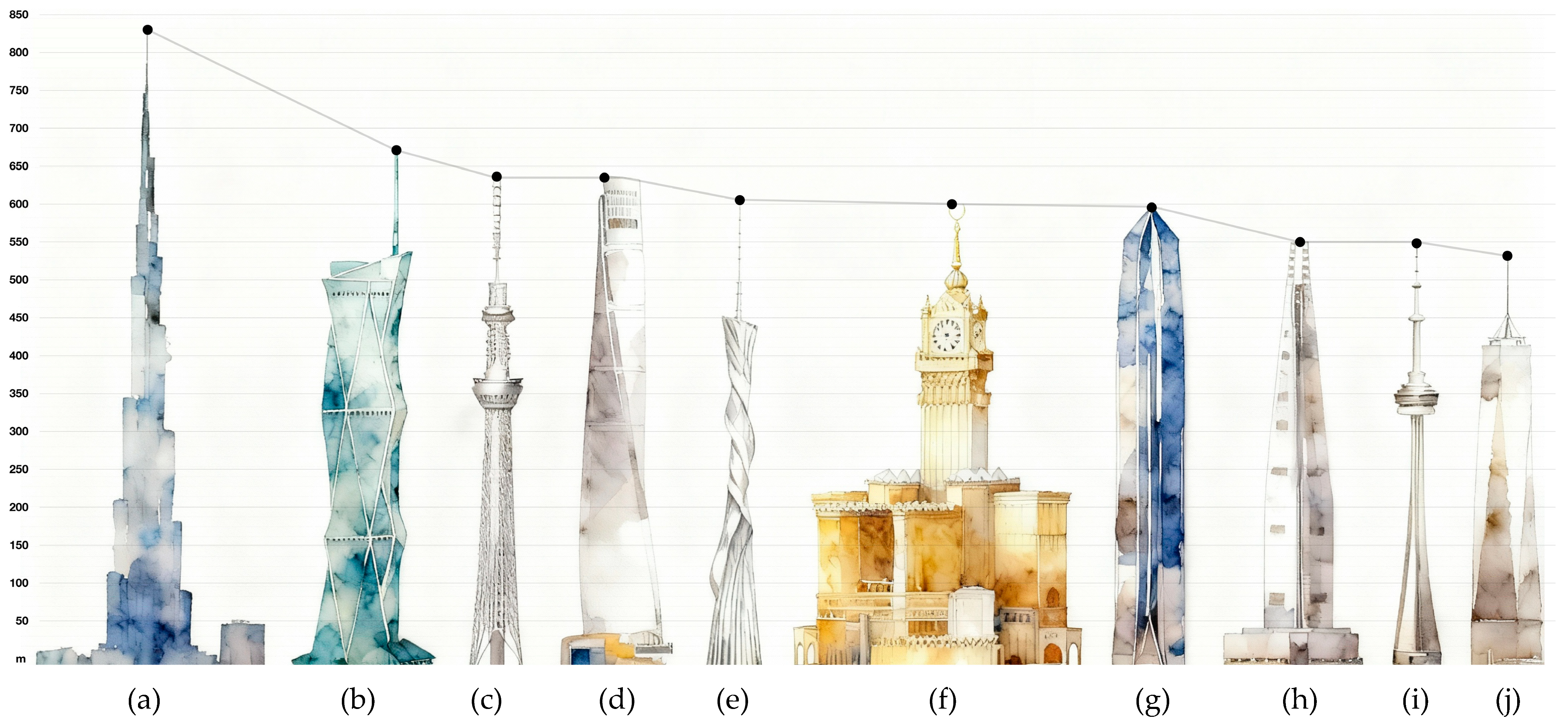
Since the 20th century, human society has been more enthusiastic about megastructures; gigantification has become the standard to measure the architectural system (Table 1), which is no longer confined to the abstract ideology of city capacity and its own productivity, but also penetrates the city itself as an independent individual or cluster, and the enthusiasm of human beings for the construction of the city has long since broken through the urban architectural complex as a purely functional feeling. The cities and buildings, as the distinctive symbols of modern megastructures, have coalesced this passion for construction into a desire for spatial control—megastructure worship. However, the interpretation of megastructure worship is basically centered on the debate of urban expansion and contraction, which is commonly seen in the rise and fall of the effectiveness of urban and rural planning methods and the rise and fall of super high-rise buildings, with little discussion of its non-constructive factors—philosophical and epistemological internal causes.
Based on the above discussion, the study discusses one of the worship systems—megastructure worship—taking megastructure as a typical giant entry point, and cities and buildings as specific megastructure cluster symbols, to discuss the non-constructive factors of megastructure worship.

2. Literature Review: The Overview of Megastructure

2.1. The Origins of Megastructure

The term megastructure originated from architecture, and fantasies of future large-scale cities began to appear at the beginning of the 20th century, but the idea of shifting megastructure from a building to a vector for human settlements could be traced back to the “Algiers Urbanization Plan A” by Le Corbusier in 1930, although he did not really formulate the concept of megastructure, he just called “Plan A” “Super Structure (Appendix A)” [2], and furthermore, the origin of imagining giant objects on an objective level may have come from the human view of the world from above, which was directly inspired by his first aerial inspection of the volcanic terrain of Rio de Janeiro in 1929 [3].
From the late 1950s to the mid-1970s, the “Mega Architecture Movement” emerged, influenced by the Japanese Metabolism Movement and the British Archigram (Appendix B) [4,5]. Megastructure originated from the theory of collective form, proposed by the Japanese architect Fumihiko Maki in his Three Paradigms of Collective Form (Appendix C), which was completed in 1961: compositional form, mega form and group form. In 1994, Fumihiko Maki specified in his Notes on Collective Form [6] that megastructure referred to a concept of architectures and cities in the post-war era, in which cities were encompassed by huge and single man-made structures or relatively monotonous linkage structures, which were connected in an intensive manner. He emphasized that the construction of megastructure depended on the feasible technology at that time [5]. The megastructure was a form that could accommodate large groups of people, including giant monolithic forms, as well as fragmented functional units that fit into and changed within the overall framework.
The collaborative work [7] by Rem Koolhaas and others (Appendix D), who graduated from the AA School of Architecture in 1972, transformed “the Prison Project” into a spontaneous and ideal habitat through a radical reversal of meaning. The form of “the Prison Project”, suggesting the intention of institutional order, control, and constraint of individual freedom, was an ideal type of retreat expressing the anxiety of the modern individual and an architectural war against the hostile environment, where on the one hand, the interior of the wall retained the old original buildings and incorporated them into the new area; on the other hand, the tops of the giant ribbon structures were continually expanding into the existing urban fabric of London. A large number of buildings from the past were destroyed and replaced by new public monuments and iconic sculptures, and the program of massive linear forms created a stark contrast between the new areas within the wall and the urban context, where the space within the wall was seen as a meaningful environment in the public space [8]. The project showed “division, isolation, inequality, aggression, destruction and all the negative aspects of the wall”, which could become a new phenomenon in contrast to architectural war [9].
Reyner Banham [10] described megastructure in detail. He believed in a more radical transformation of urban appearance through technology, and described megastructure as a highly intensive framework that carried some shared city functions [11]. The modernity of megastructures was characterized by their horizontal and vertical expansion, reflecting the initial features of “large structure”, “very oppressive”, and “wide range of convenience”. As the megastructure architecture movement progressed, the focus shifted from sheer volume to functionality. The architectural community during this period exhibited a distinct optimism and utopian vision, which was closely tied to the overall optimistic atmosphere of Western society at that time.
In 1973, the oil crisis triggered an economic depression, and the “golden age” of megastructure began to end. Thus, the reasons for the prevalence of megastructure in the first two decades of its existence were that society needed buildings with large architectural features, as well as to satisfy its psychological optimism and to stimulate people’s desire for the future.

2.2. Critiques and Reinterpretations of Megastructures in the Late 20th Century and Early 21st Century

In 1999, Kenneth Frampton, in Megaform as Urban Landscape [12], proposed the term megaform, in which the terms megastructure and landform were combined to clarify the urban and aesthetic nature of megaform, rather than its singular functionality [13].
At the end of the 20th century, at the 20th Congress of the International Association of Architects (IAA), Kenneth Frampton’s Seven Questions for the Millennium: A Manifesto of the Inopportune used the crisis of the megacities to introduce the “megaform” as a response to the problem of horizontal mechanistic density in the contemporary city, and to elaborate on the relationship between it and megastructure. The concept of megastructure returned to architecture after its popularity in the 1960s and 1970s [14].
In the 21st century, some European countries had implemented urban reconfigurations to accelerate the activation and vitality of urban functions while ensuring mobility on a three-dimensional level [15]. Kaika posited that one of the core promises of modern urban projects was the creation of a controlled, comfortable artificial environment, isolated from the “barbaric” external nature. She views skyscrapers as “the dream of modernism”. Through intricate internal technical networks—central air conditioning, elevators, piping, and electricity—skyscrapers generated self-contained microclimates within, seemingly liberated from the constraints of wind, rain, cold, and heat [16]. This symbolized humanity’s conquest over nature while simultaneously revealing extreme vulnerability upon detachment from it.
McNeill interpreted skyscrapers as an extraordinarily complex spatial phenomenon from a geographical perspective. He highlighted the geographical community’s historical neglect of this crucial urban form and attempted to “geographize” insights from architecture, urban planning, cultural studies, film studies, and other disciplines. He contended that skyscrapers were not merely static structures but served as “switch points” that accommodated and facilitated the global flow of capital, information, and talent. Skyscrapers were products of “global localization”, concealing intricate local political, cultural, and environmental logic beneath their globalized facade [17].
Thus, driven by technological advancement, megastructures continually pushed the boundaries of nature’s limits. Simultaneously, these structures were being reexamined by other disciplines through non-architectural lenses. This established both the necessity and the gap in interpreting megastructures as a cultural phenomenon.
From the early 20th century to the beginning of the 21st century, the concept of megastructure underwent multiple phases of fluctuation from theory to practice. From both physical and psychological perspectives, initially following Cartesian dualism, it gradually became more solid, becoming a model of coupled interaction. Positive social optimism amplified the psychological effects. Ultimately, megastructure practice occupied the core position of human societal construction in an exaggerated and broad manner, which, to some extent, was an extreme manifestation that was recognized by the global political system, which implied that significant resources would be expended to achieve this human aspiration.

2.3. Verticality and Symbolism: Their Influence on Megastructures

Charalampos Politakis outlined the relationship between human beings and architecture—architecture was a conscious and unconscious simulation of our nature and organization in the body, with the intention that the colossi city expanded the architecture as an extension of the image of the human being himself, mimicking the various organs and classifications of the human image and recreating the image of the architectural colossi. At the same time, the author pointed out that “the human body always existed as an empirical symbol on top of the architectural structure of a building”—establishing two architectural metaphors based on the human being as prototype “deification” and “anthropomorphisation” [18], and argued that architecture was not only a spatial mega, but also a source of inspiration for giant sculptures of the human body.
In recent decades, megastructure research has intricately depicted the emotional expression of megastructures and the human-geographical framework. Human spatial perception of megastructures in the survival domain had become more nuanced [19], emphasizing emotionality and participatory experience [20], which was concretely manifested in the in-depth discussion of “verticality” in megastructure theory and practice.
Verticality has played a significant role in the history of modern science. Hardenberg et al. explored the role of verticality in modern science, emphasizing that verticality was not only a condition for the production of scientific knowledge, but also an object of scientific research. The study pointed out that the “spatial turn” in the history of science primarily focused on the horizontal dimension, while the role of the vertical dimension remained largely unexplored. From the perspective of historical case studies and modern scientific practice, they proposed five aspects to define this field: understanding verticality, vertical politics, elemental encounters and vertical domains, body and technology, and representing verticality [21]. Furthermore, the role of verticality was reflected in bringing vitality and texture to the “spatial turn” [22]. Yi Jin argued that traditional urban studies predominantly focused on “horizontal” and “planar layouts”, with less exploration of verticality. The emergence of horizontal hegemony was partly due to the fact that most global knowledge production centers (such as London, New York, Tokyo, etc.) were located in flat cities, while other cities (such as Hong Kong, Lisbon, Rio de Janeiro) had terrain with distinct vertical characteristics. Furthermore, in studies on urban verticality, although skyscrapers were a significant manifestation of verticality, they were not the only form; it was also reflected in the complex interaction between architecture and terrain [23]. Asa Roast took Chongqing’s unique vertical spatial forms as an example to analyze how “weird” spaces in the city were constructed and perceived, as well as the special ways in which historical and cultural meanings were presented. The “weirdness” endowed with high cultural significance was mainly reflected in three types of vertical spaces in Chongqing: connection, compression, and luxification [24].
The height of megastructures was a physical characteristic of architecture, but the lack of government intervention in maintaining material coherence with the lives of surrounding residents exacerbated the fragility of megastructure verticality. Gastrow found that the relationship between residents and the state was redefined by high-rise buildings. The verticality of high-rise buildings, which induced fragility and maintenance needs, leads to a privatization of residents’ sense of belonging to the city, reflecting the weakness and deficiency of national government in public services [25].
Verticality was not only reflected in the relationship between megastructures themselves and government power, but also, more deeply, in the relationship between megastructures and residents’ daily lives. Based on the significant role of verticality in high-rise buildings (a form of megastructure) in architectural history, modernist architects such as Le Corbusier and Walter Gropius advocated for vertical technology. High-rise buildings not only symbolized modernity but also provided more green spaces and urban landscapes for the urban poor. However, the excessive advantages of large-scale verticality also affected people’s perception of the other side of high-rise buildings—neglecting their significance as family spaces. Baxter proposed the concept of “verticality as practice”, exploring how residents constructed identity, belonging, and emotional attachment in high-rise building spaces [26].
Verticality, as a fundamental visual metaphor, could express morality and the nobility of character. Multiple visual metaphors could coexist and be interpreted in different directions without causing confusion [27]. Among them, the contribution of verticality to visual aesthetic was particularly prominent, i.e., gravity influenced people’s aesthetic preferences. Gallagher et al. demonstrated through experiments that when participants’ body postures aligned with the gravity vector, their aesthetic preference for vertical lines was significantly higher than for lines at other angles [28]. Palmer et al. found that in the relationship between visual aesthetic and human preferences, people generally preferred symmetrical shapes and were more attracted to symmetrical and average faces, indicating that the symmetry of form also enhanced the discussion scope of verticality [29].
Slepian et al. explored the relationship between verticality (height experience) and abstract/concrete processing (construal level) through seven studies. Higher verticality experiences led to higher levels of abstract processing, while lower verticality experiences were associated with more concrete processing [30].
Beyond traditional vertical metaphors for cities and architecture, analyses of megastructures and their symbolism also developed multidimensional perspectives in recent years:
  • Megastructure and science fiction: The vertical stratification within their sci-fi cities served not only as a visual symbol of future imagination but also as an allegorical expression of class, power, technology, and spatial inequality in contemporary urban landscapes. Simultaneously, this fictional megastructure imagery influenced the architecture and planning of real cities, forming a bidirectional constructive relationship between “fiction” and “reality” [31];
  • Megastructure, photography, and climbing: The style of visual representation shifted from a picturesque, detached landscape appreciation to a dynamic, embodied, immersive experience documentation. Natural mountain ranges (such as the Alps) and man-made megastructures (such as skyscrapers and the Eiffel Tower) were equated through climbing practices and photographic perspectives, forming the metaphor “the city is a mountain”. The modern body sought and constructed meaning in vertical space through technology, treating climbing as a performance for the camera. The value of megastructures relied on photographic visual dissemination [32];
  • Megastructure and postwar thought: In post-World War II architectural education, two major schools of thought emerged—monoliths and mountains. Megastructure, rooted in systems thinking, emphasized architectural technical rationality, quantitative analysis, functional optimization, and universal typologies. The mountain emerged from phenomenology, emphasizing the sensory experience of architecture, the spirit of place, humanistic meaning, and handcrafted construction, pursuing an “authentic” existence connected to history and nature. Together, these divisions formed the complex terrain of postwar architectural thought, and the tension between them continued to shape architects’ ways of thinking to this day [33];
  • Megastructure and human endeavor: Human activities—particularly within megastructures—attained the power to reshape the Earth’s surface. Man-made environments and natural landscapes converged in scale and form, giving rise to new, hybrid geological strata. This approach rejected the notion of architecture as discrete objects, emphasizing instead that buildings and landscapes formed a fluid, organic, and tension-filled network of relationships. Megastructures resonated with the scientific concept of the “critical zone”, focusing on the dynamic interconnections between rock, air, architecture, and atmosphere [34].
H. Koon Wee revealed that megastructures operated within the interplay between urban ideals and nation-building, embodying the profound reality that urban development was not merely a product of technology and capital, but also a battleground for competing ideologies, educational frameworks, and societal visions [35]. Through examining the implementation process of a series of post-war megastructure projects in the Rome region, Diana explored the practical evolution, technical characteristics, and contemporary regenerative potential of “megastructures” as high-density, multifunctional residential solutions. However, her analysis focused primarily on engineering techniques and material forms, overlooking the profound significance of human–environment interaction within megastructure architecture [36]. Adrian Martinez-Muñoz critiqued megastructures and the contemporary vertical urbanization model they represent from the perspective of urban design and architectural theory. The research highlighted the social and spatial alienation resulting from the continuation of modernist dogma—the loss of public space, social segregation, and the erosion of a sense of place [37,38]. Valentin Bourdon adopted an interdisciplinary perspective, drawing an analogy between megastructures and Garrett Hardin’s “Tragedy of the Commons”. He pointed out that both shared a striking structural contradiction between “sharing and division”, with each confronting a fundamental conflict between “public ideals” and “practical management” [39]. Xavier Van Rooyen reexamined the intellectual legacy of the 1960s’ “mega-architecture” movement through the dual lens of theoretical history and contemporary practice. He traced a coherent theoretical trajectory within the complex discourse of mega-architecture, proposing that its core spirit persisted in contemporary architecture through two key concepts: “open structures” and “mega-forms” [40]. Some structural engineering research explored the techniques for realizing megastructure architecture and methods for its improvement. For instance, Kyoung Sun Moon’s thesis investigated the transformation process of perimeter diagonals within megastructures and their relationship to achieving sustainability [41]. Graham analyzed the “elitization” of vertical housing in contemporary global cities, pointing out that high-rise residences transformed from the ideal vehicle for post-war social housing into asset strongholds and symbols of spatial privilege for the global super-wealthy under neoliberalism. In the absence of robust social housing policies, verticalization would only generate “marketable commodities” catering to global wealth, rather than housing that meets the needs of residents [42]. From the perspective of scholarly research on monumental structures, these phenomena were examined primarily from technical or local political angles. However, discussions addressing monumental worship or epistemological perspectives remained largely unexplored, presenting an opportunity to explore the connection between monumental worship and human emotions.
The theoretical development of megastructures was closely integrated with cities and buildings (Figure 1). “Verticality” elevated megastructure theory and practice into a more objective scientific experiment. The extensive research on megastructures led to megastructure worship, which was the deep motivation for continuously promoting megastructures as exemplary in contemporary society.

3. O-ACL Methodology: The New Construction Process from ACL to Orientational Metaphors

3.1. ACL Methodology

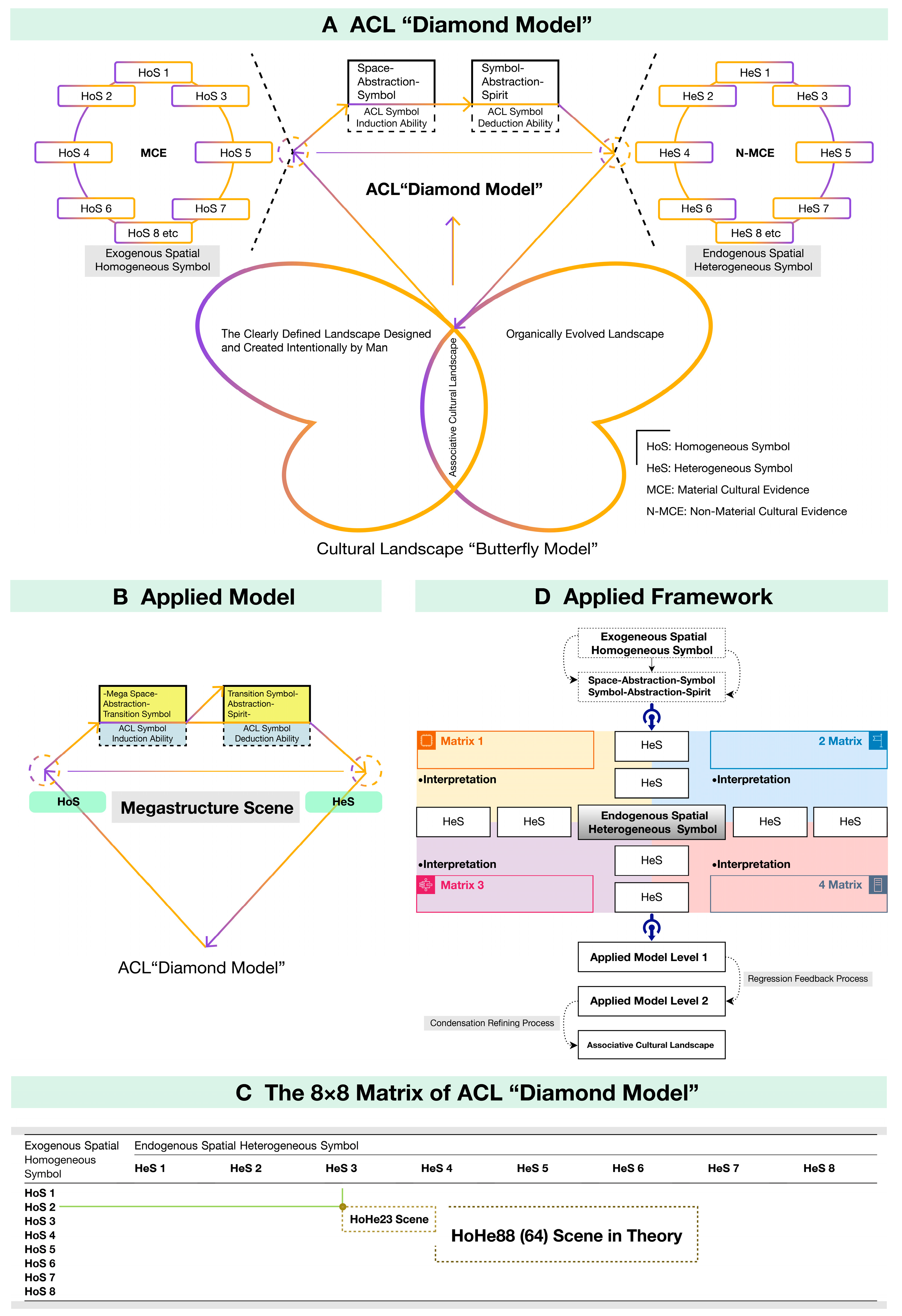
Associative Cultural Landscape (ACL) belongs to the third category of the World Heritage Cultural Landscape [43]. The biggest difference between it and the first two categories is that it strongly reflects the connection with non-material cultural evidence (N-MCE), such as natural factors, religion, art, culture, and philosophy (aesthetics) [44]. At the same time, it relies on the landscape carriers of the first two categories and belongs to the binder or transition body between the two, which widely exist in any cultural landscape (CL). However, ACL’s contribution is not only the methodological research and development of a CL and their third category, but also its ability to explain N-MCE’s “spiritual relevance” [45,46]. This means that the ACL can establish an independent methodology without relying on whether the research object is a CL. Therefore, the literature on the ACL [47,48,49,50,51,52,53,54] can discuss related topics, both in the context of the CL and in other disciplines, because it is mainly related to N-MCE. Therefore, because “spiritual relevance” is widely found in all aspects of human society, the material and immaterial often exist in opposition to each other. In the face of material cultural evidence (MCE) and megastructure worship (N-MCE), ACL methodology [55] has the interpretive power to explain megastructure worship (Figure 2).

3.2. Explaining the Feasibility of Megastructure Worship Utilizing ACL Methodology

Megastructures belong to weak cultural landscapes, and their natural and cultural relevance is weak. The choice of ACL methodology for megastructure worship is based on the common ground of “spiritual relevance” that is shared by MCE and N-MCE, but it is necessary to clearly delineate the similarities and differences between the two in order to establish the degree of compatibility and feasibility of megastructure worship at the methodological level (Table 2).

3.3. Optimization Based on ACL Methodology: Orientational Metaphors–Associative Cultural Landscape Methodology

The most prominent symbol of megastructure as a paradigm in the ACL methodology is the vectorial expansion in the vertical direction—the geometric breakthrough of the megastructure in the vertical direction. The expression of this expansion is difficult to summarize with symbols in nature—it is human beings who have a metaphorical understanding of the megastructure.
Metaphors operate not only in the form of substitution and logical reasoning, but also in the form of giving new meaning to things through specific contexts [56].
Megastructure worship is often recognized as a linguistic impulse. The starting point for both thought and action stems from being metaphorically based. Abusaada and Elshater contend that metaphors and analogies serve as vital cognitive tools for stimulating architects’ mental imagery and fostering innovation in architectural design, while also endowing megastructures with symbolic meaning through connotation and imagery [57].
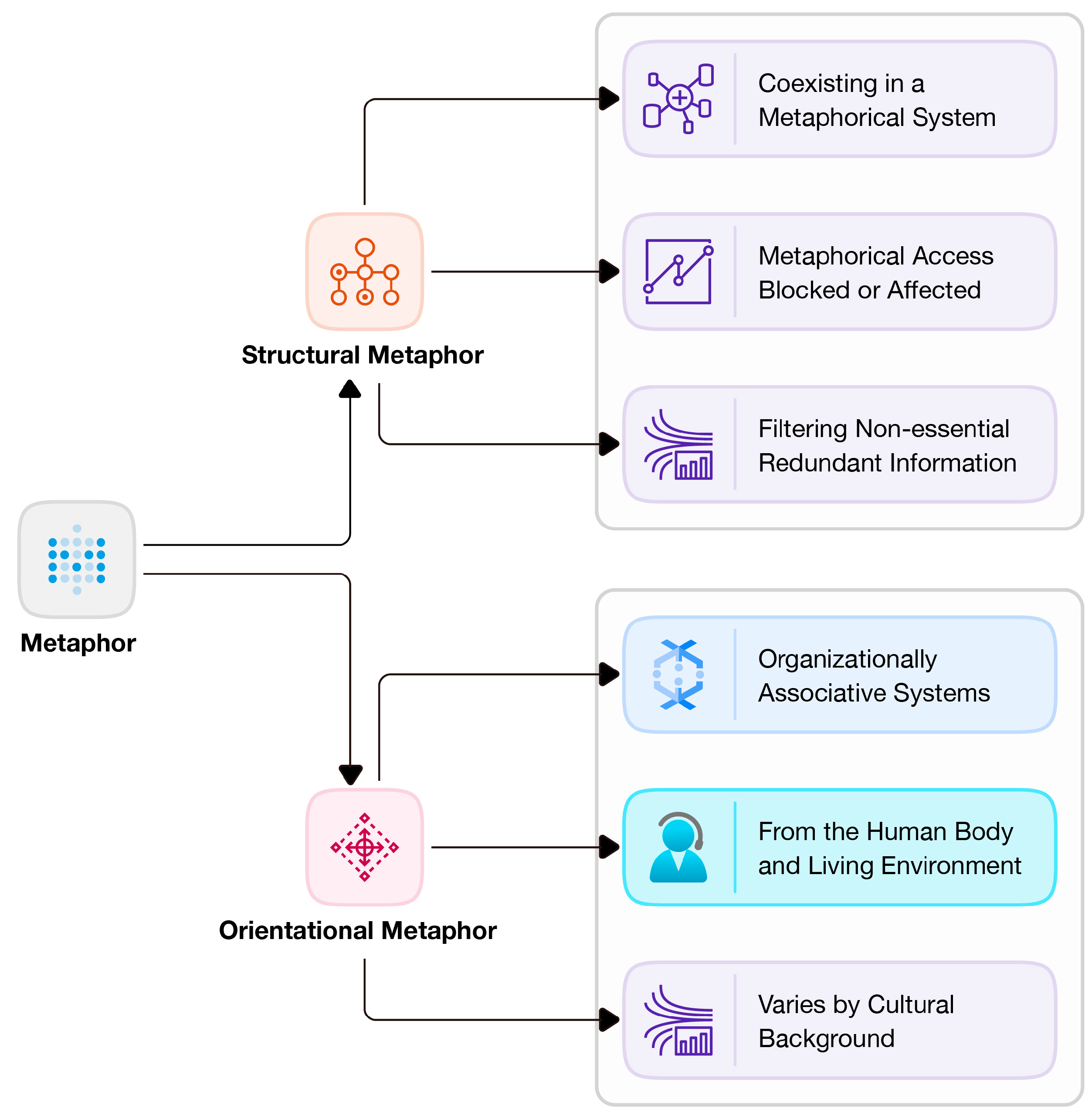
If one intends to clearly establish the path of structural metaphors between human beings and megastructures, one first recognizes that there can be a coexisting system of metaphors between the two, in which some aspect of the concept is understood through the concept of the other; second, that there is a process of conceptual understanding, in which metaphors are brought to the forefront and hidden: that is, where the eventual presentation of a certain metaphor inevitably affects or blocks the expression. Finally, the conclusions of understanding metaphors converged into highly condensed key statements, while impurity metaphors are filtered out. Orientational metaphors have the explanatory power of the structural metaphors mentioned above, but they also have the role of organizing a complete system of interrelated concepts without constructing them through another concept (Figure 3).
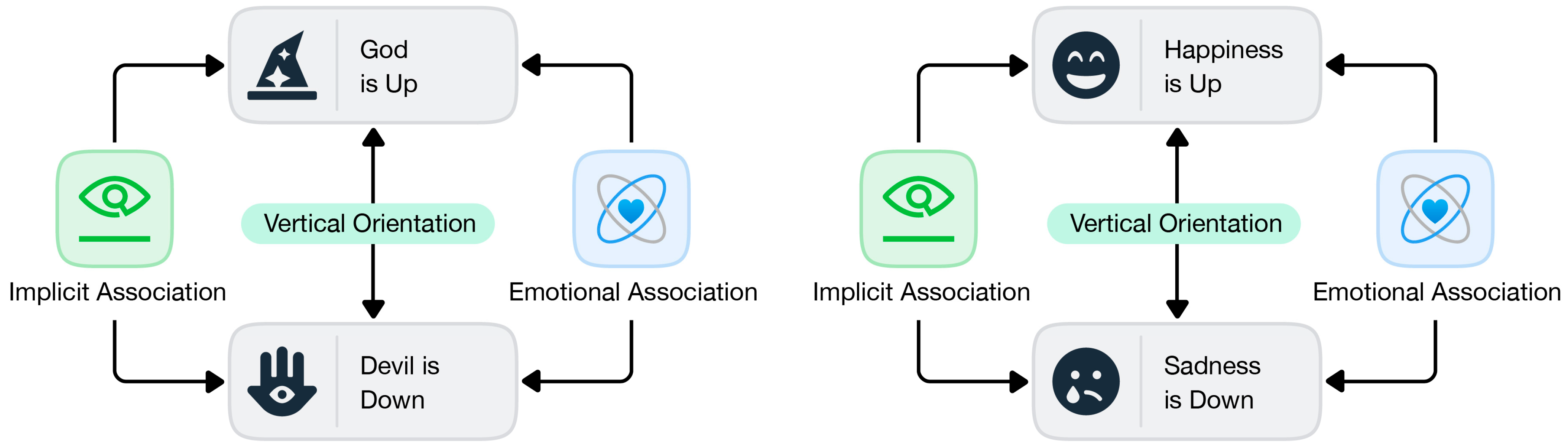
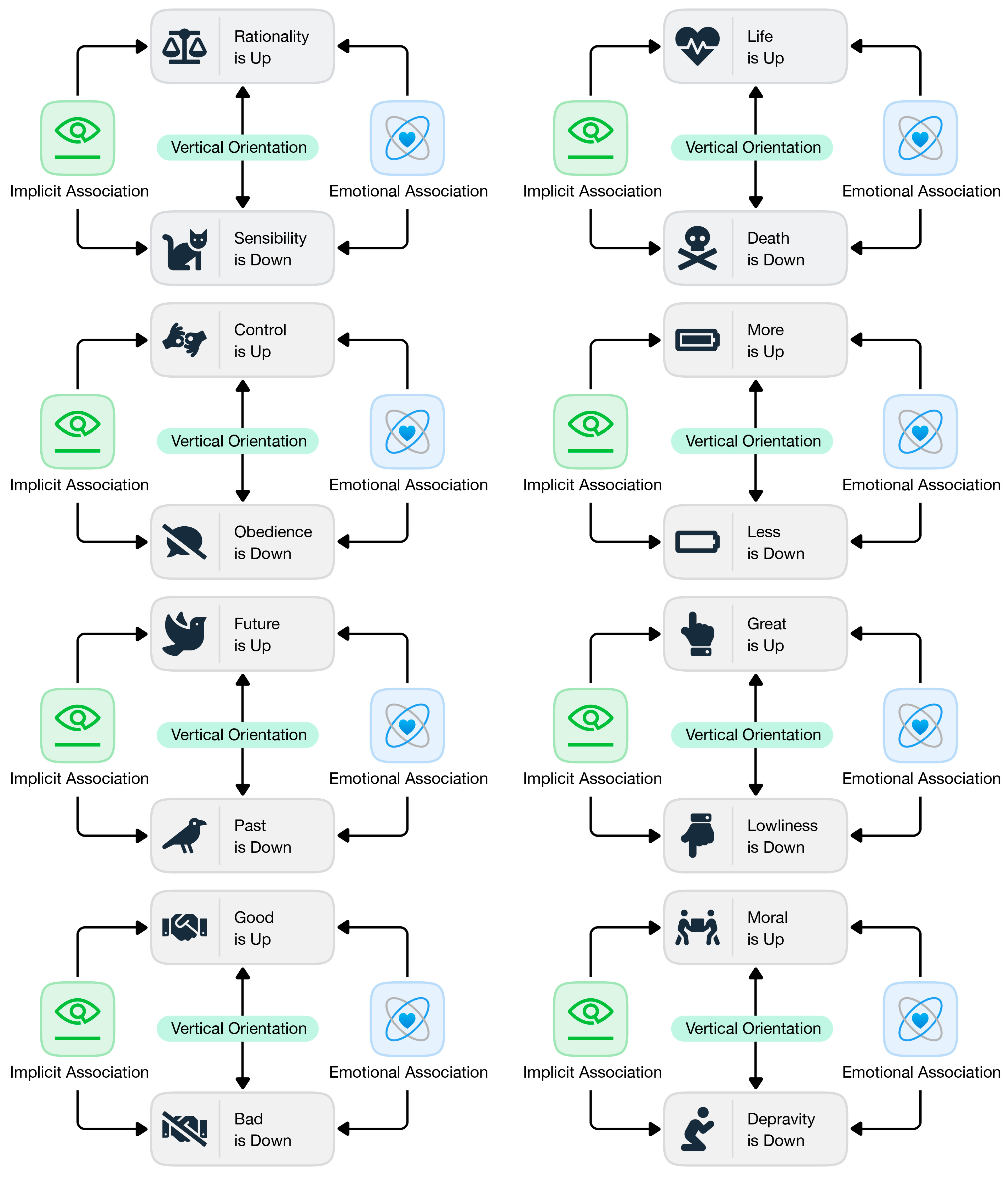
Most of the orientational metaphors are related to orientation, e.g., up–down, inside-out, deep–shallow, and center–periphery, and these spatial orientations are derived from our bodies and the roles they play in the physical environment [58]. Orientational metaphors provide the concept of spatial orientation and present the concept of orientation in an interrelated way to engage with the world of human emotions [59,60] (Figure 4).
Orientational metaphors derived from the structural metaphors in the metaphorical system have the same nature as the “verticality” in this study, which is centered on the degree of human emotional experience and involvement in vertical vectors.
“Verticality” and orientational metaphors characterize the vertical direction in the same way: both of them are extended from MCE to N-MCE. In the process of interpreting megastructure worship, ACL methodology prefers cultural landscapes with a strong correlation between nature and culture.
Although the interpretive path of ACL methodology is effective to a certain extent, the interpretive ability of megastructure, which is a weak CL, has the problem of overly broad explanatory power. Therefore, it is necessary to optimize ACL methodology to find the interpretive path of megastructure worship under the “verticality” of specific issues. In view of the explanatory power of orientational metaphors in explaining the “verticality” of megastructure worship, this study proposes Orientational Metaphors—Associative Cultural Landscape methodology (O-ACL methodology):
  • O-ACL methodology is derived from ACL methodology, is a sub-division of the ACL methodology, and is a targeted methodology for the “verticality” of a specific domain: megastructure worship;
  • The “verticality” of the megastructure corresponds to the vertical spatial orientation of the orientational metaphors. The “verticality” of the megastructure and the orientational metaphors are both related to “spiritual relevance”;
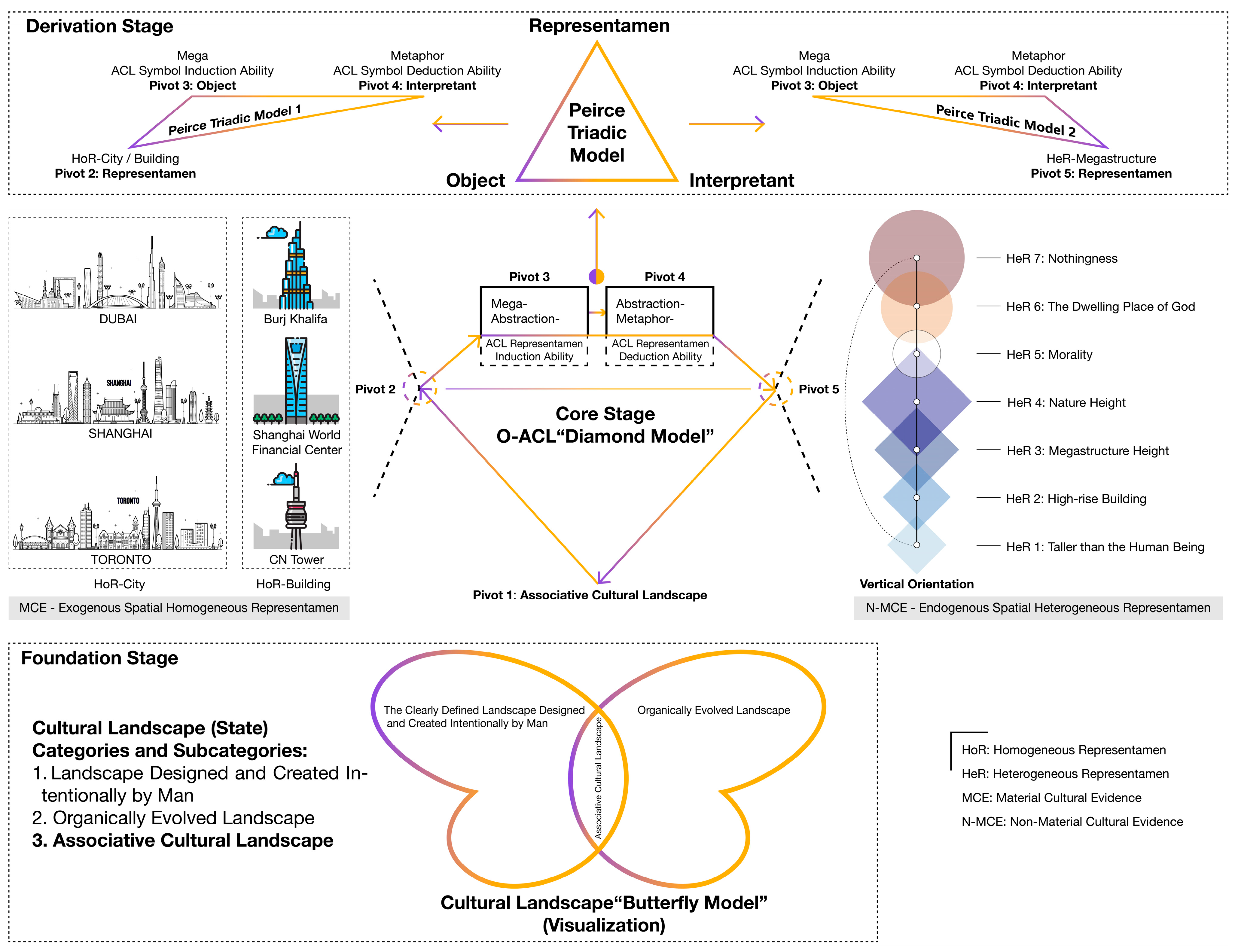
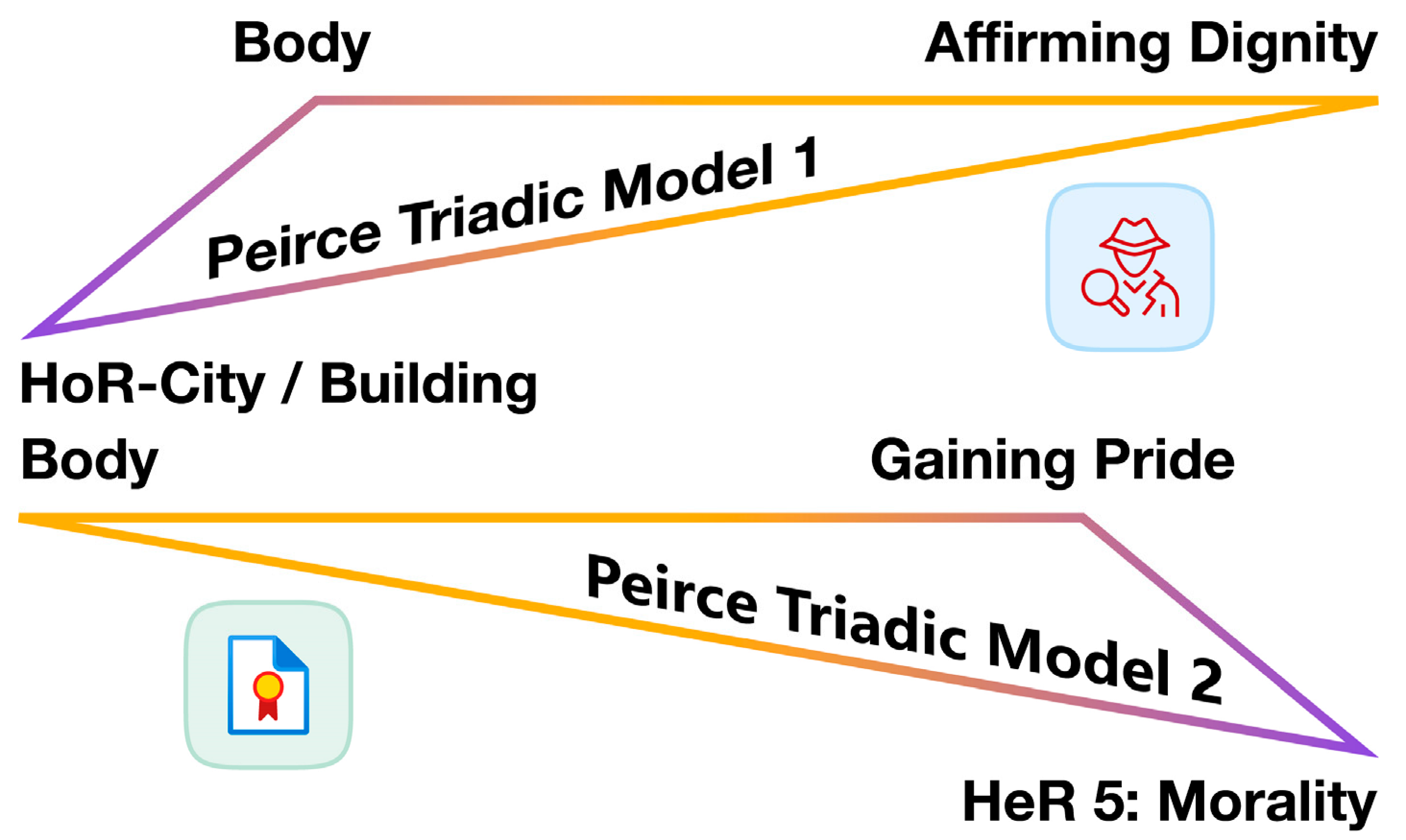
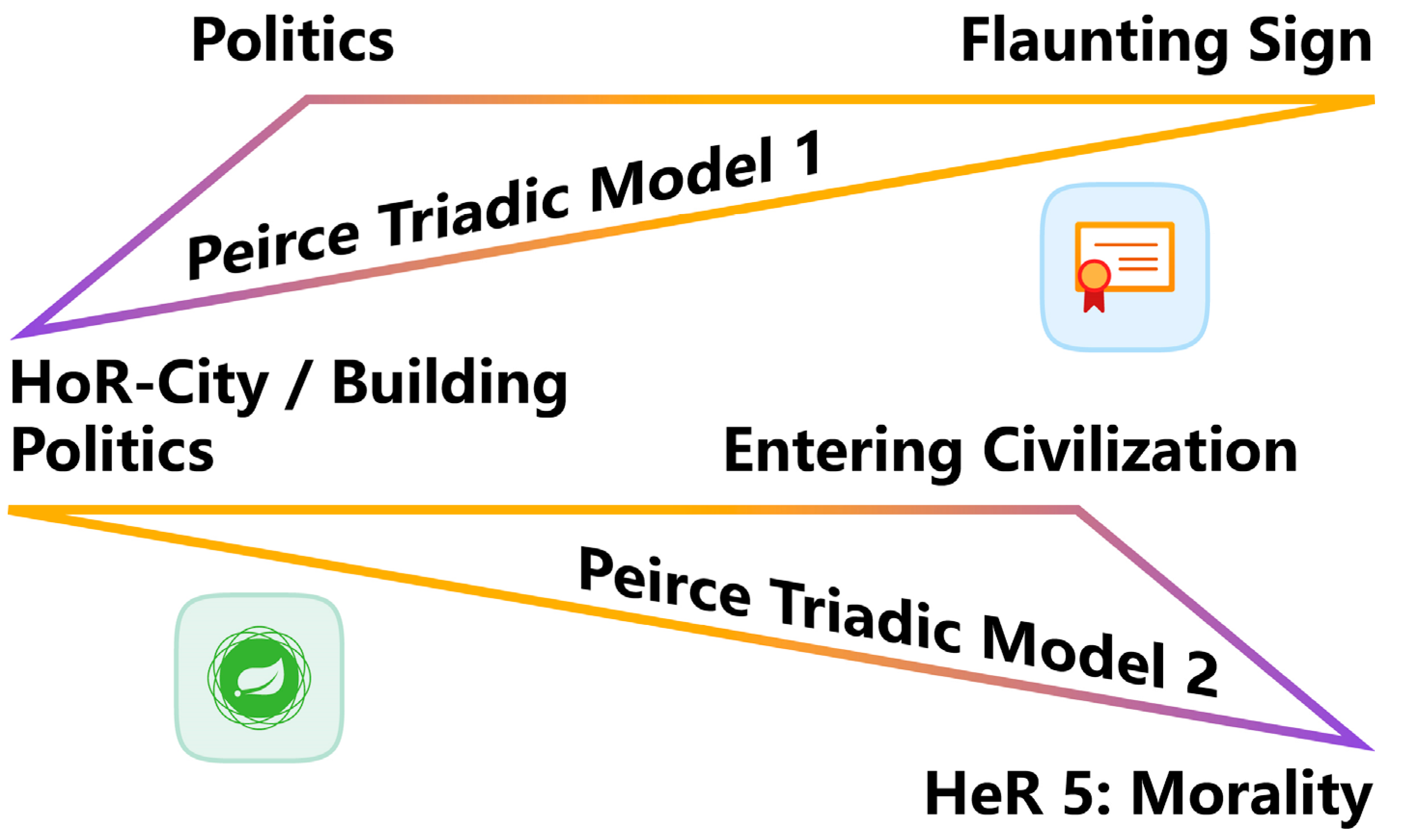
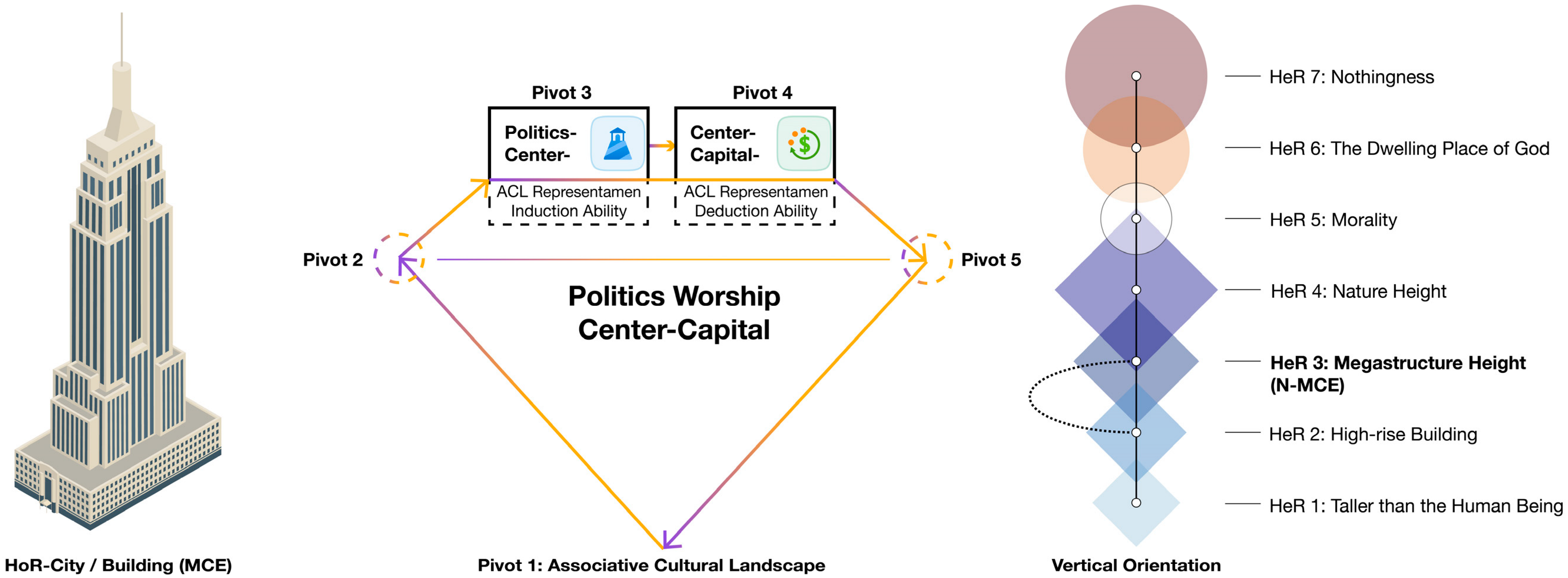
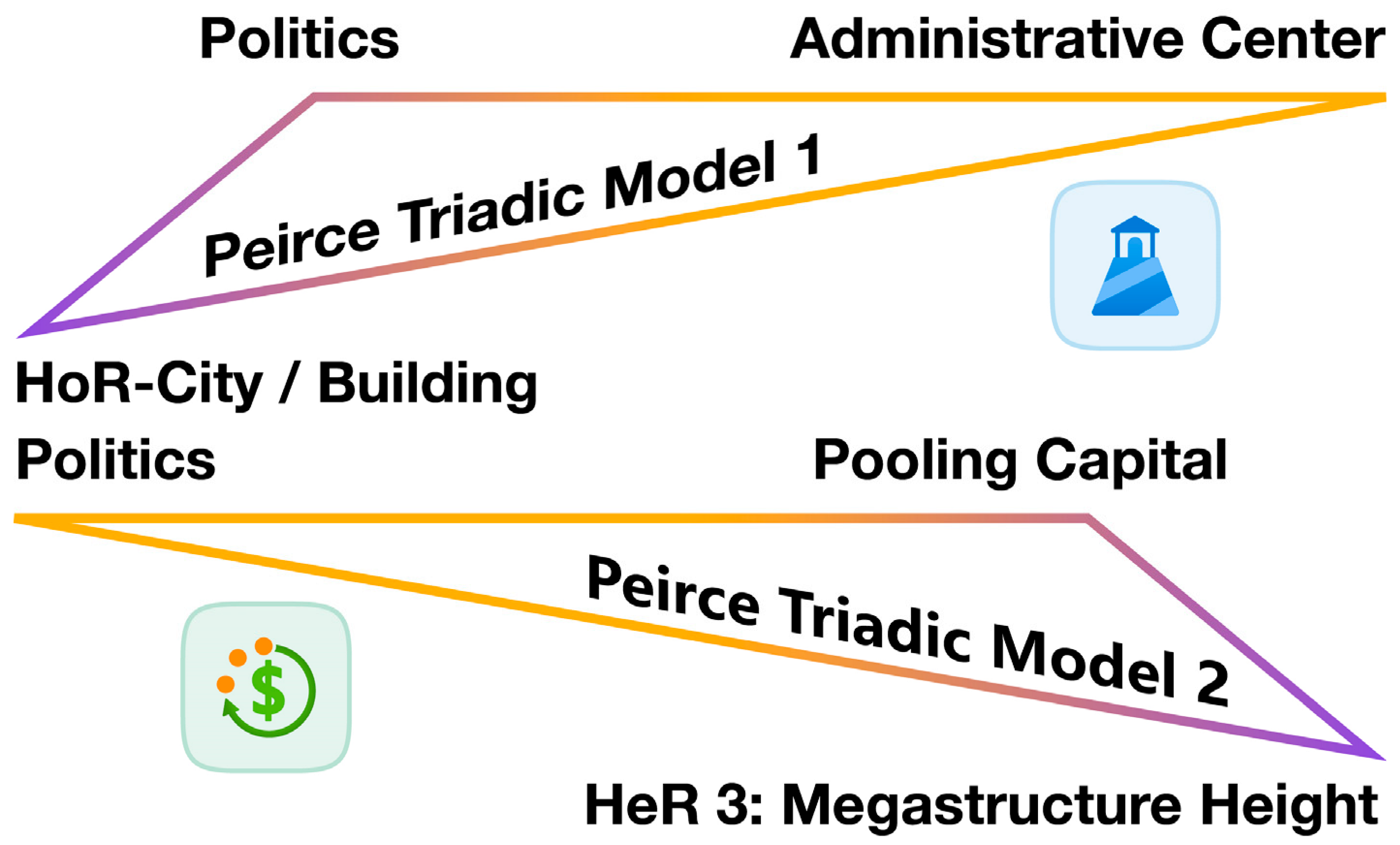
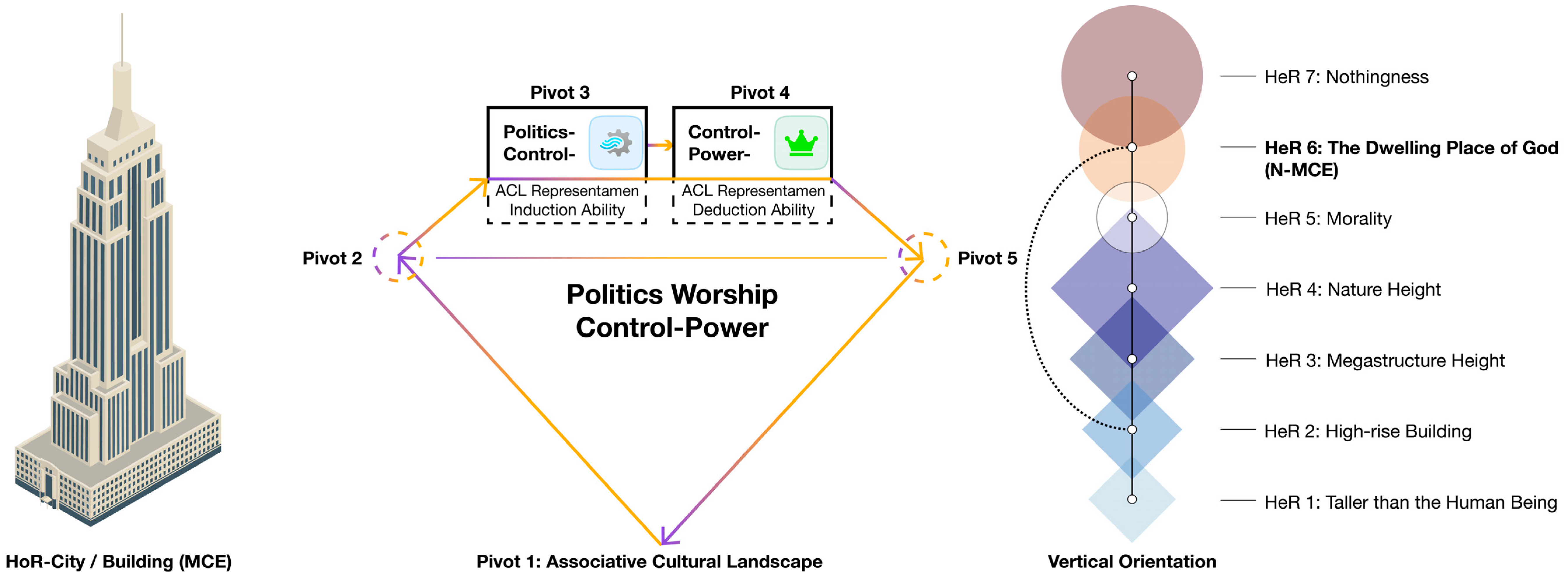
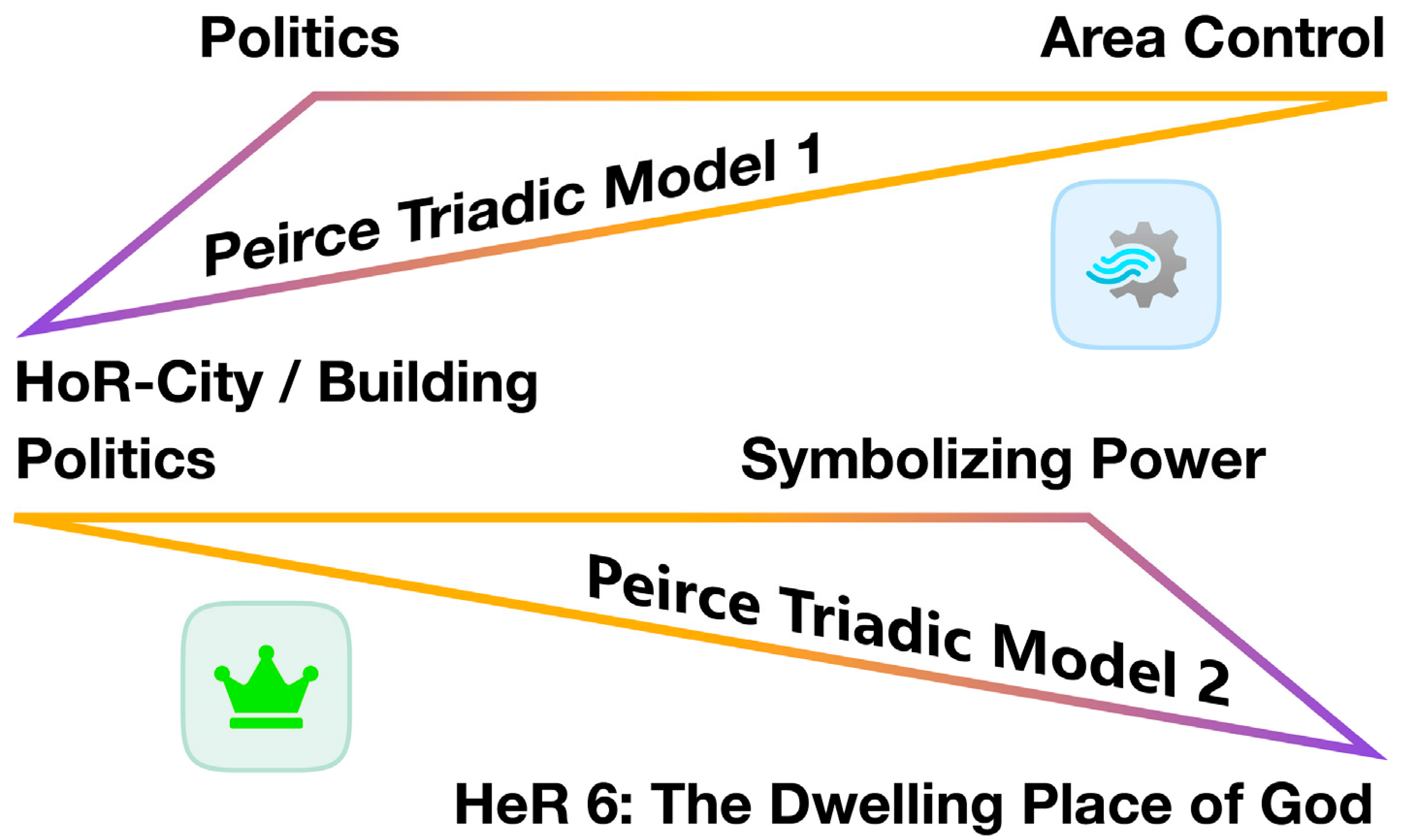
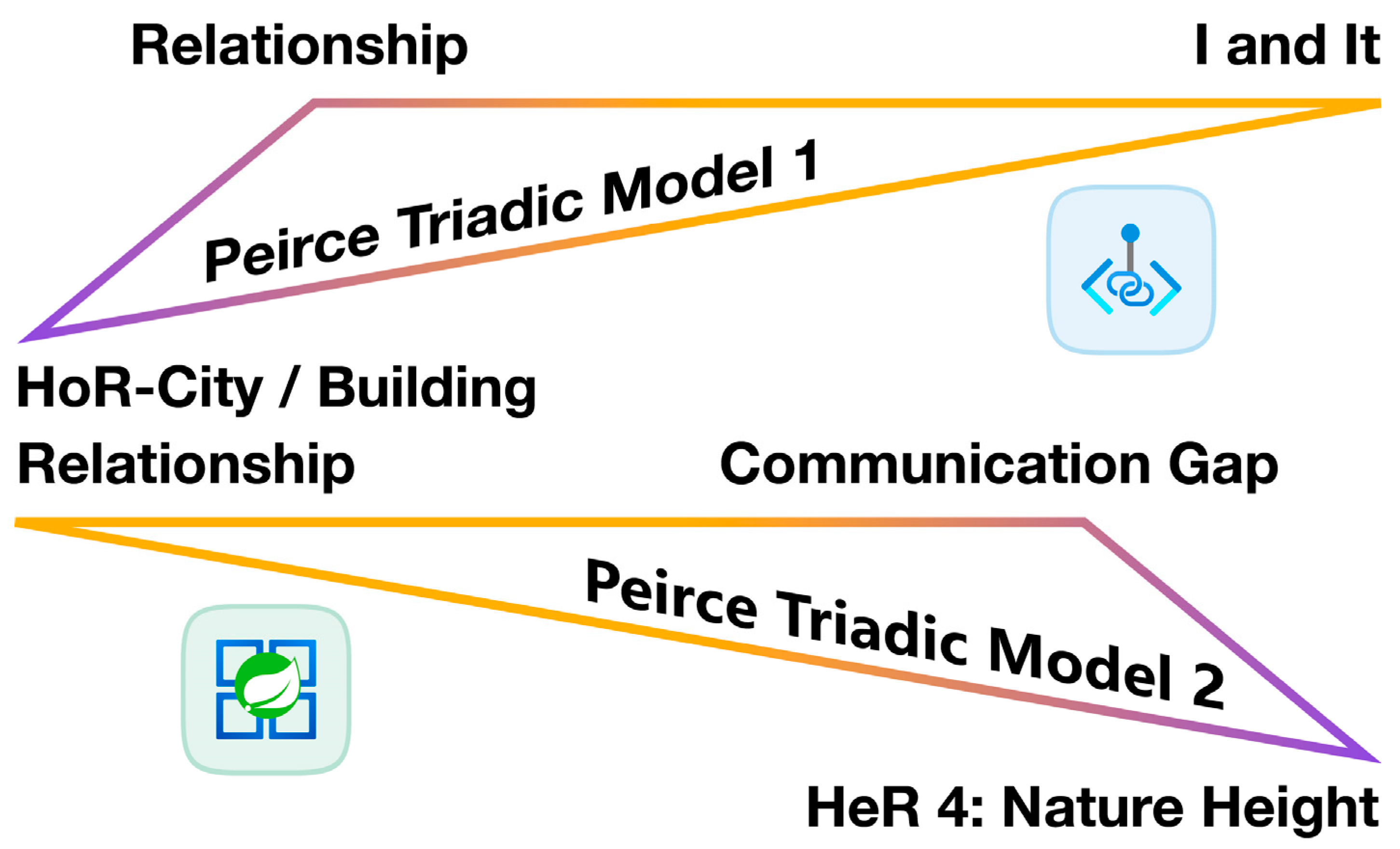
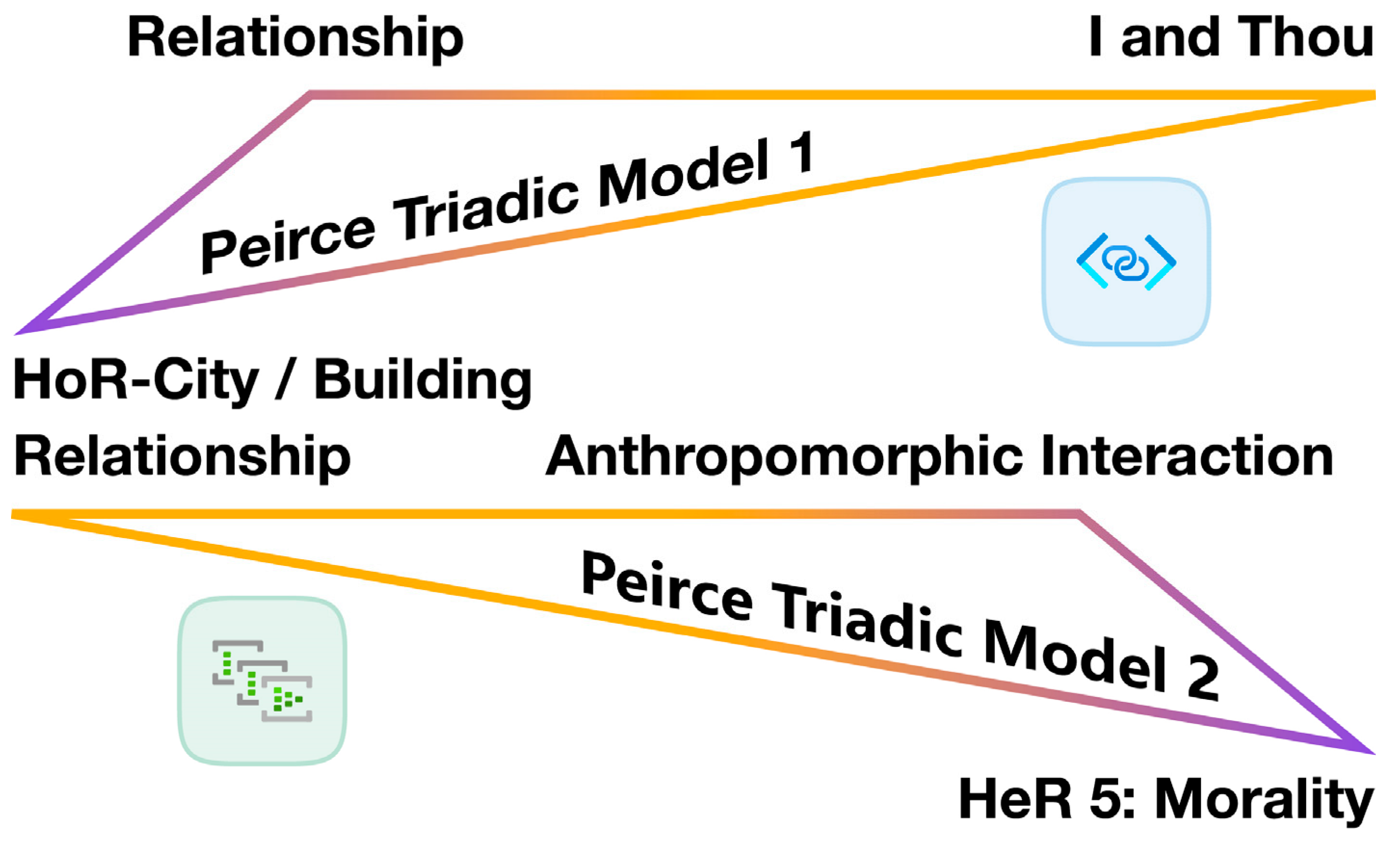
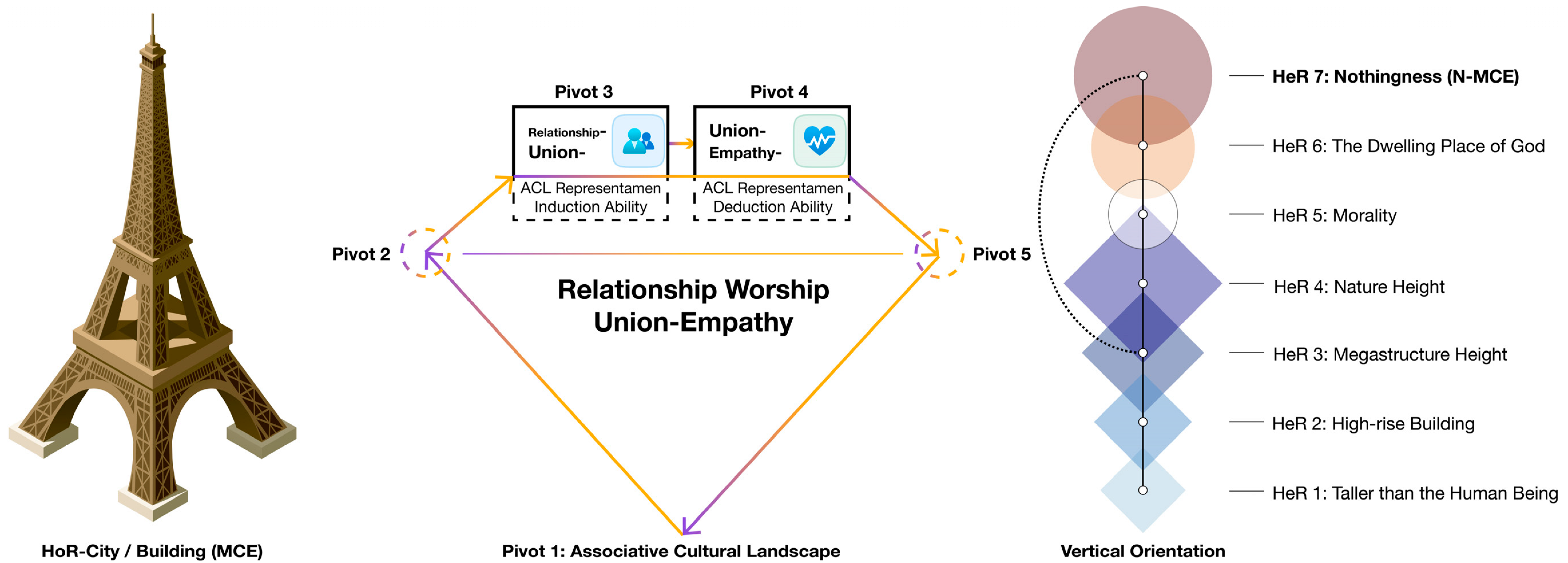
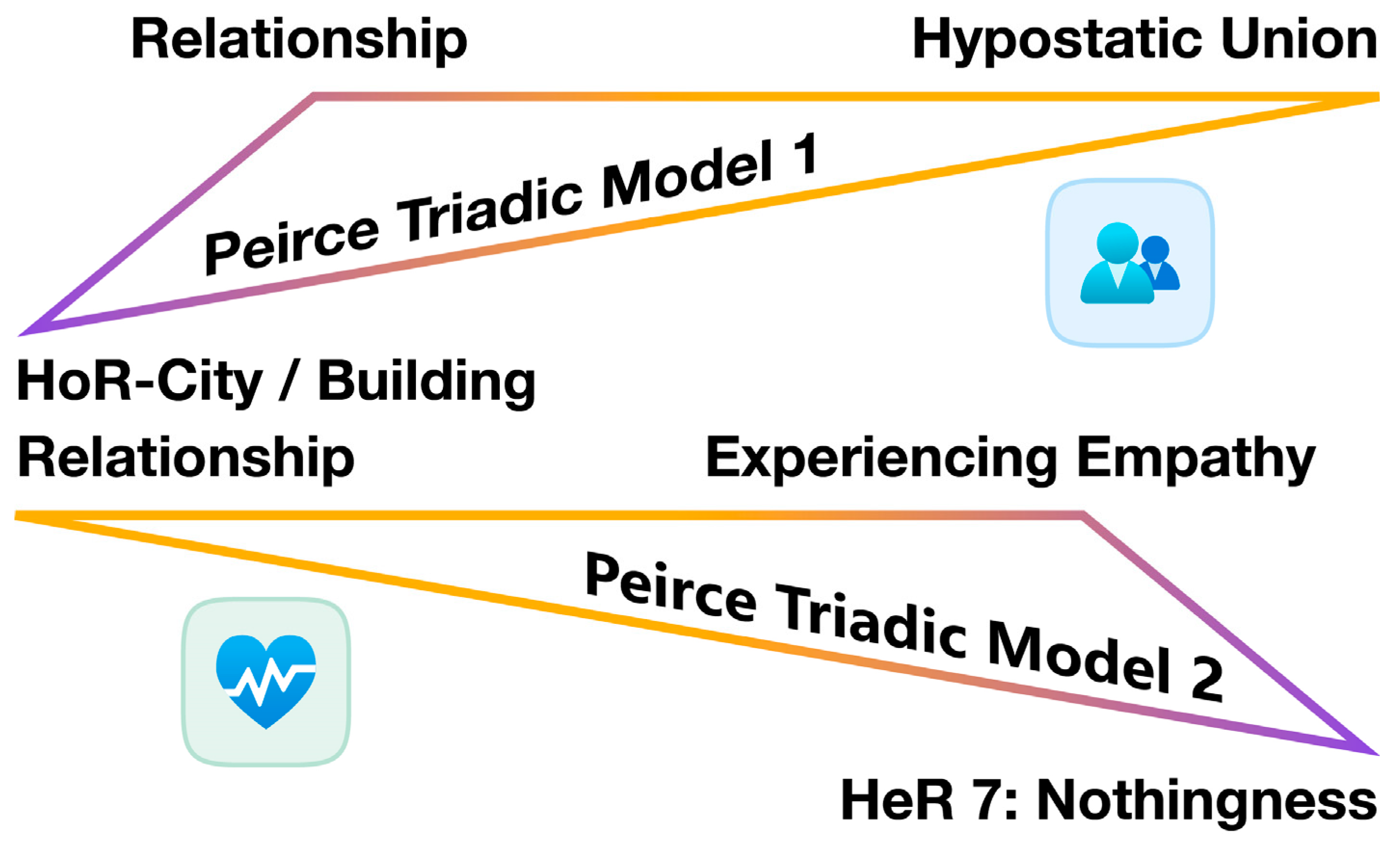
  • From Pivot 2 to Pivot 5, two symbolic triadic models are formed through Peirce Triadic Model [61];
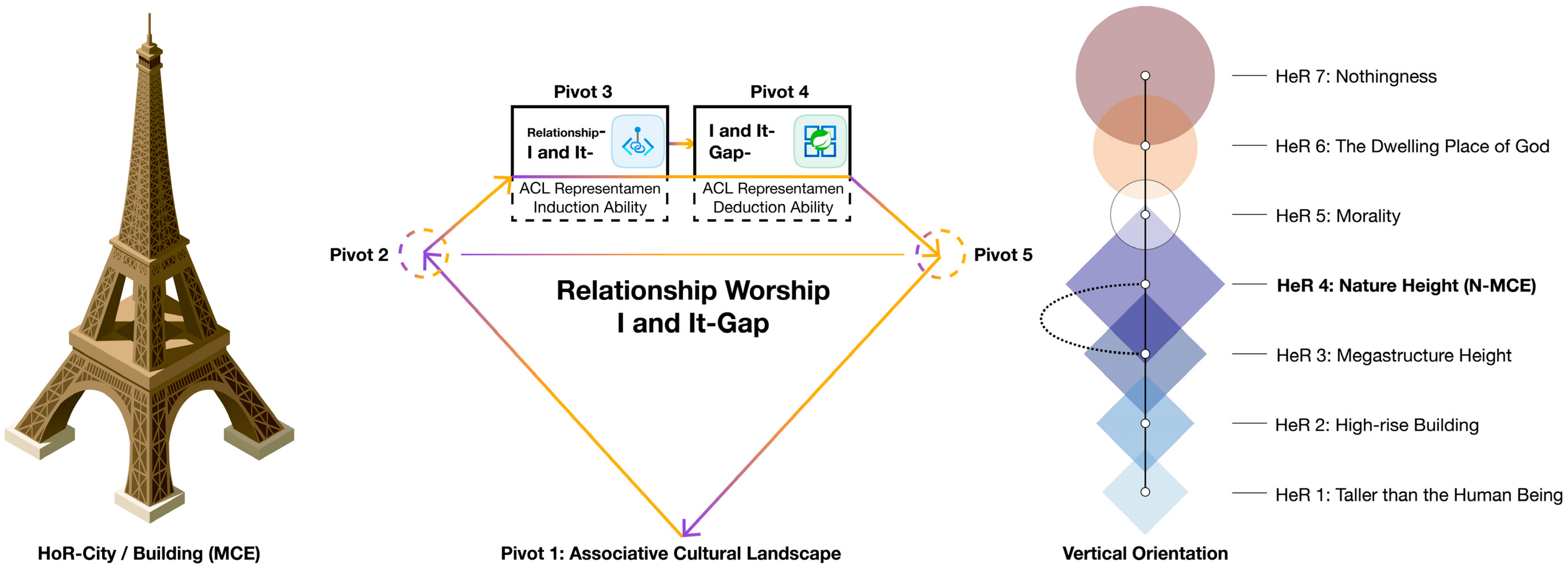
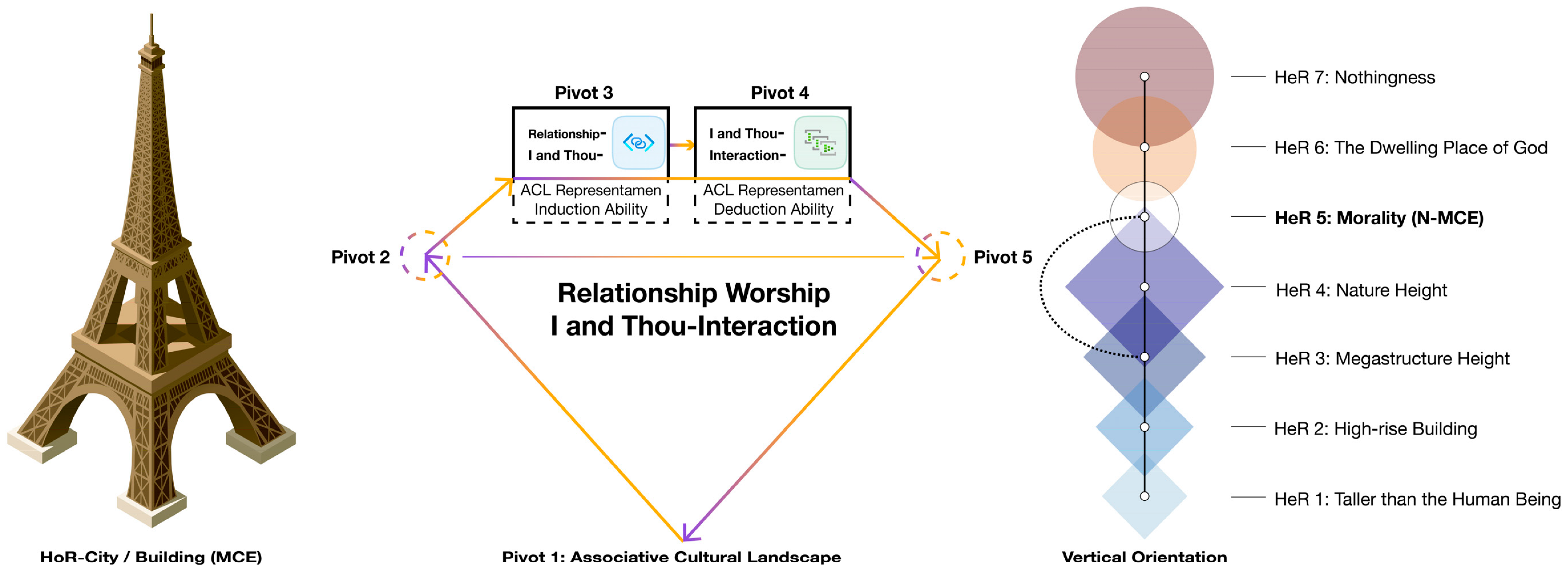
  • The megastructure “verticality” is MCE (corresponding to HeR1, HeR2, HeR3 of vertical orientation), and the orientational metaphor is N-MCE (corresponding to the process of connecting two HeRs of the vertical orientation, such as “HeR1-HeR7”);
  • Therefore, megastructure worship utilizes the interpretive power of the orientational metaphors within the specific problem of “verticality”, to form the methodology of this study—O-ACL methodology (Figure 5).

4. O-ACL Methodology: The Interpretation Methodology of Megastructure Worship

4.1. Applying the Arbor Porphyriana: The Ontology of Megastructure

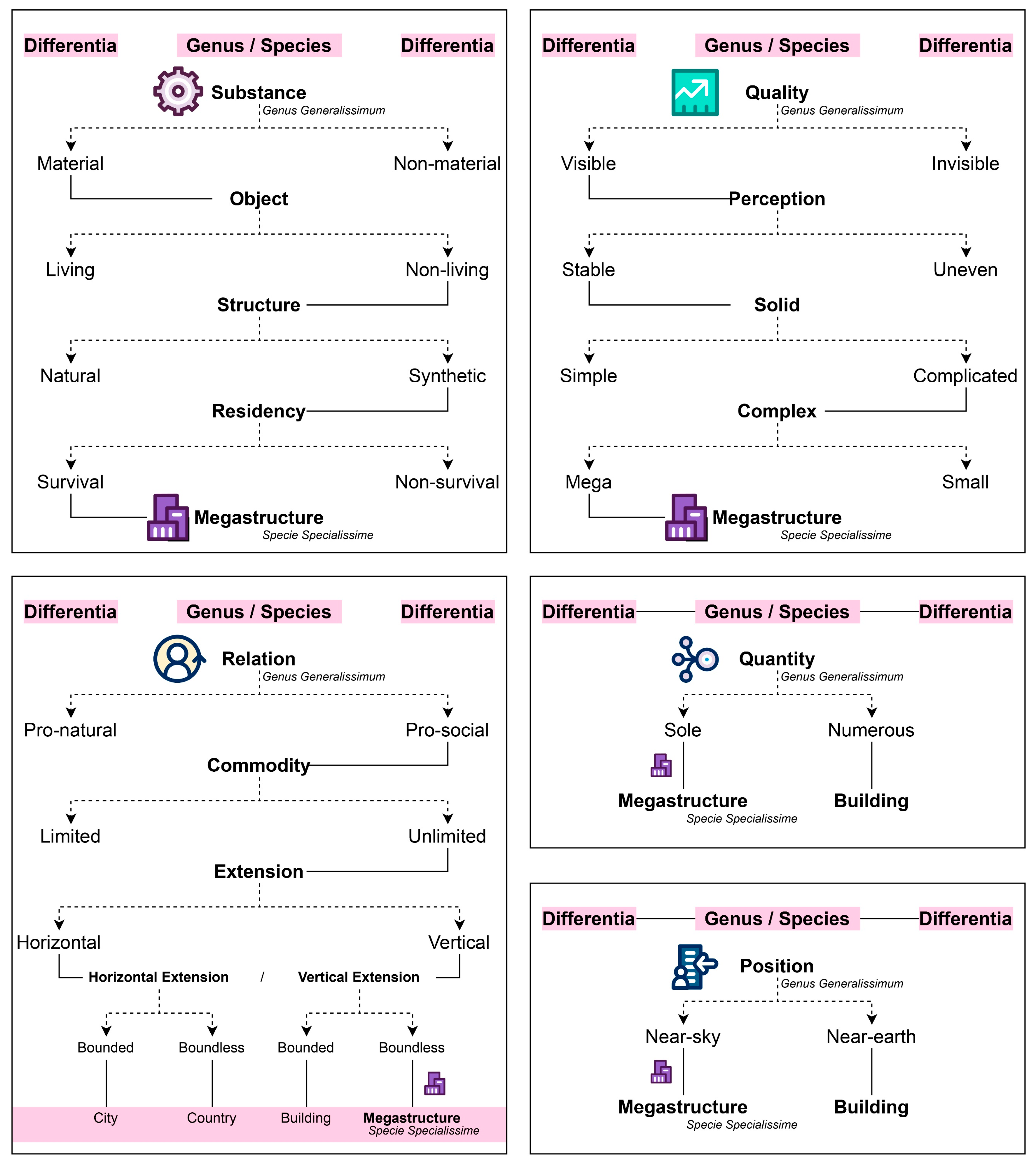
Explaining megastructure worship lies in clarifying the idea of the “megastructure as a key position in the classification system of giant objects” and the position of the megastructure through the genealogy of giant objects—utilizing the Arbor Porphyriana.
Porphyry refers to five predicables (Appendix E)—genus, species, difference, proprium, and accident—which provide definitional patterns for each of the ten categories (Appendix F). Genus and species form the basis and structure of the hierarchical sequence of the Arbor Porphyriana [62].
Megastructure’s concept conforms to the dictionary model of the Arbor Porphyriana, and the differences between concepts involving megastructures are presented through the hierarchy and order of the Arbor Porphyriana, using differences (Figure 6).

4.2. Three Interpretation Perspectives of Megastructure Worship

4.2.1. Body Worship

The ancient city concentrates the loose functions of the social life, and strengthens its defenses and interactions by gathering them together with walls, which is highly similar to the behavior of human beings in refining the functions of the physical body [63]. Richard Sennett examines the impact of both the body and the city on the development of Western civilization. Disappointed by the monotony and lack of beauty of modern urban architecture, he emphasizes the significant role of the urban environment in depriving the human senses, and realizes that the relationship between the human body, the city, and the architecture has a deep historical dimension. The human body corresponds to the emotions and worship of the city in the form of “organ” differentiation (Table 3); the city and architecture, as megastructures, become expansions of the body [64].

4.2.2. Politics Worship

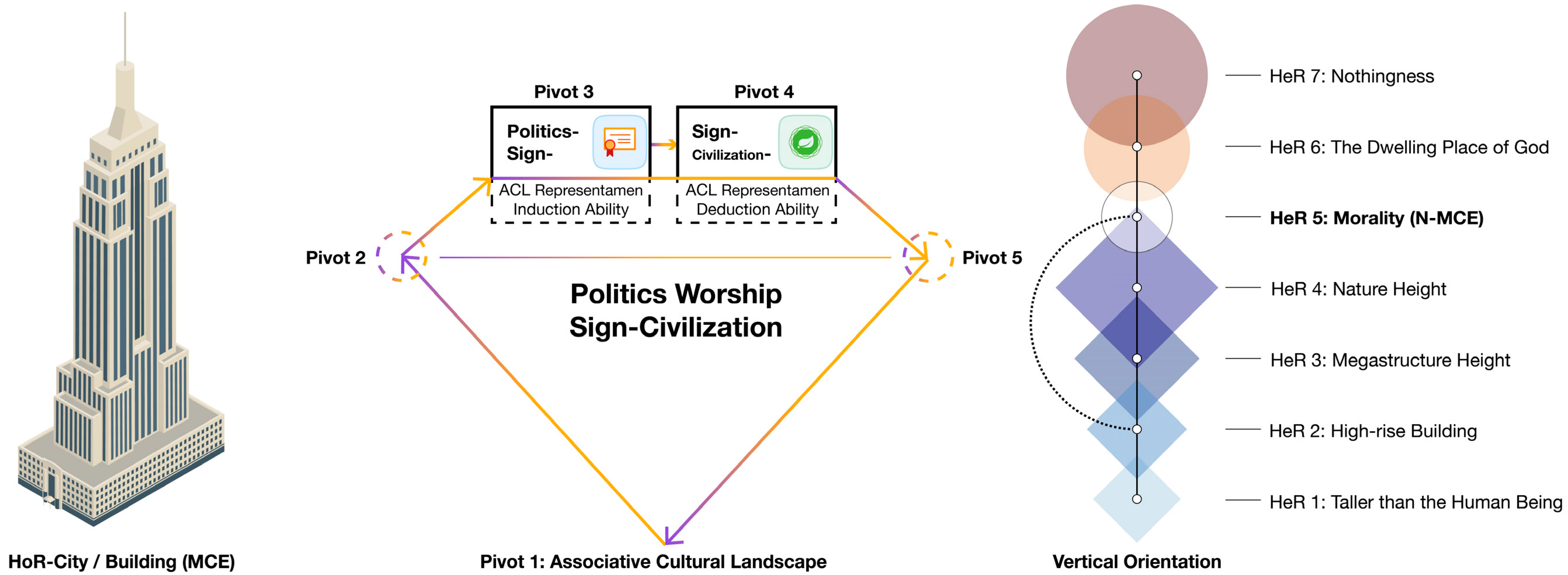
Ancient Chinese cities are built with a political heart at their center. Whereas the West regards the city as an artifact of civilization, religion and the legal system pointedly abstract human identity from the untamed nature [67]. The city is seen as a conspicuous symbol of its political identity, and the progress of civilized society leads to the realization that mankind is moving from barbarism to civilization.
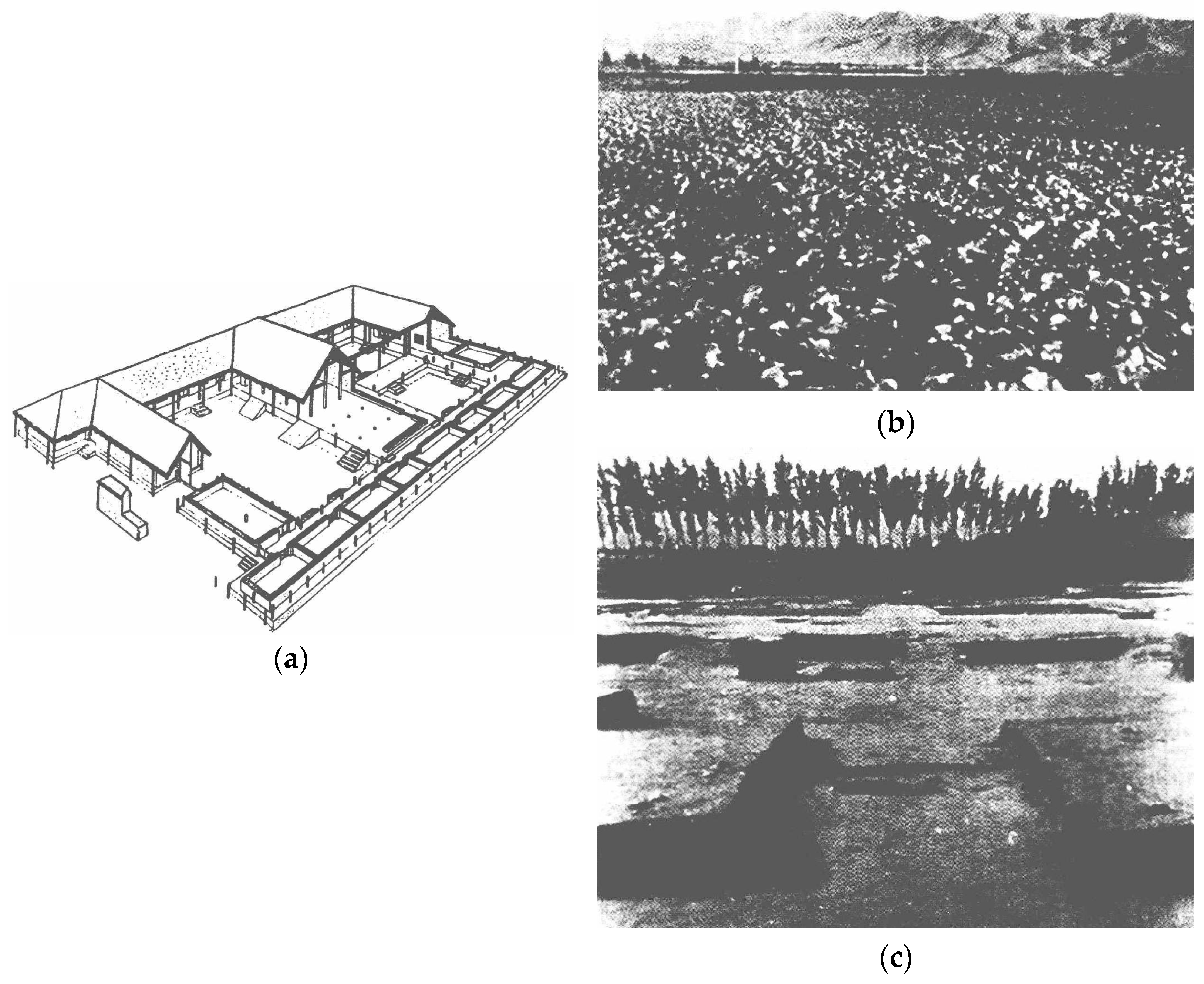
Joseph Needham mentions that “The Chinese city, whether ancient or modern, is not the result of a natural concentration of population, an agglomeration of capital or means of production; it is not essentially an ideology centered on a market economy. It is a political heart, a node of an administrative network” [68]. Kwang-chih Chang’s view also verifies Joseph’s conclusion that each “state” in ancient China was a network of cities and towns with different levels of hierarchy [69]. From the perspective of the feudal rule in ancient China, the city serves as a means of political domination, with emperors and clans spreading out to establish new centers of power in new lands, resulting in urban megastructures that are naturally colored by political domination, and which command submission and worship from the populace. The Book of Songs · Majors Odes · Mian, which describes the political actions of King Tai’s ancestor in building a city in the Zhouyuan region before the Zhou Dynasty was founded, was an important example of the political participation of the people in the process of building cities in ancient China, and Mian depicts almost every aspect of the city in ancient China. The vivid construction scenes depicted in Mian were verified three thousand years later, when the city was excavated in the Qishan region of the central Shaanxi province [70] (Figure 7).

4.2.3. Relationship Worship

Martin Buber proposes the “relationship ontology”, which emphasizes that the relationship of everything in the cosmology is not singularly regarded as “You” or “I”, but rather as the basic phrase “I and You” [71]. The fragile primitive civilization of human beings witnesses the fear and pressure of being coerced by nature, and the “non-figurative” natural phenomena and the “figurative” natural elements make human beings at that time feel powerless in dealing with the relationship between human beings and nature, especially in the limited natural capital and means of production: huge quantities of which are possessed by the early human societies. In particular, the limited natural capital and means of production in early human societies are characterized by a large number of giant carriers that are perceived and experienced by human beings, and large-volume natural elements such as landscapes become the most representative giant carriers, which makes it very difficult to form a relationship between human beings and giant objects in the process of establishing a relationship of “I and Thou”, or rather, “I and It”.
Therefore, giant worship in early human society is based on a top-down perspective of giant objects. Giant objects participate in the early civilization process of mankind. They gradually become the source of human power and the symbol of the right to control nature. The relationship between mankind and giant objects is no longer a matter of frustration and powerlessness in the face of giant objects.
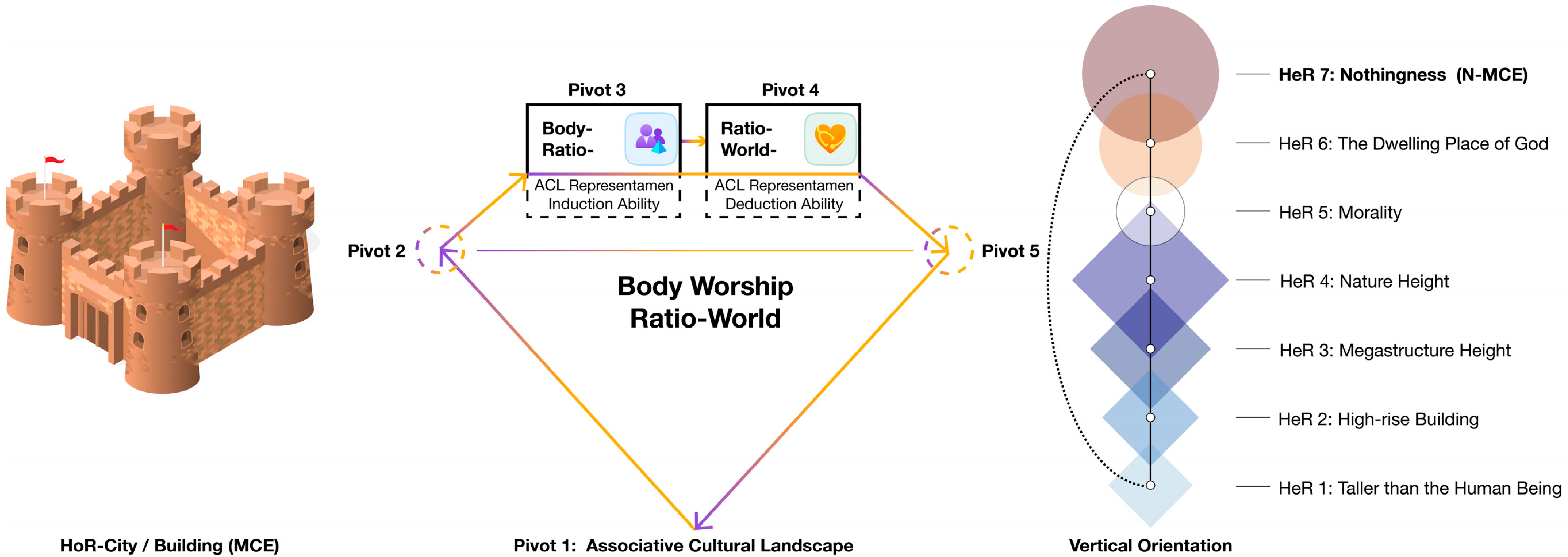
In Martin Buber’s “relationship world”, there are three dimensions of cognition: (1) the “human–nature” relationship, where human beings coexist with nature in a realm where they cannot communicate with each other; (2) the “human–human” relationship, where they become “you” in each other’s mouths; and (3) the “human–spirit” relationship, which is a potential relationship of consciousness that is formed out of non-interests. After repeated integration with the world of human experience, the relationship between the megastructure and the human world departs from Martin Buber’s first dimension of cognition and directly enters the third dimension of cognition. Megastructure symbolically has a “personality”. From relationship 1 to relationship 3, it gradually evolves and returns to relationship 2—the “human–human” relationship. After that, human beings fantastically project their own emotions and psychological feelings onto it, which satisfies their powerful desire to conquer nature and space.
Convergent psychological sensations exist in the “subject”. Edmund Husserl believes that an objective external world can only be experienced intersubjectively—i.e., by the majority of individuals who are cognizant—and he calls this experience empathy, following Theodor Lipps’s notion [72]. Edith Stein (Appendix F) discusses the nature of the act of empathy, based on the “metaphor” that the unfamiliar subject and its experiential behavior are given to the human beings. Megastructure itself is relatively silent in the present world and can only wait for the approach of human perception and emotion. Megastructure, as the “metaphor” for the unfamiliar subject, cannot actively stimulate the human being to become emotionally involved with it as the human mind moves closer to it.
But megastructure cannot be seen as “emotionally excluded”. For example, when a person intends to cross a city, he cannot only see the city as a “barrier”, but must be in constant contact and emotional interaction with all kinds of things in the city. As an intuitive manifestation that transcends the scope of the human body, the monolithic structure is bound to have human emotions adhering to it.

4.3. The Nine Applied Models of O-ACL Methodology: The Interpretation Models of Megastructure Worship

The purpose of generally shifting towards “verticality” is an emphasis on emotionality and participatory experience. This progressive development of the megastructure theory undergoes a succession of changes over a relatively short period of one century, highlighting its interpretative significance from three perspectives: body worship, political worship, and relationship worship. The three perspectives continuously introduce megastructures into the human spiritual world and deepen the “spiritual relevance”.
Furthermore, by establishing a bridge between the cultural analysis and architectural theory through ACL methodology, we aim to demonstrate that O-ACL methodology can enrich rather than replace ongoing architectural theoretical debates. This provides a consensus for the application of O-ACL methodology within architectural theory [73].
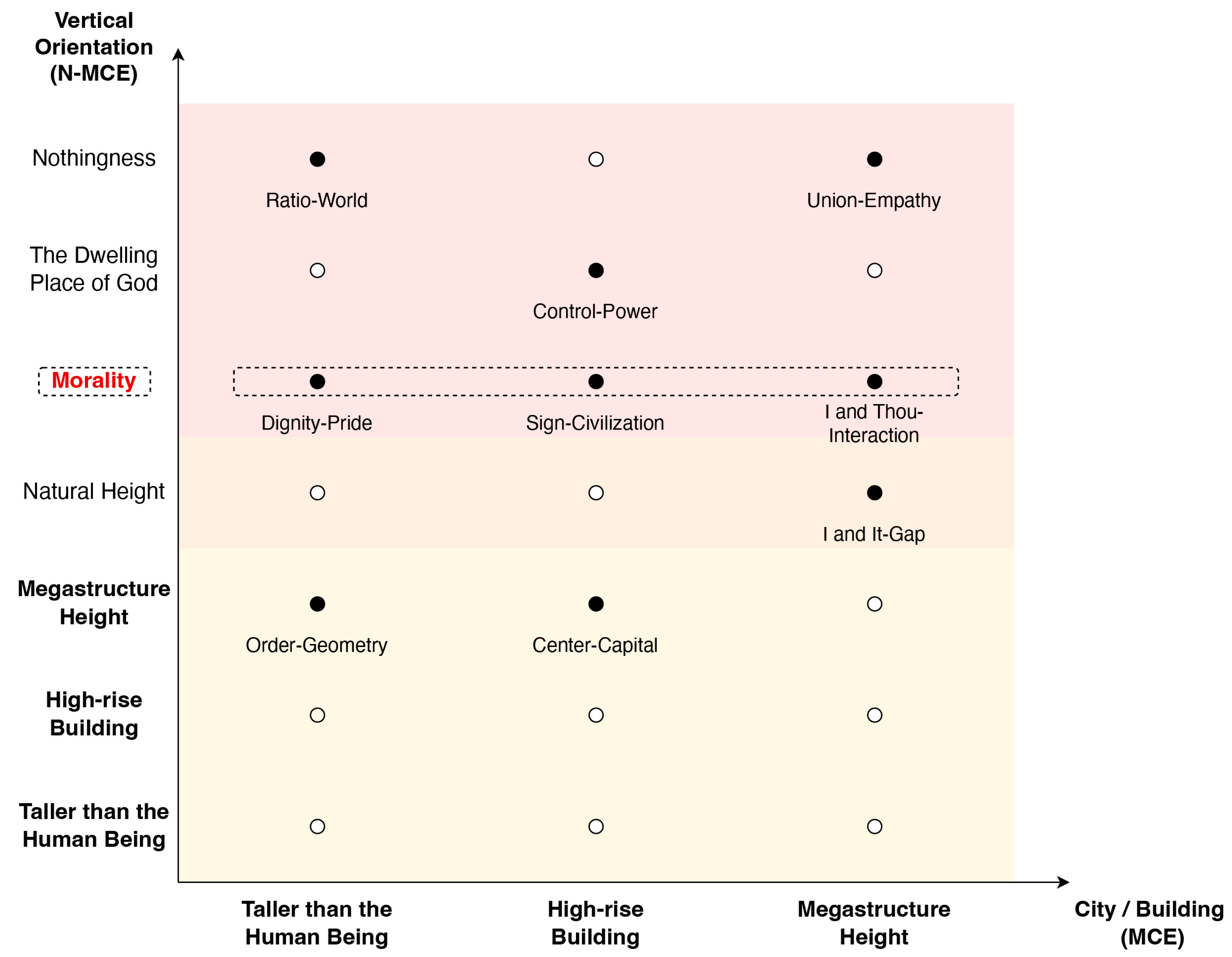
Based on the above theoretical logical construction, three worship systems with O-ACL methodology are formed, which are subdivided into nine applied models (Table 4):
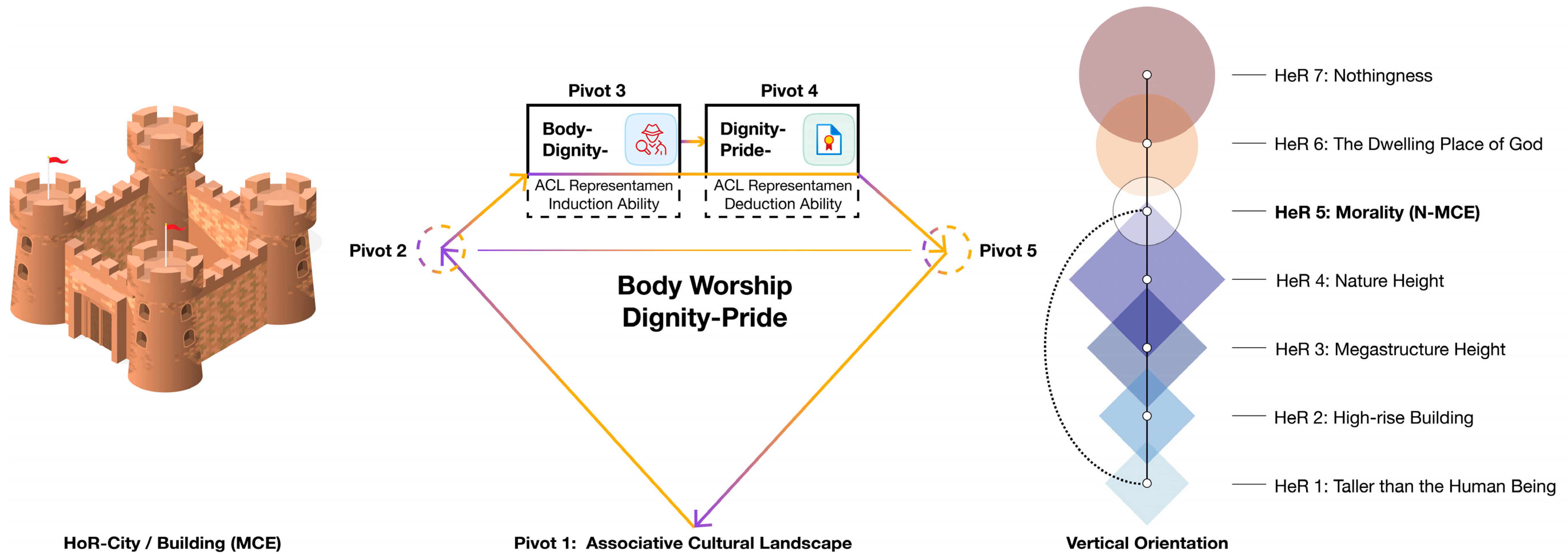
  • Dignity–Pride (HeR1–HeR5): The ancient Athenians derived their dignity from the act of exposing their bodies, and they integrated embodied actions into urban development and architectural construction. The individual’s physical body was expanded and satisfied by the scale of the cities and the buildings, and they flaunted their egos in the naked forms of the cities and the buildings, thereby gaining pride from relying on the cities and the buildings.
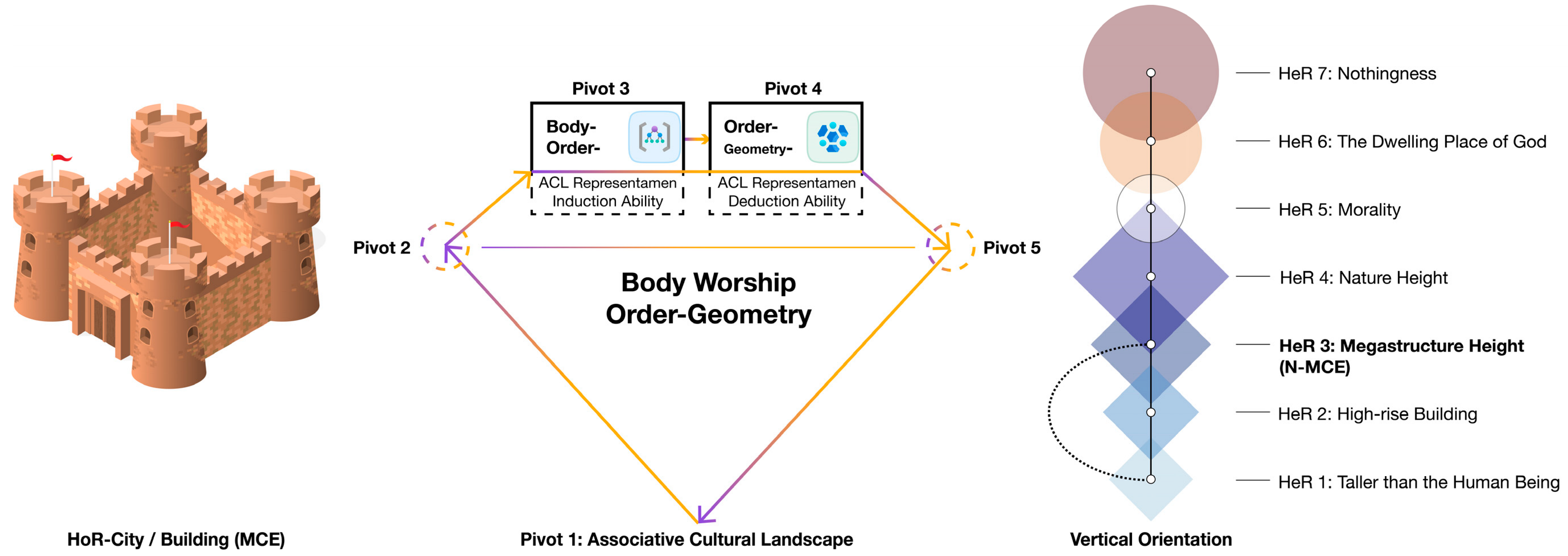
  • Order–Geometry (HeR1–HeR3): When the Roman emperor Hadrian built the Pantheon, he used visual order to control the stones and light, extending the geometry of the human body according to human body proportions, and establishing a subtle balance between visual order and body geometry. This balance connected the geometric relationship between the body and the building, and promoted people’s worship of cities and buildings, formed under the control of body geometry.
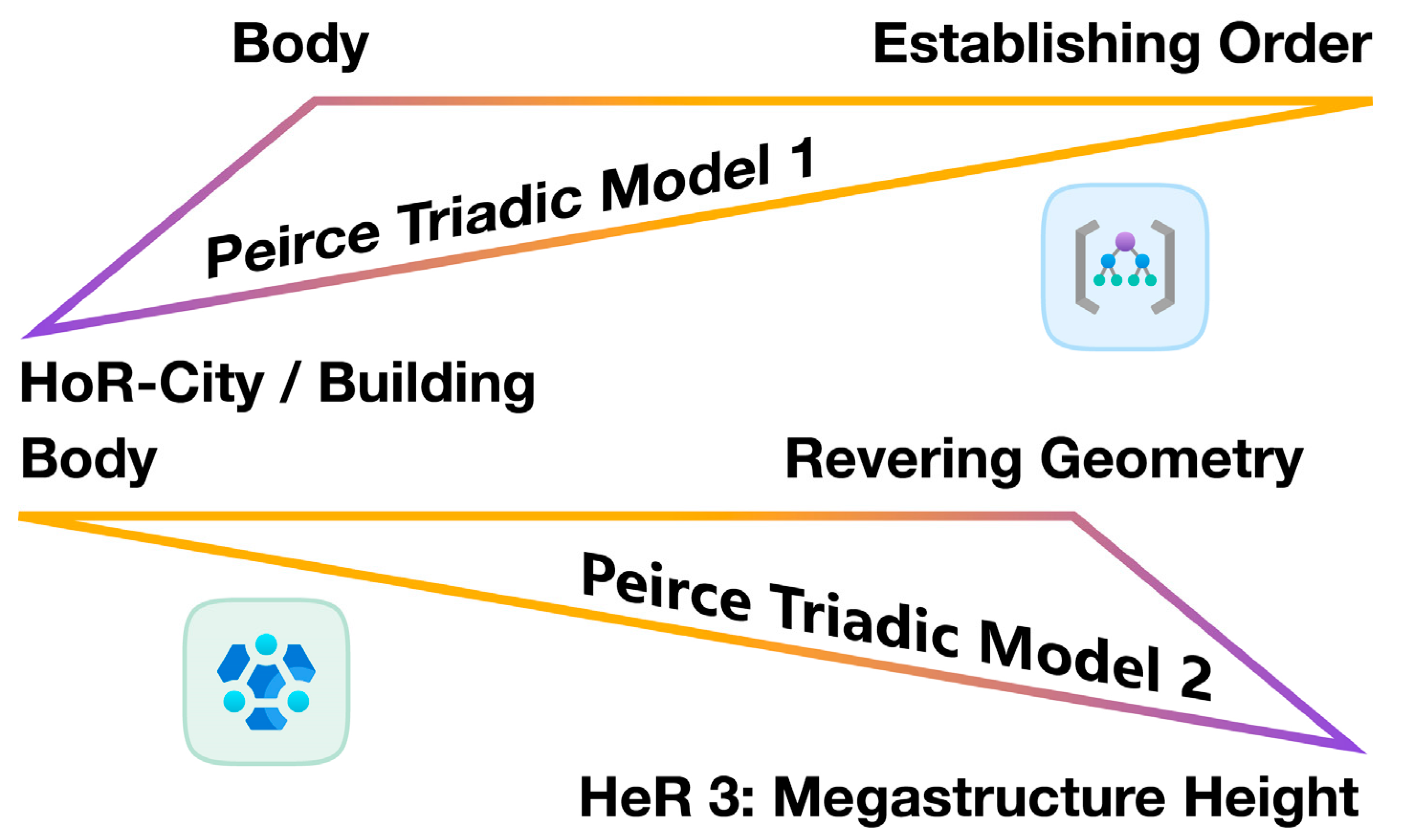
  • Ratio–World (HeR1–HeR7): The builders of the Notre Dame Cathedral in the Middle Ages established a way of constructing the relationship between human beings and the value of the world by carving sculptures of real people. By carving sculptures of real people, they attached personal emotions, happiness, and pain to the building. They used the universal value recognition of the building in the world to achieve religious worship involving more people and a wider range of people, and ultimately, to return to the worship of cities and buildings.
  • Sign–Civilization (HeR2–HeR5): Cities and buildings are symbols of political identity. They have the nature of transitional detachment from the barbaric environment, and at different points in time, they constantly deepen the process of civilization by highlighting their status. Cities and buildings are used as important symbols of the progress of various civilizations, highlighting the political propaganda, attitude and breadth of each major civilization. A macroscopic image is used to form a cluster of symbols using giant structures.
  • Center–Capital (HeR2–HeR3): Ancient Chinese cities with unnatural population agglomerations gradually became a political heart in a political network. The concentrated construction of cities and buildings presupposes the imminent formation of a political center, the collection of productive capital and means of production, and, ultimately, the clustering of cities and buildings to form nodes and capital supply points in a larger political network to serve higher-level political rule.
  • Control–Power (HeR2–HeR6): The imperial clans of ancient Chinese dynasties established new, relatively centralized regimes in new regions, using cities and buildings to divide the areas under their control and rule, highlighting them as the supreme embodiment of political power in the new region and symbolizing imperial power and the power to control land.
  • I and It–Gap (HeR3–HeR4): The mutual perception of humans and megastructures experiences the process of going from barbarism to rational observation. When there is insufficient production data or knowledge reserves, humans’ perception of cities and buildings is relatively exclusionary and taciturn, and the handling of relationships is weak: that is, humans are unable to perceive and respond to the external image of cities and buildings.
  • I and Thou–Interaction (HeR3–HeR5): Cities and buildings gradually become anthropomorphic in the process of human civilization, becoming huge objects in human society that transcend ontological existence and meet human emotional needs. They are closely related to human daily life in terms of psychology, physiology, emotional value, safety, and other aspects.
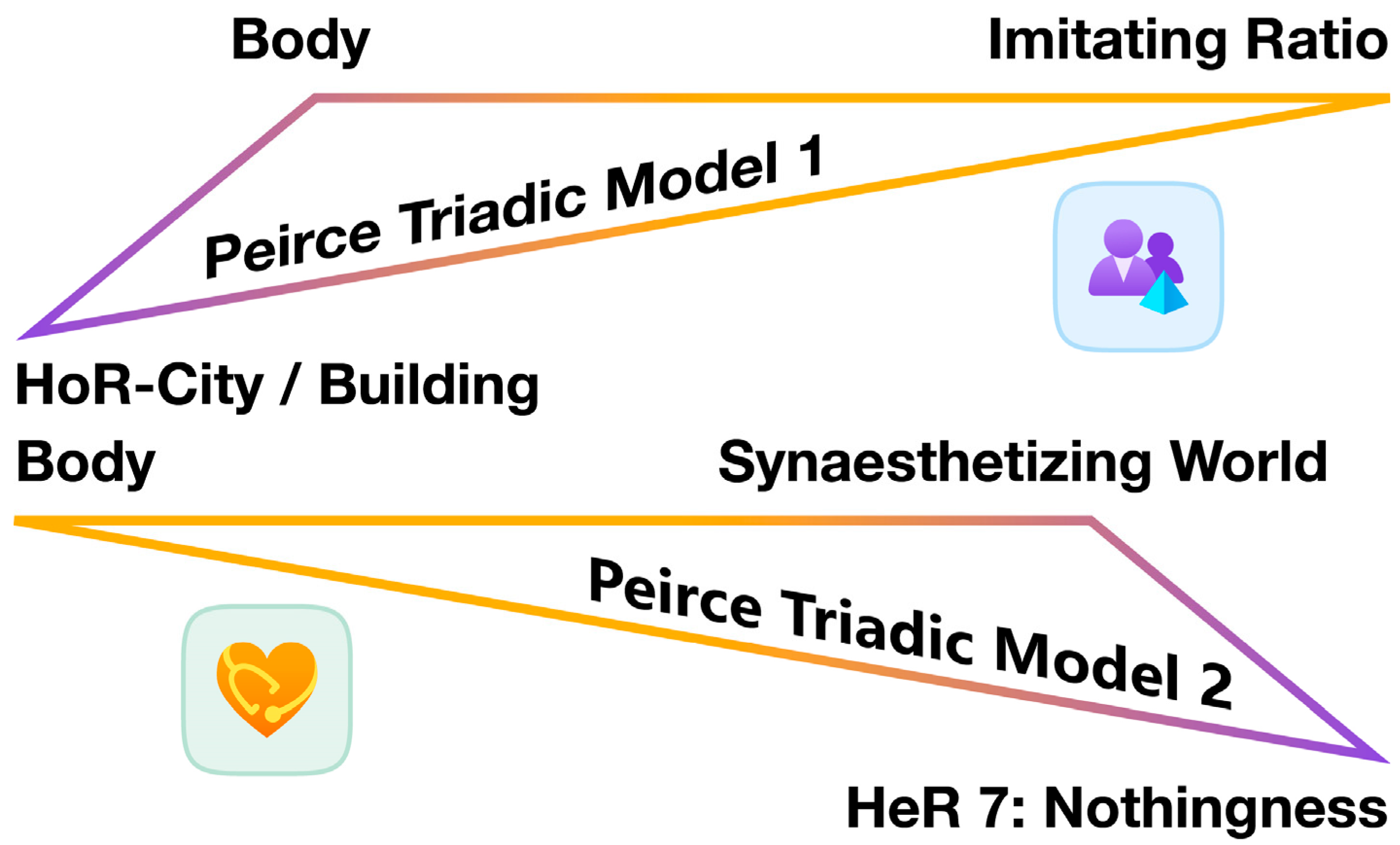
  • Union–Empathy (HeR3–HeR7): Cities and buildings are anthropomorphized, becoming communities that humans can emotionally connect with and participate in. After establishing a subconscious and stable relationship with the human soul, cities and buildings are no longer just giant objects that are removed from the human experience. Instead, they become megastructures that humans can empathize with on a vertical scale, in terms of their emotions and psychological feelings.

4.4. Building the Matrix of O-ACL Methodology

The nine applied models of O-ACL methodology, based on the three perspectives of worship, are demonstrated (Figure 8). This means that in addition to the nine O-ACL applied models mentioned in this study, there are also 12 O-ACL applied models that potentially appear in other scenarios.

4.5. The Empirical Analysis

Leslie Sklair offers a critical theoretical framework for understanding the underlying forces behind the striking architecture—such as skyscrapers, museums, and stadiums—in contemporary global cities. The proliferation of “landmark buildings” worldwide is neither accidental nor purely an architectural art form, but rather the deliberate and organized outcome of the systemic process of “capitalist globalization”. These megastructures serve as the physical embodiment of a larger “signifying project”, whose fundamental purpose is to create legitimacy, shape identity, and consolidate power for the global capitalist system through visual and cultural means [74]. Therefore, identifying the patterned relationship between megastructures and non-constructive factors is essential for reexamining and gaining a deeper understanding of the phenomenon of megastructures.

4.5.1. Empirical Application of O-ACL Methodology: Burj Khalifa

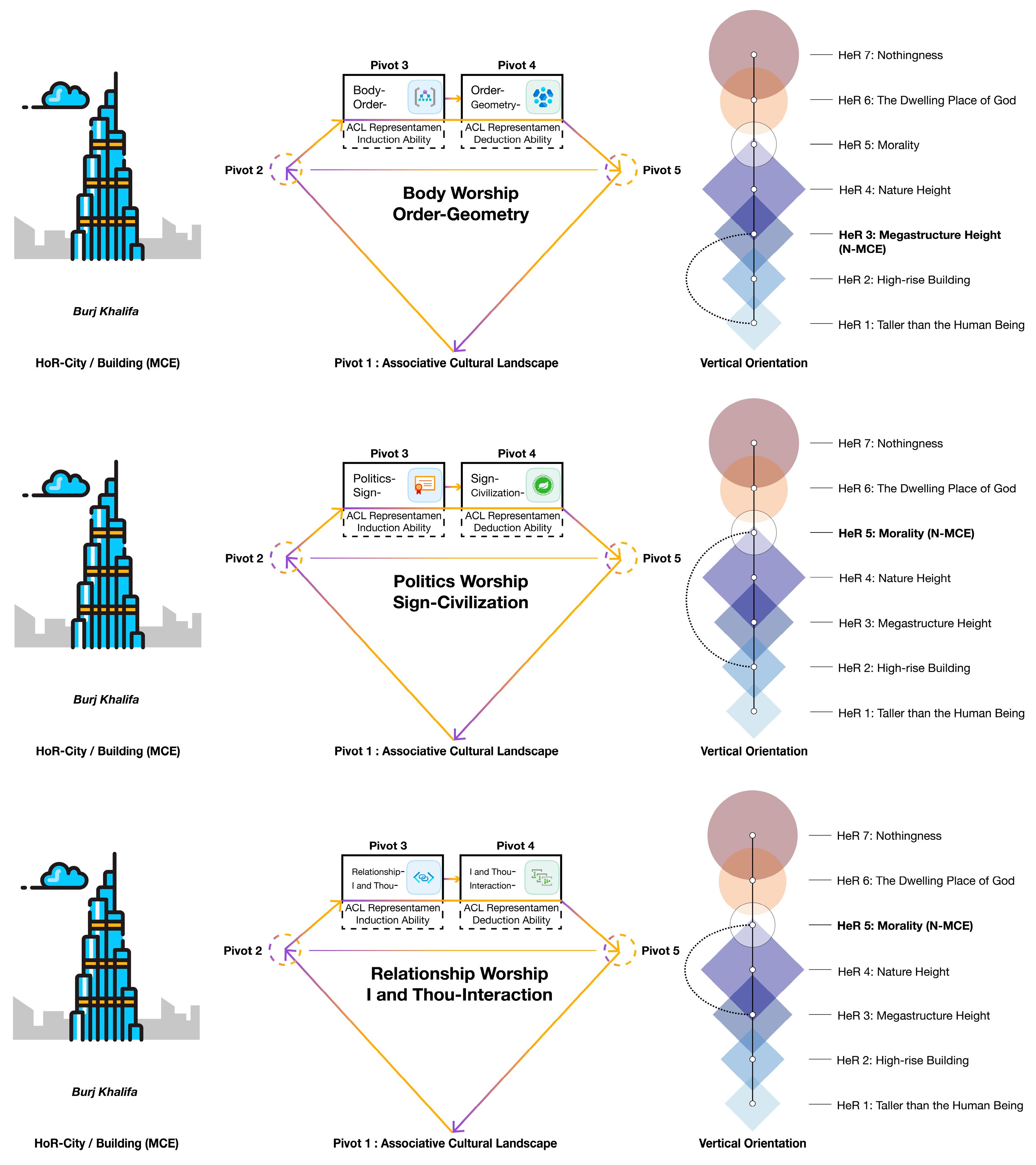
As the world’s tallest building, Burj Khalifa stands as the pinnacle of architectural achievement and a defining symbol of Dubai’s modern urban expansion [75]. The structural design philosophy of its supertall buildings manifests in wind resistance, seismic resilience, and load transfer mechanisms [76]. Simultaneously, it embodies moral and spiritual dimensions within the realm of humanistic philosophy, fully expressing how form serves as a conduit, connecting the material and spiritual worlds within monumental architecture [77]. Scholars widely recognize that Burj Khalifa’s ability to shape social cognition and behavior through symbolic systems—such as language, imagery, and architecture—has propelled Dubai’s rapid ascent within the global urban hierarchy [78]. Therefore, semiotics offers an effective approach to interpreting this worship of megastructures. The Dubai government leverages the Burj Khalifa landmark to elevate the national and urban image, reinforce its global identity, and consolidate and amplify its position within regional culture. Simultaneously, developers leverage Burj Khalifa as a “credibility guarantee” for their international operations, propelling transnational real estate expansion. Mohamed Ali Alabbar (Chairman of Emaar Properties, Developer of Burj Khalifa) states that our iconic towers add significant value to the destination, add to the nation’s skyline, and serve as economic catalysts, supporting diverse sectors including tourism, retail, and hospitality.
“When we developed Burj Khalifa, we had a clearly articulated vision of not just delivering an icon that underlines the ambitions and spirit of global collaboration that defines Dubai, but also to maximize the value of the land by creating a truly “vertical city”.”
—Mohamed Ali Alabbar [79]
The global center of skyscraper construction has shifted from North America to Asia and the Middle East, with non-Western nations becoming the primary regions for new skyscraper development. While achieving extraordinary feats, Burj Khalifa’s excessive scale and impersonal design have resulted in a lack of “sense of place”, devoid of humanistic care and cultural continuity. He emphasizes the shift from “space” to “place”, meaning that space is not merely a physical container but should also carry cultural significance and emotional memories [80].
Among the three application models with distinct orientations, Burj Khalifa forms symbolic metaphorical relationships in geometry, civilization, and interaction, based on its context and societal impact (Figure 9). These represent crucial dimensions of humanity’s profound perception of the tower, symbolizing the geometric expansion of the human body, the high concentration of civilization, and the deep reverence of emotional connection, respectively. Burj Khalifa demonstrates the practical effectiveness and methodological framework of O-ACL methodology.

4.5.2. Empirical Application of O-ACL Methodology: Shanghai World Financial Center

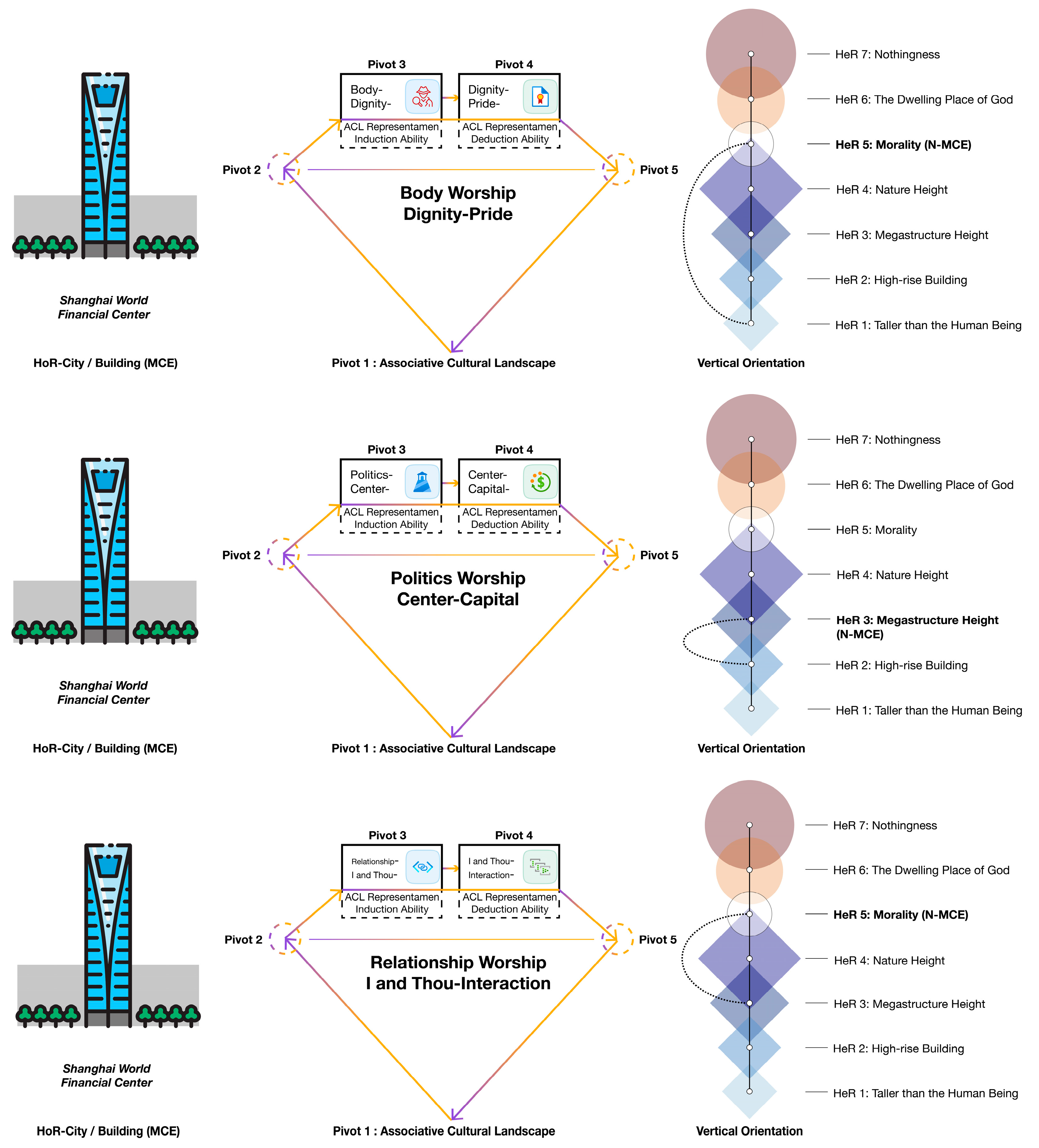
Shanghai World Financial Center, as a monumental symbol of real-estate investment, achieves capital super-accumulation and satisfies clients’ sense of ownership and pride by commanding exorbitant rent through housing top multinational banks, law firms, and financial institutions. Simultaneously, it represents the alliance between transnational capital and the Chinese political elite, rebranding Shanghai from a socialist industrial city into a global financial hub. Its skyline embodies the Chinese narratives of “power” and “development” in the era of globalization, serving as tangible proof of how national and urban elites leverage global capital logic to solidify their legitimacy and influence.
Moreover, its distinctive “corkscrew” design and awe-inspiring height have been disseminated through media and popular culture, cementing its status as the ultimate symbol of Shanghai’s modernity and futuristic ethos. It proclaims a lifestyle where humanity coexists with global capitalism to the world (Figure 10).

4.5.3. Empirical Application of O-ACL Methodology: CN Tower

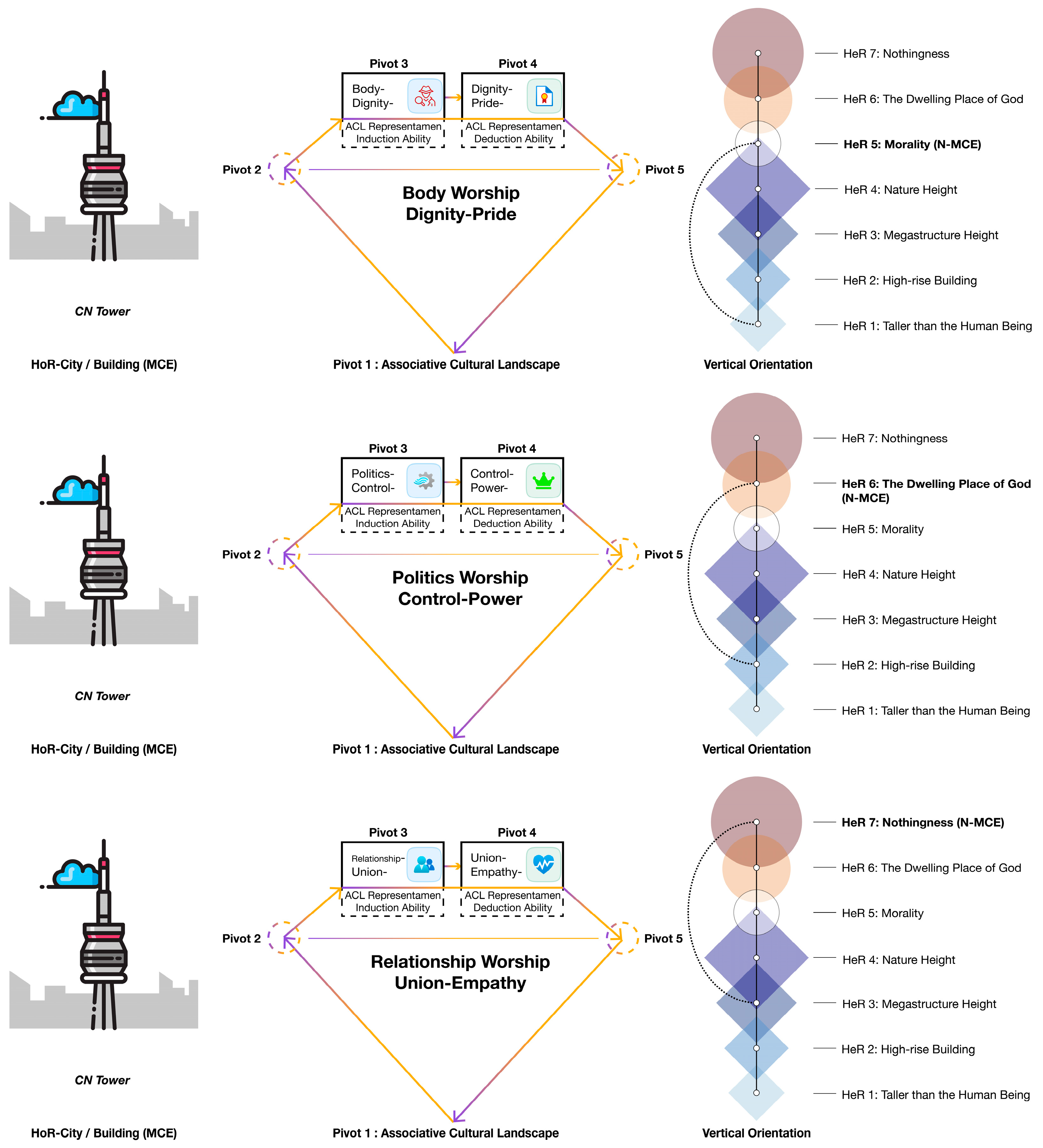
CN Tower is an iconic megastructure from the pre-globalization era. Built in 1976, CN Tower predates the peak of “capitalist globalization” described by Sklar. Thus, it can be viewed as an early, state-led modernization project, rather than a contemporary “landmark project” that is directly driven by transnational capital. Its purpose is to create a technological and communications landmark for Toronto, enhance the city’s image, and serve as a symbol of civic and national pride.
Despite its early construction, CN Tower’s functions align closely with Sklar’s theoretical framework. Through its observation decks, restaurants, and symbolic role as a communications tower, it has successfully shaped Toronto and Canada’s modern, technologically advanced identity. It has become a must-consume tourist spectacle, attracting millions of visitors. This exemplifies the concentration of power under state-controlled governance, where a megastructure serves as a vehicle for attracting consumption and exercising control.
CN Tower is primarily driven by national and public needs (telecommunications and city branding), whereas contemporary skyscrapers are fueled by global capital accumulation and the demands of multinational corporations. This implies that compared to other megastructures, CN Tower evokes stronger feelings of identity and civic pride, fostering a more genuine sense of empathy. Contemporary skyscrapers, however, symbolize the power of global financial capital and the triumph of neoliberalism more directly. Consequently, CN Tower elicits more sincere and passionate civic empathy, establishing a deeper “Union–Empathy” emotional bond (Figure 11).
These positive images of megastructures contrast sharply with their social costs: spatial fragmentation, resulting in disconnection from the surrounding environment; forced displacement of the original residents and restructuring of the social fabric; and large-scale infrastructure exacerbating urban sprawl, eroding existing communities and human-scale spaces. Therefore, semiotics proves to be an effective approach to interpret this worship of megastructures. The nine applied models generated using O-ACL methodology, along with specific case studies extracted for Burj Khalifa, Shanghai World Financial Center, and CN Tower, effectively demonstrate the practical utility of this methodology and how it addresses the relationship between megastructures and humanity in real-world applications. Consequently, megastructures present both advantages and disadvantages, posing significant challenges.

4.6. The Framework of O-ACL Methodology

The field of N-MCE covers landscape architecture, cultural heritage, policy studies, aesthetics, psychology, etc. ACL methodology combining MCE and N-MCE expands the themes of landscape architecture in the form of a methodology—how the landscape is captured by the human spiritual world. This provides a basis for ACL methodology to solve problems in other disciplines or to become independent as a methodology with its own ontology. Finally, when discussing the extensibility of ACL methodology, the left and right explanatory domains of ACL methodology can be supplemented and replaced by sub-methodologies, which means that ACL methodology accommodates almost all research issues in MCE and N-MCE with an open framework.
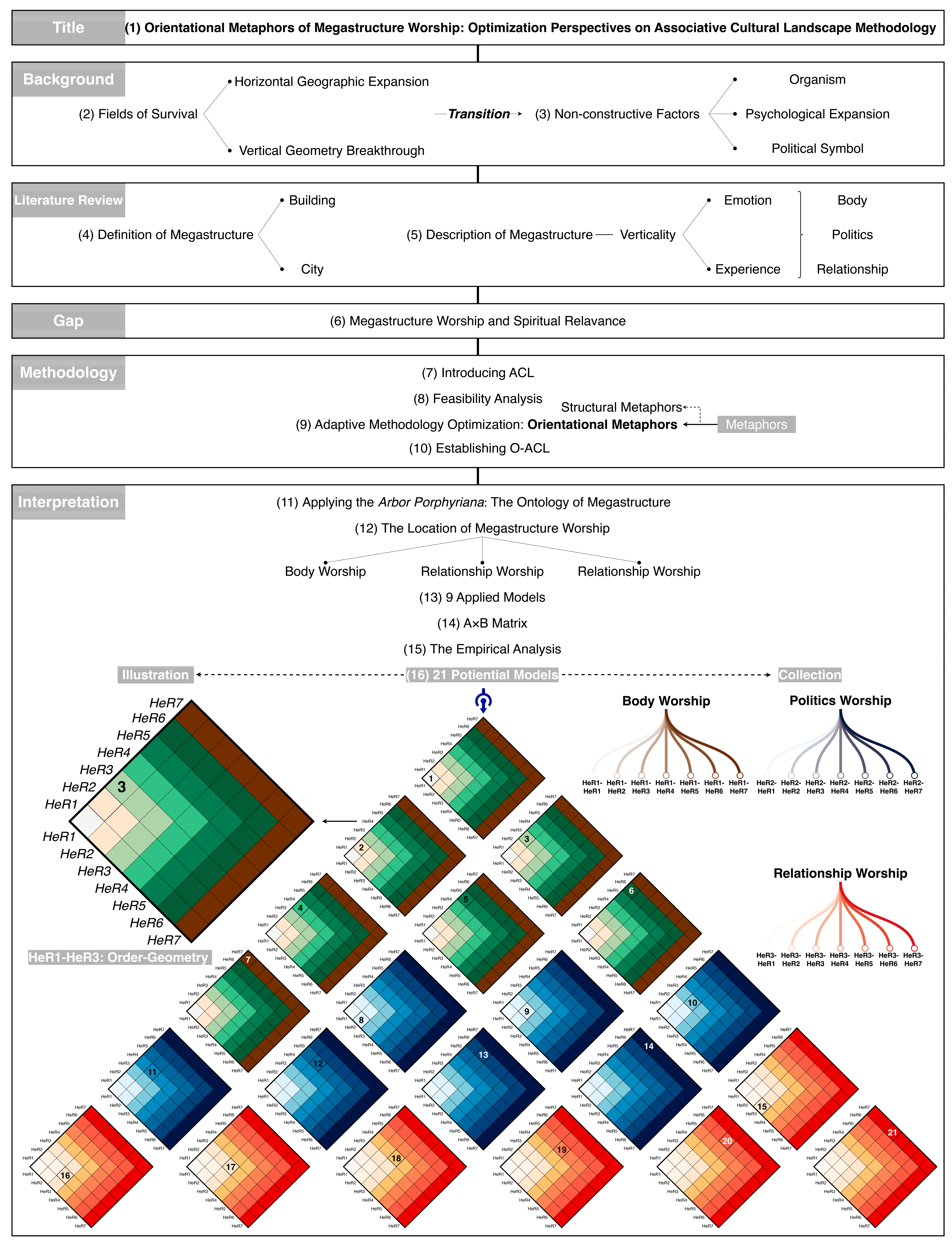
The framework of O-ACL methodology undergoes a cleaning and restructuring of ACL methodology to be specifically optimized to conform to the tendency to study the issue of megastructure worship (Figure 12). Compared to the framework of ACL methodology, O-ACL methodology for specific problems greatly expands the application boundary of ACL methodology. The contributions of O-ACL methodology are as follows: (1) it clarifies the 16 key links, from topic selection to model interpretation; (2) it differentiates the three interpretative perspectives of megastructure worship; (3) it evolves and optimizes ACL methodology; (4) it establishes nine applied models, based on the three interpretative perspectives; and (5) it provides a research outlook—combining the nine existing applied models, 21 interpretative potential applied models have been constructed.
O-ACL methodology forming is constructed based on the above logic. At the methodological level, the emergence of ACL methodology and the X-ACL methodology derived to suit specific problems (O-ACL methodology appearing in this study, the “O” can be abstractly generalized as “X” to represent sub-methodologies that can be replaced with others) provide an effective solution to simply discussing MCE problems and N-MCE problems. The logical formula is expressed as follows:
∀x(MCE(x)→∃y ∃z(ACL(y)∧X-ACL(z)∧Process(x, y, z)∧∃w(N-MCE(w)∧Result(x, w))))
MCE(x) means “x is an MCE event”; ACL(y) means “y is an ACL event”; X-ACL(z) means “z is an X-ACL event”; Process(x, y, z) means “x is processed by y and z”; N-MCE(w) means “w is an N-MCE event”; and Result(x, w) means “x is processed to obtain w”.

5. Discussion

The three perspectives of megastructure worship are in line with the development of human civilization: cognizing the body, cognizing the power, and cognizing oneself. The first two are relatively easy to understand, and the third perspective of worship is to expand the individual to an unlimited extent—megastructure is a figurative expression of human self-obsession.
This study takes megastructure worship as the research object and optimizes ACL methodology at the methodological level. O-ACL methodology makes the following four updates to ACL methodology:
  • Exogenous spatial homogeneous symbol is replaced with HoR;
  • Endogenous spatial heterogeneous symbol is replaced with HeR;
  • Space-abstraction-symbol is replaced with Peirce Triadic Model 1;
  • Symbol-abstraction-spirit is replaced with Peirce Triadic Model 2.
In the ACL methodology, in addition to the bottom stable ACL node, the significance of the four nodes above is expanded in this study. Depending on the differences in the researched object, ACL methodology evolves into the X-ACL methodology (“X” is “O”—orientational metaphors). This means that ACL methodology is gradually moving away from being limited to a single discipline as an open research methodology and will appear more in the form of the X-ACL methodology or the X1–X2…–ACL methodology (a more detailed division of the system than the X-ACL methodology).
In dealing with the relationship between the real physical environment and the human spiritual world, the combination and coupling relationship between the two is often not resolved by relying on one side alone. The emergence of O-ACL methodology provides an appropriate solution and strategy for this dilemma, involving non-quantitative spiritual mapping and spiritual feedback on the real physical world environment, mainly including emotions, moods, psychology, or feelings, as well as deeper philosophical relationships, religious systems, and cultural cognition. In this study, the “association” is defined as the “spiritual relevance”. The interpretation path of using megastructure worship as the research object provides an open research path for similar research topics.

6. Conclusions

The interpretation paths of megastructure worship are based on the emergence of O-ACL methodology. The introduction of orientational metaphors supplements the shortcomings of ACL methodology: (1) the forms of the exogenous spatial homogeneous symbol and endogenous spatial heterogeneous symbol are relatively simple, and the ability to interpret the correspondence between left and right is relatively weak; (2) the key symbolic abilities are relatively straightforward, which is optimized and improved after the introduction of the orientational metaphor and Peirce Triadic Model. This has directly resulted in built environment disciplines lacking attention to the human spiritual world, due to an over-focus on the real physical environment—cities, buildings, or landscapes are also one way in which the human spiritual world is connected. Therefore, one of the contributions of O-ACL methodology is not only to provide an interpretative path for more issues related to megastructure worship, but also to fill the gap in the built environment disciplines’ activities in the human spiritual world.
In the past 20 years, megastructure worship has focused on the “emotion” and “participatory experience” embodied in “verticality”. On the basis of the megastructure of political empowerment, scholars increase their focus on the two perspectives of embodiment and psychology. Therefore, body worship, political worship, and relationship worship have become three important perspectives for interpreting megastructure worship.
  • Body worship: Emphasizing that megastructures are an extension of the human body and a support for emotions, and that the human body is the mold for megastructure design;
  • Political worship: Megastructures are symbols and representations of human authoritarian organizations, representing the ability to control the land and the people;
  • Relationship worship: Removing megastructures from the category of commodities and establishing an intimate psychological relationship between people and megastructures.
The focus on “verticality” extends the common perception of the horizontal geographical expansion of megastructures to a breakthrough in vertical geometry. It is not only a vision of the limited expansion of human living space, but also an infinite reverie yearning for the universe or the dwelling place of God under the concept of religion. Therefore, after the three levels, the goal of positioning megastructure worship is locked in the discussion category of “verticality”. The combination with the orientational metaphor further clarifies the “spiritual relevance” of HoR and HeR. Finally, nine applied models (21 potential models) are formed, according to different scenarios.
The advantage of using an applied model to explain megastructure worship is that it can be used to explain megastructure worship in a relatively systematic and objective manner, without the need for purely subjective philosophical speculation. This is also the underlying reason for optimizing the ACL methodology. The megastructure worship is explained and interpreted from the perspective of the orientational metaphor, which provides a comprehensive examination of this important social phenomenon and a cognitive assessment framework and model for human emotions attached to non-living things. This provides a methodological framework with a solid foundation (CL), scalability (the X-ACL methodology), and comprehensive interpretive power (multimodels) for other types of megastructure worship or types of worship, and even for scenarios involving the emotional connection between people and “things”. In particular, at the methodological level, it provides a new discussion horizon for emotional models that explain non-quantitative questions.

Author Contributions

Conceptualization, P.Z.; methodology, P.Z.; validation, P.Z.; formal analysis, P.Z.; investigation, S.L.; resources, S.L. and B.X.; writing—original draft preparation, P.Z.; writing—review and editing, P.Z., S.L. and B.X.; visualization, P.Z.; supervision, S.L.; project administration, S.L. and B.X. All authors have read and agreed to the published version of the manuscript.

Funding

This research received no external funding.

Data Availability Statement

The original contributions presented in the study are included in the article, further inquiries can be directed to the corresponding author.

Conflicts of Interest

The authors declare no conflicts of interest.

Appendix A

Super structure: Integration of urban functions represented by residences and structures represented by elevated expressways.

Appendix B

Japanese Metabolism Movement and British Archigram: Both groups of architects focus on research related to megastructures.

Appendix C

The article Three Paradigms of Collective Form was completed by Fumihiko Maki in 1961. It was not initially formally published, but was later published in 1964 as the first chapter of Investigations in Collective Form. In this work, he was the first to propose the definition of megastructure, arguing that there are three archetypes of cities: hierarchical form, megastructure, and group form. It was also the first time that the term “megastructure city” was incorporated into the architectural vocabulary. In 1994, Fumihiko Maki revisited his Collective Theory, combined it with thirty years of practical experience, and published the article Notes on Collective Form as a summary.

Appendix D

The design is a collaboration between Rem Koolhaas, Madelon Vreisendorp, Elia Zenghelis, and Zoe Zenghelis for the 1972 competition The City as Meaningful Environment, organized by the Italian magazine Casabella.

Appendix E

The theory of predicables: In order to achieve a better definition, Aristotle proposes the theory of predicables, which is how categories are named. In his work Topics, he proposes that there are only four types of predicables: genus, proprium or unique property, definition, and accident. Porphyry also follows this method, but he believes that there are five types of predicables.

Appendix F

The ten categories: Aristotle’s ten categories, proposed in the categories, are used to describe and categorize things. They are as follows: substance, quantity, quality, relation, place, time, position, state, action, and affection.

References

  1. SkyscraperPage. Available online: https://skyscraperpage.com/ (accessed on 29 May 2024).
  2. Hertzberger, H. Lessons for Students in Architecture; Uitgeverij 010 Publishers: Rotterdam, The Netherlands, 2001; p. 109. [Google Scholar]
  3. Frampton, K. Megaform as Urban Landscape. J. Delta Urban. 2012, 14–23. [Google Scholar] [CrossRef]
  4. Algiers Project. Available online: https://dome.mit.edu/handle/1721.3/21261 (accessed on 25 August 2025).
  5. Maki, F. Investigations in Collective Form; Washington University, The School of Architecture: St. Louis, MO, USA, 1964; pp. 5–8. [Google Scholar]
  6. Maki, F. On Collective Form. Docomomo 2015, 4–11. [Google Scholar] [CrossRef]
  7. Koolhaas, R. Exodus, or the Voluntary Prisoners of Architecture; Architectural Association School of Architecture: London, UK, 1972. [Google Scholar]
  8. Böck, I. Six Canonical Projects by Rem Koolhaas: Essays on the History of Ideas; Jovis Verlag GmbH: Berlin, Germany, 2015; pp. 33–37. [Google Scholar]
  9. Koolhaas, R.; Mau, B. S, M, L, XL; The Monacelli Press: New York, NY, USA, 1995; p. 5. [Google Scholar]
  10. Deyong, S.J. The Creative Simulacrum in Architecture: Megastructure 1953–1972. Ph.D. Thesis, Princeton University, Princeton, NJ, USA, 2008. [Google Scholar]
  11. Banham, R. Megastructure: Urban Futures of the Recent Past; The Monacelli Press: New York, NY, USA, 2020. [Google Scholar]
  12. Frampton, K. Megaform as Urban Landscape: 1999 Raoul Wallenberg Lecture; The University of Michigan A. Alfred Taubman College of Architecture+ Urban Planning: Ann Arbor, MI, USA, 1999; ISBN 1-891197-08-8. [Google Scholar]
  13. Frampton, K. Modern Architecture: A Critical History, 5th ed.; Thames & Hudson: London, UK, 2020. [Google Scholar]
  14. Frampton, K. Seven Milestones for the Third Millennium—An Untimely Manifesto. Archit. J. 1998, 5, 11–15. [Google Scholar]
  15. Bu, Y. Research on Megastructure Evolution and its Contemporary Practice. Master’s Thesis, Tianjin University, Tianjin, China, 2018. [Google Scholar]
  16. Kaika, M. City of Flows: Modernity, Nature, and the City; Routledge: New York, NY, USA, 2005. [Google Scholar]
  17. McNeill, D. Skyscraper Geography. Prog. Hum. Geogr. 2005, 29, 41–55. [Google Scholar] [CrossRef]
  18. Politakis, C. Architectural Colossi and the Human Body: Buildings and Metaphors; Routledge: London, UK, 2018. [Google Scholar]
  19. Lee, K. The Interior Experience of Architecture: An Emotional Connection between Space and the Body. Buildings 2022, 12, 326. [Google Scholar] [CrossRef]
  20. Sheehan, M. Everyday Verticality: Migrant Experiences of High-rise Living in Santiago, Chile. Urban Stud. 2024, 61, 726–742. [Google Scholar] [CrossRef]
  21. Hardenberg, W.G.V.; Mahony, M. Introduction—Up, Down, Round and Round: Verticalities in the History of Science. Centaurus 2020, 62, 595–611. [Google Scholar] [CrossRef]
  22. Reidy, M.S. The Most Recent Orogeny: Verticality and Why Mountains Matter. Hist. Stud. Nat. Sci. 2017, 47, 578–587. [Google Scholar] [CrossRef]
  23. Jin, Y. Urban Verticality Shaped by a Vertical Terrain: Lessons From Chongqing, China. Urban Plan. 2022, 7, 364–376. [Google Scholar] [CrossRef]
  24. Roast, A. Towards Weird Verticality: The Spectacle of Vertical Spaces in Chongqing. Urban Stud. 2024, 61, 636–653. [Google Scholar] [CrossRef]
  25. Gastrow, C. DIY Verticality: The Politics of Materiality in Luanda. City Soc. 2020, 32, 93–117. [Google Scholar] [CrossRef]
  26. Baxter, R. The High-Rise Home: Verticality as Practice in London. Int. J. Urban Reg. Res. 2017, 41, 334–352. [Google Scholar] [CrossRef]
  27. Parsons, M. Interpreting Art through Metaphors. Int. J. Art Des. Ed. 2010, 29, 228–235. [Google Scholar] [CrossRef]
  28. Gallagher, M.; Ferrè, E.R. The Aesthetics of Verticality: A Gravitational Contribution to Aesthetic Preference. Q. J. Exp. Psychol. 2018, 71, 2655–2664. [Google Scholar] [CrossRef]
  29. Palmer, S.E.; Schloss, K.B.; Sammartino, J. Visual Aesthetics and Human Preference. Annu. Rev. Psychol. 2013, 64, 77–107. [Google Scholar] [CrossRef] [PubMed]
  30. Slepian, M.L.; Masicampo, E.J.; Ambady, N. Cognition from on High and Down Low: Verticality and Construal Level. J. Pers. Soc. Psychol. 2015, 108, 1–17. [Google Scholar] [CrossRef]
  31. Graham, S. Verticalities of the Imagination: Futurity and the Contemporary in Urban Science Fiction. In Mountains and Megastructures: Neo-Geologic Landscapes of Human Endeavour; Beattie, M., Kakalis, C., Ozga-Lawn, M., Eds.; Springer Nature Singapore Pte Ltd.: Singapore, 2021. [Google Scholar]
  32. Thompson, I. From Picturesque Detachment to Bodily Engagement: The Entwined Histories of Photography, Architecture and Climbing. In Mountains and Megastructures: Neo-Geologic Landscapes of Human Endeavour; Beattie, M., Kakalis, C., Ozga-Lawn, M., Eds.; Springer Nature Singapore Private Limited: Singapore, 2021. [Google Scholar]
  33. Sharr, A. A Megastructure and a Mountain: Two Ways of Thinking About Architecture. In Mountains and Megastructures: Neo-Geologic Landscapes of Human Endeavour; Beattie, M., Kakalis, C., Ozga-Lawn, M., Eds.; Springer Nature Singapore Pte Ltd.: Singapore, 2021. [Google Scholar]
  34. Beattie, M.; Kakalis, C.; Ozga-Lawn, M. Mountains and Megastructures: Neo-Geologic Landscapes of Human Endeavour. In Mountains and Megastructures: Neo-Geologic Landscapes of Human Endeavour; Beattie, M., Kakalis, C., Ozga-Lawn, M., Eds.; Springer Nature Singapore Pte Ltd.: Singapore, 2021. [Google Scholar]
  35. Wee, H.K. An Incomplete Megastructure: The Golden Mile Complex, Global Planning Education, and the Pedestrianised City. J. Archit. 2020, 25, 472–506. [Google Scholar] [CrossRef]
  36. Diana, L. Megastructures: A Great-size Solution for Affordable Housing. Hist. Postwar Archit. 2018, 1, 72–104. [Google Scholar] [CrossRef]
  37. Martínez Muñoz, A. From the High-Rise Housing Block to the Megastructure in the Air: A Critical Reflection on the Contemporary Vertical City. Rita Rev. Indexada Textos Acad. 2020, 86–93. [Google Scholar] [CrossRef]
  38. Martinez-Muñoz, A. Vertical Urbanization: The Territorial Crisis of a Universal Model. IOP Conf. Ser. Mater. Sci. Eng. 2021, 1203, 022123. [Google Scholar] [CrossRef]
  39. Bourdon, V. The Tragedy of the Megastructure. Hist. Postwar Archit. 2018, 1, 105–116. [Google Scholar] [CrossRef]
  40. Rooyen, X.V. Megaform Versus Open Structure or the Legacy of Megastructure. Hist. Postwar Archit. 2018, 1, 30–49. [Google Scholar] [CrossRef]
  41. Moon, K.S. Evolution of Tall Building Structures with Perimeter Diagonals for Sustainable Vertical Built Environments. Int. J. High-Rise Build. 2023, 12, 307–320. [Google Scholar] [CrossRef]
  42. Graham, S. Luxified Skies: How Vertical Urban Housing Became an Elite Preserve. City 2015, 19, 618–645. [Google Scholar] [CrossRef]
  43. UNESCO World Heritage Convention. Cultural Landscapes. Available online: https://whc.unesco.org/en/culturallandscape/ (accessed on 23 September 2025).
  44. UNESCO World Heritage Convention. Operational Guidelines for the Implementation of the World Heritage Convention 2024. Available online: https://whc.unesco.org/en/guidelines/ (accessed on 23 May 2025).
  45. Zhang, P.; Han, F.; Du, S. From The Philosophical Tree to “The Philosophical Tree”: An Approach to Interpret the Symbolic Meaning of Natural Archetypes of Associative Cultural Landscape. Chin. Landsc. Archit. 2023, 39, 58–63. [Google Scholar]
  46. Zhang, P.; Li, Y. From the Perspective of Huangdi-Neijing to “Five Elements of Qi”: Examining the Formation Principle of Urban-Rural “Skin” Landscape. Archit. Cult. 2023, 259–261. [Google Scholar]
  47. Panagiotopoulos, D.; Wallenwein, F.; Mildenberger, G.; Schimpf, G.-C. A Dialogue between the Humanities and Social Sciences: Cultural Landscapes and Their Transformative Potential for Social Innovation. Heritage 2023, 6, 7674–7705. [Google Scholar] [CrossRef]
  48. Taylor, K. Landscape and Meaning: Context for a Global Discourse on Cultural Landscape Values. In Managing Cultural Landscapes; Taylor, K., Lennon, J., Eds.; Routledge: New York, NY, USA, 2012; p. 21. [Google Scholar]
  49. Taylor, K.; Lennon, J. Cultural Landscapes: A Bridge Between Culture and Nature? Int. J. Herit. Stud. 2011, 17, 537–554. [Google Scholar] [CrossRef]
  50. Taylor, K. Cultural Landscapes and Asia: Reconciling International and Southeast Asian Regional Values. Landsc. Res. 2009, 34, 7–31. [Google Scholar] [CrossRef]
  51. Jewell, B.; McKinnon, S. Movie Tourism—A New Form of Cultural Landscape? J. Travel Tour. Mark. 2008, 24, 153–162. [Google Scholar] [CrossRef]
  52. Rössler, M. World Heritage Cultural Landscapes: A UNESCO Flagship Programme 1992–2006. Landsc. Res. 2006, 31, 333–353. [Google Scholar] [CrossRef]
  53. Qiao, J.; Xi, X.; Zhang, G.; Liang, S. Interpretation of Associative Cultural Landscape Based on Text Mining of Poetry: Taking Tianmu Mountain on the Road of Tang Poetry in Eastern Zhejiang as an Example. Herit. Sci. 2024, 12, 21. [Google Scholar] [CrossRef]
  54. Sorea, D.; Csesznek, C.; Rățulea, G.G. The Culture-centered Development Potential of Communities in Făgăraș Land (Romania). Land 2022, 11, 837. [Google Scholar] [CrossRef]
  55. Zhang, P.; Li, S. Associative Cultural Landscape Approach to Interpreting Traditional Ecological Wisdom: A Case of Inuit Habitat. Front. Archit. Res. 2024, 13, 79–96. [Google Scholar] [CrossRef]
  56. Coyne, R.; Snodgrass, A.; Martin, D. Metaphors in the Design Studio. J Archit. Educ. 1994, 48, 113–125. [Google Scholar] [CrossRef]
  57. Abusaada, H.; Elshater, A. Stimulating Architects’ Mental Imagery Reaching Innovation: Lessons from Urban History in Using Analogies and Metaphors. Ain Shams Eng. J. 2024, 15, 102933. [Google Scholar] [CrossRef]
  58. Lakoff, G.; Johnson, M. Metaphors We Live by; The University of Chicago Press: Chicago, IL, USA, 2003. [Google Scholar]
  59. Meier, B.P.; Hauser, D.J.; Robinson, M.D.; Friesen, C.K.; Schjeldahl, K. What’s “Up” with God? Vertical Space as a Representation of the Divine. J. Pers. Soc. Psychol. 2007, 93, 699–710. [Google Scholar] [CrossRef]
  60. Gottwald, J.M.; Elsner, B.; Pollatos, O. Good is Up—Spatial Metaphors in Action Observation. Front. Psychol. 2015, 6, 1605. [Google Scholar] [CrossRef]
  61. Houser, N. Peirce, Phenomenology and Semiotics. In The Routledge Companion to Semiotics; Cobley, P., Ed.; Routledge: Oxford, UK, 2009. [Google Scholar]
  62. Eco, U. From the Tree to the Labyrinth: Historical Studies on the Sign and Interpretation; Harvard University Press: Cambridge, UK, 2014. [Google Scholar]
  63. Mumford, L. The City in History: Its Origins, Its Transformations, and Its Prospects; Harcourt Brace Janovich, Inc.: New York, NY, USA, 1961. [Google Scholar]
  64. Sennett, R. Flesh and Stone: The Body and the City in Western Civilization; W. W. Norton & Company: New York, NY, USA, 1996. [Google Scholar]
  65. Clark, K. The Nude: A Study in Ideal Form; Princeton University Press: Princeton, NJ, USA, 1972. [Google Scholar]
  66. Grinnell, R. The Theoretical Attitude Towards Space in the Middle Ages. Speculum 1946, 21, 141–157. [Google Scholar] [CrossRef]
  67. Townsend, R.F. State and Cosmos in the Art of Tenochtitlan; Dumbarton Oaks: Washington, DC, USA, 1979. [Google Scholar]
  68. Needham, J.; Wang, L.; Lu, G.-D. Civil Engineering and Nautics (Pt. 3). In Science and Civilization in China: Physics and Physical Technology; Cambridge University Press: Cambridge, UK, 1971; Volume 4, p. 71. [Google Scholar]
  69. Chang, K.-C. Art, Myth and Ritual: The Path to Political Authority in Ancient China; Harvard University Press: Cambridge, UK, 1983. [Google Scholar]
  70. Chang, K.-C. The Archaeology of Ancient China; Yale University Press: New Haven, CT, USA, 1977. [Google Scholar]
  71. Buber, M. I and Thou; Bloomsbury Publishing PLC: London, UK, 2013. [Google Scholar]
  72. Stein, E. Zum Problem der Einfühlung; Verlag Herder GmbH: Freiburg, Germany, 2008. [Google Scholar]
  73. Koolhaas, R. Delirious New York: A Retroactive Manifesto for Manhattan; The Monacelli Press: New York, NY, USA, 1997. [Google Scholar]
  74. Sklair, L. The Icon Project: Architecture, Cities and Capitalist Globalization; Oxford University Press: New York, NY, USA, 2017. [Google Scholar]
  75. Bagaeen, S. Brand Dubai: The Instant City; or the Instantly Recognizable City. Int. Plan. Stud. 2007, 12, 173–197. [Google Scholar] [CrossRef]
  76. Yusuf, D.A.; Ahmed, A.; Sagir, A.; Yusuf, A.A.; Yakubu, A.; Zakari, A.T.; Usman, A.M.; Nashe, A.S.; Hamma, A.S. A Review of Conceptual Design and Self Health Monitoring Program in a Vertical City: A Case of Burj Khalifa, U.A.E. Buildings 2023, 13, 1049. [Google Scholar] [CrossRef]
  77. Nasser, N. Beyond the Veil of Form: Developing a Transformative Approach toward Islamic Sacred Architecture Through Designing a Contemporary Sufi Centre. Religions 2022, 13, 190. [Google Scholar] [CrossRef]
  78. Acuto, M. High-rise Dubai Urban Entrepreneurialism and the Technology of Symbolic Power. Cities 2010, 27, 272–284. [Google Scholar] [CrossRef]
  79. Alabbar, M.A.; Safarik, D. Talking Tall: His Excellency Mohamed Ali Alabbar: Towering Aspirations in Dubai and Beyond. CTBUH J. 2018, 54–57. [Google Scholar]
  80. Al-Kodmany, K.; Ali, M.M. Skyscrapers and Placemaking: Supporting Local Culture and Identity. Archnet-IJAR Int. J. Archit. Res. 2012, 6, 43. [Google Scholar]
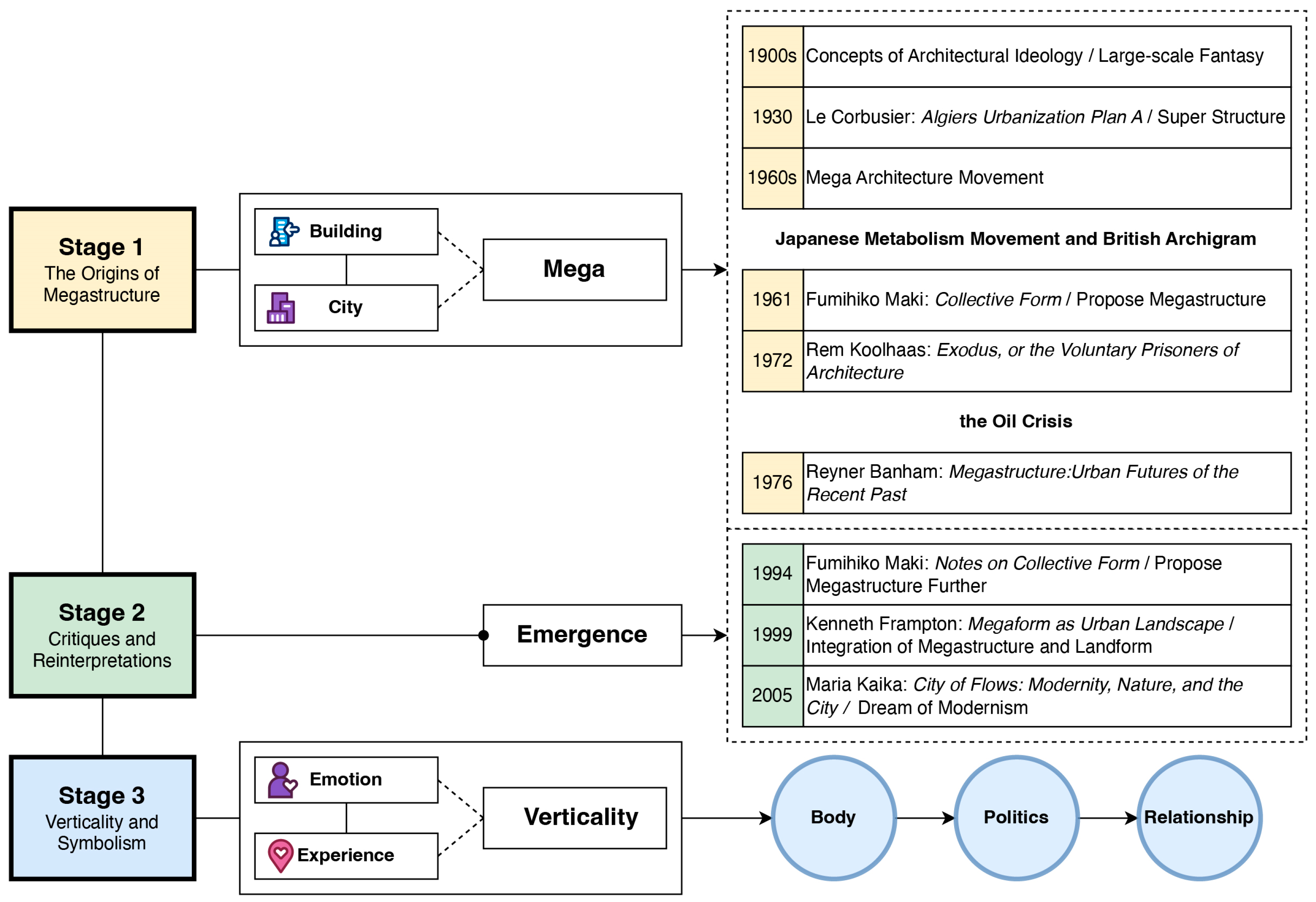
Figure 1. Literature review of megastructure.
Buildings 15 04321 g001
Figure 2. The whole processing of ACL methodology [55].
Buildings 15 04321 g002
Figure 3. Structural metaphor and orientational metaphor.
Buildings 15 04321 g003
Figure 4. The connections of vertical orientation and emotion.
Buildings 15 04321 g004aBuildings 15 04321 g004b
Figure 5. O-ACL methodology.
Buildings 15 04321 g005
Figure 6. Five of ten in the theory of the Arbor Porphyriana, to define megastructure.
Buildings 15 04321 g006
Figure 7. The Zhouyuan site in Shaanxi province: (a) recovery of the pre-establishment and early Zhou houses unearthed from excavations at the Zhouyuan site in Shaanxi Province; (b) Zhouyuan under Mount Qishan, mentioned in the Book of Songs·Majors Odes·Mian; (c) ruins of a group of houses before the founding of the Zhou people [69].
Buildings 15 04321 g007
Figure 8. The 3 × 7 matrix of the O-ACL methodology.
Buildings 15 04321 g008
Figure 9. O-ACL methodology for Burj Khalifa.
Buildings 15 04321 g009
Figure 10. O-ACL methodology for Shanghai World Financial Center.
Buildings 15 04321 g010
Figure 11. O-ACL methodology for CN Tower.
Buildings 15 04321 g011
Figure 12. The framework and 16 processes of O-ACL methodology.
Buildings 15 04321 g012
Table 1. Specific details of the world’s top 10 built buildings [1].
No.NameLocationHeight (m)FloorsYearUse
(a)Burj KhalifaDubai8281632010Mixed use
(b)Merdeka PNB118Kuala Lumpur678.91182023Mixed use
(c)Tokyo Sky TreeTokyo634322012Communication
(d)Shanghai TowerShanghai6321282015Office
(e)Canton TowerGuangzhou604372010Observation
(f)Abraj Al BaitMecca6011202012Hotel
(g)Ping An International Finance CentreShenzhen599.11152017Office
(h)Lotte World TowerSeoul5551232017Mixed use
(i)CN TowerToronto553.31471976Communication
(j)One World Trade CenterNew York546.2942014Office
Buildings 15 04321 i001
Table 2. ACL methodology explains the feasibility of megastructure worship.
No.ConsiderationsACLMegastructureMegastructure Worship
1Cultural
Landscape
Strong ×
Weak
2The Co-Work of Man and Nature
3Material Cultural Evidence
4Non-Material Cultural Evidence
5Spiritual Relevance
6Interaction of Culture and Nature
7Sustainable Land Use××
8Biocultural Diversity××
9Definition of Landscape
10Relative Permanence
Table 3. Embodied theory and body worship.
Event/TimeHuman Body/OrganReasons for Body Worship
Outbreak of the Peloponnesian War (BC431)Ancient Athenians exposed their bodiesThe artist Clark observes that the naked and exposed body represents strength and civilization, rather than weakness [65]. People realize that it is a symbol of affirmation of their dignity as citizens and pride in their city.
The period of the construction of the New Pantheon by the Roman Emperor Hadrian (Campus Martius, AC118)The Romans were obsessed with using the geometry of the body to construct a set of orders imposed on the worldThe Roman Empire brings visual order and power together, and the combination of stone and light in buildings with an ingenious geometric feeling allows people to transfer from their own bodies to an urban design, to generate image worship.
Cathédrale Notre Dame de Paris entered its final phase (AC1250)Church builders tried to carve life-size portraits—“Body Politics”The use of sympathy serves as a means of bonding the body to the stone and the suffering of the body to religious worship [66].
Table 4. The nine applied models of the O-ACL methodology.
Core StageDerivation Stage
Buildings 15 04321 i002Buildings 15 04321 i003
Buildings 15 04321 i004Buildings 15 04321 i005
Buildings 15 04321 i006Buildings 15 04321 i007
Buildings 15 04321 i008Buildings 15 04321 i009
Buildings 15 04321 i010Buildings 15 04321 i011
Buildings 15 04321 i012Buildings 15 04321 i013
Buildings 15 04321 i014Buildings 15 04321 i015
Buildings 15 04321 i016Buildings 15 04321 i017
Buildings 15 04321 i018Buildings 15 04321 i019
Disclaimer/Publisher’s Note: The statements, opinions and data contained in all publications are solely those of the individual author(s) and contributor(s) and not of MDPI and/or the editor(s). MDPI and/or the editor(s) disclaim responsibility for any injury to people or property resulting from any ideas, methods, instructions or products referred to in the content.