


Abstract
In the fiercely competitive global contracting market, effective knowledge transfer is paramount for the success of international construction projects (ICPs). However, the unique confluence of high cultural distance, temporary team structures, and knowledge hoarding within ICPs creates profound causal complexity, rendering traditional, net-effect analyses insufficient for developing actionable strategies. Existing research broadly identifies influencing factors but fails to delineate the specific, interconnected configurations of interventions necessary to achieve high knowledge transfer effectiveness (KTE) in this high-stakes context. To address this gap, this study analyzes data from 353 practitioners involved in ICPs using fuzzy-set Qualitative Comparative Analysis (fsQCA 3.0), a methodology uniquely suited to unpack complex causal recipes, to determine the combination strategies that drive superior KTE within ICPs. Drawing on a conceptual model validated through expert interviews and historical case analysis, this research examines a range of transfer subjects, relationship, context, and activity conditions. The configurational analysis yields three distinct, yet equally effective, strategic pathways for maximizing KTE: intercultural-driven, learning-driven, and combined-driven configurations. This research produces two significant contributions. Theoretically, it pioneers the use of configurational theory to structure the antecedent framework of knowledge transfer in ICPs, moving beyond single-factor causality. Practically, it furnishes project managers and business leaders with evidence-based strategic blueprints, enabling targeted resource allocation to achieve optimal KTE amidst the inherent complexity of international projects.
1. Introduction
As the knowledge economy thrives, the importance of knowledge resources in enterprises has grown increasingly evident, including intangible assets, information resources, and intellectual resources owned by enterprises [1,2]. Facing increasingly fierce market competition, international engineering contracting companies need to focus on knowledge innovation and improve knowledge management levels to build differentiated competitive advantages [3]. Projects are the most basic business unit of international engineering companies in the host country, so project knowledge management is of great significance in promoting the sustainable development of enterprises [4,5]. When implementing international construction projects (ICPs), project management and technical personnel will accumulate a large amount of experience, skills, and documents, which form the knowledge system of the project team [6]. One effective approach for projects to accumulate and utilize knowledge is by facilitating knowledge transfer across various departments and team members within the project. This process amplifies the value of knowledge, as its benefits increase when shared among a larger group of individuals [7,8]. Some scholars have proposed that knowledge transfer can improve members’ knowledge reserves and work capabilities, thereby improving project management’s productivity and enterprises’ sustainable development [9,10]. Therefore, improving knowledge transfer within ICPs becomes a meaningful research topic.
However, improving knowledge transfer effectiveness (KTE) within ICPs presents formidable challenges that fundamentally alter the dynamics of organizational learning. ICPs are characterized by a unique cluster of complicating factors that create a crucible of complexity. Firstly, ICP teams have members from different countries, with differences in language, values, and perspectives, which affects communication within the team [6,7]. Secondly, these multinational teams are typically assembled temporarily, bringing together members from diverse backgrounds, educational qualifications, and knowledge levels. This temporary nature often results in a low level of trust among members, making it difficult to openly impart knowledge or accept colleagues’ knowledge [11]. Lastly, members often focus on their immediate work to complete project tasks as soon as possible, ignoring the sending and receiving of knowledge [12]. These properties lead to communication barriers and cultural conflicts, demanding superior cross-cultural management capabilities from project leadership [9,13].
While scholars have systematically categorized the factors influencing knowledge transfer into four dimensions, namely subject, relationship, context, and activity [4,14,15], existing studies have primarily relied on analytical approaches that examine linear associations among variables. For instance, Ren et al. [12] used structural equation modeling (SEM) to investigate how project nature affects the effectiveness of knowledge transfer between projects in project-based organizations (PBOs). Similarly, Zhou et al. [6] adopted SEM to analyze how affect-based trust, cognition-based trust, and team identity influence KTE within cross-cultural teams. Such approaches focus on estimating the net, average effects of individual factors, providing valuable insights into their direct relationships with outcomes. However, they are limited in capturing the causal complexity of ICPs, where KTE often emerges from the interplay of multiple interdependent conditions that must align simultaneously or in various configurations to achieve successful outcomes. Specifically, there remains a severe lack of research that moves beyond identifying deterrents to proposing practical, strategically tailored configurations of interventions that account for the cross-cultural and temporary nature of ICPs.
Therefore, this study aims to move beyond conventional correlational analysis by employing the fsQCA method to identify and empirically test the diverse, equally effective configurational pathways that drive high KTE within ICPs. Specifically, the objective is to determine which combinations of subject-, relationship-, context-, and activity-related conditions are sufficient for achieving high KTE, thereby providing a set of testable causal configurations. The fsQCA method has become an important method in the field of organizational management to solve the problem of causal complexity and can explore the driving effects of different combinations of multi-dimensional factors on results [16,17]. This research will employ fsQCA to investigate the key factors influencing KTE within ICPs and analyze how each antecedent condition contributes to KTE, considering both sufficiency and necessity perspectives. To guide the study’s focus and link the objectives with the analysis, the following research questions are addressed: (1) What are the key antecedent conditions that contribute to high KTE within ICPs? (2) How do different combinations of subject-, relationship-, context-, and activity-related conditions work together to produce superior KTE in ICPs? (3) Which important categories can be derived from different configurations that lead to high KTE within ICPs?
The main contributions of this study are twofold. On the one hand, this research contributes to project knowledge transfer literature by refining the framework of antecedent variables of knowledge transfer within ICPs, demonstrating how they combine and interact to produce superior KTE. On the other hand, business leaders and project managers can rely on this study to choose the appropriate combination of improvement strategies to promote KTE within ICPs, offering a necessary reference for dynamic decision-making and targeted resource investment.
2. Literature Review
2.1. Knowledge Transfer and Knowledge Transfer Effectiveness Within Projects
The foundational understanding of knowledge transfer posits it as the process in which knowledge is utilized from one organization and applied within another [18]. Extending this definition, Gilbert and Hayes [19] pointed out that knowledge recipients need to accept and absorb knowledge and integrate it into their knowledge system to complete knowledge transfer. With the deepening of research, scholars proposed the situation-driven nature of knowledge transfer, and knowledge transfer in projects has gradually attracted scholars’ attention [9,11]. Frank and Ribeiro [20] divided knowledge transfer within projects into four stages: knowledge identification, dissemination, processing, and application, and discussed the characteristics of each stage from the perspectives of knowledge senders and recipients. Buvik and Tvedt [21] explored knowledge transfer within construction projects and examined the relationship between trust, commitment, and knowledge transfer in the team. In summary, existing research shows that project knowledge transfer can significantly boost the work efficiency of project members, improve team collaboration capabilities, and thereby improve project performance [6,22].
To transition from mere transfer to actual organizational benefit, the concept of KTE becomes paramount. Daft [23] defined KTE as the extent to which the knowledge transfer goal is achieved. Pérez-Nordtvedt et al. [24] indicated that KTE includes two dimensions, namely comprehension (i.e., the extent to which the recipient fully understands the transferred knowledge) and usefulness (i.e., the degree of the transferred knowledge is relevant and significant to the organization’s success). Referring to the above research, some scholars in the field of project management have also defined KTE in the project environment, that is, the extent to which the recipient receives potentially useful knowledge and applies it to project work [15,25]. Specifically, researchers used the enhancement of knowledge reserve, the achievement of project objectives, and the improvement of technological and managerial capabilities to measure KTE within projects [6,11,12].
2.2. Factors Influencing Knowledge Transfer Effectiveness Within ICPs
After explaining the concept of knowledge transfer, studies on the elements affecting KTE have attracted scholars’ attention. Gupta and Govindarajan [26] studied the element framework of knowledge transfer based on communication theory. Communication theory divides the element of communication into several categories: messages, senders, receivers, encoding and decoding methods, etc. The message corresponds to the knowledge being transferred, senders and receivers match knowledge transfer subjects and the relationship between subjects, encoding and decoding methods match transfer activities, and the communication environment matches the transfer context [27]. Following communication theory, scholars have identified and categorized factors influencing KTE into four dimensions, transfer subject, relationship between subjects, transfer context, and transfer activity, which became the basis for subsequent research [4,14,15].
The staffing makeup and organization structure of ICPs are more complex compared to non-international projects, and some scholars are currently studying the knowledge-transfer issues involved in ICPs [28]. For example, Zhou et al. [6] explored the key factors affecting KTE within ICPs from three aspects: individual, team, and knowledge characteristics. However, most of the current literature on knowledge transfer factors concentrates on one or two of these four dimensions, indicating a need for more thorough research in this area. According to the framework of four-dimensional knowledge transfer elements (i.e., subject, relationship, context, and activity), the factors are analyzed from four dimensions below.
2.2.1. Transfer Subject and Knowledge Transfer
Knowledge transfer subject is an important dimension in the framework of knowledge transfer, and the subject’s willingness to transfer knowledge is a crucial factor in this dimension. Transfer willingness is the degree to which members are inclined to engage in knowledge-transfer activities [12,29]. If individuals lack the initiative to transfer knowledge, even if the organization intervenes or issues mandatory regulations, it can only obtain the superficial consent of members, which will affect KTE to a large extent. Conversely, if project members have a strong willingness to transfer knowledge, knowledge can be disseminated more widely, and the efficiency of knowledge transfer can also be improved. Buvik and Tvedt [21] examined how trust influences knowledge transfer within construction projects by collecting data from 31 project teams in the Norwegian construction industry and pointed out that project members are more inclined to exchange knowledge with trusted colleagues. In ICPs, if knowledge senders are worried about losing their knowledge authority and competitive advantage due to knowledge transfer, timely and effective knowledge exchange within the team will be difficult to occur, thus affecting the overall transfer effect. Ren et al. [12] proposed that when construction project members are open to sharing knowledge with other members, knowledge can be easily transferred in various ways. If project members are unwilling to spend time and energy on in-depth communication with other members, it will lead to incomplete information and ultimately affect KTE.
2.2.2. The Relationship Between Transfer Subjects and Knowledge Transfer
Project members are direct participants in project knowledge transfer, and the relationship between them is one of the basic dimensions that affect KTE. For ICPs, cultural differences among project members are an important feature and will also affect knowledge transfer within the team. Cultural distance is the difference between the common norms and values shared by members of diverse cultural settings [30,31]. Some scholars have conducted research on the relationship between cultural distance and knowledge transfer. For example, Bogilović et al. [32] indicated that members with different cultural contexts have different language, values, and social norms, which hinders knowledge transfer within ICPs. On the contrary, smaller cultural distances can help project members better communicate knowledge, effectively avoid cultural conflicts, and reduce the impact of mutual misunderstandings. Zhou et al. [6] mainly studied knowledge transfer in the construction phase of ICPs, put forward the negative impact of cultural differences on knowledge transfer, and suggested improving KTE among members with different cultural backgrounds by holding regular meetings, conducting cross-cultural training, and establishing a project knowledge management platform.
In addition to cultural factors, differences in knowledge levels among project members can also affect KTE. Knowledge distance is the gap between the skills and knowledge levels of project members in their positions [33,34]. For instance, the knowledge gap among members who have engaged in various kinds of construction projects (such as housing construction and highways) is larger than that among members who have experience with only a single type of construction project [35]. In an ICP, there are some differences among members in terms of educational background, professional skills, work experience, etc., so they also have differences in knowledge structure and knowledge reserve. The greater the knowledge distance between project members, the smaller the degree of knowledge overlaps between them, and the less common types of knowledge and cognitive systems they have, which means that it takes more time and effort to transfer knowledge. It is not conducive to the circulation of knowledge within ICPs.
Mutual trust is also an important factor in the intersubjective dimension of knowledge transfer has garnered considerable interest from many researchers. In the context of knowledge transfer, mutual trust is the intimacy and stability of the relationship between the knowledge sender and the recipient [15,36]. During the implementation of ICPs, members can seek help from colleagues when they encounter difficulties. If members who sought help do not believe they will receive fair feedback in the future, they may not transfer knowledge. Mutual trust can eliminate suspicion among members and make transfer activities more frequent and efficient. Some scholars have proposed that trust plays a beneficial role in facilitating knowledge transfer within construction projects. For instance, Ni et al. [37] proposed that the higher the degree of mutual trust and recognition among construction project members, the higher their willingness to share knowledge, which is more conducive to improving KTE. Sun et al. [11] suggested that throughout the project construction phase, participants will inevitably have conflicts due to conflicts of interest, especially when risk events occur. As trust increases among construction project members, cooperation will be more sincere, and knowledge transfer will be more effective.
2.2.3. Transfer Context and Knowledge Transfer
Transfer context is the context or environment within which knowledge is transferred, including a series of ongoing management actions used by the project team [15]. For ICPs, it is essential to investigate ways to address cultural obstacles among members and enhance cross-cultural skills to facilitate effective project knowledge transfer. Cross-cultural competence is the project team’s ability to understand different cultures, ways of thinking, and behaviors, as well as the ability to reduce cultural conflicts, and mitigate the impact of cross-cultural contradiction [38]. Chevrier [39] suggested that project managers should develop cultural diversity strategies (e.g., personal adjustment of members, development of professional culture, and introduction of cultural mediator) to overcome cultural differences. Ahammad et al. [13] believed that cross-cultural competence enhances the common understanding among project members, strengthens their social connections, and increases the members’ transfer intention. Pauluzzo and Cagnina [38] put forward that the stronger the cross-cultural competence of the project team, the better it can resolve conflicts and effectively eliminate communication barriers. On the contrary, if the cross-cultural management ability of the project team is not strong, it will cause problems such as difficulty in establishing communication channels among members, inefficiency in communication between superiors and subordinates, and difficulty in utilizing the team advantages of multinational members, thereby reducing KTE within projects.
In addition, establishing a good learning mechanism also has a significant effect on promoting KTE within projects. Learning mechanism refers to a set of rules formulated by projects to promote knowledge learning and exchange among members [9,40]. The development of the project team’s learning mechanism can not only ensure that members receive and integrate the acquired knowledge resources but also improve the knowledge process of the entire team and lay a foundation for the accumulation and reuse of knowledge. Fong and Chen [41] proposed that organizational learning mechanism has a positive effect on knowledge dissemination. They also suggested that learning mechanisms in organizations generally include training members, designing open learning organizations, and providing strategic guidance for knowledge activities, which can help organizations reconfigure knowledge to improve performance. Conversely, if there is no good learning mechanism in the project team, it will be difficult for members to absorb useful knowledge from other members, and it will be difficult to transfer the accumulated knowledge to others to integrate it into the knowledge system of the entire project.
2.2.4. Transfer Activity and Knowledge Transfer
Transfer activity is one of the dimensions in the knowledge-transfer model, and communication is regarded as an important part of transfer activity. Communication intensity is the intensity of communication between project members, including face-to-face communication, document exchange, implicit experience transfer and other methods [6,42]. On the one hand, effective communication between project managers and members on project goals, specific responsibilities, and management systems can help improve KTE within the project [43]. On the other hand, project members can clarify the distribution of knowledge in the project through communication, and learn more about the characteristics of other members, which helps to choose appropriate knowledge transfer strategies [21,44]. On the contrary, if the communication intensity between members is low, it can hinder knowledge transmission and absorption.
3. Research Method
3.1. Research Design
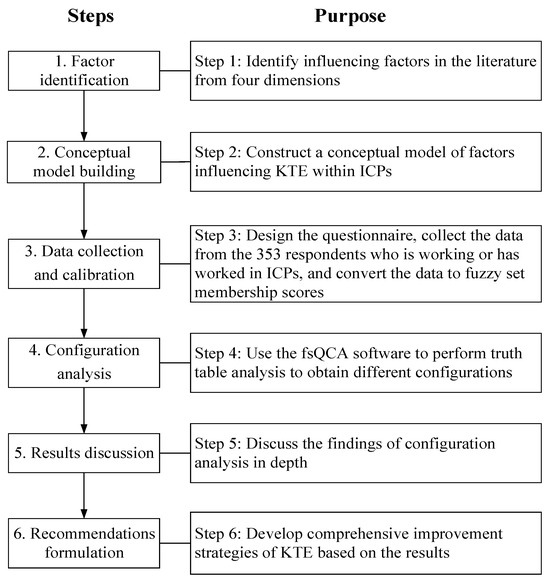
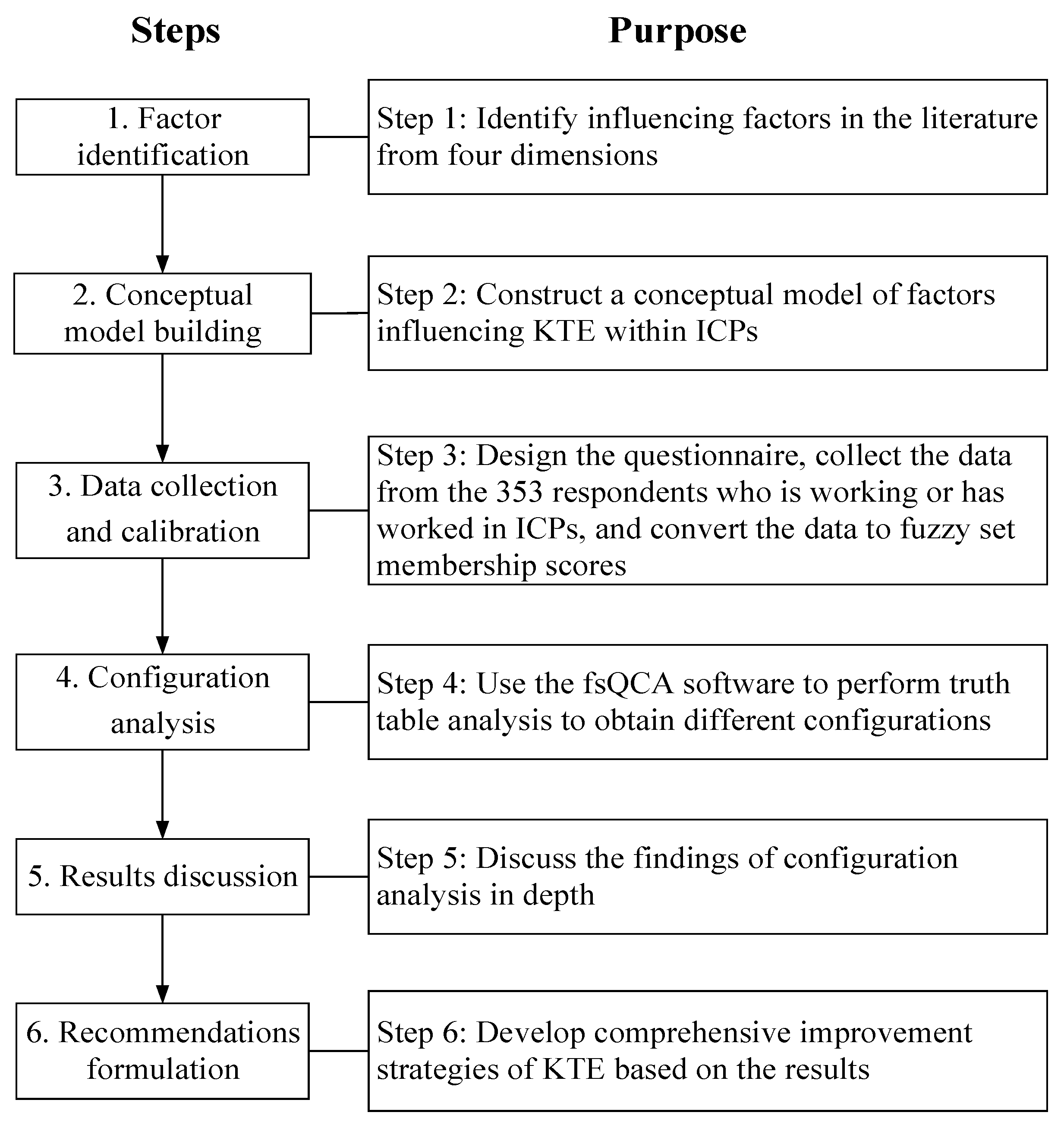
The steps of the study are shown in Figure 1. Firstly, the main factors that influence knowledge transfer in ICPs are identified through the literature review. Secondly, according to the four-dimensional element framework of knowledge transfer, the conceptual model is established for this study. Thirdly, the initial questionnaire is designed and experts are invited to evaluate its rationality, and it is modified to form the formal questionnaire. After that, the questionnaire data are collected from the respondents and are converted into fuzzy set membership scores. Fourthly, the fsQCA 3.0 software is used to perform truth table analysis to obtain different configurations for improving KTE. Fifthly, the findings of configuration analysis are discussed in depth. Lastly, comprehensive improvement strategies of KTE within ICPs is developed based on the results.
Figure 1.
Steps of the study.
3.2. Factor Identification and Conceptual Model Building
Drawing on the theoretical framework established earlier, this study conceptualizes knowledge transfer within ICPs from a communication perspective, emphasizing that effective transfer involves a multidimensional process of encoding, transmitting, interpreting, and applying knowledge among project participants. Guided by this perspective, four core dimensions of knowledge transfer were determined: subject, relationship, context, and activity, which correspond to the communicative components shaping transfer effectiveness. These dimensions are consistent with the theoretical debate presented in Section 2, where knowledge transfer is viewed as a process requiring alignment between individual cognition, relational interaction, contextual support, and project-based activities.
The identification of influencing factors under each dimension was carried out through a combination of systematic literature review and empirical exploration. Relevant studies on knowledge transfer, interorganizational communication, and international project management were reviewed to compile an initial pool of potential factors. To ensure contextual relevance, this theoretical pool was supplemented by empirical data from 30 ICPs, collected through semi-structured interviews, case studies, and group discussions. Each focus group session lasted approximately two hours and involved practitioners with diverse roles and extensive international experience. Participants were invited to share their perceptions and experiences regarding the mechanisms, barriers, and enablers of knowledge transfer in ICPs. The information obtained from literature and empirical materials was then coded and refined through iterative analysis, allowing theoretical constructs to be validated and adjusted according to practical realities. The resulting factor set reflects both academic rigor and contextual applicability, ensuring that the identified factors capture the multifaceted nature of knowledge transfer in ICPs.
Building on these findings, a conceptual model was developed to illustrate how the identified dimensions and their corresponding factors jointly influence KTE within ICPs. The model depicts the interdependent roles of four dimensions. The subject dimension focuses on the individual motivation of project members and is represented by transfer willingness, which reflects the extent to which participants are willing to share their knowledge with others. The relationship dimension highlights the interpersonal and cognitive distance among participants and includes cultural distance, knowledge distance, and mutual trust, emphasizing how cultural compatibility, cognitive similarity, and relational confidence facilitate effective knowledge exchange. The context dimension captures the enabling organizational and environmental conditions through cross-cultural competence and learning mechanism, which support communication across cultural boundaries and institutionalize learning within project teams. Finally, the activity dimension concerns the operational process of knowledge sharing and is represented by communication intensity, which measures the frequency and depth of knowledge interaction during project execution. Together, these dimensions and factors form a coherent conceptual framework that explains how individual motivation, relational quality, contextual support, and communication practices collectively shape KTE. This conceptual model provides the theoretical foundation for the subsequent questionnaire design and empirical analysis. The detailed list of factors within each dimension, along with their supporting literature and case evidence, is provided in Table A1.
3.3. FsQCA Method
QCA is a set-theory method for studying complex phenomena raised by Ragin [45]. Compared with traditional quantitative empirical research methods, the QCA method uses the set relationship between the condition set and the result set as a reference for causal inference to identify the relationship between various combinations of antecedent conditions and the outcome variables [17,46]. In recent years, the use of QCA has expanded within the realm of construction management and has attracted the attention of scholars [8,47]. These references demonstrate that QCA bridges the gap between qualitative and quantitative analysis and helps promote theoretical and practical development in the construction project management field.
The QCA method includes clear set qualitative comparative analysis (csQCA), multi-valued qualitative comparative analysis (mvQCA), and fuzzy set qualitative comparative analysis (fsQCA). The assignment of sample data in csQCA only exists in two forms: “0” or “1”. “1” represents complete membership of the set, and “0” represents complete non-submission of the set [16,29]. Compared with csQCA and mvQCA, which can only deal with category problems, fsQCA can deal with degree changes and partial membership problems, that is, each case is given a membership score between 0 and 1, to identify the subtle influence of continuous variables on different degrees of change [48]. In this study, we will employ fsQCA to investigate the pathways of multi-dimensional variables on KTE, thus providing a basis for proposing the improvement strategies of KTE within ICPs.
3.4. Questionnaire Formation
Many variables involved in this study are latent variables and it is difficult to obtain data through direct observation. Such variables need to be measured using some measurable observed variables [49]. First, many relevant studies were read and the connotation and measurement items of factors affecting knowledge transfer were systematically sorted out. Next, the measurement indicators of latent variables were selected, and some modifications were made to complete the initial questionnaire based on the background and actual situation of ICPs.
After developing the initial questionnaire, we invited 8 subject-matter experts to evaluate the clarity, representativeness, and contextual relevance of the measurement items. The expert panel consisted of professionals aged between 35 and 50 years, all of whom had substantial experience working in international construction projects in addition to their domestic project backgrounds. Their collective expertise covered various project types, including housing construction, transportation, water conservancy, and electric power. The experts held diverse positions, including 3 project managers, 2 enterprise senior managers, 2 enterprise middle managers, and 1 project technician, with an average of 18 years of relevant professional experience ranging from 11 to 25 years.
Experts were selected based on two criteria: (1) at least ten years of experience in international construction project management or enterprise operations, and (2) direct participation in cross-border knowledge management or knowledge transfer practices. Their feedback led to several wording refinements and conceptual clarifications to ensure linguistic precision and practical applicability. For instance, within the “Transfer willingness” variable, the original item “I am open to sharing knowledge with other members in the project” was revised to “I am open to dedicating a portion of my time and effort to share knowledge with other members in the project”. The experts suggested this modification to emphasize the element of personal investment in terms of time and effort as a tangible indicator of willingness, thereby improving both the behavioral specificity and measurability of the construct in real project contexts. Table A1 demonstrates the robust grounding of the measurement items of eight variables in established literature. The credibility of these experts, whose information is detailed in Table A2, ensures the content validity of the instrument.
Afterward, a pilot test was conducted with 36 practitioners who had extensive experience in international construction projects. The reliability and validity of the preliminary questionnaire were evaluated, yielding satisfactory results (Cronbach’s α = 0.872; composite reliability (CR) = 0.893), both exceeding the commonly accepted threshold of 0.70. These results indicated that the measurement items were internally consistent and conceptually coherent, meeting the requirements for the formal survey. The final questionnaire consists of three parts. The first part includes the theme, purpose, and precautions of this study. The second part is a basic information survey, involving the respondents’ personal information, participating projects, and their companies. The final section is the formal questions that include the measurement of each latent variable in this study.
3.5. Data Collection
To collect data from ICP practitioners, a snowball sampling approach was adopted. Initially, executives from 28 large international engineering enterprises that had either previously collaborated with our research team or were part of our extended professional network were contacted. These executives were asked to distribute the questionnaire link to other eligible practitioners within their own organizations and to share it with project partners in related enterprises, forming a path-dependent referral network that reached professionals across multiple international project teams. To mitigate potential biases associated with the snowball sampling method, several strategies were implemented. First, efforts were made to reach professionals from diverse organizational levels and sectors by requesting executives to refer individuals from different departments, regions, and project types within their organizations. This helped ensure that the sample was not overly concentrated in a single sector or organizational hierarchy. Second, inclusion criteria were carefully defined to ensure that participants were engaged in international construction projects, enhancing the relevance and representativeness of the sample. Third, while the snowball method relies on referrals, efforts were made to maintain geographical and sectoral diversity, ensuring that respondents were spread across multiple regions (e.g., Africa, Asia, Latin America) and project types (e.g., housing, transportation, water conservancy, electric power). In addition, although the snowball method has inherent limitations related to potential selection bias, these measures helped minimize its impact, making the findings more generalizable to the broader population of ICP professionals.
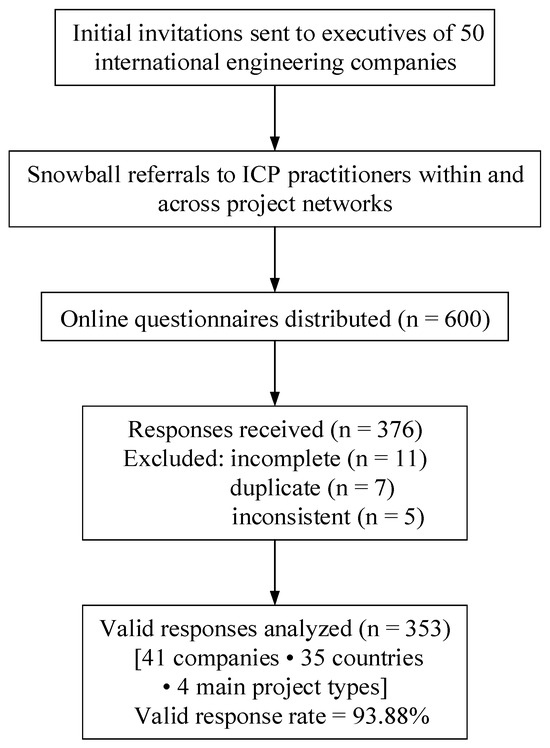
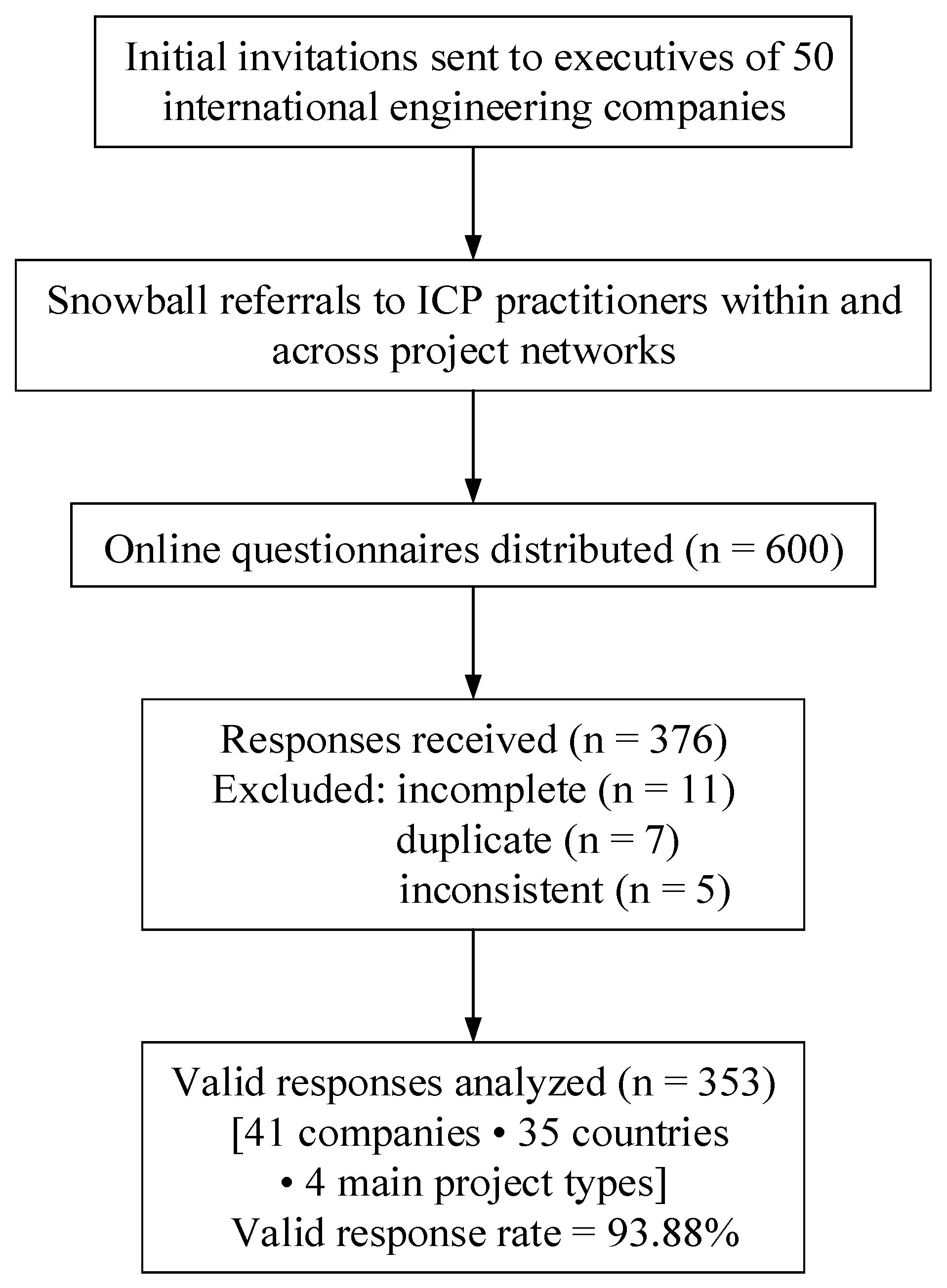
A total of 600 online questionnaires were distributed through this multi-level referral process. After one month of data collection, 376 responses were received, representing a response rate of 62.7%. During data screening, all collected questionnaires were examined for completeness, duplication, and consistency. Specifically, 23 responses were excluded, including 11 incomplete, 7 duplicate, and 5 logically inconsistent questionnaires, leaving 353 valid responses for the final analysis. This corresponds to a valid response rate of 93.88% (353 out of 376). The data collection and screening process is summarized in Figure 2, which depicts the flow from initial distribution to the final analytical sample.
Figure 2.
Data collection and screening process.
In terms of geographic representation, the sample included respondents from 35 countries, reflecting the broad international scope of the projects they are currently involved in. The respondents came from 43 companies, ensuring a diverse representation of professional experiences across different organizations. Regions represented include Africa, Asia, Latin America, Europe, and Oceania, with the largest share of respondents working on projects in Africa (35.13%), followed by Asia (30.03%) and Latin America (19.83%). Respondents from Europe (9.91%) and Oceania (5.10%) were also included. Specifically, respondents are currently involved in projects located in 14 African countries (e.g., Nigeria, Kenya, South Africa), 12 Asian countries (e.g., Malaysia, Pakistan, Saudi Arabia), 5 Latin American countries (e.g., Brazil, Argentina, Venezuela), 3 European countries (e.g., Serbia, Russia), and 1 country in Oceania (e.g., Australia). This distribution aligns with the actual global footprint of Chinese construction contractors and ensures that the sample is representative of the diverse regions where these professionals are engaged in international construction projects. The respondents are engaged in four major project types: housing construction (56.09%), transportation (16.43%), water conservancy (10.20%), and electric power (8.21%), ensuring that the sample covers a wide range of expertise and project sectors within the international construction industry.
Additionally, the sample was diverse in terms of respondent demographics, including age, educational background, and international project experience. Specifically, the respondents’ ages ranged from 28 to 58 years, with the majority falling between 35 and 50 years old, ensuring a balance of early-career and more seasoned professionals. The distribution of ages is as follows: 28–34 years (27.48%), 35–44 years (50.42%), 45–54 years (19.83%), and 55–60 years (2.27%). This age distribution reflects a broad mix of experience levels, ensuring that both younger, emerging professionals and more experienced individuals with extensive knowledge contributed to the dataset. In terms of education, 47.59% of respondents held a bachelor’s degree, 45.33% had a master’s degree, and 7.08% had doctoral qualifications. Most participants held senior professional roles, with 52.97% serving as project managers and 26.63% as enterprise managers, while 67.99% had over ten years of experience in international construction projects, ensuring that the data reflected a well-informed and experienced sample of ICP practitioners. Regarding international project experience, the respondents reported varying levels of exposure to cross-border projects: 22.10% had worked on 1–3 international projects, 44.19% had worked on 4–5 international projects, and 33.71% had worked on more than 5 international projects.
This rigorous data collection and validation process ensured that the final dataset was both representative and reliable, covering diverse project contexts, geographic locations, and respondent profiles. The demographic diversity, including age, education, and extensive international project experience, ensures the robustness of the findings and their relevance to the field of international construction projects.
4. Data Analysis and Results
4.1. Reliability and Validity Analysis
Before performing configuration analysis, reliability and validity analysis needs to be performed. First, the reliability analysis of each variable was carried out, and the results are shown in Table 1. The Cronbach’s α value of each variable ranges from 0.811 to 0.920, all greater than 0.7, indicating that the measurement scale of these variables has a high level of reliability [50]. Additionally, Cronbach’s α value of each variable after deleting each item is smaller than the α values in the initial model. For example, Cronbach’s α of “cultural distance” is 0.814, and the α values after deleting one item are 0.748, 0.751, and 0.734, respectively, all less than 0.814. This shows that if any one measurement item is deleted, the reliability of the measurement scale will be reduced, so all items of each variable should be retained. Beyond this reliability analysis, the retention of each item was also justified based on content validity. For example, consider the “transfer willingness” variable, which includes items such as “I place a high value on knowledge transfer with others of the project”, “I am interested in exchanging knowledge with others of the project”, and “I am open to dedicating a portion of my time and effort to share knowledge with other members in the project”. These items were selected to comprehensively capture transfer willingness, as they reflect different dimensions of the construct. Specifically, the first item emphasizes the value placed on knowledge transfer, the second item focuses on interest in exchanging knowledge, and the third item highlights the willingness to invest time and effort in sharing knowledge. The inclusion of these three items ensures a broad conceptualization of transfer willingness, covering both the cognitive (e.g., valuing knowledge transfer), emotional (interest in knowledge exchange), and behavioral (e.g., willingness to dedicate time and effort) components of the construct. Deleting any of these items would result in an incomplete representation of the construct, potentially reducing its content validity. This approach ensures that the variable accurately reflects the full scope of the construct, as intended by the conceptual framework.
Table 1.
Measurement quality evaluation results.
Next, confirmatory factor analysis (CFA) was conducted to assess the reliability and validity of the measurement model. The results of the CFA are summarized in Table 2, which reports the standardized factor loadings (λ), standard errors (SE), and significance levels (p-values) for all observed items. All standardized factor loadings exceeded the recommended threshold of 0.70, indicating strong indicator reliability and adequate convergence between the latent constructs and their observed measures [51]. Because the CFA was performed using IBM SPSS AMOS 23.0, SE and p-values are reported for the freely estimated parameters, whereas the reference indicators fixed at 1.000 for model identification do not yield corresponding SE values. The SE values in this study range from 0.049 to 0.090, well within the acceptable range for structural equation modeling (typically below 0.10), suggesting that the estimated parameters are stable and precise. In addition, all estimated paths are statistically significant at p < 0.001, confirming the robustness and validity of the factor structure. To evaluate the overall model fit, several commonly used fit indices were examined, including the Comparative Fit Index (CFI), Tucker–Lewis Index (TLI), Root Mean Square Error of Approximation (RMSEA), and Root Mean Square Residual (RMR). The results showed that the model achieved acceptable goodness of fit (CFI = 0.995, TLI = 0.994, RMSEA = 0.018, RMR = 0.030), all within the recommended thresholds (CFI and TLI > 0.90; RMSEA and RMR < 0.05) [52].
Table 2.
Results of confirmatory factor analysis (CFA).
Besides, average variance extracted (AVE), and construct reliability (CR) also need to be used to measure the convergent validity. When the value of AVE exceeds 0.5 and the value of CR surpasses 0.7, it means that the latent variable has better convergent validity [53]. The calculation formulas for AVE and CR are as follows, where n is the number of items, is the factor loading of item i, and Var () is the variance of the error of item i [54].
As illustrated in Table 1, the factor loadings of all items exceed 0.7, CR is above 0.7, and AVE is over 0.5, confirming acceptable convergent validity for this model. Finally, the discriminant validity test was carried out, and the results revealed that the correlation coefficient between any two latent variables is lower than the square root of the variable AVE value, so the discriminant validity among the latent variables is good. In summary, the reliability and validity of the questionnaire data in this study meet the necessary standards.
4.2. Variable Calibration
Based on the set theory of the fsQCA method, before the sufficiency and necessity analysis of case data, antecedent conditions and outcome variables need to be calibrated to reflect the membership degree of each variable in the case set [16]. The key to calibration is to select appropriate thresholds to score the original data. In this study, the direct calibration technique was used to transform raw data into fuzzy set membership scores, with calibration anchors of full membership (0.95), crossover (0.50), and full non-membership (0.05). These anchor points were not arbitrarily chosen; they were determined based on the theoretical properties of Likert-type scales and the distribution characteristics of each variable. Specifically, because all variables were measured on a 5-point Likert scale, the theoretical anchors of 0.95, 0.50, and 0.05 correspond approximately to the empirical percentiles near the upper, middle, and lower ends of the observed data distribution. This method follows the calibration principles outlined by Schneider and Wagemann [16] and Fiss [55], ensuring comparability across conditions. To confirm robustness, a sensitivity analysis was also conducted (Table A3), in which alternative anchor settings (e.g., 0.90/0.50/0.10) produced consistent configurations and solutions, demonstrating that the results are not sensitive to minor variations in calibration thresholds. After determining the anchor point values for each variable, fsQCA 3.0 software was used to apply calibration instructions to the dataset, converting the data for each variable into fuzzy membership scores ranging from 0 to 1.
4.3. Single Condition Necessity Analysis
First, the necessity analysis of a single variable should be performed to test whether each antecedent variable is a necessary condition for the outcome variable [48]. This study analyzed whether seven antecedent variables (TW, CD, KD, MT, CC, LM, and CI) and their non-conformities meet the necessary conditions for enhancing KTE within ICPs. According to the research of Ragin [56], if the consistency level of a certain antecedent condition (or its non-set) is greater than 0.9, the condition (or its non-set) is a necessary condition for the outcome. If the necessary conditions are not always maintained, the study frame will be incomplete and the results will be difficult to reflect reality [48,57]. As shown in Table 3, the consistency level of CI exceeds 0.9, and the consistency of other conditions is below 0.9. Thus, CI was taken as a necessary condition in the subsequent configuration analysis.
Table 3.
Findings from necessity testing for single conditions.
4.4. Configuration Analysis
There are 7 antecedent variables in this study, resulting in a total of 128 () configurations. We collected 353 valid samples, higher than the minimum value of 128 required interpretation samples, indicating that fsQCA analysis can be performed. Firstly, the consistency threshold and frequency threshold need to be determined. Scholars pointed out that the consistency threshold should be between 0.8 and 0.9 [16,48]. Following these established best practices, the consistency threshold was set at 0.8. This level ensures that the configurations are substantively sufficient for the outcome, while avoiding the overly restrictive standards of higher thresholds that might obscure relevant causal pathways in complex social phenomena. Moreover, the case frequency setting is affected by the sample size. For larger sample sizes, the frequency threshold needs to be raised to ensure that at least 75% of all cases are included [55]. It is also important to consider the distribution of cases in the truth table when determining the frequency threshold. Given the substantial sample size in this research, the frequency threshold is established at 2 to meet the 75% coverage requirement and exclude idiosyncratic cases.
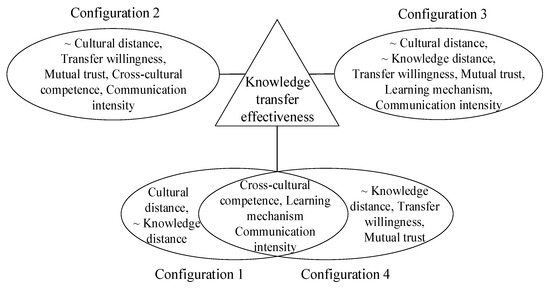
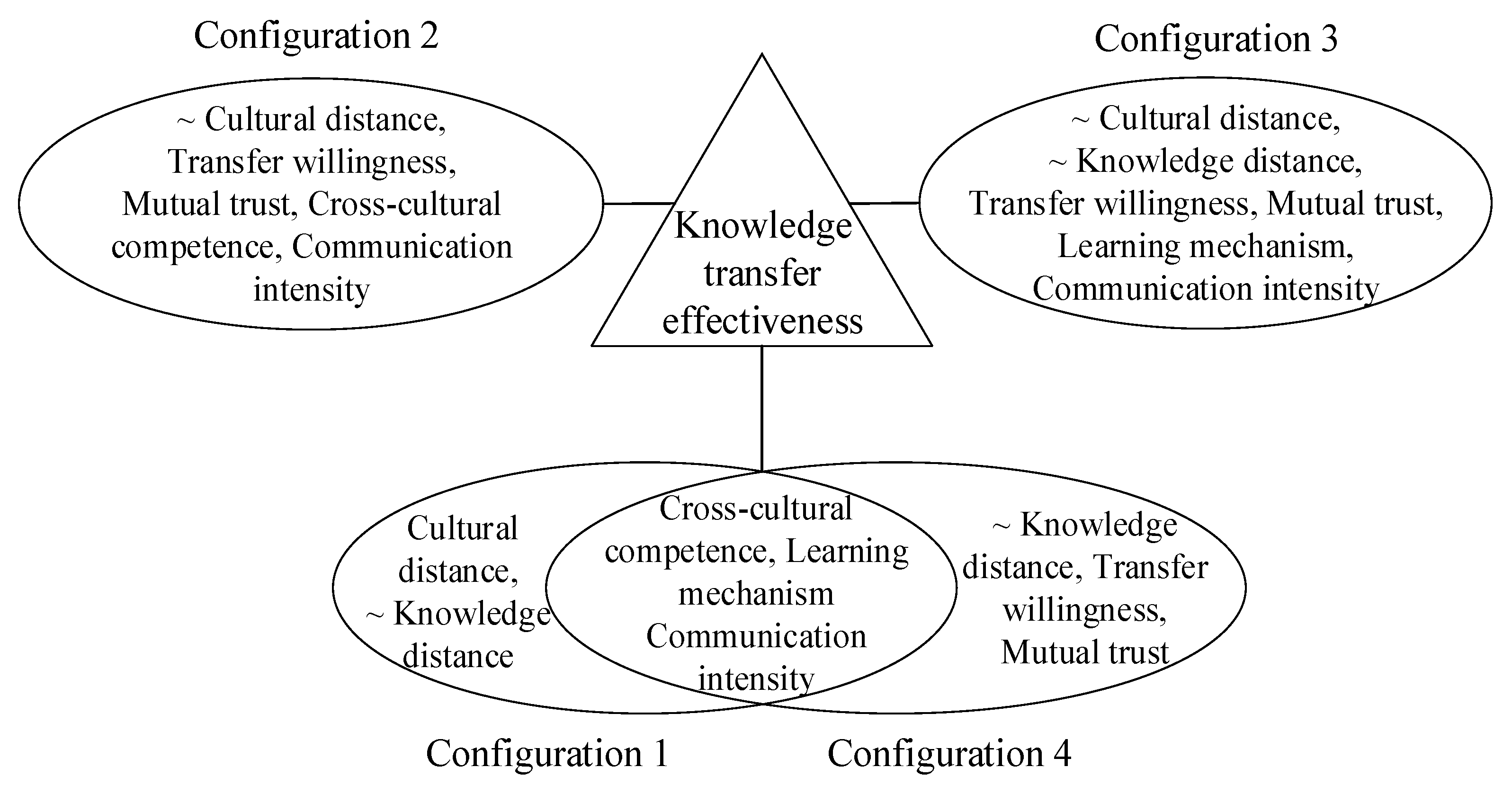
Next, fsQCA 3.0 software was used to conduct truth table analysis. The findings from the intermediate solutions should be primarily examined, while the results from the parsimonious solutions can serve as a supplementary resource [58]. Therefore, this study mainly reported the intermediate solution based on the software output, supplemented by the parsimonious solution. According to the results of intermediate and parsimonious solutions output by the fsQCA 3.0 software, Table 4 and Figure 3 were produced. In this table, ● denotes the presence of a core condition. ▲ and △ indicate the presence and absence of auxiliary conditions, respectively. Blank cells signify that the causal condition may either be present or absent. Among them, the core conditions are present in both parsimonious and intermediate solutions, while the auxiliary conditions are found solely in the intermediate solutions. Furthermore, the consistency and coverage of each configuration, along with the overall solution’s consistency and coverage, were documented based on the intermediate solutions.
Table 4.
Findings from the configurational analysis.
Figure 3.
Configurations of good knowledge transfer effectiveness.
The results of intermediate and parsimonious solutions show that this study obtained a total of 4 configurations, and the consistency of both the individual and the overall configuration exceeded the minimum acceptable consistency threshold of 0.8, with the overall solution achieving a consistency level of 0.903. This shows that the obtained configurations have a strong interpretation of the results and meet the requirements of configuration analysis. Among these, Configuration 3 demonstrates the greatest consistency (0.925), which means that it accounts for the highest degree of variable subsets. Besides, Configuration 2 exhibits the highest coverage at 0.520, which indicates that it can account for most cases.
Configurations 1, 2, 3, and 4 share the same core condition CI, yet they exhibit distinct variations in their auxiliary conditions. In Configuration 1 (∼CD ∗ ∼KD ∗ CC ∗ LM ∗ CI), the existence of CC and LM, along with the absence of CD and KD, serve as auxiliary conditions. In this configuration, cultural and knowledge distance do not exist, but cross-cultural competence and learning mechanism exist, which shows that it considers both intercultural and learning dimensions. Therefore, this configuration is classified as the combined-driven category. As for Configuration 2 (TW ∗ ∼CD ∗ MT ∗ CC ∗ CI), the absence of CD and the presence of TW, MT, and CC are auxiliary conditions, while KD and LM are insignificant conditions. In this configuration, cultural distance does not exist, intercultural competence exists, and knowledge distance and learning mechanism may or may not exist, indicating that it focuses on the intercultural dimension, so we classify this configuration as the intercultural-driven category. The consistency of Configuration 3 (TW ∗ ∼CD ∗ ∼KD ∗ MT ∗ LM ∗ CI) is the highest, reaching 0.925. The absence of CD and KD and the presence of TW, MT, and LM are auxiliary conditions. In this configuration, cultural and knowledge distance do not exist; learning mechanism exists, but cross-cultural competence may or may not exist, which means that it focuses on the learning dimension. Therefore, we classify this configuration as the learning-driven category. In Configuration 4 (TW ∗ ∼KD ∗ MT ∗ CC ∗ LM ∗ CI), the absence of KD and the presence of TW, MT, CC, and LM are auxiliary conditions. In this configuration, knowledge distance does not exist, but intercultural competence and learning mechanism exist, which shows that it contains both the intercultural dimension and the learning dimension, so we classified it as the combined-driven category.
4.5. Robustness Analysis
To improve the reliability of the study, the results need to be tested for robustness [1]. Existing research indicated that robustness testing could be achieved by changing the consistency threshold [16,55]. After adjusting the threshold, if the new configuration results do not change much compared to the original one, and the changes in related parameters are relatively small, it means that the result is highly robust. Conversely, it indicates that the degree of robustness is low, and the research results are not of sufficient value for general application. In this stage, the consistency threshold was changed to 0.9 and the truth table analysis was performed using fsQCA 3.0 software. After deriving the new output, we found that the results of the configuration analysis remained consistent with the original output, and the consistency, original coverage, and unique coverage of each configuration also remained unchanged. This shows that the research results are extremely robust and can be further analyzed and discussed.
5. Discussion
5.1. In-Depth Analysis of the Results: From Configurations to Strategic Archetypes
The core finding of this study is the existence of multiple, equifinal pathways to achieving high KTE, all of which are predicated on the necessary condition of high communication intensity. The four identified configurations are not merely descriptive categories; they represent distinct strategic archetypes for managing knowledge transfer in the complex environment of ICPs. These archetypes, intercultural-driven, learning-driven, and combined-driven, provide a sophisticated framework for understanding how different combinations of enabling conditions can produce the same successful outcome.
The first archetype is the intercultural-driven pathway, represented by Configuration 2. This strategy focuses on achieving KTE through social cohesion and the proactive management of cultural friction. Its central logic is to minimize cultural distance between team members (∼CD) and reinforce this homogeneity with high levels of transfer willingness (TW), mutual trust (MT), and organizational cross-cultural competence (CC). This configuration reflects a strategy of meticulous team design and social engineering, where potential conflicts arising from cultural differences are preemptively mitigated. While previous research has highlighted the adverse effects of cultural distance [6,32], this pathway demonstrates how combining low cultural distance with strong relational and organizational support creates a powerful recipe for success. Under this strategy, the project team can establish a good trust relationship, promoting free sharing and absorption of knowledge.
The second archetype is the learning-driven pathway, embodied by Configuration 3. This strategy achieves high KTE through a process of structured knowledge integration and systematization. Its logic relies on minimizing both cultural and knowledge distance (∼CD ∗ ∼KD) and implementing a robust learning mechanism (LM) that is fortified by high transfer willingness (TW) and mutual trust (MT). This configuration represents a strategy of structured organizational learning, where the primary goal is to overcome knowledge gaps through well-defined processes. While prior studies have often examined knowledge distance and learning mechanisms independently [9,34], this finding reveals their synergistic effect. When a project team is composed of members with similar cultural and knowledge backgrounds, a strong learning mechanism becomes the key driver for elevating KTE. According to this pathway, the ICP team can optimize members’ knowledge structures, formulate clear learning goals, and foster cohesion to enhance motivation for knowledge transfer.
The third archetype is the combined-driven pathway, which encompasses Configurations 1 and 4. These represent the most comprehensive and robust strategies, designed for contexts where pre-existing challenges must be actively overcome. Both configurations rely on the dual pillars of high cross-cultural competence (CC) and a strong learning mechanism (LM). Configuration 1 operates in a context of low cultural and knowledge distance, while Configuration 4 is particularly insightful. It demonstrates that even when cultural distance may be present, high KTE is still achievable if a full suite of supportive conditions, transfer willingness, mutual trust, cross-cultural competence, and a learning mechanism, is in place to compensate. The higher consistency of Configuration 4 compared to Configuration 1 suggests that the relational factors of trust and willingness play a critical role, especially in more challenging contexts. This pathway implies a strategy of comprehensive mitigation, where the organization invests heavily in both intercultural and learning support systems to create an environment resilient enough to handle the inherent complexities of ICPs.
5.2. Comprehensive Improvement Strategies of Knowledge Transfer Effectiveness
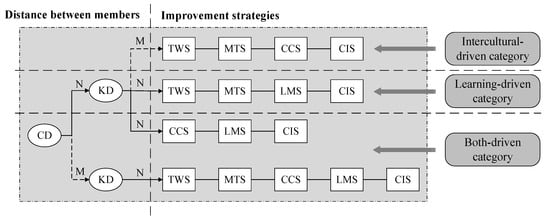
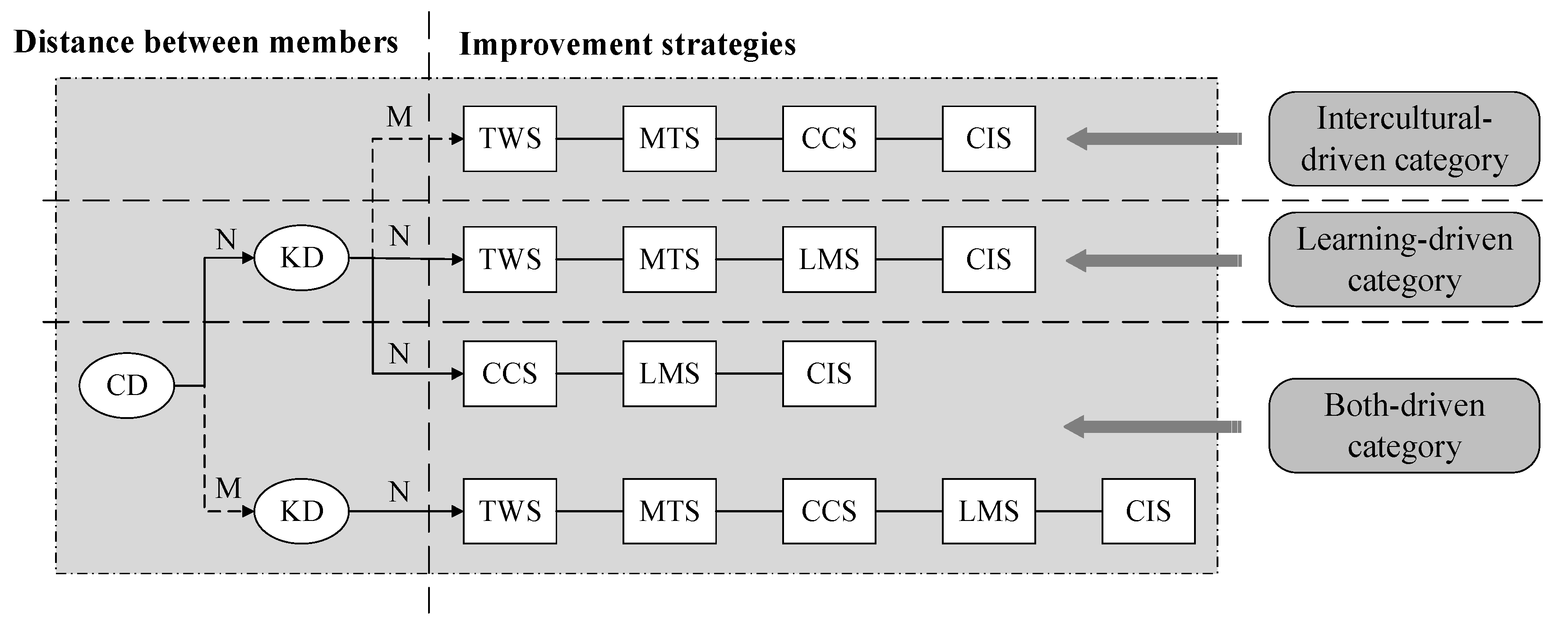
Based on the strategic archetypes derived from the fsQCA results, a practical decision framework can be developed for project managers. This framework, illustrated in Figure 4, translates the complex configurations into an actionable diagnostic tool. A manager can first assess their project’s context, particularly the levels of cultural and knowledge distance among team members, and then use the framework to identify the corresponding strategic investments required to achieve high KTE.
Figure 4.
Comprehensive improvement strategies of KTE within ICPs.
The left side of the dotted line represents different situations of distance between project members, and the right side represents the combination of corresponding improvement strategies. Besides, “N” means that the starting point of the arrow does not exist, and “M” means that the starting point of the arrow may or may not exist. Moreover, the improvement strategies corresponding to the condition variables TW, MT, CC, LM, and CI are named TWS, MTS, CCS, LMS, and CIS, respectively.
For the Intercultural-Driven Strategy: When cultural distance is low, but knowledge distance may vary, the corresponding improvement strategies (TWS, MTS, CCS, and CIS) focus on building social cohesion. This includes stimulating members’ sense of belonging (TWS), organizing team-building activities to enhance trust (MTS), conducting cross-cultural training to leverage existing low distance (CCS), and optimizing communication channels (CIS).
For the Learning-Driven Strategy: When both cultural and knowledge distance are low, the focus shifts to structured learning. The corresponding strategies (TWS, LMS, and CIS) emphasize advocating a culture of continuous learning, formulating clear learning plans (LMS), and ensuring these are supported by high member willingness (TWS) and communication (CIS).
For the Combined-Driven Strategy: This category offers two pathways. When both distances are low, a combination of intercultural and learning strategies (CCS, LMS, CIS) can be effective. More critically, when knowledge distance is low but cultural distance may be high, a comprehensive suite of strategies is required (TWS, MTS, LMS, CCS, CIS). This represents the most resource-intensive approach but provides a roadmap for success even in the most challenging ICP environments.
In summary, the antecedent conditions of knowledge transfer within ICPs are many and varied. Proposing combination strategies can assist business leaders and project managers in selecting targeted measures more efficiently, thereby improving KTE and benefiting project knowledge management process.
5.3. Theoretical Significance
Given the importance of project knowledge transfer, this study presents the following theoretical implications. Firstly, this research moves beyond the simple identification of factors to explore the complex, configurational pathways to high KTE within ICPs. Following the framework of communication theory, relevant influencing factors were summarized into four dimensions: subject, relationship, context, and activity [4,15,26]. Existing research on the factors impacting project knowledge transfer mainly focuses on single or dual dimensions, lacking a comprehensive and systematic understanding of how these factors interact. By exploring how factors from all four dimensions combine, this study extends the progression of communication theory in project knowledge transfer research and derives a clearer logical chain of causality.
Secondly, this study addresses a gap in the project knowledge transfer by utilizing the fsQCA method to embrace causal complexity. Knowledge transfer is a complex and dynamic process affected by many prerequisites. The fsQCA method can explore the driving effects of different combinations of multiple factors on results [16,58]. By applying fsQCA, this research contributes to the literature by examining complex causal relationships and multiple concurrent pathways (equifinality) among antecedent variables, offering a more nuanced understanding than is possible with traditional net-effect methodologies. The identification of communication intensity as a necessary condition for all successful configurations is a particularly salient finding.
Lastly, this paper presents a novel approach to knowledge transfer in the ICP context by simultaneously considering the intercultural and learning challenges. Existing research has not provided an in-depth analysis of how to address both aspects simultaneously to improve KTE. By classifying the successful configurations into three strategic archetypes: intercultural-driven, learning-driven, and combined-driven, this study provides a new theoretical lens for concentrating on the interplay between the cultural background and knowledge level of project members, and the cross-cultural competence and learning mechanisms of project teams.
5.4. Practical Enlightenment
This research offers significant practical enlightenment to improve KTE within ICPs. Strategic archetypes provide managers with a portfolio of evidence-based options rather than a single, one-size-fits-all solution.
For the intercultural-driven category, project teams can focus on proactive team composition to minimize cultural distance. This should be supported by measures such as conducting cross-cultural training, fostering a high-trust environment through team building, and ensuring high communication intensity to stimulate members’ initiative to engage in knowledge transfer.
In terms of the learning-driven category, project teams operating with a relatively homogenous workforce can prioritize the development of a complete learning mechanism. This includes creating clear learning plans, providing diverse opportunities for knowledge exchange, and cultivating trusting relationships to reduce knowledge distance and stimulate members’ subjective initiative.
As for the combined-driven category, project teams facing a mix of challenges must adopt a comprehensive approach. On the one hand, they are supposed to improve their cross-cultural capabilities through targeted training in language, communication, and adaptability to mitigate conflicts. On the other hand, they can actively promote the construction of a learning organization, formulating a complete learning mechanism and clear business processes to provide ideal conditions for knowledge transfer within the team.
6. Conclusions
This paper analyzed the key antecedent variables that influence knowledge transfer within ICPs and explored the improvement strategies of KTE within ICPs from a configurational perspective. At first, seven factors from four dimensions (subject, relationship, context, and activity) influencing knowledge transfer were identified. Then, 353 final questionnaires were collected and analyzed using the fsQCA method. The analysis revealed that high communication intensity is a necessary condition for success and identified four distinct configurations, or pathways, which lead to high KTE. These pathways were synthesized into three strategic archetypes: intercultural-driven, learning-driven, and combined-driven. This core finding underscores the principle of equifinality, that there is no single best way to achieve effective knowledge transfer in the complex environment of ICPs. Instead, success depends on implementing the right combination of strategies for a given context.
This study not only contributes to project knowledge management literature by refining the framework of antecedent variables of knowledge transfer through a configurational lens but also helps business leaders and project managers select targeted strategies to improve KTE more efficiently. The research provides a practical decision framework that enables managers to diagnose their project environment and invest in the most impactful combination of interventions.
Nonetheless, this research has some limitations that could be addressed for enhancement. Firstly, while the fsQCA method provides valuable insights into causal configurations, future research could select representative cases from the dataset for in-depth qualitative analysis. This would help to contextualize the quantitative findings and reveal deeper causal mechanisms. Another potential area for future improvement is the sampling approach. While this study effectively used snowball sampling to access a diverse set of professionals, future research could explore alternative sampling methods that may further enhance the diversity and representativeness of the sample. For instance, utilizing randomized sampling techniques or ensuring a more even distribution across different regions and project types could offer additional insights and further strengthen the generalizability of the findings. Lastly, future research could expand the measurement of knowledge transfer outcomes beyond KTE to include the speed, width, and depth of transfer, thereby enhancing the understanding of knowledge transfer from both process and result perspectives.
Author Contributions
Conceptualization, Q.Z.; Methodology, Q.Z.; Software, Q.Z.; Validation, P.S.W.F.; Formal analysis, Q.Z. and P.S.W.F.; Investigation, Q.Z.; Data curation, Q.Z.; Writing—original draft, Q.Z. and P.S.W.F.; Visualization, Q.Z.; Supervision, P.S.W.F.; Project administration, P.S.W.F.; Funding acquisition, Q.Z. All authors have read and agreed to the published version of the manuscript.
Funding
This work was supported by the National Natural Science Foundation of China (Grant No. 72301095), and the Social Science Foundation of Jiangsu Province (Grant No. 23GLC018).
Data Availability Statement
Data will be made available on request.
Conflicts of Interest
The authors declare no conflict of interest.
Appendix A
Table A1.
Sources of measurement items.
Table A2.
Features of eight experts.
Table A3.
Sensitivity analysis of calibration anchors.
References
- Rupietta, C.; Backes-Gellner, U. Combining knowledge stock and knowledge flow to generate superior incremental innovation performance—Evidence from Swiss manufacturing. J. Bus. Res. 2019, 94, 209–222. [Google Scholar] [CrossRef] [Scilit]
- Kong, L.; Yang, Q.; Zhou, Q.; Xing, J.; Sun, X.; Zou, R. Embedding knowledge into BIM: A case study of extending BIM with firefighting plans. J. Build. Eng. 2022, 49, 103999. [Google Scholar] [CrossRef] [Scilit]
- Li, Y.; Sun, T.; Shou, Y.; Sun, H. What makes a competent international project manager in emerging and developing countries? Proj. Manag. J. 2020, 51, 181–198. [Google Scholar] [CrossRef] [Scilit]
- Zhao, D.; Zuo, M.; Deng, X.N. Examining the factors influencing cross-project knowledge transfer: An empirical study of IT services firms in China. Int. J. Proj. Manag. 2015, 33, 325–340. [Google Scholar] [CrossRef] [Scilit]
- Nesheim, T.; Hunskaar, H.M. When employees and external consultants work together on projects: Challenges of knowledge sharing. Int. J. Proj. Manag. 2015, 33, 1417–1424. [Google Scholar] [CrossRef] [Scilit]
- Zhou, Q.; Chen, S.; Deng, X.; Mahmoudi, A. Knowledge transfer among members within cross-cultural teams of international construction projects. Eng. Constr. Archit. Manag. 2023, 30, 1787–1808. [Google Scholar] [CrossRef] [Scilit]
- Ajmal, M.M.; Koskinen, K.U. Knowledge transfer in project-based organizations: An organizational culture perspective. Proj. Manag. J. 2008, 39, 7–15. [Google Scholar] [CrossRef] [Scilit]
- Moh’d, S.S.; Černe, M.; Zhang, P. An exploratory configurational analysis of knowledge hiding antecedents in project teams. Proj. Manag. J. 2021, 52, 31–44. [Google Scholar] [CrossRef] [Scilit]
- Aerts, G.; Dooms, M.; Haezendonck, E. Knowledge transfers and project-based learning in large scale infrastructure development projects: An exploratory and comparative ex-post analysis. Int. J. Proj. Manag. 2017, 35, 224–240. [Google Scholar] [CrossRef] [Scilit]
- Wei, Y.; Miraglia, S. Organizational culture and knowledge transfer in project-based organizations: Theoretical insights from a Chinese construction firm. Int. J. Proj. Manag. 2017, 35, 571–585. [Google Scholar] [CrossRef] [Scilit]
- Sun, J.; Ren, X.; Anumba, C.J. Analysis of knowledge-transfer mechanisms in construction project cooperation networks. J. Manag. Eng. 2019, 35, 32–44. [Google Scholar] [CrossRef] [Scilit]
- Ren, X.; Deng, X.; Liang, L. Knowledge transfer between projects within project-based organizations: The project nature perspective. J. Knowl. Manag. 2018, 22, 1082–1103. [Google Scholar] [CrossRef] [Scilit]
- Ahammad, M.F.; Tarba, S.Y.; Liu, Y.; Glaister, K.W. Knowledge transfer and cross-border acquisition performance: The impact of cultural distance and employee retention. Int. Bus. Rev. 2016, 25, 66–75. [Google Scholar] [CrossRef] [Scilit]
- Cummings, J.L.; Teng, B.S. Transferring R&D knowledge: The key factors affecting knowledge transfer success. J. Eng. Technol. Manag. 2003, 20, 39–68. [Google Scholar] [CrossRef] [Scilit]
- Zhou, Q.; Deng, X.; Wang, G.; Mahmoudi, A. Linking elements to outcomes of knowledge transfer in the project environment: Current review and future direction. Front. Eng. Manag. 2022, 9, 221–238. [Google Scholar] [CrossRef] [Scilit]
- Schneider, C.Q.; Wagemann, C. Set-Theoretic Methods for the Social Sciences: A Guide to Qualitative Comparative Analysis; Cambridge University Press: Cambridge, UK, 2012. [Google Scholar]
- Ma, T.; Liu, Y. Multiple paths to enhancing the resilience of project-based organizations from the perspective of CSR configuration: Evidence from the Chinese construction industry. Eng. Constr. Archit. Manag. 2024, 31, 835–865. [Google Scholar] [CrossRef] [Scilit]
- Singley, M.K.; Anderson, J.R. The Transfer of Cognitive Skill; Harvard University Press: Cambridge, MA, USA, 1989. [Google Scholar]
- Gilbert, M.; Cordey-Hayes, M. Understanding the process of knowledge transfer to achieve successful technological innovation. Technovation 1996, 16, 301–312. [Google Scholar] [CrossRef] [Scilit]
- Frank, A.G.; Ribeiro, J.L.D. An integrative model for knowledge transfer between new product development project teams. Knowl. Manag. Res. Pract. 2014, 12, 215–225. [Google Scholar] [CrossRef] [Scilit]
- Buvik, M.P.; Tvedt, S.D. The influence of project commitment and team commitment on the relationship between trust and knowledge sharing in project teams. Proj. Manag. J. 2017, 48, 5–21. [Google Scholar] [CrossRef] [Scilit]
- Liu, H.; Yu, Y.; Sun, Y.; Yan, X. A system dynamic approach for simulation of a knowledge transfer model of heterogeneous senders in mega project innovation. Eng. Constr. Archit. Manag. 2021, 28, 681–705. [Google Scholar]
- Daft, R.L. Organization Theory and Design; South-Western College Publishing: Cincinnati, OH, USA, 1998. [Google Scholar]
- Pérez-Nordtvedt, L.; Kedia, B.L.; Datta, D.K.; Rasheed, A.A. Effectiveness and efficiency of cross-border knowledge transfer: An empirical examination. J. Manag. Stud. 2008, 45, 714–744. [Google Scholar] [CrossRef] [Scilit]
- Bjorvatn, T.; Wald, A. The impact of time pressure on knowledge transfer effectiveness in teams: Trust as a critical but fragile mediator. J. Knowl. Manag. 2020, 24, 2357–2372. [Google Scholar] [CrossRef] [Scilit]
- Gupta, A.K.; Govindarajan, V. Knowledge flows within multinational corporations. Strateg. Manag. J. 2000, 21, 473–496. [Google Scholar] [CrossRef] [Scilit]
- Major, E.; Cordey-Hayes, M. Knowledge translation: A new perspective on knowledge transfer and foresight. Foresight 2000, 2, 411–423. [Google Scholar] [CrossRef] [Scilit]
- Boamah, F.A.; Zhang, J.; Cao, Z.; Horbanenko, O. An empirical study on the sharing of tacit knowledge by construction project workers in sub-Saharan Africa. Knowl. Manag. Res. Pract. 2023, 21, 1039–1051. [Google Scholar] [CrossRef] [Scilit]
- Zhou, Q.; Deng, X.; Wang, Y. Exploring the antecedents of knowledge transfer among stakeholders in green building projects: From the configuration perspective. J. Build. Eng. 2024, 98, 111042. [Google Scholar] [CrossRef] [Scilit]
- Fong Boh, W.; Nguyen, T.T.; Xu, Y. Knowledge transfer across dissimilar cultures. J. Knowl. Manag. 2013, 17, 29–46. [Google Scholar] [CrossRef] [Scilit]
- Sapuarachchi, D.B. Cultural distance and inter-organizational knowledge transfer: A case study of a multinational company. J. Knowl. Manag. 2021, 25, 2316–2333. [Google Scholar] [CrossRef] [Scilit]
- Bogilović, S.; Černe, M.; Škerlavaj, M. Hiding behind a mask? Cultural intelligence, knowledge hiding, and individual and team creativity. Eur. J. Work Organ. Psychol. 2017, 26, 710–723. [Google Scholar] [CrossRef] [Scilit]
- Schulze, A.; Broekel, G.J. The effect of the distance between partners’ knowledge components on collaborative innovation. Eur. Manag. Rev. 2012, 9, 85–98. [Google Scholar] [CrossRef] [Scilit]
- Gaffney, N.; Karst, R.; Clampit, J. Emerging market MNE cross-border acquisition equity participation: The role of economic and knowledge distance. Int. Bus. Rev. 2016, 25, 267–275. [Google Scholar] [CrossRef] [Scilit]
- Joseph Garcia, A.; Mollaoglu, S. Individuals’ capacities to apply transferred knowledge in AEC project teams. J. Constr. Eng. Manag. 2020, 146, 04020016. [Google Scholar] [CrossRef] [Scilit]
- Joia, L.A.; Lemos, B. Relevant factors for tacit knowledge transfer within organisations. J. Knowl. Manag. 2010, 14, 410–427. [Google Scholar] [CrossRef] [Scilit]
- Ni, G.D.; Cui, Q.B.; Sang, L.H.; Wang, W.S.; Xia, D.C. Knowledge-sharing culture, project-team interaction, and knowledge-sharing performance among project members. J. Manag. Eng. 2018, 34, 04017065. [Google Scholar] [CrossRef] [Scilit]
- Pauluzzo, R.; Cagnina, M.R. Bridging the divide: Intercultural competences to reconcile the knowledge transfer dilemma in multinational contexts. Knowl. Manag. Res. Pract. 2017, 15, 542–550. [Google Scholar] [CrossRef] [Scilit]
- Chevrier, S. Cross-cultural management in multinational project groups. J. World Bus. 2003, 38, 141–149. [Google Scholar] [CrossRef] [Scilit]
- Kasvi, J.J.J.; Vartiainen, M.; Hailikari, M. Managing knowledge and knowledge competences in projects and project organisations. Int. J. Proj. Manag. 2003, 21, 571–582. [Google Scholar] [CrossRef] [Scilit]
- Fong, P.S.W.; Chen, L. Governance of learning mechanisms: Evidence from construction firms. J. Constr. Eng. Manag. 2012, 139, 1053–1064. [Google Scholar] [CrossRef] [Scilit]
- Adenfelt, M. Exploring the performance of transnational projects: Shared knowledge, coordination and communication. Int. J. Proj. Manag. 2010, 28, 529–538. [Google Scholar] [CrossRef] [Scilit]
- Dinis, F.M.; Sanhudo, L.; Martins, J.P.; Ramos, N.M. Improving project communication in the architecture, engineering and construction industry: Coupling virtual reality and laser scanning. J. Build. Eng. 2020, 30, 101287. [Google Scholar] [CrossRef] [Scilit]
- Park, J.; Lee, J. Knowledge sharing in information systems development projects: Explicating the role of dependence and trust. Int. J. Proj. Manag. 2014, 32, 153–165. [Google Scholar] [CrossRef] [Scilit]
- Ragin, C. The Comparative Method: Moving Beyond Qualitative and Quantitative Strategies; University of California Press: Berkeley, CA, USA, 1987. [Google Scholar]
- Invernizzi, D.C.; Locatelli, G.; Brookes, N.; Davis, A. Qualitative comparative analysis as a method for project studies: The case of energy infrastructure. Renew. Sustain. Energy Rev. 2020, 133, 110314. [Google Scholar] [CrossRef] [Scilit]
- Amoah, A.; Berbegal-Mirabent, J.; Marimon, F. Making the management of a project successful: Case of construction projects in developing countries. J. Constr. Eng. Manag. 2021, 147, 04021166. [Google Scholar] [CrossRef] [Scilit]
- Ragin, C. Redisigning Social Inquiry: Fuzzy Sets and Beyond; University of Chicago Press: Chicago, IL, USA, 2008. [Google Scholar]
- Spanuth, T.; Wald, A. How to unleash the innovative work behavior of project staff? The role of affective and performance-based factors. Int. J. Proj. Manag. 2017, 35, 1302–1311. [Google Scholar] [CrossRef] [Scilit]
- Weston, R.; Gore, P.A., Jr. A brief guide to structural equation modeling. Couns. Psychol. 2006, 34, 719–751. [Google Scholar] [CrossRef] [Scilit]
- Brown, T.A.; Moore, M.T. Confirmatory factor analysis. In Handbook of Structural Equation Modeling; Guilford Press: New York, NY, USA, 2012; pp. 361–379. [Google Scholar]
- West, S.G.; Taylor, A.B.; Wu, W. Model fit and model selection in structural equation modeling. Handb. Struct. Equ. Model. 2012, 1, 209–231. [Google Scholar]
- Bowen, N.K.; Guo, S. Structural Equation Modeling; Oxford University Press: New York, NY, USA, 2011. [Google Scholar]
- Shrestha, N. Factor analysis as a tool for survey analysis. Am. J. Appl. Math. Stat. 2021, 9, 4–11. [Google Scholar] [CrossRef] [Scilit]
- Fiss, P.C. Building better causal theories: A fuzzy set approach to typologies in organization research. Acad. Manag. J. 2011, 54, 393–420. [Google Scholar] [CrossRef] [Scilit]
- Ragin, C. Qualitative comparative analysis using fuzzy sets (fsQCA). In Configurational Comparative Methods: Qualitative Comparative Analysis (QCA) and Related Techniques; SAGE Publications, Inc.: Thousand Oaks, CA, USA, 2009; Volume 51, pp. 87–121. [Google Scholar]
- Dul, J. Identifying single necessary conditions with NCA and fsQCA. J. Bus. Res. 2016, 69, 1516–1523. [Google Scholar] [CrossRef] [Scilit]
- Rihoux, B.; Ragin, C.C. Configurational Comparative Methods: Qualitative Comparative Analysis (QCA) and Related Techniques; Sage Publications: Washington, DC, USA, 2008. [Google Scholar]
- Yue, W.; Qin, C.; Wang, K.Y.; Ramburuth, P. Cultural distance and subsidiary roles in knowledge transfer in MNCs in China. Chin. Manag. Stud. 2008, 2, 260–280. [Google Scholar] [CrossRef] [Scilit]
- Rutten, W.; Blaas-Franken, J.; Martin, H. The impact of (low) trust on knowledge sharing. J. Knowl. Manag. 2016, 20, 199–214. [Google Scholar] [CrossRef] [Scilit]
- Deardorff, D.K. Assessing intercultural competence. New Dir. Inst. Res. 2011, 149, 65–79. [Google Scholar] [CrossRef] [Scilit]

Disclaimer/Publisher’s Note: The statements, opinions and data contained in all publications are solely those of the individual author(s) and contributor(s) and not of MDPI and/or the editor(s). MDPI and/or the editor(s) disclaim responsibility for any injury to people or property resulting from any ideas, methods, instructions or products referred to in the content. |
© 2025 by the authors. Licensee MDPI, Basel, Switzerland. This article is an open access article distributed under the terms and conditions of the Creative Commons Attribution (CC BY) license (https://creativecommons.org/licenses/by/4.0/).