Article

Carbonation Depth, Corrosion Assessment, Repairing, and Strengthening of 49-Year-Old Marine Reinforced Concrete Structures


1
Department of Civil Engineering, Universitas Syiah Kuala, Banda Aceh 23111, Indonesia
2
Department of Mechanical and Industrial Engineering, Universitas Syiah Kuala, Banda Aceh 23111, Indonesia
3
PT. Perta Arun Gas, Lhokseumawe 24355, Indonesia
4
Department of Electrical and Computer Engineering, Universitas Syiah Kuala, Banda Aceh 23111, Indonesia
5
Integrated Laboratory, Universitas Syiah Kuala, Banda Aceh 23111, Indonesia
*
Author to whom correspondence should be addressed.
Buildings 2025, 15(22), 4088; https://doi.org/10.3390/buildings15224088
Submission received: 6 October 2025 / Revised: 5 November 2025 / Accepted: 12 November 2025 / Published: 13 November 2025
(This article belongs to the Special Issue Inspection, Maintenance and Retrofitting of Existing Buildings)

Abstract

This study aims to present the results from the assessment of carbonation depth, corrosion, and compressive strength of real marine structures in a 49-year-old gas processing industry. The assessment was achieved through visual observations and non-destructive tests, including rebound hammer test, ultrasonic pulse velocity (UPV) test, and potential corrosion mapping, conducted in the field. Several cylindrical samples were also cored to test the concrete compressive strength and carbonation depth. The results were subsequently used to calculate the remaining load-bearing capacity of the structures. The observations and measurements showed that carbonation depth ranged from 0 to 63% of the concrete cover, and potential corrosion was at a low to medium level in areas where corrosion had not occurred, while the actual compressive strength is still above the design strength. Moreover, based on the UPV test, the pulse velocity of the concrete is around 3600 m/s, indicating a good concrete quality. Meanwhile, severe corrosion of reinforcing steel occurred locally and only at certain places, which caused a very significant reduction in the diameter and cracks as well as spalling of the concrete cover. The process further led to a significant reduction in the load-bearing capacity. Therefore, repairing and strengthening of the structures were proposed using epoxy resin with corrosion inhibitor, cementitious, polymer-modified repair mortar containing reactive micro-silica, Carbon Fiber Reinforced Polymer (CFRP) rods, and CFRP sheets. The proposed method can be applied to these structures and also serves as a reference for repairing and strengthening other structures experiencing the same issue.

1. Introduction

Concrete is a material with high alkalinity due to the presence of calcium hydroxide produced through cement hydration. This alkalinity protects reinforcing steel from corrosion by forming a passive iron oxide film [1,2]. However, the increase in the age of structures allows carbon dioxide in the atmosphere and moisture on the concrete surface to penetrate the pores and react with calcium hydroxide to form calcium carbonate which is capable of reducing the pH and alkalinity of the concrete [2,3,4,5]. This process is called carbonation, and the ability of the depth to reach reinforcing steel leads to the removal of the layer that protects the material from corrosion. The trend shows that the penetration of chloride ions into the pores of concrete accelerates the corrosion process of reinforcing steel [1,6,7]. Therefore, carbonation in reinforced concrete structures can lead to a reduction in strength, a decrease in service life, and an increase in the cost of maintenance and repair [4,8]. The process is significantly influenced by the water-to-cement ratio, cement type, curing period, concrete quality, the quality of finishing materials, and the chemistry of reinforcing steel [8,9,10]. Carbonation resistance of concrete made with ordinary Portland cement is higher than those containing supplementary cementing materials such as silica fume, fly ash, and slag, or alternative binder materials in the form of sulfoaluminate belite and alkali-activated materials [10,11,12]. Moreover, concrete produced using recycled aggregate and supplementary cementing materials has a greater carbonation depth and corrosion current density [12]. This shows the need for surface protection through a siloxane pore liner system, acrylic resin coating, or epoxy resin coating to enhance the resistance of concrete to carbonation. A previous study reported the ability of epoxy resin to provide superior protection compared to the other two types [8].
The carbonated area in the concrete has some characteristics which include a low pH, portlandite depletion, and C-S-H decalcification. The pH drop is the most frequently used experimental description of carbonation front [13]. This is achieved by spraying a pH indicator such as phenolphthalein on a freshly split sample to determine carbonation depth [14]. However, carbonation front which is defined differently can lead to a distinct carbonation depth. An example is the fact that the evaluation of the drop in portlandite concentration typically produces deeper carbonation depth measurements [15]. The pH reduction can only occur when all of the portlandite has been used in line with the prediction of thermodynamic models. Moreover, CO2 diffusion coefficient of the two carbonated pastes was assessed using the straightforward model [16].
A passive oxide film which is relatively stable in the extremely alkaline microenvironment produced by the pore solution of concrete is capable of typically protecting the steel added to reinforced concrete structures from corrosion [17]. However, chloride ions from saltwater and in the form of aerosol in the atmosphere of marine or coastal areas can accumulate on the surface of reinforced concrete structures and penetrate. The accumulation of sufficient chloride ions in the concrete matrix surrounding the reinforced steel has the capacity to destroy the passive film as well as initiate and accelerate steel corrosion. In addition, concrete pore structures significantly influence the chloride ions migration, especially in harsh exposure conditions such as a marine environment [18,19]. Several studies showed that using secondary cementing materials (SCMs) in concrete production significantly reduces chloride migration, resulting in a significant change to the hydroxyl ion concentration in concrete structures [20,21]. The effects of SCMs on chloride binding differ from each other [22,23,24]. Fly ash, lithium slag, and ground granulated blast furnace slag typically enhance chloride binding, while silica fume tends to reduce binding capacity in concrete [25,26]. However, the rate and extent of chloride ingress are influenced by various factors such as concrete composition, exposure conditions, and environmental factors [27]. The corrosion process can subsequently lead to cracking and spalling in the concrete and a reduction in the load-bearing capacity of reinforced concrete structures [28]. The condition progressively deteriorates with longer exposure and causes some reinforced concrete structures to sustain damage before reaching the set or designed service life [29]. Engineering accidents, safety risks, and significant economic losses are all caused by corrosion of steel in reinforced concrete structures, which further impair the ability to perform the required tasks [30].
Corrosion of reinforcing bars primarily contributes to the deterioration and reduces the bearing capacity of reinforced concrete structures in sustaining both static and dynamic loading, including earthquakes [31,32,33,34]. This is possible because cracking, yield, and ultimate loads decrease with corrosion degree under flexural stress [35]. Moreover, corrosion has a significant effect on the fatigue reliability and needs to be considered in the life-cycle management of fatigue-prone details [36]. Reinforcement corrosion is another dominant cause of premature failure of reinforced concrete structures [37]. The trend is due to the reduction in the remaining cross-section of steel reinforcement, which often causes the concrete cover to crack and even peel off. Corrosion products also reduce the bond and anchorage between the steel reinforcement and the concrete [38,39]. The process further leads to the reduction in the structural performance of reinforced concrete elements, including the serviceability and ultimate capacity [40].
Several studies have been conducted on the effect of reinforcement corrosion on the flexural performance of reinforced concrete beams over the past three decades. For example, Mangat et al. [41] investigated three degrees of reinforcement corrosion in reinforced concrete beams and reported a significant reduction in flexural performance. Malubela et al. [42] also examined the mechanical behavior of corroded beams and showed that a 1% loss of maximum reinforcement mass reduced the load-bearing capacity of reinforced concrete beams by 0.7%. Furthermore, Ngunyen et al. [43] reported that corrosion was significant in reducing the flexural strength of reinforced concrete beams.
The shear response of corroded reinforced concrete beams is also currently attracting increasing attention worldwide [44]. This is observed from an equation proposed by Jiang et al. [45] to predict the shear capacity of reinforced concrete beams corroded by longitudinal reinforcement and stirrups. Another previous study showed that corrosion of stirrups reduced the bearing capacity and deformability of corroded columns [46].
Marine ecosystems are traditionally divided into atmospheric, tidal, splash, and submerged zones based on the types of action and chloride exposure characteristics [47]. Oslacovic et al. [48] proposed an equation to predict the service life design of reinforced concrete structures in marine environments. Moreover, Portland cement Type V is typically used as the concrete binder to reduce the effects of corrosion on reinforced concrete structures in marine environments. Corrosion of reinforcing steel continues to increase with the age of the structures. To determine the remaining service life of RC structures that have experienced corrosion, an investigation is required to determine the corrosion conditions, including the rate and quantity of corrosion. By knowing the corrosion conditions, appropriate repair and strengthening methods and appropriate anti-corrosion treatments can be selected. Among the methods for detecting corrosion are direct detection techniques, including physical and electrochemical techniques, three-dimensional laser scanning, X-ray micro-computed tomography, and measuring the corrosion potential using half-cell potential [49]. Meanwhile, visual inspection of the concrete surface provides essential initial information for corrosion assessment. Carbonation assessment is usually carried out using a phenolphthalein indicator in addition to several other methods such as thermogravimetric analysis, X-ray phase analysis, Fourier transform infrared spectroscopy, and quantitative calcium carbonate analysis [50]. This study was conducted to determine carbonation depth and corrosion of reinforcing steel in 49-year-old marine reinforced concrete structures constructed using Portland cement Type V as the concrete binder. After conducting a visual inspection including measurement of remaining reinforcing bar diameter, carbonation depth was assessed through a phenolphthalein indicator, while the corrosion was assessed through potential mapping using half-cell potential. Moreover, concrete compressive strength was also assessed through coring the concrete samples and conducted compression test as well as non-destructive tests, including rebound hammer and ultrasonic pulse velocity (UPV) tests. Based on the data obtained, the remaining load-bearing capacity of the structures was calculated, and the repairing and strengthening methods were proposed.

2. Description of the Structures

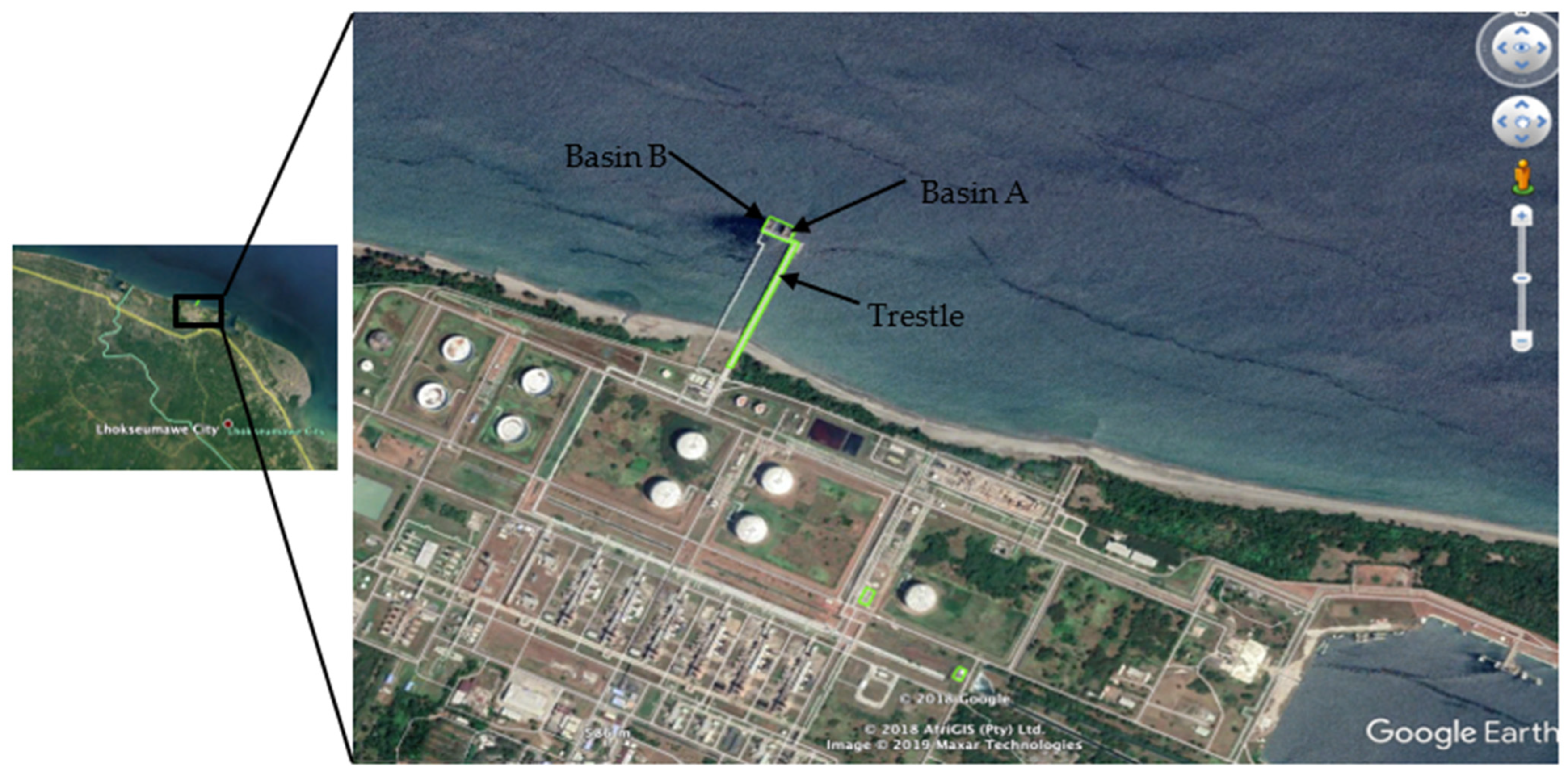
The structures assessed in this study are gas processing industry buildings, including two basins which are Basin A and Basin B, as well as a trestle. Basin A and the trestle building were built in 1976, while Basin B building was constructed in 1981. The basins consist of several pumps, an electrochlorination system, and equipment used to condense natural gas collected from the Arun Gas Field in Indonesia into liquefied natural gas at a temperature of −162 °C for further export abroad. However, Arun natural gas industry ceased operations by the end of 2015 due to the depletion of natural gas reserves at the location. This led to a change in the function of the basins for the regasification process to the conversion of imported liquefied natural gas at a temperature of −162 °C into natural gas at atmospheric temperature for further distribution to consumers. Trestle serves as a passageway for vehicles and trucks to facilitate the operations of the basins. The two infrastructures are located in the sea near the coast of Lhokseumawe City, Indonesia, as shown in Figure 1.
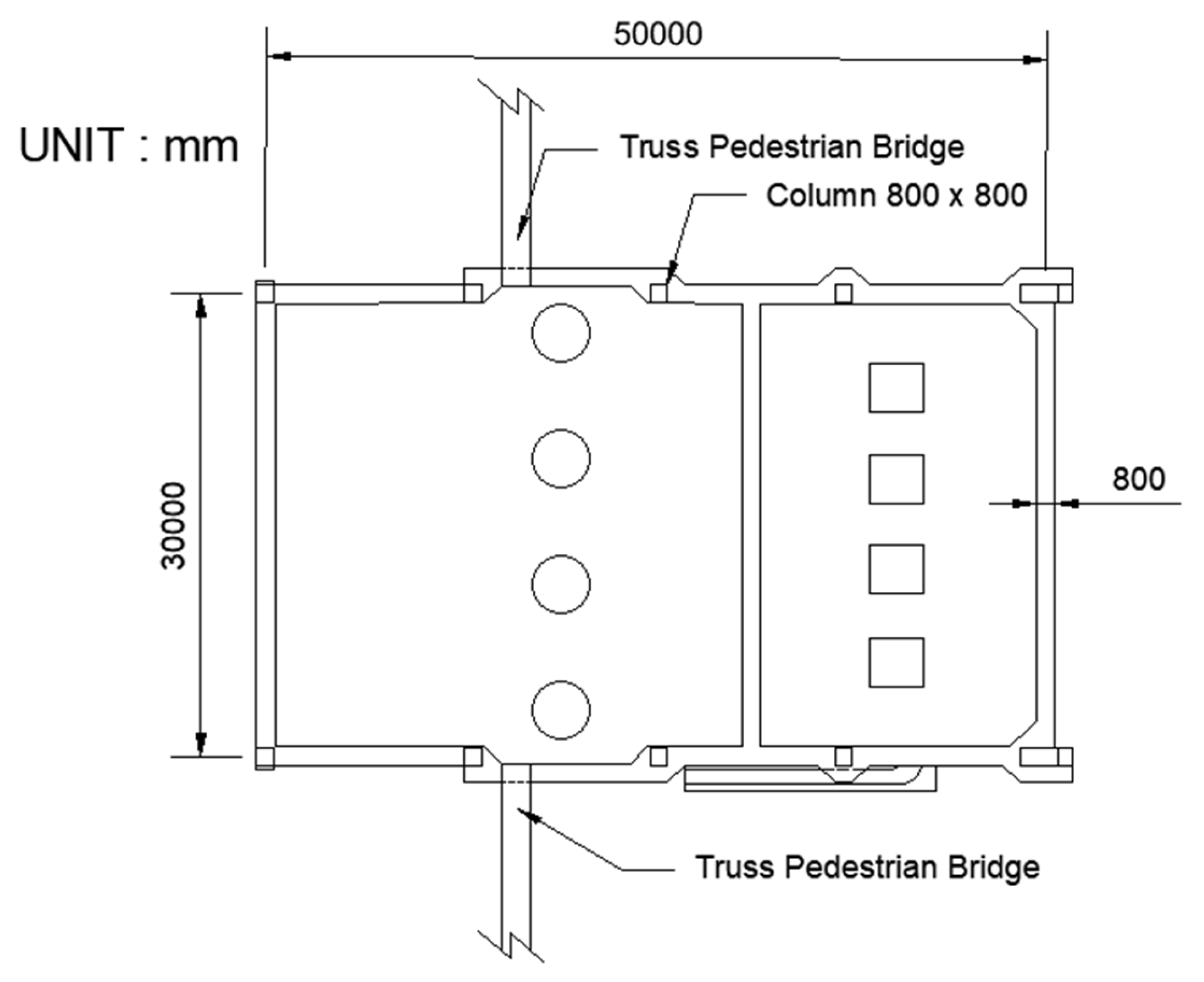
Basin A and B buildings are reinforced concrete structures measuring 50 × 30 m2 and 20 m high. The structures consist of three floors, including the upper, middle, and ground. The upper floor is fully open while the middle is partially open and the ground covers the entire structure. The middle floor is supported by several reinforced concrete walls which extend from the ground to the upper floor. The walls are 800 mm thick and reinforced vertically with D25 mm@100 mm steel bars and horizontally with D15 mm@100 mm. The reinforcement is installed in two layers with one on the outer side of the walls and the other on the inner side. The ground and middle floors were also constructed using 1000 mm thick reinforced concrete slab and reinforced in two directions and in two layers each with D25 mm@100 mm steel. At the corners of the walls, reinforced concrete columns with a cross-section of 800 × 800 mm2 and a height of 5 m support several cranes which are useful for carrying equipment into the basins. The columns use 20D25mm longitudinal reinforcement steel bars and D13 mm@100 mm stirrups. A top view of the basin building is shown in Figure 2.
The trestle building is 4 m wide and 390 m long with the width enlarged to 16 m along a 120 m section at the sea end to allow vehicles and trucks to turn around. The building has a 300 mm thick trestle slab and is reinforced in two layers and two directions each with D20 mm@150 mm. Trestle slab is supported by several steel girders which are placed on an abutment and 29 pier heads. Moreover, the pier head has a cross-sectional size of 1200 × 1200 mm2 with reinforcement in the longitudinal direction of D25 mm@50 mm bars and reinforcement in the transverse direction of D16 mm@100 mm. It is also supported by several steel pipes driven into the ground. A top view of the trestle building is shown in Figure 3.
The concrete used in both the basin and trestle buildings has a compressive strength of 27.57 MPa. The cement used is Type V Portland cement that is resistant to sulfate and chloride attack, while the reinforcing bars have a yield strength of 320 MPa.

3. Methods

The assessment conducted in this study was only focused on the reinforced concrete structures. Therefore, the steel girder and steel pipe structures in the trestle building were excluded. The structural assessment was initiated with a review of the as-built drawings and the specifications of the materials used during construction to determine the conditions of the buildings after completion. This was followed by the determination of the available strength of the buildings after completion. Subsequently, visual observations of the structures as well as the concrete compressive strength, carbonation depth, and reinforcing steel corrosion tests were conducted. The results from the assessments were used to propose repairing and strengthening methods.

3.1. Visual Assessment

Visual assessment was conducted in accordance with ACI 562-19 [51]. Observations were made for defects in the structures with a focus on the cracks, delamination, efflorescence, discoloration, and corrosion of reinforcing steel. Cracks were examined to determine the existence of flexural, shear, and plastic shrinkage types, or those caused by corrosion of reinforcing steel. The defects in the reinforced concrete structures were recorded and photographed with a camera. The type, distributions, and possible causes of corrosion as well as the protection system were also observed to provide visual information necessary for an overview. Moreover, the concrete cover of corroded reinforcing steel identified through peeling was removed. This was followed by cleaning the reinforcing steel and measuring the diameter using a digital caliper.

3.2. Concrete Compressive Strength Assessment

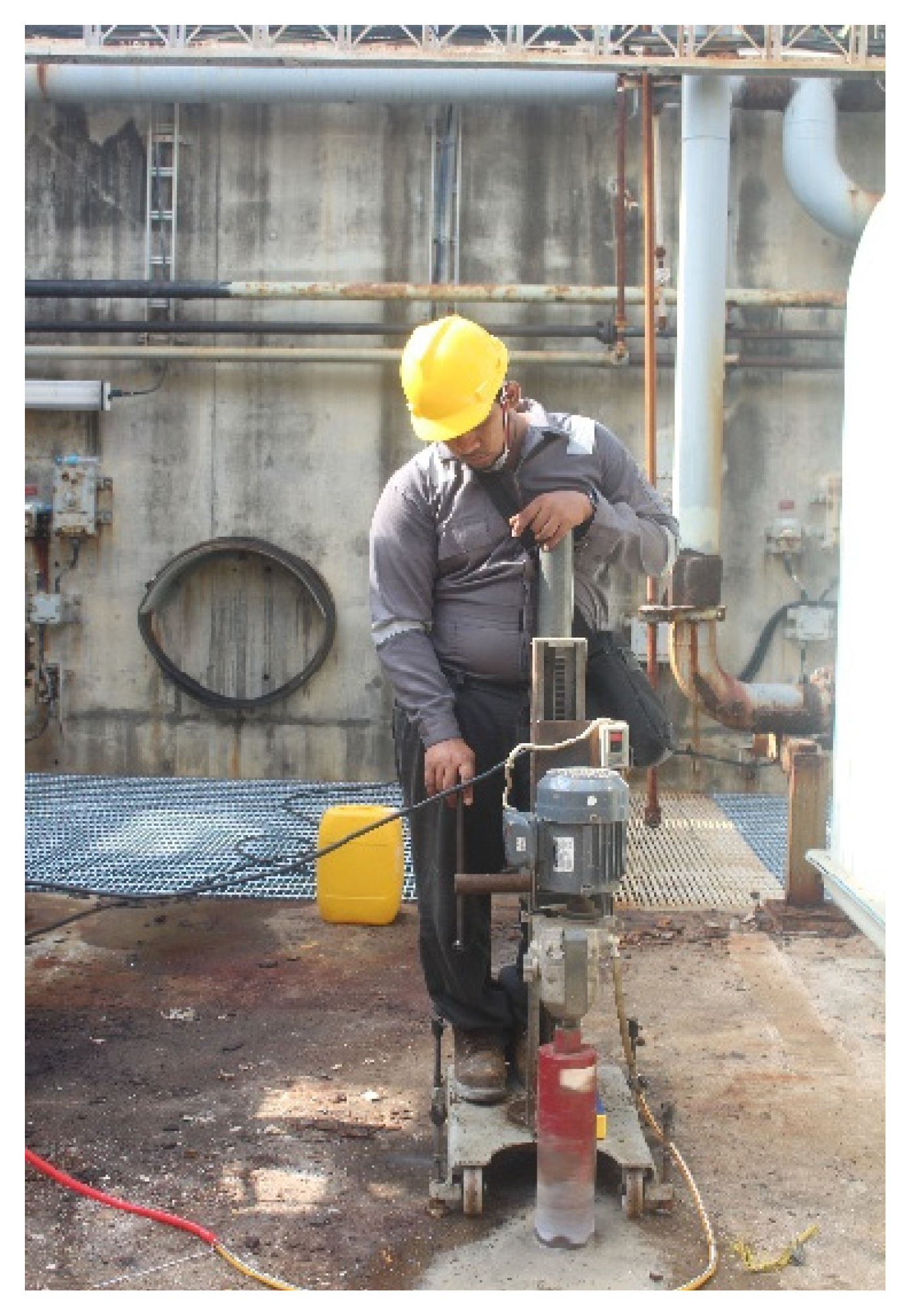
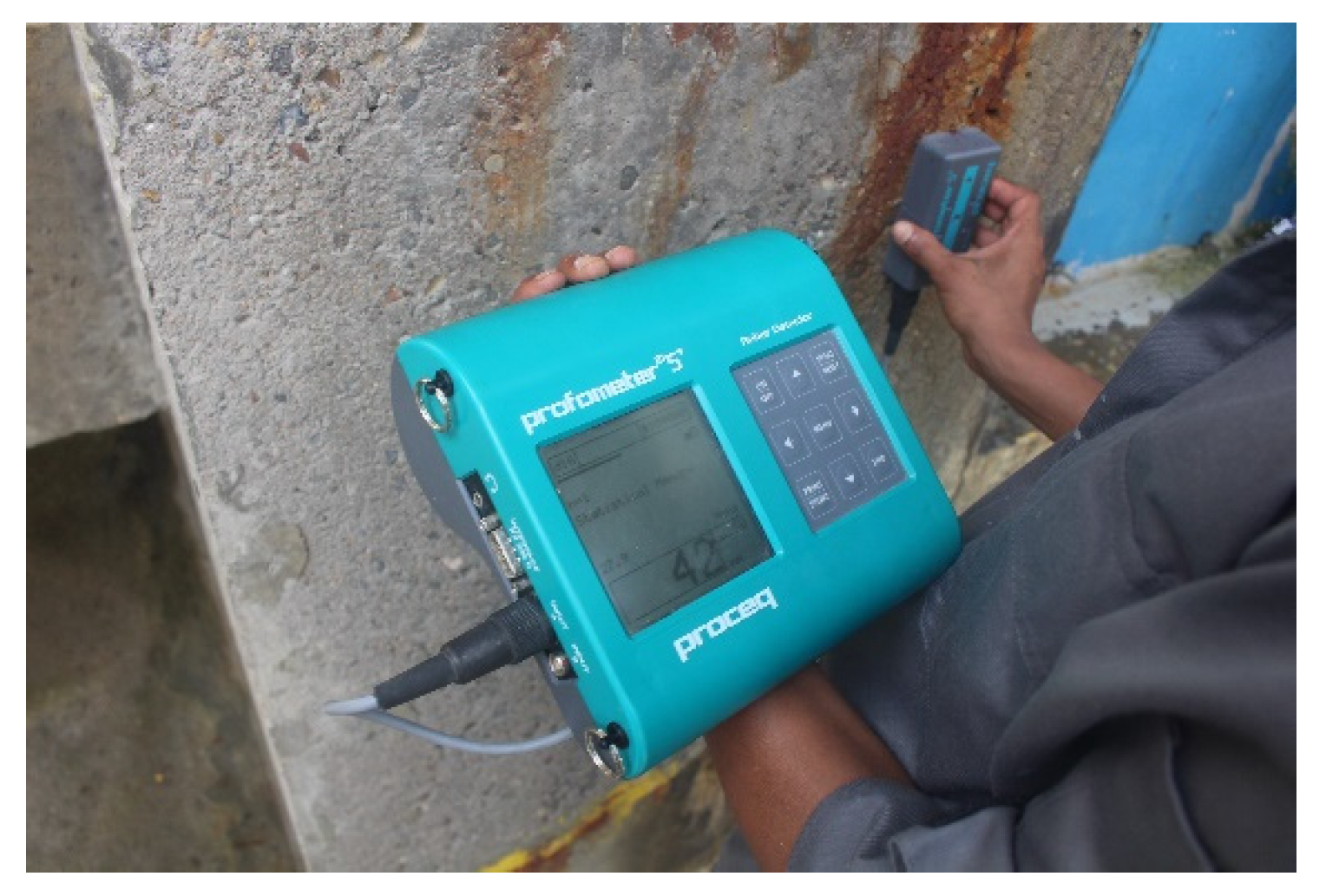
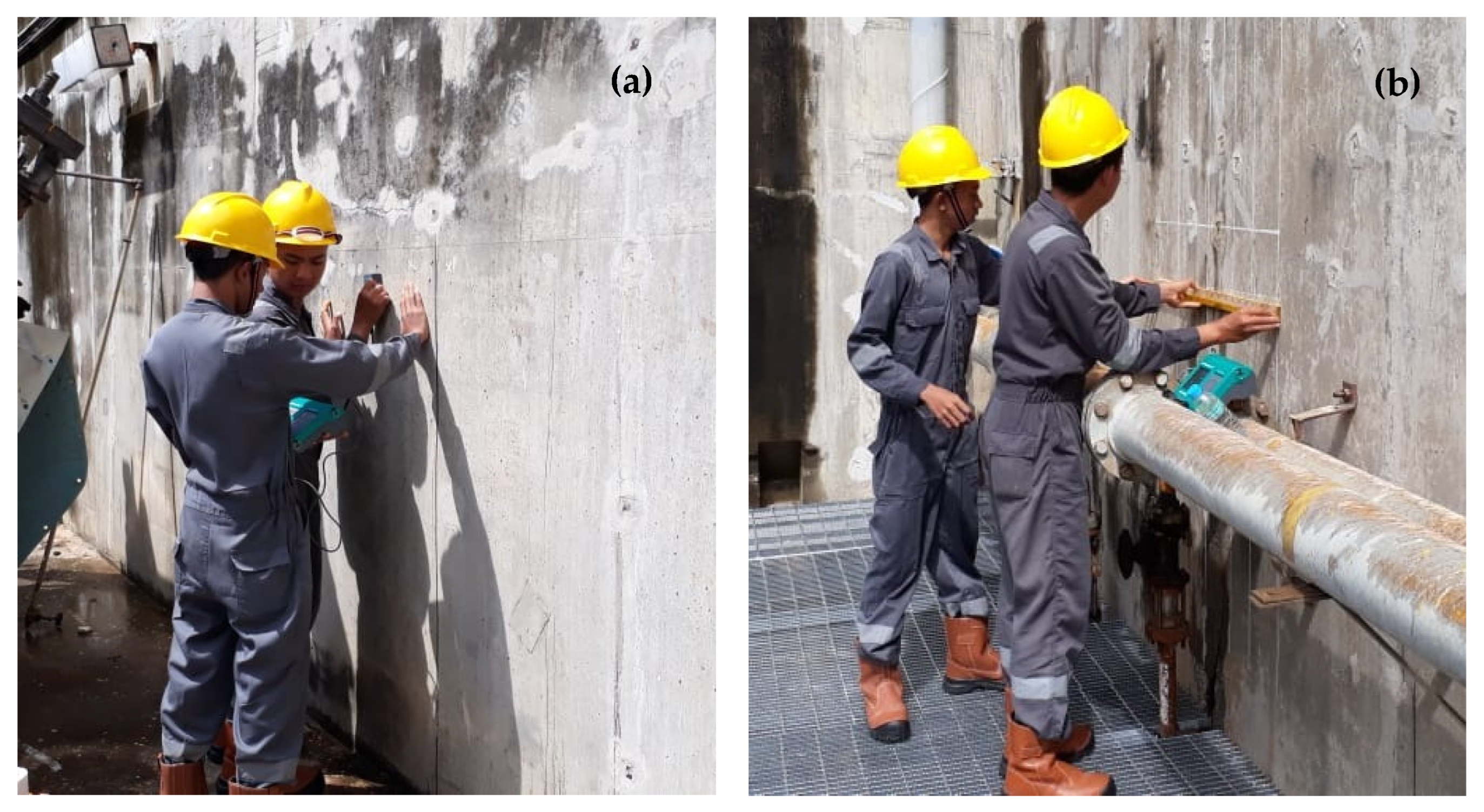
The concrete compressive strength was determined by coring several 100 mm diameter cylindrical samples from the structures as shown in Figure 4. Meanwhile, the locations of the core drills and the number of samples obtained are presented in Table 1. The cylindrical samples were retrieved only from the concrete cover without touching reinforcing steel. This was achieved by measuring the thickness of the concrete cover and the position of reinforcing steel using a Profometer 650 AI (Proceq, Zurich, Switzerland) before core drilling as shown in Figure 5. Moreover, the surface of each sample was leveled and subjected to a compressive load using a 1000 kN compression test machine until failure. Rebound hammer tests were also conducted at several locations as shown in Table 2 in accordance with ASTM C805/C805M-18 [52] using a Schmidt Hammer (Proceq, Zurich, Switzerland). The surface was first cleaned of any debris to ensure it was truly concrete, followed by the application of the test vertically downward, vertically upward, or horizontally depending on the condition of the structures. At each location, 12 tests or data were recorded to determine the hammer rebound value which was later converted to the compressive strength of the concrete. Moreover, UPV tests were also conducted in accordance with ASTM C597-22 [53]. The UPV tests were performed at six locations: Basin A wall, slab, and column; Basin B wall, slab, and column; trestle slab; and pier head. It is important to note that the locations of sampling, rebound hammer tests, and UPV tests were randomly selected throughout the buildings where concrete had not been damaged yet.

3.3. Carbonation Depth Assessment

Carbonation test was conducted on structural sections where the reinforcement had not rusted. The initial step was to assess reinforcing steel location using a profometer which was also used to determine the concrete cover thickness. Subsequently, the points for core drilling of concrete samples were determined using a core drill. For carbonation test purposes, eight concrete samples were cored at each basin, trestle slab, and trestle pier head structures. The samples were cylindrical with a diameter of 100 mm and the heights varying between 50 mm and 100 mm depending on the concrete cover thickness at the core drilling location. Moreover, the thickness of the cored samples did not exceed the concrete cover thickness.
The method recommended by RILEM CPC-18 was used for carbonation test [14], and this required air-drying and splitting the samples into two parts. This was followed by the addition of a 1% phenolphthalein solution drip into each section both at the centerline and around the perimeter to ensure adequate penetration of the concrete. The process led to a color change, and the depth was measured. The sections that did not experience a color change experienced carbonation while those with purple color were uncarbonated. This carbonation depth was measured using a digital caliper at an accuracy of 0.01 mm for each and an interval of 10 mm which led to 20 measurement points per sample.

3.4. Corrosion Assessment

Corrosion was assessed according to ASTM C876-15 [54] which required the implementation of potential mapping as a measurement method to provide information in the form of potential values. It is a non-destructive test which is widely used to detect the potential of corrosion in reinforcing steel in concrete. Each measured potential value is considered to represent the actual value and influenced by the condition of the concrete on the surface of reinforcing steel. Corrosion risk can be identified after analyzing the potential value. In this study, potential mapping was conducted at three locations which were the inside of Basin A wall, the inside of Basin B wall, and the bottom of trestle pier head.
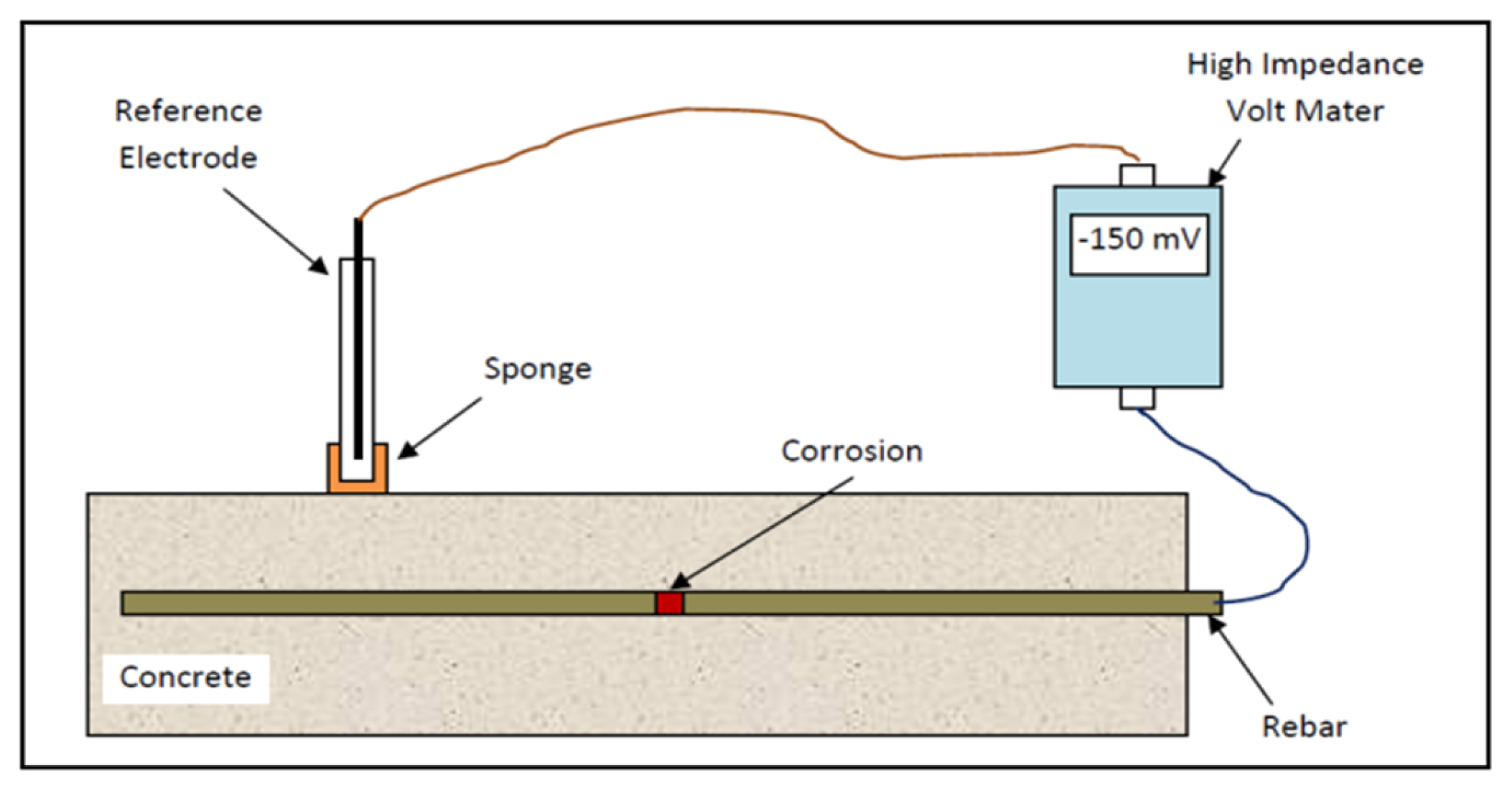
The main equipment used was a profometer, a multimeter, and a Cu/CuSO4 reference electrode. The profometer was used to detect the reinforcement location in the concrete, while the Cu/CuSO4 reference electrode measured the electrode potential and a reference electrode tested the cathodic protection corrosion control system. The multimeter converted corrosion potential value from the Cu/CuSO4 reference electrode to millivolts (mV). Figure 6 shows a schematic of the half-cell potential mapping measurement method applied.
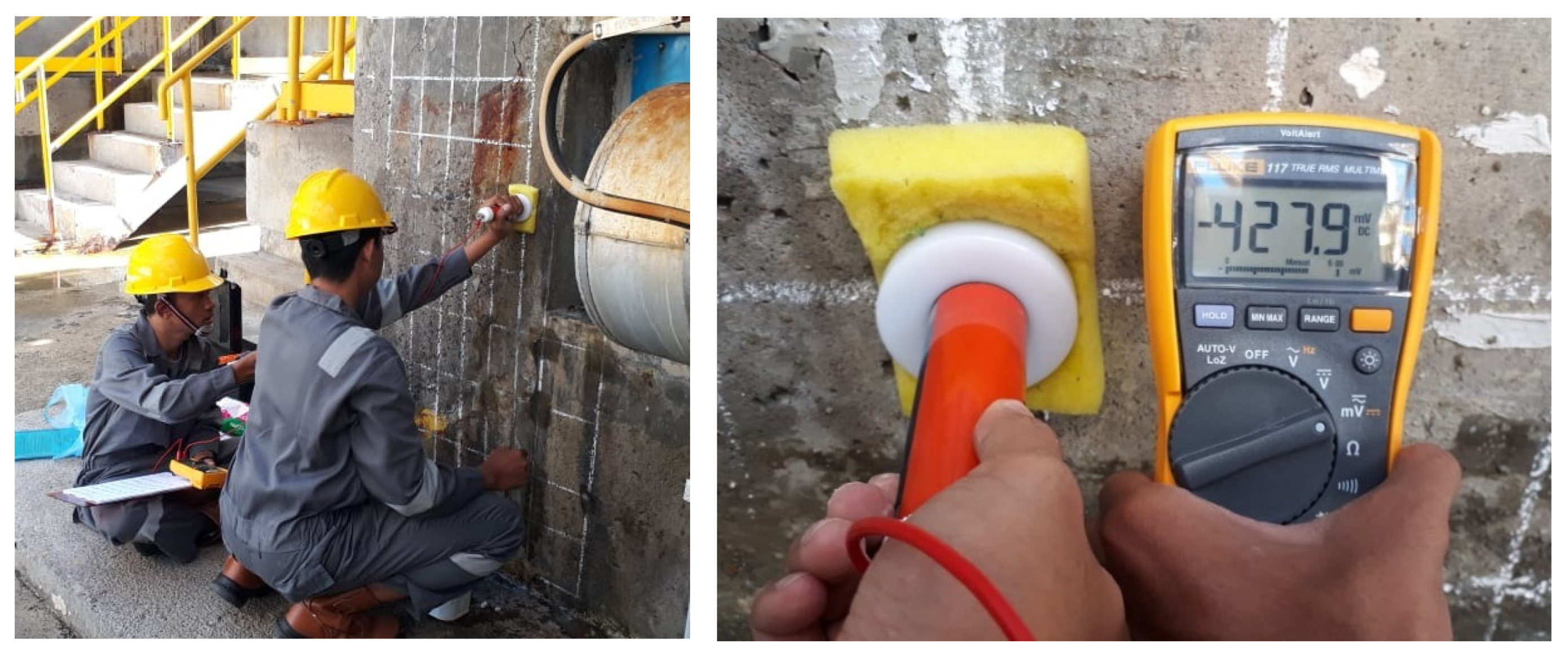
The reinforcement location in the concrete was determined using a profometer as shown in Figure 7a. A grid was drawn on the concrete surface based on the reinforcement location as shown in Figure 7b. The next step was to measure the potential value on the concrete surface precisely at the grid intersections on the concrete surface as shown in Figure 8.

4. Assessment Results

4.1. Visual Assessment Results

4.1.1. Structure of the Basins

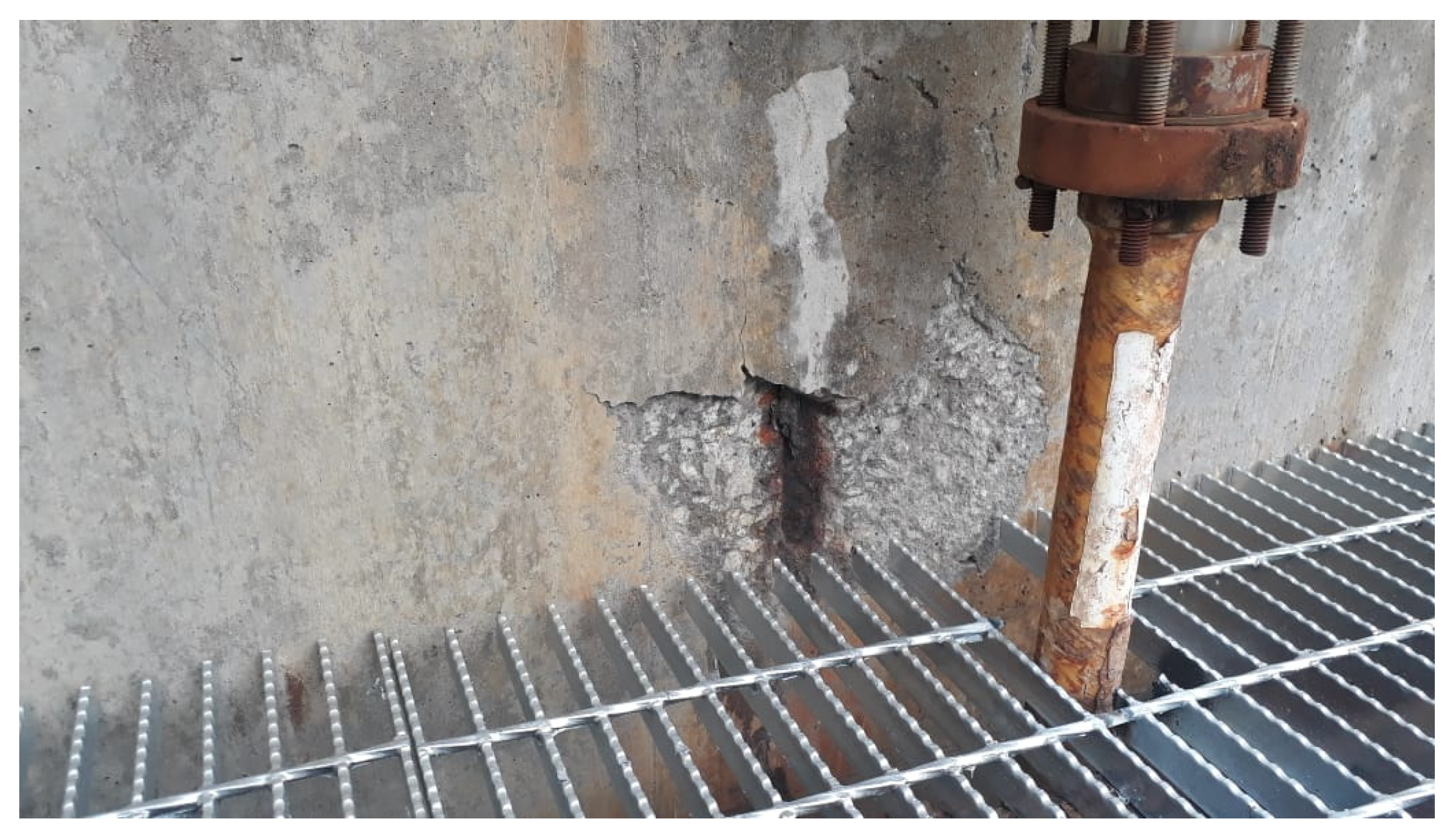
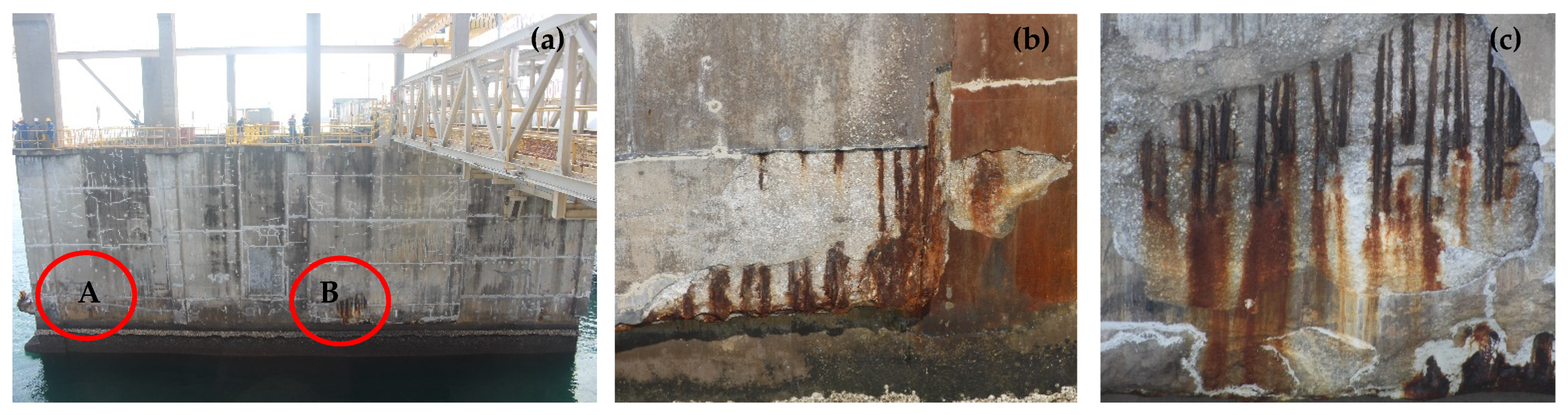
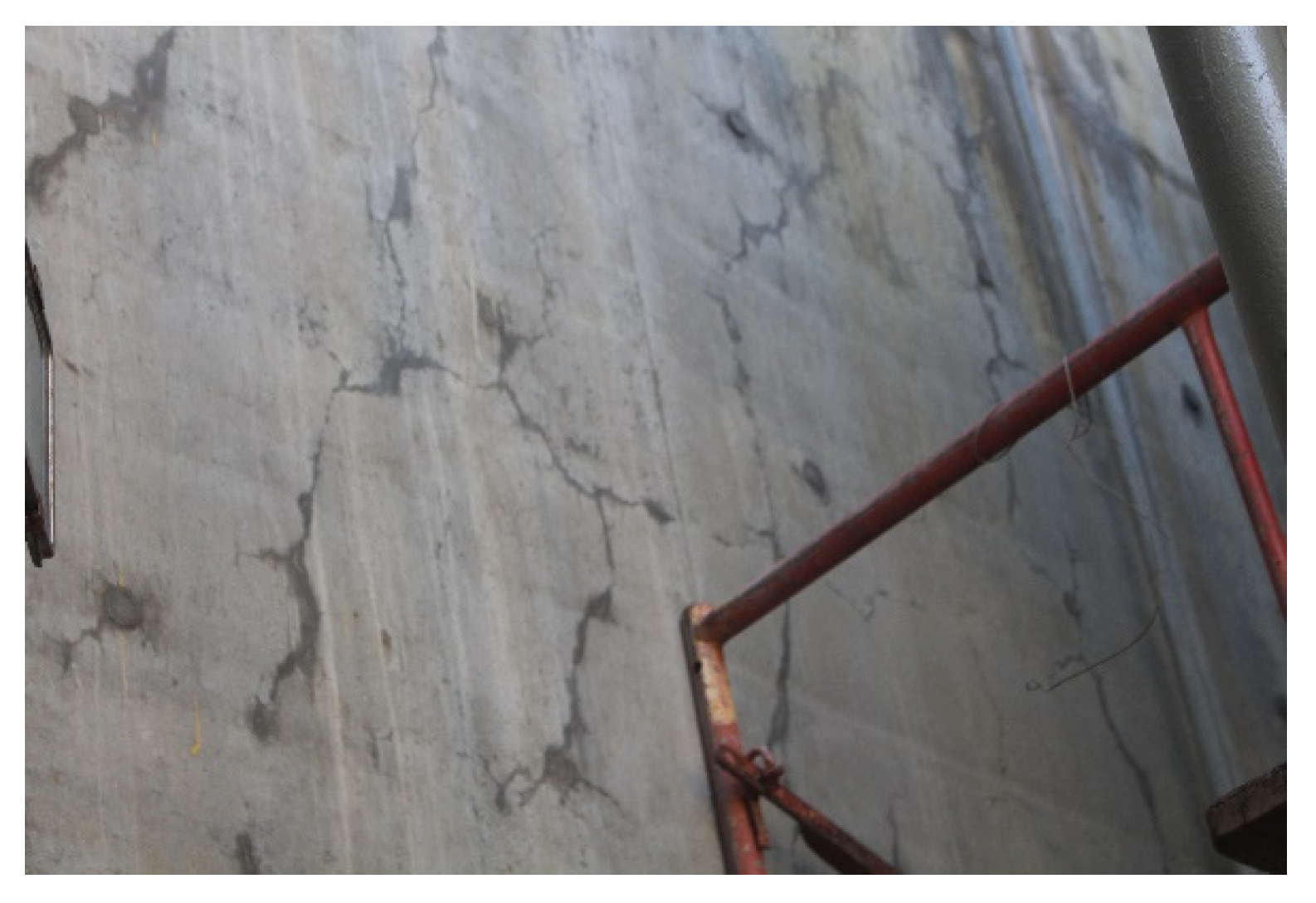
The visual assessment of the Basin A building with a focus on the upper, middle, and ground floors as well as the lower and upper walls with the column above showed that the concrete was in good condition without significant cracks, no porosity, and considered to be strong. It was observed that only a small section of the inner wall had started to corrode as presented in Figure 9. The diameter of reinforcing steel remained the same at 25 mm which reflected the absence of any reduction. Meanwhile, the concrete has started cracking on the outer wall exposed to seawater due to corrosion of reinforcing steel bars, and spalling was observed in some places as presented in Figure 10. Corrosion was very severe and occurred in areas experiencing alternating wet and dry conditions due to tidal fluctuations. The diameter of the vertical reinforcing bars on the outside of Basin A wall decreased from 25 mm to 7.5 mm, which led to a 91% reduction in the cross-sectional area. However, the horizontal diameter decreased from 15 mm to 6 mm, which was an 84% reduction in the cross-sectional area.
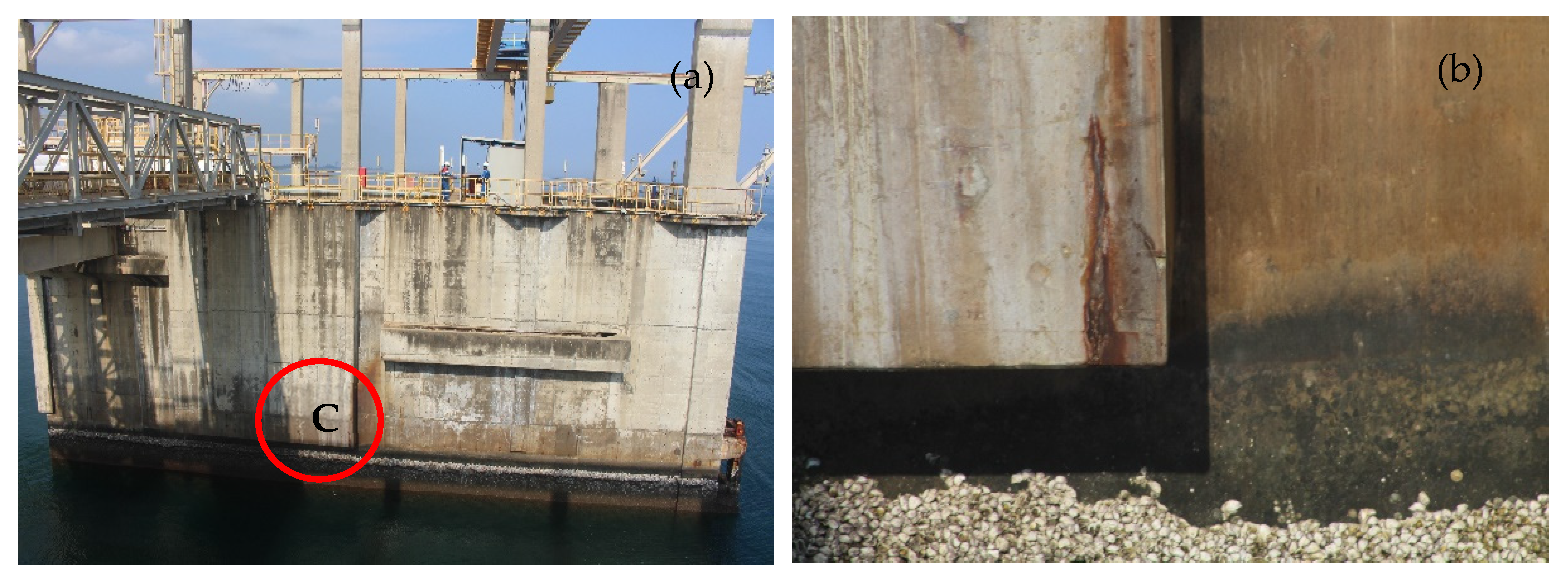
A visual assessment of the Basin B building with a focus on the ground, middle, and upper floors as well as the upper wall and the column above showed that the concrete was in good condition without significant cracks, no porosity, and remained strong. It was also observed that the concrete on the inside of the wall was generally in good condition with only a few fine cracks in some parts as presented in Figure 11. The concrete on the outside of the wall has started cracking due to corrosion of reinforcing steel bars, and spalling was identified in some places as shown in Figure 12. However, the condition of Basin B wall was significantly better than Basin A. The observation also showed that corrosion of reinforcing steel bars on the outside of Basin B wall was in areas with the wet-dry phase due to tidal changes and a similar trend was identified in Basin B. The diameter of the vertical reinforcing bars on the outside of the Basin B wall changed from 25 mm to 20 mm, which led to a 36% reduction in the cross-sectional area. Meanwhile, the diameter of the horizontal reinforcing steel changed from 15 mm to 13 mm to produce a 25% reduction in the cross-sectional area. Corrosion in Basin B was lower than in Basin A which was built five years earlier.

4.1.2. Trestle Slab

A visual assessment of trestle building showed that the concrete was in good condition without any visible cracks or voids and remained strong. There was also no corrosion in reinforcing steel in trestle slab, both on the top and bottom. This was possibly due to the absence of direct contact between the trestle slab and the seawater, as well as the usage of adequate concrete cover thickness varying from 51.70 mm to 90.86 mm, which effectively protected reinforcing steel from corrosion.

4.1.3. Trestle Pier Head

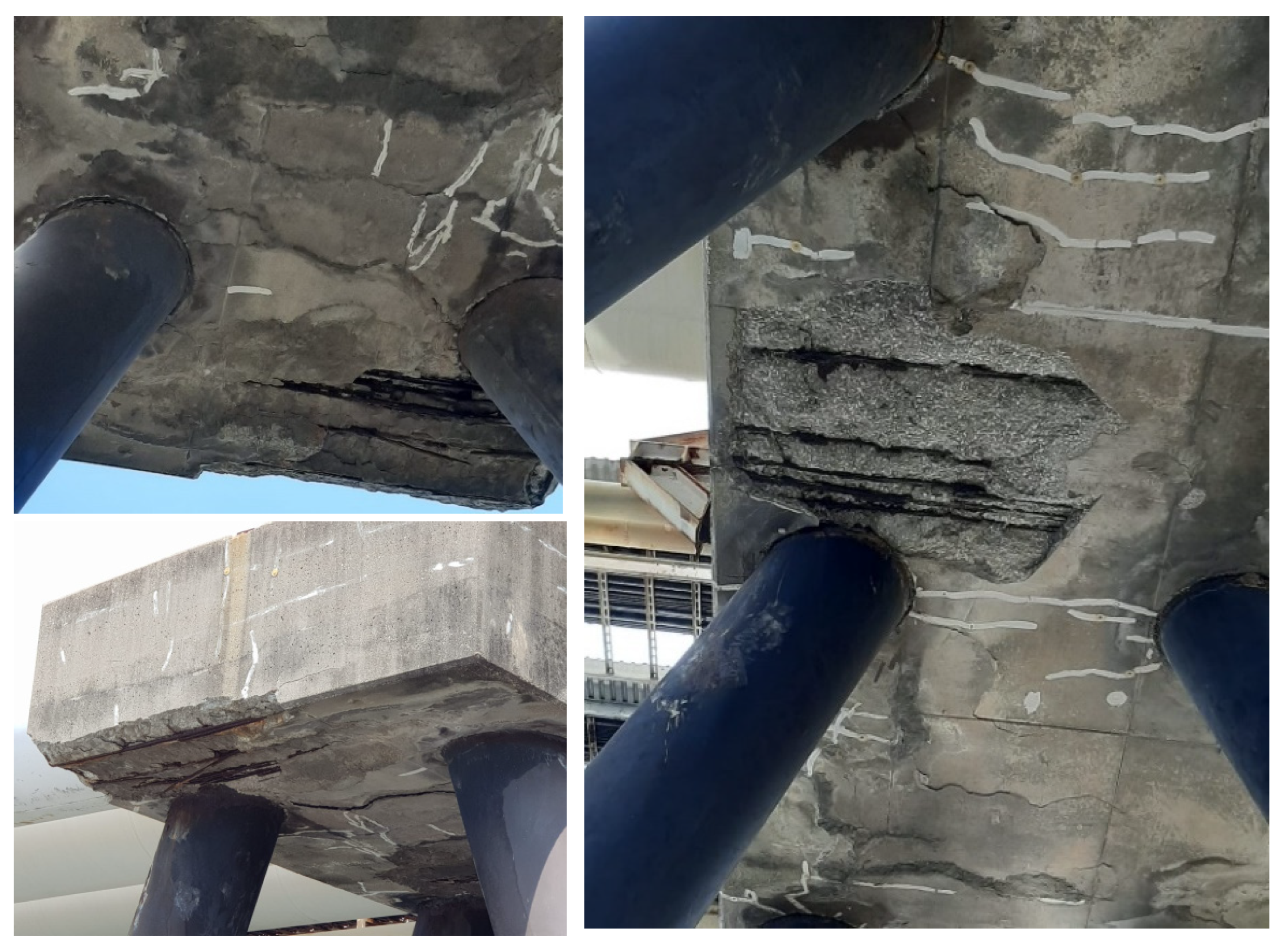
A visual assessment of trestle pier head showed that the concrete on top and sides was in good condition, with no cracks or voids, remains strong, and exhibits no corrosion of reinforcing steel bars. Meanwhile, the concrete at the bottom of 4 pier heads on land (dry area, without sea water below) developed cracks, reinforcing steel bars were severely corroded, and the cover was peeling as shown in Figure 13. The diameter of the outermost layer of flexural reinforcement reduced from 25 mm to 12.7 mm, but the second layer was uncorroded, which led to a 37.1% reduction in the area due to corrosion. The stirrups which were used in the horizontal reinforcement at the bottom of the pier and not intended to resist shear were also severely corroded and some have even broken. However, those on the vertical side of the pier designed to resist shear remained intact due to the absence of corrosion. The bottom of trestle pier heads located offshore had concrete in good condition without visible cracks and reinforcing steel was not corroded.

4.2. Concrete Compressive Strength

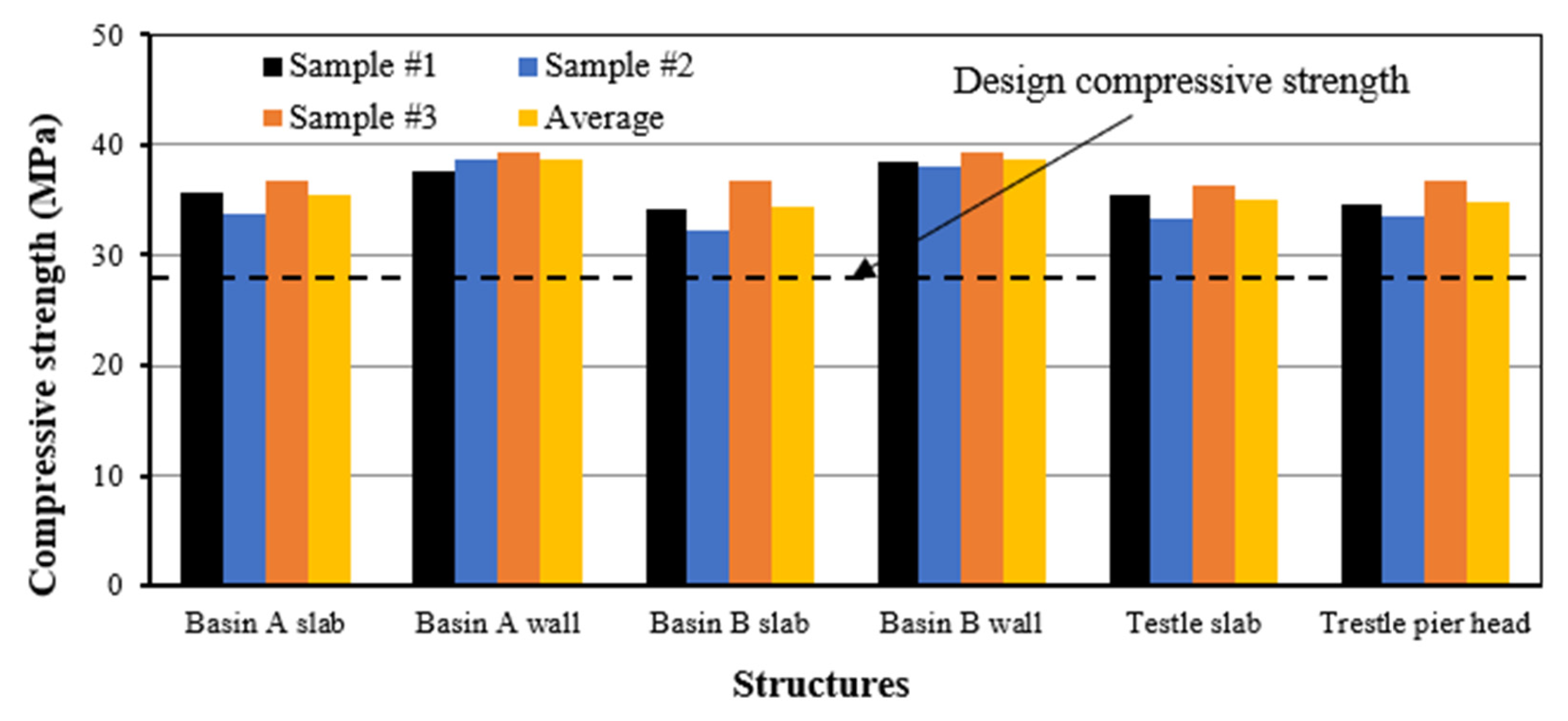
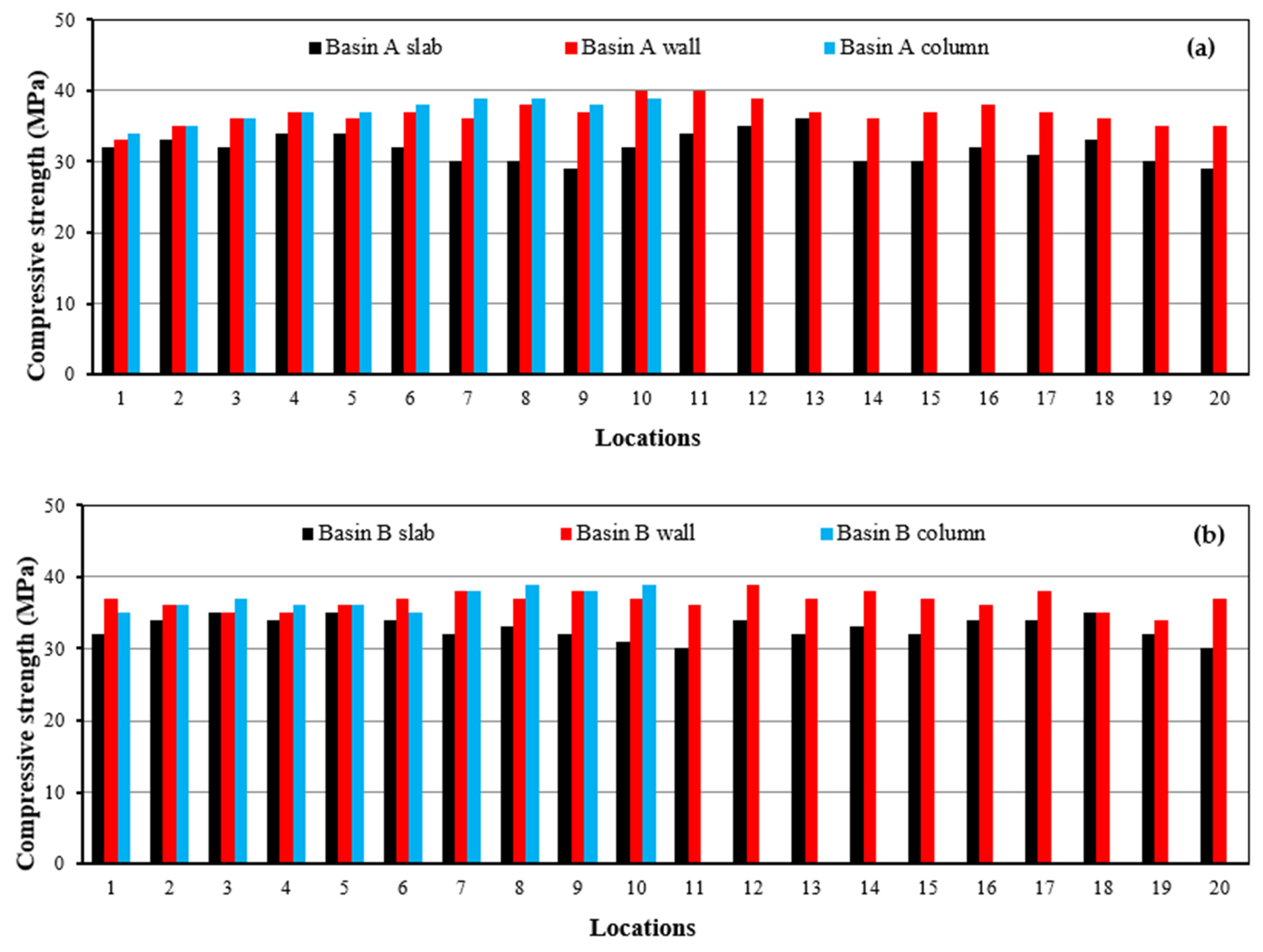
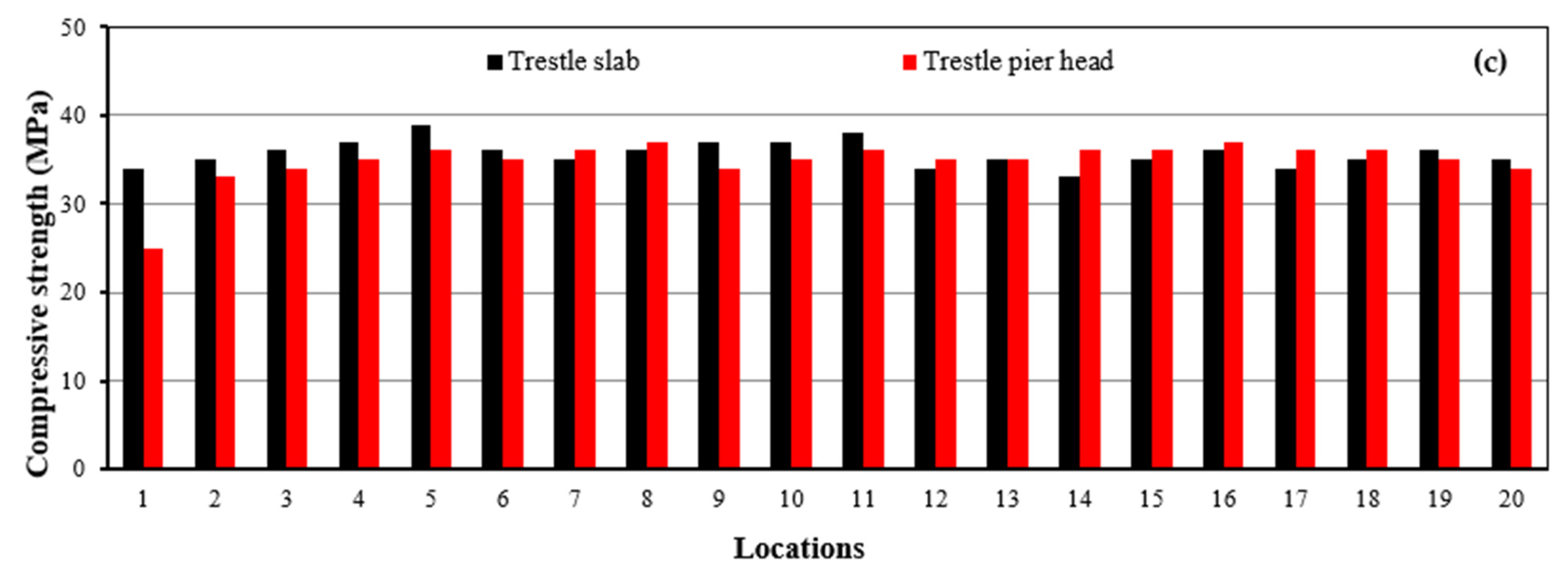
The compressive strength of the concrete cylindrical samples is shown in Figure 14 and derived from the hammer test results in Figure 15. Meanwhile, the pulse velocity obtained from the UPV test is shown in Table 3. The obtained velocity is then converted to elastic modulus and compressive strength, and these values are presented in the same table. All concrete samples have compressive strengths that were greater than the design value. A similar trend observed in the hammer and UPV test results was that no single point tested had a compressive strength lower than the design value. It was also reported that there was uniformity in the compressive strength values recorded. The values for the wall and column elements in the basin structures were greater than those recorded in the slab elements. Therefore, the compressive strength of all structural elements examined was very good and fulfilled the design requirement. This showed there was no degradation in the concrete of the structures examined due to exposure to environmental influences. It is important to note that the concrete samples as well as hammer test were performed in the areas with no corrosion of reinforcing bars.
As described in Section 2, the design concrete compressive strength is 27.57 MPa. Figure 14 shows that the actual compressive strength of concrete is in the range of 32.27 MPa to 39.34 MPa. These data were also supported by the similar finding of compressive strength obtained by the rebound hammer test, with the values in the range of 29 MPa to 40 MPa, while only one data point had a compressive strength of 25 MPa. The compressive strength converted from the UPV test results shows a similar trend, with values in the range of 31.30 MPa to 37.75 MPa. This shows that even though this structure has been exposed for 49 years in a marine environment, the concrete compressive strength is still higher than the design compressive strength, which shows the effectiveness of using Portland cement Type V in structures exposed to a marine environment. Although, as explained in Section 4.1, in certain areas, corrosion of reinforcing bars is still occurring, and the concrete cover has peeled off.

4.3. Carbonation Depth

4.3.1. Basin Structures

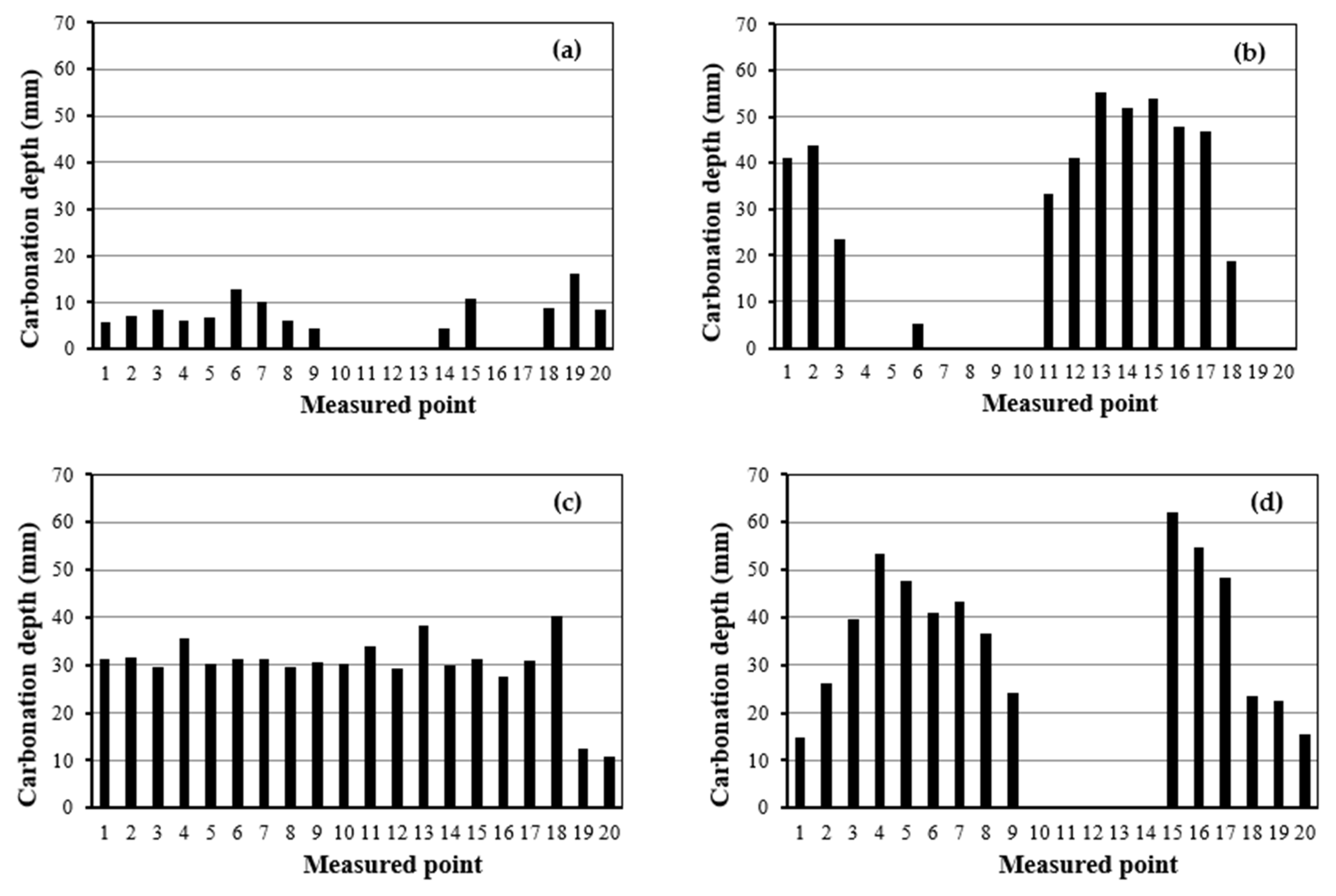
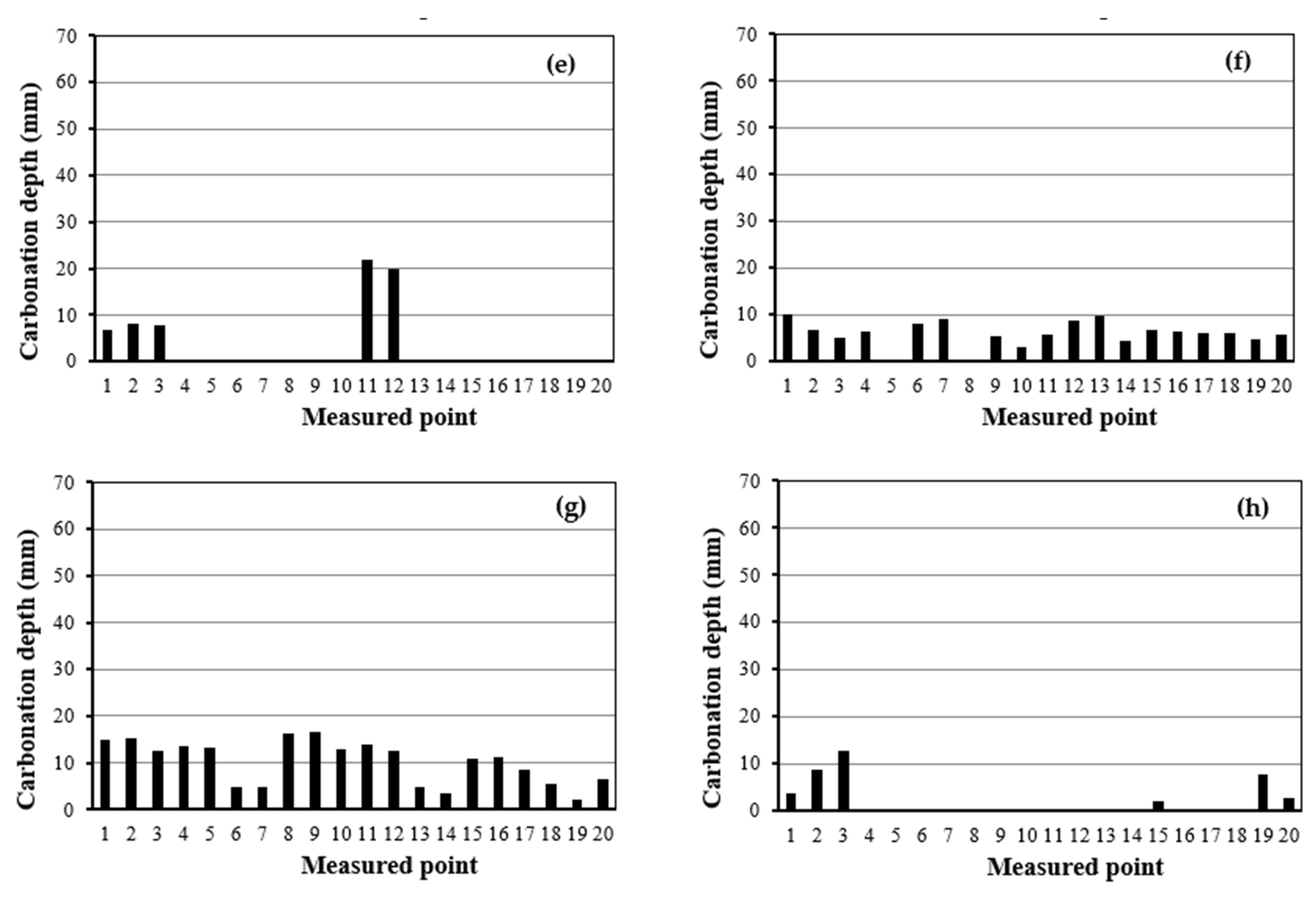
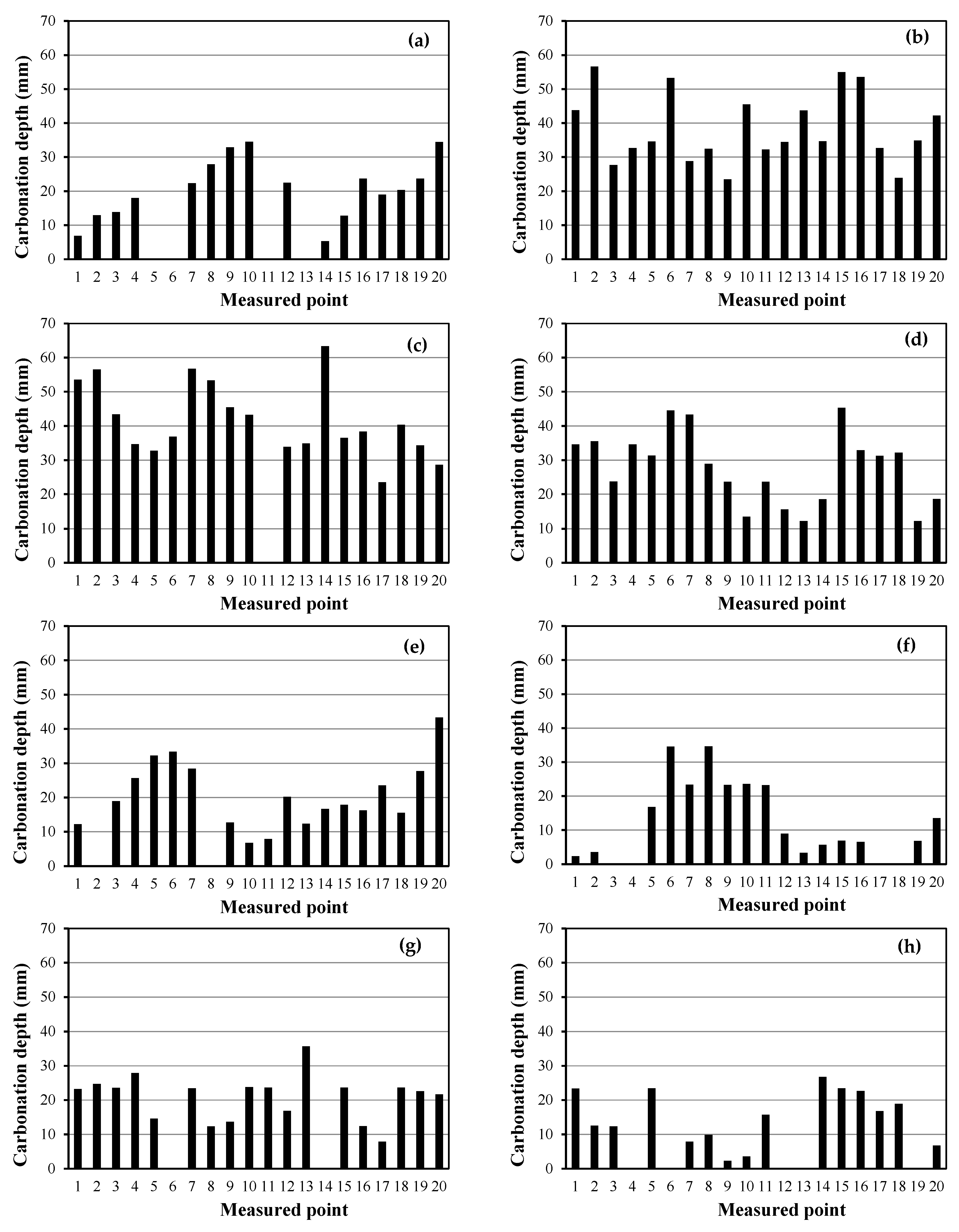
Carbonation depth was measured only on the bottom, middle, and top slabs as well as the inside of the basin structures. The basin outside walls were excluded due to corrosion observed on reinforcing steel. This led to the selection of eight locations as presented in Figure 16 with Points B1–B4 in Basin A and B5–B8 in Basin B. The figure shows that B1 and B5 are on the bottom slab, B2 and B6 on the middle slab, B3 and B7 on the top slab, while B4 and B8 are on the inside wall. Carbonation depth varied from one point to another with Basin A observed to be greater than Basin B. This was because Basin A was constructed 5 years earlier.
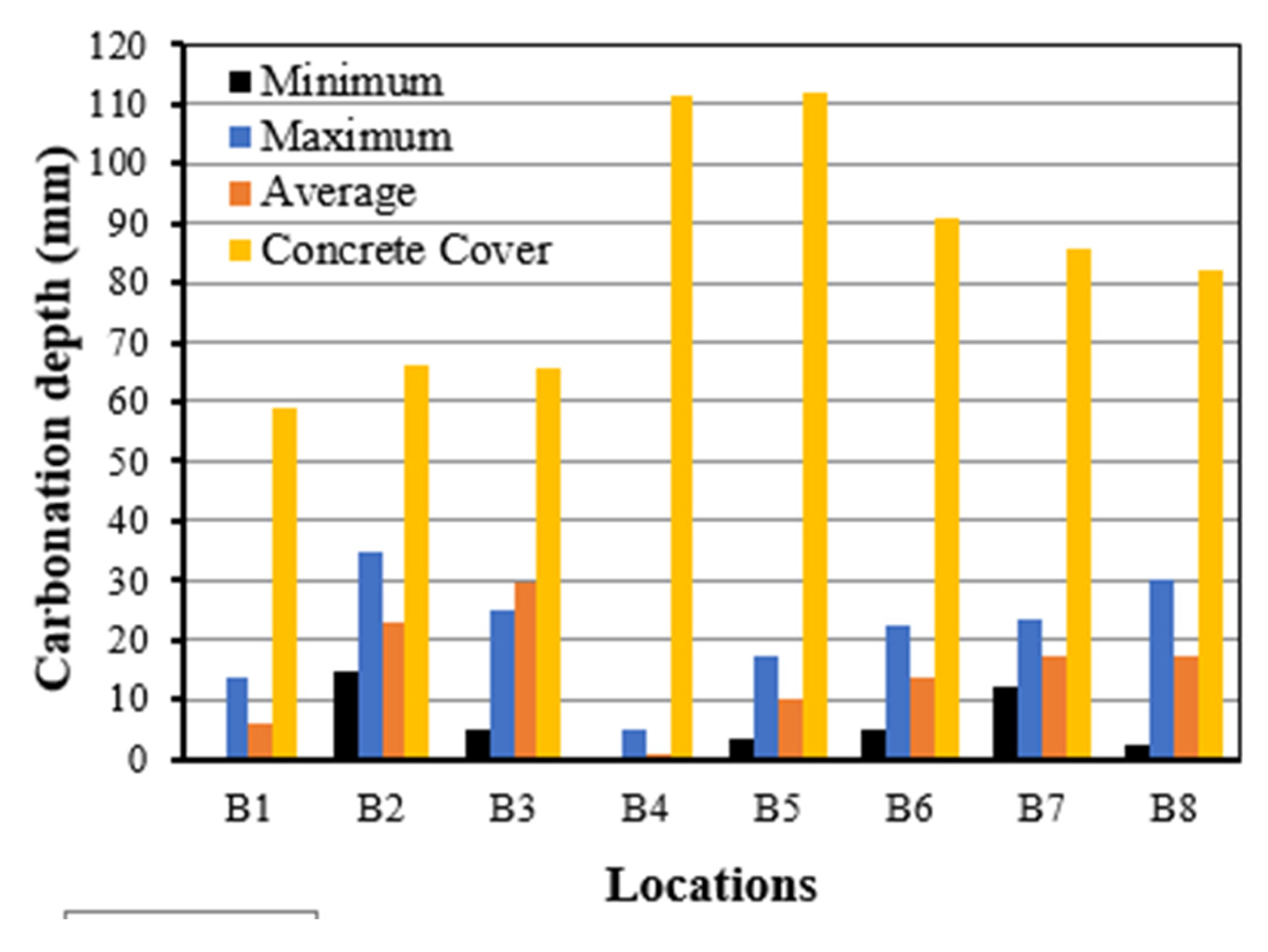
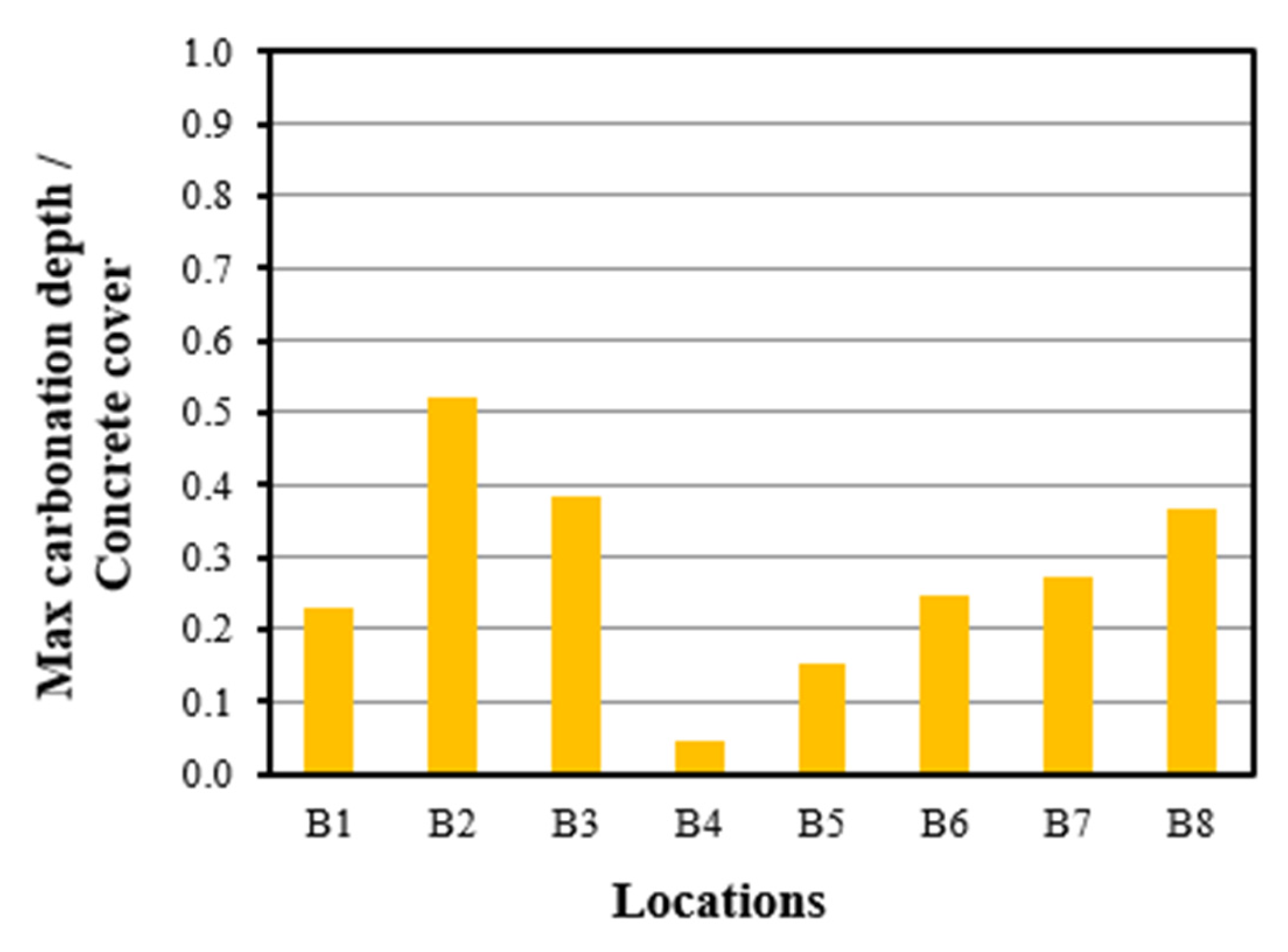
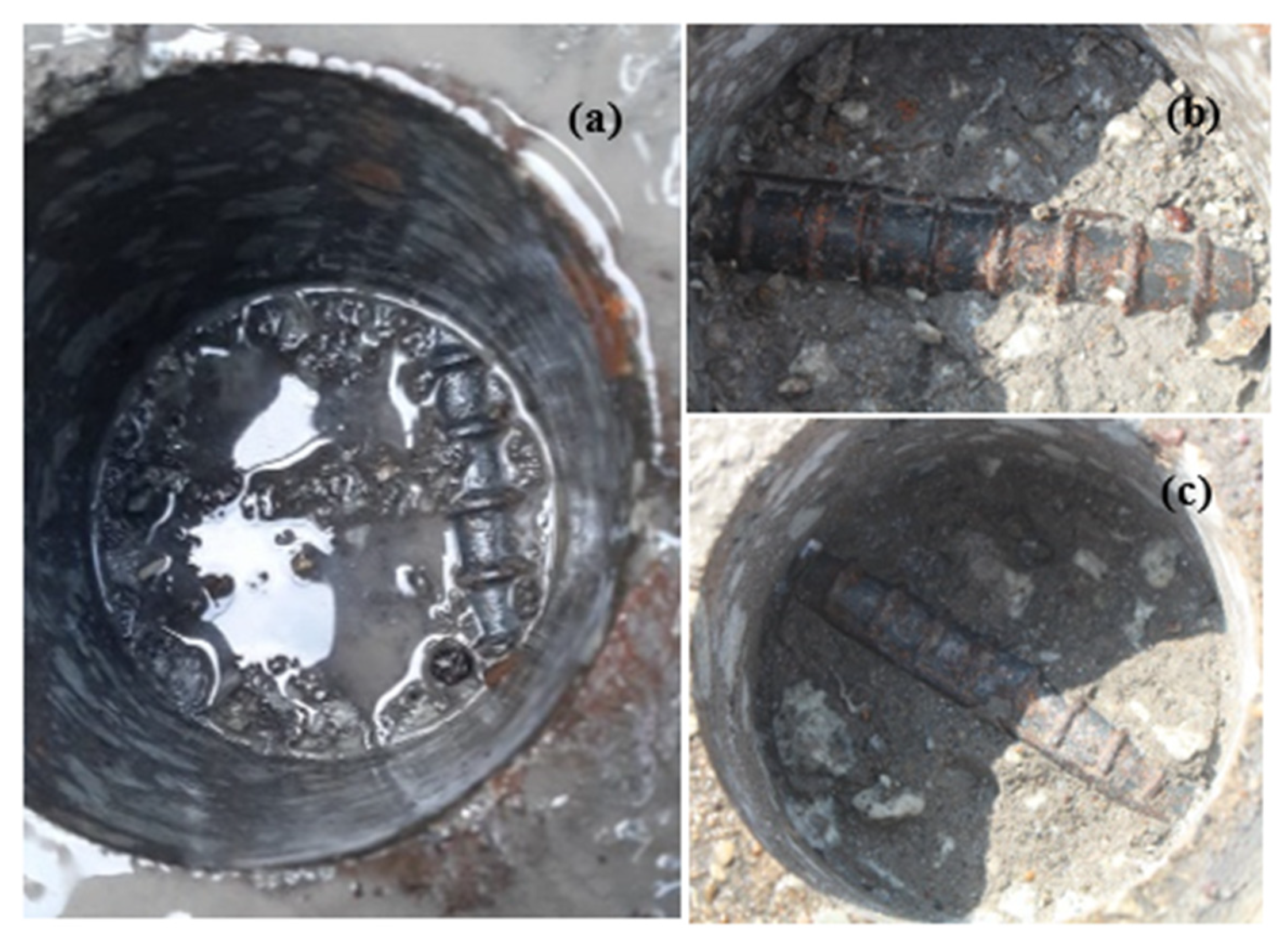
Figure 17 plots the comparison between the minimum, maximum, and average carbonation depth to the concrete cover. It was observed that carbonation depth was significantly smaller than the concrete cover, and the trend showed the effectiveness of using Type V cement in a corrosive environment. The comparison was further clearly presented by plotting the ratio of average carbonation depth to concrete cover in Figure 18. The largest ratio was observed to be 0.52 and recorded at B2, while the value was less than 0.4 at other points. This very small ratio shows the impossibility of reinforcing steel experiencing corrosion in the observed structures as shown in Figure 19a. Using those data and applying Fick’s law, carbonation depth will reach reinforcing bars when the structure reaches 100 years of age [55,56]. This means that during this period, the reinforcing steel is still protected by a passive layer. Meanwhile, a study conducted by Kang et al. [57] stated that there is a very strong correlation between carbonation depth determined with phenolphthalein and carbonation depth determined with confocal Raman microscopy (CRM) image analysis. Using CRM image analysis, the carbonation depth of samples exposed to natural carbonation for 3 months was obtained at 1.4–3.7 mm [57]. Meanwhile, a study by Du et al. [58] stated that there is an exponential relationship between carbonation depth and temperature and a parabolic relationship with humidity. After 28 days, the in situ carbonation depth that occurred was in the range of 2–7.8 mm. By using an accelerated carbonation test, the carbonation depth of concrete can reach 20 mm within 28 days [59].

4.3.2. Trestle Slab

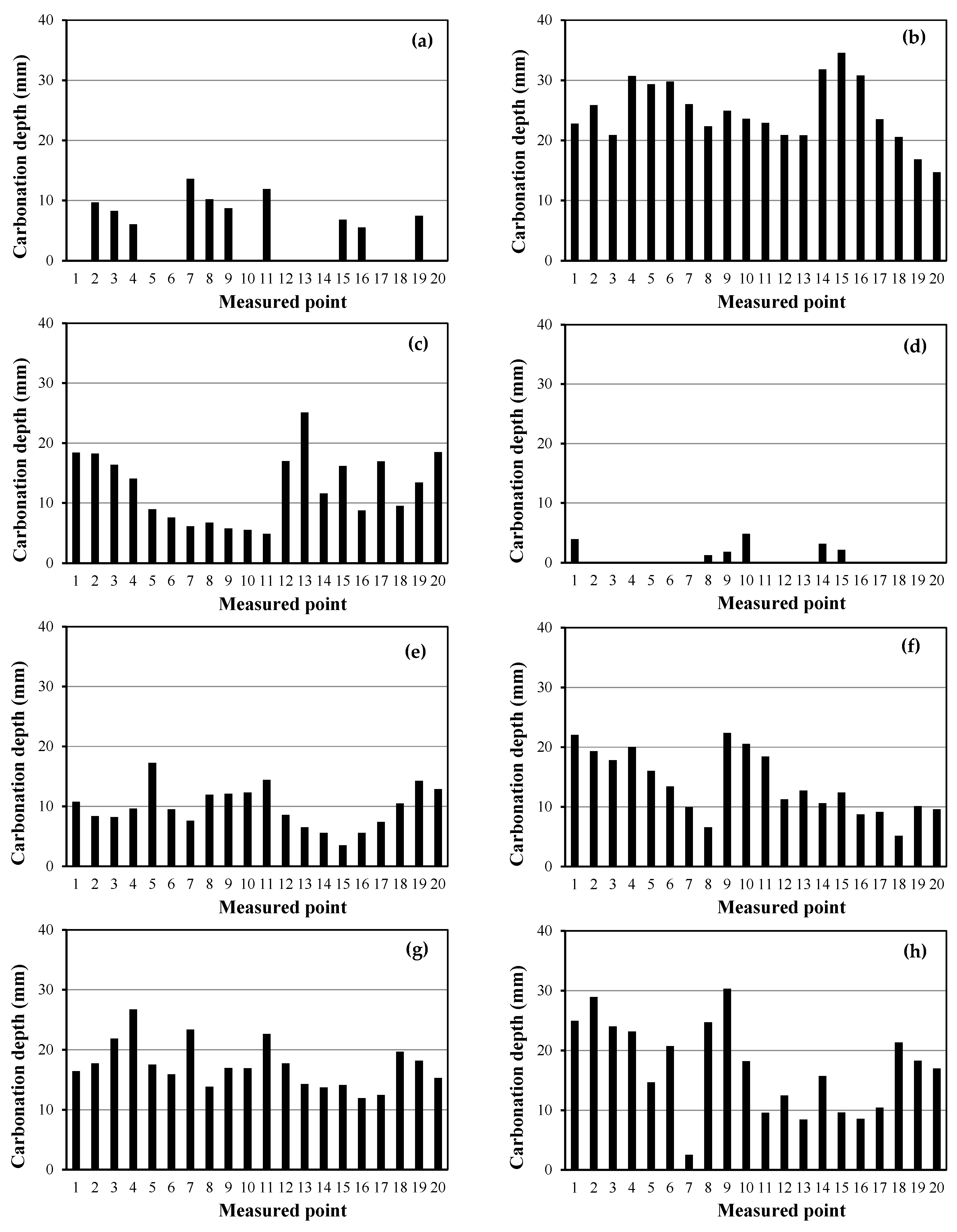
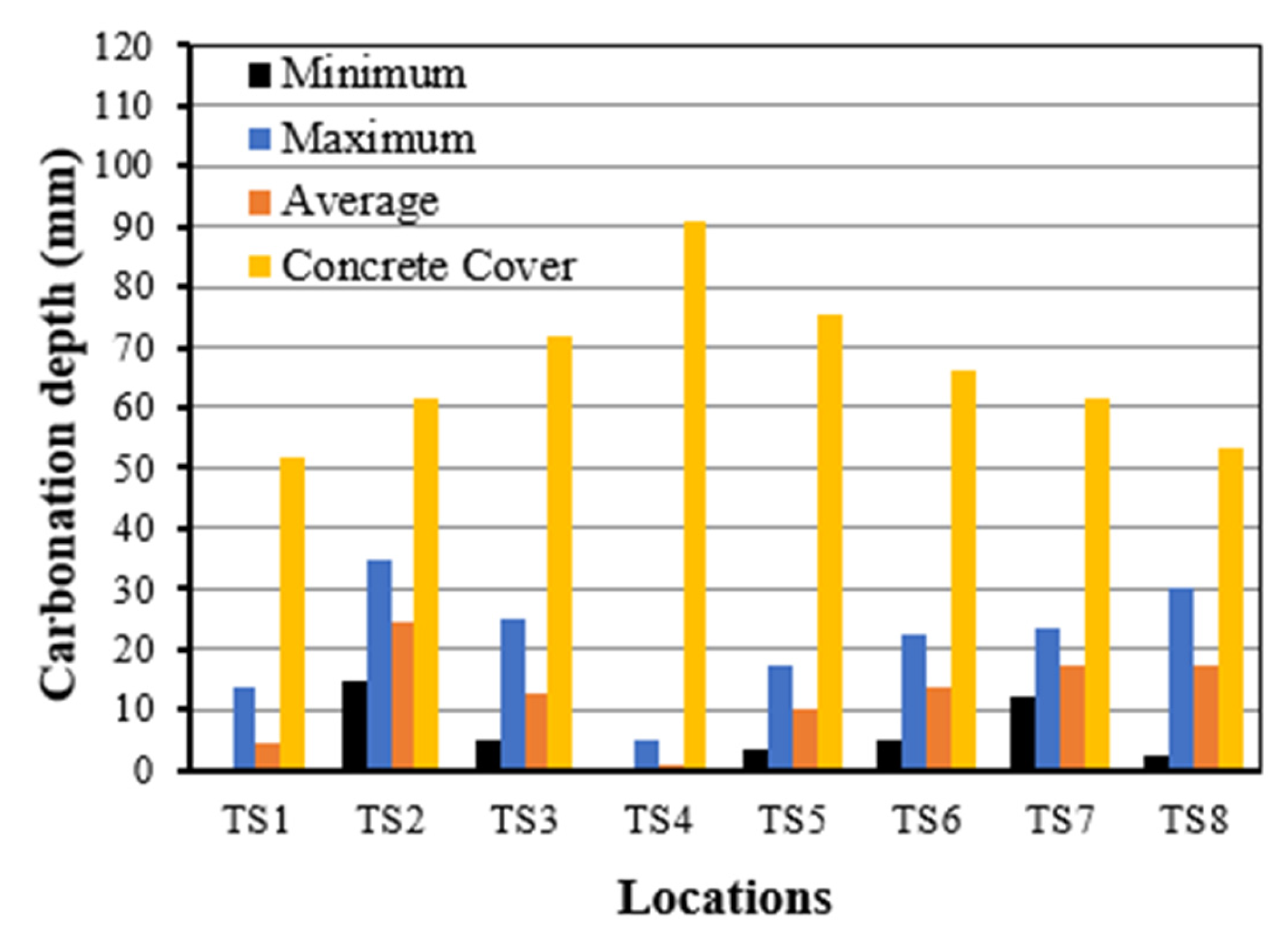
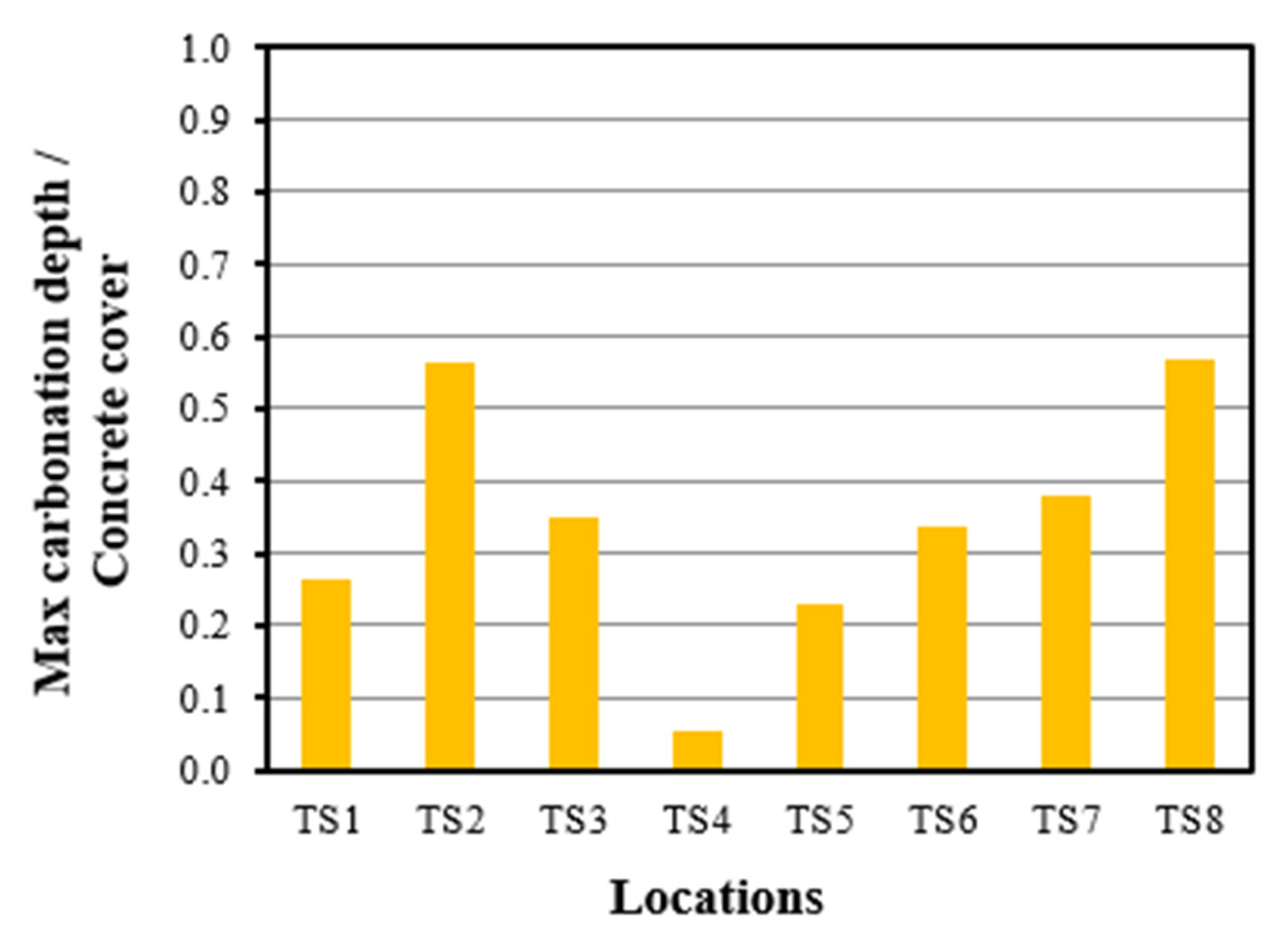
Carbonation depth measured at the eight locations of trestle slab structures (TS1–TS8) is presented in Figure 20. The value varies from one measurement point to another but is considered significantly smaller than the trend in concrete cover as shown in Figure 21. The largest ratio between carbonation depth and concrete cover was 0.57 as presented in Figure 22. This showed the existence of a passive layer protecting reinforcing steel from corrosion in trestle slab as presented in Figure 19b.

4.3.3. Trestle Pier Head

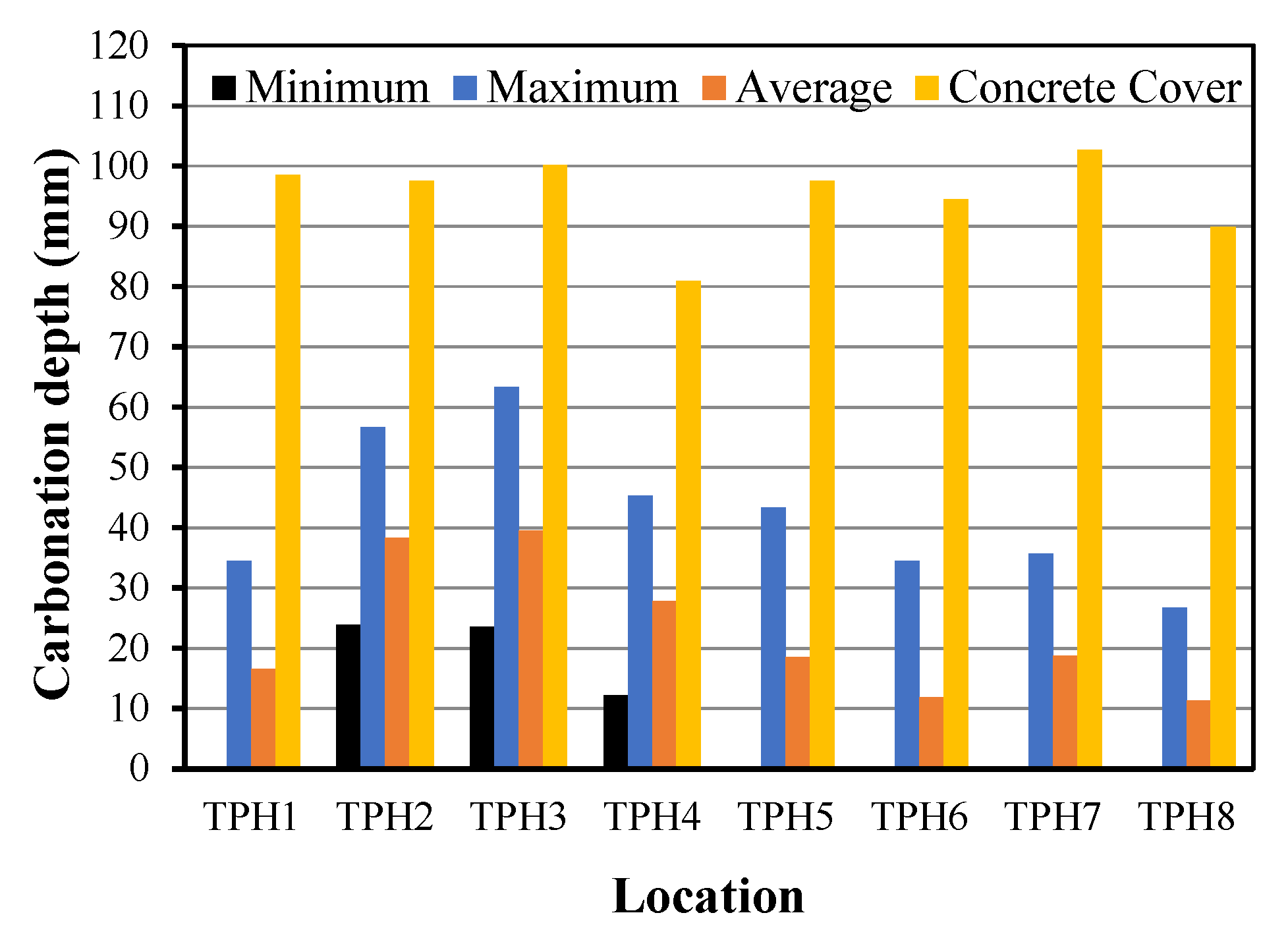
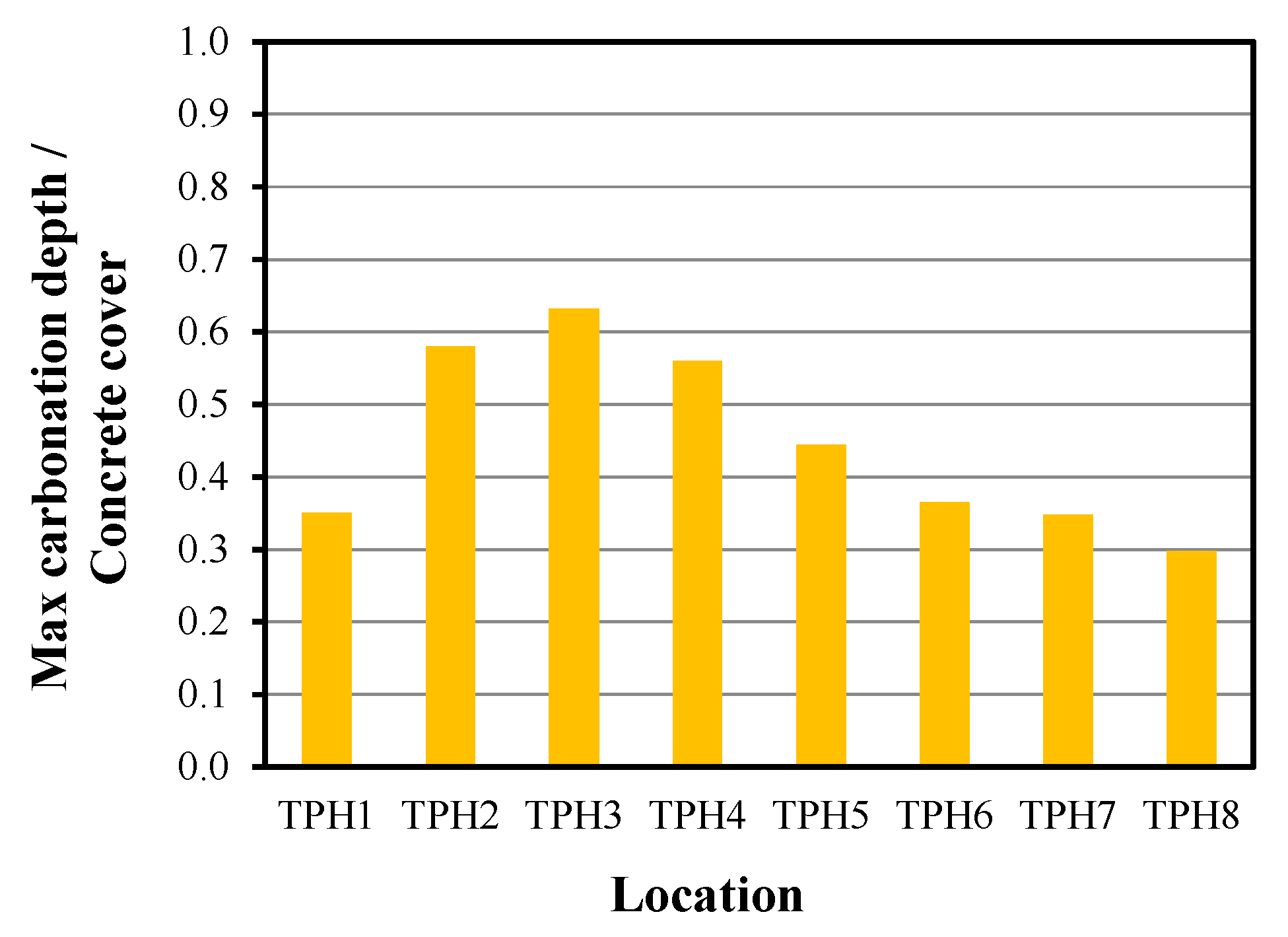
Carbonation depth was measured only on the sides and top of trestle pier head, while the bottom was excluded because reinforcing steel bars had corroded and the concrete cover had spalled. The values obtained from the eight locations analyzed are presented in Figure 23 with a focus on points TPH1–TPH4 on the sides and TPH5-TPH8 on the tops. Carbonation depth varies from one point to another, but the values at the sides were generally higher than the top. The comparison between the minimum, maximum, and average carbonation depth to the concrete cover is presented in Figure 24. The largest ratio between the average carbonation depth and the concrete cover is observed to be 0.63 in Figure 25. These carbonation conditions showed that reinforcing steel on the top and sides of the pier head did not experience any corrosion, as confirmed in Figure 19c.

4.4. Potential Corrosion

Potential Mapping
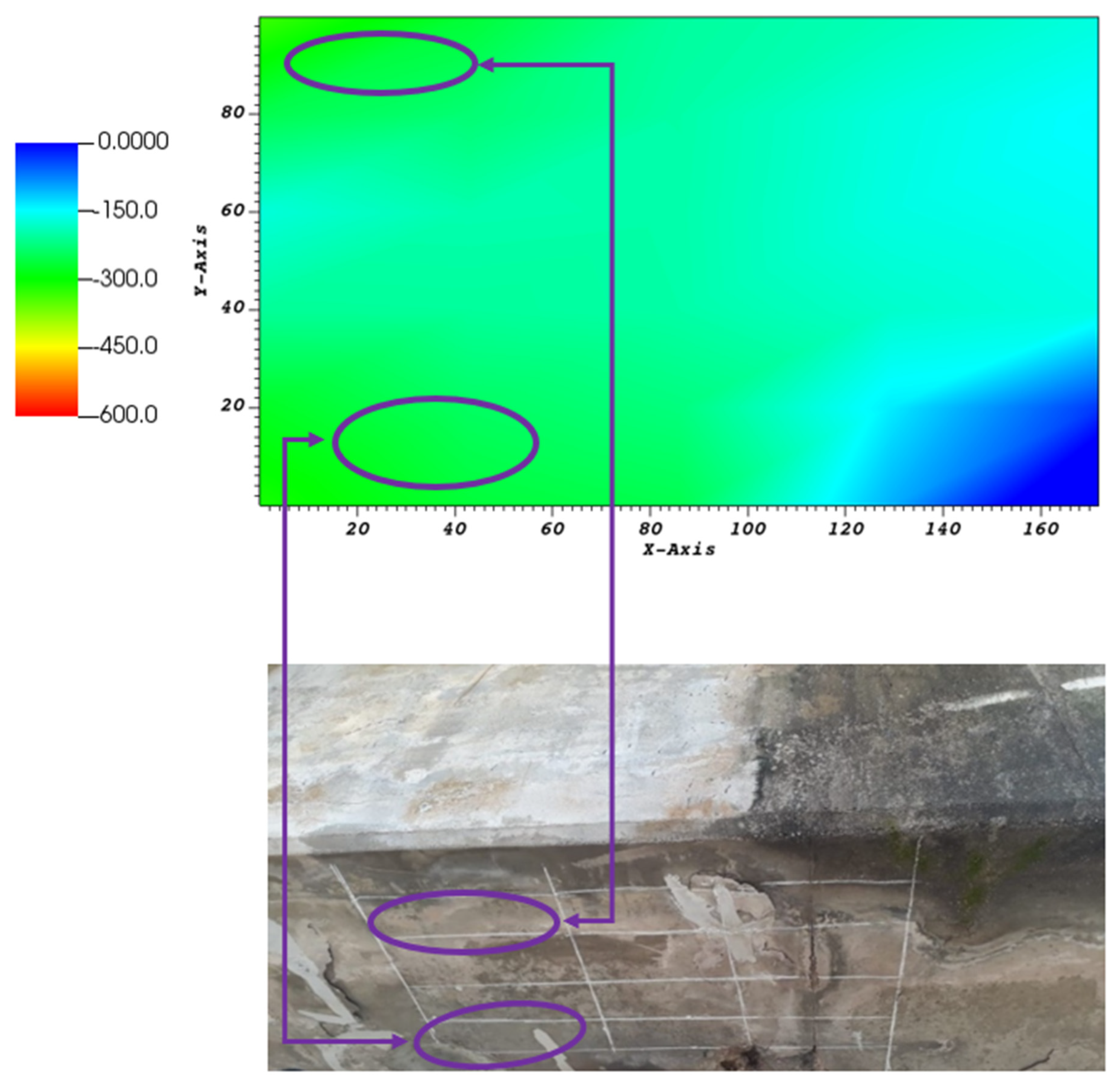
Potential mapping was conducted only in areas where reinforcing steel may experience corrosion, and this led to the exclusion of basin slabs, trestle slab, and the top of trestle pier head. Moreover, the analysis was also not focused on areas where reinforcing steel was severely corroded and caused the spalling of the concrete cover. This showed that the mapping was only on the inside of the Basin A wall near the slightly corroded point shown in Figure 9, the inside of the Basin B wall in the area with fine cracks in Figure 11, and the bottom of trestle pier head without visible corrosion. ASTM C876-15 divides corrosion level criteria for reinforcing steel into four levels which include (a) low when the potential value is greater than (−200) mV, (b) medium at (−200) mV to (−350) mV, (c) high at (−350) mV to (−500) mV, and (d) very high at less than (−500) mV [54].
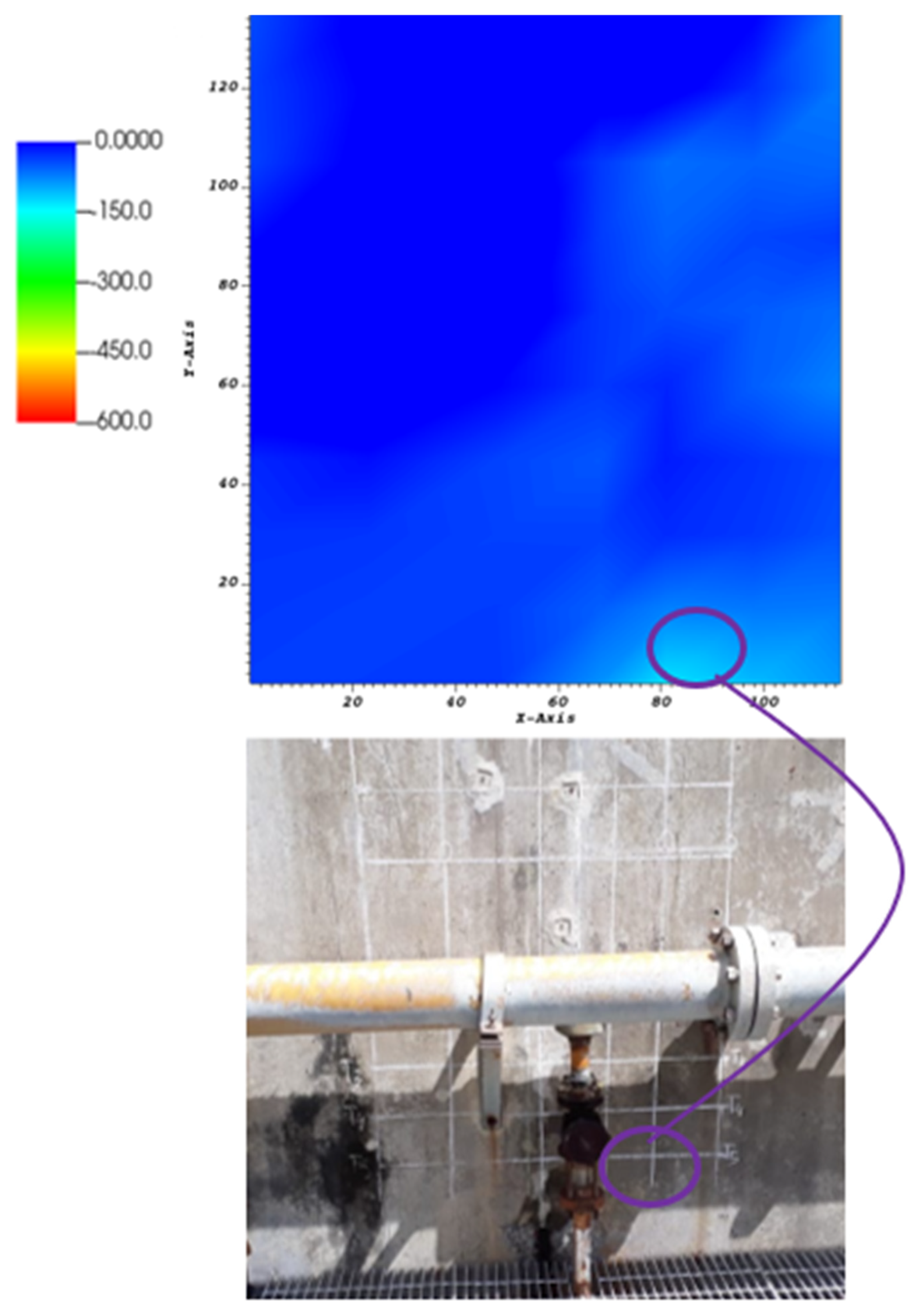
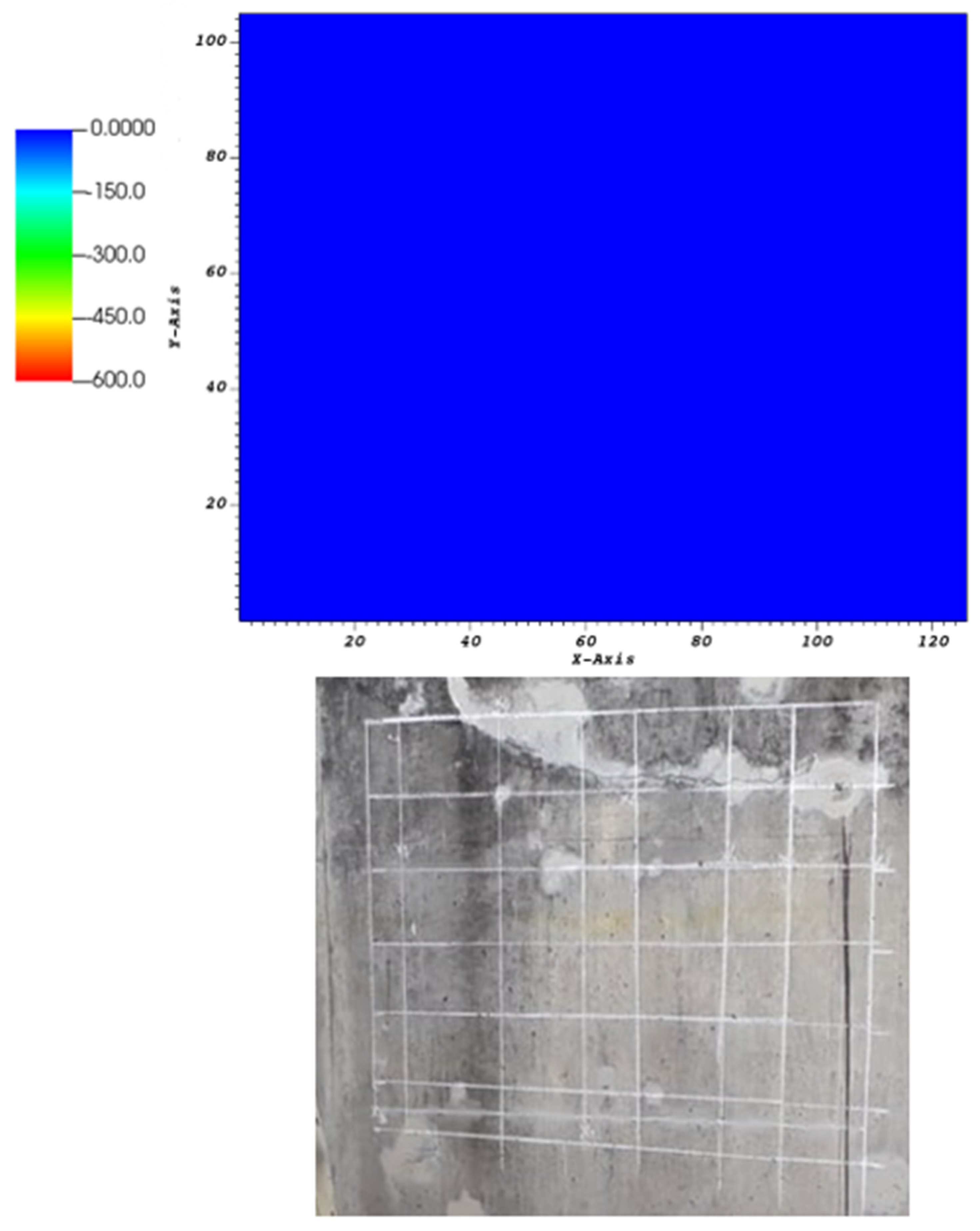
Figure 26 shows the potential distribution on the inside of Basin A wall with an area of 115 × 135 cm2. The potential values obtained based on 54 measurement data sets ranged from (103) mV to (−134) mV and were classified as low corrosion level in line with ASTM C876-15 criteria. Figure 27 shows the potential distribution on the inside of Basin B wall determined using 56 data sets, and the values ranged from (646) mV to (103) mV. ASTM C876 criteria led to the classification of the Basin B wall as a low corrosion level. Figure 28 shows there is no visible corrosion at the lower area of trestle pier head which is measured to be 172 × 100 cm2. This distribution was obtained from 20 potential measurement data sets, and the values ranged between (79) mV to (−336) mV, which were classified based on ASTM C876-15 criteria as a low to medium corrosion level despite being invisible.

5. Repairing and Strengthening Proposal

5.1. Basin Structures

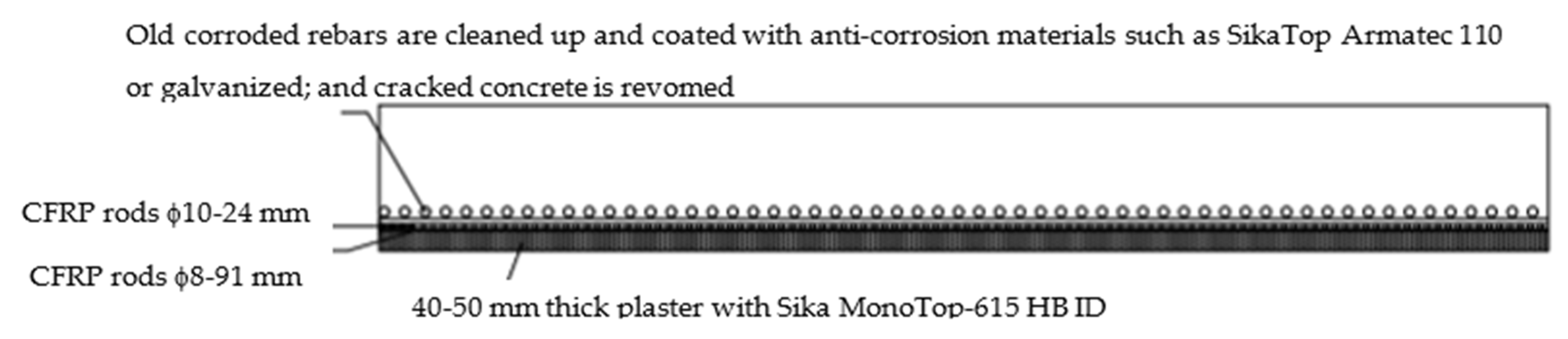
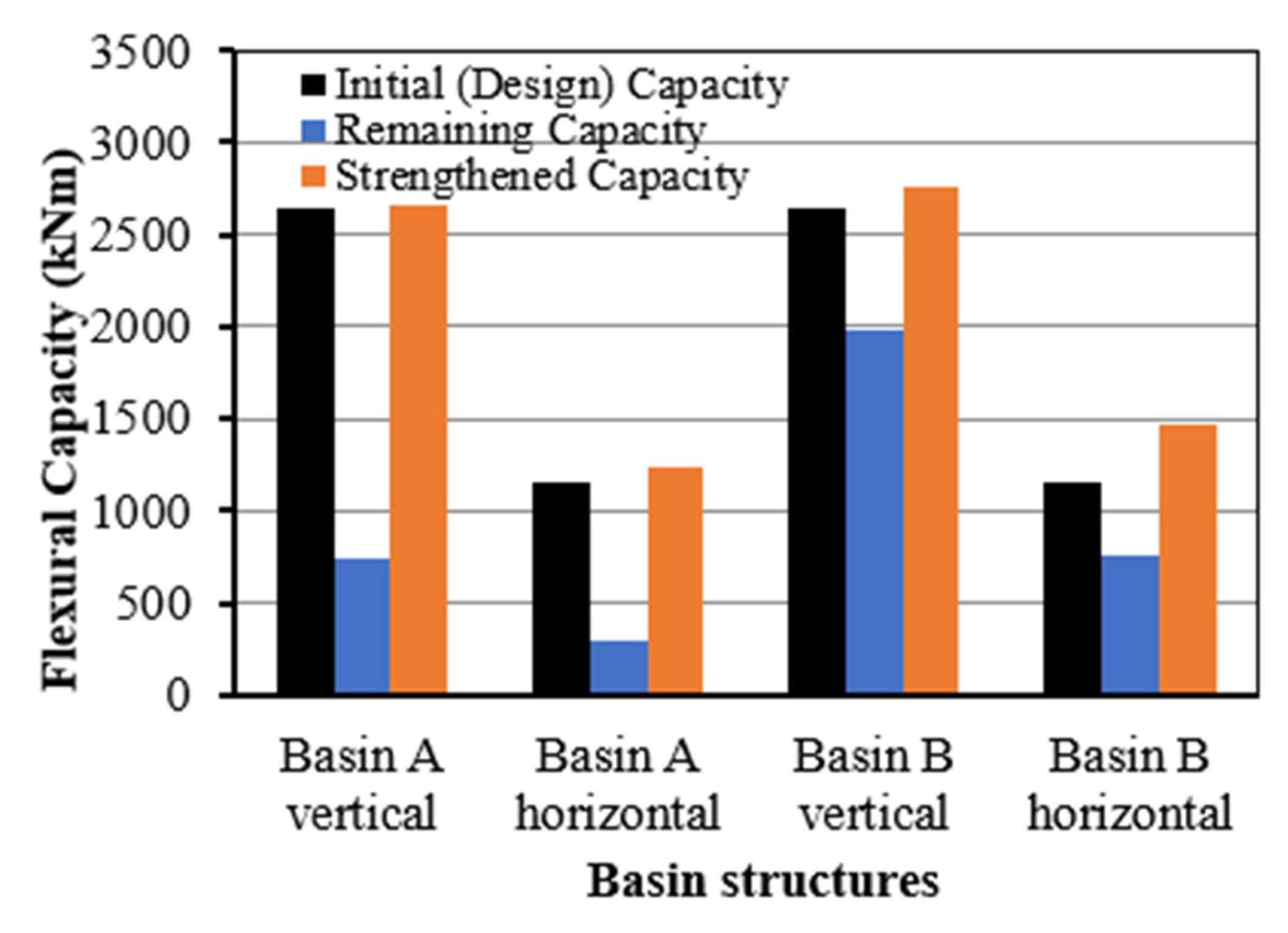
Details A and B on the outside of the trestle wall of Basin A were previously explained in Figure 10 to have experienced a reduction in the diameter of the vertical reinforcing steel from 25 mm to 7.5 mm and in the horizontal direction from 15 mm to 6 mm. This led to the degradation of the flexural capacity (ϕMn) of the Basin A wall at the location. The ratio of the initial and remaining flexural capacity per m of width is shown in Figure 29. There is a need to return the flexural capacity of the basin wall to the initial condition, and this is proposed to be achieved by strengthening the structure. Therefore, Carbon Fiber Reinforced Polymer (CFRP) rods with a diameter of 10 mm were recommended to be installed at every 24 mm in the vertical direction and 8 mm diameter at every 91 mm in the horizontal direction as shown in Figure 30. CFRP rods used have an ultimate tensile strength of 3100 MPa and an ultimate strain of 1.7 mm/mm. The material was selected due to its resistance to sulfate and chloride. The flexural capacity of the Basin A wall after the strengthening was calculated using the equation recommended by ACI 440.2R-17 [60] and plotted in Figure 29.
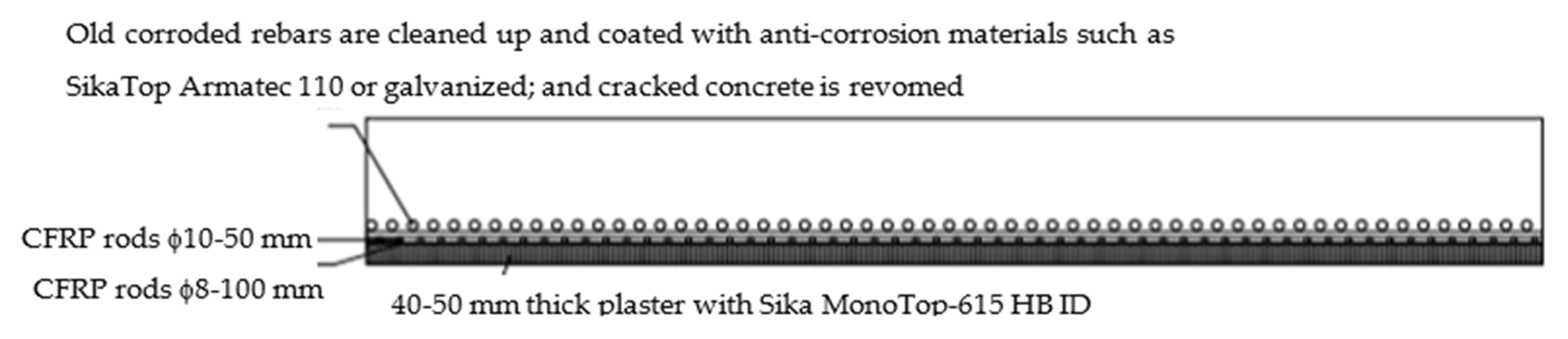
The outside of the Basin B wall experienced a reduction in the diameter of reinforcing steel in the vertical direction from 25 mm to 20 mm and in the horizontal direction from 15 mm to 13 mm as shown in Figure 14. This led to the degradation in the flexural capacity as presented in Figure 29. Therefore, the structure was proposed to be strengthened by installing CFRP rods with a diameter of 10 mm at every 50 mm in the vertical direction and 8 mm diameter at every 100 mm in the horizontal direction as shown in Figure 31. The flexural capacity of Basin B wall after the strengthening is plotted in Figure 29.
The application of the proposed methods for repairing and strengthening of the wall structures in Basins A and B is based on certain steps. The initial step is to dismantle all damaged concrete cover on an area of 5 × 17.5 m2 in detail A and 2.5 × 12.5 m2 in detail B on the Basin A wall as well as 4 × 17.5 m2 on Basin B wall. The next step is to clean the corroded area on reinforcing steel bars and galvanize the remaining using the hot dip method in accordance with ASTM A123/A123M-15 and ASTM A153/A153M-16a [61,62]. The minimum requirement is to coat reinforcing steel with an anti-corrosion material such as SikaTop Armatec-110 EpoCem. This is a cementitious, epoxy resin-compensated 3-component coating material with corrosion inhibitor often used as a bonding primer and reinforcement corrosion protection. Therefore, the cleaning process is followed by the coating of the concrete with SikaTop Armatec-110 EpoCem. The next step is to plaster the concrete with a 1:2 ratio using Type V cement or coat with Sika MonoTop-615 HB ID up to the period the surface was level. Sika MonoTop-615 HB ID is a cementitious, polymer-modified, one-component repair mortar containing reactive micro-silica and ideal for repairing damaged and spalled concrete caused by reinforcement corrosion. CFRP rods are subsequently installed on the leveled surface using epoxy adhesive. The concrete surface is then coated with another layer of SikaTop Armatec-110 EpoCem and finally covered with a 1:2 ratio plaster using Type V cement or Sika MonoTop-615 HB ID up to the moment the surface is level. The exterior walls of Basins A and B as well as the interior walls with uncorroded reinforcing steel bars are simply coated with sulfate- and chloride-resistant mortar such as Sika MonoTop-615 HB ID to prevent corrosion.
The inner wall section had corroded areas, but the diameter of reinforcing steel did not reduce compared to the period the structure was constructed, as shown in Figure 11. The wall is repaired by dismantling the concrete cover and cleaning the rust on reinforcing steel. This is followed by coating reinforcing steel bars with anti-rust material such as SikaTop Armatec-110 EpoCem or galvanizing them. The concrete was re-plastered with sulfate and chloride-resistant material such as Sika MonoTop-615 HB ID. Meanwhile, the wall section exhibited fine cracks and reinforcing steel was not corroded, as shown in Figure 13. The section is repaired by injecting epoxy resin into the cracks using the low-pressure injection method.

5.2. Trestle Slab

The compressive strength of the concrete satisfied requirements because there were no cracks on the surface, reinforcing steel was not corroded, and the maximum carbonation depth on the top surface of trestle slab was in the range of 5.32 to 56.92% of the concrete cover thickness as shown in Figure 20, Figure 21 and Figure 22. This showed there was no need for any intervention on the top surface of trestle slab. Meanwhile, the concrete surface on the underside of the trestle slab is coated using Sika MonoTop-615 HB ID material which had the properties of resisting chloride and sulfate ions. This is necessary because the underside was in direct contact with seawater and there is a need to prevent deeper carbonation and rusting of reinforcing steel bars.

5.3. Trestle Pier Head

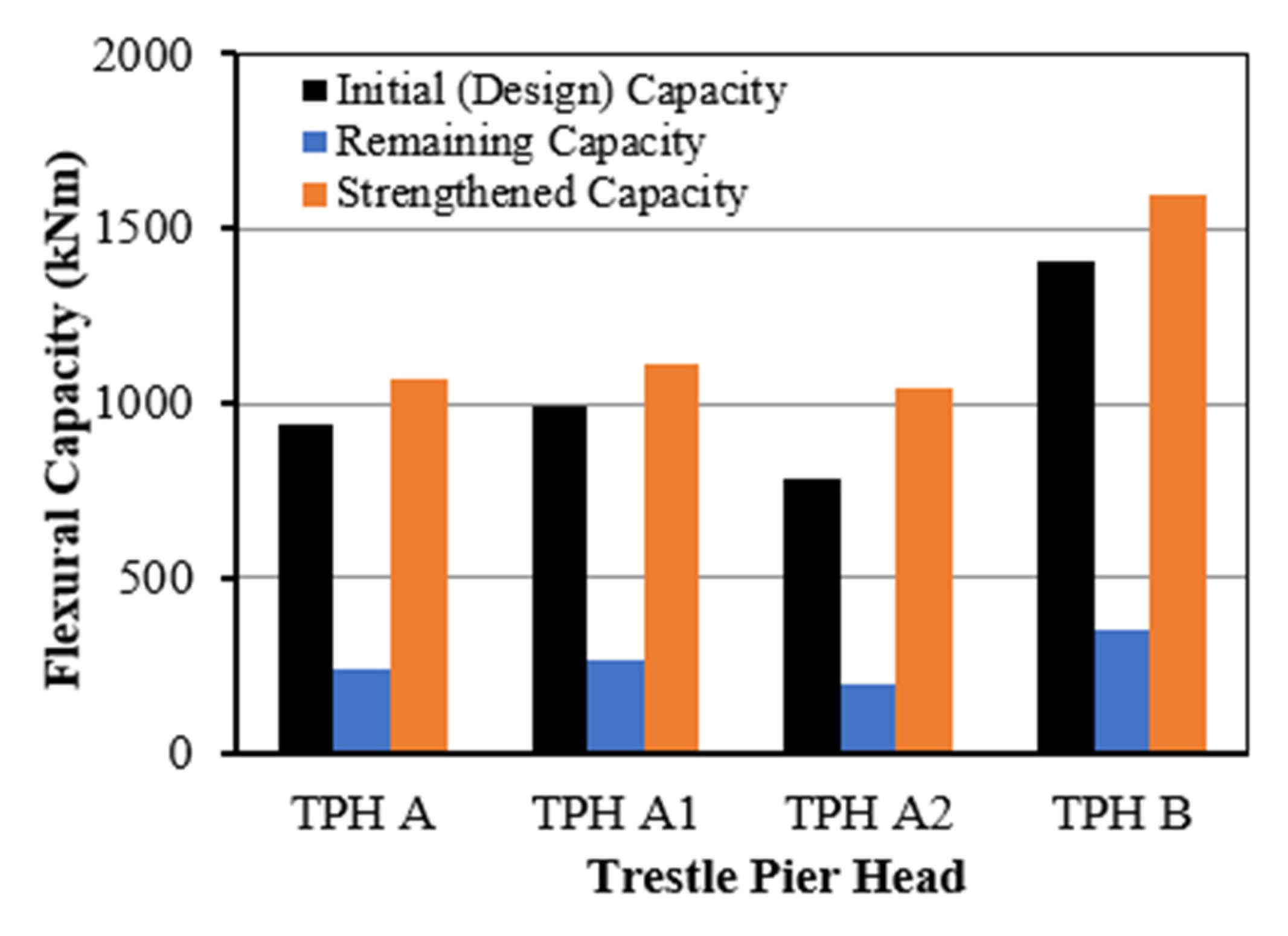
Previous explanation and images in Figure 23, Figure 24 and Figure 25 showed the absence of cracks on the top and sides of the trestle pier head. It was also observed that the concrete compressive strength satisfied the requirements, there were no cracks on the concrete surface, and reinforcing steel had not corroded. The maximum carbonation depth on the top surface of the trestle slab was in the range of 29.75 to 63.21% of the concrete cover thickness. This showed that the top and sides of trestle pier head did not require any repair. Meanwhile, the outer longitudinal reinforcing steel bars of bottom side of the four trestle pier head structures located in land were corroded and led to a reduction in diameter from 25 mm to 12.7 mm as shown in Figure 13. The longitudinal reinforcing steel in the inner layer did not experience corrosion, and the flexural capacity was degraded as shown in Figure 32. The diameter of the stirrup was reduced, and some had broken, but the shear capacity of trestle pier head structures did not experience degradation. This was because the loss of stirrup diameter was at the bottom area and not on the sides or vertical part. However, the vertical stirrup reinforcement was intact due to the absence of corrosion in the part. The trend reflected the need to reinforce trestle pier head structures with a focus on restoring the flexural capacity to the original condition. The trend also showed there was no need for shear reinforcement.
The method proposed for strengthening four corroded trestle pier head structures required using a CFRP wrapping system consisting of CFRP sheets with a thickness of 0.167 mm and a width of 600 mm installed in a single layer as shown in Figure 33. The CFRP sheets used have an ultimate tensile strength of 4300 MPa and an ultimate strain of 0.018 mm/mm. The process is initiated by removing and cleaning the cracked concrete cover. This is followed by the cleaning of corrosion on reinforcing steel bars and galvanization of the remaining part using the hot-dip method in accordance with ASTM A123/A123M-15 and ASTM A153/A153M-16a [61,62]. The minimum required is to coat reinforcing steel bars with a material similar to SikaTop Armatec-110 EpoCem. The cleaning of the concrete is followed by coating with SikaTop Armatec-110 EpoCem, and galvanized wire mesh is installed. The next step is to coat the concrete with 1:2 plaster using type V cement or Sika MonoTop-615 HB ID material up to the moment the surface was flat and the thickness returned to the original state. The CFRP sheet is installed on the flat surface using epoxy adhesive. Meanwhile, the lower surface of the other trestle pier head structures which had no corroded reinforcing steel or cracks is coated with Sika MonoTop-615 HB ID as an effort to prevent corrosion.

6. Conclusions

In conclusion, the 49-year-old marine reinforced concrete structures in the gas processing industry were evaluated through a visual assessment and non-destructive tests in the form of a rebound hammer, ultrasonic pulse velocity, and potential corrosion mapping. A total of three structures were assessed, including two basins and a trestle constructed using Portland cement type V as the concrete binder. The observations from the assessments conducted are presented as follows:
  • Carbonation depth was only measured in areas where reinforcing steel bars had not corroded. The results for the slab and columns of the basin structures showed that the range was from 0 to 52% of the concrete cover. Meanwhile, the trestle slab recorded 0 to 57% of the concrete cover and 0 to 63% for the top and sides of trestle pier head. This showed that a sufficient passive layer existed to protect reinforcing steel from corrosion and ensure a very good condition was maintained.
  • Corrosion of reinforcing steel occurred locally and was observed specifically on the outside of the basin walls in areas where tidal activity was present to cause wet and dry cycles. For the trestle building, corrosion only occurred on the bottom of the trestle pier head where seawater was present in some cases and absent due to the tides in other cases. Corrosion was very severe as observed in the cracks and spalling of the concrete cover and the significant reduction in the diameter of reinforcing bars.
  • There was no significant corrosion on the inside of the basin walls, but a very small area was observed in Basin A without a reduction in the diameter of reinforcing steel bars. Fine cracks were also observed in some areas inside the Basin B wall. Corrosion potential test conducted showed a low level in both basin walls and a low to medium level on the bottom side of the trestle pier head.
  • Rebound hammer, ultrasonic pulse velocity, and compression tests applied to the samples showed that the actual compressive strength of the structures was above the design value.
  • The effort to restore the load-bearing capacity of the structures to the design condition led to the strengthening of the outside of the corroded Basin A wall by installing CFRP rods with a diameter of 10 mm at every 24 mm in the vertical direction and 8 mm diameter at every 91 mm. On the outside of the corroded Basin B wall, reinforcement is conducted using CFRP rods with a diameter of 10 mm installed every 50 mm in the vertical direction and 8 mm every 100 mm in the horizontal direction. A similar process is conducted at the bottom of the corroded trestle pier head using a CFRP wrapping system which consisted of CFRP sheets with a thickness of 0.167 mm installed over a width of 600 mm in a single layer. The method required removing all cracked concrete cover, cleaning corrosion on reinforcing steel bars, and galvanizing the remaining part using the hot dip method or coating with epoxy resin with corrosion inhibitor. Reinforcing steel bars are subsequently covered with cementitious, polymer-modified repair mortar containing reactive micro-silica before applying CFRP rods or sheet.

Author Contributions

Conceptualization, M.H. and T.S.; methodology, M.H., S.F. and T.S.; investigation, M.H., S.F., P.H., F.B., A.M. and M.; software, S.F., R.D. and A.M.; validation, M.H., S.F. and T.S.; resources, M.H., F.B. and R.D.; data curation, P.H., A.M. and M.; writing—original draft preparation, M.H. and S.F.; writing—review and editing, M.H., S.F. and T.S.; visualization, M.H., S.F. and A.M.; supervision, T.S.; funding acquisition, M.H. All authors have read and agreed to the published version of the manuscript.

Funding

This study was funded by the Research and Community Service Center (LPPM), Universitas Syiah Kuala (contract number: 121/UN11.2.1/PT.01.03/PNBP/2023).

Data Availability Statement

The study data are available upon request to the first author.

Acknowledgments

The authors are very grateful to PT. Perta Arun Gas Lhokseumawe for financial support and for providing the necessary infrastructure. Muhammad Nasir, Ritzky Fachri, and Mohammad Kautsar are also appreciated for the assistance provided with the site assessment.

Conflicts of Interest

Author Fachrurrazi Bukhary was employed by the company PT. Perta Arun Gas. The remaining authors declare that the research was conducted in the absence of any commercial or financial relationships that could be construed as a potential conflict of interest.

References

  1. Green, W.K. Steel reinforcement corrosion in concrete—An overview of some fundamentals. Corr. Eng. Sci. Technol. 2020, 55, 289–302. [Google Scholar] [CrossRef]
  2. DorMohammadi, H.; Pang, Q.; Murkute, P.; Árnadóttir, L.; Isgor, B. Investigation of iron passivity in highly alkaline media using reactive-force field molecular dynamics. Corr. Sci. 2019, 157, 31–40. [Google Scholar] [CrossRef]
  3. Rao, N.V.; Meena, T. A review on carbonation study in concrete. IOP Conf. Ser. Mater. Sci. Eng. 2017, 263, 032011. [Google Scholar] [CrossRef]
  4. Lee, H.M.; Lee, H.S.; Min, S.H.; Lim, S.M.; Singh, J.K. Carbonation-induced corrosion initiation probability of rebars in concrete with/without finishing materials. Sustainability 2018, 10, 3814. [Google Scholar] [CrossRef]
  5. Rimshin, V.; Truntov, P. Determination of carbonation degree of existing reinforced concrete structures and their restoration. E3S Web Conf. 2019, 135, 03015. [Google Scholar] [CrossRef]
  6. Serdar, M.; Poyet, S.; L’Hostis, V.; Bjegović, D. Carbonation of low-alkalinity mortars: Influence on corrosion of steel and on mortar microstructure. Cem. Concr. Res. 2017, 101, 33–45. [Google Scholar] [CrossRef]
  7. Shah, V.; Scrivener, K.; Bhattacharjee, B.; Bishnoi, S. Changes in microstructure characteristics of cement paste on carbonation. Cem. Concr. Res. 2018, 109, 184–197. [Google Scholar] [CrossRef]
  8. Aguiar, J.B.; Júnior, C. Carbonation of surface protected concrete. Constr. Build. Mater. 2013, 49, 478–483. [Google Scholar] [CrossRef]
  9. Woyciechowski, P.; Wolinski, P.; Adamczewski, G. Prediction of carbonation progress in concrete containing calcareous fly ash co-binder. Materials 2009, 12, 2665. [Google Scholar] [CrossRef]
  10. Atis, C.D. Accelerated carbonation and testing of concrete made with fly ash. Constr. Build. Mater. 2003, 17, 147–152. [Google Scholar] [CrossRef]
  11. Ashraf, W. Carbonation of cement-based materials: Challenges and opportunities. Constr. Build. Mater. 2016, 120, 558–570. [Google Scholar] [CrossRef]
  12. Arredondo-Rea, S.P.; Corral-Higuera, R.; Gómez-Soberón, J.M.; Castorena-González, J.H.; Orozco-Carmona, V.; Almaral-Sánchez, J.L. Carbonation rate and reinforcing steel corrosion of concretes with recycled concrete aggregates and supplementary cementing materials. Int. J. Electrochem. Sci. 2012, 7, 1602–1610. [Google Scholar] [CrossRef]
  13. Georget, F.; Soja, W.; Scrivener, K.L. Characteristic lengths of the carbonation front in naturally carbonated cement pastes: Implications for reactive transport models. Cem. Concr. Res. 2020, 134, 106080. [Google Scholar] [CrossRef]
  14. CPC-18 Measurement of hardened concrete carbonation depth. Mater. Struct. 1988, 21, 453–455. [CrossRef]
  15. Weerdt, K.D.; Plusquellec, G.; Revert, A.B.; Geiker, M.; Lothenbach, B. Effect of carbonation on the pore solution of mortar. Cem. Concr. Res. 2019, 118, 38–56. [Google Scholar] [CrossRef]
  16. Kangni-Foli, E.; Poyet, S.; Le Bescop, P.; Charpentier, T.; Bernachy-Barbe, F.; Dauzeres, A.; L’Hopital, E.; d’Espinose de Lacaillerie, J.B. Carbonation of model cement pastes: The mineralogical origin of microstructural changes and shrinkage. Cem. Concr. Res. 2021, 144, 106446. [Google Scholar] [CrossRef]
  17. Cai, R.; Han, T.; Liao, W.; Huang, J.; Li, D.; Kumar, A.; Ma, H. Prediction of surface chloride concentration of marine concrete using ensemble machine learning. Cem. Concr. Res. 2020, 136, 106164. [Google Scholar] [CrossRef]
  18. Philip, N.; Jędrzejewska, A.; Varughese, A.E.; James, J. Influence of pore structure on corrosion resistance of high performance concrete containing metakaolin. Cem. Wapno Beton 2022, 27, 302–317. [Google Scholar] [CrossRef]
  19. Wilson, W.; Gonthier, J.N.; Georget, F.; Scrivener, K.L. Insights on chemical and physical chloride binding in blended cement pastes. Cem. Concr. Res. 2022, 156, 106747. [Google Scholar] [CrossRef]
  20. Saraswathy, V.; Muralidharan, S.; Thangavel, K.; Srinivasan, S. Influence of activated fly ash on corrosion-resistance and strength of concrete. Cem. Concr. Compos. 2003, 25, 673–680. [Google Scholar] [CrossRef]
  21. Topçu, B. Influence of fly ash on corrosion resistance and chloride ion permeability of concrete. Constr. Build. Mater. 2012, 31, 258–264. [Google Scholar] [CrossRef]
  22. Papadakis, V.G. Effect of supplementary cementing materials on concrete resistance against carbonation and chloride ingress. Cem. Concr. Res. 2000, 30, 291–299. [Google Scholar] [CrossRef]
  23. Van den Heede, P.; De Keersmaecker, M.; Elia, A.; Adriaens, A.; De Belie, N. Service life and global warming potential of chloride exposed concrete with high volumes of fly ash. Cem. Concr. Compos. 2017, 80, 210–223. [Google Scholar] [CrossRef]
  24. McNally, C.; Sheils, E. Probability-based assessment of the durability characteristics of concretes manufactured using CEM II and GGBS binders. Constr. Build. Mater. 2012, 30, 22–29. [Google Scholar] [CrossRef]
  25. Thomas, M.D.A.; Hooton, R.D.; Scott, A.; Zibara, H. The effect of supplementary cementitious materials on chloride binding in hardened cement paste. Cem. Concr. Res. 2012, 42, 1–7. [Google Scholar] [CrossRef]
  26. Amin, M.T.E.; Sarker, P.K.; Shaikh, F.U.A.; Hosan, A. Chloride permeability and chloride-induced corrosion of concrete containing lithium slag as a supplementary cementitious material. Constr. Build. Mater. 2025, 471, 140629. [Google Scholar] [CrossRef]
  27. Chousidis, N.; Ioannou, I.; Rakanta, E.; Koutsodontis, C.; Batis, G. Effect of fly ash chemical composition on the reinforcement corrosion, thermal diffusion and strength of blended cement concretes. Constr. Build. Mater. 2016, 126, 86–97. [Google Scholar] [CrossRef]
  28. Balestra, C.E.T.; Reichert, T.A.; Savaris, G. Contribution for durability studies based on chloride profiles analysis of real marine structures in different marine aggressive zones. Constr. Build. Mater. 2019, 206, 140–150. [Google Scholar] [CrossRef]
  29. Bidari, O.; Singh, B.K.; Maheshwari, R. Effect of corrosion on bond between reinforcement and concrete-an experimental study. Discover Civ. Eng. 2024, 1, 67. [Google Scholar] [CrossRef]
  30. Taffesea, W.Z.; Sistonen, E. Service life prediction of repaired structures using concrete recasting method: State-of-the-art. Proc. Eng. 2013, 57, 1138–1144. [Google Scholar] [CrossRef]
  31. Wang, X.; Huang, P.; Yuan, Y.; Wang, D.; Yang, Y.; Liu, X. Chloride diffusion and corrosion assessment in cracked marine concrete bridged using extracted crack morphologies. Buildings 2025, 15, 3214. [Google Scholar] [CrossRef]
  32. Mabarak, A.; Hasan, M.; Saidi, T.; Fonna, S. Assessment and strengthening of cement plant clinker silo structure due to corrosion of reinforcing bars. In Proceedings of the 4th International Conference on Experimental and Computational Mechanics in Engineering. ICECME 2022, Banda Aceh, Indonesia, 15 September 2022; pp. 65–74. [Google Scholar] [CrossRef]
  33. Hasan, M.; Mubarak, A.; Fikri, R.; Mahlil. Crack and strength assessment of reinforced concrete cement plant blending silo structure. Mater Today Proc. 2022, 58, 1312–1318. [Google Scholar] [CrossRef]
  34. Rinaldi, Z.; Di Carlo, F.; Spagnuolo, S.; Meda, A. Influence of localised corrosion on the cyclic response of reinforced concrete columns. Eng. Struct. 2022, 256, 114037. [Google Scholar] [CrossRef]
  35. Yu, Q.Q.; Gu, X.L.; Zeng, Y.H.; Zhang, W.P. Flexural behavior of corrosion-damaged prestress concrete beams. Eng. Struct. 2022, 272, 114985. [Google Scholar] [CrossRef]
  36. Han, X.; Frangopol, D.M. Fatigue reliability analysis considering corrosion effects and integrating SHM information. Eng. Struct. 2022, 272, 114967. [Google Scholar] [CrossRef]
  37. Joshi, S.S.; Anadh, K.; Kuntal, V.S.; Jiradilok, P.; Nagai, K. Investigating the effect of rebar corrosion order and arrangement on cracking behaviour of RC panels using 3D discrete analysis. Constr. Build. Mater. 2022, 325, 126730. [Google Scholar] [CrossRef]
  38. Li, Q.; Tian, Y.; Fang, D.; Zhao, K.; Chen, H.; Jin, X.; Fu, C.; He, R. The influence of longitudinal rebar type and stirrup ratio on the bond performance of reinforced concrete with corrosion. Constr. Build Mater. 2023, 409, 133943. [Google Scholar] [CrossRef]
  39. Syll, A.S.; Kanakubo, T. Residual bond strength in reinforced concrete cracked by expansion agent filled pipe simulating rebar corrosion. Case Stud. Constr. Mater. 2022, 17, e01565. [Google Scholar] [CrossRef]
  40. Liu, Y.; Hao, H.; Hao, Y. Damage prediction of RC columns with various levels of corrosion deteriorations subjected to blast loading. J. Build. Eng. 2023, 80, 108019. [Google Scholar] [CrossRef]
  41. Mangat, P.S.; Elgarf, M.S. Flexural strength of concrete beams with corroding reinforcement. ACI Struct. J. 1999, 96, 149–158. [Google Scholar] [CrossRef]
  42. Malumbela, G.; Alexander, M.; Moyo, P. Variation of steel loss and its effect on the ultimate flexural capacity of RC beams corroded and repaired under load. Constr. Build. Mater. 2010, 24, 1051–1059. [Google Scholar] [CrossRef]
  43. Ngunyen, T.; Truong, T.T.; Thoi, T.N.; Bui, L.V.H.; Ngunyen, T.H. Evaluation of residual flexural strength of corroded reinforced concrete beams using convolutional long short-term memory neural networks. Structures 2022, 46, 899–912. [Google Scholar] [CrossRef]
  44. Li, Y.; Sun, Z.; Li, Y.; Zhu, W.; Zheng, H.; Zheng, S. Exploring the shear performance and predictive shear capacity of corroded RC columns utilizing the modified compression-field theory: An investigative study. Eng. Struct. 2024, 302, 117390. [Google Scholar] [CrossRef]
  45. Jiang, C.; Ding, H.; Gu, X.L.; Zhang, W.P. Calibration analysis of calculation formulas for shear capacities of corroded RC beams. Eng. Struct. 2023, 286, 116090. [Google Scholar] [CrossRef]
  46. Zhang, Q.; Zheng, N.H.; Gu, X.L.; Wei, Z.Y.; Zhang, Z. Study of the confinement performance and stress-strain response of RC columns with corroded stirrups. Eng. Struct. 2022, 266, 114476. [Google Scholar] [CrossRef]
  47. Chalee, W.; Jaturapitakkul, C. Effects of W/B ratios and fly ash finenesses on chloride diffusion coefficient of concrete in marine environment. Mater. Struct. 2009, 42, 505–514. [Google Scholar] [CrossRef]
  48. Oslakovic, I.S.; Bjegovic, D.; Mikulic, D. Evaluation of service life design models on concrete structures exposed to marine environment. Mater. Struct. 2010, 43, 1397–1412. [Google Scholar] [CrossRef]
  49. Ali, M.; Shams, M.A.; Bheel, N.; Almaliki, A.H.; Mahmoud, A.S.; Dodo, Y.A.; Benjeddou, O. A review on chloride induced corrosion in reinforced concrete structures: Lab and in situ investigation. RSC Adv. 2024, 14, 37252. [Google Scholar] [CrossRef]
  50. Li, B.; Tian, Y.; Zhang, G.; Liu, Y.; Feng, H.; Jin, N.; Jin, X.; Wu, H.; Shao, Y.; Yan, D.; et al. Comparison of detection methods for carbonation depth of concrete. Scient. Rep. 2023, 13, 19980. [Google Scholar] [CrossRef]
  51. ACI 562-19; Code Requirements for Assessment, Repair, and Rehabilitation of Existing Concrete Structures. American Concrete Institute: Farmington Hills, MI, USA, 2019.
  52. ASTM C805/C805-M-18; Standard Test Method for Rebound Number of Hardened Concrete. ASTM International: West Conshohocken, PA, USA, 2018.
  53. ASTM C597-22; Standard Test Method for Ultrasonic Pulse Velocity Through Concrete. ASTM International: West Conshohocken, PA, USA, 2022.
  54. ASTM C876-15; Standard Test Method for Corrosion Potentials of Uncoated Reinforcing Steel in Concrete. ASTM International: West Conshohocken, PA, USA, 2015.
  55. Papadakis, V.G.; Vayenas, C.G.; Fardis, M.N. Fundamental modeling and experimental investigation of concrete carbonation. Mater. J. 1991, 88, 363–373. [Google Scholar] [CrossRef]
  56. Wang, X.; Yang, Q.; Peng, X.; Qin, F. A Review of Concrete Carbonation Depth Evaluation Models. Coatings 2024, 14, 386. [Google Scholar] [CrossRef]
  57. Zhang, K.; Yio, M.; Wong, H.; Buenfeld, N. Development of more accurate methods for determining carbonation depth in cement-based materials. Cem. Concr. Res. 2024, 175, 107358. [Google Scholar] [CrossRef]
  58. Du, T.; Cai, Y.; Guo, Y.; Chen, J.; Chen, S.; Yuan, M.; Qu, F. Time-dependent model for in-situ concrete carbonation depth under combined effects of temperature and relative humidity. Case Stud. Constr. Mater. 2025, 22, e04379. [Google Scholar] [CrossRef]
  59. Chen, Y.; Liu, P.; Yu, Z. Effects of Environmental Factors on Concrete Carbonation Depth and Compressive Strength. Materials 2018, 11, 2167. [Google Scholar] [CrossRef]
  60. ACI 440.2R-17; Guide for the Design and Construction of Externally Bonded FRP Systems for Strengthening Concrete Structures. American Concrete Institute: Farmington Hills, MI, USA, 2019.
  61. ASTM A123/A123M-15; Standard Specification for Zinc (Hot-Dip Galvanized) Coating on Iron and Steel Products. ASTM International: West Conshohocken, PA, USA, 2015.
  62. ASTM A153/A153M-16a; Standard Specification for Zinc Coating (Hot-Dip) on Iron and Steel Hardware. ASTM International: West Conshohocken, PA, USA, 2016.
Figure 1. Study location.
Buildings 15 04088 g001
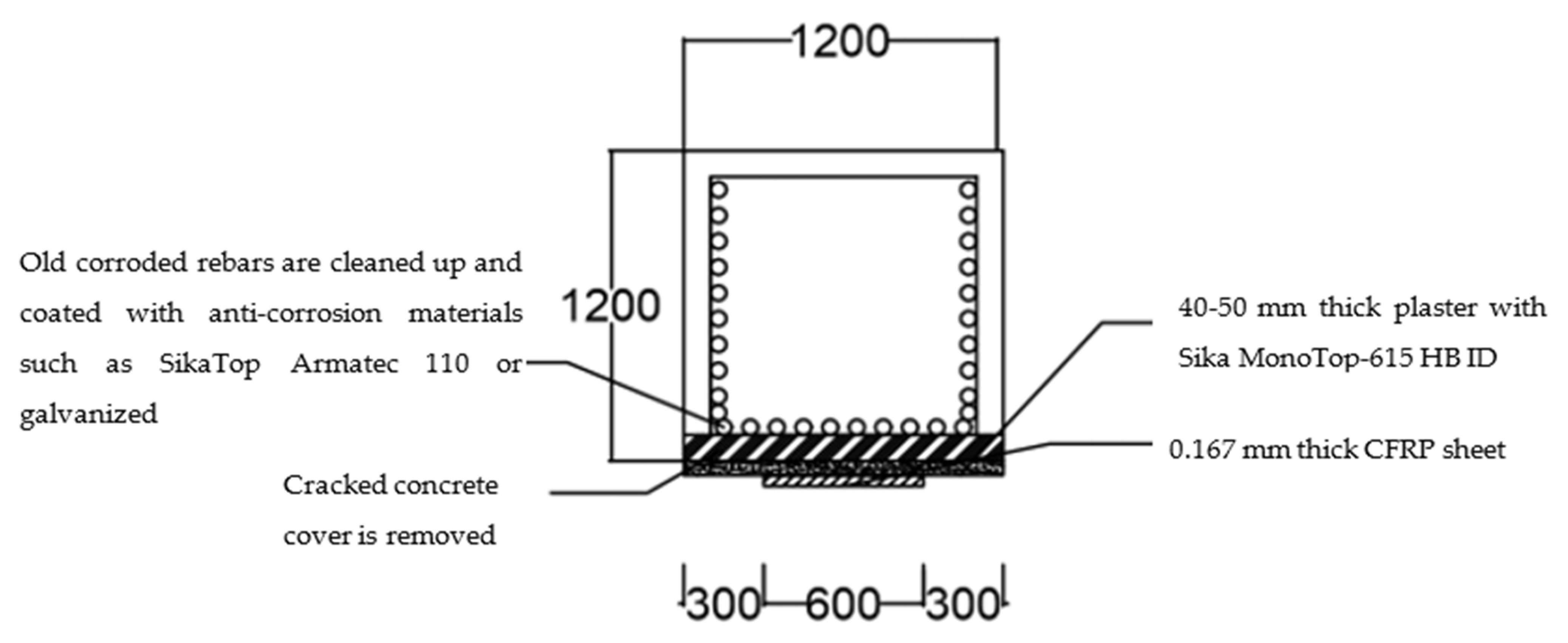
Figure 2. Plan of the basin building.
Buildings 15 04088 g002
Figure 3. Plan of trestle building.
Buildings 15 04088 g003
Figure 4. Concrete sampling with a core drill.
Buildings 15 04088 g004
Figure 5. Measurement of concrete cover thickness and position of reinforcing bars.
Buildings 15 04088 g005
Figure 6. Schematic of the half-cell potential mapping measurement method.
Buildings 15 04088 g006
Figure 7. Preparation for half-cell potential mapping measurement: (a) determining the reinforcement location using a profometer; (b) drawing a grid based on the reinforcement location.
Buildings 15 04088 g007
Figure 8. Measuring corrosion potential value on the concrete surface.
Buildings 15 04088 g008
Figure 9. Corrosion of reinforcing steel on the inside of Basin A middle wall.
Buildings 15 04088 g009
Figure 10. Corrosion of reinforcing steel bars, cracking, and spalling of concrete on the outside of Basin A wall: (a) wall view, (b) detail A, and (c) detail B.
Buildings 15 04088 g010
Figure 11. Fine cracks on the inside of Basin B wall.
Buildings 15 04088 g011
Figure 12. Corrosion of reinforcing steel bars, cracking, and spalling of concrete on the outside of Basin B wall: (a) wall view and (b) detail C.
Buildings 15 04088 g012
Figure 13. Corrosion of reinforcing steel bars, cracks, and spalling of concrete at the bottom of trestle pier head.
Buildings 15 04088 g013
Figure 14. Concrete compressive strength results from testing cylindrical samples.
Buildings 15 04088 g014
Figure 15. Concrete compressive strength results from the hammer test at: (a) Basin A; (b) Basin B; and (c) trestle.
Buildings 15 04088 g015aBuildings 15 04088 g015b
Figure 16. Carbonation depth of basin structures at locations: (a) B1, (b) B2, (c) B3, (d) B4, (e) B5, (f) B6, (g) B7, and (h) B8.
Buildings 15 04088 g016aBuildings 15 04088 g016b
Figure 17. Comparison between minimum, maximum, average carbonation depth, and concrete cover thickness of basin structures.
Buildings 15 04088 g017
Figure 18. Maximum carbonation depth to concrete cover thickness ratio of basin structures.
Buildings 15 04088 g018
Figure 19. Condition of reinforcing steel in the structures: (a) basin slab, (b) trestle slab, and (c) top of trestle pier head.
Buildings 15 04088 g019
Figure 20. Carbonation depth of trestle slab structures at locations: (a) TS1, (b) TS2, (c) TS3, (d) TS4, (e) TS5, (f) TS6, (g) TS7, and (h) TS8.
Buildings 15 04088 g020
Figure 21. Comparison between minimum, maximum, average carbonation depth, and concrete cover thickness of trestle slab structures.
Buildings 15 04088 g021
Figure 22. Maximum carbonation depth to concrete cover thickness ratio of trestle slab structures.
Buildings 15 04088 g022
Figure 23. Carbonation depth of trestle pier head structures at locations: (a) TPH1, (b) TPH2, (c) TPH3, (d) TPH4, (e) TPH5, (f) TPH6, (g) TPH7, and (h) TPH8.
Buildings 15 04088 g023
Figure 24. Comparison between minimum, maximum, average carbonation depth, and concrete cover thickness of trestle pier head structures.
Buildings 15 04088 g024
Figure 25. Maximum carbonation depth to concrete cover thickness ratio of trestle pier head structures.
Buildings 15 04088 g025
Figure 26. Distribution of potential corrosion values of concrete surfaces on the inside of Basin A wall.
Buildings 15 04088 g026
Figure 27. Distribution of potential corrosion values of concrete surfaces on the inside of Basin B wall.
Buildings 15 04088 g027
Figure 28. The distribution of potential corrosion values of concrete surfaces on the lower part of trestle pier head is not visibly corroded.
Buildings 15 04088 g028
Figure 29. Comparison of initial, remaining, and strengthened flexural capacities per m of width of Basin structures.
Buildings 15 04088 g029
Figure 30. Repairing and strengthening of Basin A external wall structure with CFRP rod.
Buildings 15 04088 g030
Figure 31. Repairing and strengthening of Basin B wall structure with CFRP rod.
Buildings 15 04088 g031
Figure 32. Comparison of initial, remaining, and strengthened flexural capacities of trestle pier heads A, A1, A2, and B structures.
Buildings 15 04088 g032
Figure 33. Repairing and strengthening of trestle pier head structures A, A1, A2, and B with CFRP sheets.
Buildings 15 04088 g033
Table 1. Concrete cylindrical sampling locations and number of samples.
BuildingsMembersNumber of Samples
Basin ASlab3
Wall3
Basin BSlab3
Wall3
TrestleSlab3
Pier head3
Table 2. Rebound hammer test locations.
BuildingsMembersNumber of Tested Locations
Basin ASlab20
Wall20
Column10
Basin BSlab20
Wall20
Column10
TrestleSlab20
Pier head20
Table 3. UPV test results.
LocationsPulse Velocity (m/s)Elastic Modulus (GPa)Compressive Strength (MPa)
Basin A wall358327.7634.90
Basin A slab348726.3031.30
Basin A coumn362728.4536.64
Basin B wall359227.9035.25
Basin B slab356427.4734.16
Basin B column358927.8635.13
Trestle slab359227.9035.25
Trestle pier head365428.8837.75
Disclaimer/Publisher’s Note: The statements, opinions and data contained in all publications are solely those of the individual author(s) and contributor(s) and not of MDPI and/or the editor(s). MDPI and/or the editor(s) disclaim responsibility for any injury to people or property resulting from any ideas, methods, instructions or products referred to in the content.