
A Dual-Method Analysis of P-DfMA Adoption in the AEC Industry Through the TOE Framework: Insights from Interviews and Policy Analysis




Abstract
1. Introduction
1.1. Background
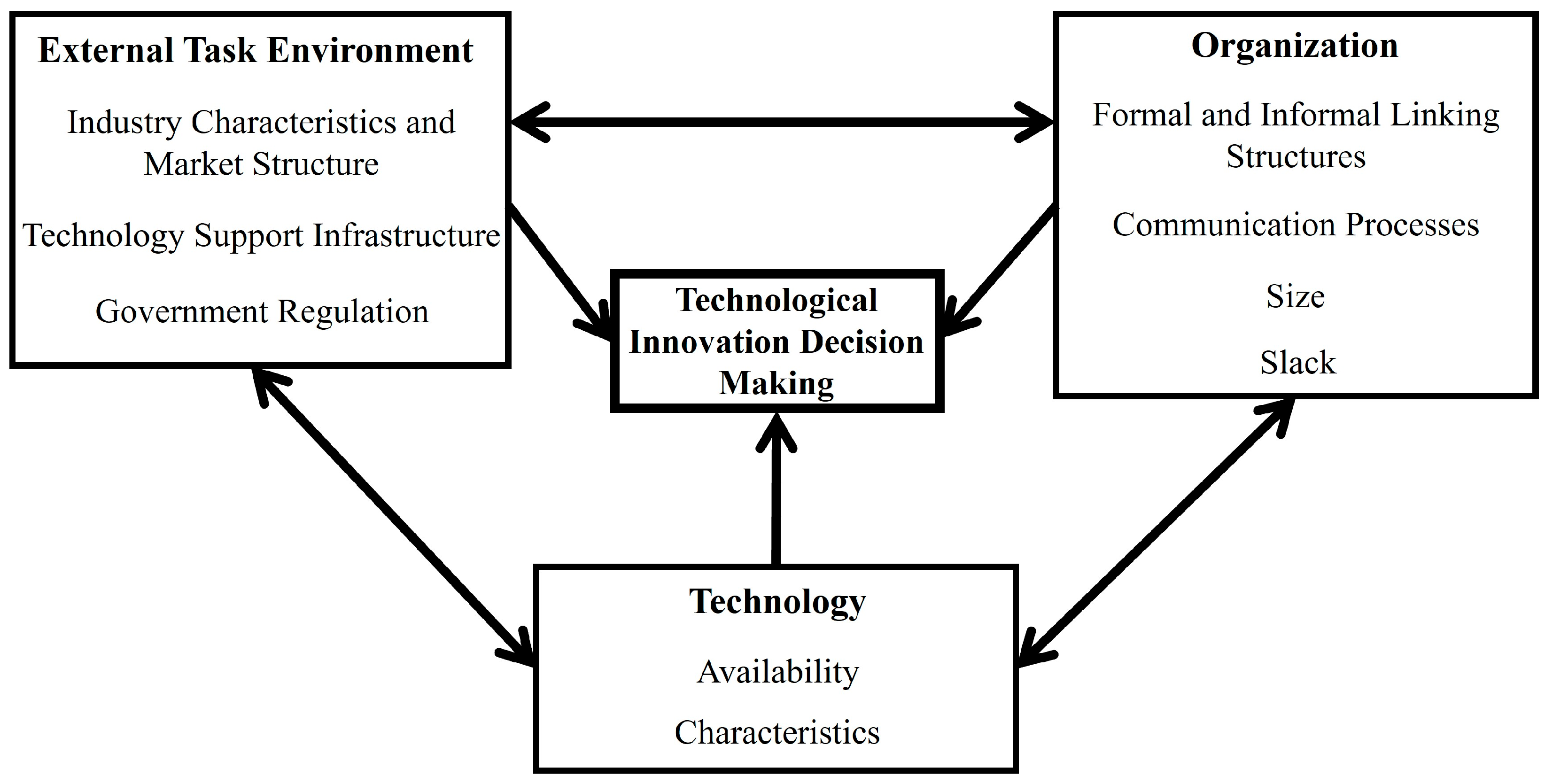
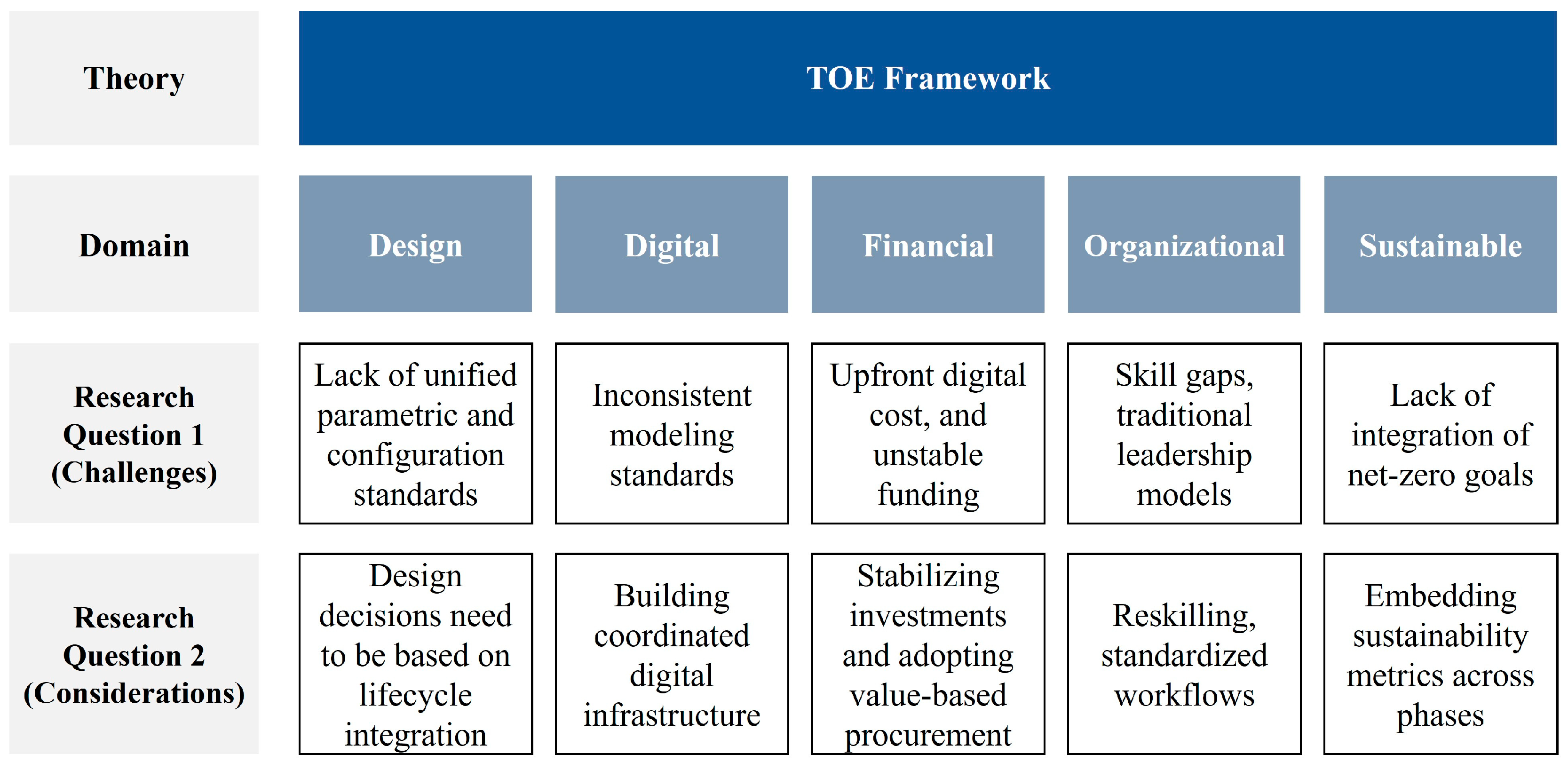
1.2. TOE Framework
1.3. Gaps in Previous Research
1.4. Research Approach
- What are the challenges faced in adopting P-DfMA in the AEC industry?
- What considerations should design professionals keep in mind to adapt P-DfMA successfully in the AEC industry?
2. Materials and Methods
2.1. Data Collection
- Based on your AEC experience, how do you define P-DfMA?
- What does P-DfMA mean to you in practice?
- How does it differ from traditional methods?
- What are the main challenges you faced while implementing P-DfMA?
- What types of challenges impacted your work most?
- What concerns did others on the project raise?
- What considerations are crucial for adapting P-DfMA?
- What lessons should others know?
- Are there specific skills or roles that have made a difference?
2.2. Data Analysis
3. Interview Results
3.1. P-DfMA Definition
“P-DfMA as a foundational approach centralizes expertise and decentralizes innovation; it simplifies the complexity based on what it enables and manages.”
“… P-DfMA as a service defines the stakeholders, roles, and functions for the project delivery.”
“Platform-based work emphasizes validated solution catalogs and configurable typologies, collaboratively chosen for different projects.”
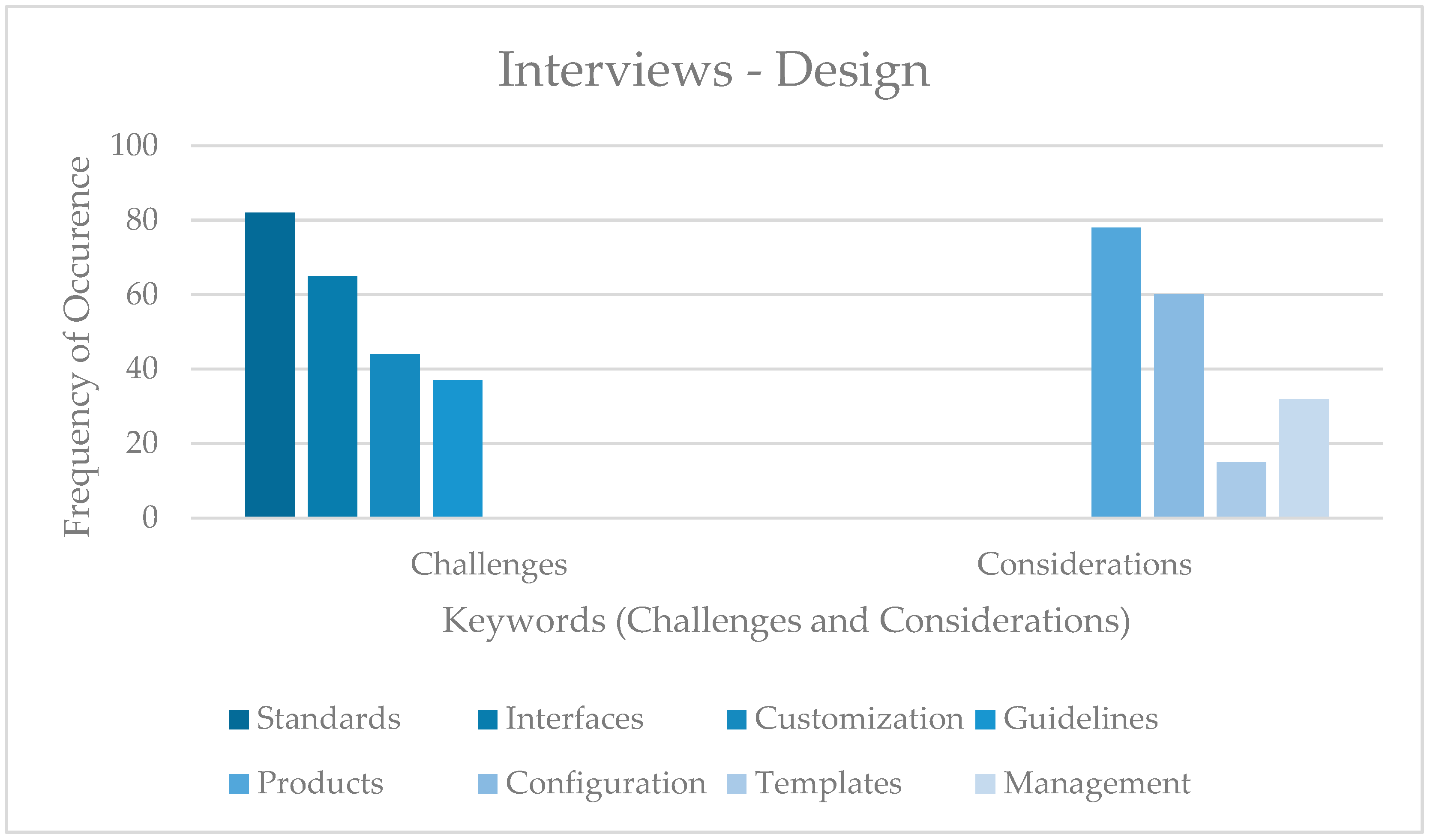
3.2. Design Factors
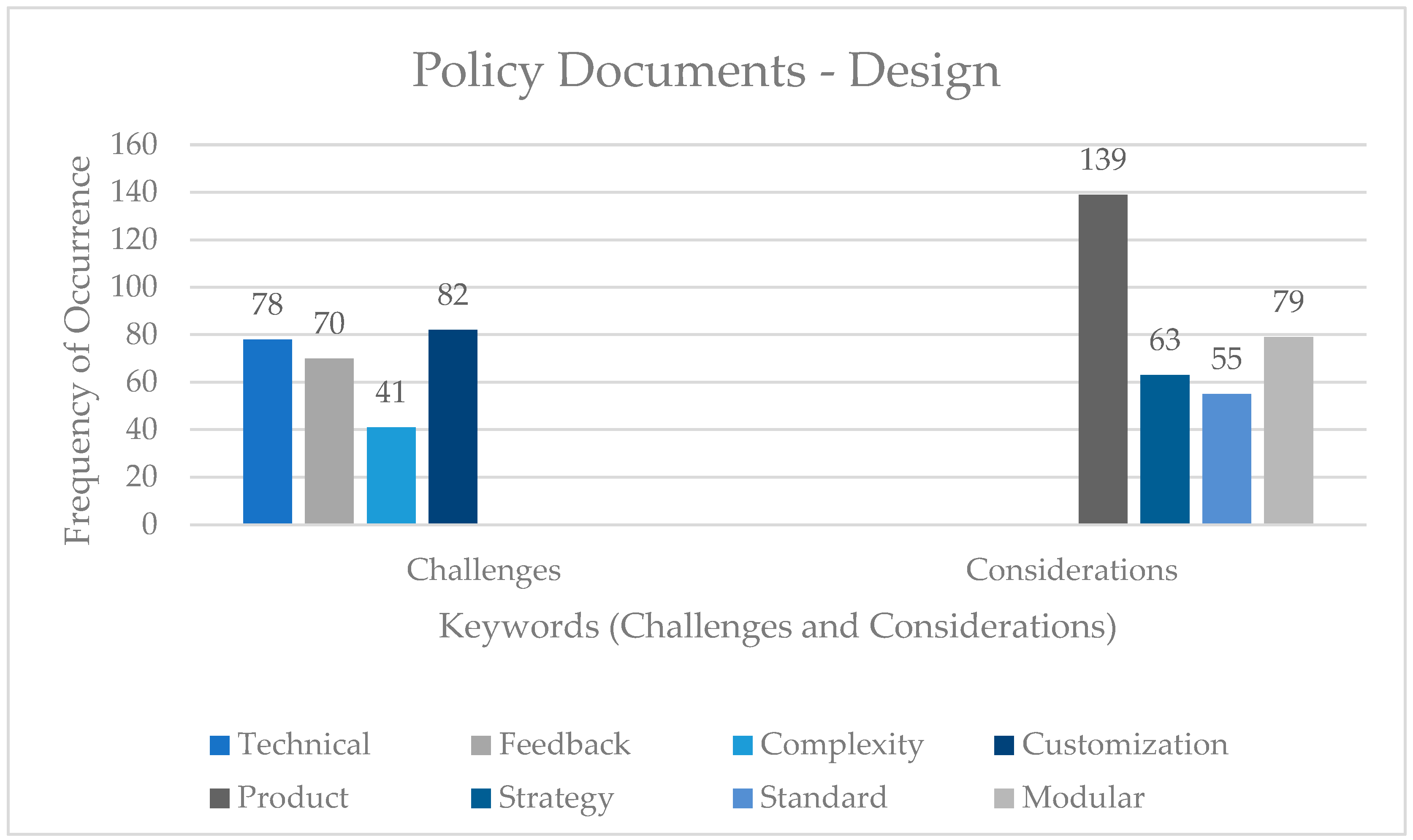
3.2.1. Design Challenges
“Working within P-DfMA is different, because you are configuring the design within a grid, not from a concept.”
“There are very limited design guideline rules for P-DfMA adoption. Thus, we are figuring it out as we design.”
3.2.2. Design Considerations
“Our P-DfMA adoption accelerated by designing with operations, materials, and integration in mind. Standardizing materials and coordinating with manufacturers ensured buildable, scalable designs, while strong management and early contractor involvement reduced clashes and sped approvals.”
3.3. Digital Factors
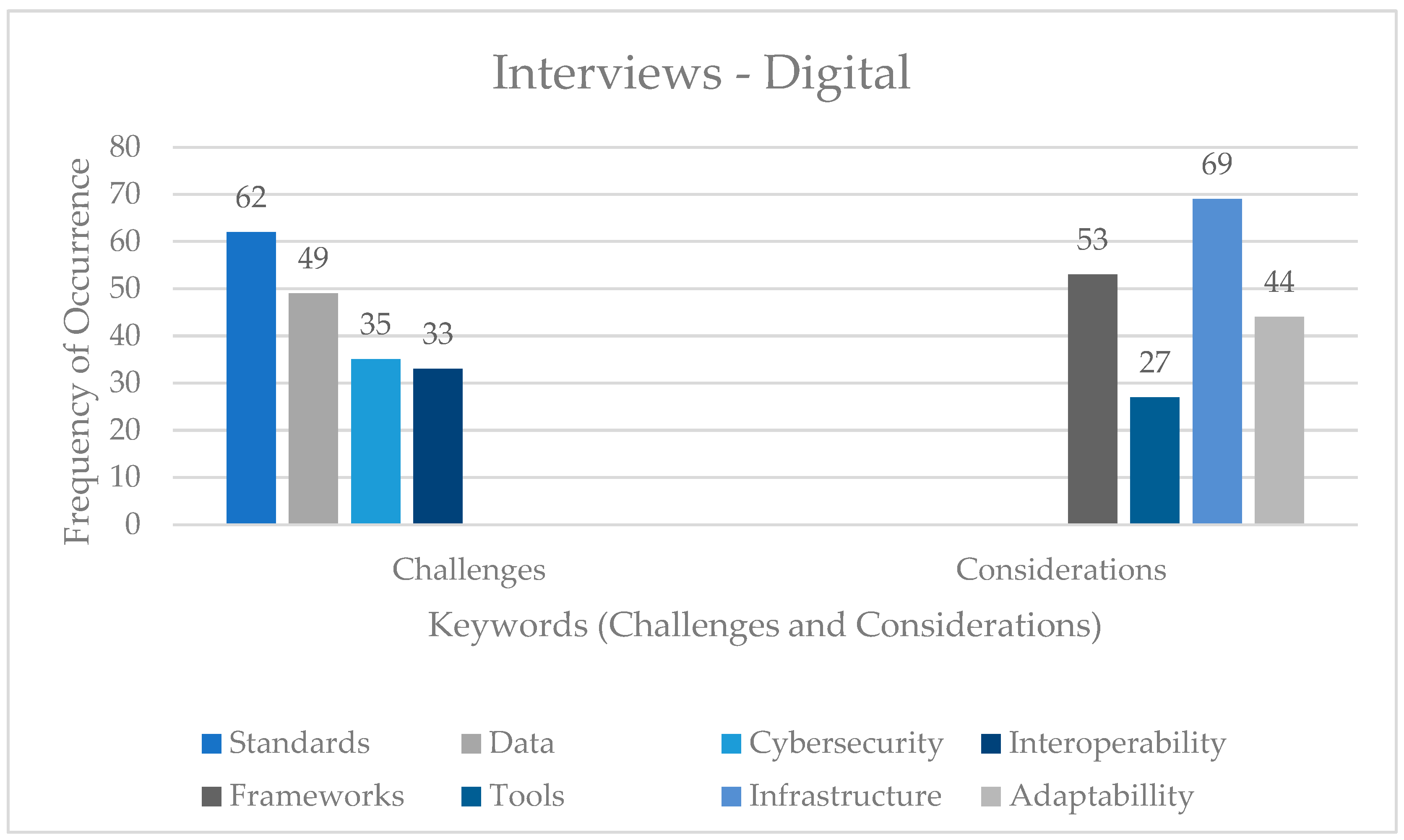
3.3.1. Digital Challenges
“We spend more time fixing file compatibility than designing, because other engineers use different software. In addition, every stakeholder labels things differently, even when it’s standardized. It is because they evaluate and work differently from each other.”
3.3.2. Digital Considerations
“What really made a difference in our P-DfMA projects was having a coordinated digital environment and clear standards. Once everyone was working from the same cloud platform and following the same data conventions, collaboration became much smoother.”
3.4. Financial and Procurement Factors
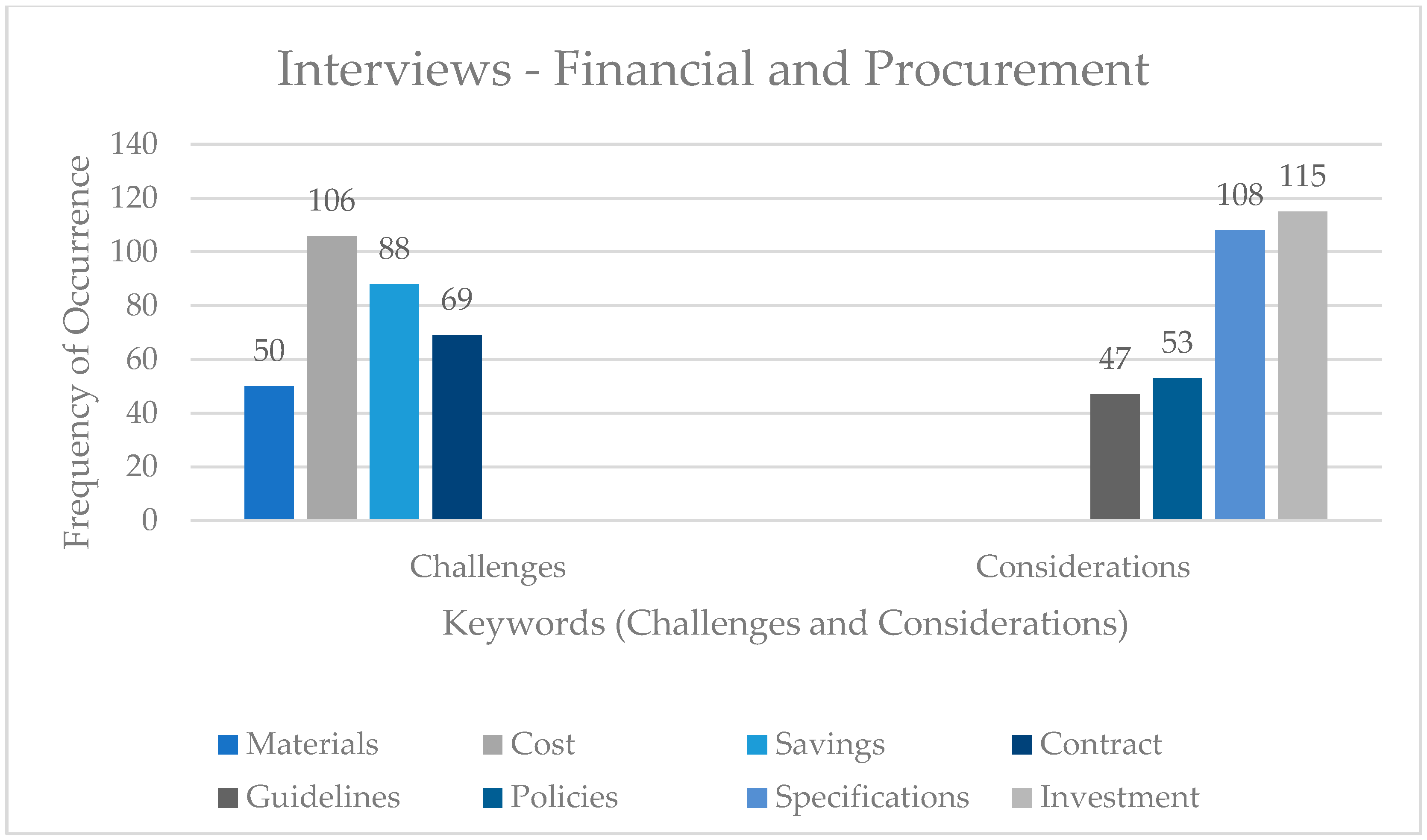
3.4.1. Financial and Procurement Challenges
“We need to invest heavily before the client even agrees to the approach. We also can’t promise savings when the benefits only appear on later projects, not the first one.”
“Implementing the P-DfMA approach adds hours of coordination, but we are still working within fixed fee agreements that do not account for it. Thus, we stick to what we know because there is no budget to test anything new.”
“By the time the manufacturer is involved, it is too late to change the configuration of the project. In addition, everyone protects their own scope. As a result, there is no incentive to align.”
3.4.2. Financial and Procurement Considerations
“We reused 80% of the model from the last projects. This helps us to shift the focus toward standard specifications, model development, and guidelines.”
“Our contracts still reward the cheapest upfront price, which makes long-term collaboration almost impossible. If the government introduced standard frameworks or policies that supported integrated contracts, manufacturers could actually invest in capacity.”
3.5. Organizational Factors
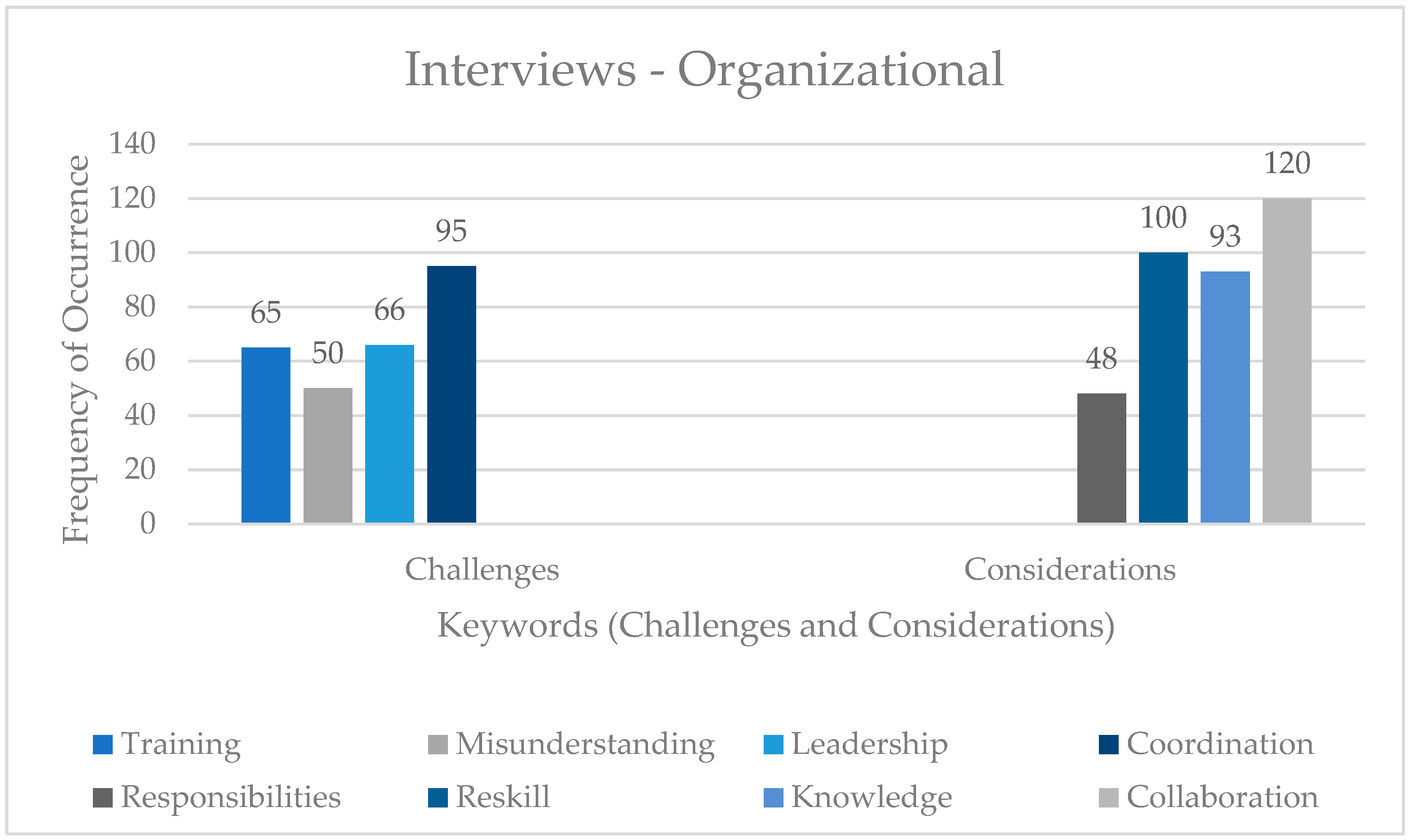
3.5.1. Organizational Challenges
“Our team is not trained for implementing P-DfMA; it is a whole new skill set we are missing and learning by ourselves. Thus, team members assumed that P-DfMA is about software, but it is a whole way of working.”
3.5.2. Organizational Considerations
“One of the biggest developments we are working on is how our teams are organized by defining who is responsible for coordinating with manufacturers, and many do not have the skills to use the digital tools effectively. Thus, we had to invest in reskilling and clarify roles to make the process smoother and more efficient.”
4. Policy Document Analysis Results
4.1. Design Aspects
4.1.1. Limitations of Design Adoption
4.1.2. Enablers of Design Adoption
4.2. Technology Aspects
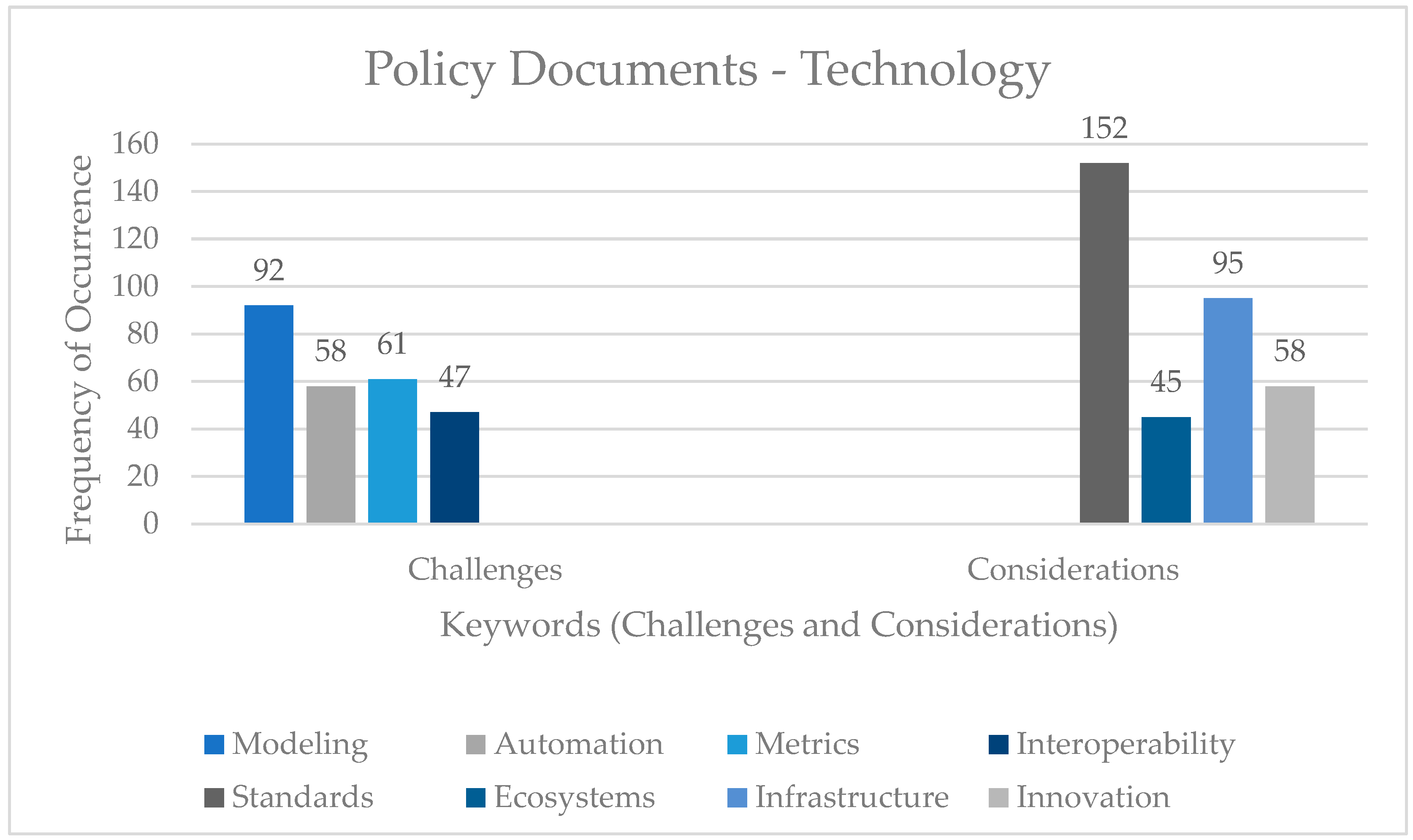
4.2.1. Technological Barriers
4.2.2. Technological Enablers
4.3. Financial and Procurement Aspects
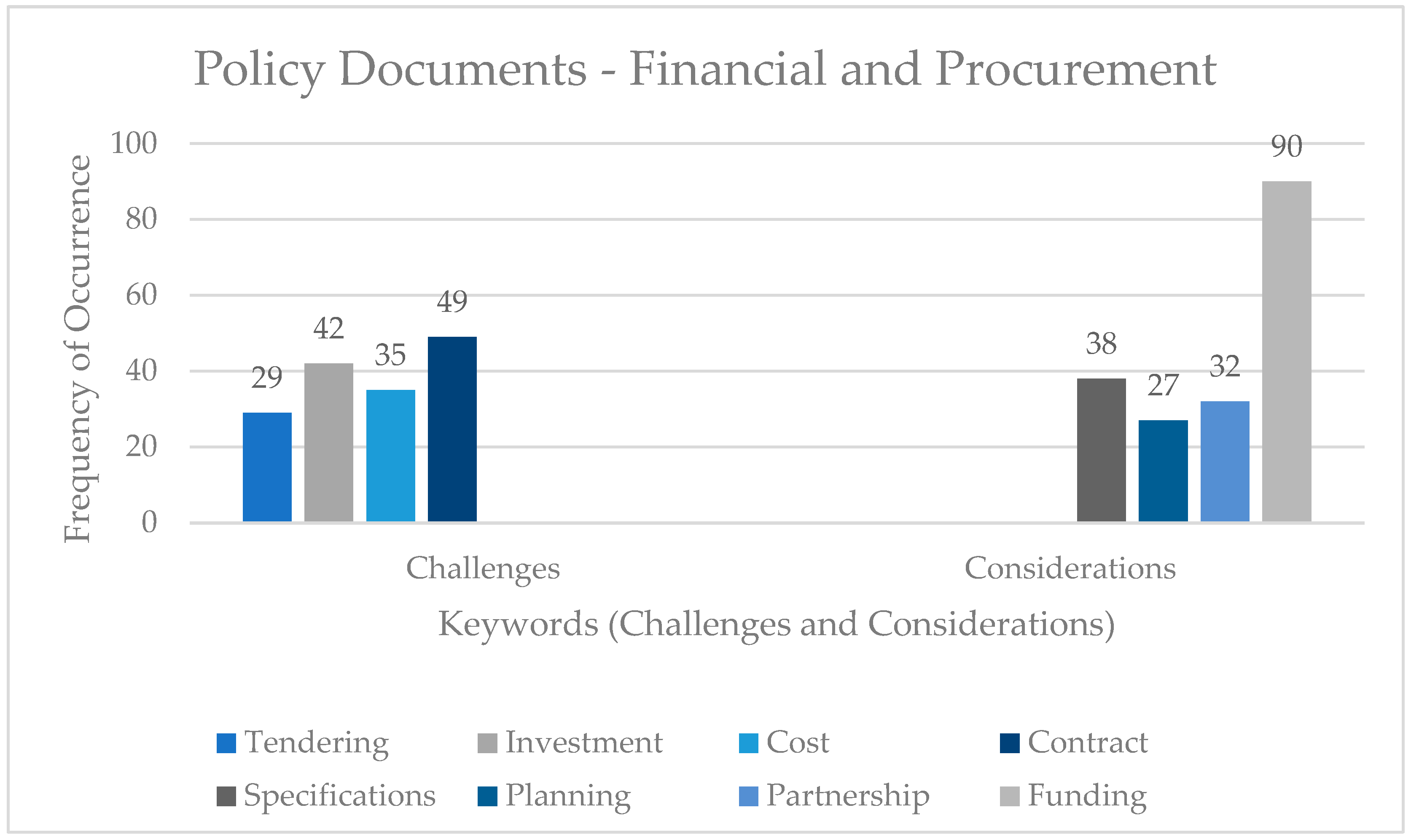
4.3.1. Barriers to Financial and Procurement Adoption
4.3.2. Financial and Procurement Enablers
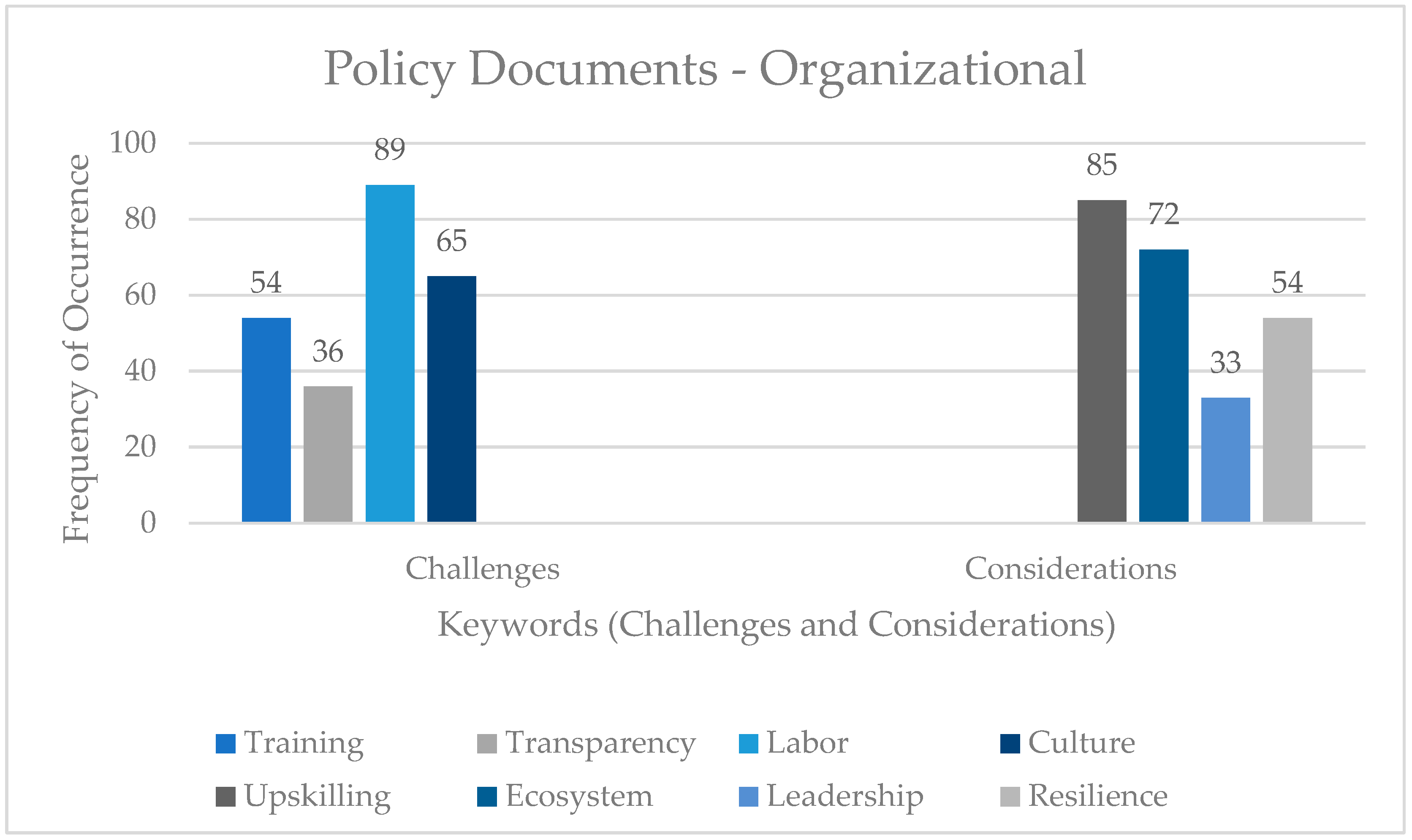
4.4. Organizational Aspects
4.4.1. Organizational Constraints
4.4.2. Opportunities for Organizational Adoption
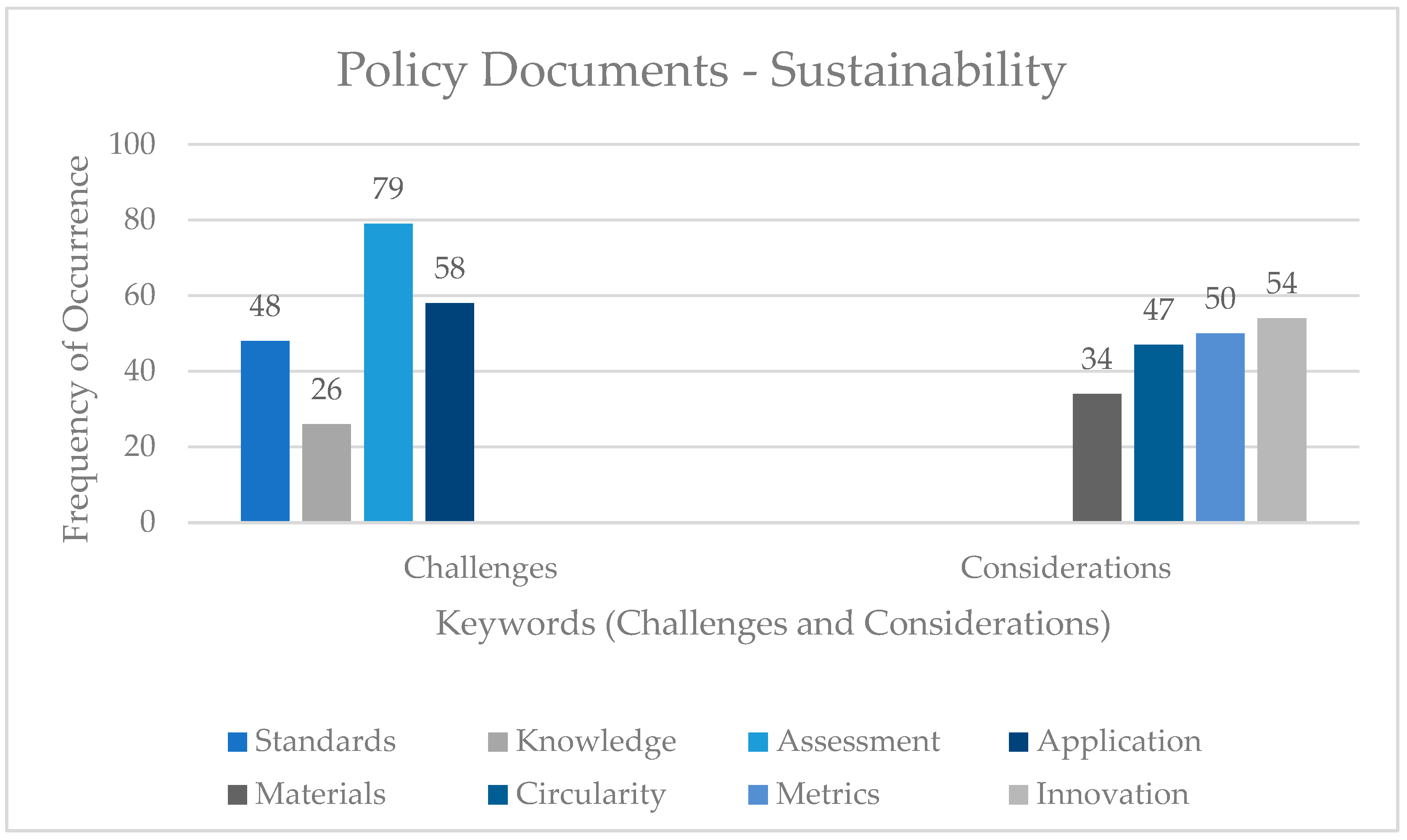
4.5. Sustainability Aspects
4.5.1. Sustainability Constraints
4.5.2. Considerations for Sustainable Adoption
5. Cross-Analysis Results: Linking Interviews and Policy Documents
5.1. Mapping Policy Barriers to Interview Challenges
5.2. Aligning Interviews and Policy Considerations
6. Discussion
6.1. Insights Drawn from Combining Interviews and Document Analysis
6.2. Insights Concerning Challenges and Considerations
6.2.1. Design Challenges and Considerations
6.2.2. Digital and Technological Challenges and Considerations
6.2.3. Financial and Procurement Challenges and Considerations
6.2.4. Organizational Challenges and Considerations
6.2.5. Sustainability Challenges and Considerations
6.3. Insights from the Application of the TOE Framework
6.4. Implications of Findings
6.4.1. Technological Implications
6.4.2. Organizational Implications
6.4.3. Environmental Implications
6.5. Study Limitations and Future Research Needs
7. Conclusions
Supplementary Materials
Author Contributions
Funding
Institutional Review Board Statement
Informed Consent Statement
Data Availability Statement
Acknowledgments
Conflicts of Interest
Abbreviations
| AEC | Architecture, Engineering, and Construction |
| AI | Artificial Intelligence |
| BIM | Building Information Modeling |
| CDEs | Common Data Environments |
| EWIS | External Wall Insulation System |
| MEP | Mechanical, Electrical, and Plumbing |
| MMC | Modern Methods of Construction |
| NML | National Metrics Library |
| P-DfMA | Platform Approach to Design for Manufacturing and Assembly |
| R&D | Research and Development |
| TOE | Technology–Organization–Environment |
References
- Langston, C.; Zhang, W. DfMA: Towards an Integrated Strategy for a More Productive and Sustainable Construction Industry in Australia. Sustainability 2021, 13, 9219. [Google Scholar] [CrossRef]
- Abrishami, S.; Martín-Durán, R. BIM and DfMA: A Paradigm of New Opportunities. Sustainability 2021, 13, 9591. [Google Scholar] [CrossRef]
- Ali, K.N.; Alhajlah, H.H.; Kassem, M.A. Collaboration and Risk in Building Information Modelling (BIM): A Systematic Literature Review. Buildings 2022, 12, 571. [Google Scholar] [CrossRef]
- Jung, S.; Yu, J. Design for Manufacturing and Assembly (DfMA) Checklists for Off-Site Construction (OSC) Projects. Sustainability 2022, 14, 11988. [Google Scholar] [CrossRef]
- Mujahed, L.; Feng, G.; Wang, J. Platform Approaches in the AEC Industry: Stakeholder Perspectives and Case Study. Buildings 2025, 15, 2684. [Google Scholar] [CrossRef]
- Zhou, S.A. Platforming for Industrialized Building: A Comparative Case Study of Digitally-Enabled Product Platforms. Build. Res. Inf. 2024, 52, 4–18. [Google Scholar] [CrossRef]
- Moussa, M.; ElMaraghy, H. A Genetic Algorithm-Based Model for Product Platform Design for Hybrid Manufacturing. In Proceedings of the 53rd CIRP Conference on Manufacturing Systems, Chicago, IL, USA, 1–3 July 2020; Volume 93, pp. 389–394. [Google Scholar] [CrossRef]
- Steinberg, M. From Automobile Capitalism to Platform Capitalism: Toyotism as a Prehistory of Digital Platforms. Organ. Stud. 2022, 43, 1069–1090. [Google Scholar] [CrossRef]
- Lampón, J.F.; Frigant, V.; Cabanelas, P. Determinants in the Adoption of New Automobile Modular Platforms: What Lies Behind Their Success? J. Manuf. Technol. Manag. 2019, 30, 707–728. [Google Scholar] [CrossRef]
- André, S.; Lennartsson, M.; Elgh, F. Exploring the Design Platform in Industrialized Housing for Efficient Design and Production of Customized Houses. In Proceedings of the 26th ISTE International Conference on Transdisciplinary Engineering, Tokyo, Japan, 30 July–1 August 2019; Volume 10, pp. 125–134. [Google Scholar] [CrossRef]
- Mujahed, L.; Feng, G.; Wang, J. Transforming Construction: Integrating Off-Site Techniques and Advanced Technologies. In Proceedings of the ICATCP 2024: Architectural Theory and Construction Processes Conference, Amsterdam, The Netherlands, 4–5 November 2024; Volume 18, pp. 368–377. Available online: https://publications.waset.org/10013828.pdf (accessed on 16 June 2025).
- Wood, B. Delivery Platforms for Government Assets: Creating a Marketplace for Manufactured Spaces; Bryden Wood: London, UK, 2017; Available online: https://www.brydenwood.com/filedownload.php?a=13710-5ff83c85a072d (accessed on 3 February 2025).
- Hwang, K.-E.; Kim, I.; Kim, J.I.; Cha, S.H. Client-Engaged Collaborative Pre-Design Framework for Modular Housing. Automat. Constr. 2023, 156, 105123. [Google Scholar] [CrossRef]
- Fisher, A.; Tsakiridis, G.; Lombardi, A.; Ahmad, M.; Watts, A. A Common Configurator Framework for Distributed Design, Collaboration and Verification Across the Full AEC Supply Chain. IOP Conf. Ser. Earth Environ. Sci. 2022, 1101, 092042. [Google Scholar] [CrossRef]
- Jovanovic, M.; Sjödin, D.; Parida, V. Co-Evolution of Platform Architecture, Platform Services, and Platform Governance: Expanding the Platform Value of Industrial Digital Platforms. Technovation 2022, 118, 102218. [Google Scholar] [CrossRef]
- Baker, J. The Technology–Organization–Environment Framework. In Information Systems Theory; University of Hamburg: Hamburg, Germany, 2011; pp. 231–245. [Google Scholar] [CrossRef]
- Prakash, C. Evaluating the TOE Framework for Technology Adoption: A Systematic Review of Its Strengths and Limitations. Int. J. Recent Innov. Trends Comput. Commun. 2025, 13, 76–82. Available online: https://ijritcc.org/index.php/ijritcc/article/view/11454 (accessed on 17 April 2025).
- Nguyen, T.H.; Le, X.C.; Vu, T.H.L. An Extended Technology-Organization-Environment (TOE) Framework for Online Retailing Utilization in Digital Transformation: Empirical Evidence from Vietnam. J. Open Innov. Technol. Mark. Complex. 2022, 8, 200. [Google Scholar] [CrossRef]
- Mishra, A.N.; Konana, P.; Barua, A. Antecedents and Consequences of Internet Use in Procurement: An Empirical Investigation of U.S. Manufacturing Firms. Inf. Syst. Res. 2007, 18, 103–120. [Google Scholar] [CrossRef]
- Jansson, G.; Viklund, E.; Olofsson, T. Artistic and Engineering Design of Platform-Based Production Systems: A Study of Swedish Architectural Practice. Buildings 2018, 8, 34. [Google Scholar] [CrossRef]
- Naderpajouh, N.; Zolghadr, A.; Clegg, S. Organizing Coopetitive Tensions: Collaborative Consumption in Project Ecologies. Int. J. Proj. Manag. 2024, 42, 102586. [Google Scholar] [CrossRef]
- Eriksson, H.; Sandberg, M.; Jansson, G.; Lessing, J. Exploring Product Modularity in Residential Building Areas. Buildings 2021, 11, 281. [Google Scholar] [CrossRef]
- Reisinger, J.; Kovacic, I.; Kaufmann, H.; Kán, P.; Podkosova, Y. Framework Proposal for a BIM-Based Digital Platform for Flexible Design and Optimization of Industrial Buildings for Industry 4.0. In Proceedings of the 37th International Conference of CIB W78 Information Technology for Construction Conference (CIB W78), São Paulo, Brazil, 18–20 August 2020; pp. 18–20. Available online: https://itc.scix.net/paper/w78-2020-paper-029 (accessed on 21 March 2025).
- Bagasi, O.; Nawari, N.O.; Alsaffar, A. BIM and AI in Early Design Stage: Advancing Architect–Client Communication. Buildings 2025, 15, 1977. [Google Scholar] [CrossRef]
- Jansson, G.; Viklund, E. Advancement of Platform Development in Industrialised Building. Procedia Econ. Financ. 2015, 21, 461–468. [Google Scholar] [CrossRef]
- Savu, C.; Bungau, C. Synthesis on the Assessment of Design Platforms in Terms of Construction Efficiency. Rev. Manag. Econ. Eng. 2024, 23, 220–232. [Google Scholar] [CrossRef]
- Nievola, T.P.; Scheer, S. Product Platform Flow to Develop New Products in an Off-Site Company. In Proceedings of the 31st Annual Conference of the International Group for Lean Construction (IGLC31), Lille, France, 26 June–2 July 2023; pp. 1037–1048. [Google Scholar] [CrossRef]
- David, R. Investigating Inter-Organizational Platform Development Through the Lens of Collective Action. Ph.D. Thesis, The Herenga Waka—Victoria University of Wellington, Wellington, New Zealand, 2021. Available online: https://openaccess.wgtn.ac.nz/articles/thesis/Investigating_inter-organisational_platform_development_through_the_lens_of_collective_action/15982092?file=29975427 (accessed on 18 March 2025).
- Lehtinen, J.; Peltokorpi, A.; Artto, K. Megaprojects as Organizational Platforms and Technology Platforms for Value Creation. Int. J. Proj. Manag. 2019, 37, 43–58. [Google Scholar] [CrossRef]
- Xu, Y.; Ahokangas, P.; Turunen, M.; Mäntymäki, M.; Heikkilä, J. Platform-Based Business Models: Insights from an Emerging AI-Enabled Smart Building Ecosystem. Electronics 2019, 8, 1150. [Google Scholar] [CrossRef]
- CIH; Akerlof; Atkins; MacDonald, M.; Studio, C. The Product Platform Rulebook; Construction Innovation Hub: London, UK; UK Research and Innovation: London, UK, 2023; Volume 1.2, Available online: https://constructioninnovationhub.org.uk/media/w1eliitx/cih_ed1-2_the-rulebook.pdf (accessed on 24 May 2025).
- Popovic, D.; Schauerte, T.; Elgh, F. Product Platform Alignment in Industrialised House Building. Wood Mater. Sci. Eng. 2022, 17, 572–585. [Google Scholar] [CrossRef]
- Lennartsson, M.; André, S.; Elgh, F. PLM Support for Design Platforms in Industrialized House-Building. Constr. Innov. Inf. Process Manag. 2023, 23, 265–286. [Google Scholar] [CrossRef]
- Wood, B. Platforms in Practice: A Lean Approach to Industrialised Construction, 1st ed.; Bryden Wood: London, UK, 2023; Available online: https://constructioninnovationhub.org.uk/media/l3bhzunv/platforms-in-practice_final.pdf (accessed on 5 June 2025).
- Aksenova, G.; Oti-Sarpong, K. Beyond “Platformania” in the Construction Sector: Conceptualisations and Implementations of Product Platformisation in the UK. Constr. Manag. Econ. 2023, 42, 229–250. [Google Scholar] [CrossRef]
- Jones, K.; Mosca, L.; Whyte, J.; Davies, A.; Glass, J. Addressing Specialization and Fragmentation: Product Platform Development in Construction Consultancy Firms. Constr. Manag. Econ. 2022, 40, 918–933. [Google Scholar] [CrossRef]
- Smallwood, N. The Product Platform RuleBook, 1st ed.; Construction Innovation Hub: London, UK; UK Research and Innovation: London, UK, 2022; Available online: https://constructioninnovationhub.org.uk/media/oggaocki/the-product-platform-rulebook_edition-1-1.pdf (accessed on 11 January 2025).
- Kedir, F.; Hall, D.M.; Brantvall, S.; Lessing, J.; Hollberg, A.; Soman, R.K. Circular Information Flows in Industrialized Housing Construction: The Case of a Multi-Family Housing Product Platform in Sweden. Constr. Innov. 2023, 24, 1354–1379. [Google Scholar] [CrossRef]
- Alsuhaibani, A.; Han, B.; Leite, F. Investigating the Causes of Missing Field Detected Issues from BIM-Based Construction Coordination through Semistructured Interviews. J. Archit. Eng. 2022, 28, 349–357. [Google Scholar] [CrossRef]
- Rasheed, U.; Cai, J.; Xu, X.V.; Hu, Y.; Li, S. Equipment Teleoperation and Its Impacts on Future Worker and Workforce in Construction: Semi-Structured Interviews. In Proceedings of the Construction Research Congress, Des Moines, IA, USA, 20–23 March 2024. [Google Scholar] [CrossRef]
- Bakhshi, S.; Chenaghlou, M.R.; Rahimian, F.P.; Edwards, D.J.; Dawood, N. Integrated BIM and DfMA Parametric and Algorithmic Design-Based Collaboration for Supporting Client Engagement Within Offsite Construction. Automat. Constr. 2022, 133, 104015. [Google Scholar] [CrossRef]
- Tan, T.; Mills, G.; Hu, J.; Papadonikolaki, E. Integrated Approaches to Design for Manufacture and Assembly: A Case Study of Huoshenshan Hospital to Combat COVID-19 in Wuhan, China. J. Manag. Eng. 2021, 37, 05021007. [Google Scholar] [CrossRef]
- Lewis, S. Qualitative Inquiry and Research Design: Choosing Among Five Approaches. Health Promot. Pract. 2015, 16, 473–475. [Google Scholar] [CrossRef]
- Mason, M. Sample Size and Saturation in PhD Studies Using Qualitative Interviews. Forum Qual. Soc. Res. 2010, 11, 8. [Google Scholar] [CrossRef]
- Saldaña, J. The Coding Manual for Qualitative Researchers, 2nd ed.; SAGE Publications: Los Angeles, CA, USA, 2013; Available online: https://books.google.com.sg/books?id=V3tTG4jvgFkC&printsec=frontcover#v=onepage&q&f=true (accessed on 10 January 2025).
- Jnanathapaswi, S.G. Thematic Analysis & Coding: An Overview of the Qualitative Paradigm; APH Publishing Corporation: New Delhi, India, 2021. [Google Scholar] [CrossRef]
- Braun, V.; Clarke, V. Using Thematic Analysis in Psychology. Qual. Res. Psychol. 2006, 3, 77–101. [Google Scholar] [CrossRef]
- Kairaitytė-Užupė, A.; Ramanauskaitė, E.; Rudžionis, V.E. Scientific Information Analysis Using Text Analysis Tool “Voyant Tools”. Inf. Media 2023, 97, 25–48. [Google Scholar] [CrossRef]
- CIH. Developing a Product Platform Strategy: Implementing the Product Platform Rulebook; Construction Innovation Hub: London, UK, 2023; Available online: https://constructioninnovationhub.org.uk/media/fd5l4wfn/developing-a-product-platform-strategy_implementing-the-product-platform-rulebook-final.pdf (accessed on 29 March 2025).
- Mosca, L.; Jones, K.; Davies, A.; Whyte, J.; Glass, J. Platform Thinking for Construction, Transforming Construction Network Plus, Digest Series, No. 2; UK Research and Innovation: London, UK, 2020; Available online: https://www.ucl.ac.uk/bartlett/construction/sites/bartlett/files/digest-platform-thinking-for-construction.pdf (accessed on 17 April 2025).
- CIH. Product Platform Rulebook Deployment Manuals Guide Version 1.0; Construction Innovation Hub: London, UK, 2023; pp. 1–12. Available online: https://constructioninnovationhub.org.uk/media/nd2pie5z/product-platform-deployment-manuals-guide-may-2023.pdf (accessed on 17 April 2025).
- Gulati, S.; Sinhababu, A.; Chakravarty, R. Understanding the Research Landscape of Smart Libraries Using Text Mining and Data Visualization: A Use Case of Voyant Tool. COLLNET J. Scientometr. Inf. Manag. 2023, 17, 159–174. [Google Scholar] [CrossRef]
- Dodd, P.; Nicholson, I.; Jennings, T. A National Metrics Library for the Built Environment: Strategy for Implementation; Construction Innovation Hub: London, UK, 2023; Available online: https://constructioninnovationhub.org.uk/media/4ekiksc4/nml-final-june-2023.pdf (accessed on 13 March 2025).
- NBS. National Building Specification NBS Uniclass, 2015. Available online: https://www.thenbs.com/our-tools/uniclass (accessed on 8 June 2025).
- CIH. Platform Programme: The Road to the Rulebook; Construction Innovation Hub (CIH): London, UK; UK Research and Innovation: London, UK, 2021; Available online: https://constructioninnovationhub.org.uk/media/xuudzef3/cih_platform-programme_the-road-to-the-rulebook-002.pdf (accessed on 23 February 2025).
- CIH. Product Platform Rulebook Implementation Strategy Options: Part 1 (Q4 2022) & Part 2 [Q1 2023]; Construction Innovation Hub: London, UK, 2023; Available online: https://constructioninnovationhub.org.uk/media/dkplygrw/rulebook-implementation-strategy-_-better-delivery.pdf (accessed on 25 February 2025).
- IPA. Proposal for a New Approach to Building: Call for Evidence Summary of Responses; Infrastructure and Projects Authority: London, UK, 2020. Available online: https://assets.publishing.service.gov.uk/media/5fce9cf1e90e07562966793d/2020-12-8_response_-_Proposal_for_a_New_Approach_to_Building.pdf (accessed on 4 March 2025).
- Handscomb, J. Ministry of Justice Decarbonising Sub-Structures: Visualising Carbon in Platform Designs; Akerlof Ltd.: Northampton, UK, 2023; Available online: https://constructioninnovationhub.org.uk/media/ckgj3jry/ministry-of-justice-decarbonising-sub-structures.pdf (accessed on 11 March 2025).
- Akerlof. Construction Platforms in Healthcare; Akerlof Ltd.: Northampton, UK, 2022; Available online: https://akerlof.co.uk/wp-content/uploads/2023/02/Akerlof-Construction-Platforms-in-Healthcare-2022.pdf (accessed on 28 October 2024).
- CLC. Roadmap to Recovery: An Industry Recovery Plan for the UK Construction Sector; Construction Leadership Council (CLC): London, UK, 2020; Available online: https://www.constructionleadershipcouncil.co.uk/wp-content/uploads/2020/06/CLC-Roadmap-to-Recovery-01.06.20.pdf (accessed on 25 April 2025).
- Wood, B. Delivery Platforms for Government Assets: Creating a Marketplace for Manufactured Spaces; Bryden Wood: London, UK, 2021; Available online: https://www.brydenwood.com/filedownload.php?a=17725-613f434f0f64c (accessed on 11 November 2024).
- IPA. Proposal for a New Approach to Building: Call for Evidence; Infrastructure and Projects Authority (IPA): London, UK, 2019. Available online: https://assets.publishing.service.gov.uk/media/5bf83c38ed915d17e0805222/CCS207_CCS1118988908-001_New_Approach_to_Building_WEB_ACCESSIBLE.pdf (accessed on 29 October 2024).
- HMG. The UK’s Modern Industrial Strategy—Construction Sector Deal; HM Government: London, UK, 2025. Available online: https://assets.publishing.service.gov.uk/media/68595e56db8e139f95652dc6/industrial_strategy_policy_paper.pdf (accessed on 12 December 2024).
- Wood, B. Façade Engineering and Construction & Fabrication Detailing, Profile and Selected Projects; Bryden Wood: London, UK, 2021; Available online: https://www.brydenwood.com/filedownload.php?a=16950-60dc54bcdb526 (accessed on 15 January 2025).
- Bertram, C.A.; Mueller, G.O.; Løkkegaard, M.; Mortensen, N.H.; Hvam, L. Why Engineer-to-Order Portfolio Rationalization Stalls: Challenges in Standardization, Modularization, Platform Design and Mass Customization. In Proceedings of the International Design Society—Design Conference, Cavtat, Croatia, 26–29 November 2020; Volume 1, pp. 2265–2274. [Google Scholar] [CrossRef]
- Heiskala, M. Challenge of Open Platforms to Mass Customization Capabilities. In Proceedings of the 10th International Conference on Mass Customization and Personalization—Community of Europe, Novi Sad, Serbia, 21–23 September 2022; Available online: https://mcp-ce.org/wp-content/uploads/2022/10/12.pdf (accessed on 29 January 2025).
- CIH. Platform Design Programme: Defining the Need; Construction Innovation Hub: London, UK, 2020; Available online: https://constructioninnovationhub.org.uk/media/exnprxul/final_version_summary-defining-the-need-report-dec-2020.pdf (accessed on 2 February 2025).
- Egan, J. Rethinking Construction: A Report of the Construction Taskforce on the Scope of Improving the Quality and Efficiency of UK Construction; Department of Trade and Industry: London, UK, 1998. Available online: https://constructingexcellence.org.uk/wp-content/uploads/2014/10/rethinking_construction_report.pdf (accessed on 19 February 2025).
- HMG. The Construction Playbook: Government Guidance; HM Government: London, UK, 2022. Available online: https://assets.publishing.service.gov.uk/media/6312222de90e075880923330/14.116_CO_Construction_Playbook_Web.pdf (accessed on 25 March 2025).
- HMG. Critical Imports and Supply Chains Strategy; UK Government: London, UK, 2024. Available online: https://assets.publishing.service.gov.uk/media/65a6a1c1867cd800135ae971/critical-imports-and-supply-chains-strategy.pdf (accessed on 21 April 2025).
- Charlson, J.; Dimka, N. Design, Manufacture and Construct Procurement Model for Volumetric Offsite Manufacturing in the UK Housing Sector. Constr. Innov. Inf. Process Manag. 2021, 21, 800–817. [Google Scholar] [CrossRef]
- CIH. Recommendations for a Digital Library for the Construction Sector; Construction Innovation Hub: London, UK, 2022; Available online: https://constructioninnovationhub.org.uk/media/ztpjazkb/digital-library-report-final.pdf (accessed on 5 May 2025).
- CIH. Toolset Guideline 3: Design for Manufacture & Assembly Guideline; Construction Innovation Hub: London, UK, 2022; Available online: https://constructioninnovationhub.org.uk/media/maxfnjn4/3-cpqp-dfma-final.pdf (accessed on 17 June 2025).
- Akerlof. Platforms in The Wild: Platforms Deployed by UK Tier and Contractors; Akerlof Ltd.: London, UK, 2023; Available online: https://constructioninnovationhub.org.uk/media/vzdfwe1i/aklf_platforms-in-the-wild_tier-1-2.pdf (accessed on 12 October 2024).
- Andersen, R.; Brunoe, T.D.; Nielsen, K. Platform-Based Product Development in the Process Industry: A Systematic Literature Review. Int. J. Prod. Res. 2022, 61, 1696–1719. [Google Scholar] [CrossRef]
- Antai, I.; Lenka, S.; Achtenhagen, L. Digital Platforms and the Construction Supply Chain: Trends and Emerging Themes in Extant AEC Research. Constr. Manag. Econ. 2024, 43, 113–129. [Google Scholar] [CrossRef]
- Wood, B. Data Driven Infrastructure: From Digital Tools to Manufactured Components; Bryden Wood Centre for Digital Britain: London, UK, 2017; Available online: https://www.cdbb.cam.ac.uk/system/files/documents/data_driven_infrastructure_screen.pdf (accessed on 13 October 2024).
- CIH. Construction Product Quality Planning; Construction Innovation Hub: London, UK, 2023; Available online: https://constructioninnovationhub.org.uk/media/bimh0atu/5-cpqp-5-vv-social-slides.pdf (accessed on 3 February 2025).
- Otte, T.; Zhou, H.A.; Gannouni, A.; Odenthal, J.; Abdelrazeq, A.; Hees, F. A Manufacturer-Independent Digital Process Platform for Future Construction Sites. In Proceedings of the 14th International Conference on Innovations in Information Technology (IIT), Al Ain, United Arab Emirates, 17–18 November 2020; pp. 96–101. [Google Scholar] [CrossRef]
- CIH. Digital Capabilities: A Framework for Early Career Professionals Across Built Environment Disciplines; Construction Innovation Hub: London, UK, 2021; Available online: https://constructioninnovationhub.org.uk/media/glmfegyz/digital-capabilities-a-framework-for-early-career-professionals-across-built-environment-disciplines.pdf (accessed on 7 April 2025).
- Wasim, M.; Serra, P.V.; Ngo, T.D. Design for Manufacturing and Assembly for Sustainable, Quick, and Cost-Effective Prefabricated Construction—A Review. Int. J. Constr. Manag. 2020, 22, 3014–3022. [Google Scholar] [CrossRef]
- CDBB. Skills and Competency Framework; National Digital Twin Programme: London, UK, 2021; Available online: https://www.cdbb.cam.ac.uk/files/010321cdbb_skills_capability_framework_vfinal.pdf (accessed on 29 May 2025).
- Zhou, S.; Mosca, L.; Whyte, J. How the Reliability of External Competences Shapes the Modularization Strategies of Industrialized Construction Firms. Constr. Manag. Econ. 2023, 41, 608–619. [Google Scholar] [CrossRef]
- CIH. Value Toolkit Overview; Construction Innovation Hub: London, UK, 2022; Available online: https://constructioninnovationhub.org.uk/media/c0wftr01/20220927_hub_valuetoolkit_overview_interactive.pdf (accessed on 12 January 2025).
- IPA. Transforming Infrastructure Performance: Roadmap to 2030; Cabinet Office HM Government: London, UK, 2020. Available online: https://assets.publishing.service.gov.uk/media/613b7b7fd3bf7f05b5a902db/IPA_TIP_Roadmap_to_2030_v6__1_.pdf (accessed on 13 December 2024).
- HMG. National Infrastructure Strategy: Fairer, Faster, Greener; HM Treasury: London, UK, 2020. Available online: https://assets.publishing.service.gov.uk/media/5fbf7591e90e077ee2eadc44/NIS_Report_Web_Accessible.pdf (accessed on 1 December 2024).
- Wood, B. Platforms: Bridging the Gap Between Construction + Manufacturing: Book 2; Bryden Wood: London, UK; Construction Innovation Hub: London, UK, 2018; Available online: https://www.cdbb.cam.ac.uk/files/platforms_bridging_the_gap_small.pdf (accessed on 14 November 2024).
- MacDonald, M. The Value of Platforms in Construction; UK Research and Innovation: London, UK; Construction Innovation Hub: London, UK; Mott MacDonald: London, UK, 2023; Available online: https://constructioninnovationhub.org.uk/media/rzwdinep/the-value-of-platforms-final-upload-april-2023.pdf (accessed on 21 January 2025).







| No. | Participant’s Job | Year of Experiences | Company Type | Country |
|---|---|---|---|---|
| I1 | Architect | 5 | Architecture/design firm | China |
| I2 | Architect | 7 | Architecture/design firm | China |
| I3 | Architect | 9 | Engineering consultant | China |
| I4 | Architect | 5 | Architecture/design firm | China |
| I5 | Architect | 16 | Architecture/design firm | UK |
| I6 | Architect | 14 | Architecture/design firm | UK |
| I7 | Architect | 17 | Engineering consultant | UK |
| I8 | Architect | 23 | Engineering consultant | UK |
| I9 | Design manager | 5 | Engineering consultant | China |
| I10 | Design manager | 9 | Architecture/design firm | UK |
| I11 | BIM coordinator | 7 | Factory | China |
| I12 | BIM coordinator | 10 | Architecture/design firm | UK |
| I13 | Technical consultant | 5 | Factory | China |
| I14 | Technical consultant | 8 | Engineering consultant | UK |
| TOE Framework | Domain | Policy Documents Barriers | Interviews Challenges | Connection |
|---|---|---|---|---|
| Technology | Design | Complexity in design process and limited infrastructure for product configuration | Fragmented design coordination and difficulty in managing modular components | Policy-level absence of standardized design processes and feedback systems leads to inefficiencies and inconsistency in practice |
| Digital | Limited digital standards and weak infrastructure for design tools | Difficulty integrating BIM and modular systems across platforms | Lack of shared standards and tools at the policy level causes technical fragmentation in practice | |
| Organization | Organizational | Lack of training programs and knowledge-sharing frameworks | Low digital skills, fragmented communication, and resistance to change | Absence of institutional support for training reinforces weak collaboration and slow adoption |
| Financial | High implementation costs and inconsistent funding | Limited investment capacity and hesitation to adopt new systems | Policy-level funding gaps directly restrict innovation and project implementation | |
| Environment | Sustainability | Limited sustainability standards and unclear assessment metrics | Difficulty integrating sustainability goals into design workflows | Missing or inconsistent sustainability policies create uncertainty in design decisions |
| TOE Framework | Domain | Policy Documents Considerations | Interviews Considerations | Connection |
|---|---|---|---|---|
| Technology | Design | Emphasize standardized, repeatable, modular configurations and clear design strategies | Adoption of modular and P-DfMA processes supported by design guidelines and feedback mechanisms | Both highlight the importance of modular standardization and guided design strategies |
| Digital | Define systems for innovation and standards for digital applications | Need for interoperable tools and early-stage design integration | Shared understanding that technological standardization drives P-DfMA adoption | |
| Organization | Organizational | Emphasize labor training and inter-sector collaboration | Value of cross-disciplinary coordination and knowledge exchange | Alignment between policy intent and practitioner needs for collaborative capacity-building |
| Financial | Government funding for R&D and standardization initiatives | Incentives for cost-sharing and support for pilot projects | Policy funding priorities complement industry’s need for financial enablers | |
| Environment | Sustainability | Promote innovation for sustainable metrics and upskilling | Integrate lifecycle design and resilient design strategies | Both emphasize innovation and skill-building |
Disclaimer/Publisher’s Note: The statements, opinions and data contained in all publications are solely those of the individual author(s) and contributor(s) and not of MDPI and/or the editor(s). MDPI and/or the editor(s) disclaim responsibility for any injury to people or property resulting from any ideas, methods, instructions or products referred to in the content. |
© 2025 by the authors. Licensee MDPI, Basel, Switzerland. This article is an open access article distributed under the terms and conditions of the Creative Commons Attribution (CC BY) license (https://creativecommons.org/licenses/by/4.0/).
Share and Cite
Mujahed, L.; Feng, G.; Wang, J. A Dual-Method Analysis of P-DfMA Adoption in the AEC Industry Through the TOE Framework: Insights from Interviews and Policy Analysis. Buildings 2025, 15, 4063. https://doi.org/10.3390/buildings15224063
Mujahed L, Feng G, Wang J. A Dual-Method Analysis of P-DfMA Adoption in the AEC Industry Through the TOE Framework: Insights from Interviews and Policy Analysis. Buildings. 2025; 15(22):4063. https://doi.org/10.3390/buildings15224063
Chicago/Turabian StyleMujahed, Layla, Gang Feng, and Jianghua Wang. 2025. "A Dual-Method Analysis of P-DfMA Adoption in the AEC Industry Through the TOE Framework: Insights from Interviews and Policy Analysis" Buildings 15, no. 22: 4063. https://doi.org/10.3390/buildings15224063
APA StyleMujahed, L., Feng, G., & Wang, J. (2025). A Dual-Method Analysis of P-DfMA Adoption in the AEC Industry Through the TOE Framework: Insights from Interviews and Policy Analysis. Buildings, 15(22), 4063. https://doi.org/10.3390/buildings15224063