Case Report

Apparent Influence of Anhydrite in High-Calcium Fly Ash on Compressive Strength of Concrete

1
Graduate School of International Cultural Studies, Tohoku University, Sendai 980-8576, Japan
2
Central Research Institute, Shin-Etsu Industry Co., Ltd., Saitama 355-0071, Japan
*
Author to whom correspondence should be addressed.
Buildings 2024, 14(9), 2899; https://doi.org/10.3390/buildings14092899

Submission received: 8 July 2024 / Revised: 7 September 2024 / Accepted: 12 September 2024 / Published: 13 September 2024

Abstract

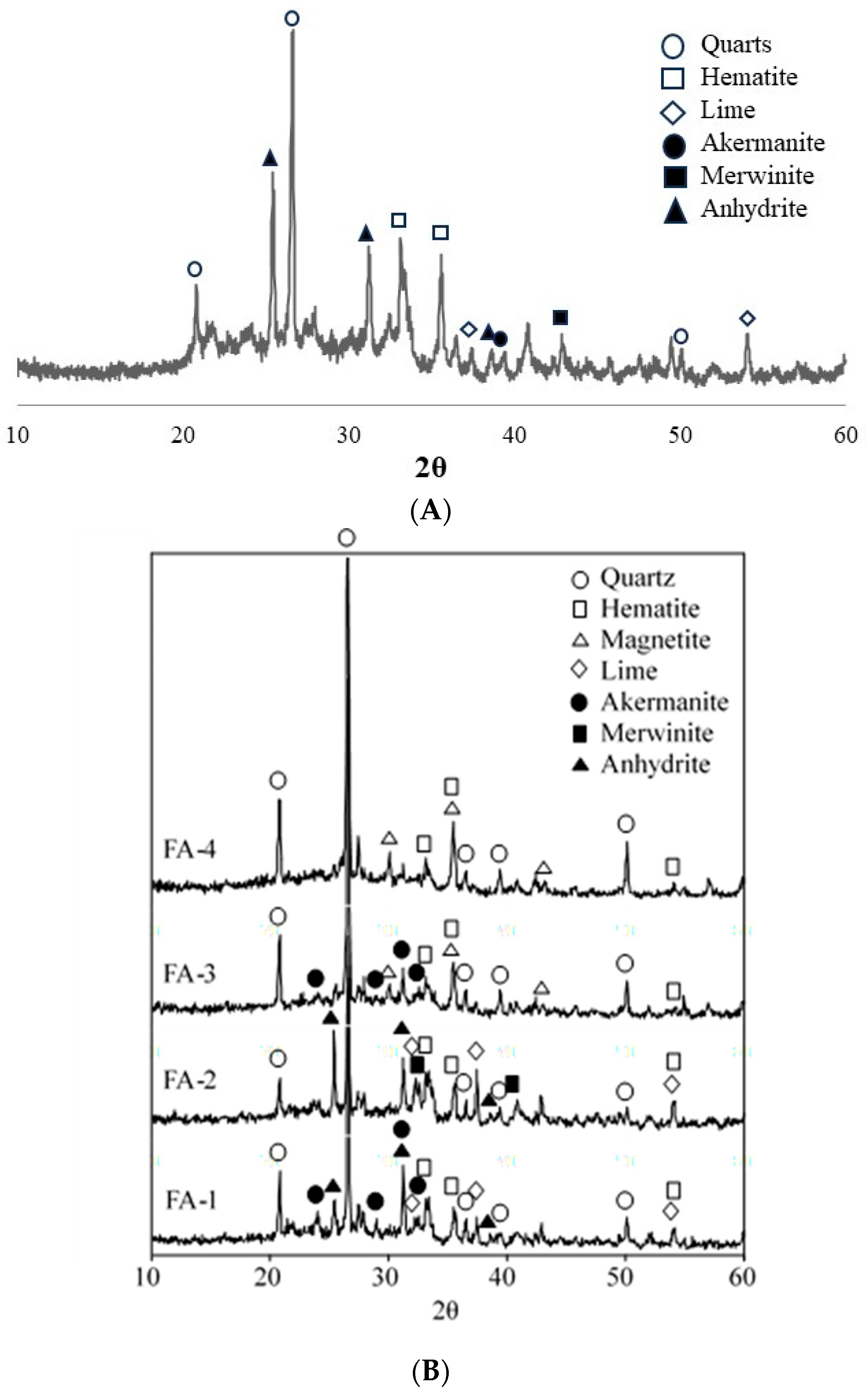
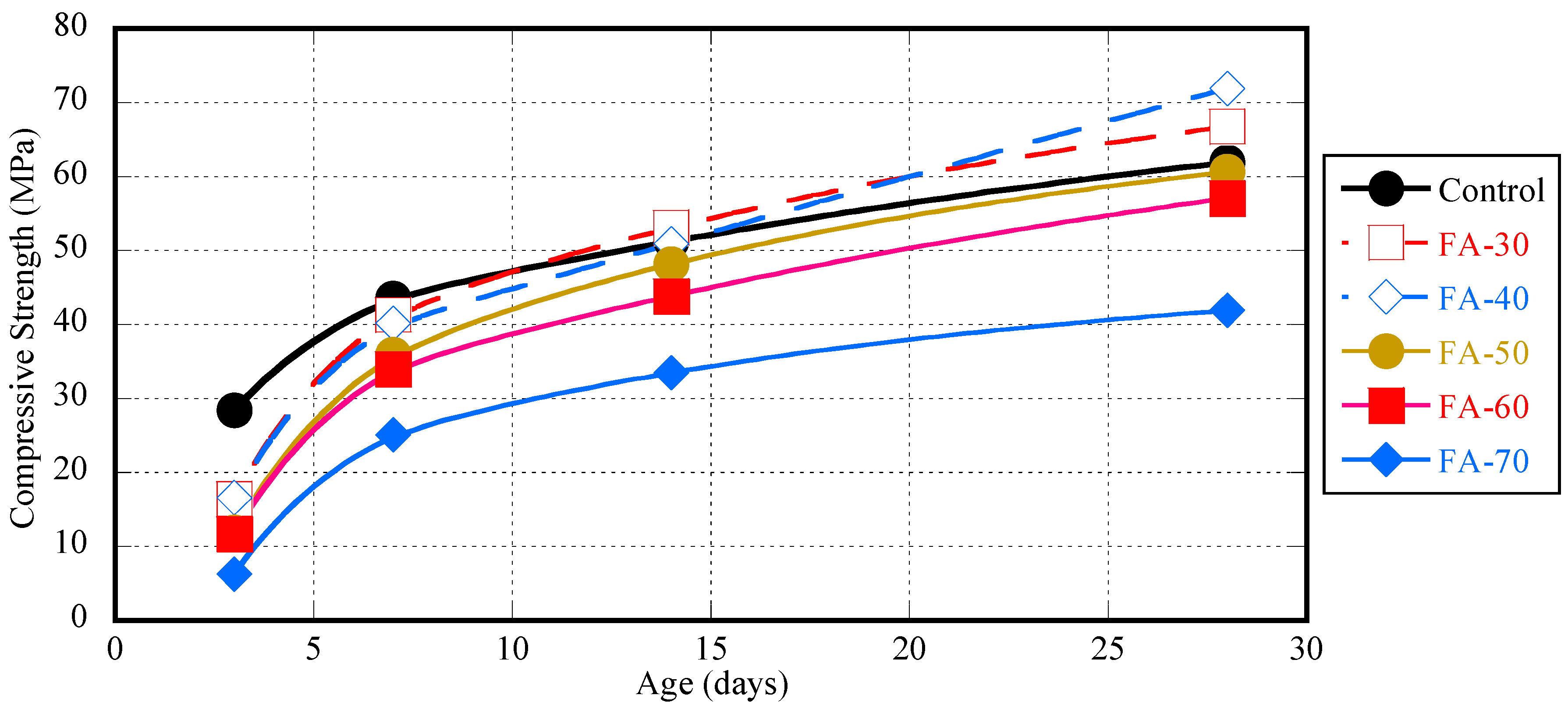
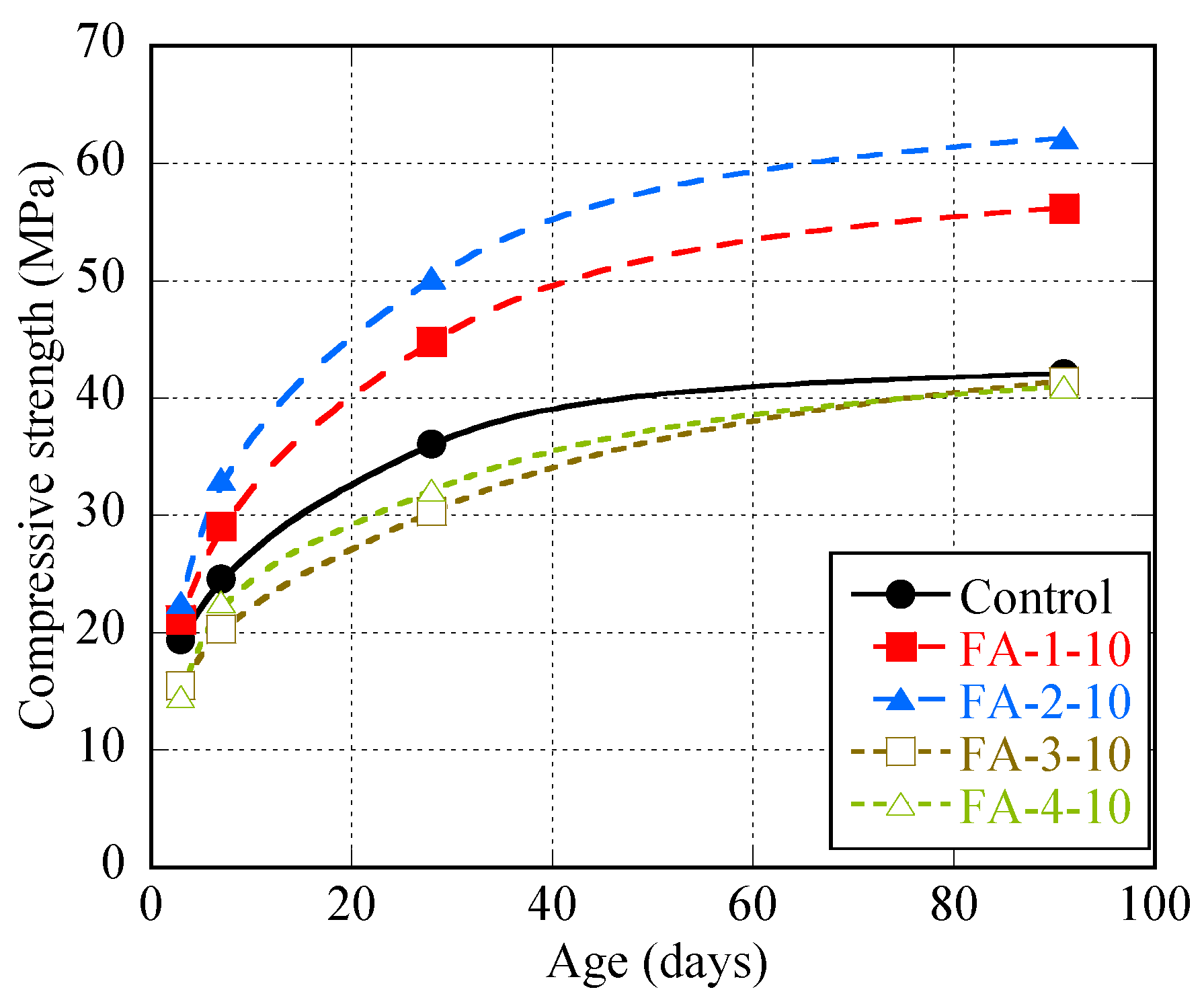
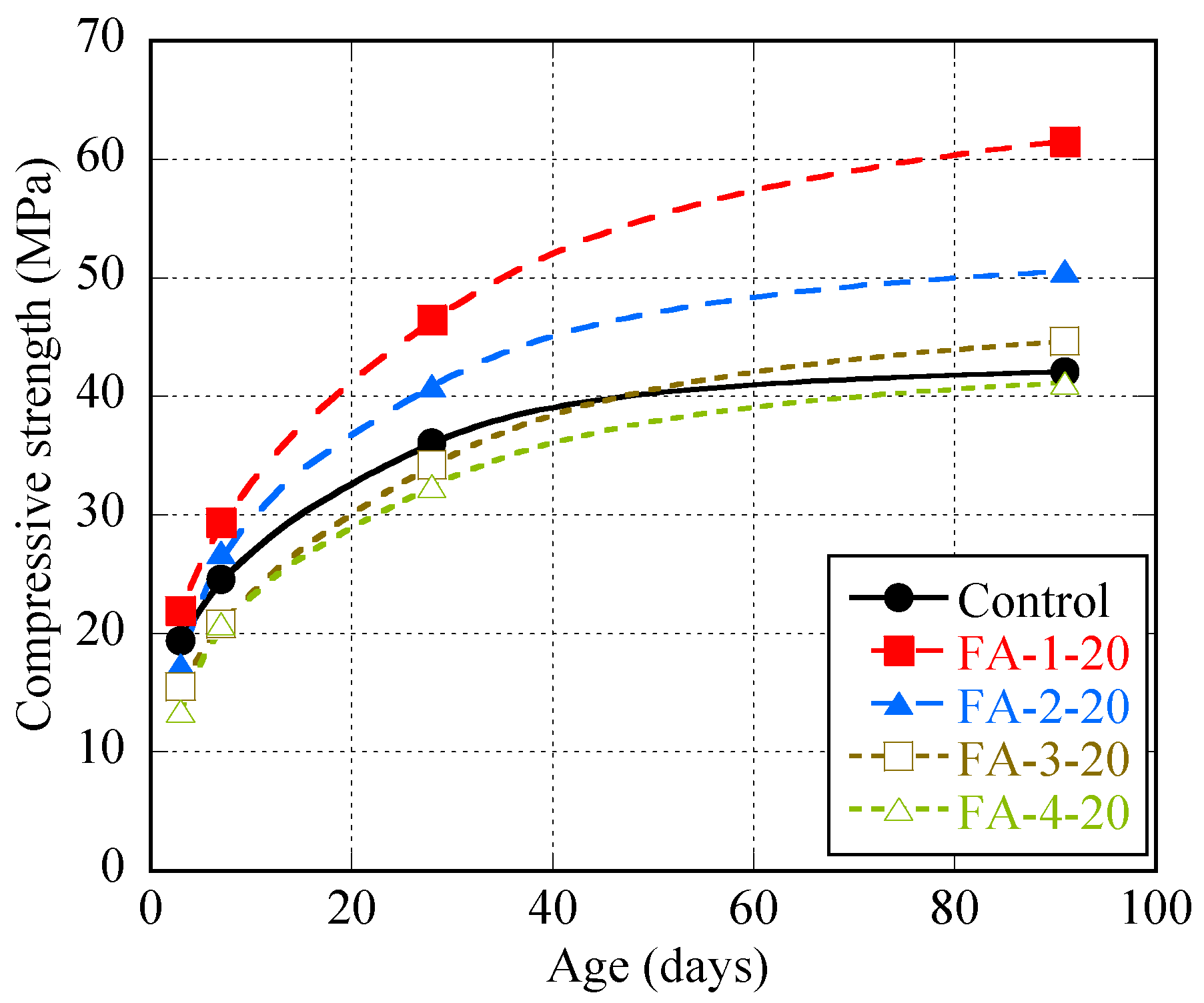
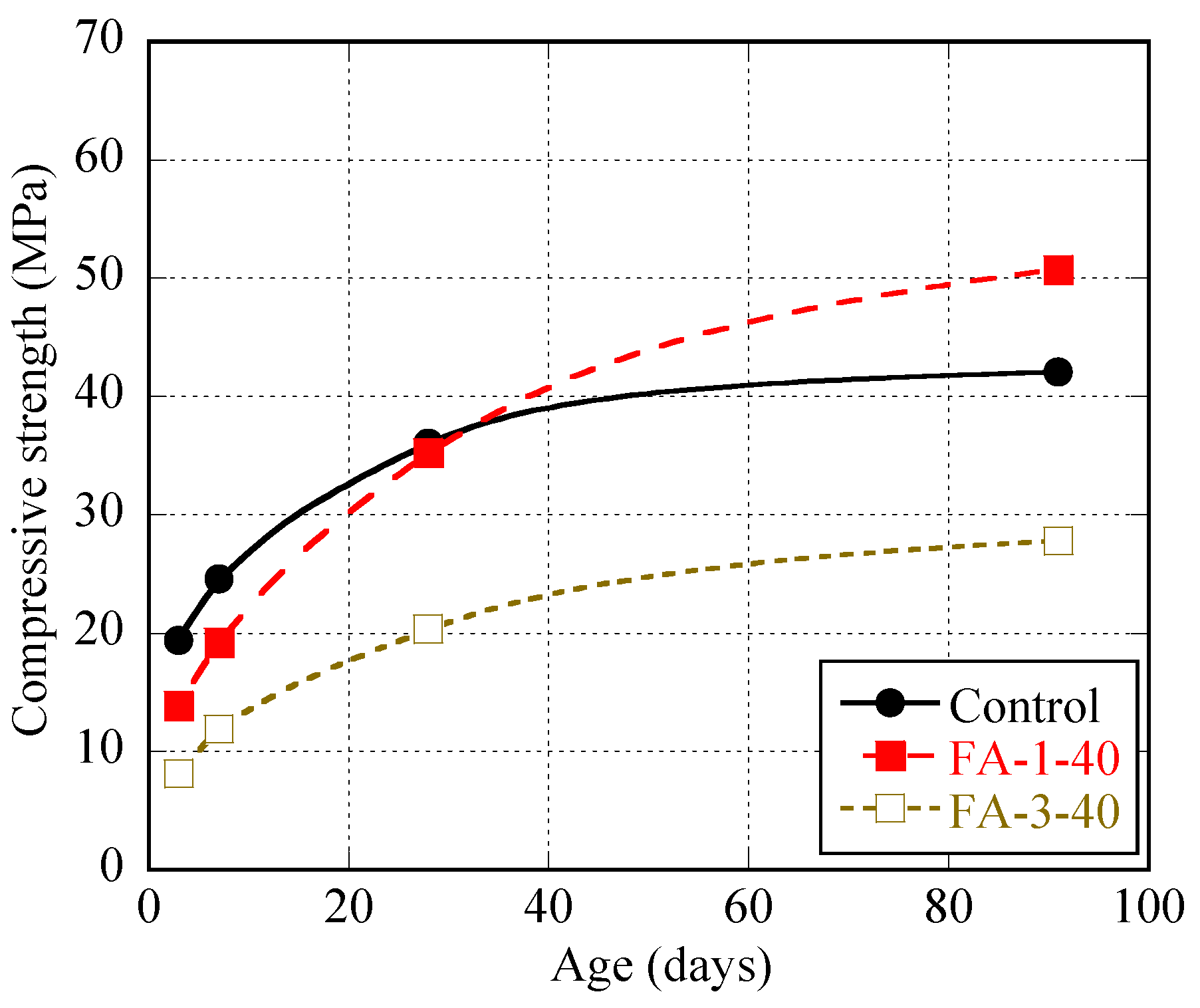
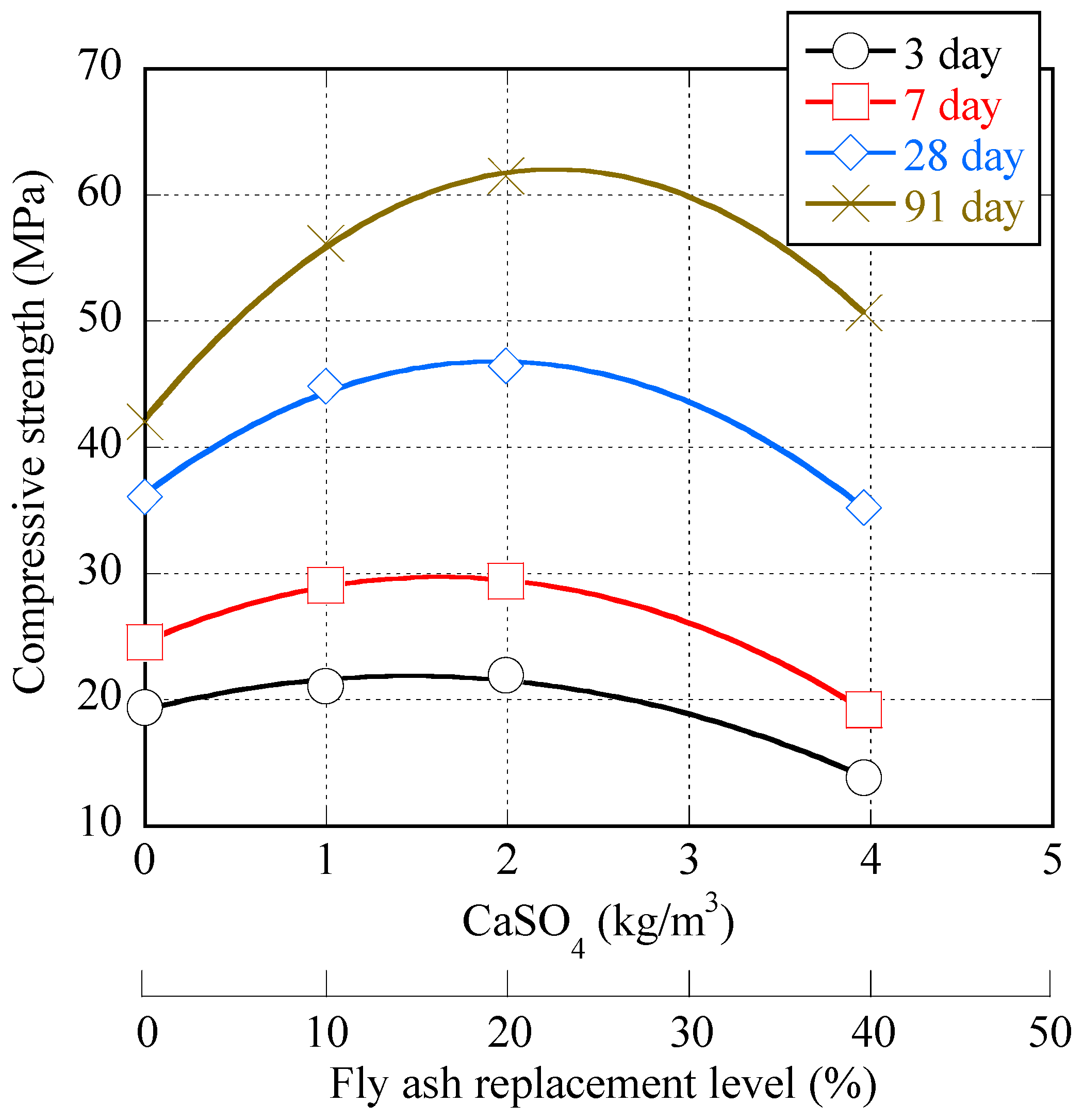
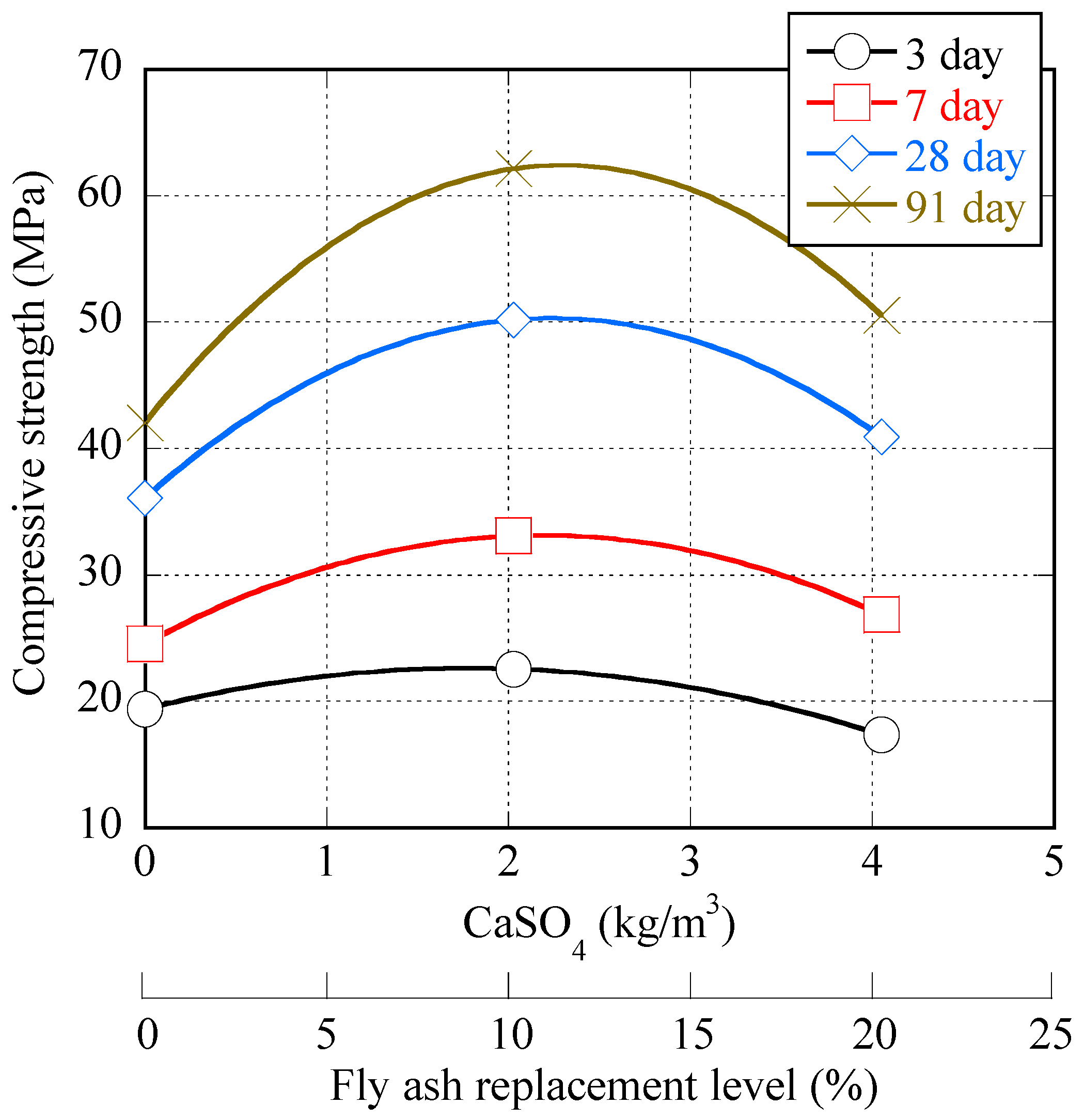
This case study investigates five fly ashes with high CaO and SO3 levels in their chemical composition and compares the apparent influence of the presence and absence of anhydrite on compressive strength. Another distinguishing feature of the above ashes is that they, more or less, naturally contain anhydrite. Two different series of mixed proportions were adopted. Series 1 is designed to understand the maximum possible replacement level of fly ash. Series 2 is designed to understand the effect of anhydrite on compressive strength development. The mineral composition and glass phase of fly ashes were determined by X-ray diffraction Rietveld analysis. As a result of this study, we have found that concrete containing anhydrite-rich fly ash exhibits a higher strength than concrete containing anhydrite-free fly ash at all ages. The compressive strength increases with an increasing fly ash replacement ratio when anhydrite-rich ash is used, but strength decreases when the replacement level exceeds a certain point. The optimal amount of anhydrite was 2 ± 0.5 kg/m3 of concrete, excluding the anhydrite contained in cement.
Keywords: anhydrite; Baganuur; compressive strength; insoluble residue; lignite; mineral composition; Mongolia; ready-mixed concrete; Shivee Ovoo anhydrite; Baganuur; compressive strength; insoluble residue; lignite; mineral composition; Mongolia; ready-mixed concrete; Shivee Ovoo