Article

Optimization of Neighborhood Public Space Design Based on Physical Environment Simulation and Crowd Simulation—A Case Study of Xiaomi’s Changping Campus

1
College of Architecture and Art, Central South University, Changsha 410017, China
2
Beijing Shunjing Landscape Architecture Company Limited, Beijing 100012, China
*
Author to whom correspondence should be addressed.
Buildings 2024, 14(11), 3390; https://doi.org/10.3390/buildings14113390

Submission received: 1 October 2024 / Revised: 21 October 2024 / Accepted: 23 October 2024 / Published: 25 October 2024
(This article belongs to the Section Architectural Design, Urban Science, and Real Estate)

Abstract

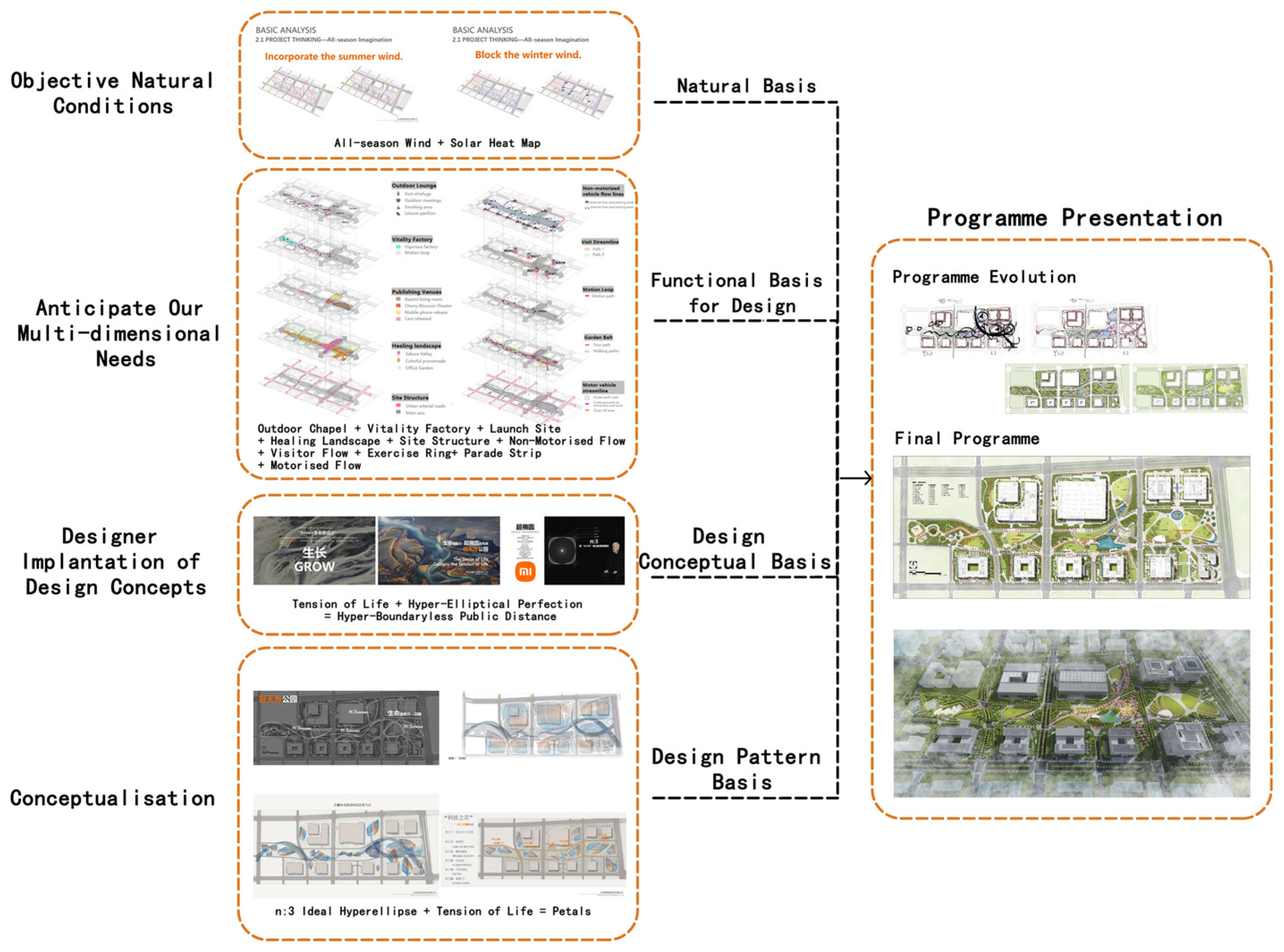
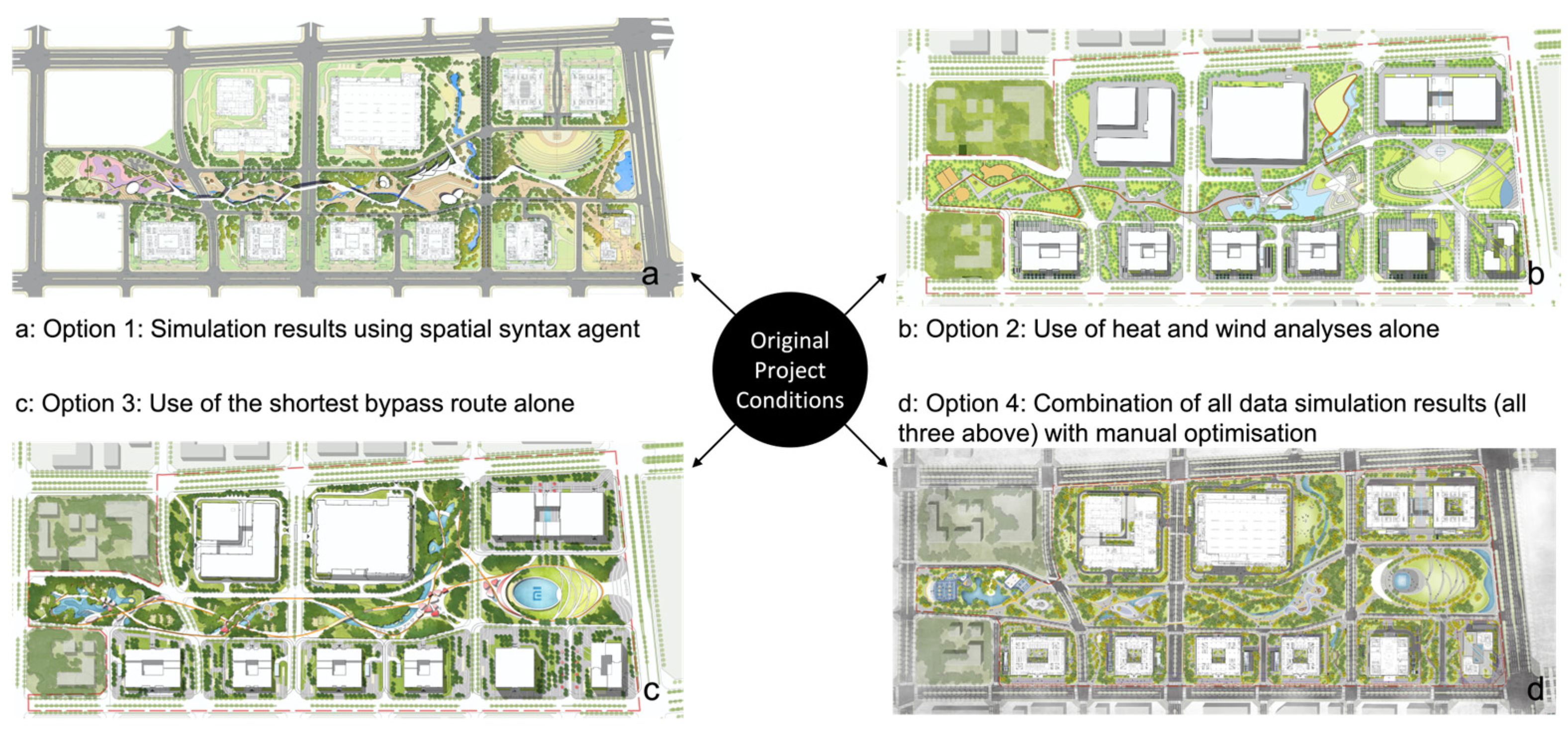
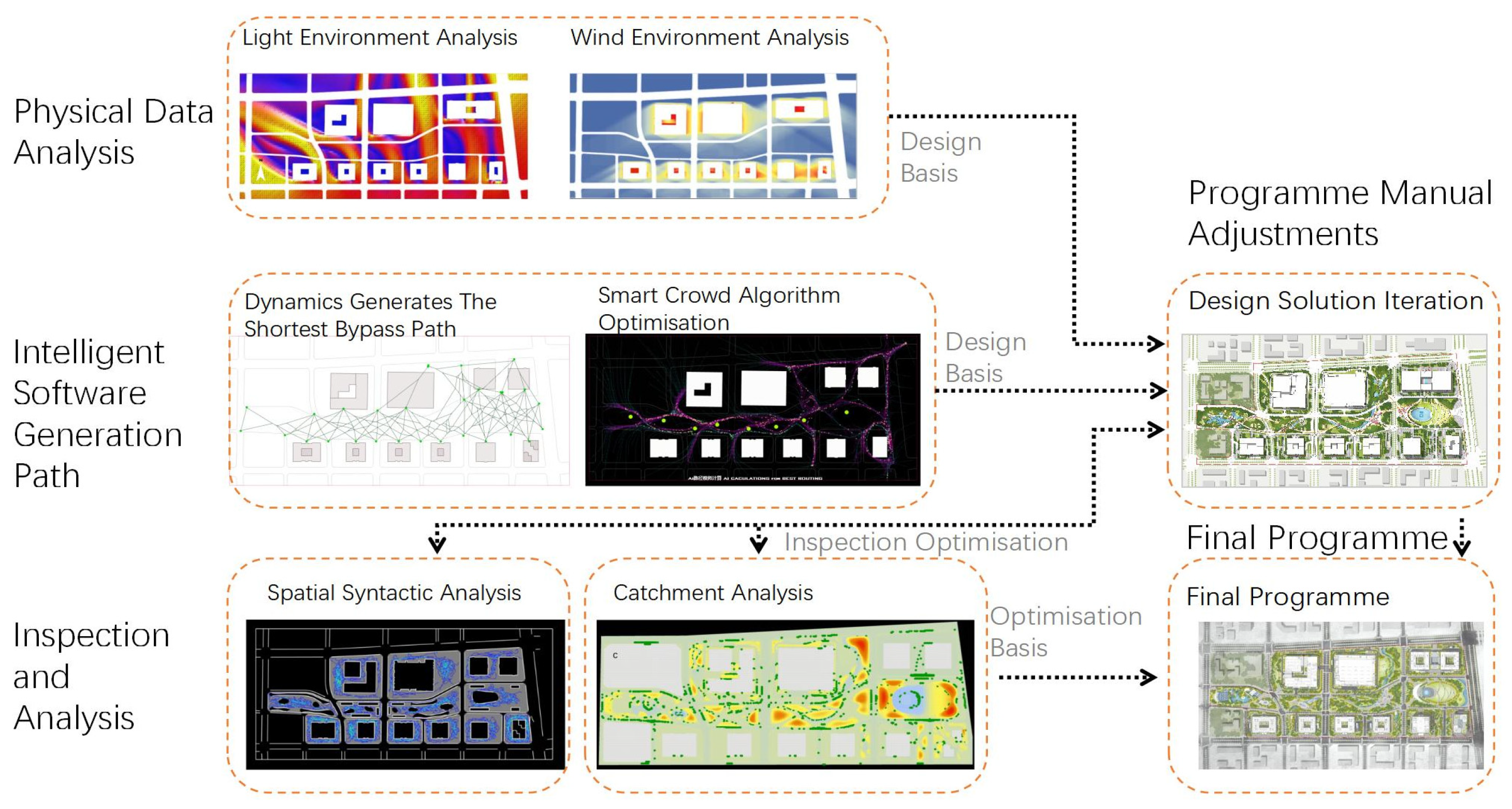
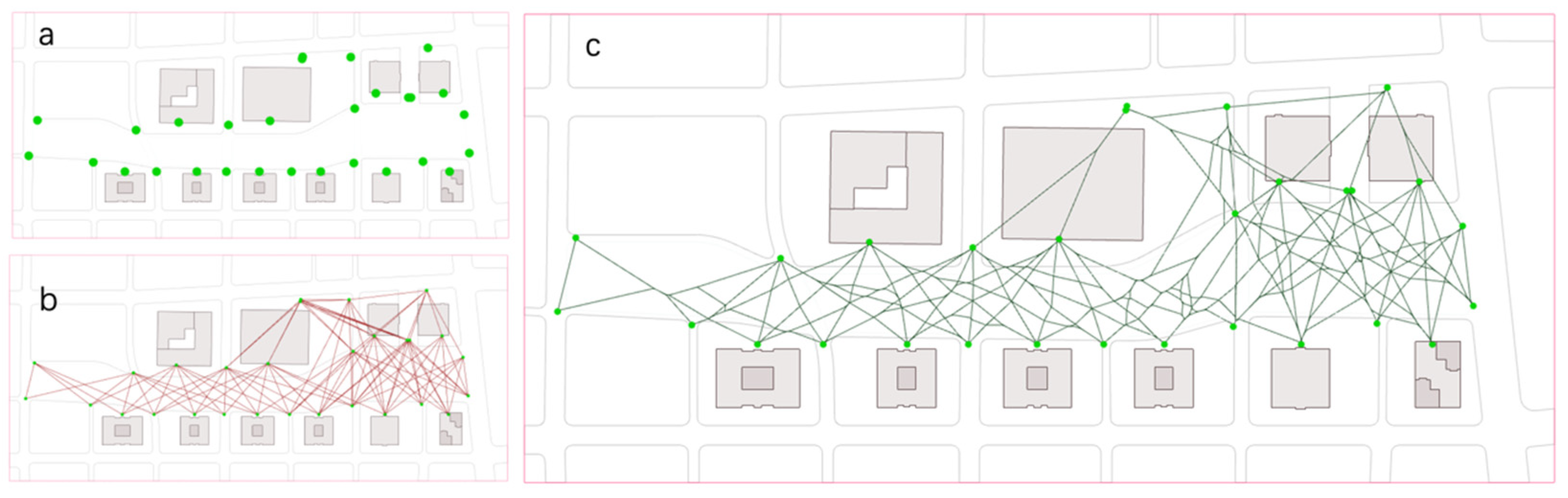
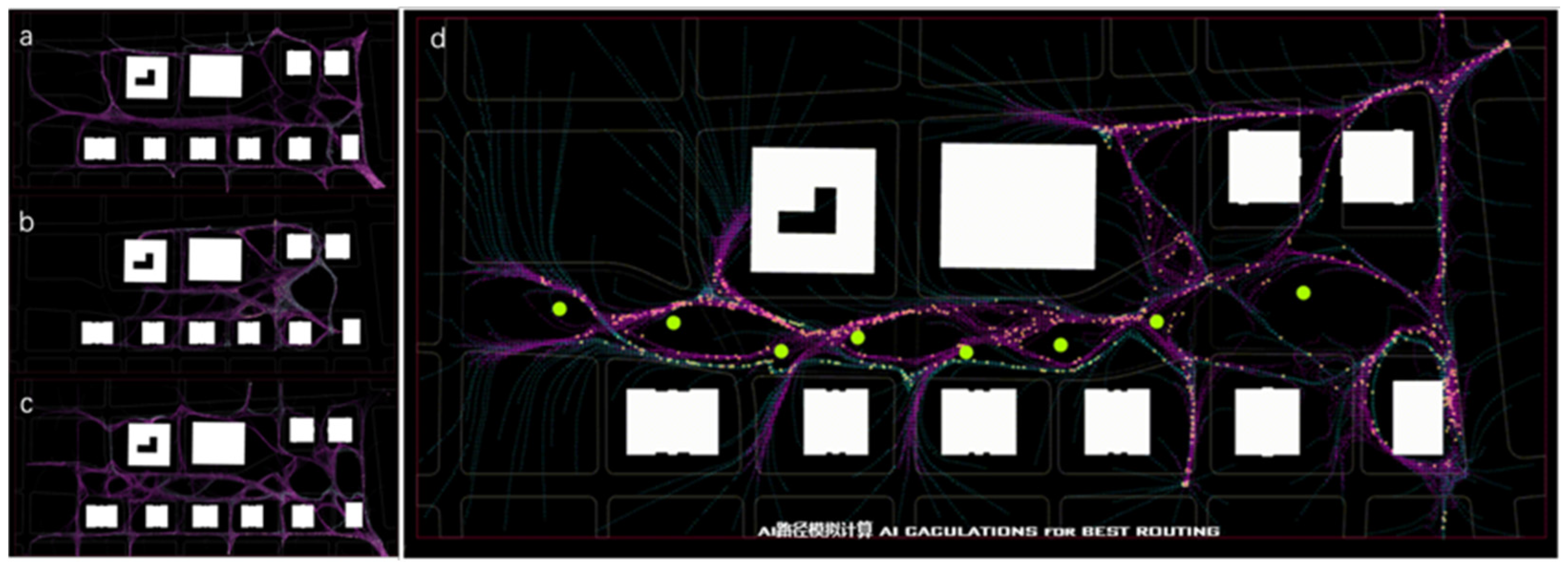
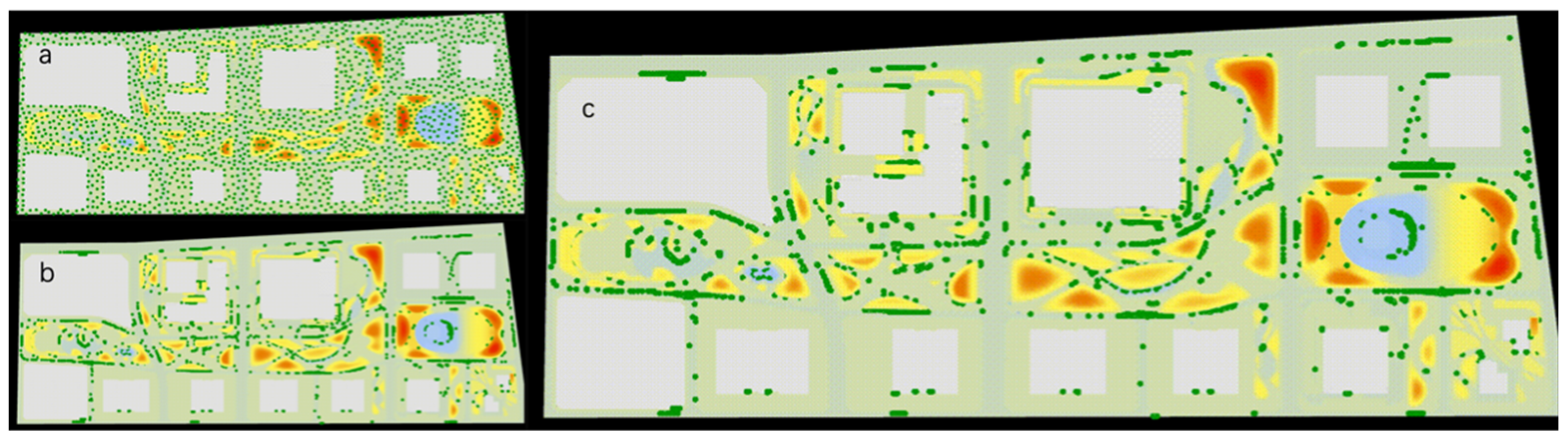
Digital technology has brought drastic changes to the design methods, values, and design tools of neighbourhood public spaces, thereby changing the behavioural patterns of people in neighbourhood public spaces. Therefore, people’s requirements for urban public space have changed and are characterised by high efficiency, high precision, humanization, and high aesthetics. Scholars at home and abroad have conducted many studies and practises on the application of digital technology to neighbourhood design, but there is a lack of systematic research practises on the use and analysis of multi-faceted data. This paper selects the Xiaomi Beijing Changping II design project, simulates and deduces the physical environment of its location, simulates the results of the natural environment by using the data of sunshine, wind, and water catchment in the physical environment, and then simulates the crowd’s action paths by combining kinetic algorithms and ant algorithms to optimise the design methods, processes, and results of the neighbourhood public space on the basis of this research. The research team designed five groups of programmes for the project based on different design methods and processes, and conducted a comparative study of the five groups of programmes through the hierarchical analysis method in conjunction with the fuzzy comprehensive evaluation method, as well as discussing them in conjunction with the actual bidding results of the project and the scoring conclusions of the industry experts. The results of the study show that the design scheme for neighbourhood public space based on physical environment simulation and crowd simulation is better able to take advantage of the analytical and predictive advantages of the technology and unite with the designer’s aesthetic interests, balancing the data objectivity and aesthetic subjectivity in the design process. The method is more likely to achieve a design solution that combines systematicity, foresight, rationality, and aesthetics, and provides an empirical case for the application of data simulation in public space, aiming to improve the rationality of public space design and solve the data-objective problems faced by the design of public space at this stage.
Keywords: neighbourhood design; public space design optimisation; physical environment simulation; dynamics algorithms; ant algorithms neighbourhood design; public space design optimisation; physical environment simulation; dynamics algorithms; ant algorithms