Abstract
Under low-temperature conditions in winter, asphalt pavement is prone to cracking, icing and other distresses, which affect its safety and comfort. Therefore, by incorporating phase-change materials into asphalt and conducting relevant performance studies, the aim is to alleviate low-temperature distress and regulate road surface temperature and expand the application of phase-change materials in asphalt pavement. We mixed the selected phase-change materials with different dosages into the matrix asphalt to prepare phase-change temperature-regulating asphalt and tested the four basic indicators: road performance, latent heat characteristics, temperature-regulating performance, and rheological properties of phase-change asphalt and its mixture. The research results indicate that with the increase in phase-change material content, the penetration, softening point, ductility, and dynamic viscosity of phase-change high-viscosity asphalt gradually increase. Under the constant temperature test conditions of −2.5 °C and −5 °C, the surface icing speed of asphalt binder specimens mixed with phase-change materials is slower than that of specimens without phase-change materials. Adding phase-change materials can improve the high-temperature and low-temperature PG grading of high-viscosity asphalt, effectively improving its high-temperature rutting resistance and low-temperature cracking performance. According to the temperature regulation test results, phase-change temperature-regulating asphalt has a certain regulating effect on temperature under low-temperature conditions, which can slow down the cooling rate of asphalt, reduce the thermal conductivity of permeable asphalt mixture by more than 50%, increase the temperature regulation rate by more than 30%, and improve the ice-melting and snow-melting ability by more than 20%. Phase-change materials have almost no effect on the porosity of permeable asphalt mixtures and can effectively improve the water stability, low-temperature crack resistance, and antiflying performance of permeable asphalt mixtures. Their Marshall stability and rutting stability decrease, but still meet the requirements of the specifications. Applying phase-change materials to permeable asphalt pavement can automatically adjust the temperature of the pavement, reduce the cooling rate of the asphalt pavement during cooling, alleviate the problem of snow and ice accumulation on the asphalt pavement in winter, and thereby improve the performance of permeable asphalt pavement against freeze–thaw cycles.
1. Introduction
An asphalt mixture differs from other construction materials, such as cement concrete and cement mortar, in that it is a flexible and temperature-sensitive material. Under the action of traffic loads and high-temperature conditions, asphalt mixtures cannot maintain a fixed shape. Moreover, the use of phase-change materials in conjunction with asphalt exhibits desirable descriptive characteristics [1]. However, after multiple phase-change cycles, these materials may suffer from leakage and loss. Furthermore, the preparation of asphalt mixtures requires mixing at high temperatures, which poses the risk of vaporization and loss of phase-change materials [2].
With the extensive application of asphalt pavements, numerous domestic and international professionals have conducted in-depth research on its materials and construction aspects, advancing both the theoretical study and practical implementation of asphalt roads [3]. However, due to various factors, such as material properties and external environmental influences, challenges, such as high-temperature rutting, surface water freezing, and low-temperature cracking, persist as critical issues that demand attention. These distresses not only negatively impact various performance aspects of asphalt pavements but also significantly reduce their service life [4]. As the global climate undergoes dramatic changes, extreme weather events are becoming more frequent in various regions [5]. During winter, the low-temperature environment poses a particular risk, causing asphalt pavements to be susceptible to phenomena like icing and cracking. This results in reduced friction between vehicles and the road surface, leading to decreased skid resistance, and in severe cases, even contributing to traffic accidents [6]. Low-temperature cracking is a common form of pavement distress, primarily manifesting as transverse cracks. Such distress occurs mainly because asphalt materials have a limited capacity to withstand low temperatures, leading to diminished deformability. Consequently, the key challenge faced in low-temperature regions lies in finding solutions to prevent pavement cracking and alleviate driving difficulties caused by surface icing [7].
Under low-temperature conditions, asphalt materials face challenges in withstanding extreme cold, as internal stresses may exceed their ultimate tensile strength [8]. As a result, improving asphalt material road performance in low-temperature environments becomes a key direction for the development of asphalt road materials. The focus should be on finding a material to be mixed with asphalt that, based on external environmental changes, can regulate the temperature of the asphalt pavement, reduce the possibility of asphalt pavement cracking due to extreme low temperatures, and lessen its sensitivity to low-temperature conditions [9]. Phase-change materials (PCMs) refer to materials that exhibit different states, such as gaseous, liquid, and solid, and can convert between these states [10]. The energy produced during conversion is stored or released in the form of latent heat, thereby enabling temperature regulation and control. Based on research and the successful applications of phase-change materials in other fields, introducing them into asphalt could lead to the development of an asphalt binder and mixture with phase-change behavior and temperature self-regulation properties [11]. This would allow long-term thermodynamic performance control within a certain temperature range and reduce the rate of temperature change. As the ambient temperature rises, the temperature of the asphalt pavement increases as well. When the temperature reaches the phase transition temperature of the added PCM, a change in its phase occurs, resulting in the absorption and storage of a portion of the heat. This leads to a corresponding decrease in the asphalt’s temperature, reducing the rate of temperature rise and achieving a “peak-shaving” effect during a specific period. Conversely, when the external temperature drops, or cold air penetrates the asphalt pavement, the inclusion of a PCM can act as a “filling” mechanism [12]. Thus, with the addition of a PCM, the temperature range can be maintained stably under varying external temperature conditions, reducing the occurrence and duration of extreme temperature peaks [13]. Consequently, incorporating a PCM into asphalt actively improves its working state. When applied to porous asphalt pavements, a PCM can automatically adjust the pavement temperature, reducing the cooling rate of asphalt during temperature drops. This approach delays or shortens the occurrence and duration of extreme low temperatures, alleviates winter snow accumulation and surface icing issues, and consequently enhances the freeze–thaw resistance performance of porous asphalt pavements [14].
Phase-change materials are generally divided into solid–solid, solid–liquid, solid–gas, and liquid–gas phase changes. The majority of current research is focused on solid–solid and solid–liquid phase-change energy storage materials [15]. Solid–liquid PCMs offer a large range of selectable phase-change temperatures and have been subject to significant research; however, they exhibit higher instability, which might result in changes in volume and thermal parameters, causing them to be prone to leakage. Therefore, they must be fixed and encapsulated using certain methods [15]. In recent years, the most widely used antileakage methods include carrier porous adsorption and microcapsule encapsulation. Researchers have confirmed that microencapsulation of phase-change materials enhances the stability of the phase-change process, prolongs their service life, and improves their heat transfer behavior. Consequently, microencapsulation holds promising prospects for practical applications in the field of phase-change materials [16]. Hence, this paper plans to prepare phase-change materials using microcapsule encapsulation technology and test and evaluate their performance and autonomous temperature regulation effects when incorporated into asphalt binders [17].
Yan et al. studied three composite phase-change materials, namely paraffin, fatty acids, and a combination of paraffin with fatty acids, and used TC3000 to measure the thermal conductivity efficiency of these materials at various molar ratios and test temperatures. The research revealed an inverse relationship between the thermal conductivity efficiency and the phase transition temperatures of the materials. When the phase transition did not occur, the heat transfer efficiency was relatively unaffected by the experimental samples. After 500 cycles of testing, it was observed that the thermal transfer coefficient of the binary fatty acid and paraffin composite materials decreased with the increase in the number of test cycles, demonstrating good cycle stability [18]. Cui et al. discussed the application of PCMs in buildings, focusing on their usage scenarios, application areas, types of application, thermal properties, and phase-change properties. The results showed that phase-change materials are mainly used between 25 and 60 degrees north latitude and 25 and 40 degrees south latitude, with paraffin phase-change materials being the most widely used. The phase-change temperature and heat of fusion of organic phase-change materials vary between 19 and 29 °C and 120 and 280 kJ/kg, respectively. The best application effect of phase-change materials can reduce the indoor air temperature by 4.2 °C [19,20]. Chen et al. discussed in detail the classification and addition methods of a PCM in asphalt mixtures, reviewed the various properties of PCM-modified asphalt, and concluded that the temperature-related performance of asphalt mixtures could be controlled within the phase-change temperature range. PEG and tetradecane are typically used to regulate high-temperature and low-temperature conditions of asphalt pavements, respectively [21,22].
Guo et al. investigated the classification, mechanism, temperature regulation effects, and preparation methods of composite phase-change materials (CPCMs). The study also described the impact of directly incorporating phase-change materials and CPCMs on asphalt binder and asphalt mixture performance. The results indicated that the direct incorporation of a PCM played a role in temperature regulation but exhibited high-temperature leakage, leading to adverse effects on the asphalt binder and mixture’s performance. However, CPCMs effectively mitigated this issue and improved the thermal storage capacity and overall performance of asphalt mixtures [23].
Athukorallage et al. conducted experiments on phase-change-material-modified asphalt mixtures to mitigate extreme temperatures on asphalt pavements. They theoretically calculated the heat transfer process using the volumetric average energy formula. The results demonstrated that the use of phase-change materials can slow down the rate of temperature rise and fall on roads and effectively improve the working temperature and temperature adaptability of road surfaces [24,25].
Du et al. studied the interactions between PEG and asphalt and their influence on the phase-change effect and properties of asphalt binders and asphalt mixtures through indoor microscopic testing, dynamic shear rheological testing, irradiation testing, and shear strength testing. The results revealed that the measured phase-change enthalpy of PEG/asphalt composite material was lower than the theoretical value. Liquid PEG enhanced the elasticity of asphalt and increased its nonrecoverable creep compliance. The composite material containing 20% PEG had a peak temperature 3.3 °C lower than the control asphalt mixture but experienced a relative reduction of 20.3% in shear strength [26].
Kousksou et al. studied the melting parameters of a binary mixture of tetradecane–hexadecane and different concentrations of tetradecane–hexadecane mixtures in DSC through experiments and numerical analyses. They found that the phase-change process of the binary mixture occurred within a temperature range, which depended on the heating rate and the composition of the mixture. Tetradecane of the same concentration had different heating rates, and the solid and liquid phase line temperatures of the binary mixture could be predicted by the DSC curve [27,28].
The goal of the phase-change materials selected in this study is to improve the snow-melting and anti-icing capabilities of asphalt pavements during cold seasons. The research investigates the impact of these materials on the performance of porous asphalt mixtures. The objective is to develop more resilient and durable pavements that effectively combat winter ice formation and withstand challenging winter conditions.
2. Materials and Methodology
2.1. Materials
2.1.1. Paraffin-Based Phase-Change Materials
Paraffin-based phase-change materials are straight-chain hydrocarbons with the molecular formula CnH2n+2, and their properties are similar to those of saturated hydrocarbons. The properties of paraffin are stable. Paraffin can repeatedly dissolve and crystallize without entering a supercooled state or undergoing phase separation. It features fast crystallization speed, low supercooling, excellent plasticity, plentiful raw materials, low cost, secure structure, nontoxicity, and noncorrosiveness. However, its volume changes greatly after phase transition, and it has a low heat conduction coefficient and compaction degree, limiting the solidification speed during heat release. Considering factors such as the required phase-change temperature, thermal characteristics, chemical properties, and economic performance, dodecane, tetradecane, and hexadecane were selected as paraffin-based phase-change materials. Their basic performance indicators are shown in Table 1.
Table 1.
Basic properties of paraffin-based phase-change materials.
2.1.2. Asphalt
The base asphalt used in this paper was Asphalt 70#. The relevant technical indicators were measured, as shown in Table 2.
Table 2.
Partial indicators of asphalt 70#.
2.1.3. Aggregates and Mineral Powder
The test aggregates and mineral powder were tested according to specification requirements, with results shown in Table 3, Table 4 and Table 5.
Table 3.
Technical indicators of coarse aggregate.
Table 4.
Technical indicators of fine aggregate.
Table 5.
Technical indicators of mineral powder.
2.2. Test Methods
2.2.1. Three Major Indicator Tests
To understand the potential effects of incorporating phase-change materials into asphalt, this study conducted tests on high-viscosity asphalt samples with added phase-change materials. The tests included penetration, ductility, softening point, and dynamic viscosity measurements to analyze the impact of phase-change materials on the high-temperature and low-temperature properties of the asphalt. The addition of PCMs affects various properties of the asphalt. Four different dosages, namely 6%, 7%, 8%, and 9%, were introduced into the high-viscosity asphalt to assess their influence on the asphalt’s performance indicators.
2.2.2. DSR Test
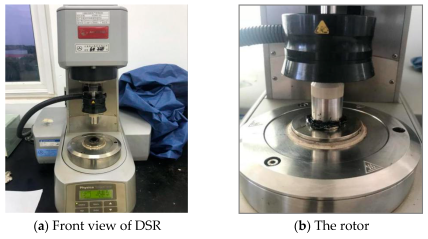
Rheology is a discipline that studies the flow and deformation of materials under external conditions and time-related factors. In the context of asphalt, the PG grading (Performance Grade) system differs from commonly used penetration and viscosity grading criteria. It establishes a link between the asphalt’s technical specifications and its performance on asphalt road surfaces, taking into account factors such as temperature and traffic volume that affect road performance. For PG grading experiments, the SmartPave101 dynamic shear rheometer (as shown in Figure 1) and the bending beam rheometer manufactured by Anton Paar owned by the charitable Santner Foundation in England were utilized. Additionally, the dynamic shear rheometer (DSR) was employed to conduct asphalt performance tests with different modules, including temperature scans, frequency scans, and multiple-stress creep recovery tests. The corresponding experimental parameters are detailed in Table 6.
Figure 1.
Dynamic shear rheometer (DSR).
Table 6.
Dynamic shear test settings.
A dynamic shear rheometer (DSR) was used to perform the PG high-temperature grading test for asphalt, determining the high-temperature grade of different asphalts. The asphalt was tested in three stages, mainly including original asphalt, TFOT asphalt residue, and PAV asphalt residue. These three stages simulated the problems encountered in practice with original asphalt and the aging process. A bending beam rheometer was used to conduct the low-temperature grading test, determining the low-temperature grade of different asphalts.
Asphalt is a temperature-sensitive material, and its viscoelastic properties are greatly affected by temperature changes. The phenomenon of rutting mainly occurs during the early stage of road construction and under high temperatures. The PG grading system is denoted as PGX-Y, where X represents the high-temperature grade and Y represents the low-temperature grade. It indicates that the asphalt binder is suitable for a specific temperature range, with each grade covering a 6 °C temperature interval. The dynamic shear rheometer measured the complex shear modulus G* and phase angle δ of the original asphalt, TFOT residue, and PAV residue. For evaluating the high-temperature performance of asphalt, the rutting factor (G*sinδ) was used as the evaluation criterion, with the requirement that the original asphalt should not be less than 1.0 KPa and the residues not less than 2.2 KPa. The fatigue factor (G*sinδ/G*sinδ at 10 Hz) was employed to assess the fatigue performance of asphalt binders, and it should not exceed 5 MPa. A smaller fatigue factor indicates higher elasticity and better fatigue resistance of the asphalt. The bending beam rheometer test determined the bending creep stiffness modulus and m-value of the asphalt. The bending stiffness modulus (S) represents the asphalt’s ability to resist loads, while the m-value reflects the rate of change in the creep stiffness modulus. The requirement for the bending stiffness modulus should not be greater than 300 MPa, and the m-value should be no less than 0.3, indicating good resistance to deformation under load.
In colder areas, asphalt pavement often cracks. This phenomenon is an important form of road damage. In order to effectively ensure the normal use of the road, good low-temperature performance of asphalt is a necessary condition. During the experiment, the asphalt beam specimens were placed on the support frame, and a manual contact load of 35 mN ± 10 mN was applied to ensure close contact between the beam and the support. The test loading system was activated, and an initial load of 1 N was applied to the specimen within approximately 1 s. Then, the load was released to the preload and maintained for 20 s. After the 20 s period, a 1 N load was applied again and kept for 240 s. During this time, the load and deformation values of the asphalt beam were recorded. Finally, the load was removed and the specimen returned to the preloaded condition, completing the experiment.
Throughout the test, the computer data control acquisition system plotted the relationship between deflection and time, allowing the determination of the creep stiffness modulus (S) and creep rate (m) values of the asphalt based on the deflection–time curve [29].
where:
- S(t)—Creep stiffness modulus (MPa) at 60 s;
- P—Load 100 g;
- L—Beam spacing 102 mm;
- b—Beam width 12.5 mm;
- h—Beam height 6.25 mm;
- δ(t)—Deflection (mm) when time equals 60 s.
2.2.3. Ice Formation Test
To observe and evaluate the anti-icing effect of the phase-change asphalt binder, the experiment simulated the entire process of water freezing under low-temperature conditions. Specimens, including high-viscosity asphalt and various proportions (6%, 7%, 8%, and 9%) of phase-change asphalt, were labeled as 1#, 2#, 3#, 4#, and 5#. These specimens were placed in constant-temperature low-temperature chambers set at −2.5 °C and −5 °C for consecutive freezing durations of 30 min, 60 min, 90 min, 120 min, and 180 min. During the freezing process, the formation of the ice layer on the specimen’s surface was observed and recorded at different time intervals. Additionally, a small knife was used to break the ice layer and assess its hardness, providing a basis for evaluating the anti-icing effect of phase-change asphalt binders with various proportions (0%, 6%, 7%, 8%, and 9%).
2.2.4. Mixture Test
In this study, porous asphalt mixture PAC13 with a target porosity of 22% was used. The research aimed to compare the performance of this mixture with phase-change materials at different mass percentages (0.3%, 0.35%, 0.4%, and 0.45%) and the mixture without phase-change materials. Various properties of the mixtures were investigated.
- (1)
- Thermal Conductivity Testing of Phase-Change Porous Asphalt Mixture
Thermal conductivity is a physical property that reflects the material’s ability to conduct heat and is a crucial thermal parameter of asphalt mixtures. Its value remains relatively constant over a range of temperatures. However, within the phase-change temperature range, the occurrence of phase change in the materials leads to changes in specific heat capacity and thermal diffusivity. Over time, this results in a delayed temperature rise effect. In this study, the phase-change asphalt mixture’s thermal conductivity at various temperatures was assumed as a constant for the purposes of simplification.
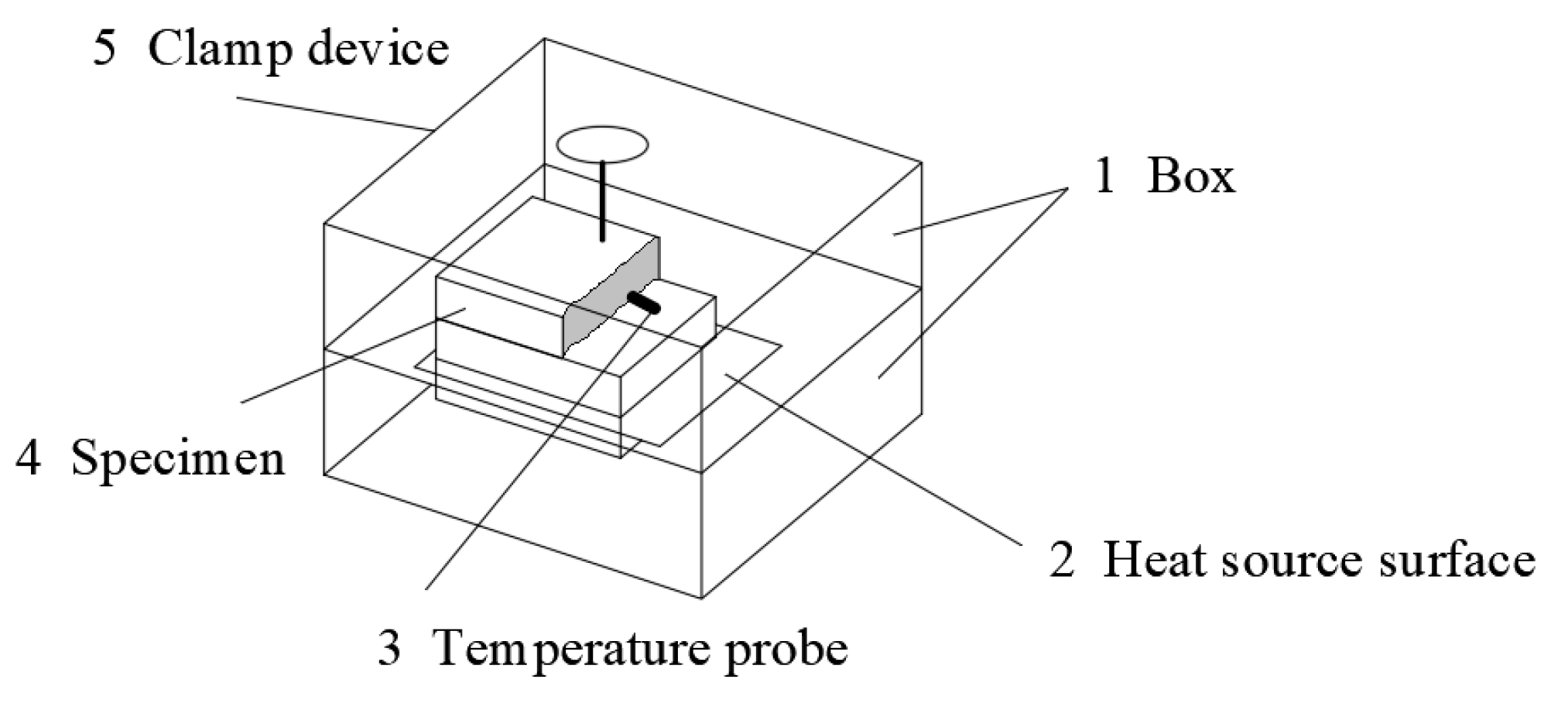
The determination of thermal conductivity can be carried out using steady-state and transient methods. In this research, the transient method was employed to determine the thermal conductivity of the phase-change porous asphalt mixture. The schematic diagram of the experimental setup is shown in Figure 2, and the specific steps are as follows:
Figure 2.
Schematic diagram of the thermal conductivity coefficient testing device.
(1) Standard rutting board specimens meeting the requirements were prepared, with three specimens per group, and their dimensions and mass were measured and recorded.
(2) The main unit signal cable was connected to the computer correctly, and the main unit power switch was turned on. Then, the low-temperature constant temperature bath and the computer power switch were successively turned on to access the main interface of the measuring instrument.
(3) When the temperature on the heating surface reached 16.5 °C, the side of the box containing the temperature probe was opened. Two specimens were placed inside, with the probe positioned between them. This side of the box was then closed.
(4) The other side of the box was opened, and the third specimen was placed inside. The box was then closed, and the specimens were firmly pressed against the heating surface using the clamping device.
(5) The test specimen’s thickness and bulk density were entered one after the other. A measurement temperature rise of 2 °C was set, and the experiment began when the temperature on the heat source surface reached 32 °C. The relevant parameters required for calculating the thermal conductivity were measured, and the thermal conductivity of the specimen was calculated.
(6) The thermal conductivity of the specimen was determined using the average value of three repeated experiments for each group.
- (2)
- The Deicing and Snow-Melting Performance of Phase-Change Porous Asphalt Mixture.
The ice- and snow-melting ability can reflect the time required for the porous asphalt pavement to melt the accumulated snow after snowfall. The specific experimental steps are as follows:
The ice- and snow-melting ability was evaluated to determine the time required for the porous asphalt pavement to melt accumulated snow after snowfall. The specific experimental steps were as follows:
(1) Standard rutting test specimens that met the requirements were formed, with 3 specimens in each group. The dimensions and mass of the specimens were measured and tested. Also, cylindrical ice blocks with a diameter of 10 cm and a height of 8 cm were prepared for later use.
(2) The test specimens were placed under a constant temperature of 25 °C without any heat source for a minimum of 12 h.
(3) The test specimens were placed into a sealed box and exposed to a heat source for 2 h from directly above the specimens.
(4) After the exposure, the specimens were placed in a constant-temperature box set at −5 °C. One cylindrical ice block was vertically placed in the middle of each test specimen, and the mass of each ice block was measured.
(5) At intervals of 30 min, the mass of each ice block was quickly measured and recorded, and then each block was returned to its original positions to continue the experiment. The measurements were repeated after 3 h.
(6) The ice- and snow-melting ability value for this group of test specimens was calculated using the average of three test results.
3. Results and Discussion
3.1. Performance Analysis of Phase-Change High-Viscosity Asphalt
3.1.1. Basic Properties of Phase-Change High-Viscosity Asphalt
High-viscosity asphalt samples with a varying phase-change material content of 6%, 7%, 8%, and 9% were subjected to penetration tests (at a test temperature of 25 °C), ductility tests (at a test temperature of 5 °C), and softening point tests. The results are presented in Table 7.
Table 7.
Basic properties of phase-change high-viscosity asphalt.
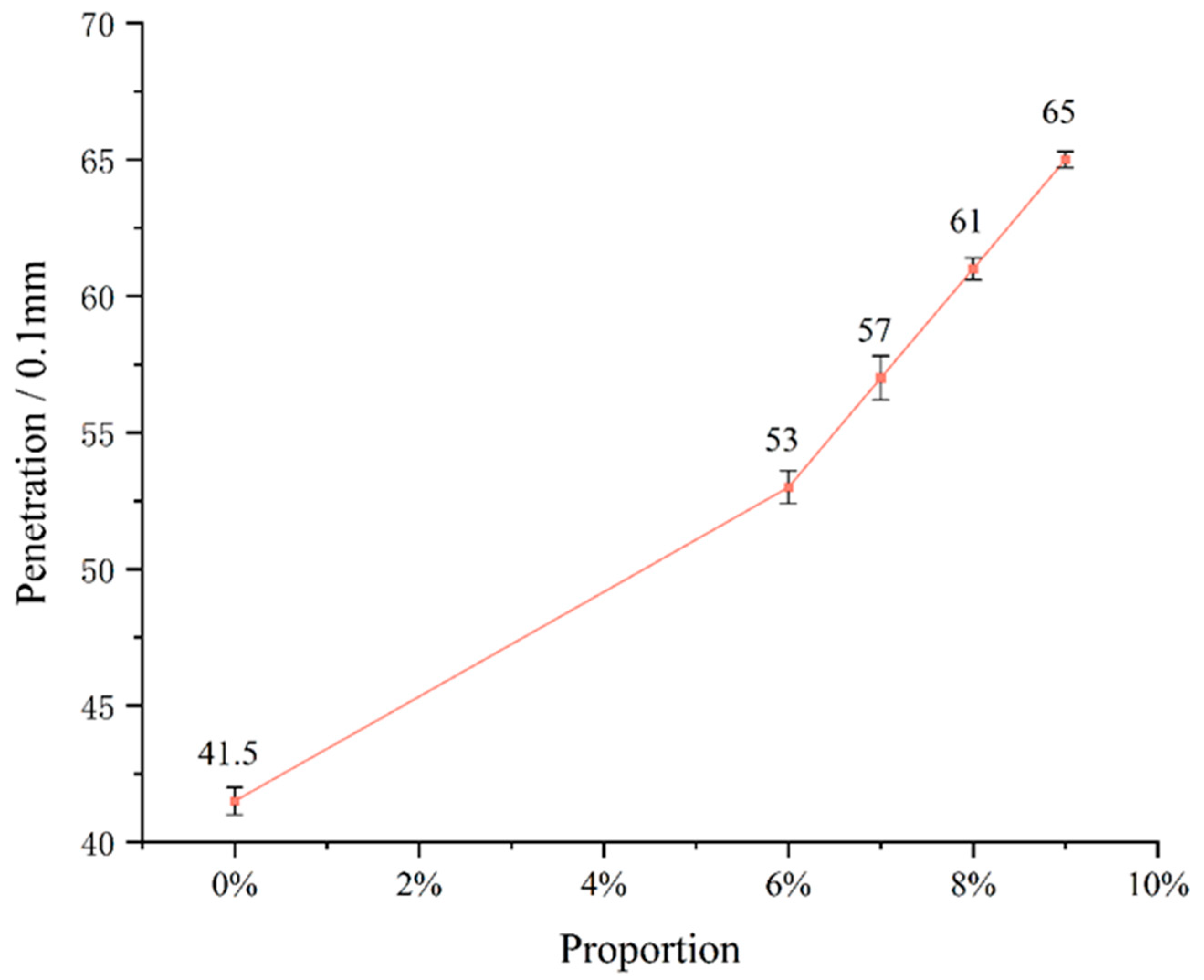
(1) The variation in penetration for asphalt with different contents of phase-change material is shown in Figure 3.
Figure 3.
Penetration of asphalt with different contents of phase-change material.
As shown in Figure 3, the addition of phase-change material to high-viscosity asphalt results in an increase in penetration value. Furthermore, as the content of phase-change material increases, the variation in penetration value becomes more noticeable.
The penetration value is a performance indicator used to evaluate the hardness, consistency, and viscosity of asphalt. The components that have a significant impact on the penetration value are asphaltene, followed by resin, aromatic compounds, and saturated compounds. Research suggests that an increase in the content of saturated compounds can reduce the viscosity of asphalt and lead to an increase in the penetration value. The incorporation of phase-change material into asphalt increases the content of saturated compounds, thereby causing an increase in the penetration value.
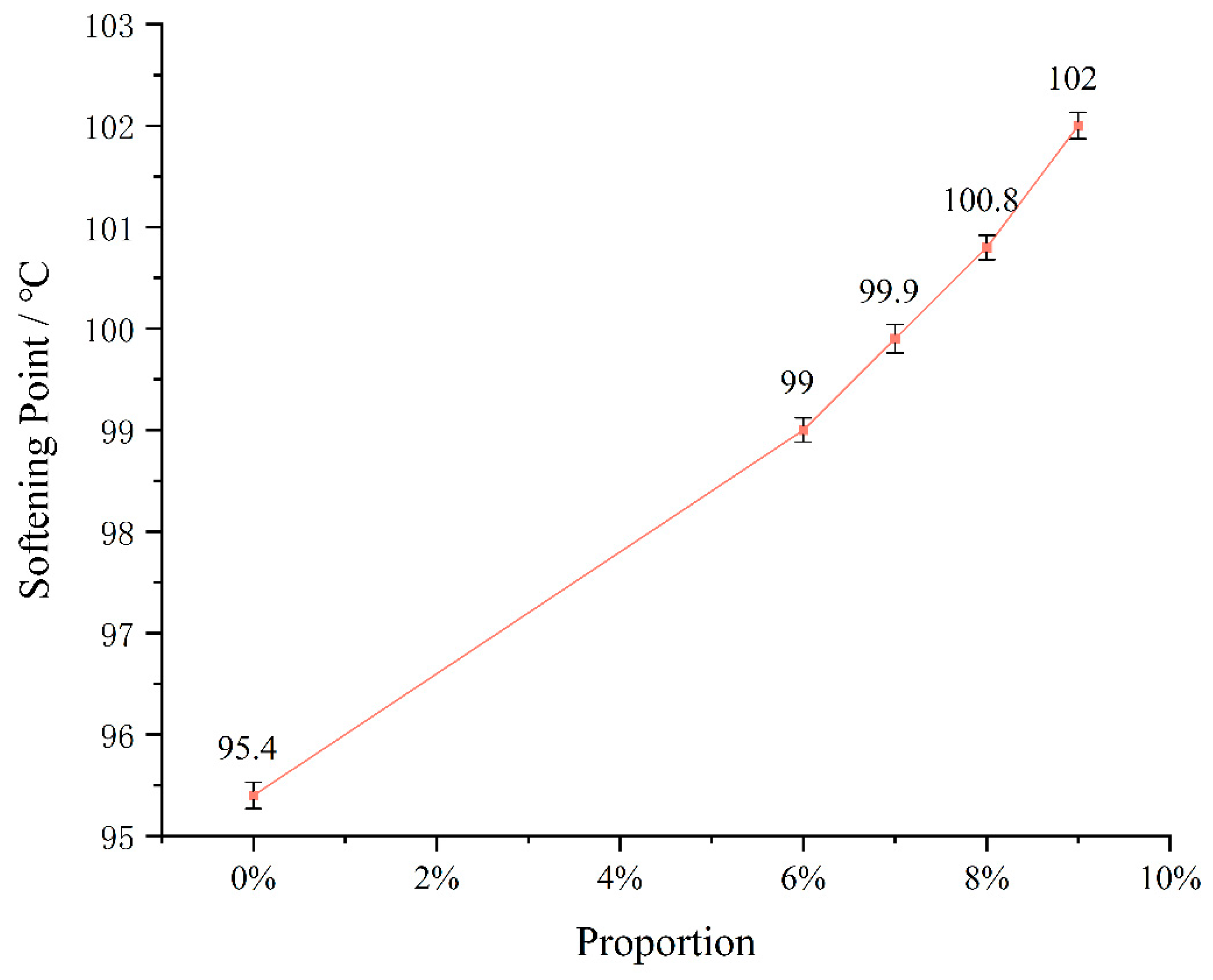
(2) The variation in the softening point for asphalt with different contents of phase-change material is shown in Figure 4.
Figure 4.
Softening point of asphalt with different contents of phase-change material.
From Figure 4, it can be observed that with an increase in the content of phase-change material, the softening point of the asphalt also increases, and the magnitude of this increase becomes more significant with a higher content. As the content of phase-change material varies from 0% to 9%, the softening point only increases from 95.35 °C to 101.95 °C, indicating a relatively minor influence.
The softening point is one of the fundamental properties used to evaluate the high-temperature stability of road asphalt. A higher softening point indicates that the viscosity of the asphalt at elevated temperatures is higher, resulting in better high-temperature stability of the asphalt mixture. The high-temperature stability of asphalt essentially refers to its ability to resist repeated compression deformation and lateral flow caused by vehicular traffic. The incorporation of phase-change material into the asphalt leads to an increase in the softening point, thereby enhancing the high-temperature stability of the asphalt.
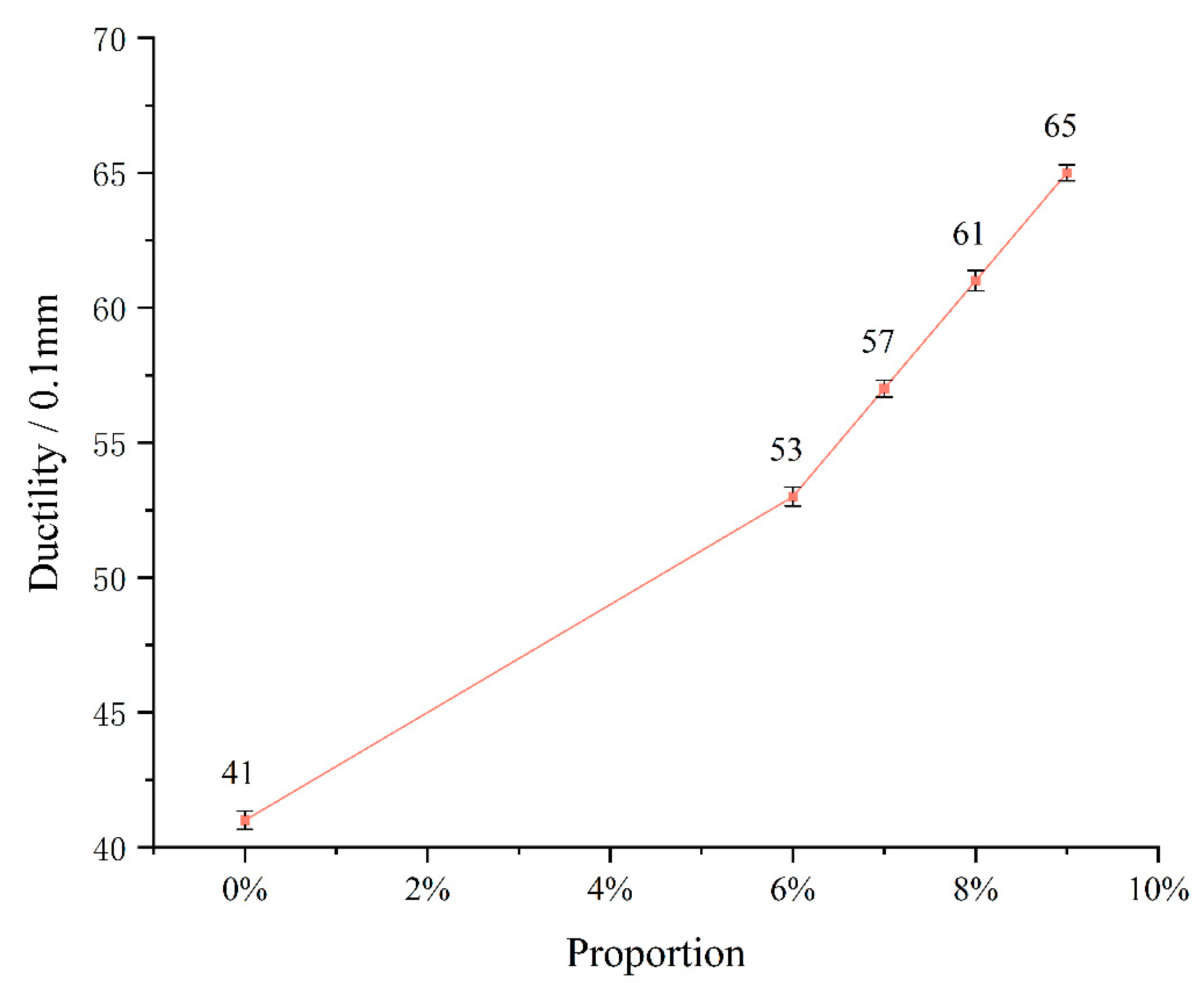
(3) The variation in ductility for asphalt with different contents of phase-change material is shown in Figure 5.
Figure 5.
Ductility of asphalt with different contents of phase-change material.
According to Figure 5, it is evident that with an increase in the content of phase-change material, the ductility of the asphalt consistently increases, and the increment in ductility becomes more significant with a higher content. Ductility is a performance indicator used to assess the adhesion and flexibility of asphalt. The ability of asphalt to withstand tensile stress not only affects its durability but also reflects the inherent relationships among its various components. Therefore, it is a crucial factor in determining the performance of asphalt in practical applications. Among the asphalt components, the element with the most significant influence on ductility is the resin, as it imparts good plasticity and adhesion to the asphalt, followed by aromatic compounds. The increasing trend in ductility with the addition of a phase-change material may be attributed to the larger content of saturated compounds caused by the incorporation of a phase-change material, leading to a reduction in viscosity and subsequently an increase in ductility.
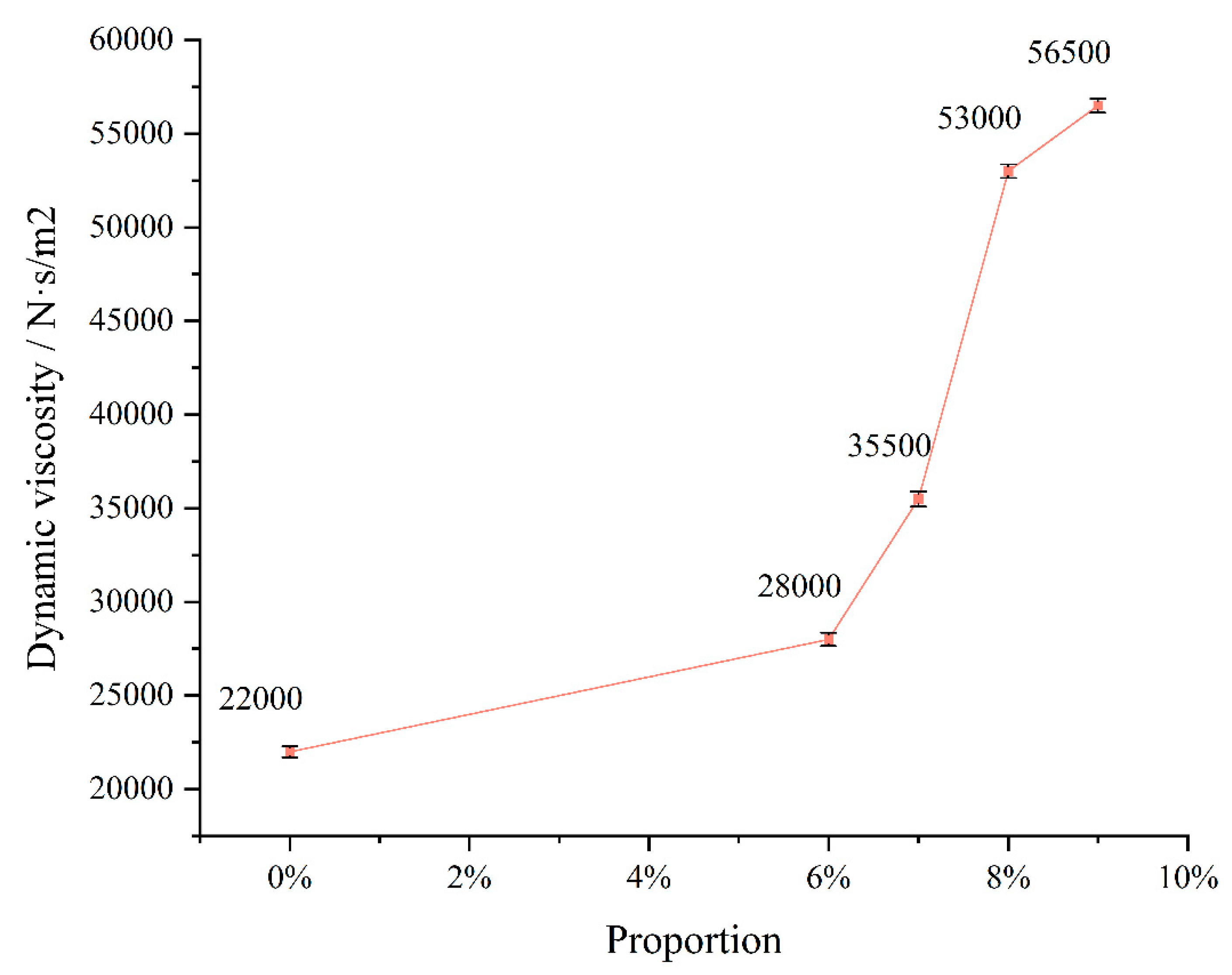
(4) The variation in dynamic viscosity of asphalt with different contents of phase-change material is shown in Figure 6.
Figure 6.
Dynamic viscosity of asphalt with different contents of phase-change material.
As depicted in Figure 6, the addition of a phase-change material results in an increase in the dynamic viscosity of high-viscosity asphalt. Moreover, with a higher content of phase-change material, the dynamic viscosity gradually rises. However, once the content of the phase-change material exceeds 8%, the rate of increase becomes less significant. From this observation, it can be inferred that phase-change material can effectively enhance the dynamic viscosity of high-viscosity asphalt.
3.1.2. Analysis of Anti-Icing Performance of Phase-Change High-Viscosity Asphalt
In order to observe and evaluate the anti-icing effect of phase-change asphalt binders, experimental simulations were conducted to observe the entire process of ice formation under low-temperature conditions. Asphalt binder specimens with varying contents of phase-change material were placed in a constant-temperature low-temperature chamber set at −2.5 °C and −5 °C for continuous freezing durations of 30 min, 60 min, 90 min, 120 min, and 180 min. The formation process of the ice layer on the surface was observed and recorded during these intervals. Additionally, a small knife was used to gauge the hardness of the ice layer to assess the anti-icing effectiveness of different contents (0%, 6%, 7%, 8%, and 9%) of the phase-change asphalt binder.
- (1)
- Observation of Surface Ice Formation Process of Asphalt Binder at −2.5 °C
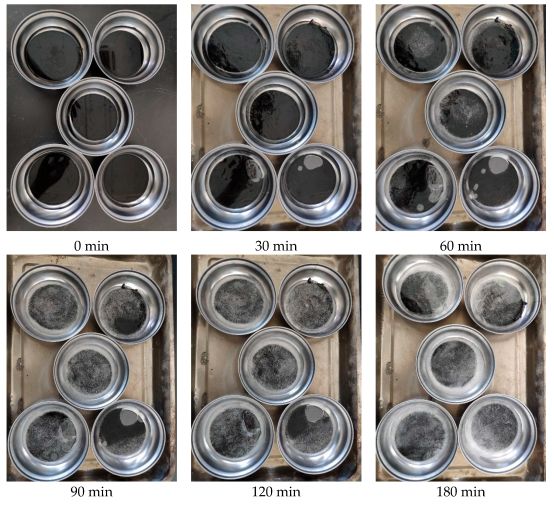
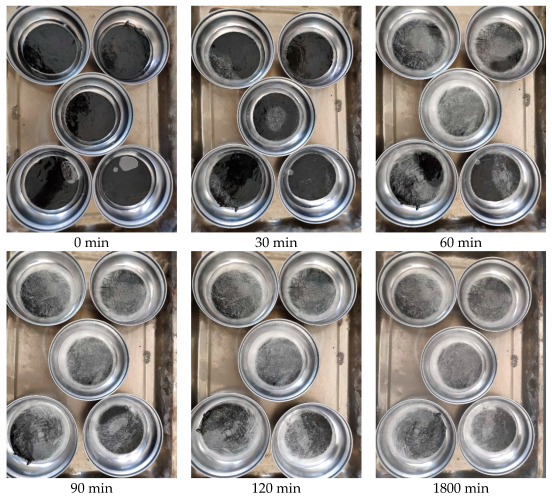
The specimens (including high-viscosity asphalt and phase-change asphalt with 6%, 7%, 8%, and 9% content, denoted as 1#, 2#, 3#, 4#, and 5#) were placed in a constant-temperature low-temperature chamber, maintained at a constant temperature of −2.5 °C. They were then observed and recorded at different time intervals of 30 min, 60 min, 90 min, 120 min, and 180 min to examine the ice formation within the specimens. The experimental results are presented in Table 8 and Figure 7.
Table 8.
Freezing condition of asphalt with different contents of phase-change material at −2.5 °C for different durations.
Figure 7.
Freezing condition of asphalt with different contents of phase-change material at −2.5 °C for different durations.
- (2)
- Observation of Surface Ice Formation Process of Asphalt Binder at −5 °C
The specimens (including high-viscosity asphalt and phase-change asphalt with 6%, 7%, 8%, 9% and 10% content, denoted as 1#, 2#, 3#, 4#, and 5#) were placed in a constant-temperature low-temperature chamber, maintained at a constant temperature of −5 °C. They were then observed and recorded at different time intervals of 30 min, 60 min, 90 min, 120 min, and 180 min to examine the ice formation within the specimens. The experimental results are presented in Table 9 and Figure 8.
Table 9.
Freezing condition of asphalt with different contents of phase-change material at −5 °C for different durations.
Figure 8.
Freezing condition of asphalt with different contents of phase-change material at −5 °C for different durations.
Based on the observations of the surface ice formation status of the asphalt binder specimens with different contents of phase-change material under freezing conditions at −2.5 °C and −5 °C, as shown in Figure 7, Table 8, Figure 8, and Table 9, the following conclusions can be drawn:
(1) In comparison to the asphalt binder specimens without phase-change material (specimen 1#), the specimens containing phase-change material exhibit slower ice formation on their surfaces, and the delay in ice formation becomes more evident with an increase in the content of phase-change material.
(2) Under the freezing condition at −2.5 °C, the surface of specimen 1# is almost completely frozen after 90 min, whereas the surface of the asphalt specimens with phase-change material takes approximately 120 min to reach a similar state, with a small amount of water remaining underneath the ice. Increasing the content of phase-change material helps to delay the ice formation. Additionally, after complete freezing, the ice layer on specimen 1# is very hard and difficult to scratch with a small knife, whereas the ice layer on the surface of the asphalt specimens with phase-change material is relatively easier to scratch, indicating a looser structure. These findings suggest that the use of phase-change material can reduce the adhesion between ice blocks and the asphalt mixture, thereby enhancing the anti-icing performance of the pavement during winter.
(3) Under the freezing condition at −5 °C, all specimens experience faster ice formation compared to −2.5 °C, and after complete freezing, the ice layer on specimen 1# is harder than at −2.5 °C, and the ice layers on specimens 2#, 3#, 4#, and 5# are less loose compared to −2.5 °C, exhibiting a harder ice structure.
These conclusions collectively demonstrate that the incorporation of phase-change material is beneficial in mitigating ice adhesion to the asphalt mixture, thereby improving the anti-icing performance of the pavement during winter conditions.
3.1.3. Study on Rheological Properties of Phase-Change High-Viscosity Asphalt
- (1)
- PG High-Temperature Grading Test
The superpave performance grading test results for different asphalt materials are presented in Table 10.
Table 10.
Results of high-temperature grading test.
As indicated in Table 10, it is noticeable that the rutting factor G*/sinδ decreases with an increase in temperature. At the same temperature, the high-temperature resistance to the deformation of phase-change-modified high-viscosity asphalt is generally higher than that of the original high-viscosity-modified asphalt without phase-change material. As the content of phase-change material increases, the rutting factor gradually increases, and the differences become more noticeable with increasing content and temperature. This indicates that the incorporation of phase-change material can improve the high-temperature performance of high-viscosity asphalt.
- (2)
- Low-Temperature Bending Rheological Test Analysis
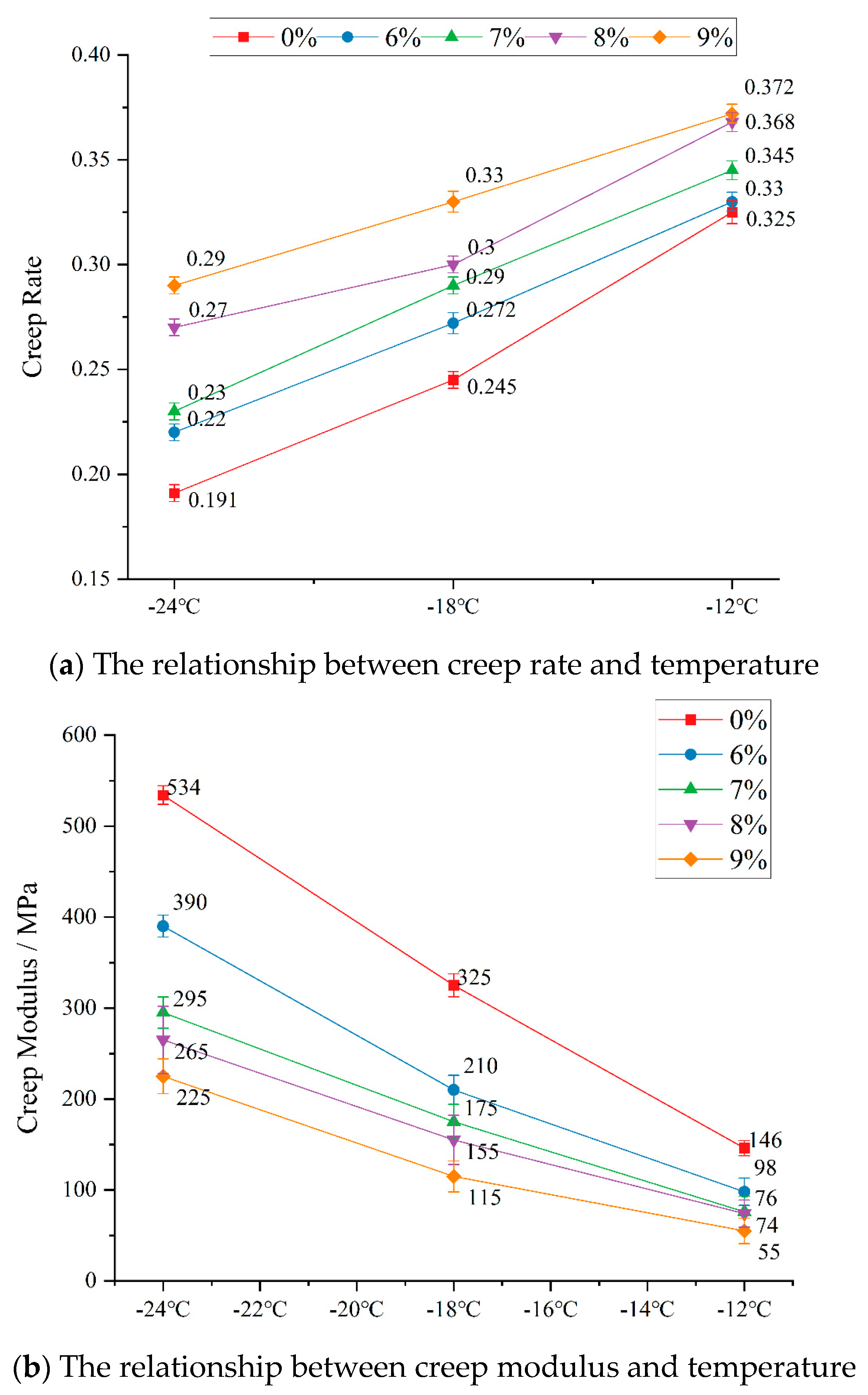
In this study, low-temperature bending creep tests were conducted on asphalt samples aged through Thin-Film Oven Test (TFOT) and Pressure Aging Vessel (PAV) stages at temperatures of −12 °C, −18 °C, and −24 °C. The low-temperature grade of the asphalt samples was determined based on the conditions of creep stiffness modulus (S) not exceeding 300 MPa and creep rate (m) not being less than 0.3. The results of the low-temperature bending rheological tests for different asphalt samples are presented in Table 11 and Figure 9.
Table 11.
Results of low-temperature Bending Rheological Test.
Figure 9.
Results of low-temperature Bending Rheological Test.
From Figure 9, it can be observed that as the temperature increases, the creep stiffness modulus (S) becomes larger, while the creep rate (m) becomes smaller, aligning with the characteristic changes in low-temperature and stress relaxation capabilities of asphalt materials as indicated by the Bending Beam Rheometer (BBR) test. The high-viscosity asphalt without the addition of phase-change material exhibits the highest S value and the lowest m value. However, upon comparison with this baseline, it is evident that the incorporation of phase-change material enhances the recovery capability of the high-viscosity-modified asphalt. Both S and m are also influenced by temperature, with lower temperatures resulting in higher S values and lower m values, indicating that phase-change material improves the stress relaxation performance of the high-viscosity-modified asphalt.
Based on the analysis in Table 11, the high-viscosity asphalt without the addition of phase-change material has a low-temperature grade of PG-22 °C. Similarly, the high-viscosity asphalt modified with 6% and 7% phase-change material also has a low-temperature grade of PG-22 °C. However, when 8% and 9% of phase-change material is added, the low-temperature grade of the high-viscosity-modified asphalt increases to PG-28 °C. This indicates that the viscosity and ductility properties of asphalt play a significant role under low-temperature conditions. Furthermore, when comparing the S and m values, it can be observed that the high-viscosity asphalt with 9% phase-change material has the lowest S value and the highest m value. This suggests that the phase-change high-viscosity asphalt exhibits more flexibility under low-temperature conditions, resulting in better low-temperature crack resistance performance.
- (3)
- Temperature Sweep Test
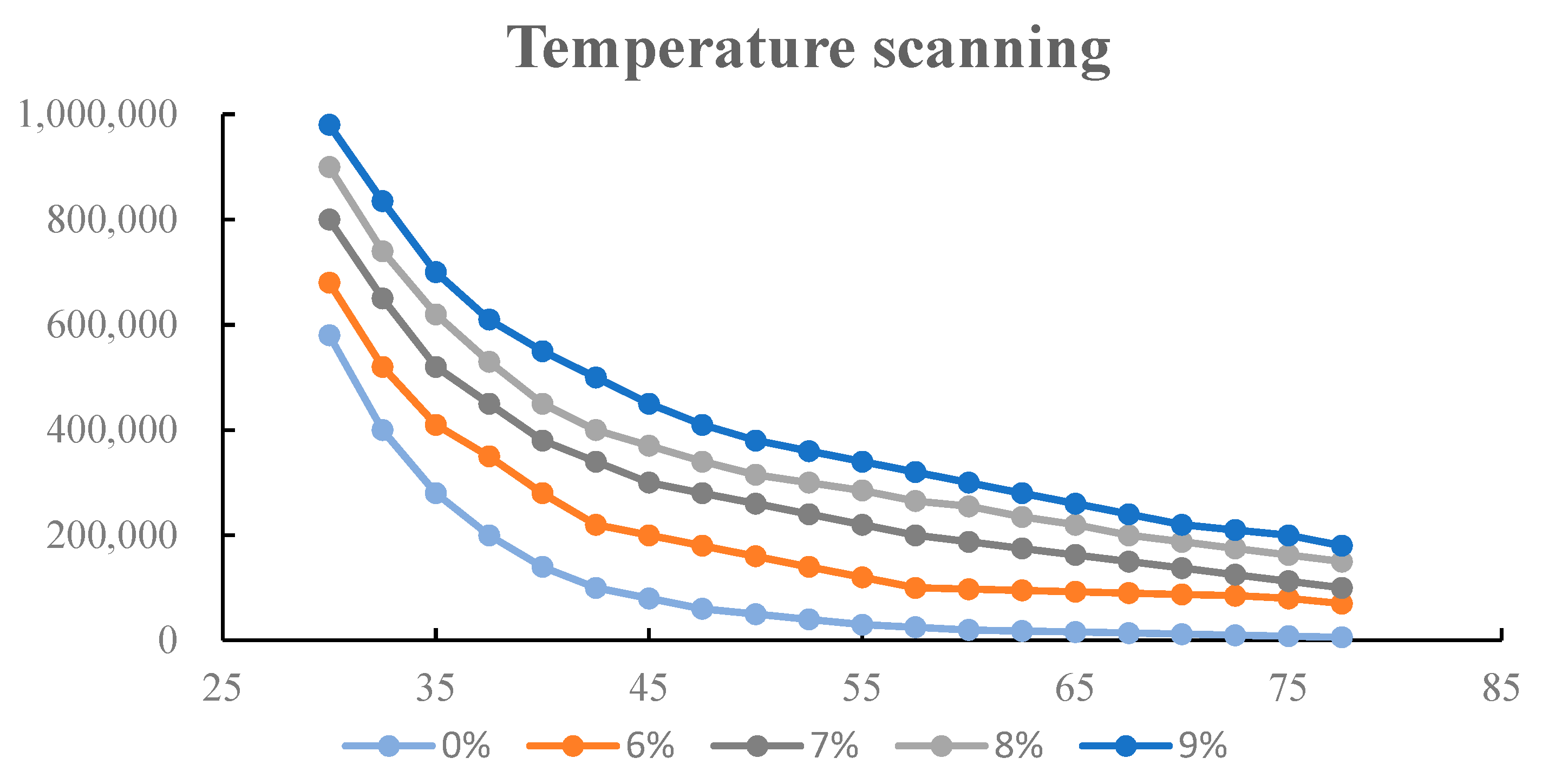
Asphalt, being a typical viscoelastic material, is highly sensitive to temperature; it softens at high temperatures and becomes brittle at low temperatures. Hence, temperature significantly influences the viscoelastic behavior of asphalt. In this section, a temperature sweep test was conducted to evaluate the temperature sensitivity of the asphalt. A Dynamic Shear Rheometer (DSR) temperature sweep was performed on the four asphalt materials within a temperature range of 30 °C to 80 °C. The complex shear modulus G*, phase angle δ, and rutting factor G*/sinδ were analyzed to assess the thermal sensitivity of different asphalts. The variation in the rutting factor with temperature is depicted in the following figure.
From Figure 10, it can be observed that the rutting factor (G*/sinδ) of the high-viscosity asphalt modified with phase-change material is higher than that of the high-viscosity asphalt without phase-change material. Moreover, as the content of phase-change material increases, the rutting factor gradually increases, while with increasing temperature, the rutting factor decreases. A higher G*/sinδ value indicates better resistance of the asphalt to rutting. The high-viscosity asphalt without phase-change material exhibits the weakest resistance to rutting, whereas the high-viscosity asphalt with added phase-change material demonstrates better rutting resistance, especially at lower temperatures. However, as the temperature rises, the enhancement in rutting resistance due to phase-change material diminishes. This indicates that the incorporation of phase-change material improves the ability of high-viscosity asphalt to resist permanent deformation.
Figure 10.
Variation in rutting factor with temperature.
3.2. Effect of Phase-Change Materials on Mix Properties
3.2.1. Phase-Change Permeable Asphalt Mixture Thermal Properties Research
- (1)
- Research on thermal conductivity of phase-change permeable asphalt mixtures
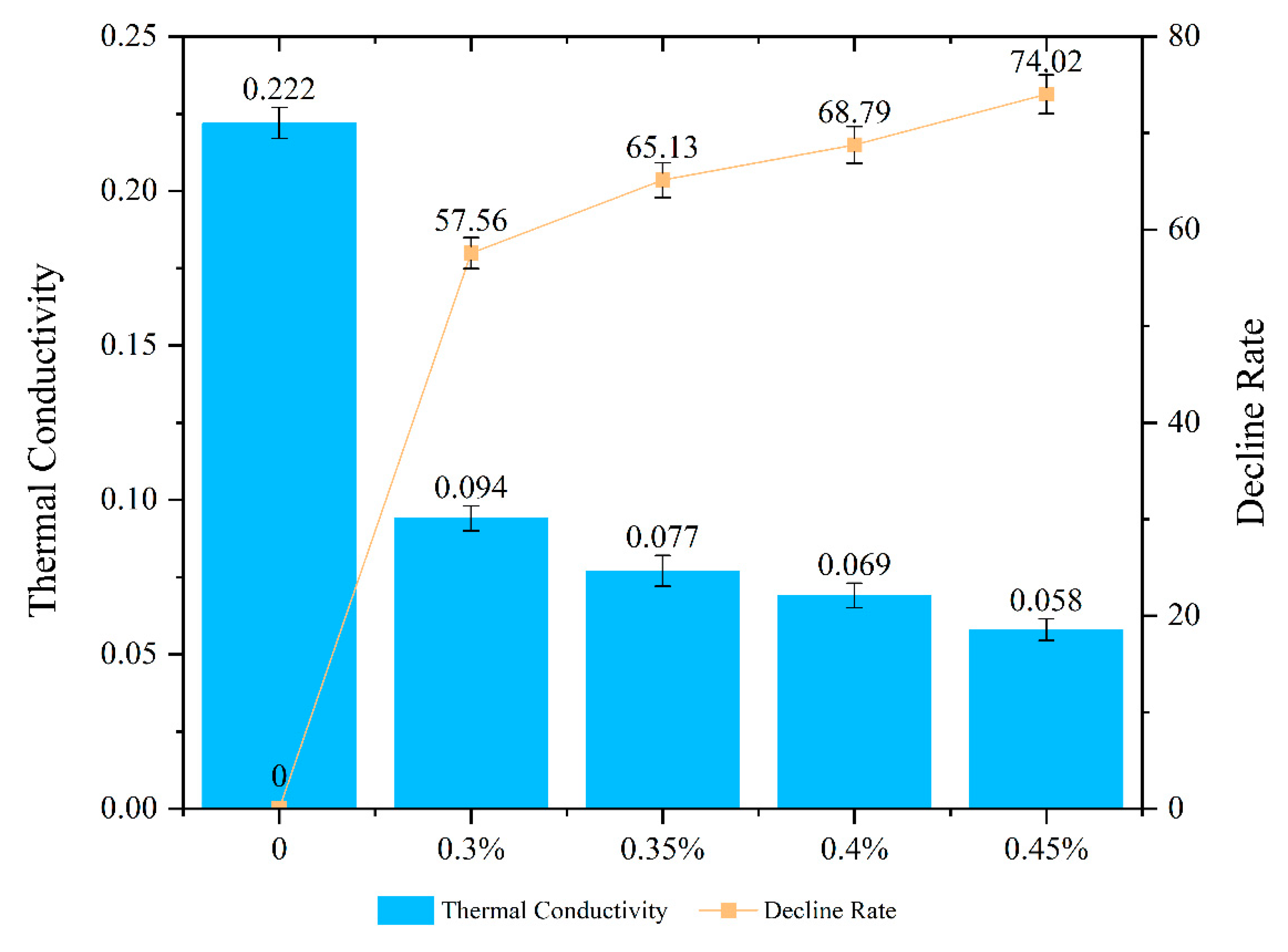
Thermal conductivity is a physical quantity reflecting the thermal conductivity of the material, indicating the size of the material’s thermal conductivity, and it is one of the most important thermal physical properties of asphalt mixtures. Its value with the change of temperature has little effect, the phase-change temperature domain phase-change material phase change, triggering changes in the specific heat capacity, while causing changes in the thermal diffusivity, through the cumulative performance of time to delay the temperature rise effect. Therefore, in order to simplify this paper, the thermal conductivity of phase-change asphalt mixtures at different temperatures was regarded as a constant. The thermal conductivity test results for phase-change permeable asphalt mixtures are tabulated below.
Figure 11 shows that the permeable asphalt mixture after adding phase-change material can greatly reduce the thermal conductivity, and the larger the dosage of phase-change material, the greater the reduction in thermal conductivity; there is basically a linear change. The thermal conductivity reduced by 57.56% after adding 0.30% phase-change material, and the thermal conductivity reduced by 74.02% after adding 0.45% phase-change material, which can reduce the permeable asphalt mixture and the outside world of the heat exchange, so that it is in the winter that the ordinary pavement temperature is high, so as to delay the road icing.
Figure 11.
Phase-change permeable asphalt mixture thermal conductivity test results.
- (2)
- Phase-change permeable asphalt mixture snow-melting performance research
The snow-melting capacity can reflect the length of time required to melt snow after a snowfall on permeable asphalt pavement, and the specific test steps were as follows:
(i) Mold standard rutted plate specimens that meet the requirements, three specimens as a group, measure and test the specimen size and quality, and prepare a cylinder ice cube with a diameter of 10 cm and a height of 8 cm for backup;
(ii) Place the test specimens at a constant temperature of 25 °C with no heat source under the condition for more than 12 h;
(iii) Place test specimen in a closed box with a heat source in the specimen directly above the irradiation for 2 h;
(iv) Place irradiated specimen in a constant-temperature box at −5 °C, and place one piece of cylindrical ice vertically in the center of each specimen, and weigh the mass of the ice separately;
(v) Rapidly weigh and record the mass of ice cubes at 30 min intervals, and then put back to the original position to continue the test until 3 h when the mass of ice cubes is weighed;
(vi) Take the average of the three tests to calculate the value of the group of specimens of the ability to melt ice and snow.
The phase-change permeable asphalt mixture ice- and snow-melting capacity test results are shown in the table below.
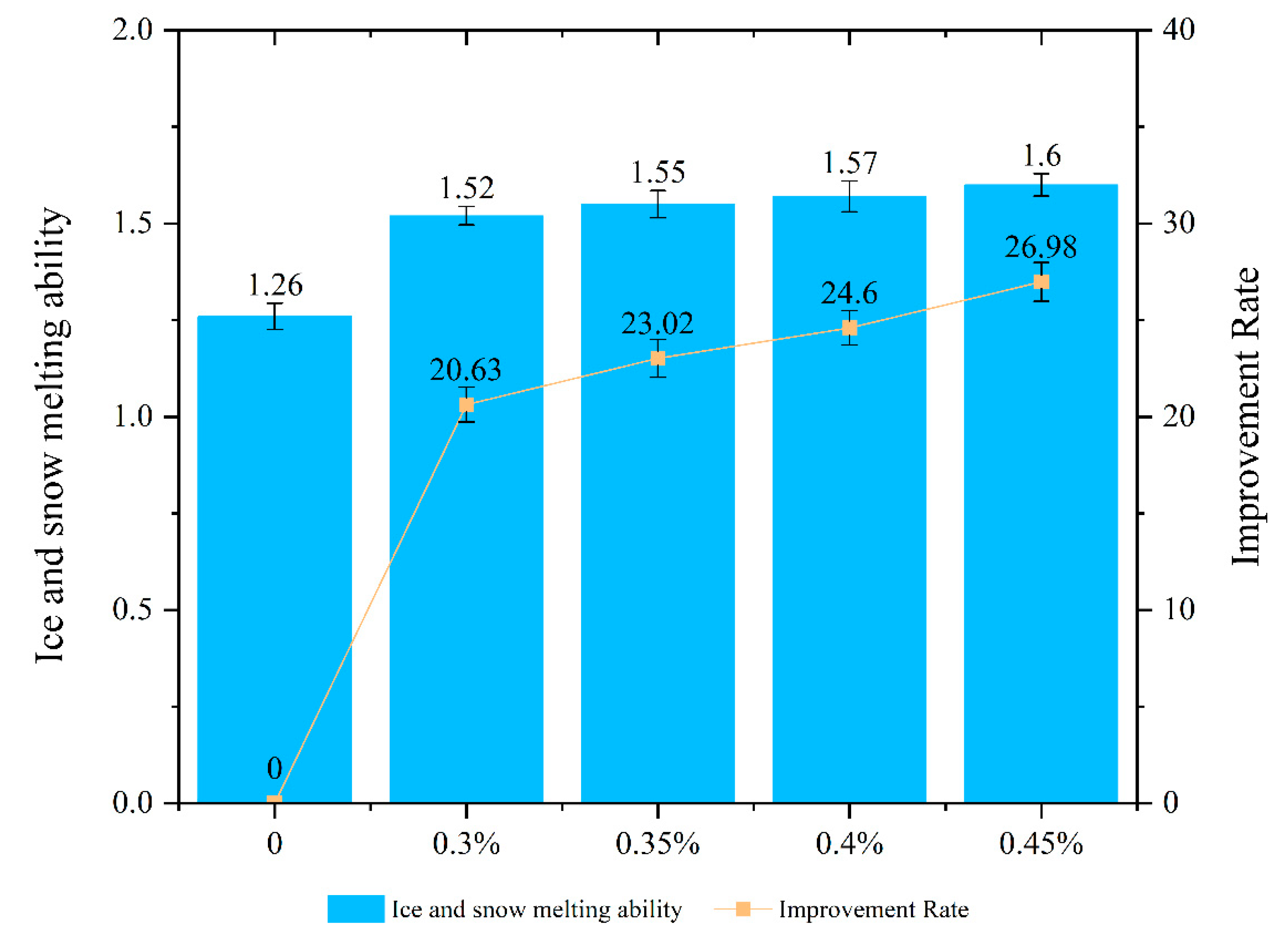
Figure 12 shows that adding phase-change materials to the permeable asphalt mixture can improve its ability to melt snow and ice, and the larger the dosage of phase-change material, the stronger the ability to melt snow and ice; there is basically a linear change, indicating that the addition of phase-change material helps permeable asphalt pavement melt snow and ice in winter, thereby improving road conditions for drivers.
Figure 12.
Phase-change permeable asphalt mixture ice- and snow-melting capacity value test results.
3.2.2. Research on Road Performance of Phase-Change Permeable Asphalt Mixture
The same permeable asphalt mixture ratio was used to study the road performance of the phase-change permeable asphalt mixture. The relevant performance test results are shown in Table 12.
Table 12.
Road performance of phase-change permeable asphalt mixture.
The results of the void ratio and Marshall stability of the Marshall specimens are shown in Table 12. As can be seen from the table, the phase-change material on the permeable asphalt mixture of the void ratio basically has no effect, but the Marshall stability with the increase in phase-change material dosage of two decreases, and the larger the dosage, the smaller the stability. Therefore, phase-change materials should not be doped too much.
Asphalt is a viscoelastic material. When it is mixed with aggregates for pavement at high temperatures under repeated loads, a certain degree of permanent deformation will occur, and the accumulation of permanent deformation causes the asphalt pavement to exhibit rutting, oiling and congestion, and other distresses. Therefore, the high-temperature stability of asphalt pavement is one of the important road performance factors of an asphalt mixture. High-temperature stability refers to the asphalt mixture in high-temperature conditions that can resist repeated vehicle loads and does not incur significant permanent deformation of the pavement characteristics.
Our high-temperature stability was mainly evaluated by using China’s rutting test for asphalt mixtures using the prescribed method of molding into 300 mm × 300 mm × 50 mm standard specimens, with a test temperature of 60 °C, a wheel pressure of 0.7 MPa, and a determination of the specimen surface deformation under the action of the load. The high-temperature rutting resistance of the asphalt mixture was evaluated by the number of walks required to produce 1 mm of deformation under the specified conditions, i.e., dynamic stability (DS). With the increase in phase-change material dosage, the dynamic stability gradually declined, especially when the phase-change material dosage increased to 0.45%. The dynamic stability decreased by 37.1%, and the reason may be due to the rutted plate specimen at a constant temperature of 60 °C for long-time insulation and that the phase-change material absorbs more heat, resulting in the phase change of high-viscosity asphalt absorbing more heat, which makes it softer, which leads to the decline in dynamic stability.
The asphalt mixture is bonded together with coarse and fine aggregates due to the adhesion of asphalt. The aggregate is a hydrophilic material, and asphalt pavement in the role of water will reduce the adhesion between asphalt and aggregate, while in dynamic water pressure, the asphalt film gradually falls off, causing loose pavement, potholes, and other water damage, reducing the durability of the pavement. The common methods for evaluating the water stability performance of asphalt pavement are the immersion Marshall test and freeze–thaw split test. From Table 12, the phase-change material can significantly improve the water stability of permeable asphalt mixture, and with the increase in phase-change material dosage, the Marshall residual stability and freeze–thaw splitting strength are gradually increased, and even reach more than 99%. So, the phase-change material can significantly improve the water stability performance of permeable asphalt mixture.
Low-temperature crack resistance is one of the most important road properties of asphalt mixtures. Low-temperature crack resistance is the ability of asphalt pavement to resist low-temperature shrinkage cracks. As a typical temperature-sensitive material, the stiffness and strength of asphalt will increase as the temperature decreases, and the deformation capacity decreases, resulting in brittle damage. Moreover, in the large temperature difference between day and night or in cold winter areas, the internal asphalt pavement will be due to temperature contraction stress, thus producing cracks. As can be seen from Table 12, the phase-change material can significantly improve the low-temperature bending performance of permeable asphalt mixtures, and with the increase in the amount of phase-change material doping, the low-temperature bending test of the destructive strain gradually increases, and when the phase-change material increases to 0.45%, the low-temperature bending destructive strain is about two times the undoped permeable asphalt mixture with the phase-change material, which indicates that the phase-change material can significantly improve the low-temperature cracking performance of permeable asphalt mixtures.
4. Conclusions
We prepared high-viscosity asphalt with different dosages of phase-change materials to prepare phase-change high-viscosity asphalt and phase-change permeable asphalt mixtures and performed a series of experimental studies to analyze the performance of phase-change high-viscosity asphalt and phase-change permeable asphalt mixtures. The conclusions of the study are as follows:
(1) We added phase-change materials in the various test conditions to determine the effect of different phase-change material dosages on the basic properties of asphalt. The test results reveal that increasing the dosage of phase-change materials leads to higher penetration, rising softening points, increased ductility, and elevated power viscosity in high-viscosity asphalt.
(2) Under constant temperature test conditions of −2.5 °C and −5 °C, compared with the asphalt binder specimens without phase-change materials, phase-change materials doped with asphalt binder specimens on the surface of icing are slower than the undoped specimens, and with the increase in the dosage of phase-change materials, the more pronounced the lag of icing.
(3) The addition of phase-change materials can improve the high-temperature PG grading of high-viscosity asphalt and low-temperature PG grading, effectively improving the high-temperature rutting resistance of high-viscosity asphalt and low-temperature cracking performance.
(4) Phase-change materials can reduce the thermal conductivity of the permeable asphalt mixture by more than 50%, increase the temperature regulation rate by more than 30%, and increase the ability to melt ice and snow by more than 20%, effectively delaying the time of icing of permeable asphalt pavement to enhance the pavement’s winter road safety performance.
(5) The phase-change material has almost no effect on the void ratio of the permeable asphalt mixture, which can effectively improve the water stability of the permeable asphalt mixture, low-temperature cracking resistance, and Marshall stability. The rutting dynamic stability also decreases, but still meets the requirements of the specification.
(6) While the results show changes in asphalt properties and ice formation, the mechanisms underlying these effects have not been thoroughly discussed. Future research could delve into the molecular-level interactions between asphalt and phase-change materials to better understand how these alterations occur.
(7) While the study examines the effects of different dosages of phase-change materials, it does not explicitly identify an optimal dosage for practical applications. Future research could aim to establish a dosage range that balances performance improvement with cost-effectiveness.
Author Contributions
Conceptualization, B.X. and A.G.; methodology, S.L.; software, G.Z.; validation, Q.N. and S.X.; formal analysis, B.X.; investigation, B.P.; resources, Q.N.; data curation, G.Z.; writing—original draft preparation, S.L.; writing—review and editing, B.P.; visualization, A.G.; supervision, Q.N. and G.Z.; project administration, S.X.; funding acquisition, B.X. All authors have read and agreed to the published version of the manuscript.
Funding
This research was supported by Science and Technology Planning Project of Shijiazhuang Jiaojian Expressway Construction Management Co., Ltd., China (No. XF2018-10) and the National Natural Science Foundation of China (No. 52308453).
Conflicts of Interest
The authors declare no conflict of interest.
References
- Dou, G.; Sun, G.; Tan, X.; Xie, Q.; Liu, Y.; Wu, Y. Temperature Regulation Mechanism of Asphalt Pavement and Active Ice and Snow Melting Technology in Cold Plateau Areas: A Review. In Proceedings of the CICTP 2020, Xi’an, China, 14–16 August 2020; pp. 2046–2057. [Google Scholar]
- Yang, M.; Zhang, X.; Zhou, X.; Liu, B.; Wang, X.; Lin, X. Research and exploration of phase change materials on solar pavement and asphalt pavement: A review. J. Energy Storage 2021, 35, 102246. [Google Scholar] [CrossRef]
- Wang, H.-R.; Wang, Y.-M.; Qi, M.-L.; Wang, Q.-L.; Li, X.; Zhu, X.-X.; Yu, X.-Q.; Liu, Z.-M. PEG/diatomite modified Asphalt Mixture with Self-Regulating temperature property. Case Stud. Constr. Mater. 2021, 15, e00585. [Google Scholar] [CrossRef]
- Wu, L.; Liu, Q.; Tang, N.; Wang, X.; Gao, L.; Wang, Q.; Lv, G.; Hu, L. Development of two-dimensional nano Mts/SA phase change materials for self-adjusting temperature of pavement. Constr. Build. Mater. 2022, 349, 128753. [Google Scholar] [CrossRef]
- Xu, P.; Zhang, D.; Miao, Y.; Sani, B.M.; Zhang, K. Development and characterization of a novel steel slag-based composite phase change aggregate for snow/ice melting of asphalt pavements. Constr. Build. Mater. 2022, 341, 127769. [Google Scholar] [CrossRef]
- Wang, S.; Wei, K.; Shi, W.; Cheng, P.; Shi, J.; Ma, B. Study on the rheological properties and phase-change temperature regulation of asphalt modified by high/low-temperature phase change material particles. J. Energy Storage 2022, 56, 105970. [Google Scholar] [CrossRef]
- Jin, J.; Xiao, T.; Zheng, J.; Liu, R.; Qian, G.; Xie, J.; Wei, H.; Zhang, J.; Liu, H. Preparation and thermal properties of encapsulated ceramsite-supported phase change materials used in asphalt pavements. Constr. Build. Mater. 2018, 190, 235–245. [Google Scholar] [CrossRef]
- Chen, M.Z.; Hong, J.; Wu, S.P.; Lu, W.; Xu, G.J. Optimization of phase change materials used in asphalt pavement to prevent rutting. Adv. Mater. Res. 2011, 219, 1375–1378. [Google Scholar] [CrossRef]
- Jia, M.; Sha, A.; Jiang, W.; Li, X.; Jiao, W. Developing a solid–solid phase change heat storage asphalt pavement material and its application as functional filler for cooling asphalt pavement. Energy Build. 2023, 285, 112935. [Google Scholar] [CrossRef]
- Dai, J.; Ma, F.; Fu, Z.; Li, C.; Wu, D.; Shi, K.; Dong, W.; Wen, Y.; Jia, M. Assessing the direct interaction of asphalt binder with stearic acid/palmitic acid binary eutectic phase change material. Constr. Build. Mater. 2022, 320, 126251. [Google Scholar] [CrossRef]
- Jiao, W.; Sha, A.; Zhang, J.; Jia, M.; Jiang, W.; Hu, L. Design and properties of polyurethane solid–solid phase-change granular temperature regulation asphalt mixtures. Sol. Energy 2023, 253, 47–57. [Google Scholar] [CrossRef]
- Bian, X.; Tan, Y.Q.; Lv, J.F.; Shan, L.Y. In Preparation of latent heat materials used in asphalt pavement and theirs’ controlling temperature performance. In Advanced Engineering Forum; Trans Tech Publications: Wollerau, Switzerland, 2012; pp. 322–327. [Google Scholar]
- Yuan, J.; He, P.; Li, H.; Xu, X.; Sun, W. Preparation and Performance Analysis of Ceramsite Asphalt Mixture with Phase-Change Material. Materials 2022, 15, 6021. [Google Scholar] [CrossRef] [PubMed]
- Wang, X.; Ma, B.; Li, S.; Si, W.; Wei, K.; Zhang, H.; Zhou, X.; Fang, Y.; Kang, X.; Shi, W. Review on application of phase change materials in asphalt pavement. J. Traffic Transp. Eng. (Engl. Ed.) 2023, 10, 185–229. [Google Scholar] [CrossRef]
- Zhang, D.; Chen, M.; Wu, S.; Liu, Q.; Wan, J. Preparation of expanded graphite/polyethylene glycol composite phase change material for thermoregulation of asphalt binder. Constr. Build. Mater. 2018, 169, 513–521. [Google Scholar] [CrossRef]
- Ma, B.; Li, J.; Liu, R.W.; Ma, J. Study on road performance of phase-change temperature-adjusting asphalt mixture. Adv. Mater. Res. 2011, 287, 978–981. [Google Scholar] [CrossRef]
- Wang, T.; Weng, Y.; Cai, X.; Li, J.; Xiao, F.; Sun, G.; Zhang, F. Statistical modeling of low-temperature properties and FTIR spectra of crumb rubber modified asphalts considering SARA fractions. J. Clean. Prod. 2022, 374, 134016. [Google Scholar] [CrossRef]
- Yan, Q.; Liu, C.; Zhang, J. Experimental study on thermal conductivity of composite phase change material of fatty acid and paraffin. Mater. Res. Express 2019, 6, 065507. [Google Scholar] [CrossRef]
- Zhang, D.; Bu, W.K.; Wang, Q.Y.; Liu, P.P.; Shao, Z.H.; Liu, X.F.; Li, G.Y.; Zhou, Y. A review of recent developments and challenges of using phase change materials for thermoregulation in asphalt pavements. Constr. Build. Mater. 2023, 400, 132669. [Google Scholar] [CrossRef]
- Cui, Y.; Xie, J.; Liu, J.; Wang, J.; Chen, S. A review on phase change material application in building. Adv. Mech. Eng. 2017, 9, 1687814017700828. [Google Scholar] [CrossRef]
- Chen, Y.; Wang, H.; You, Z.; Hossiney, N. Application of phase change material in asphalt mixture—A review. Constr. Build. Mater. 2020, 263, 120219. [Google Scholar] [CrossRef]
- Wei, C.; Shao, J.; Darkwa, J. Experimental investigations into thermal performance of phase change emulsion in a fin-and-tube heat exchanger. Int. J. Low-Carbon Technol. 2023, 18, 175–183. [Google Scholar] [CrossRef]
- Guo, M.; Liang, M.; Jiao, Y.; Zhao, W.; Duan, Y.; Liu, H. A review of phase change materials in asphalt binder and asphalt mixture. Constr. Build. Mater. 2020, 258, 119565. [Google Scholar] [CrossRef]
- Athukorallage, B.; Dissanayaka, T.; Senadheera, S.; James, D. Performance analysis of incorporating phase change materials in asphalt concrete pavements. Constr. Build. Mater. 2018, 164, 419–432. [Google Scholar] [CrossRef]
- Du, Y.; Liu, P.; Wang, J.; Wang, H.; Hu, S.; Tian, J.; Li, Y. Laboratory investigation of phase change effect of polyethylene glycolon on asphalt binder and mixture performance. Constr. Build. Mater. 2019, 212, 1–9. [Google Scholar] [CrossRef]
- Kousksou, T.; Jamil, A.; El Rhafiki, T.; Zeraouli, Y. Paraffin wax mixtures as phase change materials. Sol. Energy Mater. Sol. Cells 2010, 94, 2158–2165. [Google Scholar] [CrossRef]
- Liu, Z.; Zhou, Z.; Gu, X.; Sun, L.; Wang, C. Laboratory evaluation of the performance of reclaimed asphalt mixed with composite crumb rubber-modified asphalt: Reconciling relatively high content of RAP and virgin asphalt. Int. J. Pavement Eng. 2023, 24, 2217320. [Google Scholar] [CrossRef]
- Xing, C.; Li, M.; Liu, L.; Lu, R.; Liu, N.; Wu, W.; Yuan, D. A comprehensive review on the blending condition between virgin and RAP asphalt binders in hot recycled asphalt mixtures: Mechanisms, evaluation methods, and influencing factors. J. Clean. Prod. 2023, 398, 136515. [Google Scholar] [CrossRef]
- Wang, T.; Xiao, F.; Amirkhanian, S.; Huang, W.; Zheng, M. A review on low temperature performances of rubberized asphalt materials. Constr. Build. Mater. 2017, 145, 483–505. [Google Scholar] [CrossRef]
Disclaimer/Publisher’s Note: The statements, opinions and data contained in all publications are solely those of the individual author(s) and contributor(s) and not of MDPI and/or the editor(s). MDPI and/or the editor(s) disclaim responsibility for any injury to people or property resulting from any ideas, methods, instructions or products referred to in the content. |
© 2023 by the authors. Licensee MDPI, Basel, Switzerland. This article is an open access article distributed under the terms and conditions of the Creative Commons Attribution (CC BY) license (https://creativecommons.org/licenses/by/4.0/).