Article

Experimental Study on Aeroelastic Instability of Spherical Inflatable Membrane Structures with a Large Rise–Span Ratio

1
School of Civil Engineering and Architecture, Northeast Electric Power University, Jilin 132012, China
2
Key Lab of Electric Power Infrastructure Safety Assessment and Disaster Prevention of Jilin Province, Northeast Electric Power University, Jilin 132012, China
3
Tianjin Research Institute for Water Transport Engineering of China Ministry of Transport, Tianjin 300456, China
4
Liaoning Provincial Transportation Planning & Design Institute Co., Ltd., Shenyang 110000, China
*
Author to whom correspondence should be addressed.
Buildings 2022, 12(9), 1336; https://doi.org/10.3390/buildings12091336

Submission received: 29 July 2022 / Revised: 24 August 2022 / Accepted: 26 August 2022 / Published: 30 August 2022

Abstract

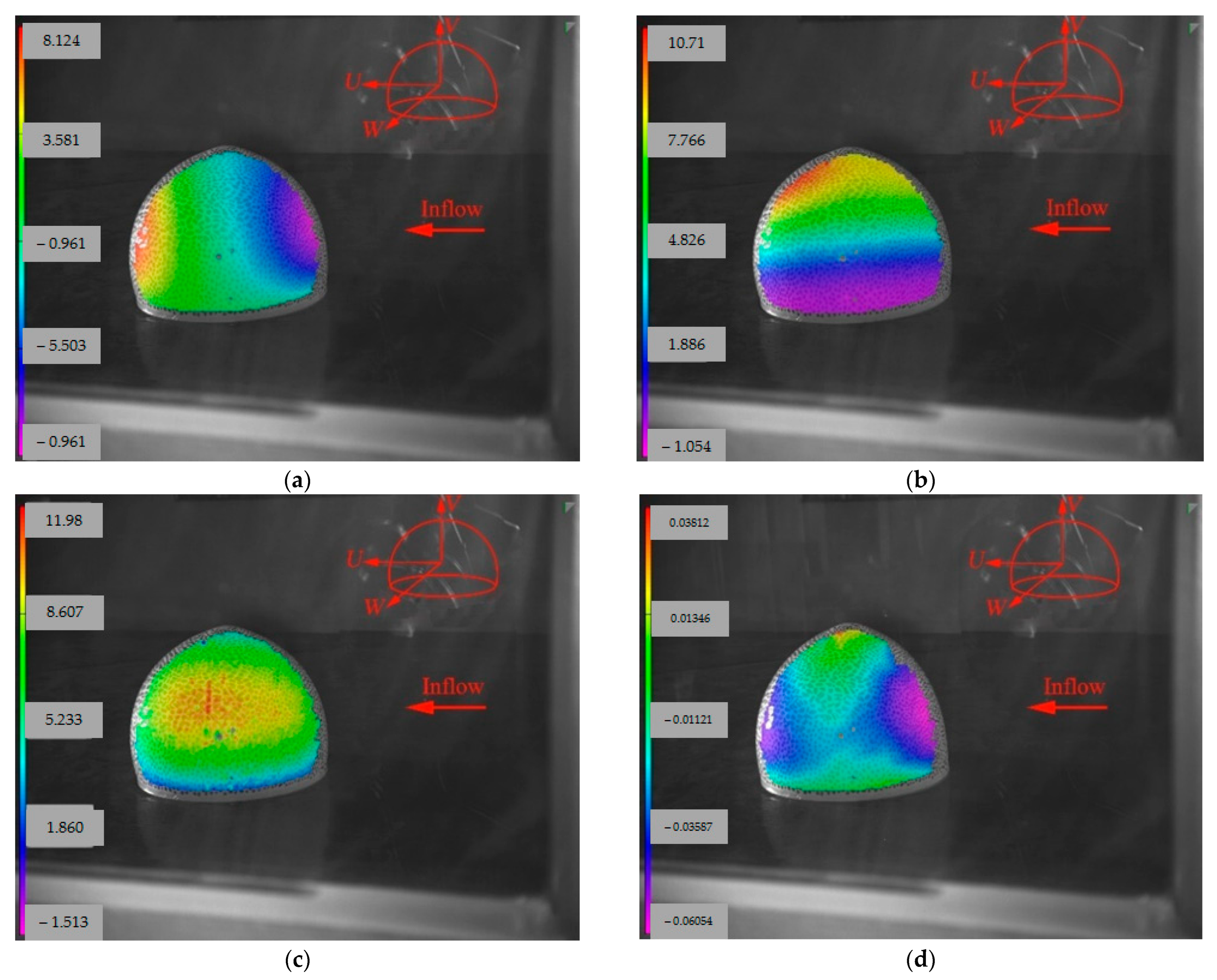
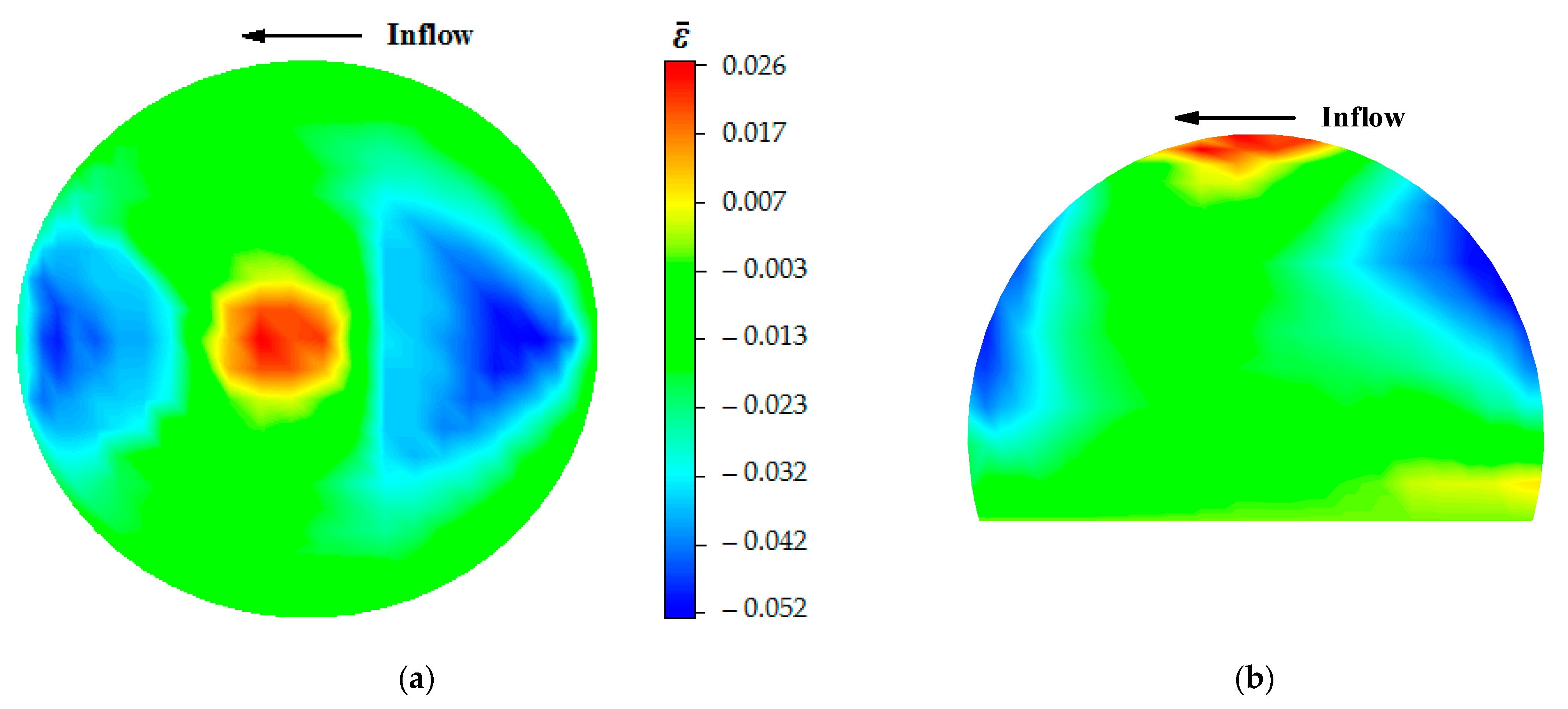
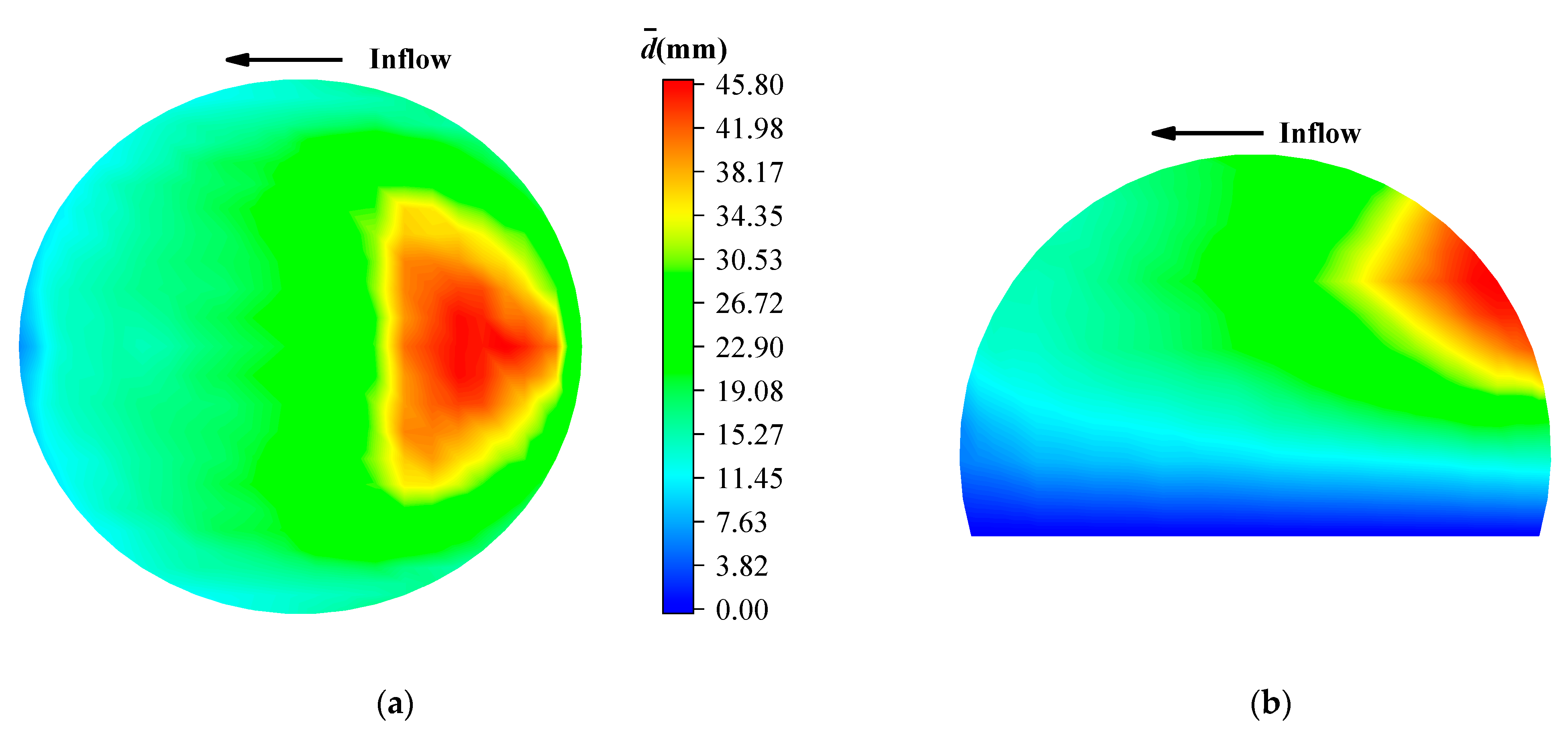
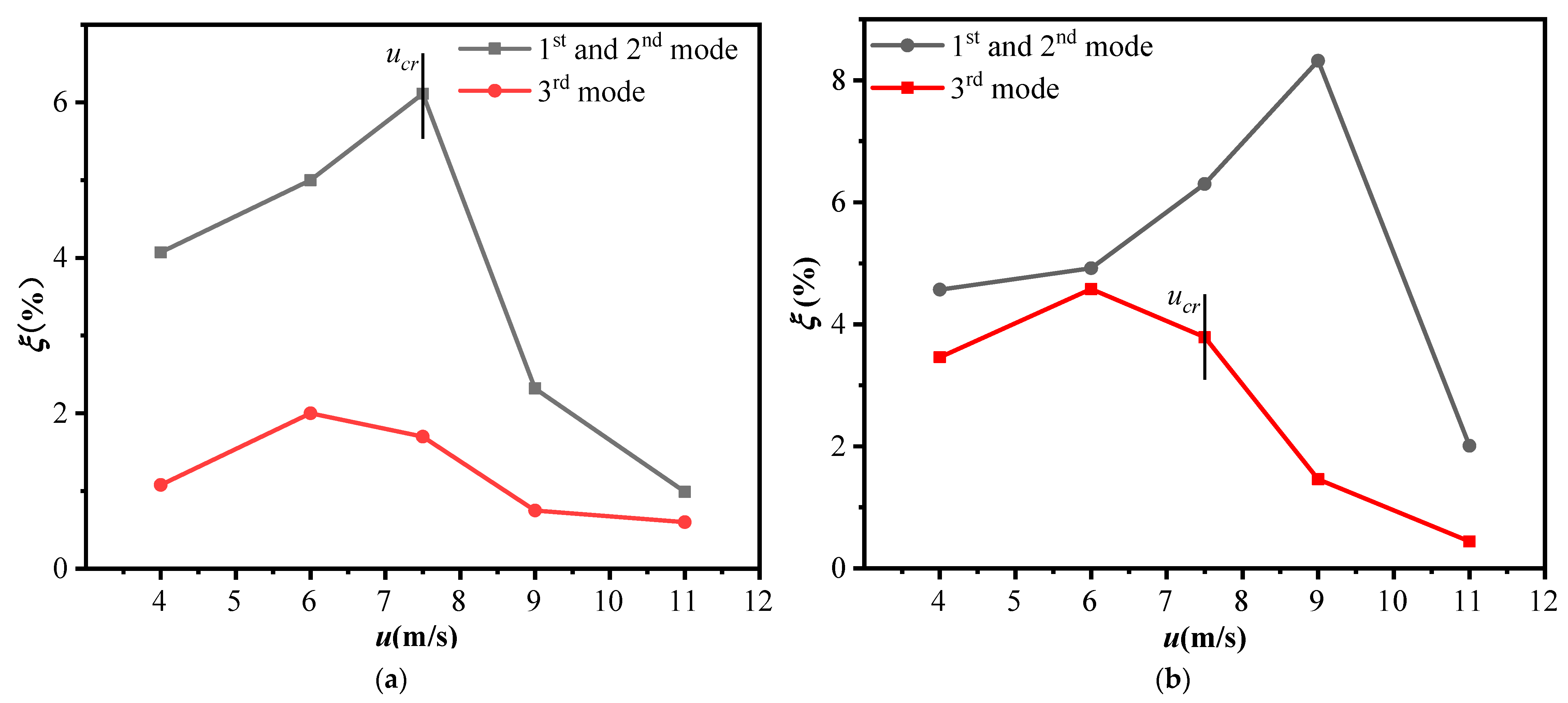
Spherical inflatable membrane structures are extremely prone to suffer aeroelastic instability under strong winds, which requires detailed investigation. In this paper, based on the digital image correlation technology (DIC), the displacement and strain response characteristics under wind loads are investigated. Furthermore, the aeroelastic instability characteristics and the criteria for determining the occurrence of this phenomenon are defined. The results show that the top, windward, and side parts of the structure deform upward, inward, and outward. The extreme value of the total displacement occurs at approximately 1/2 of the windward region. Maximum principal strains occur at the windward and leeward centers together with the top region. After the wind speed exceeds the critical value (the dimensionless critical wind speed is observed at 1.37), the structure undergoes a sudden change of dominant vibration mode, the damping ratio decreases dramatically and reaches nearly zero. It can be concluded that the aeroelastic instability of the spherical inflatable membrane structure is caused by vortex-induced resonance and is characterized by a sudden increase in deformation and amplitude, a sudden change of the dominant vibration mode, and a rapid decay of the damping ratio. The Reynolds number after reaching the instability critical wind speed is Re > 3.1 × 10⁵.
Keywords: inflatable membrane structure; aeroelastic instability; wind tunnel test; fluid-structure interaction; digital image correlation technology inflatable membrane structure; aeroelastic instability; wind tunnel test; fluid-structure interaction; digital image correlation technology