Article

Examining In Situ Acoustic Conditions for Enhanced Occupant Satisfaction in Contemporary Offices


1
Department of Architecture, Ewha Womans University, 52 Ewhayeodae-gil, Seodaemun-gu, Seoul 03760, Korea
2
School of Architecture, Carnegie Mellon University, 5000 Forbes Avenue, Pittsburgh, PA 15213, USA
3
School of Architecture, University of Sheffield, Western Bank, Sheffield S10 2TN, UK
*
Author to whom correspondence should be addressed.
Buildings 2022, 12(9), 1305; https://doi.org/10.3390/buildings12091305

Submission received: 20 July 2022 / Revised: 14 August 2022 / Accepted: 18 August 2022 / Published: 25 August 2022
(This article belongs to the Section Building Energy, Physics, Environment, and Systems)

Abstract

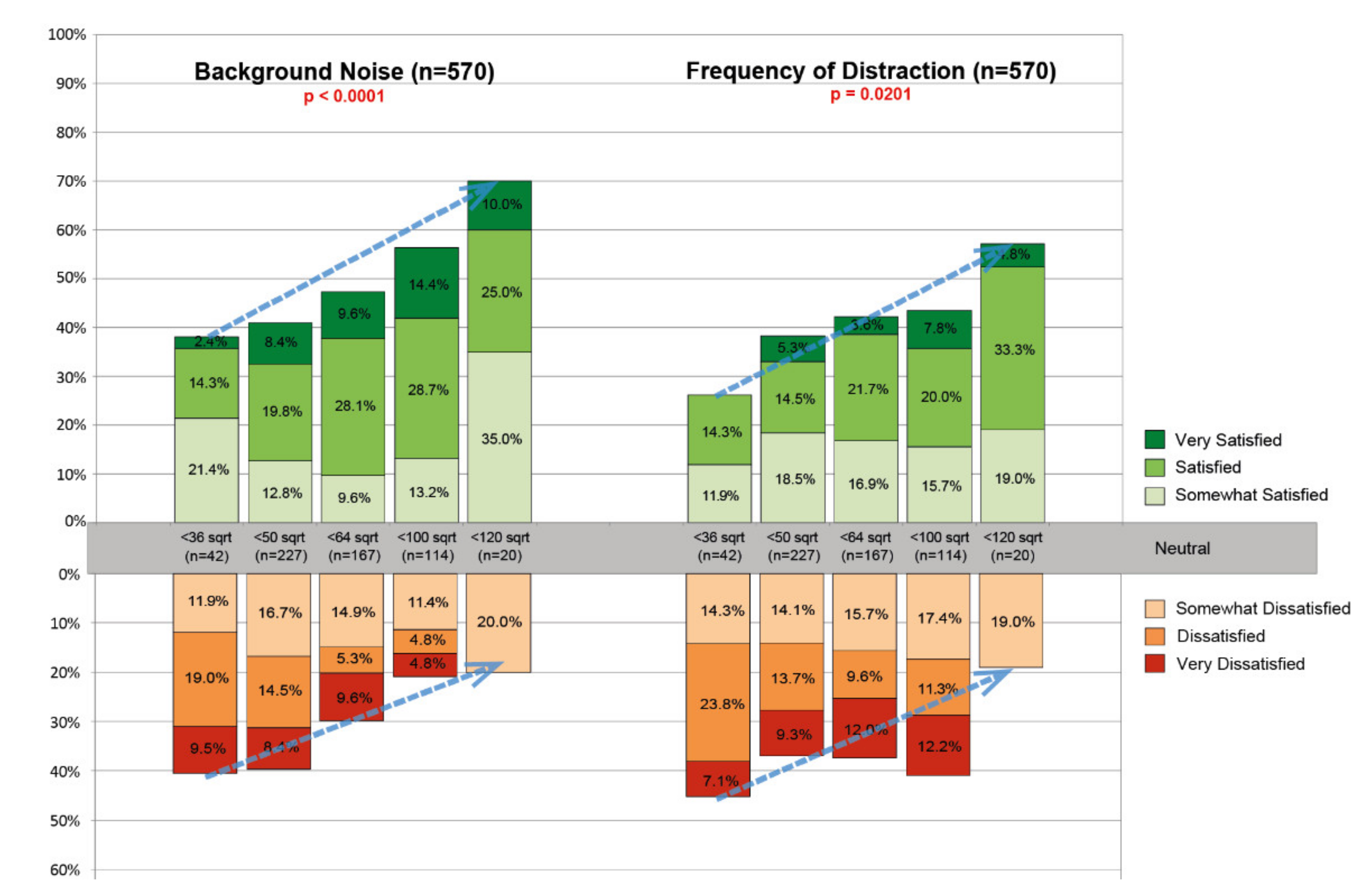
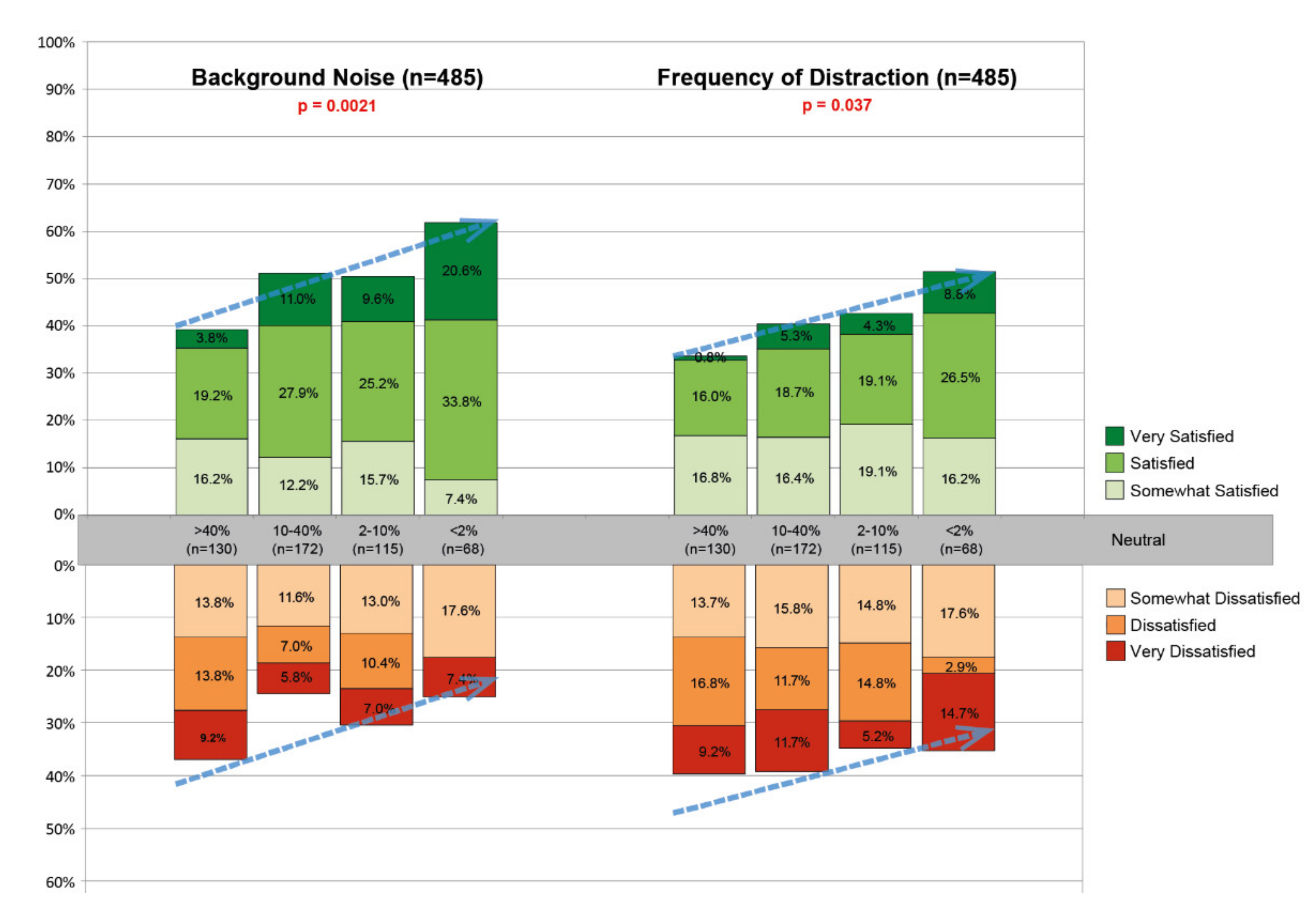
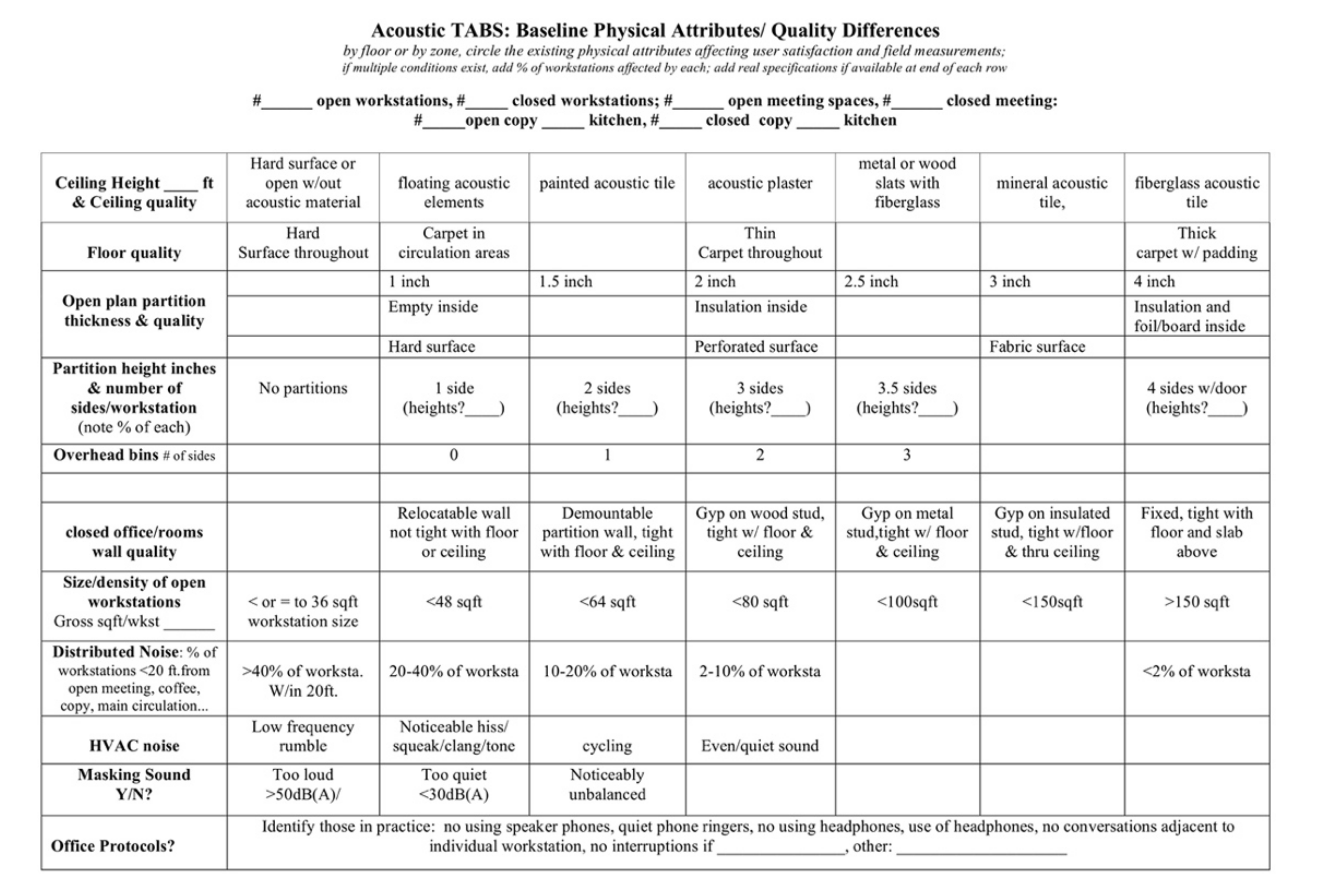
Indoor acoustic quality is one of the critical indicators for occupants’ health, comfort, and productivity in contemporary office environments. Post-occupancy evaluation (POE) is usually employed to examine in situ acoustic measurements to ensure indoor acoustic quality. However, prevailing acoustic performance evaluation does not often consider the technical attributes of building systems (TABS) to holistically investigate the significant correlations between objective acoustic field measurements and subjective POE. As such, this study proposes to cross-examine in situ and perceived acoustic quality indices with TABS to quantify critical factors leading to enhanced occupant satisfaction. Statistical analyses suggest that technical building attributes can significantly influence occupants’ acoustic satisfaction compared to sound levels recorded in contemporary offices. For instance, lowering the distributed noise level from above 40% to 2% can lead to an average 21% increase in occupant satisfaction. Ultimately, incorporating environmental measurements with physical building attributes from an occupant-centric perspective can uncover applicable design guidelines for achieving optimal acoustic quality with the highest occupant satisfaction.
Keywords: indoor acoustic quality; acoustic satisfaction; post-occupancy evaluation (POE); indoor environmental quality (IEQ); speech privacy indoor acoustic quality; acoustic satisfaction; post-occupancy evaluation (POE); indoor environmental quality (IEQ); speech privacy