Article

Dispatch Strategies for the Utilisation of Battery Storage Systems in Smart Grid Optimised Buildings

by
Andreas D. Georgakarakos
1,2,*,
Behrang Vand
3,
Elizabeth Abigail Hathway
2 and
Martin Mayfield
2
1
CDT in Energy Storage & Its Applications, The University of Sheffield, Sheffield S1 3JD, UK
2
Department of Civil & Structural Engineering, The University of Sheffield, Sheffield S1 3JD, UK
3
School of Engineering and the Built Environment, Edinburgh Napier University, Edinburgh EH10 5DT, UK
*
Author to whom correspondence should be addressed.
Buildings 2021, 11(10), 433; https://doi.org/10.3390/buildings11100433

Submission received: 6 July 2021 / Revised: 20 September 2021 / Accepted: 20 September 2021 / Published: 25 September 2021
(This article belongs to the Section Building Energy, Physics, Environment, and Systems)

Abstract

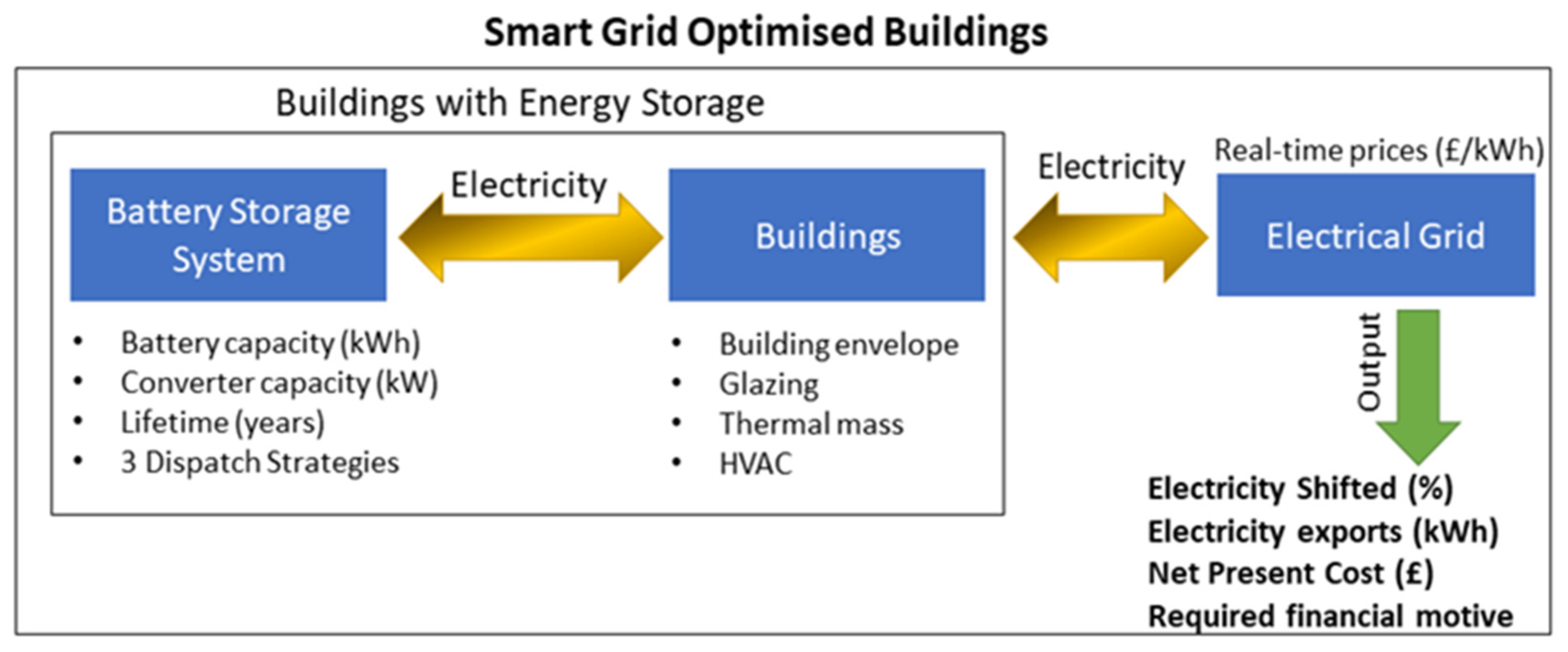
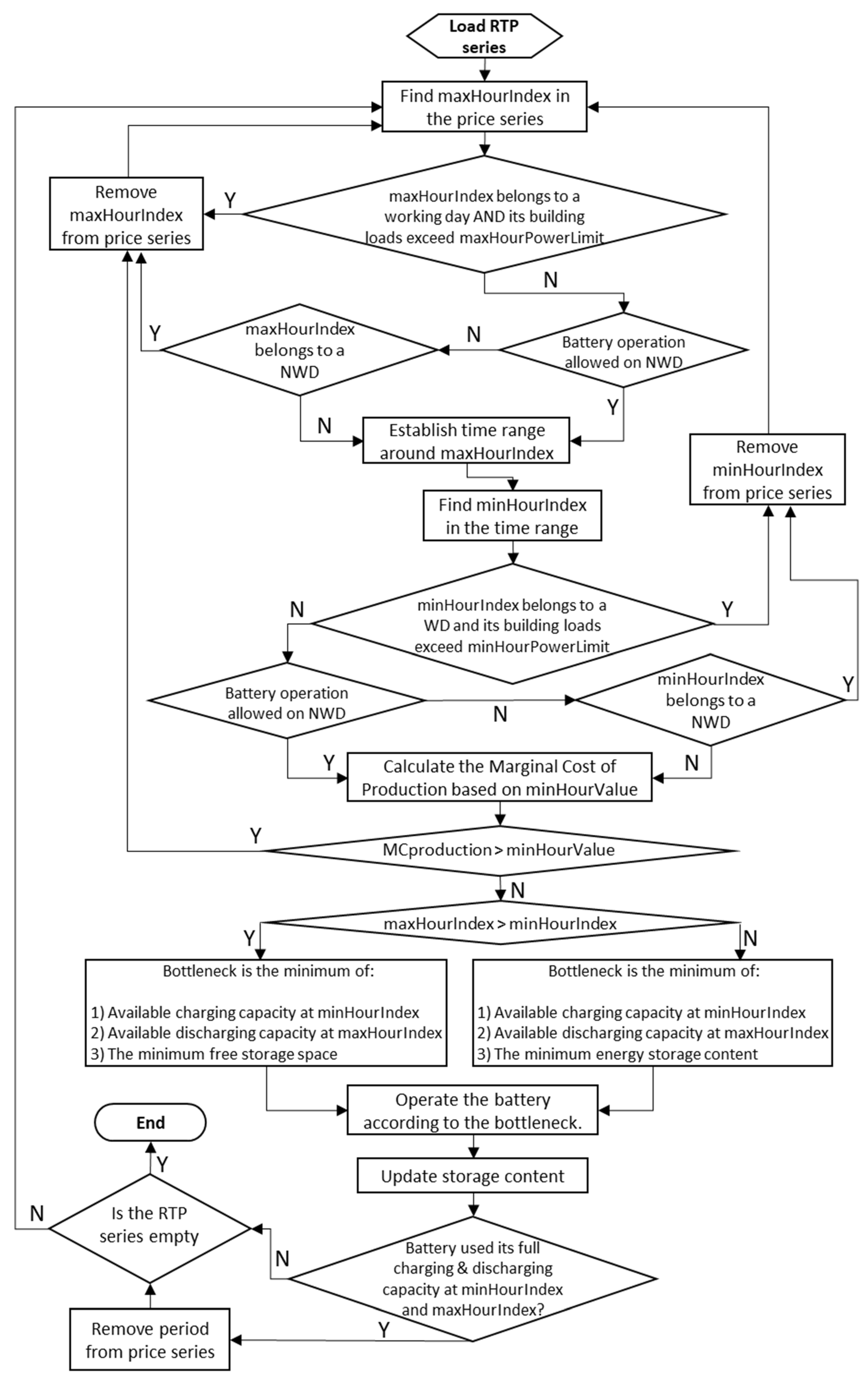
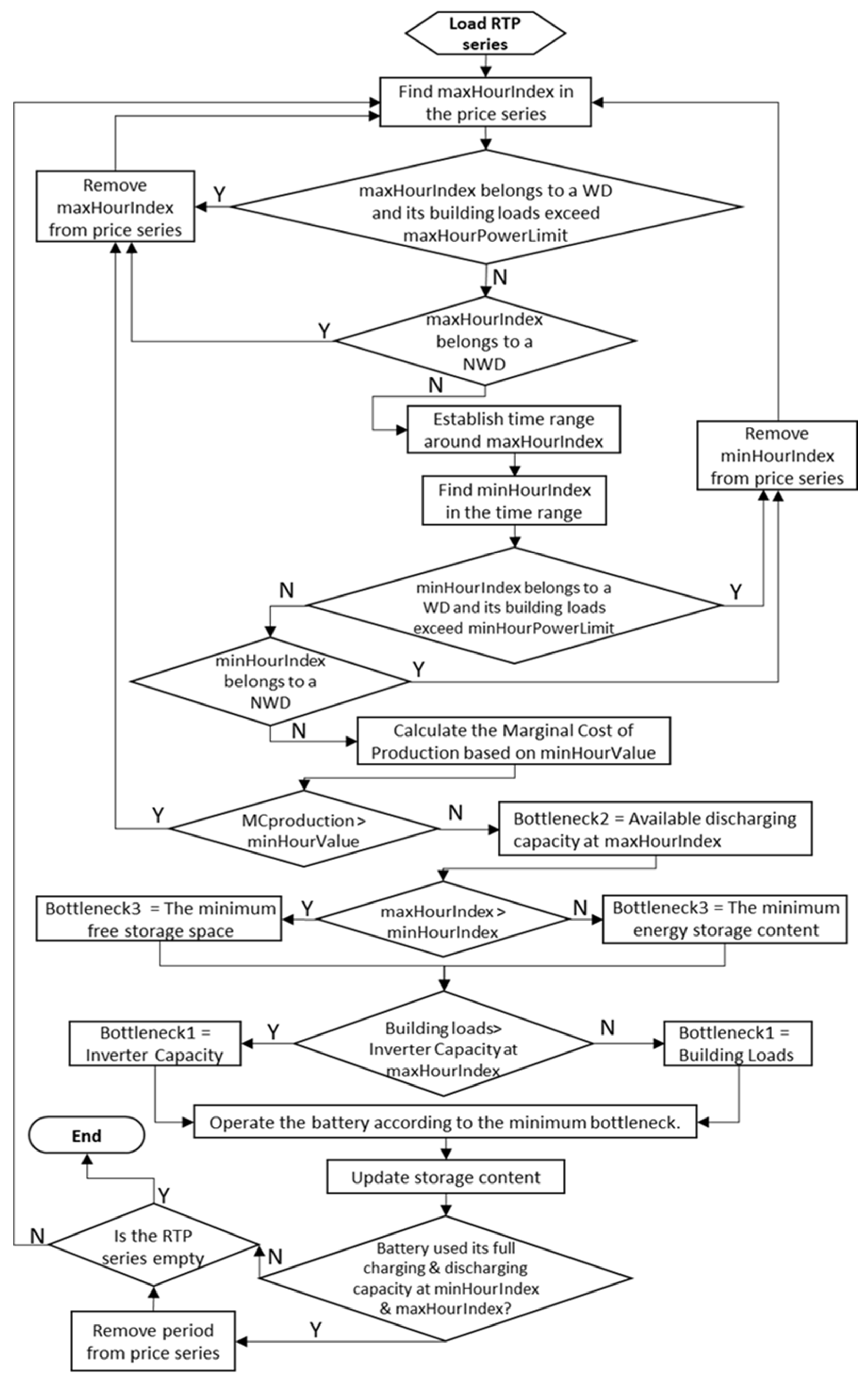
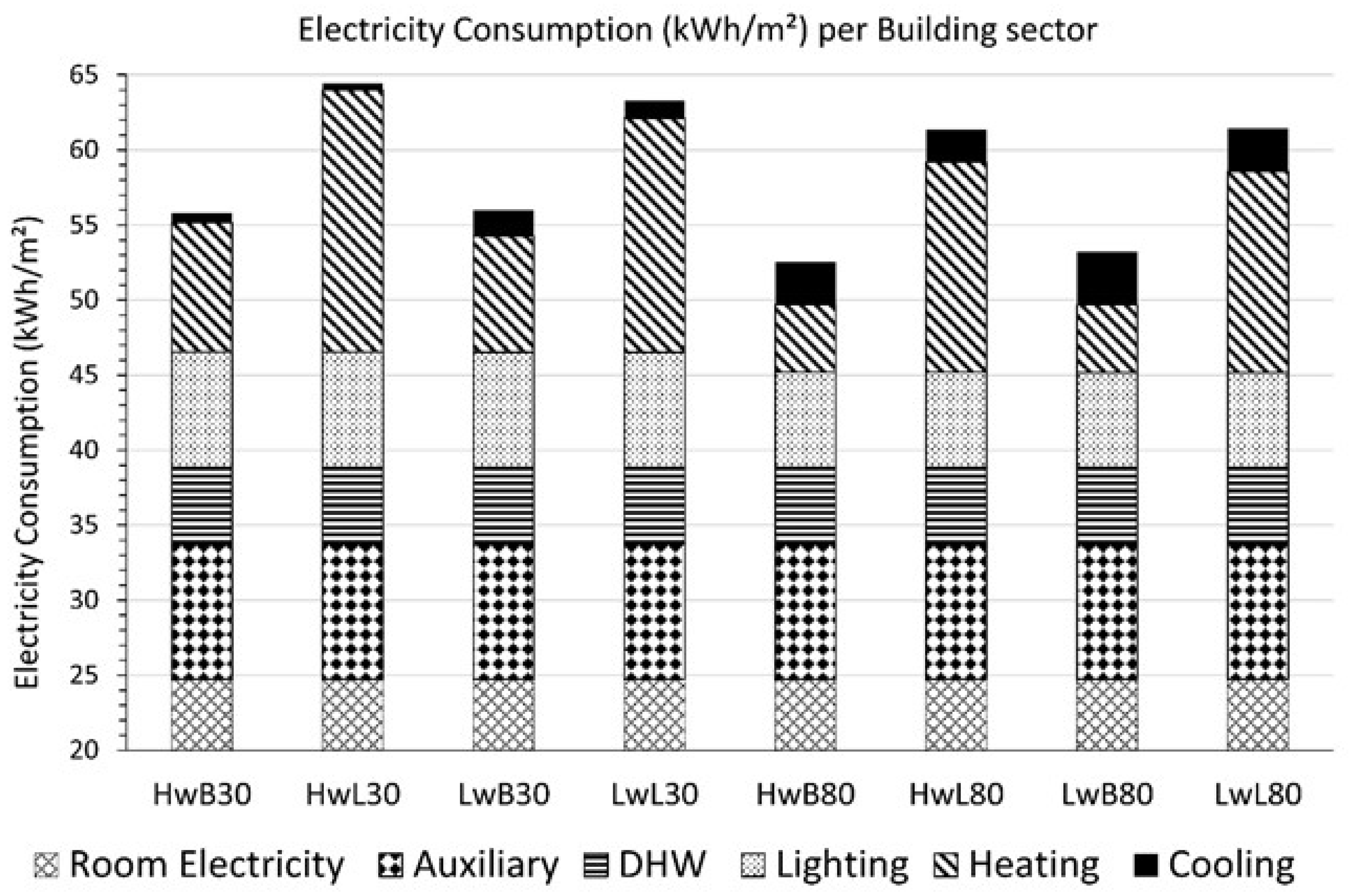
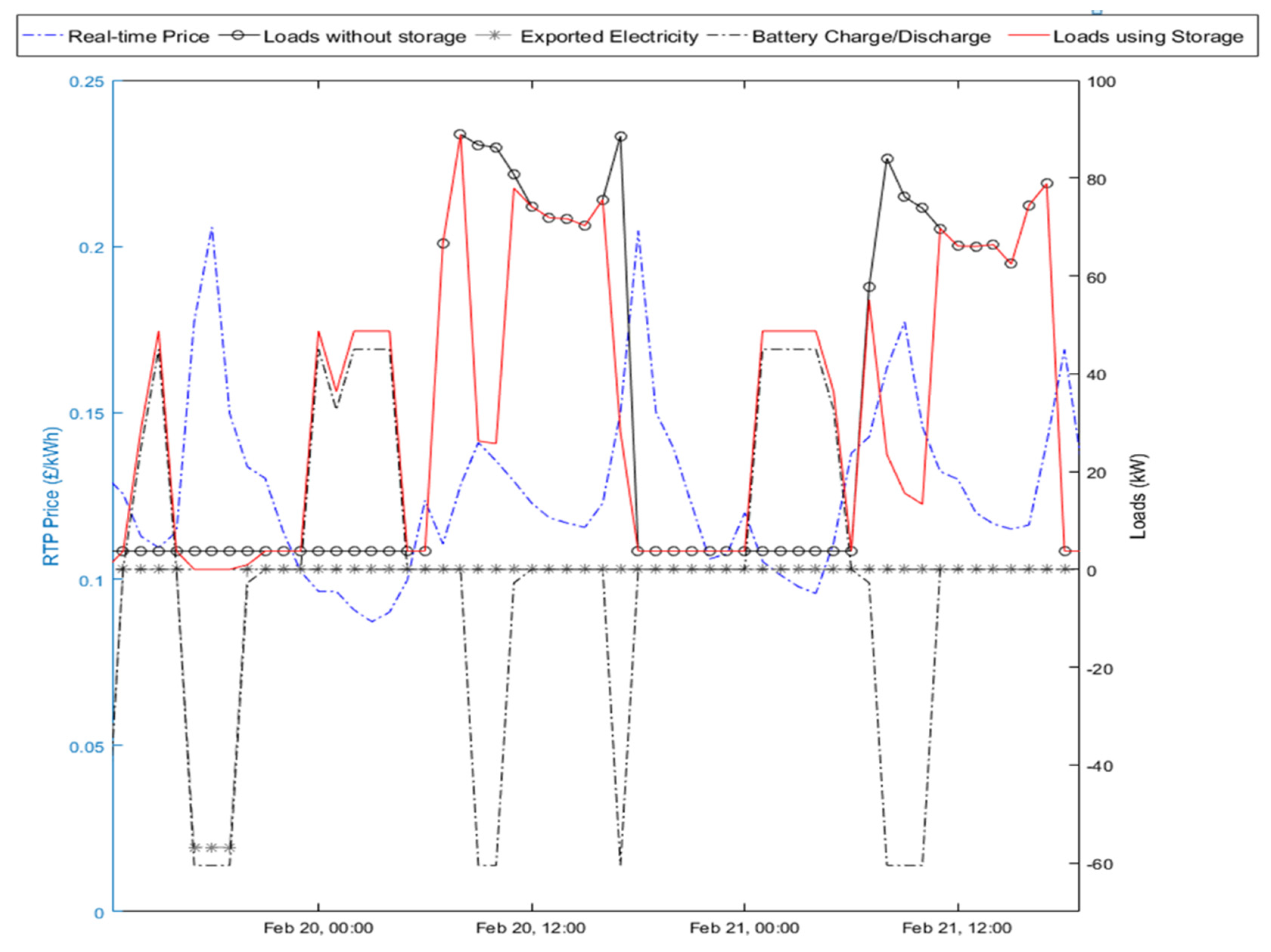
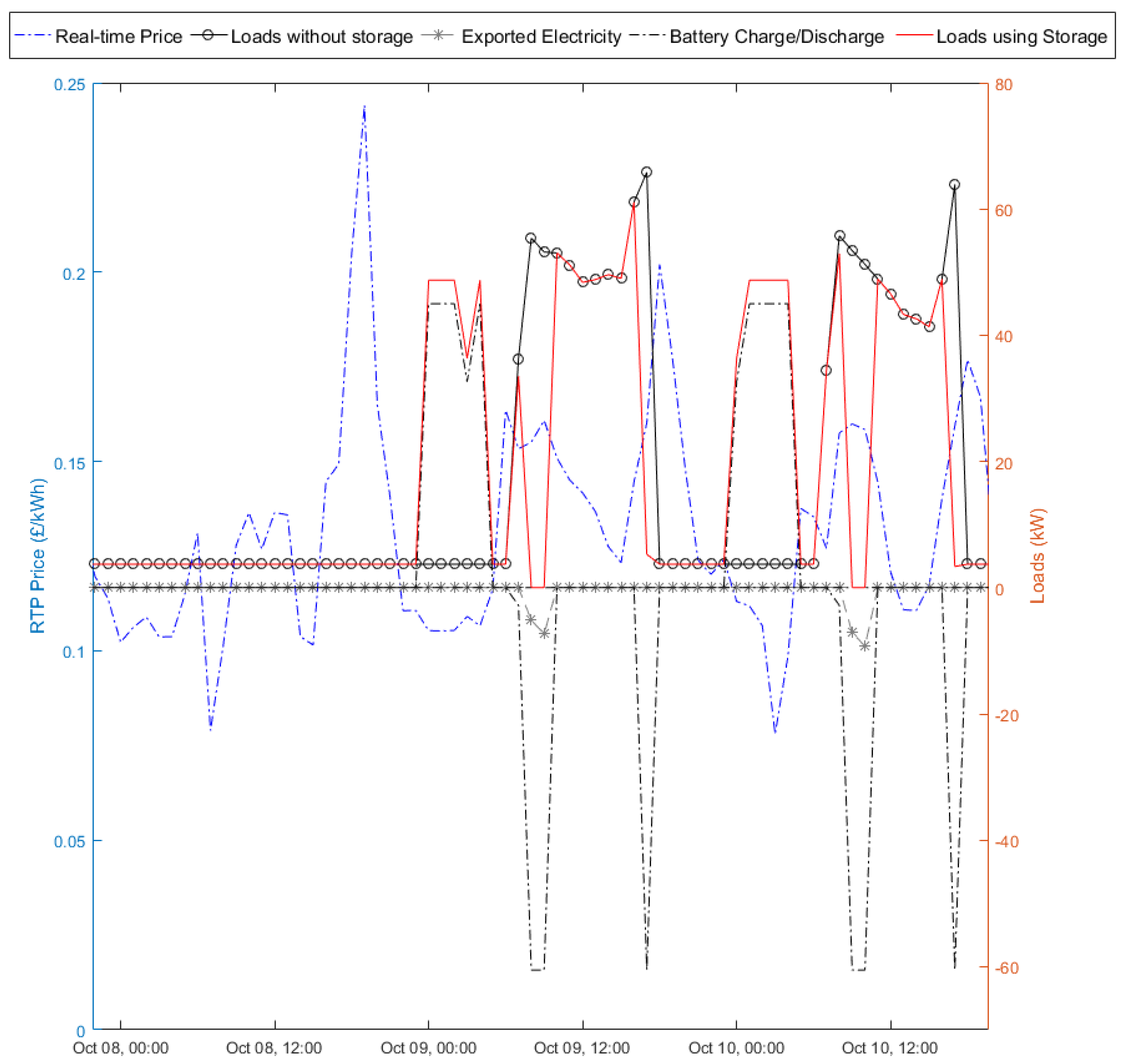
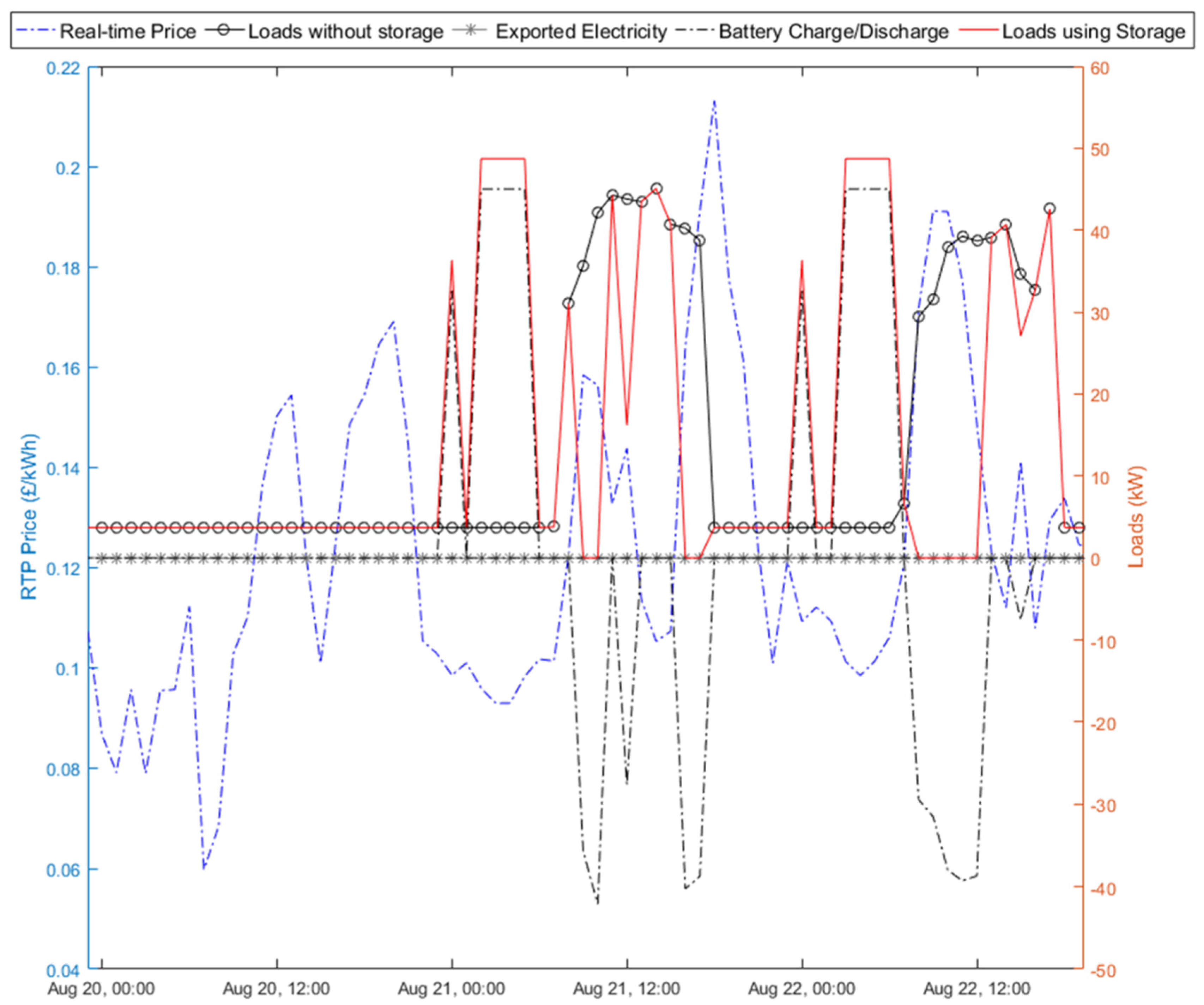
This study investigates Smart Grid Optimised Buildings (SGOBs) which can respond to real-time electricity prices by utilising battery storage systems (BSS). Different building design characteristics are assessed to evaluate the impact on energy use, the interaction with the battery, and potential for peak load shifting. Two extreme cases based on minimum and maximum annual energy consumption were selected for further investigation to assess their capability of utilising BSS to perform arbitrage, under real-time pricing. Three operational dispatch strategies were modelled to allow buildings to provide such services. The most energy-efficient building was capable of shifting a higher percentage of its peak loads and export more electricity, when this is allowed. When using the biggest battery (220 kWh) to only meet the building loads, the energy-efficient building was able to shift 39.68% of its original peak loads in comparison to the 33.95% of the least efficient building. With exports allowed, the shifting percentages went down to 31.76% and 29.46%, respectively, while exports of 18.08 and 16.34 kWh/m2 took place. The formation of a regulatory framework is vital in order to establish proper motives for buildings to undertake an active role in the smart grid.
Keywords: energy storage; battery storage; energy arbitrage; smart grid; smart buildings; smart grid optimised buildings; demand response energy storage; battery storage; energy arbitrage; smart grid; smart buildings; smart grid optimised buildings; demand response