4.1. Thermodynamic Analysis of Fe Speciation
In the highly acidic sulfate system ([
] = 1 mol/L, [H
+] = 0.05–0.63 mol/L), Fe
3+ forms strong complexes with sulfate anions [
20]:
The side-reaction coefficient α(SO4) for Fe3+ under these conditions is:
Consequently, free Fe3+ represents only ~0.0004% of total dissolved Fe(III) and all supersaturation calculations must be based on the free Fe3+ concentration, corrected for activity effects.
Saturation indices (SI = log(IAP/Ksp)) calculated at 90 °C from the corrected free Fe
3+ activity using the following solubility products (25 °C, dissolution with H
+): goethite log K = −1.20, amorphous Fe(OH)
3 log K = 1.00, schwertmannite log K = −18.0, jarosite log K = −12.40 [
21]; all constants were corrected to 90 °C by the van’t Hoff equation. The resulting saturation indices are reported in
Table 6. Goethite (SI −7.5 to −5.4) and amorphous Fe(OH)
3 (SI −9.0 to −6.8) remain far undersaturated at all stages, ruling out conventional hydrolytic Fe
3+ precipitation as the removal mechanism. Schwertmannite-type basic ferric sulfate is the phase whose saturation index is most sensitive to pH (per-Fe SI from −5.1 to −3.2 in free-ion terms). In terms of the total dissolved Fe(III)—the reservoir from which precipitation draws as sulfate complexes dissociate—the solution becomes increasingly supersaturated with respect to this phase from Cycle 2 onward (pH ≈ 0.80), coinciding precisely with the onset of net Fe removal (
Section 3.5). Jarosite-type KFe
3(SO
4)
2(OH)
6 remains undersaturated in free-ion terms (SI ≈ −10 to −13 at [K
+] ≈ 0.01 M) but may approach saturation if alkali cations accumulate in the recycled leachate [
22,
23].
The elevated temperature (90 °C) further suppresses goethite precipitation (dissolution endothermic, ΔH = +48.0 kJ/mol, 32-fold solubility increase vs. 25 °C) while accelerating schwertmannite formation kinetics [
24,
25]. Activity coefficients were calculated with the Davies equation (A = 0.5115 at 25 °C, 0.5972 at 90 °C); the estimated ionic strength (I about 1.2–1.7 mol/L) exceeds the nominal range of the Davies equation (I < 0.5 mol/L), and results are also reported at gamma = 1 to bracket the uncertainty; all equilibrium constants were corrected from 25 to 90 °C by the van’t Hoff equation (ΔH values: goethite +48, jarosite +20, Fe(III)-sulfate complexes −12 to −25, schwertmannite 0 kJ/mol). Saturation indices were computed in both free-ion and total-Fe(III) formulations. Nernst-estimated solution potentials (E(Fe
3+/Fe
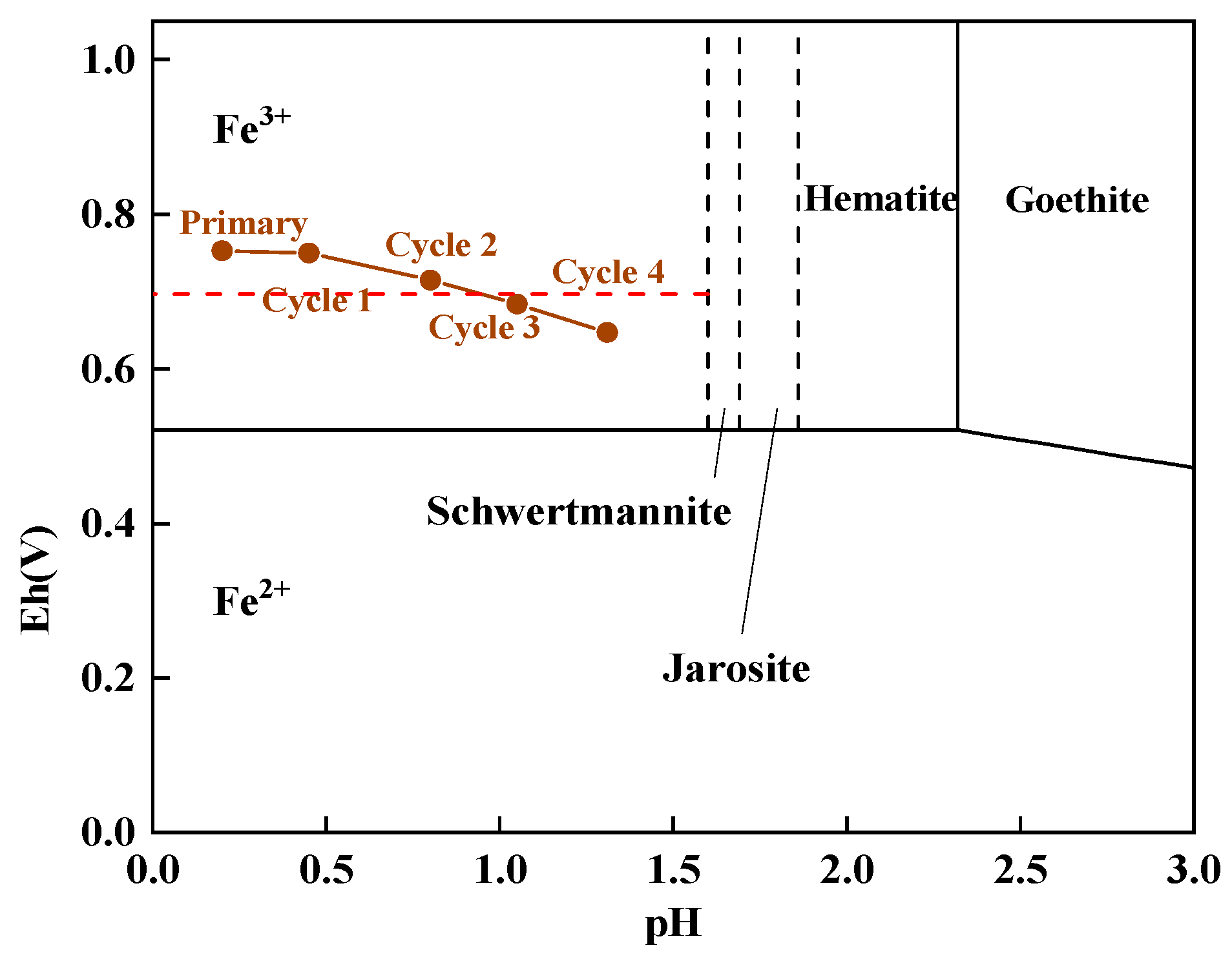
2+) about 0.52 V at 90 °C) provide the redox trajectory in
Figure 6. For the reduction of Fe
3+ by residual sulfides (Reaction 6,
Section 4.4), the cell potential (E(Fe
3+/Fe
2+) = +0.77 V vs. E(FeS
2/Fe
2+,
) about −0.4 to −0.35 V) gives ΔG about −1.5 × 10
3 kJ/mol at 25 °C; the reaction remains thermodynamically favorable under the experimental conditions [
26].
The Pourbaix (E–pH) diagram of the Fe–S–H
2O system at 90 °C (
Figure 6) visualizes these thermodynamic relationships. The stability fields confirm that goethite (pH ≥ 2.32) and hematite (pH ≥ 1.86) lie far beyond the experimental window (pH ≤ 1.31). Schwertmannite-type basic ferric sulfate appears as a narrow metastable field at pH 1.60–1.69. Notably, the entire cyclic leaching trajectory remains within the Fe
3+ (aq) field; the equilibrium diagram does not predict iron precipitation under these conditions. This gap between the equilibrium prediction and the measured 48.2% Fe removal is consistent with the formation of metastable schwertmannite-type basic ferric sulfate, which is kinetically favored at 90 °C and driven by total-Fe(III) supersaturation (
Table 6). The trajectory potentials are Nernst-estimated from measured Fe
3+/Fe
2+ ratios (E° ≈ 0.70 V at 90 °C; Fe
3+/Fe
2+ boundary at E ≈ 0.52 V after activity correction) and labeled “Estimated from Fe
3+/Fe
2+. The Nernst-estimated potential decreases from about +0.75 V (Cycle 1) to +0.65 V (Cycle 4, SHE), reflecting the progressively reducing environment (
Section 3.6).
4.4. Corrected Reaction Network and Synergistic Mechanism
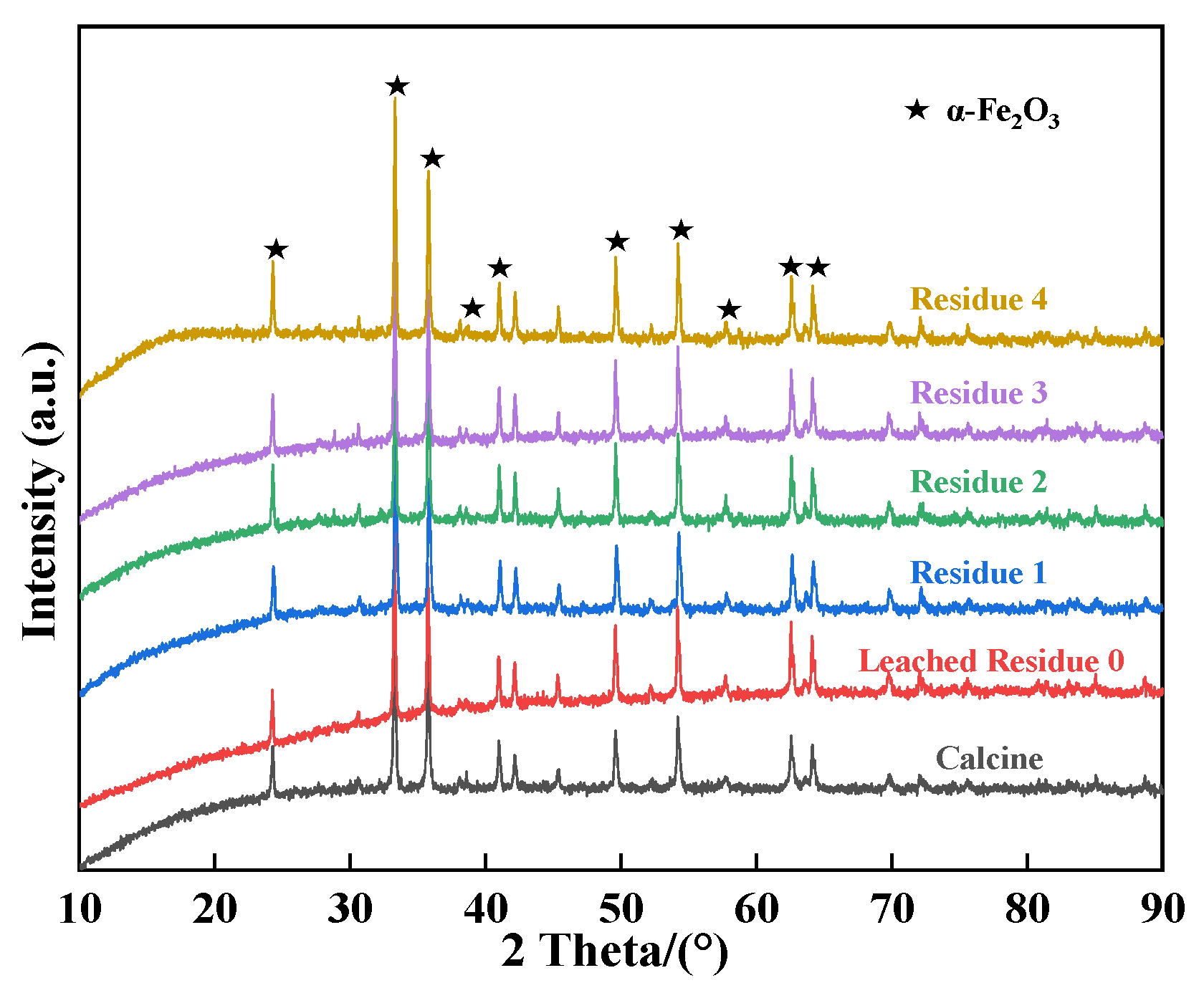
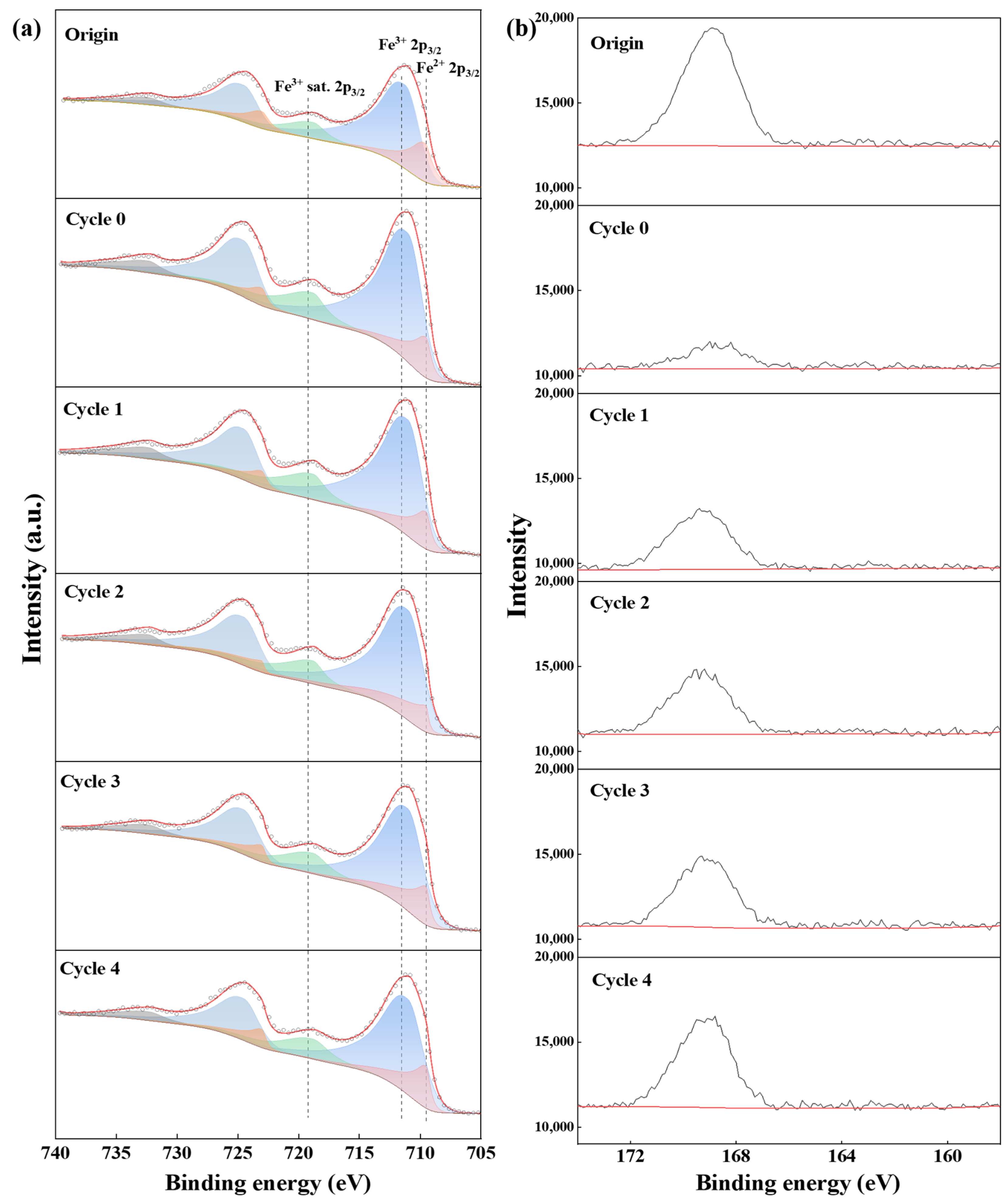
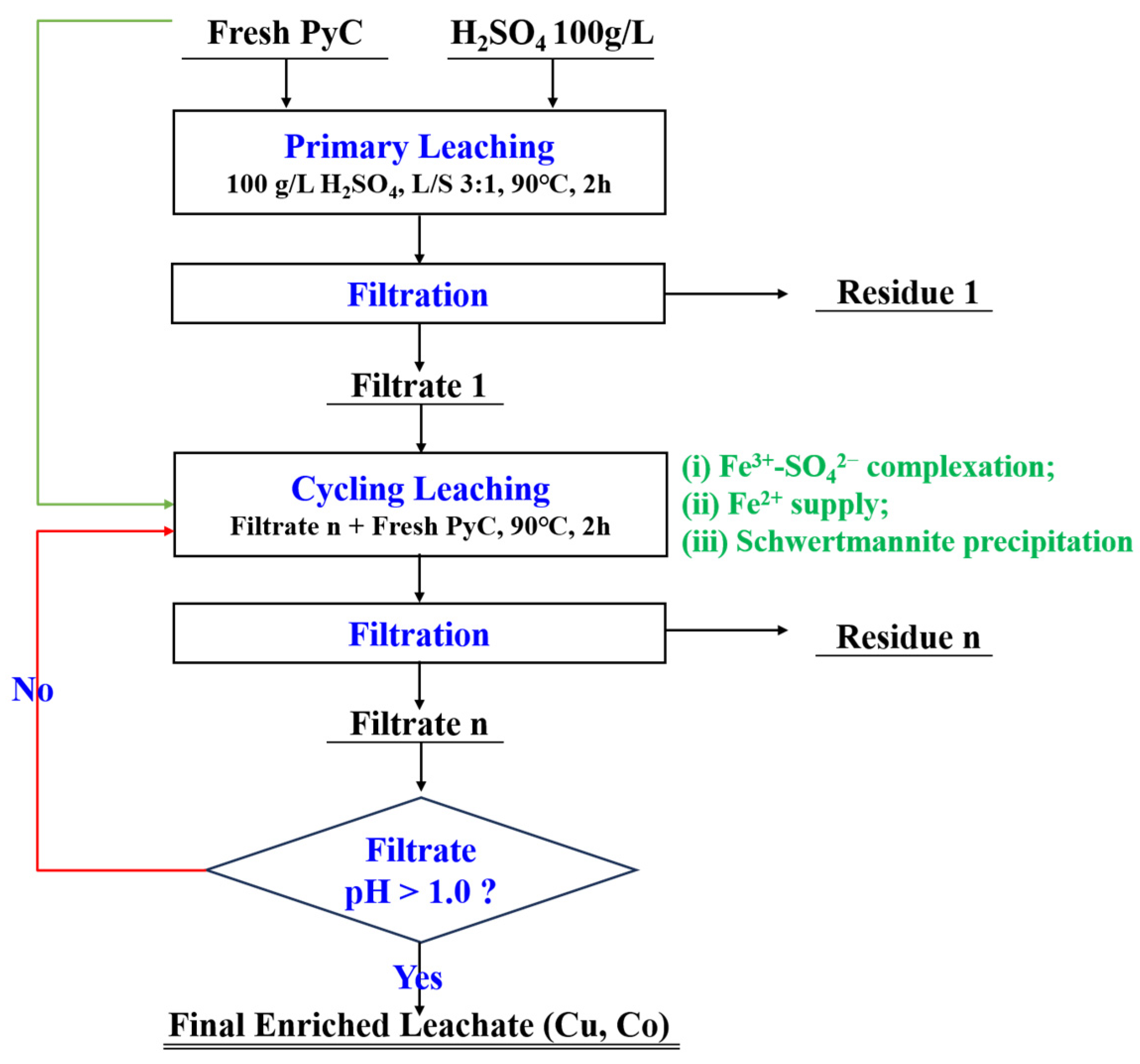
Based on the combined thermodynamic, XRD, and XPS evidence, we propose the following reaction network governing the coupled Fe removal and Cu-Co enrichment during neutralizer-free cyclic leaching of PyC.
Metal oxides in fresh PyC react with free H
+ in the recycled leachate via acid dissolution:
This process extracts Cu and Co into the aqueous phase while simultaneously consuming residual H2SO4. The primary H+ consumers are basic oxides (CuO, CoO, CaO) rather than Fe2O3, which is only sparingly soluble under the conditions of later cycles.
In the high-sulfate environment ([
] = 1 mol/L), dissolved Fe
3+ exists predominantly as sulfate complexes:
The strong complexation (α ≈ 251,000) suppresses the free Fe3+ concentration to ~10−8 mol/L, preventing simple hydrolytic precipitation as Fe(OH)3 or goethite.
The Fe
2+/TFe ratio increases across the cycles because each fresh batch of PyC supplies Fe
2+ through acid dissolution of Fe
2+-bearing phases—fayalite-type Fe
2SiO
4, magnesioferrite-type spinels (
Table 2), and residual low-valence Fe species—while Fe
3+ is selectively removed from solution by schwertmannite-type precipitation (Step 4). The Fe
2+ content of the cinder (1.37 wt%,
Table 1) is sufficient to account for the observed increase in solution Fe
2+ (
Section 3.6). Residual sulfur species in the cinder (0.13 wt% total S,
Table 1) may contribute additional reducing equivalents through the thermodynamically favorable oxidation of reduced sulfur by Fe
3+ [
26] (Reaction 6).
Reaction 6 is thermodynamically favorable under the experimental conditions (ΔG < 0;
Section 4.1), and the 16H
+ generated per mole of FeS
2 partially offset the acid consumption of Step 1. The resulting Fe
2+ forms stable sulfate complexes and remains in solution.
The key iron removal mechanism is the precipitation of basic ferric sulfate (schwertmannite):
Schwertmannite-type basic ferric sulfate is the Fe phase whose precipitation is favored over goethite and Fe(OH)
3 in this acidic sulfate medium: its saturation index rises steeply with pH, and the solution enters the supersaturated regime (in total-Fe(III) terms) as the pH approaches ≈0.8 (Cycle 2;
Table 6), while goethite and Fe(OH)
3 remain far below saturation throughout. The reaction is kinetically accelerated at 90 °C, with formation reported within hours under comparable conditions [
29]. This precipitation pathway exhibits two critical characteristics:
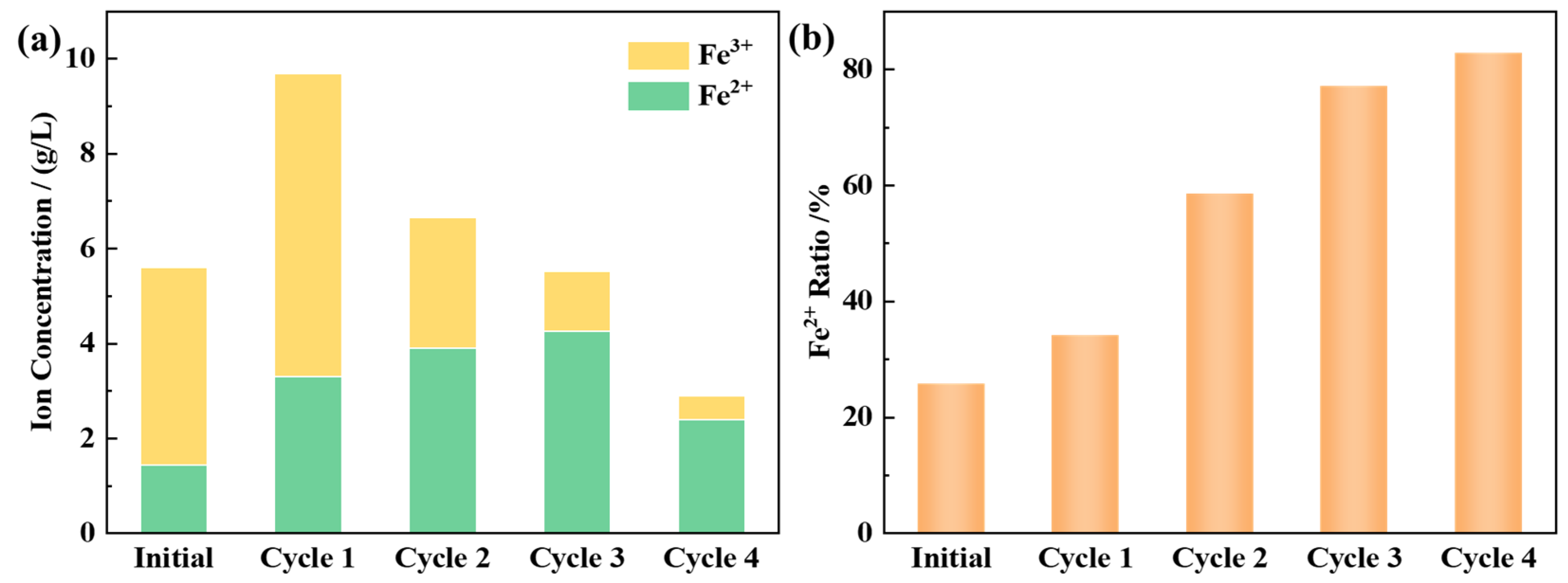
It consumes Fe3+ directly, resulting in the observed decrease in dissolved Fe3+ from 8.2 g/L (Cycle 1) to 0.49 g/L (Cycle 4).
It is H+-producing (2.75 mol H+ per mol Fe), meaning the cyclic leaching system operates with competing acid-generating and acid-consuming reactions. Across all cycles, the acid consumed by oxide dissolution (Reaction 4) exceeds the acid generated by sulfide oxidation (Reaction 6) and schwertmannite precipitation (Reaction 7), consistent with the observed net pH increase; the high-sulfate medium buffers the pH response through the HSO4-/ equilibrium.
A secondary precipitation pathway may involve jarosite formation if sufficient alkali cations (K
+, Na
+) are present:
At 90 °C, schwertmannite is metastable and may partially transform to goethite over time [
22]:
Schwertmannite-type phases may undergo partial transformation to goethite at 90 °C. Based on reported transformation kinetics (half-life approximately 1–3 days at 80 °C), the extent of conversion during 8 h of cumulative leaching is expected to be limited (<20–50%), consistent with the absence of goethite diagnostic peaks in XRD.4.5. Comparison with Conventional Processes and Process Significance.
In conventional acid leaching systems, Fe removal relies almost exclusively on hydrolytic precipitation of Fe3+ as hydroxides or oxyhydroxides, requiring pH adjustment to >2.5 via neutralizer addition. This approach increases reagent costs, introduces impurity ions (Ca2+, Mg2+) that interfere with downstream solvent extraction, and causes 5–15% co-precipitation loss of dissolved Cu and Co.
The proposed neutralizer-free cyclic leaching process achieves simultaneous Cu-Co enrichment and 48.2% Fe removal (70.1% relative to peak Fe concentration) under strongly acidic conditions (pH < 1.5) through a fundamentally different mechanism: schwertmannite-type basic ferric sulfate precipitation, enabled by the unique combination of high sulfate concentration, elevated temperature (90 °C), and the progressive pH increase inherent to cyclic operation.
This mechanism resolves a long-standing challenge in PyC hydrometallurgy: Fe removal at low pH without neutralizer addition and without co-precipitation of valuable Cu and Co. Copper and cobalt ions remain in solution as stable aqueous complexes and do not incorporate into the schwertmannite-type or jarosite crystal lattices during precipitation, enabling simultaneous selective enrichment of target metals in the liquid phase. This statement is supported by the quantitative residue analyses reported in
Table 4: the Cu and Co contents of all residues (Cycles 1–4) are small, and the complete Cu/Co balance shows that the fraction of dissolved Cu and Co retained in the solids is dominated by un-leached metal from the fresh cinder rather than by co-precipitation with the Fe precipitate.
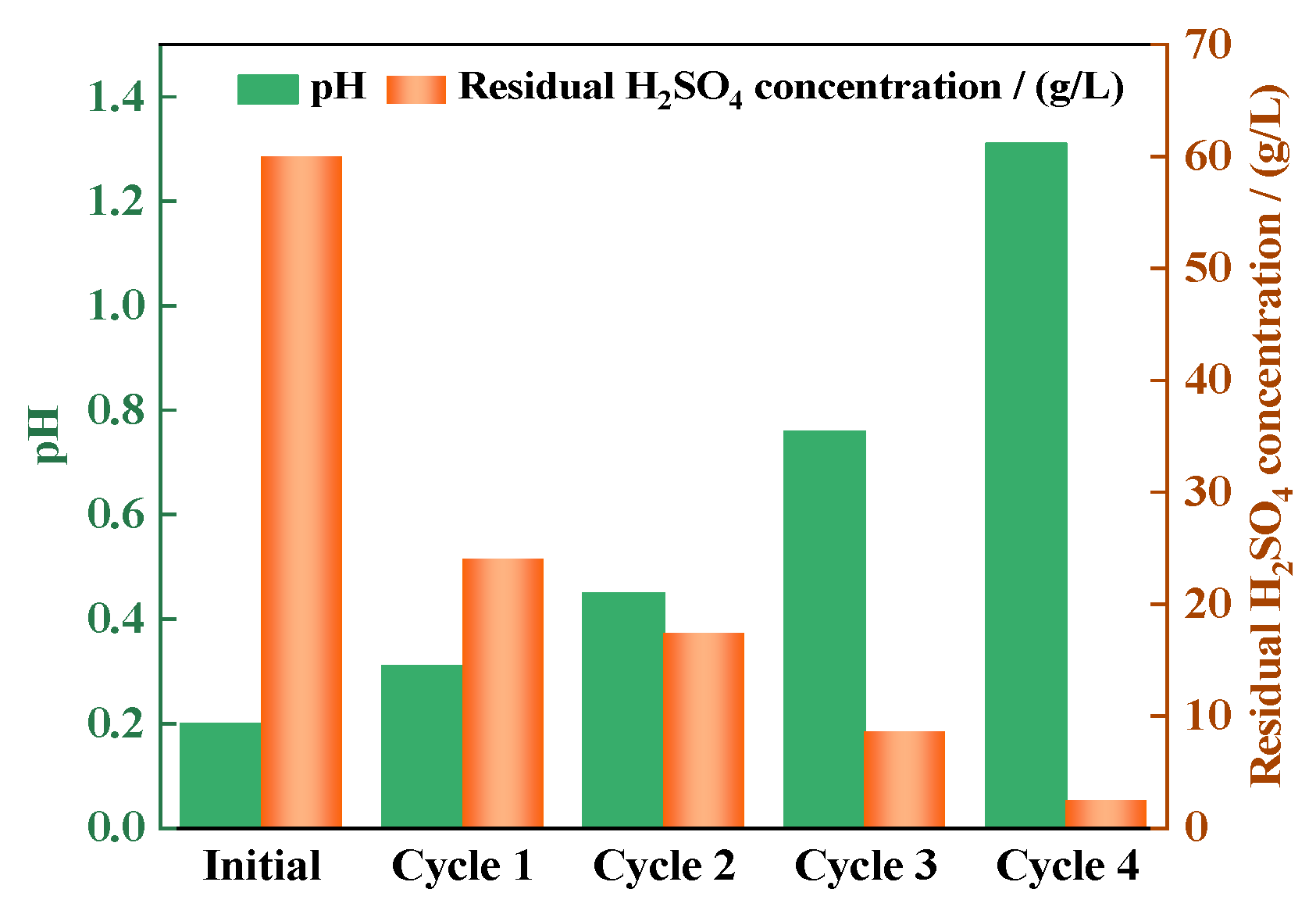
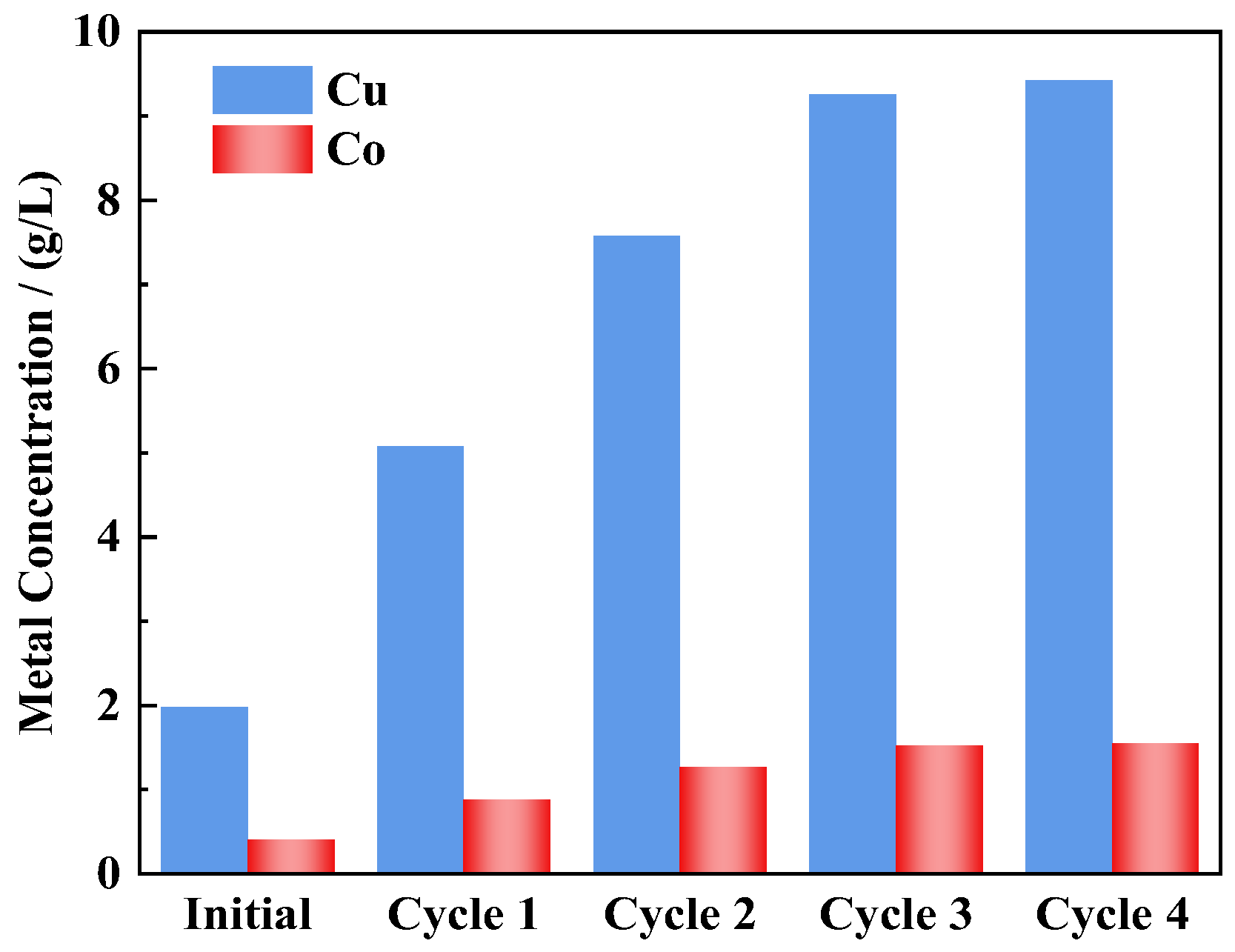
Comparison with single-cycle leaching. Although a dedicated single-cycle leaching baseline under identical conditions was not conducted in this experimental series, the primary leaching step (100 g/L H2SO4, L/S = 3:1, 90 °C, 2 h), which represents the initial state of the cyclic process, can serve as a meaningful baseline. The Cu concentration after primary leaching (1.98 g/L) is magnified to 9.42 g/L after 4 cycles (×4.76 enrichment), while the pH rises from 0.20 to 1.31. In a conventional batch process, achieving this pH adjustment would consume approximately 12 kg CaCO3 per m3 of leachate, with an additional 5–15% loss of dissolved Cu and Co through co-precipitation with iron hydroxides. The cyclic process thus delivers simultaneous enrichment and acid consumption in a single operation.
Preliminary economic assessment. A simplified cost comparison further illustrates the process benefits. For a plant processing 100 m3/day of Cu-Co leachate, the conventional neutralization step consumes approximately 1.2 tonnes/day of CaCO3, generating ~2.4 tonnes/day of gypsum residue. The cyclic process eliminates this reagent cost and waste stream entirely. Additionally, by avoiding Cu/Co co-precipitation losses (estimated 5–15% in conventional Fe(OH)3 precipitation), the cyclic process recovers an additional 0.3–0.9 kg Cu and 0.06–0.18 kg Co per tonne of PyC processed, representing meaningful economic value at current metal prices without additional reagent expenditure.