Review

Review on Metal Micro-Hole Machining and Its Composite Machining Technologies: Current Status and Progress

1
School of Mechanical Engineering, Yancheng Institute of Technology, Yancheng 030001, China
2
College of Mechanical Engineering, Jiangsu University, Zhenjiang 212013, China
3
College of Mechatronic Engineering, Guangdong Polytechnic Normal University, Guangzhou 510665, China
*
Authors to whom correspondence should be addressed.
Metals 2026, 16(8), 873; https://doi.org/10.3390/met16080873
Submission received: 9 July 2026 / Revised: 22 July 2026 / Accepted: 29 July 2026 / Published: 7 August 2026
(This article belongs to the Special Issue High-Energy Beam Machining of Metals)

Abstract

The advanced manufacturing of metal micro-holes is of great significance in various fields of industrial production, including aerospace, automotive, electronics, and healthcare. New technologies are constantly emerging, including various multi-energy field manufacturing technologies, and the knowledge system is complex and intricate. The present article summarizes recent advancements in metal micro-hole manufacturing technologies, drawing parallels with existing laser processing and electrochemical processing technologies. The present systematic review has been conducted with the objective of providing a comprehensive overview of the latest methodologies. The present review paper is of particular significance in that it encompasses not only the fundamental principles and innovative process methods, but also the most recent research progress and current problems. Furthermore, a synopsis of the developmental trajectory of advanced sustainable manufacturing technology for micro-holes was furnished.

1. Introduction

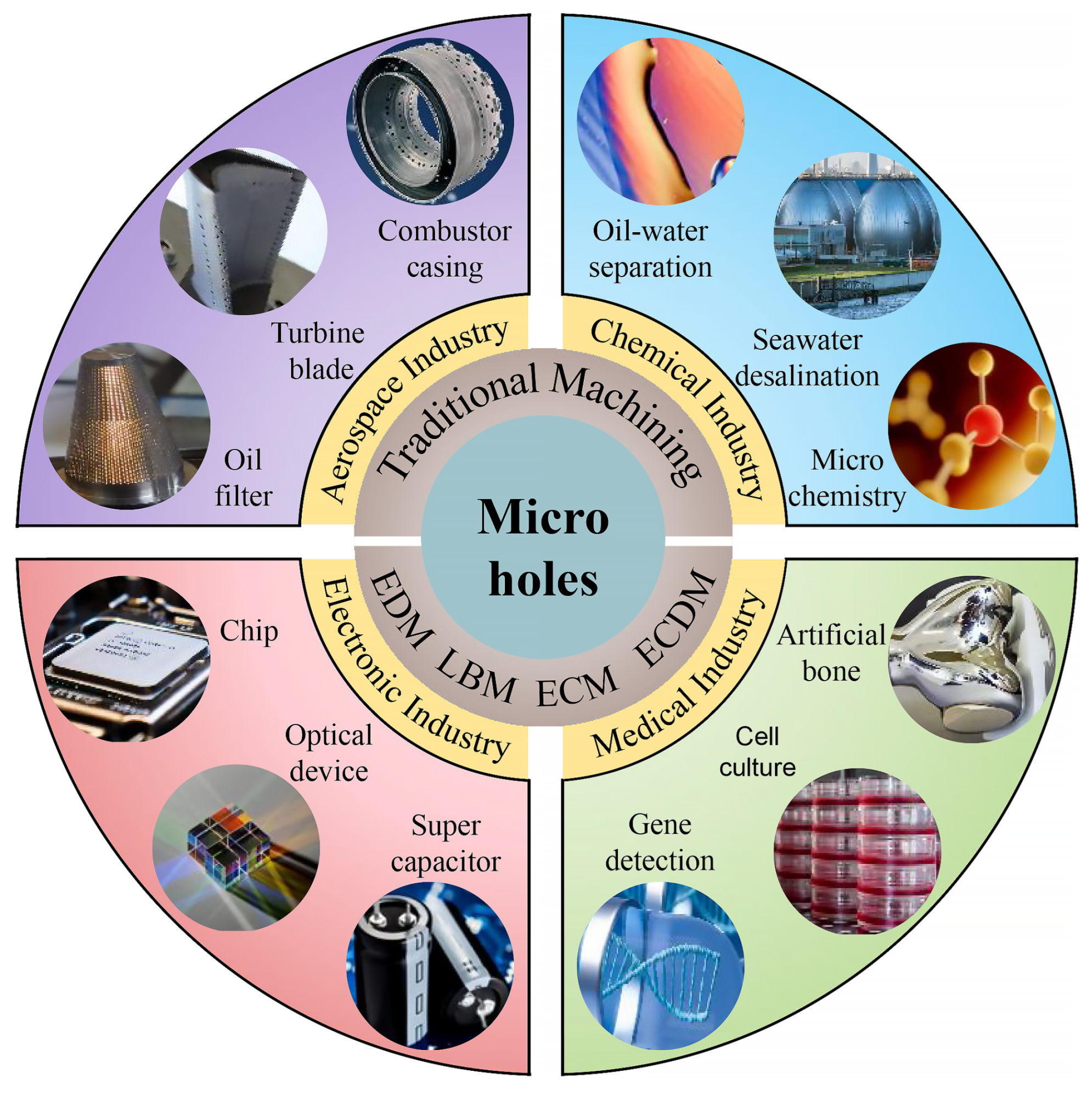
The utilization of metal micro-holes has been demonstrated to be of significant value in a variety of disciplines, including but not limited to aerospace engineering, mold industry, electronics and electrical engineering, biomedicine, and chemical engineering [1,2,3,4], as shown in Figure 1. As for aircraft engine blades, they are characterized by a distribution of numerous minute holes on their surface, which are of paramount importance in facilitating effective heat dissipation [5,6]. The new generation of aircraft engines is characterized by a high thrust-to-weight ratio and high energy conversion efficiency, which have become key performance indicators [7]. Raising the inlet temperature of the turbine is an important technical approach to achieve this goal [8]. Nickel-based high-temperature alloys are extensively utilized in various high-temperature components of aircraft engines because of their exceptional corrosion resistance, creep performance, and high-temperature strength [9,10,11]. However, it has been demonstrated that the inlet temperature of the turbine has exceeded 2000 K, thus far exceeding the maximum operating temperature of existing advanced high-temperature alloys [12]. Although developing new high-temperature materials is a potential solution to this problem, its research and development cycle is long and it is difficult to match the rapid development needs of aviation engines [13]. In this context, film cooling technology has emerged. The underlying principle of this technology is to introduce cooling gas into the turbine blades and utilize a multitude of film cooling holes (FCHs) that are prepared on the blade surface. These holes form a low-temperature protective gas film, thereby reducing the heat transfer from the high-temperature environment [14]. The hole size of FCHs is usually less than 1 mm [15].
Nickel-based high-temperature alloys are a typical difficult-to-cut material. They present severe challenges in the preparation of micro-holes in high-temperature alloys using traditional mechanical machining methods because of their high strength and hardness [16]. Mechanical micro-drilling faces problems such as tool wear [17], machining chatter [18], and difficulties in cooling and chip removal [19]. In the micro-drilling experiment conducted by Khadtare et al. [20], it was observed that the tool wear rate exhibited a marked increase with the increase in the number of machined holes in the Inconel 718 alloy. This phenomenon resulted in a substantial deterioration of the surface quality of the micro-holes. Consequently, traditional machining methodologies are inadequate in meeting the efficient and high-precision machining requirements.
Non-traditional manufacturing technology can be defined as advanced manufacturing processes which involve machining by special energy forms such as electricity, heat, sound, or light energy [21,22,23,24]. In comparison with conventional mechanical processing methodologies, non-traditional manufacturing technology possesses distinctive advantages and has consequently become a primary focus of research in the domain of micro-hole machining [25]. As for the manufacturing of micro-holes, common techniques include laser drilling (LD), electrical discharge machining (EDM), and electrochemical machining (ECM), and mechanical drilling (MD) [26,27,28]. However, the above processing techniques all have their own limitations, as is shown in Table 1. EDM is based on the instantaneous high temperature generated by dielectric breakdown discharge to achieve material ablation and removal, inevitably leading to problems such as thermal damage and tool wear. ECM faces challenges such as stray corrosion and difficulties in mass transfer [29]. As for LD, although it has thermal defects such as microcracks, recast layers, and heat-affected zones [30], and the prepared micro-holes have a large taper, but it has advantages such as high flexibility and high efficiency [31]. Therefore, it is still one of the mainstream processing technologies for micro-holes [32,33]. The water-assisted laser processing technology utilizes the cooling effect of the water medium to effectively reduce the accumulation of laser heat inside the sample, thereby reducing laser thermal defects [34]. The apparatus exhibits the advantages of simple process equipment and high processing stability, and is particularly suitable for the processing of small holes. Nevertheless, it has been demonstrated that the generation of bubbles and processed products during processing is associated with the accumulation of these at the hole outlet. This has been shown to have a detrimental effect on the interaction between the laser and the liquid, thus resulting in a decline in the processing quality of micro-holes [35]. Mechanical drilling technology is widely used in industrial production with its simple processing techniques, low processing costs, and the ability to process various materials. But this technology also has many shortcomings, such as difficulty in processing deep small holes and thin-walled parts, and difficulty in discharging processed products.
To address those issues, considerable attention has been focused on composite processing technology [36]. The advent of composite machining technology represents a significant milestone in advanced manufacturing. It employs a multifaceted approach, integrating two or more distinct machining processes. The integration of these processes enables the exploitation of complementary advantages and the mitigation of disadvantages. Consequently, this approach circumvents the limitations of a standalone machining technology [37]. In addition, composite manufacturing can significantly improve processing efficiency, thereby shortening processing cycles and labor costs, which can effectively reduce processing costs.

2. Laser Processing Technology

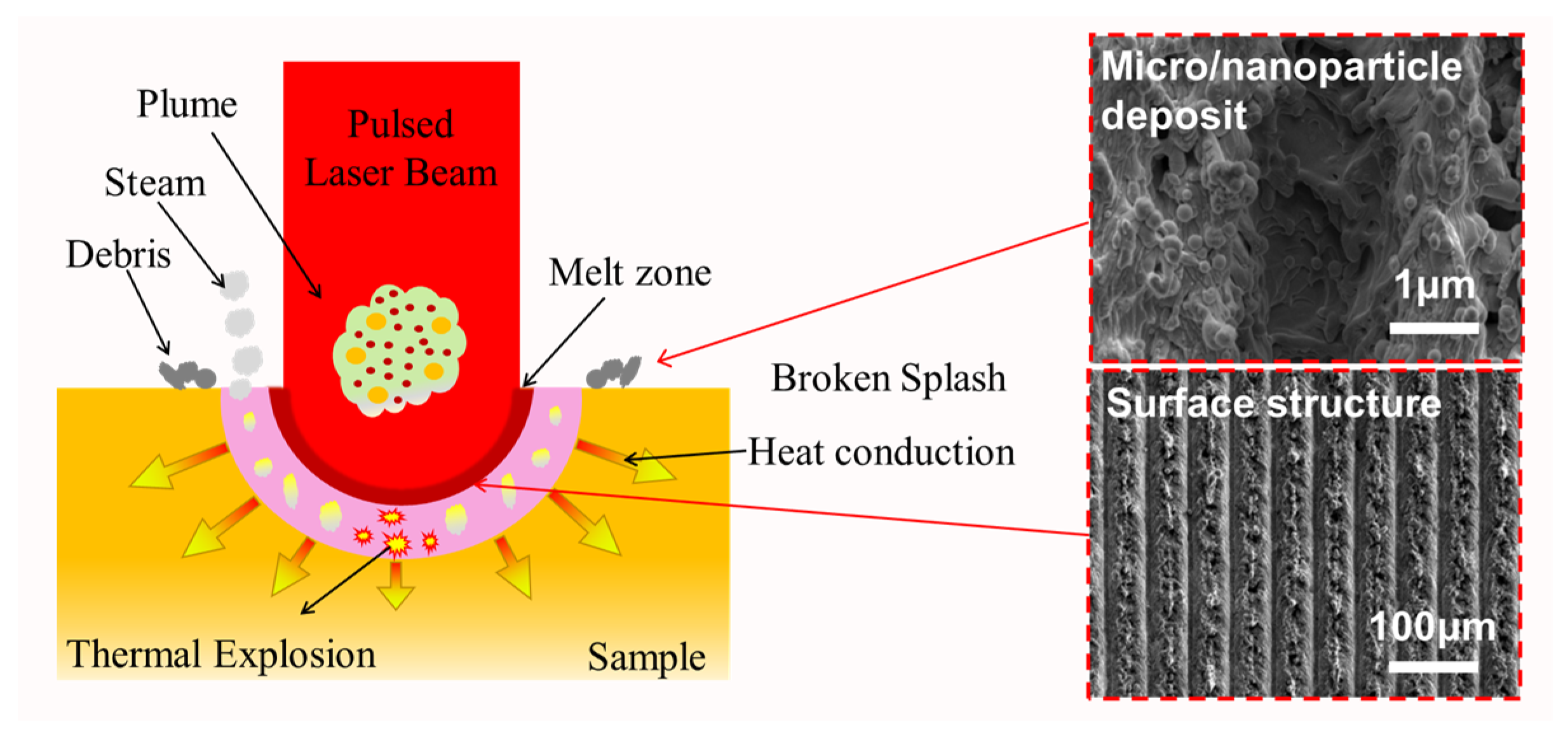
Laser processing is a precision machining technology that uses a high-energy density laser beam to irradiate the surface of a sample. This causes the sample material to melt and vaporize under the application of heat, and then to be removed [38]. Figure 2 illustrates the basic principle of laser processing. Laser processing has good flexibility, high processing efficiency, and processing accuracy [39]. In view of the advantages, its utilization in high-end manufacturing fields is extensive. The contemporary array of mainstream laser processing technologies encompasses laser drilling, laser cutting, laser cleaning, laser welding, laser marking and laser heat treatment. Among the technologies, laser drilling technology has been identified as a mature laser processing technology for industrial applications. It has demonstrated significant technological advantages in the field of micro-hole processing [40]. According to the different widths of laser pulses, laser drilling technology can be divided into long-pulse laser drilling, short-pulse laser drilling, and ultra-short-pulse laser drilling. It is imperative to acknowledge the fundamental disparities in the interaction mechanism between lasers with disparate pulse widths and materials, which exert a direct influence on the quality of micro-holes produced through machining processes. The mean power output of short-pulse lasers with nanosecond pulse width and long-pulse lasers with larger pulse width is higher. Material removal is contingent on the thermal ablation mechanism [41]. Although this type of laser drilling has high efficiency, the prepared micro-holes have significant thermal defects [42,43,44]. Picosecond and femtosecond lasers are classified as ultrafast lasers, characterized by their remarkably high peak energy density. It is postulated that, during the processing, the sample material can be directly vaporized in a very short time. This would theoretically result in “cold processing” and the fabrication of high-quality micro-hole structures [45,46]. However, the efficiency of femtosecond laser processing is relatively low, resulting in longer preparation cycles for large-scale group holes such as FCHs, and higher equipment costs for femtosecond lasers [47,48]. These factors serve to limit its application in industrial production. In comparison with alternative methodologies, picosecond lasers attain an optimal equilibrium between processing quality and efficiency, rendering them more appropriate for large-scale industrial applications. Nevertheless, picosecond laser drilling still exhibits defects, including recast layers, microcracks and heat-affected zones, which are inadequate in meeting the stringent processing requirements of FCHs.
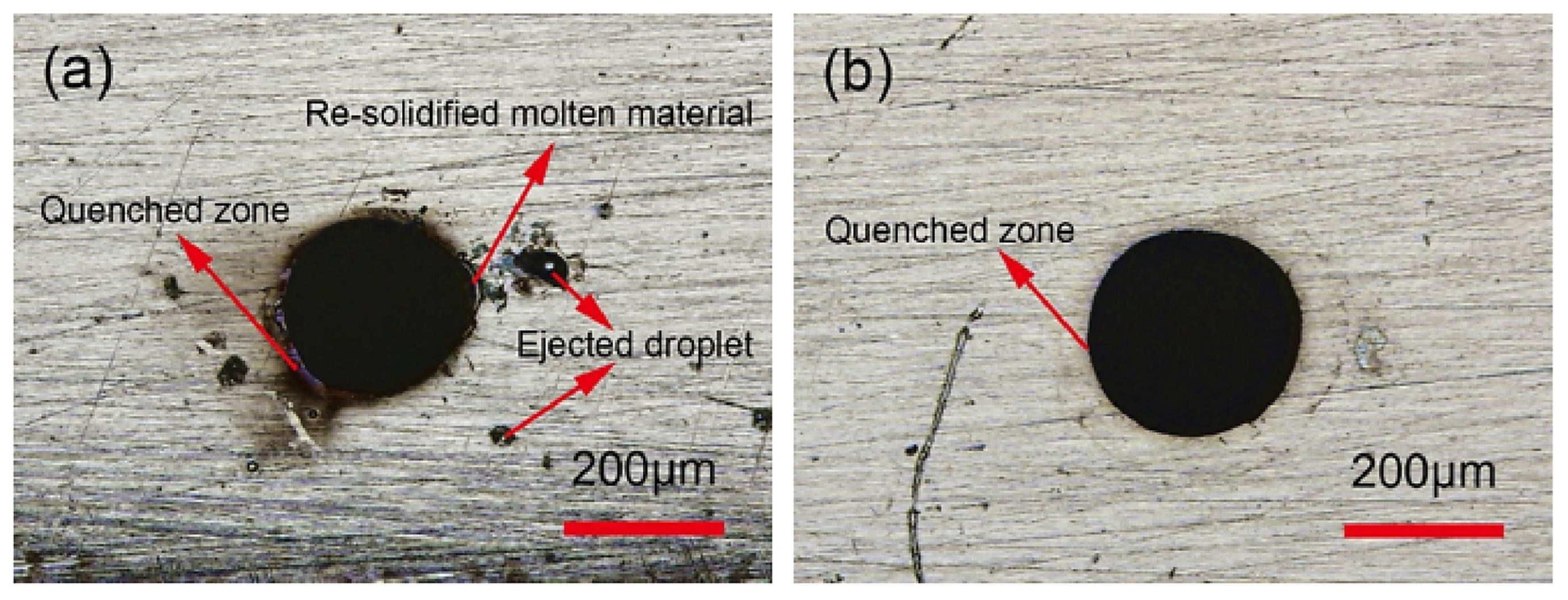
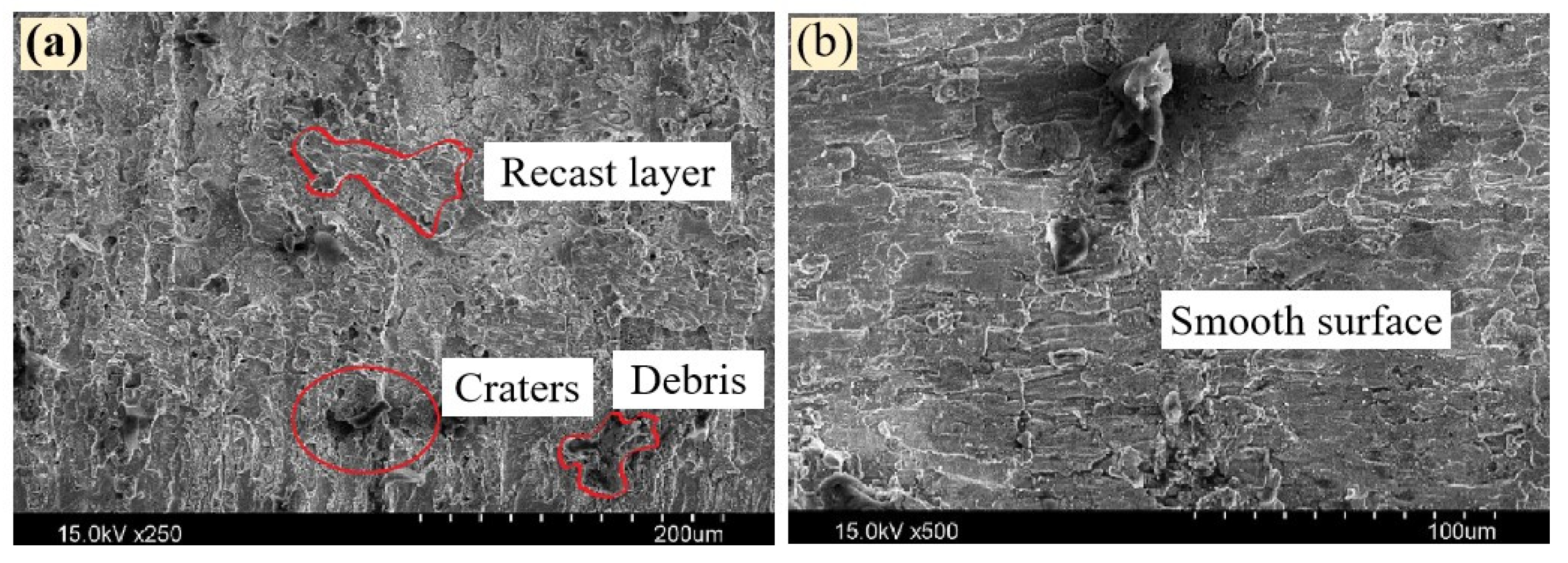
Laser processing continues to be a prevalent technology for micro-hole machining, primarily because of its ability to ensure high precision and efficiency. However, it should be noted that laser drilling is associated with inherent defects, including recast layers, microcracks, and heat-affected zones. In order to meet the increasingly complex processing demands and diverse material characteristics, scholars both domestically and internationally have extensively explored and improved laser drilling technology. The primary focus of these studies is the optimization of parameters, the application of ultrafast lasers, and the control of processing environments. The process of laser drilling is influenced by numerous process parameters, the impact of which on the resultant processing outcomes is subject to variation. It is evident that the judicious selection of process parameters can yield a marked enhancement in the quality of micro-hole processing [49]. Liao et al. [50] explored the effects of nanosecond laser pulse width and scanning times on the machining of diamond film micro-hole arrays through experiments. They found that there was no significant change in the hole entrance size as the laser pulse width and scanning times increased, but the exit diameter increased and the taper decreased. Pramanik et al. [51] used the teaching and learning optimization algorithm (TLBO) to optimize parameters such as sawing angle, laser power, laser frequency, duty cycle, and drilling speed in nanosecond laser drilling. The optimal parameter combination was obtained with a sawing angle of 0.1°, laser power of 32.5 W, duty cycle of 82.123%, laser frequency of 61.2511 kHz, and drilling speed of 1 mm/s. Significant reduction in micro-hole inner wall defects under optimal parameter combination (Figure 3).
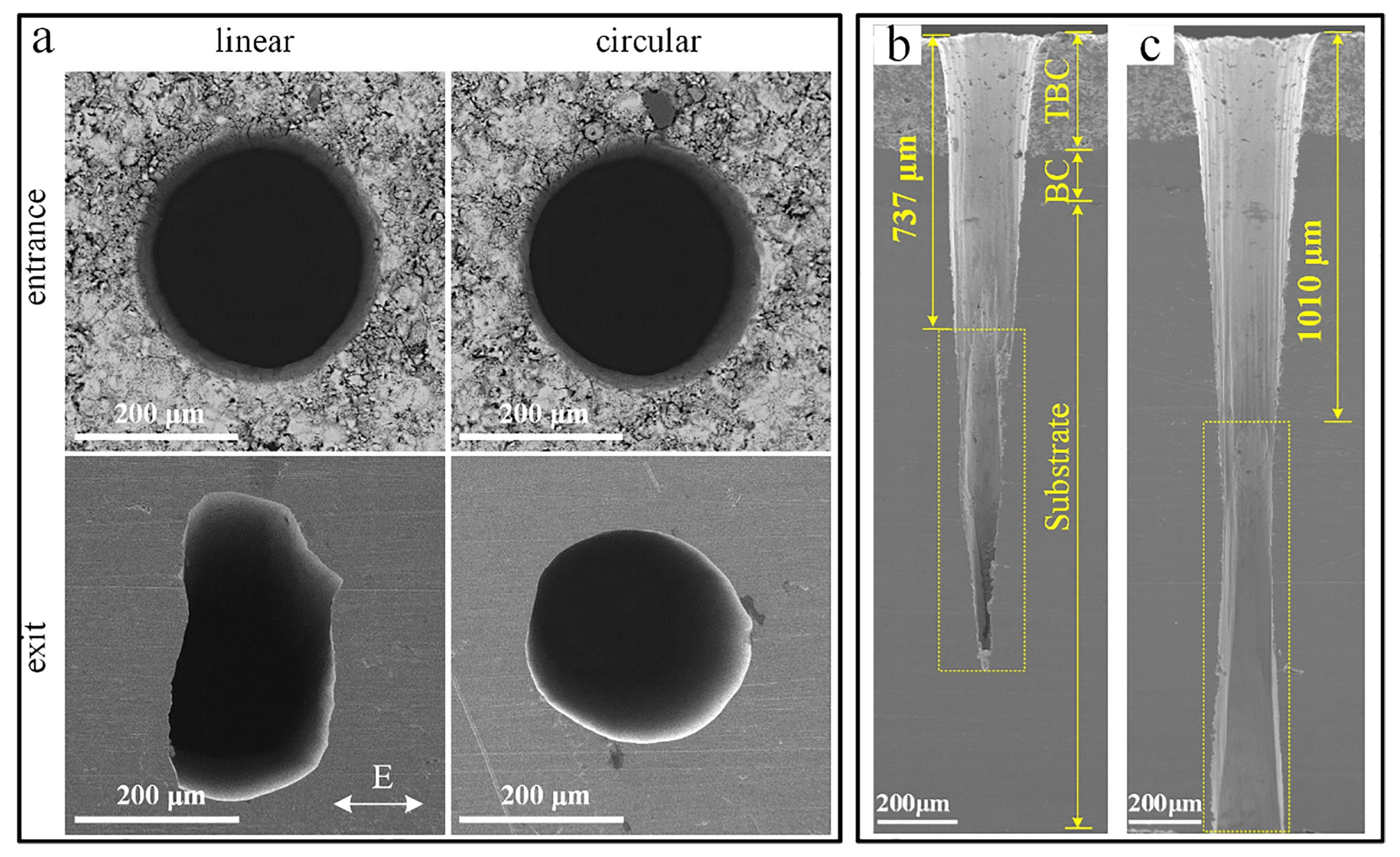
The unique cold processing mechanism exhibited by ultrafast lasers has resulted in a considerable degree of attention being attracted to them [52]. Wang et al. [53] explored the effect of linearly/circularly polarized femtosecond laser on drilling high-temperature alloys with thermal barrier coatings. As shown in Figure 4, linear polarization causes polarization removal in the middle of the hole, resulting in a much lower machining quality of micro-holes. Li et al. [54] proposed a two-step femtosecond laser spiral drilling process. Firstly, high power and other parameters that were conducive to improving processing efficiency were used to quickly drill through-hole structures. Then, a combination of parameters with high processing quality was used to perform secondary modification on the holes, thereby ensuring both the processing efficiency and quality of micro-holes. Sun et al. [55] achieved controllable micro-hole taper between positive and negative taper using relative attitude control between femtosecond laser beam and sample. Meanwhile, the experimental results indicated that the high-intensity shock wave generated during femtosecond laser ablation led to dislocations between adjacent microstructures on the hole wall, and the dislocations were mainly concentrated in the γ-phase matrix.
With regard to the processing environment regulation, Wang et al. [56] investigated the machining outcomes of gas film cooling holes with thermal barrier coatings in various pressure environments through numerical simulation and experimental methods. As demonstrated in Figure 5, micro-holes exhibit effective collimation in the thickness direction under atmospheric pressure, attributable to the defocusing effect of plasma. In environments of low pressure, the self-focusing effect leads to a smaller aperture because of the low plasma density. Ren et al. [57] conducted femtosecond laser drilling on Si3N4 using LD, UWLD, and BWALD processes, respectively. Compared with LD, the micro-hole taper prepared by BWALD process decreased by 75%, while UWLD decreased by 72.7%. Subsequent analysis revealed that at lower laser frequencies, the BWALD processing efficiency and quality of Al2O3 ceramics were significantly enhanced in comparison to air environments. Nevertheless, at elevated laser frequencies, the benefit of water-assisted processing was diminished because of the plasma’s protective effect [58].

3. Electrochemical Machining Technology

Electrochemical machining is a non-contact and stress-free machining technology that has become an important process for micro-hole machining [59]. This is because it produces a high surface quality and is applicable to difficult-to-cut materials. However, traditional immersion electrochemical machining is not without its drawbacks. These include the difficulty of discharging machining products and severe concentration polarization phenomena, which are particularly prominent in deep hole machining processes. Jet electrolysis and mask electrolysis, two process variants of electrochemical machining, have been extensively utilized in the domain of micro-hole machining.
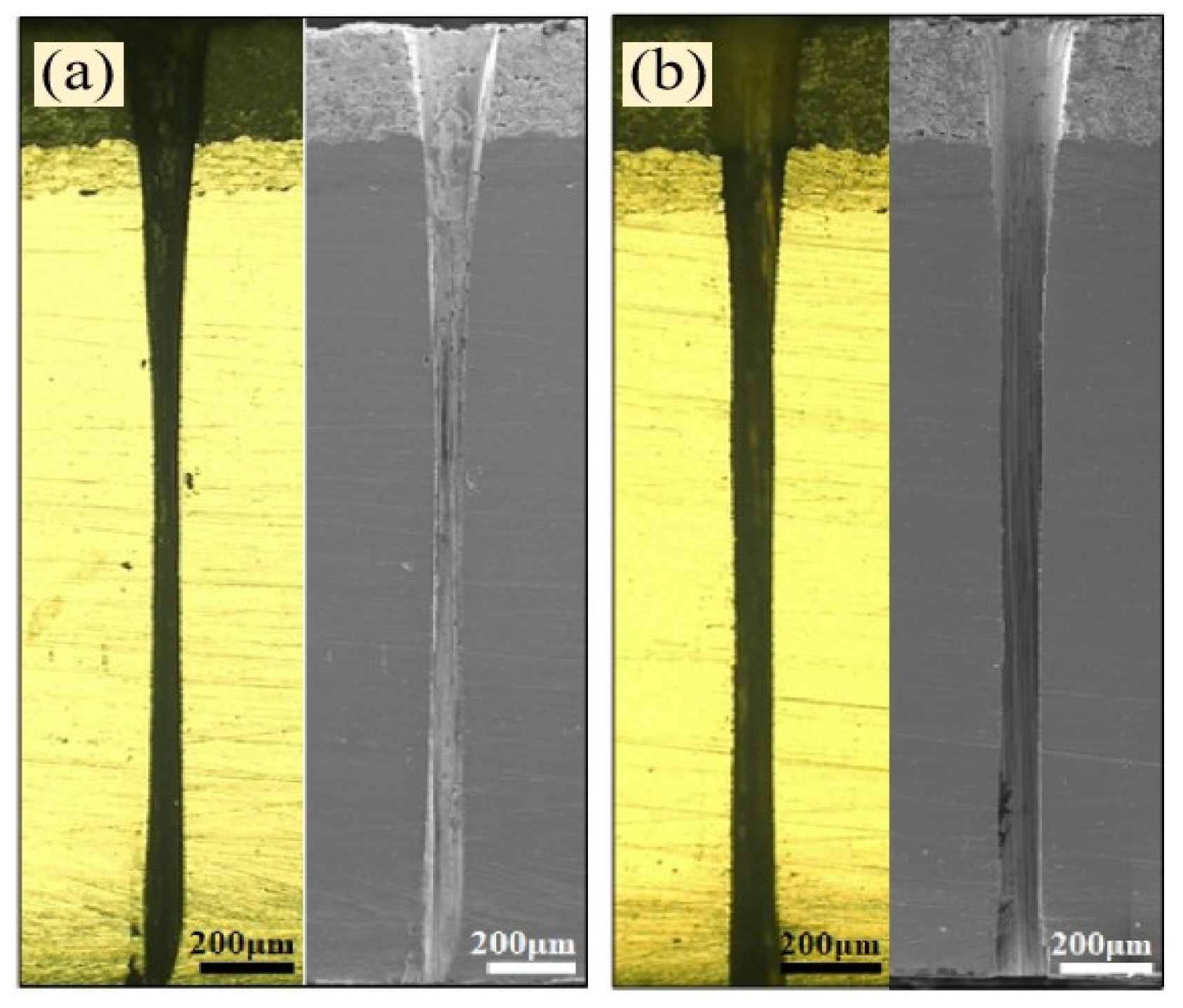
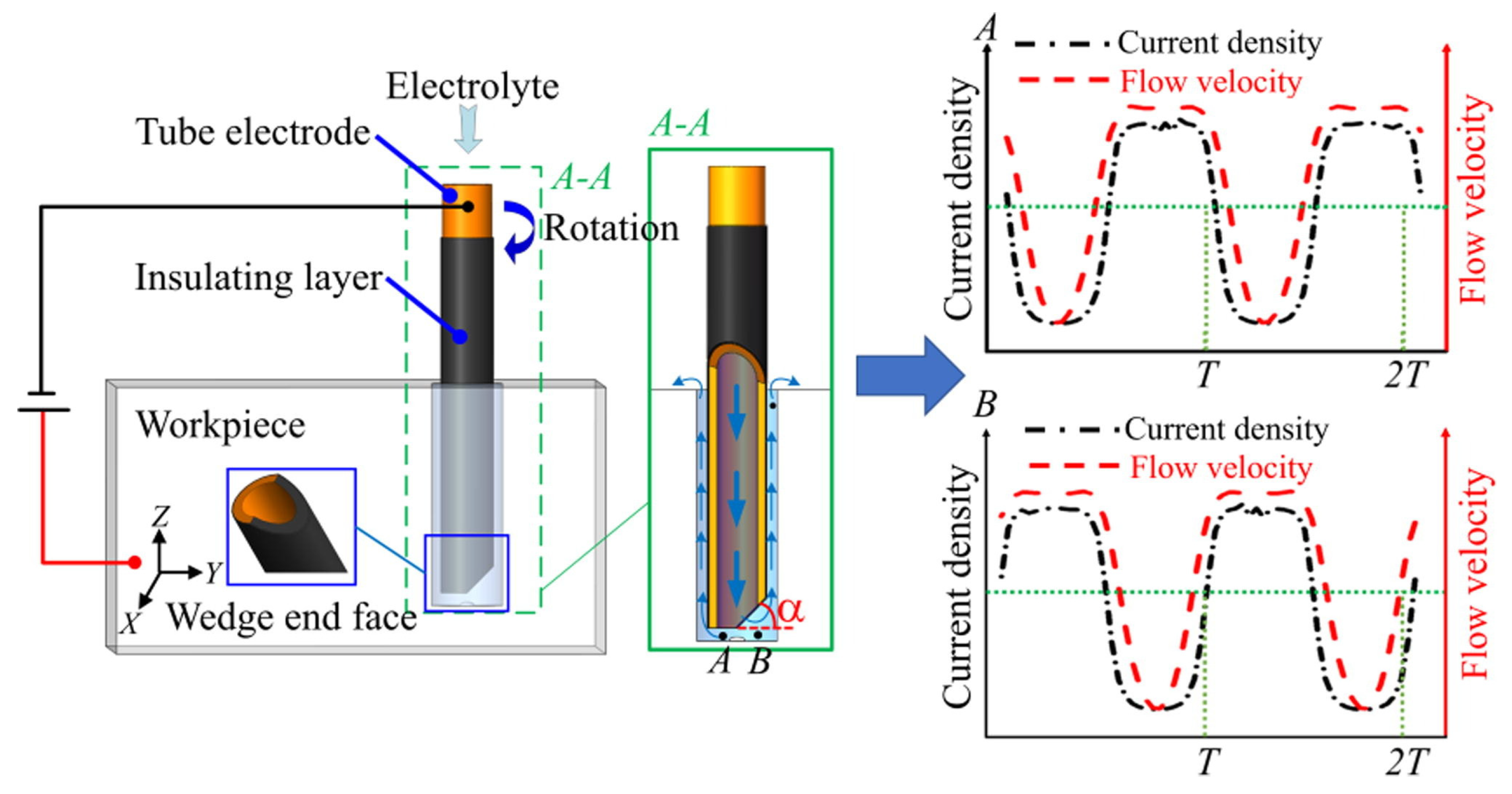
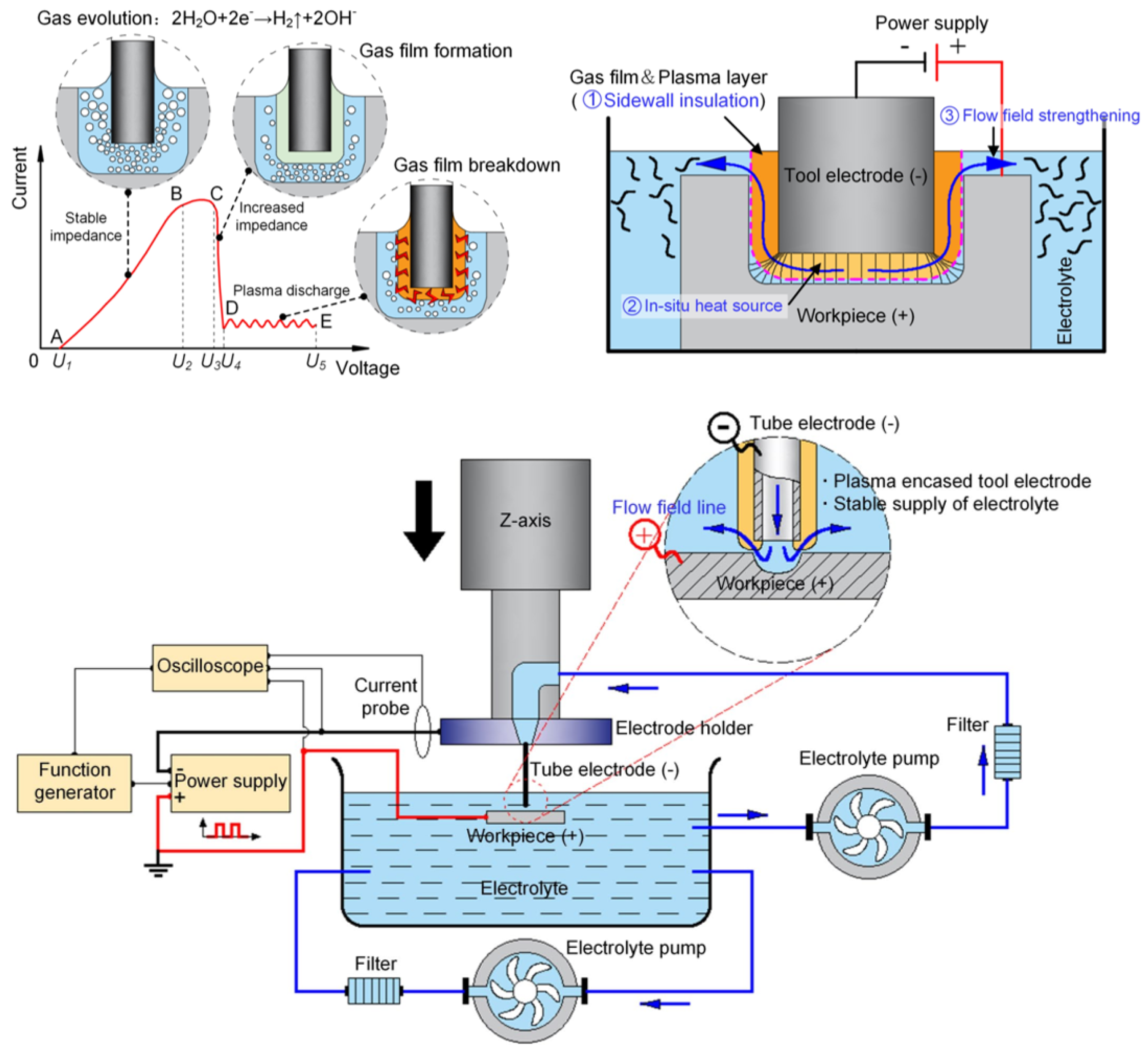
The process of jet electrochemical machining has been shown to be an effective method for the removal of machining products, bubbles and Joule heat. This is achieved through the utilization of high-speed electrolyte flow, which makes the process particularly suitable for micro-hole machining [60]. Zhan et al. [61] proposed a plasma-assisted tube electrode electrochemical machining process, which induced plasma generation by regulating the voltage during the machining process, thereby simulating the machining environment of electrochemical jet machining and achieving effective removal of sample materials. This process successfully prepared deep holes with a depth-to-diameter ratio of 5.1:1. There was severe stray corrosion at the entrance of the micro-holes because of the long processing time. Liu et al. [62] designed a novel gas-assisted tool electrode with flushing holes on the side wall, which could introduce coaxial auxiliary airflow. Auxiliary gas could form a local gas chamber around the flushing hole to prevent electrolyte reflux and ensure machining stability. Cheng et al. [63] prepared a novel tube electrode with a semi wedge-shaped end, as shown in Figure 6. The rotation frequency of the electrode was controlled, thereby enabling the coupling of pulsating flow field and electric field in the machining gap in the time domain. This, in turn, resulted in an improvement in the process performance of jet electrolysis. It was established that, at a high feed rate of 2.22 mm/min, holes with a diameter of 1.52 ± 0.017 mm could be successfully prepared, and that the surface roughness was only 0.331 μm.
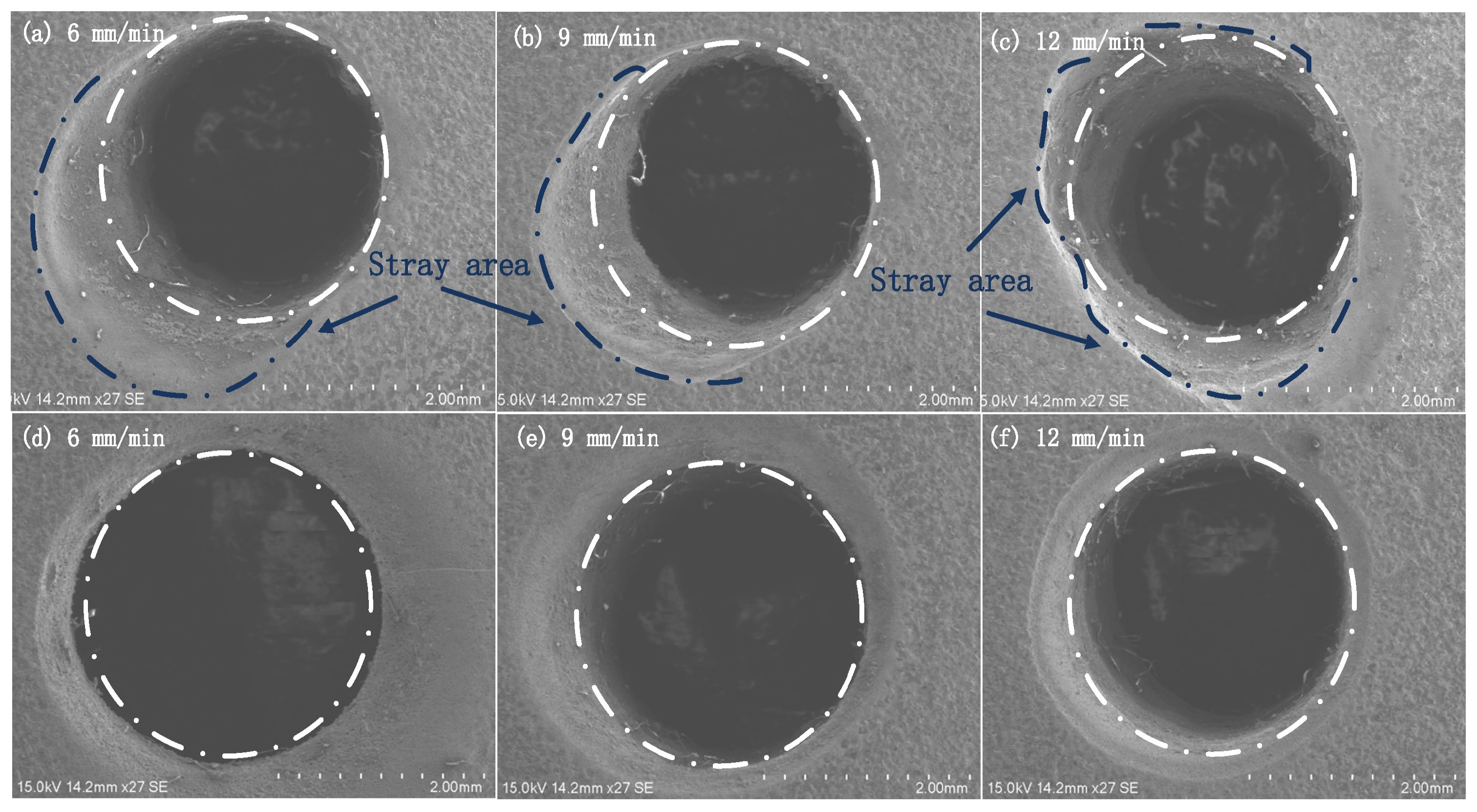
In conventional mask electrolysis technology, the initial step entails the coating of a layer of photoresist on the surface of the sample. Subsequently, photolithography technology is employed to create the requisite processing mask, which involves the exposure of the target processing area and the accomplished removal of the sample material in a localized manner. In comparison with conventional electrochemical machining, the utilization of masks has been shown to enhance the precision of the process, rendering mask electrolysis a viable option for micro-hole machining, particularly in the context of preparing large-scale group holes. As shown in Figure 7, the introduction of the mask effectively reduces stray corrosion around the hole entrance, but as the hole depth increases, the influence of the mask on the aperture and taper gradually weakens. He et al. [64] used a polyaluminum chloride (PAC) electrolyte to perform mask electrochemical machining of array micro-holes on Zr702 alloy plates. An exploration was conducted into the influence of pulse voltage, electrolyte pressure, and jet scanning speed on machining results. To this end, the multi-factor interactive response surface method was utilized. The experimental findings indicated that pulse voltage exerts the most substantial influence on the quality of micro-hole machining.
To solve the problem of lack of electrolytes in the machining area, a plasma-assisted shaped-tube electrochemical machining method (Figure 8) was proposed by Zhan et al. [66]. The current was predominantly conductive through the electrolyte jet, and the electric field of the tube electrode end face and side wall was shielded by the gas film. Consequently, the machining accuracy would not deteriorate under high machining voltage. Plasma, a hot gas medium, has the potential to generate a machining environment analogous to electrochemical jet machining. The high voltage generated a dense gas film and plasma film, which proved advantageous in enhancing the machining accuracy.

4. Composite Processing Technology

4.1. Water Flow-Assisted Laser Processing Technology

Water-assisted laser processing is a technology that utilizes the cooling effect of water to reduce thermal damage during laser processing and improve the surface quality of laser processing [66,67]. The advantage of this technology lies in the unique physical properties of the aqueous medium. On the one hand, water has a higher specific heat capacity than air. Therefore, when the same amount of heat is absorbed, the temperature rise of water is smaller, meaning it can absorb more laser heat. Conversely, the thermal conductivity of water is approximately 30 times that of air. This results in a faster rate of heat transfer in water. Liquid media assistance can effectively reduce thermal defects in laser processing.
At present, water-assisted laser drilling technology mainly includes three categories: underwater laser drilling (UWLD), water jet-guided laser drilling (WJGLD), and backside water-assisted laser drilling (BWALD) [34,68].
In UWLD, it is imperative that the sample be completely immersed in a liquid medium, thereby leveraging the cooling effect of the liquid to mitigate thermal defects arising from laser processing. However, the presence of a water film above the sample will cause the laser beam to undergo multiple reflections. This will result in laser energy attenuation and focal drift, which will in turn affect processing efficiency and stability [69].
In WJGLD, the principle of total reflection of the laser beam in water jet technology was employed to direct laser energy to the designated processing area. This method eliminates the requirement for the sample to be immersed in the liquid [70]. In this process, laser conduction relies entirely on water jet, and its diameter and shape directly affect the energy distribution characteristics of the laser in the processing area [71]. However, the complexity inherent in the fabrication of micro nozzles typically leads to water jet diameters in the order of several hundred micrometers. This, in turn, results in an increase in laser spot size and a concomitant decrease in processing resolution. Concurrently, external disturbances and Rayleigh Plateau instability have the potential to induce water jet fragmentation, which may consequently lead to total reflection failure and processing interruption [72]. In addition, the process equipment was relatively complex. Therefore, although the cooling effect of water had been fully utilized, the above-mentioned defects still limited its practical application.
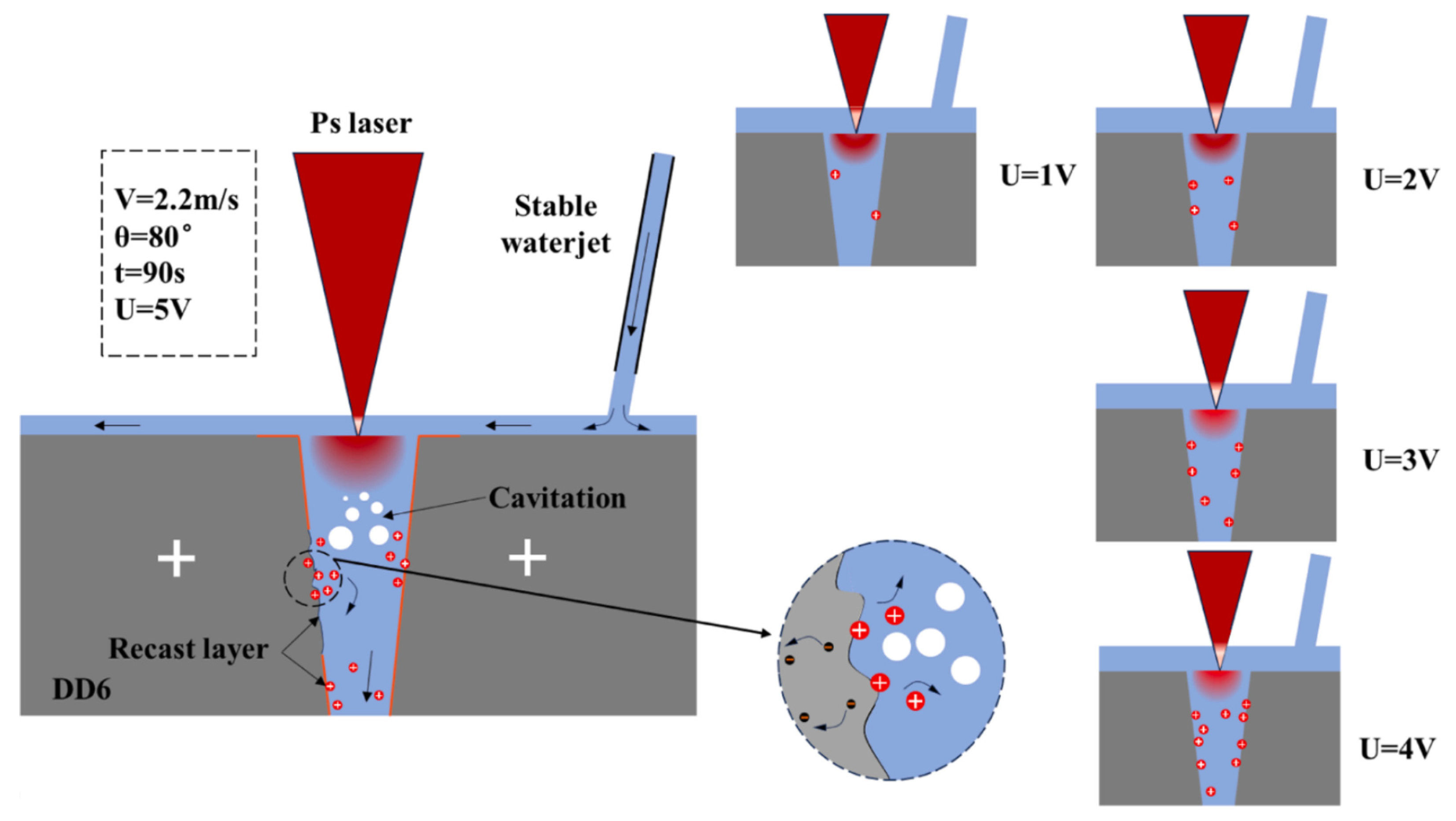
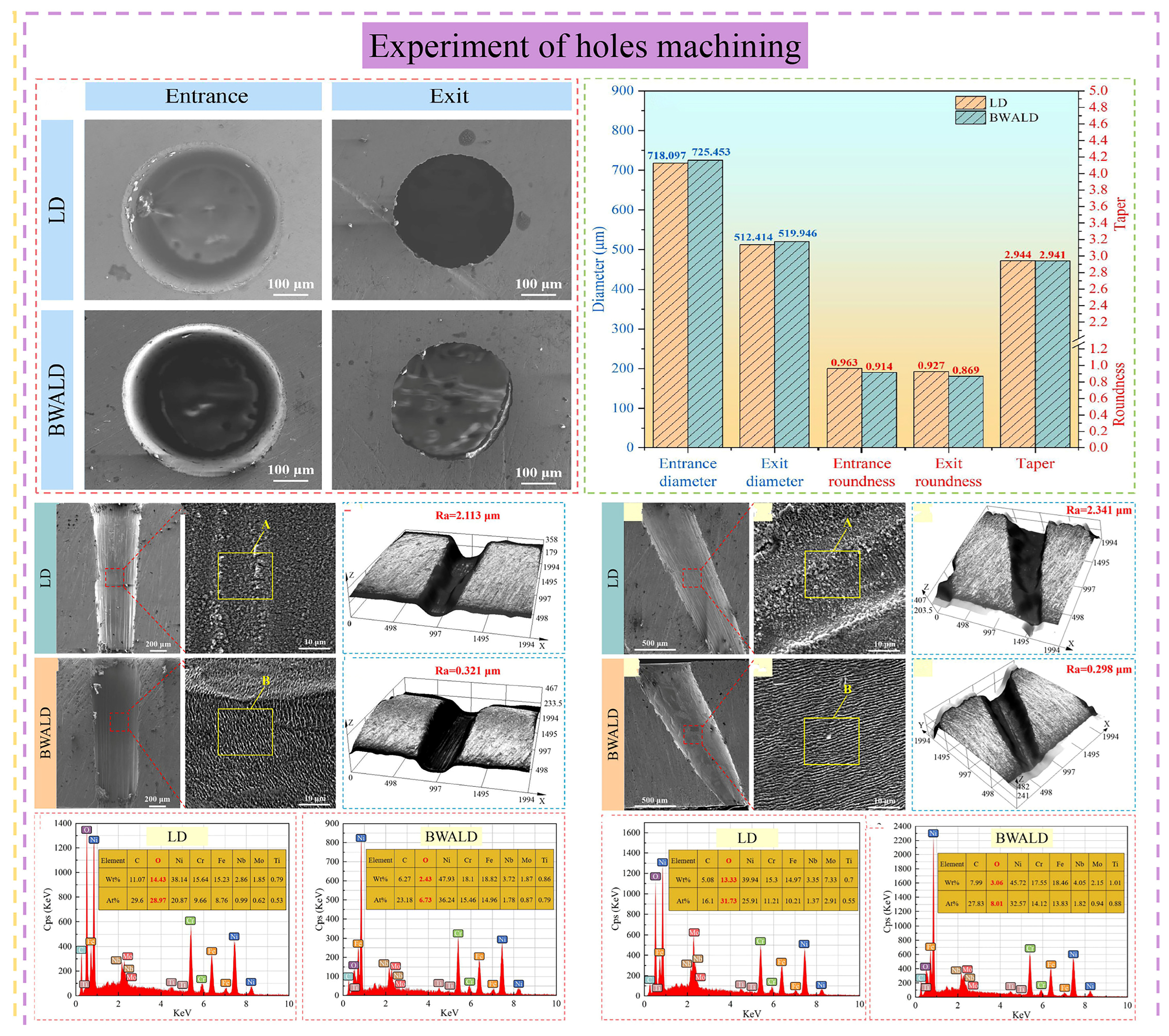
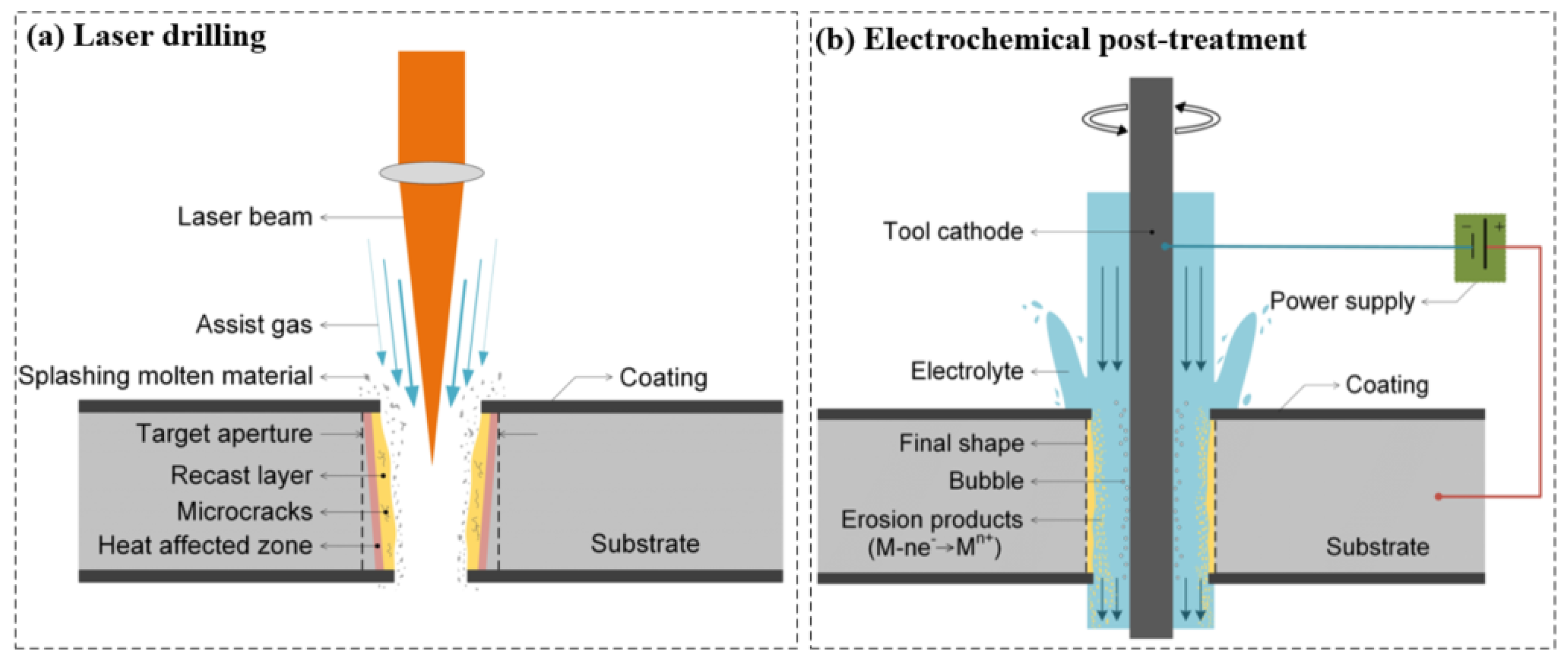
In BWALD, the height of the water surface remained below the upper surface of the sample, thereby circumventing the deleterious effects of water film on laser transmission above the sample. Furthermore, the issue of water jet instability was effectively circumvented during the processing stage. The BWALD process benefits from the advantages of good processing stability and simple equipment, and has broad application prospects. Zhu et al. utilized an ultra-short picosecond laser to process micro-hole structures on a DD6 single-crystal high-temperature alloy. They then introduced water jet assistance to reduce thermal damage [73]. Electrochemical machining was used as a post-treatment method to further improve the quality of micro-hole inner walls (Figure 9). The introduction of a low-pressure water jet effectively eliminated the attached slag and recast layer. It was determined by means of macroscopic and microscopic inspection that the surface of the processed material is smooth and that the microstructure does not exhibit any periodicity. Liu et al. conducted simulation and experimental research on the water-assisted laser processing method (Figure 10). The mechanism of backside water-assisted laser processing was analyzed through the utilization of a simulation technique. The findings of this analysis indicated that, as the number of laser pulses increased, the cooling effect of the water flow became increasingly significant [74]. The micro-hole inlet and outlet sizes prepared by water-assisted laser processing technology have increased, the inlet morphology has been enhanced, the hole wall quality is excellent, and thermal defects have been significantly reduced. The interaction between liquid and laser enables secondary removal of hole wall materials, thereby improving the quality of micro-holes. The technology exhibits excellent processing characteristics when it comes to oblique, square, and trapezoidal holes.

4.2. Laser–Electrochemical Composite Machining Technology

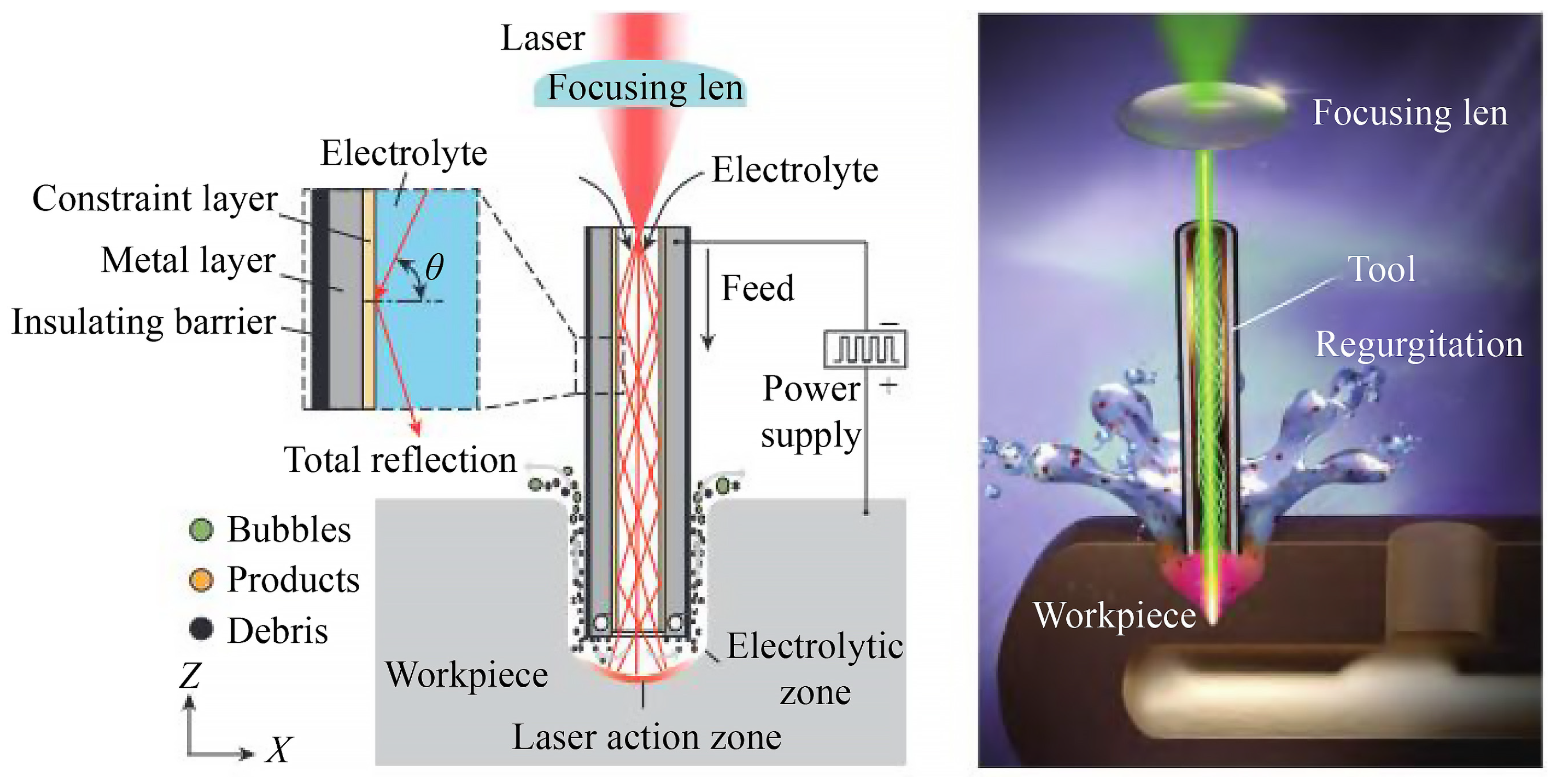
Multi-energy field-assisted laser processing has been demonstrated to be an effective method of improving the inherent defects of conventional laser processing. The current mainstream multi-energy field processing technologies include magnetic field-assisted laser processing, electric field-assisted laser processing, ultrasonic-assisted laser processing, laser chemical composite processing, and laser–electrochemical composite processing. Among these, the laser–electrochemical composite processing technology has demonstrated considerable potential in the domain of microstructure manufacturing. Electrochemical machining is a non-traditional machining technique based on the principle of anodic electrochemical dissolution. In comparison with alternative processing techniques, electrochemical machining boasts distinct advantages. These include the absence of tool wear, cutting force, residual stress and thermal defects. Furthermore, it is not influenced by the material’s hardness [75]. However, traditional electrochemical machining is confronted with technical limitations, including stray corrosion, inadequate machining stability, and suboptimal machining accuracy. The merits of laser–electrochemical composite machining technology are evident in two principal domains. It is evident that the primary function of the electrolyte is to serve as a cooling medium. The cooling effect of the electrolyte has the capacity to mitigate the thermal influence of the laser. Simultaneously, electrochemical dissolution has been shown to be an effective method of removing thermal defects generated during laser machining [76]. Conversely, high-energy laser beams have been shown to exert thermal effects on the electrolyte, thereby promoting the liquid-phase mass transfer process of electrochemical reactions, suppressing concentration polarization, accelerating product discharge, and improving the efficiency and stability of electrochemical machining. The classification of laser–electrochemical composite machining can be categorized into three distinct process forms: immersion type, coaxial type, and backside type. Among the available technologies, the coaxial laser–electrochemical composite processing technology is the most representative, insofar as it can achieve efficient spatiotemporal coupling between laser processing and electrochemical processing. As shown in Figure 11, this process replaces the aqueous medium with electrolyte and a tube electrode is used as the jet nozzle. The sample and the tube electrode are connected to the positive and negative poles of the power supply, respectively. The utilization of an electrolyte jet facilitates the establishment of a comprehensive electrochemical reaction path, thereby ensuring synchronized operation between laser processing and electrochemical processing [77]. However, this process is not only subject to the inherent defects of water jet-guided laser processing, but also necessitates the coating of an insulation layer on the side wall of the tube electrode in order to avoid overcutting, thereby further increasing the complexity of preparing the tube electrode.
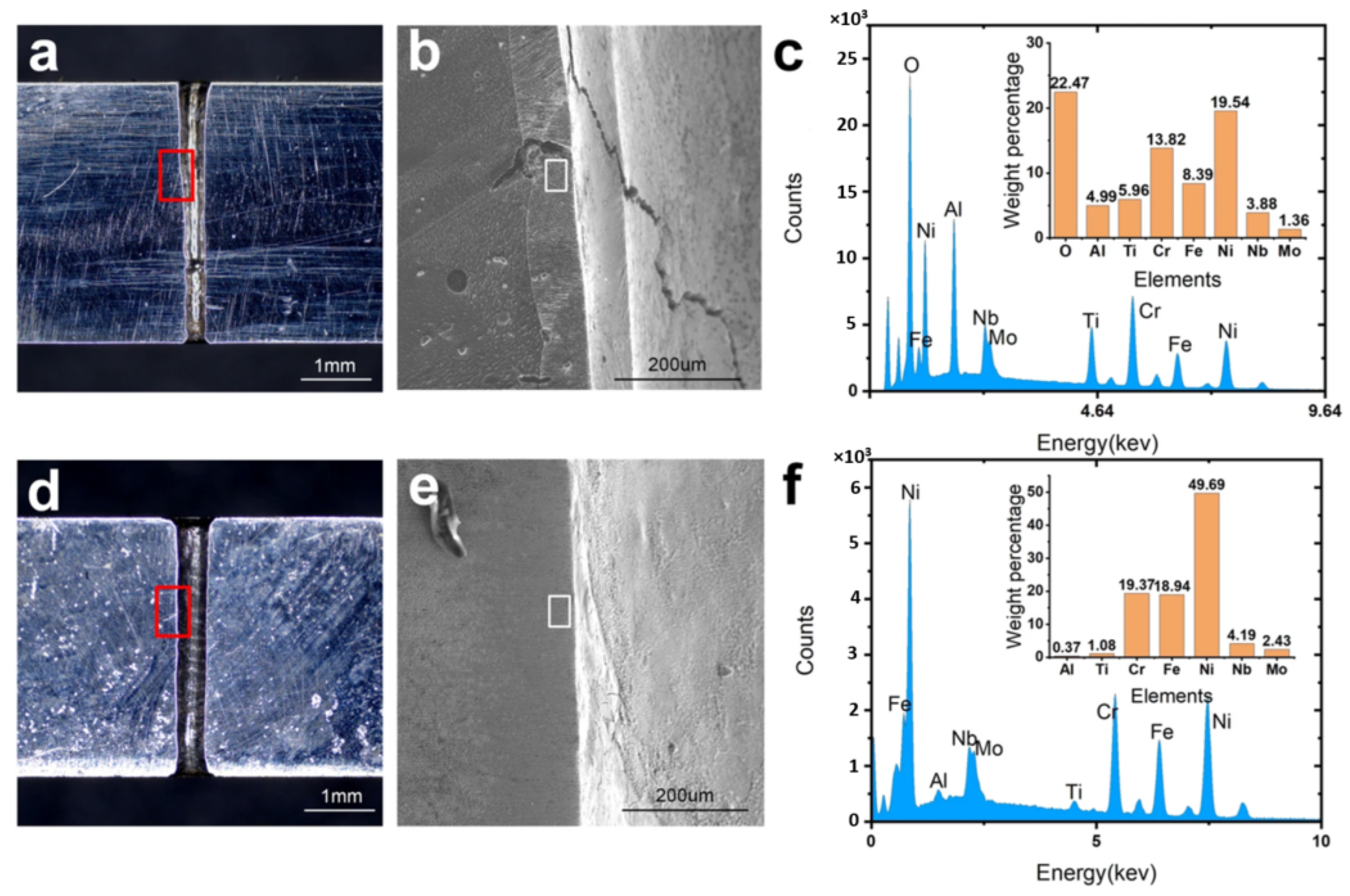
In the laser–electrochemical combined processing, the laser-prepared micro-holes were subjected to electrochemical dissolution, with the objective of enhancing their quality. Bao et al. [78] explored the electrochemical dissolution behavior of Inconel 718 alloy after laser processing by polarization curves and electrochemical impedance spectroscopy, and they found that the surface corrosion resistance after laser processing was lower than that of the original surface of the sample. Based on this, a machining current density of 5~40 A/cm2 was selected to ensure a higher electrochemical machining rate. Wang et al. [79] used electrochemical post-treatment techniques to optimize the quality of laser drilling (Figure 12). After 20 s of electrochemical machining, the recast layer and microcracks on the inner wall of the micro-hole were completely removed, and the roughness of the hole wall was decreased by 68.16%. Duan et al. [80] developed a step-by-step electrochemical machining post-treatment. This process was instrumental in regulating the electrochemical machining at a depth equivalent to half of the micro-hole’s diameter within the initial six seconds. Thereafter, the feed rate was progressively decreased at a rate of 0.5 millimeters per second until the machining of the entire hole depth was fully completed. The experimental results indicated that the recast layer on the inner hole wall can be completely removed within 30 s.
Despite the capacity of laser–electrochemical combined processing to eliminate thermal defects in laser processing, an error in tool alignment arose due to the necessity of implementing laser processing and electrochemical processing in succession. Moreover, this process was found to be incapable of achieving synchronous action between laser and electrochemical machining. Conversely, laser–electrochemical composite machining has the capacity to ensure that laser and electrochemistry act on the surface of the sample concurrently. The thermal effect of laser-induced processing promoted the development of electrochemical machining, while electrochemical machining in real time removed defects generated by laser machining. Wang et al. fabricated a large aspect ratio hole by a laser–electrochemical combination process (Figure 13a,b). By adjusting the laser and electrochemical parameters, a through-hole with a diameter of approximately 500 μm was machined on a high-temperature alloy 718 material with a thickness of 3.5 mm [78].
Saxena et al. [81] borrowed the principle of water-guided laser and developed a laser–electrochemical coaxial machining method (L-STEM). The laser beam was transmitted through total reflection in the electrolyte jet by utilizing the refractive index difference between the inner wall of the tube electrode and the electrolyte. Wang et al. [82] successfully prepared deep holes on 304 stainless steel, 7075 aluminum alloy, and TC4 titanium alloy using L-STEM. No defects such as recast layer, microcracks, and heat-affected zone were found on the hole inner wall, which verified the material applicability of this process. Yang et al. [83] found that the machining area was prone to pitting corrosion because of stray currents and product accumulation during the L-STEM of Inconel 718 high-temperature alloy. They proposed a gas-assisted coaxial laser–electrochemical composite machining process to avoid pitting corrosion during the machining process. Although the L-STEM had excellent laser–electrochemical coupling effects, its equipment system was complex, and the processing stability was poor. In contrast, the backside laser–electrochemical composite processing technology had more advantages in terms of equipment complexity and processing stability. Zhang et al. [84] explored the picosecond laser drilling with back electrochemical interaction. The research results showed that electrochemical machining reduced the taper of micro-holes by 31.6%, increased the roundness of the outlet by 14.8%, and reduced the oxygen content and roughness of the hole wall by 60.1% and 65.4%, respectively. Lin et al. [85] established a numerical model for backside laser–electrochemical composite machining, and verified the significant promoting effect of laser thermal effect on electrochemical machining efficiency by analyzing the evolution of temperature field, flow field, and electric field.

4.3. Ultrasonic or Magnetic Field-Assisted Laser Processing

Ultrasonic and magnetic field composite processing is a technology that introduces special energy fields such as ultrasonic vibration or magnetic field into the laser processing system for composite processing. The improvement effect of ultrasonic vibration on water-assisted laser drilling was mainly reflected in the following three aspects. Firstly, the introduction of ultrasonic vibration applied a driving force to the liquid, causing it to generate a sound flow, promoting the removement of bubbles and processed products, and ensuring the stability of laser transmission. Secondly, the interaction between liquid molecules caused by the acoustic flow of the liquid led to an increase in liquid temperature, a decrease in liquid breakdown threshold, and thus an enhancement of plasma etching intensity. Finally, the ultrasonic cavitation effect induced by ultrasonic vibration could further promote the removal of sample materials, bubbles, and processed products, thereby improving the efficiency and quality of backside water-assisted laser drilling. The acoustic flow, temperature rise, and cavitation effects of ultrasonic vibration also had a promoting effect on electrochemical machining. Among them, acoustic flow and cavitation effects could improve the liquid-phase mass transfer process in the machining gap, accelerate the removal of electrolytic products and the desorption of hydrogen/oxygen bubbles. At the same time, cavitation impact was beneficial for removing the passivation film on the surface of the sample and improving the efficiency of electrochemical machining. The temperature rise of the electrolyte caused by ultrasonic vibration could increase the conductivity of the electrolyte, thereby increasing the current density. In addition, ultrasonic vibration caused periodic motion between the tool electrode and the sample, resulting in changes in the machining gap. When the machining gap decreased, the efficiency of electrochemical machining could be improved.
The integration of ultrasonic vibration technology has been demonstrated to be an effective solution to the problem of bubble removal and product separation, thereby significantly enhancing the geometric accuracy of backside water-assisted laser drilling. The integration of electrochemical machining has the potential to enhance the precision and quality of micro-hole fabrication. This process provided a novel technical solution for the precision machining of FCHs. Ultrasonic vibration could improve the laser processing process through various physical mechanisms. The loading method of vibration in the ultrasonic-assisted laser drilling system was mainly sample vibration or lens vibration. When ultrasonic vibration was applied to the sample, the molten pool generated by laser processing moves under ultrasonic excitation, making it easier to discharge processing debris, thereby improving the efficiency and quality of laser processing [86]. Fan et al. [87] explored the effect of sample vibration direction on laser drilling and found that vertical ultrasonic vibration can improve the machining efficiency of micro-holes, while horizontal vibration helps to remove machining debris.
When ultrasonic vibration was applied to the lens, the laser focus underwent periodic displacement because of the reciprocating motion of the lens. This, in turn, resulted in a change in the energy distribution of the laser. Kang et al. [88] analyzed the results of micro-hole machining with ultrasonic vibration using a vibrating lens laser processing system. Compared with laser drilling without vibration assistance, the diameter of the holes machined by a lens vibration-assisted laser drilling method decreased by 28.59%. Although sample or lens vibration improved the efficiency and geometric accuracy of micro-hole machining, the improvement in inner wall quality was not significant. The ultrasonic-assisted laser drilling based on a water medium significantly improved the inner wall quality of micro-holes by the cooling effect of the liquid. Wang et al. [89,90,91,92,93] systematically explored the effect of water-based ultrasonic vibration-assisted millisecond laser drilling on micro-hole machining of GH4037 high-temperature alloy, including through-holes and blind holes. As shown in Figure 14, the introduction of ultrasonic vibration significantly improved the geometric accuracy and inner wall quality of micro-holes. In addition, ultrasonic vibration induced grain refinement in the recast layer and heat-affected zone, and promoted the precipitation of strengthening particles and phases, thereby improving the mechanical properties of the region. However, the lifting effect of ultrasonic vibration on blind holes was not as significant as that on through-holes. Liu et al. [94] used an ultrasonic amplitude lever to transmit ultrasonic vibration to the liquid near the processing area in a traditional underwater laser drilling system, thereby rapidly removing material clouds on the surface of the sample and significantly improving the efficiency of underwater laser drilling.
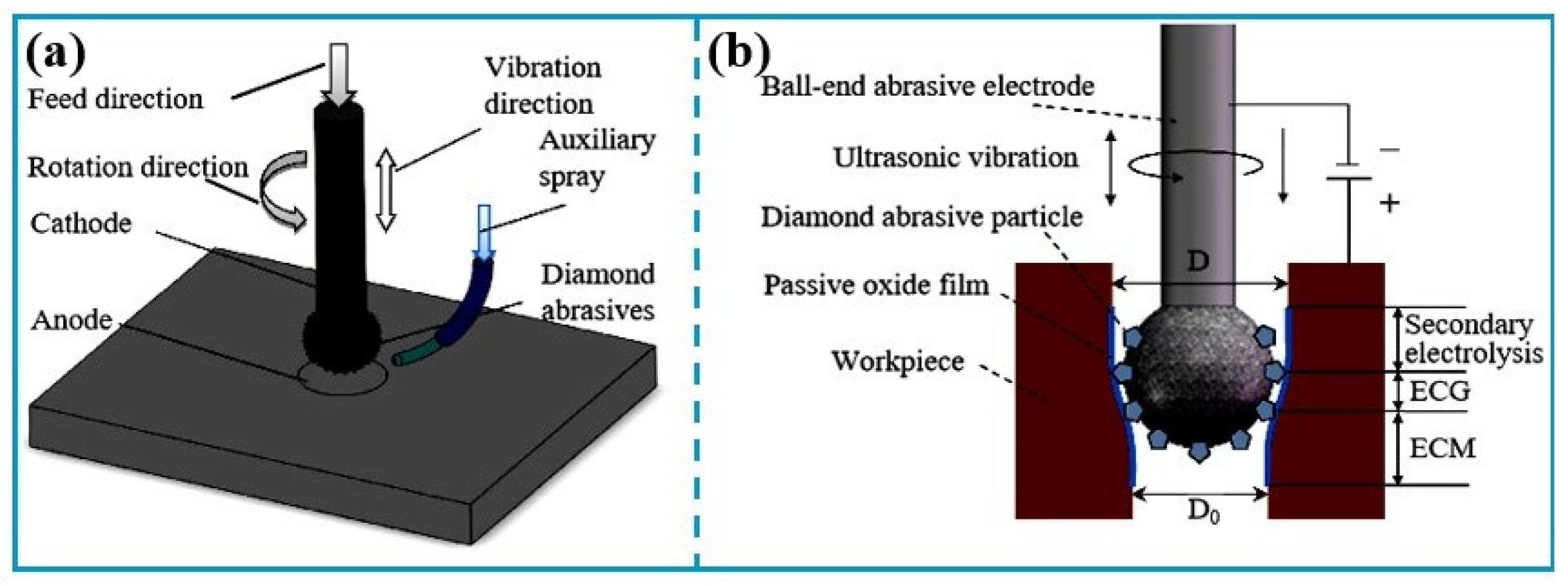
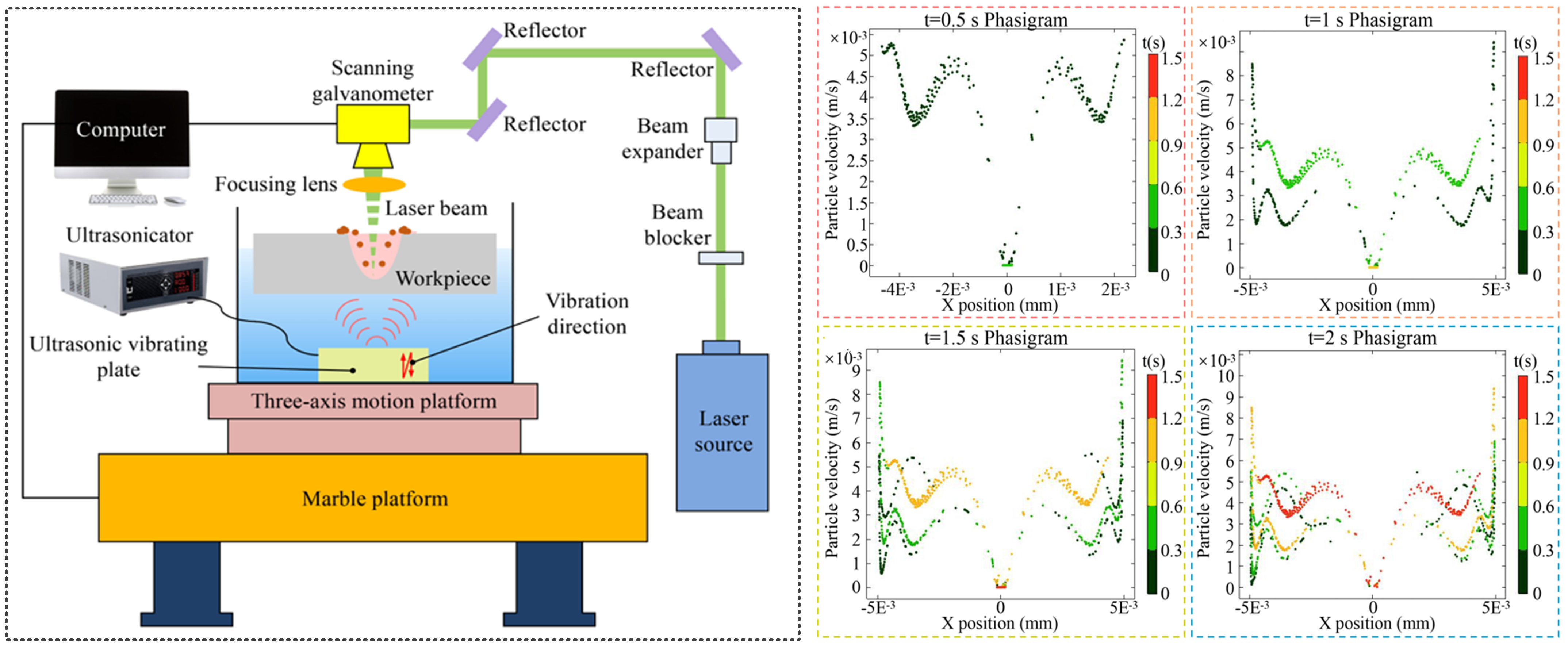
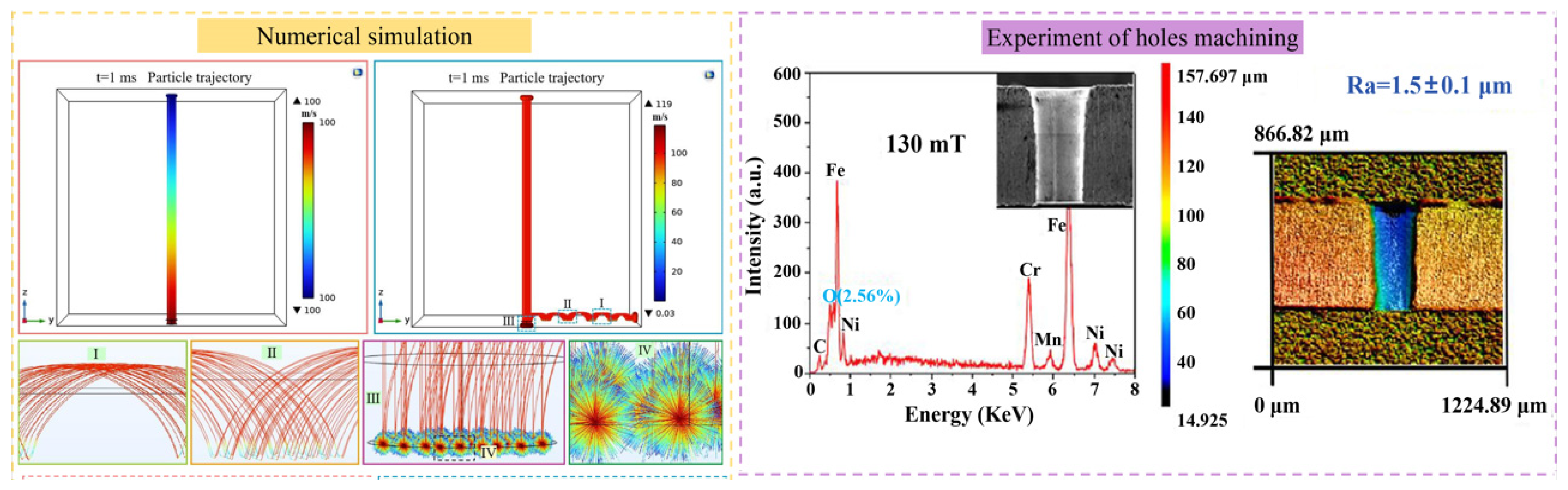
The integration of ultrasonic vibration has been identified as a potential avenue for enhancing the efficiency, accuracy, and stability of electrochemical machining processes. Li et al. [95] applied ultrasonic vibration to the electrode of a rotating spiral tool, causing it to vibrate vertically while rotating at high speed. The establishment of a simulation model of the inter-electrode gap flow field during the machining process revealed that the periodic motion of the electrode, induced by ultrasonic vibration, significantly enhanced the cavitation effect, thereby promoting the uniformity of the inter-electrode flow field. Wang et al. [96] established a numerical model of cavitation effect in ultrasonic-assisted mask electrochemical machining of micro-holes in ODS high-temperature alloy based on the bubble oscillation equation. Simulation analysis revealed that ultrasonic frequency, sound pressure amplitude, electrolyte incident pressure, and temperature had significant effects on ultrasonic cavitation effect. Zhu et al. [97] proposed the ultrasonic-assisted electrochemical drilling grinding technology (UAECDG) to achieve micro-hole machining. The principle is shown in Figure 15. Firstly, the spiral tool cathode was used to roughly shape the micro-holes through electrochemical machining. Subsequently, a spherical tool electrode with diamond abrasive particles was used for ultrasonic-assisted electrochemical grinding to complete the precision machining of micro-holes. Liu et al. [98] used ultrasonic shock water flow-assisted picosecond laser drilling technology to establish a numerical model of ultrasonic acoustic flow and particle tracking for the transmission of processed products to study its mechanism (Figure 16). The simulation results showed that the processed product particles could quickly leave the processing area under the action of acoustic flow, thereby avoiding the accumulation of bubbles and processed products in the processing area. Through experimental research, it had been found that ultrasonic fields could effectively eliminate bubbles and debris, greatly improving the quality of micro-holes. Compared with other traditional methods, the new method reduced the taper of micro-holes by 25%. In addition, they proposed a magnetic field-assisted laser–electrochemical composite machining technology (Figure 17). This composite machining method could reduce the taper of micro-holes and help eliminate machining defects. The application of an external magnetic field to laser-induced plasma and electrochemical machining has been demonstrated to result in an augmentation of the average diameter of micro-holes, accompanied by a reduction in oxygen content and surface roughness. The holes have been found to be significantly round, with the taper reduced by approximately 9%. This has been determined to be a confirmation of the feasibility of magnetic field-assisted laser–electrochemical machining [99].
In the micro-hole processing of metal matrix composites, the assistance of composite energy fields such as ultrasound is particularly important. For example, in ultrasonic-assisted mechanical micro-hole drilling, the difficulty lies in the severe wear of the micro drill bit caused by the hard reinforcement phase, which is prone to defects such as particle detachment, matrix tearing, hole burrs, and subsurface cracks. Increasing the feed rate will significantly amplify the damage factor and roundness error. Conventional drilling has difficulty balancing low damage and high efficiency, and the damage evolution mechanism at the micro-hole scale is not yet complete [100]. The future development will focus on multi-energy field composite-assisted drilling such as ultrasound, in order to achieve efficient and high-quality processing of composite materials, such as materials used in aerospace core components [101].

5. Summary and Outlook

(1)
The composite effect of multiple energy fields could significantly improve the processing quality of micro-holes. The laser thermal effect significantly increased the temperature of the electrolyte in the laser-irradiated area, leading to an increase in the current density and thus accelerating the electrochemical reaction rate. The non-isothermal flow was caused by the temperature rise of the electrolyte, which resulted in the formation of a micro-zone. This micro-zone caused the stirring of the electrolyte, thereby promoting the renewal of the electrolyte and the removal of products.
(2)
The ultrasonic vibration promoted the removal of products, thereby improving processing stability and machining surface quality. The influence range of temperature rise and acoustic flow caused by ultrasound continues to expand, and eventually reached a steady state. The machining products could rapidly be removed from the micro-hole when subjected to the combined action of the drag force exerted by the acoustic flow on the particles.
(3)
Further research is required to investigate the impact of laser, ultrasound, and other energy sources on the machining results. There is an important relationship between the promotion effect when multiple energy fields are coupled.
(4)
The conductivity of the electrolyte is subject to regulation by both temperature and gas volume fraction. It is imperative to consider the impact of laser thermal effects and electrochemical hydrogen evolution phenomena on the conductivity of the electrolyte in a comprehensive manner.
(5)
Future research will focus on the integration of multi-energy fields, including sound, light, electricity, heat flow, chemistry, while the establishment of simulation models are more aligned with actual processing conditions.

Author Contributions

Writing—original draft preparation, Y.Z., Y.L. and Z.W.; writing—review and editing, Y.L. and Z.W.; funding acquisition, Y.Z., Y.L. and Z.W. All authors have read and agreed to the published version of the manuscript.

Funding

This work was supported by the Funding for school-level research projects of the Yancheng Institute of Technology (xjr2022008), the Science and Technology Program of Zhenjiang (No. JC2025002), the China Postdoctoral Science Foundation (No. 2025M771349), the Youth Scientific and Technological Talents Encouragement Project of Jiangsu Province (No. JSTJ-2024-171), and the Open Research Subject of Key Laboratory of Metallurgical Industry Equipment and Control Technology, Ministry of Education (No. MECOF202507), Open Fund of the State Key Laboratory of Material Processing and Die & Mould Technology (No. P2026-55).

Data Availability Statement

Data will be made available upon request.

Conflicts of Interest

The authors declare no conflict of interest.

References

  1. Aamir, M.; Giasin, K.; Tolouei-Rad, M.; Vafadar, A. A review: Drilling performance and hole quality of aluminium alloys for aerospace applications. J. Mater. Res. Technol. 2020, 9, 12484–12500. [Google Scholar] [CrossRef]
  2. Bao, F.; Pei, G.; Wu, Z.; Zhuang, H.; Zhang, Z.; Huan, Z.; Wu, C.; Chang, J. Bioactive self-pumping composite wound dressings with micropore array modified janus membrane for enhanced diabetic wound healing. Adv. Funct. Mater. 2020, 30, 2005422. [Google Scholar] [CrossRef]
  3. Xu, C.; Liu, Q.; Chu, S.; Li, P.; Wang, F.; Si, Y.; Mao, G.; Wu, C.; Wang, H. A microdots array-based fluoremetric assay with superwettability profile for simultaneous and separate analysis of iron and copper in red wine. Anal. Chim. Acta 2023, 1254, 341045. [Google Scholar] [CrossRef] [PubMed]
  4. Su, Y.; Chen, L.; Jiao, Y.; Zhang, J.; Li, C.; Zhang, Y.; Zhang, Y. Hierarchical hydrophilic/hydrophobic/bumpy janus membrane fabricated by femtosecond laser ablation for highly efficient fog harvesting. Acs Appl. Mater. Interfaces 2021, 13, 26542–26550. [Google Scholar] [CrossRef] [PubMed]
  5. Hu, Y.; Guo, R.; Wang, H.; Zhao, R.; Ning, R.; Huang, Z.; Chu, Z.; Peng, Y.; Zhang, Y.; Zhang, H. Gear-fault monitoring and digital twin demonstration of aircraft engine based on piezoelectric vibration sensor for engine health management. Nano Energy 2025, 133, 110448. [Google Scholar] [CrossRef]
  6. Zhu, X.X.; Wang, W.H.; Jiang, R.S.; Zhang, Z.F.; Huang, B.; Ma, X.W. Research on ultrasonic-assisted drilling in micro-hole machining of the DD6 superalloy. Adv. Manuf. 2020, 8, 405–417. [Google Scholar] [CrossRef]
  7. Zhao, B.; You, H.; Miao, Q.; Ding, W.; Qian, N.; Xu, J. Surface integrity characterization of third-generation nickel-based single crystal blade tenons after ultrasonic vibration-assisted grinding. Chin. J. Aeronaut. 2025, 38, 103138. [Google Scholar] [CrossRef]
  8. Sakurai, T.; Sekiguchi, T.; Inoue, S.; Sato, A. Operation characteristics of miniature gas turbine with a pulse combustor. Aerosp. Sci. Technol. 2025, 160, 110046. [Google Scholar] [CrossRef]
  9. Li, J.G.; Wang, N.; Liu, J.D.; Xu, W. Influence of rare earth elements (Y, La and Ce) on the mechanical properties and oxidation resistance of nickel-based superalloys: A critical review. J. Mater. Sci. Technol. 2024, 195, 9–21. [Google Scholar] [CrossRef]
  10. Sun, C.; Li, W.; Li, C.; Sun, R.; Liu, G.; Li, X. Study on Microstructure and Fatigue Properties of Laser Powder Bed Fusion Nickel-Based Superalloy with Heat Treatment. Addit. Manuf. Front. 2025, 4, 200217. [Google Scholar] [CrossRef]
  11. Li, Y.; Bi, W.; Hao, Y.; Zhao, K.; Gao, J.; Bai, Q.; Zhao, D.; Ma, G.; Wu, D.; Niu, F.; et al. Homogeneous equiaxed high-strength GH4169 components fabricated by synchronous-hot-forging-assisted laser-directed energy deposition. Addit. Manuf. Front. 2025, 4, 200251. [Google Scholar] [CrossRef]
  12. Chen, Z.; Chen, X.; Yang, X.; Yu, B.; Wang, B.; Zhu, J.; Chen, Y.; Cai, W. Numerical study on cooling characteristics of turbine blade based on laminated cooling configuration with clapboards. Energy 2024, 299, 131372. [Google Scholar] [CrossRef]
  13. Tang, Y.; Guo, X. High temperature deformation behavior of an optimized Nb–Si based ultrahigh temperature alloy. Scr. Mater. 2016, 116, 16–20. [Google Scholar] [CrossRef]
  14. Han, F.; Wang, L.; Zhang, S.; Mao, J. Experimental investigations on the heat transfer characteristic of impingement/swirl cooling structures inside turbine blade leading edge. Int. Commun. Heat Mass Transf. 2024, 150, 107197. [Google Scholar] [CrossRef]
  15. Liu, Y.Z. Coaxial waterjet-assisted laser drilling of film cooling holes in turbine blades. Int. J. Mach. Tools Manuf. 2020, 150, 103510. [Google Scholar] [CrossRef]
  16. Liu, Y.; Ji, K.; Zhang, Y.; Song, Y.; Yin, F. Effect of grain size on fine micro-blanking for Inconel 718 foil. J. Manuf. Process. 2023, 107, 472–484. [Google Scholar] [CrossRef]
  17. Yang, H.; Zhao, G.; Nian, Z.; Xin, L.; Li, L.; He, N. Effect of PCD tool wear on surface morphology and material removal mechanisms in the micro-drilling of Cf/SiC composites: Experiment and simulation. Int. J. Refract. Met. Hard Mater. 2024, 119, 106562. [Google Scholar] [CrossRef]
  18. Basovich, S.; Arogeti, S. Identification and robust control for regenerative chatter in internal turning with simultaneous compensation of machining error. Mech. Syst. Signal Process. 2021, 149, 107208. [Google Scholar] [CrossRef]
  19. Binali, R.; Kuntoğlu, M.; Pimenov, D.Y.; Ali Usca, Ü.; Kumar Gupta, M.; Erdi Korkmaz, M. Advance monitoring of hole machining operations via intelligent measurement systems: A critical review and future trends. Measurement 2022, 201, 111757. [Google Scholar] [CrossRef]
  20. Khadtare, A.; Pawade, R.; Varghese, A.; Joshi, S. Micro-drilling of straight and inclined holes on thermal barrier coated Inconel 718 for turbine blade cooling. Mater. Manuf. Process. 2020, 35, 783–796. [Google Scholar] [CrossRef]
  21. Ming, W.; Guo, X.; Xu, Y.; Zhang, G.; Jiang, Z.; Li, Y.; Li, X. Progress in non-traditional machining of amorphous alloys. Ceram. Int. 2023, 49, 1585–1604. [Google Scholar] [CrossRef]
  22. Gao, Q.; Zhang, Y.O.; Xi, X.C.; Wang, Y.D.; Chen, X.F.; Zhao, W.S. Research on feed-pulse collaborative control method in micro-electrical discharge machining. Adv. Manuf. 2024, 12, 270–287. [Google Scholar] [CrossRef]
  23. Luo, H.; Wei, Z.C.; Dong, Z.G.; Kang, R.K.; Wang, Y.D. High efficiency roughing process for the ultrasonic cutting of Nomex honeycomb cores. Adv. Manuf. 2025, 14, 377–396. [Google Scholar] [CrossRef]
  24. Liu, Y.; Zhao, L.; Wang, F.; Zhang, Z.; Zhu, H.; Xu, K.; Wang, J.; Chen, X.; Meng, L.; He, H. Multi-energy field simulation and experimental research on composite processing of long-narrow grooves assisted by a multiphase flow jet. Phys. Fluids 2025, 37, 083416. [Google Scholar] [CrossRef]
  25. Liu, Y.; Ouyang, P.; Zhang, Z.; Zhu, H.; Chen, X.; Wang, Y.; Li, B.; Xu, K.; Wang, J.; Lu, J. Developments, challenges and future trends in advanced sustainable machining technologies for preparing array micro-holes. Nanoscale 2024, 16, 19938–19969. [Google Scholar] [CrossRef] [PubMed]
  26. Ming, W.; Zhang, S.; Zhang, G.; Du, J.; Ma, J.; He, W.; Cao, C.; Liu, K. Progress in modeling of electrical discharge machining process. Int. J. Heat Mass Transf. 2022, 187, 122563. [Google Scholar] [CrossRef]
  27. Bakhtiyari, A.N.; Wang, Z.; Wang, L.; Zheng, H. A review on applications of artificial intelligence in modeling and optimization of laser beam machining. Opt. Laser Technol. 2021, 135, 106721. [Google Scholar] [CrossRef]
  28. Gu, L.; Li, K.L.; Wang, X.K.; He, G.J. The effect of the slope angle and the magnetic field on the surface quality of nickel-based superalloys in blasting erosion arc machining. Adv. Manuf. 2025, 13, 620–633. [Google Scholar]
  29. Wang, J.; Natsu, W. Stray-corrosion-free ECM with electrolyte absorbed in a porous solid ball for dimple texturing on finished workpiece surfaces. J. Manuf. Process. 2023, 85, 713–723. [Google Scholar] [CrossRef]
  30. Ghosh, P.; Pick, K.; Marimuthu, S. Water-spray assisted millisecond fibre laser drilling of aluminium nitride. J. Manuf. Process. 2025, 151, 251–266. [Google Scholar] [CrossRef]
  31. Liu, X.; Li, L.; Yang, S.; Xu, M.; Zhong, M.; Wang, B.; Jiang, Y. Optimization of nanosecond laser drilling strategy on CFRP hole quality. J. Mater. Process. Technol. 2024, 332, 118559. [Google Scholar] [CrossRef]
  32. Harane, P.P.; Wojciechowski, S.; Unune, D.R. Investigating the effect of different tool electrodes in electric discharge drilling of Waspaloy on process responses. J. Mater. Res. Technol. 2022, 20, 2542–2557. [Google Scholar] [CrossRef]
  33. Fan, Z.; Shen, P.; Sun, X.; Sun, T.; Yi, L.; Cui, J.; Mei, X. Evaluation of radially polarized femtosecond laser drilling of film cooling holes. J. Manuf. Process. 2025, 141, 1296–1309. [Google Scholar] [CrossRef]
  34. Shao, K.; Zhou, Q.; Chen, Q.; Liu, Y.; Wang, C.; Li, X. Research progress of water-laser compound machining technology. Coatings 2022, 12, 1887. [Google Scholar] [CrossRef]
  35. Wei, T.; Sun, S.; Zhang, F.; Wang, X.; Wang, P.; Liu, X.; Wang, Q. Experimental study on the scanning mode of backwater-assisted laser secondary hole repairing. Opt. Laser Technol. 2024, 168, 109810. [Google Scholar] [CrossRef]
  36. Liu, Y.; Fang, X.L.; Qu, N.S.; Zhang, Z.Y.; Lu, J.Z. Simultaneous gas electrical discharge and electrochemical jet micromachining of titanium alloy in high-conductivity salt solution. J. Mater. Process. Technol. 2023, 317, 118000. [Google Scholar] [CrossRef]
  37. Ismail, S.O.; Dhakal, H.N.; Dimla, E.; Popov, I. Recent advances in twist drill design for composite machining: A critical review. Proc. Inst. Mech. Eng. Part B J. Eng. 2016, 231, 2527–2542. [Google Scholar] [CrossRef]
  38. Liu, Y.; Wu, M.; Zhang, Z.; Lu, J.; Xu, K.; Zhu, H.; Wu, Y.; Wang, B.; Lei, W. A review on applications of functional superhydrophobic surfaces prepared by laser biomimetic manufacturing. J. Mater. Sci. 2023, 58, 3421–3459. [Google Scholar] [CrossRef]
  39. Qingliang, S.; Tiyuan, W.; Qiang, S.; Fang, Y.; Hejun, L.; Fu, M.W. Unraveling of the laser drilling of carbon/carbon composites: Ablation mechanisms, shape evolution, and damage evaluation. Int. J. Mach. Tools Manuf. 2023, 184, 103978. [Google Scholar] [CrossRef]
  40. Gao, L.; Liu, C.; Liu, J.; Yang, T.; Jin, Y.; Sun, D. Hole formation mechanisms in double-sided laser drilling of Ti6Al4V-C/SiC stacked materials. J. Mater. Process. Technol. 2024, 325, 118307. [Google Scholar] [CrossRef]
  41. Wang, X.; Guo, W.; Shi, L.; Cao, Y.; Wang, Y.; Yao, J. Characteristics and mechanisms of multiple pulsed laser drilling of blind-holes in Inconel 718 alloy. J. Laser Appl. 2025, 37, 012018. [Google Scholar] [CrossRef]
  42. Zhang, Y.; Wang, X.; Yan, K.; Zhu, H.; Wang, B.; Zou, B. Laser micro/nano-structuring pushes forward smart sensing: Opportunities and challenges. Adv. Funct. Mater. 2023, 33, 2211272. [Google Scholar]
  43. Liang, C.; Li, Z.; Wang, C.; Li, K.; Xiang, Y.; Jia, X. Laser drilling of alumina ceramic substrates: A review. Opt. Laser Technol. 2023, 167, 109828. [Google Scholar] [CrossRef]
  44. Zhang, W.; Zhang, P.; Yan, H.; Li, R.; Shi, H.; Wu, D.; Sun, T.; Luo, Z.; Tian, Y. Research status of femtosecond lasers and nanosecond lasers processing on bulk metallic glasses (BMGs). Opt. Laser Technol. 2023, 167, 109812. [Google Scholar] [CrossRef]
  45. Peng, C.; Macher, J.; Fuchs, P.; Tao, Q.; Krivec, T.; Antretter, T. Femtosecond laser drilling of epoxy composites: A review of mechanisms, modeling, and adaptive control. Int. J. Adv. Manuf. Technol. 2025, 141, 3493–3513. [Google Scholar] [CrossRef]
  46. Wei, T.; Sun, S.; Zhang, F.; Wang, X.; Wang, P.; Liu, X.; Wang, Q. A review on laser drilling optimization technique: Parameters, methods, and physical-field assistance. Int. J. Adv. Manuf. Technol. 2024, 131, 5691–5710. [Google Scholar] [CrossRef]
  47. Jiang, K.; Zhang, P.; Song, S.; Sun, T.; Chen, Y.; Shi, H.; Yan, H.; Lu, Q.; Chen, G. A review of ultra-short pulse laser micromachining of wide bandgap semiconductor materials: SiC and GaN. Mater. Sci. Semicond. Process. 2024, 180, 108559. [Google Scholar] [CrossRef]
  48. Hu, T.; Yuan, S.; Wei, J.; Zhou, N.; Zhang, Z.; Zhang, J.; Li, X. Water jet guided laser grooving of SiCf/SiC ceramic matrix composites. Opt. Laser Technol. 2024, 168, 109991. [Google Scholar] [CrossRef]
  49. Yang, F.; Dong, Z.; Kang, R.; Hongbin, M.A.; Guangyi, M.A.; Bao, Y. Femtosecond laser rotary drilling for SiCf/SiC composites. Chin. J. Aeronaut. 2025, 38, 103056. [Google Scholar] [CrossRef]
  50. Liao, Y.; Zhang, F.; Wang, P.; Xie, X.; Zhou, Y.; Xie, D. Experimental Study on Fabricating Micro-Hole Arrays on CVD Diamond Film Using a Nanosecond Pulsed Laser. J. Superhard Mater. 2021, 43, 248–260. [Google Scholar] [CrossRef]
  51. Pramanik, D.; Singh, T.; Roy, N.; Biswas, R.; Kuar, A.S.; Sarkar, S.; Mitra, S. Analysis of performance characteristics with artificial intelligence based TLBO technique for laser drilling of Monel superalloy. Opt. Laser Technol. 2023, 164, 109554. [Google Scholar] [CrossRef]
  52. Sun, T.; Zhao, W.; Fan, Z.; He, J.; Shen, P.; Cui, J.; Mei, X. In-situ monitoring of hole evolution process in ultrafast laser drilling using optical coherence tomography. J. Manuf. Process. 2025, 133, 1290–1299. [Google Scholar] [CrossRef]
  53. Wang, R.; Dong, X.; Wang, K.; Sun, X.; Fan, Z.; Duan, W.; Byung-Guk Jun, M. Polarization effect on hole evolution and periodic microstructures in femtosecond laser drilling of thermal barrier coated superalloys. Appl. Surf. Sci. 2021, 537, 148001. [Google Scholar] [CrossRef]
  54. Li, M.; Wen, Z.-X.; Wang, P.; Liu, Y.-X.; Li, Z.-W.; Yue, Z.-F. Femtosecond laser high-quality drilling of film cooling holes in nickel-based single superalloy for turbine blades with a two-step helical drilling method. J. Mater. Process. Technol. 2023, 312, 117827. [Google Scholar] [CrossRef]
  55. Sun, X.; Dong, X.; Wang, K.; Fan, P.; Sun, T.; Mei, X.; Fan, Z. Femtosecond laser processing of controlled tapered micro-holes based on dynamic control of relative attitude. Opt. Laser Technol. 2024, 170, 110201. [Google Scholar] [CrossRef]
  56. Wang, R.; Wang, K.; Fan, Z.; Sun, X.; Dong, X.; Mei, X.; Zhang, W. A comparative study on high pulse energy femtosecond laser drilling of high-aspect-ratio holes under different pressure conditions. J. Manuf. Process. 2023, 85, 492–502. [Google Scholar] [CrossRef]
  57. Ren, N.; Yao, S.; Wu, Z.; Zheng, Y.; Di, J.; Wang, L.; Xia, K. The influence of different water-assisted methods on femtosecond laser layered- ring trepanning in silicon nitride ceramics. Opt. Laser Technol. 2025, 185, 112605. [Google Scholar] [CrossRef]
  58. Ren, N.; Xia, K.; Yang, H.; Gao, F.; Song, S. Water-assisted femtosecond laser drilling of alumina ceramics. Ceram. Int. 2021, 47, 11465–11473. [Google Scholar] [CrossRef]
  59. Liu, Y.; Ningsong, Q.U.; Hansong, L.I.; Zhang, Z. Boundary fluid constraints during electrochemical jet machining of large size emerging titanium alloy aerospace parts in gas-liquid flows: Experimental and numerical simulation. Chin. J. Aeronaut. 2025, 38, 103024. [Google Scholar] [CrossRef]
  60. Liu, Y.; Ouyang, P.; Zhang, Z.; Xue, W.; Liu, W.; Wang, Y.; Zhu, H.; Xu, K.; Lu, J. Multiphase flow simulation and experimental investigation of product transport during electrolyte jet machining of titanium alloy. Exp. Comput. Multiph. Flow 2025, 7, 352–367. [Google Scholar] [CrossRef]
  61. Zhan, S.; Yang, X.; Xiao, H.; Liu, M.; Jiang, K.; Tang, W. Mechanism and regulation strategy of plasma-assisted shaped tube electrochemical machining for micro-hole drilling. Int. J. Adv. Manuf. Technol. 2025, 136, 5211–5225. [Google Scholar] [CrossRef]
  62. Liu, W.; Cheng, A.; Dong, H.; Zhao, Y. Electrochemical jet machining in deep-small holes with gas assistance: Generating complex features on internal surfaces. J. Mater. Process. Technol. 2025, 335, 118662. [Google Scholar] [CrossRef]
  63. Cheng, L.; Chen, X.; Ye, Z.; Zhang, Y. Advancing electrochemical drilling process via coupling of flow field and electric field in pulsating state generated by a novel tube tool. Chin. J. Aeronaut. 2024, 37, 542–555. [Google Scholar] [CrossRef]
  64. Shen, H.; Zheng, C. Understanding of asymmetric ablation in waterjet assisted ultrafast laser drilling. J. Manuf. Process. 2023, 85, 802–816. [Google Scholar] [CrossRef]
  65. Li, Z.; Dai, Y. Simulation analysis and process evaluation of cooling hole forming precision in mask assisted electrochemical machining based on GH4169. Materials 2022, 15, 1973. [Google Scholar] [CrossRef] [PubMed]
  66. Xu, J.; Wu, D.; Ip, J.Y.; Midorikawa, K.; Sugioka, K. Vertical sidewall electrodes monolithically integrated into 3d glass microfluidic chips using water-assisted femtosecond-laser fabrication for in situ control of electrotaxis. RSC Adv. 2015, 5, 24072–24080. [Google Scholar] [CrossRef]
  67. Jiao, H.; Zhang, G.; Huang, P.; Lu, C.; Huang, Y.; Zhou, J.; Long, Y. A multiphase flow model simulation of water jet-guided laser drilling in 304 stainless steel. J. Manuf. Process. 2024, 120, 170–191. [Google Scholar] [CrossRef]
  68. Wang, S.; Xie, W.; Ding, Y.; Liu, H.; Zhang, X.; Yang, L.; Chen, X.; Chen, M.; Zhang, W.; Lu, Y.; et al. Investigations on the Water-Jet Guided Laser drilling film cooling holes on the 8.5 mm-thick TBC superalloy. J. Manuf. Process. 2024, 125, 374–388. [Google Scholar] [CrossRef]
  69. Liu, W.; Wu, B. Nanosecond laser grooving of water-immersed silicon carbide assisted by high intensity focused ultrasound (HIFU). J. Manuf. Process. 2023, 105, 313–323. [Google Scholar] [CrossRef]
  70. Elkington, H.; Diboine, J.; Chingwena, K.; Mason, B.; Marimuthu, S. Water jet guided nanosecond laser cutting of CFRP. Opt. Laser Technol. 2024, 171, 110460. [Google Scholar] [CrossRef]
  71. Zhang, X.; Xie, W.; Wang, S.; Huo, H.; Ding, Y.; Sun, J.; Yang, L. Metrological acoustic emission approach for in-process depth measurement in water-jet guided laser drilling of nickel-based superalloy. Measurement 2026, 259, 119549. [Google Scholar] [CrossRef]
  72. Sahu, A.K.; Malhotra, J.; Jha, S. Laser-based hybrid micromachining processes: A review. Opt. Laser Technol. 2022, 146, 107554. [Google Scholar] [CrossRef]
  73. Zhu, H.; Xie, W.B.; Du, W.W.; Zhang, Q.L.; Yuan, H.; Xu, K.; Liu, Y.; Wang, J.T.; Saetang, V.; Zhang, Z.Y. Fabrication and quality improvement of film cooling holes via picosecond laser drilling assisted by waterjet and post-electrochemical machining. Opt. Laser Technol. 2025, 182, 112162. [Google Scholar] [CrossRef]
  74. Liu, Y.; Ouyang, P.F.; Zhang, Z.Y.; Xue, W.; Wang, Y.F.; Zhu, H.; Xu, K.; Wang, J.T.; Cai, J.; Lu, J.Z. Multi-energy field simulation and experimental research on backside water assisted laser processing for thin-walled irregular metal micro-holes. Opt. Laser Technol. 2025, 187, 112790. [Google Scholar] [CrossRef]
  75. Han, L.; Ma, Z.; Wang, C.; Ye, Z.; Su, J.-J.; Luo, S.; Wu, Y.-F.; Zhan, D. Micromachining of predesigned perpendicular copper micropillar array by scanning electrochemical microscopy. Electrochim. Acta 2023, 442, 141913. [Google Scholar] [CrossRef]
  76. Liu, Y.; Liu, X.; Lu, J.; Luo, K.; Zhang, Z.; Lu, H.; Zhang, H.; Xu, X.; Wang, Y.; Zhou, S. Post-treatment technologies for high-speed additive manufacturing: Status, challenge and tendency. J. Mater. Res. Technol. 2024, 30, 1057–1082. [Google Scholar] [CrossRef]
  77. Wang, Y.F.; Zhang, W.W. Theoretical and experimental study on hybrid laser and shaped tube electrochemical machining (Laser-STEM) process. Int. J. Adv. Manuf. Technol. 2021, 112, 1601–1615. [Google Scholar] [CrossRef]
  78. Bao, L.; Wang, Y.; Wang, R.; Liu, X.; Zhou, Z.; Liu, Y.; Liu, Y.; Yao, J.; Zhang, W. Study on anodic dissolution behavior and surface evolution of laser-drilled Ni-based superalloys during electrochemical post-processing. Electrochim. Acta 2024, 473, 143471. [Google Scholar] [CrossRef]
  79. Liu, X.; Wang, Y.; Yang, Y.; Bao, L.; Liu, Y.; Zhang, W.; Li, L. Fabrication of micro holes with high surface quality and integrity by high-speed laser trepanning and electrochemical post-treatment. Int. J. Adv. Manuf. Technol. 2025, 137, 67–81. [Google Scholar] [CrossRef]
  80. Duan, W.; Mei, X.; Fan, Z.; Liu, B.; Wang, R.; Jun, M.B.-G. Removal of recast layer in the laser drilled film cooling holes by a two-step inner streaming electrochemical technique. J. Micromech. Microeng. 2021, 31, 075006. [Google Scholar] [CrossRef]
  81. Saxena, K.K.; Qian, J.; Reynaerts, D. A tool-based hybrid laser-electrochemical micromachining process: Experimental investigations and synergistic effects. Int. J. Mach. Tools Manuf. 2020, 155, 103569. [Google Scholar] [CrossRef]
  82. Wang, Y.; Yang, F.; Zhang, G.; Zhang, W. Fabrication of deep and small holes by synchronized laser and shaped tube electrochemical machining (Laser-STEM) hybrid process. Int. J. Adv. Manuf. Technol. 2019, 105, 2721–2731. [Google Scholar] [CrossRef]
  83. Yang, J.; Wang, Y.; Yang, Y.; Liu, Y.; Zhang, W. Fabrication of micro holes with confined pitting corrosion by laser and electrochemical machining: Pitting corrosion formation mechanisms and protection method. J. Mater. Process. Technol. 2025, 335, 118677. [Google Scholar] [CrossRef]
  84. Zhang, T.; Zhang, Z.; Liu, Y.; Wang, Y.; Sun, S.; Wu, M. Research on the quality of micro-holes processed by laser and backside electrolytic hybrid machining. J. Mater. Eng. Perform. 2024, 33, 2462–2472. [Google Scholar] [CrossRef]
  85. Lin, L.; Liu, Y.; Xue, W.; Ouyang, P.; Zhang, Z.; Wang, Y.; Cai, K.; Zhu, H.; Xu, K.; Lu, J. Multi-energy field simulation and experimental research on laser composite machining of micro-holes. J. Appl. Phys. 2024, 135, 233101. [Google Scholar] [CrossRef]
  86. Wang, S.; Ding, Y.; Li, Y.; Ge, C.; Xie, W.; Huo, H.; Yang, L.; Zhang, W.; Lu, Y. Investigations on the water-jet guided laser scribing of thermal barrier coated IC21 nickel-based superalloy. Opt. Laser Technol. 2024, 170, 110155. [Google Scholar] [CrossRef]
  87. Fan, Z.; Pei, Z.; She, Z.; Wang, W.; Yan, Y.; Cui, J. Dual-directional ultrasonic vibration-assisted femtosecond laser drilling of film cooling holes. Opt. Laser Technol. 2025, 180, 111484. [Google Scholar] [CrossRef]
  88. Kang, D.; Zou, P.; Wang, W.; Xu, J.; Shen, C. A lens ultrasonic vibration-assisted laser machining system for laser polishing and laser drilling of 304 stainless steel. Opt. Laser Technol. 2021, 144, 107419. [Google Scholar] [CrossRef]
  89. Xia, K.; Ren, N.; Wang, H.; Shi, C. Analysis for effects of ultrasonic power on ultrasonic vibration-assisted single-pulse laser drilling. Opt. Lasers Eng. 2018, 110, 279–287. [Google Scholar] [CrossRef]
  90. Wang, H.; Zhu, S.; Asundi, A.; Xu, Y. Experimental characterization of laser trepanning performance enhanced by water-based ultrasonic assistance. Opt. Laser Technol. 2019, 109, 547–560. [Google Scholar] [CrossRef]
  91. Wang, H.; Zhu, S.; Xu, Y.; Ren, N. Experimental investigation on effects of water-based ultrasonic vibrations, transverse magnetic field and water temperatures on percussion laser drilling performance. Opt. Laser Technol. 2019, 112, 395–408. [Google Scholar] [CrossRef]
  92. Xia, K.; Wang, H.; Ren, N.; Ren, X.; Liu, D.; Shi, C.; Li, T.; Tian, J. Laser drilling in nickel super-alloy sheets with and without ultrasonic assistance characterized by transient in-process detection with indirect characterization after hole-drilling. Opt. Laser Technol. 2021, 134, 106559. [Google Scholar] [CrossRef]
  93. Wang, H.; Li, L.; Zhu, S.; Xu, Y.; Ren, N. Effect of water-based ultrasonic vibration on the quality of laser trepanned microholes in nickel super-alloy workpieces. J. Mater. Process. Technol. 2019, 272, 170–183. [Google Scholar] [CrossRef]
  94. Liu, W.D.; Ao, S.S.; Li, Y.; Liu, Z.M.; Wang, Z.; Luo, Z.; Wang, Z.P.; Song, R.F. Jet electrochemical machining of TB6 titanium alloy. Int. J. Adv. Manuf. Technol. 2017, 90, 2397–2409. [Google Scholar] [CrossRef]
  95. Li, M.; Liu, Y.; Ling, S.; Wang, K.; Jiang, Y. Theoretical and experimental study on micro ultrasonic-assisted electrochemical drilling with high speed electrode. Int. J. Adv. Manuf. Technol. 2020, 107, 815–826. [Google Scholar] [CrossRef]
  96. Wang, G.; Zhang, Y.; Li, H.; Tang, J. Ultrasound-assisted through-mask electrochemical machining of hole arrays in ODS superalloy. Materials 2020, 13, 5780. [Google Scholar] [CrossRef] [PubMed]
  97. Zhu, X.; Liu, Y.; Zhang, J.; Wang, K.; Kong, H. Ultrasonic-assisted electrochemical drill-grinding of small holes with high-quality. J. Adv. Res. 2020, 23, 151–161. [Google Scholar] [CrossRef] [PubMed]
  98. Ouyang, P.; Liu, Y.; Zhang, Z.; Chen, X.; Wang, Y.; Zhu, H.; Xu, K.; Wang, J.; Meng, X.; Huang, S. Multi-energy field coupling analysis and experimental validation of picosecond laser drilling assisted by ultrasonic shock-induced water flow. Def. Technol. 2026, 55, 130–154. [Google Scholar] [CrossRef]
  99. Liu, Y.; Wang, F.A.; Ouyang, P.; Zhang, Z.; Zhu, H.; Xu, K.; Wang, J.; Chen, X.; Wang, Y.; Lei, G. Multi-energy field simulation and experimental research on magnetic field assisted laser-electrochemical composite machining of thin-walled aviation oil filter micro-holes. Chin. J. Aeronaut. 2025, 39, 103995. [Google Scholar] [CrossRef]
  100. Liu, C.; Li, C.; Xu, W.; Gao, L. Variation characteristics of machinability in drilling of sic particle reinforced aluminum matrix (sicp/al) composite with a wide range of particle volume fractions. Int. J. Adv. Manuf. Technol. 2022, 121, 6285–6302. [Google Scholar] [CrossRef]
  101. Jeong, W.; Yang, J.; Choi, J.P.; Hwang, J.Y.; Kim, Y.W.; Park, S.J.; Choi, J.W.; Heogh, W.; Lee, H.; Park, J.; et al. Al-based functionally graded super-intermetallic compounds for the turbine blade of a high-performance jet engine. Adv. Compos Hybrid. Ma 2025, 8, 420. [Google Scholar] [CrossRef] [PubMed]
Figure 1. Application of micro-holes.
Metals 16 00873 g001
Figure 2. Schematic diagram of laser micro-machining [38].
Metals 16 00873 g002
Figure 3. Micro-morphology of micro-hole inner wall [51]: (a) before optimization; (b) after optimization.
Metals 16 00873 g003
Figure 4. The influence of laser polarization state on femtosecond laser drilling [53]: (a) micro-holes prepared by linear and circularly polarized light; (b) micro-hole prepared by linearly polarized light; (c) micro-hole prepared by linearly polarized light.
Metals 16 00873 g004
Figure 5. Micro-hole machining results in different air pressure environments [56]: (a) low pressure; (b) atmospheric pressure.
Metals 16 00873 g005
Figure 6. Pulse electrochemical machining of half-wedge electrode [63].
Metals 16 00873 g006
Figure 7. Morphology of electrochemical machining micro-holes at different feed rates [65]: (ac) without mask, (df) with mask.
Metals 16 00873 g007
Figure 8. Plasma-assisted electrochemical machining for micro-holes [61].
Metals 16 00873 g008
Figure 9. Picosecond laser processing of micro-holes in single-crystal high-temperature alloy [73].
Metals 16 00873 g009
Figure 10. Simulation and experiment of water-assisted laser composite processing for irregular inclined holes [74].
Metals 16 00873 g010
Figure 11. Schematic diagram of the coaxial laser–electrochemical hybrid machining [77].
Metals 16 00873 g011
Figure 12. Comparison of micro-hole inner wall before and after electrochemical treatment [79]: (a) optical picture of micro-hole section before electrochemical treatment; (b) Enlarged view of (a); (c) chemical element composition of hole inner wall before electrochemical treatment; (d) optical picture of the micro-hole section after electrochemical treatment; (e) Enlarged view of (d); (f) chemical element composition of hole inner wall after electrochemical treatment.
Metals 16 00873 g012
Figure 13. Large aspect ratio small holes manufactured by laser–electrochemical process [78].
Metals 16 00873 g013
Figure 14. Pictures of micro-hole outlet [90]: (a) without ultrasonic vibration; (b) with ultrasonic vibration.
Metals 16 00873 g014
Figure 15. Schematic diagram of machining principle of UAECDG [98]: (a) schematic diagram of machining area; (b) cross-sectional view of UAECDG machining.
Metals 16 00873 g015
Figure 16. Ultrasonic shock water flow-assisted picosecond laser drilling technology [98].
Metals 16 00873 g016
Figure 17. Laser–electrochemical composite machining of thin-walled array micro-holes assisted by magnetic field [100].
Metals 16 00873 g017
Table 1. Comparison of mainstream processing methods for micro-holes.
NameAdvantagesDisadvantagesEfficiencySurface
Roughness
LD1. Fast processing speed
2. No mechanical stress
3. Complex irregular holes
4. High machining accuracy
1. Heat-affected zone
2. Small aspect ratio
3. High investment
High efficiency in shallow micro-holesRa 0.8~3.2 μm
EDM1. Not limited by hardness
2. Large aspect ratio
3. No mechanical force
4. High machining accuracy
1. Conductive material
2. Electrode wear
3. Recast layer
High efficiency in deep hole processingRa 0.8~1 μm
ECM1. Non-heat-affected zone
2. Excellent surface quality
3. No electrode loss
4. Array hole processing
5. High aspect ratio
1. High equipment investment
2. Conductive materials
3. Electrolyte pollution
High efficiency of array hole processingRa 0.05~0.2 μm
MD1. Low equipment investment
2. Stable machining accuracy
3. Wide range of materials
1. Small aspect ratio
2. Mechanical stress
3. Heat dissipation slow
ModerateRa 0.2~1.6 μm
Disclaimer/Publisher’s Note: The statements, opinions and data contained in all publications are solely those of the individual author(s) and contributor(s) and not of MDPI and/or the editor(s). MDPI and/or the editor(s) disclaim responsibility for any injury to people or property resulting from any ideas, methods, instructions or products referred to in the content.