Article

Optimization of Hydrogenation, Milling, and Dehydrogenation Parameters During HDH Processing of Sponge Titanium


by
Nazerke Serikkyzy
1,
Zarina Aringozhina
1,*,
Bauyrzhan Rakhadilov
2,
Malgorzata Rutkowska-Gorczyca
3,
Meruyert Adilkanova
1 and
Nurtoleu Magazov
1
1
International School of Engineering, D. Serikbayev East Kazakhstan Technical University, Ust-Kamenogorsk 070010, Kazakhstan
2
PlasmaScience LLP, Ust-Kamenogorsk 070000, Kazakhstan
3
Department of Mechanics, Wroclaw University of Science and Technology, 50-370 Wroclaw, Poland
*
Author to whom correspondence should be addressed.
Metals 2026, 16(8), 851; https://doi.org/10.3390/met16080851
Submission received: 24 June 2026 / Revised: 17 July 2026 / Accepted: 18 July 2026 / Published: 4 August 2026

Abstract

The influence of hydrogenation, mechanical milling, and dehydrogenation parameters on the structure and properties of titanium powders produced from titanium sponge via the hydride–dehydride (HDH) process was investigated. The aim of the study was to compare representative HDH processing routes and identify the processing route that provided the most favorable structural characteristics for subsequent mechanical alloying and powder metallurgy applications. Commercially pure Grade 0 titanium sponge was used as the starting material and was subjected to hydrogenation at temperatures ranging from 350 to 650 °C, short-duration mechanical milling in an argon atmosphere, and vacuum dehydrogenation at temperatures between 750 and 950 °C. The resulting powders were characterized using laser particle size analysis, X-ray diffraction (XRD), scanning electron microscopy (SEM), and energy-dispersive spectroscopy (EDS). The results showed that increasing the hydrogenation temperature promoted the formation of the TiH2 hydride phase and enhanced powder fragmentation during subsequent mechanical milling. XRD analysis demonstrated effective dehydrogenation, as evidenced by the disappearance of detectable TiH2 reflections and the restoration of the α-titanium phase within the detection limits of the technique. Qualitative SEM observations indicated that the investigated HDH processing routes influenced particle morphology and agglomeration behavior, whereas EDS analysis demonstrated a relatively uniform distribution of the detected elements without revealing detectable contamination within the analyzed regions. Mechanical alloying of the selected powders with aluminum and vanadium showed that, among the investigated processing routes, the H2–M2–D2 condition provided the most favorable combination of particle size distribution, phase composition, morphology, and elemental distribution for the production of a mechanically alloyed Ti–Al–V powder mixture.

1. Introduction

Titanium and its alloys are among the most widely used structural materials due to their unique combination of high specific strength, excellent corrosion resistance, heat resistance, and biocompatibility [1,2,3]. This exceptional set of properties has led to their extensive application in the aerospace industry, mechanical engineering, chemical processing, and biomedical fields. The most widely utilized titanium alloy is Ti–6Al–4V, which exhibits an optimal balance of mechanical performance and service characteristics [3].
Conventional manufacturing technologies for titanium components are associated with significant material losses and high machining costs, primarily due to the metal’s low thermal conductivity and high chemical reactivity. Consequently, powder metallurgy techniques have attracted increasing attention in recent years, as they enable reduced material consumption, fewer processing steps, and the production of near-net-shape components with minimal machining allowances [4,5].
One of the most promising methods for producing titanium powders is the hydride–dehydride (HDH) process, which is based on the sequential hydrogenation of titanium, mechanical milling of the hydride phase, and subsequent dehydrogenation [6,7]. In contrast to gas- and plasma-atomization techniques, the HDH process is characterized by lower capital investment requirements and the possibility of using titanium sponge as the starting raw material [8,9,10].
It is well established that the properties of powders produced by the HDH method are strongly influenced by the hydrogenation, milling, and dehydrogenation parameters [11]. The hydrogenation temperature determines the extent of TiH2 hydride phase formation and the resulting brittleness of the material, whereas the dehydrogenation conditions affect the residual hydrogen content, phase composition, and crystal structure of the powder [12,13,14]. Furthermore, a critical subsequent step is the alloying of titanium powders with aluminum and vanadium to produce Ti–Al–V alloy systems, which are widely employed in the manufacture of highly loaded structural components [15,16].
In recent years, considerable attention has been devoted to investigating the influence of HDH process parameters on the particle size distribution, particle morphology, and phase evolution of titanium powders [13,14,17,18]. It has been demonstrated that the degree of hydrogenation plays a decisive role in the efficiency of subsequent milling, whereas dehydrogenation parameters govern the completeness of hydrogen removal and the formation of the metallic titanium structure [14,17]. Nevertheless, the combined effects of hydrogenation, mechanical milling, and dehydrogenation conditions on the characteristics of powders produced from titanium sponge have not yet been comprehensively studied [19,20,21].
Particular interest is associated with evaluating the suitability of powders produced under different HDH processing conditions for subsequent mechanical alloying and the fabrication of Ti–6Al–4V powder systems [16,22]. Despite the substantial body of research available, the selection of an optimal combination of hydrogenation, milling, and dehydrogenation parameters to ensure high powder homogeneity and efficient distribution of alloying elements remains insufficiently explored [21,22,23].
Therefore, the objective of the present study is to develop a technology for producing alloyed powder materials from titanium sponge using the hydride–dehydride (HDH) process, to investigate the influence of processing parameters on the structure and properties of the resulting powders, and to compare representative HDH processing routes and identify the most favorable processing route among the investigated experimental conditions.

2. Materials and Methods

2.1. Starting Materials

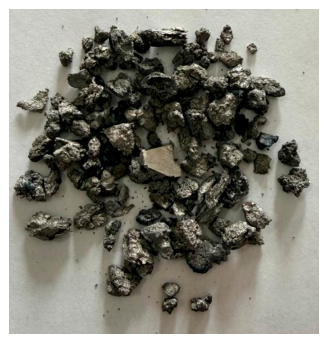
Commercially pure Grade 0 titanium sponge, produced by the magnesiothermic reduction of titanium tetrachloride (the Kroll process), was used as the starting material [12]. The material was characterized by high chemical purity and a highly developed porous structure, which facilitated efficient hydrogen uptake during the hydrogenation process. The appearance of the initial titanium sponge is shown in Figure 1.

2.2. Hydride–Dehydride Processing Scheme

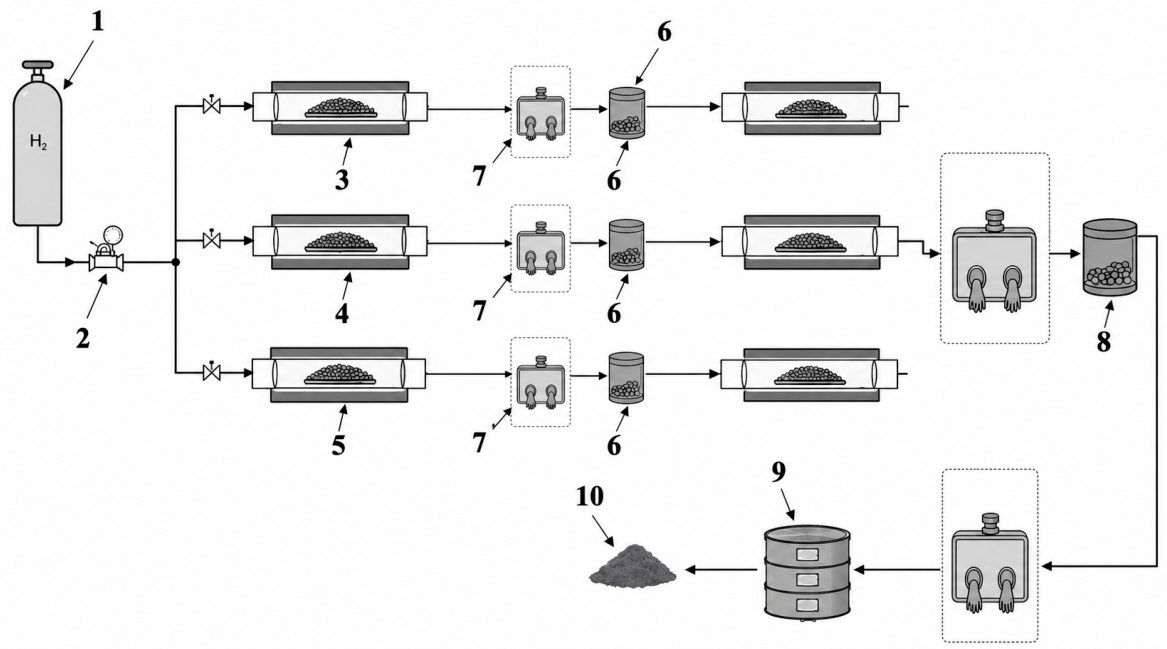
Titanium powders were produced using the hydride–dehydride (HDH) process [6,7,9,10], which consists of successive stages of hydrogenation, mechanical milling, dehydrogenation, and subsequent mechanical alloying. The overall processing route is illustrated in Figure 2.
Hydrogenation and dehydrogenation were carried out in a high-temperature three-zone tubular furnace (CY-CVD1200-50-200×200-3TH-Q, Beijing CYKY Technology Co., Ltd., Beijing, China) equipped with a quartz reaction tube of 50 mm in diameter. The system enabled processing under controlled atmospheres of hydrogen, argon, and nitrogen, as well as under high-vacuum conditions of up to 2 × 10⁻⁵ Pa. Gas flow rates were controlled using a precision gas distribution module.
Prior to hydrogenation, the reaction chamber was evacuated to a base pressure of 2 × 10⁻⁵ Pa before introducing high-purity hydrogen into the reaction tube. Hydrogenation was performed under different temperature regimes in order to evaluate the effect of hydrogen saturation on the structure and properties of the material.
The hydrogenation conditions employed in this study are presented in Table 1.
Following hydrogenation, the resulting titanium hydride was subjected to mechanical milling in an argon atmosphere. The milling speed and milling duration were selected as the variable processing parameters in order to evaluate their influence on the particle size distribution and characteristics of the obtained powder.
The short-duration milling step (10–15 min) was not intended for mechanical alloying but rather for fragmentation of the brittle titanium hydride produced during hydrogenation. The increased brittleness of the TiH2 phase enabled rapid particle size reduction during this stage, while minimizing prolonged mechanical exposure and the associated risk of contamination. The mechanical milling conditions investigated in this study are summarized in Table 2.
After mechanical milling, the hydride powder was subjected to vacuum dehydrogenation in order to remove hydrogen and restore the metallic titanium structure [13,14]. The dehydrogenation conditions investigated in this study are summarized in Table 3.

2.3. Experimental Design

To evaluate the combined effects of hydrogenation, mechanical milling, and dehydrogenation parameters, an experimental matrix was developed, as presented in Table 4. A reduced comparative experimental matrix consisting of five representative HDH processing routes was employed in this study. The selected combinations were chosen to compare technologically relevant processing routes while limiting the number of experimental runs. Therefore, the experimental design was intended to identify the most promising processing route among the investigated conditions rather than to independently evaluate the effect of each individual processing parameter.
Based on the results of a comprehensive analysis of particle size distribution, phase composition, particle morphology, and elemental distribution, the best-performing processing route for titanium powder production was selected for subsequent alloying.

2.4. Mechanical Alloying

Mechanical alloying was carried out using a Pulverisette 7 planetary ball mill (Fritsch, Idar-Oberstein, Germany). Aluminum and vanadium powders were employed as alloying elements and were added in proportions corresponding to the nominal composition of the Ti–6Al–4V alloy system. The powder mixture was milled at a rotational speed of 300 rpm for 10 h under a protective atmosphere, ensuring a homogeneous distribution of the alloying elements throughout the powder volume.
Particle size distribution was determined using a FRITSCH ANALYSETTE 22 NeXT Nano laser particle size analyzer (FRITSCH GmbH, Idar-Oberstein, Germany), operating according to the laser diffraction method. The measurements were performed over a particle size range of 0.01–3800 μm. The obtained particle size distribution curves were used to compare the influence of different HDH processing conditions on powder refinement.
The resulting powder samples were further characterized by X-ray diffraction (XRD), scanning electron microscopy (SEM), and energy-dispersive spectroscopy (EDS) to determine their phase composition, morphological characteristics, and elemental homogeneity.
EDS analysis was employed to evaluate the elemental distribution and to identify possible contamination within the analyzed regions. Due to the inherent limitations of the technique, EDS was not used for the quantitative determination of light elements such as hydrogen, oxygen, nitrogen, and carbon.
Phase analysis was performed by X-ray diffraction (XRD) using a PANalytical X’Pert PRO diffractometer (Malvern Panalytical, Almelo, The Netherlands) with Cu Kα radiation (λ = 1.5406 Å), operating at 40 kV and 30 mA. Diffraction patterns were recorded over the 2θ range of 10–90° using a continuous scanning mode with a step size of 0.02° and a counting time of 1 s per step. Phase identification was carried out by comparison with the corresponding reference diffraction cards (ICSD 41503 for α-Ti and ICSD 169601/ICDD 04-001-6850 for TiH2). The XRD analysis was used for qualitative phase identification and evaluation of phase evolution during the HDH process.

3. Results

3.1. Characterization of the Initial Titanium Sponge

Grade 0 titanium sponge was used as the starting material for the hydride–dehydride (HDH) process employed for titanium powder production. A preliminary characterization of the raw material was conducted to evaluate its particle size distribution, phase composition, and morphological features, which are known to influence the hydrogenation, milling, and subsequent dehydrogenation processes.
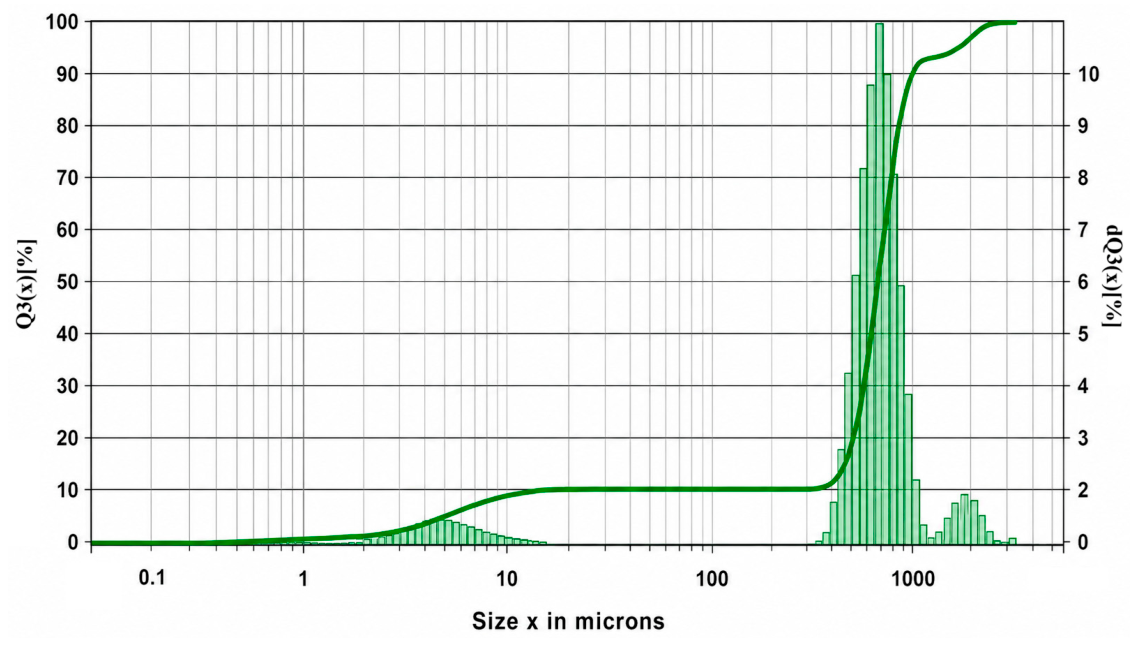
The results of the particle size analysis are presented in Figure 3. The initial titanium sponge exhibited a broad particle size distribution and a pronounced heterogeneity in granulometric composition. The majority of the material consisted of coarse particles ranging from several hundred micrometers to the millimeter scale. The presence of a limited fraction of fine particles is associated with the characteristics of industrial titanium sponge production and the mechanical fragmentation occurring during material preparation. Such a particle size distribution indicates the necessity of additional processing steps to obtain powders promising for subsequent powder metallurgy applications [4].
X-ray diffraction (XRD) analysis of the initial material revealed that the predominant phase was metallic titanium with a hexagonal close-packed α-Ti crystal structure. The diffraction pattern exhibited characteristic reflections of the α-titanium phase corresponding to the (100), (002), (101), (102), (110), and other crystallographic planes of the hexagonal lattice. No diffraction peaks associated with the titanium hydride phase (TiH2) were detected, confirming the absence of prior hydrogen saturation and indicating that the material remained in its original titanium sponge condition.
Morphological examination by scanning electron microscopy (SEM) demonstrated that the initial material possessed a highly developed porous structure characteristic of titanium sponge produced by the Kroll process [12]. The particles exhibited irregular shapes and a rough surface morphology containing numerous pores, microstructural irregularities, and interconnected interparticle channels. Such a structure provides a high reactive surface area for hydrogen interaction and promotes efficient hydrogen uptake during the hydrogenation process [6,14].
The presence of a highly developed porous structure represents a significant advantage of titanium sponge as a starting material for the HDH process. Owing to its high specific surface area and interconnected open porosity, hydrogen diffusion into the bulk material is facilitated, promoting the formation of the TiH2 hydride phase and the subsequent fragmentation of the structure under mechanical loading [6,13,24].
Therefore, the initial titanium sponge is characterized by a coarse particle structure, high porosity, and a single-phase state represented by α-titanium. The combination of these characteristics makes this material a promising feedstock for the production of titanium powders via the hydride–dehydride (HDH) process [6,9,14].

3.2. Influence of Hydrogenation Conditions on the Properties of Titanium Sponge

Hydrogenation is one of the key stages of the hydride–dehydride (HDH) process for titanium powder production [6,9,14]. During this stage, titanium reacts with hydrogen to form the titanium hydride phase (TiH2), which exhibits significantly greater brittleness than metallic titanium [13,14,24]. The formation of the hydride structure promotes the development of internal stresses, microcrack formation, and subsequent material fragmentation, thereby substantially facilitating mechanical milling and the production of powders with the desired particle size distribution [6,13,24].
The efficiency of the hydrogenation process is governed by its temperature–time parameters, which directly influence the degree of hydrogen uptake, phase composition, morphology, and particle size characteristics of the resulting material [13,14]. Insufficient processing temperatures may result in incomplete hydride formation and the retention of a considerable fraction of metallic titanium, whereas excessively severe processing conditions can induce significant microstructural changes and increase the tendency of the material to agglomerate [14,17].
To evaluate the influence of hydrogenation parameters on the properties of titanium sponge, three processing conditions were investigated: H1 (350–450 °C, 2 h), H2 (450–550 °C, 2 h), and H3 (550–650 °C, 2 h). The resulting samples were characterized using laser particle size analysis, X-ray diffraction (XRD), scanning electron microscopy (SEM), and energy-dispersive spectroscopy (EDS).
The comprehensive analysis of the obtained results made it possible to identify the relationships between hydrogenation conditions and the resulting particle size distribution, phase composition, and morphological characteristics of the material. Furthermore, the study enabled the determination of the processing conditions that provide the most favorable structural state for the subsequent stages of milling, dehydrogenation, and alloying.

3.2.1. Particle Size Distribution After Hydrogenation and Mechanical Milling

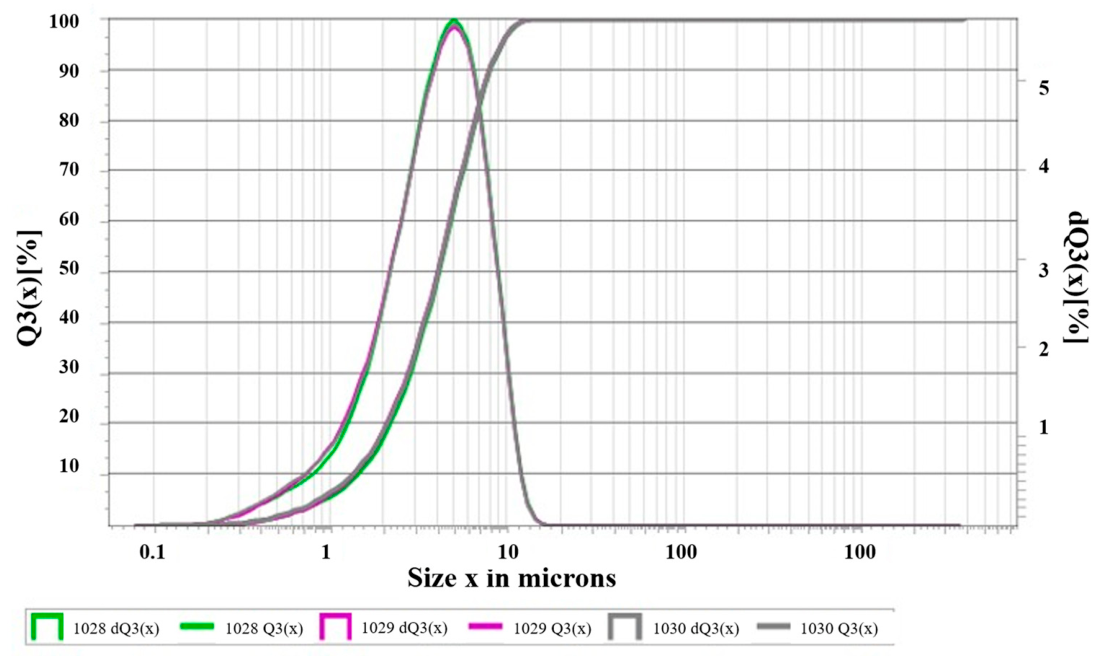
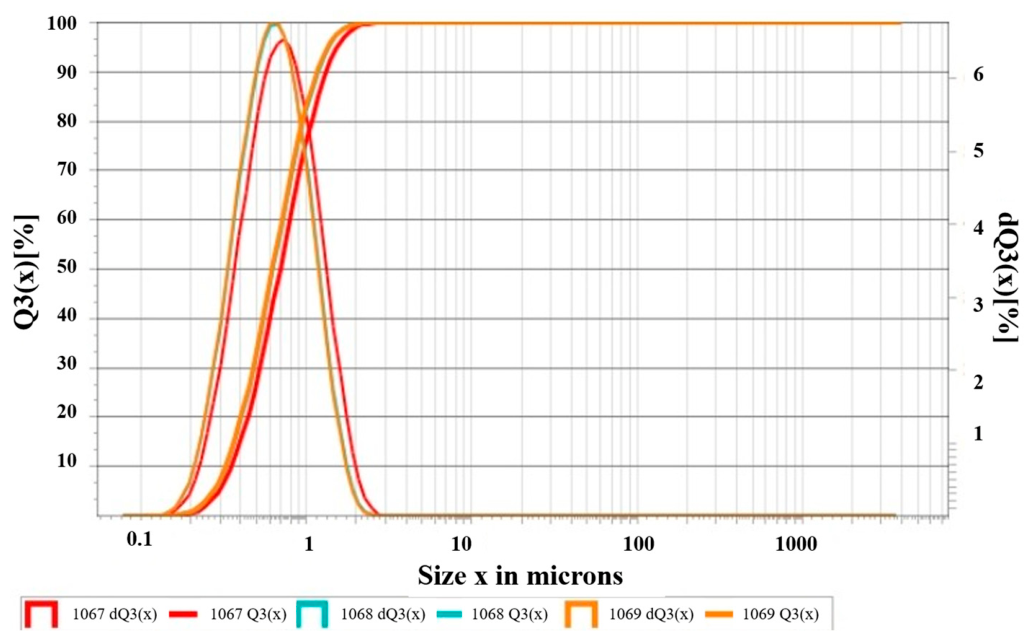
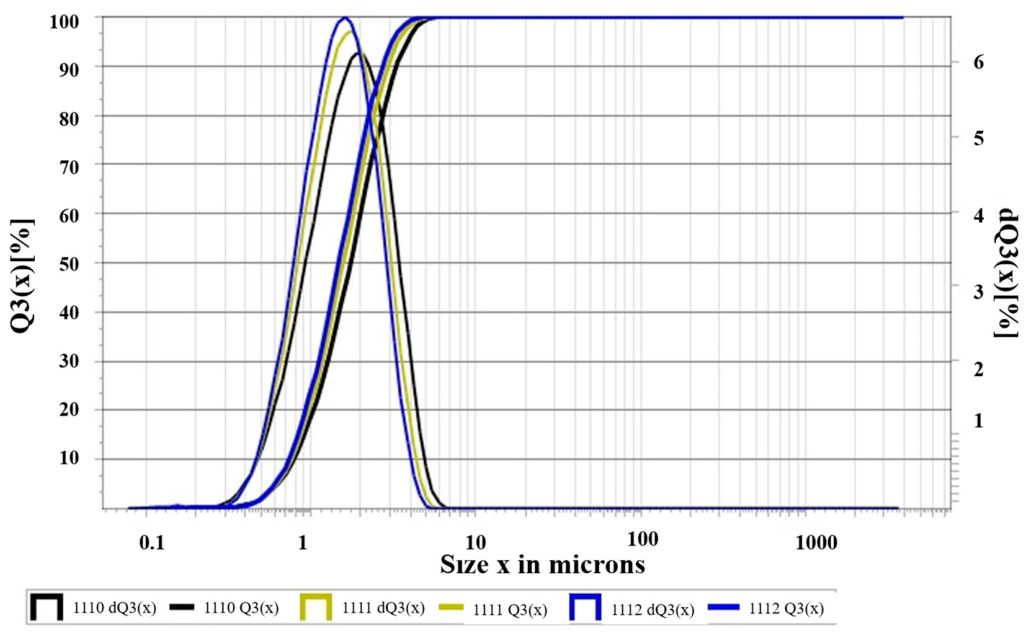
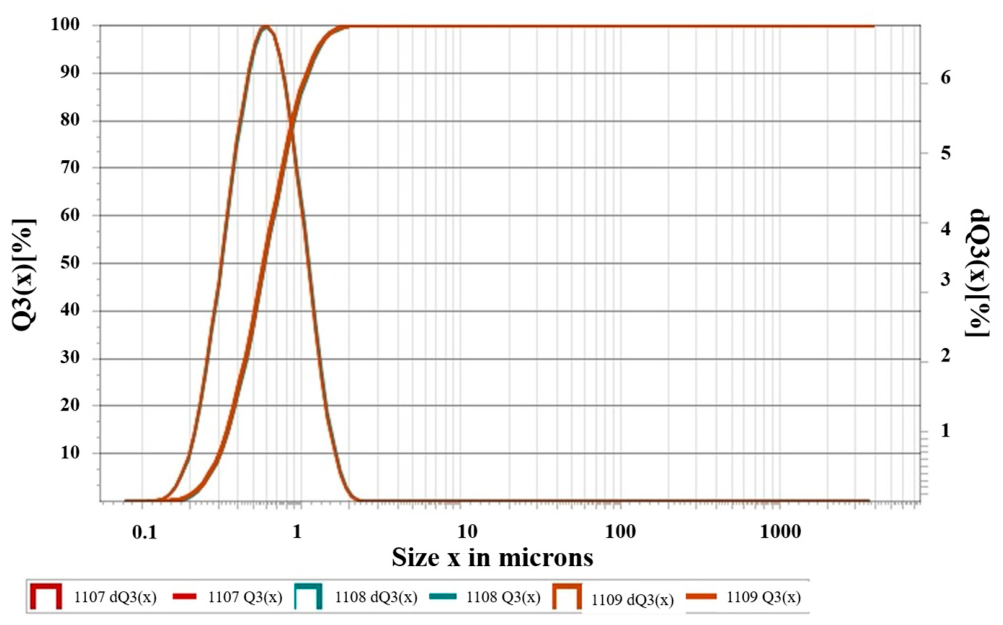
The results of laser particle size analysis of hydrogenated titanium powders after subsequent mechanical milling under the corresponding processing conditions are presented in Figure 4, Figure 5 and Figure 6.
The particle size analysis was performed to compare the experimentally obtained particle size distribution curves of powders processed under different HDH conditions. The interpretation of the results was based on the position and shape of the measured particle size distribution curves, allowing evaluation of the relative influence of the investigated processing routes on powder refinement.
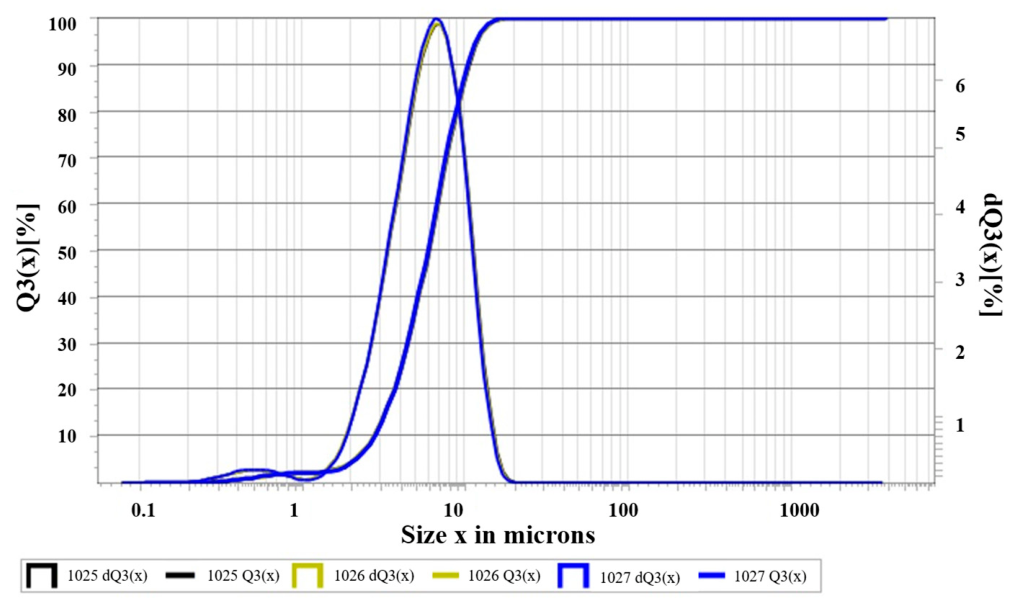
For the H1 condition, the particle size distribution exhibits a unimodal character with a pronounced maximum in the range of 8–12 μm (Figure 4). The majority of particles are concentrated within the 4–20 μm size range, while the fractions of both submicron and coarse particles are relatively small. The cumulative Q3(x) curve shows a steep increase in mass fraction within this particle size interval, indicating a relatively narrow particle size distribution and a high degree of powder homogeneity. The observed particle size distribution reflects the combined effect of hydrogenation-induced embrittlement and the subsequent mechanical milling process [13,14,24].
With an increase in the hydrogenation temperature to the H2 condition, a further shift in the particle size distribution toward smaller particle sizes is observed (Figure 5). The majority of the powder particles are concentrated within the 1–10 μm size range, and the particle size distribution becomes narrower compared with that obtained under the H1 condition. These results indicate an increased degree of hydrogenation and a more complete formation of the TiH2 hydride phase. As a consequence of the enhanced brittleness of the material, fragmentation processes proceed more intensively, promoting the formation of a finer and more homogeneous powder [13,17].
The most pronounced changes in particle size distribution were observed for the H3 condition (Figure 6). The distribution is characterized by a well-defined peak within the submicron size range, while the majority of the material consists of particles smaller than 1 μm. Compared with the H1 and H2 conditions, a further reduction in the average particle size and an increase in the homogeneity of the particle size distribution are observed. This behavior can be attributed to the nearly complete transformation of titanium into the TiH2 hydride phase, resulting in a maximum increase in material brittleness and a correspondingly high tendency toward fragmentation [14].
A comparative analysis of the results demonstrates that increasing the hydrogenation temperature leads to a progressive reduction in particle size and a narrowing of the particle size distribution. The highest degree of dispersion was achieved under the H3 condition, whereas the H2 condition provided the most favorable balance between fine particle size and powder homogeneity. These findings confirm that the degree of hydrogenation plays a decisive role in determining the efficiency of subsequent milling and the development of the particle size characteristics of powders produced via the hydride–dehydride (HDH) process.

3.2.2. Phase Transformations During Hydrogenation

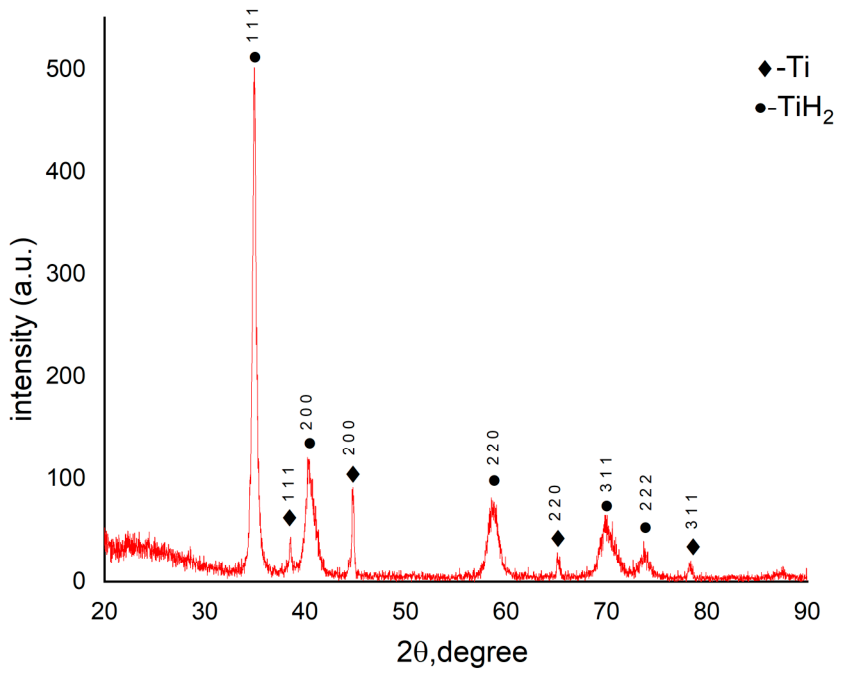
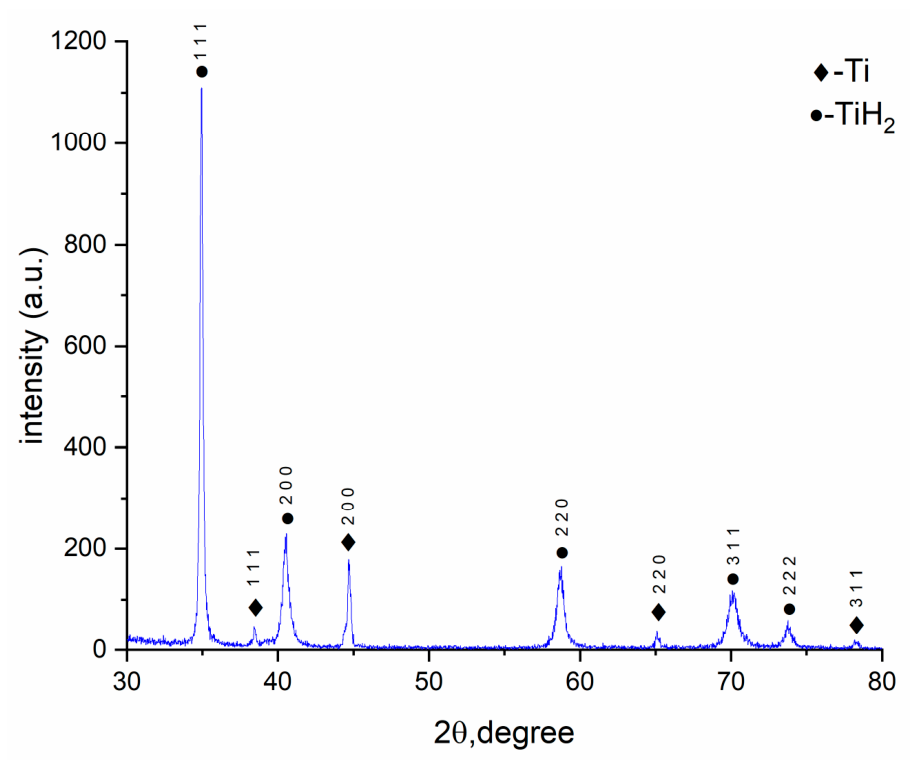
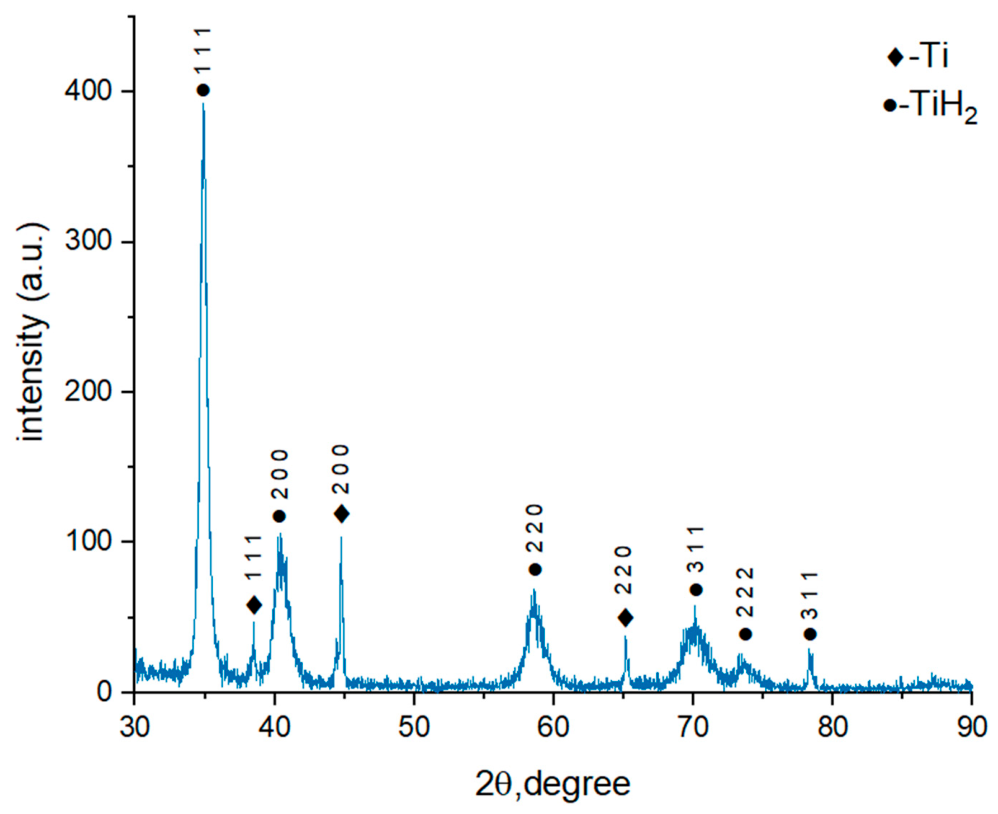
The results of the X-ray diffraction (XRD) analysis of titanium sponge samples hydrogenated under the H1, H2, and H3 conditions are presented in Figure 7, Figure 8 and Figure 9, respectively.
For the H1 condition, the diffraction pattern exhibits intense reflections corresponding to the titanium hydride phase, TiH2 (Figure 7). The most pronounced peak is observed at approximately 2θ ≈ 35°, while additional characteristic reflections are detected within the 40–45°, ~60°, and 70–75° ranges, which are consistent with the crystal structure of TiH2. At the same time, diffraction peaks associated with the α-Ti phase remain present, indicating an incomplete transformation of metallic titanium into the hydride phase. These results suggest that hydrogenation proceeded only partially under the H1 condition, leading to the formation of a two-phase microstructure consisting of TiH2 and residual α-titanium [14,24].
The presence of the hydride phase is accompanied by an increase in material brittleness, while the retention of a fraction of the metallic phase contributes to maintaining the structural integrity of the particles. Such a phase composition is characteristic of moderate hydrogenation conditions and provides a suitable microstructural state for subsequent mechanical milling.
For the sample processed under the H2 condition, a significant change in phase composition is observed (Figure 8). The intensity of the TiH2 diffraction peaks increases, whereas the reflections associated with α-Ti become less pronounced. This behavior indicates a higher degree of hydrogen saturation and an increased volume fraction of the hydride phase within the material. The principal diffraction maxima remain located in the characteristic regions of TiH2, confirming the formation of a predominantly hydride structure [13,14].
The increased TiH2 content results in a further rise in material brittleness, thereby promoting more efficient particle fragmentation during subsequent milling. At the same time, a small amount of the metallic phase remains detectable, indicating that the hydrogenation process is not yet fully complete, although it is close to completion.
The most extensive phase transformation is observed under the H3 condition (Figure 9). The diffraction pattern is dominated by reflections corresponding to the TiH2 hydride phase, whereas the α-Ti peaks are nearly absent or exhibit only very low intensity. This finding indicates the almost complete transformation of metallic titanium into the hydride phase.
The high intensity and sharpness of the TiH2 reflections indicate the formation of a well-crystallized hydride structure. The near-complete absence of the metallic phase confirms a high degree of hydrogenation and maximum hydrogen uptake within the investigated temperature range.
A comparative analysis of the diffraction patterns demonstrates that increasing the hydrogenation temperature results in a progressive increase in the fraction of the TiH2 hydride phase and a corresponding decrease in the α-Ti content. As the processing condition changes from H1 to H3, the phase transformation from α-Ti to TiH2 approaches completion, leading to increased material brittleness and improved conditions for subsequent mechanical milling. These findings are consistent with the results of the particle size analysis and further confirm the decisive role of the degree of hydrogenation in determining the structural state of the powder [14,21].

3.2.3. Morphology and Elemental Composition of Titanium Hydrides

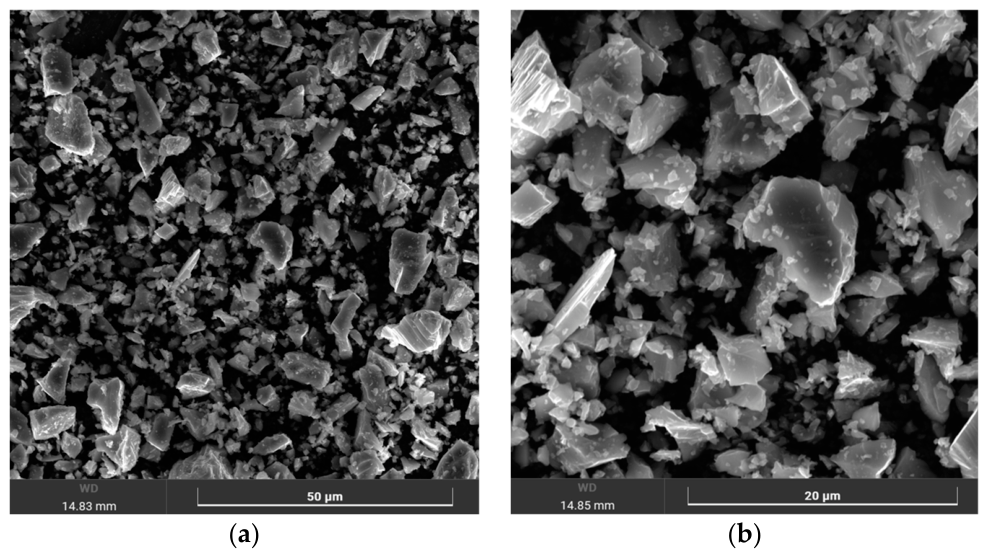
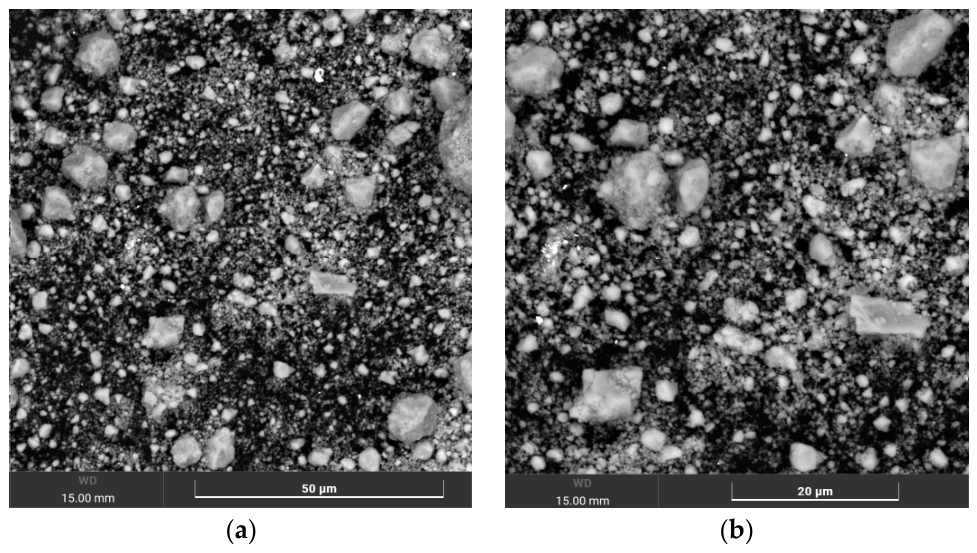
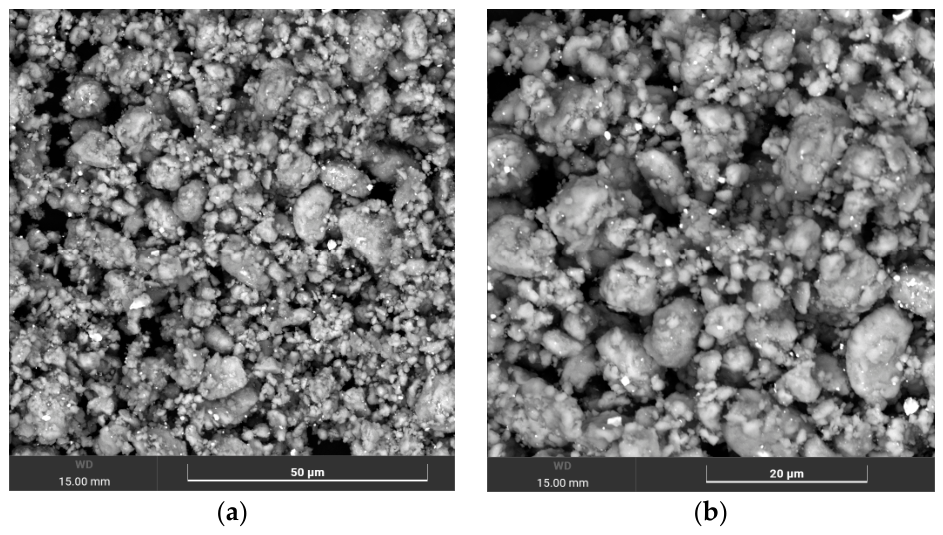
The morphology of the hydrogenated titanium sponge produced under the H1 processing condition is shown in Figure 10. The SEM image acquired at lower magnification (Figure 10a) reveals a fragmented structure composed of irregularly shaped particles with pronounced angular features and a broad particle size distribution. In addition to larger fragments, a substantial amount of fine particles is present, occupying the interparticle spaces and indicating the breakdown of the original titanium sponge structure during hydrogenation.
At higher magnification (Figure 10b), the surface characteristics of the particles become more clearly visible. Numerous cleavage features, cracks, and stepped fracture surfaces can be observed, which are characteristic of a brittle fracture mechanism. The particle surfaces exhibit a highly developed topography with various microdefects and surface irregularities resulting from the formation of the TiH2 hydride phase and the development of internal stresses during hydrogen absorption [13,17]. The observed morphology indicates increased material brittleness and a high susceptibility to subsequent milling, which represents one of the key advantages of the hydride–dehydride process for titanium powder production.
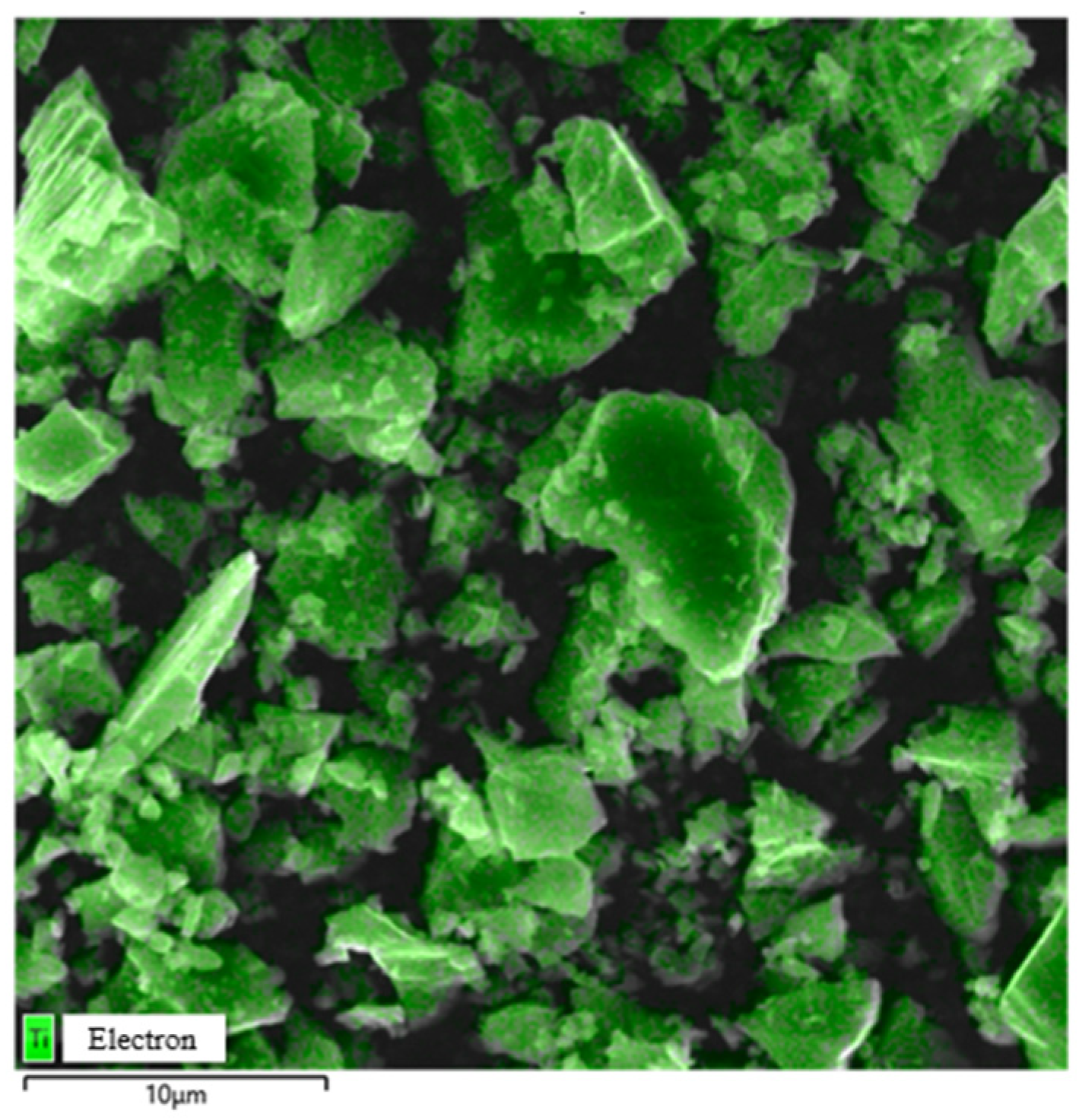
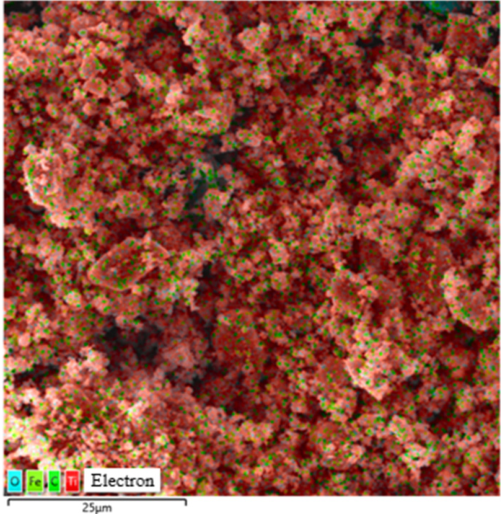
The results of the EDS analysis of the H1 sample are presented in Figure 11. Titanium was identified as the predominant element and was uniformly distributed across the particle surfaces. The presence of a small amount of oxygen is attributed to superficial oxidation resulting from exposure of the sample to the ambient environment after processing. It should be noted that hydrogen, which is a constituent of the hydride phase, cannot be detected by energy-dispersive spectroscopy because of its very low atomic mass. No detectable contamination by foreign elements was observed within the analyzed regions.
Significant changes in material morphology are observed for the H2 condition (Figure 12). The structure consists of agglomerates formed by finer particles, while the particle surfaces exhibit a highly developed topography characterized by micropores and pronounced roughness. Compared with the H1 condition, a higher degree of fragmentation and breakdown of the original titanium sponge structure is evident. The formation of agglomerates composed of fine particles indicates an increased degree of hydrogenation and a more intensive formation of the TiH2 hydride phase [14,24].
The results of the EDS analysis for the H2 sample are presented in Figure 13. The elemental distribution maps reveal a uniform distribution of titanium across the surfaces of both individual particles and particle agglomerates. Similar to the H1 condition, a small amount of oxygen is detected, which can be attributed to surface oxidation of the material. No localized regions enriched with foreign elements were observed, confirming a relatively uniform elemental distribution after hydrogenation.
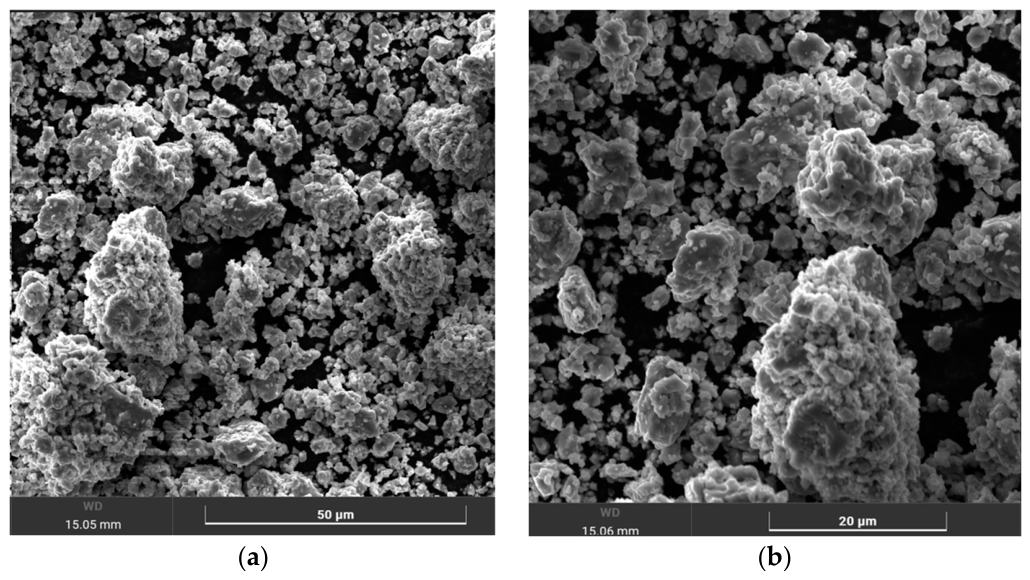
For the H3 condition, a further development of the dispersed microstructure is observed (Figure 14). The SEM image acquired at lower magnification (Figure 14a) shows that the material consists predominantly of fine particles uniformly distributed across the investigated area. The majority of the powder is composed of submicron- and micron-sized particles, whereas the fraction of coarse fragments is significantly reduced compared with the H1 and H2 conditions.
At higher magnification (Figure 14b), the high degree of particle dispersion and the abundance of fine, irregularly shaped particles become clearly evident. In addition to the fine fraction, individual larger particles with sizes of several micrometers are observed, exhibiting predominantly angular or plate-like morphologies. The particle surfaces are characterized by pronounced roughness and numerous microstructural defects, indicating a brittle fragmentation mechanism following the formation of the TiH2 hydride phase.
Compared with the H1 and H2 conditions, a further reduction in the size of structural features and an improvement in particle distribution homogeneity are observed. The resulting morphology indicates the near-complete progression of the hydrogenation process and the formation of a highly dispersed powder with a well-developed specific surface area, providing favorable conditions for subsequent dehydrogenation [14].
The particle surfaces are characterized by pronounced roughness and the presence of numerous protrusions and microstructural defects, indicating a brittle fragmentation mechanism following the formation of the TiH2 hydride phase. Compared with the H1 and H2 conditions, a higher degree of particle dispersion and a reduced fraction of coarse fragments are observed. This behavior is associated with more complete hydrogen saturation and the formation of a predominantly hydride structure. The resulting morphology is characterized by a highly developed specific surface area and a high degree of dispersion, providing favorable conditions for subsequent milling and dehydrogenation processes [14].
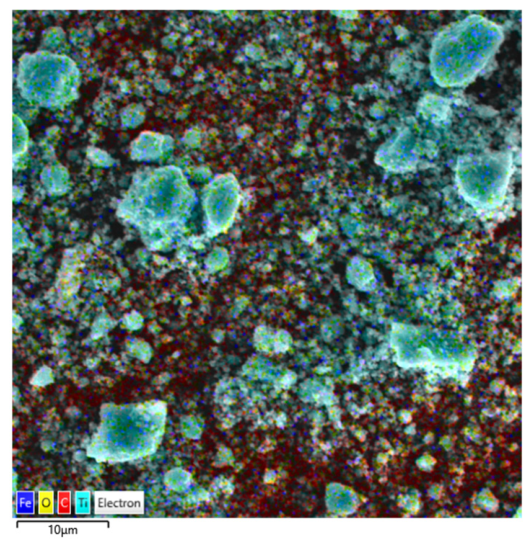
The results of the EDS analysis for the H3 sample are presented in Figure 15. The elemental distribution maps demonstrate a uniform distribution of titanium throughout the investigated powder. Titanium is the predominant element in both the larger particles and the fine dispersed fraction, indicating that a relatively uniform elemental distribution is maintained after hydrogenation.
The detected oxygen is primarily associated with the formation of a thin oxide film on the particle surfaces as a result of exposure to the atmosphere after processing. The observed carbon content may be attributed to sample preparation procedures prior to analysis. No localized regions enriched with foreign elements were detected, indicating a relatively uniform elemental distribution within the analyzed regions. These results confirm the preservation of the titanium-based composition of the powder and do not reveal detectable contamination within the analyzed regions.
A comparison of the SEM and EDS results demonstrates that increasing the hydrogenation temperature leads to a progressive increase in the degree of titanium sponge fragmentation and the development of a more extensive particle surface morphology. At the same time, the elemental distribution observed by EDS remained relatively uniform regardless of the processing condition. The highest degree of dispersion is achieved under the H3 condition, whereas the H2 condition provides a more balanced combination of hydrogenation extent, morphological uniformity, and technological suitability for the subsequent stages of the HDH process [17,21].

3.3. Influence of Dehydrogenation on the Structure and Properties of Titanium Powders

Following hydrogenation and mechanical milling, the hydride powder was subjected to dehydrogenation to remove hydrogen and restore the metallic titanium structure. This stage represents one of the key steps of the hydride–dehydride (HDH) process, as the decomposition of the TiH2 hydride phase, the formation of the final phase composition of the powder, and the stabilization of its structural state occur during dehydrogenation [6,12,13,14]. In the present study, the effectiveness of dehydrogenation was evaluated based on XRD phase analysis. Direct quantitative measurements of residual hydrogen content were beyond the scope of this work.
The efficiency of dehydrogenation is governed by the temperature and duration of the heat treatment, which significantly influence the completeness of hydrogen removal, crystal structure, particle morphology, and the degree of particle agglomeration. Insufficient processing temperatures may result in the retention of residual hydride phases, whereas excessively severe treatment conditions can promote particle coarsening and morphological changes due to enhanced diffusion processes [13,14,20].
To evaluate the influence of dehydrogenation parameters, the D1, D2, and D3 processing conditions were investigated in combination with different hydrogenation and milling conditions. The resulting powders were characterized using laser particle size analysis, X-ray diffraction (XRD), scanning electron microscopy (SEM), and energy-dispersive spectroscopy (EDS). Particular attention was paid to assessing the completeness of TiH2 hydride decomposition, the formation of the metallic α-titanium phase, and the evolution of particle morphology following hydrogen removal.
A comprehensive analysis of the results made it possible to establish the relationships governing phase and structural transformations during dehydrogenation and to identify the processing conditions that provide powders with the most favorable characteristics for subsequent alloying and powder metallurgy applications.

3.3.1. Phase Composition After Dehydrogenation

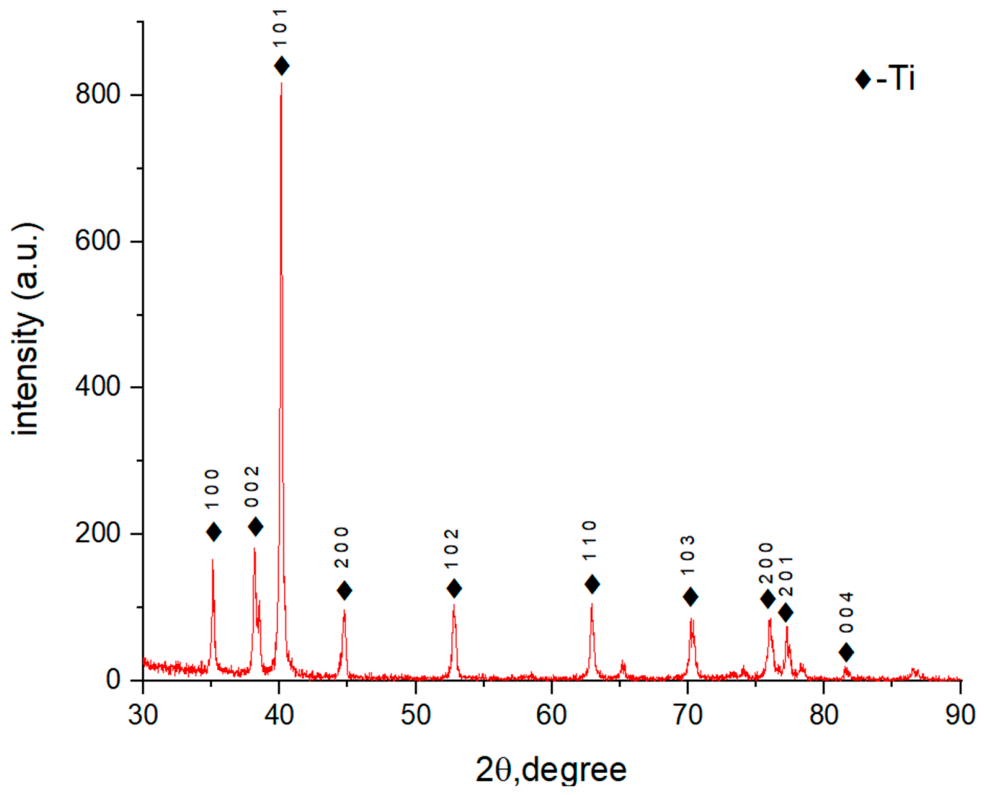
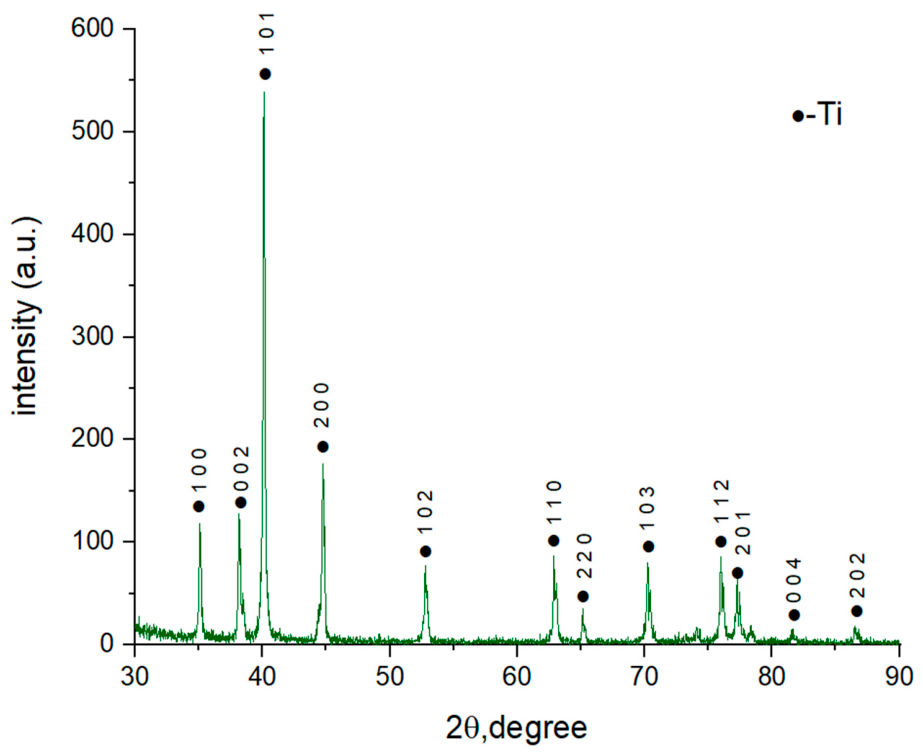
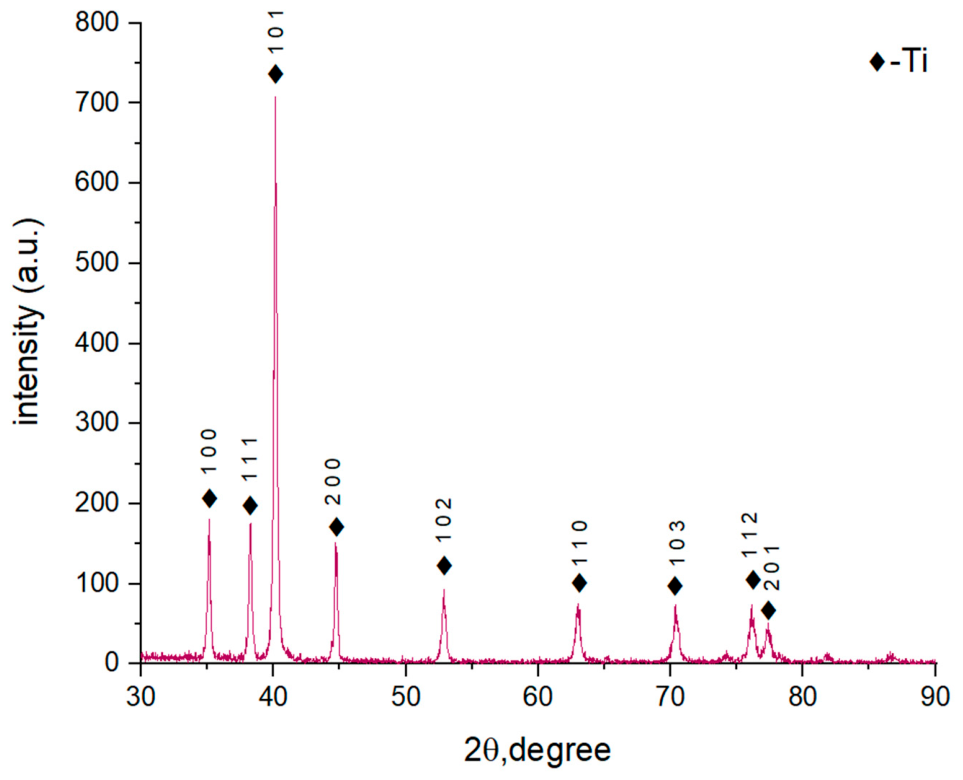
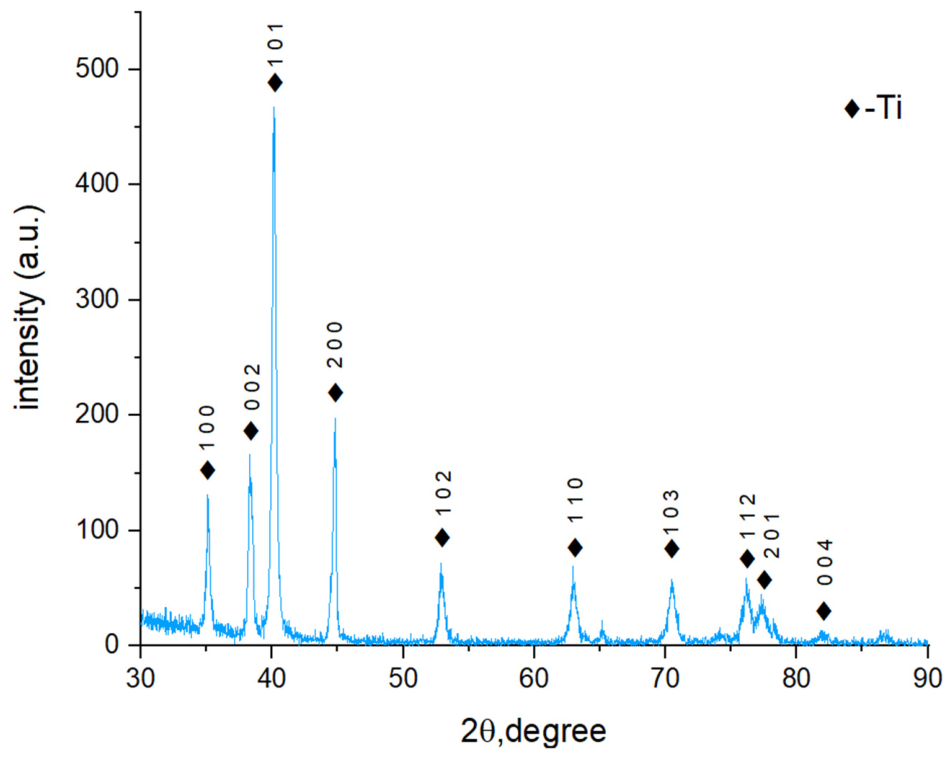
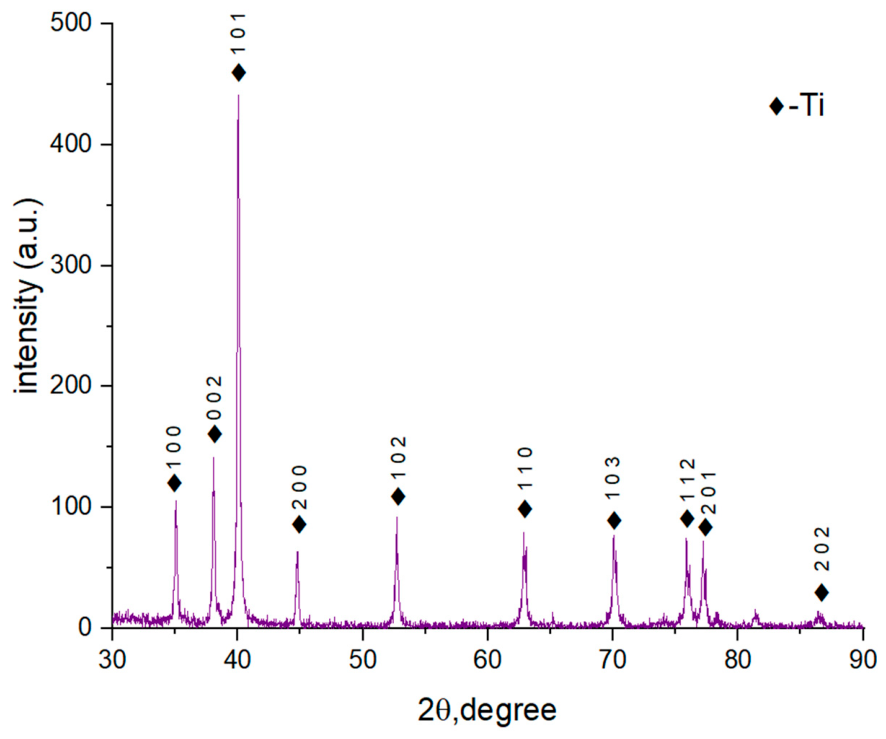
The results of the X-ray diffraction (XRD) analysis of titanium powders subjected to hydrogenation, mechanical milling, and subsequent dehydrogenation are presented in Figure 16, Figure 17, Figure 18, Figure 19 and Figure 20. The phase composition was investigated to evaluate the completeness of TiH2 hydride phase decomposition and the restoration of the metallic titanium structure following HDH processing [13,14].
For the sample produced under the H1–M1–D1 condition, the diffraction pattern exhibits intense reflections corresponding to the α-titanium phase (Figure 16). The principal diffraction peaks are located at 2θ values of approximately 35.0° (100), 38.4° (002), 40.2° (101), 44.9° (200), 53.1° (102), 63.2° (110), 70.7° (103), 76.1° (112), and 77.5° (201), which are characteristic of the hexagonal close-packed crystal structure of α-Ti. Reflections associated with the TiH2 hydride phase are absent or exhibit only negligible intensity, indicating effective dehydrogenation as evidenced by the disappearance of detectable TiH2 reflections and restoration of the metallic titanium structure.
A similar diffraction pattern is observed for the H1–M1–D2 condition (Figure 17). The diffraction pattern exhibits well-defined α-Ti reflections at 2θ values of approximately 35.0°, 38.4°, 40.2°, 44.9°, 53.1°, 63.2°, 70.7°, 76.1°, and 77.5°. The absence of detectable diffraction peaks associated with the hydride phase indicates the effective decomposition of TiH2 within the detection limits of XRD and the formation of a single-phase metallic titanium structure. Compared with the D1 condition, no significant changes in phase composition are observed.
The diffraction pattern of the Experiment A3 (H2–M2–D2) sample is likewise dominated by reflections corresponding to the α-titanium phase (Figure 18). The principal diffraction peaks are located at the same angular positions characteristic of metallic titanium, while no indications of the hydride phase are detected. These results indicate effective decomposition of the detectable TiH2 phase, as evidenced by the absence of detectable TiH2 reflections in the XRD patterns [13,14].
For the H2–M2–D3 sample, the phase composition remains essentially unchanged (Figure 19). The diffraction pattern consists exclusively of α-Ti reflections located at 2θ values of approximately 35.0°, 38.4°, 40.2°, 44.9°, 53.1°, 63.2°, 70.7°, 76.1°, and 77.5°. No additional phase constituents were detected, indicating the stability of the metallic titanium structure after dehydrogenation under more intensive temperature–time conditions.
The most intense and well-defined α-Ti reflections are observed for the H3–M3–D3 sample (Figure 20). The diffraction pattern is characterized by well-resolved peaks located at 2θ values of approximately 35.0°, 38.4°, 40.2°, 44.9°, 53.1°, 63.2°, 70.7°, 76.1°, and 77.5°, corresponding to the hexagonal crystal structure of α-titanium. No indications of the TiH2 hydride phase are detected, confirming effective dehydrogenation as evidenced by XRD phase analysis of the material even after the most intensive hydrogenation treatment.
Overall, the X-ray diffraction results indicate that all investigated dehydrogenation conditions promoted the decomposition of the detectable TiH2 hydride phase and the restoration of the metallic α-titanium phase. No detectable TiH2 reflections were observed in the XRD patterns of the analyzed samples, indicating effective dehydrogenation within the detection limits of XRD. These findings demonstrate that the investigated range of dehydrogenation temperatures and holding times was sufficient to restore the metallic titanium structure suitable for subsequent alloying and to provide a basis for further powder metallurgy studies [6,13,14].

3.3.2. Morphology and Chemical Homogeneity of Powders After Dehydrogenation

The morphology of the titanium powder obtained under the H1–M1–D1 processing condition is presented in Figure 21. The SEM image acquired at lower magnification (Figure 21a) reveals a structure consisting of numerous fine particles together with individual larger irregularly shaped fragments. The particles are distributed non-uniformly and form multiple agglomerates of varying sizes, indicating that the powder retains a pronounced tendency toward agglomeration after dehydrogenation.
At higher magnification (Figure 21b), the surface characteristics of the particles become more clearly visible. The material consists of a mixture of submicron- and micron-sized particles, along with isolated larger fragments exhibiting angular boundaries. The particle surfaces are characterized by a highly developed topography and the presence of localized surface irregularities. The high degree of agglomeration and the broad particle size range indicate the limited effectiveness of the preceding HDH treatment and the insufficient fragmentation of the original material structure [17,19]. Such a morphology may hinder the uniform distribution of alloying elements and reduce powder homogeneity during subsequent processing operations.
The results of the EDS analysis for the H1–M1–D1 sample are presented in Figure 22. The elemental distribution maps demonstrate a uniform distribution of titanium across the particle surfaces. The small amount of oxygen detected is associated with the formation of a surface oxide film following exposure of the material to the ambient environment. No significant concentrations of foreign elements were detected within the analyzed regions, indicating that no detectable contamination was introduced during dehydrogenation.
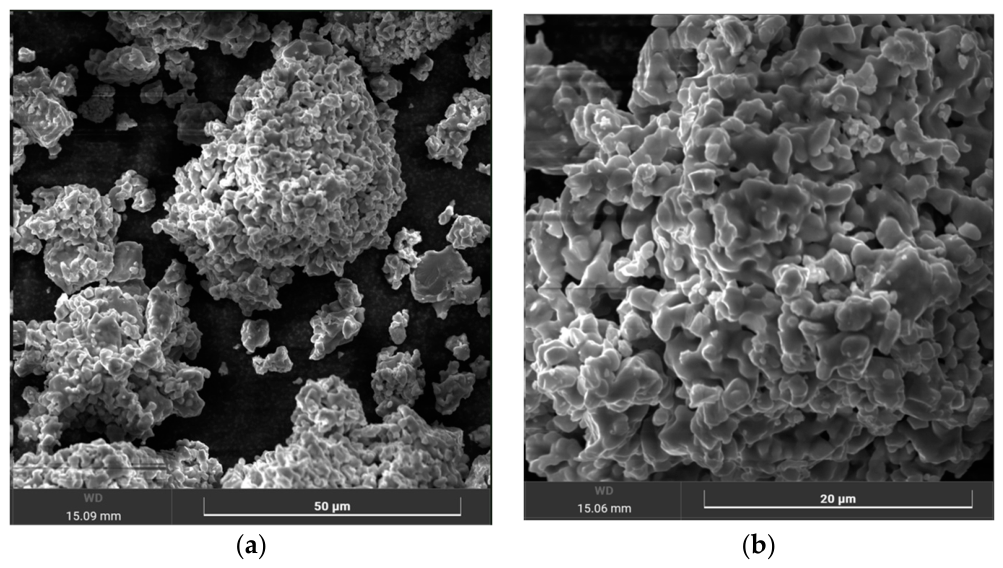
The H1–M1–D2 processing condition is characterized by the formation of an agglomerated structure composed of particles of various sizes with a highly developed surface morphology (Figure 23). The SEM image acquired at lower magnification (Figure 23a) reveals large irregularly shaped agglomerates surrounded by smaller particles and fragments. The particles are distributed relatively uniformly throughout the investigated area; however, the material retains a pronounced tendency toward agglomeration.
At higher magnification (Figure 23b), the complex surface morphology of the agglomerates becomes clearly visible. The agglomerates are composed of numerous fine particles and structural features, resulting in a highly developed surface. The particle surfaces exhibit pronounced roughness, micropores, and interparticle boundaries formed as a consequence of hydrogen removal from the hydride structure during dehydrogenation [13,14]. Compared with the H1–M1–D1 condition, a more stable morphology and a reduced number of large unfragmented particles are observed. The resulting structure indicates a more complete progression of the dehydrogenation process and the formation of a powder with a highly developed surface area, which may contribute to improved processing characteristics during subsequent compaction and sintering operations.
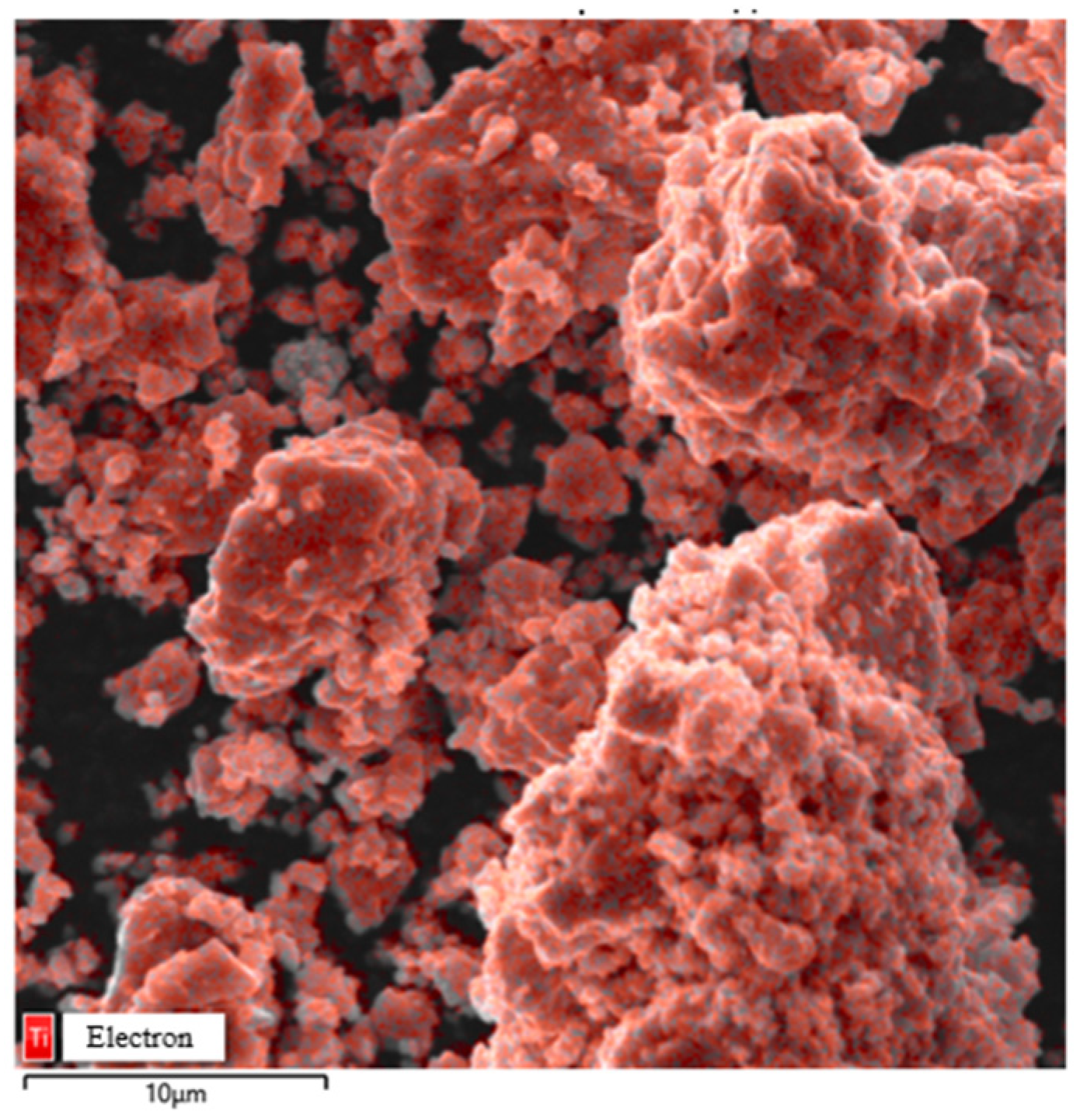
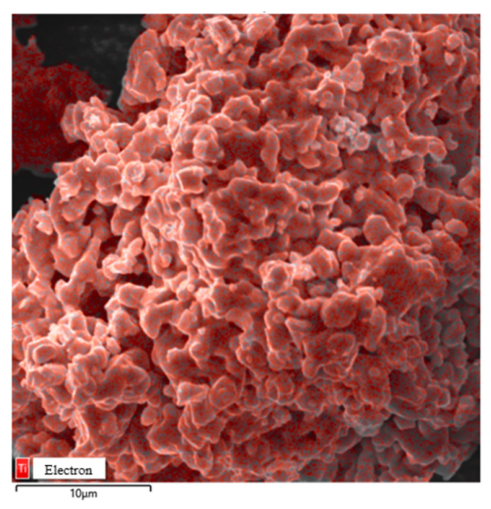
The EDS analysis demonstrates a uniform distribution of titanium across the entire surface of the particles and agglomerates (Figure 24). No localized regions enriched with impurities were detected, confirming the relatively uniform elemental distribution of the powder after dehydrogenation.
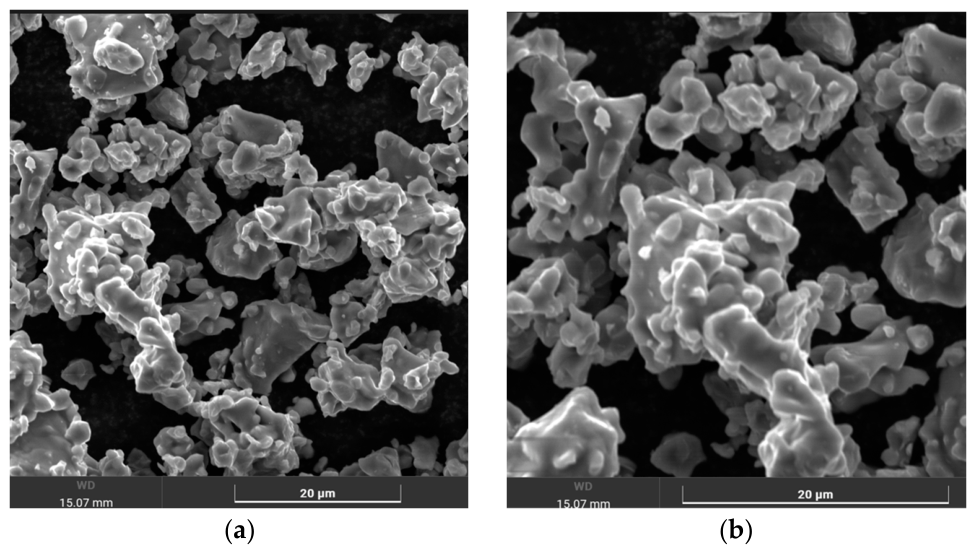
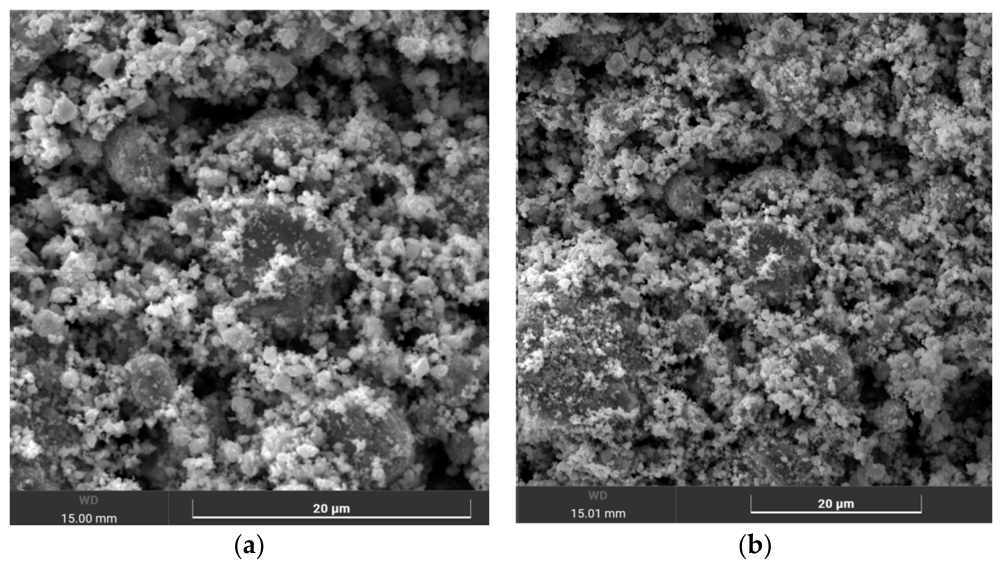
Among the investigated processing routes, the H2–M2–D2 sample exhibited the most uniform morphology based on qualitative SEM observations (Figure 25). The particles exhibit predominantly irregular shapes with smoother boundaries and a more uniform particle size distribution. SEM observations suggest a lower degree of agglomeration and a more distinct separation of individual particles. The particle surfaces retain a well-developed topography; however, the overall structure appears more ordered and homogeneous [20].
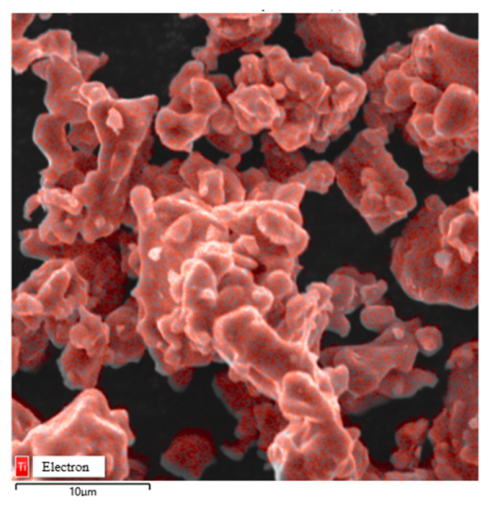
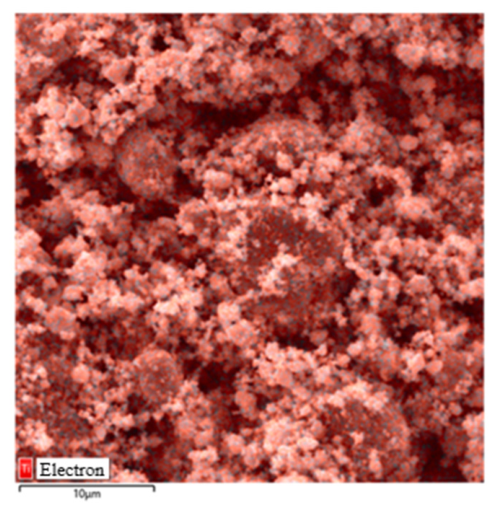
The EDS analysis results confirm a uniform distribution of titanium across the entire surface of the investigated particles (Figure 26). The absence of localized regions with altered chemical composition indicates a relatively uniform elemental distribution after completion of all stages of the HDH process. The detected oxygen content is confined to the particle surface and is attributed to the natural oxidation of the powder upon exposure to the atmosphere.
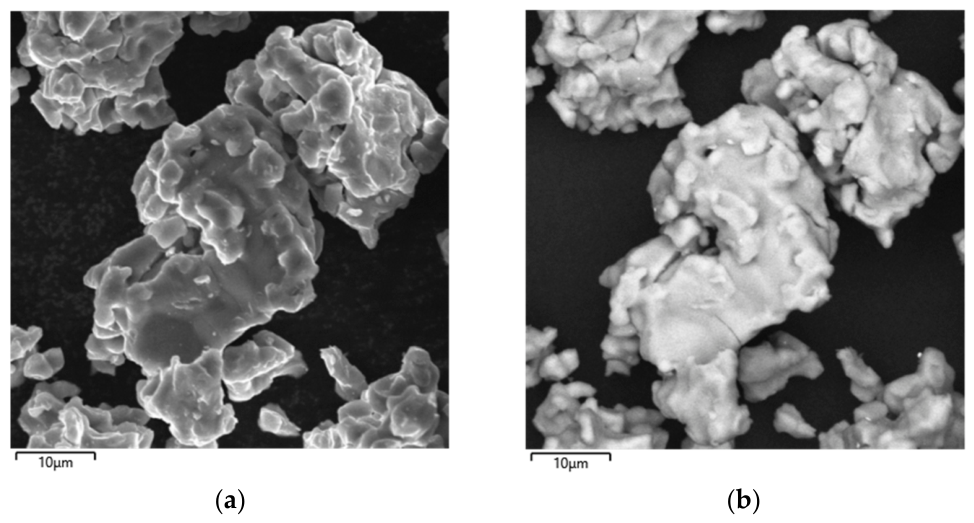
For the H2–M2–D3 condition, the powder morphology generally retains the principal features observed for the H2–M2–D2 condition (Figure 27). The SEM image acquired at lower magnification (Figure 27a) reveals irregularly shaped particles represented by individual agglomerates and fragments of various sizes. The particles are distributed relatively uniformly throughout the investigated area, and no pronounced large agglomerates are observed.
At higher magnification (Figure 27b), the relatively smooth particle boundaries and the well-developed surface morphology with localized irregularities can be clearly distinguished. Compared with the H2–M2–D2 condition, the structure appears somewhat more compact, which may be attributed to the intensification of diffusion processes under the more severe dehydrogenation conditions. Nevertheless, no substantial morphological changes capable of significantly improving the powder structure are observed.
These results indicate that increasing the dehydrogenation intensity from the D2 to the D3 condition does not significantly affect powder morphology. At the same time, the high degree of structural homogeneity and the low tendency toward agglomeration characteristic of powders produced under the H2 hydrogenation condition are retained [20].
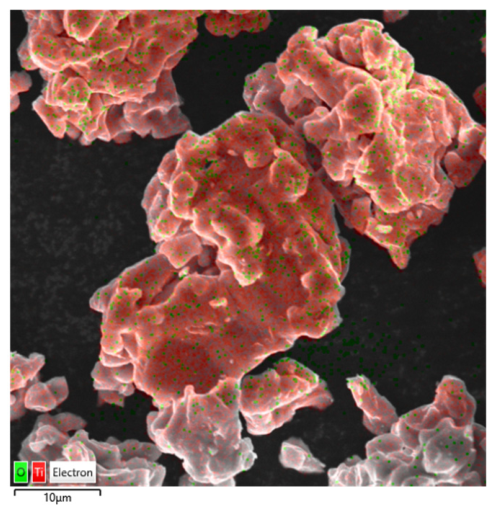
The EDS analysis reveals a uniform distribution of titanium across the particle surfaces and no evidence of chemical heterogeneity (Figure 28).
The highest degree of dispersion was observed for the H3–M3–D3 sample (Figure 29). The SEM image acquired at lower magnification (Figure 29a) shows that the material consists predominantly of fine particles forming dense agglomerates of various sizes. The majority of the powder is composed of submicron- and micron-sized particles uniformly distributed throughout the investigated area.
At higher magnification (Figure 29b), the well-developed microgranular structure of the agglomerates becomes clearly visible. The surfaces of larger particles and agglomerates are covered by a substantial amount of fine particulate matter, resulting in pronounced surface roughness and an increased specific surface area. Compared with the H1–M1–D1 and H2–M2–D2 conditions, a higher fraction of fine particles and the formation of a more compact agglomerated structure are observed [20,21].
The observed morphology indicates a high degree of material fragmentation resulting from intensive hydrogenation, mechanical milling, and subsequent dehydrogenation. Despite the high degree of powder dispersion, the formation of dense agglomerates may complicate subsequent mechanical alloying and compaction operations, thereby limiting the advantages of this condition relative to the H2–M2–D2 processing route. The EDS analysis of the H3–M3–D3 sample confirms a uniform distribution of titanium throughout the investigated powder volume (Figure 30). No significant evidence of chemical heterogeneity or material contamination was detected.
A comparison of the SEM and EDS results demonstrates that increasing the intensity of the HDH processing conditions leads to a reduction in the size of structural features and an improvement in the morphological uniformity of the powders. All investigated processing conditions exhibited a relatively uniform elemental distribution following dehydrogenation. However, the H2–M2–D2 condition provided the most balanced combination of particle fineness, morphological uniformity, and low agglomeration tendency, making it the most promising processing route for subsequent alloying and powder metallurgy applications [16,17,21].
The oxygen detected by EDS is consistent with the presence of surface oxide layers likely formed during exposure of the powders to the atmosphere during handling and sample preparation. Titanium exhibits a high affinity for oxygen; therefore, surface oxidation is commonly observed even under carefully controlled handling conditions. In general, powders with finer particle sizes and higher specific surface areas are more susceptible to oxygen uptake because of their increased exposed surface. Excessive oxygen incorporation is known to increase the strength and hardness of titanium while reducing its ductility and may adversely affect the sintering behavior and mechanical properties of Ti–6Al–4V powders. However, since quantitative oxygen analysis was not performed in the present study, no conclusions regarding oxygen uptake under different HDH processing conditions can be drawn, and the present discussion is limited to the qualitative observations provided by EDS analysis.

3.4. Verification of the Effectiveness of the Selected Processing Route for Ti–6Al–4V Powder Production

Based on the results of particle size analysis, X-ray diffraction studies, and SEM/EDS characterization, powders produced under the H1–M1–D1 and H2–M2–D2 processing conditions were selected for subsequent alloying. This approach enabled the evaluation of the influence of the preceding hydride–dehydride (HDH) treatment on the efficiency of Ti–6Al–4V powder formation [16,22].
Aluminum and vanadium powders were used as alloying components. According to the results of laser particle size analysis, the mean particle size of the aluminum powder was 1.77 ± 0.10 μm, whereas the mean particle size of the vanadium powder was 1.07 ± 0.12 μm. The particle size distributions of the aluminum and vanadium powders are presented in Figure 31 and Figure 32, respectively. The fine particle sizes of the alloying constituents provided favorable conditions for their homogeneous distribution throughout the titanium powder matrix during mechanical alloying.
The alloying process was carried out by mechanical mixing in a Pulverisette 7 planetary ball mill for 10 h at a rotational speed of 300 rpm. Aluminum and vanadium were added in proportions corresponding to the nominal composition of the Ti–6Al–4V alloy. The selected processing parameters provided intensive mechanical action, promoting particle dispersion and the homogeneous distribution of the alloying elements throughout the titanium powder matrix [16,18].
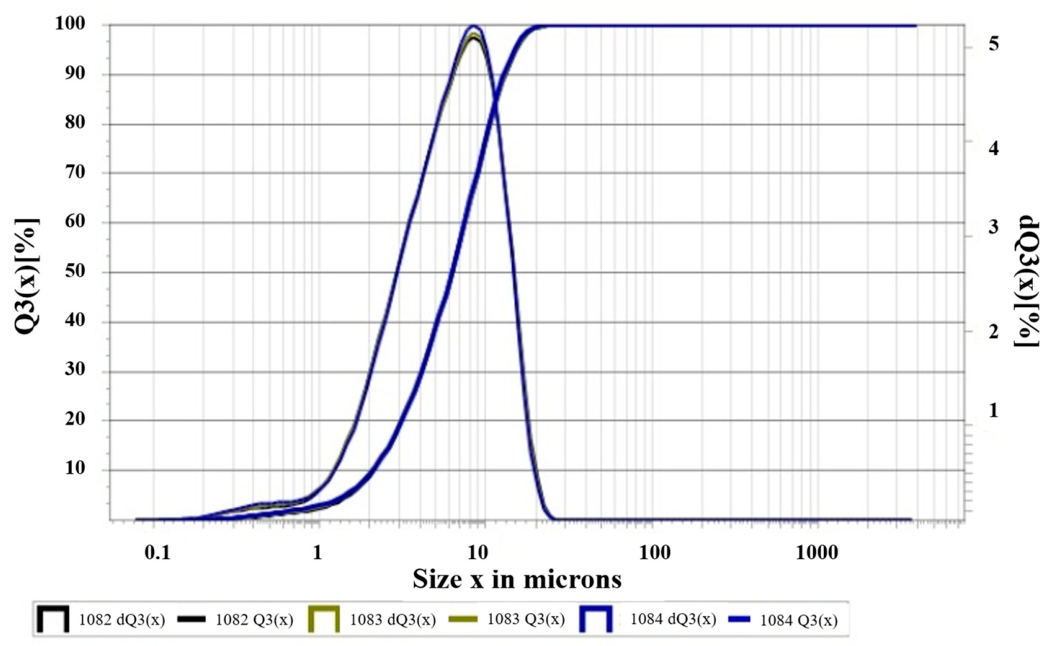
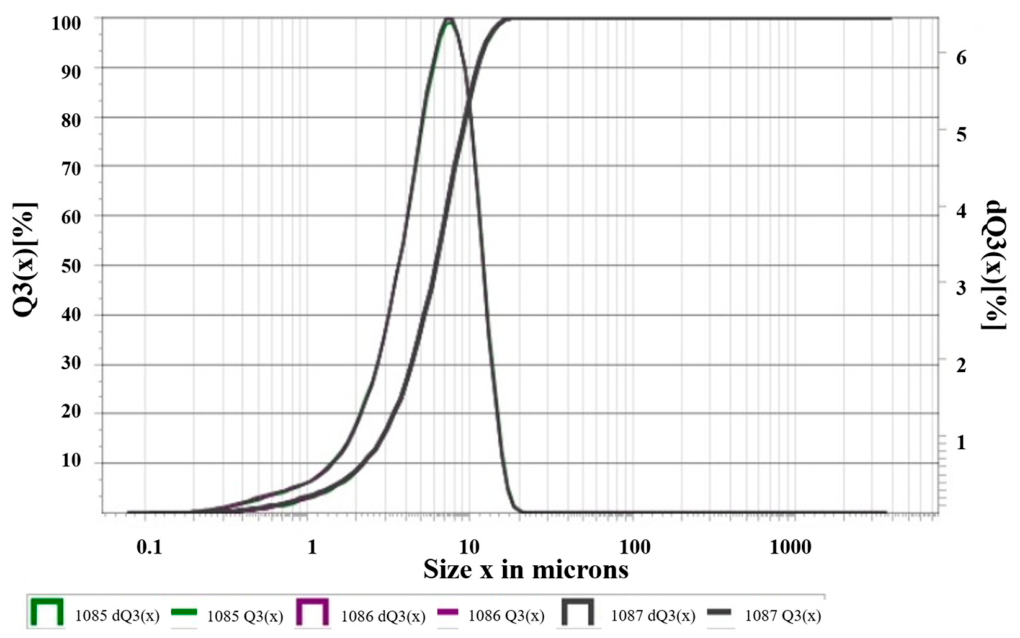
The results of the particle size analysis of the alloyed powders are presented in Figure 33 and Figure 34. The powder produced under the H1–M1–D1 condition exhibits a broad particle size distribution and contains a considerable number of agglomerates. The majority of the particles are concentrated within the medium and coarse size ranges, indicating the limited effectiveness of the preliminary powder processing prior to alloying. The formation of such a structure is associated with an insufficient degree of fragmentation of the original material and less efficient mechanical mixing during alloying.
In contrast, the powder produced under the H2–M2–D2 condition exhibits a narrower particle size distribution and a reduced degree of agglomeration. The majority of the particles are concentrated within a relatively narrow size range, indicating a higher degree of granulometric homogeneity. The formation of this structure can be attributed to the more complete hydrogenation and dehydrogenation processes, which enhanced material brittleness and improved the efficiency of subsequent milling and alloying.
The results of the X-ray diffraction (XRD) analysis of the alloyed powders are presented in Figure 35 and Figure 36. For the H1–M1–D1 sample, the diffraction pattern is dominated by reflections corresponding to the α-titanium phase with a hexagonal crystal structure. In addition, weak peaks associated with the β-titanium phase are observed, the formation of which is attributed to the presence of vanadium acting as a β-phase stabilizer. Furthermore, several reflections corresponding to the alloying constituents are detected, indicating incomplete redistribution of aluminum and vanadium throughout the powder volume.
The H2–M2–D2 sample exhibits a more ordered diffraction pattern. The principal phases identified are α-Ti and β-Ti, while the intensity of reflections associated with individual alloying constituents is reduced. No distinct diffraction peaks corresponding to elemental vanadium were identified. This may be attributed to the overlap of vanadium reflections with those of the β-Ti phase and/or to the limited detectability of vanadium as a separate phase after mechanical alloying. However, the present XRD data do not allow these possibilities to be distinguished unambiguously. This behavior indicates more effective interaction among the powder components and a higher degree of structural homogeneity. The absence of detectable reflections corresponding to the TiH2 hydride phase indicates effective dehydrogenation and the formation of a stable metallic structure within the detection limits of XRD.
The results of the scanning electron microscopy (SEM) analysis of the mechanically alloyed powder produced under the H1–M1–D1 processing condition are presented in Figure 37. The SEM image acquired at lower magnification (Figure 37a) reveals a pronounced heterogeneity in powder morphology. The material consists of agglomerates of various sizes formed through the consolidation of fine particles during the mechanical alloying process. In addition to several large agglomerates, a considerable number of fine particles are observed, uniformly distributed throughout the interparticle regions.
At higher magnification (Figure 37b), the highly developed surface morphology of the agglomerates becomes clearly visible. The agglomerates are covered with a fine particulate fraction, while the individual particles exhibit predominantly irregular shapes with relatively smooth boundaries and a well-developed surface topography. The high degree of agglomeration and the broad particle size range indicate the limited effectiveness of the preliminary powder preparation and the insufficient redistribution of alloying components during mechanical alloying. The resulting structure is characterized by noticeable morphological heterogeneity, which may hinder the achievement of a uniform distribution of alloying elements throughout the powder volume [16].
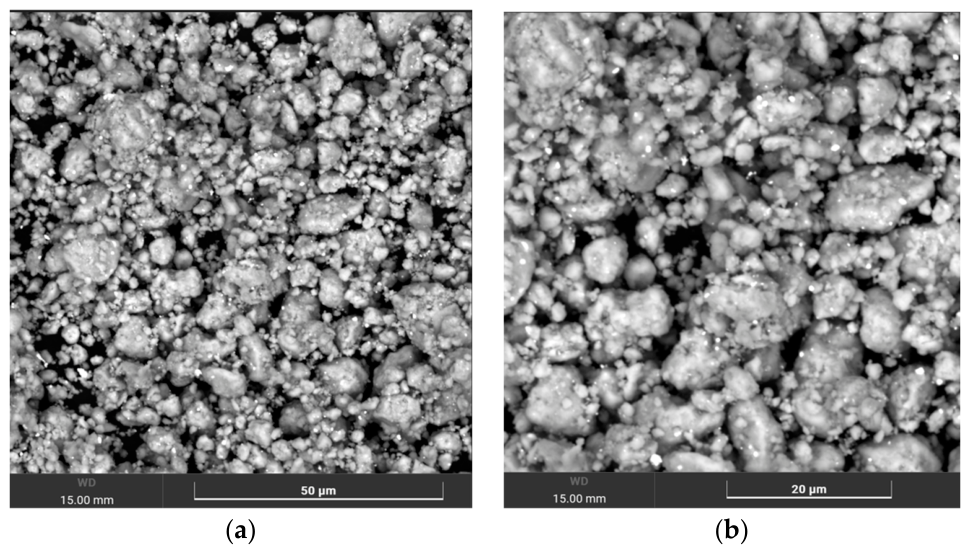
The results of the scanning electron microscopy (SEM) analysis of the mechanically alloyed powder produced under the H2–M2–D2 processing condition are presented in Figure 38. The SEM image acquired at lower magnification (Figure 38a) reveals a more homogeneous morphology compared with the H1–M1–D1 sample. The powder consists of particles and agglomerates of various sizes distributed relatively uniformly throughout the investigated area. In addition, the number of large agglomerates is reduced, and the overall powder structure appears more compact and homogeneous.
At higher magnification (Figure 38b), the well-developed surface morphology of the particles becomes clearly visible. A fine particulate fraction is uniformly distributed among the larger structural features. The particles exhibit predominantly irregular shapes with relatively smooth boundaries, indicating the intense mechanical action experienced during the alloying process. Compared with the H1–M1–D1 condition, a lower degree of agglomeration and a more uniform particle size distribution are observed, indicating more effective mechanical mixing and redistribution of the alloying constituents.
The SEM images indicate a relatively homogeneous morphology and provide favorable conditions for the uniform distribution of alloying elements throughout the powder volume. These observations are in good agreement with the EDS results and further confirm the effectiveness of the H2–M2–D2 processing condition for the production of mechanically alloyed Ti–6Al–4V powders.
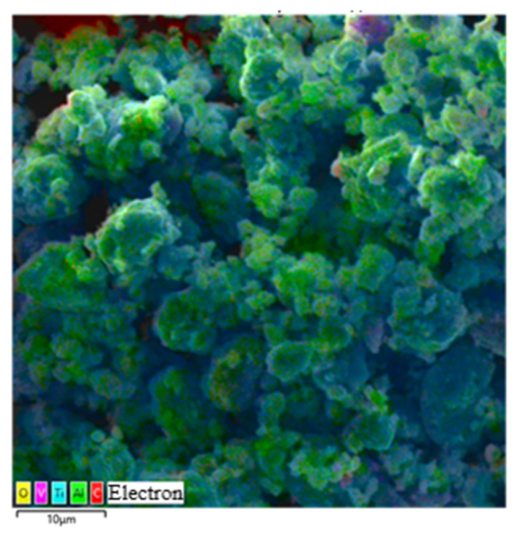
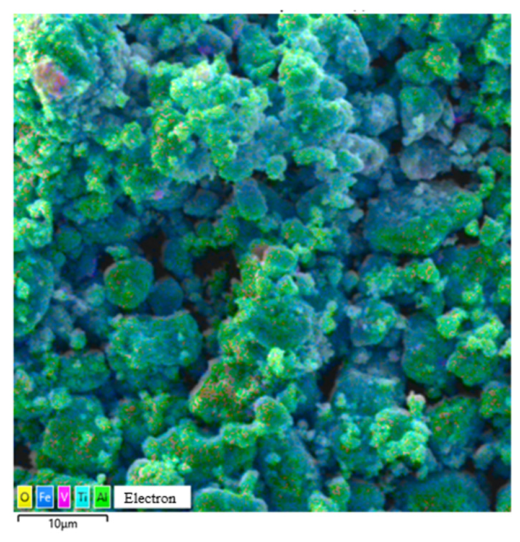
The results of the energy-dispersive spectroscopy (EDS) analysis are presented in Figure 39 and Figure 40. For the H1–M1–D1 condition, the distribution of aluminum and vanadium is non-uniform. The elemental distribution maps reveal localized regions enriched with the alloying elements, indicating an insufficient degree of their dispersion and mixing throughout the powder matrix.
In contrast, the H2–M2–D2 condition exhibits a significantly more homogeneous distribution of aluminum and vanadium. The elemental maps show the absence of pronounced segregation zones and a more uniform presence of the alloying constituents across the surfaces of the investigated particles. These findings indicate a more efficient mechanical alloying process and the formation of a powder with a relatively uniform elemental distribution.
Thus, the results of the particle size analysis, X-ray diffraction studies, and SEM and EDS characterization demonstrate that the H2–M2–D2 processing condition provides the most favorable route for the production of mechanically alloyed Ti–6Al–4V powders. This processing route promotes the formation of a more homogeneous particle size distribution, reduces the degree of agglomeration, enhances the uniform distribution of aluminum and vanadium, and contributes to the development of a stable powder structure. The obtained results confirm the effectiveness of the selected processing route and highlight its potential for further application in powder metallurgy technologies.

4. Discussion

The present study demonstrated that the properties of titanium powders produced from titanium sponge via the hydride–dehydride (HDH) process are governed by the combined effects of hydrogenation, mechanical milling, and dehydrogenation parameters. Variations in processing conditions significantly influence the particle size distribution, phase composition, particle morphology, and elemental distribution of the powders, which ultimately determine their suitability for subsequent alloying and powder metallurgy applications.
These observations are consistent with previous HDH studies demonstrating that the combined effects of hydrogenation, mechanical milling, and dehydrogenation govern the final powder characteristics. In particular, hydrogen-induced embrittlement promotes efficient fragmentation during milling, whereas the dehydrogenation stage governs restoration of the metallic α-Ti phase and influences the final powder morphology [21].
The results showed that hydrogenation under the H1 condition resulted in the formation of a two-phase structure consisting of the TiH2 hydride phase and residual α-titanium. The incomplete progression of the hydrogenation process limited the degree of material embrittlement and reduced the efficiency of subsequent milling. As a consequence, the powder obtained after dehydrogenation exhibited an increased tendency toward agglomeration and a heterogeneous particle morphology. These observations are supported by the results of particle size analysis as well as SEM and EDS characterization.
The limited embrittlement observed under the H1 condition is consistent with the incomplete formation of the TiH2 phase, which reduces the efficiency of subsequent fragmentation during milling. Similar behavior has been reported in previous HDH studies, where insufficient hydrogenation resulted in coarser particles and broader particle size distributions [25].
Increasing the hydrogenation temperature in the H2 condition promotes a more complete formation of the TiH2 hydride phase and facilitates the effective fragmentation of the titanium sponge structure [13,14]. Following dehydrogenation, the XRD patterns indicate restoration of the metallic α-titanium phase, with no detectable TiH2 reflections within the detection limits of the technique. The resulting powder exhibited a more uniform particle size distribution, a lower degree of agglomeration, and a uniform elemental distribution across the particle surfaces. Furthermore, this processing condition provides favorable prerequisites for subsequent mechanical alloying and the production of Ti–Al–V alloy powders.
The improved performance of the H2 processing route suggests that an intermediate hydrogenation temperature provides a favorable balance between hydride formation and structural stability. Previous studies have likewise reported that controlled hydrogenation enhances powder fragmentation while avoiding excessive refinement and agglomeration [26]. The present observations are also consistent with the findings of Zhang et al. [13] and Mei et al. [14], who reported that increasing the extent of TiH2 formation enhances subsequent milling efficiency by promoting hydrogen-induced embrittlement while maintaining favorable powder characteristics.
The fragmentation behavior observed in the present study can be explained by the hydrogen-induced embrittlement mechanism characteristic of the HDH process. During hydrogenation, the formation of the TiH2 phase promotes lattice expansion and the development of internal stresses, leading to crack initiation and propagation throughout the titanium sponge structure. Subsequent short-duration milling therefore preferentially exploits these brittle fracture paths, resulting in efficient particle fragmentation. Similar fragmentation mechanisms have been reported in previous HDH studies, where the extent of TiH2 formation was identified as the primary factor controlling milling efficiency and the resulting particle size distribution [13,14,21,26].
Among the investigated conditions, the H3 processing route resulted in the highest degree of hydrogenation and the formation of a highly dispersed powder. However, further increasing the hydrogenation temperature and the intensity of subsequent processing is accompanied by the formation of a substantial fraction of fine particles and dense agglomerates. Despite the relatively uniform elemental distribution observed by EDS and the effective dehydrogenation indicated by XRD analysis, further intensification of the processing conditions did not produce a significant improvement in phase composition compared with the H2 condition.
Although higher hydrogenation temperatures promoted greater fragmentation, the resulting finer particles possess a higher specific surface area and therefore exhibit an increased tendency toward agglomeration and surface oxidation. Similar trends have been reported for HDH titanium powders processed under more intensive hydrogenation conditions [26].
The results of mechanical alloying further confirmed the differences between the investigated processing conditions. Powders produced under the H1–M1–D1 condition were characterized by a high degree of agglomeration and a non-uniform distribution of aluminum and vanadium. In contrast, powders obtained under the H2–M2–D2 condition exhibited a more homogeneous particle size distribution, a lower tendency toward agglomeration, and a more uniform distribution of the alloying elements. The results of the X-ray diffraction analysis also indicated a more effective development of the Ti–Al–V alloy system when the H2–M2–D2 processing condition was employed.
The more homogeneous distribution of aluminum and vanadium obtained for the H2–M2–D2 condition is likely associated with improved particle fragmentation and mechanical activation during milling. The more uniform particle morphology obtained after HDH processing facilitates the redistribution of alloying elements during milling and promotes the formation of a mechanically alloyed powder mixture [25].
Thus, the comprehensive analysis of particle size distribution, phase composition, morphological characteristics, and elemental distribution demonstrated that the Experiment A3 (H2–M2–D2) condition provides the most favorable combination of structural and processing-related characteristics. This processing route produced titanium powders characterized by a stable metallic phase, a relatively uniform morphology, a low agglomeration tendency, and a uniform distribution of alloying elements following mechanical alloying. Therefore, among the investigated processing routes, the H2–M2–D2 condition exhibited the most favorable combination of structural characteristics for the production of a mechanically alloyed Ti–6Al–4V powder mixture from titanium sponge via the hydride–dehydride (HDH) process.
Overall, the present findings are consistent with the current understanding of the HDH process, in which hydrogen-induced embrittlement, particle fragmentation, dehydrogenation, and mechanical alloying collectively determine the final powder characteristics. The comparative evaluation of particle size distribution, phase composition, morphology, and elemental distribution demonstrated that, among the investigated processing routes, the H2–M2–D2 condition provided the most favorable balance of powder characteristics. These findings are consistent with previous HDH studies, highlighting that appropriate control of hydrogenation and dehydrogenation conditions plays a key role in obtaining titanium powders with characteristics favorable for subsequent mechanical alloying and further powder metallurgy applications [13,21,26].

5. Conclusions

In the present study, the influence of hydrogenation, mechanical milling, and dehydrogenation parameters on the formation of the structure and properties of titanium powders produced from titanium sponge via the hydride–dehydride (HDH) process was investigated.
It was established that increasing the hydrogenation temperature from the H1 to the H3 condition resulted in a progressive increase in the extent of TiH2 hydride phase formation and a corresponding reduction in particle size. The highest degree of powder dispersion was achieved under the H3 condition, whereas, among the investigated processing routes, the H2 condition provided the most favorable balance between the degree of hydrogenation and structural homogeneity.
The results of the X-ray diffraction analysis demonstrated that all investigated dehydrogenation conditions ensured the effective decomposition of the TiH2 hydride phase and the restoration of the metallic α-titanium phase. No detectable TiH2 reflections were observed in the XRD patterns of the dehydrogenated samples, indicating effective dehydrogenation within the detection limits of XRD.
Qualitative SEM observations indicated that the selected HDH processing conditions reduced the size of structural features and improved the morphological uniformity of the powders. Among the investigated processing routes, the H2–M2–D2 condition exhibited the most favorable combination of particle fineness and a reduced tendency toward agglomeration.
EDS analysis demonstrated a relatively uniform distribution of the detected elements and did not reveal detectable contamination or localized elemental segregation within the analyzed regions following hydrogenation and dehydrogenation.
It was demonstrated that the preliminary HDH treatment exerts a significant influence on the efficiency of subsequent mechanical alloying. Powders produced under the H2–M2–D2 condition exhibited a more homogeneous distribution of aluminum and vanadium compared with those obtained under the H1–M1–D1 condition.
The results of particle size analysis, X-ray diffraction, morphological characterization, and elemental distribution studies indicate that the H2–M2–D2 processing condition provides the most favorable combination of structural characteristics. This processing route enables the production of a mechanically alloyed Ti–6Al–4V powder mixture with a relatively homogeneous elemental distribution and therefore represents a promising processing route for further investigation in powder metallurgy applications.
In summary, the present study demonstrates the effectiveness of the hydride–dehydride (HDH) process for converting titanium sponge into titanium powders with controlled structural characteristics. The results show that appropriate selection of the HDH processing route enables tailoring of powder morphology, phase composition, particle size distribution, and elemental distribution, providing a promising basis for subsequent mechanical alloying and further powder metallurgy investigations.
The assessment of dehydrogenation and elemental distribution in the present study was based on XRD and EDS analyses, respectively. Quantitative determination of residual hydrogen, oxygen, and other interstitial elements, as well as technological powder characteristics such as flowability and apparent density, was beyond the scope of the present work and represents an important direction for future research.

Author Contributions

Conceptualization, N.M. and B.R.; methodology, N.S. and Z.A.; validation, M.A., B.R., and M.R.-G.; formal analysis, M.A. and M.R.-G.; investigation, N.S. and Z.A.; resources, M.A. and B.R.; data curation, N.S. and Z.A.; writing—original draft preparation, N.S.; writing—review and editing, N.S. and Z.A.; visualization, N.S.; supervision, Z.A.; project administration, N.M., Z.A. and M.R.-G.; funding acquisition, N.M. and B.R. All authors have read and agreed to the published version of the manuscript.

Funding

This research has been funded by the Committee of Science of the Ministry of Science and Higher Education of the Republic of Kazakhstan (Grant No. BR24992854).

Data Availability Statement

The original contributions presented in the study are included in this article; further inquiries can be directed to the corresponding author.

Conflicts of Interest

Author Bauyrzhan Rakhadilov was employed by the company PlasmaScience LLP. The remaining authors declare that the research was conducted in the absence of any commercial or financial relationships that could be construed as a potential conflict of interest.

Abbreviations

The following abbreviations are used in this manuscript:
HDHHydride–Dehydride Process
XRDX-ray Diffraction
SEMScanning Electron Microscopy
EDSEnergy-Dispersive Spectroscopy
TiH2Titanium Hydride
α-TiAlpha Titanium Phase
β-TiBeta Titanium Phase
rpmRevolutions per Minute
Ti–6Al–4VTitanium Alloy Containing 6 wt.% Aluminum and 4 wt.% Vanadium
H1, H2, H3Hydrogenation Conditions
M1, M2, M3Mechanical Milling Conditions
D1, D2, D3Dehydrogenation Conditions

References

  1. Nguyen, H.D.; Pramanik, A.; Basak, A.K.; Dong, Y.; Prakash, C.; Debnath, S.; Shankar, S.; Jawahir, I.S.; Dixit, S.; Buddhi, D. A Critical Review on Additive Manufacturing of Ti-6Al-4V Alloy: Microstructure and Mechanical Properties. J. Mater. Res. Technol. 2022, 18, 4641–4661. [Google Scholar] [CrossRef] [Scilit]
  2. Niinomi, M. Recent Research and Development in Titanium Alloys for Biomedical Applications and Healthcare Goods. Sci. Technol. Adv. Mater. 2003, 4, 445–454. [Google Scholar] [CrossRef] [Scilit]
  3. Hajra, R.N.; Roy, G.; Min, A.S.; Lee, H.; Kim, J.H. Comparative Review of the Microstructural and Mechanical Properties of Ti-6Al-4V Fabricated via Wrought and Powder Metallurgy Processes. J. Powder Mater. 2024, 31, 365–373. [Google Scholar] [CrossRef] [Scilit]
  4. Dunstan, M.K.; Simpson, B.; Sun, P.; Koopman, M.; Fang, Z.Z. Effects of Process Gas Pressure and Type on Oxygen Content in Sintered Titanium Produced Using Jet-Milled Titanium Hydride Powders. JOM 2020, 72, 1286–1291. [Google Scholar] [CrossRef] [Scilit]
  5. Wang, Z.; Tan, Y.; Li, N. Powder Metallurgy of Titanium Alloys: A Brief Review. J. Alloys Compd. 2023, 965, 171030. [Google Scholar] [CrossRef] [Scilit]
  6. Anil Kumar, V.; Gupta, R.K.; Prasad, M.J.N.V.; Narayana Murty, S.V.S. Recent Advances in Processing of Titanium Alloys and Titanium Aluminides for Space Applications: A Review. J. Mater. Res. 2021, 36, 689–716. [Google Scholar] [CrossRef] [Scilit]
  7. Mellor, I.; Doughty, G. Novel and Emerging Routes for Titanium Powder Production—An Overview. Key Eng. Mater. 2016, 704, 271–281. [Google Scholar] [CrossRef] [Scilit]
  8. Zhang, C.; Yang, F.; Chen, C.; Guo, Z. The Microstructure and Mechanical Properties of Extra Low Interstitials (ELI) Ti-6Al-4V Alloys Manufactured from Hydride–Dehydride (HDH) Powder. J. Alloys Compd. 2021, 873, 159757. [Google Scholar] [CrossRef] [Scilit]
  9. Okoro, A.M.; Lephuthing, S.S.; Oke, S.R.; Falodun, O.E.; Awotunde, M.A.; Olubambi, P.A. A Review of Spark Plasma Sintering of Carbon Nanotubes Reinforced Titanium-Based Nanocomposites: Fabrication, Densification, and Mechanical Properties. JOM 2019, 71, 567–584. [Google Scholar] [CrossRef] [Scilit]
  10. Senkevich, K.S. Influence of Hydrogen on Atomized Titanium Powders Sintering. Met. Mater. Trans. A 2018, 49, 2990–2998. [Google Scholar] [CrossRef] [Scilit]
  11. Kumar, N.; Bharti, A. Physical and Mechanical Properties of Powder-Metallurgy-Processed Titanium Alloys and Composites: A Comparative Analysis. Met. Sci. Heat Treat. 2022, 64, 245–251. [Google Scholar] [CrossRef] [Scilit]
  12. Qian, M.; Froes, F.H. Titanium Powder Metallurgy; Elsevier: Amsterdam, The Netherlands, 2015; ISBN 978-0-12-800054-0. [Google Scholar]
  13. Zhang, H.; Wang, C.; Guo, J.; Li, W.; Cheng, C.; Xiang, N.; Huang, T.; Niu, H.; Zhang, D.; Chen, F. Phase Transformation, Microstructural Evolution and Tensile Properties of a TiH2-Based Powder Metallurgy Pure Titanium. Metals 2024, 14, 1218. [Google Scholar] [CrossRef] [Scilit]
  14. Mei, L.; Wang, C.; Wei, Y.; Xiao, S.; Chen, Y. Effects of Hydrogen Content on Powder Metallurgy Characteristic of Titanium Hydrides. Int. J. Hydrogen Energy 2018, 43, 7102–7107. [Google Scholar] [CrossRef] [Scilit]
  15. Alavizadeh, S.A.R.; Shahbaz, M.; Kavanlouei, M.; Kim, S.S. The Effect of Mechanical Milling for Enhanced Recycling Ti6Al4V Powder from Machining Chips. Sci. Rep. 2025, 15, 444. [Google Scholar] [CrossRef] [Scilit] [PubMed]
  16. Pascu, C.I.; Nicolicescu, C.; Cioateră, N.; Gheorghe, Ștefan; Geonea, I.; Didu, A. Characterization of Titanium Alloy Obtained by Powder Metallurgy. Materials 2022, 15, 2057. [Google Scholar] [CrossRef] [Scilit] [PubMed]
  17. Grinyaev, K.V.; Ditenberg, I.A.; Korchagin, M.A.; Melnikov, V.V.; Pinzhin, Y.P.; Smirnov, I.V.; Tyumentsev, A.N. A Study of the Morphology, Microstructure, and Microhardness of Titanium Powder Depending on the Mechanical Activation Time. AIP Conf. Proc. 2017, 1909, 020065. [Google Scholar] [CrossRef] [Scilit]
  18. Wu, Z.; Rollett, A.D.; Mostafaei, A. Fatigue Behavior of Low-Cost, Non-Spherical Ti-6Al-4V Powder Processed via Laser Powder Bed Fusion. Int. J. Adv. Manuf. Technol. 2025, 137, 5177–5183. [Google Scholar] [CrossRef] [Scilit]
  19. Singh, P.; Abhash, A.; Yadav, B.N.; Shafeeq, M.; Singh, I.B.; Mondal, D.P. Effect of Milling Time on Powder Characteristics and Mechanical Performance of Ti4wt%Al Alloy. Powder Technol. 2019, 342, 275–287. [Google Scholar] [CrossRef] [Scilit]
  20. Chen, D.; Liu, B.; Xu, W.; Zhang, C.; Guo, E.; Lu, J.; Sun, G.; Pan, Y.; Zhang, J.; Lu, X. Effect of Particle Morphology on the Flowability of HDH Ti Powders Treated by High Temperature Ball Milling. Adv. Powder Technol. 2022, 33, 103803. [Google Scholar] [CrossRef] [Scilit]
  21. Fang, Z.Z.; Paramore, J.D.; Sun, P.; Chandran, K.S.R.; Zhang, Y.; Xia, Y.; Cao, F.; Koopman, M.; Free, M. Powder Metallurgy of Titanium—Past, Present, and Future. Int. Mater. Rev. 2018, 63, 407–459. [Google Scholar] [CrossRef] [Scilit]
  22. Dong, Y.P.; Li, Y.L.; Zhou, S.Y.; Zhou, Y.H.; Dargusch, M.S.; Peng, H.X.; Yan, M. Cost-Affordable Ti-6Al-4V for Additive Manufacturing: Powder Modification, Compositional Modulation and Laser in-Situ Alloying. Addit. Manuf. 2021, 37, 101699. [Google Scholar] [CrossRef] [Scilit]
  23. Guo, R.; Xu, L.; Wu, J.; Yang, R.; Zong, B.Y. Microstructural Evolution and Mechanical Properties of Powder Metallurgy Ti–6Al–4V Alloy Based on Heat Response. Mater. Sci. Eng. A 2015, 639, 327–334. [Google Scholar] [CrossRef] [Scilit]
  24. Liu, S.; Zhang, Z.; Xiao, S.; Chen, Y. Effect of Hydrogenation on Microstructure Evolution, Mechanical and Electrochemical Properties of Pure Titanium. J. Alloys Compd. 2019, 781, 1139–1149. [Google Scholar] [CrossRef] [Scilit]
  25. Bhosle, V.; Baburaj, E.G.; Miranova, M.; Salama, K. Dehydrogenation of TiH2. Mater. Sci. Eng. A 2003, 356, 190–199. [Google Scholar] [CrossRef] [Scilit]
  26. Chen, T.; Suryanarayana, C.; Yang, C. Advanced Titanium Materials Processed from Titanium Hydride Powder. Powder Technol. 2023, 423, 118504. [Google Scholar] [CrossRef] [Scilit]
Figure 1. Appearance of the initial titanium sponge.
Metals 16 00851 g001
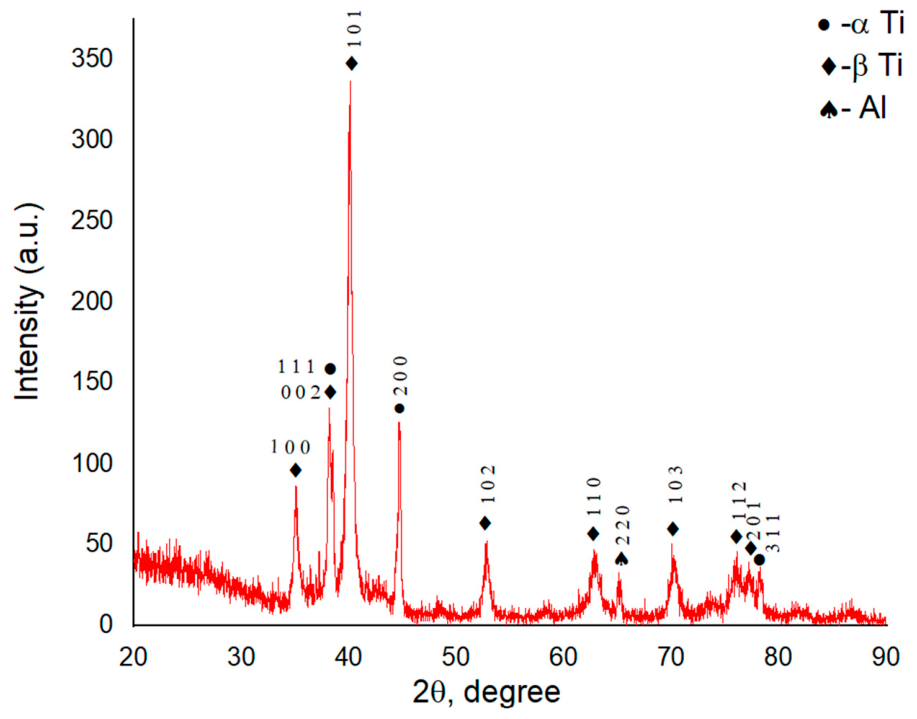
Figure 2. Schematic representation of the HDH process and subsequent mechanical alloying for the production of alloyed titanium powders. 1—Hydrogen source; 2—gas supply system; 3—tubular furnace (hydrogenation reactor); 4—quartz reaction tube; 5—titanium sponge; 6—container with hydride powder; 7—mechanical milling unit operating under an inert atmosphere; 8—planetary ball mill for mechanical alloying; 9—sieving unit; 10—final alloyed powder material.
Metals 16 00851 g002
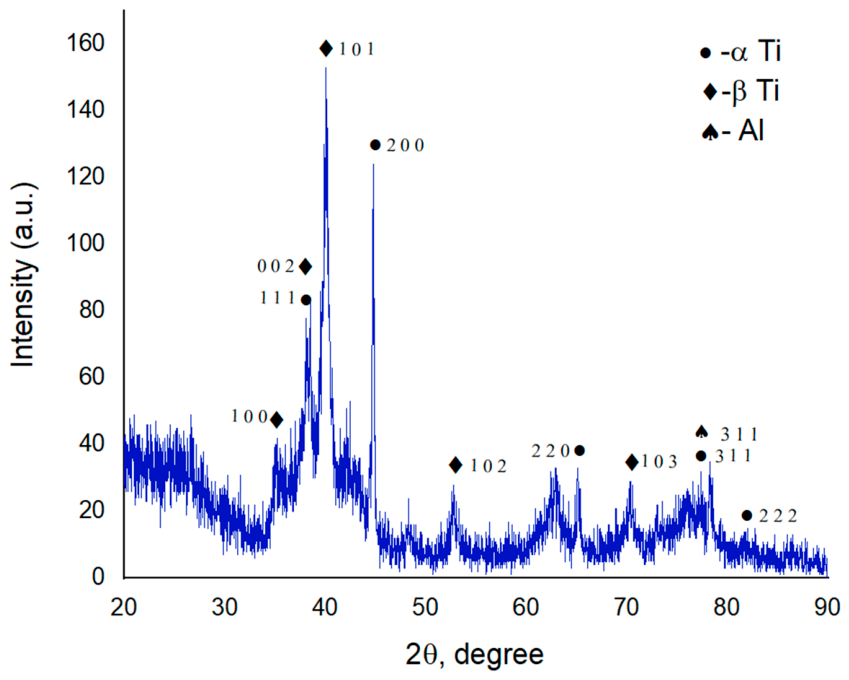
Figure 3. Particle size distribution of the as-received Grade 0 titanium sponge.
Metals 16 00851 g003
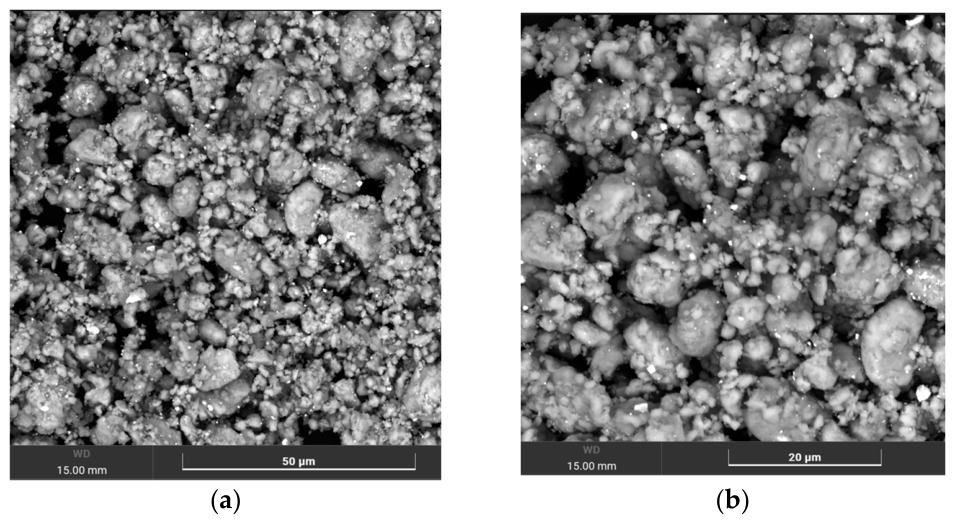
Figure 4. Particle size distribution of hydrogenated titanium sponge obtained under the H1 processing condition.
Metals 16 00851 g004
Figure 5. Particle size distribution of hydrogenated titanium sponge obtained under the H2 processing condition.
Metals 16 00851 g005
Figure 6. Particle size distribution of hydrogenated titanium sponge obtained under the H3 processing condition.
Metals 16 00851 g006
Figure 7. X-ray diffraction pattern of titanium sponge hydrogenated under the H1 processing condition.
Metals 16 00851 g007
Figure 8. X-ray diffraction pattern of titanium sponge hydrogenated under the H2 processing condition.
Metals 16 00851 g008
Figure 9. X-ray diffraction pattern of titanium sponge hydrogenated under the H3 processing condition.
Metals 16 00851 g009
Figure 10. SEM images of hydrogenated titanium sponge produced under the H1 processing condition. (a) Magnification ×500, scale bar 50 μm; (b) Magnification ×1000, scale bar 20 μm.
Metals 16 00851 g010
Figure 11. Results of the EDS analysis of the surface of hydrogenated titanium under the H1 processing condition. Titanium is shown in green.
Metals 16 00851 g011
Figure 12. SEM images of hydrogenated titanium sponge produced under the H2 processing condition. (a) Magnification ×500, scale bar 50 μm; (b) Magnification ×1000, scale bar 20 μm.
Metals 16 00851 g012
Figure 13. Results of the EDS analysis of the surface of hydrogenated titanium under the H2 processing condition. Titanium is shown in red.
Metals 16 00851 g013
Figure 14. SEM images of hydrogenated titanium sponge produced under the H3 processing condition. (a) Magnification ×500, scale bar 50 μm; (b) Magnification ×1000, scale bar 20 μm.
Metals 16 00851 g014
Figure 15. Results of the EDS analysis of the surface of hydrogenated titanium under the H3 processing condition. The elemental maps correspond to iron (dark blue), oxygen (yellow), carbon (red), titanium (blue), and the electron image (gray).
Metals 16 00851 g015
Figure 16. X-ray diffraction pattern of the titanium powder obtained under the H1–M1–D1 processing condition after dehydrogenation.
Metals 16 00851 g016
Figure 17. X-ray diffraction pattern of the titanium powder obtained under the H1–M1–D2 processing condition after dehydrogenation.
Metals 16 00851 g017
Figure 18. X-ray diffraction pattern of the titanium powder obtained under the H2–M2–D2 processing condition after hydrogenation, milling, and dehydrogenation.
Metals 16 00851 g018
Figure 19. X-ray diffraction pattern of the titanium powder obtained under the H2–M2–D3 processing condition after hydrogenation, milling, and dehydrogenation.
Metals 16 00851 g019
Figure 20. X-ray diffraction pattern of the titanium powder obtained under the H3–M3–D3 processing condition after hydrogenation, milling, and dehydrogenation.
Metals 16 00851 g020
Figure 21. SEM morphology of the titanium powder obtained under the H1–M1–D1 processing condition after dehydrogenation. (a) Magnification ×500, scale bar 50 μm; (b) Magnification ×1000, scale bar 20 μm.
Metals 16 00851 g021
Figure 22. Results of the spot EDS analysis of the surface of titanium powder after hydrogenation, milling, and dehydrogenation under the H1–M1–D1 processing condition. The elemental maps correspond to oxygen (blue), iron (green), carbon (bright green), titanium (red), and the electron image (gray).
Metals 16 00851 g022
Figure 23. SEM morphology of the titanium powder obtained under the H1–M1–D2 processing condition after dehydrogenation. (a) Magnification ×500, scale bar 50 μm; (b) Magnification ×1000, scale bar 20 μm.
Metals 16 00851 g023
Figure 24. Results of the spot EDS analysis of the surface of titanium powder after hydrogenation, milling, and dehydrogenation under the H1–M1–D2 processing condition. Titanium is shown in red.
Metals 16 00851 g024
Figure 25. SEM morphology of the titanium powder obtained under the H2–M2–D2 processing condition after dehydrogenation. (a) Magnification ×1000, scale bar 20 μm; (b) Magnification ×1000, scale bar 20 μm.
Metals 16 00851 g025
Figure 26. Results of the spot EDS analysis of the surface of titanium powder after hydrogenation, milling, and dehydrogenation under the H2–M2–D2 processing condition. Titanium is shown in red.
Metals 16 00851 g026
Figure 27. SEM morphology of the titanium powder obtained under the H2–M2–D3 processing condition after dehydrogenation. (a) Magnification ×1000, scale bar 20 μm; (b) Magnification ×1500, scale bar 20 μm.
Metals 16 00851 g027
Figure 28. Results of the spot EDS analysis of the surface of titanium powder after hydrogenation, milling, and dehydrogenation under the H2–M2–D3 processing condition. The elemental maps correspond to oxygen (green), titanium (red), and the electron image (gray).
Metals 16 00851 g028
Figure 29. SEM morphology of the titanium powder obtained under the H3–M3–D3 processing condition after dehydrogenation. (a) Magnification ×1000, scale bar 20 μm; (b) Magnification ×1500, scale bar 20 μm.
Metals 16 00851 g029
Figure 30. Results of the spot EDS analysis of the surface of titanium powder after hydrogenation, milling, and dehydrogenation under the H3–M3–D3 processing condition. Titanium is shown in red.
Metals 16 00851 g030
Figure 31. Particle size distribution of the aluminum powder determined by laser particle size analysis.
Metals 16 00851 g031
Figure 32. Particle size distribution of the vanadium powder determined by laser particle size analysis.
Metals 16 00851 g032
Figure 33. Particle size distribution of the Ti–6Al–4V powder obtained from the H1–M1–D1 titanium powder.
Metals 16 00851 g033
Figure 34. Particle size distribution of the Ti–6Al–4V powder obtained from the H2–M2–D2 titanium powder.
Metals 16 00851 g034
Figure 35. X-ray diffraction pattern of the Ti–6Al–4V powder produced from the H1–M1–D1 titanium powder.
Metals 16 00851 g035
Figure 36. X-ray diffraction pattern of the Ti–6Al–4V powder produced from the H2–M2–D2 titanium powder.
Metals 16 00851 g036
Figure 37. SEM images of the alloyed powder obtained under the H1–M1–D1 processing condition. (a) Magnification ×500, scale bar 50 μm; (b) Magnification ×1500, scale bar 20 μm.
Metals 16 00851 g037
Figure 38. SEM images of the alloyed powder obtained under the H2–M2–D2 processing condition. (a) Magnification ×500, scale bar 50 μm; (b) Magnification ×1500, scale bar 20 μm.
Metals 16 00851 g038
Figure 39. EDS analysis of the alloyed powder obtained under the H1–M1–D1 processing condition. The elemental maps correspond to oxygen (yellow), vanadium (purple), titanium (blue), aluminum (green), carbon (red), and the electron image (gray).
Metals 16 00851 g039
Figure 40. EDS analysis of the alloyed powder obtained under the H2–M2–D2 processing condition. The elemental maps correspond to oxygen (yellow), iron (dark blue), vanadium (purple), titanium (blue), aluminum (green), and the electron image (gray).
Metals 16 00851 g040
Table 1. Hydrogenation Conditions Used in the Study.
Condition CodeTemperature (°C)Time (h)
H1350–4502
H2450–5502
H3550–6502
Table 2. Mechanical Milling Conditions Used in the Study.
Condition CodeRotational Speed (rpm)Milling Time (min)
M135015
M225010
M315010
Table 3. Dehydrogenation Conditions Used in the Study.
Condition CodeTemperature (°C)Time (h)
D17503.0
D28503.25
D39503.5
Table 4. Experimental matrix used for the HDH processing study.
ExperimentHydrogenationMillingDehydrogenation
A1H1M1D1
A2H1M1D2
A3H2M2D2
A4H2M2D3
A5H3M3D3
Disclaimer/Publisher’s Note: The statements, opinions and data contained in all publications are solely those of the individual author(s) and contributor(s) and not of MDPI and/or the editor(s). MDPI and/or the editor(s) disclaim responsibility for any injury to people or property resulting from any ideas, methods, instructions or products referred to in the content.