Thermodynamic and Experimental Study of Combined Sulfation Roasting of Copper Sulfide Concentrates
 , , , and
Abstract
1. Introduction
2. Materials and Methods
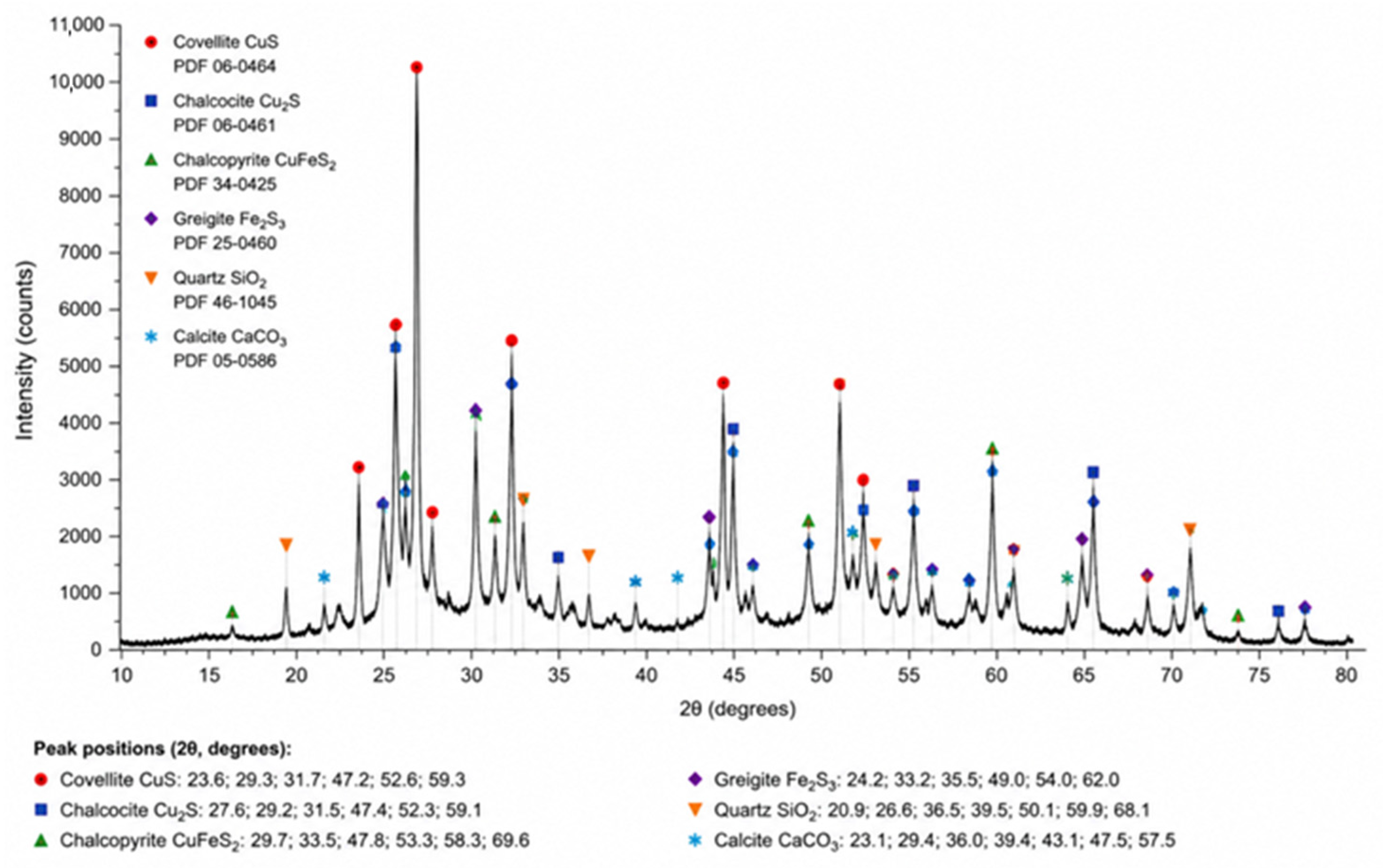
2.1. Feedstock Characteristics
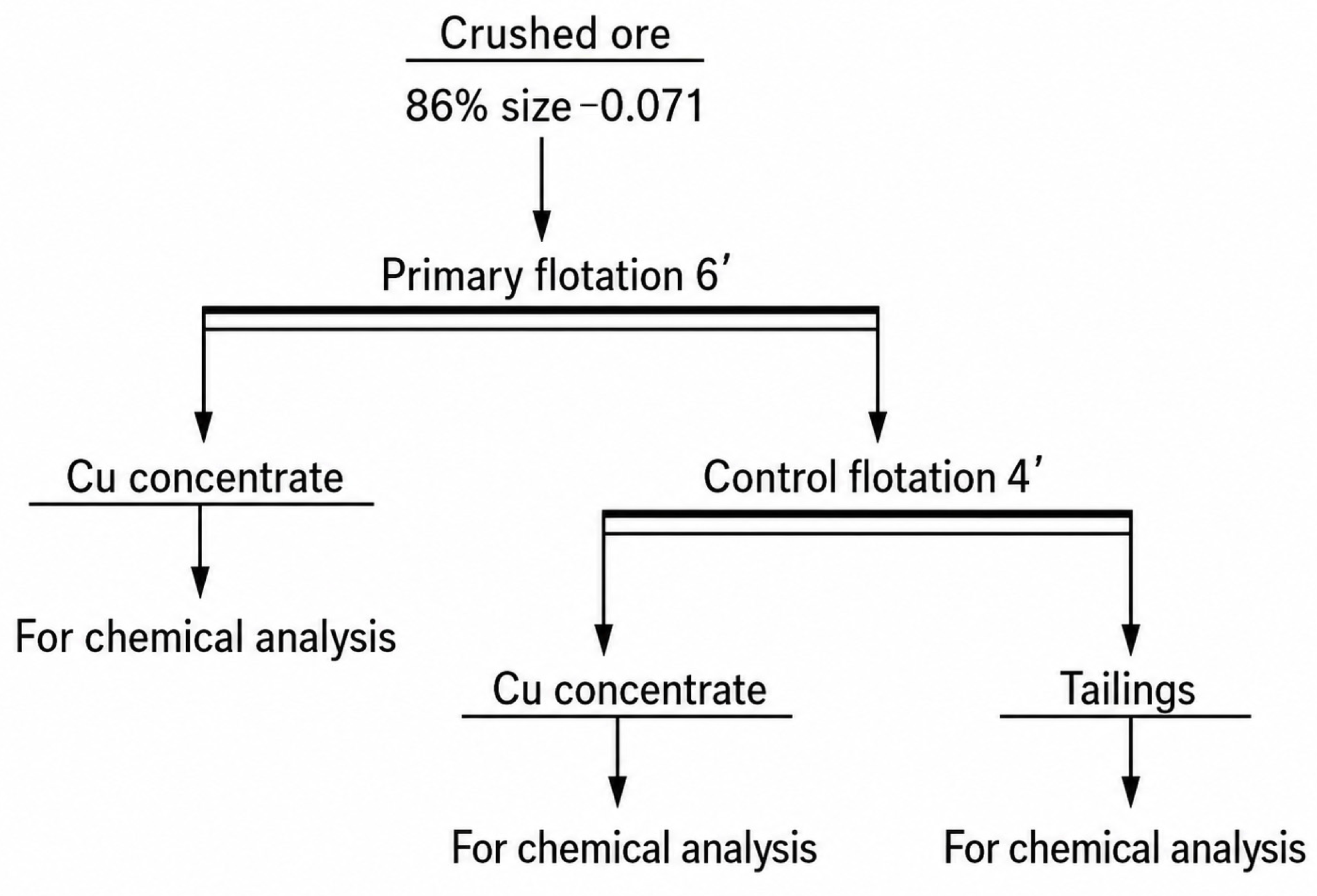
2.2. Flotation Enrichment of the Ore
2.3. Preparation of the Batch and Granulation
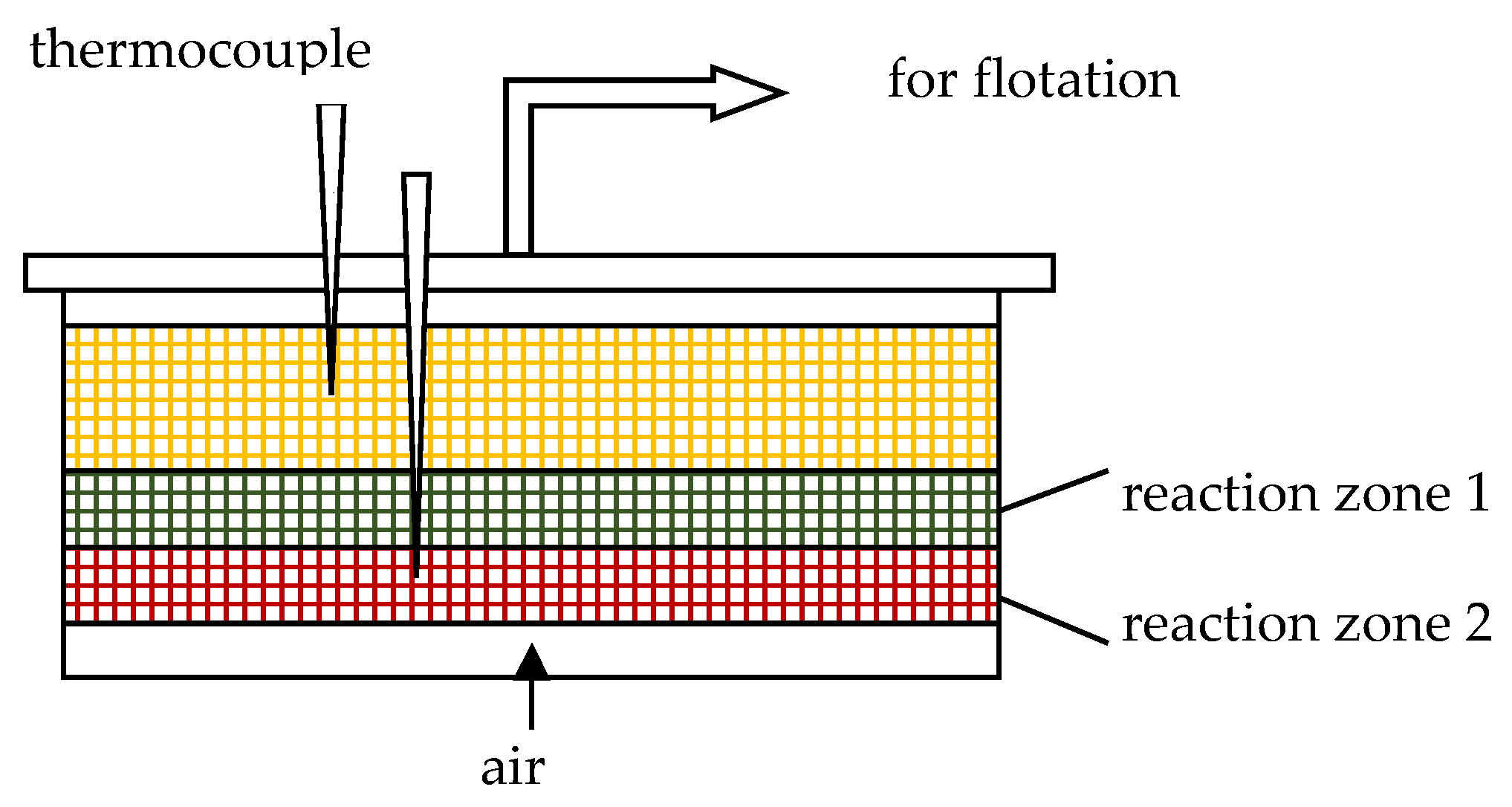
2.4. Oxidative–Sulfatizing Roasting
2.5. Leaching of Cinder and Collection of Gaseous Products
2.6. Analytical Methods
3. Results
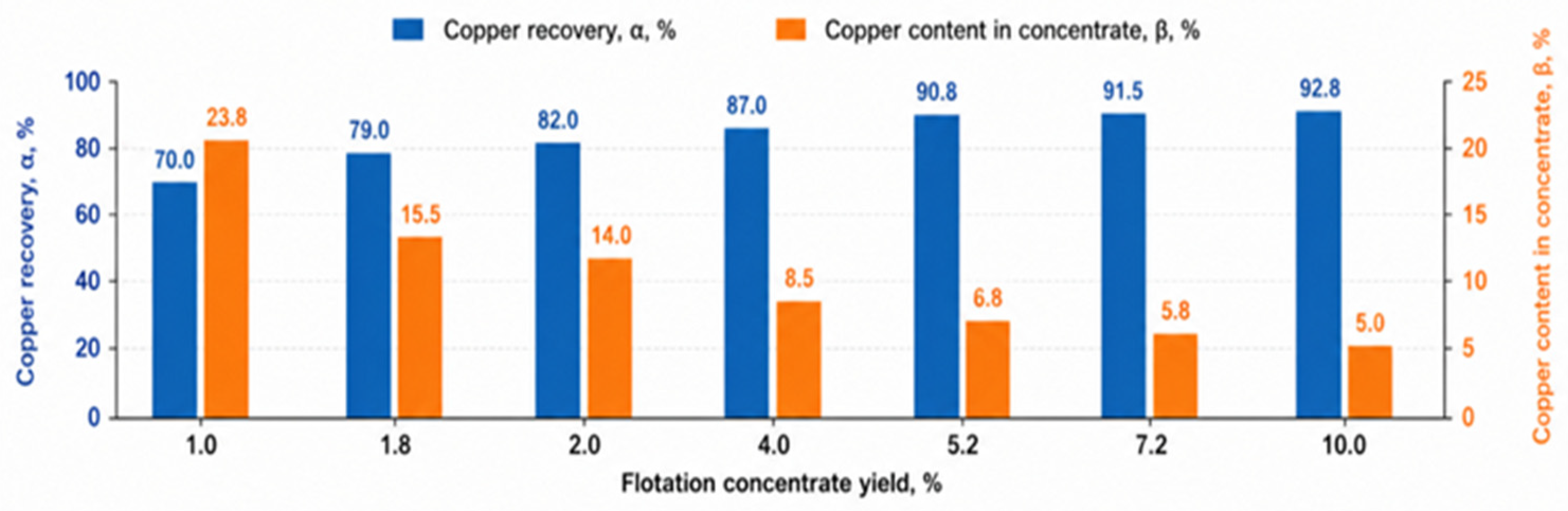
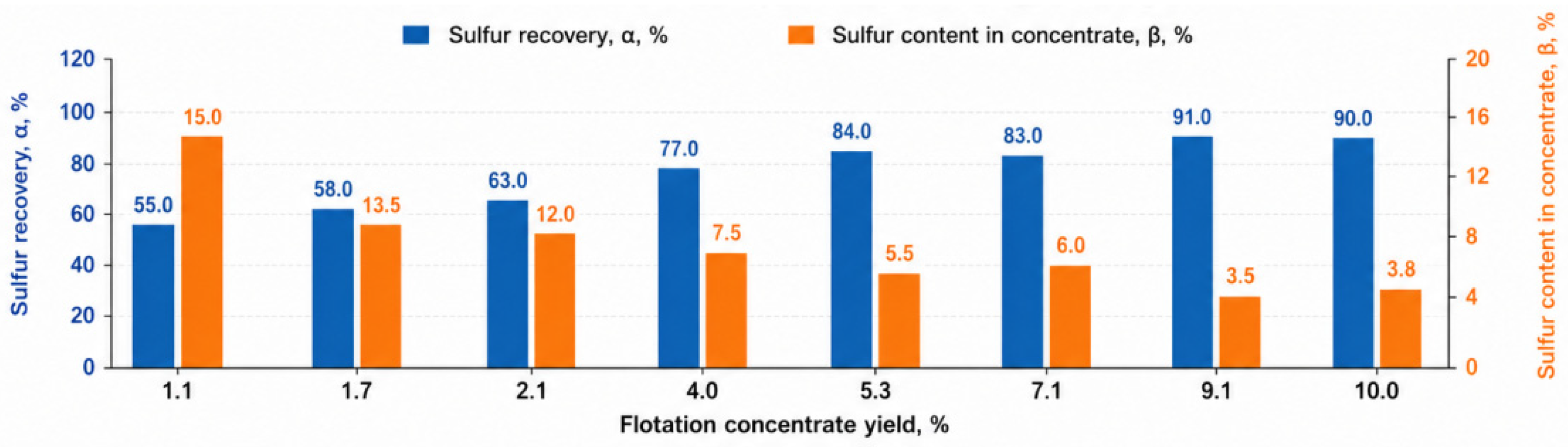
3.1. Flotation Beneficiation Results
3.2. Thermodynamic Analysis of Sulfation Reactions with Ammonium Hydrosulfate (Zone 1)
3.3. Thermodynamic Analysis of Oxidative Roasting Reactions (Zone 2)
3.4. Calculation of the Heat Balance and Sulfur Distribution by Zone
3.5. Results of Oxidative–Sulfatizing Roasting
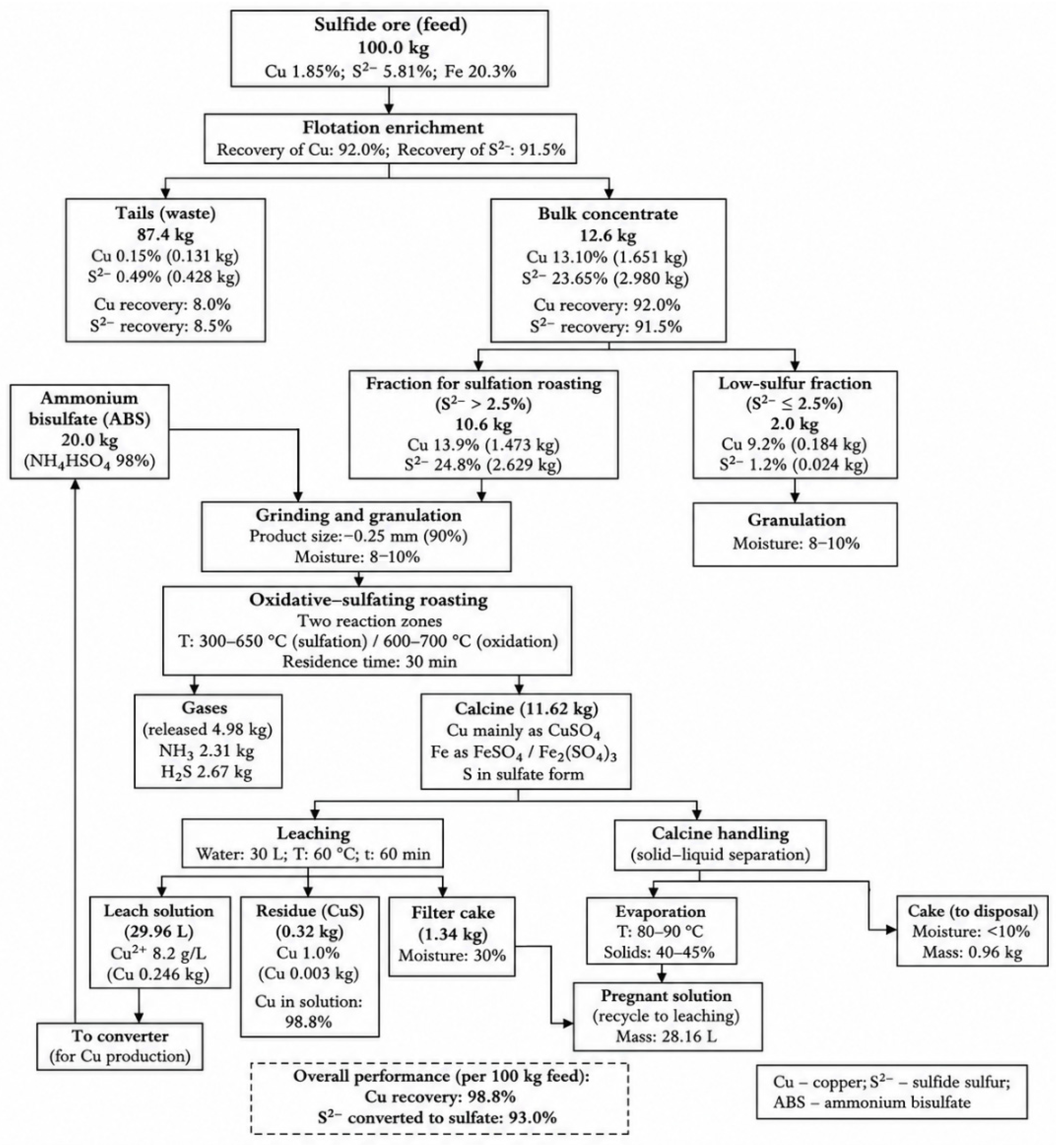
3.6. Leaching of Cinder and Closed Reagent Cycle
4. Discussion
4.1. The Place of the Combined Sulfation Method Among Known Approaches
4.2. The Principle of Energetic Coupling and Its Rationale (Figure 2)
4.3. Significance and Practical Applicability of Calculated Dependencies
4.4. Interpretation of Firing Results and the Role of the Filter Layer
4.5. Closed Reagent Cycle as a Factor in Economic Efficiency
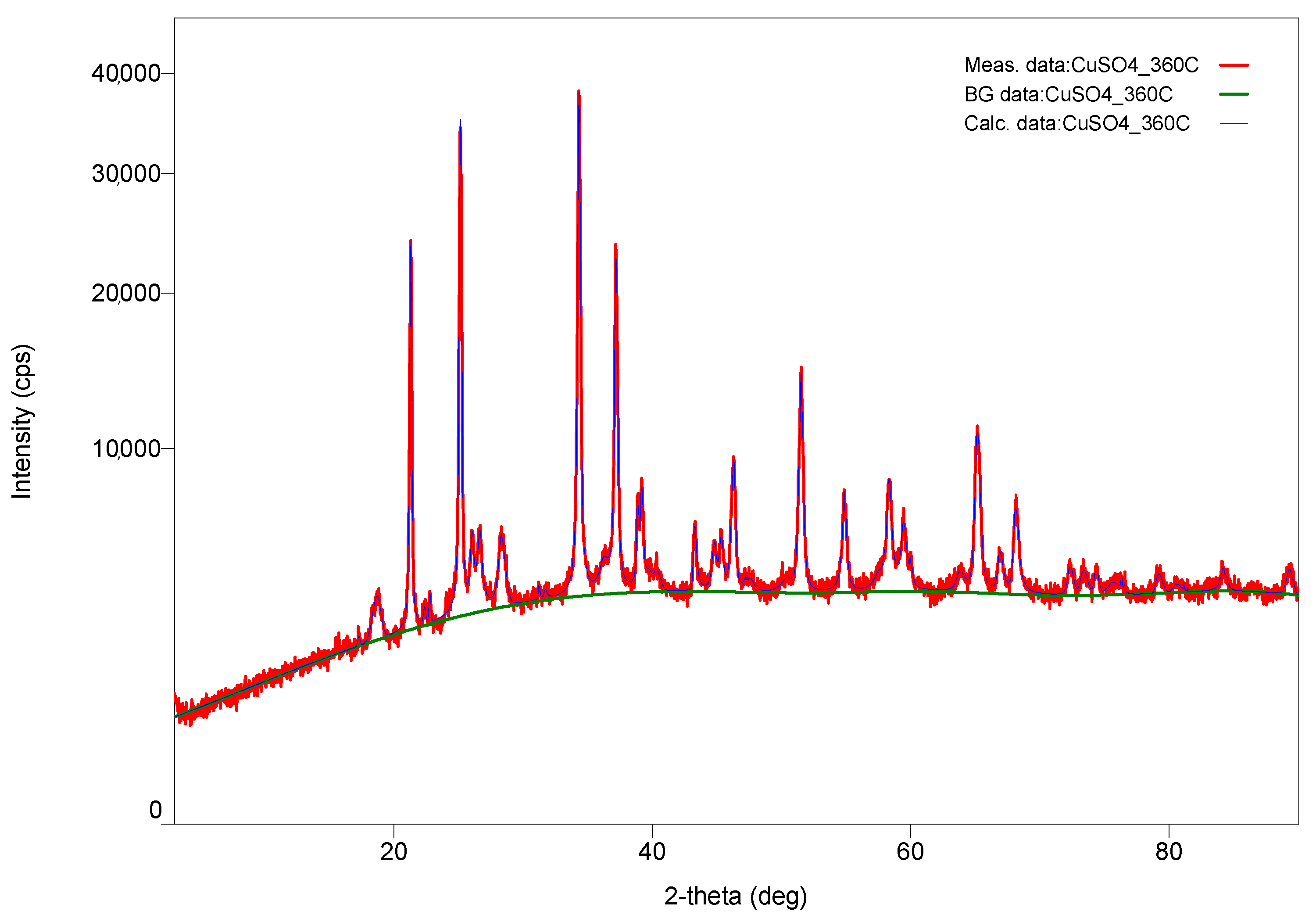
4.6. Characteristics of the Final Product

| Data set name | a (A) | b (A) | c (A) | alpha (deg) | beta (deg) | gamma (deg) |
| CuSO4_360C | 8.400737 | 6.699120 | 4.836656 | 90.000000 | 90.000000 | 90.000000 |
| CuSO4_360C | 5.161278 | 5.029501 | 7.562220 | 108.400002 | 108.599998 | 90.930000 |
| Phase name | a (A) | b (A) | c (A) | alpha (deg) | beta (deg) | gamma (deg) |
| Copper Sulfate | 8.400737 | 6.699120 | 4.836656 | 90.000000 | 90.000000 | 90.000000 |
| Poitevinite, syn | 5.161278 | 5.029501 | 7.562220 | 108.400002 | 108.599998 | 90.930000 |
5. Conclusions
- A combined method for the sulfation of low-grade copper sulfide concentrates using ammonium hydrogen sulfate has been developed and experimentally tested; it is based on the energetic coupling of the endothermic sulfation stage and the exothermic oxidation stage of residual sulfides. The proposed approach enables control of the process’s thermal regime without the need for additional external heat input.
- Thermodynamic modeling demonstrated that the reactions between sulfide minerals and ammonium hydrogen sulfate are thermodynamically favorable in the 300–650 °C range, whereas the subsequent oxidation of residual sulfides is accompanied by significant heat release. For a concentrate containing 5.81% S2−, the total thermal effect was +2.864 kcal/100 g for sulfation and −31.795 kcal/100 g for oxidation, confirming the feasibility of offsetting the heat requirements of the endothermic stage using the process’s internal heat resources.
- Based on thermodynamic analysis, analytical relationships were developed to calculate the distribution of sulfide sulfur between the sulfation and oxidation zones, as well as the ammonium hydrogen sulfate consumption. Experimental verification demonstrated good agreement between calculated and actual roasting temperatures: at sulfur contents of 2.5%, 5.81%, and 10%, the maximum process temperatures were 652, 647, and 643 °C, respectively.
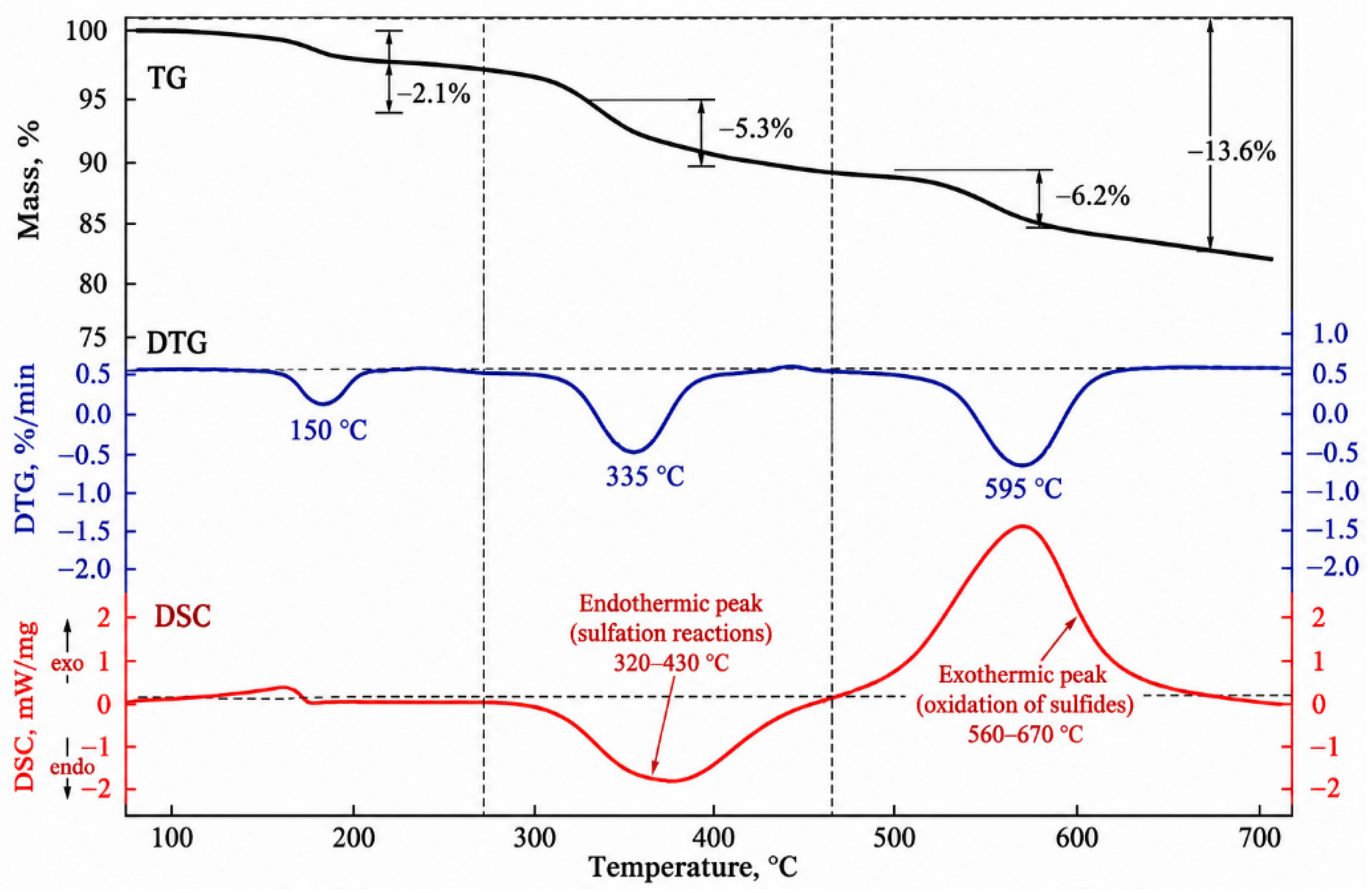
- X-ray phase analysis of the calcination products confirmed the formation of crystalline copper sulfate (CuSO4)—the primary target phase of the process—at a temperature as low as 360 °C. Thermal analysis (TG–DTG–DSC) revealed an endothermic sulfation effect in the 320–430 °C range and a subsequent exothermic sulfide oxidation effect at 560–670 °C, experimentally confirming the sequential occurrence of two interconnected process stages.
- Flotation beneficiation of the feed ore yielded a concentrate with a copper recovery of up to 92%, while subsequent combined sulfatizing roasting preserved the product’s high reactivity for hydrometallurgical copper recovery. Throughout the process, the filter bed maintained gas permeability, and no granule sintering was observed.
- The results obtained confirm the potential of the combined sulfation method for processing low-grade copper sulfide concentrates and lay the foundation for developing an energy-efficient technology featuring an autogenous thermal regime, internal regeneration of ammonium hydrogen sulfate, and a closed-loop reagent cycle.
Author Contributions
Funding
Data Availability Statement
Conflicts of Interest
References
- Ju, J.; Feng, Y.; Li, H.; Xu, C.; Xue, Z.; Wang, B. Extraction of Valuable Metals from Minerals and Industrial Solid Wastes via the Ammonium Sulfate Roasting Process: A Systematic Review. Chem. Eng. J. 2023, 457, 141197. [Google Scholar] [CrossRef]
- Watling, H.R. Review of Biohydrometallurgical Metals Extraction from Polymetallic Mineral Resources. Hydrometallurgy 2014, 140, 163–180. [Google Scholar] [CrossRef]
- Ozer, M.; Acma, E.; Atesok, G. Sulfation Roasting Characteristics of Copper-Bearing Materials. Asia-Pac. J. Chem. Eng. 2017, 12, 365–373. [Google Scholar] [CrossRef]
- Sokolov, A.; Kasikov, A. Processing of Chalcopyrite Concentrate by Sulfating Roasting. Tsvetnye Met. 2024, 4, 33–42. [Google Scholar] [CrossRef]
- Wan, X.; Shi, J.; Taskinen, P.; Jokilaakso, A. Extraction of Copper from Copper-Bearing Materials by Sulfation Roasting with SO2–O2 Gas. JOM 2020, 72, 3436–3446. [Google Scholar] [CrossRef]
- Davenport, W.G.; King, M.; Schlesinger, M.; Biswas, A.K. Extractive Metallurgy of Copper, 6th ed.; Elsevier: Oxford, UK, 2011; 648p. [Google Scholar]
- Goryachev, A.A.; Mikhailov, V.G.; Fedorov, P.Y.; Medvedev, A.S. Sulfation Roasting of Copper–Nickel Sulfide Materials with Ammonium Sulfate. Metals 2021, 11, 422. [Google Scholar] [CrossRef]
- Sukla, L.B.; Panda, S.C.; Jena, P.K. Sulphatizing Roasting of Complex Sulphide Materials. Hydrometallurgy 1986, 16, 135–146. [Google Scholar] [CrossRef]
- Kritskii, A.; Fuentes, G.; Deveci, H. A Critical Review of Hydrothermal Treatment of Sulfide Minerals with Cu(II) Solution in H2SO4; Media. Hydrometallurgy 2025, 231, 106413. [Google Scholar] [CrossRef]
- Castleman, B.A.; van der Merwe, E.M.; Doucet, F.J. Thermochemical Purification of Talc with Ammonium Sulphate as Chemical Additive. Miner. Eng. 2021, 164, 106815. [Google Scholar] [CrossRef]
- Chanturiya, V.A.; Bocharov, V.A. Modern state and basic ways of technology development for complex processing of non-ferrous mineral raw materials. Tsvetnye Met. 2016, 11, 11–18. [Google Scholar] [CrossRef]
- Sun, J.; Xie, Z.; Jiang, T.; Shen, P.; Liu, D. Experimental and Mechanistic Study on the Recovery of Copper, Iron, Zinc and Cobalt from Copper Slag by Low-Temperature Roasting with Sulfuric Acid–Ammonium Persulfate Combined with Water Leaching. Chem. Eng. J. 2025, 521, 166710. [Google Scholar] [CrossRef]
- McNulty, T.; Parameswaran, K. Sulfation Roasting of Copper Sulfide Concentrates: Re-Imagining and Improving an Old Process. In Proceedings of the 63rd Conference of Metallurgists (COM 2024); Springer: Cham, Switzerland, 2025; pp. 925–930. [Google Scholar] [CrossRef]
- Li, X.; Liu, Y.; Yang, W.; Ma, B.; Chen, Y.; Wang, C. Phase Transformation and Roasting Kinetics of Cobalt-Rich Copper Sulfide Ore in Oxygen Atmosphere Assisted by Sodium Sulfate. J. Ind. Eng. Chem. 2023, 117, 108–119. [Google Scholar] [CrossRef]
- Geng, Q.; Han, G.; Wen, S. Flotation of Copper Sulfide Ore Using Ultra-Low Dosage of Combined Collectors. Minerals 2024, 14, 1026. [Google Scholar] [CrossRef]
- Xiao, T.; Mu, W.; Shi, S.; Xin, H.; Xu, X.; Cheng, H.; Luo, S.; Zhai, Y. Simultaneous Extraction of Nickel, Copper, and Cobalt from Low-Grade Nickel Matte by Oxidative Sulfation Roasting–Water Leaching Process. Miner. Eng. 2021, 174, 107254. [Google Scholar] [CrossRef]
- Sun, Q.; Cheng, H.; Mei, X.; Liu, Y.; Li, G.; Xu, Q.; Lu, X. Efficient Synchronous Extraction of Nickel, Copper, and Cobalt from Low-Nickel Matte by Sulfation Roasting–Water Leaching Process. Sci. Rep. 2020, 10, 9916. [Google Scholar] [CrossRef] [PubMed]
- Lv, X.; Cui, F.; Ning, Z.; Free, M.L.; Zhai, Y. Mechanism and Kinetics of Ammonium Sulfate Roasting of Boron-Bearing Iron Tailings for Enhanced Metal Extraction. Processes 2019, 7, 812. [Google Scholar] [CrossRef]
- Grudinsky, P.; Pankratov, D.; Kovalev, D.; Grigoreva, D.; Dyubanov, V. Comprehensive Study on the Mechanism of Sulfating Roasting of Zinc Plant Residue with Iron Sulfates. Materials 2021, 14, 5020. [Google Scholar] [CrossRef] [PubMed]
- Geidarov, A.A.; Abbasova, N.I.; Guliyeva, A.A.; Jabbarova, Z.A.; Alyshanly, G.I. Selective Extraction of Copper and Aluminum from Oxidized Copper Ores. Russ. Metall. (Met.) 2025, 2, 88–96. [Google Scholar] [CrossRef]


| Component | Content, % | Component | Content, % |
|---|---|---|---|
| Copper | 0.34 | Iron | 2.89 |
| Lead | 0.079 | Silver, g/t | 12 |
| Molybdenum, g/t | 3.0 | Sulfur | 0.434 |
| Cadmium | 0.002 | Aluminum | 2.15 |
| Silicon | 20.97 | Calcium | 3.21 |
| Cu | S | Fe | Ca | SiO2 | Al2O3 | Ag, g/t | Ti | Mg | K |
|---|---|---|---|---|---|---|---|---|---|
| 7.59 | 5.81 | 3.60 | 2.73 | 39.13 | 2.31 | 98.7 | 0.3 | 0.71 | 1.52 |
| Copper Species | Content, abs. % | Share, rel. % | S2−, abs. % |
|---|---|---|---|
| Sulfates | <0.01 | — | — |
| Carbonates | <0.09 | 2.3 | — |
| Oxides, silicates | <0.2 | — | — |
| Secondary sulfides (covellite CuS + chalcocite Cu2S) | 6.473 (5.547 + 0.925) | 85.28 (73.1 + 12.18) | 2.093 (1.860 + 0.233) |
| Chalcopyrite CuFeS2 | 1.116 | 14.7 | 1.124 |
| Iron sulfides (Fe2S3) | — | — | 2.588 |
| Total | 7.59 | 100.0 | 5.810 |
| Experiment No. | Product | Yield, % | Cu Content, % | Cu Recovery, % |
|---|---|---|---|---|
| 1 | Total concentrate | 8.83 | 3.52 | 92.02 |
| 1 | Dump tailings | 91.17 | 0.029 | 7.99 |
| 2 | Total concentrate | 8.35 | 3.67 | 90.13 |
| 2 | Dump tailings | 91.65 | 0.037 | 9.87 |
| 3 | Total concentrate | 9.00 | 3.36 | 89.13 |
| 3 | Dump tailings | 91.00 | 0.041 | 10.87 |
| 4 | Total concentrate | 9.64 | 3.21 | 91.01 |
| 4 | Dump tailings | 90.36 | 0.034 | 8.99 |
| 5 | Total concentrate | 10.36 | 3.01 | 92.13 |
| 5 | Waste tailings | 89.64 | 0.030 | 7.87 |
| Reaction | T, °C | ΔH, kcal | ΔG, kcal | Note |
|---|---|---|---|---|
| CuFeS2 + 2NH4HSO4 = CuSO4 + FeSO4 + 2H2S + 2NH3 | 400 | +86.96 | −24.18 | The reaction is thermodynamically probable at T > 300 °C |
| CuS + NH4HSO4 = CuSO4 + H2S + NH3 | 500 | +50.62 | −8.66 | The reaction is probable at T > 400 °C |
| Cu2S + NH4HSO4 = Cu + CuSO4 + H2S + NH3 | 600 | +50.46 | −3.83 | The reaction is probable at T > 550 °C |
| Fe2S3 + 3NH4HSO4 = Fe2(SO4)3 + 3H2S + 3NH3 | 300 | +31.50 | −5.23 | The reaction is probable at T > 250 °C |
| Reaction | T, °C | ΔH, kcal | ΔG, kcal | Thermal Effect on S2− in Concentrate, kcal |
|---|---|---|---|---|
| CuFeS2 + 4O2 = FeSO4 + CuSO4 | 700 | −360.77 | −195.03 | −6.336 |
| CuS + 2O2 = CuSO4 | 700 | −168.33 | −85.86 | −9.784 |
| 4Cu2S + 9O2 = 2Cu2O + 4CuSO4 | 700 | −740.54 | −336.71 | −1.348 |
| Fe2S3 + 6O2 = Fe2(SO4)3 | 700 | −531.47 | −310.71 | −14.327 |
| Total | 700 | — | — | −31.795 |
| № | [S2−] Total, % | [S2−]2, г (Oxidation Zone) | [S2−]1, г (GSA Zone) | GSA Consumption, g | Roasting Temperature, °C (exp.) |
|---|---|---|---|---|---|
| 1 | 5.81 | 2.987 | 2.823 | 9.739 | 647 |
| 2 | 2.50 | 2.500 | 0.000 | 0.000 | 652 |
| 3 | 5.00 | 2.867 | 2.133 | — | — |
| 4 | 10.0 | 3.602 | 6.398 | 16.762 | 643 |
| 5 | 11.62 | 3.841 | 7.779 | — | — |
| Processing Method | Advantages | Disadvantages | Applicability to Low-Grade Concentrates |
|---|---|---|---|
| Hydrometallurgy (H2O2, HNO3) | High sulfide recovery | Expensive reagents, wastewater disposal | Limited |
| Autoclave leaching (O2) | Complete chalcopyrite recovery | High pressure, capital costs | Unprofitable |
| Oxidative-chlorinating roasting | Complete recovery, chloride distillation | Problems with Cl2 availability and disposal | Complicated |
| Steam-oxidizing roasting | Moderate temperatures | High steam generation costs (~400 °C) | Limited |
| Autogenous oxidative roasting | Without external fuel | Sintering at S2− > 2.5%; No temperature control | Only for S2− ≤ 2.5% |
| KMS (proposed method) | Heat balance control, closed reagent cycle, gas capture | Requires precise GSA dosing | Effective for S2− > 2.5% |
Disclaimer/Publisher’s Note: The statements, opinions and data contained in all publications are solely those of the individual author(s) and contributor(s) and not of MDPI and/or the editor(s). MDPI and/or the editor(s) disclaim responsibility for any injury to people or property resulting from any ideas, methods, instructions or products referred to in the content. |
© 2026 by the authors. Licensee MDPI, Basel, Switzerland. This article is an open access article distributed under the terms and conditions of the Creative Commons Attribution (CC BY) license.
Share and Cite
Zhumashev, K.; Narembekova, A.; Lu, N.; Berdikulova, F.; Zhinova, Y. Thermodynamic and Experimental Study of Combined Sulfation Roasting of Copper Sulfide Concentrates. Metals 2026, 16, 771. https://doi.org/10.3390/met16070771
Zhumashev K, Narembekova A, Lu N, Berdikulova F, Zhinova Y. Thermodynamic and Experimental Study of Combined Sulfation Roasting of Copper Sulfide Concentrates. Metals. 2026; 16(7):771. https://doi.org/10.3390/met16070771
Chicago/Turabian StyleZhumashev, Kalkaman, Aitbala Narembekova, Natalya Lu, Feruza Berdikulova, and Yelena Zhinova. 2026. "Thermodynamic and Experimental Study of Combined Sulfation Roasting of Copper Sulfide Concentrates" Metals 16, no. 7: 771. https://doi.org/10.3390/met16070771
APA StyleZhumashev, K., Narembekova, A., Lu, N., Berdikulova, F., & Zhinova, Y. (2026). Thermodynamic and Experimental Study of Combined Sulfation Roasting of Copper Sulfide Concentrates. Metals, 16(7), 771. https://doi.org/10.3390/met16070771