3.2. Analysis of Oxidation Mechanism at 1000 °C
The results in
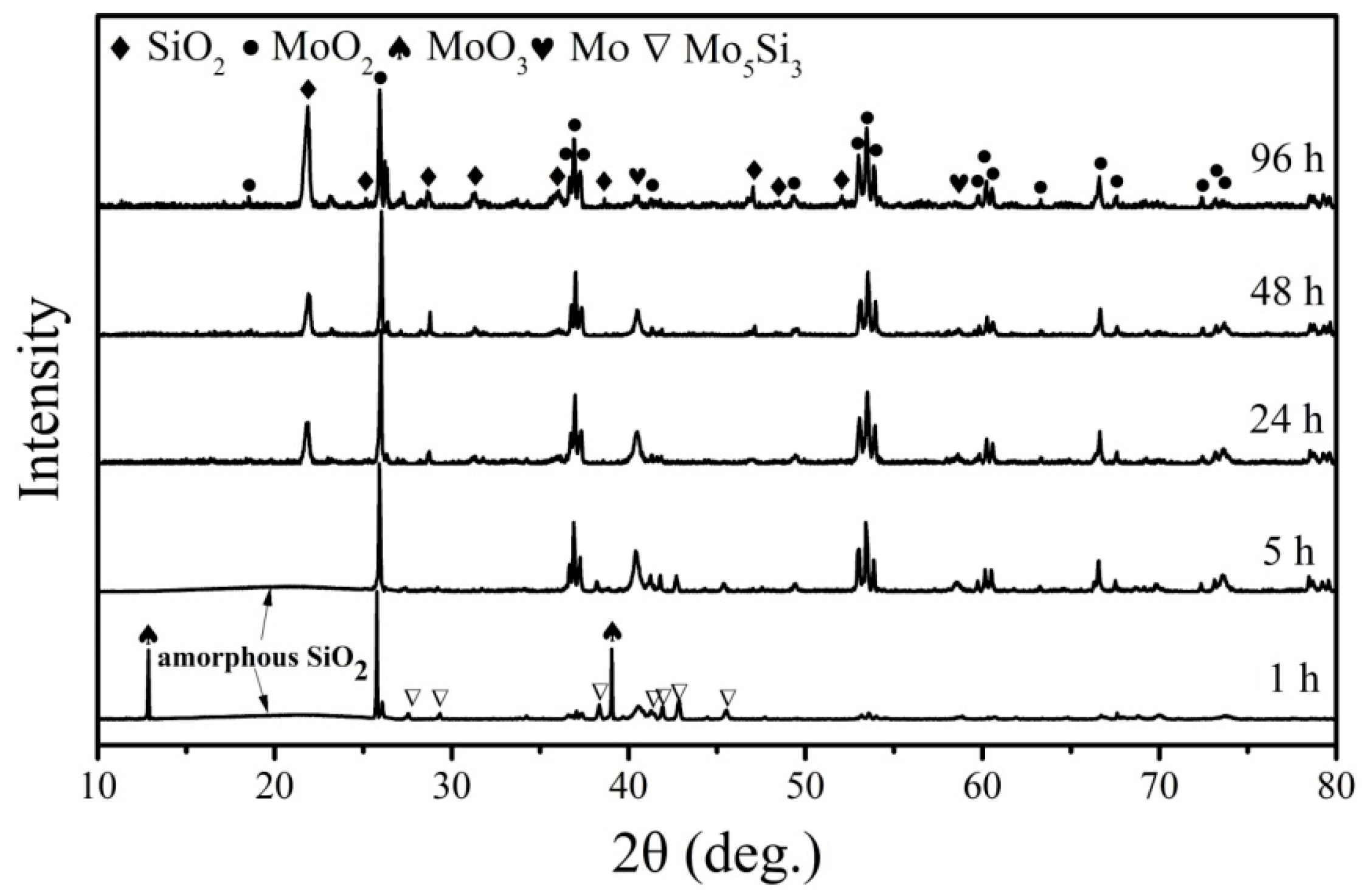
Figure 2 show the phase evolution of the 52.9% porous MoSiB intermetallic compound during oxidation at 1000 °C from 1 to 96 h. The surface matrix phase is predominantly Mo
5Si
3 after 1 h of oxidation, with oxidation products comprising MoO
3, MoO
2, amorphous SiO
2, and a trace amount of elemental Mo. At this initial stage, the short oxidation duration prevents complete volatilization of the formed MoO
3, allowing its detection by XRD. MoO
3 completely volatilizes upon extending the oxidation to 5 h, and the oxidation products comprise MoO
2, amorphous SiO
2, and elemental Mo. Notably, the diffraction peaks of MoO
2 intensify significantly, while those of Mo show a slight increase in intensity. From 24 to 96 h, the composition stabilizes as MoO
2, crystalline SiO
2, and elemental Mo. At the same time, SiO
2 peak intensity increases markedly, MoO
2 peaks remain stable, and Mo peaks decline notably.
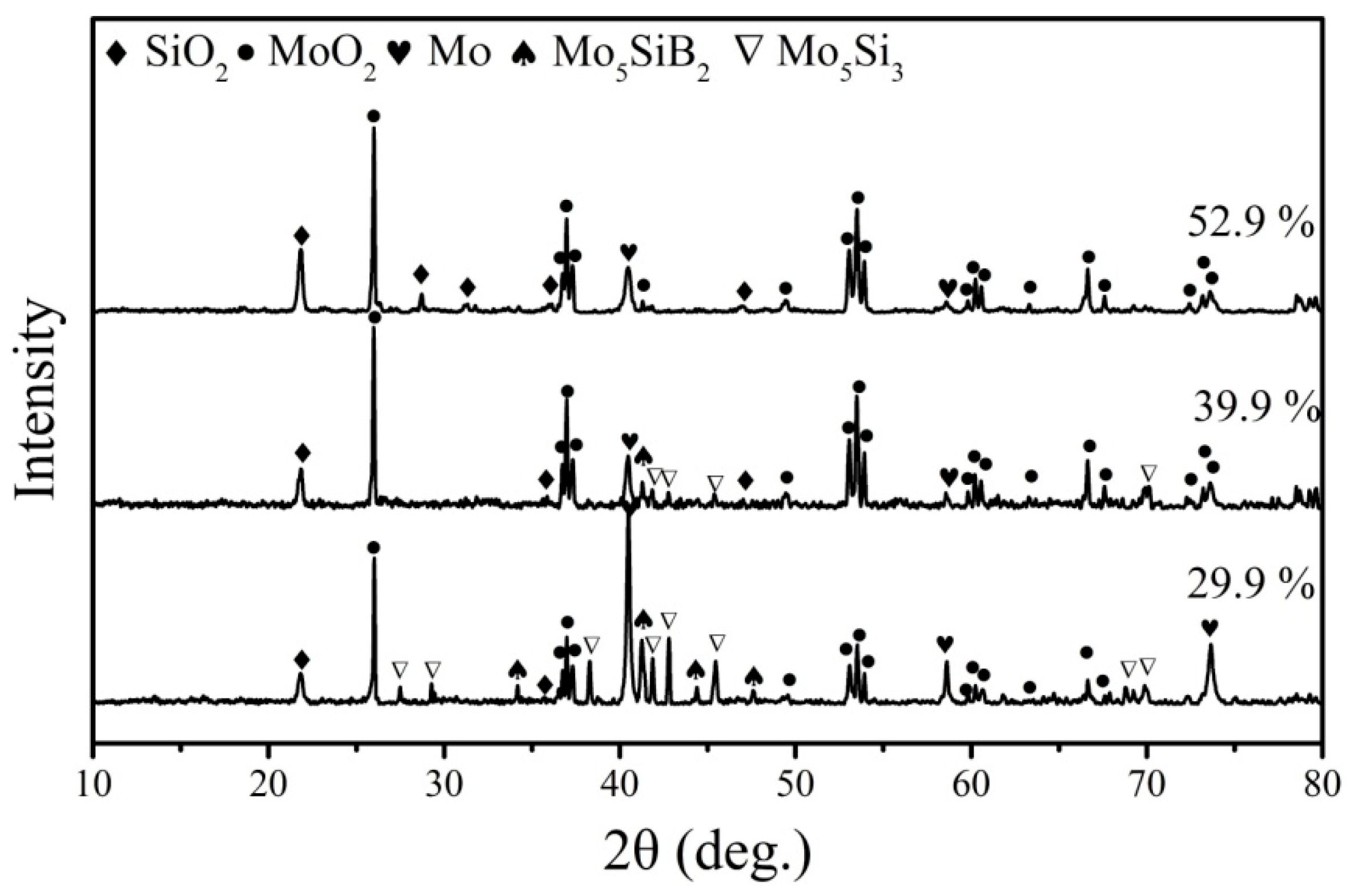
Figure 3 presents the surface XRD patterns of porous MoSiB intermetallic compounds with total porosities of 29.9%, 39.9%, and 52.9% after oxidation at 1000 °C for 24 h. The results indicate that porosity does not alter the composition of the oxidation products, which consist of MoO
2, SiO
2, and elemental Mo. However, as porosity increases, the diffraction peaks of MoO
2 and SiO
2 in the oxide layer are progressively enhanced, while the peak intensity of Mo gradually diminishes. Furthermore, the peak intensity of the MoSiB phase in the oxide layer progressively weakens as porosity increases, indicating complete oxidation of the MoSiB framework at the surface.
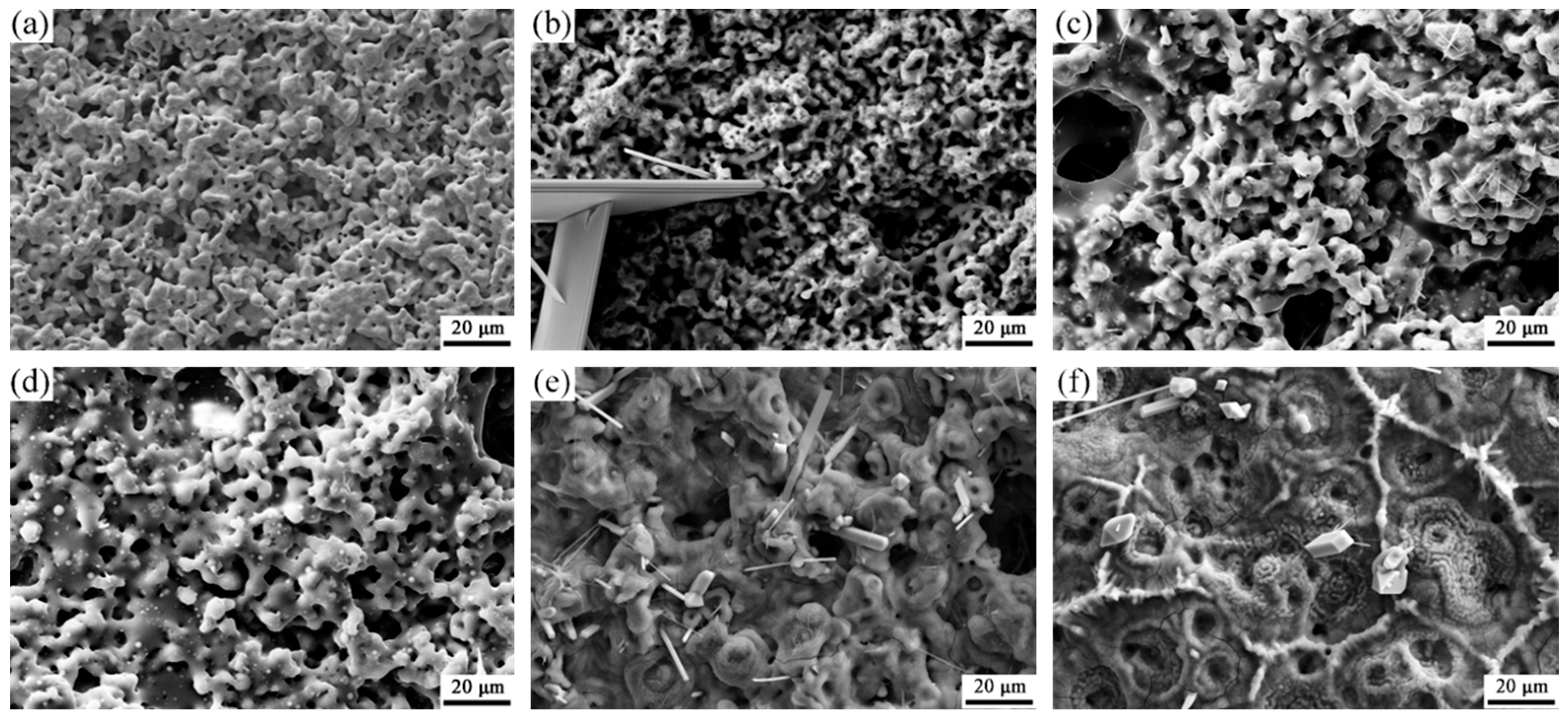
The surface morphology of a porous MoSiB intermetallic compound has a total porosity of 52.9% after oxidation at 1000 °C, as shown in
Figure 4. The morphological features undergo significant changes as oxidation time increases. Compared to the unoxidized porous MoSiB intermetallic compound (
Figure 4a), flaky oxidation products are observed on the surface after 1 h of oxidation (
Figure 4b). Based on XRD analysis and morphological characteristics, these flaky products are identified as MoO
3. Additional oxidation products are also formed on the skeletal surface, though the skeletal morphology remains largely unchanged. After 5 h of oxidation (
Figure 4c), a substantial amount of MoO
3 has volatilized. The resulting oxides begin to clog smaller pores and merge with the existing skeleton, increasing its dimensions. Some skeletal regions are completely oxidized, with the oxidation products either volatilizing or adhering to adjacent skeletal structures by creating new oxygen pathways that facilitate oxygen access to the inner skeleton. Following 24 h of oxidation, further skeletal oxidation occurs, and the resulting fluid-like oxide scale progressively blocks the pores. After 48 h of oxidation (
Figure 4e), smaller surface pores are entirely obstructed, leaving only larger pores formed during the oxidation process. B
2O
3 volatilizes, leaving behind a dense SiO
2 layer through which oxygen must diffuse to react with Mo and the remaining intermetallic skeleton that forms MoO
2. After 96 h of oxidation, the generated oxides seal the remaining larger pores, resulting in the formation of a fully dense oxide scale on the surface.
Figure 5 presents the surface oxidation morphology of porous MSB intermetallic compounds with a total porosity of 52.9% after oxidation at 1000 °C, and the morphological characteristics undergo significant changes with the extension of oxidation time.
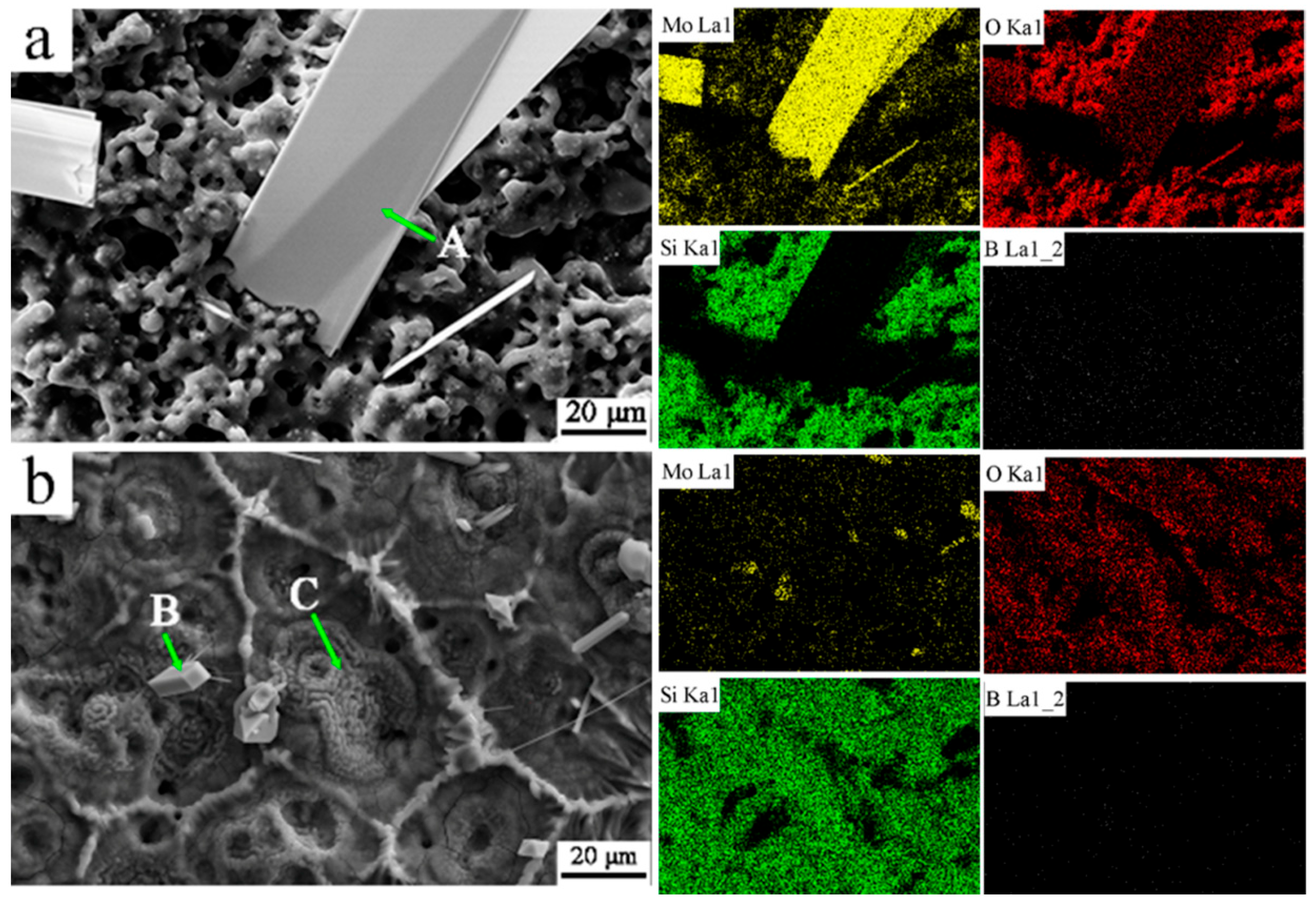
Figure 5a,b presents the surface morphology and elemental distribution from energy dispersive spectrometer (EDS) mapping of porous MoSiB intermetallic compounds after oxidation at 1000 °C for 1 h and 48 h, respectively. After 1 h of oxidation, the skeletal structure on the surface exhibited a low concentration of Mo, with primary constituents being Si and O, along with a minor amount of B. It can be inferred that the oxide formed on the skeletal surface is B
2O
3–SiO
2. The flaky oxide phase was composed of Mo and O, with an atomic content ratio of 20.13:77.16 as indicated in
Table 1. Combined with XRD analysis, this phase was identified as MoO
3. After 48 h of oxidation, the principal elements of the oxide layer were Si and O, whereas B was barely detectable. EDXS results from location C indicated the presence of SiO
2, and XRD analysis revealed that this SiO
2 layer was crystalline. The absence of B is attributed to the volatilization of B
2O
3 during prolonged oxidation. Trace amounts of Mo were detected on the surface of the oxide layer, predominantly concentrated within irregular polygonal particles. Based on EDXS and XRD analyses, these particles were identified as MoO
2, likely exposed due to the volatilization of surface MoO
3 or B
2O
3.
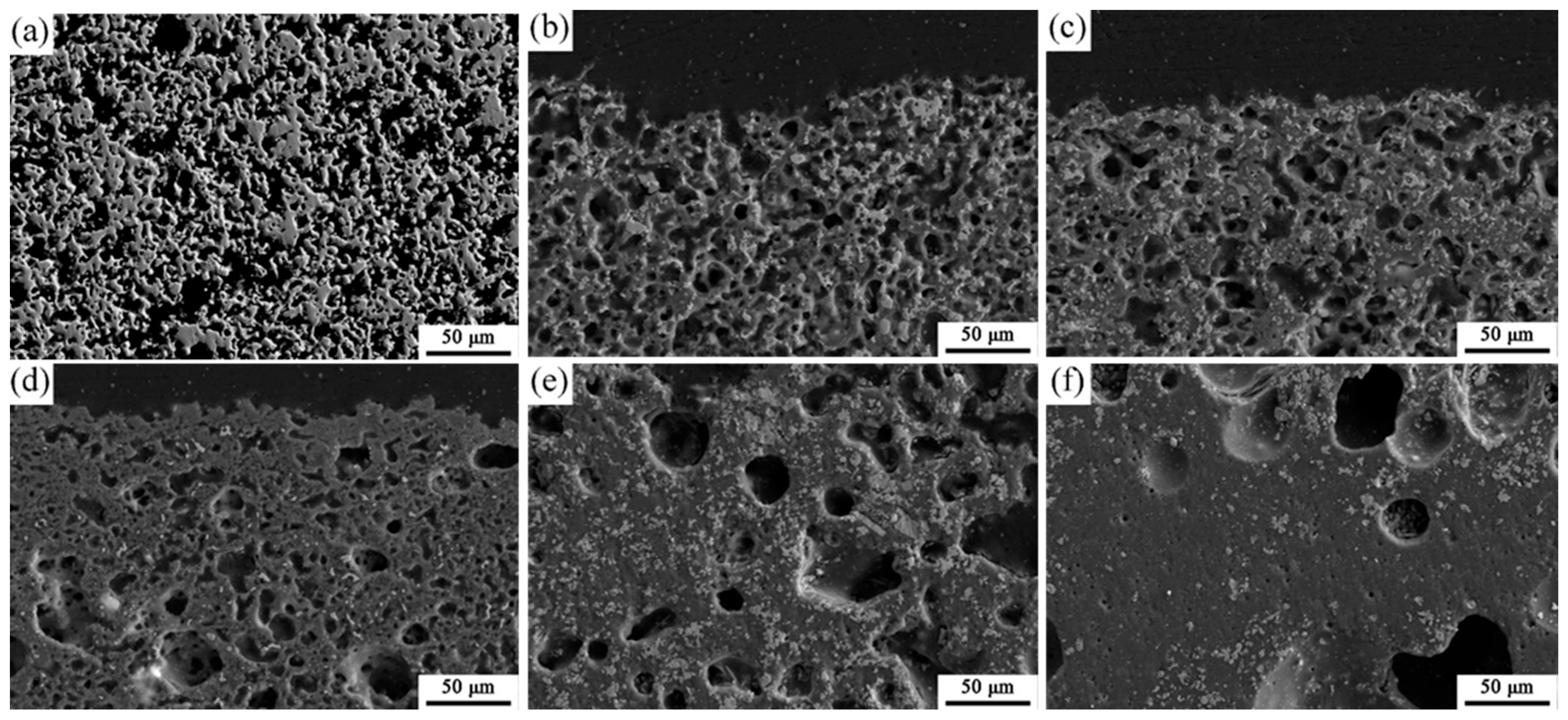
The microstructural evolution in
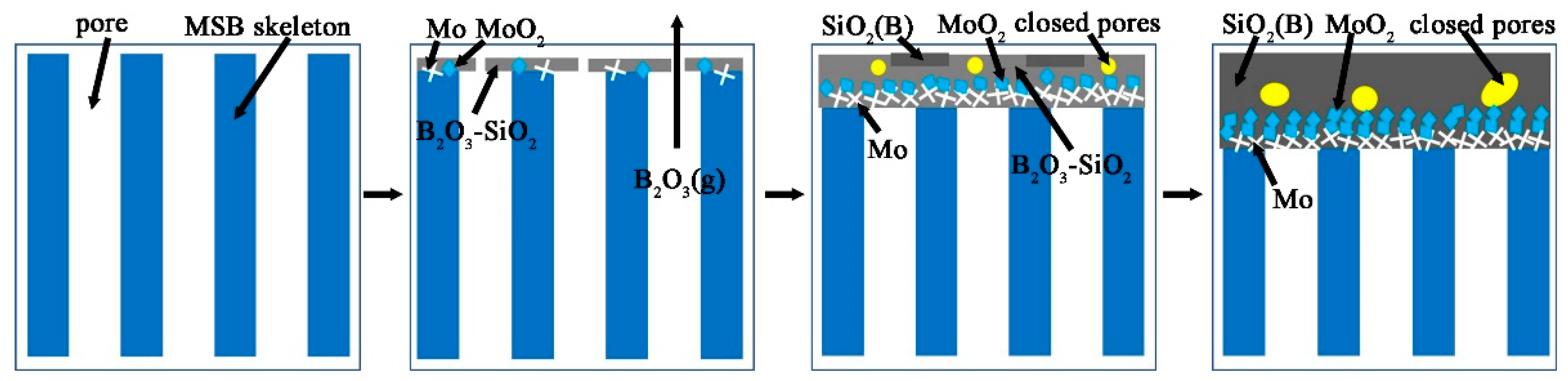
Figure 6 indicates a progressive transformation of the original open porous skeleton into an oxide-derived structure during oxidation at 1000 °C. As shown in
Figure 6a,b, comparative analysis of the cross-sectional microstructures before oxidation and after 1 h of oxidation indicates that the overall porous architecture is largely preserved. However, the initial MoSiB ternary intermetallic framework undergoes substantial chemical transformation, yielding a heterogeneous matrix of oxidation products and residual MoSiB. Concurrently, the majority of fine pores vanish due to pore filling and structural densification. Unlike dense MoSiB intermetallics, where protective continuous oxide layers such as SiO
2-rich scales block oxygen ingress, the open pore structure allows rapid oxygen diffusion inward that causes uniform volumetric oxidation across the entire MoSiB scaffold. Following 5 h of oxidation, both the pore geometry and the skeletal architecture undergo pronounced reorganization that the average pore size and strut dimensions increase progressively. XRD analysis confirms a marked reduction in intermetallic phase content at this stage, with oxidation products becoming the dominant constituents. Furthermore, the high mobility of the amorphous B
2O
3-SiO
2 eutectic phase promotes dynamic pore evolution during isothermal oxidation, giving rise to new pore configurations. After 48 h of oxidation, pore coarsening continues and total porosity decreases. After 96 h, the outer SiO
2-rich layer thickens and densifies, restricting outward B
2O
3 diffusion and volatilization. Trapped B
2O
3 then vaporizes internally, generating expansive pressure that forms spherical closed pores. Ultimately, the original open-cell MoSiB intermetallic foam is fully converted into a closed-pore composite consisting primarily of SiO
2 and MoO
2.
XRD and surface morphology analysis of the oxidized samples revealed that the oxidation products of the porous MoSiB intermetallic compound after 1 h of oxidation at 1000 °C consist of MoO3, MoO2, Mo, SiO2,and B2O3. Following oxidation for 5–96 h, the oxidation products comprise MoO2, Mo, SiO2, and B2O3. The diversity in the oxidation products of molybdenum is attributed to multiple possible reactions during the high-temperature oxidation of the MoSiB intermetallic compound.
The oxidation reaction of Mo
3Si:
The oxidation reaction of Mo
5Si
3:
The oxidation reaction of Mo
5BSi
2:
The sequence of oxidation reactions in the high-temperature oxidation process of metals can be determined through thermodynamic analysis. The prerequisite for an oxidation reaction to occur is that the free energy of the reaction equation decreases, meaning the Gibbs free energy change (Δ
G0) of the chemical reaction is negative.
Under conditions of sufficient oxygen content, the standard Gibbs free energy for the equation per mole of molybdenum oxides Mo, MoO2, and MoO3 can be obtained from Equations (1)–(9).
Gibbs free energy for the equation of 1 mole of oxidation products from Mo
3Si:
The Gibbs free energy for the equation of 1 mol of the oxidation product of Mo
5Si
3:
The Gibbs free energy for the equation of 1 mol of the oxidation product of Mo
5BSi
2:
During the initial oxidation stage, abundant oxygen comes into full contact with Mo
3Si, Mo
5Si
2, and Mo
5SiB
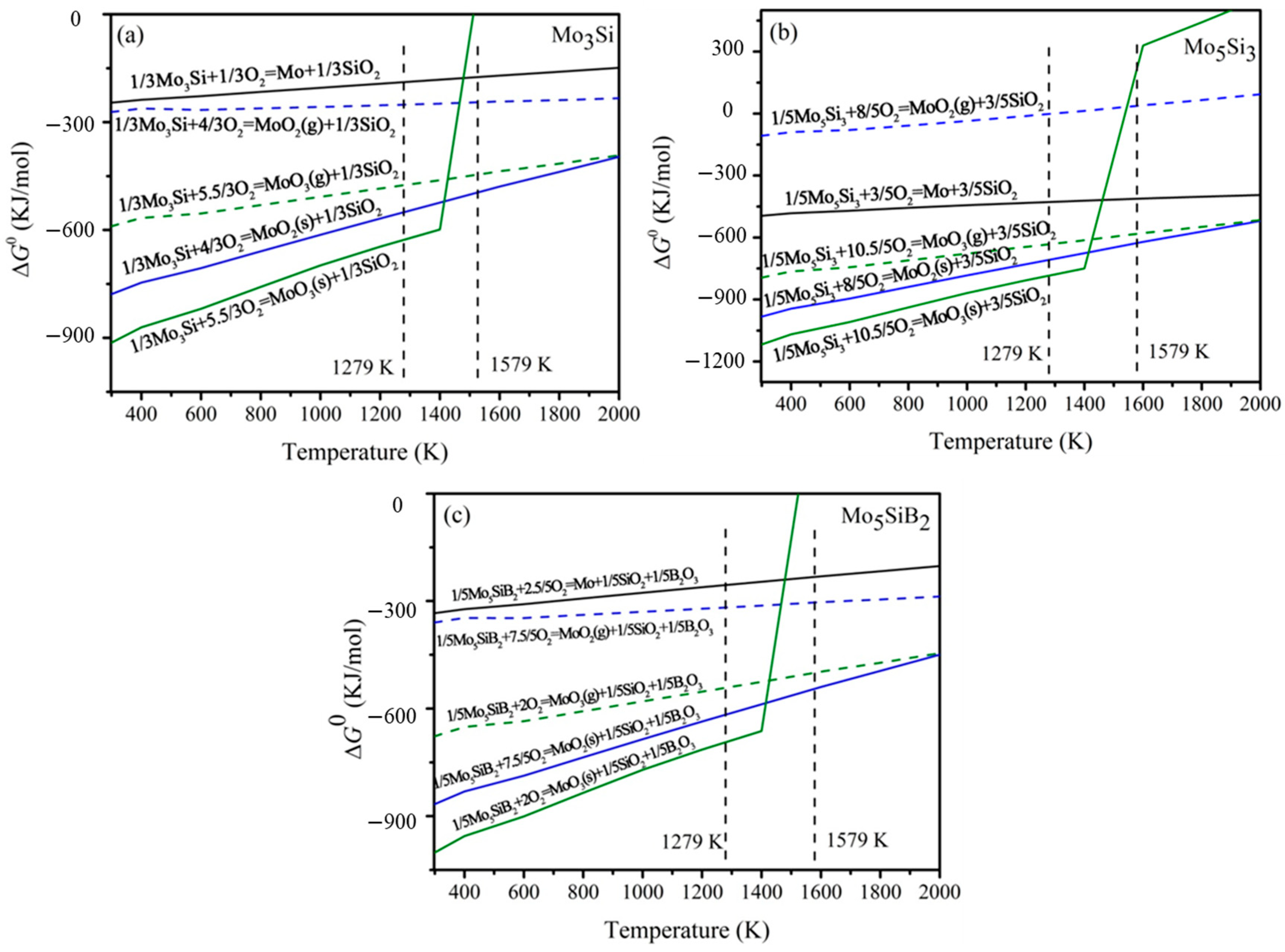
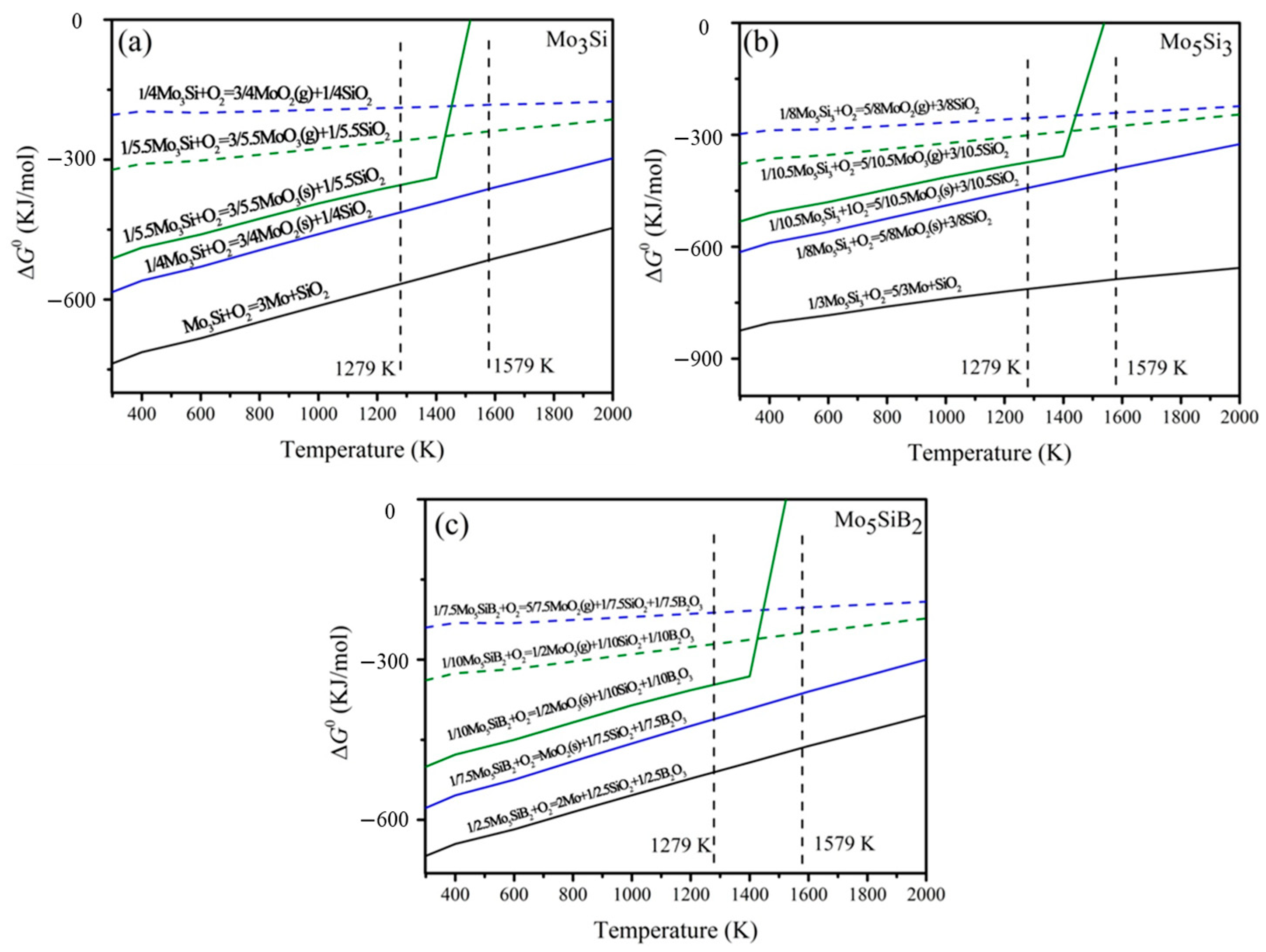
2. Based on thermodynamic data of the materials, the Gibbs free energies of Equations (11)–(19) were calculated, revealing the relationship between reaction temperature and Gibbs free energy, as illustrated in
Figure 7, since MoO
2 and MoO
3 can form as gases during oxidation while other products remain solid. The Gibbs free energy changes with temperature were calculated separately for Mo
3Si, Mo
5Si
3, and Mo
5SiB
2 oxidation, resulting in the equations of Mo, MoO
2 (s/g), and MoO
3 (s/g). The equations corresponding to the generation of gaseous MoO
2 (g) and MoO
3 (g) are represented by dashed lines in
Figure 7.
As shown in
Figure 7a, when Mo
3Si is oxidized at 1000 °C (1279 K), the Gibbs free energies of the five possible reactions are all negative, indicating the thermodynamic feasibility of these reactions. The corresponding Gibbs free energy values are listed in
Table 2. The
value for the oxidation of Mo to MoO
3 (s) is the lowest, suggesting it occurs preferentially. The
value for oxidation to MoO
2 (s) is the next lowest. And the
value for the equation of elemental Mo is the highest, which makes it the least likely to form under sufficient oxygen supply. Similarly, for Mo
5Si
3 (
Figure 7b) and Mo
5SiB
2 (
Figure 7c) oxidized at 1000 °C, the preferential order of Mo oxidation is MoO
3 (s) > MoO
2 (s) > elemental Mo. This explains the equation of abundant needle-like MoO
3 on the sample surface during the early stages of oxidation at 1000 °C.
A comparison of the Gibbs free energies for the preferential oxidation reactions of Mo
3Si, Mo
5Si
3, and Mo
5SiB
2 in
Table 2 shows that at 1000 °C,
>
>
. This indicates that under sufficient oxygen supply during the initial oxidation stage, the oxidation sequence of the porous MoSiB intermetallic framework is Mo
5Si
3 > Mo
5SiB
2 > Mo
3Si.
As indicated by the reaction equations in
Figure 7, during the initial oxidation stage, the oxidation products preferentially form MoO
3 (s), along with the simultaneous formation of SiO
2 and B
2O
3. These two oxidation products typically form in the early oxidation phase as amorphous, glassy mixed oxides that exhibit a degree of fluidity at high temperatures, thereby coating the substrate material. This coating acts as a barrier, preventing direct contact between oxygen and the substrate, resulting in an oxygen-deficient environment that suppresses further oxidation. Regarding the sequence of such oxidation reactions, it is likewise possible to determine the reaction order through thermodynamic calculations of the Gibbs free energy. Under oxygen-deficient conditions, assuming a constant oxygen content of 1 mole, the Gibbs free energy for the reactions of 1 mole of oxygen with Mo
3Si, Mo
5Si
3, and Mo
5SiB
2 to form oxides such as Mo, MoO
2, and MoO
3 is as follows:
Gibbs free energy of the reaction between 1 mole of oxygen and Mo
3Si:
Gibbs free energy of reaction equations for the interaction of 1 mol oxygen with Mo
5Si
3Figure 8 presents the temperature–Gibbs free energy diagrams for the reactions of 1 mol of oxygen with Mo
3Si, Mo
5Si
3, and Mo
5SiB
2, respectively. As shown in
Figure 8a, the Gibbs free energies of the five possible reaction pathways are all negative for the oxidation of Mo
3Si at 1000 °C, indicating that each reaction is thermodynamically feasible. However, the values associated with the equation of gaseous MoO
3 and MoO
2 are higher than those of the corresponding reactions forming solid MoO
3 and MoO
2, and they may be disregarded in theoretical analyses.
The Gibbs free energy values at this stage are presented in
Table 3. The Gibbs free energies for the oxidation of molybdenum to form elemental Mo, MoO
2 (s), and MoO
3 (s) are −567 kJ/mol, −412 kJ/mol, and −355 kJ/mol, respectively, indicating that the equation tendency of molybdenum oxidation products follows the order: Mo > MoO
2 (s) > MoO
3 (s). Similarly, the equation tendency of molybdenum-containing oxidation products also follows the sequence Mo > MoO
2 (s) > MoO
3 (s) when oxidation occurs at 1000 °C, as shown in
Figure 8b,c. This implies that once a protective SiO
2-B
2O
3 oxide layer forms on the skeletal surface, it inhibits further oxidation of the skeleton by limiting oxygen penetration. Consequently, plate-like MoO
3 is absent on the surface morphology in the later stages of oxidation. Instead, numerous distinct bright spots of elemental Mo are observed.
A comparison of the Gibbs free energies for the preferential oxidation reactions of Mo
3Si, Mo
5Si
3, and Mo
5SiB
2 in
Table 3 reveals that at 1000 °C,
>
>
. This indicates that under oxygen-deficient conditions, the oxidation sequence of the porous MoSiB intermetallic skeleton is Mo
5Si
3 > Mo
3Si > Mo
5SiB
2.
During oxidation of porous MoSiB intermetallics, Mo-containing oxides ultimately volatilize mainly as MoO
3, whereas Si- and B-derived oxides provide oxidation resistance. Oxidation of Mo
3Si, Mo
5Si
3, and Mo
5SiB
2 produces SiO
2, while B
2O
3 is generated only from Mo
5SiB
2. At 1000 °C, B
2O
3 volatility is relatively low, and boron is mainly retained in SiO
2–B
2O
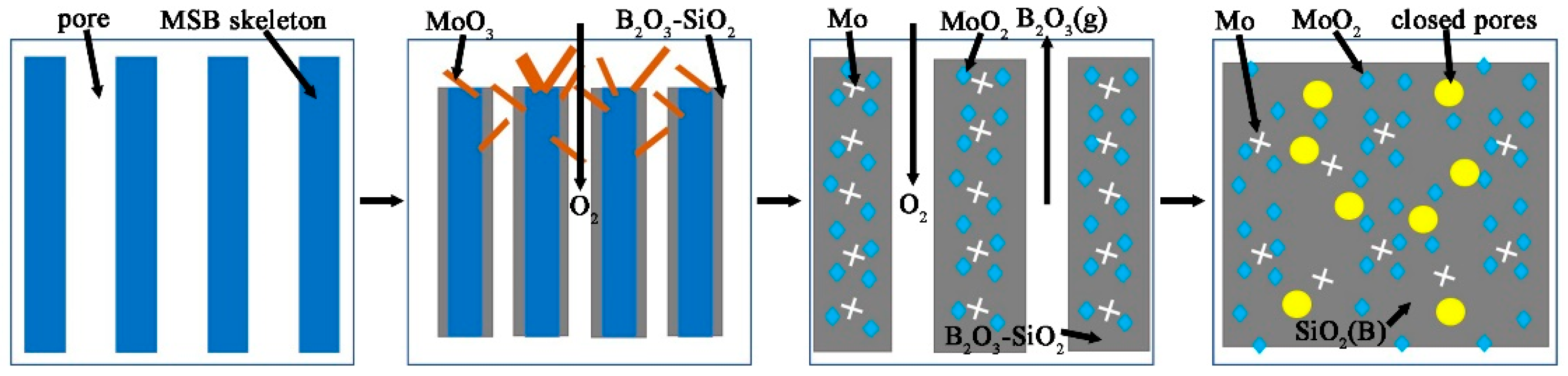
3 glass. As illustrated in
Figure 9, this glassy oxide has relatively high viscosity and insufficient fluidity to rapidly seal the open pore channels. Therefore, unlike dense MoSiB intermetallics protected by a continuous oxide scale, the porous skeleton remains accessible to oxygen, resulting in extensive internal oxidation. With increasing oxidation time, B
2O
3 gradually volatilizes through the pore network, leaving a SiO
2-rich matrix containing residual MoO
2 and minor metallic Mo. The eventual closure of pore channels traps residual volatile species, leading to closed-pore formation within the SiO
2-based oxide matrix.
3.4. Analysis of Oxidation Mechanism at 1300 °C
In this study, 1300 °C was selected as the highest oxidation temperature to evaluate the high-temperature oxidation behavior of porous MoSiB. However, the maximum service temperature of MoSiB-based materials may be higher and depends on alloy composition, porosity, microstructure, and oxidation environment. In this study, 1300 °C merely represents the highest oxidation test temperature adopted, rather than the maximum service temperature of the material. To capture the key stages of the high-temperature oxidation process, this study analyzed the oxidation products and microstructural evolution at 1300 °C after oxidation durations of 0 min, 1 min, 30 min, and 60 min. The unoxidized specimen with 0 min oxidation was taken as the reference state to determine the initial phase composition and open-cell skeleton structure of Mo3Si–Mo5Si3–Mo5SiB2. The specimen with 1 min oxidation corresponds to the initial transient oxidation stage. The surface of the porous skeleton contacts oxygen for the first time, and the exposed skeleton undergoes rapid oxidation. This stage is critical for identifying initial oxidation products and determining whether volatile molybdenum oxides and borosilicon oxides form immediately on pore surfaces. The specimen with 30 min oxidation was selected to represent the intermediate oxidation stage. At this point, the initially formed SiO2(B)/borosilicon oxides have sufficient time to flow, redistribute, and seal surface pore channels, so this time point is suitable for investigating the transition of the oxidation process from rapid transient oxidation to more stable surface-controlled oxidation. Under the experimental conditions adopted in this study, the specimen with 60 min oxidation represents the late oxidation stage, at which a relatively dense oxide scale has formed and the oxidation front is confined to the near-surface region. Analysis of this stage can clarify the layered oxide structure and the efficacy of the silica-rich protective layer in blocking inward oxygen penetration. Therefore, the aforementioned time points were selected to resolve the complete oxidation sequence of the material at 1300 °C, ranging from the initial porous structure, through initial oxidation and pore closure, to stable surface-layer oxidation.
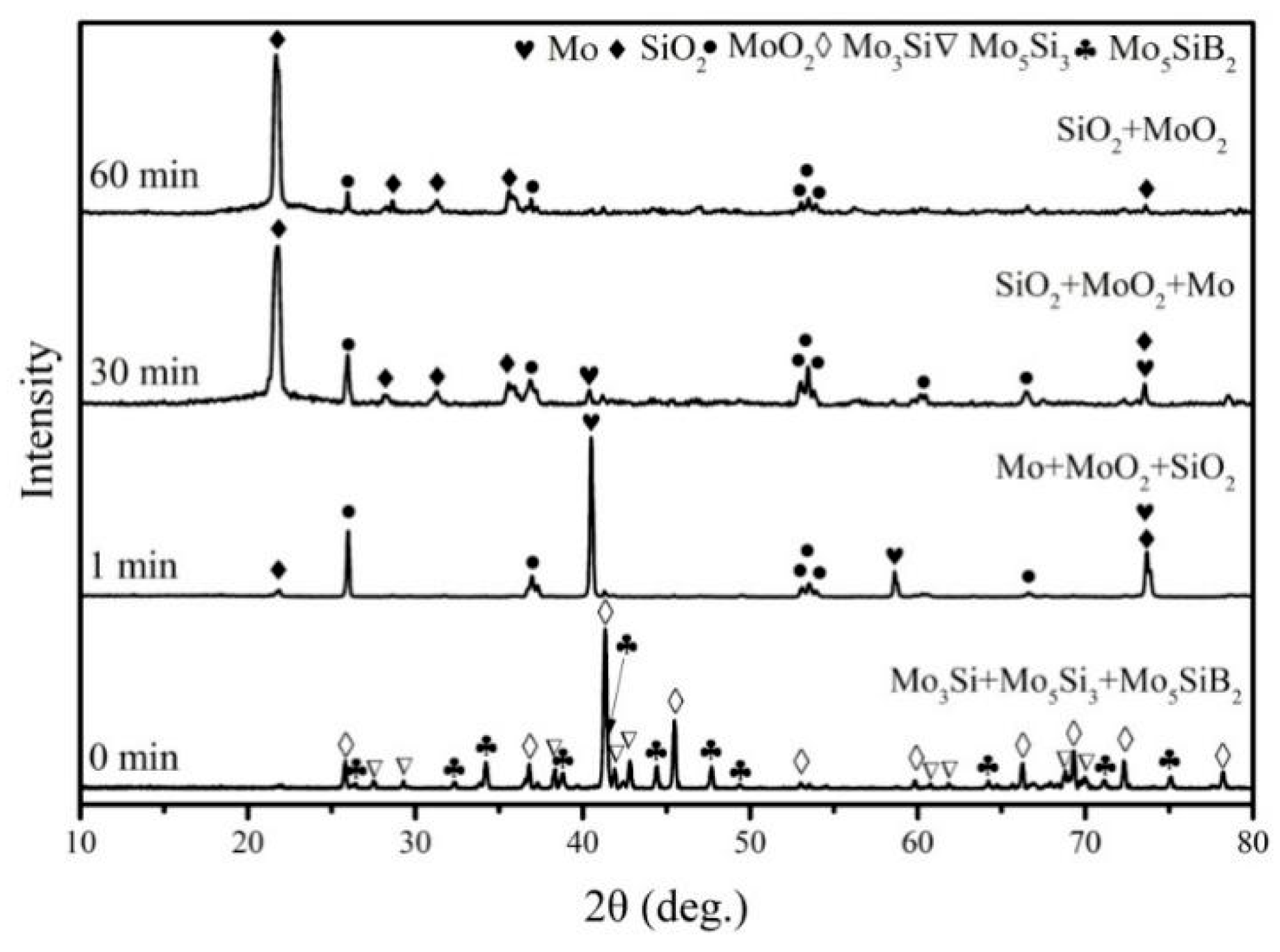
The XRD patterns of the oxidation surfaces of porous MoSiB intermetallic compounds after oxidation at 1300 °C for different durations are shown in
Figure 11. Before oxidation, the sample only had diffraction peaks of three intermetallic compounds: Mo
3Si, Mo
5Si
3, and Mo
5SiB
2. After 1 min of oxidation, the XRD pattern indicated that the oxidation products were Mo, MoO
2, and SiO
2, with Mo and MoO
2 being the main products and the diffraction peak of SiO
2 being relatively weak. After 30 min of oxidation, the oxidation products were still Mo, MoO
2, and SiO
2, but the diffraction peak of SiO
2 was the strongest, becoming the main oxidation product, while the diffraction peak of Mo significantly weakened and that of MoO
2 slightly weakened. After 60 min of oxidation, only the diffraction peaks of SiO
2 and MoO
2 were present in the XRD pattern, with the oxidation products mainly being SiO
2 and a small amount of MoO
2. It is possible that at this point, only SiO
2 and MoO
2 were present on the surface of the oxidation layer.
Prior to oxidation, the porous MoSiB intermetallic compound exhibits the open interconnected skeleton structure described previously.
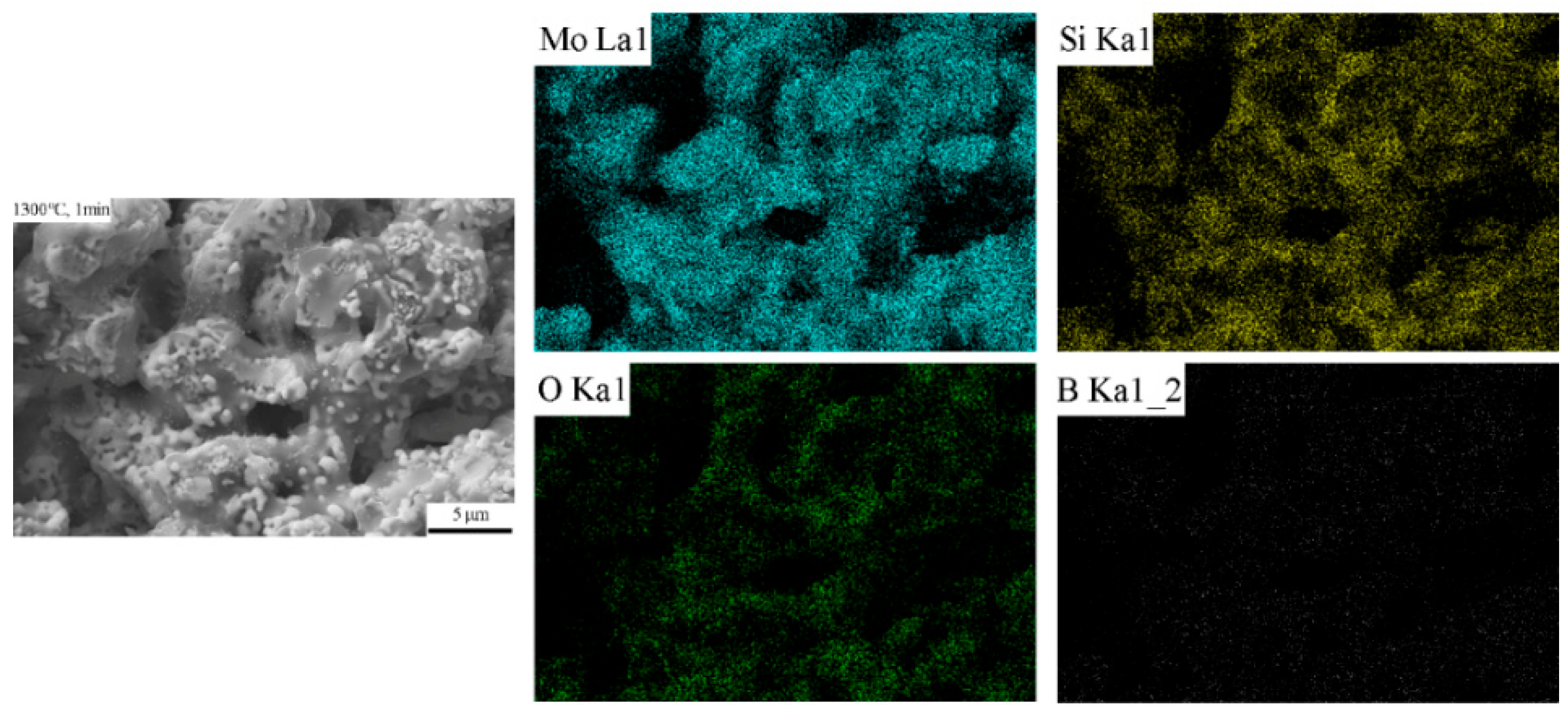
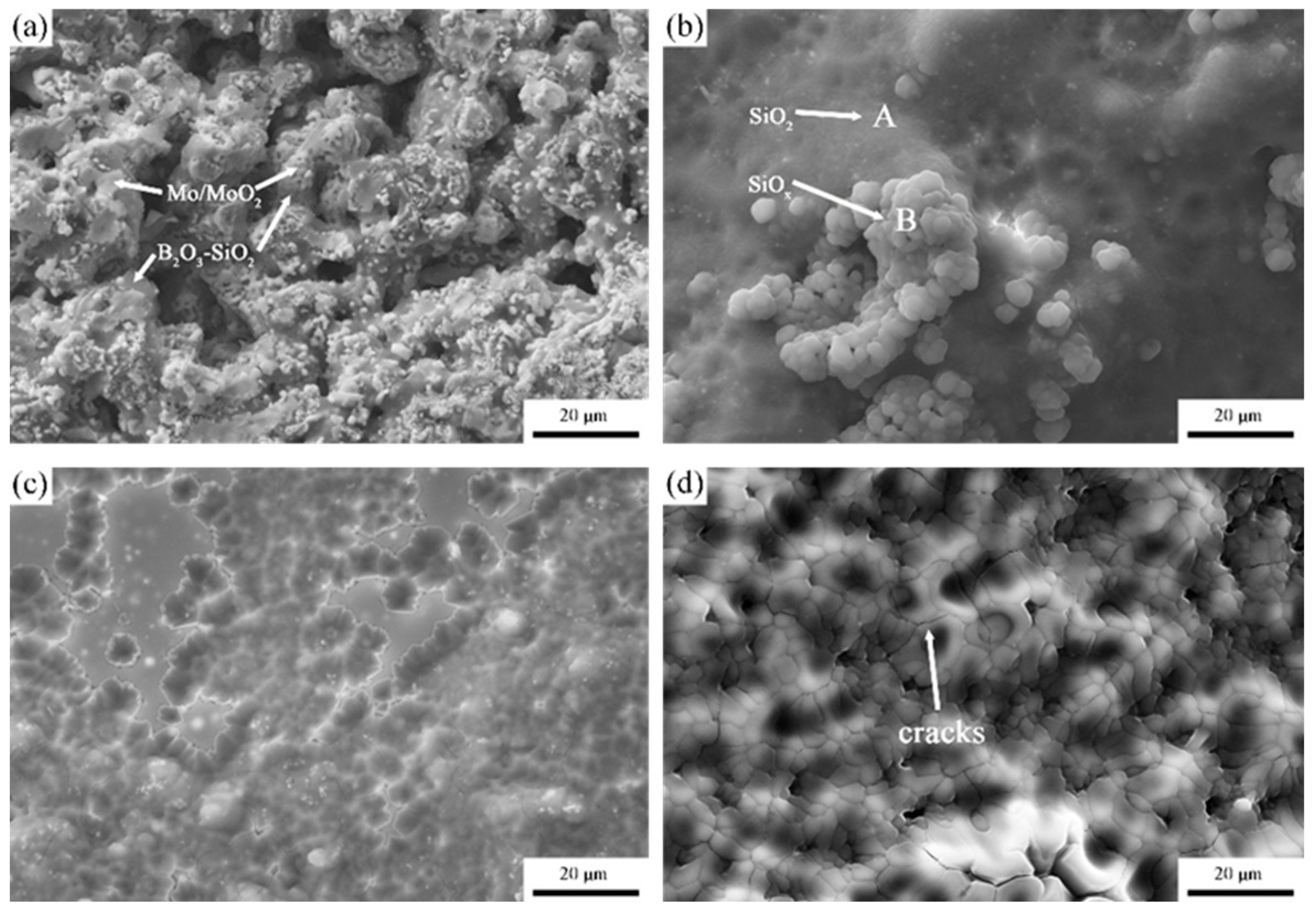
Figure 12 shows the surface morphology of porous MoSiB metal compound after oxidation at 1300 °C. After 1 min of oxidation, the porous structure on the surface has been destroyed. Combined with the XRD results, it can be concluded that the intermetallic compound skeleton has been completely replaced by the oxidation products. The energy dispersive spectroscopy (EDS) mapping results in
Figure 13 suggest that oxidation products containing Mo, Si, and O form rapidly on the surface after only 1 min at 1300 °C. As shown in
Figure 13, the surface after 1 min of oxidation is mainly composed of Mo and Si, with minor O and trace B, indicating the rapid formation of amorphous B
2O
3–SiO
2 on the skeleton surface. Owing to its reduced viscosity at 1300 °C, this borosilicate glass can rapidly flow and seal surface pores, thereby limiting oxygen penetration into the inner MoSiB skeleton and promoting the formation of Mo and MoO
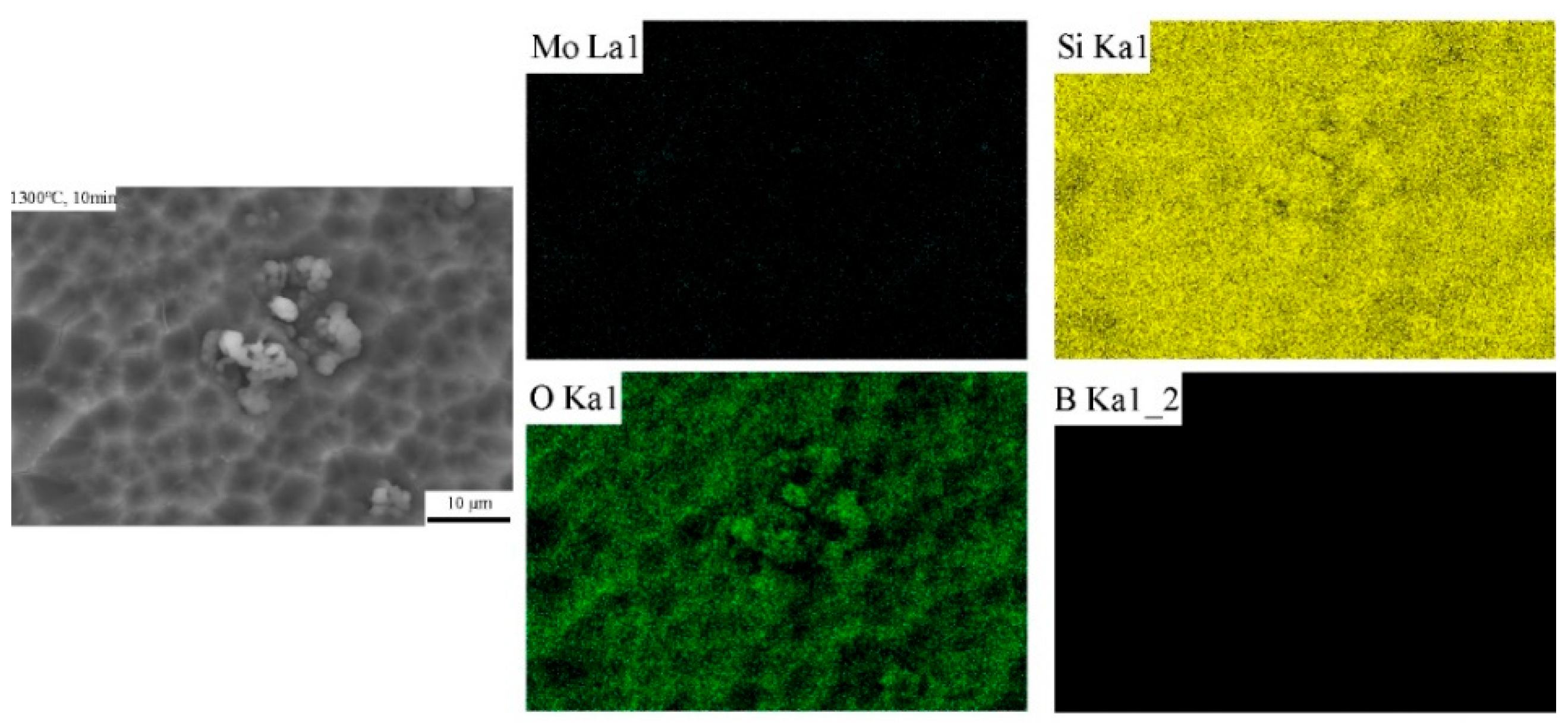
2. After 10 min, the original porous morphology disappears and a relatively dense oxide layer forms. The EDS results in
Figure 14 show dominant Si and O signals with only trace Mo and negligible B, suggesting rapid B
2O
3 volatilization and the development of a SiO
2-rich oxide layer. The Si/O ratios in regions A and B of
Figure 12b indicate the coexistence of amorphous SiO
x and crystalline SiO
2. With further oxidation, the amorphous SiO
x features disappear after 30 min, likely due to crystallization, while microcracks form in the surface SiO
2 layer after 60 min as a result of thermal stress.
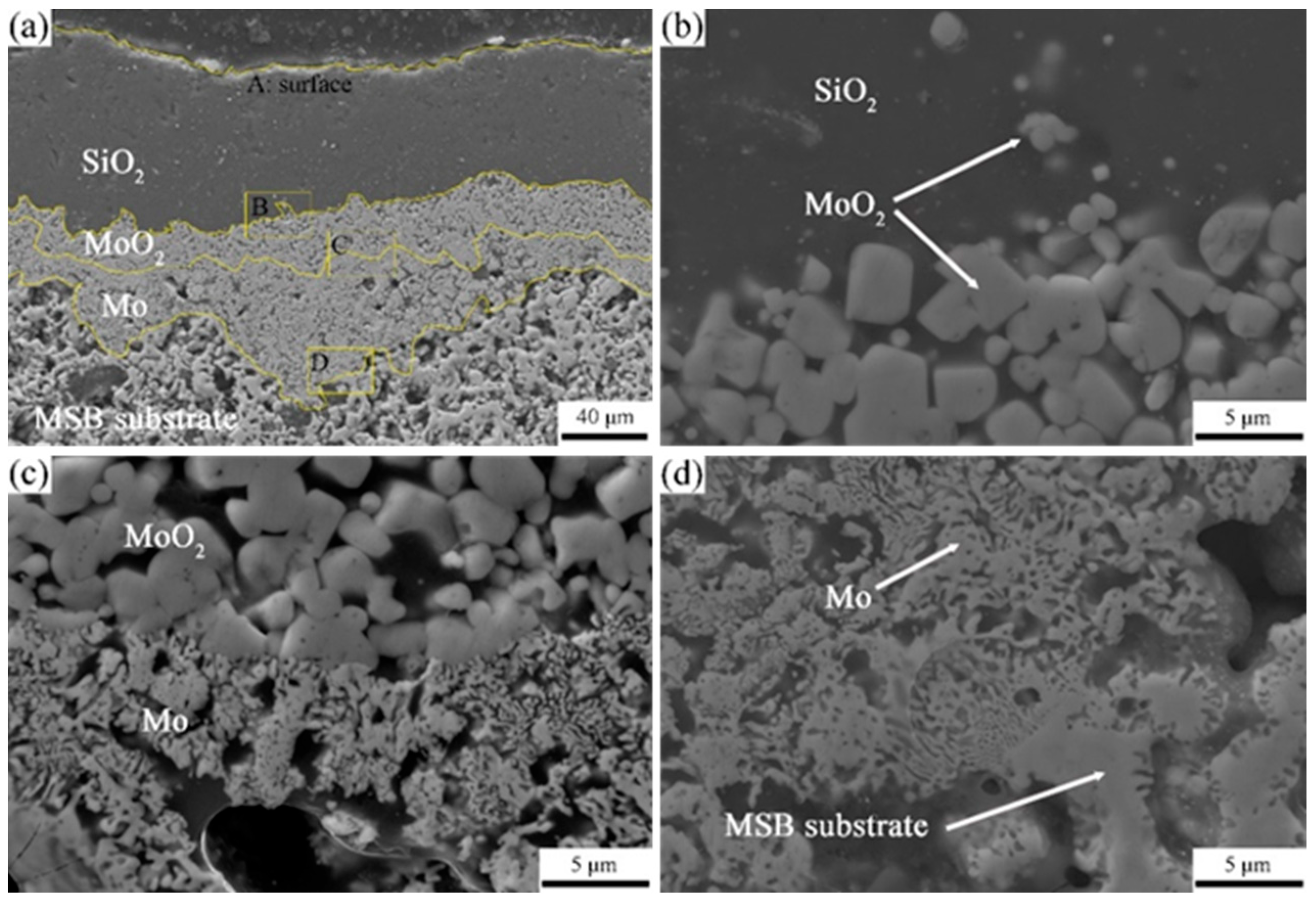
Figure 15 presents the cross-sectional morphology of porous MoSiB metallic compound after oxidation at 1300 °C for 60 min. The oxidation of the porous MoSiB metallic compound is confined to the surface region at 1300 °C, while the inner layers retain their original porous microstructure, as shown in
Figure 15a. The oxide scale can be divided into three distinct strata based on the composition and morphological characteristics of the oxidation products. This oxide morphology is analogous to that observed in dense Mo
5SiB
2-based intermetallic compounds.
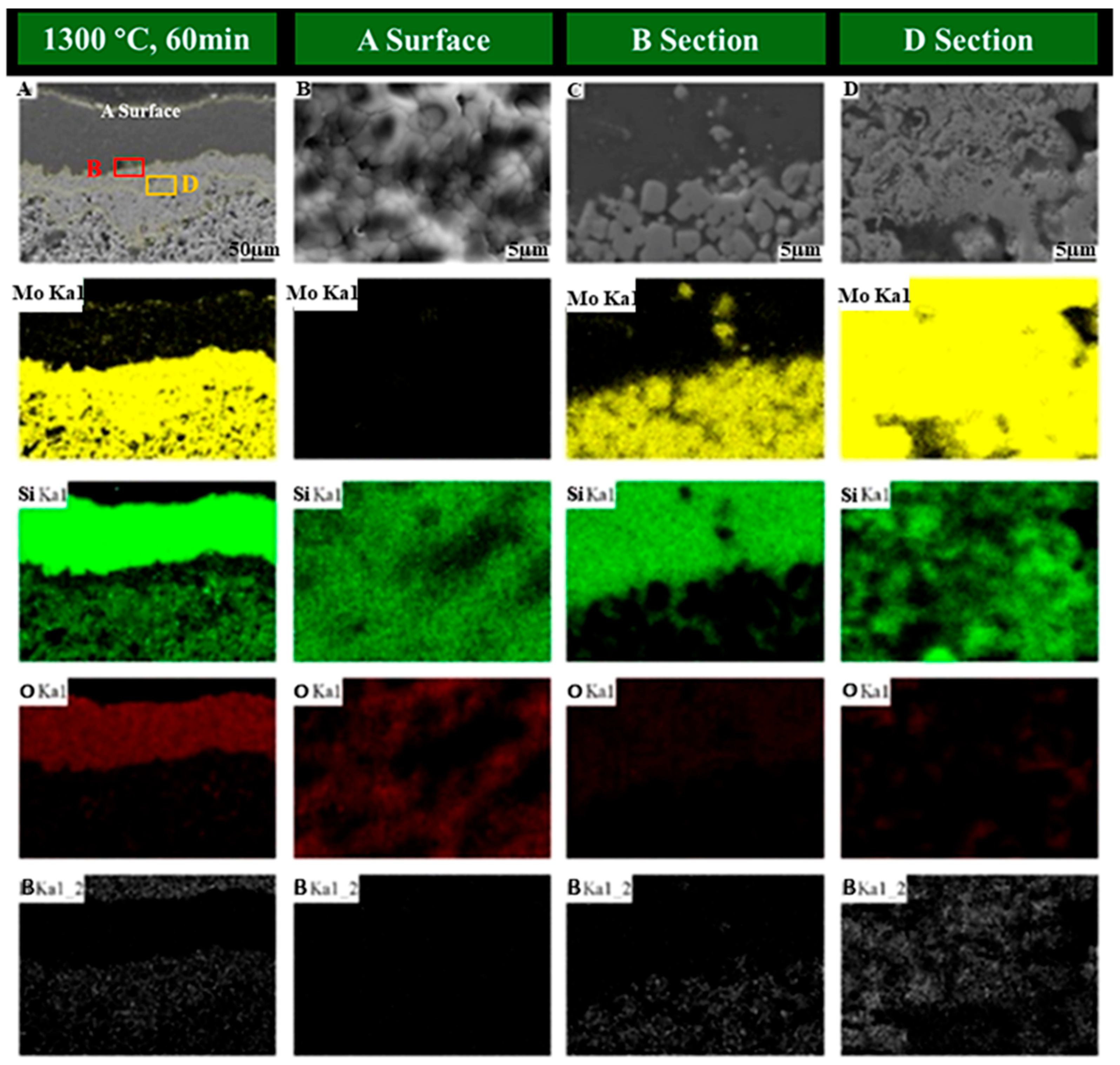
Figure 16 provides an elemental mapping analysis of the oxide scale cross-section, revealing that the outermost layer is predominantly composed of silicon and oxygen with an atomic ratio approximating 1:2. XRD results confirm that this layer consists mainly of crystalline SiO
2. Combined with the observations in
Figure 15b and
Figure 16, trace amounts of MoO
2 are also detected in the surface layer. The intermediate oxide layer primarily comprises MoO
2. Although this intermediate layer exhibits a thickness of approximately 20 μm, its corresponding XRD diffraction peaks exhibit relatively weak intensity. This attenuation is attributed to the SiO
2 top layer which overlies about 60 μm, which significantly impedes X-ray penetration to the MoO
2 intermediate layer. Nevertheless, the morphology and oxygen diffusion patterns suggest that the intermediate oxide is predominantly MoO
2. The innermost oxide layer adjacent to the substrate consists mainly of molybdenum or molybdenum solid solutions. Elemental mapping of boron indicates the presence of minor boron content in this region, attributed to newly formed borosilicate glass phases.
The oxidation behavior of porous MoSiB intermetallic compounds at 1300 °C can likewise be analyzed from a thermodynamic perspective. During the initial oxidation stage, oxygen content is sufficient. Based on calculations from
Figure 7, the Gibbs free energy changes for the oxidation reactions of molybdenum in the intermetallic compounds Mo
3Si, Mo
5Si
2, and Mo
5SiB
2 are presented in
Table 4. For Mo
3Si oxidized at 1300 °C (1579 K), the
value for oxidation of molybdenum to MoO
2 (s) is the lowest, indicating that this reaction occurs preferentially. The
value for oxidation to MoO
3 (g) is the next lowest, while the
value for oxidation leading to elemental molybdenum remains the highest, rendering it the most difficult to form even under ample oxygen supply. The order of the Mo oxide equation during oxidation of Mo
5Si
3 and Mo
5SiB
2 at 1300 °C is consistent with that of Mo
3Si, following the sequence MoO
2 (s) > MoO
3 (g) > elemental Mo. In summary, during the initial oxidation phase of the three-phase intermetallic skeleton Mo
3Si–Mo
5Si
2–Mo
5SiB
2 at 1300 °C, solid MoO
2 forms preferentially, followed by gaseous MoO
3. Consequently, neither XRD patterns nor morphological characteristics showed evidence of lamellar MoO
3 phases after 1 min of oxidation.
A comparison of the Gibbs free energy for the preferential oxidation reactions of Mo
3Si, Mo
5Si
3, and Mo
5SiB
2 in
Table 4,
>
>
, indicates that the oxidation sequence of the porous MoSiB intermetallic framework follows Mo
5Si
3 > Mo
5SiB
2 > Mo
3Si. Similarly, during the initial oxidation stage at 1300 °C, Mo
3Si, Mo
5Si
3, and Mo
5SiB
2 preferentially form MoO
2 (s) alongside SiO
2 and B
2O
3. These oxides act as barriers that inhibit direct contact between oxygen and the substrate, leading to an insufficient oxygen supply for reactions with the base material. The oxidation sequence under such conditions can also be determined thermodynamically via Gibbs free energy calculations. As shown in
Figure 8, at 1300 °C, the Gibbs free energy for the equation of MoO
3 (s) from the oxidation of Mo
3Si, Mo
5Si
3, and Mo
5SiB
2 is positive, suggesting that this reaction is unlikely to occur; instead, MoO
3 (g) is formed. According to
Table 5, under oxygen-deficient conditions at 1300 °C, the Gibbs free energies satisfy
<
<
for Mo
3Si,
<
<
for Mo
5Si
3, and
<
<
for Mo
5SiB
2. This implies that the tendency to form oxidation products of Mo follows the order: Mo > MoO
2 (s) > MoO
3 (g) for all three compounds. The elemental Mo formed initially is subsequently oxidized to MoO
2 and MoO
3, with MoO
3 gradually volatilizing over time. This explains the gradual decrease in Mo diffraction peak intensity and the persistently strong MoO
2 diffraction peaks observed in XRD results during oxidation.
Comparing the Gibbs free energies for the preferential oxidation reactions of Mo
3Si, Mo
5Si
3, and Mo
5SiB
2 in
Table 5,
>
>
is similarly observed, confirming that the oxidation sequence of the porous MoSiB intermetallic framework remains Mo
5Si
3 > Mo
3Si > Mo
5SiB
2.
As illustrated in
Figure 17, the oxidation behavior of the porous MoSiB intermetallic compound at 1300 °C is investigated. At this temperature, the volatilization rate of B
2O
3 is accelerated, while a small fraction of boron dissolves into SiO
2, leading to the equation of oxides of silicon and boron predominantly as a SiO
2(B) solid solution. Elevated temperature reduces the viscosity of the SiO
2-B
2O
3 oxide film, which is inherently low, enabling it to flow rapidly upon equilibration. This immediate fluidity facilitates rapid pore sealing, thereby preventing direct oxygen penetration from the surface into the inner regions and confining oxidation to the near-surface layer. With progressive volatilization of B
2O
3, a dense SiO
2 layer forms on the sample surface. A limited amount of oxygen diffuses through the SiO
2 layer and reacts with the substrate, preferentially forming a MoO
2 interlayer. Trace oxygen further permeates the MoO
2 layer and reacts with the matrix to form a metallic Mo layer. Consequently, the oxide scale, as depicted in
Figure 17, consists sequentially of SiO
2, MoO
2, and Mo from the surface inward—a layered structure consistent with the high-temperature oxide scales observed in most MoSiB intermetallic compounds.