


Abstract
In this paper, the supersaturated solid solution of Al-Cu3-Si-Mg alloy prepared by molten metal die forging (MMDF) was used as the research object. The formation and evolution of precipitates during aging treatment were investigated through experiments at different temperatures and times, and the precipitation mechanisms and sequences of various precipitates were analyzed. The main precipitated phases formed in the supersaturated solid solution of the Al-Cu3-Si-Mg alloy after aging treatment are θ(Al2Cu), θ′(Al3.6Cu2), γ′(Al0.63Mg0.37), and η′(Cu, Si). Based on XRD and TEM analysis under different aging treatment conditions, the precipitation sequence is determined as follows: SSS → GP0 → GP0 + γ′ → GP0 + (γ′ + γ) + θ″ + η′ → (γ′ + γ) + (θ″ + θ′) + (η′ + η) → (γ′ + γ) + (θ + θ′) + (η′ + η) → (γ′ + γ) + (θ + θ′) + η → γ + θ + η. After aging treatment at 165–185 °C for 4 h, chain-like θ(Al2Cu) precipitates are discontinuously distributed at the α-Al grain boundaries, and disc-shaped θ′(Al3.6Cu2) and θ″(Al2Cu) phases mainly precipitate within the grains. When the temperature exceeds 185 °C, the chain-like θ(Al2Cu) precipitates at the grain boundaries gradually become continuous, and the fraction increase from 1.5% to 15.2%. The amount of the θ(Al2Cu) phase in the grains increases from 2 to 6, and the size of θ′(Al3.6Cu2) decreases obviously. After aging treatment at 185 °C for 5–6 h, the chain-like θ(Al2Cu) precipitates become more continuous, and the fraction continues to increase from 32.1% to 52.6%. The effect of chain-like precipitates at grain boundaries on the mechanical properties of the matrix is opposite to the strengthening contribution of dispersed intragranular precipitates. When the aging condition exceeds 185 °C × 5 h, the excessive formation of chain-like grain boundary precipitates causes both the strength and hardness of the alloy to show a decreasing trend.
1. Introduction
As a wrought aluminum alloy, the Al-Cu3-Si-Mg alloy exhibits poor castability, castings produced by conventional casting techniques contain numerous defects, and their properties cannot meet the requirements. Using the molten metal die forging (MMDF) process to prepare wrought aluminum alloy castings allows pressure to be applied during the solidification of the molten metal, featuring characteristics of both casting and forging. The applied pressure exerts a rheological feeding effect, which overcomes the casting difficulties of high-strength wrought aluminum alloys caused by poor fluidity, while achieving better mechanical properties than conventional cast aluminum alloys [1,2,3]. Compared with gravity casting, the wrought aluminum alloy fabricated under pressure via MMDF exhibits a refined microstructure and increased solid solubility of strengthening elements such as Cu. This indicates that pressure can suppress the solute diffusion coefficient at the solid–liquid interface and enhance the solute solubility in the matrix. The dissolution of these second phases facilitates the subsequent heat treatment strengthening process [4,5,6,7,8].
Precipitation hardening is the primary strengthening mechanism during the aging treatment of Al-Cu alloys, which can significantly improve the overall strength of the alloy. By optimizing the aging temperature and time, finely dispersed and uniformly distributed strengthening precipitates can be obtained [9]. The morphology, size, and distribution of these strengthening phases directly affect the mechanical properties of the material. Investigating the microstructural evolution during the aging process of Al–Cu alloys is of great significance for further optimizing the alloy properties [10]. The current results reveal that, as aging proceeds, the number of precipitates in the Al-Cu alloy matrix gradually increases, and their morphology evolves from plate/needle-like to spherical. According to the selected-area electron diffraction analysis, the precipitation sequence follows GP → θ″ → θ′ [11,12,13,14,15]. Tohid et al. [16] proposed a mixed model for isothermal heat treatment and, combined with DSC measurements, simulated the growth kinetic pathways and sequences of precipitates in Al-Cu alloys, obtaining variation curves of the precipitate type and size at different aging temperatures. Gazizov et al. [17] carried out aging treatment on the Al-Cu-Mg-Si alloy at 170 °C for 96 h, and found that the phases consist of different fragments of the GP zones, θ” and θ′ phases from the Al-Cu system, GPB zones and S1-phase from the Al-Cu-Mg system, and β”, β′-Cu, and Q′-phases from the Al-Mg-Si-Cu system.
It can be seen that the research on aging precipitates of Al-Cu-Si-Mg alloys is relatively well-established, and the types of precipitates in various systems have been extensively investigated. However, most studies focus on the precipitation sequence of single-component systems, while the precipitation sequence among different alloy systems has rarely been reported. Furthermore, the influence of precipitates with different distribution states on mechanical properties is seldom mentioned in the literature. Investigating the formation mechanism and sequence of precipitates in Al-Cu alloys prepared by MMDF after aging treatment is of great guiding significance for engineering applications. In this paper, the supersaturated solid solution in the as-cast microstructure of the Al-Cu3-Si-Mg alloy prepared by MMDF was subjected to aging treatment at various temperatures and times. The precipitation mechanism and sequence of strengthening phases during aging treatment were explored, and the precipitation behavior of strengthening phases under different aging conditions was investigated.
2. Materials and Methods
2.1. Experimental Materials and Preparation Methods
The raw material used in this experiment is high-strength wrought aluminum-copper alloy 2A50 (China Brand); the alloy composition is shown in Table 1. Within the standard range, the Cu content is increased to the upper limit of 2.3–2.6% to improve the strength, hardness, and machinability of the alloy. Properly reduce the Si content to 0.7% to prevent the formation of brittle silicides in the solidified microstructure. On this basis, appropriate amounts of rare earth elements La/Ce and Ti are added to achieve the effects of purification and grain refinement.
Table 1.
Composition of 2A50 alloy (China Brand).
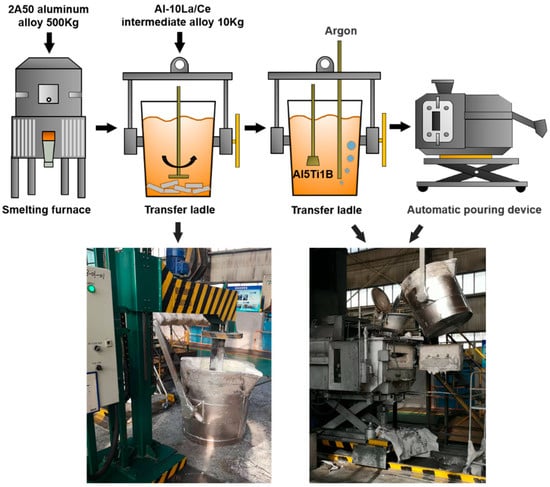
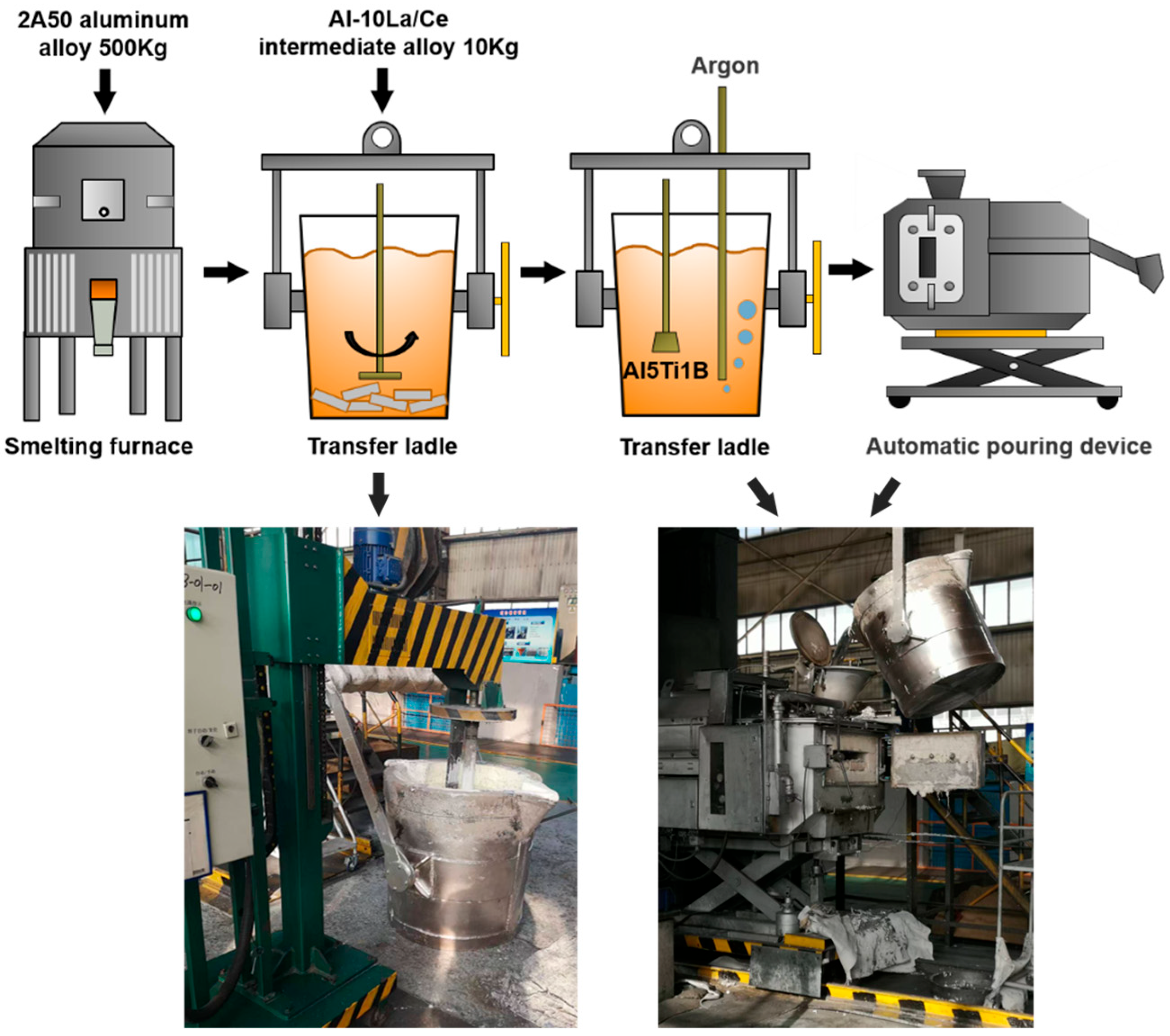
The alloy-melting procedure is shown in Figure 1. The 2A50 alloy was melted in the smelting furnace (YN-R-500-1200T, Shin Hing Technology Co., Ltd., Zhengzhou, China) at a temperature of 760 °C. After complete melting, the molten alloy was poured into the transfer ladle, and 2% rod-shaped rare earth master alloy Al-10La/Ce with a diameter of 10 mm and a length of 50 mm was added for modification treatment. Then, 0.1% Al5Ti1B grain refiner was pressed into the molten metal using a bell jar, and argon gas was introduced for degassing for 12 min. After thorough stirring, the slag was skimmed off. The refined molten metal was poured into the automatic pouring device (W650 SVPC, Chensong Shape Machinery Co., Ltd., Cangzhou, China) for casting preparation.
Figure 1.
Schematic diagram of the melting process of Al-Cu3-Si-Mg alloy.
Prior to pouring the molten metal, components that come into direct contact with the molten metal, such as launders, were preheated to 700 °C. Sample was taken before pouring for spectral element analysis, and the alloy composition obtained is shown in Table 2.
Table 2.
Composition of the Al-Cu3-Si-Mg alloy.
2.2. Experimental Equipment and Process
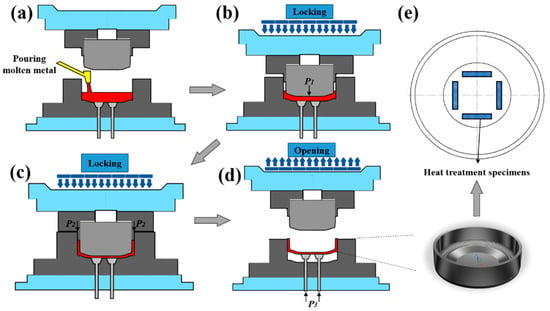
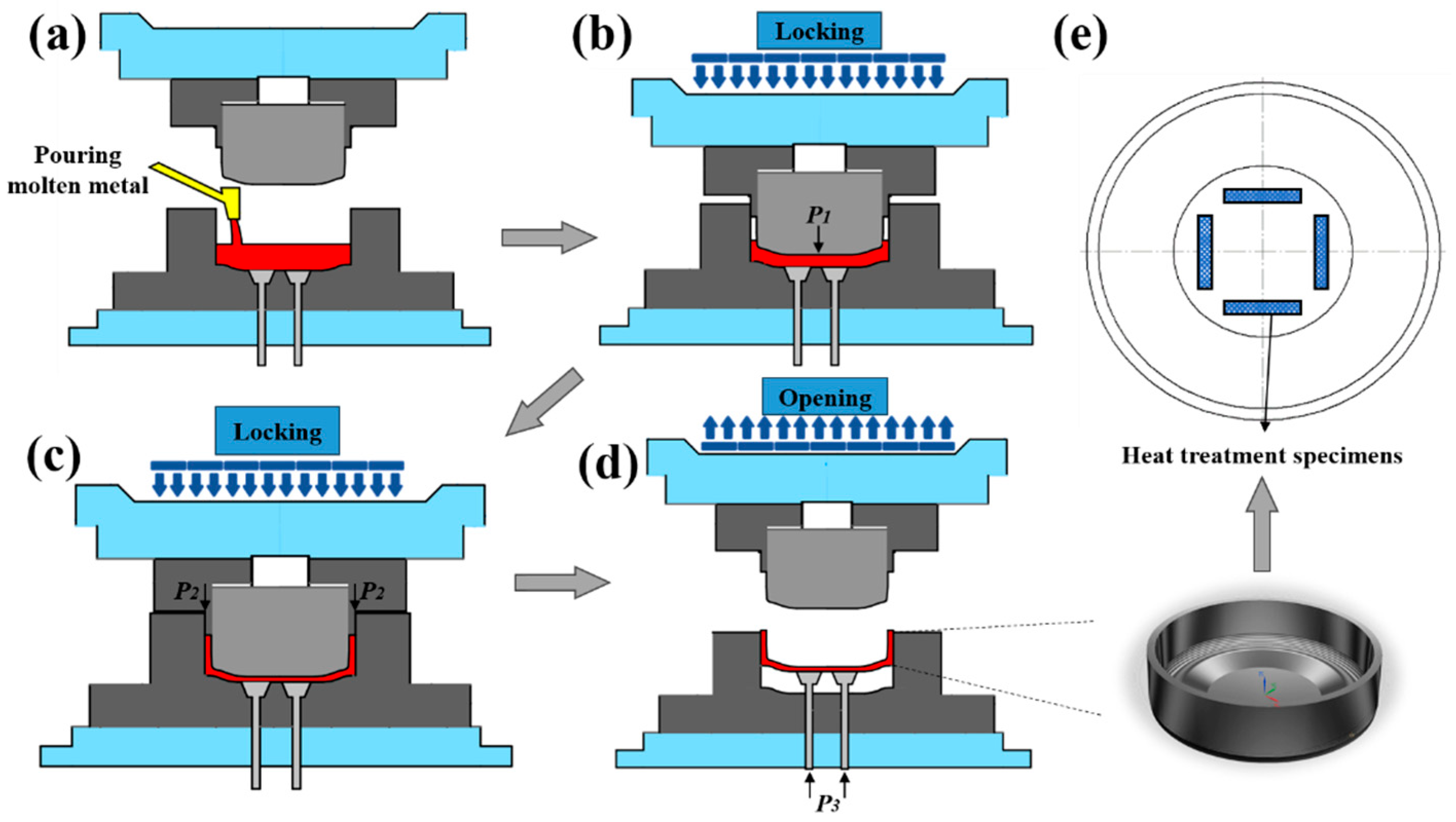
The wheel-shaped parts were fabricated by MMDF at a pressure of 118 MPa. MMDF was carried out using a 3000-ton vertical MMDF machine (THP16-3000, Tianduan Press Machine Co., Ltd., Tianjin, China). The upper and lower molds of the wheel-shaped part mold were, respectively, installed on the movable crossbeam and the working table of the MMDF machine. The mold structure and preparation process are shown in Figure 2a–d. The material of the mold is H13 steel, and is subjected to vacuum heat treatment. The bottom samples of the wheel-shaped parts were subjected to heat treatment, and the sampling positions are shown in Figure 2e. The weight of a single wheel-shaped part is 24.5 kg.
Figure 2.
MMDF pressing process: (a) pouring; (b) internal ram compression; (c) external ram feeding; (d) die opening and part ejection; and (e) sampling location.
2.3. Heat Treatment Experiments
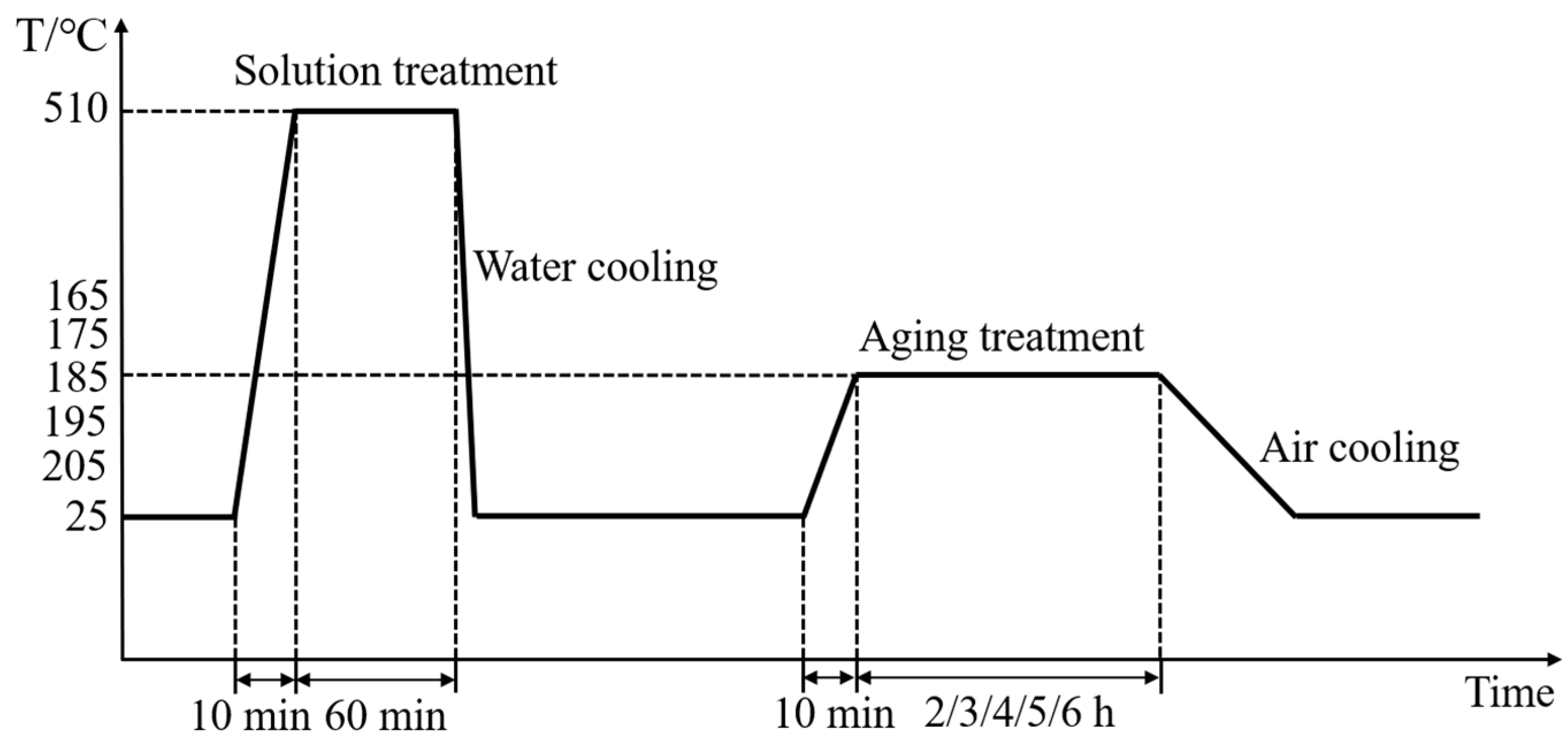
The Al-Cu3-Si-Mg alloy specimens were cut into 10 × 10 × 10 mm3 cubic samples for heat treatment. The samples were placed at the center of the heat treatment furnace (BFX-12C, Fulaimeng Experimental Equipment Co., Ltd., Beijing, China), heated from room temperature to 510 °C for 10 min, held at temperature for 60 min, and then quenched in water at 25 °C. Previous study has shown that, under this solution treatment conditions, the coarse phases such as the eutectic E (Al2Cu) and the secondary phase θ(Al2Cu) in the supersaturated solid solution are fully dissolved into the α-Al matrix, facilitating the observation of the evolution of precipitated phases during aging treatment [18,19]. The solution-treated specimens were subjected to aging treatment experiment; the aging treatment scheme is shown in Table 3.
Table 3.
Aging treatment experiment scheme.
The solution-treated specimens were placed at the center of the heat treatment furnace, and heated from room temperature to 165 °C, 175 °C, 185 °C, 195 °C, and 205 °C with a heating duration of 10 min. After being held at temperature for 2 h, 3 h, 4 h, 5 h, and 6 h respectively, the specimens were taken out and cooled in air. The experimental condition range was determined based on the results of preliminary experiments. The heat treatment process curve is shown in Figure 3.
Figure 3.
Heat treatment process curve.
2.4. Characterization of Microstructure
The microstructure of the Al-Cu3-Si-Mg alloy after aging treatment was observed by optical microscopy (OM, DM2000, Leica Microsystems, Wetzlar, Germany) and transmission electron microscope (TEM, FEI Talos F200X, Thermo Fisher Scientific, Eindhoven, The Netherlands). The specimens for OM were ground by silicon carbide sandpaper. After the sample surface was smoothed, it was polished with 0.3 μm Al2O3 suspension until a mirror-like surface was obtained. The polished specimens were etched by Keller’s reagent (95 mL H2O + 2.5 mL HNO3 + 1.5 mL HCl + 1.0 mL HF) for 15 s. Three specimens were selected for each aging condition. For each specimen, five microscopic fields of view were chosen for statistical analysis, and the average value was taken as the final experimental data. TEM specimens were prepared by cutting 1 mm-thick slices from the heat treatment samples. The slices were ground to less than 50 μm with sandpaper and then thinned by ion milling system (EM RES102, Leica Microsystems, Wetzlar, Germany). Phase analysis of the heat treatment specimens was performed by an X-ray diffractometer (D8 Advance, Bruker AXS GmbH, Karlsruhe, Germany) with a Cu target radiation source. The Kα wavelength was 0.15406 nm, the operating voltage was 40 kV, and the current was 40 mA. The scanning speed was set at 5°/min, the scanning angle ranged from 10° to 90°, with a step size of 0.02°, and the total test duration was 16 min.
2.5. Mechanical Properties Test
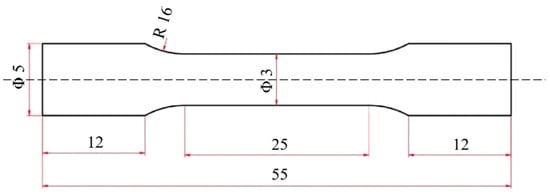
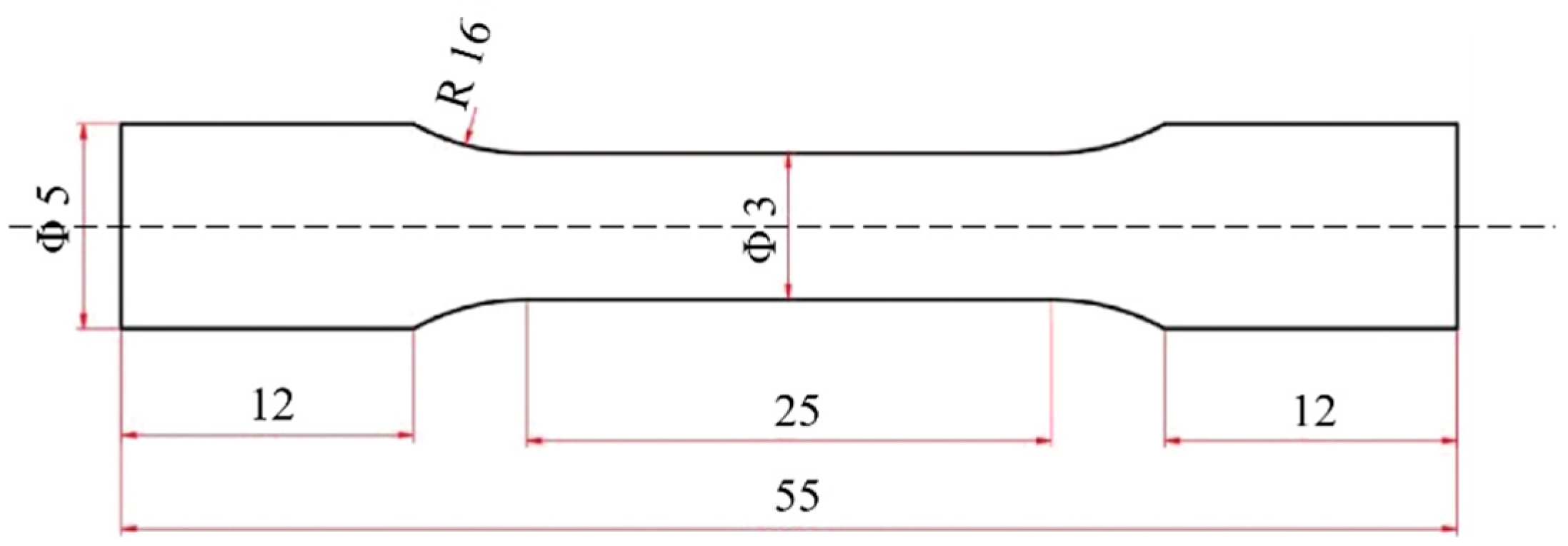
Al-Cu3-Si-Mg specimens with dimensions of 10 × 10 × 10 mm3 were prepared for hardness testing. The hardness was measured using a Brinell hardness tester (MH-5L, Hengyi Precision Instrument Co., Ltd., Shanghai, China) with an applied load of 300 gf and a dwell time of 10 s. Five measurements were taken on the surface of each specimen, and the average value was calculated as the final result. Tensile tests of Al-Cu3-Si-Mg specimens were carried out on an electronic universal testing machine (CMT4204, MTS Systems Co., Ltd., Shanghai, China) with a maximum test force of 19 kN. The dimensions of tensile bars were selected in accordance with the international standard ISO 6892 [20], as shown in Figure 4. The loading rate was set at 1 mm/min. Three specimens were tested for each experimental condition.
Figure 4.
Schematic diagram of tensile specimen (mm).
3. Results
3.1. Microstructure and Phase Composition of Al-Cu3-Si-Mg Alloy After Aging Treatment
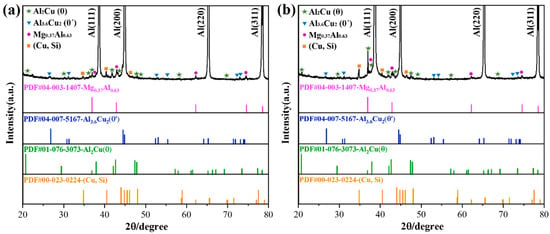
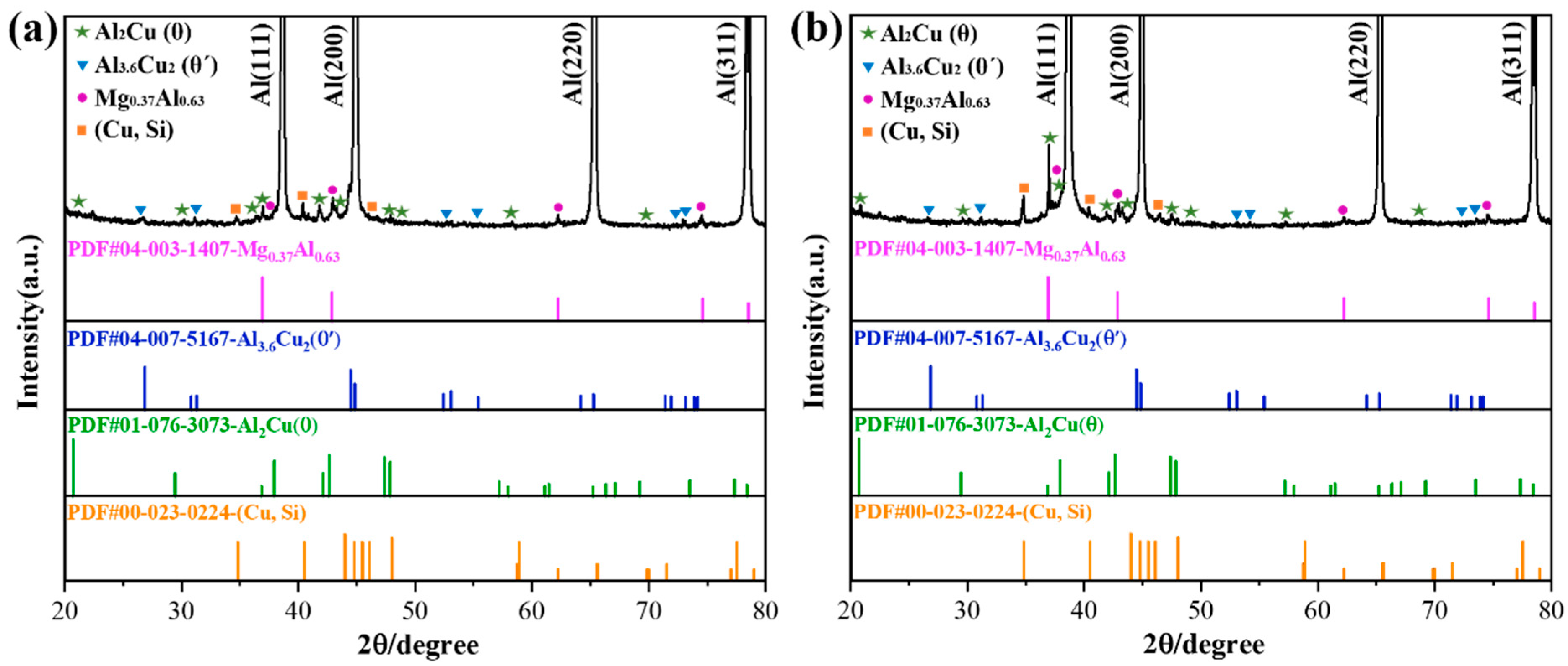
XRD analysis was performed on Al-Cu3-Si-Mg alloy specimens under different aging treatment conditions, as shown in Figure 5. It can be found that, after aging treatment at 165 °C × 2 h and 205 °C × 6 h, the XRD patterns show that the main diffraction peaks correspond to α-Al, indicating that the matrix of the alloy after aging treatment is still composed of the primary α-Al phase. The main weak diffraction peaks correspond to θ(Al2Cu), θ′(Al3.6Cu2), Al0.63Mg0.37, and (Cu, Si). Among them, θ(Al2Cu) exhibits a complex tetragonal crystal structure with lattice parameters = = 6.064 Å, and = 4.874 Å; θ′(Al3.6Cu2) possesses a different structure from θ(Al2Cu), presenting a simple tetragonal crystal structure with lattice parameters = = 4.04 Å; the Al0.63Mg0.37 phase exhibits a face-centered cubic crystal structure with lattice parameters = = = 4.216 Å and is designated as γ′; the (Cu, Si) phase has lattice parameters = = 7.267 Å, and = 7.892 Å, and is designated as η′.
Figure 5.
XRD analysis of Al-Cu3-Si-Mg alloy after aging treatment: (a) 165 °C × 2 h; and (b) 205 °C × 6 h.
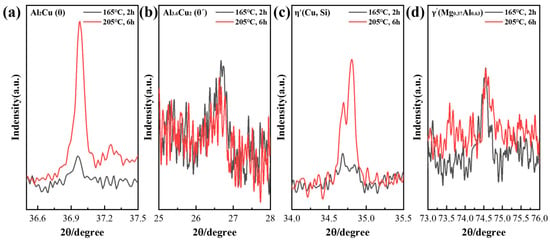
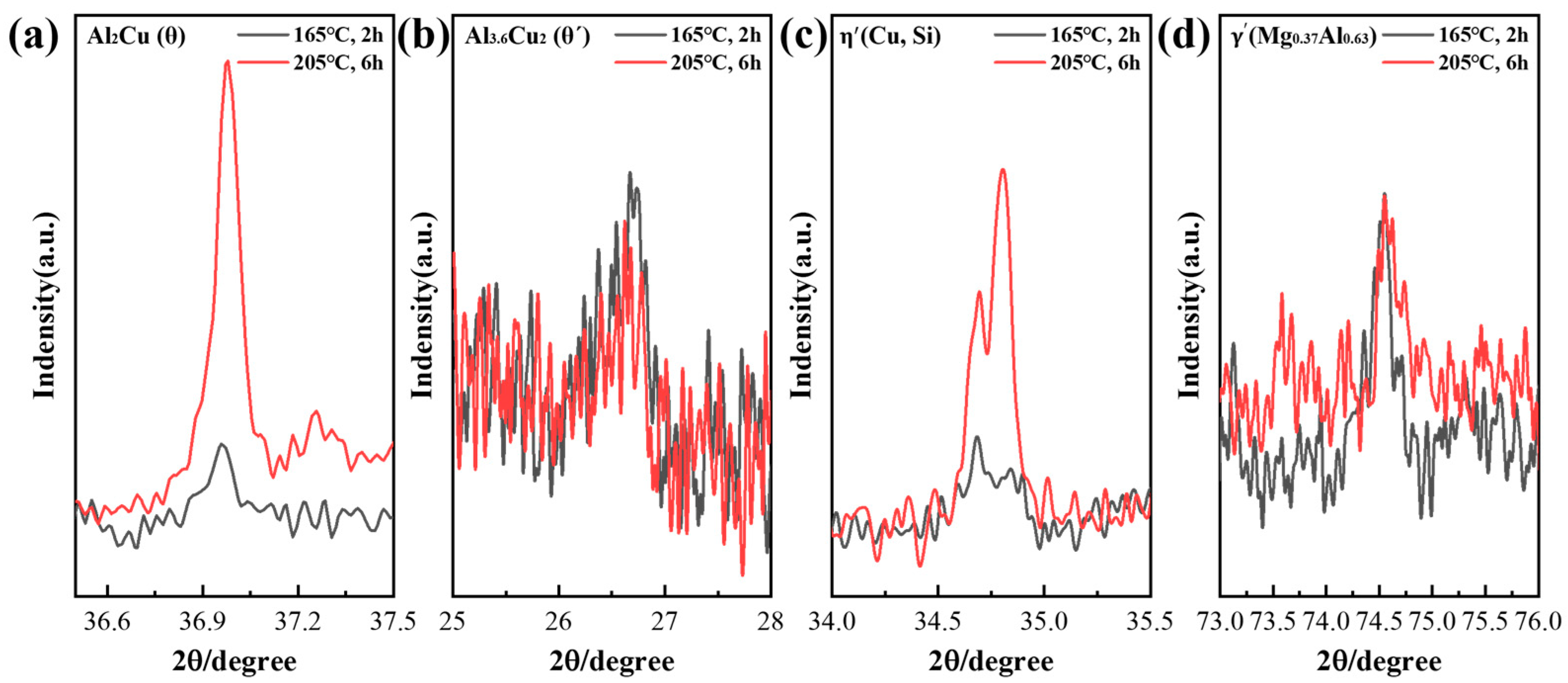
XRD analysis also reveals that the intensities of the phase diffraction peaks vary under different aging treatment conditions, indicating that the amounts of the phases may change with different aging treatments. Figure 6 shows the enlarged XRD patterns of each phase at the same diffraction angle. It can be observed that, when the aging treatment is changed from 165 °C × 2 h to 205 °C × 6 h, the peak areas of both θ(Al2Cu) and η′(Cu, Si) tend to increase, while θ′(Al3.6Cu2) decreases slightly, indicating that, with more sufficient aging treatment, the amounts of θ(Al2Cu) and η′(Cu, Si) increase significantly. This may be attributed to their direct precipitation from the matrix or transformation from other transitional phases. The decrease in the amount of θ′(Al3.6Cu2) may result from its transformation into other phases. The peak area of the γ′(Al0.63Mg0.37) phase decreases slightly, indicating that it precipitates continuously under both aging conditions and transforms into other phases simultaneously.
Figure 6.
Local enlarged XRD patterns of the aging treatment structure of the Al-Cu3-Si-Mg alloy: (a) θ(Al2Cu); (b) θ′(Al3.6Cu2); (c) η′(Cu, Si); and (d) γ′(Al0.63Mg0.37).
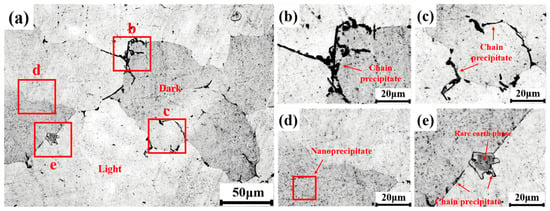
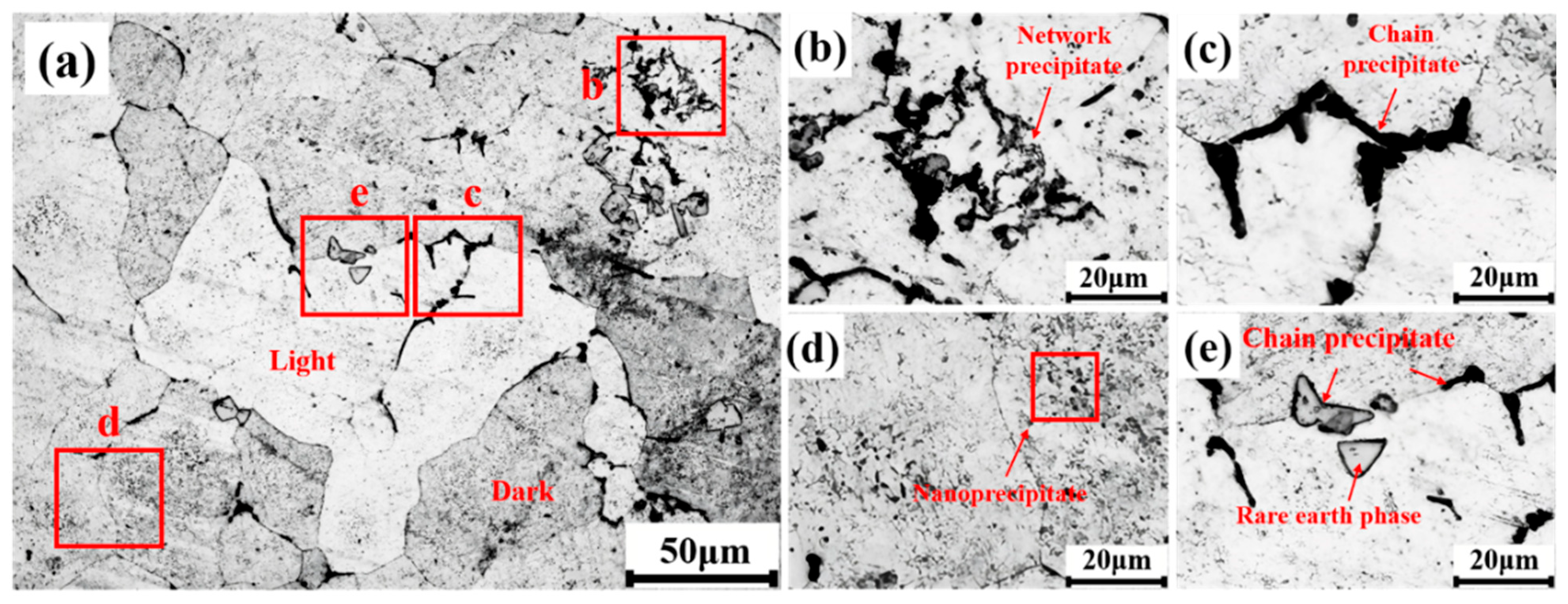
The microstructure of the sample aging at 165 °C × 2 h is shown in Figure 7. It can be seen that the matrix of the supersaturated solid solution in the Al-Cu3-Si-Mg alloy is the equiaxed α-Al phase. Different α-Al grains exhibit contrast variations under observation, which is caused by the differences in the distribution of secondary phases or the extent of lattice distortion in the matrix during aging treatment. The nanoscale secondary phase particles formed by the segregation of Cu, Mg, and Si elements after aging differ from the α-Al matrix in the crystal structure and atomic arrangement, thus showing a different reflectivity under optical microscopy. Accordingly, the bright regions contain a relatively low content of precipitates, while the dark regions are characterized by a dense distribution of precipitates. Figure 7b shows that chain-like precipitates are aggregated and distributed at some triangular grain boundaries of α-Al. Chain-like and discontinuously distributed precipitates can also be observed at the interfaces between some α-Al grains and rare-earth phases in Figure 7c,e. All of them consist of θ(Al2Cu) formed by the segregation of Cu atoms at grain boundaries. It can be seen from Figure 7d that fine particles are dispersedly distributed within the α-Al grains.
Figure 7.
Microstructure of Al-Cu3-Si-Mg alloy after aging treatment (165 °C × 2 h), OM: (a) low-magnification image; (b) α-Al triangular grain boundaries; (c) α-Al grain boundary; (d) α-Al intragranular precipitates; and (e) rare-earth phase.
The microstructure of the alloy aging at 205 °C × 6 h is shown in Figure 8. It can be observed that the number of dark α-Al grains in the matrix increases, indicating an increase in precipitates under this condition. Figure 8b reveals that the chain-like precipitates aggregated at the triangular grain boundaries of α-Al transform into a network-like structure. This is attributed to the excessive aging temperature or prolonged holding time, which cause the θ(Al2Cu) phases to increase and coarsen, resulting in the aggregation of chain-like precipitates into a network. Figure 8c–e show that the amounts of chain-like precipitates at the interfaces between α-Al grains and rare-earth phases, as well as the dispersive intragranular precipitates within α-Al grains, are both significantly increased.
Figure 8.
Microstructure of Al-Cu3-Si-Mg alloy after aging treatment (205 °C × 6 h), OM: (a) low-magnification image; (b) α-Al triangular grain boundaries; (c) α-Al grain boundary; (d) α-Al intragranular precipitates; and (e) rare-earth phase.
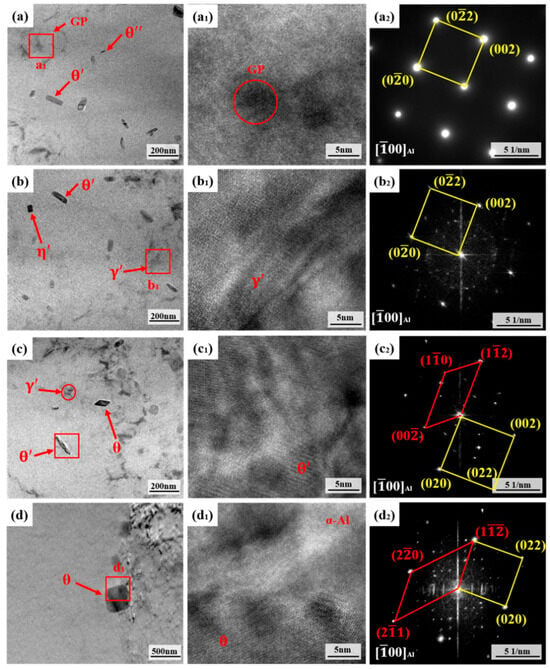
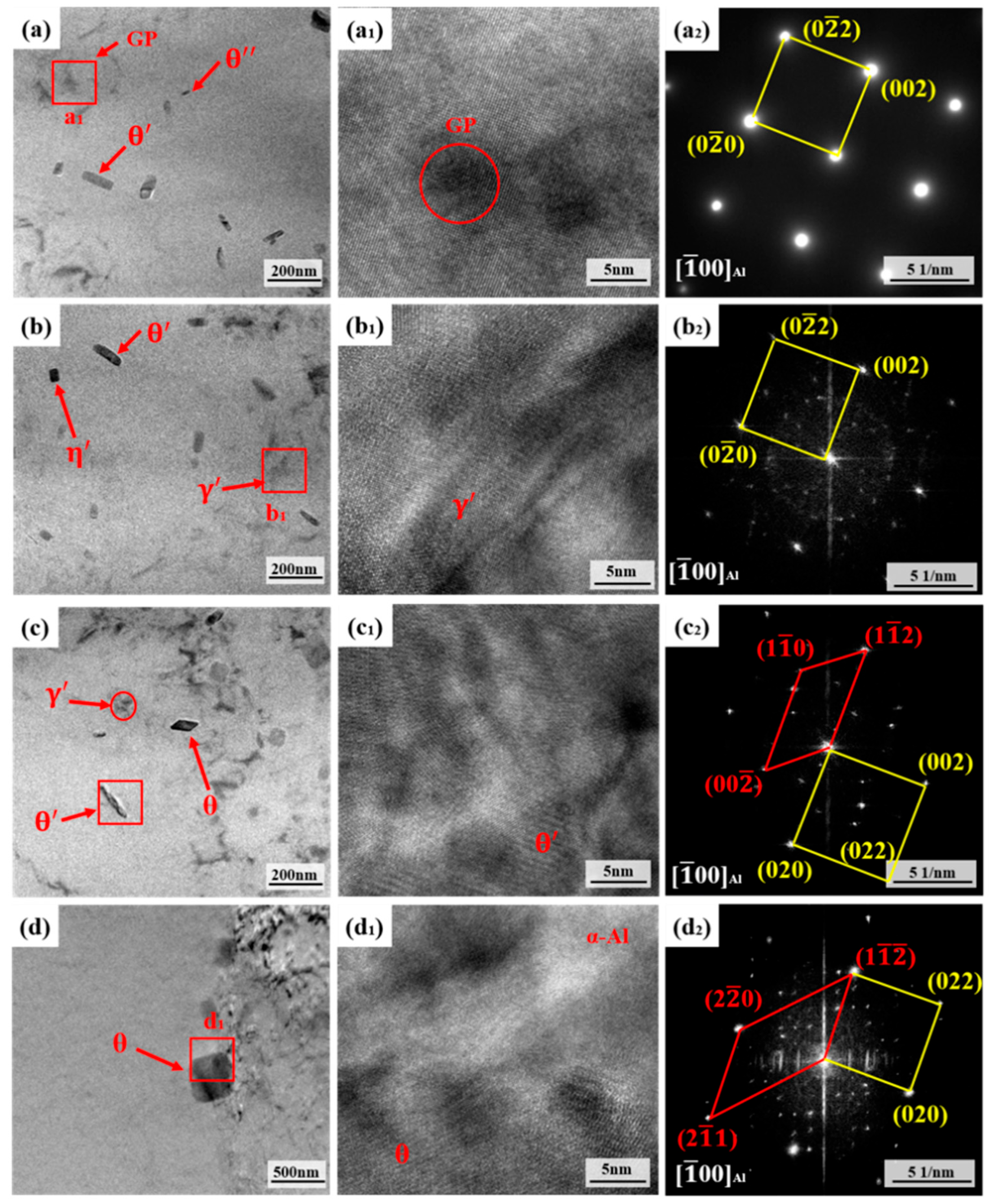
TEM images of precipitates after aging treatment are shown in Figure 9. It can be seen from Figure 9a that disc-shaped θ′(Al3.6Cu2) precipitates with a size of approximately 60–70 nm are formed within the α-Al grains under aging treatment at 165 °C × 2 h. Finer Cu atom-enriched GP zones and lamellar transitional θ″(Al2Cu) phases are also present. Figure 9a1 reveals that the GP zones are disc-shaped with a diameter of about 5–6 nm, showing no distinct interface with the matrix. SAED exhibits diffraction spots of the α-Al matrix along the {001} orientation, with no independent satellite spots or obvious diffraction streaks from the GP zones, indicating that the GP zones under this condition are close to the stage of transforming into θ″(Al2Cu). Figure 9b, c show that the γ′(Al0.63Mg0.37) phases and η′(Cu, Si) phases exist within α-Al grains under both aging treatment. As shown in Figure 9(b1), γ′(Al0.63Mg0.37) appears as aggregates of spherical particles with a diameter of 10–15 nm. Similar to GP zones, SAED only shows diffraction spots of the α-Al matrix along the {00} orientation, confirming it as an Mg-atom-enriched region. For η′(Cu, Si), a previous study has reported its chemical formula as Cu3+xSi, which is also a transitional phase that exists as the equilibrium η(Cu3Si) phase under stable conditions [21]. Figure 9d shows that relatively coarse θ(Al2Cu) phases with a size of about 500 nm are present at α-Al grain boundaries after aging at 205 °C × 6 h. SAED patterns exhibit additional quadrilateral spots superimposed on the matrix spots, with a larger spot spacing compared with those of θ′(Al3.6Cu2).
Figure 9.
TEM bright-field images, HRTEM images, and SAED modes of Al-Cu3-Si-Mg after aging treatment: (a,b) 165 °C × 2 h; (c,d) 205 °C × 6 h; (a1–d1) HRTEM images; and (a2–d2) SAED modes.
3.2. Effect of Aging Process Parameters on Precipitates at α-Al Grain Boundaries
The precipitation behavior of θ(Al2Cu) at grain boundaries of α-Al under different aging treatment condition is shown in Figure 10. To intuitively investigate the evolution of precipitated phases, a quantitative analysis method was employed to calculate the amounts of precipitates at grain boundaries. The length fraction of chain-like precipitates attached to a defined length of the α-Al grain boundary was adopted, with its calculation formula given in Equation (1):
where is the total grain boundary length of α-Al in a single field of view, and are the lengths of chain-like precipitates discontinuously distributed and attached to the α-Al grain boundaries. The schematic diagram for quantitative analysis is shown in Figure 10a.
Figure 10.
Precipitated phases at grain boundaries at different aging treatment condition: (a–d) different aging temperature; and (e–h) different aging time.
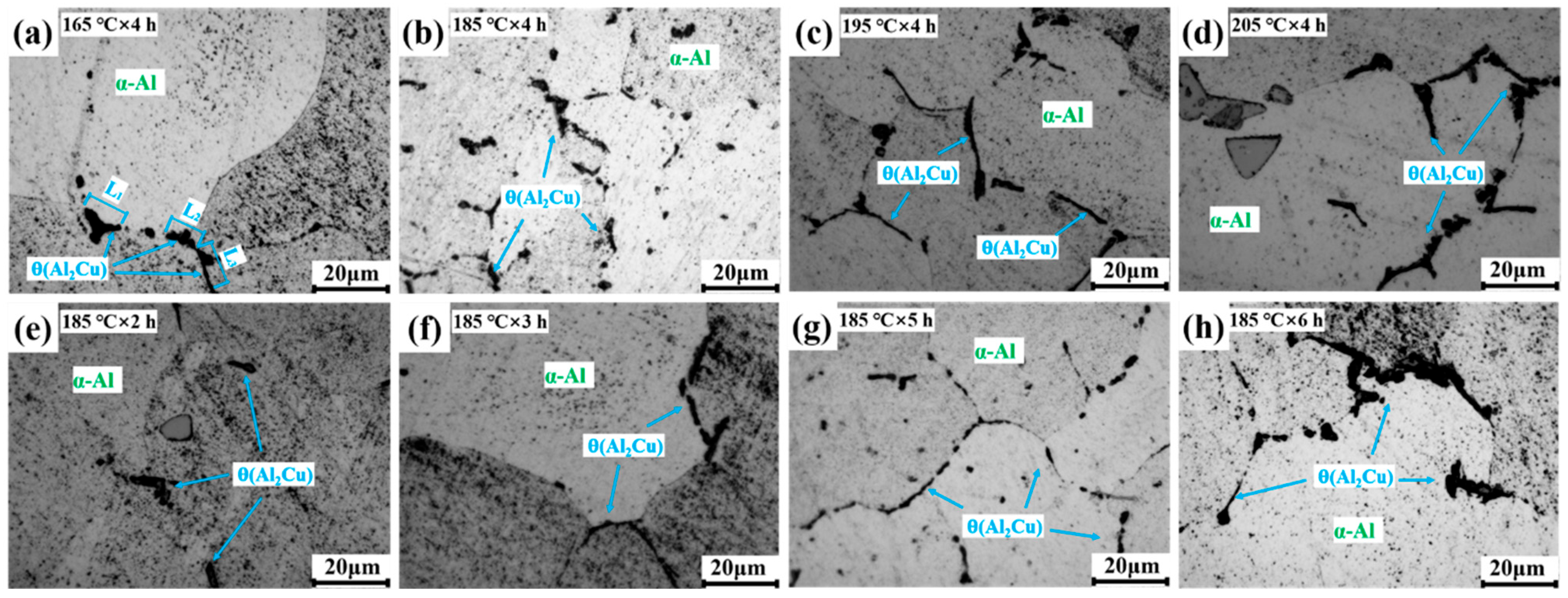
As shown in Figure 10a, b, after aging at 165 °C and 185 °C, respectively, only discontinuous chain-like θ(Al2Cu) precipitates exist at the α-Al grain boundaries, and they are mainly distributed at triple junctions. The amount of such discontinuous precipitates is relatively higher at 185 °C, with the corresponding grain boundary length fractions being 1.5% and 15.2%, respectively. When the aging temperature reaches 195 °C, the chain-like θ(Al2Cu) precipitates at α-Al grain boundaries exhibit a continuous distribution, as shown in Figure 10c. They appear extensively not only at triple junctions but also along the grain boundaries between two α-Al grains, with the grain boundary length fraction reaching 26.1%. When the aging temperature increases to 205 °C, the continuously distributed chain-like θ(Al2Cu) precipitates become even more pronounced, and the grain boundary length fraction reaches 43.5%. Figure 10e–h show the precipitated phases at different aging times. It can be observed that, when the aging time ranges from 2 to 5 h, the θ(Al2Cu) precipitates at α-Al grain boundaries are all discontinuously distributed. With increasing aging time, the amount of these discontinuous precipitates gradually increases and tends to interconnect, with the grain boundary length fraction increasing from 3.2% to 32.1%. After the aging time reaches 6 h, the θ(Al2Cu) precipitates at grain boundaries show a continuous distribution, and the grain boundary length fraction reaches 52.6%.
3.3. Effect of Aging Process Parameters on Precipitates Within α-Al Grains
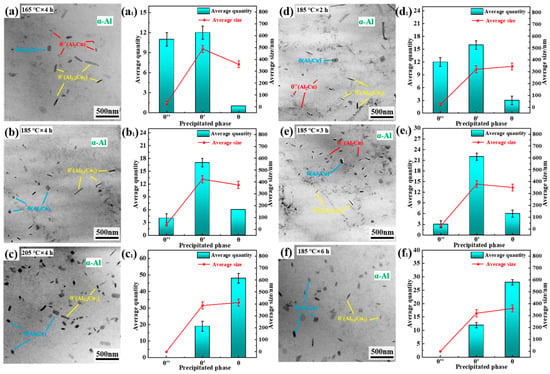
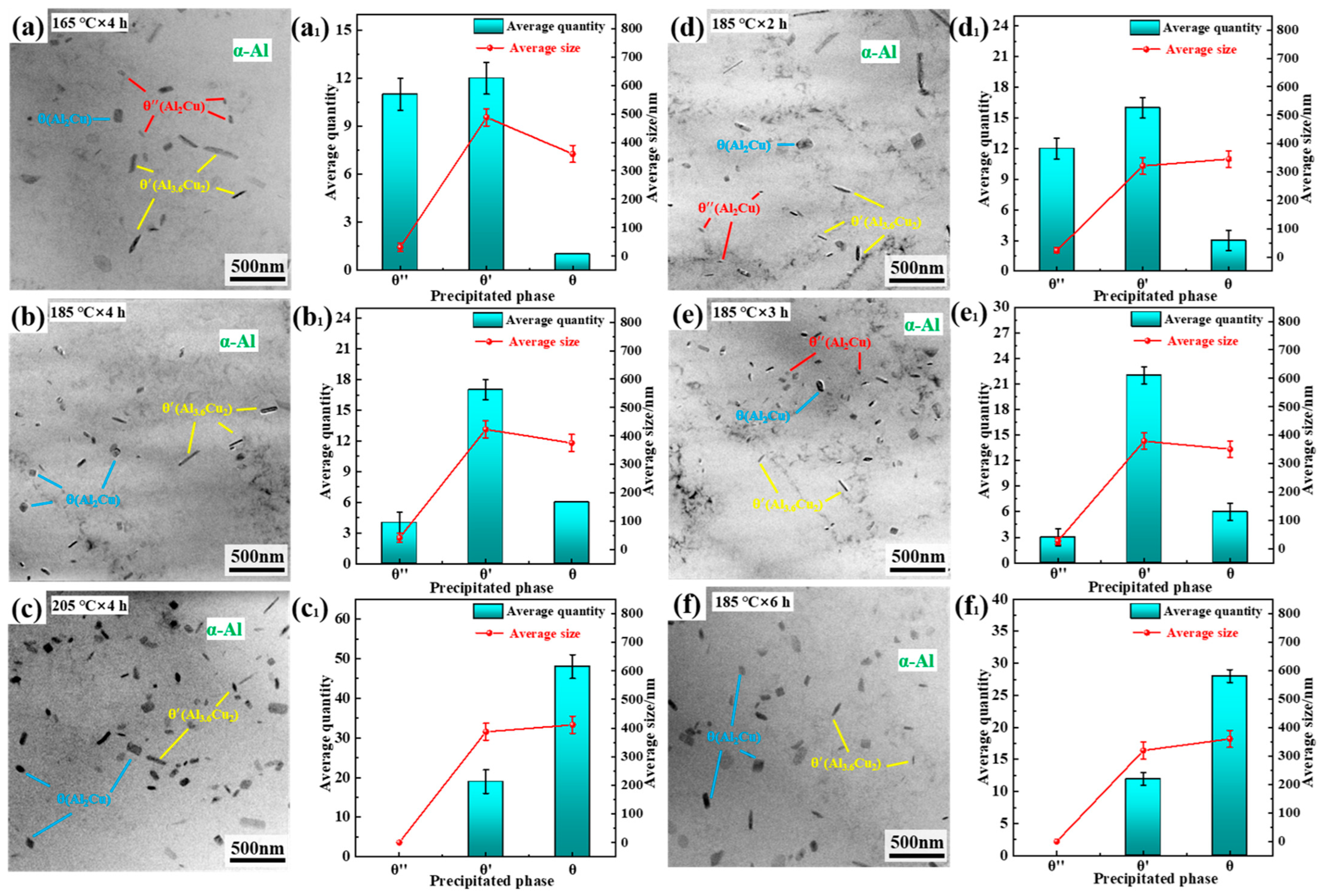
The bright-field TEM images of precipitates within α-Al grains under different aging treatment conditions are shown in Figure 11. It can be seen from Figure 11a that, after aging at 165 °C × 4 h, a large number of disc-shaped θ″(Al2Cu) and θ′(Al3.6Cu2) precipitates are formed inside the grains, with the average numbers of 11 and 12, respectively. The amount of θ(Al2Cu) is extremely low, indicating that the precipitation sequence GP → θ″(Al2Cu) → θ′(Al3.6Cu2) mainly occurs at this temperature, which has not reached the precipitation temperature for θ(Al2Cu). After aging at 185 °C × 4 h, it can be seen from Figure 11b that the amount of θ″(Al2Cu) inside the grains is significantly reduced, while the quantities of θ′(Al3.6Cu2) and θ(Al2Cu) are obviously increased to 17 and 6, respectively, indicating that a large amount of θ″(Al2Cu) transforms into θ′(Al3.6Cu2) and θ(Al2Cu) at this temperature. As can be seen from Figure 11c, after aging at 205 °C × 4 h, θ″(Al2Cu) within the grains disappears completely, while a large number of θ(Al2Cu) precipitates appear with a quantity of 48, and their size shows an increasing trend, indicating that, at this temperature, θ″(Al2Cu) is completely transformed into θ′(Al3.6Cu2), and a large amount of θ′(Al3.6Cu2) is further transformed into θ(Al2Cu). It can also be observed from the size curve that the size of θ′(Al3.6Cu2) decreases gradually, and the ratio of its diameter to thickness decreases with increasing temperature. This is attributed to the transformation into non-coherent spherical θ(Al2Cu), and the transformation from disc-shaped precipitates to spherical phases.
Figure 11.
Bright-field TEM images of the Al-Cu3-Si-Mg alloy under different aging treatment conditions: (a–c) different aging temperature; (d–f) different aging time; and (a1–f1) quantity and size of phases.
Bright-field TEM images of precipitates within α-Al grains under different aging times at the aging temperature of 185 °C are shown in Figure 11d–f. It can be found that, when the aging time is within 3 h, the amount of θ(Al2Cu) in α-Al grains is relatively small. At this stage, the precipitation reaction θ″(Al2Cu) → θ′(Al3.6Cu2) mainly occurs, as reflected by the drastic decrease in the amount of θ″(Al2Cu) and the significant increase in the amount of θ′(Al3.6Cu2), whose quantities decrease from 12 to 3 and increase from 16 to 23, respectively. After aging for 6 h, θ″(Al2Cu) in the grains disappears completely, and the amount of θ(Al2Cu) increases significantly to 28. Combined with Figure 11c, it can be found that, under prolonged aging treatment, when the temperature increases from 185 °C to 205 °C, the quantity of θ(Al2Cu) rises from 28 to 48, indicating that 185–205 °C is the temperature range where a large amount of θ′(Al3.6Cu2) transforms into θ(Al2Cu).
4. Discussion
4.1. Formation Sequence and Mechanism of Precipitates
Previous studies have shown that, after solution treatment, the eutectic phases E(Al2Cu), β(Mg2Si), and Q(Al5Cu2Mg8Si6) and the secondary phase θ(Al2Cu) in the microstructure of the Al-Cu3-Si-Mg alloy dissolve into the α-Al matrix, forming a thermodynamically unstable solid solution with Cu, Mg, and Si as the main solute elements [18,19]. During aging treatment, low-temperature heating allows these solute atoms to diffuse and cluster gradually, resulting in the precipitation of fine, uniformly dispersed strengthening phases. After sufficient solution treatment, the Al-Cu3-Si-Mg alloy forms a metastable SSS (supersaturated solid solution). During the subsequent aging treatment, the SSS undergoes decomposition upon holding at a certain temperature for a specific time, resulting in the formation of a series of precipitated phases. A previous study has demonstrated that several metastable transitional phases form prior to the precipitation of the equilibrium θ(Al2Cu) phases, and the precipitation sequence is as follows [22]:
SSS → α1 + GP → α2 + θ″ → α3 + θ′ → α + θ
According to the SAED analysis, GP zones are Cu-atom-enriched regions. Being coherent with the matrix, they form along the {100} plane family of α-Al, meaning Cu atoms segregate on the {100} planes of the α-Al matrix. θ″(Al2Cu) nucleates afresh in α-Al and forms via the dissolution of GP zones. It is fully coherent with all planes of the α-Al matrix, with only slight lattice distortion along the {100} direction, appearing as disc-shaped precipitates on the habit plane. These two metastable phases are still observed in the TEM images of the Al-Cu3-Si-Mg alloy aging at 165 °C × 2 h, indicating that the transformation to θ′(Al3.6Cu2) has not been completed. In contrast, under the aging treatment of 205 °C × 6 h, both metastable phases completely transform into more stable phases due to the higher temperature and longer holding time. For the solute elements Mg and Si, previous studies have indicated that the formation and subsequent transformation of their precipitated phases follow the two sequences [23,24]:
SSS → α1 + GP → α2 + γ′ → α + γ
SSS → α1 + GP→ α2 + η′ → α + η
Under the aging treatment of 165 °C × 2 h, the Al-Cu3-Si-Mg alloy undergoes the transformation of Mg-rich GP zones into γ′(Al0.63Mg0.37) phases. Subsequently, after aging at 205 °C × 6 h, γ′(Al0.63Mg0.37) still remains in the matrix with a slight decrease in the diffraction peak area, indicating that the transformation from γ′(Al0.63Mg0.37) to γ(Al3Mg2) occurs under these two conditions but with a low fraction of transformation. In contrast, the diffraction peak area of η′(Cu3Si) increases significantly under the condition of 205 °C × 6 h, suggesting that the transformation from η′(Cu3Si) to η(Cu3Si) takes place at this condition with a large fraction of transformation.
Based on the above analysis and the precipitation extent of each phase under different conditions, the precipitation sequence of phases during the aging treatment of the Al-Cu3-Si-Mg alloy is summarized as follows (matrix not considered): SSS → GP0 → GP0 + γ′ → GP0 + (γ′ + γ) + θ″ + η′ → (γ′ + γ) + (θ″ + θ′) + (η′ + η) → (γ′ + γ) + (θ + θ′) + (η′ + η) → (γ′ + γ) + (θ + θ′) + η → γ + θ + η. GP0 denotes the general term for solute atom clusters in the matrix of the Al-Cu3-Si-Mg alloy.
4.2. Correlation Between Fraction of Precipitates and Aging Treatment Parameters
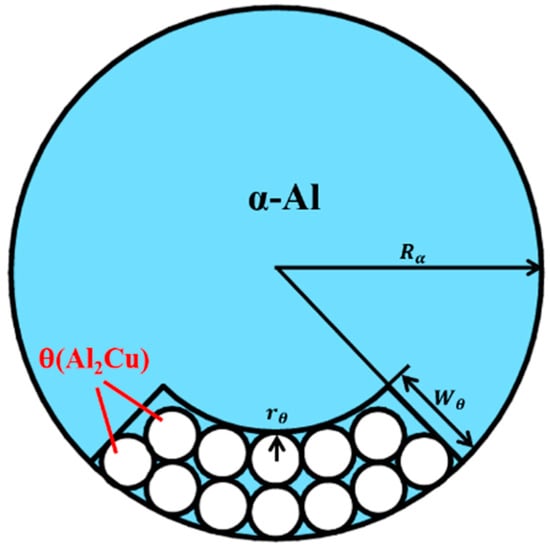
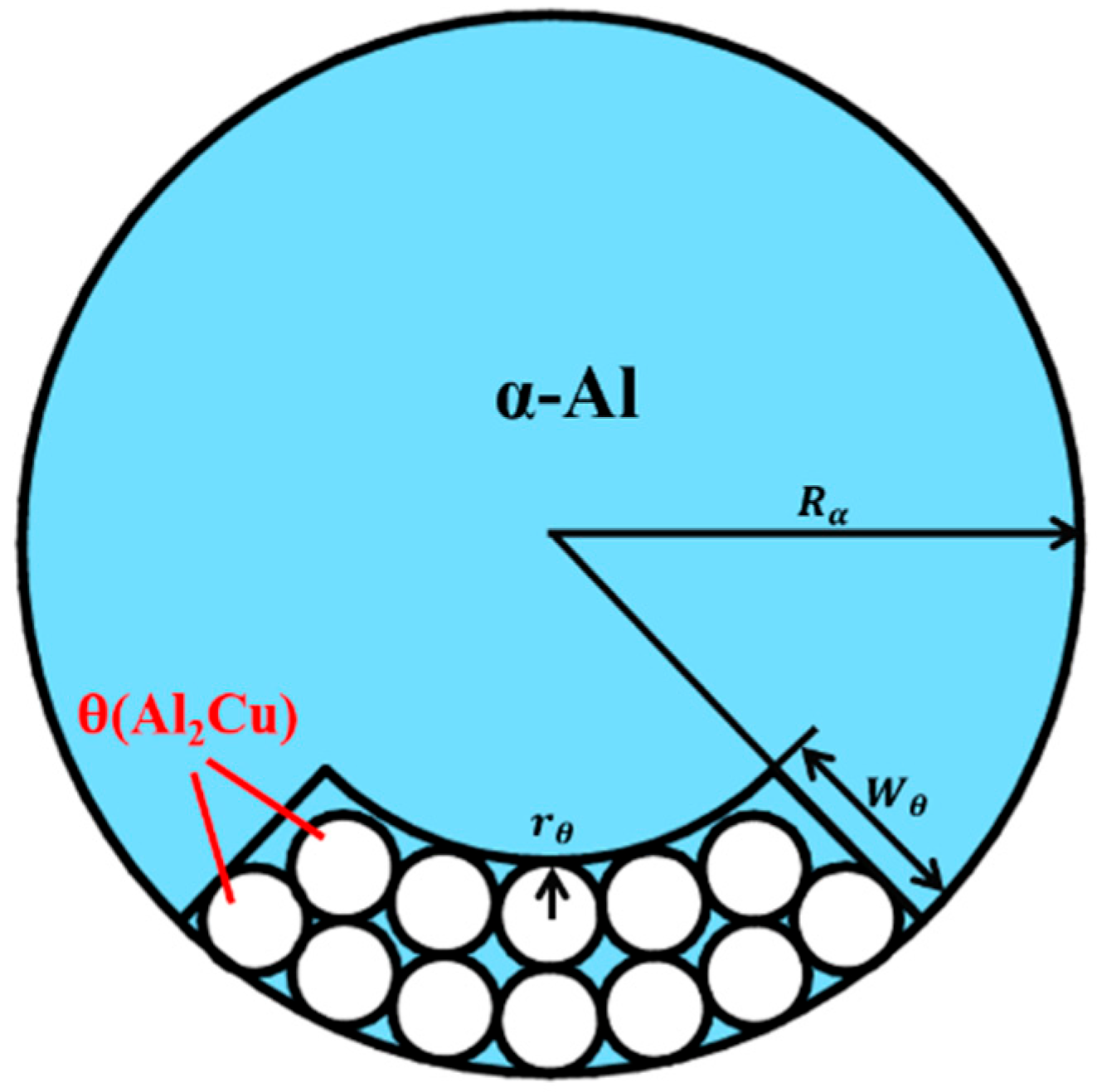
The schematic diagram of the relationship between the grain boundary length fraction of θ(Al2Cu) in α-Al and its volume fraction in the α-Al matrix is shown in Figure 12. A single equiaxed α-Al grain is assumed to be spherical with a radius of . The chain-like precipitates at the grain boundaries are regarded as aggregates of the spherical θ(Al2Cu) phases, distributed side by side at the grain boundaries with a width of and a length of . The radius of a single spherical θ(Al2Cu) precipitate is .
Figure 12.
θ(Al2Cu) length fraction versus volume fraction diagram.
The grain boundary length fraction of θ(Al2Cu) in α-Al is defined as the ratio of to the perimeter of a single α-Al grain, as shown in Equation (5), where represents the number of θ(Al2Cu) precipitates along the length of the chain-like precipitates.
The volume fraction of θ(Al2Cu) at grain boundaries in the α-Al matrix is defined as the ratio of the total volume of spherical θ(Al2Cu) precipitates to the volume of a single α-Al grain, as shown in Equation (6), where represents the number of θ(Al2Cu) precipitates along the width direction of the chain-like precipitates.
From Equations (5) and (6), the relationship between the length fraction and volume fraction of θ(Al2Cu) can be obtained as shown in Equation (7).
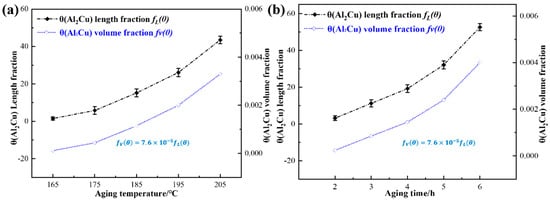
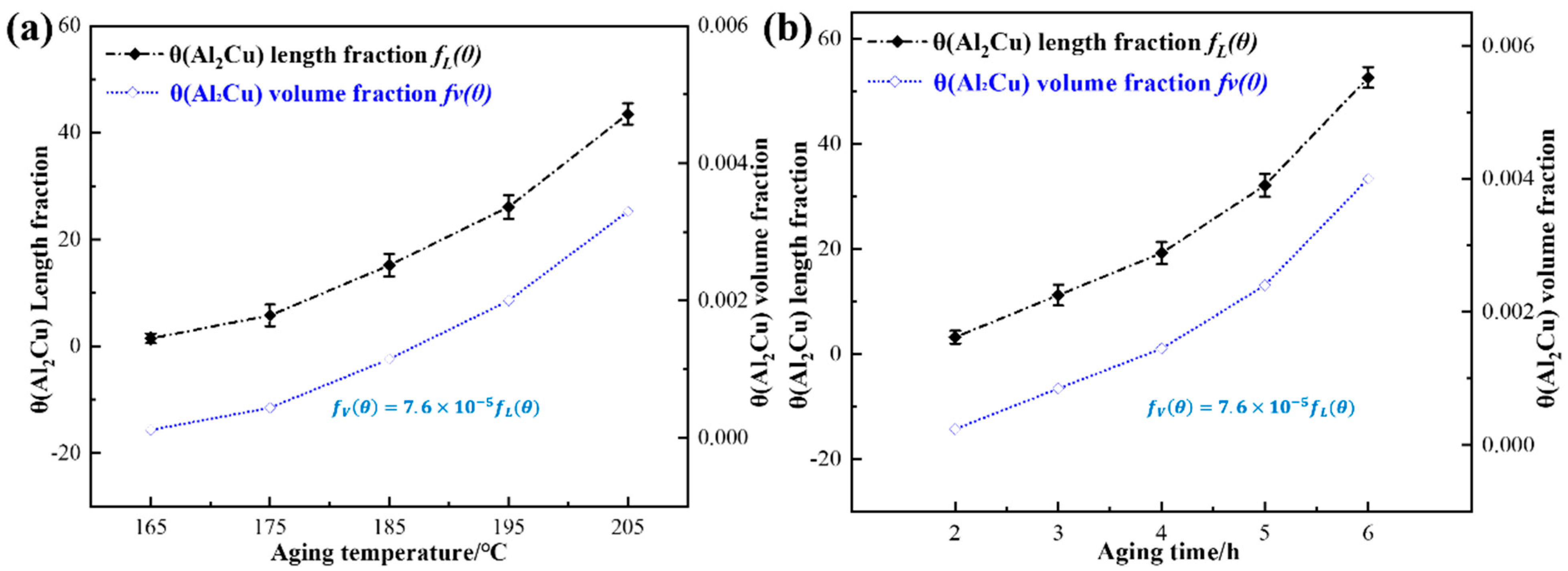
It can be seen that the volume fraction has a certain linear relationship with the length fraction . During the aging treatment, the size of the α-Al matrix and θ(Al2Cu) on the grain boundaries changes slightly, mainly reflecting the change in the quantity of precipitates. Therefore, the coefficient terms in Equation (7) can all be defined based on the size measurement. The measured average values are = 144 μm, = 0.5 μm, and = 2 μm. The variation curves of the volume fraction and length fraction of θ(Al2Cu) with the aging time and temperature are shown in Figure 13. It can be found that the effects of aging temperature and time on the volume fraction of θ(Al2Cu) at grain boundaries present a nonlinear relationship.
Figure 13.
Variation curve of θ(Al2Cu) precipitation fraction at grain boundary with aging parameters: (a) aging temperature; and (b) aging time.
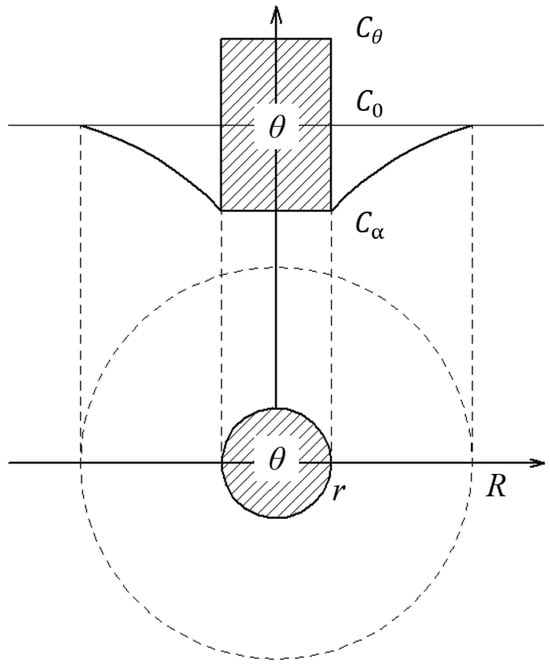
The influence of aging treatment parameters on the precipitation of the θ(Al2Cu) phase can be analyzed using the grain growth kinetics theory. It is assumed that, at time , spherical precipitate nuclei capable of growth already exist in the supersaturated α0 matrix, and the growth regions of different precipitate particles do not overlap within a short period [25]. Suppose the initial composition of Cu in the supersaturated α0 matrix is ; then, the matrix composition in equilibrium with the precipitate is , and the composition of the θ(Al2Cu) is , as shown in Figure 14.
Figure 14.
Schematic diagram of the growth of spherical precipitated phase.
At time , the relationship between the average concentration of the aluminum matrix and the precipitate fraction is shown as Equation (8).
It is assumed that the spherical precipitates grow via diffusion, with the effects of the strain energy and interfacial energy neglected. Diffusion occurs within the α0 matrix, where solute Cu atoms diffuse toward the interface and undergo reactive diffusion at the α/θ phase boundary to form the θ(Al2Cu) phase. During the formation of the θ(Al2Cu), based on the quasi-steady-state diffusion approximation [26], the equation for the change in solute mass in the parent phase within time is given by Equation (9).
According to the law of conservation of the solute mass in the α and θ(Al2Cu), the following equation is obtained:
Combining Equations (9) and (10) and eliminating yields Equation (11).
Upon integration and rearrangement, the phase transformation fraction at time is obtained as follows:
It can be concluded from Equation (12) that . This indicates that the precipitate fraction exhibits a nonlinear relationship with time, and increases with increasing aging time. From Equation (13), it can also be found that, with the increasing of the aging temperature, the diffusion coefficient increases due to the temperature dependence of diffusion, while decreases and increases. This is consistent with the experimental results, where both the number and size of spherical θ(Al2Cu) phases tend to increase with increasing aging temperature and time. This result verifies the experimental results of the nonlinear curves between the volume fraction of θ(Al2Cu) and aging temperature and time in Figure 13.
4.3. Analysis on the Influence of Aging Parameters on Mechanical Properties
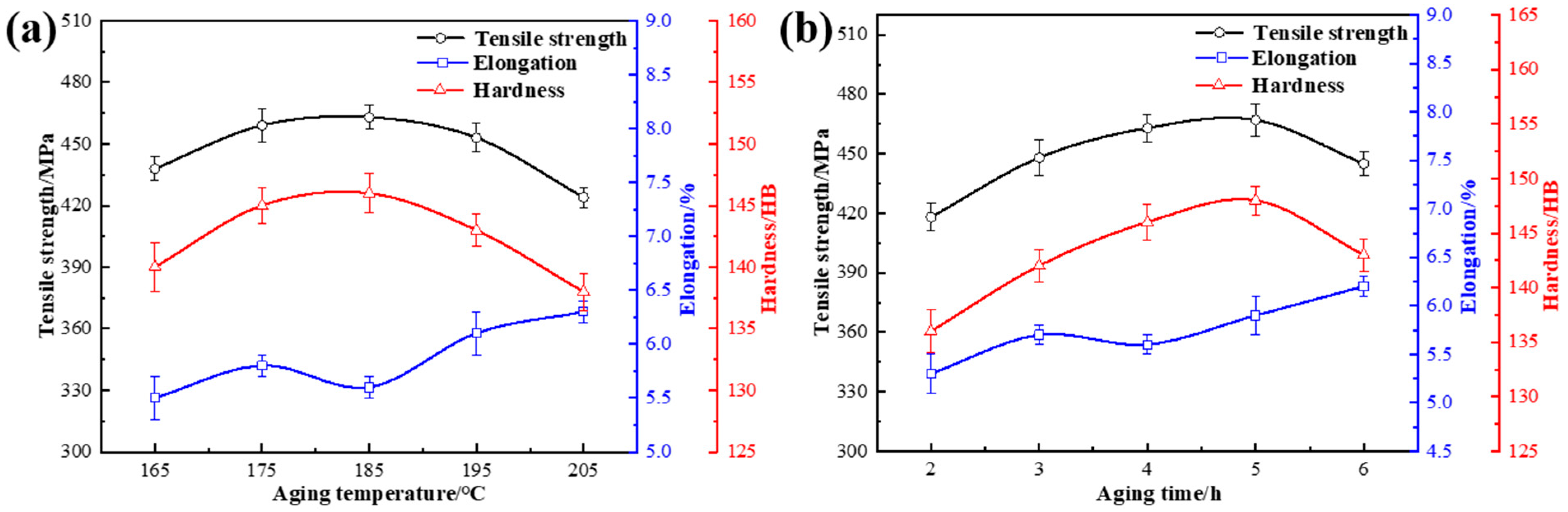
The mechanical properties of the Al-Cu3-Si-Mg alloy under different aging treatment parameters are presented in Figure 15. It can be seen that, when the aging temperature ranges from 165 °C to 185 °C, the tensile strength and hardness of the alloy increase gradually with the rise in temperature, reaching the maximum values of 463 MPa and 146 HB at 185 °C, respectively. The elongation of the alloy shows no obvious variation within this temperature range. As the aging temperature further increases, the tensile strength and hardness of the alloy decrease continuously. At 205 °C, the corresponding values drop to 424 MPa and 138 HB. Meanwhile, the elongation of the alloy improves significantly in this temperature interval, increasing from 5.6% to 6.3%. When the aging time ranges from 2 h to 5 h, the tensile strength and hardness of the alloy increase significantly with the extension of the holding time, rising from 418 MPa and 136 HB to 467 MPa and 148 HB, respectively. Meanwhile, the elongation of the alloy increases slightly from 5.3% to 5.9%. With the further prolongation of the aging time, the tensile strength and hardness of the alloy decrease obviously, reaching 445 MPa and 143 HB after 6 h of aging.
Figure 15.
Mechanical properties under different aging parameters: (a) different temperatures, 4 h; and (b) different times, 185 °C.
After aging treatment, the alloying elements Cu, Si, and Mg exist in the matrix in three forms: 1. solute atoms dissolved in the α-Al matrix; 2. dispersively distributed precipitates formed within α-Al grains; and 3. continuously distributed precipitates along α-Al grain boundaries. Among them, the dispersively distributed precipitates inside α-Al grains are the key factor for improving the strength and hardness of the alloy. Combined with the experiment results in Section 3.3, when the aging temperature increases from 165 °C to 185 °C, the number of θ″(Al2Cu) and θ′(Al3.6Cu2) precipitates, which maintain fully coherent or semi-coherent interfaces with the α-Al matrix, increases remarkably. The difference in lattice constants between these precipitates and the matrix induces a lattice distortion stress field, which hinders the dislocation motion in the matrix. Correspondingly, the tensile strength and hardness of the alloy are improved to varying degrees. According to the Orowan dislocation bypass strengthening theory of precipitates [27], as shown in Equation (14), the strengthening effect of precipitates on the matrix is inversely proportional to the precipitate spacing. Therefore, an increase in the number of precipitates reduces the inter-precipitate spacing and further improves the strengthening efficiency.
where is the shear modulus of the matrix, is the Burgers vector, and is the average spacing between precipitates.
Within the temperature range of 165–185 °C, the discontinuous chain-like precipitates distributed at grain boundaries also provide a slight strengthening effect on the matrix and hinder the propagation of cracks along α-Al grain boundaries. When the aging temperature exceeds 185 °C, the grain boundary precipitates transform from a discontinuous chain structure into a continuous chain structure accompanied by an obvious coarsening. Such continuously distributed coarsened precipitate bands weaken the bonding strength between grain boundaries and act as stress concentration sites. Deformation easily occurs along these precipitate bands under external loading, resulting in a remarkable decline in tensile strength and hardness. During aging for 2–5 h, the continuous precipitation of θ″(Al2Cu) and θ′(Al3.6Cu2) occurs within α-Al grains, which exerts a strengthening effect on the matrix. Consequently, the strength of the alloy increases significantly, while the hardness rises moderately. After aging exceeds 5 h, continuous chain-like θ(Al2Cu) precipitates form at α-Al grain boundaries, weakening the interfacial bonding between grain boundaries and the matrix and resulting in an obvious decrease in alloy strength.
5. Conclusions
In this study, the evolution of the precipitated phases and mechanical properties of the Al-Cu3-Si-Mg alloy prepared by MMDF were investigated under various aging treatment conditions. The notable conclusions are summarized as follows:
- (1)
- After aging treatment, the supersaturated solid solution of the Al-Cu3-Si-Mg alloy precipitates phases are dominated by θ(Al2Cu), θ′(Al3.6Cu2), γ′(Al0.63Mg0.37), and η′(Cu, Si). Based on the analysis of XRD diffraction peak areas, the precipitation sequence of the precipitated phases is summarized as follows: SSS → GP0 → GP0 + γ′ → GP0 + (γ′ + γ) + θ″ + η′ → (γ′ + γ) + (θ″ + θ′) + (η′ + η) → (γ′ + γ) + (θ + θ′) + (η′ + η) → (γ′ + γ) + (θ + θ′) + η → γ + θ + η.
- (2)
- After aging treatment of 165–185 °C × 4 h, the chain-like θ(Al2Cu) precipitates at grain boundaries are discontinuously distributed along α-Al grain boundaries. When the temperature exceeds 185 °C, the chain-like θ(Al2Cu) precipitates become continuous, and the fraction of chain-like θ(Al2Cu) precipitates increases from 1.5% to 15.2%. After aging treatment of 185 °C × 5–6 h, the chain-like θ(Al2Cu) precipitates become more continuous, and the fraction of chain-like θ(Al2Cu) increases from 32.1% to 52.6%. Excessive separated phases distributed continuously at the grain boundaries may lead to a decrease in the alloy’s strength.
- (3)
- After aging treatment of 165–185 °C × 4 h, disc-shaped θ′(Al3.6Cu2) and θ″(Al2Cu) are mainly precipitated within the grains. When the temperature exceeds 185 °C, the amount of the spherical equilibrium θ(Al2Cu) phase in the grains increases significantly, and θ″(Al2Cu) disappears completely. After the aging treatment of 185 °C × 5–6 h, a large number of θ′(Al3.6Cu2) transform into θ(Al2Cu), and their aspect ratio decreases markedly, indicating the transformation from a disc-shaped to spherical morphology.
- (4)
- With the temperature increasing from 165 °C to 185 °C, and the time prolonging from 2 h to 5 h, the tensile strength and hardness of the Al-Cu3-Si-Mg alloy are significantly improved. When the temperature exceeds 185 °C, the time is longer than 5 h, and both tensile strength and hardness decrease remarkably, while the elongation increases gradually. This phenomenon is attributed to the fact that the strengthening effect induced by the dispersed intragranular precipitates is suppressed by the matrix segmentation caused by the chain-like precipitates at grain boundaries.
Author Contributions
Conceptualization, T.W. and S.X.; formal analysis, T.W.; investigation, T.W.; resources, T.W.; writing—original draft preparation, T.W.; writing—review and editing, T.W. and S.X. All authors have read and agreed to the published version of the manuscript.
Funding
This research received no external funding.
Data Availability Statement
The original contributions presented in this study are included in the article. Further inquiries can be directed to the corresponding author.
Acknowledgments
The authors would like to express gratitude for the financial support of the MMDF research group in Beijing Jiaotong University. All individuals included in this section have consented to the acknowledgement.
Conflicts of Interest
The authors declare no conflicts of interest.
Abbreviation
The following abbreviation are used in this manuscript:
| MMDF | Molten Metal Die Forging |
References
- Gan, Y.; Zhang, D.; Zhang, W.; Li, Y. Effect of cooling rate on microstructure and mechanical properties of squeeze cast Al-Cu-Mg alloy. Int. J. Cast Met. Res. 2015, 28, 50–58. [Google Scholar] [CrossRef] [Scilit]
- Li, J.Y.; Lu, S.L.; Chen, L.; Liao, Q.; Guo, W.; Wu, S.S. Influence of squeeze casting pressure on nanoparticle distribution and mechanical properties of nano-SiCp/Al-Cu composites assisted with ultrasonic vibration. Trans. Nonferrous Met. Soc. China 2023, 33, 1977–1987. [Google Scholar] [CrossRef] [Scilit]
- Lin, B.; Xia, S.C.; Li, H.Y.; Lou, Z.H.; Liu, K.; Zhang, W.W. Improved creep resistance of Al-Cu-Mn-Fe-Ni alloys through squeeze casting. Mater. Charact. 2019, 158, 109935. [Google Scholar] [CrossRef] [Scilit]
- Jiang, H.; Zhang, L.F.; Zhao, B.W.; Sun, M.; He, M.F. Microstructure and mechanical properties of ZL205A aluminum alloy produced by squeeze casting after heat treatment. Metals 2022, 12, 2037. [Google Scholar] [CrossRef] [Scilit]
- Gopalakrishnan, T.; Sankaranarayanan, S.R.; Babu, S.P.K. Investigating the effect of calcium addition on the microstructural and mechanical properties of a Zn-Al-Cu-Mg alloy via squeeze casting. Metals 2025, 15, 922. [Google Scholar] [CrossRef] [Scilit]
- Zhu, S.; Yang, Y.; Sui, Y.D.; Jiang, Y.H.; Wang, Q.D.; Ji, Q.; Liu, F. The effect of wall thickness on the microstructure and tensile properties on squeeze casting of Al-5Mg-2.2Si-0.6Mn-0.1Ce alloy. Int. J. Metalcast. 2024, 18, 113–122. [Google Scholar] [CrossRef] [Scilit]
- Zhang, C.X.; Liao, W.N.; Shan, Z.D.; Song, W.Z.; Dong, X.X. Squeeze casting of 4032 aluminum alloy and the synergetic enhancement of strength and ductility via Al-Ti-Nb-B grain refiner. Mater. Sci. Eng. A 2024, 896, 146233. [Google Scholar] [CrossRef] [Scilit]
- Li, F.; Zhang, X.Z.; Xiong, B.J. Squeeze casting of aluminum alloy A380: Microstructure and tensile behavior. China Foundry 2015, 12, 367–374. [Google Scholar]
- Lee, H.; Bang, J.; Yoon, P.; Lee, E. Effects of combined Cr, Mn, and Zr additions on the microstructure and mechanical properties of Al-6Cu alloys under various heat treatment conditions. Metals 2026, 16, 143. [Google Scholar] [CrossRef] [Scilit]
- Dar, M.S.; Liao, H.C.; Xu, A.Q. Effect of Cu and Mn content on solidification microstructure, T-phase formation and mechanical property of Al-Cu-Mn alloys. J. Alloys Compd. 2018, 774, 758–767. [Google Scholar] [CrossRef] [Scilit]
- Bahl, S.; Xiong, L.H.; Allard, L.F. Aging behavior and strengthening mechanisms of coarsening resistant metastable θ′ precipitates in an Al-Cu alloy. Mater. Des. 2021, 198, 109378. [Google Scholar] [CrossRef] [Scilit]
- Kim, K.; Roy, A.; Gururajan, M.P.; Wolverton, C.; Voorhees, P.W. First-principles/Phase-field modeling of θ′ precipitation in Al-Cu alloys. Acta Mater. 2017, 140, 344–354. [Google Scholar] [CrossRef] [Scilit]
- Wang, Q.F.; Gao, C.; Gao, Y. Precipitation behavior of stress-aged Al-Cu-Mg-Ag alloy bicrystals. J. Alloys Compd. 2025, 1018, 179135. [Google Scholar] [CrossRef] [Scilit]
- Li, G.; Bai, P.; Sun, Y. Precipitation behavior and phase stability in Al-Cu-Mg-Li-Sc alloy during aging. J. Alloys Compd. 2025, 1010, 177927. [Google Scholar] [CrossRef] [Scilit]
- Wang, J.; Xie, J.P.; Liu, Z.Y. Effects of Aging Temperature on the Mechanical Properties and Precipitation Behavior of a Pre-strained Al–Cu–Mg–Ag Alloy. Met. Mater. Int. 2022, 29, 293–302. [Google Scholar] [CrossRef] [Scilit]
- Tohid, N.; Daniel, L.; Pierre, H.; Remi, M.; Francis, B.; Denis, M. Multiphase modelling of the growth kinetics of precipitates in Al-Cu alloys during artificial aging. Philos. Mag. 2021, 101, 1–24. [Google Scholar]
- Gazizov, M.; Marioara, D.C.; Friis, J.; Wenner, S.; Holmestad, R.; Kaibyshev, R. Precipitation behavior in an Al-Cu-Mg-Si alloy during ageing. Mater. Sci. Eng. A 2019, 767, 138369. [Google Scholar] [CrossRef] [Scilit]
- Wu, T.; Xing, S.M.; Liu, X. Study on non-equilibrium solidification microstructure of Al-Cu3-Si-Mg alloy by MMDF. Mater. Res. Express 2022, 9, 046509. [Google Scholar] [CrossRef] [Scilit]
- Wu, T.; Xing, S.M. Solid-Solution Evolution Behavior of Al-Cu3-Si-Mg During the MMDF Process. Appl. Sci. 2025, 15, 9478. [Google Scholar] [CrossRef] [Scilit]
- ISO 6892-1; Metallic Materials—Tensile Testing—Part 1: Method of Test at Room Temperature. International Organization for Standardization: Geneva, Switzerland, 2019.
- Maksimovic, V.; Tolley, A.; Jovanovic, M.T.; Radmilovic, V. Aging of a commercial Al-Cu-Si based alloy modified with germanium. Mater. Sci. Forum 2004, 490, 323–328. [Google Scholar]
- Shin, D.; Shyam, A.; Lee, S.; Yamamoto, Y.; Haynes, J. Solute segregation at the Al/θ′-Al2Cu interface in Al-Cu alloys. Acta Mater. 2017, 141, 327–340. [Google Scholar] [CrossRef] [Scilit]
- Jia, Z.H.; Ding, L.P.; Cao, L.F.; Sanders, R.; Li, S.C.; Liu, Q. The influence of composition on the clustering and precipitation behavior of Al-Mg-Si-Cu alloys. Metall. Mater. Trans. 2017, 48, 459–473. [Google Scholar] [CrossRef] [Scilit]
- Elsebaie, O.; Samuel, M.A.; Samuel, F.H.; Doty, H.W. Impact toughness of Al-Si-Cu-Mg-Fe cast alloys: Effects of minor additives and aging conditions. Mater. Des. 2014, 60, 496–509. [Google Scholar] [CrossRef] [Scilit]
- Zhang, M.S.; Liu, K.L.; Wang, B.; Liang, T.T.; Han, J.Q.; Wang, J.S. Accelerating pore nucleation and eutectic Si growth kinetics by increasing Cu and Sc for Al-Si-Mg alloys: In-situ observation. J. Alloys Compd. 2021, 869, 159173. [Google Scholar] [CrossRef] [Scilit]
- Wang, X.Y.; Hou, J.P.; Gong, B.S.; Qu, Z.; Liu, H.Z.; Wang, Q.; Zhang, Z.J.; Zhang, Z.F. Simultaneously improving strength and plasticity of Al-Cu alloy by introducing spherical precipitates. Adv. Eng. Mater. 2023, 26, 2301575. [Google Scholar] [CrossRef] [Scilit]
- Adlakha, I.; Garg, P.; Solanki, K. Revealing the atomistic nature of dislocation-precipitate interactions in Al-Cu alloys. J. Alloys Compd. 2019, 797, 325–333. [Google Scholar] [CrossRef] [Scilit]

Disclaimer/Publisher’s Note: The statements, opinions and data contained in all publications are solely those of the individual author(s) and contributor(s) and not of MDPI and/or the editor(s). MDPI and/or the editor(s) disclaim responsibility for any injury to people or property resulting from any ideas, methods, instructions or products referred to in the content. |
© 2026 by the authors. Licensee MDPI, Basel, Switzerland. This article is an open access article distributed under the terms and conditions of the Creative Commons Attribution (CC BY) license.