Article

Agglomeration of Fine-Grained Chromium-Containing Materials Using Rigid Extrusion

by
Nursultan Ulmaganbetov
1,2,*,
Maral Almagambetov
1,
Yerbolat Makhambetov
3,
Armat Zhakan
3,*,
Zhadiger Sadyk
3,
Zhalgas Saulebek
3,
Ruslan Toleukadyr
3 and
Diana Isagulova
2
1
ERG Scientific Research and Engineering Center LLP, Aktobe 030000, Kazakhstan
2
Department of Metallurgy and New Materials, Faculty of Mechanical Engineering, Karaganda Technical University, Karaganda 100027, Kazakhstan
3
Zh. Abishev Chemical-Metallurgical Institute, Karaganda 100030, Kazakhstan
*
Authors to whom correspondence should be addressed.
Metals 2026, 16(5), 555; https://doi.org/10.3390/met16050555
Submission received: 22 April 2026 / Revised: 18 May 2026 / Accepted: 18 May 2026 / Published: 20 May 2026

Abstract

This study investigates the agglomeration of chromium-containing dust from ferroalloy production using rigid vacuum extrusion. Direct utilization of fine technogenic materials in submerged arc furnaces is limited due to poor gas permeability, increased dust generation, and unstable smelting conditions. The aim of this work was to compare bentonite and polymer binders in brex production and evaluate their metallurgical applicability. Chromium-containing dust from the gas-cleaning system of the Aktobe Ferroalloy Plant (TNC Kazchrome JSC, ERG) was characterized using chemical analysis and SEM/EDS methods. The material exhibited a heterogeneous structure composed mainly of chromium-containing spinel, silicate, and oxide phases. Pilot-industrial extrusion tests were performed using J.C. Steele & Sons equipment with bentonite (10 wt.%) and polymer binder TD 021.005.BS (2.5 wt.%). The polymer binder provided improved brex geometry and significantly higher mechanical strength, achieving impact strength values up to 89.5% after curing. SEM/EDS analysis of the obtained brexes confirmed the formation of a dense agglomerated structure with uniform distribution of chromium-containing phases. Thermodynamic modeling using FactSage 8.4 showed that brex addition does not significantly affect slag composition, phase equilibria, or metal quality during high-carbon ferrochrome smelting. The results demonstrate the feasibility of polymer binders for efficient recycling of chromium-containing technogenic wastes by rigid vacuum extrusion.

1. Introduction

Fine-grained wastes and dusts generated during ferroalloy production represent an important secondary raw material resource for metallurgical processing. However, their direct utilization in submerged arc furnaces is limited due to poor gas permeability of the burden, intensive dust generation, and deterioration of smelting conditions, resulting in decreased process efficiency and increased environmental impact [1,2,3,4]. Therefore, agglomeration technologies enabling the recycling of dispersed technogenic materials into the production cycle are of considerable industrial interest.
Modern studies confirm the effectiveness of briquetting and agglomeration technologies for recycling fine technogenic wastes and returning valuable components into metallurgical production. It has been established that particle size distribution, moisture content, compaction pressure, and binder type significantly influence the density, mechanical strength, abrasion resistance, and thermal stability of agglomerated materials [5,6,7,8,9,10,11,12,13,14,15,16]. Various inorganic and organic binders, including cement, bentonite, lime, starch, lignosulfonates, and polymer-based compositions, are widely used for briquetting of iron-bearing, ferroalloy, manganese-containing, and carbonaceous wastes [7,8,9,10,11,12,13,14,15,16]. The use of binders improves briquette integrity, reduces dust formation, and enhances transportation and handling characteristics [5,7,9]. Recent investigations also demonstrated the effectiveness of cold, hot, and extrusion briquetting methods for processing coke fines, ferroalloy dusts, manganese-containing technogenic materials, and ultrafine industrial wastes [7,10,12].
Among the available agglomeration methods, cold briquetting and extrusion are widely applied for processing metallurgical wastes and fine ore materials [17,18,19,20,21]. In recent years, rigid vacuum extrusion has attracted increasing attention due to its high productivity, ability to process ultrafine materials, and possibility of producing mechanically stable agglomerates without thermal treatment [22,23,24,25]. The technology is based on compaction of moist mixtures under elevated pressure and vacuum conditions, ensuring removal of entrapped air and formation of dense brexes with improved structural integrity.
At the Aktobe Ferroalloy Plant (AFP), rigid vacuum extrusion is used for recycling chromium-containing dusts generated in gas-cleaning systems. The produced brexes are returned to the smelting process as a burden additive during high-carbon ferrochrome (HCFeCr) production. However, insufficient mechanical strength and excessive fines generation during transportation and handling remain important technological limitations of the current process.
The mechanical performance of agglomerated materials strongly depends on the type and properties of the binder system. Traditionally, inorganic binders such as bentonite and cement have been widely used in ferrous metallurgy. Nevertheless, polymer-based binders are increasingly considered as promising alternatives due to their lower consumption, reduced slag-forming effect, and ability to improve agglomerate strength under non-fired conditions [26,27,28,29,30,31]. Previous studies have shown that polymer binders may enhance interparticle bonding through adsorption interactions and formation of adhesive structures between fine particles [29,32].
Despite the growing interest in polymer binders, their application in rigid extrusion of chromium-containing technogenic materials remains insufficiently studied, especially under pilot-industrial conditions. In particular, limited information is available regarding the influence of polymer binders on brex strength development, abrasion resistance, and metallurgical behavior during HCFeCr smelting.
Several recent studies published by our research group investigated the recycling and agglomeration of chromium-containing technogenic materials obtained during ferrochrome production [33,34]. These works mainly focused on vibropress briquetting, physicochemical characterization of dust materials, and remelting behavior of briquettes. In contrast, the present work investigates rigid vacuum extrusion of chromium-containing dust from gas-cleaning systems using both bentonite and the polymer binder TD 021.005.BS under pilot-industrial conditions.
The present study focuses on comparative evaluation of binder performance during rigid extrusion agglomeration, including brex morphology, impact strength, and abrasion resistance after curing. In addition, thermodynamic modeling using FactSage 8.4 was performed to evaluate the influence of brex addition on equilibrium phase composition, slag characteristics, and metal quality during HCFeCr smelting.
The novelty of this work lies in demonstrating the potential applicability of polymer binders for non-fired rigid extrusion of chromium-containing materials and in evaluating their influence on both mechanical properties of brexes and equilibrium characteristics of the ferrochrome smelting process under industrially relevant conditions.

2. Materials and Methods

2.1. Physicochemical Characterization of Raw Materials

The raw material used for brex production at the extrusion unit consists of dust collected from gas-cleaning and aspiration systems of smelting shops. The average chemical composition of the materials used during pilot-industrial trials is presented in Table 1. The chemical composition was determined using titrimetric methods (MVI 08X-18, MVI 04X-22).
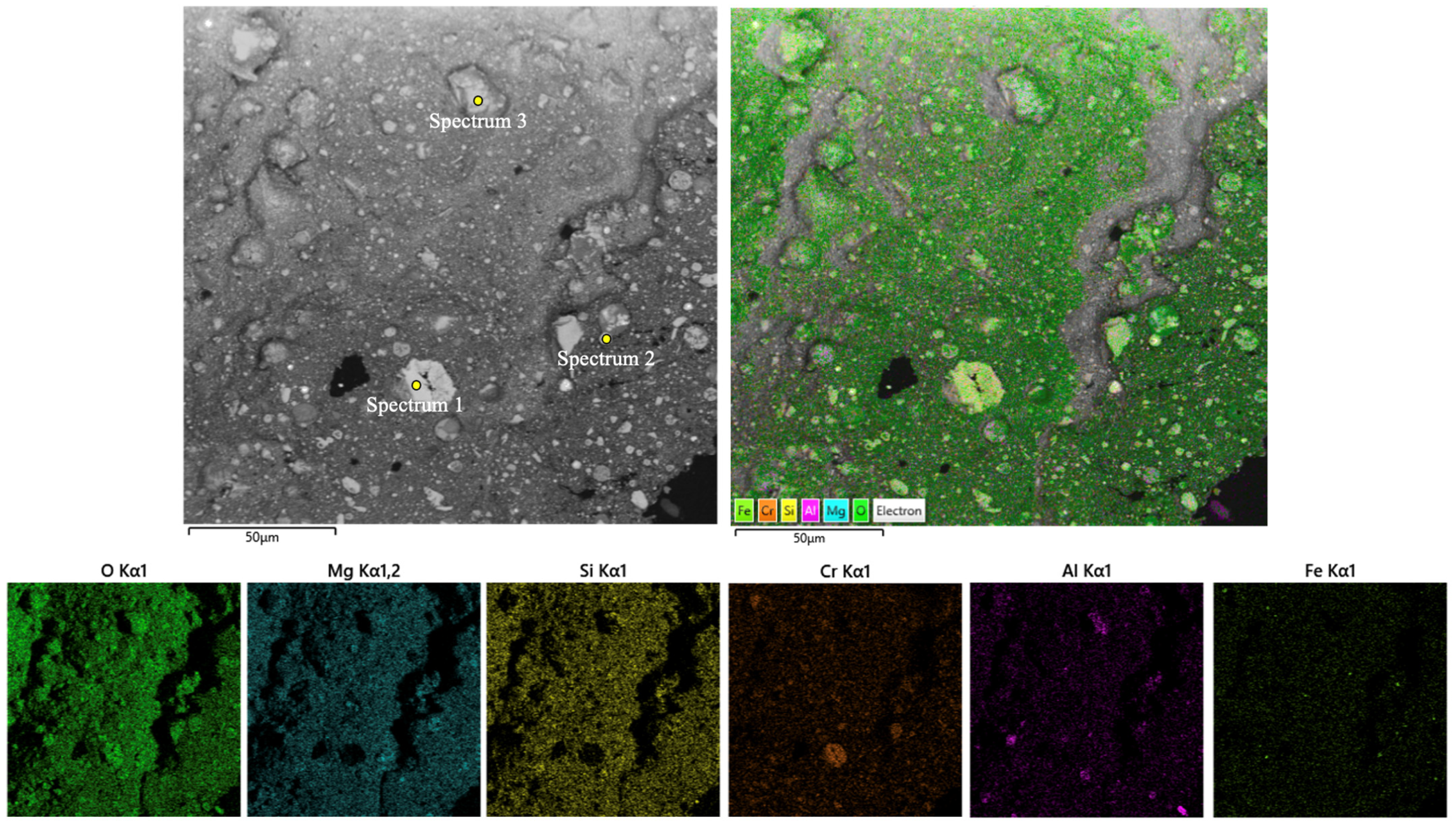
The morphology, microstructure, and phase distribution of the initial chromium-containing dust material were examined using a ZepTools ZEM-20 scanning electron microscope (SEM) (Anhui Zeyou Technology Co., Ltd., Tongling, China) equipped with an Oxford energy-dispersive X-ray spectroscopy (EDS) attachment (Abingdon, Oxfordshire, UK). The obtained results were used to evaluate structural features of the raw material during subsequent agglomeration processing. The SEM image is presented in Figure 1.
Figure 1 presents SEM micrographs and EDS elemental mapping of the chromium-containing dust used in the present study. The material is characterized by a heterogeneous fine-dispersed structure composed of irregularly shaped particles and agglomerated fragments. EDS mapping confirms the predominance of O, Mg, Si, Cr, Al, and Fe, indicating the presence of oxide and spinel-type phases typical for ferrochrome production dusts. Chromium and iron are relatively uniformly distributed throughout the analyzed area, while local enrichment of magnesium- and silicon-containing phases is also observed. The quantitative EDS results for the selected regions (Spectrum 1–3) are presented in Table 2.
The EDS results presented in Table 2 confirm the heterogeneous composition of the chromium-containing dust. Chromium and oxygen are the dominant components in Spectrum 1, indicating the presence of chromium-rich oxide or spinel phases. Spectrum 2 is characterized by elevated iron and chromium contents together with sulfur impurities, while Spectrum 3 contains increased concentrations of magnesium and aluminum, suggesting the presence of magnesium-aluminate and silicate phases. The obtained results are consistent with the complex multicomponent nature of ferrochrome production dusts.
The polymer binder TD 021.005.BS used in the present study is a commercial water-soluble organic binder intended for agglomeration of fine-dispersed metallurgical materials under non-fired processing conditions. According to the supplier’s technical documentation, the binder is based on polymer compounds containing functional carboxyl and amide groups capable of interacting with the surface of mineral particles through adsorption and intermolecular bonding mechanisms.
The binder is supplied in liquid form and is characterized by high adhesive ability, good dispersion in aqueous systems, and the capability to form stable interparticle bonds during extrusion and subsequent curing. The mechanism of strength development is associated with the formation of adhesive polymer bridges between fine particles and enhancement of particle cohesion within the agglomerate structure.
During rigid extrusion, frictional heating and shear deformation contribute to activation of the polymer binder and improve wetting of particle surfaces, which promotes more uniform distribution of the binder throughout the mixture. After extrusion and curing, the binder contributes to stabilization of the brex structure and reduction of fines generation during transportation and handling.
The binder was introduced into the charge mixture in an amount of 2.5 wt.% relative to the dry mass of the material. The prepared mixture was homogenized in industrial pug mills prior to extrusion to ensure uniform distribution of the binder within the chromium-containing dust.
Due to commercial confidentiality restrictions, the exact proprietary formulation of the binder cannot be disclosed in detail. However, the provided technical characteristics adequately describe its functional role in the agglomeration process and ensure reproducibility of the applied experimental methodology.

2.2. Experimental Setup and Equipment Description

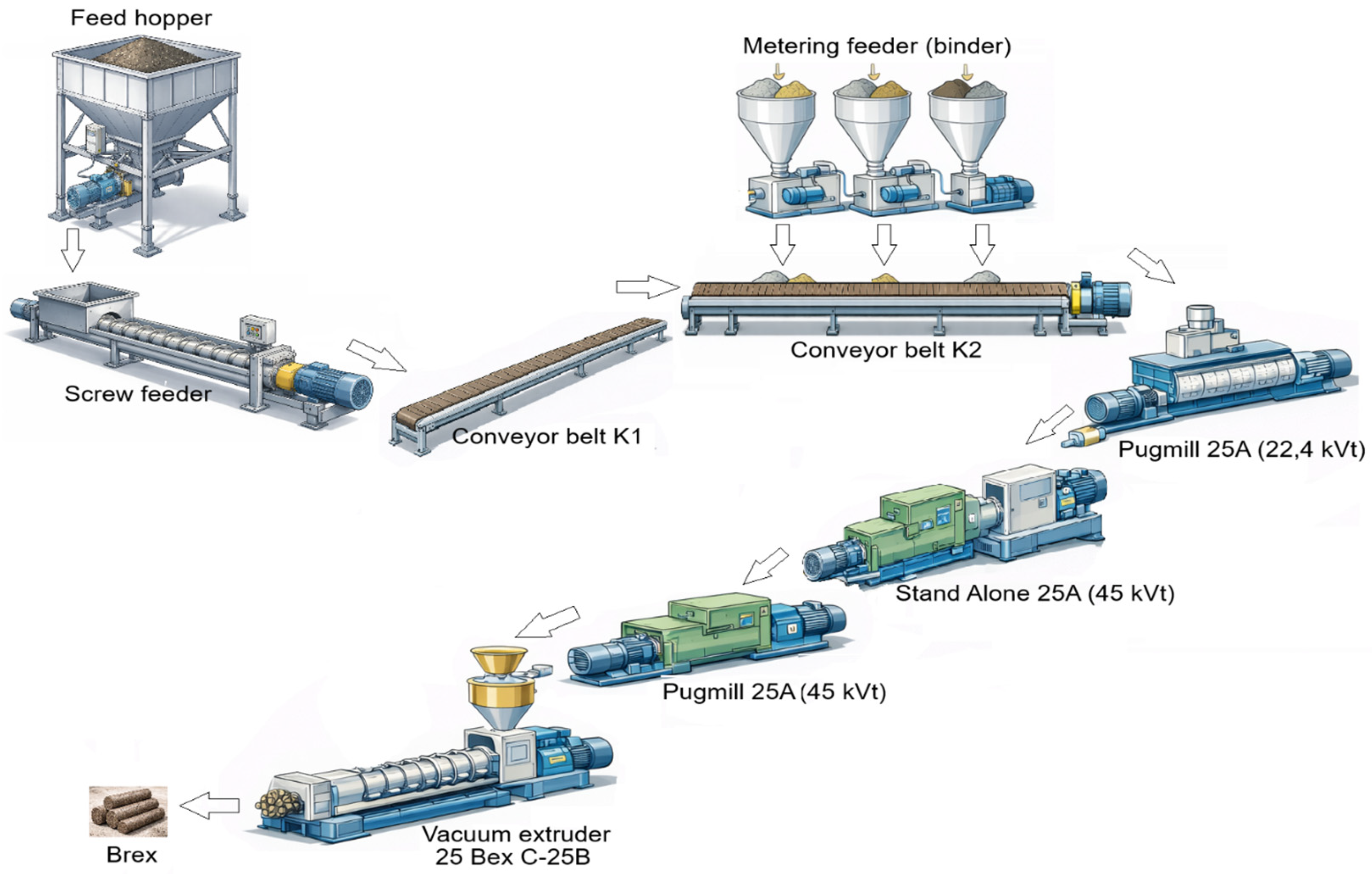
The main process equipment of the extrusion unit includes the following components. KLIM-VD-800-1500 and KLIM-VD-800-2200 feeders are used for dosing raw materials, binders, fluxes, and reductants prior to their transfer to the 25A PUGMILL mixer (22.4 kW). The 25A PUGMILL (22.4 kW) is designed for dry mixing of the initial materials. Wet mixing is carried out using a 25A STAND ALONE pugmill (45 kW) (J.C. Steele & Sons Inc., Statesville, NC, USA), as well as a 25A pugmill (45 kW) (J.C. Steele & Sons Inc., Statesville, NC, USA), which ensures homogenization of the mixture before feeding it into the extruder. The 25 BEX C-25B extruder (J.C. Steele & Sons Inc., Statesville, NC, USA) is used for shaping and forming brexes, with the final geometry determined by the die configuration. Material handling within the unit is performed using conveyor belts (K1 and K4). A schematic diagram of the brex production process at the Aktobe Ferroalloy Plant is presented in Figure 2.
The extrusion experiments were carried out under pilot-industrial conditions using industrial equipment manufactured by J.C. Steele & Sons (Statesville, NC, USA). For agglomeration of the chromium-containing dust, bentonite (10 wt.%) was used as a reference binder, while the polymer binder TD 021.005.BS was added in an amount of 2.5 wt.% relative to the total dry mass of the mixture.
The moisture content of the prepared mixture prior to extrusion was maintained within 12–16 wt.%, corresponding to the operating range of rigid vacuum extrusion technology. Extrusion was performed under vacuum conditions with a working pressure in the extrusion chamber of approximately 2.0–4.0 MPa. The prepared mixture was continuously compacted by the screw system and formed through an industrial die, producing cylindrical brexes with uniform geometry.
After extrusion, the brexes were stored in bunkers under ambient industrial conditions at room temperature for curing. Mechanical strength tests were performed after 2 and 4 days of curing.
After forming, the brexes were stored in bunkers for up to 4 days and subsequently fed to the smelting furnace. Samples were collected after 2 and 4 days of curing to determine their mechanical properties, including impact and abrasion strength, in accordance with GOST 15137-77.
Impact strength was determined according to GOST 15137-77 [35]. The method is based on subjecting the sample to mechanical impacts in a rotating steel drum, followed by sieve analysis to assess changes in particle size distribution, which characterize the material’s resistance to impact and abrasion.
The test procedure was as follows: a 10 kg sample was loaded into a steel drum with a diameter of 1000 mm rotating at 25 rpm. After 200 revolutions, the material was discharged and sieved into size fractions of +5 mm, 0.5–5 mm, and −0.5 mm. Each fraction was weighed separately, and the strength index was calculated using the following equation:
I = M + 5 M i n i t i a l · 100 %
where I—strength index, %; M+5—mass of the fraction larger than 5 mm; and Minitial—initial mass of the sample.
The +5 mm fraction characterizes impact strength, while the −0.5 mm fraction reflects abrasion resistance. According to internal plant specifications, the impact strength of brexes should be no less than 85%.

2.3. Thermodynamic Modeling

Thermodynamic modeling was performed to analyze phase and chemical transformations occurring during the smelting of high-carbon ferrochrome (HCFeCr) under standard operating conditions of the Aktobe Ferroalloy Plant. The calculations were carried out using the FactSage software package (version 8.4) [36], which is widely applied for predicting equilibrium distribution of components among metal, slag, and gas phases in multicomponent high-temperature systems.
Thermodynamic calculations were performed using the Equilib module of FactSage 8.4 under equilibrium conditions at atmospheric pressure. The FToxid, FactPS, and FSstel databases were used for modeling oxide, gas, and metallic phases.
The calculations considered the possible formation of gas, slag, metal, and solid phases within the multicomponent Cr–Fe–Si–Mg–Al–Ca–C–O system. The input burden composition was defined based on the chemical analysis of the raw materials and normalized to the total mass of the charge mixture.
Equilibrium calculations were performed within the temperature range of 500–2000 °C with a calculation step of 100 °C. It was assumed that complete thermodynamic equilibrium between all phases was achieved at each temperature step. The gas phase was considered ideal, while the slag and metallic phases were calculated using the corresponding solution models available in the FactSage databases.
The main objectives of the modeling were as follows:
-
To describe the sequence of phase and chemical transformations during heating of the burden;
-
To determine the chemical composition of metal and slag within the operating temperature range of 1600–1700 °C;
-
To evaluate the effect of replacing the intermediate product with brexes while maintaining the overall chemical balance of the burden.
The input data were based on a calculated material balance of a standard burden comprising the ore component and a carbonaceous reductant. The chemical composition of the raw materials and the results of the burden calculation are presented in Table 3 and Table 4.
The chemical composition of the metal and slag phases was evaluated within the operating temperature interval of 1600–1700 °C, which is typical for industrial HCFeCr smelting. The modeling also aimed to assess the effect of replacing recycled material with brexes while maintaining the overall chemical balance of the burden.

3. Results and Discussion

3.1. Brex Formation and Strength Characteristics

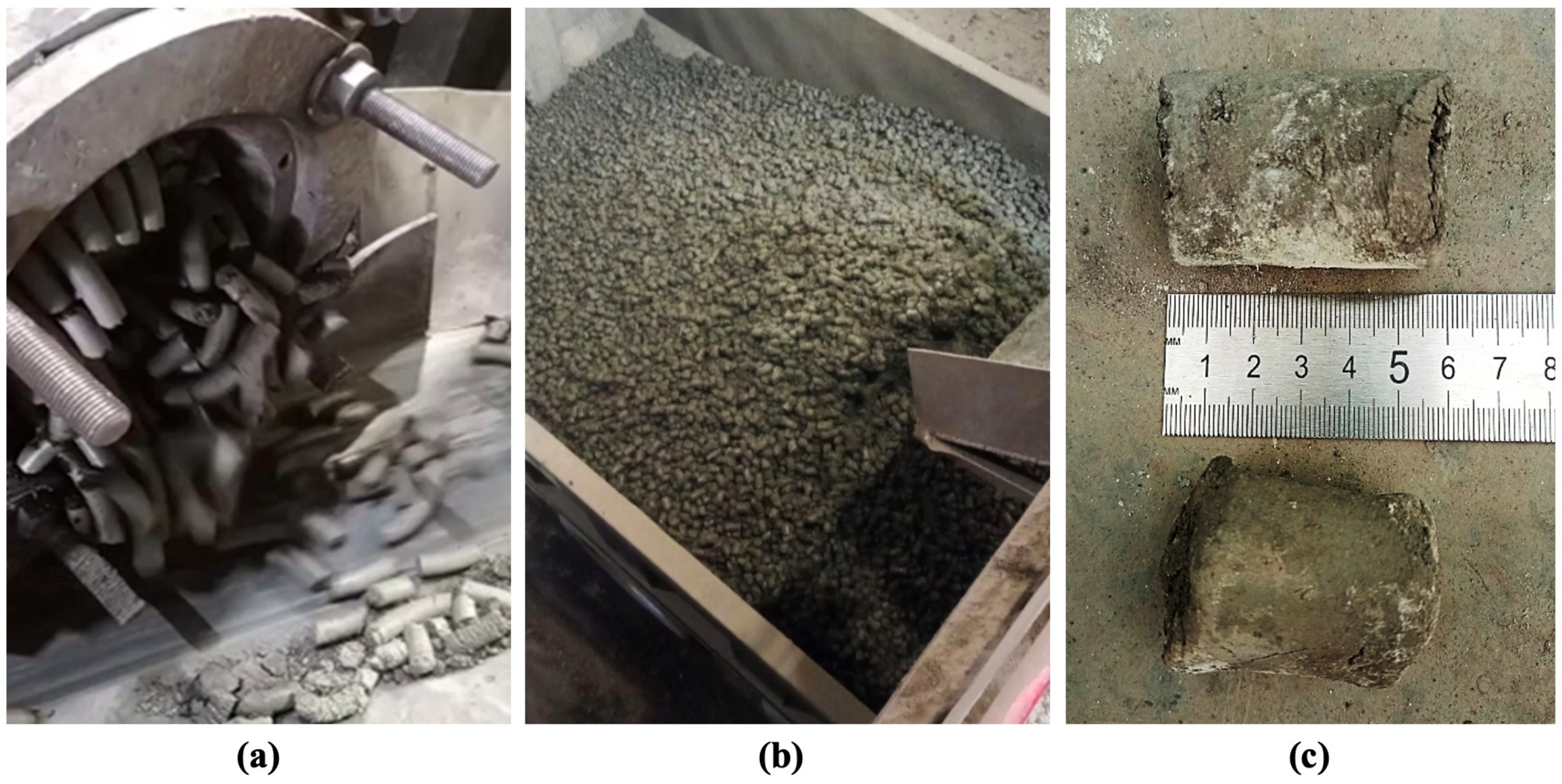
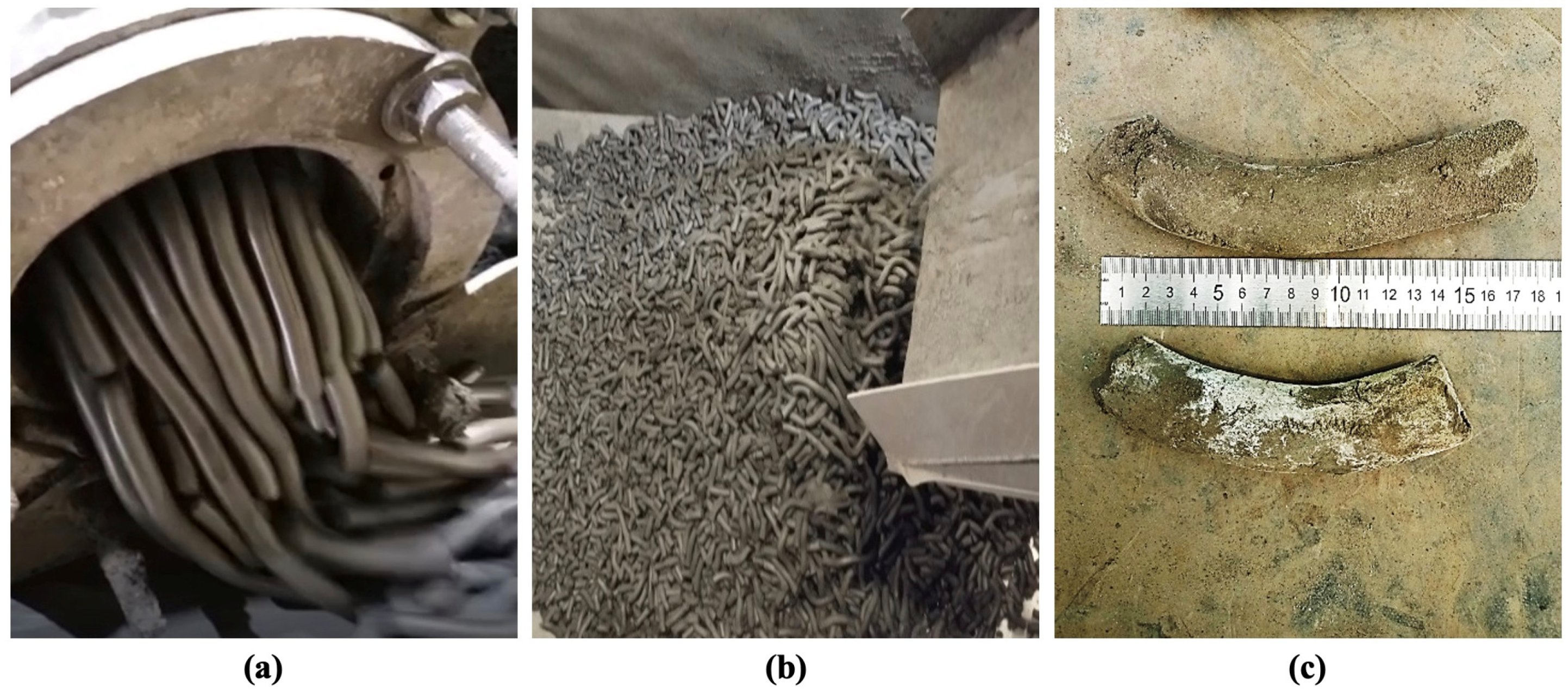
The appearance of brexes produced with bentonite is shown in Figure 3, while brexes obtained using the polymer binder TD 021.005.BS are presented in Figure 4.
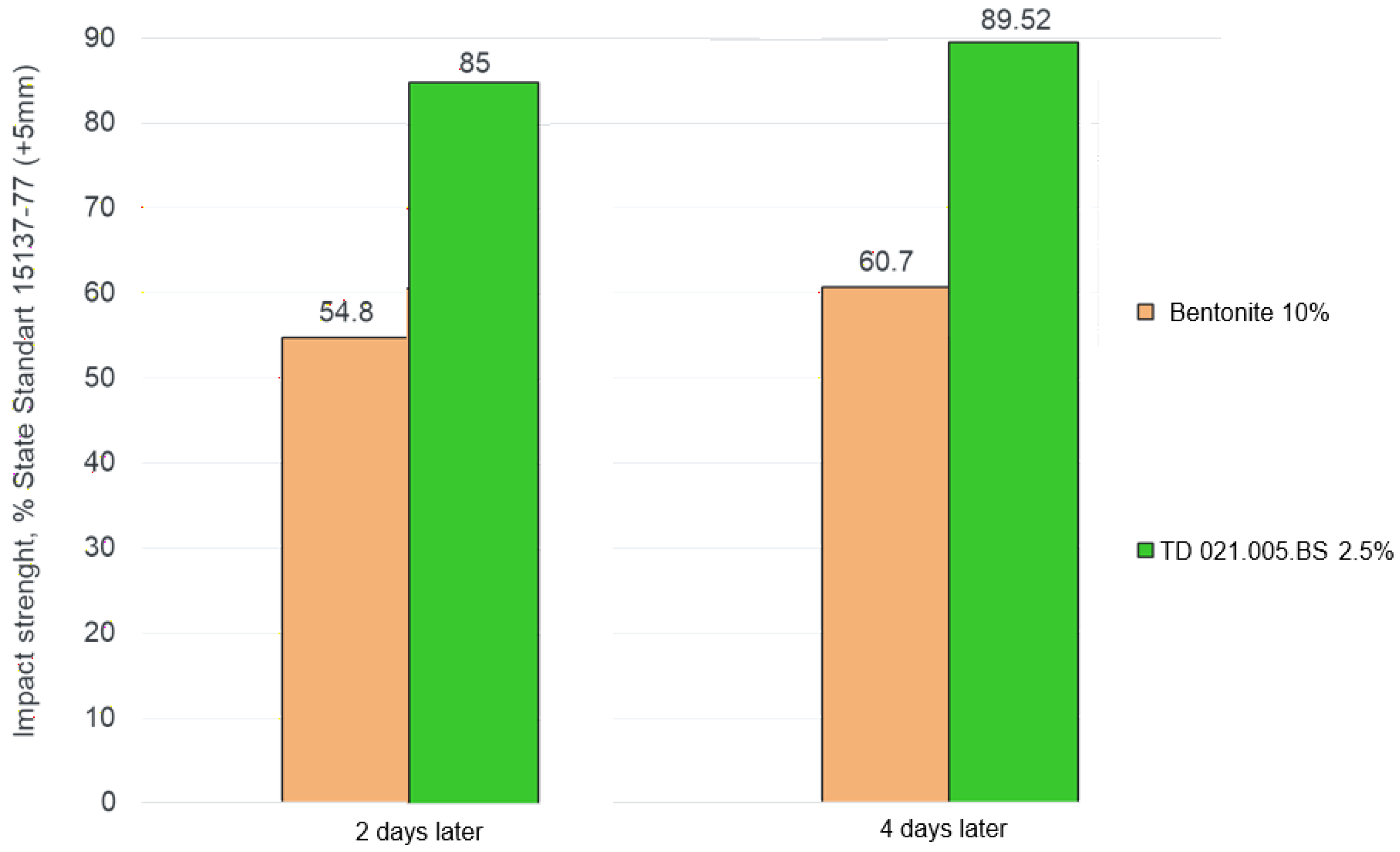
The results of the impact strength tests for brexes produced with bentonite and the polymer binder TD 021.005.BS are presented in Figure 5.
After 2 days of curing, the impact strength of bentonite-based brexes was 54.8%, whereas polymer-bonded brexes reached 85%. After 4 days, the strength increased to 60.7% and 89.52%, respectively. Notably, polymer-bonded brexes already satisfy the internal plant requirement for impact strength (≥85%) after 2 days of curing, while bentonite-based samples do not reach this threshold even after 4 days. According to previous studies, polymer-based binders may improve the cohesion of fine particles through adsorption interactions and formation of adhesive interparticle bonds during agglomeration [22,23,26]. The improved mechanical performance observed in the present study is consistent with these findings. In contrast, bentonite exhibits limited binding capability under non-fired conditions, resulting in inferior mechanical properties.
The impact strength results presented in Figure 5 correspond to the average values obtained from three independent measurements performed under identical experimental conditions. The experimental variability of the measurements did not exceed ±2.0%, indicating satisfactory reproducibility of the obtained data. The observed difference in strength between bentonite-bonded and polymer-bonded brexes significantly exceeds the experimental uncertainty.
In addition to impact strength, abrasion resistance of the produced brexes was evaluated based on the yield of the −0.5 mm fraction after drum testing according to GOST 15137-77. After 2 days of curing, the abrasion output for bentonite-bonded brexes reached approximately 12.4%, whereas the polymer-bonded samples showed significantly lower fines generation of about 4.8%. After 4 days of curing, the abrasion output decreased to 9.6% for bentonite-based brexes and to 3.1% for brexes produced with the polymer binder TD 021.005.BS.
The lower abrasion output of polymer-bonded brexes indicates improved resistance to mechanical degradation during transportation and handling. The obtained results confirm the formation of stronger interparticle bonding and a more cohesive structure in brexes produced with the polymer binder.
Visual observations during transportation and handling of the produced brexes additionally confirmed the improved structural stability of polymer-bonded samples. Compared with bentonite-based brexes, the polymer-containing brexes exhibited lower fragmentation tendency and better resistance to mechanical impacts during storage and handling operations. These observations are consistent with the obtained impact and abrasion strength results.
Overall, the results demonstrate that the polymer binder TD 021.005.BS provides significantly improved strength and structural characteristics of brexes and allows for reduced curing time, making it a more effective alternative to bentonite in rigid extrusion of chromium-containing materials.

3.2. Microstructural Characterization of the Obtained Brexes

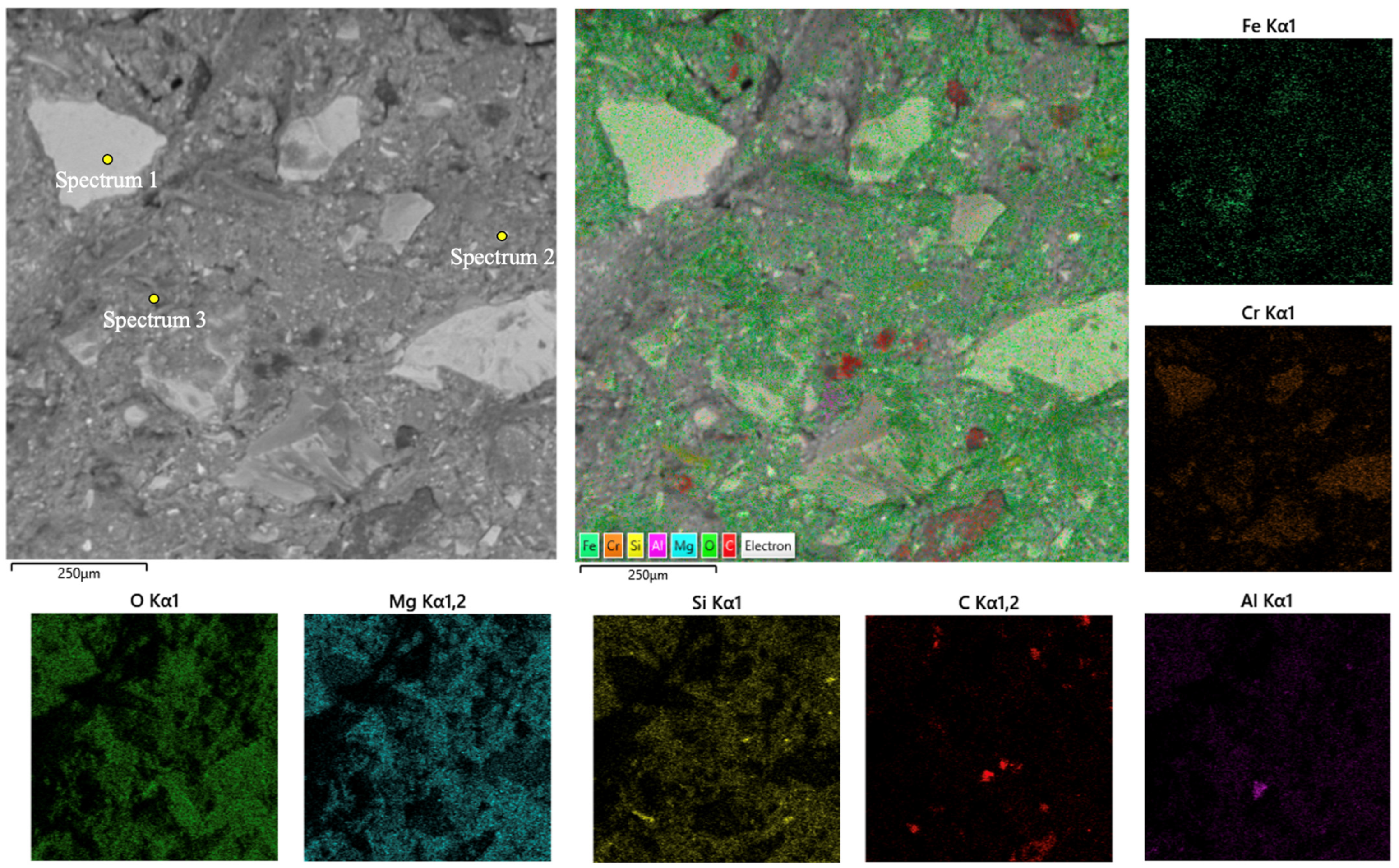
To investigate the microstructural features of the obtained brexes and evaluate the distribution of the constituent components after rigid vacuum extrusion, SEM/EDS analysis was performed on cured samples bonded with the polymer binder. The obtained SEM images and EDS elemental maps are presented in Figure 6. Particular attention was paid to the morphology of the agglomerated structure, formation of interparticle contacts, and elemental distribution within the brex matrix.
The SEM images presented in Figure 6 demonstrate the formation of a relatively dense and heterogeneous agglomerated structure consisting of fine-dispersed particles and larger angular fragments bonded within the brex matrix. The elemental maps confirm the predominant distribution of O, Mg, Si, Cr, Fe, and Al throughout the analyzed area, which is consistent with the mineralogical composition of the initial chromium-containing dust.
Localized carbon-rich regions were additionally observed, indicating the presence of carbon-containing components and polymer-associated phases within the agglomerated structure. The relatively uniform distribution of the main elements suggests effective mixing and stable incorporation of fine particles during extrusion compaction. The quantitative EDS results for the selected regions (Spectrum 1–3) are presented in Table 5.
The quantitative EDS results presented in Table 5 confirm the heterogeneous multicomponent composition of the obtained brexes. Spectrum 1 is characterized by elevated concentrations of oxygen, magnesium, and chromium, indicating the presence of chromium-containing oxide and spinel phases. Spectrum 2 contains the highest chromium content together with increased carbon concentration, which may be associated with localized accumulation of carbonaceous and binder-related components. Spectrum 3 is enriched in magnesium and silicon, suggesting the presence of silicate phases within the brex structure.
Overall, the obtained SEM/EDS results indicate effective incorporation and uniform distribution of the chromium-containing dust particles within the agglomerated matrix formed during rigid vacuum extrusion.

3.3. Effect of Brex Addition: Thermodynamic Modeling Results

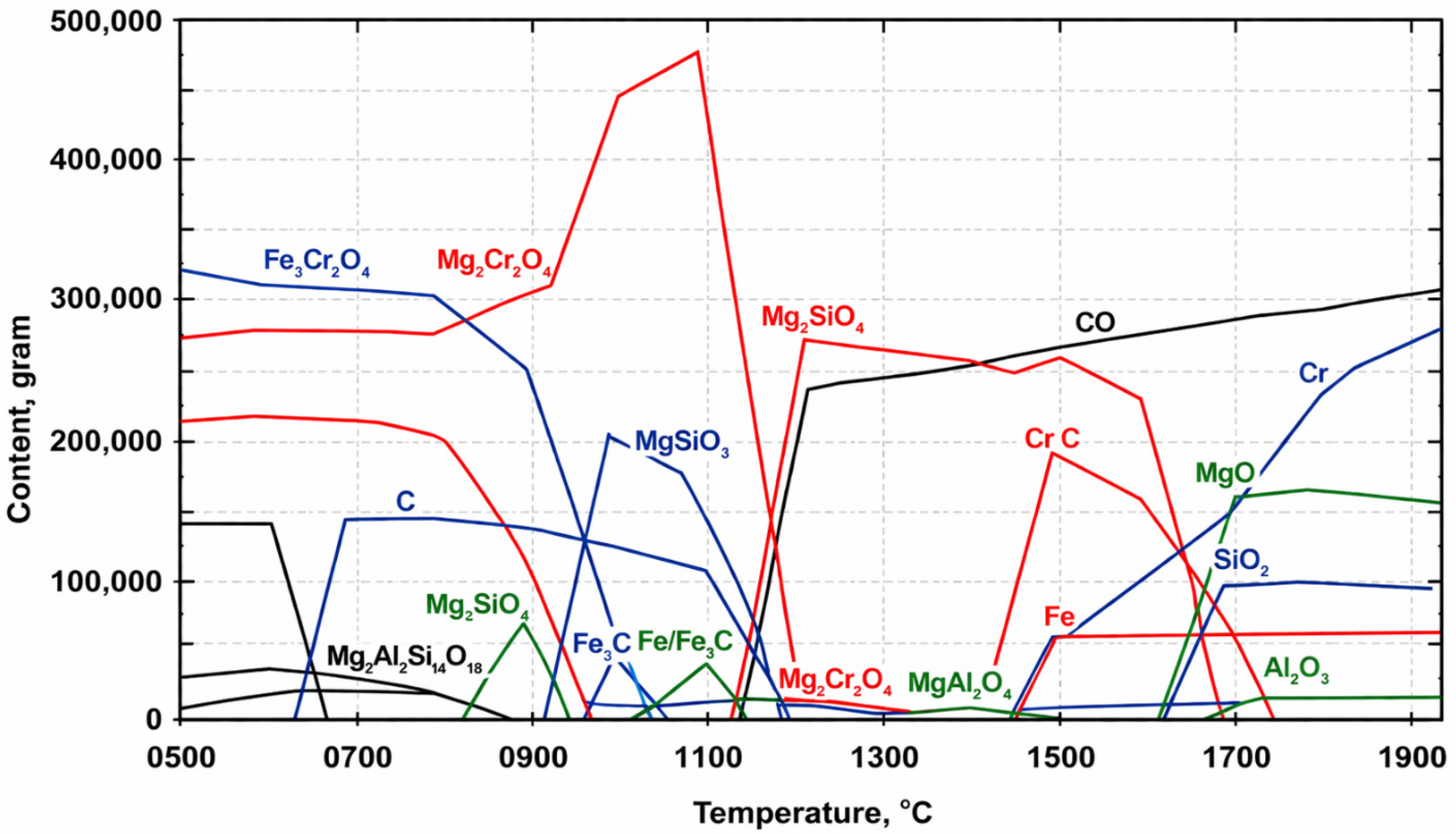
Figure 7 illustrates the temperature-dependent evolution of the phase and chemical composition of the system obtained from thermodynamic modeling of HCFeCr smelting. As the temperature increases, sequential carbothermic reduction reactions occur: iron oxides are reduced first, followed by chromium oxides, leading to the formation of a metallic phase.
This process is accompanied by intensive gas generation, predominantly carbon monoxide (CO). With further temperature increase, the system approaches thermodynamic equilibrium, characterized by the coexistence of metal, slag, and gas phases. This “metal–slag–gas” equilibrium corresponds to typical operating conditions of industrial HCFeCr smelting.
At the initial stage, the system is predominantly composed of solid oxide phases. Chromium and iron are present in stable oxides and spinels (Cr2O3, FeCr2O4), while silicon and aluminum occur as SiO2 and Al2O3, and magnesium as MgO and complex silicates. Carbon is present in a free state and does not yet actively participate in reduction reactions. The gas phase is weakly expressed, and CO formation is limited.
With increasing temperature, carbothermic reactions become activated. The reduction of thermodynamically less stable oxides, primarily FeO, begins first, accompanied by a noticeable increase in CO formation. This is reflected by a sharp increase in the gas phase fraction. At the same time, complex oxide and spinel phases decompose, and redistribution of components between solid phases occurs. Part of iron transitions into the metallic state; however, a stable liquid metal phase has not yet formed.
In the 12001500 °C temperaturerange, the reduction of chromium oxides intensifies significantly. Carbon actively reacts with Cr2O3, leading to increased CO evolution and the formation of a metallic phase enriched in chromium and iron. Simultaneously, a liquid slag of the MgO-SiO2-based system is formed. This is evidenced by a sharp increase in the slag liquid phase and a decrease in the fraction of solid oxides. The system transitions from a “solid-phase mixture” to a “metal–slag–gas” state.
In the 16001700 °C temperature range, the system reaches a state characteristic of industrial HCFeCr smelting. The metal phase is represented by liquid high-carbon ferrochrome, where most chromium and iron are in the reduced state. Carbon is partially dissolved in the metal, forming the required composition.
The slag stabilizes as a high-magnesia melt in the MgO-SiO2-Al2O3 system with a low content of chromium oxides. The FeO content in the slag is minimal, indicating a high degree of iron reduction. The gas phase is dominated by CO, confirming the prevalence of the carbothermic reduction mechanism.
Overall, the thermodynamic modeling adequately reproduces the key physicochemical regularities of the HCFeCr smelting process.
To evaluate the effect of replacing recycled material in the standard burden with brexes, a comparison of the equilibrium composition of the metal phase was performed (Table 6).
Analysis of the data in Table 6 shows that the replacement of recycled material with brexes does not lead to significant changes in the chemical composition of the metal phase. The chromium content remains practically unchanged (72.46 → 72.61 wt.%), while the carbon content slightly decreases (8.17 → 8.01 wt.%). Minor variations are observed for silicon (0.64 → 0.71 wt.%), sulfur (0.012 → 0.035 wt.%), and phosphorus (0.026 → 0.027 wt.%); however, these changes are within acceptable limits and do not affect the overall alloy quality. In all cases, the composition corresponds to HCFeCr grades FeCr800-FeCr850 [37]. The replacement of recycled material with brexes does not have a significant effect on the chromium and carbon contents in the metal phase.
A slight increase in the calculated sulfur content of the metal phase was observed after brex addition (0.012 → 0.035 wt.%). However, the obtained sulfur level remains within the acceptable range for industrial HCFeCr grades and is not expected to significantly affect alloy quality under the considered operating conditions.
It should also be noted that sulfur distribution in industrial smelting processes depends not only on equilibrium thermodynamics but also on kinetic factors, slag composition, gas-phase interactions, and sulfur partitioning behavior between slag and metal phases. Therefore, the calculated sulfur values should be considered as equilibrium estimations rather than exact industrial predictions.
The chemical compositions of the slag for the standard burden and with brex addition are presented in Table 7.
The slag compositions with and without brex addition are nearly identical, indicating preservation of the conventional high-magnesia slag system. The contents of the main components remain stable: MgO (50.13 → 50.46 wt.%), SiO2 (28.08 → 27.96 wt.%), and Al2O3 (13.82 → 14.24 wt.%). The FeO content remains low (0.81 → 0.77 wt.%), confirming a high degree of iron reduction, while Cr2O3 varies insignificantly (3.49 → 3.40 wt.%).
The calculated slag viscosity also shows negligible variation, remaining within a narrow range of 0.066–0.067 Pa·s. This indicates that the addition of brexes does not adversely affect slag fluidity or furnace operating conditions.
Thermodynamic modeling results indicate that brex addition does not destabilize the equilibrium “metal–slag–gas” system during HCFeCr smelting and preserves the characteristic high-magnesia slag composition and metal quality within the industrial operating temperature range. These findings indirectly confirm the satisfactory thermal stability and metallurgical compatibility of the produced brexes under high-temperature conditions.
It should be noted that the performed calculations represent equilibrium thermodynamic estimations and do not fully account for kinetic limitations, local temperature gradients, incomplete reduction reactions, gas transport phenomena, or transient conditions characteristic of industrial submerged arc furnace operation. Therefore, the obtained results should be interpreted as equilibrium trends describing the probable behavior of the system under industrial HCFeCr smelting conditions.
The calculated stability of the slag system and the limited variation in equilibrium metal composition after brex addition are consistent with industrial observations obtained during pilot-industrial application of the produced brexes.
Overall, the results confirm that replacing recycled material with brexes maintains both metal quality and slag characteristics, demonstrating the metallurgical compatibility of brexes with the existing HCFeCr smelting process.

4. Conclusions

The obtained results confirmed that rigid vacuum extrusion is an effective method for recycling fine chromium-containing technogenic wastes generated during ferroalloy production. Physicochemical characterization of the initial dust by SEM/EDS revealed a heterogeneous multiphase composition consisting predominantly of chromium-containing spinel, silicate, and oxide phases characteristic of ferrochrome production dusts.
It was established that the binder type has a decisive influence on brex strength and structural stability. Brexes produced with the polymer binder TD 021.005.BS (2.5 wt.%) showed an impact strength of 85.0% after 2 days and 89.5% after 4 days of curing, whereas bentonite-based brexes (10 wt.%) reached only 54.8% and 60.7%, respectively. The abrasion output after 4 days of curing was 3.1% for polymer-bonded brexes compared with 9.6% for bentonite-bonded samples.
SEM/EDS analysis of the obtained brexes confirmed the formation of a dense heterogeneous agglomerated structure with relatively uniform distribution of chromium-containing phases and stable interparticle bonding within the brex matrix, contributing to the improved mechanical performance of polymer-bonded samples.
Thermodynamic modeling using FactSage 8.4 demonstrated that brex addition to the furnace burden does not significantly affect metal composition or slag properties during HCFeCr smelting. The calculated chromium content in the metal was about 72.5 wt.%, carbon content was about 8.0 wt.%, and slag viscosity remained within 0.066–0.067 Pa·s.
The obtained results confirm the potential applicability of the polymer binder TD 021.005.BS for producing high-strength non-fired brexes and for efficient recycling of chromium-containing technogenic wastes under industrial ferrochrome smelting conditions.

Author Contributions

Conceptualization, N.U. and M.A.; methodology, Y.M. and A.Z.; software, Z.S. (Zhadiger Sadyk), Z.S. (Zhalgas Saulebek) and R.T.; validation, D.I., Z.S. (Zhalgas Saulebek) and R.T.; formal analysis, Y.M. and Z.S. (Zhadiger Sadyk); investigation, M.A.; resources, D.I.; data curation, Z.S. (Zhalgas Saulebek) and R.T.; writing—original draft preparation, N.U. and A.Z.; writing—review and editing, N.U. and A.Z.; visualization, M.A. and Y.M.; supervision, A.Z. All authors have read and agreed to the published version of the manuscript.

Funding

This research was funded by the Committee of Science of the Ministry of Science and Higher Education of the Republic of Kazakhstan (Grant No. BR24992758).

Data Availability Statement

The original contributions presented in this study are included in the article. Further inquiries can be directed to the corresponding authors.

Acknowledgments

The authors thank the Laboratory of Ferroalloys and Recovery Processes, Zh. Abishev Chemical-Metallurgical Institute (Karaganda), for their assistance and technical support. The authors also acknowledge the support of ERG Scientific Research and Engineering Center LLP (Astana, Kazakhstan) for assistance in organizing pilot-industrial trials and providing industrial facilities.

Conflicts of Interest

Authors Nursultan Ulmaganbetov and Maral Almagambetov were employed by the company ERG Scientific Research and Engineering Center LLP. The remaining authors declare no conflicts of interest.

References

  1. Makhambetov, Y.; Kutzhanov, M.; Toleukadyr, R.; Myrzagaliyev, A.; Sadyk, Z.; Saulebek, Z.; Akhmetov, A. Utilization of Chromite Spinel Powder in the Metallothermic Smelting of Low-Carbon Ferrochrome. Processes 2025, 13, 2288. [Google Scholar] [CrossRef]
  2. Ulmaganbetov, N.; Almagambetov, M.; Dossekenov, M.; Myrzagaliev, A.; Zhdanov, R.; Laikhan, S. Remelting ferrochrome-crushing dust. Acta Metall. Slovaca 2024, 30, 148–151. [Google Scholar] [CrossRef]
  3. Sariyev, O.; Abdirashit, A.; Almagambetov, M.; Nurgali, N.; Kelamanov, B.; Yessengaliyev, D.; Mukhambetkaliyev, A. Assessment of Physicochemical Properties of Dust from Crushing High-Carbon Ferrochrome: Methods for Agglomeration. Materials 2025, 18, 903. [Google Scholar] [CrossRef]
  4. Sariyev, O.; Almagambetov, M.; Nurgali, N.; Bilyalov, K.; Kelamanov, B.; Yessengaliyev, D.; Abdirashit, A. Briquetting and Remelting of Aspiration Dust Generated During High-Carbon Ferrochrome Crushing in Direct Current Electric Arc Furnaces. Materials 2026, 19, 1149. [Google Scholar] [CrossRef] [PubMed]
  5. Borowski, G. An Overview of Particle Agglomeration Techniques to Waste Utilization. J. Ecol. Eng. 2021, 22, 263–271. [Google Scholar] [CrossRef] [PubMed]
  6. Fernández-González, D.; Ruiz-Bustinza, I.; Mochón, J.; González-Gasca, C.; Verdeja, L.F. Iron ore sintering: Raw materials and granulation. Miner. Process. Extr. Metall. Rev. 2017, 38, 36–46. [Google Scholar] [CrossRef]
  7. Barisetty, S.; Kalshetty, S.; Ramakrishna, S.; Vishwanath, S.C.; Balachandran, G. Cold Briquetting of DRI Fines for Use in Steel Making Process. Trans. Indian Inst. Met. 2019, 73, 449–455. [Google Scholar] [CrossRef]
  8. Sah, R.; Dutta, S. Effects of Binder on the Properties of Iron Ore-Coal Composite Pellets. Miner. Process. Extr. Metall. Rev. 2010, 31, 73–85. [Google Scholar] [CrossRef]
  9. Alsaqoor, S.; Borowski, G.; Alahmer, A.; Beithou, N. Using of Adhesives and Binders for Agglomeration of Particle Waste Resources. Adv. Sci. Technol.—Res. J. 2022, 16, 124–135. [Google Scholar] [CrossRef]
  10. Bizhanov, A.M. Briquetting of the Coke Fines by Stiff Extrusion. Coke Chem. 2024, 67, 94–100. [Google Scholar] [CrossRef]
  11. Litvinko, A. Hot Briquetting Technology for Ferrous Metal Waste in Molds with Movable Matrix. Sci. Tech. 2023, 22, 367–375. [Google Scholar] [CrossRef]
  12. Temirova, S.S.; Abdykirova, G.Z.; Biryukova, A.A.; Fischer, D.Y. Obtaining manganese pellets from manganese-containing technogenic waste. Eng. J. Satbayev Univ. 2025, 147, 17–23. [Google Scholar] [CrossRef]
  13. Yunusa, S.U.; Mensah, E.; Preko, K.; Narra, S.; Saleh, A.; Sanfo, S. A comprehensive review on the technical aspects of biomass briquetting. Biomass Conv. Bioref. 2024, 14, 21619–21644. [Google Scholar] [CrossRef]
  14. Dhote, S.; Randive, P.; Sindikar, P. Experimental Investigation of Briquettes made from Waste Material as Alternate Source of Energy using Low-Cost Briquetting Machine. J. Environ. Eng. Stud. 2022, 9, 26–32. [Google Scholar] [CrossRef]
  15. Guo, Z.; Miao, Z.; Guo, F.; Guo, Y.; Feng, Y.; Wu, J.; Zhang, Y. Parameter optimization of waste coal briquetting and particulate matter emissions test during combustion: A case study. Environ. Pollut. 2021, 294, 118621. [Google Scholar] [CrossRef]
  16. Bondarenko, I.; Kutniashenko, O.; Toporov, A.; Anishchenko, L.; Ziuz, O.; Dunayev, I.; Krakhmalyov, A.; Yavorovska, O.; Kostina, O.; Aleksieieva, O. Improving the efficiency of equipment and technology of waste briquetting. East.-Eur. J. Enterp. Technol. 2020, 6, 36–52. [Google Scholar] [CrossRef]
  17. Nazimko, E.I. Agglomeration of Materials as a Method for the Utilization of Various Wastes. In Actual Problems of Biodiversity and Environmental Management, Proceedings of the II National Scientific and Practical Conference Dedicated to the 20th Anniversary of the Department of Marine Ecology of Kerch State Maritime Technological University (KSMTU), Kerch, Russia, 15–17 May 2019; Arial: Simferopol, Russia, 2019; pp. 367–373. (In Russian) [Google Scholar]
  18. Diez, M.A.; Alvarez, R.; Cimadevilla, J.L.G. Briquetting of carboncontaining wastes from steelmaking for metallurgical coke production. Fuel 2013, 114, 216–223. [Google Scholar] [CrossRef]
  19. Brozova, S.; Pustejovska, P.; Bilik, J.; Jursova, S.; Zbrankova, M.; Havranek, J. Innovated technologies of recycling of metallic wastes modification of existing industrial processes. New Trends Prod. Eng. 2019, 2, 361–367. [Google Scholar] [CrossRef][Green Version]
  20. Makhambetov, Y.; Zhakan, A.; Zhunusov, A.; Kabylkanov, S.; Burumbayev, A.; Sadyk, Z.; Akhmetov, A.; Uakhitova, B. Resource-Efficient Smelting Technology for FeCrMnSi Ferroalloy Production from Technogenic Wastes in an Ore-Thermal Furnace. Metals 2025, 15, 1318. [Google Scholar] [CrossRef]
  21. Murthy, Y.R.; Kapure, G.U.; Tripathy, S.K.; Sahu, G.P. Recycling of ferromanganese gas cleaning plant (GCP) sludge by novel agglomeration. Waste Manag. 2018, 80, 457–465. [Google Scholar] [CrossRef]
  22. Madygina, L.Y.; Tyrtseva, K.E.; Oleinikova, L.N.; Gorbunov, A.V. Production of Extrusion Briquettes Based on Peat Raw Materials; Ural State Mining University: Yekaterinburg, Russia, 2016; 202p. (In Russian) [Google Scholar]
  23. Bizhanov, A.M.; Pavlov, A.V.; Bishenov, S.A. Stiff Vacuum Extrusion Agglomeration in Ferro-Alloys Production. In Proceedings of the Fifteenth International Ferro-Alloys Congress (INFACON XV), Cape Town, South Africa, 25–28 February 2018; pp. 114–124. [Google Scholar]
  24. Bizhanov, A.M.; Kurunov, I.F. Extrusion Briquettes (BREX): A New Stage in the Pelletizing of Raw Materials for Ferrous Metallurgy; Metallurgizdat: Moscow, Russia, 2017; p. 234. [Google Scholar]
  25. Bizhanov, A.M.; Kurunov, I.F.; Ivonin, D.V.; Efimov, V.I. Structure Formation in Extrusion Briquettes (Brexes) from Carbon-Containing Materials. Geotechnol. Proc. Tula State Univ. Earth Sci. 2013, 2. [Google Scholar]
  26. Kuskov, V.; Kuskova, Y.; Udovitsky, V. Effective processing of the iron ores. In E3S Web of Conferences; EDP Sciences: Les Ulis, France, 2017; Volume 21, p. 02010. [Google Scholar]
  27. Khadyev, Y.A.; Antonova, M.V. Influence of Binder Composition on the Properties of a Composite Material. In Youth and the 21st Century—2020, Proceedings of the 10th International Youth Scientific Conference, Kursk, Russia, 19–20 February 2020; Southwest State University: Kursk, Russia, 2020; pp. 411–413. (In Russian) [Google Scholar]
  28. Yulenkov, N.S.; Muravskiy, A.A.; Litosov, G.E.; et al. Properties of Polyacrylamide and Pentaerythritol Compositions. In Science Today: Challenges and Ways to Solve Them, Proceedings of the International Scientific and Practical Conference, Vologda, Russia, 29 May 2019; Marker: Vologda, Russia, 2019; pp. 52–53. [Google Scholar]
  29. Aksenova, V.V.; Alimbaev, S.A.; Pavlov, A.V.; Mustafin, R.M. Briquetting of porous alumina-containing materials with organic binders. Izv. Ferr. Metall. 2021, 64, 323–329. [Google Scholar] [CrossRef]
  30. Eisele, T.C.; Kawatra, S.K. A Review of Binders in Iron Ore Pelletization. Miner. Process. Extr. Metall. Rev. 2003, 24, 53–55. [Google Scholar] [CrossRef]
  31. IARC Working Group. Bitumens and Bitumen Emissions, and Some N- and S-Heterocyclic Polycyclic Aromatic Hydrocarbons; IARC Monographs; World Health Organization: Geneva, Switzaerland, 2013; Volume 103, pp. 61–62. [Google Scholar]
  32. Dao, V.H.; Cameron, N.R.; Saito, K. Synthesis, properties and performance of organic polymers employed in flocculation applications. Polym. Chem. 2016, 7, 11–25. [Google Scholar] [CrossRef]
  33. Zhumagaliyev, Y.; Shabanov, Y.; Almagambetov, M.; Jundibayev, M.; Ulmaganbetov, N.; Laikhan, S.; Jundibayeva, A.; Abilberikova, A.; Ubaidulayeva, N.; Adaibayeva, R. Processing of Secondary Raw Materials from Ferrochrome Production via Agglomeration and Study of Their Mechanical Properties. Metals 2025, 15, 878. [Google Scholar] [CrossRef]
  34. Sariyev, O.; Almagambetov, M.; Nurgali, N.; Abikenova, G.; Kelamanov, B.; Yessengaliyev, D.; Abdirashit, A. Development of a Briquetting Method for Dust from High-Carbon Ferrochrome (HC FeCr) Crushing Using Vibropressing on an Industrial Scale and Its Subsequent Remelting. Materials 2025, 18, 2608. [Google Scholar] [CrossRef]
  35. GOST 15137-77; Iron Ore Raw Materials: Method for Determination of Strength Under Impact and Abrasion. Committee for Standards of the Council of Ministers of the USSR: Moscow, Russia, 1978. (In Russian)
  36. GTT-Technologies; Thermfact/CRCT. Factsage 8.4-Thermochemical Software and Databases. Available online: https://www.factsage.com (accessed on 20 March 2026).
  37. GOST 4757-91; Ferrochromium-Specifications. Interstate Council for Standardization, Metrology and Certification: Moscow, Russia, 1991. (In Russian)
Figure 1. SEM micrographs and EDS elemental mapping of the chromium-containing dust.
Metals 16 00555 g001
Figure 2. Technological flow diagram of the brex production line at the Aktobe Ferroalloy Plant (AFP).
Metals 16 00555 g002
Figure 3. Brexes produced with bentonite binder: (a) extrusion process and discharge from the die; (b) general view after production; (c) representative brex sample.
Metals 16 00555 g003
Figure 4. Brexes produced using the polymer binder TD 021.005.BS: (a) extrusion and discharge from the die; (b) general view after production; (c) representative brex samples with improved shape uniformity and structural integrity.
Metals 16 00555 g004
Figure 5. Impact strength of brexes after 2 and 4 days of curing.
Metals 16 00555 g005
Figure 6. SEM micrographs and EDS elemental mapping of the obtained brexes.
Metals 16 00555 g006
Figure 7. Phase evolution of the burden during heating in thermodynamic modeling of HCFeCr smelting.
Metals 16 00555 g007
Table 1. Average chemical composition of the initial dust (wt.%).
MaterialMoistureCr2O3SiO2CaOMgOAl2O3FeOCSPLOI *
Raw material (dust)0.7928.8910.591.4720.756.3910.7110.150.260.0110.00
* LOI—Loss on ignition.
Table 2. Quantitative EDS analysis of selected regions in the chromium-containing dust (weight %).
ElementsSpectrum 1Spectrum 2Spectrum 3
O47.9716.8461.00
Mg3.053.8215.80
Si-0.651.37
S-5.17-
Al0.57-13.01
Cr45.0728.148.39
Fe3.3344.120.44
Ni-1.26-
Total100.00100.00100.00
Table 3. Chemical composition of ore and recycled materials (wt.%).
MaterialsMass Fraction
(wt.%)
Chemical Composition
Cr2O3SiO2Al2O3CaOMgOFeOSP2O5
Chromite ore44.4442.6710.686.330.3920.9610.220.0390.0025
Chromite pellets (6–12 mm)44.4450.348.366.600.4418.8012.380.0270.027
Intermediate product11.1228.4515.484.220.3025.4810.090.0170.0031
Brexes28.7310.467.311.2819.429.230.2400.01
Table 4. Technical composition of the reducing agent (wt.%).
MaterialsAVCfixWgS
Metallurgical coke11.861.1586.556.540.40
Special coke6.941.3591.4912.640.20
Table 5. Quantitative EDS analysis of selected regions in the brexes (weight %).
ElementsSpectrum 1Spectrum 2Spectrum 3
C13.1527.6715.71
O51.0018.9349.15
Mg8.733.8418.19
Al4.210.822.79
Si0.401.649.54
Cr18.5140.112.91
Fe4.007.001.71
Total100.00100.00100.00
Table 6. Comparison of the chemical composition of the metal for the standard burden and with brex addition (wt.%).
Burden VariantCrSiCSP
Standard72.460.648.170.0120.026
With brex addition72.610.718.010.0350.027
Table 7. Comparison of the chemical composition of the slag for the standard burden and with brex addition (wt.%).
Burden VariantCr2O3SiO2Al2O3CaOMgOFeOCalculated Viscosity (Pa·s)
Standard3.4928.0813.823.6550.130.810.066
With brex addition3.4027.9614.243.1350.460.770.067
Disclaimer/Publisher’s Note: The statements, opinions and data contained in all publications are solely those of the individual author(s) and contributor(s) and not of MDPI and/or the editor(s). MDPI and/or the editor(s) disclaim responsibility for any injury to people or property resulting from any ideas, methods, instructions or products referred to in the content.