1. Introduction
Abrasive waterjet machining (AWJM) is a non-conventional cutting process that has gained significant industrial relevance due to its ability to machine a wide variety of materials without inducing substantial thermal damage. The process is based on the acceleration of an ultra-high-pressure water jet combined with abrasive particles, which impact the material surface and promote material removal through erosive mechanisms. This feature prevents the formation of heat-affected zones (HAZs) and preserves the microstructural integrity of the workpiece, which is critical in high-performance engineering applications [
1,
2,
3]. However, although AWJM is generally considered a non-thermal or “cold” cutting process, localized temperature increases and limited microstructural alterations may occur under certain conditions, as reported in recent studies [
4]. Compared to conventional thermal and mechanical cutting processes, AWJM offers several advantages, including reduced residual stresses, minimal workpiece distortion, and the capability to process difficult-to-machine materials such as high-strength aluminum alloys, composite materials, and advanced alloys. These characteristics have established AWJM as a widely adopted technology in sectors where structural integrity and dimensional accuracy are critical, such as aerospace, automotive, and advanced manufacturing industries. Its effectiveness and versatility have been widely documented, with several studies highlighting its capability to machine a broad range of materials while preserving material integrity and minimizing defects [
2,
5]. In addition, comprehensive reviews have emphasized its growing relevance in engineering applications and its suitability for processing metals and composite materials [
6,
7], while earlier works also contributed to consolidating its fundamentals and industrial applicability [
8]. Among the materials processed by AWJM, aluminum alloys from the 2xxx series, such as UNS A92024, are of particular interest due to their high strength-to-weight ratio and their widespread use in structural components subjected to demanding loading and fatigue conditions [
9,
10]. However, achieving consistent cutting quality in these alloys remains a challenge, particularly when strict tolerances and high surface integrity are required [
10]. In this context, understanding the influence of process parameters on defect formation is essential to optimize AWJM performance and ensure reliable industrial application. Early and comprehensive studies have highlighted the fundamental role of process parameters in governing machining quality and performance [
2]. More recent experimental investigations have further analyzed specific aspects such as kerf geometry and taper formation under different operating conditions [
11], as well as the influence of advanced strategies like assisted machining techniques on process efficiency and defect mitigation [
12]. In addition, recent works have extended this analysis to emerging materials, including additively manufactured composites, emphasizing the importance of parameter optimization to ensure surface integrity and dimensional accuracy [
13].
The quality of AWJM cuts is affected by geometric and surface defects associated with the interaction between the jet and the material. Among the most relevant defects arising from the inherent dynamics of the abrasive process are kerf taper and striation formation, both widely recognized as indicators of surface quality degradation and reduced dimensional accuracy [
2,
6,
11]. These effects are closely related to the progressive loss of kinetic energy of the jet as it penetrates the material, which reduces its cutting capability in deeper regions [
14]. This energy attenuation, combined with the transient nature of the erosive process, leads to a loss of jet coherence in the lower region of the cut [
4,
15], promoting the formation of surface irregularities. In addition to kerf taper and striations, other defects commonly reported in AWJM include embedded abrasive particles, surface pitting, and irregular kerf profiles. These defects are mainly attributed to insufficient particle energy and the inherently stochastic nature of the process, where variations in particle size, shape, and impact distribution, together with local jet instabilities, lead to incomplete material removal and heterogeneous erosion patterns [
16].
From a mechanistic standpoint, kerf taper is primarily caused by the progressive attenuation of jet kinetic energy along the material thickness, which reduces the cutting capability in deeper regions and results in a narrower kerf at the exit. This phenomenon has been widely reported in the literature and is strongly influenced by process parameters such as water pressure and traverse feed rate, which directly control the available energy and interaction time during cutting [
3,
17]. In particular, insufficient water pressure leads to reduced initial jet energy, while high traverse feed rates limit the effective interaction time between the jet and the material, both contributing to increased taper. The abrasive mass flow rate also plays a critical role, as an insufficient particle concentration limits erosion efficiency, whereas excessive flow may induce particle interference and energy dissipation, reducing cutting performance [
5]. Therefore, minimizing kerf taper requires maintaining sufficiently high water pressure, optimizing abrasive flow rate, and reducing traverse feed rate to ensure effective material removal throughout the thickness.
Striation formation and surface roughness are associated with unstable and oscillatory cutting regimes, typically arising when the jet loses coherence and transitions from a cutting-dominated to a deformation-dominated mechanism. These defects are strongly dependent on traverse feed rate and jet energy, and can be mitigated by operating under stable cutting conditions with adequate pressure and controlled feed rates [
17]. Similarly, embedded abrasive particles and surface pitting occur when particle kinetic energy is insufficient to complete the erosion process, leading to particle entrapment or localized deformation. This behavior is closely linked to the stochastic nature of particle impacts and jet instability, and can be reduced by increasing jet energy and optimizing abrasive flow conditions to ensure efficient particle–material interaction [
16].
One of the most characteristic phenomena in AWJM is the so-called jet lag. This phenomenon manifests as a deviation between the jet position at the material entry and its exit point, caused by the progressive deflection of the cutting front in the direction opposite to the feed motion [
3]. This deviation has been associated with both the loss of jet energy and its interaction with the previously eroded channel [
14], as well as with abrasive flow redistribution phenomena along the cutting depth [
18,
19]. From a geometric standpoint, jet lag results in characteristic defects on the exit surface, particularly in regions involving changes in cutting direction such as corners or trajectory endpoints. These irregularities typically exhibit curved or semicircular shapes, associated with the inability of the jet to maintain a straight trajectory under certain process conditions, as well as energy dissipation along the material thickness [
14,
20].
The magnitude of jet lag is strongly governed by process parameters, particularly water pressure, abrasive mass flow rate, and traverse feed rate. It is well established that increasing traverse feed rate reduces the interaction time between the jet and the material, leading to a delayed response of the cutting front and consequently amplifying jet deviation [
17]. Similarly, insufficient water pressure limits the available kinetic energy of the jet, promoting early deflection and reducing its penetration capability [
3]. The abrasive mass flow rate also plays a relevant role by influencing momentum transfer efficiency and jet coherence, which directly affect the stability of the cutting front [
5]. From a mitigation perspective, jet lag can therefore be minimized by reducing traverse feed rate, increasing water pressure to ensure sufficient jet energy along the entire thickness, and optimizing abrasive mass flow rate to maintain jet coherence and effective erosion. The inherent variability of particle–material interactions further contributes to jet instability, reinforcing the need for balanced parameter selection [
16].
Despite advances in understanding the AWJM process, cut quality characterization has traditionally focused on global parameters such as surface roughness, kerf taper, and the presence of striations, which are widely used as standard indicators of process performance [
2,
11]. While these parameters allow an overall evaluation of cut quality, they do not specifically capture localized irregularities associated with phenomena such as jet lag, particularly in critical regions such as corners or trajectory changes. Several studies have analyzed the influence of process parameters—such as water pressure, traverse speed, and abrasive flow rate—on global quality variables, establishing relationships between these parameters and surface roughness, kerf geometry, or cutting efficiency [
11,
21,
22,
23]. However, most of these works approach the problem from a macroscopic perspective, without addressing the direct geometric quantification of localized defects on the exit surface [
4,
24]. Although the jet lag phenomenon has been extensively described from a physical and qualitative perspective, its quantitative characterization still presents significant limitations. The literature tends to describe its effects through morphological observations, cutting front profiles, or its relationship with defects such as kerf taper and striations [
3,
14]. Nevertheless, there is a lack of standardized metrics that enable direct quantification of defects generated on the exit surface, particularly in terms of simple and reproducible geometric descriptors [
4,
25,
26]. Furthermore, characterization techniques employed in previous studies are typically based on methods such as surface roughness measurement or kerf taper evaluation, which, although providing detailed information, present limitations in terms of accessibility, cost, or applicability in industrial environments [
27,
28]. In this regard, image analysis-based techniques represent a potentially useful alternative for defect quantification, although their specific application to jet lag remains limited in the literature. Recent reviews highlight the need for new characterization methodologies that are more accessible, automatable, and industrially applicable [
29].
Therefore, a clear research gap exists in the absence of quantitative and accessible methodologies capable of directly linking key process parameters—particularly water pressure, abrasive mass flow rate, and traverse feed rate—with localized defect formation on the exit surface. Existing approaches rely predominantly on global quality indicators and do not provide direct geometric descriptors of defects associated with jet lag, limiting the establishment of robust process–defect relationships under realistic industrial conditions.
This limitation is particularly relevant from an engineering standpoint, as localized defects associated with jet lag are precisely those that govern geometric accuracy in regions where tolerances are most demanding. Consequently, a disconnect exists between commonly measured quality parameters and the defects that may ultimately compromise the functionality of the final component [
30]. In this context, it is necessary to develop characterization approaches that enable direct quantification of exit surface defects using variables that are both sensitive to process parameters and experimentally accessible. The definition of such metrics represents an essential intermediate step between the phenomenological description of the process and its effective control in real applications.
Under this framework, the objective of the present work is to analyze whether the defect associated with jet lag can be characterized using a geometric descriptor based on the defect area on the exit surface, and to evaluate its sensitivity to variations in cutting parameters. More specifically, the aim is to determine whether this magnitude allows establishing consistent relationships between process conditions and localized geometric degradation, thereby contributing to a more specific description of the phenomenon compared to traditionally used global indicators. This approach does not aim to replace classical cut quality parameters, but rather to complement them by introducing a variable that directly captures the geometric manifestation of jet lag in regions where its impact is most critical. In this sense, the work is framed within experimental process characterization, with a defined scope oriented toward improving the quantitative understanding of exit surface defects in AWJM.
2. Experimental Procedure
The material selected for this study was the aluminum alloy UNS A92024, belonging to the 2xxx (Al–Cu) series, which is widely used in structural applications due to its high strength-to-weight ratio and good fatigue performance. These characteristics make it a representative material in sectors such as aerospace and transportation, where mechanical integrity and dimensional accuracy are critical requirements.
From a machining perspective, UNS A92024 exhibits behavior typical of high-strength ductile materials, which may hinder conventional cutting processes due to heat generation and the tendency for burr formation or localized plastic deformation. In this context, abrasive waterjet machining (AWJM) represents a suitable alternative, as it is a non-thermal process that minimizes alterations to the material properties [
2,
31].
For the experimental tests, a plate with a nominal thickness of 10 mm was used, from which square specimens of 20 × 20 mm were obtained. The selection of this geometry was motivated by the need to generate conditions that promote the manifestation of the jet lag phenomenon in well-defined regions. In particular, the corners of a square specimen involve abrupt changes in the jet traverse direction, inducing variations in the effective trajectory of the cutting front and amplifying deflection effects associated with jet lag [
5,
14].
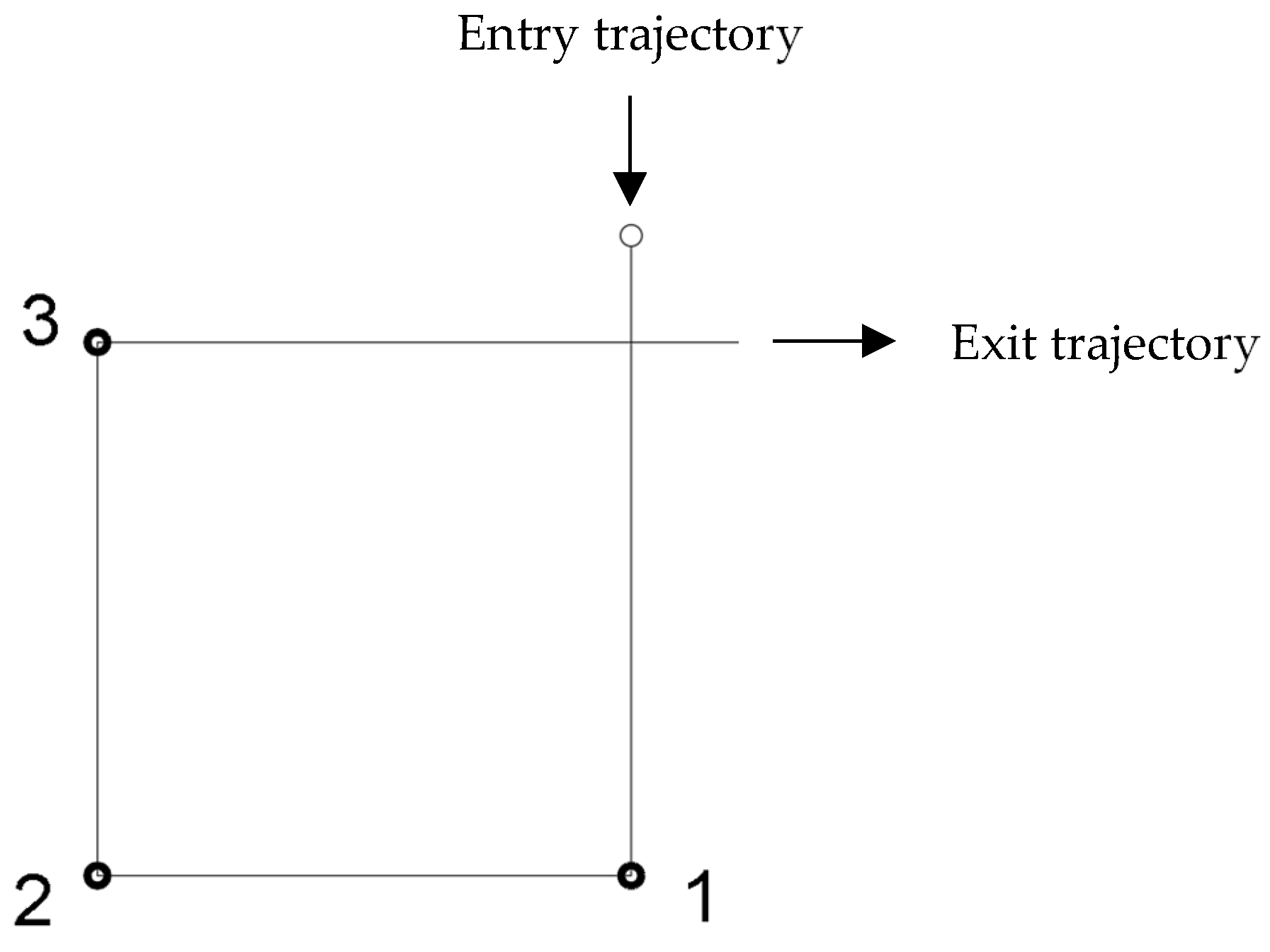
Figure 1 shows the cutting path executed for each specimen.
Additionally, this configuration enables the consistent definition of comparable regions of interest among samples (zones 1, 2, and 3), facilitating the systematic evaluation of localized defects under similar process conditions. In this way, the square geometry acts as an experimental control element that allows the observation and quantification of the phenomenon under repeatable conditions, avoiding the ambiguity associated with more complex or variable cutting paths.
Cutting tests were carried out using an abrasive waterjet machining (AWJM) system from TCI Cutting, model BPC 3020 (TCI cutting, Valencia, Spain), equipped with a single cutting head. The general characteristics of the equipment allow operation at high pressures and positioning speeds suitable for precision cutting applications [
32].
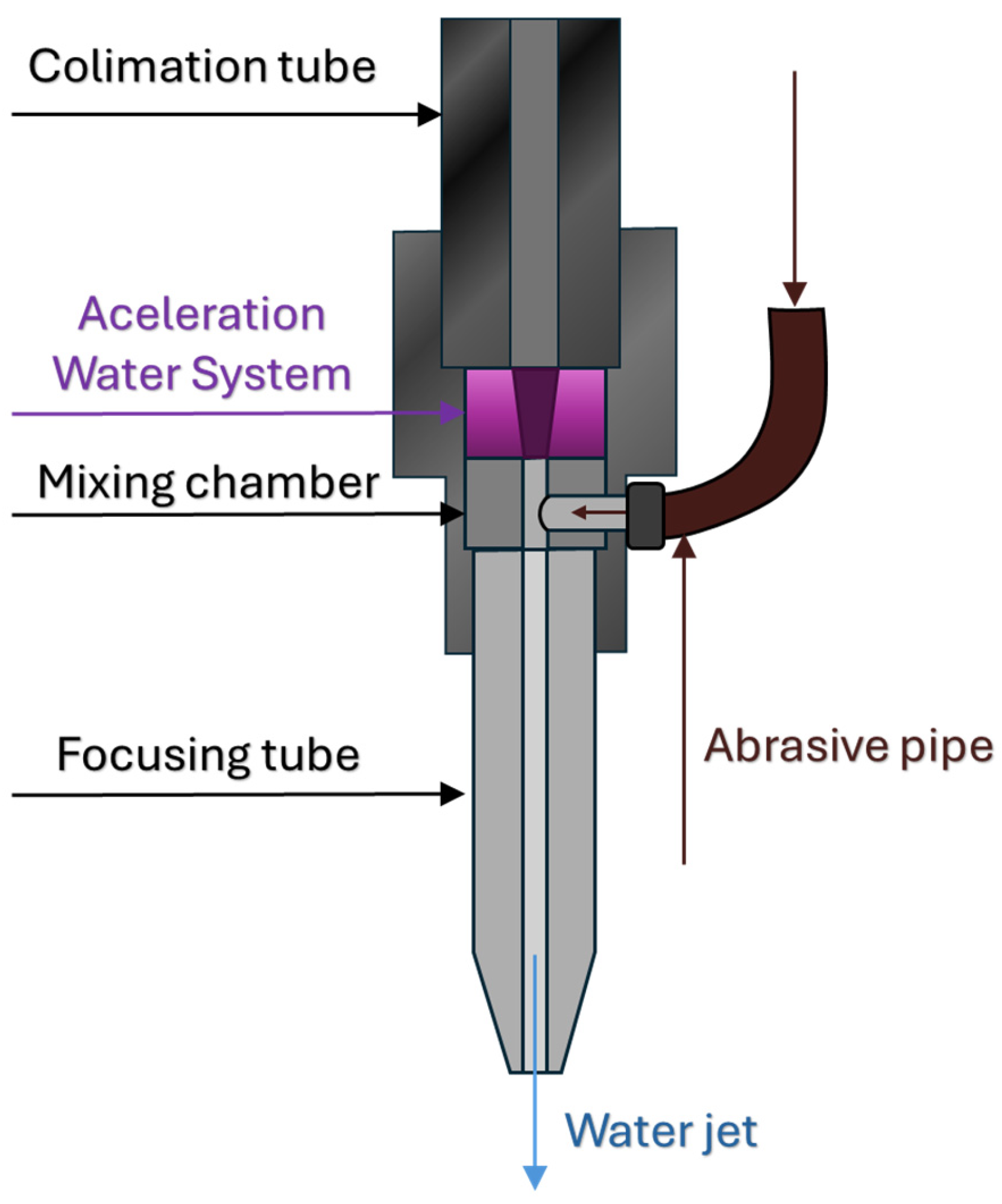
AWJM conventional nozzle was used (
Figure 2). The diameter and length of the focusing tube were 0.8 mm and 94.7 mm, respectively. The water orifice of the machine had a diameter around 0.30 mm.
Indian Garnet Mesh 80 was used as the abrasive material due to its widespread application in machining aluminum alloys, attributed to its hardness, angular morphology, and good balance between cutting efficiency and operating cost [
2,
8]. The abrasive was supplied through a controlled feeding system, ensuring stable conditions throughout all experiments.
In order to isolate the influence of the main process parameters, several operational variables were kept constant. In particular, the standoff distance (SOD) between the nozzle and the workpiece surface was fixed at 2.5 mm, a value selected to ensure adequate jet coherence and minimize dispersion prior to impact [
21]. Likewise, the initial jet piercing time was kept constant in all tests, preventing variations in entry conditions that could affect process stability. Other process variables, such as nozzle condition and system wear, were not varied and were assumed constant during the experiments.
Pressure conditions were experimentally verified, with small deviations observed between nominal and actual values supplied by the equipment. Specifically, differences were below 5% for all pressure levels considered, which falls within typical operating ranges for AWJM systems and is not considered significant from an experimental standpoint. Therefore, nominal values were assumed to adequately represent the working conditions established in this study.
To systematically evaluate the influence of process parameters on defect formation at the exit surface, a full factorial design (3
3) was adopted, considering three independent factors and three representative levels for each, corresponding to typical industrial conditions [
21,
23].
The selected factors were water pressure (WP), abrasive mass flow rate (AMFR), and traverse feed rate (TFR), as these variables are widely recognized as key determinants of AWJM cutting quality [
2,
12].
Specifically, the levels considered were 2500, 3800, and 5000 bar for water pressure; 110, 225, and 340 g/min for abrasive flow rate; and 100, 175, and 250 mm/min for traverse speed. The combination of these levels resulted in a total of 27 experimental conditions, each of which was carried out by cutting an independent specimen. The final experimental setup is summarized in
Table 1.
Each specimen constitutes an experimental unit associated with a unique combination of process parameters. Although independent replicates were not performed for each test condition, each sample was analyzed across multiple regions of interest (zones 1, 2, and 3), allowing multiple measurements of the defect to be obtained within the same experimental condition [
33]. The corner corresponding to the jet entry point was excluded from the study due to the presence of transient conditions during the initial piercing phase, which may locally alter the cut geometry and are not representative of the steady-state regime of the process.
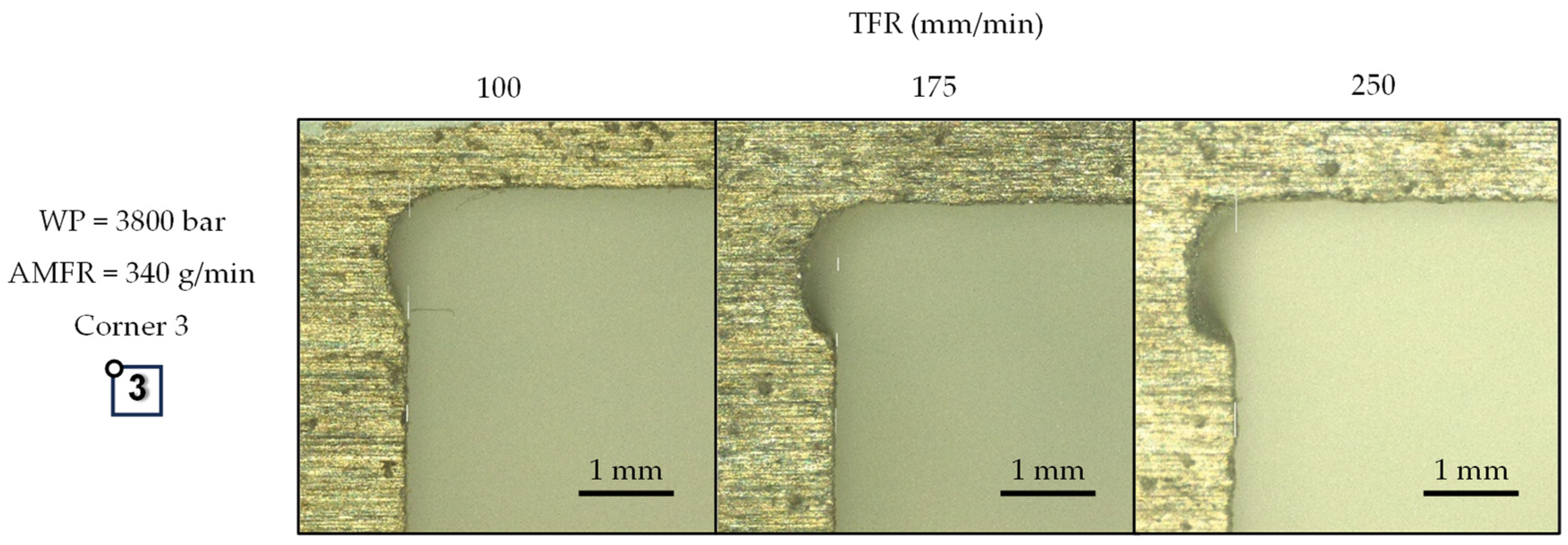
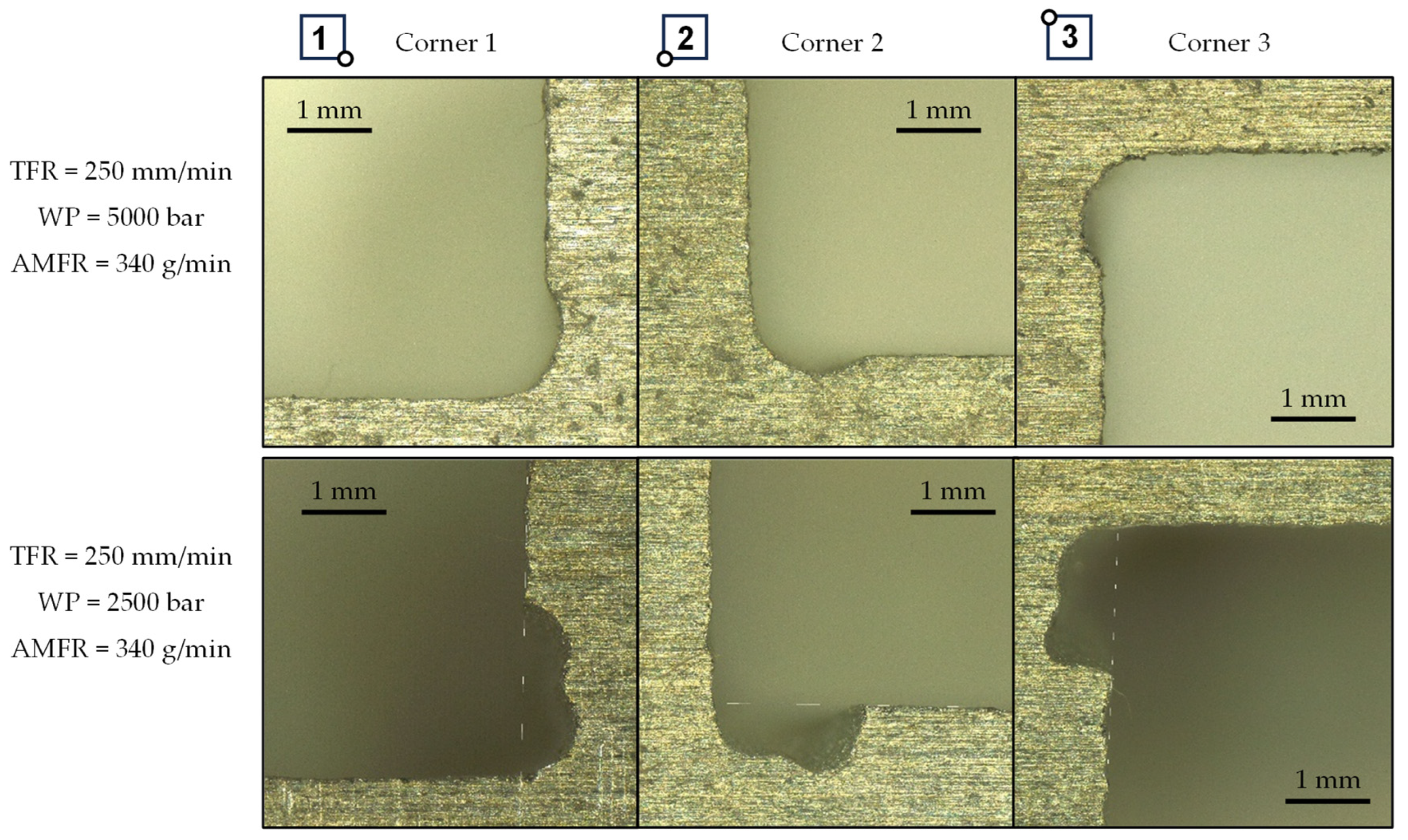
Defect characterization was focused on the exit surface of the specimens, selecting the corners generated during the cutting process as regions of interest. This choice is justified by the fact that these areas exhibit the most pronounced effects associated with the jet lag phenomenon, due to changes in the jet traverse direction [
3,
14].
Image acquisition was performed using a Leica DM2700 M optical microscope (Leica, Wetzlar, Germany) equipped with a digital capture system, enabling the complete geometry of the defect in the region of interest to be recorded without significant loss of detail. To ensure consistency in acquisition conditions, all images were captured under the same illumination setup, using incident lighting with controlled orientation and magnification (20×). This configuration enhanced the visibility of defect contours and improved the contrast between the machined surface and the affected region, facilitating subsequent segmentation.
Image processing was based on image analysis techniques aimed at extracting geometric descriptors from two-dimensional data [
34]. First, spatial calibration of each image was performed using a known reference, allowing the measured quantities to be expressed in real units.
Subsequently, the defect contour on the exit surface was defined. Initially, the affected region was manually segmented to delineate the defect. Then, the software calculated the area enclosed by the defect, obtaining its value in mm
2. To improve the geometric accuracy of the defined region, the extracted contour was smoothed using continuous interpolation, reducing the influence of local irregularities associated with surface texture [
35,
36]. The proposed metric is limited to a two-dimensional representation of the defect, which is appropriate for exit-surface evaluation but does not account for its three-dimensional morphology, such as depth or subsurface features.
The response variable was defined as the defect area on the exit surface, obtained from the segmented region in each zone of interest. For each analyzed corner, the area value was determined from at least two independent measurements, and an average value was subsequently calculated as a representative estimator of the defect magnitude in that region.
Statistical analysis of the results was carried out using multivariate techniques aimed at evaluating the influence of process parameters on the response variable. In particular, analysis of variance (ANOVA) was applied to determine the statistical significance of the considered factors and their possible interactions, as well as regression models to describe the relationship between independent variables and the response.
Generative artificial intelligence (GenAI) tools were used for text analysis, discussion enhancement, and figure generation.
3. Results and Discussion
In this section, the results obtained from the characterization of exit surface defects under the different process conditions are presented and analyzed. The analysis is structured by combining morphological observation, quantitative evaluation of the response variable, and the study of the influence of cutting parameters, with the aim of establishing consistent relationships between operating conditions and the magnitude of the defect associated with the jet lag phenomenon.
3.2. Quantitative Results of Defect Area
The values obtained for the defect area on the exit surface show significant variability depending on the combination of process parameters. Overall, the measured values span a wide range, indicating a high sensitivity of the response variable to the applied cutting conditions.
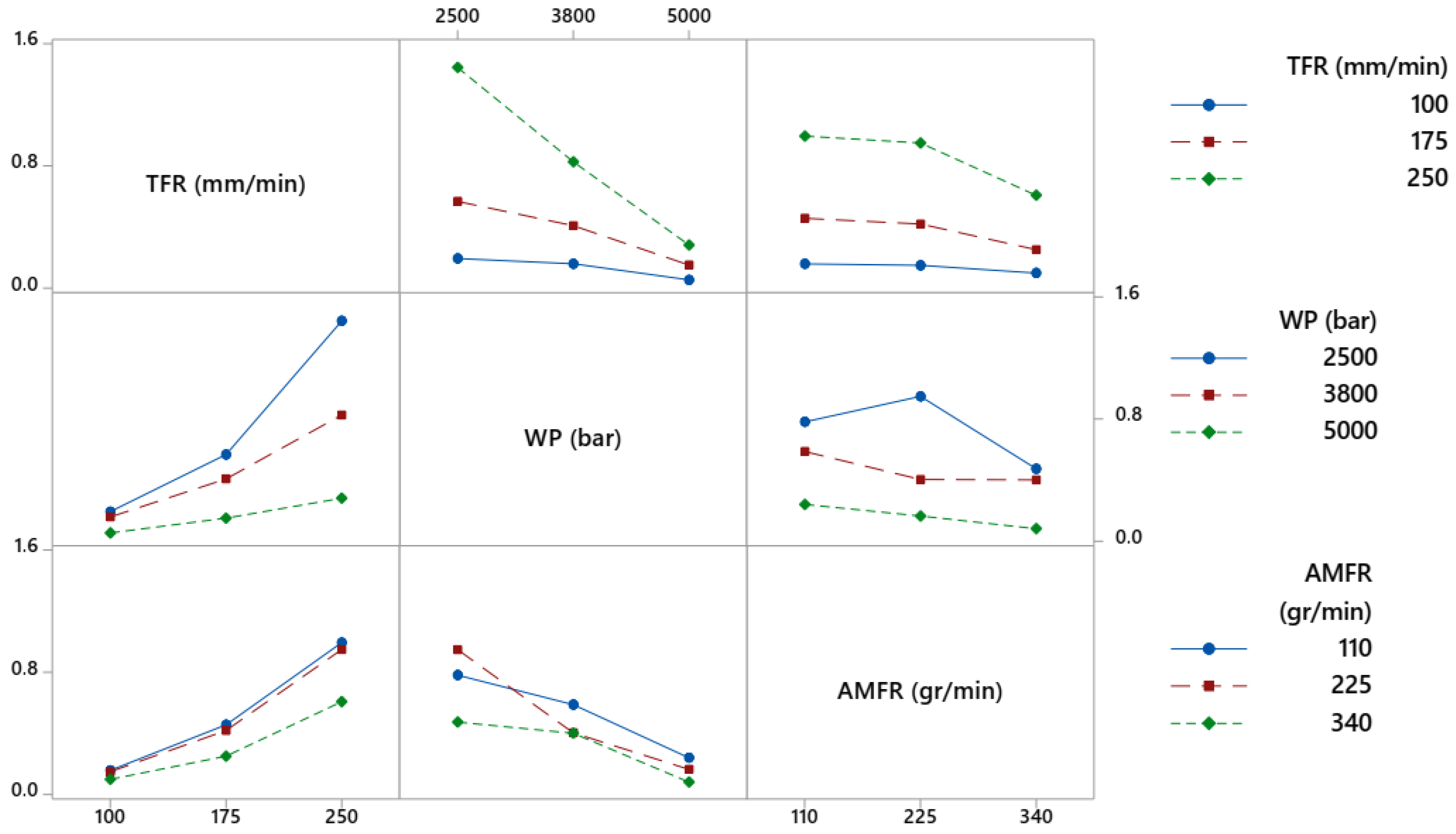
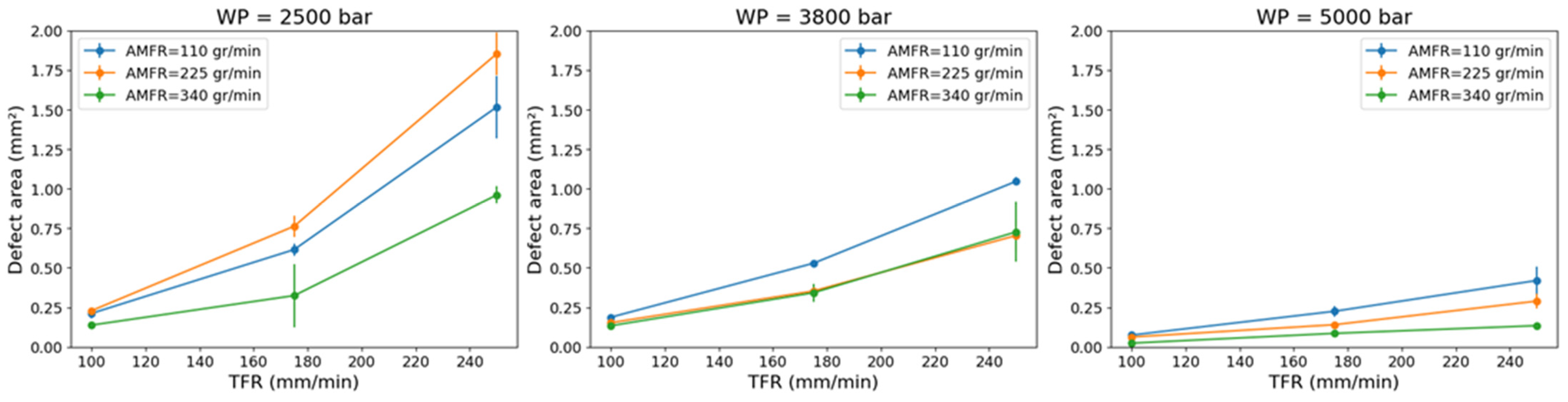
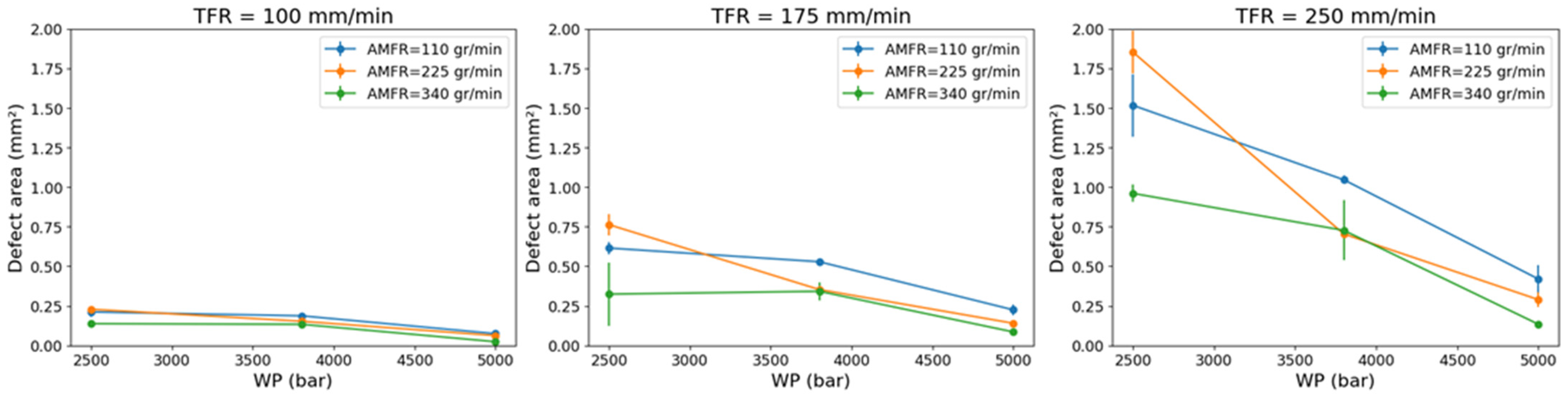
When the effect of cutting trajectory is neglected and the data are aggregated by experimental condition, the marginal analysis at constant pressure (
Figure 6) shows that pressure is the factor with the greatest overall influence on the response, exhibiting an inversely proportional relationship with the defect area. As pressure increases, the defect area decreases clearly and consistently across all evaluated conditions. This effect is robust and nearly linear, regardless of the levels of TFR and AMFR, although its impact is more pronounced at high traverse speeds. Therefore, WP is identified as the primary control factor of the process, acting as a stabilizing parameter that reduces defect formation.
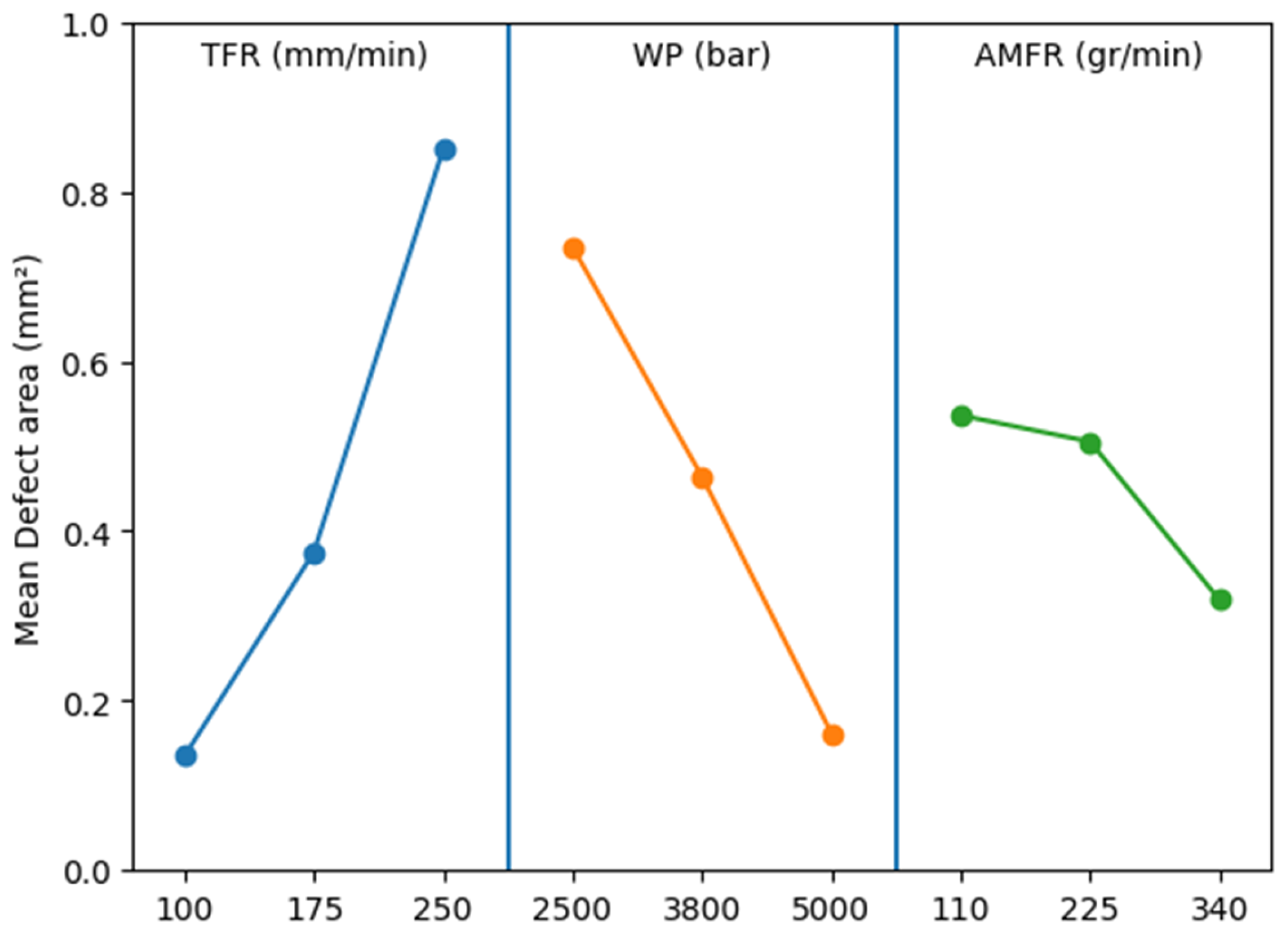
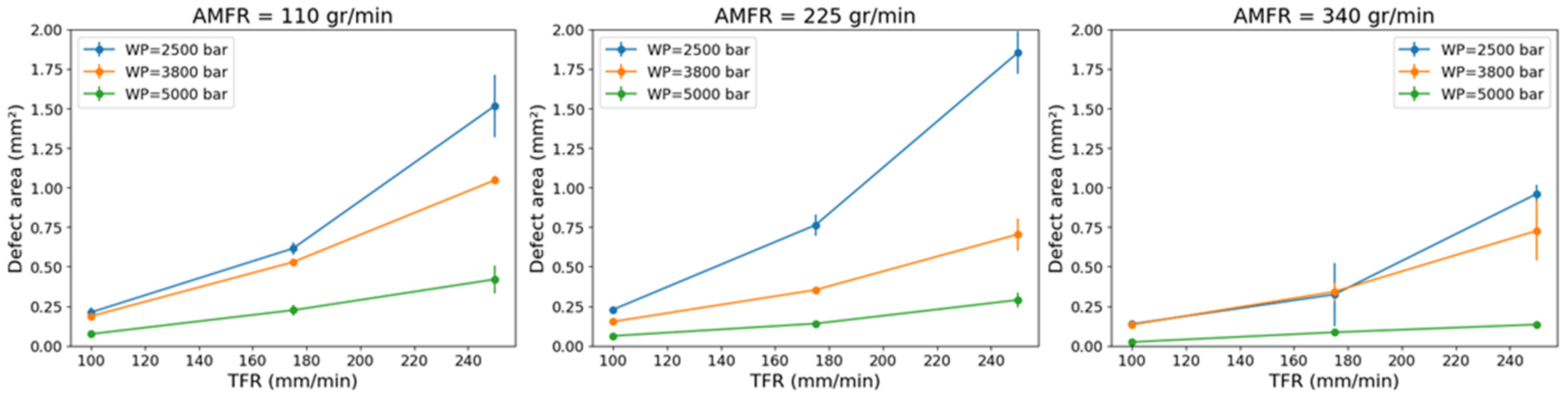
Similarly, when the trajectory effect is disregarded and the analysis is performed at constant TFR (
Figure 7), traverse speed shows a clearly positive influence on defect area, with a systematic increase as this parameter increases. This effect becomes particularly pronounced at the highest level (250 mm/min), where steeper slopes indicate greater process sensitivity. Furthermore, the impact of TFR is amplified under low-pressure conditions, highlighting the presence of interactions with other factors. Overall, TFR acts as a defect-enhancing factor, with a consistent and well-defined behavior.
Finally, in the analysis at constant AMFR (
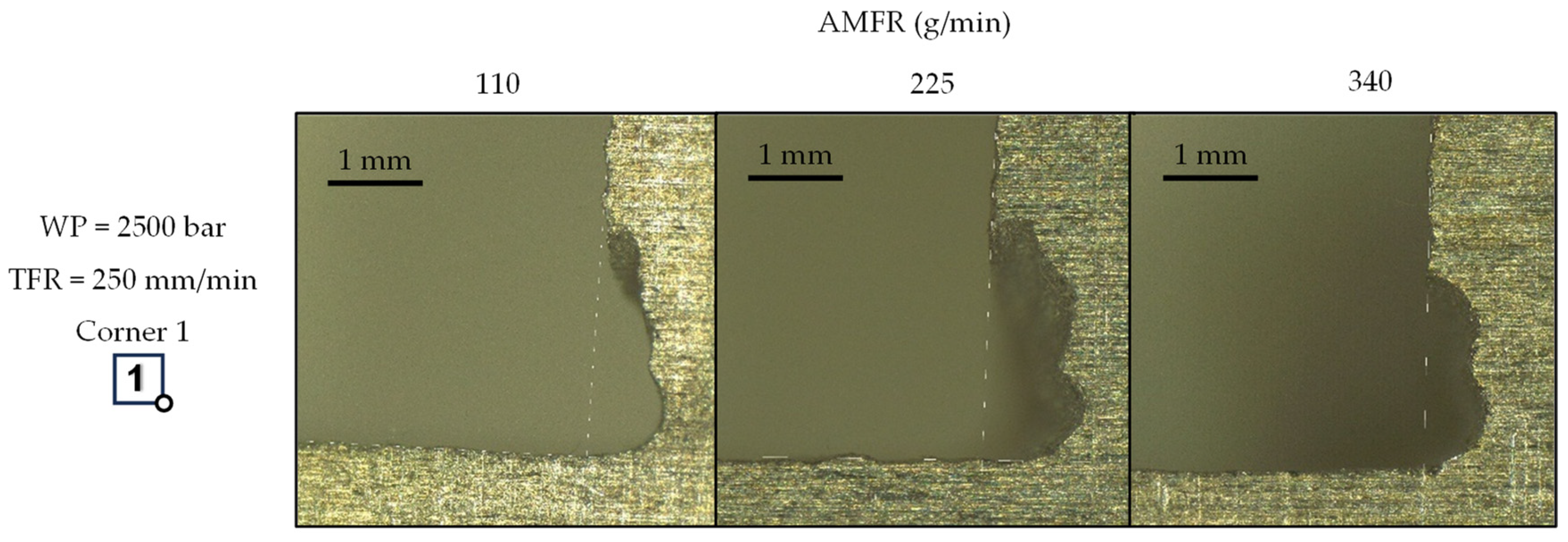
Figure 8), regardless of trajectory, abrasive flow rate exhibits a more complex and condition-dependent behavior. In general terms, low AMFR values tend to produce larger defect areas, while higher values (340 g/min) reduce the response. However, this effect is not strictly linear, as in certain combinations—particularly at low pressure and high traverse speed—an intermediate level (225 g/min) results in the largest defect areas. This indicates a strong interaction with other factors, especially WP and TFR, suggesting that the effect of AMFR cannot be interpreted independently.
Overall, the data indicate that parameter combinations characterized by high traverse speeds are consistently associated with higher defect area values. This behavior is observed across different levels of pressure and abrasive flow rate, suggesting a dominant influence of this parameter in defect generation.
Conversely, high-pressure conditions are generally associated with lower defect area values, reinforcing the trend observed in the qualitative analysis. This effect is particularly evident when comparing extreme pressure levels, where a systematic reduction in defect area is observed with increasing pressure.
Regarding abrasive flow rate, the results do not show a clearly defined trend in terms of defect area variation within the studied range. Although differences are observed between experimental combinations, these do not follow a consistent pattern that would allow attributing a significant global influence to this parameter.
From a general perspective, the distribution of results suggests that the defined response variable—defect area—is sufficiently sensitive to capture variations induced by process parameters, particularly traverse speed and water pressure. This behavior supports its use as a quantitative descriptor of the analyzed phenomenon and provides a solid basis for subsequent statistical analysis.
3.5. Analysis of Variance ANOVA
To evaluate the statistical significance of the considered factors, an analysis of variance (ANOVA) was performed on the response variable. The obtained results are summarized in
Table 2. In addition to the F-values and
p-values, the relative contribution of each factor to the total variability was calculated based on the sum of squares, allowing a quantitative assessment of their influence on defect formation.
The contribution analysis clearly indicates that traverse feed rate (TFR) is the dominant factor, accounting for 43.06% of the total variance, followed by water pressure (WP) with 26.67%. Together, these two parameters explain nearly 70% of the variability in defect area, confirming that the process is primarily governed by the balance between interaction time and jet energy.
Among the interaction terms, the TFR × WP interaction contributes 15.30%, representing a substantial portion of the total variance. This confirms that the effect of traverse speed cannot be interpreted independently of pressure, and that both parameters act in a strongly coupled manner. In contrast, AMFR shows a comparatively low individual contribution (4.49%), although its interactions—particularly with WP—remain statistically significant.
From both a physical and statistical standpoint, the most relevant result is the TFR × WP interaction, which exhibits extremely high significance. This indicates that the influence of traverse speed strongly depends on the water pressure. The mean data clearly illustrate this behavior: at 5000 bar, the average defect area increases from approximately 0.054 mm2 to 0.281 mm2 as TFR rises from 100 to 250 mm/min; however, at 2500 bar, this increase is much more pronounced, rising from about 0.193 mm2 to 1.444 mm2. Therefore, the detrimental effect of increasing traverse speed is significantly amplified as pressure decreases. This interaction reveals that both factors do not act additively but in a coupled manner: high pressure partially mitigates the degradation introduced by high traverse speeds, whereas low pressure makes the process much more sensitive to increases in feed rate.
The WP × AMFR interaction is also statistically significant, contributing 3.69% to the total variance, indicating that the effect of abrasive mass flow rate depends on the pressure level. The mean values show that at 2500 bar, the intermediate abrasive level (225 g/min) produces a higher average defect area than 110 g/min, whereas at 5000 bar, increasing abrasive flow rate is more clearly associated with a reduction in defect area. This result suggests that abrasive efficiency cannot be evaluated independently of the available jet energy. At low pressure, increasing abrasive flow does not guarantee proportional improvement and may even reflect a less efficient process condition; in contrast, at high pressure, the system appears to utilize the abrasive input more effectively.
The TFR × AMFR interaction contributes 1.76% and is statistically significant, although less pronounced than the interaction between traverse speed and pressure. This effect indicates that the influence of abrasive flow is not uniform across the entire range of traverse speeds. Similarly, the third-order interaction (TFR × WP × AMFR), with a contribution of 1.96%, confirms that the system exhibits a multifactorial behavior, where parameter effects cannot be fully understood in isolation.
Regarding the Corner factor, its effect remains clearly non-significant, with a negligible contribution of 0.02%. The absence of differences among the three corners reinforces that trajectory does not introduce a systematic dependency in defect area under the evaluated conditions.
Overall, the ANOVA results demonstrate that defect formation in AWJM cutting is predominantly controlled by traverse feed rate and water pressure, with a strong contribution from their interaction. Abrasive mass flow rate plays a secondary role, mainly by modulating the response depending on pressure conditions. The contribution analysis confirms that the process is governed by coupled effects rather than independent parameter influences, which is consistent with the physical behavior of the abrasive jet and its interaction with the material.
This is consistent with previous studies, which report that traverse speed and pressure are the dominant factors in most response variables [
41,
42], and that interactions between parameters are significant [
43], while abrasive flow rate plays a secondary but relevant role [
44]. Therefore, the statistical results should be interpreted as indicative of trends rather than as definitive quantitative generalizations.