Article

Effects of Shielding and Drainage Gas Flow Rates on Weld Quality, Microstructure and Mechanical Properties of 304NG Stainless Steel in Local Dry Underwater Laser Welding

1
School of Materials Science and Engineering, Tianjin University, Tianjin 300350, China
2
School of Electric Power, Civil Engineering and Architecture, Shanxi University, Datong 037034, China
*
Author to whom correspondence should be addressed.
Metals 2026, 16(4), 423; https://doi.org/10.3390/met16040423
Submission received: 19 March 2026 / Revised: 2 April 2026 / Accepted: 10 April 2026 / Published: 13 April 2026
(This article belongs to the Special Issue Laser Processing Technology for Metals)

Abstract

The quality of underwater laser welds is strongly dependent on the flow rates of the shielding and drainage gases. This study investigated the effect of argon and drainage gas flow rates on the formation, microstructure and mechanical properties of 304NG stainless steel using local dry underwater laser welding. At a water depth of 100 mm, with a laser power of 3.0 kW and a welding speed of 8 mm/s, the optimal conditions within the tested range were a shielding gas flow rate of 30 L/min and a drainage gas flow rate of 80 L/min. These conditions produced a continuous weld bead with an attractive surface and yielded the highest average maximum tensile load of 4.31 kN. Metallographic observations revealed that the weld metal primarily consisted of austenite alongside skeletal and lamellar ferrite, while the hardness along the weld depth remained relatively consistent at around 180 HV. These results demonstrate that matching the flow rates of the shielding and drainage gases properly is essential for stabilising the local dry cavity and improving weld quality and joint performance.

1. Introduction

The utilisation of underwater joining and repair technologies has gained significant importance in the domains of marine engineering, hydraulic infrastructure, and nuclear power systems [1]. This is primarily due to the fact that damaged metallic components in these systems are often challenging or unfeasible to transfer to a dry environment for maintenance purposes [1,2,3,4]. The focus on underwater laser welding and cladding has been attributed to the attributes of these processes, namely their high energy density, low heat input, limited deformation, and strong potential for high-quality in situ repair [1,2,4]. In the range of available approaches, local dry underwater laser welding is a particularly promising technique [5]. This is due to the fact that it is able to isolate the weld zone from direct water interference while preserving the flexibility required for underwater repair [6,7].
However, the underwater environment still imposes severe constraints on process stability and weld quality [8]. Water intrusion, rapid heat extraction, and disturbances in the interaction between beam, plume, and molten pool have been demonstrated to significantly affect the formation of welds, the evolution of microstructure, and the performance of joints [9,10,11]. Earlier studies demonstrated that, in the absence of effective drainage or shielding, direct underwater laser welding becomes highly unstable with increasing water depth [7,10,12]. This is due to the fact that plasma shielding and beam-channel instability reduce penetration and may even cause welding failure [9,11,13]. Consequently, local dry cavity stability has been widely recognised as a prerequisite for obtaining sound underwater laser welds [6,9,10,11]. In order to address this issue, a range of drainage and shielding devices has been developed [1,14]. Previous studies have demonstrated that gas-related parameters, water depth, heat input, beam position, and device configuration all have an effect on weld formation and joint properties in local dry underwater laser welding [3,6,7,12,15,16].
Comparative studies have further demonstrated that underwater welding alters the thermal cycle, dendritic morphology, ferrite characteristics, and the hardness, strength, ductility, and corrosion behaviour of welded joints [5,8,17]. In the case of 304NG stainless steel, Sun et al. confirmed the feasibility of local dry underwater laser welding and demonstrated that underwater conditions can increase joint strength and displacement while modifying dendritic evolution and ferrite morphology [18]. However, extant studies have predominantly concentrated on process feasibility, device design, environmental comparison, or single process variables, as opposed to systematically elucidating the coordinated roles of shielding gas flow and drainage gas flow in stabilising the local dry cavity [1,3,6,9,10,11,12,16,19,20,21,22,23].
The present study investigates the effects of shielding and drainage gas flow rates on the weld quality, microstructure, and mechanical properties of 304NG stainless steel in local dry underwater laser welding. The aim is to identify an appropriate gas-flow matching condition for improving cavity stability and joint performance.

2. Materials and Methods

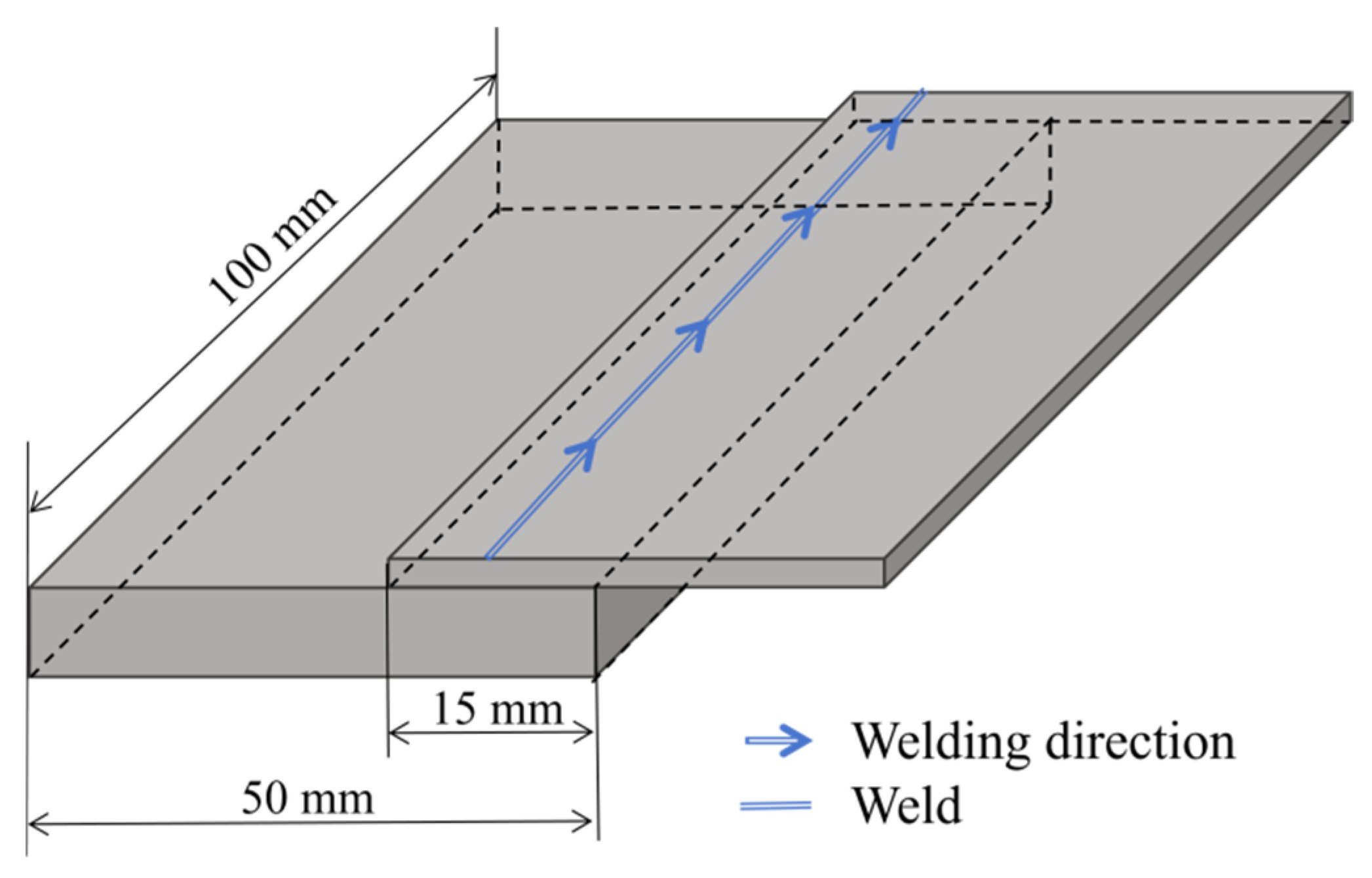
In the present study, 304NG austenitic stainless steel plates (BAOSHAN IRON &STEEL Co., Ltd. in Shanghai, China.) were utilised as the welding test specimens, and their nominal chemical composition, as provided by the manufacturer, is listed in Table 1. The mass fraction of the elements is expressed as a percentage of the total mass. The dimensions of the test plates were 100 mm × 50 mm × 6 mm and 100 mm × 50 mm × 1.6 mm. The dimensions of the lap joint were 15 mm × 100 mm (Figure 1), and its design was intended to facilitate the welding process between thin and thick plates. The thickness of the plate is 1.6 mm + 6 mm, and the lap joint measures 15 mm × 100 mm.
In order to elucidate the respective effects of the two gas parameters, the drainage gas flow rate was varied under a constant laser shielding gas (argon) flow rate, while the laser shielding gas flow rate was adjusted under a constant drainage gas (air) flow rate. The corresponding experimental parameters are summarised in Table 2. Preliminary experiments indicated that excessive gas flow rates resulted in reduced weld penetration and deteriorated weld quality. Consequently, the upper limits of the drainage gas (air) flow rate and laser shielding gas (argon) flow rate were set at 80 L/min and 30 L/min, respectively [24,25]. The parameter levels presented in Table 2 were selected as representative conditions to elucidate the effects of shielding gas and drainage gas on weld formation and joint performance. In the context of the prevailing experimental conditions, these selected levels elicited more pronounced differences, while the changes associated with adjacent parameter levels were comparatively limited. The parameter levels presented in Table 2 were selected as representative conditions to elucidate the effects of shielding gas and drainage gas on weld formation and joint performance. In the context of the prevailing experimental conditions, these selected levels elicited more pronounced differences, while the changes associated with adjacent parameter levels were comparatively limited.
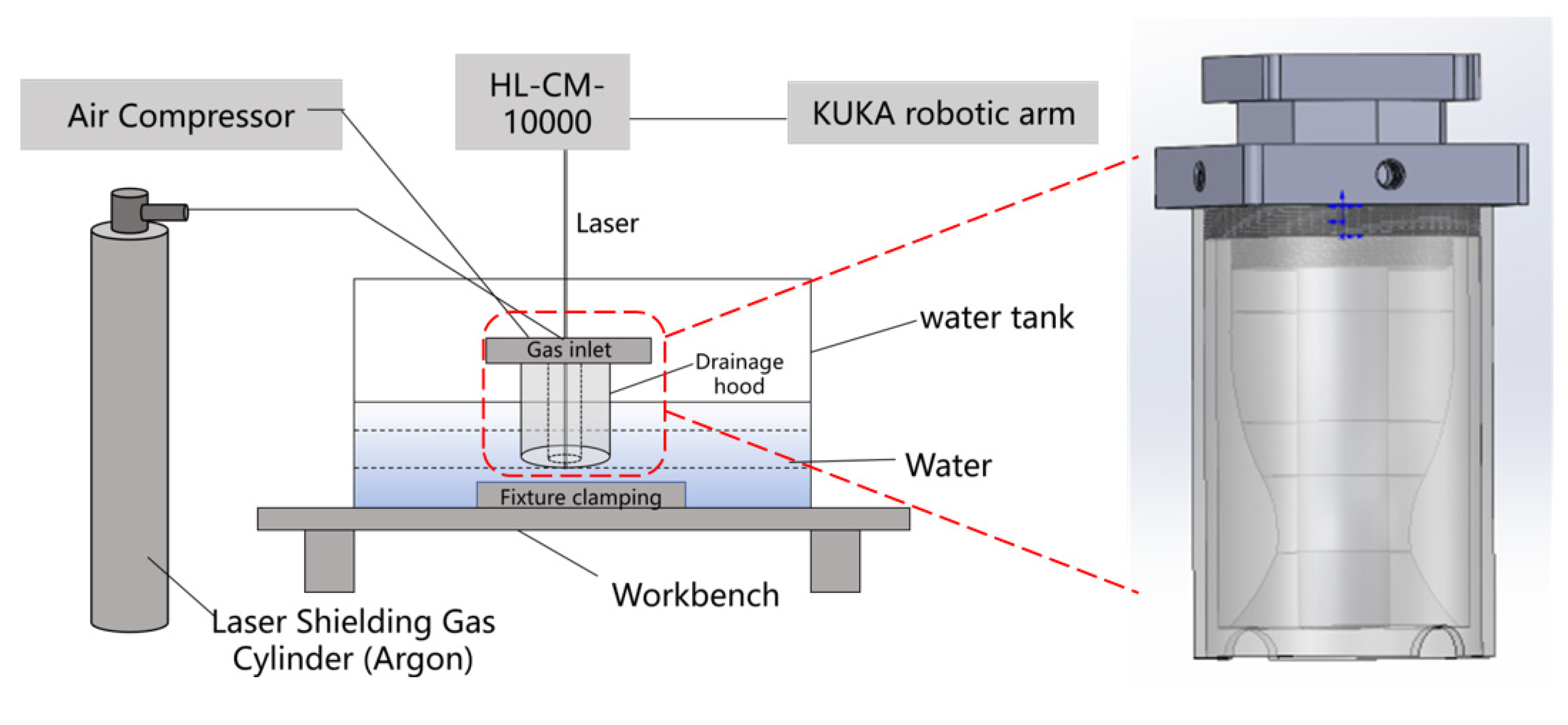
The equipment employed in this experiment consists of the HL-CM-10000 fiber laser manufactured by Hans Laser (Shenzhen, China), which boasts a maximum output power of 10,000 W, a laser wavelength of 1070 nm, and a focal length of 300 mm. The HL-CM-10000 fibre laser is capable of generating high-power laser beams, which are then controlled by a six-axis robotic arm for the purpose of welding operations. The process involves the introduction of air into the outer ring of the drainage hood, whilst argon gas is fed into the inner ring. The shielding gas utilised in the experiments was pure argon, whereas the drainage gas was indoor air supplied by an air compressor. These gases were utilised as conventional process media for shielding and local cavity drainage during the welding process. This configuration facilitates the implementation of localised dry underwater laser welding during the process. At a water depth of 10 mm, laser energy reaches the weld surface with minimal loss. The configuration of the drainage hood (see Figure 2) is engineered to direct the flow of welding shielding gas as proximate to the surface of the workpiece as possible, thereby ensuring the effective expulsion of surface gases. This process has been shown to have a substantial impact on the mechanical properties of the weld. In the present study, the drainage hood configuration was treated as a predefined experimental condition for establishing the local dry welding environment, rather than as an independent variable for optimization. The primary objective of this study was to assess the impact of shielding gas and drainage gas flow rates within a fixed hood configuration.
All welding experiments were carried out in a water-filled tank, with ordinary tap water at room temperature acting as the surrounding medium. In the locally dry underwater laser welding process adopted in this study, the water acted primarily as an external cooling medium, while the laser welding itself occurred in the locally drained dry region. Before conducting underwater laser welding tests, mechanically remove dust, oxide films and impurities from the substrate surface. Then clean the surface with alcohol to eliminate oil contamination. Secure both plates with fixtures to prevent the weld seam from deviating from the intended position during the process. At a water depth of 100 mm, the combination of argon shielding and exhaust air creates a dry environment for underwater laser welding. The welding robot positions the bottom of the exhaust hood at a depth of 10 mm in the water, as close as possible to the surface of the stainless steel plate [24]. A continuous supply of exhaust and shielding gas is required throughout the welding process to ensure unobstructed laser contact with the weld surface.
The cutting of metallographic specimens perpendicular to the weld from the test plate was accomplished by means of a CNC wire-cut EDM machine (Tianzheng Jiamei CNC Machine Tool Co., Ltd., Taizhou, China). Following a thorough grinding and polishing process, aqua regia was utilised as the etchant. The surface morphology, penetration depth, and fusion width of the weld were observed using a Smartzoom 5 microscope (Carl Zeiss Microscopy GmbH, Jena, Germany). The metallographic specimens obtained were examined under an optical digital microscope (Zeiss Smartzoom 5, Carl Zeiss Microscopy GmbH, Jena, Germany), an optical metallographic microscope, and a scanning electron microscope (Thermo Fisher Scientific Quattro S, Brno, Czech Republic), with metallographic images being captured at various magnifications. The weld zone, heat-affected zone, and base metal zone of the joint were observed, with magnification selected based on the microstructural features of the examined region. Subsequent to secondary etching, microstructural images of the specimens were captured using a scanning electron microscope (Thermo Fisher Scientific Quattro S, Brno, Czech Republic). The Thermo Fisher Scientific environmental scanning electron microscope (ESEM), equipped with an energy dispersive spectroscopy (EDS) probe, was employed to observe and analyse the microstructure and composition of the joint. For the purpose of the microhardness testing of the joint, a microhardness tester was utilised to examine mechanically polished weld cross-sections. The test parameters were set as follows: a load of 200 g was applied, with an indentation duration of 15 s and a hardness test point spacing of 0.15 mm. Hardness values were collected at 0.15 mm intervals along the indentation depth from the top to the bottom of the weld cross-section.
Tensile specimens were cut perpendicular to the weld using wire-cut electrical discharge machining (CNC), with dimensions as shown in Figure 3a. Three specimens were sampled for each set of process parameters, with the experimental results then averaged. Tensile tests were conducted at ambient temperature using a tensile testing machine. Shims were placed at both ends of the specimens in order to prevent bending moments during testing, thereby ensuring that the applied force remained perpendicular to the weld. The positions of these elements are illustrated in Figure 3b. The tensile speed was maintained at 2 mm/min.

3. Results and Analysis

3.1. Analysis of Weld Bead Morphology and Microstructure

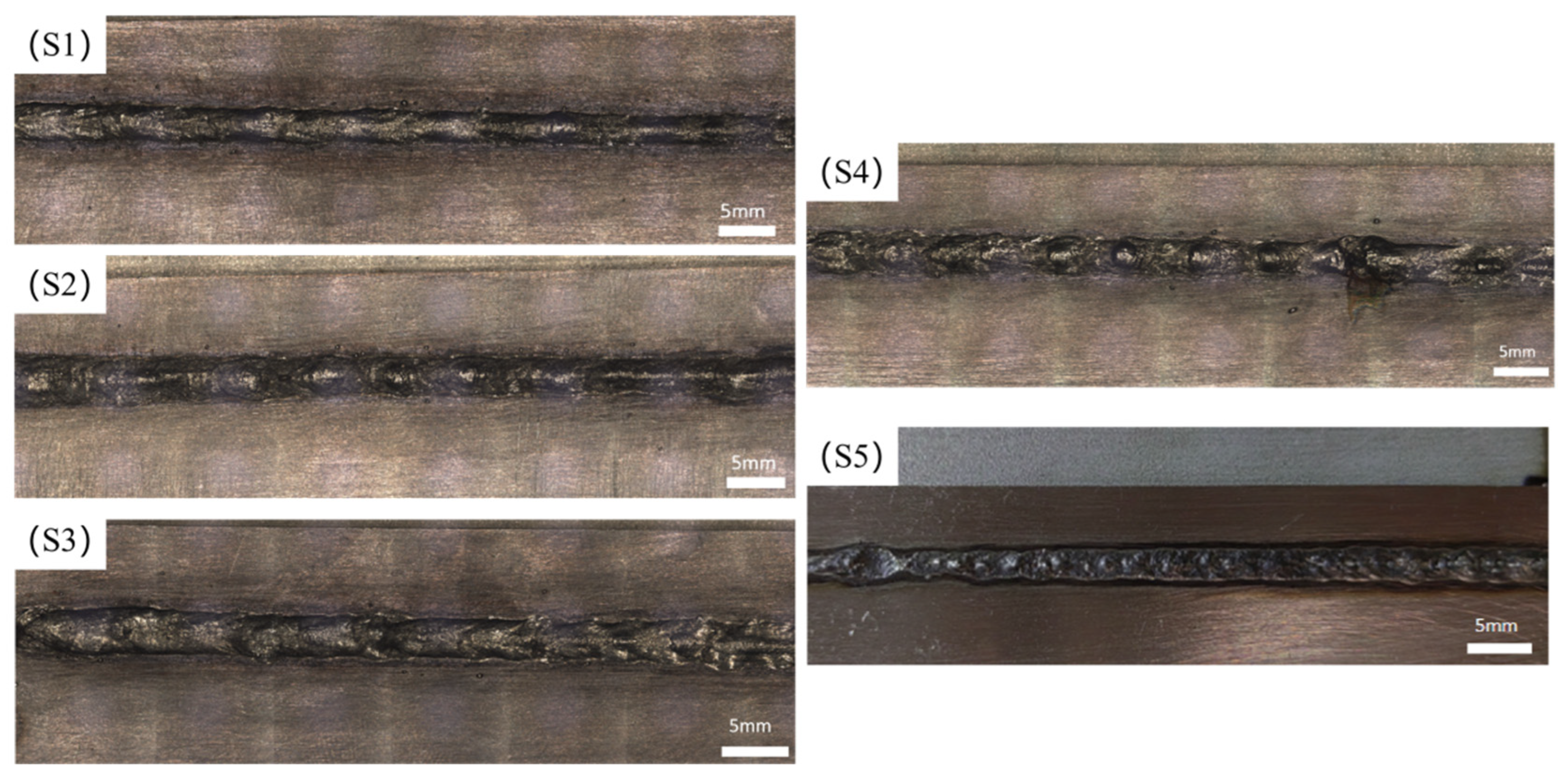
The experimental findings demonstrate that the flow rates of both the purge gas (air) and the laser shielding argon gas have a substantial impact on the formation of underwater laser welds. When the purge gas flow rate is set to 80 L/min and the laser shielding argon gas flow rate is set to 30 L/min, the resultant weld exhibits a continuous fish-scale texture with a distinct metallic lustre.
In accordance with the tenets of single-variable analysis, the impact of exhaust gas (air) and laser shielding argon flow rates on weld morphology was examined in a discrete manner. The experimental results demonstrate that, under constant exhaust gas flow conditions, increasing the laser shielding argon flow rate enhances welding quality, particularly surface formation. However, the effect is limited. Conversely, when the laser shielding argon gas flow rate is constant, a significant increase in the drainage gas (air) flow rate has been shown to enhance weld quality. The formation of a weld is rendered unfeasible in the absence of drainage gas flow, thereby preventing the laser energy from reaching the thick plate. This results in defects such as lack of fusion, porosity and cracks. It has been demonstrated that when both the laser shielding gas and drainage gas flow rates reach their maximum values, there is a marked improvement in the quality of the weld.
As illustrated in Figure 4(S2,S4,S5), the surface morphology of welds with a laser shielding argon gas flow rate of 15 litres per minute is evident. The observed variation in the drainage gas (air) flow rates is attributed to the differing conditions present in each instance. As is evident in the figures, weld formation under these parameters is suboptimal, with multiple spatter deposits and discontinuities in the weld bead evident. As demonstrated in Figure 4(S2), the drainage gas (air) flow rate was measured at 40 L/min, while the flow rate of the laser shielding argon gas was recorded at 30 L/min. The weld bead formed under these parameters exhibits minor undercut and relatively few spatters. This finding indicates that the flow rate of the laser shielding argon gas exerts a substantial influence on the quality of weld joints, with the potential to enhance their integrity.
A comparison of Figure 4(S1,S4), as well as Figure 4(S2,S3), reveals the impact of the venting flow rate on the morphology of the weld surface. As illustrated in Figure 4(S1), the weld morphology is observed when the venting (air) and laser shielding (argon) flow rates are set to their maximum values. At this juncture, weld bead formation is at its optimal: the weld is uninterrupted with negligible spatter, and the absence of welding defects, such as inclusions or cracks, is evident. As illustrated in Figure 4(S4), the weld bead formation is of the poorest quality, exhibiting numerous porosities and an unformed weld surface. This finding suggests that the laser energy reaching the weld surface is minimal and that the water film is not being expelled in its entirety. As illustrated in Figure 4(S2), the weld morphology is satisfactory, notwithstanding the presence of discontinuities. As illustrated in Figure 4(S3), the weld morphology is characterised by the presence of substantial spatter particles in several regions, accompanied by discontinuities and an undercut. This phenomenon is known to result in a reduction in the mechanical properties of the subsequent weld. As the drainage gas flow rate increased from 0 L/min to 80 L/min, there was a gradual improvement in the quality of the surface formed by the underwater laser weld. Furthermore, as the gas flow increased, the surface quality of the underwater laser-welded joint continued to improve, and overall weld continuity strengthened.
In summary, optimal welding results are achieved when laser energy enters the weld zone with minimal loss. However, residual water films on the weld surface have been shown to cause significant energy loss due to laser reflection and scattering. The utilisation of shielding and drainage gases is instrumental in ensuring the efficacy of welding processes by safeguarding the laser and efficiently addressing surface moisture.
The combined effect of drainage gas and shielding gas on weld formation can be understood in terms of local dry cavity stability and effective laser energy delivery. Within the experimental conditions that were established for the purposes of this study, it was demonstrated that increasing the drainage gas flow rate resulted in a more significant improvement in weld continuity than changing the shielding gas flow rate. This finding indicates that drainage gas played a dominant role in water removal and cavity maintenance. Conversely, the protective effects of shielding gas were primarily observed in the interaction zone and molten pool, thereby impacting spatter formation and surface integrity. In instances where the drainage gas flow rate proved inadequate, residual water could not be efficiently expelled from the weld surface. This resulted in enhanced laser reflection and scattering, consequently reducing the effective heat input. In instances where the flow rate of shielding gas was inadequate, the efficacy of molten pool protection was compromised, leading to the formation of spatter and the onset of local instability. Consequently, the successful formation of sound welds necessitated the precise alignment of the two gas systems, rather than the independent augmentation of either flow rate.

3.1.1. Characteristics of the Weld Cross-Section

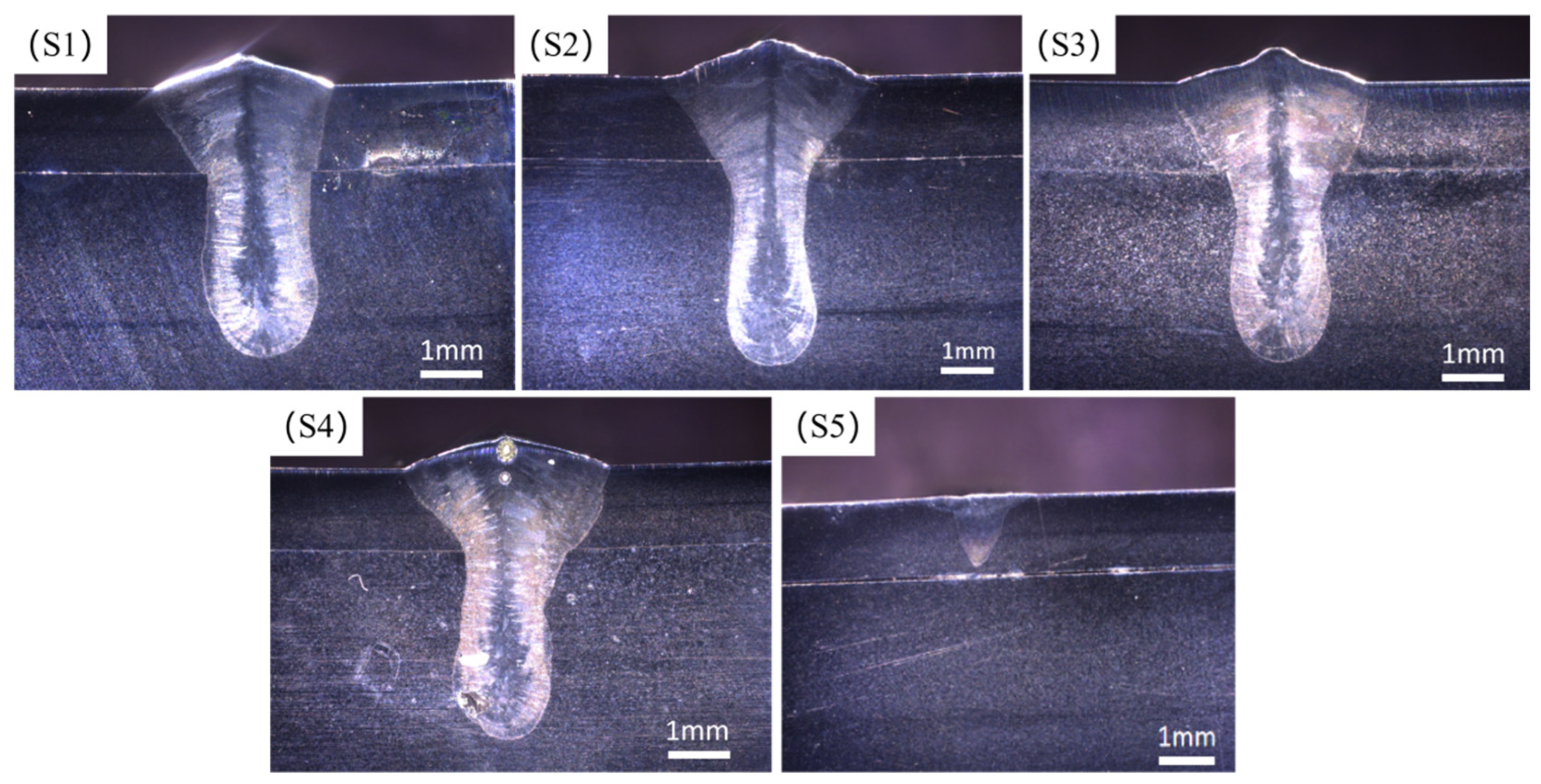
As illustrated in Figure 5, the macroscopic morphology of underwater laser-welded joints is observed under varying gas flow conditions. The study demonstrates that all weld cross-sections manifest a distinctive wide-at-the-top, narrow-at-the-bottom profile. To elaborate further: As demonstrated in Figure 5(S1), the upper section exhibits a slight increase in width relative to the lower section, thereby indicating optimal formation with minimal overall weld variation. As illustrated in Figure 5(S2), the cross-section of the subject is of a funnel-shaped nature, with a significantly wider upper section in comparison to the lower section. This demonstrates adequate overall symmetry, yet weaker bonding at the interface between the thin and thick plates. As illustrated in Figure 5(S3), a weld cross-section analogous to Parameter 1 is evident, exhibiting slight necking at the joint interface between the two plates. This phenomenon could be indicative of stress concentration. As illustrated in Figure 5(S4), the weld cross-section exhibits minor porosity. This phenomenon can be attributed to the ingress of gas into the weld pool during the welding process. However, due to excessive cooling rates, the gas bubbles were unable to escape before the weld metal solidified, thereby preventing their expulsion. This finding suggests that porosity formation was closely related to the combined effects of gas-flow-induced disturbance and the limited escape time available before solidification. In the event of unstable cavity behaviour and stronger molten-pool disturbance occurring under conditions that are suboptimal for gas flow, there is a greater probability of gas entrapment. Once the cooling and solidification rate is sufficiently high, the entrapped bubbles cannot escape in time and are retained as pores in the solidified weld metal. As illustrated in Figure 5(S5), the weld in question exhibits inadequate penetration, suggesting an incomplete fusion process.
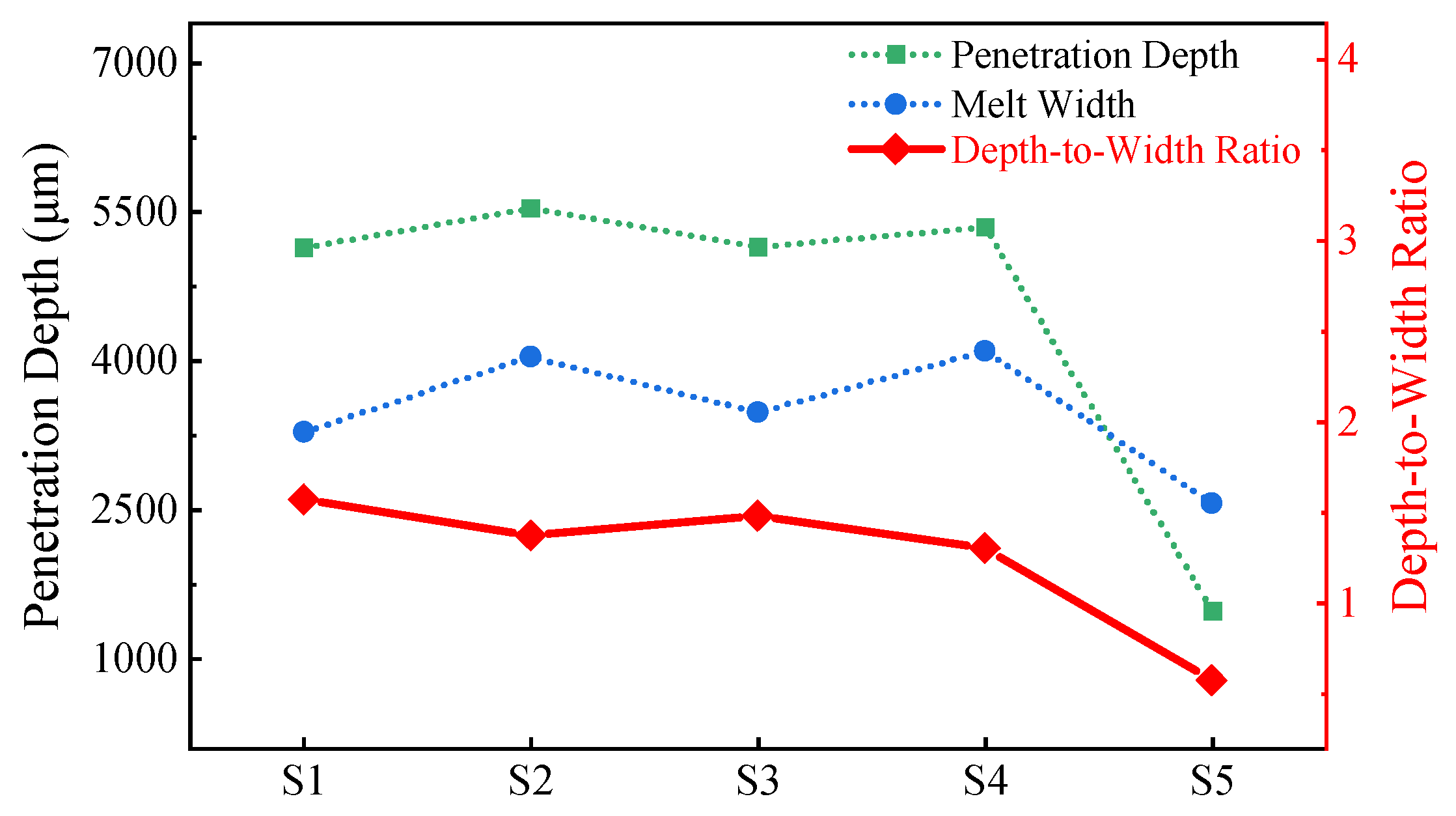
As demonstrated in Figure 6, the penetration depth and width of welds are observed to vary with differing drainage gas (air) and laser shielding argon gas flow rates. As demonstrated in Figure 6, within the current experimental range, fluctuations in the drainage gas flow rate exert a comparatively negligible influence on penetration depth in comparison to variations in the shielding gas flow rate. However, its effect on weld continuity and overall surface formation is more pronounced, as demonstrated in Figure 4. This finding indicates that the drainage gas exerts a predominant influence on the formation and stability of the local dry cavity, while the shielding gas demonstrates a more immediate effect on the thermal and metallurgical conditions within the immediate laser–material interaction zone. However, due to excessive cooling rates, the gas bubbles were unable to escape before the weld metal solidified, thus preventing their expulsion. This interpretation is derived from the post-weld cross-sectional morphology, given that no in situ observation of bubble evolution was conducted in the present study.

3.1.2. Microstructural Analysis of Joints with Optimal Weld Bead Configuration

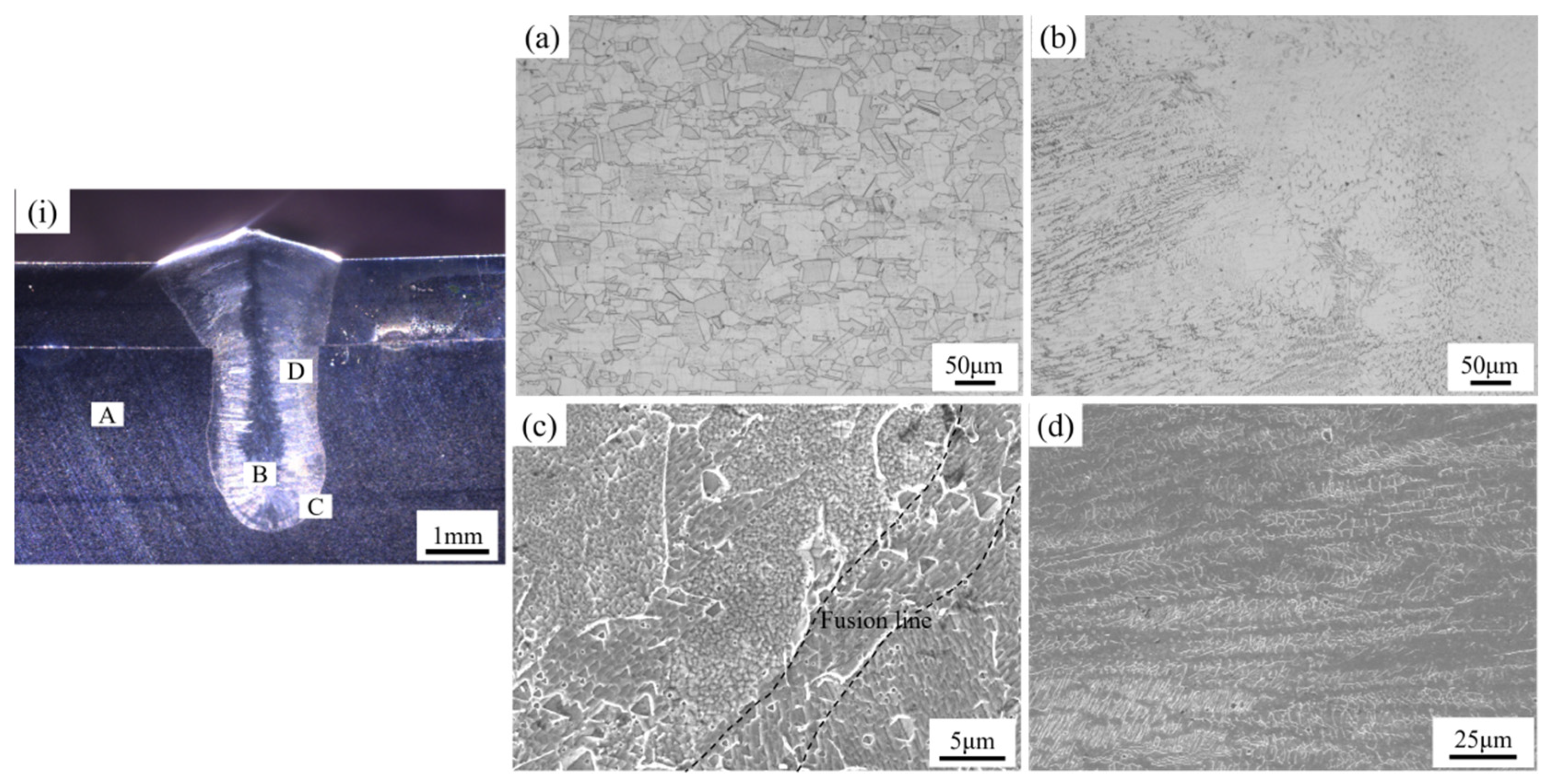
In order to further investigate the microstructural characteristics of typical underwater laser-welded joints, the results above indicate that the joint produced under the following parameters exhibited the most representative microstructural features: 3 kW laser power, 8 mm/s welding speed, 30 L/min shielding gas flow rate, and 80 L/min purge gas (air) flow rate. Consequently, representative metallographic regions were selected from the weld cross-section for analysis, and the specific sampling locations are shown in Figure 7i. The corresponding microstructural images of each region are presented in Figure 7a–d.
As demonstrated in Figure 7a, the base metal is constituted exclusively of single-phase austenite. As illustrated in Figure 7b, the weld microstructure is predominantly constituted by austenite, skeletal ferrite, and lamellar ferrite. In the vicinity of the fusion line, the grains exhibit a marked tendency to grow along the temperature gradient, giving rise to a columnar structure. In contrast, the central region is characterised by the development of a relatively equiaxed structure, a consequence of the reduced temperature gradient and cooling conditions that prevail in this area. Figure 7c further demonstrates that the grains in proximity to the fusion line boundary are coarse columnar grains oriented perpendicularly to the fusion line, extending towards the weld centre. It is widely accepted that the composition of this region is predominantly ferrite and austenite [26]. As illustrated in Figure 7d, the microstructure on either side of the weld centre is revealed, where austenite and skeletal ferrite can be observed under the electron microscope. This is primarily attributed to the influence of the welding thermal cycle. The presence of skeletal and lamellar ferrite in the weld metal is consistent with the rapid solidification characteristics of austenitic stainless steel welds under high cooling-rate conditions.

3.2. Mechanical Properties of Welded Joints

The continuous escape of shielding gas from the weld surface directly compromises its protective efficacy, thereby affecting both weld formation and mechanical properties. When bubbles contact the molten pool with their maximum cross-sectional area, they provide optimal protection; however, as bubbles approach the exit point, their contact area with the molten pool correspondingly decreases, leading to diminished protective performance. This may result in uneven hardness distribution within stainless steel lap joints fabricated by underwater laser welding, as well as occasional anomalies during tensile mechanical property testing. While certain sudden numerical variations may occur during testing and sampling, these data nevertheless reflect the mechanical properties of the prepared specimen joints to a certain extent and thus possess a degree of representativeness.

3.2.1. Hardness Distribution in Joints

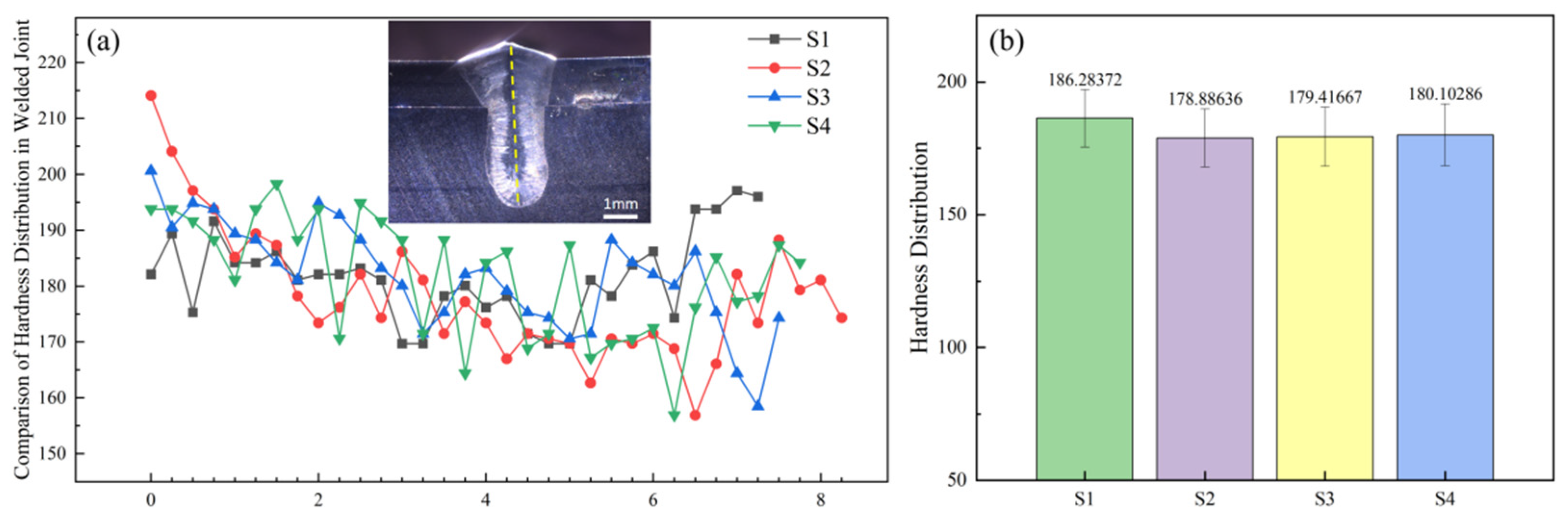
In order to evaluate the uniformity and stability of the mechanical properties across the welded joint cross-section under the optimal process parameters, microhardness measurements were performed on four specimens (S1–S4) along the weld centreline (Figure 8b, yellow dashed line). The test path was initiated at the upper surface of the weld and extended to the root region, with the results presented in Figure 8. As demonstrated in Figure 8a, the microhardness values of the four specimens were predominantly distributed within the range of approximately 155–215 HV, with the majority of values concentrated between 170 and 195 HV. Despite the occurrence of specific fluctuations in the hardness curves of each specimen, the overall variation trends exhibited a high degree of similarity.
Along the weld depth direction, the microhardness values of all four specimens were found to be relatively higher near the upper surface of the weld, and then gradually decreased and became more stable with increasing depth. This finding suggests that variations in thermal cycling and solidification conditions at distinct locations within the weld may have contributed to the observed fluctuations in microhardness. However, the hardness values in the middle and lower regions of the weld remained within a relatively narrow range for all specimens, suggesting that the molten pool solidified in a comparatively uniform manner during welding and that no obvious performance instability occurred across the joint cross-section. Figure 8b provides a summary of the mean microhardness values for the four specimens. Despite the fact that S1 demonstrated the highest mean hardness, the variation observed when contrasted with the other specimens was not deemed to be statistically significant. The mean hardness values of the remaining specimens were found to be highly similar, all falling within the range of approximately 179–180 HV.
As demonstrated in Figure 8a,b, the microhardness distribution along the weld depth exhibited relative uniformity under the prevailing process conditions, with minimal overall fluctuation, and the average hardness maintained stability at approximately 180 HV.

3.2.2. Tensile Properties of Joints

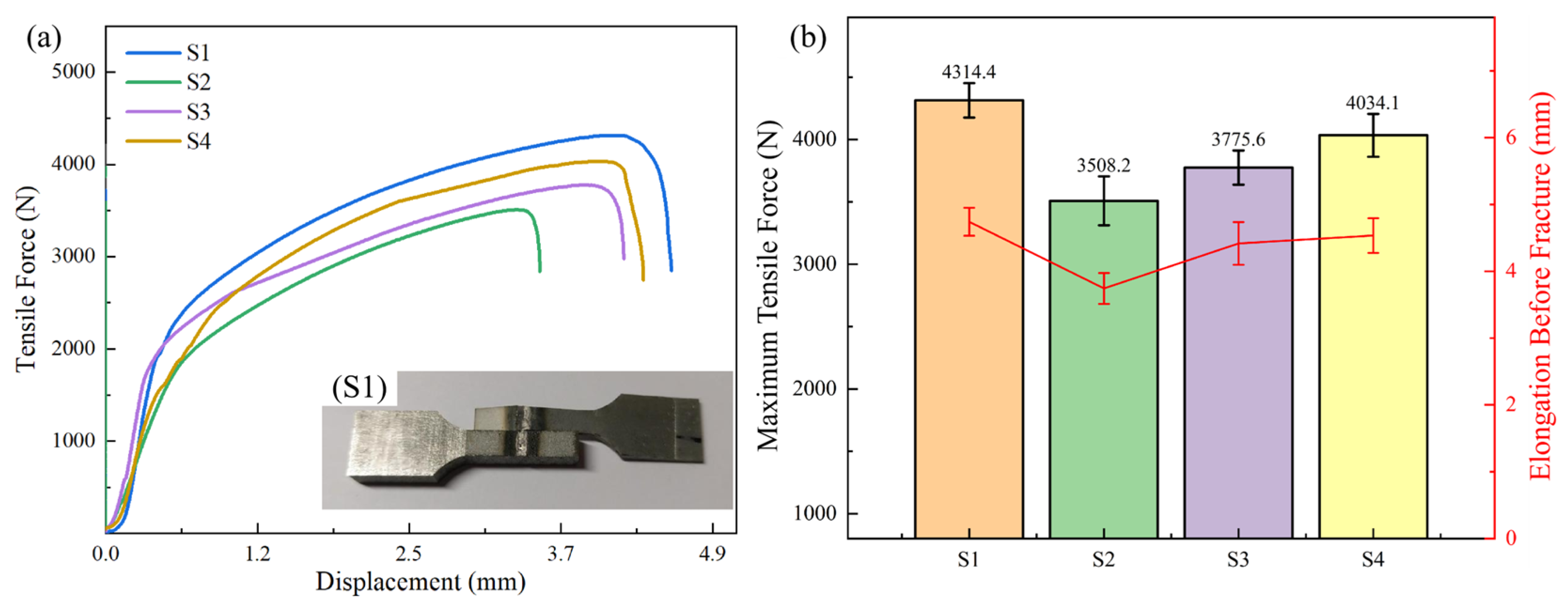
Tensile specimens were extracted from the welded joints in accordance with the configuration illustrated in Figure 3. This ensured that the weld was located at the centre of the specimen and that the weld length was 5 mm. The lower right corner of Figure 9a(S1) illustrates a representative tensile specimen following the requisite preparation. Tensile specimens were extracted from the welded joints in accordance with the configuration illustrated in Figure 3. This ensured that the weld was located at the centre of the specimen and that the weld length was 5 mm. The lower right corner of Figure 9a(S1) illustrates a representative tensile specimen following the requisite preparation. For each parameter set, three tensile specimens were tested, and the average of the maximum tensile loads was taken as the characteristic value of the load-bearing capacity of the corresponding joint.
As demonstrated in Figure 9a, the tensile curves of the joints obtained under varying parameter conditions exhibited analogous evolution trends, undergoing the phases of initial elastic deformation, subsequent plastic deformation, and ultimate fracture failure. This finding suggests that all four groups of welded joints exhibited a certain degree of load-bearing capacity and plastic deformation ability. However, a number of significant differences were observed in the peak load, slope of the rising segment, and elongation before fracture among the different specimens. This suggests that the flow rates of shielding gas and drainage gas had a significant influence on both the strength and deformation behavior of the joints. Despite the limited sample size, with only three specimens tested for each condition, the consistent variation trend observed among the groups lends further support to the conclusion that gas-flow matching exerts a significant influence on joint load-bearing capacity.
A more detailed comparison based on Figure 9b shows that the maximum tensile load varied considerably among the four groups. Specifically, S1 exhibited the highest average maximum tensile load of 4314.4 N, followed by S4 at 4034.1 N, S3 at 3775.6 N, and S2 at 3508.2 N. A comparison of S1 with S2 revealed that the maximum tensile load of S1 increased by approximately 22.9%, indicating that an appropriate combination of gas flow parameters can significantly enhance the load-bearing capacity of the welded joint. Concurrently, the fracture displacement exhibited a high degree of homogeneity across the four groups, thereby indicating that the gas flow parameters exerted a more pronounced effect on joint strength than on the overall plastic deformation capacity.
The tensile curves exhibited by S1 and S4 demonstrated relatively elevated load levels, accompanied by a certain degree of plastic deformation, suggesting an optimal equilibrium between strength and ductility. In contrast, S2 exhibited not only the lowest peak load but also a generally lower curve level. This suggests that, under this parameter combination, the weld region may have suffered from poorer weld formation, internal defects, or inferior microstructural uniformity, thereby reducing the effective load-bearing capacity of the joint. The tensile performance of S3 was intermediate between that of S2 and S4, indicating that its weld quality was improved compared with S2 but had not yet reached the optimal condition.
In conclusion, it can be determined that the flow rates of laser shielding gas and drainage gas were of critical importance in establishing the mechanical properties of local dry underwater laser-welded joints. The effect was not merely monotonic, but instead exhibited a clear synergistic matching characteristic. It has been demonstrated that the judicious selection of shielding gas and drainage gas flow rates can effectively stabilise the local dry cavity. This, in turn, has the effect of mitigating the disturbance of the molten pool by the surrounding water environment. Furthermore, it has been shown to improve weld formation quality and to reduce defects such as porosity and incomplete penetration. The result is an enhancement of the maximum load-bearing capacity of the joint. Conversely, an inadequate gas flow configuration may diminish the overall mechanical efficacy of the joint, attributable to either inadequate drainage or excessive disturbance induced by the gas flow.

4. Discussion

This study conducted a preliminary evaluation of the impact of varying argon flow rate and drainage air flow rate on the quality of welds, the microstructure of the material, and the mechanical properties of 304NG stainless steel joints produced by local dry underwater laser welding. The findings indicate that gas-parameter optimisation is a pivotal factor in ensuring the quality of welding, thus providing valuable guidance for underwater repair applications in the domains of nuclear power and marine engineering.
The flow rates of both the shielding gas and the drainage gas were found to have a significant effect on the morphology of the weld surface, the cross-sectional profile, and the formation of defects. In the course of the experimental procedure, it was established that the optimal conditions for producing a weld of the highest quality were as follows: the utilisation of 30 L/min of shielding gas in combination with 80 L/min of drainage gas. The aforementioned conditions resulted in a weld characterised by a continuous fish-scale pattern, a distinct metallic lustre, and minimal spatter, porosity, and incomplete fusion. This finding underscores the imperative for optimal congruence between the two gas systems in ensuring the stability of underwater laser welding. The observed porosity is likely to be associated with gas entrapment under varying gas-flow conditions. In instances where the local dry cavity is unstable or the molten pool is significantly disturbed, gas is more readily entrapped within the molten metal. The rapid cooling inherent to underwater laser welding results in a constrained time window for bubble escape, thereby enhancing the probability of pore retention.
In the context of meticulously controlled hydrodynamic conditions, the enhanced quality of the weld can be ascribed to the distinctive yet complementary functions of the two gases. It was demonstrated that an augmented drainage gas flow rate led to a more efficacious removal of water from the welding zone, thereby stabilising the local dry cavity and consequently reducing laser energy loss caused by residual water films. In instances where the drainage gas flow rate proved inadequate, observations revealed two phenomena: incomplete penetration and discontinuous weld formation. These findings serve to corroborate the indispensability of drainage gas for the establishment of a stable dry welding environment. Conversely, an augmented argon flow rate, utilised for shielding purposes, exhibited a marked enhancement in the protection of the laser–material interaction zone and molten pool. This was achieved through a reduction in the intrusion of residual moisture and surrounding gases, thereby suppressing spatter and promoting more stable solidification. However, it is important to note that excessively high shielding gas flow has the potential to disturb the keyhole and molten pool, alter local heat transfer, and reduce the effective energy density for downward penetration. Consequently, while surface protection was enhanced, there was a concomitant decrease in penetration depth.
The cross-sectional results further demonstrated that, whilst all welds exhibited a top-wide and bottom-narrow profile, penetration depth, fusion width, and defect distribution varied with gas-flow conditions. The shielding gas flow rate exhibited a more pronounced effect on weld geometry, whereas the drainage gas was more critical for maintaining weld continuity through stabilisation of the local dry cavity. Consequently, within the range that has been tested, the optimal condition identified here should be regarded as the best possible parameter combination given the current limitations of the equipment.
In the most favourable conditions, the base metal displayed a single-phase austenitic microstructure, while the weld metal was predominantly composed of austenitic and ferritic characteristics, incorporating skeletal and lamellar ferrite features. The formation of coarse columnar grains in proximity to the weld root and fusion boundary is attributable to directional solidification along the temperature gradient. The hardness distribution along the weld depth demonstrated relative stability, with an average value of approximately 180 HV, suggesting the absence of evident microstructural instability across the joint cross-section. Consequently, the enhancement in tensile performance is more plausibly ascribed to enhanced weld formation and defect suppression than to any considerable alteration in hardness.
The tensile results further confirmed the benefit of gas-flow optimisation. The joint that was welded with 30 L/min shielding gas and 80 L/min drainage gas exhibited the highest average maximum tensile load, reaching 4314.4 N. Since fracture displacement varied only slightly among the groups that were tested, gas-flow matching appears to mainly affect joint strength rather than overall deformation capacity. The combined effects of the shielding gas and the drainage gas were found to be synergistic. The drainage gas was responsible for stabilising the local dry cavity, while the shielding gas protected the molten pool and promoted stable solidification.
The present findings are generally consistent with previous studies on local dry underwater laser welding, which have emphasised the importance of a stable gas-assisted dry environment for suppressing water intrusion and improving weld quality. In comparison with the results reported in the literature concerning 304 stainless steel and other alloys, the present study further suggests that both the presence of gas assistance and also the proper matching of drainage gas and shielding gas are important for controlling weld continuity, defect formation, and joint strength.
Further research is required to elucidate the interrelationships among gas flow, cavity stability, laser energy transfer and molten-pool behaviour. In this study, no in situ diagnostic methods, such as high-speed imaging or plume/spectroscopic monitoring, were employed. Consequently, the dynamic evolution of the local dry cavity, the behaviour of bubbles, and the instability of molten pools could not be directly observed. As a result, the discussion is mainly based on post-weld morphology, cross-sectional characteristics, microstructural observations, hardness distribution, and tensile performance. Furthermore, it is anticipated that Marangoni convection and recoil pressure will also influence molten-pool flow and keyhole stability under local dry underwater conditions. However, the specific roles of these phenomena were not the focus of the present study. Given that only typical gas combinations under fixed power, welding speed, and water depth were considered, it is clear that broader experimental and modelling studies are required.

5. Conclusions

The objective of this study was to investigate the effects of drainage gas (air) flow rate and laser shielding argon flow rate on the weld quality, microstructure, and mechanical properties of 304NG stainless steel joints produced by local dry underwater laser welding. The findings indicated that alignment of the two gas flow rates is imperative for enhancing the quality of welds. The drainage gas predominantly facilitates cavity formation and water removal, while the shielding gas primarily provides protection to the laser–material interaction zone and molten pool.
(1)
This study conducted preliminary research into the effects of argon flow rate and drainage air flow rate on the weld formation, microstructure, and mechanical properties of 304NG stainless steel joints produced by local dry underwater laser welding.
(2)
The impact of both gas parameters on the quality of welds within the tested range was found to be significant. The optimal conditions for this experiment were established as 30 litres of shielding gas and 80 litres of drainage gas per minute, which resulted in the optimal weld appearance and the highest average maximum tensile load of 4314.4 N.
(3)
In optimal conditions, the weld metal primarily exhibited austenitic and ferritic phases, and the hardness distribution along the weld depth remained relatively stable, with an average value of approximately 180 HV.
(4)
The drainage gas was found to primarily encourage water removal and enhance local dry cavity stability. In contrast, the shielding gas was observed to improve molten-pool protection and weld stability. It was therefore imperative that the two gas flow rates were matched appropriately in order to enhance the quality of the welds and the performance of the joints.
(5)
Since this study was performed under shallow laboratory conditions without in situ diagnostics, the effects of water environment, cavity evolution, and molten-pool dynamics were not directly examined. Further work is needed to clarify the coupled mechanisms involving gas flow, cavity stability, laser energy transfer, bubble behavior, and molten-pool flow.

Author Contributions

Methodology, J.D.; software, J.D.; formal analysis, Y.Y. (Yue Yang) and Y.Y. (Yang Yang); data curation, Y.Y. (Yang Yang); writing—original draft preparation, S.L.; writing—review and editing, S.L., Y.Y. (Yue Yang) and Z.L.; supervision, Z.L.; project administration, Z.L.; resources, Z.L.; funding acquisition, Z.L. All authors have read and agreed to the published version of the manuscript.

Funding

This work was supported by the National Natural Science Foundation of China (U21B2079).

Institutional Review Board Statement

Not applicable.

Informed Consent Statement

Not applicable.

Data Availability Statement

The original contributions presented in this study are included in the article. Further inquiries can be directed to the corresponding author.

Conflicts of Interest

The authors declare no conflicts of interest.

References

  1. Xue, L.; Mao, X.; Huang, J.; Zhang, R.; Wang, C. Research and development of underwater laser repair. Trans. China Weld. Inst. 2024, 45, 120–128. [Google Scholar] [CrossRef]
  2. Sun, J.; Yang, Y.; Wang, K.; Yin, S.; Li, Z.; Luo, Z. A Comparative Study on the Performance and Microstructure of 304NG Stainless Steel in Underwater and Air Laser Welding. Materials 2024, 17, 3854. [Google Scholar] [CrossRef]
  3. Han, L.; Wu, X.; Chen, G.; Wang, Z.; Fan, W. Local dry underwater welding of 304 stainless steel based on a microdrain cover. J. Mater. Process Technol. 2019, 268, 47–53. [Google Scholar] [CrossRef]
  4. Chen, H.; Zhuo, L.; Cui, Y.; Zhang, L.; Wang, Y. Research and Application of Laser Welding in Nuclear Power Field. Electr. Weld. Mach. 2023, 53, 81–89. [Google Scholar] [CrossRef]
  5. Huang, Z.; Luo, Z.; Ao, S.; Yao, Q.; Zhao, Y. Effect of Laser Beam Position on Microstructure and Weld Penetration of Underwater Laser Tailor-Welded Blank. J. Shanghai Jiaotong Univ. 2016, 50, 1609–1612, 1617. [Google Scholar] [CrossRef]
  6. Fu, Y.; Guo, N.; Cheng, Q.; Zhang, D.; Feng, J. Underwater laser welding for 304 stainless steel with filler wire. J. Mater. Res. Technol. 2020, 9, 15648–15661. [Google Scholar] [CrossRef]
  7. Guo, N.; Fu, Y.; Xing, X.; Liu, Y.; Zhao, S.; Feng, J. Underwater local dry cavity laser welding of 304 stainless steel. J. Mater. Process Technol. 2018, 260, 146–155. [Google Scholar] [CrossRef]
  8. Li, X.; Zhang, Q.; Zhao, Y.; Chen, Y.; Sun, Q.; Liu, Y.; Tian, Y. Optimization of local dry underwater laser welding process for stainless steel based on orthogonal experiment. Trans. China Weld. Inst. 2025, 46, 42–49. [Google Scholar] [CrossRef]
  9. Guo, N.; Xing, X.; Zhao, H.; Tan, C.; Feng, J.; Deng, Z. Effect of water depth on weld quality and welding process in underwater fiber laser welding. Mater. Des. 2017, 115, 112–120. [Google Scholar] [CrossRef]
  10. Zhang, X.; Chen, W.; Ashida, E.; Matsuda, F. Relationship between weld quality and optical emissions in underwater Nd: YAG laser welding. Opt. Lasers Eng. 2004, 41, 717–730. [Google Scholar] [CrossRef]
  11. Zhang, X.; Ashida, E.; Shono, S.; Matsuda, F. Effect of shielding conditions of local dry cavity on weld quality in underwater Nd:YAG laser welding. J. Mater. Process Technol. 2006, 174, 34–41. [Google Scholar] [CrossRef]
  12. Yao, Q.; Luo, Z.; Li, Y.; Duan, R.; Huang, Z.Y. Bead Profile and Mechanical Properties of Underwater Laser Welds in Stainless Steel. J. Shanghai Jiaotong Univ. 2015, 49, 333–336. [Google Scholar]
  13. Zhang, Q.H.; Tian, Y.F.; Chen, Y.J.; Sun, Q.J.; Li, X.S. Dry Underwater Laser Repair Process for Critical Components in Nuclear Power Plants. Welding 2025, 2026, 37–43. [Google Scholar]
  14. Han, L.; Zhong, Q.; Chen, G.; Zhang, Q.; Wang, Z. Development of local dry underwater welding technology. J. Zhejiang Univ. (Eng. Sci.) 2019, 53, 1252–1264. [Google Scholar] [CrossRef]
  15. Wang, J.; Sun, Q.; Zhang, S.; Wang, C.; Wu, L.; Feng, J. Characterization of the underwater welding arc bubble through a visual sensing method. J. Mater. Process Technol. 2018, 251, 95–108. [Google Scholar] [CrossRef]
  16. Zhang, Q.H.; Liu, Y.B.; Zhao, Y.Q.; Sun, Q.; Guo, J.W.; Hou, S.J.; Sun, Q.J. Study on Microstructure and Properties of Localized Dry Underwater Adjustable Circular Laser Welding of 2205 Duplex Stainless Steel. Rare Metal Mat. Eng. 2026, 55, 665–673. [Google Scholar]
  17. Zhao, Y.Q.; Zhang, Q.H.; Tian, Y.F.; Chen, Y.J.; Sun, Q.J.; Liu, Y.B.; Li, X.S. Study on the Microstructure and Properties of Localized Dry Underwater Laser Welding of 304 Stainless Steel. J. Mech. Eng. 2025, 61, 72–80. [Google Scholar]
  18. Sun, G.; Wang, Z.; Lu, Y.; Chen, M.; Yang, K.; Ni, Z. Underwater Laser Welding/Cladding for High-performance Repair of Marine Metal Materials: A Review. Chin. J. Mech. Eng. 2022, 35, 5. [Google Scholar] [CrossRef]
  19. Fu, Y.; Guo, N.; Zhu, B.; Shi, X.; Feng, J. Microstructure and properties of underwater laser welding of TC4 titanium alloy. J. Mater. Process Technol. 2020, 275, 116372. [Google Scholar] [CrossRef]
  20. Du, D.; Chen, K.; Zhang, L.; Shen, Z. Microstructural investigation of the nodular corrosion of 304NG stainless steel in supercritical water. Corros. Sci. 2020, 170, 108652. [Google Scholar] [CrossRef]
  21. Song, D.; Choi, J.; Shin, D.; Lee, S.-J. Relationship between Microstructure and Corrodibility of Local Dry Underwater Laser Welded 304 Stainless Steel. Metals 2022, 12, 1904. [Google Scholar] [CrossRef]
  22. Zhou, J.; Zeng, J.; Zhou, L.; Jiao, H.; Huang, Y.; Ouyang, L.; Zhu, R.; Long, Y. Research on the mechanism of ultrasonic-assisted underwater laser wet welding of 304 stainless steel. J. Laser Appl. 2025, 37, 012021. [Google Scholar] [CrossRef]
  23. Tomków, J.; Landowski, M.; Fydrych, D.; Rogalski, G. Underwater wet welding of S1300 ultra-high strength steel. Mar. Struct. 2022, 81, 103120. [Google Scholar] [CrossRef]
  24. Mvola, B.; Kah, P. Effects of shielding gas control: Welded joint properties in GMAW process optimization. Int. J. Adv. Manuf. Technol. 2017, 88, 2369–2387. [Google Scholar] [CrossRef]
  25. Odoemelam, C.; Achebo, J.I.; Ehiorobo, J.O.; Osaremwinda, J.O. Simulation-Based Optimization of Aspect Ratio in Tungsten Inert Gas Welding. Engineering 2018, 10, 876–890. [Google Scholar] [CrossRef]
  26. Fu, Y.; Guo, N.; Zhou, C.; Wang, G.; Feng, J. Investigation on in-situ laser cladding coating of the 304 stainless steel in water environment. J. Mater. Process Technol. 2021, 289, 116949. [Google Scholar] [CrossRef]
Figure 1. Schematic Diagram of Test Joint.
Metals 16 00423 g001
Figure 2. Schematic Diagram of Underwater Laser Welding System and Drainage Hood Structure.
Metals 16 00423 g002
Figure 3. (a) Dimensions of the tensile test specimen; (b) schematic of the tensile testing method. All dimensions are in mm.
Metals 16 00423 g003
Figure 4. Appearance of the weld surfaces for different welding conditions: (S1) air 80 L/min, Ar 30 L/min; (S2) air 40 L/min, Ar 15 L/min; (S3) air 40 L/min, Ar 30 L/min; (S4) air 80 L/min, Ar 15 L/min; and (S5) air 0 L/min, Ar 15 L/min. The laser power and welding speed were 3.0 kW and 8 mm/s, respectively. The scale bar in each subfigure is 5 mm.
Metals 16 00423 g004
Figure 5. Macroscopic cross-section of welded joint: (S1) air 80 L/min, Ar 30 L/min; (S2) air 40 L/min, Ar 15 L/min; (S3) air 40 L/min, Ar 30 L/min; (S4) air 80 L/min, Ar 15 L/min; and (S5) air 0 L/min, Ar 15 L/min. The laser power and welding speed were 3.0 kW and 8 mm/s, respectively.
Metals 16 00423 g005
Figure 6. Variation in penetration depth, melt width, and depth-to-width ratio for different welding conditions: (S1) air 80 L/min, Ar 30 L/min; (S2) air 40 L/min, Ar 15 L/min; (S3) air 40 L/min, Ar 30 L/min; (S4) air 80 L/min, Ar 15 L/min; and (S5) air 0 L/min, Ar 15 L/min. The laser power and welding speed were 3.0 kW and 8 mm/s, respectively.
Metals 16 00423 g006
Figure 7. Microstructural images: (i) Schematic diagram of sampling locations; (a) Region A shows the microstructure of the base metal; (b) Region B shows the root of the weld; (c) Region C shows the weld fusion line; (d) Region D shows the microstructure of the weld center.
Metals 16 00423 g007
Figure 8. Hardness distribution in the weld: (a) Hardness distribution along the vertical axis of the weld; (b) Average microhardness values.
Metals 16 00423 g008
Figure 9. Tensile properties of welded joints under different gas flow conditions: (a) Tensile load–displacement curves for specimens S1S4; the inset (S1) shows a representative tensile specimen; (b) Comparison of the average maximum tensile load and fracture displacement for the four groups of specimens.
Metals 16 00423 g009
Table 1. Chemical Composition of 304NG Stainless Steel (Mass Fraction, wt%).
ElementCSiMnPSCrNiCuNFe
Percentage %0.0350.982.00.0300.01518.99.480.950.060Bal.
Table 2. Underwater Laser Welding Process Parameters.
NumberProcess ParametersDrainage Gas (Air)
Flow Rate (L/min)
Laser Shielding Argon Gas
Flow Rate (L/min)
S1Laser Power 3.0 kW
Welding Speed 8 mm/s
8030
S24015
S34030
S48015
S5015
Disclaimer/Publisher’s Note: The statements, opinions and data contained in all publications are solely those of the individual author(s) and contributor(s) and not of MDPI and/or the editor(s). MDPI and/or the editor(s) disclaim responsibility for any injury to people or property resulting from any ideas, methods, instructions or products referred to in the content.