A Causal XAI Diagnosis and Optimization Framework for Hot-Rolled Strip Shape Incorporating Hybrid Structure Learning


Abstract
1. Introduction
- (1)
- A systematic causal diagnostic framework for hot-rolled strip shape analysis is proposed, which bridges the gap between data-driven “black-box” models and underlying physical manufacturing mechanisms by integrating causal discovery, predictive modeling, and causal XAI.
- (2)
- A hybrid causal structure learning strategy is introduced, combining prior domain knowledge with data-driven approaches. This strategy enhances robustness in noisy industrial environments by filtering out seemingly plausible but physically incorrect correlations found in raw data.
- (3)
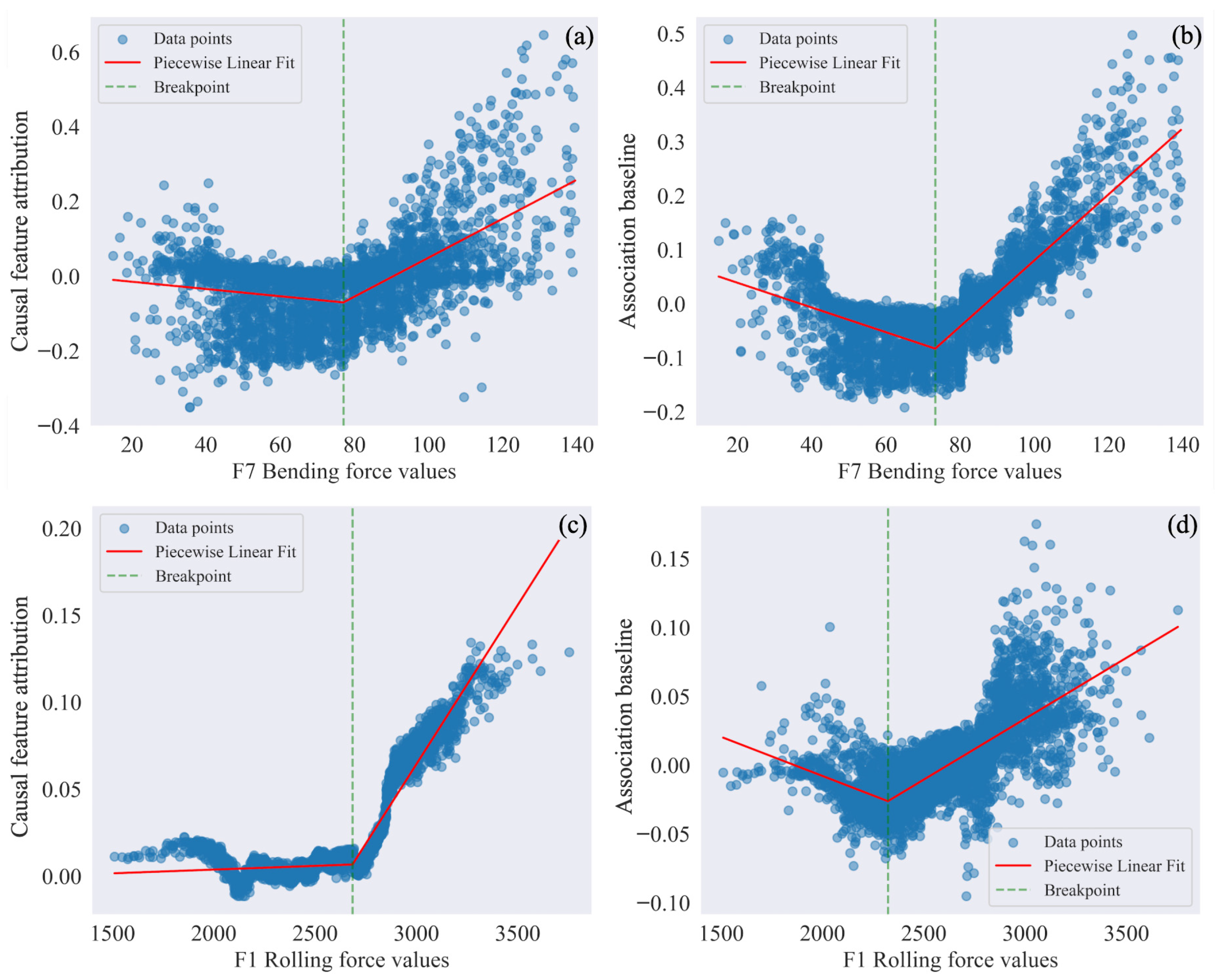
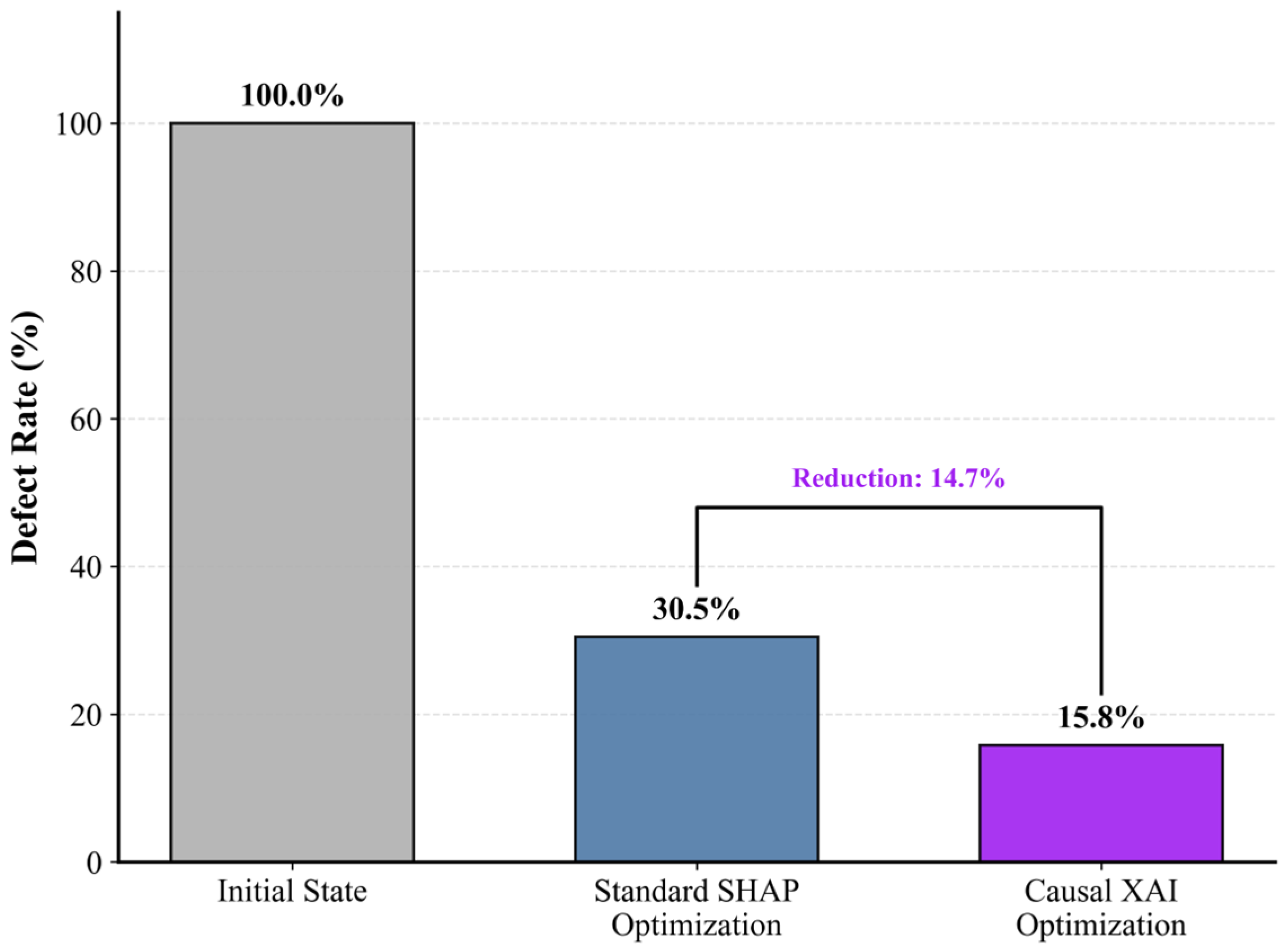
- A sample-specific process parameter optimization strategy is developed by employing PLR to capture nonlinear influence patterns. This approach translates abstract feature attributions into actionable intervention magnitudes, providing precise guidance for process adjustments in abnormal samples.
2. Materials and Methods
2.1. Hot-Rolling Mechanism
2.2. Theoretical Foundations of Causal XAI and Feature Attribution
2.3. Principles of NOTEARS-MLP for Causal Discovery of Complex Process Parameters
3. Model and Algorithms
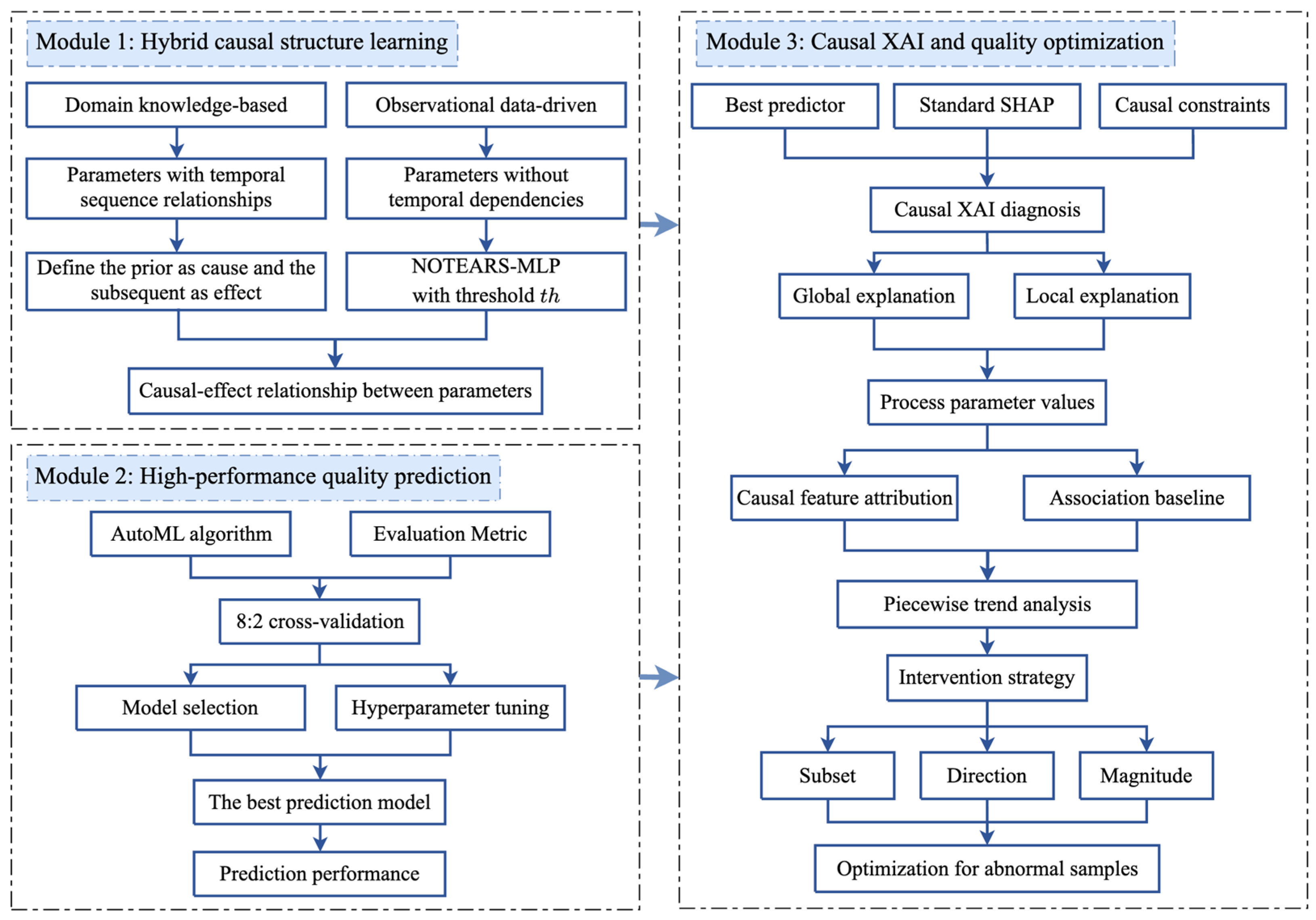
3.1. Structure of the Proposed Step-Wise Framework
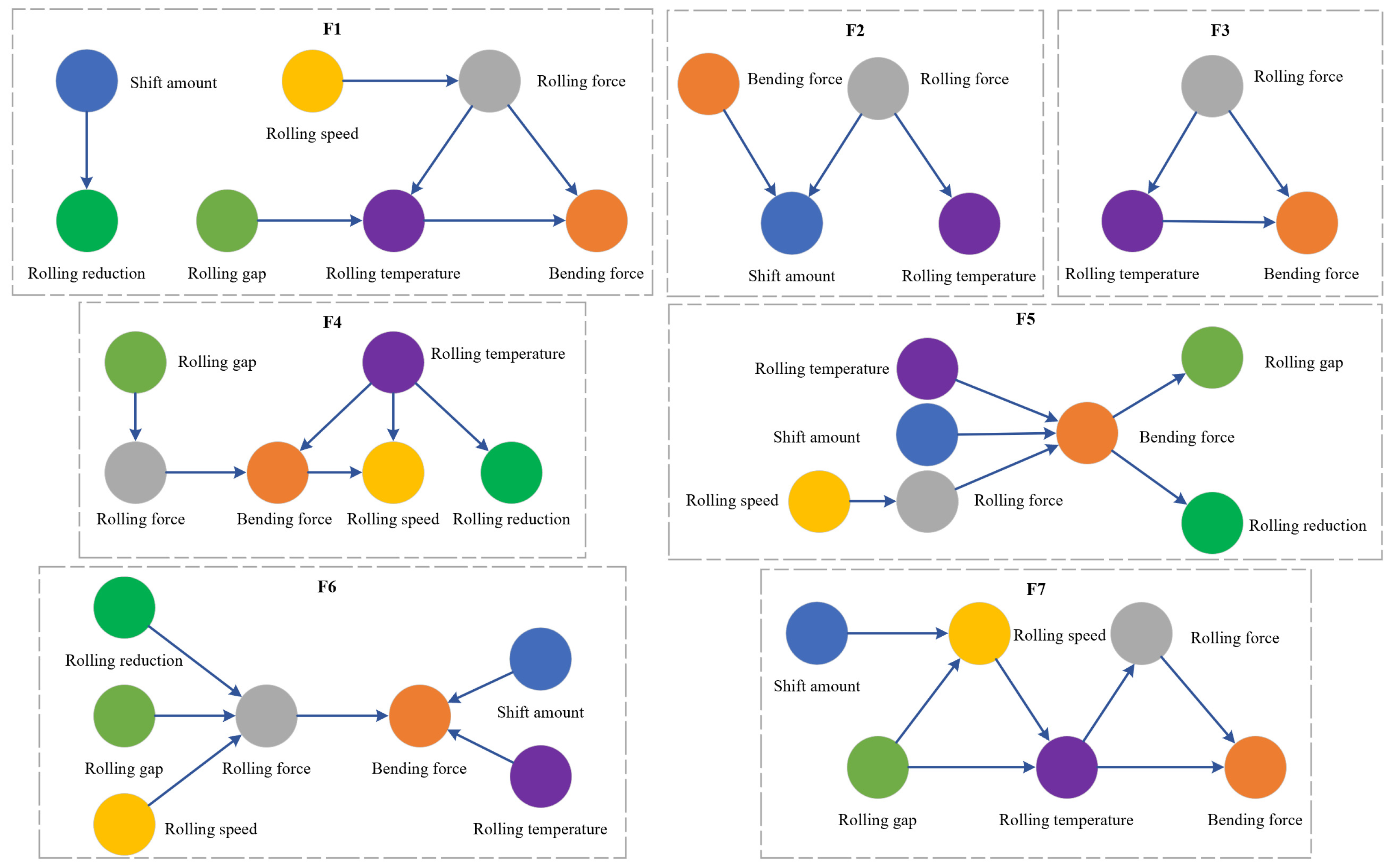
- Hybrid causal structure learning module: The framework initiates by applying a hybrid strategy that integrates domain knowledge with the NOTEARS-MLP algorithm. This module is specifically engineered to account for the “physical asymmetry” of the rolling process; while global temporal sequences are established by the finishing mill layout, the latent causal topology among intra-stand parameters is identified via nonlinear causal discovery. By eliminating spurious dependencies that fail to align with established metallurgical principles, this module reconstructs a rigorous causal topology from process data, uncovering the profound coupling effects among parameters. The learned causal graph serves as the structural constraint for subsequent interpretability analysis.
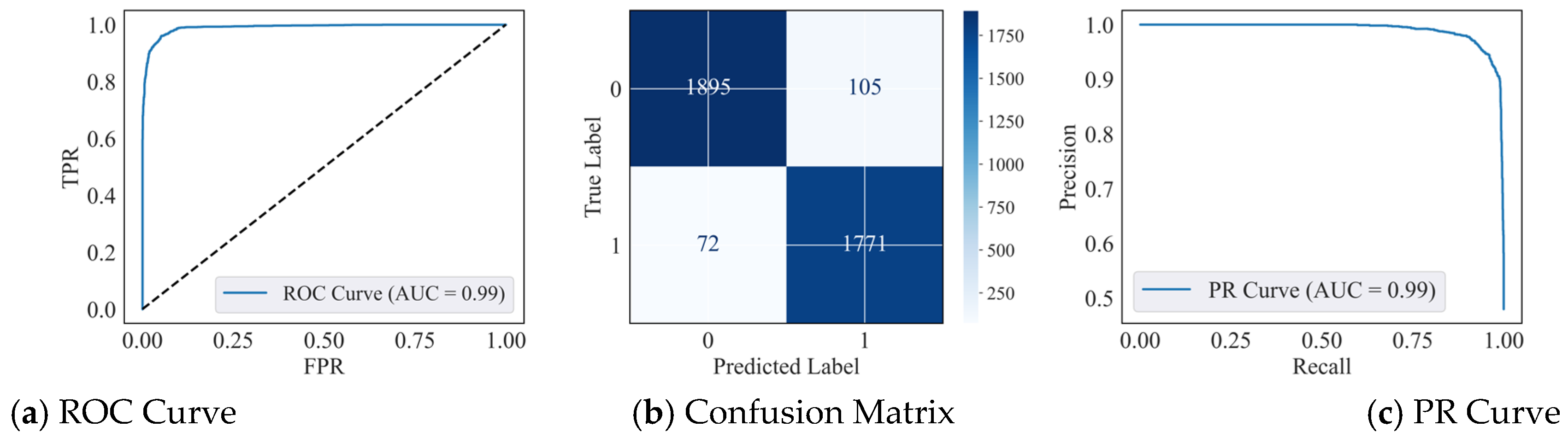
- High-performance quality prediction module: Parallelly or subsequently, an AutoML-based prediction module is employed to model the complex mapping between process parameters and shape quality. By performing autonomous model selection and hyperparameter optimization, this module establishes a robust predictive mapping with high precision, serving as the functional baseline for the diagnostic system. The high precision achieved here ensures that the causal attributions derived in the later stage are grounded in a high-fidelity representation of the manufacturing process.
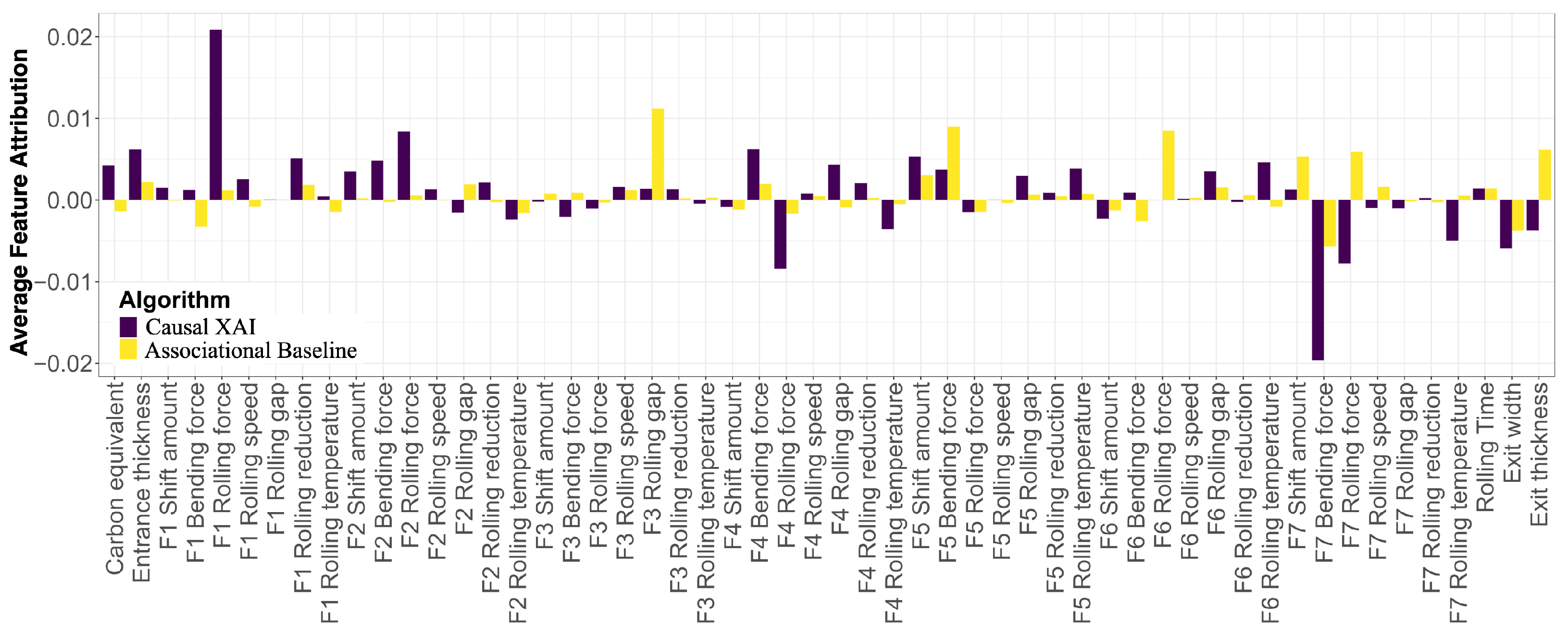
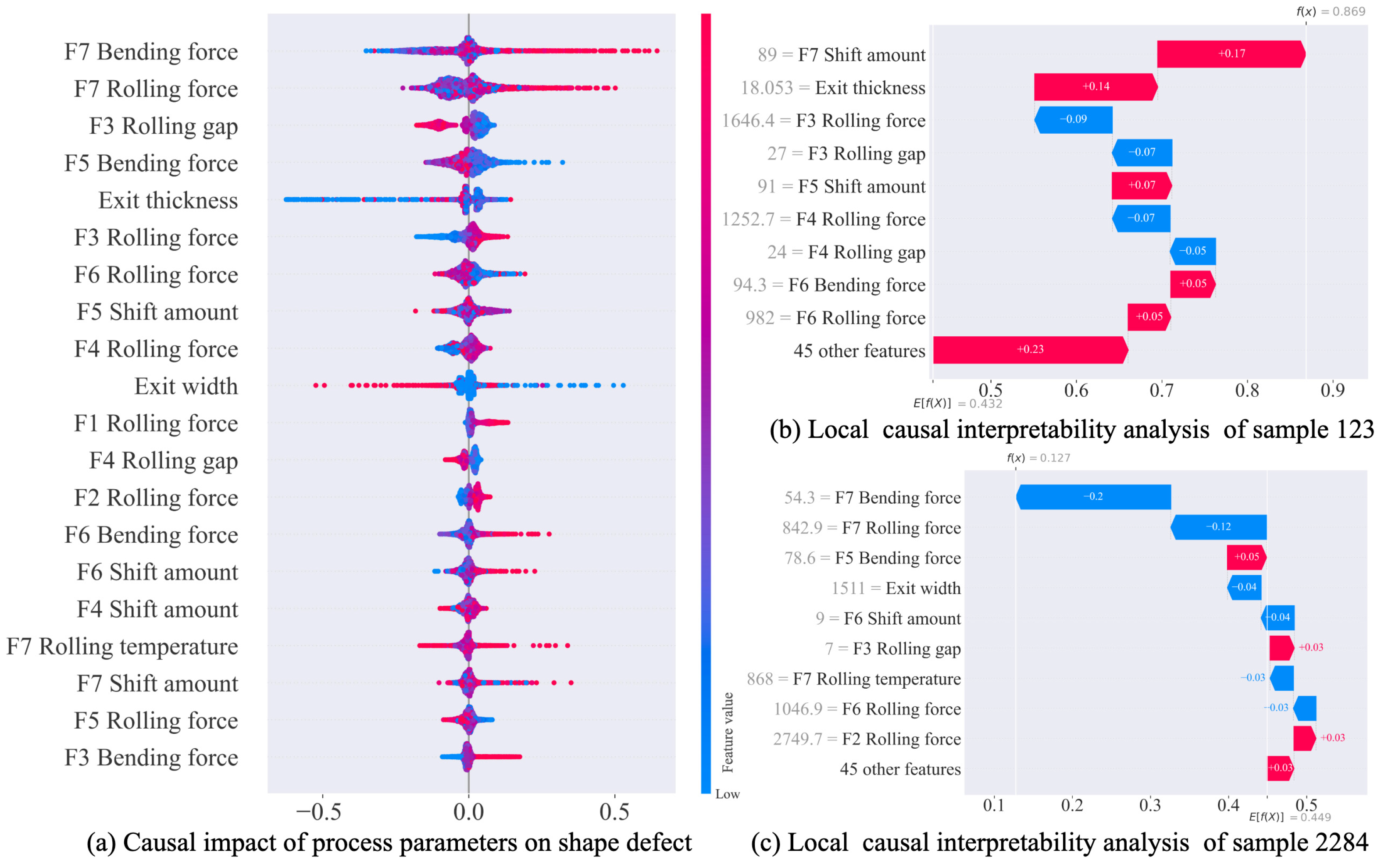
- Causal XAI and quality optimization module: The final module integrates the learned causal structure with the predictive model to initiate a causally constrained XAI interpretation process. The causal topology from Module 1 is vital here, as it provides the necessary DAG constraints to transform superficial statistical associations into directional physical attributions. By employing causal feature attribution, this module explains the decision-making process while respecting underlying physical mechanisms. Furthermore, it performs PLR to quantify the nonlinear relationship between parameter values and their causal contributions. Through comparative analysis against the associational baseline, targeted optimization strategies are generated for abnormal samples.
3.2. Causal Structure Learning Through Domain Knowledge and Data Fusion
3.3. AutoML-Based High-Performance Shape Prediction
3.4. Causal XAI-Based Interpretation and Optimization Strategy
- Plain Influence: Defined as , indicating that variations in this parameter range have a negligible impact on the strip shape defect.
- Positive Influence: Defined as , implying that higher parameter values exacerbate the defect; consequently, the optimization logic dictates a reduction in the parameter value.
- Negative Influence: Defined as , suggesting that higher values mitigate the defect, thus necessitating an increase in the parameter value within its operationally feasible bounds.
| Algorithm 1 Process parameter optimization |
| Input: Attribution sets (containing causal feature attribution and associational baseline), Process parameters , Number of optimized parameters , Number of samples , Sampling times , Intervention amplitude , Slope threshold , Abnormal samples Output: Optimization results of abnormal samples |
| 1: for each attribution type do 2: for do 3: Randomly select samples from to form 4: Select process parameters with the highest contributions 5: Perform PLR with attribution values and and yield segmented intervals and slopes 6: if then 7: the corresponding interval is denoted as 8: end if 9: if slope and then 10: the corresponding interval is denoted as 11: end if 12: if slope and then 13: the corresponding interval is denoted as 14: end if 15: for do 16: for do 17: if then 18: 19: end if 20: if then 21: 22: end if 23: end for 24: end for 25: end for 26: end for 27: return The optimized sample after intervention under both attribution types |
4. Case Study and Discussion
4.1. Data Description and Preprocessing
4.2. Hybrid Causal Structure Learning Among Process Parameters
4.3. High-Precision Prediction Model
4.4. Causal XAI Diagnosis and Optimization
4.4.1. Comparative Analysis of Causal and Associational Feature Attributions
4.4.2. Global and Local Explanation for the Shape Prediction
4.4.3. Process Parameter Optimization
5. Conclusions
Author Contributions
Funding
Data Availability Statement
Conflicts of Interest
References
- He, H.; Shao, J.; Wang, X.; Yang, Q.; Liu, Y.; Xu, D.; Sun, Y. Research and Application of Approximate Rectangular Section Control Technology in Hot Strip Mills. J. Iron Steel Res. Int. 2021, 28, 279–290. [Google Scholar] [CrossRef]
- Meng, L.; Ding, J.; Li, X.; Cao, G.; Li, Y.; Zhang, D. Novel Shape Control System of Hot-Rolled Strip Based on Machine Learning Fused Mechanism Model. Expert Syst. Appl. 2024, 255, 124789. [Google Scholar] [CrossRef]
- Zhang, Y.; Zhao, M.; Wang, Q.; Peng, W.; Li, X.; Di, H.; Zhang, D. Analysis of Flatness Actuator Efficiency in Thin Strip Steel Tandem Cold Rolling by FEM Considering the Effect of Time-Varying Work Roll Thermal Crown. Int. J. Adv. Manuf. Technol. 2023, 128, 4035–4047. [Google Scholar] [CrossRef]
- Wu, H.; Sun, J.; Peng, W.; Jin, L.; Zhang, D. Analysis of Flatness and Critical Crown of Hot-Rolled Strip Based on Thermal–Mechanical Coupled Residual Stress Analytical Model. Appl. Math. Model. 2024, 126, 348–380. [Google Scholar] [CrossRef]
- Zhao, W.; Qin, X.; Qu, H.; Wu, Q.; Chen, W.; Liu, F.; Wang, H.; Li, F. Numerical Analysis of Contact Pressure between Rolls of Sendzimir Mill Based on Double Influence Function Method and Conjugate Gradient Techniques. Adv. Eng. Softw. 2023, 176, 103388. [Google Scholar] [CrossRef]
- Chen, Y.; Peng, L.; Wang, Y.; Zhou, Y.; Li, C. Prediction of Tandem Cold-Rolled Strip Flatness Based on Attention-LSTM Model. J. Manuf. Process. 2023, 91, 110–121. [Google Scholar] [CrossRef]
- Wang, F.; He, A.; Liu, C.; Xiao, W.; Song, Y.; Chen, C.; Qiang, Y. Physics-Informed Semi-Supervised Learning for Hot-Rolled Strip Flatness Pattern Recognition Based on FixMatch Method. Expert Syst. Appl. 2026, 296, 128885. [Google Scholar] [CrossRef]
- Boudiaf, A.; Benlahmidi, S.; Harrar, K.; Zaghdoudi, R. Classification of Surface Defects on Steel Strip Images Using Convolution Neural Network and Support Vector Machine. J. Fail. Anal. Prev. 2022, 22, 531–541. [Google Scholar] [CrossRef]
- Sun, J.; Deng, J.; Peng, W.; Zhang, D. Strip Crown Prediction in Hot Rolling Process Using Random Forest. Int. J. Precis. Eng. Manuf. 2021, 22, 301–311. [Google Scholar] [CrossRef]
- Wang, Z.; Liu, Y.; Wang, T.; Gong, D.; Zhang, D. Prediction Model of Hot Strip Crown Based on Industrial Data and Hybrid the PCA-SDWPSO-ELM Approach. Soft Comput. 2023, 27, 12483–12499. [Google Scholar] [CrossRef]
- Song, C.; Cao, J.; Zhao, Q.; Sun, S.; Xia, W.; Sun, L. A High-Precision Crown Control Strategy for Hot-Rolled Electric Steel Using Theoretical Model-Guided BO-CNN-BiLSTM Framework. Appl. Soft Comput. 2024, 152, 111203. [Google Scholar] [CrossRef]
- Ding, J.; Du, H.; Meng, L.; Zhao, J.; Wang, G.; Zhang, D. Deep Stochastic Configuration Networks with Different Distributions for Crown Prediction of Hot-Rolled Non-Oriented Silicon Steel. J. Manuf. Process. 2024, 123, 83–95. [Google Scholar] [CrossRef]
- Erickson, N.; Mueller, J.; Shirkov, A.; Zhang, H.; Larroy, P.; Li, M.; Smola, A. AutoGluon-Tabular: Robust and Accurate AutoML for Structured Data. arXiv 2020, arXiv:2003.06505. [Google Scholar]
- Wu, Y.; Zhang, H.; Jian, L.; Lv, Z. A Quantitative Causal Analysis and Optimization Framework for Inclusions of Steel Products. Adv. Eng. Inform. 2024, 62, 102629. [Google Scholar] [CrossRef]
- Czako, Z.; Sebestyen, G.; Hangan, A. AutomaticAI—A Hybrid Approach for Automatic Artificial Intelligence Algorithm Selection and Hyperparameter Tuning. Expert Syst. Appl. 2021, 182, 115225. [Google Scholar] [CrossRef]
- Singh, V.K.; Joshi, K. Automated Machine Learning (AutoML): An Overview of Opportunities for Application and Research. J. Inf. Technol. Case Appl. Res. 2022, 24, 75–85. [Google Scholar] [CrossRef]
- Presciuttini, A.; Cantini, A.; Costa, F.; Portioli-Staudacher, A. Machine Learning Applications on IoT Data in Manufacturing Operations and Their Interpretability Implications: A Systematic Literature Review. J. Manuf. Syst. 2024, 74, 477–486. [Google Scholar] [CrossRef]
- Ribeiro, M.T.; Singh, S.; Guestrin, C. “Why Should I Trust You?”: Explaining the Predictions of Any Classifier. In Proceedings of the 22nd ACM SIGKDD International Conference on Knowledge Discovery and Data Mining; Association for Computing Machinery: New York, NY, USA, 2016; pp. 1135–1144. [Google Scholar]
- Štrumbelj, E.; Kononenko, I. Explaining Prediction Models and Individual Predictions with Feature Contributions. Knowl. Inf. Syst. 2014, 41, 647–665. [Google Scholar] [CrossRef]
- Lundberg, S.; Lee, S.-I. A Unified Approach to Interpreting Model Predictions. In Proceedings of the Advances in Neural Information Processing Systems 30 (NIPS 2017), Long Beach, CA, USA, 4–9 December 2017. [Google Scholar]
- Shen, C.; Wang, C.; Wei, X.; Li, Y.; van der Zwaag, S.; Xu, W. Physical Metallurgy-Guided Machine Learning and Artificial Intelligent Design of Ultrahigh-Strength Stainless Steel. Acta Mater. 2019, 179, 201–214. [Google Scholar] [CrossRef]
- Frye, C.; Rowat, C.; Feige, I. Asymmetric Shapley Values: Incorporating Causal Knowledge into Model-Agnostic Explainability. In Proceedings of the Advances in Neural Information Processing Systems; Curran Associates, Inc.: Red Hook, NY, USA, 2020; Volume 33, pp. 1229–1239. [Google Scholar]
- Zhang, C.; Wang, Y.; Li, S.; Chen, X. Root Cause Diagnosis in Process Industry via Bayesian Network Enhanced by Prior Knowledge and Randomized Optimization. Chem. Eng. Sci. 2025, 312, 121683. [Google Scholar] [CrossRef]
- Ribeiro, A.H.; Heider, D. dcFCI: Robust Causal Discovery Under Latent Confounding, Unfaithfulness, and Mixed Data. arXiv 2025, arXiv:2505.06542. [Google Scholar] [CrossRef]
- Zhao, X.; Wan, W.; Fang, Z. IGES-RCI: Improved Greedy Equivalence Search and Recursive Causal Inference for Industrial Equipment Failure Prediction. IEEE Trans. Knowl. Data Eng. 2025, 37, 5983–5993. [Google Scholar] [CrossRef]
- Zhang, C.; Yu, H.; Wang, G.; Xie, Y. LiNGAM-SF: Causal Structural Learning Method with Linear Non-Gaussian Acyclic Models for Streaming Features. IEEE Trans. Neural Netw. Learn. Syst. 2025, 36, 10693–10706. [Google Scholar] [CrossRef] [PubMed]
- Zhao, B.; Wang, S.; Chi, L.; Zhao, C.; Yuan, H.; Li, Q.; Liu, X.; Geng, J.; Yuan, Y. HANM: Hierarchical Additive Noise Model for Many-to-One Causality Discovery. IEEE Trans. Knowl. Data Eng. 2023, 35, 12708–12720. [Google Scholar] [CrossRef]
- Li, Z.; Guo, X.; Qiang, S. A Survey of Deep Causal Models and Their Industrial Applications. Artif. Intell. Rev. 2024, 57, 298. [Google Scholar] [CrossRef]
- Vuković, M.; Thalmann, S. Causal Discovery in Manufacturing: A Structured Literature Review. J. Manuf. Mater. Process. 2022, 6, 10. [Google Scholar] [CrossRef]
- Zheng, X.; Aragam, B.; Ravikumar, P.K.; Xing, E.P. DAGs with NO TEARS: Continuous Optimization for Structure Learning. In Proceedings of the Advances in Neural Information Processing Systems; Curran Associates, Inc.: Red Hook, NY, USA, 2018; Volume 31. [Google Scholar]
- Zheng, X.; Dan, C.; Aragam, B.; Ravikumar, P.; Xing, E. Learning Sparse Nonparametric DAGs. In Proceedings of the Twenty Third International Conference on Artificial Intelligence and Statistics; PMLR: Cambridge, MA, USA, 2020; pp. 3414–3425. [Google Scholar]
- Wang, Y.; Zhang, T.; Ye, H.; Xiong, Z.; He, X. A Shape-Based Monitoring Method for Variable Trajectories of Finishing Mill Processes. IFAC-PapersOnLine 2024, 58, 264–269. [Google Scholar] [CrossRef]
- Zeng, L.; Deng, X.; Li, F.; Dong, C.; Wang, S.; Yang, H.; Tang, C.; Li, Y. Study on Dynamic Wear Evolution of Modified Gear Rack Considering the Real-Time Variation of Contact Characteristics. Wear 2025, 571, 205845. [Google Scholar] [CrossRef]
- Ding, C.; Sun, J.; Li, X.; Peng, W.; Zhang, D. A High-Precision and Transparent Step-Wise Diagnostic Framework for Hot-Rolled Strip Crown. J. Manuf. Syst. 2023, 71, 144–157. [Google Scholar] [CrossRef]
- Wang, F.; Liu, C.; He, A.; Song, Y.; Shao, J.; Yao, C.; Qiang, Y.; Liu, H.; Ma, B. An Optimization Framework for Hot-Rolled Strip Crown Control Based on Model-Driven Digital Twin. J. Iron Steel Res. Int. 2025, 32, 1920–1939. [Google Scholar] [CrossRef]
- Li, G.; Gong, D.; Lu, X.; Zhang, D. Ensemble Learning Based Methods for Crown Prediction of Hot-Rolled Strip. ISIJ Int. 2021, 61, 1603–1613. [Google Scholar] [CrossRef]
- Li, Z.Q.; Liu, Y.M.; Wang, T.; Huang, Q.X. An Analytical Prediction Model of Strip Crown Based on Multi-Factor Interaction Mechanism. Int. J. Adv. Manuf. Technol. 2022, 121, 5943–5955. [Google Scholar] [CrossRef]
- Wu, H.; Sun, J.; Lu, X.; Peng, W.; Wang, Q.; Zhang, D. Predicting Stress and Flatness in Hot-Rolled Strips during Run-out Table Cooling. J. Manuf. Process. 2022, 84, 815–831. [Google Scholar] [CrossRef]
- Li, L.; Xie, H.; Liu, T.; Huo, M.; Liu, X.; Li, X.; Shi, K.; Li, J.; Liu, H.; Sun, L. Influence Mechanism of Rolling Force on Strip Shape during Tandem Hot Rolling Using a Novel 3D Multi-Stand Coupled Thermo-Mechanical FE Model. J. Manuf. Process. 2022, 81, 505–521. [Google Scholar] [CrossRef]
- Li, M.; Sun, H.; Huang, Y.; Chen, H. Shapley Value: From Cooperative Game to Explainable Artificial Intelligence. Auton. Intell. Syst. 2024, 4, 2. [Google Scholar] [CrossRef]
- Liu, R.; Zhang, Q.; Lin, D.; Zhang, W.; Ding, S.X. Causal Intervention Graph Neural Network for Fault Diagnosis of Complex Industrial Processes. Reliab. Eng. Syst. Saf. 2024, 251, 110328. [Google Scholar] [CrossRef]
- Chen, H.; Covert, I.C.; Lundberg, S.M.; Lee, S.-I. Algorithms to Estimate Shapley Value Feature Attributions. Nat. Mach. Intell. 2023, 5, 590–601. [Google Scholar] [CrossRef]
- Kelen, D.M.; Petreczky, M.; Kersch, P.; Benczúr, A.A. Theoretical Evaluation of Asymmetric Shapley Values for Root-Cause Analysis. In Proceedings of the 2023 IEEE International Conference on Data Mining (ICDM), Shanghai, China, 1–4 December 2023; pp. 210–219. [Google Scholar]
- Takahashi, D.; Shimizu, S.; Tanaka, T. Counterfactual Explanations of Black-Box Machine Learning Models Using Causal Discovery with Applications to Credit Rating. In Proceedings of the 2024 International Joint Conference on Neural Networks (IJCNN), Yokohama, Japan, 30 June–5 July 2024; pp. 1–8. [Google Scholar]
- Hou, Y.; Rabbani, S.B.; Hong, L.; Diawara, N.; Samad, M.D. Causal Explainability of Machine Learning in Heart Failure Prediction from Electronic Health Records. In Proceedings of the 2025 IEEE International Conference on Information Reuse and Integration and Data Science (IRI), San Jose, CA, USA, 6–8 August 2025. [Google Scholar]



| Specific Parameters | Stands | |
|---|---|---|
| F1~F4 | F5~F7 | |
| Main motor power (kW) | 8000 | 7800 |
| Work roll barrel length (mm) | 1880 | 1880 |
| Backup roll barrel length (mm) | 1580 | 1580 |
| Work roll diameter (mm) | 1200 | 1200 |
| Backup roll diameter (mm) | 1550 | 1550 |
| Work roll bearing distance (mm) | 2980 | 2980 |
| Backup roll bearing distance (mm) | 2780 | 2780 |
| Work roll material type | High-speed steel | Infinite chilled cast iron |
| Work roll density (kg/m3) | 7800 | 7200 |
| Frictional coefficient | 0.3–0.4 | 0.2–0.3 |
| Maximum rolling force (kN) | 40,000 | 35,000 |
| Number | Description | Unit | Min. | Max. |
|---|---|---|---|---|
| 1 | Carbon equivalent | wt.% | 0.11 | 0.22 |
| 2 | Entrance thickness | mm | 36.80 | 79.90 |
| 3 | Rolling Time | s | 27.00 | 88.00 |
| 4 | Exit width | mm | 1265.00 | 2018.00 |
| 5 | Exit thickness | mm | 2.50 | 24.09 |
| 6–12 | Shift amount (F1–F7) | mm | −141.00 | 140.00 |
| 13–19 | Bending force (F1–F7) | tf | 9.30 | 151.00 |
| 20–26 | Rolling force (F1–F7) | tf | 346.10 | 3753.60 |
| 27–33 | Rolling speed (F1–F7) | m/s | 0.70 | 12.00 |
| 34–40 | Rolling gap (F1–F7) | mm | 2.00 | 48.00 |
| 41–47 | Rolling reduction (F1–F7) | mm | 0.00 | 50.20 |
| 48–54 | Rolling temperature (F1–F7) | °C | 806.00 | 1092.00 |
| Model | Accuracy | MCC | ROC-AUC | F1 | Precision | Recall |
|---|---|---|---|---|---|---|
| WeightedEnsemble_L2 | 0.9539 | 0.9079 | 0.9906 | 0.9524 | 0.944 | 0.9609 |
| LightGBMLarge | 0.9532 | 0.9063 | 0.9916 | 0.9516 | 0.9439 | 0.9593 |
| XGBoost | 0.9498 | 0.8995 | 0.9817 | 0.9479 | 0.9426 | 0.9533 |
| RandomForestEntr | 0.9487 | 0.898 | 0.9896 | 0.9475 | 0.9313 | 0.9642 |
| RandomForestGini | 0.9459 | 0.8922 | 0.9892 | 0.9445 | 0.9291 | 0.9604 |
| ExtraTreesGini | 0.9456 | 0.8918 | 0.9879 | 0.9443 | 0.9273 | 0.962 |
| ExtraTreesEntr | 0.9446 | 0.8896 | 0.9884 | 0.9432 | 0.9271 | 0.9598 |
| KNeighborsDist | 0.9362 | 0.8723 | 0.985 | 0.933 | 0.9405 | 0.9257 |
| LightGBMXT | 0.93 | 0.8602 | 0.9755 | 0.9279 | 0.9164 | 0.9398 |
| LightGBM | 0.9167 | 0.8338 | 0.9679 | 0.9146 | 0.8997 | 0.93 |
| CatBoost | 0.8556 | 0.713 | 0.9353 | 0.8544 | 0.8269 | 0.8839 |
| NeuralNetFastAI | 0.7963 | 0.5943 | 0.8753 | 0.7949 | 0.7685 | 0.8231 |
| KNeighborsUnif | 0.7557 | 0.5101 | 0.8395 | 0.7398 | 0.7559 | 0.7244 |
| Process Parameter | Causal Change Point | Baseline Change Point | Shift |
|---|---|---|---|
| F1 rolling force | 2684.68 | 2323.1 | 361.58 |
| F7 bending force | 77 | 73.27 | 3.73 |
| F7 rolling force | 927.11 | 921.79 | 5.32 |
| F6 rolling gap | 11.57 | 11.19 | 0.38 |
| F4 rolling gap | 11 | 5.28 | 5.72 |
Disclaimer/Publisher’s Note: The statements, opinions and data contained in all publications are solely those of the individual author(s) and contributor(s) and not of MDPI and/or the editor(s). MDPI and/or the editor(s) disclaim responsibility for any injury to people or property resulting from any ideas, methods, instructions or products referred to in the content. |
© 2026 by the authors. Licensee MDPI, Basel, Switzerland. This article is an open access article distributed under the terms and conditions of the Creative Commons Attribution (CC BY) license.
Share and Cite
Wu, Y.; Xu, P.; Li, D.; Lv, Z. A Causal XAI Diagnosis and Optimization Framework for Hot-Rolled Strip Shape Incorporating Hybrid Structure Learning. Metals 2026, 16, 401. https://doi.org/10.3390/met16040401
Wu Y, Xu P, Li D, Lv Z. A Causal XAI Diagnosis and Optimization Framework for Hot-Rolled Strip Shape Incorporating Hybrid Structure Learning. Metals. 2026; 16(4):401. https://doi.org/10.3390/met16040401
Chicago/Turabian StyleWu, Yuchun, Pengju Xu, Dongyu Li, and Zhimin Lv. 2026. "A Causal XAI Diagnosis and Optimization Framework for Hot-Rolled Strip Shape Incorporating Hybrid Structure Learning" Metals 16, no. 4: 401. https://doi.org/10.3390/met16040401
APA StyleWu, Y., Xu, P., Li, D., & Lv, Z. (2026). A Causal XAI Diagnosis and Optimization Framework for Hot-Rolled Strip Shape Incorporating Hybrid Structure Learning. Metals, 16(4), 401. https://doi.org/10.3390/met16040401