Article

Duplex Surface Modification of 40CrMnMo7 Tool Steel by Chemical-Thermal Treatment and PVD Coating


1
Department of Mechanics, Faculty of Mechanical Engineering, Technical University of Sofia—Branch Plovdiv, 4000 Plovdiv, Bulgaria
2
Department of Theory of Mechanisms and Machines, Faculty of Industrial Technology, Technical University of Sofia, 1756 Sofia, Bulgaria
3
Center of Excellence “Mechatronics and Clean Technology”—Campus Studentski Grad, Technical University of Sofia, 1756 Sofia, Bulgaria
4
Department of Mechanical Engineering, Manufacturing Engineering and Thermal Engineering, Faculty of Engineering and Pedagogy—Branch Sliven, Technical University of Sofia, 8800 Sliven, Bulgaria
5
Department of Material Science and Technology of Materials, Faculty of Industrial Technology, Technical University of Sofia, 1756 Sofia, Bulgaria
6
Faculty of Industrial Technology, Technical University of Sofia, 1756 Sofia, Bulgaria
7
Institute of Physical Chemistry, Bulgarian Academy of Sciences, 1113 Sofia, Bulgaria
8
Department of Manufacturing Technology and Systems, Faculty of Industrial Technology, Technical University of Sofia, 1756 Sofia, Bulgaria
9
College of Professional Studies, Northeastern University, Boston, MA 02115, USA
*
Authors to whom correspondence should be addressed.
Metals 2026, 16(4), 377; https://doi.org/10.3390/met16040377
Submission received: 27 February 2026 / Revised: 24 March 2026 / Accepted: 25 March 2026 / Published: 28 March 2026

Abstract

The aim of this work is to investigate the possibility of improving the performance properties of 40CrMnMo7 steel by conducting duplex surface modification treatment. Chemical-thermal treatment processes were used—nitrocarburization and ion-nitriding and subsequent application of a nanostructured multilayer coating, Cr/(Cr-C)ml. The resulting structures and their influence on the adhesion of the applied coating, as well as their influence on the tribological properties of the coating, were studied. By conducting Glow Discharge Optical Emission Spectroscopy (GDOES), it was established that the penetration of nitrogen into the depth is greater in the ion-nitriding process, and the results of the conducted optical metallography and hardness measurement show that after ion-nitriding, the obtained hard layer has a greater thickness and hardness. The data obtained from the studies of the phase composition of the hard layers show that after nitrocarburization the non-stoichiometric, but crystalline phase Fe3N1.1 (ξ)—98.4% was formed. In the composition of the hard layer formed after the ion-nitriding process, the presence of Fe3N (ξ-phase) in an amount of 79.5% and Fe4N (γ′-phase) in an amount of 19.1% was established. On the chemically and thermally treated surfaces, a Cr/(Cr-C)ml coating was applied through the unbalanced magnetron sputtering technology. The applied coating has a hardness of 17.1 ± 0.6 GPa and a modulus of elasticity of 289 ± 8.7 GPa. The thickness of the coating applied on the test bodies not subjected to diffusion enrichment is 1.967 µm, and the adhesion class is classified as HF-2. It has been established that the profile of the surfaces obtained after the application of the chemical-thermal treatment processes has an impact on the thickness of the applied coating and on its adhesion. After nitrocarburization, the thickness of the coating is 2.9 µm, and the adhesion of the coating is classified as HF-0. The thickness of the applied coating on the test bodies subjected to ion-nitriding is 2.4 µm, and the adhesion class is HF-1. The results of the conducted tribological tests show that the used chemical-thermal treatment processes have an impact on the coefficients of friction and wear of the coating. The coefficient of friction for the combination of the nitriding process and Cr/(Cr-C)ml coating has the highest value (µ ≈ 0.38), while that of the ion-nitrided sample with subsequent coating has a value (µ ≈ 0.21) slightly higher than the COF of the test body with only the coating applied (µ ≈ 0.18). The lowest value of the coating wear coefficient is registered for the combination of the ion-nitriding and coating process (k = 7.96 × 10⁻⁵), while for the combination of nitriding and coating, it is the highest (k = 12.4 × 10⁻⁴). The relevance of the present work is related to the implementation of surface modification of 40CrMnMo7 steel by using established technological processes of chemical-thermal treatment and subsequent deposition of nanostructured multilayer Cr/(Cr-C)ml coating. The other novelty in the present study is related to the use of MF pulsed DC power supplies, operating at a fixed frequency of 100 kHz and a specific pulse shape, similar to the shape of HiPIMS pulses, for the deposition of nanostructured multilayer Cr/(Cr/a-C)ml coatings.

1. Introduction

In mechanical engineering, semi-finished products, some of the blanks, and finished products are products of the processes of hot plastic deformation and casting. The technological processes of volumetric stamping and casting under high specific pressure have found wide application. For the manufacture of stamping packages and molds for pressure casting, a group of steels with a carbon content in the range of 0.3–0.5 wt%, alloyed with the elements Cr, Ni, Mo, W, V, Co, etc., is used, and these steels are classified as steels intended for the manufacture of tools for hot plastic deformation. They must have high heat resistance, resistance to thermal fatigue, and good corrosion resistance. In order to improve their structure, they are usually subjected to heat treatment, hardening, and high-temperature tempering. In production conditions, tools for hot plastic deformation and high-pressure casting are subjected to cyclic thermodynamic loading. Although modern high-pressure die casting molds are equipped with cooling systems to maintain a constant temperature during operation, temperature differences are still observed in different volumes of the tool. In the contact-forming surfaces, the temperature is higher, and in the rest of the tool, it is lower. These temperature differences are the basis for the occurrence of thermal and mechanical stresses, which lead to the appearance of microcracks on the working surfaces. As a result of the stresses that have arisen under the action of thermocyclic loads, some of the microcracks develop, and macrocracks are formed, which lead to the failure of the tools according to the presented mechanisms [1,2,3,4,5]. The defects of this nature are also observed in tools for hot plastic deformation. Unlike injection molding molds, during operation, hot plastic deformation tools are subjected to even greater thermal stress and can reach temperatures of 600–700 °C. These temperatures are above the upper limit of the recommended temperature range for high-temperature tempering of steels used to manufacture such types of tools, and therefore conditions arise for structural changes to occur in the material of these tools. The change in structure leads to a change in the mechanical properties of the material, which in turn is expressed in a loss of thermal stability and deformation of the tool [6]. In addition to thermocyclic loads and operation at high temperatures, the abrasive wear to which they are subjected is a cause of tool failure. In the high-pressure casting process, due to the high speed of filling the molds with melt (V ≈ 25–35 m/s), cavitation wear is observed, and the presence of solid phases and non-metallic inclusions leads to abrasive wear. In hot plastic deformation tools, abrasive wear is observed due to contact with the material when filling the working deformation space. Various lubricants and coatings are used to reduce abrasive wear of the tools, but the combination of these substances, high operating temperature, and local damage to the tools are the causes of the formation and development of pitting corrosion. Therefore, it is necessary to use technological processes such as chemical-thermal treatment or application of PVD coatings, as well as a combination of the above processes, in order to improve the operational properties of the tools operating under conditions of high temperatures, thermocyclic loads, and abrasive wear.
To increase the hardness, wear resistance, and corrosion resistance of the forming surfaces of the tools, they are subjected to additional chemical-thermal treatment. The processes of nitriding and nitrocarburizing are usually used. The basis of these processes is the change in the chemical composition of the surface layers of the material by diffusion enrichment with nitrogen or nitrogen and carbon. Ion-nitriding has also found wide application, a process in which nitriding is carried out in a glow discharge. The process takes place at temperatures in the range of 500–580 °C, which in turn has its positive aspects: the structure and properties of the high-temperature quenched steel do not change, and the possibility of deformations is reduced. The processes of chemical-thermal treatment, technological parameters, and resulting structures are presented in [7]. The influence of nitriding processes, including ion-nitriding on the structure, wear resistance, and corrosion resistance of various materials is presented in [8,9,10,11,12,13,14,15,16,17,18,19,20], and the nitrocarburizing process is presented in [20,21,22,23,24,25,26,27,28,29,30].
Physical vapor deposition (PVD) is a well-adopted industrial technology that is widely used today to deposit thin coatings on solid substrates for various applications. PVD is part of vacuum-based technologies that are used to produce thin films and coatings with tightly controlled composition, thickness, structure, and properties. PVD involves the physical conversion of solid materials into vapor, which condenses on the surface of a substrate, resulting in a hard, dense, and uniform coating. It is usually performed in a high-vacuum environment, often in the range of 10−2 to 10−6 Torr, to ensure the necessary range of the evaporated atoms, to minimize contamination, and to ensure the necessary adhesion between the coating and the substrate. Of all the known PVD coating techniques, Evaporation Deposition, Sputter Deposition, Arc Vapor Deposition, and Ion Plating are most commonly used in industry.
Of interest for the present study is Sputter Deposition—this is a widely used industrial technique in which high-energy ions (usually argon (Ar+) using a magnetron system with crossed electric and magnetic fields are accelerated towards a target (source material), knocking atoms off its surface. These atoms then move from the target to the substrate surface and are deposited on it, forming a coating with a certain thickness, composition, and structure. The following types of magnetron sputtering are most often used [31,32]—direct current (DC) magnetron sputtering (suitable for targets made of conductive materials), high frequency (RF) magnetron sputtering (used for insulating materials such as oxides and ceramics), and high-power impulse magnetron sputtering (HiPIMS) mode, also known as high-power pulsed magnetron sputtering (HPPMS)—for a different number of targets, with their composition involving other parameters.
Each of the above three types of magnetron sputtering can be non-reactive or reactive according to the gas environment in the process chamber. In non-reactive magnetron sputtering, only Ar gas, necessary for sputtering the target, flows into the process chamber. In reactive magnetron sputtering, in addition to argon, reactive gases (e.g., N2, CH4, C2H2, O2, etc.) are also flowed into the working chamber, which react with the metal atoms sputtered from the target and composite coatings of nitrides, carbides, oxides, carbonitrides, etc., which are obtained on the substrate.
The main advantages of magnetron sputtering are excellent adhesion, uniform film thickness, wide deposition temperature range (from 150 to 650 °C), and precise stoichiometric control with the possibility of gradient growth of the resulting coatings. The limitations are related to the slower rate of deposition compared to evaporation, as well as a higher cost of the equipment [31,32,33,34].
The resulting coatings have a number of functional applications, such as tools, decorative elements, optical products, casting and injection molds, stampings and cutting tools, and flexible substrates such as fabrics and foils. The most commonly obtained by PVD coatings are carbides, nitrides, oxides, or a combination of them, formed from the metals such as Ti, Cr, Zr, W, Al, Nb, Si, etc. In modern PVD coatings, the choice of structure depends on the operating conditions of the metal parts and surface requirements; of single-layer coatings of the TiN, TiC, CrN, CrC, DLC, WN, and ZrN type are rarely used, and complex multilayer coatings such as Ti-TiN-(TiCrAl)N, Zr-ZrN-(ZrCrNbAl)N, TiAlSiN/AlSiN, Cr/CrN/CrTiN/CrTiAlN, Ti/TiN/AlTiCrN, etc. [31,32,35,36,37,38,39] are typically favored.
As mentioned earlier, gas and ion-nitriding and nitrocarburizing of structural and tool steels are well-established technological processes and are used in industry in a wide range of cases to improve the wear resistance, corrosion resistance, and fatigue limits of structural parts. Compared to other technologies, these hardening processes are distinguished by a wide variety of applications [8,9,10,11,12,13,14,15,16,17,18,19,20,21,22,23,24,25,26,27,28,29,30]. However, in the case of very strong wear effects (especially in combination with dry or semi-dry friction at high pressure) and corrosion, nitrided or nitrocarburized products or tools do not show sufficient contact hardness. This can be improved by applying an additional thin coating (1 to several micrometer thick PVD coating) with appropriate mechanical properties, chemical resistance, and friction coefficient to the nitrided or nitrocarburized surface of the product. The combination of the two processes of surface treatment of metal products, consisting of nitriding, nitrocarburizing (especially ion-nitriding or nitrocarburizing), and subsequent application of a thin PVD coating is known as duplex treatment [39,40,41,42,43,44,45,46,47,48,49,50,51,52,53,54,55,56]. The authors of [39,40,41,42,43,44,45,46,47,48,49,50,51,52,53,54,55,56] agree that this treatment combines the advantages of both processes—the creation through a chemical-thermal treatment of a solid base on the surface of the steel product, onto which an even harder wear-resistant and, if necessary, corrosion-resistant, heat-resistant, and low-friction coating is applied through PVD. In the indicated works, the duplex processing of a wide range of tools and structural steels, such as AISI H13, AISI4140, X155CrVMo12-1, 38Cr2MoAl, 31CrMoV9, 316L, S6-5-2, 42CrMo4, 35CrMoV5, etc., was studied. It is noteworthy that the studies mainly used nitriding of steels, most often ionic [40,41,42,44,45,46,47,48,49,50,51,52,54,55,56] and less often gas [53], and the number of studies on duplex treatment with nitrocarburization are significantly lower [41,43,56]. There are even fewer comparative studies on duplex treatment between the two types of chemical-thermal treatment—nitriding and nitrocarburization [41,56]. Also, in the studies on duplex treatment of steels [39,40,41,42,43,44,45,46,47,48,49,50,51,52,53,54,55,56], no study on the change in the concentration of nitrogen and carbon from the surface to the core in the nitrided or nitrocarburized layer using GDOES or another method has been found. In the studied works, the authors most often apply monolayers of coatings such as CrN, TiN, TiAlN, CrAlN, (Ti,Cr)N, Ti(CN), WN, WC, TiC, TiB2, AlN, AlB12, and DLC to the nitrided or nitrocarburized steel, with only works [41,46,52] reporting research including applied multilayer coatings. The composition of the surface layer of the product (carbon-containing or nitrogen-containing) [49], as well as the presence of a bonded (ξ + γ′) layer on the surface of the nitrided steel, are of extremely important importance for the adhesion, hardness, and resistance to cracking of the applied coating during operation, especially at high contact loads during operation of the product.
Opinions expressed about the influence of this layer on the steel surface on the adhesion of applied PVD coatings are diverse. The authors of works [40,44,45,47,49,53] are convinced that it worsens the adhesion of the coating applied on it and that it should be avoided or removed, and the authors of [42,48,50] believe that the presence of this layer improves the adhesion of the coating.
The studied works do not present the data on studies conducted on steel with duplex treatment nitriding or nitrocarburizing with subsequent application of multilayer nanolaminate Cr-C coating through magnetron sputtering.
The aim of this work is to investigate the possibility of duplex surface modification of 40CrMnMo7 tool steel through performing a chemical-thermal treatment and applying a multilayer nanolaminate Cr-C PVD coating. To study the resulting structure obtained after carrying out the processes of nitrocarburization and ion-nitriding through optical metallography, as well as using XRD to study the phase composition of the obtained solid layers. Glow Discharge Optical Emission Spectroscopy (GDOES) was conducted to study the distribution of chemical elements in the depth profiles of the test bodies subjected to nitrocarburization and ion-nitriding. To characterize the applied coating and to study the influence of the used chemical-thermal treatment processes on the adhesion of the coating and the coefficient of friction.

2. Materials and Methods

2.1. Investigated Material

The object of this study is the medium-alloy tool steel 40CrMnMo7 (BDS EN ISO 4957:2018, European Standard, Bulgarian Institute for Standardization, Sofia, Bulgaria, 17 December 2018) [57]. The main application of this steel is in the manufacture of polymer injection molds, high-pressure die casting molds, casting cores, ejector elements, hydroforming tools, dies, and punches. This steel is characterized by high strength, uniform hardness in the depth of the semi-finished products, and it has excellent machinability and polishability, which is of utmost importance for the quality of the products obtained in tools made from it. Usually, the steel is supplied in a hardened and tempered state, which allows it to be subjected to mechanical processing without the risk of deformation during additional hardening. The heat treatment used to form the final properties of the steel includes quenching and subsequent annealing, with the quenching being carried out at a temperature of 840–870 °C; the cooling medium used is oil, and the subsequent annealing is at a temperature of 650–670 °C (a minimum of two annealing cycles). After carrying out the specified heat treatment, the steel has a hardness in the range of 28–34 HRC. For the current experiments, the test specimens were made of steel 40CrMnMo7 (BDS EN ISO 4957:2018, European Standard, Bulgarian Institute for Standardization, Sofia, Bulgaria, 17 December 2018), with dimensions of 25 × 25 × 5 mm. Using an Oxford Instruments FOUNDRY-MASTER UV apparatus (Oxford Instruments, Abingdon, UK) [58], the chemical composition of the steel was investigated (Table 1), and its hardness was in the range of 31–33 HRC; the test was conducted according to BDS EN ISO 6508-1:2024. (Metallic materials—Rockwell hardness test—Part 1: Test method; identical to ISO 6508-1:2023, European Standard, Bulgarian Institute for Standardization, Sofia, Bulgaria, 19 February 2014) [59].

2.2. Conducting Duplex Surface Modification Treatment of Steel Using Chemical-Thermal Treatment and PVD Coating

To obtain hard, wear-resistant surface layers on the manufactured test specimens from 40CrMnMo7 steel, conventional methods were used—nitrocarburization and ion-nitriding. Before conducting the chemical-thermal treatment processes, the test specimens were ground and polished using a “Metcon” Forcimat machine, Metcon, Bursa, Turkey [60,61]. The nitrocarburization process was carried out in a universal thermal furnace (Politerm OOD Ltd., Shumen, Bulgaria), and the gases used were ammonia (NH3) and carbon dioxide (CO2) in a quantitative ratio of 80% NH3 and 20% CO2. After loading the test bodies into the furnace and after starting the process, when the temperature reaches 150 °C, the nitrogen-containing gas is supplied (pressure 0.1 MPa), with the heating rate being such that the time to reach the selected operating temperature (540 °C) is 4 h. After reaching 540 °C, the pressure of the nitrogen-containing gas (NH3) is increased to 0.5 MPa, and the carbon-containing gas (CO2) is supplied to the furnace with a pressure of 0.5 MPa. The time for conducting diffusion saturation with nitrogen (N2) and carbon (C) is 4 h 30 min. After this time interval, the supply of CO2 is stopped, the pressure of NH3 is reduced to 0.1 MPa, and cooling takes place in an ammonia environment; when the temperature reaches 100 °C, its supply is also stopped. The ion-nitriding process was carried out in the “Ion 20” installation (EFFTOM-ION, Technical University—Sofia, Sofia, Bulgaria), the time to reach the selected operating temperature (500 °C) was 4 h, the pressure of the nitrogen-containing gas (ammonia NH3) was 200 Pa, the operating voltage was 450 V, and the diffusion saturation process lasted 15 h.
To carry out the duplex surface modification treatment on the test bodies subjected to nitrocarburization and ion-nitriding, a PVD coating Cr/(Cr-C)ml was applied through magnetron sputtering. For a comparative analysis, the same coating was also applied to the test bodies made of 40CrMnMo7 steel, which were not subjected to the chemical-thermal treatment. The preparation of the test bodies is the same as the preparation of the test bodies for nitrocarburization and ion-nitriding, but they are subjected to additional cleaning before applying the PVD coating Cr/(Cr/a-C)ml [60,61]. For the deposition of the Cr/(Cr/a-C)ml multilayer nanostructured coating, a vacuum system with an octagonal chamber with three unbalanced magnetrons with rectangular targets 360 × 102 × 9 mm, mounted on adjacent walls of the chamber, was used. Two of the targets were made of high-purity carbon (99.99%), and the chromium target was 99.8% pure. In the lower part of the chamber, there was a single-axis rotating table with a holder for the substrates used, which were located at a distance of 60 mm from the targets [60]. In the process of coating deposition, MF pulsed DC power supplies operating at a fixed frequency of 100 kHz were used. The technological process of applying the coating begins with pumping the working chamber to 4 · 10−3 Pa, after which the test bodies are heated to a temperature of 240 °C (for 1 h), and during the heating process, as well as during the coating process, the table of the machine on which the test bodies are mounted rotates at 3 rpm. After reaching a temperature of 240 °C, the test bodies are cleaned in a glow discharge in an atmosphere of Ar + 10% H2 with a pressure of 3–4 Pa; the duration of the process is 15 min at a voltage of 900 V applied to the substrates, and during this stage, the heating is turned off. The next step is again to increase and maintain a constant temperature of 240 °C at a pressure of 3–4 · 10−3 Pa in order to start the cleaning in metal ions at an argon pressure of 3.1 · 10−1 Pa, a voltage of the substrates of 900 V, a power of the chromium target of 1000 W, and the duration of the process is 15 min. After the cleaning in metal ions is completed (without interruption), the process of applying an adhesion chromium sub-layer begins, as the argon pressure is set to 2.6 · 10−1 Pa and is maintained constant until the end of the application process; the set voltage of the substrates is 90 V, and the power of the chromium target is set to 1800 W. The duration of applying the adhesion chromium sub-layer is 10 min. The application of the (Cr/a-C)ml coating begins with the carbon targets operated at a power of 250 W for 1 min, after which the power is increased to 750 W, and the time to reach this power is 10 min. At the same time, the power of the chromium target is set to 800 W, and the time to reach it is also 10 min. The operating temperature of the substrates is 160 °C, and it is maintained constant until the end of the application process. When the set parameters are reached, the coating is applied for 300 min. After the end of the coating application, all magnetrons are turned off, the heating is stopped, and the voltage on the substrates is turned off; a gas mixture of Ar + 10% H2 is introduced into the working chamber to a pressure of 1 kPa to cool the parts to 120 °C.

2.3. Investigation of the Structure and Properties of Treated Surfaces

The thickness of the individual zones of the hard layers obtained during the nitro-carburization and ion-nitriding processes were determined by conducting optical microscopy using an optical inverted microscope, Kern OLM 171 (Kern & Sohn GmbH, Balingen, Germany), equipped with a color digital camera ODC 832 and software. Before conducting metallographic studies, the test specimens were wet-ground, polished with diamond paste and lubricant [60,61], and developed with a 4% alcoholic solution of HCl acid for 14 s. Using an HVS-1000 hardness tester manufactured by Jinan HengXu Testing Machine Technology Co., Ltd., Jinan, China, the hardness of the test specimens was measured after subjecting them to both types of chemical-thermal treatment, as well as to the change in hardness in the depth of the layers. The test was carried out using the Vickers method and a load of 0.1 kg (BDS EN ISO 6507-1:2024, Metallic materials—Vickers hardness test—Part 1: Test method (ISO 6507-1:2023) European Standard, Bulgarian Institute for Standardization, Sofia, Bulgaria, 19 February 2024) [62]. The phase composition of the samples was determined with an automatic powder diffractometer (XRD) (Philips, manufactured in Almelo, the Netherlands). The apparatus was equipped with a goniometer, model PW1050, and a generator, PW1830, equipped with an X-ray tube with a copper anode and a secondary monochromator to eliminate the fluorescent radiation from iron and cobalt containing samples. The analysis of the recorded diffractograms was performed using the Match! (Crystal Impact 4.2 Build352) program [63], as well as the Crystallography Open Database (COD) [64] and ICSD [65]. The distribution of elements both in the coating and in the depth profile was monitored with Glow Discharge Optical Emission Spectroscopy (GDOES). The apparatus is manufactured by SPECTRUMA Analytik GmbH, Hof, Germany. The analysis of the samples was performed under the following conditions: a 2.5 mm cathode, ignition voltage and plasma current 1000 V and 12 mA, respectively, and a pressure of 3.0 hPa. The penetration depth achieved in the analysis was 27 µm.
The adhesion of the applied coating to the test specimens subjected to nitrocarburization and ion-nitriding, as well as to test specimens not subjected to chemical-thermal treatment, was determined. The thickness of the applied Cr/(Cr/a-C)ml coating (PVD), its hardness, and its modulus of elasticity were investigated.
The adhesion of the coatings to the substrate was evaluated using the Rockwell indentation method, in accordance with EN ISO 26443, European Standard, Bulgarian Institute for Standardization, Sofia, Bulgaria, 19 February 2014 [66]. A standard Rockwell C indenter (120° diamond cone, nominal tip radius of 200 µm) was applied under a load of 981 N using a VEB WPM Leipzig hardness tester (WPM, Leipzig, Germany). The resulting indentation craters were examined optically with a Best Scope BS-6022TRF microscope (Beijing Bestscope Technology Co., Ltd., Beijing, China) and the Capture 2.1 software. Coating damage was classified into adhesion quality grades of HF-1-1 to HF-6, based on the extent of radial cracking and circumferential delamination around the indent, where HF-1–HF-2 indicate excellent-to-good adhesion (minimal cracking), and higher grades reflect progressive interfacial failure.
Coating thickness was determined through the ball-cratering (Calotest) method, according to ISO 26423:2009, Published in Switzerland [67], using KaloMAX II calotester (BAQ GmbH, Bremen, Germany) at 500 rpm for 60 s, a 0.1 µm diamond abrasive suspension (BAQ GmbH, Bremen, Germany), and a nitrided 100Cr6 steel sphere with a diameter of 30 mm. Cratering durations ranged from 10 to 20 s. The resulting spherical craters were imaged optically, and the thickness was calculated from the geometrical measurements of the crater dimensions.
The hardness and elastic modulus of the coatings were measured through nanoindentation on an Anton Paar instrument (Graz, Austria), equipped with a Berkovich diamond indenter. A maximum load of 20 mN was applied, and the Oliver–Pharr method was employed for data analysis and property calculation [38].
Raman spectroscopy measurements were performed using a LabRAM HR Visible Raman spectrometer, HORIBA Ltd., Kyoto, Japan, equipped with a 633 nm He–Ne laser operating at an excitation power of 0.57 mW. The spectra were acquired using a ×50 objective, ensuring a focused probe and high spatial resolution of the analyzed nanolaminate coating.
The tribological tests were conducted to determine the coefficient of friction (µ) of the coating applied to 40CrMnMo7 steel, as well as to study the influence of the chemical-thermal treatment processes on the COF. The study was conducted using a Bruker UMT TriboLab tribometer (Bruker Nano Surfaces Division, San Jose, CA, USA), and the method used was ball on disk (rotation test) with a sphere with a diameter d = 6.35 mm made of Al2O3. The test was conducted under dry friction conditions at room temperature, the applied normal load was 1 N, the radius of the circumscribed circle was r = 1 mm, and the angular velocity was ϖ = 2.5 rps and 1.000 cycles (the number of passes of the sphere through the same point of the wear track). The duration of the test was 400 s at a linear velocity of V = 15.7 mm/s.
Prior to the tribological tests, the surface roughness of the coated test specimens was quantified using a portable contact profilometer roughness tester, model INSIZE ISR-C002 (Insize, Suzhou City, China). This instrument, capable of measuring multiple roughness parameters (including Ra, Rz, Rq, and others), with a resolution of 0.001 µm and a measuring range up to approximately 160 µm, was employed to assess the as-deposited coating topography. The profilometer was calibrated against a reference roughness standard with a nominal Ra value of 1.2 µm prior to the commencement of measurements. For each individual measurement, the instrument’s position was carefully aligned and adjusted relative to the specimen surface to ensure accurate stylus contact and reliable data acquisition [68,69]. Multiple traces were recorded on representative areas of the coated surfaces.
Following the completion of the tribological tests, the same profilometer was utilized to characterize the wear tracks formed on the coated specimens. Cross-sectional profiles across the wear scars were acquired, enabling quantitative determination of the worn volume.

3. Results

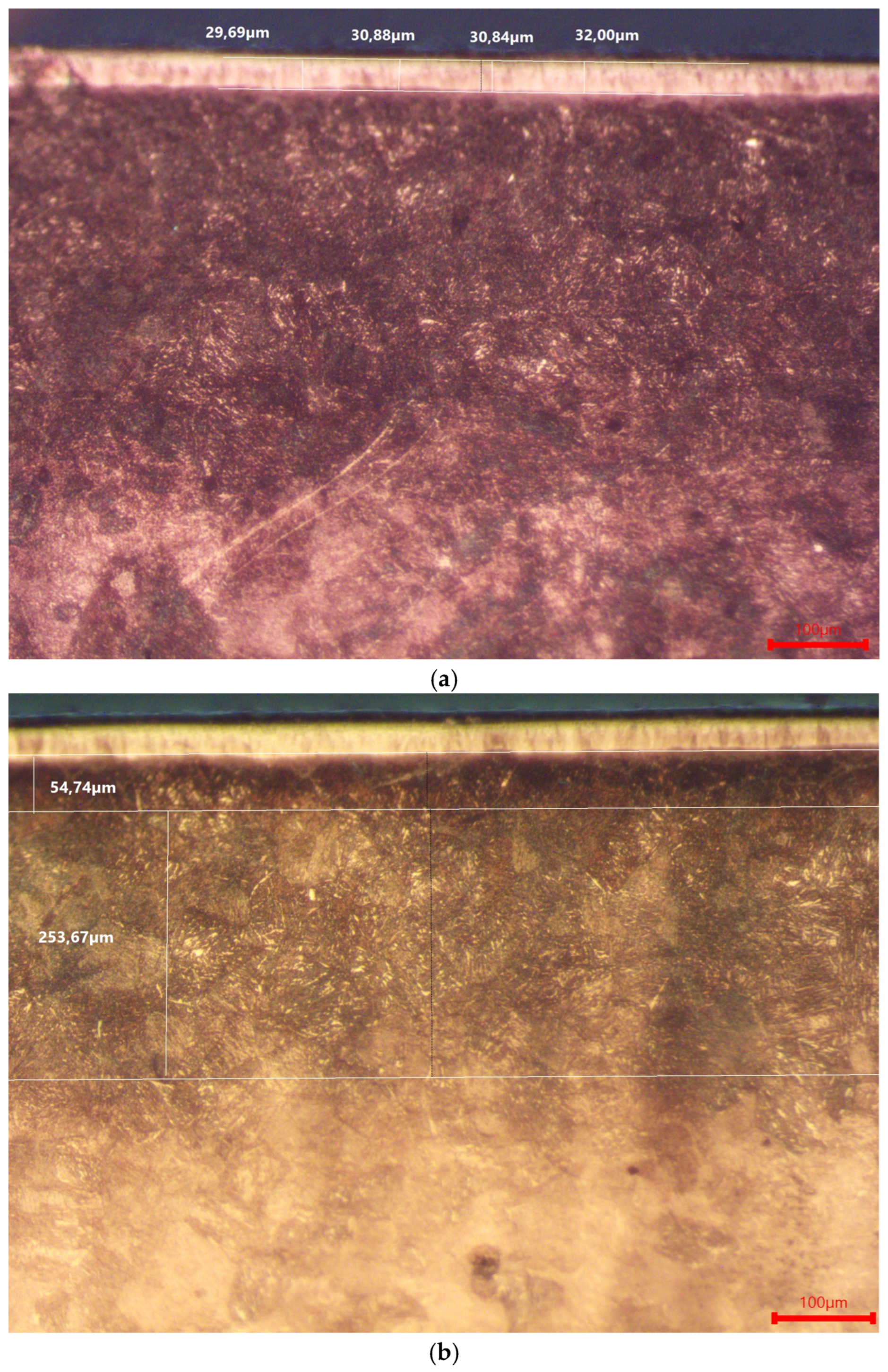
The results of the optical metallography of the test bodies subjected to nitrocarburization show clearly distinguished three zones with different thicknesses: nitride layer, diffusion layer and transition layer (Figure 1a,b). The thickness of the nitride layer is in the range of 29.69–32 µm, the diffusion layer is 54.74 µm thick, and the transition layer has the greatest thickness—253.67 µm. No defects are observed at the nitride–diffusion layer boundary, but the characteristic roughness of the free surface of the nitride layer can be noted.
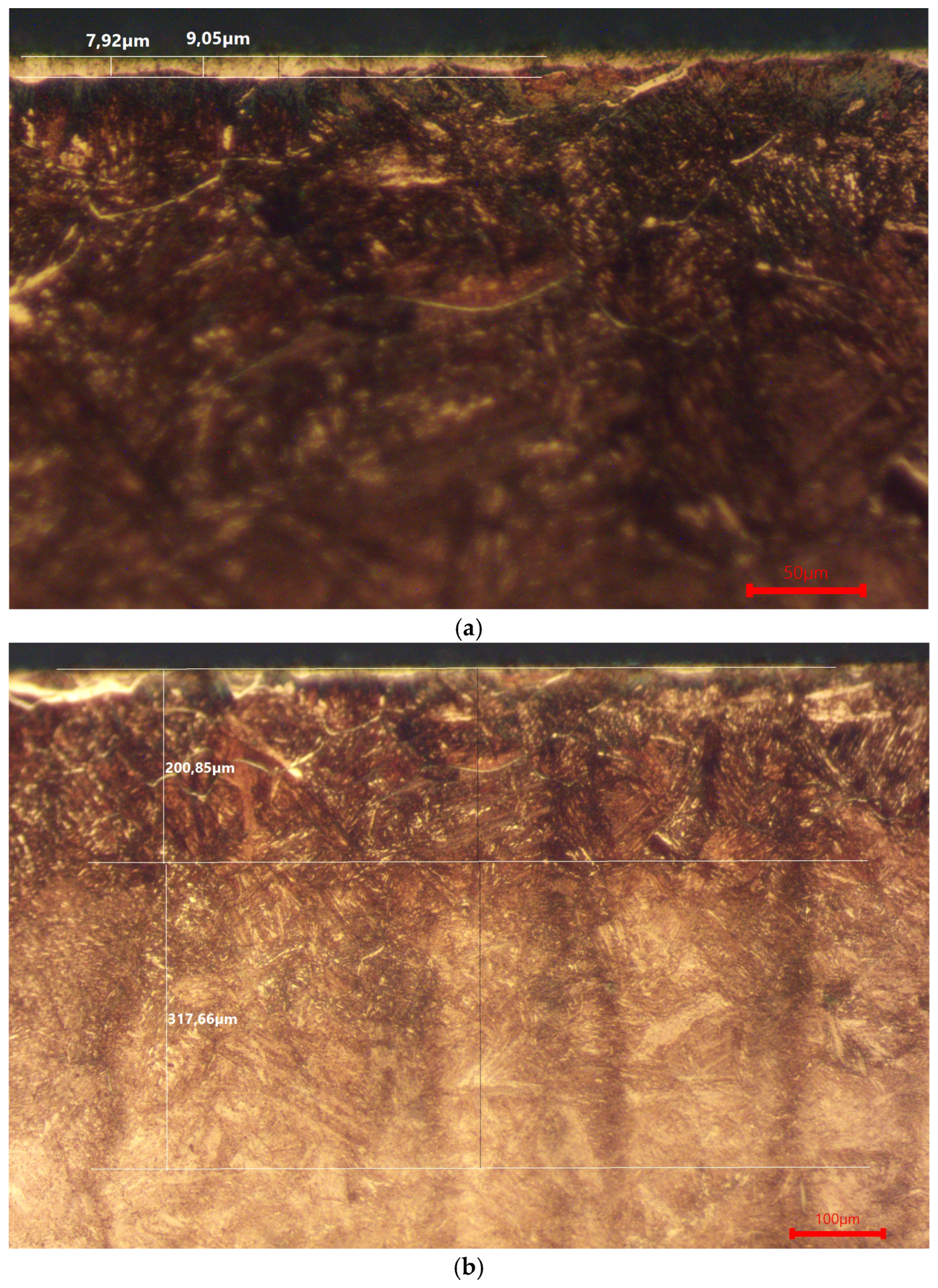
After carrying out the ion-nitriding process, the following changes are observed in the initial structure of the studied steel 40CrMnMo7: the formation of a bonded layer, which most likely consists of ξ and γ′ phases (Figure 2a), as well as the development of diffusion and transition layers (Figure 2b) [7]. To characterize the formed phases and confirm the assumption made, additional research is planned using XRD. It is noticeable that the bonded (white) layer is not dense and homogeneous across the entire surface of the test specimens. As with the nitride layer obtained during the nitrocarburization process, the bonded layer obtained after ion-nitriding exhibits the characteristic porosity of the free surface. In the areas with a clearly expressed bonded layer, its thickness was measured, which is in the range of 7.92–9.05 µm. The thickness of the formed diffusion layer is 200.85 µm, and the transition layer has a measured thickness of 317.66 µm.
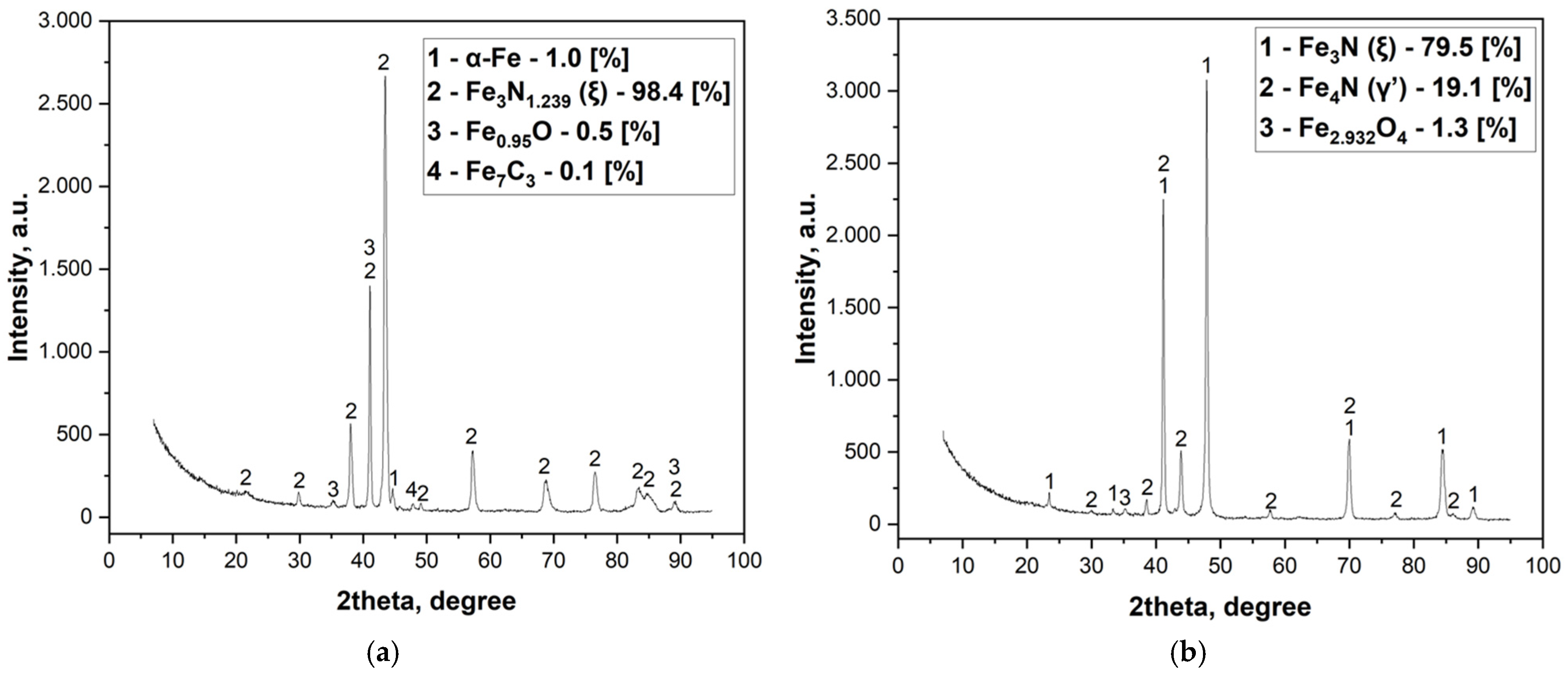
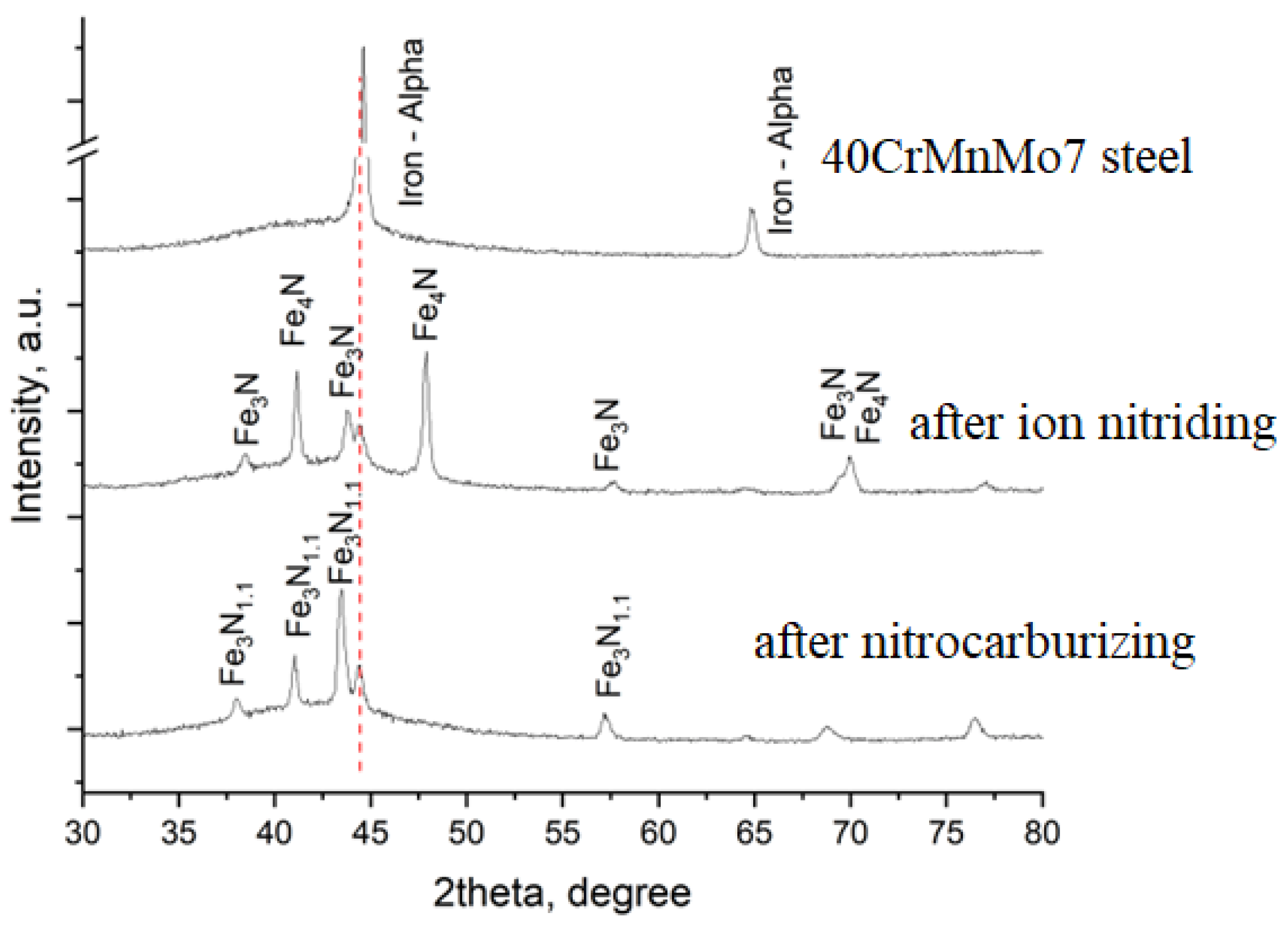
The phase composition of the obtained solid layers after the chemical-thermal treatment processes was studied using XRD. After nitrocarburization, the presence of α-Fe—1%, Fe3N1.239 (ξ)—98.4%, Fe0.95O—0.5%, and Fe7C3—0.1% was found (Figure 3a). In the composition of the solid layer formed after the ion-nitriding process, the presence of Fe3N (ξ-phase) in an amount of 79.5%, Fe4N (γ′-phase) in an amount of 19.1%, and 1.3% Fe2.932O4 was found (Figure 3b).
As a result of the diffusion saturation of with N2 and C during the nitrocarburization process, the solid ξ-phase (Fe3N1.239) and Fe7C3 were formed, which will inevitably lead to an increase in the hardness of the surface, as well as in the depth of the studied steel. The results of the conducted optical metallography show that the bonded layer (ξ + γ′) in the steel structure after ion-nitriding is not dense and homogeneous across the entire surface of the test bodies, the most likely reason for this being the registered amount of γ′-phase (Fe4N). Fe3N (ξ-phase) predominates primarily in the steel structure, which in turn is a prerequisite for increasing the hardness after the applied chemical-thermal treatment process. As a result of the inhomogeneous bonded layer in the steel structure, anisotropy of the hardness of the surface contact layer of the test bodies can be expected.
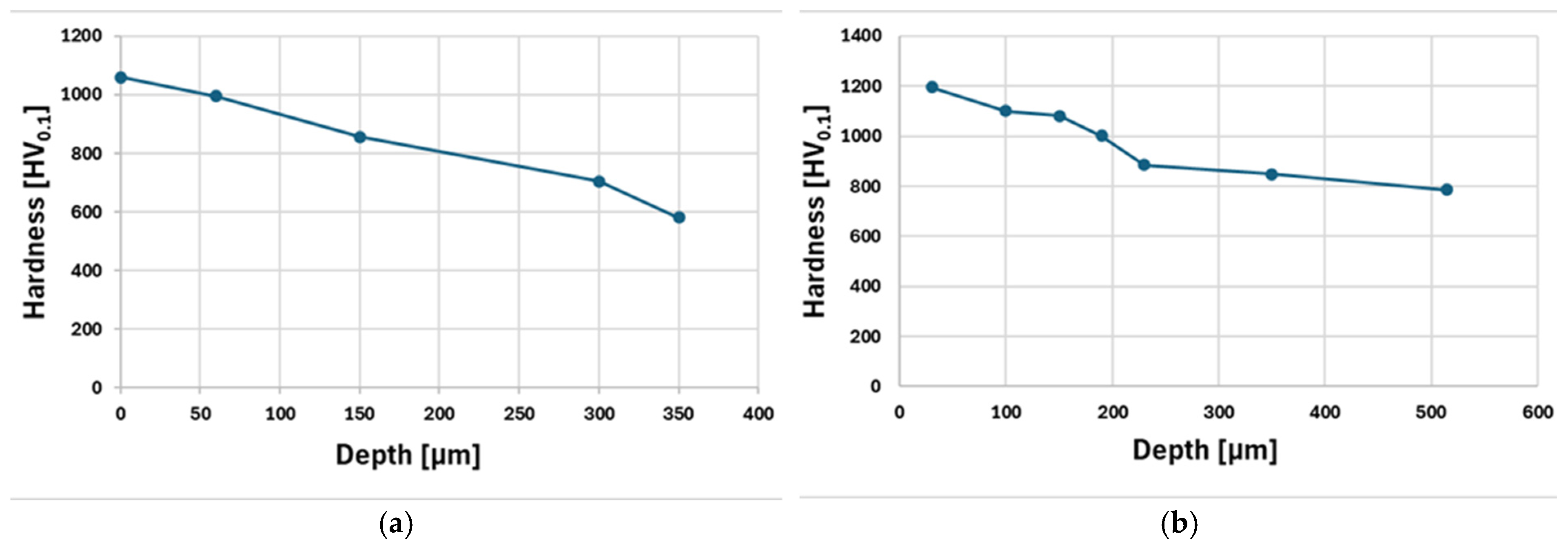
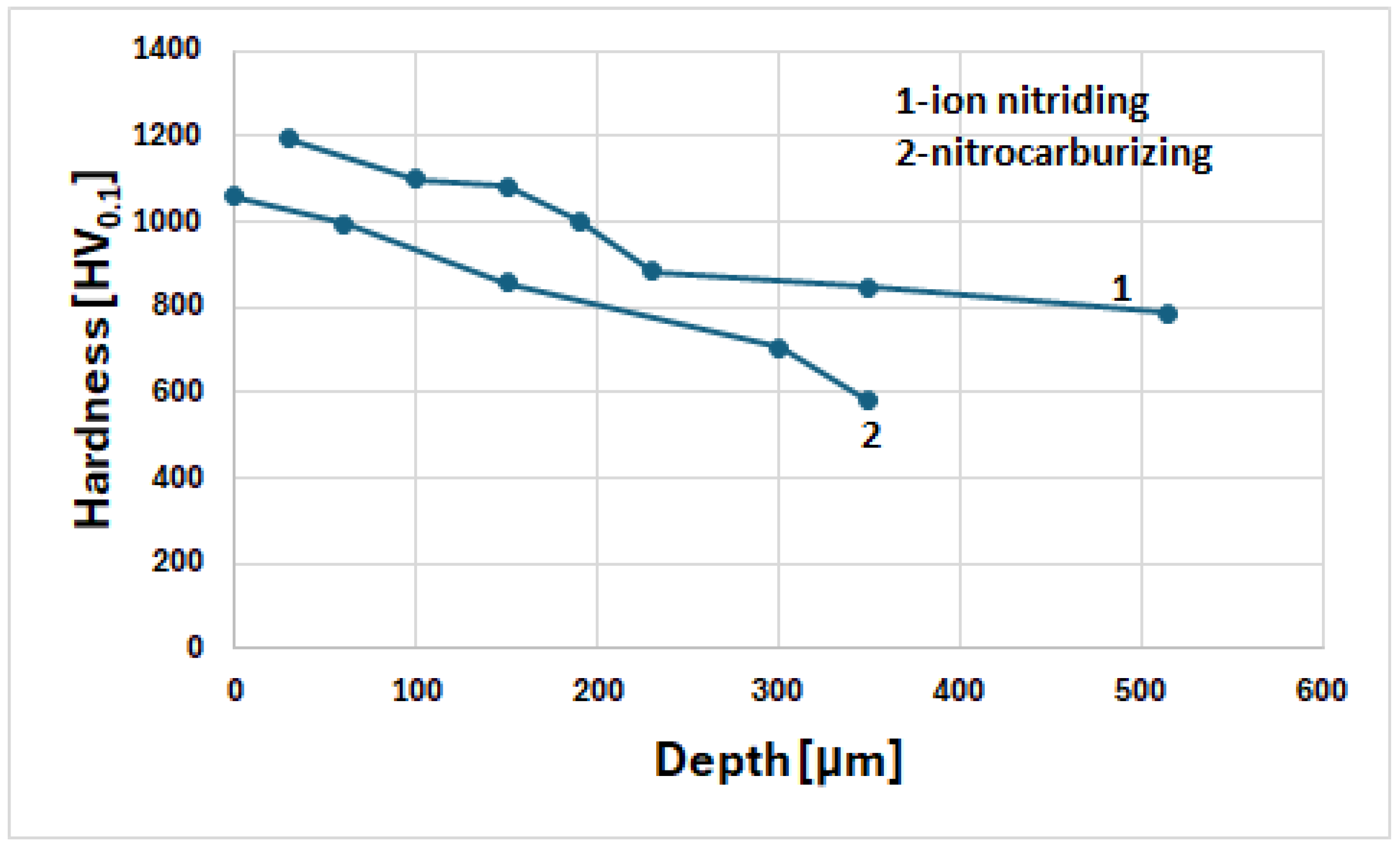
The measured hardness of the surface of the test bodies after the nitrocarburization process is 1059HV0.1, a value significantly higher than the initial hardness of the tested 40CrMnMo7 steel (31–33 HRC). As a result of the diffusion saturation with N2 and C and the formed compounds, increased hardness was registered in both the diffusion and transition layers. The measured hardness value in the diffusion layer (its environment) at a depth of ≈60 µm from the surface of the test body is 994HV0.1, and the tendency to decrease the measured values is also maintained in the transition layer. At a depth of ≈150 µm from the surface of the test body, the measured hardness is 856HV0.1, and at a depth of ≈300 µm from the surface, it is 705HV0.1. At a depth of ≈350 µm from the surface of the test body, the measured hardness is 580HV0.1. The change in hardness values in depth after nitrocarburization is shown in Figure 4a. Due to the inhomogeneous bonded layer (ξ + γ′) on the surface of the test bodies, different hardness values were measured. In the areas where a bonded layer (ξ + γ′) was registered, i.e., there is a presence of the softer γ′-phase; the measured hardness values are 949HV0.1, and in the areas where the ξ-phase predominates, which is characterized by higher hardness and brittleness, the measured hardness of the surface of the test bodies is 1258HV0.1. In the diffusion layer, a gradual decrease in hardness with depth is observed, as at ≈30 µm from the surface of the sample, the hardness is 1195HV0.1, at ≈100 µm—1101HV0.1, at ≈150 µm—1082HV0.1, and at ≈190 µm—1002HV0.1. The same trend is observed in the transition layer: at ≈230 µm—885HV0.1, at ≈350 µm—848HV0.1, and at ≈515 µm—786HV0.1 (Figure 4b).
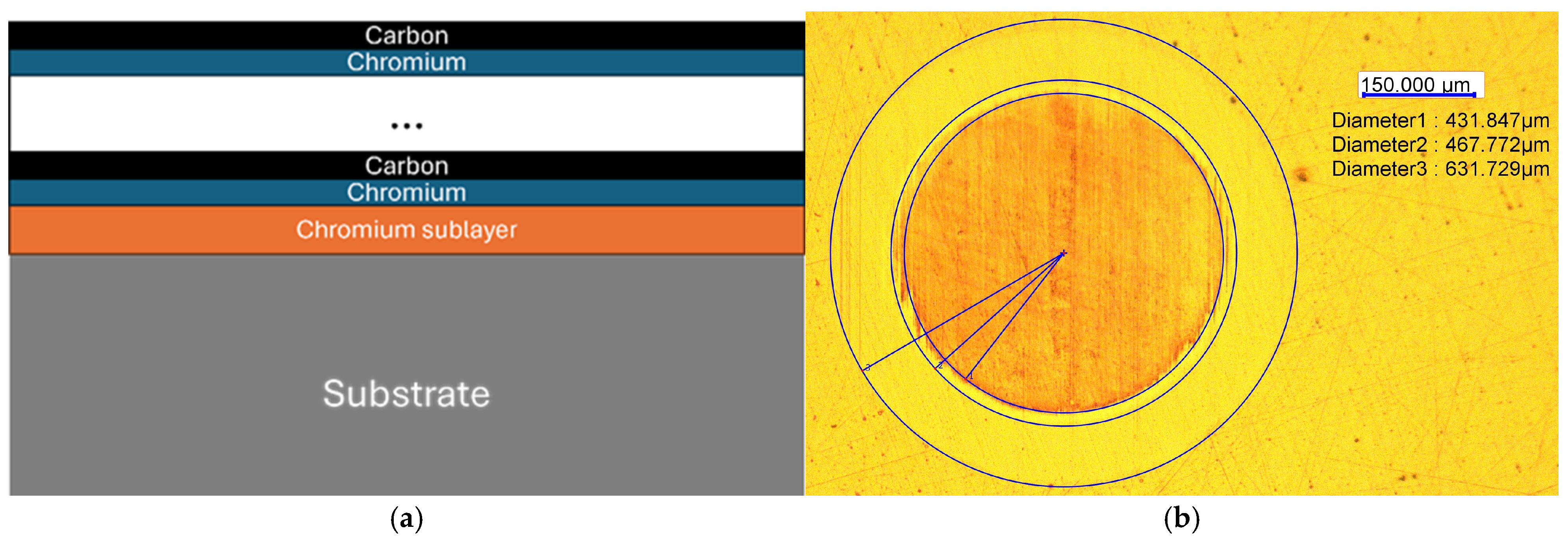
In the studies conducted to determine the thickness of the applied Cr/(Cr/a-C)ml PVD coating on a test body that was not subjected to the chemical-thermal treatment process, it was found that its total thickness is 1.967 µm, with the thickness of the underlying chromium adhesion layer being 0.197 µm and the thickness of the base layer being 1.770 µm. The architecture of the applied coating is discussed in [60]. Figure 5 presents the structure of the coating and data from measurements to determine the thickness of the coating on a polished sample of 40CrMnMo7 steel (without applying the chemical-thermal treatment).
The hardness and modulus of elasticity of the deposited Cr/(Cr/a-C)ml coating were measured in the loading/unloading mode, and the test was conducted according to ISO 14577-1:2015 International Standard, Metallic materials-Instrumented indentation test for hardness and materials parameters, Part 1: Test method, Published in Switzerland [70]. Table 2 shows the results of the study of the specified parameters (eight measurements) of the deposited PVD coating on a test body that was not subjected to the chemical-thermal treatment.
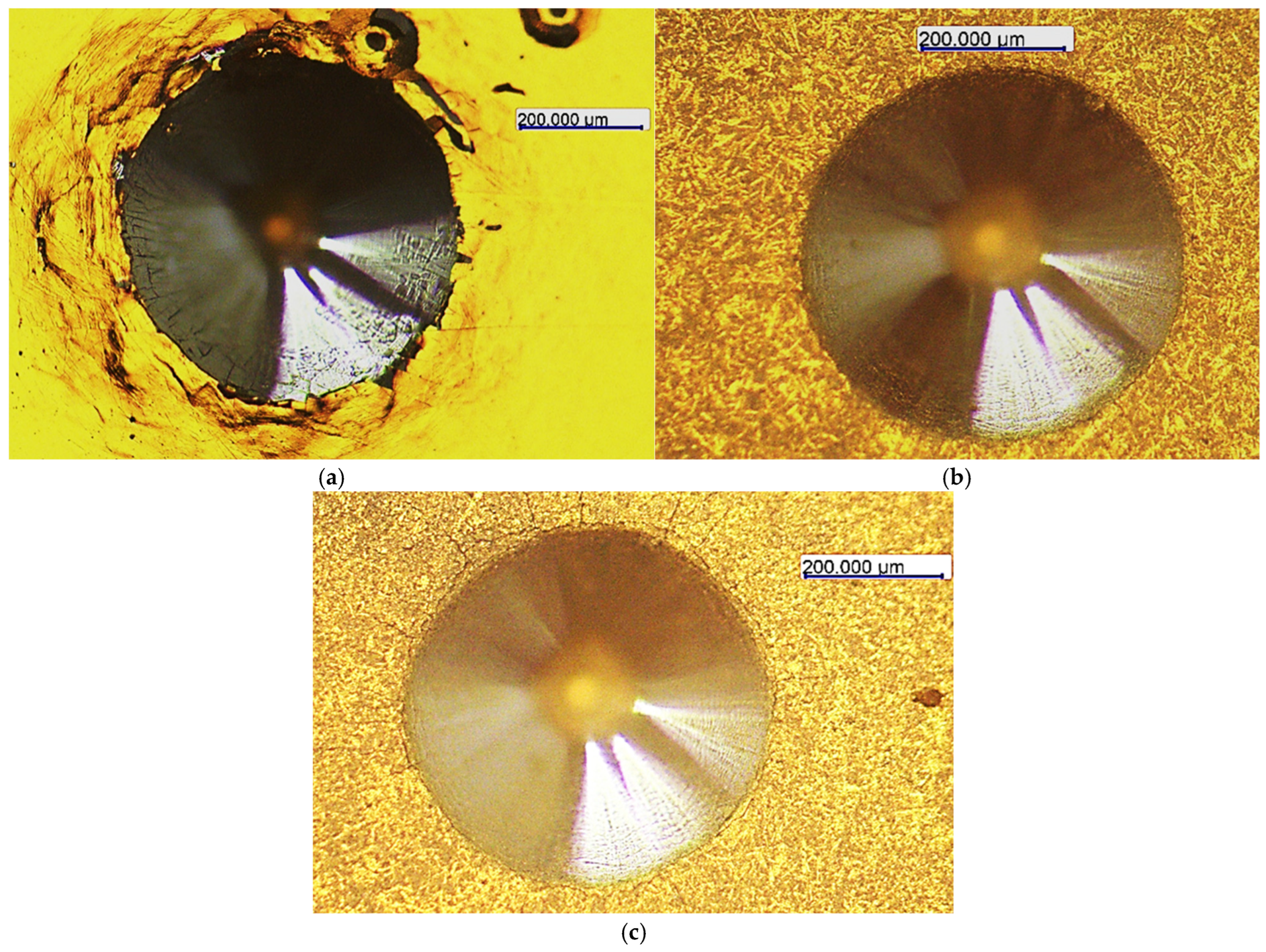
The hardness of the tested 40CrMnMo7 steel is within the range of 31–33 HRC, and according to the standard EN ISO 26443, European Standard, Bulgarian Institute for Standardization, Sofia, Bulgaria, 19 February 2014 [66], a load of 981 N was selected to determine the adhesion of the applied coating using the Rockwell C method with a 120° diamond cone indenter and a 200 nm tip radius. The results of the tests conducted show that the adhesion of the applied coating on samples of steel 40CrMnMo7 belongs to the HF-2 class, i.e., visible cracks and partial chippings are present. Most of the cracks are diametrically located; such cracks are also visible in the penetration depth, and partial chippings around the indenter penetration zone are also registered (Figure 6a). The adhesion of the coating to a test body subjected to nitrocarburization is classified as HF-0, since no visible cracks or chippings were recorded (Figure 6b). The results of determining the adhesion of the coating to a test body subjected to ion-nitriding show HF-1, with visible cracks being both diametrically and radially located, and no chippings from the coating are observed (Figure 6c).
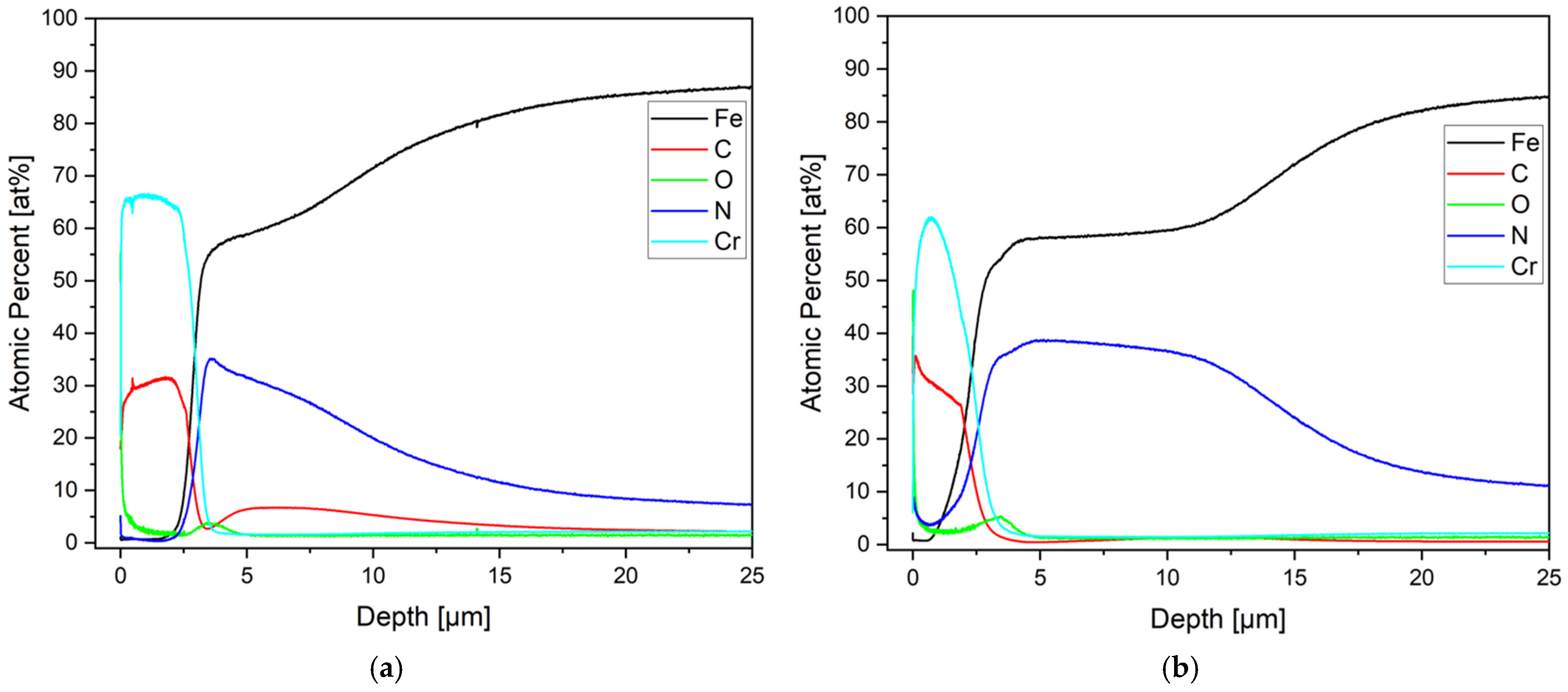
After the application of the Cr/(Cr/a-C)ml coating, the distribution of chemical elements in depth of the test bodies subjected to nitrocarburization and ion-nitriding was investigated through Glow Discharge Optical Emission Spectroscopy (GDOES). In both cases, the presence of nitrogen, chromium, iron, and carbon, as well as insignificant amounts of hydrogen and oxygen, concentrated mainly on the surface, was found. In both samples, the amount of nitrogen passes through a maximum located at about 3.5 µm, with a value of about 34–38 at%. Then, in the nitrocarburized body, the nitrogen gradually decreases to minimum values at a depth of about 15 µm (Figure 7a). In the body subjected to ion-nitriding, a plateau is registered at a depth of 3.1 to 14 µm, where the amount of nitrogen is again about 32–34 at%. After this depth, the amount of nitrogen gradually decreases and reaches its minimum shortly after 25 µm (Figure 7b). The results show very deep nitrogen penetration into the 40CrMnMo7 steel samples. In both cases, the elements such as chromium and carbon are found on the surface as a result of the applied coating. In the nitrocarburized sample, this layer has a relatively constant composition (plateau) of about 30 at% carbon and 67 at% chromium, reaching a depth of about 2.9 µm. In the ion-nitrided sample, carbon is in the highest amount at the surface—approximately 35 at%, and then it maintains a plateau of about 30 at% to a depth of 2 µm, reaching minimum values after 2.3 µm. Chromium passes through a peak of about 60 at% at 2–3 µm depth and then gradually decreases. The total thickness of the Cr/(Cr/a-C)ml coating on the ion-nitrided sample is 2.4 µm.
The test bodies subjected to the chemical-thermal treatment with subsequent Cr/(Cr-C)ml coating were subjected to XRD analysis, the results of which are shown in Figure 8. This study is based on the results obtained from the GDOS analysis. Its results show the presence of the chemical elements such as Cr and C on the surface of the test bodies, but such a crystalline phase was not identified. This shows that an amorphous Cr-C phase is formed on the surface of the studied samples.
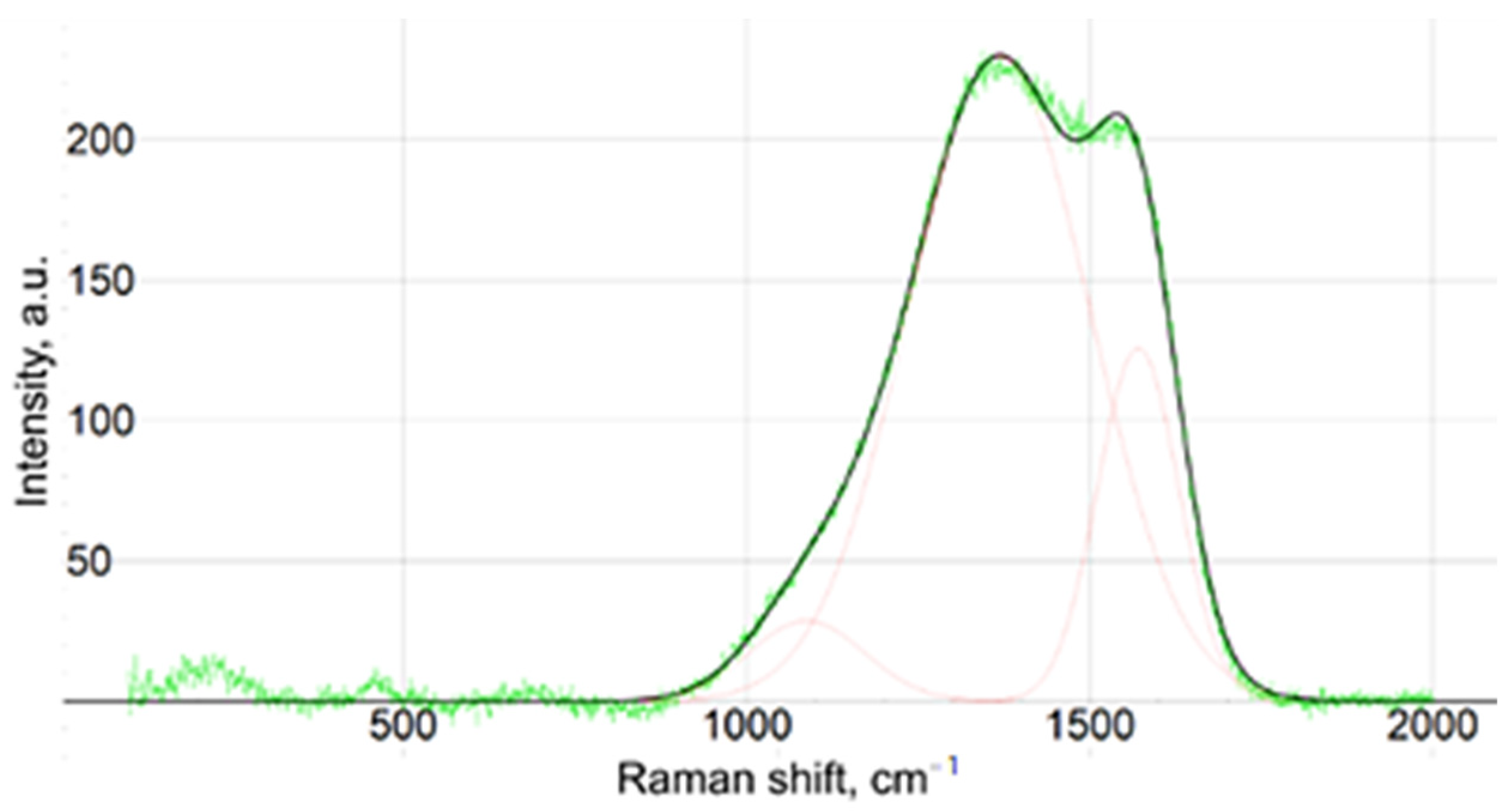
The structural evolution of the Cr/a-C nanolaminate coating was investigated using Raman spectroscopy (Figure 9). The resulting spectra were deconvoluted using three Gaussian functions to identify the constituent carbon phases. The most prominent feature is the D-band peak at 1368 cm−1, with an area of 76,331.5, which dominates the spectral area, followed by the G-band at 1570.6 cm−1, with an area of 18,686.5 and a disordered contribution at 1087.4 cm−1.
The calculated ID/IG area ratio is 1.82. The G-band position, centered at 1570.6 cm−1, represents a shift from pure crystalline graphite 1580 cm−1, indicating the formation of a disordered amorphous network. The high intensity of the D-band peak highlights a unique microstructure dominated by sp3-bond at the Cr/a-C interfaces.
Before conducting tribological tests to determine the coefficient of friction, the roughness of the surfaces of the tested test bodies was measured. The roughness of the polished test body with a coating applied to it is Ra-0.02 µm, that of the test body subjected to nitrocarburization and a coating applied is Ra-0.27 µm, and that of the test body subjected to ion-nitriding and with a subsequent coating applied is Ra-0.21 µm. Based on the fact that the test bodies before being subjected to the chemical-thermal treatment processes were polished to a roughness of Ra-0.02 µm, the used nitrocarburization and ion-nitriding processes lead to an increase in the roughness of the surfaces.
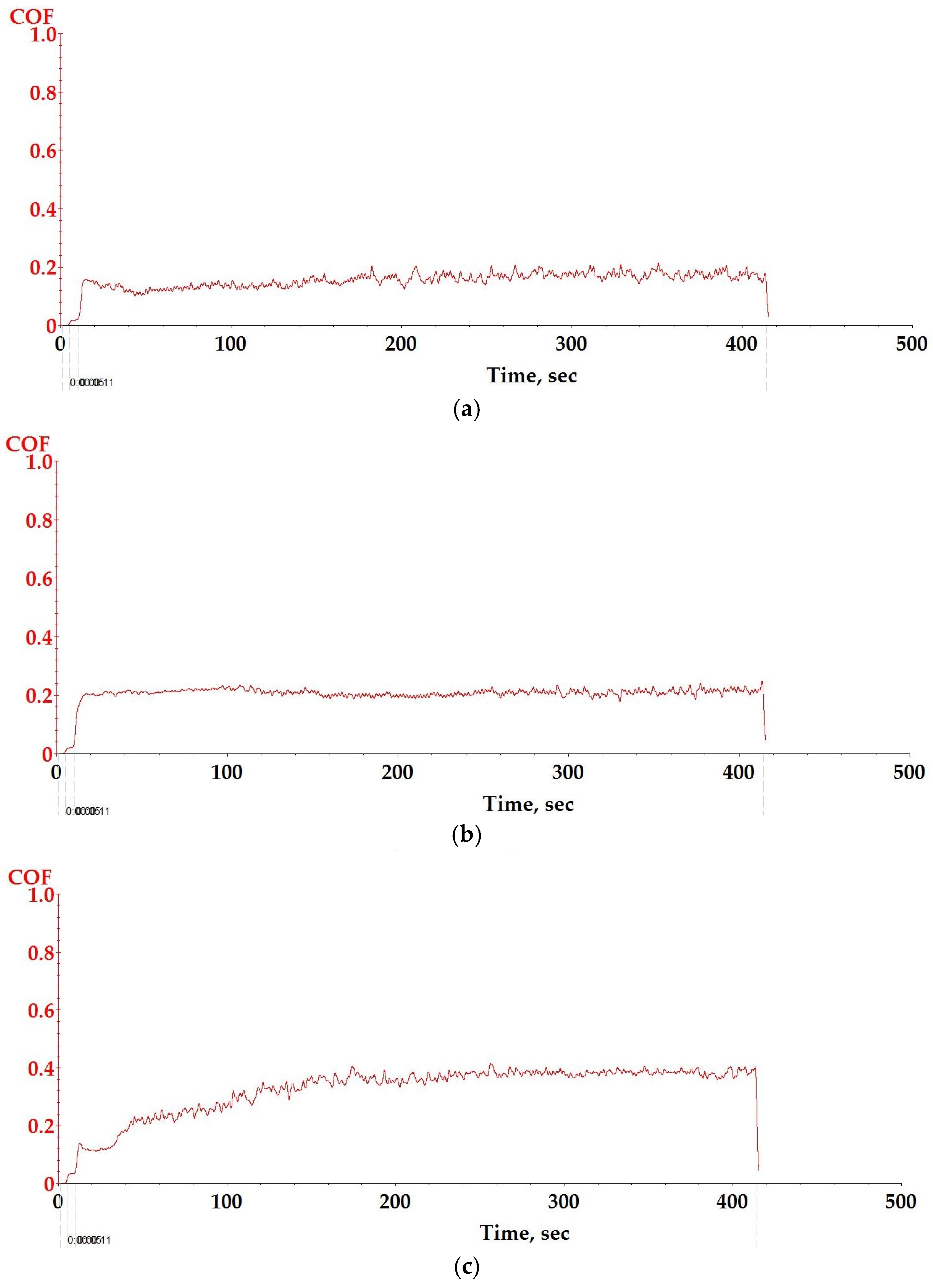
In the conducted tribological tests, the data were obtained on the friction coefficient of the coating applied both on a polished non-chemically thermally treated sample and on samples subjected to nitrocarburization and ion-nitriding with subsequent application of a Cr/(Cr/a-C)ml coating. The results of the conducted studies show that a typical evolution of the tribological contact is observed in all three samples, namely: an initial stage of working-in characterized by a rapid increase in COF due to the actual formation of the contact area and the occurrence of primary plastic deformations, a transitional regime showing a change in the surface topography, and a quasi-stationary regime, in which fluctuations are observed around an average value, determining the effective tribological regime. The significant differences in the behavior of the three test bodies are manifested precisely in the duration of the working-in of the friction pairs and the level of the stationary COF. The test body that has not been subjected to the chemical-thermal treatment and only has a coating applied has the smallest COF µ ≈ 0.18 and a relatively short period of operation of the friction pair ≈14 s (Figure 10a). The test body subjected to nitrocarburization and with subsequent coating applied has a friction coefficient of µ ≈ 0.38. The longest period of operation of ≈120 s is registered, which in turn indicates an intensive increase in the real contact area due to the destruction of the surface layer and a transition to a strongly adhesive boundary regime (Figure 10b). The results of the tribological study of the test body subjected to ion-nitriding and with a subsequent coating applied show a relatively short period of operation of the friction pair of ≈14 s (Figure 10c), with the friction coefficient of µ ≈ 0.21 being a value slightly higher than the COF of the test body with only the coating applied (µ ≈ 0.18) and significantly lower than the obtained values for the COF of the test body subjected to nitrocarburization and with a subsequent coating applied (µ ≈ 0.38).

4. Discussion

The results of Glow Discharge Optical Emission Spectroscopy (GDOES) show very deep penetration of nitrogen into the 40CrMnMo7 steel test specimens as a result of the parameters used for conducting chemical-thermal treatment processes. It has been established that in the nitrocarburized test specimens, nitrogen acquires minimum values at a depth of about 17 µm. Most likely, these minimum values are also preserved at a greater depth, which is confirmed by the conducted optical metallography and the measurement of the hardness in depth of the test specimens. Such a trend is also observed in the test specimens that have undergone ion-nitriding, in which the minimum nitrogen values are recorded at a depth of just over 25 µm. The results of the conducted optical metallography of the test specimens subjected to nitrocarburization show the presence of a nitride layer with an almost constant thickness on the surface of the test specimen. After conducting XRD, the presence of the crystalline non-stoichiometric phase Fe3N1.1 was established, which is most likely the basis for the obtained high hardness values (1059HV0.1) compared to the initial hardness of the studied 40CrMnMo7 steel (31–33 HRC ≈ 310–330 HV). The results of the XRD analysis of the test bodies subjected to the ion-nitriding process show the presence of two crystalline iron-nitrogen phases, Fe3N (ξ-phase) and Fe4N (γ′-phase), in the phase composition of the diffusion-enriched layer. The presence of both crystalline ξ and γ′ phases, as well as the fact that the amount of Fe3N is greater compared to Fe4N, explains the high hardness (1258HV0.1) compared to the initial hardness of the studied steel, as well as the fact that the hardness values after ion-nitriding are higher compared to the hardness obtained after nitrocarburization (Figure 11).
One of the main problems when applying the ion-nitriding process using ammonia (NH3) is the formation of a bonded layer (ξ + γ′ phases) on the surface due to the fact that the γ’ (Fe4N) phase is softer than the ξ (Fe3N) phase, which in turn leads to a decrease in the values of the obtained hardness. The main reason for the formation of the γ′ phase is the decomposition of the nitrogenous austenite (γ) during the cooling of the α-phase (nitrogenous ferrite) and Fe4N; the longer the cooling interval, the greater the amount of the Fe4N phase, the greater the amount of nitrogenous austenite, and the greater the amount of γ′ phase after the decomposition of the γ phase. The results of the optical metallography show that, in this particular case, the bonded (white) layer is not dense and homogeneous over the entire surface of the test bodies. On the surface of the test bodies, there are areas in which no bonded layer is registered, and in the areas characterized by a clearly expressed (ξ + γ′) layer, its thickness is in the range of 7.92–9.05 µm, and this can be interpreted as a choice of parameters for carrying out the process close to the optimal ones. In the optical metallography conducted, it was established that after carrying out the processes of the chemical-thermal treatment, the resulting nitride layer obtained in the nitrocarburization process and the bonded layer (ξ + γ′) obtained after ion-nitriding, the characteristic porosity of the free surface is observed. It is necessary to note that defects of this nature are not observed either at the nitride diffusion layer boundary or at the bonded diffusion layer boundary in the structures of the solid layers obtained after both types of the chemical-thermal treatment used.
The results of the studies conducted to determine the adhesion class of the applied Cr/(Cr/a-C)ml coating on the test specimens subjected to nitrocarburization and ion-nitriding, as well as those not subjected to the chemical-thermal treatment, show a different class. The best adhesion (HF-0) was recorded in the test specimens subjected to nitrocarburization; the adhesion of the coating applied to ion-nitrided test specimens was classified as class HF-1, and the adhesion recorded for the deposited coating on the test specimens made of 40CrMnMo7 steel not subjected to chemical-thermal treatment was classified as HF-2. Possible reasons for the recorded best adhesion for the test specimens subjected to nitrocarburization include the porous profile and the composition of the formed nitride layer. The results of optical metallography show some porosity of the free surface of the obtained nitride layer after the nitrocarburization process, and the XRD data show that this nitride layer has a constant composition of the Fe3N1.1 phase. The porous profile of the surface favors the entry of atoms of the chemical element used to form the adhesion layer (Cr) into the pores of the formed surface, and this gives us reason to assume that this is the basis for improving the quality of the connection between the substrate and the applied coating. The uniformity of the composition of the nitride layer ensures its uniform hardness, i.e., lack of anisotropy in the microvolumes of the layer in the resistance to deformation, which is the basis for the lack of cracks and chipping of the coating (HF-0). Analogous arguments can be made for the test bodies subjected to ion-nitriding, because the porosity of the free surface of the test bodies is also observed in them. In this case, the presence of visible cracks (HF-1) during indenter penetration may be due to the presence of two phases (ξ + γ′) in the bonded layer. The characteristic of these phases is their different microhardness, as a result of which the resistance to deformation is not the same in different microvolumes, which in turn is the basis for the formation of visible cracks. The possible reason for the reported adhesion (class HF-2) of the applied coating on the test specimens made of 40CrMnMo7 steel is the large difference in the hardness of the coating and the substrate. The registered hardness of the deposited coating is 17.1 GPa and that of the steel used is 31–33 HRC (≈3–3.2 GPa).
The results of measuring the roughness of the surfaces of the tested test bodies show that the use of the nitrocarburization and ion-nitriding processes leads to an increase in the Ra values. The roughness of the polished test body with a coating applied to it is Ra-0.02 µm, that of the test body subjected to nitrocarburization and a coating applied is Ra-0.28 µm, and that of the test body subjected to ion-nitriding and with a subsequent coating applied is Ra-0.21 µm. The larger values of Ra after applying the chemical-thermal treatment processes, as well as the high hardness of the diffusion-enriched surfaces, make it difficult to use the ball-cratering (Calotest) method in determining the thickness of the coating applied on the test bodies subjected to nitrocarburization and ion-nitriding (the coating cannot be pierced). This necessitates the use of two studies to determine the thickness of the applied Cr/(Cr/a-C)ml coating—the ball-cratering (Calotest) method to determine the thickness of the coating applied to the test bodies that have not been subjected to diffusion enrichment and GDOES to determine the thickness of the coating applied to the test bodies subjected to nitrocarburization and ion-nitriding. After conducting the study to determine the thickness of the coating applied to the test bodies that have not been subjected to chemical-thermal treatment using the ball-cratering (Calotest) method, it was found that the total thickness of the coating is 1.967 µm. The results of the GDOES analysis show that the total thickness of the applied Cr/(Cr-C)ml coating on the test specimens subjected to nitrocarburization is 2.9 µm, and for the test specimens subjected to ion-nitriding, the total PVD coating thickness is 2.4 µm. The mechanism of growth of the layers of the applied coating on surfaces subjected to the used chemical-thermal treatment processes is not sufficiently well-understood and is the subject of future research.
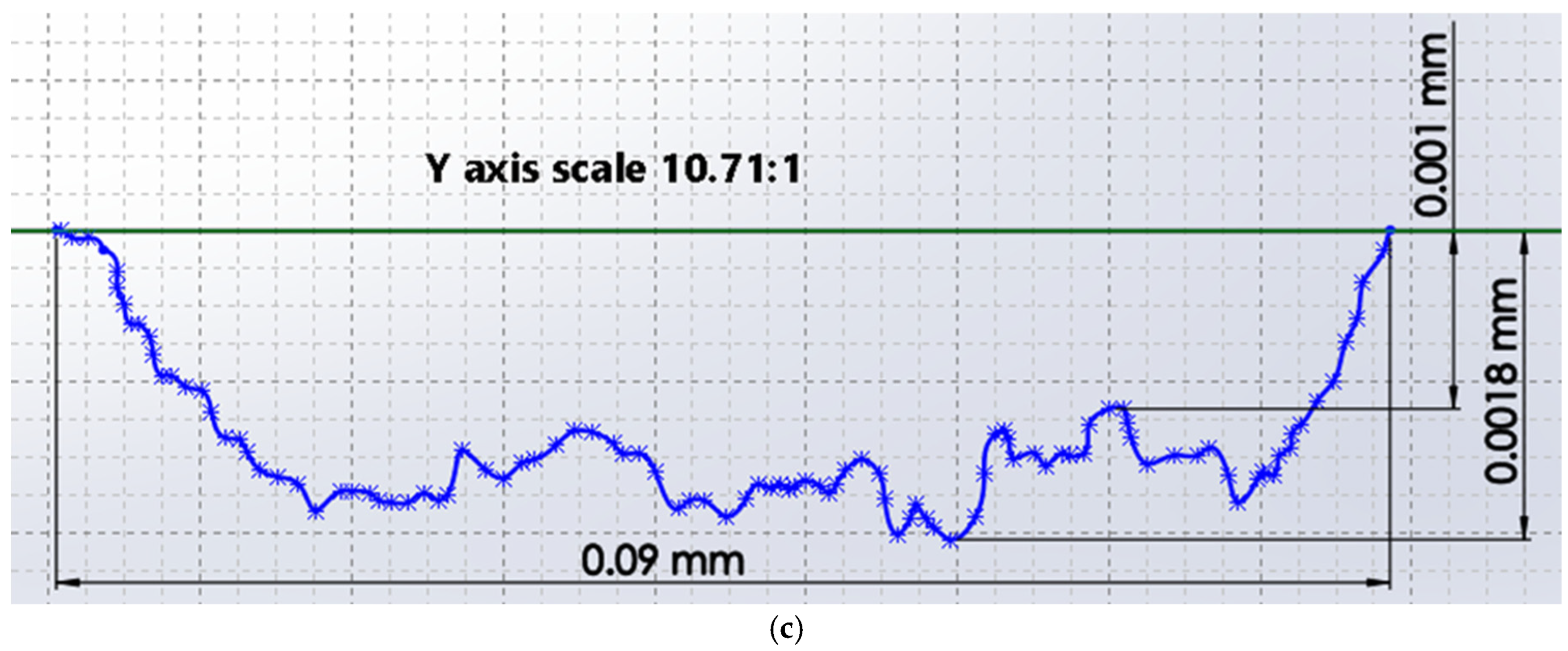
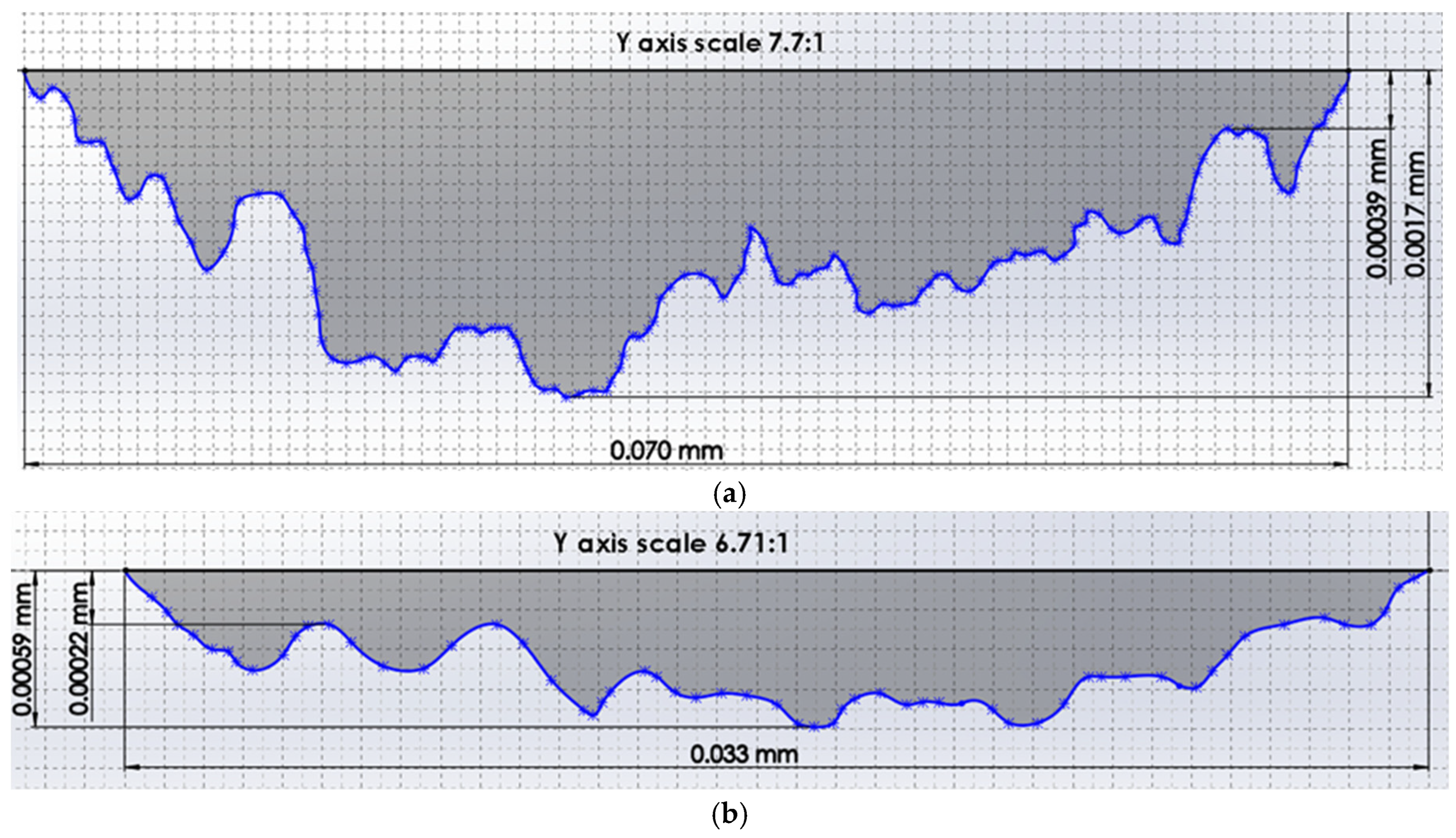
To determine the wear rate (k) of the applied Cr/(Cr/a-C)ml coating on test specimens not subjected to the chemical-thermal treatment, as well as those subjected to nitrocarburization and ion-nitriding, their wear traces obtained after the tribological tests were examined using a portable contact profilometer roughness tester, model INSIZE ISR-C002, the SolidWorks Premium 2025 SP1.2 software (Figure 12), as well as the methodology applied in [71]. After determining the worn volumes of the two coatings, their wear rate (k) was calculated using Formula (1), where the worn volume is V (mm3), the normal load is F [N], and the friction distance S [m]:
k = V F . S [ m m 3 N . m ]
The obtained results show that the lowest wear rate is that of the coating applied to the samples subjected to ion-nitriding (k = 7.96 × 10⁻⁵), the wear rate of the coating applied to the test bodies that have not been subjected to chemical-thermal treatment is k = 6.9 × 10⁻⁴, and the highest wear rate is that of the coating applied to the test bodies subjected to nitrocarburization, k = 12.4 × 10⁻⁴.
The tribological behavior of the studied samples was evaluated by the change in the coefficient of friction (COF) over time, together with a quantitative characteristic of wear (k). The curves obtained from the tribological study show a classical structure, characteristic of dry friction or friction with boundary lubrication. It is striking that the run-in time of the tribological pairs, in which test bodies subjected to ion-nitriding and those not subjected to chemical-thermal treatment participate, is identical (≈14 s), while in the tribosystems, in which test bodies subjected to nitrocarburization participate, the run-in time is significantly longer (≈120 s). This longer run-in period suggests progressive surface destruction in the contact zone. At first glance, the test bodies that have not undergone the chemical-thermal treatment but only have a coating applied seem to be the most favorable tribologically due to the low COF values (µ ≈ 0.18). However, the friction coefficient itself is not a sufficient criterion for the evaluation, as can be seen from the results of determining the wear rate. The most effective tribological behavior is demonstrated by the test bodies subjected to ion-nitriding and with a subsequent coating applied, because the COF values are significantly low (µ ≈ 0.21), and the lowest wear rate k = 7.96 × 10⁻⁵ is registered for them. The test specimens that were not subjected to diffusion enrichment but were only coated had the lowest COF values (µ ≈ 0.18) compared to the other tested test specimens, but their wear rate (k = 6.9 × 10⁻⁴) was significantly higher than that of the test specimens subjected to ion-nitriding and coating. The higher wear rate can be explained by the insufficient load-bearing capacity of the coating (HF-2 adhesion), which in turn leads to microcracking and delamination. The highest COF values (µ ≈ 0.38) and wear rate (k = 12.4 × 10⁻⁴) were recorded for the test specimens subjected to nitrocarburization and subsequent coating. A probable reason for this can be the relatively high roughness, Ra-0.28 µm, obtained after the nitrocarburizing process, which in the process of tribological testing leads to a significantly longer period of operation of the friction pair, which in turn leads to the destruction of the surface layer and an increase in the real contact surface.
In view of the fact that the existing data in the literature on duplex surface modification of steels using nitrocarburization and PVD coatings are limited, the obtained results provide additional information in this direction. The data were obtained on the change in the concentration of nitrogen and carbon from the surface to the core of the formed hard layer, as well as the data on the change in its hardness. It was found that the resulting nitride layer with a constant composition and relatively uniform thickness has a positive effect on the adhesion of the applied Cr/(Cr/a-C)ml coating. It is necessary to note that the resulting greater roughness of the surfaces after nitrocarburization has a negative effect on the friction coefficient and wear rate under dry friction conditions. The results of optical metallography and hardness measurements show a greater thickness and greater hardness in depth of the obtained hard layer in the ion-nitriding process (compared to the nitrocarburizing process) due to the greater depth of nitrogen penetration (the results of GDOES). The presence of a bonded layer negatively affects the adhesion of the deposited coating, which confirms the statements made in [40,44,45,47,49,53]. As noted in the reviewed literature, there is no data on duplex surface modification of steels achieved by carrying out the nitrocarburizing and ion-nitriding processes, with subsequent application of multilayer nanolaminate Cr-C through magnetron sputtering. There is also no data on a comparative analysis between the two processes of the chemical-thermal treatment and subsequent deposited coating. For these reasons, the results obtained can be qualified as a novelty in the surface treatment of steels, since additional information is presented regarding the influence of duplex surface modification on the performance properties of tool steels.

5. Conclusions

The use of established technological processes of chemical-thermal treatment, such as nitrocarburization and ion-nitriding and subsequent application of a nanostructured multilayer Cr/(Cr-C)ml coating, is appropriate. The structures obtained after the chemical-thermal treatment processes have a positive effect on the adhesion of the applied coating to the studied substrate, and in one of the considered cases, the positive effect of the duplex surface modification on the coefficient of friction and the wear rate of the coating was also registered. Based on the obtained results, it can be noted that the purpose of the study has been fulfilled and the following conclusions have been formulated:
  • It has been established that the nitrocarburizing and ion-nitriding processes used have a positive impact on the adhesion of the subsequently applied Cr/(Cr/a-C)ml coating.
  • The applied chemical-thermal treatment processes result in a PVD coating with greater thickness.
  • The most effective tribological behavior was found when combining the ion-nitriding processes and applying a subsequent Cr/(Cr/a-C)ml coating.
  • The highest values of the COF and wear rate (k) were recorded when combining the nitrocarburizing process with subsequent coating, as a result of the obtained higher values of the measured roughness (Ra) of the working surfaces.

Author Contributions

Conceptualization, Y.S., B.D., G.T. and K.M.; methodology, K.M., Y.S., V.M., A.N., R.D., M.A., I.Z. and M.Y.; software, B.D., V.M., I.Z. and A.N.; validation, B.D., R.D., V.M., I.Z. and A.N.; formal analysis, Y.S., R.D., M.A. and M.Y.; investigation, G.T., K.M. and Y.S.; resources, G.T. and K.M.; data curation, M.Y. and M.A.; writing—original draft preparation, B.D., R.D., V.M., I.Z. and A.N.; writing—review and editing, B.D. and Y.S.; visualization, B.D., M.Y. and M.A.; supervision, K.M. and G.T.; project administration, G.T., K.M. and Y.S.; funding acquisition, G.T., K.M. and Y.S. All authors have read and agreed to the published version of the manuscript.

Funding

This work was accomplished with financial support from the European Regional Development Fund within the Operational Program “Bulgarian national recovery and resilience plan”, procedure for direct provision of grants “Establishing of a network of research higher education institutions in Bulgaria” and under Project BG-RRP-2.004-0005 “Improving the research capacity anD quality to achieve intErnAtional recognition and reSilience of TU-Sofia (IDEAS).”

Data Availability Statement

The original contributions presented in this study are included in the article. Further inquiries can be directed to the corresponding authors.

Acknowledgments

The equipment for this study was funded by the European Regional Development Fund under the “Research Innovation and Digitization for Smart Transformation” program 2021–2027 and under Project BG16RFPR002-1.014-0006, “National Centre of Excellence Mechatronics and Clean Technologies”.

Conflicts of Interest

The authors declare no conflicts of interest.

Abbreviations

PVDphysical vapor deposition
(Cr/a-C)mlchromium/amorphous carbon multilayer
DCdirect current
HiPIMShigh-power impulse magnetron sputtering
HPPMShigh-power pulsed magnetron sputtering
XRDX-ray diffraction
CODCrystallography Open Database
ICSDInorganic Crystal Structure Database
GDOESGlow Discharge Optical Emission Spectroscopy
COFcoefficient of friction

References

  1. Naimi, S.; Hosseini, S.M. Tool Steels in Die-Casting Utilization and Increased Mold Life. Adv. Mech. Eng. 2015, 7, 286071. [Google Scholar] [CrossRef]
  2. Li, C.; Yang, H.; Dong, B.; Chen, D.; Shu, S.; Qiu, F.; Jiang, Q.; Zhang, L. Thermal fatigue failure mechanisms and enhancement strategies of die steel. J. Mater. Res. Technol. 2025, 38, 4567–4599. [Google Scholar] [CrossRef]
  3. Li, J.; Shi, Y.; Wu, X. Effect of initial hardness on the thermal fatigue behavior of AISI H13 steel by experimental sand numerical investigations. Fatigue Fract. Eng. Mater. Struct. 2018, 41, 1260–1274. [Google Scholar] [CrossRef]
  4. Klobcar, D.; Kosec, L.; Kosec, B.; Tusek, J. Thermo Fatigue Cracking of Die Casting Dies. Eng. Fail. Anal. 2012, 20, 43–53. [Google Scholar] [CrossRef]
  5. Youn, K.T.; Rhyim, Y.M.; Lee, J.H.; Lee, C.G.; Jung, Y.C. An Evaluation of Thermal Fatigue Cracking and Chemical Reaction in Die Casting Mould. Key Eng. Mater. 2007, 345–346, 701–704. [Google Scholar] [CrossRef]
  6. Yuan, Y.; Wang, W.; Zhou, M.; Shi, R.; Zhang, Y.; Xie, J. Microstructure stability and softening resistance of a novel Cr-Mo-V hot work die steel. High Temp. Mater. Process. 2025, 44, 20240066. [Google Scholar] [CrossRef]
  7. Czerwinski, F. Thermochemical Treatment of Metals. In Heat Treatment—Conventional and Novel Applications; InTech: Rang-du-Fliers, France, 2012. [Google Scholar] [CrossRef]
  8. Wen, D. Plasma nitriding of plastic mold steel to increase wear- and corrosion properties. Surf. Coat. Technol. 2009, 204, 511–519. [Google Scholar] [CrossRef]
  9. Nayebpashaee, N.; Soltanieh, M.; Kheirandish, S.h. A Study on Formation and Growth Mechanism of Nitride Layers During Plasma Nitriding Process of Plastic Injection Mold Steel. Mater. Manuf. Process. 2016, 31, 1192–1200. [Google Scholar] [CrossRef]
  10. Huang, K.; Zheng, Z.; Lin, C.; Huang, W.; Zhang, J.; Chen, X.; Xiao, J.; Xu, J. Microstructure characterization and high-temperature wear behavior of plasma nitriding mold steel. Surf. Coat. Technol. 2024, 492, 131210. [Google Scholar] [CrossRef]
  11. Wen, D. Microstructure and corrosion resistance of the layers formed on the surface of precipitation hardenable plastic mold steel by plasma-nitriding. Appl. Surf. Sci. 2009, 256, 797–804. [Google Scholar] [CrossRef]
  12. Berg, M.; Budtz-Jørgensen, C.V.; Reitz, H.; Schweitz, K.O.; Chevallier, J.; Kringhøj, P.; Bøttiger, J. On plasma nitriding of steels. Surf. Coat. Technol. 2000, 124, 25–31. [Google Scholar] [CrossRef]
  13. Nayebpashaee, N.; Vafaeenezhad, H.; Kheirandish, S.; Soltanieh, M. Experimental and numerical study on plasma nitriding of AISI P20 mold steel. Int. J. Miner. Metall. Mater. 2016, 23, 1065–1075. [Google Scholar] [CrossRef]
  14. Boztepe, E.; Alves, A.; Ariza, E.; Rocha, L.; Cansever, N.; Toptan, F. A comparative investigation of the corrosion and tribocorrosion behaviour of nitrocarburized, gas nitrided, fluidized-bed nitrided, and plasma nitrided plastic mould steel. Surf. Coat. Technol. 2018, 334, 116–123. [Google Scholar] [CrossRef]
  15. Landgraf, P.; Bergelt, T.; Rymer, L.-M.; Kipp, C.; Grund, T.; Bräuer, G.; Lampke, T. Evolution of Microstructure and Hardness of the Nitrided Zone during Plasma Nitriding of High-Alloy Tool Steel. Metals 2022, 12, 866. [Google Scholar] [CrossRef]
  16. Bergelt, T.; Landgraf, P.; Grund, T.; Bräuer, G.; Lampke, T. Modelling of layer development and nitrogen distribution on different microstructures during plasma nitriding. Surf. Coat. Technol. 2022, 447, 128813. [Google Scholar] [CrossRef]
  17. Stechyshyn, M.S.; Martynyuk, A.V.; Bilyk, Y.M.; Oleksandrenko, V.P.; Stechyshyna, N.M. Influence of the Ionic Nitriding of Steels in Glow Discharge on the Structure and Properties of the Coatings. Mater. Sci. 2017, 53, 343–350. [Google Scholar] [CrossRef]
  18. Gonzalez-Moran, A.; Naeem, M.; Hdz-García, H.M.; Granda-Gutiérrez, E.E.; Ruíz-Mondragón, J.J.; Alvarez-Vera, M.; Díaz-Guillén, J.C. Improved mechanical and wear properties of H13 tool steel by nitrogen-expanded martensite using current-controlled plasma nitriding. J. Mater. Res. Technol. 2023, 25, 4139–4153. [Google Scholar] [CrossRef]
  19. Abreu, L.; Pimentel, M.; Borges, W.; Costa, T.; Naeem, M.; Iqbal, J.; Sousa, R. Plasma nitriding of AISI M2 steel: Performance evaluation in forming tools. Surf. Eng. 2020, 36, 508–515. [Google Scholar] [CrossRef]
  20. Borgioli, F.; Adachi, S.; Lindner, T. Advances in Low-Temperature Nitriding and Carburizing of Stainless Steels and Metallic Materials: Formation and Properties. Metals 2024, 14, 1179. [Google Scholar] [CrossRef]
  21. Taczała-Warga, J.; Pawęta, S. Low-pressure ferritic nitrocarburizing: A review. Arch. Mater. Sci. Eng. 2023, 119, 62–70. [Google Scholar] [CrossRef]
  22. Zarchi, M.; Shariat, M.; Dehghan, S.; Solhjoo, S. Characterization of nitrocarburized surface layer on AISI 1020 steel by electrolytic plasma processing in an urea electrolyte. J. Mater. Res. Technol. 2013, 2, 213–220. [Google Scholar] [CrossRef]
  23. Pereloma, E.V.; Conn, A.W.; Reynoldson, R.W. Comparison of ferritic nitrocarburising technologies. Surf. Coat. Technol. 2001, 145, 44–50. [Google Scholar] [CrossRef]
  24. Karakan, M.; Alsaran, A.; Çelik, A. Effect of process time on structural and tribological properties of ferritic plasma nitrocarburized AISI 4140 steel. Mater. Des. 2004, 25, 349–353. [Google Scholar] [CrossRef]
  25. Prochazka, J.; Pokorny, Z.; Jasenak, J.; Majerik, J.; Neumann, V. Possibilities of the Utilization of Ferritic Nitrocarburizing on Case-Hardening Steels. Materials 2021, 14, 3714. [Google Scholar] [CrossRef] [PubMed]
  26. Hong, Y.; Wu, C.; Chen, J. Precipitation of γ′ nitrides in N-saturated ferrite at high temperature and its effect on nitriding. J. Alloys Compd. 2019, 792, 818–827. [Google Scholar] [CrossRef]
  27. Prochazka, J.; Pokorny, Z.; Dobrocky, D. Service Behavior of Nitride Layers of Steels for Military Applications. Coatings 2020, 10, 975. [Google Scholar] [CrossRef]
  28. Fang, D.; Lu, J.; Dou, H.; Zhou, Z.; Yan, J.; Li, Y.; He, Y. Effect of Post-Plasma Nitrocarburized Treatment on Mechanical Properties of Carburized and Quenched 18Cr2Ni4WA Steel. Lubricants 2024, 12, 153. [Google Scholar] [CrossRef]
  29. Ciancaglioni, I.; Donnini, R.; Kaciulis, S.; Mezzi, A.; Montanari, R.; Ucciardello, N.; Verona-Rinati, G. Surface modification of austenitic steels by low-temperature carburization. Surf. Interface Anal. 2012, 44, 1001–1004. [Google Scholar] [CrossRef]
  30. Chen, W.; Wu, C.; Liu, Z.; Ni, S.; Hong, Y.; Zhang, Y.; Chen, J. Phase transformations in the nitrocarburizing surface of carbon steels revisited by microstructure and property characterizations. Acta Mater. 2013, 61, 3963–3972. [Google Scholar] [CrossRef]
  31. Baptista, A.; Silva, F.; Porteiro, J.; Míguez, J.; Pinto, G. Sputtering Physical Vapour Deposition (PVD) Coatings: A Critical Review on Process Improvement and Market Trend Demands. Coatings 2018, 8, 402. [Google Scholar] [CrossRef]
  32. Musil, J. Flexible hard nanocomposite coatings. RSC Adv. 2015, 5, 60482–60495. [Google Scholar] [CrossRef]
  33. Chitanov, V.; Zlatareva, E.; Kolaklieva, L.; Kakanakov, R.; Cholakova, T.; Kolchev, S.; Pashinski, C. Elastic-Plastic Properties of hard Cr-Based Nitride Coatings Deposited at Temperatures Below 200oC. Tribol. Ind. 2023, 45, 340–350. [Google Scholar] [CrossRef]
  34. Hadjiev, H.; Rahnev, I.; Philippov, P. Hybrid microelectronic technology in textile techniques with the aim of realizing smart textiles. In Proceedings of the 38th International Spring Seminar on Electronics Technology (ISSE), Eger, Hungary, 6–10 May 2015; pp. 75–79. [Google Scholar] [CrossRef]
  35. Chitanov, V.; Zlatareva, E.; Kolchev, S.; Kolaklieva, L.; Kakanakov, R.; Cholakova, T.; Pashinski, C. Investigation of Ti/TiN/AlTiCrN hard coating deposited by Close Field Unbalanced Magnetron Sput-tering. J. Phys. Conf. Ser. 2025, 2952, 012006. [Google Scholar] [CrossRef]
  36. Vereschaka, A.; Kataeva, E.; Sitnikov, N.; Aksenenko, A.; Oganyan, G.; Sotova, C. Influence of Thickness of Multilayered Nano-Structured Coatings Ti-TiN-(TiCrAl)N and Zr-ZrN-(ZrCrNbAl)N on Tool Life of Metal Cutting Tools at Various Cutting Speeds. Coatings 2018, 8, 44. [Google Scholar] [CrossRef]
  37. Kolchev, S.; Kolaklieva, L.; Chitanov, V.; Cholakova, T.; Zlatareva, E.; Kovacheva, D.; Atanasova, G.; Kakanakov, R. The Role of Period Modulation on the Structure, Composition and Mechanical Properties of Nanocomposite Multilayer TiAlSiN/AlSiN Coatings. Coatings 2023, 13, 1546. [Google Scholar] [CrossRef]
  38. Chitanov, V.; Zlatareva, E.; Kolchev, S.; Kolaklieva, L.; Kakanakov, R.; Cholakova, T.; Pashinski, C. Investigation of properties of novel multilayer Cr/CrN/CrTiN/CrTiAlN hard coating with four bilayers. J. Phys. Conf. Ser. 2024, 2710, 012024. [Google Scholar] [CrossRef]
  39. Ormanova, M.; Kotlarski, G.; Dechev, D.; Ivanov, N.; Stoyanov, B.; Valkov, S. Duplex Surface Modification of M2 High-Speed Steel. Coatings 2024, 14, 798. [Google Scholar] [CrossRef]
  40. Patharkar, U.S.; Patil, S.A. Modern Approaches to Extend Tool Life: A Review on Duplex Treatment of AISI H13 Tool Steel. TechnoLearn Int. J. Educ. Technol. 2024, 14, 1–10. [Google Scholar] [CrossRef]
  41. Bhaskar, S.; Kudal, H. Tribology of nitrided-coated steel—A review. Arch. Mech. Technol. Mater. 2017, 37, 50–57. [Google Scholar] [CrossRef]
  42. Peng, J.; Zhu, Z.; Su, D. Sliding wear of nitrided and duplex coated H13 steel against aluminium alloy. Tribol. Int. 2019, 129, 232–238. [Google Scholar] [CrossRef]
  43. Chen, W.; Zheng, J.; Meng, X.; Kwon, S.; Zhang, S. Investigation on microstructures and mechanical properties of AlCrN coatings deposited on the surface of plasma nitrocarburized cool-work tool steels. Vacuum 2015, 121, 194–201. [Google Scholar] [CrossRef]
  44. Podgornik, B.; Hogmark, S.; Sandberg, O.; Leskovsek, V. Wear resistance and anti-sticking properties of duplex treated forming tool steel. Wear 2003, 254, 1113–1121. [Google Scholar] [CrossRef]
  45. Podgornik, B.; Vižintin, J.; Wänstrand, O.; Larsson, M.; Hogmark, S. Wear and friction behaviour of duplex-treated AISI 4140 steel. Surf. Coat. Technol. 1999, 120–121, 502–508. [Google Scholar] [CrossRef]
  46. Kolesnikov, V.I.; Kudryakov, O.V.; Varavka, V.N.; Voropaev, A.I.; Novikov, E.S. Comparative Analysis of Tribological Nitride and Carbon PVD-Coatings Deposited on a Nitrided Steel Substrate. In Proceedings of the 9th International Conference on Industrial Engineering, ICIE, Kuala Lumpur, Malaysia, 27–29 December 2023; pp. 415–424. [Google Scholar] [CrossRef]
  47. Hok, K.; Spies, H.J.; Larisch, B.; Leonhardt, G.; Buecken, B. Wear resistance of prenitrided hardcoated steels for tools and machine Components. Surf. Coat. Technol. 1996, 88, 44–49. [Google Scholar] [CrossRef]
  48. Das, K.; Alphonsa, J.; Ghosh, M.; Ghanshyam, J.; Rane, R.; Mukherjee, S. Influence of pretreatment on surface behavior of duplex plasma treated AISI H13 tool steel. Surf. Interfaces 2017, 8, 206–213. [Google Scholar] [CrossRef]
  49. Recco, A.A.C. Study of the Making and Properties TiC and TiN Coatings Deposited on AISI H13 and AISI D2 Toll Nitrated and Not Nitrated Steel. Doctoral Thesis, Universidade de São Paulo, São Paulo, Brazil, 2008. [Google Scholar] [CrossRef]
  50. Dalke, A.; Weinhold, T.; Schramm, A.; Wüstefeld, C.; Ratayski, U.; Sochora, V.; Biermann, H.; Rafaja, D. Microstructure and adhesion characteristics of duplex coatings with different plasma-nitrided layers and a Cr-Al-Ti-B-N physical vapor deposition coating. Eng. Rep. 2021, 4, e12364. [Google Scholar] [CrossRef]
  51. Tekin, T.; Ischia, G.; Naclerio, F.; Ipek, R.; Bandini, M.; Molinari, A.; Benedetti, M. Unveiling the impact of nitriding and PVD coating on the fatigue properties of L-PBF maraging steel. Mater. Sci. Eng. A 2025, 935, 148365. [Google Scholar] [CrossRef]
  52. Surzhenkov, A.; Põdra, P.; Sergejev, F.; Saarna, M.; Adoberg, E.; Mikli, V.; Viljus, M.; Kulu, P. Comparative Study of the PVD Coatings on the Plasma Nitrided Steel. Mater. Sci. 2012, 18, 40–44. [Google Scholar] [CrossRef]
  53. Smolik, J.; Walkowicz, J.; Tacikowski, J. Influence of the structure of the composite: ‘nitrided layer/PVD coating’ on the durability of tools for hot working. Surf. Coat. Technol. 2000, 125, 134–140. [Google Scholar] [CrossRef]
  54. Fu, Q.; Gui, X.; Gyawali, G.; Yang, Y.; Li, D.; Xiang, T.; Nouri, M.; Zhang, S. Improved tribo-corrosion performance of duplex treatment on H13 steel by plasma nitriding and CrAlN coating. Surf. Interfaces 2025, 56, 105738. [Google Scholar] [CrossRef]
  55. Alkan, S.; Gök, M. Influence of plasma nitriding pre-treatment on the corrosion and tribocorrosion behaviours of PVD CrN, TiN and AlTiN coated AISI 4140 steel in seawater. Lubr. Sci. 2022, 34, 67–83. [Google Scholar] [CrossRef]
  56. Borowski, T.; Kulikowski, K.; Adamczyk-Cieślak, B.; Rożniatowski, K.; Spychalski, M.; Tarnowski, M. Influence of nitrided and nitrocarburised layers on the functional properties of nitrogen-doped soft carbon-based coatings deposited on 316L steel under DC glow-discharge conditions. Surf. Coat. Technol. 2020, 392, 125705. [Google Scholar] [CrossRef]
  57. BDS EN ISO 4957:2018; Tool Steels European Standard. Bulgarian Institute for Standardization: Sofia, Bulgaria, 2018.
  58. Dochev, B.; Dimova, D.; Trojan, K.; Čapek, J.; Kamarska, K.; Chuchulska, B. Investigation of the Influence of Alloying Elements Ni, Cr, Co and Mo on the Crystallization Process, Phase Composition and Corrosion Resistance of AlSi25Cu4Cr and AlSi25Cu5Cr Alloys. Materials 2025, 18, 907. [Google Scholar] [CrossRef]
  59. BDS EN ISO 6508-1:2024; Metallic Materials—Rockwell Hardness Test—Part 1: Test Method. Bulgarian Institute for Standardization: Sofia, Bulgaria, 2014.
  60. Dochev, B.; Sofronov, Y.; Mishev, V.; Nikolov, A.; Petrov, K.; Angelov, M.; Yordanov, M.; Todorov, G.; Marchev, K. Deposition of Multilayer Nanostructured Coating Cr/(Cr/a-C)ml on Alloy Steels. Materials 2025, 18, 4923. [Google Scholar] [CrossRef] [PubMed]
  61. Mishev, V.; Sofronov, Y.; Yordanov, M.; Nikolov, A.; Petrov, K.; Dimitrova, R.; Angelov, M.; Dochev, B.; Marchev, K.; Todorov, G. Deposition and Properties of Nanostructured Multilayer Cr/(Cr/a-C)ml Coating on Stainless Steels. Materials 2025, 18, 5654. [Google Scholar] [CrossRef]
  62. BDS EN ISO 6507-1:2024; Metallic Materials—Vickers Hardness Test—Part 1: Test Method. Bulgarian Institute for Standardization: Sofia, Bulgaria, 2024.
  63. Putz, H.; Brandenburg, K. Match!—Phase Analysis Using Powder Diffraction. Crystal Impact. 2025. Available online: https://www.crystalimpact.de/match (accessed on 24 March 2026).
  64. Gražulis, S.; Daškevič, A.; Merkys, A.; Chateigner, D.; Lutterotti, L.; Quirós, M.; Serebryanaya, N.R.; Moeck, P.; Downs, R.T.; Le Bail, A. Crystallography Open Database (COD): An open-access collection of crystal structures and platform for world-wide collaboration. Nucleic Acids Res. 2012, 40, D420–D427. [Google Scholar] [CrossRef] [PubMed]
  65. Belsky, A.; Hellenbrandt, M.; Karen, V.; Luksch, P. New developments in the Inorganic Crystal Structure Database (ICSD): Accessibility in support of materials research and design. Acta Crystallogr. Sect. B 2002, 58, 364–369. [Google Scholar] [CrossRef]
  66. BDS EN ISO 26423:2016; Fine Ceramics (Advanced Ceramics, Advanced Technical Ceramics)—Determination of Coating Thickness by Crater-Grinding Method. Bulgarian Institute for Standardization: Sofia, Bulgaria, 2016.
  67. ISO 26423:2009; Fine Ceramics (Advanced CERAMICS, Advanced Technical Ceramics)—Determination of Coating Thickness by Crater-Grinding Method. International Standard: Geneva, Switzerland, 2009.
  68. Georgiev, K. Statistical analysis of the quality of a technological process for the production of shafts for electric motors by roughness study. In Environment. Technology. Resources. Proceedings of the International Scientific and Practical Conference, Rezekne, Latvia, 27–28 June 2024; Rezekne Academy of Technologies: Rēzekne, Latvia, 2024; Volume 3, pp. 70–74. [Google Scholar] [CrossRef]
  69. Georgiev, K.; Katsarova, P. Comparative analysis of the resultsof an experimental study with basic equipment and a specially made one tothe insize isr-c002 roughness tester. In Environment. Technology. Resources. Proceedings of the International Scientific and Practical Conference, Rezekne, Latvia, 27–28 June 2024; Rezekne Academy of Technologies: Rēzekne, Latvia, 2024; Volume 3, pp. 58–64. [Google Scholar] [CrossRef]
  70. ISO 14577-1:2015; Metallic Materials-Instrumented Indentation Test for Hardness and Materials Parameters, Part 1: Test Method. International Standard: Geneva, Switzerland, 2015.
  71. Sofronov, Y.; Dochev, B.; Mishev, V.; Nikolov, A.; Petrov, K.; Dimitrova, R.; Yordanov, M.; Angelov, M.; Todorov, G.; Marchev, K. Investigation of the Mechanical Properties and Friction Coefficient of Cr/CrTiAl and Cr/(CrTiAl)N/CrTiAl PVD Coatings Deposited on 42CrMo4 QT Steel. Metals 2026, 16, 231. [Google Scholar] [CrossRef]
Figure 1. The thickness of the resulting layers after the nitrocarburization process of 40CrMnMo7 steel: (a) nitride layer; (b) diffusion layer and transition layer.
Metals 16 00377 g001
Figure 2. The thickness of the resulting layers after the ion-nitriding process of 40CrMnMo7 steel: (a) bonded layer; (b) diffusion layer and transition layer.
Metals 16 00377 g002
Figure 3. XRD result: (a) after nitrocarburizing; (b) after ion-nitriding.
Metals 16 00377 g003
Figure 4. Change in hardness in depth of the test body: (a) after the nitrocarburization process; (b) after the ion-nitriding process.
Metals 16 00377 g004
Figure 5. Cr/(Cr/a-C)ml PVD coating: (a) coating architecture; (b) data from measuring the coating thickness on a test body not subjected to a chemical-thermal treatment process.
Metals 16 00377 g005
Figure 6. The results of determining the degree of adhesion of the applied coating: (a) on a polished test body; (b) on a nitrocarburized test body; (c) on an ion-nitrided test body.
Metals 16 00377 g006
Figure 7. The results of studying the distribution of the elemental composition in depth of the sample bodies by GDOES: (a) after nitrocarburization; (b) after ion-nitriding.
Metals 16 00377 g007
Figure 8. The results of phase analysis of 40CrMnMo7 steel; nitrocarburized and ion-nitrided test specimens.
Metals 16 00377 g008
Figure 9. The results of a RAMAN spectroscopy of 40CrMnMo7 steel; nitrocarburized, ion-nitrided, and coated test specimens.
Metals 16 00377 g009
Figure 10. The results of tribological studies to determine COF: (a) test body with only a coating applied; (b) test body subjected to nitrocarburization and with a coating applied; (c) test body subjected to ion-nitriding and with a coating applied.
Metals 16 00377 g010
Figure 11. Comparative analysis of the change in hardness in depth after nitrocarburizing and ion-nitriding processes.
Metals 16 00377 g011
Figure 12. Profiles of wear traces of the applied coating on: (a) sample not subjected to chemical-thermal treatment; (b) sample subjected to ion-nitriding; (c) sample subjected to nitrocarburization.
Metals 16 00377 g012aMetals 16 00377 g012b
Table 1. Chemical composition of 40CrMnMo7 steel [wt %].
CMnSiPSCrMoFe
0.361.480.280.020.011.90.13rest
Table 2. The results for thickness, hardness, and modulus of elasticity of the coating.
CoatingLoad, [mN]Hardness,
Hit [GPa]
Modulus of Elasticity,
Eit [GPa]
Cr/(Cr/a-C)ml2017.1 ± 1.4289.0 ± 20.8
Disclaimer/Publisher’s Note: The statements, opinions and data contained in all publications are solely those of the individual author(s) and contributor(s) and not of MDPI and/or the editor(s). MDPI and/or the editor(s) disclaim responsibility for any injury to people or property resulting from any ideas, methods, instructions or products referred to in the content.