Skip to Content
MetalsMetals
  • Article
  • Open Access

24 March 2026

Prediction of Cutting Surface Residual Stress and Process Optimization for Aero-Engine Superalloy Bolts


,
,
,
,
,
and
1
School of Mechanical Engineering, Hunan University of Technology, Zhuzhou 412007, China
2
Zhuzhou Hanjie Aviation Technology Co., Ltd., Zhuzhou 412000, China
*
Authors to whom correspondence should be addressed.

Abstract

The control of surface residual stress is paramount for ensuring the mechanical performance and longevity of machined GH2132 superalloy bolts. However, direct measurement of residual stress remains challenging. This study introduces a novel, efficient approach by establishing a quantitative correlation between Vickers hardness and residual stress based on the energy indentation method. The core hypothesis leverages the principle that residual stress modifies the indentation work; the difference in energy dissipation between stressed and stress-free states provides a direct measure of residual stress. A mathematical model relating hardness (HV) to residual stress (σ) was derived. To validate the model and unravel the underlying microstructural mechanisms, orthogonal cutting experiments were conducted. Comprehensive microstructural characterization using SEM, XRD, and metallography revealed a synchronous relationship between hardness and residual stress. Both properties increased concurrently with greater grain refinement and higher volume fraction/distribution density of carbides and γ’ phases, which impede dislocation motion and introduce micro-strain. The model predictions showed excellent agreement (R2 = 92.5%) with X-ray diffraction measurements, confirming its reliability. Furthermore, the influence of cutting parameters (speed Vc, feed f, depth of cut ap) on residual stress was analyzed. Cutting depth was identified as the most significant factor. An optimal parameter combination (Vc = 20 m × min−1, f = 1 mm × rev−1, ap = 1.2 mm) was identified to maximize beneficial compressive residual stress, corresponding to the most refined microstructure. This work presents a validated, hardness-based model for residual stress assessment in GH2132 and provides a microstructure-guided pathway for optimizing machining processes to enhance component life.

1. Introduction

GH2132 superalloy possesses excellent high-temperature mechanical properties and is widely used in aero-engines and aerospace propulsion systems [1,2]. Machining is a crucial processing method for GH2132, featuring efficient, green, and economical characteristics. However, the residual stress on the machined surface exerts a significant impact on the service performance of bolts [3,4,5]. The appropriate introduction of surface residual compressive stress can significantly extend its service life [6,7]. To address the issue that residual stress on the machined surface is difficult to directly observe and characterize, scholars at home and abroad have conducted extensive research on its testing methods and prediction.
Current residual stress testing methods mainly include the Drilling Method, X-ray Diffraction Method, Ultrasonic Method, Crack Compliance Method, and others [8]. Among them, the Drilling Method introduces micro-holes on the material surface through stepwise drilling, measures the strain changes caused by stress relaxation around the holes, and then inversely derives the original stress distribution [9,10]. The X-ray Diffraction Method is based on Bragg’s Law; it measures the changes in interplanar spacing under stress to achieve quantitative and spatial mapping of surface micro-region stress [11,12,13]. The Ultrasonic Method relies on the acoustoelastic effect of materials—where the stress state affects the sound wave propagation speed and critical refraction angle—thus enabling non-destructive evaluation of the average stress along the thickness direction inside the material [14,15]. The Magnetic Method is applicable to ferromagnetic materials; it utilizes the Barkhausen noise signals excited by the coupling effect between stress and domain wall movement to achieve rapid detection of surface stress [16]. The Crack Compliance Method prepares and propagates cracks at the edge of the specimen, synchronously monitors changes in structural compliance, and then calculates the residual stress distribution along the thickness direction through inverse analysis [17]. In addition, the Layer Removal Method removes material layer by layer via electrolytic or chemical polishing, measures the curvature changes of the specimen after stress relaxation, and calculates the stress gradient in combination with beam elasticity theory.
In terms of residual stress prediction, X. Lu et al. [18] established a model based on ABAQUS, and integrated the Johnson–Cook material model and friction model to achieve the residual stress simulation of micro-milled Inconel 718 thin-walled parts. H. Xue et al. [19,20] proposed a spherical indentation strain method to determine surface residual stress based on the relationship among strain increment, residual stress, and material mechanical properties. B. Popiela et al. [21] investigated the residual stress in Type 4 filament-wound composite pressure vessels using the incremental hole drilling method. Zheng Q. Yue et al. [22] proposed a prediction model integrating EDC, PSO, and BP to predict the milling-induced residual stress depth distribution on the alloy’s surface, and identified and analyzed key features such as SRS and MCRS. W. Kuang et al. [23] predicted residual stress based on the interaction between abrasive grains and the workpiece and proposed a new model for residual stress prediction. Y. Zhou et al. [24] integrated the Oxley force model, Waldorf slip line model, and Komanduri–Hou heat source model, and proposed an analytical prediction method for residual stress in orthogonal machining. L. Wang et al. [25] further introduced the geometric changes of tool wear and constructed a physical model for residual stress prediction in the turning of Ti-6Al. Krzysztof Szwajka et al. [26] investigated the friction coefficient and residual stress of DC01 steel sheets by means of the bending under tension friction test. Surface modifications such as electron beam cladding and ion implantation were carried out on 145Cr6 steel counter-samples. The results show that electron beam cladding results in the highest friction coefficient; tensile stress appears in the surface layer of the sheet, which transforms into compressive stress ranging from −75 to −50 MPa in the deeper region.
The research results hold significant research significance and academic value for the control of residual stress on the machined surface of GH2132 superalloy. However, how to characterize the residual stress on its machined surface in a more efficient and economical manner remains to be further explored. Considering that the residual stress on the machined surface exerts a significant influence on the energy during the hardness indentation test, this study established a mathematical model of the correlation between hardness and residual stress based on the energy indentation method. On this basis, through orthogonal experiments on thread cutting of GH2132 superalloy and phase testing methods including optical microscopy, SEM, and XRD, the scientific validity of the established mathematical model was demonstrated from the perspective of microstructure. Additionally, cutting process optimization was conducted, providing a theoretical reference and methodological basis for the testing and control of residual stress on the thread-machined surface of GH2132 superalloy.

2. Theoretical Analysis and Establishment of Mathematical Model

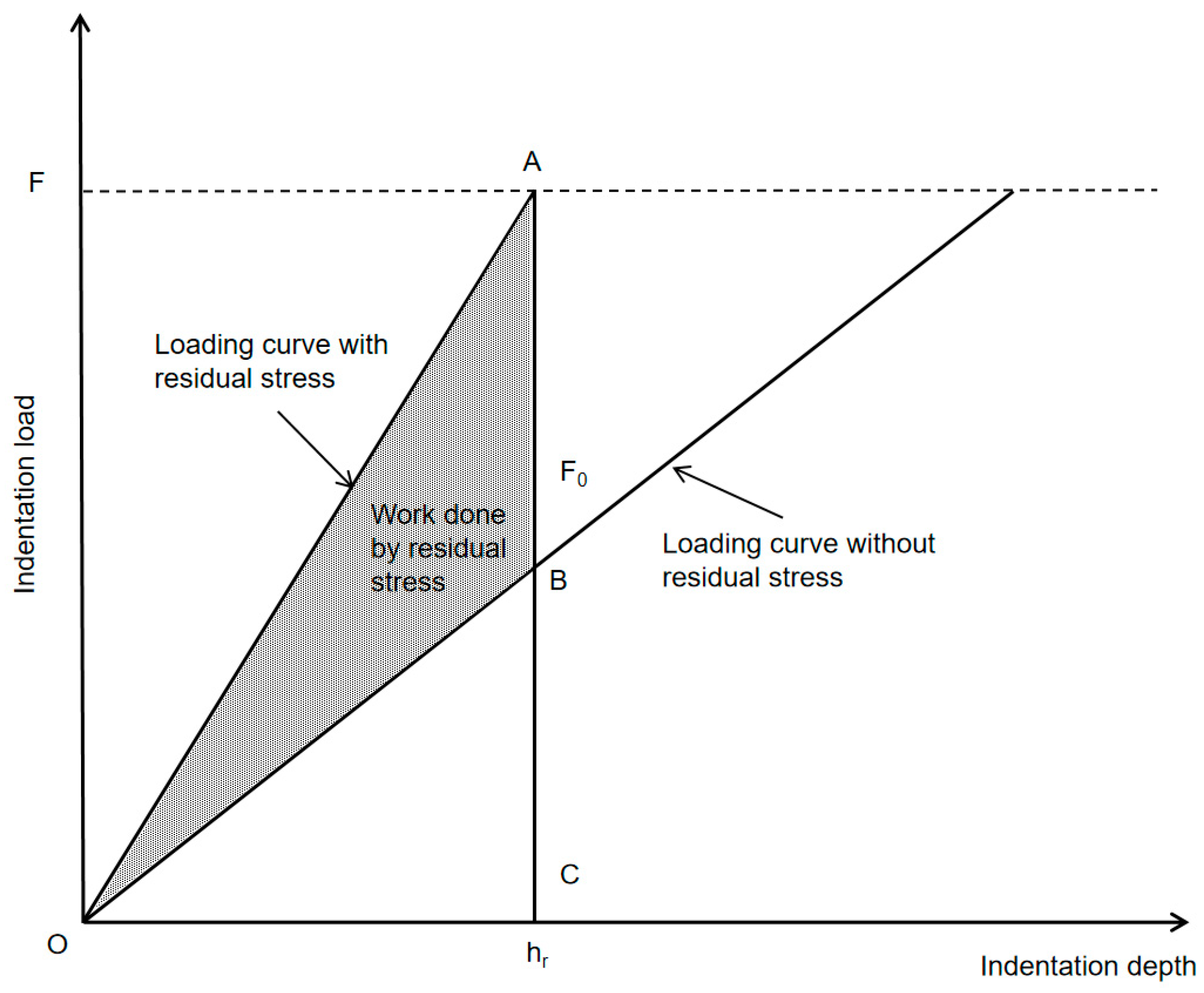
The core input of the residual stress model adopted in this study is Vickers hardness. The Vickers hardness test is a static indentation method, which works on the principle that a square pyramidal diamond indenter with a diagonal angle of 136° is pressed into the surface of the specimen under a specified test force F. During the indentation process, residual stress resists the indentation of the indenter, forcing the indenter to do extra work to overcome this resistance, thereby increasing the energy dissipation of the indentation [27], as shown in Figure 1. Based on this principle, this study proposes the following hypothesis: After solution treatment at 1150 °C to 1200 °C, the residual stress on the material surface is extremely low and can be regarded as a stress-free state [28]. This material exhibits high yield strength and excellent creep strength; during the indentation process, its springback effect is weak, and the springback depth is negligible.
Figure 1. Schematic diagram of residual stress calculation based on the energy balance method.
Based on the assumptions and the energy balance principle of “indenter work done—residual stress resistance work”, the calculation in Formula (1) for residual stress is established. This formula derives the magnitude of work done by residual stress by calculating the difference in indentation work between the two states (i.e., the area of the shaded region in the figure):
W OAB   =   W OAC     W OBC   =   F     F 0 2 h r
WOAC and WOBC respectively represent the indentation work consumed with residual stress and without residual stress; F represents the force applied by the indenter to the material; F0 represents the force applied by the indenter to the specimen without residual stress when pressed to the same depth.
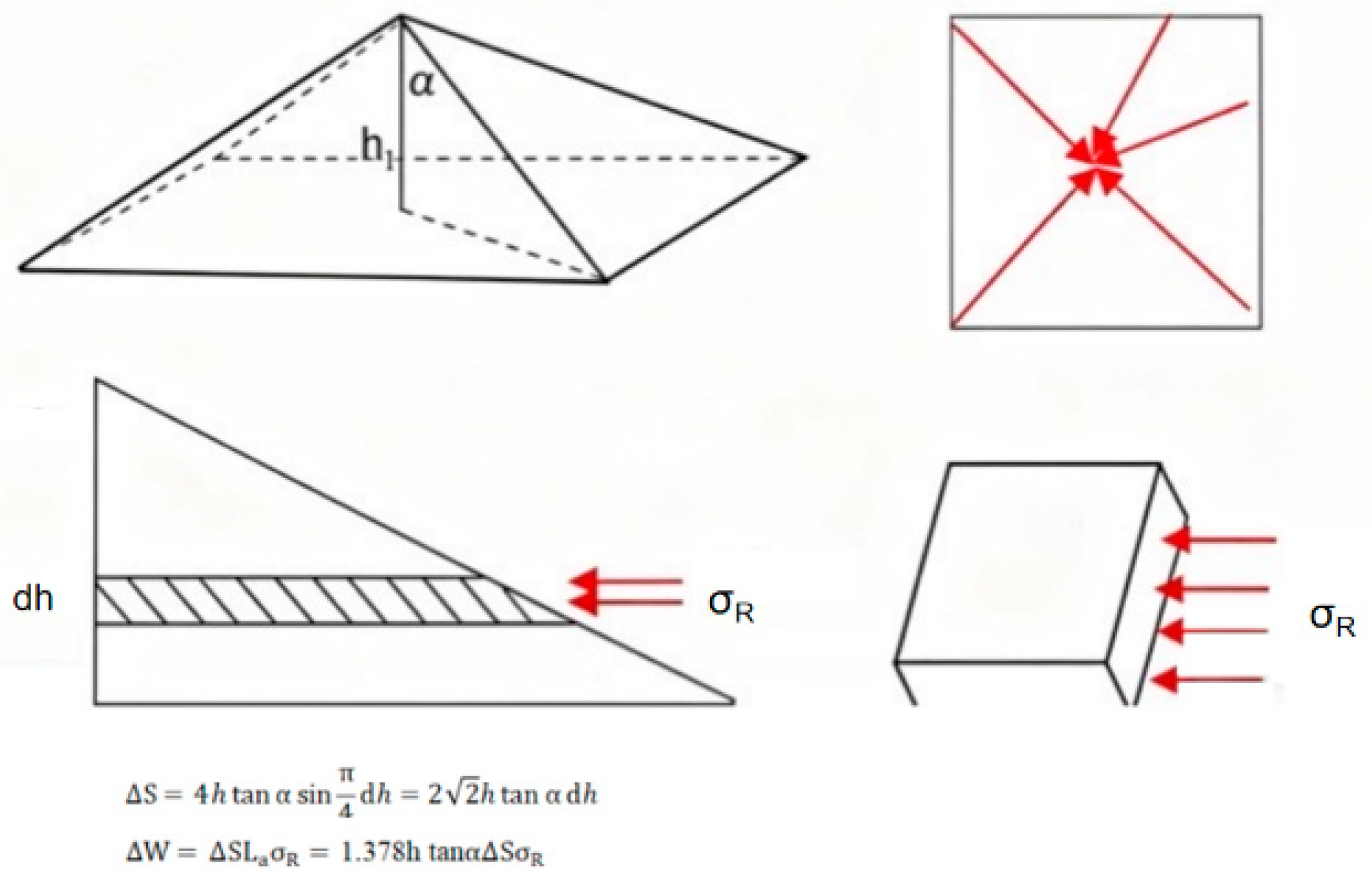
From a geometric perspective, the work done by residual stress can be approximated as the difference in the surface integral of residual stress over the indenter. Since the work done by residual stress resists the indentation process of the tetrahedral pyramid indenter, its direction points toward the center of the indentation rhombus. The schematic diagram for measuring work done by residual stress is shown in Figure 2.
Figure 2. Schematic diagram of work done by residual stress.
Let S denote the unit surface area of the region affected by residual stress, and W denote the work done by residual stress per unit surface area, integrating these gives:
W OAB = 0 h r 1.378 tan α Δ S σ R = 0.817 π Δ tan 2 α h r 3
During the indentation process, the indentation depth also directly reflects the hardness of the material. Based on the definition of Vickers hardness, the correlation formula between Vickers hardness and indentation depth is as follows:
HV = 0.102 F S = 0.102 2 F sin α 2 d 2 = 0.189 F ( 2 h r tan α ) 2
with HV: Vickers indentation hardness; F: Indentation load; hr: Indentation depth; d: Average value of diagonals d1 and d2.
Based on Equations (1)–(3), the mathematical model formula for the correlation between hardness and residual stress is established as follows:
σ R   =   1.57 F     F 0 F G HV

3. Cutting Experiments and Residual Stress Analysis

3.1. Orthogonal Cutting Tests

A three-factor and three-level orthogonal array was adopted (three factors: cutting speed, feed rate, and depth of cut; see Table 1) [29]. Taking the surface residual stress of the machined thread as the evaluation index, the single-factor effects and interaction effects of cutting parameters were investigated. YT15 cemented carbide tools were used for cutting, and the experiments were conducted on a CK6150 CNC lathe manufactured by Shenyang Machine Tool Co., Ltd. (Shenyang, China).
Table 1. Table of factors and levels for orthogonal experiment.
SHYCHVT-30Z image processing Vickers hardness tester (Laizhou Huayin Testing Instrument Company, Laizhou, China) was used for the hardness tests, with the applied load set to 500 g. Seven measurement points were selected on each specimen to measure hardness; after excluding the maximum and minimum values, the average of the remaining data was taken as the hardness of the specimen. The obtained hardness values were substituted into Formula (4) of the residual stress mathematical model, and the results are shown in Table 2.
Table 2. Orthogonal experiment results and predicted values of residual stress.
To verify the prediction accuracy of the hardness–residual stress correlation model established in this study based on the energy indentation principle, the X-ray diffraction method was adopted to measure the residual stress on the thread-machined surfaces of the nine groups of specimens from orthogonal cutting experiments. A comparative analysis was then conducted between the measured values and the model-predicted values, with the results presented in Table 3. The core principle of the model prediction is as follows: residual stress alters the energy dissipation characteristics of materials during the indentation process, and the difference in indentation work between the stress-free and stressed states can quantitatively characterize the magnitude of residual stress. By establishing a mathematical correlation between Vickers hardness and indentation work, the model ultimately enables the quantitative prediction of residual stress with Vickers hardness as the core input. The Vickers hardness test was carried out using a static indentation method, in which a square pyramidal diamond indenter with an included angle of 136° was pressed into the specimen surface under a specified test force of 500 g. The average hardness of each specimen was obtained by taking the mean value of multiple measurement points, which was then substituted into the hardness-residual stress mathematical model to calculate the predicted residual stress values.
Table 3. Comparison between predicted values and measured values of residual stress.
The X-ray diffraction method for residual stress measurement is based on Bragg’s diffraction law. It utilizes the elastic variation of the interplanar spacing of crystals under stress: the diffraction angle shift of specific crystal planes on the machined surface of the specimen was measured, and the measured data was converted into the actual surface residual stress values via elastic mechanics formulas in combination with mechanical parameters of the material such as elastic modulus and Poisson’s ratio. As a classic non-destructive method for detecting surface residual stress of materials, this approach yields highly accurate and referential measurement results. A linear fitting analysis was performed on the model-predicted values and the residual stress values measured by X-ray diffraction, with the results showing a goodness of fit of R2 = 92.5%. This indicates a good linear consistency between the two sets of values without an obvious deviation trend. The above results fully demonstrate that the hardness-residual stress correlation model established in this study has reliable predictive capability and can effectively characterize the residual stress level on the thread-machined surfaces of GH2132 superalloy. It thus realizes the rapid and non-destructive quantitative evaluation of residual stress on the machined surfaces of the alloy, with the easily measurable Vickers hardness as the evaluation index.

3.2. Microstructural Analysis of Thread-Machined Surface

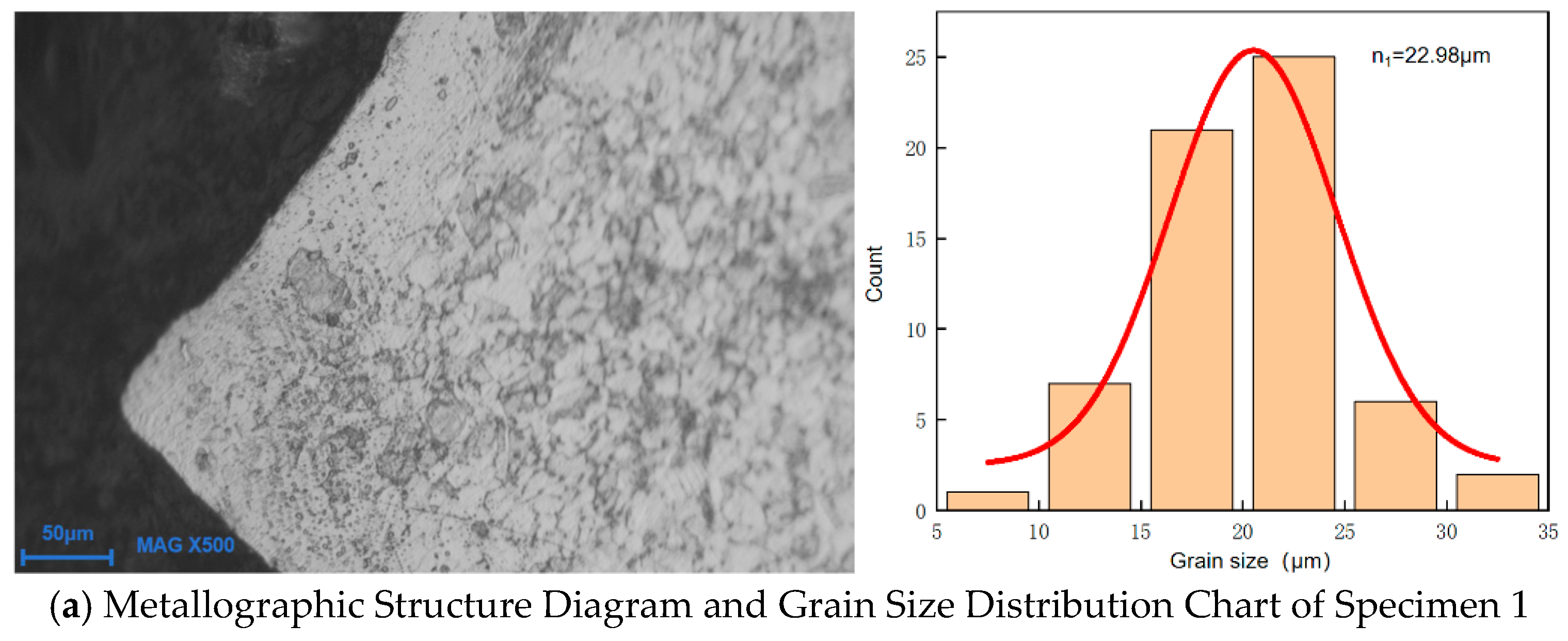
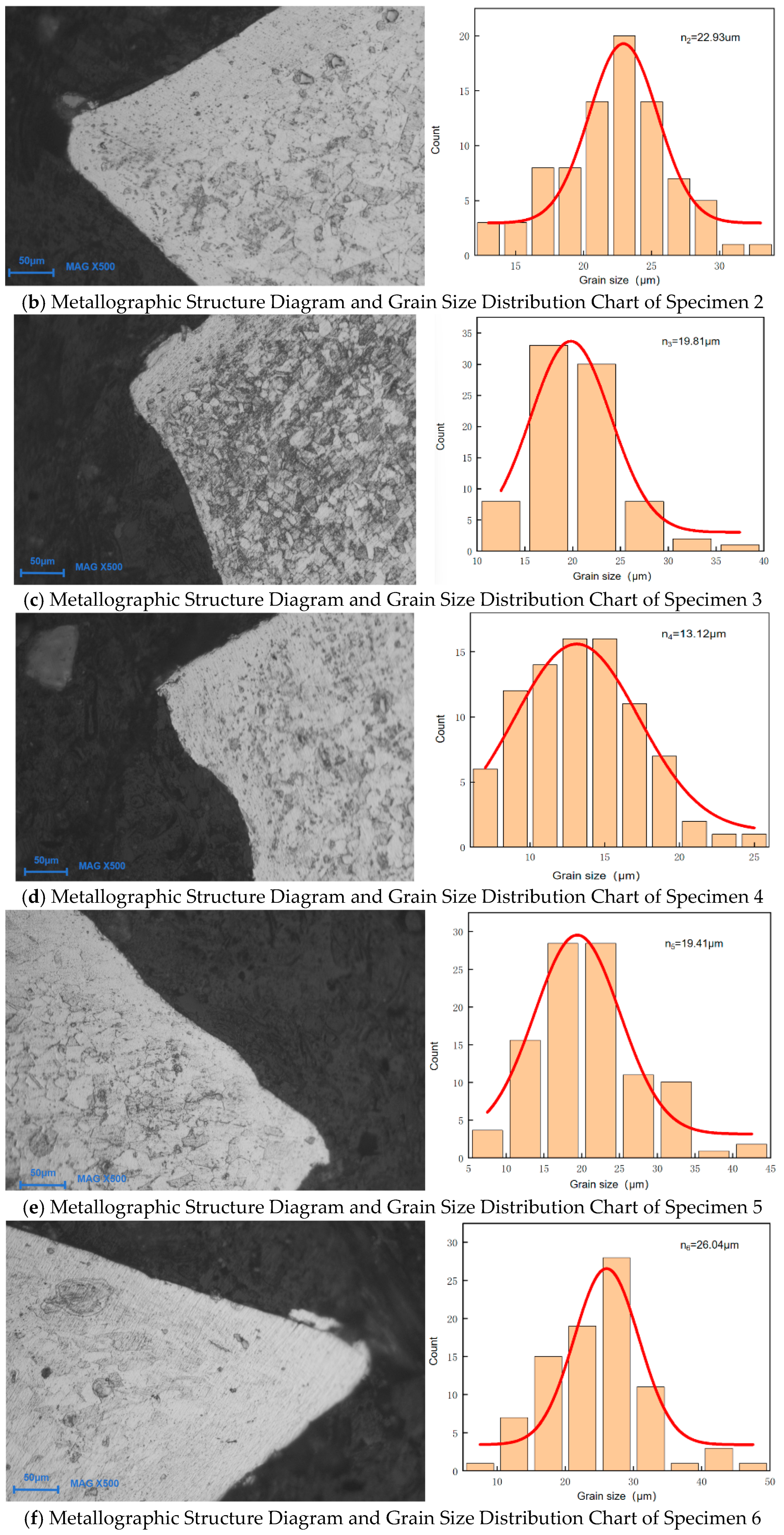
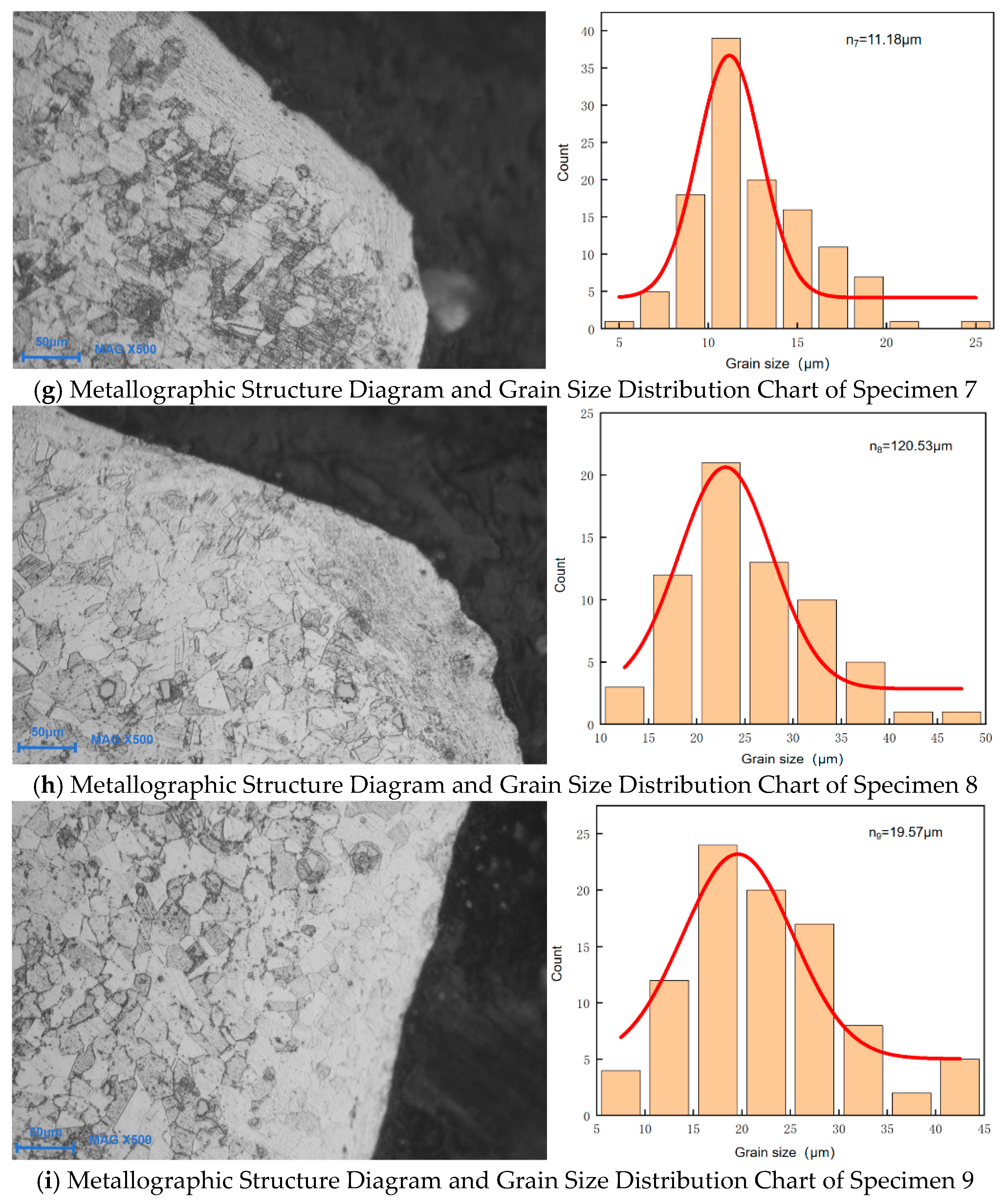
To verify the validity of the model, microstructural analysis was performed on orthogonal cutting specimens. Cold mounting, grinding, polishing, ultrasonic cleaning, and etching treatment were sequentially carried out; the etchant adopted a standard formulation: 1.5 g CuSO4 + 20 mL HCl + 20 mL C2H5OH, with an etching time of 50 s [30]. Microstructural morphology was observed using a CX40M metallurgical microscope (SOPTOP, Ningbo, China), and ImageJ software (https://imagej.net/ij/, accessed on 7 February 2025) was employed to statistically analyze the grain size. Figure 3 shows the metallographic micrographs and grain size distribution diagrams under different cutting parameters.
Figure 3. Metallographic Structure Diagrams and Grain Size Distribution Charts of 9 Specimens.
Quantitative analysis of the microstructures revealed a significant increasing trend in the average hardness of the thread surfaces of the GH2132 superalloy with the decrease in average grain size, showing an obvious negative correlation between them, which inherently follows the grain boundary strengthening principle (Hall–Petch strengthening principle). The core of this principle is that grain size is a key microstructural factor affecting the hardness and strength of metallic materials: the smaller the grain size, the greater the number and density of grain boundaries inside the material. As discontinuous interfaces in the crystal structure, grain boundaries feature disordered atomic arrangement and lattice distortion, acting as natural geometric barriers to dislocation motion and greatly shortening the slip free path of dislocations within the crystal. When a material undergoes plastic deformation under external force, the motion and slip of dislocations are the intrinsic causes of plastic deformation. In this case, dislocations are more likely to be hindered, entangled, and piled up at grain boundaries, failing to perform long-distance slip. This significantly enhances the material’s ability to impede dislocation motion and plastic deformation, leading to a marked increase in the external force required for plastic deformation of the material, which is directly manifested as the improvement of material hardness and strength at the macroscopic level. This microstructural strengthening mechanism is highly consistent with the law of the classic Hall–Petch equation in metallurgy.
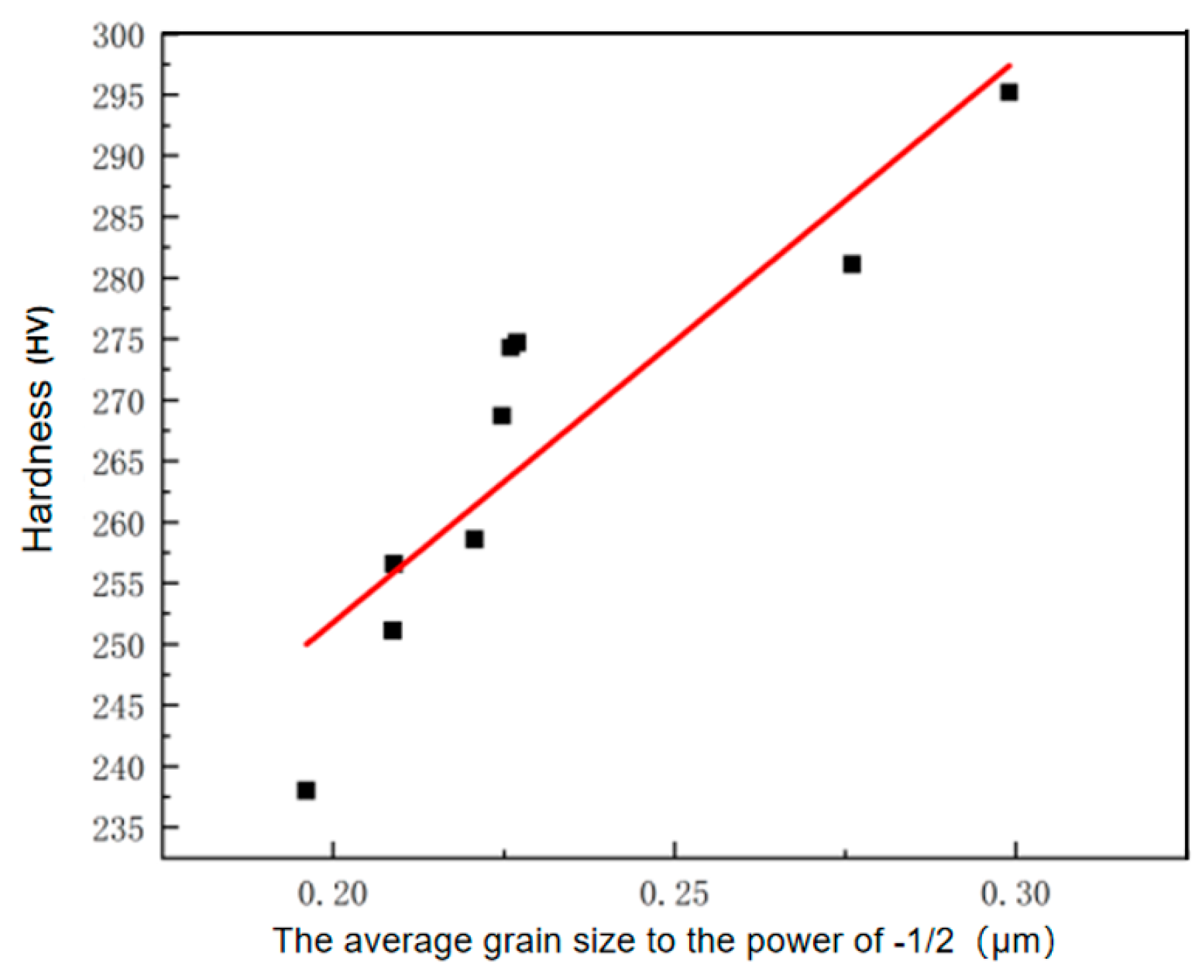
To further quantify the quantitative relationship between average grain size and Vickers hardness, a Hall–Petch regression equation fitting was performed on the experimentally measured average grain sizes and the corresponding Vickers hardness values based on the Hall–Petch strengthening principle, with the fitting results shown in Figure 4. The fitted quantitative correlation equation is as follows:
HV   =   156.3   +   482.7 n 1 / 2
n: Average grain size; Goodness of fit: R2 = 91.0%.
Figure 4. Plot of Hall–Petch regression equation.
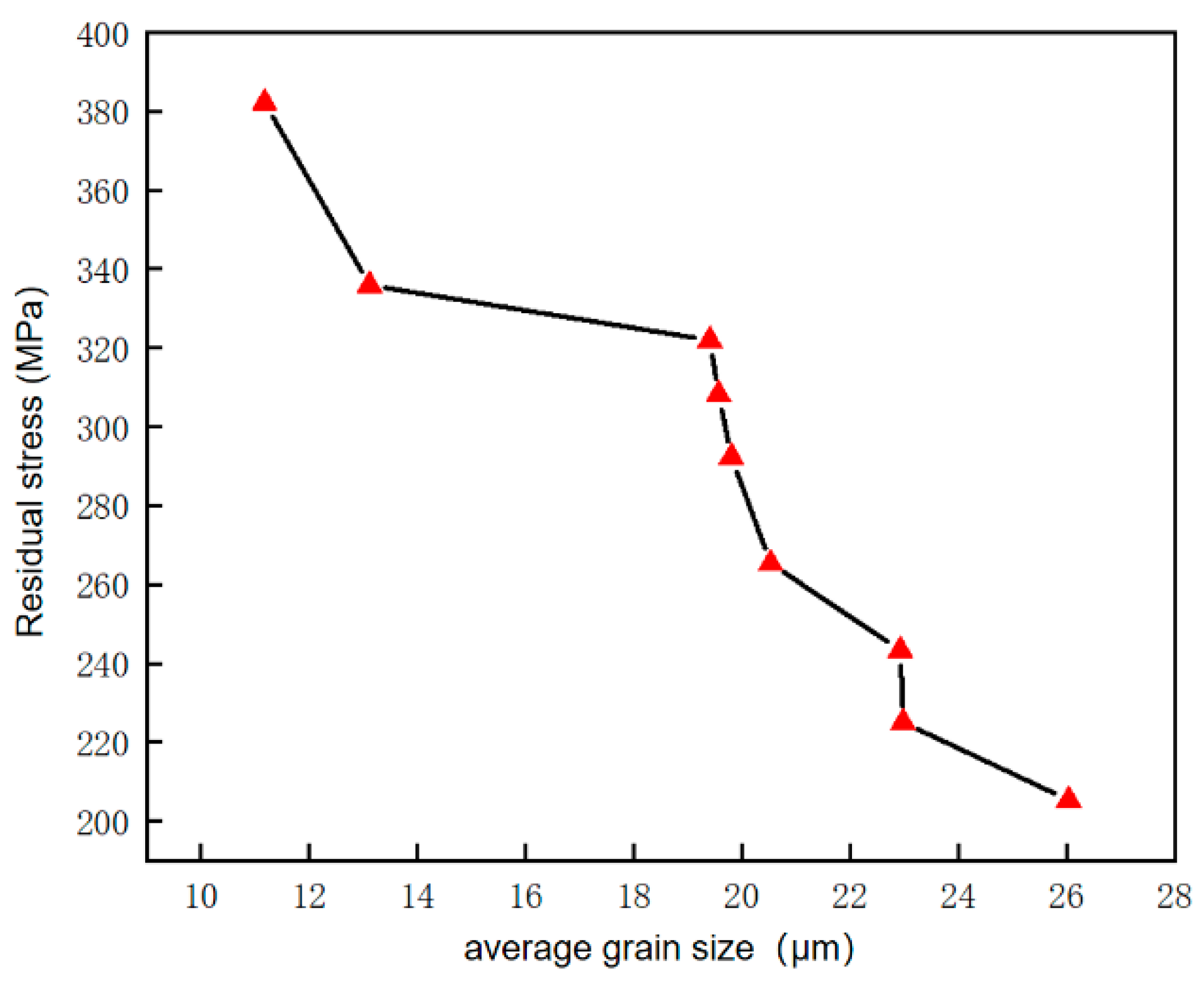
Based on the correlation law between grain size and hardness as well as the grain boundary strengthening principle, combined with the principles of cutting plastic deformation and dislocation evolution, the intrinsic relationship and action mechanism between average grain size and residual stress were analyzed. The results are shown in Figure 5. It was found that the residual stress on the thread surface of the GH2132 superalloy increased significantly with the decrease in average grain size, reaching a maximum value of 382.2 MPa when the average grain size decreased to 11.18 μm. The microscopic essence of this rule can be comprehensively explained by three principles: cutting plastic deformation, grain evolution, and residual stress generation. During the thread cutting process, the workpiece surface is subjected to intense extrusion and friction from the tool flank, leading to severe plastic deformation of the surface metal that exceeds the yield limit. Under the action of plastic shear stress, the grains undergo extrusion, elongation, and fragmentation. Meanwhile, under the coupling effect of deformation heat and cutting heat, the broken grain fragments act as crystal nuclei to complete dynamic recrystallization and grain growth, forming fine equiaxed crystals and thus realizing grain refinement on the machined surface. The more severe the plastic deformation, the higher the degree of grain refinement. Grain refinement leads to a substantial increase in the grain boundary density per unit volume of the material. Based on the geometric hindrance principle of grain boundaries to dislocation slip, the increase in grain boundary density directly shortens the free path of dislocation motion, resulting in the accumulation, entanglement, and pile-up of a large number of dislocations at grain boundaries [31,32,33], which makes it impossible to achieve stress relaxation through dislocation slip. In addition, based on the essence of residual stress as unrelaxed elastic strain, dislocation pile-up is the core source of microscopic stress concentration inside the material. Dislocation pile-up at grain boundaries causes severe local lattice distortion and makes atoms deviate from their equilibrium positions. To maintain the stability of the lattice structure, mutually balanced elastic stress is generated inside the material. When the microscopic stress concentration accumulates to a macroscopically measurable scale, surface residual stress is formed, and the higher the degree of dislocation pile-up, the greater the residual stress on the material surface. The effect of grain size on hardness and residual stress exhibits a favorable linear synchronous increasing relationship, which is highly consistent with the residual stress calculation model established in this study.
Figure 5. Plot of the relationship between grain size and residual stress.
To investigate the regulatory mechanism of precipitation strengthening phases on the hardness and residual stress of the thread-machined surface of GH2132 superalloy, X-ray diffraction (XRD) was adopted for qualitative phase analysis combined with the reference intensity ratio (RIR) method for quantitative phase analysis to accurately detect and compare the precipitation contents of carbides and γ’ phases in Specimens 4 and 6 with significant performance differences. Meanwhile, scanning electron microscopy (SEM) was used for microstructural characterization to clarify the morphological characteristics and spatial distribution rules of the two phases. Combined with the second-phase strengthening principle, lattice strain effect and dislocation evolution theory, the coupling mechanism of precipitation content, morphology and distribution on the hardness and residual stress of the alloy was revealed.
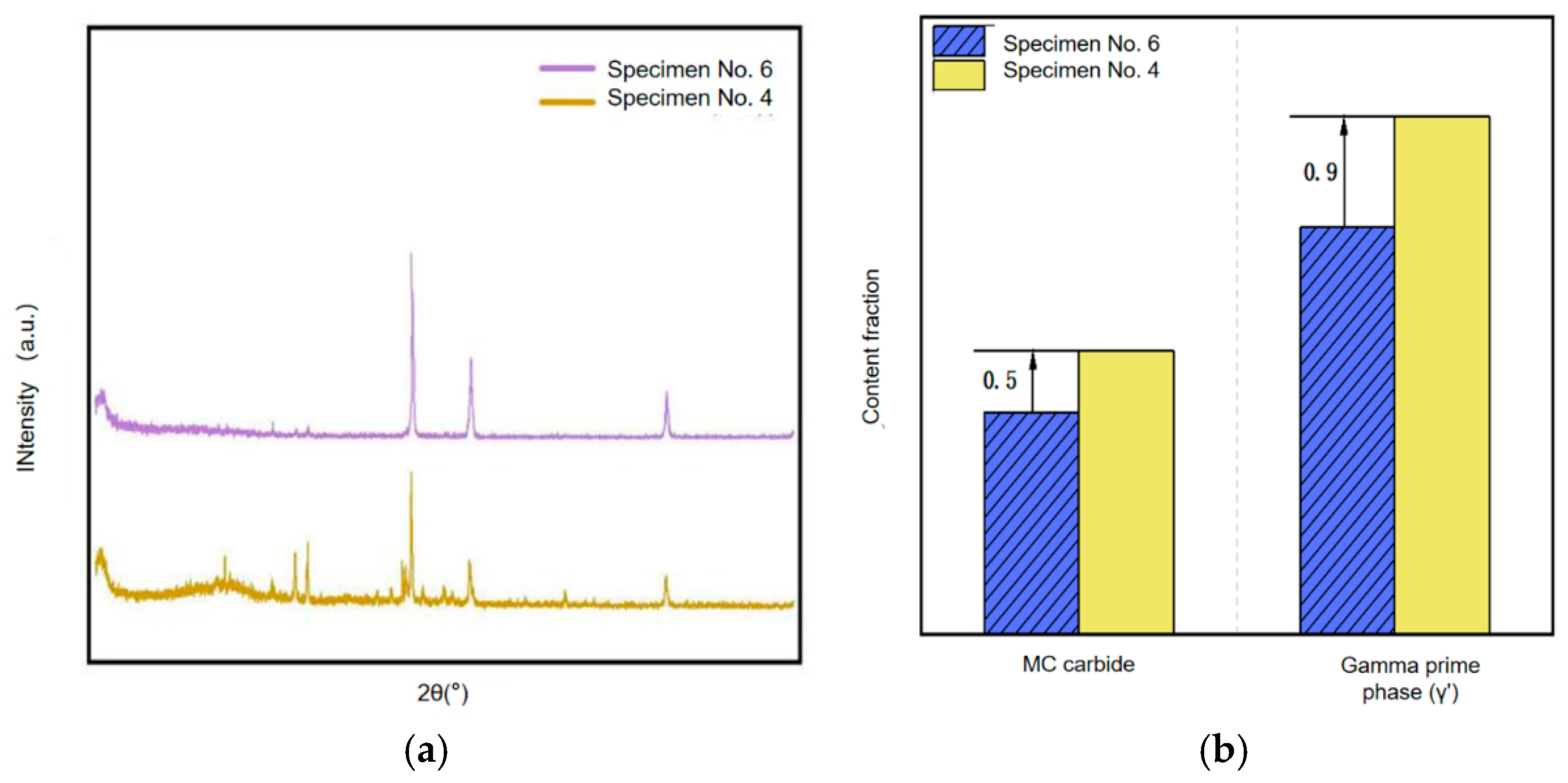
Qualitative phase identification via XRD (Rigaku Ultima-IV, Tokyo, Japan) confirmed MC-type carbides and γ’ phases as the main strengthening precipitation phases. Based on the RIR quantitative principle, the mass fractions of the two phases were accurately quantified by normalizing the diffraction peak intensities with the reference intensity of standard samples. A significant dose–effect relationship was observed between the precipitation content and mechanical properties of Specimens 4 and 6 (see Figure 6): the contents of carbides and γ’ phases in Specimen 4 were 2.3% and 4.2%, with the surface residual stress and Vickers hardness reaching 335.9 MPa and 281.1 HV, respectively, while those in Specimen 6 were only 1.8% and 3.3%, corresponding to a residual stress of 205.3 MPa and a hardness of 238.0 HV. The experimental results indicated that the surface hardness and residual stress of the alloy increased synchronously with the rising precipitation contents of carbides and γ’ phases, which inherently followed the second-phase particle strengthening principle. The two precipitation phases synergistically realized the hardness improvement and microscopic accumulation of residual stress through different dislocation blocking mechanisms. Among them, carbides, as hard precipitation phases, formed a high-stability phase interface with the matrix. Dislocations could only undergo diffraction deformation when encountering the phase interface, forming a physical barrier for dislocation motion [33] and significantly increasing the dislocation slip resistance. There was a slight lattice parameter mismatch between γ’ phases and the matrix, which induced the coherent strain effect and formed a lattice distortion zone at the phase interface. Dislocations had to overcome the strain energy and pass through the phase zone by bypassing or climbing when moving through γ’ phases, which greatly raised the energy barrier for dislocation motion and effectively hindered dislocation slip. The dislocation blocking effects of the two precipitation phases exhibited a synergistic superposition effect: the higher the precipitation content, the more dislocation blocking sites per unit volume, the stronger the plastic deformation resistance of the material, and the significantly improved macroscopic hardness. Meanwhile, the hindered dislocation motion aggravated intragranular dislocation pile-up and lattice distortion, and the continuous accumulation of microscopic stress concentration ultimately led to a synchronous increase in surface residual stress.
Figure 6. (a) XRD patterns of different workpieces, (b) Content of MC carbides and γ’ phase.
Metals 16 00359 g006
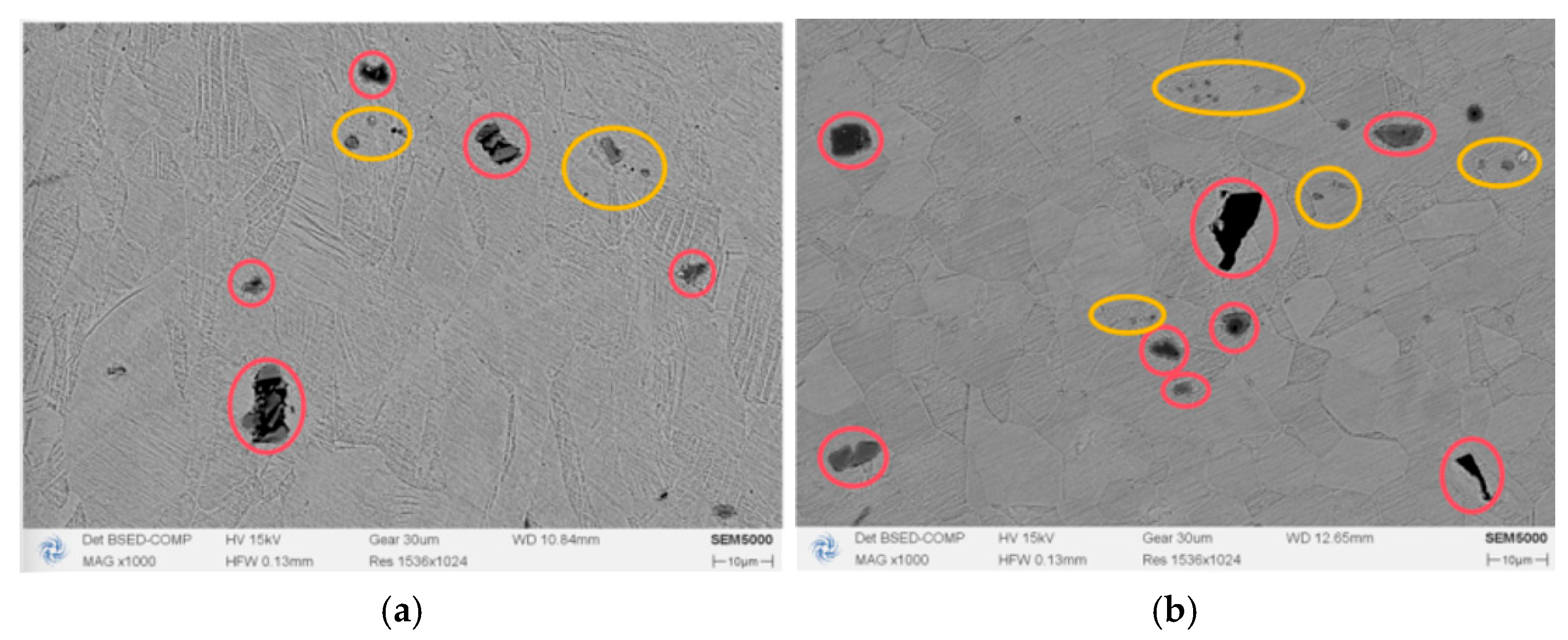
High-magnification microstructural characterization of Specimens 4 and 6 via SEM clearly identified the morphological and distribution rules of the two phases based on the secondary electron imaging principle (see Figure 7): carbides presented as bright blocky/ribbon-like protrusions due to their high atomic number and strong electron backscattering ability; γ’ phases, with a small atomic number difference from the matrix, were fine dot-like precipitation phases dispersively distributed in the matrix. A comparison of the morphological and distribution characteristics of the two phases showed that carbides in Specimen 6 were regularly blocky and sparsely dispersed, and γ’ phases were uniformly and sparsely distributed; by contrast, carbides in Specimen 4 were irregularly ribbon-like and densely clustered, and γ’ phases were densely and dispersively distributed. Relevant studies have shown that the more irregular the morphology, the denser the distribution of carbides, and the higher the distribution density of γ’ phases, the higher the hardness and residual stress levels of the material [34,35]. On the one hand, densely distributed carbides formed a continuous dislocation blocking network in the matrix, and densely dispersed γ’ phases formed dense dislocation blocking sites, both of which greatly shortened the free path of dislocation motion, strengthened the dislocation blocking effect, and improved the alloy hardness. On the other hand, there were significant differences in elastic modulus and thermal expansion coefficient between carbides and the matrix. Under the thermo-mechanical coupling effect of cutting, additional internal stress was generated at the phase interface due to the incoordination of thermal and plastic deformation. The dense distribution of carbides increased the phase interface area, aggravated the superposition effect of additional internal stress, and induced significant residual stress [36]. Densely distributed γ’ phases overlapped the lattice distortion zones of the matrix, intensified the lattice strain effect, and reduced the phase transformation synergy between the second phase and the matrix. Non-uniform volume expansion and contraction occurred in the lattice structure during the cutting process, resulting in lattice strain-induced residual stress. The higher the distribution density of γ’ phases, the more significant the lattice strain, and the stronger the accumulation effect of residual stress.
Figure 7. (a,b) SEM Images of Workpieces 4 and 6. Note: The yellow regions denote the γ’ phase, and the red regions denote MC carbides.
The effects of carbides and γ’ phase on hardness and residual stress increase synchronously, which is consistent with the residual stress calculation model established in this study.

3.3. Cutting Parameter Optimization

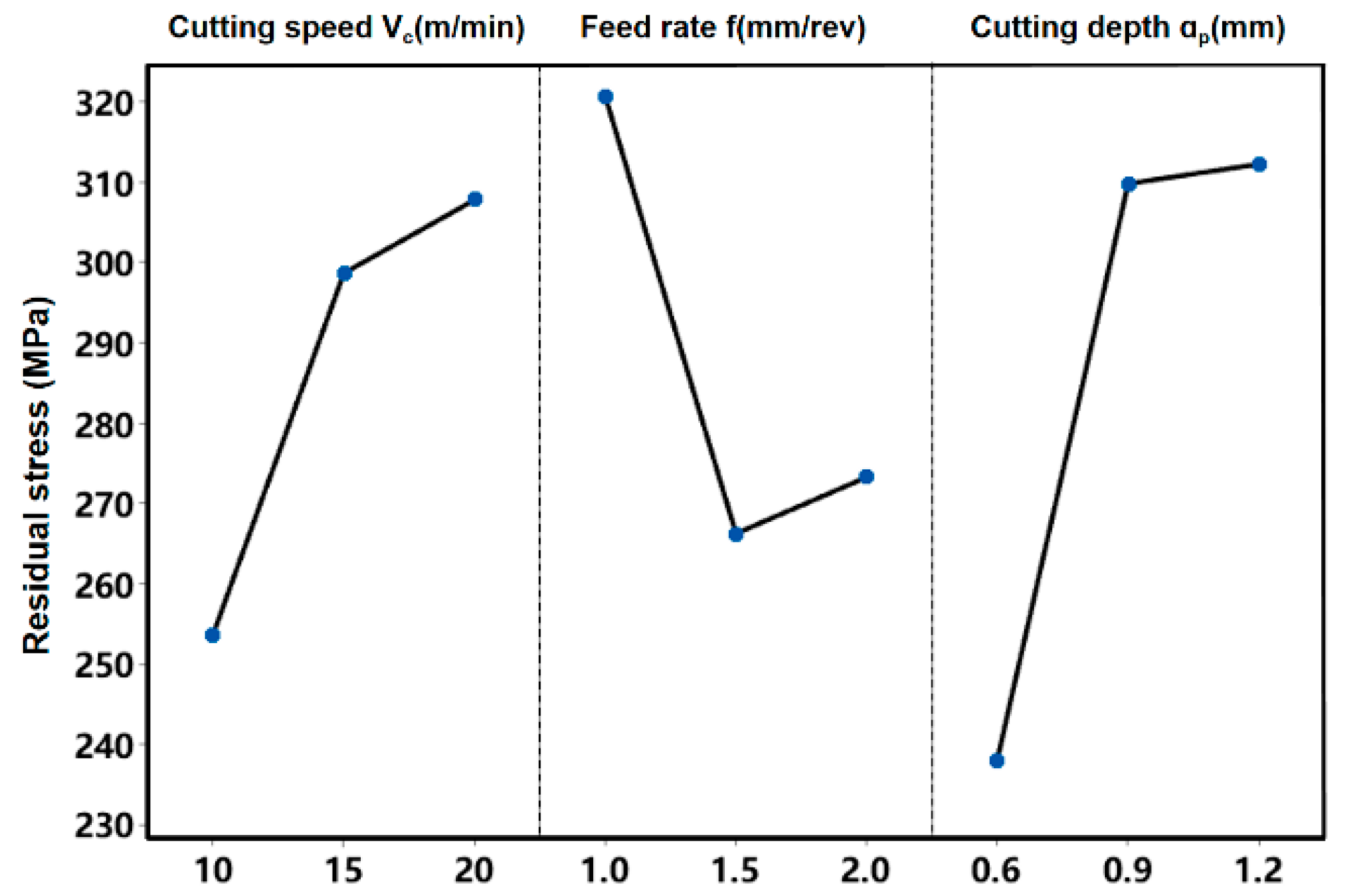
In thread cutting, the residual stress on the cutting surface of GH2132 superalloy bolts affects their mechanical properties and service life; appropriately increasing the compressive residual stress can improve the service life of the bolts. Range analysis was performed on the measured results of thread residual stress under different cutting parameter combinations (as shown in Table 4). This reveals the influence law of cutting parameters on residual stress: adjustments to cutting depth have the most significant impact on controlling the residual stress on the workpiece surface, making it the key factor; adjustments to feed rate follow, and changes in cutting speed have a relatively weak impact on residual stress. Therefore, in practical cutting optimization, priority should be given to cutting depth, followed by feed rate, while adjustments to cutting speed have a weak effect on residual stress control.
Table 4. Range analysis of cutting parameters.
LevelCutting Speed Vc (m·min−1)Feed Rate f (mm·rev−1)Cutting Depth αp (mm)
11010.6
2151.50.9
32021.2
Range R32.5 MPa86.7 MPa186.3 MPa
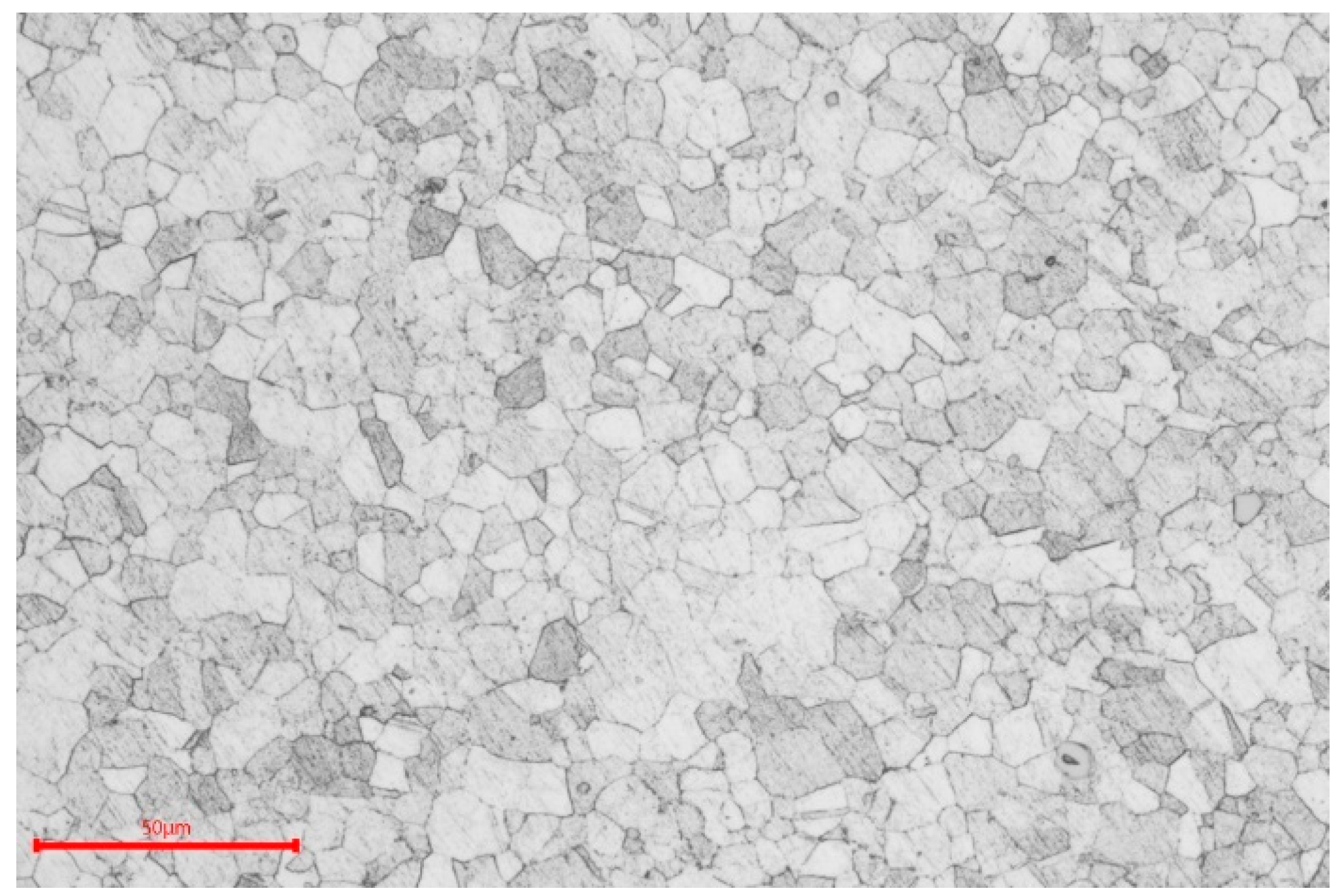
Based on the orthogonal test results and the hardness-residual stress calculation model, the optimal cutting parameter combination with the maximum compressive residual stress was selected: cutting speed Vc = 20 m·min−1, feed rate f = 1 mm·rev−1, and cutting depth αp = 1.2 mm (as shown in Figure 8). The results show that under these parameters, the Vickers hardness of the thread surface is 295.2 HV, and the model-calculated residual stress is 382.2 MPa. Metallographic analysis reveals that the average grain size reaches 11.1 μm (as shown in Figure 9), showing a significant refinement trend, which is consistent with the negative correlation law between grain size and residual stress. This phenomenon is attributed to grain refinement after optimizing the cutting parameters, which increases dislocation pile-up and elevates compressive residual stress—verifying the effectiveness of parameter optimization from the perspective of microscopic mechanisms.
Figure 8. Plot of the relationship between cutting parameters and experimental results.
Figure 9. Metallographic structure diagram of workpieces after cutting parameter optimization.

4. Conclusions

Based on the energy indentation method, this study constructs a hardness–residual stress correlation model for GH2132 superalloy. The validity of the model is verified through orthogonal thread cutting tests and microstructural analysis, and the cutting process is optimized. The main conclusions are as follows:
(1)
Based on the principle of the energy indentation method, a mathematical model for the hardness–residual stress correlation of GH2132 superalloy was established. This model quantifies residual stress through the indentation energy difference, providing a mathematical tool for the efficient characterization of residual stress.
(2)
From the perspective of microscopic mechanisms, hardness and residual stress exhibit homologous growth characteristics: Grain refinement synchronously improves hardness and residual stress by increasing grain boundary density, shortening the free path of dislocation slip, and intensifying dislocation pile-up; the higher the content and the denser the distribution of carbides and γ’ phase, the stronger the hindering effect on dislocation motion, and the greater the introduced microscopic strain, ultimately achieving a synergistic increase in hardness and residual stress. This law is highly consistent with the core assumptions of the established model.
(3)
The significance order of the influence of cutting parameters on residual stress is cutting depth αp > feed rate f > cutting speed Vc. The optimal cutting parameter combination is cutting speed Vc = 20 m·min−1, feed rate f = 1 mm·rev−1, and cutting depth αp = 1.2 mm. Under these parameters, the average grain size of the bolt’s cutting surface reaches 11.1 μm, and the compressive residual stress increases significantly, which can effectively improve the service life of the bolt.
This study has two main limitations: the cutting zone temperature was not directly measured due to equipment constraints, making it difficult to quantify the thermo-mechanical coupling effect on residual stress, and the microstructure characterization was relatively simplified, as XRD analysis only focused on phase content quantification without calculating crystallographic parameters such as lattice parameters and microstrain, which restricts further understanding of the stress formation mechanism induced by lattice distortion. Future research will mainly focus on three aspects: exploring the evolution law of residual stress during high-temperature service to reveal the stress relaxation mechanism of GH2132 superalloy bolts and support service life prediction, analyzing the regulation effect of key alloying elements on residual stress and optimizing alloy composition or heat treatment processes to improve both residual stress distribution and mechanical properties, and developing an online monitoring system for residual stress by integrating the hardness-based prediction method with process sensing technology to realize closed-loop control in industrial production via real-time feedback and parameter adjustment.

Author Contributions

Conceptualization, J.Y. (Jianghong Yu), Y.C. (Yanxiang Chen) and Q.Y.; methodology, J.Y. (Jianghong Yu) and C.C.; validation, C.C., F.W. and J.Y. (Jiaying Yan); investigation, Y.C. (Yucheng Cao) and J.Y. (Jiaying Yan); resources, Y.C. (Yanxiang Chen) and Q.Y.; data curation, C.C. and Y.C. (Yucheng Cao); writing—original draft preparation, C.C.; writing—review and editing, J.Y. (Jianghong Yu), J.Y. (Jiaying Yan) and Q.Y.; visualization, Y.C. (Yucheng Cao) and F.W.; supervision, F.W. and Y.C. (Yanxiang Chen); project administration, Y.C. (Yanxiang Chen) and Q.Y.; funding acquisition, Y.C. (Yanxiang Chen) and Q.Y. All authors have read and agreed to the published version of the manuscript.

Funding

The authors gratefully acknowledge Hunan Provincia Natural Science Foundation of China (Grant No. 2024JJ8270, 2025JJ80202).

Data Availability Statement

The original contributions presented in this study are included in the article. Further inquiries can be directed to the corresponding authors.

Conflicts of Interest

Author Yanxiang Chen was employed by the company Zhuzhou Hanjie Aviation Technology Co., Ltd. The remaining authors declare that the research was conducted in the absence of any commercial or financial relationships that could be construed as a potential conflict of interest.

References

  1. Tian, X.; Zhao, J.; Yang, H.; Wang, Z.; Liu, H. Effects of high-speed intermittent turning of GH2132 alloy with Si3N4/(W, Ti) C/Co graded ceramic tool. Int. J. Adv. Manuf. Technol. 2018, 100, 401–408. [Google Scholar] [CrossRef]
  2. Deng, J.; Zhou, S.J.; Gao, H.J.; Lin, M.H.; Li, X. Numerical simulation investigation on machining deformation of aviation thin-walled parts caused by residual stress. Mater. Sci. Forum 2021, 1032, 186–191. [Google Scholar] [CrossRef]
  3. Huda, Z.; Ajani, M.H.; Ahmed, M.S. Fatigue behavior of two notched cutting tool materials–High speed steel and cemented carbide. Mater. Test. 2020, 62, 265–270. [Google Scholar] [CrossRef]
  4. Chen, J.; Zhou, X.; Wang, W.; Liu, B.; Lv, Y.; Yang, W.; Xu, D.; Liu, Y. A review on fundamental of high entropy alloys with promising high–temperature properties. J. Alloys Compd. 2018, 760, 15–30. [Google Scholar] [CrossRef]
  5. Kumar, R.K.; SampathKumaran, P.; Seetharamu, S.; Kumar, S.A.; Pramod, T.; Naveen, G.J. Investigation of shot peening effect on titanium alloy affecting surface residual stress and roughness for aerospace applications. Procedia Struct. Integr. 2019, 14, 134–141. [Google Scholar] [CrossRef]
  6. Tabatabaeian, A.; Ghasemi, A.R.; Shokrieh, M.; Marzbanrad, B.; Baraheni, M.; Fotouhi, M. Residual stress in engineering materials: A review. Adv. Eng. Mater. 2021, 24, 2100786. [Google Scholar] [CrossRef]
  7. Zeng, X.; Huang, L.H.; Xu, X.F.; Fan, Y.B.; Liu, W.C.; Tu, Q.Q.; Pei, L.Y.; Luo, J. Microstructure evolution and strengthening mechanisms of GH2132 bolts manufactured by electromagnetic induction heating-local forging. Mater. Today Commun. 2025, 46, 112909. [Google Scholar] [CrossRef]
  8. Li, X.; Liu, J.; Wu, H.; Miao, K.; Wu, H.; Li, R.; Liu, C.; Fang, W.; Fan, G. Research progress of residual stress measurement methods. Heliyon 2024, 10, e28348. [Google Scholar] [CrossRef]
  9. Peng, Y.; Liu, J.; Wu, H.; Miao, K.; Wu, H.; Li, R.; Liu, C.; Fang, W.; Fan, G. Residual stress measurement combining blind-hole drilling and digital image correlation approach. J. Constr. Steel Res. 2021, 176, 106346. [Google Scholar] [CrossRef]
  10. Li, C.; Ji, B.; Yao, Y. Stress biaxiality-based residual stress assessment in welded T-joints using the blind-hole method. J. Constr. Steel Res. 2024, 216, 108610. [Google Scholar] [CrossRef]
  11. Yazdanmehr, A.; Jahed, H. On the surface residual stress measurement in magnesium alloys using X-ray diffraction. Materials 2020, 13, 5190. [Google Scholar] [CrossRef]
  12. Kwak, N.; Lee, E. DOE-Based Investigation of Microstructural Factors Influencing Residual Stress in Aluminum Alloys. Metals 2025, 15, 816. [Google Scholar] [CrossRef]
  13. Futas, P.; Brezinová, J.; Pástor, M.; Pribulova, A. Reducing Residual Stresses in Synthetic Cast Iron by Ti Microalloying. Metals 2025, 15, 520. [Google Scholar] [CrossRef]
  14. Sampath, S.; Zhang, Z.; Tham, Z.W.; Chen, Y.F.; Seng, D.H.L.; Gantala, T.; Zhang, L. Non-contact measurements of residual stress distribution and grain size in titanium alloys with laser ultrasonic system. Int. J. Mech. Sci. 2023, 264, 108809. [Google Scholar] [CrossRef]
  15. Arif, U.; Khan, I.A.; Hasan, F.; Husain, A.; Khan, S.H. Effects of EDM parameters on residual stress and microhardness in Al-10%SiCmicro-SiCnano hybrid composites: A Simulation and Experimental study. Results Eng. 2025, 26, 105353. [Google Scholar] [CrossRef]
  16. Chai, J.; Zhong, J.; Shen, Z.; Xu, B.; Zhang, Z.; Zhang, X.; Shen, J. Characterization of the microstructure and residual stress in quenched and tempered AISI 4135 steel using magnetic nondestructive testing techniques. J. Mater. Eng. Perform. 2023, 33, 12424–12436. [Google Scholar] [CrossRef]
  17. Zhang, Z.; Yang, B.; Wang, S.; Xiao, S.; Yang, G.; Zhu, T. A fatigue crack tip field model considering residual stress and plasticity-induced closure for welded structures. Eng. Fract. Mech. 2024, 307, 110297. [Google Scholar] [CrossRef]
  18. Lu, X.; Teng, L.; Zhang, G.; Xiao, S.; Liang, S.Y. Prediction of surface residual stress of micro-milling Inconel 718 thin-walled parts considering the initial stress state. Proc. Inst. Mech. Eng. Part B-J. Eng. Manuf. 2024, 133, 1305–1316. [Google Scholar] [CrossRef]
  19. He, X.; Yang, Y.; Zhang, S.; Zhang, Y.; Shi, Z.; Wang, Z.; Zhang, J. Determination of residual stresses in metallic materials based on spherical indentation strain. Mater. Test. 2023, 65, 982–991. [Google Scholar] [CrossRef]
  20. Xue, H.; Jia, Y.-L.; Lu, J.-Z.; Wang, S.; Wang, Z.; Wang, S. An approach for obtaining surface residual stress based on indentation test and strain measurement. Mater. Test. 2022, 64, 220–227. [Google Scholar] [CrossRef]
  21. Popiela, B.; Günzel, S.; Sklorz, C.; Widjaja, M.P.; Mair, G.W.; Seidlitz, H. Application of the incremental hole-drilling method for residual stress determination in type 4 pressure vessels. Mater. Test. 2025, 67, 4. [Google Scholar] [CrossRef]
  22. Yue, Q.; He, Y.; Li, Y.; Tian, S. Modeling and optimization of surface residual stress profiles in milling of aluminum 7075-T6 alloy. Int. J. Adv. Manuf. Technol. 2024, 130, 5913–5934. [Google Scholar] [CrossRef]
  23. Kuang, W.; Miao, Q.; Ding, W.; Zhao, Y.; Zhao, Z. Residual stresses of turbine blade root produced by creep-feed profile grinding: Three-dimensional simulation based on workpiece–grain interaction and experimental verification. J. Manuf. Process. 2020, 62, 67–79. [Google Scholar] [CrossRef]
  24. Zhou, Y.; Song, P.; Su, W.; Wei, P.; Zhang, R.; Guo, X.; Ding, Z.; Yao, H. Machine learning in prediction of residual stress in laser shock peening for maximizing residual compressive stress formation. Mater. Des. 2024, 243, 113079. [Google Scholar] [CrossRef]
  25. Szwajka, K.; Trzepieciński, T.; Szewczyk, M.; Zielińska-Szwajka, J.; Barlak, M. Investigating Resulting Surface Topography and Residual Stresses in Bending DC01 Sheet Under Tension Friction Test. Lubricants 2025, 13, 255. [Google Scholar] [CrossRef]
  26. Wang, L.; Yue, C.; Ma, W.; Liu, X.; Li, C.; Liang, S.Y. Prediction of residual stress and deflection in multi-process milling of large thin-walled components with initial bulk residual stress. Measurement 2025, 247, 116814. [Google Scholar] [CrossRef]
  27. Kong, D.; Yang, B.; Hu, P. Binary Newton calculation method of residual stress based on the indentation energy difference theory. Metals 2022, 12, 1439. [Google Scholar] [CrossRef]
  28. Marchese, G.; Piscopo, G.; Lerda, S.; Salmi, A.; Atzeni, E.; Biamino, S. Heat-treated Inconel 625 by laser powder bed fusion: Microstructure, tensile properties, and residual stress evolution. J. Mater. Eng. Perform. 2024, 33, 6825–6834. [Google Scholar] [CrossRef]
  29. Öztürk, K.; Kısasöz, A.; Özer, G.; Karaaslan, A. Precipitation of carbides in a nickel-based cast heat-resistant alloy during thermal exposure: Evolution of microstructure, hardness and corrosion properties. Mater. Test. 2023, 65, 233–243. [Google Scholar] [CrossRef]
  30. Fan, Y.; Yang, S.; Hao, Z. Study on phase transformation in cutting nickel-based superalloy GH4169 based on molecular dynamics. J. Mater. Eng. Perform. 2024. [Google Scholar] [CrossRef]
  31. Kong, B.; Jia, Q.; Wang, G.; Tao, D.; Yang, Z. Microstructure and Mechanical Property Evolution of 34CrNiMo6 Steel via Induction Quenching and Tempering. Metals 2025, 15, 970. [Google Scholar] [CrossRef]
  32. Fu, Y.; Cong, D.; Hu, T.; Feng, G.; Li, Z.; Chen, D.; Yi, Z.; Yu, G.; Cong, W.; Wang, Y.; et al. Evolution of Microstructure, Mechanical Properties and Residual Stress Prediction of Al2O3 Ceramic/TC4 Alloy Diffusion Bonded Joint. Metals 2026, 16, 189. [Google Scholar] [CrossRef]
  33. Wu, H.; Ti, W.; Zhang, G.; Xue, F.; Li, C.; Fang, K.; Zhang, D.; Wu, X. Effect of milling on the microstructure and mechanical property of austenite stainless steel. Mater. Test. 2020, 62, 1181–1186. [Google Scholar] [CrossRef]
  34. Zhang, B.; Yan, H.; Xia, Z.; Zhang, P.; Shi, H.; Lu, Q. Influence of scanning strategy and post-treatment on cracks and mechanical properties of selective-laser-melted K438 superalloy. Coatings 2024, 14, 414. [Google Scholar] [CrossRef]
  35. Ali, B.; Malak, N.; Al-Asadi, H.A.; Safi, M.S.; Daminova, G.; Alhadrawi, M.; Alfaker, M.J.; Islam, S. Small-quantity cooling lubrication in creep-feed grinding: Surface quality and residual stress analysis. Results Eng. 2024, 22, 102348. [Google Scholar] [CrossRef]
  36. Wang, H.; Sun, S.; Sheng, N.; Hou, G.; Li, J.; Zhou, Y.; Sun, X. Effect of carbon on the microstructures and stress rupture properties of a polycrystalline Ni-based superalloy. Acta Metall. Sin. (Engl. Lett.) 2024, 38, 151–163. [Google Scholar] [CrossRef]
Disclaimer/Publisher’s Note: The statements, opinions and data contained in all publications are solely those of the individual author(s) and contributor(s) and not of MDPI and/or the editor(s). MDPI and/or the editor(s) disclaim responsibility for any injury to people or property resulting from any ideas, methods, instructions or products referred to in the content.

Article Metrics

Citations

Article Access Statistics

Article metric data becomes available approximately 24 hours after publication online.