1. Introduction
Internal combustion engines (ICEs) remain the dominant powertrain for modern road vehicles due to their high energy density, mature production technologies, well-developed infrastructure and relatively low cost. Despite these advantages, the widespread use of ICEs is associated with significant challenges, primarily related to exhaust emissions, environmental pollution and continued dependence on fossil fuels [
1,
2,
3,
4]. The rapid growth of the global vehicle population [
5,
6] is increasing regulatory pressure [
7] and accelerating research and development activities aimed at increasing engine and vehicle efficiency, reducing pollutant emissions and improving the overall durability and reliability of engines [
8,
9,
10].
In this context, there is increasing attention to the optimization of engine components operating under severe thermal and mechanical loads. The piston, as a key element of the crankshaft–connecting rod–piston system, is subjected to severe thermal and mechanical loads, arising from high combustion pressures, elevated temperatures, cyclic stresses, and frictional contact with the cylinder liner [
11].
The piston assembly is one of the most critical subsystems of the internal combustion engine, as it directly participates in energy conversion and load transmission. Together with the piston rings and piston pin, the piston forms the piston group, whose primary functions include sealing the combustion chamber, transmitting gas forces to the crankshaft via the connecting rod, and controlling heat transfer from the combustion gases to the cylinder walls and cooling system. In fulfilling these tasks, the piston must function reliably under extreme and highly transient thermal and mechanical conditions throughout the entire service life of the engine.
From a mechanical perspective, the piston is subjected to gas forces generated by high in-cylinder pressure, inertial forces due to reciprocating motion, lateral forces due to the kinematics of the crank-and-valve mechanism, and friction forces arising from contact with the cylinder liner and piston rings. Simultaneously, the piston experiences intense thermal stress caused by direct contact with high-temperature combustion gases, heat generation during friction, and uneven temperature distribution along its geometry [
12]. The superposition of these effects leads to complex stress–strain states, significant temperature gradients, and cyclic deformations, which have a significant impact on the durability, wear, and failure mechanisms of the piston.
Therefore, the piston design must satisfy multiple, often competing requirements, including high mechanical strength, fatigue resistance and stiffness, combined with minimal mass to limit inertial forces and friction losses. In addition, high thermal stability, a controlled coefficient of thermal expansion, good wear resistance and favorable tribological behavior are required, ensuring stable operation over a wide range of conditions. Achieving an optimal balance between these requirements remains a central challenge in piston development.
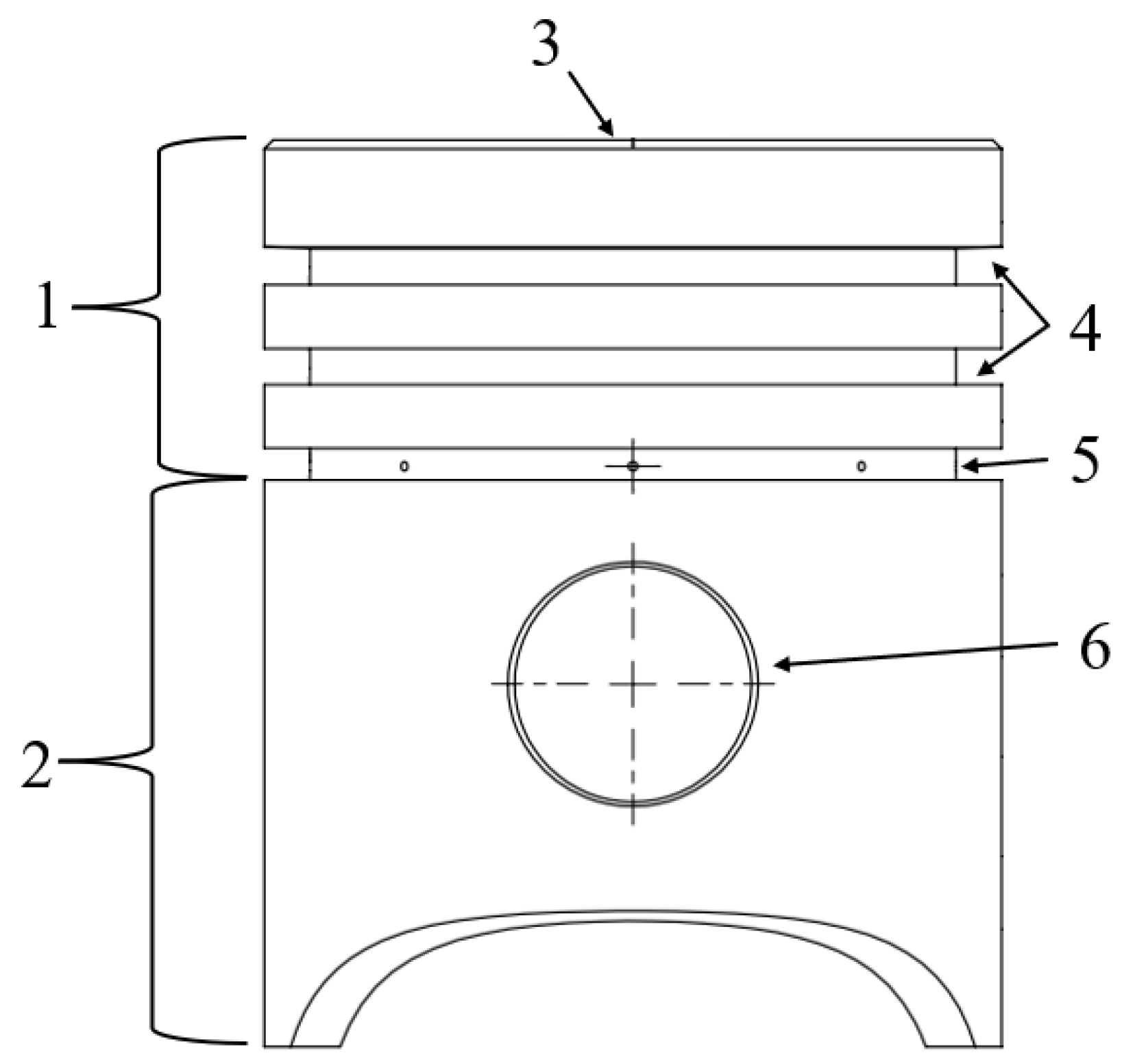
Structurally, the piston (
Figure 1) consists of the crown (or head), which forms part of the combustion chamber; the ring belt, which accommodates the compression and oil control rings (sealing section); and the skirt, which guides the piston within the cylinder and absorbs lateral forces (guiding section). Each of these regions is exposed to distinct loading conditions and therefore requires careful geometric and material optimization. For example, the piston crown is primarily governed by thermal stresses and gas pressure loading, whereas the skirt is dominated by frictional interaction, wear, and side forces. The piston pin bosses represent another critical area due to stress concentration and fatigue loading caused by force transmission to the connecting rod.
The choice of material is a determining factor in satisfying these high functional requirements. Traditionally, aluminum–silicon alloys have been widely used for automotive pistons due to their low density, good thermal conductivity, and favorable processability [
12], which contribute to reducing mass and increasing engine efficiency. However, their limitations are associated with a relatively high coefficient of thermal expansion and reduced strength at elevated temperatures, while cast iron and steel pistons provide higher strength and wear resistance at the expense of increased mass and inertia.
Therefore, modern piston development is directed towards advanced alloys, composite materials, locally reinforced structures, and surface coatings, including metal–matrix composites, steel–aluminum composite pistons, and thermal barrier or antifriction coatings. These approaches aim to increase the strength at high temperatures, reduce wear and friction losses, improve thermal fatigue resistance and extend the service life without a significant increase in mass.
Parallel with the material development, numerical simulation techniques—particularly finite element analysis (FEA)—have become indispensable tools in modern piston design [
12,
13,
14,
15,
16,
17,
18,
19,
20], allowing detailed assessment of stresses and strains under realistic operating conditions and significantly reducing the need for experimental iterations. By incorporating real temperature-dependent material properties, FEA allows for a systematic comparison of different materials and design solutions and supports the optimization of geometry and material distribution [
14,
15,
17].
In this scientific and technological context, hypereutectic Al–Si alloys containing over 20 wt.% Si are established as promising materials for highly loaded piston assemblies due to their high wear resistance, low coefficient of thermal expansion and increased dimensional stability, determined by uniformly distributed primary silicon crystals [
21,
22,
23,
24,
25,
26,
27,
28]. Additional alloying with Cu, Cr, Mn, Ni, Co and Mo allows for an increase in high-temperature strength, wear resistance, thermal fatigue and corrosion resistance by forming thermally stable intermetallic phases and stabilizing the microstructure [
29,
30,
31,
32,
33]. At the same time, excessive formation of large primary silicon crystals or brittle intermetallic phases can lead to a decrease in impact toughness and fatigue strength, which necessitates optimization of the chemical composition, metallurgical processing and heat treatment regimes [
34,
35,
36]. In this regard, classical phosphorus modification treatment and T6 heat treatment are established technological approaches for refining the microstructure and increasing strength [
37,
38,
39,
40].
Despite the wide industrial application of these alloys, their complex microstructure and temperature-dependent behavior require an integrated experimental–numerical approach. Combining microstructural characterization with finite element simulations allows for reliable prediction of the stress–strain state, aids material selection, and facilitates design optimization, making combined experimental–numerical methodologies an essential tool for increasing the durability, energy efficiency, and operational reliability of modern engines [
41,
42,
43,
44].
The aim of the present study is to investigate the relationship between the chemical composition, microstructure, phase composition and mechanical behavior of hypereutectic non-standardized Al–Si piston alloys, through an integrated experimental–numerical approach, including metallographic and X-ray structural analysis, mechanical tests and finite element modeling of real piston geometry.
Although hypereutectic Al–Si alloys are widely used in piston manufacturing, a systematic comparison of their experimentally determined mechanical properties integrated into a unified finite element piston model remains limited in the literature. Most published studies focus either on microstructural characterization or on purely numerical simulations using literature-based material parameters. The present study bridges this gap by combining experimentally validated mechanical properties with thermo-mechanically derived loading conditions in a unified numerical framework. The novelty of this work lies in the comparative structural assessment of piston performance as a function of alloy phase composition, enabling a clearer understanding of the relationship between microstructure, stiffness, and stress localization under representative service conditions.
2. Materials and Methods
The investigated materials are hypereutectic aluminum–silicon alloys AlSi25Cu4Cr (M1) and AlSi25Cu5Cr (M3). The alloys were additionally alloyed with Ni, Co and Mo in various combinations. For comparative purposes, the alloy AlSi25Cu5Cr (M5), which was not microalloyed with refractory elements, was also examined.
The alloys were melted in an electric resistance furnace under a protective coating–refining flux composed of 10 KCl:50 NaCl:10 Na3AlF6 in an amount of 0.5 wt % relative to the melt mass. The base elements aluminum and copper were introduced as commercially pure technical-grade metals. Silicon was added in crystalline form, while chromium was introduced using a Cr-containing master alloy to ensure proper dissolution and chemical homogeneity in the aluminum melt.
Microalloying with refractory elements (Ni, Co, Mo) was performed in the liquid state using commercially available dental casting alloys (Wironit and Wiron Light), which served as complex alloying ligatures. The alloying procedure was carried out according to the technology described in [
45].
All castings were modified with phosphorus, with the P content for alloy M1 being 0.04 wt %, and that for alloys M3 and M5 being 0.07 wt %. After casting, the test specimens were subjected to heat treatment in the T6 regime. The homogenization of the structure was carried out at a temperature of 510–515 °C with a holding time of 6 h 30 min, and the quenching was carried out in water at a temperature of 20 °C. The artificial aging after quenching was carried out at a temperature of 180 °C for 12 h. The heat treatments of the various test specimens were carried out using a chamber laboratory electric resistance furnace model, F20 TE11, manufactured by the company “Techeco” LTD—Sofia, Bulgaria.
The chemical composition of the studied alloys indicated in
Table 1 was determined by spectral analysis with an Oxford instruments (Abingdon, UK) FOUNDRY-MASTER UV apparatus. The FOUNDRY-MASTER UV is a reliable, precise laboratory spectrometer for the qualitative and quantitative element analysis of metallic samples. The instrument is designed for stationary use as a benchtop unit. The instrument is based on Optical Emission Spectroscopy (OES), the analyzing method favored by most metal producing and processing companies. The digital source (spark generator) is controlled via the external Windows
® PC and offers ideal excitation parameters for the most diverse alloys. The high-resolution Multi-CCD optics utilizes a traditional, robust vacuum technology chamber, rather than eccentric ways of removing harmful atmosphere from the optics. The optics covers the complete wavelength range from 160 nm to 800 nm.
After heat treatment, a microstructural analysis was performed. The preparation of the microsections for metallographic analysis was carried out according to a standard methodology: wet grinding on sandpaper with abrasive grit from No. 240 to No. 1000 and polishing with diamond paste and lubricant, until a mirror surface of the sections was obtained. The microstructure of the sections thus prepared was revealed with Keller’s reagent (1 part. HF, 1.5 part. HCl, 2.5 part. HNO3, 95 part. H2O) and brightened with HNO3. The study was performed on a Leica DM ILM microscope (Wetzlar, Germany) with the help of software. The quantitative analysis of stereological parameters was performed on optical micrographs obtained at the same magnification. All observed crystals of primary silicon and silicon in the composition of the eutectic were measured in three independent fields from each metallographic section. The image analysis was performed using the software of the Leica DM ILM microscope, by measuring the linear dimensions of individual particles. For primary silicon, a conditional average diameter was determined, calculated as the equivalent diameter of the projected area of the particle, and for eutectic silicon—an average linear size. The values presented are the arithmetic mean of all measured particles in the three analyzed fields.
A phase analysis of the alloys was also carried out. The X’Pert PRO MPD diffractometer (Malvern Panalytical B.V., Almelo, The Netherlands) with cobalt radiation was used for obtaining X-ray diffraction (XRD) patterns. Phase analysis was performed in HighScore Plus (Malvern Panalytical B.V., Almelo, The Netherlands) and using the PDF2 database (International Centre for Diffraction Data (ICDD), Newtown Square, PA, USA). The irradiated volume was defined by the experimental geometry of the diffractometer (Bragg–Brentano), the effective penetration depth of the X-ray radiation (approx. 10 µm), and the pinhole size (1 × 1 mm2). Diffraction data were obtained from a surface that had been previously electropolished to minimize the effect of surface preparation and thus to describe the bulk phase composition.
As a complementary method (establishing the shape and distribution of phases) for phase analysis, along with X-ray structural analysis, metallographic phase identification by selective chemical etching was applied, based on the different reactivities of the structural constituents in Al-Si alloys towards alkaline solutions.
After standard preparation of microsections (wet grinding and polishing to a mirror surface), the samples were developed with an aqueous solution of sodium hydroxide (NaOH), with a concentration of 10 g NaOH per 100 cm
3 distilled water. The solution was maintained at a temperature of 70 °C, and the development time was 5 s. Immediately after development, the microsections were washed thoroughly with distilled water and dried [
46,
47].
Under these conditions, the α-phase is selectively etched, while the silicon phase and intermetallic compounds exhibit higher resistance to the alkaline solution. This leads to a clearly pronounced surface relief and contrast when observed with an optical microscope and allows qualitative differentiation of the α-phase, primary and eutectic silicon, and intermetallic phases. This significantly helps in the assessment of their morphology and spatial distribution.
The resulting metallographic observations were used as a qualitative complementary method to confirm the phase composition determined by XRD analysis, with the two approaches being considered complementary.
For mechanical testing, standard tensile test specimens (d
0 = 10, l
0 = 50 EN ISO 6892-1 [
48,
49]) were prepared from all test specimens. The test specimens were tested on a universal tensile testing machine, “Zwick/Roell Z 250”, in which the tensile strength Rm, the conditional yield strength Rp and the relative elongation A5 were determined. The mechanical characteristic values were averaged based on the test results of 3 ÷ 4 test specimens. Vickers hardness measurements were carried out using loads of 0.05 and 5 kgf with a dwell time of 10 s according to ISO 6507-1 [
50].
The investigated geometry is representative of a modern naturally aspirated gasoline engine with a displacement of approximately 1.5 L and indirect fuel injection. The piston corresponds to a conventional design for a spark-ignition engine, characterized by a shallow or flat front, piston ring grooves, piston pin lugs and skirt, optimized to reduce mass and friction losses and ensure stable operation under moderate thermal and mechanical loads. The specific engine manufacturer is not specified in order to preserve the general applicability of the obtained results.
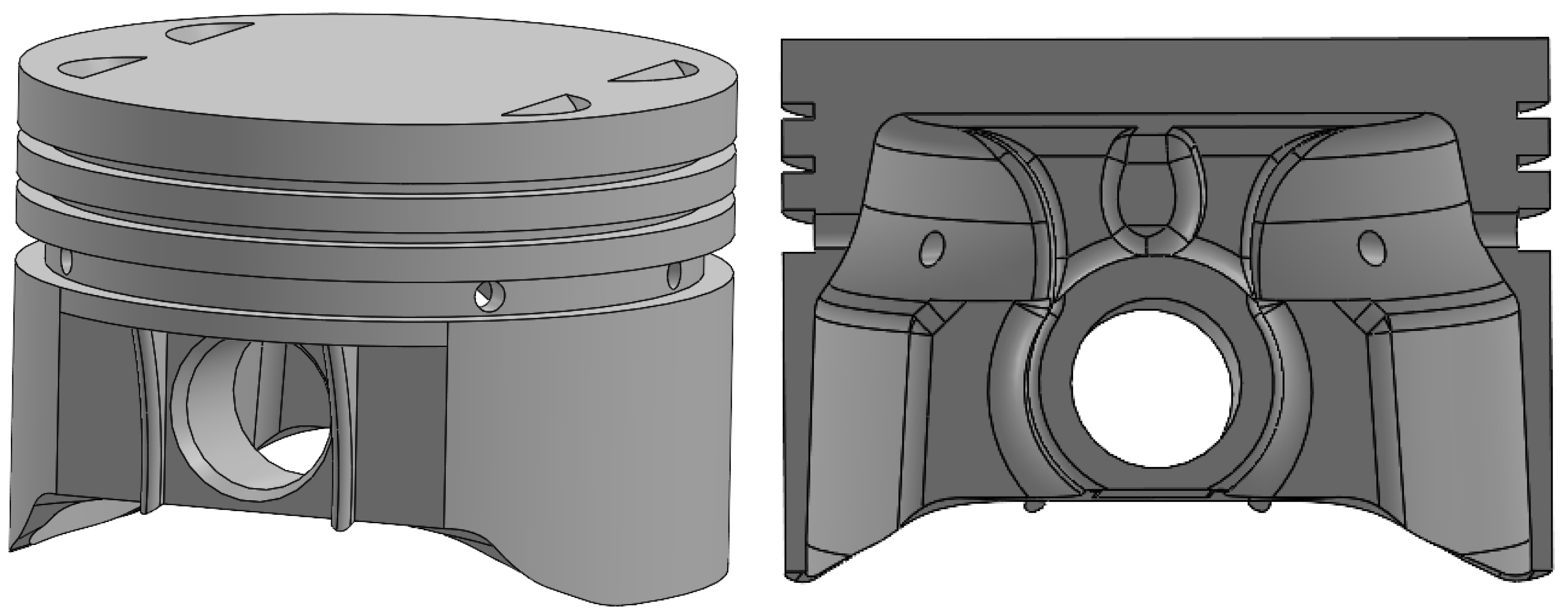
A detailed three-dimensional (3D) volumetric model of the piston was developed using SolidWorks 2022 SP03.1 (
Figure 2). The geometry was created based on typical design proportions reported for modern gasoline engine pistons [
20], including the distribution of the face thickness, the ring geometry, the skirt profile, and the dimensions of the piston pin lugs. Rounding was introduced in all critical transition areas, especially in the face–skirt transition area and in the piston pin lug areas, in order to realistically represent the stress concentration reduction design solutions applied in the production pistons. To ensure an optimal balance between geometric accuracy and computational efficiency, non-critical elements with negligible impact on load capacity were simplified, while areas subject to increased stresses—such as the piston face, ring grooves, and piston pin lugs—were modeled with high geometric detail. The final 3D model was checked for geometric correctness before structural analysis was performed.
The material properties used in the numerical simulations were determined based on a combination of available experimental data and engineering estimates (
Table 2). The values of the yield strength (Rp0.2) and tensile strength (Rm) were taken directly from experimental tensile tests conducted at room temperature for the studied alloys. The elastic modulus, Poisson’s ratio and density were selected according to the typical ranges reported in the literature for aluminum–silicon piston alloys with similar chemical compositions and heat treatment regimes.
In cases where direct experimental values were lacking, elastic constants were estimated through established correlations between alloy composition, microstructure and mechanical response, thus ensuring physical consistency and realistic stiffness levels. The selected material parameters were purposefully constrained within narrow, physically justified intervals, allowing a comparative assessment of the material’s influence on stress distribution and deformation behavior, without introducing non-physical effects related to stiffness or strength.
This approach ensures a correct comparison of the equivalent Mises stresses and displacement fields between the studied materials, while preserving the mechanical reliability of the numerical model.
The material model assumes isotropic linear elasticity; Young’s modulus and Poisson’s ratio are used as independent elastic constants.
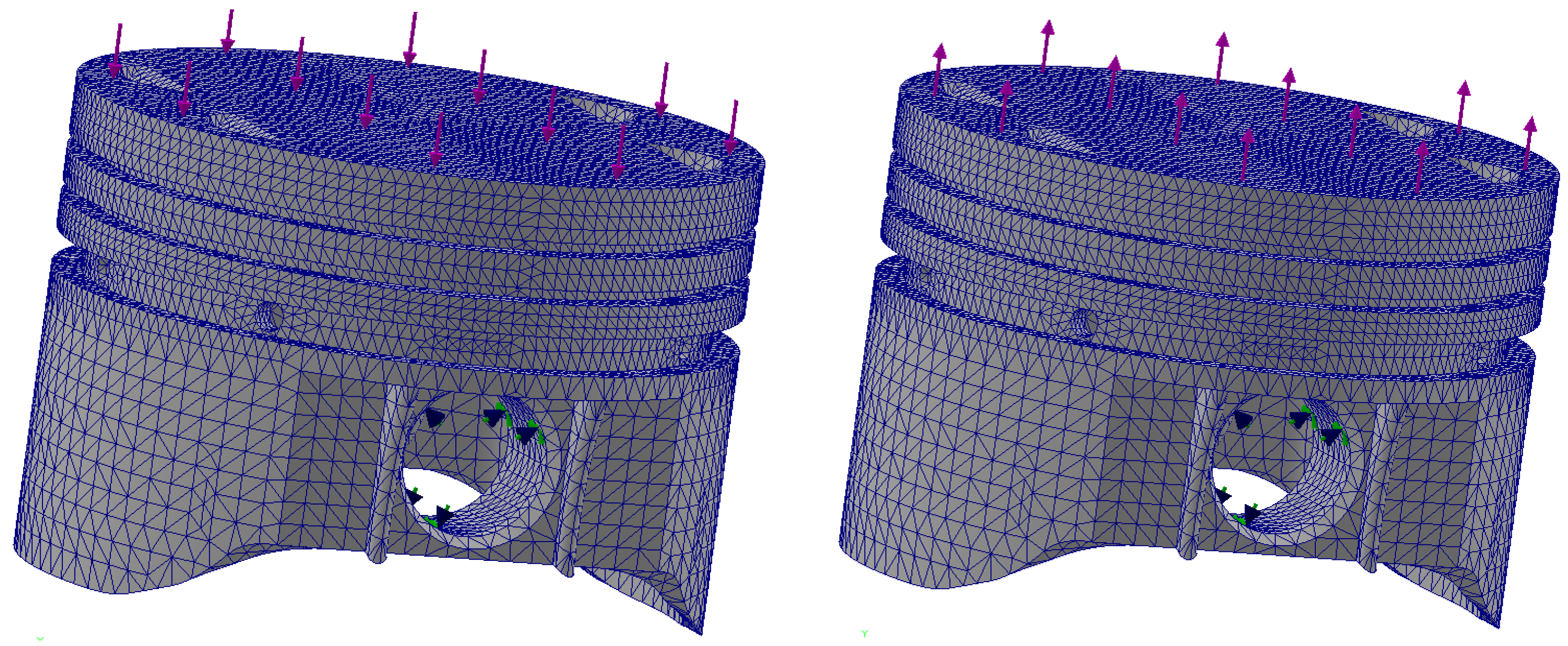
Boundary conditions were applied to the piston pin bore surfaces to represent the load transfer between the piston and the piston pin (
Figure 3). These surfaces were constrained to prevent rigid body motion while allowing for realistic stress development in the piston structure. Contact interactions between the piston and other engine components were not explicitly modeled. The analysis focused on the internal stress distribution and deformation behavior of the piston under peak combined mechanical loading. The finite element analysis was performed using the SolidWorks Simulation module. A tetrahedral mesh was generated based on the curvature of the geometry, with local element thickening applied to areas of expected stress concentration, including the piston face, the ring grooves, and the flares in the piston pin lug area (
Figure 3). A convergence check of the mesh was performed to ensure that additional compression does not significantly change the resulting stresses. To determine the mechanical loads acting on the piston, thermodynamic and dynamic calculations of the engine operating cycle were performed, considering two representative and physically different operating modes. The first load case corresponds to engine operation at maximum output power, in which the piston is subjected to the highest combustion pressure. Although the inertial forces associated with piston acceleration partially compensate for the gas pressure in this mode, the combustion pressure remains the dominant component of the total mechanical load. Therefore, the total forces were applied to the surface of the piston face (
Figure 3).
The second load case reflects the operation of the engine at maximum speed, where the inertial forces reach their highest value due to the increased acceleration of the reciprocating mass. Under this condition, the engine operates at low load and the combustion pressure is minimal. The inertial loads were calculated as a function of the engine speed, the piston mass and the kinematics of the crankshaft. The resulting total forces were applied in the structural analysis to assess the response of the piston in a mode where the inertial load represents the main component of the impact (
Figure 3).
The mechanical loads applied in the present study were not assumed arbitrarily but were determined through thermodynamic and dynamic calculations of the engine working cycle. The peak combustion pressure was calculated using classical thermodynamic cycle analysis methods for spark-ignition engines, based on the compression ratio, heat release characteristics, and charging conditions. The methodology follows established academic engine design procedures described in the engine design literature [
51] and is consistent with approaches used in preliminary piston strength assessment studies.
The inertial forces were calculated using classical crank mechanism kinematic relations, considering piston mass, crank radius, connecting rod length, and maximum engine speed. This approach corresponds to widely accepted dynamic analysis methods in internal combustion engine design and provides physically realistic upper-bound mechanical loading conditions [
51].
The applied loads therefore represent deterministic peak mechanical conditions derived from engine cycle calculations rather than simplified assumptions.
3. Results
3.1. Experimental Results
After the applied heat treatment regime T6, a metallographic analysis of the studied alloys was carried out. The microstructural analysis determined the characteristics of the shape and size of free silicon and silicon in the composition of the eutectic. The obtained data were statistically processed and presented as average values.
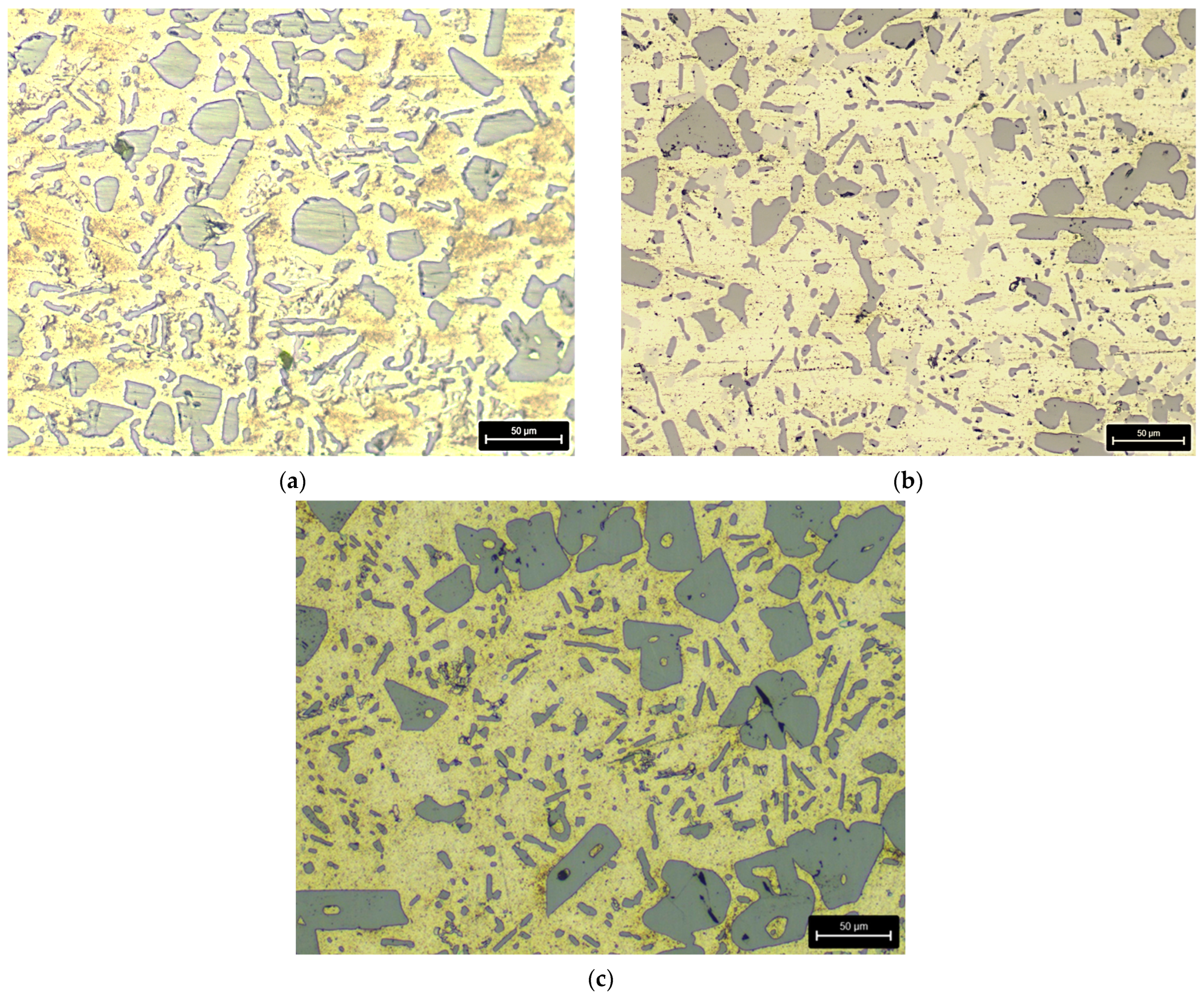
Figure 4 shows the microstructures of the studied alloys.
In the microstructural analysis of the AlSi25Cu4Cr (M1) alloy, presented in
Figure 4a, it is established that the main parts of the primary separated silicon crystals are of relatively regular shape and a conditional average diameter of 21.93 ± 14 µm. Along with them, single crystals with irregular morphology and significantly larger sizes are observed, with an average conditional diameter of about 65 µm. The silicon crystals in the composition of the eutectic are separated mainly in the form of needle-shaped particles, with the measured average linear size being 23.7 ± 12 µm.
Figure 4b shows the microstructure of the AlSi25Cu5Cr (M3) alloy. The primary separated silicon crystals are characterized by a conditional average diameter of about 22 ± 10 µm, with single larger crystals with sizes up to approximately 55 µm being observed. In contrast to alloy M1, the silicon crystals in the eutectic composition of alloy M3 have a significantly more favorable morphology, with a predominance of spheroidized particles with a conditional average diameter of 6.7 ± 5 µm.
The microstructure of the AlSi25Cu5Cr (M5) alloy, modified with 0.07 wt.% P and subjected to quenching and artificial aging at 180 °C for 12 h, consists of a eutectic mixture and primary separated silicon crystals. The metallographic analysis performed shows that the primary silicon is characterized by a conditional average diameter of 46 µm. The morphology of these crystals is predominantly multi-walled, with relatively straight walls and rounded corners. The silicon crystals in the composition of the eutectic can be divided into two clearly distinguishable groups: the first group includes particles with a plate shape and rounded ends, with an average linear size of approximately 8 × 2 µm
2, while the second group consists of rounded silicon particles with a conditional average diameter of 8.2 ± 7 µm (
Figure 4c).
The observed differences in the morphology, size and distribution of the primary separated silicon crystals and the eutectic silicon in the studied alloys also suggest differences in the phase composition and spatial arrangement of the intermetallic compounds. However, it is not possible to unambiguously distinguish the individual phases by classical optical metallography alone, especially in the cases of finely distributed or morphologically similar structural components.
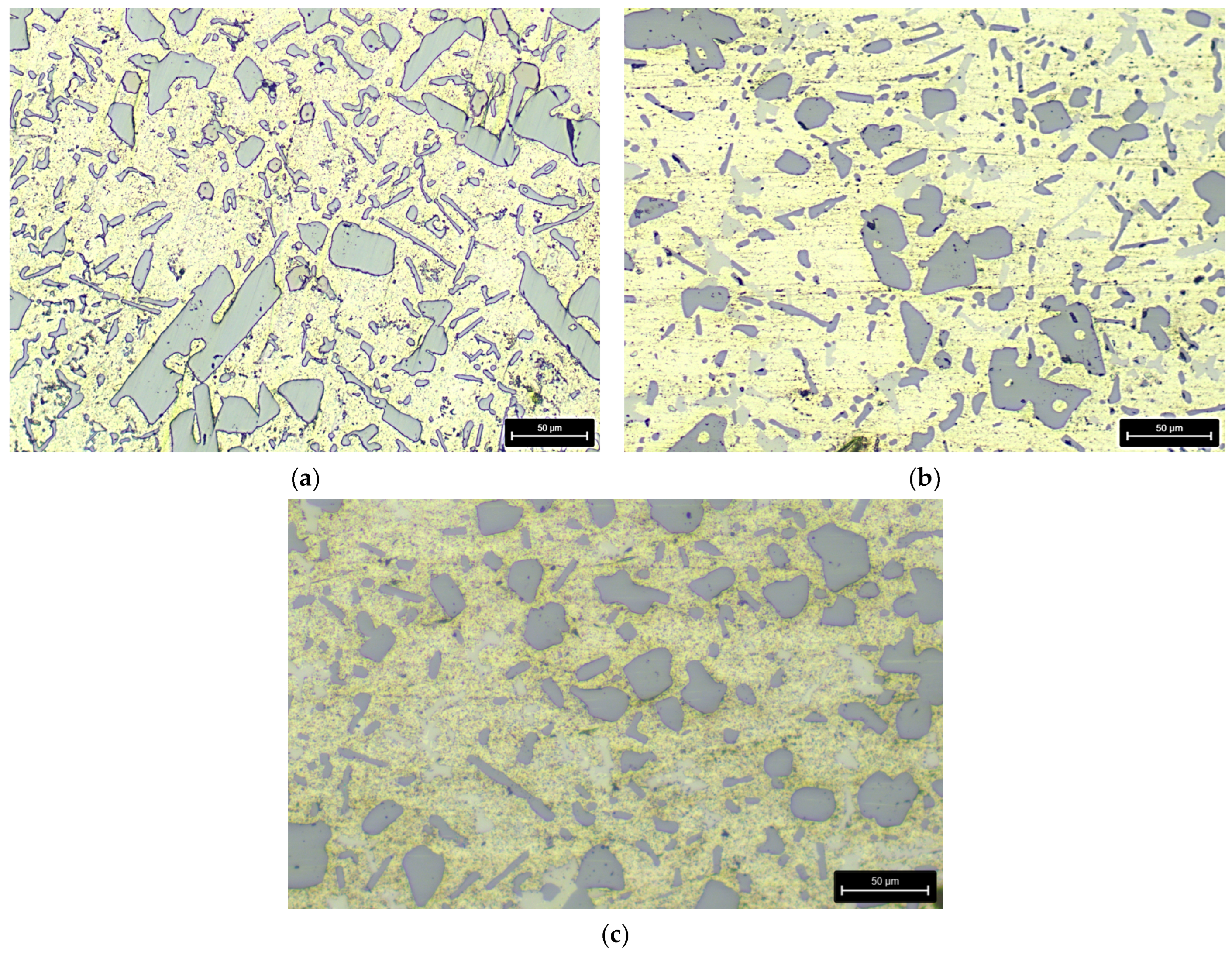
For this reason, the microstructural studies were supplemented with a selective metallographic phase analysis by etching in an alkaline NaOH solution, which allows for a qualitative distinction of the α-Al matrix, silicon phases and intermetallic compounds based on their different chemical resistances. The application of this method leads to the formation of a distinct surface relief and contrast between the individual phases, which facilitates their visual identification and contributes to a more accurate interpretation of the phase composition of the alloys.
Figure 5 shows the results of the analysis of the three studied alloys.
Figure 5a shows the structure of alloy M1 after selective etching in an alkaline NaOH solution; a clearly pronounced surface relief is observed, due to the selective dissolution of the α-Al matrix. The primarily separated silicon crystals appear as clearly outlined, dark areas with sharp contours, which is characteristic of the high chemical resistance of the silicon phase to the alkaline environment. The observed larger and morphologically irregular silicon crystals correlate with the results of optical metallography and confirm the presence of a non-uniform distribution of primary silicon. In the eutectic regions, a needle-like morphology of the silicon phase is observed, with the α-Al matrix around it being strongly etched. The intermetallic phases appear as light, slightly etched areas with a compact shape, which is in accordance with the behavior of Cu- and Cr-containing intermetallics during alkaline etching described in the literature.
Alloy M3 (
Figure 5b) reveals a significantly more homogeneous microstructure. The primarily separated silicon crystals are smaller and more evenly distributed, clearly visible in relation to the α-Al matrix. The eutectic silicon shows a predominantly spheroidal shape, as the individual particles are of significantly smaller sizes compared to alloy M1. The intermetallic phases in alloy M3 are evenly distributed and exhibit a more compact morphology. The obtained results confirm that alloying with additional elements and the optimized microstructure leads to a more stable and homogeneous phase organization.
In alloy M5 (
Figure 5c), after selective etching, a more pronounced heterogeneity of the microstructure is observed. The initially separated silicon crystals are significantly larger, with a multi-walled shape and clearly defined boundaries, which leads to a distinct relief after etching. This behavior is characteristic of a coarser microstructure and correlates with the larger measured dimensions of the primary silicon. Eutectic silicon manifests itself in a mixed morphology, with both lamellar and rounded particles. The α-Al matrix between them is intensively etched, which further emphasizes the phase contrast. The intermetallic phases are more unevenly distributed and in places form local agglomerations, which is an indication of a less controlled microstructure compared to alloy M3.
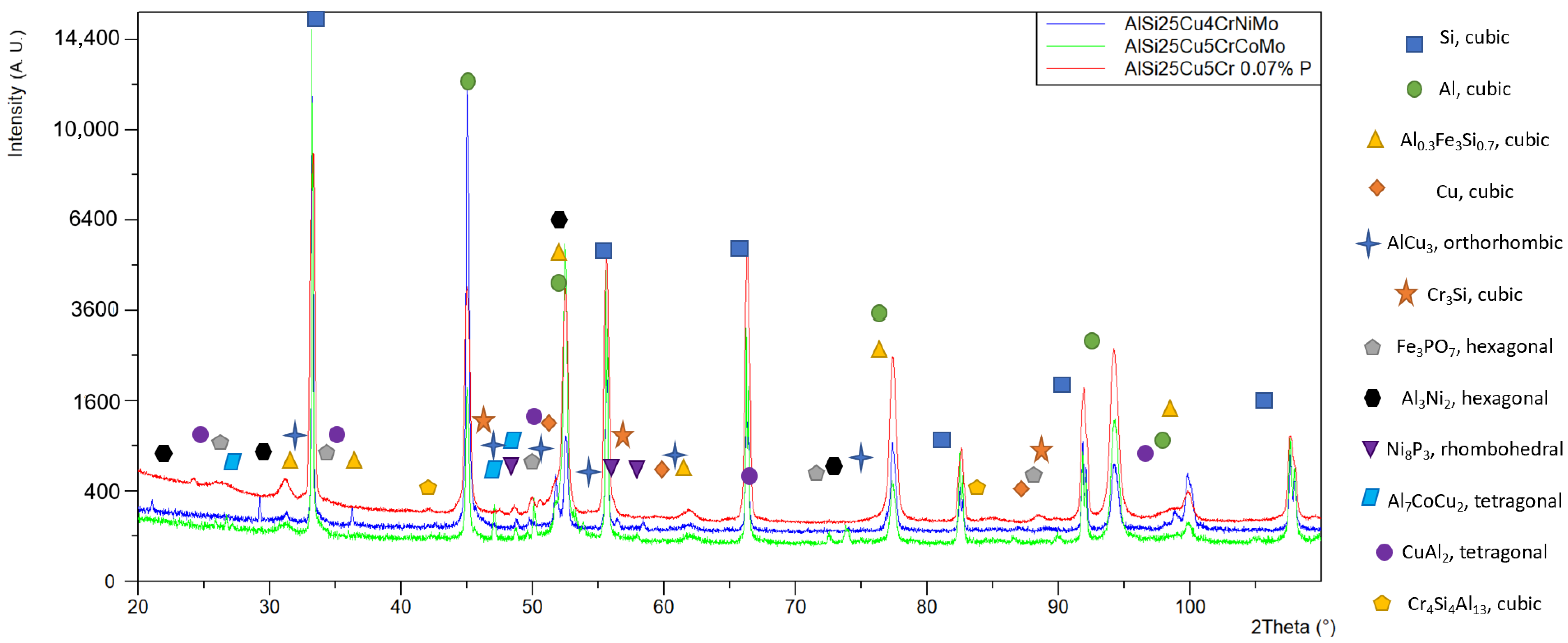
Figure 6 shows the diffractogram of the studied compositions, and results of the phase analysis of the studied alloys are shown in
Table 3.
The X-ray structural analysis of the studied hypereutectic aluminum–silicon alloys, M1 (AlSi25Cu4Cr alloyed with Wironit light), M3 (AlSi25Cu5Cr alloyed in Wironit) and M5 (AlSi25Cu5Cr), shows that in all studied alloys the diffraction lines of α-Al (cubic) and Si (cubic) dominate, which confirms the characteristic two-phase basis for this class of alloys—an aluminum matrix and silicon phase. In addition to the main phases, secondary intermetallic phases are found in the different alloys, and the differences in their presence reflect the differences in the chemical composition and the applied microalloying.
In alloy M1, along with α-Al and Si, Fe-containing phases of the types Al0.3Fe3Si0.7 (cubic) and Fe4Si2 (hexagonal), as well as P- and Ni-containing phases (e.g., Fe3PO7 (hexagonal), Al3Ni2 (hexagonal) and Ni8P3 (rhombohedral)), were identified. The observed phase composition is in agreement with the increased content of Ni (0.752 wt.%) and Mo (0.114 wt.%) in M1, which is a result of alloying with Wiron Light alloy, rich in Ni–Cr–Mo.
In alloy M3, in addition to the main phases α-Al and Si, Fe-containing intermetallics (Al0.3Fe3Si0.7 and Fe4Si2) are registered, with the phase composition reflecting the presence of Co (0.595 wt.%), Cr (0.810 wt.%) and Mo (0.05 wt.%). The presence of Co and Mo is a consequence of alloying with Wironit alloy, characterized by a high content of Co and Cr.
For alloy M5, used for comparative analysis as a material without targeted microalloying with refractory elements (lack of Co and Mo; traces of Ni 0.005 wt.%), XRD analysis shows, in addition to α-Al and Si, the presence of Cu- and Cr-containing phases characteristic of the Al–Si–Cu–Cr system, such as Cu (cubic), CuAl2 (tetragonal), AlCu3 (orthorhombic), Cr3Si (cubic) and Cr4Si4Al13 (cubic), as well as AlP (hexagonal) (according to phase analysis). The registration of Cu-rich intermetallics is compatible with the highest Cu content in this alloy (4.32 wt.%).
The phases identified by XRD and metallographic analysis, as well as the observed differences in the morphology of the primary and eutectic silicon, are directly reflected in the mechanical characteristics of the studied alloys.
Table 4 presents the results of the tests for microhardness, macrohardness, tensile strength (Rm) and yield strength (Rp
0.2) for alloys M1, M3 and M5 after heat treatment in the T6 regime.
Alloy M1 (AlSi25Cu4Cr + 0.04 wt.% P) shows the lowest values of both microhardness (121 HV5/10) and macrohardness (139 HV5/10). This behavior is consistent with the coarser morphology of the primary silicon and the presence of Fe- and Ni-containing intermetallics, which, although contributing to thermal stability, do not lead to a significant increase in hardness.
In alloy M3 (AlSi25Cu5Cr + 0.07 wt.% P), a significant increase in hardness is observed, with the microhardness reaching 170 HV5/10 and the macrohardness reaching 171 HV5/10. The increased values can be associated with the finer and more uniform microstructure, as well as the presence of Co- and Cr-containing intermetallic phases, as determined by XRD analysis.
The highest microhardness was recorded for alloy M5 (AlSi25Cu5Cr + 0.07 wt.% P)—172 HV0.05/10—while the macrohardness was lower (152 HV5/10) compared to M3. This difference between micro- and macrohardness indicates a more inhomogeneous distribution of hard intermetallic phases in the volume of the material, which is typical for alloys without additional microalloying with refractory elements.
The tensile test results show that alloy M5 has the highest tensile strength (Rm = 215 MPa) and yield strength (Rp0.2 = 204 MPa). This behavior can be attributed to the higher Cu content and the formation of Cu-containing strengthening intermetallics, such as CuAl2 and AlCu3, identified by phase analysis.
Alloys M1 and M3 exhibit comparable tensile strength values (193 MPa for M1 and 190 MPa for M3) as well as similar yield strength levels (184 MPa and 181 MPa, respectively). Despite the significantly higher hardness of M3, this increase is not reflected in a proportional improvement in tensile strength. This result indicates that the increased fraction and more uniform distribution of hard intermetallic phases in M3 primarily enhance resistance to localized plastic deformation (indentation), without substantially improving the global load-bearing capacity of the material under uniaxial tensile loading. This behavior can be explained by the strengthening mechanisms typical of hypereutectic Al–Si alloys, where Cu-rich intermetallic phases (CuAl
2, AlCu
3) increase hardness by locally restricting dislocation motion, while the tensile load-carrying capacity is governed to a greater extent by the continuity and integrity of the α-Al matrix and by the absence of coarse primary silicon particles acting as stress concentrators. In this context, Ni-containing compounds play predominantly a stabilizing role, improving microstructural stability and thermal resistance rather than directly increasing room-temperature tensile strength. These observations are consistent with the literature data [
21,
22,
29], which report that Cu-rich intermetallic phases exert a stronger influence on hardness than on tensile strength, particularly in alloys characterized by microstructural heterogeneity and the presence of coarse silicon particles.
The differences in the mechanical properties of the studied alloys, resulting from their chemical composition, phase composition and microstructure, suggest different behaviors of the materials under real operational loads. Although laboratory tensile and hardness tests provide reliable information about the strength and deformation properties of the alloys, they do not allow a direct assessment of the distribution of stresses and strains in a complex structural element such as the piston.
In order to assess the influence of the established mechanical properties on the piston performance under realistic operating conditions, a static structural analysis using the finite element method (FEA) was performed. Numerical modeling allows analyzing the stress–strain state of the piston made of each of the studied alloys under typical engine operating modes, including maximum power and maximum speed.
In this way, FEA serves as a logical extension of experimental studies, providing a link between the measured mechanical properties of materials and their structural behavior in real piston geometry.
4. Discussion
The conducted studies have established that the chemical composition and the microalloying used have a significant impact on the crystallization processes, the formation of the phase composition and the mechanical characteristics of the superdeutectic aluminum–silicon alloys M1, M3 and M5. The obtained results show that despite the similar basic composition (α-phase + Si), the differences in the alloying elements and their concentrations lead to distinct differences in the microstructural organization of the phase composition of the studied alloys.
Metallographic analysis reveals that the morphology, size and distribution of the primary separated silicon and the eutectic silicon phase are strongly dependent on the degree of modification and the type of microalloying elements. The finest and most homogeneous structure is observed in alloy M3, in which the primary silicon crystals are of smaller size and more uniform distribution, while in M1 and especially in M5 larger primary crystals and more pronounced microstructural heterogeneity are registered. The indicated features can be interpreted as the basis for the differences in the mechanical behavior of the studied alloys.
The selective metallographic approach for phase analysis, by alkaline etching with NaOH, is established as an effective complementary method to X-ray structural analysis. Through the different resistances of the α-phase, silicon phases and intermetallic compounds to chemical attack, a clear phase separation and visualization of their spatial distribution are achieved. The obtained results are in good agreement with the XRD analysis and confirm the presence of Fe-, Cu-, Cr-, Ni- and Co-containing intermetallic phases depending on the specific chemical composition and the alloy used.
X-ray diffraction analysis shows that alloy M1, alloyed with Wiron Light, is characterized by the presence of Ni- and P-containing intermetallic phases, while in alloy M3, alloyed with Wironit, the phase composition is influenced by the presence of Co, Cr and Mo. For alloy M5, used as a comparative base without targeted microalloying with refractory elements, a phase composition typical of the Al–Si–Cu–Cr system is established, with clearly expressed Cu- and Cr-containing intermetallics. These differences in the phase composition are a direct reflection of the alloying additives used and their concentration.
The results of the mechanical tests reflect the established microstructural and phase features. The increased hardness of alloy M3 can be attributed to the finer microstructure and the presence of stable intermetallic phases, which limit the plastic deformation of the α matrix. On the other hand, the highest values of tensile strength and yield strength, reported for alloy M5, are explained by the higher Cu content and the formation of Cu-containing strengthening phases, albeit with a more heterogeneous distribution in the volume of the material.
In summary, the obtained results show that the optimal balance between hardness and strength in hypereutectic Al–Si alloys is achieved through a targeted selection of alloying elements and control of the crystallization and heat treatment processes. The established differences in mechanical characteristics also suggest different structural behaviors of the materials under real operational loads, which justifies the need for subsequent numerical analysis. In this sense, finite element modeling is a logical continuation of experimental studies and allows for an assessment of the stress–strain state of the piston under representative operating conditions.
The results of the finite element analysis show that the mechanical response of the piston is strongly dependent on the applied loading condition, while the influence of the choice of material within the studied group of aluminum–silicon alloys is more subtly expressed and manifests itself mainly through safety margins, rather than through the absolute values of the stresses. As is shown in [
13,
14], the main influence of the material is related to FoS rather than the maximum stress levels.
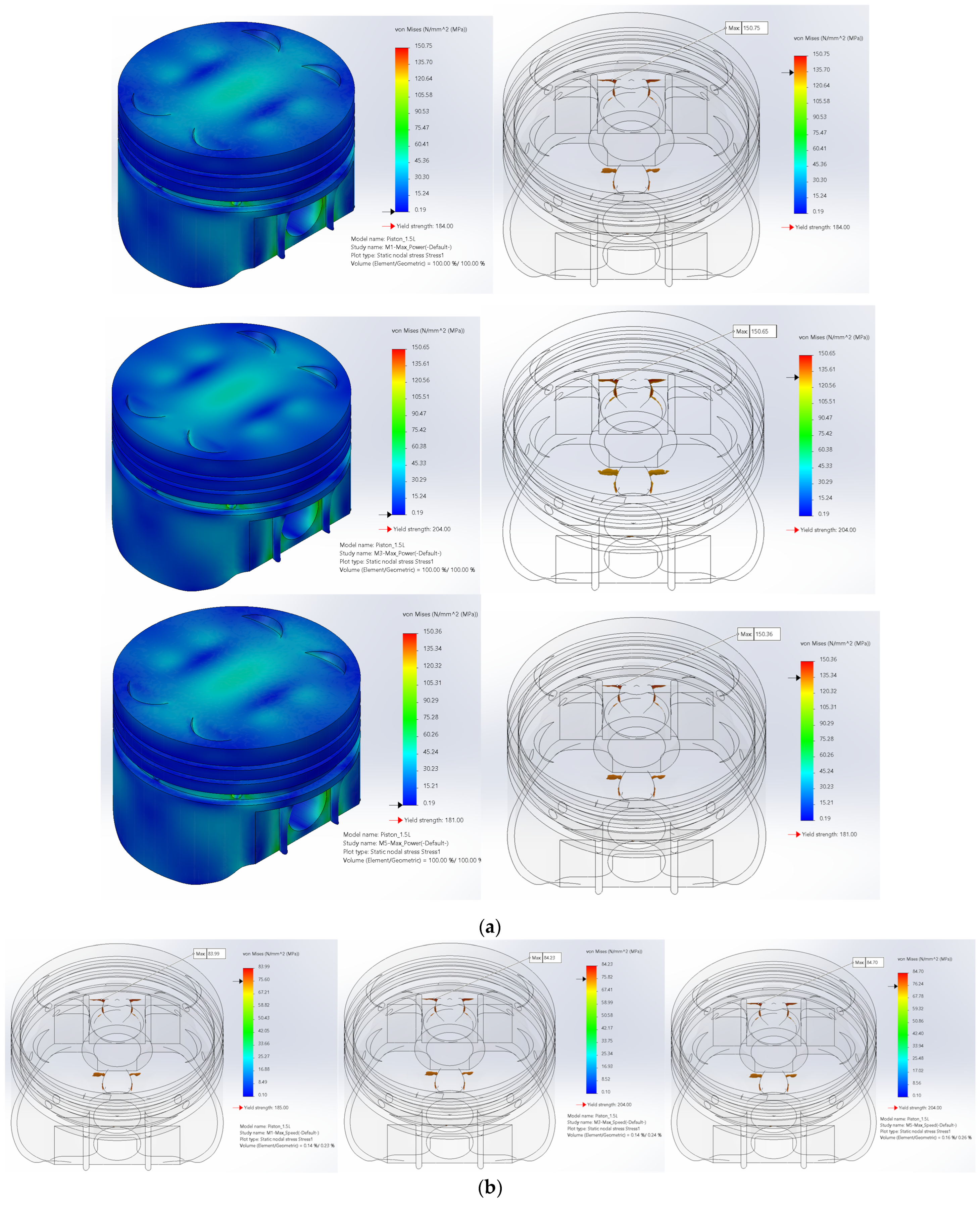
In maximum power output conditions, combustion pressure remains the dominant component of the load, leading to increased stresses in the piston crown and annular belt regions. The similarity in the maximum values of the Mises equivalent stresses for materials M1, M3, and M5 indicates that for geometrically identical pistons, the stress distribution is primarily determined by the load and geometry, rather than by moderate differences in the elastic modulus or Poisson’s ratio. The maximum stress variation between materials is below 1%, confirming that the stress field is geometry-controlled. The negligible variation in maximum stress (<1%) despite differences in elastic modulus confirms the limited sensitivity of the stress field to stiffness variation within the investigated range. This observation is consistent with classical piston stress analyses reported in the literature, in which geometric stress concentrations often dominate over material stiffness effects [
12].
However, the differences in yield strength have a direct impact on the safety factor. The M3 material demonstrates the highest FoS at maximum power output, suggesting a more favorable balance between stiffness and strength for the particular piston geometry. In contrast, although the M5 material has the highest values of yield strength and ultimate tensile strength, the slightly higher stress level results in a slightly lower FoS, highlighting that higher strength alone does not automatically guarantee increased structural safety.
In the load case dominated by inertial forces at maximum engine speed, the total stress and strain levels are significantly lower. The stresses are localized primarily in the piston pin lug area, confirming that the inertial forces are transmitted primarily through the pin–winding assembly. The high safety factor values obtained for all materials in this regime indicate that modern aluminum piston designs are generally not limited by inertial loading in naturally aspirated gasoline engines, provided that the mass and geometry are appropriately optimized.
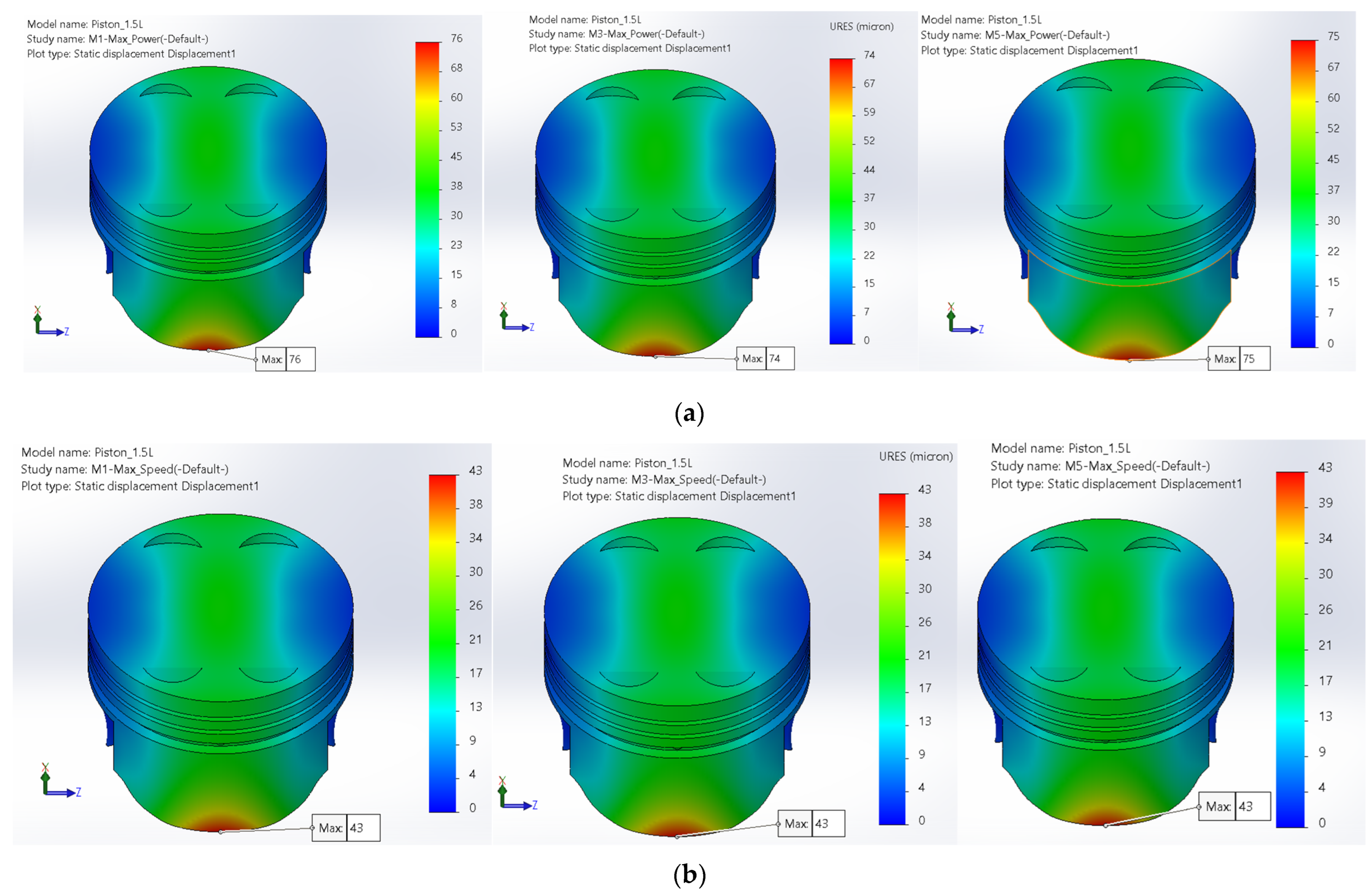
The displacement results further confirm that elastic deformation is most critical at peak combustion pressure. The relatively small differences in maximum displacements between the materials indicate that all three alloys provide sufficient stiffness to maintain a stable piston–cylinder clearance regime under the considered operating conditions. This is an essential factor in limiting secondary effects such as increased friction, skirt seizure or deterioration of piston ring sealing.
A parametric variation of ±5% in Young’s modulus resulted in stress variations below 0.5%, confirming limited stiffness sensitivity in the considered static regime. In contrast, a ±5% variation in yield strength leads to an equivalent proportional variation in the factor of safety. This demonstrates that the structural response under combustion-dominated loading is strength-controlled rather than stiffness-controlled.
Therefore, the primary material influence manifests through yield-controlled safety margins rather than through modification of stress distribution patterns. This observation clarifies the quantitative contribution of microstructural refinement to structural reliability.
Although the applied loads are derived from thermodynamic and dynamic engine cycle calculations, the structural analysis itself is performed as a static linear-elastic simulation using room-temperature material properties. This constitutes a simplification relative to real engine operating conditions.
In practical service, pistons are subjected to: combined thermo-mechanical loading, significant temperature gradients across the crown and skirt, temperature-dependent reduction of yield strength, cyclic stress reversal leading to thermo-mechanical fatigue, and plasticity accumulation during repeated firing cycles.
The present study intentionally isolates the peak mechanical loading component in order to establish a clear comparative assessment of material influence under controlled conditions. The objective is not to predict fatigue life or long-term durability, but to evaluate relative structural safety margins under maximum mechanical loading derived from engine cycle calculations.
Thermal stresses and fatigue behavior will be addressed in future work through coupled thermo-mechanical simulations and fatigue-based durability assessment.
Therefore, the results presented here should be interpreted as a first-stage structural screening of candidate alloys rather than a full service-life prediction model.
In summary, the results show that the material selection among conventional high- strength Al–Si piston alloys should be based not only on considerations related to maximum stresses, but also on an integral assessment of the yield strength, safety margin and deformation behavior.





 ,
,