A Systematic Selection of Shielding Gas Composition for GMA-DED of HSLA Thin Walls Focused on Geometrical Features


 ,
,  ,
,  and
and
Abstract
1. Introduction
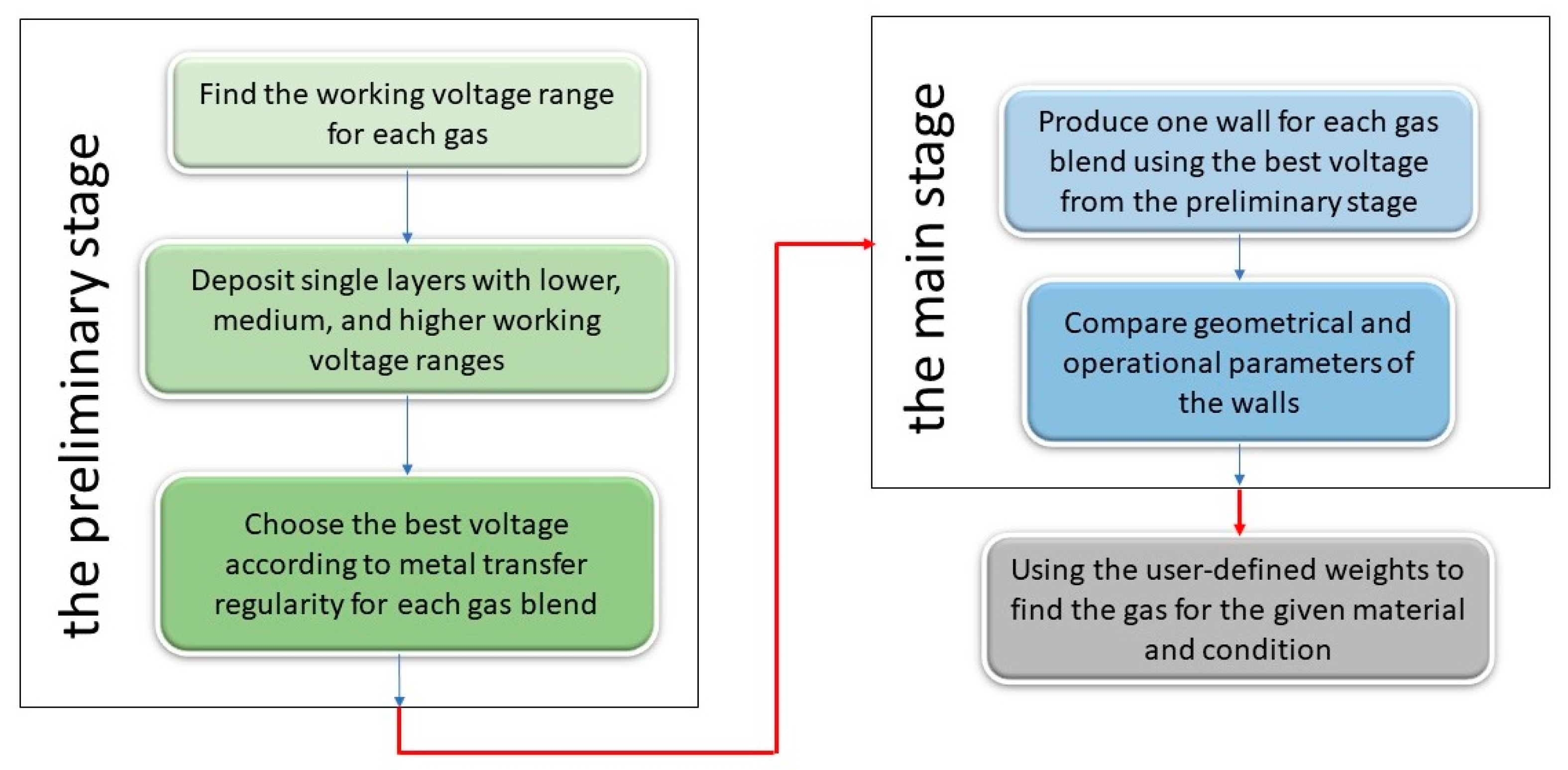
2. Methodology
3. Experimental Development
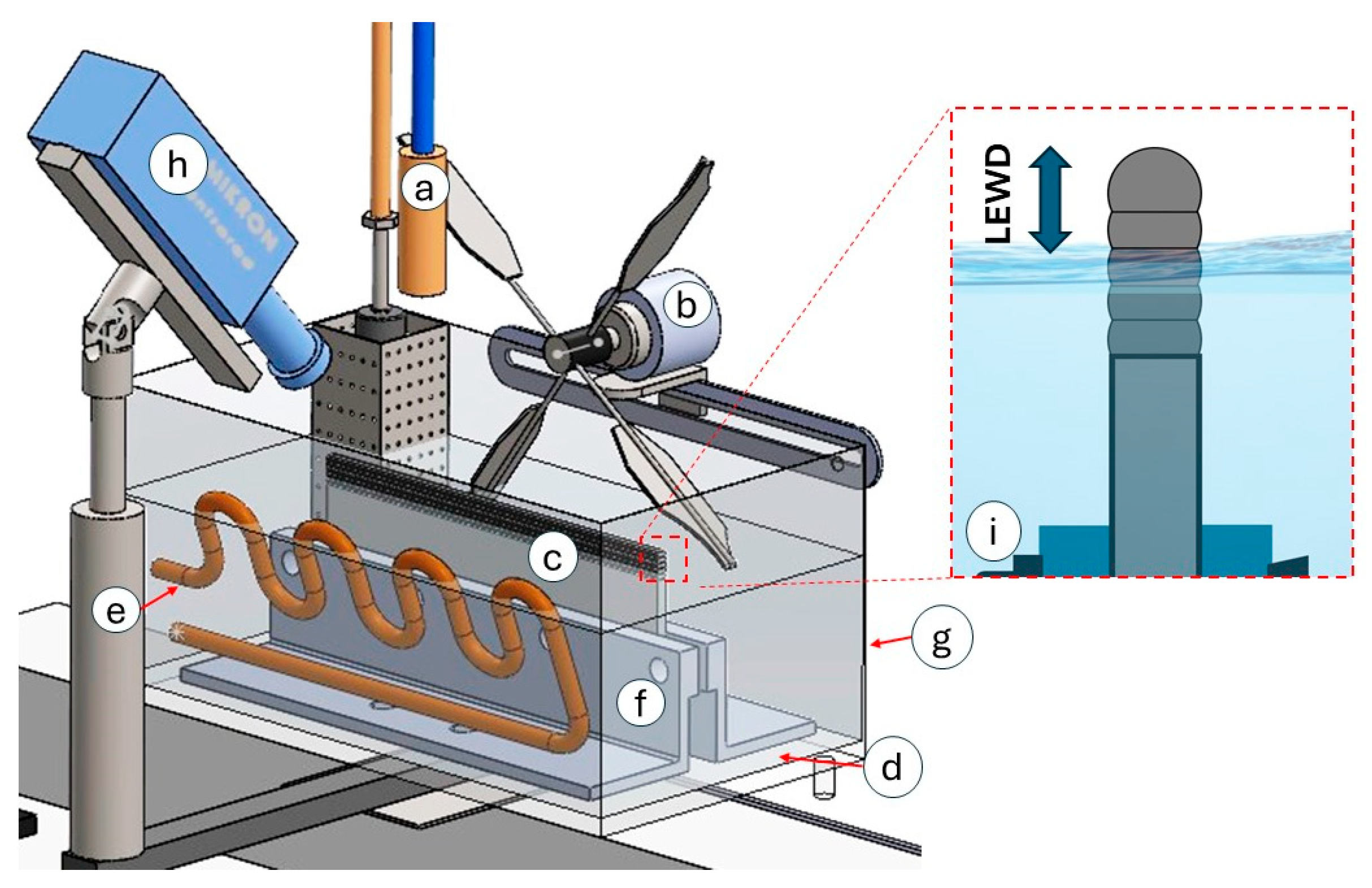
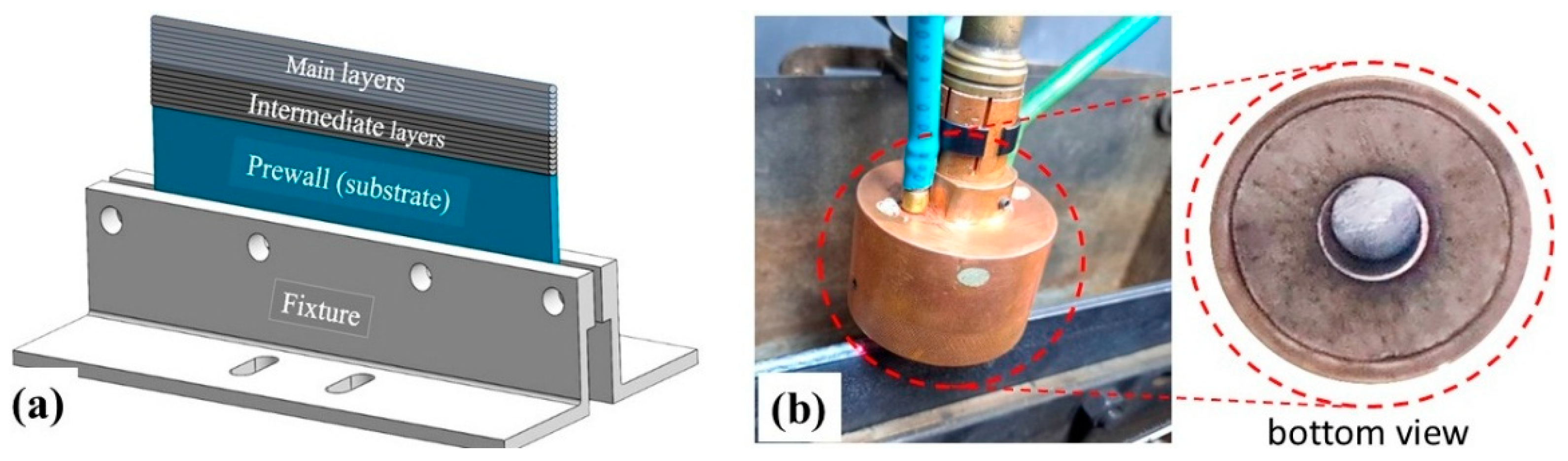
3.1. Equipment, Materials, and Methods
3.2. The Preliminary Stage
- Constant arc pressure and minimal pool lateral sag (downward lateral running) conditions are achieved by keeping current intensity low, a short arc, and a shielding gas composition that is less “hot” (lower content of CO2), although enough to favor cathodic emission concentrated in the arc centerline.
- The pool should maintain an appropriate volume for a given deposition rate and current. A pool that is too small results in insufficient heat transfer to the previous layer, while a pool that is too large tends to run downward. There is always a suitable range of pool volumes (for a specific material, wall thickness, and arc energy). This range can be identified by gradually increasing the deposition speed while keeping the wire feed speed constant.
- The material beneath each layer during deposition should be as cool as possible to facilitate heat transfer through the built wall (without being so cold that it prevents the pool cooling from wetting the previous layer’s surface). The quicker heat transfers from the pool of the layers below during deposition, the smaller and less fluid the pool becomes, reducing the risk of pool collapse on the sides.
3.3. The Main Stage
3.3.1. Layer Height and Wall Width
3.3.2. Lateral Surface Appearance and Waviness
4. General Discussion
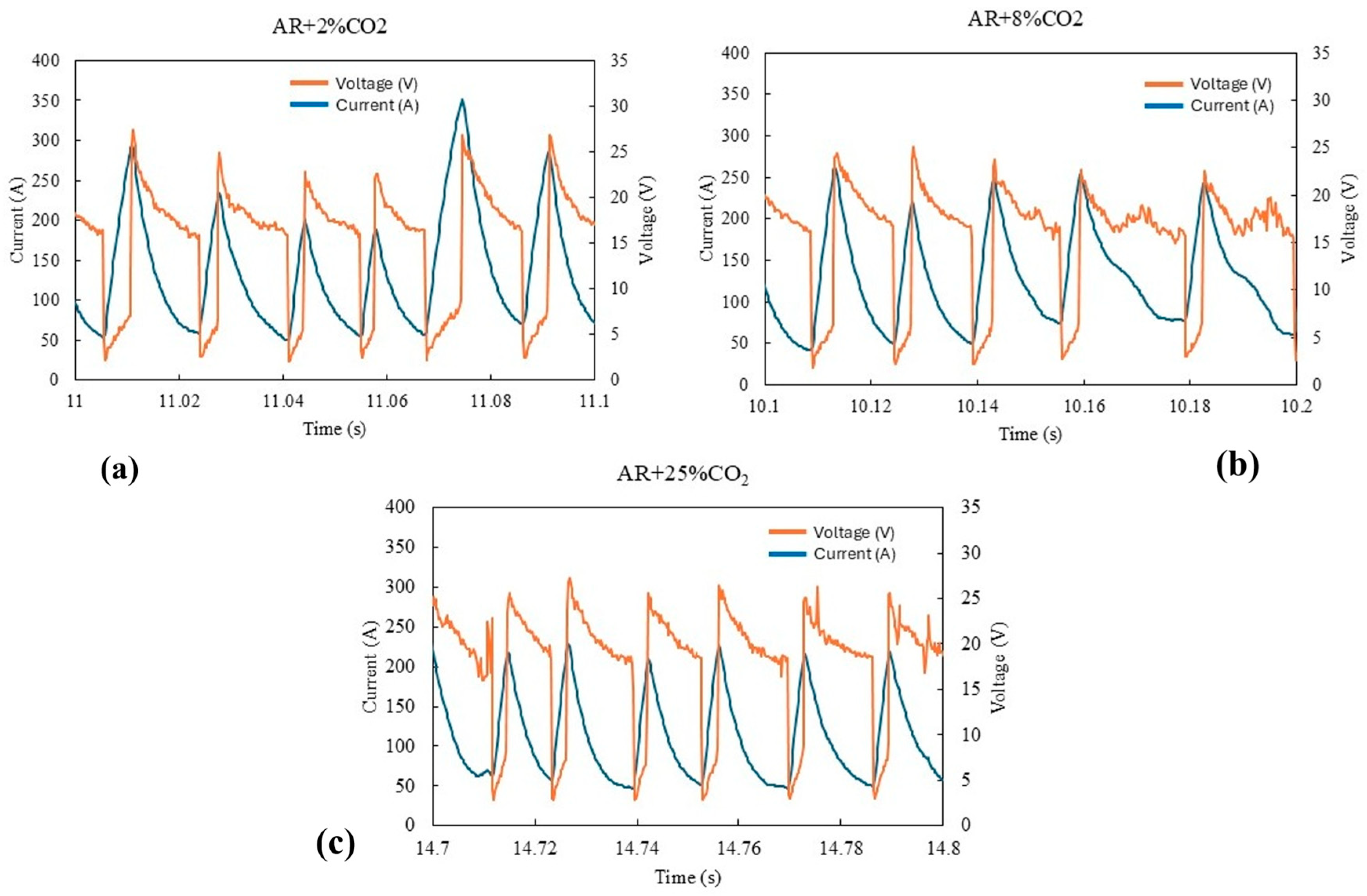
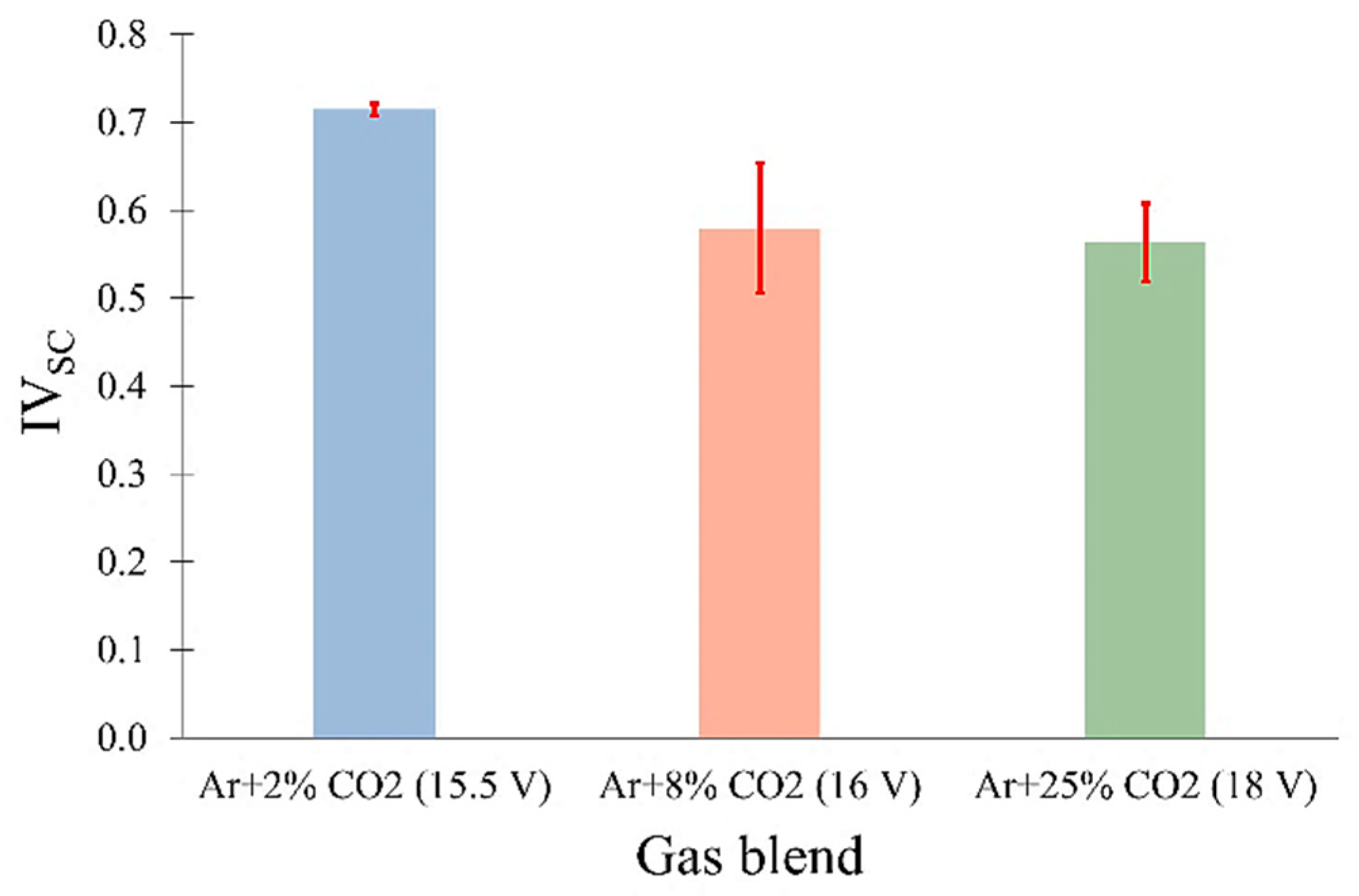
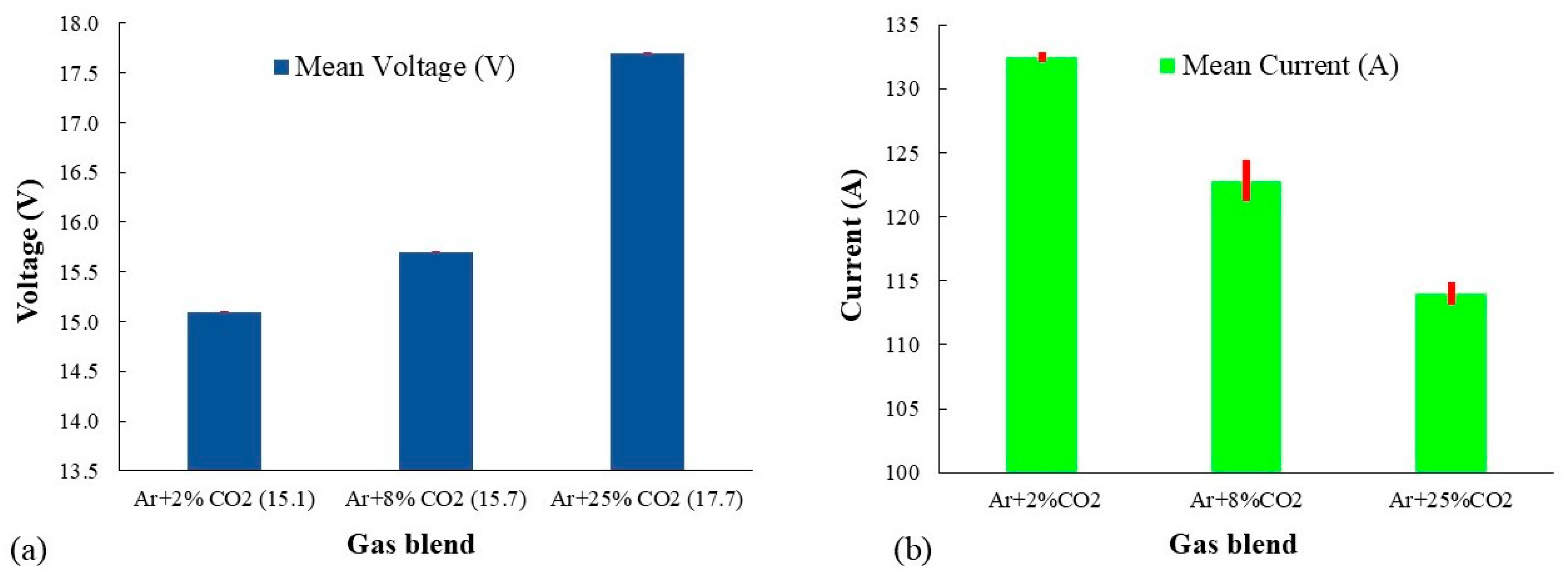
- Ar + 25% of CO2 demanded a higher arc voltage to reach the best metal transfer regularity;
- Ar + 2% of CO2 presented a slightly lower metal transfer regularity, yet acceptable;
- Ar + 2% of CO2 demanded the lowest mean current, and Ar + 25% of CO2 the highest, to melt (burn-off) the wire at the same speed;
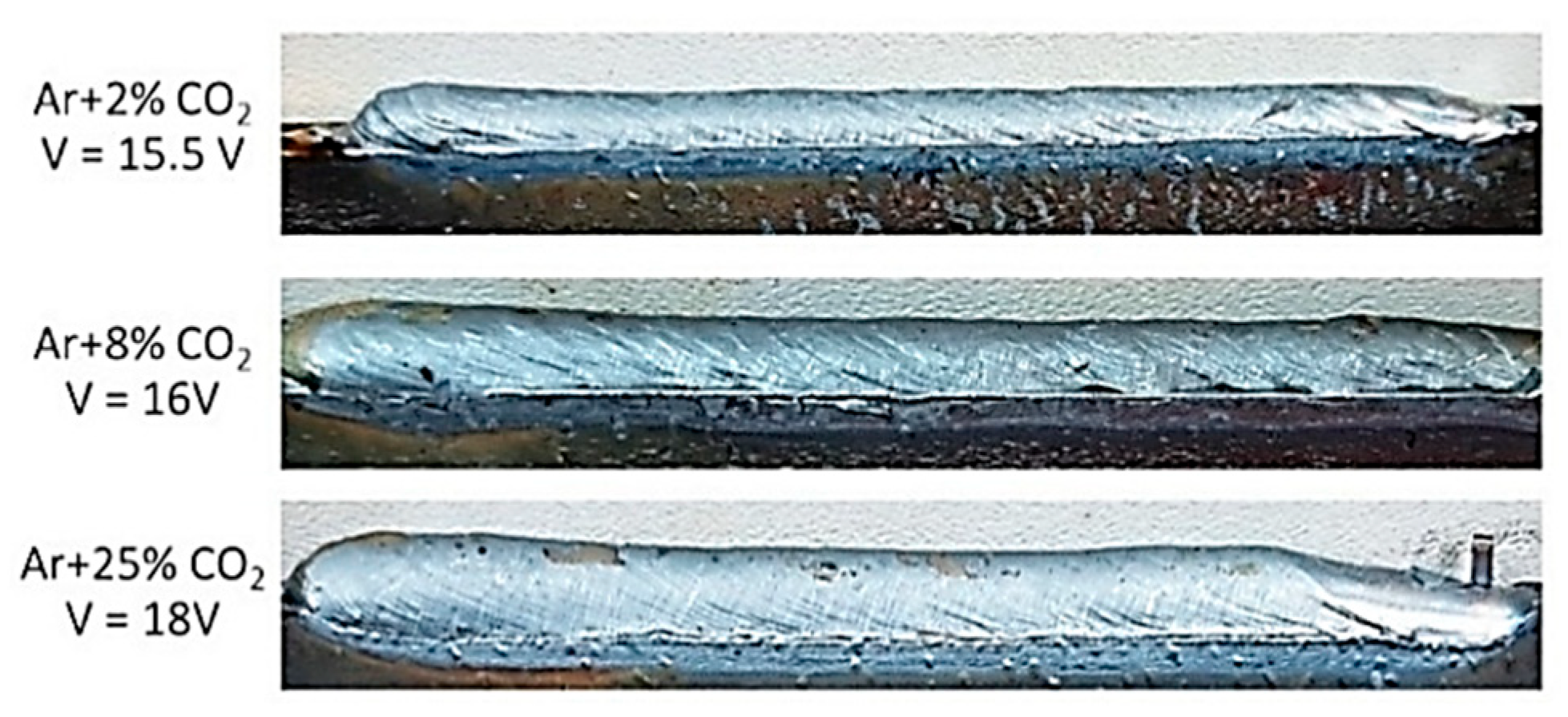
- Ar + 25% of CO2 heightened and narrowed the deposited layer, and Ar + 2% of CO2 shortened and widened;
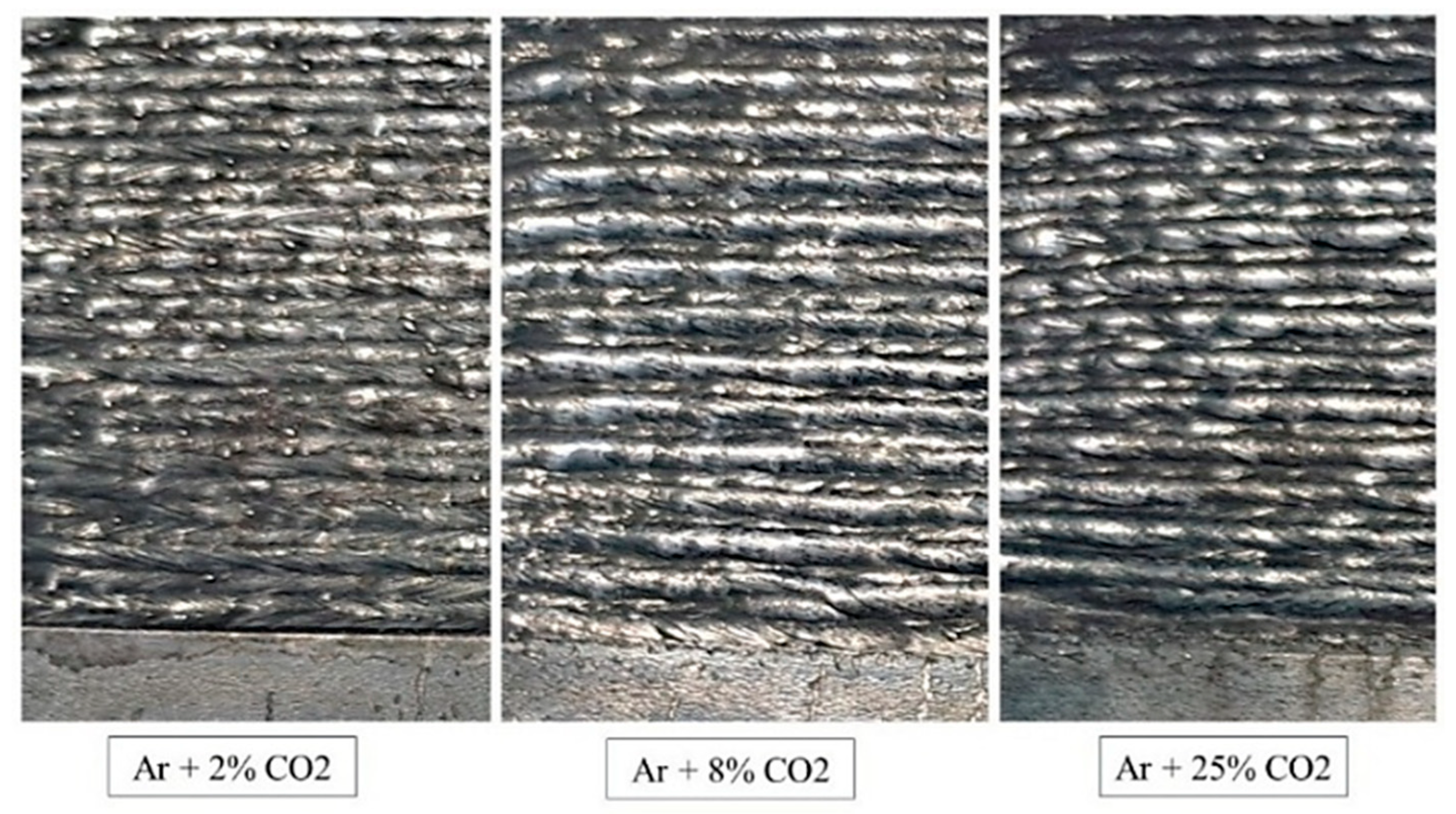
- The CO2 content has a marginal influence on the wall lateral surface waviness, although Ar + 8% of CO2 tends slightly to have more wall lateral undulation, yet the waviness is low, and the wall appearance is good with the three gases.
5. Conclusions
- It is possible to compare selected shielding gas blends under similar conditions of metal transfer regularity by a logical, systematic, and reproducible approach (scanning set voltage and using a constant voltage GMA power source), yet maintaining the main operational parameters constant.
- Based on the analysis of the findings and on an established user-criterion, the shielding gas mixture of Ar + 8% CO2 was deemed the most suitable, and justification for this decision-made choice is given.
- Lower current is demanded to burn off the wire at the same rate as more CO2 content in the shielding gas.
- The higher the CO2 content blended with Ar in the shielding gas, the higher the arc voltage to maintain the arc with regular metal transfer.
- Even keeping the same deposition rate per unit of layer length, a greater content of CO2 in the shielding gas blend makes the layer wider and shorter in layer height.
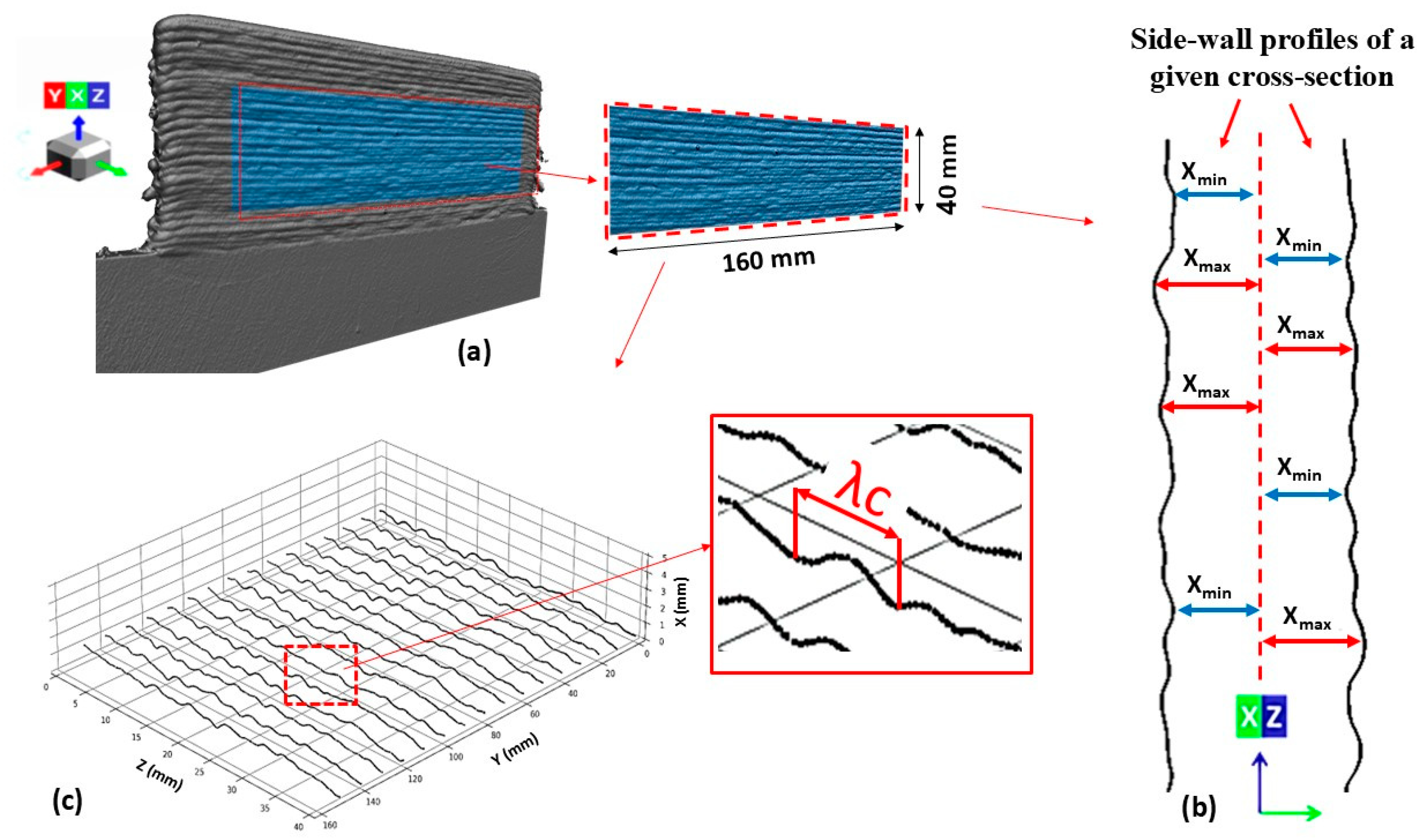
- The external and effective wall widths are narrower, and the layer height taller, with lower CO2 content in the shielding gas.
- However, the CO2 content of the Ar-based shielding gas did not affect lateral surface waviness significantly.
6. Future Work
Author Contributions
Funding
Data Availability Statement
Acknowledgments
Conflicts of Interest
Abbreviations
| CMT | Cold metal transfer |
| CNC | Computer numerical control |
| CTWD | Contact tip-to-work distance |
| DS | Deposition speed |
| GMA | Gas metal arc |
| GMA-DED | Gas metal arc directed energy deposition |
| GMAW | Gas metal arc welding |
| HSLA | High-strength low-alloy steel |
| I | Current |
| Im | Average (mean) current |
| IVsc | Metal transfer regularity index (for short-circuit metal transfer) |
| LEWD | Liquid-edge work distance |
| LH | Layer height |
| NIAC | Near-immersion active cooling |
| NIAH | Near-immersion active heating |
| SSG | Supplementary shielding gas |
| V | Voltage |
| Vm | Average (mean) voltage |
| Wa | Arithmetic mean waviness |
| WAAM | Wire arc additive manufacturing |
| WFS | Wire feed speed |
References
- Mvola, B.; Kah, P. Effects of shielding gas control: Welded joint properties in GMAW process optimization. Int. J. Adv. Manuf. Technol. 2017, 88, 2369–2387. [Google Scholar] [CrossRef]
- Marônek, M.; Bárta, J.; Urminsky, J.; Bártová, K.; Šugra, F. The effect of shielding gas on selected geometric characteristics of multilayer walls produced by WAAM. In Proceedings of the 12th International Scientific and Professional Conference SBZ, Poreč, Croatia, 18–20 October 2023. [Google Scholar]
- Teixeira, F.R.; Jorge, V.L.; Scotti, F.M.; Siewert, E.; Scotti, A. A methodology for shielding-gas selection in wire arc additive manufacturing with stainless steel. Materials 2024, 17, 3328. [Google Scholar] [CrossRef]
- Silwal, B.; Pudasaini, N.; Roy, S.; Murphy, A.B.; Nycz, A.; Noakes, M.W. Altering the supply of shielding gases to fabricate distinct geometry in GMA additive manufacturing. Appl. Sci. 2022, 12, 3679. [Google Scholar] [CrossRef]
- Kah, P.; Martikainen, J. Influence of shielding gases in the welding of metals. Int. J. Adv. Manuf. Technol. 2013, 64, 1411–1421. [Google Scholar] [CrossRef]
- Matusiak, J.; Wyciślik, J.; Wyciślik, A. Environmental criteria for shielding gas selection during arc welding of stainless steels. Solid State Phenom. 2016, 246, 275–278. [Google Scholar] [CrossRef]
- Nguyen, V.T.; Minh, P.S.; Uyen, T.; Do, T.T.; Ngoc, H.V.T.; Le, M.T.; Nguyen, T.V.T. WAAM technique: Process parameters affecting the mechanical properties and microstructures of low-carbon steel. Metals 2023, 13, 873. [Google Scholar] [CrossRef]
- Le, V.T.; Nguyen, T.D.; Hoang, T.D. Optimization of single-track deposits in wire arc-based direct energy deposition of ER110S-G steel using MONS-MFO and TOPSIS algorithms. Proc. Inst. Mech. Eng. Part B J. Eng. Manuf. 2024, 239, 648–659. [Google Scholar] [CrossRef]
- Kanishka, K.; Acherjee, B. A study on the effect of shielding gases on the GMAW-WAAM process and performance of WAAM-deposited low-carbon steel. Int. J. Mater. Res. 2025, 116, 905–916. [Google Scholar] [CrossRef]
- Trinh, N.Q.; Tashiro, S.; Le, K.D.; Suga, T.; Kakizaki, T.; Yamazaki, K.; Lersvanichkool, A.; Murphy, A.B.; Van Bui, H.; Tanaka, M. Eligible CO2 content in Ar–CO2 mixture shielding gas for improving metal transfer in metal-cored arc welding. Int. J. Heat Mass Transf. 2024, 231, 125803. [Google Scholar] [CrossRef]
- Da Silva, L.J.; Scotti, F.M.; Fernandes, D.B.; Reis, R.P.; Scotti, A. Effect of O2 content in argon-based shielding gas on arc wandering in WAAM of aluminum thin walls. CIRP J. Manuf. Sci. Technol. 2021, 32, 338–345. [Google Scholar] [CrossRef]
- Jurić, I.; Garašić, I.; Bušić, M.; Kožuh, Z. Influence of shielding gas composition on structure and mechanical properties of wire and arc additive manufactured Inconel 625. JOM 2019, 71, 703–708. [Google Scholar] [CrossRef]
- Galeazzi, D.; Barancelli Schwedersky, M.; Maciel, P.; Correa Jaeger Rocha, P.; Gonçalves e Silva, R.H. Analysis of the CO2 influence in the gas mixture for WAAM using CMT version of the GMAW process. In Proceedings of the 26th International Congress of Mechanical Engineering (COBEM), Virtual Conference, 22–26 November 2021. [Google Scholar] [CrossRef]
- Yamaguchi, M.; Komata, R.; Furumoto, T.; Abe, S.; Hosokawa, A. Influence of metal transfer behavior under Ar and CO2 shielding gases on geometry and surface roughness of single and multilayer structures in GMAW-based wire arc additive manufacturing of mild steel. Int. J. Adv. Manuf. Technol. 2022, 119, 911–926. [Google Scholar] [CrossRef]
- Wang, J.; Diao, C.; Taylor, M.; Wang, C.; Pickering, E.; Ding, J.; Pimentel, M.; Williams, S. Investigation of 300M ultra-high-strength steel deposited by wire-based gas metal arc additive manufacturing. Int. J. Adv. Manuf. Technol. 2023, 129, 3751–3767. [Google Scholar] [CrossRef]
- Gowthaman, P.S.; Jeyakumar, S.; Sarathchandra, D.T. Experimental study of shielding gas concentration on mechanical properties of stainless steel alloy parts using wire and arc additive manufacturing. Proc. Inst. Mech. Eng. Part E J. Process Mech. Eng. 2024, 1–13. [Google Scholar] [CrossRef]
- Green, T.K.; Sridharan, N.; Chen, X.; Field, K.G. Effect of N2- and CO2-containing shielding gases on composition modification and carbonitride precipitation in wire arc additive manufactured grade 91 steel. Addit. Manuf. 2022, 56, 102854. [Google Scholar] [CrossRef]
- Marefat, F.; Kapil, A.; Banaee, S.A.; Van Rymenant, P.; Sharma, A. Evaluating shielding gas–filler wire interaction in bi-metallic wire arc additive manufacturing (WAAM) of creep resistant steel–stainless steel for improved process stability and build quality. J. Manuf. Process. 2023, 88, 110–124. [Google Scholar] [CrossRef]
- Silwal, B.; Nycz, A.; Masuo, C.J.; Noakes, M.W.; Marsh, D.; Vaughan, D. An experimental investigation of the effectiveness of Ar–CO2 shielding gas mixture for the wire arc additive process. Int. J. Adv. Manuf. Technol. 2020, 108, 1285–1296. [Google Scholar] [CrossRef]
- Queguineur, A.; Asadi, R.; Ostolaza, M.; Valente, E.H.; Nadimpalli, V.K.; Mohanty, G.; Ituarte, I.F. Wire arc additive manufacturing of thin and thick walls made of duplex stainless steel. Int. J. Adv. Manuf. Technol. 2023, 127, 381–400. [Google Scholar] [CrossRef]
- Petkov, V.; Tashev, P.; Dyakova, V. Analysis of the processes in the welding arc during additive manufacturing. Arch. Metall. Mater. 2024, 69, 819–824. [Google Scholar] [CrossRef]
- Unger, M.; Neves, J.L.; Schnall, M. Effect of welding gas mixtures on weld material and bead geometry. In Proceedings of the 13th Ranshofen Light Metals Days 2024 Saalfelden, Austria, 26–27 September 2024; IOP Conference Series: Materials Science and Engineering; IOP Publishing: Bristol, UK, 2024; Volume 1315, p. 012007. [Google Scholar] [CrossRef]
- Bansal, H.; Kumar Gupta, A.; Madan, A. Wire arc additive manufacturing process for higher deposition rate and mechanical strength. Int. J. Eng. Res. Technol. 2021, 10, 125–132. [Google Scholar] [CrossRef]
- Kumar, P.; Sharma, S.K.; Singh, R.K.R. Heat input and shielding environment effect on CMT-WAAM of IN718. Proc. Inst. Mech. Eng. Part C J. Mech. Eng. Sci. 2024, 238, 10026–10044. [Google Scholar] [CrossRef]
- Li, S.; Zhang, L.J.; Ning, J.; Wang, X.; Zhang, G.F.; Zhang, J.X.; Na, S.-J.; Fatemeh, B. Comparative study on the microstructures and properties of wire + arc additively manufactured 5356 aluminium alloy with argon and nitrogen as the shielding gas. Addit. Manuf. 2020, 34, 101206. [Google Scholar] [CrossRef]
- Balanovskiy, A.E.; Astafyeva, N.A.; Kondratyev, V.V.; Karlina, A.I. Study of mechanical properties of C–Mn–Si composition metal after wire-arc additive manufacturing (WAAM). CIS Iron Steel Rev. 2021, 22, 66–71. [Google Scholar] [CrossRef]
- Akbarzadeh, E.; Yurtışık, K.; Gür, C.E.M.İ.L.; Saeid, T.; Tavangar, R. Influence of shielding gas on the microstructure and mechanical properties of duplex stainless steel in wire arc additive manufacturing. Met. Mater. Int. 2024, 30, 1977–1996. [Google Scholar] [CrossRef]
- Henckell, P.; Gierth, M.; Ali, Y.; Reimann, J.; Bergmann, J.P. Reduction of energy input in wire arc additive manufacturing (WAAM) with gas metal arc welding (GMAW). Materials 2020, 13, 2491. [Google Scholar] [CrossRef]
- Gurcik, T.; Kovanda, K.; Rohan, P. Influence of shielding gas on geometrical quality of WAAM technology. In Proceedings of the 28th International Conference on Metallurgy and Materials (METAL), Brno, Czech Republic, 22–24 May 2019; pp. 715–721. [Google Scholar] [CrossRef]
- Reis, R.P.; Scotti, A.; Da Silva, L.J. Active Cooling Technique for Additive Manufacturing. Patent BR 102018015314-5, 11 July 2023. (In Portuguese) [Google Scholar]
- Mullaney, M.; Tatam, R.P. Emissivity measurements of metals used in wire-arc-directed energy deposition processes. Metals 2025, 15, 1087. [Google Scholar] [CrossRef]
- Jo, H.; King, J.L.; Blomstrand, K.; Sridharan, K. Spectral emissivity of oxidized and roughened metal surfaces. Int. J. Heat Mass Transf. 2017, 115, 1065–1071. [Google Scholar] [CrossRef]
- ISO 21952-2012; Welding Consumables—Wire Electrodes, Wires, Rods and Deposits for Gas Shielded Arc Welding of Creep-resisting Steels—Classification. International Organization for Standardization: Geneva, Switzerland, 2012.
- Scotti, A.; Ponomarev, V.; Lucas, W. A scientific application oriented classification for metal transfer modes in GMA welding. J. Mater. Process. Technol. 2012, 212, 1406–1413. [Google Scholar] [CrossRef]
- Liskévych, O.; Scotti, A. Influence of the CO2 content on operational performance of short-circuit GMAW. Weld. World 2015, 59, 217–224. [Google Scholar] [CrossRef]
- Zielinska, S.; Pellerin, S.; Valensi, F.; Dzierzega, K.; Musiol, K.; De Izarra, C.; Briand, F. Gas influence on the arc shape in MIG–MAG welding. Eur. Phys. J. Appl. Phys. 2008, 43, 111–122. [Google Scholar] [CrossRef]



| Material | Thickness of Parts (mm) | Shielding Gas | Ref. |
|---|---|---|---|
| Inconel 718 | not specified | Inoxline He30H2C (67.88% Ar-30% He-2% H2-0.12% CO2) | [2] |
| Austenitic Stainless Steel | ~5 | Ar-based blends (varied: O2, CO2, He, H2) | [3] |
| ER410 | 12.5 ± 0.3 10.1 ± 0.1 | Ar-CO2 (90–10%), He-Ar-CO2 (90-7.5-2.5%) | [5] |
| A5.18 ER70S-G | not specified | Ar + 5, 10, 15, 20, 25, 50, and 100% CO2 | [10] |
| Aluminum Alloy | not specified | Ar with 200 ppm O2, Ar with 20,000 ppm O2 | [11] |
| IN625 | not specified | Ar + 2.5% CO2, 95.5% Ar, 3% He, and 1.5% H2, 95% Ar and 5% H2, and pure Ar | [12] |
| Mild Steel | 6 | Ar + 25% CO2, Ar + 8% CO2 | [13] |
| Mild Steel | not specified | Ar, Ar + 25% CO2 | [14] |
| 300M UHSS | (Single pass) | Ar, Ar + 2.5% CO2, Ar + 8% CO2, Ar + 20% CO2, Ar + 2% CO2 + 38% He | [15] |
| 316L Stainless Steel | 10 | Ar + 5% CO2, Ar + 10% CO2, Ar + 15% CO2 | [16] |
| Ferritic/Martensitic Steel | 6 | Ar + 2% CO2 | [17] |
| G CrMo2Si and G 23 12 L Si | 8 | Ar + 3% CO2 + 1% O2, Ar + 2% CO2 | [18] |
| ER70S-6 | 9 | Ar + 2, 5, 10, and 25% CO2 | [19] |
| G22093NL and G22053NL | 12 30 | Ar + 10% CO2 | [20] |
| Stainless Steel | 4 | Ar + 18% CO2 | [21] |
| EN AW 5183 Aluminum | 3.5–5.5 | Ar with CO2, N2, and O2 additions | [22] |
| AISI 316L Stainless Steel | not specified | 25% CO2 75% Ar, 5% H2 95% Ar, 100% Ar | [23] |
| IN718 | not specified | Ar, Ar + 2.5% CO2, Ar + 20% CO2 | [24] |
| ER5356 Aluminum Alloy | not specified | Pure Ar, pure N2 | [25] |
| C-Mn-Si Low-Alloyed Steel (Sv-08G2S) | 40 | CO2 and Ar + CO2 | [26] |
| 2209 DSS (Thermanit-Bohler) | not specified | Ar, Ar + 2%O2, Ar + 2%N2 | [27] |
| G4Si1/SG3 | not specified | 98%Ar + 2%O2 | [28] |
| G 42 3 c G3 Si1 | not specified | Ar + 7% CO2 + 2.5% O2, Ar + 15% CO2 + 2.5% O2, Ar + 12% CO2 + 20% He, Ar + 2% CO2, Ar + 2% CO2 + 35% He | [29] |
| Component | C | Si | Mn | Cr | Mo |
|---|---|---|---|---|---|
| wt% | 0.08 | 0.6 | 0.95 | 2.6 | 1.0 |
| Parameter | Value |
|---|---|
| Wire feed speed (m/min) | 3.2 |
| Deposition speed (mm/min) | 380 |
| Contact tip to work distance (mm) | 16 |
| Interlayer temperature (°C) | 60 |
| Shielding gas flow rate (L/min) | 12 |
| SSG flow rate (L/min) | 5 |
| Layer length (mm) | 70 |
| Shielding Gas | Vset (V) | Vm (V) | Im (A) | IVsc |
|---|---|---|---|---|
| Ar + 2% CO2 | 14.5 | 14.0 | 121.2 | 1.25 |
| Ar + 2% CO2 | 15.5 | 15.1 | 122.8 | 0.57 |
| Ar + 2% CO2 | 16.5 | 16.1 | 129.7 | 0.80 |
| Ar + 8% CO2 | 15.0 | 14.5 | 127.3 | 0.88 |
| Ar + 8% CO2 | 16.0 | 15.6 | 130.9 | 0.48 |
| Ar + 8% CO2 | 17.0 | 16.5 | 135.4 | 0.63 |
| Ar + 25% CO2 | 18.0 | 17.6 | 129.3 | 0.80 |
| Ar + 25% CO2 | 18.5 | 18.0 | 134.8 | 0.96 |
| Ar + 25% CO2 | 19.0 | 18.5 | 136.8 | 0.90 |
| Gas Blends | Average Layer Height (mm) | Effective Wall Width (mm) | SD (mm) | External Wall Width (mm) | SD (mm) |
|---|---|---|---|---|---|
| Ar + 2% CO2 | 2.1 | 4.17 | 0.11 | 4.67 | 0.11 |
| Ar + 8% CO2 | 2.0 | 4.32 | 0.08 | 5.09 | 0.10 |
| Ar + 25% CO2 | 1.8 | 4.82 | 0.04 | 5.54 | 0.07 |
| Gas Blend | SW (mm) | SD (mm) |
|---|---|---|
| Ar + 2% CO2 | 0.12 | 0.02 |
| Ar + 8% CO2 | 0.17 | 0.02 |
| Ar + 25% CO2 | 0.15 | 0.02 |
Disclaimer/Publisher’s Note: The statements, opinions and data contained in all publications are solely those of the individual author(s) and contributor(s) and not of MDPI and/or the editor(s). MDPI and/or the editor(s) disclaim responsibility for any injury to people or property resulting from any ideas, methods, instructions or products referred to in the content. |
© 2026 by the authors. Licensee MDPI, Basel, Switzerland. This article is an open access article distributed under the terms and conditions of the Creative Commons Attribution (CC BY) license.
Share and Cite
Ghayour, M.A.; Seyedkashi, S.M.H.; Moradi, M.; Yaghoubinezhad, Y.; Scotti, A. A Systematic Selection of Shielding Gas Composition for GMA-DED of HSLA Thin Walls Focused on Geometrical Features. Metals 2026, 16, 264. https://doi.org/10.3390/met16030264
Ghayour MA, Seyedkashi SMH, Moradi M, Yaghoubinezhad Y, Scotti A. A Systematic Selection of Shielding Gas Composition for GMA-DED of HSLA Thin Walls Focused on Geometrical Features. Metals. 2026; 16(3):264. https://doi.org/10.3390/met16030264
Chicago/Turabian StyleGhayour, Moheb Ali, Seyed Mohammad Hossein Seyedkashi, Mahmoud Moradi, Yadollah Yaghoubinezhad, and Americo Scotti. 2026. "A Systematic Selection of Shielding Gas Composition for GMA-DED of HSLA Thin Walls Focused on Geometrical Features" Metals 16, no. 3: 264. https://doi.org/10.3390/met16030264
APA StyleGhayour, M. A., Seyedkashi, S. M. H., Moradi, M., Yaghoubinezhad, Y., & Scotti, A. (2026). A Systematic Selection of Shielding Gas Composition for GMA-DED of HSLA Thin Walls Focused on Geometrical Features. Metals, 16(3), 264. https://doi.org/10.3390/met16030264