Review

Environmental Impact of Extraction of Rare Earth Elements from Primary Sources and NiMH Batteries: A Literature Review


by
Daniel Sánchez Piloto
1,
Denise Crocce Romano Espinosa
1 and
Amilton Barbosa Botelho Junior
2,*
1
Department of Chemical Engineering, Polytechnic School, University of Sao Paulo, Sao Paulo 05508-080, Brazil
2
Department of Chemical Engineering, Norwegian University of Science and Technology, 7034 Trondheim, Norway
*
Author to whom correspondence should be addressed.
Metals 2026, 16(3), 254; https://doi.org/10.3390/met16030254
Submission received: 31 January 2026 / Revised: 20 February 2026 / Accepted: 24 February 2026 / Published: 26 February 2026
(This article belongs to the Special Issue Green Solvent Extraction for Critical Metal Recovery)

Abstract

Rare earth elements (REEs) hold great importance in the transition to a low-carbon economy. However, their increased exploitation, supply risks, low recyclability, and limited substitution by other elements have led to their classification as critical and strategic materials. The extraction of REEs from primary mining sources generates several negative environmental impacts, with greenhouse gas emissions being among the most significant. These emissions are quantified through Life Cycle Assessment (LCA) under the Global Warming Potential (GWP) category. Recycling REEs from secondary sources has emerged as a promising alternative to reduce mining dependence and environmental impacts. Nickel–metal hydride (NiMH) batteries contain approximately 5–10% REEs and represent a potential secondary source through urban mining. Our literature review presents a comparative analysis of the carbon footprint associated with the extraction of REEs from primary sources (bastnäsite and monazite), expressed per tonne of rare earth oxides (REO) produced, and with industrial-scale recycling processes of NiMH batteries, expressed per tonne of recovered REE mixture. The analysis indicates that CO2 emissions associated with recycling processes (85–179 kg CO2-eq per tonne of REO) are approximately 4 to 9 times higher than those reported for primary extraction routes; however, this comparison should be interpreted with cautiously, as recycling systems are multifunctional and involve the simultaneous recovery of additional metals such as Ni and Co, whereas primary mining operations are typically focused exclusively on REEs. Furthermore, differences in functional units, energy mixes, and geographical contexts limit the strict comparability of the results. Accordingly, a direct comparison based solely on REEs may overestimate the environmental burden of recycling. Consequently, the reported emission ranges provide an indicative perspective on relative magnitudes under current technological and regional conditions rather than a definitive comparative assessment. Despite the higher reported emissions, recycling should not be regarded as environmentally detrimental; it also plays a vital role in mitigating supply risks and reducing dependence on primary extraction. By diversifying supply sources, recycling enhances resource security and resilience.

1. Introduction

1.1. Rare Earth Elements

Rare earth elements (REEs) are a group of 17 chemical elements consisting of the lanthanides (elements with atomic numbers 57–71), Y, and Sc [1]. These elements are divided into two subgroups: light rare earth elements (LREEs), from La to Eu, and heavy rare earth elements (HREEs), including remaining lanthanides and Y [2]. The name “rare earth” does not derive from their scarcity in the Earth’s crust but rather from their chemical similarity. It is estimated that the concentration of REEs in the Earth’s crust is between 150 and 220 ppm, which is higher than other metals that are extracted on an industrial scale, such as Zn, Cu, and Pb, but are rarely found in concentrations that justify their economic exploration [3].
REEs hold a great importance in green energy applications and the low-carbon economy due to their electrical, magnetic, and optical properties in the manufacturing of permanent magnets, catalysts, superconductors, hydrogen storage materials, batteries for electric mobility, and renewable energy [4,5]. It is estimated that between 2010 and 2020, the primary production of REEs increased by more than 100% for each individual element, with La experiencing the largest increase [6].
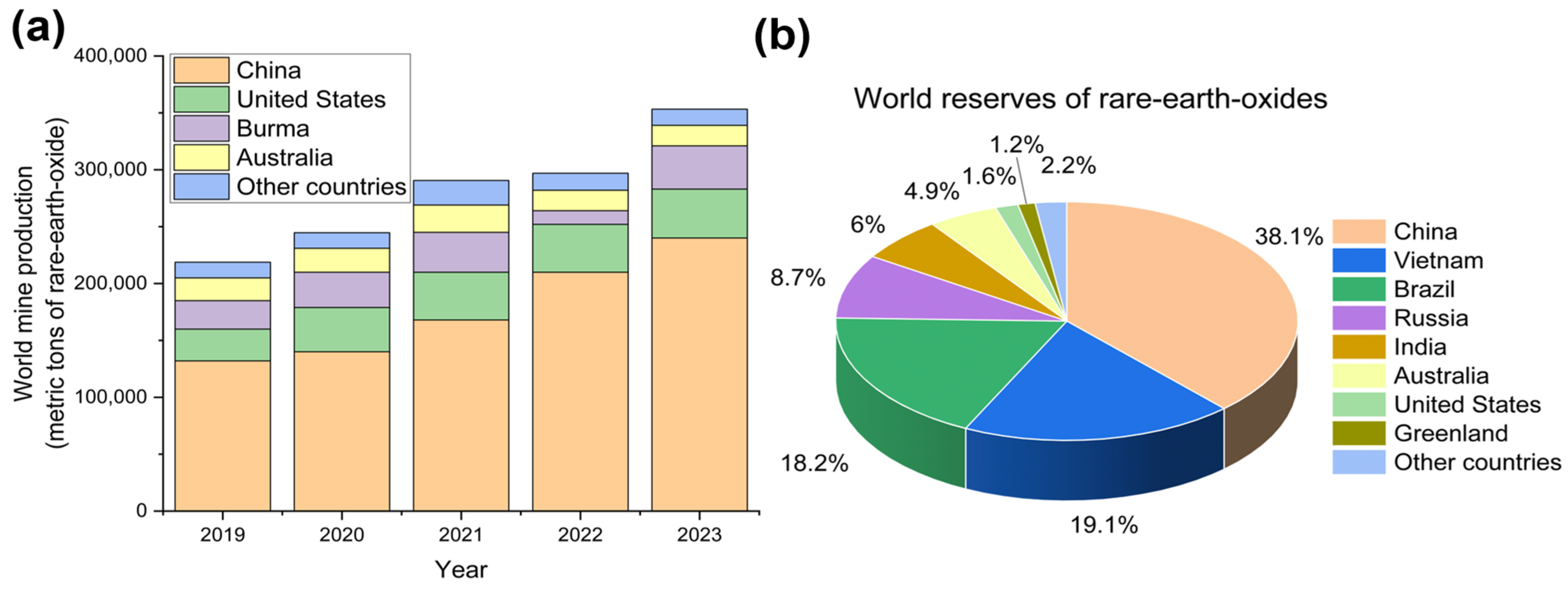
Global production of REEs has increased over the past five years and remains largely dominated by China. In 2024, according to the U.S. Geological Survey [7], China produced approximately 230,000 metric tons of rare earth oxides in 2023, accounting for about 69% of global production (Figure 1a). The United States and Burma represent 12% and 11% of global production, respectively. On the other hand, global REO reserves (Figure 1b) are estimated at 110 million metric tons and distributed in China (38%), Vietnam (19%), and Brazil (18%) [7].
Due to the increased use of REEs in green technologies and mostly controlled by a few countries, these elements are considered critical and strategic raw materials by the European Union [8], the US [9], and Brazil [10] based on their risk of supply interruption in the short and medium term, low recyclability, and low replacement for other materials. The availability of the supply chain naturally arises from the uneven geographical distribution of these materials [11]. However, the supply of these elements faces not only geopolitical challenges but also environmental issues [6].
In this context, comparing the REE concentrations in primary deposits with those found in secondary sources is essential to evaluate the real potential of urban mining as a complementary supply strategy (Table 1). Secondary sources such as end-of-life permanent magnets, NiMH batteries, fluorescent lamp phosphors, and electronic waste represent a relevant reservoir of REE, often exhibiting REE concentrations comparable to or even higher than those found in primary ores.
REEs mining from primary sources is essential for supplying critical materials for green technologies, but causes several environmental impacts that cannot be ignored. It is well-known that mining leads to ecosystem disruptions, biodiversity loss, forced displacement of communities, generation of wastewater and solid waste, human health hazards, depletion of abiotic resources, and greenhouse gas emissions [24].
Life cycle assessments (LCA) calculate the Global Warming Potential (GWP) as an indicator related to greenhouse gas emissions (CO2-eq), which represent one of the most severe environmental impacts of REEs extraction [25,26,27]. GWP increased by 94% (152.97 kt CO2-eq) in 2020, compared to 2010 (79.01 kt CO2-eq), and is expected to increase (169.49 kt CO2-eq) until 2030 from primary sources. China (88.06 kt CO2-eq), followed by the U.S. (23.90 kt CO2-eq), Myanmar (18.87 kt CO2-eq), and Australia (10.69 kt CO2-eq), are the main producers of these elements [6].
As climate change has become one of the most pressing concerns for governments worldwide, it is prompting them to seek effective solutions, establishing methods for materials extraction driven by environmental, economic, and social aspects together. Increasing the recycling of these materials from secondary sources is crucial to reducing the dependence on extraction from primary sources [6]. In this context, urban mining has emerged as a key strategy, defined as “the set of processes and activities related to the production of secondary raw materials from urban solid waste” [28], promoting more sustainable resource management. Currently, only 1% of the REEs are recycled globally [29,30], and the literature still lacks integrated and comparative analyses that systematically assess the environmental impacts of primary extraction versus recycling processes.

1.2. Recycling of REEs from Secondary Sources: NiMH Batteries

NiMH batteries represent a relevant and still underexploited secondary source of REEs, since approximately 7–10% [19,22] of the total battery mass consists of REEs, mainly La, Ce, Nd, and Pr, incorporated into the metal hydride alloy of the negative electrode.
The global NiMH battery market was estimated to reach a value between USD 2.4 and 3.6 billion in 2023 and is projected to grow further, reaching approximately USD 9 billion by 2030 (Supplementary Materials: Figure S1) [31,32,33]. This growth is closely associated with the increasing production and deployment of hybrid electric vehicles, driven by international agreements and energy transition policies aimed at reducing greenhouse gas emissions [34].
North America (the United States and Canada) leads in the use of NiMH batteries, followed by Asia. However, it is estimated that Asia will become the leading region in the use of these batteries by 2030. This projection is largely due to the consolidation of production in Asia—both batteries and raw materials (mostly REEs) [33].
Recycling NiMH components has become a priority, providing critical materials in regions with low production towards the reduction in mining extraction, meeting the requirements of the circular economy. Some authors [24,29] assert that recovering and recycling REEs from NiMH batteries requires less energy and results in lower environmental impacts compared to primary production from minerals. Although the literature on the environmental impact and economic benefits of REEs recycling is growing, there is a lack of literature regarding the comparison of primary and secondary sources processing and environmental impacts.

2. Objectives

We aimed at a literature analysis for comparison of environmental impact based on CO2-eq emissions generated by the REEs extraction from primary sources and by the recycling of NiMH batteries. For this purpose, we revised the main extraction/recycling routes for REEs production in both cases. The comparison was based on the emissions to produce 1 kg of REOs from primary sources, contrasted with 1 kg of a REE mixture recovered through recycling processes.
The literature review was conducted using the “Scopus”, “ScienceDirect”, and “Web of Science” databases. The search included the terms “life cycle impact”, “environmental impacts”, “life cycle assessment”, “CO2-eq emissions”, combined with “rare earth elements”, “rare earth oxide”, “rare earth mining”, “rare earth extraction”, “bastnäsite”, “monazite”, “xenotime”, “NiMH battery”, and “NiMH battery recycling”.
For primary sources, LCA studies were selected from the literature that reported CO2-eq emissions for the combined production of rare earth oxides (REO). Studies that provided emissions data for the extraction of a single REE were not considered, as they are not directly comparable to the recovery of these elements through NiMH battery recycling, which focuses on obtaining a REE mixture. Additionally, priority was given to studies that detailed the different stages of the extraction process and reported the emissions associated with each step, allowing for the identification of the most impactful phases.
Regarding recycling processes, industrial-scale studies were prioritized, as they more accurately reflect the associated environmental impacts under real operating conditions. However, due to the limited availability of studies in this area, laboratory-scale research was also considered. Although these studies do not fully replicate the operational conditions of an industrial plant, they provide valuable insights into the efficiency of different REEs recovery methods, the chemical reactions involved, and the critical points in terms of emissions. Additionally, they allow for the exploration of emerging technologies that could be implemented on a larger scale in the future.
No studies were found comparing the CO2-eq emissions from rare earth extraction from primary sources with the industrial-scale recycling of these elements from NiMH batteries. This research helps bridge that gap and provides deeper insights into the environmental viability and challenges of recycling these devices.

3. REEs Production from Minerals—Primary Sources

REEs are found in nature among 250 mineral species as phosphates, oxides, silicates, carbonates, and halides, but only a few of them are considered economically feasible for content exploration [6,35]. The main REE-bearing minerals worldwide are monazite, bastnäsite, and xenotime.
Bastnäsite ((Ce,La,Y)CO3F) is the primary REEs mineral accounting for 70% of global reserves [36]. It is a fluorocarbonate mineral composed of 65–75% REO, primarily Ce, La, Nd, and Pr, where Ce represents 50% of the total REEs in the mineral. The main bastnäsite deposits are found in the Bayan Obo in China (the largest mine in the world) and the Mountain Pass in the US [37].
Monazite ((Ce,La,Nd,Th)PO4) is a phosphate mineral primarily found in coastal regions of high geological activity [38]. It is estimated that 55–60% of REO, where Ce and La are the main REE, along with radioactive elements (e.g., Th and U), led several countries to ban monazite exploitation [39]. Currently, the main deposits are located in the Bayan Obo mine in China, coexisting with bastnäsite deposits, and at Mt Weld in Australia [36].
Xenotime (YPO4) is a Y-phosphate mineral composed of 52–67% REO, and one of the major sources of HREEs along with ion adsorption clays. Y2O3 is estimated to constitute approximately 60% of the REEs in the mineral, while the LREEs, mainly including La, Ce, Nd, and Pr, contribute around 8.4% [3]. Xenotime is often associated with monazite deposits (typically 1/200–1/20 xenotime/monazite ratio), making it a byproduct of monazite processing [35].
The extraction of REEs from primary sources represents an economic and technical challenge due to their insufficient concentration in exploitable mineral deposits [3]. The process involves a series of stages, including mining, mineral processing, and the subsequent separation and purification of the desired elements, specifically tailored to each deposit and its unique characteristics [40]. A deep understanding of these processes and their stages is crucial for more accurately assessing the associated environmental impacts. Additionally, it allows for the development of strategies to mitigate their effects, optimize resource use, and promote more sustainable extraction practices.

3.1. REEs Extraction Process from Bastnäsite

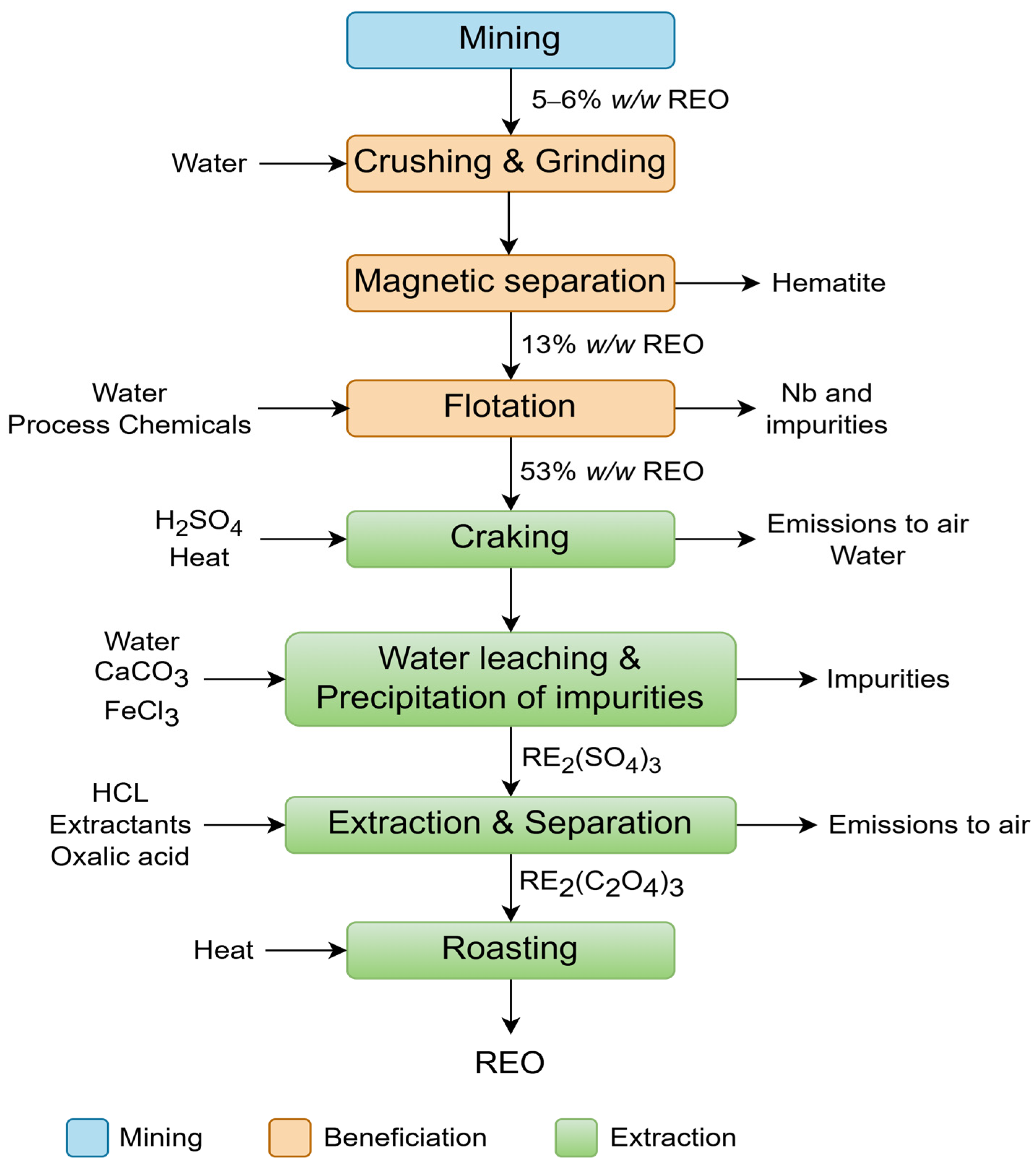
Bastnäsite and monazite deposits coexist in the Bayan Obo mine in a 7:3 mass ratio. The ore is primarily composed of hematite, columbite, and REEs, but also Th and U [14]. REEs are present in a concentration of 5–6% REO of the crude ore, with Ce (50%), La (23%), Nd (19%), and Pr (6%) being the most abundant REEs [41] (Figure 2). Understanding the process is important for comparison with recycling and a comparative environmental analysis.
REEs extraction process involves explosives and heavy machinery for ore extraction, followed by its transportation for beneficiation [27]. Crushing and grinding techniques are performed to reduce the particle size of the ore to less than 0.074 mm, followed by dewatering (water removal) and magnetic separation to separate Fe. After these stages, the concentration of REO increases to 13% (42–46% recovery efficiency). Then, the flotation stage removes Nb and impurities (63% recovery efficiency), reaching REO concentration at 54% [41].
The chemical steps begin with the addition of excess H2SO4 (Figure 2) at temperatures ranging from 400 to 550 °C to promote the reaction of REEs from the concentrated material (Equation (1)). Typically, a temperature of 450 °C is assumed, with an H2SO4-to-REO mass ratio of 1.4:1, resulting in a REO decomposition rate of approximately [41].
REE sulfate follows water leaching and filtration, where CaCO3 and FeCl3 are added in a ratio of 7–15:1 water to chemicals for pH control and impurities removal. Further, REEs are separated into LREEs, HREEs, and Nd through multiple steps of solvent extraction [14]. In the process described by Zaymes et al. [41], the extractant used in the solvent extraction stage was not reported. Consequently, other studies on bastnäsite processing were consulted, indicating that extractants such as D2EHPA, Cyanex 272, and PC88-A are commonly employed. Scrubbing and stripping are performed with HCl, forming RECl3, a solution that is precipitated with C2H2O4 (Equation (2)) in a 1.3:1 ratio and subsequently roasted to form REO [27] (Equation (3)). The recovery efficiency of REEs between the cracking and roasting stages exceeds 80%, and 1 kg of REO obtained after processing consists of 80.5% w/w light REO, 0.9% w/w heavy REO, and 18.6% w/w Nd(III) oxide [41]. Finally, individual RE metals can be produced from REOs by different techniques such as molten salt electrolysis, calciothermic reduction, and metallothermic reduction [27]. However, this step is beyond the scope of the present work, as the production of REO is considered the final product.
2 R E E C O 3 F + 3 H 2 S O 4 R E E 2 S O 4 + 2 H F + 2 H 2 C O 3
2 R E E 3 + + 3 H 2 C 2 O 4 + x H 2 O R E E 2 ( C 2 O 4 ) 3 . x H 2 O + 6 H +
R E E 2 ( C 2 O 4 ) 3 x H 2 O + H e a t R E E 2 O 3 + C O 2 + 3 C O + n H 2 O

3.2. REEs Extraction Process from Monazite

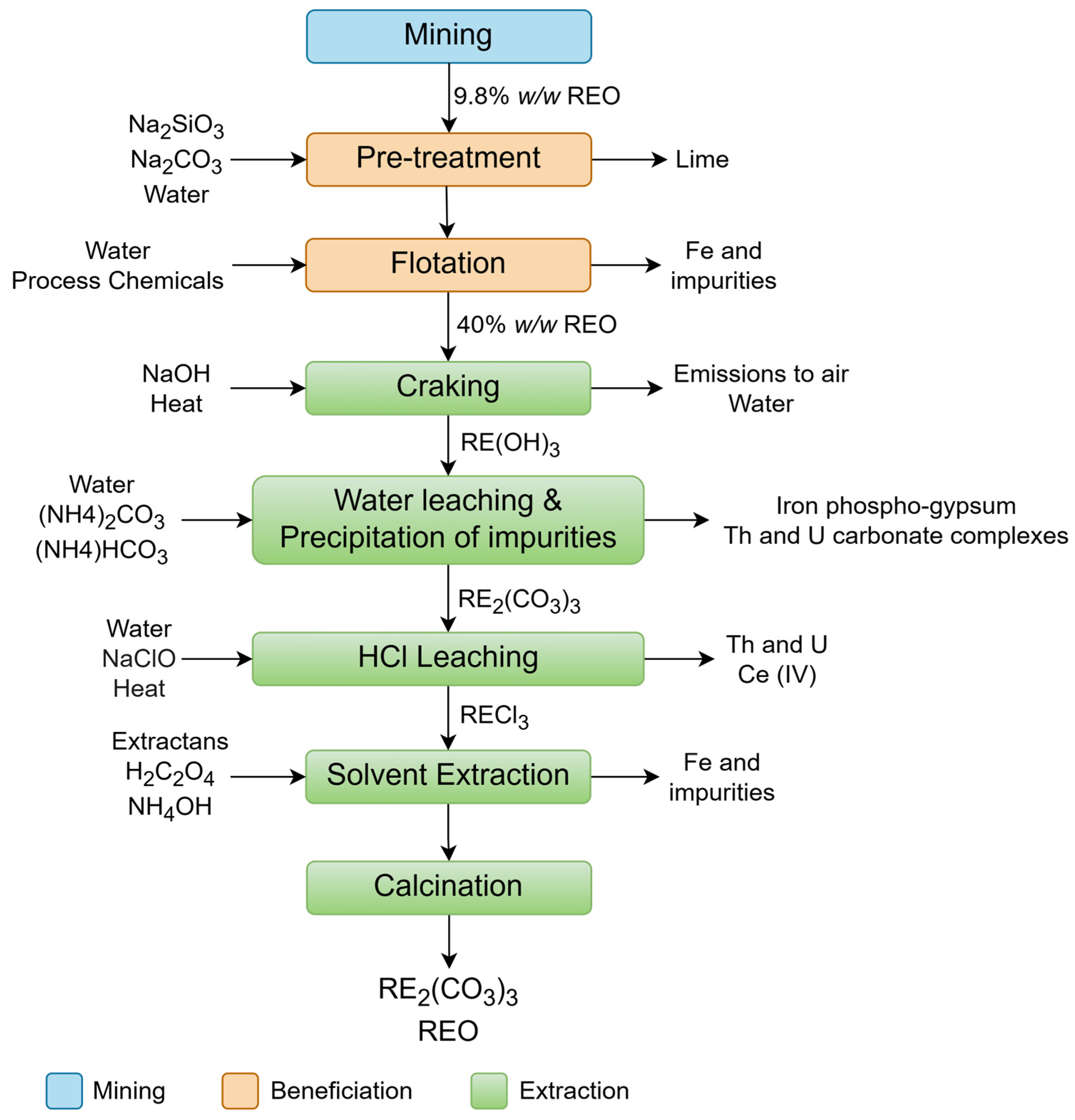
The monazite process starts with the mining stage, which typically employs the open-cut method (Figure 3). The extracted material (9.8% REO) is then transported to a beneficiation plant for pretreatment [42]. This stage includes techniques such as grinding, scrubbing, and attrition to reduce the particle size to 0.1 mm and remove impurities. Na2SiO3 is added to promote the dispersion of fine particles, and Na2CO3 is used to adjust the pH for lime removal. Four-step flotation generated 40% REO concentration.
REEs concentrate undergoes an alkali roasting stage with NaOH at 140 °C to form RE(OH)3 (Equation (4)), followed by water leaching to remove Fe phospho-gypsum, and the resulting leaching residue is then leached again in an autoclave by (NH4)2CO3 or NH4HCO3 to remove Th and U through the formation of soluble Th ammonium and uranyl carbonate complexes. A third leaching is further performed with HCl at 80 °C (Equation (5)). The liquor is diluted with water, and NaClO is added to precipitate Ce(IV) along with the remaining Th and U (Equation (6)).
R E P O 4 + 3 N a O H R E ( O H ) 3 + 3 N a 3 + + P O 4 3
R E ( O H ) 3 + 3 H C l R E C l 3 + 3 H 2 O
2 C e 3 + + 7 O C l + 7 H 2 O 2 C e ( O H ) 4 + H O C l + C l
Then, the solution undergoes solvent extraction using PC88-A (Equation (7) diluted in kerosene as extractant, NH4OH to control the pH. After several solvent extraction steps and further precipitation with C2H2O4 (Equation (2)), the REEs are calcinated (Equation (3)), resulting in five separate streams: Sm, Gd, Eu + HREEs oxides (4.3%); Pr/Nd oxides (24.0%); La carbonate (12.3%), Ce carbonate (23.4%), and La/Ce carbonate (35.9%).
R E E n + + q H 2 A 2 ¯ + R E E A n . n H A ¯ q n + n H +
where R E E n + is the cation in the aqueous phase, H A ¯ represent the extractant in organic phase, and R E E A n ( H A ¯ ) q n represents the coordination compounds.

4. NiMH Batteries

NiMH batteries emerged in the 1970s, but their production and commercialization only began to grow exponentially two decades later (1990s). These batteries operate based on the NiCd battery system, where the Cd electrode was replaced by a hydrogen storage alloy [43]. The use of NiMH batteries has decreased due to the superior characteristics and properties since the introduction of Li-ion batteries to the market: higher efficiency in charge and discharge cycles, greater lifespan, lower self-discharge rate, higher energy density and nominal voltage, and the absence of the memory effect [44]. NiMH batteries are still manufactured and used in various applications (as hybrid vehicles and electronic equipment) due to their reliability, safety, and cost-effectiveness [32,45].
The main components of these batteries are shown in Figure S2 in the Supplementary Materials. The external structure composed of steel or plastic enhances the rigidity and mechanical strength of the battery; the electrolyte, usually KOH or NaOH, promotes the current transfer between the electrodes; the separator material composed of a blend of polypropylene and polyethylene fibers or polyamides prevents electrical contact between the electrodes reducing the risk of short-circuiting; and the electrodes, where the charging and discharging reactions occur [46,47].
The active material of the cathode is Ni(OH)2 in its discharged state [48]. Since Ni(OH)2 is a poor conductor, a strong current collector is needed for battery operation. Therefore, a Ni metal mesh is used as a support plate for the active material [49].
Metal alloys as AB5 (A = La, Ce, Nd, Pr; B = Ni, Co, Mn, Al), A2B7 (A = La, Ce, Nd, Pr; B = Ni, Co, Mn, Al, Mg), or AB2 (A = V, Ti, Zr; B = Ni, Cr, Co, Mn, Al, Sn) are used as active materials (anode) allowing storage and hydrogen release [50]. The most commonly used alloy is LaNi5 due to its higher charge and discharge efficiency, greater energy density, and longer lifespan compared to other alloys. La is partially replaced by other REEs (e.g., Ce, Nd, and Pr) to reduce manufacturing costs, and the resulting alloys are known as mischmetal [51]. Nickel-plated steel is used for anode support [49].
The performance of a metal hydride electrode is determined by two main factors: diffusion of H+ absorbed on the electrode surface, and the kinetics of the charge transfer reaction [52]. The reactions that describe the charge and discharge processes of a NiMH battery are presented in Supplementary Materials (Equations (S1)–(S3)).
NiMH batteries’ composition changes based on their application [53] (Table 2). REEs, Co, Mn, Zn, and K constitute a larger portion of the electrodes in consumer electronics equipment batteries compared to those in HEVs. In contrast, Ni represents more than twice the weight in HEV batteries relative to consumer electronics batteries, enhancing their energy storage capacity and durability [46]. Y was only detected in HEV’s battery electrodes, where it is added for corrosion resistance [49].

NiMH Battery Recycling Processes

Traditionally, Ni and Co have been the primary targets in industrial processes for recycling NiMH batteries. However, in recent years, REEs have become the main drivers for recycling this type of battery, prompting industries worldwide to modify their processes to achieve efficient recovery [21].
Among the main techniques used for recovering metals from NiMH batteries are pyrometallurgy and hydrometallurgy. Pyrometallurgy involves the extraction and refining of metals through high temperatures, while hydrometallurgy is carried out in aqueous media [55]. Hydrometallurgical processes offer several advantages, such as the ability to recover target metals with greater selectivity, lower emissions of harmful gases, and reduced initial investment costs [44].
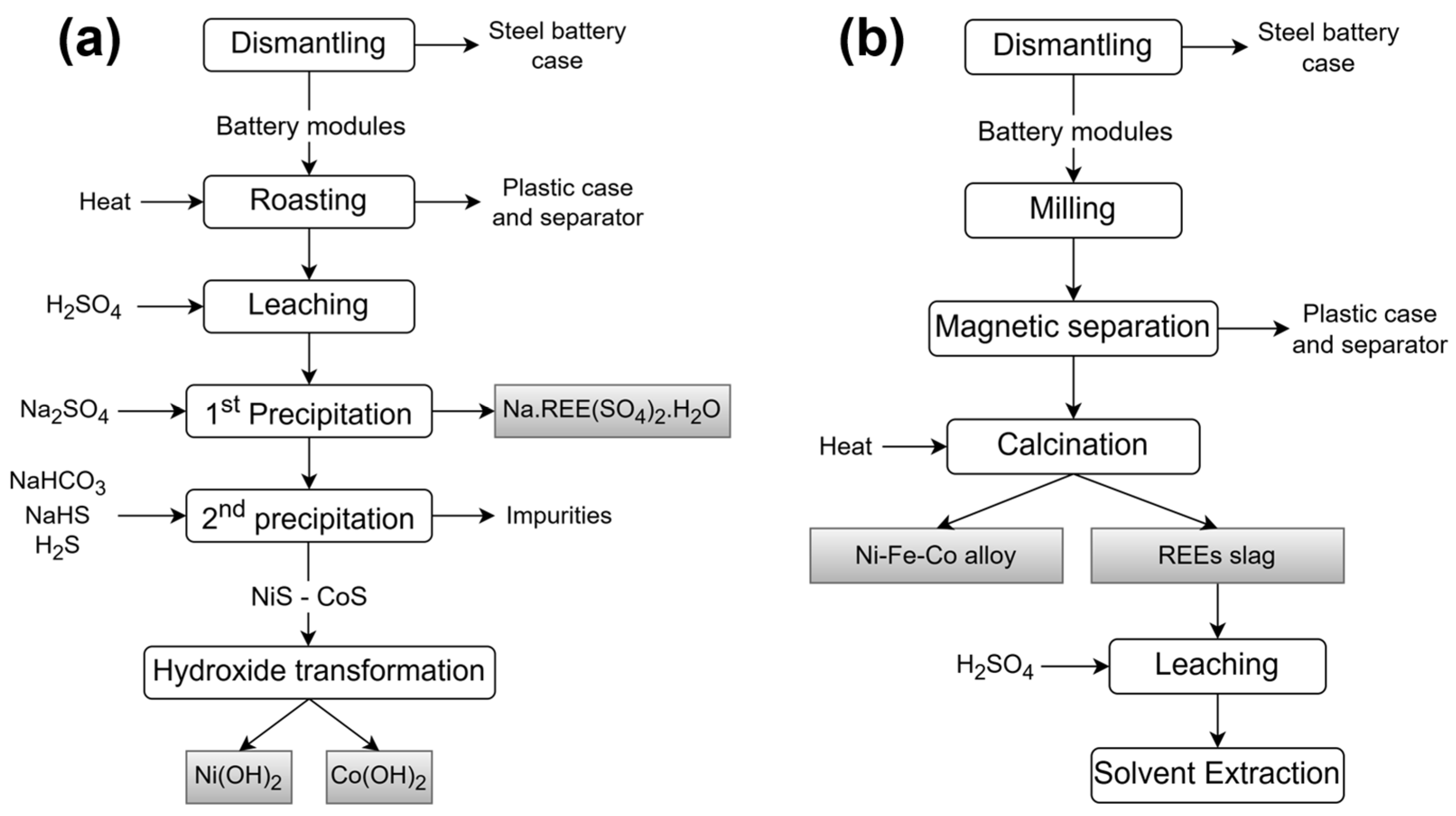
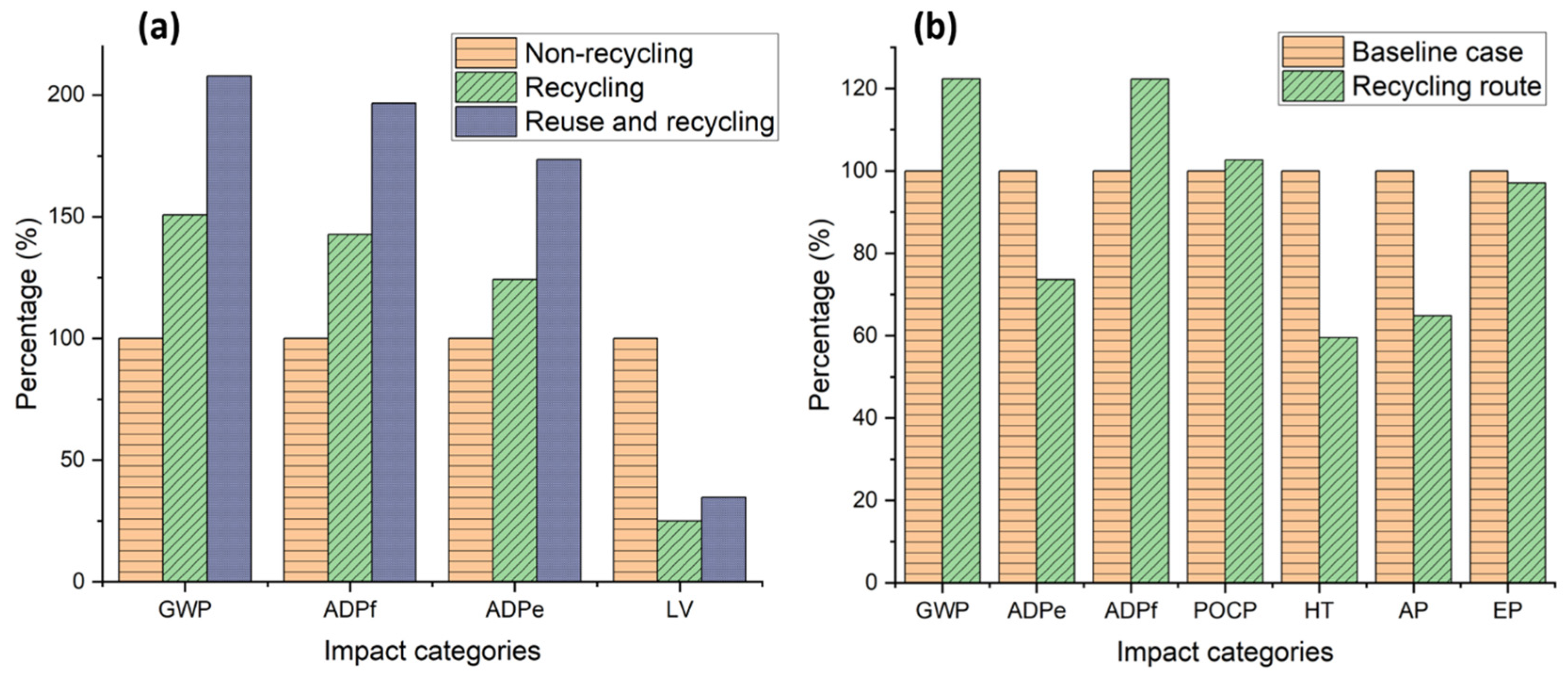
Figure 4 shows two NiMH battery recycling processes focusing on the separation of REEs from Ni and Co [56,57], and their subsequent recovery to determine the influence of adding a recycling stage in the LCA of NiMH batteries.
The Sumitomo Company (Tokyo, Japan) process (Figure 4a) begins with the disassembly of the battery to separate the modules from the external steel casing (iron scrap market) and then roasted in a reducing furnace, where the external plastic and separators are incinerated. The resulting material containing the metals of interest (black mass) is leached in H2SO4 solution at 80 °C (Equations (8) and (9)), and double REE sulfates are further formed by Na2SO4 precipitation (Equation (10)). Further purification steps were not specified. The most likely option would be the calcination of the REE double sulphates to form a mixture of REO. If separation of these elements is desired, leaching, solvent extraction, and precipitation stages would be required. REEs-free leach solution is subjected to a second precipitation stage to form insoluble sulfides of Ni and Co (Equations (11) and (12)), which are further converted into Ni(OH)2 and Co(OH)2. Estimated recovery efficiency is 90% for Ni and 80% for both REEs and Co [56].
2 L a N i 5 + 13 H 2 S O 4 L a 2 ( S O 4 ) 3 + 10 N i S O 4 + 13 H 2 O
N i ( O H ) 2 + H 2 S O 4 N i S O 4 + 2 H 2 O
R E E 3 + + N a + + 2 S O 4 2 + x H 2 O N a . R E E ( S O 4 ) 2 x H 2 O
N i 2 + + H 2 S N i S + 2 H +
C o 2 + + H 2 S C o S + 2 H +
Figure 4b represents a combination of the recycling methods developed by Acurrec ( K e f r e l d , G e r m a n y ) and Umicore (Hoboken, Belgium) companies [57]. The battery pack is dismantled to separate the modules from the external steel casing (iron scrap market), and the modules are ground, followed by a magnetic separation step to remove plastic casing and separators from metals. Then, thermal reaction (Equations (13) and (14)) produces two streams: a Ni-Fe-Co alloy and the slag (containing REEs). This slag is further processed using hydrometallurgical methods, including leaching and solvent extraction; however, detailed information regarding the reagents used and the composition of the final products is not reported. According to Silvestri et al. [57] this route achieves recovery rates of approximately 85% for REEs and 70% for Ni.
R E E 2 O 3 + 3 H 2 S O 4 R E E 2 ( S O 4 ) 3 + 3 H 2 O
N i O + H 2 S O 4 N i S O 4 + H 2 O

5. Comparison and Discussion in Light of Life Cycle Assessment

The four studies [41,42,56,57] used to compare CO2-eq emissions related to the extraction of REEs from primary sources and NiMH battery recycling in this manuscript all employ an attributional LCA (ALCA) approach with mass-based allocation and apply IPCC 100-year GWP for climate impact assessment. Regarding software and databases, Koltun & Klymenko [42] and Silvestri et al. [57] used SimaPro with Ecoinvent, Zaimes et al. [41] employed TRACI with Ecoinvent, and Wang et al. [56] used IDEA/MiLCA. In terms of system boundaries, Koltun & Klymenko [42], Zaimes et al. [41], and Silvestri et al. [57] considered cradle-to-gate, whereas Wang et al. [56] considered cradle-to-grave without the use phase. Despite this difference, it was possible to isolate the GWP associated with the recycling stage in Wang et al. [56], allowing a meaningful comparison with the other studies.
Table 3 presents a comparison of CO2 emissions for the production of 1 kg of REO between bastnäsite (Figure 2) and monazite (Figure 3) extraction processes. The extraction stage (chemical treatment) was identified as the primary source of GWP in the bastnäsite extraction process [41] due to its high demand for heat, electricity, and chemical reagents, similar to other studies [25,40,58], with solvent extraction being the largest contributor to GWP due to several separation steps to reach high purity—for instance, more than 300 steps to reach over 99% of individual REO [27]. Furthermore, life cycle impacts increase when moving from LREOs to HREOs, which are attributed to the greater quantities of chemicals required and the greater complexity of separation [14,59,60].
Emissions of 21.9 kg of CO2-eq in the monazite extraction process were reported [61] (Table 3), and similar to the bastnäsite extraction process, the extraction stage has the most CO2-eq emissions (68.0% of the total). Hydrometallurgical process steps related to Ce and La separation and radioactive elements removal are the largest contributors to GWP and the highest energy demand due to their high chemical consumption and the multiple processing stages involved. The higher GWP on monazite extraction process (14.9 kg) compared to bastnäsite (13.1 kg) can be attributed to the higher proportion of radioactive elements requiring additional separation and purification steps, increasing both emissions and energy consumption [14,59,60].
The effluent treatment in monazite processing accounts for 24.2% of CO2-eq (the second most significant contributor). Although this stage increases emissions of the process, its implementation is crucial for ensuring responsible management of solid and liquid waste, mitigating environmental impacts in other categories (e.g., Eutrophication Potential (EP), Acidification Potential (AP), and Human Health (HT) [42].
The contribution of mining and beneficiation stages to CO2-eq emissions in monazite processing is minimal. In contrast, the transportation stage accounts for 5.5% of the total emissions (CO2-eq) due to the long distances between mining/beneficiation sites and hydrometallurgical processing facilities, which often exceed several hundred kilometers [62]. For example, in the extraction of REEs from Mt. Weld [42], the concentrated ore obtained after beneficiation is first transported by land approximately 1000 km to Fremantle port. From there, it is shipped to Singapore and subsequently to Kuantan port in Malaysia.
Reducing CO2-eq emissions is crucial for improving the sustainability of the REEs industry. Strategically locating processing plants near mines could reduce transportation distances and associated emissions. Additionally, transitioning to cleaner fuels or electric vehicles for land transport could lower CO2 emissions. Implementing more efficient logistics systems, such as optimizing shipping routes and using larger, energy-efficient vessels, could further minimize the environmental impact. These measures would not only reduce greenhouse gas emissions but also lower operational costs and contribute to greater social acceptance of mining by demonstrating a commitment to more responsible and environmentally friendly practices [25].
Table 4 presents a comparison of CO2-eq emissions from two industrial-scale recycling processes for NiMH batteries (Figure 4) [56,57]. It is important to emphasize that the LCA studies on NiMH battery recycling were not originally designed to quantify the CO2-eq emissions specifically associated with REEs recovery. Instead, they report the total environmental impacts of recycling the entire battery system, which includes the simultaneous recovery of other critical metals such as Ni and Co. In this study, the emissions attributed to REE recovery were estimated by allocating the total reported impacts according to the mass fraction of REEs contained in the battery. Therefore, the resulting values do not represent directly measured or process-specific emissions for REE recovery, but rather an approximation derived from proportional allocation. As a consequence, the calculated CO2-eq values should be interpreted as indicative estimates intended to enable comparison, rather than as precise or fully disaggregated environmental burdens associated exclusively with REE recycling.
Wang et al. [56] evaluated the environmental impact of recycling NiMH batteries from HEV in Japan under three hypothetical scenarios: non-recycling, recycling, and reuse and recycling. Non-recycling scenario includes the stages of raw material production, battery manufacturing, collection of spent batteries, and final disposal in landfills. In contrast, the recycling scenario replaces the landfill disposal stage with a collection and recycling process. The reuse and recycling scenario introduces an additional reuse stage following the collection of spent batteries, followed by a recycling process.
In the recycling scenario, about 85.5 kg of CO2-eq can be emitted per kg of REEs recovered, which is 50.7% higher compared to the non-recycling scenario. Additionally, it would increase the Abiotic Depletion Potential for Fossil Energy Resources (ADPf) by 42.8% and the Abiotic Depletion Potential for Elements (ADPe) by 24.2%, while significantly reducing the Landfill Volume (LV) by 75.0%. In the reuse and recycling scenario, GWP, ADPf, and ADPe would increase by 108%, 73,4%, and 96.7%, respectively. However, LV would decrease by 65.4% (Figure 5a).
In the recycling scenario, GWP and ADPf are still greater than in the non-recycling scenario, but lower for LV and APDe. In contrast, the reuse and recycling scenario was identified as having the lowest absolute environmental impact among the analyzed options, with reductions observed across all evaluated categories. This scenario reduces GWP by 24.2%, LV by 86.5%, ADPf by 31.2%, and ADPe by 78.8%, attributed to its dual benefit of extending the functional lifespan of the batteries through reuse while still recovering valuable materials during the recycling phase, despite requiring more resources and stages [56].
Silvestri et al. [57] compared the environmental impact of two scenarios related to NiMH batteries (Figure 5b). The first one involved the fabrication of a NiMH battery using virgin materials, while the second one involved the manufacturing of a battery with recycled materials. Recovering 1 kg of REEs resulted in the emission of 179.2 kg of CO2-eq, representing a 22.4% increase in emissions compared to the base scenario. Additionally, there was an increase in the ADPf (22.3%) and Photochemical Ozone Creation Potential (POCP) (2.7%). However, in categories such as ADPe, Human Toxicity (HT), AP, and EP, reductions of 26.8%, 40.5%, 20.5%, and 18.1%, respectively, were observed (Figure 4b). Within the recycling process, it was estimated that 70.4% of CO2-eq emissions originate from the leaching and solvent extraction stages [57].
The difference in emissions between the two recycling processes (Table 4) may be attributed to the exclusion of emissions associated with the REE separation stage in the process described by Wang et al. [56] (Figure 4a). The most common sequence for obtaining REEs from double sulfates involves a calcination step to form REOs, followed by leaching and subsequent solvent extraction to achieve their separation [43].
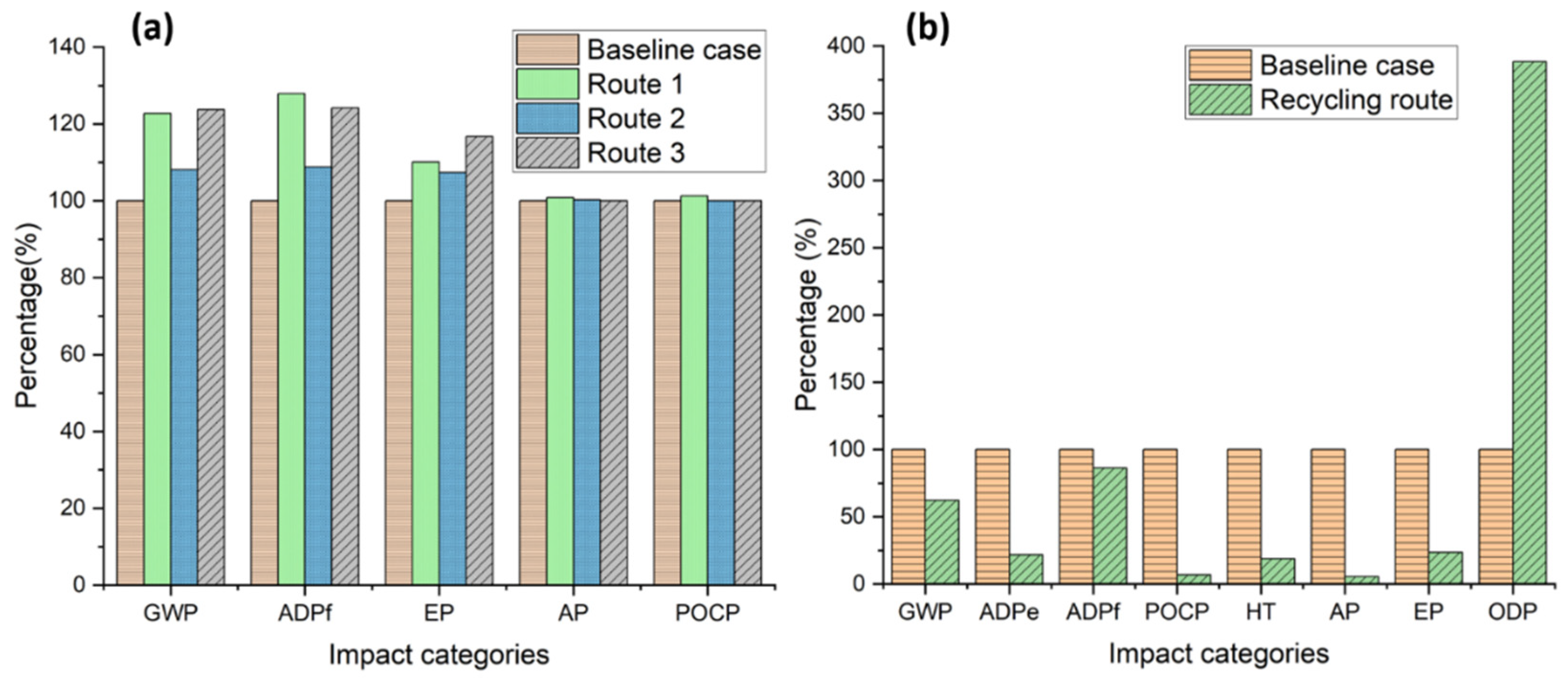
A similar result was reported in the literature by Korkmaz et al. [63] comparing three recycling processes of NiMH battery anodes with a baseline case of REO extraction from bastnäsite ore in China for the production of 1 kg of battery Figure 5a. Route 1 comprises sulfation, roasting, water leaching, stoichiometric precipitation with C2H2O4, and calcination steps. In Route 2, the sulfation, roasting, and water leaching stages are replaced by direct leaching with HCl, while maintaining the same precipitation step. Route 3 follows the same scheme as Route 2, but the precipitation stage is carried out using an excess of C2H2O4. Detailed descriptions of the anode recycling routes are provided in the Supplementary Materials. CO2-eq emissions increased by 22%, 24%, and 6%, respectively, in the proposed recycling routes compared to the baseline case. Additionally, the environmental impacts were higher in EP and ADPf categories, while the impacts in AP and POCP categories were similar across all cases (Figure 6a).
Rinne et al. (2021) [64] compared the environmental impacts of recycling 1 kg of black mass, consisting of 57% Li-ion batteries and 43% NiMH batteries, with the production of materials from primary sources for recovering Ni, Co, Mn, Li, and REEs, considering only the leaching and purification stages in the calculations (Figure 6b). By recycling, GWP decreased by 37.7%, AP by 94.5%, EP by 76.5%, POCP by 93.2%, HT by 81.2%, ADPe by 78.2%, and APDf by 13.8%. However, Stratospheric Ozone Depletion (ODP) increased by 288.3%. Environmental benefits of this process are derived from the recycling of Ni and Co, given their higher concentrations in the treated battery waste and the energy-intensive nature of their primary production. Ni is the largest contributor to CO2-eq emissions in the production of NiMH batteries [63]. Therefore, when Ni and Co recovery are included in the system boundary and credited against their primary production, the overall recycling process exhibits a lower GWP relative to conventional mining routes. This finding reinforces the importance of adopting a multifunctional and system-level perspective when comparing recycling and primary extraction, as isolating REEs alone may underestimate the broader environmental benefits associated with multi-metal recovery. It is also important to note that the process evaluated by Rinne et al. [64] corresponds to a laboratory-scale study and does not represent a fully integrated industrial operation. Consequently, while the results provide valuable insight into the potential environmental advantages of multi-metal recovery, they should be interpreted as indicative rather than fully representative of industrial-scale recycling systems.
The GWP associated with recycling REEs from NiMH batteries used in HEVs appears to be higher than that linked to extracting these elements from primary sources. However, this difference must be interpreted with caution. Recycling processes are designed not only to recover REEs but also other valuable metals such as Ni, Co, and Fe. For instance, assuming recovery rates of 90% for Ni and 80% for Co [56], and considering a 38 kg NiMH battery containing 2.0 kg of REEs, 8.6 kg of Ni and 0.5 kg of Co [19], the recovery of 1 kg of REEs would also result in the recovery of 3.9 kg of Ni and 0.2 kg of Co, approximately. The simultaneous recovery of these metals adds complexity to the process and, consequently, raises the overall emissions associated with recycling. However, due to the lack of detailed information in the literature, it is not possible to accurately estimate how much of these emissions specifically correspond to REEs recovery, making this comparison an approximation.
To establish a clearer and fairer comparison between the environmental impacts of primary REE extraction and the recycling of NiMH batteries, it is essential to also consider the impacts associated with the mining of other elements recovered during the recycling process. Failing to consider these co-products may lead to an incomplete or potentially biased interpretation of environmental performance, as recycling systems are inherently multi-output processes. A more consistent comparison would therefore require evaluating the avoided impacts of primary mining for all recovered metals, rather than isolating REEs alone [63]. Adopting this broader perspective would provide a more comprehensive and system-level understanding of the environmental trade-offs involved, reflecting the multifunctional nature of both primary and secondary production systems. Such an approach would support more informed decision-making by identifying where overall impact reductions can be achieved across the supply chain, while promoting resource efficiency, circularity, and strategic diversification of critical material supply.
A structural limitation in this comparison lies in the lack of functional unit equivalence. Primary extraction studies report impacts per kilogram of REO, whereas recycling studies report results for a mixed REE output or for the overall battery treatment process. This inconsistency complicates direct comparison, as the composition, purity, and allocation procedures differ across studies.
System boundary differences further contribute to uncertainty. Three of the selected studies adopt a cradle-to-gate perspective [41,42,57], while one follows a cradle-to-grave approach [56]. Although the latter provides sufficiently disaggregated data to isolate the recycling stage, allowing partial harmonization of boundaries, this adjustment inevitably introduces additional uncertainty. Differences in the original scope of the assessments, inclusion of downstream processes, and allocation procedures may influence the reported GWP values.
Another important source of uncertainty in this comparative analysis arises from differences in LCI databases and geographical contexts among the selected studies. While three studies relied on Ecoinvent [41,42,57], one study used IDEA/MiLCA [56]. Although both are well-established databases, they differ in background datasets, regional representativeness, energy modeling, emission factors, and technological assumptions, which can influence upstream processes such as electricity generation, chemical production, transportation, and waste management, thereby affecting GWP results [65,66,67].
Geographical differences represent an additional confounding factor. The primary extraction processes analyzed are based on operations in China [41,42], particularly in regions with coal-dominated electricity mixes, which are associated with high carbon intensity. In contrast, the recycling processes were conducted in Japan [56] and Europe [57], where electricity systems generally have lower carbon intensity due to higher shares of nuclear and renewable energy. Variations in grid composition alone can significantly affect the GWP of energy-intensive processes [68,69,70]. Furthermore, differences in regulatory stringency and environmental governance between these regions may also influence emission control performance and upstream impacts. In the European Union and Japan, environmental policies typically enforce stricter emission standards, require advanced pollution control technologies, and apply more rigorous monitoring and reporting frameworks. These conditions can contribute to lower direct process emissions and cleaner upstream supply chains. In contrast, although environmental regulations in China have strengthened considerably in recent years, regional variability in enforcement and historical differences in regulatory oversight may result in higher emission intensities in certain industrial contexts. Therefore, regulatory context represents an additional factor that should be considered when interpreting cross-regional LCA comparisons [71,72,73].
Taken together, differences in functional units, system boundaries, allocation procedures, LCI databases, energy mixes, and regulatory environments introduce multiple layers of uncertainty and contextual variability. Although these discrepancies prevent a strictly direct comparison between primary and secondary REE production routes, the present analysis still provides a general and informative perspective on the relative emission trends. Therefore, the results should not be interpreted as a definitive assessment of comparative environmental performance, but rather as an indicative approximation that helps illustrate how both production pathways behave under the specific conditions modeled in each study. A fully harmonized assessment would be required to draw conclusive and technology-specific comparisons.
The literature revealed that Life Cycle Inventories (LCI) often rely on assumed process variables, which reduces the accuracy and reliability of final results. This limitation is primarily attributed to the lack of real data provided by mining and recycling companies. To enhance the reliability of LCA and assist decision-makers in accurately evaluating the environmental impacts associated with both the primary extraction and recycling of REEs, it is essential to ensure transparency in the data and assumptions used. In this context, Schreiber et al. [27] highlighted a significant disparity in the data used to calculate environmental impacts in LCA studies focused on REEs extraction from Bayan Obo. This finding underscores the need to improve the quality and consistency of available information to enable more accurate and meaningful comparisons.
There are few LCAs on the recycling of NiMH batteries despite those we reported here, which limits the understanding of the environmental, economic, and social impacts of these processes. Increasing the number of studies in this area is essential, as NiMH batteries are a source of REEs and other critical materials, such as Ni and Co, whose demand is rising due to the shift towards greener technologies. Evaluating the environmental impacts of recycling these batteries could help identify opportunities to improve process efficiency and minimize the use of natural resources. This could foster more sustainable practices, reduce negative impacts, and enhance the environmental performance of NiMH battery recycling on a larger scale.
Moreover, it is important to recognize that the environmental performance reported in current LCAs largely reflects existing industrial configurations and technologies, many of which were not originally optimized for REE recovery. As recycling technologies continue to evolve and process integration improves, significant reductions in chemical consumption, energy demand, and associated emissions are expected. In this context, future recycling systems may achieve substantially lower environmental impacts than those currently reported in the literature. Therefore, present LCA results should be interpreted as representative of the current technological state rather than as a definitive assessment of the long-term sustainability potential of REE recycling from NiMH batteries.
Recent experimental research has demonstrated promising alternative routes for recovering REEs and other critical metals from spent NiMH batteries. Laboratory-scale studies and pilot trials have reported efficient leaching and separation of REEs, Ni, and Co through the use of organic acids, bioleaching approaches, selective precipitation strategies, deep eutectic solvents, ionic liquids, and electrochemical separation techniques [74,75,76,77,78,79,80,81]. These emerging processes aim to enhance selectivity, reduce reagent consumption, and improve overall recovery efficiency compared to conventional hydrometallurgical routes. Although many of these technologies remain at early stages of development and require further scale-up validation, their implementation could potentially reduce the energy demand, chemical intensity, and associated greenhouse gas emissions of NiMH battery recycling. Consequently, they represent a promising pathway toward lowering the environmental footprint of secondary rare earth production in the future.
Recycling emerges as a viable solution in countries without REEs reserves or that lack the capabilities for their extraction. Assuming a recovery efficiency of 60–80% [13] from primary sources with an initial REO concentration of 6% [14,41], approximately 36 kg–48 kg of REEs can be recovered from 1 t of ore. In contrast, NiMH battery recycling, assuming an 85% recovery efficiency [57] and initial REEs concentrations ranging from 5% to 10% [19,21,22], enables the recovery of approximately 42.5 kg–85 kg of REEs from 1 t of battery packs. By meeting local demand through urban mining, recycling reduces reliance on primary extraction and imports while simultaneously diversifying the supply chain. This not only enhances resource security but also mitigates supply risks associated with geopolitical and economic factors.
For instance, in 2023, the US imported approximately 9680 metric tons of RE metals and alloys valued at $190 million, with 72% of these imports originating from China [7]. Similarly, in the European Union, 18,300 metric tons of REEs were imported in 2023, with China being the largest supplier, accounting for 39% [82]. Such a reliance on a single supplier underscores the vulnerability of global supply chains to disruptions caused by trade restrictions, political tensions, or fluctuations in market availability. Recycling, therefore, provides a strategic advantage by reducing exposure to these risks and strengthening the resilience of critical material supplies. Developing domestic recycling infrastructure fosters job creation, stimulates technological advancements, and reduces the trade imbalance associated with purchasing raw materials abroad. It also allows countries to retain valuable resources within their borders, contributing to a more circular and sustainable economy [6].
Moreover, the reuse of NiMH batteries plays a significant role in promoting environmental sustainability. Extending the life cycle of these batteries through reuse not only delays the need for recycling or disposal but also reduces the overall environmental impacts associated with their production and end-of-life management [56]. Reuse minimizes (including energy storage) the demand for raw materials, thereby decreasing the need for additional resource extraction and the associated environmental degradation. Furthermore, reusing batteries reduces energy consumption, as manufacturing new batteries typically requires substantial energy inputs for material extraction, processing, and assembly. Economically, reuse also brings significant benefits by optimizing the value derived from existing materials, lowering production costs, and potentially reducing the need for new investments in mining or refining. This approach not only conserves resources but also supports a more circular economy by keeping materials in use for longer periods, reducing waste, and fostering sustainable practices across industries.

6. Conclusions and Final Remarks

Our literature review aimed to establish a comparison between CO2-eq emissions associated with the recycling of REEs from NiMH batteries and those generated by their extraction from primary sources. The analysis suggests that, under the specific assumptions and modeling choices of the selected studies, recycling processes may exhibit higher CO2-eq emissions than primary extraction. However, this difference must be interpreted with caution, as it reflects heterogeneous functional units, system boundaries, allocation procedures, LCI databases, geographical contexts, and electricity mixes rather than purely technological performance.
Moreover, recycling systems inherently recover additional valuable metals such as Ni and Co, making them multifunctional processes. The allocation of environmental burdens across co-products introduces further variability. Therefore, the reported difference in GWP should not be interpreted as a definitive indication of inferior environmental performance, but rather as an outcome conditioned by modeling structure. To achieve a more accurate and equitable comparison, it is essential to also account for the emissions linked to the extraction of these other elements from primary sources. Incorporating these emissions in future studies would provide a more holistic understanding of the environmental impacts associated with both processes. Consequently, while current results provide an indicative comparison under present technological and regional conditions, they should not be viewed as definitive. Instead, they highlight the need for harmonized future assessments to more accurately isolate technological differences between primary and secondary REE production pathways.
Importantly, even if current estimates indicate relatively higher emissions under certain configurations, REE recycling remains strategically significant. In fact, its implementation is critical to mitigating supply risks and contributes to conserving natural resources by reducing the need for primary extraction, which is often concentrated in a few regions worldwide. This decreases dependence on external markets and mitigates risks associated with geopolitical and economic fluctuations. Quantitatively, REE recovery from NiMH batteries is nearly twice that obtained from primary sources, highlighting the strategic importance of recycling as a complementary pathway for securing REE supply.
Additionally, many of these spent batteries are concentrated in large urban centers. This geographic proximity facilitates the development of localized recycling infrastructures, reducing transportation needs and associated emissions. Establishing such facilities promotes the creation of a closed-loop system aligned with the principles of a circular economy, where valuable materials are continuously recovered, reused, and reintegrated into the supply chain. This approach not only reduces pressure on natural reserves and reduces importations but also minimizes landfill waste and environmental contamination caused by improper disposal of end-of-life batteries.
Furthermore, in the long term, advancements in recycling technologies and the transition to renewable energy sources for industrial processes can substantially reduce the environmental footprint associated with recycling. Therefore, while current emissions may be higher, REEs recycling should be considered a strategic investment to ensure the sustainability of supply chains and address the challenges posed by the growing global demand for these critical elements. Improving the efficiency of recycling processes and adopting energy-efficient practices are critical for making REEs recovery more environmentally sustainable and competitive in the future. By strengthening collaborations between governments, industries, and research institutions, we can accelerate technological developments and ensure the sustainability of supply chains.

Supplementary Materials

The following supporting information can be downloaded at: https://www.mdpi.com/article/10.3390/met16030254/s1, Figure S1: Global NiMH battery market forecast from 2018 to 2030. Adapted from [31]; Figure S2: Main components of a NiMH battery; Equations (S1)–(S3): Charge and discharge reactions of NiMH batteries; Equations (S4)–(S8): Description and main reactions in the lab-scale anode recycling routes; detailed explanation of the assumed CO2-eq value for the mining stage in bastnäsite extraction at the Bayan Obo mine. References [27,31,41,61,63,83] are cited in the Supplementary Materials.

Author Contributions

Conceptualization, D.S.P. and A.B.B.J.; methodology, D.S.P., D.C.R.E. and A.B.B.J.; validation, A.B.B.J.; formal analysis, D.S.P. and A.B.B.J.; investigation, D.S.P. and A.B.B.J.; resources, D.C.R.E. and A.B.B.J.; data curation, D.S.P.; writing—original draft preparation, D.S.P. and A.B.B.J.; writing—review and editing, D.S.P. and A.B.B.J.; visualization, D.S.P. and A.B.B.J.; supervision, A.B.B.J. and D.C.R.E.; project administration, D.C.R.E.; funding acquisition, D.C.R.E. and A.B.B.J. All authors have read and agreed to the published version of the manuscript.

Funding

Fundação de Amparo à Pesquisa do Estado de São Paulo and Capes (grants: 2019/11866-5, 2020/00493-0, 2021/14842-0, 2023/01032-5 São Paulo Research Foundation) and the Department of Chemical Engineering of the Norwegian University of Science and Technology for the financial support.

Data Availability Statement

No new data were created or analyzed in this study. Data sharing is not applicable to this article.

Acknowledgments

The authors would like to acknowledge the Fundação de Amparo à Pesquisa do Estado de São Paulo and Capes for financial support. ABBJR would like to thanks the Department of Chemical Engineering of the Norwegian University of Science and Technology for the financial support.

Conflicts of Interest

The authors declare no conflicts of interest.

References

  1. Gupta, C.K.; Krishnamurthy, N. Extractive Metallurgy of Rare Earths. Int. Mater. Rev. 2005, 37, 197–248. [Google Scholar] [CrossRef]
  2. Jha, M.K.; Kumari, A.; Panda, R.; Rajesh Kumar, J.; Yoo, K.; Lee, J.Y. Review on Hydrometallurgical Recovery of Rare Earth Metals. Hydrometallurgy 2016, 161, 77–101. [Google Scholar] [CrossRef]
  3. Qi, D. Extraction of Rare Earths from RE Concentrates. In Hydrometallurgy of Rare Earths; Elsevier: Amsterdam, The Netherlands, 2018; pp. 1–185. [Google Scholar]
  4. Botelho Junior, A.B.; Romano Espinosa, D.C.; Vaughan, J.; Soares Tenório, J.A. Extraction of Rare-Earth Elements from Silicate-Based Ore through Hydrometallurgical Route. Metals 2022, 12, 1133. [Google Scholar] [CrossRef]
  5. Zhang, T.; Zhang, P.; Peng, K.; Feng, K.; Fang, P.; Chen, W.; Zhang, N.; Wang, P.; Li, J. Allocating Environmental Costs of China’s Rare Earth Production to Global Consumption. Sci. Total Environ. 2022, 831, 154934. [Google Scholar] [CrossRef] [PubMed]
  6. Golroudbary, S.R.; Makarava, I.; Kraslawski, A.; Repo, E. Global Environmental Cost of Using Rare Earth Elements in Green Energy Technologies. Sci. Total Environ. 2022, 832, 155022. [Google Scholar] [CrossRef]
  7. U.S. Geological Survey. Mineral Commodity Summaries 2024; USGS: Reston, VA, USA, 2024.
  8. European Commission. Study on the Critical Raw Materials for the EU 2023; Final Report; European Commission: Brussels, Belgium, 2023. [Google Scholar] [CrossRef]
  9. Burton, J. U.S. Geological Survey Releases 2022 List of Critical Minerals. Available online: https://www.usgs.gov/news/national-news-release/us-geological-survey-releases-2022-list-critical-minerals (accessed on 19 August 2024).
  10. Portal da Mineração Minerais Estratégicos, Matérias-Primas Críticas Ou Minerais Críticos: Qual a Diferença e a Sua Importância Para o Brasil? Available online: https://portaldamineracao.com.br/minerais-estrategicos-materias-primas-criticas-ou-minerais-criticos-qual-a-diferenca-e-a-sua-importancia-para-o-brasil/ (accessed on 19 August 2024).
  11. Wang, W.; Qin, R.; Wu, R.; Tao, X.; Zhang, H.; Ding, Z.; Fu, Y.; Zhang, L.; Wu, L.; Li, Y.; et al. A Promising Anode Candidate for Rechargeable Nickel Metal Hydride Power Battery: An A5B19-Type La–Sm–Nd–Mg–Ni–Al-Based Hydrogen Storage Alloy. J. Power Sources 2020, 465, 228236. [Google Scholar] [CrossRef]
  12. Rasool, M.H.; Ridha, S.; Ahmad, M.; Shamsuddun, R.A.B.; Zahoor, M.K.; Khan, A. A Mineralogical Perspective on Rare Earth Elements (REEs) Extraction from Drill Cuttings: A Review. Minerals 2025, 15, 533. [Google Scholar] [CrossRef]
  13. Weng, Z.; Haque, N.; Mudd, G.M.; Jowitt, S.M. Assessing the Energy Requirements and Global Warming Potential of the Production of Rare Earth Elements. J. Clean. Prod. 2016, 139, 1282–1297. [Google Scholar] [CrossRef]
  14. Arshi, P.S.; Vahidi, E.; Zhao, F. Behind the Scenes of Clean Energy: The Environmental Footprint of Rare Earth Products. ACS Sustain. Chem. Eng. 2018, 6, 3311–3320. [Google Scholar] [CrossRef]
  15. Kumari, A.; Panda, R.; Jha, M.K.; Kumar, J.R.; Lee, J.Y. Process Development to Recover Rare Earth Metals from Monazite Mineral: A Review. Miner. Eng. 2015, 79, 102–115. [Google Scholar] [CrossRef]
  16. Wang, W.; Li, E.; Li, Z.; Zhu, W.; Wang, Y. Recovery of Xenotime and Florencite from Silicate Minerals Using a Combined Technique of Magnetic Separation and Flotation. Minerals 2024, 14, 1073. [Google Scholar] [CrossRef]
  17. Russo, S.C.; González-Álvarez, I.; Cocker, H.A.; McCoy-West, A.J. The Fundamentals of Rare Earth Element Ion Adsorption Clay Deposits: A Mineral Systems Approach for Exploration. J. Geochem. Explor. 2025, 278, 107845. [Google Scholar] [CrossRef]
  18. Burada, Z.; Sobetkii, M.; Paneva, A.E.; Fironda, D.; Piticescu, S.A.; Cherkezova-Zheleva, Z.; Burada, M.; Sobetkii, A.E.; Paneva, D.; Fironda, S.A.; et al. Green and Sustainable Rare Earth Element Recycling and Reuse from End-of-Life Permanent Magnets. Metals 2024, 14, 658. [Google Scholar] [CrossRef]
  19. Sánchez Piloto, D.; Espinosa, D.C.R.; Botelho Junior, A.B. Assessing Acid Performance in NiMH Battery Recycling: A Comparative Study of Inorganic and Organic Acids. J. Environ. Chem. Eng. 2026, 14, 121066. [Google Scholar] [CrossRef]
  20. Sagrillo Pimassoni, Y.; Weitzel Dias Carneiro Lima, M.T.; Yamane, L.H.; Ribeiro Siman, R. The Recovery of Rare Earth Elements from Waste Electrical and Electronic Equipment: A Review. Hydrometallurgy 2023, 222, 106156. [Google Scholar] [CrossRef]
  21. Salehi, H.; Maroufi, S.; Mofarah, S.S.; Nekouei, R.K.; Sahajwalla, V. Recovery of Rare Earth Metals from Ni-MH Batteries: A Comprehensive Review. Renew. Sustain. Energy Rev. 2023, 178, 113248. [Google Scholar] [CrossRef]
  22. Tunsu, C.; Petranikova, M.; Gergorić, M.; Ekberg, C.; Retegan, T. Reclaiming Rare Earth Elements from End-of-Life Products: A Review of the Perspectives for Urban Mining Using Hydrometallurgical Unit Operations. Hydrometallurgy 2015, 156, 239–258. [Google Scholar] [CrossRef]
  23. Liang, B.; Gu, J.; Zeng, X.; Yuan, W.; Rao, M.; Xiao, B.; Hu, H.A. A Review of the Occurrence and Recovery of Rare Earth from Electronic Waste. Molecules 2024, 29, 4624. [Google Scholar] [CrossRef]
  24. Jouini, M.; Royer-Lavallée, A.; Pabst, T.; Chung, E.; Kim, R.; Cheong, Y.W.; Neculita, C.M. Sustainable Production of Rare Earth Elements from Mine Waste and Geoethics. Minerals 2022, 12, 809. [Google Scholar] [CrossRef]
  25. Bailey, G.; Joyce, P.J.; Schrijvers, D.; Schulze, R.; Sylvestre, A.M.; Sprecher, B.; Vahidi, E.; Dewulf, W.; Van Acker, K. Review and New Life Cycle Assessment for Rare Earth Production from Bastnäsite, Ion Adsorption Clays and Lateritic Monazite. Resour. Conserv. Recycl. 2020, 155, 104675. [Google Scholar] [CrossRef]
  26. Pell, R.; Wall, F.; Yan, X.; Li, J.; Zeng, X. Temporally Explicit Life Cycle Assessment as an Environmental Performance Decision Making Tool in Rare Earth Project Development. Miner. Eng. 2019, 135, 64–73. [Google Scholar] [CrossRef]
  27. Schreiber, A.; Marx, J.; Zapp, P. Life Cycle Assessment Studies of Rare Earths Production—Findings from a Systematic Review. Sci. Total Environ. 2021, 791, 148257. [Google Scholar] [CrossRef]
  28. Botelho, A.B., Jr.; Stopic, S.; Friedrich, B.; Tenório, J.A.S.; Espinosa, D.C.R. Cobalt Recovery from Li-ion Battery Recycling: A Critical Review. Metals 2021, 11, 1999. [Google Scholar] [CrossRef]
  29. Kołodyńska, D.; Burdzy, K.; Hunger, S.; Aurich, A.; Ju, Y. Green Extractants in Assisting Recovery of REEs: A Case Study. Molecules 2023, 28, 965. [Google Scholar] [CrossRef] [PubMed]
  30. Mir, S.; Shukla, N.; Dhawan, N. Investigation of Microwave and Thermal Processing of Electrode Material of End-of-Life Ni-MH Battery. JOM 2021, 73, 951–961. [Google Scholar] [CrossRef]
  31. Statista. Available online: https://Statistic_id1339880_battery-Market-Size-Worldwide-by-Technology-2018-2030 (accessed on 23 February 2025).
  32. Coherent Market Insights Nickel Metal Hydride Battery Market Size and Share Analysis-Growth Trends and Forecasts (2023–2030). Available online: https://www.coherentmarketinsights.com/industry-reports/nickel-metal-hydride-battery-market (accessed on 19 August 2024).
  33. Markets and Markets Nickel Metal Hydride (NiMH) Battery Market. Available online: https://www.marketsandmarkets.com/Market-Reports/nickel-metal-hydride-nimh-battery-market-128735977.html (accessed on 19 August 2024).
  34. IEA World Energy Outlook 2025—Analysis—IEA. Available online: https://www.iea.org/reports/world-energy-outlook-2025 (accessed on 16 December 2025).
  35. Jordens, A.; Cheng, Y.P.; Waters, K.E. A Review of the Beneficiation of Rare Earth Element Bearing Minerals. Miner. Eng. 2013, 41, 97–114. [Google Scholar] [CrossRef]
  36. Cheng, S.; Li, W.; Han, Y.; Sun, Y.; Gao, P.; Zhang, X. Recent Process Developments in Beneficiation and Metallurgy of Rare Earths: A Review. J. Rare Earths 2024, 42, 629–642. [Google Scholar] [CrossRef]
  37. Liu, C.; Xu, L.; Deng, J.; Tian, J.; Wang, D.; Xue, K.; Zhang, X.; Wang, Y.; Fang, J.; Liu, J. A Review of Flotation Reagents for Bastnäsite-(Ce) Rare Earth Ore. Adv. Colloid Interface Sci. 2023, 321, 103029. [Google Scholar] [CrossRef]
  38. McNulty, T.; Hazen, N.; Park, S. Processing the Ores of Rare-Earth Elements. MRS Bull. 2022, 47, 258–266. [Google Scholar] [CrossRef]
  39. Chelgani, S.C.; Rudolph, M.; Leistner, T.; Gutzmer, J.; Peuker, U.A. A Review of Rare Earth Minerals Flotation: Monazite and Xenotime. Int. J. Min. Sci. Technol. 2015, 25, 877–883. [Google Scholar] [CrossRef]
  40. Zapp, P.; Schreiber, A.; Marx, J.; Kuckshinrichs, W. Environmental Impacts of Rare Earth Production. MRS Bull. 2022, 47, 267–275. [Google Scholar] [CrossRef] [PubMed]
  41. Zaimes, G.G.; Hubler, B.J.; Wang, S.; Khanna, V. Environmental Life Cycle Perspective on Rare Earth Oxide Production. ACS Sustain. Chem. Eng. 2015, 3, 237–244. [Google Scholar] [CrossRef]
  42. Koltun, P.; Klymenko, V. Cradle-to-Gate Life Cycle Assessment of the Production of Separated Mix of Rare Earth Oxides Based on Australian Production Route. Min. Miner. Depos. 2020, 14, 1–15. [Google Scholar] [CrossRef]
  43. Guzhov, B.; Cassayre, L.; Barnabé, A.; Coppey, N.; Biscans, B. Selective Precipitation of Rare Earth Double Sulfate Salts from Industrial Ni–MH Battery Leachates: Impact of Downstream Processing on Product Quality. Batteries 2023, 9, 574. [Google Scholar] [CrossRef]
  44. Vargas, S.J.R.; Schaeffer, N.; Souza, J.C.; da Silva, L.H.M.; Hespanhol, M.C. Green Separation of Lanthanum, Cerium and Nickel from Waste Nickel Metal Hydride Battery. Waste Manag. 2021, 125, 154–162. [Google Scholar] [CrossRef]
  45. Verified Market Research Nickel Metal Hydride (Ni-MH) Battery Market Size and Forecast. Available online: https://www.verifiedmarketresearch.com/product/nickel-metal-hydride-ni-mh-battery-market/ (accessed on 3 December 2024).
  46. Fetcenko, M.; Koch, J.; Zelinsky, M. Nickel-Metal Hydride and Nickel-Zinc Batteries for Hybrid Electric Vehicles and Battery Electric Vehicles. In Advances in Battery Technologies for Electric Vehicles; Elsevier: Amsterdam, The Netherlands, 2015; pp. 103–126. ISBN 9781782423980. [Google Scholar]
  47. Tanabe, E.H.; Schlemmer, D.F.; Aguiar, M.L.; Dotto, G.L.; Bertuol, D.A. Recovery of Valuable Materials from Spent NIMH Batteries Using Spouted Bed Elutriation. J. Environ. Manag. 2016, 171, 177–183. [Google Scholar] [CrossRef]
  48. Odegbemi, F.; Idowu, G.A.; Adebayo, A.O. Nickel Recovery from Spent Nickel-Metal Hydride Batteries Using LIX-84I-Impregnated Activated Charcoal. Environ. Nanotechnol. Monit. Manag. 2021, 15, 100452. [Google Scholar] [CrossRef]
  49. Larsson, K.; Ekberg, C.; Ødegaard-Jensen, A. Dissolution and Characterization of HEV NiMH Batteries. Waste Manag. 2013, 33, 689–698. [Google Scholar] [CrossRef]
  50. Ebin, B.; Petranikova, M.; Ekberg, C. Physical Separation, Mechanical Enrichment and Recycling-Oriented Characterization of Spent NiMH Batteries. J. Mater. Cycles Waste Manag. 2018, 20, 2018–2027. [Google Scholar] [CrossRef]
  51. Pradhan, S.; Nayak, R.; Mishra, S. A Review on the Recovery of Metal Values from Spent Nickel Metal Hydride and Lithium-Ion Batteries. Int. J. Environ. Sci. Technol. 2022, 19, 4537–4554. [Google Scholar] [CrossRef]
  52. Org, W.E.; Pierozynski, B. On the Low Temperature Performance of Nickel-Metal Hydride (NiMH) Batteries. Int. J. Electrochem. Sci. 2011, 6, 860–866. [Google Scholar]
  53. Korkmaz, K.; Alemrajabi, M.; Rasmuson, Å.C.; Forsberg, K.M. Sustainable Hydrometallurgical Recovery of Valuable Elements from Spent Nickel-Metal Hydride HEV Batteries. Metals 2018, 8, 1062. [Google Scholar] [CrossRef]
  54. Bertuol, D.A.; Bernardes, A.M.; Tenório, J.A.S. Spent NiMH Batteries: Characterization and Metal Recovery through Mechanical Processing. J. Power Sources 2006, 160, 1465–1470. [Google Scholar] [CrossRef]
  55. Al-Thyabat, S.; Nakamura, T.; Shibata, E.; Iizuka, A. Adaptation of Minerals Processing Operations for Lithium-Ion (LiBs) and Nickel Metal Hydride (NiMH) Batteries Recycling: Critical Review. Miner. Eng. 2013, 45, 4–17. [Google Scholar] [CrossRef]
  56. Wang, S.; Yu, J.; Okubo, K. Life Cycle Assessment on the Reuse and Recycling of the Nickel-Metal Hydride Battery: Fleet-Based Study on Hybrid Vehicle Batteries from Japan. J. Ind. Ecol. 2021, 25, 1236–1249. [Google Scholar] [CrossRef]
  57. Silvestri, L.; Forcina, A.; Arcese, G.; Bella, G. Recycling Technologies of Nickel–Metal Hydride Batteries: An LCA Based Analysis. J. Clean. Prod. 2020, 273, 123083. [Google Scholar] [CrossRef]
  58. Marx, J.; Schreiber, A.; Zapp, P.; Walachowicz, F. Comparative Life Cycle Assessment of NdFeB Permanent Magnet Production from Different Rare Earth Deposits. ACS Sustain. Chem. Eng. 2018, 6, 5858–5867. [Google Scholar] [CrossRef]
  59. Haque, N.; Hughes, A.; Lim, S.; Vernon, C. Rare Earth Elements: Overview of Mining, Mineralogy, Uses, Sustainability and Environmental Impact. Resources 2014, 3, 614–635. [Google Scholar] [CrossRef]
  60. Vahidi, E.; Zhao, F. Assessing the Environmental Footprint of the Production of Rare Earth Metals and Alloys via Molten Salt Electrolysis. Resour. Conserv. Recycl. 2018, 139, 178–187. [Google Scholar] [CrossRef]
  61. Koltun, P.; Tharumarajah, A. Life Cycle Impact of Rare Earth Elements. ISRN Metall. 2014, 2014, 907536. [Google Scholar] [CrossRef]
  62. Lee, J.C.K.; Wen, Z. Rare Earths from Mines to Metals: Comparing Environmental Impacts from China’s Main Production Pathways. J. Ind. Ecol. 2017, 21, 1277–1290. [Google Scholar] [CrossRef]
  63. Korkmaz, K.; Junestedt, C.; Elginoz, N.; Almemark, M.; Svärd, M.; Rasmuson, Å.C.; Forsberg, K.M. System Analysis with Life Cycle Assessment for NiMH Battery Recycling. Philos. Trans. R. Soc. A Math. Phys. Eng. Sci. 2024, 382, 20230243. [Google Scholar] [CrossRef]
  64. Rinne, M.; Elomaa, H.; Porvali, A.; Lundström, M. Simulation-Based Life Cycle Assessment for Hydrometallurgical Recycling of Mixed LIB and NiMH Waste. Resour. Conserv. Recycl. 2021, 170, 105586. [Google Scholar] [CrossRef]
  65. Kalverkamp, M.; Helmers, E.; Pehlken, A. Impacts of Life Cycle Inventory Databases on Life Cycle Assessments: A Review by Means of a Drivetrain Case Study. J. Clean. Prod. 2020, 269, 121329. [Google Scholar] [CrossRef]
  66. Wernet, G.; Bauer, C.; Steubing, B.; Reinhard, J.; Moreno-Ruiz, E.; Weidema, B. The Ecoinvent Database Version 3 (Part I): Overview and Methodology. Int. J. Life Cycle Assess. 2016, 21, 1218–1230. [Google Scholar] [CrossRef]
  67. Japanese Inventory Database—IDEA V2. Available online: https://simapro.com/products/idea-japanese-inventory-database/?utm_source=chatgpt.com (accessed on 12 February 2026).
  68. Liu, Y.; Shi, S.; Gaston, K.J.; Mueller, M.; Yan, X. Global Environmental Footprints of Electricity Supply in China. J. Clean. Prod. 2025, 520, 146164. [Google Scholar] [CrossRef]
  69. Holzapfel, P.; Bunsen, J.; Schmidt-Sierra, I.; Bach, V.; Finkbeiner, M. Replacing Location-Based Electricity Consumption with Market-Based Residual Mixes in Background Data to Avoid Possible Double Counting: A Quantitative Analysis of Effects and Challenges. Int. J. Life Cycle Assess. 2024, 29, 1279–1289. [Google Scholar] [CrossRef]
  70. Motuzienė, V.; Čiuprinskas, K.; Rogoža, A.; Lapinskienė, V. A Review of the Life Cycle Analysis Results for Different Energy Conversion Technologies. Energies 2022, 15, 8488. [Google Scholar] [CrossRef]
  71. Ai, H.; Tan, X.; Zhou, S.; Zhou, Y.; Xing, H. The Impact of Environmental Regulation on Carbon Emissions: Evidence from China. Econ. Anal. Policy 2023, 80, 1067–1079. [Google Scholar] [CrossRef]
  72. Jin, G.; Wang, G.; Li, W.; Sheng, H.; Hu, C.; Zhao, Y. The Impact of Environmental Regulation on Carbon Emissions and Its Mechanisms in Chinese Cities. Sci. Rep. 2025, 15, 41665. [Google Scholar] [CrossRef]
  73. Albrizio, S.; Kozluk, T.; Zipperer, V. Environmental Policies and Productivity Growth: Evidence across Industries and Firms. J. Environ. Econ. Manag. 2017, 81, 209–226. [Google Scholar] [CrossRef]
  74. Hegazy, A.S.; Soliman, H.M.; Mowafy, A.M.; Mohamedin, A.H. Bioleaching of Lanthanum from Nickel Metal Hydride Dry Battery Using Siderophores Produced by Pseudomonas sp. World J. Microbiol. Biotechnol. 2025, 41, 39. [Google Scholar] [CrossRef] [PubMed]
  75. Anne-Antoine Otron, A.M.; Tran, L.H.; Blais, J.F. Sustainable Extraction and Purification of REE and Other Metals from Unsorted Battery Waste. Miner. Eng. 2025, 228, 109322. [Google Scholar] [CrossRef]
  76. Zhang, S.; Ni, S.; Zeng, Z.; Yu, G.; Huang, B.; Sun, X. A Clean Process for the Recovery of Rare Earth and Transition Metals from NiMH Battery Based on Primary Amine and Lauric Acid. J. Environ. Manag. 2024, 351, 119788. [Google Scholar] [CrossRef]
  77. Salehi, H.; Maroufi, S.; Khayyam Nekouei, R.; Sahajwalla, V. Solvent Extraction Systems for Selective Isolation of Light Rare Earth Elements with High Selectivity for Sm and La. Rare Met. 2025, 44, 2071–2084. [Google Scholar] [CrossRef]
  78. Salehi, H.; Khayyam Nekouei, R.; Maroufi, S.; Sahajwalla, V. Sustainable Recovery of Rare Earth Elements from Ni-MH Batteries: Flux-Free Thermal Isolation and Subsequent Hydrometallurgical Refinement. Mater. Today Sustain. 2024, 27, 100849. [Google Scholar] [CrossRef]
  79. Said, A.; Lundström, M.; Louhi-Kultanen, M. Recovery of Lanthanum from Aqueous Solutions by Crystallization as Lanthanum Sodium Sulfate Double Salt. JOM 2022, 74, 3010–3020. [Google Scholar] [CrossRef]
  80. Laskar, C.; Guzhov, B.; Barnabé, A.; Josse, M.; Biscans, B.; Cassayre, L. Conversion of Sodium-Rare Earth Double Sulfate Salts Prepared from Spent NiMH Batteries: Comparison of Precipitation Pathways as Oxalate, Hydroxide, and Carbonate. J. Sustain. Metall. 2025, 11, 2898–2911. [Google Scholar] [CrossRef]
  81. Constantine, J.; Lie, J.; Liu, J.C. Recovery of Rare Earth Elements from Spent NiMH Batteries Using Subcritical Water Extraction with Citric Acid. J. Environ. Chem. Eng. 2022, 10, 108000. [Google Scholar] [CrossRef]
  82. Eurostat Trade in Rare Earth Elements Decreased in 2023. Available online: https://ec.europa.eu/eurostat/web/products-eurostat-news/w/ddn-20241112-1#:~:text=A%20total%20of%2018%20300,in%20value%20compared%20with%202022 (accessed on 17 November 2025).
  83. Korkmaz, K. Recovery of Rare Earth Elements from Spent Nickel-Metal Hydride Batteries from Hybrid Electric Vehicles. Doctoral Dissertation, KTH Royal Institute of Technology, Stockholm, Sweden, 2021. [Google Scholar]
Figure 1. Global distribution of REEs. (a) Major producing countries; (b) Global reserves (Adapted from Ref. [7]).
Metals 16 00254 g001
Figure 2. REEs extraction process from Bayan Obo mine (Adapted from Ref. [41]).
Metals 16 00254 g002
Figure 3. REEs extraction process from Mt. Weld mine (Adapted from Ref. [42]).
Metals 16 00254 g003
Figure 4. NiMH battery recycling process: (a) Wang et al. (Adapted from Ref. [56]), (b) Silvestri et al. (Adapted from Ref. [57]).
Metals 16 00254 g004
Figure 5. Environmental impacts of recycling REEs from NiMH batteries in industrial scale: (a) Wang et al. (Adapted from Ref. [56]), (b) Silvestri et al. (Adapted from Ref. [57]).
Metals 16 00254 g005
Figure 6. Environmental impacts for recycling REEs from NiMH batteries in laboratory scale: (a) Korkmaz et al. (Adapted from Ref. [63]), (b) Rinne et al. (Adapted from Ref. [64]).
Metals 16 00254 g006
Table 1. REEs concentrations in primary deposits (reported as REO) and secondary sources (reported as elemental REEs).
Type of DepositLocationConcentrationMain REEsRef
BastnäsiteBayan Obo, China5–6%La, Ce, Nd, Pr, HREE[12,13,14]
Mountain Pass, USA8.9%
Thor Lake, Canada1–2.5%
MonaziteSteenkampskraal, South
Africa
17%Ce, La, Nd[12,13,15]
Kagankunde, Malawi2–3%
Araxá, Brazil4.2%
XenotimeWolverine, Australia5.9%Y[13,16]
Browns Range, Australia0.9%
Ion adsorption claysSudoung, China 0.05–0.5%Y, Nd[17]
Nanquiao, China0.1–0.3%
Eudialyte Norra Kärr, Sweden0.6–1%Ce, La[12,13]
Khibina & Lovenzero,
Russia
0.7–1.2%
ApatiteHoidas Lake, Canada1.5–5.5%La, Ce, Nd[12,13]
Nolans Bore, Australia2–4%
Secondary sources
Permanent magnets-27–32%Nd, Pr, Dy[18]
NiMH batteries-5–10%La, Ce, Nd, Pr[19,20,21,22]
Fluorescent lamps-2–12.5%Y, Eu[20,23]
Table 2. Comparison of the active material composition in NiMH batteries for consumer electronics goods and HEV applications.
Consumer Electronics EquipmentHEV (Toyota Prius Model)
[54][49][53]
ElementAnodeCathodeAnodeCathodeAnodeCathode
La20.30.820.2-19.9-
Ce23.1 7.4-6.2-
Nd9.1-2.4-2.6-
Pr1.0-1.0-2.4-
Y--0.70.90.70.4
Al--1.50.12.00.1
Co20.326.23.65.75.05.5
Fe1.30.60.1-0.10.1
K2.112.50.40.20.40.6
Mg---0,3--
Mn11.13.15.60.24.30.1
Ni10.632.652.364.754.276.5
Zn0.722.3-0.51.53.7
Table 3. Global Warming Potential (CO2-eq) from the production of 1 kg of REO or REE carbonates.
GWP (CO2-eq)
Bastnäsite [41,61]Monazite [42]
Mining3.4 *0.3
Beneficiation0.60.2
TransportationN.I.1.2
Extraction13.114.9
Effluent treatmentN.I.5.3
Total17.121.9
* Value taken from other study (Adapted from Ref. [61]) due to discrepancies in the literature. The detailed explanation of this assumption is provided in the Supplementary Materials. N.I. = not informed.
Table 4. GWP (CO2-eq) from the recycling of 1 kg of REEs from NiMH batteries.
GWP (CO2-eq)
Wang et al. [56]Silvestri et al. [57]
1 kg of battery4.59.4
1 kg of REEs *85.5179.2
* Calculated considering a 38 kg NiMH battery containing 2 kg of REEs, with a recycling efficiency of 80% (Adapted from Ref. [56]) and 85% (Adapted from Ref. [57]) for REEs.
Disclaimer/Publisher’s Note: The statements, opinions and data contained in all publications are solely those of the individual author(s) and contributor(s) and not of MDPI and/or the editor(s). MDPI and/or the editor(s) disclaim responsibility for any injury to people or property resulting from any ideas, methods, instructions or products referred to in the content.