Article

Fatigue Properties of Long-Term Thermally Aged Low-Alloy Steel


1
Department of Engineering Mechanics, Royal Institute of Technology (KTH), SE-114 28 Stockholm, Sweden
2
Pressurized Water Reactor Materials Reliability Program (MRP), Electric Power Research Institute (EPRI), Palo Alto, CA 94304, USA
*
Author to whom correspondence should be addressed.
Metals 2026, 16(3), 256; https://doi.org/10.3390/met16030256
Submission received: 16 January 2026 / Revised: 17 February 2026 / Accepted: 23 February 2026 / Published: 26 February 2026
(This article belongs to the Section Structural Integrity of Metals)

Abstract

Fatigue properties of low-alloy steels, LAS, are well defined in air and at the beginning of life. However, the potential influence from thermal ageing under conditions relevant for the nuclear industry is uncertain. In this study, the fatigue properties of LAS base and weld metals, aged at 345 °C for 215,000 h, are compared to as-delivered archive reference materials. In the weld material, ageing appears as an increase in yield and ultimate tensile strength. Ageing also manifests as an inclined strain–cycle (ε-N) fatigue curve, where fatigue life decreases in the low-cycle fatigue region and conversely increases in the high-cycle fatigue region. The results further show that both as-delivered and aged weld metals exhibit a significantly shorter fatigue life in the low-cycle fatigue region and a longer fatigue life in the high-cycle fatigue region when compared to the ASME Code best-fit curve.

1. Introduction

Protection against fatigue failure is a fundamental design criterion for systems, structures, and components (SSCs) that constitute the reactor pressure boundary of a nuclear power plant. The primary concern within nuclear design codes is thermal transients related to low-cycle fatigue (LCF), where loading amplitudes are high, and the number of allowable cycles must be calculated and limited [1]. Additional loading may also contribute to high-cycle fatigue (HCF). In some cases, certain local thermal effects, such as those arising from turbulent mixing or thermal stratification, were not fully considered in the original design. These phenomena are generally managed through inspection rules and screening methodologies based on temperature differences [2,3].
Both LCF and HCF behaviours of materials used in nuclear SSCs are well established in air and at the beginning of life. There are studies examining ageing effects on fatigue life for materials relevant to the nuclear industry [4,5,6], including work on LAS [6], which is of particular relevance. However, the literature on this topic remains limited, particularly concerning ageing at typical operating temperatures and at durations consistent with those of currently operating nuclear power plants.
In this study, the long-term thermal ageing effect on fatigue properties of type SA-533/508 (plate/forging) low-alloyed steel, LAS, and their associated weld metals are investigated. These steels are predominantly vacuum-treated, quenched and tempered during the manufacturing process, and are frequently used for the larger primary components of nuclear power plants. The reasons for choosing SA-533/508 steels in large components are their low cost, good pressure-retaining mechanical properties, good toughness, weldability, and extensive fabrication experience.
Thermal ageing of LAS grades is normally associated with the segregation of phosphorus at grain boundaries. This phenomenon is addressed within the nuclear industry and characterized by a reduction in fracture toughness in the ductile to brittle transition temperature range after long-term operation at elevated temperatures [7]. This process is normally not expected to include a hardening mechanism [8,9]. The weld material investigated within this study, however, demonstrates an increase in tensile properties in the aged condition [10]. One explanation suggests this is caused by the relatively high content of Ni and Mn [9]. High-resolution microscopy studies of the aged material also supported this theory when precipitations of Cu-Ni-Mn-Si agglomerates at dislocations and grain boundaries were found, which is assumed to cause the observed hardening of the material. This precipitation behaviour is believed to be enabled by long exposure to elevated temperatures and by enhanced diffusion along dislocations and grain boundaries [9].
Since altered material properties are evident in the weld, this also raises questions about whether fatigue resistance curves utilized in fatigue design could be affected. Within the nuclear industry, there has been a lack of available material that has been in operation for a long time at elevated temperatures, and thus, there is also a lack of available data within this area. This study investigates differences in fatigue life between as-delivered archive materials and in-service thermally aged materials. This is part of a larger issue, where it is essential to understand and manage potential changes to materials and their impact relative to the initial design basis. A limitation of the present study is that the dataset is based on a single weld heat and a limited number of specimens.

2. Materials and Methods

The aged weld material (WA1) included in this study was manufactured in the 1970s and originates from a Pressurizer (PRZ) replaced in conjunction with a major power uprate at Ringhals nuclear power plant. The PRZ had been in service for 215,000 h (28 years) at an operating temperature of 345 °C, i.e., the highest temperature in the primary circuit of a Pressurized Water Reactor, PWR. In addition to elevated temperatures, the aged materials have been exposed to operational stresses. These have consisted of 50 thermal cycles caused by plant heat-up and cooldown, during which axial and circumferential stresses reached 75 MPa and 150 MPa, respectively, during power operation.
Since the materials originate from an operating component, the effect of thermal ageing cannot be fully separated from the effect of operational load history. However, the service exposure included approximately 50 major heat-up/cooldown cycles during 215,000 h of operation, corresponding to fewer than two cycles per year on average. For typical pressurizer operating transients, the number of cycles is therefore limited compared to the long exposure time at 345 °C. Consequently, while the operational history may contribute to fatigue damage and microstructural evolution, the observed changes in tensile properties and fatigue behaviour are interpreted primarily as a consequence of long-term thermal ageing. This limitation is further discussed in Section 4.
The reference weld material (WN1) is an archive material, never used in service. It has been stored in climate-controlled storage at room temperature under air exposure. It was made at the same time, according to the same specifications, and with similar original properties. Both welds were welded with the submerged arc welding technique (SAW) using the same weld wire and an unalloyed flux. In addition to the archival material, a limited sample of newly produced surrogate materials (WS1 and WS2) was included. These materials have a similar chemical composition but originate from batches subjected to different post-weld heat treatments.
The aged base material (BA1) is type SA-533 Grade B Class 1. The material originates from the same PRZ and has been exposed to the same conditions, i.e., 345 °C for 215,000 h. The reference material (BN1) is an archive pressure vessel sample, of type SA-508 Cl. 2, manufactured at the same time and with similar tensile properties, but never used in service. The chemical compositions and mechanical properties of the materials are given in Table 1 and Table 2. While there are some differences between these materials in terms of chemical composition (e.g., Mn, Cr and Ni content), the in-air fatigue performance of these materials has been shown to be functionally equivalent, as documented in Figure 3.1 of Ref. [11]. For the purpose of identifying significant changes due to thermal ageing, the original fatigue properties of these base metals are considered comparable.
The primary focus of this study is the weld material, where an increase in tensile properties is evident in the as-aged condition. The study also includes aged base material extracted from the area adjacent to the weld, even though no significant changes to the tensile properties were evident, with the aim of attaining a more comprehensive overview.

2.1. Materials Investigated

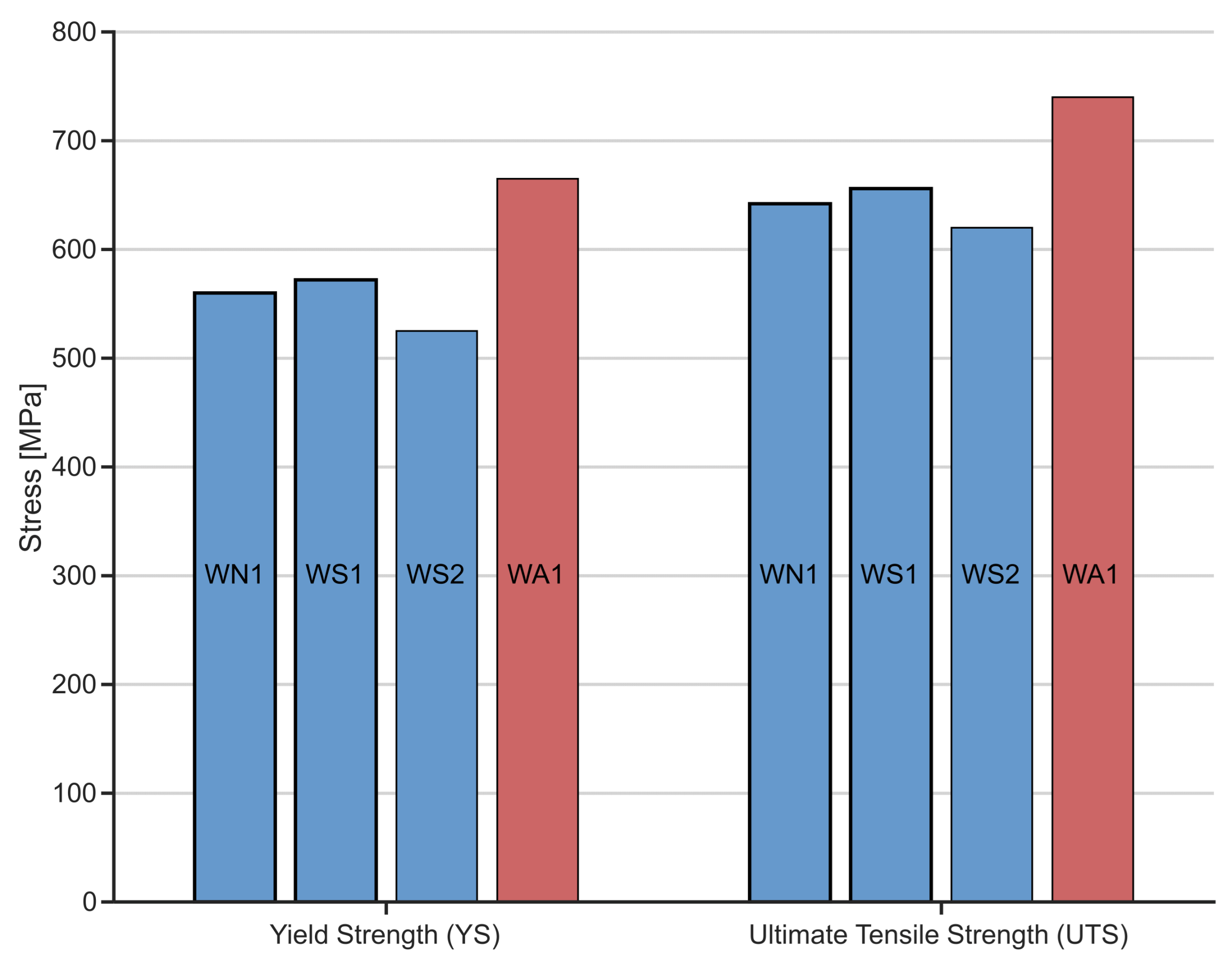
Data from mechanical testing of the aged base material (BA1) indicates a small amount of hardening, but not large enough to be statistically determined. However, the aged weld material (WA1) reveals an increased yield strength (YS) and ultimate tensile strength (UTS); see Table 2 and Figure 1.

2.2. Testing

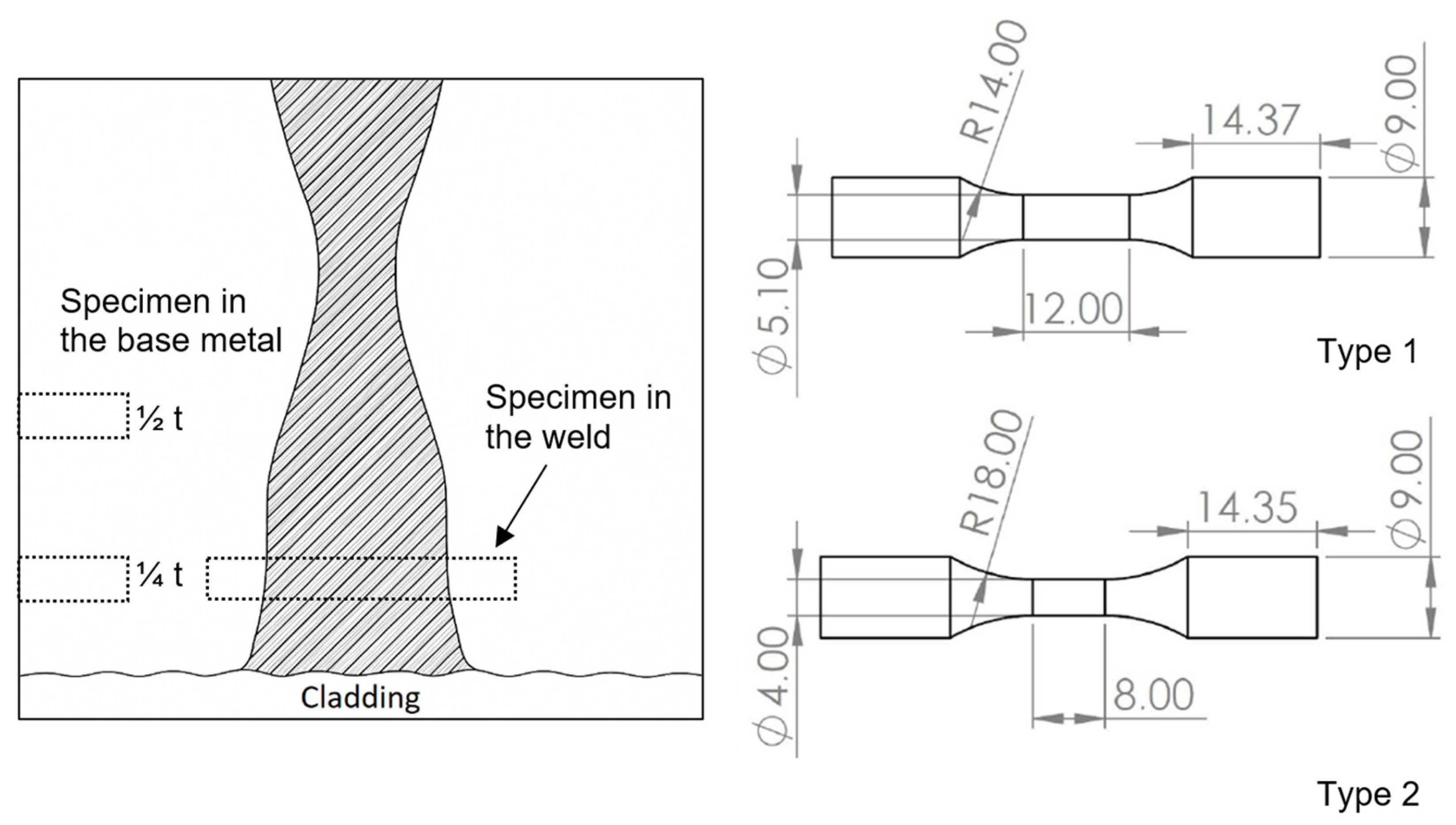
Specimens for fatigue testing were taken close to the surface, and the specimen orientation is such that crack initiation along the through-weld direction can be recognized and studied, as shown in Figure 2. Specimens in the base material are in the same direction, at least 25.4 mm from the weld material. As-delivered base metals were taken from two depths: close to the surface at 1/4 thickness and from the centre at 1/2 thickness of the forging.
The aged weld material was available in a very limited size. Small, polished, round tensile specimens with a diameter of 5.1 mm, a gage length of 12 mm, and an overall length of 55 mm, type 1 in Figure 2, were manufactured with tolerances according to the standard [12]. To use the small specimen in the test rig, special adapters were manufactured to ensure a secure grip and prevent misalignment.
The original geometry was found to be unsuitable for HCF testing of the weld material. Cracks developed within the radius, due to an apparently weaker material in this zone (incorporating HAZ). Thus, the specimen geometry was slightly changed, as reflected in the type 2 specimens in Figure 2, for HCF testing of weld metals.
Testing included both low-cycle fatigue (LCF) and high-cycle fatigue (HCF) and was performed according to ASTM standards. Strain-controlled LCF testing was conducted according to ASTM E606 [12], while load-controlled HCF testing was conducted according to ASTM E466 [13]. The primary scope of the fatigue testing was to characterize LCF behaviour, and strain-controlled testing was therefore used to ensure a well-defined strain amplitude and to capture cyclic plasticity effects. In addition, a limited number of load-controlled tests were performed to extend the dataset into the HCF regime. Load-controlled testing was selected for HCF since the response is predominantly elastic and the method enables stable long-duration testing at higher frequencies. For consistent presentation of strain–life (ε–N) results, stress amplitudes from load-controlled tests were converted to an equivalent strain amplitude assuming predominantly elastic response, using Young’s modulus for the material. All tests were conducted in air at room temperature. The LCF test samples were equipped with an extensometer, and the specimen strain was recorded during the test. Fully reversed axial loading (R = −1) with a triangular wave and a frequency below 1 Hz was used. Fatigue life was defined at 25% load drop relative to stabilized load at half-life. However, in order to examine fracture surfaces, testing was continued until separation and the number of cycles at separation was also recorded. In HCF testing fully reversed axial loading (R = −1) with a sinusoidal wave of 10–20 Hz was used. Testing continued until separation. RunOut was defined as 5 million cycles for the weld metals and 2 million cycles for the base metals. The extent of testing is shown in Table 3. The fracture surfaces were subsequently examined using SEM at 20 kV acceleration voltage.

3. Results

This study examines, with respect to fatigue life, the differences between as-delivered and thermally aged materials. It also evaluates whether a change in properties may affect the original design assumptions used for existing components. To evaluate the data and put the available results into context, the tested fatigue lives are compared with the best-fit fatigue curves developed to form the current design basis, as outlined in the currently used codes and standards.

3.1. Best-Fit Code Fatigue Curves for LAS

The American Society of Mechanical Engineers Boiler and Pressure Vessel Code Section III (ASME Code) contains rules for the design of Class 1 components of nuclear power plants [14]. Prior to 2019, these rules resided in Section NB. More recently, they are found in Mandatory Appendix XIII of the ASME Code. Mandatory Appendix I to Section III of the ASME Code specifies fatigue design curves that define the allowable number of cycles as a function of applied stress amplitude. The curve specified for UTS at and below 552 MPa is used for materials evaluated in this study. There is also an updated curve available, based on more recent work performed at Argonne National Laboratory (ANL), which reduces some conservatism. This curve is also incorporated into the 2023 edition of the ASME Code, as outlined in Code Case N-905 [15]. These two curves, defined by ANL and implemented by the ASME Code, constitute the design basis fatigue curves applicable for the design of SSCs and are fully developed in [11]. The design curves were developed from best fits to the fatigue data, and the following expressions for each best-fit fatigue curve are as follows:
ε a , A S M E , b e s t f i t = e 6.339 ln ( N ) 2.0 + 0.128
ε a , A N L , b e s t f i t = e 6.449 ln ( N ) 1.808 + 0.151
where ε a is strain amplitude and N is the number of cycles to failure.

3.2. Behaviour of As-Delivered Base Material (BN1)

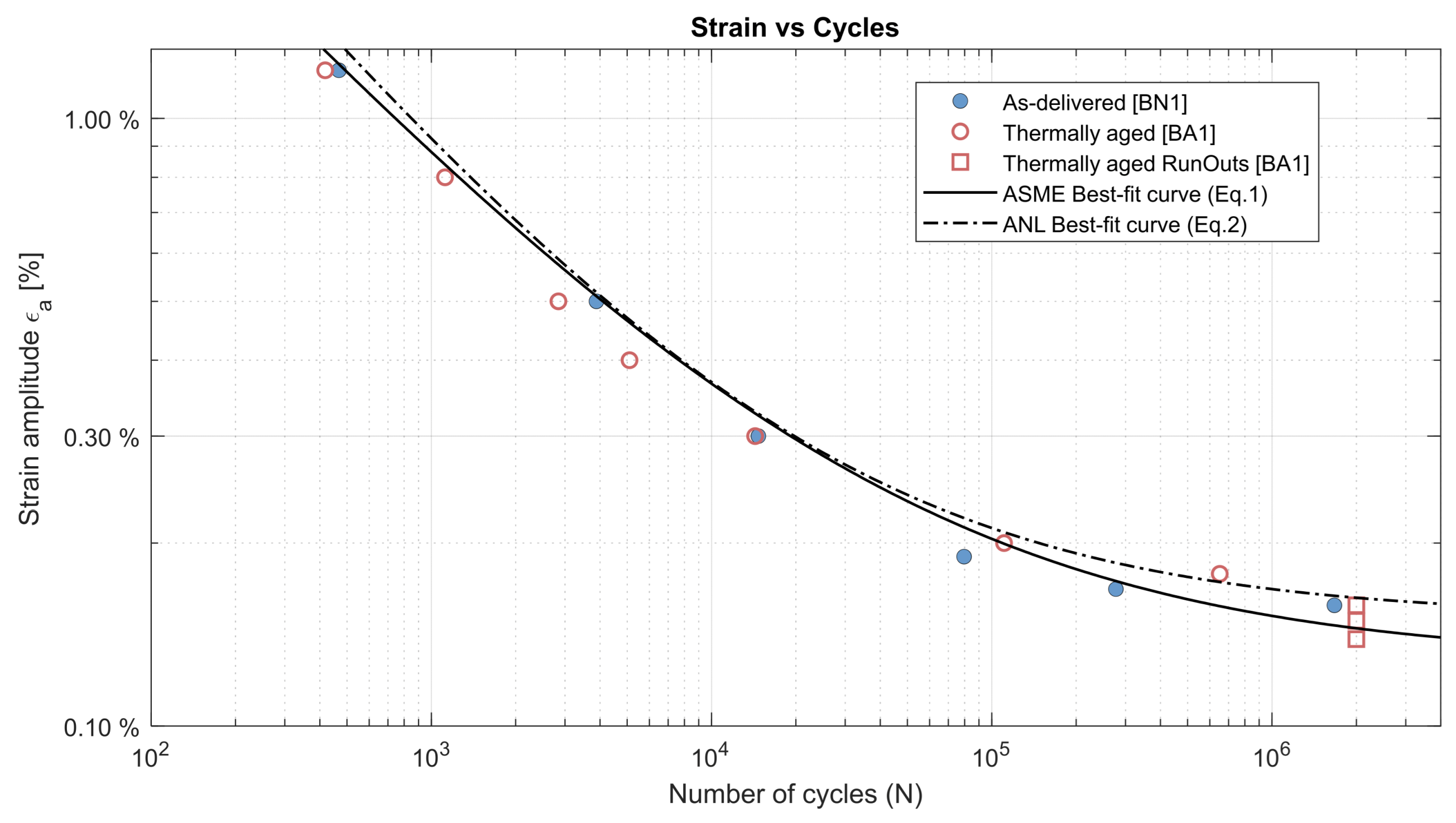
For BN1, ten specimens were evaluated. Eight specimens were fatigue-tested using strain control, and two were tested using load control. In the LCF region, the test data from samples taken at the surface compare well with the ASME best-fit curve, expressed in Equation (1). In HCF, beyond 106 cycles, the results indicate a fatigue life that exceeds what is expected by the ASME best-fit curve and is closer to the ANL best-fit curve, as shown in Figure 3.
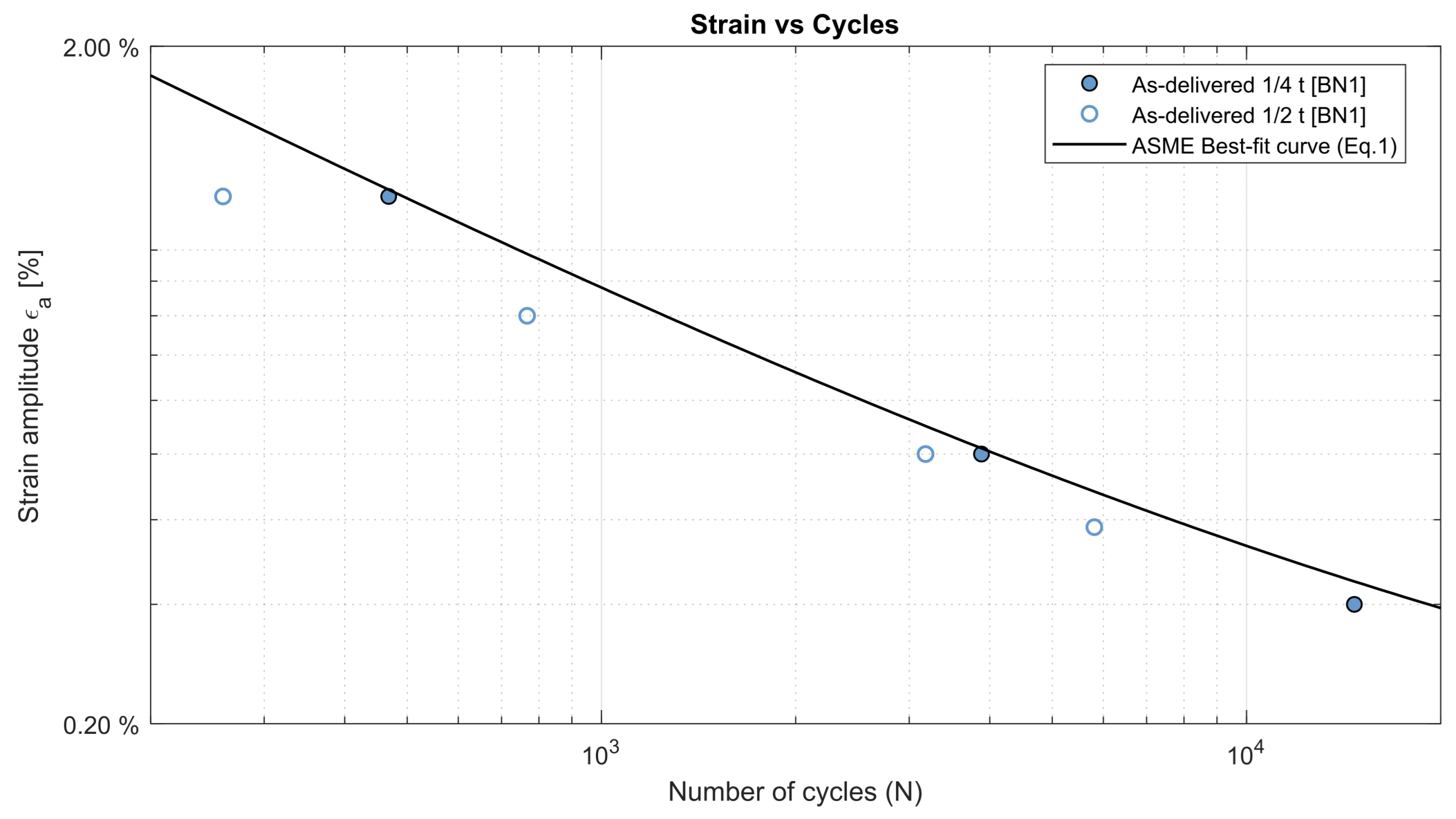
As the specimens were taken from a larger block, with a total thickness of 240 mm, an additional survey was performed to investigate changes through the thickness. Some variations in results were found between specimens taken at the surface and those taken at the interior of the block. Based on the survey, it appears that material at the surface resists a larger number of cycles at the same strain level compared to material from the interior (between 1/4 and 1/2 of the thickness); see Figure 4.

3.3. Behaviour of Aged Base Material (BA1)

For BA1, six specimens were evaluated using strain control testing and four using load control. As seen in Figure 3, the testing results show comparable data for aged and as-delivered materials. In the HCF region, the results indicate a slightly longer fatigue life for the aged material. The results are consistent, but the number of tests is limited, and no significant effect of ageing could be recognized.

3.4. Behaviour of As-Delivered Weld Material (WN1)

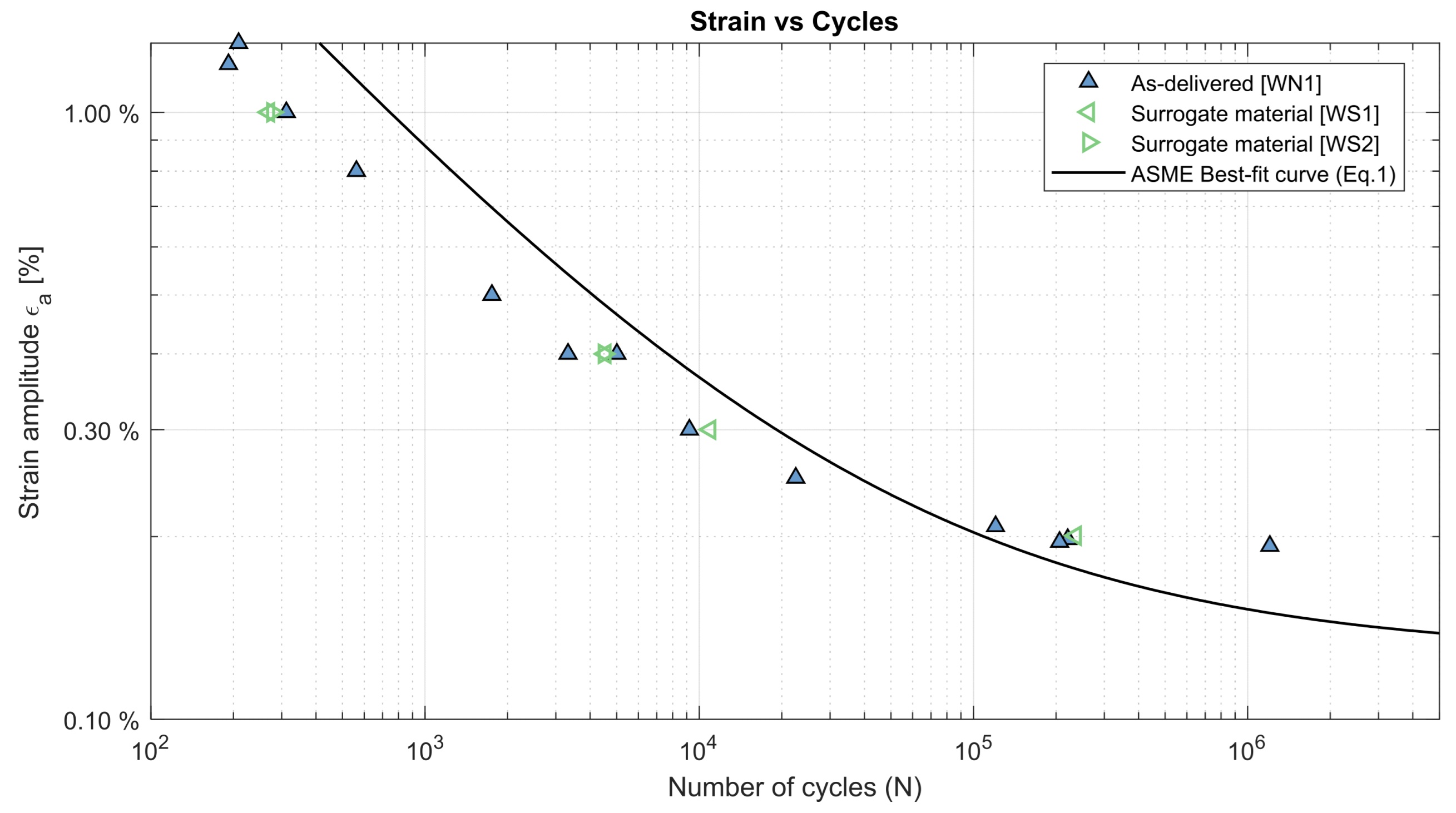
For WN1, eight specimens were evaluated using strain control testing, and four were evaluated using load control. Compared with base metals and the ASME best-fit curve, testing in the LCF region reveals a significantly lower fatigue life, especially at the highest strain amplitudes for the weld material. Fatigue life for the tested material is a factor of more than two below the ANL and ASME best-fit curves, described in Equations (1) and (2). In contrast, data for as-delivered weld material in the HCF region indicates particularly good fatigue life. In the HCF region beyond 105 cycles, test data indicate significantly longer fatigue life than predicted by the ANL and ASME best-fit curves, as shown in Figure 5 and Figure 6.

3.5. Behaviour of Surrogate Materials (WS1 and WS2)

In addition to the as-delivered weld material (WN1), five specimens of the newly produced surrogate materials were evaluated under strain-controlled conditions, and one specimen was tested under load control. The fatigue life of these surrogate materials shows very good correlation with the as-delivered weld material; see Figure 5. The test results confirm that this type of weld material exhibits a shorter fatigue life than predicted by the ASME and ANL best-fit curves in LCF, but a longer fatigue life in HCF.

3.6. Behaviour of Aged Weld Material (WA1)

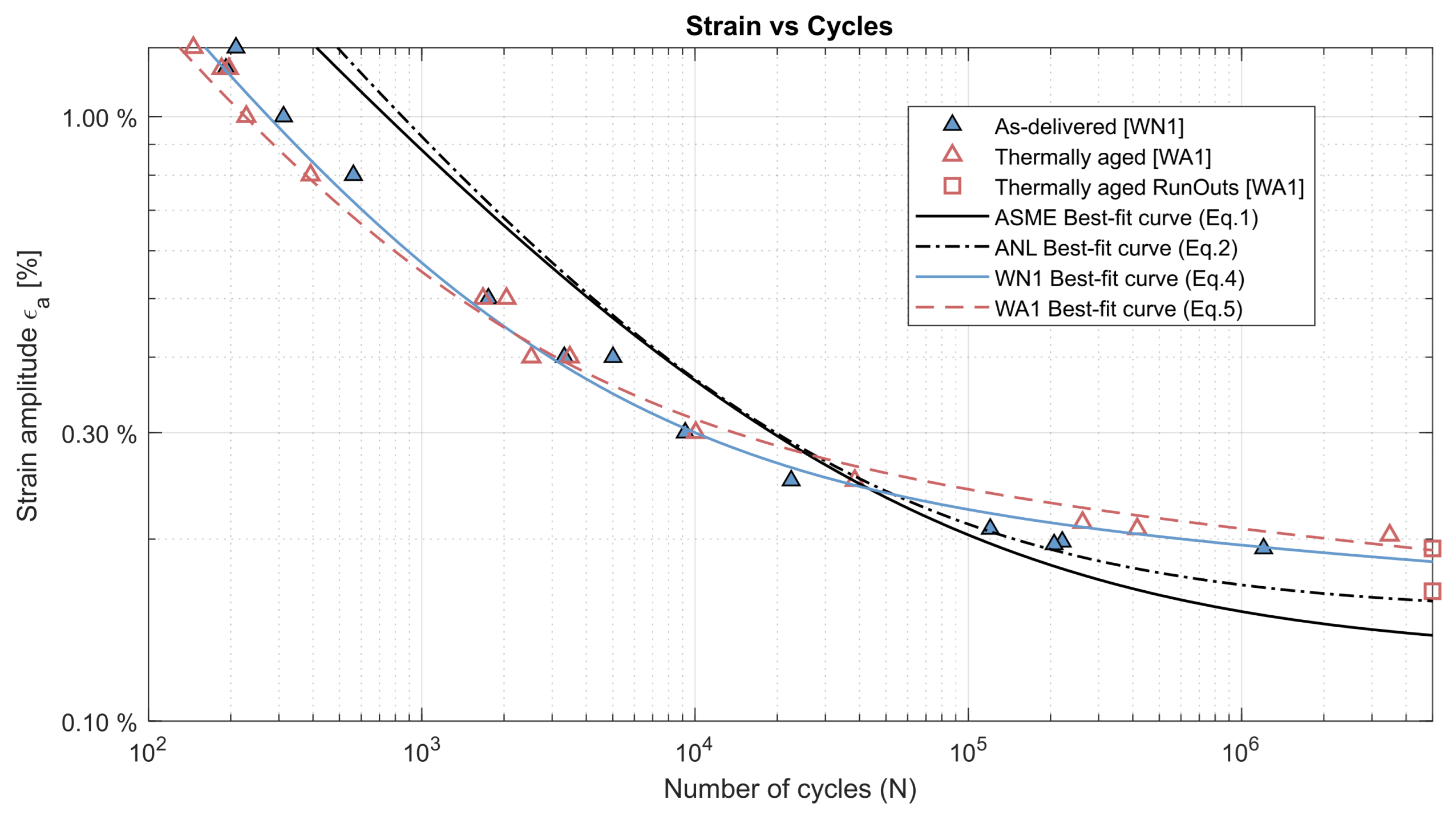
For WA1, eleven specimens were evaluated using strain control testing, and five were evaluated using load control. The aged weld material behaves similarly to the as-delivered weld (WN1) material, as shown in Figure 6. It exhibits significantly shorter fatigue life in the LCF region and significantly longer fatigue life in the HCF region compared to the ASME and ANL best-fit curves. However, for the aged weld material, this effect is even more pronounced. For higher strains in the LCF region, fatigue life is up to a factor three below the best-fit curves. In the HCF region, the fatigue life is significantly longer than predicted by the ASME and ANL best-fit curves.
Higher yield and ultimate tensile properties are typically associated with an increased fatigue endurance limit, as seen in [16]. At higher strains, where significant yielding is present, ductility becomes more important in terms of fatigue life. The effect is evident in the increased slope of the ε-N curve correlation of the test data.

3.7. Best-Fit Curves for As-Delivered and Aged LAS Weld Metal

Best-fit ε-N curves for the as-delivered and aged weld metals were developed using the methodology of Basquin and Coffin–Manson. In contrast to the best-fit curves from ASME and ANL in Equations (1) and (2), which were derived for LCF using what is known in ASME as the Langer model, this method accounts for both the elastic and plastic strain components according to the following expression:
ε a = σ f E 2 N β + ε f 2 N c
where ε a is strain amplitude, σ f is the fatigue strength coefficient, E is Young’s modulus, β is the fatigue strength exponent, ε f is the fatigue ductility coefficient, c is the fatigue ductility exponent and N is the number of cycles. The data from WN1 and WA1 were used to develop the following best-fit curves:
ε a , L W N 1 , b e s t f i t = 613 206843 2 N 0.0303 + 0.3847 2 N 0.623
ε a , L W A 1 , b e s t f i t = 807 206843 2 N 0.0445 + 0.3287 2 N 0.629
The WN1 and WA1 best-fit fatigue curves in Equations (4) and (5) are plotted along with the ASME and ANL curves in Equations (1) and (2) in Figure 6.

3.8. Microscopy

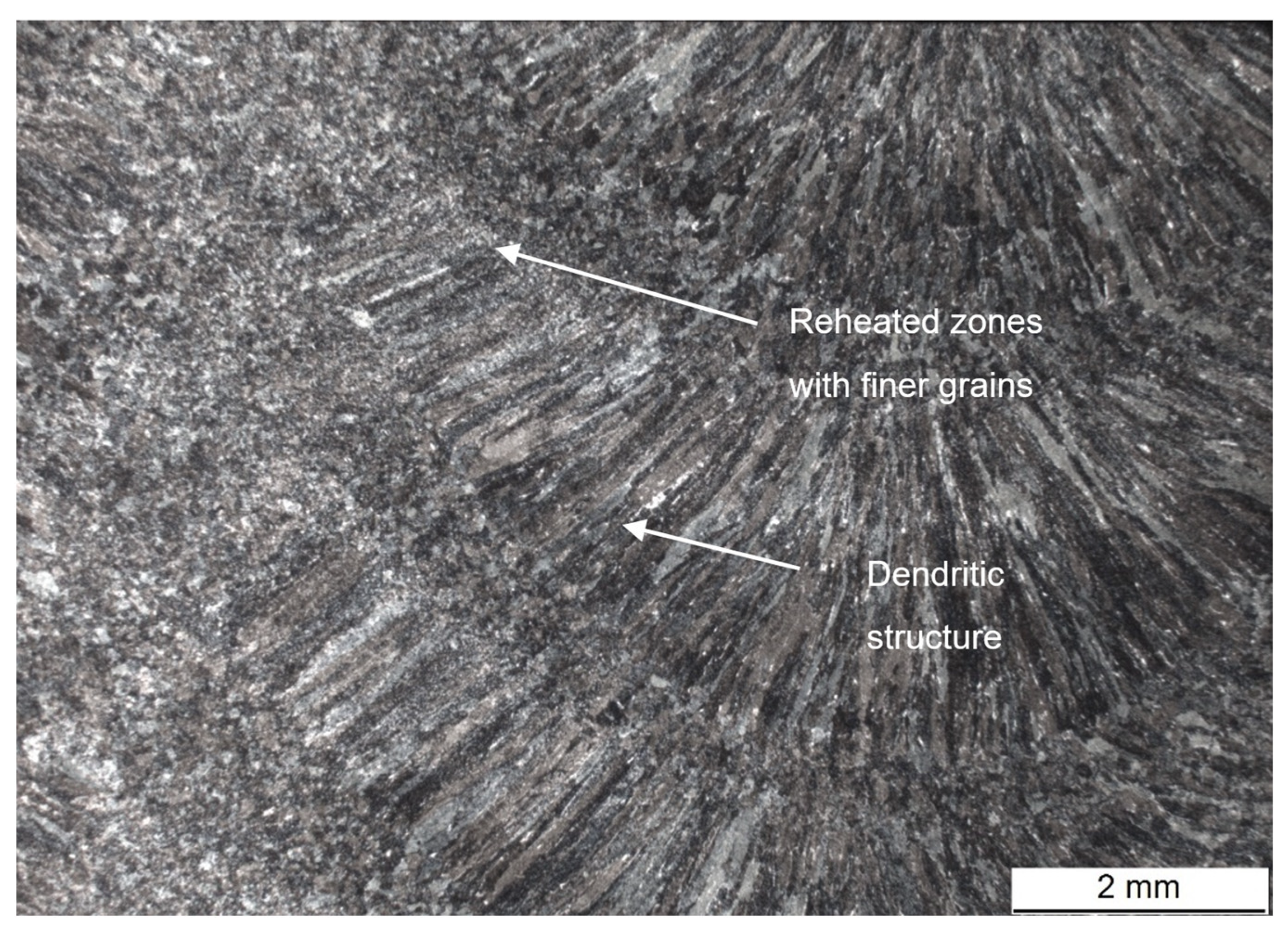
The welds comprise a series of weld beads (layers), which gives rise to a complex grain structure [17,18]. As a weld bead solidifies, a dendritic grain structure emerges transverse to the welding direction. As the multi-layer weld is built up, subsequent weld beads will be applied on top of the existing beads, thereby heating (and melting) the upper part of the underlying weld bead. Due to recrystallization, this results in a region with smaller equiaxed grains. As this process continues, the weld develops a microstructure with regions of dendritic grains and regions with finer grains that have been reheated, as shown in Figure 7 [18]. This varying microstructure is expected to result in altered material properties throughout the test section. Each weld bead is about 3–4 mm in depth and since the diameter of the fatigue specimen is 5.1 mm the section includes a mixture of regions with dendritic grains and finer equiaxed grains.
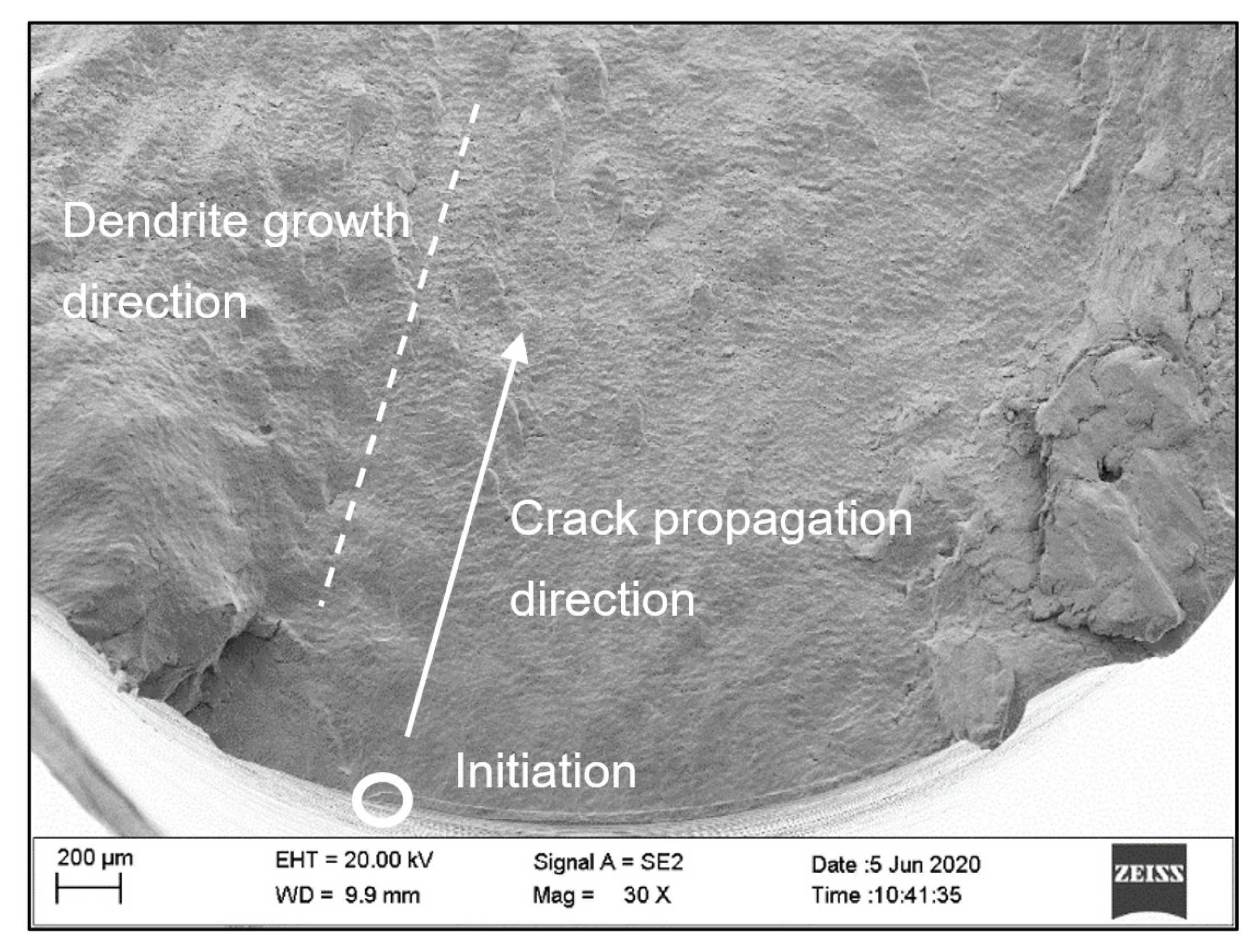
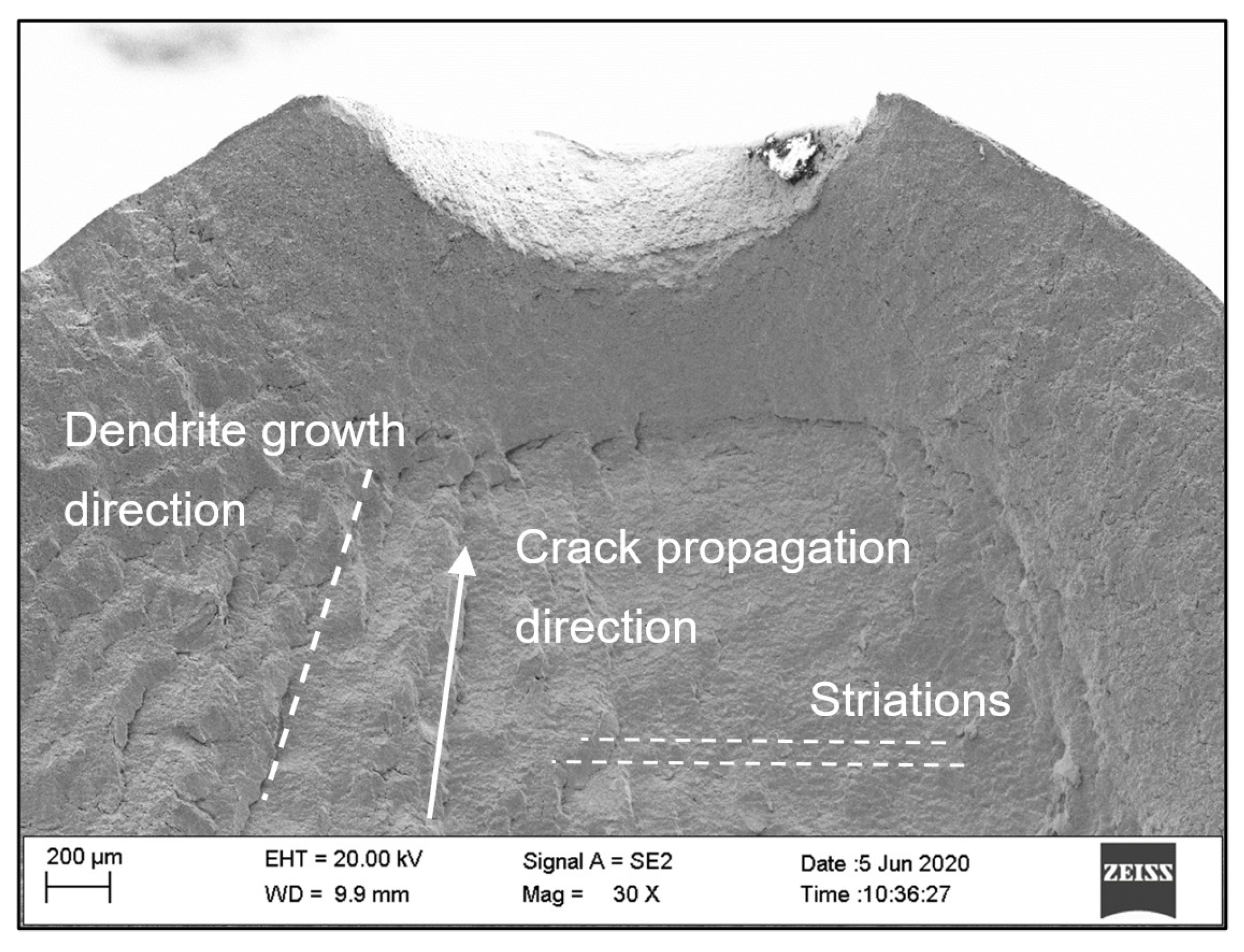
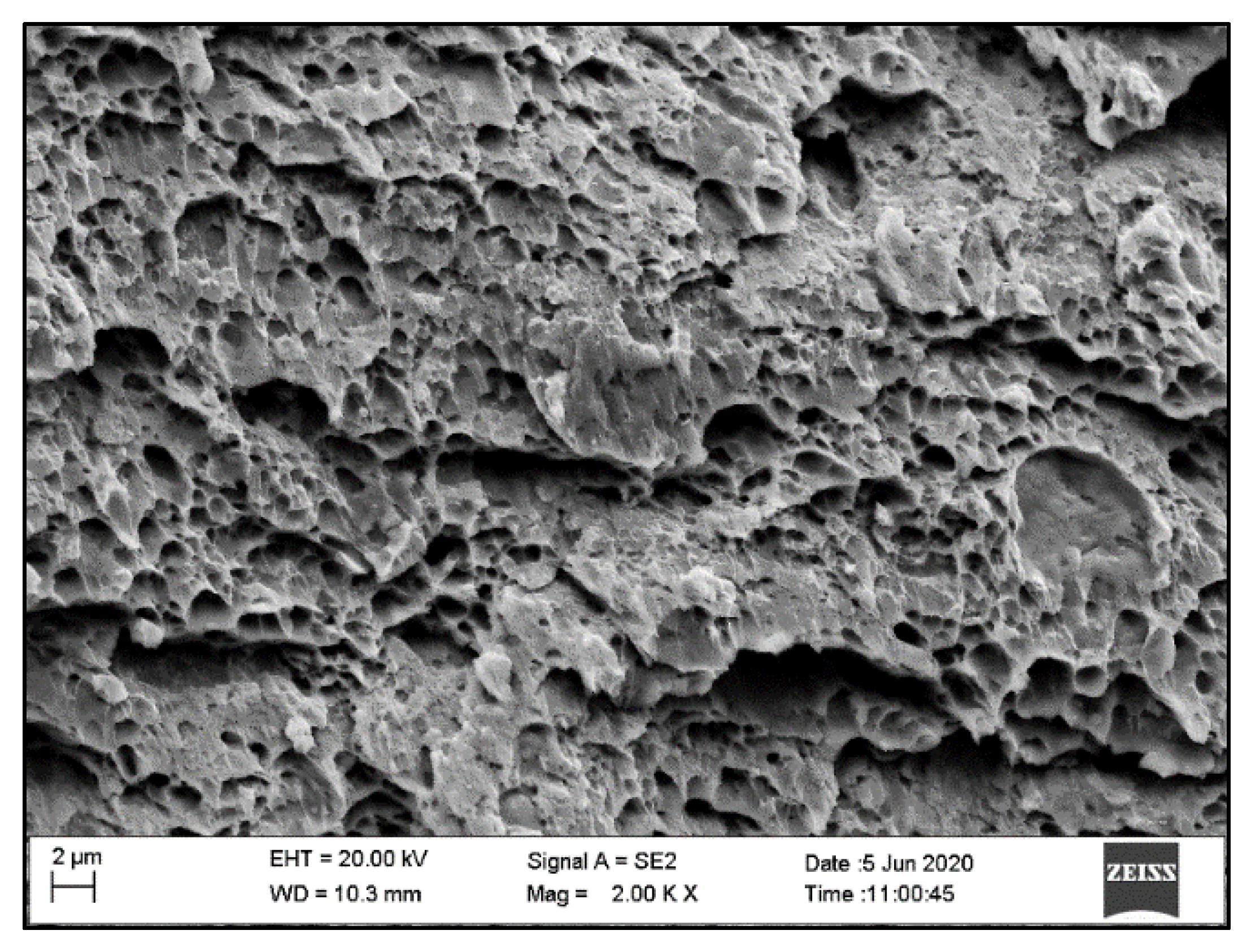
The microstructure of the weld is heterogeneous, featuring areas with varying grain sizes and a dendritic structure. Fatigue testing in the HCF region typically has one initiation point originating from the surface, whereas samples at higher strains tend to have multiple initiation points, also starting from the surface. In Figure 8, Figure 9 and Figure 10, the fracture surface from a WA1 test specimen with a strain amplitude of 0.4% is shown.
The crack initiation site is located near a surface region where the dendritic weld structure intersects the specimen surface and where local microstructural transitions occur, as shown in Figure 8. Following initiation, the crack propagates approximately parallel to the dendrite growth direction, as shown in Figure 8 and Figure 9, indicating that the crack path is influenced by the anisotropic weld microstructure. This behaviour was consistently observed in several specimens, suggesting that the dendritic structure provides a preferred crack propagation path once initiation has occurred.
This behaviour is also apparent in other samples. In most surfaces, including high and low strains, the grain structure is clearly observable, and it is apparent that the crack front interacts with the grain boundaries. At very high strain amplitudes, the fracture surface becomes smeared due to high compressible forces, making it difficult to evaluate.
In all evaluated specimens, the weld metal exhibits ductile failure, as seen in Figure 10, characterized by marked dimples. No larger inclusions were found at the fracture surfaces in any of the specimens studied.

4. Discussion

Results from the obtained test data for both the as-delivered and the aged base material (BN1, BA1) are in agreement with the best-fit fatigue curves used as a basis in the ASME and ANL design fatigue curves. In the HCF region, the results indicate a slightly longer fatigue life for the aged material, but the number of tests is limited, and no significant effect of ageing is recognized.
For the investigated weld metals (WN1, WA1), an ageing effect due to a hardening mechanism appears to be present. This is seen as a shift in the mechanical properties, including an increase in yield and ultimate tensile strength properties along with a corresponding shift in ductile-to-brittle transition temperature [10].
According to this study, thermal ageing also seems to affect the fatigue life, resulting in a shifted ε-N curve, as seen in Figure 6, with increased fatigue life in the HCF region and decreased fatigue life in the LCF region. Based on the results, design margins may be reduced by thermal ageing in the LCF region, when compared to the design fatigue curves in ASME. The main purpose of this study was to investigate the effect of ageing. However, the test results for the as-delivered material in this study, which show a significantly shorter fatigue life than the corresponding base material at higher strain amplitudes (LCF region), also need to be discussed. Thus, the following three questions are addressed below:
  • What is the fatigue resistance of the aged weld metal?
  • How does the fatigue resistance of the as-delivered weld metal compare with the ASME Code design curve?
  • Does ageing impact existing design margins?

4.1. What Is the Fatigue Resistance of the Aged Weld Metal?

Based on the test data presented in this study, ageing of the material appears to influence fatigue life. The primary mechanism behind this ageing is believed to be a diffusion-driven formation of clusters, which act as obstacles to dislocation movement and thereby hinder plastic deformation and reduce ductility. In addition, the current study has recognized that the constant tensile stress present during operation may further promote the accumulation of solute elements at dislocations and grain boundaries, potentially enhancing cluster formation. Operational transients, being few in number and small in amplitude, are considered to have a minor effect on cumulative fatigue damage for the tested materials.
The statistical basis of the present study is limited, and additional experiments are needed to fully understand the ageing behaviour of LAS welds. However, the available results suggest that ageing tends to reduce fatigue life in the LCF regime while increasing life in the HCF regime. To some extent, this behaviour was expected. As discussed earlier, reduced plastic deformation is typically associated with an increased fatigue endurance limit. Similarly, a loss of ductility is commonly reflected in a reduced fatigue life under higher load.
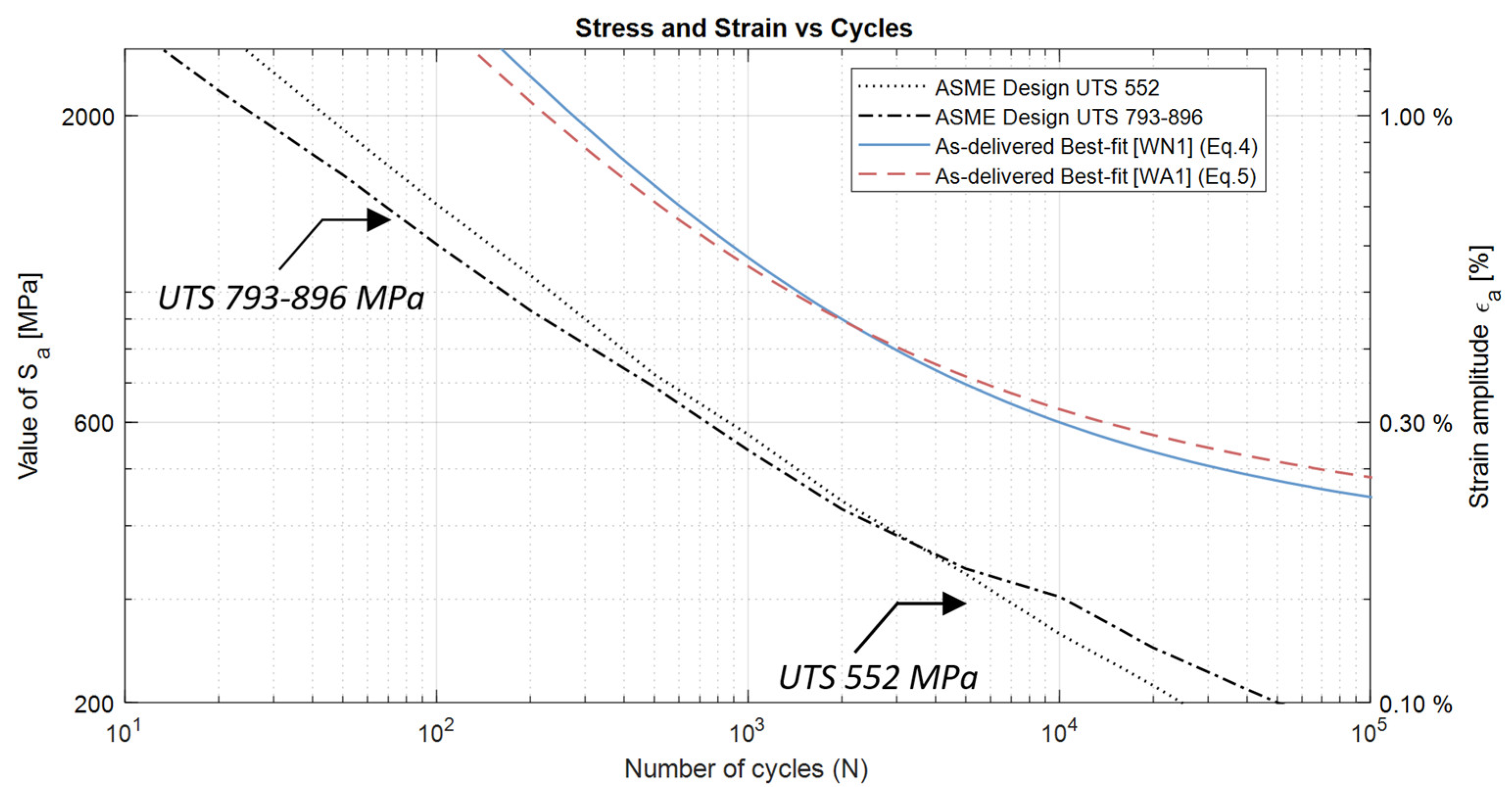
As shown in Figure 11, this behaviour also correlates well with the design curve in the ASME Code Appendix I to Section III [14]. Appendix I includes two fatigue design curves for LAS: one for materials with specified UTS at and below 552 MPa (UTS 552) and another for materials with specified UTS between 793 and 896 MPa (UTS 793–896). The curve for UTS 793–896 predicts a shorter fatigue life in the LCF region and a longer fatigue life in the HCF region. For intermediate UTS values, interpolation using a straight line in the log–log domain can be used.
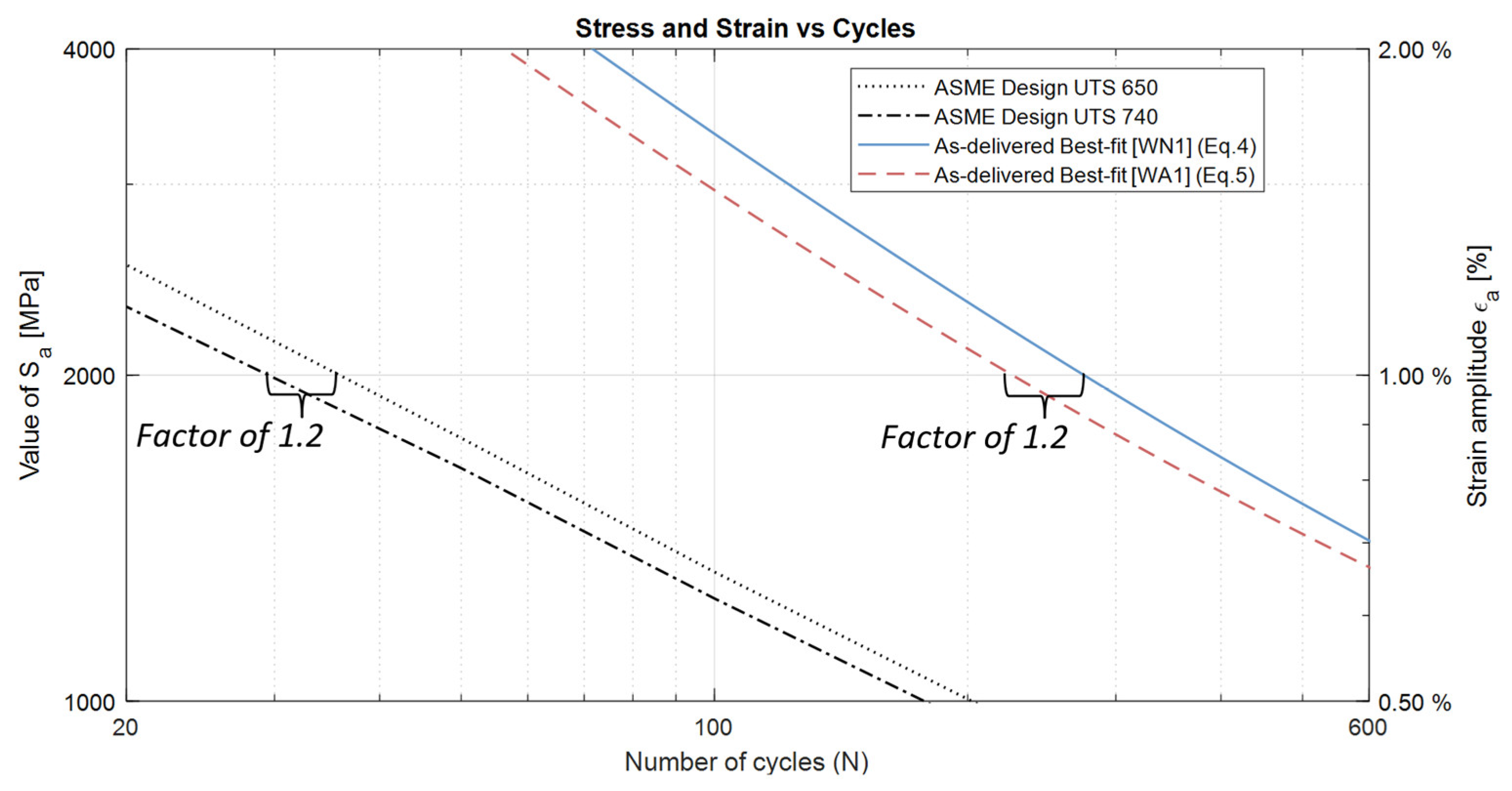
Considering the materials tested in this study, thermal ageing resulted in an increase in UTS, from 650 MPa (average of WA1 and WN1 values: (658 + 642)/2; see Table 2) in the as-delivered condition to 740 MPa in the aged condition. According to the ASME Code curves (UTS 552 and UTS 793–896), this shift would suggest a change in fatigue life. By interpolating between the two curves (UTS 552 and UTS 793–896), design curves for materials in both the as-delivered (UTS 650) and aged (UTS 740) conditions can be derived using the following method described in the ASME Code, Appendix I [14]:
N N i = N j N i ( log S i S ) / log S i S j
where S ,   S i   a n d   S j are values of alternating stress S a and N ,   N i   a n d   N j are the corresponding number of cycles from design fatigue data in the ASME Code Appendix I.
Considering a high strain amplitude of εₐ = 1.0% (corresponding to 2068 MPa, assuming a Young’s modulus of 206,843 MPa [11,14,15]) and using Equation (6) from the ASME Code predict a reduction in fatigue life of approximately 20% for a material with UTS 740 MPa compared to a material with 650 MPa:
N A S M E ,   U T S   650 ε a = 1.0 % N A S M E ,   U T S   740 ε a = 1.0 % = 33 27 = 1.2
A similar reduction, using a strain amplitude of εα = 1.0%, is observed when comparing the test data for as-delivered material according to Equation (4) and aged material according to Equation (5):
N L W N 1 ( E q u a t i o n   ( 5 ) ,     ε a = 1.0 % ) N L W A 1 ( E q u a t i o n   ( 4 ) , ε a = 1.0 % ) = 275 226 = 1.2
The factors from Equations (7) and (8) are visualized in Figure 12, where best-fit curves from test data are compared to the curves in ASME Code, Appendix I. As shown in the figure, the correlation is good, and the ASME Code curves appear to capture the change in fatigue behaviour in relation to the change in UTS.

4.2. How Does the Fatigue Resistance of the As-Delivered Weld Metal Compare with the ASME Code Design Curve?

The main purpose of this study is to investigate how ageing affects fatigue life. However, the fact that the tested welds (both as-delivered and aged) exhibit a significantly shorter fatigue life than the corresponding base material at higher strain amplitudes (LCF region) is also of interest. As shown in Figure 6, the reduction in fatigue life occurs at strain amplitudes above approximately 0.3%. Conversely, at strain amplitudes of 0.2% or below, there is a significant increase in fatigue life for the weld metals.
Comparing the data for the as-delivered weld material (WN1) with the ASME Code Appendix I design curve for UTS 650 at a high strain amplitude of 1.0% yields a margin between the best-fit curve and the design curve of
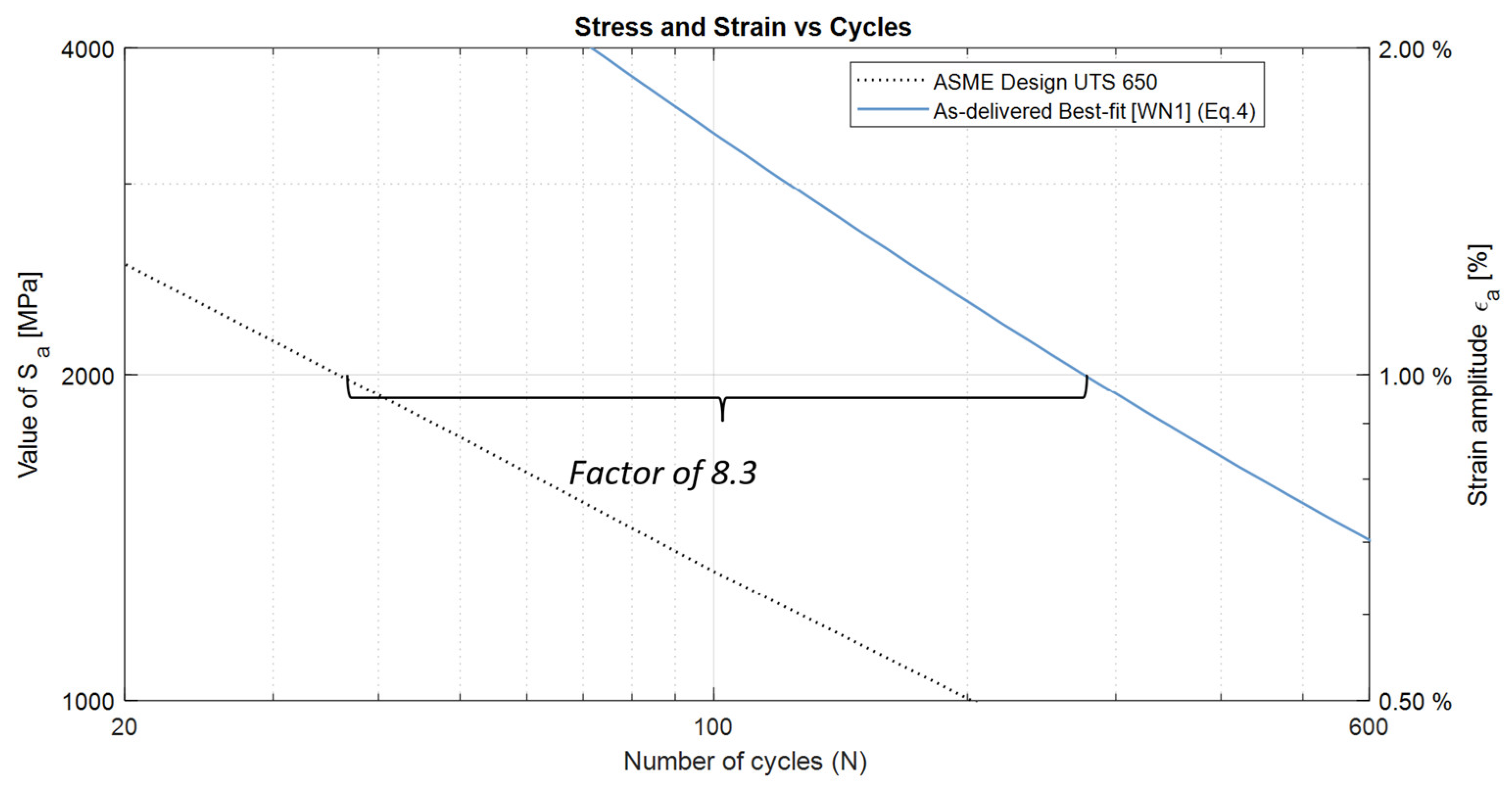
N L W N 1 ( E q u a t i o n   ( 5 ) ,     ε a = 1.0 % ) N A S M E ,   U T S   650 ε a = 1.0 % = 276 33 = 8.3    
The factor of 8.3 between the best-fit curves for the as-delivered (WN1) material and the ASME Code Appendix I design curve raises questions about the available design margins for welds in the LCF region. Although the present dataset is limited to a single weld heat, the results highlight the need for further investigations of weld metals. The factor between the best-fit curve for the as-delivered material (WN1) and the ASME Code Appendix I design curve, as shown in Equation (9), is visualized in Figure 13.
From an engineering perspective, the reduced margin observed for this weld metal in the LCF regime suggests that weld-specific fatigue behaviour may represent a limiting case relative to generic low-alloy steel design curves. Although the present dataset is limited to a single weld heat, the results indicate that additional fatigue characterization of representative weld metals may be warranted, particularly for long-term operation assessments where fatigue usage is governed by weld material response rather than base metal behaviour. The results further suggest that the applicability of generic LAS design curves to weld metals should be carefully evaluated, and that weld-metal-specific best-fit curves may be beneficial as supporting information for future code and assessment methodologies.
Based on these findings, follow-up work should include systematic strain–life testing of additional weld heats in both as-delivered and thermally aged conditions, combined with microstructural characterization to quantify ageing mechanisms and their correlation to cyclic deformation behaviour.

4.3. Does Ageing Impact Existing Design Margins?

The current design fatigue curves in air, as outlined in the ASME Code, are based on the same type of testing conducted in this study for LCF. These curves were derived from strain-controlled fatigue tests conducted on small, polished specimens at room temperature in a laboratory air environment. The best-fit curves were adjusted to account for mean stress, and then further modified by a factor of 2 on stress or 20 on cycles, depending on which was more conservative [11]. The factor of 20 on cycles applies in the LCF region and is derived from three subfactors: a data scatter factor of 2.0 (minimum to mean), a size effect factor of 2.5, and a surface finish and environmental factor of 4.0.
Subsequent work by ANL [11] introduced a statistical approach that incorporates a material variability factor of 2.1, ensuring 95% confidence that the resulting lives exceed those observed for 95% of the materials studied. According to [11], this corresponds to a standard deviation of 0.375, which was used in the analysis. Size effects were addressed with a factor ranging from 1.0 to 1.4, corresponding to the 5th and 95th percentiles. The surface finish factor ranged from 1.5 to 3.5, and an additional factor, ranging from 1.0 to 2.0, was included to account for load sequence effects in the low-cycle regime. These updated factors were incorporated into Monte Carlo simulations, which concluded that a total reduction factor of 9.0 should be applied to bound 95% of the data for low-alloy steels in air environments. Earlier ANL studies suggested a factor of 12, which remains the recommended value for fatigue analysis. While the factor of 12 is still proposed for use, the study also concluded that it is a conservative estimate. The ANL design curve for low-alloy steels with ultimate tensile strength (UTS) at or below 552 MPa, using a factor of 2 on stress and 12 on cycles, is incorporated into the ASME Code Case N-905 [15].
The data from the present study indicate that the margin for the tested low-alloy steel weld is lower than the factor of 9–12 discussed in the previous paragraph. Specifically, as observed in Equation (9) and Figure 13, there is a factor of 8.3 between the best-fit curve and the ASME Code design curve.
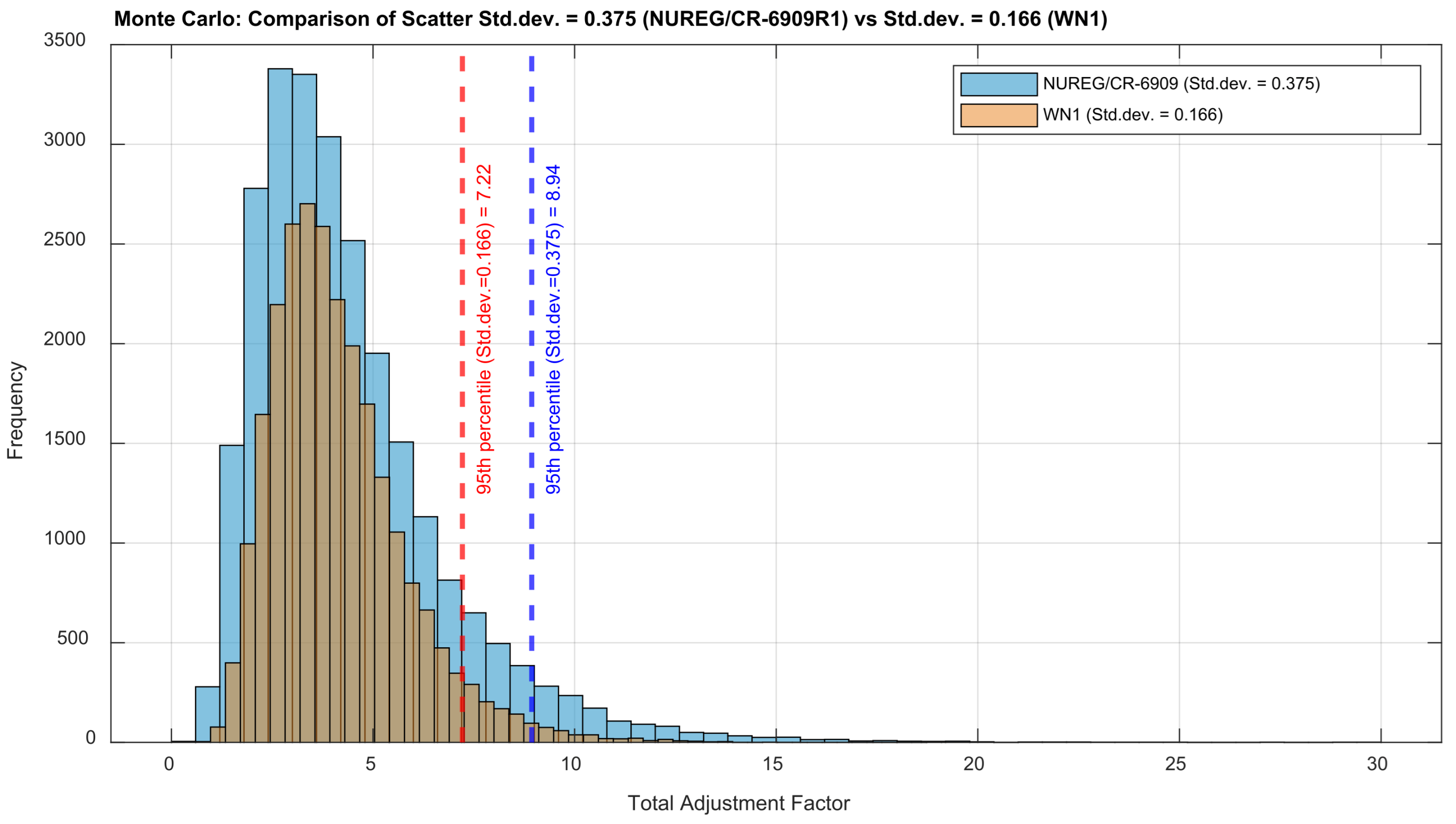
However, a more detailed breakdown of the ANL [11] approach provides additional context. The factor of 9.0 calculated in the ANL report includes a data scatter factor of 2.1 and uses a standard deviation of 0.375 in the Monte Carlo simulation. To provide transparency regarding the statistical basis of the present dataset, scatter measures and standard deviation values were evaluated for the available weld-metal fatigue data. To examine the effect of using material-specific values, an estimation of data scatter was performed for the as-delivered material (WN1) using the methods outlined in [19]. In the LCF region, where plastic strains dominate, the scatter in plastic strain data from the tests resulted in a calculated standard deviation of 0.166 for the available test data. Since the data only covers one single heat of material, a lower standard deviation is reasonable. Using a Monte Carlo simulation, similar to that in [11], but substituting the general factor of 0.375 with the material-specific value of 0.166, the total adjustment factor, which yields the same confidence, can be reduced from 9.0 to 7.2.
Another possibility is to perform a comparison based on a single-sided tolerance limit, providing 95% confidence that 95% of observed data points are bounded, using WN1 plastic data and assuming that the second term in Equation (3) is governing.
Using this method in accordance with [16], a scatter factor of 1.8 was calculated for a 1% strain amplitude, which is considered valid for the LCF region. This value is lower than the general factor of 2.1 used in the ANL work.
The two limited solutions above, which account for a lower scatter in the data, suggest that a margin of 8.3 may not be unreasonable for this specific material (WN1). Subfactors and data, as per the ASME Code [14] and the ANL work [11], are summarized and compared with the figures calculated in this work in Table 4 and Figure 14.

5. Conclusions

The results for both the as-delivered and thermally aged base material show good agreement with the best-fit curves that form the basis for the ASME and ANL design fatigue curves. In the HCF regime, the test data indicate a fatigue life exceeding that predicted by both the ASME and ANL curves. These results suggest that the fatigue resistance of the base material remains high, with no significant degradation due to thermal ageing.
In contrast, the aged weld metals exhibit a clear ageing effect. This is characterized by increased yield and ultimate tensile strength, and is reflected in an inclined ε–N curve (see Figure 6) where fatigue life decreases in the LCF regime and increases in the HCF regime. Although these trends are evident, the statistical basis of the current dataset is limited, and further testing is required to better understand the fatigue behaviour of low-alloy steel weld metals subjected to long-term thermal ageing.
Based on the results in this study, changes in fatigue life due to ageing may be estimated by considering the change in ultimate tensile strength. The ASME Code provides design fatigue curves for different ranges of ultimate tensile strength, and these appear to capture the shift in fatigue behaviour well. Although the results in this study are limited to a single weld material, they highlight the potential importance of accounting for material degradation over time, particularly in the LCF regime, where ductility plays a critical role in fatigue performance.
While the primary aim of this study was to investigate the effects of ageing, the behaviour of the as-delivered weld material is also of considerable interest. Both the as-delivered and aged welds exhibited significantly shorter fatigue lives in the LCF regime compared to the base metal. Moreover, the observed design margins relative to the applicable ASME Code fatigue design curve were lower than expected.
A statistical evaluation was performed to quantify the current design margins. The analysis suggests that the margins appear adequate for the tested material. The results also indicate that a statistical approach may serve as a valuable tool for assessing fatigue design margins over extended periods. These findings underscore the need for further investigation, particularly in the context of long-term operation and weld-specific design considerations. The findings also highlight the need for additional weld-metal fatigue data to evaluate whether weld-specific fatigue behaviour could reduce effective design margins in the LCF regime for certain low-alloy steel welds.

Author Contributions

Conceptualization, R.M. and P.E.; methodology, R.M.; software, R.M.; validation, R.M., T.D. and P.E.; formal analysis, R.M., T.D. and P.E.; investigation, R.M., T.D. and P.E.; resources, R.M., T.D. and P.E.; data curation, R.M., T.D. and P.E.; writing—original draft preparation, R.M.; writing—review and editing, R.M., T.D. and P.E.; visualization, R.M.; supervision, P.E.; project administration, R.M. and P.E.; funding acquisition, P.E. All authors have read and agreed to the published version of the manuscript.

Funding

This research was supported by external funding from Ringhals AB’s Long-Term Operation (LTO) and R&D programme.

Data Availability Statement

The data presented in this study are available on request from the corresponding author. The data are not publicly available due to privacy.

Acknowledgments

The authors would like to thank Bo Alfredsson, Martin Öberg (KTH), Mattias Thuvander (Chalmers University of Technology), Björn Forssgren, Stjepan Jagunic, Johan Blomström, Kerstin Richnau, Martin Jönsson, John Lorentzon (Ringhals AB), Jenny Roudén, Andreas Karlsson (Vattenfall AB Power Solutions) and Martin Berglund (FS Dynamics Sweden AB) for their valuable support and discussions.

Conflicts of Interest

The authors declare no conflicts of interest.

References

  1. O’Donnell, W.J. Code Design and Evaluation for Cyclic Loading Sections III and VIII. In Companion Guide to the ASME Boiler and Pressure Vessel Code, 3rd ed.; Rao, K.R., Ed.; ASME Press: New York, NY, USA, 2009; Volume 2. [Google Scholar]
  2. Dahlberg, M.; Nilsson, K.-F.; Taylor, N.; Faidy, C.; Wilke, U.; Chapuliot, S.; Kalkhof, D.; Bretherton, I.; Church, M.; Solin, J.; et al. Development of a European Procedure for Assessment of High Cycle Thermal Fatigue in Light Water Reactors: Final Report of the NESC-Thermal Fatigue Project; European Commission: Luxembourg, 2007. [Google Scholar]
  3. EPRI. Management of Thermal Fatigue Outside of Plant Design Specifications. In Materials Reliability Program: Thermal Fatigue Handbook (MRP-478); Electric Power Research Institute: Palo Alto, CA, USA, 2022. [Google Scholar]
  4. Goyal, S.; Sandhya, R.; Valsan, M.; Bhanu Sankara Rao, K. The effect of thermal ageing on low cycle fatigue behaviour of 316 stainless steel welds. Int. J. Fatigue 2009, 31, 447–454. [Google Scholar] [CrossRef]
  5. Kwon, J.-D.; Woo, S.-W.; Lee, Y.-S.; Park, J.-C.; Park, Y.-W. Effects of thermal aging on the low cycle fatigue behavior of austenitic–ferritic duplex cast stainless steel. Nucl. Eng. Des. 2001, 206, 35–44. [Google Scholar] [CrossRef]
  6. Jin, L.; Zhu, M.-L.; Zhang, S.-L.; Yang, M.; Yu, T.-D.; Xuan, F.-Z. Fatigue life modeling for a low alloy steel after long-term thermal aging. Int. J. Fatigue 2025, 190, 108645. [Google Scholar] [CrossRef]
  7. IAEA. Ageing Management for Nuclear Power Plants: International Generic Ageing Lessons Learned (IGALL); Safety Reports Series No. 82; TLAA 116; IAEA: Vienna, Austria, 2020. [Google Scholar]
  8. Nakata, H.; Fujii, K.; Fukuya, K.; Kasada, R.; Kimura, A. Grain boundary phosphorus segregation in thermally aged low alloy steels. J. Nucl. Sci. Technol. 2006, 43, 785–793. [Google Scholar] [CrossRef]
  9. Lindgren, K.; Boåsen, M.; Stiller, K.; Efsing, P.; Thuvander, M. Cluster formation in in-service thermally aged pressurizer welds. J. Nucl. Mater. 2018, 504, 23–28. [Google Scholar] [CrossRef]
  10. Boåsen, M.; Lindgren, K.; Öberg, M.; Thuvander, M.; Faleskog, J.; Efsing, P. Analysis of thermal embrittlement of a low alloy steel weldment using fracture toughness and microstructural investigations. Eng. Fract. Mech. 2022, 262, 108248. [Google Scholar] [CrossRef]
  11. U.S. NRC. Effect of LWR Coolant Environments on the Fatigue Life of Reactor Materials (NUREG/CR-6909, Revision 1)—Final Report; ANL-12/60. U.S. NRC: Washington, DC, USA, 2014.
  12. ASTM E606-19; Standard Practice for Strain-Controlled Fatigue Testing. ASTM International: West Conshohocken, PA, USA, 2019.
  13. ASTM E466-15; Standard Practice for Conducting Force Controlled Constant Amplitude Axial Fatigue Tests of Metallic Materials. ASTM International: West Conshohocken, PA, USA, 2015.
  14. ASME Boiler and Pressure Vessel Committee. ASME Boiler and Pressure Vessel Code, Section III. Rules for Construction of Nuclear Facility Components, Division I; ASME: New York, NY, USA, 2023. [Google Scholar]
  15. ASME Boiler and Pressure Vessel Committee. ASME Boiler and Pressure Vessel Code. Code Cases: Nuclear Components, Supplement 7; Case N-905; ASME: New York, NY, USA, 2023. [Google Scholar]
  16. Stephens, R. Metal Fatigue in Engineering, 2nd ed.; Wiley: New York, NJ, USA, 2001. [Google Scholar]
  17. Boåsen, M.; Efsing, P.; Ehrnstén, U. On flux effects in a low alloy steel from a Swedish reactor pressure vessel. J. Nucl. Mater. 2017, 484, 222–230. [Google Scholar] [CrossRef]
  18. Boåsen, M. Modeling Framework for Ageing of Low Alloy Steel. Licentiate Thesis, KTH Royal Institute of Technology, Department of Solid Mechanics, Stockholm, Sweden, 2019. [Google Scholar]
  19. ASTM E739; Standard Practice for Statistical Analysis of Linear or Linearized Stress-Life (S-N) and Strain-Life (ε-N) Fatigue Data. ASTM International: West Conshohocken, PA, USA, 2015.
Figure 1. Room-temperature (RT) yield strength (YS) and ultimate tensile strength (UTS) for as-delivered (WN1) and surrogate (WS1, WS2) material to the left and aged (WA1) weld material to the right. An increase in the yield strength and ultimate tensile strength is noted in the aged condition.
Metals 16 00256 g001
Figure 2. (Left) Orientation and position of specimens tested. (Right) The two types of specimens (type 1 and type 2) used in fatigue testing.
Metals 16 00256 g002
Figure 3. Diagram gives strain amplitude versus number of cycles for aged and as-delivered base metals. Red open circles are aged base material (red open squares are RunOuts) and blue solid circles are as-delivered base material. The black solid line is the ASME best-fit curve from Equation (1).
Metals 16 00256 g003
Figure 4. Diagram gives strain amplitude versus number of cycles for as-delivered base metals. Blue solid circles are fatigue data from material closer to the surface (1/4 t) and blue open circles are fatigue data from material close to the middle of the weld (1/2 t). The black solid line is the ASME best-fit curve from Equation (1).
Metals 16 00256 g004
Figure 5. Strain amplitude versus number of cycles for as-delivered weld material in blue filled triangles and surrogate weld material in green open triangles. The black line is the ASME best-fit curve from Equation (1).
Metals 16 00256 g005
Figure 6. Strain amplitude versus number of cycles for aged weld material in red open triangles (red open squares are RunOuts) and as-delivered weld material in blue filled triangles. The black line is the ASME best-fit curve from Equation (1). The black dashed line is the ANL best-fit curve from Equation (2). Blue and red lines are best fits to the WN1 and WA1 test data from Equations (4) and (5), respectively.
Metals 16 00256 g006
Figure 7. Weld including regions with dendritic grains and reheated regions with finer grains. Adapted from Ref. [18].
Metals 16 00256 g007
Figure 8. Fracture surface from a WA1 test specimen with a strain amplitude of 0.4%. The crack initiation point is marked. The dendrite growth direction (dashed line) and the crack propagation direction (solid arrow) are indicated.
Metals 16 00256 g008
Figure 9. WA1 0.4% strain amplitude specimen showing propagation, including striations, together with the ductile failure. The solid arrow indicates the direction of crack propagation. The dashed line indicates the dendrite growth direction. Perpendicular to the crack propagation, striations are observed.
Metals 16 00256 g009
Figure 10. WA1 0.4% strain amplitude specimen showing the ductile failure with marked dimples.
Metals 16 00256 g010
Figure 11. The two black lines to the left are the design curves from the ASME Code for UTS ≤ 552 MPa and UTS 793–896 MPa, respectively. The two lines to the right are best-fit test data from Equations (4) and (5) for as-delivered (WN1) and aged (WA1) weld material.
Metals 16 00256 g011
Figure 12. The two black lines to the left are the ASME Code Design curves for UTS of 640 MPa and 740 MPa. Blue and red lines to the right are best-fit test data for as-delivered (WN1) and aged (WA1) weld material according to Basquin and Coffin–Manson, described in Equations (4) and (5). The factors of 1.2 from Equations (7) and (8) are visualized in the figure.
Metals 16 00256 g012
Figure 13. Difference between test data for as-delivered weld material (WN1) and the ASME Code Appendix I design curve calculated for an UTS of 650 MPa. The factor of 8.3 from Equation (9) is visualized in the figure.
Metals 16 00256 g013
Figure 14. Monte Carlo simulation to establish a total adjustment factor using the standard deviation of 0.166 from the tested data sample of WN1 and comparison with the data based on a standard deviation of 0.375 proposed in the ANL report [11].
Metals 16 00256 g014
Table 1. Chemical composition of materials used in this investigation (wt.%).
CSiMnPSCrNiMoTiCuCoNAlSnV
BA10.180.211.340.0080.0110.160.620.52-0.060.017-0.0340.014<0.01
BN10.210.200.710.0060.0070.450.880.63-0.090.013-0.015-<0.01
WA10.080.201.610.0120.0060.1201.630.470-0.0500.009--0.0070.008
WN10.0740.2051.5200.0130.0030.1401.6400.4200.0020.050<0.010.0150.0190.0040.008
WS10.0710.251.380.0100.0050.051.600.50-0.050.01-0.01--
WS20.0630.251.380.0090.0050.051.540.50-0.050.01-0.01--
Table 2. Mechanical properties of materials used in this investigation (MPa).
YS
Check-In Condition
UTS
Check-In Condition
YS
Aged Condition
UTS
Aged Condition
Heat Treatment
Check-In Condition
BA1 [RT]
[360 °C]
466
405
599
552
489
419
626
571
Heat-treated at 870–895 °C 5 h 43 min, water-quenched and then tempered at 645–660 °C for 3 h 25 min. Stress relieved at 620 ± 15 °C.
BN1 [RT]
[350 °C]
481
411
635
558
Heat-treated at 900 °C for 7 h 30 min, water-quenched and then tempered at 660–665 °C for 5 h 45 min. Stress relieved at 575–620 °C.
WA1 [RT]
[300 °C]
561
487
658
596
665
556
740
634
Post-Weld Heat-Treated 4–5 h at 620 ± 15 °C.
WN1 [RT]
[280 °C]
560
481
642
581
Post-Weld Heat-Treated 20 h at 620 °C.
WS1 [RT]
[300 °C]
577
511
656
611
Post-Weld Heat-Treated 19 h at 250–320 °C and then 6 h at 605–622 °C.
WS2 [RT]
[300 °C]
525
485
620
587
Post-Weld Heat-Treated 28 h at 550–600 °C and then 28.5 h at 605–635 °C.
Table 3. Scope of testing.
MaterialLCF-Testing
No. Specimens
Specimen TypeStrain Amplitude 2 (%)HCF Testing
No. Specimens
Specimen TypeStress Amplitude 3 (MPa)
BN18 110.20–1.2021320–340
BA1610.20–1.2041280–360
WN1810.25–1.3042400–430
WA11110.25–1.3052340–440
WS1310.30–1.0012415
WS2210.40–1.00---
1 Four specimens were extracted from the surface region and four from the midsection of the forging. 2 Strain from displacement-controlled testing. 3 Nominal stress amplitude from load-controlled testing.
Table 4. Subfactors used to establish the design curve based on the best-fit curve (LCF region). For comparison, the last column includes values from test data of as-delivered weld material (WN1).
ParameterASME III App. I [14]ANL [11,15]WN1
Scatter of data
(including material variability)
2.02.1 (Std. dev. 0.375)1.8 (Std. dev. 0.166)
Size effect2.51.0–1.41
Surface finish4.01.5–3.51
Loading history-1.0–2.01
Total adjustment factor20.09.0 (12)7.2 (less than observed 8.3)
1 Assuming values from ANL report [11] are valid for the as-delivered weld material, WN1.
Disclaimer/Publisher’s Note: The statements, opinions and data contained in all publications are solely those of the individual author(s) and contributor(s) and not of MDPI and/or the editor(s). MDPI and/or the editor(s) disclaim responsibility for any injury to people or property resulting from any ideas, methods, instructions or products referred to in the content.