Article

Effect of Tempering on Microstructure, Strength and Toughness Gradient in Quenched Low-Alloy Medium-Thickness Steel Plate


1
School of Materials Science and Engineering, North University of China, Taiyuan 030051, China
2
Shanxi Key Laboratory of Advanced Metal Materials for Special Environments, Taiyuan 030051, China
3
School of Aerospace Engineering, North University of China, Taiyuan 030051, China
4
CITIC-CBMM Microalloying Technology Center, CITIC Metal Co., Ltd., Beijing 100004, China
5
Technology Center, Shanxi Taigang Stainless Steel Co., Ltd., Taiyuan 030003, China
6
School of Materials Science and Engineering, Taiyuan University of Science and Technology, Taiyuan 030024, China
7
School of Semiconductor and Physics, North University of China, Taiyuan 030051, China
*
Author to whom correspondence should be addressed.
Metals 2026, 16(3), 243; https://doi.org/10.3390/met16030243
Submission received: 28 January 2026 / Revised: 15 February 2026 / Accepted: 16 February 2026 / Published: 24 February 2026

Abstract

To elucidate how tempering temperature influences through-thickness microstructure and strength–toughness gradients in an online direct-quenched (DQ) low-alloy medium-thick plate, a 25-mm plate was direct-quenched from 900 °C to <150 °C and tempered at 530 °C × 1.5 h or 580 °C × 1.5 h. Tensile and room-temperature Charpy V-notch impact testing and microstructure characterization were performed at the upper surface, mid-thickness, and lower surface. In the as-DQ state, the upper surface contained ferrite (F, ~60%) and granular bainite (GB, ~30%) with minor lath bainite (LB, ~10%) and a small amount of martensite/austenite (M/A). The mid-thickness and lower surface remained dominated by F + GB (mid-thickness: GB~50%, F~30%, M/A~20%; lower surface: F~85%, GB~15%); the mid-thickness showed the lowest yield strength/ultimate tensile strength (YS/UTS) of 498/675 MPa. In the as-DQ state, the room-temperature Charpy V-notch absorbed energies at the upper surface, mid-thickness, and lower surface were 223.23, 229.88, and 261.22 J, respectively, indicating a pronounced through-thickness variation (ΔE(max–min) ≈ 38 J). After tempering at 530 °C, the upper surface and mid-thickness developed an F + tempered sorbite (TS) microstructure (upper surface: F~70%, TS~30%; mid-thickness: F~60%, TS~40%), whereas the lower surface was mainly ferrite with a small amount of spheroidized carbides/tempered cementite (SC). The mid-thickness YS/UTS increased to 619/805 MPa, and the impact energies at the upper surface and mid-thickness increased to 240.62 J and 235.56 J, respectively, resulting in a reduced through-thickness gradient. After 580 °C tempering, recovery and polygonal ferrite formation dominated; surface yield strength increased but mid-thickness yield improvement was limited.

1. Introduction

Low-alloy high-strength steels are widely used in load-bearing structures, where a reliable balance between strength and toughness is particularly critical, especially for medium-thick and heavy-plate products [1,2,3,4,5,6,7,8]. A persistent challenge in heavy-plate manufacturing is the non-uniformity of microstructure and properties along the thickness direction. Owing to pronounced differences in heat-transfer conditions between the surface layers and the mid-thickness, the microstructure after quenching and subsequent tempering often varies through thickness, which in turn leads to thickness-dependent heterogeneity in properties such as strength and impact toughness [9,10,11,12,13,14,15,16,17,18]. For ultra-heavy plates processed by quenching and tempering, through-thickness non-uniformity in microstructure and properties therefore constitutes one of the key manufacturing challenges.
A number of studies have investigated the microstructure–property relationships associated with direct quenching followed by tempering. Duan et al. [19] examined the effects of different quenching paths on the microstructure and mechanical properties of high-strength steels and noted that processing variations can result in markedly different strength–toughness responses. In a comparative study of wear-resistant steels processed by direct quenching plus tempering versus re-austenitizing quenching plus tempering, Song et al. [20] reported that both routes can produce lath martensite and lower bainite; however, direct quenching increases the fraction of lower bainite and refines martensite by the partitioning effect of bainite, thereby increasing the fraction of high-angle grain boundaries (HAGBs, misorientation > 15°) from 63% in the RQ specimen to 72% in the DQ specimen, as quantified by EBSD in Song et al. [20]. After tempering, carbides formed under direct-quenched conditions are finer and more uniformly distributed because retained defects provide preferential nucleation sites for carbide precipitation. Saastamoinen et al. [21] systematically explored a wide tempering-temperature window (250–650 °C) in direct-quenched low-alloy steels and clarified the relationships between tempering temperature, microstructural evolution, and changes in strength and formability. Nevertheless, most prior work has focused on bulk or average properties and has not yet fully elucidated, under industrial online direct-quenching and subsequent tempering conditions, how strength and toughness are redistributed at different through-thickness locations in low-alloy medium-thick plates, nor the underlying mechanisms [19,20,21].
Quantitative characterizations of through-thickness property non-uniformity in medium-thick high-strength steel plates have also been reported. Bertolo et al. [22] demonstrated that heterogeneous multiphase microstructures in heavy plates can cause pronounced scatter in mechanical properties. They pointed out that the mid-thickness may exhibit a larger prior-austenite grain size (reported length ≈ 5–70 μm, mean linear-intercept ≈ 20 μm), a higher inclusion content with stronger inclusion clustering, and the occurrence of segregation in the mid-thickness, making it a relatively unfavorable region in terms of fracture performance. Meanwhile, Ji et al. [23] emphasized that coarse, blocky martensite/austenite (M/A) constituents promote crack initiation and can trigger brittle fracture. They further noted that, during quenching of thick plates, localized thermal stagnation may occur near the mid-thickness, thereby producing complex and non-uniform microstructures within the bainitic transformation temperature range; consequently, bainite morphology and M/A constituents must be controlled via appropriate cooling or holding paths.
Although prior studies have discussed—often in isolation—the influences of packet/block size [2,13], grain-boundary character [13,20], precipitated phases [3,24], segregation bands [10], and M/A constituents on toughness [23], a process-path-consistent understanding remains lacking for low-alloy medium-thick plates, particularly regarding: (i) how online direct quenching generates a hierarchical microstructural gradient along the thickness direction, and (ii) how tempering temperature regulates the through-thickness redistribution of strength and toughness. Therefore, this study uses an industrially produced low-alloy medium-thick plate processed by online quenching and applies two tempering schedules (530 °C and 580 °C, 1.5 h holding), followed by water cooling. Three through-thickness locations—upper surface layer, mid-thickness, and lower surface layer—are selected for investigation. The work focuses on: (1) elucidating the formation mechanism of the hierarchical through-thickness microstructure after online quenching; (2) revealing how tempering temperature drives strength redistribution through the competition between recovery softening and precipitation strengthening; and (3) explaining the coupled effects of carbide precipitation, M/A evolution, and grain coarsening on toughness.

2. Materials and Methods

2.1. Experimental Material and Heat-Treatment Procedure

The present study employed an industrially produced low-alloy high-strength steel as the experimental material. After hot rolling, the cast slab was processed into a medium-thick plate with dimensions of 120 mm × 90 mm × 25 mm (cumulative rolling true strain ε = 2.30 ), and immediately after finish rolling, it was followed by online direct quenching (Direct Quenching, DQ). The dimensions (120 mm × 90 mm × 25 mm) correspond to the as-produced industrial plate; all metallographic and mechanical test specimens were machined from this plate, rather than being fabricated at laboratory scale. The DQ parameters were as follows: a quench start temperature of 900 °C, with the final cooling temperature controlled below 150 °C; this condition is referred to as DQ in this paper.
Online direct quenching (DQ) was carried out on an industrial roller-table accelerated-cooling unit (Shanxi Taigang Stainless Steel Co., Ltd., Taiyuan, Shanxi, China), where both surfaces of the plate were water-cooled by spray headers. In this work, the “upper surface” refers to the side facing the top spray headers during DQ, whereas the “lower surface” refers to the side facing the roller table and the bottom spray headers. Although both surfaces are directly exposed to cooling water, the heat-transfer conditions are not strictly symmetric: the lower surface can be influenced by roll contact/partial shielding and drainage-related flow conditions, while the upper surface experiences different water-film formation and runoff under gravity. These factors may result in a difference in effective cooling intensity between the two surfaces, contributing to the observed microstructural variation.
To examine through-thickness differences in microstructure and properties, specimens were taken along the plate thickness from three locations: the upper surface layer, the mid-thickness, and the lower surface layer. Tempering was then conducted in a box-type resistance furnace (AS-1200, Zhengzhou Ansheng Scientific Instrument Co., Ltd., Zhengzhou, China) at 530 °C and 580 °C, respectively, with a holding time of 1.5 h for both conditions. Upon completion of tempering, the specimens were immediately water-quenched to room temperature. The tempered conditions are denoted as DQ-T530 and DQ-T580, respectively. Water quenching after tempering was adopted to impose a uniform rapid post-tempering cooling condition; in industrial practice, comparable rapid cooling can be achieved by accelerated cooling (e.g., water-spray cooling) when it is necessary to minimize residence in embrittlement-sensitive temperature ranges.
To ensure consistent chemical composition and processing conditions, all specimens were taken from the same DQ plate. The chemical composition of the experimental steel is listed in Table 1, and a schematic of the processing route is shown in Figure 1.

2.2. Mechanical Property Testing

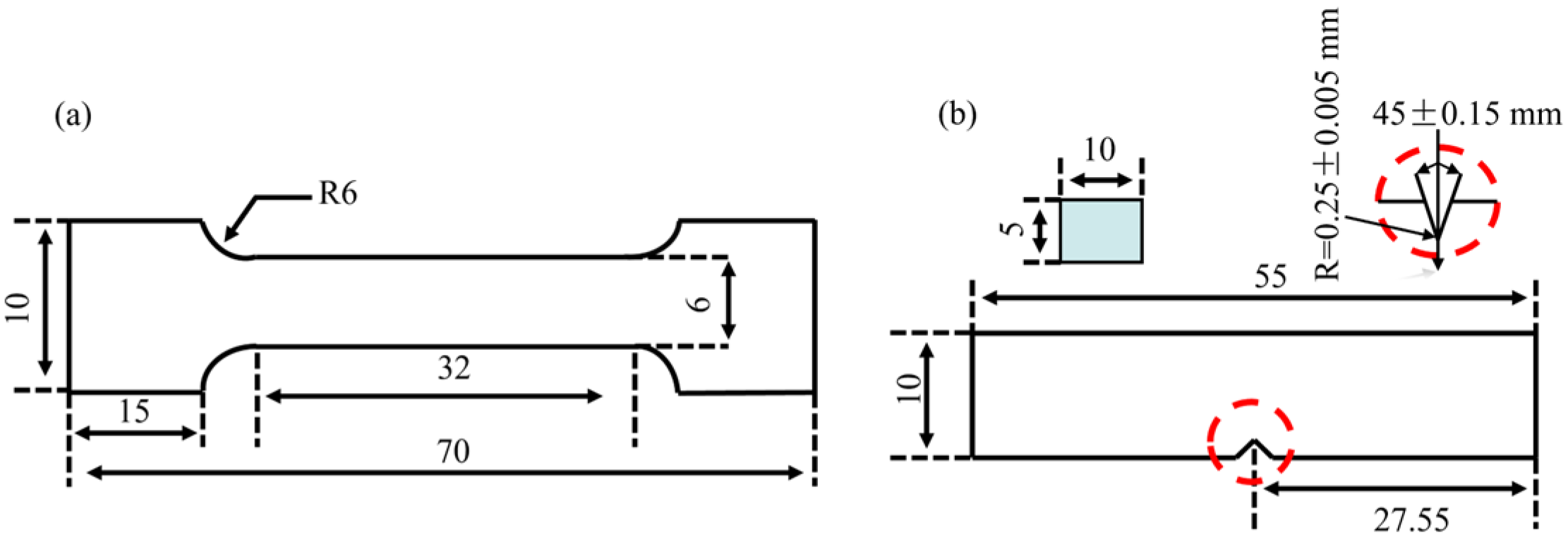
The tensile specimens had dimensions of 70 mm × 10 mm × 5 mm, and were machined with their longitudinal axis parallel to the rolling direction. Tensile tests were performed at room temperature using an AG-X PLUS universal electronic testing machine (Shimadzu Corporation, Kyoto, Japan), with a crosshead speed of 1.5 mm/min, corresponding to an initial engineering strain rate of 7.8 × 10⁻⁴ s−1.
Impact specimens were prepared in accordance with ISO 148-1:2016 [25] as standard Charpy V-notch (CVN) specimens with dimensions of 10 mm × 10 mm × 55 mm. Charpy impact tests were conducted at room temperature (20 °C) on a JB-W300DY pendulum impact tester (Shandong Shijin Testing Machine Co., Ltd., Qingdao, China). The V-notch had a depth of 2 mm, an included angle of 45°, and a root radius of 0.25 mm. The specimen geometry is shown in Figure 2.
Vickers hardness (HV1) was measured using a JMHVS-1000AT tester (Shanghai Aolong Xingdi Testing Equipment Co., Ltd., Shanghai, China) with a 1 kgf load and a 10 s dwell time. Each reported value is the average of five independent measurements.

2.3. Microstructural Characterization

Metallographic specimens were prepared by mechanical grinding and polishing, followed by etching in a 4 vol.% nital solution (nitric acid, Sinopharm Chemical Reagent (Shanghai) Co., Ltd., Shanghai, China, in ethanol, Sinopharm Chemical Reagent (Shanghai) Co., Ltd., Shanghai, China). Microstructures were characterized using a TESCAN MIRA 3 scanning electron microscope (SEM, TESCAN, Brno, Czech Republic).
Transmission electron microscopy (TEM) analyses were conducted on a Tecnai G2 F30 S-TWIN microscope (FEI Company, Hillsboro, OR, USA) to examine fine microstructural features. TEM foils were first mechanically thinned to a thickness of less than 60 µm and then twin-jet electropolished in an electrolyte of 5% perchloric acid +95% ethanol.

3. Results

3.1. Microstructure

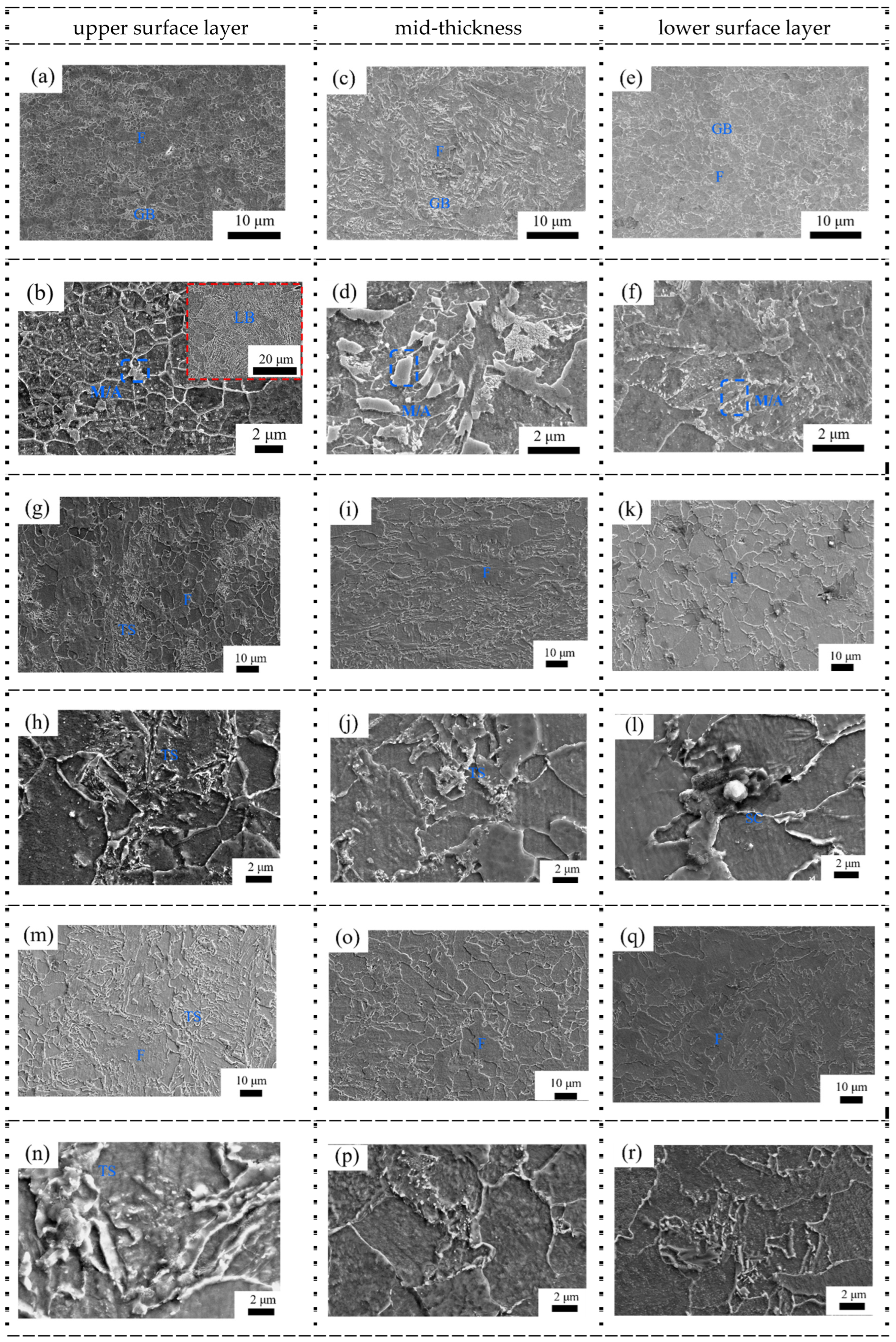
SEM micrographs of specimens in the three conditions taken from different through-thickness locations are presented in Figure 3.
The SEM images of the DQ specimen are shown in Figure 3a–f. As seen in Figure 3a,b, the upper surface layer is characterized by a matrix of fine polygonal ferrite, accompanied by GB, with a small amount of LB and M/A islands. The GB, LB, and M/A islands exhibit a tendency to enrich along grain boundaries. Figure 3c,d show that the mid-thickness region is dominated by ferrite with GB as the secondary constituent; the number of M/A islands is relatively low (M/A~20%), and they are dispersed within the F and GB matrix. Figure 3e,f correspond to the lower surface layer, where the microstructure is still mainly F + GB. The M/A constituent is primarily blocky or short-rod in morphology and is discontinuously distributed along grain boundaries. Overall, it shows weak continuity and, despite being fine, exhibits a relatively large inter-island spacing. The through-thickness gradients in grain scale, as well as in the fraction and spatial distribution of hard phases and island-type constituents, provide a microstructural basis for the thickness-dependent variation in mechanical properties in the DQ condition.
The SEM micrographs of the DQ-T530 specimen are shown in Figure 3g–l. As indicated in Figure 3g,h, the upper surface layer is mainly composed of F and TS, exhibiting a mixed distribution of polygonal, blocky F and a refined lath-/granular-type microstructure. Figure 3i,j present SEM images from the mid-thickness, which is likewise dominated by F + TS and shows a morphology close to that of the upper surface layer, indicating that tempering at 530 °C renders the microstructure more consistent along the thickness direction. In contrast, the lower surface layer (Figure 3k,l) primarily consists of F and SC; the F grains are coarser than those in the upper surface layer, and fine TiC precipitation can be observed at grain boundaries.
The SEM micrographs of the DQ-T580 specimen are shown in Figure 3m–r. As shown in Figure 3m,n, the upper surface layer consists of F and TS, where polygonal, blocky ferrite coexists with a refined lath-like microstructure, accompanied by a small amount of granular features. Figure 3o,p show the mid-thickness of the DQ-T580 specimen. This region is dominated by F; at the SEM resolution, only a small number of short-rod carbides are observed to precipitate dispersedly along grain boundaries or phase boundaries. The lower surface layer (Figure 3q,r) is similar to the mid-thickness, also being ferrite-dominated, and the overall microstructure exhibits a polygonal, blocky morphology.
To clarify the effect of tempering temperature on the through-thickness microstructure, the average equivalent circular diameter of ferrite grains was quantified at the upper surface layer, mid-thickness, and lower surface layer for specimens in the DQ condition and the direct-quenched and tempered conditions. In the DQ condition, the mean ferrite grain sizes were 4.83, 8.12, and 7.22 µm for the upper, mid-thickness, and lower layers, respectively. After tempering, the corresponding values increased to 9.56, 11.95, and 12.03 µm for DQ-T530 and to 11.50, 12.84, and 13.50 µm for DQ-T580. These results indicate that tempering leads to pronounced ferrite grain coarsening at all through-thickness locations, and that increasing the tempering temperature from 530 °C to 580 °C further promotes grain growth. This trend is consistent with enhanced diffusion kinetics and more extensive recovery-driven grain-boundary migration during tempering.
Given that the DQ-T530 specimens exhibited superior overall mechanical performance, TEM characterization was further conducted on the upper surface layer and mid-thickness of the DQ and DQ-T530 conditions to elucidate how microstructural constituents and their distributions influence the properties.
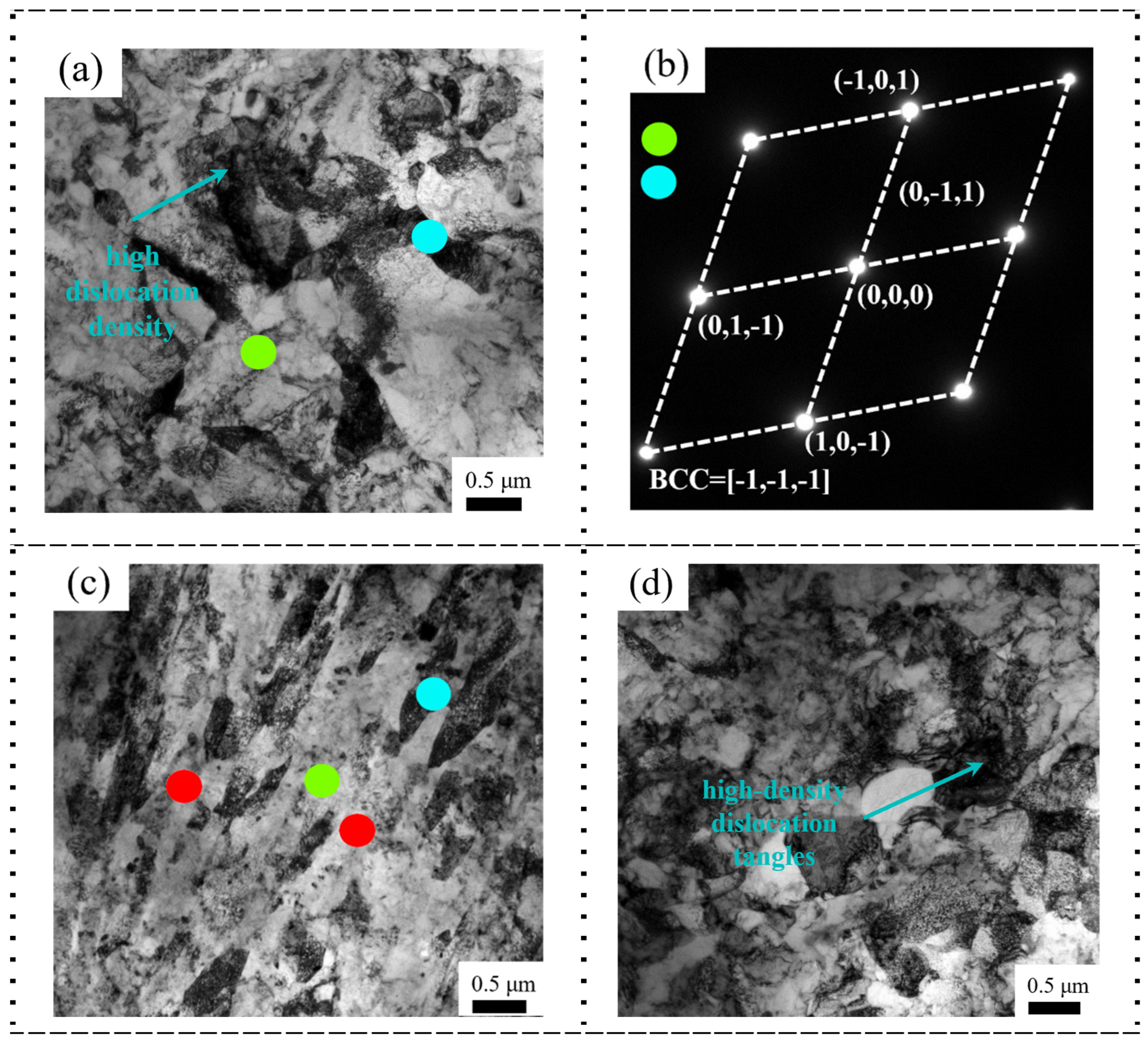
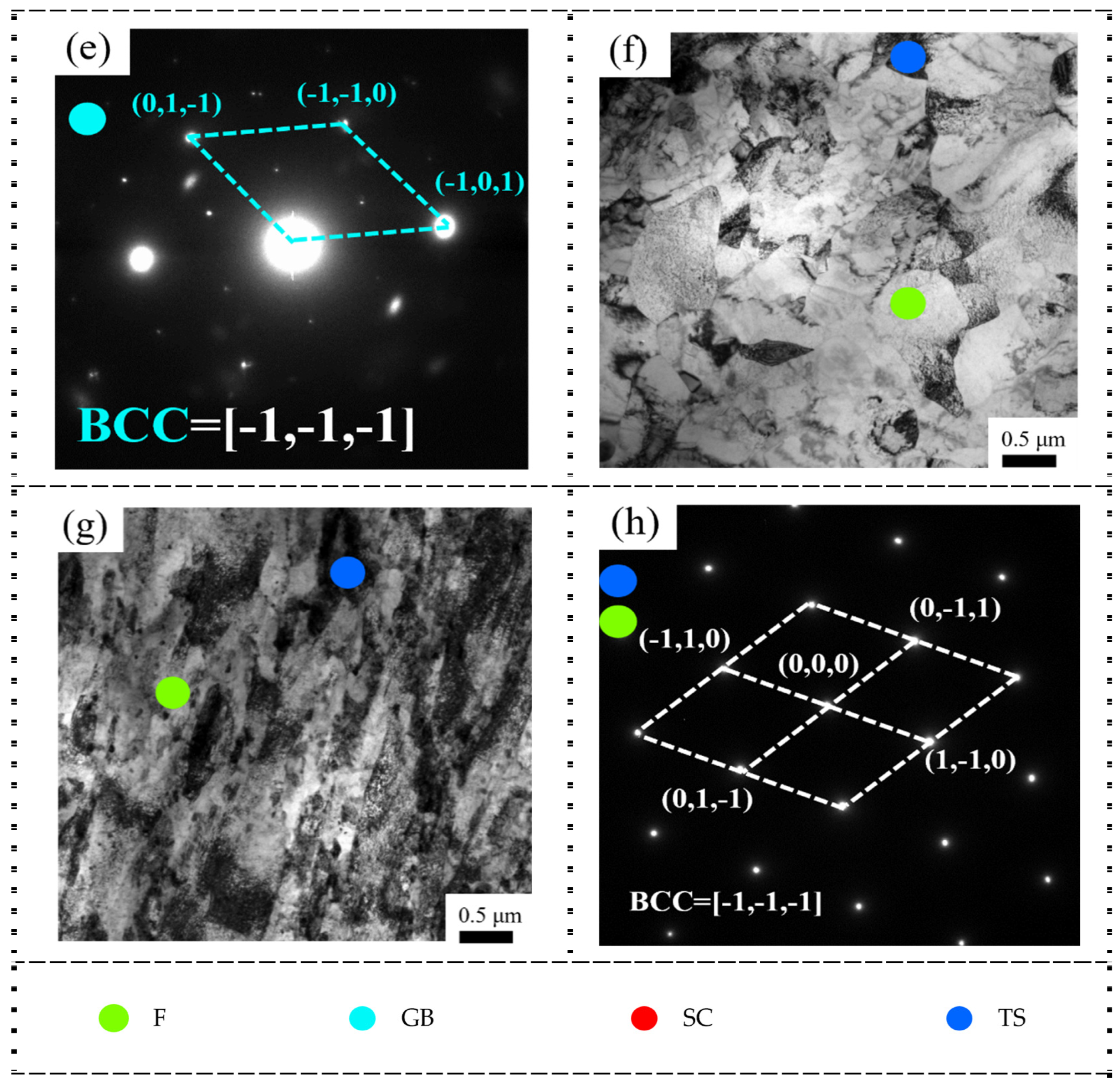
Figure 4a shows a TEM image of the DQ upper surface layer, where F and GB can be observed, together with a relatively high dislocation density. The corresponding selected-area electron diffraction (SAED) pattern (Figure 4b) displays typical BCC diffraction features, indicating that the matrix is mainly composed of F and GB. The TEM image of the DQ mid-thickness (Figure 4c) reveals a microstructure dominated by F and GB, accompanied by a small amount of cementite. As seen in Figure 4d, pronounced high-density dislocation tangles are present; the existence of F and GB is further corroborated by the diffraction result in Figure 4e.
The DQ-T530 upper surface layer (Figure 4f) is mainly composed of F and TS. The DQ-T530 mid-thickness (Figure 4g) likewise exhibits an F + TS microstructural combination; together with the SAED pattern in Figure 4h, it can be confirmed that the mid-thickness is dominated by F and TS.

3.2. Mechanical Properties

3.2.1. Tensile Properties

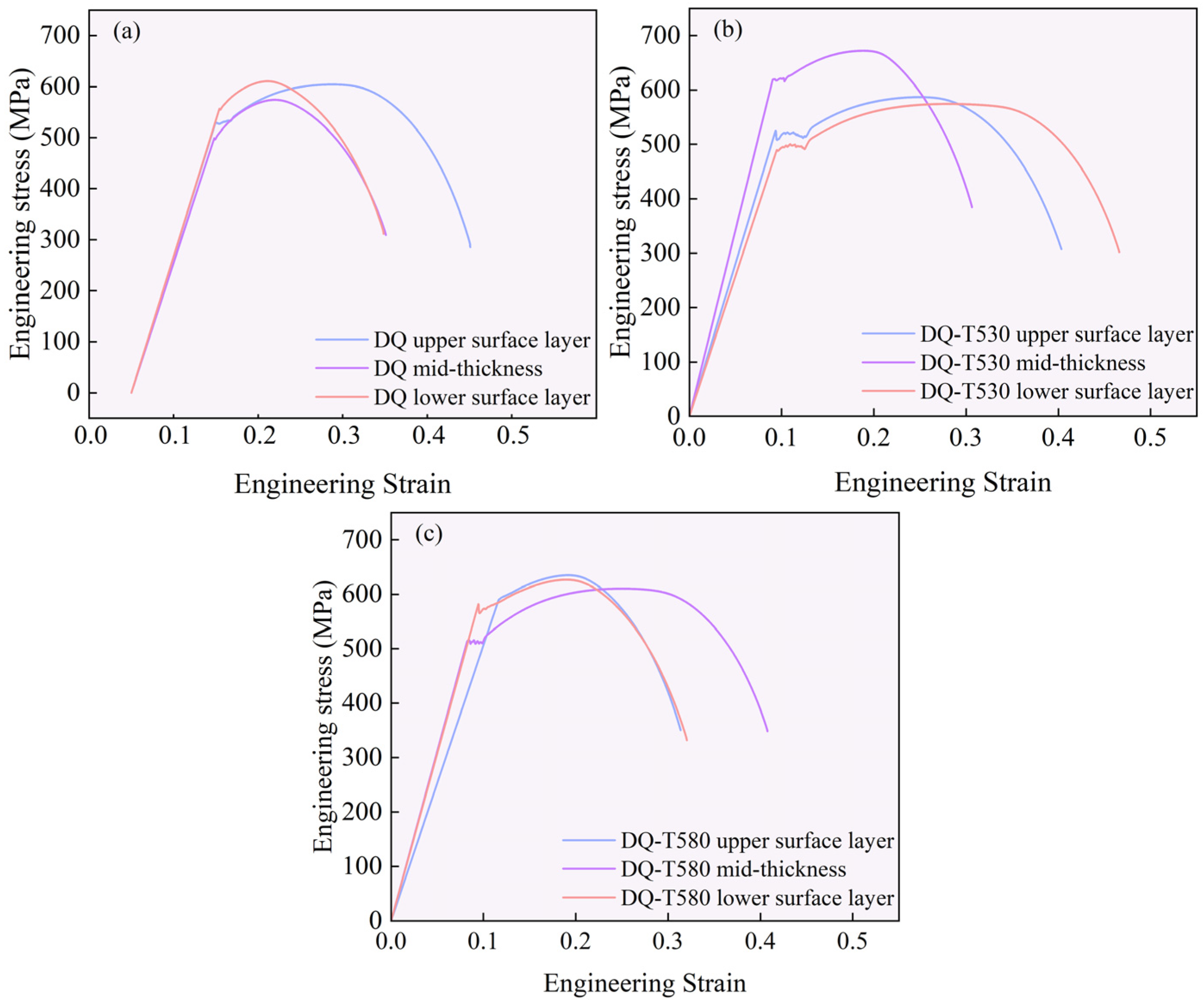
Figure 5 presents the stress–strain curves of the three steels tested at different through-thickness sampling locations. From these curves, the variations in YS and UTS with sampling position can be identified.
For the DQ steel, the YS reaches its maximum in the lower surface layer, whereas it decreases markedly when moving from the surface toward the mid-thickness. The YS values of the upper surface layer and mid-thickness are 528 MPa and 498 MPa, respectively, and then increase again to 556 MPa in the lower surface layer. For the DQ steel, the UTS decreases from 760 MPa at the upper surface layer to 675 MPa at the mid-thickness, and then increases to 713 MPa at the lower surface layer (Figure 5a). This non-monotonic UTS profile correlates with the through-thickness microstructural gradient in the as-quenched plate. The upper surface layer contains finer polygonal ferrite with GB and minor LB/M/A, whereas the mid-thickness is ferrite-dominated with the coarsest ferrite grain size (8.12 μm); the lower surface layer exhibits an intermediate grain size (7.22 μm) and a discontinuous distribution of M/A along grain boundaries.
Compared with the DQ steel, the YS of the DQ-T530 steel remains essentially unchanged in the upper surface layer, but the strength of the mid-thickness increases significantly, while the YS of the lower surface layer decreases, resulting in a distinctive feature where the mid-thickness is stronger than both surface layers. The YS values of the upper surface layer, mid-thickness, and lower surface layer are 524 MPa, 619 MPa, and 489 MPa, respectively; the corresponding UTS values are 744 MPa, 805 MPa, and 762 MPa (Figure 5b).
The DQ-T580 steel shows an overall higher YS than the DQ steel. Relative to the DQ-T530 steel, the YS in both the upper surface layer and lower surface layer further increases, whereas the mid-thickness YS is lower than that of DQ-T530. The YS values of the upper surface layer, mid-thickness, and lower surface layer are 589 MPa, 512 MPa, and 581 MPa, respectively, and the corresponding UTS values are 762 MPa, 782 MPa, and 751 MPa (Figure 5c).
Overall, tempering modifies both the hierarchy and the magnitude of strength variation across the thickness. In terms of UTS, the maximum shifts from the upper surface layer in the DQ condition (760 MPa) to the mid-thickness after tempering (805 MPa for DQ-T530 and 782 MPa for DQ-T580), while the through-thickness UTS spread decreases from 85 MPa (DQ) to 61 MPa (DQ-T530) and further to 31 MPa (DQ-T580) (Table 2).

3.2.2. Impact Toughness

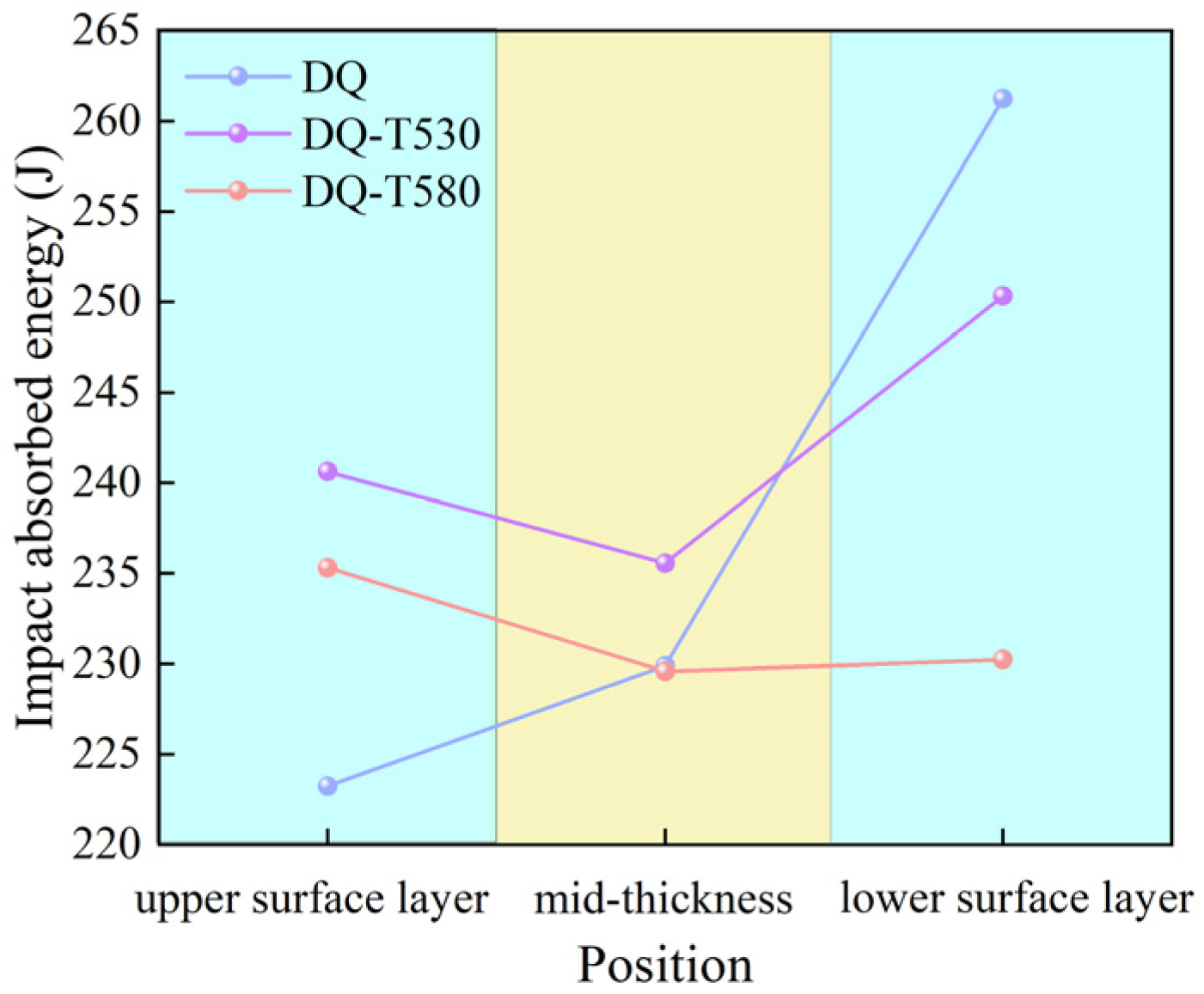
Figure 6 shows the room-temperature impact-absorbed energy of the three steels tested at the three through-thickness sampling locations. For the DQ steel, the impact toughness increases progressively from the upper surface layer to the lower surface layer, with the highest absorbed energy obtained in the lower surface layer. The absorbed energies for the upper surface layer, mid-thickness, and lower surface layer are 223.23 J, 229.88 J, and 261.22 J, respectively. This toughness gradient is consistent with the through-thickness variation in the spatial distribution of hard M/A islands. In the upper surface layer, GB/LB/M/A constituents exhibit an evident tendency to decorate grain boundaries, whereas in the lower surface layer the M/A islands are discontinuously distributed with a relatively large inter-island spacing. Such a less continuous, more dispersed M/A configuration alleviates local strain concentration and reduces the propensity for cleavage-crack initiation and microcrack linkage along boundaries, thereby leading to a higher absorbed energy in the lower surface layer [26].
For the tempered conditions, the overall through-thickness fluctuation is reduced. In particular, the DQ-T530 steel exhibits higher impact toughness, with absorbed energies of 240.62 J, 235.56 J, and 250.32 J at the upper surface layer, mid-thickness, and lower surface layer, respectively. The DQ-T580 steel shows absorbed energies of 235.31 J, 229.58 J, and 230.22 J at the three locations. These results demonstrate that the effect of tempering on impact toughness is temperature- and location-dependent. Tempering at 530 °C increases the absorbed energy at both the upper surface layer (223.23 → 240.62 J) and the mid-thickness (229.88 → 235.56 J), whereas tempering at 580 °C mainly benefits the upper surface layer (223.23 → 235.31 J) but leaves the mid-thickness essentially unchanged (229.88 → 229.58 J) and markedly reduces the lower surface layer (261.22 → 230.22 J). Accordingly, the through-thickness scatter in absorbed energy, ΔE(max–min), decreases from ~38.0 J in the DQ condition to ~14.8 J after 530 °C tempering and further to ~5.7 J after 580 °C tempering.
The yield strength, ultimate tensile strength, total elongation (TE), and room-temperature Charpy V-notch absorbed energy of the DQ, DQ-T530, and DQ-T580 specimens at the upper surface layer, mid-thickness, and lower surface layer are summarized in Table 2.

3.2.3. Microhardness

Table 3 summarizes the Vickers microhardness (HV1) measured at the upper surface layer, mid-thickness, and lower surface layer under the three heat-treatment conditions. The DQ steel exhibits the lowest hardness, with the lower surface layer showing the minimum value. After tempering, the hardness increases markedly at all locations; the DQ-T530 condition yields 262.82, 246.14, and 242.26 HV1, whereas the DQ-T580 condition shows 270.32, 253.70, and 230.88 HV1 at the upper surface layer, mid-thickness, and lower surface layer, respectively. Overall, tempering reduces the through-thickness hardness fluctuation at 530 °C, while tempering at 580 °C produces the highest hardness at the upper surface layer but a more noticeable decrease in the lower surface layer.

4. Discussion

4.1. Phase-Transformation Mechanism

Figure 3a,b show that the DQ upper surface layer exhibits a multiphase mixed microstructure consisting of F + GB + LB, accompanied by M/A islands. The coexistence of multiple phases suggests that this region underwent different continuous-cooling paths, leading to the formation of GB together with a small fraction of LB.
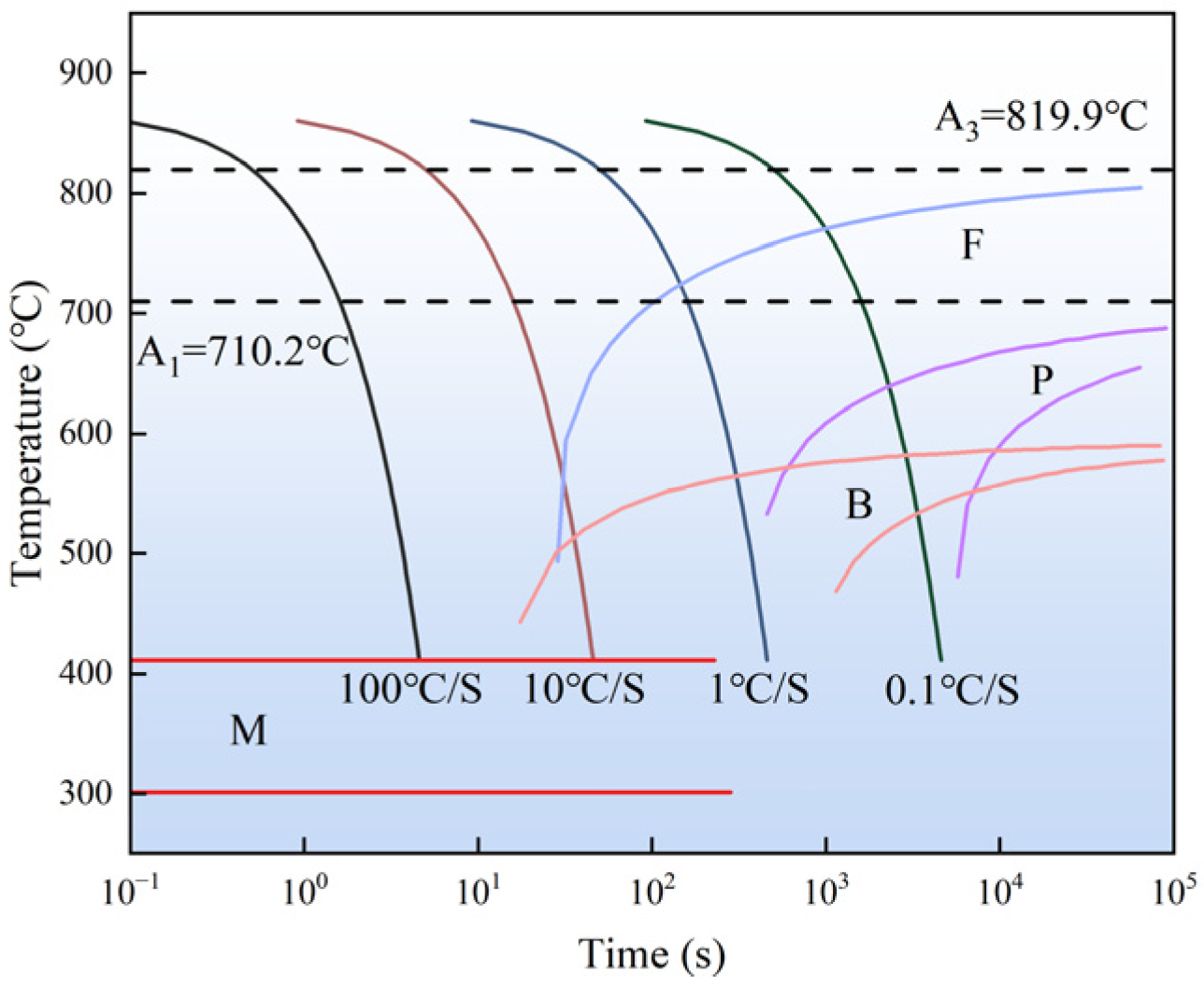
Based on the continuous cooling transformation (CCT) diagram calculated using JMatPro (version 7.0, Sente Software Ltd., Guildford, UK) (Figure 7), the relatively low local cooling rate promotes the preferential transformation of austenite (A) to F; the remaining A becomes carbon-enriched and subsequently transforms into GB during continuous cooling. David De-Castro et al. [27] reported that, during continuous cooling, bainite progressively evolves from a granular to a lath-like morphology as the cooling rate increases, because the bainitic transformation shifts to a lower temperature range (i.e., a downshift of the effective bainite-start/formation temperature window), resulting in higher undercooling and thus a larger driving force. Upon further cooling, the carbon-enriched untransformed austenite partially transforms into fresh martensite below Ms while the remaining fraction is stabilized as retained austenite; together they constitute the M/A islands. Meanwhile, some local regions cool more rapidly and enter the bainite transformation regime earlier, producing a small amount of lath bainite. Consequently, regions where GB and LB coexist are observed in the microstructure.
As shown in Figure 3c,d, the DQ mid-thickness microstructure is mainly composed of F, GB, and M/A constituents. This microstructural feature can be interpreted in terms of the transformation sequence during continuous cooling and the redistribution of carbon between austenite and ferrite. Because the cooling rate at the mid-thickness is relatively low, austenite undergoes a diffusional ferrite transformation before entering the bainite start (BS) regime. Jia et al. [28] suggested that, during subsequent ferrite formation, carbon partitions into the remaining austenite, causing the carbon content of the austenite to increase as transformation proceeds; this provides the compositional prerequisite for the subsequent evolution of bainite morphology and the formation of M/A.
Upon further cooling, carbon-enriched austenite more readily transforms into granular bainite, while carbon-enriched austenite is retained at the F/GB interfaces. As cooling continues to lower temperatures, part of this carbon-enriched untransformed austenite transforms to martensite, whereas another part may be stabilized as retained austenite. Ultimately, these constituents remain in the microstructure in the form of M/A islands.
As shown in Figure 3e,f, the DQ lower surface layer mainly consists of F and GB, accompanied by M/A constituents, while no LB is observed. This microstructural feature can be understood from the sensitivity of bainite morphology to cooling rate under continuous-cooling conditions. At excessively high cooling rates, bainite can gradually evolve from a granular morphology to a lath morphology, with a pronounced refinement of the lath structure. Yang et al. [29] investigated the microstructural evolution of a 20-mm-thick high-strength steel plate under different cooling conditions and reported that the characteristic length scale of the lath structure is also in the sub-micrometer range and can be significantly refined with increasing cooling rate. Specifically, when the cooling rate increased from 10 °C/s to 40 °C/s, the average lath width decreased from ~394 nm to ~223 nm. Moreover, under prior austenite deformation, the lath width was also reduced from ~355 nm to ~228 nm as the cooling rate increased from 1 °C/s to 20 °C/s. In contrast, a GB morphology is more readily obtained at relatively low cooling rates. Meanwhile, at low cooling rates, M/A tends to exhibit a coarse blocky morphology, whereas film-like M/A is more commonly observed at higher cooling rates [30,31,32,33]. Therefore, the absence of LB and the tendency for M/A to be coarse and nearly equiaxed in the lower surface layer are reasonable. The differences between the lower surface layer and the upper surface layer are mainly reflected in changes in bainite morphology and M/A morphology.
Figure 3g,h shows the microstructure of the DQ-T530 specimen in the upper surface layer, where a two-phase feature of F and TS is evident. TS typically corresponds to a microstructural morphology comprising a ferritic matrix and spheroidized carbides formed after medium- to high-temperature tempering. Under the tempering condition of 530 °C for 1.5 h, the retained austenite in the as-quenched GB undergoes tempering decomposition accompanied by cementite precipitation. Meanwhile, the bainitic matrix experiences recovery, and the granular features are gradually attenuated. Ultimately, the core microstructure observed by SEM exhibits a TS-like morphology, characterized by a ferritic matrix with finely and uniformly dispersed carbides. In addition, the continuously distributed polygonal equiaxed ferrite in the upper surface layer is more likely associated with microstructural inheritance prior to tempering and surface decarburization. A reduced carbon content at the surface may promote the formation of a ferritic decarburized layer, which, after tempering, together with TS, constitutes the F + TS duplex microstructure in the upper surface layer [34].
Figure 3i,j shows the microstructure of the DQ-T530 specimen at the mid-thickness. After tempering at 530 °C × 1.5 h, the microstructural evolution in the mid-thickness is governed primarily by carbide precipitation and matrix recovery; therefore, the ferrite that already existed in the as-quenched microstructure can be stably retained. Meanwhile, the quenched GB and the M/A constituents undergo tempering decomposition. Within the M/A constituent, the martensitic portion tempers with cementite precipitation, while the retained-austenite portion decomposes to ferrite with cementite precipitation. Bainite undergoes recovery, and its granular characteristics gradually become less pronounced. Ultimately, the mid-thickness microstructure observed by SEM exhibits TS-like morphology, i.e., a ferritic matrix with dispersed carbides.
Figure 3k,l shows the microstructure of the DQ-T530 specimen in the lower surface layer, where the microstructure consists of F + SC. During tempering, M/A decomposes and precipitates carbides, mainly cementite, while the matrix undergoes recovery and polygonization. During tempering, the M/A constituent decomposes: the martensitic portion tempers with cementite precipitation, while the retained-austenite portion decomposes to ferrite with cementite precipitation; meanwhile, the matrix undergoes recovery and polygonization. With continued tempering, the carbides further coarsen and tend to spheroidize, appearing in SEM as globular SC dispersed in a ferritic matrix. Similar to the situation at the mid-thickness, ferrite present after quenching is stably retained. As a result of these processes, the microstructure in the lower surface layer is ultimately characterized as F + SC.
Figure 3m,n shows the microstructure of the DQ-T580 specimen in the upper surface layer. After tempering, this region exhibits a two-phase feature of F and TS. Compared with tempering at 530 °C, tempering at 580 °C × 1.5 h provides stronger diffusion kinetics, leading to a more complete tempering decomposition of the high-carbon constituents in the quenched GB and LB, accompanied by precipitation of carbides dominated by cementite. Consequently, a TS-like morphology—namely, dispersed carbides in a ferritic matrix—is observed by SEM. In addition, the higher tempering temperature promotes ferrite grain growth, such that ferrite grains in the upper surface layer show a more pronounced coarsening tendency.
Figure 3o,p shows the microstructure of the DQ-T580 specimen at the mid-thickness. After tempering at 580 °C × 1.5 h, the elevated tempering temperature enhances carbon diffusion, leading to pronounced recovery of the quenched microstructure. The temperature dependence of carbon diffusivity in ferrite (α-Fe) can be described by an Arrhenius-type relation (Equation (1)). Consequently, the diffusivity ratio between two tempering temperatures can be expressed as Equation (2), in which the pre-exponential factor D0 cancels out. Taking Q = 84.38   k J·mol−1 for carbon diffusion in α-Fe and substituting T 530 = 803   K and T 580 = 853   K yields D 580 / D 530 2.10 , indicating that carbon diffusivity at DQ-T580 is approximately 2.1× that at DQ-T530 [35]. The plate-like and granular constituents coalesce, coarsen, and recover, and the matrix exhibits an equiaxed ferritic morphology, while some relatively large precipitates are retained. Ultimately, the mid-thickness microstructure observed by SEM is dominated by F, and TS characteristics are scarcely observed.
D = D 0 exp Q R T
D 580 D 530 = e x p Q R 1 D 530 1 D 580
where D is the diffusion coefficient (m2·s−1), D 0   is the pre-exponential factor (m2·s−1), Q is the activation energy for diffusion (84.38 kJ·mol−1 adopted here), R is the gas constant (8.314 J·mol−1·K−1), and T is the absolute temperature (K).
Figure 3q,r shows the microstructure of the DQ-T580 specimen in the lower surface layer. As the tempering temperature increases to 580 °C, the diffusivity of carbon atoms is markedly enhanced, and the high-dislocation-density ferritic and bainitic matrix undergoes accelerated recovery. The M/A constituent in the as-quenched microstructure decomposes with accompanying carbide precipitation, while the ferritic matrix undergoes further recovery. Consequently, in SEM this region is overall ferrite-dominated, displaying a polygonal/blocky ferrite appearance, with only a small number of carbides observed to precipitate preferentially along phase boundaries or grain boundaries.
Figure 4a,f compares the microstructures in the upper surface layer for the DQ condition and after tempering to DQ-T530. In the DQ condition, the bright-field image of the upper surface layer shows a matrix dominated by α -Fe, characterized by the coexistence of blocky features and locally granular substructures, with dislocation tangles observable within grains. The corresponding selected-area electron diffraction pattern (Figure 4b) exhibits typical BCC diffraction features, indicating an F + GB microstructure. In the DQ-T530 condition, the TEM morphology of the upper surface layer remains ferrite-dominated and is accompanied by TS; however, the extent of dislocation tangling is reduced, indicating recovery associated with dislocation annihilation.
Figure 4d,g compares the microstructures at the mid-thickness for the DQ and DQ-T530 conditions. In the DQ condition, pronounced high-density dislocation tangles are visible in the bright-field image of the mid-thickness (Figure 4d). The corresponding SAED pattern shows typical BCC diffraction of α -Fe (Figure 4e), indicating that the matrix is mainly the ferritic phase with a BCC structure. In the DQ-T530 TEM results, the mid-thickness matrix still exhibits BCC diffraction characteristics (Figure 4h), but the dislocation contrast is markedly weakened, suggesting that dislocations undergo annihilation and rearrangement during tempering.

4.2. Relationship Between Microstructure and Mechanical Properties

As shown in Figure 5a and Table 2, the DQ-treated plate exhibits a non-monotonic through-thickness strength profile: both the yield strength and ultimate tensile strength reach their minimum at the mid-thickness and then increase gradually toward the lower surface. The upper surface layer consists of F + GB + LB with trace M/A. Lath boundaries and dislocation strengthening associated with LB typically contribute to higher yield and flow stresses. In contrast, the mid-thickness is dominated by the softer F together with GB and M/A; an increased fraction of the soft phase facilitates the preferential initiation of early plasticity in local regions, thereby causing a concurrent reduction in the macroscopic YS and UTS.
Notably, although no LB is observed in the lower surface layer, its YS is slightly higher than that of the upper surface layer. In the upper surface layer, the presence of LB and the tendency for GB, LB, and M/A to enrich near grain boundaries lead to a stronger strength mismatch between hard and soft phases; consequently, the soft ferrite in the interfacial vicinity is more prone to preferential local yielding and strain concentration. This can cause the macroscopic offset yield point to occur earlier, giving an apparently slightly lower YS. In contrast, the lower surface layer is mainly F + GB and lacks LB; strain partitioning at the onset of yielding may be closer to more cooperative (compatibility-controlled) deformation, shifting the offset yield point to a higher strain and thus resulting in a slightly higher apparent YS.
Figure 6 shows the room-temperature Charpy V-notch impact-absorbed energy of the DQ condition at different through-thickness locations. The results reveal an increasing trend in absorbed energy along the thickness direction—223.23 J in the upper surface layer, 229.88 J at the mid-thickness, and 261.22 J in the lower surface layer—indicating a certain toughness gradient in the DQ condition. The Charpy absorbed energy is used as an index of impact toughness, representing the energy absorbed during fracture of a notched specimen. Because the M/A constituent is hard and exhibits a pronounced strength contrast with the matrix, it can serve as a preferred site for crack initiation; when M/A is enriched near grain boundaries, local stress concentration is more readily generated, making crack initiation easier.
Meanwhile, impact toughness is highly sensitive to the morphology and size of M/A. Coarse, elongated M/A, or M/A distributed continuously in a “necklace” morphology along prior-austenite grain boundaries is more likely to trigger cleavage cracking and markedly deteriorate impact toughness. Reducing and dispersing the M/A constituent (lower volume fraction, smaller size, and larger inter-island spacing) can alleviate interfacial strain localization and thus enhance resistance to crack initiation and propagation; consistent with this, Wang et al. reported that as the M/A volume fraction decreased from ~7.7% to ~5.6%, the Charpy absorbed energy at −40 °C increased from 27 J to 170 J [36]. Accordingly, the lower absorbed energy in the upper surface layer can be attributed to the crack-initiation sensitivity associated with M/A near grain boundaries. The slight increase in absorbed energy at the mid-thickness is related to the participation of the soft phase in plastic deformation, although it remains constrained by the characteristics of M/A. Davis and King reported that a near-connected grain-boundary network of blocky M/A constituents can deteriorate toughness, and that crack initiation is more likely to be triggered between closely spaced adjacent M/A islands by interfacial debonding and the superposition of local stress/strain fields [37]. The higher absorbed energy in the lower surface layer is consistent with its finer and more dispersed M/A distribution (larger inter-island spacing and weaker grain-boundary connectivity); such a distribution is expected to suppress rapid microcrack coalescence along grain boundaries, delay the development of a dominant crack, and enhance crack-initiation resistance, thereby increasing the impact-absorbed energy [26,37,38,39,40,41].
Figure 5b shows the engineering stress–strain curves of the DQ-T530 condition at different through-thickness locations. Compared with the DQ condition, tempering at 530 °C × 1.5 h markedly alters the through-thickness strength distribution: the mid-thickness reaches the maximum yield strength and ultimate tensile strength (YS/UTS = 619 MPa/805 MPa), whereas the two surface layers respond differently. The upper surface layer remains essentially unchanged (524 MPa/744 MPa), while the lower surface layer exhibits a reduced YS but still maintains a relatively high UTS (489 MPa/762 MPa). Microstructural characterization indicates that both the upper surface layer and the mid-thickness are dominated by F + TS in SEM and TEM observations, accompanied by a small amount of carbide precipitation. In particular, the weakened dislocation contrast at the mid-thickness reveals that dislocation recovery occurred during tempering, leading to a reduced dislocation density. SEM observations further show that M/A and GB at the mid-thickness undergo tempering decomposition with cementite precipitation, producing a TS morphology characterized by dispersed carbides in a ferritic matrix. Overall, the strength evolution after tempering can be attributed to the competition between recovery softening of high-dislocation ferrite and precipitation strengthening by carbides.
In contrast, under the same tempering condition, the lower surface layer exhibits an F + SC characteristic, where carbides show a more pronounced tendency to coarsen and spheroidize. Together with recovery, these effects may diminish the contributions of dislocations and fine precipitates to strengthening, allowing plasticity to initiate earlier and thereby resulting in a lower macroscopic YS.
As shown in Figure 6, compared with the DQ condition, tempering at 530 °C leads to a clear increase in impact-absorbed energy in the upper surface layer and at the mid-thickness, whereas a slight decrease is observed in the lower surface layer. Consequently, the overall through-thickness variation in impact toughness is reduced and tends toward a more uniform distribution. This change is likely mainly attributable to the tempering decomposition of M/A constituents and other hard, brittle islands associated with high-carbon retained austenite. On the one hand, a reduced volume fraction of M/A, refinement in its size, and weakened continuity can markedly decrease interfacial strength mismatch and local strain concentration, thereby suppressing notch-crack initiation. On the other hand, when M/A is continuously distributed near grain boundaries, it often becomes a sensitive region for crack initiation and secondary crack propagation; hence, M/A decomposition is beneficial for improving impact toughness.
Moreover, after tempering at 530 °C, the upper surface layer and mid-thickness transform from the multiphase microstructure in the DQ condition to a microstructure dominated by F + TS, accompanied by the tempering decomposition of GB and M/A. As a result, the hard and brittle constituents along grain boundaries—most critical during the crack-initiation stage—are significantly weakened, making it more difficult for cracks to rapidly nucleate and link up at the notch. Tong et al. [42] found that tempering led to the formation of TS and increased the room-temperature impact toughness from ~77.48 to ~111.69 J/cm2; this indicates that the more stable plastic deformation region provided by TS delays crack initiation, thereby increasing the absorbed impact energy. In contrast, after tempering, the lower surface layer is characterized by F + SC, and more extensive recovery facilitates yielding. However, when carbide coarsening and spheroidization become more pronounced, low-toughness paths are more likely to form near grain boundaries, which may cause the impact-absorbed energy to decrease slightly relative to the DQ condition.
Overall, tempering at 530 °C markedly homogenizes the through-thickness impact response. In the upper surface layer and at mid-thickness, the formation of an F + TS microstructure together with the decomposition of hard constituents mitigates the potency of brittle crack-initiation sites and promotes sustained plastic energy dissipation ahead of the notch, thereby improving toughness. In contrast, the lower surface layer shows a marginal loss in crack resistance, which is attributable to carbide coarsening. Consequently, the macroscopic through-thickness toughness heterogeneity is significantly reduced.
Figure 5c presents the engineering stress–strain curves of the DQ-T580 condition at different through-thickness locations. After tempering at 580 °C × 1.5 h, the strength distribution through the thickness shows a “high-at-the-surface, low-at-the-mid-thickness” yielding characteristic: the YS/UTS values of the upper surface layer, mid-thickness, and lower surface layer are 589 MPa/762 MPa, 512 MPa/782 MPa, and 581 MPa/751 MPa, respectively, where the mid-thickness exhibits the lowest YS while its UTS reaches the peak value. The higher tempering temperature provides stronger diffusion kinetics. The upper surface layer still retains an F + TS characteristic, accompanied by more pronounced ferrite coarsening; the mid-thickness undergoes substantial recovery, and the microstructure is dominated by polygonal ferrite, with only a small amount of carbides preferentially precipitating along grain boundaries and phase boundaries. After tempering, the lower surface layer is also ferrite-dominated, consisting mainly of coarse equiaxed ferrite. Compared with the mid-thickness, the lower surface layer exhibits coarser ferrite grains and fewer grain-boundary carbides observable at the SEM resolution used in this work, suggesting a lower observable precipitate density; moreover, grain coarsening may also slightly reduce the grain-boundary area fraction. This is more likely to reduce the dislocation storage capacity during deformation, causing strain hardening to saturate more rapidly.
From the perspective of strengthening mechanisms, the yield strength is generally governed by contributions from grain refinement, dislocation strengthening, solid-solution strengthening, and precipitation strengthening [24,43,44,45,46,47,48]. Under the same tempering schedule, the upper surface layer still exhibits an F + TS duplex tempered morphology, implying that phase boundaries, substructural interfaces, and dispersed precipitates are retained, thereby providing stronger resistance to the onset of dislocation glide and maintaining a relatively high YS. In contrast, tempering at 580 °C promotes more extensive recovery and polygonization in the mid-thickness; the GB microstructure is markedly diminished and the grain size increases, leading to a decrease in yield strength. Although the lower surface layer also appears as equiaxed ferrite, its YS is close to that of the upper surface layer, indicating that the internal resistance to initial dislocation glide does not decrease as markedly as in the mid-thickness.
Although the mid-thickness displays a polygonal ferrite appearance, a small amount of carbides precipitated along grain boundaries or phase boundaries is still present. Boot et al. [49] pointed out that precipitates on grain boundaries act as barriers to dislocation motion, leading to dislocation pile-up around the precipitates. This suggests that such precipitates and interfaces can promote dislocation storage during deformation, thereby sustaining strain hardening and delaying local instability, enabling the UTS to reach the maximum. Wang et al. [50] proposed a strain-hardening description for high-temperature tempered steels that simultaneously considers dislocation storage and the effects induced by carbide particles, and they pointed out that strain hardening is closely related to carbide-associated dislocation storage; therefore, when the number of precipitates decreases, the contributions from dislocation storage and hardening are weakened, making it more likely that the strain-hardening capacity decreases and saturates earlier. In this study, the lower surface layer has coarser grains and fewer precipitates, which may weaken dislocation storage and promote dynamic recovery, thereby causing strain hardening to saturate more rapidly and ultimately resulting in the lowest UTS. While the upper surface layer exhibits the highest YS, its F + TS duplex microstructure is more prone to strain partitioning during deformation: the soft ferrite deforms preferentially, whereas the harder constituent bears higher stress, which may induce local strain concentration and trigger earlier necking; therefore, its UTS does not increase in tandem with the higher YS.
In summary, the through-thickness tensile behavior of the DQ-T580 condition is characterized by strong yielding at the surface layers, enhanced strain hardening at the mid-thickness, and a relatively lower tensile strength in the lower surface layer. Fundamentally, this reflects the influence of inherited microstructural differences retained after tempering at different through-thickness locations on the mechanical response.
As shown in Table 2, the tempering temperature markedly alters the through-thickness TE. In the DQ condition, TE decreases from 40.10% in the upper surface layer to 30.13% in the core and 29.86% in the lower surface layer. This is consistent with the upper surface layer consisting of fine-grained F + GB with a small fraction of LB/M/A, which is more capable of sustaining work hardening and delaying plastic instability, whereas the core and lower surface layer are dominated by softer F + GB and are therefore more prone to insufficient strain hardening. After tempering at 530 °C, the upper surface layer and the core transform to F + TS, while the lower surface layer evolves into F + SC. This ferrite-based microstructure facilitates a more homogeneous strain partitioning and mitigates local strain concentration, thereby significantly increasing the TE of the lower surface layer to 46.64%, whereas the core remains at ~30.67%. When the tempering temperature increases to 580 °C, ferrite grains coarsen (DQ-T580: 11.50/12.84/13.50 µm for upper/core/lower, respectively), and fewer carbides are observed in the lower surface layer, making work hardening more prone to saturation. Consequently, the TE of the upper and lower surface layers decreases to 31.39% and 32.11%, respectively. In contrast, the core still retains a small amount of precipitates at a lower yield level, which promotes dislocation storage and delays necking, leading to an increased TE of 40.85% [50,51].
Figure 6 indicates that the room-temperature impact-absorbed energies of the DQ-T580 condition are 235.31 J, 229.58 J, and 230.22 J for the upper surface layer, mid-thickness, and lower surface layer, respectively. The three values are close to each other, suggesting that the through-thickness differences are markedly attenuated. In contrast to the DQ condition, which shows a gradual increase from the upper surface layer to the lower surface layer (223.23 J/229.88 J/261.22 J), tempering at 580 °C × 1.5 h results in an increase in absorbed energy in the upper surface layer, little change at the mid-thickness, and a pronounced decrease in the lower surface layer, thereby driving the toughness at the three locations toward a more balanced level.
From the perspective of microstructural evolution, tempering at 580 °C provides stronger diffusion kinetics, leading to more extensive decomposition of carbon-enriched retained austenite and hard/brittle islands such as M/A in the DQ condition. Zhao et al. [52] reported that within the tempering range of 450–600 °C, the impact toughness increases as the M/A content decreases, indicating that the decomposition of M/A in this temperature regime contributes positively to toughness improvement. Therefore, the reduced amount and/or weakened continuity of M/A after tempering is expected to decrease crack-initiation-sensitive sites near the notch and to alleviate local strain concentration. After tempering, the upper surface layer still exhibits an F + TS duplex morphology, accompanied by dispersed carbides and an evident tendency for ferrite coarsening. Tong et al. [42] investigated a tempered microstructure dominated by a ferrite matrix and carbides and showed that finer and more dispersed carbides are associated with higher impact toughness; therefore, such a tempered microstructure is expected to retard crack initiation to some extent and promote more stable plastic energy dissipation, enabling the absorbed energy of the upper surface layer to remain relatively high.
As shown in Figure 6, the as-DQ plate exhibits an increasing absorbed energy from the upper surface to the lower surface (223.23/229.88/261.22 J), consistent with the tendency of GB/LB/M/A to decorate grain boundaries in the upper layer and the more discontinuous M/A distribution with larger inter-island spacing in the lower layer. After tempering at 530 °C, the upper layer and mid-thickness evolve into an F + TS morphology with tempering decomposition of GB and M/A, which weakens brittle boundary connectivity and increases absorbed energy, whereas the lower layer (F + SC) shows more pronounced carbide coarsening/spheroidization, leading to a slight decrease. With tempering at 580 °C, the upper layer still benefits from a more extensive decomposition of high-carbon brittle islands, while the mid-/lower layers become polygonal-ferrite-dominated with reduced substructure/phase-boundary obstacles and coarser ferrite grains, decreasing crack-propagation resistance and causing a marked drop of absorbed energy in the lower layer (~230 J), thereby attenuating the through-thickness scatter.
By comparison, after tempering at 580 °C, the microstructural differences between the mid-thickness and the lower surface layer are further reduced: Both regions are dominated by polygonal ferrite, with only a small amount of precipitates observed at grain boundaries and phase boundaries. High-temperature tempering generally promotes more thorough recovery and reduces the dislocation and substructure density, thereby decreasing the number of interfacial and substructural features that can act as obstacles to deformation and damage evolution [53]. In the lower surface layer, the post-tempering microstructure is similar to that at the mid-thickness, but with fewer carbides visible at grain boundaries; given that microcracks are often associated with carbide cracking or interfacial debonding, this difference may affect crack initiation and subsequent crack propagation behavior. In addition, Liu et al. [54], based on local fracture-stress calculations, reported that when the ferrite grain size reaches approximately 36.6 μm, coarse ferrite grains are more likely to dominate microcrack propagation and deteriorate impact toughness; therefore, coarse grains tend to reduce crack-propagation resistance. This may result in a toughness level in the lower surface layer comparable to that of the mid-thickness.

5. Conclusions

Based on a systematic comparison of the through-thickness microstructures and mechanical properties of an industrially produced low-alloy medium-thick plate subjected to online direct quenching (DQ) and two tempering schedules (530 °C × 1.5 h and 580 °C × 1.5 h) at three locations along the thickness direction (upper surface layer, mid-thickness, and lower surface layer), the main conclusions are as follows:
  • A distinct through-thickness microstructural gradient exists in the DQ condition. The upper surface layer is mainly composed of F and GB with a small amount of LB, and the M/A constituent tends to enrich at grain boundaries and phase boundaries. The mid-thickness is dominated by F with GB as the secondary constituent; M/A is less abundant and more uniformly dispersed. The lower surface layer exhibits an intermediate ferrite grain size (7.22 µm), which is 2.39 µm larger than that of the upper surface layer (4.83 µm) (DQ condition), and it remains primarily F + GB, while M/A is mostly blocky/short-rod in morphology and is discontinuously distributed along grain boundaries.
  • The microstructural gradient corresponds to a pronounced property gradient. In the DQ condition, the YS/UTS values of the upper surface layer, mid-thickness, and lower surface layer are 528 MPa/760 MPa, 498 MPa/675 MPa, and 556 MPa/713 MPa, respectively. Notably, in the upper surface layer, GB/LB/M/A enrichment at grain boundaries increases the hard/soft mismatch, so the interfacial F yields earlier with strain localization; the 0.2% offset-yield point is reached sooner, giving a lower apparent YS. In contrast, the lower surface layer is mainly F + GB with little LB; early strain partitioning is more compatibility-controlled, delaying the offset-yield point to a higher strain and thus giving a higher apparent YS. Consequently, the YS difference between the two surface layers appears small.
  • The room-temperature impact-absorbed energy increases from 223.23 J in the upper surface layer and 229.88 J at the mid-thickness to 261.22 J in the lower surface layer. The upper surface layer shows a lower impact energy because hard and brittle constituents near grain boundaries increase crack-initiation sensitivity. In contrast, although the mid-thickness benefits from toughening due to plastic energy dissipation by the soft phase, M/A still contributes to crack initiation; therefore, the absorbed energies of the upper surface layer and the mid-thickness are very similar.
  • After tempering at 530 °C for 1.5 h, the upper surface layer and mid-thickness evolve toward a similar F + TS-dominated microstructure, whereas the lower surface layer remains characterized by F + SC. Accordingly, the through-thickness strength profile is reshaped, and the mid-thickness exhibits the peak strength (619 MPa/805 MPa). The impact toughness of the upper surface layer and mid-thickness is improved to 240.62 J and 235.56 J, respectively, because tempering reduces the crack-initiation sensitivity associated with hard/brittle constituents (especially M/A) near grain boundaries and makes the tempered microstructure more uniform through the thickness, thereby markedly reducing the overall through-thickness fluctuation.
  • After tempering at 580 °C × 1.5 h, further recovery and equiaxed morphology occur in the mid-thickness and lower surface layer, driving the matrix toward a more equiaxed ferrite morphology and reducing dislocation-related obstacles. As a result, the Charpy impact-absorbed energies at the three locations tend to converge: 235.31 J (upper surface layer), 229.58 J (mid-thickness), and 230.22 J (lower surface layer). However, the higher tempering temperature also promotes pronounced ferrite grain growth (the ferrite grain size in the DQT580 condition increases to 11.50 µm, 12.84 µm, and 13.50 µm for the upper surface layer, mid-thickness, and lower surface layer, respectively, compared with 4.83 µm, 8.12 µm, and 7.22 µm in the as-DQ condition), which reduces crack-propagation resistance and thereby leads to a marked decrease in the toughness of the lower surface layer relative to the DQ condition.

Author Contributions

Conceptualization, B.G. and Y.C.; methodology, S.B.; software, B.G.; validation, B.G., S.B. and Y.C.; formal analysis, B.G. and S.B.; investigation, H.L., H.Z., X.C. and K.G.; resources, Y.Z. and P.F.; data curation, H.L., H.Z., X.C., K.G.,Y.Z., P.F. and H.W.; writing—original draft preparation, B.G.; writing—review and editing, Y.C., S.B. and Y.Z.; visualization, B.G. and H.W.; supervision, Y.C.; project administration, B.G. and Y.C.; funding acquisition, S.B. and Y.C. All authors have read and agreed to the published version of the manuscript.

Funding

This work was funded by the Shanxi Province Science and Technology Major Special Project (No. 202401050202010), Central Guiding Science and Technology Development of Local Fund (YDZJSX2025B009), and Shanxi Provincial Key Research and Development Project (No. 202402050201014).

Data Availability Statement

The original contributions presented in this study are included in the article. Further inquiries can be directed to the corresponding author.

Conflicts of Interest

Authors Yongqing Zhang and Peimao Fu were employed by CITIC Metal Co., Ltd. and Shanxi Taigang Stainless Steel Co., Ltd. respectively. The remaining authors declare that they have no known competing financial interests or personal relationships that could have appeared to influence the work reported in this paper.

References

  1. Zhang, X.; Li, G.; Zhao, H.; Gao, J.; Wu, H.; Zhang, C.; Huang, Y.; Wu, G.; Wang, S.; Mao, X. Evolution of Microstructure and Mechanical Properties along the Thickness Direction of 500 MPa HSLA Steel Heavy Plates. Mater. Sci. Eng. A 2024, 913, 147097. [Google Scholar] [CrossRef]
  2. Han, P.; Liu, Z.P.; Li, Q.; Xie, Z.J.; Wang, X.L.; Misra, R.D.K.; Shang, C.J. A Phenomenological Understanding of the Novel Design of Hierarchical Structure for 1 GPa Ultrahigh Strength and High Toughness Combination Low Alloy Steel. Mater. Sci. Eng. A 2023, 881, 145387. [Google Scholar] [CrossRef]
  3. Kong, H.J.; Xu, C.; Bu, C.C.; Da, C.; Luan, J.H.; Jiao, Z.B.; Chen, G.; Liu, C.T. Hardening Mechanisms and Impact Toughening of a High-Strength Steel Containing Low Ni and Cu Additions. Acta Mater. 2019, 172, 150–160. [Google Scholar] [CrossRef]
  4. Zhang, Y.; Yang, J.; Liu, D.; Pan, X.; Xu, L. Improvement of Impact Toughness of the Welding Heat-Affected Zone in High-Strength Low-Alloy Steels through Ca Deoxidation. Metall. Mater. Trans. A 2021, 52, 668–679. [Google Scholar] [CrossRef]
  5. Kan, L.; Ye, Q.; Wang, Z.; Zhao, T. Improvement of Strength and Toughness of 1 GPa Cu-Bearing HSLA Steel by Direct Quenching. Mater. Sci. Eng. A 2022, 855, 143875. [Google Scholar] [CrossRef]
  6. Liu, D.; Cheng, B.; Chen, Y. Strengthening and Toughening of a Heavy Plate Steel for Shipbuilding with Yield Strength of Approximately 690 MPa. Metall. Mater. Trans A 2013, 44, 440–455. [Google Scholar] [CrossRef]
  7. Zhao, N.; He, Y.; Wang, J.; Xu, X.; Zhu, N.; Liu, R.; Li, L. Balancing Strength and Toughness by QLT Process in a Low-Ni Heavy Steel Plate with GPa Grade. Mater. Sci. Eng. A 2024, 907, 146748. [Google Scholar] [CrossRef]
  8. Jiang, Q.; Bertolo, V.M.; Popovich, V.A.; Sietsma, J.; Walters, C.L. Microstructure-Informed Statistical Modelling of Cleavage Fracture in High Strength Steels Considering Through-Thickness Inhomogeneities. Eng. Fract. Mech. 2022, 267, 108432. [Google Scholar] [CrossRef]
  9. Sun, X.J.; Yuan, S.F.; Xie, Z.J.; Dong, L.L.; Shang, C.J.; Misra, R.D.K. Microstructure-Property Relationship in a High Strength-High Toughness Combination Ultra-Heavy Gauge Offshore Plate Steel: The Significance of Multiphase Microstructure. Mater. Sci. Eng. A 2017, 689, 212–219. [Google Scholar] [CrossRef]
  10. Hu, L.; Zhang, L.; Hu, F.; Zheng, K.; Zhan, Z.; Qin, H. Crystallographic Analysis of the Influence of Cross Section Effect in Thick Plate for High-Rise Building on the Hardness of Abnormal Banded Structure. J. Mater. Sci. 2025, 60, 964–982. [Google Scholar] [CrossRef]
  11. Wang, X.; Ni, Z.; Xie, Z.; Liu, Z.; Shang, C. Effect of DQ and RQ Processes on the Uniformity of Microstructure and Properties across the Thickness Direction of Ultra-High Strength Steel. J. Mater. Res. Technol. 2025, 36, 1572–1584. [Google Scholar] [CrossRef]
  12. Gao, Z.; Yu, W.; Chen, X.; Xie, B.; Cai, Q. Effect of Gradient Temperature Rolling Process on Promoting Crack Healing in Q500 Heavy Plates. Int. J. Miner. Metall. Mater. 2020, 27, 354–361. [Google Scholar] [CrossRef]
  13. Zhou, T.; Yu, H.; Wang, S. Effect of Microstructural Types on Toughness and Microstructural Optimization of Ultra-Heavy Steel Plate: EBSD Analysis and Microscopic Fracture Mechanism. Mater. Sci. Eng. A 2016, 658, 150–158. [Google Scholar] [CrossRef]
  14. Azpeitia, X.; Mayo, U.; Isasti, N.; Detemple, E.; Mohrbacher, H.; Uranga, P. Alloy Qualification for Producing Quench and Tempered Plate Steels with Extra-Heavy Gage. Steel Res. Int. 2025, 96, e202500617. [Google Scholar] [CrossRef]
  15. Cui, S.; Gu, G.; Shi, C.; Xiao, G.; Lu, Y. Variations in Microstructure and Mechanical Properties along Thickness Direction in a Heavy High Strength Low Alloy Steel Plate. J. Mater. Res. Technol. 2023, 26, 9190–9202. [Google Scholar] [CrossRef]
  16. Liu, H.; Zhang, H.; Li, J. Thickness Dependence of Toughness in Ultra-Heavy Low-Alloyed Steel Plate after Quenching and Tempering. Metals 2018, 8, 628. [Google Scholar] [CrossRef]
  17. Wang, Q.; Ye, Q.; Wang, Z.; Kan, L.; Wang, H. Thickness Effect on Microstructure, Strength, and Toughness of a Quenched and Tempered 178 Mm Thickness Steel Plate. Metals 2020, 10, 572. [Google Scholar] [CrossRef]
  18. Qu, C.; Lu, W.; Su, H.; Zhu, M. Differences in Yield Behavior in the Thickness Direction of TMCP-Processed HSLA Thick Steel Plates and the Evolution of Microstructure Property Gradients. Metals 2025, 15, 1229. [Google Scholar] [CrossRef]
  19. Duan, Z.; Li, Y.; Zhang, M.; Shi, M.; Zhu, F.; Zhang, S. Effects of Quenching Process on Mechanical Properties and Microstructure of High Strength Steel. J. Wuhan Univ. Technol. Mat. Sci. Edit. 2012, 27, 1024–1028. [Google Scholar] [CrossRef]
  20. Song, H.; Zhang, S.; Lan, L.; Li, C.; Liu, H.; Zhao, D.; Wang, G. Effect of Direct Quenching on Microstructure and Mechanical Properties of a Wear-Resistant Steel. Acta Metall. Sin. 2013, 26, 390–398. [Google Scholar] [CrossRef]
  21. Saastamoinen, A.; Kaijalainen, A.; Heikkala, J.; Porter, D.; Suikkanen, P. The Effect of Tempering Temperature on Microstructure, Mechanical Properties and Bendability of Direct-Quenched Low-Alloy Strip Steel. Mater. Sci. Eng. A 2018, 730, 284–294. [Google Scholar] [CrossRef]
  22. Bertolo, V.; Jiang, Q.; Scholl, S.; Petrov, R.H.; Hangen, U.; Walters, C.; Sietsma, J.; Popovich, V. A Comprehensive Quantitative Characterisation of the Multiphase Microstructure of a Thick-Section High Strength Steel. J. Mater. Sci. 2022, 57, 7101–7126. [Google Scholar] [CrossRef]
  23. Ji, G.; Fu, D.; Wang, G.; Guo, K.; Luo, X.; Chai, F.; Pan, T. Controlling M-A Constituents and Bainite Morphology for Enhanced Toughness in Isothermally Transformed Low-Carbon Ni-Cr-Mo Steel. Materials 2025, 18, 1945. [Google Scholar] [CrossRef] [PubMed]
  24. Singh, N.; Casillas, G.; Wexler, D.; Killmore, C.; Pereloma, E. Application of Advanced Experimental Techniques to Elucidate the Strengthening Mechanisms Operating in Microalloyed Ferritic Steels with Interphase Precipitation. Acta Mater. 2020, 201, 386–402. [Google Scholar] [CrossRef]
  25. ISO 148-1:2016; Metallic Materials—Charpy Pendulum Impact Test—Part 1: Test Method. International Organization for Standardization: Geneva, Switzerland, 2016.
  26. Mohseni, P.; Solberg, J.K.; Karlsen, M.; Akselsen, O.M.; Østby, E. Cleavage Fracture Initiation at M–A Constituents in Intercritically Coarse-Grained Heat-Affected Zone of a HSLA Steel. Metall. Mater. Trans. A 2014, 45, 384–394. [Google Scholar] [CrossRef]
  27. De-Castro, D.; Eres-Castellanos, A.; Vivas, J.; Caballero, F.G.; San-Martín, D.; Capdevila, C. Morphological and Crystallographic Features of Granular and Lath-like Bainite in a Low Carbon Microalloyed Steel. Mater. Charact. 2022, 184, 111703. [Google Scholar] [CrossRef]
  28. Jia, S.; Li, B.; Liu, Q.; Ren, Y.; Zhang, S.; Gao, H. Effects of Continuous Cooling Rate on Morphology of Granular Bainite in Pipeline Steels. J. Iron Steel Res. Int. 2020, 27, 681–690. [Google Scholar] [CrossRef]
  29. Yang, X.; Yu, W.; Tang, D.; Shi, J.; Li, Y.; Fan, J.; Mei, D.; Du, Q. Effect of Cooling Rate and Austenite Deformation on Hardness and Microstructure of 960MPa High Strength Steel. Sci. Eng. Compos. Mater. 2020, 27, 415–423. [Google Scholar] [CrossRef]
  30. Takayama, N.; Miyamoto, G.; Furuhara, T. Chemistry and Three-Dimensional Morphology of Martensite-Austenite Constituent in the Bainite Structure of Low-Carbon Low-Alloy Steels. Acta Mater. 2018, 145, 154–164. [Google Scholar] [CrossRef]
  31. Lambert-Perlade, A.; Gourgues, A.F.; Pineau, A. Austenite to Bainite Phase Transformation in the Heat-Affected Zone of a High Strength Low Alloy Steel. Acta Mater. 2004, 52, 2337–2348. [Google Scholar] [CrossRef]
  32. Li, B.; Li, C.; Jin, X.; Zhang, J. Effect of M–A Constituents Formed in Thermo-Mechanical Controlled Process on Toughness of 20CrNi2MoV Steel. J. Iron Steel Res. Int. 2019, 26, 1340–1349. [Google Scholar] [CrossRef]
  33. Rodrigues, P.C.M.; Pereloma, E.V.; Santos, D.B. Mechanical Properities of an HSLA Bainitic Steel Subjected to Controlled Rolling with Accelerated Cooling. Mater. Sci. Eng. A 2000, 283, 136–143. [Google Scholar] [CrossRef]
  34. Choi, S.; Lee, Y. An Approach to Predict the Depth of the Decarburized Ferrite Layer of Spring Steel Based on Measured Temperature History of Material during Cooling. ISIJ Int. 2014, 54, 1682–1689. [Google Scholar] [CrossRef]
  35. Vasilyev, A.A.; Golikov, P.A. Carbon diffusion coefficient in alloyed ferrite. Mater. Phys. Mech. 2018, 39, 111–119. [Google Scholar] [CrossRef]
  36. Wang, X.; Wang, Z.; Xie, Z.; Ma, X.; Subramanian, S.; Shang, C.; Li, X.; Wang, J. Combined Effect of M/A Constituent and Grain Boundary on the Impact Toughness of CGHAZ and ICCGHAZ of E550 Grade Offshore Engineering Steel. Math. Biosci. Eng. 2019, 16, 7494–7509. [Google Scholar] [CrossRef]
  37. Davis, C.L.; King, J.E. Cleavage Initiation in the Intercritically Reheated Coarse-Grained Heat-Affected Zone: Part I. Fractographic Evidence. Metall. Mater. Trans. A 1994, 25, 563–573. [Google Scholar] [CrossRef]
  38. Li, L.; Han, T.; Han, B. Embrittlement of Intercritically Reheated Coarse Grain Heat-Affected Zone of ASTM4130 Steel. Metall. Mater. Trans. A 2018, 49, 1254–1263. [Google Scholar] [CrossRef]
  39. Lambert-Perlade, A.; Gourgues, A.F.; Besson, J.; Sturel, T.; Pineau, A. Mechanisms and Modeling of Cleavage Fracture in Simulated Heat-Affected Zone Microstructures of a High-Strength Low Alloy Steel. Metall. Mater. Trans. A 2004, 35, 1039–1053. [Google Scholar] [CrossRef]
  40. Ramachandran, D.C.; Moon, J.; Lee, C.-H.; Kim, S.-D.; Chung, J.-H.; Biro, E.; Park, Y.-D. Role of Bainitic Microstructures with M-A Constituent on the Toughness of an HSLA Steel for Seismic Resistant Structural Applications. Mater. Sci. Eng. A 2021, 801, 140390. [Google Scholar] [CrossRef]
  41. Haugen, V.G.; Rogne, B.R.S.; Akselsen, O.M.; Thaulow, C.; Østby, E. Local Mechanical Properties of Intercritically Reheated Coarse Grained Heat Affected Zone in Low Alloy Steel. Mater. Des. 2014, 59, 135–140. [Google Scholar] [CrossRef]
  42. Tong, Z.; Zhou, G.; Zheng, W.; Zhang, H.; Zhou, H.; Sun, X. Effects of Heat Treatment on the Microstructure and Mechanical Properties of a Novel H-Grade Sucker Rod Steel. Metals 2022, 12, 294. [Google Scholar] [CrossRef]
  43. Bai, S.-B.; Li, D.-Z.; Lu, H.-H.; Niu, W.-Q.; Liang, W.; Bai, P.-K.; Huang, Z.-Q. Enhancing Strength and Ductility Combination via Tailoring the Dislocation Density in Medium Mn Steel. Mater. Sci. Eng. A 2023, 879, 145227. [Google Scholar] [CrossRef]
  44. Galindo-Nava, E.I.; Rivera-Díaz-del-Castillo, P.E.J. A model for the microstructure behaviour and strength evolution in lath martensite. Acta Mater. 2015, 98, 81–93. [Google Scholar] [CrossRef]
  45. Bai, S.-B.; Zhao, Z.-Y.; Li, D.-Z.; Li, J.-Y.; Bai, P.-K.; Huang, Z.-Q.; Lu, H.-H. Realization of Strength-Ductility Balance of 10 Mn-Steel by Tailoring Symbiosis Microstructure. Mater. Sci. Eng. A 2024, 901, 146570. [Google Scholar] [CrossRef]
  46. He, S.H.; He, B.B.; Zhu, K.Y.; Huang, M.X. On the Correlation among Dislocation Density, Lath Thickness and Yield Stress of Bainite. Acta Mater. 2017, 135, 382–389. [Google Scholar] [CrossRef]
  47. Andric, P.; Restrepo, S.E.; Maresca, F. Predicting Dislocation Density in Martensite Ab-Initio. Acta Mater. 2023, 243, 118500. [Google Scholar] [CrossRef]
  48. Xiong, Z.; Timokhina, I.; Pereloma, E. Clustering, Nano-Scale Precipitation and Strengthening of Steels. Prog. Mater. Sci. 2021, 118, 100764. [Google Scholar] [CrossRef]
  49. Boot, T.; Kömmelt, P.; Brouwer, H.J.C.; Böttger, A.; Popovich, V. Effect of Titanium and Vanadium Nano-Carbide Size on Hydrogen Embrittlement of Ferritic Steels. npj Mater. Degrad. 2025, 9, 2. [Google Scholar] [CrossRef]
  50. Wang, L.Y.; Wu, Y.X.; Sun, W.W.; Bréchet, Y.; Brassart, L.; Arlazarov, A.; Hutchinson, C.R. Transitions in the Strain Hardening Behaviour of Tempered Martensite. Acta Mater. 2021, 221, 117397. [Google Scholar] [CrossRef]
  51. Lee, Y.-W.; Son, Y.-I.; Lee, S.-J. Microstructure and Mechanical Properties of Spheroidized D6AC Steel. Mater. Sci. Eng. A 2013, 585, 94–99. [Google Scholar] [CrossRef]
  52. Zhao, L.; Wang, Q.; Shi, G.; Hu, B.; Wang, S.; Qiao, M.; Wang, Q.; Liu, R. The Impacts of M/A Constituents Decomposition and Complex Precipitation on Mechanical Properties of High-Strength Weathering Steel Subjected to Tempering Treatment. J. Mater. Res. Technol. 2023, 23, 2504–2526. [Google Scholar] [CrossRef]
  53. Kohnert, A.A.; Capolungo, L. The Kinetics of Static Recovery by Dislocation Climb. npj Comput. Mater. 2022, 8, 104. [Google Scholar] [CrossRef]
  54. Liu, T.; Long, M.; Chen, D.; Duan, H.; Gui, L.; Yu, S.; Cao, J.; Chen, H.; Fan, H. Effect of Coarse TiN Inclusions and Microstructure on Impact Toughness Fluctuation in Ti Micro-Alloyed Steel. J. Iron Steel Res. Int. 2018, 25, 1043–1053. [Google Scholar] [CrossRef]
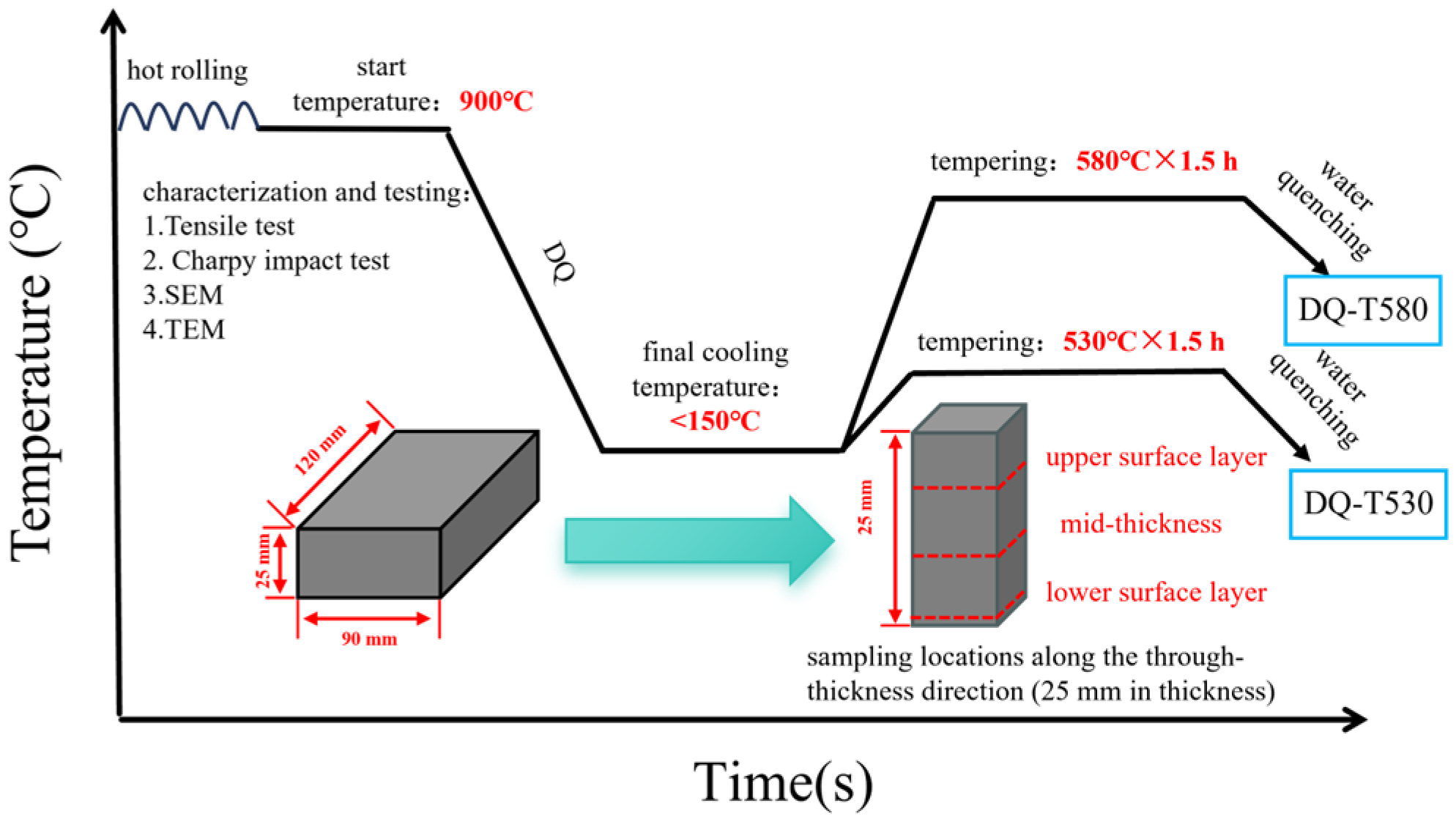
Figure 1. Schematic illustration of the processing route.
Metals 16 00243 g001
Figure 2. Geometry of the test specimens (unit: mm): (a) tensile specimen; (b) impact specimen. The dashed circles highlight the V-notch region in the impact specimen.
Metals 16 00243 g002
Figure 3. SEM micrographs of the low-alloy high-strength steel taken from different through-thickness locations: DQ—upper surface layer (a,b), mid-thickness (c,d), lower surface layer (e,f); DQ-T530—upper surface layer (g,h), mid-thickness (i,j), lower surface layer (k,l); DQ-T580—upper surface layer (m,n), mid-thickness (o,p), lower surface layer (q,r).
Metals 16 00243 g003
Figure 4. TEM bright-field images and corresponding SAED patterns of the upper surface layer and mid−thickness for the DQ and DQ−T530 specimens: (a) DQ upper surface layer; (b) corresponding SAED; (c,d) DQ mid−thickness; (e) corresponding SAED; (f) DQ−T530 upper surface layer; (g) DQ−T530 mid−thickness; (h) corresponding SAED.
Metals 16 00243 g004aMetals 16 00243 g004b
Figure 5. Engineering stress–strain curves of the low-alloy high-strength steel at different through-thickness sampling locations (upper surface layer, mid-thickness, and lower surface layer): (a) DQ; (b) DQ-T530; (c) DQ-T580.
Metals 16 00243 g005
Figure 6. Room-temperature Charpy V-notch impact-absorbed energy of the low-alloy high-strength steel at different through-thickness sampling locations under the three conditions.
Metals 16 00243 g006
Figure 7. CCT curves of the investigated low-alloy steel, calculated using JMatPro® (version 7.0, Sente Software Ltd., Guildford, UK) based on the chemical composition in Table 1.
Metals 16 00243 g007
Table 1. Chemical composition of the low-alloy high-strength steel (wt%).
CSiMnCrMoAlNbTiFe
0.150.251.450.400.180.0250.0250.015Bal.
Note: All compositions are experimental measurements from this study, unless otherwise stated.
Table 2. Tensile properties and room-temperature Charpy V-notch impact energies at different through-thickness locations.
Condition/PropertyUpper Surface LayerMid-ThicknessLower Surface Layer
DQ—YS (MPa)528.00498.00556.00
DQ—UTS (MPa)760.00675.00713.00
DQ—Total elongation, TE (%)40.1030.1329.86
DQ—Impact energy (J)223.23229.88261.22
DQ-T530—YS (MPa)524.00619.00489.00
DQ-T530—UTS (MPa)744.00805.00762.00
DQ-T530—Total elongation, TE (%)40.5030.6746.64
DQ-T530—Impact energy (J)240.62235.56250.32
DQ-T580—YS (MPa)589.00512.00581.00
DQ-T580—UTS (MPa)762.00782.00751.00
DQ-T580—Total elongation, TE (%)31.3940.8532.11
DQ-T580—Impact energy (J)235.31229.58230.22
Table 3. Vickers microhardness (HV1) measured at the upper surface layer, mid-thickness, and lower surface layer for the DQ, DQ-T530, and DQ-T580 specimens.
ConditionUpper Surface LayerMid-ThicknessLower Surface Layer
DQ201.25210.17183.77
DQ-T530262.82246.14242.26
DQ-T580270.32253.70230.88
Note: Each value is the average of five independent measurements (HV1, 1 kgf load, 10 s dwell time).
Disclaimer/Publisher’s Note: The statements, opinions and data contained in all publications are solely those of the individual author(s) and contributor(s) and not of MDPI and/or the editor(s). MDPI and/or the editor(s) disclaim responsibility for any injury to people or property resulting from any ideas, methods, instructions or products referred to in the content.