Crystal Plasticity Simulation of the Effect of γ Lamellae on the Plastic Behavior of the Core–Shell-like Structured TiAl Alloy


Abstract
1. Introduction
2. Crystal Plastic Constitutive Model
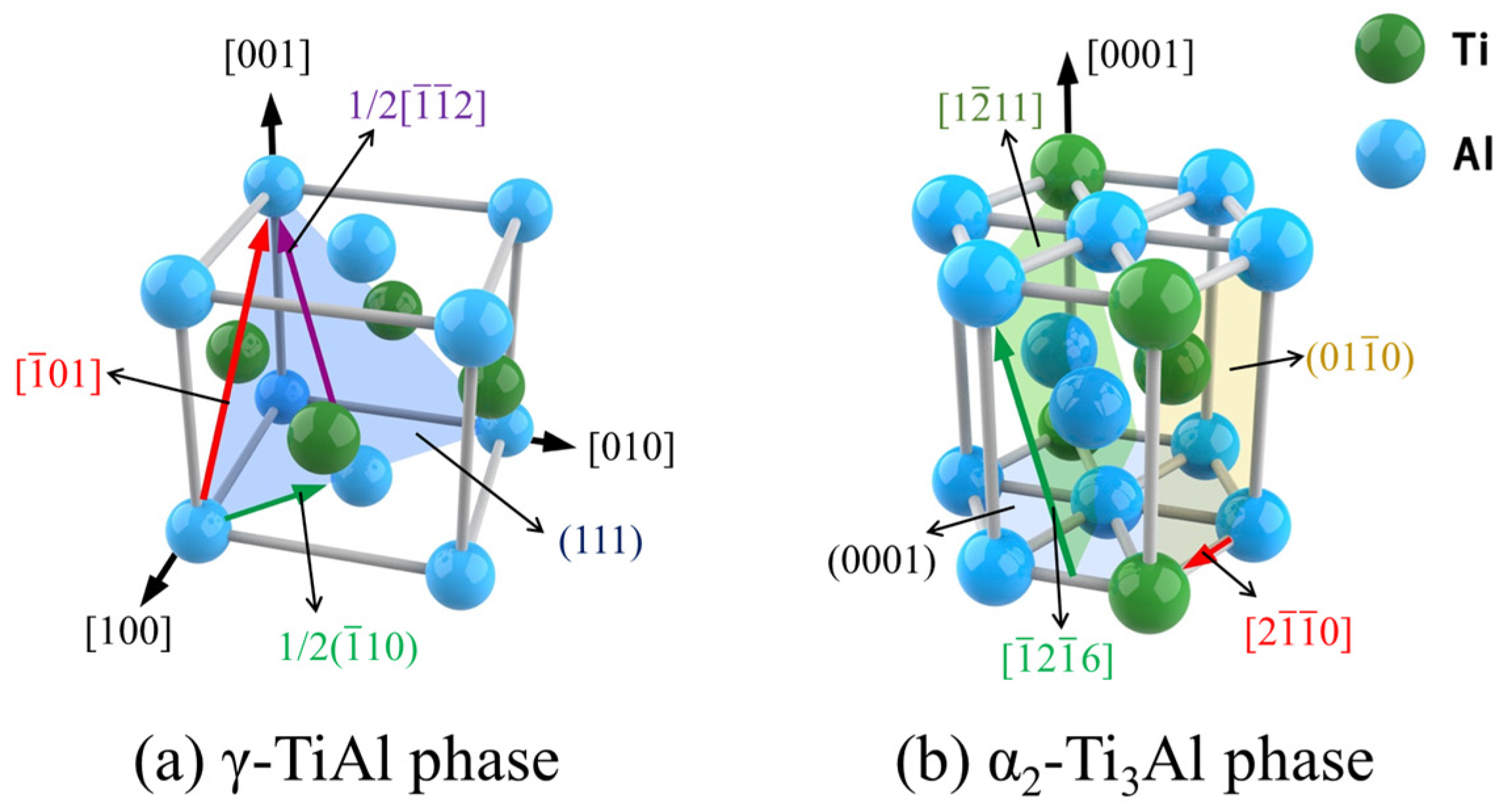
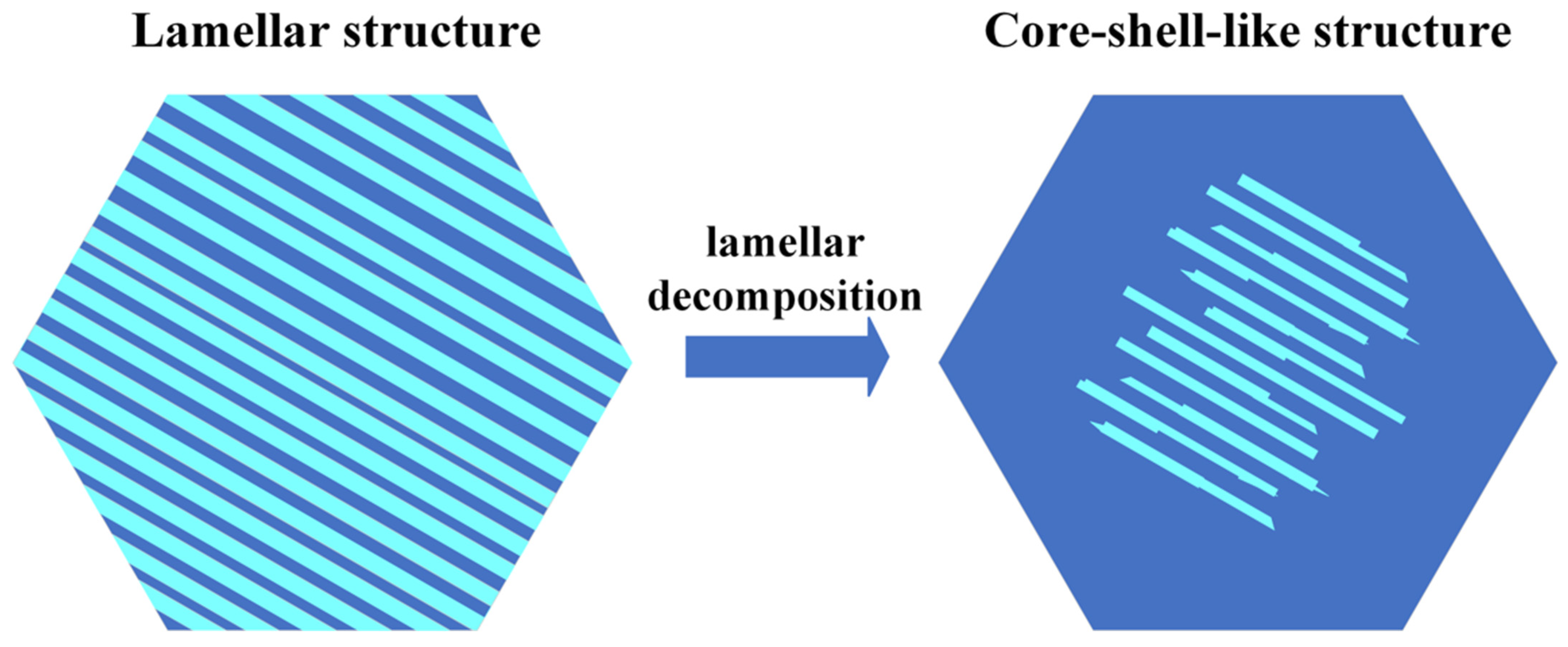
2.1. Deformation Mechanism and Morphological Classification
2.2. Crystal Plastic Theory
3. Finite Element Modeling
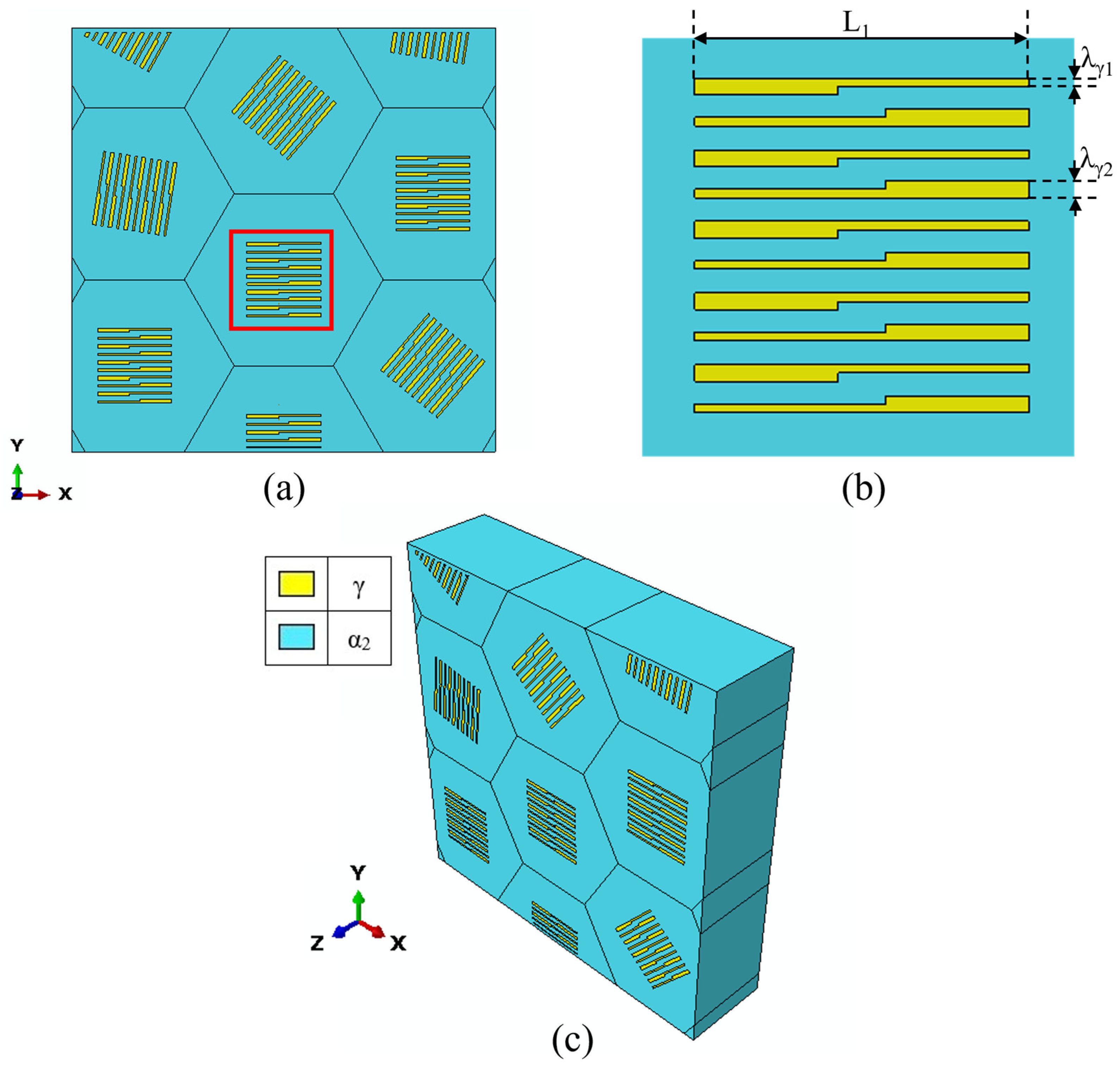
3.1. Establishment of Finite Element Model
3.2. Simulation Parameter Setting
4. Results and Discussion
4.1. The Effect of the γ Lamellae Length on the Core–Shell-like Structured TiAl Alloy
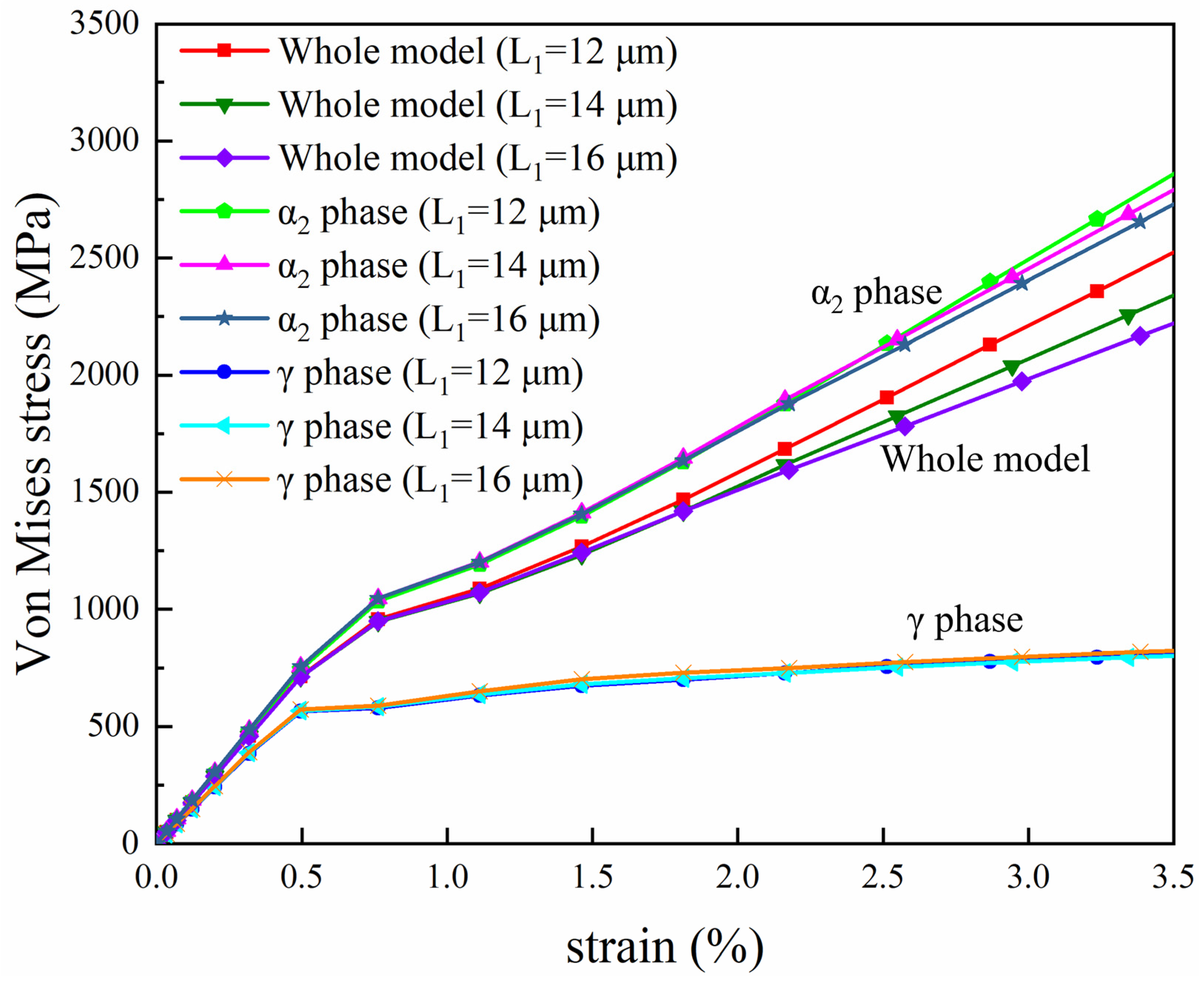
4.1.1. Stress–Strain Analysis
4.1.2. Analysis of γ Phase and α2 Phase Slip System
4.2. The Effect of γ Lamellae Number on the Core–Shell-like Structured TiAl Alloy
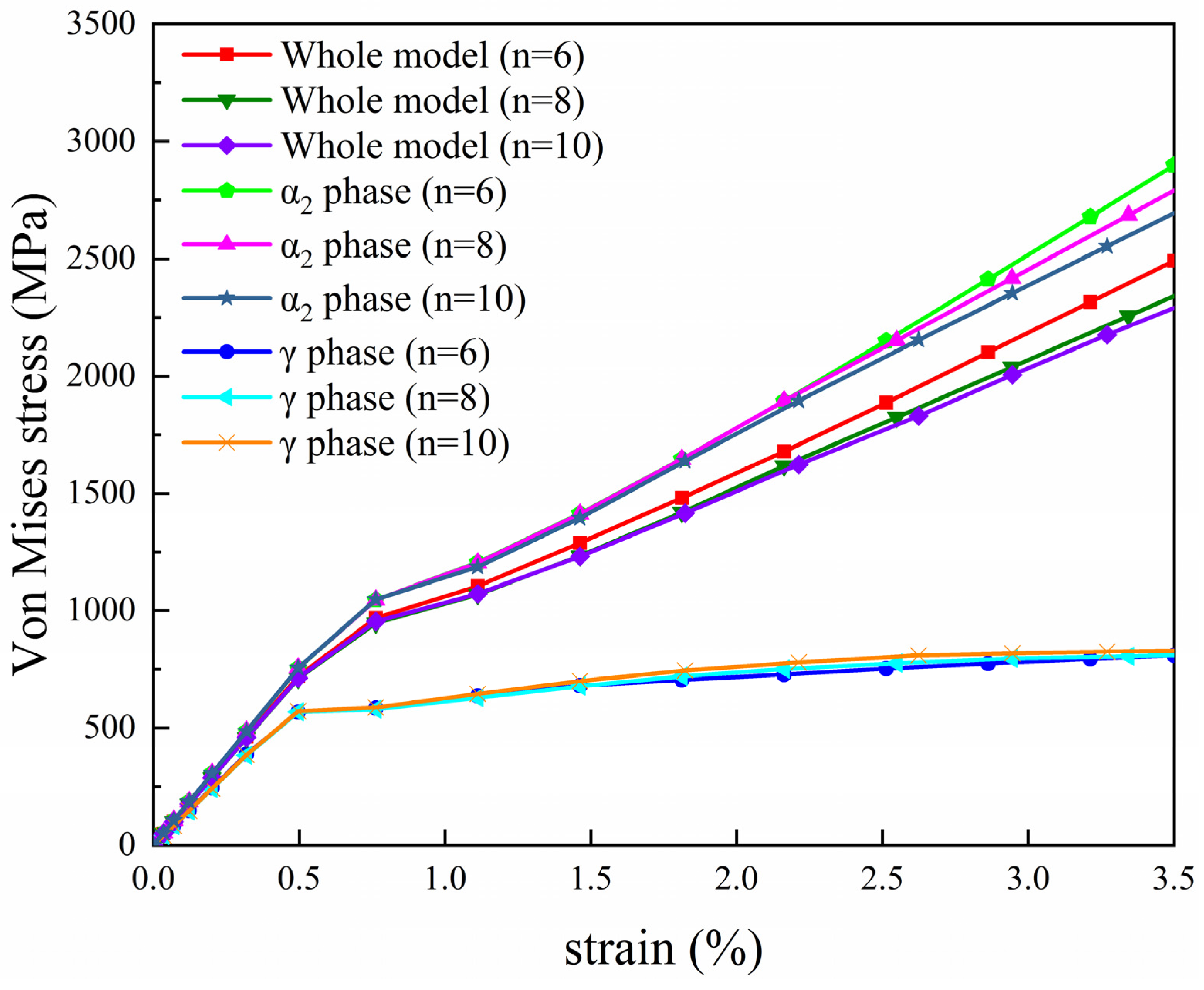
4.2.1. Stress–Strain Analysis
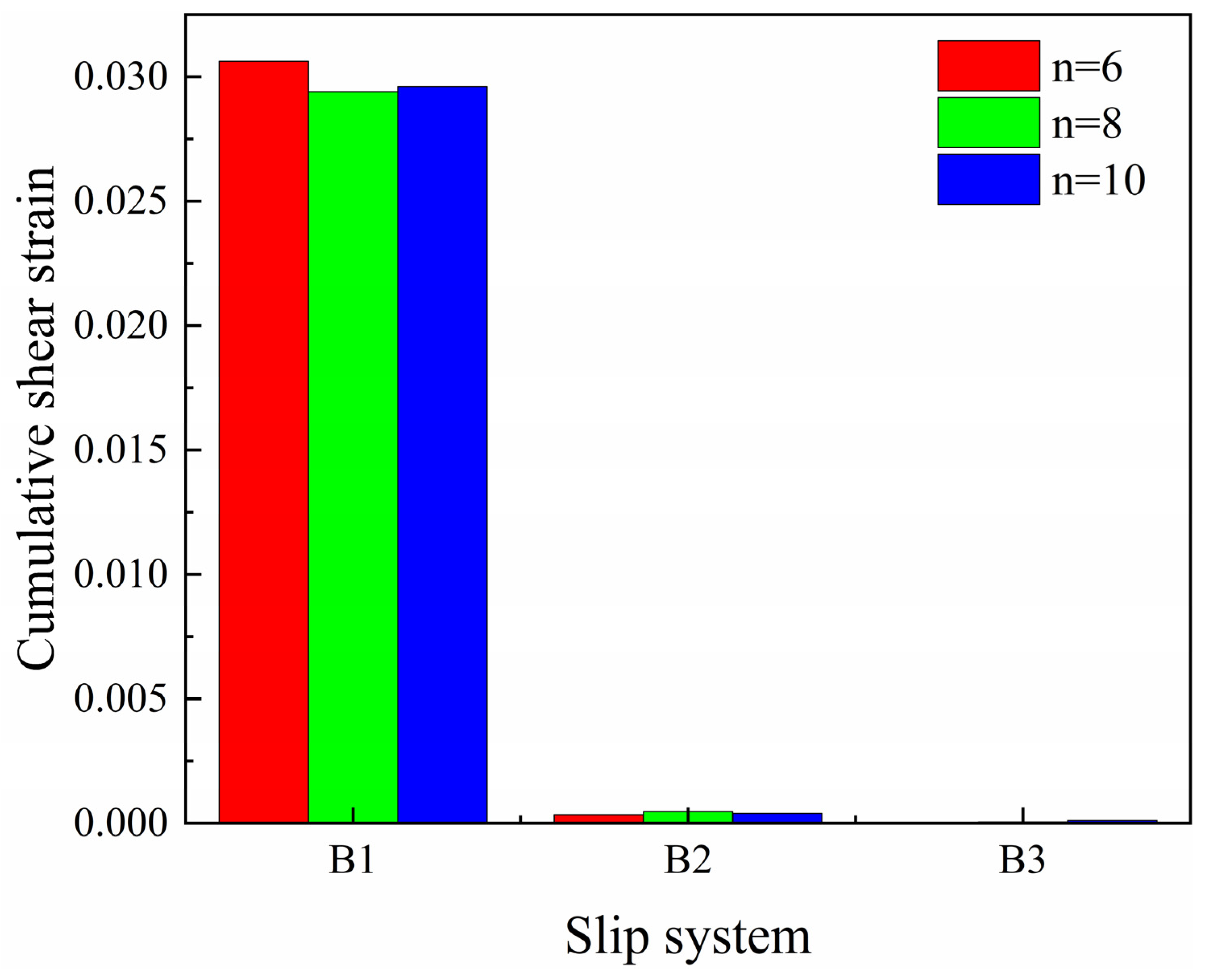
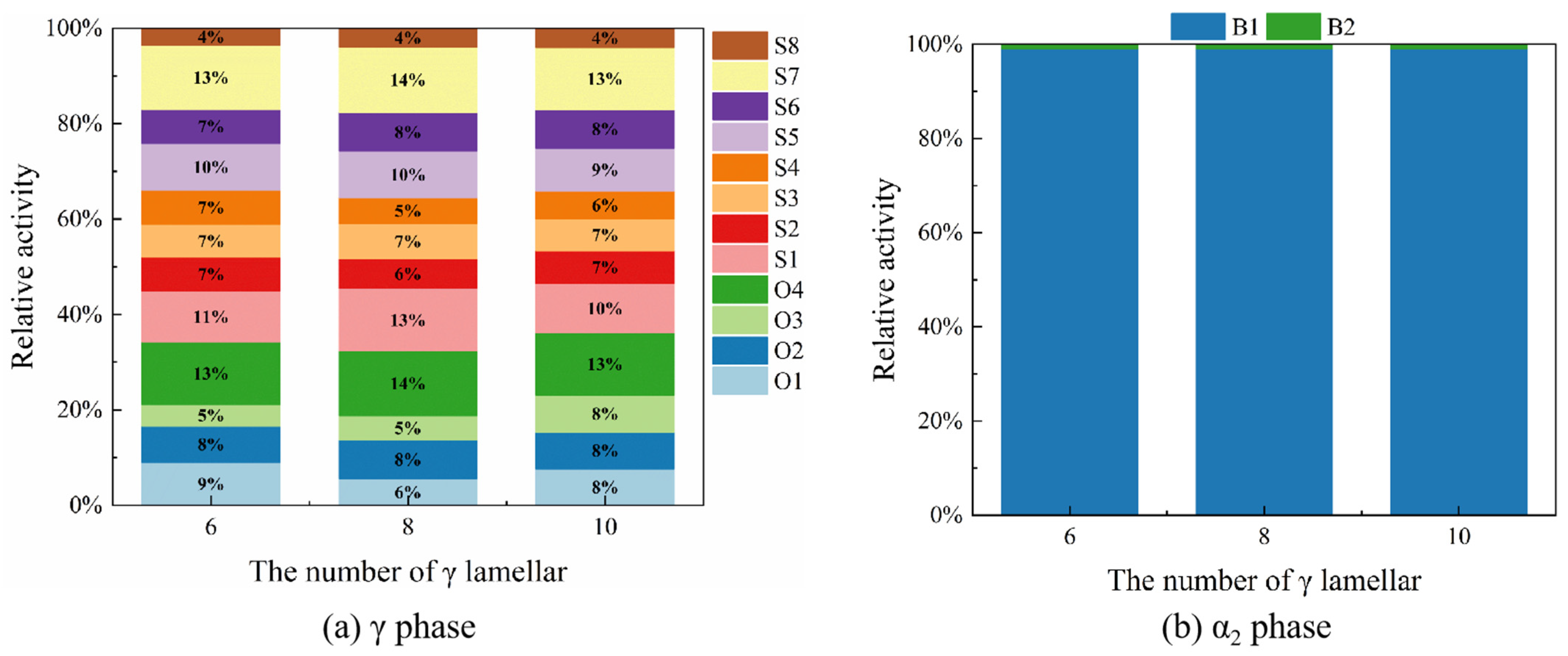
4.2.2. Analysis of γ Phase and α2 Phase Slip System
5. Conclusions
- (1)
- When the γ lamella length increases from 12 μm to 16 μm, the overall von Mises stress decreases from 2524 MPa to 2221 MPa, a reduction of approximately 12.0%. When the number of γ lamellae increases from 6 to 10, the overall von Mises stress decreases from 2491 MPa to 2298 MPa, a reduction of approximately 7.7%. The decrease in the overall von Mises stress is primarily attributed to the reduction in stress within the α2 phase, while the change in the volume fraction of the γ phase has a negligible effect on this reduction. By decreasing the volume fraction of the α2 phase, the plastic deformation capacity of the material is effectively enhanced.
- (2)
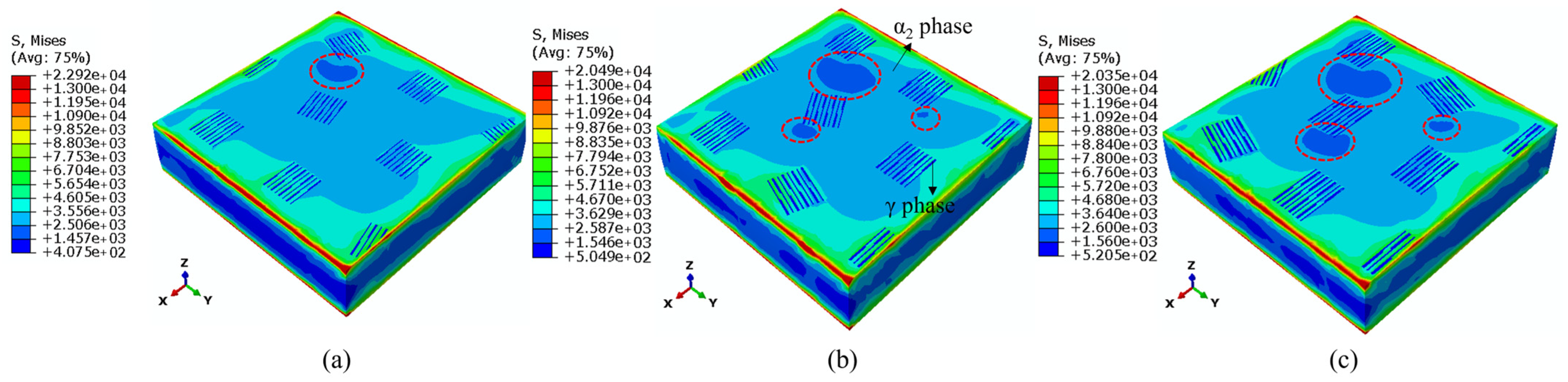
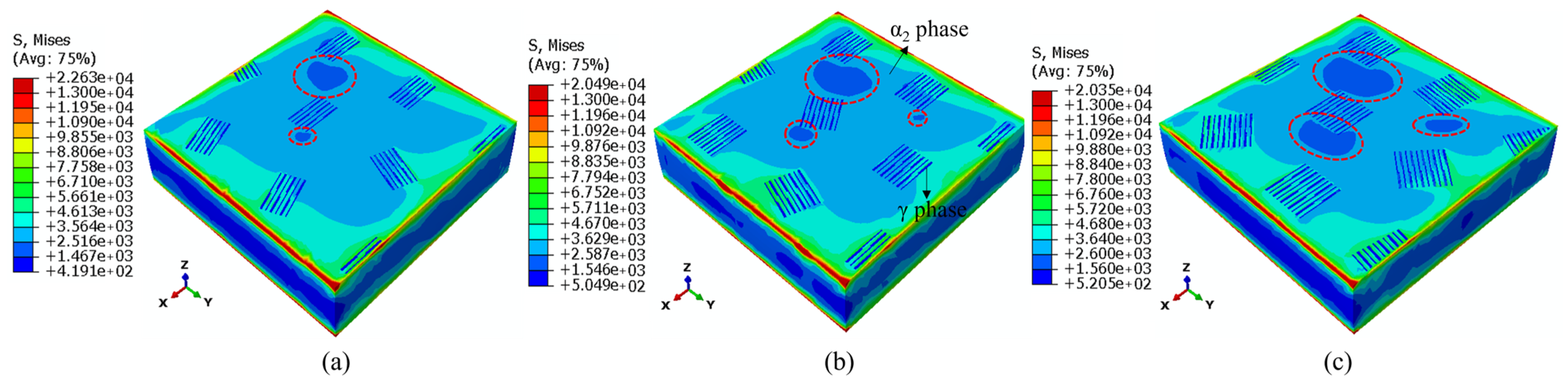
- The stress distribution of the core–shell-like TiAl alloy is more uniform. With the increasing of the length or number of γ lamellae, the low stress region in the α2 phase shows an expanding trend. Increasing the volume fraction of γ lamellae significantly reduces the stress level of the α2 phase and promotes stress dispersion within the α2 phase, thereby enhancing the plasticity of the material.
- (3)
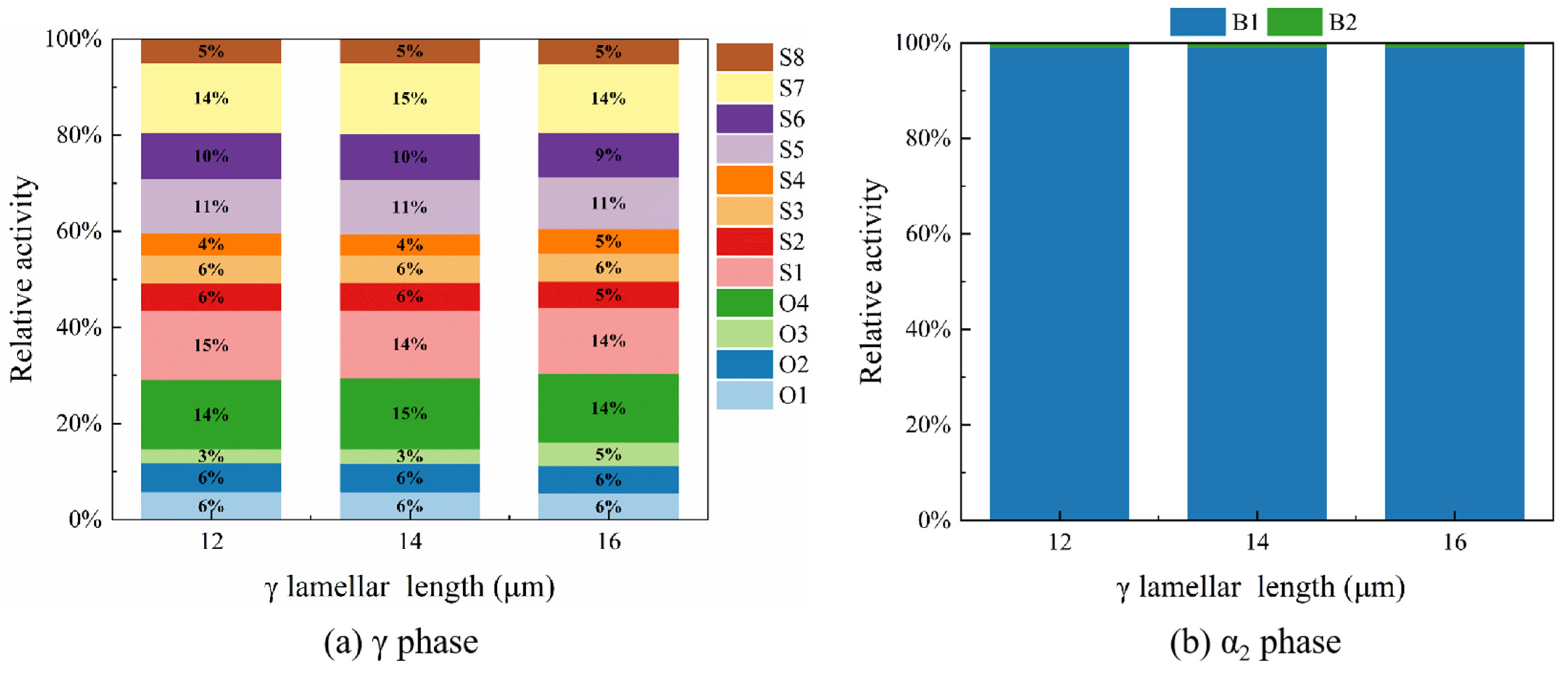
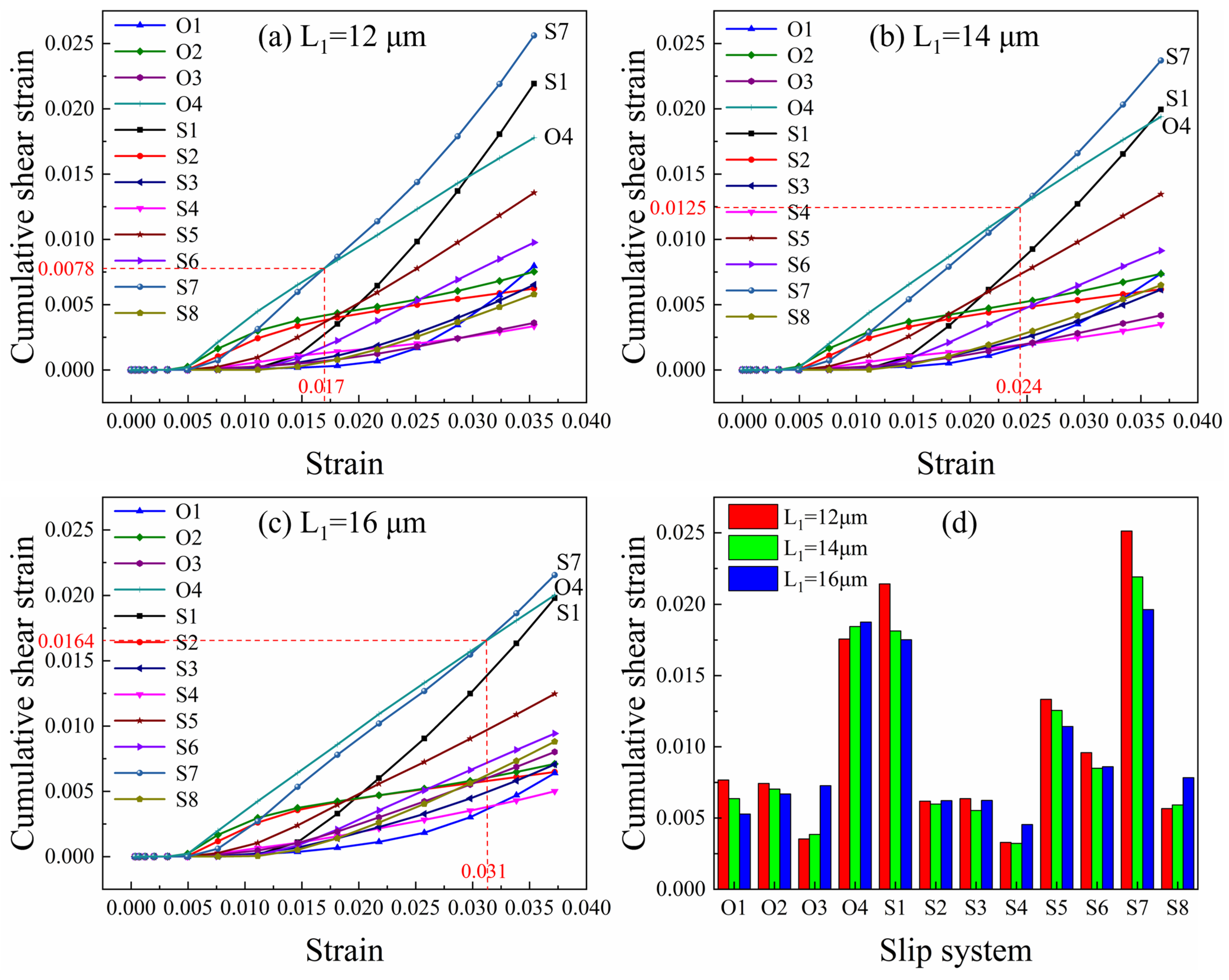
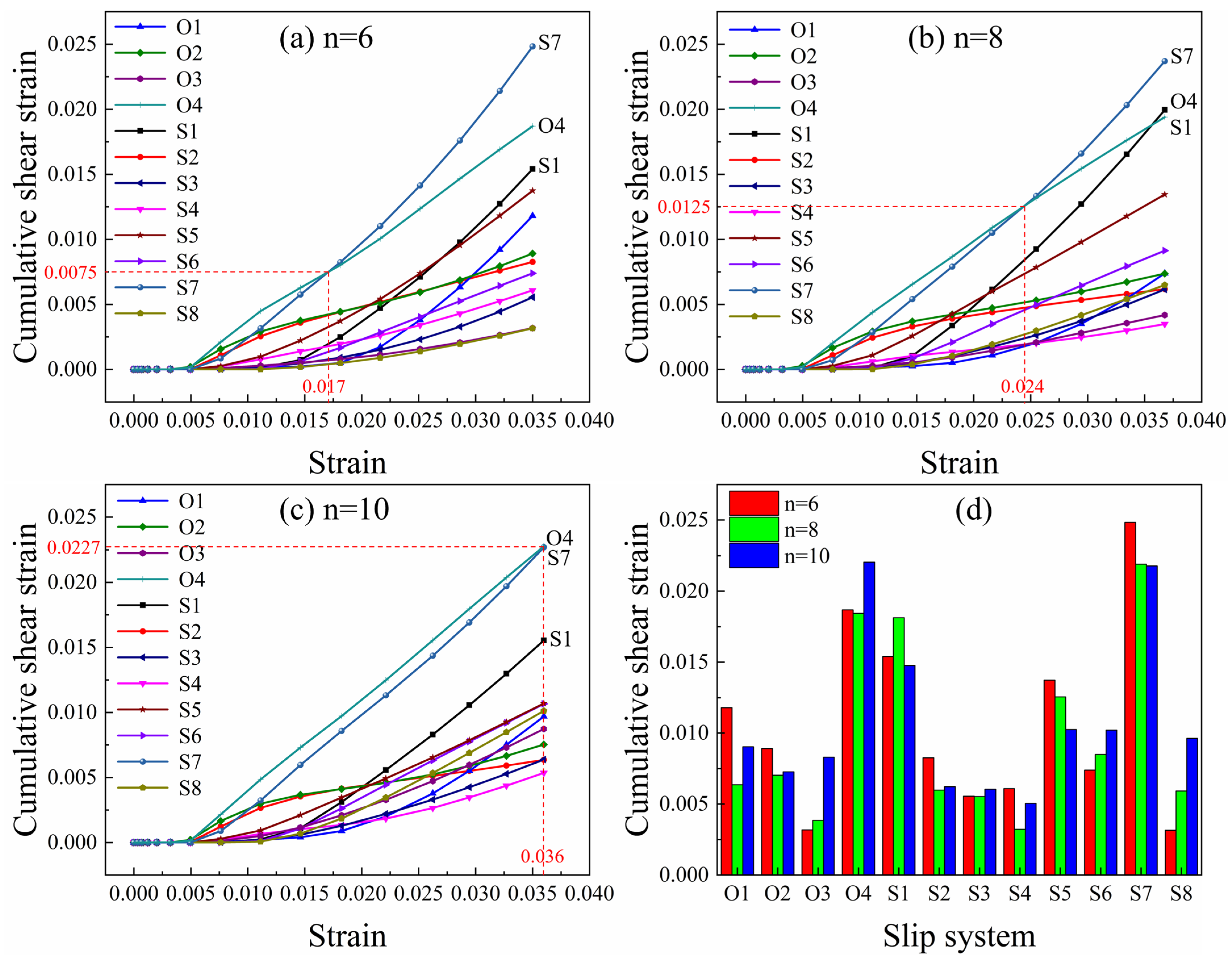
- In the case of changes in the length or number of γ lamellae, the relative activity of the slip systems in the γ phase was analyzed. The results showed that the O4, S1, and S7 slip systems have the highest relative activity. At the same time, the cumulative shear strain of these three slip systems is also significantly higher than that of other slip systems, indicating that O4, S1 and S7 slip systems contribute the most to the plastic deformation of γ phase.
- (4)
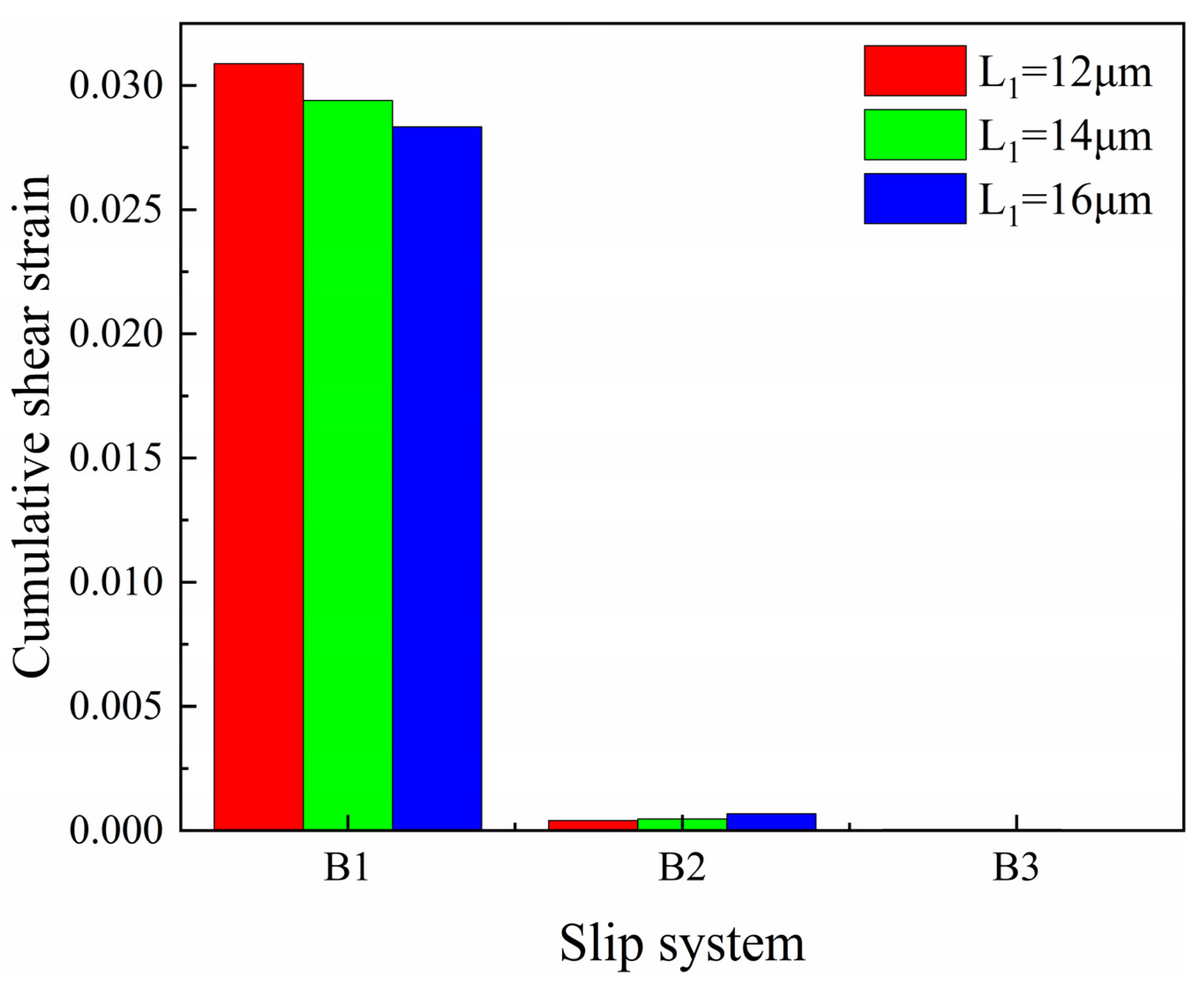
- In the α2 phase, the B1 slip system exhibits the highest relative activity and cumulative shear strain, while the relative activity and cumulative shear strain of the B2 and B3 slip systems are close to zero. Therefore, the B1 slip system is the main contributor to the plasticity of the α2 phase. Considering that the volume fraction of the α2 phase in the overall model is higher than that of the γ phase, the B1 slip system contributes more significantly to the plastic deformation of the entire model.
Author Contributions
Funding
Data Availability Statement
Conflicts of Interest
References
- Dimiduk, D.M. Gamma titanium aluminide alloys—An assessment within the competition of aerospace structural materials. Mater. Sci. Eng. A 1999, 263, 281–288. [Google Scholar] [CrossRef]
- Hussain, A.; Layegh, S.E.; Lazoglu, I.; Arrazola, P.-J.; Lazcano, X.; Aristimuño, P.-X.; Subasi, O.; Yigit, I.E.; Öztürk, Ç.; Yavaş, Ç. Mechanics of milling 48-2-2 gamma titanium aluminide. CIRP J. Manuf. Sci. Technol. 2020, 30, 131–139. [Google Scholar] [CrossRef]
- Wimler, D.; Lindemann, J.; Reith, M.; Kirchner, A.; Allen, M.; Vargas, W.G.; Franke, M.; Klöden, B.; Weißgärber, T.; Güther, V.; et al. Designing advanced intermetallic titanium aluminide alloys for additive manufacturing. Intermetallics 2021, 131, 107109. [Google Scholar] [CrossRef]
- Panov, D.O.; Sokolovsky, V.S.; Stepanov, N.D.; Zherebtsov, S.V.; Panin, P.V.; Volokitina, E.I.; Nochovnaya, N.A.; Salishchev, G.A. Effect of interlamellar spacing on strength-ductility combination of β-solidified γ-TiAl based alloy with fully lamellar structure. Mater. Sci. Eng. A 2023, 862, 144458. [Google Scholar] [CrossRef]
- Chen, G.; Peng, Y.; Zheng, G.; Qi, Z.; Wang, M.; Yu, H.; Dong, C.; Liu, C.T. Polysynthetic twinned TiAl single crystals for high-temperature applications. Nat. Mater. 2016, 15, 876–881. [Google Scholar] [CrossRef]
- Appel, F.; Wagner, R. Microstructure and deformation of two-phase γ-titanium aluminides. Mater. Sci. Eng. R Rep. 1998, 22, 187–268. [Google Scholar] [CrossRef]
- Huang, Z.W. Inhomogeneous microstructure in highly alloyed cast TiAl-based alloys, caused by microsegregation. Scr. Mater. 2005, 52, 1021–1025. [Google Scholar] [CrossRef]
- Chen, G.L.; Xu, X.J.; Teng, Z.K.; Wang, Y.L.; Lin, J.P. Microsegregation in high Nb containing TiAl alloy ingots beyond laboratory scale. Intermetallics 2007, 15, 625–631. [Google Scholar] [CrossRef]
- Yang, G.; Kou, H.; Yang, J.; Li, J.; Fu, H. Microstructure control of Ti-45Al-8.5Nb-(W, B, Y) alloy during the solidification process. Acta Mater. 2016, 112, 121–131. [Google Scholar] [CrossRef]
- Yu, Y.; Kou, H.; Wang, Y.; Jia, M.; Xu, X.; Zhang, Z.; Wang, Y.; Li, J. Formation of core-shell-like structure in β-solidified TiAl alloy and its effect on hot workability. Acta Mater. 2023, 255, 119036. [Google Scholar] [CrossRef]
- Roters, F.; Eisenlohr, P.; Hantcherli, L.; Tjahjanto, D.D.; Bieler, T.R.; Raabe, D. Overview of constitutive laws, kinematics, homogenization and multiscale methods in crystal plasticity finite-element modeling: Theory, experiments, applications. Acta Mater. 2010, 58, 1152–1211. [Google Scholar] [CrossRef]
- Ilyas, M.U.; Kabir, M.R. Creep behaviour of two-phase lamellar TiAl: Crystal plasticity modelling and analysis. Intermetallics 2021, 132, 107129. [Google Scholar] [CrossRef]
- Li, K.; Tang, B.; Zhang, H.; Zhang, M.; Chu, Y.; Zhang, W.; Fan, J.; Zhong, H.; Li, J. Crystal plasticity framework related to size effect: From single crystal parameters to polycrystalline mechanical properties. Mater. Sci. Eng. A 2024, 907, 146747. [Google Scholar] [CrossRef]
- Mozafari, A.; Fu, B.; Chalapathi, D.; Abdolvand, H. Characterization of IN738LC using in situ nanoindentation and crystal plasticity modeling. Mater. Des. 2025, 257, 114378. [Google Scholar] [CrossRef]
- Kad, B.K.; Dao, M.; Asaro, R.J. Numerical simulations of stress-strain behavior in two-phase α2 + γ lamellar TiAl alloys. Mater. Sci. Eng. A 1995, 192–193, 97–103. [Google Scholar] [CrossRef]
- Schlögl, S.M.; Fischer, F.D. The role of slip and twinning in the deformation behaviour of polysynthetically twinned crystals of TiAl: A micromechanical model. Philos. Mag. A 1997, 75, 621–636. [Google Scholar] [CrossRef]
- Marketz, W.T.; Fischer, F.D.; Clemens, H. Deformation mechanisms in TiAl intermetallics—Experiments and modeling. Int. J. Plast. 2003, 19, 281–321. [Google Scholar] [CrossRef]
- Zambaldi, C.; Roters, F.; Raabe, D. Analysis of the plastic anisotropy and pre-yielding of (γ/α2)-phase titanium aluminide microstructures by crystal plasticity simulation. Intermetallics 2011, 19, 820–827. [Google Scholar] [CrossRef]
- Chen, L.; James Edwards, T.E.; Di Gioacchino, F.; Clegg, W.J.; Dunne, F.P.E.; Pham, M.-S. Crystal plasticity analysis of deformation anisotropy of lamellar TiAl alloy: 3D microstructure-based modelling and in-situ micro-compression. Int. J. Plast. 2019, 119, 344–360. [Google Scholar] [CrossRef]
- Ilyas, M.U.; Kabir, M.R. Modelling high temperature deformation of lamellar TiAl crystal using strain-rate enhanced crystal plasticity. Mater. Sci. Eng. A 2020, 788, 139524. [Google Scholar] [CrossRef]
- Zhao, W.; Liao, H.; Lun, Y.; Zhang, S.; Song, B. Role of interfaces in the deformation behavior of lamellar TiAl-based alloys with CPFEM simulation. Mater. Today Commun. 2022, 32, 103942. [Google Scholar] [CrossRef]
- Selvarajou, B.; Jhon, M.H.; Ramanujan, R.V.; Quek, S.S. Temperature dependent anisotropic mechanical behavior of TiAl based alloys. Int. J. Plast. 2022, 152, 103175. [Google Scholar] [CrossRef]
- Wang, Z.; Wong, W.H.; Guo, T.F. Micromechanical analyses on bending of polysynthetically twinned single crystal of titanium aluminide. J. Mech. Phys. Solids 2024, 187, 105608. [Google Scholar] [CrossRef]
- Wu, H.; Zhang, Y.; Lu, D.; Gong, X.; Lei, L.; Zhang, H.; Liu, Y.; Wang, Q. Exploring the brittle-to-ductile transition and microstructural responses of γ−TiAl alloy with a crystal plasticity model incorporating dislocation and twinning. Mater. Des. 2024, 246, 113360. [Google Scholar] [CrossRef]
- Kabir, M.R.; Murat, M.B. Investigating Plastic Anisotropy of Single and Two-Phase (α2-Ti3Al + γ-TiAl) PST-TiAl Through Computational Yield Surface Analysis. Metals 2025, 15, 132. [Google Scholar] [CrossRef]
- Peng, W.; Zhao, C.; Leng, K.; Jiang, K.; Meng, W.; Ding, B.; Meng, Q.; Liu, W. Crystal Plasticity Modeling of Mechanical Anisotropy for TiAl Alloy Under Uniaxial and Biaxial Loading. Crystals 2025, 15, 943. [Google Scholar] [CrossRef]
- Palomares-García, A.J.; Pérez-Prado, M.T.; Molina-Aldareguia, J.M. Effect of lamellar orientation on the strength and operating deformation mechanisms of fully lamellar TiAl alloys determined by micropillar compression. Acta Mater. 2017, 123, 102–114. [Google Scholar] [CrossRef]
- Huang, Y. A User-Material Subroutine Incorporating Single Crystal Plasticity in the ABAQUS Finite Element Program; Harvard University: Cambridge, MA, USA, 1991. [Google Scholar]
- Peirce, D.; Asaro, R.J.; Needleman, A. Material rate dependence and localized deformation in crystalline solids. Acta Metall. 1983, 31, 1951–1976. [Google Scholar] [CrossRef]
- Asaro, R.J. Micromechanics of Crystals and Polycrystals. Adv. Appl. Mech. 1983, 23, 1–115. [Google Scholar] [CrossRef]
- Asaro, R.J.; Needleman, A. Texture development and strain hardening in rate dependent polycrystals. Acta Metall. 1985, 33, 923–953. [Google Scholar] [CrossRef]
- Yu, Y.; Kou, H.; Xu, X.; Zhang, Z.; Wang, Y.; Jia, M.; Li, Y.; Qiang, F.; Li, J. Quasi-in-situ investigation on complete lamellar fragmentation of β-solidified TiAl alloy during uniaxial isothermal compression. J. Mater. Sci. Technol. 2024, 186, 132–141. [Google Scholar] [CrossRef]
- Yoo, M.H.; Fu, C.L. Physical constants, deformation twinning, and microcracking of titanium aluminides. Metall. Mater. Trans. A 1998, 29, 49–63. [Google Scholar] [CrossRef]
- Fu, C.L.; Zou, J.; Yoo, M.H. Elastic constants and planar fault energies of Ti3Al, and interfacial energies at the interface by first-principles calculations. Scr. Metall. Mater. 1995, 33, 885–891. [Google Scholar] [CrossRef]
- Yamaguchi, M.; Inui, H. Deformation Behavior of TiAl Compounds with the TiAl/Ti3Al Lamellar Microstructure. In Ordered Intermetallics—Physical Metallurgy and Mechanical Behaviour; Springer: Dordrecht, The Netherlands, 1992; Volume 213, pp. 217–235. [Google Scholar] [CrossRef]
- Inui, H.; Toda, Y.; Yamaguchi, M. Plastic deformation of single crystals of a DO19 compound with an off-stoichiometric composition (Ti-36·5 at.% Al) at room temperature. Philos. Mag. A 1993, 67, 1315–1332. [Google Scholar] [CrossRef]




| Phase | Slip Systems | Type of Slip | Detail |
|---|---|---|---|
| γ-TiAl | Ordinary slip | O1 O2 O3 O4 | |
| Super slip | S1 S2 S3 S4 S5 S6 S7 S8 | ||
| α2-Ti3Al | Basal slip | B1 B2 B3 | |
| Prismatic slip | Pr1 Pr2 Pr3 | ||
| Pyramidal slip | Py1 Py2 Py3 Py4 Py5 Py6 |
| γ lamellae length, L1 (μm) | 12 | 14 | 16 |
| γ lamellae width, λγ1 (μm) | 0.3 | 0.35 | 0.4 |
| γ lamellae width, λγ2 (μm) | 0.6 | 0.7 | 0.8 |
| The number of γ lamellae, n | 6 | 8 | 10 |
| Phase | C1111 | C1122 | C2222 | C1133 | C2233 | C3333 | C1212 | C1313 | C2323 |
|---|---|---|---|---|---|---|---|---|---|
| γ-TiAl | 190,000 | 105,000 | 190,000 | 90,000 | 90,000 | 185,000 | 50,000 | 120,000 | 120,000 |
| α2-Ti3Al | 221,000 | 71,000 | 221,000 | 85,000 | 85,000 | 238,000 | 75,000 | 69,000 | 69,000 |
Disclaimer/Publisher’s Note: The statements, opinions and data contained in all publications are solely those of the individual author(s) and contributor(s) and not of MDPI and/or the editor(s). MDPI and/or the editor(s) disclaim responsibility for any injury to people or property resulting from any ideas, methods, instructions or products referred to in the content. |
© 2026 by the authors. Licensee MDPI, Basel, Switzerland. This article is an open access article distributed under the terms and conditions of the Creative Commons Attribution (CC BY) license.
Share and Cite
Xu, Z.; Yuan, M.; Yu, Y.; Yin, L.; Guo, J.; Wang, R.; Yuan, M. Crystal Plasticity Simulation of the Effect of γ Lamellae on the Plastic Behavior of the Core–Shell-like Structured TiAl Alloy. Metals 2026, 16, 244. https://doi.org/10.3390/met16030244
Xu Z, Yuan M, Yu Y, Yin L, Guo J, Wang R, Yuan M. Crystal Plasticity Simulation of the Effect of γ Lamellae on the Plastic Behavior of the Core–Shell-like Structured TiAl Alloy. Metals. 2026; 16(3):244. https://doi.org/10.3390/met16030244
Chicago/Turabian StyleXu, Zihe, Meini Yuan, Yonghao Yu, Lezhang Yin, Judong Guo, Rui Wang, and Meng Yuan. 2026. "Crystal Plasticity Simulation of the Effect of γ Lamellae on the Plastic Behavior of the Core–Shell-like Structured TiAl Alloy" Metals 16, no. 3: 244. https://doi.org/10.3390/met16030244
APA StyleXu, Z., Yuan, M., Yu, Y., Yin, L., Guo, J., Wang, R., & Yuan, M. (2026). Crystal Plasticity Simulation of the Effect of γ Lamellae on the Plastic Behavior of the Core–Shell-like Structured TiAl Alloy. Metals, 16(3), 244. https://doi.org/10.3390/met16030244