Review

Iron Production by the Use of Molten Salt Electrolysis

1
School of Metallurgical and Materials Engineering, Iran University of Science and Technology, Narmak, Tehran 16846-13114, Iran
2
Faculty of Non-Ferrous Metals, AGH University of Krakow, 30-059 Krakow, Poland
*
Authors to whom correspondence should be addressed.
Metals 2026, 16(2), 202; https://doi.org/10.3390/met16020202
Submission received: 27 December 2025 / Revised: 5 February 2026 / Accepted: 6 February 2026 / Published: 10 February 2026

Abstract

Steel is a fundamental structural material; however, its production poses significant environmental challenges, accounting for 4–5% of global carbon dioxide emissions. With an average carbon footprint of 1.9 tons of C O 2 per ton of steel produced, the industry urgently requires sustainable alternatives. This research investigates electrolysis as a low-carbon substitute, categorizing these technologies by operating temperature: low-temperature aqueous hydroxide electrolysis (AHE), medium-temperature molten salt electrolysis (MSE), and high-temperature molten oxide electrolysis (MOE). In the MOE process, metal oxides decompose into molten metal and oxygen using inert (neutral) anodes. The findings indicate that iron oxide reduction in molten systems follows a stepwise mechanism: F e 2 O 3 F e 3 O 4 F e O F e . Key parameters, including current efficiency, applied voltage, and overpotential, significantly dictate overall energy efficiency. Furthermore, increasing the temperature and reducing the viscosity of the molten salt accelerates the reaction by facilitating oxygen ion transport. Finally, the presence of calcium oxide (CaO) on the cathode was found to shorten the reduction path and accelerate the process through the formation of calcium ferrite ( C a 2 F e 2 O 5 ).

1. Introduction

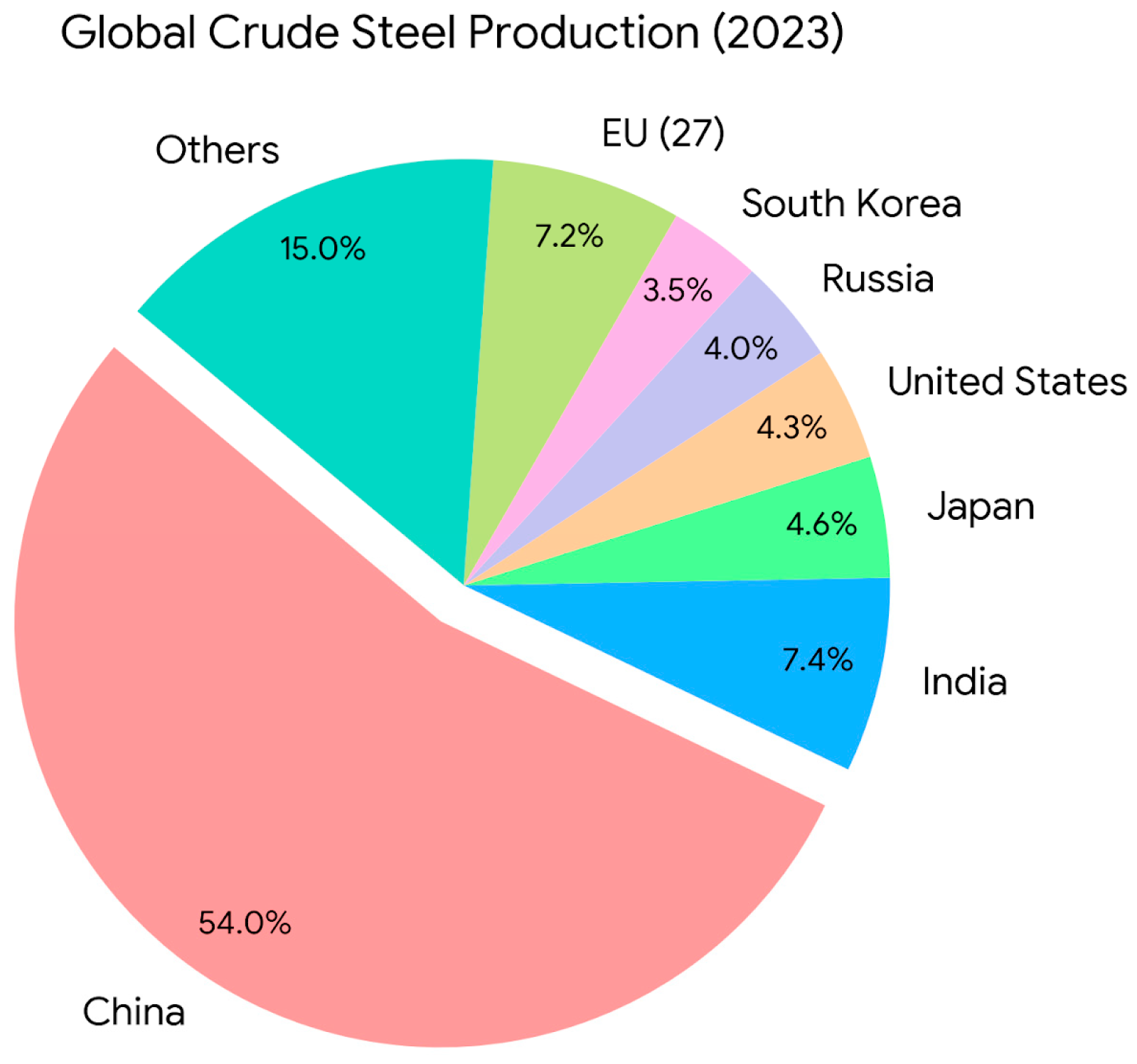
Iron and steel are the foundational materials of modern civilization, playing an indispensable role in global infrastructure, transportation, and industrial manufacturing [1]. The scale of this industry is immense; in 2023, global crude steel production reached approximately 1888 million tons. As shown in Figure 1, this production is highly concentrated, with China alone accounting for 54% of the world’s total output, followed by India (7.4%) and Japan (4.6%).
Despite its economic importance, the iron and steel sector faces a critical sustainability crisis. The traditional blast furnace-basic oxygen furnace (BF-BOF) route, which relies heavily on coal and coke for iron oxide reduction, is one of the largest industrial sources of greenhouse gases. Conventionally, iron is extracted from its ores through coke-based reduction in blast furnaces operating at temperatures exceeding 1500 °C [2]. It is responsible for approximately 4–5% of total global CO2 emissions [3], with an average carbon footprint of 1.92 tons of CO2 per ton of steel produced. As international environmental regulations tighten, the industry is under extreme pressure to transition toward “Green Steel” technologies.
The application of electrochemical methods to metal extraction is not a new concept but rather a proven industrial standard in other sectors. Molten salts are widely recognized as effective for metal production [4,5,6,7]. For instance, 100% of primary aluminum is produced via the Hall-Héroult process, which utilizes the electrolysis of alumina in a molten cryolite bath. Similarly, magnesium production has a long history of utilizing molten salt electrolysis of anhydrous magnesium chloride (MgCl2), a method recognized for its ability to produce high-purity metal while offering a pathway to significantly lower CO2 emissions compared to traditional thermal reduction methods.
Adapting these mature electrolytic principles to iron production offers a direct, electricity-driven alternative to carbon-based reduction. This research reviews the current landscape of iron production technologies, categorizing them into three primary routes based on their operating temperatures: room-temperature Aqueous Hydroxide Electrolysis (AHE), moderate-temperature Molten Salt Electrolysis (MSE), and high-temperature Molten Oxide Electrolysis (MOE). By examining their electrochemical mechanisms, energy efficiencies, and technical challenges, this study aims to provide a roadmap for the stabilization of sustainable ironmaking processes.
Electrochemical reduction technology can be categorized into three types based on the operating temperature: room-temperature (20–200 °C), moderate-temperature (600–1000 °C), and high-temperature (1000–1600 °C) electrolysis. Room-temperature electrolysis includes Aqueous Hydroxide Electrolysis (AHE) [8,9]. Moderate-temperature molten electrolysis typically refers to molten salt electrolysis (MSE) [10], while high-temperature molten electrolysis usually denotes molten oxide electrolysis (MOE) [5,11].
During an electrochemical process, metal oxides can be directly decomposed into metal and oxygen using molten oxides as an electrolyte. Considering that molten oxide electrolyte dissociates the feed oxide MO into its constituent ions, the target cathode and anode reactions can be written as follows Equation (1) [12]:
M n + + n e M O ( n ) n e + 1 2 O 2   ( g )
The reduction process in MOE resembles the Hall-Héroult method used for aluminum production, involving the electrochemical breakdown of aluminum oxide dissolved in a molten fluoride solvent containing cryolite. However, the two methods differ significantly in the oxidation reaction that occurs at the anode. In the MOE process, oxygen is produced because an inert anode is used. This inert anode must possess outstanding characteristics to withstand the harsh conditions of high temperature, the corrosive nature of molten slags, and the oxygen gas generated [13].
Alternatively, molten oxide electrolysis (MOE) can be used to extract metals from metal oxides. MOE is essentially the electrochemical deposition of metals from molten oxide electrolytes [14]. This method required operating at temperatures above 1538 °C and consumed a large amount of energy [15]. However, high operating temperatures require substantial energy input, leading to more complex cell designs [16]. Preparing metallic iron using chloride, molten carbonate salt systems, and alkaline solutions with lower melting points offers notable benefits [15]. This is called MSE. Alternatively, the electrochemical reduction (electroreduction) of iron oxide can be performed in aqueous electrolytes at relatively low temperatures (approximately 110 °C or below). This low-temperature electroreduction method offers advantages in energy efficiency and a simpler system design and process flow [17].
MOE or MSE electrolytic cells have a very simple design. They consist of two electrodes (anode and cathode) separated by molten salts and oxide electrolytes. (The choice of anode, including graphite [18], metals [16], alloys [12], and ceramics, depends on the actual needs. Graphite or solid metals are usually selected as the cathode. Developments in industrial technologies have increased the demand for iron and steel production. In recent years, research in this field has shown significant progress. Accordingly, this research focuses on iron or steel production technologies, focusing on aqueous alkaline solutions, molten salt electrolysis, and molten oxide electrolysis to investigate various low-carbon methods. The research progress, important characteristics, key influencing parameters, and the challenges and prospects of these technologies were reviewed.

2. Electrochemical Basics

From a fundamental perspective in electrolysis processes, the amount of material deposited on the cathode is a direct function of the gram equivalent of that element; a quantity obtained from the ratio of the chemical gram equivalent to the electrochemical gram equivalent and forming the basis for the definition of Faraday’s constant (F ≈ 96,485 C/mol). Accordingly, Faraday’s law relates the mass of material produced (m) to the electric charge passed and the change in ionic capacity (z) (Equations (2) and (3)). However, in process engineering, a more critical parameter for evaluating efficiency is the material release rate ( n ° ), which is obtained by taking the time derivative of the mass balance (Equations (4) and (5)). Kinetic analysis of these relationships indicates that although increasing the current intensity (I) is the primary driver of the acceleration of the process, the production rate is inversely related to the ionic capacity of the metal (z); “This means that extracting metals with high capacity (higher electron capacity) will thermodynamically require the expenditure of more electrical charge. In this equation, m = mass of deposit (g), M = molar mass (g/mole), I = current (A), t = time (s), z = metal ion valence, F = Faraday constant, and n ° = Production rate (mol/s) [19].
F = E q c E q e = m M m I . t
m = M . I . t z . F = M . Q z . F
n = m M = I . t z . F
n = n t = I z . F

3. Key Parameters Affecting Electrolysis

3.1. Current Efficiency and Energy Consumption

The ratio of the mass of material produced during electrolysis (m′) to the theoretical mass predicted by Faraday’s law (m). This parameter is directly affected by operating conditions, including time, applied current, and solution properties. The current efficiency Equation (6) is as follows:
C E = m m × 100
In this formula, m′ is the actual mass produced, and m is the predicted theoretical mass. An increase in current efficiency indicates a more efficient electrolysis process [20].
It should be noted that while current efficiency and specific energy consumption are defined by common electrochemical principles, their practical relevance differs significantly across the three electrolysis routes discussed in this review. In aqueous hydroxide electrolysis (AHE), current efficiency is strongly affected by competing parasitic reactions such as hydrogen evolution, whereas in molten salt electrolysis (MSE) and molten oxide electrolysis (MOE), ohmic losses, gas bubble effects, and electrode stability play a more dominant role. Consequently, the relative importance of these parameters must be evaluated in a route-specific context rather than through generalized electrochemical definitions.
Specific energy consumption is the amount of energy used to produce one kilogram of a substance. Its Equation (7) is as follows:
S C E = V   . I   . t m Or S C E = V   . 100 . F . Z M   .     C E
In these formulas, V is the applied voltage, I is the electric current, t is the time, and Z is the capacitance. The lower the specific energy consumption, the more economically efficient the process.
The total voltage required for electrolysis comprises several components: the breakdown voltage VD, the cell resistance voltage VR, the concentration-gradient voltage VG, and the excess voltage VO. The total voltage is calculated from Equation (8).
V A = V D + V R + V G + V 0
This parameter is directly related to energy consumption and process efficiency. Reducing either of these voltages increases electrolysis efficiency.

3.2. Decomposition Potential

The breakdown potential is the minimum voltage required to drive an electrochemical reaction in an electrolytic cell. In practice, the applied voltage must exceed this value for ions at the electrodes to undergo reduction or oxidation. This potential represents the value at which sufficient energy is provided to overcome the thermodynamic and operational barriers to the electrolysis reaction. To calculate the breakdown potential, the difference between the reduction and oxidation potentials in the relevant reactions is determined, and additional voltages due to resistances and other barriers are added. The relationship between the breakdown potential and the change in Gibbs free energy is also given by Equation (9) [21]:
V D = E C E A
In this context, EC refers to the cathode electrode potential, EA to the anode electrode potential, and VD to the decomposition potential. The decomposition potential depends on several factors, including:
System temperature: As it rises, the kinetic energy of ions and the rate of electrochemical reactions increase, while the decomposition potential decreases.
Ion concentration: Changes in electrolyte concentration affect mass transfer and concentration potentials, thereby increasing the decomposition potential.
Electrode material: Surface properties and electrode materials can affect activation energies and mass transfer barriers, thus changing the decomposition potential.
Overpotential affects electrolysis because a voltage higher than the thermodynamic potential is required to drive an electrochemical reaction. It is the voltage difference between the electrode’s actual potential and its theoretical potential required to initiate and sustain the reaction. Overpotential arises from barriers such as surface reactions, mass-transfer limitations, and electrical resistance. Overpotential activation refers to the activation energy needed to start an electrochemical reaction. In an electrochemical system, ions must overcome this energy barrier to participate in the response. This energy is supplied by overpotential. The following Equation (10) expresses it:
η a c t i v a t i o n = R T n F L n i i 0
In this relation, R is the gas constant, T is the absolute temperature, n is the number of moles of electrons transferred, F is the Faraday constant, i0 is the current flowing, and i0 is the base current (equilibrium current).
The excess potential is directly related to the Gibbs free energy ΔG and the electric potential of the cell, E. Based on the Gibbs-Helmholtz Equation (11):
G = n F E
where ΔG is the change in Gibbs free energy, n is the number of moles of electrons transferred, F is the Faraday constant, and E is the cell potential. The higher the excess potential, the greater the Gibbs free energy required to drive the reaction. Reducing the excess potential can reduce energy consumption and increase electrolysis efficiency [22]. The practical impact of decomposition potential strongly depends on the electrolysis route: in AHE it is dominated by competing hydrogen evolution, whereas in molten systems it is mainly governed by ionic transport and melt conductivity.

3.3. Ohmic Overpotential Effect

The ohmic overpotential arises from electrical resistance in the electrodes, the electrolyte, and the cell connections. The higher the system’s ohmic resistance, the greater the overpotential required to maintain the current. The ohmic overpotential can be obtained from Ohm’s law Equations (12) and (13):
η o h m i c = i   .   R
R = ρ . l A
In this formula, R is the total resistance of the system, and i is the current. Improving the electrolyte’s electrical conductivity and reducing ohmic resistance at the junctions can lower the ohmic potential [19,23]. In molten salt and molten oxide electrolysis, overpotential losses are strongly amplified by electrolyte viscosity and gas bubble accumulation at the electrode–electrolyte interface.

3.4. Concentration Overpotential

The mass-transfer excess potential arises from the difference in reactant concentration at the electrode surface and in the solution. When the rate of ion consumption at the electrode surface exceeds the rate of ion supply from the solution, a concentration gradient forms, thereby increasing the excess potential. This mass transfer potential is more common in fast reactions or in systems with concentrated electrolytes. The formula for the mass transfer excess potential is given by Equation (14):
η c o n c e n t r a t i o n = R T n F L n C 0 C
In this relation, C0 is the concentration of the material at the electrode, and C is the concentration of the material in the solution. Overpotential is a key factor in the efficiency of electrochemical processes. The higher the overpotential, the more energy is consumed to perform electrolysis. Increasing overpotential can reduce processing efficiency, as more electrical energy is wasted as heat. For this reason, one goal of optimizing the electrolysis process is to minimize overpotential, which can be achieved by improving electrode surface conditions, selecting an appropriate electrolyte, and reducing ohmic resistance [19,23].

3.5. Temperature and Pressure Effect

Temperature and pressure serve as fundamental thermodynamic and kinetic drivers that directly dictate the performance and efficiency of the electrolysis process. Increasing the operating temperature typically enhances ionic conductivity within the electrolyte and accelerates electrochemical reaction kinetics, thereby significantly improving overall energy efficiency. However, these benefits must be balanced against technical constraints: excessively high temperatures can lead to the accelerated degradation of electrode materials, increased evaporation of the electrolyte, and undesirable shifts in its chemical composition.
While the direct effect of pressure on the liquid electrolyte itself is typically negligible due to the low compressibility of molten salts, the behavior of the evolved gases constitutes a critical operational parameter. In these systems, physical limitations often arise from the high viscosity of the molten media, which acts as a barrier to efficient gas transport. High viscosity slows down the nucleation, coalescence, and detachment of gas bubbles from the electrode surface. This phenomenon can lead to:
Increased Ohmic Resistance: A dense layer of gas bubbles (the “bubble effect”) reduces the effective surface area of the electrode and increases the voltage drop.
Mass Transport Limitations: Slow gas removal can inhibit the forward reaction and facilitate undesirable side reactions.
Solubility Changes: According to Henry’s Law, increasing pressure enhances the solubility of produced gases (such as oxygen) within the melt. While this might affect phase stability, it can also increase the risk of back-reactions, where dissolved gases react with the newly reduced metal, thereby lowering the current efficiency.
Consequently, optimizing the interplay between temperature (to reduce viscosity and enhance mobility) and pressure (to manage gas evolution) is essential for the stabilization of high-throughput molten oxide electrolysis [23].

3.6. Competitive Electrode Reactions

In electrochemical iron production systems, the target redox reactions are often accompanied by competitive electrode reactions that reduce current efficiency and increase overall energy consumption. At the cathode, hydrogen evolution reaction (HER) commonly competes with metal ion reduction, particularly in aqueous electrolytes, where hydrogen reduction occurs at relatively low overpotentials. At the anode, oxygen evolution reaction (OER) dominates and requires significantly higher activation energy due to the formation of strong O–O bonds. The relative kinetics of these competing reactions depend on electrolyte composition, operating temperature, electrode material, and applied potential, and their suppression or control is essential for improving the efficiency and selectivity of electrochemical iron production processes.
Cathodic potential is the potential required for the reduction in ions at the cathode surface. One of the cathodic reactions described by Equations (15) and (16) in water electrolysis is the release of hydrogen gas, in which hydrogen ions H+ are converted to hydrogen molecules H2 by receiving electrons. This reaction typically occurs at low voltages, and the standard potential for hydrogen reduction is 0 volts. In contrast, oxidation reactions occur at the anode. One of the common reactions (see Equation (17)) at the anode is the oxidation of hydroxide ions, OH, to oxygen gas during water electrolysis. This reaction requires more energy because the formation of strong bonds in the oxygen molecule increases the activation energy, thereby raising the anodic potential relative to the cathodic potential. Hydrogen release is one of the processes that occur during the electrolysis of aqueous solutions, especially water. In this process, hydrogen ions on the cathode surface are converted into hydrogen molecules by receiving electrons, which are then released as a gas [23].
2 H + + 2 e H 2   ( g )
2 H 2 O O 2 + 4 H + + 4 e     W = w h e r e   E 0 = 1.23 V
4 O H 2 H 2 O + 2 O 2 + 4 e     W = w h e r e   E 0 = 0.4 V

4. The Difference Between Electrolysis in an Aqueous Medium and Molten Salt

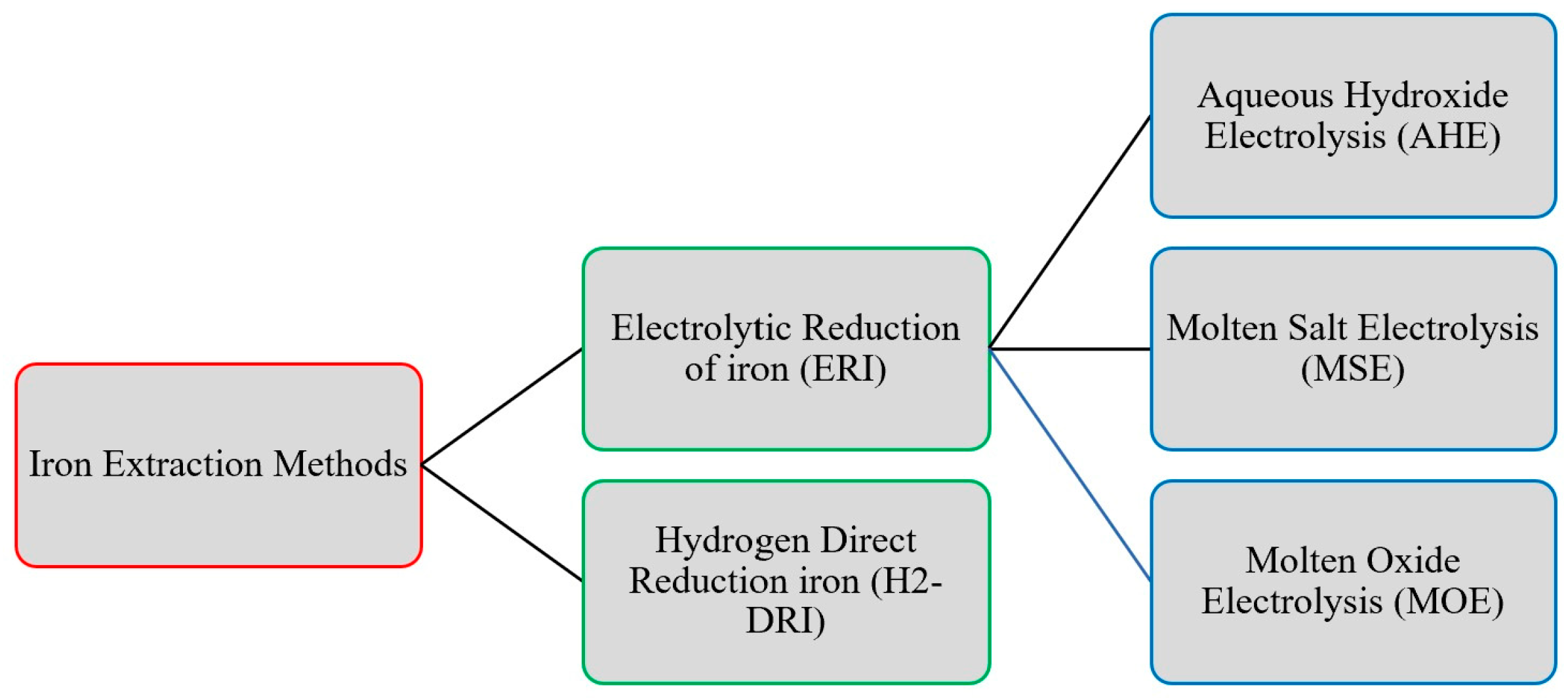
Electrolysis of iron (ERI) is a new technique for creating metallic iron from iron oxides. It uses electrical energy to reduce metal oxides to metals. ERI offers benefits such as low energy use and high efficiency. It also reduces greenhouse gases such as CO2. ERI includes several methods for producing iron from oxides. These methods employ molten-salt systems and other electrolytic environments. Figure 2 depicts the modern iron production process, which includes H2-DRI and ERI.
One crucial point in the electrolysis process is selecting the appropriate environment. Some materials are electrolyzed in aqueous solutions, whereas others require electrolysis in a molten salt environment. The reason for this difference is in the reduction and oxidation potential of these materials. Table 1 shows the reduction potential of various metals with respect to hydrogen. In aqueous electrolysis, aqueous solutions containing metal and non-metal ions are decomposed at the electrodes. Metals such as copper (Cu) and silver (Ag), which have a higher reduction potential than hydrogen, are easily reduced in an aqueous environment. In this case, water acts as a solvent and an ion carrier, and electrochemical reactions occur at the electrode surfaces. In this type of electrolysis, elements with a reduction potential lower than that of hydrogen can be reduced in an aqueous environment by applying an additional potential of approximately 1.1 V. In contrast, metals such as sodium (Na), potassium (K), and aluminum (Al), which have very low reduction potentials (less than −1), require molten salt electrolysis conditions. These metals cannot be electrolyzed in aqueous media because their reduction potentials are very negative and require much more energy to reduce them. These elements are produced at a much more negative potential at the hydrogen cathode in aqueous media. For this reason, molten salt presses are essential for the electrolysis of these metals.

5. Classification of Electrolysis Processes

5.1. Aqueous Hydroxide Electrolysis (AHE)

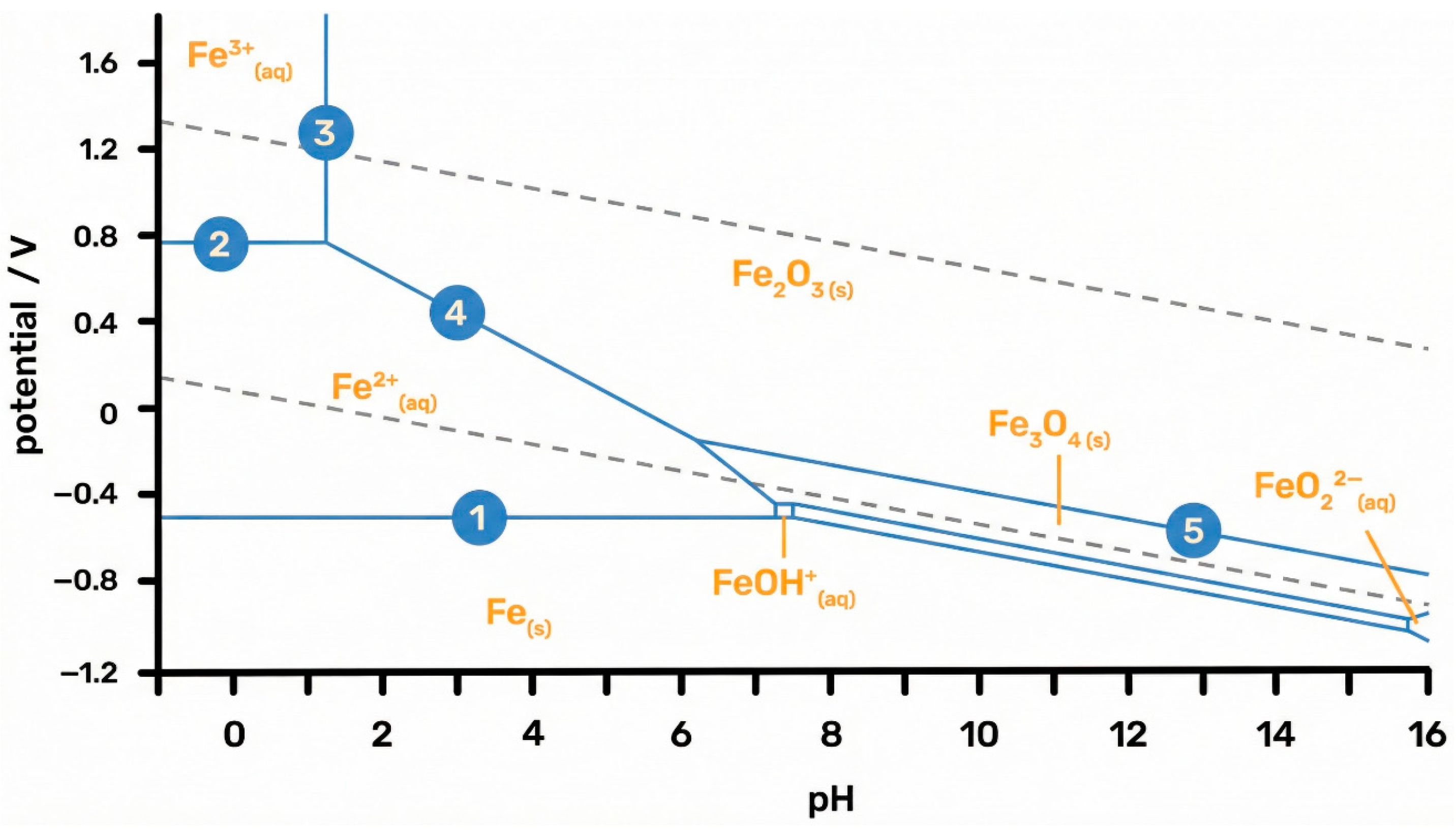
Figure 3 illustrates the Pourbaix diagram, which illustrates the electroreduction of iron oxide in acid and alkaline aqueous electrolytes [17]. Aqueous hydroxide electrolysis (AHE) involves the electrochemical reduction in a suspension of Fe2O3 in an alkaline electrolyte NaOH, which is carried out under low temperature conditions (110 °C). In this cell configuration, a rotating graphite cathode improves fluid dynamics, thereby increasing the rate of surface reactions. Because it releases oxygen at the anode and reduces thermal energy consumption, this method is recognized as a strategic, energy-efficient technique in the roadmap for green iron production. A new, sustainable method for producing iron via low-temperature electrolysis is introduced, using conductive Fe2O3/carbon colloidal electrodes on a porous nickel foam substrate. In this process, flowable Fe2O3/carbon colloids are electrolyzed at 100 °C under a constant voltage of −1.7 V in a 50% (w/w) NaOH electrolyte. The product is pure iron powder, and the only byproduct is oxygen gas, which can be collected [24]. Hematite solubility increases with temperature and alkali-hydroxide concentration. Further, hematite is more soluble in NaOH than other alkali hydroxides such as KOH and LiOH. However, the low solubility of iron oxide in both solvents may make it challenging to perform a quick transformation to obtain Fe-ions for electrodeposition [17].
A major limitation of aqueous hydroxide electrolysis is the occurrence of parasitic reactions at the cathode–electrolyte interface. In addition to the competing hydrogen evolution reaction (HER), the coexistence of Fe2+/Fe3+ redox couples can promote charge losses through reversible iron redox cycling, while dissolved oxygen may chemically oxidize Fe2+ back to Fe3+ (Fe2+ + 1/2O2 → Fe3+ + O2−), thereby reducing the effective current efficiency for metallic iron deposition. These parasitic processes become increasingly significant at low overpotentials, elevated temperatures, and insufficient control of electrolyte composition [17,19].

5.2. Molten Salt Electrolysis Process (MSE)

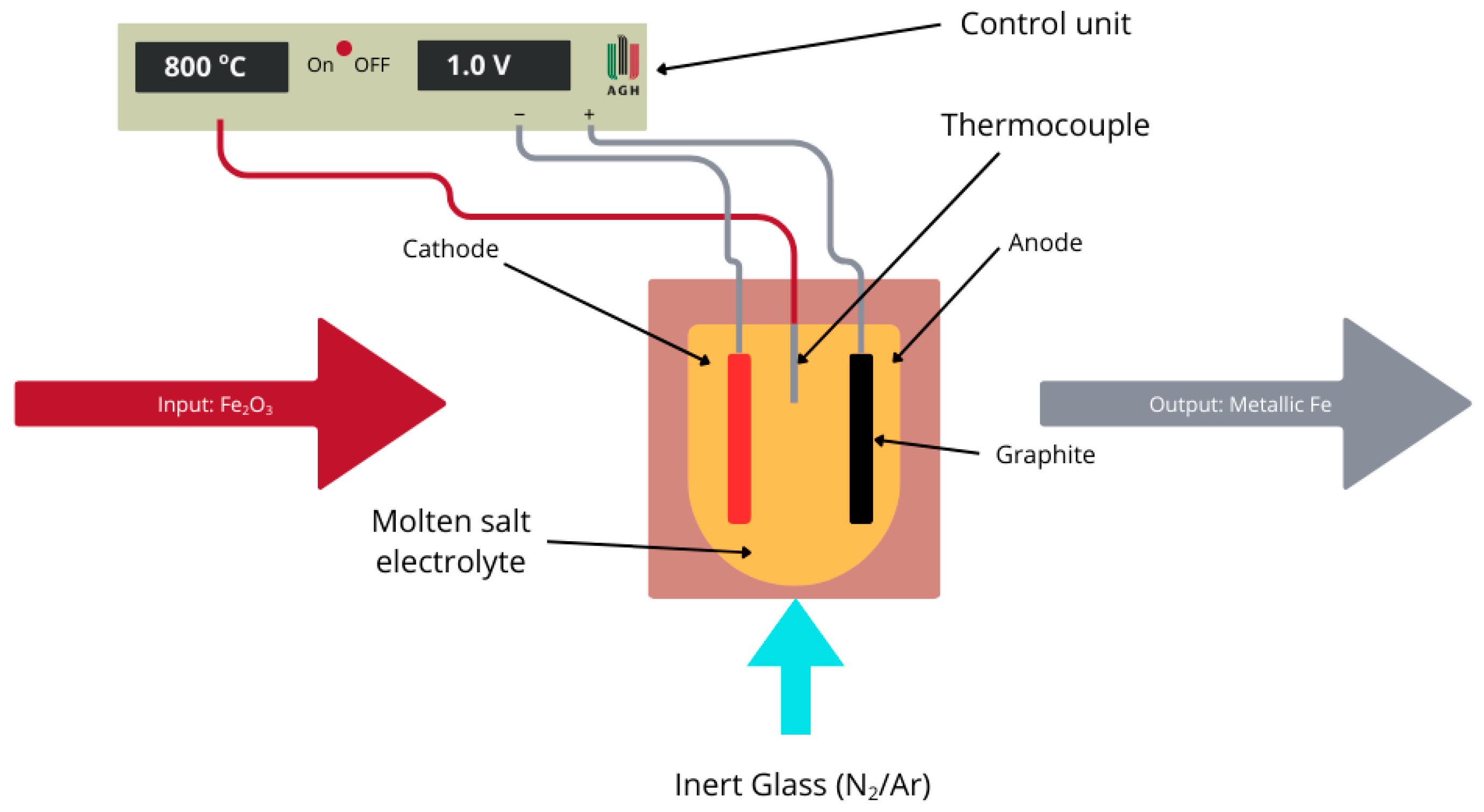
Molten salt electrolysis is a modern technique for extracting metals, particularly iron, using molten salt electrolytes. In this process, molten salts serve as the electrolyte, typically composed of chlorides, carbonates, metal hydroxides, or metal oxides. Molten salt electrolysis falls into two categories based on the electrolyte used and the cell operating conditions. The first, conducted at roughly 600–1000 °C, reduces iron oxides to metallic iron. This process, called molten salt electrolysis (MSE), uses a molten salt electrolyte as the conductive medium between the anode and cathode. Oxygen ions are released as O2−, migrate toward the anode, and are reduced to gaseous oxygen. Meanwhile, iron ions move toward the cathode and are reduced to metallic iron [25]. This method directly converts metal oxides into pure metals with high efficiency. It is important because it consumes less energy and can operate at lower temperatures compared to other methods. It is commonly used to produce metals like iron, titanium, and their alloys [24]. The general schematic of this process is shown in Figure 4.
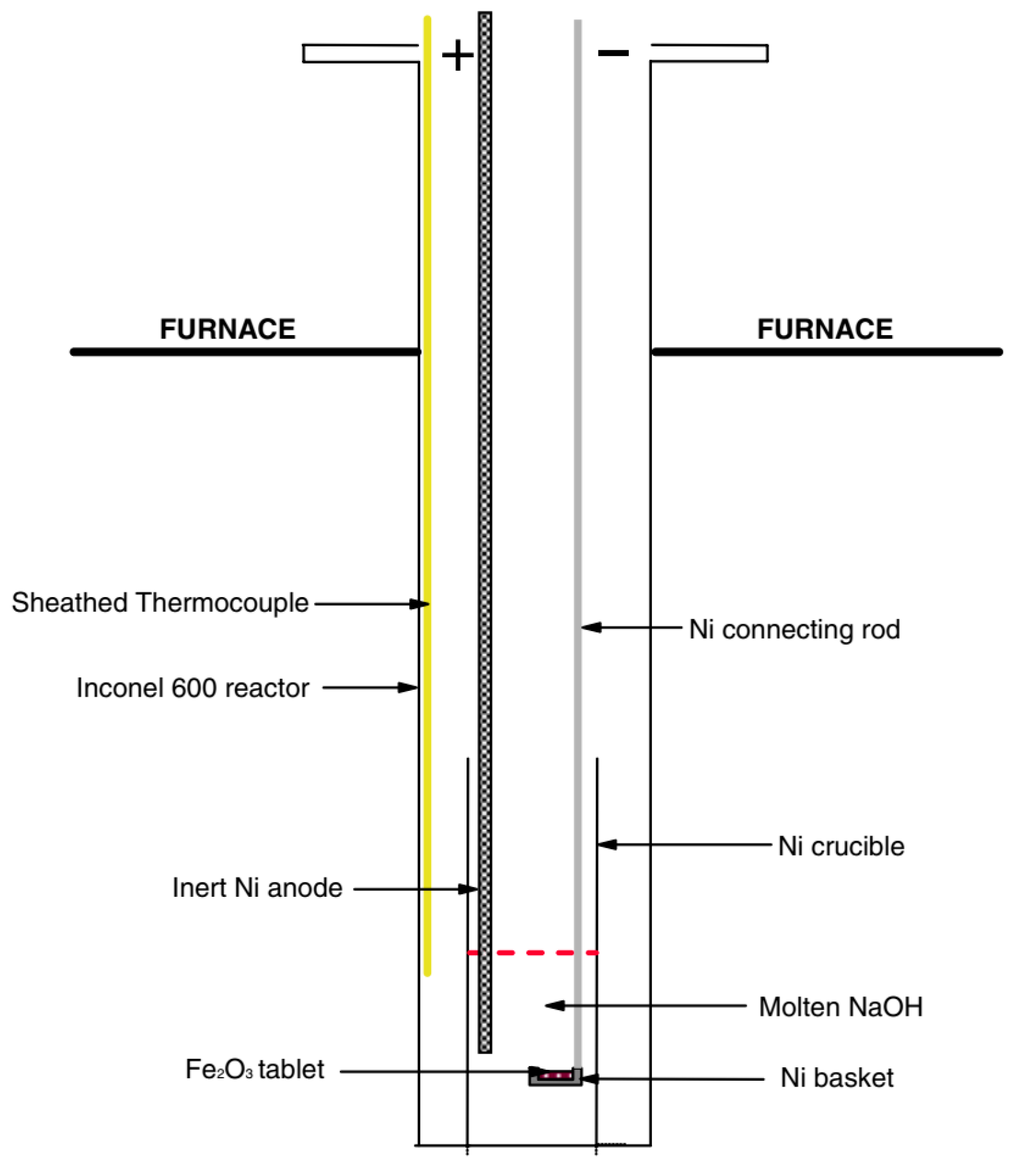
Previous research has investigated the production of iron from molten salts such as NaCl–KCl and NaF–KCl containing FeCl2 [26]. To produce iron, Fe2O3 was dissolved in these molten salts, including both chloride and fluoride types [27]. The solubility of Fe2O3 can be increased by adding AlCl3. Haarberg and colleagues [10] studied the electrochemical properties of iron in CaCl2–CaF2. There has been considerable study of Fe2+ electrochemical behavior in eutectic mixtures of NaCl–KCl in various systems such as KCl–LiCl, MgCl2–KCl–NaCl, CaCl2–CaF2, and ZnCl2–NaCl [4,28,29,30]. Moreover, they studied the electrochemical behavior of Fe3+ in an emulsion of LiCl–KCl–NaCl [31]. Various factors affect the electrochemical behavior of Fe3+ in molten salts, including temperature and salt composition. In addition to providing insight into Fe2+ and Fe3+ reduction mechanisms, these studies provide information essential to optimizing iron production from molten salts. Electrolysis of iron in CaCl2-CaF2 (20–80 mol%) with 1 mol% Fe2O3 was performed using a rotating iron cathode (210 rpm) at 890 °C via the galvanostatic method. The cathode was a rotating iron rod, and the anode was a sintered magnetite rod. The cell was operated under argon to remove air. The process achieved over 90% current efficiency, producing pure iron with over 92% purity [10]. In a different study, the electrochemical behavior of Fe2O3 dissolved in molten 82.5 CaCl2-17.5KF (mol%) was examined at 827 °C. During these experiments, pure iron precipitated from iron (III) complexes, with precipitation controlled by diffusion. The diffusion coefficient of iron(III) species in this melt was calculated from voltametric data and was 9.7 × 10⁻⁵ cm2/s. Small amounts of Fe3O4 were detected in the iron product, likely due to the reduction in Fe2O3 by carbon (from a carbonaceous plant) [28]. To address this, researchers electrolytically reduced iron (III) oxide pellets in molten sodium hydroxide at 530 °C. The resulting iron contained 2% oxygen and was suitable for remelting. The electrolytic cell operated at 1.7 V with a neutral nickel (Alloy 201) anode. By controlling the activity of sodium oxide in the melt, the cell maintained a voltage below the electrolyte’s decomposition threshold. The main reactions involved oxygen ionization, its transfer to the anode, and discharge at the anode, leaving iron at the cathode. Reducing a 1 g of iron oxide pellet at a current density of 520 mA/cm2 took about 1 h. The iron yield was approximately 90% by weight, with an energy consumption of around 2.8 kWh/kg. Figure 5 shows a schematic of the cell [30].
In another report, iron and oxygen were electrochemically produced in a Na2CO3-K2CO3 eutectic melt at 750 °C using a solid iron-oxide pellet cathode and an inert Ni10Cu11Fe alloy anode. They examined the detailed reduction mechanism of solid Fe2O3 in the melt and how the reduction potential affected the carbon content of the iron product. The results showed that the reduction in Fe2O3 occurred in three stages, with the formation of intermediate products, including NaFe2O3 and NaFeO2. Depending on the applied cathodic potential, the carbon content ranged from 0.035 to 0.76 wt%. It was also observed that higher carbon content in iron products could be achieved through electrolysis at higher cell voltages or more negative potentials [3].
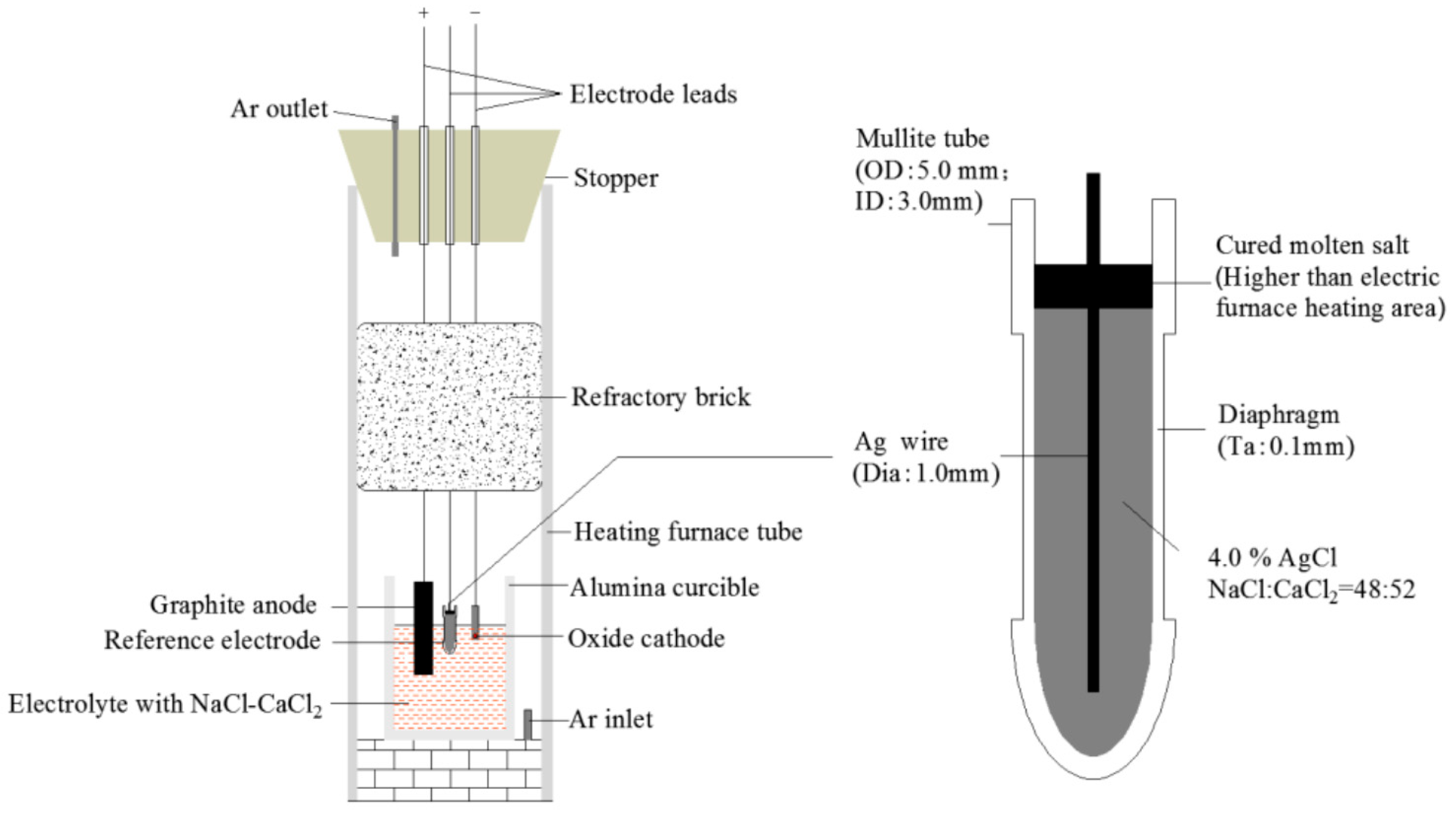
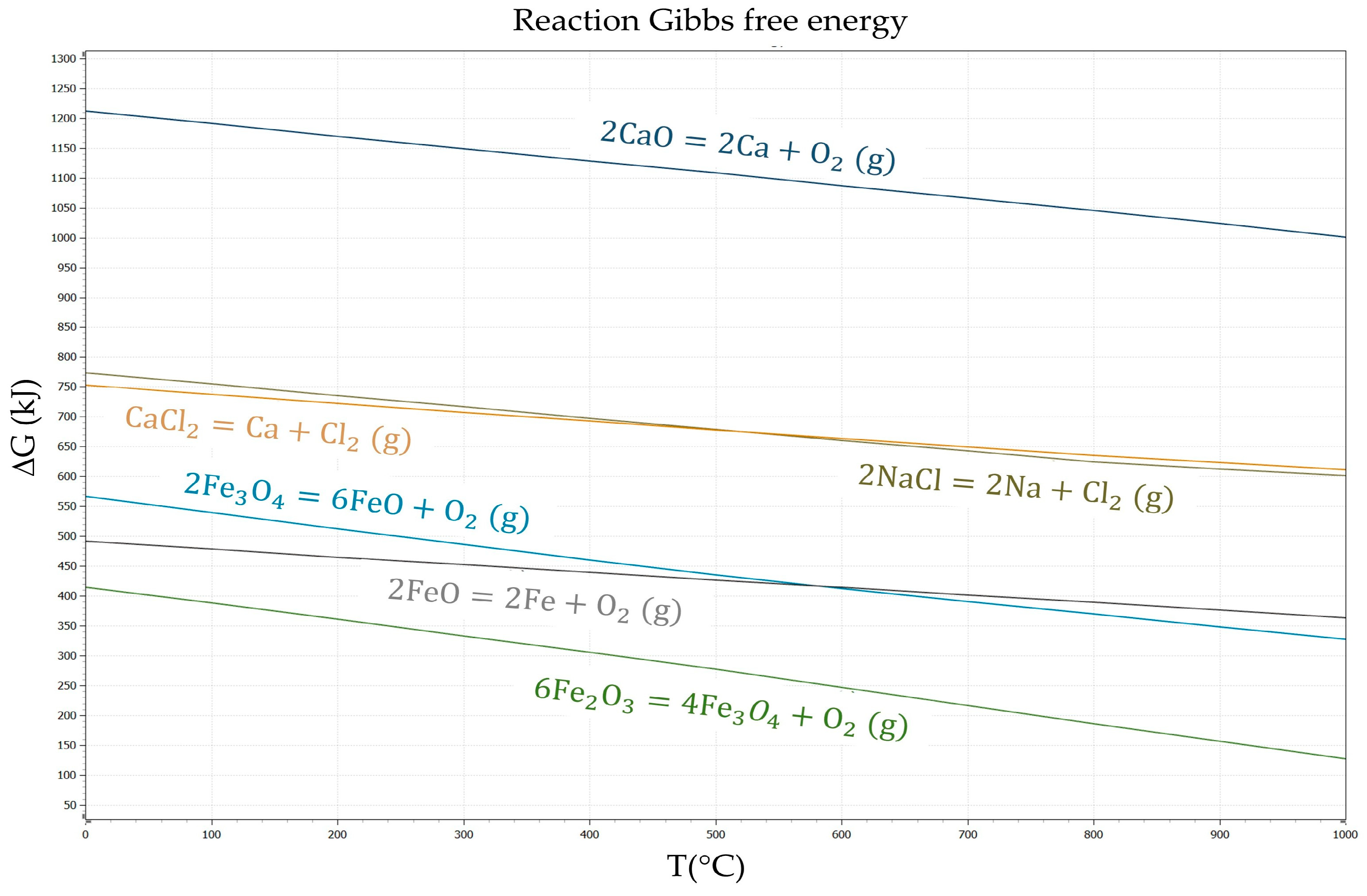
The electrochemical reduction in Fe2O3 in NaCl-CaCl2 melts at 800 °C was investigated. The decrease in Fe2O3 has been reported to proceed in three steps, in which two electrons are transferred per step, yielding metal (Fe2O3 → Fe3O4 → FeO → Fe). By-products such as Fe3O4 and FexO were also observed. To determine the optimal conditions, an electrolysis voltage between 0.3 and 1.2 V was selected, yielding high efficiency and low energy consumption. By applying a voltage of 1.2 V, metallic iron with a particle size of 5 μm and a current efficiency of 95.3% was obtained. Additionally, the energy consumption was reported to be 3.35 kWh/wt. The schematic of a three-electrode electrochemical cell is shown in Figure 6 [15]. Calculated Gibbs free energy vs. temperature is shown in Table 2 and the resulting curves are shown in Figure 7.
In a follow-up study, researchers developed a method to produce iron by directly reducing iron oxide, whether in pellet or powder form, using hydrogen generated in situ within a molten-salt electrolyte. To do this, water is introduced into the molten-salt reactor as a hydrogen source, hydrolyzing the molten lithium chloride electrolyte and creating hydrogen cations (protons) in the melt. These protons can be discharged at a low cell voltage of only 0.97 V to produce hydrogen gas, which then reduces iron oxides in the melt. The electrolysis was performed at 660 °C, about 50 °C above the nominal melting point of LiCl. The voltage used in this process is notably less than the over 1.5 V typically required for hydrogen production by water splitting at lower temperatures. Additionally, the hydrogen produced is immediately used to reduce iron oxide to iron, eliminating concerns about hydrogen storage and transport. Another significant advantage of this technology is that H2 is generated at high temperatures, where hydrogen reduction of iron oxides is thermodynamically more favorable [32]. Direct reduction in Fe2O3 powder, rather than porous Fe2O3 pellets, can simplify the process and lower energy consumption. It can also enhance the kinetics of molten-salt hydrogen reduction by increasing the interface area between Fe2O3 particles and the melt, thus facilitating hydrogen reduction [15].
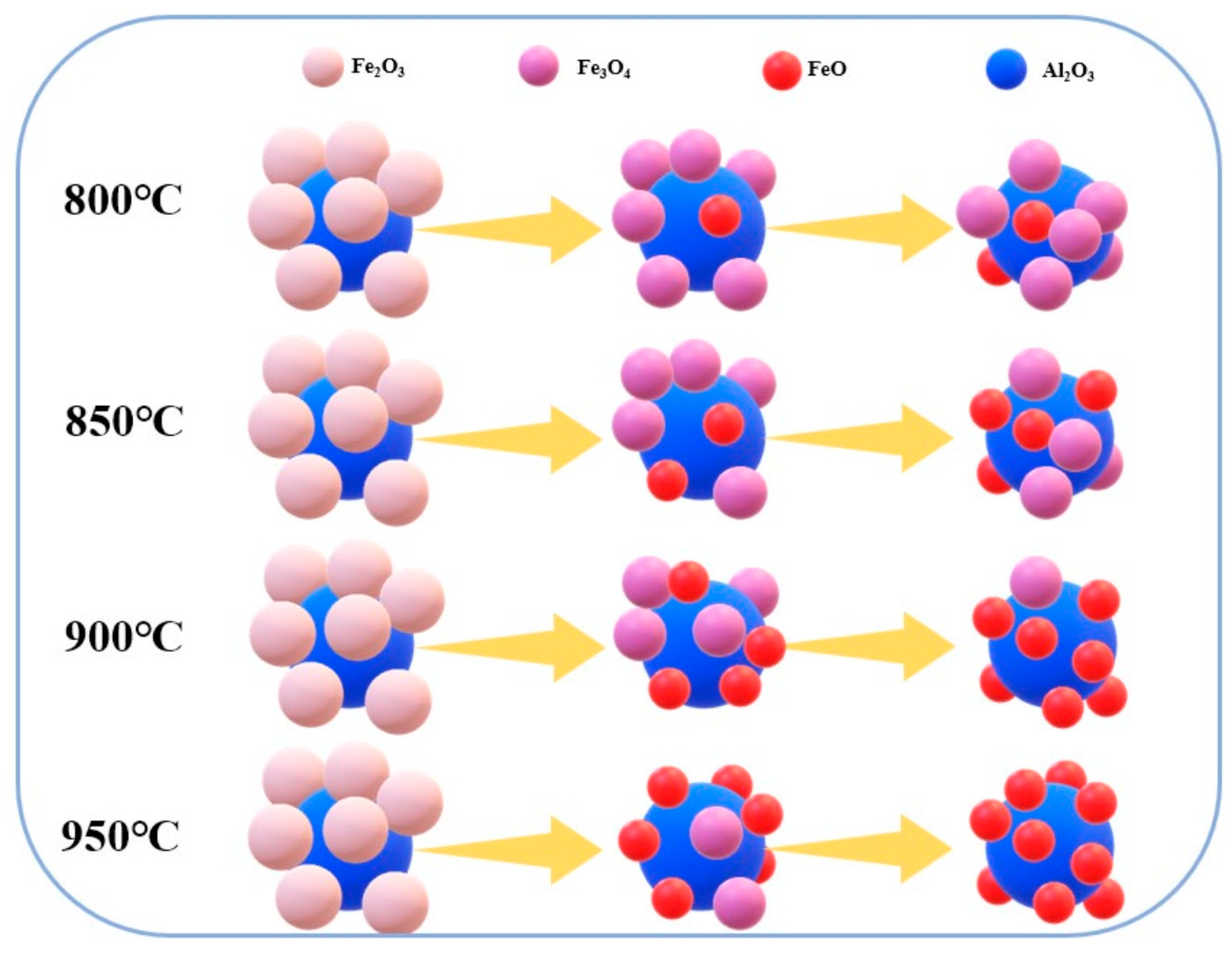
The production of an iron-nickel alloy with low chromium (Cr) and titanium (Ti) contents from pretreated red mud via molten-salt electrolysis was investigated. Pretreatment of red mud involves heating it with Na2CO3 in a graphite crucible at 1000 °C for 1 h, followed by leaching and drying [33]. Electrolysis of the pretreated red mud’s FeO was also examined. In another study, the molten salt electrolysis method was used to prepare FeO using a molten salt system (1:1) of NaCl-KCl and raw materials Fe2O3 and Al2O3, with a focus on how temperature affects the process. Fe2O3 and Al2O3 were weighed at a mass ratio of 3:2, then thoroughly mixed. The electrolysis of Fe2O3 to FeO includes three steps: the electric double-layer charging, the conversion of Fe2O3 to Fe3O4, and the conversion of Fe3O4 to FeO. Higher temperatures can accelerate the reaction rate and improve electrolysis efficiency. As the temperature increases, less Fe3O4 and more FeO are observed in the sample. According to Figure 8, analyses via XRD, I-t curve, and SEM showed that increasing temperature impacts the theoretical voltage of the electrolysis reaction and raises the total potential supplied by the power supply. At higher temperatures, the molten salt becomes less viscous, facilitating O2 transport [18].
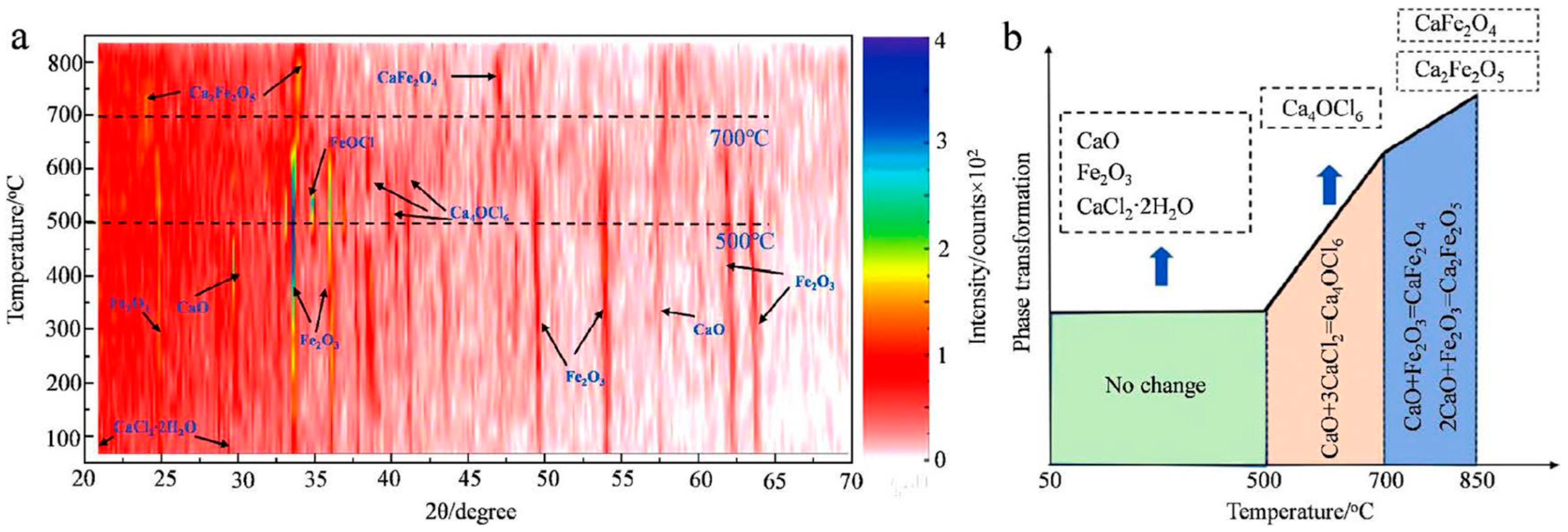
The effect of molten salts containing calcium on the electrolysis of metal oxides for metal production was investigated, as their presence can lead to CaO formation and ultimately affect the metal-reduction process. Studies were conducted using a Fe2O3-CaO cathode and a graphite anode in a NaCl-CaCl2 molten salt electrolyte at 800 °C. They showed that the addition of CaO to the Fe2O3 cathode leads to the rapid formation of Ca2Fe2O5 in the molten salt upon application of an electric current. The reduction in Ca2Fe2O5 leads to Fe3O4, FeO, and finally iron. The presence of CaO accelerates the electrochemical reduction, thereby promoting iron production. At a voltage of 0.6 V and after 600 min, all Ca2Fe2O5 is converted to iron and CaCO3 [34]. A new electrochemical method for producing high-purity iron (99.92%) is presented. Molten salt electrolysis was used to directly extract iron from Fe2O3 (iron oxide) in the CaCl2-CaO system at 850 °C. The results showed that the produced iron was highly pure, with purity increasing to 99.995% via plasma melting. Additionally, they fabricated various iron structures, such as compact films and dendritic particles, by varying electrolysis conditions (e.g., current density and electrodeposition time). To further investigate this process, XRD and in situ high-temperature analysis were employed. In Figure 9, it was observed that after immersing the Fe2O3 tablet in the CaCl2-CaO melt, calcium ferrite compounds such as CaFe2O4 and Ca2Fe2O5 are formed, which indicates the effect of CaO in increasing the solubility of Fe2O3 and the formation of these compounds [35].
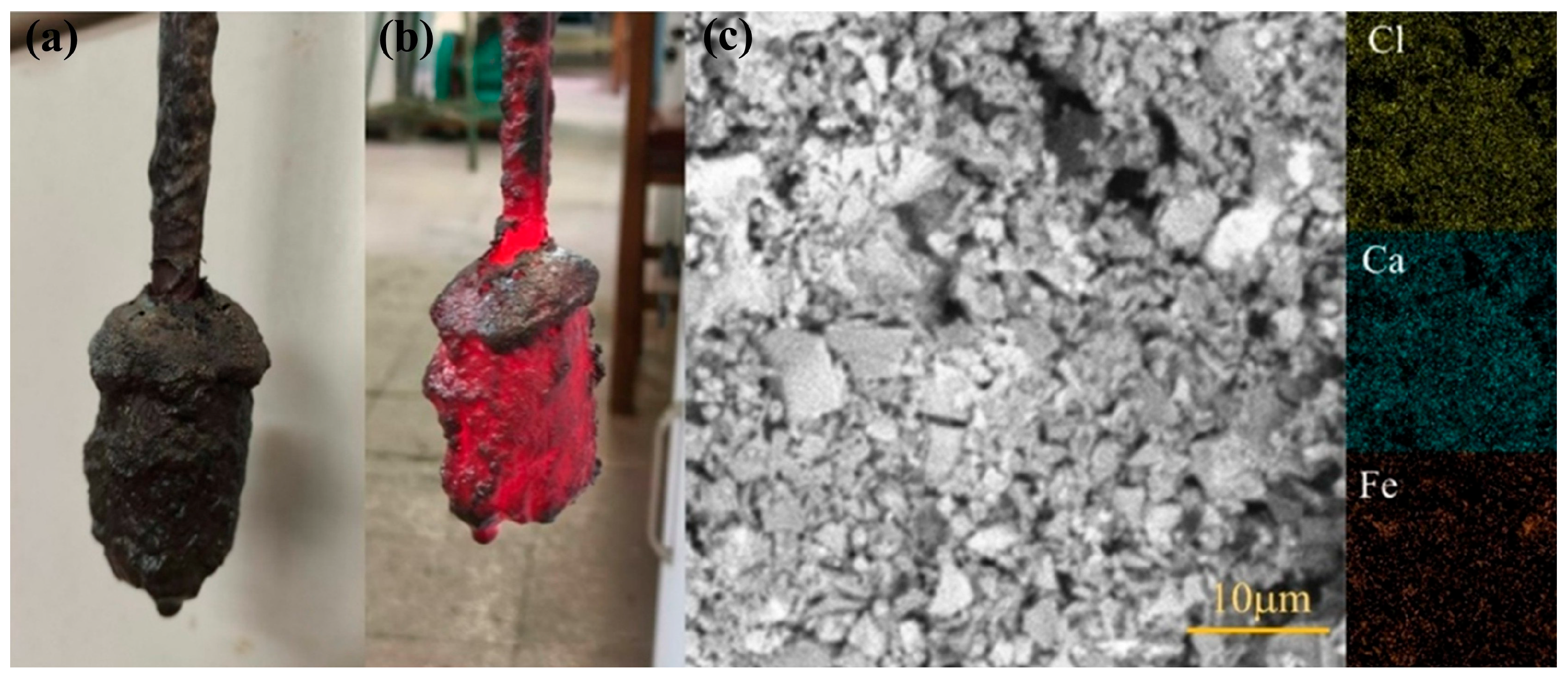
Figure 10 of the output product on the cathode and the SEM analysis of the output product show. In the optimized molten-salt electrolysis process, the final sample formed on the steel cathode indicates the successful electrochemical reduction of iron metal. Macroscopic images of the solid samples clearly show the formation of dense deposits adhering to the electrode. In the sample recorded in the semi-hot state, a molten, cooling metal mass is visible, indicating proper adhesion of the product to the electrode and a high reduction rate at the process’s operating temperature. From a process engineering perspective, these features indicate stable operating conditions and proper control of electrolyte composition and current intensity.
The elemental mapping (EDS) results for Cl, Ca, and Fe also provide a clear picture of the final product’s relative purity. The iron element is uniformly distributed on the surface, and its strong presence indicates a high concentration of iron metal phase formation in this area. In contrast, the elements chlorine and calcium are known as impurities originating from the combination of the initial electrolyte and associated minerals.

5.3. Molten Oxide Electrolysis Process (MOE)

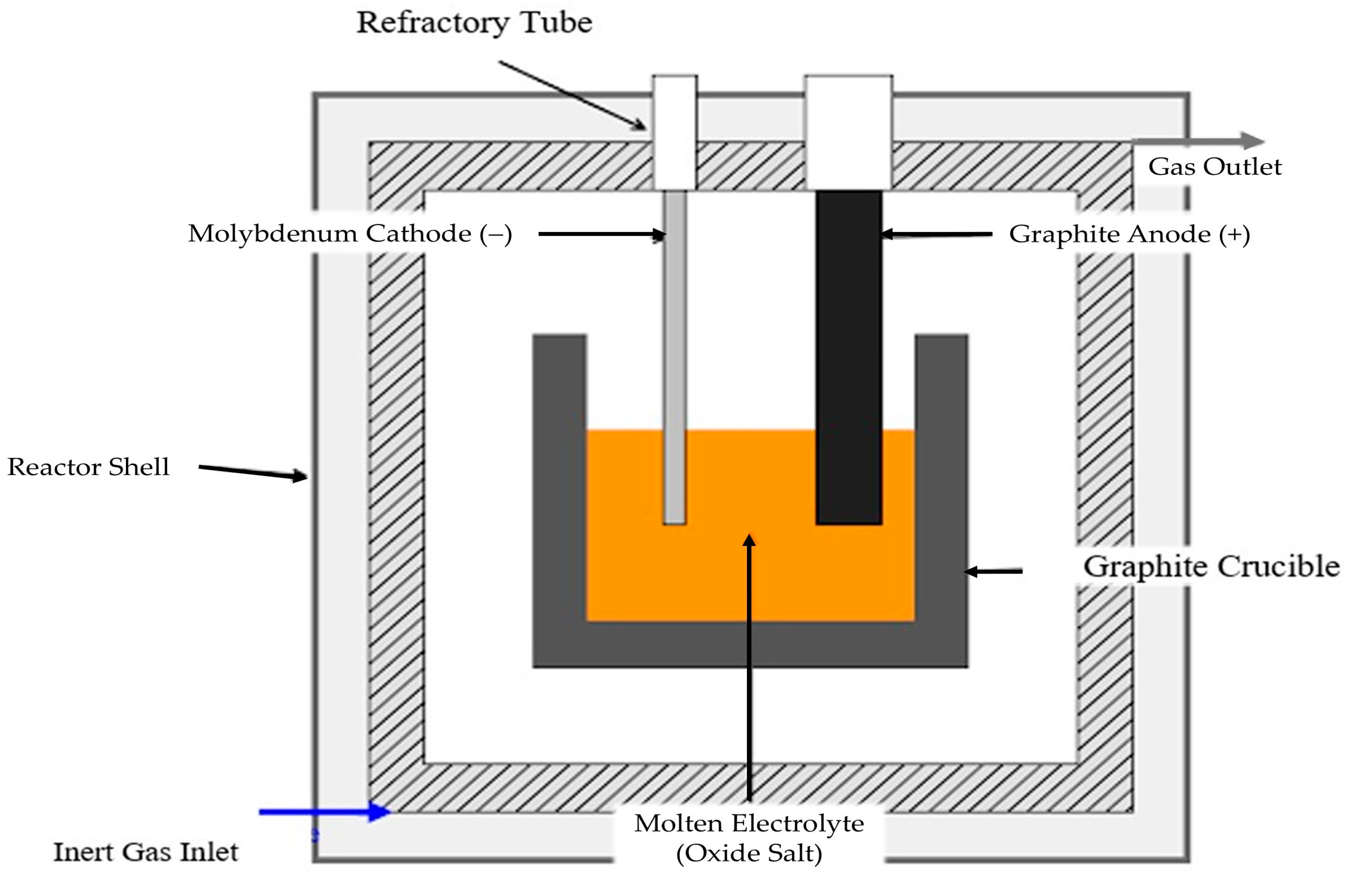
The third category of molten-salt electrolysis processes operates at 1000–1600 °C and is called molten oxide electrolysis (MOE). It typically uses metal oxide electrolytes, where iron oxides are reduced to liquid iron while releasing O2 as a by-product at the anode. This process takes place at high temperatures in a molten oxide system with a passive anode. It is known for its high efficiency and for producing no greenhouse gas emissions in iron production. This method is widely used to produce iron and steel sustainably with reduced CO2 emissions [24]. However, because of the high process temperatures, some metals can corrode during anodic polarization, which limits the choice of suitable passive anodes for their development [34]. The general schematic of this process is shown in Figure 11.
The focus was on the behavior of iron ions and the electrowinning of iron at temperatures between 1400 and 1550 °C. To build a molten oxide electrolysis cell, the oxide mixture is usually placed in a molybdenum or Si3N4 crucible [36], positioned on a graphite base inside the furnace, with alumina shields placed on top of the crucible to reduce heat loss. Brass caps with a water-cooled system are installed on top of the furnace, and argon gas is supplied from the bottom. Molybdenum rods act as the working and reference electrodes, protected by alumina tubes. All electrodes are inserted into the furnace through holes in the cap and securely fixed. The furnace is heated to 1400–1600 °C, and during this process, Fe2O3 is added via a pipe [37].
Performing electrolysis and electrochemical measurements in an oxide-based electrolyte presents challenges. Since the system is oxide-based and the electrolyte must be liquid, the operating temperature is very high, above 1200 °C. Pure iron has a melting point of 1535 °C, and depending on the electrolysis temperature, the iron produced will be solid or liquid. Finding a suitable electrolyte with appropriate properties (such as viscosity and conductivity), selecting the right materials for the electrochemical cell, producing liquid iron, determining the electrode kinetics and reaction mechanism, and finding an inert anode that produces oxygen are some of the main challenges of this process. The research used a mixture of molten oxides SiO2, MgO, Al2O3, and CaO as well as Fe2O3 as the iron source. Iron can be deposited from molten electrolytes containing Fe2O3 onto molybdenum cathodes, although the current efficiency was very low [37].
To investigate the electrochemical reduction of silicon on iron and molybdenum electrodes in a molten silicate medium (SiO2–Li2O–MgO) with the goal of forming silicon-containing alloy layers. Molten oxide electrolysis can be used to synthesize these alloy layers. This process is important due to the increasing need for silicon-containing alloys in high-temperature applications, such as enhancing corrosion resistance and magnetic properties. Silicon-containing iron is utilized in transformers and electric motors because of its soft magnetic properties. The possibility of directly producing iron and iron-nickel alloys in molten oxides will also be explored. Iron electrodeposition was conducted at 1723 K using a graphite anode and a molybdenum cathode in a CaO-MgO-SiO2-Al2O3-Fe2O3 bath, and pure iron was obtained at the molybdenum cathode. Direct production of iron-nickel alloys is also feasible. The potential-time diagram, where the cell voltage was initially 12 V, decreased to 3 V within 30 min, and remained nearly constant until the end of the process. This voltage change occurred due to the formation of iron nuclei on the cathode and surface modifications. The voltage fluctuations were also caused by gas bubble formation at the anode and by changes in its effective surface area during electrolysis [36]. To investigate the feasibility of directly producing Fe-Ni-Cr alloy via electrolysis of molten oxides, the electrolytic deposition of Fe-Ni-Cr alloy in a molten oxide system was tested in two types of electrolytes. In a molten CaO (47%wt)-MgO (6%wt)-Al2O3 (47%wt)-Fe2O3 (15%wt)-Cr2O3 (15%wt)-NiO (15%wt) bath, Fe-Ni-Cr alloy was successfully prepared by simultaneously using molybdenum rods as cathode and anode at 1550 °C. The results demonstrated the feasibility of producing a Fe-Ni-Cr alloy via the electrolysis of molten oxides. However, due to low current efficiency, a shortage of suitable anode materials, and other issues, there is still a long way to go before industrialization.
The kinetic parameters for the charge-transfer steps and the mechanism of Fe (III) ion reduction were investigated using cyclic voltammetry and square-wave voltammetry. The results showed that two steps are involved in the electrochemical reduction in Fe (III) ion: Fe3+ + e → Fe2+ and Fe2+ + 2e → Fe. The quaternary (four-component) phase diagram is used as a tool to investigate the range of possible compositions and melting points in the said quaternary system [38]. NaF was also added to the oxide melt as a lubricant and conductivity enhancer.

6. Discussion

6.1. Comparative Assessment of AHE, MSE, and MOE

The transition toward “Green Steel” is no longer a theoretical pursuit but an industrial necessity, given that current production methods emit 1.9 tons of C O 2 per ton of steel. The findings of this review highlight a clear trade-off between operating temperature, energy efficiency, and material complexity across the three primary electrochemical routes: AHE, MSE, and MOE. To facilitate a direct comparison, Table 3 summarizes the key technological parameters of AHE, MSE, and MOE, including operating temperature, energy consumption, current efficiency, product form, anode materials, technological barriers, and technology readiness level.
Data shown in Table 3 compiled from Refs: AHE → [8,9,17]; MSE → [10,15,30,34]; MOE → [11,16,36,37].
A clear trade-off emerges between operating temperature, energy efficiency, material requirements, and technology readiness level across the three electrochemical routes. While increasing temperature generally improves ionic conductivity and reduces electrochemical overpotentials, it simultaneously imposes stringent constraints on electrode and reactor materials, which currently limits the TRL of molten oxide electrolysis. In contrast, hydrogen-based ironmaking technologies are considerably more advanced in terms of industrial readiness and materials simplicity; however, their deployment involves additional system-level complexity and safety challenges related to hydrogen production, storage, and explosion risk, which may offset their apparent technological maturity in the long term.

6.2. Key Technological Bottlenecks

While Aqueous Hydroxide Electrolysis (AHE) offers the simplest system design and operates at low temperatures (~110 °C), its industrial throughput is fundamentally limited by the low solubility of iron oxides in alkaline media. This necessitates high-purity, porous raw materials to maintain efficiency. In contrast, Molten Oxide Electrolysis (MOE) provides the most direct path to liquid iron production, bypassing several processing steps. However, as noted by the authors, the extreme operating conditions (up to 1600 °C) impose severe requirements on inert anode materials, which must withstand both the corrosive melt and evolved oxygen.
Molten Salt Electrolysis (MSE) emerges as a balanced alternative, particularly when utilizing additives like CaO to facilitate the formation of calcium ferrites ( C a 2 F e 2 O 5 ), which accelerate the reduction path. Yet, even in MSE, the “bubble effect” at the electrode interface—driven by high melt viscosity—remains a significant bottleneck that increases ohmic resistance and decreases current efficiency.
A critical point of discussion is the competition between electrowinning and hydrogen-based pyrometallurgy (H-DRI). Currently, H-DRI is often viewed as the primary rival to electrochemical iron production.
The research by Xie and Kamali suggests a potential synergy where hydrogen is generated in situ within a molten salt reactor. This approach eliminates the logistical challenges of hydrogen storage and transport while utilizing the favorable thermodynamics of high-temperature hydrogen reduction.
Direct electrolysis (MOE/MSE) theoretically offers higher energy efficiency by using electrons directly to reduce iron ions, whereas hydrogen-based routes require the intermediate step of water electrolysis followed by gas–solid reduction in a furnace.
Despite the ecological attractiveness of pure electrolysis, H-DRI benefits from being more compatible with existing shaft furnace infrastructures. For electrolysis to become the dominant technology, the industry must overcome the “anode problem” and the physical limits imposed by melt viscosity on gas transport.
The analysis confirms that temperature and pressure are not merely environmental conditions but active drivers of kinetics. Increasing temperature reduces viscosity, which is essential for oxygen ion displacement. However, the management of evolved gas pressure is vital; failing to clear gas bubbles from the cathode leads to increased voltage drops and facilitates undesirable side reactions.
In conclusion, the path to decarbonizing the steel industry may not rely on a single technology but on the strategic integration of these methods. The presence of and the control of ionic capacity (z) remain fundamental to optimizing the electrical charge expenditure required for high-purity iron extraction.

6.3. Industrial Feasibility and Scale-Up Considerations

Beyond laboratory performance metrics, the industrial feasibility of electrochemical iron production is governed by scale-up challenges, continuous operation, electrode lifetime, and integration with renewable electricity. While aqueous and molten-salt systems benefit from lower operating temperatures and comparatively simpler reactor designs, maintaining stable long-term operation is limited by electrode degradation, electrolyte management, and gas evolution at high current densities. Molten oxide electrolysis offers the most direct route to liquid iron production; however, its industrial implementation is currently constrained by extreme thermal loads, refractory corrosion, and the lack of durable inert anodes capable of sustained operation. Across all electrochemical routes, the intermittent nature of renewable power introduces additional system-level constraints, necessitating flexible cell designs and advanced process control strategies to ensure stable and economically viable operation at scale.
Beyond process efficiency and materials challenges, the potential reduction in global warming potential (GWP) represents a key driver for the development of electrochemical ironmaking technologies. Recent life cycle assessment studies indicate that electrowinning- and molten-salt-based iron production routes can substantially reduce greenhouse gas emissions compared to the conventional blast furnace–basic oxygen furnace (BF–BOF) process, provided that low-carbon electricity is available. For example, Harpprecht et al. [39] reported that the GWP of electrochemical iron production can be reduced by more than 50–70% relative to BF–BOF steelmaking, depending on the electricity mix and system boundaries considered.
It should be noted that the environmental performance of electrochemical routes is strongly coupled to the carbon intensity of the electricity supply. When powered by renewable or low-carbon energy sources, molten salt electrolysis and related electrowinning processes offer a clear pathway toward near-zero-emission iron production. Conversely, if fossil-based electricity dominates, the overall GWP advantage may be significantly diminished. Therefore, the integration of electrochemical ironmaking with renewable electricity systems is a critical prerequisite for achieving meaningful climate benefits and for positioning these technologies as viable alternatives to hydrogen-based direct reduction routes.

6.4. Comparative Analysis of Electrolysis and H-DRI Routes

At the system level, electrochemical iron production competes most directly with hydrogen-based direct reduction (H-DRI), which has progressed more rapidly toward industrial deployment due to its compatibility with existing shaft-furnace infrastructure and comparatively simple material requirements. However, H-DRI relies on large-scale hydrogen production, compression, storage, and transport, introducing additional energy penalties and safety considerations related to hydrogen handling and explosion risk. In contrast, direct electrolysis routes avoid intermediate reductants by utilizing electrons as the primary reducing agent, offering a theoretically higher thermodynamic efficiency but facing unresolved materials and scale-up challenges. Hybrid concepts, such as in situ hydrogen generation within molten-salt electrolysis systems, may provide a promising compromise by combining the material simplicity and kinetics of hydrogen reduction with the system integration benefits of electrochemical processes, potentially reducing both infrastructure complexity and overall energy consumption.

7. Conclusions

The iron and steel industry remains a cornerstone of global infrastructure; however, its continued reliance on carbon-intensive production routes accounts for approximately 4–5% of global greenhouse gas emissions, with a specific footprint of about 1.9 tons of CO2 per ton of steel produced. In this context, electrochemical ironmaking represents a promising pathway toward deep industrial decarbonization.
This review critically examined three major electrochemical routes for iron production—Aqueous Hydroxide Electrolysis (AHE), Molten Salt Electrolysis (MSE), and Molten Oxide Electrolysis (MOE)—highlighting their respective advantages and technological limitations. AHE offers the simplest system design and low operating temperatures but remains constrained by the limited solubility of iron oxides and strict raw material requirements. MSE, operating at intermediate temperatures, provides a balanced compromise between energy efficiency and materials stability, with calcium-assisted pathways significantly accelerating reduction kinetics through the formation of calcium ferrites. MOE enables the direct production of liquid iron but faces substantial challenges related to extreme operating temperatures and the long-term stability of inert anode materials.
The analysis demonstrates that temperature and pressure are not merely operational parameters but key drivers of electrochemical performance. Elevated temperatures enhance ionic mobility and reduce melt viscosity, facilitating oxygen ion transport, while inadequate gas management can lead to bubble-induced ohmic losses and reduced energy efficiency. Although electrochemical routes offer clear environmental advantages, they currently compete with hydrogen-based direct reduction technologies, which benefit from higher technological readiness. Hybrid concepts, such as the in situ generation of hydrogen within molten salt systems, may provide a viable bridge between these approaches.
Overall, the industrial deployment of electrochemical ironmaking will depend primarily on the development of durable, cost-effective inert anodes and the realization of scalable, continuous process designs. Addressing these challenges could enable electrochemical technologies to play a central role in the transition toward low-carbon steel production, effectively decoupling industrial growth from greenhouse gas emissions.

Author Contributions

Conceptualization, H.A. and E.M.; methodology, H.A. and P.M.; software, H.A. and E.M.; validation, H.A. and E.M.; formal analysis, H.A. and E.M.; investigation, P.M., H.A. and E.M.; resources, H.A.; data curation, P.M., H.A. and E.M.; writing—original draft preparation, H.A. and E.M.; writing—review and editing, M.W.; visualization, H.A. and E.M.; supervision, H.A.; project administration, H.A.; funding acquisition, M.W. All authors have read and agreed to the published version of the manuscript.

Funding

This research was supported by the scientific subsidy of the Faculty of Non-Ferrous Metals, AGH University of Krakow, for the year 2025.

Data Availability Statement

No new data were created or analyzed in this study. Data sharing is not applicable to this article.

Acknowledgments

During the preparation of this manuscript, Gemini3 was used exclusively for language polishing and figure layout refinement. The authors confirm that the AI tool did not contribute to the scientific content, data analysis, interpretation, or conclusions of the study. All scientific responsibility for the content of this manuscript rests solely with the authors.

Conflicts of Interest

The authors declare no conflicts of interest.

References

  1. Tavakoli, H.; Soltanieh, M.; Aghajani, H.; Jafarpour, M. Effect of Aluminium Injection into the Crystalizator on Type, Composition and Activity of Inclusions in Low Carbon Steel. J. Adv. Mater. Eng. 2015, 34, 9–23. [Google Scholar] [CrossRef][Green Version]
  2. Ramos, J.; Selmi, T.; Skov Black, T.; Chidambaram, D. Electrochemical Production of Iron. In Proceedings of the ECS Meeting Abstracts; The Electrochemical Society, Inc.: Pennington, NY, USA, 2025; Volume MA2025-02, p. 1344. [Google Scholar]
  3. Tang, D.; Yin, H.; Xiao, W.; Zhu, H.; Mao, X.; Wang, D. Reduction Mechanism and Carbon Content Investigation for Electrolytic Production of Iron from Solid Fe2O3 in Molten K2CO3–Na2CO3 Using an Inert Anode. J. Electroanal. Chem. 2013, 689, 109–116. [Google Scholar] [CrossRef]
  4. Wu, Y.K.; Yan, G.Q.; Chen, S.; Wang, L.J. Electrochemistry of Hf(Iv) in Nacl–KCl–Naf–K2HfF6 Molten Salts. Int. J. Miner. Metall. Mater. 2020, 27, 1644–1649. [Google Scholar] [CrossRef]
  5. Jiao, S.-Q.; Jiao, H.-D.; Song, W.-L.; Wang, M.-Y.; Tu, J.-G. A Review on Liquid Metals as Cathodes for Molten Salt/Oxide Electrolysis. Int. J. Miner. Metall. Mater. 2020, 27, 1588–1598. [Google Scholar] [CrossRef]
  6. Liu, S.-Y.; Zhen, Y.-L.; He, X.-B.; Wang, L.-J.; Chou, K.-C. Recovery and Separation of Fe and Mn from Simulated Chlorinated Vanadium Slag by Molten Salt Electrolysis. Int. J. Miner. Metall. Mater. 2020, 27, 1678–1686. [Google Scholar] [CrossRef]
  7. Xi, X.-L.; Feng, M.; Zhang, L.-W.; Nie, Z.-R. Applications of Molten Salt and Progress of Molten Salt Electrolysis in Secondary Metal Resource Recovery. Int. J. Miner. Metall. Mater. 2020, 27, 1599–1617. [Google Scholar] [CrossRef]
  8. Thanwisai, P.; Yao, Z.; Shahabuddin, M.; Hou, J.; Fu, J.; Iv, A.C.P.; Wang, Y. Sustainable Iron Production Via Highly Efficient Low-Temperature Electrolysis of 3d Conductive Colloidal Electrodes. Green Chem. 2024, 26, 9176–9185. [Google Scholar] [CrossRef]
  9. Yuan, B.; Kongstein, O.E.; Haarberg, G.M. Electrowinning of Iron in Aqueous Alkaline Solution Using a Rotating Cathode. J. Electrochem. Soc. 2009, 156, D64–D69. [Google Scholar] [CrossRef]
  10. Haarberg, G.M.; Kvalheim, E.; Rolseth, S.; Murakami, T.; Pietrzyk, S.; Wang, S. Electrodeposition of Iron from Molten Mixed Chloride/Fluoride Electrolytes. ECS Trans. 2007, 3, 341–345. [Google Scholar] [CrossRef]
  11. Liu, J.; Zhang, Y. Electroreduction Mechanism and Electrodeposition of Ferric Ions in Cao–SiO2–Al2O3–Fe2O3 Slags at 1773 K. Can. Metall. Q. 2022, 62, 119–124. [Google Scholar] [CrossRef]
  12. Gmitter, A.J. The Influence of Inert Anode Material and Electrolyte Composition on the Electrochemical Production of Oxygen from Molten Oxides. Master's Thesis, Massachusetts Institute of Technology, Cambridge, MA, USA, 2008. [Google Scholar]
  13. Liu, J.-H.; Zhang, G.-H.; Chou, K.-C. Electrolysis of Molten FeOx-Containing Cao-Al2O3-SiO2slags under Constant Current Field. J. Electrochem. Soc. 2015, 162, E314. [Google Scholar] [CrossRef]
  14. Jiao, H.; Tian, D.; Tu, J.; Jiao, S. Production of Ti-Fe Alloys Via Molten Oxide Electrolysis at a Liquid Iron Cathode. RSC Adv. 2018, 8, 17575–17581. [Google Scholar] [CrossRef]
  15. Li, H.; Jia, L.; Liang, J.-L.; Yan, H.-Y.; Cai, Z.-Y.; Reddy, R.G. Study on the Direct Electrochemical Reduction of Fe2O3 in Nacl-CaCl2 Melt. Int. J. Electrochem. Sci. 2019, 14, 11267–11278. [Google Scholar] [CrossRef]
  16. Allanore, A. Features and Challenges of Molten Oxide Electrolytes for Metal Extraction. J. Electrochem. Soc. 2014, 162, E13–E22. [Google Scholar] [CrossRef]
  17. Majid, A.I.; van Graefschepe, N.; Finotello, G.; van der Schaaf, J.; Deen, N.G.; Tang, Y. Comparative Study of Electroreduction of Iron Oxide Using Acidic and Alkaline Electrolytes for Sustainable Iron Production. Electrochim. Acta 2023, 467, 142942. [Google Scholar] [CrossRef]
  18. Jing, Z.; Luo, C.; Yan, H.; Meng, J.; Li, C.; Li, H.; Liang, J. Effect of Electrolysis Temperature on the Preparation of Feo by Molten Salt Electrolysis. Crystals 2022, 12, 1130. [Google Scholar] [CrossRef]
  19. Popov, K.I.; Djokić, S.S.; Grgur, B.N. Fundamental Aspects of Electrometallurgy; Springer: Washington, DC, USA, 2013. [Google Scholar]
  20. Beukes, N.T.; Badenhorst, J. Copper Electrowinning: Theoretical and Practical Design. J. South Afr. Inst. Min. Metall. 2009, 109, 343–356. [Google Scholar]
  21. Recha, F.; Jaśniok, T.; Krykowski, T. The Simulation of Corrosion Degradation of Concrete Specimen in Stationary Heat and Moisture Conditions. Archit. Civ. Eng. Environ. 2017, 10, 107–113. [Google Scholar] [CrossRef]
  22. Fuller, T.F.; Harb, J.N. Electrochemical Engineering; Wiley: Hoboken, NJ, USA, 2018. [Google Scholar]
  23. Grjotheim, K. Aluminium Electrolysis: Fundamentals of the Hall-Héroult Process; Aluminium-Verlag: Düsseldorf, Germany, 1982. [Google Scholar]
  24. Wang, X.; Yang, H.; Yu, X.; Hu, J.; Cheng, J.; Jing, H. Research Progress in the Preparation of Iron by Electrochemical Reduction Route without CO2 Emissions. J. Appl. Electrochem. 2023, 53, 1521–1536. [Google Scholar] [CrossRef]
  25. Humbert, M.S.; Brooks, G.A.; Duffy, A.R.; Hargrave, C.; Rhamdhani, M.A. Economics of Electrowinning Iron from Ore for Green Steel Production. J. Sustain. Metall. 2024, 10, 1679–1701. [Google Scholar] [CrossRef]
  26. Licht, S.; Wang, B. High Solubility Pathway for the Carbon Dioxide Free Production of Iron. Chem. Commun. 2010, 46, 7004–7006. [Google Scholar] [CrossRef] [PubMed]
  27. Haarberg, G.M.; Kvalheim, E.; Rolseth, S. Electrochemical Behavior of Dissolved Iron Species in Molten Salts. ECS Proc. Vol. 2004, 2004, 990–998. [Google Scholar] [CrossRef]
  28. Wang, S.-I.; Haarberg, G.M.; Kvalheim, E. Electrochemical Behavior of Dissolved Fe2O3 in Molten CaCl2-Kf. J. Iron Steel Res. Int. 2008, 15, 48–51. [Google Scholar] [CrossRef]
  29. Wang, Y.; Wang, J.; Zeng, Z.; Liu, H.; He, S.; Hua, Z. Electrochemical Separation of Fe(Iii) Impurity from Molten MgCl2-Nacl-Kcl for Magnesium Electrolytic Production. Sep. Purif. Technol. 2023, 317, 123857. [Google Scholar] [CrossRef]
  30. Cox, A.; Fray, D.J. Mechanistic Investigation into the Electrolytic Formation of Iron from Iron(Iii) Oxide in Molten Sodium Hydroxide. J. Appl. Electrochem. 2008, 38, 1401–1407. [Google Scholar] [CrossRef]
  31. Khalaghi, B.; Kvalheim, E.; Tokushige, M.; Teng, L.; Seetharaman, S.; Haarberg, G.M. Electrochemical Behaviour of Dissolved Iron Chloride in Kcl + Licl + Nacl Melt at 550 °C. ECS Trans. 2014, 64, 301–310. [Google Scholar] [CrossRef]
  32. Xie, K.; Kamali, A.R. Molten Salt Electrochemical Production and in Situ Utilization of Hydrogen for Iron Production. Int. J. Hydrog. Energy 2019, 44, 24353–24359. [Google Scholar] [CrossRef]
  33. Mohanty, J.; Muduli, R.C. Preparation of Fe–Ni Alloy Containing Low Cr and Ti from Red Mud through Molten Salt Electrolysis. J. Inst. Eng. Ser. C 2019, 101, 401–406. [Google Scholar] [CrossRef]
  34. Li, H.; Song, L.; Liang, J.; Huo, D.; Cao, W.; Liu, C. Study on the Influence of CaO on the Electrochemical Reduction of Fe2O3 in Nacl-Cacl2 Molten Salt. Molecules 2023, 28, 8103. [Google Scholar] [CrossRef]
  35. Pang, Z.; Li, J.; Chen, S.; Zhang, X.; Tian, F.; Li, G.; Wang, S.; Yu, X.; Chen, C.; Xu, Q.; et al. Direct Electrodeposition of High-Purity Iron from Fe2O3 in Molten Calcium Chloride. ISIJ Int. 2024, 64, 944–953. [Google Scholar] [CrossRef]
  36. Zhou, Z.; Jiao, H.; Tu, J.; Zhu, J.; Jiao, S. Direct Production of Fe and Fe-Ni Alloy Via Molten Oxides Electrolysis. J. Electrochem. Soc. 2017, 164, E113–E116. [Google Scholar] [CrossRef]
  37. Kvalheim, E.; Haarberg, G.M.; Martinez, A.M.; Rolseth, S.; Osen, K.S.; Gudbrandsen, H. High Temperature Electrolysis for Liquid Iron Production. ECS Trans. 2013, 50, 63–72. [Google Scholar] [CrossRef]
  38. Zhang, K.; Jiao, H.; Zhou, Z.; Jiao, S.; Zhu, H. Electrochemical Behavior of Fe (Iii) Ion in Cao-Mgo-SiO2-Al2O3-NaF-Fe2O3melts at 1673 K. J. Electrochem. Soc. 2016, 163, D710–D714. [Google Scholar] [CrossRef]
  39. Harpprecht, C.; Sacchi, R.; Naegler, T.; van Sluisveld, M.; Daioglou, V.; Tukker, A.; Steubing, B.R. Future Environmental Impacts of Global Iron and Steel Production. Energy Environ. Sci. 2025, 18, 8009–8028. [Google Scholar] [CrossRef]
Figure 1. Global steel production by country/region in 2023.
Metals 16 00202 g001
Figure 2. Classification of modern iron production processes.
Metals 16 00202 g002
Figure 3. Diagram of the Pourbaix equation for a 25 °C, 1 bar, Fe-H2O system. The solid blue lines indicate the thermodynamic stability boundaries between different iron species, and the dashed lines represent the theoretical stability limits of water.
Metals 16 00202 g003
Figure 4. Schematic diagram of the electrolysis device.
Metals 16 00202 g004
Figure 5. Schematic of an electrolysis cell, Reprinted with permission from Cox and Fray [31], Copyright 2008, Springer Nature.
Metals 16 00202 g005
Figure 6. The schematic of a three-electrode electrochemical cell, Reprinted from [15] under the terms of the Creative Commons Attribution license (CC BY).
Metals 16 00202 g006
Figure 7. Comparison chart of ∆G versus temperature for reactions.
Metals 16 00202 g007
Figure 8. The vertical axis of activated molecules increases with increasing temperature. Reprinted from [18], under the terms of the Creative Commons Attribution license (CC BY).
Metals 16 00202 g008
Figure 9. XRD spectra of the CaCl2–Fe2O3 system at a temperature of 850 °C. (a) Phase transformation process of the CaCl2–CaO–Fe2O3 system derived from (b). Reprinted from Pang et al. [36] under the terms of the Creative Commons Attribution-NonCommercial-NoDerivs 4.0 International License (CC BY-NC-ND 4.0).
Metals 16 00202 g009
Figure 10. (a) Cooled output product (b) High-temperature output product after exiting salt melt (c) SEM analysis of cathode output product (Image courtesy of H. Aghajani).
Metals 16 00202 g010
Figure 11. Schematic of the test apparatus.
Metals 16 00202 g011
Table 1. The standard reduction potential (E°) of various metals ions.
ClassificationDesire to EvacuateStandard Potential (Volts)Half-Reduction ReactionFeature Description
Cathode (Nobel)Reducible ions from aqueous solutions+1.690.5F2 + e → FMetals 16 00202 i001
+1.69Au+ + e → Au
+1.36Cl2 + 2e → Cl
+1.09Br2 + 2e → Br
0.86Pt4+ + 4e → Pt
+0.8Ag+ + e → Ag
+0.77Fe3+ + 3e → Fe2+
+0.34Cu2+ + 2e → Cu
Reference electrodeReference electrode0.00H+ + e → 0.5H2
Anode (active)Ions that can be reduced using excess potential−0.13Pb2+ + 2e → Pb
−0.14Sn2+ + 2e → Sn
−0.25Ni2+ + 2e → Ni
−0.28Co2+ + 2e → Co
−0.44Fe2+ + 2e → Fe
−0.74Cr3+ + 3e → Cr
−0.76Zn2+ + 2e → Zn
−1.18Mn2+ + 2e → Mn
Reducible ions from molten salt solutions−1.66Al3+ + 3e → Al
−2.36Mg2+ + 2e → Mg
−2.71Na+ + e → Na
−2.9Ca2+ + 2e → Ca
−2.92K+ + e → K
Table 2. Calculated Gibbs free energies and decomposition voltages of Fe2O3 using HSC Chemistry, version 9.0 (Metso Outotec, Pori, Finland).
Decomposition Reaction (Temperature 800 °C)∆G° (Kilojoules Per Mole)E°/V (vs. O2/O2−)
6Fe2O3 = 4Fe3O4 + O2 (g)185.922−0.45
2Fe3O4 = 6FeO + O2 (g)369.346−0.96
2FeO = 2Fe + O2 (g)388.841−1.01
2NaCl = 2Na + Cl2 (g)624.593−2.98
CaCl2 = Ca + Cl2 (g)635.339−3.29
2CaO = 2Ca + O2 (g)1045.427−2.71
Table 3. Comparative overview of electrochemical iron production routes.
ParameterAHE (Aqueous Hydroxide Electrolysis)MSE (Molten Salt Electrolysis)MOE (Molten Oxide Electrolysis)
Operating temperature (°C)~25–110~600–1000~1400–1600
Electrolyte systemConcentrated alkaline solutions (NaOH, KOH)Chloride, fluoride, carbonate, or hydroxide molten salts (e.g., CaCl2–CaF2, NaCl–CaCl2, Na2CO3–K2CO3)Oxide-based melts (CaO–Al2O3–SiO2–MgO systems)
Iron sourceFe2O3 suspension/colloidal electrodesSolid Fe2O3 or dissolved iron oxidesDissolved Fe2O3 in molten oxide slag
Cathode productSolid iron powderSolid iron (particles, films, pellets)Liquid or solid iron (depending on temperature)
Typical current efficiency (%)~40–70 (limited by HER)~85–95<50 (laboratory scale)
Specific energy consumption (kWh·kg−1 Fe)~4–7~2.5–4>5–8
Anode reaction/materialOER; Ni-based or inert anodesO2 evolution; graphite or metal/ceramic anodesO2 evolution; inert anodes (cermets, alloys, ceramics)
Main technological barriersCompeting hydrogen evolution, low Fe2O3 solubilityMelt viscosity, gas bubble accumulation, electrolyte managementInert anode degradation, extreme temperature, materials corrosion
Technology readiness level (TRL)lab to pilot-scaleadvanced lab/pilot-scaleearly laboratory scale
Disclaimer/Publisher’s Note: The statements, opinions and data contained in all publications are solely those of the individual author(s) and contributor(s) and not of MDPI and/or the editor(s). MDPI and/or the editor(s) disclaim responsibility for any injury to people or property resulting from any ideas, methods, instructions or products referred to in the content.