Article

Evolution of Microstructure, Mechanical Properties and Residual Stress Prediction of Al2O3 Ceramic/TC4 Alloy Diffusion Bonded Joint

1
College of Materials Science and Engineering, Chongqing University, No. 174, Shazhengjie, Shapingba, Chongqing 400044, China
2
Southwest Technology and Engineering Research Institute, Chongqing 400039, China
3
Chongqing Changan Automobile Co., Ltd., Chongqing 401120, China
*
Authors to whom correspondence should be addressed.
Metals 2026, 16(2), 189; https://doi.org/10.3390/met16020189
Submission received: 30 December 2025 / Revised: 26 January 2026 / Accepted: 28 January 2026 / Published: 5 February 2026
(This article belongs to the Section Welding and Joining)

Abstract

This study systematically investigates the microstructure evolution, mechanical properties, and residual stress distribution in diffusion-bonded joints between Al2O3 ceramic and TC4 alloy. Motivated by the need for reliable high-temperature joints in advanced applications, this work addresses the challenges posed by the materials’ physicochemical differences. Joints were fabricated at temperatures ranging from 800 °C to 950 °C under a pressure of 3 MPa for 2 h. Microstructural characterization revealed the formation of a multi-layered interfacial structure, dominated by a Ti3Al reaction layer, whose thickness increased with bonding temperature. The highest shear strength of 54 MPa was achieved at 850 °C, representing a key quantitative outcome of this parameter optimization. Beyond this temperature, excessive growth of the brittle Ti3Al layer and associated residual stresses led to strength degradation and interfacial cracking. A three-dimensional finite element model was developed to simulate residual stress distributions, highlighting significant tensile stresses within the Ti3Al layer and compressive stresses in the Al2O3 near the interface. The model further identified critical tensile stress concentrations along the vertical edges of the ceramic, which contribute to failure during shear testing.

1. Introduction

The development of high-performance hybrid structures through the integration of ceramics and metals represents a pivotal challenge in advanced manufacturing, driving innovation in aerospace, energy, and biomedical sectors. This endeavor is propelled by concurrent advances in several key areas: the precise engineering of interfacial microstructures, the sophisticated analysis of residual stresses via techniques like nanoindentation and computational modeling, and the refinement of solid-state joining processes [1,2,3]. These collective advancements underscore a central, unresolved challenge: to establish a quantitative and mechanistic understanding of how processing parameters dictate the co-evolution of interfacial microstructure and the resultant residual stress state in a bonded joint. Moving beyond empirical optimization to achieve such predictive capability is essential for the reliable design of ceramic-metal components for demanding service conditions.
Within this framework, alumina (Al2O3) ceramic and Ti6Al4V (TC4) titanium alloy are two important high-performance structural materials with complementary characteristics [4,5,6,7]. Al2O3 exhibits exceptional hardness, superior wear resistance, excellent chemical inertness, and remarkable thermal stability. These properties make it particularly suitable for cutting tools, wear-resistant components, and biomedical implants [8,9,10,11]. However, its inherent brittleness and poor machinability restrict its application in complex structural designs [12,13,14]. In contrast, TC4 alloy demonstrates high specific strength, excellent fracture toughness, good fatigue resistance, and notable corrosion resistance, making it indispensable in aerospace and biomedical fields [15,16,17,18,19]. Consequently, the integration of Al2O3 with TC4 enables the creation of hybrid structures that combine the ceramic’s wear resistance and thermal stability with the alloy’s toughness and manufacturability [20,21,22]. Such joints are crucial for advanced applications including next-generation aerospace components, high-performance tribological systems, and durable medical implants, where the combination of dissimilar materials is essential for achieving enhanced performance.
Achieving reliable joints between Al2O3 and TC4 faces significant challenges due to their fundamental physicochemical differences. The fundamental challenge arises from the exceptional chemical stability of Al2O3, which results in limited chemical reactivity and prevents the formation of metallurgical bonds with metallic surfaces [23,24]. A more critical challenge is the coefficient of thermal expansion (CTE) mismatch between the materials. During cooling from the bonding temperature, this CTE difference induces significant residual stresses, particularly tensile stresses on the ceramic side of the interface, often resulting in cracking or reduced load-bearing capacity.
Among various joining methods, brazing and diffusion bonding have proven to be the most suitable techniques for creating reliable joints between ceramics and metals [25,26]. It typically employs active filler metals, such as AgCu-based alloys containing Ti [7,12,14,27]. During the process, Ti migrates to the Al2O3 interface, which enables metallurgical reactions and forms continuous reaction layers. To further improve the joining quality, researchers also developed composite filler metals when brazing the Al2O3 and TC4. These advanced fillers, such as those incorporating SiC or B, aim to refine the brazing seam microstructure through in situ formation of reinforcing phases (e.g., TiC [28,29,30], Ti5Si3 [31,32], or TiB whiskers [33,34]), which enhance mechanical properties via mechanisms like crack deflection and load transfer. However, brazed joints face fundamental limitations in high-temperature applications due to the inherent low melting points of filler metals [35]. This thermal instability causes significant reduction in mechanical strength and creep resistance at elevated temperatures [36]. These challenges necessitate the development of alternative solid-state joining methods, particularly diffusion bonding, for reliable performance in high-temperature service environments.
To overcome the inherent limitations of brazing, solid-state diffusion bonding between Al2O3 and TC4 has been extensively investigated as a promising alternative for high-temperature applications, primarily by eliminating low-melting-point phases and enhancing dimensional stability [37,38]. Research has evolved along two main paths: direct bonding, which avoids secondary materials but demands stringent conditions, and interlayer-assisted bonding using ductile metals (e.g., Cu, Al) to improve atomic interdiffusion under milder parameters. For instance, Yang et al. [39] demonstrated that a pure Al interlayer can significantly lower the required bonding temperature. However, such low-melting-point interlayers introduce a fundamental trade-off: while facilitating bonding, they often compromise the joint’s high-temperature performance and increase process complexity. Current research on Al2O3/TC4 diffusion bonding remains largely focused on parametric optimization, leaving substantial gaps in the quantitative understanding of interfacial reaction kinetics and the establishment of clear microstructure-property relationships. Moreover, the critical issue of residual stress arising from thermal expansion mismatch has received insufficient attention. Conventional experimental techniques are limited in characterizing stress states within thin interfacial regions, and although finite element modeling holds great potential, existing studies often oversimplify the interfacial architecture by neglecting the distinct mechanical role of reaction layers, thereby limiting predictive accuracy [18,39].
To address these gaps, this study systematically investigates the diffusion bonding of Al2O3 ceramic to TC4 alloy through an integrated experimental and numerical approach. The interfacial microstructure and mechanical properties of joints fabricated at different temperatures are comprehensively characterized, with particular emphasis on the temperature-dependent co-evolution of the interfacial Ti3Al reaction layer and the adjacent fine-grained zone within the TC4 substrate. Furthermore, a three-dimensional finite element model is developed using ABAQUS 2017 software to analyze the residual stress distribution, explicitly incorporating the reaction layer as a critical constituent to elucidate its dominant influence on the stress field and joint integrity. This integrated methodology is designed to establish a fundamental and predictive framework, ultimately supporting the design of reliable Al2O3/TC4 diffusion-bonded structures.

2. Materials and Methods

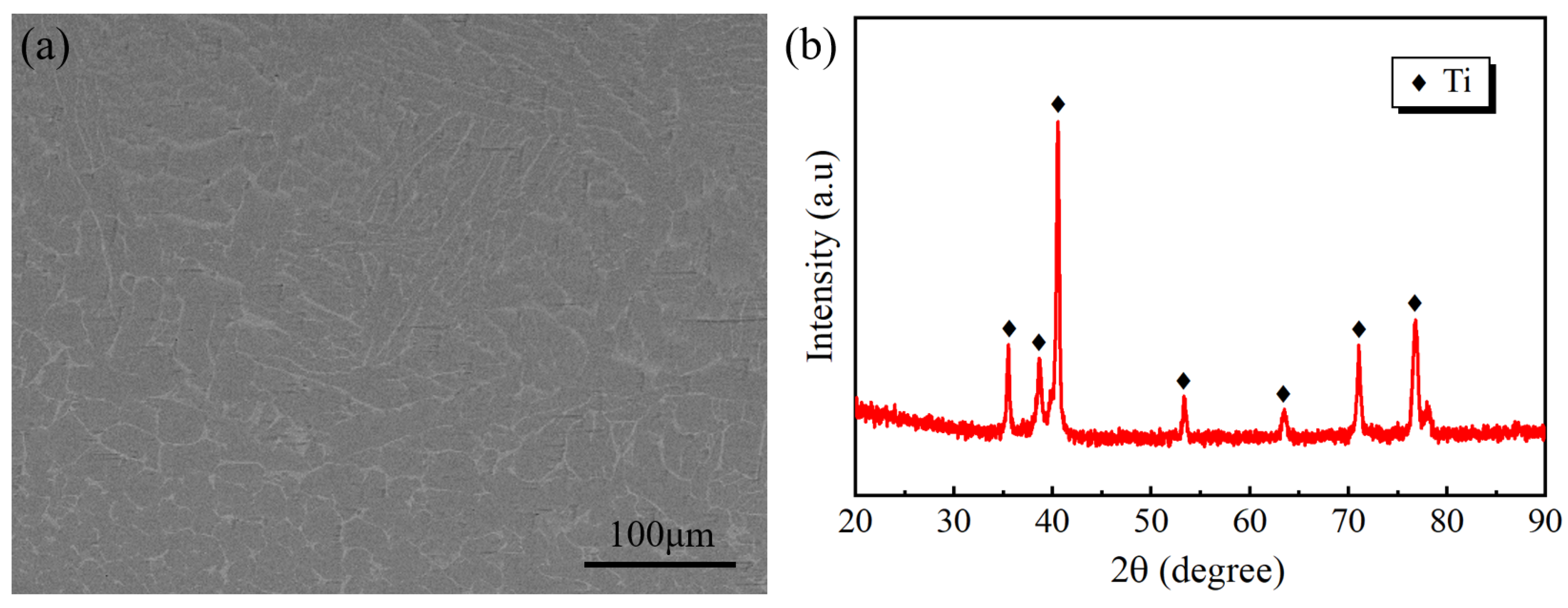
The materials used in this study were high-purity Al2O3 ceramic (purity ≥ 99.5%, Shanghai Fanlian Technology Co., Ltd., China, Shanghai, China) and Ti6Al4V (TC4) titanium alloy (Baoji Titanium Industry Co., Ltd., Baoji, China). The SEM image and XRD spectrum of the Al2O3 ceramic and TC4 alloys were shown in Figure 1 and Figure 2. The Al2O3 substrates were cut into rectangular blocks of 6 mm × 6 mm × 5 mm using a diamond cutting machine. The TC4 alloy was machined into specimen of 15 mm × 10 mm × 3 mm using wire electrical discharge machining. Prior to diffusion bonding, the Al2O3 surfaces were sequentially ground using diamond grinding disks with grit sizes from 240 to 2000. The TC4 surfaces were ground with SiC abrasive papers from 400 to 1200 grit. All specimens were ultrasonically cleaned in acetone for 15 min to remove surface contaminants.
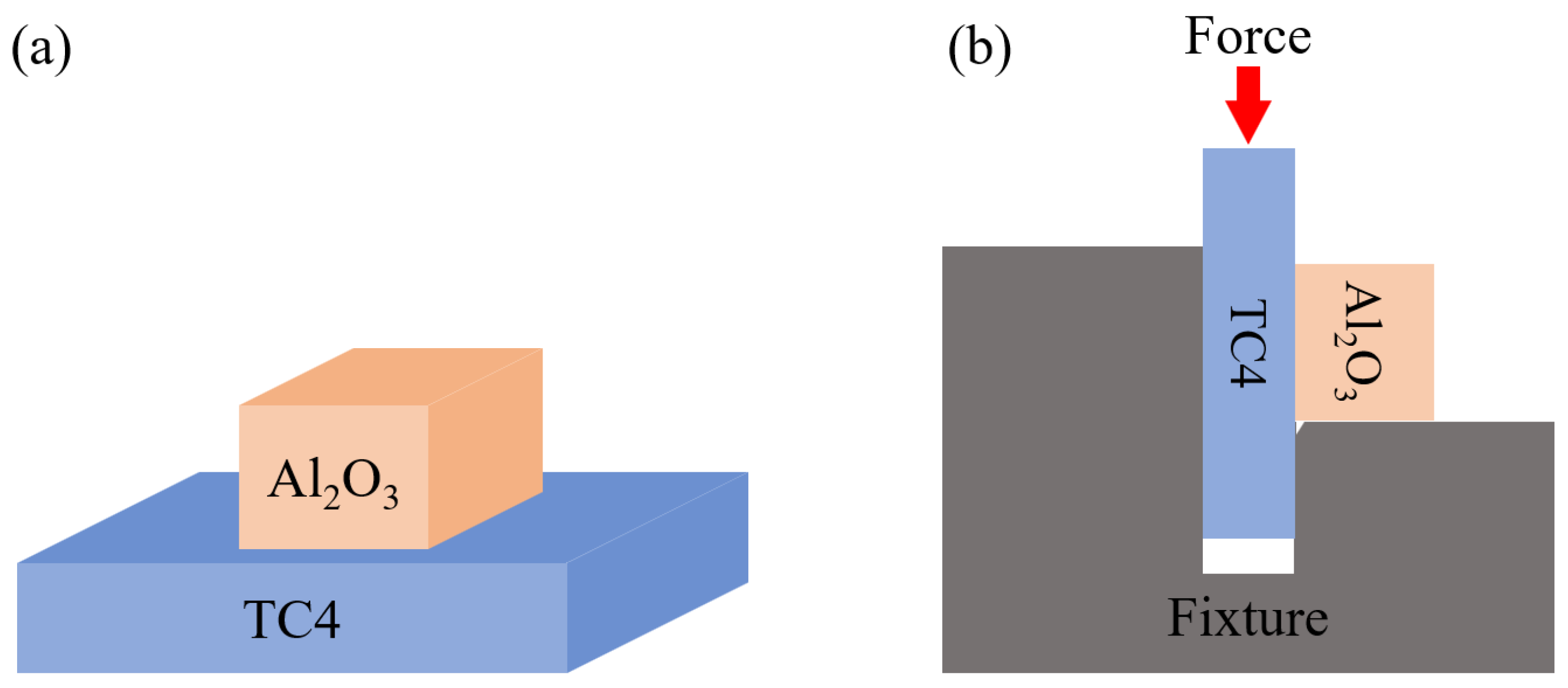
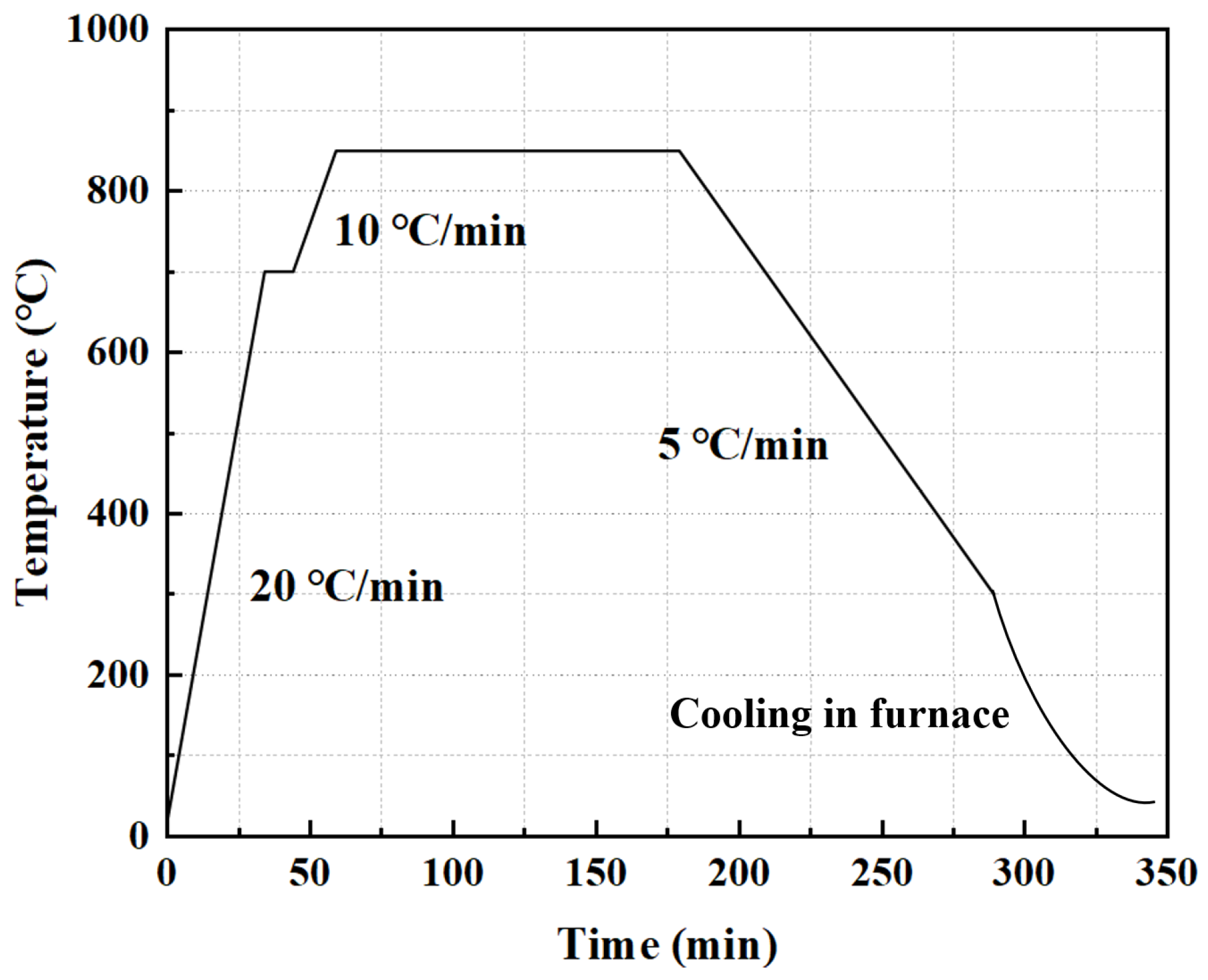
The bonding experiments were performed in a high-vacuum hot-pressing furnace (M60, USA) under a vacuum level better than 5 × 10⁻³ Pa. The joining assemblies, illustrated in Figure 3a, were subjected to a uniaxial pressure of 3 MPa. The bonding temperature was varied in the range of 800–950 °C with an interval of 50 °C, while the holding time was maintained constant at 120 min for all experiments. Figure 4 shows the heating process during the bonding. The joining assemblies were heated to 700 °C at a rate of 20 °C/min, held for 10 min, then further heated to the target bonding temperature at 10 °C/min. After holding for the designated duration, the joint was cooled to 300 °C at a controlled rate of 5 °C/min, followed by furnace cooling to room temperature.
The bonded joints were cross-sectioned perpendicular to the interface and prepared using standard metallographic procedures. The interfacial microstructure was examined using scanning electron microscopy (SEM, FEI Nova 400, Thermo Fisher Scientific, Hillsboro, OR, USA) equipped with energy-dispersive X-ray spectroscopy (EDS). Phase identification was performed by X-ray diffraction (XRD, Bruker D8 Advance, Bruker, Billerica, MA, USA) with Cu Kα radiation. The shear strength of the joints was evaluated at room temperature using a universal testing machine (Instron 1186, Instron, Norwood, MA, USA) with a specially designed fixture, as shown in Figure 3b. The crosshead speed was set to 0.5 mm/min, and five specimens were tested for each bonding condition to ensure statistical reliability.

3. Finite Element Modeling

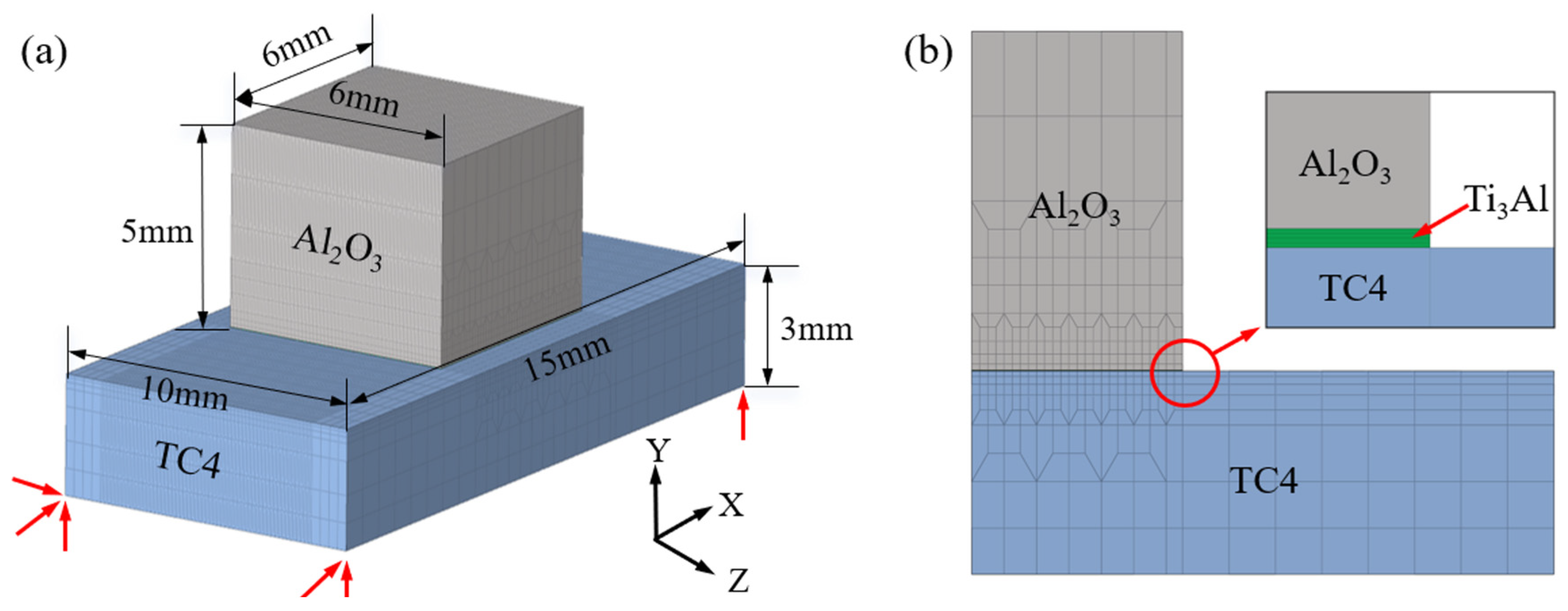
A three-dimensional finite element model was developed using ABAQUS software to simulate the residual stress distribution in diffusion-bonded Al2O3/TC4 joints, with a focus on the influence of the interfacial reaction layer. The model geometry was designed to correspond exactly to the dimensions of the physical shear test specimens, as illustrated in Figure 5a. The joint fabricated at 850 °C was simplified into three distinct, isotropic zones: the Al2O3 substrate, a 10 μm thick Ti3Al reaction layer, and the TC4 substrate (Figure 5b). The interfacial region was simplified to a single 10 μm thick Ti3Al layer based on microstructural characterization of joints bonded at 850 °C (Figure 6). Although EDS and XRD analyses indicated the presence of additional phases such as TiAl and TiO2 near the interface, these were either discontinuous or significantly thinner. Since the continuous Ti3Al layer represents the dominant structural and mechanical feature at the interface, and because its thermal and elastic properties differ markedly from both substrates, it was selected as the primary interlayer in the model to capture the essential effects of interfacial mismatch on residual stress. The influence of other minor phases on stress distribution is expected to be secondary, though future models incorporating a multilayered or functionally graded interface could provide further refinement. A finely refined mesh was applied within and adjacent to the interfacial reaction layer to resolve high stress gradients, while a coarser mesh was used in the bulk substrate regions to optimize computational efficiency. The final model consisted of approximately 97,864 elements and 104,409 nodes. Boundary conditions were defined by constraining three non-collinear nodes on the TC4 surface to eliminate rigid body motion.
Temperature-dependent thermophysical and mechanical properties for Al2O3, TC4, and Ti3Al were assigned based on literature data [40,41,42,43], as summarized in Table 1. The Al2O3 ceramic was modeled as a linear elastic, brittle solid. In contrast, the TC4 alloy and the Ti3Al intermetallic layer were modeled as elastoplastic materials.
Given the significant difference in scale between the furnace chamber and the joint assembly, a uniform temperature field was assumed throughout the model during the thermal cycle. The assembly was heated uniformly to the bonding temperature of 850 °C, held for 120 min, and then cooled to room temperature at a constant rate of 5 °C/min. In this research, the residual stresses were assumed to be generated during the cooling process. The thermal history of the bonding process was applied as a time-temperature load to all nodes.
Since the bonding temperature (850 °C) is lower than the phase transformation temperatures of Al2O3 ceramic, TC4 alloy (beta transus: ~890–925 °C) and Ti3Al reaction layer, the current model assumes that no phase transformation occurs in TC4 alloy during the bonding cycle. While this simplification is reasonable for the majority of the experimental conditions presented, it should be noted that bonding temperatures approaching or exceeding 900 °C may induce β-phase formation, which could alter the mechanical and thermal properties of TC4 and consequently affect residual stress distributions. Future models incorporating temperature-dependent phase transformation kinetics would provide a more complete description for bonding processes near the transus temperature. The creep is also ignored. The total strain increment (Δεtotal) of the materials during cooling can be expressed as Equation (1). The elastic strain is calculated by isotropic Hooke’s law, and the plastic behavior is characterized by Von Mises criterion [44,45,46]:
Δεtotal = Δεe + Δεth + Δεpc
where Δεe is the elastic strain increment; Δεp is the plastic strain increment; Δεth is the thermal strain increment.

4. Results and Discussion

4.1. Typical Joint Microstructure

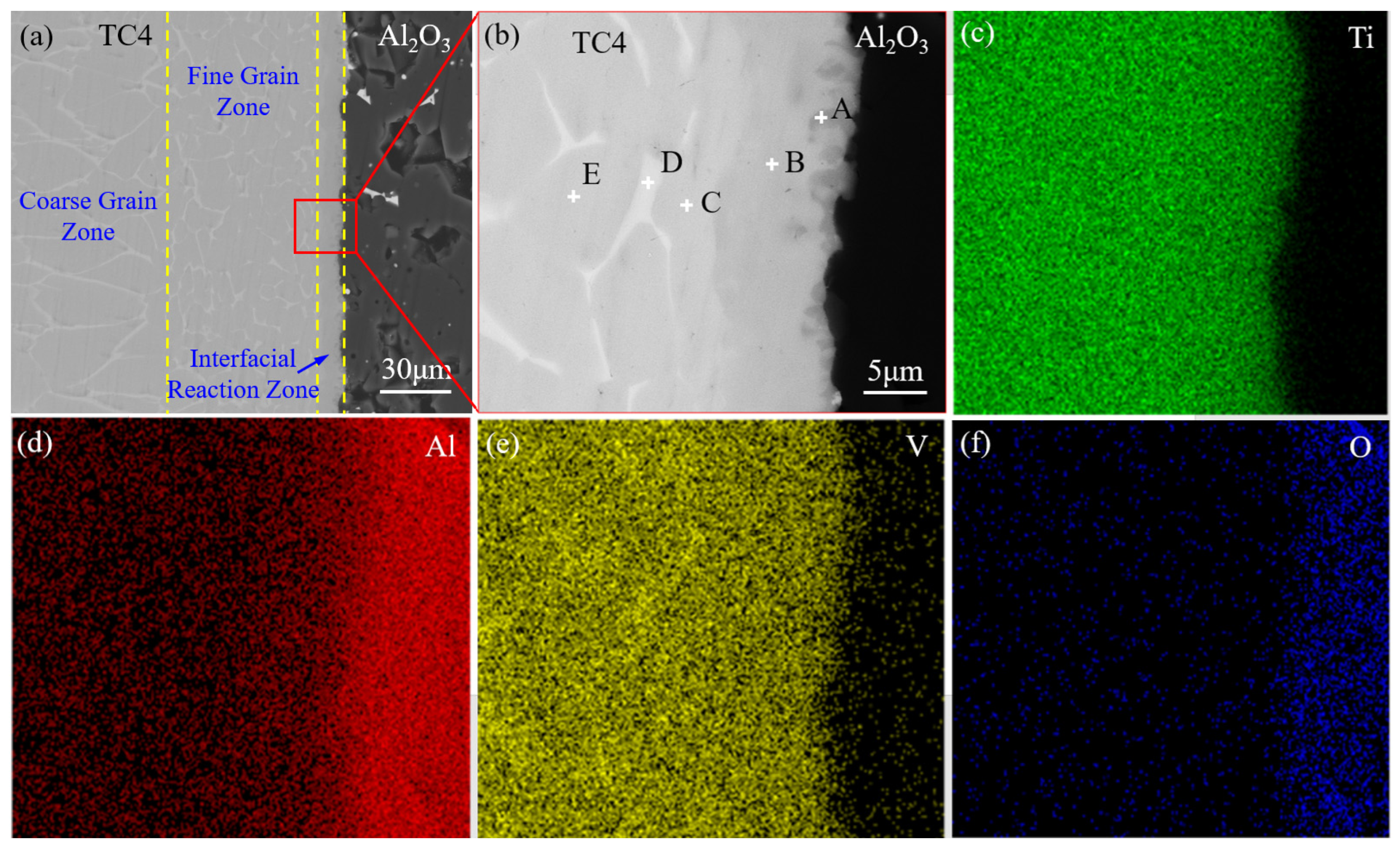
Figure 6 illustrates the interfacial microstructure of the Al2O3/TC4 joint bonded at 850 °C for 2 h under 3 MPa pressure. The joint exhibits excellent bonding integrity with no detectable cracks or voids. As shown in Figure 6a, three distinct zones are identified in the TC4 alloy, which are the Interfacial Reaction Zone (I) adjacent to the ceramic, the Fine Grain Zone (II) exhibiting refined microstructure, and the Coarse Grain Zone (III), respectively. High-magnification examination of the Interfacial Reaction Zone (Figure 6b) reveals a complex multi-layered structure resulting from intensive atomic interdiffusion. The interface comprises two primary reaction phases with distinct morphological characteristics. Phase A, forming as discontinuous acicular features near the Al2O3 substrate, suggests nucleation-limited growth behavior. Phase B develops as a continuous gray layer approximately 10 μm thick toward the TC4 side, reflecting enhanced atomic mobility and favorable thermodynamic driving forces. Near the reaction layer, the white phase (D) was formed among the gray matrix (C and E).
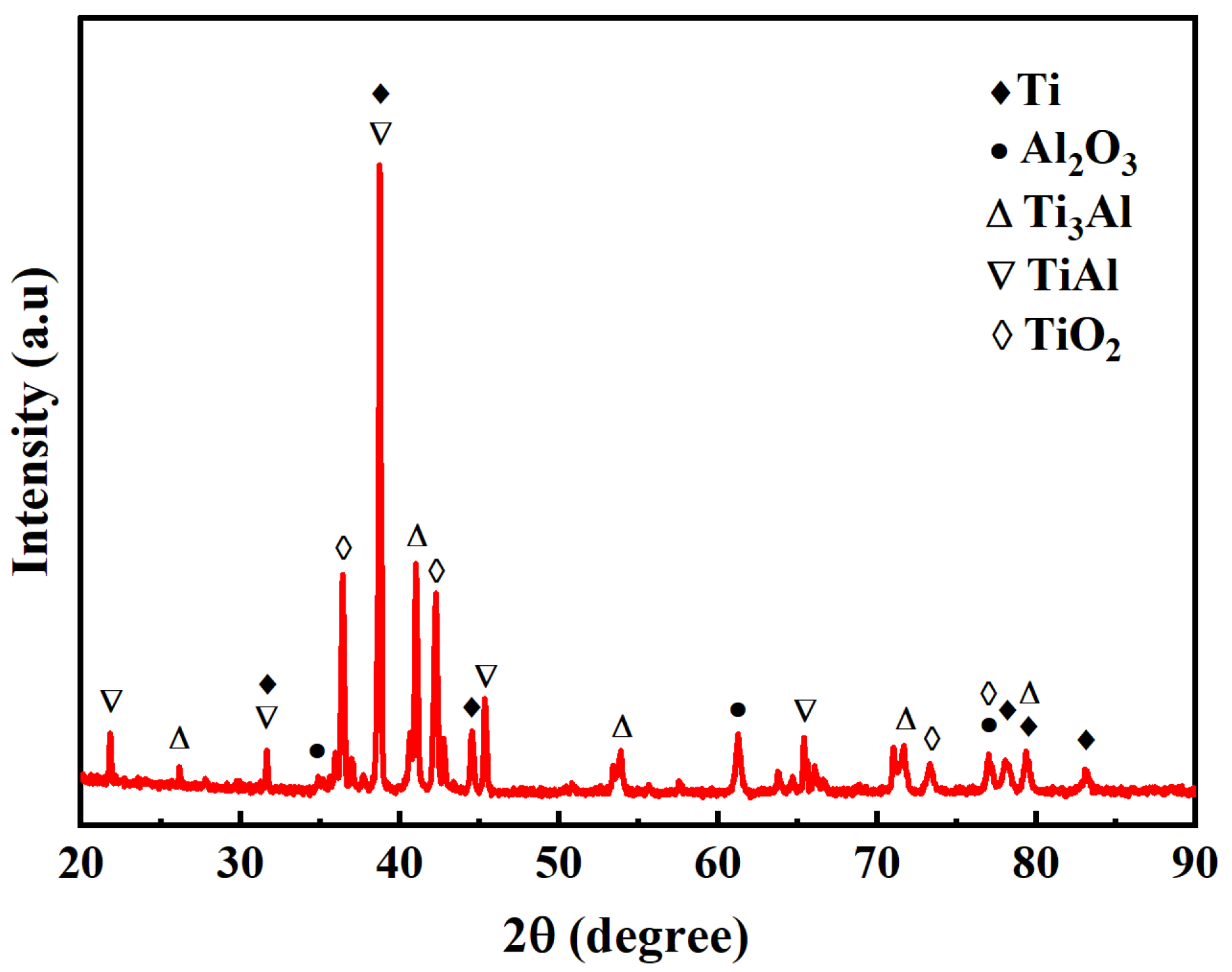
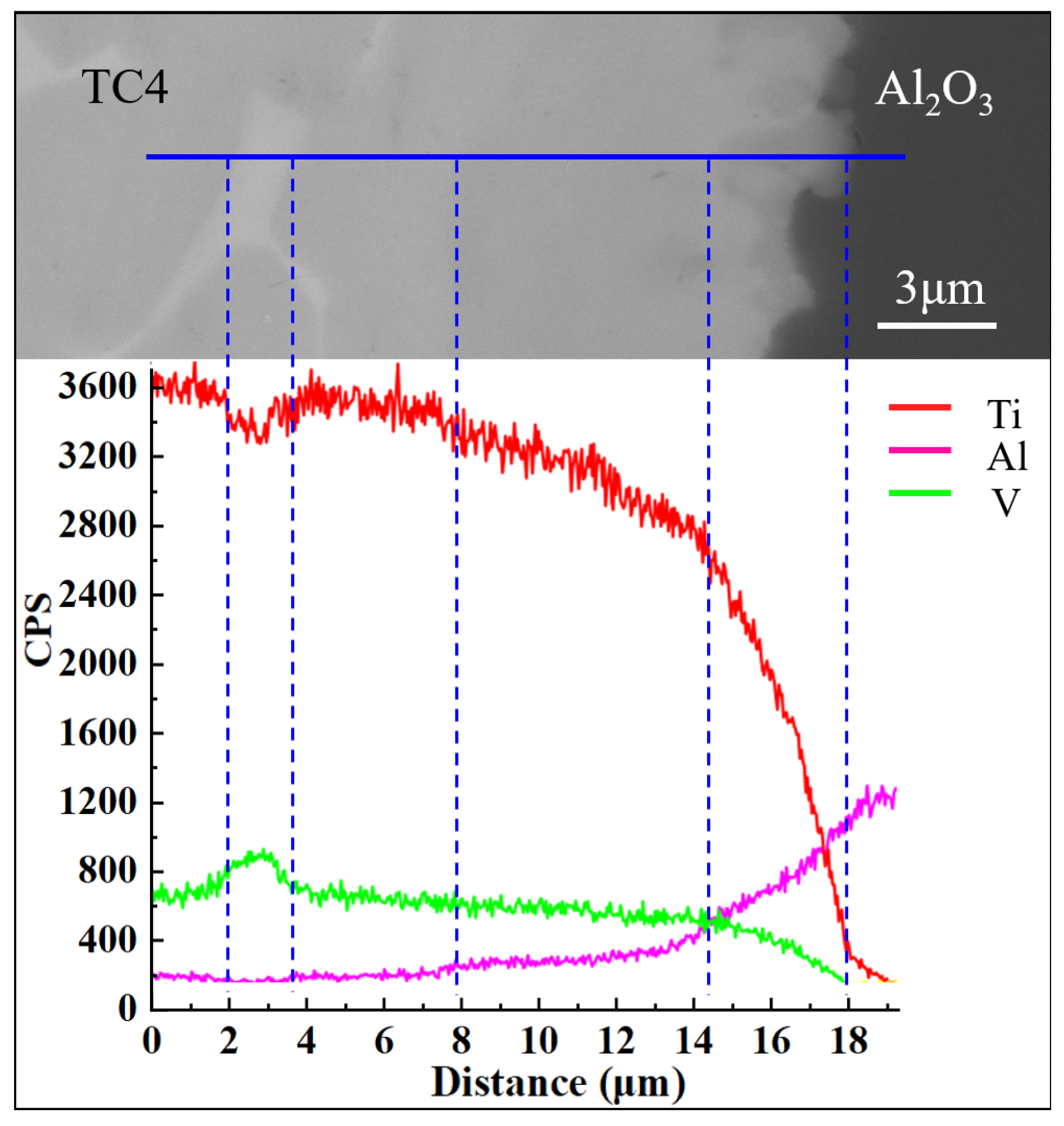
The elemental distribution on the reaction zone is examined, as shown in Figure 6c–f, which indicates that Ti and V predominantly distribute within the reaction layers and TC4 substrate, showing limited diffusion into Al2O3 due to its chemical inertness. Figure 7 represents the elemental distribution along the blue line, which reflects the atomic diffusion characters around the bonding interface. Within this region, the contents of Ti and V decline while that of Al increases progressively towards the ceramic, confirming the formation of a hybrid interface through solid-state diffusion. EDS analysis is conducted in different zones. Results in Table 2 reveal that Phase A consists of 55.09 at.% Ti, 31.04 at.% Al, 1.19 at.% V and 11.93 at.% O, and is inferred to be a mixture of TiO2 and TiAl. Phase B consists of 80.40 at.% Ti, 17.54 at.% Al and 2.06 at.% V, and is inferred to be Ti3Al reaction layer. Phase C and E are identified as α-Ti based on their high Ti content, whereas Phase D is determined to be β-Ti due to its similarly high titanium level but with a relatively elevated V concentration. XRD analysis of the fracture surface was also conducted to provide definitive phase identification (see Figure 8). The results confirm the presence of TiO2, TiAl, and Ti3Al compounds, which verified the rationality of the above analysis. Thus, the overall interfacial structure is characterized as TC4/Ti3Al/(TiO2 + TiAl)/Al2O3.
The Fine Grain Zone formation in the TC4 alloy adjacent to the interface results from coordinated thermomechanical and metallurgical processes. Under the combined influence of elevated temperature and applied pressure, the TC4 alloy experiences severe plastic deformation near the rigid ceramic interface, generating a high density of dislocations that provide abundant nucleation sites for subsequent microstructural refinement [47]. This strain-induced destabilization activates dynamic recrystallization processes, where new, strain-free grains nucleate and replace the deformed microstructure [48]. Concurrently, elemental interdiffusion occurs across the interface. This process is characterized by aluminum depletion and potential oxygen enrichment in the TC4 alloy [49]. Such compositional changes modify the local phase stability and transformation kinetics. Consequently, diffusion-controlled phase transformations are activated, further promoting microstructural refinement in this region. This interplay of strain-induced recrystallization and diffusion-mediated phase transformations establishes a stable fine-grained region that enhances joint integrity by facilitating stress accommodation through grain boundary-mediated deformation mechanisms.

4.2. Microstructure Evolution and Shear Strength of Al2O3/TC4 Joints

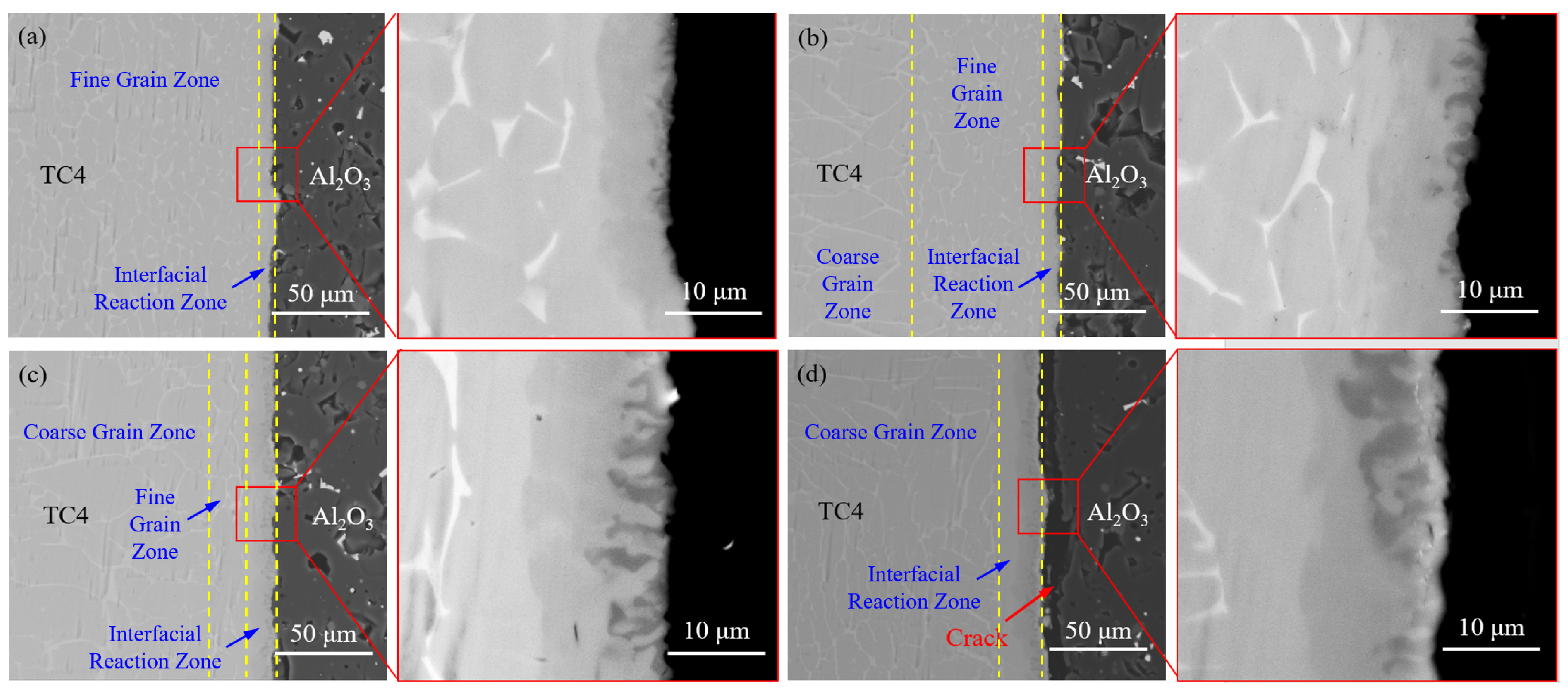
The bonding temperature serves as a critical parameter in diffusion bonding, governing both interfacial microstructure development and resultant mechanical properties [50]. To investigate its influence on the microstructure evolution and shear strength of Al2O3/TC4 joints, Al2O3/TC4 joints were fabricated at 800 °C, 850 °C, 900 °C, and 950 °C. Figure 9 illustrates the temperature-dependent interfacial evolution of the joints bonded at varied temperatures. It reveals that temperature regulates two interdependent aspects of interfacial architecture: (i) reaction layer growth and (ii) Fine Grain Zone evolution in the TC4 substrate, which collectively determine joint structural integrity.
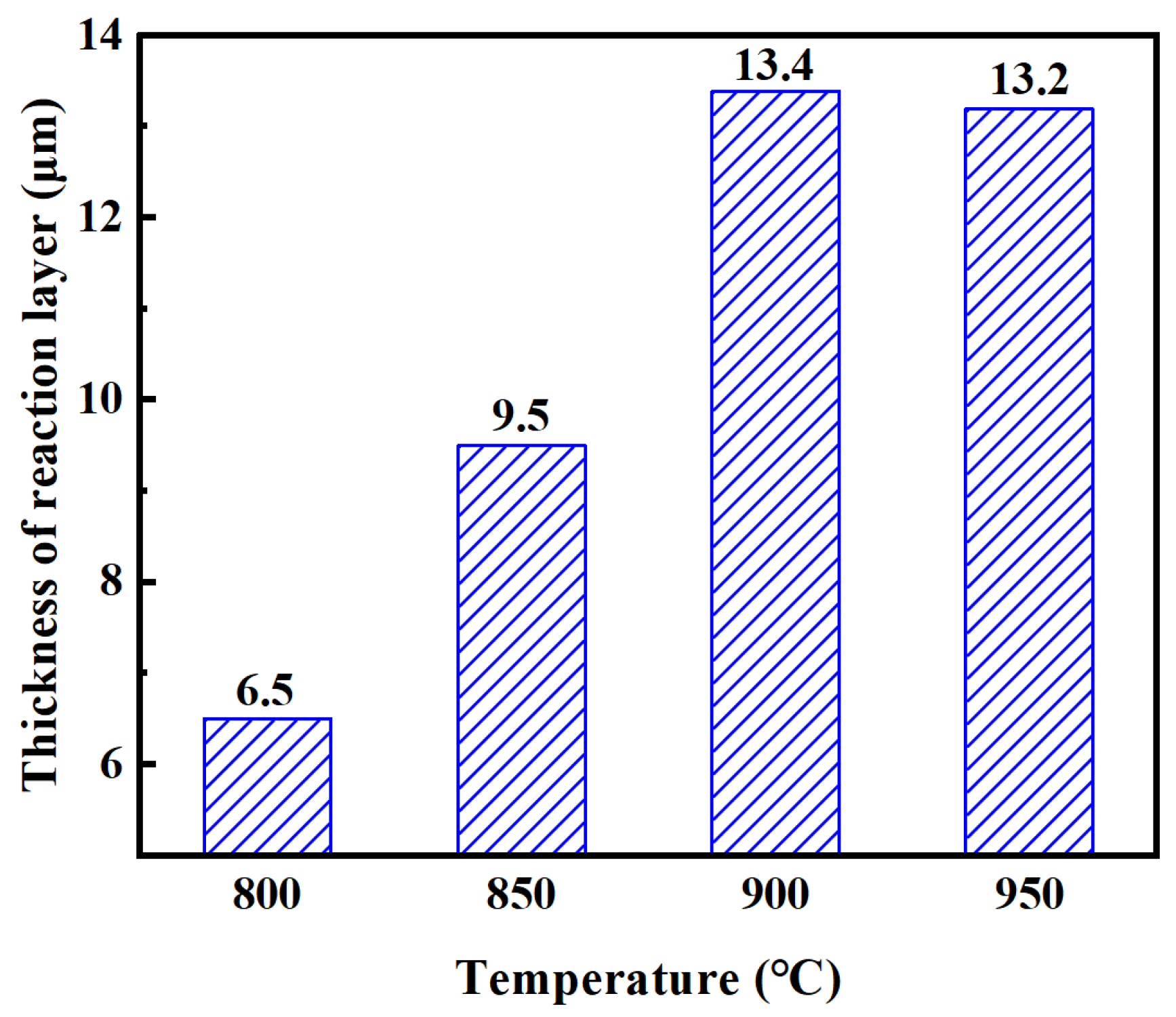
Firstly, higher bonding temperature promotes the growth of Ti3Al reaction layer. Figure 10 shows the thickness of Ti3Al layers at different temperatures. The significant increase in reaction layer thickness with rising bonding temperature is primarily attributed to the accelerated atomic diffusion rates. According to the Arrhenius equation (D = D0 exp(−Q/RT)), which describes the kinetics of solid-state diffusion, the diffusion coefficient D exhibits an exponential dependence on temperature T [51,52]. When the bonding temperature is low (800 °C), the TC4 alloy bonded well with Al2O3, no cracks and pores were observed at the bonding interface. A thin Ti3Al reaction layer (~6.5 μm) formed at the interface due to the insufficient atomic interdiffusion. As the bonding temperature increases from 800 °C to 900 °C, the diffusivity of key elements such as Ti and Al is markedly enhanced, thereby substantially promoting the growth of the Ti3Al reaction layer (corresponding to an increase in D). Thus, when the bonding temperature increases to 850 °C and 900 °C, the thickness of Ti3Al layer increases to 9.5 μm and 13.4 μm, respectively. However, since the Ti3Al reaction layer has large CTE mismatch with the Al2O3 ceramic, an excessively thick reaction layer will produce great residual stress at the bonding interface. When the bonding temperature further increases to 950 °C, excessive layer growth combined with CTE mismatch generates critical residual stresses, initiating interfacial cracking.
The formation of the observed interfacial phases, particularly the dominant Ti3Al layer, can be understood through the underlying chemical reactions and their thermodynamics. The primary reaction initiating at the Al2O3/TC4 interface likely involves the reduction in alumina by titanium, which is a strong reducing agent at elevated temperatures:
3 TiO2 + 4 Al → 2 Al2O3 + 3 Ti
This reaction, while thermodynamically favorable (ΔG < 0) in the temperature range studied, is kinetically constrained in the solid state. It facilitates the transfer of Ti to the interface and may contribute to the initial disruption of the stable Al2O3 surface, promoting bonding. Subsequently, the interdiffusion of this liberated Ti (or from the TC4 bulk) with Al (from both the TC4 alloy and possibly from reduced Al2O3) leads to the formation of titanium aluminides. The growth of the continuous Ti3Al layer is governed by:
3 Ti + Al → Ti3Al
The large negative Gibbs free energy change (ΔG) for Reaction (3) provides a strong thermodynamic driving force for the formation and growth of the Ti3Al layer. The increase in bonding temperature significantly increases the diffusion coefficients of Ti and Al, thereby accelerating the kinetics of Reaction (3), which is consistent with the observed parabolic growth of the layer thickness (Figure 10). The presence of minor phases such as TiAl and TiO2 (identified by XRD) suggests local variations in Ti/Al stoichiometry and oxygen activity, which can be mapped to other regions of the Ti-Al-O ternary phase diagram. The dominance of Ti3Al over other possible intermetallics (e.g., TiAl, TiAl3) under our bonding conditions is attributed to the Ti-rich environment provided by the TC4 substrate and the specific temperature range, which thermodynamically favor its stability. This thermodynamic and kinetic framework explains why the Ti3Al layer becomes the predominant microstructural feature controlling the joint’s mechanical response.
Secondly, the increased bonding temperature narrows the Fine Grain Zone and promotes grain growth in the TC4 substrate. The progressive narrowing and eventual disappearance of the Fine Grain Zone in TC4 adjacent to the interface with increasing bonding temperature results from the competition between strain-induced refinement and thermal-driven coarsening mechanisms. At low temperatures (800 °C), the severe plastic deformation near the interface generates high dislocation density that provides abundant nucleation sites for dynamic recrystallization, establishing the Fine Grain Zone exceeding 100 μm. As temperature increases, the enhanced thermal energy activates multiple coarsening pathways. The accelerated recovery processes substantially reduce dislocation density, diminishing the driving force for recrystallization. Simultaneously, increased atomic mobility promotes rapid grain boundary migration, enabling substantial grain growth. Furthermore, the homogenization of elemental concentration gradients, particularly the alleviation of aluminum depletion near the interface, reduces the chemical potential gradients that initially promoted phase transformation-induced refinement. As a result, when the bonding temperature increases to 850 °C and 900 °C, the thickness of the Fine Grain Zone decreases rapidly to ~60 μm and ~20 μm, respectively. At the highest temperature (950 °C), the combined effects of complete recovery and accelerated grain growth ultimately eliminate the fine-grained region. This microstructural transition indicates that grain refinement, initially governed by strain-induced recrystallization at lower temperatures, becomes dominated by diffusion-driven grain growth as temperature increases. The final microstructure of the joint is therefore determined by the interplay between these two competing mechanisms.
Additionally, for bonding temperatures approaching 900 °C and above, the potential phase transformation of TC4 from α + β to β-phase may further influence interfacial evolution. The β-phase exhibits higher diffusion coefficients for Ti and Al, which could accelerate the growth of the Ti3Al reaction layer. However, the concomitant decrease in yield strength and change in thermal expansion behavior of the β-phase may also exacerbate residual stress accumulation and promote interfacial cracking, as observed at 950 °C.
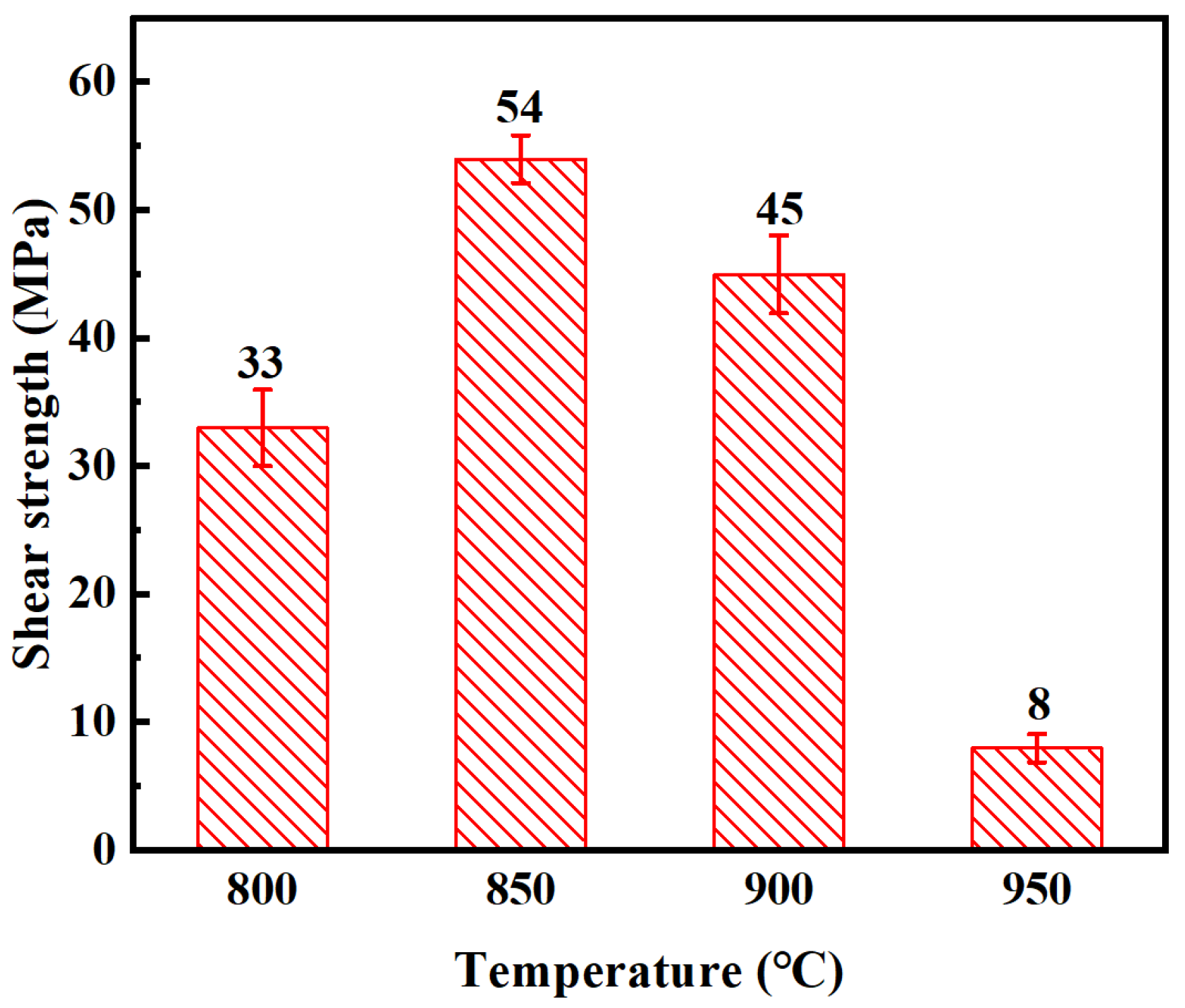
The evolution of shear strength with bonding temperature, as presented in Figure 11, directly correlates with the aforementioned microstructural changes. The shear strength increased from 33 MPa at 800 °C to a maximum of 54 MPa at 850 °C. This improvement is attributed to enhanced atomic diffusion and consequent improvement in interfacial metallurgical bonding at the elevated temperature. However, a further temperature increase to 900 °C promoted excessive growth of the brittle Ti3Al reaction layer. The significant coefficient of thermal expansion mismatch between this thick layer and the parent materials (Al2O3 and TC4) generated considerable residual stresses at the interface, leading to a reduction in shear strength to 45 MPa. At 950 °C, the combined effect of brittle interfacial phases and high residual stress culminated in the formation of continuous cracks, causing the shear strength to plummet to only 8 MPa. This result indicates that while higher temperatures intensify interfacial reactions, excessive thermal heat ultimately degrades joint integrity.

4.3. Residual Stress Prediction of the Al2O3/TC4 Diffusion Bonded Joint

During the holding stage of diffusion bonding, pronounced atomic interdiffusion takes place at the interface between Al2O3 ceramic and TC4 alloy, resulting in the formation of a Ti3Al reaction layer and a metallurgically sound joint. Subsequent cooling induces thermal contraction in all constituents. This contraction is differential due to the mismatch in their coefficients of thermal expansion (CTE), thereby generating significant residual stresses within the joint.
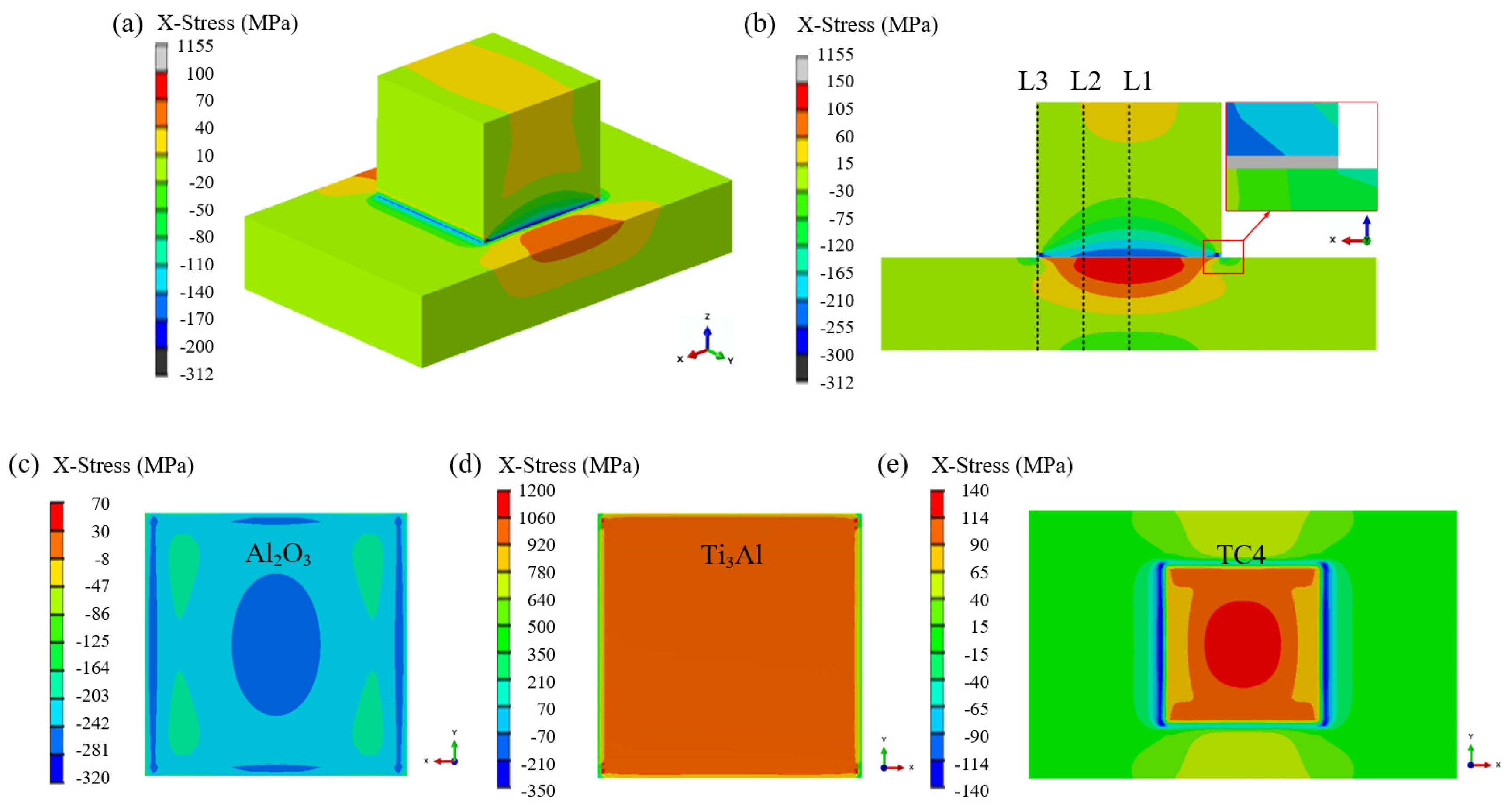
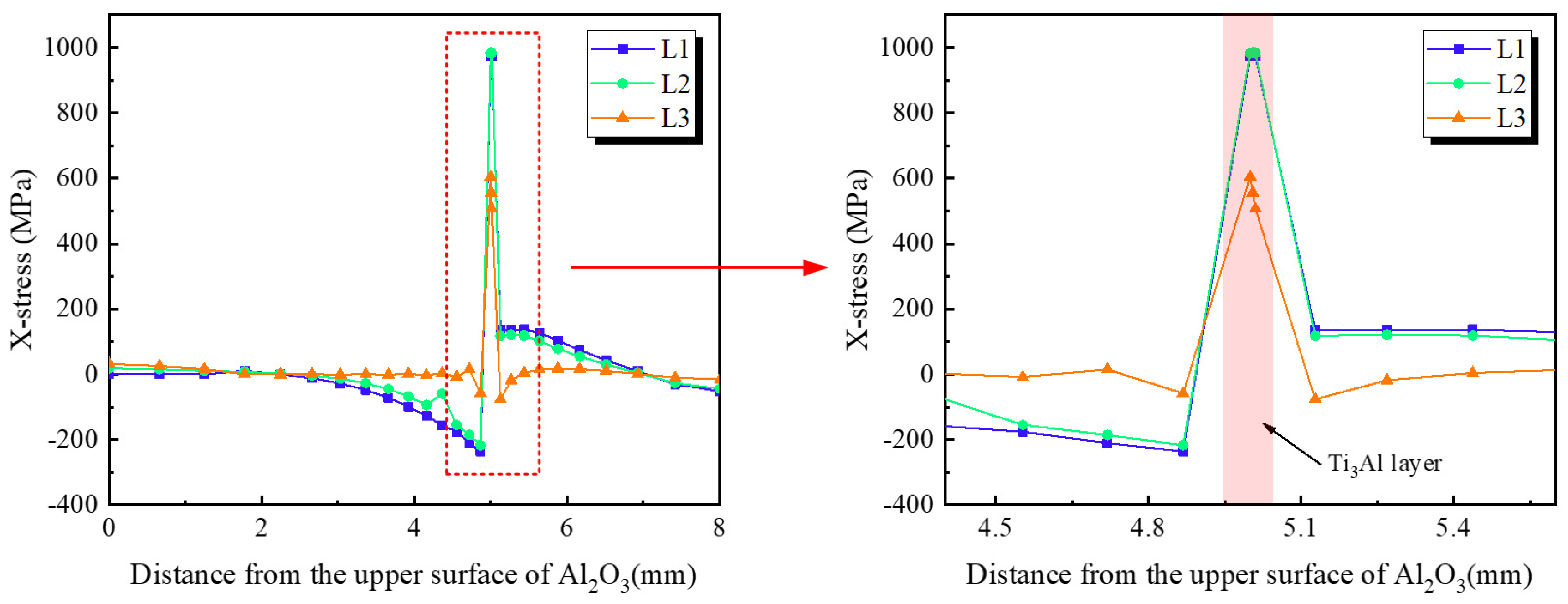
Figure 12 presents the simulated distribution of residual stresses in the X-direction. The overall contour plot (Figure 12a) reveals that surface stresses on the substrates are relatively low, whereas significantly higher stresses are localized around the joint seam. A detailed view of the X-Z central cross-section (Figure 12b), the bonding surfaces (Figure 12c,e) and the Ti3Al layer (Figure 12d), confirms a steep stress gradient near the interface. Tensile stresses are concentrated within the Ti3Al layer and the adjacent TC4 substrate, while compressive stresses prevail in the Al2O3 ceramic near the interface. The stress magnitude peaks at the center of the bonding surface and attenuates with increasing distance from this location. To quantify this spatial variation, stress profiles were extracted along three vertical lines on the X-Z cross-section: the central line (L1), an intermediate line (L2), and a line at the edge of the Al2O3 ceramic (L3). As shown in Figure 13, the profile along L1 shows a peak tensile stress of ~980 MPa within the Ti3Al layer. As the distance from the Ti3Al layer into the substrates increases, the stress decreases rapidly. In the TC4 alloy, the stress remains tensile but drops to a peak of ~135 MPa, whereas in the Al2O3 ceramic, the stress becomes compressive with a peak value of ~−235 MPa. Although the stress trends along L1, L2, and L3 are similar, the stress values diminish with increasing lateral distance from the joint center, consistent with the reduced constraint away from the central region. This characteristic stress distribution originates from the CTE mismatch. Both TC4 alloy and Ti3Al layer have higher CTEs than Al2O3 ceramic. During cooling, their greater thermal contraction is constrained by the less-contracting ceramic, inducing tensile stresses in the metal and intermetallic regions. Ti3Al layer, having the highest CTE among the three, experiences the most severe constraint and thus develops the highest tensile stress. Compressive stresses in the Al2O3 ceramic arise naturally to balance the tensile field in the metallic side of the joint. The observed decay in stress magnitude with distance from the interface and joint center reflects the weakening of this mutual constraint. The distribution characteristics and trends of the Y-direction stress are essentially identical to those in the X-direction and are therefore not reiterated here.
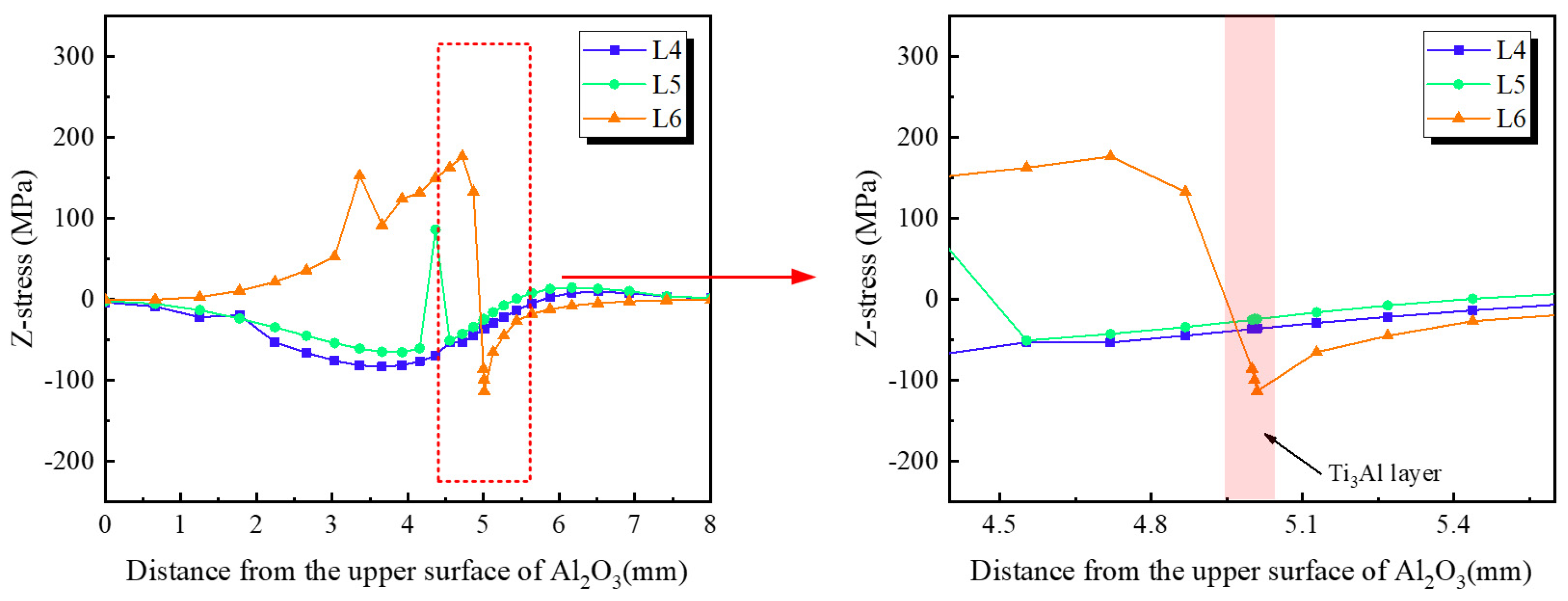
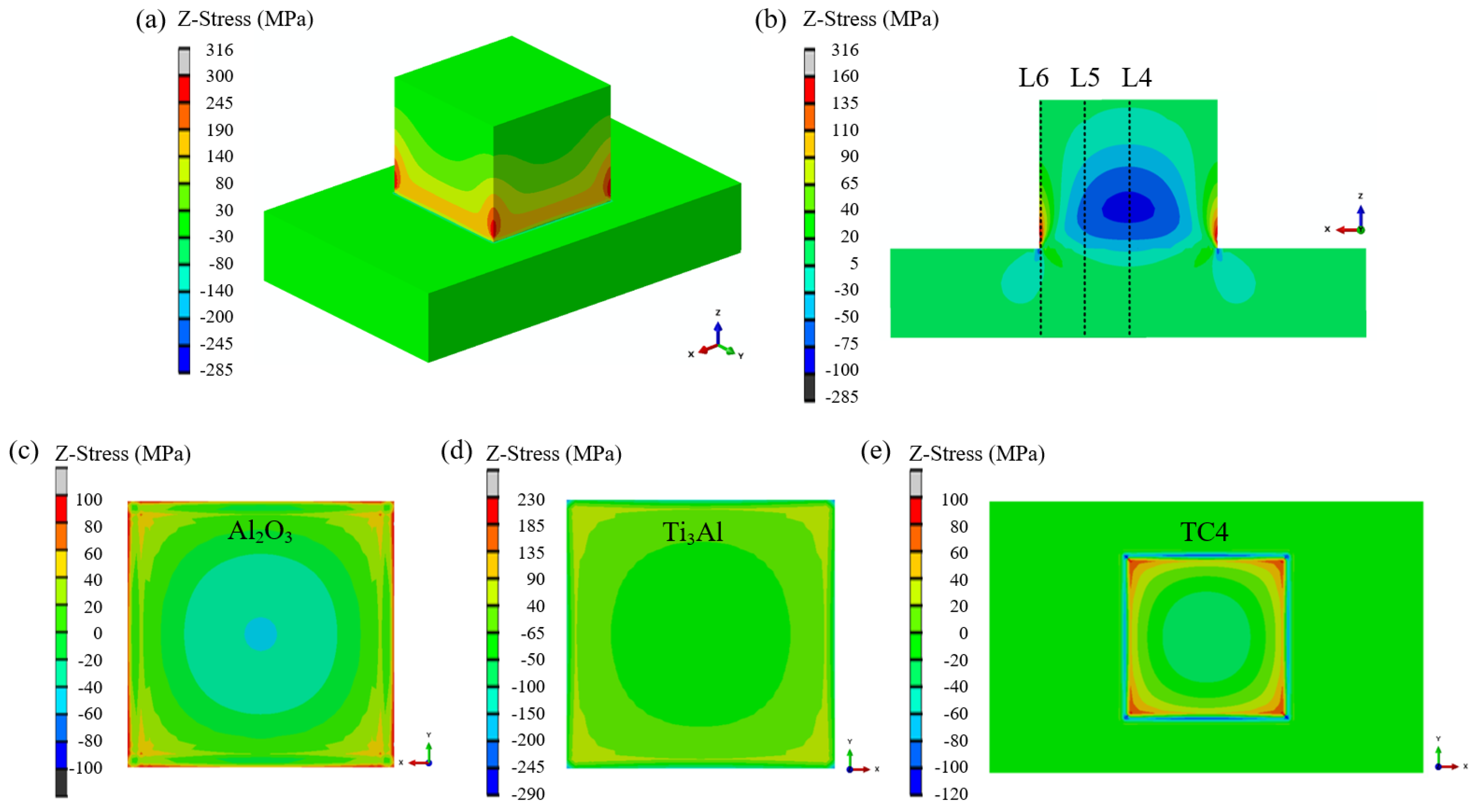
The overall stress distribution on the joint surface (Figure 14a) reveals that significant tensile stresses are localized on the surface of the Al2O3 ceramic near the bonding interface. A peak value of ~300 MPa occurring along the vertical edges of the Al2O3 ceramic. In contrast, the top surface of Al2O3 ceramic and the surface of the TC4 alloy exhibit predominantly low-magnitude compressive stresses, around −20 MPa. The X-Z cross-sectional view (Figure 14b) further illustrates the internal stress state. Compressive stresses dominate within the central region of the Al2O3 ceramic and the adjacent TC4 substrate near the bonding interface. The peak compressive stress exceeding −100 MPa located about 2 mm above the interface center. Additionally, notable compressive stress develops in the TC4 region close to the outer-surface interface with Al2O3 ceramic. The remaining regions of the TC4 alloy experience low-level tensile stresses. To systematically evaluate the spatial variation in stresses, profiles were extracted along three vertical lines defined on the X-Z cross-section: the central line (L4), an intermediate line (L5), and a line along the edge of the alumina ceramic (L6). As shown in Figure 15, the stress remains relatively low from the upper surface of Al2O3 ceramic to the bottom surface of TC4 alloy along the joint center (L4). With increasing lateral distance from the center, the stress gradually shifts from compressive to tensile, and its magnitude rises. Along the outer surface of Al2O3 ceramic (L6), the tensile stress reaches a peak value of approximately 175 MPa.
The above stress analysis reveals critical features governing joint reliability. In the X-direction, the highest stresses (up to ~980 MPa) are localized within the Ti3Al reaction layer, creating a steep stress gradient across its interfaces with both the Al2O3 ceramic and the TC4 alloy. This gradient manifests as substantial interfacial shear stress. Due to the inherent brittleness and limited deformability of Al2O3 ceramic, the Al2O3/Ti3Al interface is particularly susceptible to this shear stress. Excessive thickening of the Ti3Al layer can elevate the interfacial shear to a level that directly damages the interface, as evidenced by the cracking observed at the Al2O3/Ti3Al interface in the joint bonded at 950 °C. In the Z-direction, high tensile stresses are concentrated along the vertical edges of the Al2O3 ceramic near the interface, identifying another vulnerable region. During shear testing, the superposition of this residual tensile stress and the applied load frequently leads to ceramic fracture at these edges. Consequently, the stress-optimization of Al2O3/TC4 diffusion-bonded joints must prioritize two key aspects: controlling the thickness and properties of the Ti3Al reaction layer to mitigate interfacial shear and managing the tensile stress concentration at the vertical edges of the ceramic. Addressing these factors is essential for enhancing joint integrity and preventing premature failure.
It should be noted that the actual interface may contain additional intermetallic phases such as TiAl or oxides like TiO2, which were identified experimentally but not explicitly included in the present model. These phases, typically thinner and more discontinuous, may slightly modulate local stress concentrations or fracture paths. However, given that Ti3Al forms the thickest and most continuous reaction layer, it is expected to dominate the overall thermo-mechanical behavior of the joint. Future modeling efforts considering a composite or graded interfacial zone could further elucidate the role of minor phases in interfacial failure mechanisms.

5. Conclusions

In the present work, Al2O3 ceramic and TC4 alloy were diffusion-bonded under different temperatures (800 °C, 850 °C, 900 °C, 950 °C) with a fixed pressure of 3 MPa and holding time of 2 h. The influence of bonding temperature on the interfacial microstructure evolution and mechanical properties of the diffusion-bonded joints was discussed. The residual stress distribution in the joints was simulated and analyzed using a three-dimensional finite element model. The main conclusions were drawn as follows:
(1)
Reliable diffusion bonding of Al2O3 ceramic to TC4 alloy was achieved. The interfacial microstructure consists of a Ti3Al reaction layer and a fine-grained region within the adjacent TC4 substrate. With increasing bonding temperature, enhanced atomic interdiffusion promotes the growth of the Ti3Al layer, while the fine-grained zone progressively diminishes due to the dominance of grain growth over strain-induced refinement at elevated temperatures.
(2)
The joint shear strength shows a strong dependence on bonding temperature, attaining a maximum value of 54 MPa at 850 °C. Beyond this temperature, excessive thickening of the brittle Ti3Al reaction layer leads to pronounced residual stresses and interfacial cracking, resulting in significant degradation of mechanical performance.
(3)
Finite-element simulations confirm that residual stresses originate primarily from the CTE mismatch among Al2O3, Ti3Al, and TC4. The Ti3Al layer experiences the highest tensile stress in the X-direction (~980 MPa), whereas the Al2O3 ceramic near the interface is subjected to compressive stresses. In the Z-direction, tensile stress concentrations are localized along the vertical edges of the ceramic, representing potential sites for crack initiation during mechanical loading.
(4)
These findings highlight the necessity of balancing interfacial reaction layer growth with residual stress control in the design of Al2O3/TC4 joints. Optimizing the bonding temperature to regulate the Ti3Al layer thickness, together with geometrical or processing strategies to alleviate edge stress concentrations, is essential for improving the structural integrity and reliability of such hybrid joints.

Author Contributions

Conceptualization, Y.F., T.H., G.F., D.C. (Dajun Chen), and Z.L.; methodology, Y.F., D.C. (Dalong Cong), T.H., G.F., Y.W., and Z.L.; software, T.H., G.F., Z.Y., G.Y., and D.D.; validation, Y.F., T.H., W.C., and G.F.; formal analysis, W.C., D.C. (Dalong Cong), and D.C. (Dajun Chen); investigation, Y.F., T.H., G.Y., and G.F.; resources, T.H., Y.W., and G.F.; data curation, Y.F., T.H., Z.Y., W.C., and G.F.; writing—original draft preparation, Y.F., W.C., and G.F.; writing—review and editing, G.F. and D.D.; visualization, Z.Y., D.C. (Dajun Chen), and G.Y.; supervision, G.F., Y.W., and D.D.; project administration, G.F., Y.W., and D.D.; funding acquisition, G.F. All authors have read and agreed to the published version of the manuscript.

Funding

This research was funded by the Natural Science Foundation of Chongqing [grant number CSTB2025NSCQ-GPX0748], by the State Key Laboratory of Precision Welding & Joining of Materials and Structures [grant number MSWJ-24M01], and by the National Key R&D Program of China [grant number 2024YFE03120003].

Data Availability Statement

The original contributions presented in this study are included in the article. Further inquiries can be directed to the corresponding authors.

Conflicts of Interest

Author Tao Hu was employed by the company Chongqing Changan Automobile Co., Ltd. The remaining authors declare that the research was conducted in the absence of any commercial or financial relationships that could be construed as a potential conflict of interest.

References

  1. Shen, Z.; Dong, R.; Li, J.; Su, Y.; Long, X. Determination of Gradient Residual Stress for Elastoplastic Materials by Nanoindentation. J. Manuf. Process. 2024, 109, 359–366. [Google Scholar] [CrossRef]
  2. Zhang, G.; Gu, J.; Shi, H.; Zhang, P.; Yu, Z.; Zhao, W.; Yuan, X.; Zhang, L.; Yang, G. Microstructures and Mechanical Properties Analysis of TiAl Joints Using Novel Brazing Filler Metal. Weld. World 2025. [Google Scholar] [CrossRef]
  3. Peng, J.; Xie, S.; Chen, T.; Wang, X.; Yu, X.; Yang, L.; Ni, Z.; Ling, Z.; Yuan, Z.; Shi, J.; et al. Numerical Simulation and Process Optimization of Laser Welding in 6056 Aluminum Alloy T-Joints. Crystals 2025, 15, 35. [Google Scholar] [CrossRef]
  4. Jia, S.; Qian, X.; Li, Y.; Qiang, D.; Shao, C.; Cheng, L.; Ding, Y.; Lv, W.; Xu, L.; Sun, D.; et al. Printable Fabrication of High-Temperature Electrical Insulating Layers on TC4 Titanium Alloy for Thin-Film Sensor Applications. J. Alloys Compd. 2025, 1044, 184443. [Google Scholar] [CrossRef]
  5. Shi, Y.; Li, W.; Zhang, X.; Jin, J.; Wang, J.; Dong, Y.; Mu, J.; Wang, G.; Zhang, X.; Zhang, Z. Preparation and Toughening Mechanism of Al2O3 Composite Ceramics Toughened by B4C@TiB2 Core-Shell Units. J. Adv. Ceram. 2023, 12, 2371–2381. [Google Scholar] [CrossRef]
  6. Zhang, Z.; Li, Z.; Pan, S.; Chai, X. Enhanced Strength and High-Temperature Wear Resistance of Ti6Al4V Alloy Fabricated by Laser Solid Forming. J. Manuf. Sci. Eng.-Trans. ASME 2022, 144, 111011. [Google Scholar] [CrossRef]
  7. Wang, Y.; Jin, Z.; Feng, G.; Cao, J.; Zhang, H.; Deng, D. Characterization of ZTA Composite Ceramic/Ti6Al4V Alloy Joints Brazed by AgCu Filler Alloy Reinforced with One-Dimensional Al18B4O33 Single Crystal. Crystals 2022, 12, 933. [Google Scholar] [CrossRef]
  8. Li, Y.; Chen, C.; Yi, R.; He, L. The Brazing of Al2O3 Ceramic and Other Materials. Int. J. Adv. Manuf. Technol. 2022, 120, 59–84. [Google Scholar] [CrossRef]
  9. Kaushal, S.; Zeeshan, M.D.; Ansari, M.I.; Sharma, D. Progress in Tribological Research of Al2O3 Ceramics: A Review. Mater. Today Proc. 2023, 82, 163–167. [Google Scholar] [CrossRef]
  10. Wei, S.; Han, G.; Zhang, X.; Sun, J.; Zhang, J.; Wang, W.; Zhang, W.; Yang, L.; Li, J. Preparation of High Performance Dense Al2O3 Ceramics by Digital Light Processing 3D Printing Technology. Ceram. Int. 2024, 50, 2083–2095. [Google Scholar] [CrossRef]
  11. Lei, J.; Zhang, Q.; Wang, Y.; Zhang, H. Direct Laser Melting of Al2O3 Ceramic Paste for Application in Ceramic Additive Manufacturing. Ceram. Int. 2022, 48, 14273–14280. [Google Scholar] [CrossRef]
  12. Wen, Y.; Zhang, S.; Huang, W.; Yu, D.; Hu, L.; Wang, P.; Fang, R.; Ouyang, P. Effect of Ti Content on Microstructure and Properties of Cu/AgCuTi/Al2O3 Brazed Joints. Mater. Today Commun. 2024, 40, 109507. [Google Scholar] [CrossRef]
  13. Zhang, D.; Wei, Z.; Wang, K.; Li, X. Brazing of Al2O3-6061 Aluminum Alloy Based on Femtosecond Laser Surface Groove Structure. Ceram. Int. 2022, 48, 36953–36960. [Google Scholar] [CrossRef]
  14. Peng, Y.; Li, J.; Shi, J.; Li, S.; Xiong, J. Microstructure and Mechanical Properties of Al2O3 Ceramic and Ti2AlNb Alloy Joints Brazed with Al2O3 Particles Reinforced Ag–Cu Filler Metal. Vacuum 2021, 192, 110430. [Google Scholar] [CrossRef]
  15. Feng, G.; Li, Z.; He, P.; Shen, L.; Zhou, Z. Laser-Induced Combustion Joining of Cf/Al Composites and TC4 Alloy. Trans. Nonferrous Met. Soc. China 2022, 32, 461–471. [Google Scholar] [CrossRef]
  16. Feng, G.; Wei, Y.; Hu, B.; Wang, Y.; Deng, D.; Yang, X. Vacuum Diffusion Bonding of Ti2AlNb Alloy and TC4 Alloy. Trans. Nonferrous Met. Soc. China 2021, 31, 2677–2686. [Google Scholar] [CrossRef]
  17. Wang, Z.; Yang, X.; Wang, J.; Xiao, Z.; Qi, F.; Sun, K.; Wang, Y.; Yang, Z. Microstructure and Mechanical Properties of Vacuum Diffusion Bonded Zr-4 Alloy Joint. Crystals 2021, 11, 1437. [Google Scholar] [CrossRef]
  18. Wang, Y.; Liu, M.; Zhang, H.; Wen, Z.; Chang, M.; Feng, G.; Deng, D. Fabrication of Reliable ZTA Composite/Ti6Al4V Alloy Joints via Vacuum Brazing Method: Microstructural Evolution, Mechanical Properties and Residual Stress Prediction. J. Eur. Ceram. Soc. 2021, 41, 4273–4283. [Google Scholar] [CrossRef]
  19. Shen, L.; Li, Z.; Feng, G.; Zhang, S.; Zhou, Z.; He, P. Self-Propagating Synthesis Joining of Cf/Al Composites and TC4 Alloy Using AgCu Filler with Ni-Al-Zr Interlayer. Rare Met. 2021, 40, 1817–1824. [Google Scholar] [CrossRef]
  20. Zhang, Y.; Chen, Y.; Zhou, J.; Sun, D.; Li, H. Compound Connection Mechanism of Al2O3 Ceramic and TC4 Ti Alloy with Different Joining Modes. Sci. Rep. 2021, 11, 21251. [Google Scholar] [CrossRef]
  21. Yang, M.; Lin, T.; He, P.; Huang, Y. Brazing of Al2O3 to Ti–6Al–4V alloy with in situ synthesized TiB-whisker-reinforced active brazing alloy. Ceram. Int. 2011, 37, 3029–3035. [Google Scholar] [CrossRef]
  22. Ou, K.-Y.; Song, Y.; Wang, J.-C.; Meng, X.; Liang, L.; Liu, P.; Wang, X. Effects of Ti Migration on the Microstructure and Properties of Al2O3/Ti Brazing Interfaces in Accelerator Tubes. Ceram. Int. 2025, 51, 64910–64920. [Google Scholar] [CrossRef]
  23. Jin, B.; Huang, X.; Zou, M.; Zhao, Y.; Wang, S.; Mao, Y. Joining of Al2O3 Ceramic to Cu Using Refractory Metal Foil. Ceram. Int. 2022, 48, 3455–3463. [Google Scholar] [CrossRef]
  24. Li, Y.; Chen, C.; Li, H.; Wu, J.; He, L.; Yi, R. Investigation of Microstructure Evolution and Mechanical Properties of 2024 Al/Al2O3 Ceramic Joints. Sci. Technol. Weld. Join. 2022, 27, 114–123. [Google Scholar] [CrossRef]
  25. Cai, X.Q.; Wang, D.P.; Qi, F.G.; Wang, Y.; Qiu, Q.W.; Yang, Z.W. Joining of Titanium Diboride-Based Ultra High-Temperature Ceramics to Refractory Metal Tantalum Using Diffusion Bonding Technology. J. Eur. Ceram. Soc. 2022, 42, 344–353. [Google Scholar] [CrossRef]
  26. Mir, F.A.; Khan, N.Z.; Parvez, S. Recent Advances and Development in Joining Ceramics to Metals. Mater. Today Proc. 2021, 46, 6570–6575. [Google Scholar] [CrossRef]
  27. Han, A.; Wang, G.; Wang, W.; Zhao, Y.; He, R.; Tan, C. Microstructure Evolution and Mechanical Properties of SiC and Nb Joint Brazed with AgCuTi/(Sr0.2Ba0.8)TiO3-Cu/AgCuTi Composite Fillers. Ceram. Int. 2024, 50, 34005–34016. [Google Scholar] [CrossRef]
  28. Wang, P.; Xu, Z.; Liu, X.; Wang, H.; Qin, B.; Lin, J.; Cao, J.; Qi, J.; Feng, J. Regulating the Interfacial Reaction of Sc2W3O12/AgCuTi Composite Filler by Introducing a Carbon Barrier Layer. Carbon 2022, 191, 290–300. [Google Scholar] [CrossRef]
  29. Song, X.G.; Sun, J.; Wang, Z.H.; Hu, S.P.; Lin, D.Y.; Chen, N.B.; Liu, D.; Long, W.M. Brazing of SiC Ceramic to Al0.3CoCrFeNi High Entropy Alloy by Graphene Nanoplates Reinforced AgCuTi Composite Fillers. Ceram. Int. 2023, 49, 19216–19226. [Google Scholar] [CrossRef]
  30. Ji, X.; Chen, X.; Xie, H.; Zhang, H.; Liu, C.; Yang, H.; Wu, M.; Guo, Y.; Chen, H. Interfacial Microstructural Evolution and Residual Stress Modulation in SiC/Kovar Joints Using TiC-Reinforced AgCuTi Filler: Experiment and Finite Element Modeling. Ceram. Int. 2025, 51, 59149–59160. [Google Scholar] [CrossRef]
  31. Zhao, Y.X.; Wang, M.R.; Cao, J.; Song, X.G.; Tang, D.Y.; Feng, J.C. Brazing TC4 Alloy to Si3N4 Ceramic Using Nano-Si3N4 Reinforced AgCu Composite Filler. Mater. Des. 2015, 76, 40–46. [Google Scholar] [CrossRef]
  32. Su, S.; Song, X.G.; Zhou, W.L.; Fu, W.; Song, Y.Y.; Long, F.; Qin, J.; Hu, S.P. Microstructure evolution and shear strength optimization in SiC ceramic/MA956 ODS steel joints brazed with Cu-5Ti filler. Mater. Charact. 2025, 225, 115107. [Google Scholar] [CrossRef]
  33. Niu, G.B.; Wang, D.P.; Yang, Z.W.; Wang, Y. Microstructure and Mechanical Properties of Al2O3/TiAl Joints Brazed with B Powders Reinforced Ag-Cu-Ti Based Composite Fillers. Ceram. Int. 2017, 43, 439–450. [Google Scholar] [CrossRef]
  34. Yang, W.; Lin, T.; He, P.; Zhu, M.; Song, C.; Jia, D.; Feng, J. Microstructural Evolution and Growth Behavior of In Situ TiB Whisker Array in ZrB2-SiC/Ti6Al4V Brazing Joints. J. Am. Ceram. Soc. 2013, 96, 3712–3719. [Google Scholar] [CrossRef]
  35. Ahn, B. Recent Advances in Brazing Fillers for Joining of Dissimilar Materials. Metals 2021, 11, 1037. [Google Scholar] [CrossRef]
  36. Way, M.; Willingham, J.; Goodall, R. Brazing Filler Metals. Int. Mater. Rev. 2020, 65, 257–285. [Google Scholar] [CrossRef]
  37. Silva, M.; Ramos, A.S.; Vieira, M.T.; Simoes, S. Diffusion Bonding of Ti6Al4V to Al2O3 Using Ni/Ti Reactive Multilayers. Metals 2021, 11, 655. [Google Scholar] [CrossRef]
  38. Silva, M., Jr.; Ramos, A.S.; Simoes, S. Joining Ti6Al4V to Alumina by Diffusion Bonding Using Titanium Interlayers. Metals 2021, 11, 1728. [Google Scholar] [CrossRef]
  39. Yang, Z.; Bai, Y.; Chen, H.; Li, Y. Interfacial Characteristics and Mechanical Properties of Al2O3 Ceramic/TC4 Alloy Joints Diffusion Bonded with an Aluminum Interlayer. Ceram. Int. 2025, 51, 64744–64758. [Google Scholar] [CrossRef]
  40. Lipsitt, H.A.; Shechtman, D.; Schafrik, R.E. The Deformation and Fracture of Ti3Al at Elevated Temperatures. Met. Trans. A 1980, 11, 1369–1375. [Google Scholar] [CrossRef]
  41. Shashikala, H.; Suryanarayana, S.; Murthy, K.; Naidu, S. Thermal-Expansion Characteristics of Ti3Al and the Effect of Additives. J. Less-Common Met. 1989, 155, 23–29. [Google Scholar] [CrossRef]
  42. Kar’kina, L.E.; Elkina, O.A.; Yakovenkova, L.I. Dislocation Structure of Intermetallic Ti3Al Subjected to High-Temperature Deformation. Phys. Solid. State 2008, 50, 832–838. [Google Scholar] [CrossRef]
  43. Qie, X.; Li, L.; Guo, P.; Huang, Y.; Zhou, J. Comparison of the Laser-Repairing Features of TC4 Titanium Alloy with Different Repaired Layers. Crystals 2023, 13, 438. [Google Scholar] [CrossRef]
  44. Hu, X.; Feng, G.; Wang, Y.; Zhang, C.; Deng, D. Influence of Lumping Passes on Calculation Accuracy and Efficiency of Welding Residual Stress of Thick-Plate Butt Joint in Boiling Water Reactor. Eng. Struct. 2020, 222, 111136. [Google Scholar] [CrossRef]
  45. Wang, Y.; Feng, G.; Pu, X.; Deng, D. Influence of Welding Sequence on Residual Stress Distribution and Deformation in Q345 Steel H-Section Butt-Welded Joint. J. Mater. Res. Technol. JMRT 2021, 13, 144–153. [Google Scholar] [CrossRef]
  46. Feng, G.; Wang, Y.; Luo, W.; Hu, L.; Deng, D. Comparison of Welding Residual Stress and Deformation Induced by Local Vacuum Electron Beam Welding and Metal Active Gas Arc Welding in a Stainless Steel Thick-Plate Joint. J. Mater. Res. Technol. JMRT 2021, 13, 1967–1979. [Google Scholar] [CrossRef]
  47. Huo, P.; Zhao, Z.; Bai, P.; Du, W.; Wang, L. Microstructure Evolution Mechanisms Endowing High Compression Strength Assisted by Stacking Fault-Twin Synergy in TiC/TC4 Alloy Nanocomposites Prepared by Laser Powder Bed Fusion under Hot Isostatic Pressing. Mater. Sci. Eng. A 2025, 924, 147789. [Google Scholar] [CrossRef]
  48. Prithiv, T.S.; Bhuyan, P.; Pradhan, S.K.; Subramanya Sarma, V.; Mandal, S. A Critical Evaluation on Efficacy of Recrystallization vs. Strain Induced Boundary Migration in Achieving Grain Boundary Engineered Microstructure in a Ni-Base Superalloy. Acta Mater. 2018, 146, 187–201. [Google Scholar] [CrossRef]
  49. Zhao, G.; Zhang, J.; Zhang, S.; Wang, G.; Han, J.; Zhang, C. Interfacial Microstructure and Mechanical Properties of TiAl Alloy/TC4 Titanium Alloy Joints Diffusion Bonded with CoCuFeNiTiV0.6 High Entropy Alloy Interlayer. J. Alloys Compd. 2023, 935, 167987. [Google Scholar] [CrossRef]
  50. Li, T.; Lei, Y.; Chen, L.; Ye, H.; Liu, X.; Li, X. Advances in Mechanism and Application of Diffusion Bonding of Titanium Alloys. J. Mater. Process. Technol. 2025, 337, 118736. [Google Scholar]
  51. Cong, W.; Fu, Y.; He, P.; Lin, T.; Feng, G.; Zhang, Z.; Duan, W.; Wang, Y.; Wang, Q. Phase Transformation Toughening Behaviors of T-ZrO2 Nanoparticles in Glass Sealing of YSZ Ceramic and Crofer22H Stainless Steel for Solid Oxide Fuel Cell. Chem. Eng. J. 2025, 525, 169928. [Google Scholar] [CrossRef]
  52. Cong, W.; Fu, Y.; He, P.; Lin, T.; Feng, G.; Zhang, Z.; Duan, W.; Wang, Y.; Wang, Q. Microstructure Evolution and Chromium Suppression Mechanism in Pre-Oxidized Ce/Co-Coated AISI 441 Stainless Steel for Solid Oxide Fuel Cell Interconnects. Int. J. Hydrogen Energy 2025, 167, 151044. [Google Scholar]
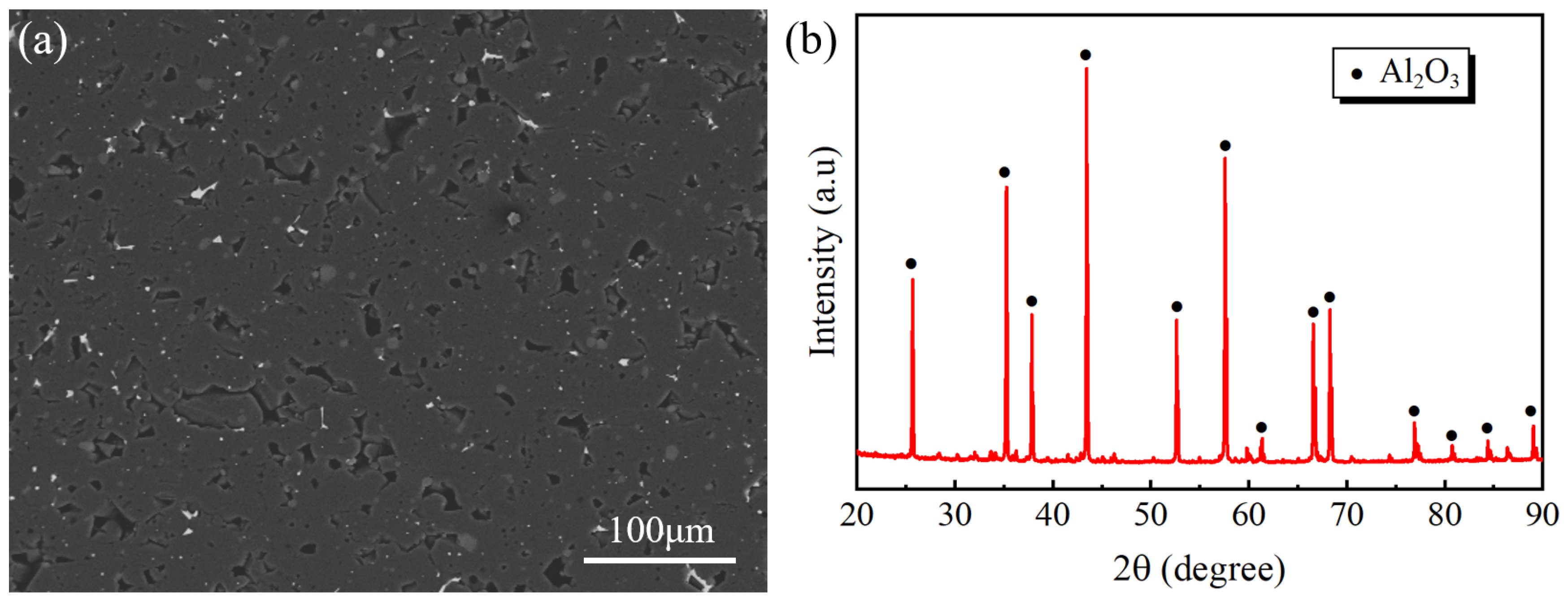
Figure 1. Initial characterization of the Al2O3 ceramic substrate. (a) SEM micrograph showing the surface morphology. (b) XRD pattern confirming the phase purity and α-Al2O3 crystal structure.
Metals 16 00189 g001
Figure 2. Initial characterization of the TC4 alloy substrate. (a) SEM micrograph revealing the α + β dual-phase microstructure. (b) XRD pattern identifying the constituent phases.
Metals 16 00189 g002
Figure 3. Schematic illustrations of the experimental setup. (a) Assembly of the Al2O3 and TC4 specimens for diffusion bonding. (b) Configuration of the shear strength test fixture, showing the loading direction relative to the bonded interface.
Metals 16 00189 g003
Figure 4. Thermal cycle profile used for diffusion bonding, showing the heating rates, holding stages, and the controlled cooling rate employed in all experiments.
Metals 16 00189 g004
Figure 5. Finite element model for residual stress simulation. (a) Three-dimensional view of the meshed joint model, corresponding to the shear test specimen geometry. (b) Detailed view of the simplified interfacial structure implemented in the model, highlighting the distinct material zones: Al2O3, the Ti3Al reaction layer, and TC4.
Metals 16 00189 g005
Figure 6. Representative interfacial microstructure of the joint bonded at 850 °C. (a) Low-magnification SEM image showing the overall integrity and distinct microstructural zones in the TC4 alloy. (b) High-magnification view of the multi-layered interfacial reaction zone. (cf) Corresponding EDS elemental maps for Ti, Al, V, and O, illustrating the distribution of key elements across the interface and the limited diffusion of Ti/V into the Al2O3.
Metals 16 00189 g006
Figure 7. Elemental line scan analysis across the interfacial reaction zone. The plot, taken along the blue line in Figure 6b, quantitatively shows the concentration profiles of Ti, Al, V, and O, demonstrating the interdiffusion behavior and the compositional gradient that confirms the formation of a hybrid interface via solid-state diffusion.
Metals 16 00189 g007
Figure 8. Phase identification of the fracture surface. XRD pattern obtained from the fracture surface of a joint bonded at 850 °C, confirming the presence of TiO2, TiAl, and Ti3Al compounds, which validates the EDS-based phase inferences.
Metals 16 00189 g008
Figure 9. Influence of bonding temperature on interfacial microstructure evolution. Cross-sectional SEM images of joints fabricated at (a) 800 °C, (b) 850 °C, (c) 900 °C, and (d) 950 °C, illustrating the concurrent increase in Ti3Al reaction layer thickness and the progressive narrowing/elimination of the Fine Grain Zone in TC4 with increasing temperature.
Metals 16 00189 g009
Figure 10. Quantitative relationship between bonding temperature and Ti3Al reaction layer thickness, demonstrating the significant growth of the brittle intermetallic layer with increasing temperature, which is a key factor influencing residual stress and joint strength.
Metals 16 00189 g010
Figure 11. Effect of bonding temperature on joint shear strength, showing the non-monotonic relationship, with a peak strength of 54 MPa achieved at 850 °C, beyond which strength degrades due to excessive reaction layer growth and interfacial damage.
Metals 16 00189 g011
Figure 12. Simulated residual stress (X-direction) distribution. (a) Overall stress contour on the joint surface and symmetry plane. (b) Detailed view of the X-Z cross-section at the joint center. (c,e) Stress distribution on the Al2O3 and TC4 bonding surfaces, respectively. (d) Stress isolated within the Ti3Al reaction layer. Images highlight the tensile stress concentration in the Ti3Al layer and the interfacial stress gradient.
Metals 16 00189 g012
Figure 13. X-Stress distributions along the selected lines marked in Figure 12. Stress variation along vertical lines L1 (center), L2 (intermediate), and L3 (edge) defined in Figure 12b, showing peak tensile stress within the Ti3Al layer and rapid decay into the substrates.
Metals 16 00189 g013
Figure 14. Simulated residual stress (Z-direction) distribution. (a) Overall stress contour on the joint surface, showing tensile stress concentration along the vertical edges of the Al2O3 ceramic. (b) Stress distribution on the X-Z central cross-section, revealing compressive stress domains within the Al2O3 and near the TC4 outer interface. (c,e) Stress distribution on the Al2O3 and TC4 bonding surfaces, respectively. (d) Stress isolated within the Ti3Al reaction layer.
Metals 16 00189 g014
Figure 15. Z-Stress distributions along the selected lines marked in Figure 14. Stress variation along lines L4 (center), L5 (intermediate), and L6 (Al2O3 edge) defined in Figure 14b, quantifying the transition from compressive to tensile stress and the peak tensile stress at the ceramic edge.
Metals 16 00189 g015
Table 1. Temperature-dependent thermophysical and mechanical properties of materials.
MaterialsTemperature
(°C)
CTE
(10−6/°C)
Yield Strength
(MPa)
Young’s Modulus
(GPa)
Density
(g/cm3)
Poisson’s
Ratio
Al2O3207.1-3553.620.27
2007.2348
4007.3343
6007.6333
8007.8325
10008.0315
TC4208.828701174.430.32
758.908201160.32
858.907501160.32
1008.933401150.32
2009.081301130.32
4009.43781070.33
6009.76541010.33
80010.131950.33
100010.412890.34
Ti3Al209.6010091484.300.32
20011.191135147
40012.581602133
60013.581788112
80014.19149773
100014.4040425
Table 2. EDS analysis results of each point in Figure 6 (at.%).
SpotTiAlVOPossible Phase
A55.0931.041.9111.93TiO2 + TiAl
B80.4017.542.06-Ti3Al
C89.347.862.80-α-Ti
D85.745.139.13-β-Ti
E91.536.491.98-α-Ti
Disclaimer/Publisher’s Note: The statements, opinions and data contained in all publications are solely those of the individual author(s) and contributor(s) and not of MDPI and/or the editor(s). MDPI and/or the editor(s) disclaim responsibility for any injury to people or property resulting from any ideas, methods, instructions or products referred to in the content.