Different Effects of Varying Cryogenic Temperatures on Different Properties of a Biocompatible Mg-10Se Alloy


Abstract
1. Introduction
2. Materials and Methods
2.1. Synthesis
2.2. Characterization
2.2.1. Physical Characterization
2.2.2. Microstructure Characterization
2.2.3. Thermal Characterization
2.2.4. Mechanical Characterization
2.2.5. Electrochemical Characterization
3. Results and Discussion
3.1. Density
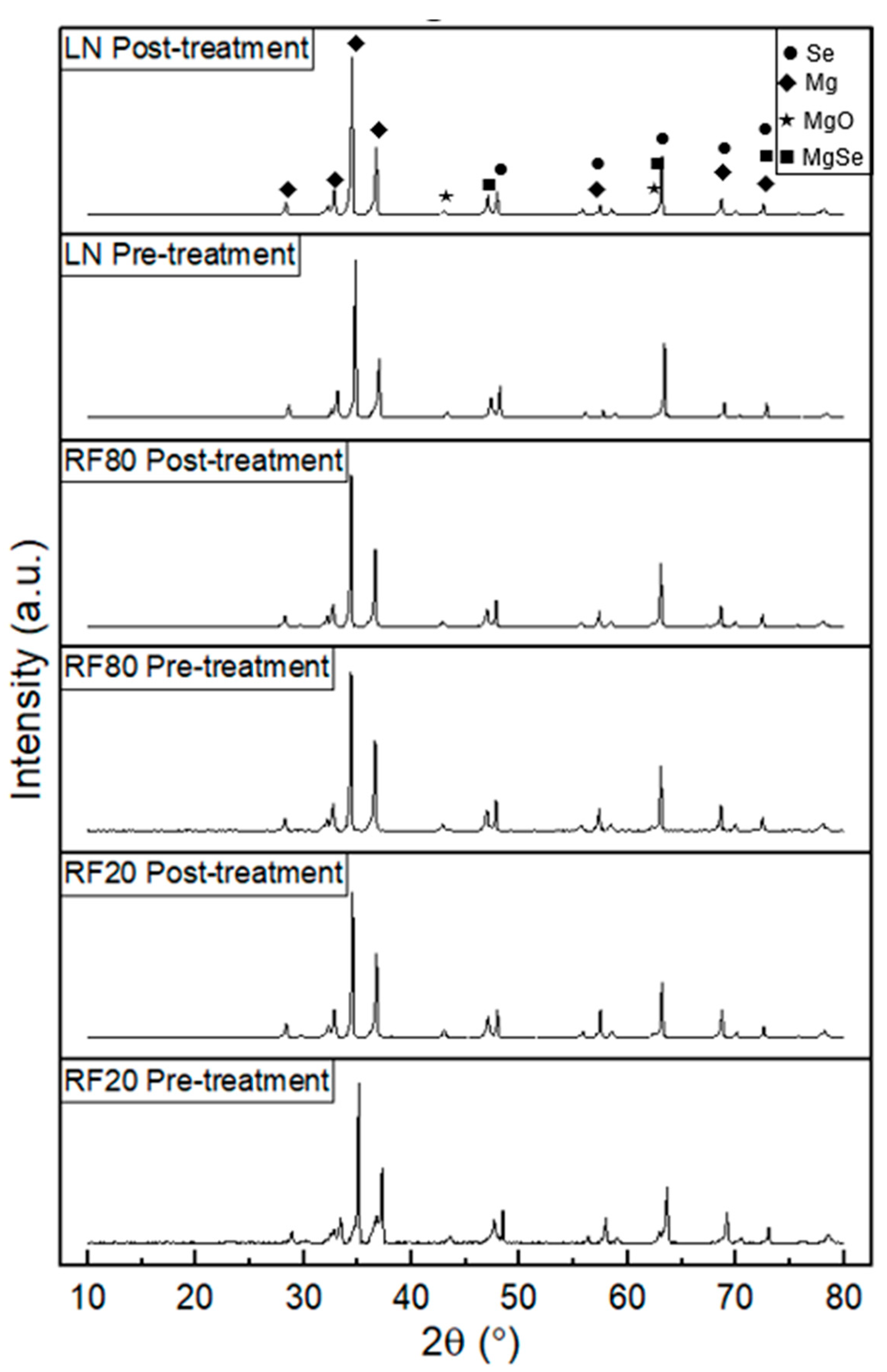
3.2. X-Ray Diffraction
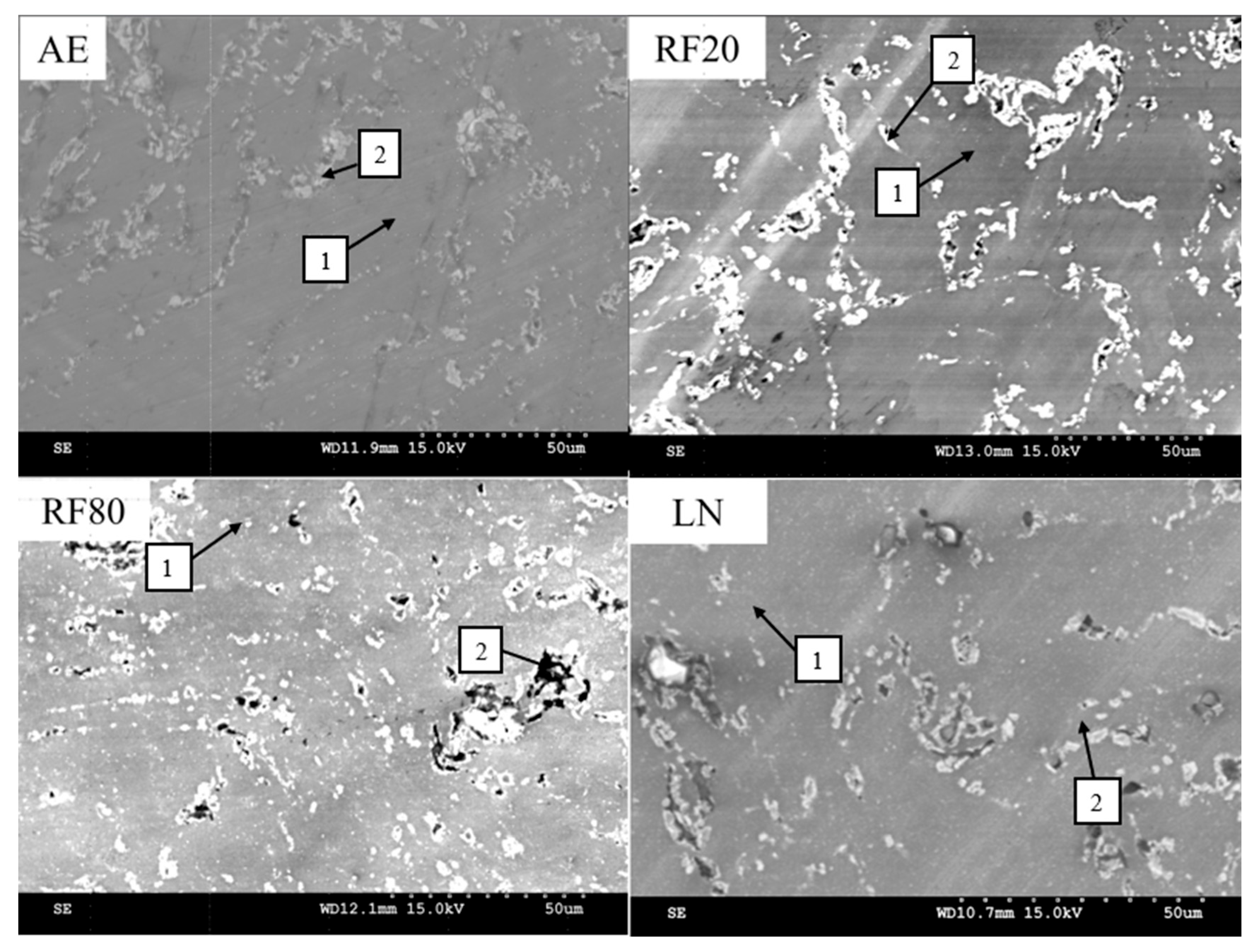
3.3. Microstructure
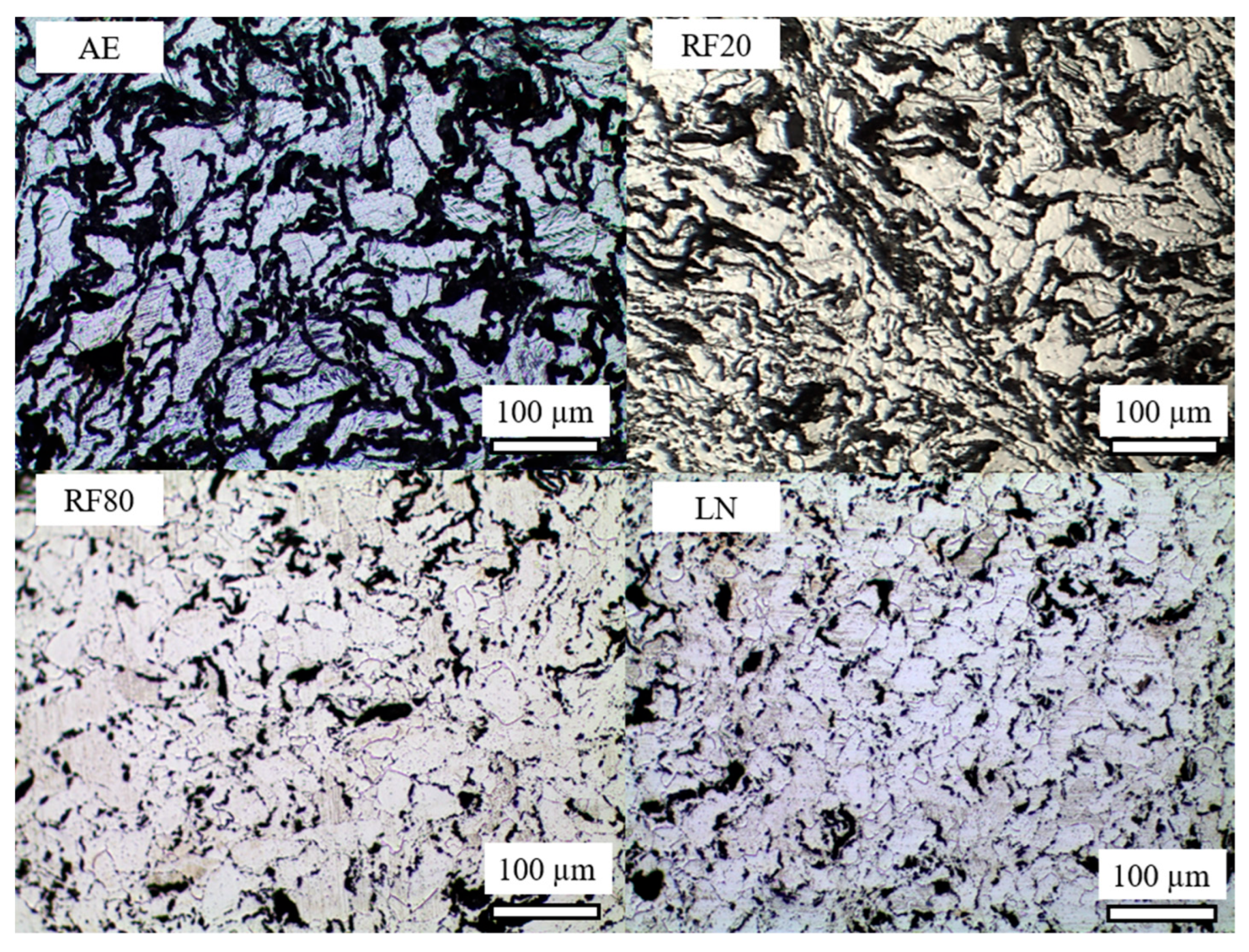
3.4. Grain Morphology
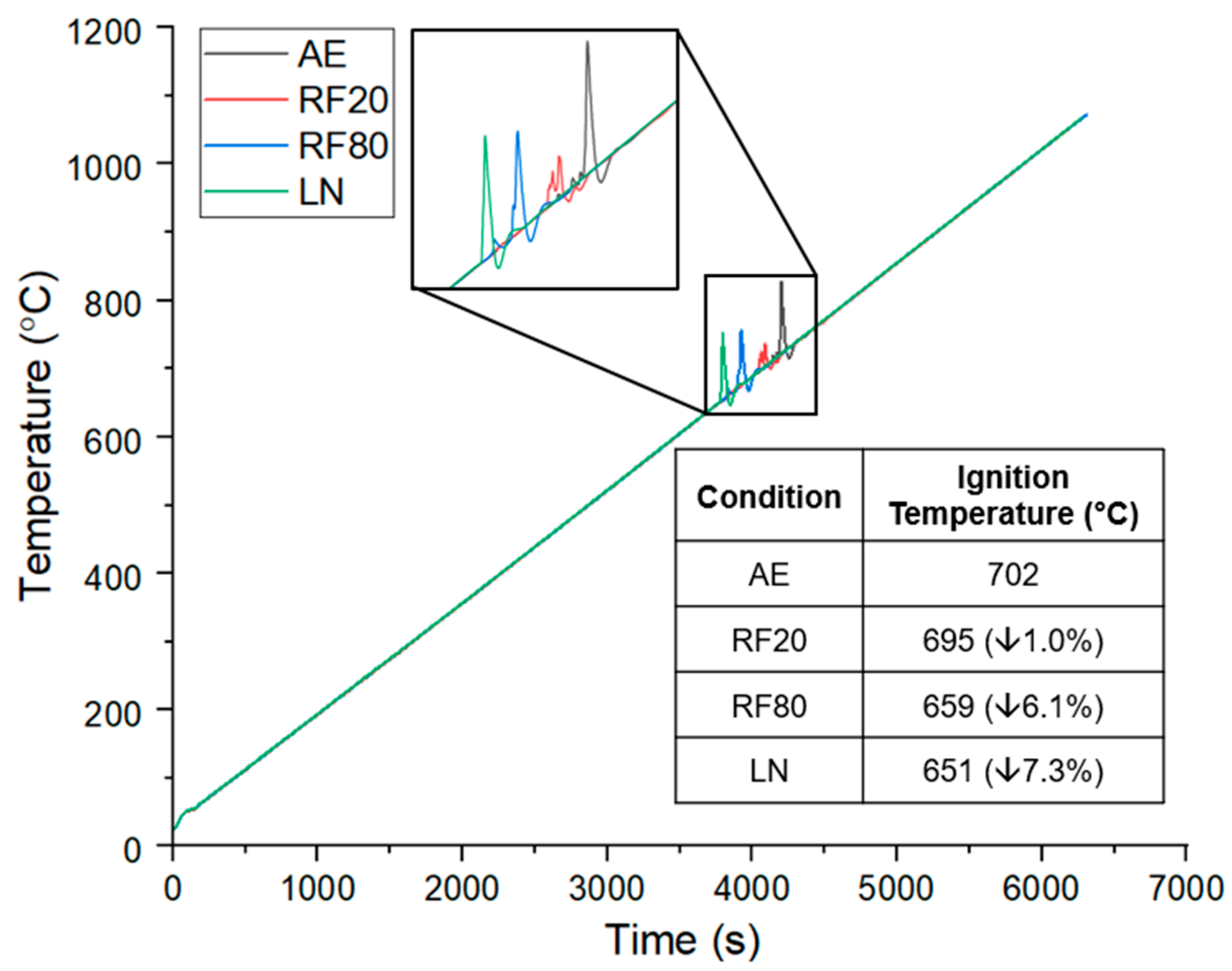
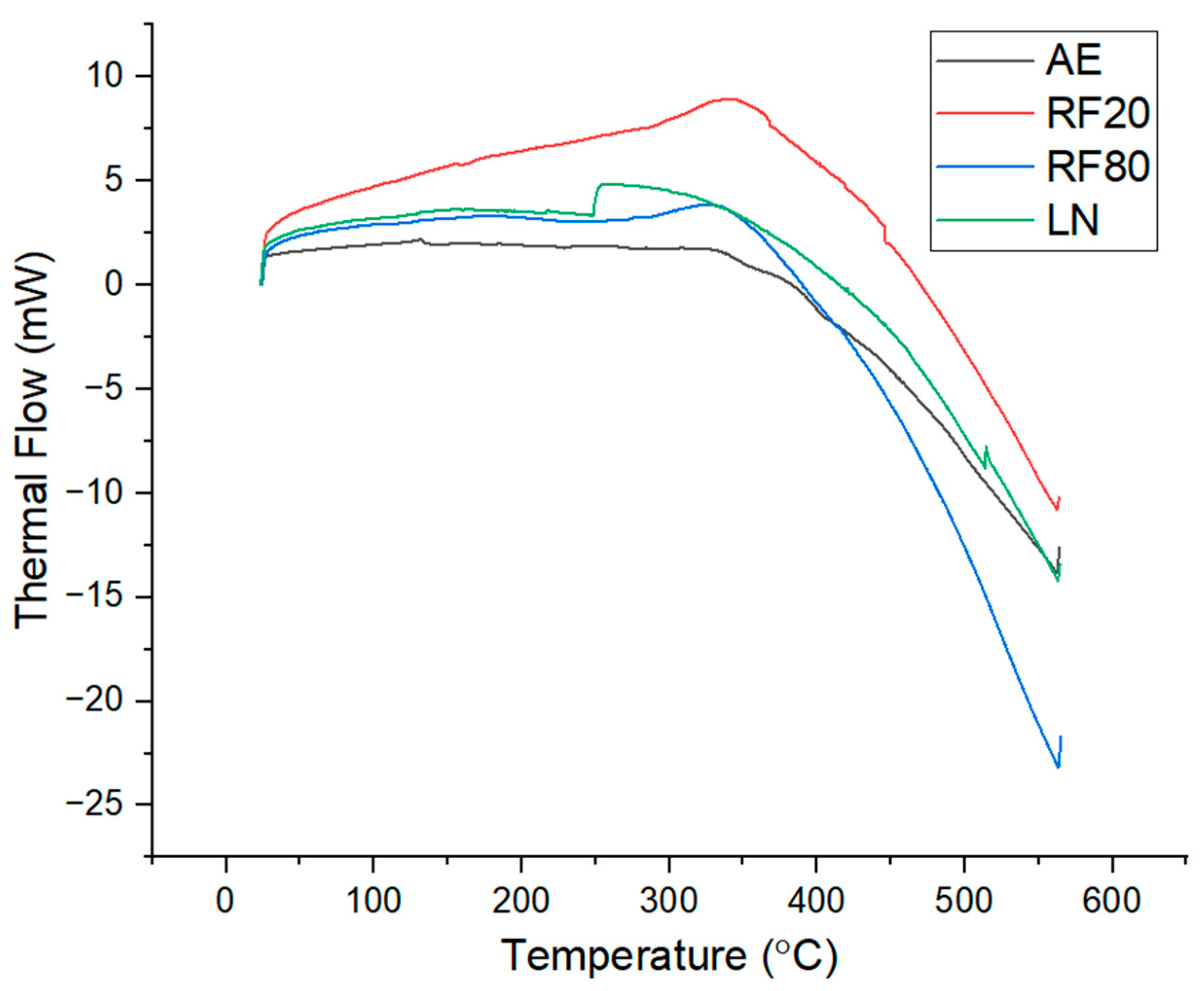
3.5. Thermal Response
3.6. Coefficient of Thermal Expansion
3.7. Damping Response
3.8. Hardness
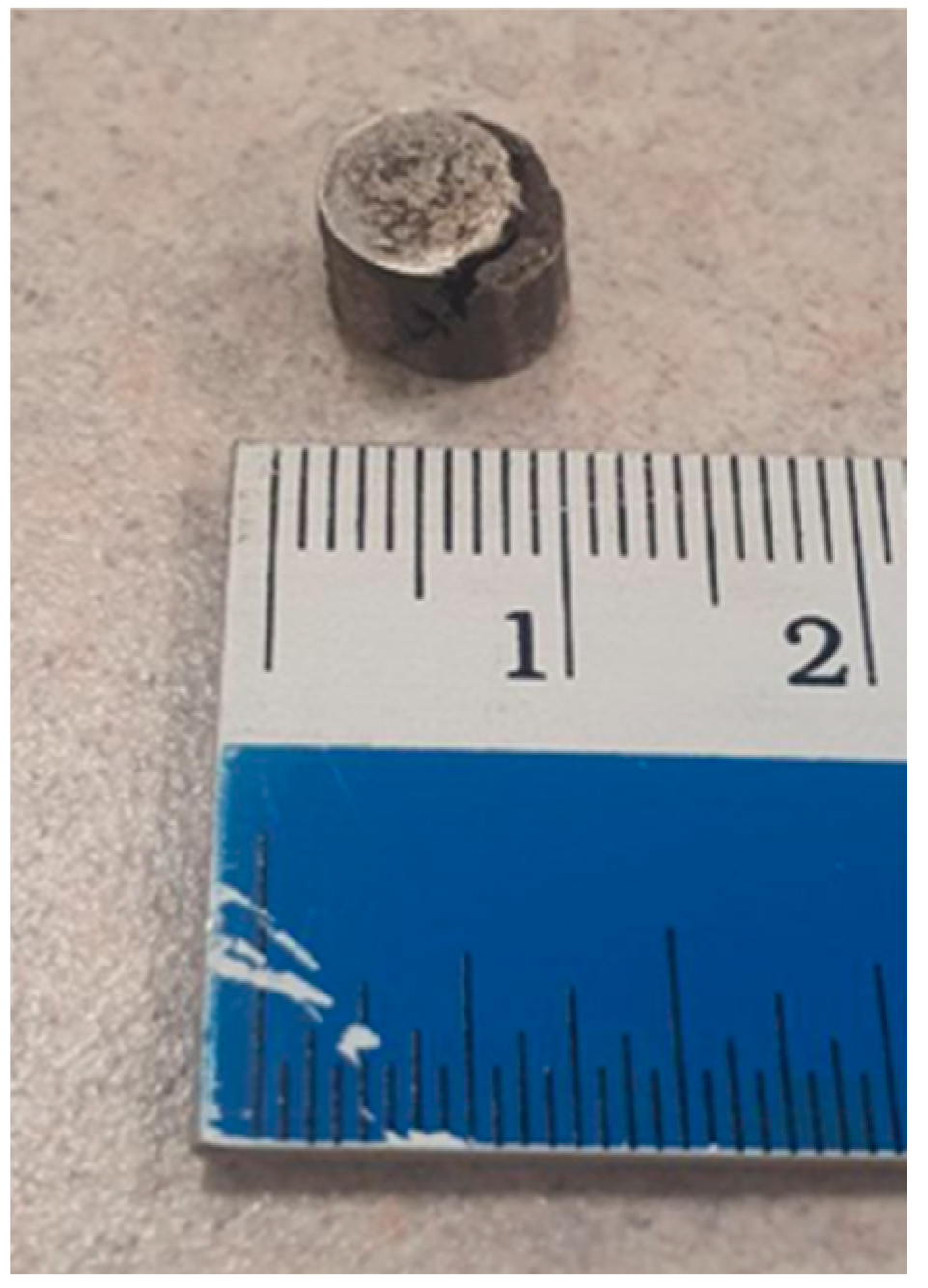
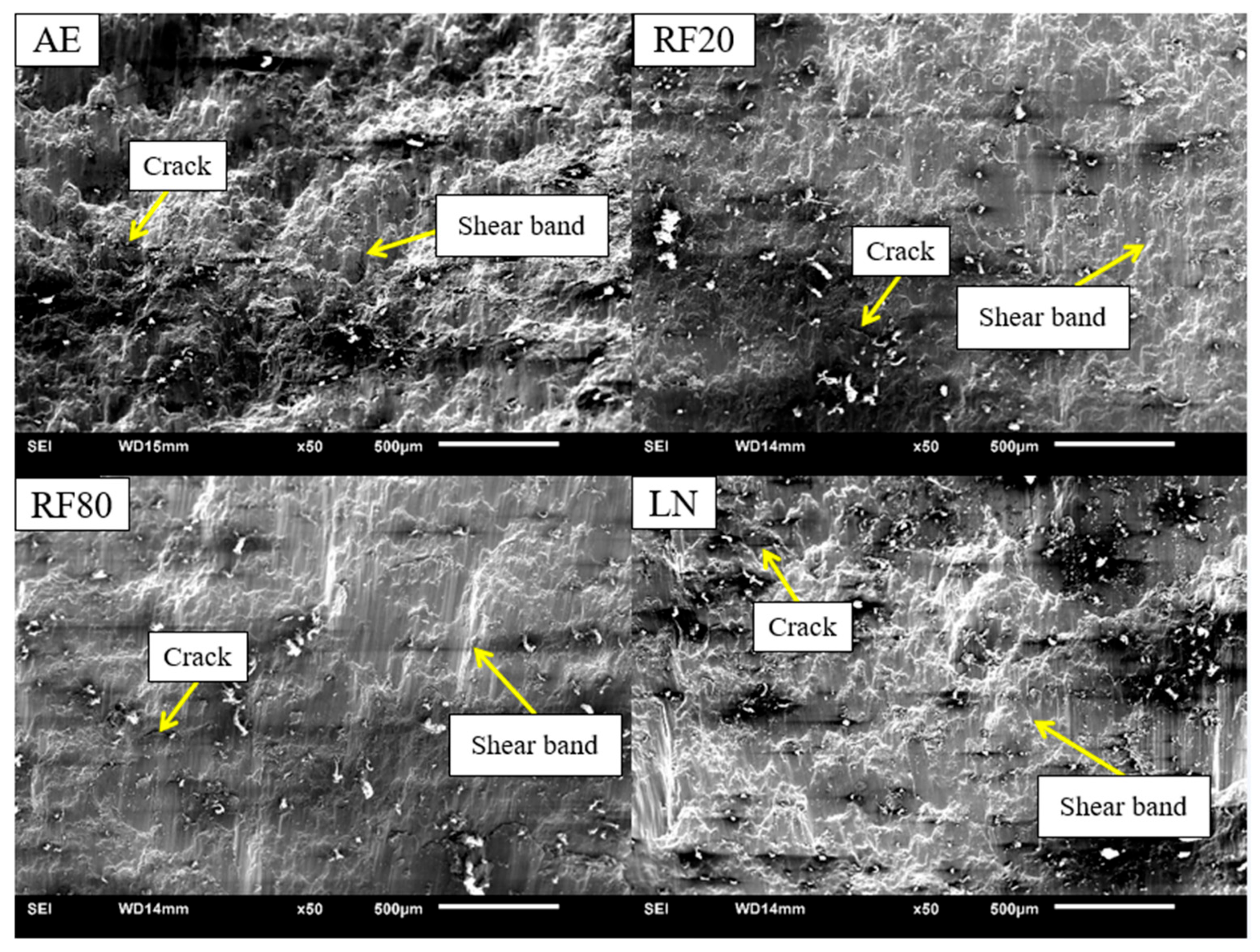
3.9. Compressive Response
3.10. Corrosion Response
4. Conclusions
- Cryogenic treatment is effective in the densification of materials produced via powder metallurgy, as seen with Mg-10Se. Se loss is apparent due to its low melting temperature (221 °C), necessitating pre-emptive compositional control to achieve intended material formulations.
- Damping performance was best enhanced with the RF20 treatment, with 38.5% and 12.1% gains in the attenuation coefficient and damping capacity, respectively, while also lowering Young’s modulus, which reduces stress shielding.
- The RF20 treatment resulted in optimal CYS (16.7% increase), while the LN treatment resulted in the highest increase in UCS and energy absorbed (by 10% and 17.5% respectively). Overall, the LN treatment stands out as the optimal CT for the overall combination of compressive properties in the context of best work of fracture value.
- The LN treatment was shown to be optimal for corrosion resistance, leading to a reduction in corrosion rate by 59.7%.
Author Contributions
Funding
Data Availability Statement
Acknowledgments
Conflicts of Interest
References
- Antoniac, I.; Miculescu, M.; Mănescu, V.; Stere, A.; Quan, P.H.; Păltânea, G.; Robu, A.; Earar, K. Magnesium-Based Alloys Used in Orthopedic Surgery. Materials 2022, 15, 1148. [Google Scholar] [CrossRef]
- Amukarimi, S.; Mozafari, M. Biodegradable magnesium-based biomaterials: An overview of challenges and opportunities. MedComm 2021, 2, 123–144. [Google Scholar] [CrossRef]
- Singer, H.; Özçelik, T.Ö. Classifying the properties of stainless steel materials for biomedical applications under an intuitionistic fuzzy environment: An FMEA-based TOPSIS-sort methodology. Mater. Today Commun. 2024, 40, 110183. [Google Scholar] [CrossRef]
- Johanes, M.; Mehtabuddin, S.; Venkatarangan, V.; Gupta, M. An Insight into the Varying Effects of Different Cryogenic Temperatures on the Microstructure and the Thermal and Compressive Response of a Mg/SiO2 Nanocomposite. Metals 2024, 14, 808. [Google Scholar] [CrossRef]
- Sonar, T.; Lomte, S.; Gogte, C. Cryogenic Treatment of Metal—A Review. Mater. Today Proc. 2018, 5, 25219–25228. [Google Scholar] [CrossRef]
- Dieringa, H. Influence of Cryogenic Temperatures on the Microstructure and Mechanical Properties of Magnesium Alloys: A Review. Metals 2017, 7, 38. [Google Scholar] [CrossRef]
- Li, Q.; Yuan, Z.; Jiang, A.; Zhu, W.; She, X. Effect of Cryogenic Treatment on Mechanical Properties of Mg-2Zn-0.7Ce Alloy. IOP Conf. Ser. Earth Environ. Sci. 2018, 170, 032135. [Google Scholar] [CrossRef]
- Jiang, Y.; Chen, D.; Chen, Z.; Liu, J. Effect of Cryogenic Treatment on the Microstructure and Mechanical Properties of AZ31 Magnesium Alloy. Mater. Manuf. Process. 2010, 25, 837–841. [Google Scholar] [CrossRef]
- Roebben, G.; Bollen, B.; Brebels, A.; Van Humbeeck, J.; Van der Biest, O. Impulse excitation apparatus to measure resonant frequencies, elastic moduli, and internal friction at room and high temperature. Rev. Sci. Instrum. 1997, 68, 4511–4515. [Google Scholar] [CrossRef]
- Morgan, E.F.; Unnikrisnan, G.U.; Hussein, A.I. Bone Mechanical Properties in Healthy and Diseased States. Annu. Rev. Biomed. Eng. 2018, 20, 119–143. [Google Scholar] [CrossRef]
- Rehm, A.; Granger, L.; Kobezda, T.; Ong, J.C.Y. Letter to the Editor: “Fixation of Unstable Osteochondritis Dissecans Lesions and Displaced Osteochondral Fragments Using New Biodegradable Magnesium Pins in Adolescents”. Cartilage 2022, 13, 19476035221098874. [Google Scholar] [CrossRef] [PubMed]
- Acar, B.; Kose, O.; Turan, A.; Unal, M.; Kati, Y.A.; Guler, F. Comparison of Bioabsorbable Magnesium versus Titanium Screw Fixation for Modified Distal Chevron Osteotomy in Hallux Valgus. Biomed. Res. Int. 2018, 2018, 5242806. [Google Scholar] [CrossRef]
- Hanák, F.; Havlas, V. Fixation of Knee Osteochondral Lesions in Pediatric Patients with Magnesium-Based Implants. Acta Chir. Orthop. Traumatol. Cech. 2023, 90, 100–107. [Google Scholar] [CrossRef] [PubMed]
- Elen, L.; Turen, Y.; Cicek, B.; Bozer, B.M.; Saud, A.N.; Koc, E. The Cytotoxic and Genotoxic Assays of Mg-Ag Alloy Doped with Zn, Ca, and Nd Elements. J. Mater. Eng. Perform. 2023, 32, 7337–7347. [Google Scholar] [CrossRef]
- Müller, E.; Schoberwalter, T.; Mader, K.; Seitz, J.M.; Kopp, A.; Baranowsky, A.; Keller, J. The Biological Effects of Magnesium-Based Implants on the Skeleton and Their Clinical Implications in Orthopedic Trauma Surgery. Biomater. Res. 2024, 28, 0122. [Google Scholar] [CrossRef]
- Kumar, K.; Gill, R.S.; Batra, U. Challenges and opportunities for biodegradable magnesium alloy implants. Mater. Technol. 2018, 33, 153–172. [Google Scholar] [CrossRef]
- Ali, M.; Hussein, M.A.; Al-Aqeeli, N. Magnesium-based composites and alloys for medical applications: A review of mechanical and corrosion properties. J. Alloys Compd. 2019, 792, 1162–1190. [Google Scholar] [CrossRef]
- Shoeibi, S.; Mashreghi, M. Biosynthesis of selenium nanoparticles using Enterococcus faecalis and evaluation of their antibacterial activities. J. Trace Elem. Med. Biol. 2017, 39, 135–139. [Google Scholar] [CrossRef]
- Chen, X.; Huang, Y.; Chen, H.; Chen, Z.; Chen, J.; Wang, H.; Li, D.; Su, Z. Augmented EPR effect post IRFA to enhance the therapeutic efficacy of arsenic loaded ZIF-8 nanoparticles on residual HCC progression. J. Nanobiotechnol. 2022, 20, 34. [Google Scholar] [CrossRef]
- Yang, T.; Lee, S.-Y.; Park, K.-C.; Park, S.-H.; Chung, J.; Lee, S. The Effects of Selenium on Bone Health: From Element to Therapeutics. Molecules 2022, 27, 392. [Google Scholar] [CrossRef]
- ASTM E112-13(2021); Standard Test Methods for Determining Average Grain Size. ASTM International: West Conshohocken, PA, USA, 2021.
- ASTM E1876-15; Standard Test Method for Dynamic Young’s Modulus, Shear Modulus, and Poisson’s Ratio by Impulse Excitation of Vibration. ASTM International: West Conshohocken, PA, USA, 2022.
- ASTM E384; Standard Test Method for Microindentation Hardness of Materials. ASTM International: West Conshohocken, PA, USA, 2022.
- ASTM E9-09; Standard Test Methods of Compression Testing of Metallic Materials at Room Temperature. ASTM International: West Conshohocken, PA, USA, 2018.
- Singh, I.B.; Singh, M.; Das, S. A comparative corrosion behavior of Mg, AZ31 and AZ91 alloys in 3.5% NaCl solution. J. Magnes. Alloys 2015, 3, 142–148. [Google Scholar] [CrossRef]
- Johanes, M.; Sonawane, V.; Gupta, M. A First-Time Investigation into Ecofriendly and Biocompatible Mg-Se Binary System for a Greener Earth. Metals 2024, 14, 163. [Google Scholar] [CrossRef]
- Pahaul, A.; Johanes, M.; Gupta, M. A First-Time Addition of Selenium to a Mg-Based Metal Matrix Composite for Biomedical Purposes. J. Compos. Sci. 2024, 8, 81. [Google Scholar] [CrossRef]
- Callister, J.W.D.; Rethwisch, D.G. Callister’s Materials Science and Engineering, Global Edition; John Wiley & Sons: Hoboken, NJ, USA, 2020. [Google Scholar]
- Xie, S.; Lv, Q.; Zhang, W.; Qu, Y.; Qi, H.; Yu, B.; Li, R.; Li, G.; Yang, F. Effect of Cryogenic Treatment on Microstructure and Mechanical Properties of Al0.6CrFe2Ni2 Dual-Phase High-Entropy Alloy. Metals 2023, 13, 195. [Google Scholar] [CrossRef]
- Kabekkodu, S.N.; Dosen, A.; Blanton, T.N. PDF-5+: A comprehensive Powder Diffraction File™ for materials characterization. Powder Diffr. 2024, 39, 47–59. [Google Scholar] [CrossRef]
- Olin, Å.; Noläng, B.I.; Öhman, L.; Osadchii, E.G.; Rosén, E. Chemical Thermodynamics of Selenium; Elsevier: Amsterdam, The Netherlands, 2005. [Google Scholar]
- Rashad, M.; Zaidi, S.D.A.; Asif, M. Debating the magnesium–selenium battery technology. J. Magnes. Alloys 2020, 8, 980–988. [Google Scholar] [CrossRef]
- Doherty, R.D.; Hughes, D.A.; Humphreys, F.J.; Jonas, J.J.; Jensen, D.J.; Kassner, M.E.; King, W.E.; McNelley, T.R.; McQueen, H.J.; Rollett, A.D. Current issues in recrystallization: A review. Mater. Sci. Eng. A 1997, 238, 219–274. [Google Scholar] [CrossRef]
- Van Aken, D.C.; Krajewski, P.E.; Vyletel, G.M.; Allison, J.E.; Jones, J.W. Recrystallization and grain growth phenomena in a particle-reinforced aluminum composite. Metall. Mater. Trans. A 1995, 26, 1395–1405. [Google Scholar] [CrossRef]
- Parande, G.; Manakari, V.; Meenashisundaram, G.K.; Gupta, M. Enhancing the hardness/compression/damping response of magnesium by reinforcing with biocompatible silica nanoparticulates. Int. J. Mater. Res. 2016, 107, 1091–1099. [Google Scholar] [CrossRef]
- Han, D.; Zhang, J.; Huang, J.; Lian, Y.; He, G. A review on ignition mechanisms and characteristics of magnesium alloys. J. Magnes. Alloys 2020, 8, 329–344. [Google Scholar] [CrossRef]
- Mills, K.C. Thermodynamic Data for Inorganic Sulphides, Selenides and Tellurides; Butterworths: London, UK, 1974. [Google Scholar]
- Zhou, X.; Guo, T.; Wu, S.; Lü, S.; Yang, X.; Guo, W. Effects of Si Content and Ca Addition on Thermal Conductivity of As-Cast Mg–Si Alloys. Materials 2018, 11, 2376. [Google Scholar] [CrossRef]
- Ross, R.B. Selenium Se. In Metallic Materials Specification Handbook; Ross, R.B., Ed.; Springer: Boston, MA, USA, 1992; pp. 282–283. [Google Scholar]
- Hasan, A.H.M.S.; Chowdhury, M.A.; Almahri, A.; Kowser, M.A.; Alam, M.S.; Shuvho, M.B.A.; Alruwais, R.S.; Hossain, N.; Rahman, M.R.; Rahman, M.M. Physical, thermal, and mechanical properties of Al2O3/SiO2 infused jute/glass fiber resin composite materials in relation to viscosity. Polym. Compos. 2022, 43, 3971–3982. [Google Scholar] [CrossRef]
- Lai, Y.S.; Chen, W.C.; Huang, C.H.; Cheng, C.K.; Chan, K.K.; Chang, T.K. The effect of graft strength on knee laxity and graft in-situ forces after posterior cruciate ligament reconstruction. PLoS ONE 2015, 10, e0127293. [Google Scholar] [CrossRef]
- Bottlang, M.; Doornink, J.; Lujan, T.J.; Fitzpatrick, D.C.; Marsh, J.L.; Augat, P.; von Rechenberg, B.; Lesser, M.; Madey, S.M. Effects of construct stiffness on healing of fractures stabilized with locking plates. J. Bone Jt. Surg. Am. 2010, 92, 12–22. [Google Scholar] [CrossRef]
- Niu, X.; Chen, Z.; Jing, L.; Huang, Y.; Liu, Y. Effect of Cryogenic Treatment on Residual Stress and Microstructure of 6061 Aluminum Alloy and Optimization of Parameters. Materials 2024, 17, 4873. [Google Scholar] [CrossRef]
- Ren, R.; Fan, J.; Wang, B.; Zhang, Q.; Li, W.; Dong, H. Hall-Petch relationship and deformation mechanism of pure Mg at room temperature. J. Alloys Compd. 2022, 920, 165924. [Google Scholar] [CrossRef]
- Dieter, G.E. Mechanical Metallurgy; McGraw-Hill: Columbus, OH, USA, 1976. [Google Scholar]
- Huang, H.; Zhang, J. Microstructure and mechanical properties of AZ31 magnesium alloy processed by multi-directional forging at different temperatures. Mater. Sci. Eng. A 2016, 674, 52–58. [Google Scholar] [CrossRef]
- Gassama, B.; Oteyaka, M. Influence of cryogenic treatment on the corrosion of AZ91 and AM60 magnesium alloys in an isotonic solution. Mater. Test. 2019, 61, 1039–1044. [Google Scholar] [CrossRef]
- Hernández-Escobar, D.; Champagne, S.; Yilmazer, H.; Dikici, B.; Boehlert, C.J.; Hermawan, H. Current status and perspectives of zinc-based absorbable alloys for biomedical applications. Acta Biomater. 2019, 97, 1–22. [Google Scholar] [CrossRef]
- Hagelstein, S.; Zankovic, S.; Kovacs, A.; Barkhoff, R.; Seidenstuecker, M. Mechanical Analysis and Corrosion Analysis of Zinc Alloys for Bioabsorbable Implants for Osteosynthesis. Materials 2022, 15, 421. [Google Scholar] [CrossRef]
- Bowen, P.K.; Shearier, E.R.; Zhao, S.; Guillory, R.J.; Zhao, F.; Goldman, J.; Drelich, J.W. Biodegradable Metals for Cardiovascular Stents: From Clinical Concerns to Recent Zn-Alloys. Adv. Healthc. Mater. 2016, 5, 1121–1140. [Google Scholar] [CrossRef] [PubMed]



| Material | Density (g/cm3) | Elastic Modulus (GPa) | Reference |
|---|---|---|---|
| Mg | 1.74 | 40–45 | [4] |
| Zn | 7.14 | 108 | [5,6] |
| Ti | 4.5 | 80–125 | [7,8] |
| Human Cortical Bone | 1.8 | 10–27 | [9] |
| Treatment and Condition | Material Designation Suffix |
|---|---|
| As-extruded | AE |
| Refrigerated at −20 °C for 24 h | RF20 |
| Refrigerated at −80 °C for 24 h | RF80 |
| Refrigerated in liquid nitrogen for 24 h | LN |
| Condition | Etchant | Etching Duration (s) |
|---|---|---|
| AE | 5% citric acid in H2O | 18 |
| RF20 | 2% citric acid in H2O | 55 |
| RF80 | 2% citric acid in H2O | 15 |
| LN | 2% citric acid in H2O | 12 |
| wt.% Mg | wt.% Se | Total % |
|---|---|---|
| 89.93 | 10.07 | 100 |
| Condition | Theoretical Density (g/cm3) | Experimental Density (g/cm3) | Porosity (%) | |
|---|---|---|---|---|
| Pre-Treated | Post-Treated | |||
| AE | 1.849 | 1.887 ± 0.006 | 1.84 | |
| RF20 | 1.894 ± 0.004 | 1.901 ± 0.003 | 2.23 | |
| RF80 | 1.885 ± 0.008 | 1.879 ± 0.008 | 1.52 | |
| LN | 1.873 ± 0.008 | 1.876 ± 0.008 | 1.22 | |
| Condition | Crystal Plane | Relative Intensity (I/Imax) | Intensity | ||
|---|---|---|---|---|---|
| Pre-Treatment | Post-Treatment | Pre-Treatment | Post-Treatment | ||
| RF20 | 10-10 Prismatic | 0.15328 | 0.19272 | 124 | 381 |
| 0002 Basal | 1 | 1 | 809 | 1977 | |
| 10-11 Pyramidal | 0.46972 | 0.58068 | 380 | 1148 | |
| RF80 | 10-10 Prismatic | 0.16604 | 0.14667 | 351 | 324 |
| 0002 Basal | 1 | 1 | 2114 | 2209 | |
| 10-11 Pyramidal | 0.56433 | 0.50973 | 1193 | 1126 | |
| LN | 10-10 Prismatic | 0.17202 | 0.15754 | 359 | 371 |
| 0002 Basal | 1 | 1 | 2087 | 2355 | |
| 10-11 Pyramidal | 0.3771 | 0.42081 | 787 | 991 | |
| Condition | Spectrum No. | Detected Element (wt.%) | |
|---|---|---|---|
| Mg | Se | ||
| AE | 1 | 99.2 | 0.8 |
| 2 | 50.6 | 49.4 | |
| RF20 | 1 | 98.3 | 1.7 |
| 2 | 71.9 | 28.1 | |
| RF80 | 1 | 99.3 | 0.7 |
| 2 | 58.1 | 41.9 | |
| LN | 1 | 100 | 0 |
| 2 | 34.6 | 65.4 | |
| Condition | Area Fraction (%) | Average Diameter (µm) | Aspect Ratio |
|---|---|---|---|
| AE | 7.3 | 3.7 ± 2.3 | 2.1 ± 0.8 |
| RF20 | 8.2 | 4.2 ± 2.6 (↑13.5%) | 2.0 ± 0.8 |
| RF80 | 8.5 | 2.8 ± 2.2 (↓24.3%) | 1.9 ± 0.7 |
| LN | 3.3 | 2.9 ± 1.8 (↓21.6%) | 2.3 ± 1.2 |
| Material | Condition | Grain Diameter (µm) |
|---|---|---|
| Pure Mg [35] | AE | 34 ± 2 |
| Mg-10Se | AE | 20.2 ± 7.3 |
| RF20 | 18.8 ± 5.8 (↓6.9%) | |
| RF80 | 19.4 ± 6.3 (↓4.0%) | |
| LN | 21.6 ± 7.9 (↑6.5%) |
| Condition | CTE (×10−6/K) |
|---|---|
| AE | 21.8 |
| RF20 | 23.8 (↑9.0%) |
| RF80 | 21.2 (↓3.0%) |
| LN | 25.1 (↑13.0%) |
| Material | Condition | Attenuation Coefficient | Damping Capacity | E-Modulus (GPa) |
|---|---|---|---|---|
| Mg-10Se RF20 | Pre-treated | 46.6 | 0.001738 | 46.1 ± 0.3 |
| Post-treated | 65.1 (↑38.5%) | 0.001948 (↑12.1%) | 40.9 ± 0.1 (↓11.2%) | |
| Mg-10Se RF80 | Pre-treated | 83.0 | 0.002439 | 43.7 ± 0.1 |
| Post-treated | 53.2 (↓35.9%) | 0.001852 (↓24.1%) | 44.6 ± 0.1 (↑2.0%) | |
| Mg-10Se LN | Pre-treated | 72.5 | 0.001902 | 47.8 ± 0.1 |
| Post-treated | 57.9 (↓20.1%) | 0.001640 (↓13.8%) | 45.5 ± 0.1 (↓4.9%) |
| Condition | Average Hardness (Hv) |
|---|---|
| AE | 72 ± 5 |
| RF20 | 70 ± 6 (↓1.7%) |
| RF80 | 68 ± 8 (↓5.5%) |
| LN | 62 ± 7 (↓13.3%) |
| Material | Condition | Mean 0.2% Compressive Yield Strength (MPa) | Mean Ultimate Compressive Strength (MPa) | Mean Fracture Strain (%) | Mean Energy Absorbed (MJ/m3) |
|---|---|---|---|---|---|
| Pure Mg [34] | AE | 72 ± 5 | 174 ± 7 | 16 ± 2 | 23 ± 2 |
| Mg-10Se | AE | 85 ± 3 | 234 ± 3 | 23 ± 1 | 33 ± 0 |
| RF20 | 102 ± 2 (↑16.7%) | 229 ± 2 (↓2.1%) | 21 ± 0 (↓8.7%) | 30 ± 0 (↓9.1%) | |
| RF80 | 101 ± 13 (↑15.8%) | 244 ± 1 (↑4.1%) | 23 ± 1 | 36 ± 0 (↑8.3%) | |
| LN | 90 ± 5 (↑5.6%) | 260 ± 6 (↑10%) | 23 ± 1 | 40 ± 2 (↑17.5%) |
| Condition | Overall Corrosion Rate (mm/yr) |
|---|---|
| AE | 0.677 |
| RF20 | 0.978 (↑30.8%) |
| RF80 | 1.440 (↑35.2%) |
| LN | 0.273 (↓59.7%) |
Disclaimer/Publisher’s Note: The statements, opinions and data contained in all publications are solely those of the individual author(s) and contributor(s) and not of MDPI and/or the editor(s). MDPI and/or the editor(s) disclaim responsibility for any injury to people or property resulting from any ideas, methods, instructions or products referred to in the content. |
© 2026 by the authors. Licensee MDPI, Basel, Switzerland. This article is an open access article distributed under the terms and conditions of the Creative Commons Attribution (CC BY) license.
Share and Cite
Chen, J.; Johanes, M.; Gupta, M. Different Effects of Varying Cryogenic Temperatures on Different Properties of a Biocompatible Mg-10Se Alloy. Metals 2026, 16, 181. https://doi.org/10.3390/met16020181
Chen J, Johanes M, Gupta M. Different Effects of Varying Cryogenic Temperatures on Different Properties of a Biocompatible Mg-10Se Alloy. Metals. 2026; 16(2):181. https://doi.org/10.3390/met16020181
Chicago/Turabian StyleChen, Jiaqi, Michael Johanes, and Manoj Gupta. 2026. "Different Effects of Varying Cryogenic Temperatures on Different Properties of a Biocompatible Mg-10Se Alloy" Metals 16, no. 2: 181. https://doi.org/10.3390/met16020181
APA StyleChen, J., Johanes, M., & Gupta, M. (2026). Different Effects of Varying Cryogenic Temperatures on Different Properties of a Biocompatible Mg-10Se Alloy. Metals, 16(2), 181. https://doi.org/10.3390/met16020181