MTFE-Net: A Deep Learning Vision Model for Surface Roughness Extraction Based on the Combination of Texture Features and Deep Learning Features

 , ,
, ,
Abstract
1. Introduction
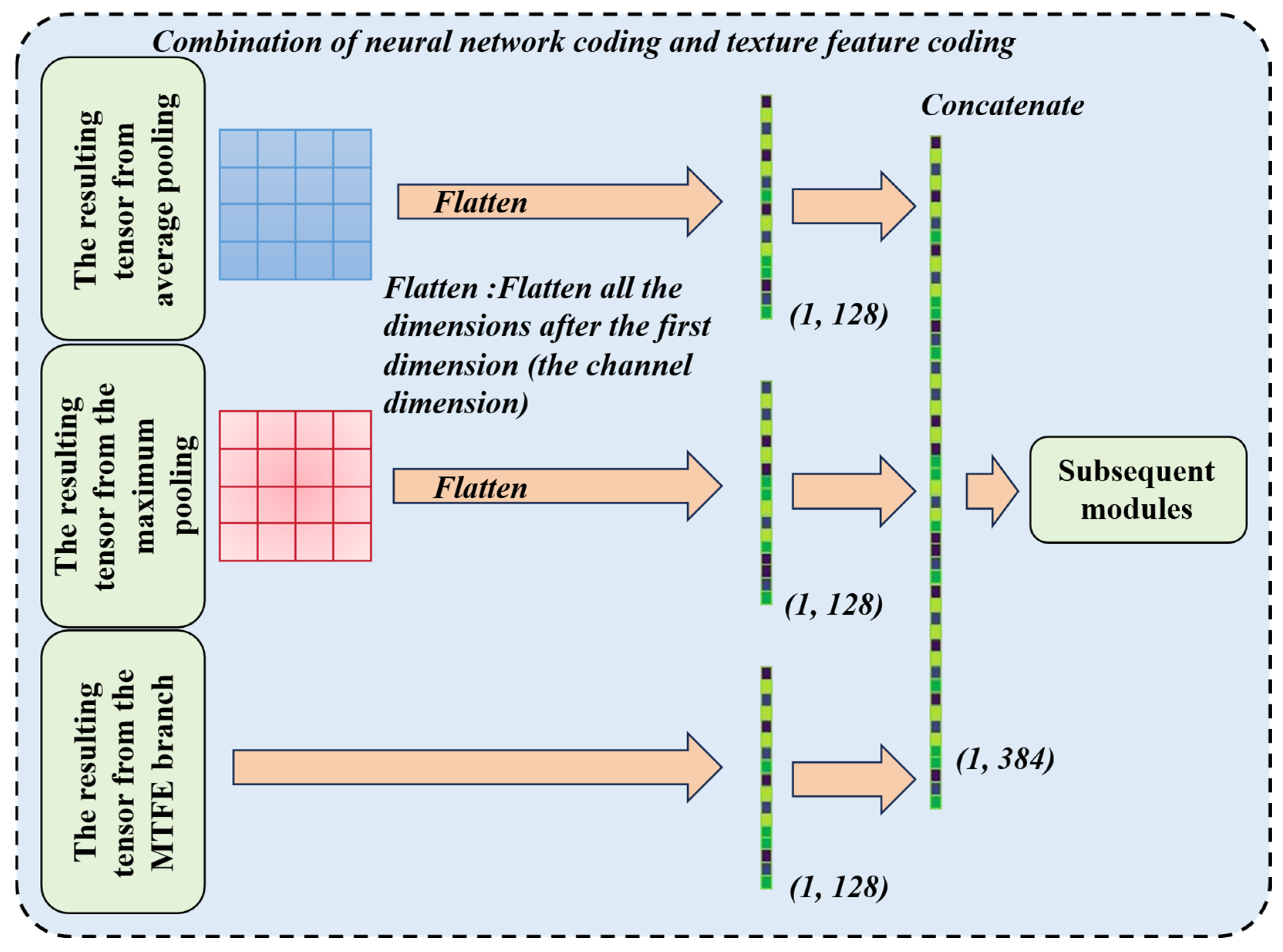
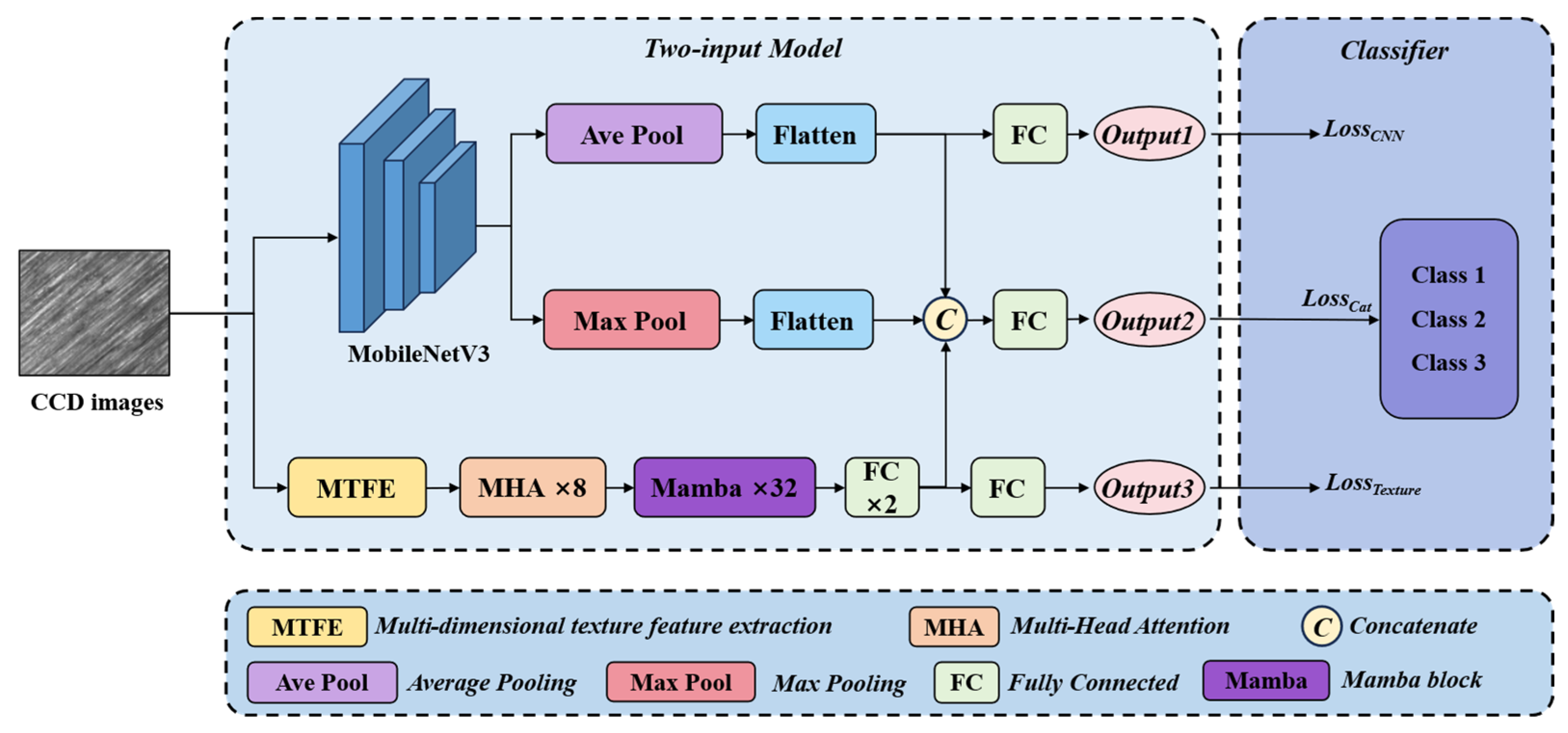
- A framework for the fusion of traditional feature extraction methods and deep learning feature extraction methods is proposed. The architecture of multi-supervised learning is adopted, and the features of multi-channel training are fused by using jump connection to improve the interpretability and robustness of the model.
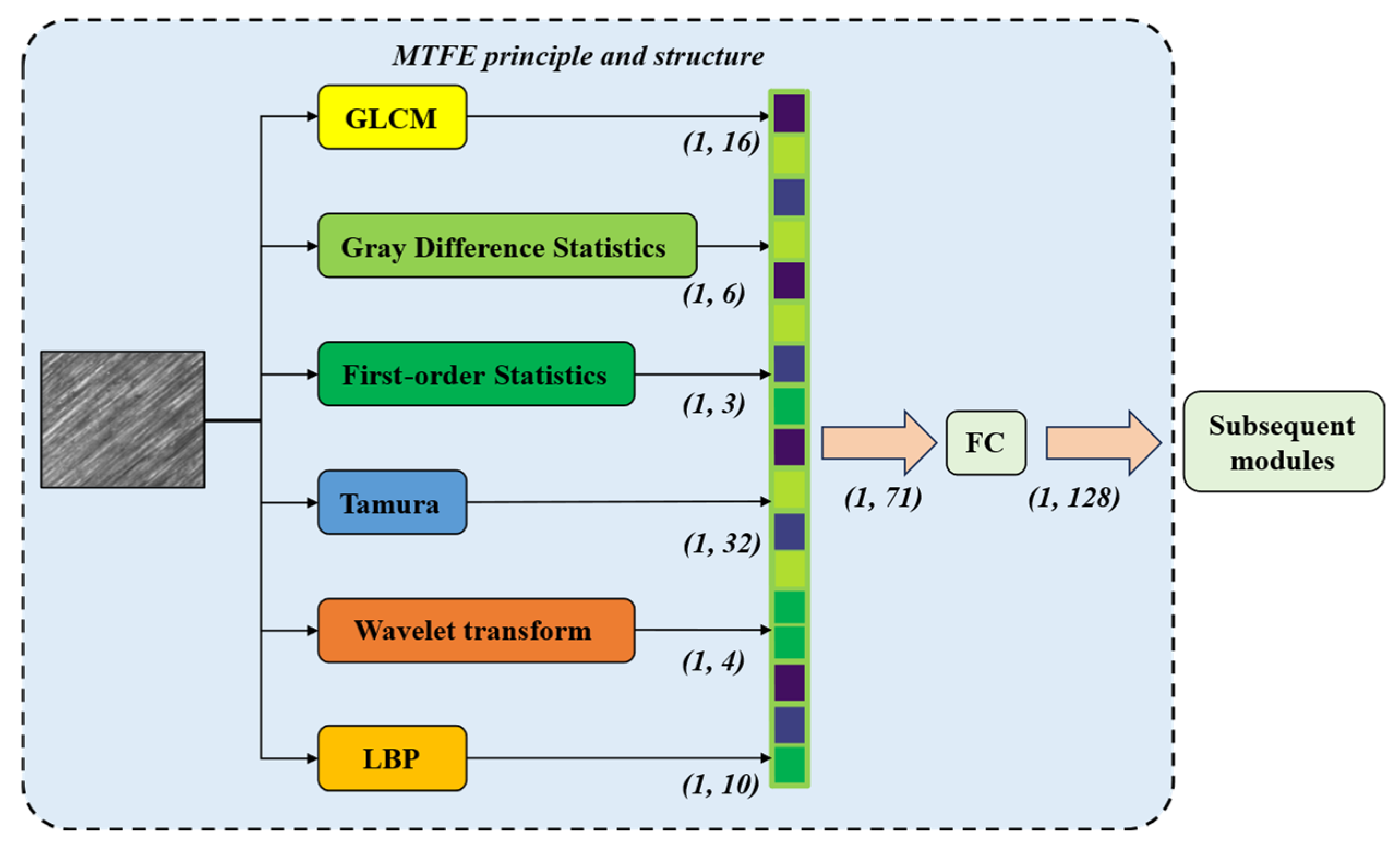
- A multi-dimensional texture feature extraction method is proposed, which combines GLCM, gray-level difference statistic, first-order statistic, Tamura texture feature, wavelet transform texture feature and Local Binary Pattern (LBP). This method synthesizes multi-dimensional texture features to improve the model’s perception of roughness images in time domain and frequency domain, and makes the model combine global and local texture features.
- The MHA model is introduced. It improves the ability of multi-dimensional texture feature extraction, refines the relationship between texture features, and highlights the key texture features.
- The Mamba block of the full receptive field is introduced to strengthen the connection between different texture features and improve the pattern recognition ability.
2. Method
2.1. Network Framework
2.2. Multi-Dimensional Texture Feature Extraction
2.2.1. Global Statistics
2.2.2. Frequency Domain Statistical Features and Local Statistical Features
2.3. Multi-Dimensional Texture Feature Processing
MHA Mechanism
2.4. Combination of Neural Network Coding and Texture Feature Coding
2.5. Loss Function Design
3. Experiment
3.1. Experimental Process
3.2. Dataset Constructions and Dataset Building
3.3. Model Construction and Model Training
3.4. Evaluation Metrics
4. Results and Discussion
4.1. Interpretation of Ablation Studies and Model Efficacy
4.2. The Critical Role of Multi-Dimensional Feature Complementarity
4.3. Model Selection
4.4. Different Encoders
4.5. Quantitative Comparison of Results with State-of-the-Art Models
4.6. Discussion
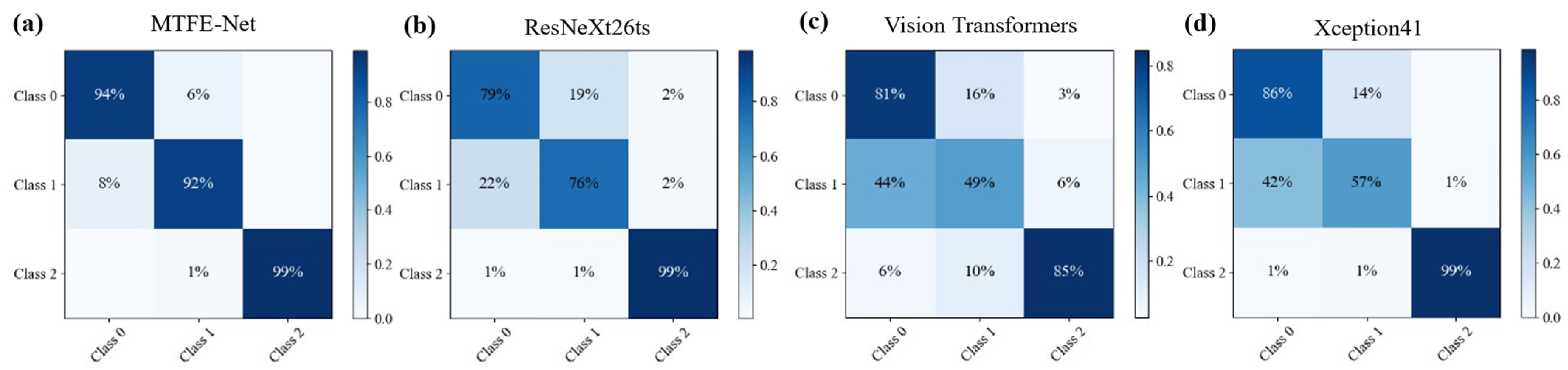
4.6.1. Confusion Matrix
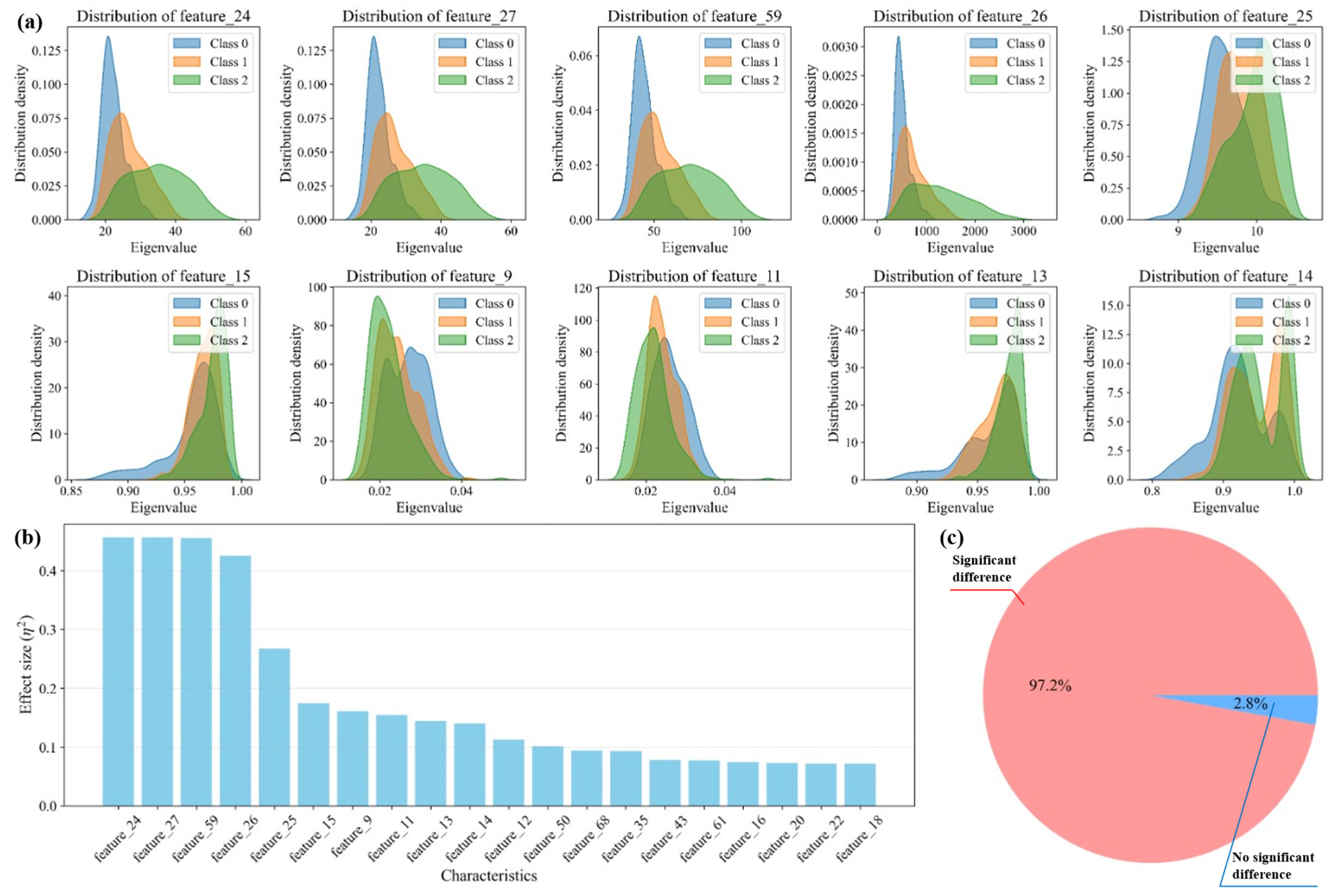
4.6.2. The Feature Response of the MTFE Module
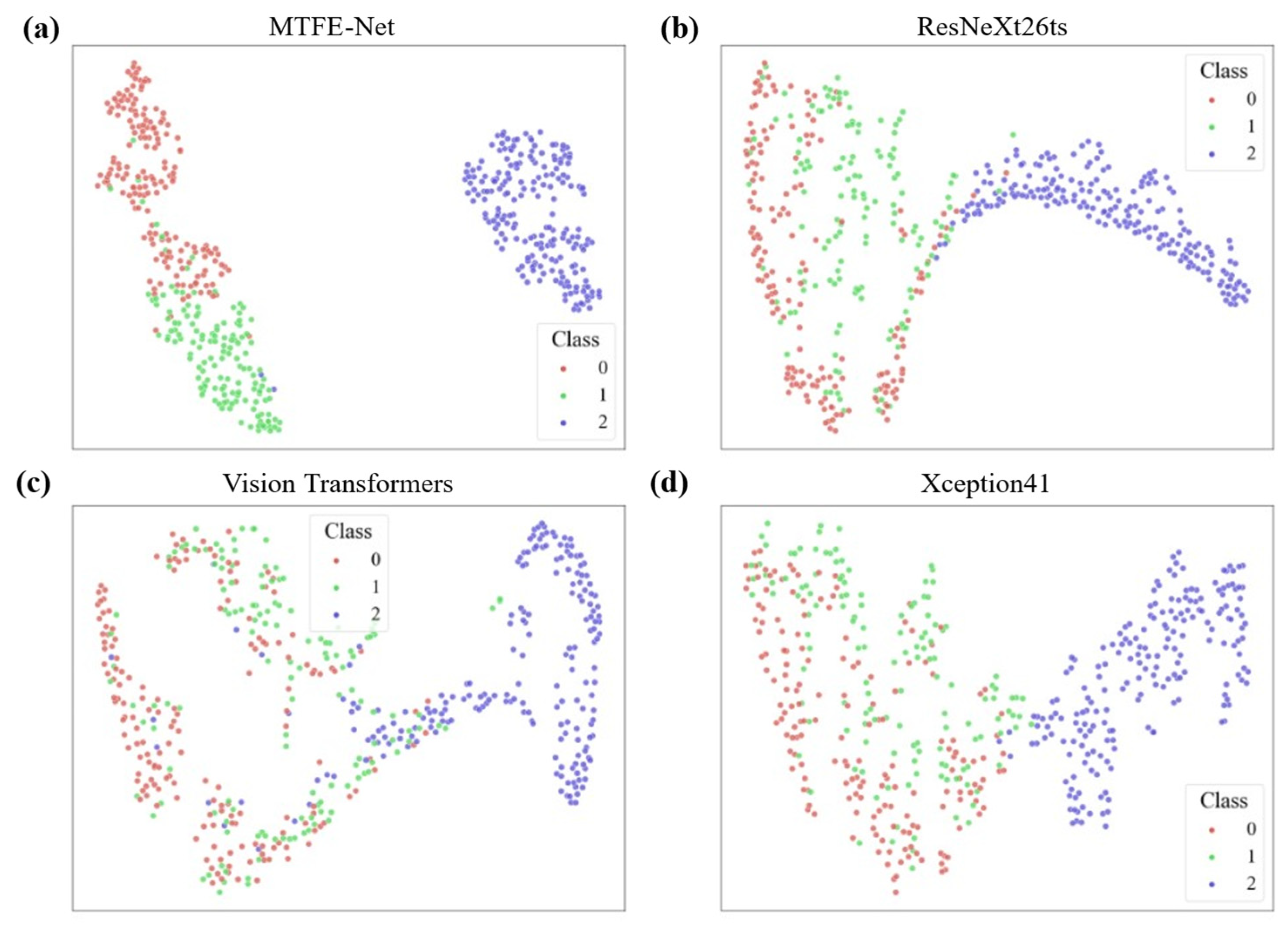
4.6.3. The t-SNE Visualization
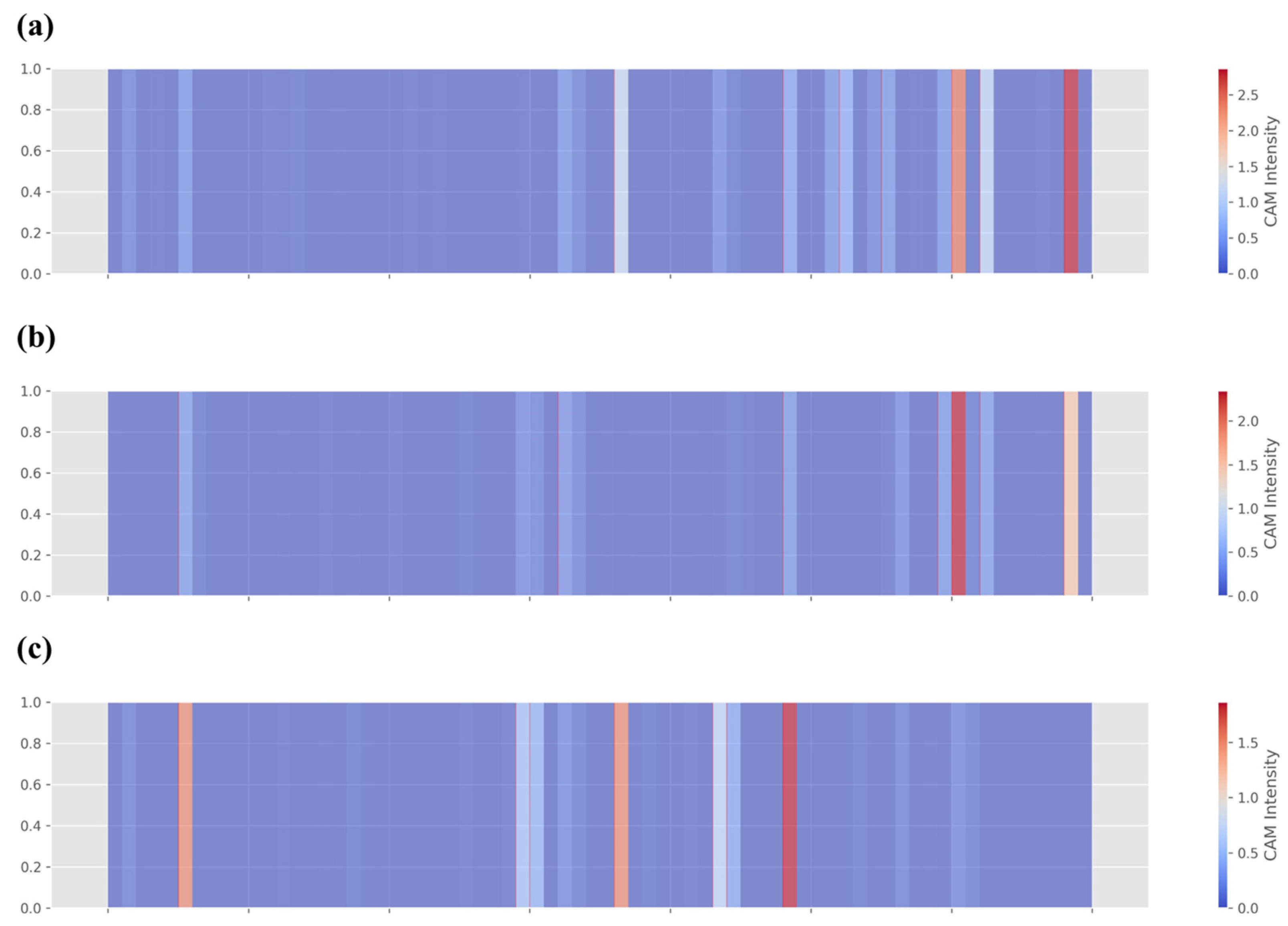
4.6.4. The Heatmaps of MTFE-Net
5. Conclusions
- The core innovation lies in its dual-branch architecture, which fuses deep learning features from a neural network encoder with physically interpretable features from the comprehensive MTFE module. The proposed MTFE model achieved a correct rate of 95.23% on the dataset, which was an improvement of 8.37% compared to the previous best-performing model, achieving superior accuracy while maintaining computational efficiency. This model has also achieved significant improvements in Precision (94.89%), Recall (94.67%), and F1-score (94.74%).
- The key to MTFE-Net’s success is its multi-dimensional approach. The MTFE module itself proved that integrating global statistical methods, local patterns, and frequency-domain analysis creates a more robust and informative texture description than any single method alone. The sequential processing of these features with the MHA mechanism and the Mamba model allowed the network to dynamically weigh inter-feature relationships and model their sequential dynamics, leading to a more nuanced and powerful representation for final classification.
- MTFE-Net establishes an effective framework for visual surface roughness assessment by demonstrating the significant advantages of a heterogeneous feature complementary mechanism. It overcomes the limitations of pure deep learning, such as low interpretability, and those of traditional handcrafted features, such as limited representation capacity.
- Future work should validate the generalizability of MTFE-Net on a wider range of engineering materials and more complex surface topographies. Exploring the model’s performance under different surface preparation methods would also be valuable.
- To fully leverage its potential for in-line quality control, research into deploying optimized versions of MTFE-Net on embedded systems or edge computing devices is necessary. This would involve model compression and acceleration techniques to achieve real-time surface roughness prediction in manufacturing environments.
Author Contributions
Funding
Data Availability Statement
Conflicts of Interest
References
- Gadelmawla, E.S.; Koura, M.M.; Maksoud, T.M.A.; Elewa, I.M.; Soliman, H.H. Roughness Parameters. J. Mater. Process. Technol. 2002, 123, 133–145. [Google Scholar] [CrossRef]
- Chandan, A.; Kumar, A.; Mahato, A. In Situ Analysis of Flow Characteristic and Deformation Field of Metal Surface in Sliding Asperity Contact. Tribol. Int. 2023, 189, 108947. [Google Scholar] [CrossRef]
- Liskiewicz, T.W.; Kubiak, K.J.; Mann, D.L.; Mathia, T.G. Analysis of Surface Roughness Morphology with TRIZ Methodology in Automotive Electrical Contacts: Design against Third Body Fretting-Corrosion. Tribol. Int. 2020, 143, 106019. [Google Scholar] [CrossRef]
- Sanaei, N.; Fatemi, A. Analysis of the Effect of Surface Roughness on Fatigue Performance of Powder Bed Fusion Additive Manufactured Metals. Theor. Appl. Fract. Mech. 2020, 108, 102638. [Google Scholar] [CrossRef]
- Deb, D. A Computational Technique for the Estimation of Surface Roughness from a Digital Image. Measurement 2025, 256, 118279. [Google Scholar] [CrossRef]
- Yang, H.; Zheng, H.; Zhang, T. A Review of Artificial Intelligent Methods for Machined Surface Roughness Prediction. Tribol. Int. 2024, 199, 109935. [Google Scholar] [CrossRef]
- Ruzova, T.A.; Haddadi, B. Surface Roughness and Its Measurement Methods—Analytical Review. Results Surf. Interfaces 2025, 19, 100441. [Google Scholar] [CrossRef]
- Qi, Q.; Li, T.; Scott, P.J.; Jiang, X. A Correlational Study of Areal Surface Texture Parameters on Some Typical Machined Surfaces. Procedia CIRP 2015, 27, 149–154. [Google Scholar] [CrossRef]
- Ghosh, S.; Knoblauch, R.; El Mansori, M.; Corleto, C. Towards AI Driven Surface Roughness Evaluation in Manufacturing: A Prospective Study. J. Intell. Manuf. 2025, 36, 4519–4548. [Google Scholar] [CrossRef]
- Wang, R.; Song, Q.; Peng, Y.; Liu, Z.; Ma, H.; Liu, Z.; Xu, X. Milling Surface Roughness Monitoring Using Real-Time Tool Wear Data. Int. J. Mech. Sci. 2025, 285, 109821. [Google Scholar] [CrossRef]
- Quinsat, Y.; Tournier, C. In Situ Non-Contact Measurements of Surface Roughness. Precis. Eng. 2012, 36, 97–103. [Google Scholar] [CrossRef]
- Shen, Y.; Ren, J.; Huang, N.; Zhang, Y.; Zhang, X.; Zhu, L. Surface Form Inspection with Contact Coordinate Measurement: A Review. Int. J. Extrem. Manuf. 2023, 5, 022006. [Google Scholar] [CrossRef]
- Li, R.-J.; Fan, K.-C.; Huang, Q.-X.; Zhou, H.; Gong, E.-M.; Xiang, M. A Long-Stroke 3D Contact Scanning Probe for Micro/Nano Coordinate Measuring Machine. Precis. Eng. 2016, 43, 220–229. [Google Scholar] [CrossRef]
- He, Y.; Yan, Y.; Geng, Y. Morphology Measurements by AFM Tapping without Causing Surface Damage: A Phase Shift Characterization. Ultramicroscopy 2023, 254, 113832. [Google Scholar] [CrossRef]
- Yoshitake, M.; Omata, K.; Kanematsu, H. Area-Controlled Soft Contact Probe: Non-Destructive Robust Electrical Contact with 2D and Fragile Materials. Materials 2024, 17, 1194. [Google Scholar] [CrossRef]
- Miah, K.; Potter, D.K. A Review of Hybrid Fiber-Optic Distributed Simultaneous Vibration and Temperature Sensing Technology and Its Geophysical Applications. Sensors 2017, 17, 2511. [Google Scholar] [CrossRef]
- Jiang, M.; Li, C.; Kong, J.; Teng, Z.; Zhuang, D. Cross-Level Reinforced Attention Network for Person Re-Identification. J. Vis. Commun. Image Represent. 2020, 69, 102775. [Google Scholar] [CrossRef]
- Mahdieh, M.H.; Badomi, E. Beckmann Formulation for Accurate Determination of Submicron Surface Roughness and Correlation Length. Opt. Laser Technol. 2013, 53, 40–44. [Google Scholar] [CrossRef]
- Shao, M.; Xu, D.; Li, S.; Zuo, X.; Chen, C.; Peng, G.; Zhang, J.; Wang, X.; Yang, Q. A Review of Surface Roughness Measurements Based on Laser Speckle Method. J. Iron Steel Res. Int. 2023, 30, 1897–1915. [Google Scholar] [CrossRef]
- Huang, M.; Hong, C.; Ma, C.; Luo, Z.; Du, S. Characterization of Rock Joint Surface Anisotropy Considering the Contribution Ratios of Undulations in Different Directions. Sci. Rep. 2020, 10, 17117. [Google Scholar] [CrossRef] [PubMed]
- Salah, M.; Ayyad, A.; Ramadan, M.; Abdulrahman, Y.; Swart, D.; Abusafieh, A.; Seneviratne, L.; Zweiri, Y. High Speed Neuromorphic Vision-Based Inspection of Countersinks in Automated Manufacturing Processes. J. Intell. Manuf. 2024, 35, 3067–3081. [Google Scholar] [CrossRef]
- Patel, D.R.; Kiran, M.B. A Non-Contact Approach for Surface Roughness Prediction in CNC Turning Using a Linear Regression Model. Mater. Today Proc. 2020, 26, 350–355. [Google Scholar] [CrossRef]
- Deng, Y.; Ding, K.; Ouyang, C.; Luo, Y.; Tu, Y.; Fu, J.; Wang, W.; Du, Y. Wavelets and Curvelets Transform for Image Denoising to Damage Identification of Thin Plate. Results Eng. 2023, 17, 100837. [Google Scholar] [CrossRef]
- Yi, H.; Liu, J.; Lu, E.; Ao, P. Measuring Grinding Surface Roughness Based on the Sharpness Evaluation of Colour Images. Meas. Sci. Technol. 2016, 27, 025404. [Google Scholar] [CrossRef]
- Chen, Y.; Yi, H.; Liao, C.; Huang, P.; Chen, Q. Visual Measurement of Milling Surface Roughness Based on Xception Model with Convolutional Neural Network. Measurement 2021, 186, 110217. [Google Scholar] [CrossRef]
- Li, K.; Wang, J.; Yao, J. Effectiveness of Machine Learning Methods for Water Segmentation with ROI as the Label: A Case Study of the Tuul River in Mongolia. Int. J. Appl. Earth Obs. Geoinf. 2021, 103, 102497. [Google Scholar] [CrossRef]
- Li, S.; Li, S.; Liu, Z.; Vladimirovich, P.A. Roughness Prediction Model of Milling Noise-Vibration-Surface Texture Multi-Dimensional Feature Fusion for N6 Nickel Metal. J. Manuf. Process. 2022, 79, 166–176. [Google Scholar] [CrossRef]
- Shehzad, A.; Rui, X.; Ding, Y.; Zhang, J.; Chang, Y.; Lu, H.; Chen, Y. Deep-Learning-Assisted Online Surface Roughness Monitoring in Ultraprecision Fly Cutting. Sci. China Technol. Sci. 2024, 67, 1482–1497. [Google Scholar] [CrossRef]
- Zeng, S.; Pi, D. Milling Surface Roughness Prediction Based on Physics-Informed Machine Learning. Sensors 2023, 23, 4969. [Google Scholar] [CrossRef]
- Zhang, T.; Guo, X.; Fan, S.; Li, Q.; Chen, S.; Guo, X. AMS-Net: Attention Mechanism Based Multi-Size Dual Light Source Network for Surface Roughness Prediction. J. Manuf. Process. 2022, 81, 371–385. [Google Scholar] [CrossRef]
- Wang, Y.; Wang, Y.; Zheng, L.; Zhou, J. Online Surface Roughness Prediction for Assembly Interfaces of Vertical Tail Integrating Tool Wear under Variable Cutting Parameters. Sensors 2022, 22, 1991. [Google Scholar] [CrossRef] [PubMed]
- Guo, M.; Zhou, J.; Li, X.; Lin, Z.; Guo, W. Prediction of Surface Roughness Based on Fused Features and ISSA-DBN in Milling of Die Steel P20. Sci. Rep. 2023, 13, 15951. [Google Scholar] [CrossRef]
- He, X.; Zhou, Y.; Zhao, J.; Zhang, D.; Yao, R.; Xue, Y. Swin Transformer Embedding UNet for Remote Sensing Image Semantic Segmentation. IEEE Trans. Geosci. Remote Sens. 2022, 60, 4408715. [Google Scholar] [CrossRef]
- Chi, K.; Guo, S.; Chu, J.; Li, Q.; Wang, Q. RSMamba: Biologically Plausible Retinex-Based Mamba for Remote Sensing Shadow Removal. IEEE Trans. Geosci. Remote Sens. 2025, 63, 5606310. [Google Scholar] [CrossRef]
- Ma, X.; Zhang, X.; Pun, M.-O. RS3Mamba: Visual State Space Model for Remote Sensing Image Semantic Segmentation. IEEE Geosci. Remote Sens. Lett. 2024, 21, 6011405. [Google Scholar] [CrossRef]
- Tamura, H.; Mori, S.; Yamawaki, T. Textural Features Corresponding to Visual Perception. IEEE Trans. Syst. Man. Cybern. 1978, 8, 460–473. [Google Scholar] [CrossRef]
- Alom, M.Z.; Taha, T.M.; Yakopcic, C.; Westberg, S.; Sidike, P.; Nasrin, M.S.; Hasan, M.; Van Essen, B.C.; Awwal, A.A.S.; Asari, V.K. A State-of-the-Art Survey on Deep Learning Theory and Architectures. Electronics 2019, 8, 292. [Google Scholar] [CrossRef]
- Shamshad, F.; Khan, S.; Zamir, S.W.; Khan, M.H.; Hayat, M.; Khan, F.S.; Fu, H. Transformers in Medical Imaging: A Survey. Med. Image Anal. 2023, 88, 102802. [Google Scholar] [CrossRef]
- Zaidi, S.S.A.; Ansari, M.S.; Aslam, A.; Kanwal, N.; Asghar, M.; Lee, B. A Survey of Modern Deep Learning Based Object Detection Models. Digit. Signal Process. 2022, 126, 103514. [Google Scholar] [CrossRef]
- Gao, S.-H.; Cheng, M.-M.; Zhao, K.; Zhang, X.-Y.; Yang, M.-H.; Torr, P. Res2Net: A New Multi-Scale Backbone Architecture. IEEE Trans. Pattern Anal. Mach. Intell. 2021, 43, 652–662. [Google Scholar] [CrossRef] [PubMed]




| Method | MTFE | MHA | Mamba | Accuracy | Precision | Recall | F1-Score |
|---|---|---|---|---|---|---|---|
| MTFE-Net | 0.9302 | 0.9266 | 0.9210 | 0.9227 | |||
| √ 1 | 0.9464 | 0.9422 | 0.9408 | 0.9411 | |||
| √ | √ | 0.9490 | 0.9450 | 0.9429 | 0.9437 | ||
| √ | √ | 0.9477 | 0.9464 | 0.9396 | 0.9418 | ||
| √ | √ | √ | 0.9523 | 0.9489 | 0.9467 | 0.9474 |
| Method | Global Statistics | LBP | Wavelet Transform | Accuracy | Precision | Recall | F1-Score |
|---|---|---|---|---|---|---|---|
| MTFE-Net | √ 1 | 0.9451 | 0.9447 | 0.9363 | 0.9388 | ||
| √ | 0.9033 | 0.9032 | 0.8880 | 0.8899 | |||
| √ | 0.8778 | 0.8672 | 0.8640 | 0.8647 | |||
| √ | √ | 0.9458 | 0.9417 | 0.9395 | 0.9400 | ||
| √ | √ | √ | 0.9523 | 0.9489 | 0.9467 | 0.9474 |
| Method | Number of Layers | Accuracy | Precision | Recall | F1-Score |
|---|---|---|---|---|---|
| MTFE-Net | 4 | 0.9451 | 0.9423 | 0.9380 | 0.9393 |
| 8 | 0.9523 | 0.9489 | 0.9467 | 0.9474 | |
| 16 | 0.9451 | 0.9417 | 0.9381 | 0.9393 |
| Method | Number of Layers | Accuracy | Precision | Recall | F1-Score |
|---|---|---|---|---|---|
| MTFE-Net | 4 | 0.9444 | 0.9397 | 0.9387 | 0.9388 |
| 8 | 0.9471 | 0.9456 | 0.9390 | 0.9410 | |
| 16 | 0.9431 | 0.9419 | 0.9344 | 0.9367 | |
| 32 | 0.9523 | 0.9489 | 0.9467 | 0.9474 | |
| 64 | 0.9412 | 0.9369 | 0.9344 | 0.9352 |
| Method | Encoder | Complexity (G) | Parameters (M) | Accuracy | Precision | Recall | F1-Score |
|---|---|---|---|---|---|---|---|
| MTFE-Net | ResNet18 [37] | 9.72 | 12.37 | 0.8392 | 0.8315 | 0.8323 | 0.8301 |
| ResNet34 [37] | 19.41 | 22.48 | 0.8235 | 0.8125 | 0.8138 | 0.8117 | |
| ResNet50 [37] | 22.35 | 26.91 | 0.8216 | 0.8054 | 0.8017 | 0.8025 | |
| ResNet101 [37] | 41.85 | 45.90 | 0.8235 | 0.8132 | 0.8029 | 0.8044 | |
| VGG16 [37] | 80.94 | 15.91 | 0.7863 | 0.7839 | 0.7614 | 0.7606 | |
| Swin Transformer [33] | 15.23 | 67.12 | 0.8137 | 0.8134 | 0.7861 | 0.7853 | |
| VMamba [35] | 31.35 | 33.98 | 0.3922 | 0.1307 | 0.3333 | 0.1878 | |
| Mobile-Net | 1.18 | 3.28 | 0.9523 | 0.9489 | 0.9467 | 0.9474 |
| Method | Complexity (G) | Parameter (M) | FPS | Accuracy | Precision | Recall | F1-Score |
|---|---|---|---|---|---|---|---|
| Vision Transformers [38] | 87.74 | 85.65 | 188.67 | 0.7373 | 0.7245 | 0.7166 | 0.7156 |
| ResNeXt26ts [39] | 9.61 | 8.22 | 220.85 | 0.8686 | 0.8559 | 0.8550 | 0.8554 |
| ResNet18 [39] | 9.53 | 11.18 | 344.82 | 0.8353 | 0.8309 | 0.8147 | 0.8164 |
| Xception41 [39] | 26.40 | 24.92 | 120.48 | 0.8294 | 0.8199 | 0.8053 | 0.8060 |
| EfficientNet_b0 [39] | 2.01 | 3.97 | 108.70 | 0.8333 | 0.8190 | 0.8155 | 0.8164 |
| Res2Net50 [40] | 22.10 | 23.01 | 60.98 | 0.8412 | 0.8394 | 0.8177 | 0.8189 |
| MTFE-Net | 1.18 | 3.28 | 34.48 | 0.9523 | 0.9489 | 0.9467 | 0.9474 |
Disclaimer/Publisher’s Note: The statements, opinions and data contained in all publications are solely those of the individual author(s) and contributor(s) and not of MDPI and/or the editor(s). MDPI and/or the editor(s) disclaim responsibility for any injury to people or property resulting from any ideas, methods, instructions or products referred to in the content. |
© 2026 by the authors. Licensee MDPI, Basel, Switzerland. This article is an open access article distributed under the terms and conditions of the Creative Commons Attribution (CC BY) license.
Share and Cite
Jin, Q.; Du, W.; Liu, H.; Li, X.; Niu, X.; Liu, Y.; Ji, J.; Qiu, M.; Liu, Y. MTFE-Net: A Deep Learning Vision Model for Surface Roughness Extraction Based on the Combination of Texture Features and Deep Learning Features. Metals 2026, 16, 179. https://doi.org/10.3390/met16020179
Jin Q, Du W, Liu H, Li X, Niu X, Liu Y, Ji J, Qiu M, Liu Y. MTFE-Net: A Deep Learning Vision Model for Surface Roughness Extraction Based on the Combination of Texture Features and Deep Learning Features. Metals. 2026; 16(2):179. https://doi.org/10.3390/met16020179
Chicago/Turabian StyleJin, Qiancheng, Wangzhe Du, Huaxin Liu, Xuwei Li, Xiaomiao Niu, Yaxing Liu, Jiang Ji, Mingjun Qiu, and Yuanming Liu. 2026. "MTFE-Net: A Deep Learning Vision Model for Surface Roughness Extraction Based on the Combination of Texture Features and Deep Learning Features" Metals 16, no. 2: 179. https://doi.org/10.3390/met16020179
APA StyleJin, Q., Du, W., Liu, H., Li, X., Niu, X., Liu, Y., Ji, J., Qiu, M., & Liu, Y. (2026). MTFE-Net: A Deep Learning Vision Model for Surface Roughness Extraction Based on the Combination of Texture Features and Deep Learning Features. Metals, 16(2), 179. https://doi.org/10.3390/met16020179