Article

Assessing the Potential of Heterotrophic Bioleaching to Extract Metals from Mafic Tailings

Clean Energy Innovation Research Centre (CEI), National Research Council of Canada, 6100 Royalmount Ave, Montreal, QC H4P 2R2, Canada
*
Author to whom correspondence should be addressed.
Metals 2026, 16(2), 178; https://doi.org/10.3390/met16020178
Submission received: 21 October 2025 / Revised: 16 January 2026 / Accepted: 20 January 2026 / Published: 2 February 2026

Abstract

Mafic mine tailings are highly resistant to bioleaching due to their silicate-rich composition, low sulfide content, and strong buffering capacity. This study aimed to assess the potential use of heterotrophic bioleaching to promote the release of metals from mafic tailings by evaluating the organic acid production and leaching capabilities of indigenous bacterial isolates and a known lactic acid producer, Lactiplantibacillus plantarum ATCC 8014. Indigenous acid-producing heterotrophic bacteria were isolated from a vanadium-titanium-bearing magnetite tailings in Québec, Canada, and screened for organic acid production in various culture media. The most active bacteria were L. plantarum and two isolates identified by their 16S rRNA gene as Enterococcus (CBGM-1C) and Acetobacter (BL-F) sp. They produced significant quantities of lactic acids, followed by acetic, citric, and gluconic acids during glucose metabolism, through fermentative or oxidative pathways. A two-step bioleaching process was implemented, consisting of an initial organic acid production phase followed by tailings leaching at 5% pulp density over 10 days at 30 °C. Metal solubilization and mineralogical analyses demonstrated strain-dependent and metal-specific mobilization, with zinc being the only element efficiently leached (up to ~74% recovery by L. plantarum). XRD analyses confirmed partial dissolution and reduced crystallinity of key silicate phases without secondary mineral formation. These findings indicate that heterotrophic leaching can selectively mobilize more labile metals such as Zn from alkaline, silicate-rich tailings, although its overall efficiency for refractory elements remains limited under the tested conditions.

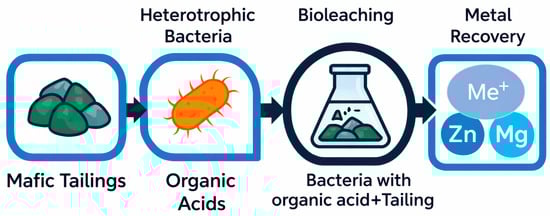
Graphical Abstract

1. Introduction

Global transitions toward low-carbon energy systems, electrification, and advanced manufacturing have driven unprecedented demand for base and critical metals, such as aluminum (Al), copper (Cu), nickel (Ni), iron (Fe), and zinc (Zn). Projections indicate that by 2050, global demand for several of these metals will increase by 2–6 times relative to 2010 levels, placing significant pressure on primary mineral resources [1]. Despite continued exploration, many high-grade ore bodies are approaching depletion, with estimated reserves for key energy-transition metals such as copper, nickel, and zinc projected to sustain less than 2–5 decades of production at current extraction rates [2,3]. Consequently, attention is increasingly shifting toward secondary resources, including mine tailings, slags, and industrial residues, as alternative feedstocks for metal recovery.
Mine tailings, traditionally regarded as waste, often retain 5–15% of the metals present in the original ore due to incomplete extraction during beneficiation and processing [4,5]. In addition to representing a potential resource, tailings pose long-term environmental risks associated with land occupation, metal leaching, and dust generation. Recovering metals from tailings therefore offers a dual benefit: mitigating environmental liabilities while contributing to resource sustainability [6]. Biohydrometallurgy has emerged as a promising approach in this context, offering lower energy requirements, reduced greenhouse gas emissions, and the ability to process low-grade materials compared with conventional pyrometallurgical and hydrometallurgical methods [7,8].
Commercial bioleaching operations are dominated by acidophilic, chemolithoautotrophic microorganisms, such as Acidithiobacillus and Leptospirillum species, which oxidize sulfide minerals under highly acidic conditions (pH < 3) to generate ferric iron and sulfuric acid [9,10,11]. While effective for sulfide-rich ores and tailings, these systems are poorly suited for oxide-, carbonate-, and silicate-dominated materials, particularly mafic and ultramafic tailings, which contain little or no sulfide and exhibit high buffering capacity. The absence of sulfide minerals limits acid generation, while the abundance of acid-consuming silicates makes these tailings difficult to leach, resulting in low metal solubilization efficiency [12].
Heterotrophic bioleaching represents an alternative strategy more relevant for alkaline and silicate-rich residues. This process relies on microorganisms that metabolize organic carbon sources and excrete organic acids such as lactic, citric, acetic, gluconic, and oxalic acids into the surrounding medium [13,14,15]. Metal mobilization occurs through acidolysis (proton-promoted dissolution), complexolysis (formation of metal–organic ligand complexes), and redoxolysis [16]. Unlike autotrophic systems, heterotrophic bioleaching can operate at near-neutral to moderately acidic pH and does not require sulfide oxidation, making it conceptually suitable for mafic tailings.
Previous studies have demonstrated the potential of organic acids for leaching metals from industrial residues such as slags, bauxite residue, and electronic waste [17,18]. Early work by Willscher and Bosecker [19] demonstrated that heterotrophic microorganisms isolated from an alkaline slag dump were able to leach siliceous materials under mild conditions, achieving up to 46% magnesium and 38% manganese extraction. Han et al. [20] showed that Lactobacillus pentosus effectively bioleached bauxite residue (red mud) at pulp densities up to 30 wt%, reaching aluminum extraction of ~30% and lactic acid production of ~80 g/L. A heterotrophic microbial consortium dominated by Acidovorax, Delftia, and Pseudomonas species increased the recovery of vanadium by more than 7-fold from a low-grade stone coal compared with abiotic controls [21]. However, systematic investigations of heterotrophic bioleaching applied directly to mafic and ultramafic tailings remain limited. Mafic tailings are typically enriched in Fe, Mg, Ca, and Al-bearing silicates (e.g., chamosite, riebeckite, albite, epidote), which are resistant to dissolution under mild chemical conditions. Understanding how microbially produced organic acids interact with these minerals is therefore critical for developing effective bioleaching strategies.
The objective of this study was to evaluate the feasibility of heterotrophic bioleaching for metal recovery from mafic tailings derived from a vanadium-titanium-bearing magnetite deposit. Indigenous acid-producing bacteria and Lactiplantibacillus plantarum were used in a two-step process to decouple organic acid production from mineral dissolution, and thus allowing assessment of strain-dependent acid profiles, metal recovery efficiency, and mineralogical transformations. This work aims to advance understanding of organic-acid-mediated bioleaching mechanisms in alkaline, silicate-rich systems and to support the development of environmentally sustainable approaches for tailings valorization.

2. Methodology

2.1. Sampling of Mafic Tailings

Mineral tailings were collected from a vanadium and titanium bearing magnetite deposit associated with a mafic layered intrusion, located in north-central Québec, Canada. The tailings sample was dried, sieved, homogenized and examined by using inductively coupled plasma optical emission spectroscopy (ICP-OES) before using it for bioleaching experiments.

2.2. Isolation of Acid-Producing Bacteria from the Mafic Tailings

The mafic tailings were used for the isolation of indigenous heterotrophic bacteria. Twenty-five grams of tailings was added to 250 mL of R2A broth or a mineral medium supplemented with amino acids at pH 8.0. Aliquots (200 mL) of the cultures were plated onto the same media, but supplemented with agar. Colonies were selected on the agar media according to morphology, color, and size (preferably many identical colonies) and acquired as pure isolates. Organic acid generation was assessed using AP2 agar plates containing the following components per liter: glucose (20 g), peptone (10 g), yeast extract (5 g), NaCl (1.0 g), KH2PO4 (1.0 g), MgSO4·7H2O (0.29 g), CaCO3 (5.0 g), and agar (18 g). The AP2 medium possessed an initial pH of 8.0. The plates were incubated for 48 h at 30 °C, after which 1 mL of a bromothymol blue solution (a pH indicator) was applied to the bacterial colonies. Significant acid generation turned the color of bromothymol blue from blue to yellow.

2.3. Screening for Organic Acid Production

Bacterial isolates that tested positive for acid production on AP2 agar plates were selected for further analysis and inoculated into liquid culture media containing glucose as the carbon source for acid generation. The cultures were grown in Erlenmeyer flasks under controlled conditions. In addition to the isolated strains, Lactiplantibacillus plantarum (ATCC 8014), a well-characterized acid-producing bacterium, was sourced from the American Type Culture Collection (ATCC) and used as a reference strain. Both the isolates and ATCC strain were evaluated in various media formulations, the compositions of which are detailed in Table 1.
The cultures were incubated for 7 days in an orbital shaker maintained at 30 °C and 120 rpm. During the incubation period, samples were collected at regular intervals to monitor bacterial growth, measured as optical density at 600 nm (OD600), and to record pH using a Mettler-Toledo SevenExcellence pH meter (Mettler-Toledo Inc., Mississauga, ON, Canada). On day 7, the culture supernatants were harvested, centrifuged at 14,000 rpm for 5 min to remove cells and debris, and subsequently filtered through 0.45 µm syringe filters. The concentrations of organic acids and residual glucose in the filtered samples were quantified using high-performance liquid chromatography (HPLC).

2.4. Phylogenetic Identification of the Organic Acid-Producing Bacterial Isolates

A sterile 20 µL pipette tip was used to pick colonies from agar plates and mixed it with 20 µL nuclease-free water in a 96-well microplate. The amplification of the conserved 16S rRNA gene via PCR was conducted in a final volume of 25 µL, comprising 1 µL of diluted colony, 9.5 µL of nuclease-free water, 12.5 µL of 2X Qiagen HotStar™ Taq Plus Master Mix, 0.625 µL of 20 mg/mL BSA, and 0.75 µL of each 20 µM primer (F1: 5′-GAGTTTGATCCTGGCTCAG-3′ and R2: 5′-GWATTACCGCGGCKGCTG-3′). The PCR was performed using an Eppendorf X50 MasterCycler™ (Eppendorf, Hamburg, Germany) thermocycler with the following protocol: initial denaturation at 95 °C for 5 min; followed by 30 cycles of denaturation at 95 °C for 30 s, annealing at 55 °C for 30 s, and extension at 72 °C for 30 s, concluding with a final extension at 72 °C for 7 min and a hold at 4 °C. PCR products underwent purification via NucleoMag™ magnetic beads and were quantified using the Qubit 1X dsDNA HS Assay on the Qubit 2.0 Fluorometer (Thermo Fisher Scientific, Waltham, MA, USA). Sanger sequencing was conducted at Université Laval in Quebec, Canada. The sequences obtained (~500 bp) were compared against the GenBank database (http://www.ncbi.nlm.nih.gov/genbank/) access date (20 August 2025).

2.5. Heterotrophic Bioleaching of the Mafic Tailings

A two-step bioleaching process was employed to extract metals from the mafic tailings. In the first step, selected bacterial isolates were inoculated into an appropriate culture medium and incubated for 4 days to promote biomass growth and organic acid production. In the second step, the mafic tailings were introduced into the pre-acidified bacterial cultures at a pulp density of 5% (w/v). The bioleaching experiments were then carried out at 30 °C under continuous agitation at 120 rpm. Throughout the experiment, samples were collected at regular intervals and analyzed for pH evolution, organic acid production, glucose consumption, and dissolved metal concentrations.

2.6. Chemical Analyses

The levels of glucose, acetic, gluconic, citric, lactic, and succinic acids in the culture supernatants were assessed using high-performance liquid chromatography (HPLC). Elemental analysis was performed using ion chromatography (IC) and ICP-OES.

2.7. Morphological and Mineralogical Study

Morphological and mineralogical characterization of the raw tailing was performed using Scanning Electron Microscopy coupled with Energy Dispersive Spectroscopy (SEM-EDS), while X-ray Diffraction (XRD) analysis was employed to determine the mineralogical composition of the matrix. Samples were mounted on conductive carbon tape and examined on the Hitachi SU5000 (Hitachi, Tokyo, Japan) analytical variable-pressure scanning electron microscope (VPSEM) equipped with an Oxford Instruments X-Maxn 80 mm energy dispersive X-ray (EDX) spectrometer (Oxford Instruments, Oxford, UK).

3. Results and Discussion

3.1. Primary Screening for Organic Acid-Producing Bacteria

The use of selective media, such as those enriched with glucose and calcium carbonate, enables the detection of acid producers through pH shifts an approach validated in multiple microbial ecology studies. Primary screening on AP2 agar medium containing bromothymol blue identified 5 indigenous isolates as acid producers, CBGM-1C, BL-F, BL-G, BL-H and BL-I.
A time-course experiment was conducted for the new bacterial isolates and the commercial strain using the different media listed in Table 1. All microorganisms exhibited their best performance in MRS medium. Among the isolates, CBGM-1C showed the highest growth in MRS medium, reaching an optical density (OD) of nearly 2.0 after 7 days, whereas the other three isolates reached OD values of approximately 1.5 (Supplementary Figure S1). All bacterial strains decreased pH significantly during the time course, consistent with the production of organic acids from glucose. Notably, strain CBGM-1C reduced the pH from 7.2 to ~3.7 (Supplementary Figure S2).
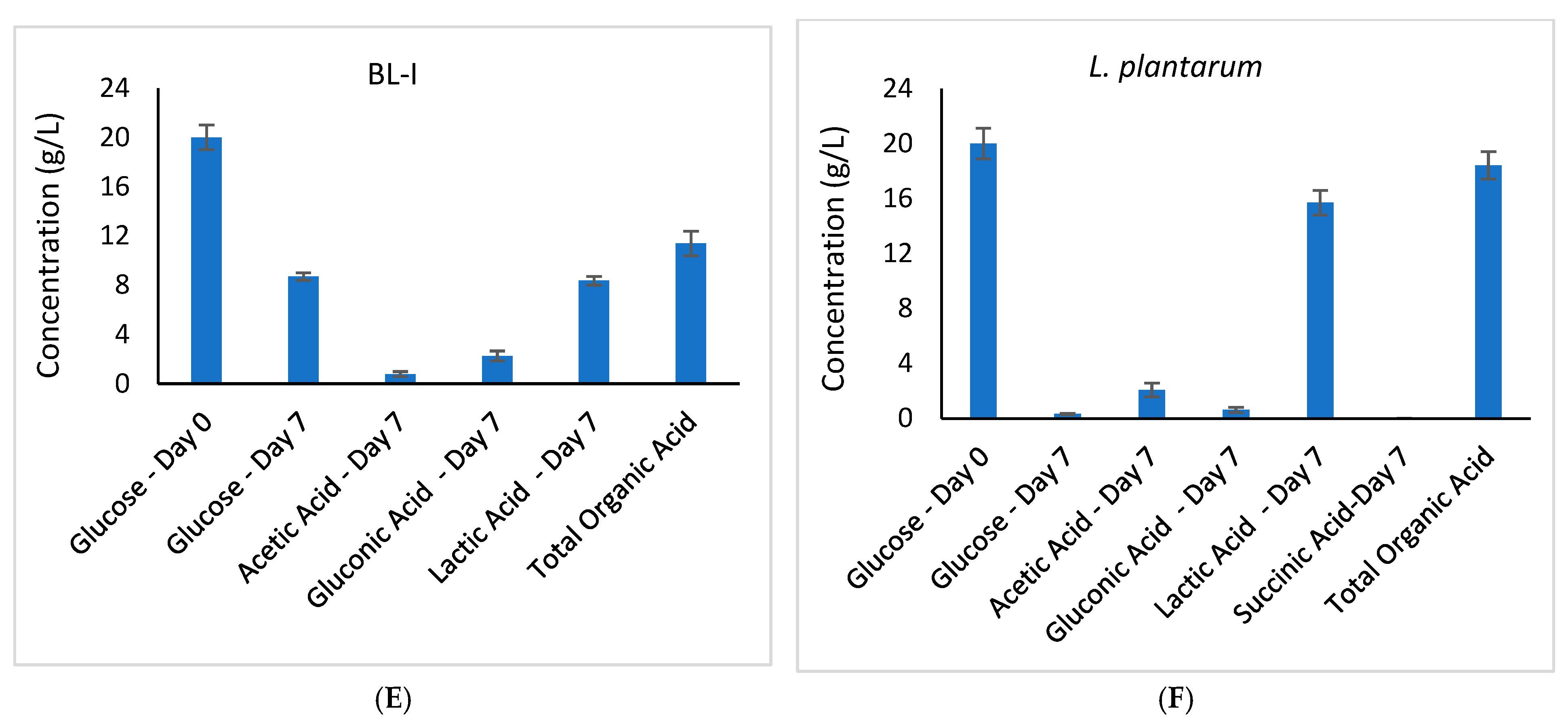
The concentrations of glucose, acetic acid, lactic acid, citric acid, gluconic acid and succinic acid were measured at the end of the time course experiment (Figure 1A–F). Individual organic acid analysis after 7 days showed substantial acid accumulation across all strains, with lactic acid as the dominant metabolite. All isolates demonstrated glucose utilization during incubation; however, the extent of glucose consumption and organic acid production varied markedly among strains, reflecting distinct metabolic strategies. CBGM-1C exhibited highly efficient glucose utilization, consuming nearly all of the initial glucose by day 7. This strain produced an intermediate but substantial total organic acid concentration of ~15.5 g/L, dominated by lactic acid (~13.6 g/L), with minor contributions from acetic (~1.08 g/L) and gluconic acid (~0.78 g/L) (Figure 1A). The metabolic profile indicates a predominantly fermentative pathway with strong lactic acid dominance. In contrast, BL-F showed moderate glucose utilization. Its organic acid profile was distinct and indicative of oxidative metabolism, characterized by moderate lactic acid production (~5.96 g/L) and measurable amounts of gluconic (~0.60 g/L) and acetic acids (~0.63 g/L). Consequently, the total organic acid concentration remained relatively low (~7.19 g/L) (Figure 1B). For L. plantarum, nearly complete glucose depletion was achieved within 7 days, resulting in the highest total organic acid production (~18.4 g/L). The acid profile was overwhelmingly dominated by lactic acid (~15.7 g/L), with a moderate contribution from acetic acid (~2.07 g/L) (Figure 1F), confirming strong homo- or facultative hetero-fermentative metabolism. Among the remaining isolates, BL-I exhibited relatively high metabolic activity, producing lactic acid (~8.35 g/L) and the highest gluconic acid concentration (~2.25 g/L) observed in this study (Figure 1E). BL-H produced moderate levels of lactic acid (~6.66 g/L) and showed the highest acetic acid concentration (~1.93 g/L) among all isolates, suggesting a mixed-acid fermentation pathway (Figure 1C). BL-G produced a relatively low lactic acid concentration (approximately 6.27 g/L) and only trace amounts of acetic acid (around 0.24 g/L) (Figure 1D). Overall, BL-F, BL-G, and BL-H showed moderate glucose utilization, with residual glucose concentration ranging from 9.45 to 10.15 g/L, corresponding to approximately 50% glucose consumption over the incubation period. In contrast, CBGM-1C and L. plantarum displayed near-complete glucose depletion and substantially higher organic acid yields.
Collectively, these results highlight clear strain-dependent differences in glucose metabolism and organic acid production. L. plantarum and CBGM-1C emerged as high-performance fermenters with strong lactic acid dominance, whereas BL-I and BL-H exhibited more diverse acid profiles, including elevated gluconic and acetic acid production. Such metabolic diversity is expected to influence downstream applications, particularly processes dependent on acid-mediated mineral dissolution and metal mobilization.

3.2. Identification of the Isolates

The obtained strains showed the highest DNA identity (99.5–99.8%) with bacteria from three genera: Enterococcus sp. (CBGM-1C, BL-G, BL-I), Acetobacter sp. (strain BL-F), and Bacillus sp. (BL-H). Previous studies have shown that such bacteria not only tolerate high metal concentrations but also contribute to geochemical transformations through the production of organic acids. Domingues et al. [22] reported the isolation of Bacillus and other heterotrophic bacteria from Amazonian copper mine soils capable of producing extracellular polymeric substances and organic acids that facilitate metal mobilization. Nancucheo and Johnson [23] reported that heterotrophic bacteria in pyritic tailings exhibited notable tolerance to transition metals and could thrive in mineral-rich acidic settings, partly sustained by metabolite exchange with acidophilic iron oxidizers.

3.3. Bioleaching of the Mafic Tailings

Based on their high organic acid production capacity, Enterococcus sp., CBGM-1C, Acetobacter sp., BL-F, and L. plantarum were selected for subsequent bioleaching process of mafic tailings in MRS medium. The bioleaching process comprised two distinct stages: (1) organic acid production over a period of 4 days, and (2) subsequent addition of tailings at a pulp density of 5% on day 5, followed by bioleaching for an additional 10 days.

3.3.1. Variation in Optical Cell Density and pH Value

The growth of bacterial cells prior to the addition of mafic tailings was monitored over a 4-day period by measuring optical density (OD600) (Supplementary Figure S3A). All three strains, Enterococcus CBGM-IC, Acetobacter sp. BL-F, and L. plantarum, showed clear increases in OD600, indicating active growth and establishment of metabolically competent cells during this pre-bioleaching phase. L. plantarum exhibited the most rapid and extensive growth, with OD600 rising sharply from approximately 0.3 at inoculation to over 2.0 by day 2, followed by a plateau around 2.2–2.4 through day 4. Acetobacter sp., BL-F displayed intermediate growth, with OD600 increasing steadily from about 0.25 to 1.6 by day 2 and remaining stable thereafter. Enterococcus. sp., CBGM-IC reached lower overall biomass, with OD600 rising from 0.15 at day 0 to 1.3 by day 2, then stabilizing through day 4. Collectively, these growth profiles confirm that all strains achieved substantial cell densities within the first 4 days, establishing active microbial cells prior to mafic tailings addition.
To assess microbial acid production and the buffering effect of the mineral matrix, pH was continuously monitored during the pre-bioleaching phase (days 0–4, without tailings) and the bioleaching phase (days 5–14, after tailings addition) (Supplementary Figure S3B). During the pre-bioleaching phase, pH remained stable in the abiotic control (~6.3–6.8), confirming the absence of acidification without microbial activity. In contrast, all inoculated cultures exhibited rapid pH decreases between days 0 and 2, corresponding to active organic acid production during active microbial growth. Enterococcus sp., CBGM-IC reduced the pH to approximately 4.3–4.5 by day 2, after which it remained stable. Acetobacter sp., BL-F exhibited a similar initial acidification trend. In contrast, L. plantarum induced the strongest acidification, with pH decreasing to approximately 3.7 by day 2. These early declines reflect the accumulation of metabolic acids (primarily lactic and acetic), consistent with the observed increase in cell density and metabolic activity before tailings introduction.
Following tailings addition (day 5), distinct pH trajectories emerged across the inoculated systems, reflecting interactions between microbial metabolites and mineral buffering. Enterococcus sp., CBGM-1C maintained pH between 4.3 and 4.5, suggesting limited acid consumption and moderate buffering. Acetobacter sp., BL-F showed partial pH rebound to ~6.0 by day 14, likely driven by neutralization through mineral dissolution and re-assimilation of residual organic acids once glucose was depleted. In contrast, L. plantarum sustained low pH (~3.7) throughout the 14-day period, indicating persistent lactic acid production exceeding the buffering capacity of the tailings.
Overall, these results demonstrate that microbial metabolism drives initial acidification prior to tailings exposure, while subsequent pH evolution reflects dynamic interactions between organic acids and mineral components during bioleaching.

3.3.2. Variation in Glucose and Organic Acid Concentrations

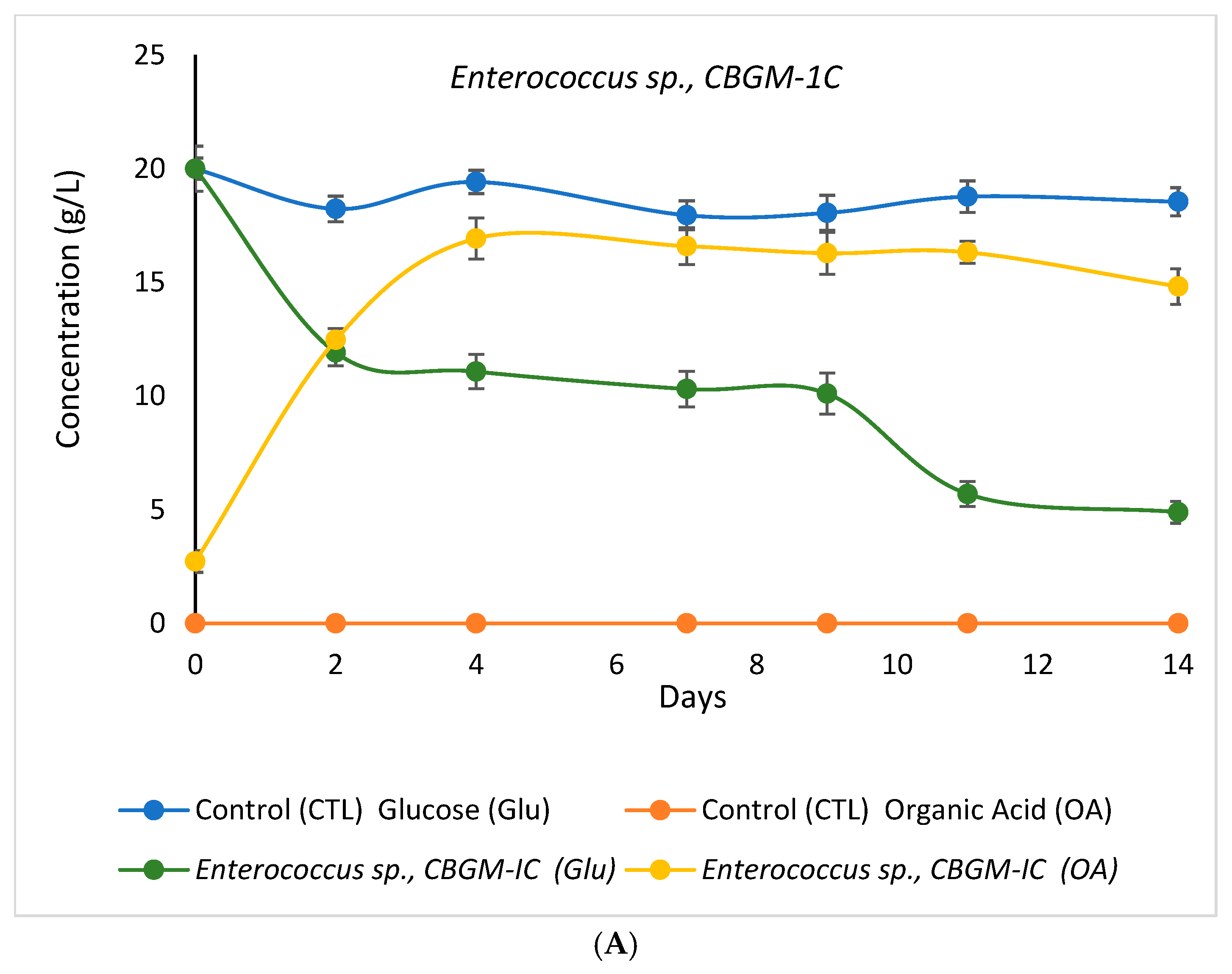
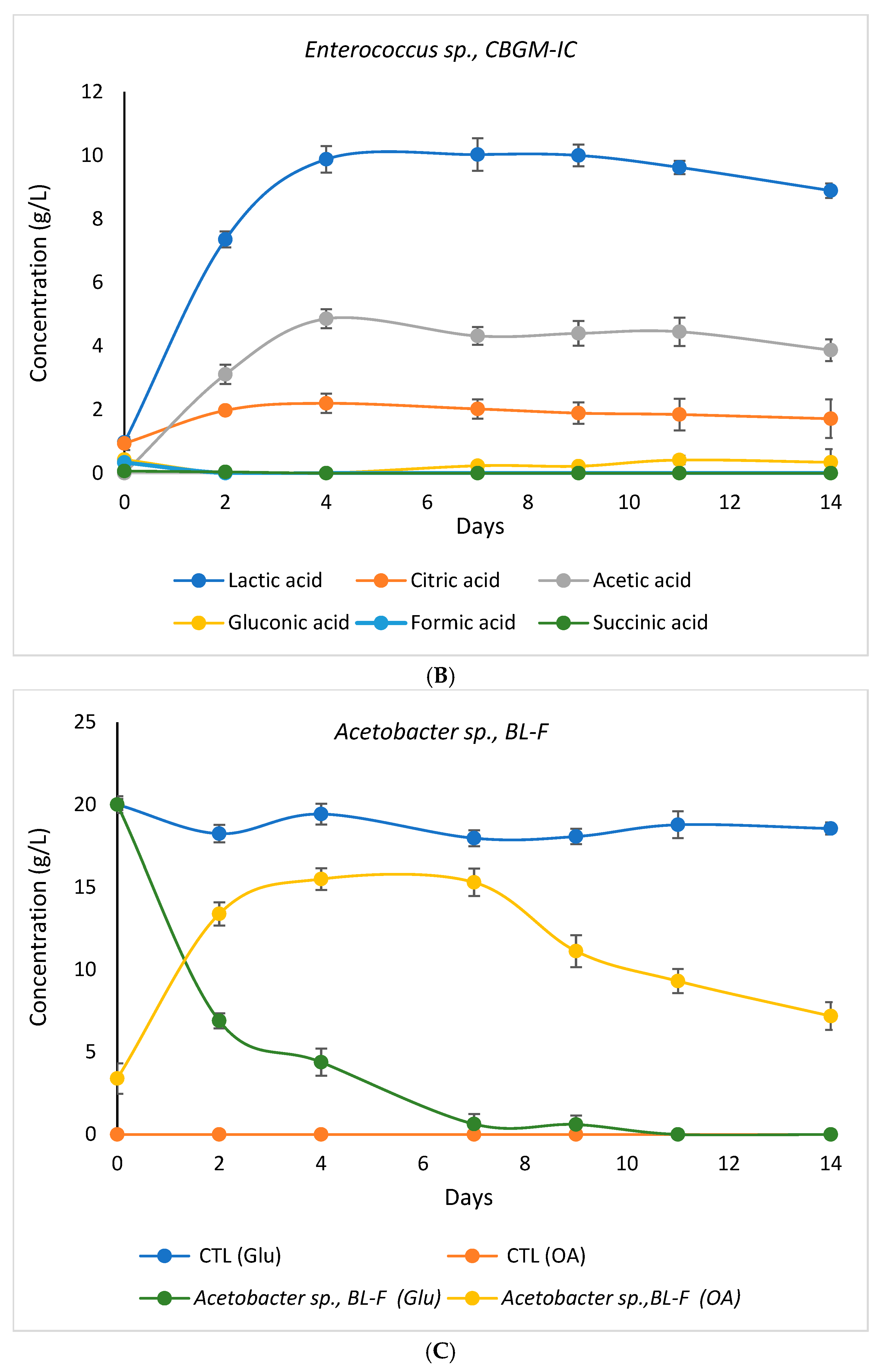
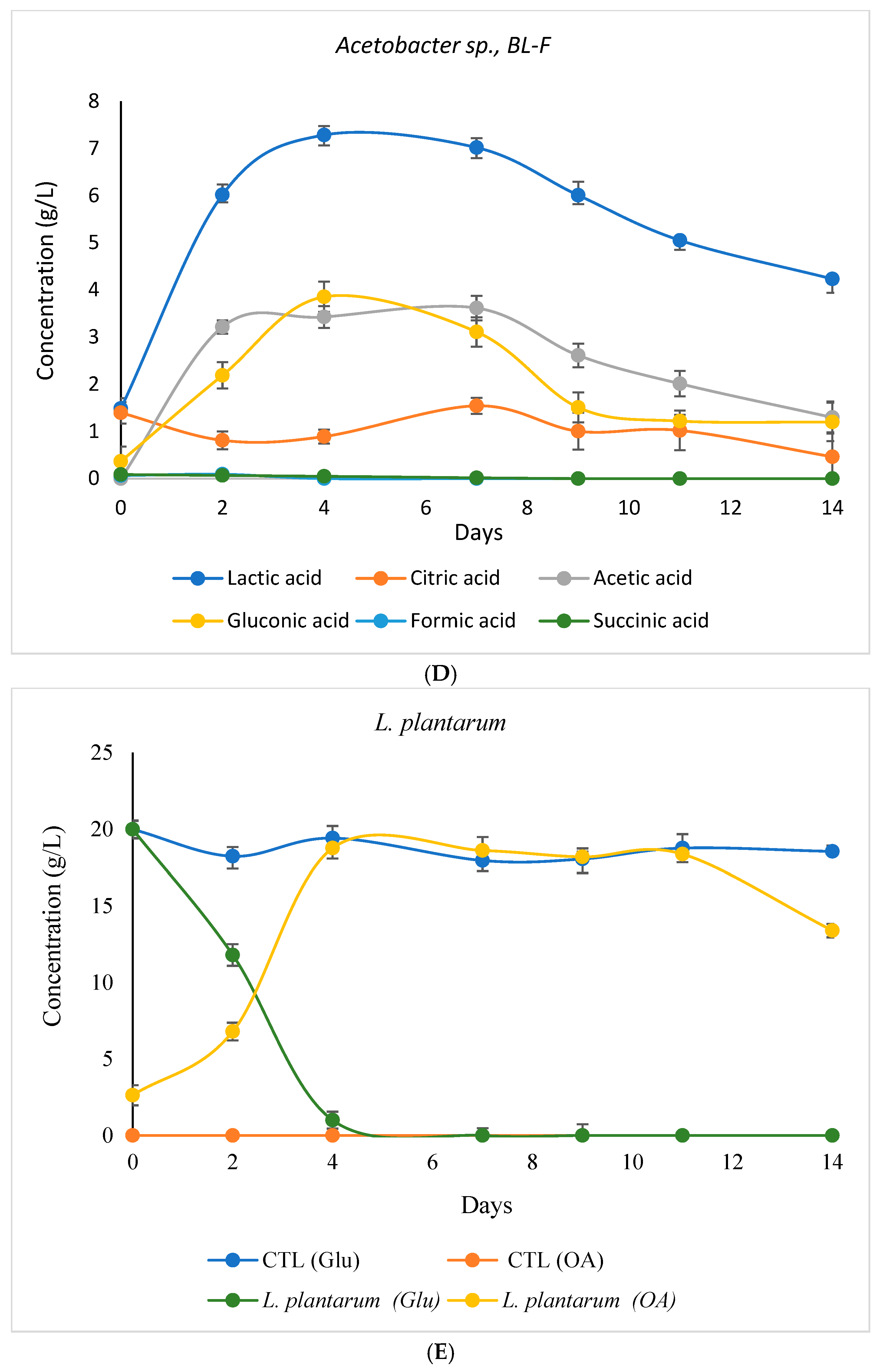
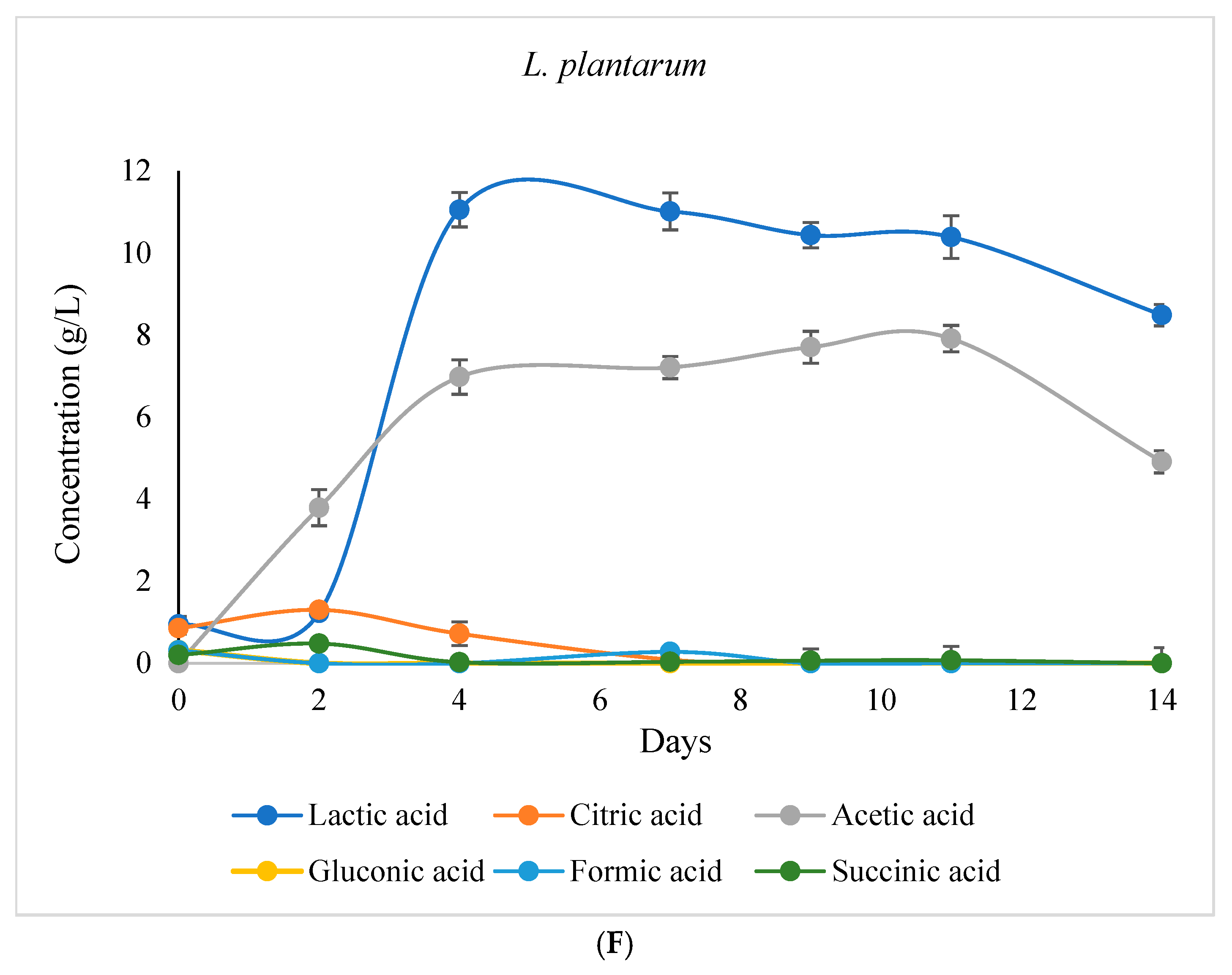
Figure 2 illustrates the glucose utilization and organic acid production patterns of Enterococcus sp., CBGM-IC, Acetobacter sp., BL-F and L. plantarum during the two-stage bioleaching of mafic tailings. This design allows direct assessment of how mafic tailings influence organic acid persistence and bioleaching performance after microbial metabolites have accumulated. During the pre-tailings phase (days 0–4), organic acid production was governed solely by microbial metabolism. Enterococcus sp., CBGM-IC exhibited moderate bioleaching potential, characterized by rapid glucose consumption during the first two days followed by stabilization as organic acid production reaches intermediate levels (Figure 2A,B). Lactic acid was the dominant metabolite (~10 g/L), accompanied by acetic acid (4–5 g/L) and citric acid (~2 g/L). This mixed acid profile established a moderately acidic environment prior to tailings addition. Acetobacter sp., BL-F displayed a distinct metabolic pattern (Figure 2C,D). Rapid glucose oxidation led to substantial organic acid accumulation, including lactic (~7–7.5 g/L), acetic (~3.4–3.6 g/L), and notably gluconic acid (~3.8 g/L). L. plantarum exhibited the strongest fermentative response (Figure 2E,F). Glucose was almost completely depleted within 4 days, and total organic acid concentration reached ~18 g/L, dominated by lactic acid (~11 g/L) and acetic acid (~7–8 g/L). These high acid levels indicate a robust fermentation capacity and strong acidification potential before tailings addition.
Following the addition of mafic tailings on day 5, distinct trends emerged across the three systems. In the Enterococcus culture, organic acid concentrations showed limited further increase and tended to stabilize or slightly decline, indicating acid consumption through mineral-acid interactions. The mafic tailings, enriched in Fe-, Mg-, and Ca-bearing silicates, likely promoted proton consumption and limited metal complexation. In contrast, Acetobacter sp., BL-F displayed a sharper decline in total organic acid concentration after tailings addition. This pronounced decrease reflects strong interactions between gluconic acid and mineral surfaces, where ligand-assisted dissolution and metal complexation rapidly consumed organic acids. As a result, bioleaching is more selective, with preferential dissolution of feldspar and Fe-bearing phases. L. plantarum exhibits the most pronounced response both before and after mafic tailings addition levels (Figure 2E,F). During the pre-tailings phase, glucose is almost completely depleted within four days, and total organic acid concentration reaches the highest level among the isolates (~18 g/L), dominated by lactic acid (~11 g/L) with moderate acetic acid (~7–8 g/L). For L. plantarum, organic acid concentrations decreased but remained substantial until day 10, indicating that the initially high acid load exceeded the buffering and consumption capacity of the mafic tailings. Overall, these results demonstrate that mafic tailings exert significant control on organic acid dynamics after their addition, acting as both a chemical buffer and a reactive substrate that consumes acids during dissolution and metal complexation. While microbial metabolism determines the quantity and type of organic acids produced during the initial phase, subsequent interactions between these acids and the mineralogy of mafic tailings govern acid persistence and bioleaching efficiency during the later phase.

3.4. Recovery of Metals from the Mafic Tailings

The mafic tailings contained 87,500 mg/kg Al, 48,600 mg/kg Ti, 43,500 mg/kg Ca, 26,600 mg/kg Mg, 264 mg/kg Ni, 164 mg/kg Co and 19 mg/kg Li (Table 2). Sulfur was not detected and the total carbon content was 0.058%. The relatively high silica content (SiO2, 29.63%) confirms that the tailings are predominantly silicate-rich, composed of minerals such as chamosite, albite, and epidote, typical of mafic and ultramafic residues (Table 3). This mineralogical composition explains the resistance of the material to conventional acidophilic autotrophic bioleaching and supports the use of heterotrophic, organic acid-mediated dissolution as a more suitable approach. The substantial iron oxide fraction (Fe2O3, 28.23%) indicates the presence of Fe-rich phases such as magnetite, ilmenite, and iron-bearing silicates. The high aluminum oxide content (Al2O3, 17.65%) is consistent with aluminosilicate minerals such as feldspars and clays. Titanium dioxide (TiO2, 8.55%) suggests significant quantities of refractory titanium-bearing phases such as ilmenite and MgO3Ti, which are generally resistant to dissolution under mild bioleaching conditions. Calcium (CaO, 6.91%) is likely present as carbonate and/or silicate minerals. Magnesium (MgO, 4.43%) occurs primarily in silicate minerals such as chamosite and riebeckite. Minor alkali oxides (Na2O, 1.22%; K2O, 0.14%), likely derived from feldspar minerals, have minimal economic recovery value but may influence pH buffering during leaching. The very low phosphorus (P2O5, 0.07%) and sulfur (SO3, 0.10%) contents confirm the absence of significant sulfide minerals, reinforcing the need for heterotrophic rather than acidophilic autotrophic bioleaching strategies for this material.
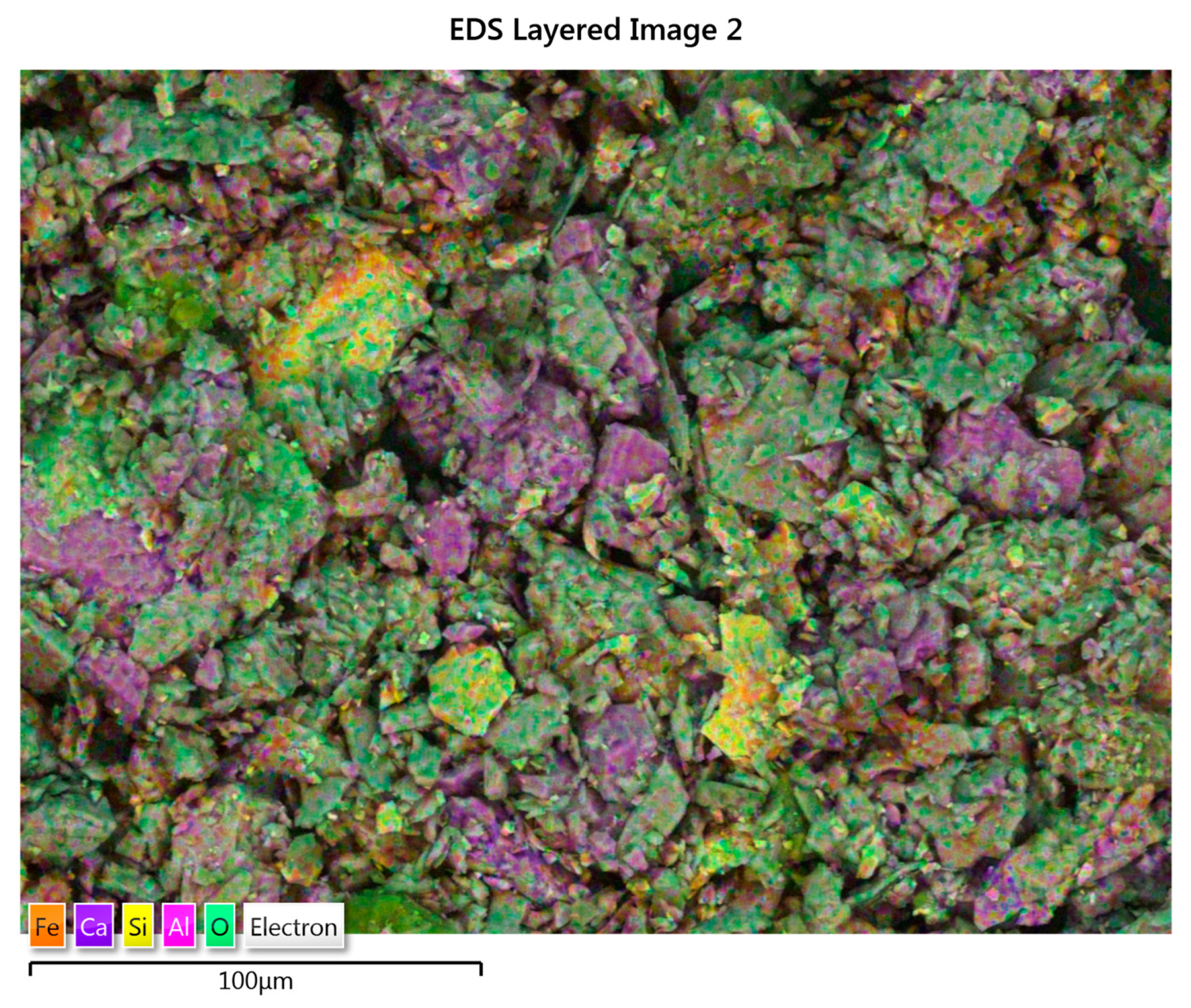
The Scanning Electron Microscopy–Energy Dispersive Spectroscopy (SEM-EDS) layered imaging provided a spatially resolved elemental mapping of the matrix, allowing detailed assessment of mineralogical composition and heterogeneity across the sample surface (Figure 3). The elemental distribution maps revealed localized enrichment zones for metals relevant to biohydrometallurgical recovery, such as Al and Zn, along with associated gangue-forming elements (e.g., Si, Mg, Ca, Fe).
In this study, organic acids were used in conjunction with organic acid-producing bacteria to enhance metal recovery from the mafic tailings. The metal solubilization process was investigated at 30 °C over a period of 10 days.
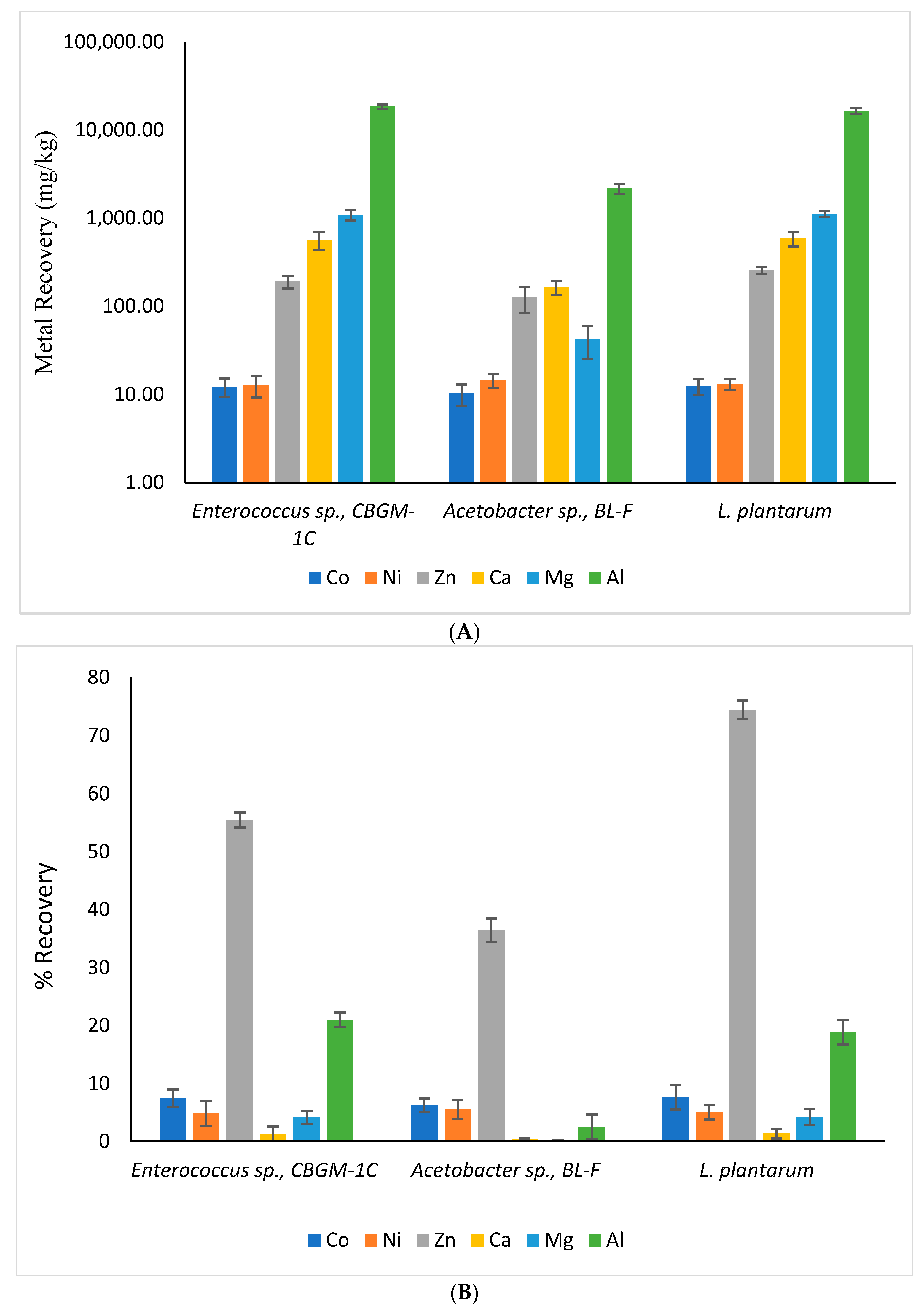
Figure 4A presents the absolute metal recovery (mg/kg) from mafic tailings after 10 days of bioleaching, while Figure 4B summarizes the corresponding percentage recovery of individual metals for Enterococcus sp., CBGM-IC, Acetobacter sp., BL-F, and L. plantarum. Together, these results demonstrate pronounced differences in metal mobilization efficiency and selectivity among the three bacterial systems. In the untreated mafic tailings, Ca and Al were the most abundant leachable elements, followed by Mg, while Co, Ni, and Zn occur at comparatively lower concentrations. After bioleaching, all microbial treatments enhance metal recovery relative to the untreated control, confirming the effectiveness of organic-acid-mediated dissolution. Among the tested bacterial strains, L. plantarum exhibited the highest overall metal leaching performance, achieving the greatest absolute recovery of Ca (~590 mg/kg) and Al (~16,556 mg/kg), along with measurable mobilization of Co, Ni, Zn, and Mg. The corresponding percentage recovery highlights particularly strong extraction of Zn (~74%), followed by Al (~19%), with lower but consistent recovery of Co and Ni (Figure 4A,B). This broad and efficient metal mobilization is consistent with the sustained low pH and high concentrations of lactic and acetic acids maintained throughout the bioleaching period, promoting proton-driven dissolution of both silicate and oxide phases. Enterococcus sp., CBGM-IC showed moderate leaching efficiency, with substantial recovery of Ca (~567 mg/kg) and Al (~18,410 mg/kg), and measurable Zn recovery (~55%). The percentage recovery data indicate that Zn and Al are preferentially mobilized, while Co and Ni were less efficiently leached (Figure 4A,B). This behavior reflects the intermediate acid production capacity of CBGM-IC, characterized by predominant lactic acid generation, supported by lower levels of acetic and citric acids, which collectively provide modest but functionally enhanced metal complexation potential. In contrast, Acetobacter sp., BL-F demonstrated a more selective leaching behavior. Although its absolute metal recoveries were lower than those of L. plantarum, Acetobacter effectively mobilized Ca (~163 mg/kg) and Al (~2182 mg/kg), with Zn recovery reaching ~36% (Figure 4A,B). The lower overall recovery but noticeable Zn and Ca mobilization are consistent with its oxidative metabolism and production of gluconic acid, a strong metal-chelating ligand that is rapidly consumed upon reaction with mafic minerals. The partial pH rebound observed in this system further limited prolonged dissolution compared to the lactic-acid-dominated cultures. Overall, the metal leaching efficiency followed the trend: L. plantarum > Enterococcus sp., CBGM-IC > Acetobacter sp., BL-F. This trend mirrors the differences in organic acid production, pH evolution, and acid persistence after tailings addition. While L. plantarum maintains sustained acidity capable of extensive mineral breakdown, Enterococcus induces moderate dissolution through combined proton attack and limited chelation, and Acetobacter sp., promotes selective metal mobilization driven by gluconic-acid-mediated complexation. These findings confirm that both the quantity and chemical nature of microbially produced organic acids govern metal leaching efficiency from mafic tailings, highlighting the critical role of microbial metabolic diversity in bioleaching and resource recovery.
The preferential extraction of zinc observed in this study could be attributed to its occurrence in relatively labile mineral phases within the mafic tailings, such as Zn-substituted silicates, hydroxides/oxides, or surface-adsorbed species on Fe- and Mn-bearing minerals [24]. These phases are more susceptible to dissolution under mild acid conditions than the more resistant Fe-, Mg-, and Al-silicates. In contrast, metals such as Al and Ni require stronger acidification or oxidative conditions to be effectively mobilized. The high buffering capacity of the mafic tailings limits pH reduction to values at which Zn remains soluble and its desorption is significant [25], while other metals tend to hydrolyze or precipitate. This approach thus shows potential for the selective extraction of more-labile critical metals such as Zn and integration into circular economy models, particularly for residues previously considered low-value or intractable via conventional techniques.
In general, our findings are consistent with previous reports indicating that heterotrophic bioleaching is typically less efficient than acidophilic leaching of sulfidic minerals. Previous studies have investigated heterotrophic bioleaching of non-sulfidic materials using organic acid-producing bacteria, yielding variable outcomes. For instance, Bacillus mucilaginosus achieved leaching of Mn (44%), Ni (38%), Zn (37%), and Cr (17%) from mafic tailings at a 5% pulp density after 45 days of incubation, although the organic acids responsible were neither identified nor quantified [26]. A related study by Lee et al. [27] using Gluconobacter oxydans demonstrated that bio-generated gluconic acid leached approximately 16–21% Mn, Fe, Co, Ni, and Mg from ultramafic rock at a 1% pulp density over 96 h. Gluconic acid was produced via glucose fermentation at room temperature, supporting the potential of organic acid-mediated processes for sustainable metal recovery. In another study, Bacillus licheniformis produced gluconic acid (90 mg/L) and citric acid (30 mg/L) during the bioleaching of boron waste, with only a modest pH reduction to approximately 6.5 under optimal conditions, indicating limited acidification potential [28]. Despite this, recovery rates of 11% Li, 44% Rb, and 27% Cs were achieved. Bacillus megaterium has also been applied to the bioleaching of spent printed circuit boards [29]. Cultivation in a complex medium containing peptone, yeast extract, and glucose resulted in the production of gluconic acid (2490 mg/L) as the predominant acid and lactic acid (325 mg/L), lowering the pH from 6.45 to 4.9 and achieving leaching efficiencies of 18–30% for Ce and 6.5–6.9% for Dy. Similarly, Lactobacillus pentosus produced substantial lactic acid (80 g/L) during the bioleaching of red mud at a 20% pulp density in a glucose-rich medium (100 g/L), resulting in 31% Al extraction but negligible leaching of Ti and Sc [20].

3.5. Minerological Study

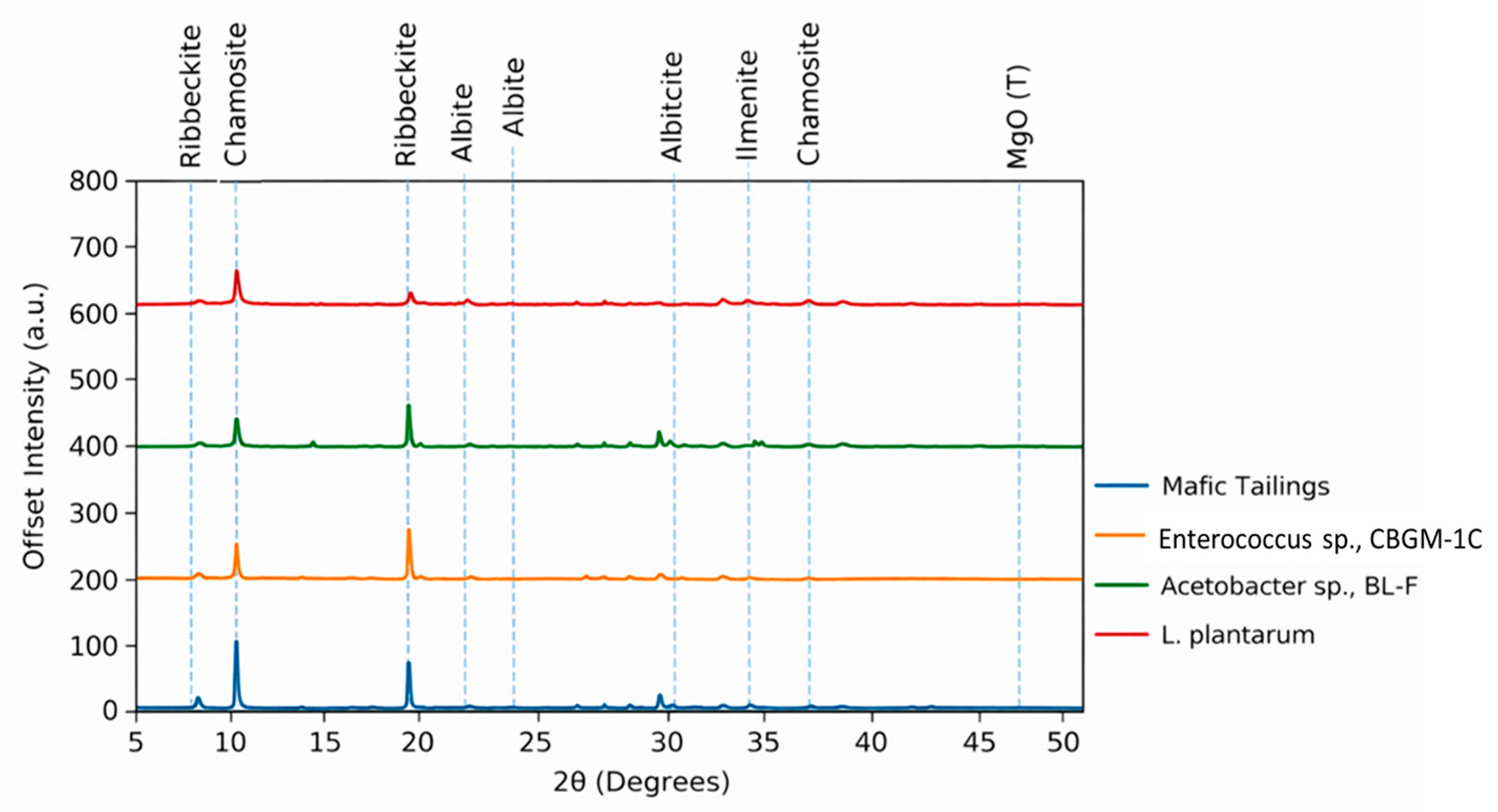
X-ray diffraction (XRD) analysis was performed to examine mineralogical transformations in samples before and after bioleaching. Figure 5 presents the XRD patterns of the untreated and treated samples. Major crystalline phases identified in the tailings include riebeckite, chamosite, epidote, albite, ilmenite, and trace MgO3Ti.
The untreated sample exhibits sharp and intense diffraction peaks, reflecting its well-crystallized mineralogical structure. Prominent reflections corresponding to riebeckite and chamosite occur at low 2θ angles (~6–13°), while albite, epidote, and ilmenite dominate the mid-2θ region (~18–36°). A minor MgO phase is observed at higher angles (~44°). Following bioleaching, all bacterial treatments result in a systematic decrease in peak intensities relative to the untreated sample, without significant peak shifts. This indicates partial dissolution of crystalline phases without the formation of new crystalline mineral phases. The absence of peak shifts suggests that bioleaching primarily affects mineral abundance and crystallinity rather than inducing structural transformations. The Enterococcus sp., CBGM-1C bioleached sample shows a noticeable reduction in the intensities of riebeckite, chamosite, and epidote peaks, particularly at 6.2°, 12.5°, 18.9°, and 25.2°. This behavior is attributed to the production of lactic acid (~10 g/L), acetic acid (~4–5 g/L), and citric acid (~2 g/L), which promote proton-driven mineral dissolution and metal complexation, especially for Fe- and Mg-bearing silicates (Figure 5). Acetobacter sp., BL-F caused further attenuation of albite and epidote reflections. In addition to lactic and acetic acids, this strain produces gluconic acid (~3.8 g/L), which is known to enhance chelation of metal cations and accelerate feldspar and Fe-silicate weathering. As a result, selective weakening of specific mineral peaks was observed (Figure 5). The most pronounced reduction in overall peak intensity was observed in the L. plantarum-treated sample, which generated the highest concentration of lactic acid (~11 g/L) and acetic acid (~7–8 g/L), leading to stronger acidification and more extensive mineral dissolution (Figure 5). The generalized decrease in peak intensity across most phases suggests a broader degradation of crystalline mineral content and partial loss of crystallinity. Overall, XRD results demonstrated that bacterial bioleaching induces progressive mineral dissolution in mafic tailings, with the extent of crystalline phase reduction closely linked to the type and concentration of organic acids produced by each microorganism. The preservation of peak positions confirms that bioleaching proceeds predominantly through dissolution mechanisms rather than the formation of secondary crystalline phases.

4. Conclusions

This study demonstrates that heterotrophic bioleaching mediated by organic acid-producing bacteria shows promising potential for the recovery of selected metals from mafic tailings, a material typically resistant to chemical and biological dissolution. Indigenous isolates and L. plantarum produced organic acids that promoted significant acidification and metal solubilization without the need for extreme pH or sulfide oxidation. Among the tested strains, L. plantarum achieved the best performance, resulting in high Zn recovery (up to ~74%), confirming that Zn can be effectively mobilized from hard-to-dissolve mafic silicates through heterotrophic acidolysis and complexation. While the extraction of other metals such as Ni and Mg remained limited, these results highlight opportunities for process optimization and demonstrate the potential of heterotrophic bioleaching as a selective and environmentally compatible strategy for zinc recovery from alkaline, silicate-rich mine residues.

Supplementary Materials

The following supporting information can be downloaded at: https://www.mdpi.com/article/10.3390/met16020178/s1, Supplementary Figure S1: Growth profiles of bacterial isolates during a 7-day incubation period in MRS medium. The isolates were later identified as follows: Enterococcus sp. (CBGM-1C), Acetobacter sp. (BL-F), Bacillus sp. (BL-H), Enterococcus sp. (BL-G), and Enterococcus sp. (BL-I). Supplementary Figure S2: pH profiles of bacterial isolates during a 7-day incubation period in MRS medium. The isolates were later identified as follows: Enterococcus sp. (CBGM-1C), Acetobacter sp. (BL-F), Bacillus sp. (BL-H), Enterococcus sp. (BL-G), and Enterococcus sp. (BL-I). Supplementary Figure S3: Changes in optical density (A) and variation in pH values (B) during the two-step bioleaching process.

Author Contributions

Conceptualization, K.K.B.; Formal Analysis, K.K.B.; Investigation, K.K.B. and A.D.P.; Methodology, K.K.B.; Project Administration, K.K.B.; Resources, K.K.B. and N.N.P.; Supervision, K.K.B.; Validation, K.K.B.; Visualization, K.K.B. and N.N.P.; Writing—Original Draft, K.K.B.; Writing—Review and Editing, K.K.B. and N.N.P.; Formal Analysis, A.D.P.; Funding Acquisition N.N.P. All authors have read and agreed to the published version of the manuscript.

Funding

This research was funded by Natural Resources Canada (NRCan), Canada, grant number [P-003253.001.10] and the NRC’s B21 Critical Minerals R&D Program to Nancy Perreault.

Data Availability Statement

The original contributions presented in this study are included in the article/Supplementary Material. Further inquiries can be directed to the corresponding author.

Acknowledgments

The authors gratefully acknowledge the resources support provided by the National Research Council of Canada (NRC).

Conflicts of Interest

The authors declare no conflicts of interest.

References

  1. Watari, T.; Nansai, K.; Nakajima, K. Major metals demand, supply, and environmental impacts to 2100: A critical review. Resour. Conserv. Recycl. 2021, 164, 1051. [Google Scholar] [CrossRef]
  2. U.S. Geological Survey. Mineral Commodity Summaries 2024: U.S. Geological Survey; USGS Publications Warehouse: Reston, VA, USA, 2024; 212p. [Google Scholar] [CrossRef]
  3. Watari, T.; Nansai, K.; Nakajima, K. Review of critical metal dynamics to 2050 for 48 elements. Resour. Conserv. Recycl. 2021, 164, 105107. [Google Scholar] [CrossRef]
  4. Backstrom, S.S.M. Sampling of Mining Waste—Historical Background, Experiences and Suggested Methods. 2018. Available online: https://resource.sgu.se/produkter/regeringsrapporter/2018/RR1805-appendix2.pdf (accessed on 2 January 2026).
  5. Kursunoglu, S. A Review on the Recovery of Critical Metals from Mine and Mineral Processing Tailings: Recent Advances. J. Sustain. Metall. 2025, 11, 2023–2025. [Google Scholar] [CrossRef]
  6. Salem, N.; Brar, K.K.; Asgarian, A.; Kaur, K.; Magdouli, S.; Perreault, N.N. Advancements in Carbon Capture, Utilization, and Storage (CCUS): A Comprehensive Review of Technologies and Prospects. Clean Technol. 2025, 7, 109. [Google Scholar] [CrossRef]
  7. Hennebel, T.; Boon, N.; Maes, S.; Lenz, L. Biotechnologies for critical raw material recovery from primary and secondary sources: R&D priorities and future perspectives. New Biotechnol. 2015, 32, 121–127. [Google Scholar] [CrossRef] [PubMed]
  8. Mirete, S.; Morgante, V.; González-Pastor, J.E. Acidophiles: Diversity and mechanisms of adaptation to acidic environments. In Adaption of Microbial Life to Environmental Extremes: Novel Research Results and Application; Springer International Publishing: Cham, Switzerland, 2017; pp. 227–251. [Google Scholar]
  9. Chen, L.X.; Huang, L.N.; Méndez-García, C.; Kuang, J.L.; Hua, Z.S.; Liu, J.; Shu, W.S. Microbial communities, processes and functions in acid mine drainage ecosystems. Curr. Opin. Biotechnol. 2016, 38, 150–158. [Google Scholar] [CrossRef] [PubMed]
  10. Zhang, R.; Hedrich, S.; Römer, F.; Goldmann, D.; Schippers, A. Bioleaching of cobalt from Cu/Co-rich sulfidic mine tailings from the polymetallic Rammelsberg mine, Germany. Hydrometallurgy 2020, 197, 105443. [Google Scholar] [CrossRef]
  11. Brar, K.K.; Magdouli, S.; Perreault, N.N.; Tanabene, R.; Brar, S.K. Reviving Riches: Unleashing Critical Minerals from Copper Smelter Slag Through Hybrid Bioleaching Approach. Minerals 2024, 14, 1094. [Google Scholar] [CrossRef]
  12. Abbadi, A.; Mucsi, G. A review on complex utilization of mine tailings: Recovery of rare earth elements and residue valorization. J. Environ. Chem. Eng. 2024, 12, 113118. [Google Scholar] [CrossRef]
  13. Jadhav, U.; Su, C.; Hocheng, H. Leaching of metals from printed circuit board powder by an Aspergillus niger culture supernatant and hydrogen peroxide. RSC Adv. 2016, 6, 43442–43452. [Google Scholar] [CrossRef]
  14. Rasoulnia, P.; Mousavi, S.M.; Rastegar, S.O.; Azargoshasb, H. Fungal leaching of valuable metals from a power plant residual ash using Penicillium simplicissimum: Evaluation of thermal pretreatment and different bioleaching methods. Waste Manag. 2016, 52, 309–317. [Google Scholar] [CrossRef]
  15. Kirtzel, J.; Ueberschaar, N.; Deckert-Gaudig, T.; Krause, K.; Deckert, V.; Gadd, G.M.; Kothe, E. Organic acids, siderophores, enzymes and mechanical pressure for black slate bioweathering with the basidiomycete Schizophyllum commune. Environ. Microbiol. 2020, 22, 1535–1546. [Google Scholar] [CrossRef]
  16. Tezyapar Kara, I.; Kremser, K.; Wagland, S.T.; Coulon, F. Bioleaching metal-bearing wastes and by-products for resource recovery: A review. Environ. Chem. Lett. 2023, 21, 3329–3350. [Google Scholar] [CrossRef]
  17. Lisinska, M.; Gajda, B.; Saternus, M.; Brozová, S.; Wojtal, T.; Rzelewska-Piekut, M. The effect of organic acids as leaching agents for hydrometallurgical recovery of metals from PCBs. Metalurgija 2022, 61, 609–612. [Google Scholar]
  18. Azevedo Schueler, T.; Mettke, L.N.; Crutziger, F.; Rasenack, K.; Yagmurlu, B.; Goldmann, D. Leaching of Mine Tailings Flotation Fractions Using Inorganic and Organic Acids for Metals Extraction. J. Sustain. Metall. 2025, 11, 3014–3030. [Google Scholar] [CrossRef]
  19. Willscher, S.; Bosecker, K. Studies on the leaching behaviour of heterotrophic microorganisms isolated from an alkaline slag dump. Hydrometallurgy 2003, 71, 257–264. [Google Scholar] [CrossRef]
  20. Han, Z.; Gao, B.; Cheng, H.; Zhou, H.; Wang, Y.; Chen, Z. Lactobacillus pentosus enabled bioleaching of red mud at high pulp density and simultaneous production of lactic acid without supplementation of neutralizers. J. Environ. Chem. Eng. 2024, 12, 114650. [Google Scholar] [CrossRef]
  21. Zhang, H.; Shi, J.; Chen, C.; Yang, M.; Lu, J.; Zhang, B. Heterotrophic bioleaching of vanadium from low-grade stone coal by aerobic microbial consortium. Int. J. Environ. Res. Public Health 2022, 19, 13375. [Google Scholar] [CrossRef]
  22. Domingues, V.S.; de Souza Monteiro, A.; Júlio, A.D.L.; Queiroz, A.L.L.; Dos Santos, V.L. Diversity of metal-resistant and tensoactive-producing culturable heterotrophic bacteria isolated from a copper mine in Brazilian Amazonia. Sci. Rep. 2020, 10, 6171. [Google Scholar] [CrossRef]
  23. Nancucheo, I.; Johnson, D.B. Characteristics of an iron-reducing, moderately acidophilic Actinobacterium isolated from pyritic mine waste, and its potential role in mitigating mineral dissolution in mineral tailings deposits. Microorganisms 2020, 8, 990. [Google Scholar] [CrossRef]
  24. Sipos, P.; Németh, T.; Kis, V.K.; Mohai, I. Sorption of copper, zinc and lead on soil mineral phases. Chemosphere 2008, 73, 461–469. [Google Scholar] [CrossRef]
  25. Singh, D.; McLaren, R.G.; Cameron, K.C. Effect of pH on Zinc Sorption–Desorption by Soils. Commun. Soil Sci. Plant Anal. 2008, 39, 2971–2984. [Google Scholar] [CrossRef]
  26. Wang, B.; Yuan, X.; Han, L.; Wang, X.; Zhang, L. Release and bioavailability of heavy metals in three typical mafic tailings under the action of Bacillus mucilaginosus and Thiobacillus ferrooxidans. Environ. Earth Sci. 2015, 74, 5087–5096. [Google Scholar] [CrossRef]
  27. Lee, J.J.; Plante, L.; Pian, B.; Marecos, S.; Medin, S.A.; Klug, J.D.; Reid, M.C.; Gadikota Mudbhatkal, A. Transition of CO2 from Emissions to Sequestration During Chemical Weathering of Ultramafic and Mafic Mine Tailings. Minerals 2025, 15, 68. [Google Scholar] [CrossRef]
  28. Ertan, B. The bioleaching of boron waste for lithium, rubidium, and cesium extraction using Bacillus licheniformis. J. Sustain. Metall. 2025, 11, 4272–4283. [Google Scholar] [CrossRef]
  29. Vakilchap, F.; Mousavi, S.M. Influence of culture media on bacterial organic acids production for sustainable indirect bioleaching of spent printed circuit boards. Results Eng. 2025, 26, 105387. [Google Scholar] [CrossRef]
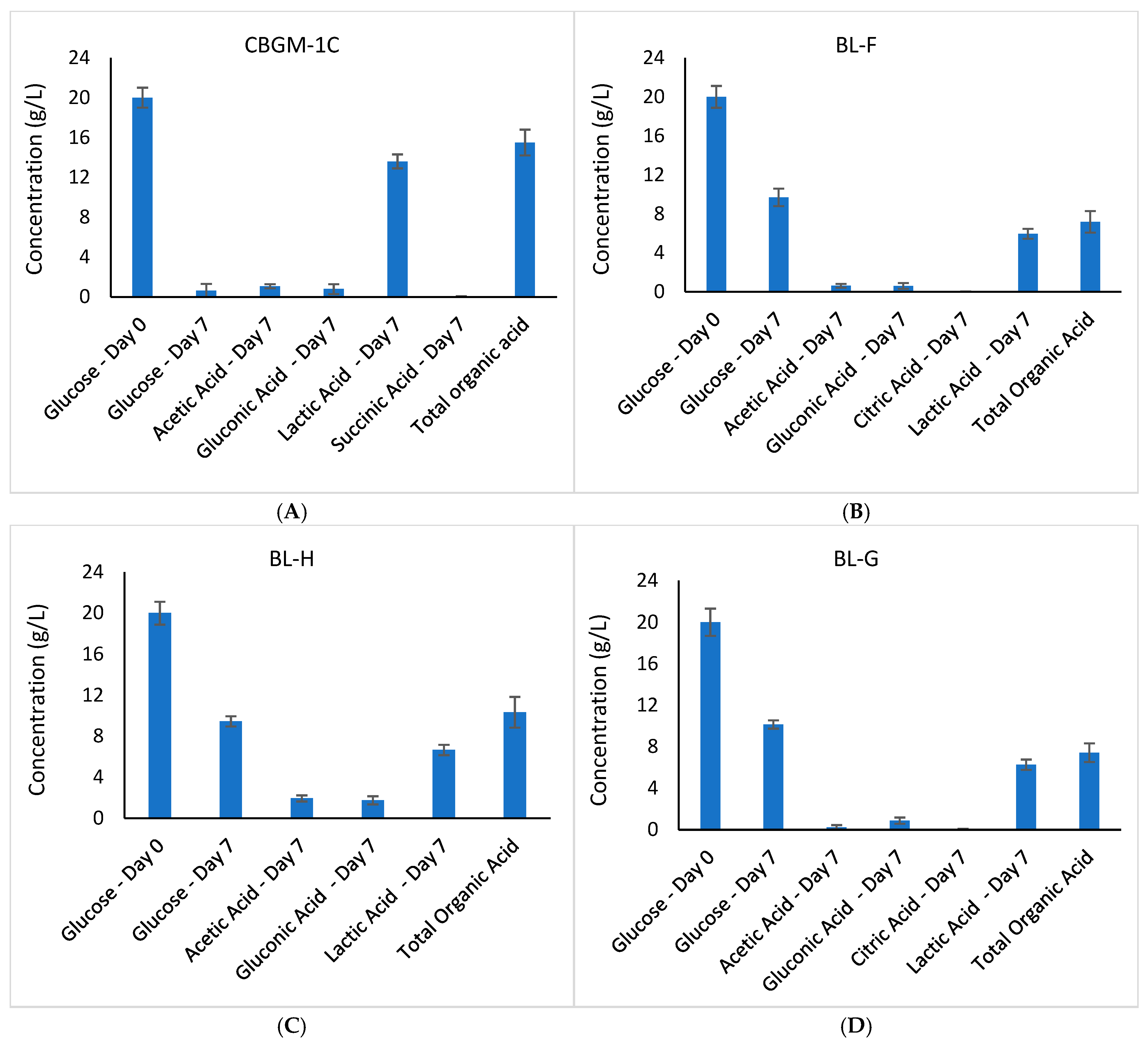
Figure 1. Glucose consumption and individual organic acid production by different bacterial isolates and ATCC strain grown in MRS medium over a 7-day incubation period: (A) CBGM-1C, (later on identified Enterococcus sp.); (B) BL-F (Acetobacter sp.); (C) BL-H, (Bacillus sp.); (D) BL-G, (Enterococcus sp.); (E) BL-I, (Enterococcus sp.); and (F) L. plantarum.
Metals 16 00178 g001aMetals 16 00178 g001b
Figure 2. Glucose depletion and organic acid accumulation by (A,B) Enterococcus sp., CBGM-1C; (C,D) Acetobacter sp., BL-F; (E,F) L. plantarum during the bioleaching process.
Metals 16 00178 g002aMetals 16 00178 g002bMetals 16 00178 g002cMetals 16 00178 g002d
Figure 3. Scanning Electron Microscopy–Energy Dispersive Spectroscopy (SEM-EDS) layered elemental maps of mafic tailing, showing spatial distribution of major and trace elements.
Metals 16 00178 g003
Figure 4. (A) Metal solubilization and (B) % recovery of metals after bioleaching of the tailings sample at 30 °C.
Metals 16 00178 g004
Figure 5. XRD patterns of mafic tailings before and after bioleaching with different bacterial strains: Enterococcus sp. CBGM-1C, Acetobacter sp. BL-F, and L. plantarum.
Metals 16 00178 g005
Table 1. Composition of different culture media used for screening acid-producing bacterial isolates.
Glucose-Ethanol (GE) MediumBrain Heart Infusion Medium (BHI)Nutrient Broth + Lactose (NBL)deMan, Rogosa, Sharpe (MRS) Medium
Glucose—20 g/LGlucose—20 g/LLactose—10 g/LGlucose—20 g/L
Yeast Extract—11 g/LCalf brain infusion—12 g/LYeast Extract—2 g/LLab-lemco Powder—8 g/L
Magnesium sulfate heptahydrate—1.1 g/LBeef heart infusion—5 g/LNutrient Broth—8 g/LYeast Extract—4 g/L
Dipotassium hydrogen phosphate—3.3 g/LSodium Chloride—5 g/LSodium Chloride—5 g/LPeptone—10 g/L
Ethanol—20 g/LDisodium hydrogen phosphate—2.5 g/L Sorbitan mono-oleate—1 ml/L
Di-potassium hydrogen phosphate 2 g/L
Sodium acetate—5 g/L
Tri-ammonium citrate—2 g/L
Magnesium sulfate heptahydrate—0.2 g/L
Magnesium sulfate tetrahydrate—0.05 g/L
Table 2. Elemental composition of the tailings sample (mg/kg). The concentrations are mean values and standard deviations obtained from triplicate chemical analyses (N = 3).
AlBaCaCoCrCuFeGaLi
mg/kg87,500 ± 1460.0340 ± 1.0443,500 ± 914.65164 ± 5.19180 ± 6.1887 ± 2.15184,000 ± 1907.9833 ± 1.0119 ± 0.33
MgMnMoNiScSrTiVZn
mg/kg26,600 ± 781.091742 ± 20.790.49 ± 0.03264 ± 12.5726 ± 1.1139 ± 6.6248,600 ± 3091.881182 ± 67.32347 ± 10.45
Table 3. Major oxide composition of mafic tailings determined by XRF analysis (mean ± standard deviation, N = 3).
Mineral Oxides
Na2O (%)MgO (%)K2O (%)CaO (%)Al2O3 (%)SiO2 (%)P2O5 (%)SO3 (%)TiO2 (%)Fe2O3 (%)MnO (%)
1.224.430.146.9117.6529.630.070.108.5528.230.28
Disclaimer/Publisher’s Note: The statements, opinions and data contained in all publications are solely those of the individual author(s) and contributor(s) and not of MDPI and/or the editor(s). MDPI and/or the editor(s) disclaim responsibility for any injury to people or property resulting from any ideas, methods, instructions or products referred to in the content.