Article

Research on the Properties of Clad Layers Applied to Biomass Shredding Tools


1
Department of Technology, Materials and Computer Aided Production, Faculty of Mechanical Engineering, Technical University of Košice, 042 00 Košice, Slovakia
2
Department Business Management and Economics, Faculty of Mechanical Engineering, Technical University of Košice, 042 00 Košice, Slovakia
3
Department of Automotive Production, Faculty of Mechanical Engineering, Technical University of Košice, 042 00 Košice, Slovakia
4
Institute of Materials Research, Slovak Academy of Sciences, v.v.i., Watsonova 47, 040 01 Košice, Slovakia
5
Department of Materials Technology, Institute of Mechanical Engineering and Technology, Népszínház u. 8. fsz. 21, H-1081 Budapest, Hungary
*
Author to whom correspondence should be addressed.
Metals 2026, 16(1), 74; https://doi.org/10.3390/met16010074
Submission received: 30 November 2025 / Revised: 28 December 2025 / Accepted: 4 January 2026 / Published: 8 January 2026

Abstract

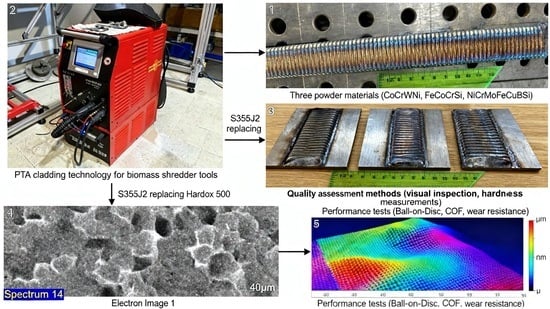
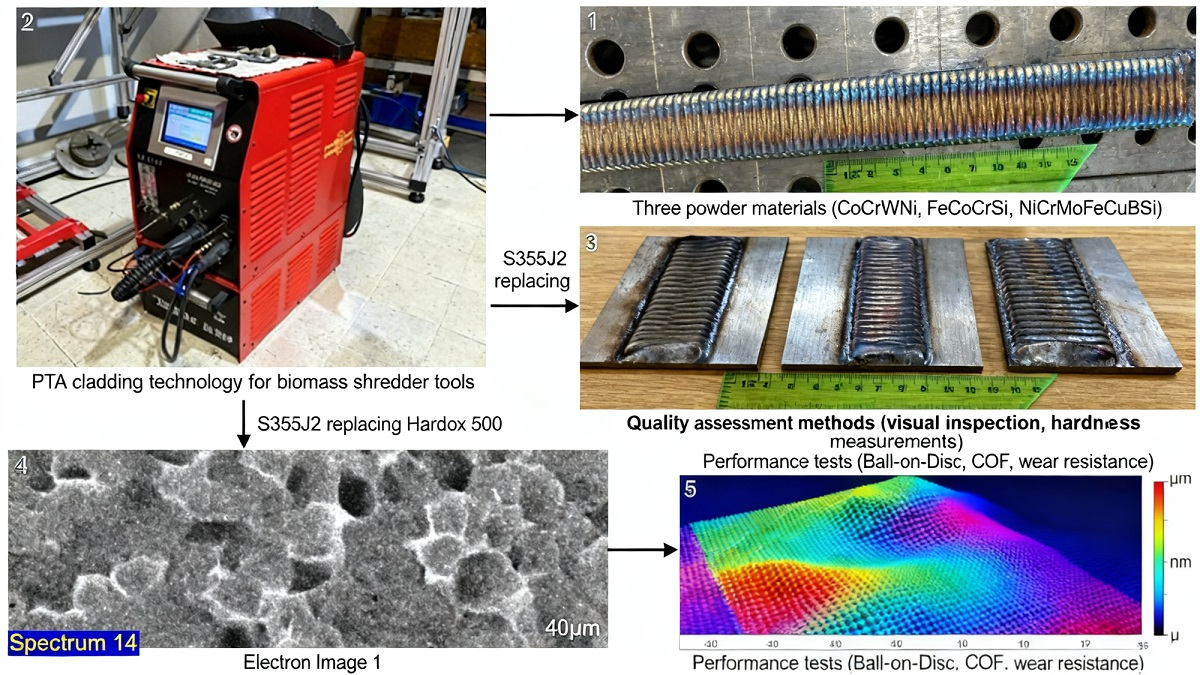
This paper investigates the applicability of plasma transferred arc (PTA) cladding for extending the service life of biomass shredder tools. The study evaluates the possibility of replacing Hardox 500 steel with a lower-cost structural steel S355J2 whose functional surfaces are modified by PTA cladding. Three commercially available powder fillers were examined: CoCrWNi (PL1), FeCoCrSi (PL2), and NiCrMoFeCuBSi (PL3). The quality and performance of the cladded layers were assessed through hardness measurements, microstructural analysis using SEM and EDX, and tribological testing focused on abrasive and adhesive wear at room temperature. The results showed that the PL1 cladding achieved the highest surface hardness, reaching up to 602 HV0.1, due to the presence of hard carbide phases. In contrast, the PL2 cladding exhibited the best resistance to abrasive wear, demonstrating the lowest mass loss for both as-deposited and machined surfaces. The PL3 cladding showed intermediate performance in terms of wear resistance. Overall, the findings indicate that PTA cladding using an FeCoCrSi-based filler on an S355J2 substrate represents a promising and cost-effective alternative to Hardox 500 for biomass shredder applications.

Graphical Abstract

1. Introduction

The development of modern society is currently inseparably linked with the need to ensure sustainable, reliable, and environmentally friendly energy sources. Conventional energy sources based on fossil fuels such as coal, oil, and natural gas still represent a dominant segment of global energy production; however, they pose significant environmental risks [1,2]. In addition to their limited availability, they are a major source of greenhouse gases and other harmful emissions that contribute to climate change and the overall deterioration of environmental quality. For this reason, the use of renewable energy sources, including solar, wind, hydropower, geothermal energy, and biomass, is becoming increasingly important [3,4]. Biomass is considered one of the most promising renewable energy sources, particularly in Central Europe, where extensive agricultural and forestry resources are available [5]. Its advantages include not only energy production but also the efficient management of biodegradable waste [6]. When biomass use is properly conceptualized, it enables the implementation of a “circular economy,” in which waste becomes a raw material for further processing. Biomass therefore fulfills a dual role: it serves as an energy source and significantly contributes to addressing waste management issues. The ecological benefits of biomass use are primarily linked to reducing the carbon footprint [7,8]. The carbon dioxide released during its energy conversion was previously absorbed by plants through photosynthesis, thus closing the carbon cycle in contrast to fossil fuels. Furthermore, biomass provides significant socioeconomic benefits, supports regional employment, reduces dependence on imported fossil fuels, and creates new market opportunities in waste processing and the production of related technologies [9].
Biodegradable waste (biowaste) constitutes a substantial portion of municipal and industrial waste. It includes primarily plant- and animal-based waste, kitchen and restaurant waste, by-products of agricultural production, and woody biomass. Biowaste can be processed using various technologies, which may be categorized as material or energy recovery methods. Material recovery technologies include processes such as composting, the production of organic fertilizers, extraction of chemical substances (e.g., biodiesel from used cooking oils), and the conversion of waste into feed or substrates. Energy recovery technologies include incineration, co-incineration, pyrolysis, gasification, and anaerobic digestion [10,11]. The lifetime of biomass shredding tools is mainly governed by abrasive and erosive wear caused by mineral impurities, complemented by adhesive, fatigue, and corrosion–tribological mechanisms. These effects are strongly influenced by biomass properties, operating conditions, and the material and surface state of the tools. The choice of technology depends on the type of biomass, its moisture content, homogeneity, and the desired final product [12].
However, several risks and degradation factors can arise during biowaste processing, which may significantly affect equipment service life [13,14]. The most common include:
Chemical degradation—organic acids, urea, ammonia, and other substances present in biowaste can cause corrosion of metal components.
Abrasive wear—mineral contaminants (sand, soil, ash) cause intense mechanical wear of working parts, especially in shredders and conveyor systems.
Biological degradation—microorganisms and fungi can damage storage facilities, packaging, and even technological equipment.
Corrosive environments—humid conditions combined with organic acids create highly corrosive environments that limit the service life of tanks, hoppers, and pipelines.
These issues can be mitigated through appropriate material selection and surface treatments, such as using corrosion-resistant steels, hard-metal coatings, or protective layers applied by laser or plasma cladding. Regular maintenance and monitoring of operating conditions are also essential.
Biomass and biowaste shredders are key components within the entire processing chain. Their function is to fragment the material into smaller particles, improving handling, homogeneity, and further processing efficiency [15,16]. Shredders can be categorized as follows:
Knife shredders—utilize rotating knives or blades, suitable mainly for softer types of biomass such as green waste, kitchen residues, or food-grade plastic packaging [17].
Hammer mills—operate on the principle of impact fragmentation using hammers mounted on a rotor; suitable for harder materials such as wood residues or bark [18,19].
Roller and screw shredders—suitable for continuous processing of large material volumes; they ensure uniform particle size and are often integrated into complex processing lines [20].
When designing shredders, it is essential to consider not only fragmentation efficiency but also wear resistance. Blades, hammers, and cutting edges are exposed to extreme abrasive loads [21,22]. Therefore, tool steels, hard-metal coatings, and ceramic composites are commonly used in their manufacturing. The processes of functional layer formation and their service life are significantly influenced by the proper selection of cladding technological parameters, as also documented in [23]. Even advanced cladding technologies such as CMT, TOP TIG, MIG Pulse, as well as laser and plasma technologies, require thorough optimization of individual parameters and a clear understanding of the influence of heat input on changes in the microstructure and mechanical properties of the subcladding layers. A modern trend is the application of protective surface treatments such as laser or plasma cladding, which extends component service life and allows for the refurbishment of worn parts [24].
Complete biowaste processing lines include shredders, conveyors, dewatering presses, fermentation reactors, and storage tanks. Their design must address material heterogeneity, aggressive operating conditions, and energy efficiency, while automation and digitalization support efficient management, optimization, and real-time condition monitoring [25,26].
In addition to conventional physical and chemical biomass processing methods, advanced biological techniques have gained prominence in recent years. One such method involves the use of microorganisms and insects for bioconversion of biowaste [27,28].
Microorganisms such as bacteria and fungi play a key role in anaerobic digestion and composting, decomposing organic matter into biogas, compost, or digestate usable as fertilizer [29].
The use of insects particularly fly larvae (e.g., Hermetia illucens—black soldier fly, Musca domestica—housefly) is especially noteworthy. This approach enables rapid and efficient conversion of organic waste into valuable products such as protein feed, oils, chitin, and organic fertilizers [30,31]. Larvae are capable of feeding on a wide range of biowaste and grow quickly and efficiently. A significant benefit is the reduction in waste volume, decreased methane emissions, and the production of high-value products [32,33].
Research shows that insect farming represents an economically and environmentally sustainable solution that can complement existing technologies. For example, the black soldier fly (Hermetia illucens) can process food and agricultural waste, with larvae containing up to 40–45% protein and 30–35% fats. These products are used in feed mixtures, aquaculture, and even in the food industry [34,35,36].
Integrating conventional mechanical technologies (shredders, processing lines) with biological methods (microorganisms, insects) forms the foundation for a next-generation circular economy that combines technical efficiency with sustainable development principles. The paper presents the results of research focused on the production of functional layers on the surfaces of tools designed for biomass crushing.

2. Materials and Methods

The experiment was carried out based on the requirements of a company that fragments biomass shredding tools using a special fragmentation device. For the crushing process, the company uses knives made of Hardox 500 steel (SSAB, Stockholm, Sweden). The functional parts of the fragmentation knife are currently coated with a single layer hard facing applied by Plasma Transferred Arc (PTA) cladding, using an additional material in powder form designated as PL1. Due to the company’s efforts to increase production output and the limited-service life of the knives, an initiative was undertaken to evaluate the possibility of using a cheaper base material for knife manufacturing, followed by the application of hard, wear-resistant layers on their functional surfaces. As an alternative to Hardox 500—whose chemical composition and mechanical properties are shown in Table 1 and Table 2 a low-alloy high-strength steel S355J2 (U. S. Steel Košice, Košice, Slovakia) (EN 10025-2:2004 [37]) was selected. For the experimental phase, steel S355J2 (EN 10025-2:2024) with a thickness of 40 mm was used for the fabrication of test samples. Its chemical composition and mechanical properties are presented in Table 3 and Table 4.
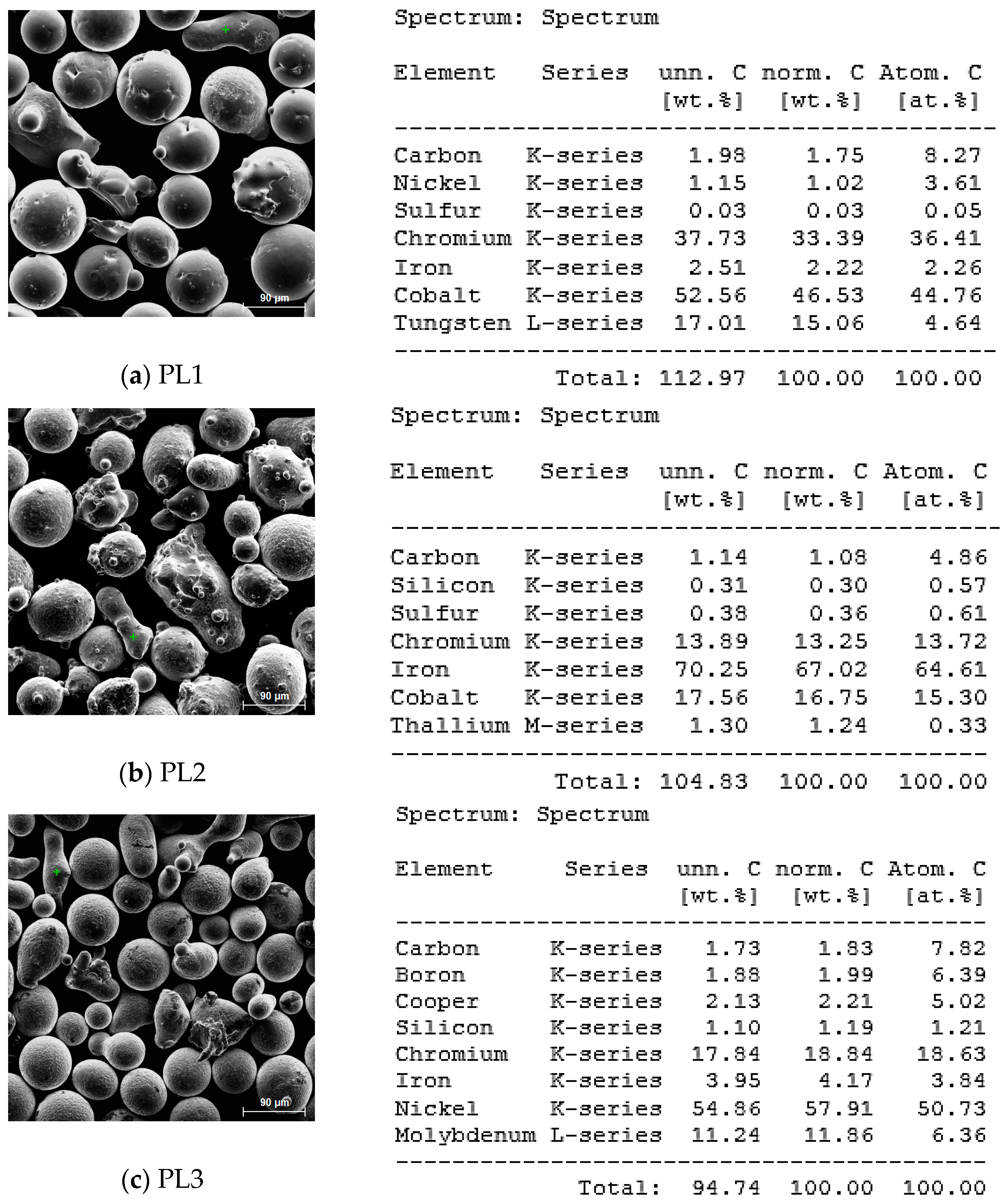
As part of the experimental verification of the feasibility of modifying the substrate material of the blade, the applicability of three types of additional materials in powder form was evaluated (Table 5). For the cladding of the test samples, the currently used powder type designated as PL1, based on CoCrWNi, was employed. The applicability of powder PL2, based on FeCoCrSi, and powder PL3, based on NiCrMoFeCuBSi, was also evaluated. The exact chemical compositions were not specified in detail by the manufacturer. The powder particle size was 150 ± 20 µm. The chemical composition of the applied filler materials was determined using EDX analyses, and the results are presented in Figure 1.
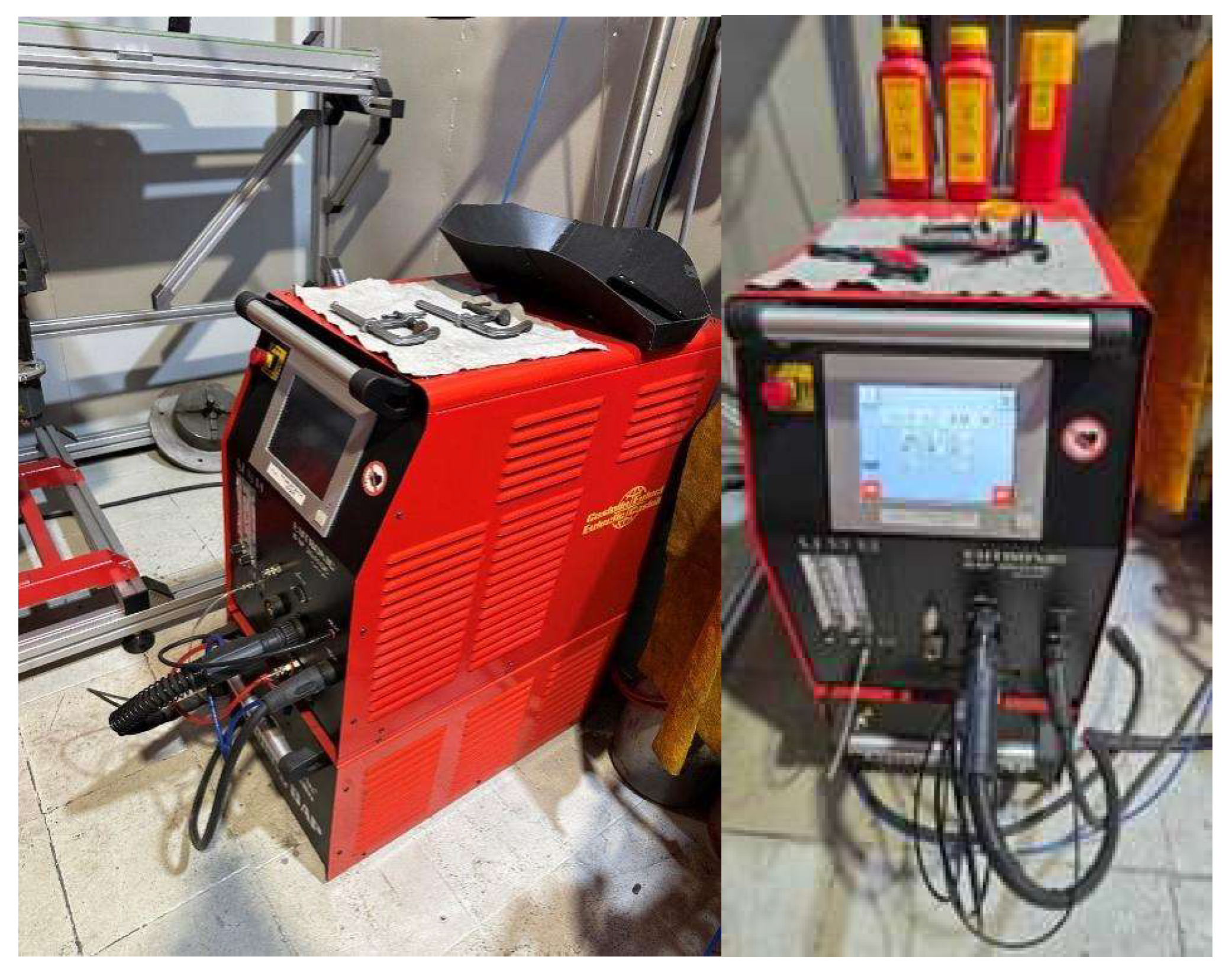
The PTA cladding process was carried out on a Castolin Eutronic GAP 3511 DC machine (Castolin Eutectic, Pfäffikon, Switzerland) (Figure 2).
The surfaces of the steel plates were machined by milling. Surface roughness measurements were performed using a Mitutoyo Surftest 202 portable surface profilometer (Mitutoyo Corporation, Kawasaki, Japan), equipped with a diamond stylus and capable of evaluating standard roughness parameters such as Ra and Rz in accordance with ISO/EN surface texture standards. A surface roughness value of Ra ≈ 3.2–6.3 µm was measured. The cladding parameters for the test specimens are recorded in Table 6. They were selected based on the recommendations of the cladding equipment manufacturer as well as the experience of the trained operator for this device. Cladding process was robotized using a Fanuc system (FANUC Corporation, Oshino-mura, Yamanashi, Japan). The cladding parameters were applied to all three types of filler materials. The thickness of the cladded layers ranged from 1.7 to 2.0 mm. The as-deposited PTA coatings exhibited a relatively high surface roughness (Ra ≈ 10–25 µm), which was subsequently reduced by machining (milling) to achieve functional surfaces with a surface roughness of Ra ≈ 3.2 µm.

2.1. Methods Used for the Evaluation of Cladding

Non-Destructive Testing

Visual inspection of clad was carried out in accordance with EN ISO 17637 [38]. The evaluation of the clad surface quality was performed according to ISO 5817 [39] or EN ISO 6520-1 [40]. An illumination of 500 lx was used during the assessment. The quality of the adjacent areas of the cladding layers, up to a distance of 15 mm from the clad edge, was also evaluated. Light intensity was measured using a Testo 540 lux meter (Testo, Titisee-Neustadt, Germany).

2.2. Destructive Testing

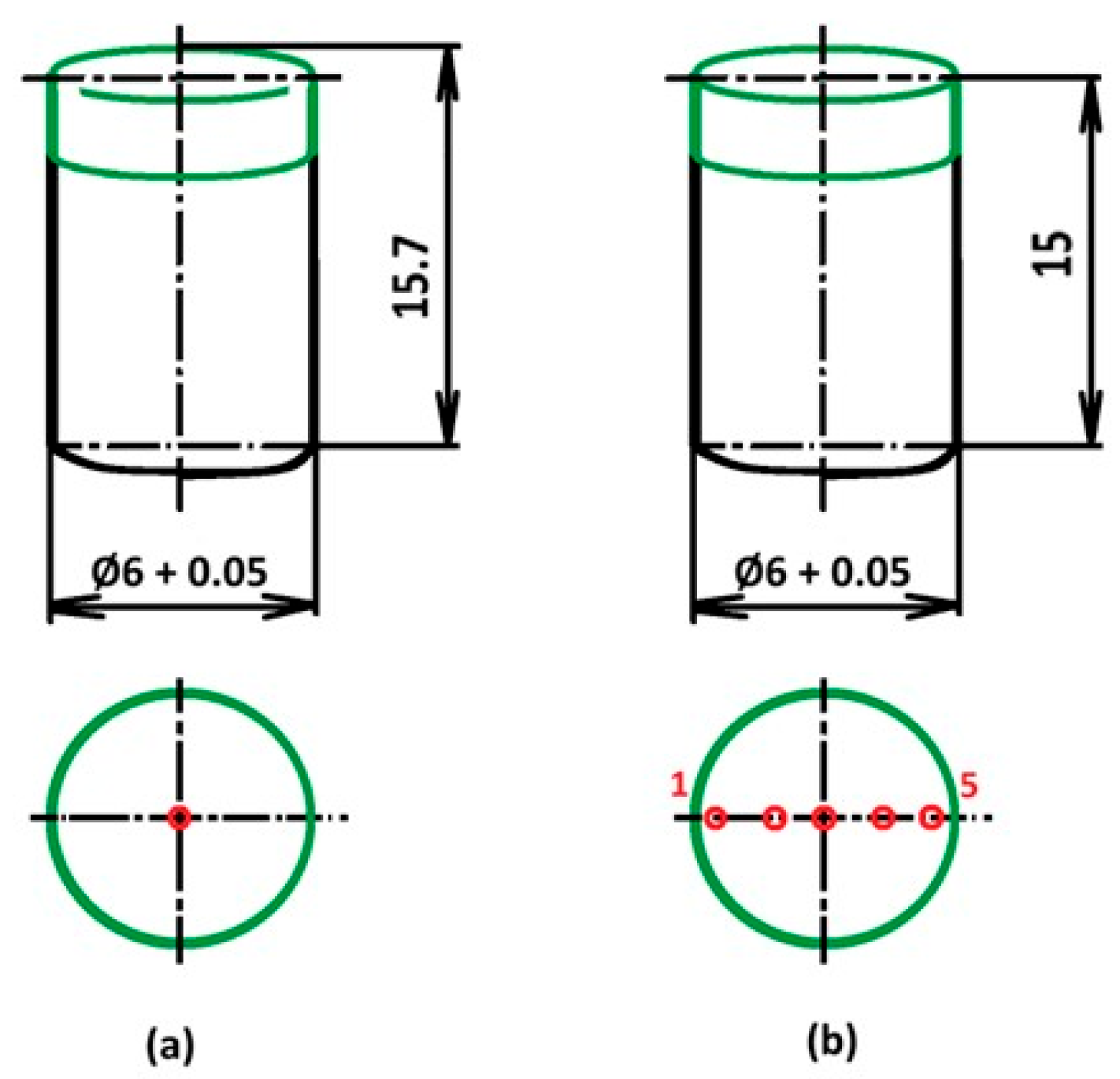
Hardness evaluation was performed in accordance with STN EN ISO 9015-2 [41] using the Vickers method on a Shimadzu HMV 2 device (Shimadzu, Kyoto, Japan). An indenter load of 0.9807 N and a dwell time of 15 s were applied. Test specimens with marked indenter impression locations are shown in Figure 3. Hardness values were measured on the specimens according to the scheme in Figure 3a—measurements were taken only at the center of the as-deposited flat clad. On machined specimens, five hardness measurements were performed (Figure 3b) at a depth of 0.7 mm from the clad surface.
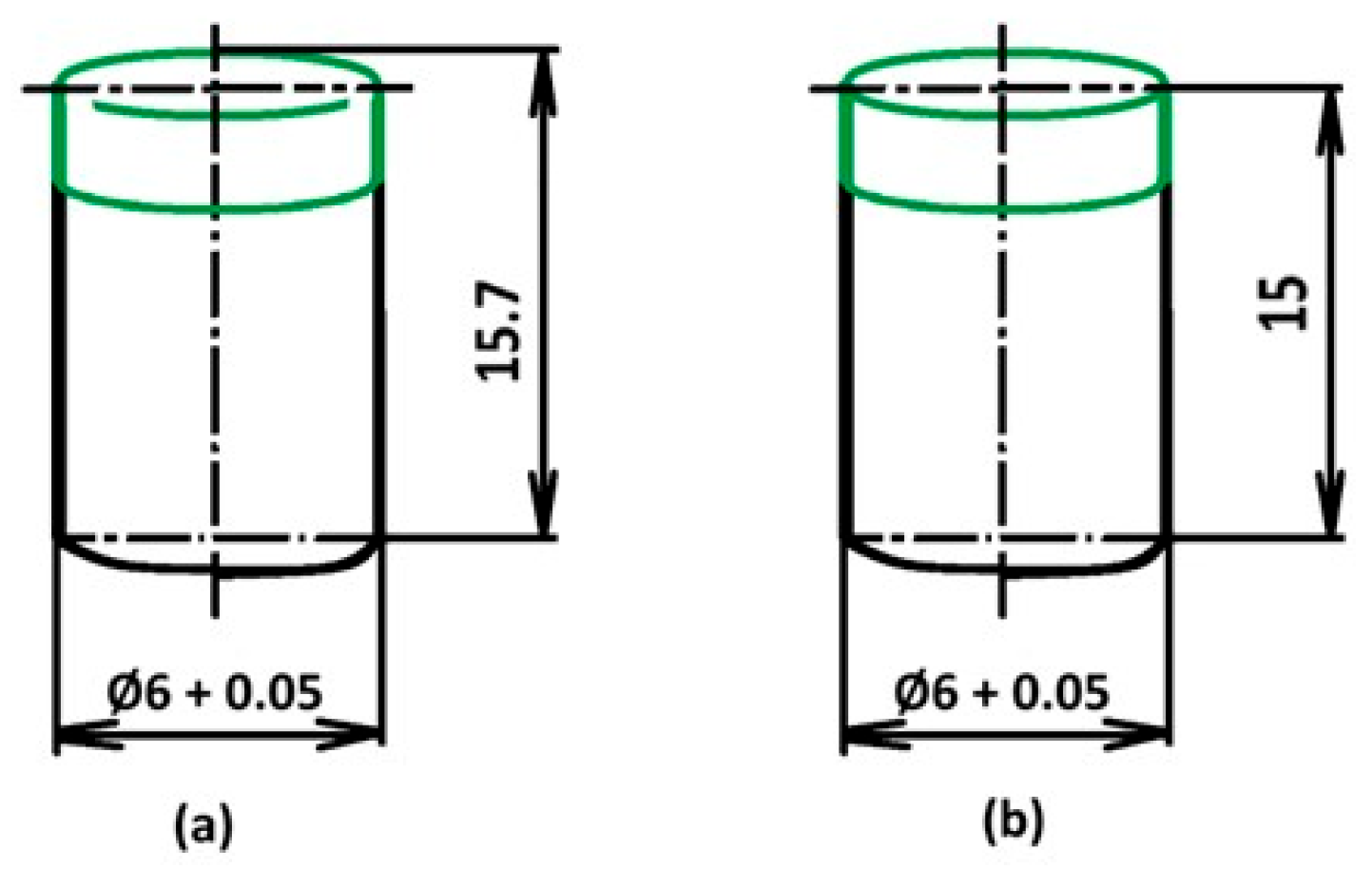
Evaluation of Clad Deposits Resistance to Abrasive Wear. Since the primary degradation factor limiting the service life of the knives in the shredding equipment is abrasive wear, tests were designed to evaluate the resistance of cladded layers to abrasive wear using the APGi device (WPM Werkstoffprüfsysteme Leipzig GmbH, Markkleeberg, Germany), where the resistance of the clads was assessed based on mass losses of the test specimens. The mass of the specimens before and after exposure on the testing device was measured using RADWAG XA 220 (Radwag Wagi Elektroniczne, Radom, Poland) analytical balances. The shape and dimensions of the test specimens are shown in Figure 4a. During the test, P80 abrasive cloth was used. This is an abrasive cloth with Al2O3 grains. For each cladded type, five specimens were evaluated on the testing device. Similarly, five specimens of HARDOX 500 material without clads were tested. A new abrasive cloth was used for each specimen. The specimens had a diameter of ø 6 ± 0.05 mm. The applied load during the test was 10 N. The distance traveled by the specimen on the abrasive roller was 40 m, with a circumferential speed of 0.33 m·s−1. The specimens exposed to abrasive wear had an as-deposited hemispherical surface, which corresponds to the functional surface of a shredding knife without machining. The second series of specimens consisted of surfaces machined by grinding, according to the scheme in Figure 4b, with the area exposed to abrasion located 0.7 mm below the deposited surface. The effect of abrasive wear was evaluated initially under line contact and later under surface contact. After the abrasive wear tests, mass differences in the specimens were determined using the analytical balances mentioned above.
The tribological properties of the clads were evaluated under dry friction conditions using the Ball-on-Disc method according to ASTM G99-17 [42]. The friction coefficient and wear rate of the clads were determined. The ball was made of silicon carbide SiC with a diameter of ø 6 mm and traveled a distance of 500 m. The evaluation was carried out at temperature 20.00 °C. The load on the ball was 5 N with a linear velocity of 0.10 m/s. The above procedure was designed to determine the quality of clads under tribological conditions. The test parameters are shown in Table 7.
Plasma-treated surfaces with clad overlays and their structure were evaluated using electron microscopy, while the chemical composition in selected spectra was determined using EDX analysis with a chemical analyzer. The chemical composition of the samples was determined using spark emission spectroscopy on ARL 4460 spectrometers (Thermo Fisher Scientific, Ecublens, Switzerland) and by infrared absorption analysis. Specimens for microstructural examination were mounted in conductive PolyFaste (Struers A/S, Ballerup, Denmark) resin, then sequentially ground using 240, 400, 600, and 800 grit papers under water lubrication. Subsequent polishing was carried out with 1/0 diamond paste on a satin cloth moistened with kerosene, followed by washing and rinsing with gasoline–alcohol. Prior to microscopy, the samples were ultrasonically cleaned in methanol.

3. Results

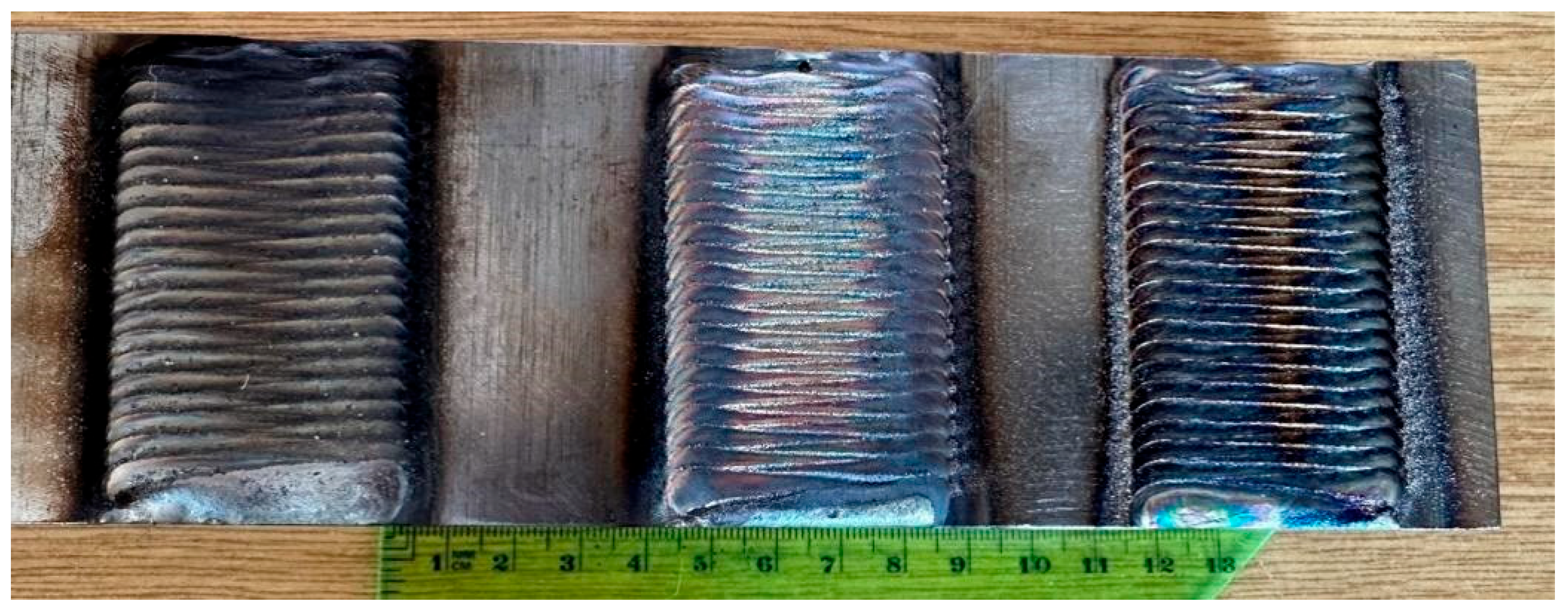
The quality of the cladded layers was evaluated after cladding using non-destructive testing. According to visual inspection in accordance with EN ISO 17637, the presence of surface defects was assessed. The visual inspection did not reveal any surface defects that would classify the clads as unacceptable in quality class C. The clad surfaces are shown in Figure 5.
Surface Hardness Evaluation Results at Low Load are documented in Table 8.
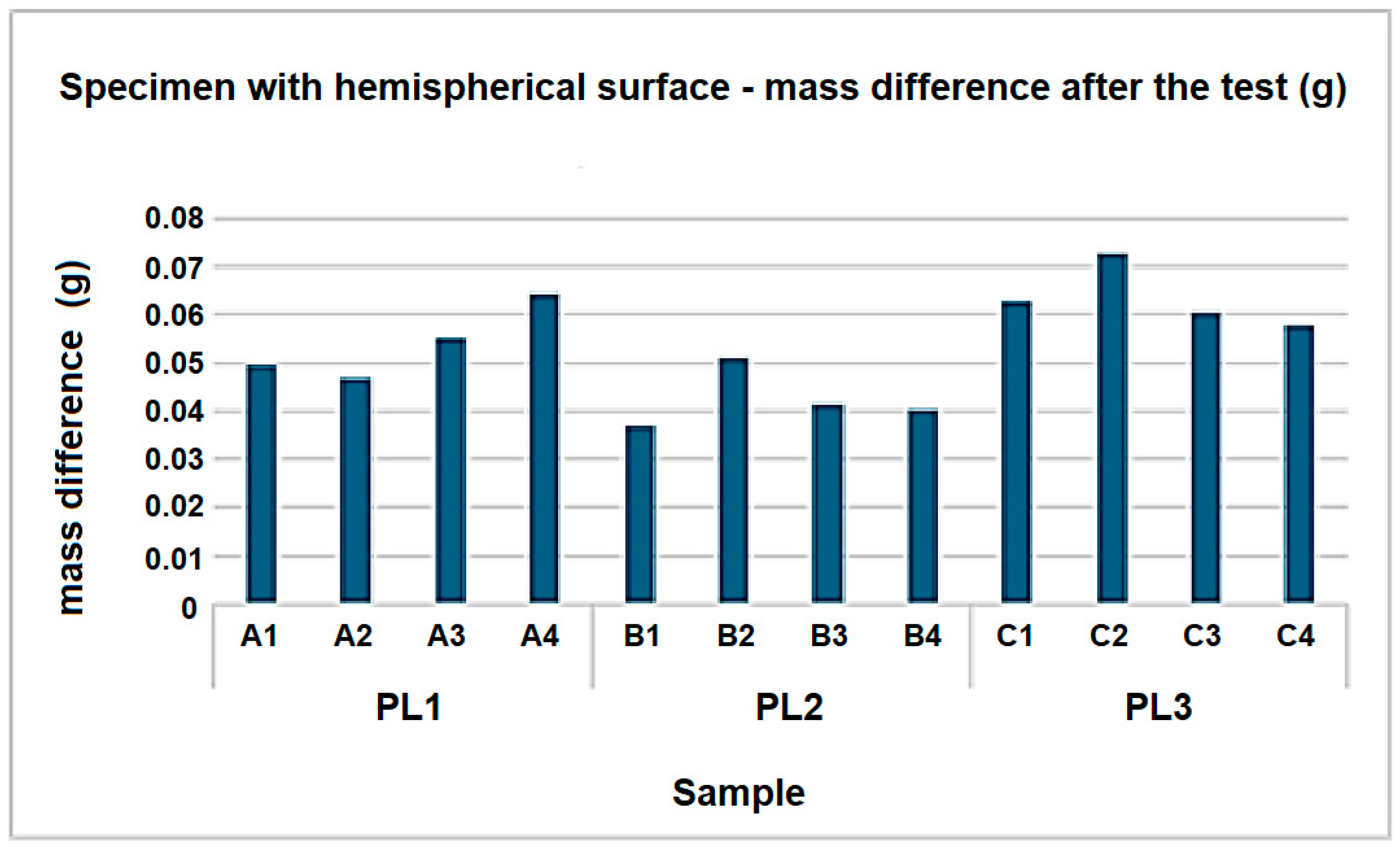
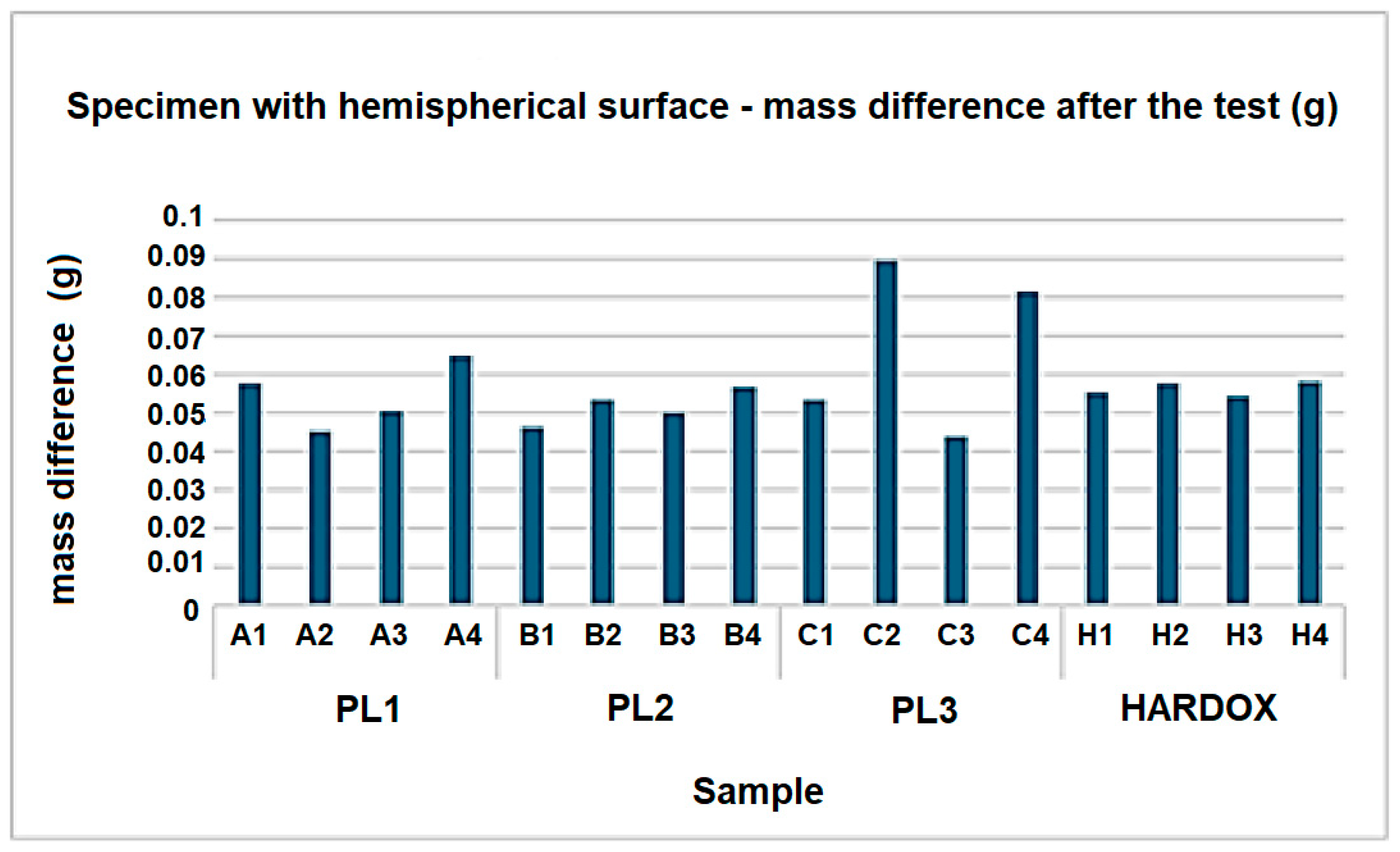
The mass loss values of test specimens with clads without machining of the exposed surface are presented in the graph in Figure 6. Four test specimens from each cladding were evaluated. The mass loss values of four specimens with clads with machined surfaces, as well as four specimens with similarly prepared contact surfaces made of HARDOX 500, are documented in the graph in Figure 7.
Based on the presented results, it can be concluded that the lowest mass loss was recorded on clads without surface machining made with filler material PL2, where the average mass loss of the specimens was 0.0427 g.
The highest resistance to abrasive wear, based on the observed mass losses, was demonstrated similarly to the unmachined test specimens by the clads made using filler material PL2, with an average mass loss of 0.0515 g.
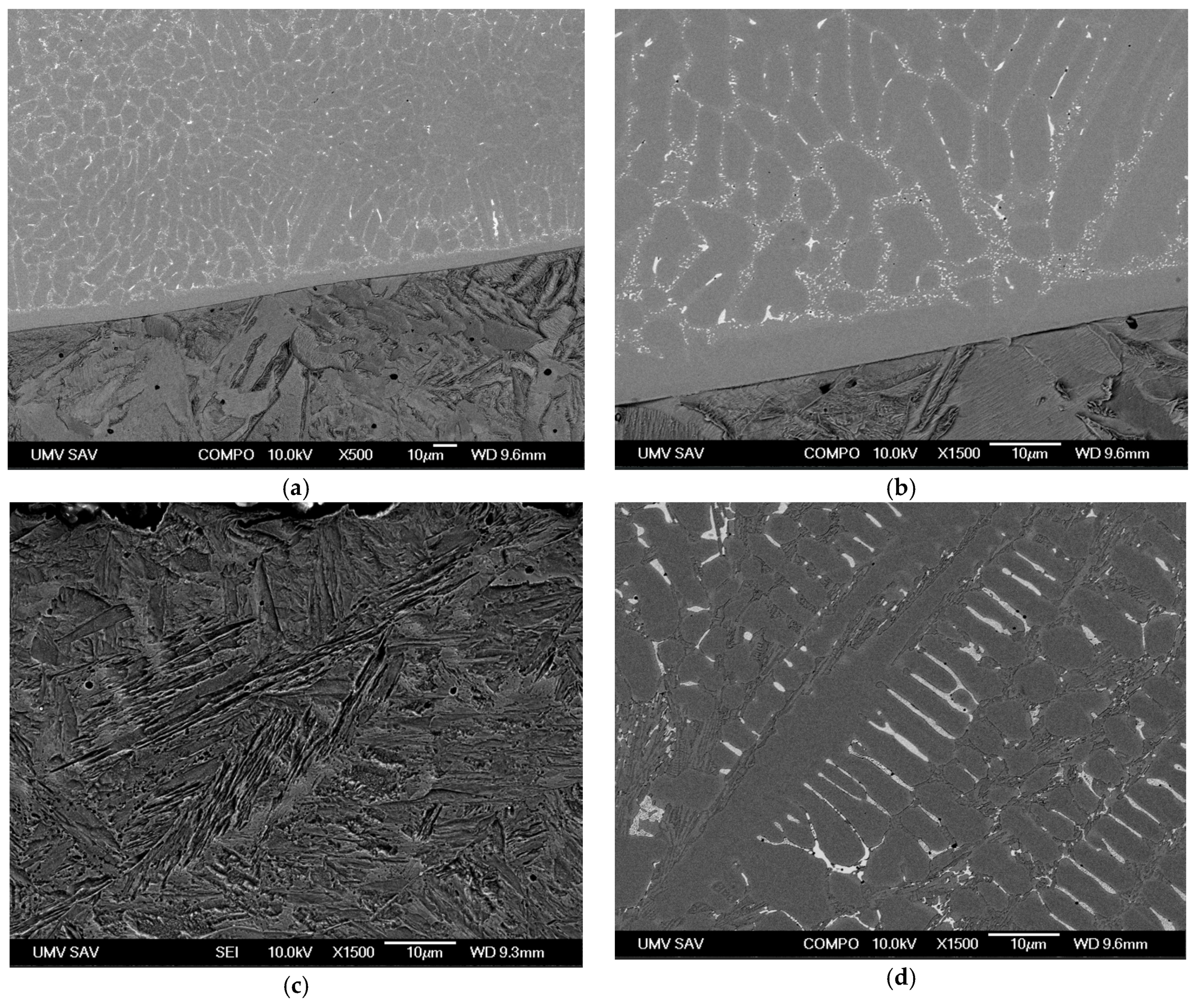
The structures of the transition zones of the PTA-produced cladding layers are shown in Figure 8, Figure 9 and Figure 10. The COMPO mode is key for interpretation: in this mode, brightness depends on the atomic number of the elements. Heavier elements appear lighter, while lighter elements appear darker on Figure 8a,b. Upper region on Figure 8a,b in cladded layer exhibits a typical dendritic solidification structure. The darker, tree-like features represent the primary dendrites (i.e., solid-phase grains). Their darker appearance indicates that they consist of elements with a lower average atomic number compared to the surrounding matrix. This phase is the first to crystallize from the melt. The regions between the dendrites appear lighter, indicating that during solidification, elements with a higher atomic number segregated into the remaining melt, which solidified last. Very bright, white particles are observed in the interdendritic regions and along grain boundaries. These precipitates are likely intermetallic phases or carbides enriched in high-atomic-number elements (e.g., tungsten, molybdenum, niobium, or, depending on the alloy, certain rare-earth elements). Their distribution follows the dendritic network. In the lower third of the image, a sharp, oblique line is visible, separating the upper structure from the underlying material. Planar zone (Chilled zone)—just above the interface (at the bottom of the upper layer), the typical dendritic structure disappears and is replaced by a thin band without visible dendrites. This is the so-called planar growth zone. It forms due to rapid heat extraction into the cold substrate, which prevents dendrite formation at the very beginning of solidification. The interface appears continuously, without visible pores or cracks, indicating good metallurgical bonding (adhesion) between the layer and the substrate. The S355J2 base material exhibits a coarse-grained ferritic–pearlitic structure in the HAZ beneath the cladded layer. No local martensitic or bainitic grains resulting from overheating were observed.
The interfaces of the PL1 cladding layers are shown in Figure 8c,d. In Figure 8c is the structure in the heat-affected zone of the base material immediately below the fusion boundary, which is marginally captured in the upper part of the image. The dominant feature is an acicular (needle-like) to lath-like microstructure. Long, thin features arranged in bundles are clearly visible. These needles form groups (packets) aligned in a common direction, reflecting the crystallographic orientation of the parent grain (likely austenite) from which the phase transformed. The sharp, needle-like morphology indicates a high probability of a martensitic microstructure (or possibly bainite). Small, rounded dark spots are present within the structure, for example in the central-left and right regions of the image. Figure 8d is the structure of the PL1 cladding layer is documented directly above the surface of the base material, shows a well-developed dendritic structure with pronounced microsegregation of heavy elements in the interdendritic regions. This is a typical microstructure of a rapidly solidified alloy. The dominant feature is a large primary dendrite running diagonally across the center of the image (from the top left to the bottom right). A central dark-gray “spine” is visible, representing the region where crystallization initiated and where growth proceeded most rapidly in the direction of heat extraction. Smaller parallel arms extend perpendicularly from the main trunk. The spaces between the secondary dendrite arms are filled with bright to white phases. In the lower-left corner, a different texture is observed. Instead of well-defined dendrite arms, the microstructure consists of a mixture of fine dark and light features, forming a “shaggy” appearance. This is likely eutectic material, which typically forms where the growth fronts of multiple dendrites impinge or at the tips of grains. The remaining melt solidified here as a fine mixture of two phases. This structure is characteristic of cast alloys that solidify rapidly, as indicated by the fine spacing of the secondary dendrite arms—only a few micrometers. The diagonal orientation of the dendrites reflects the direction of the thermal gradient, which is perpendicular to the local isotherms.
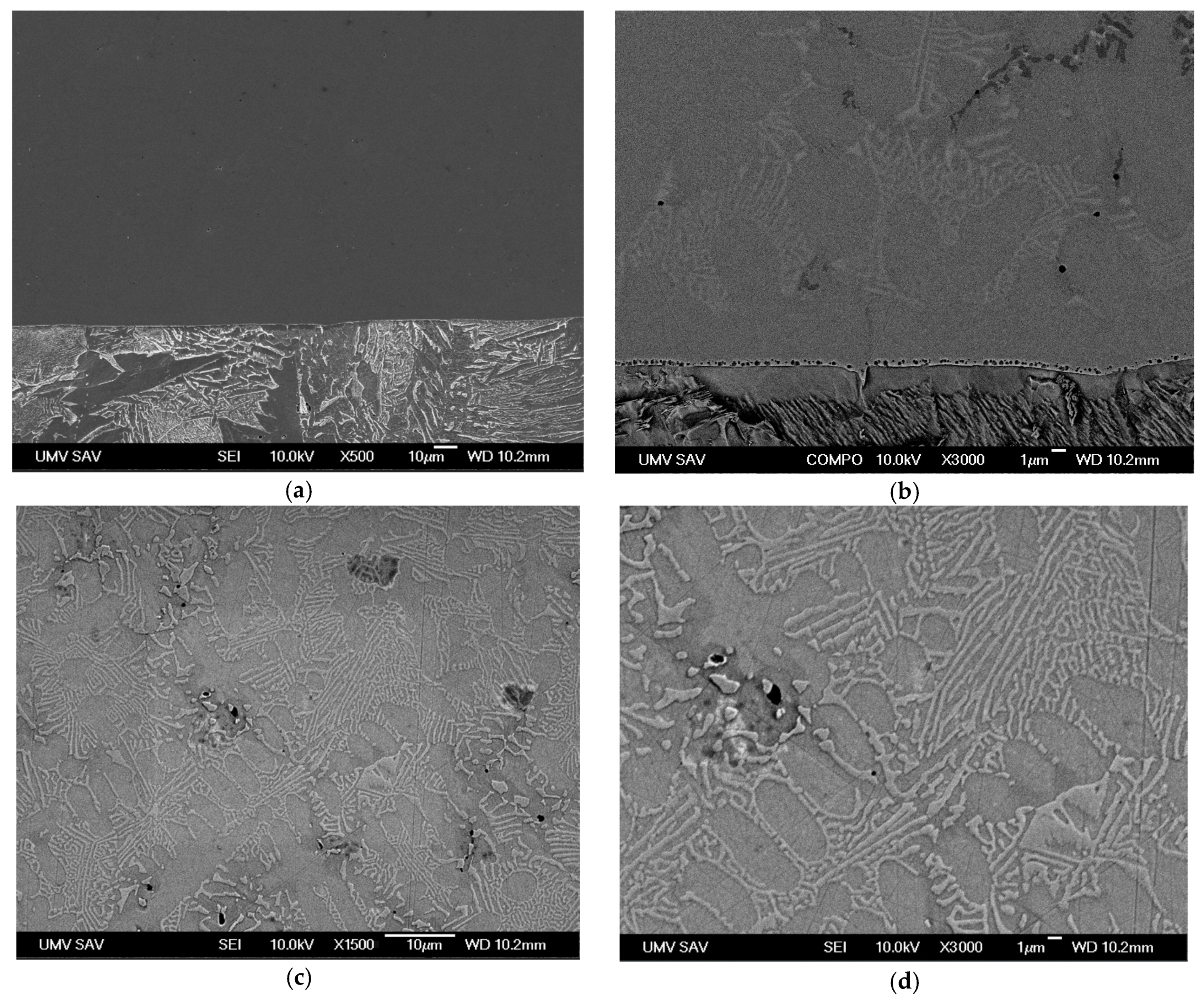
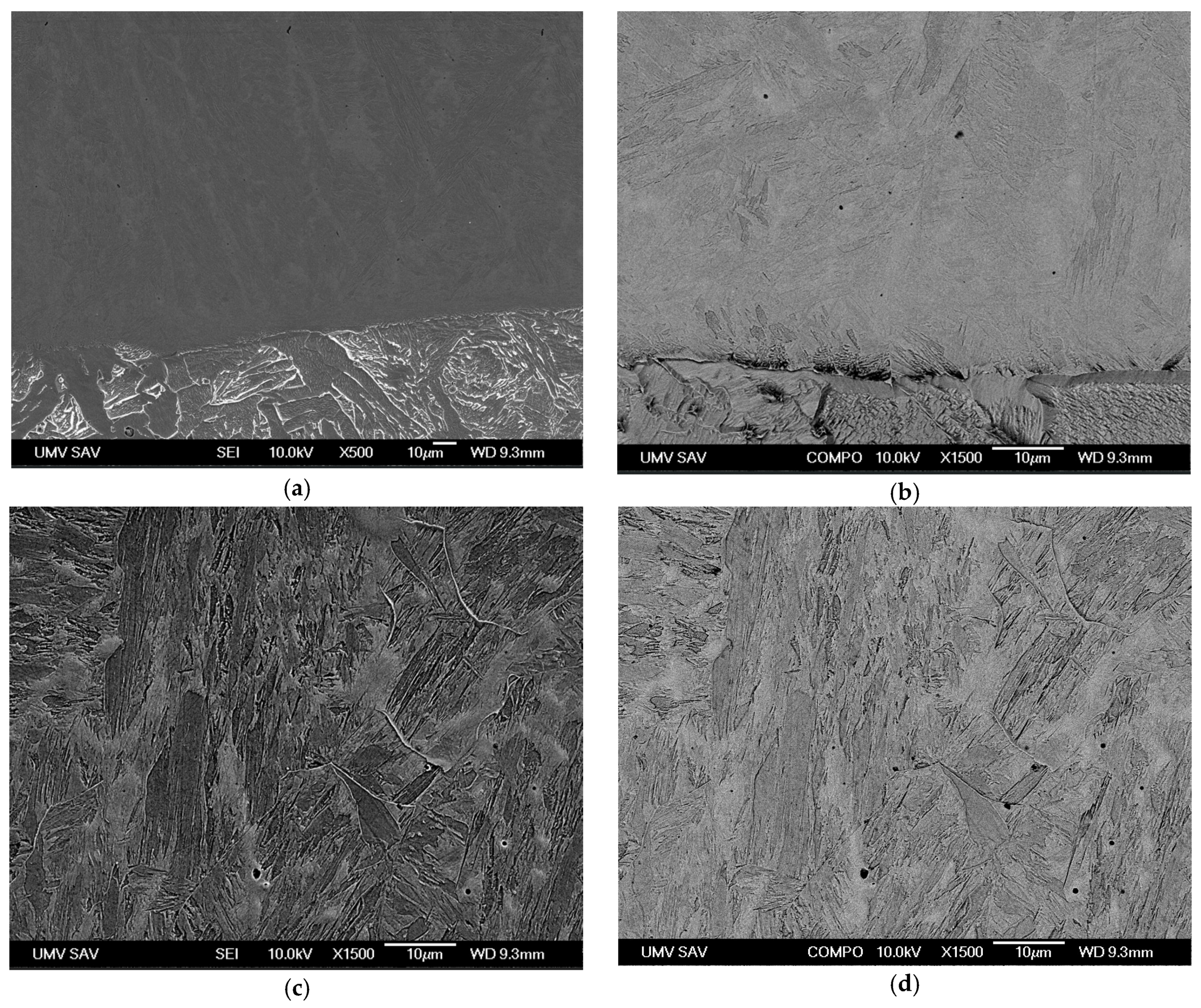
In the lower region of Figure 9a, a martensitic/lath structure with intersecting needle bundles (packets) is visible. The interface between the upper and lower regions in the figure is sharp and linear. In Figure 9b, the upper approximately three-quarters of the image are occupied by material with a pronounced acicular to lath-like structure. This microstructure is typical of martensite (in hardened steels) or of Widmanstätten structures (ferritic laths growing from grain boundaries). The material appears uniformly gray, indicating a relatively homogeneous composition, with variations arising primarily from differences in crystal orientation. Distinct spherical black spots are visible in the upper region; their morphology suggests trapped gas bubbles within the material. The horizontal interface between the clad layer and the base material is sharp and clearly distinguishable.
In Figure 9c, the surface topography of the PL2 clad layer exhibits features typical of low-carbon martensite (or lower bainite). Black circular voids are visible in the center and lower right regions; these are micropores approximately 1–2 µm in diameter.
In Figure 9d, martensitic or bainitic needle structures are observed on the surface. A roughly spherical particle is present at mid-height on the right side, appearing slightly elevated and casting a shadow.
In Figure 10a, the transition zone between the base material and the clad layer realized with filler material PL3 is shown. A sharp interface between the substrate and the cladding is clearly distinguishable in the image. The interface appears continuously, without visible pores or cracks, indicating good metallurgical bonding (adhesion) between the layer and the substrate. The base material consists of a coarse-grained ferritic–pearlitic structure in the HAZ beneath the cladded layer. On the left side Figure 10a, large blocky or plate-like features are visible (likely coarse bainite). On the right side, a finer-grained microstructure is present. Sharp and straight line separating the two regions. In Figure 10b, the Ni-based cladded layer is clearly visible, as well as its transition into the steel base material. Pores smaller than 1 µm occurred within the cladded layer. At the interface between the cladding and the base material, a clearly visible chain of pores can be seen. This could have resulted from insufficient wetting. This structure represents a potential weak point in the joint, increasing the risk of delamination.
Figure 10c documents the surface of the clad layer realized with filler material PL3. The microstructure is dendritic. The presence of inclusions is also visible in the image, as well as the occurrence of pores. Figure 10d shows the surface of the cladded layer with a clearly distinguishable eutectic skeletal structure. While the dendrites (the soft phase) are ductile, the surrounding network (the hard phase) is brittle and load-bearing. The presence of inclusions—likely carbides forming part of the eutectic—was observed, as well as the occurrence of surface pores.

3.1. Results of EDX Analysis of the Cladding

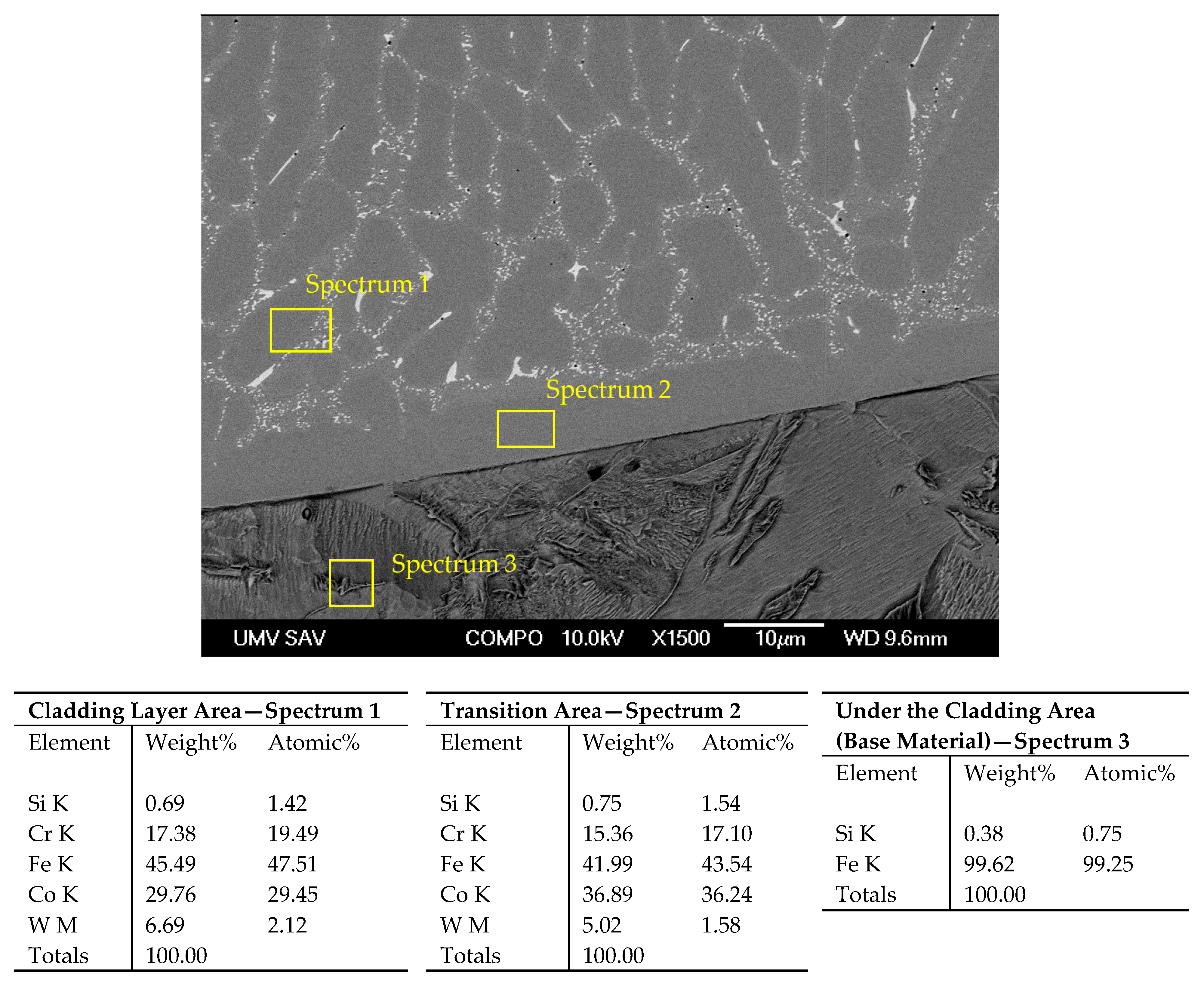
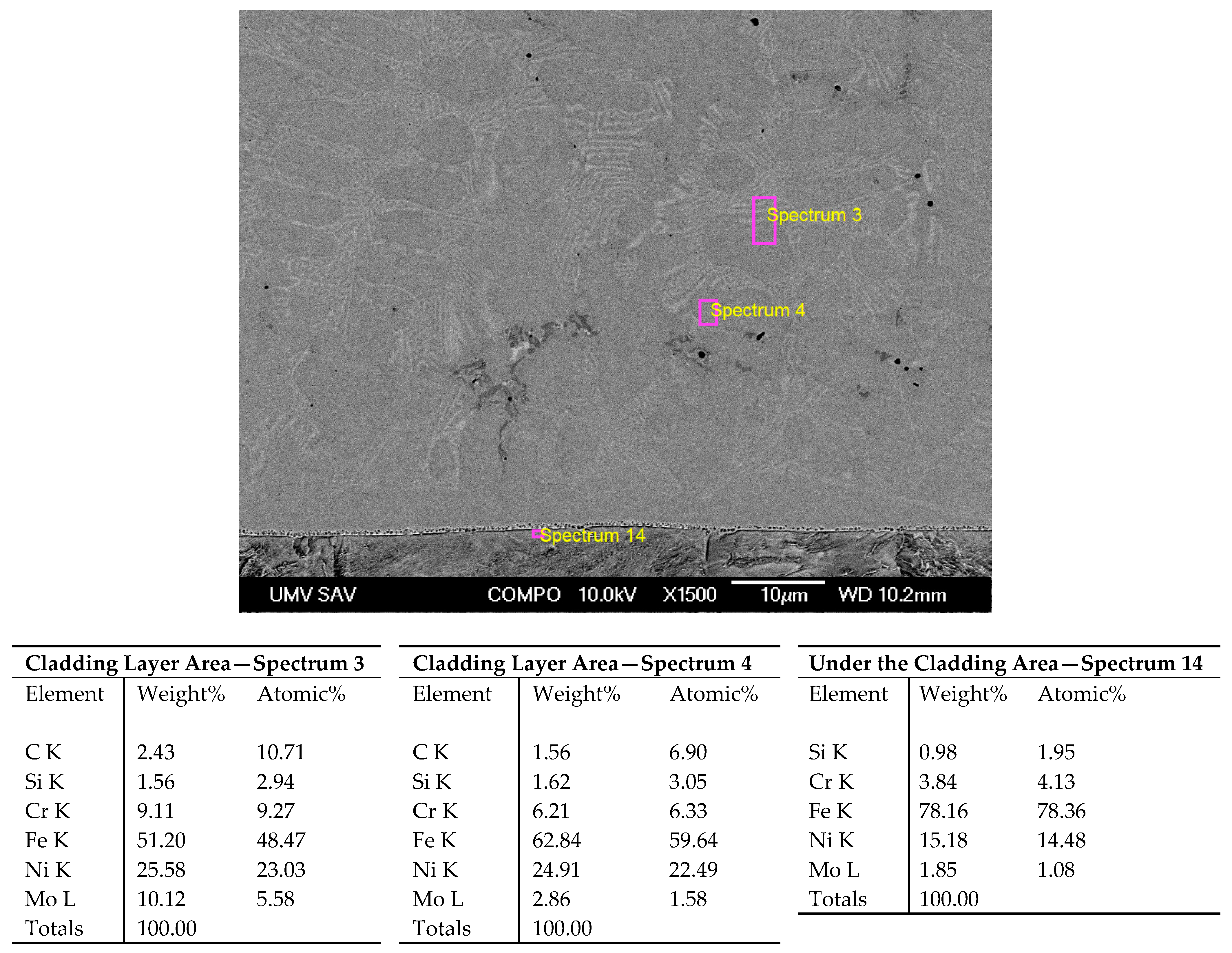
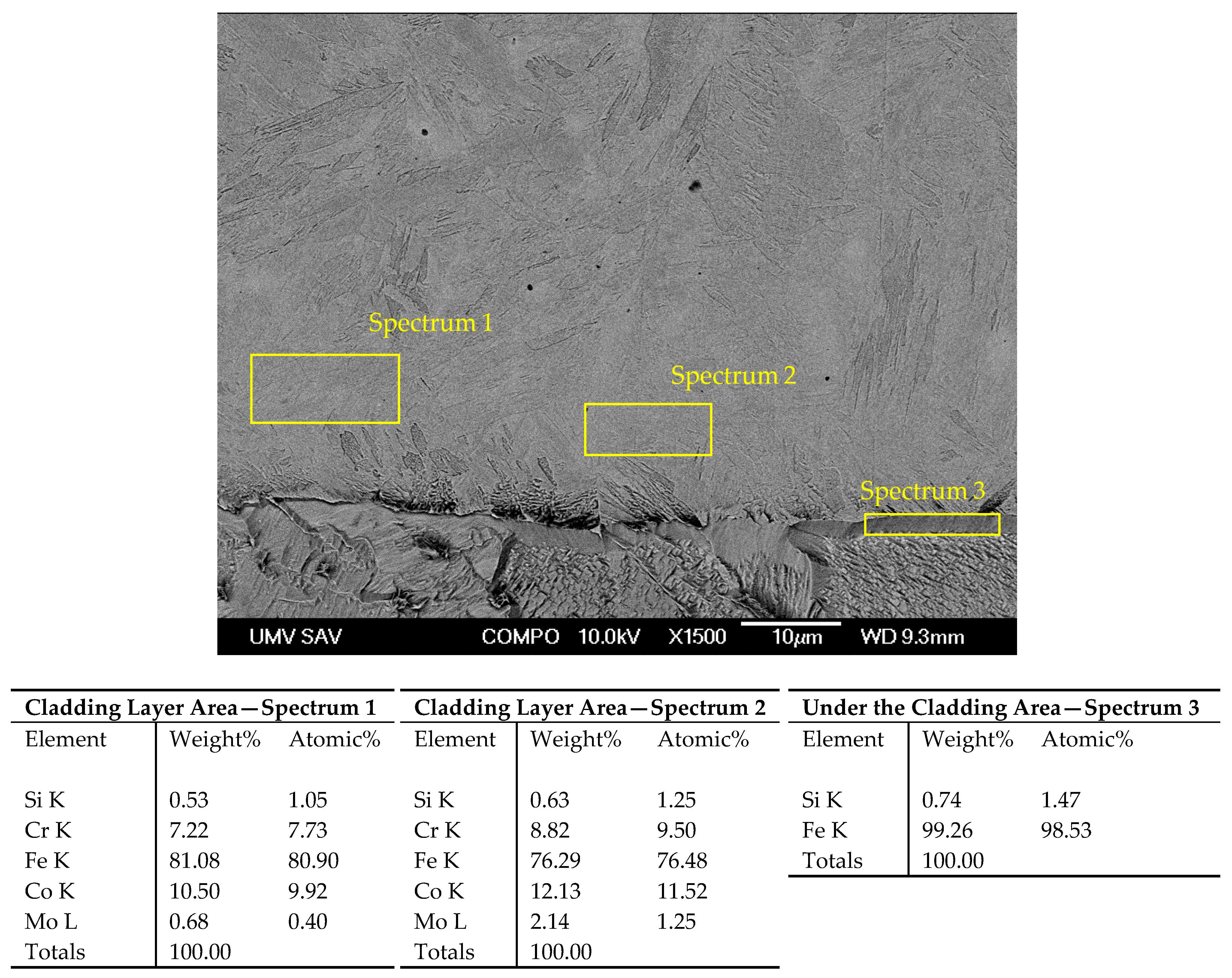
Figure 11, Figure 12 and Figure 13 show the area (mapping) EDX analyses. Based on the measured values, it can be stated that the chemical composition of the clad metal corresponds to the chemical composition of the filler materials used. The transition between the cladded layer and the base material is clearly distinguishable, and the heat input during the PTA process was minimal, as evidenced by the very limited thermal influence on the base material.
In Figure 11, the structure in Spectrum 1 is a dendritically solidified solid solution based on iron and cobalt, within which chromium and tungsten carbides are dispersed (primarily in the interdendritic regions). The high iron content indicates that this is the root area of the cladding, which is strongly affected by dilution with the base material. In Spectrum 3, the spectral analysis showed a high iron content (~45%) even within the cladding, indicating that it is not pure Stellite but an alloy significantly diluted with iron. This implies that the hardness of the clad layer will be somewhat lower than that of pure Stellite, because part of the carbon and tungsten becomes diluted in the larger volume of iron, resulting in the formation of fewer carbides. In Spectrum 5, the analyzed area corresponds to low-carbon steel (the base material), which was not chemically affected by the cladding (no diffusion of Co/Cr/W), but was thermally hardened, resulting in a martensitic microstructure.
In Figure 12, the structure in Spectrum 1 documents a clad layer with a high proportion of iron, followed by cobalt. Due to the high content of iron and carbon (and the presence of Co, Cr, and Mo), a very hard martensitic structure needles formed upon cooling. This microstructure (high-carbon martensite) is brittle. This explains the presence of the crack/delamination at the interface visible at the bottom of the image. However, the crack does not extend through the entire sample. The material likely failed due to internal stress generated during cooling. Spectrum 2 can be classified in the same way as Spectrum 1. Spectrum 3 documents the area in the heat-affected zone of the base steel material in close proximity to the PL2 cladding. The original ferritic–pearlitic structure of the steel transformed into austenite due to the high heat input, and upon rapid heat extraction it subsequently transformed into martensite or bainite.
Figure 13 presents the transition zone between the steel base material and the clad layer produced using the Ni–Fe-based filler material PL3. Spectrum 3 documents the dendritic structure of the cladding. The presence of pores as well as non-metallic inclusions was also observed. The transition between the base material and the cladding is sharp and without irregularities. The sub-cladding region of the base material in the HAZ exhibits a bainitic–martensitic structure. It consists of a tough austenitic (Fe–Ni) matrix reinforced by a network of hard molybdenum and chromium carbides in the interdendritic regions. Spectrum 4 can be classified in the same way as Spectrum 3. The area analyzed in Spectrum 14 is located directly at the interface, in the lowest portion of the cladded layer where it is in contact with the steel. This region is often a critical zone and a typical site for crack initiation. The HAZ of the steel exhibits a martensitic microstructure. Similarly to [43] it was confirmed that nickel ensures that even with strong dilution by iron, including in the region close to the base material, brittle martensitic phases do not form. Instead, a tough austenitic microstructure is retained.

3.2. COF and Penetration Depth

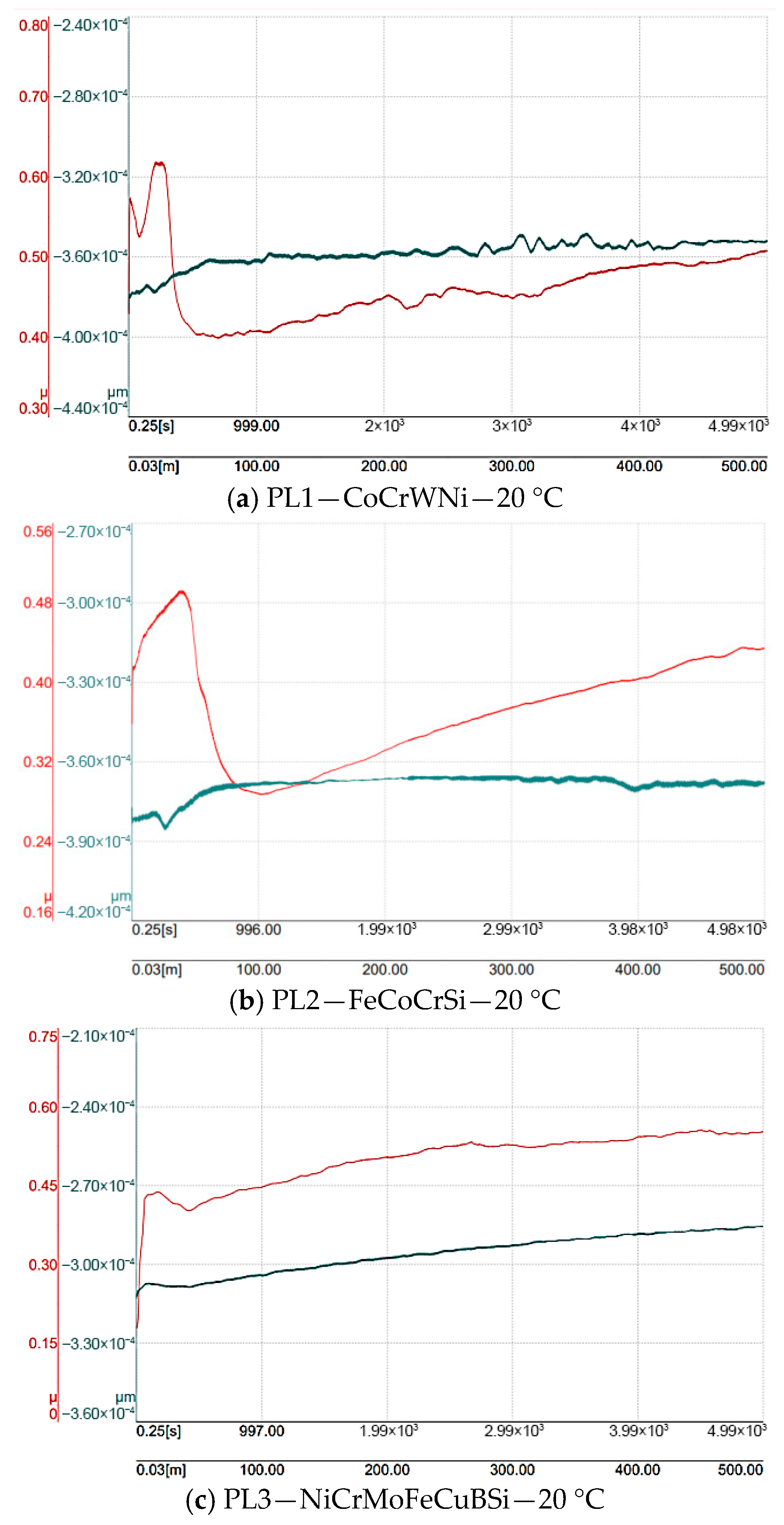
The evolution of the coefficient of friction and the instantaneous penetration depth during sliding wear tests at room temperature (RT) against a SiC ball under a load of 10 N over a total sliding distance of 500 m is shown in Figure 14. For the PL1—CoCrWNi-based clad (Figure 14a), after a short running-in period, the coefficient of friction (μ) temporarily increased to approximately 0.6, then decreased to about 0.40, and subsequently gradually increased, reaching approximately 0.50 at the end of the test. The penetration depth remained relatively stable after the initial phase, showing only a very slight trend of change. The PL2—FeCoCrSi-based clad (Figure 14b) exhibited a pronounced running-in period with a temporary increase in μ to around 0.48, followed by a decrease to approximately 0.30. In the subsequent period, μ increased steadily, reaching about 0.45 at the end of the test. The penetration depth was the most stable among all three clads, fluctuating only minimally around an almost constant level. For the PL3—NiCrMoFeCuBSi-based clad (Figure 14c), after a rapid running-in phase, μ stabilized around 0.45, then showed the most pronounced continuous increase, reaching approximately 0.60 at the end of the test. The penetration depth exhibited the largest growth, indicating a more progressive development of the contact during sliding. Among the clads, the lowest and most stable μ values were observed for FeCoCrSi, CoCrWNi showed intermediate values with a slight increase over time, and NiCrMoFeCuBSi reached the highest final μ along with the most significant long-term trend of penetration depth increase. The observed μ trends, with running-in followed by stabilization, correspond to the behavior of thermally sprayed coatings tested [44] in a ball-on-disk configuration at both RT.
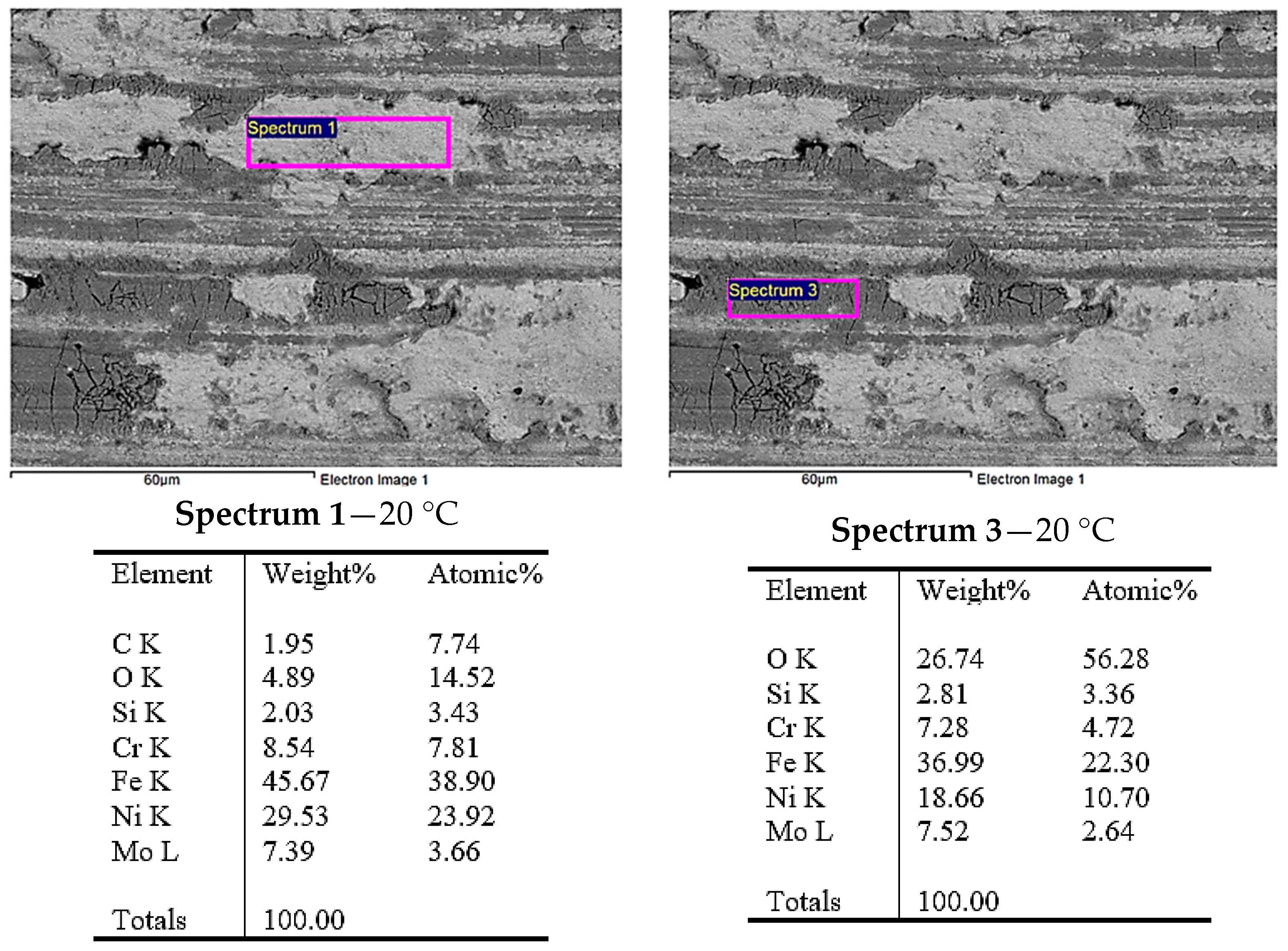
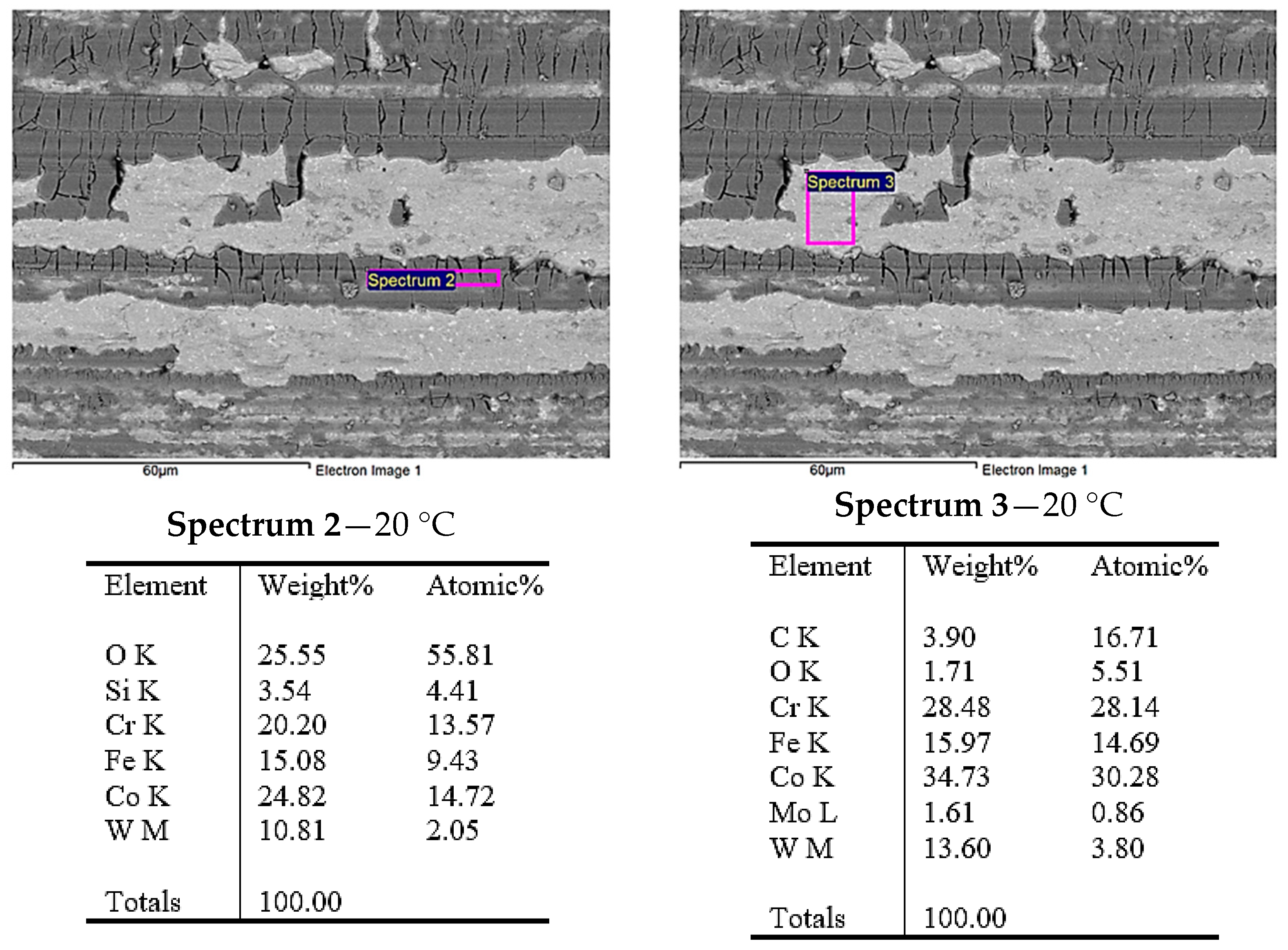
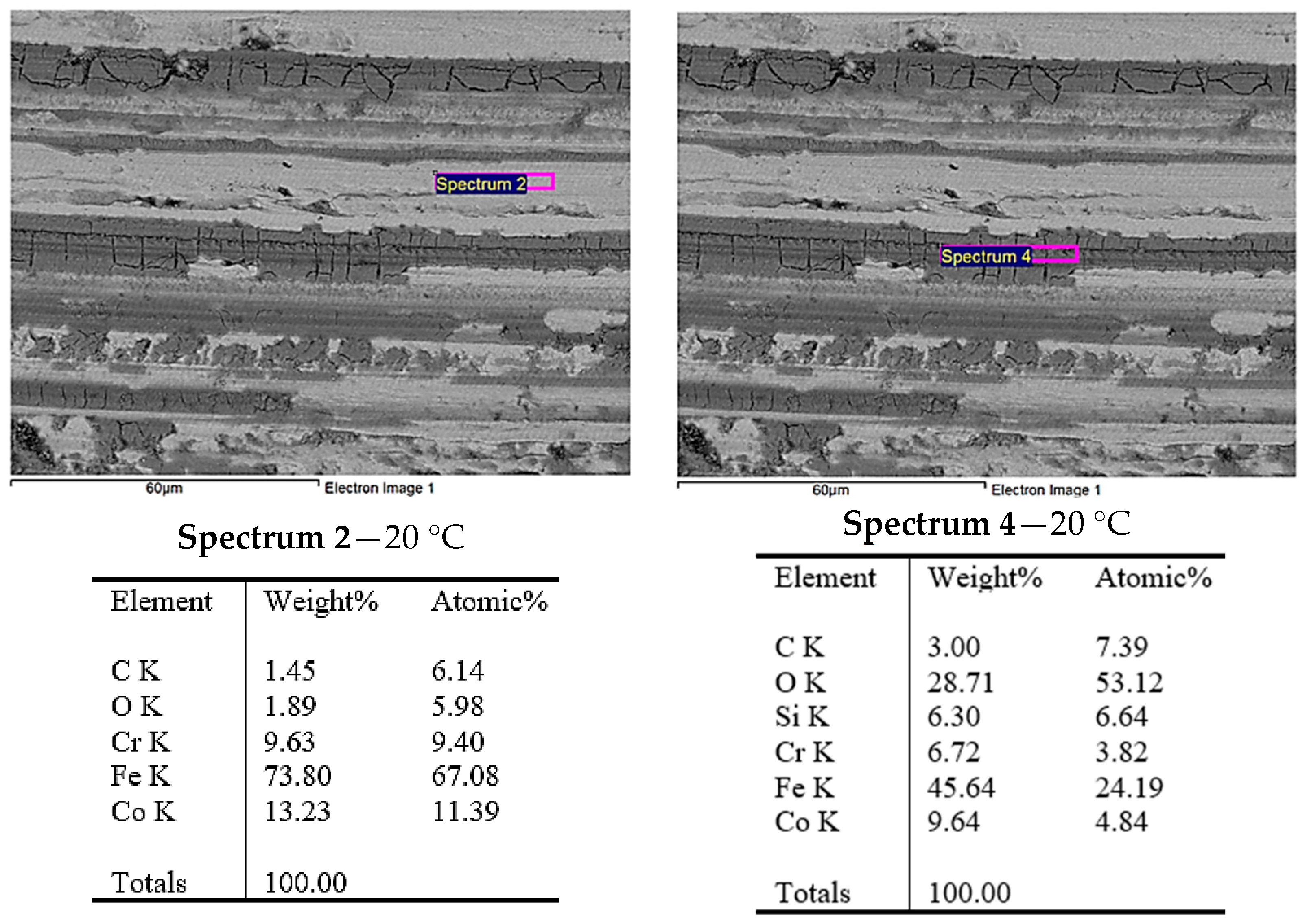
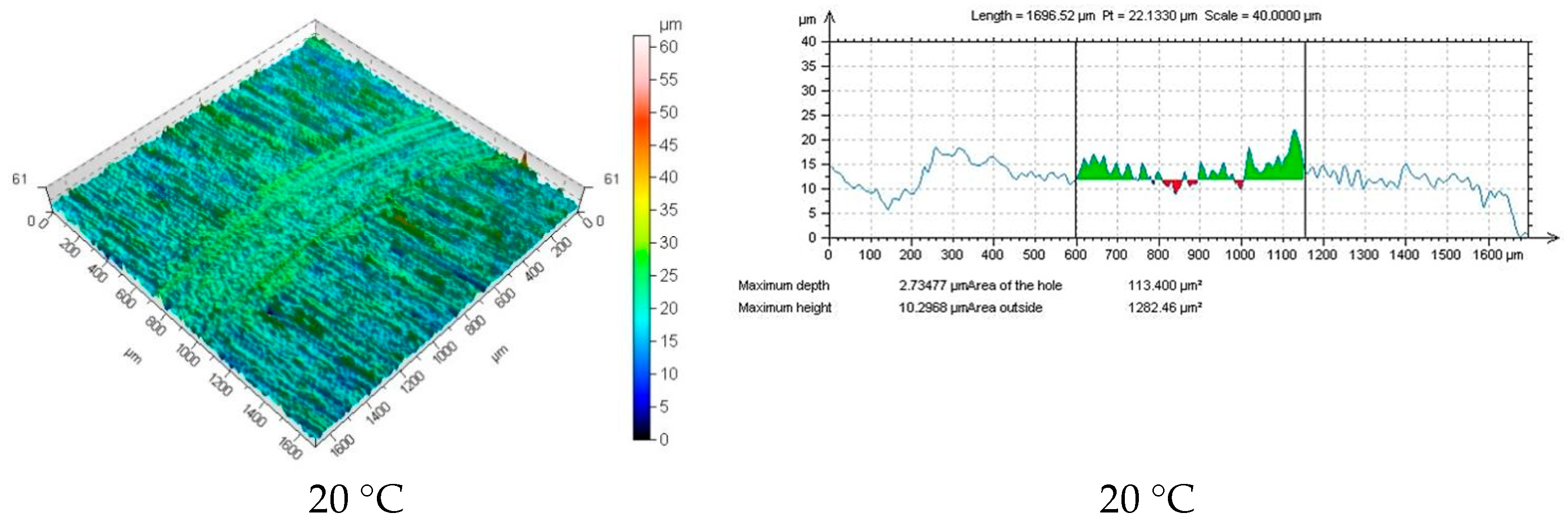
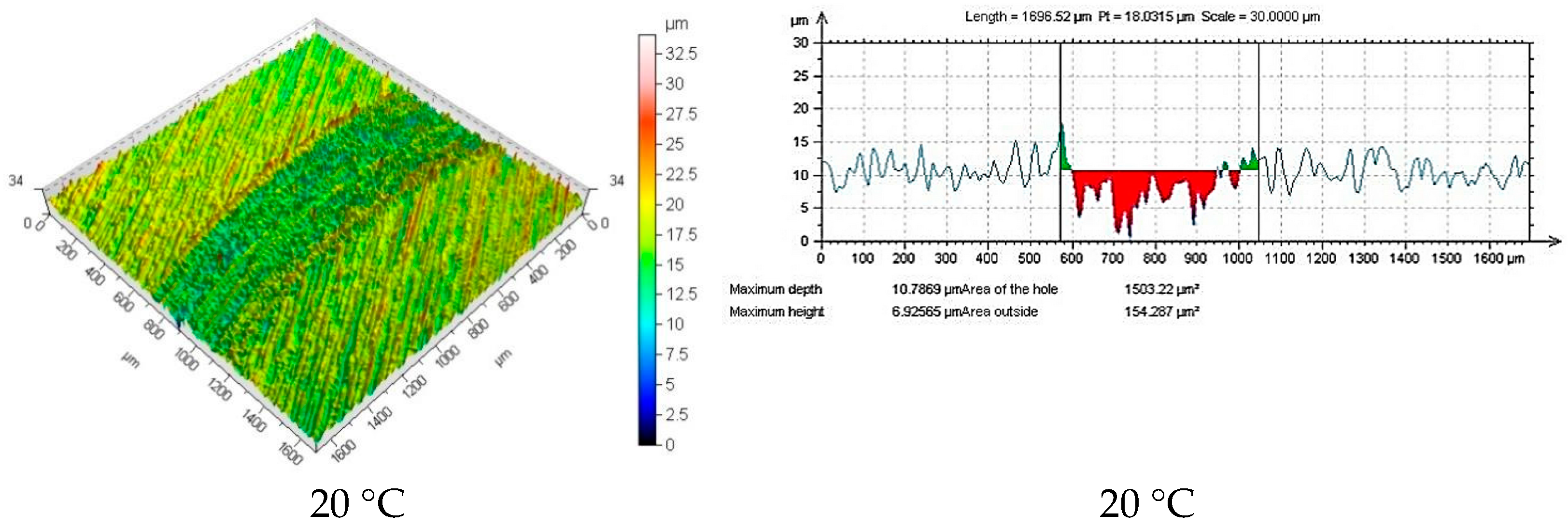
Figure 15, Figure 16 and Figure 17 document the surfaces after the Ball-on-Disc test performed at 20 °C. For the purpose of chemical analysis, spectral EDX analyses were carried out at selected locations on the surfaces. The measured chemical compositions on the surfaces after the Ball-on-Disc test corresponded to the chemical composition of the filler materials used.

3.3. Wear Mechanisms at RT (20 °C)

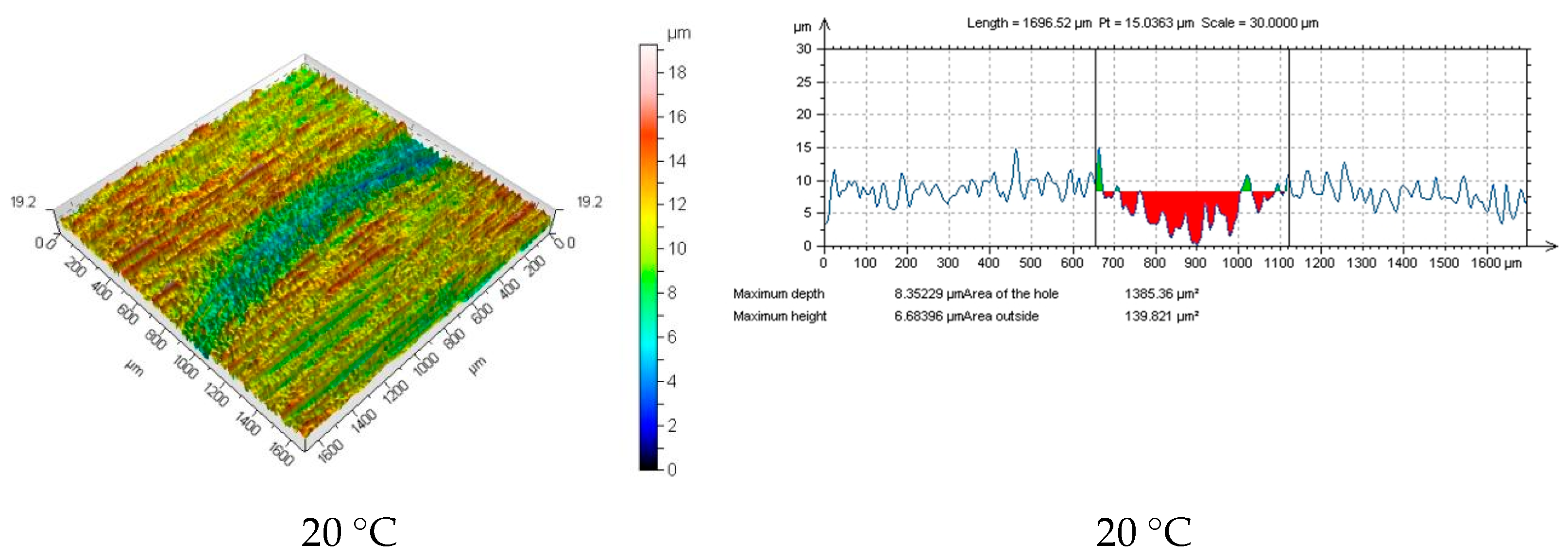
The wear track on the third plasma cladding PL1 exhibits a continuous band with parallel grooves in the sliding direction and a centrally depressed valley in Figure 18. The maximum depth and height of accumulated material are approximately 10–20 µm. At the edges of the wear track, distinct “pile-up” and local particle tearing are observed, indicating intensive ploughing and micro-cutting by the hard SiC ball counterbody. SEM analysis of the wear track confirms a lamellar, porous microstructure with interlamellar cracks. Within the wear track, these cracks tend to open, leading to local delamination of the lamellae. The dominant wear mechanism is abrasion (ploughing/micro-cutting) with brittle spalling, while plastic deformation is limited. At room temperature (RT), the track is primarily formed by mechanical grooving and redistribution of third-body debris. These wear mechanisms are consistent with the interpretation given in [45]. EDS analysis of the material in the center of the tribo-track reveals significant oxidation, indicating that the surface is covered by a continuous tribo-oxide layer composed mainly of Co oxides (CoO/Co3O4) and Cr oxides (Cr2O3), with a minor contribution of W oxides. The Fe content (~14.7 wt.%) suggests local transfer or exposure of the steel substrate after lamella delamination. The presence of Si (~4.5 wt.%) indicates transfer from the SiC ball and partial oxidation to SiO2 in the third body. Overall, this forms a mixed tribo-layer (oxide layer + transferred SiC fragments + partially exposed substrate), which is consistent with a two-body abrasion mechanism with a contribution from tribo-oxidation at room temperature.
The wear track on the second plasma clad FeCoCrSi is a shallow, continuous band with fine parallel grooves in the sliding direction in Figure 19. Local “pile-up” is minor, and the track exhibits a more uniform topography compared to the first cladding. In cross-section, the lamellar architecture remains largely intact, interlamellar cracks open only slightly, and extensive delamination does not occur—wear is governed by ploughing/micro-cutting with limited brittle fragmentation. EDS analysis of the wear track indicates a predominantly metallic, slightly oxidized character: Fe ~73.8 wt.%, Co ~13.2 wt.%, Cr ~9.6 wt.%, O ~1.9 wt.%, and C ~1.45 wt.%. Si is not present in significant amounts, indicating minimal transfer from the SiC counterbody and absence of a stable tribo-oxide layer. The third body mainly consists of metallic debris from the coating with partial plastic “smearing.” Overall, this represents mild two-body abrasion with a low degree of oxidation, consistent with the observed smoother track topography.
The wear track on the third plasma clad NiCrMoFeCuBSi forms a continuous band with parallel grooves in the sliding direction and a slightly depressed center in Figure 20. The topography shows medium-depth grooving (on the order of several up to ~10–20 µm) and localized “pile-up,” indicating that ploughing by the hard counterbody dominates over brittle spalling. SEM of the wear track reveals a lamellar microstructure with fine interlamellar cracks and no extensive delamination. Small islands of third-body debris, consisting of metallic/oxidic fragments, are present at the track bottom. EDS analysis indicates a predominantly metallic character with limited oxidation: Fe ≈ 45.7 wt.%, Ni ≈ 29.5 wt.%, Cr ≈ 8.5 wt.%, Mo ≈ 7.4 wt.%, O ≈ 4.9 wt.%, and Si ≈ 2.0 wt.%. The increased Fe content suggests partial exposure or contribution from the steel substrate or mixing with Fe-rich coating lamellae; the relatively low O content indicates the absence of a stable tribo-oxide layer at room temperature. Si is present only in minor amounts (minor transfer from SiC or Si in the coating). Mechanically, wear is characterized by combined two-body abrasion with slight adhesive “smearing” of the ductile Ni matrix and limited tribo-oxidation; the resulting third body consists of a mixture of metallic debris with thin oxidic fragments.
Under identical testing conditions (10 N, 500 m, SiC ø 6 mm, RT), the CoCrWNi plasma clad exhibits the most pronounced grooving with “pile-up” and local lamella delamination. 3D topography indicates a greater surface amplitude compared to the other two coatings. EDS analysis of the wear track confirms strong tribo-oxidation (O ~28 wt.%) and Si transfer from SiC (~4.5 wt.%), together with Fe (~15 wt.%), indicating mixing with the substrate. The wear mechanism is micro-cutting and brittle spalling. The FeCoCrSi plasma coating produces the shallowest and most uniform wear track. EDS analysis shows an almost metallic character of the track (O ~2 wt.%, no Si), indicating that wear is dominated by ploughing with minimal oxidation or transfer. The NiCrMoFeCuBSi coating exhibits an intermediate track depth, mild “smearing” of the ductile Ni matrix, and limited oxidation (O ~5 wt.%, Si ~2 wt.%). Overall, in terms of wear resistance under the tested conditions, the best-performing coating is FeCoCrSi, followed by NiCrMoFeCuBSi, and finally CoCrWNi. The lamellar, locally porous architecture of the plasma clads and its influence on wear are consistent with data reported in [46].
Specific wear rate (W) were calculated in terms of the volume loss (V) per distance (L) and applied load (Fp) according to the standard ISO 20808 [47].
W = V L · F p   mm 3 / m · N

3.4. Wear

The measured wear rates of the plasma claddings in Table 9 demonstrated a significant influence of temperature on their tribological behavior. At room temperature (20 °C), the CoCrWNi cladding exhibited the lowest wear rate (0.11 × 10⁻⁶ mm3/m·N), indicating high wear resistance and a stable surface microstructure. The FeCoCrSi and NiCrMoFeCuBSi plasma claddings showed higher wear rates (1.39 × 10⁻⁶ mm3/m·N and 1.50 × 10⁻⁶ mm3/m·N, respectively), suggesting lower initial resistance to abrasive and adhesive wear. At low temperatures (20 °C), wear was dominated by mild abrasive and adhesive mechanisms, with material removal occurring as fine particles due to micro-cutting and localized micro-tearing.

4. Conclusions

The issue of biomass shredders and biowaste processing is multidisciplinary—interconnecting ecological, technical, material, and biological aspects. The sustainable utilization of biowaste as a source of energy and raw materials aligns with both European and global strategies for transitioning to a green economy. A continuing challenge lies in the design of durable and efficient equipment capable of withstanding demanding operational conditions. At the same time, opportunities are emerging for the integration of advanced biological methods that may fundamentally transform the management of biowaste and its conversion into valuable products.
Based on the experiments carried out, the following conclusions can be defined:
(1)
The selection of a lower-cost base material was successful. The S355J2 steel (EN 10025-2:2004) proved to be a suitable replacement for Hardox 500 in the production of shredder knives when its surface is modified using PTA cladding.
(2)
The highest hardness was achieved by the PL1 (CoCrWNi) cladding. The measured maximum hardness of 602 HV0.1 on the surface of the PL1 layer was the highest among all tested materials. This was attributed to the presence of hard carbide phases within the cladding.
(3)
The best resistance to abrasive wear was achieved by the PL2 (FeCoCrSi) cladding. This applied to both the as-deposited surfaces and the machined surfaces, where PL2 exhibited the lowest mass loss values.
(4)
The microstructures of the claddings were markedly different and characteristic of their respective chemical compositions.
(5)
For the production of biomass shredder tools, a single-layer PTA cladding using an FeCoCrSi-based powder on an S355J2 (EN 10025-2:2004) steel substrate can be recommended.
(6)
The primary contribution of this study is the comprehensive assessment of the quality and durability of newly developed cladding layers applied to functional components of biomass shredders using PTA technology. Studies focusing on this specific application are limited or currently unavailable. The application of PTA cladding in combination with appropriately selected filler materials enables the design of functional surfaces with tailored properties, leading to a significant extension of component service life, longer replacement intervals, and considerable cost savings.

Author Contributions

Concept, J.V., J.B. (Janette Brezinová) and M.F.; methodology, J.B. (Janette Brezinová), J.V., M.D., J.B. (Jakub Brezina) and S.M.; software, M.D. and V.P.; validation, M.F., J.V., J.B. (Janette Brezinová), J.B. (Jakub Brezina), G.B. and P.P.; formal analysis, M.F., J.B. (Janette Brezinová) and V.P.; investigation, J.B. (Janette Brezinová) and M.D.; sources, S.M. and P.P.; data management, J.V., J.B. (Janette Brezinová), M.D., P.P. and. G.B.; writing—preparation of the original draft, J.V., M.F., J.B. (Janette Brezinová) and V.P.; writing—revision and editing, J.B. (Janette Brezinová), J.B. (Jakub Brezina), P.P. and V.P.; visualization, G.B. and S.M.; supervision, J.V.; project management J.B. (Janette Brezinová) and J.V.; fundraising, J.B. (Janette Brezinová). All authors have read and agreed to the published version of the manuscript.

Funding

This research was supported by the project 09I04-03-V02-00025—Analysis of the potential for zero-emission biomass transformation using insects, and by the Visegrad Fund Fellowship No. 62510252—Development of cooperation in re-search on renovation technologies and increasing the service life of functional surfaces of products. Additional support was provided by the Slovak Research and Development Agency and the VEGA Scientific Grant Agency under the project 1/0597/23—Possibilities of applying laser additive technologies in the restoration of functional surfaces, the KEGA Cultural and Educational Grant Agency under the project 024TUKE-4/2025—Hybrid education of students for the current needs of the automotive industry, and by the projects APVV-20-0303—Innovative approaches to the restoration of functional surfaces by laser surface treatment and APVV-24-0381—Integrity of protective multilayers under high-temperature exposure conditions.

Data Availability Statement

The original contributions presented in this study are included in the article. Further inquiries can be directed to the corresponding author.

Conflicts of Interest

The authors declare no conflicts of interest.

References

  1. Mahmood, T.; Hussain, N.; Shahbaz, A.; Mulla, S.I.; Iqbal, H.M.N.; Bilal, M. Sustainable Production of Biofuels from the Algae-Derived Biomass. Bioprocess Biosyst. Eng. 2023, 46, 1077–1097. [Google Scholar] [CrossRef]
  2. Chodnicka-Jaworska, P. Environmental, Social, and Governance Impact on Energy Sector Default Risk—Long-Term Issuer Credit Ratings Perspective. Front. Energy Res. 2022, 10, 817679. [Google Scholar] [CrossRef]
  3. Kacperska, E.; Łukasiewicz, K.; Pietrzak, P. Use of Renewable Energy Sources in the European Union and the Visegrad Group Countries—Results of Cluster Analysis. Energies 2021, 14, 5680. [Google Scholar] [CrossRef]
  4. Tallentire, C.W.; Steubing, B. The Environmental Benefits of Improving Packaging Waste Collection in Europe. Waste Manag. 2020, 103, 426–436. [Google Scholar] [CrossRef]
  5. van Huis, A.; Klunder, J.V.I.H.; Merten, E.; Halloran, A.; Vantomme, P. Edible Insects: Future Prospects for Food and Feed Security; Food and Agriculture Organisation of the United Nations (FAO): Rome, Italy, 2013; ISBN 9789251075951. [Google Scholar]
  6. Lavoie, F.L.; Kobelnik, M.; Aparecido Valentin, C.; da Silva Tirelli, É.F.; de Lurdes Lopes, M.; Lins da Silva, J. Environmental Protection Liner in a Biodegradable Waste Pond: A Case Study. Case Stud. Chem. Environ. Eng. 2021, 4, 100133. [Google Scholar] [CrossRef]
  7. Clifton-Brown, J.; Hastings, A.; von Cossel, M.; Murphy-Bokern, D.; McCalmont, J.; Whitaker, J.; Alexopoulou, E.; Amaducci, S.; Andronic, L.; Ashman, C.; et al. Perennial Biomass Cropping and Use: Shaping the Policy Ecosystem in European Countries. GCB Bioenergy 2023, 15, 538–558. [Google Scholar] [CrossRef] [PubMed]
  8. Fortuna, M.E.; Simion, I.M.; Gavrilescu, M. Assessment of Sustainability Based on Lca Case of Woody Biomass. Cellul. Chem. Technol. 2012, 46, 493–510. [Google Scholar]
  9. Makul, N.; Fediuk, R.; Amran, M.; Al-Akwaa, M.S.; Pralat, K.; Nemova, D.; Petropavlovskii, K.; Novichenkova, T.; Petropavlovskaya, V.; Sulman, M. Utilization of Biomass to Ash: An Overview of the Potential Resources for Alternative Energy. Materials 2021, 4, 6482. [Google Scholar] [CrossRef]
  10. Obileke, K.C.; Makaka, G.; Nwokolo, N. Recent Advancements in Anaerobic Digestion and Gasification Technology. Appl. Sci. 2023, 13, 5597. [Google Scholar] [CrossRef]
  11. Allesina, G.; Pedrazzi, S.; Guidetti, L.; Tartarini, P. Modeling of Coupling Gasification and Anaerobic Digestion Processes for Maize Bioenergy Conversion. Biomass Bioenergy 2015, 81, 444–451. [Google Scholar] [CrossRef]
  12. Gold, M.; Tomberlin, J.K.; Diener, S.; Zurbrügg, C.; Mathys, A. Decomposition of Biowaste Macronutrients, Microbes, and Chemicals in Black Soldier Fly Larval Treatment: A Review. Waste Manag. 2018, 82, 302–318. [Google Scholar] [CrossRef]
  13. Feng, C.; Cui, B.; Huang, Y.; Guo, H.; Zhang, W.; Zhu, J. Enhancement Technologies of Recycled Aggregate—Enhancement Mechanism, Influencing Factors, Improvement Effects, Technical Difficulties, Life Cycle Assessment. Constr. Build. Mater. 2022, 317, 126168. [Google Scholar] [CrossRef]
  14. Hao, S.; Pabst, T. Experimental Study and Mathematical Description of Gradation Effect on the Mechanical Characteristics of Crushed Waste Rocks. Int. J. Geomech. 2023, 23, 04022276. [Google Scholar] [CrossRef]
  15. Kinkhabwala, H.; Bhojawala, V.M.; Desai, S.; Patel, D.V. Design of Hydraulic Biomass Briquette Machine. IOP Conf. Ser. Mater. Sci. Eng. 2022, 1258, 012040. [Google Scholar] [CrossRef]
  16. Warguła, Ł.; Rosiak, S.; Gierz, Ł.; Gavrilin, A.N.; Bykadorov, S.A. The Concept of a Wood Chopping Machine with a Mechanical Overload System Ensuring Continuity of Work. Mater. Mech. Eng. Technol. 2021, 3, 22–27. [Google Scholar] [CrossRef] [PubMed]
  17. Ehlers, S.G.; Buckmaster, D.R.; Ess, D.R.; Johnson, K.D. Design and Use of a Flailing Knife Biomass Shredder to Mechanically Increase Particle Surface Area; American Society of Agricultural and Biological Engineers: St. Joseph, MI, USA, 2013. [Google Scholar]
  18. Viňáš, J.; Brezinová, J.; Brezina, J.; Hermel, P. Innovation of Biomass Crusher by Application of Hardfacing Layers. Metals 2021, 11, 1283. [Google Scholar] [CrossRef]
  19. Guo, Z.; Wang, Z.; Yang, W.; Wang, H.; Li, Z. Design of Hammer Type Forage Stalk Grinder. In Proceedings of the American Society of Agricultural and Biological Engineers Annual International Meeting, ASABE 2021, Virtual, 12–16 July 2021. [Google Scholar]
  20. Mathur, S.M.; Singh, P. A Cylindrical Chopper with Crusher for Water Hyacinth Volume and Biomass Reduction. J. Aquat. Plant Manag. 2004, 42, 95. [Google Scholar]
  21. Aktaş, B.; Toprak, M.; Çallk, A.; Tekgüler, A. Effect of Pack-Boriding on the Tribological Behavior of Hardox 450 and HiTuf Steels. Rev. Adv. Mater. Sci. 2020, 59, 314–321. [Google Scholar] [CrossRef]
  22. Aktas, B.; Balak, V.; Carboga, C. Dry Sliding Wear Behavior of Boron-Doped AISI 1020 Steels. Acta Phys. Pol. A 2017, 132, 455–457. [Google Scholar] [CrossRef]
  23. Peng, J.; Xie, S.; Xia, J.; Wang, X.; Ni, Z.; Wang, P.; Chen, N. Investigation of Process and Properties of Cu-Mn-Al Alloy Cladding Deposited on 27SiMn Steel via Cold Metal Transfer. Crystals 2025, 15, 858. [Google Scholar] [CrossRef]
  24. Leung, H.W.; Chu, N.M.; Wai, C.P.; Cheng, K.W.; Wong, C.L.; Law, C.W. Innovation for Renovation—Quieter Methods to Minimize Structure-Borne Noise. In Proceedings of the INTER-NOISE 2017—46th International Congress and Exposition on Noise Control Engineering: Taming Noise and Moving Quiet, Hong Kong, China, 27–30 August 2017. [Google Scholar]
  25. Baraboshkin, A.I.; Nikishechkin, A.P. Automation of cullet crushing process to improve its ecological performance and safety. Ecol. Ind. Russ. 2017, 4, 4–7. [Google Scholar] [CrossRef]
  26. Ostroukh, A.; Surkova, N.; Varlamov, O.; Chernenky, V.; Baldin, A. Automated Process Control System of Mobile Crushing and Screening Plant. J. Appl. Eng. Sci. 2018, 16, 343–348. [Google Scholar] [CrossRef]
  27. Nag, M.; Lahiri, D.; Dey, A.; Sarkar, T.; Pati, S.; Joshi, S.; Bunawan, H.; Mohammed, A.; Edinur, H.A.; Ghosh, S.; et al. Seafood Discards: A Potent Source of Enzymes and Biomacromolecules With Nutritional and Nutraceutical Significance. Front. Nutr. 2022, 9, 879929. [Google Scholar] [CrossRef]
  28. Beesigamukama, D.; Mochoge, B.; Korir, N.; Menale, K.; Muriithi, B.; Kidoido, M.; Kirscht, H.; Diiro, G.; Ghemoh, C.J.; Sevgan, S.; et al. Economic and Ecological Values of Frass Fertiliser from Black Soldier Fly Agro-Industrial Waste Processing. J. Insects Food Feed. 2022, 8, 245–254. [Google Scholar] [CrossRef]
  29. Ravi, H.K.; Degrou, A.; Costil, J.; Trespeuch, C.; Chemat, F.; Vian, M.A. Larvae Mediated Valorization of Industrial, Agriculture and Food Wastes: Biorefinery Concept through Bioconversion, Processes, Procedures, and Products. Processes 2020, 8, 857. [Google Scholar] [CrossRef]
  30. Gao, Z.; Wang, W.; Lu, X.; Zhu, F.; Liu, W.; Wang, X.; Lei, C. Bioconversion Performance and Life Table of Black Soldier Fly (Hermetia Illucens) on Fermented Maize Straw. J. Clean. Prod. 2019, 230, 974–980. [Google Scholar] [CrossRef]
  31. Orlando, M.; Molla, G.; Castellani, P.; Pirillo, V.; Torretta, V.; Ferronato, N. Microbial Enzyme Biotechnology to Reach Plastic Waste Circularity: Current Status, Problems and Perspectives. Int. J. Mol. Sci. 2023, 24, 3877. [Google Scholar] [CrossRef]
  32. Sayed, W.A.A.; Alm-Eldin, M.M.S.; Hassan, R.S.; Sileem, T.M.; Rumpold, B.A. Recycling of Mediterranean Fruit Fly Rearing Waste by Black Soldier Fly, Hermetia Illucens. Waste Biomass Valorization 2023, 14, 93–104. [Google Scholar] [CrossRef]
  33. Kee, P.E.; Cheng, Y.S.; Chang, J.S.; Yim, H.S.; Tan, J.C.Y.; Lam, S.S.; Lan, J.C.W.; Ng, H.S.; Khoo, K.S. Insect Biorefinery: A Circular Economy Concept for Biowaste Conversion to Value-Added Products. Environ. Res. 2023, 221, 115284. [Google Scholar] [CrossRef]
  34. Shahid, K.; Srivastava, V.; Sillanpää, M. Protein Recovery as a Resource from Waste Specifically via Membrane Technology—From Waste to Wonder. Environ. Sci. Pollut. Res. 2021, 28, 10262–10282. [Google Scholar] [CrossRef]
  35. Kamal, H.; Le, C.F.; Salter, A.M.; Ali, A. Extraction of Protein from Food Waste: An Overview of Current Status and Opportunities. Compr. Rev. Food Sci. Food Saf. 2021, 20, 2455–2475. [Google Scholar] [CrossRef] [PubMed]
  36. Abdullahi, N.; Abba Dandago, M.; Kabiru Yunusa, A. Review on Production of Single-Cell Protein from Food Wastes. Turk. J. Agric.—Food Sci. Technol. 2021, 9, 3244. [Google Scholar] [CrossRef]
  37. EN 10025-2:2004; Hot Rolled Products of Structural Steels—Part 2: Technical Delivery Conditions for Non-Alloy Structural Steels. European Committee for Standardization (CEN): Brussels, Belgium, 2004.
  38. EN ISO 17637:2017; Non-Destructive Testing of Welds—Visual Testing of Fusion-Welded Joints. ISO: Geneva, Switzerland, 2017.
  39. ISO 5817:2014; Welding—Fusion-Welded Joints in Steel, Nickel, Titanium and Their Alloys (Beam Welding Excluded)—Quality Levels for Imperfections. ISO: Geneva, Switzerland, 2014.
  40. EN ISO 6520-1:2007; Welding and Allied Processes—Classification of Geometric Imperfections in Metallic Materials—Part 1: Fusion Welding. ISO: Geneva, Switzerland, 2007.
  41. STN EN ISO 9015-2:2016; Destructive Tests on Welds in Metallic Materials—Hardness Testing—Part 2: Microhardness Testing on Welded Joints. Slovak Office of Standards, Metrology and Testing: Bratislava, Slovakia, 2016.
  42. ASTM G99-17; Standard Test Method for Wear Testing with a Pin-on-Disk Apparatus. ASTM International: West Conshohocken, PA, USA, 2017.
  43. Muvvala, G.; Patra Karmakar, D.; Nath, A.K. Online Monitoring of Thermo-Cycles and Its Correlation with Microstructure in Laser Cladding of Nickel Based Super Alloy. Opt. Lasers Eng. 2017, 88, 139–152. [Google Scholar] [CrossRef]
  44. Lanzutti, A.; Lekka, M.; Marin, E.; Fedrizzi, L. Tribological Behavior of Thermal Spray Coatings, Deposited by HVOF and APS Techniques, and Composite Electrodeposits Ni/SiC at Both Room Temperature and 300 °C. Tribol. Ind. 2013, 35, 113–122. [Google Scholar]
  45. Hutchings, I.; Shipway, P. Tribology: Friction and Wear of Engineering Materials, 2nd ed.; Butterworth-Heinemann: Oxford, UK, 2017; ISBN 9780081009109. [Google Scholar]
  46. Pawlowski, L. The Science and Engineering of Thermal Spray Coatings, 2nd ed.; Wiley: Hoboken, NJ, USA, 2008; ISBN 9780471490494. [Google Scholar]
  47. ISO 20808:2016; Fine Ceramics (Advanced Ceramics, Advanced Technical Ceramics)—Determination of Friction and Wear Characteristics of Monolithic Ceramics by Ball-on-Disc Method. ISO: Geneva, Switzerland, 2006.
Figure 1. Additional materials used in powder form and EDX analysis.
Metals 16 00074 g001
Figure 2. Device Castolin Eutronic GAP 3511 DC.
Metals 16 00074 g002
Figure 3. Hardness measurement scheme for samples with clad layers. (a) Specimen for hardness measurement on the as-deposited surface; (b) Specimen for hardness measurement at five locations on the machined surface.
Metals 16 00074 g003
Figure 4. Shape and Dimensions in mm of Test Specimens for Evaluation on the APGi Device. (a) Specimen with as clad surface. (b) Specimen with machined surface.
Metals 16 00074 g004
Figure 5. Surface of Clads on the Tracks (from left: PL1; center: PL2; right: PL3).
Metals 16 00074 g005
Figure 6. Mass Loss of Test Specimens with As-Deposited Surfaces after Abrasion.
Metals 16 00074 g006
Figure 7. Mass Loss of Test Specimens with Machined Surfaces after Abrasion.
Metals 16 00074 g007
Figure 8. Structure of the test sample with cladding CoCrWNi—PL1. (a) Structure of the transition between the cladding layer at the top and the base material at the bottom. (b) Structure of the transition and mixing zone between the cladding metal at the top and the heat-affected zone of the base material at the bottom. (c) Edge—structure in the heat-affected zone of the base material immediately below the fusion boundary. (d) Center—structure of the cladding metal above the fusion boundary.
Metals 16 00074 g008
Figure 9. Structure of the test sample with cladding FeCoCrSi—PL2. (a) Structure of the transition between the cladding layer at the top and the base material at the bottom. (b) Structure of the transition and mixing zone between the cladding metal at the top and the heat-affected zone of the base material at the bottom. (c) Edge—structure in the heat-affected zone of the base material immediately below the fusion boundary. (d) Center—structure of the cladding metal above the fusion boundary.
Metals 16 00074 g009
Figure 10. Structure of the test sample with cladding NiCrMoFeCuBSi—PL3. (a) Structure of the transition between the cladding layer at the top and the base material at the bottom. (b) Structure of the transition and mixing zone between the cladding metal at the top and the heat-affected zone of the base material at the bottom. (c) Edge—structure in the heat-affected zone of the base material immediately below the fusion boundary. (d) Center—structure of the cladding metal above the fusion boundary.
Metals 16 00074 g010
Figure 11. Structures of the transition of the cladding layers into the base material, marked by spectra for chemical EDX analysis—sample PL1.
Metals 16 00074 g011
Figure 12. Structures of the transition of the cladding layers into the base material, marked by spectra for chemical EDX analysis—sample PL2.
Metals 16 00074 g012
Figure 13. Structures of the transition of the cladding layers into the base material, marked by spectra for chemical EDX analysis—sample PL3.
Metals 16 00074 g013
Figure 14. The evolution of the coefficient of friction and the instantaneous penetration depth during sliding wear tests.
Metals 16 00074 g014
Figure 15. Surfaces with PL1 cladding after the Ball-on-Disc test.
Metals 16 00074 g015
Figure 16. Surfaces with PL2 cladding after the Ball-on-Disc test.
Metals 16 00074 g016
Figure 17. Surfaces with PL3 cladding after the Ball-on-Disc test.
Metals 16 00074 g017
Figure 18. PL1-cladded surfaces after adhesive wear in the Ball-on-Disc test.
Metals 16 00074 g018
Figure 19. PL2-cladded surfaces after adhesive wear in the Ball-on-Disc test.
Metals 16 00074 g019
Figure 20. PL3-cladded surfaces after adhesive wear in the Ball-on-Disc test.
Metals 16 00074 g020
Table 1. Chemical composition of the original base material of the tool knife—HARDOX 500 (wt. %).
CMnSiPmaxSmaxCrmaxNimaxMomaxBmaxFe
0.301.300.400.0250.012.22.00.40.005Bal.
Table 2. Mechanical properties of HARDOX 500 material.
Tensile Strength
[MPa]
Yield Strength
[MPa]
Elongation
[%]
Hardness
[HB]
1400–16001250 MPa10470–530
Table 3. Chemical composition of steel S355J2—EN 10025-2:2004 (wt. %), (Fe—Bal.).
CMnSiPSCuAlCrNiMoV
0.1931.1710.1500.0020.0020.0080.0380.0620.0580.0170.0048
Table 4. Mechanical properties of the S355J2 material (EN 10025-2:2024).
Tensile Strength
[MPa]
Yield Strength
[MPa]
Elongation
[%]
Hardness
[HB]
470–63035520150–200
Table 5. Additional materials used in powder form.
SamplesMetal-Based Powder
PL1CoCrWNi
PL2FeCoCrSi
PL3NiCrMoFeCuBSi
Table 6. Used cladding parameters for the test specimens.
Cladding Current150 [A]
Powder45%
Speed of oscillation26 [mm·s−1]
Speed of cladding0.9 [mm·s−1]
AVC/Voltage check27 mm—distance gun–plate
Plasma gasVarigon H5 (95%Ar + 5% H2)
Flow of plasma gas10 L/min
Shielding gas for powderArgón 4.6
Flow of shielding gas3 L/min
Table 7. Parameters used in the Ball-on-Disc test.
Parameters Sample
Radius:15.90 mmSubstrate:S355J2
Lin. Speed:0.10 m/sCleaning:CH3COCH3
Normal load:10.00 NStatic partner
Effective Stop:meterGeometry:ball
Acquisition rate:2.0 HzDimension:φ 6 mm
Temperature:20.00 °CSubstrate:SiC
Atmosphere:airCleaning:CH3COCH3
Humidity40%
Table 8. Measured surface hardness values HV0.1.
SampleHardness at Machined SurfaceSurface Hardness
Point 1Point 2Point 3Point 4Point 5Average Value
PL1562572566580574570602
PL2466452488465447463495
PL3451466471416428446477
Table 9. Tribological and wear properties of investigated materials.
Experimental
Materials
Sliding Speed
[mm/s]
Normal Load
[N]
Distance
[m]
Temperature
[°C]
Wear Rate × 10−6 [mm3/m·N]
PL110010500200.11
PL210010500201.39
PL310010500201.50
Disclaimer/Publisher’s Note: The statements, opinions and data contained in all publications are solely those of the individual author(s) and contributor(s) and not of MDPI and/or the editor(s). MDPI and/or the editor(s) disclaim responsibility for any injury to people or property resulting from any ideas, methods, instructions or products referred to in the content.