Article

Effects of Shielding Gas Composition on Process Stability and Arc Behavior of Laser-Cable-Type Welding Wire Arc Hybrid Welding

1
College of Materials Science and Engineering, Jiangsu University of Science and Technology, Zhenjiang 212003, China
2
Guangzhou Shipyard International Company Limited, Guangzhou 510000, China
3
Guangdong Weld Technology Company Limited, Zhongshan 528400, China
4
Yangzhou Longhe Shipyard Company Limited, Yangzhou 225215, China
*
Author to whom correspondence should be addressed.
Metals 2026, 16(1), 20; https://doi.org/10.3390/met16010020
Submission received: 10 November 2025 / Revised: 13 December 2025 / Accepted: 15 December 2025 / Published: 25 December 2025
(This article belongs to the Section Welding and Joining)

Abstract

This study systematically investigates the behavior of droplet transfer and the characteristics of weld morphology in laser-cable-type welding wire (CWW) arc hybrid welding under varying Ar-CO2 shielding gas compositions, utilizing AH36 shipbuilding steel. During the hybrid welding process, a comparative analysis was conducted on the welding process and weld formation using a high-speed camera system and a current–voltage waveform acquisition system. The experimental findings indicated that the arc width exhibited an upward trend, while the arc height demonstrated a decline as the CO2 content increased. Additionally, the welding current experienced a decrease. Furthermore, the arc became more regular with an increase in the top arc width, which enhanced process stability. The peak intensity of the curve for 90% Ar + 10% CO2 was the largest, and the peak range was the narrowest, indicating that the current was more stable compared to the other two shielding gas compositions. The droplet transfer frequency exhibited a decreasing trend with the increase in CO2, while the diameter initially decreased and then increased. As the CO2 content increased, the droplet transfer mode transitioned from a mixed mode involving both globular transfer and short circuits to predominantly globular transfer. The increase in CO2 promoted weld penetration while reducing its width, with the penetration depth of the weld increasing by 12.3% when the CO2 content rose to 18%.

1. Introduction

Laser–arc hybrid welding (LAHW) technology is an effective and promising method, offering both efficiency and high-quality results [1,2,3]. It combines the benefits of laser and arc, offering enhanced control over the processing and improved formation quality [4,5]. This technology has the potential to be widely used in various industries, including the automotive, aerospace, and manufacturing industries [6]. Cable-type welding wire (CWW) is a type of structural wire with wide application prospects. CWW exhibits remarkable characteristics of high efficiency and high quality. CWW utilizes its multi-wire structure to generate parallel arcs that distribute heat while coupling to form a high-density energy source [7,8]. This design provides higher deposition rates and improved process stability compared to single-strand wires, with inter-arc electromagnetic effects suppressing arc drift. In laser–CWW hybrid welding, the focused laser energy forms a stable keyhole on the workpiece surface, which effectively guides the morphology and direction of the CWW arcs. Meanwhile, the concentrated laser energy combined with the distributed multi-arc heating from the CWW enables deeper penetration while lowering the overall heat input. Compared with conventional laser–arc hybrid welding, this process shows potential for high-demand structural applications in shipbuilding and energy equipment manufacturing. Numerous researchers have investigated the welding process in CWW GMAW. In a study conducted by Yang et al. [7], they examined the force involved in droplet transfer and discovered that the unique structure of CWW greatly influenced the formation and coupling process of droplets. The electromagnetic force and arc rotational force during the process of droplet growth were beneficial to the transfer of droplets. Chen et al. [8] utilized a high-speed camera to investigate the arc behavior of CWW-GMAW. The arc observed transitioned from a bell shape to a beam shape as the current increased. Moreover, the mode of the droplet experienced a shift from repelled to globular and eventually to spray transfer. In laser–CWW arc hybrid welding, the CWW arc is heavily influenced by the laser and current, and excessive current and voltage compresses the arc of the CWW [9].
The shielding gas plays pivotal role in maintaining process stability [10]. The adjustment of the shielding gas has a noticeable influence on arc, droplet and weld performance throughout the process of welding [11,12]. The ionization characteristics and thermal energy differences among different shielding gases, such as Ar–CO2, induce arc contraction effects and influence arc stability, droplet transfer, and weld bead morphology [13]. Furthermore, the dissociation and recombination behavior of CO2 during the welding process alter the electrical conductivity and energy distribution of the arc, thereby affecting heat transfer to the molten pool [14]. Cai et al. [15] reported that in narrow-gap GMAW with Ar–CO2–He shielding gas, the droplet transfer mode transitioned from spray transfer to projected transfer with increasing CO2 content. Chen et al. [16] demonstrated that using CO2 as a shielding gas significantly refines the microstructure of laser-welded X100 pipeline steel. Compared to argon-shielded welds, the average acicular ferrite grain size was reduced from 3.26 μm to 2.64 μm, with a narrow grain size distribution ranging from 1 to 3 μm. Shi et al. [17] conducted experiments by changing the CO2 content in Ar-based shielding gases. The increase of CO2 effectively increased the weld penetration, but the spatter was large under the protection of pure CO2, and the most stable welding process was obtained at 20% CO2 content. Naiwen et al. [18] compared the welding stabilities of 95% Ar + 5% CO2 and 95% Ar + 5% N2 and found that the arc was significantly stabilized with the CO2 added and reducing the welding spatter. Pan et al. [19] conducted a comparison between 20% CO2 + 80% Ar and a shielding gas composed of 99.9% CO2 on hybrid welded joints. The findings indicated that by continuously adjusting the composition of the protective gas, the occurrence of welding spatter was significantly reduced. Trinh et al. [20] studied the droplet transfer behavior under pure argon protection and found that the droplet still showed a globular transition at a higher current. The sub-ions in argon changed the droplet force behavior and transfer mode. Chae et al. [21] found that 12% CO2 in a He-Ar-CO2 shielding gas mixture achieved stable droplet transfer and a hybrid welding process. When the content of CO2 was less than 8%, the wetting of molten metal was insufficient, and the weld surface was visible.
The above research on CWW was mostly concentrated in arc welding, and there are few studies on laser–CWW arc hybrid welding. The better application performance of the CWW in hybrid welding is significant to the further expansion of hybrid welding and the development of CWW. The welding process is crucial for ensuring welding stability and high-quality welds. Additionally, the shielding gas composition significantly impacts the arc behavior, droplet transfer, and resulting weld formation. Therefore, the behavior of droplet and weld morphology was investigated by changing the CO2 content.

2. Materials and Methods

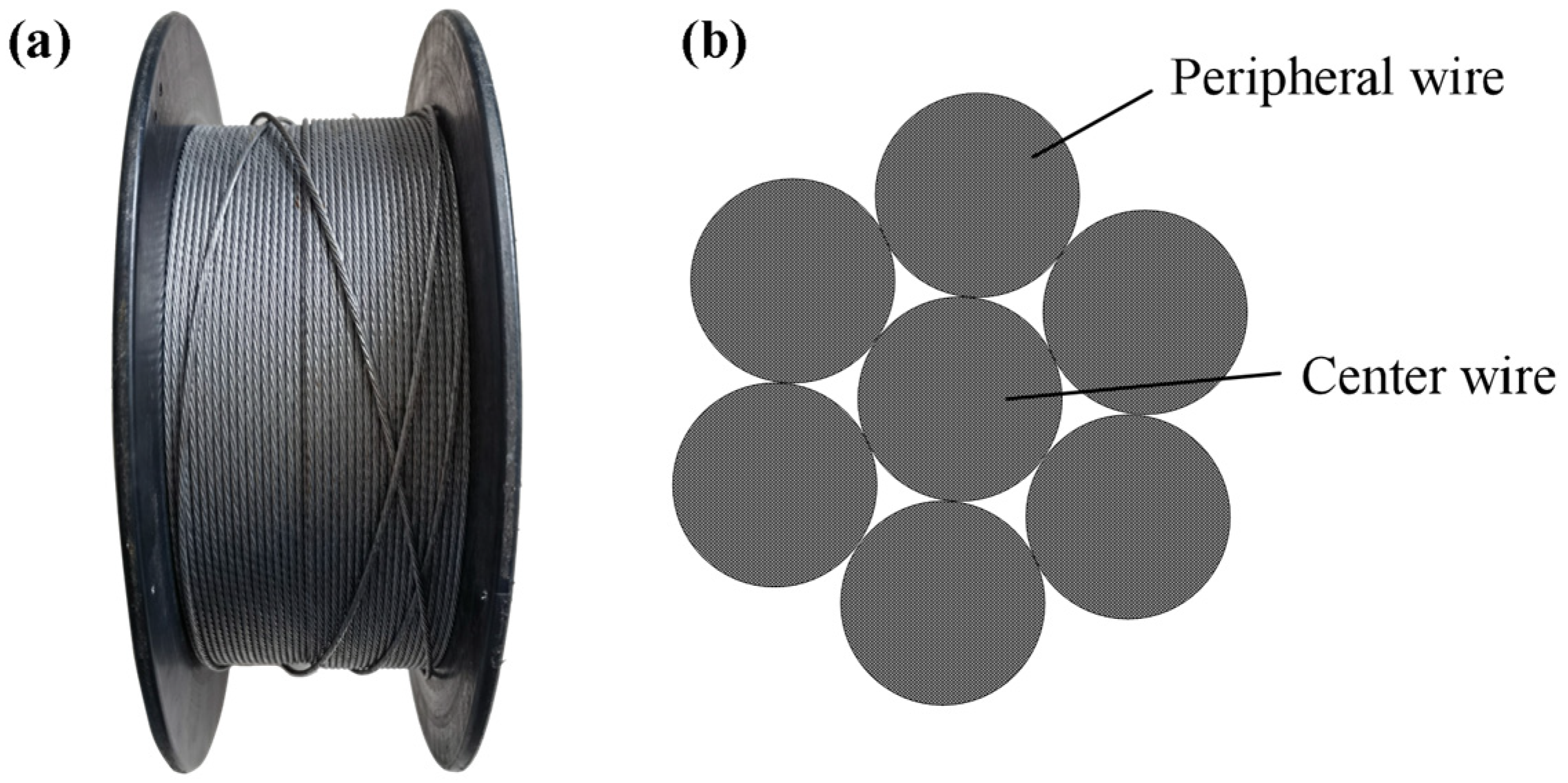
In this study, the base metal is AH36 marine steel and the CWW with a diameter of 2.4 mm was twisted with an ER-50 single wire. The physical diagram and structural diagram of the cable-type welding wire are shown in Figure 1. The composition is shown in Table 1. The samples were machined to 400 (length) × 150 (width) × 10 (thickness) mm 400. The shielding gases used in this experiment included pure Ar, 10% CO2 +90%Ar and 18% CO2 + 82% Ar. The laser–CWW arc hybrid welding experiments were performed using a IPG YSL-6000 laser (Thermo Fisher Scientific, Waltham, MA, USA), and the software version is V1.01.
A schematic diagram of the experimental setup is presented in Figure 2. A QINEO PLUSE 600 welding machine (Fronius International GmbH, Wels, Austria) was used in the GMAW welding system. The free outlet of the electrode wire in the CWW-MAG method was set to 15 mm. The welding speed was set to 16 mm/s. Table 2 shows the detailed welding parameters. The welding process was observed at a speed of 5000 frames per second using a high-speed camera with an 808 nm filter. The current and voltage are measured by Hall sensors, and the welding current, voltage, and arc are collected synchronously according to time.

3. Results and Discussion

3.1. Effect of Different Gas Compositions on Arc Shape

Figure 3 shows images of arc shapes for different gas compositions at 380 A preset current and 3.5 kW laser power. Under the protection of pure argon, the shape of the arc fluctuated greatly, and the overall shape of the arc was irregular, as shown in Figure 3a. There were obvious bulges in the arc near the contact point, and the arc obviously deflected towards the laser. Figure 3b indicates that the overall arc shape became more regular, and the shape of the arc fluctuation decreased when the CO2 content reached 10%. Meanwhile, part of the arc at the lower wire end expanded to a certain extent. When the CO2 content further increased to 18%, the overall arc shape shown in Figure 3c was more regular, showing a bell shape. The size of the arc bottom is further expanded, and the arc stiffness increased. Compared to conventional welding technology such as FCAW [22], the CWW process demonstrates a continuously improved arc morphology and regularity with CO2 content increasing up to 18%, resulting in a broader stability window. Furthermore, in contrast to conventional GMAW processes which typically attain optimal arc stability at approximately 20% CO2, the laser–CWW system exhibits a distinct trend of continuously enhanced arc stability and morphological regularity as CO2 content rises to 18% [17]. This behavior is attributed to the multi-wire CWW configuration, which promotes a more distributed heat input and exhibits synergistic interaction with the laser-induced plasma.
Figure 4 presents the quantitative analysis results of the arc morphology obtained from high-speed videography in Figure 3. Using the fixed wire diameter as a reference scale, arc dimensions were determined by converting pixel measurements from the images to physical values, thereby deriving the actual arc width and height. This calibration method ensures accurate dimensional representation of the observed arc characteristics. According to the diagram, the volume of the arc decreased continuously with increasing CO2 content. When the content of CO2 increased to 10%, the arc height decreased by 13.4%. The arc height decreased by only 3.67% when the content of CO2 further increased to 18%. Therefore, as the CO2 content increases to 18%, the length of the arc decreases, while the width of the arc increases, with an increase of more than 10% compared to pure argon.
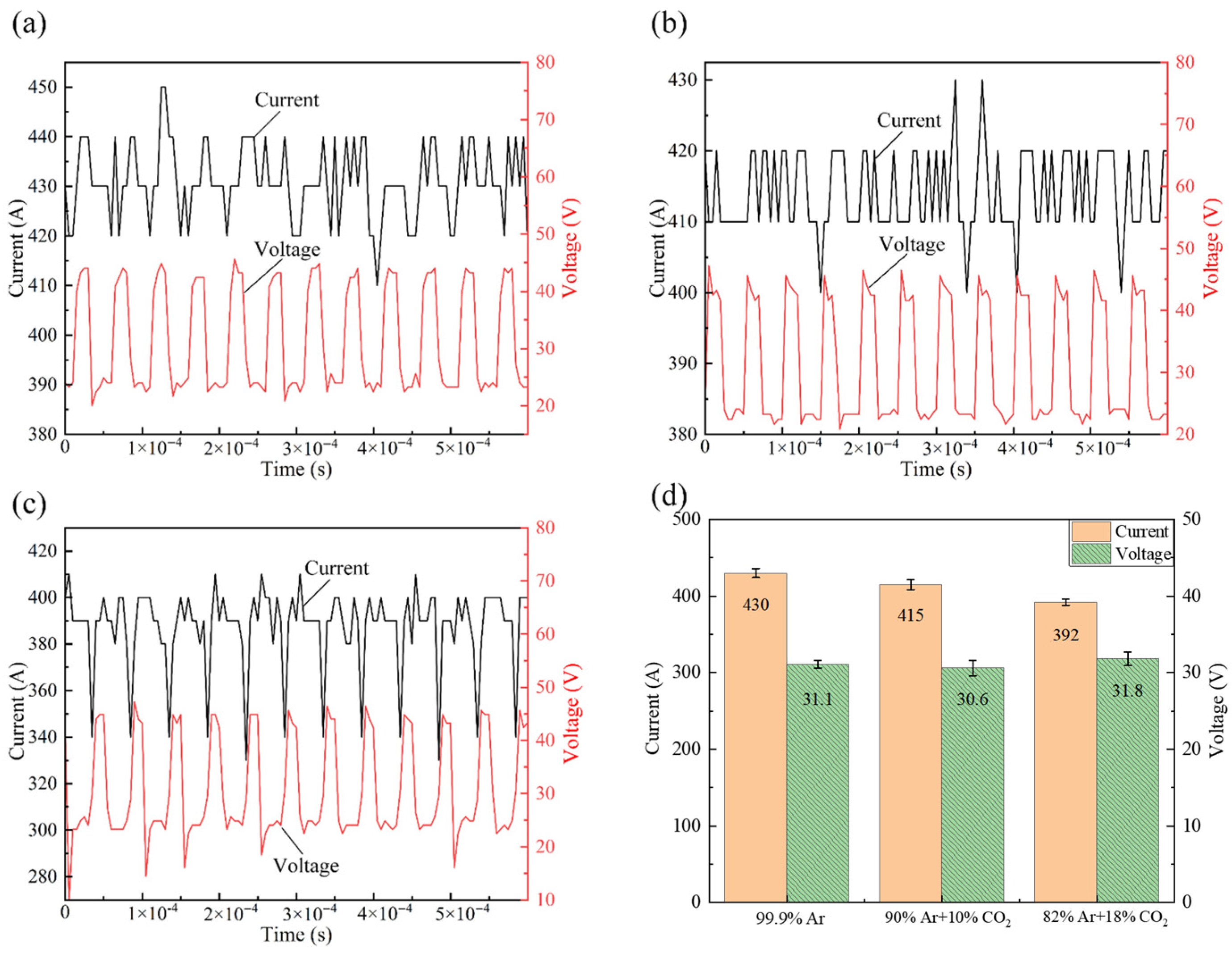
Figure 5 shows the current and voltage curves under different shielding gases, obtained in synergic laser–arc hybrid mode. The current and voltage waveforms reflect process stability of welding. Figure 5a indicates that the obtained welding parameter waveforms were in the form of pulses. The welding current changed greatly, but the waveform stability was good. With increasing CO2 content, the welding current and voltage waveforms are shown in Figure 5b. The addition of CO2 gas reduced the variation in welding current, while the variation in welding voltage decreased slightly, and the voltage stability increased. When the CO2 content reached 18%, the variation in welding current increased, the current stability of the welder became significantly worse, and the variation in voltage increased. Figure 5d presents the average values of the arc voltage and welding current under different shielding gas compositions investigated in this study. These values were determined by selecting a representative steady-state electrical signal segment from a stable welding cycle and calculating the arithmetic mean from all data points within that segment. The figure shows that the average welding current decreased with increasing CO2 content from 430 A to 392 A while the voltage and voltage fluctuations were small. The voltage reached a maximum of 31.8 V under the protection gas of 82%Ar + 18% CO2. On the whole, with increasing CO2 content, the stability of electrical parameters first increased slightly and then decreased.
Figure 6 shows the comparison of electrical signals under different carbon dioxide contents. This figure was generated by extracting synchronized voltage–current data from stable welding periods for each shielding gas condition and plotting them as scatter points using Origin 2023. Figure 6a is a scatter diagram under pure argon protection. From the diagram, it can be seen that the scatter diagram is presented as a rectangular area as a whole. At the same time, the scatter points are mostly distributed on the rectangular frame line, and there is basically no scatter point distribution inside. The scatter point distribution is mostly concentrated between current 420 A and 435 A, voltage 21 V to 45 V. The distribution of scattered points under 10% CO2 protection in Figure 6b is similar to that in Figure 6a, but the distribution of scattered points is more concentrated in the center of the rectangle, and the distribution range of scattered points is smaller, mostly concentrated in the current of 410 A to 420 A, and the voltage is between 23 V and 44 V. At this time, the arc stability is better than that under pure argon protection. When the carbon dioxide content increases to 18%, the scatter diagram is similar to the scatter diagram under pure argon. There is basically no scatter distribution inside the rectangle, but the scatter distribution range increases, and there are deviated scatter points. This is mainly due to the ionization and endothermic of carbon dioxide, which makes the arc temperature decrease, and further increases in CO2 will make the arc energy decrease, the arc stability deteriorate, and the droplet transition become difficult. In summary, the welding transition is the most stable under the protective gas of Ar + 10% CO2.
Figure 7 presents the relative frequency distribution of electrical signals. The statistical analysis was performed by counting occurrences of acquired current and voltage data points within defined intervals over a stable sampling period. A narrower and taller signal peak corresponds to a more concentrated electrical parameter distribution, reflecting greater welding process stability. The concentration of data points in specific ranges directly correlates with arc stability, where narrower distributions correspond to more consistent welding performance. The arc voltage and frequency basically show bimodal curve characteristics under different shielding gases. Figure 7a shows that the relative frequency peak of voltage is between 20 and 25 V in the lower voltage range under 20–35 V, and the relative frequency peak of voltage is between 40 and 45 V in higher voltage range under 35–50 V. A continuous electrical signal was recorded for a duration of 5 s, enabling the cumulative analysis of approximately 600 cyclic samples. In the lower voltage range and higher voltage range, 90% Ar + 10% CO2 has a larger and narrower peak, indicating that the arc stability is better. When using pure Ar protective gas, although the peak value of pure argon is narrower and stronger in the low-pressure range, there is also a smaller peak value of pure argon in the range of 20–40 V, indicating that the arc stability is poor at this time. Figure 7b shows that the current peaks under the three shielding gas components all show a multi-peak curve. The three curves are distributed between 380–400 A, 405–423 A and 420–440 A, respectively. It shows that the peak intensity of the curve of 90% Ar + 10% CO2 is the largest and the peak range is the narrowest, indicating that the current is more stable.
Figure 8 shows the arc morphology. Figure 8a indicates the arc was taller, the rotating arc of the cable welding wire had a strong interaction with the laser plasma, and the arc stability was poor when the shielding gas was pure argon. This finding is consistent with the unstable and scattered nature of the electrical signals recorded in pure Ar, as shown in Figure 6a. Figure 4 shows that the welding current was the largest at this time, and the arc was contracted towards the inwards arc center by the electromagnetic contraction force, resulting in a smaller arc width. Figure 8b shows that in the argon-rich shielding gas with 10% CO2, the thermal decomposition of CO2 absorbed energy, reducing the arc temperature and decreasing the average ionization degree of the shielding gas, consequently leading to a reduction in welding current. This finding aligns with the results reported by Yang et al. [23]; they demonstrated that the addition of CO2 to Ar-based shielding gases results in decreased arc temperature and reduced welding current. According to the minimum voltage principle, to ensure heat generation and heat release balance, the arc shrank downwards, the arc height decreased, the arc volume decreased, and the heat loss was reduced. The constricted and stable arc morphology observed under Ar + 10% CO2 shielding gas is directly correlated with the concentrated electrical signals in Figure 6b and the stable current–voltage distribution in Figure 7. As shown in Figure 8c, when the CO2 content was further increased, the enhanced thermal decomposition of CO2 extracted more heat from the arc, leading to further reduction in welding current, decreased arc height, diminished arc volume, and reduced heat loss. This observation aligns with the results reported by Cai et al. [15].
Figure 9 is an image of the arc shape under 18% CO2 content. Figure 9a indicates that the upper section of the arc was noticeably compressed, the arc had a concave appearance, the lower part of the arc was expanded, and the diameter at the base of the arc was greater. Figure 9b is a schematic diagram of the location of the ionization of CO2 molecules. Equations (1) and (2) are the decomposition formula of carbon dioxide under a high temperature arc. It can be seen from the formula that carbon dioxide absorbs heat and decomposes into carbon monoxide and oxygen, and the decomposition products can also be compounded and release heat.
2 C O 2     R e l e a s e         H e a t     2 C O + O 2
O 2 2 O
Figure 9 shows that CO2 molecules were mainly ionized and decomposed in the upper part of the arc, and the decomposition of CO2 absorbed a large amount of heat. According to Trinh et al., the decomposition of CO2 at high temperatures primarily involves two distinct stages: direct dissociation and stepwise dissociation [24]. This multi-stage decomposition process leads to a significant increase in the temperature gradient within the upper region of the arc. Due to the arc thermal effect, the arc is compressed and height is reduced. The oxygen atoms and carbon atoms decomposed in the upper part of the arc recombined in the bottom of arc, releasing heat, making the bottom of arc expand and the width increase so that more metal vapor at the laser keyhole entered the compressed arc, making the upper part of the arc bulge.

3.2. Effect of Different Gas Compositions on Droplet Transfer

The content of carbon dioxide in GMAW is a key factor affecting droplet transfer processing. Figure 8 indicates the process of droplet transfer and the corresponding current–voltage curve under pure argon shielding gas. Figure 10a shows that the droplet was in the formation stage, and the values of the voltage and current were small. With increasing current and voltage, the arc energy increased, and the droplets grew at the wire end, as shown in Figure 10b. During droplet growth, the current and voltage remained at a large value, and the droplet grew continuously. The droplet formed a necking and broke from the wire end with promotion force, as shown in Figure 10c,d. At the same time, when the droplet was about to break away, the droplet current still maintained a large value, while the voltage decreased rapidly. Finally, the droplets left the wire and flew to the molten pool, as shown in Figure 10e. At this time, the welding current decreased rapidly.
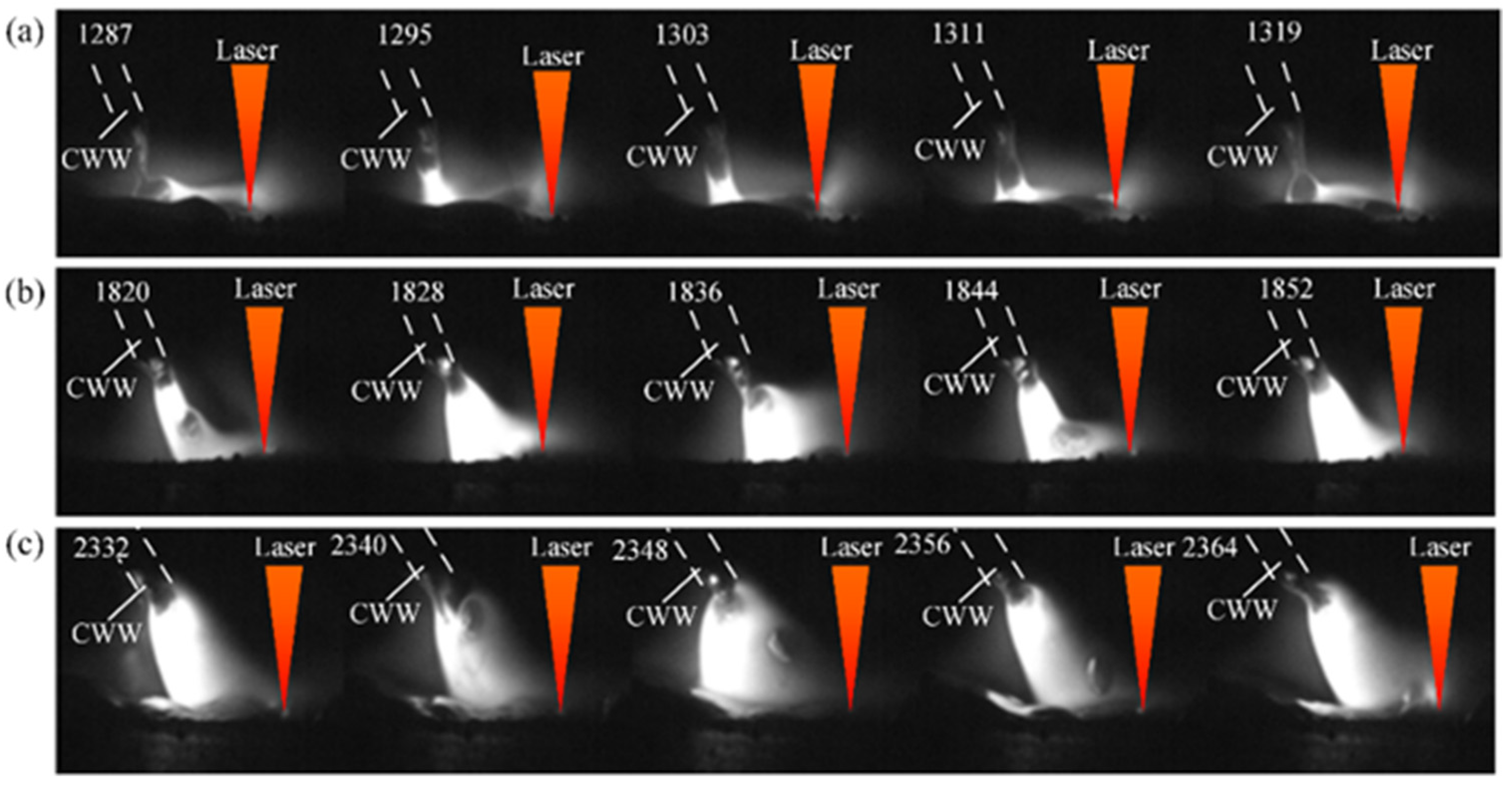
Figure 11 displays images of droplet transfer during hybrid welding under different gases. Figure 11a shows that under the protection of pure argon, the path of droplet detachment from the wire to the droplet was very short, and the droplet did not fall off the wire but contacted the molten pool (t + 1287). Figure 11b indicates that the droplet transition path became significantly longer, and the droplet melted and grew at the end of the wire and transitioned to a spherical shape with 10% CO2. The droplet was observed to deviate from the wire center-line (t + 2340) as the CO2 content was further increased to 18%. When the droplet flew in the arc space, it also deviated from axial direction of CWW, undergoing a nonaxial transition. Finally, it descended into the pool area located adjacent to the side of the laser beam. Figure 12 indicates that the droplet transition frequency decreases continuously as CO2 increased, and the droplet diameter first decreased and then increased, reaching its smallest value under the shielding gas condition of 10% CO2.
According to the principle of static equilibrium, when a droplet separates from a wire, the force causing detachment is greater than the force holding the droplet in place. The forces that primarily act upon the droplet include the following:
The droplet gravitational force [17] can be formulated as
F g = 4 3 π R 3 ρ d g
In this equation, R represents the diameter of the droplet, ρd is density, and g is constant (9.80 m/s2).
The droplet effect [17] by electromagnetic force can be given as
F e m = μ 0 I 2 4 π ln r d r w sin θ 1 4 1 1 cos θ + 2 1 cos θ 2 ln 2 1 + cos θ
In this context, μ0 is constant, while I is current. Additionally, rd and rw are droplet and wire, respectively, and θ denotes the arc root angle.
The force [7] effect by plasma flow on the droplet can be described as
F P = 0.5 π ρ p r d 2 C p K I 2
where Cp is constant, ρp is plasma density, rd is radius, and K is scaling factor.
The reaction force [17] of the metal vapor is [25] expressed as
F R L = 1 4 π R h 2 C D A p ρ m 2 v 0 2 N a k B T S 3 2 M a B 0 e x p M a L v N a k B T S e x p D L A 2 2 R h 2 D L A R h 0 D L A R h
Here, Rh is metal vapor area, v0 (3.4 × 10² m/s) is melt velocity, Ap is projected area, Na is Avogadro’s number, TS is surface temperature, kB is the Boltzmann constant, Ma is vapor molecular weight, B0 is constant of the evaporation, Lv is evaporation, and DLA is distance of laser and wire.
When arc temperature changes, the surface tension Fσ during welding changes significantly. The surface tension [7] of metal droplets is expressed as
F σ = 2 π r d σ f
where rd is wire diameter, σ is liquid coefficient of surface tension, and f is correction coefficient.
The CWW is also subjected to the rotational force Fr when the CWW is burned. The expression for the rotational force [7] is
F r = m v 1 2 R = m V 2 R 1 t a n 2 α
where R1 is the single wire diameter at the periphery, α is peripheral wire helix angle, V is feeding speed, v1 is peripheral wire linear speed of rotation, and m is the droplet mass.
Figure 13 shows an image of droplet transfer under the protection of pure argon and mixed gas. Figure 13a shows that under pure argon, the tips of the wire were pencil-shaped, and the distance from the molten pool to the droplet was very short. As shown in Figure 13d, the droplet was mainly hindered by the Fσ and the FRL. Under the promotion of the Fem and Fr, the droplet gradually grew and broke away from the CWW. The droplet is very close to pool, and the droplet size is slightly smaller than the diameter of CWW. Meanwhile, the gravity of the droplet is 4.29 × 10⁻⁴ N. Figure 5d shows that the welding current was large at this time, which can be seen from Equations (4), (5) and (8). The Fem, Fp and Fr that promote droplet transfer were affected by the current size. The larger the current was, the stronger the promotion effect on transfer frequency. Meanwhile, the larger the current was, the higher the arc temperature. Equation (7) shows that a high arc temperature reduced the droplet Fσ and reduced droplet size while increasing transfer frequency.
Figure 13b shows droplet transfer under 10% CO2. The droplet underwent droplet transfer at this time, and the path of the droplet from the wire to the welding pool became significantly longer. Figure 8 demonstrates that the droplet diameter is significantly decreased and is much smaller than the wire, and the gravity of the droplet is also greatly reduced to 1.75 × 10⁻⁴ N, and the droplet transited along the axial direction. Figure 13e indicates that the droplet is retarded by Fσ and FRL. The thermal ionization and decomposition of carbon dioxide produce oxygen, which can significantly reduce the droplet surface tension coefficient. Equation (7) indicates that the decomposition of carbon dioxide produces oxygen, which significantly reduces the surface tension of the droplet, thereby decreasing its size. However, because the decomposition of carbon dioxide absorbed part of the arc energy, the arc energy was reduced and the welding current decreased. From the calculation of Equations (4) and (8), the electromagnetic force is reduced by 6.86% due to the decrease in current, the Fr is reduced by 1.4 × 10⁻⁴ N due to the decrease in droplet size, and the final metal transfer frequency was still less than that of protection by pure argon.
Figure 13c shows an image of droplet transfer under 18% CO2. This figure shows that the droplet transition changed from axial to nonaxial when the CO2 content increased to 18%. At this moment, the electromagnetic force direction underwent a shift, which formed an α angle as shown in Figure 13f. Additionally, the Fem decreased by 10.8%. During the growth stage, the droplets were divorced from the center of CWW. Meanwhile, the decrease in welding current weakened promoting forces such as the Fp that facilitate droplet transfer. Additionally, the ionization and decomposition of carbon dioxide reduced the arc temperature, and the Fσ was affected by temperature. When the droplet detached from the wire, Fσ and FRL caused the droplet to transition into a nonaxial shape, with the droplet diameter exceeding the wire diameter. Due to the change in droplet diameter, the Fg increases to 5.78 × 10⁻⁴ N, and the Fr of the droplet increases by 1.59 × 10⁻⁴ N. Figure 10 shows that droplet transfer frequency decreases continuously, and the size first decreases and then increases as the CO2 content increases. The droplet transfer mode under pure argon protective gas was mainly droplet-based, and the droplets in the gas mixtures showed a droplet-like transition. In contrast to the stable spray transfer mode achieved with 20% CO2+ Ar reported by Zhang et al. [17] in laser–arc hybrid welding, no such transition was observed in the present laser–CWW process. This key difference suggests that the substantial thermal input associated with the CWW suppresses the electromagnetic contraction force necessary for spray transfer, thereby fundamentally altering the droplet transfer behavior.

3.3. Effect of Different Gas Compositions on Weld Formation

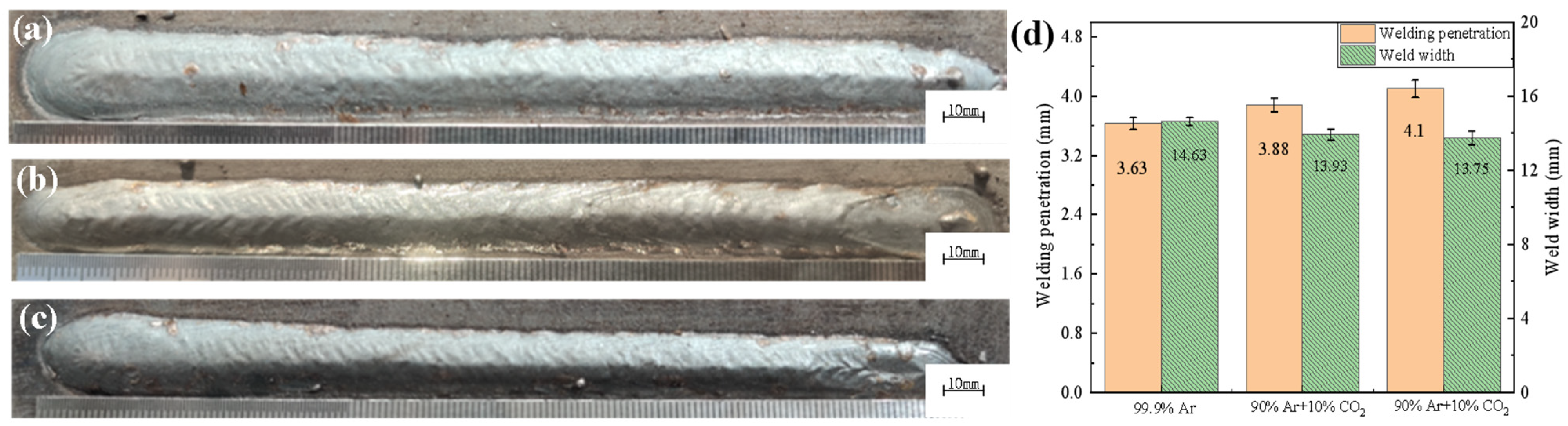
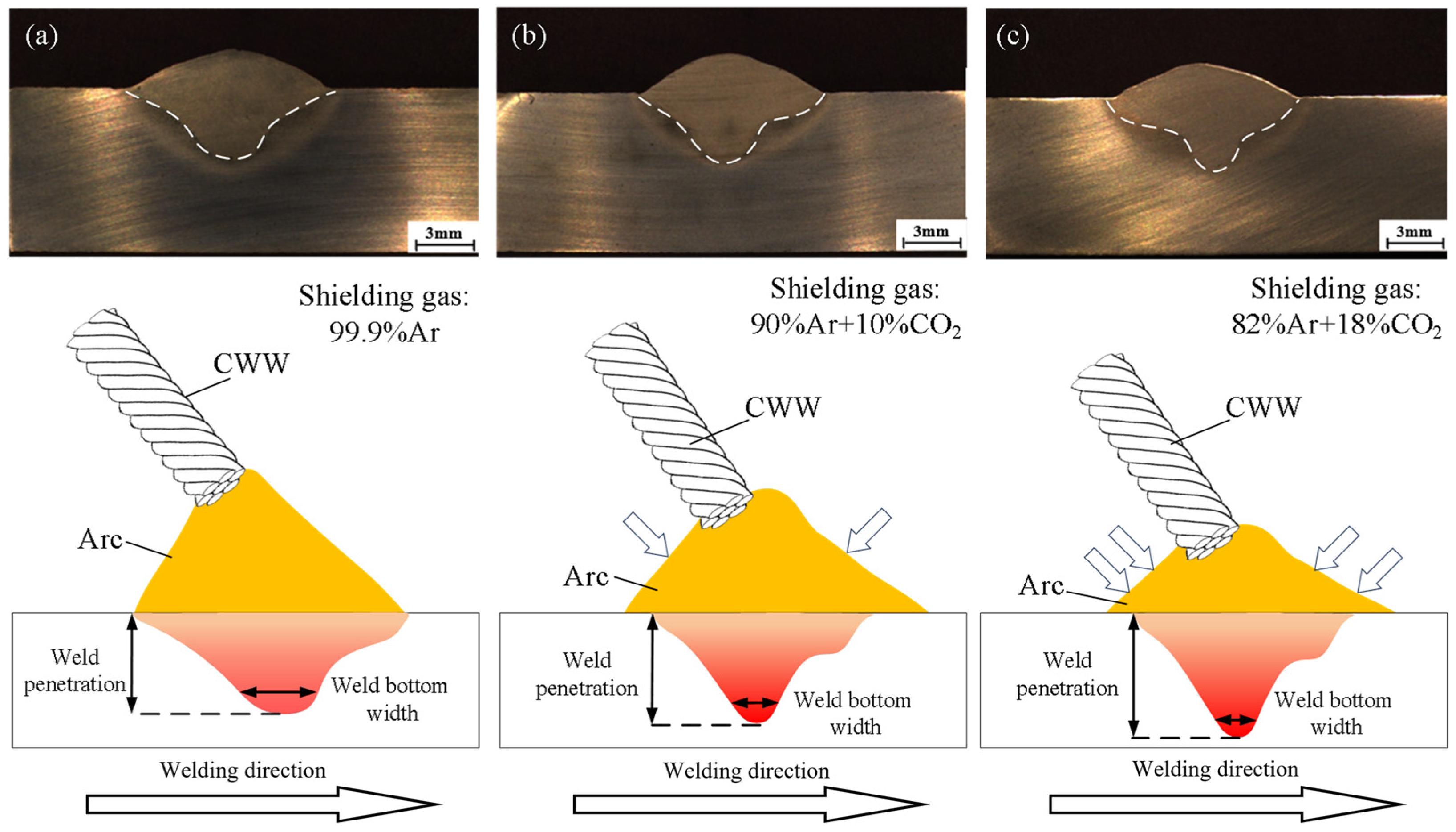
Figure 14 shows images of the weld forming under different gases, and Figure 14d shows the weld morphology, including penetration and width under shielding gases with different compositions. All weld metallographic samples were taken from the stable mid-weld region. This location ensures that the results represent the stable welding process. The diagram indicates that under the protection of pure argon, the weld surface was relatively smooth, and weld width was increased. There is a corresponding increase in both spatter and weld roughness as the CO2 content increases. When the CO2 content is increased to 18%, the penetration depth can be increased by 12.3%. Due to the effects of cooling and contraction of carbon dioxide on the arc, the arc heat was more concentrated and the weld width bottom decreased while penetration increased. Consequently, the deep penetration effect achieved with 18% CO2 content meets the requirements for thick-plate processing applications such as shipbuilding and pipeline welding, while simultaneously reducing the number of welding passes and enhancing manufacturing efficiency. For thin-sheet hull welding, the 10% CO2 formulation achieves an optimal balance between quality control and productivity. These findings provide clear guidance for process selection across different industrial applications.
Figure 15 shows the weld penetration under different shielding gases. Figure 15a shows that under the protection of pure Ar, the weld penetration was small, and the bottom of the weld was wide. With the addition of CO2, it ionized and decomposed at the upper part of the arc. The concentration of heat in the arc is increased due to the thermal compression of the arc, resulting in higher heat inputted from the arc center to the workpiece. As shown in Figure 15b, the weld penetration increased, CO2 recombined at the lower part of the arc, and the composite heat was released. Therefore, as the carbon dioxide content increased, the heat released above the molten pool increased. The greater the amount of heat absorbed by the bottom of the pool, the deeper the penetration of the weld. In addition, the concentration of heat by the CWW rotating arc further increased the penetration. When the CO2 content further increased, as shown in Figure 15c, the arc was compressed further, causing a significant reduction in arc volume. Additionally, the high-temperature zone of the arc became more concentrated, leading to a more concentrated arc energy and an increase in weld penetration. As a result, the heat input into the arc periphery was reduced and the weld width decreased. At the same time, according to Figure 5, as the CO2 content increased, the welding current continued to decrease, and the overall heat input into the weld pool decreased.

4. Conclusions

The GMAW hybrid welding of a laser and CWW under different shielding gases was investigated. A detailed comparative analysis of the test results was carried out and the welding processing and weld morphology were clarified.
(1) As the CO2 content increases from 0% to 18%, the arc width expands by 10.9% compared to pure Ar shielding gas, while the arc height decreases by 17.1%. As the width of the welding arc top increases, the overall arc shape becomes more regular and the arc stability increases, the arc showing a bell shape.
(2) Under pure Ar protection, droplet transfer occurs through direct contact with the molten pool. With increasing CO2 content, the droplet transfer path becomes longer, the frequency of the droplet decreases, while the diameter first decreases and then increases. The mode of droplet transfer has been changed from the mixed transfer mode of globular and short circuits to globular transfer exclusively.
(3) Welding spatter increases with the increase in CO2, while promoting deeper penetration of the weld and reducing its width. When CO2 increased to 18%, the penetration depth of the weld increased by 12.3%.
The findings present distinct industrial implications: the 10% CO2 + 90% Ar mixture provides an optimal solution for high-precision applications including automotive body manufacturing and precision machining, whereas the 18% CO2 + 82% Ar formulation establishes a novel technical approach for deep-penetration welding applications such as shipbuilding, effectively reducing required weld passes and significantly improving production efficiency.

Author Contributions

Conceptualization, Z.Y.; methodology, Z.Y. and Y.C.; software, K.W.; validation, K.W., Y.H. and P.Z.; formal analysis, Y.H. and Y.R.; investigation, X.Y.; resources, Z.Y.; data curation, Y.H., Y.R., X.Y., P.Z. and Y.C.; writing—original draft preparation, Y.C. and K.W.; writing—review and editing, Z.Y. and C.F.; visualization, Y.R., X.Y. and P.Z.; supervision, Z.Y. and C.F.; project administration, Z.Y.; funding acquisition, Z.Y. and C.F. All authors have read and agreed to the published version of the manuscript.

Funding

This work was supported by the National Natural Science Foundation of China (Grant No. 51905231), China Postdoctoral Science Foundation fund project (Grant No. 2020M670943).

Data Availability Statement

The original contributions presented in this study are included in the article. Further inquiries can be directed to the corresponding author.

Conflicts of Interest

Author Yinhui Rao was employed by Guangzhou Shipyard International Company Limited. Author Xiaojie Yang was employed by Guangdong Weld Technology Company Limited. Author Peng Zhao was employed by Yangzhou Longhe Shipyard Company Limited. The remaining authors declare that the research was conducted in the absence of any commercial or financial relationships that could be construed as a potential conflict of interest.

Abbreviations

The following abbreviations are used in this manuscript:
CWWCable-type welding wire
LAHWLaser–arc hybrid welding
GMAWGas metal arc welding

References

  1. Liu, Q.; Wu, D.; Wang, Q.; Li, Y.; Li, X.; Zhang, Y. Research status of stability in dynamic process of laser-arc hybrid welding based on droplet transfer behavior: A review. Coatings 2023, 13, 205. [Google Scholar] [CrossRef]
  2. Huang, J.; Hao, K.; Xu, L.; Han, Y.; Zhao, L.; Ren, W. Grain Refinement and Mechanical Properties Enhancement of Laser-Arc Hybrid Welded 2219 Aluminum Alloy with TiC Addition. Mater. Charact. 2026, 231, 115844. [Google Scholar] [CrossRef]
  3. Lin, L.; Yang, T.; Yu, J.; Li, B.; Li, L.; Huang, M. Effect of Keyhole on Plasticity-Evolved Behaviors of Thick Ti–6Al–4V Laser-Arc Hybrid Welded Joint. J. Mater. Res. Technol. 2024, 33, 8151–8159. [Google Scholar] [CrossRef]
  4. Peli, S.; Bonaldo, F.; Riva, M. Welding of 20 mm Thick EH40 Steel by Means of a Single-Pass Hybrid Laser-Arc Welding Technique. Procedia CIRP 2024, 124, 394–398. [Google Scholar] [CrossRef]
  5. Samir, K.; Hadeel, A.H.; Ahmad, A.A.; Al-Manea, A.; Wu, T.; Sokolov, M. Impact of gas metal arc welding parameters on bead geometry and material distortion of AISI 316L. J. Manuf. Mater. Process. 2023, 7, 123. [Google Scholar] [CrossRef]
  6. Ragavendran, M.; Vasudevan, M.; Frostevarg, J. Laser and hybrid laser welding of type 316L(N) austenitic stainless steel plates. Mater. Manuf. Process. 2020, 35, 922–934. [Google Scholar] [CrossRef]
  7. Yang, Z.; Fang, C.; Chen, Y.; Li, H.; Xu, G. Effect of forces on dynamic metal transfer behavior of cable-type welding wire gas metal arc welding. Int. J. Adv. Manuf. Technol. 2018, 97, 81–90. [Google Scholar] [CrossRef]
  8. Chen, Y.-T.; Yang, Z.-D.; Ni, Z.-X.; Xu, J.-M.; Dong, S.-W.; Xu, G.-X.; Chen, S.-J. Effect of Distance Between Heat Sources on Droplet Transfer Behavior and Weld Formation of AH36 During Laser and CWW GMAW Arc Hybrid Welding. J. Iron Steel Res. Int. 2024, 31, 3069–3079. [Google Scholar] [CrossRef]
  9. Chen, Y.; Yang, Z.; Xu, K.; Huang, J.; Fang, C. Effect of energy parameters on droplet transfer behavior and weld formation in laser-arc hybrid welding with cable-type welding wire. J. Mater. Res. Technol. 2023, 26, 4191–4205. [Google Scholar] [CrossRef]
  10. Gündoğdu, İ.E.; Atapek, Ş.H.; Yılmaz, M. Effect of welding speed and shielding gas composition on the properties of laser welded EN AW 6061-T6 Al alloy using 5356 filler metal. J. Laser Appl. 2023, 35, 032006. [Google Scholar] [CrossRef]
  11. Sawrav, K.; Bandyopadhyay, P.P.; Das, R. Effect of purity level of CO2 shielding on metal active gas welded joint quality. Int. J. Ind. Eng. Theory 2023, 30, 283–297. [Google Scholar] [CrossRef]
  12. Açar, İ.; Çevik, B.; Gülenç, B. The effect of shielding gas on weldability of the AISI 420 martensitic stainless steel. Prakt. Metallogr. 2023, 60, 108–128. [Google Scholar] [CrossRef]
  13. Murali, P.; Gopi, R. Experimental Investigation of Tungsten Inert Gas Welding (TIG) Using Ar/Ar–CO2 Shielding Gas on Alloy Steels. Mater. Today Proc. 2021, 39, 812–817. [Google Scholar] [CrossRef]
  14. Lohse, M.; Trautmann, M.; Füssel, U.; Rose, S. Influence of the CO2 Content in Shielding Gas on the Temperature of the Shielding Gas Nozzle during GMAW Welding. J. Manuf. Mater. Process. 2020, 4, 113. [Google Scholar] [CrossRef]
  15. Cai, X.; Fan, C.; Lin, S.; Liu, Z.; Yang, C. Effects of shielding gas composition on arc characteristics and droplet transfer in tandem narrow gap GMA welding. Sci. Technol. Weld. Join. 2016, 22, 446–453. [Google Scholar] [CrossRef]
  16. Chen, L.; Wang, B.; Qi, X.; Li, H.; Liu, X. Generation of acicular ferrite in the laser-welded weld of X100 pipeline steel induced by CO2 shielding gas. Steel Res. Int. 2022, 93, 2200349. [Google Scholar] [CrossRef]
  17. Zhang, S.; Sun, J.; Zhu, M.; Zhang, H.; Guo, J. Effects of shielding gases on process stability of 10CrNi3MoV steel in hybrid laser-arc welding. J. Mater. Process. Technol. 2019, 270, 37–46. [Google Scholar] [CrossRef]
  18. Fang, N.; Huang, R.; Wang, X.; Zhang, Y.; Li, R. Effect of shielding gas on the microstructure and properties of laser-MAG hybrid welded joint for nickel-saving stainless steel. Adv. Mater. Sci. Eng. 2022, 2022, 9330521. [Google Scholar] [CrossRef]
  19. Pan, Q.; Mizutani, M.; Kawahito, Y.; Katayama, S. Effect of shielding gas on laser-MAG arc hybrid welding results of thick high-tensile-strength steel plates. Weld. World 2016, 60, 653–664. [Google Scholar] [CrossRef]
  20. Trinh, N.Q.; Tashiro, S.; Suga, T.; Van, T.N.; Phe, L.H. Metal transfer behavior of metal-cored arc welding in pure argon shielding gas. Metals 2022, 12, 1577. [Google Scholar] [CrossRef]
  21. Chae, H.B.; Kim, C.H.; Kim, J.H.; Yoo, C.D. The effect of shielding gas composition in CO2 laser-gas metal arc hybrid welding. Proc. Inst. Mech. Eng. B J. Eng. Manuf. 2008, 222, 1315–1324. [Google Scholar] [CrossRef]
  22. Trinh, N.Q.; Le, K.D.; Tashiro, S.; Suga, T.; Sasakura, S.; Fukuda, K.; Murphy, A.B.; Bui, H.V.; Tanaka, M. Optimization of Metal Transfer in Rutile Flux-Cored Arc Welding through Controlled CO2 Concentration in Argon–CO2 Shielding Gas. J. Manuf. Process. 2024, 124, 590–603. [Google Scholar] [CrossRef]
  23. Yang, Z.; Huang, J.; Xu, K.; Chen, Y.; Fang, C. Effect of polarities and shielding gases in CWW GMAW. Mater. Manuf. Process. 2023, 39, 227–236. [Google Scholar] [CrossRef]
  24. Trinh, N.Q.; Tashiro, S.; Le, K.D.; Suga, T.; Kakizaki, T.; Yamazaki, K.; Lersvanichkool, A.; Murphy, A.B.; Bui, H.V.; Tanaka, M. Eligible CO2 Content in Ar-CO2 Mixture Shielding Gas for Improving Metal Transfer in Metal-Cored Arc Welding. Int. J. Heat. Mass. Transf. 2024, 231, 125803. [Google Scholar] [CrossRef]
  25. Semak, V.; Matsunawa, A. The role of recoil pressure in energy balance during laser materials processing. J. Phys. D Appl. Phys. 1997, 30, 2541. [Google Scholar] [CrossRef]
Figure 1. Cable-type welding wire: (a) physical drawing and (b) structure diagram.
Metals 16 00020 g001
Figure 2. Schematic of the experimental apparatus.
Metals 16 00020 g002
Figure 3. Arc shape characteristics under different shielding gases: (a) 99.9% Ar + 0% CO2; (b) 90% Ar + 10% CO2; (c) 82% Ar + 18% CO2.
Metals 16 00020 g003
Figure 4. Changes in arc parameters under different shielding gases. Data are from three independent experiments.
Metals 16 00020 g004
Figure 5. Waveforms of welding current and voltage under different shielding gases: (a) 99.9% Ar + 0% CO2; (b) 90% Ar + 10% CO2; (c) 82% Ar + 18% CO2; and (d) average current and voltage diagrams. Data are from three independent experiments.
Metals 16 00020 g005
Figure 6. Comparison of cyclograms of different CO2 contents.
Metals 16 00020 g006
Figure 7. Relative frequency (RF): (a) voltage, (b) current.
Metals 16 00020 g007
Figure 8. Photographs and schematic diagrams of the arc shape under different protective gases: (a) 99.9% Ar + 0% CO2; (b) 90% Ar + 10% CO2; and (c) 82% Ar + 18% CO2.
Metals 16 00020 g008
Figure 9. 18% CO2 arc shape: (a) high-speed camera image and (b) diagram of the location of carbon dioxide molecular ionization.
Metals 16 00020 g009
Figure 10. Droplet transfer behavior under pure argon shielding gas (ae) droplet transfer process.
Metals 16 00020 g010
Figure 11. Droplet transfer behavior under different protective gases: (a) 99.9% Ar; (b) 90% Ar + 10% CO2; and (c) 82%Ar + 18%CO2.
Metals 16 00020 g011
Figure 12. Droplet transfer frequency and droplet size under different shielding gases, data are from three independent experiments.
Metals 16 00020 g012
Figure 13. Images of droplet transfer under pure Ar and gas mixtures. (ac): High-speed camera image under difference shielding gases; (df): droplet transfer diagram under difference shielding gases.
Metals 16 00020 g013
Figure 14. Weld formation under different shielding gases: (a) 99.9% Ar, (b) 90% Ar + 10% CO2, and (c) 82% Ar + 18% CO2. (d) Measured values of weld penetration and width. Data are from three independent experiments.
Metals 16 00020 g014
Figure 15. Photographs and schematic diagram of weld penetration under different protective gases.
Metals 16 00020 g015
Table 1. Chemical composition table of base metal A36 and welding wire ER50-6.
ElementsCPSSiCuMnFe
AH36<0.26<0.04<0.05<0.4>0.2<0.8–1.2Balance
ER-500.06–0.151.40–1.85<0.0350.8–1.15<0.51.4–1.85Balance
Table 2. Experimental parameters for the welding progress.
ParameterValue
Laser power (kW)3.5
Preset current (A)380
Welding speed (mm/s)16
Laser–electrode separation (mm)5
Defocus amount (mm)−1
Contact tip-to-workpiece distance (mm)15
Shielding gas flow rate (L/min)20
Disclaimer/Publisher’s Note: The statements, opinions and data contained in all publications are solely those of the individual author(s) and contributor(s) and not of MDPI and/or the editor(s). MDPI and/or the editor(s) disclaim responsibility for any injury to people or property resulting from any ideas, methods, instructions or products referred to in the content.