Effect of Solidification Conditions on High-Cycle Fatigue Behavior in DD6 Single-Crystal Superalloy

Abstract
1. Introduction
2. Materials and Methods
3. Results
3.1. High-Cycle Fatigue Performance
3.2. High-Cycle Fatigue Fraction
3.3. Microstructure
4. Discussion
5. Conclusions
- (1)
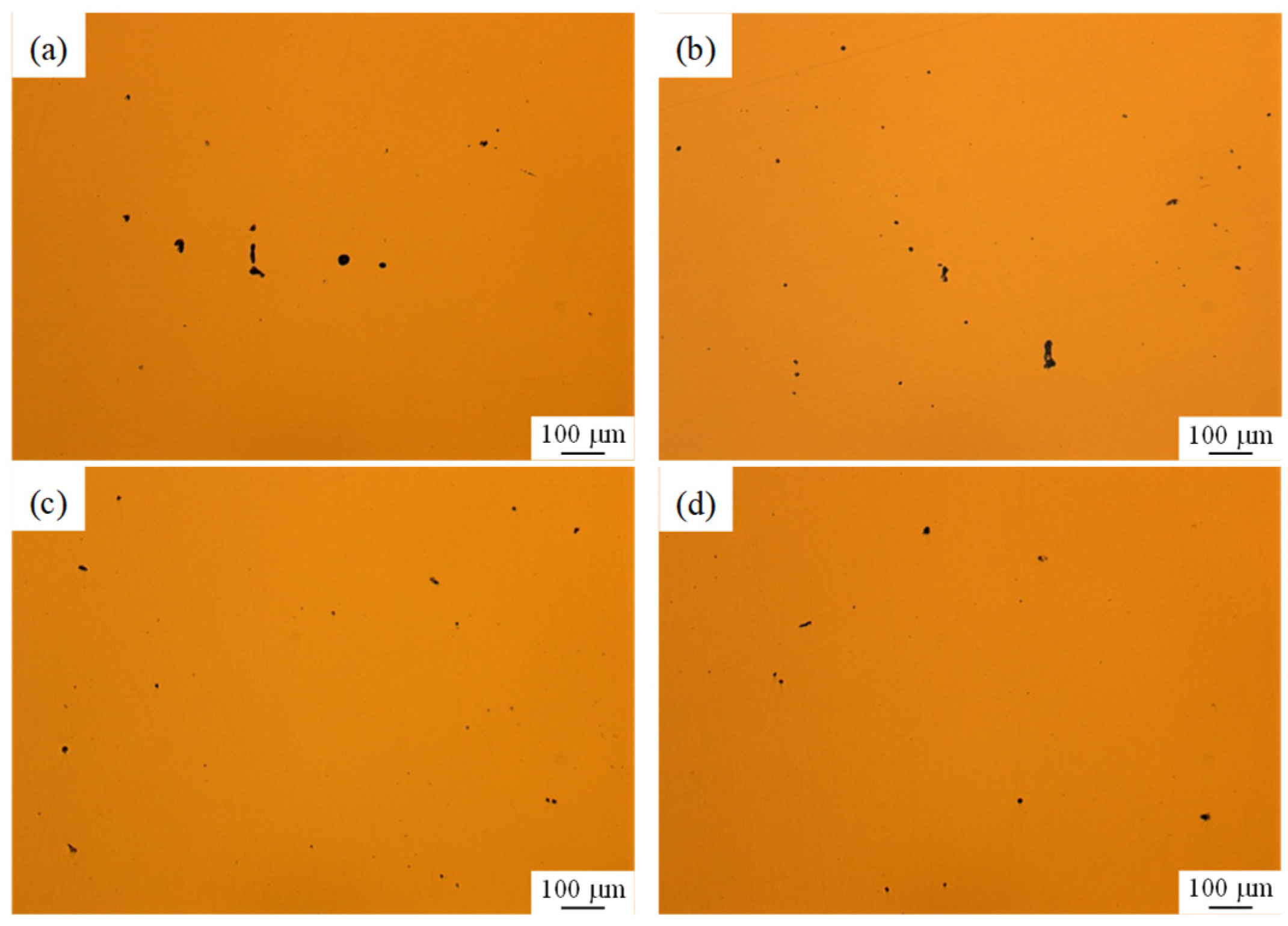
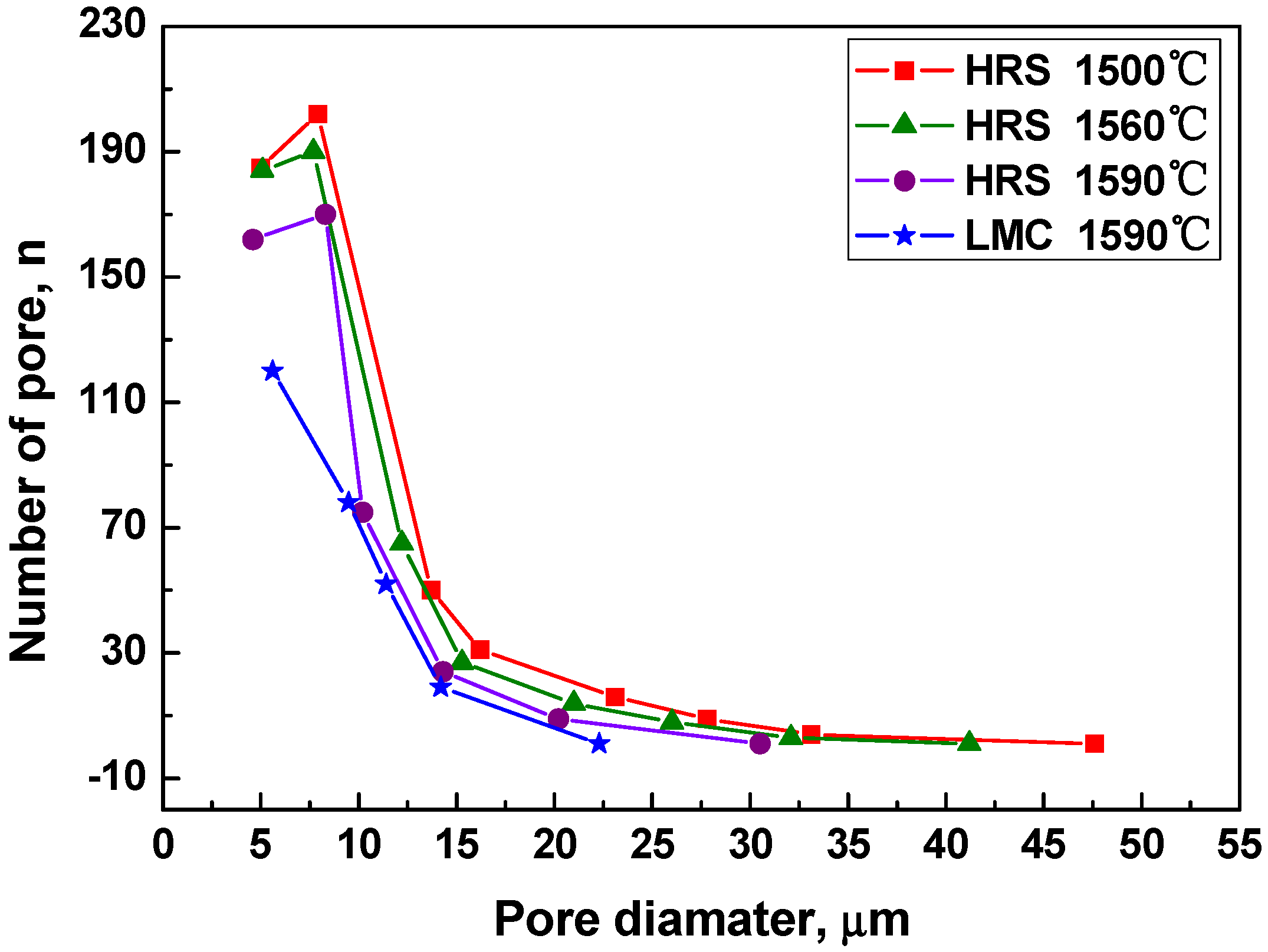
- Increasing the pouring temperature effectively reduced both the content and size of microporosity in the heat-treated HRS alloys. Under the same pouring temperature, the LMC alloy exhibited significantly less microporosity content (only 44.4% of the HRS alloy) and smaller pore sizes (only 45.8% of the HRS alloy).
- (2)
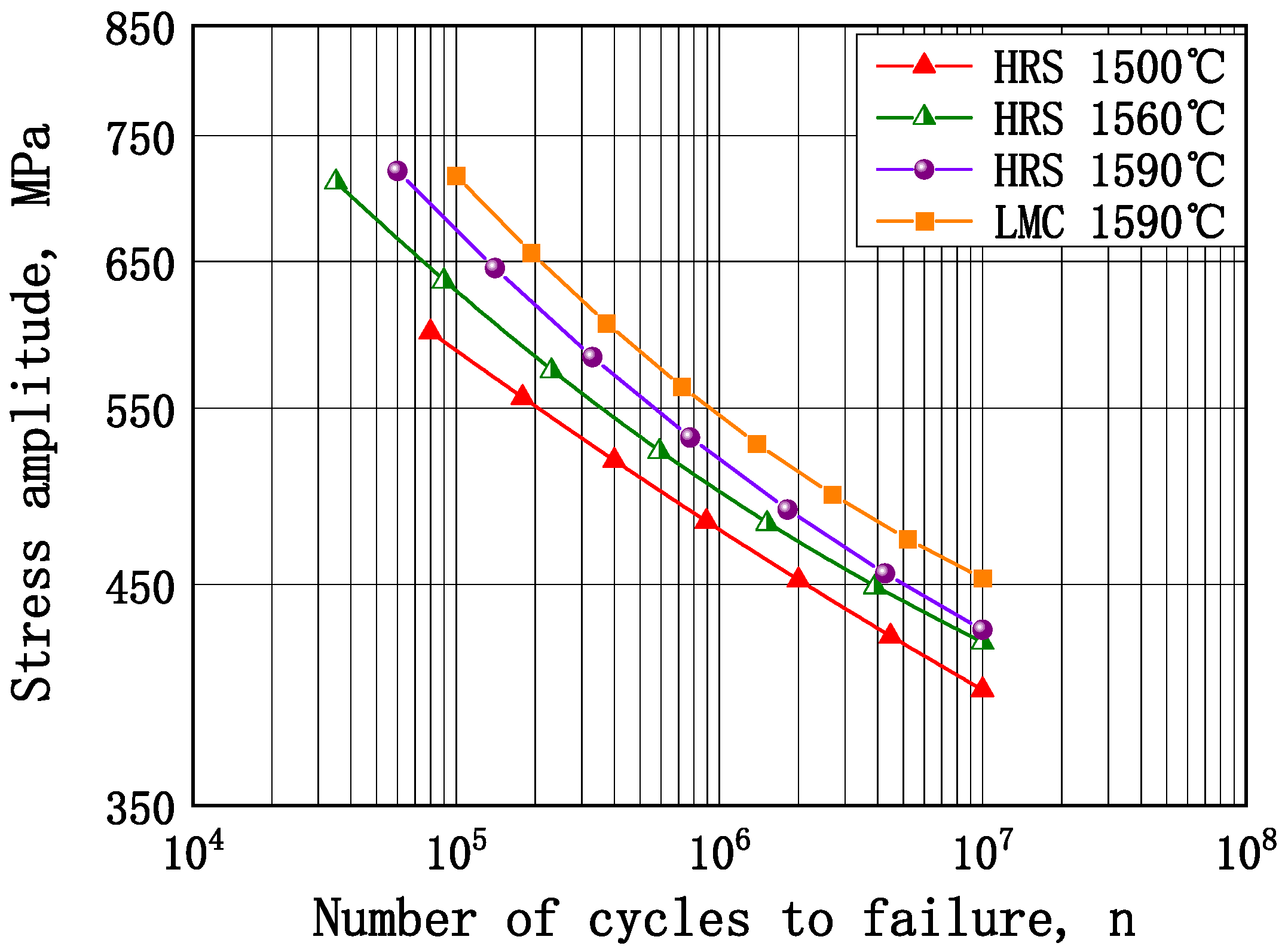
- The high-cycle fatigue performance of the HRS alloys was enhanced with increasing pouring temperature. Under the same pouring temperature, the LMC alloy demonstrated superior HCF performance compared to the HRS alloy, with a 9.4% increase in the conditional fatigue limit.
- (3)
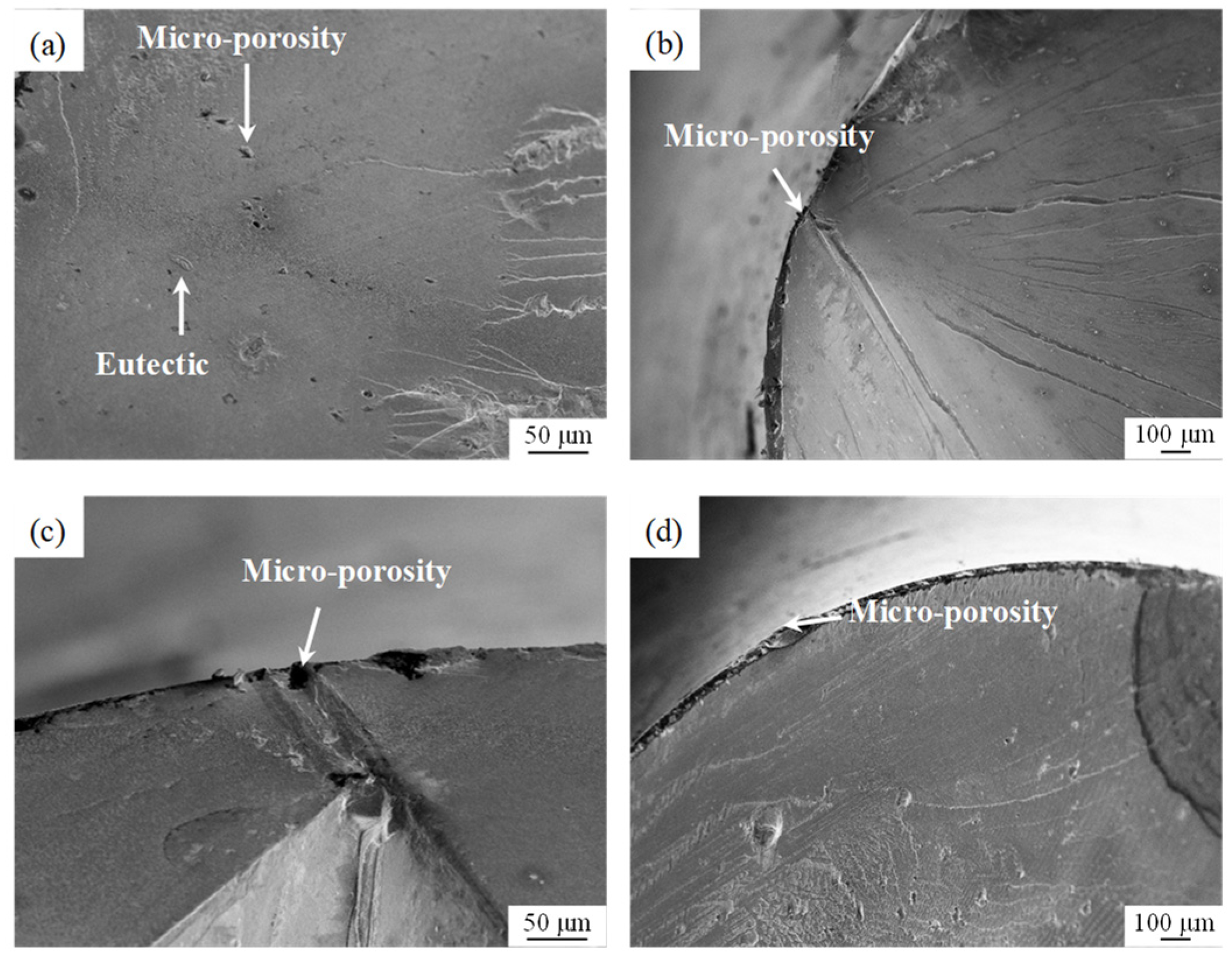
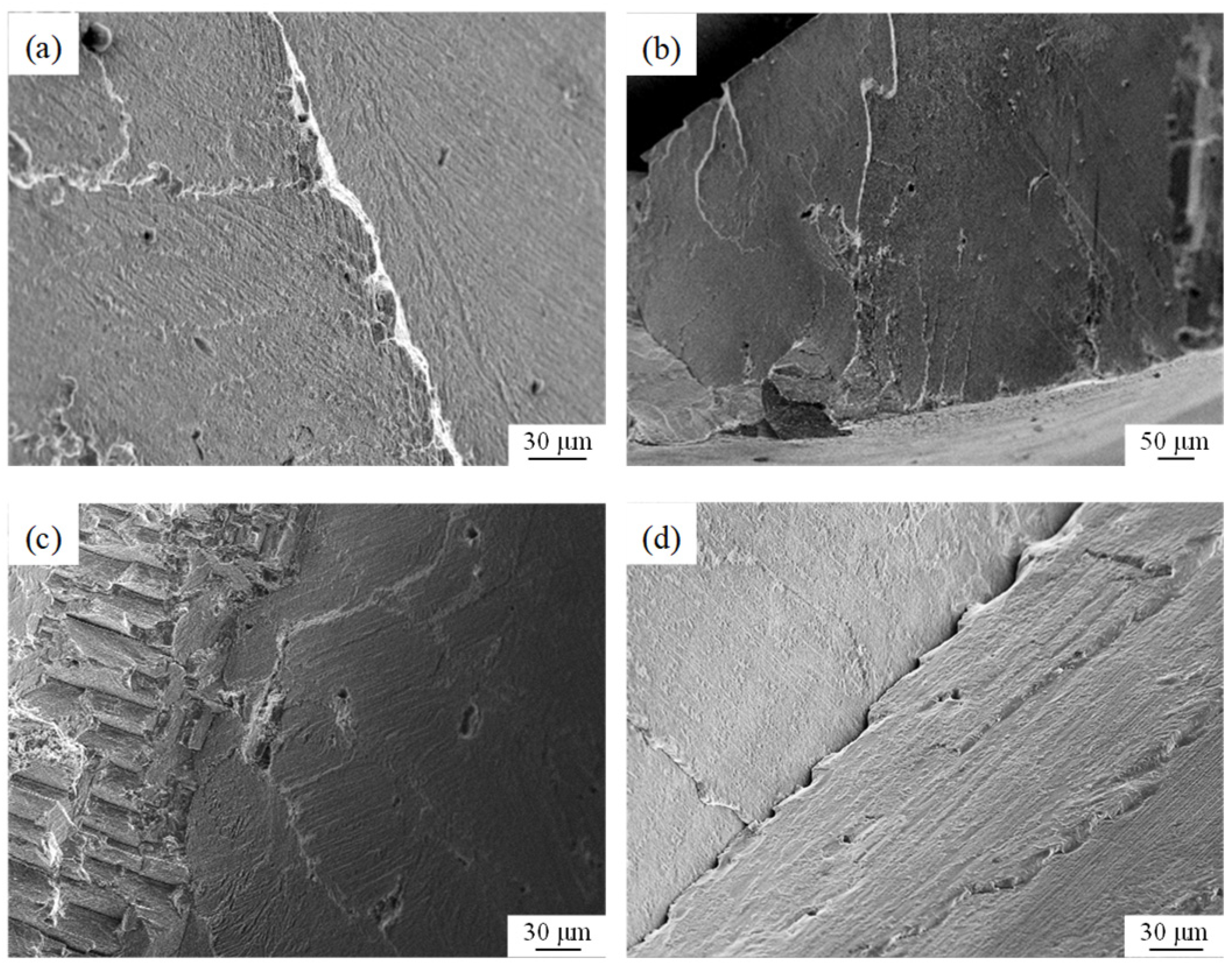
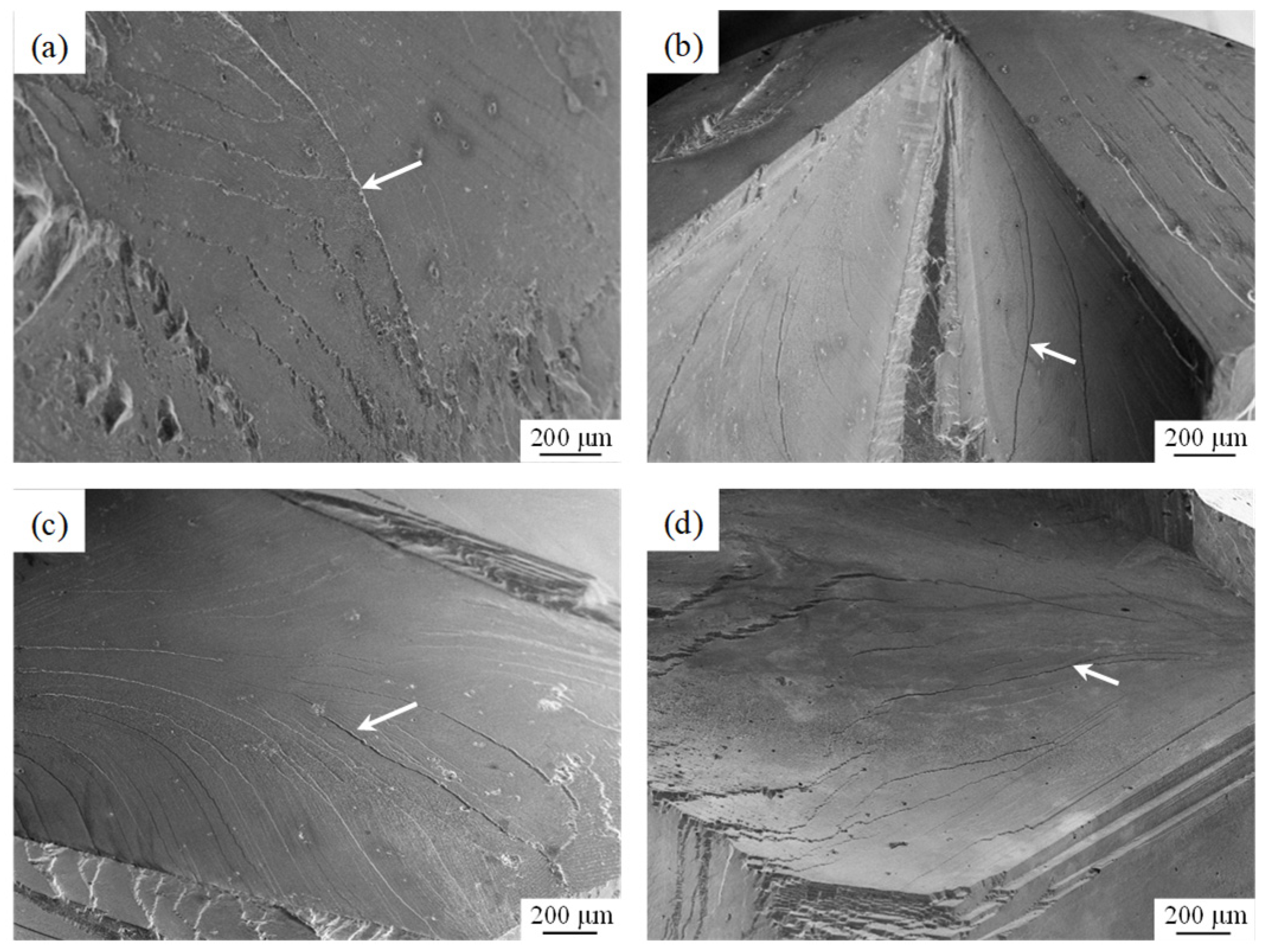
- For the HRS alloy at a pouring temperature of 1500 °C, HCF cracks initiated at surface/subsurface microporosity and γ/γ′ eutectic. When the pouring temperature was increased to 1560 °C and 1590 °C, or when the LMC process was employed, cracks initiated solely from surface/subsurface microporosity. Microporosity is the dominant factor for HCF crack initiation in DD6 alloy at 800 °C, while the role of γ/γ′ eutectic in crack initiation weakens or even vanishes as solidification conditions are optimized.
- (4)
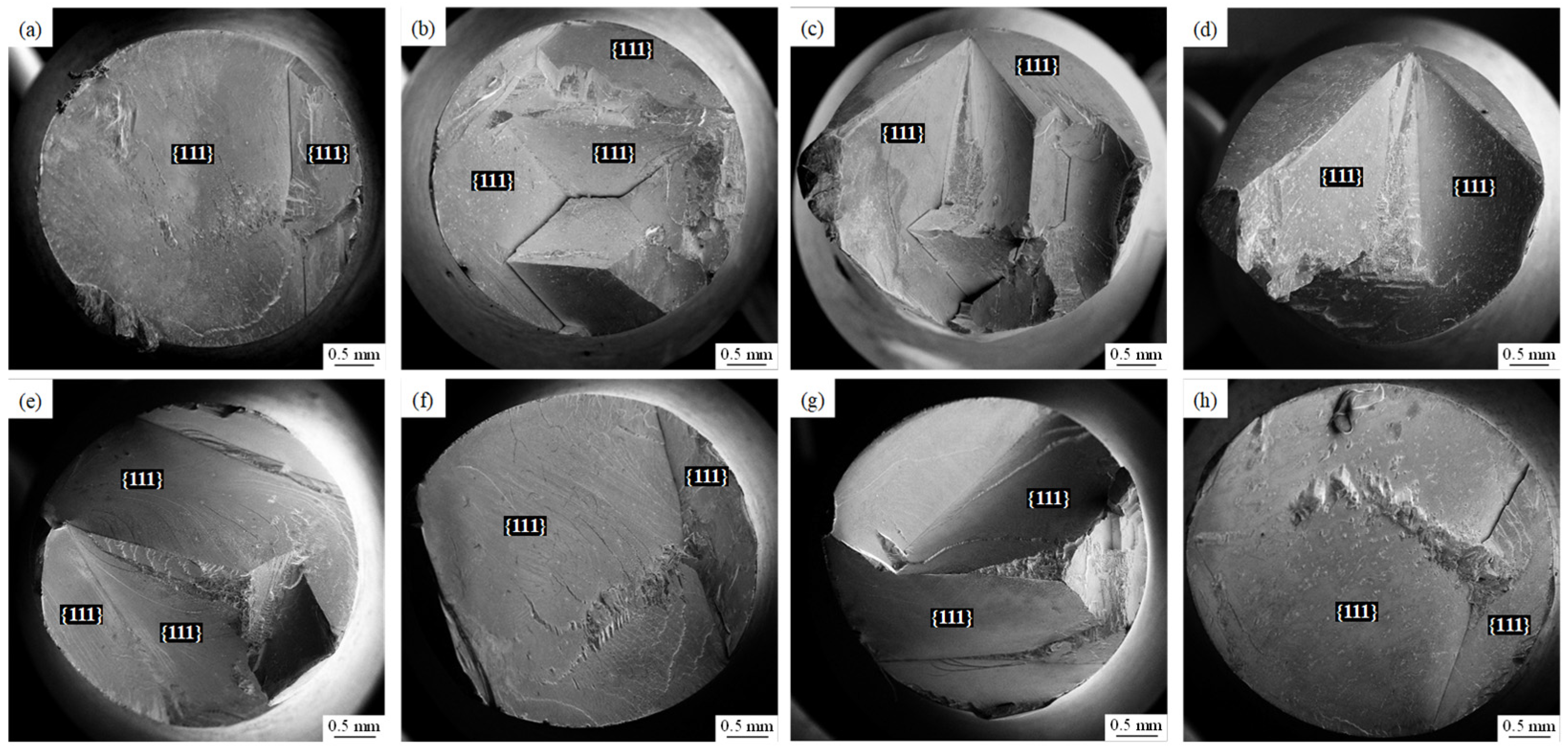
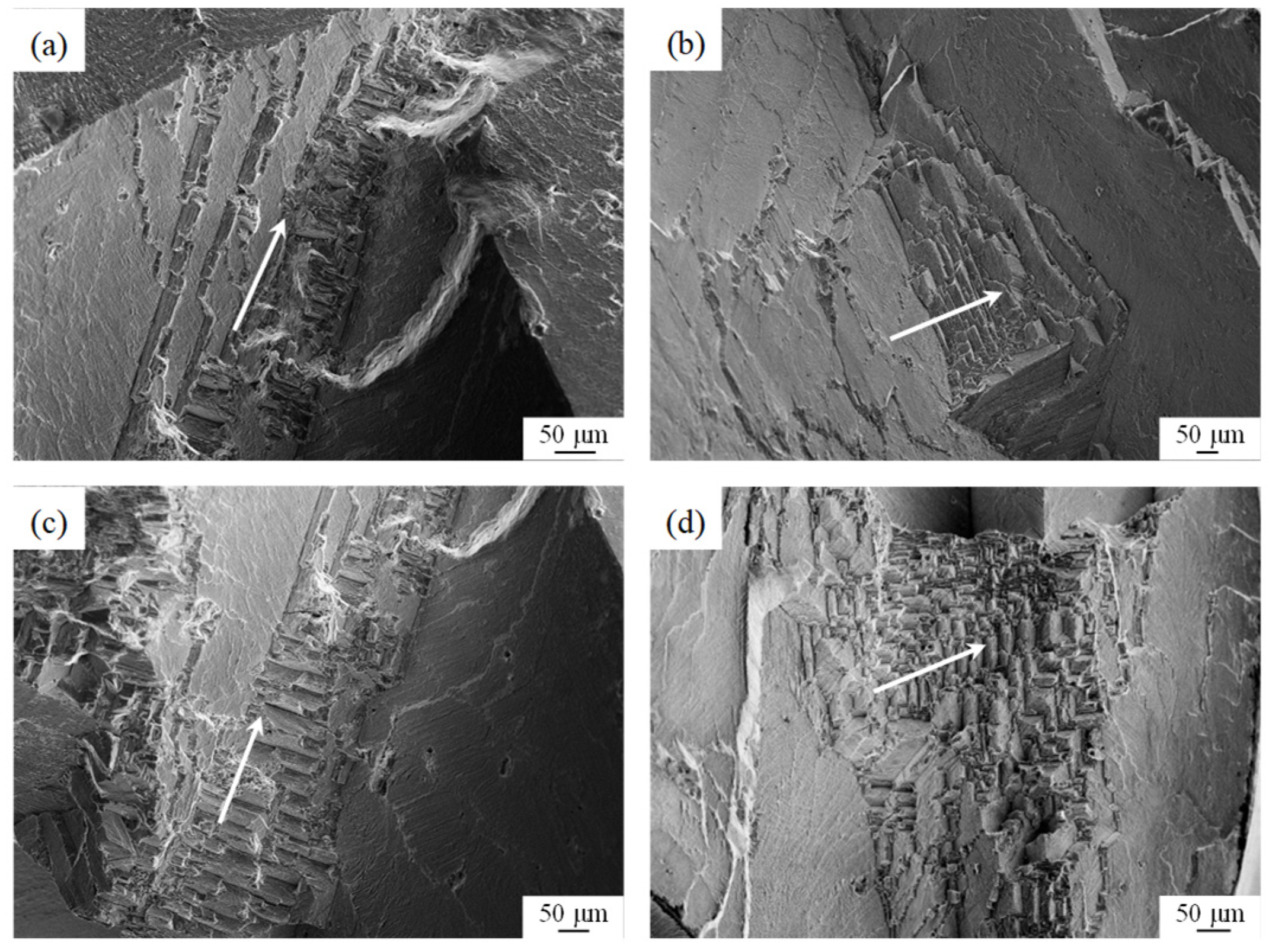
- The HCF fracture of the DD6 alloy at 800 °C exhibited characteristics of quasi-cleavage, which was independent of the solidification conditions.
- (5)
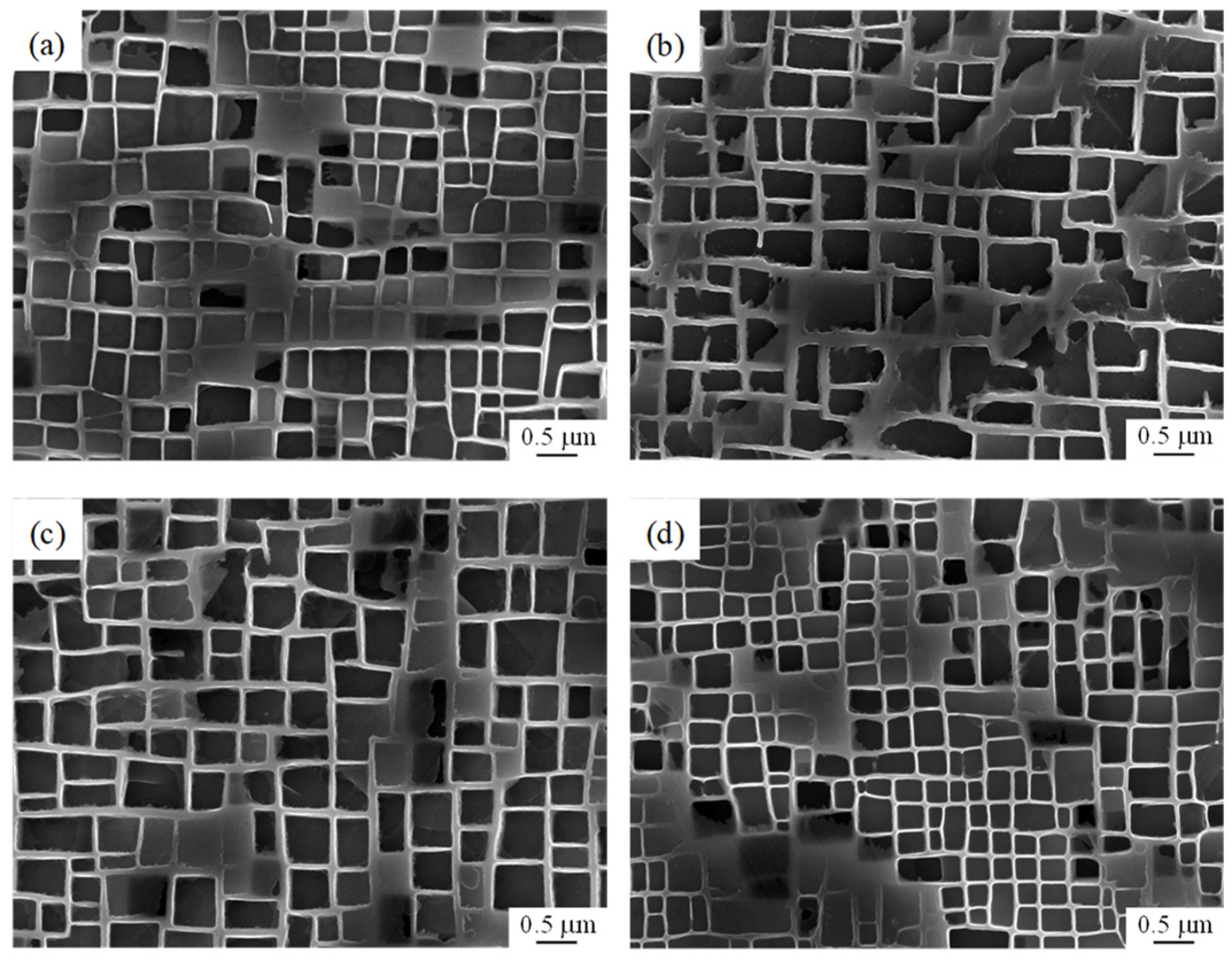
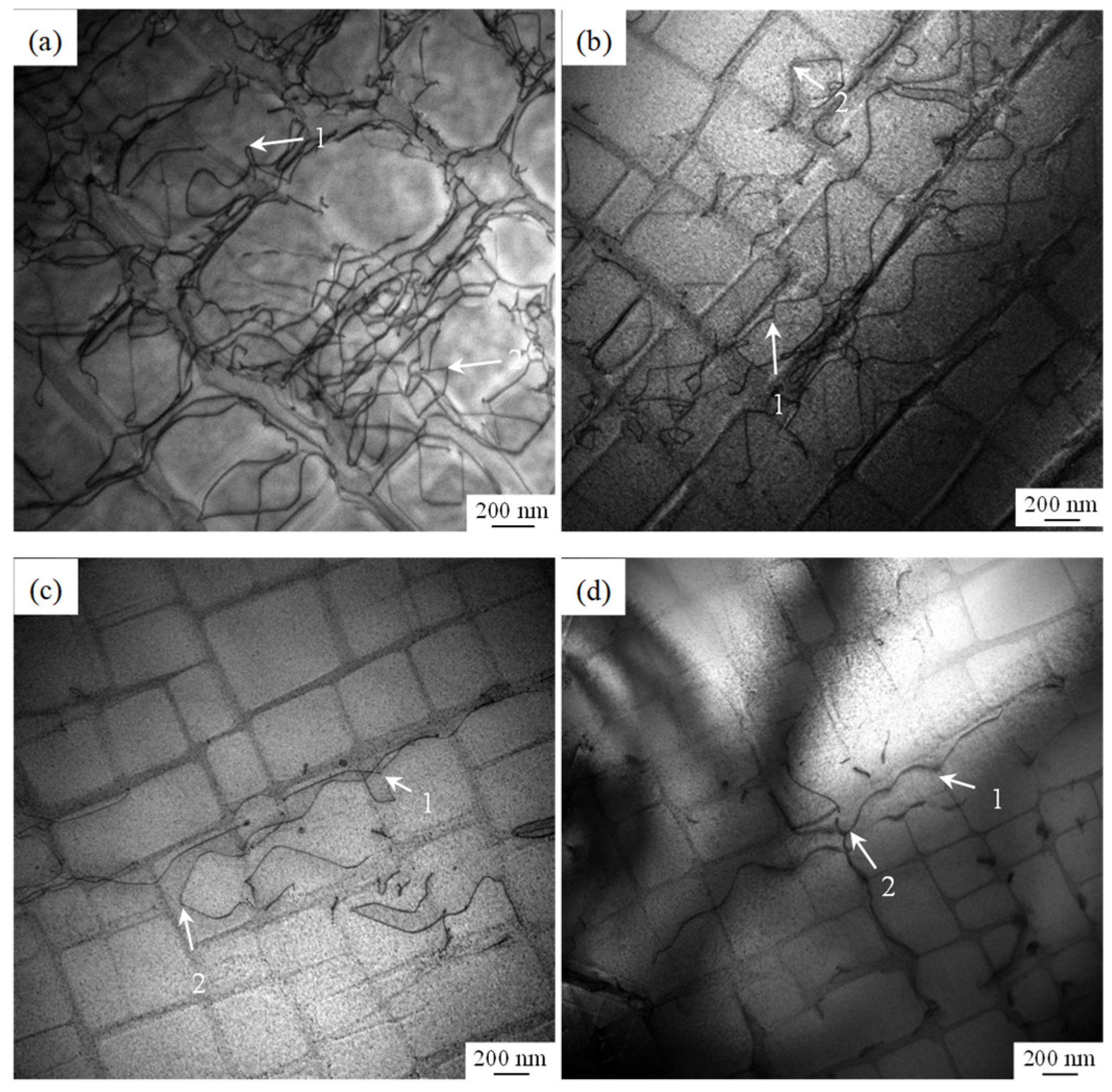
- At a stress amplitude of 550 MPa, dislocation shearing of the γ′ precipitates was not observed in the DD6 alloy after HCF fracture at 800 °C. The deformation was characterized by the slip of a/2<011> dislocations within the γ matrix channels via bowing and cross-slip mechanisms. The solidification conditions did not alter the fundamental HCF deformation mechanism of the alloy.
- (6)
- Approaches that increase the temperature gradient, such as raising the pouring temperature or employing the LMC process, are effective in improving the content and size of microporosity in the DD6 alloy. This improvement subsequently enhances the overall HCF performance primarily by prolonging the fatigue crack initiation life.
Author Contributions
Funding
Data Availability Statement
Conflicts of Interest
References
- Bu, J.; Gao, Z.; Niu, J.; Cao, Y. Crack failure analysis of a fan stator vane. Aeroengine 2021, 47, 91–95. [Google Scholar]
- Wang, H. Failure analysis of turbine blade fracture in R20 gas turbine. Gas Turbine Technol. 2023, 36, 62–67. [Google Scholar]
- Gao, Z.; Bu, J.; Zhang, K.; Tong, W.; Li, M.; Wang, W. Fracture Failure Analysis of DD10 single crystal turbine blade under service environment. Aeroengine 2025, 51, 149–154. [Google Scholar]
- Xie, H.; Li, J.; Luo, Y.; Zheng, S.; Luo, K. Effect of Solidification Conditions on Microstructure Evolution in DD6 single-crystal superalloy. Acta Metall. Sin. 2025. Available online: https://link.cnki.net (accessed on 14 August 2025).
- Kurz, W.; Fisher, D.J. Dendrite growth at the limit of stability: Tip radius and spacing. Acta Metall. 1981, 29, 11–20. [Google Scholar] [CrossRef]
- Wagner, A.; Shollock, B.A.; McLean, M. Grain structure development in directional solidification of nickel-base superalloys. Mater. Sci. Eng. A 2004, 374, 270–279. [Google Scholar] [CrossRef]
- Tang, X.; Zhang, Y.; Li, J. Directional solidification of a Ni-based single crystal superalloy under high temperature gradient. Rare Met. Mater. Eng. 2012, 41, 738–742. [Google Scholar]
- Wang, R.; Li, J.; Yue, X.; Zhao, J.; Yang, W. Deformation and fracture mechanism of third-generation single crystal superalloy during in-situ tension at room temperature. Rare Met. Mater. Eng. 2025, 54, 1410–1416. [Google Scholar]
- Han, M.; Yu, J.; Li, J.; Xie, H.; Dong, J.; Yang, Y. Influence of shot peening on tensile properties of DD6 single crystal superalloy. J. Mater. Eng. 2019, 47, 169–175. [Google Scholar]
- Sun, J.; Liu, J.; Chen, C.; Li, J.; Sun, X. Effect of γ’ size on intermediate temperature stress rupture property of the third generation single crystal nickel-base superalloy containing Re. Rare Met. Mater. Eng. 2022, 51, 369–373. [Google Scholar]
- Yang, W.; Li, J.; Liu, S.; Zhao, J.; Shi, Z.; Wang, X. Transverse stress rupture properties of a third generation single crystal superalloy at medium and elevated temperatures. J. Mater. Eng. 2020, 48, 139–145. [Google Scholar]
- Yu, J.; Li, J.; Fang, X.; Wang, Q.; Liu, S.; Han, M. Influence of secondary γ′ phase evolution on creep properties of single crystal superalloy DD6. J. Mater. Eng. 2023, 51, 60–66. [Google Scholar]
- Ma, L.; Wang, D.; Zhang, G.; Shen, J.; Zhang, J. Effect of Hf on microstructure and creep properties of nickel-based bicrystal superalloy with different grain boundaries misorientations. Mater. Sci. Eng. A 2025, 935, 148371. [Google Scholar] [CrossRef]
- Xie, H.; Li, J.; Han, M. Effect of stress ratio on high cycle fatigue behavior of a single crystal superalloy. Rare Met. Mater. Eng. 2018, 47, 3381–3386. [Google Scholar]
- Shui, L.; Xu, Y.; Hu, Z. Dislocation structure in a single crystal nickel base superalloy during high cycle fatigue at 870 °C. Rare Met. Mater. Eng. 2018, 47, 1054–1058. [Google Scholar] [CrossRef]
- Shi, Z.; Zhao, J. High cycle fatigue properties of a single crystal superalloy at different temperatures. Nonferr. Met. Sci. Eng. 2019, 10, 58–63. [Google Scholar]
- Luo, Y.; Guo, H.; Zhao, Y.; Zhang, J. Effect of hot isostatic pressing on high-temperature high cycle fatigue properties of a second generation single crystal superalloy DD6. Mater. Mech. Eng. 2016, 40, 51–56. [Google Scholar]
- Wei, C.N.; Bor, H.Y.; Chang, L. Effect of hot isostatic pressing on microstructure and mechanical properties of CM-681LC nickel-base superalloy using microcast. Mater. Trans. 2008, 49, 193–201. [Google Scholar] [CrossRef]
- Li, J.R.; Zhong, Z.G.; Tang, D.Z.; Liu, S.Z.; Wei, P.; Wei, P.Y.; Wu, Z.T.; Huang, D.; Han, M. A low-cost second generation single crystal superalloy DD6. In Superalloys 2000 (Ninth International Symposium); Pollock, T.M., Kissinger, R.D., Bowman, R.R., Green, K.A., Mclean, M., Olson, S., Schina, J.J., Eds.; TMS (The Minerals, Metals &Materials Societ): Pittsburgh, PA, USA, 2000; pp. 777–783. [Google Scholar]
- Li, J.R.; Zhao, J.Q.; Liu, S.Z.; Han, M. Effects of low angle boundaries on the mechanical properties of single crystal superalloy DD6. In Superalloys 2008, Proceedings of the Eleventh International Symposium on Superalloys, Champion, PA, USA, 14–18 September 2008; Reed, R.C., Green, K.A., Eds.; The Minerals, Metals & Materials Society: Warrendale, PA, USA, 2008; pp. 443–450. [Google Scholar]
- Xie, H.; Li, J.; Han, M.; Yu, J.; Yang, L.; Yue, X. Effect of over-temperature on microstructure and high cycle fatigue properties of DD6 single crystal superalloy. Rare Met. Mater. Eng. 2022, 47, 2483–2488. [Google Scholar]
- Li, J.; Dong, J.; Han, M.; Liu, S. Effects of Sand Blasting on Surface Integrity and High Cycle Fatigue Properties of DD6 single crystal superalloy. Acta Metall. Sin. 2023, 59, 1201–1208. [Google Scholar]
- Yu, J.; Yang, Y.; Sun, X.; Guan, H.; Hu, Z. Rotary bending high-cycle fatigue behavior of DD32 single crystal superalloy containing rhenium. J. Mater. Sci. 2012, 47, 4805–4812. [Google Scholar] [CrossRef]
- Yi, J.Z.; Torbet, C.J.; Feng, Q.; Pollock, T.M.; Jones, J.W. Ultrasonic fatigue of a single crystal Ni-base superalloy at 1000 °C. J. Mater. Sci. Eng. A 2007, 443, 142–149. [Google Scholar] [CrossRef]
- Liu, Y.; Yu, J.J.; Xu, Y.; Sun, X.F.; Guan, H.R.; Hu, Z.Q. High cycle fatigue behavior of a single crystal superalloy at elevated temperatures. Mater. Sci. Eng. A 2007, 454–455, 357–366. [Google Scholar] [CrossRef]
- Wasson, A.J.; Fuchs, G.E. The effect of carbide morphologies on elevated temperature tensile and fatigue behavior of a modified single crystal Ni-Base superalloy. In Superalloys 2008, Proceedings of the Eleventh International Symposium on Superalloys, Champion, PA, USA, 14–18 September 2008; Reed, R.C., Green, K.A., Eds.; The Minerals, Metals & Materials Society: Warrendale, PA, USA, 2008; pp. 489–497. [Google Scholar]
- Hu, C.; Liu, X.; Tao, C.; Kong, Z. Demage behavior of film holes of DD6 single crystal superalloy by electro-stream machining. Rare Met. Mater. Eng. 2019, 48, 3190–3194. [Google Scholar]
- Liu, M.; Zou, T.; ZhangYu, T.; Ni, S.; Pei, Y.; Wang, Q.; Zhang, H.; Liu, Y.; Wang, Q. Crack initiation and lifetime assessment of MAR-M247 nickel-based superalloy in the very high cycle fatigue regime at 550 °C. Int. J. Fatigue 2025, 21, 109176. [Google Scholar] [CrossRef]
- Rémy, L.; Geuffrard, M.; Alam, A.; Köster, A.; Fleury, E. Effects of microstructure in high temperature fatigue: Lifetime to crack initiation of a single crystal superalloy in high temperature low cycle fatigue. Int. J. Fatigue 2013, 57, 37–49. [Google Scholar] [CrossRef]
- Zhao, Z.; Zhang, F.; Dong, C.; Yang, X.; Chen, B. Initiation and early-stage growth of internal fatigue cracking under very high-cycle fatigue regime at high temperature. Metall. Mater. Trans. A 2020, 51, 1575–1592. [Google Scholar] [CrossRef]
- Yang, M.; Zhou, C.; Zhao, Z.; Shen, Y.; Pei, H.; Zhao, M. Effect of oxidation on the competition between internal and external fatigue crack initiation of Ni-based single crystal superalloy. Int. J. Fatigue 2025, 197, 108930. [Google Scholar] [CrossRef]
- Utada, S.; Ormastroni, L.M.B.; Rame, J.; Villechaise, P.; Cormier, J. VHCF life of AM1 Ni-based single crystal superalloy after pre-deformation. Int. J. Fatigue 2021, 148, 106224. [Google Scholar] [CrossRef]
- Ormastroni, L.M.B.; Suave, L.M.; Cervellon, A.; Villechaise, P.; Cormier, J. LCF, HCF and VHCF life sensitivity to solution heat treatment of a third-generation Ni-based single crystal superalloy. Int. J. Fatigue 2020, 130, 105247. [Google Scholar] [CrossRef]
- Cervellon, A.; Hémery, S.; Kürnsteiner, B.; Gault, P.; Kontis, P.; Cormier, J. Crack initiation mechanisms during very high cycle fatigue of Ni-based single crystal superalloys at high temperature. Acta Mater. 2020, 188, 131–144. [Google Scholar] [CrossRef]
- Cervellon, A.; Cormier, J.; Mauget, F.; Hervier, Z.; Nadot, Y. Very high cycle fatigue of Ni-based single crystal superalloy at high temperature. Metall. Mater. Trans. A 2018, 49, 3938–3950. [Google Scholar] [CrossRef]
- Li, J.; Xie, H.; Han, M.; Liu, S. High cycle fatigue behavior of second generation single crystal superalloy. Acta Metall. Sin. 2019, 55, 1195–1203. [Google Scholar]
- Murakami, Y. Metal Fatigue: Effects of Small Defects and Nonmetallic Inclusions, 2nd ed.; Academic Press: Cambridge, MA, USA, 2019. [Google Scholar]
- Murakami, M.; Endo, M. Effects of defects, inclusions and inhomogeneities on fatigue strength. Int. J. Fatigue 1994, 16, 163–182. [Google Scholar] [CrossRef]
- Brundidge, C.L.; Pollock, T.M. Processing to fatigue properties: Benefits of high gradient casting for single crystal airfoils. In Superalloys 2012: 12th International Symposium on Superalloys; Huron, E.S., Reed, R.C., Hardy, M.C., Mills, M.J., Montero, R.E., Portella, P.D., Telesman, J., Eds.; TMS (The Minerals, Metals & Materials Societ): Pittsburgh, PA, USA, 2012; pp. 379–385. [Google Scholar]
- Ma, A.; Shi, H.; Gu, J.; Chen, G.; Luesebrink, O.; Hardersd, H. In-situ observations of the effects of orientation and carbide on low cycle fatigue crack propagation in a single crystal superalloy. Procedia Eng. 2010, 188, 2287–2295. [Google Scholar] [CrossRef]
- Huang, Y.; Shen, J.; Wang, D.; Xie, G.; Lu, Y.; Lou, L.; Zhang, J. Formation of sliver defect in Ni-based single crystal superalloy. Metall. Mater. Trans. A 2020, 51, 99–103. [Google Scholar] [CrossRef]





| C | Cr | Co | Mo | W | Ta | Re | Nb | Al | Hf | Ni |
|---|---|---|---|---|---|---|---|---|---|---|
| 0.006 | 4.3 | 9.0 | 2.0 | 8.0 | 7.5 | 2.0 | 0.5 | 5.6 | 0.1 | bal. |
| Solidification Method | Pouring Temperature (°C) | Withdrawing Rate (mm/min) |
|---|---|---|
| HRS | 1500 | 3.5 |
| 1560 | ||
| 1590 | ||
| LMC | 1590 | 3.5 |
Disclaimer/Publisher’s Note: The statements, opinions and data contained in all publications are solely those of the individual author(s) and contributor(s) and not of MDPI and/or the editor(s). MDPI and/or the editor(s) disclaim responsibility for any injury to people or property resulting from any ideas, methods, instructions or products referred to in the content. |
© 2025 by the authors. Licensee MDPI, Basel, Switzerland. This article is an open access article distributed under the terms and conditions of the Creative Commons Attribution (CC BY) license (https://creativecommons.org/licenses/by/4.0/).
Share and Cite
Xie, H.; Luo, Y.; Zhao, Y.; Yang, Z. Effect of Solidification Conditions on High-Cycle Fatigue Behavior in DD6 Single-Crystal Superalloy. Metals 2025, 15, 1385. https://doi.org/10.3390/met15121385
Xie H, Luo Y, Zhao Y, Yang Z. Effect of Solidification Conditions on High-Cycle Fatigue Behavior in DD6 Single-Crystal Superalloy. Metals. 2025; 15(12):1385. https://doi.org/10.3390/met15121385
Chicago/Turabian StyleXie, Hongji, Yushi Luo, Yunsong Zhao, and Zhenyu Yang. 2025. "Effect of Solidification Conditions on High-Cycle Fatigue Behavior in DD6 Single-Crystal Superalloy" Metals 15, no. 12: 1385. https://doi.org/10.3390/met15121385
APA StyleXie, H., Luo, Y., Zhao, Y., & Yang, Z. (2025). Effect of Solidification Conditions on High-Cycle Fatigue Behavior in DD6 Single-Crystal Superalloy. Metals, 15(12), 1385. https://doi.org/10.3390/met15121385