Abstract
The paper presents the results of research aimed at verifying the possibility of creating renovation layers using HVOF (High Velocity Oxygen Fuel) technology. HVOF ceramic coatings represent a promising way to increase the efficiency, reliability, and sustainability of manufacturing processes. Molds for high-pressure injection of aluminum alloys were analyzed. The degradation mechanism of the functional surfaces of the molds was determined. The paper analyzes two types of HVOF coatings—Cr2O3-TiO2 and Al2O3-TiO2. For both coatings, a Ni-Al interlayer was used for mechanical stability, durability, and reliable functionality in demanding operating conditions. The interlayer is used in thermal spraying as a so-called bond coat—a layer that mediates adhesion between the metal substrate and the ceramic coating. EDX maps of chemical elements from the coating surface and cross-sections were determined. The tribological properties of the coatings were evaluated by a ball-on-disk test at 20 °C and 250 °C. SEM analysis of the surface after the tribological test was performed. The resistance of the coatings was evaluated by COF and friction resistance.
1. Introduction
The development of the modern automotive industry is currently closely linked to the requirements for reducing vehicle weight, fuel consumption, and CO2 emissions. One of the most effective ways to meet these requirements is to replace steel structural elements with components made of light metals, especially aluminum and its alloys. Thanks to their favorable strength-to-weight ratio, good corrosion resistance, and suitable technological properties, aluminum alloys have become a strategic material for the automotive sector. The key manufacturing process that enables the efficient production of complex aluminum parts in large series is high-pressure metal injection molding, known as High Pressure Die Casting (HPDC). This technology is a long-established but constantly evolving method that combines high productivity, good dimensional accuracy, and the possibility of producing thin-walled components [1,2,3,4].
High mold filling speed, followed by rapid cooling and solidification of the metal, allows castings with a fine-grained microstructure and excellent surface finish to be obtained. The interaction between the melt and the mold also requires great attention, as it has a fundamental impact on the service life of the molds, the surface quality, and the economic efficiency of the entire process [5,6,7,8]. High-pressure casting molds are extremely stressed structural elements that must withstand repeated thermal cycling, mechanical impact, erosion, and adhesive wear. During each cycle, there is a sudden increase in temperature due to contact with the molten alloy, and the subsequent cooling causes high thermal stresses. These repeated cycles lead to gradual degradation of the mold surface, the formation of microcracks and erosion pits, and a reduction in their functionality. Given the high procurement costs of molds and the time-consuming nature of their production, their renewal and extension of their service life is therefore very important both economically and ecologically [9,10,11].
Various surface treatment and renovation methods are used in industrial practice to solve these problems. Traditional approaches include surface heat treatment (e.g., nitriding), electroplating, or the application of hard coatings using physical and chemical deposition techniques (PVD, CVD). In recent years, however, increasing emphasis has been placed on thermal spraying technologies, which allow the application of layers with high hardness, wear resistance, and thermal fatigue without significantly affecting the properties of the base material. Among these methods, HVOF (High Velocity Oxygen Fuel) technology occupies a dominant position and is currently one of the most promising methods for renovating functional parts of molds [12,13,14,15]. The main advantage of HVOF technology over other thermal spraying processes is the lower oxidative degradation of the material during deposition, which leads to the formation of a homogeneous microstructure and the achievement of high mechanical properties of the coating [16,17,18].
In the case of molds used in HPDC processes, HVOF technology is primarily used for the application of hard metal, cermet, and ceramic coatings. Ceramic coatings based on oxides such as Al2O3, TiO2, Cr2O3, or ZrO2 exhibit exceptional hardness, high thermal stability, and excellent chemical resistance to molten aluminum. Thanks to these properties, oxide ceramic coatings are a suitable solution for the protection and renovation of functional mold surfaces that are subject to intense thermal and mechanical stress. The combination of aluminum oxide and titanium oxide (Al2O3–TiO2) is one of the most researched systems because it combines the high hardness and wear resistance of Al2O3 with the better toughness and adhesion of TiO2 [19,20,21]. Al2O3–TiO2 coatings are characterized by a fine-grained microstructure, low porosity, and good tribological properties. Due to their low thermal conductivity, they act as an effective thermal barrier that reduces thermal shocks and protects the steel substrate from degradation. This leads to a reduction in the number of defects in castings and an extension of the interval between individual mold maintenance operations [22,23,24].
Despite their numerous advantages, ceramic HVOF coatings also have certain limitations. Due to the different coefficients of thermal expansion between the metal substrate and the ceramic layer, cyclic thermal stress can cause stresses that lead to microcracks or coating spalling. Therefore, interlayers made of metallic materials (e.g., Ni, NiCr, or CoNiCrAlY) are often used to serve as adaptive transition layers and ensure better adhesion and stress distribution [25,26,27,28,29,30]. Ceramic coatings stabilize the temperature distribution in the surface layers of the mold, contributing to more uniform cooling and lower temperature gradients, which is one of the main causes of thermal cracks [28,29,30,31,32,33,34].
Renovating molds using HVOF ceramic coatings also has significant environmental and economic benefits. Extending the service life of molds means lower material consumption, reduced energy requirements for the production of new molds, and less waste. From an operational economics perspective, the application of coatings can reduce production costs by tens of percent by reducing downtime and increasing production reliability. This makes HVOF technology attractive not only for the automotive industry, but also for the aerospace and energy industries, where the requirements for mold durability are similarly high [35,36,37,38]. Despite the progress made, many questions remain that require further research. Another challenge is the development of multilayer or gradient systems that would combine different properties—for example, a tough metal base with a ceramic protective layer and possibly a self-lubricating interlayer. Equally important is the investigation of the long-term stability of coatings during operation, including their resistance to thermal fatigue, corrosion, oxidation, and contact with molten aluminum [12,39,40,41,42,43,44,45].
The article presents the results of research in the field of evaluating the quality of renovation layers applied to the functional surfaces of molded parts for high-pressure casting of Al alloys using HVOF (High Velocity Oxygen Fuel) technology.
2. Materials and Methods
From the set of shaped components for high-pressure metal casting molds on cold-chamber machines, those mold inserts with the highest expected service life were selected for the filling chamber. The base material used in the experiments was chrome-molybdenum-silicon-vanadium steel Dievar (1.2343) (Böhler-Uddeholm, Vienna, Austria) with a hardness of 45 HRc, commonly employed for high-pressure die-casting molds. This steel combines good thermal conductivity with high toughness and resistance to hot cracking. Its chemical composition is presented in Table 1.
Table 1.
Chemical composition of the base material Dievar (1.2343) [wt.%].
Material analysis was conducted on mold components that were discarded after 800,000 casting cycles of the mold cavity with aluminum alloy melt. The mold inserts, manufactured according to the design documentation, were heat-treated to a hardness of 48 HRc, assembled into the mold body for high-pressure casting of Al-Si-Cu-based aluminum alloy, and operated in cold-chamber machines.
2.1. Analysis of Injection Molds After Wear
The analysis of wear on mold components focused on identifying degradation mechanisms in the sharp corners of mold components. Samples for material analysis were taken from the molded parts of the mold half. The samples were taken from the area of sharp transitions in the corners of the molded parts. The Olympus CX71 microscope (Olympus Corporation, Tokyo, Japan) was used with accessories for observation in polarized light and differential interference contrast. For local chemical and elemental analysis of defects and their surrounding areas, a Jeol JSM 7000F scanning electron microscope (JEOL Ltd., Tokyo, Japan) coupled with an Oxford Instruments EDX system (Oxford Instruments, Abingdon, UK) was used. Backscattered electron imaging in composite mode (COMPO) enabled differentiation of areas with varying elemental compositions. Hardness and microhardness measurements were also conducted. Subsurface microhardness was determined using a Leco LM 700 microhardness tester (Leco Corporation, St. Joseph, MI, USA) in accordance with ISO 6507-1:2018 [46]. Measurements were performed in a strip located 40–50 µm below the free surface, and the average microhardness value in this region was reported. The chemical composition of the metal samples was determined using spark emission spectroscopy on ARL 4460 spectrometers (THERMO ARL, Waltham, MA, USA) and by infrared (IR) absorption analysis. For microstructural examination, samples were mounted in conductive PolyFaste dentacryl, sequentially ground using 240, 400, 600, and 800 grit papers under water, and then polished with diamond paste (1/0 grit) on a satin cloth moistened with kerosene. After polishing, the samples were washed, rinsed with a gasoline–alcohol mixture, and cleaned in methanol using an ultrasonic bath prior to microscopic observation.
2.2. Coating Characterization
Surface treatments of materials play a key role in increasing their service life, resistance to wear, corrosion, and other degrading environmental influences. Modern protective coating technologies include HVOF (High Velocity Oxy-Fuel)—high-speed oxygen-fuel plasma spraying, which allows the creation of dense, adhesive, and mechanically resistant coatings with minimal porosity.
Two types of coatings were applied to the surface of Uddeholm’s Dievar material:
- Cr2O3-TiO2 (75-25), 25/10 µm
- Al2O3-TiO2 (97-3), 30/5 µm
A Ni-Al 95-5 interlayer (45/22 µm) was used for both coatings, with an interlayer thickness of 146 µm. The Ni-Al 95/5 (45/22 µm) intermediate layer is a key element in the multilayer coating system, ensuring mechanical stability, durability, and reliable functionality in demanding operating conditions. The nickel and aluminum interlayer with a ratio of 95/5 and a particle fraction of 45/22 µm is used in thermal spraying as a so-called bond coat—a layer that mediates adhesion between the metal substrate and the ceramic coating. One of the main reasons why TiO2 is added to Cr2O3 coatings, especially in HVOF technology, is that TiO2 acts as a plastic phase—it helps to absorb the stress between hard Cr2O3 particles, reduces internal stress, and the risk of microcracks, resulting in a better cohesive coating and higher resistance to delamination. This mainly involves improving the adhesion of the applied coating and increasing the toughness of the system. TiO2 modifies the structure, refines the microstructure by forming smaller and more uniform particles, improves the homogeneity and distribution of pores, and creates a multiphase coating that can be optimized for a specific application. The addition of TiO2 also improves the functional properties of the coating. TiO2 can reduce the coefficient of friction in some applications (e.g., moving parts) and improves electrical insulation properties, which are particularly important in electrical insulators. TiO2 has lower thermal conductivity than Cr2O3, which helps in applications where heat protection is required, i.e., it acts as a thermal barrier. Its main functions include the following:
- -
- Increased coating adhesion—Ni-Al forms a strong mechanical and partially metallurgical bond with both the substrate and the ceramic coating, significantly reducing the risk of flaking of the top layers.
- -
- Compensating for differences in thermal expansion—ceramic materials and metals have different coefficients of thermal expansion. The interlayer acts as a damping zone, reducing the formation of stresses and microcracks during thermal cycles.
- -
- Improvement in surface structure—the 45/22 µm fraction ensures suitable roughness and surface development for anchoring subsequent layers, improving their stability and uniformity.
- -
- Protection of the substrate against corrosion—the Ni-Al intermediate layer acts as a barrier against the penetration of corrosive media in case the ceramic layer contains micropores.
The Al2O3–TiO2 coating is characterized by very high hardness (900–1200 HV) due to its high Al2O3 content and has excellent resistance, especially to abrasive and erosive stress. The addition of TiO2 increases the toughness and reduces the brittleness of pure aluminum oxide coatings, improves thermal conductivity, and slightly reduces porosity. Thermal stability is very good up to temperatures around 1000 °C, as is chemical resistance, which, however, may be affected by the amorphous phase content. The coating has a fine lamellar structure, with porosity ranging from 3 to 5%.
The Cr2O3–TiO2 coating is characterized by high hardness (700–1000 HV), excellent resistance to chemical and electrochemical wear, excellent chemical inertness, extreme resistance to acids, alkalis, and corrosion, and is suitable for aggressive chemical environments. It has low electrical conductivity, making it suitable for use in electrical insulation. The addition of TiO2 improves adhesion and slightly increases the mechanical toughness of the coating. The thickness of the coatings ranged from 208 to 234.4 μm.
There are fine interfaces between the phases; deformation of the crystal lattice is possible due to the impact of high-speed particles, residual stress and adhesive forces between the layers arise due to rapid cooling, and there are harder areas (Cr2O3) and slightly softer but hard phases (TiO2). The coating is characterized by high density and low porosity (<2%). Thanks to the high kinetic energy of the particles, the coating has excellent adhesion to the substrate, and oxidation is low because the flame temperature is lower than in plasma spraying and contact with oxygen is limited. The importance of TiO2 in coatings lies in the refinement of the microstructure, the formation of more homogeneous splashes, the reduction in friction, and the increase in the thermal barrier of the coatings. The used HVOF spraying parameters are in Table 2.
Table 2.
High Velocity Oxy-Fuel (HVOF) spraying parameters.
The evaluated coatings were deposited onto pretreated substrates using HVOF technology on a PRAXAIR TAFA JP 5000 system (Praxair Surface Technologies, Indianapolis, IN, USA) equipped with an HP/HVOF setup and an HVOF Power Feeder 1264 powder feeding system. Coating deposition was performed using a plasma-assisted HVOF system with an ABB 4600 IRC5 robotic arm (ABB Ltd., Zurich, Switzerland) and a CPF2 powder feeder (Thermico GmbH & Co. KG, Dortmund, Germany).
2.3. Methodology of Phase Analysis of Coatings
X-ray diffraction (XRD) experiments were performed using a Philips X’Pert PRO diffractometer (Philips, Almelo, The Netherlands) with a Cu anode in Bragg–Brentano geometry. A Ni filter was employed to remove the Cu Kβ component of the primary beam, and Cu Kα2 radiation was eliminated from the diffraction pattern using the Rachinger method. Patterns were recorded with a fast X’Celerator detector under the following conditions: 2θ range of 28–100°, step size of 0.033°, and a counting time of 15 s per step. Phase identification was carried out using the PDF2 database.
2.4. Tribological Test
The tribological properties of the coatings were evaluated under adhesive wear and dry friction conditions. A SiC sphere with a diameter of ø 6 mm was used as the counterpiece. The specific wear rates (W) were calculated in terms of volume loss (V) over distance (L) and the applied load values (Fp) were calculated according to ISO 20808 [47]. The measurements were performed using a BRUKER UMT 3 universal tribometer (Bruker Corporation, Billerica, MA, USA) at room temperature of 20 and 250 °C and humidity of 40% using the dry ball-on-disk method with translational movement of the sphere over the sample surface. The used testing parameters are in Table 3. The research was focused on the restoration of functional surfaces, while experimentally searching for possibilities for renovating the surfaces of unheated molds for high-pressure injection molding of Al alloys. Their working temperature is 250 °C, so the injections were tested at this temperature. Topographical measurements of tribological profiles and specific wear rate determination were performed using a confocal microscope PLu neox 3D Optical Profiler (SENSOFAR, Barcelona, Spain).
Table 3.
Parameters of the ball-on-disk tribological test.
The ball movement speed was 0.1 m/s, the normal force was 10 N, the movement frequency was 0.1 Hz over a path of 5 mm, the time was 5000 s, and the resulting path was 500 m.
3. Results
3.1. Analysis of Worn Molds
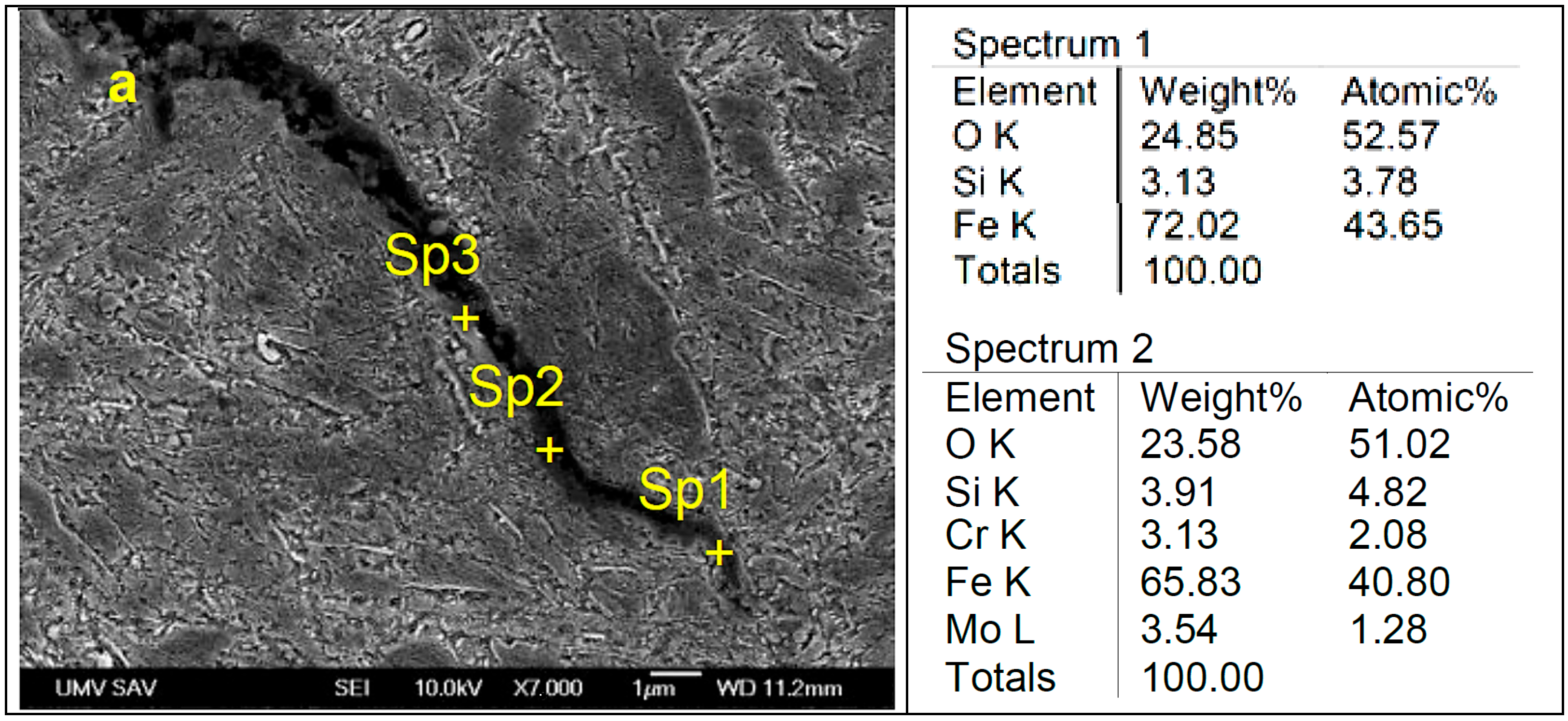
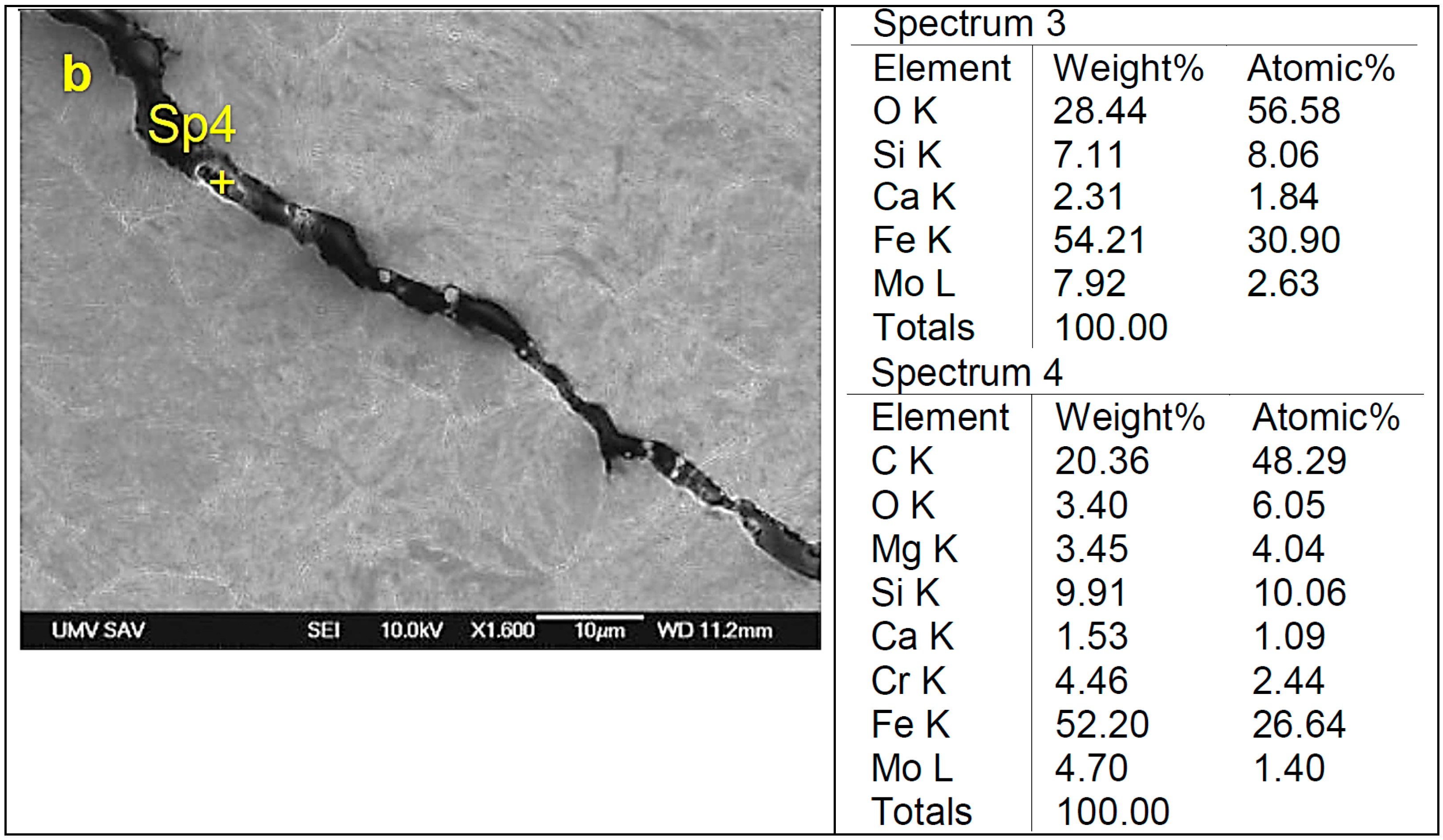
In the zones of sharp transitions in the corners of the molded parts, wedge-shaped branched cracks with sharp ends at the root of the crack were observed in the microstructure. Safety Lube 8715 release agent (Safety-Lube International, Inc., Indianapolis, IN, USA) was used to treat the molded parts that were in contact with the molten aluminum alloy during the die-casting process. In addition to the elements present in the matrix, oxygen, calcium, magnesium, and silicon were also present in the crack fillings (Scheme 1).

Scheme 1.
Sharp transition zones of flat molded parts. Semi-quantitative EDX microanalysis, (a) hot tearing end-section analysis, (b) analysis of the central part of the crack.
3.2. Quality of Evaluated Coatings
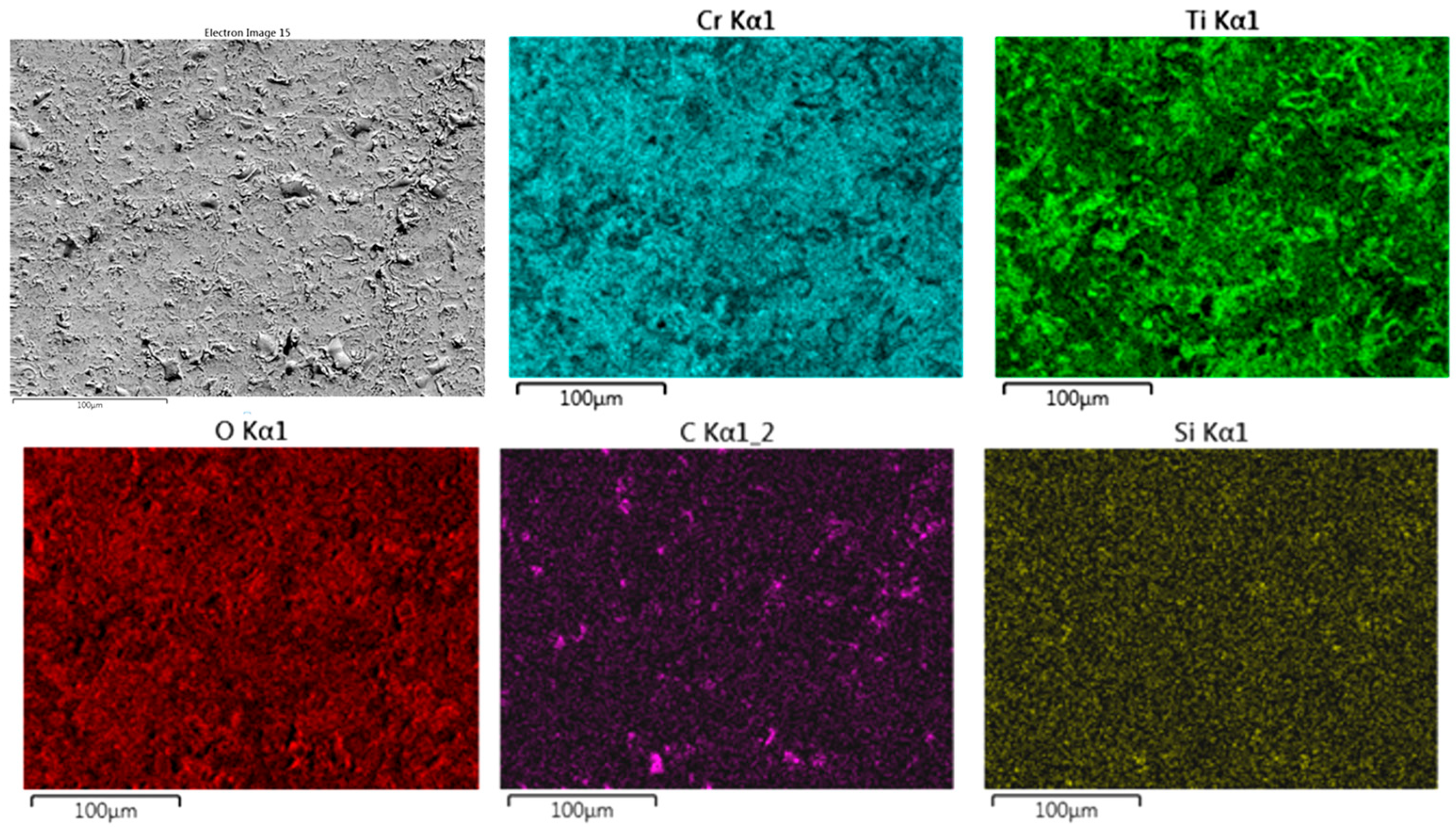
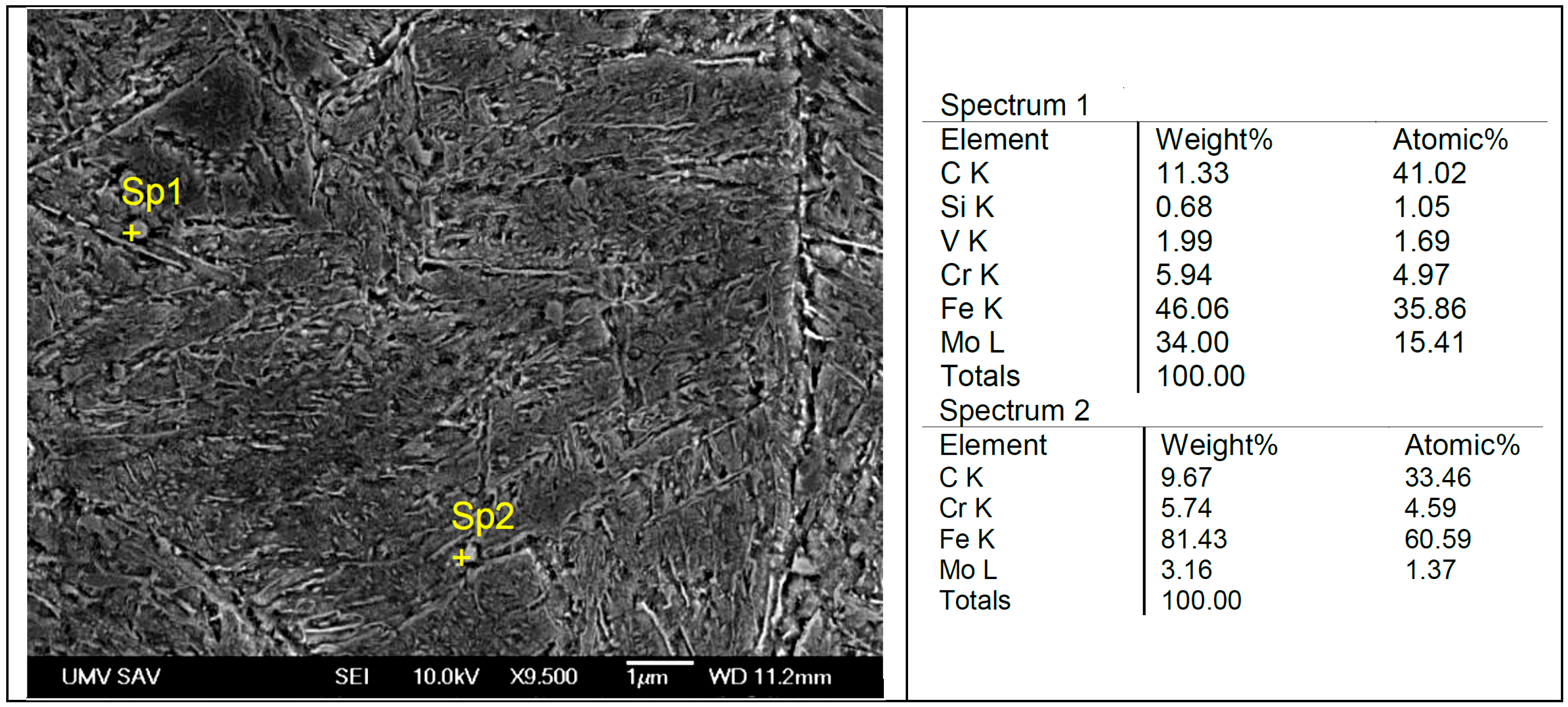
The microstructure outside the crack zones was formed by heterogeneous sorbite. Fine globular carbides based on Fe-Cr-V-Mo were isolated in the structure (Scheme 2). In the vicinity of cracks in areas of sharp transitions between the surfaces of mold components, the average microhardness value was 497 HV 0.5. The clamping force of the machines used for casting aluminum alloys with a horizontal filling chamber was 600 t. The entire structure of the mold and the mold parts were repeatedly stressed in the area of elastic deformations during the casting process. Short open cracks occurred in the areas of sharp transitions in the corners of the mold components, which were filled with oxides and pressed-in material from the separating agent during repeated casting cycles. As a result of elastic deformations during repeated casting cycles, the filling of the open cracks acts as a wedge that is gradually pressed into the material. Figure 1 shows the distribution of individual elements in the analyzed coating in the form of an EDX map. Each map represents the distribution of a specific element in a given field of view (~100 µm).
Scheme 2.
Microstructure of molded parts. Semi-quantitative EDX microanalysis.
Figure 1.
EDX (energy-dispersive X-ray) map of chemical elements from the surface of the Cr2O3-TiO2 coating.
Cr Kα1 (turquoise map): Chromium is predominantly and evenly distributed across the entire surface of the coating. It is the main component of the Cr2O3 phase, confirming the presence of this ceramic in the composite.
Ti Kα1 (green map): Titanium is also evenly distributed, but in smaller quantities than chromium. It confirms the presence of the TiO2 phase, and its distribution is homogeneous, indicating good mixing of titanium dioxide in the matrix.
O Kα1 (red map): The strong and evenly distributed presence of oxygen indicates the oxidic nature of both main phases (Cr2O3 and TiO2). Oxygen correlates with areas rich in Cr and Ti.
C Kα1_2 (purple map): Carbon occurs in smaller quantities, scattered across the entire surface. It may originate from surface contamination (e.g., carbon tape or spray residue).
Si Kα1 (yellow map): The presence of silicon is relatively low but uniform. It may be an impurity from the substrate, powder material, or contamination from the preparation process.
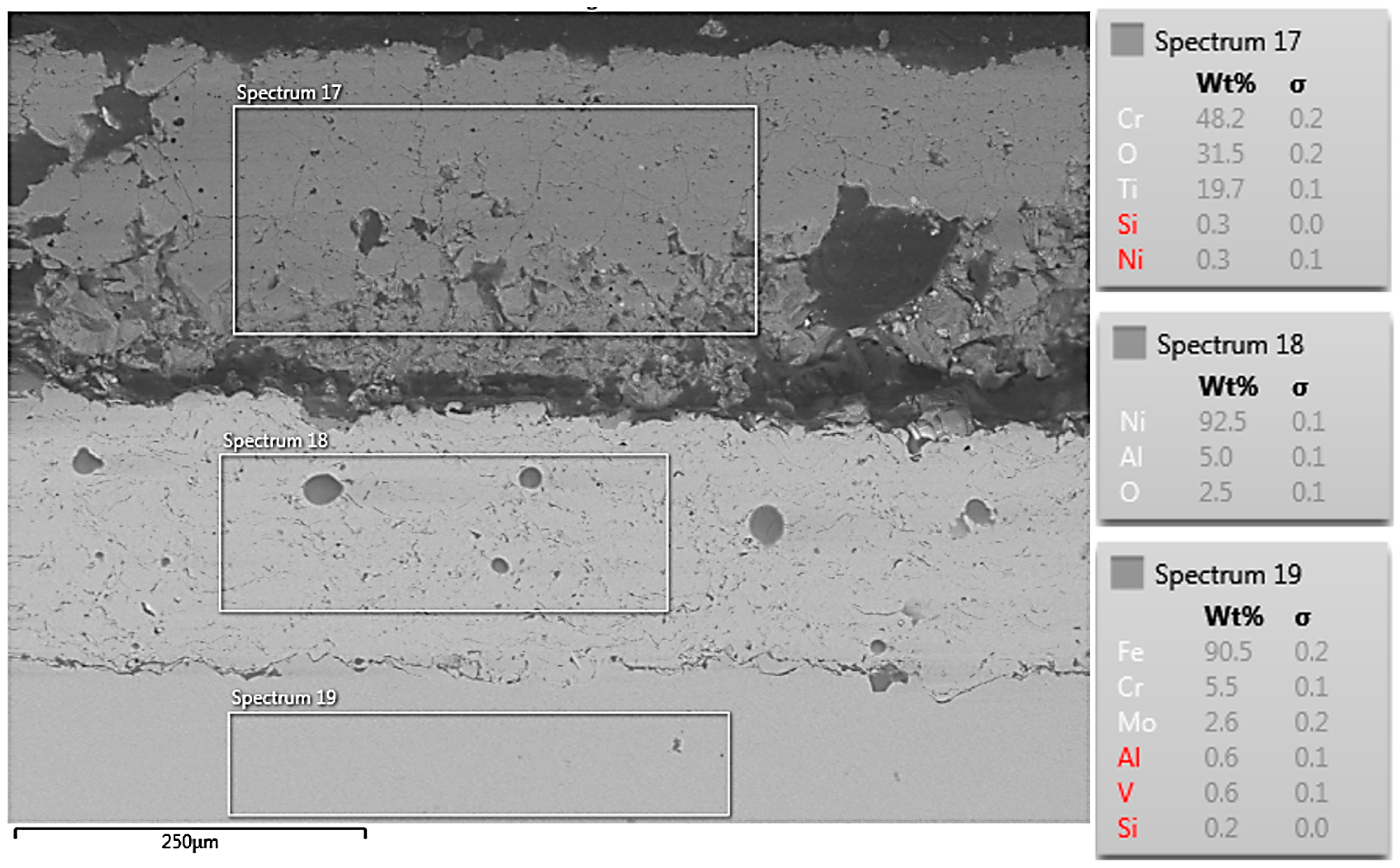
Figure 2 shows a cross-section of the clearly distinguishable three-layer architecture of the coating system. The coating consists of a top layer (Spectrum 17). This corresponds to a functional coating of Cr2O3–TiO2. It is fine-grained and slightly porous. The dark areas represent pores or inclusions. The Cr and Ti ratios correspond approximately to the declared ratio of Cr2O3:TiO2 = 75:25 (by weight). The presence of O confirms that this is an oxide coating. Trace amounts of Ni and Si indicate minor diffusion overlaps or contamination during the spraying/plasma process. The results of EDX spectrum No. 17 confirm the composition of the functional layer and show that the deposition process was carried out with minimal contamination. The intermediate layer (Spectrum 18) was applied as a bond coat (a layer that increases adhesion and transition between the ceramic coating and the metal substrate). An interlayer was applied to improve the adhesion of the functional layer to the substrate and to compensate for differences in thermal expansion. The composition of 95% nickel and 5% aluminum ensures good mechanical properties and oxidation resistance. The average particle size in this layer is 45 µm, with a minimum particle size of 22 µm. The bottom layer (Spectrum 19) represents the substrate material on which the entire coating was applied.
Figure 2.
EDX elemental analysis on a cross-section of Cr2O3-TiO2 coating, Ni-Al interlayer.
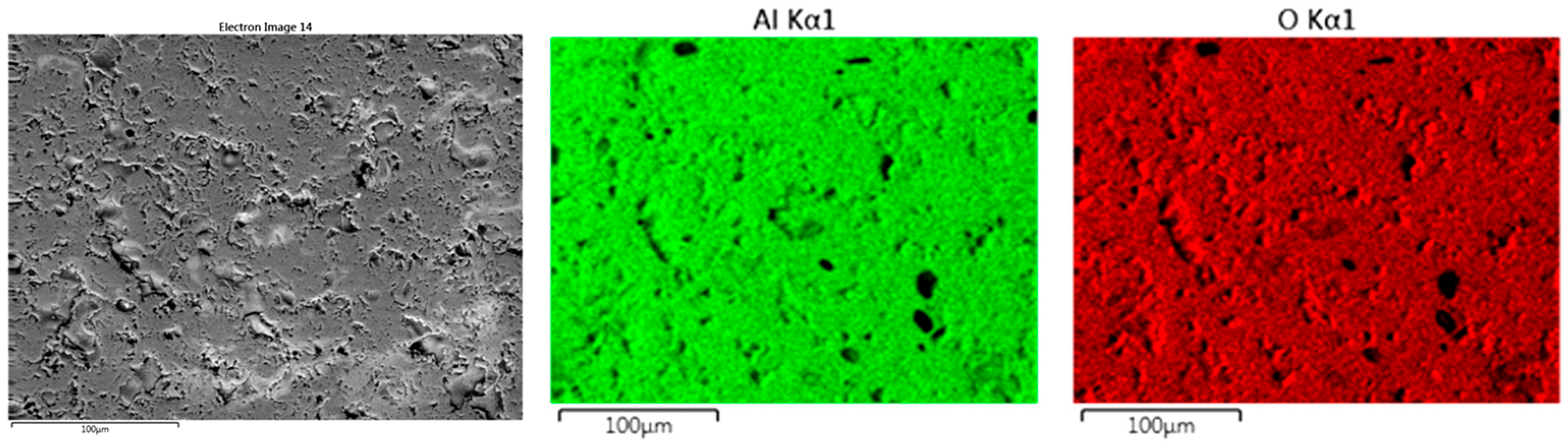
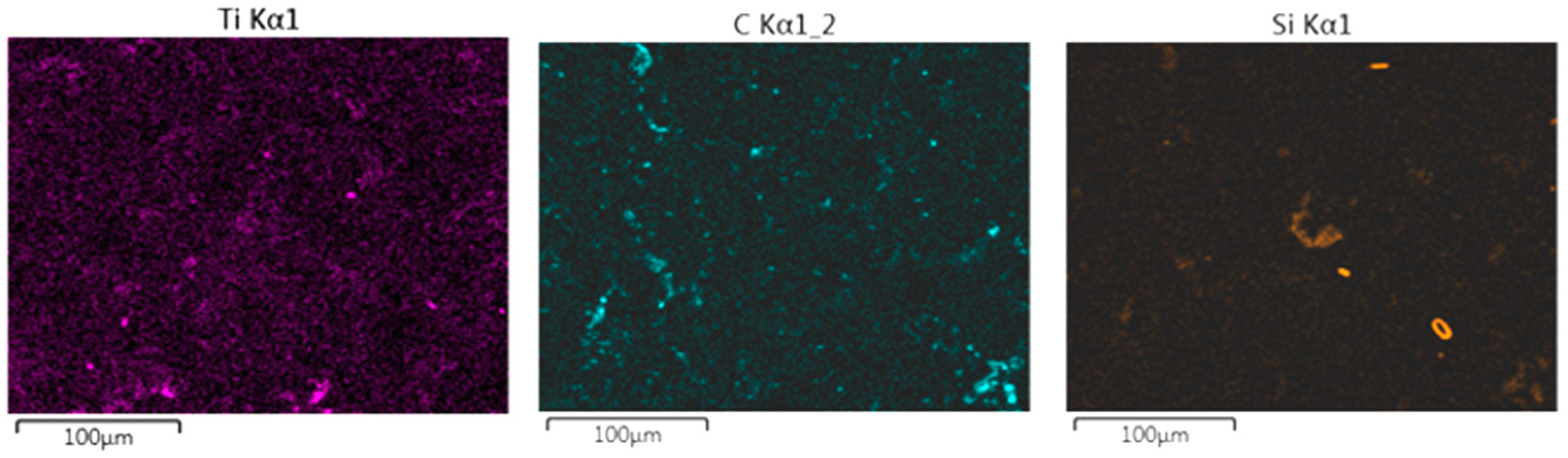
Figure 3 shows EDX maps of chemical elements obtained from the surface of the Al2O3–TiO2 coating. The upper image shows the morphology of the coating surface observed using an electron microscope. An uneven, porous surface with small depressions and graininess typical of thermally sprayed ceramic coatings can be seen. The distribution maps of individual elements confirm that the base matrix of the coating is aluminum oxide. The element aluminum (Al Kα1) is evenly distributed across the entire surface, indicating a homogeneous chemical composition of the surface. Oxygen (O Kα1) is also present in high concentrations, which corresponds to the oxidic nature of the material and its bond with Al and Ti. Titanium (Ti Kα1) occurs in lower concentrations, in line with the nominal composition of the coating (3 wt.% TiO2). The maps reveal its slight local enrichment in some areas, which may be related to the presence of small TiO2 particles (probably in the form of rutile or anatase) dispersed in the Al2O3 matrix. Carbon (C Kα1) shows only a weak signal, which can be attributed to residual surface contamination or the use of carbon adhesive tape during sample preparation. The elements silicon (Si Kα1) and calcium (Ca Kα1) were detected in trace amounts, indicating possible contamination from the environment or from the original powder material. Based on EDX analysis, it can be concluded that the Al2O3–TiO2 coating exhibits a homogeneous distribution of the main components (Al and O) with uniform incorporation of a small amount of TiO2, without significant segregation or formation of separate phases. This distribution promotes good chemical homogeneity and stability of the coating.

Figure 3.
EDX (energy-dispersive X-ray) map of chemical elements from the surface of the Al2O3-TiO2 coating.
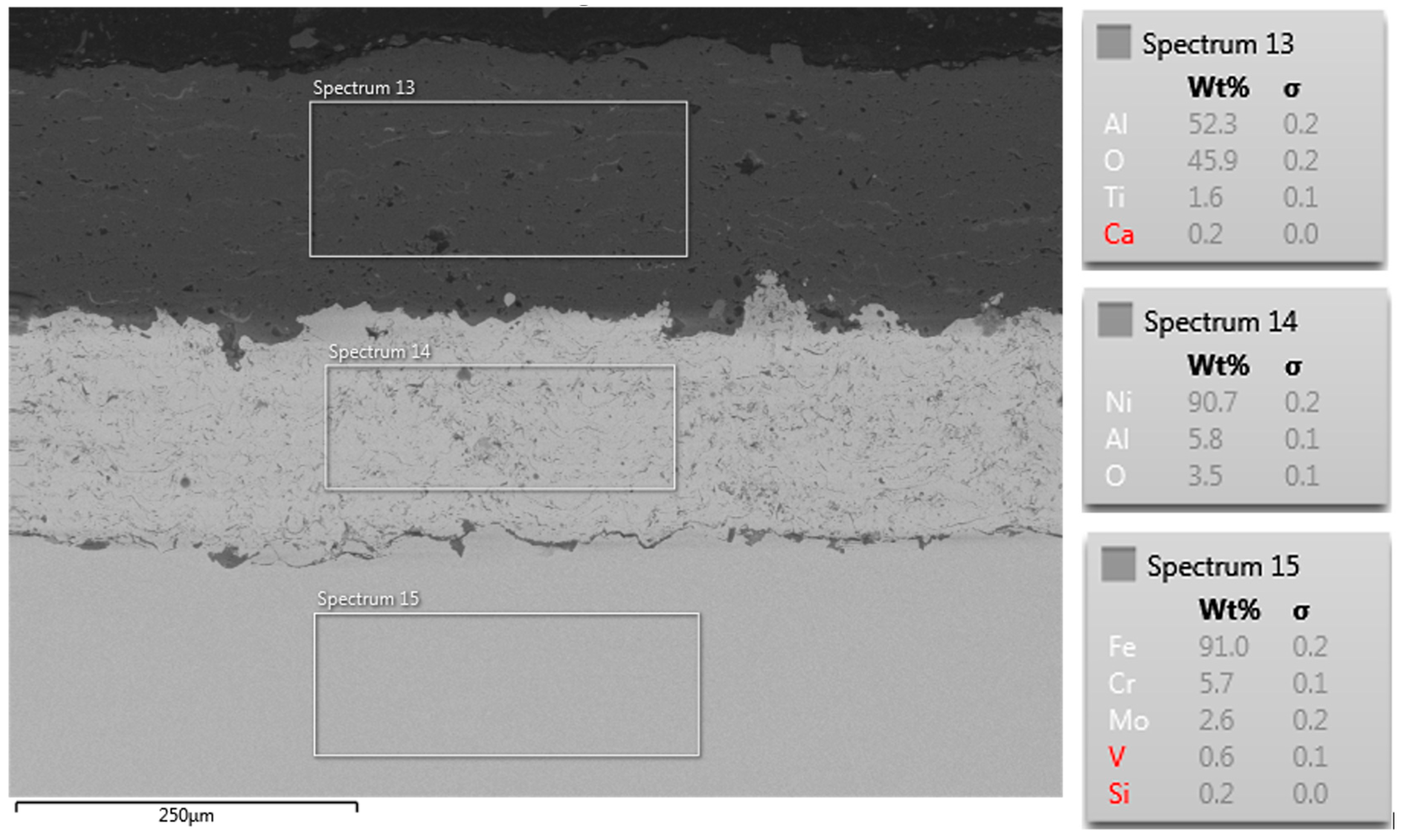
Figure 4 shows EDX elemental analysis on a cross-section of Al2O3-TiO2 coating with Ni-Al interlayer. The top (darker) layer corresponds to a ceramic coating of Al2O3–TiO2 with a thickness of 30–35 µm. The middle layer represents a Ni–Al interlayer approximately 45 µm thick. The bottom area is the base material of the substrate. The top layer (Spectrum 13) contains the dominant elements Al, O, and a smaller amount of Ti. The spectrum confirms the presence of aluminum oxide with a smaller proportion of titanium oxide. The composition corresponds to the declared Al2O3–TiO2 ratio (97–3). The interlayer (Spectrum 14) contains the elements Al, O, and Ni. They indicate partial mixing or diffusion of elements from the interlayer into the ceramic coating. This phenomenon may contribute to better adhesion of the coating to the substrate. The bottom layer (Spectrum 25) contains Ni and Al elements and, to a lesser extent, O. The spectrum confirms the metallic nature of the interlayer, which serves as an adhesive layer between the steel substrate and the ceramic coating. The presence of oxygen indicates partial oxidation during the HVOF process, which is common for this method. The coating has a layered structure without significant pores or cracks, indicating the high quality of the HVOF spray. The Al2O3–TiO2 ceramic layer provides high hardness and wear resistance, while the Ni–Al interlayer ensures good adhesion to the metal substrate. The diffuse interface between the layers indicates good metallurgical contact and minimization of delamination under thermal stress.
Figure 4.
EDX elemental analysis on a cross-section of Al2O3-TiO2 coating, Ni-Al interlayer.
3.3. Results of Tribological Testing
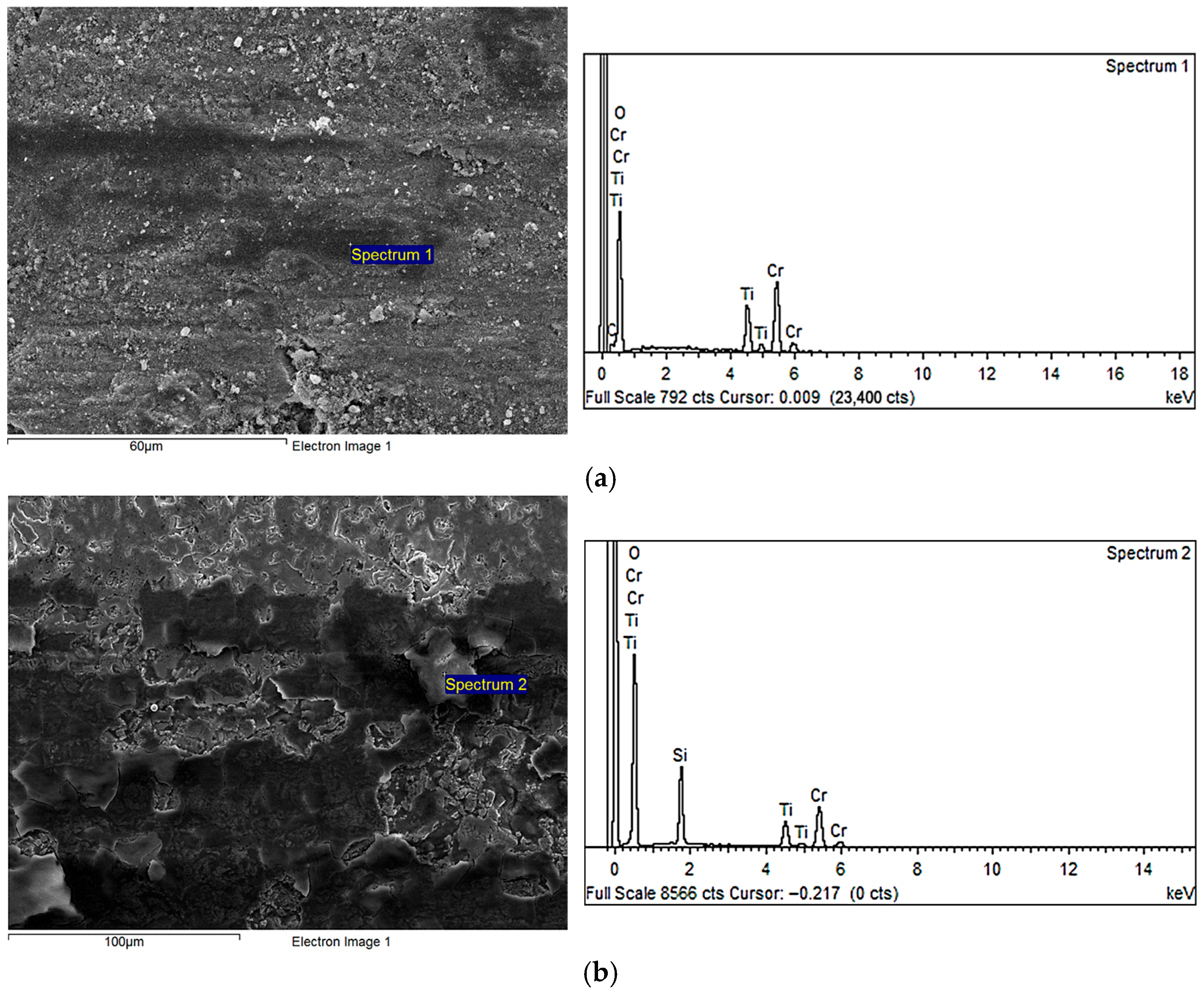
SEM analysis of the surface after the ball-on-disk tribological test (Figure 5) shows significant wear in the form of grooves and the presence of loose particles. Figure 5a shows the coating after the test at 20 °C and EDX analysis. Figure 5b shows the coating after the test at 250 °C and EDX analysis. EDS analysis in the Spectrum 1 and 2 area revealed a dominant presence of Cr, Ti, and O elements, which corresponds to the composition of the HVOF coating Cr2O3–TiO2. The results indicate that the surface was subjected to mechanical stress without significant transfer of foreign material from the opposite ball. Spectrum 1 confirms that the material of the original coating is still present on the surface. Scratches are visible in the direction of ball movement, which is typical for friction and wear. Small particles and loose material can be observed on the surface, as well as a deformed surface with signs of adhesive and abrasive wear. Both spectra confirm the presence of elements in the composite coating.
Figure 5.
SEM analysis of the surface after ball-on-disk tribological testing for Cr2O3–TiO2 coating (a) 20 °C; (b) 250 °C.
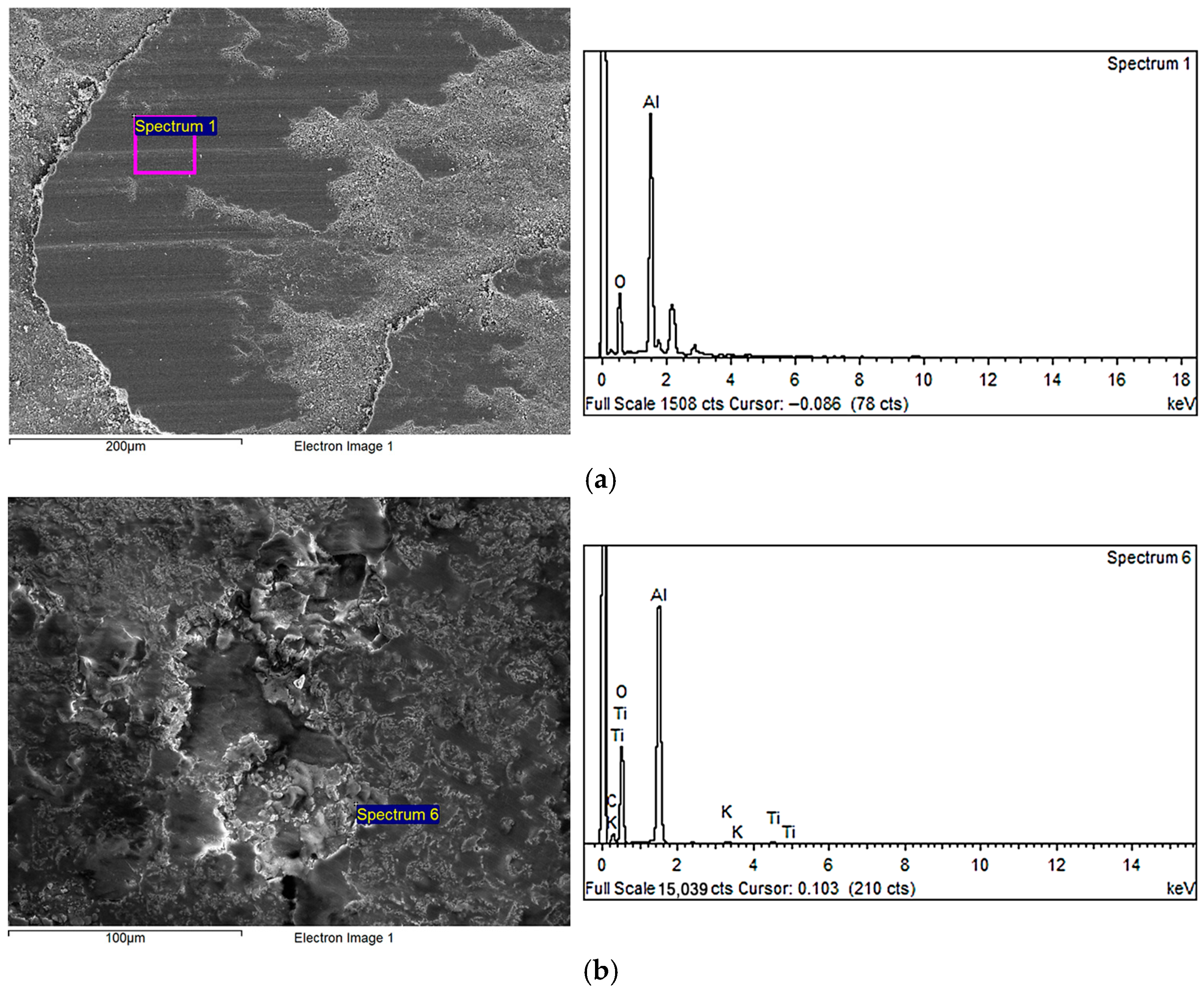
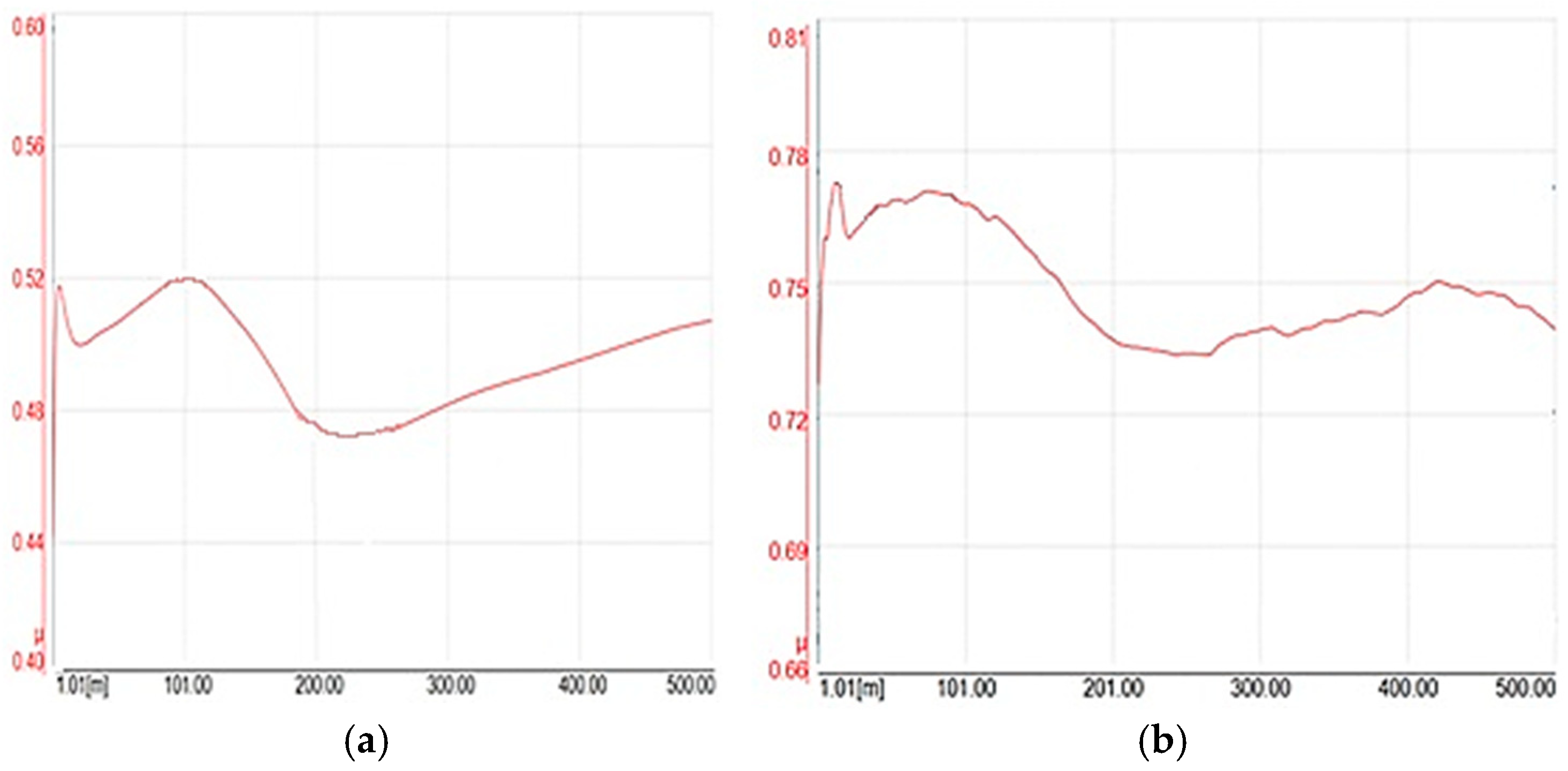
Figure 6a,b shows an SEM image of the surface of the Al2O3-TiO2 ceramic coating after a ball-on-disk test. Traces of contact with the counterpiece, possible local particle removal, and changes in surface morphology are visible. Different areas of the structure are visible—smoother (worn) and rougher (original coating). EDS analysis in the Spectrum 1 area revealed a dominant presence of Al and O elements, which corresponds to the composition of the HVOF coating. The presence of Ti was not detected as its representation in the coating is minimal. In both coatings, the test body did not penetrate into the interlayer area or the base material, which confirms the high quality of the evaluated coatings. Figure 7 and Figure 8 show the friction coefficient curves. The COF value is plotted on the Y-axis, while the sliding distance, in meters, is plotted on the X-axis.
Figure 6.
SEM analysis of the surface of Al2O3–TiO2 coating after tribological testing using the ball-on-disc method at (a) 20 °C and (b) 250 °C.
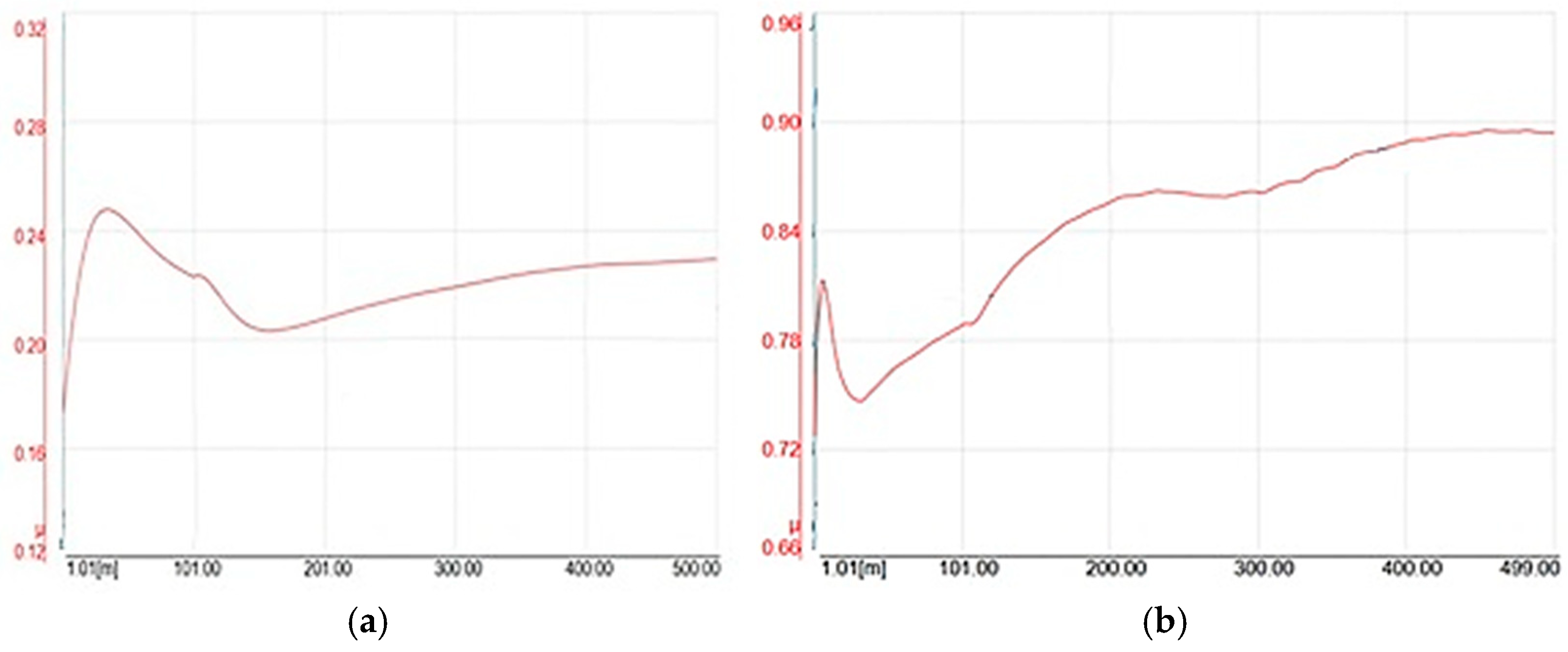
Figure 7.
Friction coefficients curve for Al2O3–TiO2 coating at (a) 20 °C and (b) 250 °C.
Figure 8.
Friction coefficients curve for Cr2O3 –TiO2 coating at (a) 20 °C and (b) 250 °C.
Figure 7a shows friction coefficients curve for Al2O3–TiO2 coating at 20 °C—the initial value of µ ranges from 0.22 to 0.25, which corresponds to the typical range for ceramic oxide coatings in a dry environment. After a brief initial increase, the coefficient value decreases (tribological “running-in” of the surface) and then stabilizes at approximately 0.23. The curve has minor fluctuations, indicating stable friction and good adhesion between the coating surface and the sliding material. The dominant friction mechanisms at this temperature are abrasive and adhesive processes between Al2O3 microparticles, without significant thermochemical changes.
Figure 7b shows friction coefficients curve for Al2O3–TiO2 coating at 250 °C—the initial µ is higher (around 0.88–0.90) and, after a brief drop (to ~0.70), there is a gradual increase until it stabilizes at around 0.90. The curve shows more pronounced fluctuations, which indicates thermal activation of tribochemical processes. At elevated temperatures, the surface layer softens, oxidation films form, and adhesion between the coating and the sliding body may increase. These effects increase the overall resistance to movement and, thus, the resulting coefficient of friction.
Figure 8a shows friction coefficients curve for Cr2O3–TiO2 coating at 20 °C—the initial friction coefficient value is approximately 0.52. At the beginning, a short increase can be seen, followed by a decrease to a value of around 0.45. The value then stabilizes slightly and gradually rises again to approximately 0.49–0.50 at the end of the measurement (at a track length of around 500 m). The curve indicates that friction stabilizes after an initial “running-in” period.
Figure 8b shows friction coefficients curve for Cr2O3–TiO2 coating at 250 °C—the initial friction coefficient value is higher, around 0.75. At the beginning, there is a short increase above 0.78, followed by a slight decrease in friction, which stabilizes in the range of 0.72–0.75. Overall, the curve fluctuates slightly, but the values remain higher than at 20 °C.
Specific wear rates (W) were calculated in terms of the volume loss (V) per distance (L) and applied load (Fp) according to the standard ISO 20808:
The coefficient of friction (COF) of the Al2O3-TiO2 coating showed a significant increase from 0.279 to 0.831 with increasing temperature, see Table 4. This indicates reduced tribological stability of the Al2O3-TiO2 coating at higher temperatures. The COF of the Cr2O3-TiO2 coating increased from 0.539 to 0.755, which is a more moderate increase than that of Al2O3-TiO2. The Cr2O3 coating has a higher COF at room temperature than Al2O3, but better temperature stability. An increase in the wear rate of the Al2O3-TiO2 coating from 7.2 × 10⁻⁶ mm3/m·N to 143.2 × 10⁻⁶ mm3/m·N (~20-fold deterioration) was observed. Severe degradation at 250 °C may be due to embrittlement or degradation of the oxide layer. For the Cr2O3-TiO2 coating, the wear rate increased from 6.9 to 35.8 × 10⁻⁶ mm3/m·N (~5-fold deterioration). The Cr2O3 coating retains a significantly lower wear rate compared to Al2O3 at higher temperatures.
Table 4.
Coefficient of Friction and Wear Rate of the Investigated Materials.
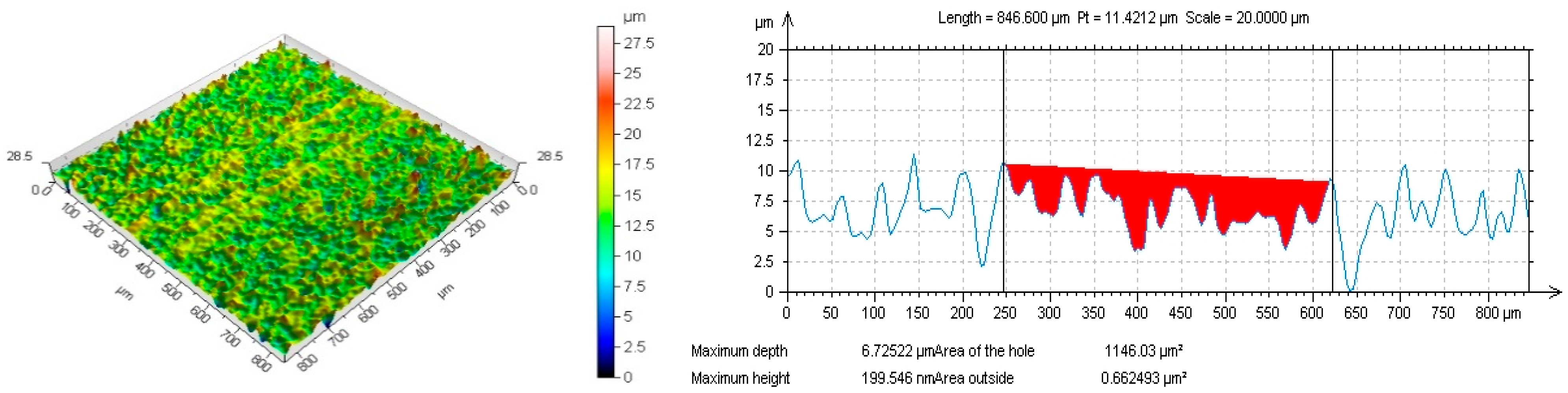
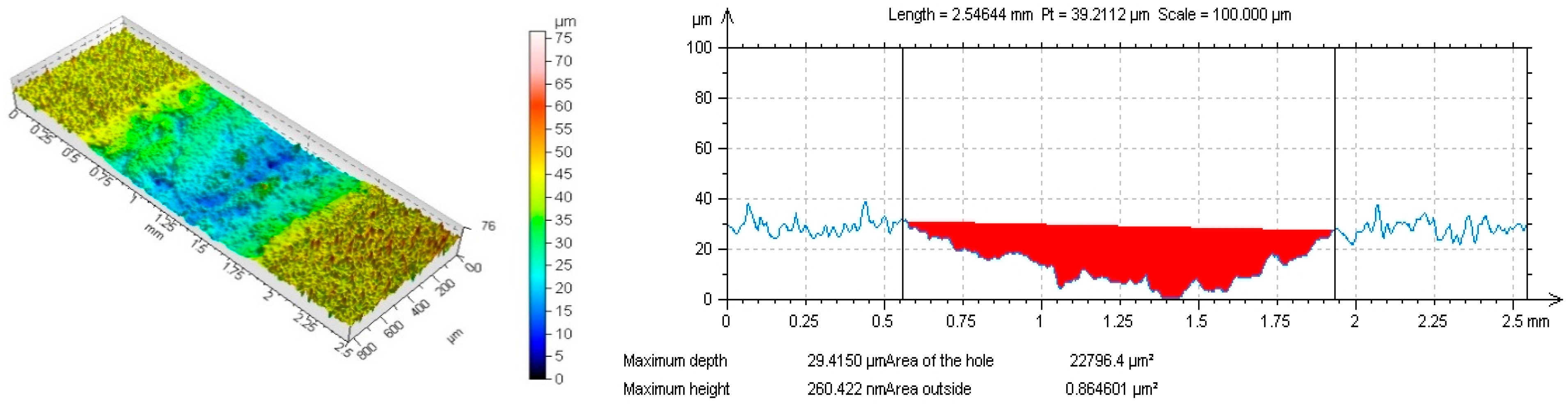
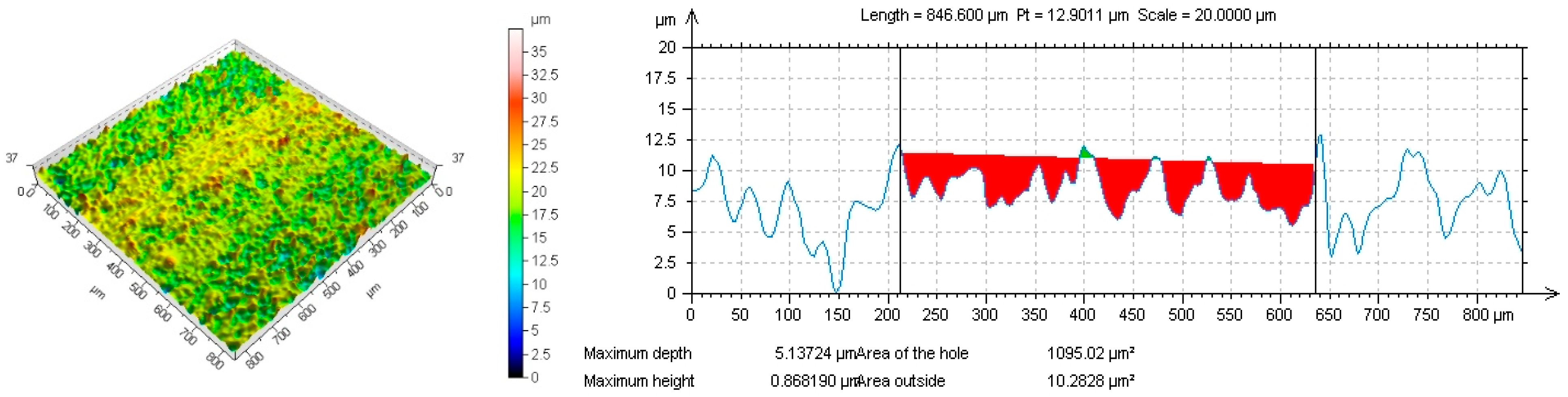
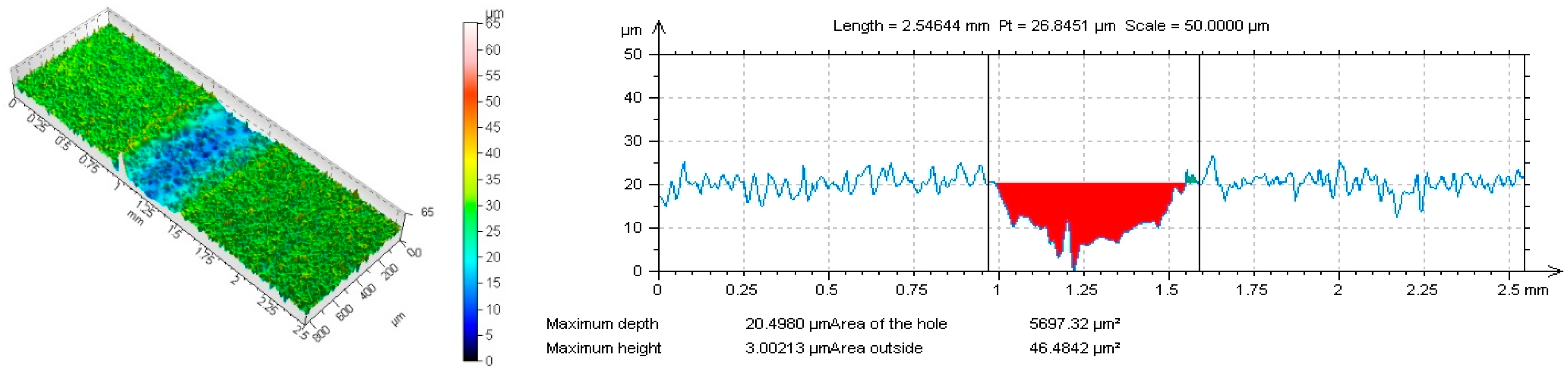
Ball-on-disk tribological tests performed on HVOF coatings of Al2O3 and Cr2O3 at temperatures of 20 °C and 250 °C revealed a significant influence of temperature on the coefficient of friction (COF) and wear rate. The Al2O3 coating exhibited low wear and COF at room temperature, but, at 250 °C, there was a dramatic deterioration in tribological properties—COF increased more than threefold and wear increased up to twentyfold. In contrast, the Cr2O3 coating had a higher COF already at 20 °C, but at elevated temperatures it maintained significantly better tribological properties than Al2O3, indicating its better thermal stability and suitability for applications at elevated temperatures. Figure 9, Figure 10, Figure 11 and Figure 12 show optical 3D analyses of the surfaces of the evaluated coatings. The horizontal axis (X) represents the length of the scanned path (846.6 µm), which is the width of the area through which the profile passes. The vertical axis (Y) represents the height deviations in the surface (µm)—i.e., the topography of the surface before and after wear. The red area represents the material that has been worn away—i.e., the worn groove. The blue curve shows the surface profile before and after wear—clearly showing the difference between the worn and unworn areas.
Figure 9.
Visualization of confocal images of wear traces for the coating Al2O3–TiO2 at 20 °C.
Figure 10.
Visualization of confocal images of wear traces for the coating Al2O3–TiO2 at 250 °C.
Figure 11.
Visualization of confocal images of wear traces for the coating Cr2O3-TiO2 at 20 °C.
Figure 12.
Visualization of confocal images of wear traces for the coating Cr2O3-TiO2 at 250 °C.
Figure 9 shows the results of a topographic analysis of the surface of an Al2O3–TiO2 ceramic coating after a tribological test at 20 °C. The left side shows a 3D map of the surface obtained using optical confocal microscopy. The color scale (ranging from approximately –2.5 µm to +2.5 µm) represents surface height differences—yellow and red areas correspond to protrusions, while blue and green areas represent depressions. The surface exhibits significant micro-roughness, which is typical for thermally sprayed coatings, and indicates uneven wear after contact during the tribotest. The right-hand side shows a 2D profile of the surface cut with the worn area highlighted (red). The profile shows the course of height changes along the measurement path with a maximum depression depth of approximately 19.55 µm and a maximum protrusion height of approximately 11.42 µm. The graph clearly shows that there is material loss due to wear in the central part of the profile. Overall, the analysis confirms that the Al2O3–TiO2 coating after the tribotest at room temperature shows local plastic deformations and material losses typical of mechanical wear processes in contact with an opposing body. The surface of the Al2O3–TiO2 coating is significantly more fragmented after the tribological test at a temperature of 250 °C, and a wider trace can be observed (Figure 10). Based on profilometric analysis of the worn trace after the tribological test, a maximum material loss of 6.72 µm was recorded in the middle part of the trace (between 250 and 600 µm). The wear area was 1146.03 µm2, indicating a more significant material loss in this part. Outside the main worn area, the surface was relatively uniform, with maximum deviations of up to 199.5 nm. These results indicate localized adhesive or abrasive wear with a slight profile drop in the surface.
The tribological test of the Cr2O3-TiO2 coating was performed at 20 °C, Figure 11. The trace consists of several shallow grooves—mainly microabrasion (scoring). The surface remains relatively smooth, with fine peaks and no massive plastic flow. The low depth and small area of the trace are due to the high hardness and good resistance of the Cr2O3 coating. At 250 °C, the trace is characterized by deep erosion with plastic deformation and material deposits on the sides, Figure 12. Higher temperatures cause a reduction in the hardness of the coating and pin, leading to increased adhesive and oxidative wear. The larger footprint area and height of the edges indicate local melting or softening of the coating, or the formation of oxide layers with reduced adhesion. At 250 °C, the tribological footprint is significantly deeper, wider, and more extensive than at 20 °C.
Figure 11 shows the three-dimensional topography and cross-sectional profile of the Cr2O3–TiO2 coating after testing at 20 °C. The wear scar is shallow and well defined, with a maximum depth of about 19.95 µm and a relatively narrow affected zone. The edges of the track are smooth and no large-scale delamination or spallation is observed, which indicates predominantly mild abrasive wear with only limited cracking or pull-out of individual splats. Outside the wear track, the original coating roughness is largely preserved. The right-hand side shows a 2D profile of the surface cut with the worn area highlighted (red). The profile shows the course of height changes along the measurement path, with a maximum depression depth of approximately 19.95 µm and a maximum protrusion height of approximately 12.90 µm. The graph clearly shows that there is material loss due to wear in the central part of the profile. Overall, the analysis confirms that the Cr2O3-TiO2 coating after the tribotest at room temperature shows local plastic deformations and material losses typical of mechanical wear processes in contact with an opposing body. The surface of the Cr2O3-TiO2 coating is significantly more fragmented after the tribological test, at a temperature of 250 °C, and a wider trace can be observed (Figure 12). Based on profilometric analysis of the worn trace after the tribological test, a maximum material loss of 5.13 µm was recorded in the middle part of the trace (between 215 and 638 µm). The wear area was 1095.02 µm2, indicating a more significant material loss in this part. The surface within the wear track remains relatively smooth, with maximum height deviations of up to approximately 0.86 µm. These results indicate localized adhesive or abrasive wear with a slight profile drop in the surface. The increased temperature leads to a transition from a predominantly abrasive to an adhesive–oxidative wear mechanism, which reduces the resistance of the HVOF Cr2O3 coating. It causes a decrease in the microhardness of Cr2O3 (thermal softening of the binding matrix), an increase in friction between the pin and the coating (oxidation, material transfer), a deterioration in the bonding forces between the oxide particles and the substrate, and the possible formation of adhesive bridges, which causes greater material loss.
4. Conclusions
The paper presents the results of research aimed at verifying the possibility of creating renovation layers using HVOF coatings. Molds for high-pressure injection of Al alloys were analyzed after the end of their service life. Two types of coatings applied using HVOF technology were evaluated in the paper. Based on the tests carried out and analysis of the results, the following conclusions were made:
The analysis of wear on mold components focused on identifying degradation mechanisms in the sharp corners of mold components. Short open cracks formed in the sharp transition zones at the corners of the mold components, which were filled with oxides and pressed-in material from the separating agent during repeated casting cycles. As a result of elastic deformations during repeated casting cycles, the filling of open cracks acts as a wedge that is gradually pressed into the material. The choice of renovation technologies is primarily limited by the elimination of this degradation mechanism.
The intermediate layer was applied to improve the adhesion of the functional layer to the substrate and to compensate for the differences in thermal expansion. Distribution maps of the individual elements of both coatings confirm the homogeneous chemical composition of the coating surface. The distribution of elements promotes good chemical homogeneity and stability of the coatings. The Ni–Al interlayer ensured good adhesion to the metal substrate. Similar multilayer systems with an HVOF-sprayed Al2O3–TiO2 top coat and a NiAl bond coat on Al–Si casting alloys have been shown to form low-porosity, well-adhering coatings with improved resistance to erosive wear compared with uncoated substrates [28]. The combination of these two oxides achieves synergy between hardness and toughness. Delamination under thermal stress can be expected to be minimized.
The ball-on-disk tribological test confirmed the high quality of the evaluated coatings. After the test, scratches were visible in the direction of the ball’s movement, but there was no penetration of the counterpiece into the interlayer or base material. Loose material was observed on the surface, as well as a deformed surface with signs of adhesive and abrasive wear. At room temperature (20 °C), both coatings show low wear, with a lower value for the Al2O3 coating. At elevated temperatures (250 °C), the Al2O3 coating is significantly more affected, with an increase in friction and wear observed, making the coating less suitable for high-temperature applications. The Cr2O3 coating is more stable and has better temperature resistance. At 20 °C, the Al2O3–TiO2 coating exhibits a lower COF (~0.28) than the base material (0.5), whereas the Cr2O3–TiO2 coating shows a slightly higher COF (~0.54). Overall, the coatings provide either a lower coefficient of friction (Al2O3–TiO2) or a markedly lower wear rate at comparable COF (Cr2O3–TiO2) relative to the base material. This advantage of chromia-based coatings is consistent with published tribological studies, where thermally sprayed Cr2O3 and Cr2O3-based composite coatings exhibited substantially lower specific wear rates than steel counter-bodies under dry sliding, while maintaining moderate friction coefficients [48].
In the context of the automotive industry, it can be said that the combination of high-pressure aluminum alloy injection technology and innovative mold surface treatments, such as HVOF ceramic coatings, represents a promising way to increase the efficiency, reliability, and sustainability of manufacturing processes. Previous work on thermal-sprayed coatings for aluminum injection mold tooling in the automotive sector has similarly shown that HVOF-deposited hard coatings can provide smooth, dense, and well-bonded surfaces without degrading the fatigue life of aluminum substrates, thereby extending tool life and enabling shorter cycle times [49].
Author Contributions
Concept, J.B. (Janette Brezinová) and M.F.; methodology, J.B. (Janette Brezinová), J.V., J.B. (Jakub Brezina) and V.P.; software, V.P.; validation, M.F., J.B. (Jakub Brezina) and J.V.; formal analysis, M.F. and E.N.-M., investigation, J.B. (Janette Brezinová) and V.P.; sources, J.B. (Jakub Brezina); data management, J.V. and E.N.-M.; writing—preparation of the original draft, J.B. (Janette Brezinová) and M.F.; writing—revision and editing, J.B. (Janette Brezinová); visualization, J.B. (Jakub Brezina); supervision, J.V.; project management, J.B. (Janette Brezinová); fundraising, J.B. (Janette Brezinová). All authors have read and agreed to the published version of the manuscript.
Funding
This research is the result of a project supported by the Slovak Research and Development Agency, the VEGA Scientific Grant Agency “Possibilities of applying laser additive technologies in the restoration of functional surfaces” (1/0597/23), the Cultural and Educational Grant Agency KEGA “Hybrid education of students for the current needs of the automotive industry” (024TUKE-4/2025), “Innovative approaches to the restoration of functional surfaces by laser surface treatment” (APVV-20-0303) and “Integrity of protective multilayers under high-temperature exposure conditions” (APVV-APVV-24-0381). Visegrad Fund fellowship No. 62510252—Development of cooperation in the field of research of renovation tech-nologies and increasing the service life of functional surfaces of products.
Data Availability Statement
The original contributions presented in this study are included in the article. Further inquiries can be directed to the corresponding author.
Conflicts of Interest
The authors declare no conflicts of interest.
References
- Bonollo, F.; Gramegna, N.; Timelli, G. High-Pressure Die-Casting: Contradictions and Challenges. JOM 2015, 67, 901–908. [Google Scholar] [CrossRef]
- Lordan, E.; Zhang, Y.; Dou, K.; Jacot, A.; Tzileroglou, C.; Wang, S.; Wang, Y.; Patel, J.; Lazaro-Nebreda, J.; Zhou, X.; et al. High-Pressure Die Casting: A Review of Progress from the EPSRC Future LiME Hub. Metals 2022, 12, 1575. [Google Scholar] [CrossRef]
- Campbell, J. Complete Casting Handbook: Metal Casting Processes, Metallurgy, Techniques and Design, 2nd ed.; Butterworth-Heinemann: Oxford, UK, 2015; ISBN 9780444635099. [Google Scholar]
- Polmear, I.; StJohn, D.; Nie, J.F.; Qian, M. Light Alloys: Metallurgy of the Light Metals, 5th ed.; Butterworth-Heinemann: Oxford, UK, 2017; ISBN 9780080994307. [Google Scholar]
- Huang, M.; Zhou, Q.; Wang, J.; Li, S. Die Casting Die Design and Process Optimization of Aluminum Alloy Gearbox Shell. Materials 2021, 14, 3999. [Google Scholar] [CrossRef]
- Niu, Z.; Liu, G.; Li, T.; Ji, S. Effect of High Pressure Die Casting on the Castability, Defects and Mechanical Properties of Aluminium Alloys in Extra-Large Thin-Wall Castings. J. Mater. Process. Technol. 2022, 303, 117525. [Google Scholar] [CrossRef]
- Blondheim, D.; Monroe, A. Macro Porosity Formation: A Study in High Pressure Die Casting. Int. J. Met. 2021, 16, 330–341. [Google Scholar] [CrossRef]
- Soares, G.; Neto, R.; Madureira, R.; Soares, R.; Silva, J.; Silva, R.P.; Araújo, L. Characterization of Al Alloys Injected through Vacuum-Assisted HPDC and Influence of T6 Heat Treatment. Metals 2023, 13, 389. [Google Scholar] [CrossRef]
- Gulizia, S.; Jones, D.; Jahedi, M.Z.; Kearney, T.; Koltun, P. Thermal Fatigue Studies Using HF Induction Heating of Die Materials for Light Metals Casting. Mater. Sci. Forum 2009, 618, 357–360. [Google Scholar] [CrossRef]
- Thirugnanam, M. Modern High Pressure Die-Casting Processes for Aluminium Castings. Trans. Indian Foundry Congr. 2013, 61, 1–7. [Google Scholar]
- Vann, J. From Simulation to Process Automation—“Define It And Do It”. Die Cast. Eng. 2011, 55, 32–37. [Google Scholar]
- Karaoglanli, A.C.; Oge, M.; Doleker, K.M.; Hotamis, M. Comparison of Tribological Properties of HVOF Sprayed Coatings with Different Composition. Surf. Coatings Technol. 2017, 318, 299–308. [Google Scholar] [CrossRef]
- Berger, L.M. Application of Hardmetals as Thermal Spray Coatings. Int. J. Refract. Met. Hard Mater. 2015, 49, 350–364. [Google Scholar] [CrossRef]
- Albaladejo-Fuentes, V.; Martos, A.M.; Silvello, A.; Dosta, S.; Sanchez, J.; Cano, I.G. Coatings, Surface Modifications, Spray Techniques (Cold Spray, HVOF/HVAF). In Encyclopedia of Materials: Metals and Alloys; Elsevier: Amsterdam, The Netherlands, 2021; ISBN 9780128197264. [Google Scholar]
- Tan, J.C.; Looney, L.; Hashmi, M.S.J. Component Repair Using HVOF Thermal Spraying. J. Mater. Process. Technol. 1999, 92–93, 203–208. [Google Scholar] [CrossRef]
- Davis, J.R. Handbook of Thermal Spray Technology; ASM International: Almere, The Netherlands, 2004; ISBN 0871707950. [Google Scholar]
- Fauchais, P.L.; Heberlein, J.V.R.; Boulos, M.I. Thermal Spray Fundamentals; Springer: New York, NY, USA, 2014; ISBN 978-0-387-28319-7. [Google Scholar]
- Pawlowski, L. The Science and Engineering of Thermal Spray Coatings, 2nd ed.; Wiley: Hoboken, NJ, USA, 2008; ISBN 9780471490494. [Google Scholar]
- Fauchais, P.; Vardelle, M.; Vardelle, A.; Goutier, S. What Do We Know, What Are the Current Limitations of Suspension Plasma Spraying? J. Therm. Spray Technol. 2015, 24, 1120–1129. [Google Scholar] [CrossRef]
- Lima, R.S.; Marple, B.R. Enhanced Ductility in Thermally Sprayed Titania Coating Synthesized Using a Nanostructured Feedstock. Mater. Sci. Eng. A 2005, 395, 269–280. [Google Scholar] [CrossRef]
- Lima, R.S.; Moreau, C.; Marple, B.R. HVOF-Sprayed Al2O3-TiO2 Coatings Using Hybrid (Nano+Submicron) Powders: An Enhanced Wear Performance. In Proceedings of the Thermal Spray International Thermal Spray Conference, Beijing, China, 14–16 May 2007. [Google Scholar]
- Ksiazek, M.; Boron, L.; Tchorz, A. Microstructure, Mechanical Properties and Wear Behavior of High-Velocity Oxygen-Fuel (HVOF) Sprayed (Cr3C2-NiCr+Al) Composite Coating on Ductile Cast Iron. Coatings 2019, 9, 840. [Google Scholar] [CrossRef]
- Michalak, M.; Latka, L.; Sokolowski, P.; Toma, F.L.; Myalska, H.; Denoirjean, A.; Ageorges, H. Microstructural, Mechanical and Tribological Properties of Finely Grained Al2O3 Coatings Obtained by SPS and S-HVOF Methods. Surf. Coatings Technol. 2020, 404, 126463. [Google Scholar] [CrossRef]
- Gardon, M.; Guilemany, J.M. Milestones in Functional Titanium Dioxide Thermal Spray Coatings: A Review. J. Therm. Spray Technol. 2014, 23, 577–595. [Google Scholar] [CrossRef]
- Babu, P.S.; Madhavi, Y.; Krishna, L.R.; Sivakumar, G.; Rao, D.S.; Padmanabham, G. Thermal Spray Coatings for Erosion–Corrosion Resistant Applications. Trans. Indian Inst. Met. 2020, 73, 2141–2159. [Google Scholar] [CrossRef]
- Singh, V.; Kumar, S.; Ratha, D. Synergistic Effect of the Addition of TiO 2 Feedstock on Solid Particle Erosion of Ni/Al2O3 and Ni/Cr2O3 Coatings. Wear 2019, 426-427, 250–257. [Google Scholar] [CrossRef]
- Gui, M.; Eybel, R.; Radhakrishnan, S.; Monerie-Moulin, F.; Raininger, R.; Taylor, P. Residual Stress in HVOF Thermally Sprayed WC-10Co-4Cr Coating in Landing Gear Application. J. Therm. Spray Technol. 2019, 28, 1295–1307. [Google Scholar] [CrossRef]
- Ksiazek, M.; Boron, L.; Tchorz, A. Study on the Microstructure, Mechanical Properties, and Erosive Wear Behavior of HVOF Sprayed Al2O3-15 wt.%TiO2 Coating with NiAl Interlayer on Al-Si Cast Alloy. Materials 2020, 13, 4122. [Google Scholar] [CrossRef]
- Gildersleeve, E.J.; Viswanathan, V.; Lance, M.J.; Haynes, J.A.; Pint, B.A.; Sampath, S. Role of Bond Coat Processing Methods on the Durability of Plasma Sprayed Thermal Barrier Systems. Surf. Coat. Technol. 2019, 375, 782–792. [Google Scholar] [CrossRef]
- Niccolai, F.; Bardi, U.; Carrafiello, L.; Placidi, M.; Rizzi, G.; Scrivani, A. Innovative Methods for the Characterization of Thermal Barrier Coatings. In Proceedings of the Thermal Spray International Thermal Spray Conference, Essen, Germany, 4–6 March 2002. [Google Scholar]
- Kalliopi, K.; Aligizaki, D. Surface Engineering for Corrosion and Wear Resistance. Anti-Corrosion Methods Mater. 2004, 51, 62. [Google Scholar] [CrossRef]
- Khadem, M.; Penkov, O.V.; Yang, H.K.; Kim, D.E. Tribology of Multilayer Coatings for Wear Reduction: A Review. Friction 2017, 5, 248–262. [Google Scholar] [CrossRef]
- Gildersleeve, E.J.; Vaßen, R. Thermally Sprayed Functional Coatings and Multilayers: A Selection of Historical Applications and Potential Pathways for Future Innovation. J. Therm. Spray Technol. 2023, 32, 778–817. [Google Scholar] [CrossRef]
- Quenard, S.; Roumanie, M. A Simple Method for a Protective Coating on Stainless Steel against Molten Aluminum Alloy Comprising Polymer-Derived Ceramics, Oxides and Refractory Ceramics. Materials 2021, 14, 1519. [Google Scholar] [CrossRef] [PubMed]
- López, A.J.; Rams, J. Protection of Carbon Steel Against Molten Aluminum Attack and High Temperature Corrosion Using High Velocity Oxygen-Fuel WC-Co Coatings. Surf. Coatings Technol. 2015, 262, 123–133. [Google Scholar] [CrossRef]
- Özbek, Y.Y.; Uçar, V.; Demirkiran, A.S. Tribological Properties of MgZrO3 Coatings Deposited by Plasma Spraying. Kov. Mater. 2008, 46, 27–32. [Google Scholar]
- Kaur, M.; Singh, H.; Prakash, S. Some Observations Regarding Erosion-Corrosion Performance of HVOF-Sprayed Cr3C2- NiCr and Cr3C2- NiCr-(25) WC-Co Coatings in Actual Boiler Environment. Adv. Mater. Res. 2007, 26-28, 1345–1348. [Google Scholar] [CrossRef]
- Nyamuchiwa, K.; Palad, R.; Panlican, J.; Tian, Y.; Aranas, C. Recent Progress in Hybrid Additive Manufacturing of Metallic Materials. Appl. Sci. 2023, 13, 8383. [Google Scholar] [CrossRef]
- Mehta, A.; Vasudev, H.; Singh, S.; Prakash, C.; Saxena, K.K.; Linul, E.; Buddhi, D.; Xu, J. Processing and Advancements in the Development of Thermal Barrier Coatings: A Review. Coatings 2022, 12, 1318. [Google Scholar] [CrossRef]
- Du, J.; Li, Y.; Li, F.; Lu, H.; Ran, X.; Zhang, X.; Qi, X. Numerical and Experimental Analysis of Temperature Field and Mechanical Analysis for the Multi-Layer Cr3C2-NiCr Coating Deposited by HVOF. J. Alloys Compd. 2022, 889, 161656. [Google Scholar] [CrossRef]
- Li, C.J.; Ohmori, A. Relationships Between the Microstructure and Properties of Thermally Sprayed Deposits. J. Therm. Spray Technol. 2002, 11, 365–374. [Google Scholar] [CrossRef]
- Meghwal, A.; Anupam, A.; Murty, B.S.; Berndt, C.C.; Kottada, R.S.; Ang, A.S.M. Thermal Spray High-Entropy Alloy Coatings: A Review. J. Therm. Spray Technol. 2020, 29, 857–893. [Google Scholar] [CrossRef]
- Clyne, T.W.; Gill, S.C. Residual Stresses in Thermal Spray Coatings and Their Effect on Interfacial Adhesion: A Review of Recent Work. J. Therm. Spray Technol. 1996, 5, 401–418. [Google Scholar] [CrossRef]
- Šarga, P.; Brezinová, J.; Viňáš, J.; Pástor, M.; Brezina, J. Impact of Cladding Technology on Residual Stresses Within the Renovation of High Pressure Die Casting Molds. Metals 2022, 12, 388. [Google Scholar] [CrossRef]
- Dadic, Z.; Živkovic, D.; Catipovic, N.; Bilic, J. High Pressure Die Casting Mould Repair Technologies. In Proceedings of the Mechanical Technology and Structural Materials, Split, Croatia, 21–23 September 2017. [Google Scholar]
- EN ISO 6507-1:2018; Metallic Materials—Vickers Hardness Test—Part 1: Test Method. CEN-CENELEC Management Centre: Brussels, Belgium, 2018.
- ISO 20808:2004; Fine Ceramics (Advanced Ceramics, Advanced Technical Ceramics)—Determination of Friction and Wear Characteristics of Monolithic Ceramics by Ball-on-Disc Method. ISO (the International Organization for Standardization): Geneva, Switzerland, 2004.
- Bastakys, L.; Marcinauskas, L.; Milieška, M.; Grigaliūnas, M.; Matkovič, S.; Aikas, M. Tribological Properties of Chromia and Chromia Composite Coatings Deposited by Plasma Spraying. Coatings 2022, 12, 1035. [Google Scholar] [CrossRef]
- Gibbons, G.J.; Hansell, R.G. Thermal-Sprayed Coatings on Aluminium for Mould Tool Protection and Upgrade. J. Mater. Process. Technol. 2008, 204, 184–191. [Google Scholar] [CrossRef]
Disclaimer/Publisher’s Note: The statements, opinions and data contained in all publications are solely those of the individual author(s) and contributor(s) and not of MDPI and/or the editor(s). MDPI and/or the editor(s) disclaim responsibility for any injury to people or property resulting from any ideas, methods, instructions or products referred to in the content. |
© 2025 by the authors. Licensee MDPI, Basel, Switzerland. This article is an open access article distributed under the terms and conditions of the Creative Commons Attribution (CC BY) license (https://creativecommons.org/licenses/by/4.0/).