Article

Kinetic Simulation of Gas-Particle Injection into the Molten Lead

by
Victor Hugo Gutiérrez Pérez
1,*,
Seydy Lizbeth Olvera Vázquez
1,*,
Alejandro Cruz Ramírez
2,
Ricardo Gerardo Sánchez Alvarado
2,
Jorge Enrique Rivera Salinas
3,
Mario Cesar Ordoñez Gutiérrez
1 and
Mercedes Paulina Chávez Diaz
4
1
Departamento de Formación Profesional Específica, Instituto Politécnico Nacional, Unidad Profesional Interdisciplinaria de Ingeniería Campus Zacatecas (UPIIZ), Blvd. del Bote s/n, Cerro del Gato, Ejido la Escondida, Ciudad Administrativa, Zacatecas 98160, Mexico
2
Departamento de Ingeniería en Metalurgia y Materiales, Instituto Politécnico Nacional, Escuela Superior de Ingeniería Química e Industrias Extractivas, ESIQIE, UPALM, Ciudad de México 07738, Mexico
3
Departamento de Procesos de Transformación, Centro de Investigación en Química Aplicada, CIQA, Saltillo 25294, Mexico
4
Centro de Estudios Científicos y Tecnológicos N° 7 “Cuauhtémoc”, Instituto Politécnico Nacional, Ermita Iztapalapa 3241, Sta. María Aztahuacan, Iztapalapa, Ciudad de México 09500, Mexico
*
Authors to whom correspondence should be addressed.
Metals 2025, 15(12), 1334; https://doi.org/10.3390/met15121334
Submission received: 24 October 2025 / Revised: 28 November 2025 / Accepted: 1 December 2025 / Published: 3 December 2025
(This article belongs to the Special Issue Metal Extraction and Smelting Technology)

Abstract

Powder addition onto a molten-lead surface followed by stirring is widely used for desilvering during lead bullion refining operations. We model submerged zinc particle injection by coupling (i) a transient particle–metal reaction following Ohguchi with a time-dependent reaction efficiency E, (ii) a Stefan-type estimate of the zinc melting time Tf, and (iii) hydrodynamic descriptors of residence (τres) and mixing (τmix) times. The model is validated against experiments under a benchmark condition (gas velocity U = 3.32 m/s, 70% submergence), achieving a mean absolute percentage error of 1.13% for the experimental desilvering curve. A parametric study over lance submergence (30–90% of bath depth), injection velocity (3.32–9.79 m/s), and geometric scalings of lance and kettle identifies conditions where the hydrodynamic residence time τres approaches the Stefan melting time, maximizing liquid-Zn contact with molten Pb. Specifically, the proposed optimum balances the competing effects of plume buoyancy at high velocities—which tends to reduce residence time—against the deeper injection depth, ensuring that particles remain submerged long enough to fully melt and react. Within 16 simulated scenarios, the pair “90% submergence + U = 9.79 m/s” provides the best multi-criteria performance (desilvering fraction, E, and residence time) under realistic constraints. A parametric sensitivity analysis ranks injection velocity and submergence as the dominant levers, with geometry playing a secondary role over the tested ranges. The coupled hydrodynamic–kinetic framework provides quantitative guidance for optimizing industrial desilvering by particle injection and is extensible to other powder-injection refining operations.

1. Introduction

The practice of adding reagents—such as sulfur and zinc—to molten lead followed by surface stirring is widely used in bullion desilvering, but surface addition is often inefficient for removing copper and silver [1,2]. A more effective technique is the submerged injection of powdered reagents, widely applied in refining operations, particularly in steelmaking [3,4]. Injection efficiency depends on particle–gas–metal interactions, especially on the effective contact time between the reagents and the molten bath, which in turn is governed by the particle residence time [5]. Two reaction zones are typically distinguished: a transient particle–liquid-metal zone and a permanent metal–slag interface zone [6].
Particle residence time depends on particle slip relative to the surrounding fluid, on buoyancy forces, and on flow recirculation induced by the bubble plume [7,8,9]. At low settling velocities, particle motion is dominated by plume-driven flow. When immiscible re-agents are injected into a molten metal covered by a slag layer, the multiphase flow at the metal–slag interface governs transport and complicates the rheological description. Consequently, operating parameters—gas flow velocity, lance submergence depth, and vessel dimensions—control both the residence time and the mixing time [10,11].
Powder injection into molten metals is governed by bubble-plume circulation, particle slip, and the effective interfacial area available for reaction, which together determine the particle residence time and the bath mixing time [5,12,13]. These transport scales set the time frames of the transient and permanent reaction stages. In the transient stage, freshly injected zinc particles contact molten lead and react over their external surface while heating and melting; in the permanent stage, silver partitions from the Pb-rich phase toward the Zn-rich phase and is removed with the dross [5].
Molten Zn is immiscible with molten Pb, and Ag (and Au, when present) partitions strongly to the Zn-rich phase. This liquid–liquid extraction can be summarized as Ag(Pb) ⇌ Ag(Zn); upon skimming and cooling, Ag–Zn intermetallics (e.g., AgZn, Ag5Zn8) enrich the dross, while the Pb-rich phase becomes depleted in Ag [14]. In the present model, the as-sociated thermodynamic driving force is represented by the equilibrium partition parameter Leq(Ag), which is used in the permanent-stage term (see Equation (6)) and is considered in relation to the particle residence and melting times.
This study models desilvering kinetics under particle injection by coupling three components: (i) a transient particle–metal reaction formulation following Ohguchi with a transient reaction efficiency E [15]; (ii) a Stefan-type estimate of the particle melting time tmelt [16]; and (iii) hydrodynamic descriptors, namely particle residence time τres and bath mixing time τmix [12,13]. The mixing time—a tracer-based measure of bath homogenization—is distinguished from the hydrodynamic steady-state time τhyd, i.e., the startup interval after which the flow field becomes effectively steady for a given operating condition; in the simulations, τhyd is determined from the time required to reach a constant hydrodynamic behavior. Kinetic metrics are evaluated for t ≥ τhyd, while τmix remains much shorter than the total simulation window of 480 s, thereby preventing transport transients from biasing comparisons across conditions [12,13,16].
While previous work has independently established the hydrodynamic behavior [12] and the kinetic parameters [17] of this system, a coupled analysis linking the operational parameters (e.g., injection velocity and lance depth) to the fundamental kinetic and thermal phenomena (particle melting time versus residence time) is lacking. The specific contribution of this work is the development and application of a coupled hydrodynamic–kinetic–thermal model. This framework is used to systematically evaluate operational parameters and to identify an optimum condition based not only on the final desilvering extent, but also on the underlying balance between particle residence time and melting time, thereby providing a quantitative tool for process optimization.

2. Mathematical Simulation

2.1. Kinetic Behavior

The permanent reaction stage is driven by the liquid–liquid partitioning of Ag from Pb to Zn, which, in the present model, is parameterized by the equilibrium term Leq(Ag) (see Equation (6)). Although desilvering [17] and decoppering [18] have been investigated experimentally, a coupled hydrodynamic–kinetic description is still required to interpret and optimize lead refining. This study develops and applies such a model to the desilvering step and provides a parametric assessment by varying lance diameter and submergence, crucible size, and three injection velocities. The hydrodynamic–kinetic formulation relies on the thermophysical properties of molten lead and zinc and on the base-case crucible/lance geometry; these inputs are summarized in Table 1. All simulations, thermophysical properties, and equilibrium coefficients are referenced to a bath temperature of 480 ± 5 °C. The zinc melting point Tf = 420 °C is retained as a material property in the Stefan estimate; the surrounding medium for melting is molten Pb at 480 °C. The equilibrium partition parameter Leq is defined at 480 °C. Experimental zinc-injection desilvering at ~485 °C supports this operating window [17].
To simulate the kinetics of zinc particle injection, the model developed by Ohguchi [15] is employed.
d % A g 0 d t = K p % A g % A g % A g 0 L A g · W m W s + J Z n E L A g % A g 0 W m
where [%Ag] is the initial silver content in the liquid lead, [%Ag°] is the silver concentration in lead at t ≠ 0, Kp is the constant for the permanent reaction, and LAg is the equilibrium silver concentration in the particle. Wm is the mass of molten lead, Ws is the dross mass, b is the stoichiometric coefficient, JZn is the zinc injection velocity, t is the time of injection, and E is the efficiency of the transient reaction.
In this study, only the transient component of the Ohguchi model [15] (Equation (1)) is considered, as only the particle injection is simulated. Consequently, the expression reduces to Equation (2).
d % A g 0 d t = J Z n E L A g % A g 0 W m
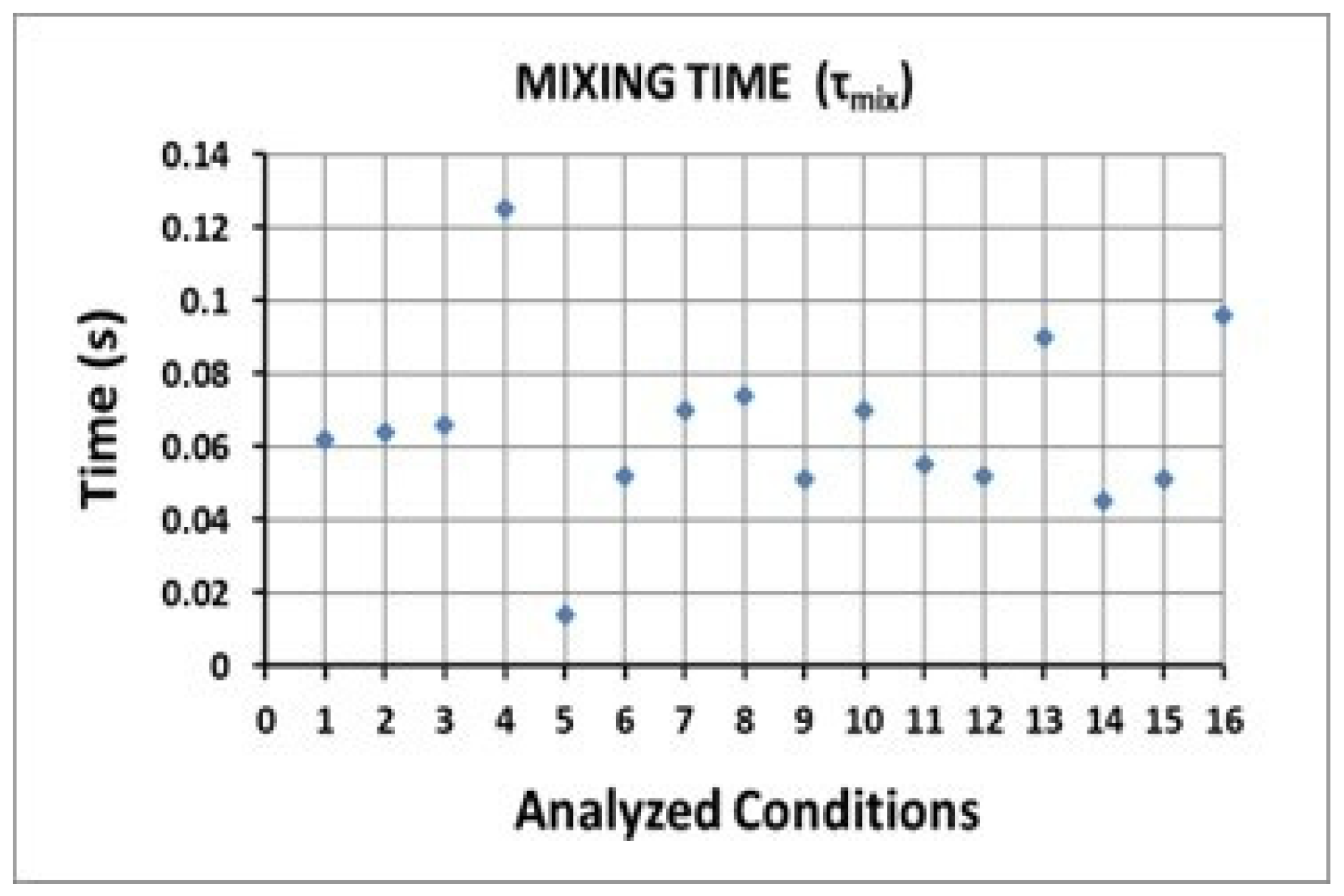
The bath does not mix instantaneously. The tracer-based mixing time τmix, determined from the hydrodynamic tracer analysis, is short compared with the 480 s kinetic window (on the order of 10−2–10−1 s under the present conditions). Kinetic metrics are therefore computed for t ≥ τhyd, while τmix ≪ 480 s. Accordingly, for t ≥ τhyd the bath is treated as effectively well mixed at the scale of the kinetic model. The zinc mass flux JZn is defined in Equation (3) as a function of the local velocity field [17].
J z n = ( U · V o l z n · C z n ) D c
where U is the velocity profile in the metal (m/s), VolZn is the injected zinc volume (m3), CZn is the zinc concentration (kg/m3), and Dc is the kettle diameter (m).

2.2. Residence Time and Melting Time

To understand the effect of particle size during the injection process, the particle residence time and melting time were determined. The residence time represents the time required for the particles to reach the liquid surface after they leave the lance tip, carried by the conveying gas. The melting time is calculated from the transient reaction efficiency given by Ohguchi [15] using Equation (4).
E = 1 e x p A p · k e · τ e L e q · V p o w
where E is the transient reaction efficiency; Ap is the particle surface area; ke is the mass-transfer coefficient (m/s); τe is the residence time (s); Leq is the equilibrium (partition) coefficient of silver in the particle phase (dimensionless); and Vpow is the particle volume (m3). Spherical particles are assumed; therefore A p = 4 π r 2 [m2] and V p o w = 4 3 π r 3 [m3]. Rearranging Equation (4) yields the residence time:
τ e = L e q · V p o w A p · k e l n ( 1 1 E )
The value of the transient reaction efficiency lies in the range of 0 < E < 1. When E = 1, the silver in the particle reacts completely with the molten lead in the residence time [15]. In a real process, the value of E never reaches 1, as this would imply 100% efficiency, which is impossible due to inherent process limitations. The equilibrium coefficient of silver concentration in the particle (Leq) is obtained from
L e q = % M % M e q
where (%M) is the silver content of the particle when it reaches the liquid surface; [%M]eq is the silver content at thermodynamic equilibrium at the process temperature in the bath metal; both are expressed as mass fraction. The following parameters were obtained in a previous experimental work by Gutiérrez [12,17,18]: E = 0.25, Leq = 230.415 at 480 °C. The mass-transfer coefficient is determined from Ref. [19] using Equation (7).
k e = D r + 0.4 · ε 1 4 · D 2 3 · v 5 12
where r is the particle radius (m), D is the zinc diffusion coefficient (2.349 × 10⁻⁹ m2/s), ε is the specific mixing power (W/kg), and υ is the zinc kinematic viscosity (1.646 × 10⁻⁷ m2/s). The specific mixing power is represented as in Refs. [20,21].
ε = 370 Q · T M · l n ( 1 + H 1.48 )
where M is the mass of molten metal, Q is the volumetric flow of conveying gas (m3/s), T is the bath temperature (K), and H is the bath depth.
The velocity of solidification or fusion is measured as the feed velocity of the solid–liquid interface and is determined by the relative magnitude of the resistance to heat transfer from the metal and surrounding environment. In energy balance, the velocity at which heat is transferred from the medium to the solid metal equals the velocity of absorption of the latent heat of fusion. Considering that the gradient in the environment is smaller, the environment can be considered semi-infinite [16]. The important variables of the metal are melting temperature, latent heat of melting, density of the solid metal, thermal conductivity, heat capacity, and environmental density.
Therefore, the time required to completely melt a cylinder or a sphere in a semi-infinite medium can be calculated from Equation (9):
L c = V s A s = T f T 0 ρ s · H f s 2 π k m · C p m · ρ m 1 / 2 · t f 1 / 2 + n · k m 2 · R · t f
where Lc is the characteristic length; vs. is the volume of solid metal; As is the surface area of the solid metal; T0 is the initial temperature of solid metal; Tf is the melting temperature of the metal; ρs is the solid metal density; ∆Hfs is the latent heat of fusion of the metal; km is the thermal conductivity of the surrounding medium; Cpm is the heat capacity of the surrounding medium; ρm is the density of the surrounding medium; tf is the melting time; R is the radius of the cylinder or sphere; and n is the form factor in the heat conduction (n = 1 and 2 for a cylinder and a sphere, respectively).
In desilvering, the characteristic length Lc was computed from the characteristic radius obtained using the total injected zinc volume over the modeled interval. According to Equations (10)–(12), the required inputs are listed in Table 1.
V i n j = m Z n ρ Z n , t r u e
where Vinj is the injected powder volume, m Z n is total injected mass, and ρZn,true is the true density of the powder reagent. The characteristic radius Rc is then obtained from Equation (11).
R c = ( 3 V i n j 4 π ) 1 / 3
L c = R c 3
It is important to note that the characteristic radius (Rc) calculated via Equation (11) represents the average particle size of the zinc powder used in the validation experiments [17]. This approach ensures that the kinetic simulation is anchored to the physical conditions of the reference experimental work.

2.3. Hydrodynamic Model Summary

Hydrodynamic inputs to the kinetic model are the local velocity U ( r , z , t ) and two integral descriptors: the residence time τ r e s (mean travel time from the lance tip to the free surface) and the mixing time τ m i x (time for a passive tracer to reach a defined homogeneity). These quantities were obtained from a previously reported 2D-axisymmetric COMSOL Multiphysics 4.1 simulation using RANS with the standard turbulence model for gas-particle injection in molten lead [12]. The jet at the lance exit was treated as a pseudo-fluid; the flow was assumed isothermal at 480 °C (consistent with zinc-injection desilvering near 485 °C [17]). The domain reproduces the base kettle-lance geometry (Table 1) with a uniform inlet at the lance tip, no-slip walls, axisymmetric at the centerline, and an open free surface (pressure outlet) [12]. Across the operating window (submergence 30–90% of bath depth; three gas velocities; scaled lance/kettle sizes), the model yields robust trends: both the residence time and the mixing time decrease with increasing injection velocity and lance diameter and increase with lance submergence and kettle size [12]. The RANS field does not resolve bubble size distributions; thus, the trends in this manuscript are interpreted mechanistically rather than from bubble statistics.

2.4. Validation Metric

Agreement between the simulated and experimental desilvering curves under the benchmark condition (injection velocity U = 3.32 m/s and lance submergence = 70% of bath depth) was quantified using the mean absolute percentage error (MAPE):
M A P E = 100 N X s i m t i X e x p ( t i ) X e x p ( t i )
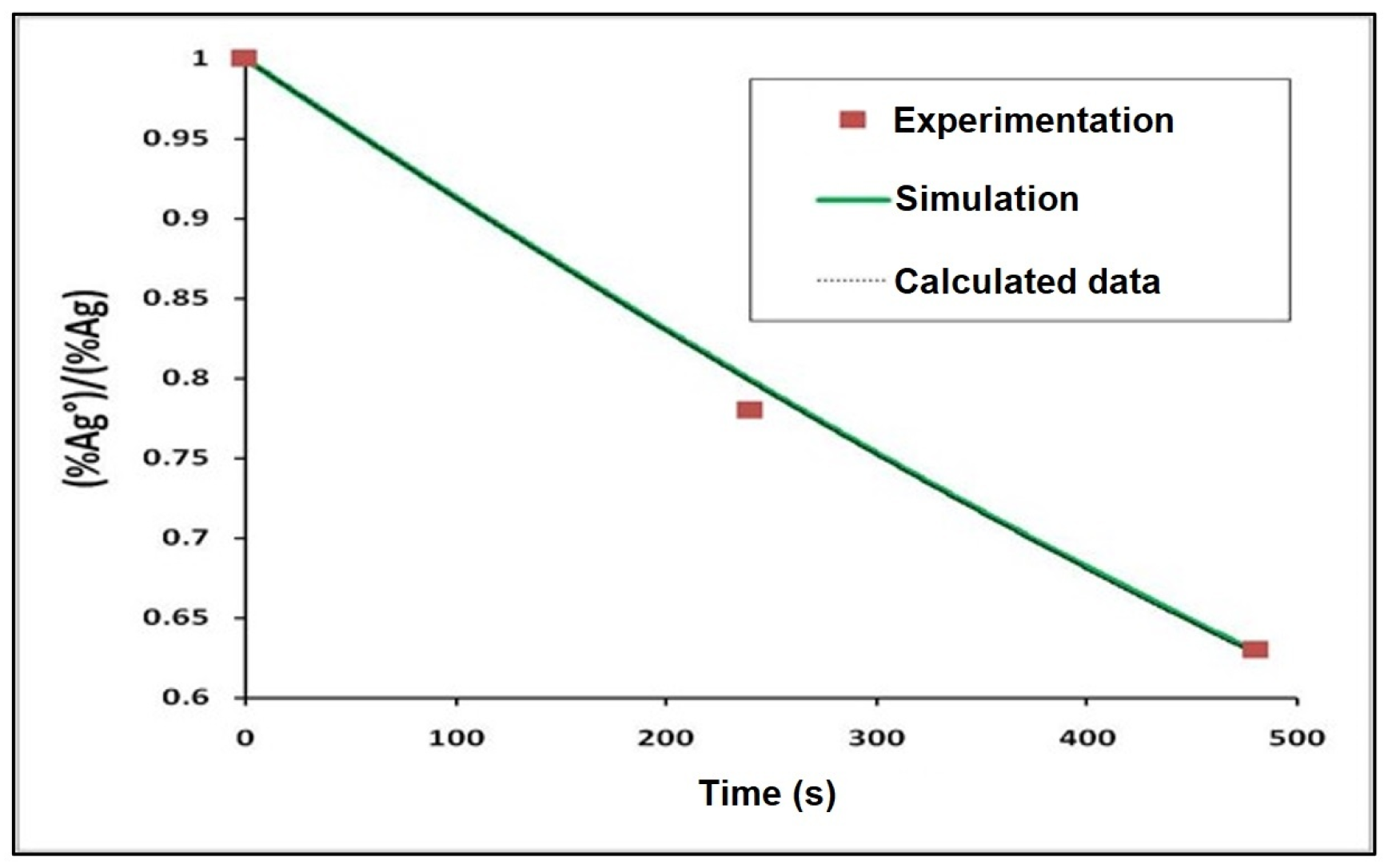
Here, X(t) denotes the desilvering fraction as a function of time. The time series comprises N = 25 points over the simulation window (see the data sampling described for the averages). The MAPE for the benchmark condition was 1.13% (see Figure 1 for the simulation–experiment comparison).

3. Results and Discussion

This kinetic study builds upon previously reported hydrodynamic work [12]. The proposed equations and the hydrodynamics were solved using the commercial software COMSOL Multiphysics 4.1 [22].
The variation is analyzed in terms of lance size and depth, crucible size, and three different injection velocities. As shown in Table 2, all conditions tested in the injection process are summarized there. Moreover, each condition is assigned an identification number, as indicated in Table 2, to facilitate data analysis.
As mentioned above, the hydrodynamic behavior has already been reported in the literature [12]. To conduct this study, it was necessary to mathematically simulate the injection process at longer times for all the conditions listed in Table 2 to find the time in which the hydrodynamic behavior is constant. The time obtained for each condition is shown in Table 3.
Before simulating the kinetic behavior under the different operating conditions, the Ohguchi model (Equation (2)) was validated against experimental desilvering data. The benchmark condition corresponds to zinc particle injection using nitrogen as the carrier gas at an injection velocity of U = 3.32 m/s and a lance submergence of 70% of the bath depth [12,15,17,23].
The validation proceeded in two steps. First, the transient part of the Ohguchi model [15] (Equation (2)) was simulated using the transient reaction efficiency E obtained from experimental data. Second, E was calculated from Equation (4) and used in the simulation to assess predictive performance. Under the benchmark condition, the simulated desilvering curve matched the experimental data with a MAPE of 1.13% (Figure 1). This quantitative metric supersedes the previous qualitative wording (“good fit < 2%”) and is adopted as the error definition throughout the manuscript. Consequently, the use of E calculated from Equation (4) is considered validated and is employed to evaluate the remaining conditions studied here.
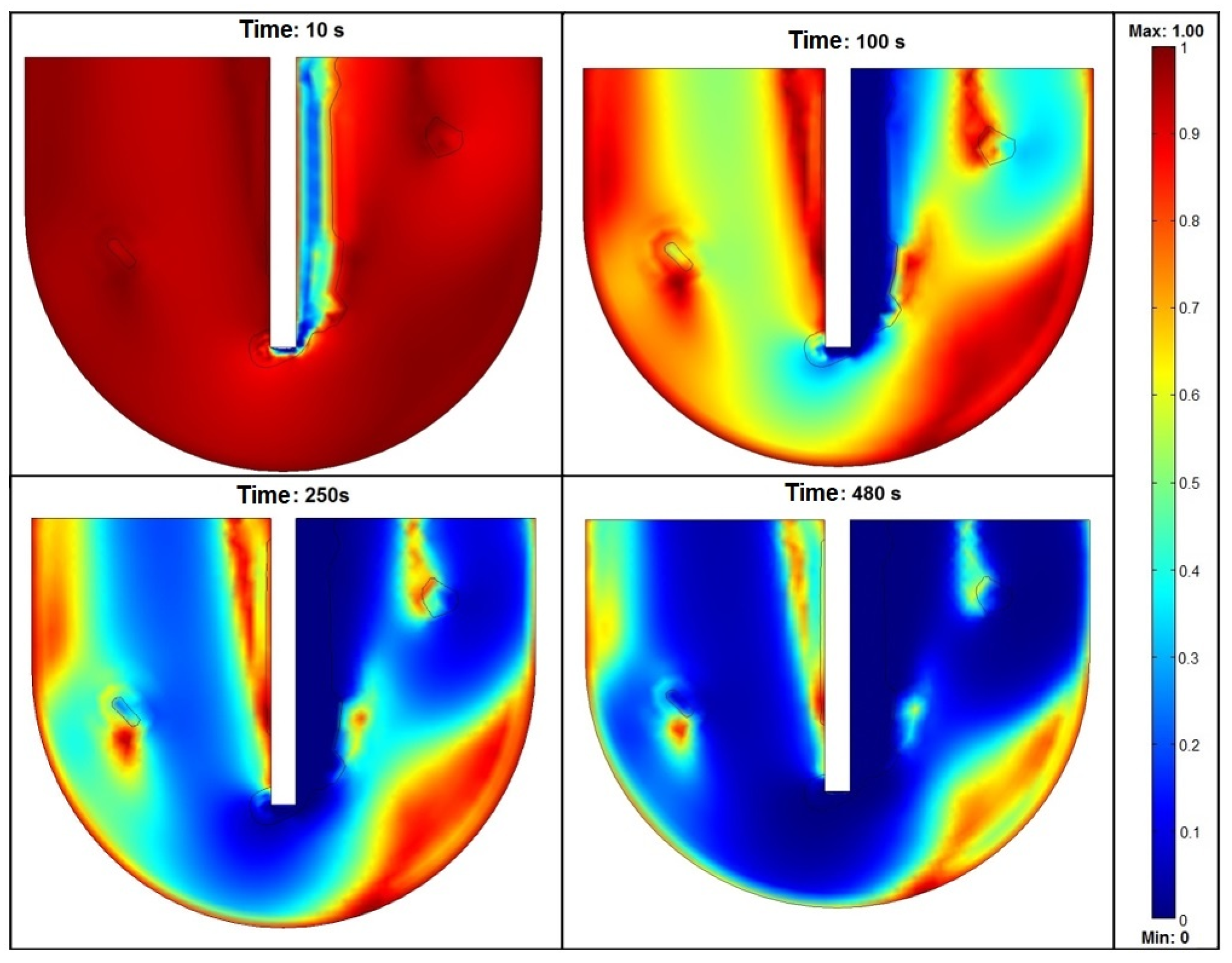
After validating the kinetic model based on Ohguchi’s formulation, the study simulated the 16 operating conditions listed in Table 2 over a total duration of 480 s with 1 s time steps. The multiphase hydrodynamic field was treated as quasi-steady after the hydrodynamic steady-state time τhyd (Table 3), and the kinetic model was evaluated for t ≥ τhyd. Figure 2 shows the silver concentration profiles for conditions 1–10 at 100, 250, and 480 s. The following averaging conventions are used to compute scalar metrics.
Since the model outputs a bath-averaged value at each time, the time average over [t0, T] is
ϕ = 1 T t 0 t 0 T ϕ t d t
with t0 = τhyd and T = 480 s. With 1 s sampling,
X = 1 N i = 1 N X t i ,               t i t 0 , T
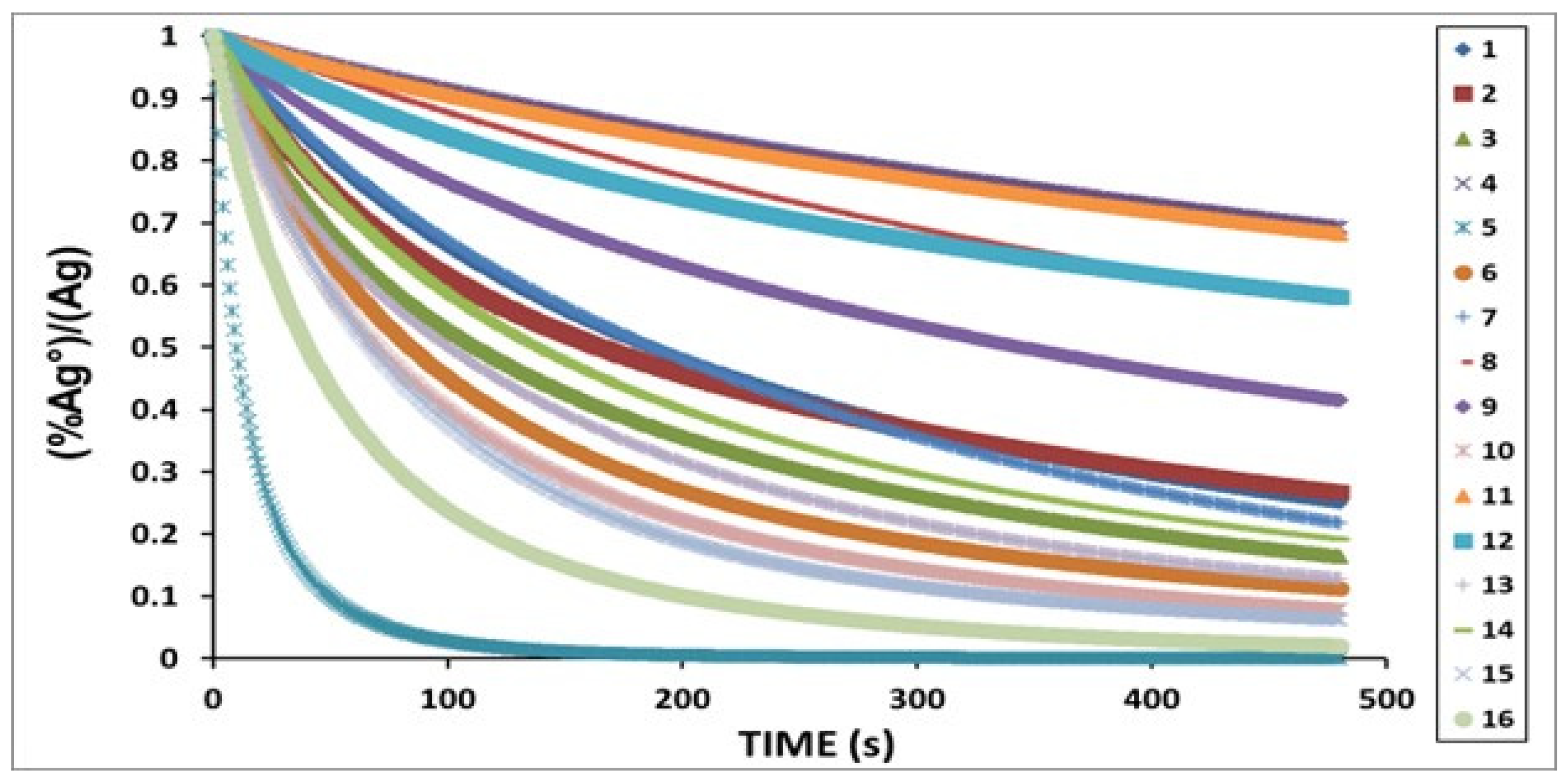
In addition to the results in Figure 2 for a velocity of 3.32 m/s and a lance height of 70%, there are 15 remaining operating conditions, according to Table 2, for which concentration profiles were obtained. To facilitate the analysis for each condition, the silver concentration was recorded at 25 time points. These values were averaged, and a curve of the average desilvering fraction was obtained, as shown in Figure 3.
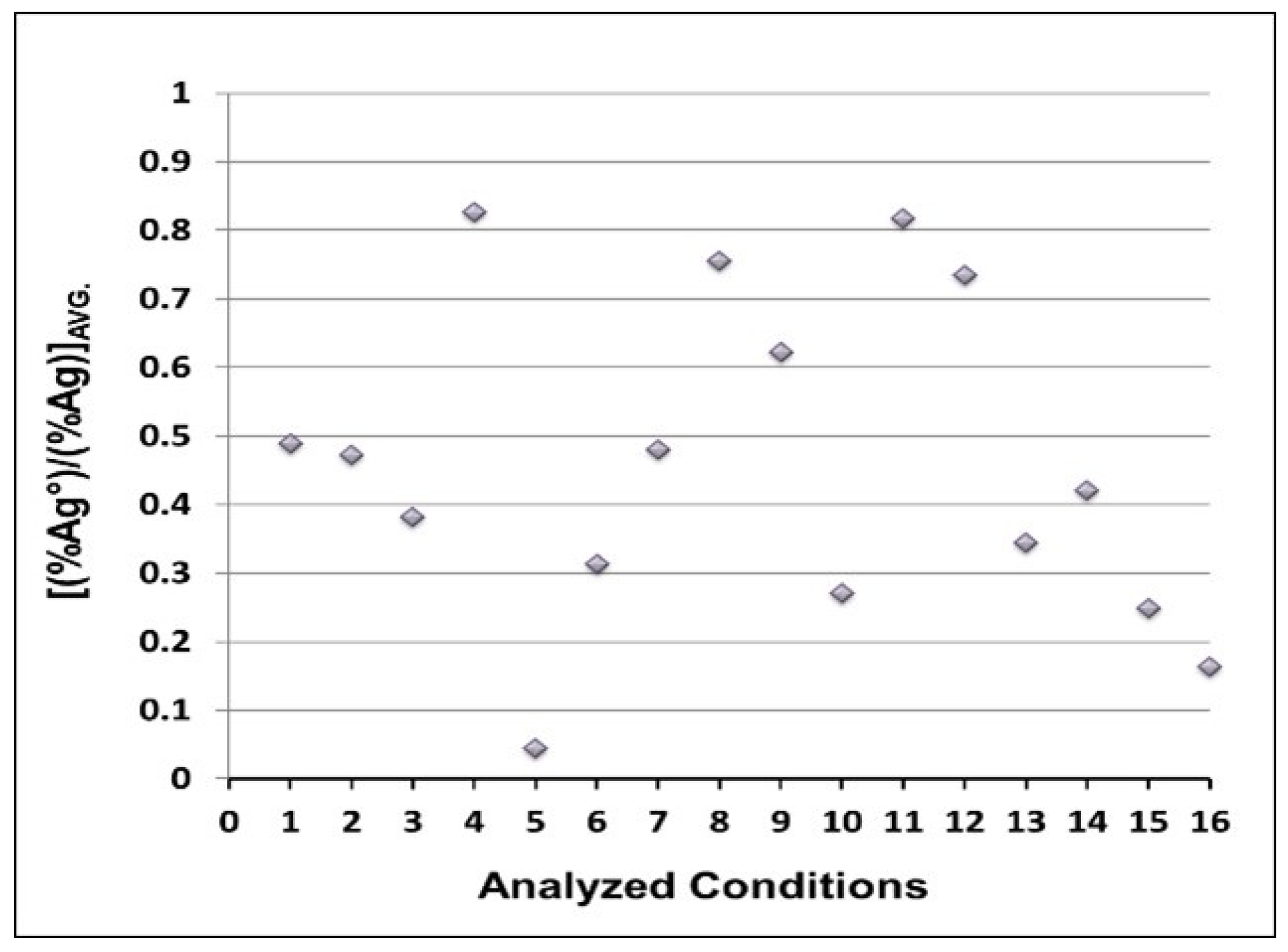
A desilvering fraction less than one indicates that the silver concentration in the system decreases with respect to its initial value, confirming that the process effectively reduces the silver content in the molten lead. Figure 3 suggests that Condition 5 provides the best desilvering performance; however, this type of graph cannot clearly reveal the effect of varying parameters such as lance height, injection velocity, crucible size, and lance diameter. Therefore, to observe the overall behavior of the desilvering process for each condition, the desilvering fraction was averaged over time for each curve in Figure 3. This means that, instead of a full desilvering-fraction-versus-time curve, each condition is represented by a single overall average desilvering fraction. Figure 4 shows the overall average desilvering fraction for each case studied and confirms that Condition 5 continues to show the lowest silver content, consistent with the behavior observed in Figure 3.

3.1. Depth of Lance

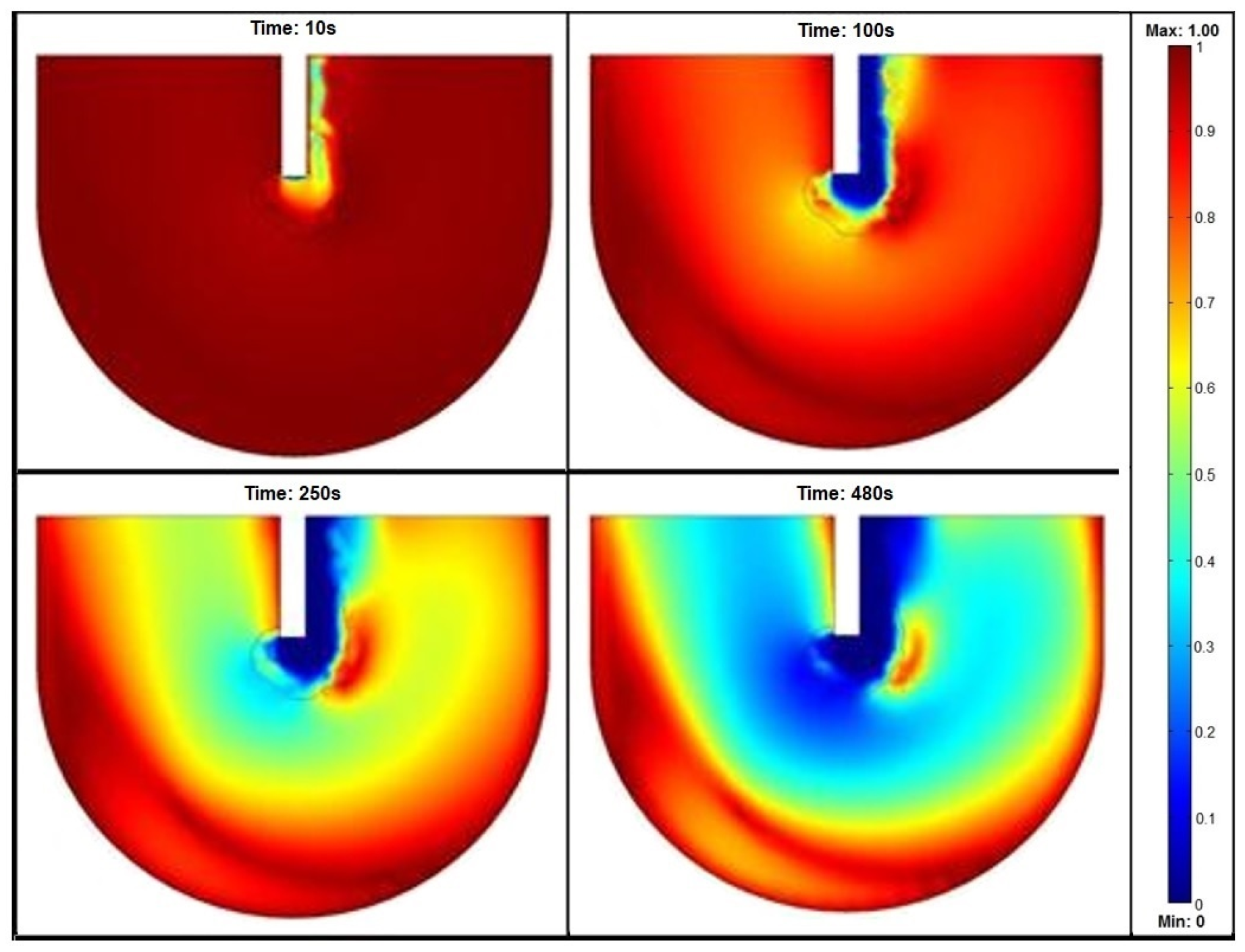
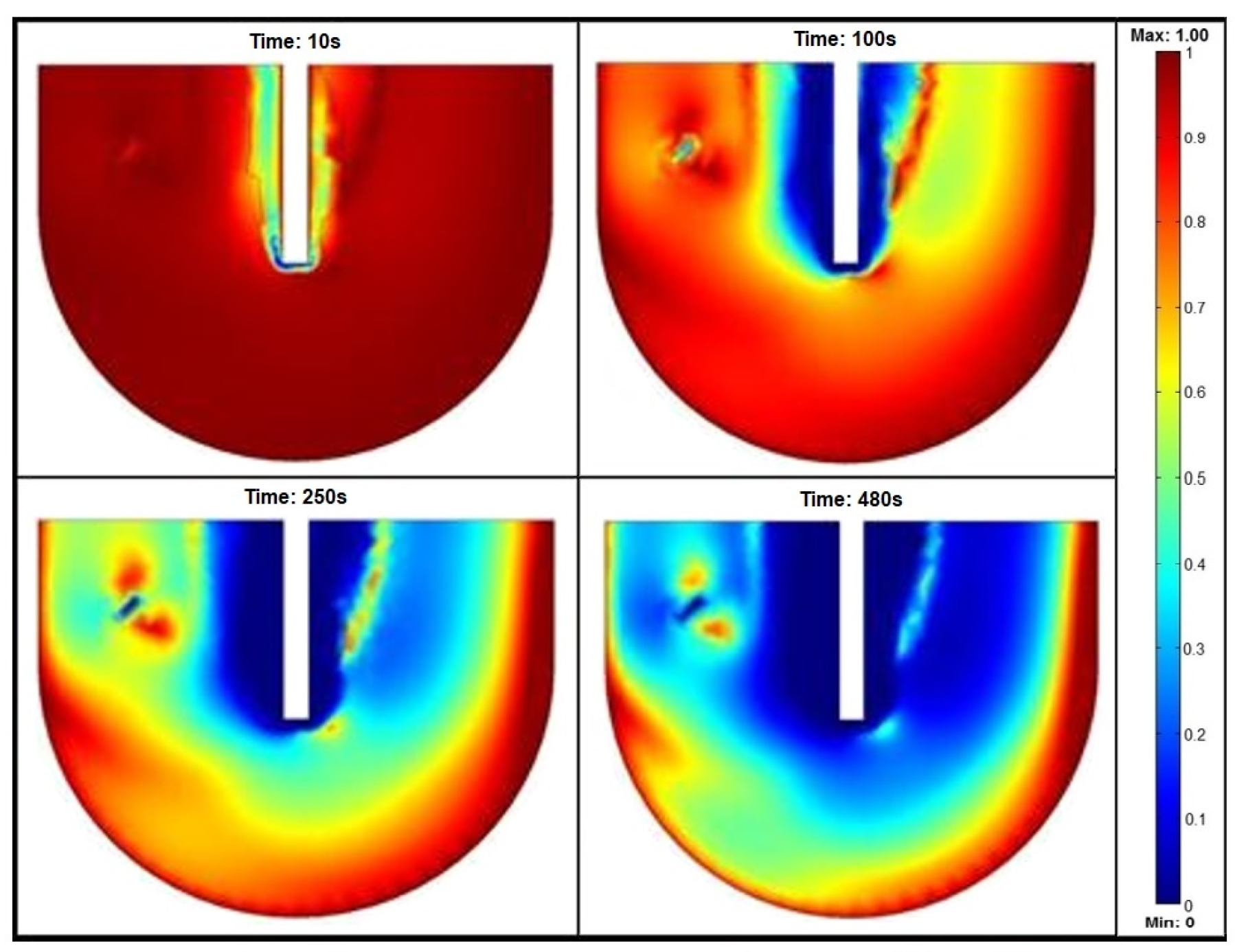
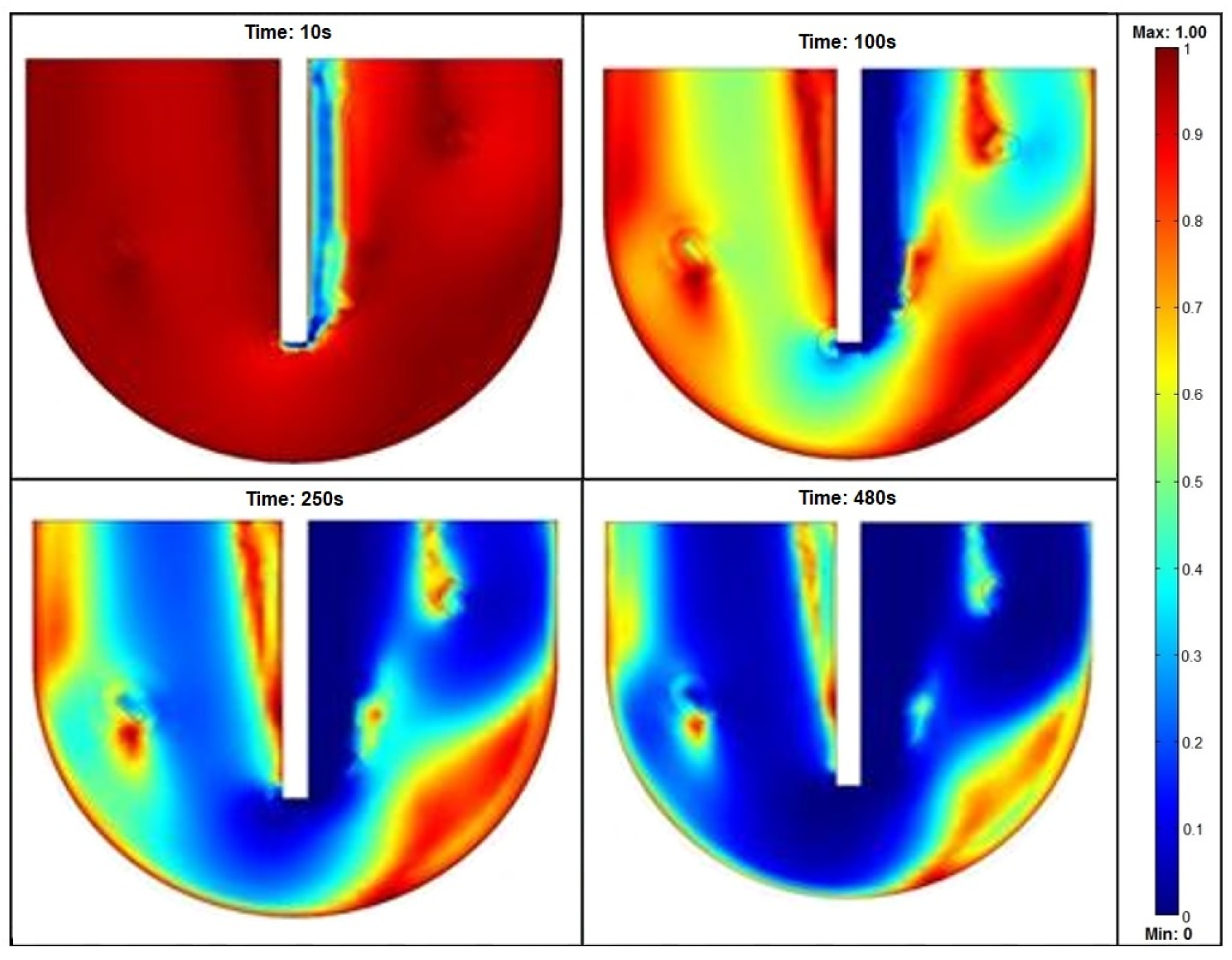
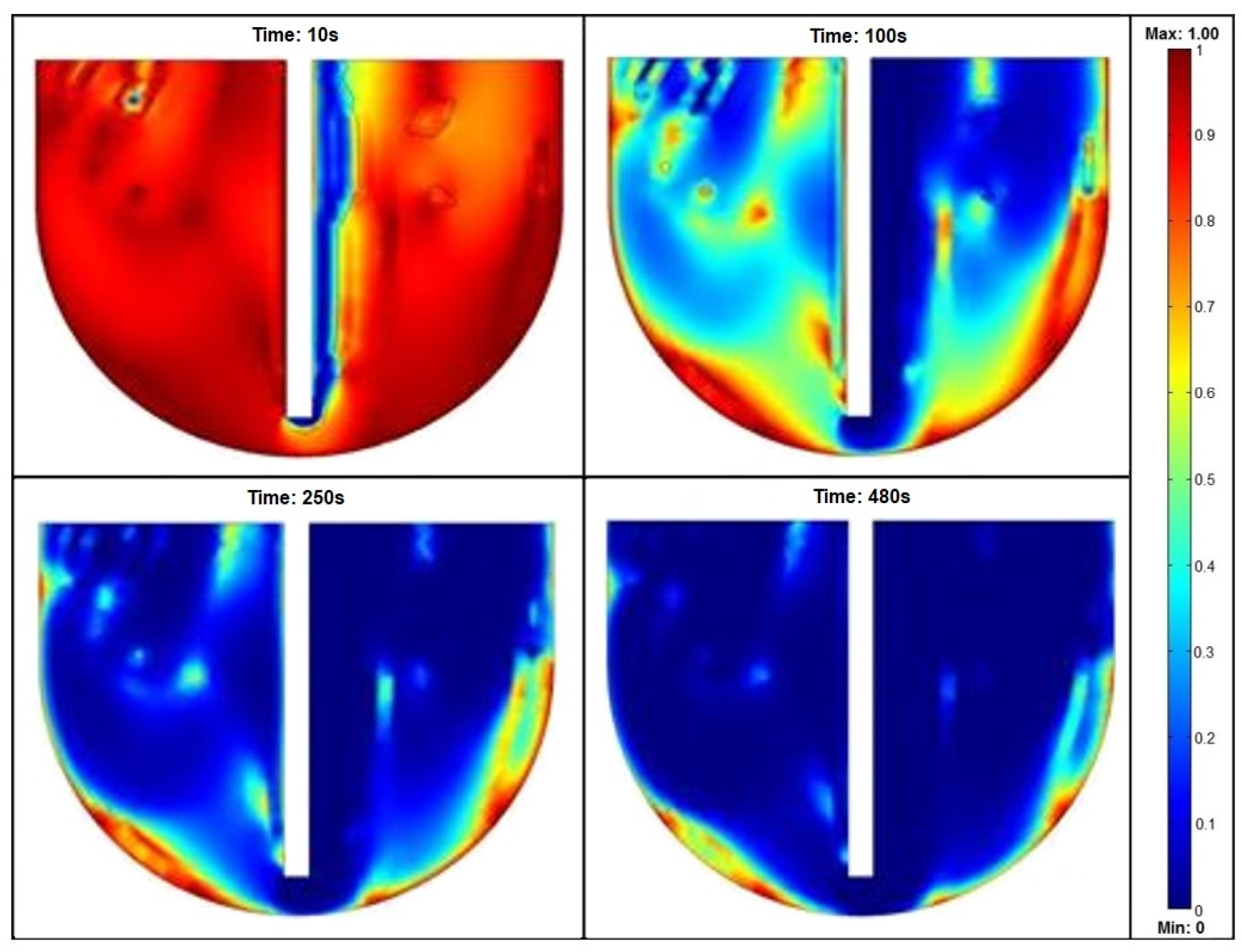
The effect of lance depth on silver concentration profiles is evaluated at an injection velocity of 3.32 m/s. Figure 5, Figure 6, Figure 7 and Figure 8 illustrate the concentration profiles for lance depths of 30%, 50%, 70%, and 90%, respectively. A clear progression is observed. At a shallow depth of 30% (Figure 5), the agitation is poor, and a large high-concentration (red) zone remains at the crucible bottom. As the depth increases to 50% (Figure 6) and 70% (Figure 7), the low-concentration (blue) zone expands more rapidly, indicating better mixing. Finally, at 90% (Figure 8), the most effective homogenization and silver depletion are achieved after 480 s. This visual progression corroborates the quantitative data in Figure 9 and is consistent with the hydrodynamics; injecting particles deeper increases the particle residence time, allowing more time for reaction before the bubble plume returns them to the surface.
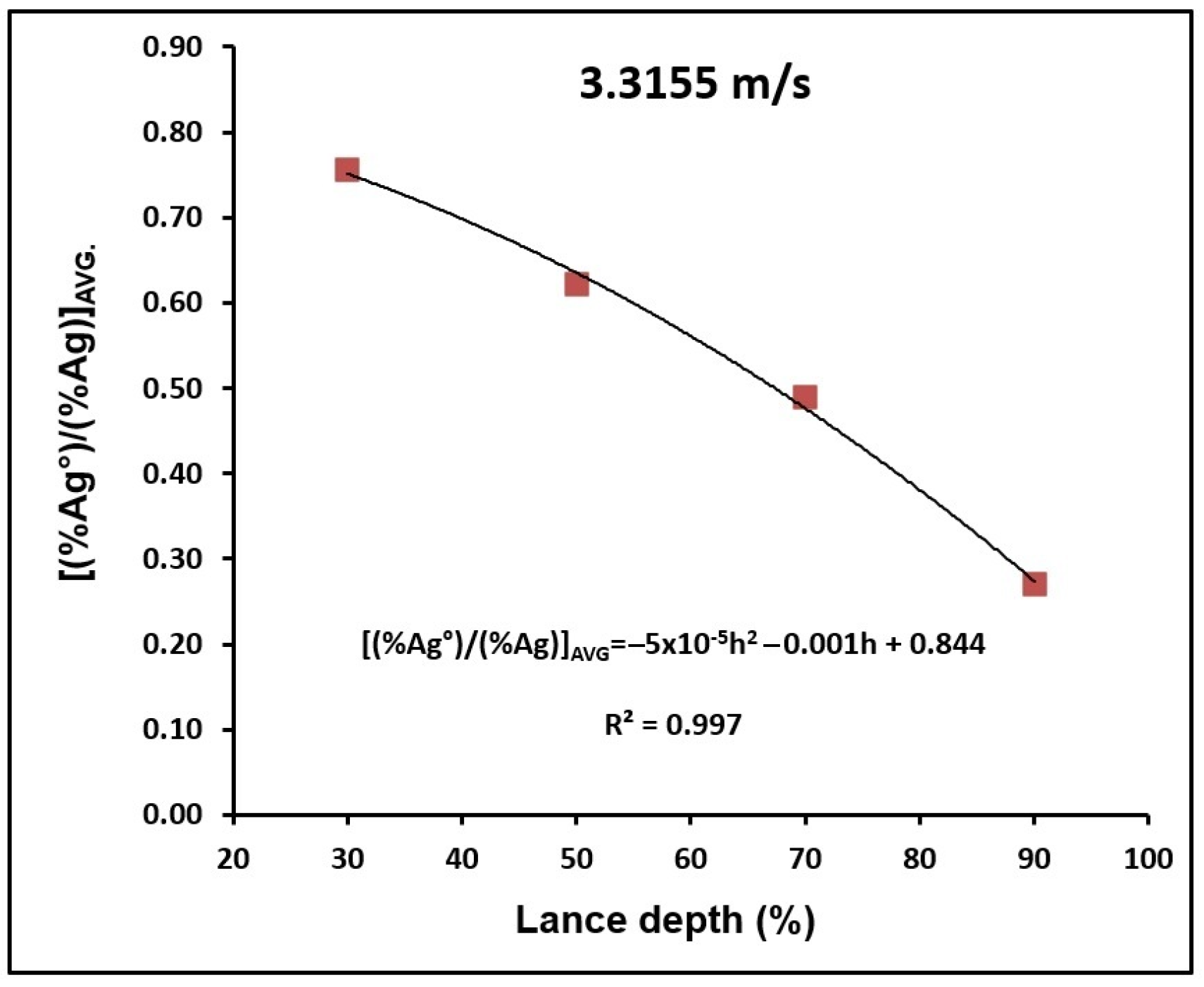
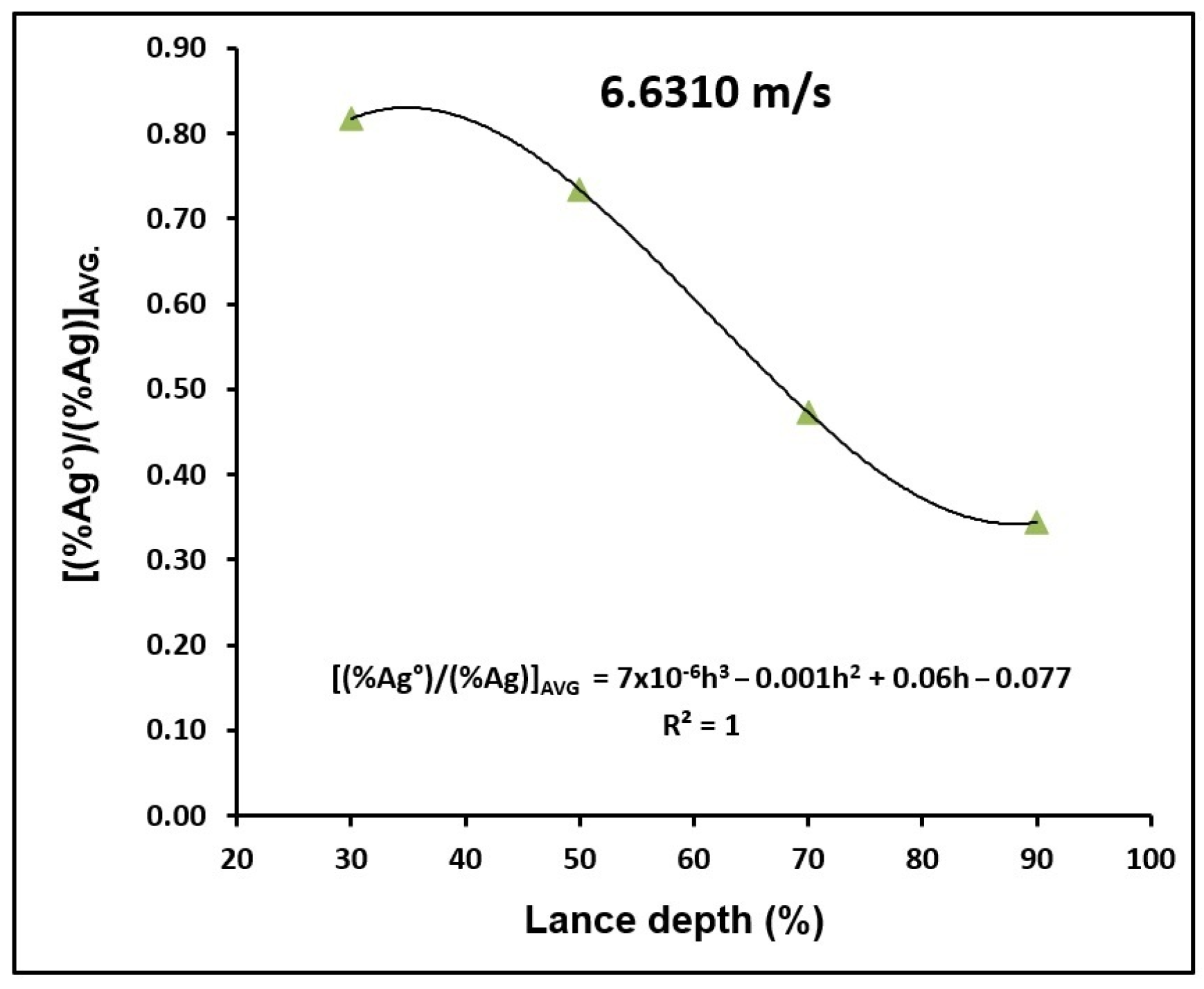
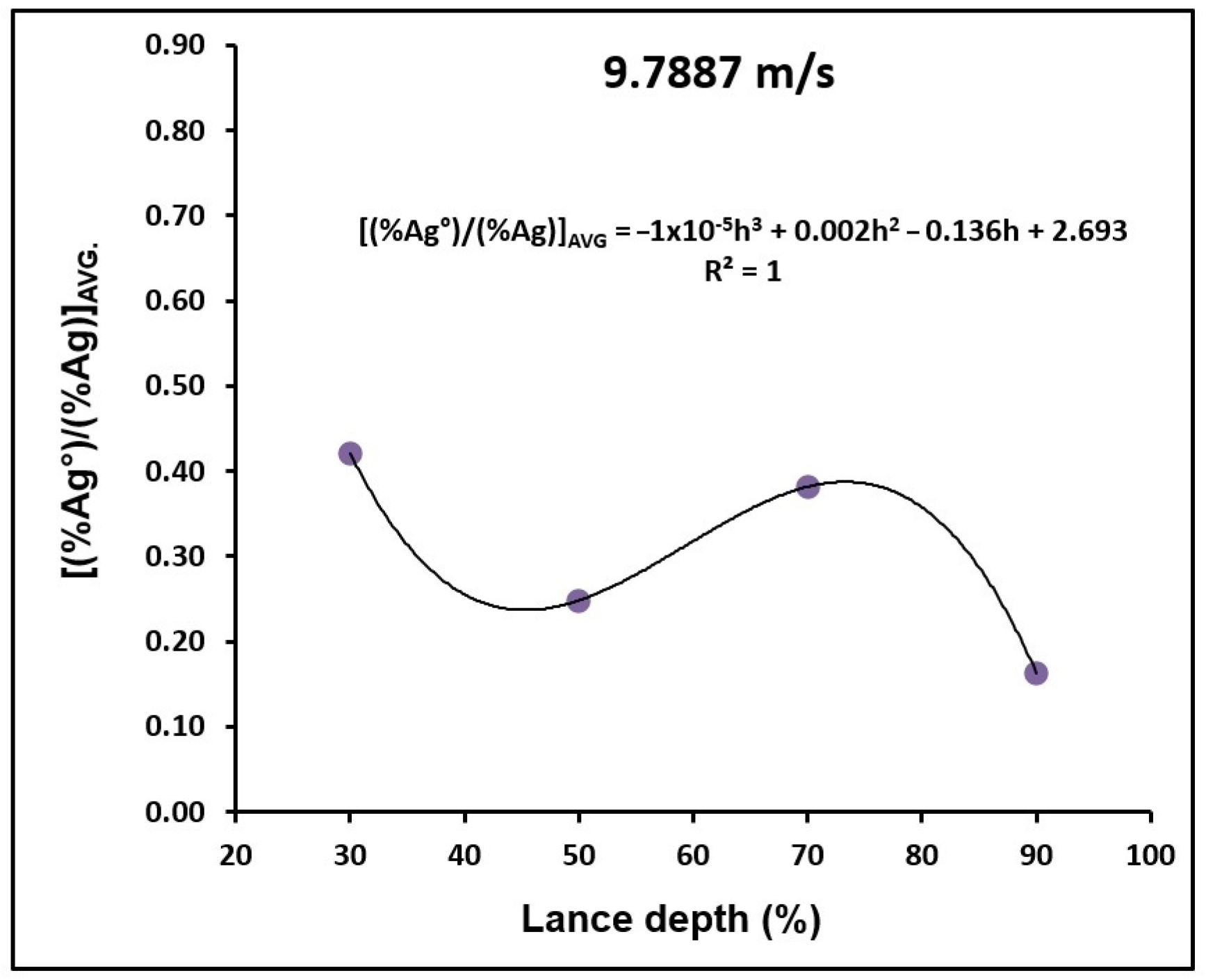
To observe the effect of lance height at different injection velocities, the overall desilvering fraction was plotted as a function of lance depth (Figure 9, Figure 10 and Figure 11). These data were obtained from the simulations to compare the operating conditions and identify the most favorable ones.
Figure 9 shows that the data points follow an almost linear trend; nevertheless, to reduce the approximation error, they were fitted with a second-order polynomial. This polynomial can help predict the behavior within the plotted range. This trend is consistent with the fact that one of the main factors affecting injection processes is the residence time of the particles in the bulk molten metal. Therefore, a greater lance depth allows deeper penetration of the particles into the metal, increasing their residence time and the opportunity to react with the molten lead.
Although Figure 10 and Figure 11 are represented by a third-order polynomial for compactness, the non-linear trend reflects hydrodynamic interactions at high carrier-gas velocities. Increasing U raises the gas throughput and shifts the plume toward a jet-like regime; in line with bubbling literature [7,8], larger and more buoyant structures can increase upward drag on entrained particles, reducing the net τ r e s despite deeper injection. In our hydrodynamic model, τ r e s decreases with U and increases with submergence (see Methods, Hydrodynamics Model Summary) [12]. Hence the maxima occur near τ r e s t f , where liquid-Zn contact is sustained [12,17]. A dedicated particle-tracking/bubble-size analysis is beyond the present scope.

3.2. Lance and Crucible Dimensions

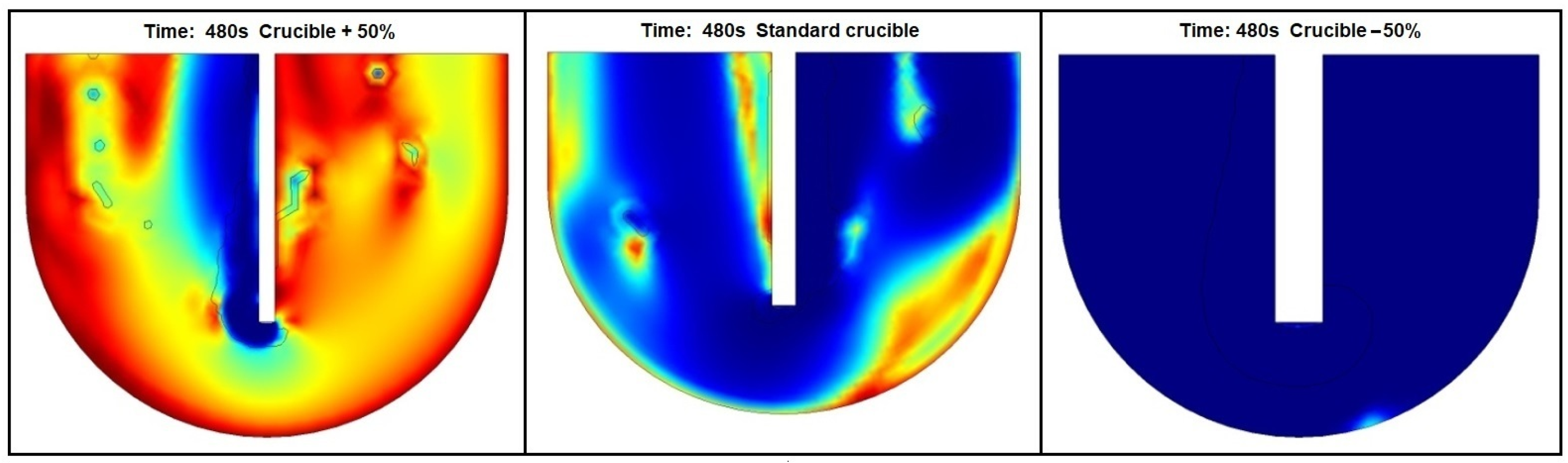
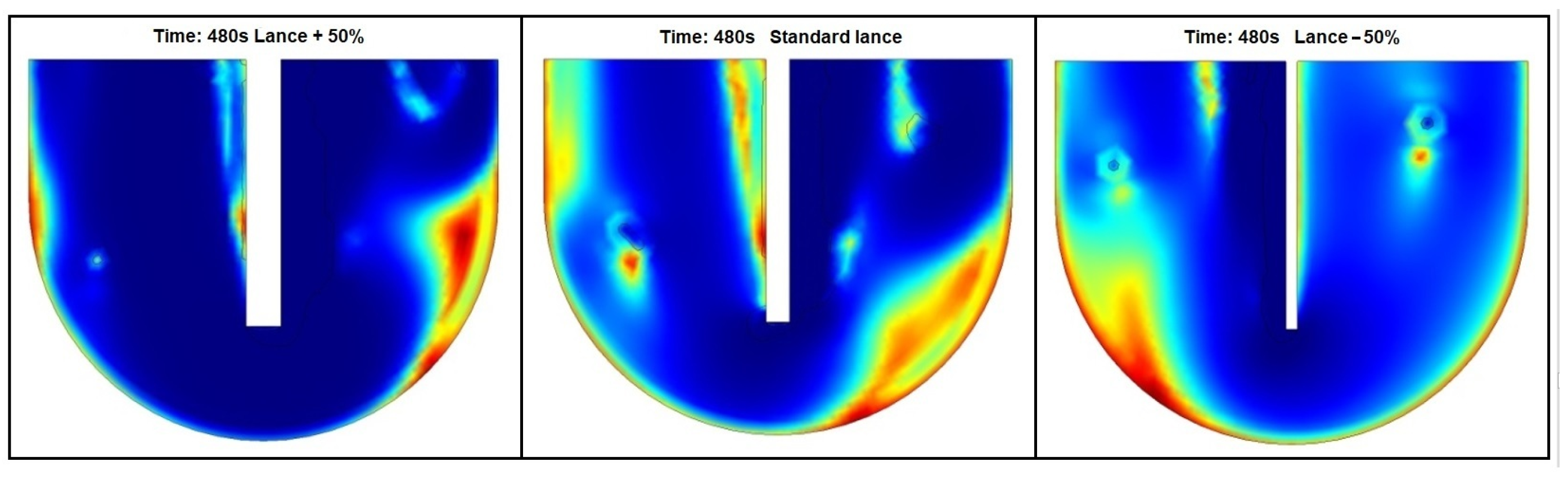
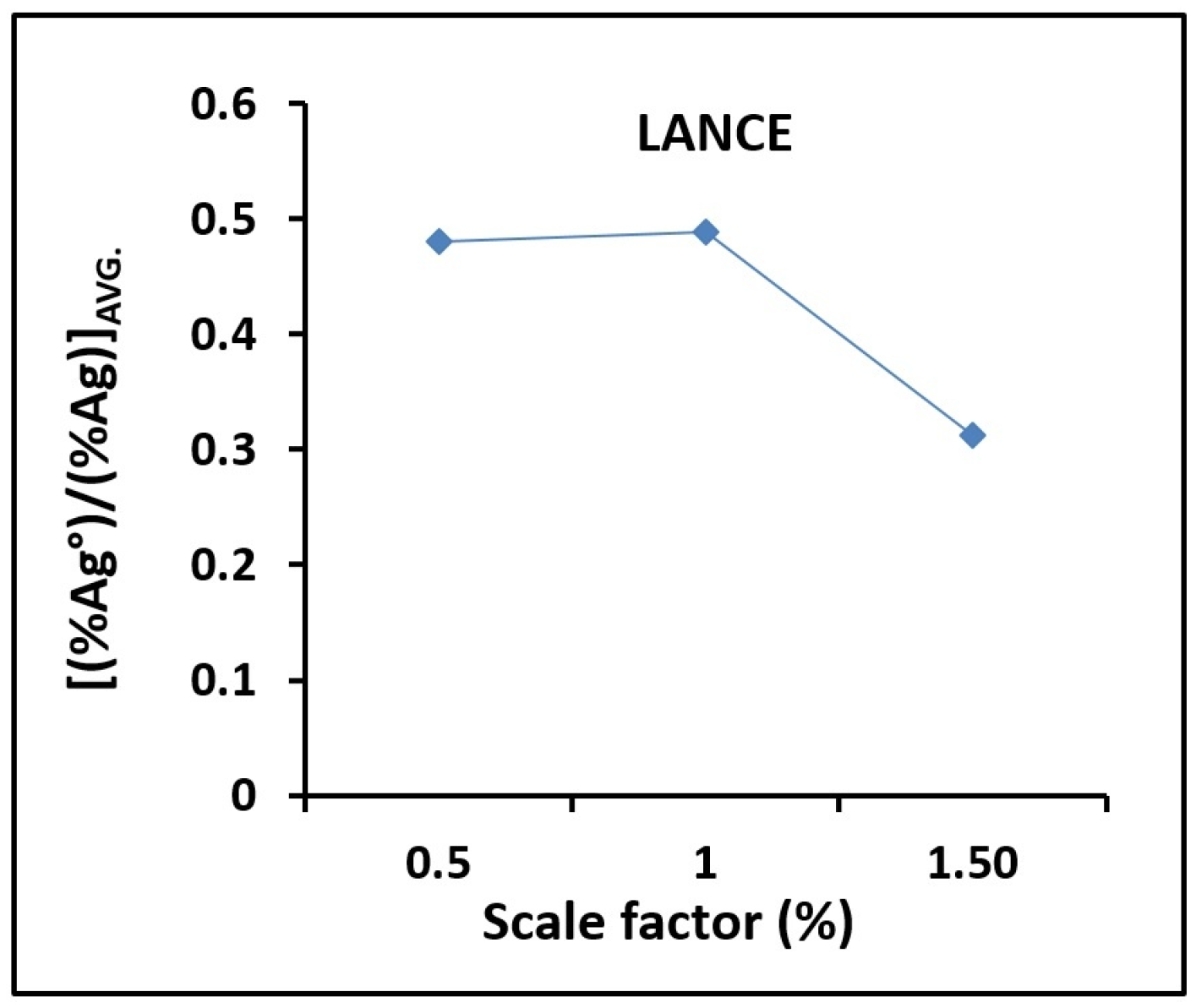
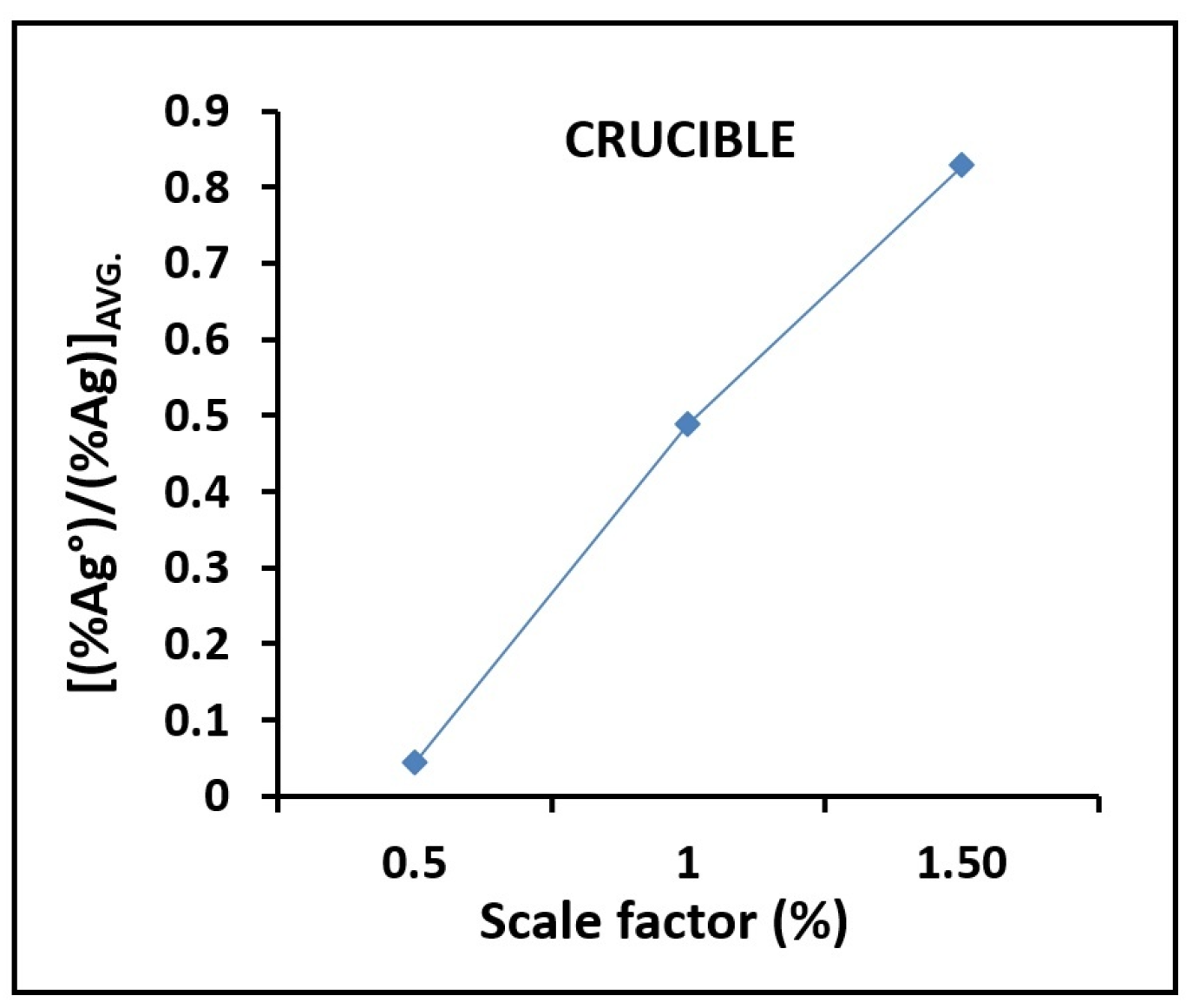
To isolate the effect of crucible and lance dimensions, this section analyzes cases at an injection velocity of 3.32 m/s. Figure 12, Figure 13, Figure 14 and Figure 15 show the results, where the average overall desilvering fraction is plotted against the scaling factor of the crucible and the lance.
Figure 12 and Figure 13 show the results of varying the crucible size. They clearly indicate that reducing the crucible size (Condition 5) yields the lowest silver concentration, suggesting the highest efficiency. However, this result is an expected mathematical artifact of the model rather than evidence of superior kinetics. As shown in Equation (2), the rate of concentration change (d[%Ag°]/dt) is inversely proportional to the lead mass (Wm). Condition 5 uses the same injection rate in a much smaller mass of lead, inherently leading to a faster depletion. This represents a shorter batch time but does not indicate better hydrodynamic mixing or reaction efficiency. Furthermore, scaling the injection process down to this degree relative to the lance can induce practical issues such as splashing. Therefore, the standard crucible size (Condition 1) is considered the appropriate baseline for comparison. The effect of varying the lance dimensions is shown in Figure 14 and Figure 15.
In Figure 14, the silver concentration at 480 s (the duration of the injection process) is agglomerated on one side of the crucible, but this agglomeration is reduced as the lance size is increased. This is reflected in the overall performance presented in Figure 15. According to the observed behavior, a lance that is 50% larger promotes higher desilvering efficiency. Furthermore, if the crucible analysis indicates that the normal size is best, then Condition 6, which combines these two features, is a viable option.

3.3. Kinetic Parameters

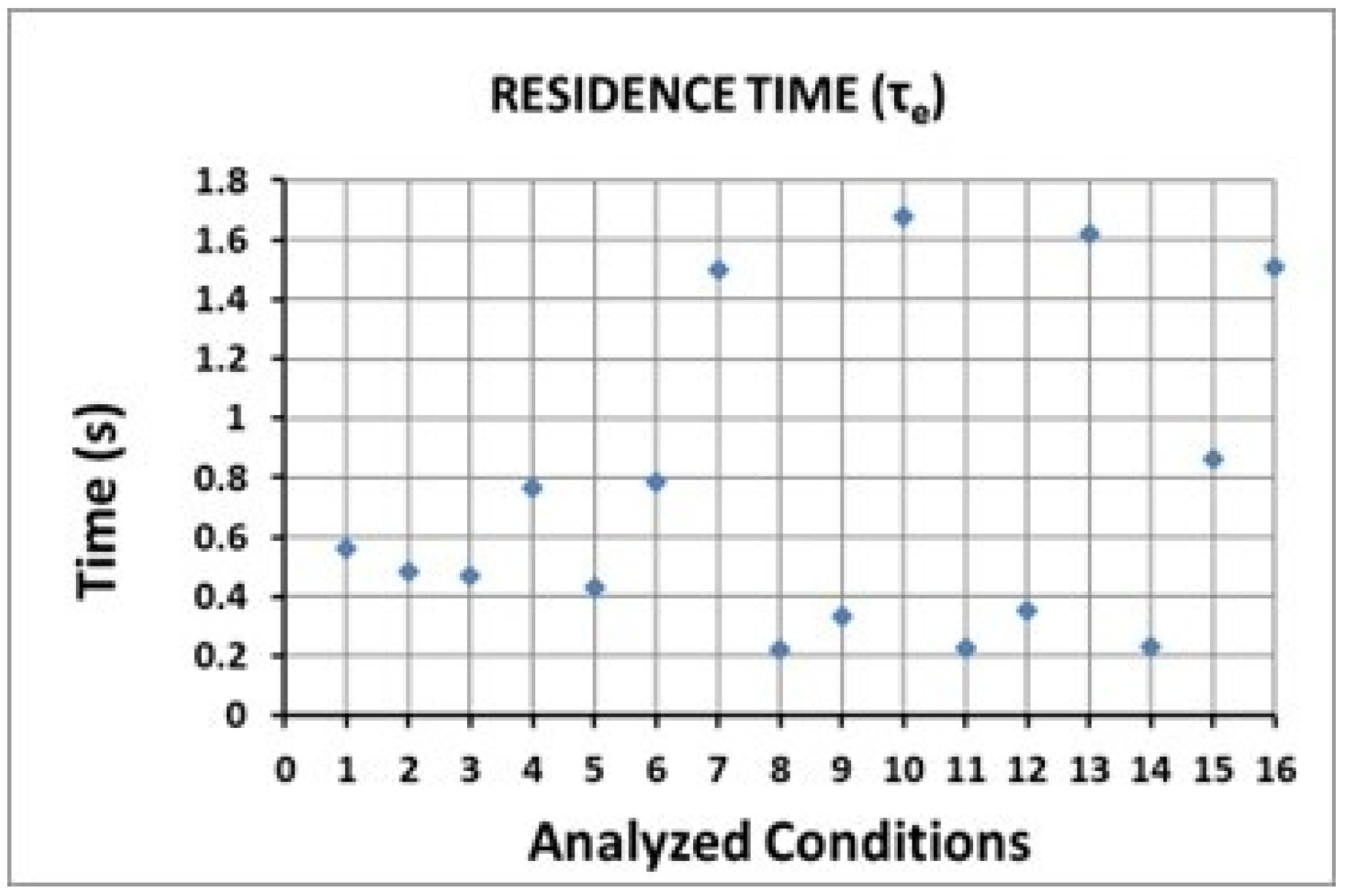
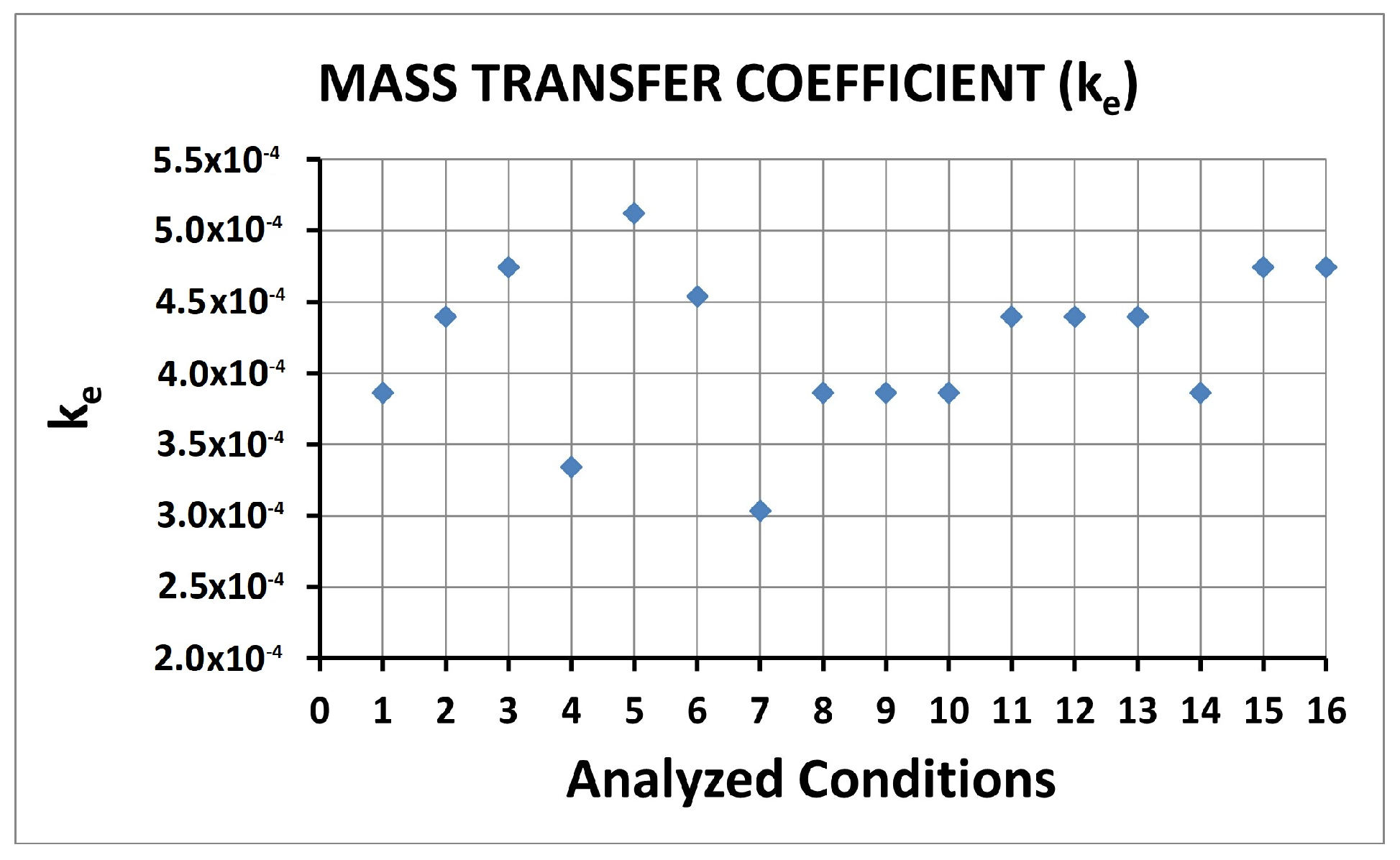
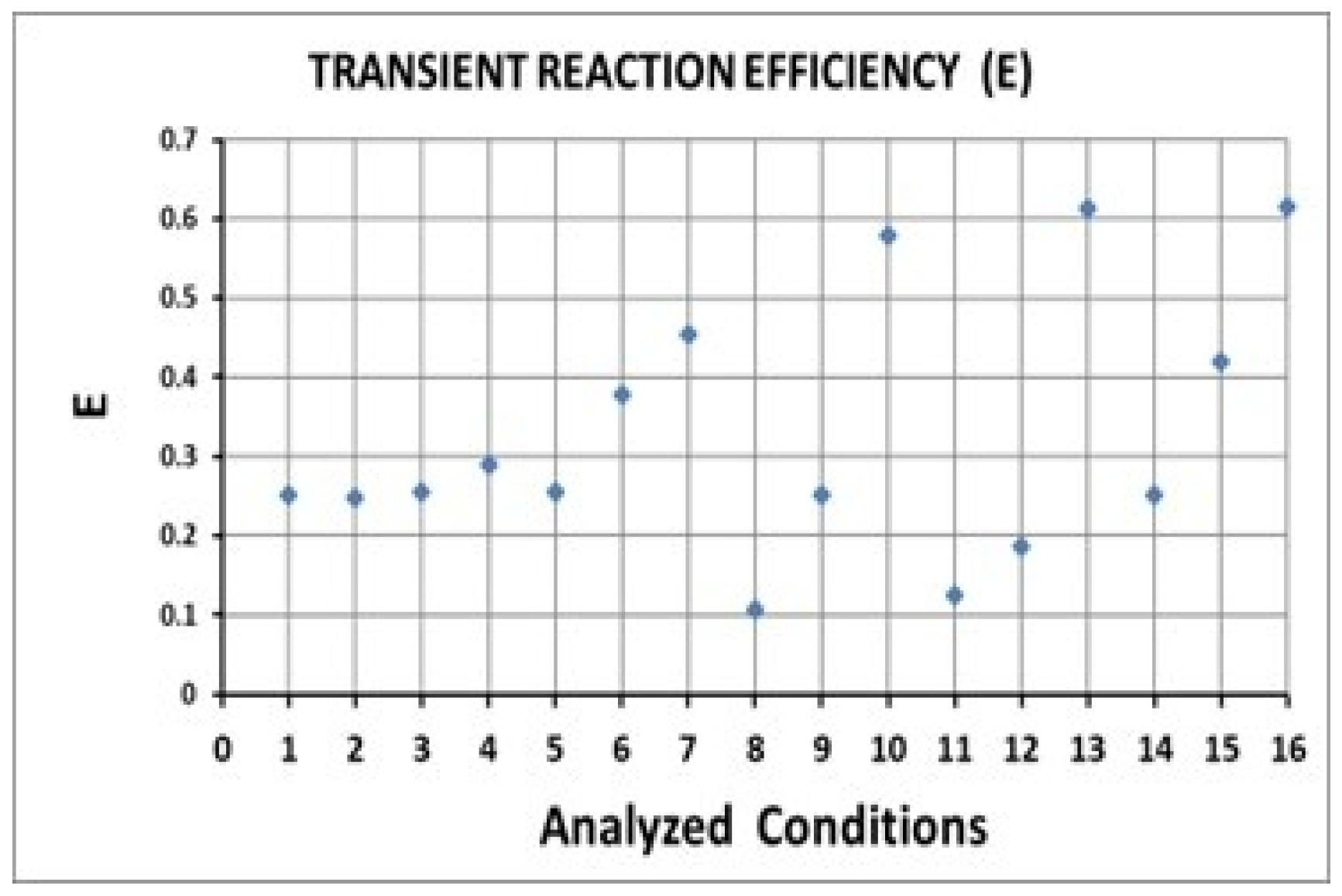
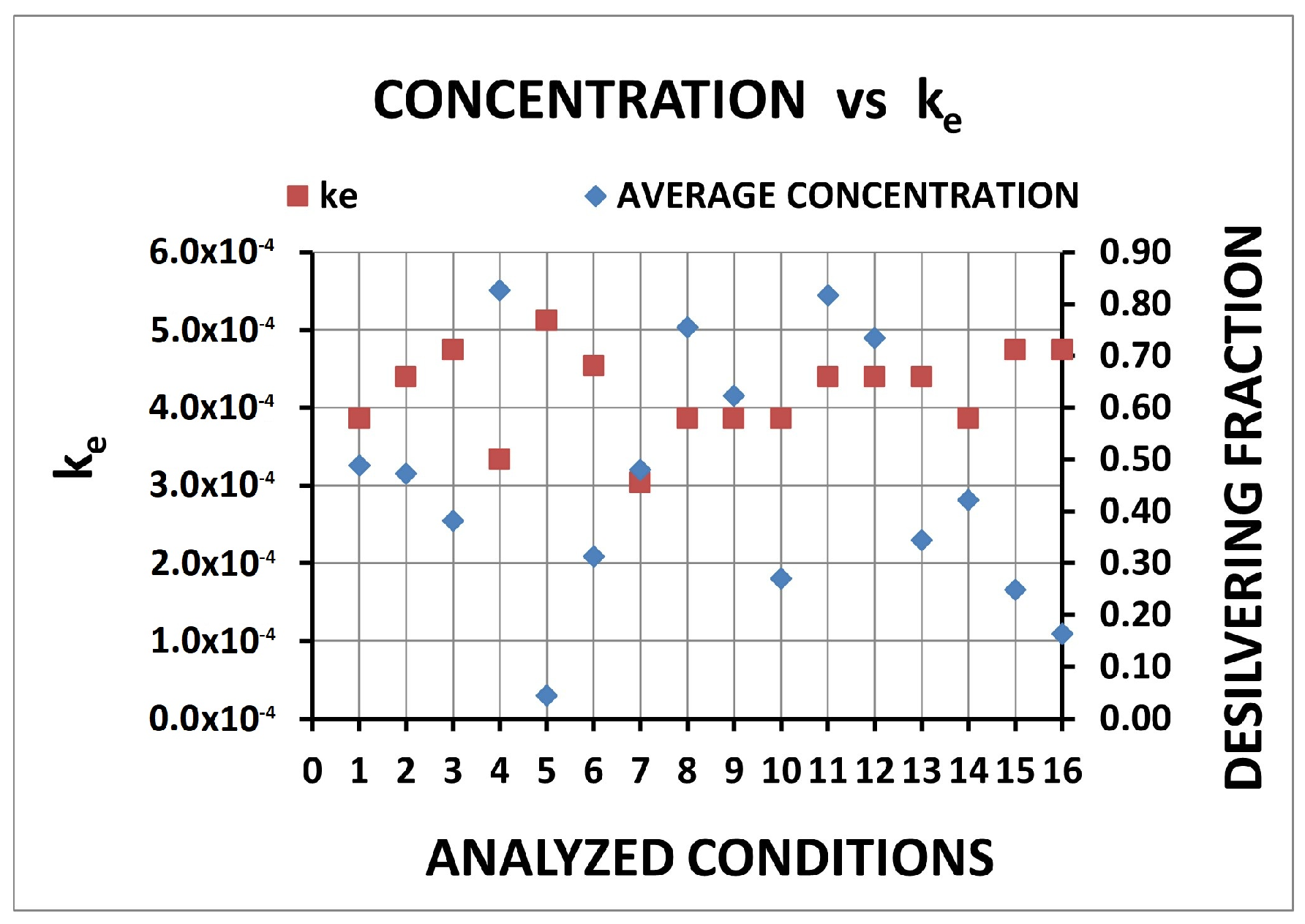
The kinetic parameters considered in this study are the residence time, the mixing time, the mass-transfer coefficient, and the transient reaction efficiency. These parameters were calculated for each analyzed condition, and the results are summarized in Table 4 and Figure 16, Figure 17, Figure 18 and Figure 19.
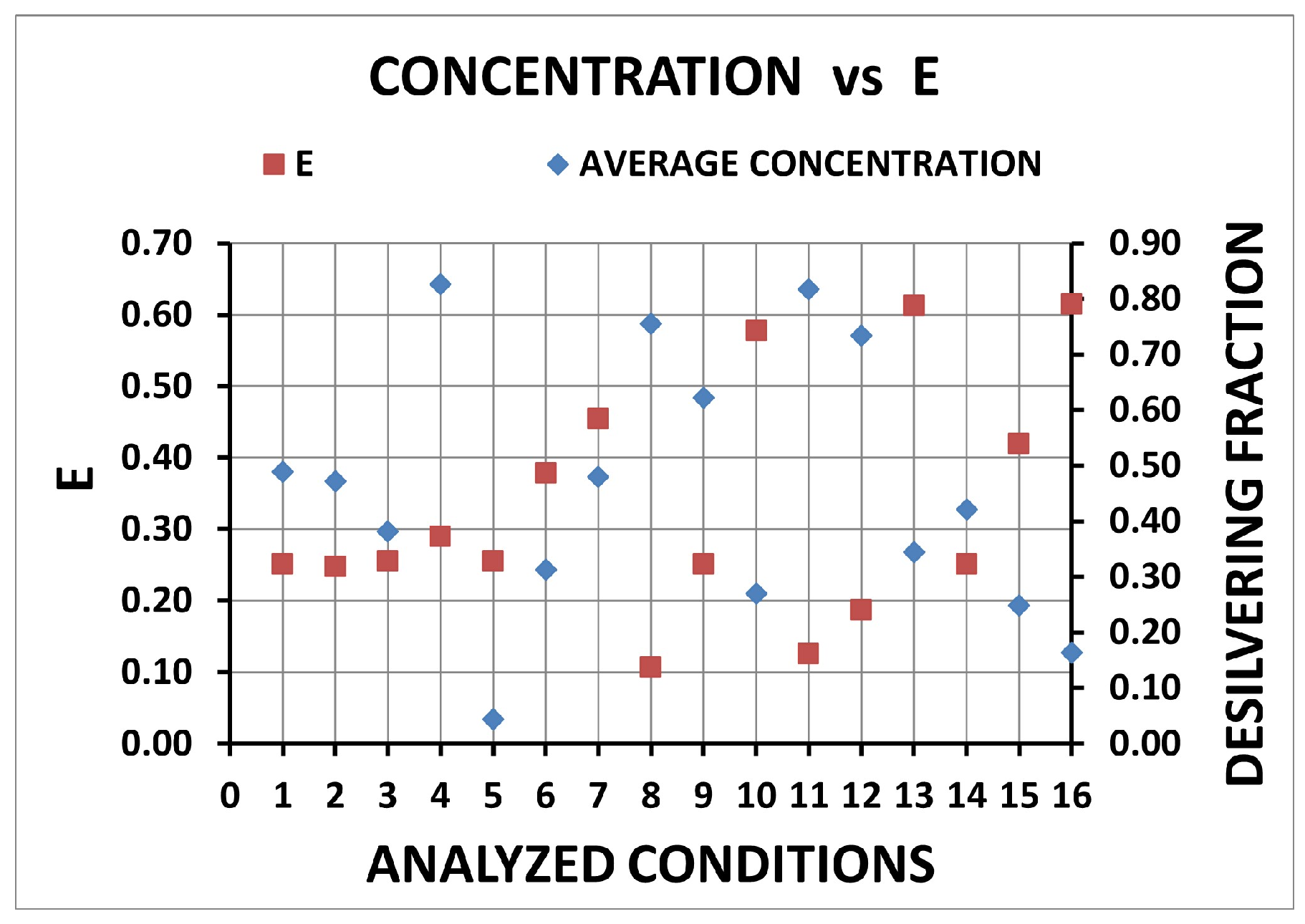
The results in Figure 4 show that Condition 5 appears to be the best because it yields the lowest silver content; this condition corresponds to a crucible that is 50% smaller. If this criterion were ranked by importance, the best-performing conditions would be 16, 15, 10, 6, and 5. However, if residence time is considered the decisive factor—since particles must have sufficient time to react—then the best results are obtained for Conditions 10, 13, 16, 7, and 15, according to Figure 16. The results in Figure 19 show the efficiency of the transient reaction, which is clearly desired to be as high as possible. In this case, the best results are obtained with Conditions 16, 13, 10, and 7. Table 5 summarizes the best results obtained from Figure 4, Figure 16, Figure 17 and Figure 19.
Table 5 shows a multi-criteria ranking. While Condition 15 appears in all four “Top 5” lists, a direct analysis of the performance data in Table 4 is more revealing. Condition 16 (Fraction = 0.16, E = 0.61, τ r e s = 1.508 s) clearly outperforms Condition 15 (Fraction = 0.25, E = 0.42, τ r e s = 0.861 s) in the three most critical metrics: it achieves the lowest final silver concentration (ranked 2nd), the highest transient reaction efficiency (ranked 1st), and the longest residence time. Most importantly, the residence time of Condition 16 (1.508 s) is much closer to the calculated zinc melting time (1.712 s), supporting the central hypothesis. Therefore, Condition 16 is selected as the operational optimum.
In Figure 18, where the mass-transfer coefficient is plotted, different behaviors are observed. When Conditions 1, 8, 9, and 10 are compared—which refer to variations in lance height—the coefficient remains essentially constant; that is, lance height has no significant effect on ke in this subset.
However, when Conditions 1, 2, and 3 are compared—which relate to changes in injection velocity—it is noted that increasing the injection velocity leads to an increase in the mass-transfer coefficient. Similarly, modifying the dimensions of the lance and the crucible has a marked effect on the mass-transfer coefficient.
When Conditions 10, 15, and 16—the best conditions reported in Figure 19—are examined, Conditions 15 and 16 both correspond to an injection velocity of 9.79 m/s. Conditions 10 and 16 both correspond to a lance height of 90% of the crucible height. From this analysis, we deduce that the best combination of parameters for the desilvering process is a lance height of 90% and an injection velocity of 9.79 m/s (Condition 16).
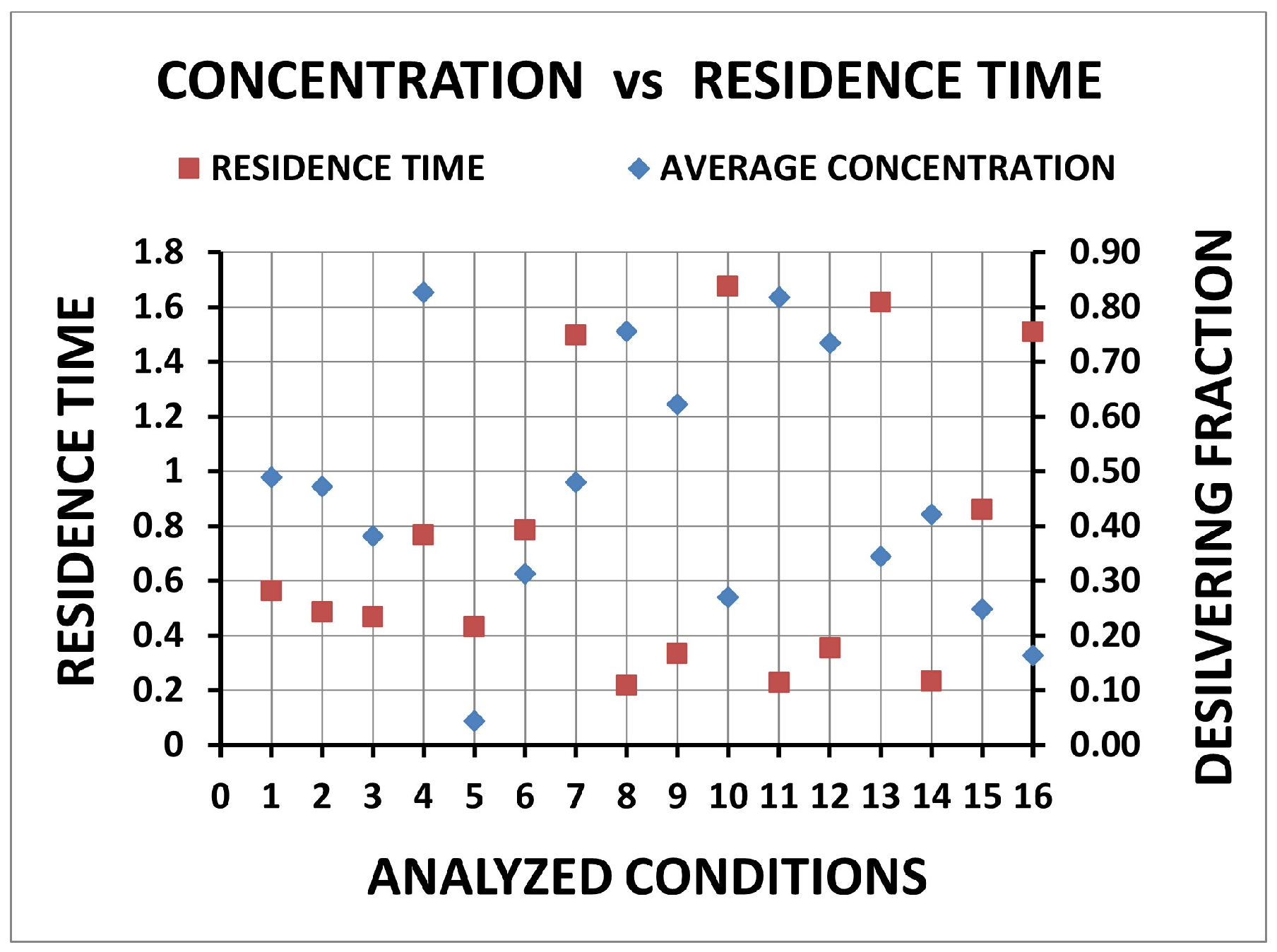
Figure 20, Figure 21, Figure 22 and Figure 23 show the relationship between the kinetic parameters and the average overall desilvering fraction. Building on the best conditions identified previously, these plots highlight the behavior between the average kinetic parameters and the desilvering fraction. The analysis should focus on the conditions that yielded the best results, namely 10, 15, and 16. As shown in Figure 20, these conditions have the highest residence times and among the lowest desilvering fractions.
Under this analysis, Conditions 10 and 16 emerge as the best-performing conditions. In the case of Figure 21, it is difficult to establish a trend in the data with mass transfer desilvering fraction; however, condition 16 has one of the highest values of ke. Figure 22 confirms that a low desilvering fraction was obtained with a high value of E for condition 16. Therefore, considering that the efficiency of the transient reaction is a function of residence time, the most important parameter in the kinetics of the process is residence time.
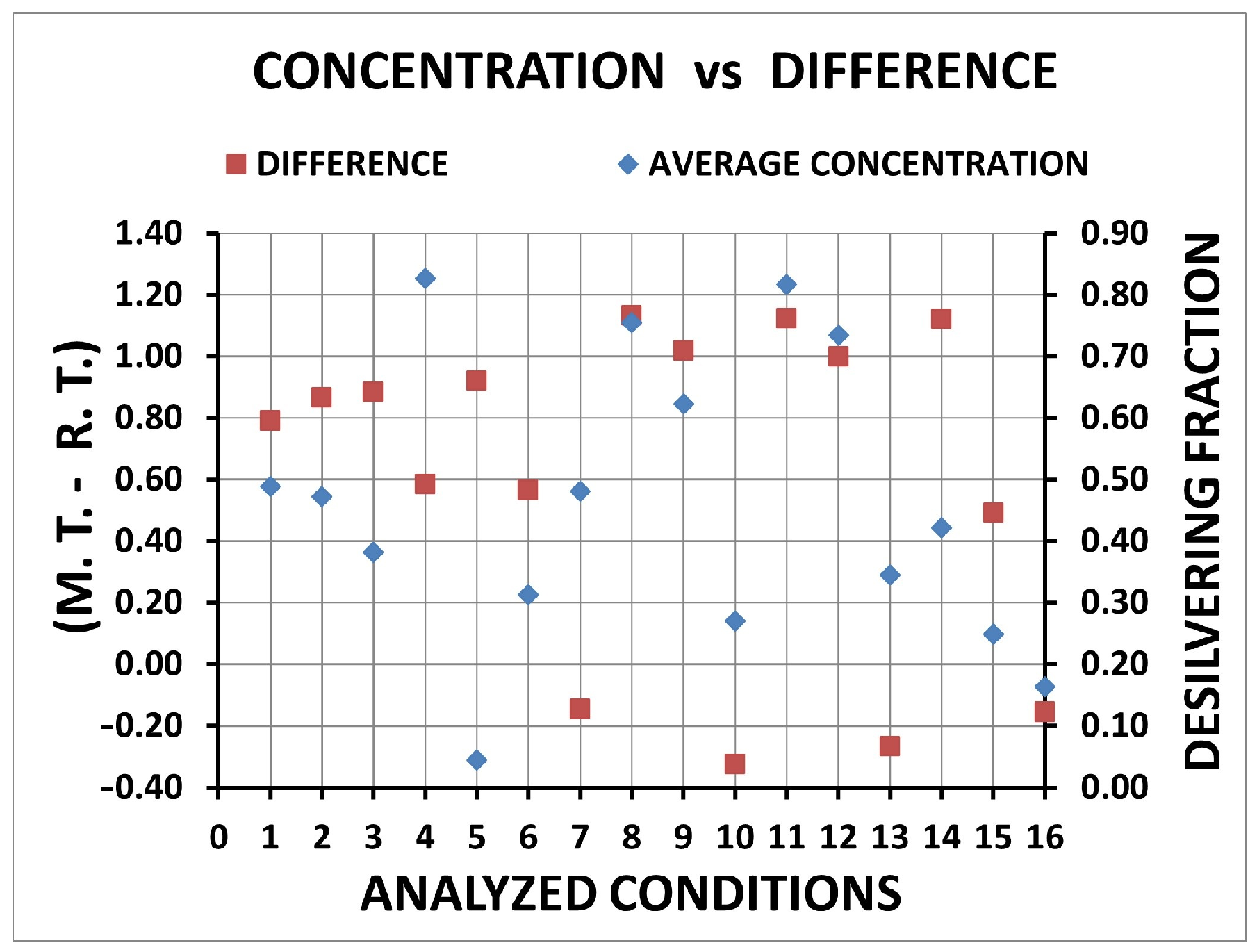
Experimental work in particle injection [17,18] has reported that there must be a balance between the residence time of the particles and the melting time thereof. Therefore, the time required to melt the injected zinc was calculated with Equation (9), and with data from Table 1, considering the same amount for all simulated conditions, the resulting fusion time was 1.712 s. In Figure 23, the difference between the melting time of zinc for this case and the residence time of each condition studied is plotted. This figure indicates that the conditions with a slight difference between the melting time and the residence time obtain a low desilvering fraction. This can increase reagent efficiency simply by balancing the residence time and the melting time, as observed in Condition 16, which shows the best performance.

4. Conclusions

Based on the simulation results, the most favorable operating condition for the desilvering process corresponds to a lance submergence of 90% of the bath depth combined with an injection velocity of 9.79 m/s. This combination provides a suitable balance between particle residence time and the Stefan-type melting time, thereby maximizing process efficiency within the simulated operating window.
Under the benchmark condition (U = 3.32 m/s, 70% submergence), the kinetic model matched the experimental desilvering curve with a mean absolute percentage error (MAPE) of 1.13% (N = 25). This quantitative validation supports the use of the model for the subsequent parametric analysis and supersedes earlier qualitative descriptions of the fit.
The analysis further indicates that the residence time is a critical descriptor of desilvering performance. The best-performing scenarios are those in which the residence time approaches the zinc melting time, enabling complete melting within the reactive trajectory and sustained contact between liquid zinc and molten lead.
Finally, it is important to acknowledge the limitations of this study. The model employs a single characteristic radius (Rc) for the injected zinc and does not explore the effect of a particle size distribution. The choice of Rc is based on the average particle size used in the experimental validation work [17], ensuring consistency between the simulation and the experimental data. However, this introduces an uncertainty, because finer particles would melt faster (affecting Tf) but might have different residence times (affecting τres), creating a competing balance that is not explored here. In addition, the model assumes an isothermal bath and does not consider local thermal gradients in the plume. Future work should focus on a sensitivity analysis of the particle size distribution and on relaxing the isothermal assumption in order to achieve a more complete process optimization.

Author Contributions

Conceptualization, V.H.G.P. and A.C.R.; data curation, S.L.O.V. and M.C.O.G.; funding acquisition, V.H.G.P. and A.C.R.; investigation, M.P.C.D., A.C.R. and S.L.O.V.; software, R.G.S.A., M.P.C.D. and A.C.R.; methodology, V.H.G.P., R.G.S.A. and J.E.R.S.; formal analysis, R.G.S.A., M.P.C.D. and M.C.O.G.; validation, R.G.S.A., M.P.C.D. and J.E.R.S.; supervision, V.H.G.P.; visualization, M.C.O.G. and J.E.R.S.; writing—original draft, V.H.G.P.; writing—review & editing, V.H.G.P. and S.L.O.V. All authors have read and agreed to the published version of the manuscript.

Funding

This research received no external funding.

Data Availability Statement

The original contributions presented in this study are included in the article. Further inquiries can be directed to the corresponding authors.

Acknowledgments

The authors wish to thank the Institutions SECIHTI, SNII and SIP-Instituto Politécnico Nacional for their permanent assistance to the Process Metallurgy Group at UPIIZ and ESIQIE.

Conflicts of Interest

The authors declare no conflicts of interest.

References

  1. Plascencia, G.; Romero, A.; Morales, R.; Hallen, M.; Chávez, F. Sulfur Injection to Remove Copper from Recycled Lead. Can. Metall. Q. 2001, 40, 309–316. [Google Scholar] [CrossRef]
  2. Davey, T.R.A. Desilverizing of Lead Bullion. JOM 1954, 6, 838–848. [Google Scholar] [CrossRef]
  3. Kandalam, A.; Reuter, M.A.; Stelter, M.; Reinmöller, M.; Gräbner, M.; Richter, A.; Charitos, A. A Review of Top-Submerged Lance (TSL) Processing—Part I: Plant and Reactor Engineering. Metals 2023, 13, 1728. [Google Scholar] [CrossRef]
  4. Kandalam, A.; Reuter, M.A.; Stelter, M.; Reinmöller, M.; Gräbner, M.; Richter, A.; Charitos, A. A Review of Top-Submerged Lance (TSL) Processing—Part II: Thermodynamics, Slag Chemistry and Plant Flowsheets. Metals 2023, 13, 1742. [Google Scholar] [CrossRef]
  5. Emi, T.; Yin, H. The Howard Worner International Symposium on Injection in Pyrometallurgy; TMS, Pennsylvania State University: University Park, PA, USA, 1996. [Google Scholar]
  6. Vargas, M.; Romero, A.; Morales, R.; Hernandez, M.; Chavez, F.; Castro, J. Hot metal pretreatment by powder injection of lime-based reagents. Steel Res. 2001, 72, 173–181. [Google Scholar] [CrossRef]
  7. Obiso, D.; Schwitalla, D.H.; Korobeinikov, I.; Meyer, B.; Reuter, M.A.; Richter, A. Dynamics of Rising Bubbles in a Quiescent Slag Bath with Varying Thermo-Physical Properties. Metall. Mater. Trans. B 2020, 51, 2843–2861. [Google Scholar] [CrossRef]
  8. Haas, T.; Schubert, C.; Eickhoff, M.; Pfeifer, H. A Review of Bubble Dynamics in Liquid Metals. Metals 2021, 11, 664. [Google Scholar] [CrossRef]
  9. Wang, Y.; Wang, J.; Cao, L.; Cheng, Z.; Blanpain, B.; Reuter, M.; Guo, M. The State-of-the-Art in the Top Submerged Lance Gas Injection Technology: A Review. Metall. Mater. Trans. B 2022, 53, 3345–3363. [Google Scholar] [CrossRef]
  10. Li, S.; Yang, R.; Wang, C.; Liu, Y.; Zhang, T. Cfd–Pbm Simulation on Bubble Size Distribution in a Gas–Liquid–Solid Three-Phase Stirred Tank. ACS Omega 2022, 7, 1934–1942. [Google Scholar] [CrossRef] [PubMed]
  11. Zhang, C.; Wang, X.; Zhang, Y.; Huang, F. Two-Way PBM–Euler Model for Gas and Liquid Flow in the Ladle: Influence of Ladle Geometry on Bubble-Size Distribution. Materials 2023, 16, 3782. [Google Scholar] [CrossRef]
  12. Gutiérrez, V.H.; Vargas, M.; Cruz, A.; Romero, A.; Rivera, J.E. Hydrodynamic simulation of gas-particle injection into molten lead. Mater. Res.-Ibero-Am. J. Mater. 2014, 17, 4. [Google Scholar] [CrossRef]
  13. Rivera, J.E.; Gutiérrez, V.H.; Vargas, M.; Gregorio, K.M.; Cruz, A.; Avalos, F.; Ortíz, J.C.; Escobedo, J.C. Application of Computational fluid dynamic in aluminum refining through pneumatic injection of powders. Mater. Res. 2014, 17, 1550–1562. [Google Scholar] [CrossRef]
  14. Živković, D.; Živković, Ž.; Liu, Y.-H. Comparative study of thermodynamic predicting methods applied to the Pb–Zn–Ag system. J. Alloys Compd. 1998, 265, 176–184. [Google Scholar] [CrossRef]
  15. Ohguchi, S.; Robertson, D. Kinetic model for refining by submerged powder injection: Part 1 Transitory and permanent-contact reaction. Ironmak. Steelmak. 1984, 11, 262–273. [Google Scholar]
  16. Gaskell, D. An Introduction to Transport Phenomena in Materials Engineering, Editorial; Macmillan Publishing Inc.: New York, NY, USA, 1992; pp. 401–420. [Google Scholar]
  17. Gutiérrez, V.H.; Vargas, M.; Cruz, A.; Sanchez, R.G. Silver removal from molten lead through zinc powder injection. Trans. Nonferrous Met. Soc. China 2014, 24, 544–552. [Google Scholar] [CrossRef]
  18. Gutiérrez, V.H.; Cruz, A.; Romero, A.; Rivera, J.E. Analysis of the sulfur decoppering from molten lead by powder injection. Russ. J. Non-Ferr. Met. 2015, 56, 251–260. [Google Scholar] [CrossRef]
  19. Langberg, D.E.; Nilmani, M. The production of nickel-zinc alloys by powder injection. Metall. Mater. Trans. B 1996, 27, 780–787. [Google Scholar] [CrossRef]
  20. Robertson, D.G.C.; Deo, B.; Ohguchi, S. Multicomponent mixed-transport-control theory for kinetics of coupled slag/metal and slag/metal/gas reactions: Application to desulphurization of molten iron. Ironmak. Steelmak. 1984, 11, 41–55. [Google Scholar]
  21. Visuri, V.V.; Vuolio, T.; Haas, T.; Fabritius, T. A Review of Modeling Hot Metal Desulfurization. Steel Res. Int. 2020, 91, 1900454. [Google Scholar] [CrossRef]
  22. User’s Guide CFD Module; COMSOL Multiphysics 4.1; COMSOL: Burlington, MA, USA, 2010.
  23. Scheepers, E.; Eksteen, J.J.; Aldrich, C. Optimization of The Lance Injection Desulphurization of Molten Iron using Dynamic Modeling. Miner. Eng. 2006, 19, 1163–1173. [Google Scholar] [CrossRef]
Figure 1. Validation of the kinetic model using the desilvering process.
Metals 15 01334 g001
Figure 2. Concentration profile of silver at 10, 100, 250, and 480 s of condition 1.
Metals 15 01334 g002
Figure 3. Graph of desilvering fraction vs. time of analyzed conditions.
Metals 15 01334 g003
Figure 4. Graph of average overall desilvering fraction of all conditions.
Metals 15 01334 g004
Figure 5. Concentration profile of silver at 10, 100, 250, and 480 s to a lance height of 30% of the crucible.
Metals 15 01334 g005
Figure 6. Concentration profile of silver at 10, 100, 250, and 480 s to a lance height of 50% of the crucible.
Metals 15 01334 g006
Figure 7. Concentration profile of silver at 10, 100, 250, and 480 s to a lance height of 70% of the crucible.
Metals 15 01334 g007
Figure 8. Concentration profile of silver at 10, 100, 250, and 480 s to a lance height of 90% of the crucible.
Metals 15 01334 g008
Figure 9. Desilvering fraction behavior regarding a lance depth at U = 3.32 m/s.
Metals 15 01334 g009
Figure 10. Desilvering fraction behavior regarding a lance depth at U = 6.63 m/s.
Metals 15 01334 g010
Figure 11. Desilvering fraction behavior regarding a lance depth at U = 9.79 m/s.
Metals 15 01334 g011
Figure 12. Concentration profile of silver for three different crucible sizes at 3.32 m/s.
Metals 15 01334 g012
Figure 13. Relationship between average fractions of overall desilvering for different crucible sizes.
Metals 15 01334 g013
Figure 14. Concentration profile of silver for different lance sizes at 3.32 m/s.
Metals 15 01334 g014
Figure 15. Relationship between average fractions of overall desilvering for different lance sizes.
Metals 15 01334 g015
Figure 16. Behavior of residence time.
Metals 15 01334 g016
Figure 17. Behavior of mixing time.
Metals 15 01334 g017
Figure 18. Behavior of mass transfer coefficient.
Metals 15 01334 g018
Figure 19. Behavior of transient reaction efficiency.
Metals 15 01334 g019
Figure 20. Relationship between desilvering fraction and residence time.
Metals 15 01334 g020
Figure 21. Relationship between desilvering fraction and mass transfer coefficient.
Metals 15 01334 g021
Figure 22. Relationship between desilvering fraction and transient reaction efficiency.
Metals 15 01334 g022
Figure 23. Relationship between desilvering fraction and difference between residence time and zinc fusion time.
Metals 15 01334 g023
Table 1. Parameters employed in the calculation of fusion time and residence time.
Parameter [12,13,14,15,16,17]SymbolValueUnitMaterial/Notes
Characteristic lengthLc5.061 × 10−3mUsed in Equations (10)–(12)
Injected volumeVinj1.466 × 10−5m3From Zn mass and true density
Solid initial temperatureT025°CZinc
Solid melting temperatureTf420°CZinc
Solid densityρs7140kg m−3Zinc (true density)
Latent heat of fusionΔHfs1.12 × 105J kg−1Zinc
Temperature (bath)Tm480°CMolten lead
Specific heat (bath)Cpm153J·kg−1 K−1Molten lead
Density (bath)ρm10,359kg m−3Molten lead (≈480 °C)
Thermal conductivity (bath)km19W m−1 K−1Molten lead
Base Crucible Geometry
Crucible diameter (base)Dc0.127m
Bath depth (base)(H)0.100m
Base Lance Geometry
Lance outer diameter (base)DL0.00635m
Lance length (base)LL0.070m
Reference Injection Velocities 3.32; 6.63; 9.79m·s−1Used in condition matrix
In Equation (9) the “environment” denotes the molten lead bath, treated as a semi-infinite medium with properties kPb, cp, Pb, ρPb.
Table 2. Analyzed Conditions.
Velocity (m/s)Lance Height (70%)Crucible Size (+50%)Crucible Size (50%)Lance Size (+50%)Lance Size (50%)Lance Height (30%)Lance Height (50%)Lance Height (90%)
3.32145678910
6.632 111213
9.793 141516
The base crucible diameter Dc, bath depth H, and lance outer diameter DL are listed in Table 1. ‘Crucible/Lance Size (+50%)’ indicates a 1.5× uniform scaling of the corresponding base dimensions, whereas ‘(50%)’ indicates 0.5×. ‘Lance Height (30/50/70/90%)’ denotes the lance tip position at 0.30H/0.50H/0.70H/0.90H measured from the bath bottom. Condition IDs (1–16) are labels used throughout the paper.
Table 3. Hydrodynamic steady-state time, τhyd (s).
Velocity (m/s)Lance Height (70%)Crucible Size (+50%)Crucible Size (50%)Lance Size (+50%)Lance Size (50%)Lance Height (30%)Lance Height (50%)Lance Height (90%)
3.321.0 s2.0 s2.0 s0.8 s0.9 s2.0 s1.5 s1.0 s
6.631.2 s 1.2 s1.4 s1.6 s
9.791.5 s 1.5 s2.0 s2.6 s
The hydrodynamic steady-state time τhyd was defined as the earliest time at which the volume-averaged kinetic energy changed by less than 5% over a 0.1 s sliding window (three consecutive checks); values for each condition are listed in Table 3. The full hydrodynamic setup is described by Gutiérrez et al. [12].
Table 4. Kinetic parameters of the evaluated conditions.
ConditionDesilvering
Fraction
Residence Time (s)Mixing Time
τ m i x (s)
keE
10.490.5620.0623.86 × 10−40.25
20.470.4850.0644.40 × 10−40.25
30.380.4680.0664.74 × 10−40.26
40.830.7680.1253.34 × 10−40.29
50.040.4320.0145.12 × 10−40.26
60.310.7870.0524.54 × 10−40.38
70.481.4980.0703.04 × 10−40.45
80.760.2200.0743.86 × 10−40.11
90.620.3340.0513.86 × 10−40.25
100.271.6770.0703.86 × 10−40.58
110.820.2290.0554.40 × 10−40.13
120.730.3540.0524.40 × 10−40.19
130.341.6180.0904.40 × 10−40.61
140.420.2320.0453.86 × 10−40.25
150.250.8610.0514.74 × 10−40.42
160.161.5080.0964.74 × 10−40.61
Table 5. The best five results obtained from 4, 16, 17, and 19 graphs.
Better Conditions Rank1st2nd3rd4th5th
Figures
Desilvering fraction51615106
Residence time101316715
Mixing time51491512
E161310715
Disclaimer/Publisher’s Note: The statements, opinions and data contained in all publications are solely those of the individual author(s) and contributor(s) and not of MDPI and/or the editor(s). MDPI and/or the editor(s) disclaim responsibility for any injury to people or property resulting from any ideas, methods, instructions or products referred to in the content.