Article

Thermodynamic and Experimental Analysis of the Selective Reduction of Iron by Hydrogen from the Kergetas Iron–Manganese Ore


by
Nurlybai Kosdauletov
1,2,
Bakyt Suleimen
1,2,*,
Galymzhan Adilov
1,2,
Assylbek Nurumgaliyev
1,
Bauyrzhan Kelamanov
2,
Yerbol Kuatbay
1,3,
Talgat Zhunuskaliyev
3,4,
Gulzat Bulekova
1,*,
Semen Salikhov
5 and
Assylbek Abdirashit
1,2
1
Department of Metallurgy and Materials Science, Karaganda Industrial University, Temirtau 101400, Kazakhstan
2
Department of Metallurgy and Mining, K. Zhubanov Aktobe Regional University, Aktobe 030000, Kazakhstan
3
Scientific Research Center «Metallurgy and Mineral Processing», Astana 010000, Kazakhstan
4
Kazakhstan Department of Science, Eurasian Technological University, Almaty 050000, Kazakhstan
5
Department of Pyrometallurgical and Foundry Technologies, South Ural State University, Lenin Prospekt 76, Chelyabinsk 454080, Russia
*
Authors to whom correspondence should be addressed.
Metals 2025, 15(12), 1330; https://doi.org/10.3390/met15121330
Submission received: 28 October 2025 / Revised: 27 November 2025 / Accepted: 28 November 2025 / Published: 2 December 2025

Abstract

Thermodynamic modeling combined with experimental reduction tests was conducted to investigate the selective reduction behavior of iron-manganese ore using hydrogen gas at 800–900 °C. The results reveal that hydrogen reduction at a flow rate of 0.5 L/min promotes the stepwise transformation of iron oxides (Fe2O3 → Fe3O4 → FeO → Fe), accompanied by the decomposition of the intermediate spinel phase Fe2MnO4, resulting in the formation of metallic iron. In contrast, the reduction of MnO to metallic manganese is thermodynamically unfavorable (ΔG > 0), limiting the extent of manganese reduction. Experimental findings confirm the formation of metallic iron inclusions enriched in Fe, while manganese predominantly remains in the form of MnO and silicate-associated oxides. X-ray diffraction analysis of reduced samples shows a decrease in Fe3O4 and Fe2MnO4 phases with increasing reduction degree and indicates the growth of metallic Fe particles with rising temperature. These results demonstrate that hydrogen enables controlled and selective reduction of iron with minimal manganese conversion, providing a promising route for subsequent efficient magnetic separation of metallic and oxide phases following reduction roasting.

1. Introduction

Manganese is one of the key elements in metallurgy, significantly influencing the quality and performance characteristics of steel. More than 90% of the manganese mined worldwide is used in the steel industry for the production of structural, rail, tool, armor, and stainless steels, as well as Hadfield high-manganese steel, which combines high toughness with excellent wear resistance. Due to these properties, manganese is a strategically important metal for the production of high-quality steels and ferroalloys, as it enables the removal of harmful impurities, improves the microstructure of steel, and increases the operational reliability of steel products [1,2]. Therefore, maintaining and developing the raw material base of high-grade manganese concentrates is a strategically important direction for ensuring the sustainable development of the metallurgical sector and enhancing its competitiveness in the global market.
In studies [3,4,5,6], the results of the beneficiation of manganese ores using thermodynamic calculations and experimental data are presented. Optimal parameters were determined for the extraction of manganese, iron, and non-ferrous metals, enabling high recovery rates: manganese up to 95–97%, nickel up to 80%, cobalt up to 99%, and iron up to 96–98%. A key drawback of this beneficiation technology is the need to use toxic chemical reagents, which may have adverse effects on the environment and the safety of industrial processes. This necessitates additional measures for waste treatment and neutralization, as well as strict compliance with environmental regulations.
Within this research [7], a detailed analysis of existing and promising methods for processing iron–manganese ores was carried out. Based on an extensive literature review, the authors emphasize that in the future, the utilization of such materials will increasingly rely on low-carbon, environmentally friendly, and “green” technologies.
Iron–manganese ores can also be beneficiated by mechanical methods [8,9,10] using equipment and technologies that exploit differences in the physical properties of minerals. Gravity concentration, magnetic separation, flotation, and other physical separation techniques are applied. However, such methods have several disadvantages, including losses of valuable minerals, the need for specialized equipment, process control complexity, waste generation, and limited efficiency when treating ores with complex mineralogy.
Many studies have investigated the leaching of iron–manganese ores under various chemical conditions [11,12,13,14]. It has been established that the use of inorganic reductants such as SO2, H2O2, iron, and its compounds allows achieving high manganese recovery. For example, aqueous sulfur dioxide solutions have proven to be effective and fast-acting for low-temperature leaching processes. These processes are economically viable and help optimize production costs. Hydrogen peroxide (H2O2) is also widely used due to its high efficiency and availability. However, the use of chemical reagents raises several issues: some of these substances may be toxic, require special storage and handling conditions, increase production costs, and complicate environmental monitoring.
In [15], the utilization of low-grade Indian manganese ores through beneficiation and agglomeration was investigated. The main mineral phases in the ores were pyrolusite, hematite, goethite, clay, feldspar, and quartz. Phase analysis showed that 40% of the manganese oxides were in free form and 30% were associated with iron minerals. The chemical composition of the ore was as follows (wt.%): Al2O3—4.64, SiO2—20.76, Mn—32.42, Fe—14.13, P—0.08, Mn/Fe ratio—2.29. Fine ore (0–3 mm) was mixed with carbon (10, 15, and 20%) as the reductant and reduced at temperatures of 500–750 °C. The reduced product was passed through a low-intensity magnetic separator (0.2–0.3 T). After separation, iron was removed as magnetite and iron silicates, while iron bound to manganese minerals remained in the non-magnetic fraction.
In [16,17], the reduction of manganese ores from the Wessels (South Africa) and Groote Eylandt (Australia) deposits was investigated. The Groote Eylandt ore had a high SiO2 content (34.4%), while the Wessels ore was characterized by high Fe and Ca oxide content and low silica. At 1000 °C in air or argon, MnO2 was reduced to Mn2O3 and Mn3O4; with hydrogen addition, it was further reduced to MnO, while iron oxides were reduced to metallic iron. When the temperature increased to 1200 °C in the Groote Eylandt ore, tephroite formed and gradually decomposed into rhodonite and MnO with longer holding times. It was also found that Groote Eylandt ore is more fusible than Wessels ore due to its high silica content.
Researchers at the Zh. Abishev Chemical-Metallurgical Institute (Karaganda) conducted several studies on the processing of iron–manganese ores to support the manganese industry of Kazakhstan [18,19]. Reduction roasting was performed in a muffle furnace at 450–620 °C with holding times of 3–12 h using Shubarkol coal as a reductant. The reduced product was subjected to dry magnetic separation using a 120 T laboratory magnetic separator. The optimal conditions were found to be 550 °C and 3–5 h, achieving manganese recovery of 65–68% and iron recovery of 23–31%. Increasing the roasting time slightly improved the separation efficiency, while higher temperatures worsened the results.
In [20,21], carbothermic reduction followed by magnetic separation was applied. The iron–manganese ore (5–13 mm) was mixed with fine coal (0.147 mm), reduced at 1000 °C, and separated magnetically. Iron recovery reached 94.31%, and Mn was present as MnO.
A similar approach was applied to South African ore containing Mn 22.5%, Fe 32.1%, and SiO2 9.7% [22]. The main iron mineral was hematite (Fe2O3), and manganese occurred as pyrolusite (MnO2). After grinding to <0.074 mm and reduction roasting, it was found that longer roasting improved magnetic separation results.
Most studies on the beneficiation of iron–manganese ores aim to obtain non-magnetic manganese concentrates suitable for manganese alloy production. Iron oxides are usually reduced to magnetite, making the iron-bearing product a semi-product rather than a final metallic product.
For processing iron–manganese ores, more environmentally friendly methods should be considered. Hydrogen is a promising alternative reductant for iron, as confirmed by numerous studies [23,24,25,26,27,28,29]. Experimental data demonstrate successful hydrogen-based reduction of various iron ores, including hematite, magnetite, and titaniferous ores [30,31,32,33,34,35,36]. From both economic and environmental perspectives, hydrogen offers advantages over traditional carbonaceous reductants, owing to its strong reducing power, low carbon footprint, and ease of integration into existing processes with minimal modifications [37,38,39,40]. Initially, iron can be selectively reduced from iron–manganese ore by hydrogen, enabling subsequent separation by magnetic methods.
Therefore, thermodynamic modeling of the selective reduction of iron–manganese ores using hydrogen is relevant and represents a more environmentally sound approach compared to traditional methods. This conclusion is based on an analysis of existing technologies, their environmental impact, and an assessment of the effectiveness of the proposed alternative solutions.
The objective of this study is to perform thermodynamic modeling and experimental investigation of the feasibility of selective solid-state reduction of iron by hydrogen to produce metallic iron and oxide manganese-containing concentrates from iron–manganese ores of the Kergetas deposit (Kazakhstan).

2. Materials and Methods

Thermodynamic modeling was carried out using HSC Chemistry 10, Version 10. Calculations were performed for the temperature range of 0–1200 °C, within which, according to preliminary calculations, selective reduction of iron to the metallic state is thermodynamically feasible.
The initial chemical composition of the Kergetas deposit ore was as follows (wt.%): Mn2O3—5.00, MnO2—44.88, Fe2O3—23.34, SiO2—17.57, MgO—0.42, CaO—4.87, Al2O3—3.57.
For modeling, the composition was recalculated in moles:
Fe2O3—0.14616; Mn2O3—0.031671; MnO2—0.51302; SiO2—0.29243; MgO—0.010421; CaO—0.086845; Al2O3—0.035014.
Hydrogen was used as the reducing agent in the thermodynamic modeling. In the system, iron is completely reduced and transitions into the metallic phase, while the oxide phase corresponds to the compounds available in the software database. After the thermodynamic calculations, laboratory-scale experiments were carried out.
Solid-state reduction of the iron–manganese ore was conducted in a laboratory vertical furnace RB Automazione, model MM 6000 (RB Automazione S.r.l., Genoa, Italy) (Figure 1).

2.1. Solid-State Reduction of Iron–Manganese Ore

Solid-state reduction of the iron–manganese ore was carried out using a vertical furnace RB Automazione, model MM 6000. This equipment is designed specifically for reduction experiments of iron-bearing materials. Ore samples weighing up to 30 g were placed in a reaction tube made of heat-resistant steel (AISI 310) with a diameter of 75 mm.
The temperature regime was controlled by a five-zone heating system with independently regulated silicon carbide heaters, which ensured precise temperature maintenance throughout the working zone of the furnace. Reduction experiments were performed at 800 and 900 °C with a holding time of 60 min.
The reducing atmosphere was created by supplying high-purity hydrogen at a flow rate of 0.5 L/min, controlled by a digital mass flow meter. The furnace was equipped with an automated control system and a touch panel, allowing for temperature profile programming, parameter logging, and real-time recording of sample weight loss.
The hydrogen used as the reductant met the requirements of GOST 3022-80 [41], with a minimum purity of 99.99%. High-purity argon (purity ≥ 99.993%) in accordance with GOST 10157-2016 [42] was used as the inert gas.

2.2. Phase and Microstructural Analysis

The phase composition of the samples was examined using a JEOL JSM-7001F scanning electron microscope (JEOL, Tokyo, Japan) equipped with an OXFORD X-Max 80 energy-dispersive X-ray (EDX) detector (Oxford Instruments, Abingdon, UK) for elemental analysis. The microscope provides a resolution of up to 1.2 nm at an accelerating voltage of 30 kV, enabling detailed examination of the microstructure and phase distribution on the sample surface.
The analysis was carried out using both secondary and backscattered electrons, which are generated by the interaction of the primary electron beam with the sample surface. Spot and area analyses were performed to determine the chemical composition of phases and inclusions. Data processing was performed using the built-in microscope software, ensuring high accuracy and reproducibility.

2.3. X-Ray Diffraction Analysis

The phase composition of the initial and reduced samples was further studied by X-ray diffraction (XRD) using a Rigaku Ultima IV diffractometer (Rigaku, Tokyo, Japan) equipped with a Cu Kα radiation source (λ = 1.5406 Å). The X-ray tube was operated at 40 kV and 30 mA.
The scans were recorded at a speed of 5°/min over the 2θ range of 5–90°. The obtained data made it possible to identify the main mineralogical changes in the ore after roasting. New oxide and silicate phases were formed. To interpret the results, the “Match” software (Match! Version 3, Crystal Impact, Germany) was used. The program identifies crystalline phases based on XRD data using the PDF2 2009 crystallographic database.

2.4. Object of the Study

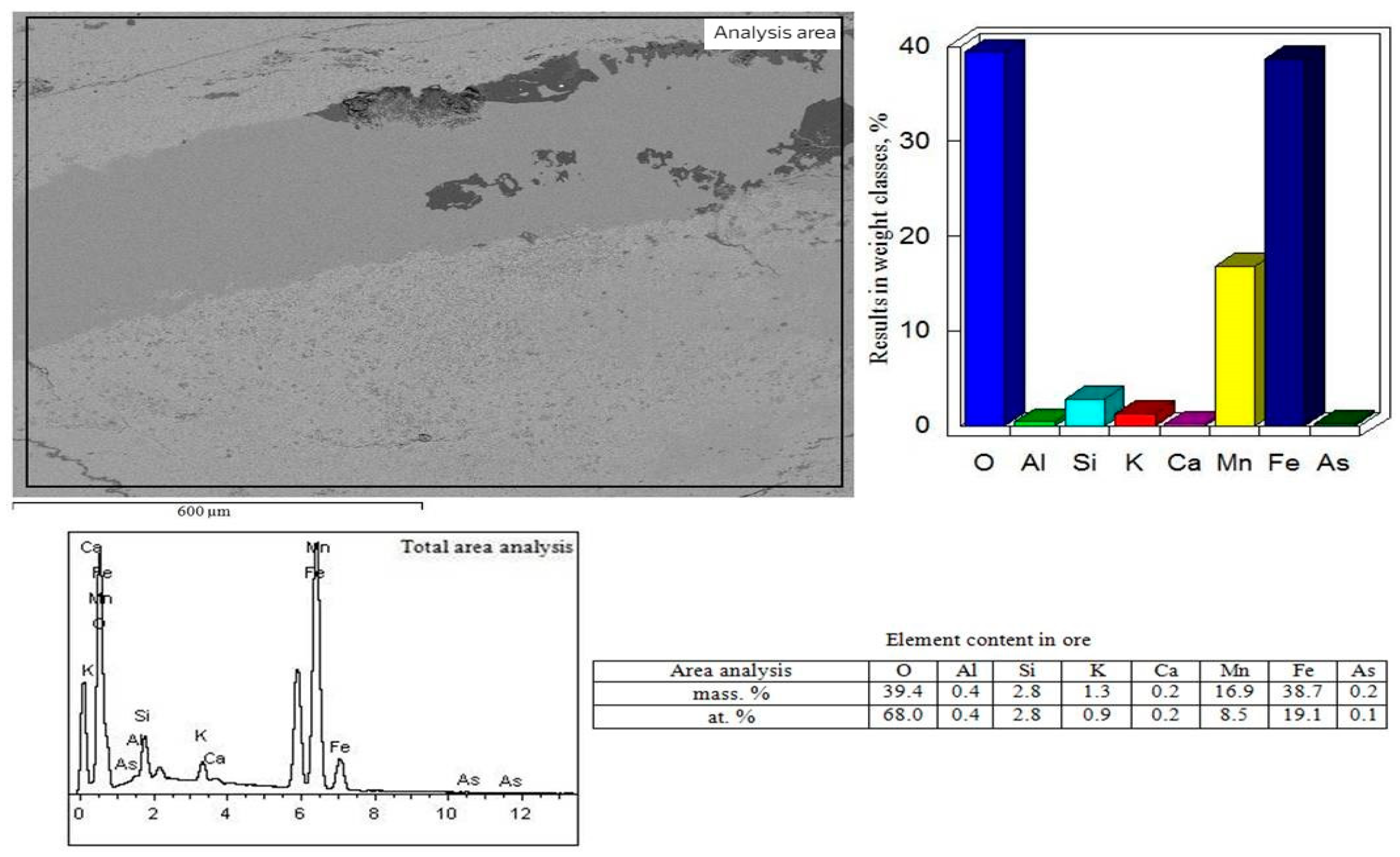
The object of this study is off-grade iron–manganese ore from the Kergetas deposit (Pavlodar, Republic of Kazakhstan). This ore is characterized by a high iron content and a relatively low manganese content, which makes it unsuitable for direct use in conventional metallurgical processes without preliminary treatment (Figure 2).
The choice of this material is justified by the need for a comprehensive investigation of its chemical and mineralogical composition and its behavior under hydrogen reduction conditions. Special attention is given to the high iron content, which poses a technological challenge but simultaneously offers an opportunity to develop efficient processing methods for the selective recovery of valuable components.

3. Results

3.1. Results of the Elemental Distribution in the Original Ore

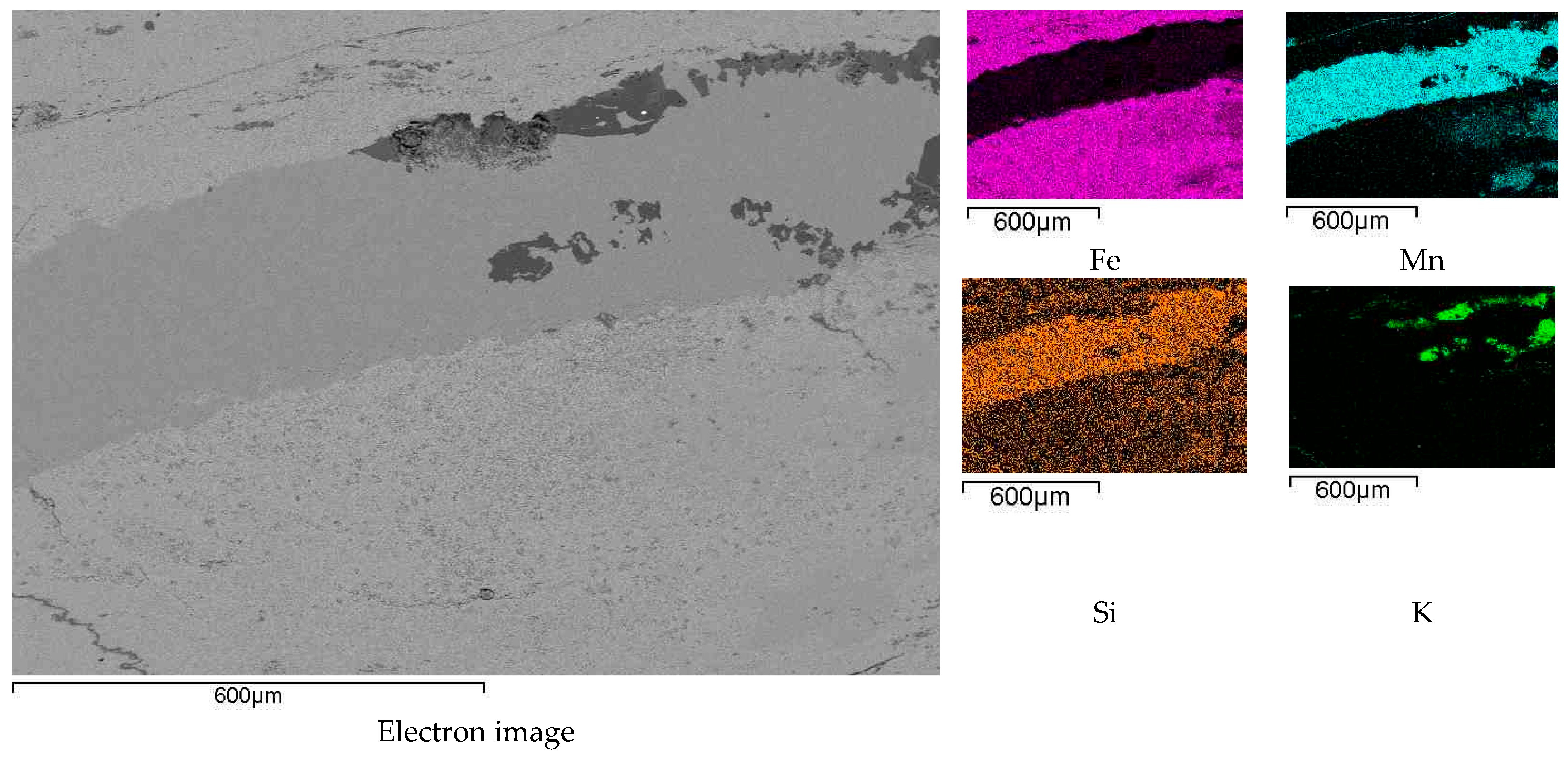
To understand the spatial distribution of chemical elements and to confirm the results of the chemical analysis, an elemental mapping of the initial ore was performed. The study was carried out using a JEOL JSM-7001F scanning electron microscope (JEOL, Tokyo, Japan).
The analysis of SEM–EDS elemental distribution maps revealed a heterogeneous distribution of chemical components in the initial iron–manganese ore (Figure 3). The highest concentrations were observed for manganese (Mn), iron (Fe), and silicon (Si), indicating the predominance of oxide and silicate phases of these elements. Areas enriched in Si and Mn suggest the presence of complex manganese silicates, while regions with high Fe content likely correspond to hematite or goethite. In addition, potassium was detected, which may indicate the presence of K-bearing aluminosilicates.
These results confirm the complex mineralogical nature of the ore and underline the importance of preliminary selective iron reduction to obtain a manganese-enriched oxide phase.
According to X-ray diffraction data [36] reported in previously published work, the main phases in the original ore are goethite FeO(OH), hematite Fe2O3, manganese dioxide MnO2, a mixed iron–manganese oxide phase FeMnO3, and silicon dioxide SiO2.
For the experiment on the selective reduction of iron, the original ore from the Keregetas deposit (Pavlodar, Kazakhstan) was used. Before starting the work, the ore was thoroughly ground in an IDA-175 mill (IKA Werke GmbH & Co. KG, Staufen, Germany) to a fraction of −1 mm, which allowed us to homogenize its chemical composition. Then, the ore was mixed with water to give it a specific shape. After that, the ore was dried in a drying oven at 150 °C for one hour to remove excess moisture.

3.2. Thermodynamic Calculation Results

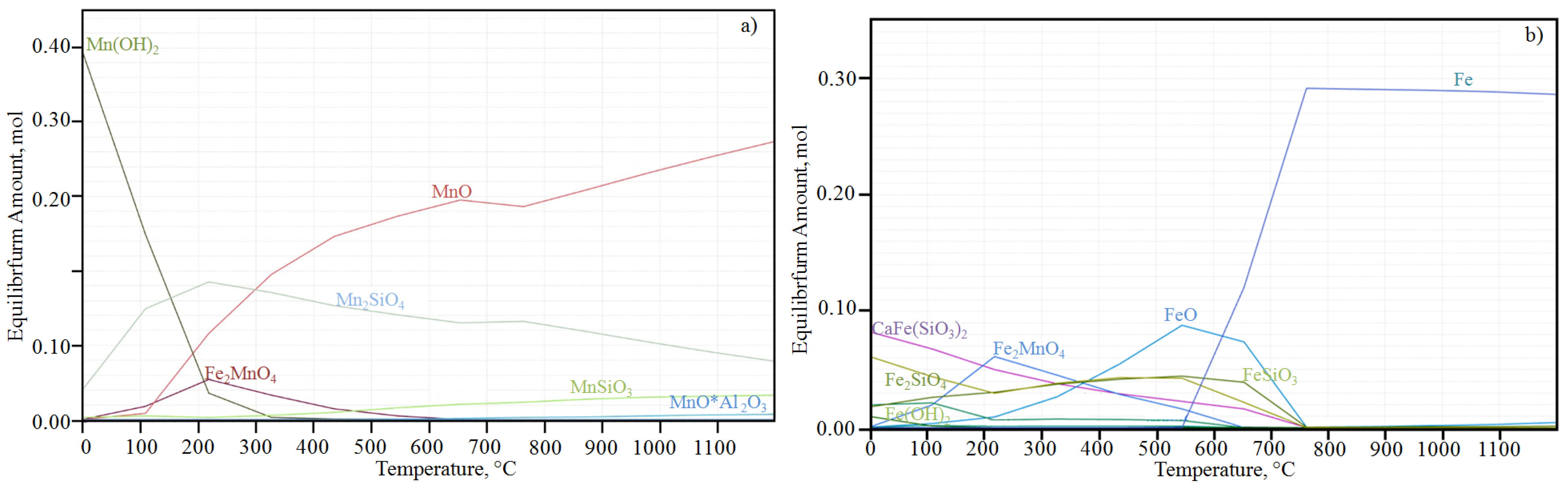
To determine the conditions for selective reduction of iron by hydrogen from the iron–manganese ore of the Kergetas deposit, thermodynamic calculations were carried out (Figure 4). The amount of hydrogen was determined stoichiometrically, based on the complete reduction of iron oxides to the metallic state and the reduction of manganese oxides to MnO.
The calculations were performed according to the following reactions:
Fe2O3 + 3H2 → 2Fe + 3H2O
MnO2 + H2 → MnO + H2O
Mn2O3 + H2 → 2 MnO + H2O
MnO + H2 → MnO + H2O
The stoichiometric calculation showed that 0.98317 mol of H2 is required for the complete reduction of the studied ore. To evaluate the influence of the reducing agent concentration and the partial pressure of hydrogen, an additional case with an excess of hydrogen (1.2 mol H2) was considered. This made it possible to track the shift of the equilibrium toward the formation of more strongly reduced iron phases.
At temperatures up to 300–400 °C, the dominant phases are FeOOH and Fe2O3, corresponding to the initial oxidized forms of iron. As the temperature increases to 600 °C, Fe2O3 is reduced to Fe3O4, and in the 600–700 °C range, FeO and an intermediate ferrite–spinel phase Fe2MnO4 appear as a result of the reaction between Fe3O4 and MnO:
Fe3O4 + MnO → Fe2MnO4
With a further increase in temperature above 700 °C, iron is completely reduced to the metallic state according to the reaction:
FeO + H2 → Fe + H2O
Thus, the iron reduction process proceeds stepwise according to the following sequence: Fe2O3 → Fe3O4 → FeO → Fe and is completed at 700–800 °C, when the maximum degree of reduction is achieved.
In the 400–600 °C temperature range, the formation of ferrospinel Fe2MnO4 is observed. As the temperature increases further, the amount of Fe2MnO4 decreases due to the decomposition of the spinel structure and the subsequent reduction of iron to FeO and metallic Fe. The reduction in Fe2MnO4 content indicates that with increasing temperature, the reduction of iron becomes thermodynamically more favorable, while the spinel compounds lose stability.
Under these conditions, manganese oxides are primarily reduced to MnO or participate in the formation of stable silicate compounds such as MnAl2Si2O6 and Mn2SiO4.
These results demonstrate that the reduction of iron by hydrogen from iron–manganese ores proceeds selectively: iron is reduced to its metallic state, while manganese remains in the oxide phase. This confirms the feasibility of selective iron extraction while retaining manganese as oxides and highlights the potential of hydrogen-based technologies for the processing of iron–manganese raw materials.

3.3. Results of Reduction Roasting in a Hydrogen Atmosphere

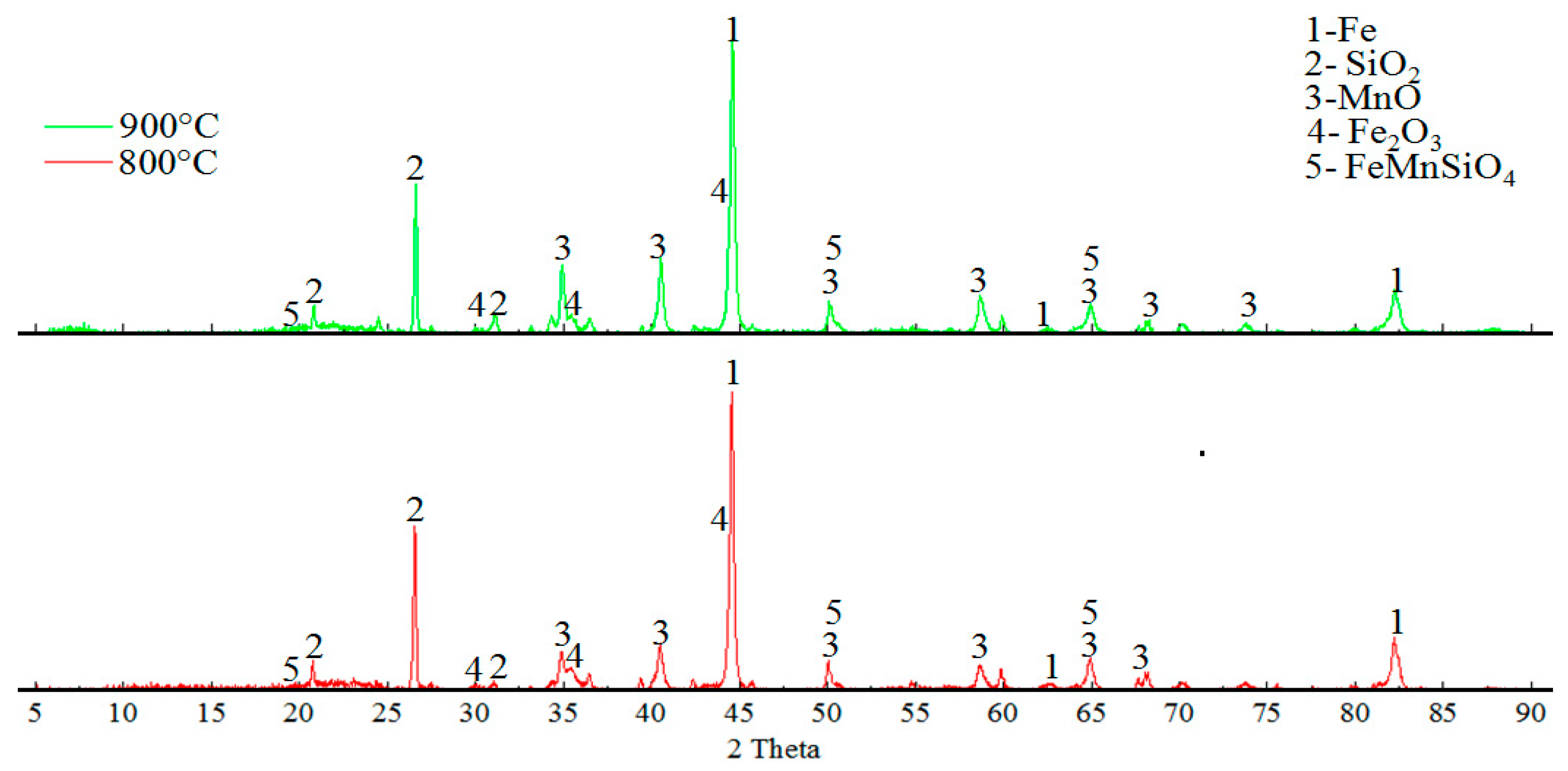
Figure 5 shows the X-ray diffraction analysis of the iron–manganese ore reduced in a hydrogen flow with a one-hour holding time at 800–900 °C. The XRD analysis was performed using a Rigaku Ultima IV diffractometer (Rigaku Corporation, Tokyo, Japan), and the results were interpreted using the “Match” software (Match! Version 3, Crystal Impact, Bonn, Germany). The program identifies crystalline phases from XRD data using the PDF2 2009 crystallographic database. According to the results, under these conditions, iron is reduced and transforms into the metallic phase, while the oxide phase consists of manganese oxides, silicon oxides, and a small amount of iron oxides.
The results indicate that iron is reduced and converted into the metallic phase, while the oxide phase consists mainly of manganese oxides, silicon oxides, and a small amount of residual iron oxides. This confirms that hydrogen is an effective reducing agent for iron in iron–manganese ores under the given conditions.
The preservation of manganese oxides as MnO indicates their high stability against reduction at these temperatures, which is essential for understanding the reduction mechanism and for designing selective processing technologies.
According to Rietveld refinement, the phase composition at 900 °C was as follows: SiO2—37.4%, Fe—27.4%, MnO—15.0%, FeMnSiO4—15.0%, Fe3O4—4.3%. At 800 °C, the composition was as follows: SiO2—48.8, Fe—32.6, MnO—13.3, Fe3O4—5.2.
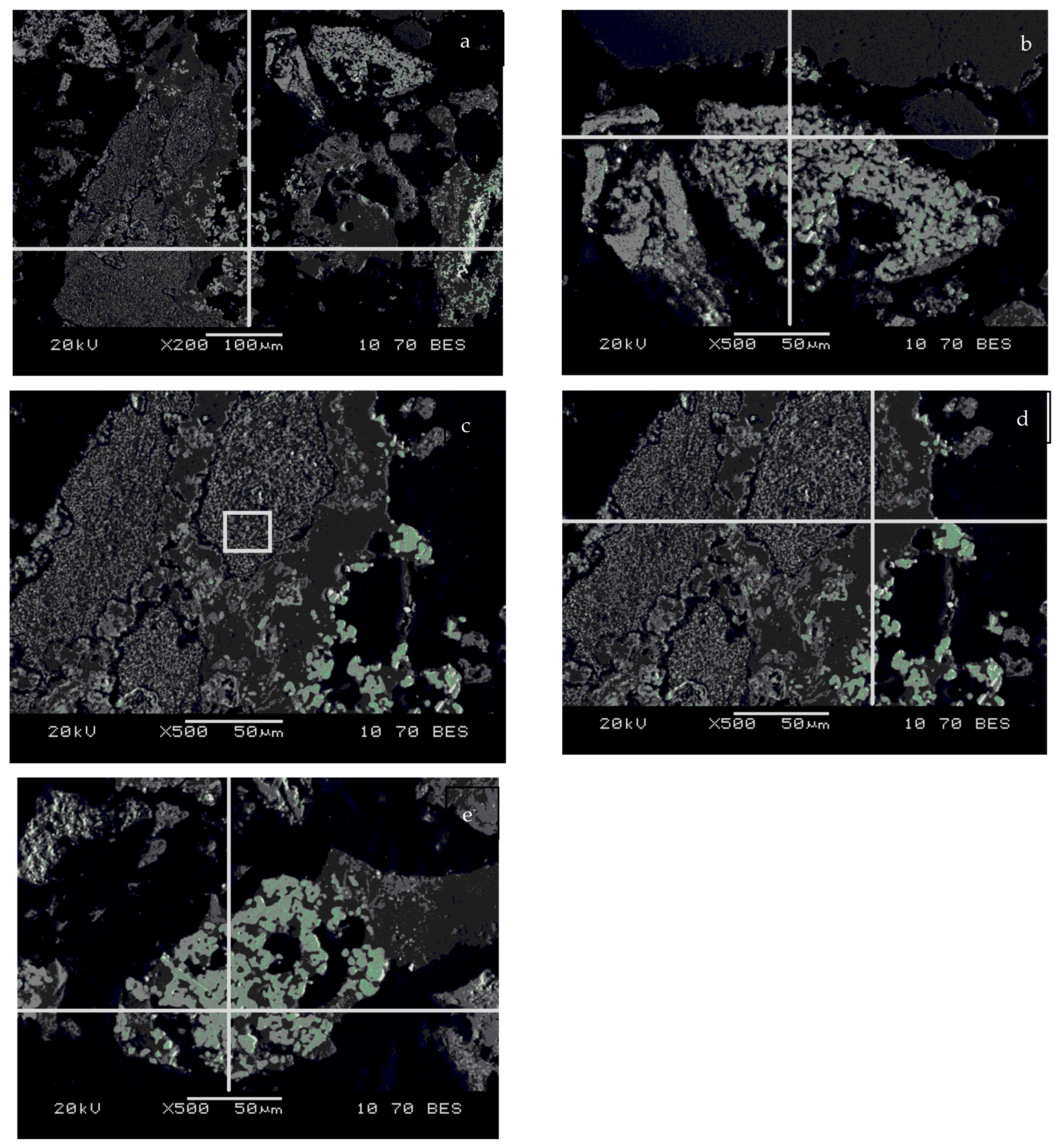
Figure 6 shows the microstructure of the iron–manganese ore after reduction roasting in a hydrogen atmosphere for 60 min at a gas flow rate of 0.5 L/min. At different magnifications, the metallic and oxide phases can be clearly distinguished, enabling a detailed analysis of their distribution and chemical composition (Figure 6, Table 1).
SEM–EDS analysis revealed the presence of metallic phases containing iron, arsenic, and manganese (Figure 6, Table 1, spectra 1, 2, 5). Other regions of the sample contained elements that were not reduced during the experiment, with compositions characterized by manganese, silicon, aluminum, and barium. The main oxide phase formed under these conditions was manganese monoxide (MnO).
This confirms that under the applied reduction conditions, iron is selectively reduced to its metallic state, whereas manganese remains in the oxide phase, which is consistent with the thermodynamic predictions.
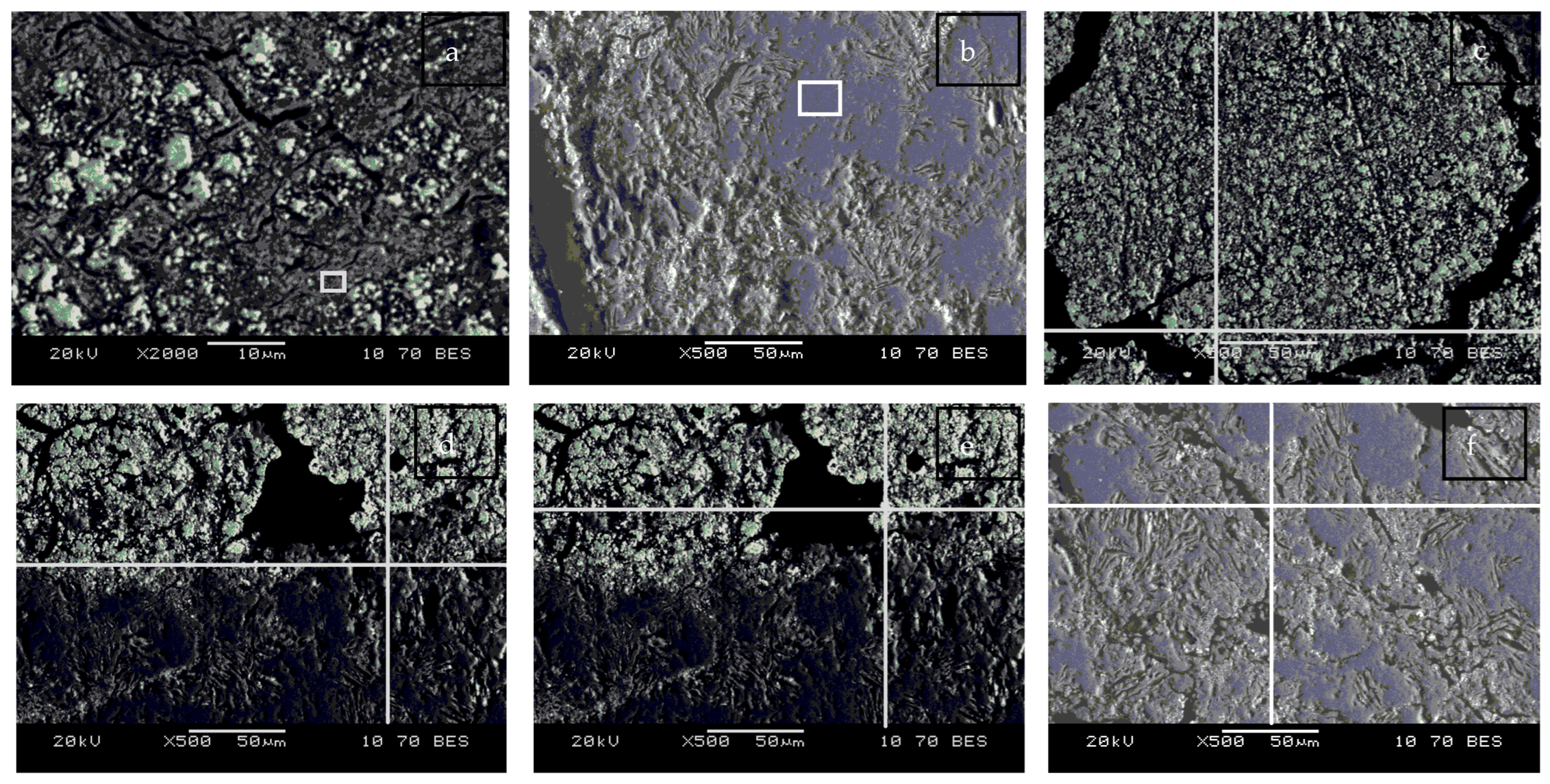
At a temperature of 900 °C and a hydrogen flow rate of 0.5 L/min for 60 min, a similar phase composition is observed as at lower temperatures; however, there is a noticeable increase in the size of metallic particles (Figure 7, Table 2).
The results of spectral analysis performed using an electron microscope show that with increasing temperature, there is a slight increase in the manganese concentration in the metallic phase. Nevertheless, the major part of manganese remains in the oxide phase, predominantly as MnO.
Thus, during reduction roasting of iron–manganese ore in a hydrogen atmosphere at 700 and 900 °C and a hydrogen flow rate of 0.5 L/min for 60 min, a metallic phase containing iron, arsenic, and manganese is formed. At the same time, a significant portion of manganese remains in the oxide phase, mainly as MnO. The increase in temperature leads to the growth of metallic particle size, accompanied by a slight enrichment of the metallic phase with manganese.
Analysis of the obtained data provides a well-grounded conclusion on the promising potential of selective iron reduction and the possibility of effective co-reduction of impurities such as iron, phosphorus, and arsenic into the metallic phase using hydrogen.

4. Discussion

Thermodynamic Modeling of the hydrogen reduction of iron–manganese ore over the temperature range of 0–1200 °C revealed fundamentally different behaviors of manganese- and iron-bearing phases, governed by their thermodynamic stability and their propensity to participate in reduction reactions (Figure 4). At low temperatures, manganese forms the hydroxide Mn(OH)2, which disappears upon heating and is replaced by MnO, the formation of which becomes thermodynamically stable at approximately 400 °C. Further temperature increase does not lead to the reduction of manganese to its metallic state. At higher temperatures, the formation of phases such as MnO·Al2O3 or Mn2SiO4 is observed, indicating the incorporation of manganese into aluminosilicate phases and its immobilization within the oxide–silicate slag matrix.
In contrast, iron is readily reduced, following the successive pathway Fe2O3 → Fe3O4 → FeO → Fe. In the intermediate temperature range (400–600 °C), the formation of the mixed ferrospinel Fe2MnO4 is detected, reaching its maximum concentration at 550–600 °C before decomposing with the release of metallic iron. Intensive formation of metallic Fe begins at 650–700 °C, and its concentration stabilizes above 800 °C, confirming complete iron reduction by hydrogen [43,44,45]. Simultaneous depletion of silicate phases such as Fe2SiO4, FeSiO3, and CaFe(SiO3)2 indicates the displacement of iron from oxygen and silicate bonds and its subsequent transition into the metallic phase. Thus, the system exhibits a distinctly selective reduction behavior: with increasing temperature, iron is fully reduced to the metallic state, whereas manganese remains in the form of MnO or aluminosilicate compounds and does not undergo reduction to metal. This selectivity has important practical implications for hydrogen metallurgy and demonstrates the potential for targeted separation of iron and manganese through optimization of process parameters based on their differing reduction behavior.
Experimental data obtained by X-ray phase analysis and spectral analysis of iron–manganese ore samples subjected to reduction roasting in a hydrogen atmosphere at 800–900 °C for 60 min confirm the high efficiency of hydrogen as a reducing agent for iron, consistent with the results of thermodynamic modeling. At both temperatures, the formation of a metallic phase enriched in iron and containing inclusions of arsenic and manganese is observed. At 900 °C, an increase in the size of metallic particles and a slight increase in manganese content in the metallic phase are recorded, indicating partial manganese reduction at higher temperatures (Figure 5, Figure 6 and Figure 7). According to Redfeld phase analysis, the amount of metallic iron reaches 27.4 wt% at 900 °C and 32.6 wt% at 800 °C. Combined with the decrease in Fe3O4, these data indicate deep iron reduction and the breakdown of oxide structures. The reduction in metallic iron content at 900 °C, as confirmed by the final phase composition, may be attributed to the fact that the reducing capability of hydrogen is more effective at moderately lower temperatures [46].
In all cases, a substantial portion of manganese remains in the form of the stable oxide MnO or as complex silicates such as FeMnSiO4, confirming its higher thermodynamic stability toward reduction compared with iron. The persistence of unaltered silicate phases based on SiO2, as well as residual Fe3O4, further supports the conclusion that the reduction process proceeds selectively: iron transitions readily to the metallic state, while manganese remains predominantly bound within oxide or silicate matrices, preserving structural integrity. These findings substantiate the potential of hydrogen-based selective reduction of iron from iron–manganese ores and demonstrate the feasibility of controlling phase composition and impurity distribution to produce metallic phases with tailored properties and enhanced removal of undesired oxides.

5. Conclusions

Thermodynamic analysis of the reduction reactions showed that iron reduction proceeds stepwise according to the scheme Fe2O3 → Fe3O4 → FeO → Fe, with the decomposition of the intermediate spinel phase Fe2MnO4 formed in the partial reduction zone, whereas the reduction of MnO to metallic manganese is thermodynamically impossible, which limits the manganese reduction to the MnO stage. Experimental reduction confirmed the calculations: during reduction roasting, a metallic phase enriched in iron with a minor fraction of reduced manganese is formed, while the majority of manganese remains as reduced manganese monoxide (MnO), which is resistant to further reduction.
Thus, the experimental and calculated results demonstrate that using hydrogen as a reductant leads to a selective reduction process, allowing for the efficient magnetic separation of metallic and oxide phases after reduction roasting. The development of new technologies and the decreasing cost of electricity may further enhance the feasibility and economic viability of switching to hydrogen in the future.

Author Contributions

Conceptualization, N.K. and B.S.; methodology, A.N. and B.K.; software, T.Z.; validation, B.K., B.S. and A.A.; formal analysis, G.A. and G.B.; investigation, A.N. and S.S.; resources, Y.K. and B.K.; data curation, G.A., G.B. and T.Z.; writing—original draft preparation, N.K., G.A., B.S., Y.K., G.B., S.S. and A.A., writing—review and editing, N.K., A.N., B.K., T.Z., S.S. and A.A.; visualization, G.A., Y.K. and T.Z.; supervision, B.K. and T.Z.; project administration, A.N.; funding acquisition, A.N. All authors have read and agreed to the published version of the manuscript.

Funding

This research is funded by the Science Committee of the Ministry of Science and Higher Education of the Republic of Kazakhstan (Grant No. AP 23490490).

Data Availability Statement

The original contributions presented in this study are included in the article. Further inquiries can be directed to the corresponding author.

Acknowledgments

The authors express their sincere gratitude to K. Zhubanov Aktobe Regional University, Karaganda Industrial University, and South Ural State University (Research Laboratory “Hydrogen Technologies in Metallurgy”) for their administrative and technical support, as well as for providing the facilities and resources necessary to conduct this research.

Conflicts of Interest

The authors declare no conflict of interest.

References

  1. Baisanov, A.; Maishina, Z.; Isagulov, A.; Smagulova, N.; Yudakova, V. Experimental melting of high-silicon ferromanganese with the use of ferromanganesian ore and manganese slag. Metalurgija 2021, 60, 89–92. [Google Scholar]
  2. Tastanova, A.Y.; Kuldeyev, Y.I.; Temirova, S.S.; Abdykirova, G.Z.; Biryukova, A.A. Processing of low-grade manganese-containing raw materials with pellet production for the manufacture of ferromanganese alloys. Eng. J. Satbayev Univ. 2023, 145, 10–18. [Google Scholar] [CrossRef]
  3. Nokhrina, O.I.; Rozhikhina, I.D.; Edil’baev, A.I.; Edil’baev, B.A. Manganese ores of the Kemerovo Region–Kuzbass and methods of their beneficiation. Izvestiya. Ferr. Metall. 2020, 63, 344–350. [Google Scholar] [CrossRef]
  4. Rybenko, I.A.; Rozhikhina, I.D.; Nokhrina, O.I.; Golodova, M.A. Rational application of high quality manganese concentrate. Izvestiya. Ferr. Metall. 2024, 67, 237–244. [Google Scholar] [CrossRef]
  5. Nokhrina, O.I.; Rozhikhina, I.D.; Golodova, M.A. Production of high-quality concentrates by hydrometallurgical beneficiation of manganese ores. Mech. Eng. Online Sci. J. 2023, 10, 47–51. [Google Scholar]
  6. Rybenko, I.A.; Nokhrina, O.I.; Rozhikhina, I.D.; Golodova, M.A. Thermodynamic modeling of cobalt and nickel reduction using hydrometallurgical concentrates for steel alloying. Izvestiya. Ferr. Metall. 2024, 67, 384–390. [Google Scholar] [CrossRef]
  7. Liu, X.; Zhao, Y.; Zhou, W.; Yuan, S.; Wang, X. New progress in the development and utilization of ferromanganese ore. Miner. Eng. 2024, 216, 108826. [Google Scholar] [CrossRef]
  8. Wang, R.F.; Yuan, S.; Liu, Y.Z.; Gao, P.; Li, Y.J. Present situation of global manganese ore resources and progress of beneficiation technology. Conserv. Util. Miner. Resour. 2023, 43, 14–23. [Google Scholar]
  9. Singh, V.; Reddy, K.V.K.; Tripathy, S.K.; Kumari, P.; Dubey, A.K.; Mohanty, R.; Satpathy, R.R.; Mukherjee, S. A sustainable reduction roasting technology to upgrade the ferruginous manganese ores. J. Clean. Prod. 2021, 284, 124784. [Google Scholar] [CrossRef]
  10. Tripathy, S.K.; Mallick, M.; Singh, V.; Murthy, Y.R. Preliminary studies on teeter bed separator for separation of manganese fines. Powder Technol. 2013, 239, 284–289. [Google Scholar] [CrossRef]
  11. Naik, P.K.; Nathsarma, K.C.; Das, S.C.; Misra, V.N. Leaching of low-grade Joda manganese ore with sulphur dioxide in aqueous medium. Miner. Process. Extr. Metall. 2023, 112, 131–134. [Google Scholar] [CrossRef]
  12. El Hazek, M.N.; Lasheen, T.A.; Helal, A.S. Reductive leaching of manganese from low grade Sinai ore in HCl using H2O2 as reductant. Hydrometallurgy 2006, 84, 187–191. [Google Scholar] [CrossRef]
  13. Sahoo, R.N.; Naik, P.K.; Das, S.C. Leaching of manganese from low-grade manganese ore using oxalic acid as reductant in sulphuric acid solution. Hydrometallurgy 2001, 62, 157–163. [Google Scholar] [CrossRef]
  14. Ismail, A.A.; Ali, A.E.; Ibrahim, A.I.; Ahmed, M.S. A comparative study on acid leaching of low-grade manganese ore using some industrial wastes as reductants. Can. J. Chem. Eng. 2004, 82, 1296–1300. [Google Scholar] [CrossRef]
  15. Singh, V.; Chakraborty, T.; Tripathy, S.K. A review of low-grade manganese ore upgradation processes. Miner. Process. Extr. Metall. Rev. 2020, 41, 417–438. [Google Scholar] [CrossRef]
  16. Singh, T.K.; Ghosh, Y.; Ramamurthy, V.; Tathavadkar, V. Beneficiation and agglomeration process to utilize low–grade ferruginous manganese ore fines. Int. J. Miner. Process. 2011, 99, 84. [Google Scholar] [CrossRef]
  17. Kononov, R.; Ostrovski, O.; Ganguly, S. Carbothermal solid state reduction of manganese ores: 1. Manganese ore characterization. ISIJ Int. 2009, 49, 1115–1122. [Google Scholar] [CrossRef]
  18. Samuratov, Y.; Baisanov, A.; Tolymbekov, M. Complex processing of iron–manganese ore of Central Kazakhstan. In Proceedings of the Twelfth International Ferroalloys Congress, Helsinki, Finland, 6–9 June 2010; pp. 517–520. [Google Scholar]
  19. Samuratov, E.K.; Baysanov, A.; Tolymbekov, M. Development of efficient technological processes for processing ferromanganese ores. Proc. Univ. 2007, 4, 33–35. [Google Scholar]
  20. Yuan, S.; Zhou, W.; Han, Y.; Li, Y. Separation of manganese and iron for low-grade ferromanganese ore via fluidization magnetization roasting and magnetic separation technology. Miner. Eng. 2020, 152, 106359. [Google Scholar] [CrossRef]
  21. Gao, L.; Liu, Z.; Pan, Y.; Feng, C.; Ge, Y.; Chu, M. A study on separation of Mn and Fe from high-alumina ferruginous manganese ores by the carbothermal roasting reduction process. Adv. Powder Technol. 2020, 31, 51–60. [Google Scholar] [CrossRef]
  22. Liu, B.B.; Zhang, Y.B.; Wang, J.; Wang, J.; Su, Z.J.; Li, G.H.; Jiang, T. New understanding on separation of Mn and Fe from ferruginous manganese ores by the magnetic reduction roasting process. Appl. Surf. Sci. 2018, 444, 133–144. [Google Scholar] [CrossRef]
  23. Ngoy, D.; Sukhomlinov, D.; Tangstad, M. Pre-reduction behaviour of manganese ores in H2 and CO containing gases. ISIJ Int. 2020, 60, 2325–2331. [Google Scholar] [CrossRef]
  24. Ernst, M.S.; Tangstad, M.; Du Preez, S.P. Pre-reduction of Nchwaning manganese ore in CO/CO2, H2/H2O, and H2 atmospheres. Miner. Eng. 2024, 216, 108854. [Google Scholar] [CrossRef]
  25. Naseri Seftejani, M.; Schenk, J. Thermodynamic of liquid iron ore reduction by hydrogen thermal plasma. Metals 2018, 8, 1051. [Google Scholar] [CrossRef]
  26. Spreitzer, D.; Schenk, J. Reduction of iron oxides with hydrogen—A review. Steel Res. Int. 2019, 90, 1900108. [Google Scholar] [CrossRef]
  27. Adilov, G.; Suleimen, B.; Kosdauletov, N. Challenges and Opportunities in the Recycling of Copper Slags. J. Sustain. Metall. 2025, 11, 2064–2074. [Google Scholar] [CrossRef]
  28. Smirnov, K.I.; Salikhov, S.P.; Roshchin, V.E. Solid-phase reduction of iron from suroyam titanomagnetite ore during metallization in rotary kiln. Mater. Sci. Forum 2019, 946, 512–516. [Google Scholar] [CrossRef]
  29. Smirnov, K.I.; Gamov, P.A.; Samolin, V.S.; Roshchin, V.E. Selective reduction of iron from ilmenite concentrate. Chernye Met. 2024, 7, 19–23. [Google Scholar] [CrossRef]
  30. John, D.H.S.; Hayes, P.C. Microstructural features produced by the reduction of wustite in H2/H2O gas mixtures. Metall. Trans. B 1982, 13, 117–124. [Google Scholar] [CrossRef]
  31. Matthew, S.P.; Cho, T.R.; Hayes, P.C. Mechanisms of porous iron growth on wustite and magnetite during gaseous reduction. Metall. Trans. B 1990, 21, 733–741. [Google Scholar] [CrossRef]
  32. Matthew, S.P.; Hayes, P.C. Microstructural changes occurring during the gaseous reduction of magnetite. Metall. Trans. B 1990, 21, 153–172. [Google Scholar] [CrossRef]
  33. Matthew, S.P.; Hayes, P.C. In situ observations of the gaseous reduction of magnetite. Metall. Trans. B 1990, 21, 141–151. [Google Scholar] [CrossRef]
  34. Farren, M.; Matthew, S.P.; Hayes, P.C. Reduction of solid wustite in H2/H2O/CO/CO2 gas mixtures. Metall. Trans. B 1990, 21, 135–139. [Google Scholar] [CrossRef]
  35. Suleimen, B. Selective Reduction of Iron in High-Phosphorus Oolitic Ore from the Lisakovsk Deposit. Materials 2024, 17, 5271. [Google Scholar] [CrossRef] [PubMed]
  36. Kosdauletov, N.; Nurumgaliyev, A.; Zhautikov, B.; Suleimen, B.; Adilov, G.; Kelamanov, B.; Smirnov, K.; Zhuniskaliyev, T.; Kuatbay, Y.; Bulekova, G.; et al. Selective Reduction of Iron from Iron–Manganese Ore of the Keregetas Deposit Using Hydrogen. Metals 2025, 15, 691. [Google Scholar] [CrossRef]
  37. Suleimen, B.; Yerzhanov, A.; Kosdauletov, N.; Adilov, G.; Nurumgaliyev, A.; Pushanova, A.; Kelamanov, B.; Gamov, P.; Smirnov, K.; Zhuniskaliyev, T.; et al. Behavior of Phosphorus During Selective Reduction of Iron from Oolitic Ore and Separation of Reduction Products. Materials 2025, 18, 4051. [Google Scholar] [CrossRef] [PubMed]
  38. Roshchin, V.E.; Roshchin, A.V. Electrochemistry of reduction processes and prospects for the development of reduction technologies. Izvestiya. Ferr. Metall. 2025, 68, 424–433. [Google Scholar] [CrossRef]
  39. Sarkar, A.; Schanche, T.L.; Safarian, J. Isothermal Pre-Reduction Behavior of Nchwaning Manganese Ore in H2 Atmosphere. Mater. Proc. 2023, 15, 58. [Google Scholar] [CrossRef]
  40. Schanche, T.L.; Tangstad, M. Prereduction of Nchwaning Ore in CO/CO2/H2 Gas Mixtures. Minerals 2021, 11, 1097. [Google Scholar] [CrossRef]
  41. GOST 3022-80; Metals. Methods for Determination of Density. Izdatelstvo Standartov: Moscow, Russia, 1980.
  42. GOST 10157–2016; Fireclay Refractories. Specifications. Standartinform: Moscow, Russia, 2016.
  43. Bajpai, A.; Ratzker, B.; Shankar, S.; Raabe, D.; Ma, Y. Sustainable Pre-reduction of Ferromanganese Oxides with Hydrogen: Heating Rate-Dependent Reduction Pathways and Microstructure Evolution. arXiv 2025, arXiv:2507.10451. [Google Scholar]
  44. Khama, M.I.; Reynolds, Q.G.; Xakalashe, B.S. A Macro-Scale Approach to Computational Fluid Dynamics Modelling of the Reduction of Manganese Ore by Hydrogen. J. S. Afr. Inst. Min. Metall. 2025, 125, 151–160. [Google Scholar] [CrossRef]
  45. Sarkar, A.; Schanche, T.L.; Wallin, M.; Safarian, J. Evaluating the Reaction Kinetics on the H2 Reduction of a Manganese Ore at Elevated Temperatures. J. Sustain. Metall. 2024, 10, 2085–2103. [Google Scholar] [CrossRef]
  46. Smirnov, K.I.; Gamov, P.A.; Roshchin, V.E.; Samolin, V.S. Thermodynamic analysis of conditions for iron and titanium separation in ilmenite concentrate by selective reduction of elements. Izvestiya. Ferrous Metall. 2025, 68, 171–178. [Google Scholar]
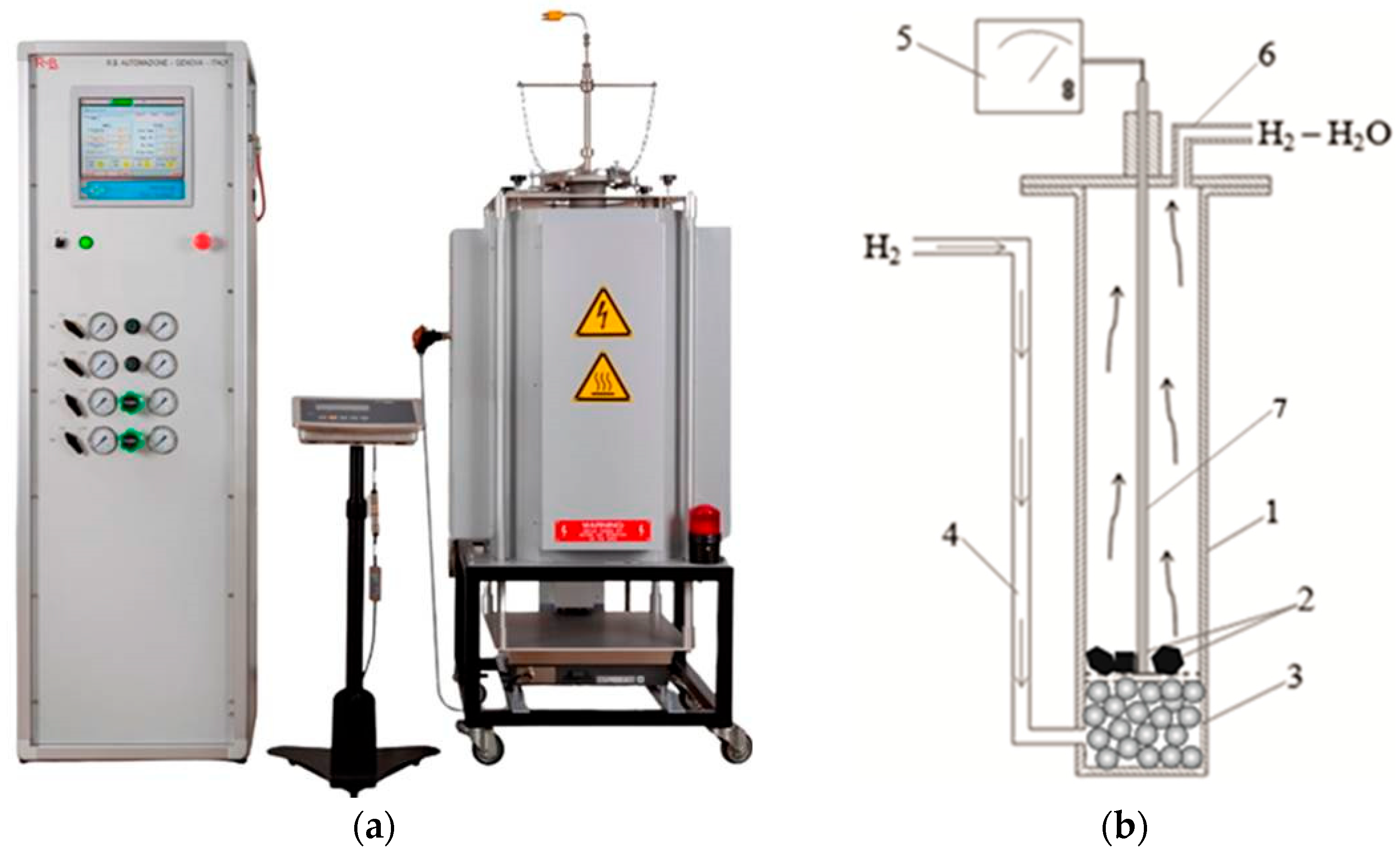
Figure 1. Vertical furnace RB Automazione, model MM 6000 (a), and schematic diagram of the reactor for sample reduction (b). 1—flow-through reactor; 2—samples; 3—corundum balls; 4—gas inlet; 5—multimeter; 6—gas outlet; 7—thermocouple.
Metals 15 01330 g001
Figure 2. Chemical composition and appearance of the initial lump ore across the sample area.
Metals 15 01330 g002
Figure 3. Elemental distribution map of lump iron–manganese ore from the Kergetas deposit.
Metals 15 01330 g003
Figure 4. Temperature-dependent phase evolution of (a) manganese oxides and (b) iron-containing compounds.
Metals 15 01330 g004
Figure 5. X-ray diffraction analysis results of the iron–manganese ore after hydrogen reduction for 1 h.
Metals 15 01330 g005
Figure 6. Microstructure of iron–manganese ore after hydrogen reduction for 60 min at 800 °C (SEM–EDS elemental mapping and spectra), (a)—is an increase of 100 microns, (b)—is the metallic phase, (c)—is the oxide phase, (d)—is the silicate phase, (e)—is the metallic phase.
Metals 15 01330 g006
Figure 7. Phase morphology of iron–manganese ore after hydrogen reduction roasting for 60 min at 900 °C and a hydrogen flow rate of 0.5 L/min, (a)—iron oxide in the silicate phase; (b)—silicate phase; (c)—metallic phase; (d)—oxides; (e)—metal; (f)—oxide.
Metals 15 01330 g007
Table 1. Results of micro–X-ray spectral (SEM–EDS) analysis of the samples (Figure 6).
Spectrum, at %ONaAlSiKMnFeAs
Spectrum (a)0.000.000.000.000.002.795.51.8
Spectrum (b)0.000.000.000.000.000.0096.73.3
Square (c)46.40.000.002.50.0042.38.80.00
Spectrum (d)41.43.61.234.96.211.61.10.00
Spectrum (e)0.000.000.000.000.001.097.31.7
Table 2. Results of micro–X-ray spectral (SEM–EDS) analysis of the samples (Figure 7).
Spectrum, at %OMgAlSiKCaMnFe
Square (a)34.010.0011.4812.611.100.650.8039.36
Square (b)57.820.000.0041.790.000.000.000.39
Spectrum (c)0.000.000.000.000.000.000.00100.00
Spectrum (d)52.422.578.6522.870.980.740.3911.41
Spectrum (e)0.000.000.000.000.000.000.4299.58
Spectrum (f)53.731.299.8126.330.000.730.000.00
Disclaimer/Publisher’s Note: The statements, opinions and data contained in all publications are solely those of the individual author(s) and contributor(s) and not of MDPI and/or the editor(s). MDPI and/or the editor(s) disclaim responsibility for any injury to people or property resulting from any ideas, methods, instructions or products referred to in the content.