Article

Influence of Experimental Parameters on the Determination of Copper Dissolution in Corrosion Processes Using Gold Microelectrodes †

by
Javier Izquierdo
1,2,*,
Adrián Méndez-Guerra
2,
Raquel Rodríguez-Raposo
2 and
Ricardo M. Souto
1,2,*
1
Institute of Material Science and Nanotechnology, Universidad de La Laguna, 38200 La Laguna, Spain
2
Department of Chemistry, Universidad de La Laguna, P.O. Box 456, 38200 La Laguna, Spain
*
Authors to whom correspondence should be addressed.
In memoriam—Dr. Felipe F. Hernández Luis (1960–2025), colleague and friend.
Metals 2025, 15(12), 1278; https://doi.org/10.3390/met15121278
Submission received: 10 October 2025 / Revised: 10 November 2025 / Accepted: 17 November 2025 / Published: 21 November 2025
(This article belongs to the Section Corrosion and Protection)

Abstract

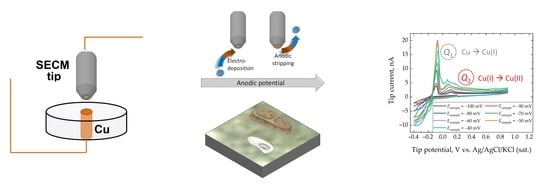
In situ electrochemical imaging of corrosion reactions is performed directly by scanning electrochemical microscopy (SECM) in generation-collection mode. This method involves redox conversion of soluble metal ions at the amperometric tip for quantification. Unfortunately, many metals, such as copper, do not undergo redox conversion to a soluble state and are deposited on the SECM tip. They therefore modify the electrochemical behavior of the tip and require consideration of metal stripping processes. In addition, the miniaturization of the electrode to operate as a microelectrode tip can be accompanied by variations in the potential range and distribution of the redox processes related to copper deposition and redissolution, thus complicating the adequate choice of electrochemical conditions applied to the tip for the unambiguous operation of SECM in the generation-collection mode to study the corrosion of copper-based materials. Therefore, in this work, a study of different parameters for the amperometric determination of Cu2+ ions was conducted using gold disk electrodes of 500 and 10 μm diameter to represent the typical sizes employed in conventional and scanning microelectrochemical measurements. The investigation was performed to analyze the effect of underpotential deposition (UPD) and overpotential deposition (ODP) on the voltammetric characteristics of copper deposition and redissolution resulting from variations in the solution composition, i.e., the nature of anions and pH. The dependence and limits of the reduction and reoxidation waves were analyzed as functions of the Cu2+ ion concentration, the ionic strength of the electrolyte, and the pH of the solution. The results were interpreted as UPD and OPD. Under conditions close to the marine environment, the release of Cu2+ ions can be unambiguously detected and quantified from potentials above −0.1 V vs. Ag/AgCl.

Graphical Abstract

1. Introduction

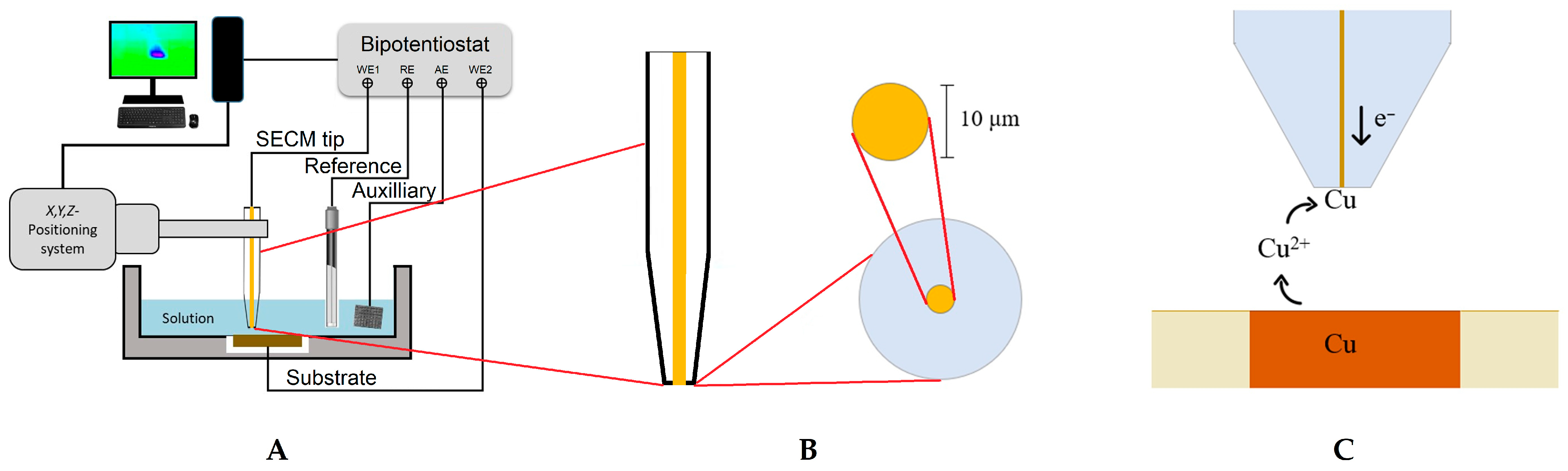
The highly localized nature of corrosion initiation at the micrometer or submicrometer scale is widely accepted, although conventional techniques for electrochemical analysis of samples used as working electrodes, such as Tafel or electrochemical impedance analysis, do not allow the identification of local phenomena and their distribution. Therefore, corrosion research requires tools capable of determining and quantifying the presence of species involved in the reaction mechanism in order to identify microcell activation, preferably in situ. Since the invention of scanning electrochemical microscopy (SECM) (see Figure 1A) [1], which uses microelectrodes to locally determine the electrochemical nature of the metal/electrolyte interface (Figure 1B) [2,3,4], significant progress has been made in corrosion and protection [5,6,7], contributing to identifying the mechanisms governed by local activation and mass transfer phenomena of the involved species. These advances rely on fast-response measurement procedures capable of determining the chemical species involved in corrosion mechanisms [8]. These needs seem achievable by taking advantage of the variety of procedures available for conductive probes and samples [3,9], although not all of them can be implemented for the study of corrosion processes. SECM operation modes used in corrosion studies aim to detect local changes in electrochemical activity at the surface under study by the tip conversion of a soluble redox species (called redox mediator) that is either added to the test environment (feedback modes) [10,11], or participates in the corrosion process as a reactant or product (see Figure 1C). Among the latter, the determination of the oxygen consumed in the process as a reflection of the cathodic activity using the redox competition (RC) mode [12] and the collection of corrosion products at the microelectrode tip in the Substrate Generation—Tip Collection (SG-TC) mode [13,14] are the main cases. The detection of locally generated species during anodic or cathodic processes in SG-TC mode is directly applicable to the quantification of metal cations, especially in the case of metals with more than one soluble oxidation state, such as Fe2+ and Fe3+, which is efficiently used to monitor the corrosion of iron and its alloys [15].
However, this SG-TC amperometric operation has not been widely implemented to determine the degradation and protection mechanisms of copper-based materials, and most SECM studies conducted on this metal are limited to the characterization of the electrochemical properties of the surface using redox mediating species that allow identification of its local conductivity [16,17]. The main limitation lies in the low or non-existent solubility of the anionic species resulting from the electrochemical conversion of the Cu2+ ion, which either generates a copper species in the +1 oxidation state that is stable only under specific conditions or leads to the electrodeposition of metallic copper on the measuring probe. Overcoming these limitations would facilitate the correlation of surface reactivity in terms of electron transfer kinetics with the quantitative determination of the metal ion concentration resulting from dissolution. In order to amperometrically determine metal cations not exhibiting two soluble oxidation states, methods based on the modification of electrodes with mercury layers have been developed. This has been applied to alkali metals involved in energy storage [18,19], to the determination of Zn2+ resulting from the degradation of Zn [20] and ZnSe [21] samples, as well as other inorganic materials [22] and to soils [23], the latter containing Cu(II) species. All these studies share the need to modify the microelectrode with a toxic element (mercury), providing a highly sensitive and selective electroanalytical tool at the cost of its complexity. Alternatively, SECM studies were performed using potentiometric microelectrodes whose potential signal depends on a Nernstian-type relationship, following Equation (1), with ionophore cocktails not requiring electrochemical transformation [24,25,26,27], a procedure that has also been applied to monitoring Cu2+ [28].
E = E 0 + R T n F ln C u 2 +
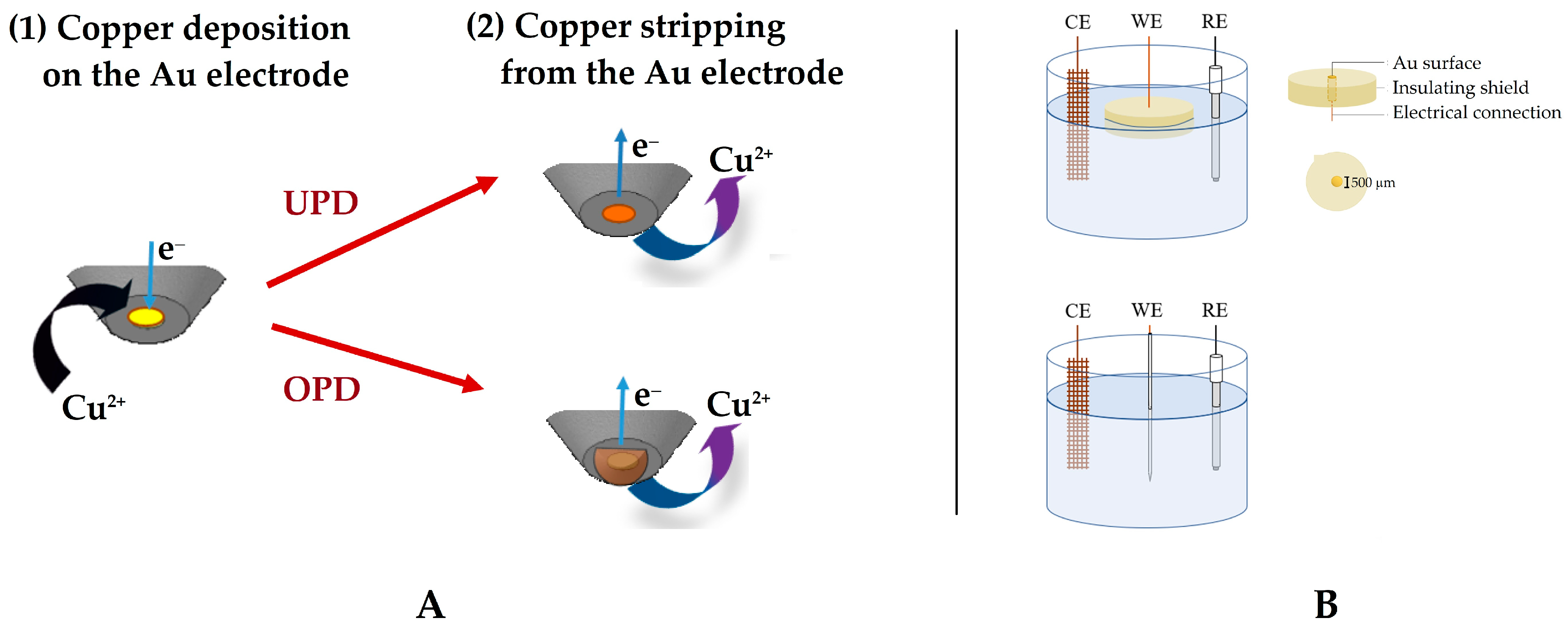
Despite the advantages of these local detection systems, the simplicity of conventional microdiscs that compose noble-metal amperometric electrodes makes them very attractive for exploring their ability to quantify ions released by the SG-TC mode, in addition to their operability with other typical operating modes in SECM. Regarding the determination of Cu2+ in aqueous media, there are references to the use of mercury-free (micro)electrodes, mainly manufactured with gold as the active metal, capable of determining this analyte by underpotential deposition (UPD) through anodic deposition and redissolution (see Figure 2A) [29,30]. In fact, attempts to apply these electroanalytical methods with SECM [31,32] have already been reported, and for the combination of this technique with AFM [33,34] under potentiostatic conditions during the scanning of a surface. More recently, a combined SECM operating mode with voltammetry methodologies has been developed for the study of Cu-based materials using gold microelectrode tips [35]. However, cathodic deposition of copper on the microelectrode inevitably occurs during the measurement, requiring a redissolution process that usually occurs at the end of the surface scan [36]. Similarly, these studies report ambiguities regarding the expected peak current potential associated with copper redissolution, since the limited active surface of the microelectrode implies that the formation of the deposited copper monolayer identified by UPD tends to transfer low current values, very sensitive to experimental conditions (pH, concentration of complexing and precipitating ions, etc.). This means that not only UPD signals, but also those of overpotential deposition (OPD) must be taken into account (see Figure 2A). Moreover, to dynamically identify signals with fast response, possibly using potentiodynamic scanning techniques, it is necessary to have a complete characterization of the expected signals under different operating conditions. For this reason, this work sought to advance the characterization of the UPD and OPD electrochemical signals for Cu stripping found on gold electrodes, which can be applied to SECM studies using gold microelectrode tips. The objective is to establish the operating conditions necessary for conducting corrosion studies of copper-containing materials by scanning electrochemical microscopy in generation-collection mode, as well as its extension to hybrid SECM operations combined with voltammetry (CV-SECM and SWV-SECM) [36] or atomic force microscopy (AFM-SECM) [37,38]. Since corrosion reactions are very sensitive to variations in the composition of the electrolytic medium, particularly with regard to the anions involved, as well as to pH, and can cover a wide range of dissolving metal concentrations in the solution, the influence of these chemical factors on the copper ion determination response using metal deposition and anodic desorption procedures will be studied.

2. Materials and Methods

2.1. Materials

Gold (Au) electrodes were built by encasing metal wires in glass capillaries by means of a micropipette puller. In this way, glass-embedded disks were exposed at the end of the elongated pipette tip, while electrical contact between the Au wire and a Cu connector was ensured in the lumen of the pipette assembly using a conductive Ag-epoxy glue. Au wires of 150 and 10 µm diameters were employed to reproduce the electrochemical behaviors of macro- and microelectrodes, respectively. The diameters of the Au wires were determined by optical microscopy using a Micro Leica Progress C14 Plus (Leica, Wetzlar, Germany). The surface of the Au electrodes was finished using 4000-grit silicon carbide paper, followed by polishing using 1 µm alumina aqueous suspension.
The test electrolyte solutions were prepared with NaCl, NaClO4, and Na2SO4 as supporting electrolytes, at concentrations ranging from 0.1 to 0.5 M. They were used under naturally aerated conditions. The pH of the solutions was maintained at neutrality or adjusted at predefined values within the range 3 ≤ pH ≤ 6 by adding small volumes of the corresponding concentrated acid solutions: HCl, HClO4, or H2SO4, respectively. The copper salts added to the test solutions for the electrochemical conversion of Cu(II) ions through deposition and stripping reactions on the gold electrodes were CuCl2, Cu(ClO4)2, and CuSO4, chosen because they contain the same anion as that present in the test electrolyte. The Cu(II) concentration varied between 0.1 and 100 mM depending on the experiment. All reagents were purchased from Sigma-Aldrich (Burlington, MA, USA) as analytical-grade reagents and were used without further purification. The solutions employed in this work were prepared by the reagents in purified Milli-Q grade water (Millipore, Burlington, MA, USA).

2.2. Methods

Electrochemical measurements were performed in a three-electrode configuration: the Au electrode as the working electrode, an Ag/AgCl/KCl (sat.) as reference, and a Pt grid as auxiliary electrode, as shown in Figure 2B. Cyclic voltammetry was performed using a Dropsens μstat 8000 potentiostat (Metrohm Dropsens, Llanera, Asturias, Spain), computer-controlled with DropView 8400 software (Metrohm Dropsens, Llanera, Asturias, Spain). This software was also used for the analysis of recorded cyclic voltammograms (CV). The electrochemical cell was housed inside a Faraday cage to avoid spurious electrical interference. CVs were measured in the potential range −0.50 ≤ E ≤ +0.90 V vs. Ag/AgCl/KCl (sat.), with a scan rate of 50 mV/s. This scan rate is a necessary compromise in scanning electrochemical microscopy to provide a sufficiently slow CV acquisition time without requiring excessively long times for surface imaging, given that a corroding surface changes dynamically over time [36]. Measurements were performed in duplicate. No IR compensation was applied to the voltammetric data.

3. Results and Discussion

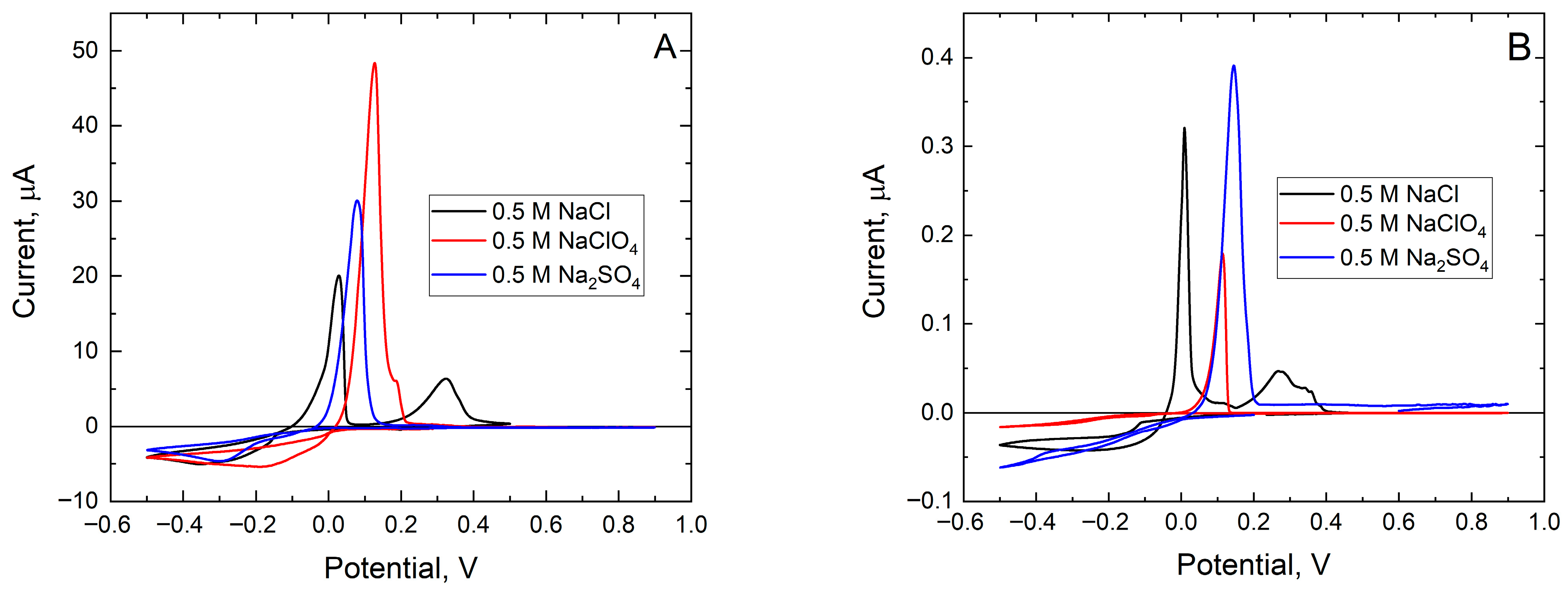
In this work, the effects of different aqueous solution parameters on the deposition and desorption reactions of copper on gold electrodes were investigated. For this purpose, cyclic voltammetry of solutions containing Cu2+ in the presence of three different anions (Cl, SO42−, and ClO4) was performed, considering four parameters: Cu2+ concentration, electrolyte concentration (sodium salt of the anion concerned), pH, and the presence of Cl anions at low concentrations in the solution. The dependence of experimental conditions on the signals recorded on a gold electrode can be revealed by comparing the cyclic voltammograms obtained for the same Cu2+ concentration in the solution, at the same background electrolyte concentration, and at the same pH. Figure 3 shows the curves measured at the gold macro and microelectrodes in 0.5 M solutions of NaCl, NaClO4, and Na2SO4 containing a concentration of 10 mM of Cu2+ ions. The best definition of the voltammetric oxidation peak is observed in the medium containing the perchlorate ions, while two oxidation peaks are found in the case of the chloride medium, one attributable to the oxidation of copper(I) complexes at low positive potentials, and a second one at more positive potentials corresponding to the complete stripping of the metal into Cu2+. In contrast, in the absence of chloride, a single peak dominates, with only weak shoulders. From the inspection of the literature, the eventual occurrence of two oxidation peaks was expected in the case of using sulfate as the supporting electrolyte [39,40], although in this case, the combination of a somewhat high sulfate concentration and acidic pH often leads to the observation of only one oxidation peak [41]. Furthermore, the comparison of the cyclic voltammograms measured at the gold macroelectrode (Figure 3A) and microelectrode shows shifts in the potential at which the oxidation voltammetric peaks are observed, depending on the size of the electrode. Therefore, if the reduction current as well as the height and area of the oxidation peak(s) must be quantitatively linked without ambiguity to the quantity of copper ions, it is necessary to establish the role of the different experimental parameters.

3.1. Effect of Copper Concentration in the Presence of Cl Anions

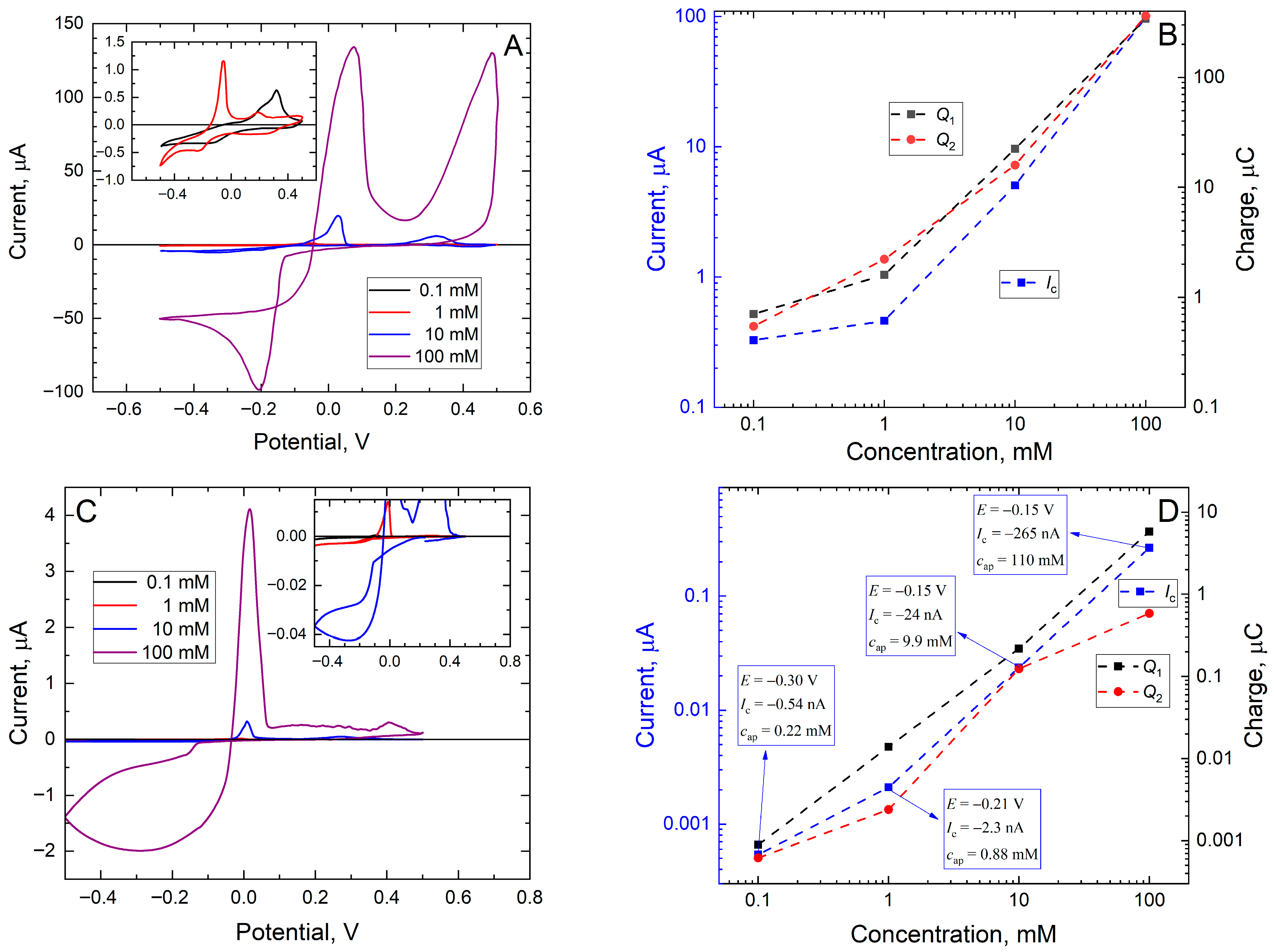
Studies performed at the gold macroelectrode for increasing CuCl2 concentrations indicate that three distinctive processes occur within the investigated potential range, as shown in Figure 4A: one reduction wave and two oxidation reactions. The reduction reaction generates a distinguishable peak only when the concentration is high enough, while in the ranges of 0.1–10 mM, a behavior mainly characterized by a constant current mass transfer is observed. A small additional reduction wave is observed at potentials more positive than 0 V, which in established publications has been attributed to the formation of monovalent copper that disappears when the potential becomes more negative [42]. At potentials below 0 V, the Cu2+ in the solution is deposited on the working electrode as Cu0. During the anodic process, at potentials between 0 and 0.20 V, the first oxidation reaction occurs, and the deposited Cu0 is oxidized on the electrode surface to Cu+. At potentials above 0.20 V, the second oxidation reaction occurs, and the Cu+ on the electrode surface is oxidized and desorbed as Cu2+.
As the Cu2+ concentration increases, the activity of the Cu2+ cation and the signals of the reduction and oxidation reactions increase considerably, maintaining a linear trend, at least from the millimolar range. Figure 4B shows this trend, with both the reduction current at negative potential and the reoxidation charge of the two peaks when integrating the current signal over the time scale. When analyzing the electron transfer of the overall reduction and oxidation processes, it can be observed that the ratios of cathodic charge (Qc) and total anodic charge (Qa,total, resulting from the two oxidation peaks Qa,1 and Qa,2) are close to 1 (see Table 1). The differences are related to the release and diffusion of significant amounts of Cu+ or Cu2+ during the first reoxidation, with n = 1. Although this almost unity ratio of anodic and cathodic charge suggests that the OPD reduction efficiency (with n = 2) is equivalent to oxidation, the similarity between the first and second peaks reflects an exchange that is clearly not due to the transfer of two electrons. Therefore, not all the copper that redissolves does so in two steps. In any case, as the Cu2+ concentration increases, the number of layers of Cu atoms deposited increases proportionally, although it never reaches an apparent deposit with a thickness greater than 0.16 μm.
The measurements in Figure 4C indicated that, at concentrations equal to or less than 1 mM, the Cu2+ reduction reaction occurs by an initially diffusion-controlled reduction mechanism, evidenced by a cathodic current that partially stabilizes around −0.25 V. However, due to the increasing electrode area, this current increases significantly upon reaching potentials around −0.40 V, and this increase in the negative current continues as more copper is deposited, even upon reversing the scan direction. Furthermore, the ratios of the oxidation signals shown in Table 2 differ significantly from those obtained with the macroelectrode (cf. Table 1). Although two oxidation peaks are observed, the second peak has a significantly lower signal than the first, so it is only clearly noticeable for a Cu2+ content of 10 mM (more clearly seen in Figure 3B). Therefore, it is found that most of the redissolution of copper occurring on a microelectrode takes place at potentials corresponding to the formation of monovalent copper species.
When studying the electron transfer of the overall reduction and oxidation processes, it was observed that the thickness and number of deposited Cu atom monolayers increase until reaching an equivalent deposit of almost 10 µm at 100 mM concentration, i.e., a deposit thickness of the same dimensions as the original electrode diameter. This is consistent with the increase in current observed in Figure 4C, which is due to an increase in area. The cathodic charge (Qc) and anodic charge (Qa) ratios are always greater than 1 (see Table 2), with greater efficiency in reduction than in reoxidation. However, if we consider only the first of the signals, which is the majority and originates from the oxidation of the copper deposit to monovalent cations, the charge ratio is roughly 2, which favors the cathodic process, except at very high concentrations, where the electrode area is severely altered. All of this is consistent with the oxidation and redissolution of monovalent copper species that do not exchange their second electron.

3.2. Effect of Copper Concentration in Solutions Containing Anions Other than Cl

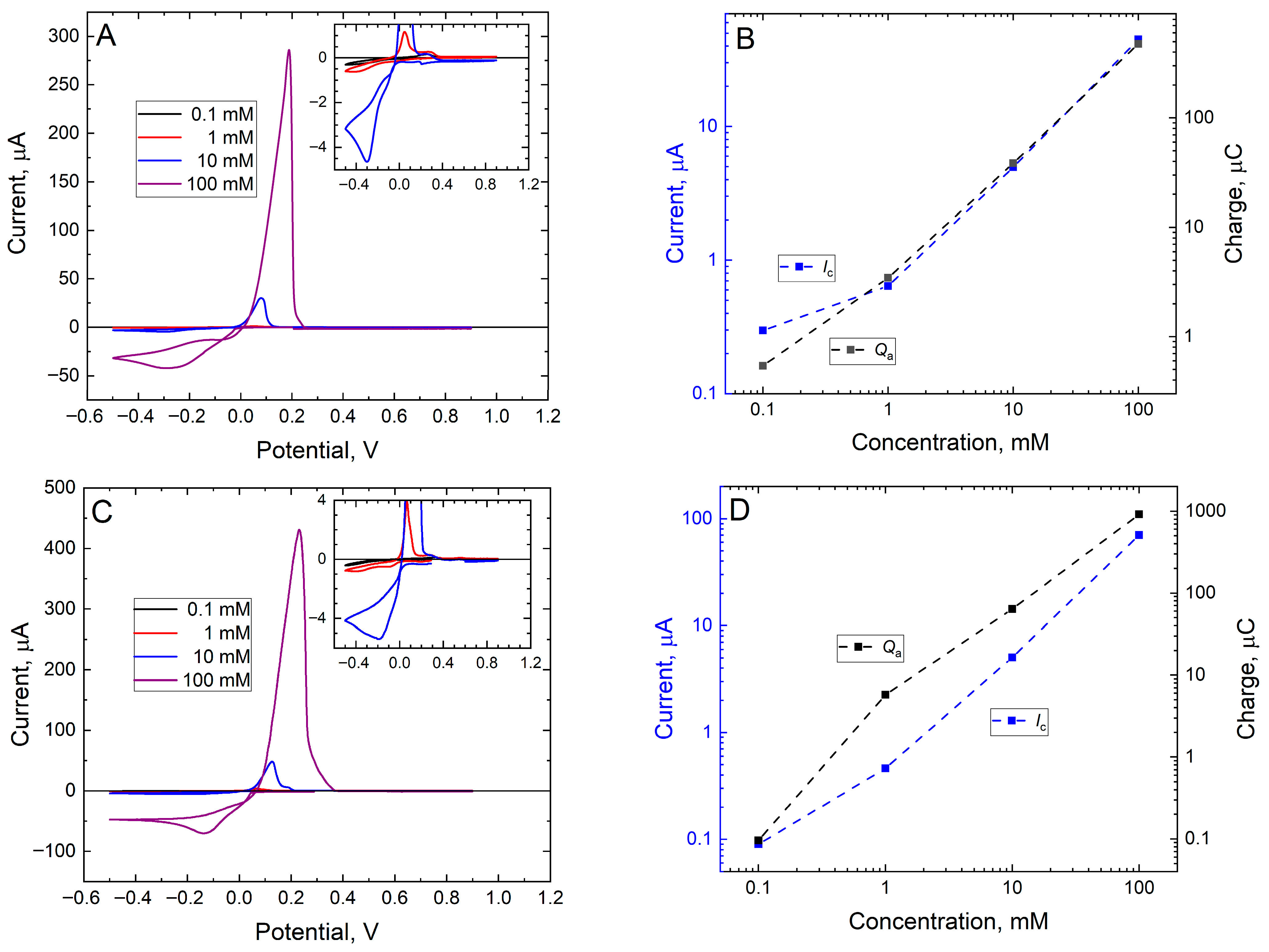
Cyclic voltammetric measurements were also performed in 0.5 M Na2SO4 and 0.5 M NaClO4 media, using the corresponding cupric salt as a source of Cu2+ ions, and at pH 3 adjusted with H2SO4 and HClO4, respectively. Figure 5A,C show the graphs obtained with the gold macroelectrode. In both cases, the appearance of a reduction wave and an oxidation peak predominates, although at low concentrations of copper sulfate, a shoulder can be observed as a consequence of the appearance of a second oxidation peak. The reduction wave in both cases generates a maximum cathodic current, and the relationships between the quantified signals and the copper-ion concentration present in the corresponding solutions are shown in Figure 5B,D, respectively. In both cases, almost linear trends are found for the reduction current at the cathodic peak and for the charge transferred during the reoxidation process.
When considering the parameters associated with electron transfer in the overall reduction and oxidation processes, it was observed that the Qc/Qa ratios approach 1 as the Cu2+ concentration increases, both in Na2SO4 and NaClO4, as shown in Table 3 and Table 4, respectively. As the concentration of CuSO4 added to the solution increases, the number of layers of deposited and redissolved Cu atoms increases proportionally, and practically all the deposited metal is reoxidized in a single process, a feature that can allow the direct quantification of dissolved copper present in the electrolytic environment.
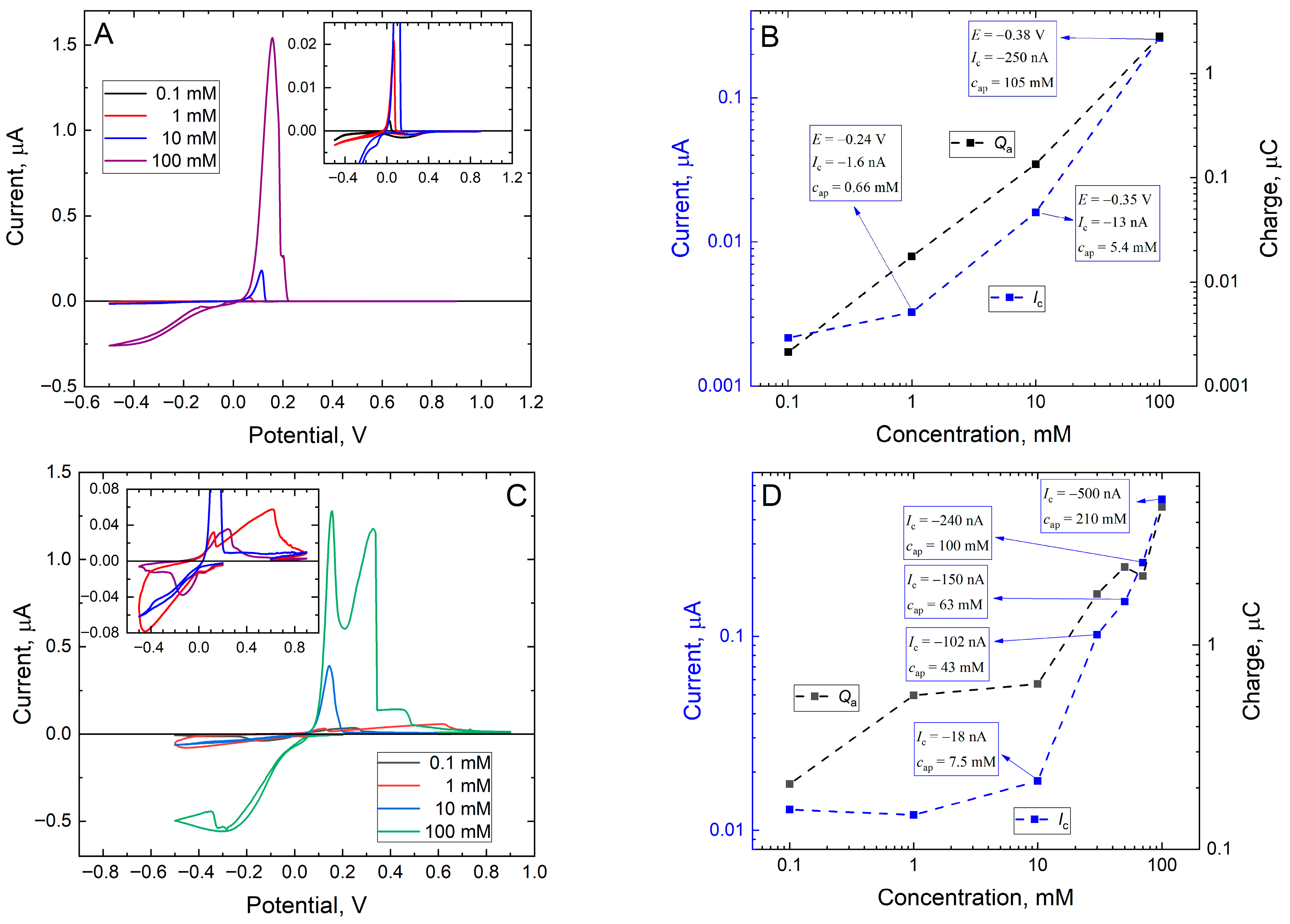
On the other hand, the measurements carried out with the gold microelectrode in both sulfate and perchlorate media (Figure 6A,C) indicated that the reduction reaction occurs by a diffusion mechanism from potentials of −0.05 V, while the oxidation reaction occurs mainly in a single reoxidation process at potentials between 0 and 0.20 V. However, as observed in Figure 6A, reoxidation in the presence of sulfate ions occurs in a more defined manner than in perchlorate media, where two redissolution peaks can be seen at the highest concentration of the electroactive species. The kinetics of adsorption, coadsorption, and redissolution phenomena of copper in perchlorate medium have been reported to be slow [43], and this may explain the anomalous signals at low concentrations of Cu(ClO4)2 seen in the inset of Figure 6C. Also, the signals obtained in the presence of the sulfate ion present certain peculiarities, since during the cathodic scan, a wide cathodic peak is clearly observed at medium and low concentrations that seems to correspond to an adsorption process. This phenomenon is observable in Figure 6A as well and is more noticeable at low concentrations. Similar results reported in the literature were attributed to the formation of the first layer of adsorbed copper, even on gold surfaces with different crystallographic orientations [44,45,46]. The most accepted interpretations refer to the formation of a first deposit by UPD of structure 3 × 3 R30°, with a second deposit where the coating increases with possible coexistence of p (2 × 2) structures [47]. In any case, local electroanalysis quantification of copper content is compromised by signal variability in these electrolytes.
These limitations in electroanalytical quantification are also reflected when determining concentration values based on the limiting current and the trend of the anodic reoxidation peaks. For the data in the presence of sulfate ions, the limiting currents do not follow a linear trend and do not coincide with the estimated apparent concentration value, except at 100 mM, although the trend in the reoxidation charge is proportional (Figure 6B). Regarding the signal in the presence of perchlorate, the slow kinetics prevents efficient quantification by either method, particularly at low concentrations of the metal (Figure 6D).
The amount of copper collected and the size of the deposits generated, as estimated by applying Faraday’s laws, are shown in Table 5 and Table 6 for both electrolytes. The cathodic charge ratio to the anodic charge is highly variable for the data in the presence of sulfate ions, possibly due to the permanence of oxidized copper on the electrode. Furthermore, the transferred charge is significantly lower than in the presence of perchlorate ion, where a unitary ratio is maintained if the concentration is not excessively high, although the data do not show a linear relationship with the amount of copper present in the solution (cf. Figure 6D).

3.3. Effect of Bulk Electrolyte Concentration

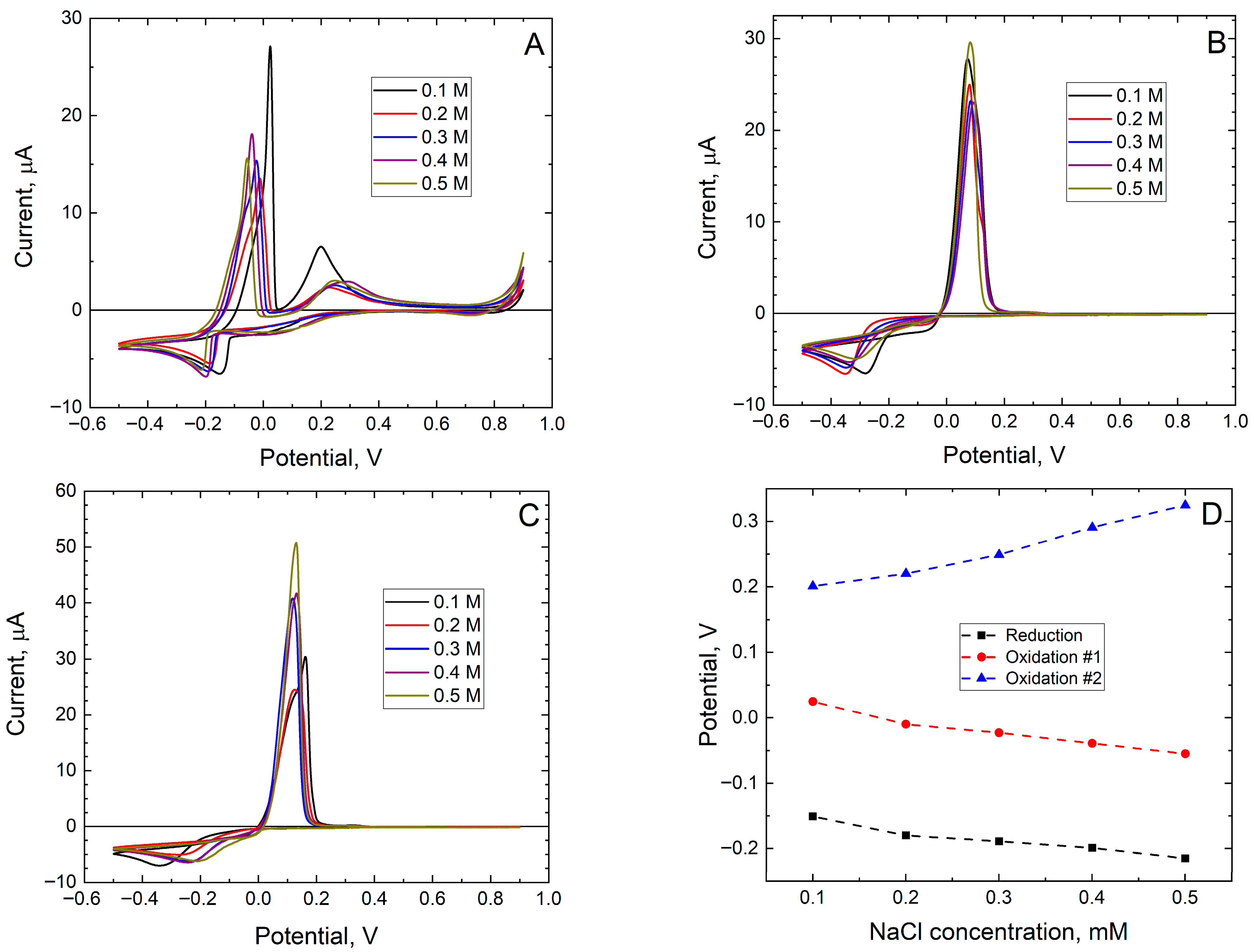
To determine whether the effect of the background electrolyte on the measured signal is based on a chemical interaction or the presence of ionic strength, measurements were made at different concentrations of each electrolyte between 0.1 M and 0.5 M, and the obtained cyclic voltammograms using a gold macroelectrode are shown in Figure 7A–C. Relatively high electrolyte concentrations are common in metallic systems undergoing corrosive attack, particularly in marine environments when exposed to chloride ions. Under these conditions, the presence of sulfate ion barely influences the position and height of the reoxidation peak, but the perchlorate ion changes the peak height, and the chloride ion significantly alters its position. The ionic strength generated by the sodium sulfate salt is greater, as it releases a greater quantity of charges and ions in solution. In fact, 0.1 M of background electrolyte already provides practically the same ionic strength as 0.5 M of any of the other salts.
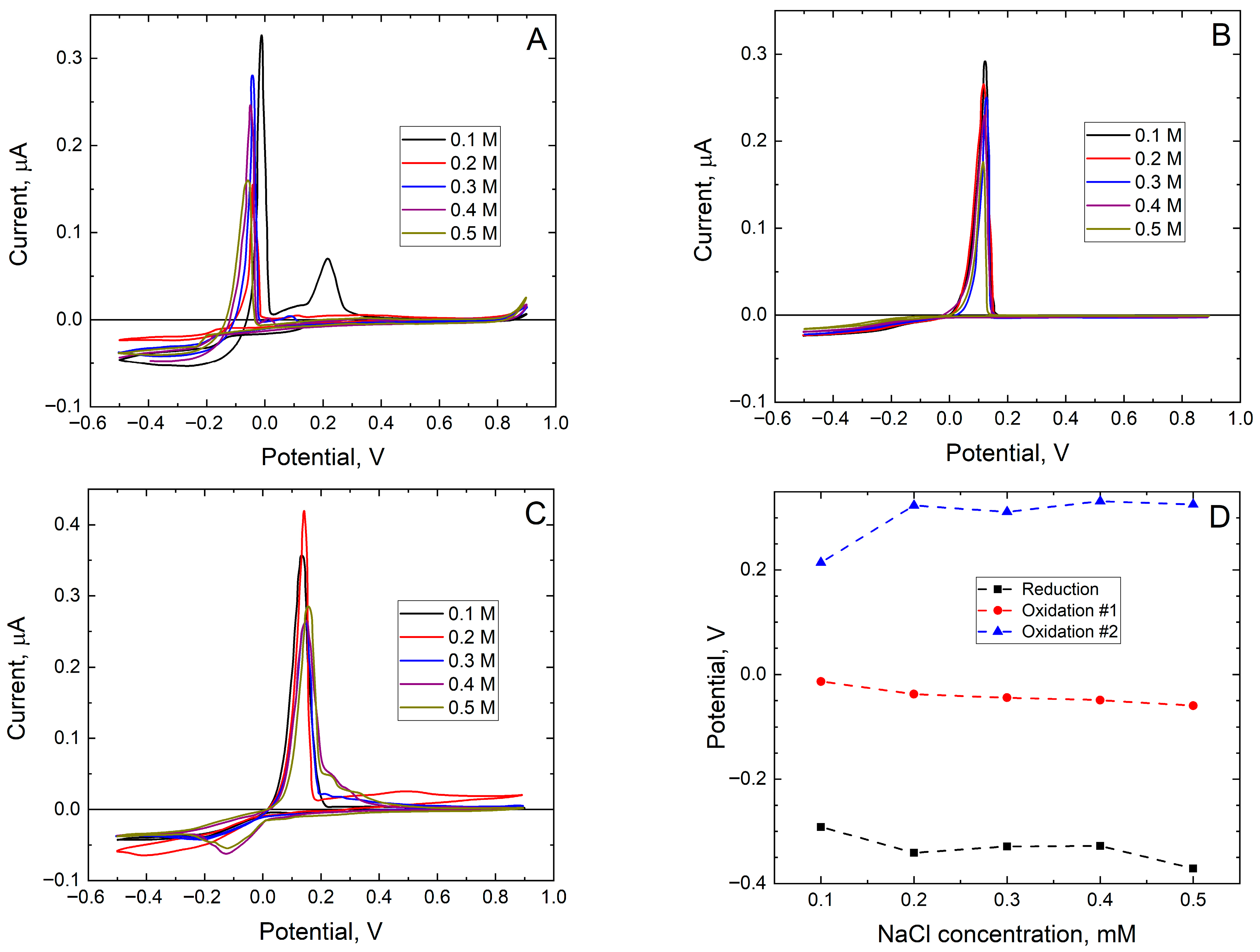
For its part, sodium chloride not only increases ionic strength but also facilitates the complexation of copper cations, favoring or inhibiting the reoxidation and deposition processes, respectively. The trends in the reduction wave potentials and oxidation peaks are illustrated in Figure 7D. The limiting current and transferred charge values barely showed clear trends with increasing concentration, although the first reoxidation peak was always greater than the second. As the NaCl concentration increases, the electroreduction and deposition of copper at the macroelectrode becomes more difficult, as reflected by a tendency of the potential toward more negative values. Likewise, the reoxidation of the first process, associated with the release of copper as a monovalent species, is facilitated. These two observations demonstrate greater ease in maintaining copper in solution, either as a solvated cation or as a chlorinated complex. Furthermore, the oxidation of the second process is hampered by the lack of available copper for reoxidation.
Similar results were obtained when the signal was analyzed using the gold microelectrode with the three background electrolytes at increasing concentrations, as shown in Figure 8A – C. A variation in the peaks occurs that is barely significant in sulfate medium (Figure 8B), changes the peak height in perchlorate medium without modifying the position and therefore the mechanism (Figure 8C), and has a great effect in a medium as reactive as a NaCl solution (Figure 8A,D).

3.4. Effect of Solution pH

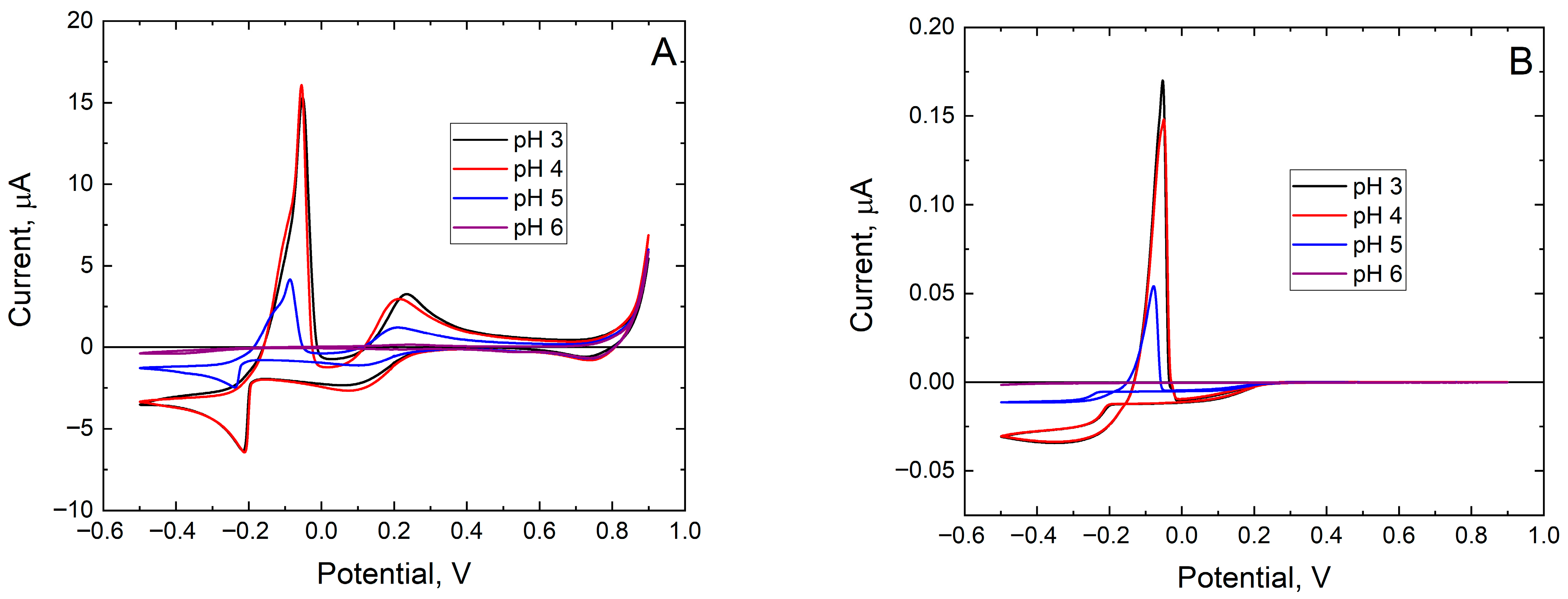
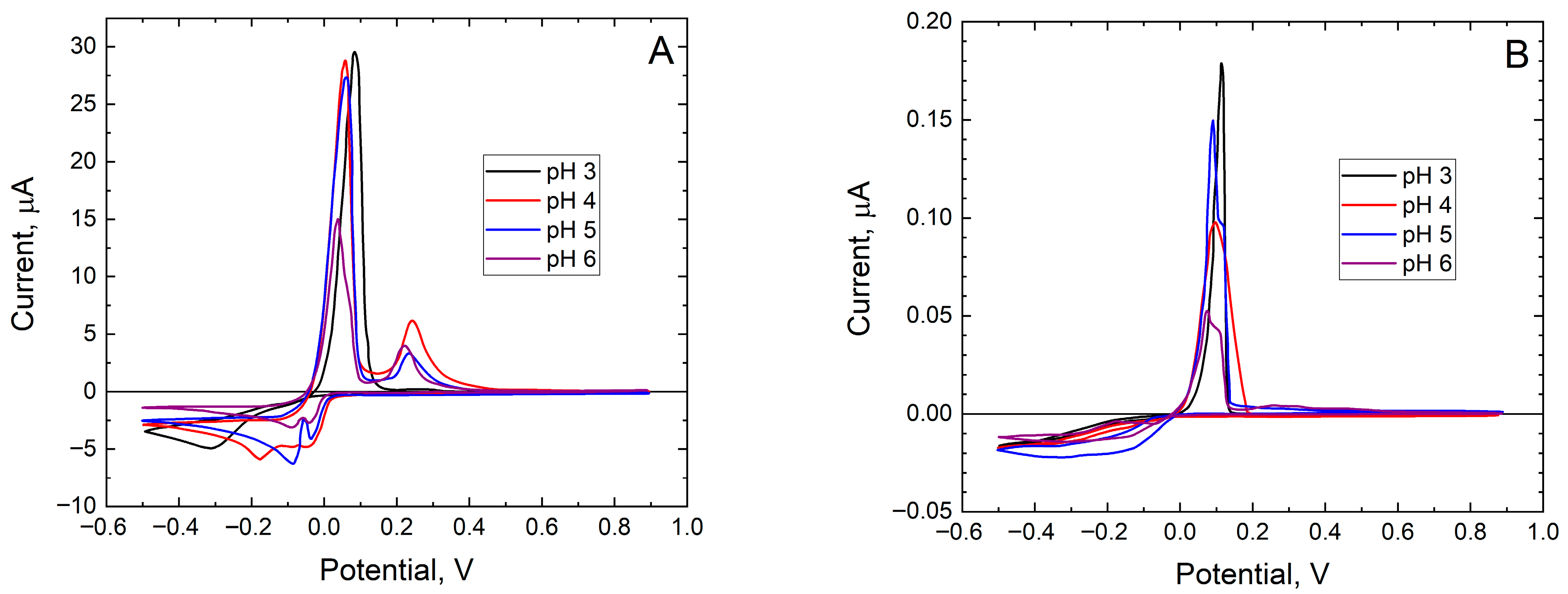
Metal dissolution by corrosion occurs at the anodic sites developed on the surface, which become progressively acidified due to the electrolysis of the dissolved metal ions [48], typically reaching pH values as low as 3 in many cases. Therefore, cyclic voltammograms were also recorded at various pH values in the 3 ≤ pH ≤ 6 range for solutions containing chloride or sulfate as anions. Figure 9 and Figure 10 show the effect of pH variation on the cyclic voltammograms measured for solutions with 10 mM Cu2+ ions. It was found that greater acidification of the medium resulted in an increase in the current and charge transferred in all measurements performed, regardless of the medium under consideration. The reason must arise from the precipitation of copper as hydroxide, since Cu(OH)2 species should already be mostly stable at pH 6 according to the Pourbaix diagram of the metal [49]. In fact, both peaks decrease in the presence of NaCl as the pH increases, such that the microelectrode no longer provides an appreciable signal at pH 6. Regarding the sulfate medium of Figure 10, the peak height decreases with increasing solution pH, too. This also occurs when the macroelectrode is used, although interestingly, a second oxidation peak appears at a potential of 0.25 V that is also inhibited with the increase in pH.
However, since the objective of this work is to explore the applicability of microelectrodes for local analysis of corrosion reactions involving copper, it has become clear that deposition/stripping processes for SECM monitoring can only be employed for quantification only at acidic pH values of the solution. Indeed, this observation may justify why copper corrosion studies using SECM in the generation-collection mode are only found in the literature for experiments performed in acidic chloride-containing electrolytes using Au microelectrodes as tips [31,33,34,35,36]. When non-acidified environments were described [10,16,17], the SECM was operated in the feedback mode instead.

4. Conclusions

Corrosion reactions are very sensitive to changes in the composition and pH of the electrolytic environment and generate a wide range of metal ion concentrations in their oxidation reactions, chemical factors which greatly influence the electrochemical response obtained by localized scanning microelectrochemical methods based on an amperometric measurement on the probe. With the perspective of achieving local chemical resolution of corrosion processes involving copper-containing materials, a study has been carried out on the chemical effects due to the electrolyte composition on the amperometric measurement of dissolved Cu(II) using gold electrodes and microelectrodes. In this way, a quantitative study of corrosion mechanisms can be carried out on the basis of the generation-collection mode of scanning electrochemical microscopy, as well as its extension to hybrid SECM operations when combined with voltammetry (CV-SECM and SWV-SECM) or atomic force microscopy (AFM-SECM).
By carrying out experiments in the presence of different anions, it was observed that satisfactory quantification of soluble Cu2+ ions using a gold microelectrode in the presence of the studied anions is only possible directly in the case of Cl anions. In such environments, the first reoxidation peak is the most relevant for quantification, since it releases most of the deposited copper as a copper(I) species. The limiting current monitored by the microelectrode during the electroreduction of Cu2+ is a more reliable parameter for quantification, only at the end of the reduction wave, before the electrode area increases due to the growing deposit. However, the information derived from the reoxidation peaks is a semi-quantitative result sensitive to the experimental conditions within the applied potential range.
In contrast, it was not possible to unambiguously quantify dissolved copper ions in the presence of SO42− anions, because the tip current is affected by the occurrence of a hydroxide formation mechanism that prevents accurate corrosion analysis of the materials. That is, at pH greater than 5, there is a decrease in the current signal caused by the hydrolysis of the Cu2+ ions to precipitate CuO or Cu(OH)2. Our rationale is that during the oxidation process, there is not a complete redissolution of Cu2+, and part of it remains deposited on the working electrode in the form of oxide or hydroxide, eventually causing a blockage or fouling. Limitations were also observed in the presence of ClO4, which arises from the slow kinetics of the oxidation reaction. These characteristics limit the range of possible electrolytic environments available for performing corrosion studies of copper-based materials that require deposition-stripping procedures for their quantification in scanning electrochemical microscopy, and other operation modes must be employed in SECM for those environments.

Author Contributions

Conceptualization, J.I. and R.M.S.; methodology, J.I., A.M.-G., R.R.-R. and R.M.S.; software, J.I. and R.M.S.; validation, J.I., A.M.-G. and R.R.-R.; formal analysis, J.I., A.M.-G., R.R.-R. and R.M.S.; investigation, J.I., A.M.-G. and R.R.-R.; resources, R.M.S.; data curation, J.I. and R.M.S.; writing—original draft preparation, J.I., A.M.-G. and R.M.S.; writing—review and editing, J.I. and R.M.S.; visualization, J.I.; supervision, J.I. and R.M.S.; project administration, J.I. and R.M.S.; funding acquisition, R.M.S. All authors have read and agreed to the published version of the manuscript.

Funding

Financial support by the Spanish Ministry of Science and Innovation (MICINN, Madrid, Spain) and the European Regional Development Fund (Brussels, Belgium) under grant PID2021-127445NB-I00 is gratefully acknowledged.

Data Availability Statement

The original contributions presented in this study are included in the article. Further inquiries can be directed to the corresponding authors.

Conflicts of Interest

The authors declare no conflicts of interest.

References

  1. Kwak, J.; Bard, A.J. Scanning electrochemical microscopy. Theory of the feedback mode. Anal. Chem. 1989, 61, 1221–1227. [Google Scholar] [CrossRef]
  2. Zoski, C.G. Review—Advances in scanning electrochemical microscopy (SECM). J. Electrochem. Soc. 2016, 163, H3088–H3100. [Google Scholar] [CrossRef]
  3. Polcari, D.; Dauphin-Ducharme, P.; Mauzeroll, J. Scanning electrochemical microscopy: A comprehensive review of experimental parameters from 1989 to 2015. Chem. Rev. 2016, 116, 13234–13278. [Google Scholar] [CrossRef]
  4. Zhou, Y.; Takahashi, Y.; Fukuma, T.; Matsue, T. Scanning electrochemical microscopy for biosurface imaging. Curr. Opin. Electrochem. 2021, 29, 100739. [Google Scholar] [CrossRef]
  5. Payne, N.A.; Stephens, L.I.; Mauzeroll, J. The application of scanning electrochemical microscopy to corrosion research. Corrosion 2017, 73, 759–780. [Google Scholar] [CrossRef]
  6. Reddy, M.S.B.; Ponnamma, D.; Sadasivuni, K.K.; Aich, S.; Kailasa, S.; Parangusan, H.; Ibrahim, M.; Eldeib, S.; Shehata, O.; Ismail, M.; et al. Sensors in advancing the capabilities of corrosion detection: A review. Sens. Actuators A Phys. 2021, 332, 113086. [Google Scholar] [CrossRef]
  7. Traxler, I.; Singewald, T.D.; Schimo-Aichhorn, G.; Hild, S.; Valtiner, M. Scanning electrochemical microscopy methods (SECM) and ion-selective microelectrodes for corrosion studies. Corros. Rev. 2022, 40, 515–542. [Google Scholar] [CrossRef]
  8. Izquierdo, J.; Kranz, C. Electrochemical techniques for investigating redox active macromolecules. Eur. Polym. J. 2016, 83, 428–449. [Google Scholar] [CrossRef]
  9. Mirkin, M.V.; Wang, Y. Theory. In Scanning Electrochemical Microscopy, 3rd ed.; Bard, A.J., Mirkin, M.V., Eds.; CRC Press: Boca Raton, FL, USA, 2022; pp. 65–103. [Google Scholar]
  10. Mansikkamäki, K.; Ahonen, P.; Fabricius, G.; Murtomäki, L.; Kontturi, K. Inhibitive effect of benzotriazole on copper surfaces studied by SECM. J. Electrochem. Soc. 2005, 152, B12–B16. [Google Scholar] [CrossRef][Green Version]
  11. Asserghine, A.; Medvidović-Kosanović, M.; Nagy, L.; Nagy, G. In situ monitoring of the transpassivation and repassivation of the passive film on nitinol biomaterial by scanning electrochemical microscopy. Electrochem. Commun. 2019, 107, 106539. [Google Scholar] [CrossRef]
  12. González-García, Y.; Mol, J.M.C.; Muselle, T.; De Graeve, I.; Van Assche, G.; Scheltjens, G.; Van Mele, B.; Terryn, H. SECM study of defect repair in self-healing polymer coatings on metals. Electrochem. Commun. 2011, 13, 169–173. [Google Scholar] [CrossRef]
  13. de Oliveira, L.A.; da Silva, R.M.P.; Antunes, R.A. Scanning electrochemical microscopy (SECM) study of the electrochemical behavior of anodized AZ31B magnesium alloy in simulated body fluid. Mater. Res. 2019, 22, e20190079. [Google Scholar] [CrossRef]
  14. Zhang, Q.; Zhu, Z.; Liu, P.; Zhang, J.; Cao, F. Corrosion electrochemical kinetic study of copper in acidic solution using scanning electrochemical microscopy. J. Electrochem. Soc. 2019, 166, C401–C409. [Google Scholar] [CrossRef]
  15. Terada, M.; Marques, R.A.; Simões, A.M.; Padilha, A.F.; Costa, I. Use of SECM to compare corrosion resistance of DIN W. Nr. 1⋅4460 high N and AISI 316L austenitic stainless steels in physiological solutions. Corros. Eng. Sci. Technol. 2011, 46, 599–604. [Google Scholar] [CrossRef]
  16. Mansikkamäki, K.; Haapanen, U.; Johans, C.; Kontturi, K.; Valden, M. Adsorption of benzotriazole on the surface of copper alloys studied by SECM and XPS. J. Electrochem. Soc. 2006, 153, B311–B318. [Google Scholar] [CrossRef]
  17. Varvara, S.; Caniglia, G.; Izquierdo, J.; Bostan, R.; Găină, L.; Bobis, O.; Souto, R.M. Multiscale electrochemical analysis of the corrosion control of bronze in simulated acid rain by horse-chestnut (Aesculus hippocastanum L.) extract as green inhibitor. Corros. Sci. 2020, 165, 108381. [Google Scholar] [CrossRef]
  18. Barton, Z.J.; Rodríguez-López, J. Fabrication and demonstration of mercury disc-well probes for stripping-based cyclic voltammetry scanning electrochemical microscopy. Anal. Chem. 2017, 89, 2716–2723. [Google Scholar] [CrossRef]
  19. Gossage, Z.T.; Hui, J.; Sarbapalli, D.; Rodríguez-López, J. Coordinated mapping of Li+ flux and electron transfer reactivity during solid-electrolyte interphase formation at a graphene electrode. Analyst 2020, 145, 2631–2638. [Google Scholar] [CrossRef]
  20. Souto, R.M.; González-García, Y.; Battistel, D.; Daniele, S. On the use of mercury-coated tips in scanning electrochemical microscopy to investigate galvanic corrosion processes involving zinc and iron. Corros. Sci. 2012, 55, 401–406. [Google Scholar] [CrossRef]
  21. Janotta, M.; Rudolph, D.; Kueng, A.; Kranz, C.; Voraberger, H.S.; Waldhauser, W.; Mizaikoff, B. Analysis of corrosion processes at the surface of diamond-like carbon protected zinc selenide waveguides. Langmuir 2004, 20, 8634–8640. [Google Scholar] [CrossRef]
  22. Rudolph, D.; Neuhuber, S.; Kranz, C.; Taillefert, M.; Mizaikoff, B. Scanning electrochemical microscopy imaging of rhodochrosite dissolution using gold amalgam microelectrodes. Analyst 2004, 129, 443–448. [Google Scholar] [CrossRef] [PubMed]
  23. Daniele, S.; Ciani, I.; Baldo, M.A.; Bragato, C. Application of sphere cap mercury microelectrodes and scanning electrochemical microscopy (SECM) for heavy metal monitoring at solid/solution interfaces. Electroanalysis 2007, 19, 2067–2076. [Google Scholar] [CrossRef]
  24. Lamaka, S.V.; Karavai, O.V.; Bastos, A.C.; Zheludkevich, M.L.; Ferreira, M.G.S. Monitoring local spatial distribution of Mg2+, pH and ionic currents. Electrochem. Commun. 2008, 10, 259–262. [Google Scholar] [CrossRef]
  25. Lamaka, S.V.; Karavai, O.V.; Zheludkevich, M.L.; Ferreira, M.G.S. Novel solid-contact ion-selective microelectrodes for localized potentiometric measurements. Electroanalysis 2009, 21, 2447–2453. [Google Scholar] [CrossRef]
  26. Bastos, A.C.; Taryba, M.G.; Karavai, O.V.; Zheludkevich, M.L.; Lamaka, S.V.; Ferreira, M.G.S. Micropotentiometric mapping of local distributions of Zn2+ relevant to corrosion studies. Electrochem. Commun. 2010, 12, 394–397. [Google Scholar] [CrossRef]
  27. da Silva, R.M.P.; Izquierdo, J.; Milagre, M.X.; Antunes, R.A.; Souto, R.M.; Costa, I. Development of an Al3+ ion-selective microelectrode for the potentiometric microelectrochemical monitoring of corrosion sites on 2098−T351 aluminum alloy surfaces. Electrochim. Acta 2022, 415, 140260. [Google Scholar] [CrossRef]
  28. Filotás, D.; Fernández-Pérez, B.M.; Izquierdo, J.; Kiss, A.; Nagy, L.; Nagy, G.; Souto, R.M. Improved potentiometric SECM imaging of galvanic corrosion reactions. Corros. Sci. 2017, 129, 136–145. [Google Scholar] [CrossRef]
  29. Souza, A.P.R.D.; Lima, A.S.; Salles, M.O.; Nascimento, A.N.; Bertotti, M. The use of a gold disc microelectrode for the determination of copper in human sweat. Talanta 2010, 83, 167–170. [Google Scholar] [CrossRef] [PubMed]
  30. Zhuang, J.; Zhang, L.; Lu, W.; Shen, D.; Zhu, R.; Pan, D. Determination of trace copper in water samples by anodic stripping voltammetry at gold microelectrode. Int. J. Electrochem. Sci. 2011, 6, 4690–4699. [Google Scholar] [CrossRef]
  31. Ruhlig, D.; Schuhmann, W. Spatial imaging of Cu2+-ion release by combining alternating current and underpotential stripping mode scanning electrochemical microscopy. Electroanalysis 2007, 19, 191–199. [Google Scholar] [CrossRef]
  32. Papaderakis, A.; Anastopoulos, A.G.; Sotiropoulos, S. Electrochemical studies of processes occurring at the polycrystalline Cu electrode/methanol interface. J. Electroanal. Chem. 2016, 783, 217–225. [Google Scholar] [CrossRef]
  33. Izquierdo, J.; Fernández-Pérez, B.M.; Eifert, A.; Souto, R.M.; Kranz, C. Simultaneous atomic force—Scanning electrochemical microscopy (AFM-SECM) imaging of copper dissolution. Electrochim. Acta 2016, 201, 320–332. [Google Scholar] [CrossRef]
  34. Izquierdo, J.; Eifert, A.; Kranz, C.; Souto, R.M. In situ investigation of copper corrosion in acidic chloride solution using atomic force—Scanning electrochemical microscopy. Electrochim. Acta 2017, 247, 588–599. [Google Scholar] [CrossRef]
  35. Hernández-Concepción, B.; Méndez-Guerra, A.; Souto, R.M.; Izquierdo, J. Evaluation of the applicability of voltammetric modes in scanning electrochemical microscopy for in situ corrosion characterisation of copper-based materials. Metals 2023, 13, 1965. [Google Scholar] [CrossRef]
  36. Hernández-Concepción, B.; Souto, R.M.; Izquierdo, J. Novel dynamic method based on CV-SECM and SWV-SECM for the in situ chemical imaging of reactive metal surfaces undergoing corrosion and corrosion inhibition illustrated with the case of copper corrosion inhibition by benzotriazole. Electrochim. Acta 2024, 474, 143538. [Google Scholar] [CrossRef]
  37. Kranz, C. Recent advancements in nanoelectrodes and nanopipettes used in combined scanning electrochemical microscopy techniques. Analyst 2014, 139, 336–352. [Google Scholar] [CrossRef] [PubMed]
  38. Shi, X.; Qing, W.; Marhaba, T.; Zhang, W. Atomic force microscopy—Scanning electrochemical microscopy (AFM-SECM) for nanoscale topographical and electrochemical characterization: Principles, applications and perspectives. Electrochim. Acta 2020, 332, 135472. [Google Scholar] [CrossRef]
  39. Watanabe, M.; Uchida, H.; Miura, M.; Ikeda, N. Electrochemical quartz crystal microbalance study of copper ad-atoms on highly ordered Au(111) electrodes in sulfuric acid. J. Electroanal. Chem. 1995, 384, 191–195. [Google Scholar] [CrossRef]
  40. Takami, S.; Jennings, G.K.; Laibinis, P.E. Composite monolayer of Ag and Cu on Au(111) by sequential underpotential deposition. Langmuir 2001, 17, 441–448. [Google Scholar] [CrossRef]
  41. Kumar Sur, U.; Marken, F.; Compton, R.G.; Coles, B.A. Microwave effects on the electrochemical deposition of copper. New J. Chem. 2004, 28, 1544. [Google Scholar] [CrossRef]
  42. Napp, D.T.; Charles, D. Simultaneous and independent potentiostatic control of two indicator electrodes. Application to the copper(II)/copper(I)/copper system in 0.5 M potassium chloride at the rotating ring-disk electrode. Anal. Chem. 1967, 39, 481–485. [Google Scholar] [CrossRef]
  43. Schneeweiss, M.A.; Kolb, D.M. The initial stages of copper deposition on bare and chemically modified gold electrodes. Phys. Status Solidi Appl. Res. 1999, 173, 51–71. [Google Scholar] [CrossRef]
  44. Borges, G.L.; Kanazawa, K.K.; Gordon, J.G.; Ashley, K.; Richer, J. An in-situ electrochemical quartz crystal microbalance study of the underpotential deposition of copper on Au(111) electrodes. J. Electroanal. Chem. 1994, 364, 281–284. [Google Scholar] [CrossRef]
  45. Moiler, F.A.; Magnussen, O.M.; Behm, R.J. In situ STM studies of Cu underpotential deposition on Au(100) in the presence of sulfate and chloride anions. Phys. Rev. B 1995, 51, 2484–2490. [Google Scholar] [CrossRef]
  46. Seo, M.; Yamazaki, M. Changes in surface stress of gold electrode during underpotential deposition of copper. J. Solid State Electrochem. 2007, 11, 1365–1373. [Google Scholar] [CrossRef]
  47. Yang, M.; Zhang, H.; Deng, Q. Understanding the copper underpotential deposition process at strained gold surface. Electrochem. Commun. 2017, 82, 125–128. [Google Scholar] [CrossRef]
  48. Alvarez-Pampliega, A.; Lamaka, S.V.; Taryba, M.G.; Madani, M.; De Strycker, J.; Tourwé, E.; Ferreira, M.G.S.; Terryn, H. Cut-edge corrosion study on painted aluminum rich metallic coated steel by scanning vibrating electrode and micro-potentiometric techniques. Electrochim. Acta 2012, 61, 107–117. [Google Scholar] [CrossRef]
  49. Pourbaix, M. Atlas of Electrochemical Equilibria in Aqueous Solutions; Pergamon: Oxford, UK, 1966. [Google Scholar]
Figure 1. Diagrams representing the operation of scanning electrochemical microscopy (SECM) for the study of corrosion processes using the Substrate Generation—Tip Collection (SG-TC) operation mode: (A) instrument components; (B) sketch of a 10 μm diameter gold microelectrode (UME); (C) SG-TC operation for copper-based materials. The corroded metal dissolves as Cu2+ ions, which are reduced on the surface of the UME; the current measured at the tip comes from the electroreduction of copper.
Metals 15 01278 g001
Figure 2. (A) Schematics illustrating the electrochemical conversions required for monitoring copper corrosion by SECM in SG-TC mode. The corroded metal is collected at the Au electrode by electroreduction, resulting in the formation of a metallic copper deposit by UPD or OPD. The deposited metal is then reoxidized at the electrode tip, causing a stripping reaction. (B) Three-electrode cell configurations using gold electrodes as the working electrode: (top) a 500 μm diameter macroelectrode and (bottom) a 10 μm diameter microelectrode.
Metals 15 01278 g002
Figure 3. Cyclic voltammograms recorded for gold electrodes in 0.5 M solutions of NaCl, NaClO4, and Na2SO4 containing 10 mM of Cu(II) salts, containing the same anions as the supporting electrolytes. The pH of the solutions was adjusted to 3 by controlled addition of small amounts of the acid of the corresponding anion present in the electrolyte. Gold electrodes: (A) macroelectrode of 500 μm diameter; and (B) microelectrode of 10 μm diameter. Scan rate: 50 mV/s.
Metals 15 01278 g003
Figure 4. (A,C) Cyclic voltammograms recorded for gold electrodes in 0.5 M solution containing different concentrations of CuCl2 as indicated in the graph. The pH of the solutions was set to 3 by the controlled addition of small amounts of HCl. Scan rate: 50 mV/s. (B,D) Trends of the cathodic current signal and the reoxidation charges of oxidation peaks 1 and 2 measured from the corresponding cyclic voltammograms in (A,C). Gold electrodes: (A,B) macroelectrode of 500 μm diameter; and (C,D) microelectrode of 10 μm diameter.
Metals 15 01278 g004
Figure 5. (A,C) Cyclic voltammograms recorded on a gold macroelectrode (500 μm diameter) for solutions containing varying concentrations of Cu2+ ions added to either (A) 0.5 M Na2SO4 or (C) 0.5 M NaClO4. The pH of the solutions was set to 3 by the controlled addition of small amounts of the corresponding acid. Scan rate: 50 mV/s. (B,D) Trends of the cathodic current signal and the reoxidation charge of the oxidation peak measured from the corresponding cyclic voltammograms in (A,C).
Metals 15 01278 g005
Figure 6. (A,C) Cyclic voltammograms recorded on a gold microelectrode (10 μm diameter) for solutions containing varying concentrations of Cu2+ ions added to either (A) 0.5 M Na2SO4 or (C) 0.5 M NaClO4. The pH of the solutions was set to 3 by the controlled addition of small amounts of the corresponding acid. Scan rate: 50 mV/s. (B,D) Trends of the cathodic current signal and the reoxidation charge of the oxidation peak measured from the corresponding cyclic voltammograms in (A,C).
Metals 15 01278 g006
Figure 7. Cyclic voltammograms recorded on a gold macroelectrode (500 μm diameter) for solutions containing varying concentrations of the supporting electrolyte: (A) NaCl, (B) Na2SO4, and (C) NaClO4. A concentration of 10 mM of the corresponding cupric salt was added to all the solutions, and their pH was set to 3 by the controlled addition of small amounts of the corresponding acid. Scan rate: 50 mV/s. (D) Trends of the cathodic current signal and the reoxidation charges of oxidation peaks 1 and 2 measured in the case of the chloride-containing solutions from the cyclic voltammograms in (A).
Metals 15 01278 g007
Figure 8. Cyclic voltammograms recorded on a gold microelectrode (10 μm diameter) for solutions containing varying concentrations of the supporting electrolyte: (A) NaCl, (B) Na2SO4, and (C) NaClO4. A concentration of 10 mM of the corresponding cupric salt was added to all the solutions, and their pH was set to 3 by the controlled addition of small amounts of the corresponding acid. Scan rate: 50 mV/s. (D) Trends of the cathodic current signal and the reoxidation charges of oxidation peaks 1 and 2 measured in the case of the chloride-containing solutions from the cyclic voltammograms in (A).
Metals 15 01278 g008
Figure 9. Cyclic voltammograms recorded on gold electrodes in solutions of 0.5 M NaCl + 10 mM CuCl2 of varying pH, as indicated in the graphs. Gold electrodes: (A) macroelectrode of 500 μm diameter; and (B) microelectrode of 10 μm diameter. Scan rate: 50 mV/s.
Metals 15 01278 g009
Figure 10. Cyclic voltammograms recorded on gold electrodes in solutions of 0.5 M Na2SO4 + 10 mM CuSO4 of varying pH, as indicated in the graphs. Gold electrodes: (A) macroelectrode of 500 μm diameter; and (B) microelectrode of 10 μm diameter. Scan rate: 50 mV/s.
Metals 15 01278 g010
Table 1. Electron transfer parameters and estimation of the Cu0 deposit dimensions observed when studying the effect of CuCl2 concentration using a gold macroelectrode (diameter, 500 μm). The data were obtained from the analysis of the cyclic voltammograms shown in Figure 4A.
CuCl2 Concentration, mMExchanged Charge, μCRatio *Cu Mass, gThickness, μmNumber of Layers
0.1Qc−1.070.863.53 × 10−102.00 × 10−40.72
Qa+1.25
1Qc−3.500.921.15 × 10−96.55 × 10−42.34
Qa+3.82
10Qc−48.71.271.61 × 10−89.12 × 10−332.6
Qa+38.3
100Qc−8561.222.82 × 10−71.60 × 10−1573
Qa+704
* Ratio is the ratio of cathodic and total anodic charges in absolute values (|Qc|/|Qa,total|).
Table 2. Electron transfer parameters and estimation of the Cu0 deposit dimensions observed when studying the effect of CuCl2 concentration using a gold microelectrode (diameter, 10 μm). The data were obtained from the analysis of the cyclic voltammograms shown in Figure 4C.
CuCl2 Concentration, mMExchanged Charge, μCRatio *Cu Mass, gThickness, μmNumber of Layers
0.1Qc−1.96 × 10−32.206.45 × 10−139.17 × 10−43.28
Qa,1+8.91 × 10−45.87 × 10−138.34 × 10−42.98
1Qc−2.83 × 10−22.039.31 × 10−121.32 × 10−247,3
Qa,1+1.39 × 10−29.16 × 10−121.30 × 10−246,5
10Qc−0.5752.631.89 × 10−102.69 × 10−1961
Qa,1+0.2191.44 × 10−102.05 × 10−1731
100Qc−20.43.526.72 × 10−99.5534.1 × 103
Qa,1+5.793.82 × 10−95.4219.4 × 103
* Ratio is the ratio of cathodic and total anodic charges in absolute values (|Qc|/|Qa,total|).
Table 3. Electron transfer parameters and estimation of the Cu0 deposit dimensions observed when studying the effect of CuSO4 concentration using a gold macroelectrode (diameter, 500 μm). The data were obtained from the analysis of the cyclic voltammograms shown in Figure 3A.
CuSO4 Concentration, mMExchanged Charge, μCRatio *Cu Mass, gThickness, μmNumber of Layers
0.1Qc−0.731.366.45 × 10−109.17 × 10−40.49
Qa+0.545.87 × 10−108.34 × 10−40.36
1Qc−4.041.179.31 × 10−91.32 × 10−42.70
Qa+3.459.16 × 10−91.30 × 10−42.31
10Qc−42.51.111.89 × 10−82.69 × 10−328.4
Qa+38.41.44 × 10−82.05 × 10−325.7
100Qc−4951.046.72 × 10−79.55 × 10−2331
Qa+4773.82 × 10−75.42 × 10−2319
* Ratio is the ratio of cathodic and total anodic charges in absolute values (|Qc|/|Qa,total|).
Table 4. Electron transfer parameters and estimation of the Cu0 deposit dimensions observed when studying the effect of Cu(ClO4)2 concentration using a gold macroelectrode (diameter, 500 μm). The data were obtained from the analysis of the cyclic voltammograms shown in Figure 5C.
Cu(ClO4)2 Concentration, mMExchanged Charge, μCRatio *Cu Mass, gThickness, μmNumber of Layers
0.1Qc(**)(**)(**)(**)(**)
Qa+0.103.16 × 10−111.80 × 10−50.06
1Qc−5.610.981.85 × 10−91.05 × 10−33.75
Qa+5.751.89 × 10−91.08 × 10−33.84
10Qc−71.91.132.37 × 10−81.35 × 10−248.1
Qa+63.42.10 × 10−81.19 × 10−242.6
100Qc−9801.073.23 × 10−71.83 × 10−1655
Qa+9163.02 × 10−71.71 × 10−1612
* Ratio is the ratio of cathodic and total anodic charges in absolute values (|Qc|/|Qa,total|); ** Values could not be unequivocally estimated above the background noise.
Table 5. Electron transfer parameters and estimation of the Cu0 deposit dimensions observed when studying the effect of CuSO4 concentration using a gold microelectrode (diameter, 10 μm). The data were obtained from the analysis of the cyclic voltammograms shown in Figure 6A.
CuSO4 Concentration, mMExchanged Charge, μCRatio *Cu Mass, gThickness, μmNumber of Layers
0.1Qc−6.74 × 10−33.182.22 × 10−129.17 × 10−311.3
Qa+2.12 × 10−36.98 × 10−138.34 × 10−43.54
1Qc−8.32 × 10−30.472.74 × 10−121.32 × 10−313.9
Qa+1.76 × 10−25.80 × 10−121.30 × 10−329.4
10Qc−1.34 × 10−11.004.42 × 10−112.69 × 10−2225
Qa+1.35 × 10−14.45 × 10−112.05 × 10−2226
100Qc−2.791.229.19 × 10−101.314.66 × 103
Qa+2.287.50 × 10−101.073.80 × 103
* Ratio is the ratio of cathodic and total anodic charges in absolute values (|Qc|/|Qa,total|).
Table 6. Electron transfer parameters and estimation of the Cu0 deposit dimensions observed when studying the effect of Cu(ClO4)2 concentration using a gold microelectrode (diameter, 10 μm). The data were obtained from the analysis of the cyclic voltammograms shown in Figure 6C.
Cu(ClO4)2 Concentration, mMExchanged Charge, μCRatio *Cu Mass, gThickness, μmNumber of Layers
0.1Qc−2.24 × 10−11.077.38 × 10−119.17 × 10−1375
Qa+2.09 × 10−16.88 × 10−118.34 × 10−2349
1Qc−5.89 × 10−10.041.94 × 10−101.32 × 10−1985
Qa+5.68 × 10−11.87 × 10−101.30 × 10−1949
10Qc−7.31 × 10−11.132.41 × 10−102.69 × 10−11.22 × 103
Qa+6.45 × 10−12.12 × 10−102.05 × 10−11.08 × 103
100Qc−8.091.702.66 × 10−93.7813.5 × 103
Qa+4.751.56 × 10−92.227.93 × 103
* Ratio is the ratio of cathodic and total anodic charges in absolute values (|Qc|/|Qa,total|).
Disclaimer/Publisher’s Note: The statements, opinions and data contained in all publications are solely those of the individual author(s) and contributor(s) and not of MDPI and/or the editor(s). MDPI and/or the editor(s) disclaim responsibility for any injury to people or property resulting from any ideas, methods, instructions or products referred to in the content.