


Abstract
Fe-Mn-Al-C lightweight steel is an alternative to traditional low-alloy structural steels. It is lightweight and can be used to reduce the weight of structures without increasing their density. However, in the marine environment, traditional low-alloy structural steels can be damaged by chloride ions, which shortens their service life. We do not yet understand how aluminum, an important alloying element in lightweight steel, affects the process of corrosion. In this study, we examined Fe-Mn-Al-C lightweight steels with different amounts of aluminum. We used full-immersion simulated marine corrosion tests and multi-dimensional characterization techniques, such as microstructure observation and electrochemical measurements, to explore the relationship between aluminum content and the steel’s corrosion rate, corrosion product structure, and corrosion resistance. The results showed that, compared with CS, the weight loss and rate of corrosion of steels that contain aluminum were a lot lower. While the corrosion rate of CS is approximately 0.068 g·h−1·m−2, that of 7Al steel is reduced to 0.050 g·h−1·m−2. The stable phases α-FeOOH and FeAl2O4 are formed in the corrosion products when Al is added. As the Al content increases, so does the relative content of these phases. Furthermore, FeAl2O4 acts as a nucleation site that refines corrosion product grains, reduces pores and cracks, and significantly improves the compactness of corrosion products. It also forms a dense inner rust layer that blocks the penetration of corrosive ions such as Cl−. This study confirmed that aluminum improves the corrosion resistance of steel synergistically by regulating the structure of the corrosion products, optimizing the phase composition, and improving the electrochemical properties. The optimal aluminum content for lightweight steel in marine environments is 7%, within a range of 5–9%.
1. Introduction
Lightweight steel has attracted much attention due to its combination of light weight, high strength, and ductility [1,2,3,4]. In addition, with the increasing demand for lightweight material in high-end equipment manufacturing industries, such as marine engineering and the automotive industry, the development of structural materials with low density, high strength, and excellent corrosion resistance has become a key research direction. Conventional high-strength, low-alloy steel is often used in critical fields because of its excellent mechanical properties and processability, but its relatively high density (7.8 g/cm3) and surface vulnerability to corrosion in corrosive environments limit its use [5,6]. However, when traditional low-alloy structural steel is used for a long time in the marine industry, it will also face failure due to seawater corrosion. Fe-Mn-Al-C lightweight steel significantly reduces the material density by adding the lightweight element Al; for every 1% increase in aluminum (Al) content, the density of the alloy decreases by approximately 1.3%, and the synergistic effect of Mn further optimizes the mechanical properties, making it an ideal candidate for a new generation of lightweight materials [7,8].
Lightweight steel is also very strong and does not rust easily. How much aluminum affects how easily this steel can rust depends a lot on the environment. In conditions where there is a lot of oxygen, such as in salt water, aluminum combines with oxygen to form stable oxides and hydroxides [9]. These compounds are enriched in the inner rust layer, which can effectively fill the pores and cracks in the rust layer and significantly improve the compactness of the rust layer [10]. This densified rust layer can physically block the penetration of corrosive ions such as Cl−, reducing their contact with the matrix, thereby reducing the corrosion rate. At the same time, the enrichment of Al makes the inner rust layer electronegative, which further inhibits the intrusion of anions (such as Cl− and S elements) through the charge repulsion effect and enhances the protection of the rust layer [11,12]. However, the effect of Al was reported to be negative. The standard electrode potential of Al is much lower than that of Fe, with higher electrochemical activity, so it is prone to preferential dissolution and accelerates the anodic dissolution process of the matrix. At this time, Al struggles to form a complete protective compound layer, but instead increases local corrosion sites due to its high activity, leading to an increase in corrosion rate [9]. This “environment dependence” means that Al’s regulation on corrosion resistance is closely related to factors such as oxygen content and ion concentration in the service environment. Xu et al. [13] observed that introducing aluminum accelerates localized corrosion while simultaneously increasing the density of the rust layer. Clearly, the addition of aluminum exerts a significant influence on the corrosion behavior of low-alloy steels. Consequently, the effect of aluminum on steel corrosion resistance remains controversial. Furthermore, the majority of current corrosion research on lightweight steels focuses on conventional acidic and alkaline solutions and high-temperature corrosion. This leaves the corrosion mechanism under high-aluminum conditions poorly understood.
To meet the demand for corrosion-resistant lightweight materials in marine engineering, three types of lightweight steel specimens with graded Al content were designed and prepared. Conventional carbon steel was used as a control material. Full-immersion corrosion tests were conducted to simulate the actual environment. These tests investigated the influence of Al content on the corrosion resistance of steel in seawater containing Cl− ions. By analyzing corrosion kinetics, corrosion product composition, and microstructural evolution during corrosion, the corrosion resistance mechanism of the steel was elucidated. This study provides experimental evidence and a theoretical reference for the composition and design of seawater-resistant lightweight steel.
2. Experiments
2.1. Test Materials and Preparation
To study the influence of different Al contents on the corrosion resistance of steel, test steels containing 5%, 7%, and 9% Al were prepared, abbreviated as 5Al, 7Al, and 9Al steels, with the comparative steel (CS). Their main compositions are shown in Table 1. The above test materials were machined into samples with a size of 50 mm × 25 mm × 3 mm. All samples were prepared as follows: their exposed surfaces were sequentially ground with water, sandpaper, and abrasive papers up to 1000#, followed by polishing with 0.5 μm diamond paste. Then, the surfaces were cleaned with acetone, dried, and stored in a desiccator for 24 h before use.
Table 1.
Chemical compositions of test steels and reference steel (wt.%).
2.2. Full-Immersion Corrosion Test
The test steels and the reference steel were subjected to full-immersion corrosion tests in accordance with the JB/T 7901-1999 standard [14] to study the influence of different Al contents on the corrosion resistance of steel [15]. The test temperature was 35 ± 1 °C; the test solution was a 35 g/L sodium chloride solution prepared with distilled water at 25 °C; and the test cycles were set at 7, 14, 21, 28 and 35 days. The sample size was 50 × 25 × 3 mm, with three parallel samples. The samples were cleaned with a solution of 500 mL of 36–38% HCl, 50 mL of deionized water, and 10 g of hexamethylenetetramine. Once the corrosion products were completely removed, the samples were rinsed with deionized water, ultrasonically cleaned with absolute ethanol, and finally dried and weighed. The corrosion rate was calculated using the weight loss method, with the specific formula as follows:
where M is the mass of the sample before the test (g); M1 is the mass of the sample after the test (g); A is the total area of the sample (m2); t is the test time (h); rcorr is the corrosion rate (g·h−1·m−2).
rcorr = (M1 − M2)/At
2.3. Characterization and Analysis of Corrosion Products
High-definition digital cameras were used to observe the morphology of corrosion specimens, analyzing the distribution of corrosion products and the extent of surface corrosion. Representative samples were extracted for embedding treatment, followed by polishing with 0.5 μm polishing compound until a mirror finish was achieved. The prepared specimens were examined using an S-3400 scanning electron microscope (SEM) (Hitachi, Tokyo, Japan) to analyze the microstructures of samples from different corrosion cycles. This revealed the microstructure of corrosion products, their adhesion state, and the evolution patterns of corrosion interfaces. Concurrently, an elemental distribution analysis of specific rust layer regions was conducted using the SEM’s energy-dispersive spectrometer (EDS), thereby determining the primary elemental composition and distribution characteristics of the rust layer.
A Rigaku D/max-2500/PC X-ray Diffractometer (XRD) (Rigaku, Tokyo, Japan) was used to test the phase structure of the rust layer powder at different corrosion cycles, with a Cu Kα diffraction target, a working voltage of 40 KV, a working current of 200 mA, a scanning range of 10–75°, a step scanning mode, and a step size of 0.02°. To compare the relative contents of phase structures in corrosion products, it is necessary to ensure that the mass of corrosion products measured each time is consistent before XRD testing. Using Jade 6.0 software, the relative contents of phase structures in corrosion products were calculated and compared according to RIR and Rietveld calculation methods. XPS (EscaLab 250xi, Thermo Scientific, Waltham, MA, USA) was employed to investigate the elemental states using an Al K α X-ray source. The binding energy was corrected by referencing the C1s peak (284.8 eV).
2.4. Electrochemical Measurements
A Shanghai Chenhua CHI660E (Shanghai Chenhua Instrument Co., Ltd., Shanghai, China) was used to characterize the electrochemical properties of the corroded samples. A traditional three-electrode system was applied, and electrochemical tests were carried out in a 3.5% NaCl solution at room temperature (25 °C). The three electrodes are as follows:
- -
- The working electrode is a corroded sample with an exposed area of 1 cm2.
- -
- The reference electrode is a saturated calomel electrode.
- -
- The counter electrode is a platinum electrode with an exposed area of 0.5 cm2. Before the electrochemical test, the working electrode was subjected to an open circuit potential test for 1 h to ensure that the three-electrode system was in a steady state. The parameters of the Tafel test were as follows: the test potential range was set to −2.0~1.0 V, and the scanning rate was 0.01667 mV/s. The parameters of the electrochemical impedance test were as follows: the frequency range was set to 105 Hz~10−2 Hz, and the applied disturbance potential amplitude was ±10 mV.
3. Results
3.1. Corrosion Kinetics
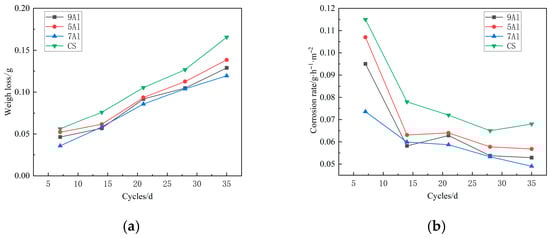
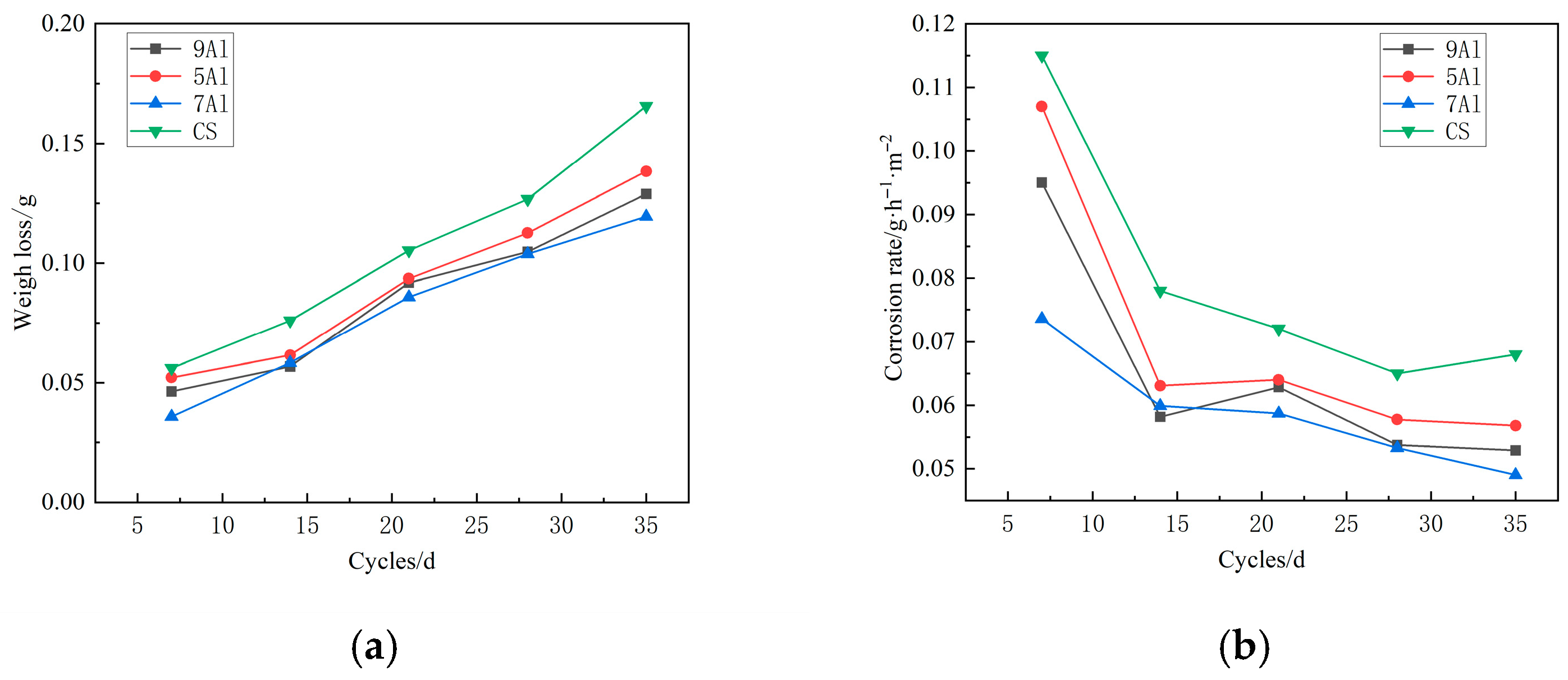
Figure 1 presents the corrosion kinetic curves of various test steels in full-immersion corrosion environments. As observed in Figure 1a, the corrosion mass loss of the four test steels increases as the corrosion cycles extend. The mass loss of Al-added steels exhibits similarities to that of CS, with 7Al steel showing the lowest mass loss. With the progression of the corrosion process, it is evident from Figure 1b that the corrosion rates of the four test steels decline alongside the increase in corrosion cycle duration. Of these steels, CS exhibits the highest corrosion rate, approximately 0.068 g·h−1·m−2, while 7Al steel and 9Al steel possess a corrosion rate approximating 0.050 g·h−1·m−2. This shows that adding Al can significantly improve the corrosion resistance of steel. However, when the Al content exceeds 7%, the improvement in the corrosion resistance of the test steels becomes limited.
Figure 1.
Corrosion kinetics of the four test steels under full-immersion corrosion conditions. (a) Corrosion weight loss diagram; (b) corrosion rate diagram.
3.2. Macroscopic Studies of Corrosion Products
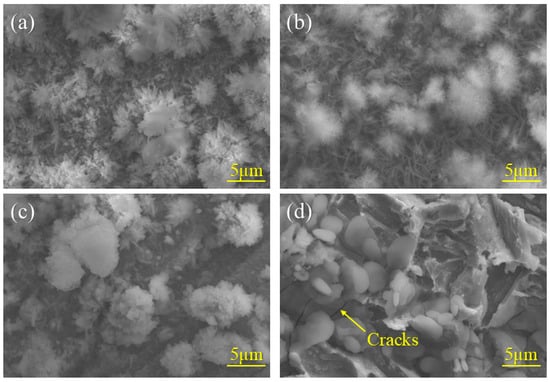
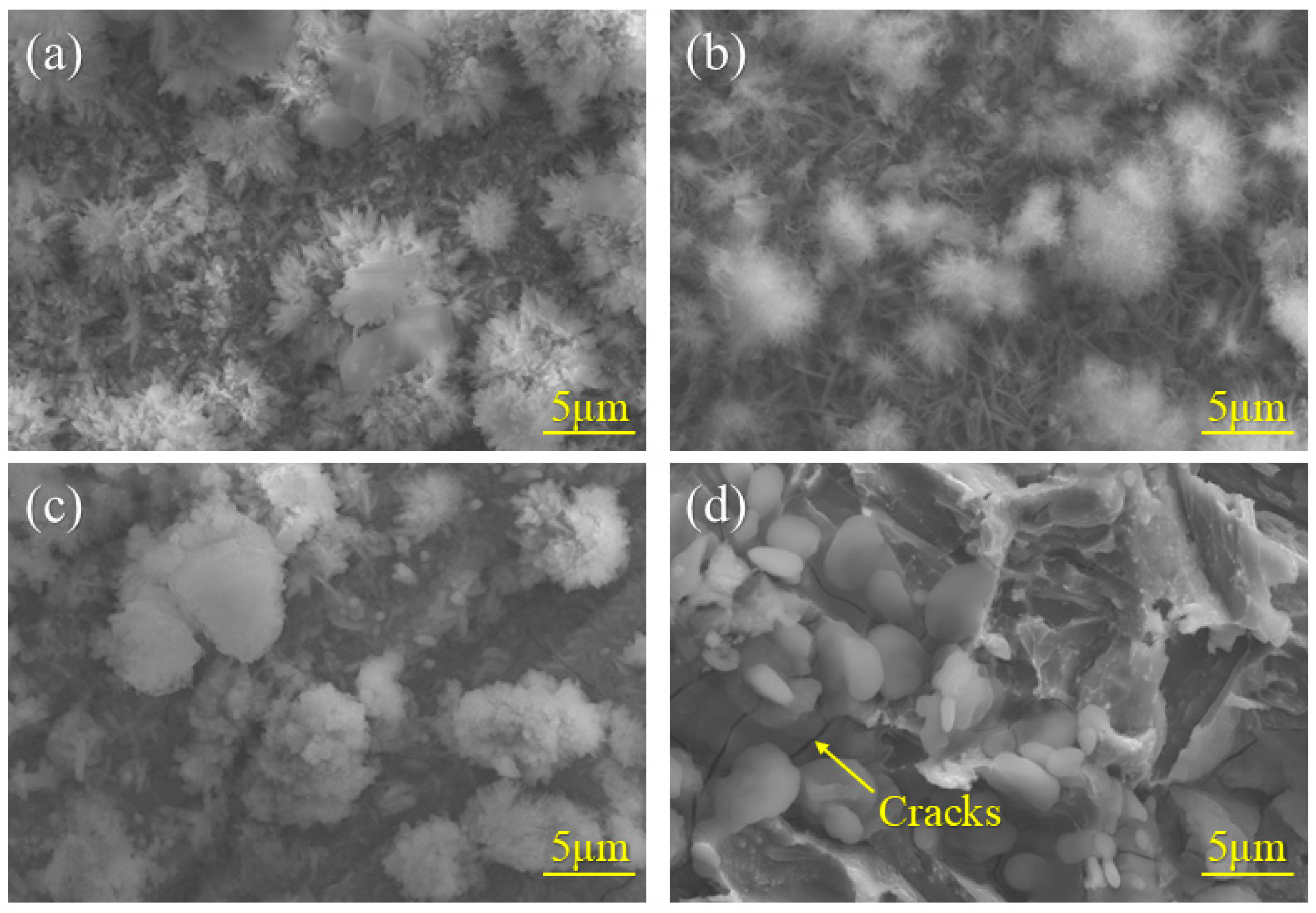
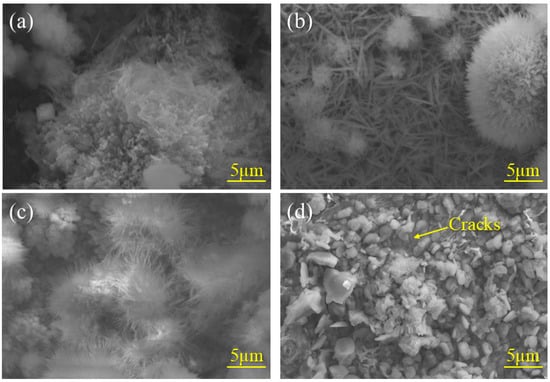
Figure 2 and Figure 3 show the micro-morphologies of the four test steels after 7 days and 35 days of full-immersion corrosion tests, respectively. Figure 2 and Figure 3 show that rod-like, cluster-like cotton-like, and needle-like substances appear on the surfaces of the three test steels for the Al-containing steel, while rose-like substances appear on the surface of CS. Yu et al., on the surface of weathering steel, determined that the rod-like and rose-like substances can be considered γ-FeOOH and β-FeOOH with open structures, and cluster-like cotton-like and needle-like substances can be considered α-FeOOH with relatively stable structures [16,17]. In the early stage of corrosion, many cracks and rose-like substances appear on the surface of CS, which cannot effectively block the entry of corrosive media and oxygen, thus further corroding the matrix. However, Al-containing steels have fewer surface cracks, and a large number of cluster-like substances accumulate on the surface, which effectively provides a physical barrier to block the entry of corrosive media and oxygen, thus effectively protecting the matrix. With the extension of the corrosion periods, some cracks still exist on the surface of CS, while the surfaces of 7Al and 9Al test steels are covered by a layer of needle-like and cluster-like substances, forming a physical barrier. Therefore, it can be concluded that adding aluminum to steel effectively promotes the growth of α-FeOOH on the steel surface. This growth forms a physical barrier that protects the matrix from corrosion by corrosive media, thus improving the steel’s corrosion resistance.
Figure 2.
Micro-morphologies of the four test steels after 7 days of full-immersion corrosion test. (a) 5Al; (b) 7Al; (c) 9Al; (d) CS.
Figure 3.
Micro-morphologies of the four test steels after 35 days of full-immersion corrosion test. (a) 5Al; (b) 7Al; (c) 9Al; (d) CS.
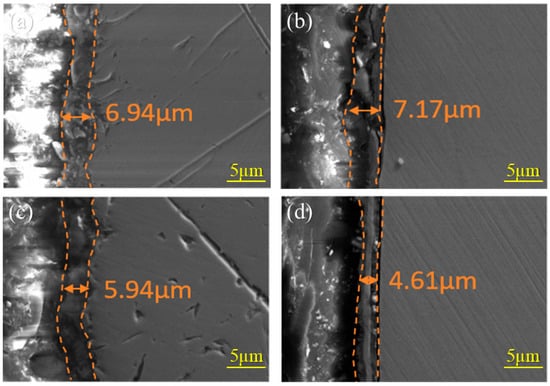
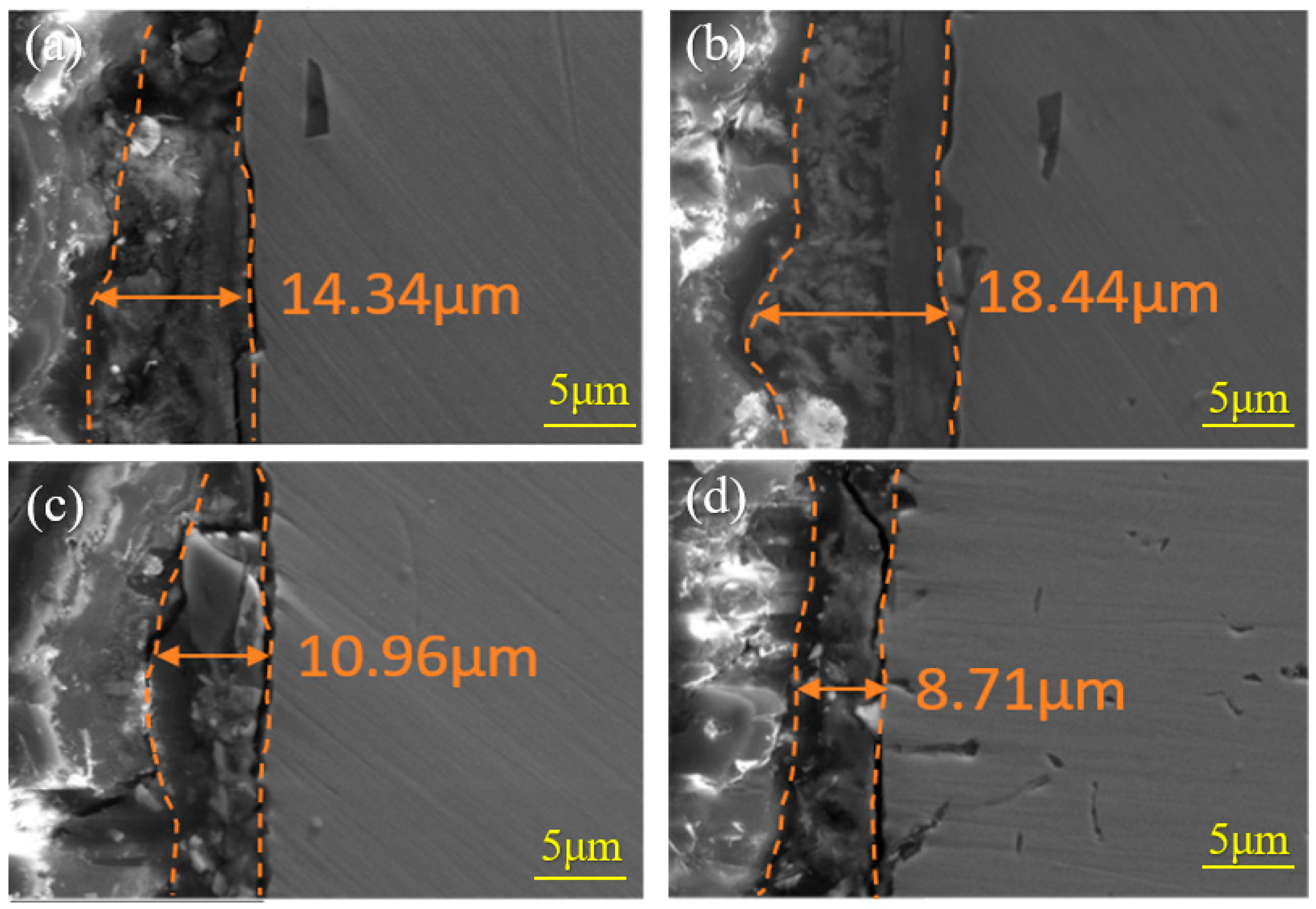
Figure 4 and Figure 5 show the morphologies of sections of the four test steels after full-immersion corrosion testing for 7 and 35 days, respectively. It can be seen from Figure 4 that in the early stage of corrosion, the corrosion products attached to the steel surface are relatively thin, generally about 4–7 μm, and the cross-sectional rust layers of the four test steels are not significantly different.
Figure 4.
Cross-sectional micro-morphologies of the four test steels after 7 days of full-immersion corrosion test. (a) 5Al; (b) 7Al; (c) 9Al; (d) CS.
Figure 5.
Cross-sectional micro-morphologies of the four test steels after 35 days of full-immersion corrosion test. (a) 5Al; (b) 7Al; (c) 9Al; (d) CS.
As the corrosion periods lengthen, the cross-sectional thickness of the rust layer on Al-containing test steels keeps increasing, with values ranging from 10 to 18 μm. In contrast, the rust layer on CS is relatively thin. This phenomenon may be attributed to the fact that during the full-immersion corrosion test, the corrosion products generated on CS’s surface fail to adhere firmly to the matrix and thus peel off into the solution. On the other hand, the increased rust layer thickness of Al-containing test steels suggests that the corrosion products formed on these steels can attach closely to the matrix surface, thereby functioning to block corrosive media. It is clearly observed in Figure 5b that the 7Al test steel features an inner rust layer adjacent to the matrix—this layer is uniform and dense, and it serves as one of the key factors contributing to the enhanced corrosion resistance of the steel.
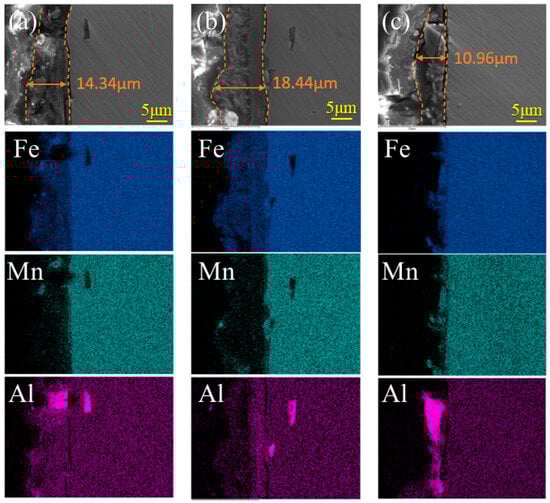
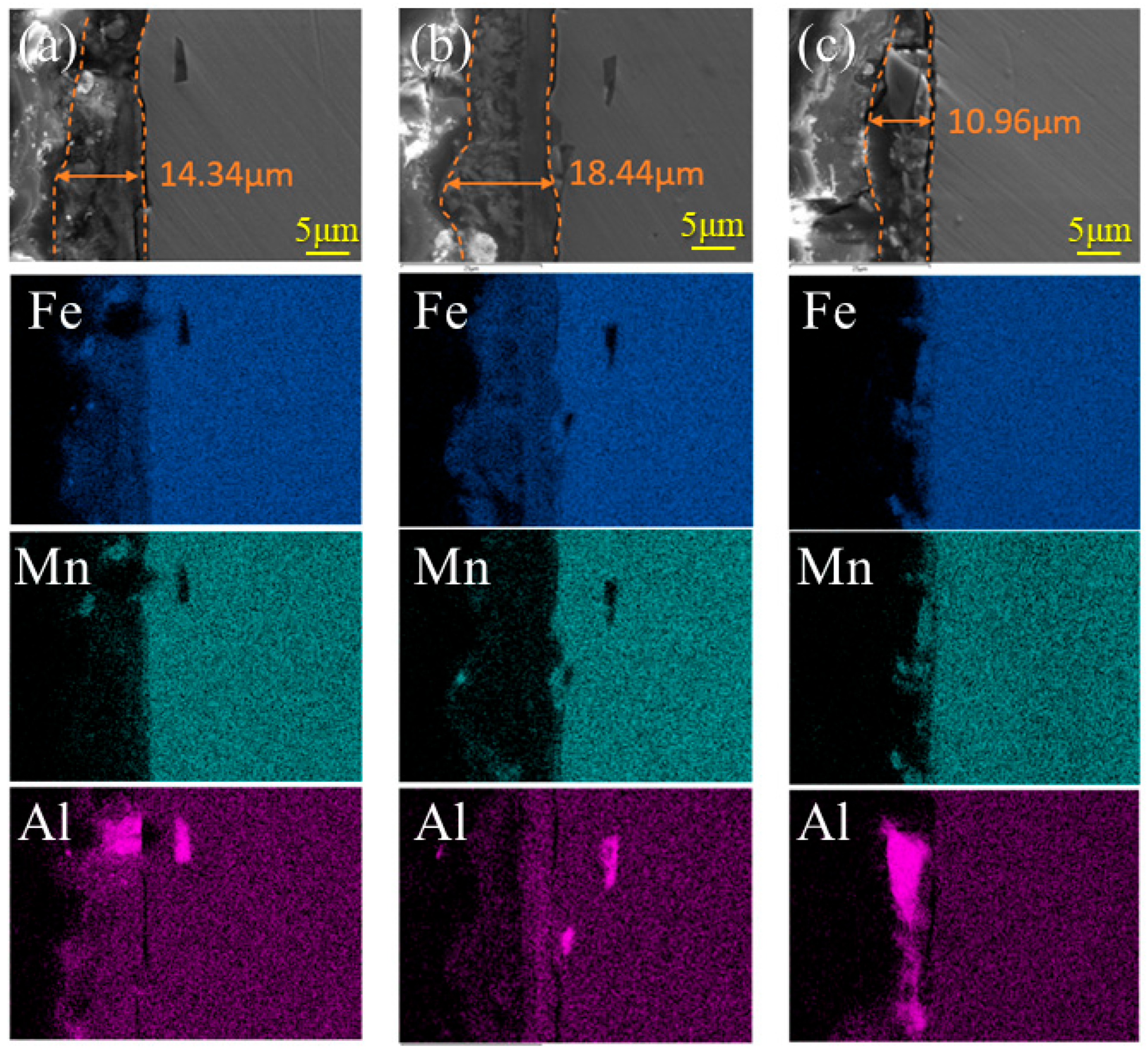
To analyze the effect of alloying elements on the formation of the rust layer, an EDS analysis was carried out on the rust layer after a 35-day test, as shown in Figure 6. Al-rich regions appear in the rust layer, and with more Al, more is enriched near the substrate. Mn elements are generally enriched in the outer rust layer. Therefore, Al plays a crucial role in the formation of the rust layer on the steel surface and can improve the corrosion resistance of steel.
Figure 6.
Cross-sectional EDS diagrams of the three test steels after 35 days of full-immersion corrosion test. (a) 5Al; (b) 7Al; (c) 9Al.
3.3. Composition of the Rust Layer
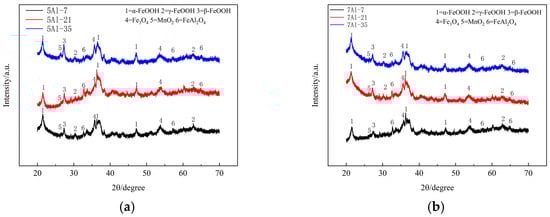
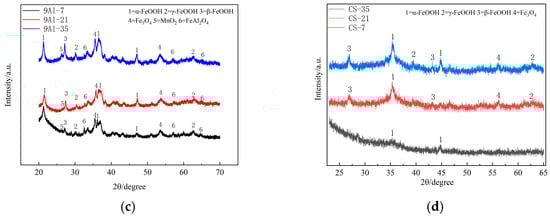
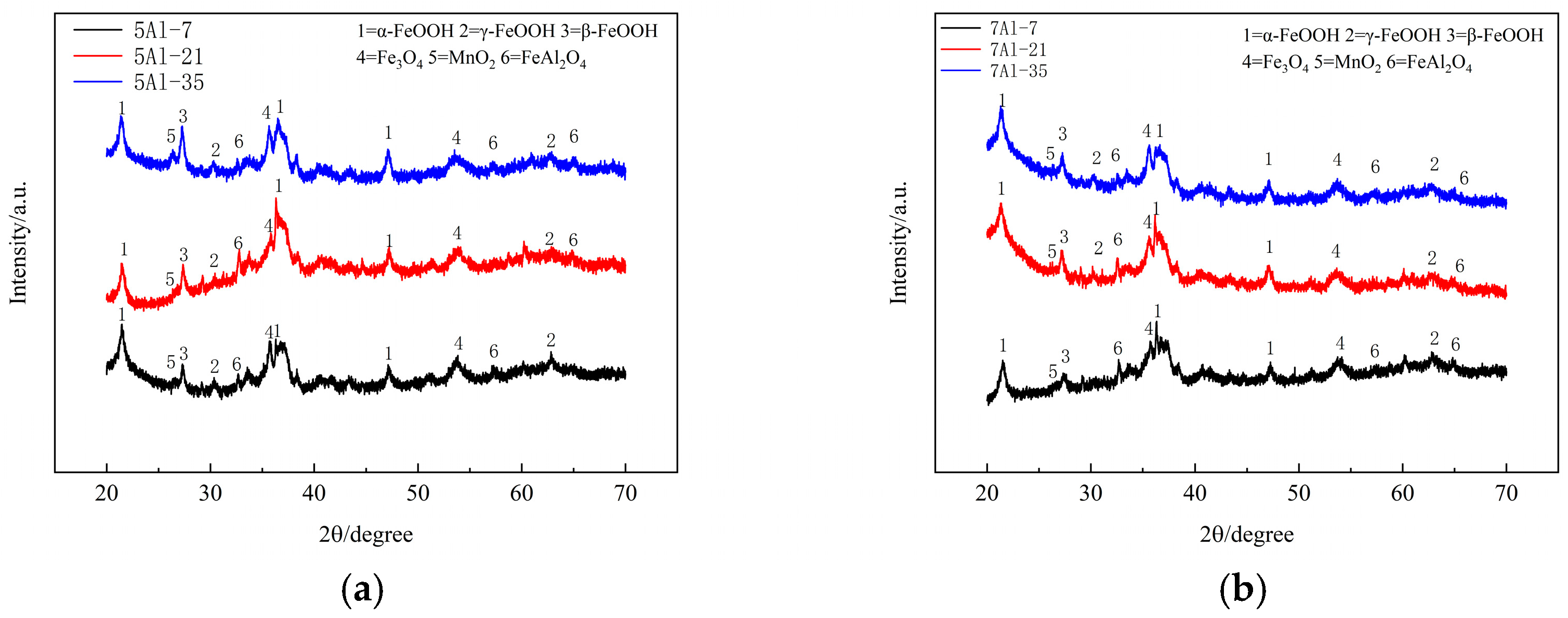
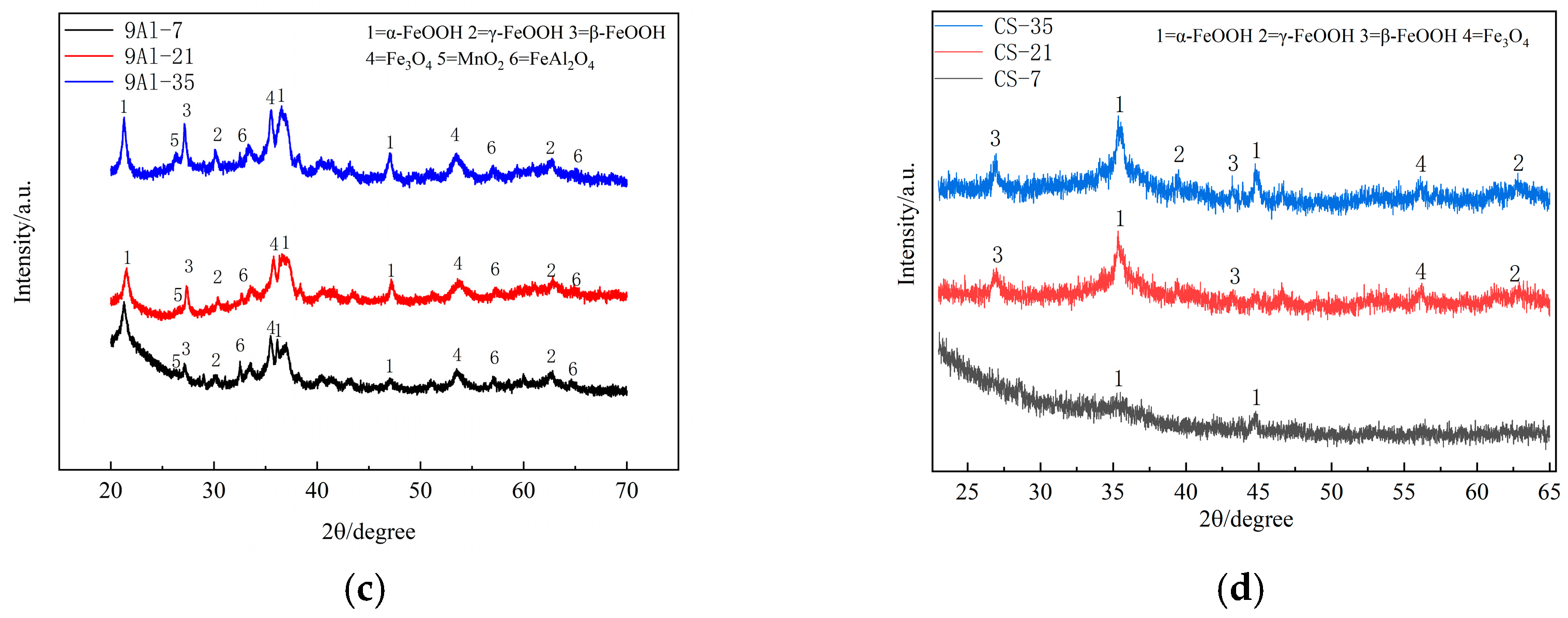
Figure 7 presents the XRD patterns of the four test steels following varying periods of full-immersion corrosion. As can be observed from Figure 7, the corrosion products of the CS sample steel are primarily composed of α-FeOOH, β-FeOOH, γ-FeOOH, Fe3O4, and amorphous materials. Upon the addition of Al and a high content of Mn to the steel, MnO2 and FeAl2O4 are detected alongside the aforementioned corrosion products. As the corrosion periods extend, the diffraction peak intensities of α-FeOOH and FeAl2O4 rise, whereas those of β-FeOOH and γ-FeOOH decline. Furthermore, as the Al content rises, the diffraction peak intensities of α-FeOOH and FeAl2O4 also increase in line with the elevated Al content. This indicates that incorporating Al into steel can effectively enhance the contents of α-FeOOH and FeAl2O4.
Figure 7.
XRD patterns of the four test steels after full-immersion corrosion test. (a) 5Al; (b) 7Al; (c) 9Al; (d) CS.
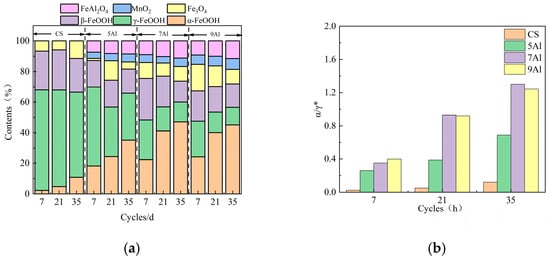
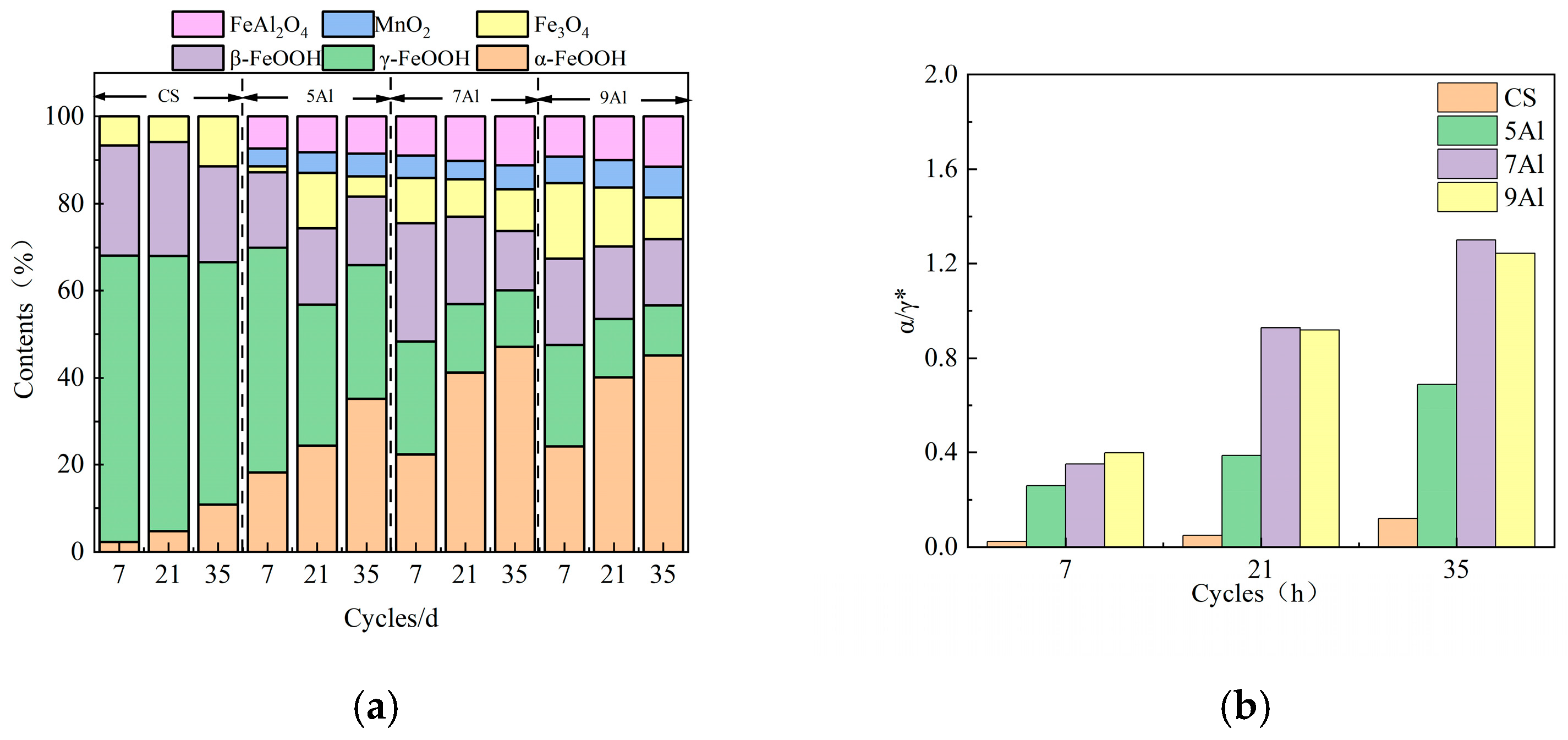
Research shows α-FeOOH is a stable hydroxide that does not easily react with other substances. It sticks tightly to steel surfaces, making them more resistant to corrosion [18,19]. For this reason, the ratio of the relative content of α to γ* (where γ* = β-FeOOH + γ-FeOOH + Fe3O4) is proposed as the corrosion resistance index, with a higher value of this index signifying superior corrosion resistance of the corrosion products [20]. To further examine how Al influences the phase composition of corrosion products, the RIR method was adopted to determine the relative content of each phase, and the results are displayed in Figure 8. The α/γ* ratio increases with the prolongation of corrosion periods. In the late stage of corrosion, the α/γ* ratio of CS is only 0.12, while that of Al-containing steels is significantly elevated—specifically, the α/γ* ratios of 7Al and 9Al steels are approximately 1.2, which indicates that their corrosion products exert a certain protective effect. Additionally, under the same corrosion period, the relative content of FeAl2O4 rises as the Al content increases. However, when the Al content reaches 9%, the relative content of FeAl2O4 stays essentially constant. In the late corrosion stage, the relative content of FeAl2O4 in both 7Al and 9Al steels is maintained at around 11%. The above observations illustrate that the incorporation of Al can facilitate the formation of the FeAl2O4 phase, which in turn promotes the growth of the α-FeOOH phase and thus enhances the corrosion resistance of the corrosion products.
Figure 8.
Phase structure distribution and α/γ* diagrams of the four test steels at different corrosion periods. (a) Phase structure distribution diagram; (b) α/γ*.
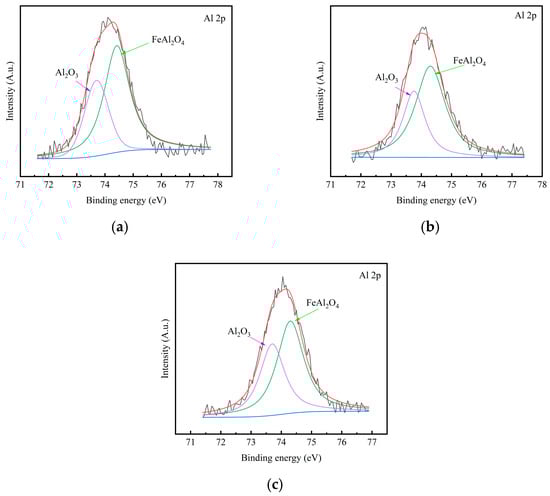
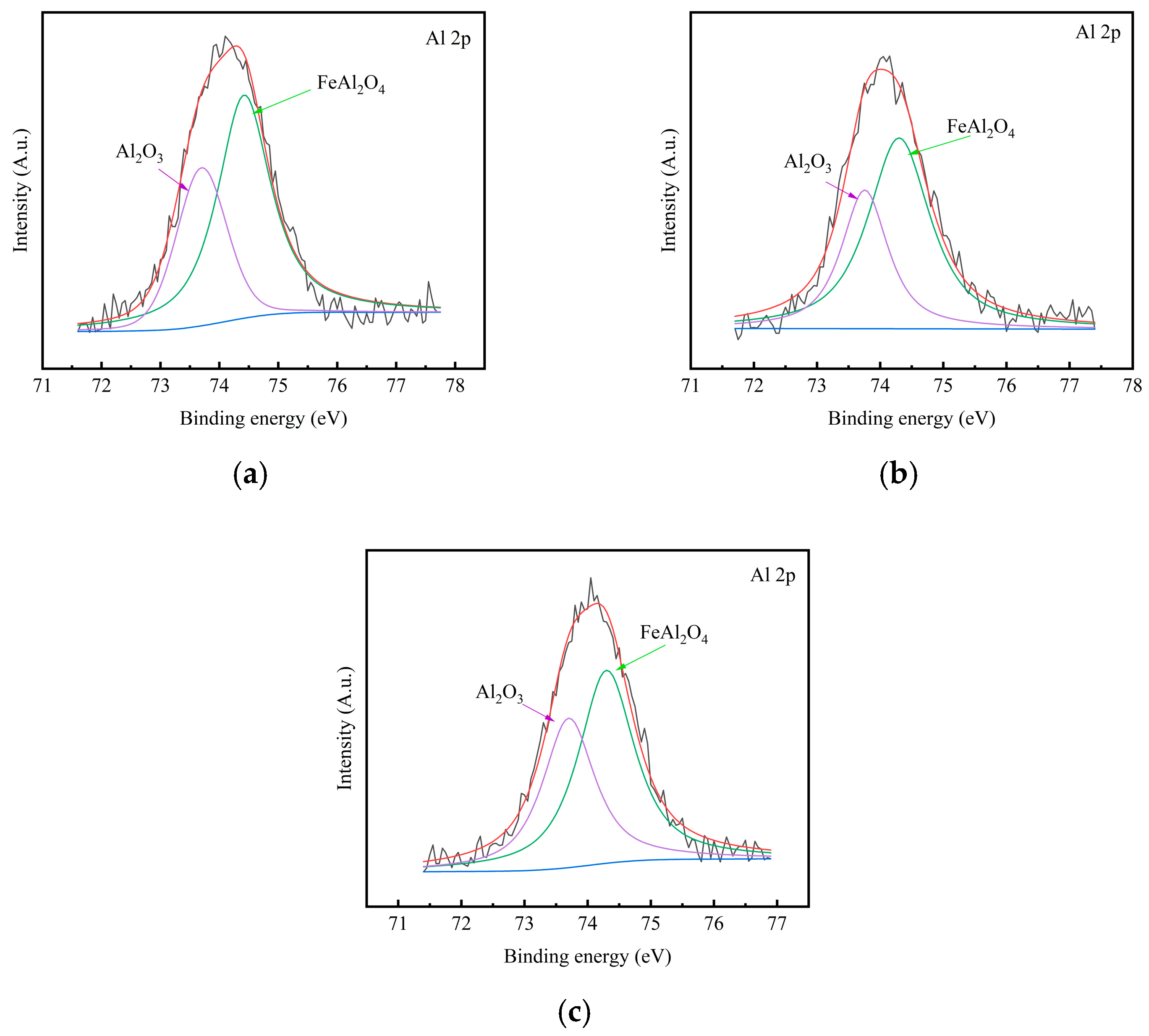
To conduct a deeper analysis of Al’s effect with respect to the full-immersion corrosion of steel, XPS characterization was performed on 5Al, 7Al, and 9Al test steels following 35 periods of immersion corrosion, with the results presented in Figure 9. The Al 2p spectra of these three Al-containing steels can be deconvoluted into two characteristic peaks—with binding energies of 73.7 eV and 74.3 eV—which correspond to Al2O3 and FeAl2O4, respectively [21]. The formation of Al2O3 and FeAl2O4 within the corrosion products can be facilitated by incorporating Al into steel, as demonstrated by this finding.
Figure 9.
XPS diagrams of Al 2p of Al-containing steels after 35 cycles of full-immersion corrosion test. (a) 5Al; (b) 7Al; (c) 9Al.
3.4. The Rust Layer’s Electrochemical Properties
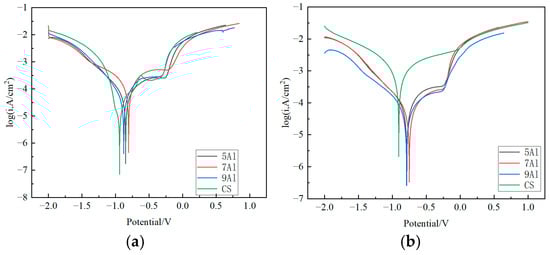
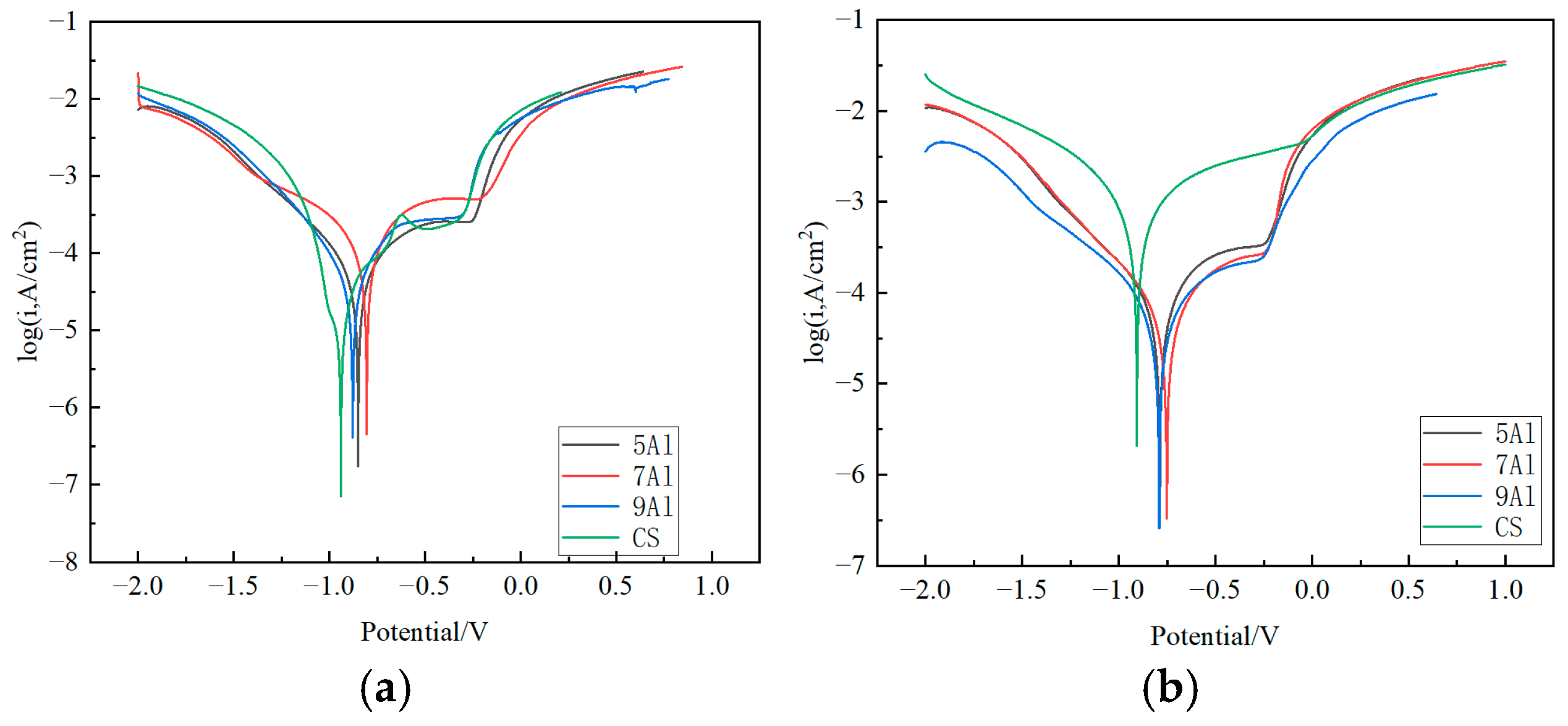
Figure 10 shows the Tafel diagrams of the four test steels after the full-immersion corrosion test. In the corrosion process of the four test steels, the anodic reaction is controlled by metal dissolution, and the cathodic reaction is controlled by the reduction reaction of corrosion products and dissolved oxygen [22,23]. In the early stage of corrosion, the polarization curves of the four test steels are basically similar, and the anodic curve of CS is slightly higher than that of Al-containing steels, indicating that the anodic dissolution resistance of CS is slightly higher than that of Al-containing steels in the early stage of corrosion. With the extension of the corrosion reaction, Al-containing steels show an obvious passivation region in the anode, and the 7Al curve has the largest slope, indicating extremely high polarization resistance and significant inhibition of the anodic dissolution reaction, which may be due to the formation of a dense oxide film with a higher Al content, blocking ion migration. All steels exhibit oxygen absorption corrosion, but the cathodic current density of 7Al steel decreases the fastest, indicating that its surface film has a stronger blocking effect on oxygen diffusion.
Figure 10.
Tafel diagrams of the four test steels after full-immersion corrosion test. (a) 7 days; (b) 35 days.
For a more in-depth analysis of the electrochemical properties of the four test steels, the Tafel extrapolation method was employed to determine the self-corrosion potential (Ecorr) and self-corrosion current density (Icorr) [24,25,26], with the results presented in Table 2. From the table, it is observed that during the early corrosion stage, 9Al steel exhibits a more negative Ecorr and a higher icorr. This phenomenon is primarily due to the fact that Al in the steel undergoes preferential dissolution in the early stage, which leads to lower anodic and cathodic current densities. Nevertheless, as the corrosion period prolongs, the Ecorr of 9Al steel undergoes a positive shift from −0.946 V to −0.770 V, while the icorr decreases from 82.46 μA·cm−2 to 13.49 μA·cm−2—values that are comparable to the corresponding parameters of 7Al steel. This suggests that during the late corrosion stage, the corrosion products formed on the surface of Al-containing steels can effectively inhibit the electrochemical reaction, thus enhancing the steel’s corrosion resistance.
Table 2.
Tafel curve parameters of the four test steels.
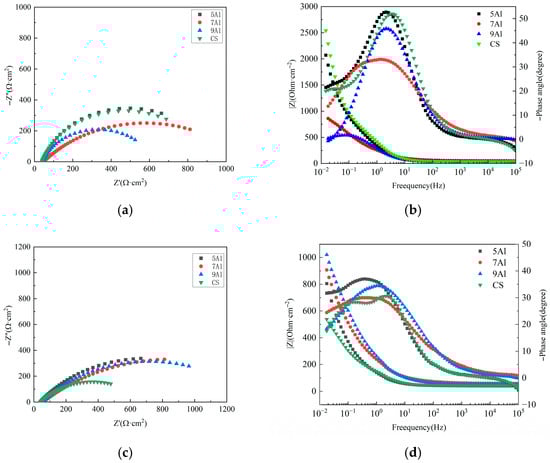
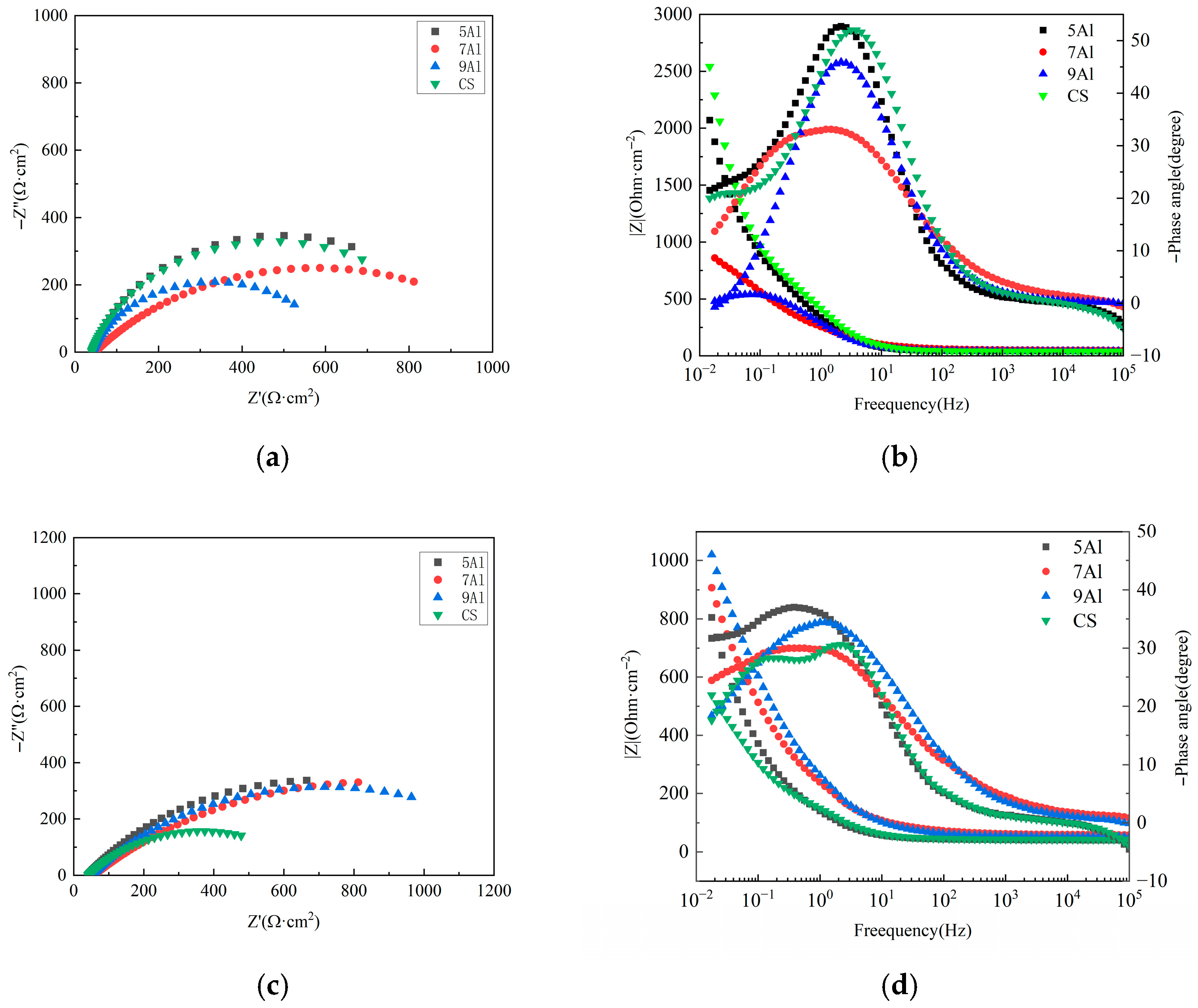
Figure 11 shows the EIS diagrams of the four test steels after the full-immersion corrosion test. In the early stage of corrosion, the capacitive reactance arc of 9Al steel is the smallest, indicating that the corrosion resistance of 9Al is poor in the early stage of corrosion, which is consistent with the Tafel phenomenon. With the extension of the corrosion cycles, the capacitive reactance arcs of Al-containing steels are much larger than that of CS, and the capacitive reactance arcs of 7Al steel and 9Al steel are similar in size. The above phenomena indicate that in the early stage of corrosion, excessive Al will accelerate the anodic dissolution reaction of steel, leading to reduced corrosion resistance. However, with the progression of the corrosion reaction, Al participates in the corrosion reaction process, forming protective substances such as Al2O3 and FeAl2O4, which effectively block the occurrence of electrochemical reactions, thereby improving the corrosion resistance of the steel.
Figure 11.
EIS diagrams of the four test steels after full-immersion corrosion test. (a,b) 7 days; (c,d) 35 days; (a,c) Nyquist diagrams; (b,d) Bode diagrams.
To assess corrosion resistance more effectively, EIS curves were fitted using ZSimpWin software (Version 3.6). The Bode plot shows that the maximum phase angle typically occurs in the mid-frequency range, a feature of capacitive response. The electrochemical system involves two time constants influencing the electrode process: one associated with corrosion products and the other with the electric double layer [27,28]. The maximum phase angle is below 90°, indicating non-ideal capacitive behavior caused by electrode porosity or the relaxation effect. During the EIS fitting procedure, a constant phase element (Q) was used to simulate this dispersion behavior [29,30].
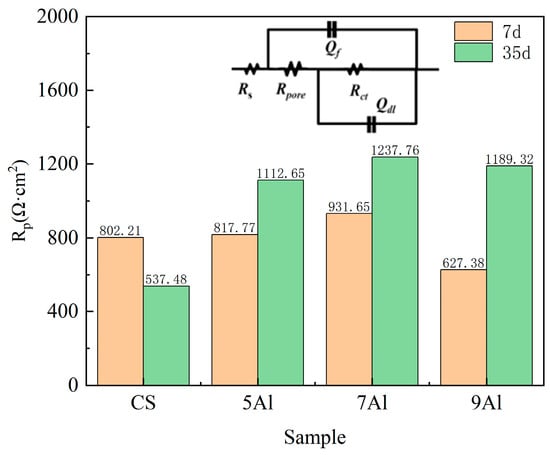
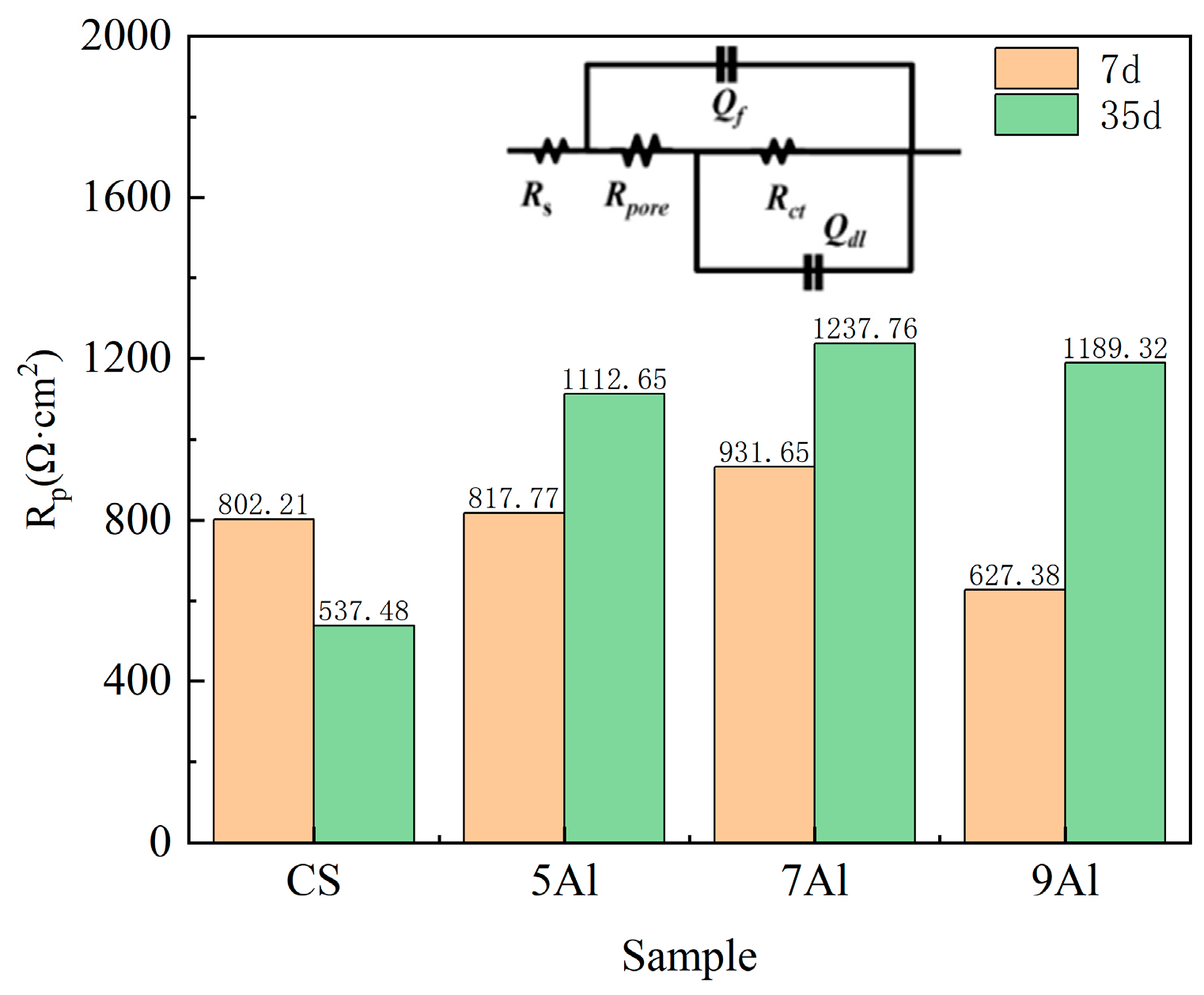
The measured EIS curves can be fitted using the equivalent circuit illustrated in Figure 12. The definitions of each parameter are as follows: Rs is solution resistance, R(pore) is the pore resistance of corrosion products, Qf is the constant phase element associated with corrosion products, Rct is the charge transfer resistance, and Qdl is the constant phase element related to the electrode double layer. The sum of R(pore) and Rct is referred to as polarization resistance (Rp), which can characterize the corrosion resistance of steel in a corrosive environment. The fitting results for Rp are presented in Figure 12 and Table 3. It is evident that during the early corrosion stage, 9Al steel exhibits the lowest Rp value, at 627.38 Ω·cm2. As the corrosion cycle progresses, 7Al steel achieves the highest Rp value (1237.76 Ω·cm2), while the Rp value of 9Al steel rises to 1189.32 Ω·cm2—values that are close to those of 7Al steel. This suggests that 9Al steel possesses poor corrosion resistance during the early corrosion stage; however, following a period of corrosion reactions, Al-containing steels exhibit superior corrosion resistance compared to CS, with 7Al steel demonstrating the optimal corrosion resistance—findings that align with the Tafel data.
Figure 12.
Fitted Rp values of EIS for the four test steels.
Table 3.
The fitting results of the EIS curves of the four test samples after different corrosion cycles.
4. Discussion
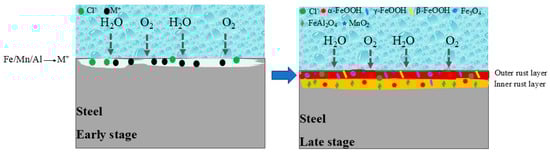
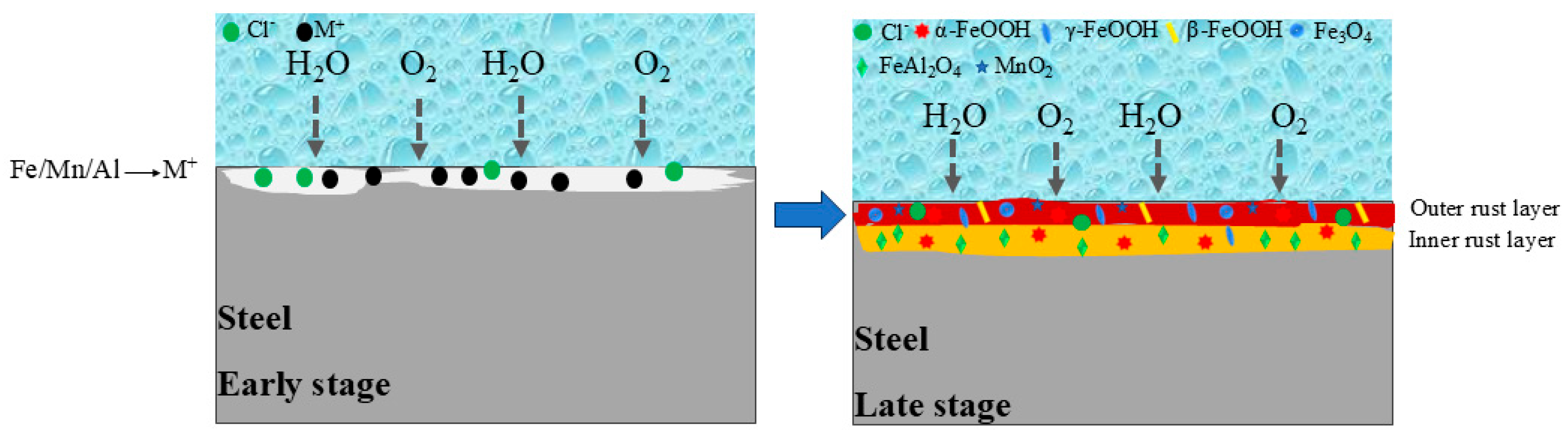
High-strength low-alloy steels are commonly used in marine engineering applications, and face severe corrosion risks when exposed to marine environments. As the primary corrosive ion, chloride ions are a key factor causing failure in low-alloy steels during service [31]. Figure 13 illustrates the corrosion mechanism of steel with an aluminum microcrystalline layer (Al WS). Typically, rust layer formation in marine environments proceeds as follows: Fe undergoes anodic dissolution to produce Fe2+, which continuously hydrates to form abundant Fe(O,OH)6. These hydrated products stack sequentially to form FeOOH. As shown in Figure 6, the primary FeOOH phases formed include α-FeOOH, β-FeOOH, and γ-FeOOH, with β-FeOOH and γ-FeOOH being the predominant corrosion products [32,33]. The structures of these corrosion products are typically loose and porous. Corrosive ions can penetrate the rust layer through these pores and microcracks, reaching the rust layer/substrate interface and accelerating localized corrosion beneath the rust layer. Consequently, as shown in Figure 1, carbon steel exhibits a higher corrosion rate.
Figure 13.
Schematic diagram of corrosion mechanism of Al WS.
When Al is added to the steel, since the standard electrode potential of aluminum is −1.66 V, which is much lower than that of iron (−0.44 V), aluminum is more active than iron in the corrosive environment and first undergoes anodic oxidation reaction. The following reactions occur [34]:
Owing to the incorporation of Al into the steel, Al undergoes preferential dissolution. Consequently, an excessive amount of Al in the early corrosion stage will result in a high corrosion rate of the steel. As illustrated in Figure 1, this phenomenon shows that low-alloy steels with high Al content (>9%) exhibit a higher corrosion rate than those with low Al content. This is mainly because the addition of excessive Al leads to a more negative Ecorr and a higher icorr. This phenomenon explains why an excessively high Al content can cause excessive dissolution and thus increase the corrosion rate. As the corrosion reaction proceeds, Al participates in the reaction to form a relatively dense oxide film (Al2O3) on the steel surface. On one hand, this oxide film can adhere closely to the substrate surface; on the other hand, it can fill the corrosion product layer composed of stacked FeOOH, thereby enhancing the physical barrier. In the late corrosion stage, when a complete corrosion product film (CPF) covers the surface of the low-alloy steel, it can isolate most of the corrosive solution from direct contact with the bare surface of the steel. However, a small amount of solution can still reach the interface between the rust layer and the matrix through structural defects such as cracks and pores. In an anaerobic environment, the hydrolysis of metal cations generates a large number of hydrogen ions, leading to significant local acidification. Furthermore, the enrichment of corrosive ions (e.g., Cl−) will further accelerate the acidification process. Some previous studies [35,36] have pointed out that the pH value of the microenvironment beneath the rust layer can be as low as 3 or even lower. According to the solubility product constant [37], calculations show that at room temperature, the pH values at which Al3+ and Mn2+ start to precipitate are 3.2 and 9.8, respectively. This implies that when the pH is 3, Al2O3 may still exist stably, whereas MnO and Mn2O3 tend to dissolve under weakly acidic conditions. Therefore, under the action of the potential gradient, low-valence Mn cations preferentially migrate outward, thereby forming a Mn-rich zone in the outer layer of the CPF and an Al-rich zone in the inner layer.
In addition, when excessive Al2O3 accumulates, reaction (2) will occur [10]:
Fe(OH)2 + Al2O3 → FeAl2O4 + H2O
Therefore, Al is enriched in the inner rust layer in the form of FeAl2O4 spinel oxide later in the corrosion process of the steel. This compound can be used as a nucleation site for rust layer grains, inhibiting excessive grain growth by changing the stacking order of the Fe(O,OH)6 network, thus refining the rust layer grains [10,38]. The XRD results show that the broadening degree of characteristic peaks such as α-FeOOH and γ-FeOOH in Al-containing steels is significantly higher than that in CS, indicating that the grains are finer. Refined grains reduce pores and cracks inside the rust layer, significantly improve the compactness of the rust layer, and reduce the penetration channels of corrosive solutions. Through the enrichment of FeAl2O4, the transformation of γ-FeOOH to stable α-FeOOH is accelerated, thereby increasing the value of α/γ*. Experimental data show that the α/γ* values of 7Al and 9Al steels are significantly higher than that of CS, more than twice that of CS (Figure 8b), indicating that their corrosion products have stronger chemical stability. XRD and XPS analyses confirmed that a large amount of FeAl2O4 exists in the rust layer of Al-containing steels, and its content increases with corrosion time. FeAl2O4 has excellent chemical stability and corrosion resistance, which not only provides protection for the rust layer itself but also further enhances the stability of the rust layer by promoting the formation of α-FeOOH. In addition, Al also exists in the rust layer in the form of Al2O3, which gradually transforms into more stable FeAl2O4 with corrosion, continuously optimizing the phase composition of the rust layer [11,39].
Al improves the corrosion resistance of steel through multi-dimensional synergistic effects: refining rust layer grains, promoting the transformation of stable phases, and improving compactness at the micro level; enhancing the stability of the rust layer through stable phases such as FeAl2O4 at the chemical level; optimizing electrochemical properties to inhibit corrosion kinetic processes at the macro level. These effects mean that Al-containing steels show significantly better corrosion resistance than conventional steels in marine engineering, providing a key basis for the design of lightweight and high-corrosion-resistance steels.
5. Conclusions
In this paper, through full-immersion corrosion tests combined with corrosion kinetics, corrosion products’ characterization, and electrochemical tests, the influence mechanism of Al content on the corrosion resistance of lightweight steel in marine environments was systematically explored. The main conclusions are as follows:
- The addition of Al can significantly reduce the corrosion weight loss and corrosion rate of steel among 5~9%Al contents. Among them, 7Al steel and 9Al steel have the lowest and similar corrosion rates, and the corrosion resistance has increased by two times. Hence, 7% Al content is the key threshold for improving corrosion resistance.
- Al can effectively form Al-rich oxides within the rust layer. These oxides act as a stable protective phase, thereby enhancing the corrosion resistance. FeAl2O4, as a nucleation site, refines rust layer grains, reduces internal pores and cracks, and enhances the physical barrier effect. However, as the standard electrode potential of Al is too low, excessively high Al content would lead to excessive dissolution and increase the corrosion rate.
- The electrochemical stability of Al-containing steels is significantly better than that of CS. The 7Al steel has the highest Rp value (1237.76 Ω·cm2), and the charge transfer resistance (Rct) and rust layer pore resistance (R(pores)) increase simultaneously, indicating that its rust layer has the strongest blocking effect on electrochemical reactions and the best corrosion resistance.
Author Contributions
Conceptualization, S.W.; methodology, S.W. and Z.S.; software, D.L. and Q.Y.; validation, Q.W.; formal analysis, Q.W.; investigation, D.L.; resources, S.W. and Q.Y.; data curation, S.W., D.L. and Q.Y.; writing—original draft preparation, S.W. and Z.S.; visualization, S.W.; supervision, S.W.; project administration, S.W. All authors have read and agreed to the published version of the manuscript.
Funding
The authors gratefully acknowledge the financial support from the Strategic Technology Special Project of Hebei Province (Grant No. 23311002L), A device for remelting and re-solidification of grain boundaries in metallic materials under the action of electrical pulses and pressure (Grant No. 52127808), and the Scientific Research and Innovation Project of Cangzhou Normal University (Grant No. cxtdl2301).
Data Availability Statement
The data presented in this study are available on request from the corresponding author due to the data is still being used in other projects.
Conflicts of Interest
The authors declare no conflicts of interest.
References
- Veis, V.; Semenko, A.; Voron, M.; Tymoshenko, A.; Likhatskyi, R.; Likhatskyi, I.; Parkhomchuk, Z. Lightweight Fe–Mn–Al–C Steels: Current State, Manufacturing, and Implementation Prospects. Steel Res. Int. 2025. early view. [Google Scholar] [CrossRef] [Scilit]
- Kim, H.; Suh, D.W.; Kim, N.J. Fe–Al–Mn–C lightweight structural alloys: A review on the microstructures and mechanical properties. Sci. Technol. Adv. Mater. 2013, 14, 14205. [Google Scholar] [CrossRef] [Scilit] [PubMed]
- Jeong, S.; Kim, B.; Moon, J.; Park, S.J.; Lee, C. Influence of κ-carbide precipitation on the microstructure and mechanical properties in the weld heat-affected zone in various FeMnAlC alloys. Mater. Sci. Eng. A 2018, 726, 223–230. [Google Scholar] [CrossRef] [Scilit]
- Qiu, G.X.; Li, J.N.; Chen, K.; Xu, G.; Yang, Y.K.; Li, X.M. Research status of high-manganese high-aluminum steel and key points of continuous casting. Jom 2024, 76, 7011–7022. [Google Scholar] [CrossRef] [Scilit]
- Fu, J.D.; Wan, S.; Yang, Y.; Su, Q.; Han, W.W.; Zhu, Y.B. Accelerated corrosion behavior of weathering steel Q345qDNH for bridge in industrial atmosphere. Constr. Build. Mater. 2021, 306, 124864. [Google Scholar] [CrossRef] [Scilit]
- Mokhtari, E.; Heidarpour, A.; Javidan, F. Mechanical performance of high strength steel under corrosion: A review study. J. Constr. Steel Res. 2024, 220, 108840. [Google Scholar] [CrossRef] [Scilit]
- Gomez, A.; Banis, A.; Avella, M.; Molina-Aldareguia, J.M.; Petrov, R.H.; Dutta, A.; Sabirov, I. The effect of κ-carbides on high cycle fatigue behavior of a Fe-Mn-Al-C lightweight steel. Int. J. Fatigue 2024, 184, 108306. [Google Scholar] [CrossRef] [Scilit]
- Haghdadi, N.; Zarei-Hanzaki, A.; Farabi, E.; Cizek, P.; Beladi, H.; Hodgson, P.D. Strain rate dependence of ferrite dynamic restoration mechanism in a duplex low-density steel. Mater. Des. 2017, 132, 360–366. [Google Scholar] [CrossRef] [Scilit]
- Zhao, J.; Wu, W.; Cai, J.; Cheng, X. Evaluating the effect of aluminum on the corrosion resistance of the structural steels used for marine engineering. J. Mater. Res. Technol. 2022, 18, 4181–4193. [Google Scholar] [CrossRef] [Scilit]
- Tang, Y.; Li, B.; Ji, P.; Zhang, X.; Ma, M.; Liu, R. Benefit of the rust layer formed on AlMn lightweight weathering steel in industrial atmosphere. Constr. Build. Mater. 2023, 394, 15. [Google Scholar] [CrossRef] [Scilit]
- Tang, Y.; Guo, Y.; Ji, P.; Li, B.; Xia, C.; Zhang, S.; Zhang, J.; Zhang, X.; Liu, R. Optimizing the corrosion performance of rust layers: Role of Al and Mn in lightweight weathering steel. npj Mater. Degrad. 2024, 8, 32. [Google Scholar] [CrossRef] [Scilit]
- Nishimura, T.; Tahara, A.; Kodama, T. Effect of Al on the Corrosion Behavior of Low Alloy Steels in Wet/Dry Environment. Mater. Trans. 2001, 7, 662–671. [Google Scholar] [CrossRef] [Scilit]
- Xu, X.; Zhang, T.; Wu, W.; Jiang, S.; Yang, J.; Liu, Z. Optimizing the resistance of Ni-advanced weathering steel to marine atmospheric corrosion with the addition of Al or Mo. Constr. Build. Mater. 2021, 279, 122341. [Google Scholar] [CrossRef] [Scilit]
- JB/T 7901-1999; Metals Materials—Uniform Corrosion-Methods of Laboratory Immersion Testing. State Administration of Machinery Industry: Beijing, China, 1999.
- Brash, D.E.; Rudolph, J.A.; Simon, J.A.; Lin, A.; Mckenna, G.J.; Baden, H.P.; Ponten, H.J. A role for sunlight in skin cancer: UV-induced p53 mutations in squamous cell carcinoma. Proc. Natl. Acad. Sci. USA 1991, 88, 10124–10128. [Google Scholar] [CrossRef] [Scilit]
- Yu, Q.; Yang, X.; Dong, W.; Wang, Q.; Zhang, F.; Gu, X. Layer-by-layer investigation of the multilayer corrosion products for different Ni content weathering steel via a novel Pull-off testing. Corros. Sci. 2021, 195, 109988. [Google Scholar] [CrossRef] [Scilit]
- Yu, Q.; Dong, W.; Yang, X.; Wang, Q.; Zhang, F. Insights into the corrosion mechanism and electrochemical properties of the rust layer evolution for weathering steel with various Cl deposition in the simulated atmosphere. Mater. Res. Express 2021, 8, 36515–36518. [Google Scholar] [CrossRef] [Scilit]
- Cheng, X.; Jin, Z.; Liu, M.; Li, X. Optimizing the nickel content in weathering steels to enhance their corrosion resistance in acidic atmospheres. Corros. Sci. 2017, 115, 135–142. [Google Scholar] [CrossRef] [Scilit]
- Wu, W.; Cheng, X.; Zhao, J.; Li, X. Benefit of the corrosion product film formed on a new weathering steel containing 3% nickel under marine atmosphere in Maldives. Corros. Sci. 2019, 165, 108416. [Google Scholar] [CrossRef] [Scilit]
- Kamimura, T.; Hara, S.; Miyuki, H.; Yamashita, M.; Uchida, H. Composition and protective ability of rust layer formed on weathering steel exposed to various environments. Corros. Sci. 2006, 48, 2799–2812. [Google Scholar] [CrossRef] [Scilit]
- Ma, C.; Song, S.; Gao, Z.; Wang, J.; Xia, D.H. Electrochemical Noise Monitoring of the Atmospheric Corrosion of Steels: Identifying Corrosion Form Using Wavelet Analysis. Corros. Eng. Sci. Technol. 2017, 52, 432–440. [Google Scholar] [CrossRef] [Scilit]
- Hao, L.; Zhang, S.; Dong, J.; Ke, W. Evolution of corrosion of MnCuP weathering steel submitted to wet/dry cyclic tests in a simulated coastal atmosphere. Corros. Sci. 2012, 58, 175–180. [Google Scholar] [CrossRef] [Scilit]
- Yu, Q.; Dong, W.; Yang, X.; Wang, Q.; Zhang, F. The Role of the Direct Current Electric Field in Enhancing the Protective Rust Layer of Weathering Steel. J. Mater. Eng. Perform. 2021, 30, 6309–6322. [Google Scholar] [CrossRef] [Scilit]
- Mansfeld, F. Tafel slopes and corrosion rates obtained in the pre-Tafel region of polarization curves. Corros. Sci. 2005, 47, 3178–3186. [Google Scholar] [CrossRef] [Scilit]
- Deyab, M.A.; Mohsen, Q. Inhibitory influence of cationic Gemini surfactant on the dissolution rate of N80 carbon steel in 15% HCl solution. Sci. Rep. 2021, 11, 10521. [Google Scholar] [CrossRef] [Scilit]
- Deyab, M.A.M. Corrosion Inhibition and Adsorption Behavior of Sodium Lauryl Ether Sulfate on L80 Carbon Steel in Acetic Acid Solution and Its Synergism with Ethanol. J. Surfactants Deterg. 2015, 18, 405–411. [Google Scholar] [CrossRef] [Scilit]
- Collazo, A.; Nóvoa, X.R.; Pérez, C.; Puga, B. EIS study of the rust converter effectiveness under different conditions. Electrochim. Acta 2008, 53, 7565–7574. [Google Scholar] [CrossRef] [Scilit]
- Li, Y.; Xu, J. Is niobium more corrosion-resistant than commercially pure titanium in fluoride-containing artificial saliva? Electrochim. Acta 2017, 233, 151–166. [Google Scholar] [CrossRef] [Scilit]
- Barcia, O.E.; D’Elia, E.; Frateur, I.; Mattos, O.R.; Tribollet, B. Application of the impedance model of de Levie for the characterization of porous electrodes. Electrochim. Acta 2002, 47, 2109–2116. [Google Scholar] [CrossRef] [Scilit]
- Hao, W.; Liu, Z.; Wu, W.; Li, X.; Du, C.; Zhang, D. Electrochemical characterization and stress corrosion cracking of E690 high strength steel in wet-dry cyclic marine environments. Mater. Sci. Eng. A 2017, 710, 318–328. [Google Scholar] [CrossRef] [Scilit]
- Zhang, X.; Yang, S.; Zhang, W.; Guo, H.; He, X. Influence of outer rust layers on corrosion of carbon steel and weathering steel during wet–dry cycles. Corros. Sci. 2014, 82, 165–172. [Google Scholar] [CrossRef] [Scilit]
- Morcillo, M.; Chico, B.; Diaz, I.; Cano, H.; Fuente, D.D.L. Atmospheric corrosion data of weathering steels. A review. Corros. Sci. 2013, 77, 6–24. [Google Scholar] [CrossRef] [Scilit]
- Jia, J.; Liu, Z.; Cheng, X.; Du, C.; Li, X. Development and optimization of Ni-advanced weathering steel: A review. Corros. Commun. 2021, 2, 82–90. [Google Scholar] [CrossRef] [Scilit]
- Wu, W.; Qin, L.; Cheng, X.; Xu, F.; Li, X. Microstructural evolution and its effect on corrosion behavior and mechanism of an austenite-based low-density steel during aging. Corros. Sci. 2023, 212, 110936. [Google Scholar] [CrossRef] [Scilit]
- Sridhar, N. Local Corrosion Chemistry—A Review. Corros. J. Sci. Eng. 2017, 73, 18–30. [Google Scholar] [CrossRef] [Scilit]
- Kappes, M.A.; Ortíz, M.R.; Iannuzzi, M.; Carranza, R.M. Use of the Critical Acidification Model to Estimate Critical Localized Corrosion Potentials of Duplex Stainless Steels. Corros. J. Sci. Eng. 2017, 73, 31–40. [Google Scholar] [CrossRef] [Scilit] [PubMed]
- Asmadi, A.; Kendrick, J.; Leusen, F.J.J. Crystal structure prediction and isostructurality of three small organic halogen compounds. Phys. Chem. Chem. Phys. 2010, 12, 8571–8579. [Google Scholar] [CrossRef] [Scilit] [PubMed]
- Zhang, T.; Xu, X.; Li, Y.; Lv, X. The function of Cr on the rust formed on weathering steel performed in a simulated tropical marine atmosphere environment. Constr. Build. Mater. 2021, 277, 122298. [Google Scholar] [CrossRef] [Scilit]
- Kimura, M.; Kihira, H.; Ohta, N.; Hashimoto, M.; Senuma, T. Control of Fe(O,OH)6 nano-network structures of rust for high atmospheric-corrosion resistance. Corros. Sci. 2005, 47, 2499–2509. [Google Scholar] [CrossRef] [Scilit]


Disclaimer/Publisher’s Note: The statements, opinions and data contained in all publications are solely those of the individual author(s) and contributor(s) and not of MDPI and/or the editor(s). MDPI and/or the editor(s) disclaim responsibility for any injury to people or property resulting from any ideas, methods, instructions or products referred to in the content. |
© 2025 by the authors. Licensee MDPI, Basel, Switzerland. This article is an open access article distributed under the terms and conditions of the Creative Commons Attribution (CC BY) license (https://creativecommons.org/licenses/by/4.0/).