You are currently viewing a new version of our website. To view the old version click .
Metals
  • Article
  • Open Access

29 October 2025

The Effect of Organic Compounds on Iron Concentration in the Process of Removing Iron from Sulfur-Containing Sodium Aluminate Solution via Oxidation

,
,
and
1
Key Laboratory for Ecological Metallurgy of Multimetallic Mineral (Ministry of Education), Northeastern University, Shenyang 110819, China
2
School of Metallurgy, Northeastern University, Shenyang 110819, China
3
Kunming Metallurgical Research Institute, Kunming 650031, China
*
Authors to whom correspondence should be addressed.
This article belongs to the Topic Advanced Processes in Metallurgical Technologies, 2nd Volume

Abstract

In this study, we investigate the effects of adding varying proportions of fulvic acid during the digestion of pyrite on the iron concentration in both dissolved and diluted sodium aluminate solutions. Based on the occurrence characteristics of iron in the solutions, oxygen was introduced into the diluted solution to examine its iron removal efficiency, and the influence of organic compounds in the solution on iron removal through oxidation was investigated. The results indicate that, during high-pressure digestion, organic compounds forms complexes with iron, disrupting the hydrophilic iron (or ferrous) hydroxide film formed on the pyrite surface, thereby accelerating its dissolution and leading to a sharp increase in sulfur and iron content in the leachate. After cooling and dilution (100 °C, Na2Ok 170 g/L), the iron content in the sodium aluminate solution continued to be influenced by organic compounds, showing a significant positive correlation. Oxygenation experiments for iron removal were performed using the diluted solution. Under conditions of an oxygen flow rate of 60 mL/min and an oxidation duration of 2 h (95 °C, oxygen partial pressure was 0.05 Mpa), the iron content (calculated as Fe2O3) decreased from 0.078 g/L to 0.021 g/L. Characterization and analysis of the iron removal precipitates revealed that the iron-containing minerals were primarily trivalent iron phases, such as goethite and hematite, with minimal ferrous iron content. Additionally, organic carbon also precipitated together with iron, which confirms the synergistic removal of iron and organic compounds. These findings demonstrate that the oxidation of reducing sodium aluminate solutions containing organic compounds, sulfur, and iron with atmospheric oxygen during the Bayer process sedimentation stage can effectively oxidize predominantly ferrous iron into less soluble ferric iron, thereby achieving iron removal.

1. Introduction

Over 60% of global alumina production occurs in China, yet its bauxite resources—the primary raw material—are depleting at an increased rate. Currently, more than 60% of the bauxite used in China is imported [1]. To reduce the domestic alumina industry’s reliance on imported bauxite, efforts have gradually been intensified to exploit and utilize high-sulfur bauxite. However, the use of high-sulfur bauxite leads to an increase in iron content in the Bayer process liquor. This iron subsequently precipitates during the decomposition process, resulting in excess iron in the product, which severely restricts the large-scale application of high-sulfur bauxite. Regarding the issue of elevated iron content in sodium aluminate solution caused by high-sulfur bauxite, Li et al. [2] investigated the reaction behavior and mechanism of pyrite (FeS2) in high-sulfur bauxite under Bayer process digestion conditions. They proposed that S2− reacts with iron to form a soluble iron–sulfur complex—sodium hydroxythioferrate—which is the direct cause of iron entering the sodium aluminate solution. Zhou et al. [3] conducted a thermodynamic analysis of the Na–S–Fe–H2O system in the Bayer process and concluded that the presence of sulfur causes partial iron to enter the solution during digestion. The pathways for iron incorporation are not limited to the digestion process. Research conducted by Chen et al. [4,5,6] also demonstrated that in subsequent Bayer process stages, S2− and S2O32− corrode steel equipment, causing iron to be continuously introduced into the sodium aluminate solution.
Researchers have investigated the variation in the patterns of iron concentration in sulfur-containing sodium aluminate solutions. Liu et al. [7] studied the effects of factors such as Na2S, Na2SO4, Na2CO3, and alkali concentration on iron concentration during high-pressure digestion. Niu et al. [8] investigated the variation patterns of iron mass concentration in sulfur-containing sodium aluminate solutions, concluding that the solution caustic ratio and presence of Na2SO4 and Na2C2O4 significantly influence the iron content. Chen et al. [9] detected the colloidal particle size and Zeta potential in sodium aluminate solutions, thereby confirming the existence of colloidal iron; they proposed that S2− and humic acid form complexes with Fe2+. To control the iron concentration in these solutions, Zhou et al. [10] and Li et al. [11] investigated techniques that can be used for the coprecipitation removal of iron and sulfur using additives. Peng et al. [12] conducted iron removal experiments using hydrogen peroxide, achieving a laboratory removal rate of 65%, which decreased to 30% in actual production. Niu et al. [8] and He et al. [13] studied iron removal via cooling and static sedimentation in sulfur-containing sodium aluminate solutions. Another prominent research focus has been on the use of solution desulfurization technologies [14,15] with the aim of reducing iron concentration by removing sulfur. While these studies provide valuable insights and methodologies for reducing iron content in solutions, the challenges posed by persistently high iron levels in the practical application of high-sulfur bauxite remain unresolved. This is primarily due to the economic constraints associated with iron removal or the difficulty of implementing the required iron removal conditions in industrial production settings.
Organic compounds represent a class of harmful impurities ubiquitous in the production of alumina in the Bayer process. They originate primarily from humic substances in bauxite ore, which dissolve during the Bayer digestion stage and enter the sodium aluminate solution. These compounds subsequently accumulate throughout the alumina production circuit in the form of humic acids, aliphatic acids, and aromatic organic acids, causing a variety of adverse effects [16,17,18]. As mentioned in previous studies [8,9], associations between sodium oxalate, humic acids, and solution iron have been noted but not thoroughly investigated. Therefore, it is evident that, when studying the factors influencing iron concentration in sulfur-containing sodium aluminate solutions, the coexisting and abundantly present organic compounds (with solution organic carbon content often exceeding 10 g/L) must be a major focus.
In recent years, researchers have investigated various methods for the removal of sulfur and iron from sodium aluminate solutions, including seed precipitation [19,20], the electrochemical method [21], and oxidation [22], which have been shown to achieve considerable impurity removal efficiency. However, owing to the complex composition of the sodium aluminate solution system, the interaction mechanisms between iron and other constituents—particularly organic compounds—during the purification process remain poorly understood [11]. Therefore, in this study, we employ fulvic acid to simulate the humic substances present in bauxite. Experiments were conducted to investigate the effect of adding varying proportions of fulvic acid on the iron concentration in both the digested and diluted sodium aluminate solutions during the Bayer digestion process in the presence of pyrite. Iron removal experiments were performed on the diluted solution (95 °C) via oxygenation under atmospheric pressure. The iron removal products were characterized using techniques such as XRD, SEM-EDS, XPS, and FTIR. Additionally, the mechanisms of iron removal with organic compounds in the solution were analyzed. This study provides a reference for controlling content of iron and organic compounds in the process liquor and ensuring product quality during the utilization of high-sulfur bauxite.

2. Materials and Methods

2.1. Materials

The aluminum hydroxide, sodium hydroxide, and pyrite used in this study were obtained from the production plant of an alumina refinery in China. Fulvic acid was purchased from Aladdin (Shanghai, China), and oxygen gas was supplied by PengYida (Kunming, China).
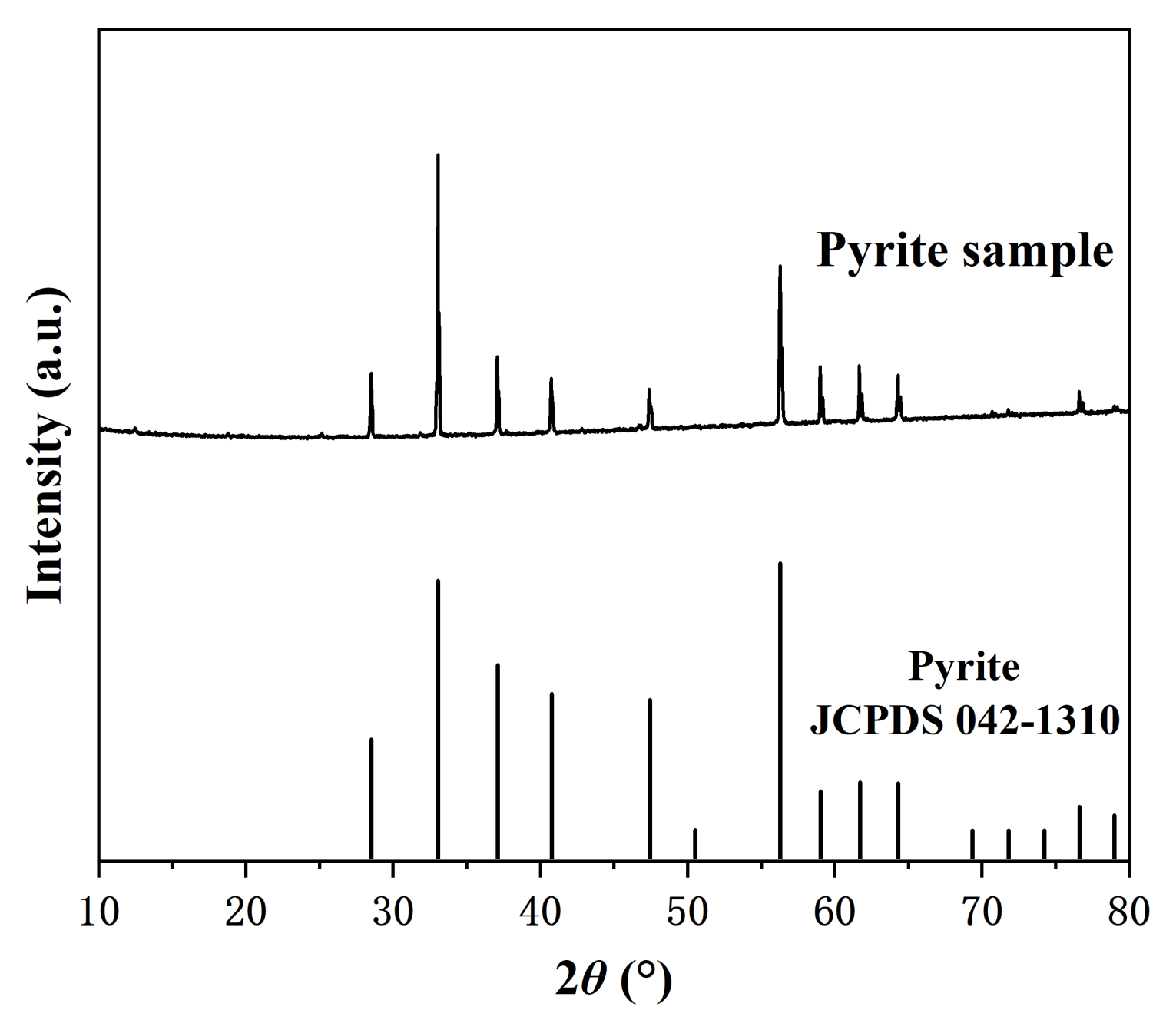
The pyrite sample was crushed and ground to a particle size of less than 74 μm; the sulfur and iron contents of the sample were 48% and 42% by mass fraction, respectively. The X-ray diffraction (XRD) pattern of the pyrite is shown in Figure 1.
Figure 1. XRD pattern of pyrite sample.

2.2. Experiment

A sodium aluminate solution was prepared from industrial-grade aluminum hydroxide and sodium hydroxide, with a Na2OK concentration of 230 g/L and a caustic ratio (αk) of 1.45. Portions of this solution (100 mL), along with 2 g of pyrite and a specified quantity of fulvic acid, were placed in a bomb reactor (Beijing SenLong experimental apparatus Co., Ltd., Beijing, China). Steel balls were added to enhance mixing. The reactor was then immersed in a molten salt bath and maintained at 270 °C for 1 h. Following the reaction, the slurry was vacuum-filtered. A small aliquot of the filtrate was collected for analysis, and the remaining filtrate was diluted with boiling water to achieve a Na2OK concentration of 170 g/L. This diluted solution was maintained at 100 °C for 1 h under static conditions and subsequently vacuum-filtered. Another small aliquot of this filtrate was collected for analysis. The bulk of the diluted filtrate was subjected to an oxygenation experiment at 95 °C. Samples of the solution were periodically withdrawn for analysis during this process. After 2 h of oxygenation, the entire mixture was filtered; the filter residue was washed with boiling water and then dried under an inert atmosphere at 50 °C for 24 h before subsequent analysis. The kinetics of Fe degradation reaction were fitted using a pseudo-first-order model:
ln(C/C0) = −k1t,
where C0 is the initial concentration of Fe, C is the concentration of Fe at time t, t is the reaction time, and k1 is the reaction rate constant.
The experiments in this study were repeated 3 times under the same experimental conditions.

2.3. Analysis and Characterization

The iron concentration in the solution was determined using the 1,10-phenanthroline colorimetric method.
The structural properties of the iron removal precipitate were characterized using an X’Pert PRO MPD X-ray diffractometer (Malvern Panalytical, Almelo, The Netherlands) with a scanning range of 10° to 80° (2θ) and a scanning rate of 10°/min. XRD fitting was performed by HighScore Plus V3.0.5, with database from The International Centre for Diffraction Data (ICDD). The surface morphology and elemental distribution of the samples were examined using a Gemini 300 scanning electron microscope (Carl Zeiss, Jena, Germany) equipped with energy-dispersive spectroscopy (EDS). The surface functional groups and chemical characteristics were detected via Fourier transform infrared (FTIR) spectroscopy performed using a Nicolet Nexus 470 spectrometer (Thermo Fisher Scientific, Waltham, MA, USA). The elemental valence states and chemical bonding configurations were analyzed using an ESCALAB 250Xi X-ray photoelectron spectrometer (Thermo Fisher Scientific, Bremen, Germany).

3. Results and Discussion

3.1. Effect of Organic Compounds on the Sulfur and Iron Content in Digested and Diluted Liquors

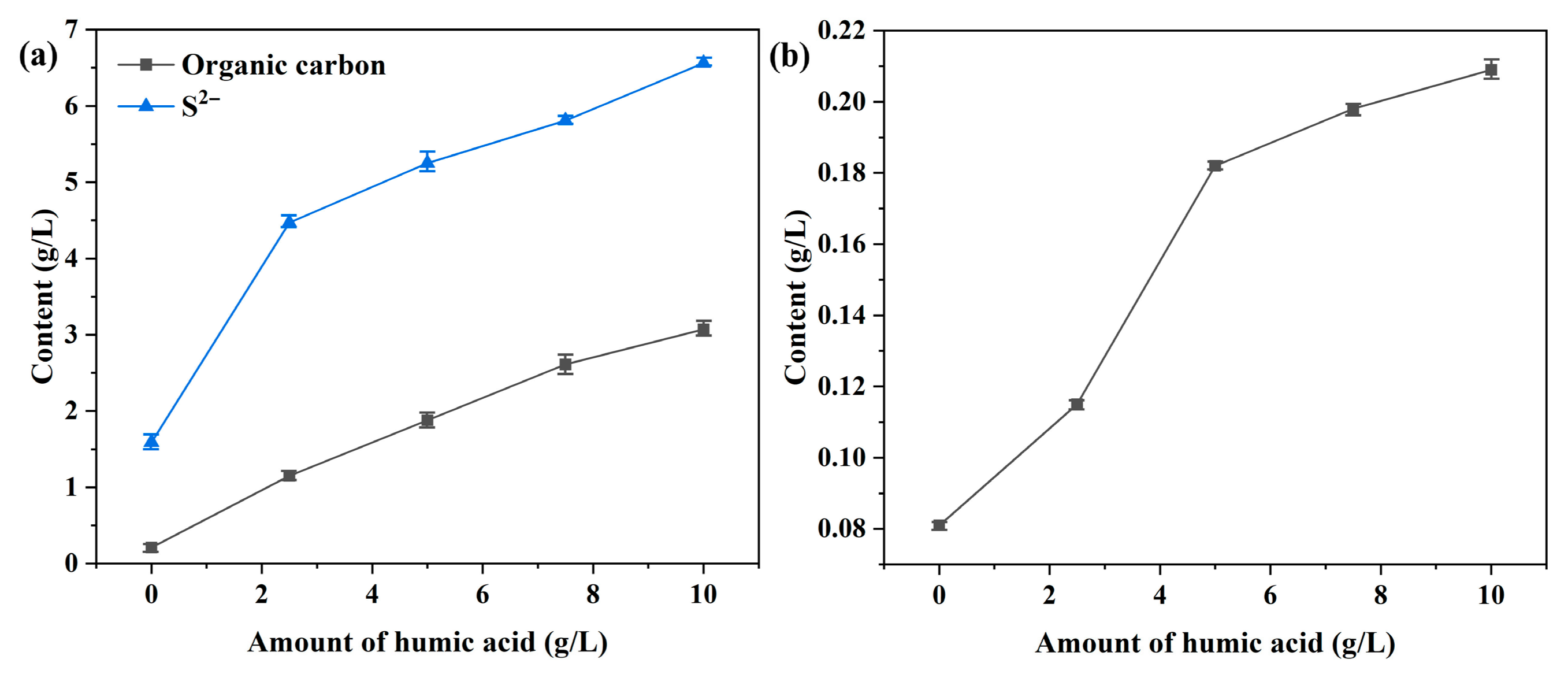
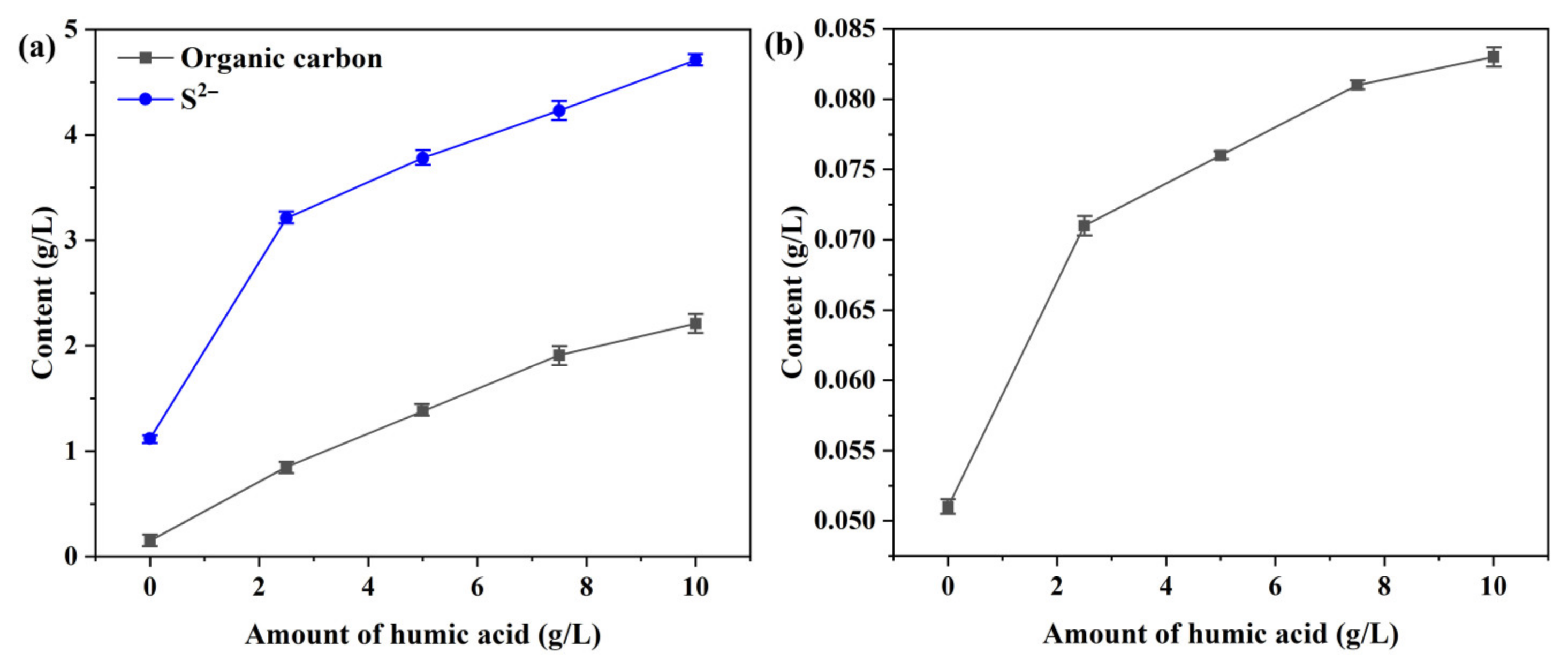
The humic substances in bauxite exhibit complex composition. Under the high-pressure digestion conditions of the Bayer process, humic acids—particularly fulvic acid—readily react with the alkaline solution and enter the sodium aluminate liquor. Accordingly, in this experiment, varying proportions of fulvic acid were added alongside the sodium aluminate solution and pyrite. The addition levels were set at 0, 2.5, 5.0, 7.5, and 10 g/L. The sulfur, iron, and carbon contents in both the digested liquor and the diluted liquor were analyzed; the results are presented in Figure 2 and Figure 3.
Figure 2. Effect of the amount of humic acid added and the concentrations of (a) organic compounds (calculated as organic carbon) and S2− and (b) iron (calculated as Fe2O3) in the leachate.
Figure 3. Concentrations of (a) organic compounds (calculated as organic carbon) and S2− and (b) iron (calculated as Fe2O3) in the diluent.
Figure 2 illustrates the influence of organic compounds on the content of divalent sulfur (S2−) and iron ions (calculated as Fe2O3) in the high-pressure digested liquor. As the amount of fulvic acid added increased, the organic compounds content (measured as organic carbon), divalent sulfur, and iron ion content in the digested liquor increased simultaneously, showing a significant positive correlation. This indicates that organic compounds markedly promote the dissolution of pyrite, leading to elevated concentrations of sulfur and iron in the digested liquor.
Figure 3 shows that after the digested liquor was cooled, diluted to an effective sodium oxide (Na2OK) concentration of 170 g/L, and maintained at 100 °C for 1 h, the iron ion content in the sodium aluminate solution decreased significantly (from 0.208 to 0.082 g/L). This reduction is attributed to the precipitation of the iron–sulfur colloidal complex—sodium hydroxythioferrate—as the temperature and caustic alkali concentration decreased [8]. Nevertheless, a portion of the iron remained dissolved in the solution. It is evident that the iron content at this stage still exhibits a significant positive correlation with the organic compounds content.

3.2. Removal of Iron from the Diluted Liquor via Atmospheric Oxygenation

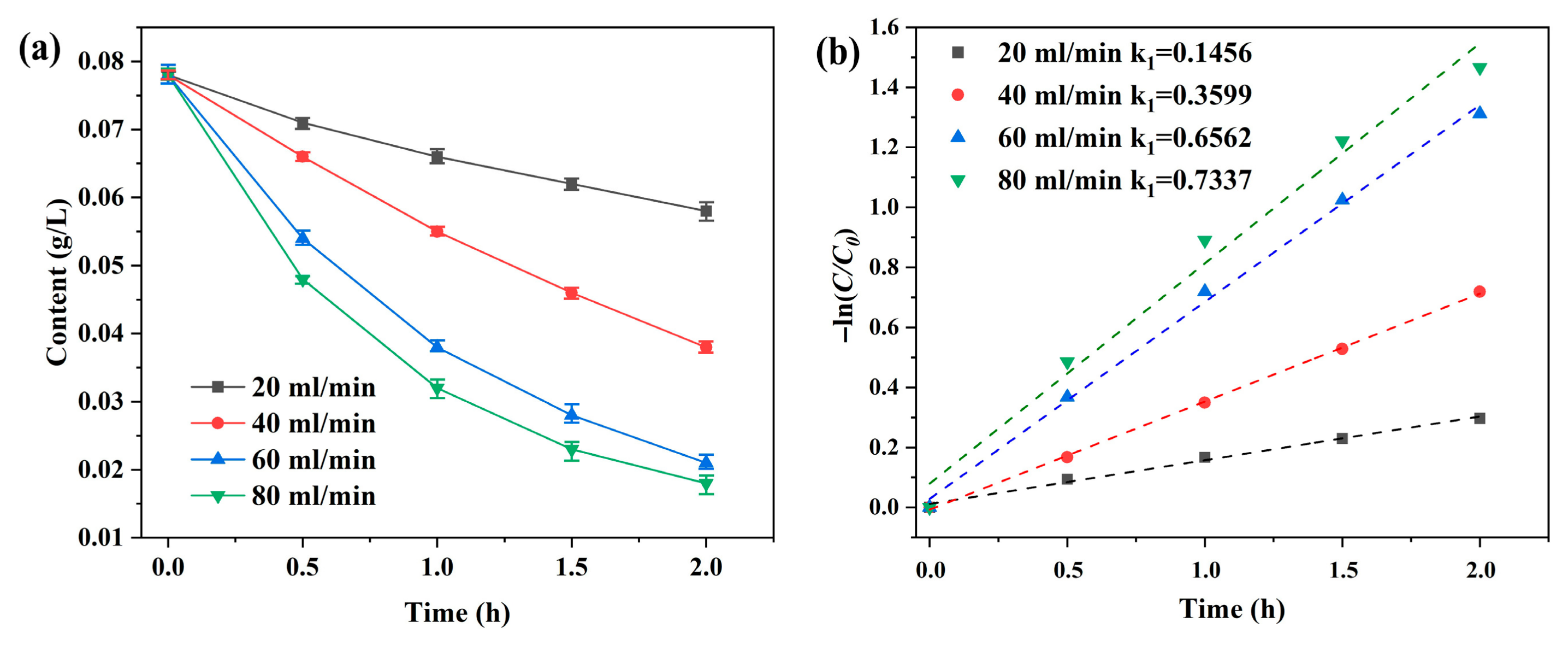
The valence state distribution of iron in the diluted liquor was analyzed, revealing that ferrous iron (Fe2+) accounted for 91.35% of the total iron content. Considering the distinct dissolution characteristics of different iron valence states in alkaline solutions, a straightforward atmospheric oxygenation method was employed for iron removal experiments. Given the relatively low absolute mass concentration of iron in the solution, the experimental data are presented using the mass concentration of iron (g/L), which is more practically relevant for production, rather than using removal rate percentages. To investigate the effect of different oxygen flow rates on iron removal, a portion of the homogenized diluted liquor, with an initial iron content of 0.078 g/L, was placed in a reactor. The temperature was maintained constant at 95 °C. Oxygen was introduced into the solution via a diffuser stone for a duration of 2 h. Samples were collected every 30 min to undergo iron content analysis. The results are presented in Figure 4.
Figure 4. (a) Iron degradation curves and (b) kinetics fitting under different oxygen flow rates whin 2 h in diluted liquor (95 °C).
Figure 4a demonstrates that oxygenation effectively reduces the iron content in the diluted liquor. At an oxygen flow rate of 60 mL/min, the dissolved iron concentration in the sulfur- and organic-containing diluted liquor decreased from 0.078 g/L to 0.021 g/L after a 2 h reaction period. This final iron level meets the requirements for industrial production (Fe2O3 content in aluminum oxide products below 0.02%). Kinetic analysis demonstrated that the maximum Fe degradation rate occurred at an oxygen flow rate of 80 mL/min (Figure 4b).
We investigated the effect of varying fulvic acid additions on iron (calculated as Fe2O3) removal via aeration in diluted solutions, and the results are detailed below.
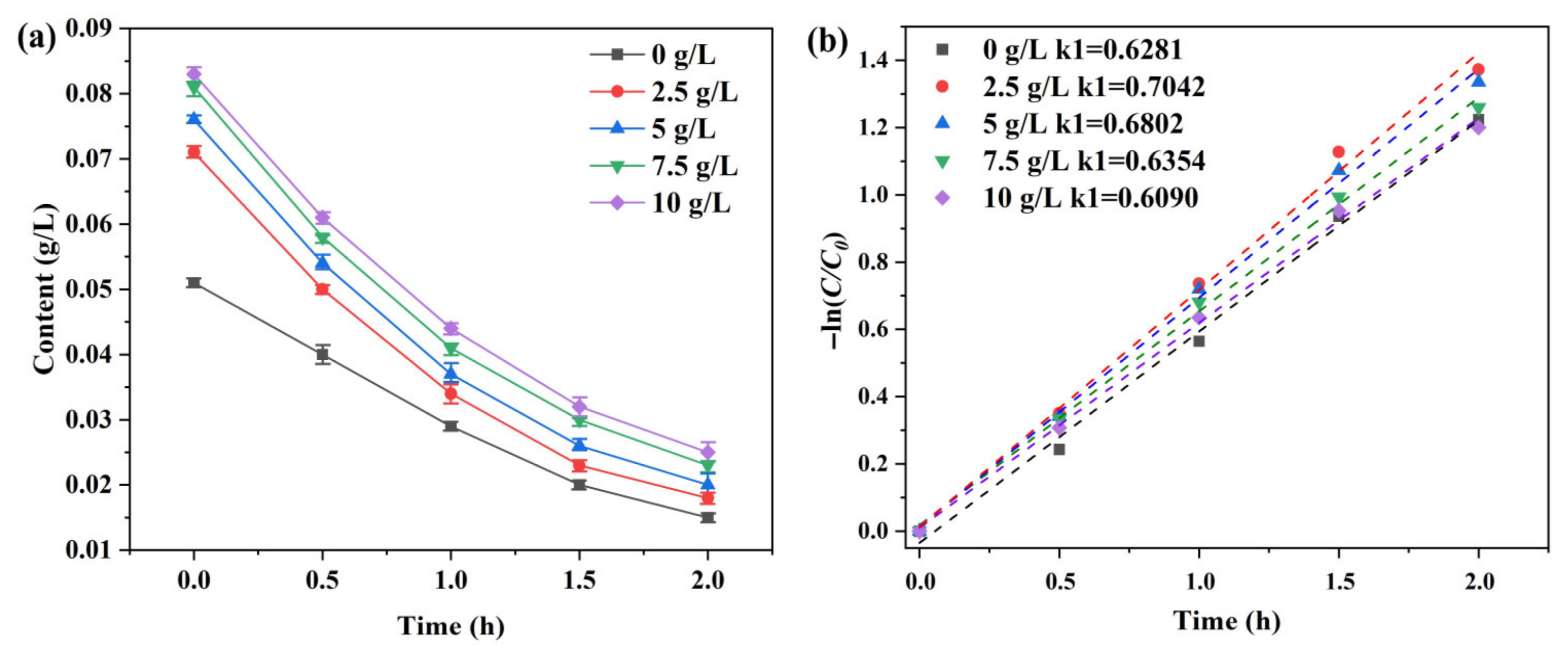
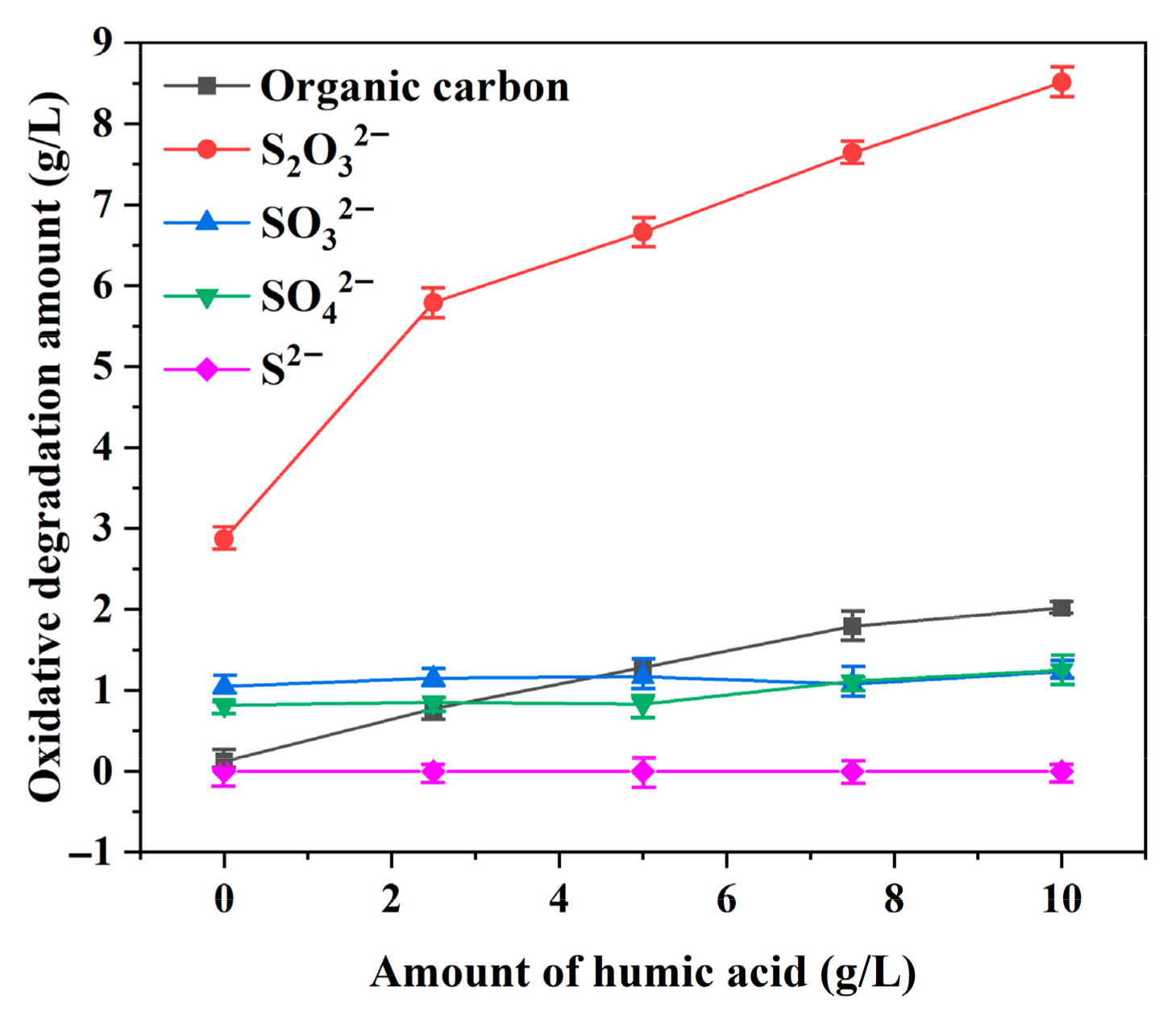
Under a constant temperature of 95 °C and an oxygen flow rate of 60 mL/min, diluted solutions were subjected to aerobic oxidation for 2 h. Samples were collected every 30 min to undergo iron content analysis, and the results are presented in Figure 5. After 2 h, additional samples were taken to analyze various sulfur ions and organic compounds content, as shown in Figure 6.
Figure 5. (a) The effect of different amounts of humic acid on iron (calculated as Fe2O3) degradation and (b) kinetics fitting.
Figure 6. Content of various sulfur ions and organic compounds (calculated as organic carbon) after 2 h of oxidative degradation.
Figure 5a demonstrates that the iron content in the diluted sodium aluminate solutions gradually decreased with prolonged aeration time. Although the residual iron level remained positively correlated with the organic compounds content, the aeration treatment significantly enhanced iron removal. Kinetic analysis demonstrates that the highest oxidation degradation rate for iron was achieved at a humic acid dosage of 2.5 g/L (Figure 5b).
Figure 6 reveals that, after 2 h of thorough aerobic oxidation, S2− in the diluted sodium aluminate solutions was completely oxidized and eliminated, with the majority being converted to S2O32−. Under the given oxidative conditions, the further conversion of S2O32− to SO32− and SO42− proceeded slowly, and the content of organic compounds also occurred at a decrease.
The experimental data presented above indicate that, in Sulfur-containing sodium aluminate solution, the presence of organic substances significantly influences the iron concentration. Even after the complete oxidation of sodium hydroxythioferrate (when the S2− ion content reaches zero), a considerable amount of dissolved iron remains in the solution, which exhibits a positive correlation with the organic compounds content.

3.3. Characterization of the Iron Removal Precipitate from Oxidation

To further elucidate the mechanism of iron removal via oxygen-aided oxidation, the precipitate (filter residue) obtained at the end of the oxidation experiment was washed, mixed, and dried under an oxygen-free atmosphere before undergoing characterization.
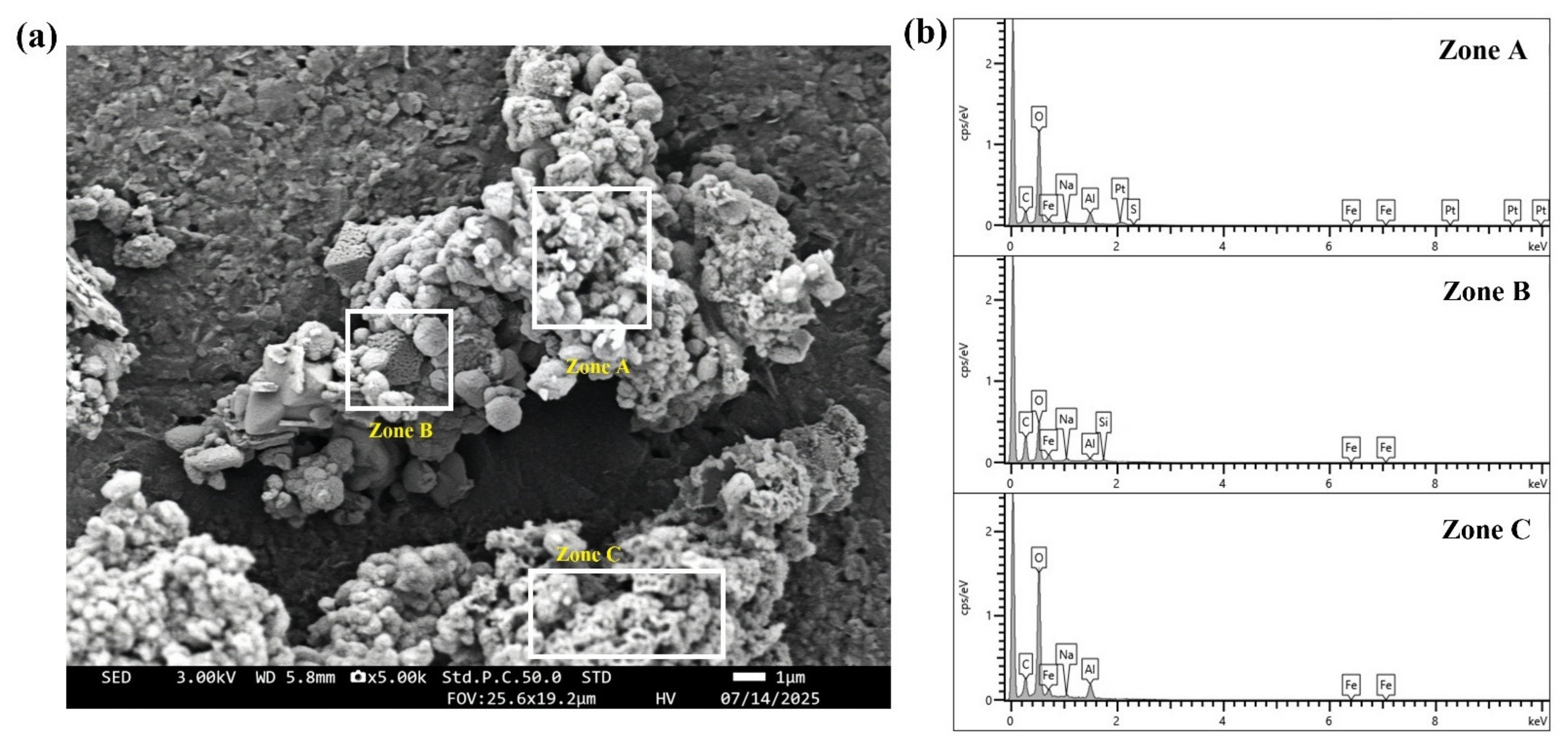
As shown in the SEM image in Figure 7a, the precipitate exhibits a stalactite-like morphology, with the presence of irregular blocks and flakes. Figure 7b and Table 1 indicate that the precipitate is composed of C, O, Al, Fe, Na, and Si elements. The presence of Al is attributed to the hydrolysis of the sodium aluminate solution during aeration. The Na content is relatively low, Si is associated with the impurities introduced from pyrite, and the Fe content is notably high while the C content is positively correlated with Fe also at a high level.
Figure 7. SEM-EDS image of the iron removal product: (a) SEM image; (b) EDS elemental analysis image.
Table 1. Analysis of elemental content in iron removal products using SEM-EDS.
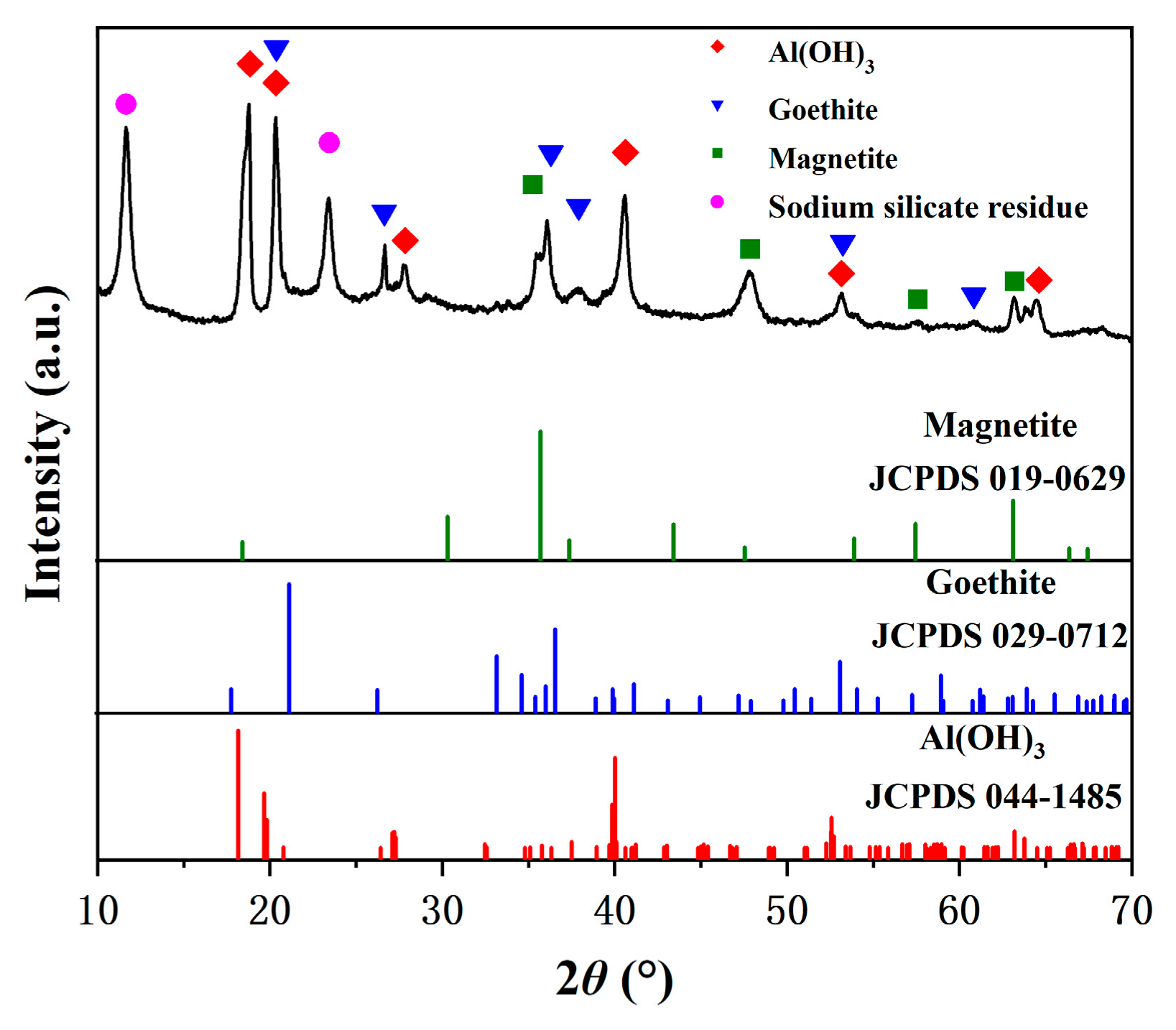
The XRD pattern in Figure 8 reveals that the iron phases in the oxidation precipitate primarily exhibit diffraction characteristics of goethite, along with a minor amount of magnetite. Characteristic peaks of aluminum hydroxide are clearly observed in the precipitate, which were precipitated due to the hydrolysis of sodium aluminate solution during the atmospheric pressure oxygen oxidation experiments. This phenomenon is attributed to the introduction of oxygen at a temperature lower than that of the solution (95 °C), which induces localized cooling and consequently triggers hydrolysis. Although this side reaction does not adversely affect the quality of the final product, it can be effectively mitigated by preheating the oxygen stream to 95 °C. This is achieved by extending the oxygen supply line through a heated water bath, thereby minimizing thermal gradients within the reactor. The presence of sodium silicate residue (xNa2O∙ySiO2∙nH2O) is attributed to the reaction between silicon impurities from pyrite and sodium oxide in the solution.
Figure 8. XRD pattern of iron removal product.
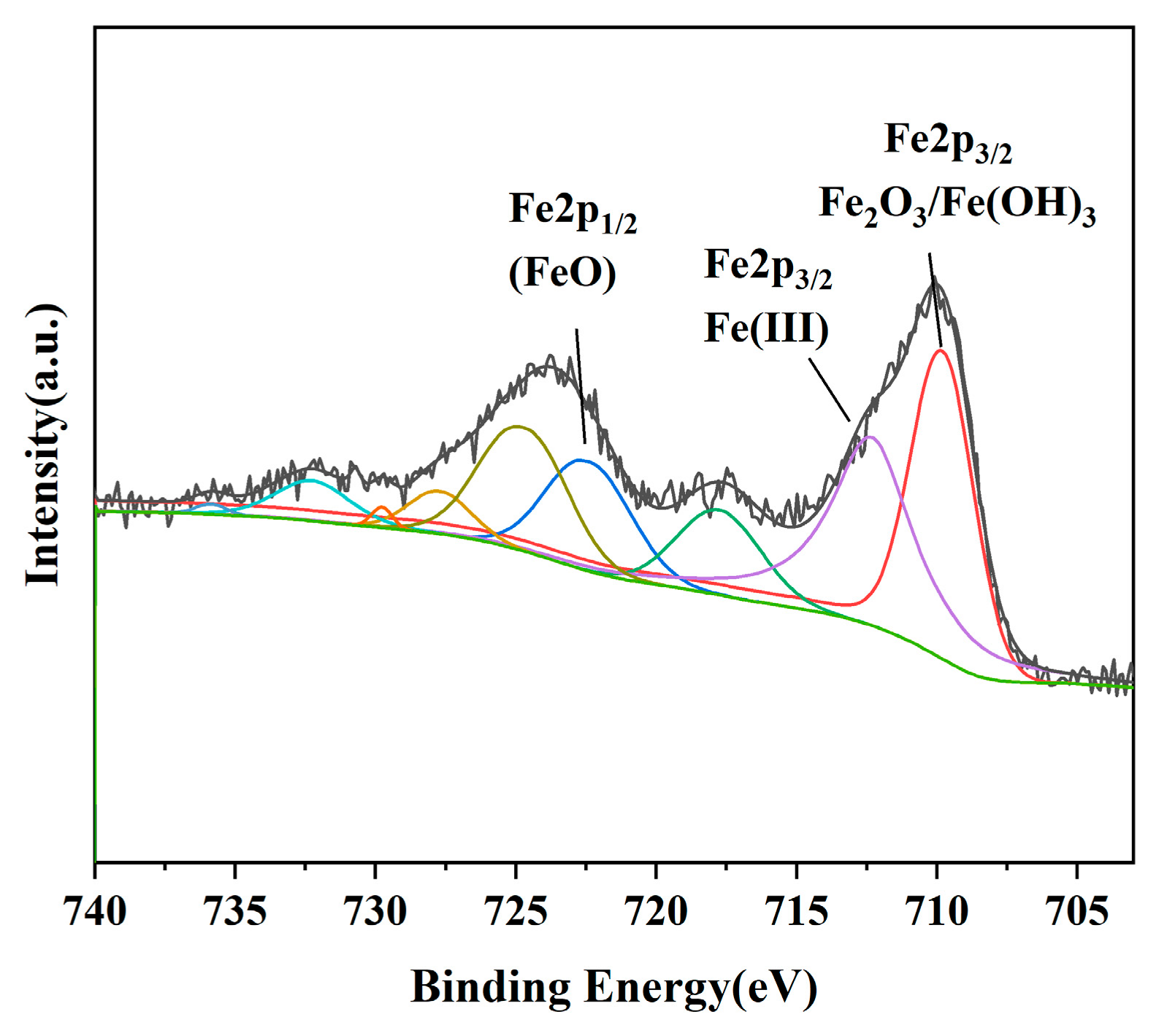
Figure 9 presents the X-ray photoelectron spectroscopy (XPS) analysis conducted to more precisely characterize the valence states of iron in the precipitate. The peaks observed at 709.9 eV and 712.5 eV correspond to Fe2O3 or Fe(OH)3, while the peak at 722.3 eV is attributed to Fe(II).
Figure 9. XPS analysis of Fe element in oxidized iron precipitation.
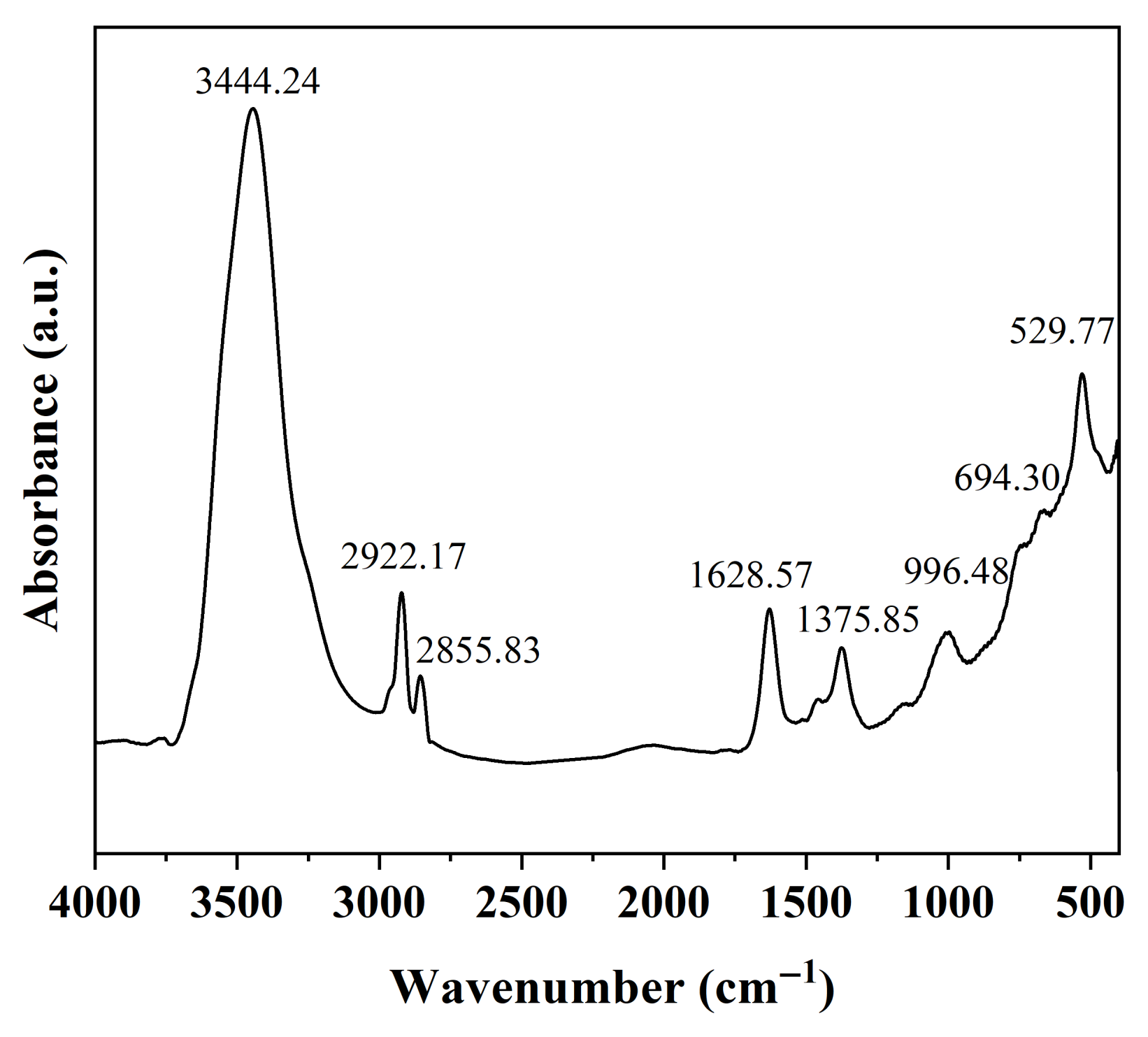
Figure 10 presents the FTIR analysis, which further clarifies the composition of the oxidation precipitate for iron removal. The absorption peaks at 3452.06 cm−1, 1630.42 cm−1, and 1375.85 cm−1 correspond to O-H stretching vibrations and H-O-H bending vibrations, indicating the presence of hydroxyl groups bonded to Fe and Al (Fe-OH, Al-OH) or adsorbed water O-H [11,23]. The doublet absorption at 694.30 cm−1 and the absorption peak at 529.77 cm−1 are attributed to γ-Fe2O3 and α-Fe2O3, respectively [24]. The characteristic peaks of methylene groups at 2922.17 cm−1 and 2855.83 cm−1 suggest the presence of organic carbon in the precipitate [25], likely due to organics incorporated during crystallization, which is consistent with the carbon detected in the EDS elemental analysis, and indicating a significant positive correlation between carbon and iron content. The peak at 996.48 cm−1 corresponds to Si-O-Al stretching vibration, resulting from the formation of aluminosilicate compounds [26].
Figure 10. FTIR analysis of oxidized iron precipitation.

3.4. Mechanism Analysis

In summary, on the one hand, during the Bayer digestion process, organic compounds significantly enhance the dissolution of pyrite, leading to increased concentrations of sulfur and iron in both the pregnant liquor and the diluted solution. On the other hand, aerating the diluted solution with oxygen at 95 °C effectively reduces the iron and S2− content, with the iron in the removal precipitate primarily existing in Fe3+ form, and organic compounds was precipitated with iron. The mass balance of Fe/C/S during dissolution and oxidation processes is shown in Tables S1–S3. The mechanisms underlying these two aspects are discussed below.

3.4.1. Mechanism of Organic Compounds’ Influence on Iron Content in Sulfur-Containing Sodium Aluminate Solutions

During the high-pressure digestion process, pyrite reacts with sodium hydroxide solution, forming iron (II) hydroxide or iron (III) hydroxide, along with sulfur compounds, as shown in the following equation [3]:
FeS2 + 4OH = Fe (OH)2 + 7/4S2− + 1/4SO42− + H2O
FeS2 + 4OH = Fe (OH)3 + 15/8S2− + 1/8SO42− + 1/2H2O
The formation of a hydrophilic film of Fe(OH)2 or Fe(OH)3 on the surface of pyrite inhibits further reaction with the alkaline solution, which is consistent with the electrochemical principle underlying the depression of sulfide mineral flotation in alkaline media [27]. Organic compounds, which often contain active functional groups such as carboxyl, phenolic hydroxyl, carbonyl, alcoholic hydroxyl, and amino groups, can form soluble complexes with Fe2+ and Fe3+ dissociated from Fe(OH)2 and Fe(OH)3 [28,29]. This process disrupts the hydrophilic film on the pyrite surface, thereby allowing for continued reaction with the alkaline solution. In their study on the activation mechanism of pyrite depressed by lime, Hu et al. [30] employed oxalic acid as an activator, demonstrating the complexation reaction between iron and carboxyl groups in alkaline solutions. The reaction process can be expressed by Equations (3) and (4), where R represents various alkyl, alkane, alkyne, or aromatic groups:
2R-COOH + Fe2+ = Fe(R-COO)2 + 2H+
3R-COOH + Fe3+ = Fe(R-COO)3 + 3H+
Therefore, the presence of organic compounds accelerates the dissolution of pyrite during the Bayer digestion process. Within a 1 h reaction period, the concentrations of S2− and iron ions in the solution increase rapidly with the increasing addition of fulvic acid.
During the Bayer settling and separation stage, the digested liquor undergoes a cooling and dilution process, in which the temperature of the sodium aluminate solution decreases from 270 °C to 100 °C, and the Na2OK concentration drops from 230 g/L to 170 g/L. As a result, part of the dissolved sodium hydroxythioferrate (Na2[FeS2(OH)2]·2H2O) precipitates due to reduced solubility, forming a dark green precipitate of NaFeS2·2H2O. However, under the temperature and time constraints typical of actual production, some iron–sulfur complexes remain difficult to precipitate. When the organic content in the solution is high, the iron concentration increases accordingly.

3.4.2. Mechanism of Iron Removal via Oxygen Aeration in Diluted Solutions

Following the Bayer settling and separation process, the iron content in the diluted solution increases due to the influence of impurities such as organic compounds. During subsequent seed precipitation, these dissolved iron species precipitate under further cooling and oxidation by air (lifting air), contaminating the final product. Therefore, deep purification to remove dissolved iron must be performed during the settling and separation stage.
In the Bayer process, the sodium aluminate solution during settling and separation is maintained at approximately 100 °C with a pH greater than 14. Under reducing conditions facilitated by lower-valence sulfur species and organic impurities, the solution potential ranges between −0.8 V and −0.85 V (vs. SHE), providing a highly reducing environment favorable for the persistence of ferrous iron and reduced sulfur species. Chemical analysis indicates that iron exists primarily as Fe2+ compounds or complexes, with limited presence of Fe3+ species, consistent with the results of previous reports [3]. Specific iron forms include sodium hydroxythioferrate (Na2[FeS2(OH)2]·2H2O) associated with sulfur; organic complexes predominantly coordinated with Fe2+; hydroxy complexes such as Fe(OH)3 and Fe(OH)42−; and trace amounts of Fe(OH)4.
In the highly alkaline sodium aluminate solution at 100 °C, both Fe3+ and Fe2+ ions readily form precipitates with OH, while Fe2+ also tends to precipitate with reduced sulfur ions as iron–sulfur compounds. The possible reactions are given in (a)–(d). The Gibbs free energy changes (ΔG373) for each reaction are calculated based on the standard molar Gibbs free energies at 100 °C (373 K) for species involved in these reactions [31].
   Fe2+ + 2OH = Fe(OH)2      ΔG373(a)= −119.343 kJ·mol−1
   Fe3+ + 3OH = Fe(OH)3      ΔG373(b)= −257.396 kJ·mol−1
   Fe2+ + S2− = FeS          ΔG373(c)= −123.669 kJ·mol−1
   Fe2+ + S22− = FeS2          ΔG373(d)= −172.667 kJ·mol−1
According to the Gibbs free energy of the above reaction, the ion products of four iron compounds were calculated using Equation (10), as shown in Table 2 for [32].
lgKsp = ∆G0/2.303RT
Table 2. Solubility products of four iron compounds at a temperature of 373 K.
The solubility product constants of the four iron compounds indicate that the solubility of Fe(OH)3 in sodium aluminate solution is significantly lower than that of the other three Fe2+ hydroxides and sulfides. This finding is consistent with the experimental results, wherein Fe3+ oxides dominate in the oxidation precipitate, with no iron sulfides detected.
Based on the experimental and analytical results above, it can be inferred that oxygen aeration in the solution at 100 °C primarily facilitates the following reactions:
Na2[FeS2(OH)2]·2H2O + 7/4O2 = Fe(OH)3 + Na2S2O3 + 3/2H2O
Fe(OH)3 + 1/4O2 + 1/2H2O = Fe(OH)3 + OH
Fe(OH)4 2− + 1/4O2 + 1/2H2O = Fe(OH)3 + 2OH
2S2− + O2 + H2O = S2O32− + 2OH
Fe2+ complexed with organic compounds is oxidized to Fe3+ and subsequently forms Fe(OH)3 precipitate, which was synergistically removed with organic compounds.

4. Conclusions

The influence of organic compounds on the iron concentration in sulfur-containing sodium aluminate solutions was investigated, and oxygen-assisted iron removal experiments were conducted on diluted solutions. The main conclusions are as follows:
  • Under the high-temperature and highly alkaline digestion conditions of the Bayer process, fulvic acid and its transformed organic derivatives accelerate the dissolution of pyrite by complexing with iron ions, thereby disrupting the hydrophilic iron hydroxide (or ferrous hydroxide) film formed on the pyrite surface. This leads to a sharp increase in the iron concentration in the digested liquor. The iron content in the digestion solution increased by 1.6 times (from 0.08 to 0.208 g/L) when the amount of humic acid added increased from 0 to 10 g/L.
  • After the cooling and dilution of the digested liquor (from 270 to 100 °C), the iron concentration in the diluted solution exhibited a positive correlation with the organic compounds content. Furthermore, the iron concentration in the diluted solution increased from 0.052 to 0.085 g/L when the content of humic acid added increased from 0 to 10 g/L. Complexation between iron ions and organic compounds increases the equilibrium iron concentration in the solution, with the majority (approximately 90%) of iron present being in Fe2+ form.
  • The iron removal precipitate obtained via oxygen aeration contains a high amount of iron, predominantly in the Fe3+ form, with no coprecipitated iron–sulfur phases detected. Oxygen aeration oxidizes Fe2+ to Fe3+, which is less soluble under alkaline conditions, thereby reducing its equilibrium concentration in the solution. In the presence of organic compounds, iron showed a synergistic removal with organic compounds under oxidative conditions, demonstrating that atmospheric oxygen aeration is a promising method to use for the removal of iron and organic compounds in sodium aluminate solutions containing organic compounds, sulfur, and iron.

Supplementary Materials

The following supporting information can be downloaded at: https://www.mdpi.com/article/10.3390/met15111206/s1, Table S1: Mass balance of Fe (calculated as Fe2O3); Table S2: Mass balance of C (organic carbon); Table S3: Mass balance of sulfur during oxidation.

Author Contributions

Conceptualization, Q.H.; Methodology, Q.H.; Software, J.H.; Formal analysis, J.H.; Investigation, D.F.; Resources, Q.H.; Data curation, N.X.; Writing—original draft, J.H.; Writing—review and editing, D.F. and Q.H.; Visualization, Q.H.; Supervision, Q.H.; Project administration, Q.H.; Funding acquisition, Q.H. All authors have read and agreed to the published version of the manuscript.

Funding

This work was supported by the Key Research Projects of Fujian Province [grant number 2023HZ021005]; the Fundamental Research Funds for the Central Universities [grant number N2125031]; the Natural Science Foundation of Yunnan Province [grant number 202101AS070029]; the Shenyang Scientific Plan Project [grant number 21-109-3-06]; and the Science and Technology Research Project of Sanmenxia City [grant number 2022002001].

Data Availability Statement

The original contributions presented in this study are included in the article/Supplementary Materials. Further inquiries can be directed to the corresponding authors.

Conflicts of Interest

Author Na Xu was employed by Kunming Metallurgical Research Institute. The remaining authors declare that the research was conducted in the absence of any commercial or financial relationships that could be construed as a potential conflict of interest.

References

  1. U.S. Geological Survey. Summary of Mineral Commodities of the United States Geological Survey; U.S. Geological Survey: Reston, VA, USA, 2025. [Google Scholar]
  2. Li, X.B.; Li, C.Y.; Qi, T.G.; Zhou, Q.S.; Liu, G.H.; Peng, Z.H. Reaction behavior of pyrite during Bayer digestion at high temperature. Chin. J. Nonferrous Met. 2013, 23, 829–835. [Google Scholar]
  3. Zhou, X.-J.; Tan, F.; Chen, Y.-L.; YIN, J.-G.; Xia, W.-T.; Huang, Q.-Y.; Gao, X.-D. Thermodynamic analysis of Na−S−Fe−H2O system for Bayer process. Trans. Nonferrous Met. Soc. China 2022, 32, 2046–2060. [Google Scholar] [CrossRef]
  4. Xie, Q.; Chen, W.; Yang, Q. Corrosion behavior of four kinds of steels in sulfide-containing Bayer liquor. J. Cent. South Univ. (Sci. Technol.) 2014, 45, 2559–2565. [Google Scholar]
  5. Fu, H.; Chen, C.Y.; Li, J.Q.; Lan, Y.P.; Zhang, X.Q.; Yuan, J.J. Effect of Time on the Corrosion of Q345 Steel in Thiosulfate Sodium Aluminate Solution. Surf. Technol. 2018, 47, 166–172. [Google Scholar]
  6. Quan, B.; Li, J.; Chen, C. Effects of Sodium Thiosulfate on Corrosion Dynamics of Q235 Steel in Alkaline Environment. Corros. Prot. 2018, 39, 103–106. [Google Scholar]
  7. Liu, G.-H.; Gao, J.-L.; Li, X.-B.; Xu, S. Study on variation rule of iron in the aluminate solution after digestion process at high temperature by Bayer process. Min. Metall. Eng. 2007, 27, 38–40. [Google Scholar]
  8. Niu, F.; Li, X.; Zhou, Q.; Qi, T.; Liu, G.; Peng, Z. Variation of mass concentration of iron in sulfur sodium aluminate solution. J. Cent. South Univ. (Sci. Technol.) 2015, 46, 4398–4403. [Google Scholar]
  9. Chen, W.-M.; Chen, X.-G.; Guo, J.-Q.; Huang, W.-G.; Hu, X.-L. Research on the behavior of iron in bayer liquor. Light Met. 2008, 4, 14–18. [Google Scholar]
  10. Zhou, X.; Yin, J.; Chen, Y.; Xia, W.; Xiang, X.; Yuan, X. Simultaneous removal of sulfur and iron by the seed precipitation of digestion solution for high-sulfur bauxite. Hydrometallurgy 2018, 181, 7–15. [Google Scholar] [CrossRef]
  11. Li, X.-B.; Li, C.-Y.; Peng, Z.-H.; Liu, G.-H.; Zhou, Q.-S.; Qi, T.-G. Interaction of sulfur with iron compounds in sodium aluminate solutions. Trans. Nonferrous Met. Soc. China 2015, 25, 608–614. [Google Scholar] [CrossRef]
  12. Peng, X.; Jin, L.-Y. Development and application of bauxite containing high sulfur. Light Met. 2010, 11, 14–17. [Google Scholar]
  13. He, Q. Research of iron content of sulfur-rich bauxite in Bayer process after heat-exchange and filtration of green and pregnant liquors. Light Met. 2010, 8, 12–16. [Google Scholar]
  14. Cheng, G.; Li, Y.-L.; Zhang, M.-N. Research progress on desulfurization technology of high-sulfur bauxite. Trans. Nonferrous Met. Soc. China 2022, 32, 3374–3387. [Google Scholar] [CrossRef]
  15. Liu, Z.-W.; Li, W.-X.; Ma, W.-H.; Yin, Z.-L.; Wu, G.-B. Comparison of deep desulfurization methods in alumina production process. J. Cent. South Univ. 2015, 22, 3745–3750. [Google Scholar] [CrossRef]
  16. Power, G.; Loh, J.S.C.; Niemelä, K. Organic compounds in the processing of lateritic bauxites to alumina: Addendum to Part 1: Origins and chemistry of organics in the Bayer process. Hydrometallurgy 2011, 108, 149–151. [Google Scholar] [CrossRef]
  17. Tardio, J.; Bhargava, S.; Prasad, J.; Akolekar, D.B. Catalytic wet oxidation of the sodium salts of citric, lactic, malic and tartaric acids in highly alkaline, high ionic strength solution. Top. Catal. 2005, 33, 193–199. [Google Scholar] [CrossRef]
  18. Cai, C.; Li, J.; Jin, H.; Mao, X.; Zhou, W. Morphology Change of Organics in Humic Acid During High Pressure Dissolution of Sodium Aluminate Solution. Hydrometall. China 2016, 35, 239–243. [Google Scholar]
  19. Chen, Y.; Zhou, X.; Tan, F.; Liu, Y.; Chang, L. Preparation and characterisation of seed for simultaneous removal of sulphur and iron from sodium aluminate solution. Can. Metall. Q. 2023, 62, 560–572. [Google Scholar] [CrossRef]
  20. Liu, R.; Hou, H.; Lin, Y.; Yan, W.; Hu, X.; Zi, F. Study on the efficient removal of trace iron from sodium aluminate solution by the heterogeneous nucleation method. Chem. Eng. Sci. 2025, 316, 121993. [Google Scholar] [CrossRef]
  21. Zeng, Z.-H.; Liu, G.-H.; Qi, T.-G.; Zhou, Q.-S.; Peng, Z.-H.; Shen, L.-T.; Wang, Y.-L.; Li, X.-B.; Zhang, Y.-M. Directional transformation of pyrite in sodium aluminate solution for desulfurization and the reduction of red mud based on electrochemical mechanism. Electrochim. Acta 2025, 522, 145926. [Google Scholar] [CrossRef]
  22. Li, M.-N.; Liu, Z.-W.; Yan, H.-W.; Wei, J.; Liu, S. Removal of organic compounds from Bayer liquor by oxidation with sodium nitrate. Hydrometallurgy 2023, 215, 105972. [Google Scholar] [CrossRef]
  23. Nistor, M.-A.; Muntean, S.G.; Ianoș, R.; Racoviceanu, R.; Ianași, C.; Cseh, L. Adsorption of Anionic Dyes from Wastewater onto Magnetic Nanocomposite Powders Synthesized by Combustion Method. Appl. Sci. 2021, 11, 9236. [Google Scholar] [CrossRef]
  24. Martín, R.; Guadalupe, H.; Ramiro, E.; Francisco, P.; Iván, A.; Mizraim, F.; Elia, G.; Julio, J.; Francisco, B. Surface Spectroscopy of Pyrite Obtained during Grinding and Its Magnetisation. Minerals 2022, 12, 1444. [Google Scholar] [CrossRef]
  25. Feng, J.-H.; Wang, Y.-M.; Shen, S.-Y.; Myers, R. Wet carbonation and stabilities of Fe(II)-containing materials. Cem. Concr. Compos. 2025, 163, 106217. [Google Scholar] [CrossRef]
  26. Paola, C.; Margherita, S.; Laura, S.; Stefano, E. XRD, FTIR, and thermal analysis of bauxite ore-processing waste (red mud) exchanged with heavy metals. Clays Clay Miner. 2008, 56, 461–469. [Google Scholar] [CrossRef]
  27. Woods, R. Electrochemical potential controlling flotation. Miner. Eng. 2003, 2, 152–162. [Google Scholar] [CrossRef]
  28. Blazevic, A.; Orlowska, E.; Kandioller, W.; Jirsa, F.; Keppler, B.K.; Tafili-Kryeziu, M.; Linert, W.; Krachler, R.F.; Krachler, R.; Rompel, A. Photoreduction of terrigenous fe-humic substances leads to bioavailable iron in oceans. Angew. Chem. Int. Ed. 2016, 55, 6417–6422. [Google Scholar] [CrossRef] [PubMed]
  29. Orlowska, E.; Enyedy, É.A.; Pignitter, M.; Jirsa, F.; Krachler, R.; Kandioller, W.; Keppler, B.K. Β-o-4 type dilignol compounds and their iron complexes for modeling of iron binding to humic acids: Synthesis, characterization, electrochemical studies and algal growth experiments. New J. Chem. 2017, 41, 11546–11555. [Google Scholar] [CrossRef]
  30. Hu, Y.; Zhang, S.; Qiu, G.; Wang, D. The mechanism of activation flotation of Pyrite depressed by Lime. J. Cent. South Univ. Technol. 1995, 26, 176–180. [Google Scholar]
  31. Yang, X.-W.; He, G.-P. The Thermodynamic Handbook for Calculation at High Temperature in Solution; Metallurgical Industry Press: Beijing, China, 1985; pp. 412–414. [Google Scholar]
  32. Fu, C.-Y. Principles of Non-Ferrous Metals Metallurgy; Metallurgical Industry Press: Beijing, China, 1993; pp. 154–158. [Google Scholar]
Disclaimer/Publisher’s Note: The statements, opinions and data contained in all publications are solely those of the individual author(s) and contributor(s) and not of MDPI and/or the editor(s). MDPI and/or the editor(s) disclaim responsibility for any injury to people or property resulting from any ideas, methods, instructions or products referred to in the content.

Article Metrics

Citations

Article Access Statistics

Multiple requests from the same IP address are counted as one view.