Tensile Performance Sensitivity to Variations of Standard 17-4 PH Heat Treatments on LPBF-Produced Material



Abstract
1. Introduction
2. Materials and Methods
3. Results and Discussion
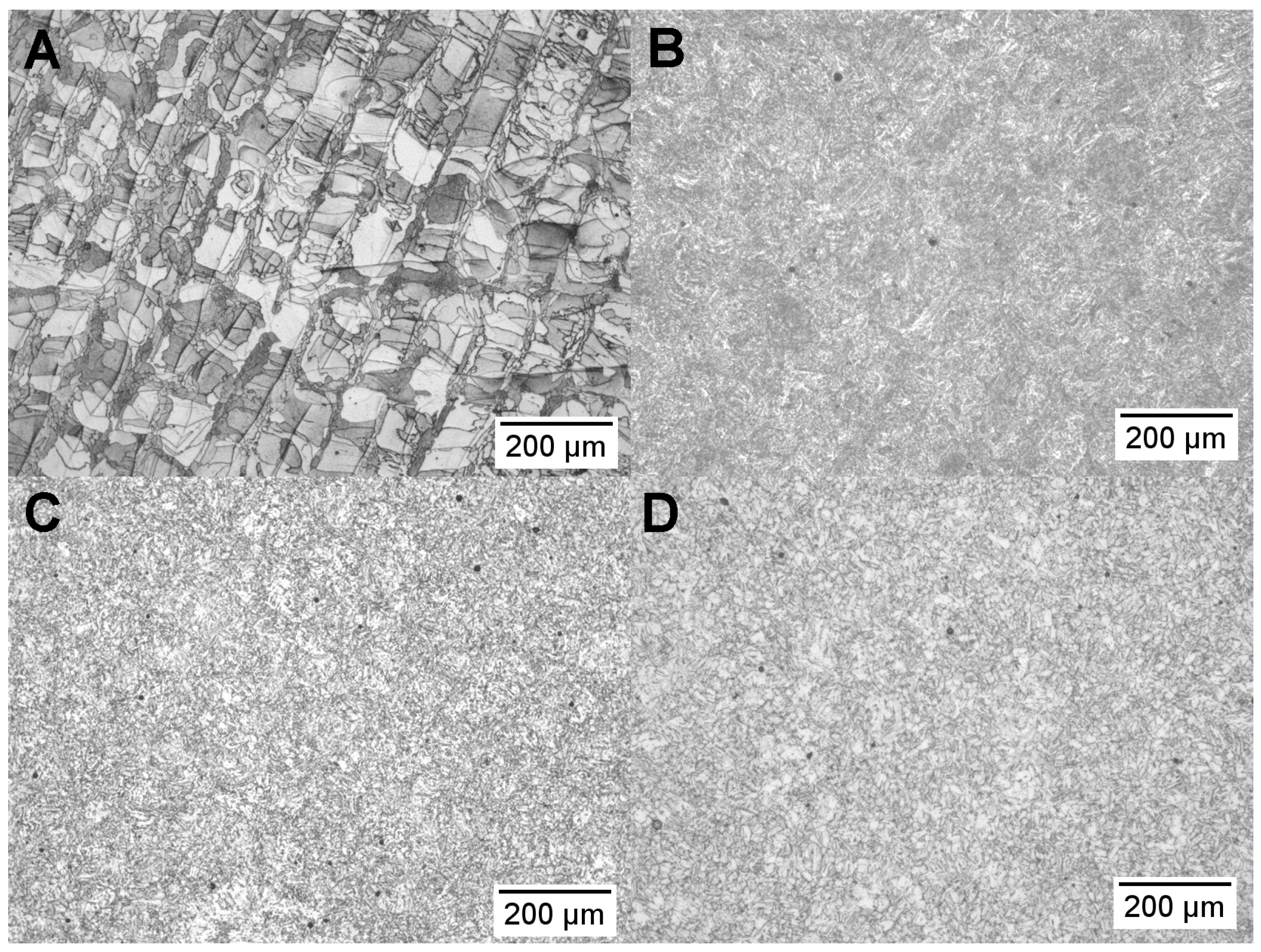
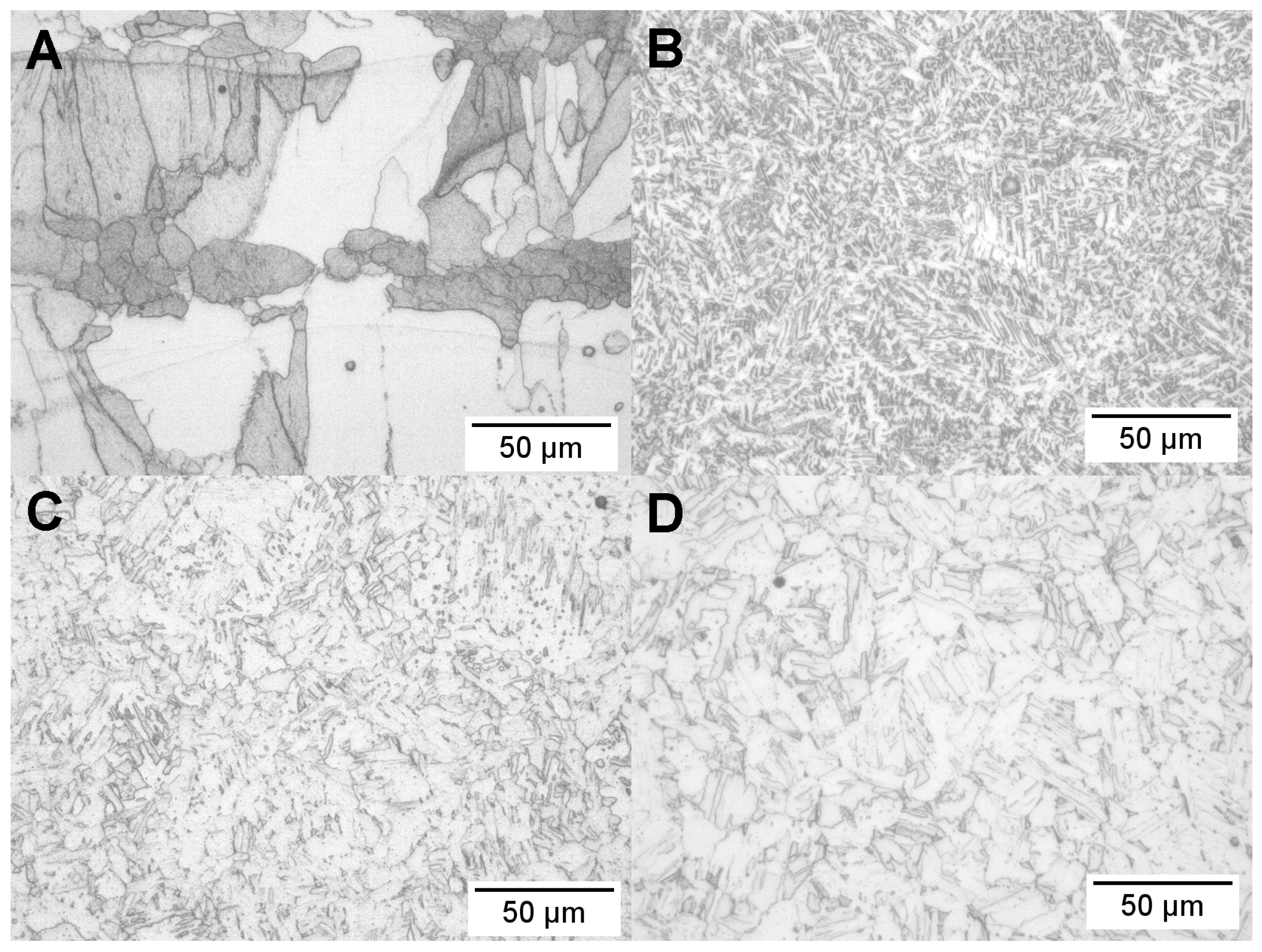
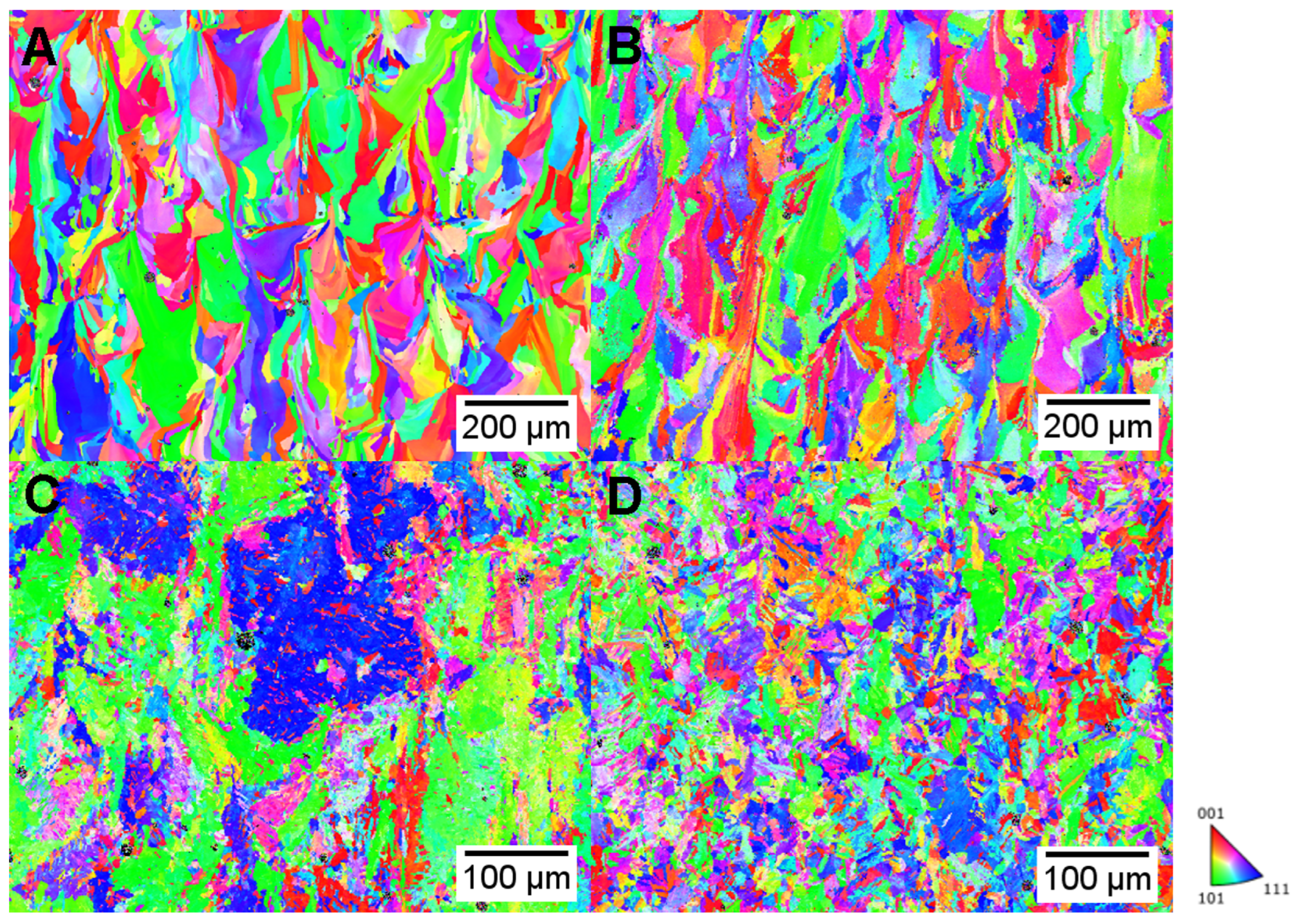
3.1. Microstructure by Optical Microscopy and EBSD
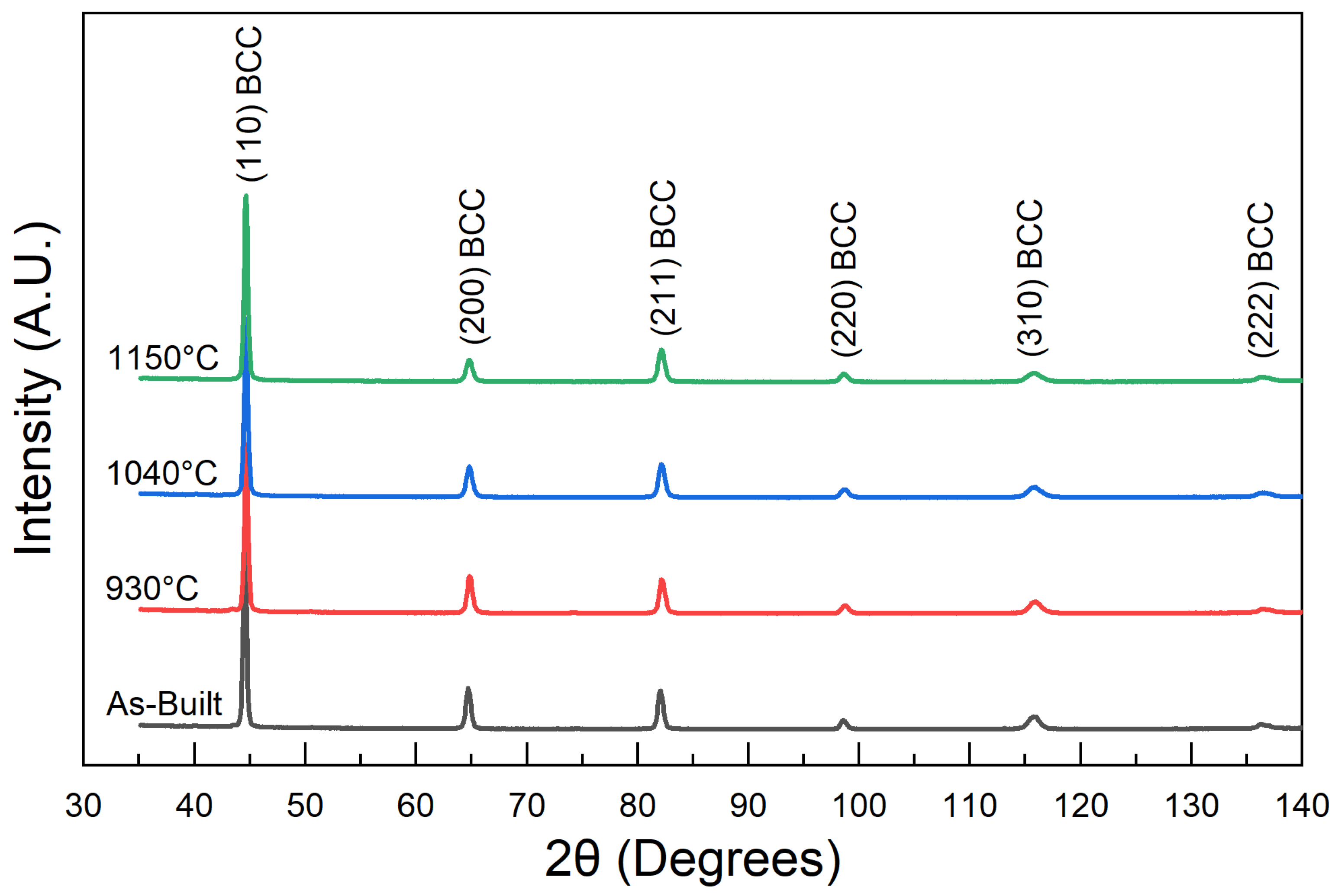
3.2. XRD Analysis
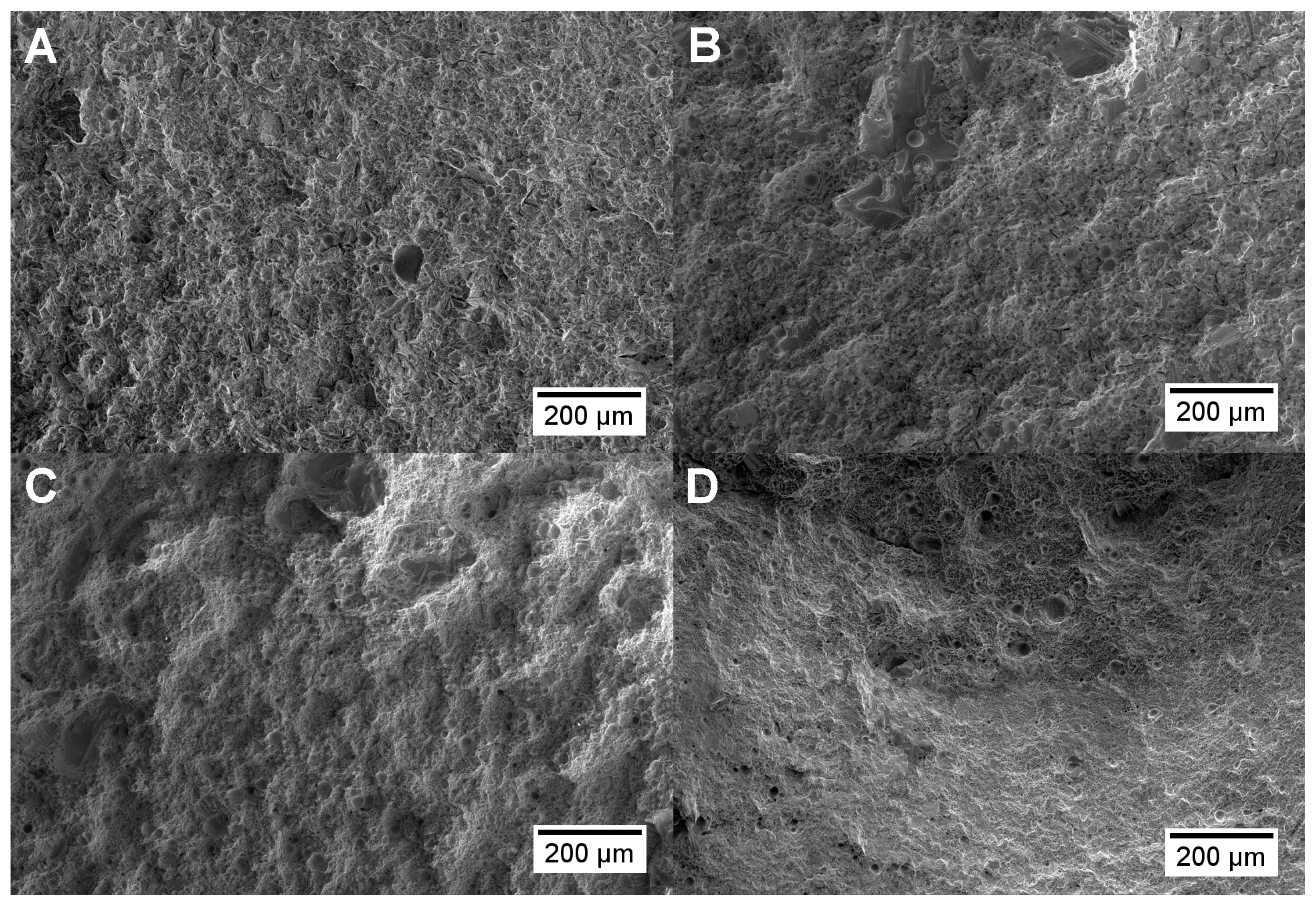
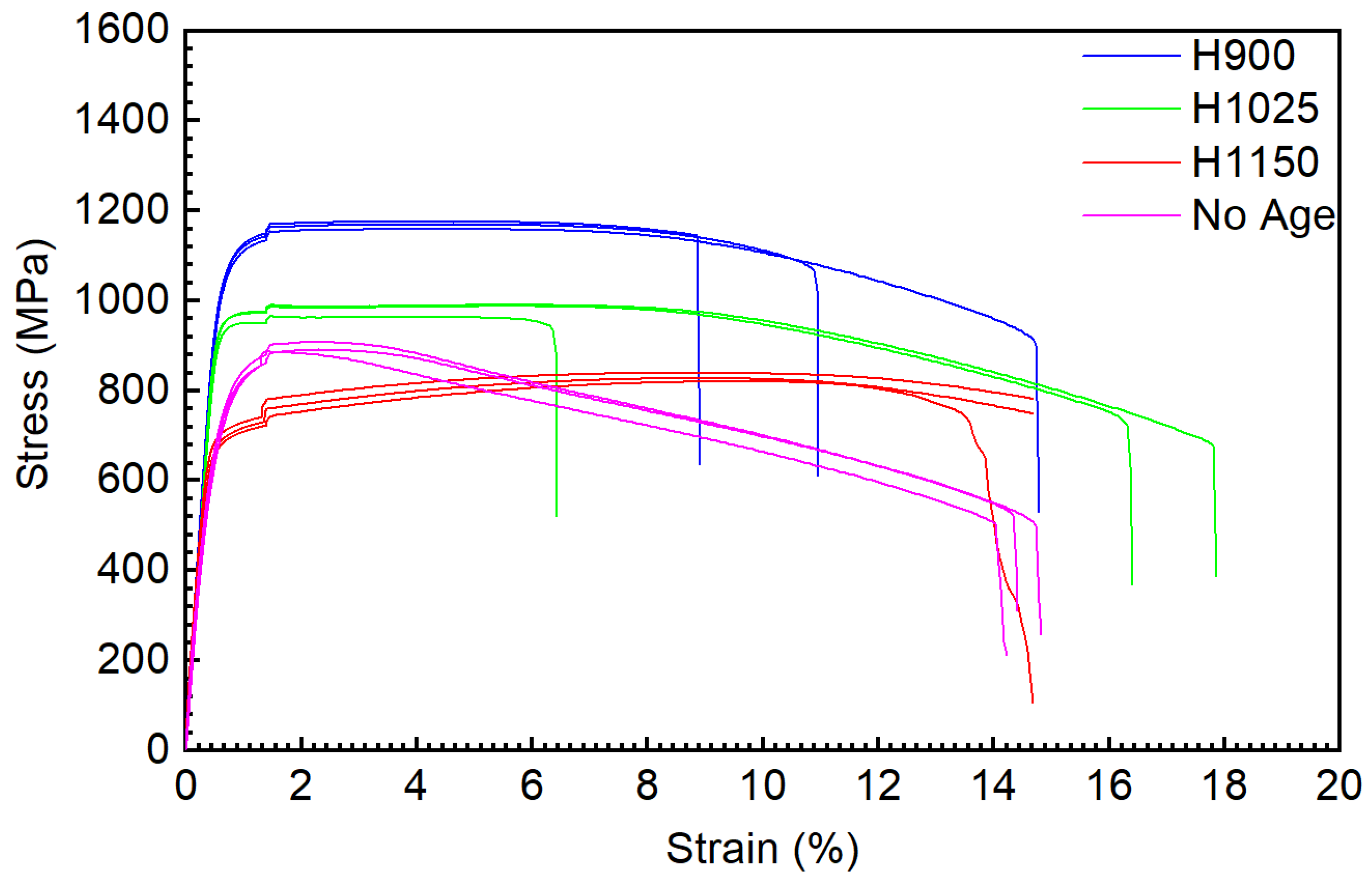
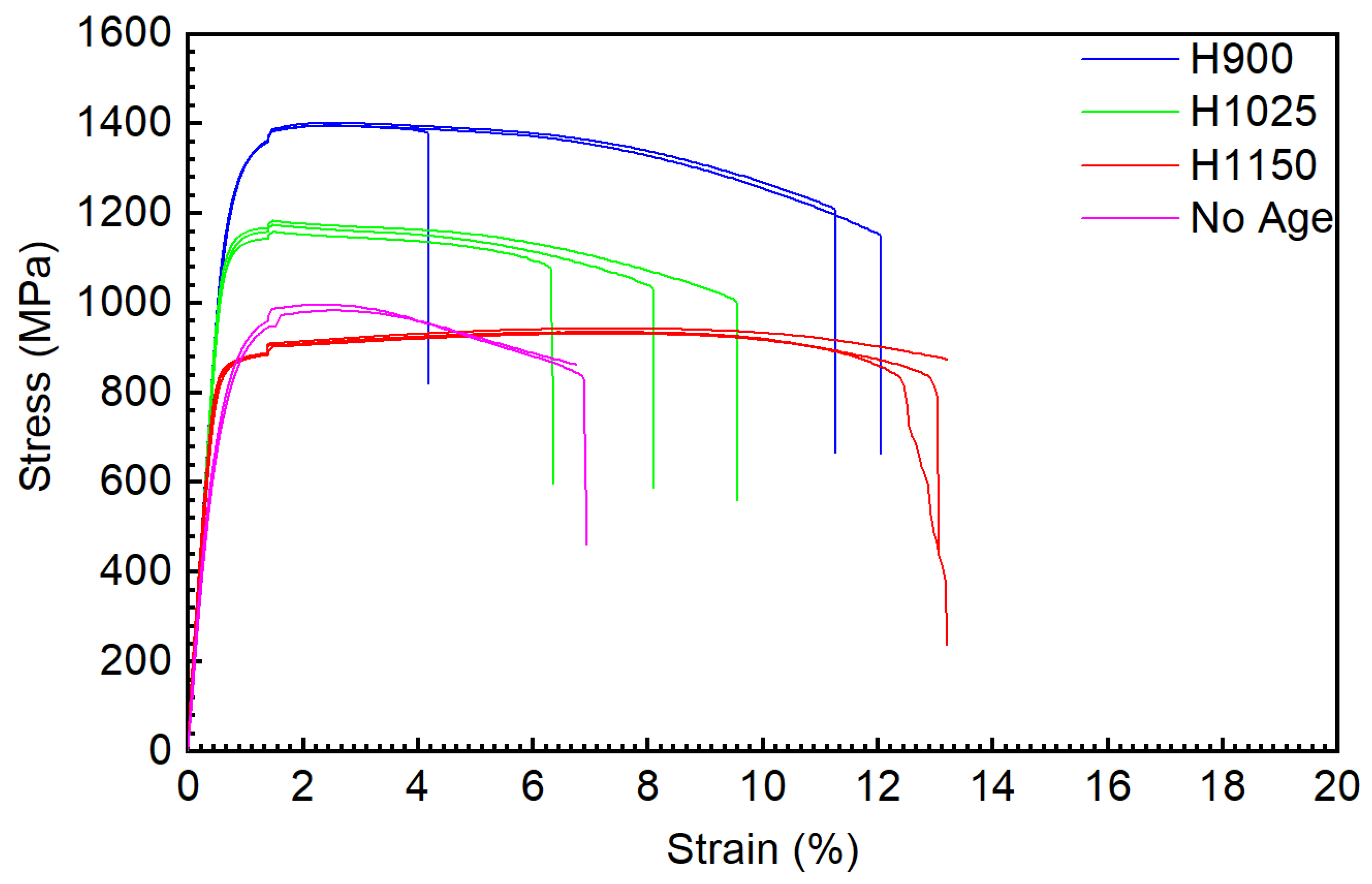
3.3. Mechanical Properties and Fracture Surfaces
4. Conclusions
- A Condition A-like (solution-annealed) microstructure is achievable by using either a 1040 °C or 1150 °C treatment on the as-built LPBF microstructure.
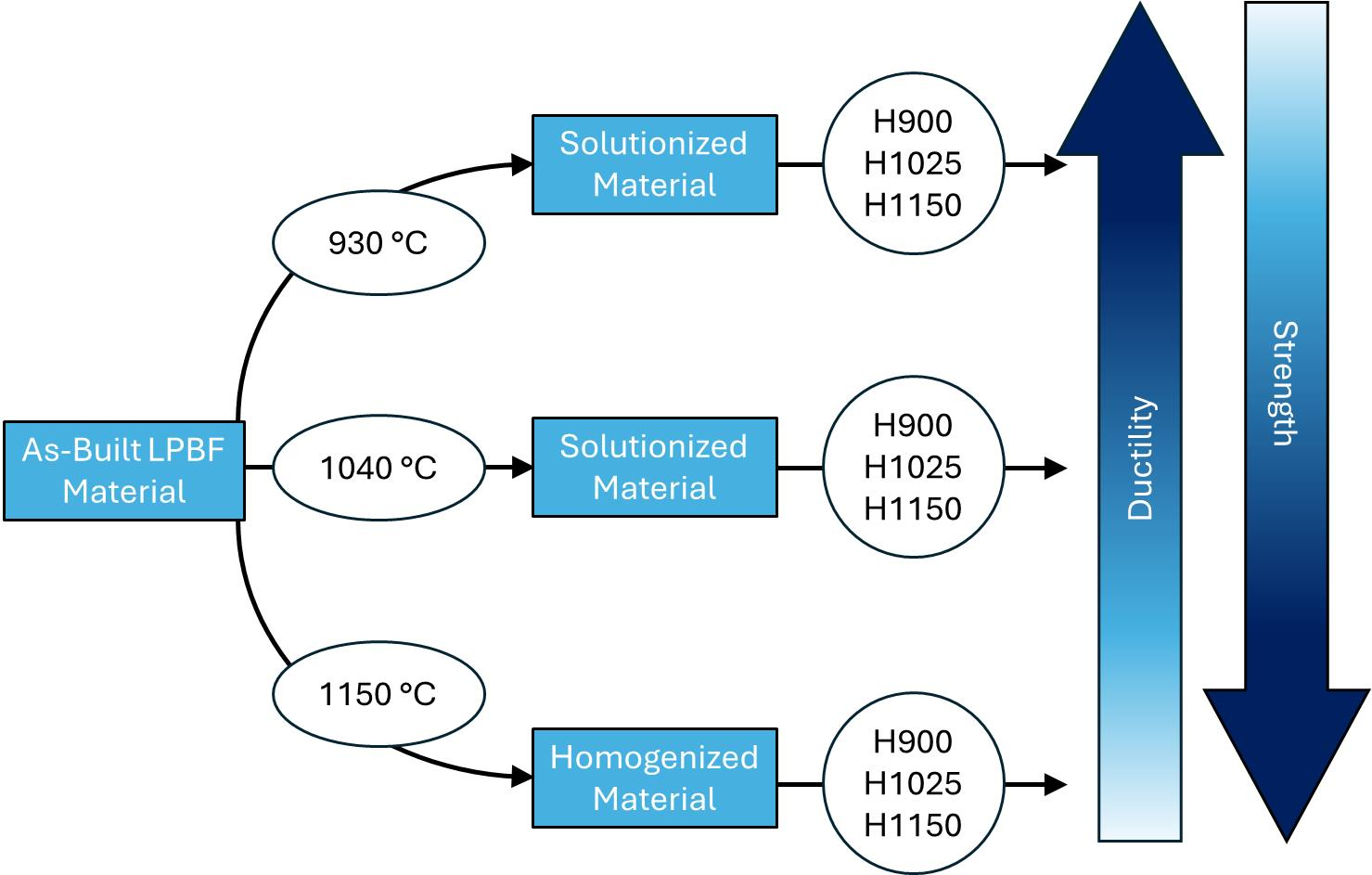
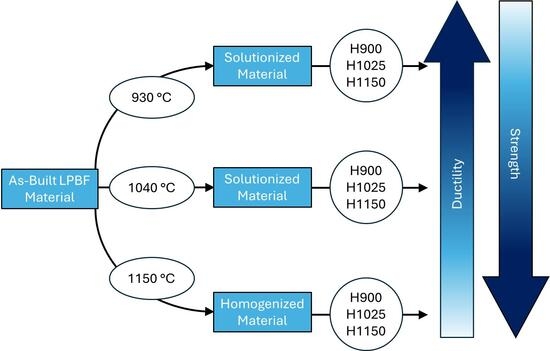
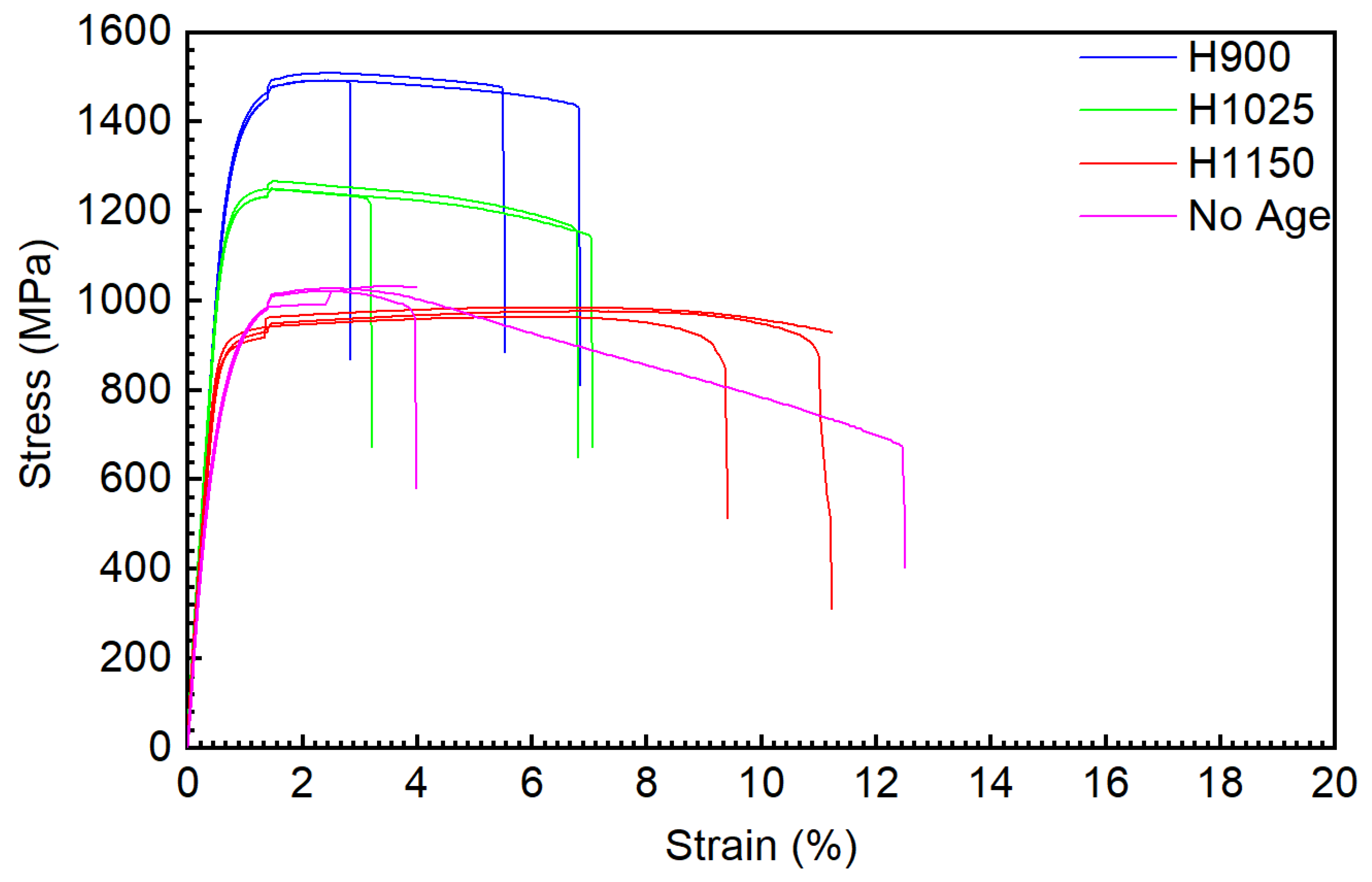
- For all evaluated starting conditions resulting from a 930 °C, 1040 °C, and 1150 °C treatment, the typical progression seen in wrought material for aging per ASTM A564 was demonstrated. Peak aging occurred at the H900 treatment with the highest strength, and the over-age treatments of H1025 and H1150 demonstrated reduced strength and increased ductility.
- The use of a 1150 °C homogenization treatment results in improved strengths over a 1040 °C solution-treated material at the cost of reduced ductility.
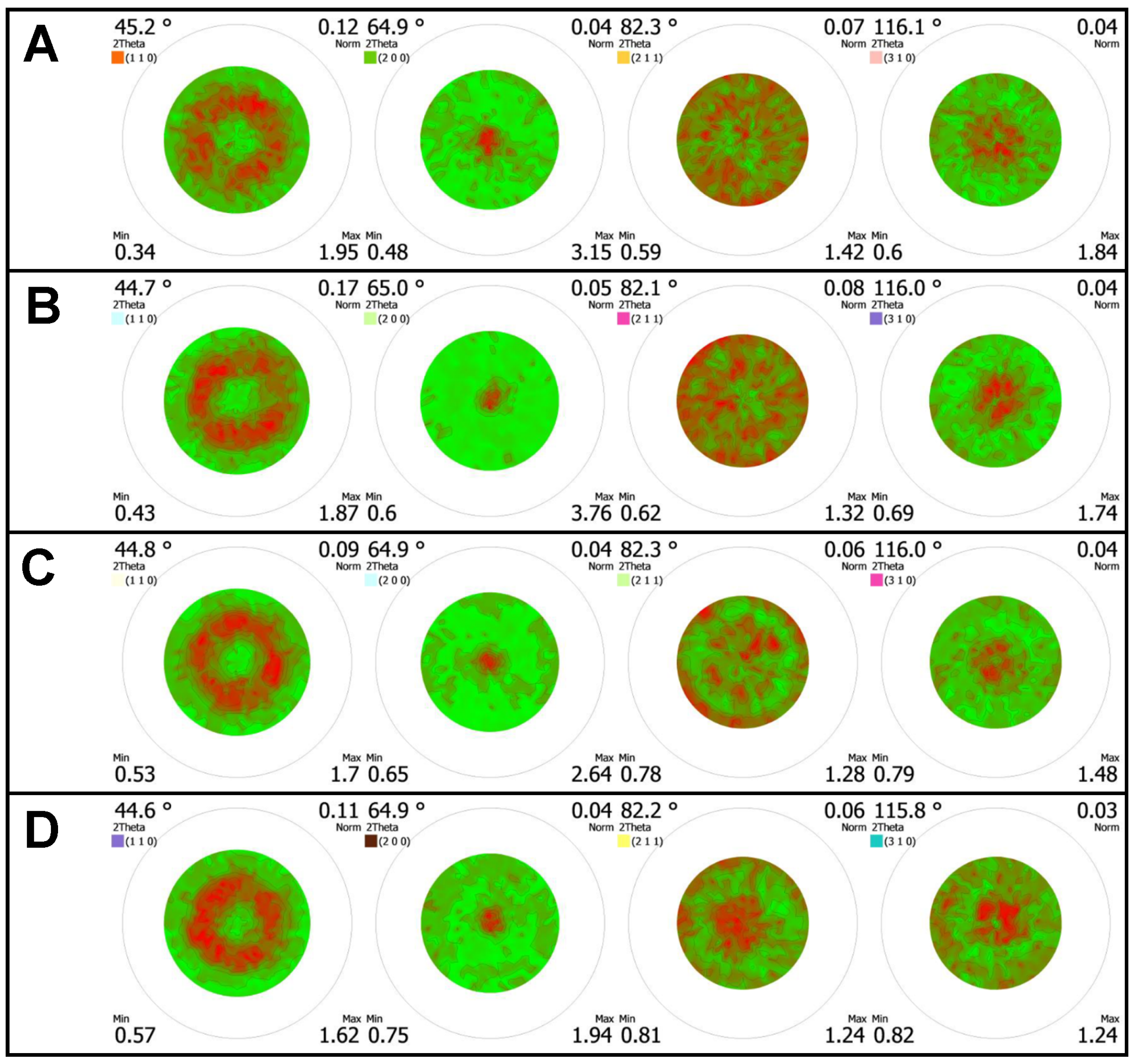
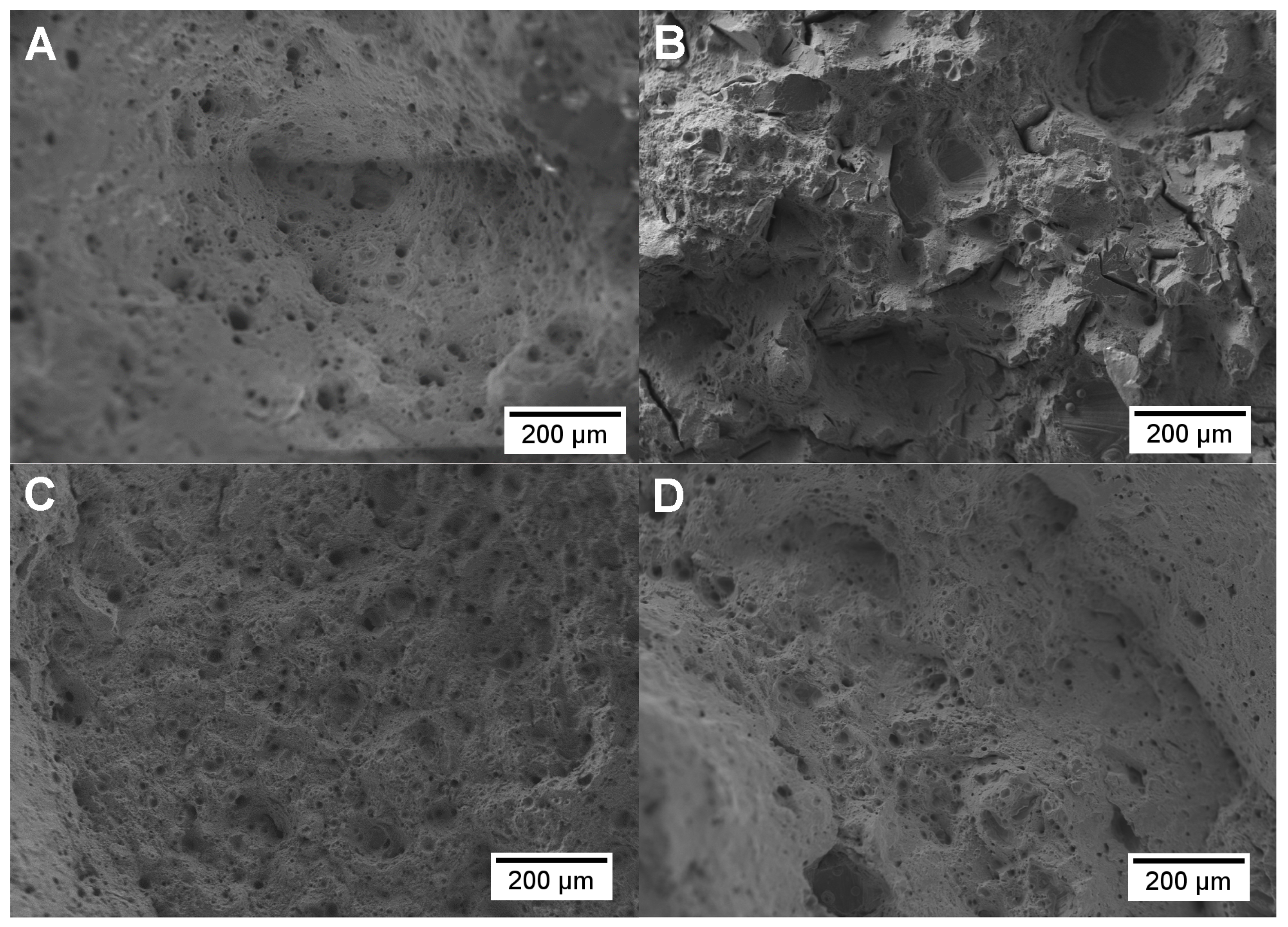
- Material treated at 930 °C exhibits a unique primary BCC microstructure with small amounts of retained austenite on the order of what was measured in the as-built material without typical martensitic features. This treatment results in a lowered overall strength, but demonstrates improved ductility.
Author Contributions
Funding
Data Availability Statement
Conflicts of Interest
References
- Gu, D.; Hagedorn, Y.C.; Meiners, W.; Meng, G.; Batista, R.J.S.; Wissenbach, K.; Poprawe, R. Densification behavior, microstructure evolution, and wear performance of selective laser melting processed commercially pure titanium. Acta Mater. 2012, 60, 3849–3860. [Google Scholar] [CrossRef]
- Sabzi, H.E.; Aboulkhair, N.T.; Liang, X.; Li, X.H.; Simonelli, M.; Fu, H.; Rivera-Diaz-del Castillo, P.E. Grain refinement in laser powder bed fusion: The influence of dynamic recrystallization and recovery. Mater. Des. 2020, 196, 109181. [Google Scholar] [CrossRef]
- Bertsch, K.; De Bellefon, G.M.; Kuehl, B.; Thoma, D. Origin of dislocation structures in an additively manufactured austenitic stainless steel 316L. Acta Mater. 2020, 199, 19–33. [Google Scholar] [CrossRef]
- Strantza, M.; Ganeriwala, R.; Clausen, B.; Phan, T.; Levine, L.; Pagan, D.; Ruff, J.; King, W.; Johnson, N.S.; Martinez, R.M.; et al. Effect of the scanning strategy on the formation of residual stresses in additively manufactured Ti-6Al-4V. Addit. Manuf. 2021, 45, 102003. [Google Scholar] [CrossRef]
- Singh, K.K.; Moridi, A. Metastability mediated grain size control in PH 17-4 stainless steel fabricated using Laser-Powder Bed Fusion (LPBF). Materialia 2023, 30, 101857. [Google Scholar] [CrossRef]
- A564/A564M-19; Standard Specification for Hot-Rolled and Cold-Finished Age-Hardening Stainless Steel Bars and Shapes. ASTM International: West Conshohocken, PA, USA, 2019. [CrossRef]
- Alnajjar, M.; Christien, F.; Wolski, K.; Bosch, C. Evidence of austenite by-passing in a stainless steel obtained from laser melting additive manufacturing. Addit. Manuf. 2019, 25, 187–195. [Google Scholar] [CrossRef]
- Vunnam, S.; Saboo, A.; Sudbrack, C.; Starr, T.L. Effect of powder chemical composition on the as-built microstructure of 17-4 PH stainless steel processed by selective laser melting. Addit. Manuf. 2019, 30, 100876. [Google Scholar] [CrossRef]
- Facchini, L.; Vicente Jr, N.; Lonardelli, I.; Magalini, E.; Robotti, P.; Molinari, A. Metastable austenite in 17–4 precipitation-hardening stainless steel produced by selective laser melting. Adv. Eng. Mater. 2010, 12, 184–188. [Google Scholar] [CrossRef]
- Murr, L.E.; Martinez, E.; Hernandez, J.; Collins, S.; Amato, K.N.; Gaytan, S.M.; Shindo, P.W. Microstructures and properties of 17-4 PH stainless steel fabricated by selective laser melting. J. Mater. Res. Technol. 2012, 1, 167–177. [Google Scholar] [CrossRef]
- Rafi, H.K.; Pal, D.; Patil, N.; Starr, T.L.; Stucker, B.E. Microstructure and mechanical behavior of 17-4 precipitation hardenable steel processed by selective laser melting. J. Mater. Eng. Perform. 2014, 23, 4421–4428. [Google Scholar] [CrossRef]
- Sabooni, S.; Chabok, A.; Feng, S.; Blaauw, H.; Pijper, T.; Yang, H.; Pei, Y. Laser powder bed fusion of 17–4 PH stainless steel: A comparative study on the effect of heat treatment on the microstructure evolution and mechanical properties. Addit. Manuf. 2021, 46, 102176. [Google Scholar] [CrossRef]
- Zhang, F.; Stoudt, M.R.; Hammadi, S.; Campbell, C.E.; Lass, E.A.; Williams, M.E. How austenitic is a martensitic steel produced by laser powder bed fusion? A cautionary tale. Metals 2021, 11, 1924. [Google Scholar] [CrossRef]
- Clausen, B.; Brown, D.W.; Carpenter, J.S.; Clarke, K.; Clarke, A.; Vogel, S.C.; Bernardin, J.D.; Spernjak, D.; Thompson, J.M. Deformation behavior of additively manufactured GP1 stainless steel. Mater. Sci. Eng. A 2017, 696, 331–340. [Google Scholar] [CrossRef]
- Moyle, M.; Haghdadi, N.; Theska, F.; Haines, M.; Liao, X.; Ringer, S.; Primig, S. Effect of compositional variations on the heat treatment response in 17-4 PH stainless steel fabricated by laser powder bed fusion. Mater. Charact. 2024, 209, 113768. [Google Scholar] [CrossRef]
- Meredith, S.; Zuback, J.; Keist, J.; Palmer, T. Impact of composition on the heat treatment response of additively manufactured 17–4 PH grade stainless steel. Mater. Sci. Eng. A 2018, 738, 44–56. [Google Scholar] [CrossRef]
- Lass, E.A.; Zhang, F.; Campbell, C.E. Nitrogen effects in additively manufactured martensitic stainless steels: Conventional thermal processing and comparison with wrought. Metall. Mater. Trans. A 2020, 51, 2318–2332. [Google Scholar] [CrossRef]
- Brown, B.; Newkirk, J.; Liou, F. Absorption of Nitrogen during Pulsed Wave L-PBF of 17-4 PH Steel. Materials 2021, 14, 560. [Google Scholar] [CrossRef]
- Cheruvathur, S.; Lass, E.A.; Campbell, C.E. Additive manufacturing of 17-4 PH stainless steel: Post-processing heat treatment to achieve uniform reproducible microstructure. JOM 2016, 68, 930–942. [Google Scholar] [CrossRef] [PubMed]
- Li, K.; Zhan, J.; Yang, T.; To, A.C.; Tan, S.; Tang, Q.; Cao, H.; Murr, L.E. Homogenization timing effect on microstructure and precipitation strengthening of 17-4PH stainless steel fabricated by laser powder bed fusion. Addit. Manuf. 2022, 52, 102672. [Google Scholar] [CrossRef]
- Alnajjar, M.; Christien, F.; Bosch, C.; Wolski, K.; Fortes, A.D.; Telling, M. In-situ neutron diffraction study of wrought and selective laser melted maraging stainless steels. Mater. Charact. 2021, 172, 110840. [Google Scholar] [CrossRef]
- An, S.; Eo, D.R.; Sohn, I.; Choi, K. Homogenization on solution treatment and its effects on the precipitation-hardening of selective laser melted 17-4PH stainless steel. J. Mater. Sci. Technol. 2023, 166, 47–57. [Google Scholar] [CrossRef]
- Sun, Y.; Hebert, R.J.; Aindow, M. Non-metallic inclusions in 17-4PH stainless steel parts produced by selective laser melting. Mater. Des. 2018, 140, 153–162. [Google Scholar] [CrossRef]
- LeBrun, T.; Nakamoto, T.; Horikawa, K.; Kobayashi, H. Effect of retained austenite on subsequent thermal processing and resultant mechanical properties of selective laser melted 17-4 PH stainless steel. Mater. Des. 2015, 81, 44–53. [Google Scholar] [CrossRef]
- Eskandari, H.; Lashgari, H.; Ye, L.; Eizadjou, M.; Wang, H. Microstructural characterization and mechanical properties of additively manufactured 17-4PH stainless steel. Mater. Today Commun. 2022, 30, 103075. [Google Scholar] [CrossRef]
- E8/E8M-22; Standard Test Methods for Tension Testing of Metallic Materials. ASTM International: West Conshohocken, PA, USA, 2022. [CrossRef]
- E407-07(2015)e1; Standard Practice for Microetching Metals and Alloys. ASTM International: West Conshohocken, PA, USA, 2015. [CrossRef]
- An, S.; Eo, D.R.; Lim, H.; Sohn, I.; Choi, K. Prediction of martensitic transformation and residual stress field on 17–4 PH stainless steel fabricated by laser powder bed fusion. Addit. Manuf. 2024, 91, 104339. [Google Scholar] [CrossRef]
- Moyle, M.; Haghdadi, N.; Liao, X.; Ringer, S.; Primig, S. On the microstructure and texture evolution in 17-4 PH stainless steel during laser powder bed fusion: Towards textural design. J. Mater. Sci. Technol. 2022, 117, 183–195. [Google Scholar] [CrossRef]
- Chae, H.; Lim, S.; Lee, T.; Shin, E.; Suh, J.; Kang, S.H.; Lee, S.Y. Optimization of Aging Temperature and Heat-Treatment Pathways in Additively Manufactured 17-4PH Stainless Steel. Materials 2023, 16, 7557. [Google Scholar] [CrossRef] [PubMed]
- Guo, Q.; Qu, M.; Chuang, C.A.; Xiong, L.; Nabaa, A.; Young, Z.A.; Ren, Y.; Kenesei, P.; Zhang, F.; Chen, L. Phase transformation dynamics guided alloy development for additive manufacturing. Addit. Manuf. 2022, 59, 103068. [Google Scholar] [CrossRef]
- Villa, M.; Grumsen, F.B.; Niessen, F.; Dahmen, T.; Cao, L.; Reich, M.; Kessler, O.; Huang, X.; Somers, M.A. Aging 17-4 PH martensitic stainless steel prior to hardening: Effects on martensitic transformation, microstructure and properties. Materialia 2023, 32, 101882. [Google Scholar] [CrossRef]
- E111-17; Standard Test Method for Young’s Modulus, Tangent Modulus, and Chord Modulus. ASTM International: West Conshohocken, PA, USA, 2017. [CrossRef]
- Huang, R.; Zhao, H.; Sun, Y.; Lin, D.; Tang, Z.; Chen, B.; Song, X.; Tan, C. Additive manufacturing of 17-4PH stainless steel: Effect of heat treatment on microstructure evolution and strengthening behavior. Mater. Sci. Eng. A 2024, 908, 146770. [Google Scholar] [CrossRef]





| Laser Power (W) | Hatch Spacing (μm) | Point Distance (μm) | Exposure Time (μs) | Layer Thickness (μm) | Layer Rotation (Deg.) |
|---|---|---|---|---|---|
| 200 | 90 | 55 | 85 | 50 | 67 |
| Element | ASTM A564 (wt.%) | Argon Atomized Powder (wt.%) |
|---|---|---|
| Cr | 15.00–17.00 | 16.25 |
| Ni | 3.00–5.00 | 4.336 |
| Cu | 3.00–5.00 | 4.21 |
| Mn | 1.0 Max. | 0.1968 |
| Si | 1.0 Max. | 0.39 |
| Nb | 0.15–0.45 | 0.3 |
| C | 0.07 Max. | 0.0171 |
| P | 0.04 Max. | 0.0117 |
| O | - | 0.0422 |
| N | - | 0.0219 |
| Co | - | 0.0024 |
| Mo | - | 0.0068 |
| V | - | 0.05 |
| W | - | 0.001 |
| Al | - | 0.002 |
| Fe | Bal. | Bal. |
| - | 16.47 | |
| - | 6.43 | |
| / | - | 2.56 |
| Treatment Type | Treatment Name | Time (h) | Temperature (°C) |
|---|---|---|---|
| Solutionize | 930 °C | 1 | 930 |
| Solutionize | 1040 °C | 1 | 1040 |
| Homogenize | 1150 °C | 1 | 1150 |
| Age | H900 | 1 | 480 |
| Age | H1025 | 4 | 550 |
| Age | H1150 | 4 | 620 |
| BCC | FCC | |||
|---|---|---|---|---|
| wt. % | a (Å) | wt. % | a (Å) | |
| As-Built | 99.5 | 2.87750 | 0.5 | 3.602 |
| 930 °C | 98.9 | 2.87673 | 1.1 | 3.6180 |
| 1040 °C | 100 | 2.87769 | 0 | - |
| 1150 °C | 100 | 2.87778 | 0 | - |
| Solution/ Homogenizing Treatment | Aging Treatment | Elastic Modulus (GPa) | 0.2% YS (MPa) | UTS (MPa) | Strain at Failure (%) |
|---|---|---|---|---|---|
| 930 °C | No Age | 182 ± 8 | 696 ± 22 | 896 ± 12 | 17 ± 0.6 |
| 930 °C | H900 | 197 ± 11 | 1069 ± 7 | 1165 ± 8 | 11 ± 3.5 |
| 930 °C | H1025 | 187 ± 6 | 951 ± 12 | 979 ± 14 | 13 ± 5.0 |
| 930 °C | H1150 | 179 ± 6 | 676 ± 7 | 827 ± 10 | 18 ± 4.5 |
| 1040 °C | No Age | 189 ± 7 | 738 ± 14 | 986 ± 7 | 9.3 ± 3.2 |
| 1040 °C | H900 | 195 ± 3 | 1255 ± 4 | 1392 ± 7 | 9.0 ± 4.4 |
| 1040 °C | H1025 | 197 ± 7 | 1117 ± 14 | 1172 ± 14 | 9.3 ± 3.2 |
| 1040 °C | H1150 | 192 ± 7 | 841 ± 4 | 938 ± 7 | 15 ± 3.8 |
| 1150 °C | No Age | 189 ± 8 | 786 ± 14 | 1027 ± 7 | 9.3 ± 3.8 |
| 1150 °C | H900 | 207 ± 12 | 1330 ± 12 | 1496 ± 12 | 5.0 ± 2.0 |
| 1150 °C | H1025 | 209 ± 13 | 1172 ± 24 | 1254 ± 12 | 8.0 ± 4.6 |
| 1150 °C | H1150 | 190 ± 6 | 876 ± 14 | 972 ± 10 | 13 ± 4.1 |
| Solution Anneal Treatment | Aging Treatment | Elastic Modulus (GPa) | 0.2% YS (MPa) | UTS (MPa) | Strain at Failure (%) |
|---|---|---|---|---|---|
| Condition A | H900 | - | 1170 | 1310 | 10 |
| Condition A | H1025 | - | 1000 | 1070 | 12 |
| Condition A | H1150 | - | 725 | 930 | 16 |
Disclaimer/Publisher’s Note: The statements, opinions and data contained in all publications are solely those of the individual author(s) and contributor(s) and not of MDPI and/or the editor(s). MDPI and/or the editor(s) disclaim responsibility for any injury to people or property resulting from any ideas, methods, instructions or products referred to in the content. |
© 2025 by the authors. Licensee MDPI, Basel, Switzerland. This article is an open access article distributed under the terms and conditions of the Creative Commons Attribution (CC BY) license (https://creativecommons.org/licenses/by/4.0/).
Share and Cite
Brown, B.; Read, C.; Newkirk, J.; Liou, F. Tensile Performance Sensitivity to Variations of Standard 17-4 PH Heat Treatments on LPBF-Produced Material. Metals 2025, 15, 1141. https://doi.org/10.3390/met15101141
Brown B, Read C, Newkirk J, Liou F. Tensile Performance Sensitivity to Variations of Standard 17-4 PH Heat Treatments on LPBF-Produced Material. Metals. 2025; 15(10):1141. https://doi.org/10.3390/met15101141
Chicago/Turabian StyleBrown, Ben, Cory Read, Joseph Newkirk, and Frank Liou. 2025. "Tensile Performance Sensitivity to Variations of Standard 17-4 PH Heat Treatments on LPBF-Produced Material" Metals 15, no. 10: 1141. https://doi.org/10.3390/met15101141
APA StyleBrown, B., Read, C., Newkirk, J., & Liou, F. (2025). Tensile Performance Sensitivity to Variations of Standard 17-4 PH Heat Treatments on LPBF-Produced Material. Metals, 15(10), 1141. https://doi.org/10.3390/met15101141