Article

Metallic Metamaterials with Auxetic Properties: Re-Entrant Structures

1
Faculty of Science and Technology, Institute of Materials Engineering, University of Silesia in Katowice, 75 Pułku Piechoty Str., 41-500 Chorzów, Poland
2
Faculty of Materials Engineering, Silesian University of Technology, Krasinskiego, 8, 40-019 Katowice, Poland
*
Author to whom correspondence should be addressed.
Metals 2024, 14(11), 1272; https://doi.org/10.3390/met14111272
Submission received: 22 August 2024 / Revised: 31 October 2024 / Accepted: 4 November 2024 / Published: 8 November 2024

Abstract

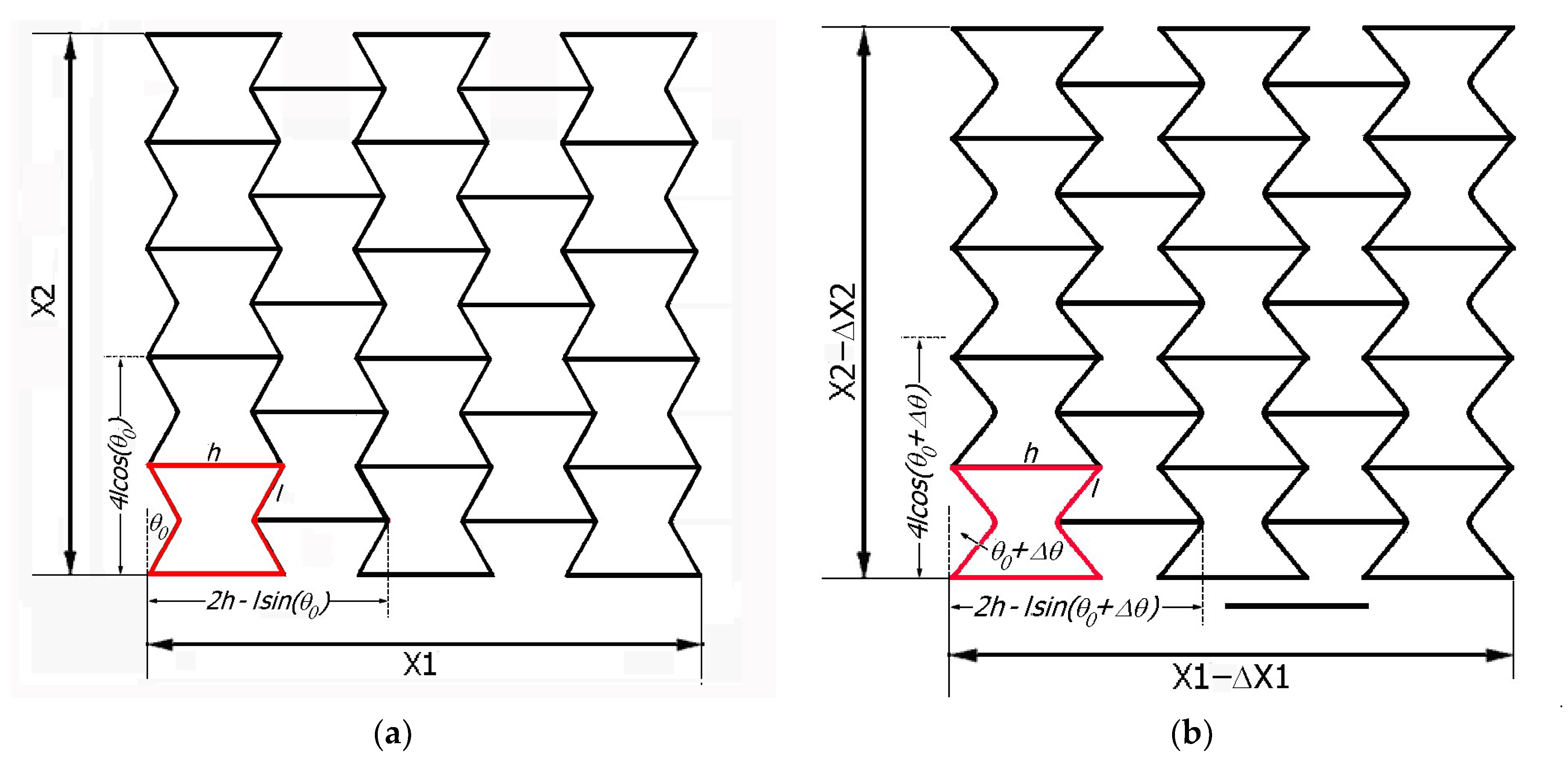
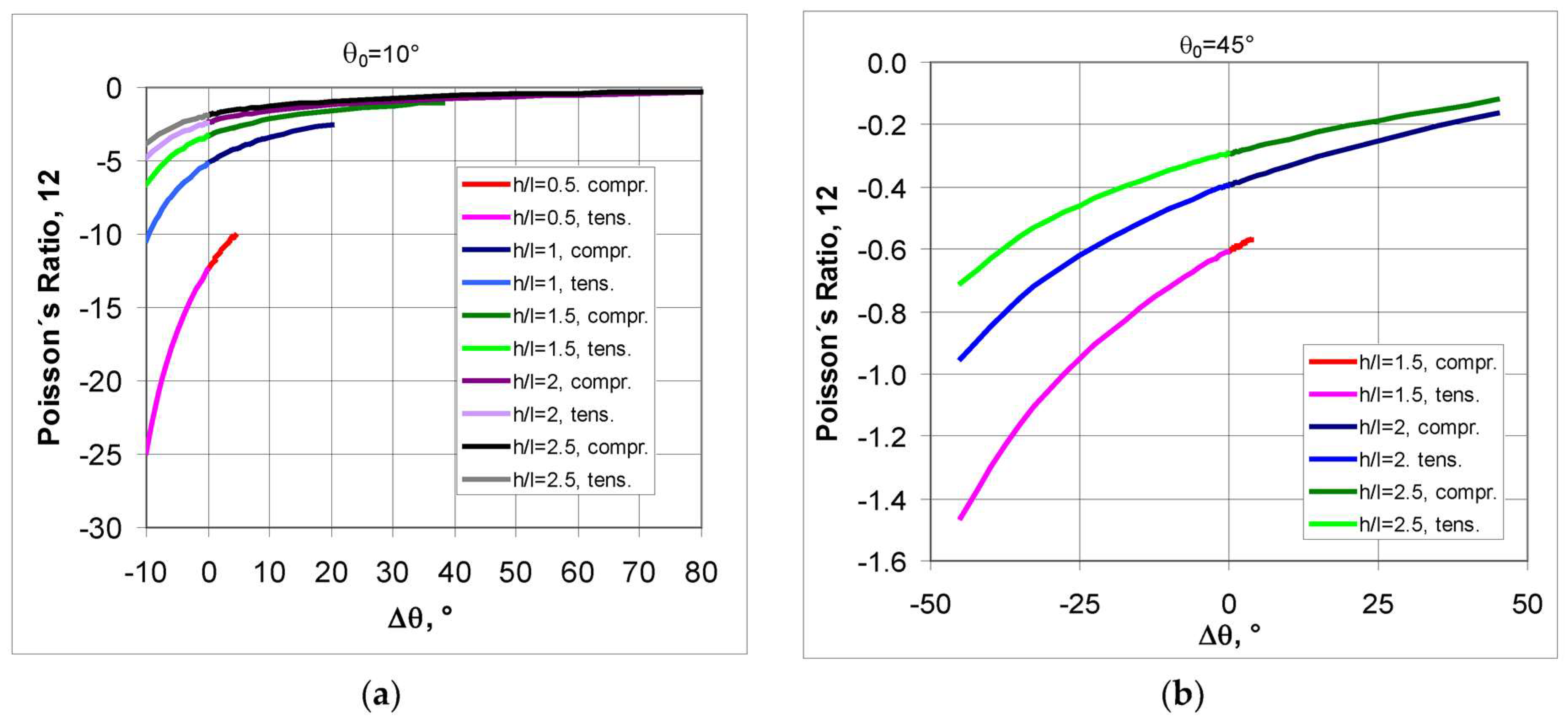
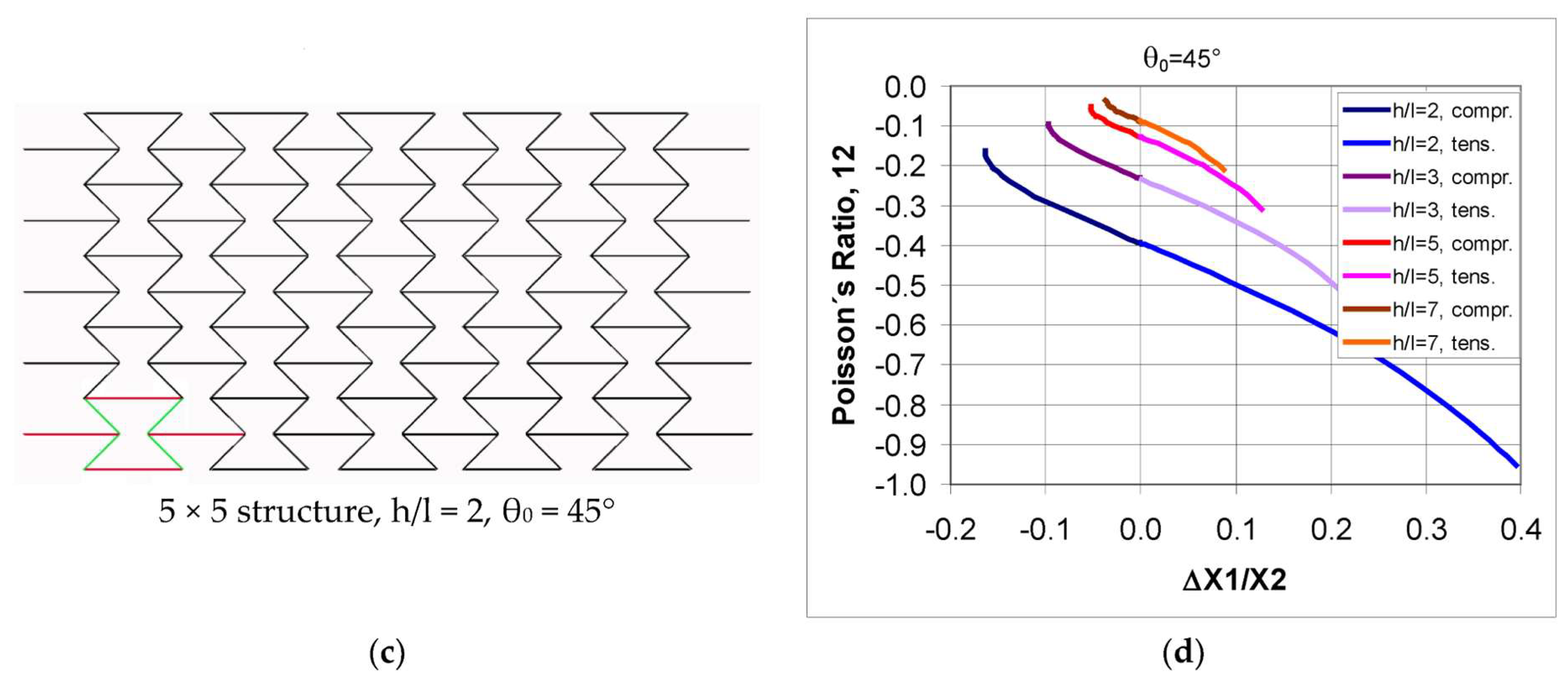
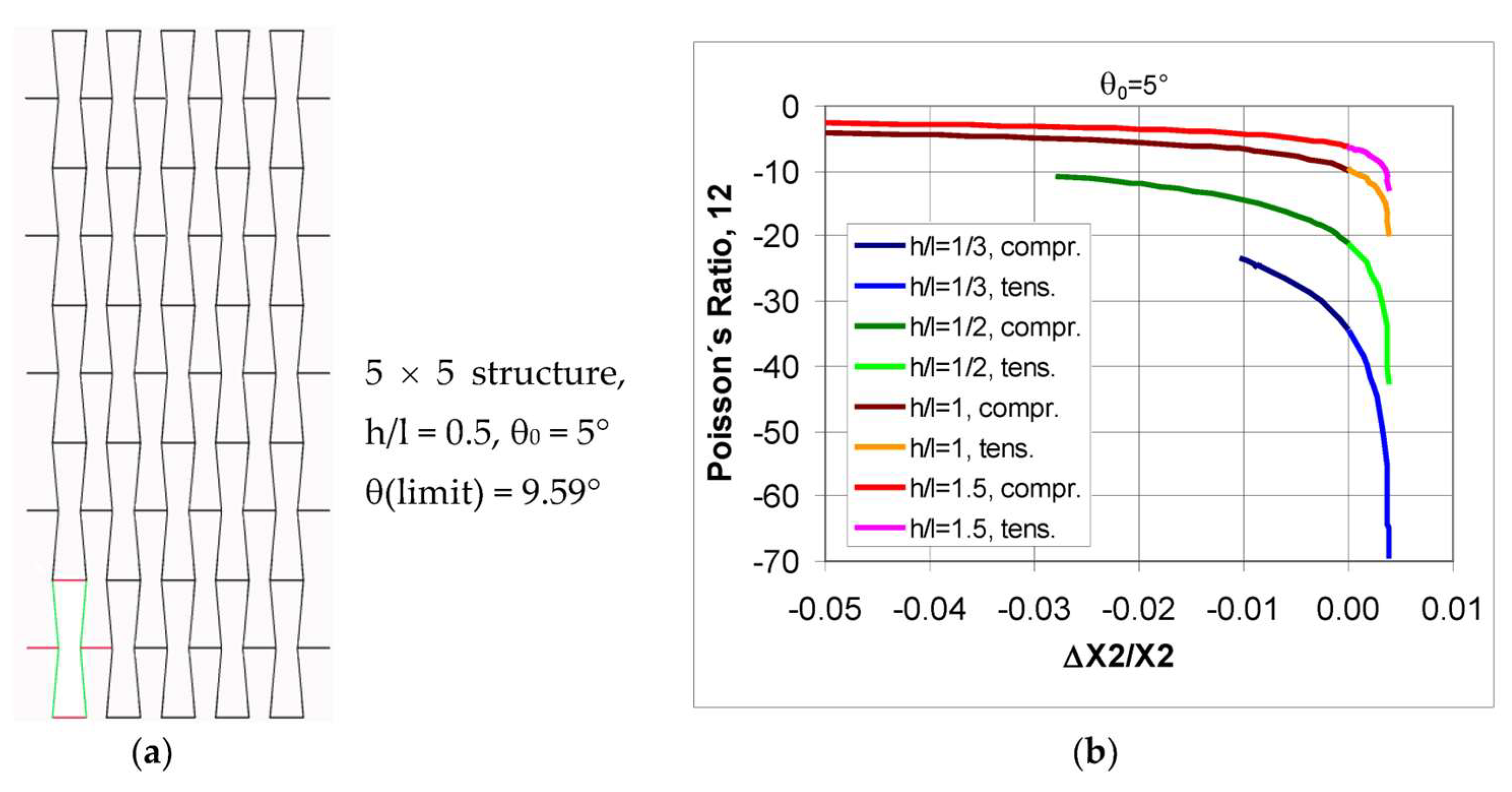
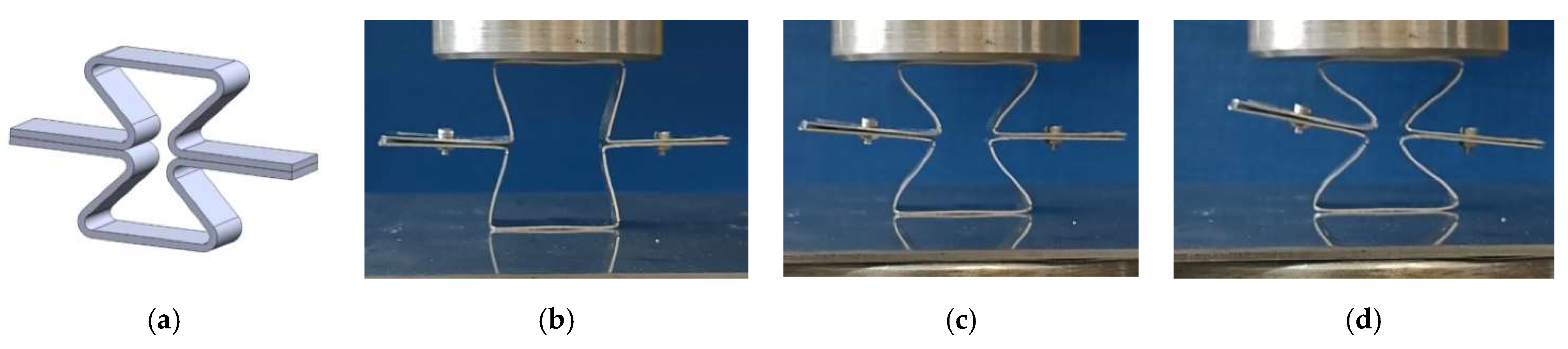
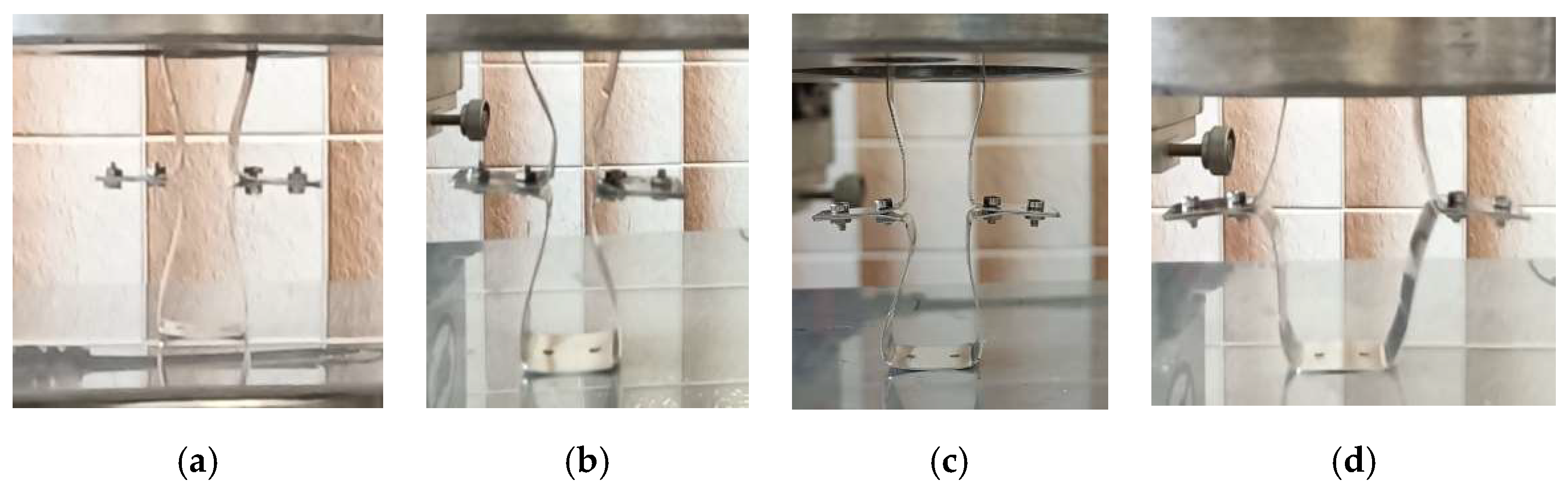
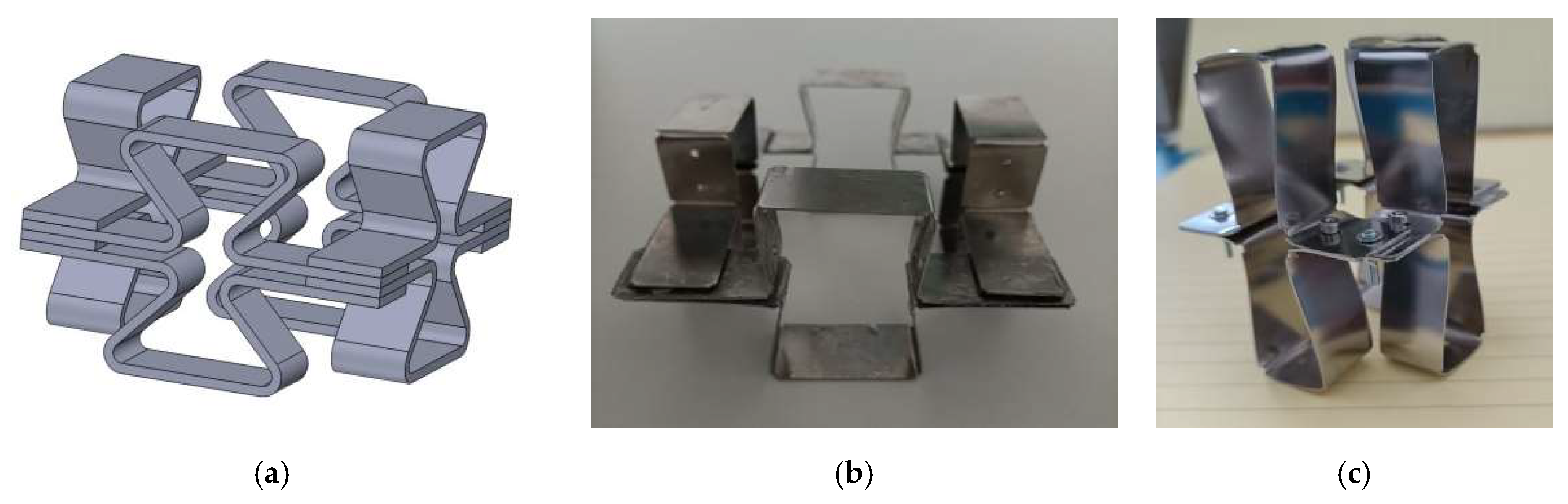
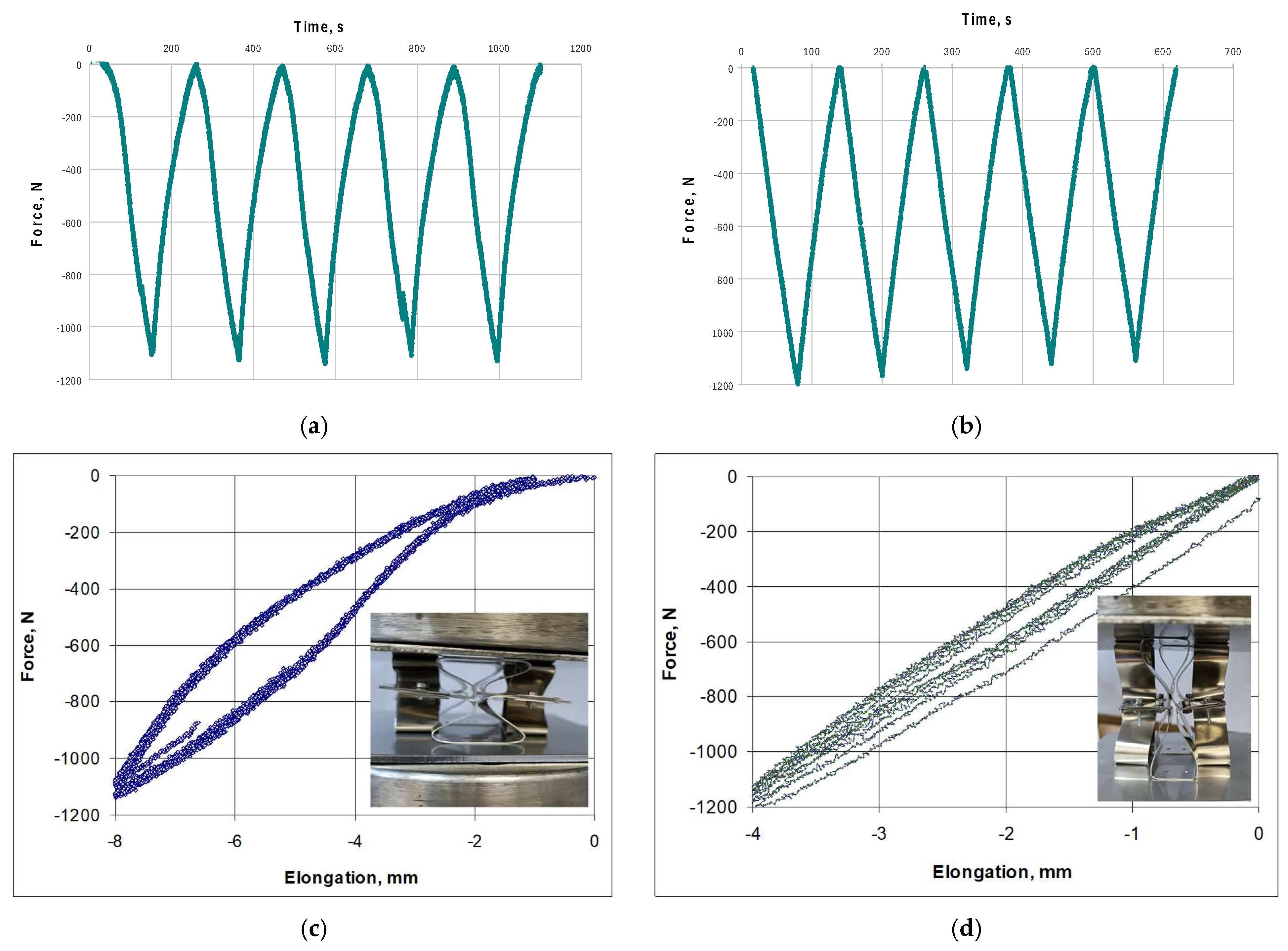
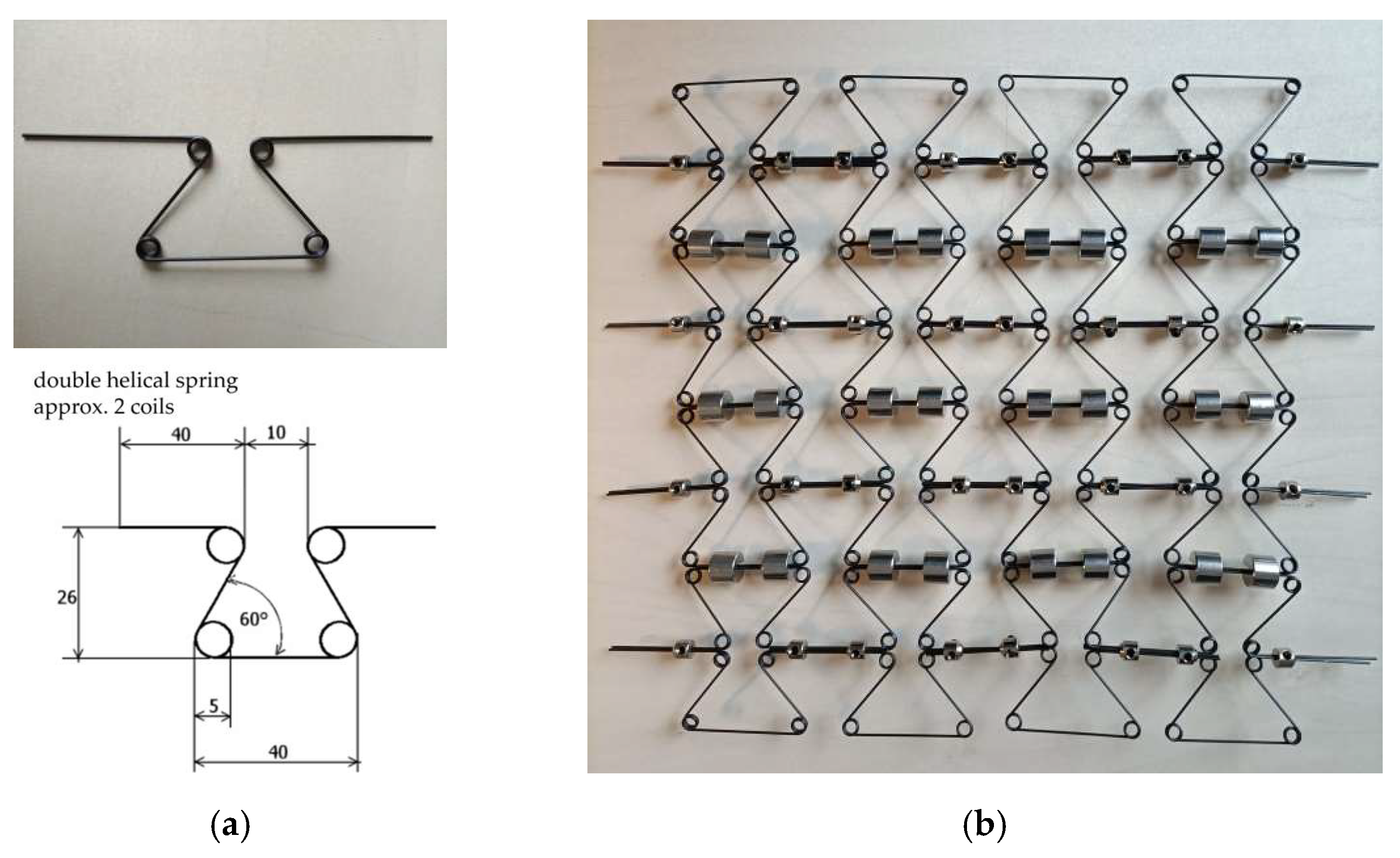
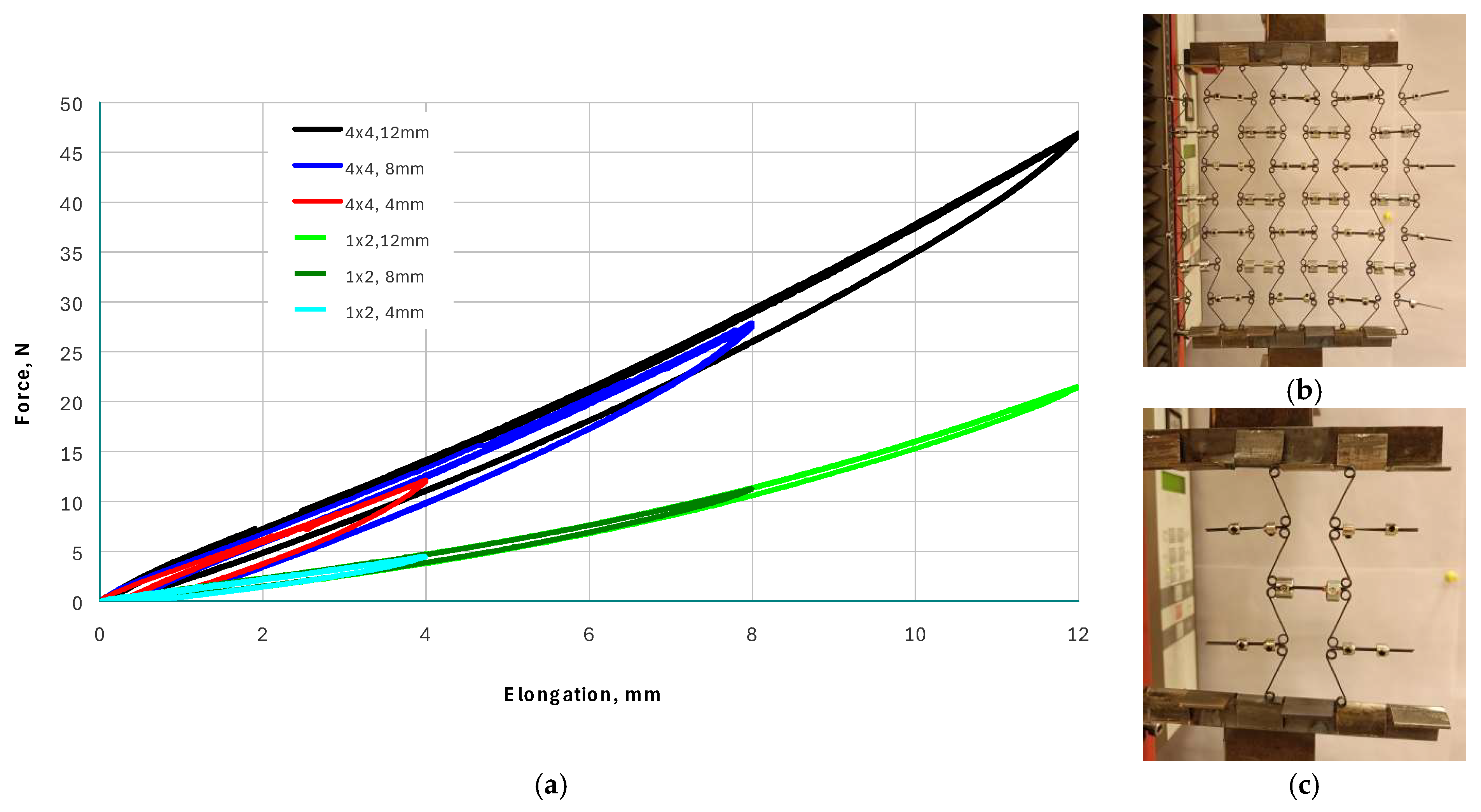
The present article is an exploration of metamaterial structures exhibiting auxetic properties. The study shows the effect of three geometric parameters of re-entrant auxetic cells, namely, the internal initial cell angle (θ0), the strut length ratio h/l, and the degree of opening of the unit cells expressed by the change in the Δθ angle, on the value of the Poisson’s ratio. It combines theoretical insights into physical re-entrant auxetic structures with the demonstration of structures that can be subjected to cyclic loading without being damaged. The experimental section features the results of the compression tests of a symmetrical structure made up of four re-entrant cells and tensile tests of a flat mesh structure of size 4 × 4. In the mesh structure, a modification was applied to the re-entrant cells, creating arched strut connections. It was shown that the value of the maximum load for such structures depends on the bending angle and the length of the inclined strut. The mesh structure was created using torsion springs. Its cyclic tension for different amplitudes yielded Poisson’s ratio values in the range of −1.4 to −1.7. These modifications have enabled stable, elastic, and failure-free cyclical changes of the structure’s dimensions under load.
Keywords: auxetic structures; re-entrant unit cells; springback auxetic structures; re-entrant unit cells; springback