Article

The Effect of Process Parameters on the Pore Structure of Lotus-Type Porous Copper Fabricated via Continuous Casting

Department of Materials Science and Engineering, Inha University, Incheon 22212, Republic of Korea
*
Author to whom correspondence should be addressed.
Metals 2024, 14(11), 1243; https://doi.org/10.3390/met14111243
Submission received: 14 October 2024 / Revised: 28 October 2024 / Accepted: 29 October 2024 / Published: 31 October 2024

Abstract

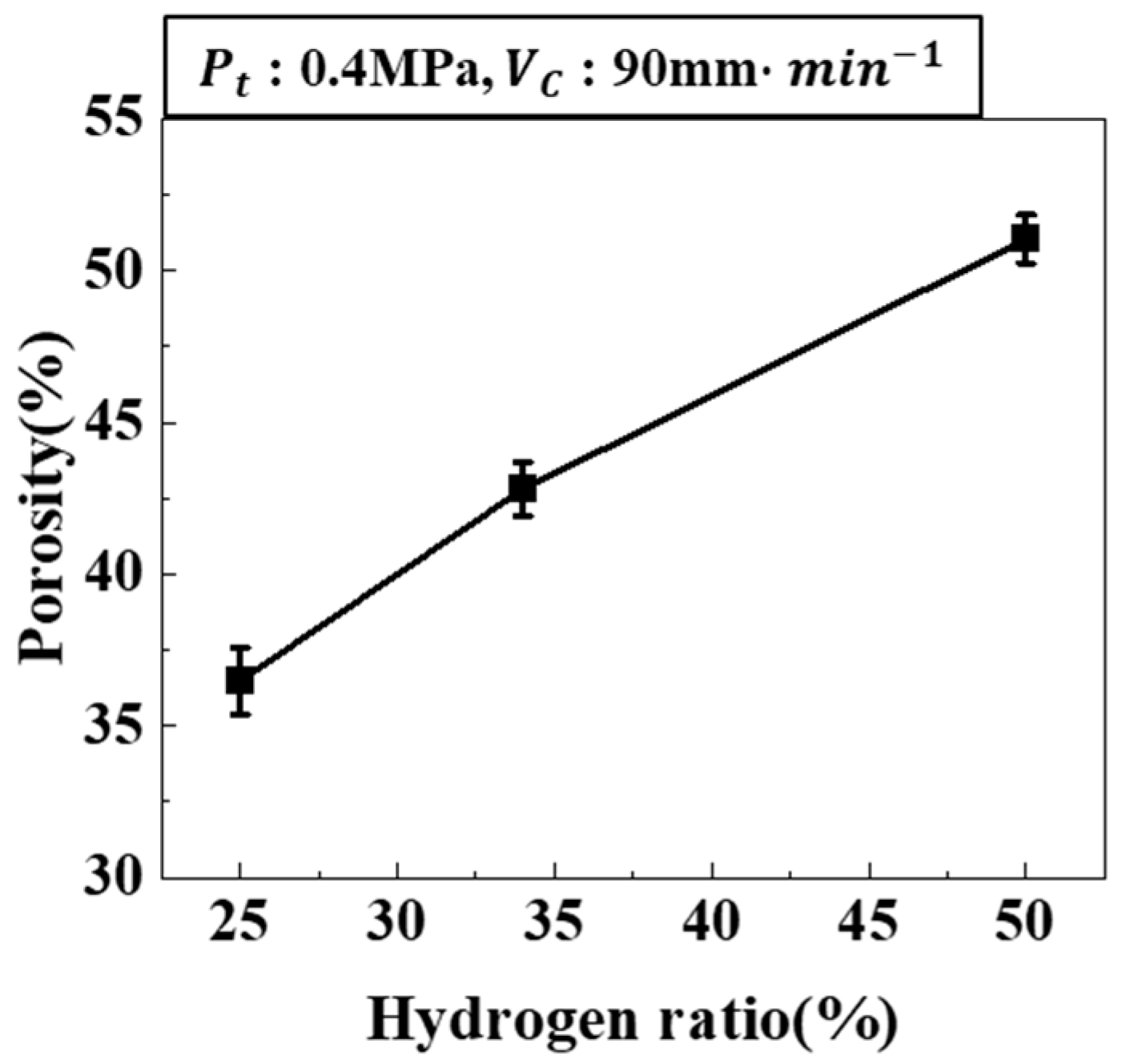
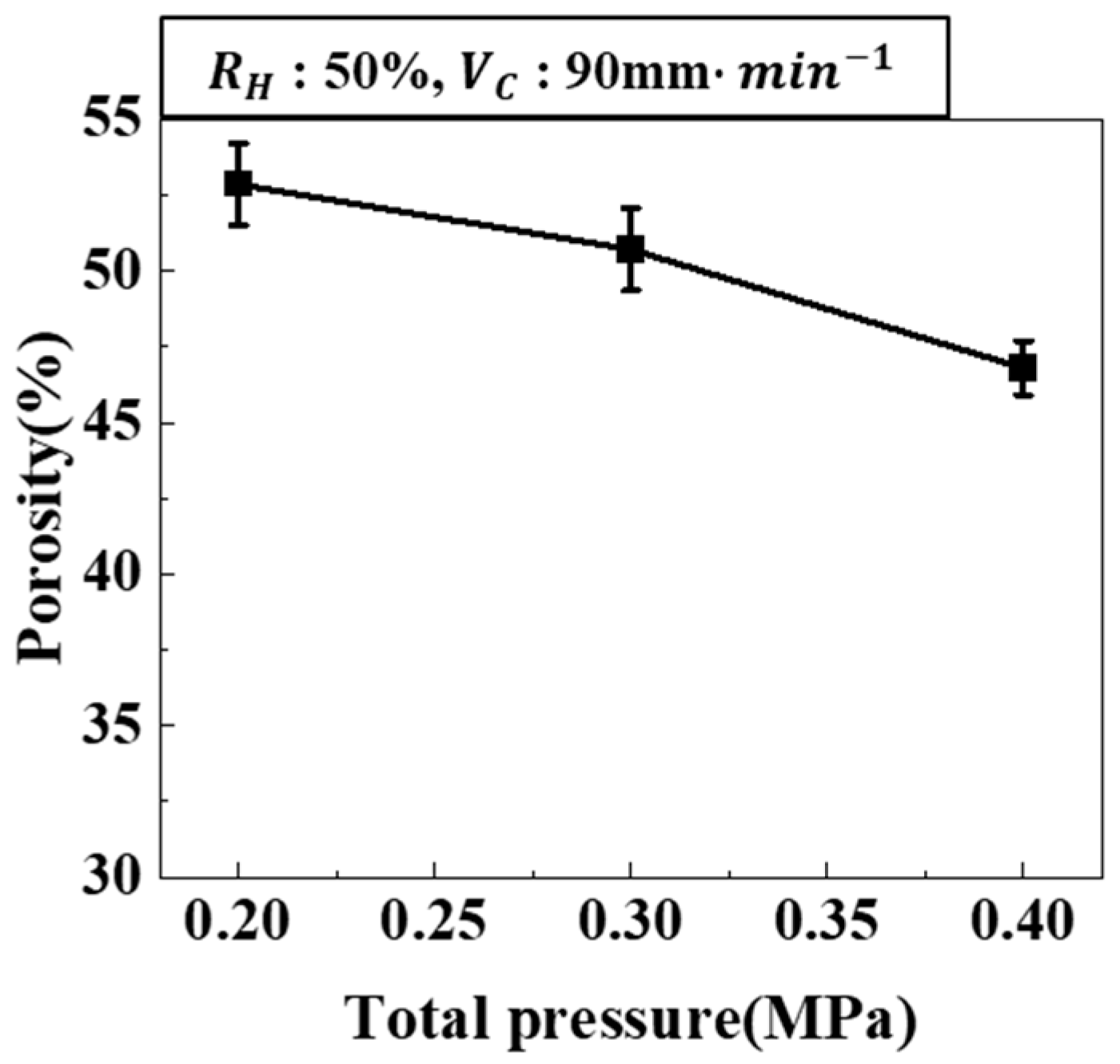
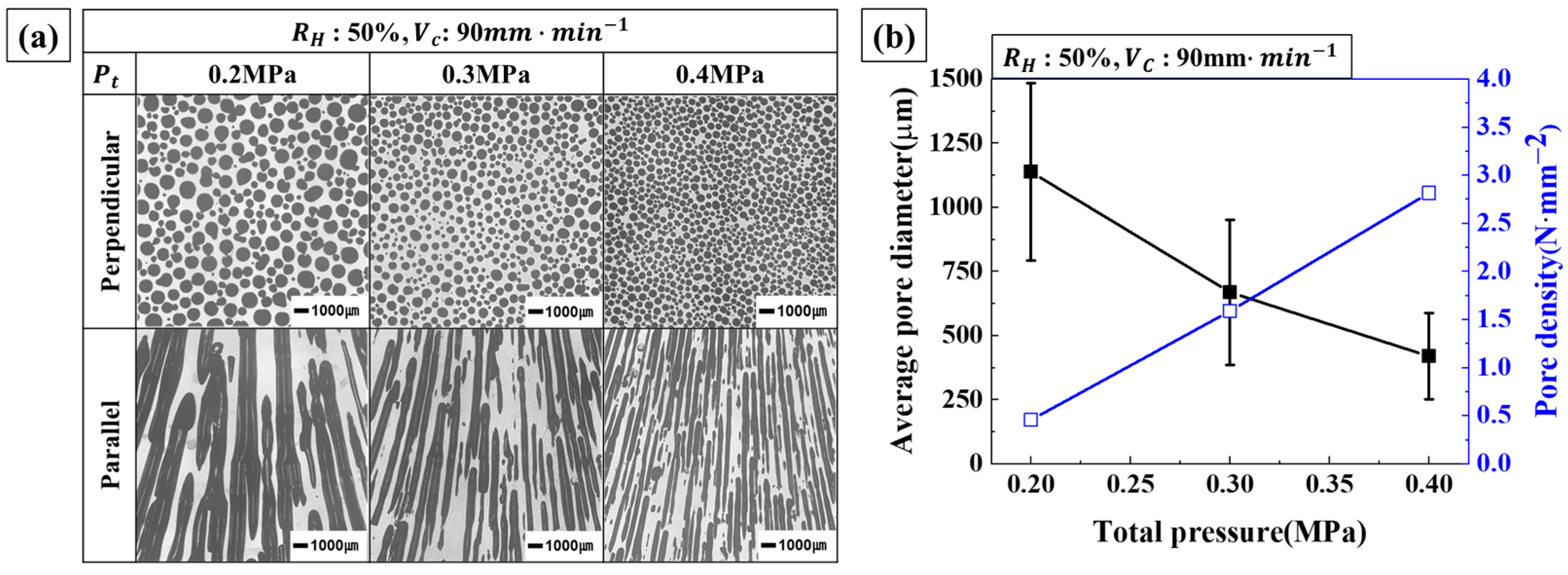
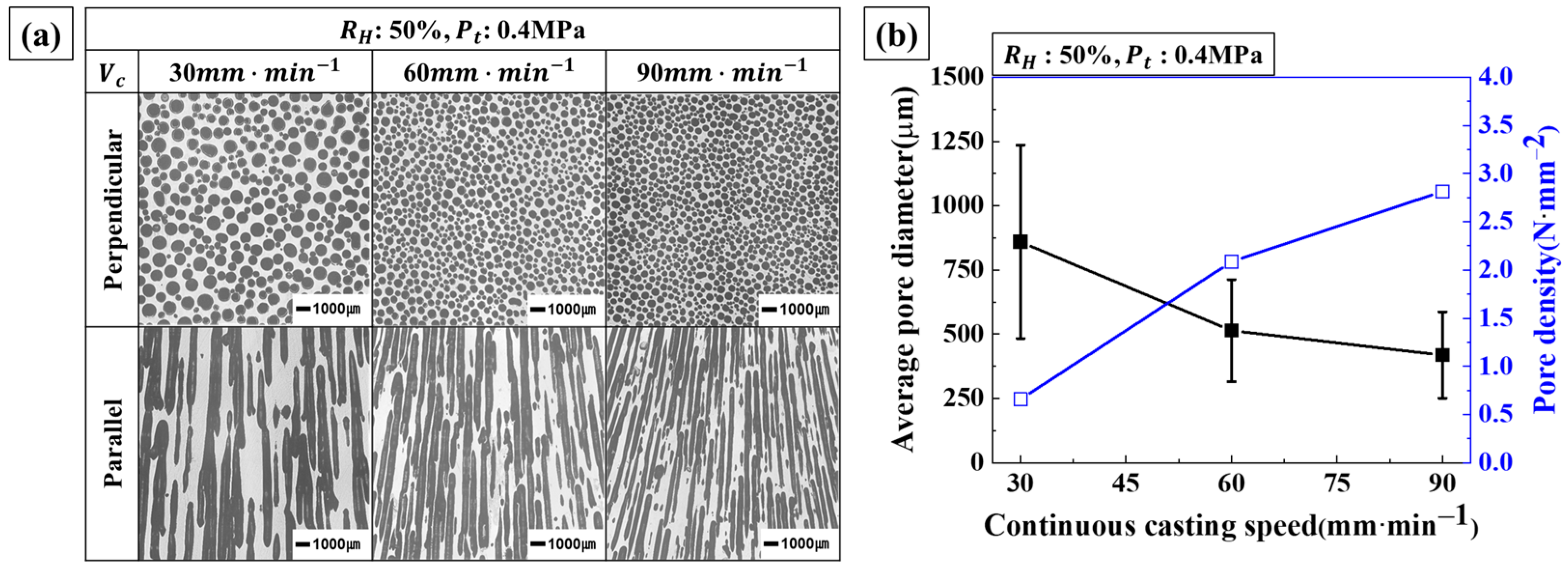
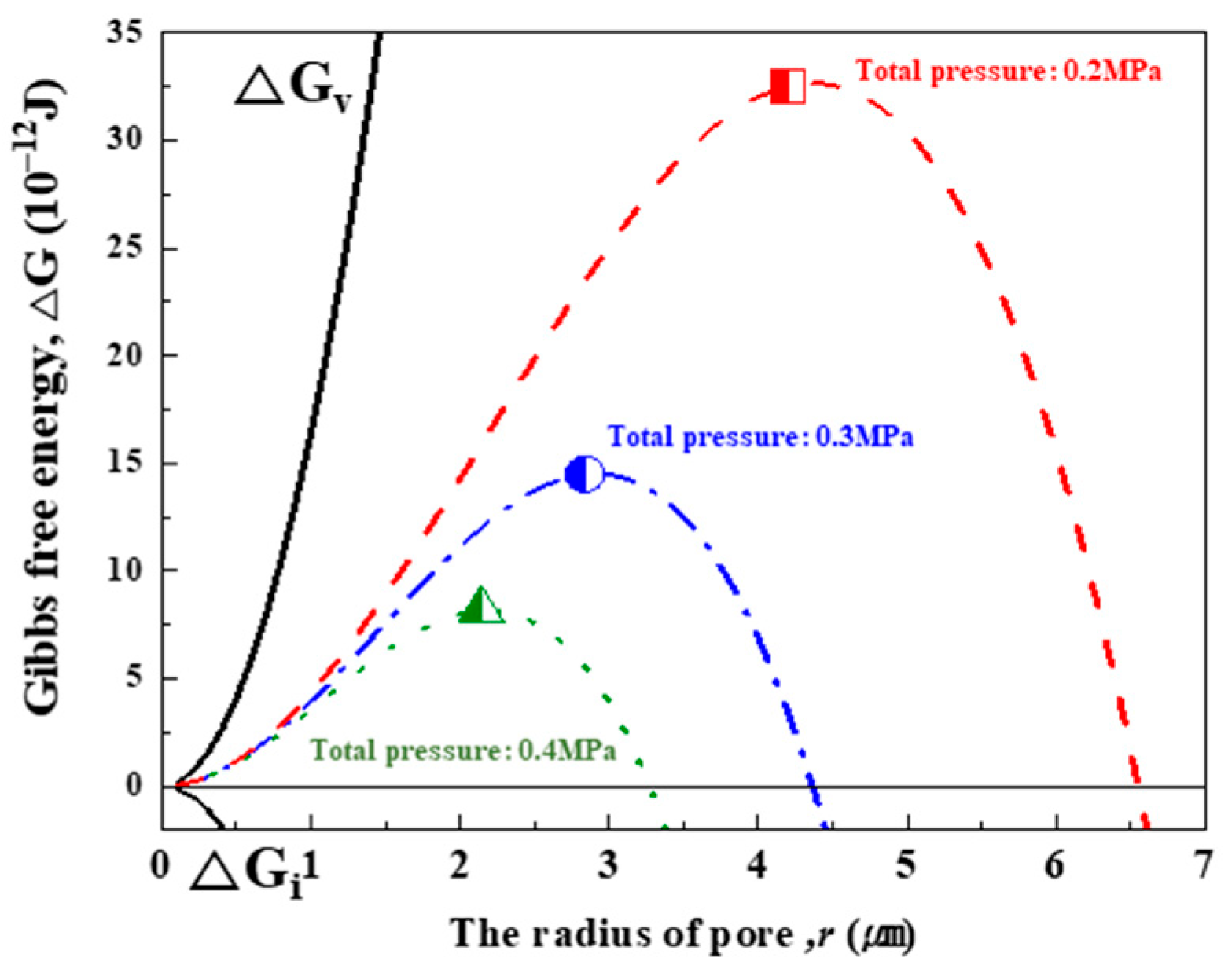
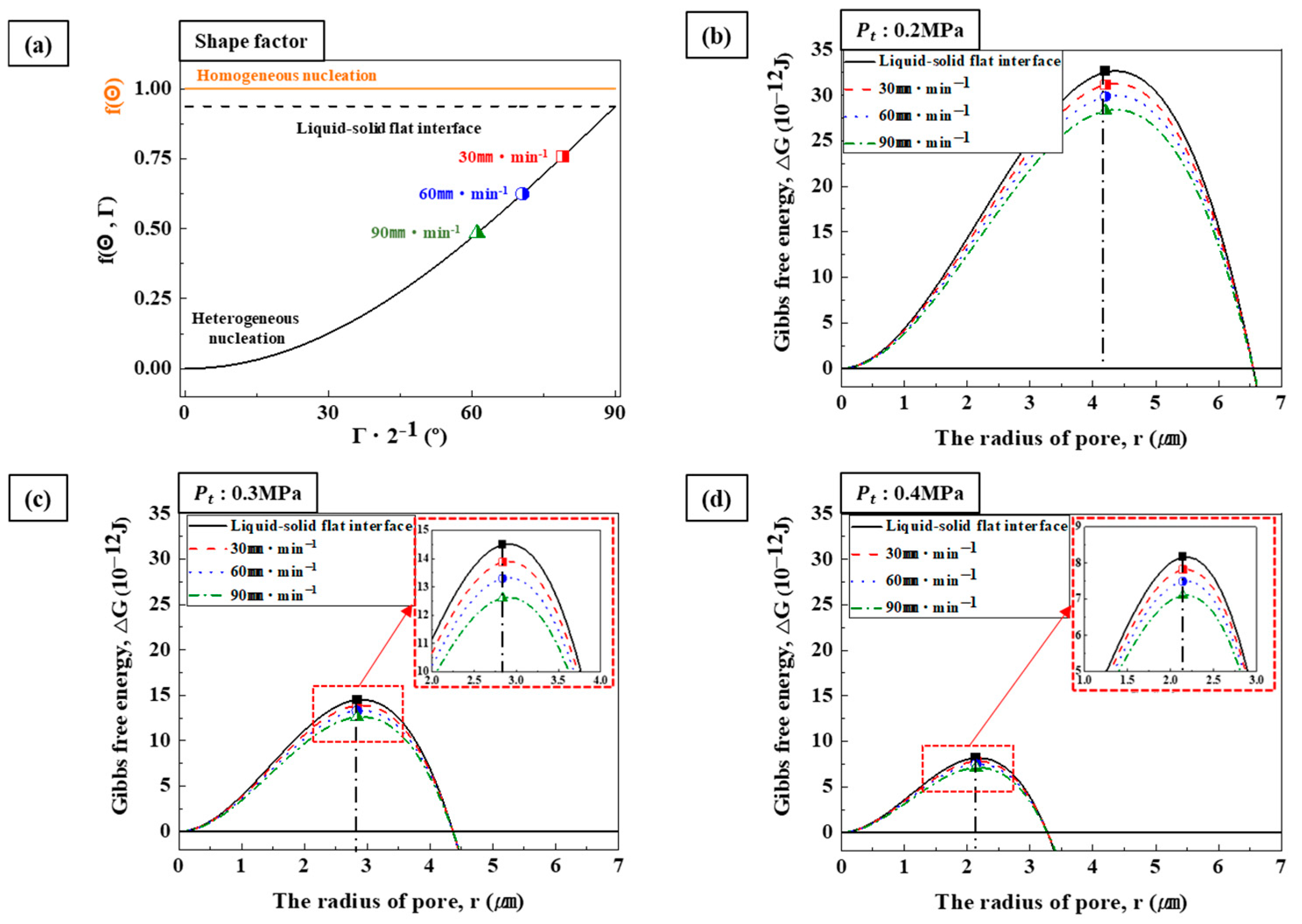
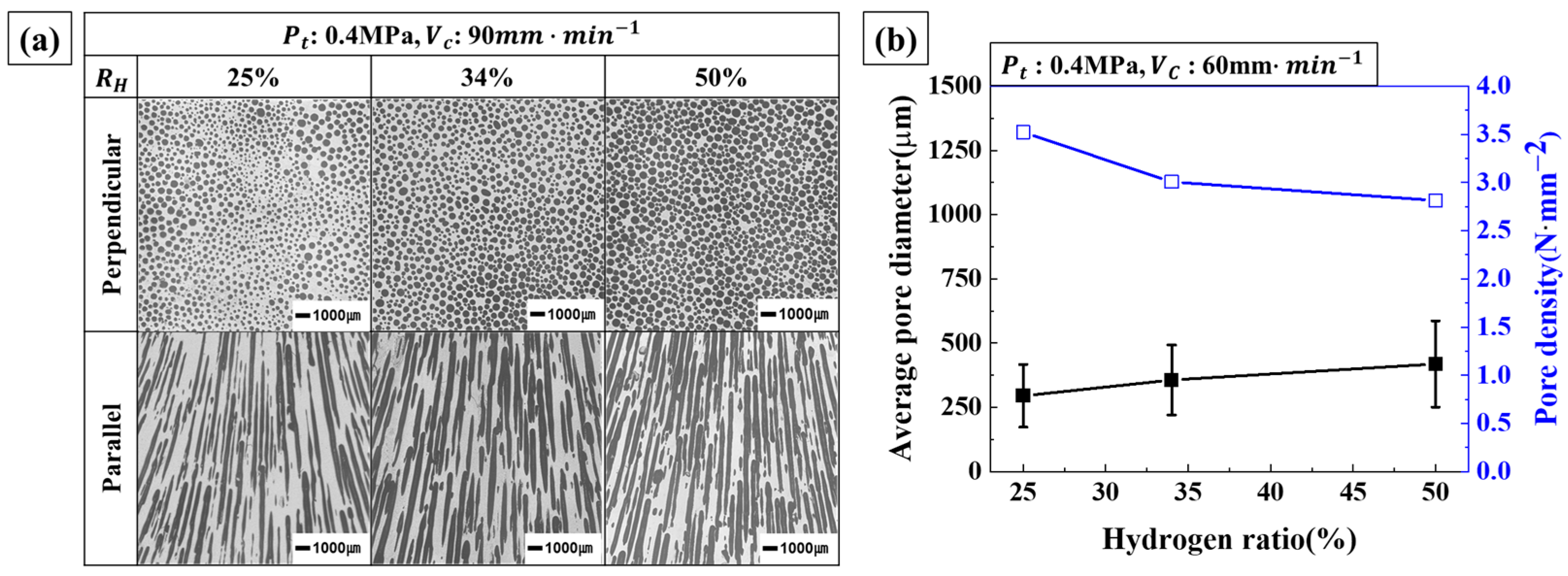
The pores in lotus-type porous copper are formed due to the difference in hydrogen solubility between the liquid and solid phases of copper. In a pressurized hydrogen atmosphere, hydrogen gas is released at the gas release and crystallization temperature, which is the melting point of copper. This study systematically analyzes the effects of process parameters, including hydrogen ratio, total pressure, and continuous casting speed, on the pore structure of lotus-type porous copper, with the aim of identifying the most critical process parameters for controlling pore diameter and density. Within the hydrogen ratio up to 50%, it was observed that as the hydrogen ratio increases, the pores tend to increase in porosity, and the pore diameter increases. As the hydrogen ratio increased from 25% to 50%, the pore diameter increased from 300 μm to 400 μm, while the pore density decreased from 3.3 N·mm−2 to 2.8 N·mm−2. As the total pressure increased, the pore diameter tended to decrease, and the pore density increased. Specifically, when the total pressure increased from 0.2 MPa to 0.4 MPa, the pore diameter decreased from 1100 μm to 400 μm, while the pore density increased significantly from 0.5 N·mm−2 to 2.8 N·mm−2. In addition, as the continuous casting speed increased, 30 to 90 mm·min−1, the pore diameter decreased from 850 μm to 400 μm, and the pore density increased from 0.7 N·mm−2 to 2.8. N·mm−2. Specifically, the increase in total pressure led to a decrease in Gibbs free energy and a reduction in the critical pore nucleation radius, which promoted pore formation and resulted in the creation of more, smaller pores. These results suggest that total pressure is the primary factor influencing both pore diameter and density in lotus-type porous copper.
Keywords: lotus-type porous copper; continuous casting; process parameter; porosity; pore diameter; pore density lotus-type porous copper; continuous casting; process parameter; porosity; pore diameter; pore density