Review

Synthesis of Metal Nanoparticles under Microwave Irradiation: Get Much with Less Energy

by
Leonid Kustov
1,2,3,* and
Kseniia Vikanova
1,2
1
N.D. Zelinsky Institute of Organic Chemistry, Russian Academy of Sciences, Leninsky Prospect 47, 119991 Moscow, Russia
2
Chemistry Department, Moscow State University, Leninskie Gory 1, Bldg. 3, 119992 Moscow, Russia
3
Institute of Ecology and Engineering, National Science and Technology University MISiS, Leninsky Prospect 4, 119071 Moscow, Russia
*
Author to whom correspondence should be addressed.
Metals 2023, 13(10), 1714; https://doi.org/10.3390/met13101714
Submission received: 4 September 2023 / Revised: 26 September 2023 / Accepted: 27 September 2023 / Published: 8 October 2023
(This article belongs to the Special Issue Feature Papers in Metallic Functional Materials)

Abstract

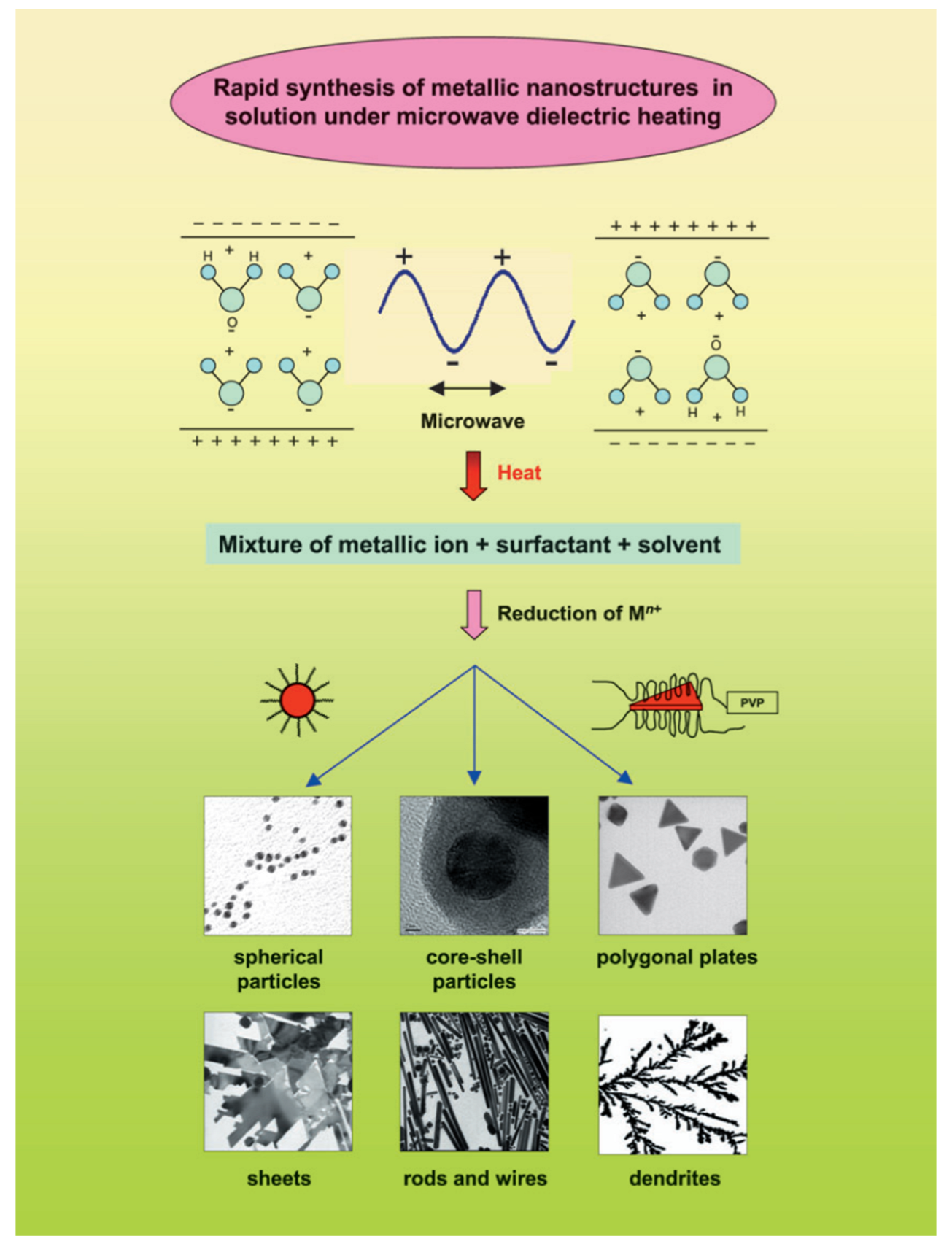
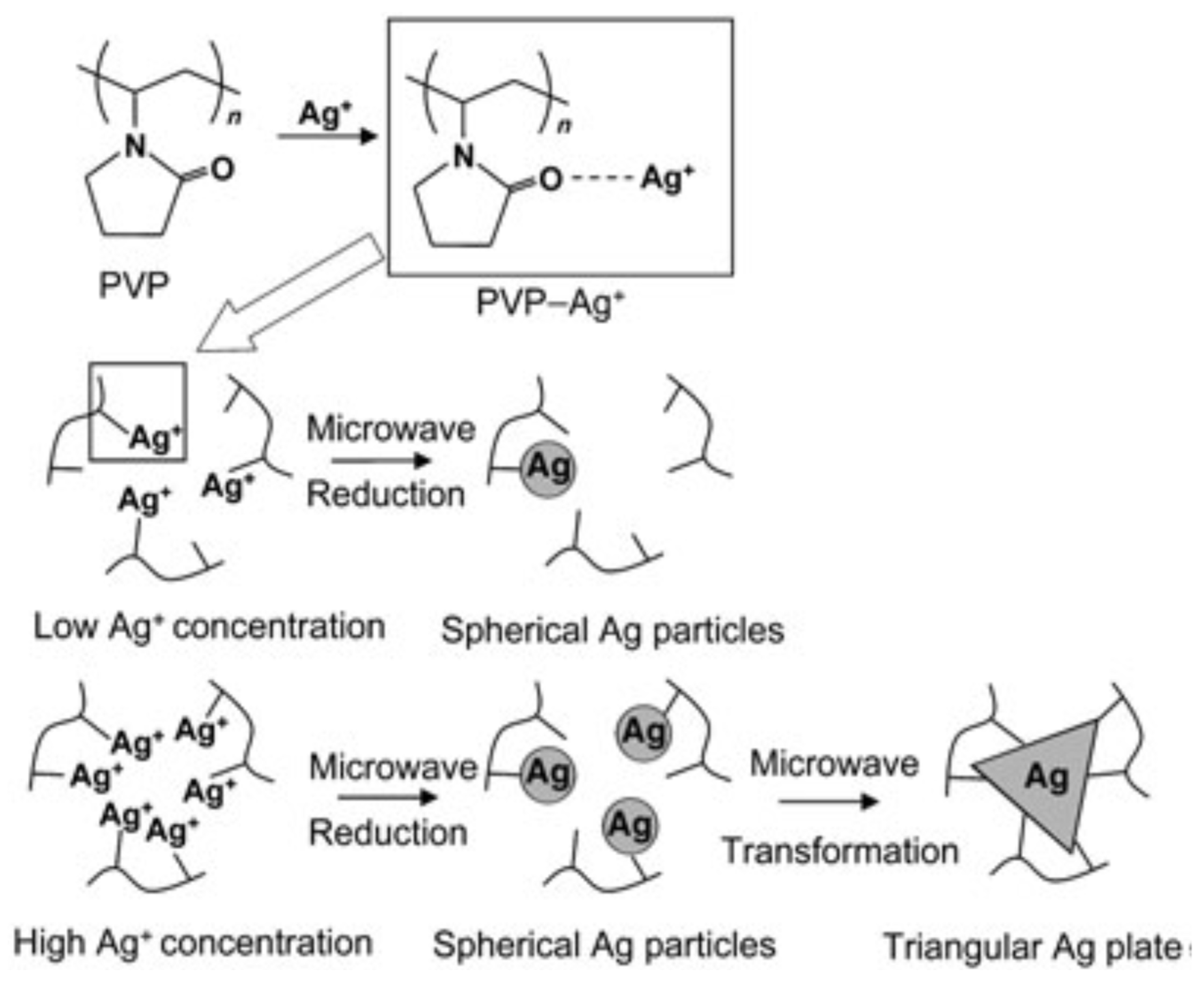
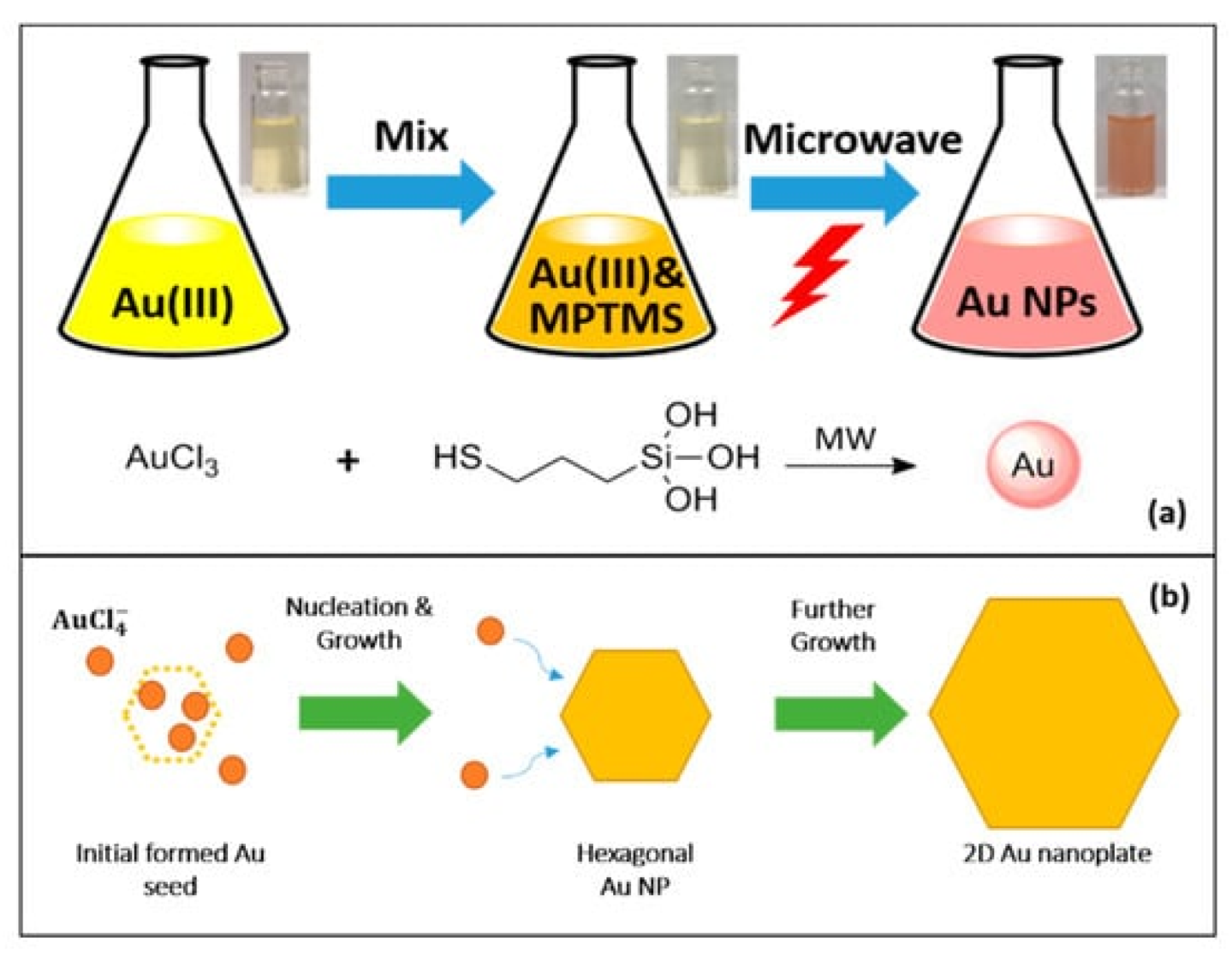
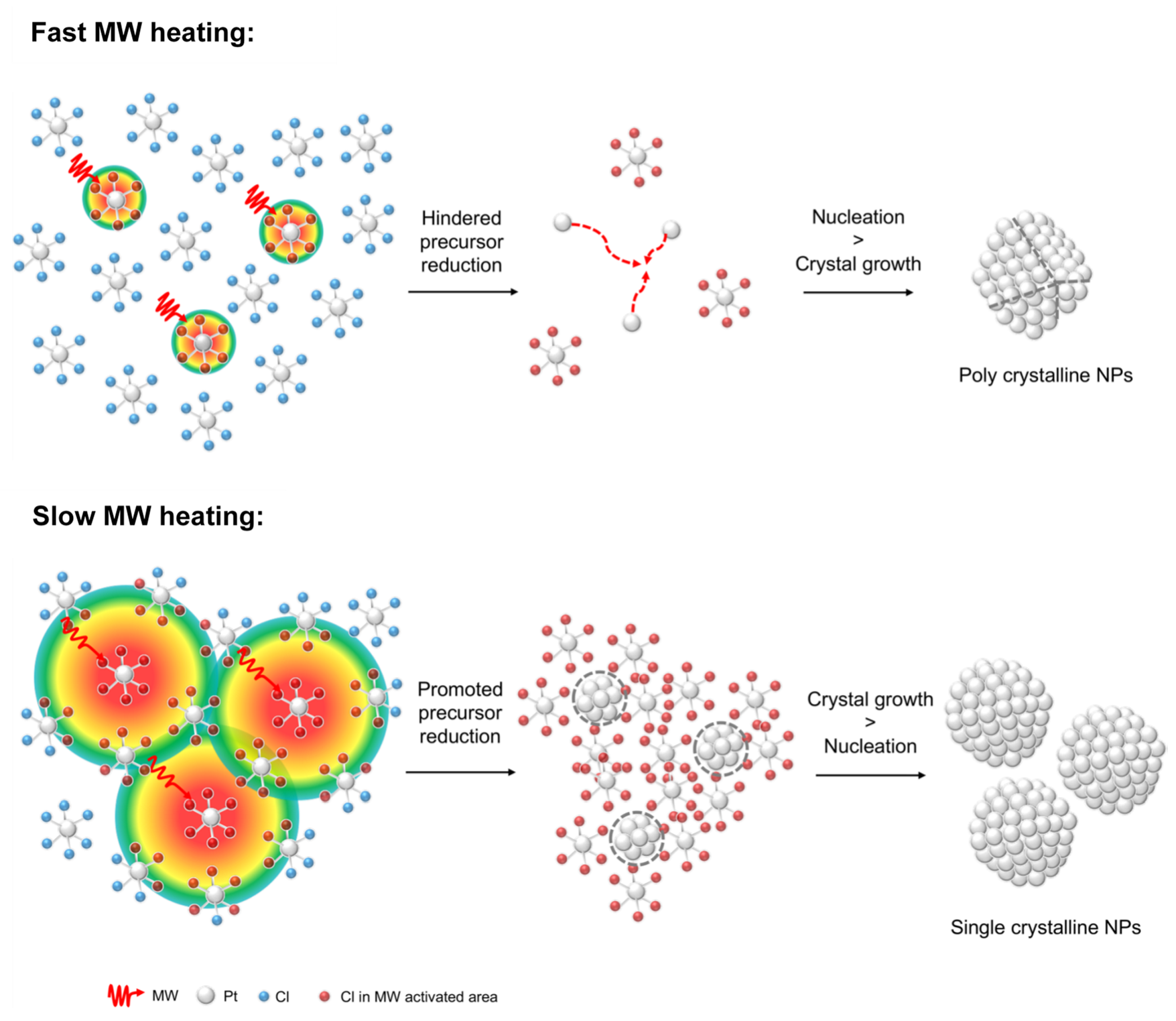
Microwave irradiation is widely used to intensify various chemical processes, including in the synthesis of nanomaterials. The purpose of this review is to present recent trends in the application of microwave heating for the preparation of monometallic, bimetallic, and more complicated metal nanoparticles. The advantages and drawbacks behind the use of microwave irradiation in the synthesis of unsupported and supported metal nanoparticles are summarized. Such metals as Ag, Au, Pt, Pd, Rh, Ir, Cu, Ni, Co, etc. are considered. Illustrative examples have been presented of the positive effects of microwave treatments, including the preparation of particles of different shapes and particles of immiscible metals.
Keywords: metal nanoparticles; microwave irradiation; bimetallic nanoparticles; supported nanoparticles; immiscible metals metal nanoparticles; microwave irradiation; bimetallic nanoparticles; supported nanoparticles; immiscible metals