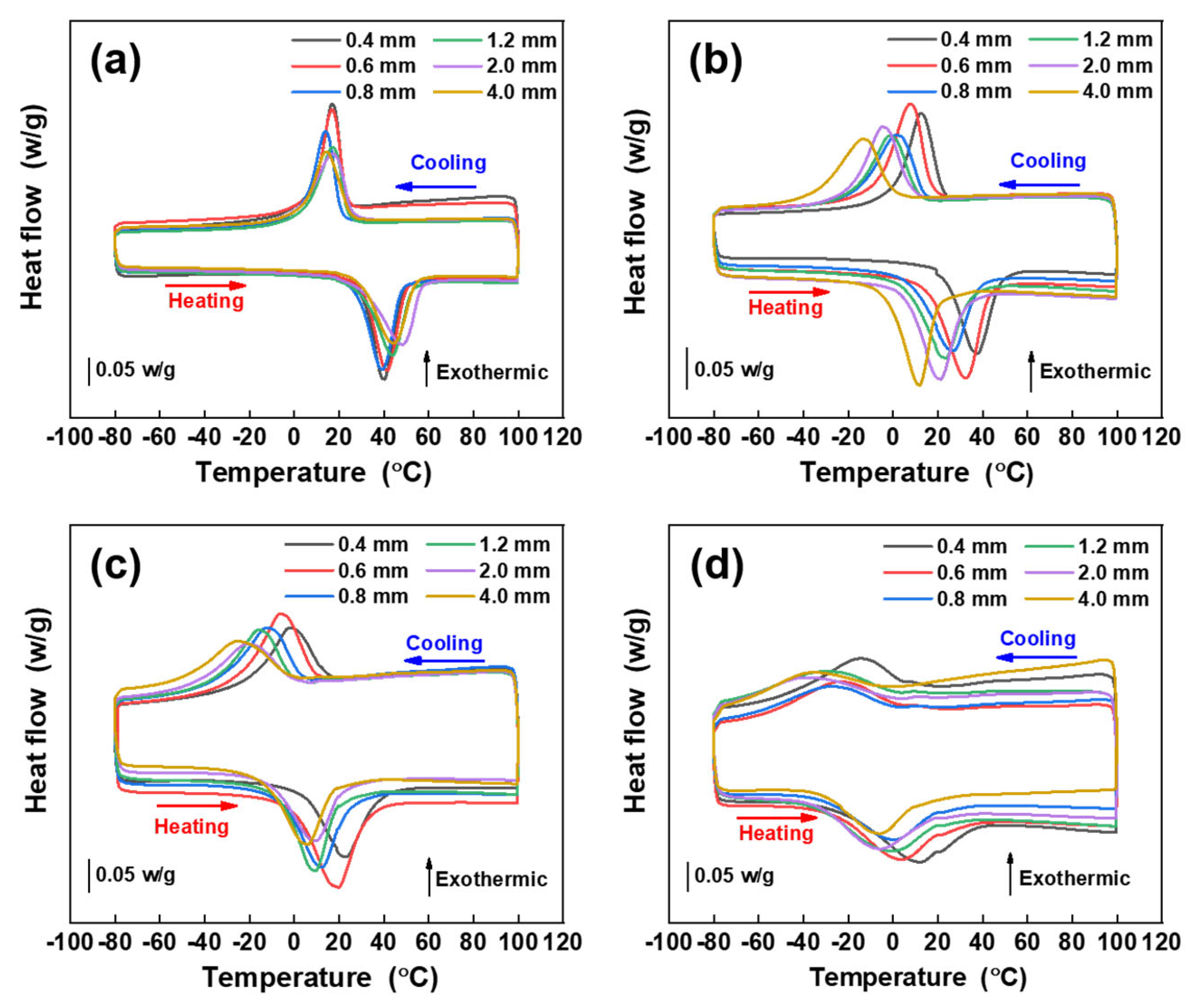
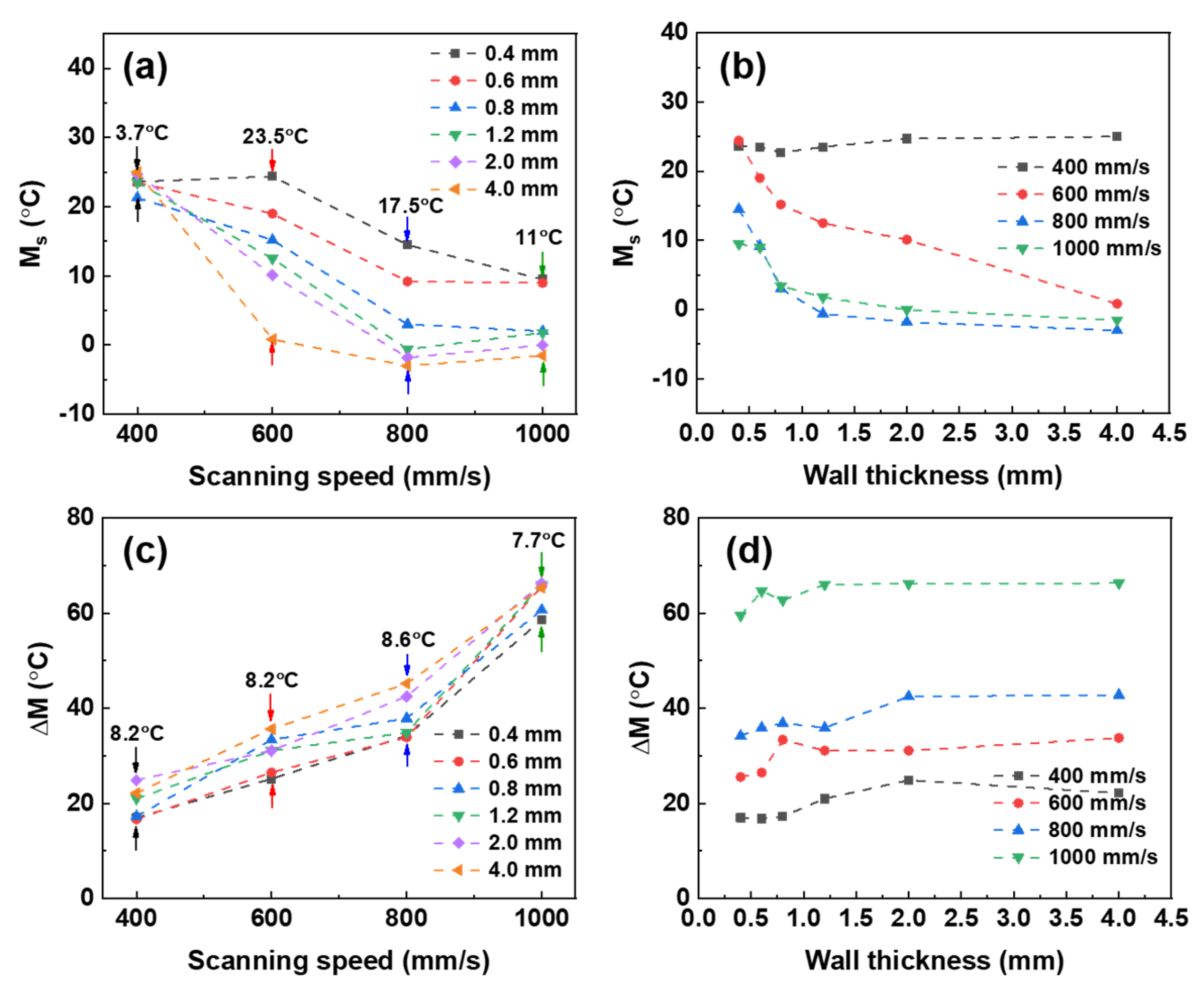
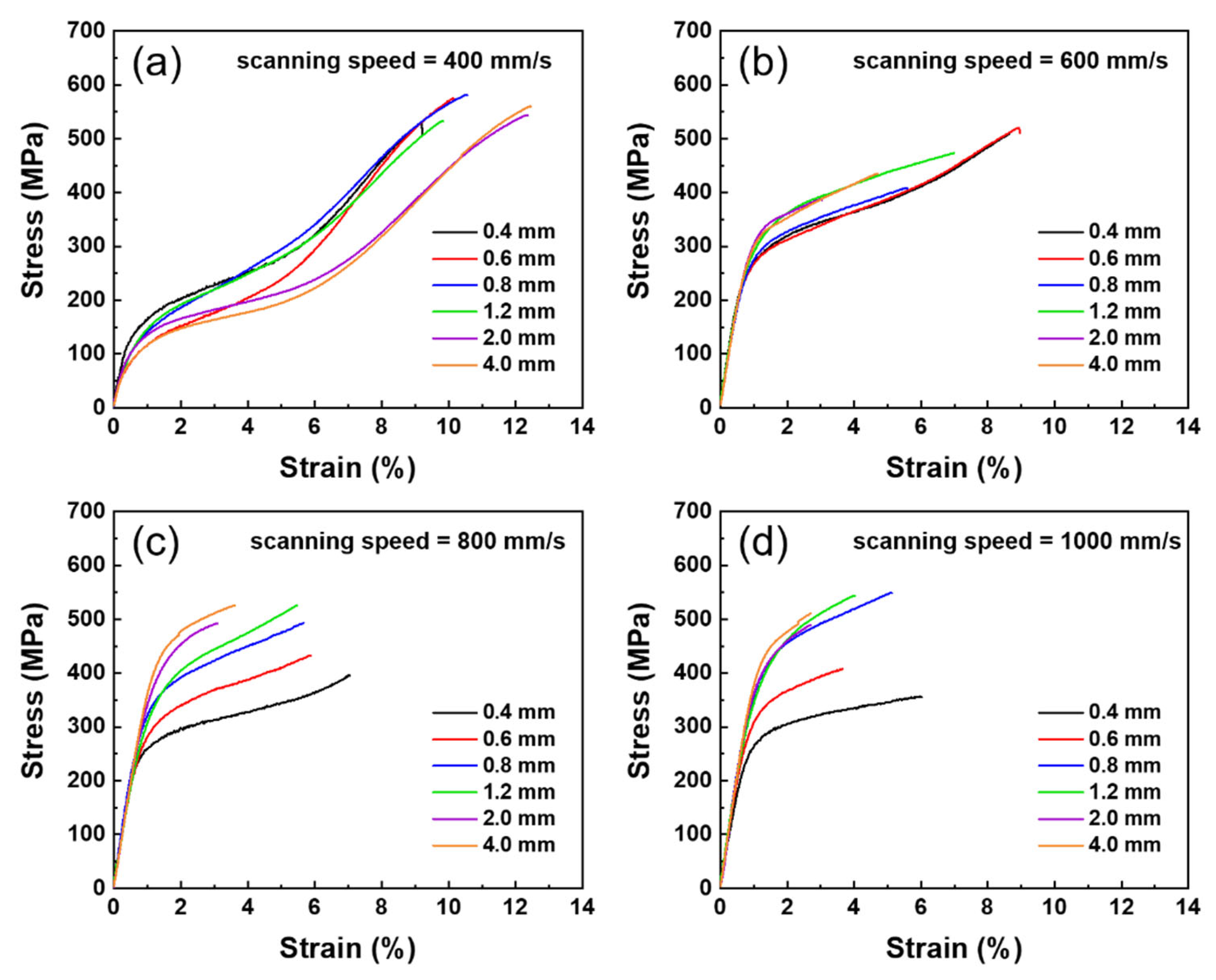
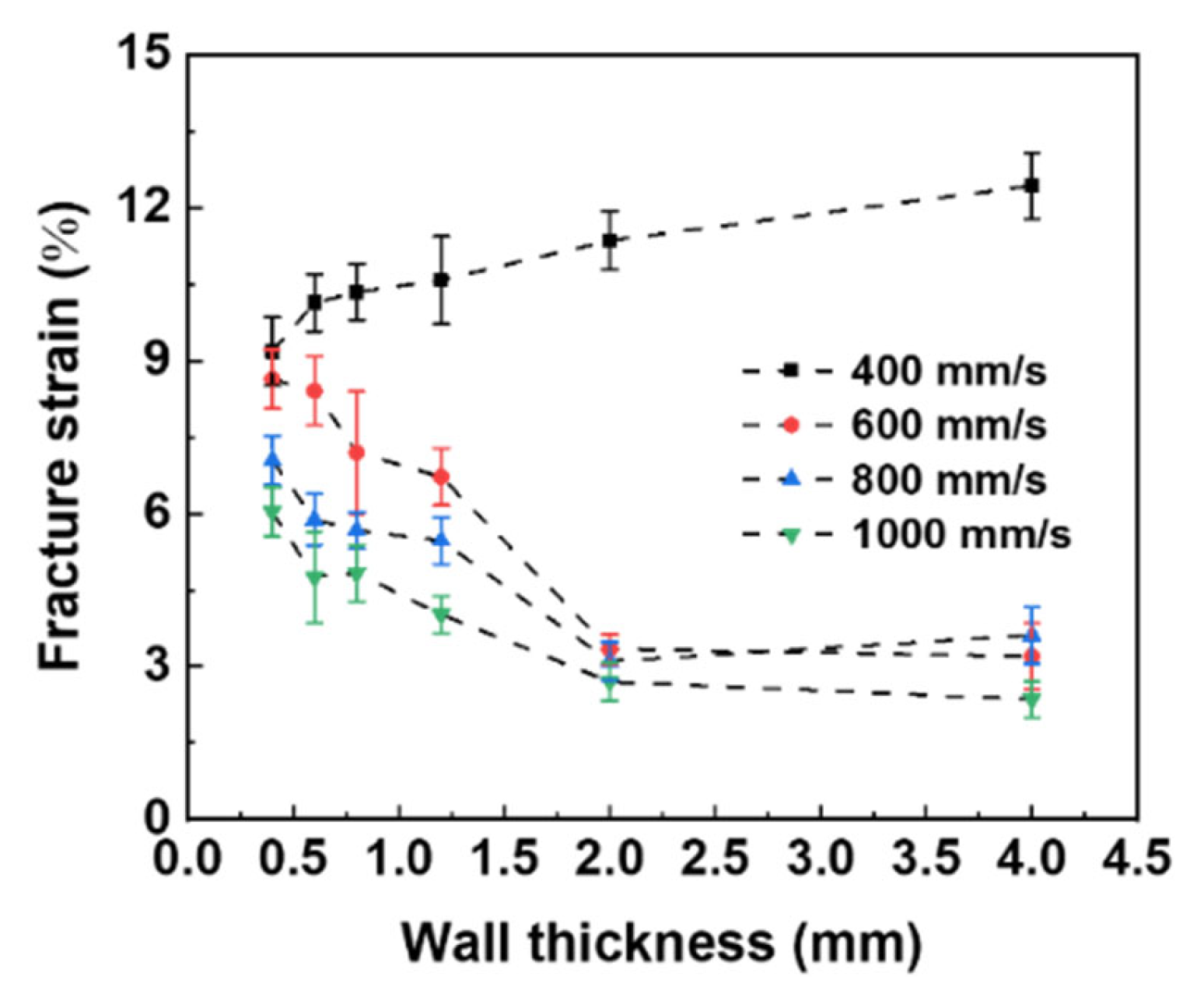
The Effect of Wall Thickness and Scanning Speed on the Martensitic Transformation and Tensile Properties of Selective Laser Melted NiTi Thin-Wall Structures


Abstract
Share and Cite
Guo, F.; Guo, Y.; Kong, X.; Xiong, Z.; Hao, S. The Effect of Wall Thickness and Scanning Speed on the Martensitic Transformation and Tensile Properties of Selective Laser Melted NiTi Thin-Wall Structures. Metals 2022, 12, 519. https://doi.org/10.3390/met12030519
Guo F, Guo Y, Kong X, Xiong Z, Hao S. The Effect of Wall Thickness and Scanning Speed on the Martensitic Transformation and Tensile Properties of Selective Laser Melted NiTi Thin-Wall Structures. Metals. 2022; 12(3):519. https://doi.org/10.3390/met12030519
Chicago/Turabian StyleGuo, Fangmin, Yanbao Guo, Xiangguang Kong, Zhiwei Xiong, and Shijie Hao. 2022. "The Effect of Wall Thickness and Scanning Speed on the Martensitic Transformation and Tensile Properties of Selective Laser Melted NiTi Thin-Wall Structures" Metals 12, no. 3: 519. https://doi.org/10.3390/met12030519
APA StyleGuo, F., Guo, Y., Kong, X., Xiong, Z., & Hao, S. (2022). The Effect of Wall Thickness and Scanning Speed on the Martensitic Transformation and Tensile Properties of Selective Laser Melted NiTi Thin-Wall Structures. Metals, 12(3), 519. https://doi.org/10.3390/met12030519